The Healthy Compulsive Project
122 episodes — Page 2 of 3
Ep 72Ep. 72: 7 Ways to Achieve More Flexibility in Your Relationships
I know that most of my listeners are passionately committed to doing the right thing, unfortunately that can lead to doing the wrong thing. If we get rigid about the way things should be and end up controlling people to achieve that, we can hurt others, damage our relationships, and even sabotage the greater good that we were aiming for. In this podcast I’ll share what I believe are some of the origins of this tendency and 7 suggestions for living more flexibly.
Ep 71Ep. 71: Clinging to Sacred Cows: Identity and Worth in the Compulsive Personality
People with compulsive and obsessive tendencies tend to hold on to things—money, objects, time and ideas. We imagine that these things we hold on to make us more secure. But too often they bring us more stress than security. Some of the things we hold on to constitute our identity and worth. These are sacred cows in the worst sense—traits that we feel we can’t question much less let go of. And these cows are a heavy burden to carry. We’ll start with a story from the Buddha, explore scarcity mindset, and talk about two examples of women struggling with their sacred cows. Finally, we’ll discuss how letting go of sacred cows can lead to more fulfillment. lMB8tObSEfl1xD1abKMe
Ep 70Ep. 70: Are you a compulsive hero or a heroic compulsive?
One way to free ourselves from unhealthy compulsive behavior is to understand our motivations, what drives and actually controls us. While we’re all unique, there are ancient and common patterns that underlie the roles we take on in life such as mother, father, warrior, healer, savior, priest, jester, caretaker and leader. These patterns are known as archetypes, and they’re illustrated in myths and symbols. These patterns exert a magnetic influence that can give us intuitive guidance and energy to help us do what we need to do. Or they can drag us into a perpetual rut of expectations and despair. Heroic energy can flow freely like water, or be frozen and rigid like ice.
Ep 69Ep. 69: How Self Control and Inhibited Expression Hurt Relationships
Self control does have some benefits for relationships. But it also has dangers. If your self-restraint keeps you from expressing positive and intimate feelings, it may leave your partner feeling disconnected and unloved, which doesn't encourage them to express their feelings either, and then things start to go downhill quickly. But if you can be more intentional in using your self control to actually express more, the relationship is more likely to thrive.
Ep 68Ep. 68: Wield Your Shield Wisely: How Not to be Defensive
Few of us make it through life without ever getting defensive. Shields are universal and archetypal. But, at the risk of being dramatic, how defensive we get can dramatically affect our relationships and careers. Some people keep their Shield of protection up almost all the time. Others ram it into the other person's face. Both of these can severely limit not just relationships and work, but, as we'll see, your psychological growth as well. This episode explores the differences between being defensive, and appropriately defending ourselves, with examples, and suggestions for being less defensive and for handling the defensiveness of others.
Ep 67Ep. 67: The Power of Lists to Tyrannize or Harmonize
Lists can be either effective or excessive. They can help us to organize and prioritize what we need to do, and it feels great to cross things off. But they can also be very one-sided. Too often they are only about all the things we are supposed to do rather than the things we want to do. Why do lists have to be so bloody demanding, rather than allowing? Lists can be a place where you take a stand in allowing yourself to do the things you usually don’t let yourself do. And that can actually make you more, rather than less, effective. But this goes deeper than just the practicalities of how you manage a list. It’s also about the cultivation of your personality—individuation and becoming whole. It’s about who’s driving your car, and what parts of you get locked in the trunk.
Ep 66Ep. 66: Welcome All Guests: Aging with OCPD (Obsessive-Compulsive Personality)
Most people get happier as they reach their 50s, 60s and 70s. But people who are obsessive, compulsive and perfectionistic may miss out on the potential benefits. Their default strategy of control can block the those benefits, and leave them metaphorically pushing a rock up a hill, only to have it come crashing down again. The solution is to relinquish some control and welcome all the aging has to offer.
Ep 65Ep. 65: Letting Go and Holding On: The Essential Life Skills No-One Taught You
We often hear that we need to be able to let go, let go of things like resentment, control, limited identity, and replaying that embarrassing episode from last year’s Christmas party. But letting go wasn’t covered in the curriculum at your grammar school, or middle school, or high school. So today we’re going to talk about how to develop this skill. It takes practice and courage, but it is possible to learn.

Ep 64Ep. 64: Driving Nowhere: The Dangers of Being Overly Conscientious
Too often our efforts to be conscientious overshoot their goal and we become rigid and rulebound instead. Sometimes this is because we follow convention rather than conscience, and other times it's because we have forgotten our original motivation. In both cases, becoming more mindful of conscience and more skillful in how we execute it can put us back on track, rather than driving nowhere.
Ep 63Ep. 63: Can Mindfulness Meditation Make You Less Compulsive?
Sitting still and watching their breathe may be the last thing most driven, perfectionist, and obsessive-compulsive people want to do. But it might be one of the most helpful things they can do. The benefits of mindfulness meditation for just about everyone have been well documented. In this post I'll explore some of the particular benefits for people who feel a constant need to fix, produce and resolve.

Ep 62Ep. 62: Being Frugal: Good Self-Care or Too Emotionally Expensive?
Frugality can be a blessing or a curse. It can provide for you practically and prepare you for rough times. But it may also cost you emotionally. It can leave you stingy, obsessed, and austere. Knowing whether it’s helpful or harmful for you requires that you know your own tendencies; Too withholding? Too indulgent? If you want to sort this out, it also helps to know your motivations. This isn’t just about a bottom line. Depending on why you are being frugal, it can work for or against you. In this episode we’ll listen in on an imagined therapy session with Franklin, whose frugality is causing conflict in his family and within himself. We will also explore the pros and cons of 4 different motivations for being frugal, and the scientific research about how money affects our well-being.
Ep 61Ep. 61: Feeling Stuck? Try Generosity.
Since people with obsessive-compulsive personality traits often feel that the right thing is to hold on to money, time, objects and compliments, they may miss out on the benefits of generosity. And since they tend to get engrossed in goals, projects, and fixing things, they may neurologically wire themselves into a narrow focus which excludes generosity. I can’t guarantee you’ll feel happier if you engage in large or small acts of kindness, but I do believe there is a very good chance that you will at least feel like your life has more meaning—and, silver lining for the compulsive—you’ll feel like you have more control over your mood.

Ep 60Ep. 60: The Role of Self-Deception in Perfectionism
We like to think of ourselves as rational beings, behaving in accord with reasonable ideals. But we resort to rationalization and self-deception far more often than we may want to know. The results include anxiety, failure to be fulfilled, and conflict with others who are just as convinced that they're more reasonable than the other guy. This calls for honest self-reflection. But since reflecting on every little thing we do isn't a workable solution, let's start small and look at the ways we might justify trying to be perfect.

Ep 59Ep. 59: Navigating the Crossroads: 5 Steps to Becoming More Decisive
When we have difficult decisions to make, it is as if we come to a crossroads and the choice becomes loaded with extra pressure. If we can recognize when we've entered this territory, and reflect on our decision-making process--rather than the content--we can feel more comfortable with our decisions, and improve our ability to be more decisive. Confidence in this process doesn't come from knowing we will get it right, but that we can handle whatever comes up.

Ep 58Ep. 58: People Pleasing, Resentment, & Other Relationship Killers
People pleasing and obsessive-compulsive personality occur together far more than many might think. Some people heroically put all their determination and perfectionism into making other people happy with the assumption that it will come back to them in love, support or affirmation. It often does not happen that way. In fact, it can backfire.
Ep 57Ep. 57: Regarding Your Battle with the World's Stupidity
The world can be really annoying. But we can question how annoyed we need to be. And examining our response can lead us to understand lots about ourselves. It could even make us happier. What do we expect of the world, and how do we handle it when it doesn’t meet our standards? This isn’t just about letting others off the hook, but an investigation into how we spend our energy, the quality of our relationships, and whether our priorities and our behavior match up.
Ep 56Ep. 56: In Praise of Healthy Perfectionism
Perfectionism has gotten a bad rap. Used well, it can serve us and others very well. Used badly, it kills the spirit. Perfectionism that feels necessary will grab and strangle you. Perfectionism that is simply desired can be very fulfilling. And watch where you bring it: it fits better in some arenas that others.
Ep 55Ep. 55: What Happens When a Compulsive Meets the Archetype of the Saint
The archetype of the Saint can draw people with obsessive-compulsive personality to a life of devotion—even if that devotion is not standard religious fare. Righteousness can become so pronounced that they—and those around them—can hear nothing other than that siren call to perfection. Religion is then used as justification for rigidity. The draw is understandable, because it seems to them so clear that being religious is the right thing to do. None of this is to dismiss the value of religion, but as encouragement to sort out a true spiritual calling from an unconscious need to prove that you have good character.
Ep 54Ep. 54: Chronic Urgency Stress Syndrome (CUSS) and That Monster Hiding Under Your Bed
We've all got a monster hiding under our bed: shame, fear, depression, or anger we feel we need to avoid. And we often try to avoid it with urgency: getting things done, fixing, and producing, always staying so focused on speed and efficiency that we lose site of what's most important. In this episode Gary explores the questionable strategy of urgency and how to return to the things that give our lives meaning.
Ep 53Ep. 53: Perceived Chaos and the Need to Control
For some of us chaos is disturbing on a deep level. And it's often beyond our control. But the question is whether the chaos is just out there in the outer world, or in our inner world. Our assessment and our reaction to it determine partly just how chaotic it is. In this episode Gary shares some of his own personal experiences with chaos and how he has dealt with them.
Ep 52Ep. 52: Do You Live With Ease Or Urgency?
Living with urgency and living with ease are two opposite approaches to life. If asked which we prefer, most of us would say ease, but few of us actually live that way. Join me in this episode to explore our surprising resistance to ease, the unhealthy side effects of urgency, and suggestions for how to transition from a life of urgency to a life of ease.
Ep 51Ep. 51: How Compulsive Perfectionists Can Cultivate Happiness
Stop thinking you’re supposed to be smelling the roses when you know that planting and managing the garden is what really makes you happy. Wouldn’t it be nice to be happy? I suspect that most of my listeners would agree, but find that as hard as turning off the sun. It feels out of our control. Everything that’s unresolved, imperfected and out-of-order are exposed to the light whether we want to see it or not. I think that to the degree that we can control it, it requires a different approach than the one that’s often suggested—or perhaps I should say, an additional approach that doesn’t go against popular wisdom, but takes into account the psychological territory we’re in. So, in this podcast I will make some realistic suggestions about how people with compulsive and perfectionistic tendencies, planning and list-making in particular, can work with those to achieve some degree of happiness.
Ep 50Ep. 50: How To Not Waste Your Time In Therapy
Some people are reluctant to go to therapy for fear of wasting their time there. Others may already be in therapy but fear they are wasting their time. This is understandable for the many compulsives who feel strongly about being efficient and effective. But you can go to therapy and use your time there wisely. To help listeners make the most of therapy I’ve outlined some of the most important tools to make sure that you don’t waste your time there—and so that you don't feel like you’re wasting time when you’re actually doing good work!
Ep 49Ep. 49: Naming and Taming the Core Fears That Control Us
Beneath our everyday surface anxieties are deeper more substantial fears, core fears that control our behavior and affect our mood more than we imagine. If we can identify these core fears, and learn to stare them down, they have less power over us. To do this we need to also identify our coping strategies, the ones that allow us to temporarily escape these fears by controlling, overworking, people pleasing or obsessing. Once we do so, we can pursue our passions rather than just avoid our fears.
Ep 48Ep. 48: 4 Lessons Perfectionists Learn When They Befriend the Archetype of the Fool
Seriousness is a questionable virtue. A least for those of us who tend want to have everything a certain way, need to have things resolved, and have a hard time delegating because no-one else will do it as well. When we get stuck in this mode, we need help to let go and appreciate life as it is. One character who has been doing this for thousands of years in the archetype of the Fool. The more we tend to reject his qualities, the more we need them. Seeing his image can help us to find those qualities inside of us and achieve a better balance in life.
Ep 47Ep. 47: Should You Tell Your Partner How to Be a Better Person?
So, you love your partner and you can see that what they're doing holds them back. Should you tell them what they're doing wrong? In this episode we will explore the impact of telling your partner what to change, the motivations involved, the best way to do it, and others ways to support your partner in their growth.
Ep 46Ep. 46: Perfectionistic Partners and Moral Gaslighting
In this episode we explore a specific kind of gaslighting that takes place when one partner is domineering and/or perfectionist. Whether the perfectionist partner intends to or not, they may leave their partner feeling like there is something defective about them. I call this moral gaslighting and it's both painful for the partner, and keeps the perfectionistic partner locked in a delusion of superiority. Unlike classic gaslighting though, moral gaslighting may have a very different motivation, and understanding that motivation can help to improve the situation.
Ep 45Ep. 45: How to Build a Foundation That Prevents Imposter Syndrome
Research indicates that as many as 70% of us experience imposter syndrome, the dread that you aren’t as good as others think you are, coupled with the certainty that they’ll discover the discrepancy and point you out with shame-shooting fingers. But we don't have to go through that. The solution is not proving to yourself that you're amazing after all, but building a foundation of basic self-respect and self-compassion that can withstand the inevitable pressure of pursuing your passions in life.
Ep 44Ep. 44: 5 Unintended Effects of Type A Parenting, and 17 Tips for Obsessive-Compulsive Parents
Parenting for Type A, driven, ambitious, high-achieving and obsessive-compulsive parents requires a different approach than the one we usually bring to our lives. Rather than pushing it requires waiting, in addition to work it requires play, and rather than achievement it requires connection. And because we don't always come across as we think we do, our children may experience us as being more demanding than we actually are. Both Type A parents and their children will find this informative. Please join us for this research-based exploration of the perils and potentials of the obsessive-compulsive parent.
Ep 43Ep. 43: Demand Resistance: What It is, What Drives It, and How it Serves or Cheats Us
If you've ever wanted to tell people or the world to shut up, back off, and quite pressuring you, you may have experienced Demand Resistance. This can be effective, but in some cases it might mean that you don't get your emotional needs met. Understanding what motivates you to protest, rebel or go on strike is an essential step in learning to use resistance skillfully.
Ep 42Ep. 42: Obsessive-Compulsive Personality Disorder: A Disorder of Priorities
Take a moment to step back and look at the big picture of your life. Too often we lose track and lose our way, allowing defenses, habits, and behavioral avoidance to take us away from what's important. This may be most true of those with obsessive-compulsive personality disorder--whose intense drive can take them off course more quickly than other disorders. As even the APA's Diagnostic and Statistical Manual says in its diagnostic criteria for OCPD, "Is preoccupied with details, rules, lists, order, organization or schedules to the extent that the major point of the activity is lost." Take that same energy, plug it into honoring meaningful priorities, and you're on track to becoming a healthier compulsive.
Ep 41Ep. 41: How to Let Go Without Giving Up
Letting go and giving up are near enemies: one is healthy while the other might try to look like it's healthy, but really isn't. Letting go frees us to pursue more fulfilling ways of living, while giving up causes depression. Join us for a discussion of the differences and how to come out on the better side.

Ep 40Ep. 40: How to Keep Psychological Hoarding from Crowding Your Mind and Blocking Fulfillment
We're all equipped to hold on to the things that ground our lives and give them meaning. But that tool is too often enlisted in ways that do neither. Too often we hold onto rules, money and time in ways that make our minds crowded and noisy, and prevent us from letting in the things that really feel good. Join me in a discussion of psychological hoarding, the obsessive-compulsive tendency that runs in the background far more than we like to imagine.
Ep 39Ep. 39: What is shame and What is the Best Way to Deal with It?
The effects of shame can be seen all around us--largely in people's attempts to avoid it. If not confronted directly, shame can lead us to either withdraw, or to compensate with achievement, virtue or perfectionism. None of which work. Join us for this exploration of one of the most destructive emotions we experience, and find a better way to handle it.
Ep 38Ep. 38: The Battle for the Mind of the Obsessive-Compulsive Personality: Growth Mindset Vs. Fixed Mindset
The obsessive-compulsive personality can make you rigid, or it can be enlisted for healthy change. Fixed mindset can get you stuck while growth mindset can help you utilize its predilection for mastery. This episode lays bare the ongoing battle between the two and the unrecognized allegiance to fixed mindset. It also offers suggestions about how to make sure that growth mindset wins the fight.
Ep 37Ep. 37: Want to Be Certain? Don't Be So Sure
We all like to be right. But our need to be right can get us into wrong because it can lead to self-deception and rationalization. The more convinced you are that your thinking and intuitions are right, the more likely it is that you're wrong. Join me as I question what it means to be certain, and explore why the answer to being certain is to question.
Ep 36Ep. 36: Enough Already. Why You Need to Know that You Are Enough. Already.
Believing that we are somehow insufficient often leads us to work too hard, try too hard and think too hard. Enough of that. This episode explores the impact this belief has on us and how we can change that perspective.
Ep 35Ep. 35: Psychotherapy for the Obsessive-Compulsive Personality
Getting help for perfectionism, control issues, work addiction, and obsessive-compulsive personality disorder (OCPD) isn't easy, but it can be life-changing. Having some idea of what types of treatment are available, and how to best use your time once you get into therapy can make it easier to find you way in, and to make it more effective. This two-part episode includes "What is the Best Psychotherapy for OCPD" and "How Does Therapy for OCPD Actually Work," and offers guidance in your search for help. If you can put your obsessive and compulsive tendencies into service for change, you can make your life much more fulfilling.
Ep 34Ep. 34: How to Get Your Compulsive Drive to Work for You
What if you had been taken over by a part of your personality, a part of your personality that was meant to help you, but had become a tyrant? Join us for an interview with "Obsessive-Compulsive," also known as OCom, as we explore how to make the best use of this driven part of you. Playful, yet at the same time serious, this episode describes an example of parts work, experiential, psychological work that gets past the conflict between reason and feeling that we too often run into when trying to change.
Ep 33Ep. 33: Does Avoidant Attachment Cause Obsessive-Compulsive Personality Disorder?
How comfortable you feel with people can affect whether personality traits such as perfectionism and a need for order and control are used in a healthy or unhealthy way. Join us for an exploration of how these two aspects of personality affect each other, citing research and a case example.

Ep 32Ep. 32: How to Tame Your Tyrannical Guilt Complex
Guilt complexes can be limiting, disturbing, and suffocating. But they can also keep us out of trouble. Join us for an exploration of how to make your guilt complex more adaptive and less oppressive, while learning one of the newest and most powerful techniques in psychotherapy.
Ep 31Ep. 31 The Origins of OCPD: Genes, Environment, and the Two Other Factors Most People Don’t Consider
Ever wonder how you got to be who you are? And what you would need to do to change? The answer is not as simple as it's often made out to be. Join us for this episode of The Healthy Compulsive Project Podcast as we explore the deeper dynamics of personality development.
Ep 30Ep. 30: Turning Chaos into Order: Meaning and Burden for the Obsessive-Compulsive Personality
The need to turn chaos into order is one of the deepest narratives of the obsessive-compulsive personality. Based on an ancient story found in many of the world's cultures, it can lead to a meaningful life, or a life filled with demands and frustrations. Awareness of this constantly running background program can help us to make better decisions about when to fight and when to let go.
Ep 29Ep. 29: Self-Compassion: The Evidenced-Based Antidote to Maladaptive Perfectionism
Self-compassion has now been shown to be very effective in raising self-worth without the dangers that perfectionism can cause. Having compassion for our shortcomings actually helps us to be more effective and more successful. Join us for this episode on how to achieve self-compassion, with both examples and supporting psychological research.
Ep 28Ep. 28: Four Keys to Handling Obsessive-Compulsive Anxiety and Fear
How you handle anxiety is one of the main factors that determine whether your obsessive-compulsive personality works for you or against you. Most people have some anxiety, some just handle it better than others. You’ve got determination and drive, but if your anxiety drives you rather than your passion driving you, you’re going to be white-knuckling it for a long time. Join me for an exploration of how to handle anxiety and the fears that lie beneath it.
Ep 27Ep. 27: Work Engagement, Work Addiction and Work Burnout
Work can be a nightmare or one of the most satisfying aspects of our lives--depending on our motivation and attitude toward it. If it is a source of mastery and accomplishment for us it can be fulfilling. But if we use it to avoid feelings it will not be satisfying and can even lead us to burnout.
Ep 26Ep. 26: The Triggers that Lead to Unhealthy Obsessive-Compulsive Behavior
Even once you've begun to channel your obsessive-compulsive tendencies more constructively, you will be faced with triggers, circumstances that have the potential to make you react in ways you regret. This episode explores just what triggers are, offers examples, and offers tools to help you manage them more wisely.
Ep 25Ep. 25: Why Compulsives Need Mastery in Their Lives
An undervalued aspect of human personality, mastery motivation can lead to fulfillment if well-integrated, or addictions and depression if not. IN this episode we explore the role that mastery in the lives of people with obsessive-compulsive tendencies, for better and worse, through the lens of research psychology, archetypes, and positive psychology.
Ep 24Ep. 24: What Are You Trying to Prove By Being So Good?
Proving yourself is, on the one hand, part of our social makeup, but it can also backfire if we neglect our true self to impress others. It can lead to heightened anxiety, diminishing the fulfillment that might come with living well naturally. In this episode we explore some of the insecurities that can lead to trying too hard to prove yourself.
Ep 23Ep. 23: The Compulsive Thinker-Planner: Obsessive Procrastinator or Productive Visionary?
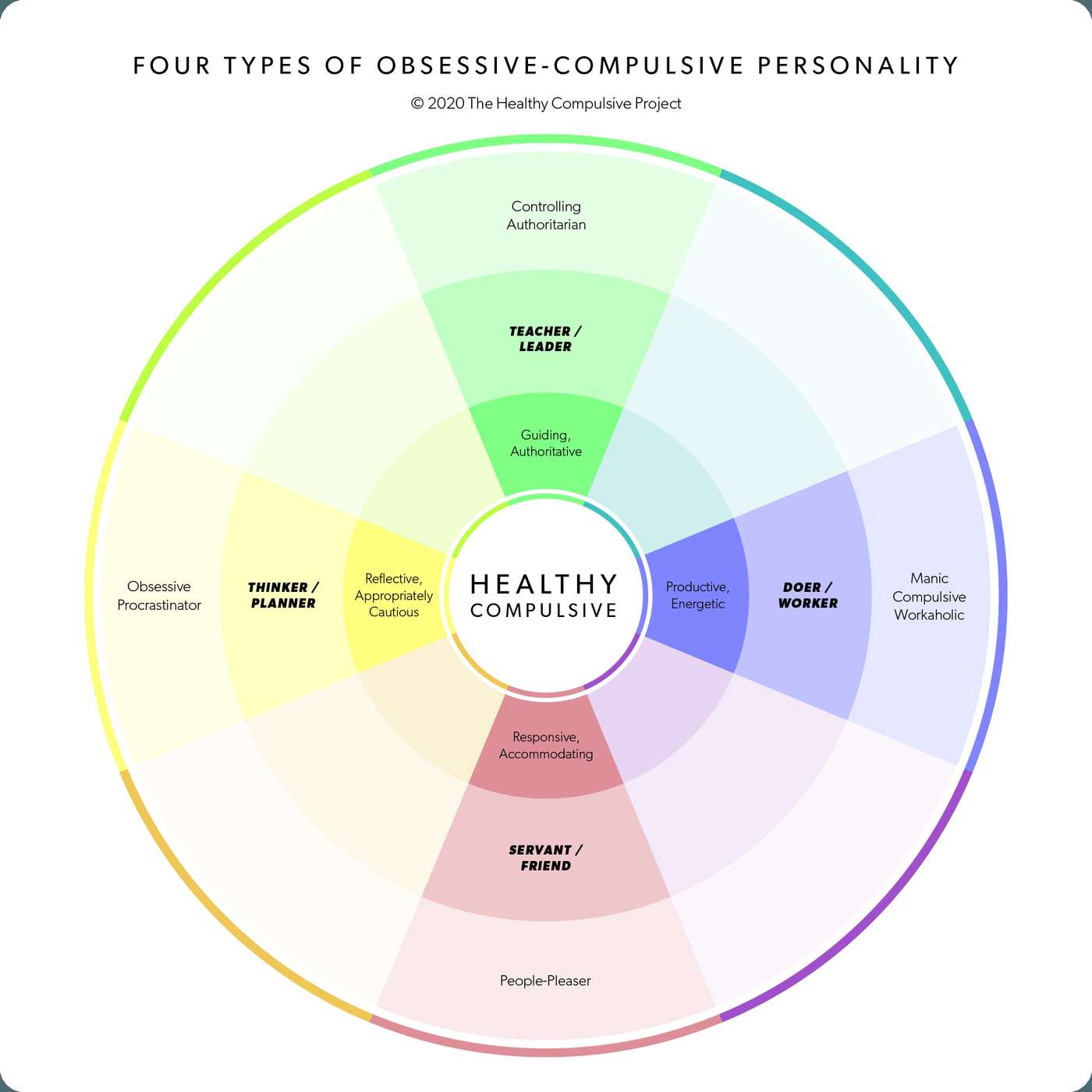
This the fourth and final episode in the series on Four Types of Obsessive-Compulsive Personality. Think-Planner types rely on imagination & foresight to deal with their world and can be very creative, but they can also get stuck obsessing & procrastinating. Join us as we explore this personality type through popular culture, mythology and psychology.