
The Healthy Compulsive Project
For five years The Healthy Compulsive Project has been offering information, insight and inspiration for OCPD, obsessive-compulsive personality, perfectionism, micro-managers and Type A personality.
Gary Trosclair
Show overview
The Healthy Compulsive Project has been publishing since 2023, and across the 3 years since has built a catalogue of 122 episodes, alongside 2 trailers or bonus episodes. That works out to roughly 35 hours of audio in total. Releases follow a fortnightly cadence.
Episodes typically run ten to twenty minutes — most land between 13 min and 21 min — though episode length varies meaningfully from one episode to the next. None of the episodes are flagged explicit by the publisher. It is catalogued as a EN-language Health & Fitness show.
The show is actively publishing — the most recent episode landed 1 weeks ago, with 18 episodes already out so far this year. The busiest year was 2024, with 44 episodes published. Published by Gary Trosclair.
From the publisher
For five years The Healthy Compulsive Project has been offering information, insight and inspiration for OCPD, obsessive-compulsive personality, perfectionism, micro-managers and Type A personality. Anyone who’s ever been known to overwork, overplan, overcontrol or overanalyze is welcome here, where the obsessive-compulsive personality is explored and harnessed to deliver what it was originally meant to deliver. Join psychotherapist, Jungian psychoanalyst and author Gary Trosclair as he delves into the pitfalls and potential of the driven personality with an informative, positive, and often playful approach to this sometimes-vexing character style.
Latest Episodes
View all 122 episodesWhat Carl Jung Would Tell You About Your Perfectionism. Ep. 122
Perfectionism Burnout and The Myth of The Total Couch Potato Collapse, Ep. 121
The “Should Effect”: When Desire Gets Lost in Self-Discipline, Ep. 120
Ep. 119: Inner Conflict: What Happens When You Silence Half of Yourself
Ep. 118: Letting Go of Resentment: Why You’re Obsessed with People Being Good
Ep. 117: Karpman's Triangle: 3 Roles that Destroy Relationships
Ep. 116: Codependence Is a 'Muscular Glue' — Here's How to Break Free
Ep. 115: Why You Can’t Stop Using Willpower--Even After It Drains You
Ep. 114: Can't Identify Your Feelings? You Might Have Alexithymia—The Unspeaking Heart
Ep 113: 6 Reasons Perfectionists Struggle to Change
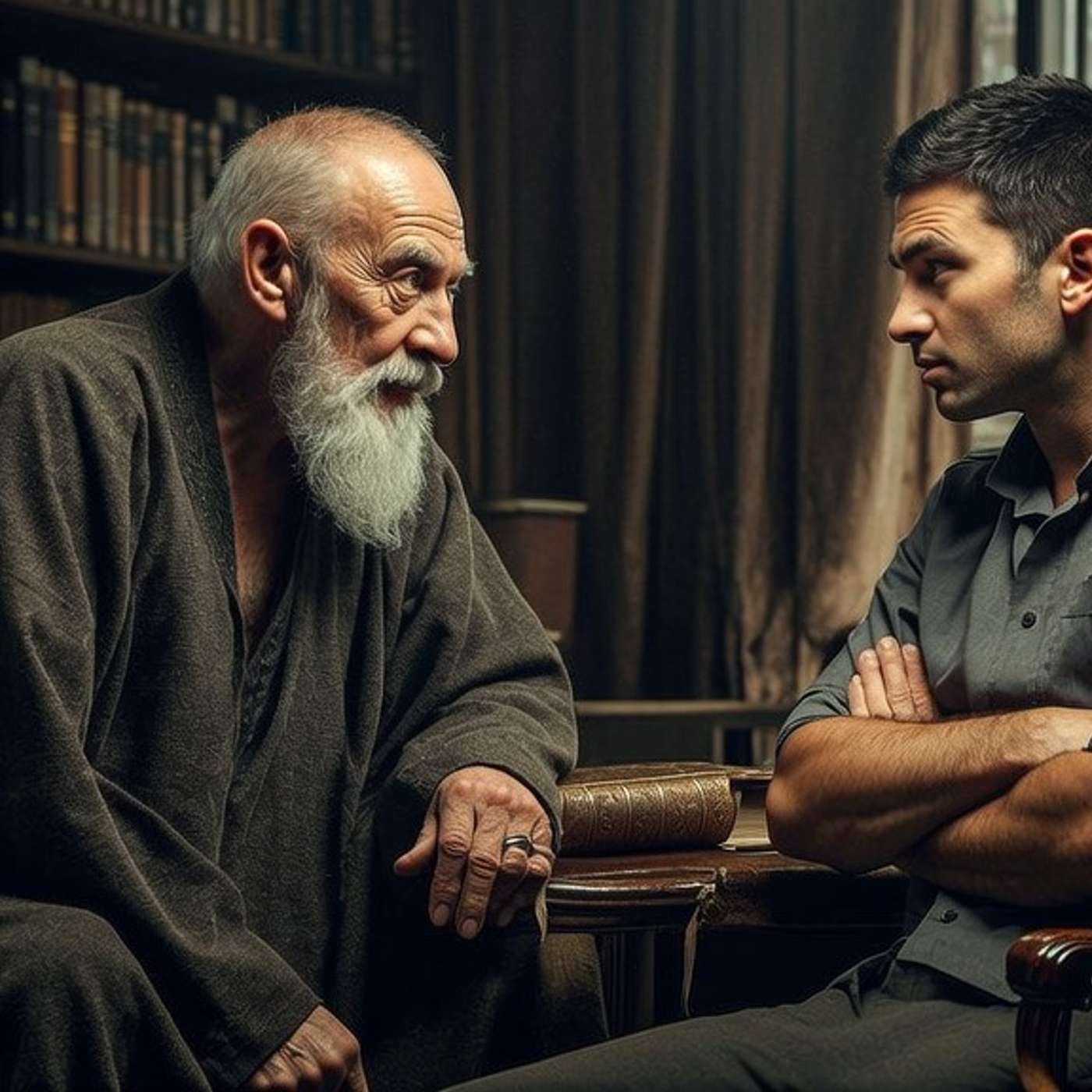
Ep 112Ep. 112: Break Free from the “Shoulds”: How Old Soul and Young Soul Archetypes Can Run Your Life
There are both among us and within us young souls and old souls. Some of them fulfilled and some of them unfulfilled. Typically, people with obsessive-compulsive personality traits are old souls, and they can express that part of them either constructively or destructively. But usually their young soul is silenced. This old soul is one manifestation of the archetype of the Senex, or the old man. Traits such as wisdom, caution, recognition of rules and boundaries, order and stability are typical of it. In his less fulfilling manifestations, he becomes rigid, judgmental and constricted, and represses expression of his young soul, the archetype of the Puer. In healthier manifestations he is the Wise Old Man who we can call on to guide us in difficult situations. In this episode we get to know the Senex and his younger counterpart, the Puer, to see how they affect us, and how we can live their calling in more fulfilling and effective ways. We’ll talk about why you should bother with this whole crazy idea of archetypes. We’ll also follow four siblings from the Elderwood family to see how these archetypes can affect our path in life.

Ep 111Ep. 111: Your Outdated, Risk‑Averse Comfort Zone Is a Prison — Chuck It
Risk aversion once kept us alive. Today, it often keeps us trapped. Drawing on evolutionary psychology, personality theory, and clinical experience, this essay explores how outdated risk‑avoidance strategies—especially common in obsessive‑compulsive personality styles—shrink our lives, suppress desire, and turn comfort zones into psychic prisons. Living longer isn’t the same as living better.
Ep 110Ep. 110: The Hidden Wisdom of the Compulsive Personality
Compulsive traits are often judged as rigid or unhealthy, but they originate in qualities that once helped humans survive. This essay reframes compulsiveness as an adaptive style—rooted in conscientiousness, focus, and persistence—and explores how these traits can become strengths when consciously directed. Through research, evolutionary psychology, and a clinical vignette, it shows how finding the right “calling” transforms compulsion from a burden into a gift.
Ep 109Ep. 109: 5 Steps to Respond to an OCPD Diagnosis
Receiving an OCPD diagnosis can leave you unsure where to begin, but the traits that once fueled rigidity and perfectionism can also support meaningful change. This guide introduces RAILS, a five‑step framework designed to help you start removing the “disorder” from your obsessive‑compulsive personality. The steps encourage building self‑respect, acknowledging how maladaptive perfectionism has caused harm, identifying the protective strategies you’ve used to manage insecurity, learning to sit with uncomfortable emotions rather than avoiding them, and realigning your daily actions with your true values and priorities.By consistently practicing these tools—through therapy, journaling, reading, support groups, or open conversations—you gradually rewire old patterns and melt the rigidity that has held you back. With patience and sustained effort, you can shift toward the healthy, adaptive end of the obsessive‑compulsive spectrum and create a more flexible, authentic, and fulfilling life.

Ep 108Ep: 108: A Dog's Eye View of OCPD
A Husky narrates a compassionate, humorous, and perceptive account of living with a human who has obsessive‑compulsive personality disorder traits. Through keen canine observation, the Husky contrasts natural dog instincts—flexibility, presence, connection—with the rigid routines, perfectionism, rationalization, and emotional struggles of the human world. The story explores themes of routine, control, relationships, emotional expression, and the possibility of change. Ultimately, the dog encourages humans to keep perspective, let go more easily, and remember what truly matters: connection, simplicity, and a few good belly scratches.
Ep 107Ep. 107: Waking Up from the Strange Comfort of the Obsessive-Compulsive Dream
What if the machine controlling your life isn’t out there—but inside you? Using The Matrix as a lens, this post exposes how maladaptive obsessive‑compulsive personality patterns act like internal programs that hijack authenticity, drain energy, and keep us locked in a dream of perfection, urgency, and control. Drawing from psychological research and Jungian theory, it reveals how these inner mechanisms develop, how they deceive us, and—most importantly—how we can take the red pill, wake up, and choose a more conscious, compassionate way of living.
Ep 106Ep. 106: Marriage Is Not for Sissies: Courage, Projection, and Projective Identification
It takes courage to make a relationship work. The courage to admit you’re wrong. The courage to persist when you’re right. The courage to take chances in communication, generosity and vulnerability. And most of all, the courage to objectively look at what’s happening emotionally inside of you. This episode explores projection and projective identification, two psychological processes that can make or break a relationship. It also suggests way to handle them when they're happening and to prevent them from happening in the first place.
Ep 105Ep. 105: Quieting the False Alarms of "Not Just Right Experiences"
Ever felt like something was “just not right” even when nothing is wrong? Psychologists call these Not Just Right Experiences (NJREs)—a subtle but powerful force behind OCD and OCPD. Learn what they are, why they matter, and how to manage them before they hijack your peace of mind.

Ep 104Ep. 104: Befriending Adaptive Perfectionism: From Villain to Ally
We’ve got perfectionism all wrong. The real problem isn’t high standards—it’s the illusion of perfectibility and harsh judgment that have been grafted onto it. Perfectionism began as a guide toward purpose, but centuries of distortion turned it into an enforcer of impossible ideals. Instead of banishing perfectionism, we can reclaim its adaptive side—commitment, persistence, and pursuit of excellence—while stripping away conceit and control. By befriending perfectionism, acknowledging its shadow, and clarifying our purpose, we transform it from a tyrant into a trusted partner. This episode brings together science and Jungian psychology for an unconventional approach to dealing with perfectionism.
Ep 103Ep. 103: 7 Vexing Questions & Encouraging Answers for Therapists Who Treat Obsessive-Compulsive Personality
Explore practical insights and nuanced strategies for working with clients who have obsessive-compulsive personality traits. Drawing on 33 years of experience, this post addresses common challenges, misconceptions, and ways to foster meaningful change—while offering a behind-the-scenes look for those in therapy.