Manufacturing Greatness | Productivity | Retention | Profits | Continuous Improvement | Safety | Workforce Development | Labor Challenges | Skills Gaps | Industry 4.0
190 episodes — Page 3 of 4
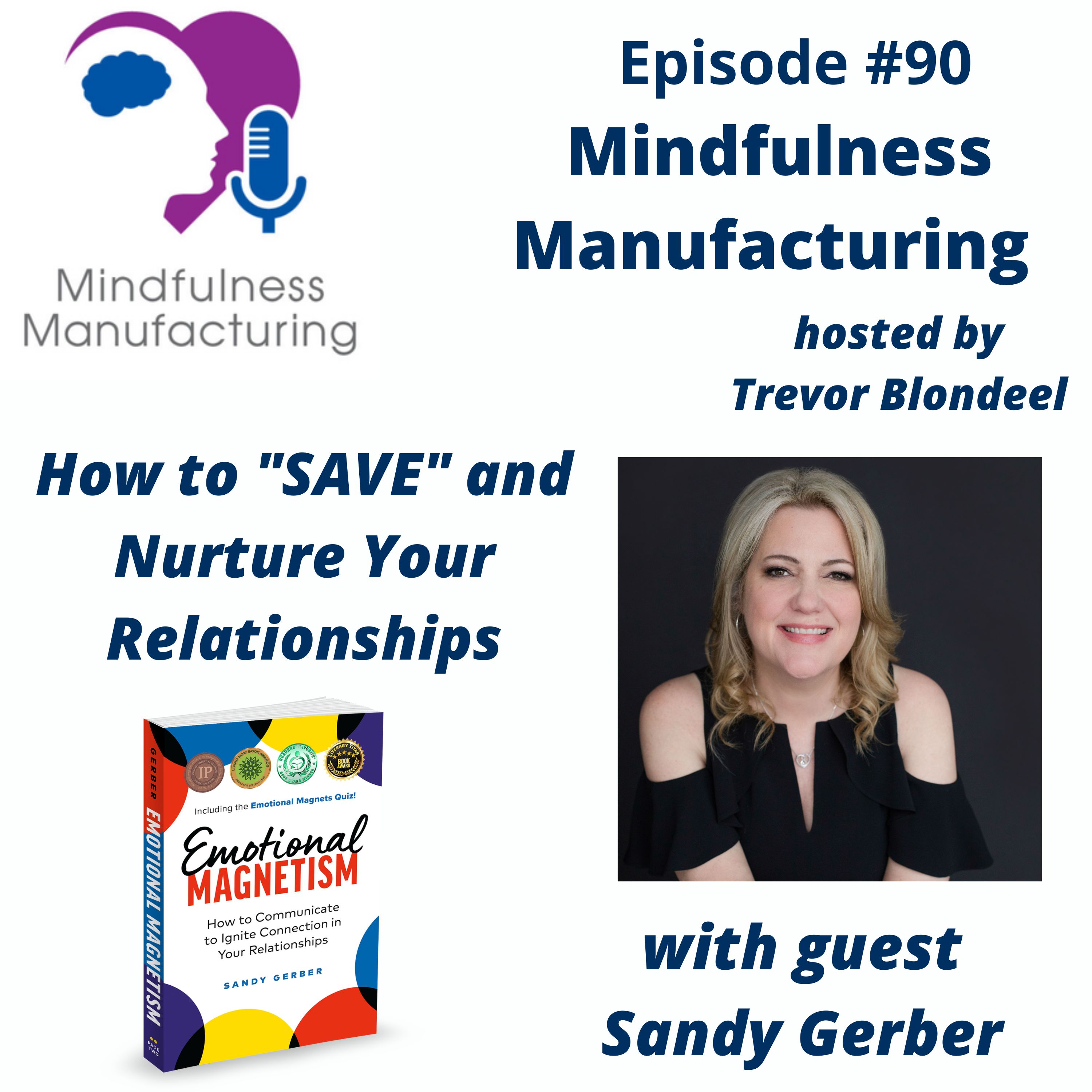
S1 Ep 90Culture + Trust for HR Leaders: Using the "SAVE" Framework to Strengthen Relationships and Boost Team Engagement with Sandy Gerber #90
Welcome to Manufacturing Greatness with Trevor Blondeel, where we work with organizations to manufacture greatness by leveraging resources you already have to achieve greater retention, productivity, and profits. To learn more, visit www.manufacturinggreatness.com and click here to subscribe to Trevor's monthly newsletter. Now, let's jump in! Have you ever felt unheard when sharing something important with your team? Communication breakdowns can limit engagement, productivity, and trust on the manufacturing floor. In this episode, Sandy Gerber, author of Emotional Magnetism and communication expert, shares insights on manufacturing leadership, communication skills, and employee engagement for Operations Managers, Production Managers, Manufacturing Managers, Team Leaders, and Shift Supervisors. Sandy explains how emotional intelligence, active listening, and authentic leadership strengthen trust building and accountability. You will learn practical strategies for difficult conversations, feedback delivery, and growth mindset that support workforce retention and create manufacturing cultures where relationships thrive and teams communicate with clarity and purpose. 3:11 – To get your message across, you need to connect emotionally with the person you're speaking to 4:39 – Oftentimes, we're too busy listening to rely that we forget to listen to understand 5:00 – When someone is telling you a story or about an experience, let them finish what they have to say instead of responding with your own story 9:23 – SAVE is an acronym for the four emotional magnets, safety, achievement, value, and experience 11:58 – SAVE and emotional magnets can be used to improve personal relationships as well as professional relationships 12:42 – To understand another person's emotional magnet, you may have to shift your mindset and think about the best way to communicate with them 16:35 – Once you understand someone's emotional magnets, you can approach conversations and conflict with more empathy and curiosity, which helps form stronger, lasting connections 20:00 – If you really want to connect with your team, you need to be engaged and open about your own communication blocks 20:59 – Taking the emotional magnets quiz can be a great exercise for strengthening your relationships and finding out more about yourself 22:29 – By getting rid of your own biases and assumptions about others, you take a big step toward improving relationships and understanding others 24:05 – By identifying your own emotional magnet, you can also get better at communicating what you need Connect with Sandy Gerber Website Take the Emotional Magnet Quiz here Buy Emotional Magnetism Read my book report on Emotional Magnetism

S1 Ep 89Leadership Energy in Manufacturing for Division Managers: Igniting Momentum Instead of Managing Burnout with Sara Canaday #89
Welcome to Manufacturing Greatness with Trevor Blondeel, where we work with organizations to manufacture greatness by leveraging resources you already have to achieve greater retention, productivity, and profits. To learn more, visit www.manufacturinggreatness.com and click here to subscribe to Trevor's monthly newsletter. Now, let's jump in! In today's fast paced manufacturing environment, leaders are feeling stretched thin as expectations around productivity, performance, and people continue to rise. In this episode, Sara Canaday, author and leadership development coach, shares insights on manufacturing leadership, resilience, and employee engagement for Operations Managers, Production Managers, Manufacturing Managers, Team Leaders, and Shift Supervisors. Sara explains how emotional intelligence, communication skills, and growth mindset help leaders manage stress and prevent burnout. You will learn practical strategies for strategic thinking, trust building, and workforce retention that support productivity, strengthen relationships, and create manufacturing cultures where leaders and teams have the energy, focus, and accountability needed to perform at their best. 2:16 – Leaders are meant to ignite fires, not constantly put them out. If you're a leader who finds yourself constantly acting as a firefighter, it's time to reconnect with the meaning of your role. 3:22 – We're conditioned from a young age to be productive and to feel like we're only valuable if we're doing something, which impacts the way we lead and show up in the workplace 4:40 – Even when you're doing nothing, your mind is still very productive, which is why it's important to take a strategic pause to declutter your mind, find more clarity, and make better decisions and better serve your team 7:43 – Deep discovery and creative problem-solving can't fully happen when we're multitasking 8:26 – It can be helpful to reach out to others and let them add structure to your thinking and gain a broader prospective 9:40 – You have more control and agency over your own time than you think you do 10:00 – To gain more control over your time, dig deeper into your schedule and challenge yourself to think about what is the most important. For example, you could start skipping meetings that you don't really need to be at, or send someone else to takes notes for you. 10:25 – Instead of just thinking about your to-do list, consider starting a list of things you can stop doing or delegate to someone else on your team 10:48 – As a leader, you have an obligation to think about how your can use your time in a way that best serves your team and your clients 11:43 – A change in scenery, like a stop at a coffeeshop on your way to your plant, is a great way to shift your mindset and build productive new habits 13:50 – Leaders should be responsive, but they also have to clearly show their priorities to themselves and the rest of their organization 15:05 – Leaders deal with exponential and even sometimes unrealistic expectations, especially when it comes to solving problems and facilizing productive conversations about important issues like social justice and employee mental health 16:08 – Leaders are doers and drivers, but they are also human beings and there's only so much they can do 16:30 – There are many things team and organizations can do to support their leaders, including thinking about the most important priorities or even hiring someone to help with some of the leader's other tasks 17:39 – Instead of impressing others, spend more time on thinking about what they really need to feel support and healthy in their role 20:00 – Shifting your mindset starts with putting aside your own biases and anything else that is clouding your judgment 20:43 – After putting aside your assumptions, spend more time discovering new, time-saving solutions by staying curious and seeking out productive, unbiased conversations with others 22:43 – If you're not sure about something, don't be afraid to just ask 23:00 – It takes courage to ask for what you need, but it's important to find ways to protect your time and energy 23:42 – Leaders deserve a better experience, and a good experience can create a domino effect that positively impacts the rest of their team Connect with Sara Canaday Website LinkedIn Sara's LinkedIn Learning courses
S1 Ep 88Leadership + Accountability for Manufacturing Managers: Using 360-Degree Feedback to Strengthen Self-Awareness and Improve Team Performance with Brian Houp #88
Welcome to Manufacturing Greatness with Trevor Blondeel, where we work with organizations to manufacture greatness by leveraging resources you already have to achieve greater retention, productivity, and profits. To learn more, visit www.manufacturinggreatness.com and click here to subscribe to Trevor's monthly newsletter. Now, let's jump in! To improve behavior and performance on the manufacturing floor, leaders need clear, actionable feedback. But giving and receiving feedback is not always easy in fast paced environments. In this episode, Brian Houp, leadership development coach and 360 feedback expert, shares insights on manufacturing leadership, feedback delivery, and employee engagement for Operations Managers, Production Managers, Manufacturing Managers, Team Leaders, and Shift Supervisors. Brian explains how communication skills, emotional intelligence, and authentic leadership strengthen trust building and accountability. You will learn practical strategies for difficult conversations, growth mindset, and workforce development that support productivity, improve retention, and create manufacturing cultures where continuous improvement becomes part of daily leadership. 2:15 – Feedback is more than a buzzword 2:44 – 360 Feedback is based around the individual and getting a stronger understanding of how others in your organization see you as a leader or team member 3:49 – How feedback is set-up and delivered can make a huge difference between having a negative or positive experience 4:44 – Confidentiality also plays a big role in 360 Feedback and only other type of constructive criticism 6:56 – As a leader, if you don't tell someone you want them to improve their behavior, then they have no idea of knowing there is an issue or area or improvement 7:24 – Feedback focuses on the past, but you can also look toward the future by giving feed forward and offering specific suggestions or advice others can use to improve their behavior 9:00 – To encourage others to share feedback, sometimes you need to think about the language and phrasing you're using when asking for feedback 10:36 – You should also consider who you're asking for feedback, and who in your organization you should talk to get the best feedback about a certain team member or problem on the floor 11:30 – People show up differently in front of different people, so be sure to get a wide range of feedback from different people, like executive, team members, or even vendors or clients who frequently interact with someone 14:55 – When you get feedback about your own behavior, take some time to digest and analyze it, but also get back out on the floor with your team and observe to get a stronger idea of what the feedback is talking about 16:44 – Sometimes, all you need is a new or fresh context 17:35 – It's natural to feel nervous or even scared about hearing feedback 18:16 – Many leaders focus on their team members who need the most improvement, but don't forget to also give feedback to the stronger members of your organization to help them get to the next level 20:00 – To get the best feedback, your whole team or organization needs to commit, especially supervisors and others in leadership positions 22:07 – Getting good feedback often also requires time and patience 25:41 – With feedback, you get what you give Connect with Brian Houp Website LinkedIn Brian's Forbes article on 360 Feedback
S1 Ep 87Leadership Self-Awareness in Manufacturing for Capability Managers: Using Personality Assessments to Improve How You Show Up with Christy Smallwood #87
Welcome to Manufacturing Greatness with Trevor Blondeel, where we work with organizations to manufacture greatness by leveraging resources you already have to achieve greater retention, productivity, and profits. To learn more, visit www.manufacturinggreatness.com and click here to subscribe to Trevor's monthly newsletter. Now, let's jump in! Personality assessments like DiSC and Myers Briggs can help manufacturing leaders better understand how they show up on the shop floor and how their leadership style impacts engagement and performance. In this episode, Christy Smallwood, speaker and author, shares insights on manufacturing leadership, emotional intelligence, and employee engagement for Operations Managers, Production Managers, Manufacturing Managers, Team Leaders, and Shift Supervisors. Christy explains how self awareness, communication skills, and authentic leadership strengthen trust building and accountability. You will learn practical strategies to improve feedback delivery, support workforce retention, and create manufacturing cultures where leaders connect more effectively with their teams and drive stronger productivity and results. 1:54 – There are many reasons for manufacturing leaders to consider implementing personality assessments 2:29 – One major benefit of personality assessments is learning your communication style and the communication style of others on your team – this helps you understand what you need to do to get the best results from conversations 3:32 – "We don't see the world as it is, we see it as we are" 5:03 – As a leader, it's important to take advantage of any tools you can use to better connect with your team, including personality assessments 5:14 – There are many different types of personality assessments to choose from, and you can pick something that best suits your team or organization 5:53 – One type of personality assessments is the DiSC assessment 7:26 – Some personality types assign an animal to go along with different personality traits 9:40 – If someone is acting differently from their normal personality type, it could be a sign they're dealing with an issue, like a family problem outside of work 10:55 – In a personality test, there is no wrong answer 11:43 – When people have different personalities, it may sometimes lead to conflict or miscommunications – this is why it's important to understand why others behave the way they do based on their personality 14:00 – With understanding, even people with vastly different personality types can get along 16:19 – Your personality type impacts the way you show up on a daily basis 18:31 – The COVID-19 pandemic has made personality assessments more important than ever 20:00 – By understanding a team member's personality, you'll have a better awareness of what they need to feel energized or supported 25:00 – We all have different aspects of our personalities Connect with Christy Smallwood Website
S1 Ep 86Leadership + Accountability for Operations Managers: Using Powerful Questions to Build Ownership and Autonomy with Jeff Nally #86
Welcome to Manufacturing Greatness with Trevor Blondeel, where we work with organizations to manufacture greatness by leveraging resources you already have to achieve greater retention, productivity, and profits. To learn more, visit www.manufacturinggreatness.com and click here to subscribe to Trevor's monthly newsletter. Now, let's jump in! Do you want to improve accountability and encourage autonomy on the manufacturing floor? It starts with asking better questions. In this episode, Jeff Nally, president of Nally Group Inc. and leadership coach, shares insights on manufacturing leadership, accountability, and employee engagement for Operations Managers, Production Managers, Manufacturing Managers, Team Leaders, and Shift Supervisors. Jeff explains how communication skills, strategic thinking, and authentic leadership help leaders strengthen trust building and support growth mindset. You will learn practical strategies for feedback delivery, difficult conversations, and workforce development that empower teams, improve productivity, and create manufacturing cultures where people take ownership and perform at their best. 1:52 - Many leaders think that their team members simply want to be told what to do 2:12 - The #1 thing teams want from their leaders is a clear picture of the mission and vision 2:33 - When people know the "end game," they are more likely to follow instructions, be more autonomous, and find more success 3:25 - Leaders need to communicate their mission and goals to their team 3:39 - Leaders also need to be great storytellers 4:00 - If you don't believe in your mission and vision, your team won't either 7:06 - To really show off your mission and vision, weave it into your everyday behavior and actions 7:16 - As a leader, you can help your team by asking the right questions 8:10: Ask simple question like "are you finished with this task? How close to completion are you? What do you need to get it done?" to hold your team accountable 11:00 - Don't be afraid to ask "feelings" questions 11:52 - Support questions, like "what can I do to help you meet your goal?" are also very important for growing and encouraging your team 13:28 - If you hold your team accountable, you know they'll get the job done without you having to stay constantly involved 16:29 - You can also ask about concerns and apprehensions 19:58 - When a team is autonomous, it doesn't mean their leader has abandoned them Connect with Jeff Nally The Nally Group LinkedIn
S1 Ep 85Situational Leadership in Manufacturing for Production Directors: Applying Cockpit Discipline to Improve Team Decisions with Shawn Dawley #85
Welcome to Manufacturing Greatness with Trevor Blondeel, where we work with organizations to manufacture greatness by leveraging resources you already have to achieve greater retention, productivity, and profits. To learn more, visit www.manufacturinggreatness.com and click here to subscribe to Trevor's monthly newsletter. Now, let's jump in! In high risk environments like manufacturing, poor behavior and unmanaged emotions can quickly impact safety, quality, and productivity. In this episode, Shawn Dawley, former Air Force pilot and president of OT2 Consulting, shares insights on manufacturing leadership, emotional intelligence, and team dynamics for Operations Managers, Production Managers, Manufacturing Managers, Team Leaders, and Shift Supervisors. Drawing from his combat aviation experience, Shawn explains how communication skills, self awareness, and authentic leadership strengthen trust building and accountability. You will learn practical strategies for difficult conversations, growth mindset, and workforce development that improve employee engagement, reduce errors, and create manufacturing cultures where teams stay focused, resilient, and aligned. 0:42 – Leadership is all about the balance between intellect and emotions 2:17 – In the aviation industry, crew relationships and emotions play a critical role in the safety and success of each flight 5:52 – Processes can only get better when there is a healthy environment and a positive organizational dynamic where people can point out issues and speak their mind 7:00 – If a leader is in a bad mood or creating a hostile environment, others might be less willing to draw attention to issues or voice their feedback 12:23 – Poor decision-making does just happen when you're angry—it can even happen when you're euphoric or excited 13:32 – When you're at your "emotional worst," it can be very difficult to make important decisions 14:42 – We all have emotions and "triggers" that make us feel certain ways—how we react is what sets up apart 16:15 –What role does our nervous system play in making us feel emotions or have specific reactions to stressful situations? 17:57 – By recognizing your triggers and response, you can improve your behavior and emotional intelligence 19:06 – Even if you give the exact same feedback to two different team members, it will land differently to each of them because they have different life experiences 20:56 – To understand a team member's behavior reactions, form a relationship and find out more about their past experiences 21:56 – Leadership is innate to the human condition 23:16 – Take the time to listen to what others have to say 25:01 – Think about the qualities of people you admire—are you showing those same qualities to your own team? Connect with Shawn Dawley Website Shawn would also love to hear your feedback! Find him on Linkedin at https://www.linkedin.com/in/shawnmdawley to stay connected.
S1 Ep 84Culture + Trust for Plant Managers: Creating a Family Mindset That Strengthens Loyalty and Team Commitment with Paul Younes #65
Welcome to Manufacturing Greatness with Trevor Blondeel, where we work with organizations to manufacture greatness by leveraging resources you already have to achieve greater retention, productivity, and profits. To learn more, visit www.manufacturinggreatness.com and click here to subscribe to Trevor's monthly newsletter. Now, let's jump in! Do you want to eliminate drama on the manufacturing floor and create a more focused, productive workplace? In this episode, Cy Wakeman, president and founder of Reality Based Leadership and bestselling author, shares insights on manufacturing leadership, employee engagement, and accountability for Operations Managers, Production Managers, Manufacturing Managers, Team Leaders, and Shift Supervisors. Cy explains how communication skills, self awareness, and growth mindset help leaders reduce workplace drama, strengthen trust building, and improve productivity. You will learn practical strategies for difficult conversations, feedback delivery, and authentic leadership that support workforce retention and create manufacturing cultures where people stay focused on results instead of distractions. 1:30 – To avoid drama—and your own ego—approach every situation by considering what you know for sure 3:30 – It's easy to fall into situations where you believe someone else is the villain or that you're doing the right thing, which is why it's important to consider facts, mindsets, and what details you know for sure 9:07 – The power of self-reflection is the ultimate drama diffuser 10:19 – Instead of judging or making assumptions, approach situations with curiosity, patience, and grace 11:49 – By extending an invitation instead of a lecture, you can "call people up to greatness." 13:20 – "As the leader goes, so does the team." 15:05 – If something happens that's unpreferred, you need to step up and impact it 20:02 – As a leader, you can set an example and set your team up to avoid drama 21:32 – By setting a strong leadership example and empowering your team, you can find productive solutions while still maintaining healthy boundaries and not falling into the trap of being a "fixer" for everyone's problems 23:05 – A question to ask yourself: if I see behavior I don't want, how am I enabling it? 24:29 – When you quit buffering your team member's relationship with reality, they will make better choices 29:32 – To get through to others, state reality and ask for what you really need 33:16 – As a leader, you can only make the invitation—it's up to others to decide what to do with that invitation 34:59 – With the correct leader, your team will step into brilliance most of the time 35:16 – If you have drama in your workplace, it's because people are venting instead of self-reflecting Connect with Cy Wakeman LinkedIn Reality-Based Leadership Website Newsletter Read Trevor's book review on No Ego
S1 Ep 83Performance + Productivity for Production Supervisors: Taking Your Team from Average to Amazing with Dustin E. James #83
Welcome to Manufacturing Greatness with Trevor Blondeel, where we work with organizations to manufacture greatness by leveraging resources you already have to achieve greater retention, productivity, and profits. To learn more, visit www.manufacturinggreatness.com and click here to subscribe to Trevor's monthly newsletter. Now, let's jump in! On the manufacturing floor, leaders do not aim to be average. They aim to build teams that are engaged, inspired, and performing at their best. In this episode, Dustin E. James, founder of Moments Leadership, shares insights on manufacturing leadership, employee engagement, and productivity for Operations Managers, Production Managers, Manufacturing Managers, Team Leaders, and Shift Supervisors. Dustin explains how communication skills, authentic leadership, and growth mindset help leaders strengthen trust building and accountability. You will learn practical strategies for workforce retention, difficult conversations, and team development that create manufacturing cultures where people feel energized, connected, and motivated to achieve stronger results. 1:40 – Energy comes in many different forms 3:00 – What is the balance between having a routine and bringing fresh energy into work every day? 3:10 – There isn't a single person on your team who doesn't want to be recognized for their good—when your team feels like they're being acknowledged for doing more than just the average, they'll continue to show up with new energy and motivation 4:34 – As a leader, it's your job to show your team how amazing they are 8:00 – We all have bad days filled with struggles, challenges, but there is always a life lesson to be found in hard experiences 8:25 – Even when you are doing something challenging or difficult, there are still opportunities to grow your own mindset or help or inspire someone else. You never know when you'll find a great lesson! 8:45 – If we want to learn new lessons and find new energy, we have to show up and be present every day instead of just embracing "average" 11:09 – As a leader, it's important to know your team member's individual goals and what motivates them 12:22 – In order to really connect, you need to know what makes each team member tick! 14:03 – "I see that you're doing your best" can be a powerful way to start conversations and better connection with your team 15:19 – As a leader, it's important to recognize that your team members are often doing the best they can and embracing that fact can help you build trust and move forward in productive ways. 16:08 – Trying to get someone to improve to change their behavior can be a big drain of energy—what are some ways to deal with this? 17:16 – Everyone on your team has something good that can be said about them 19:04 – At the end of the day, it all comes down to showing up and being there as a leader to your team. There's always going to be new challenges, but it's up to you to find lessons and energy in each day 20:00 – Always give your very best. Don't show up to be second! 21:52 – Our best days are always ahead of us Connect with Dustin E. James Moments Leadership website
S1 Ep 82Culture + Engagement for Frontline Supervisors: Weaving Appreciation into Daily Interactions to Boost Morale and Team Performance with Lisa Johnson #82
Welcome to Manufacturing Greatness with Trevor Blondeel, where we work with organizations to manufacture greatness by leveraging resources you already have to achieve greater retention, productivity, and profits. To learn more, visit www.manufacturinggreatness.com and click here to subscribe to Trevor's monthly newsletter. Now, let's jump in! Showing appreciation is one of the most powerful ways manufacturing leaders can strengthen engagement, trust, and productivity. In this episode, Lisa Johnson, global human resources professional and founder of HR Know How LLC, shares insights on manufacturing leadership, employee engagement, and workforce retention for Operations Managers, Production Managers, Manufacturing Managers, Team Leaders, and Shift Supervisors. Lisa explains how communication skills, emotional intelligence, and authentic leadership help leaders show genuine appreciation while strengthening trust building and accountability. You will learn practical strategies for feedback delivery, difficult conversations, and growth mindset that support productivity and create manufacturing cultures where people feel valued, connected, and motivated to perform. 1:13 – The strongest managers and leaders have a consistent practice for showing appreciation 1:40 – Showing consistent appreciation has many benefits, including increased morale and employees who are willing to go the extra mile 4:10 – While general positive feedback is often well-received, it is even better to offer specific positive feedback to individual employees 7:00 – Appreciation shouldn't be scheduled! Rather, you should weave it into your day-to-day interactions 8:15 – How you manage and organize you appreciation depends on your leadership style. One tip is to leave voice notes for yourself in your phone, so you can go back later and remember exactly what you wanted to say to your team member 11:58 – Giving appreciation can mean the difference between an average employee and an inspired employee who comes in feeling excited to work and ready to give it their all 14:37 – As a leader, you need to practice discipline to figure out the best feedback and appreciation practices 18:39 – Documentation matters. If you observe someone's good behavior but later forget to say something, it won't make a difference. 20:30 – Good appreciation practices can trickle-up to positively impact your whole organization 23:23 – Is there such a thing as too much appreciation? 24:00 – When showing appreciation, don't forget to be transparent and specific Connect with Lisa Johnson HR Know-How website Email
S1 Ep 81Manufacturing Leadership + Communication for Frontline Supervisors: Eliminating Miscommunication to Build Clarity and Stronger Team Performance with Dean Heffta #81
Welcome to Manufacturing Greatness with Trevor Blondeel, where we work with organizations to manufacture greatness by leveraging resources you already have to achieve greater retention, productivity, and profits. To learn more, visit www.manufacturinggreatness.com and click here to subscribe to Trevor's monthly newsletter. Now, let's jump in! In manufacturing leadership, you must take care of your own leadership behaviors before you can fully support your team. In this episode, Dean Heffta, speaker and trainer with Clarus Results, shares insights on manufacturing leadership, communication skills, and employee engagement for Operations Managers, Production Managers, Manufacturing Managers, Team Leaders, and Shift Supervisors. Dean explains how self awareness, trust building, and authentic leadership help leaders overcome communication challenges. You will learn practical strategies for feedback delivery, growth mindset, and accountability that support workforce retention and create manufacturing cultures where clear, effective communication drives success. 1:45 – "I know what I said, but I don't know what you heard." How do we overcome miscommunications on the manufacturing floor? 1:52 – As a leader, your role is to be aware, set expectations, and create a workplace environment that facilitates understanding 3:20 – Overcoming miscommunications begins with "healthy" leadership 6:45 – As a leader, put yourself not in a position of authority, but more of a position to facilitate. Taking less of a "boss" role and more of a collaborative role can lead to finding new solutions and creating a stronger workplace dynamic. 8:00 – Don't assume you know what others are thinking or what they need! 9:15 – The people who get promoted into leadership roles are often hard workers who are very driven and can't get the best results . . . but is this the mindset they need to be a great leader or manager? 12:00 – When miscommunications occur, it can often be attributed to "distress." When people are under stress, they are more likely to make mistakes or be less engaged, which can lead to miscommunications. 14:00 – Different personalities are speaking different languages. If you're not in tune with how another person communicates or "behavior signals," it can also contribute to communications breakdowns. 17:05 – To start with fixing communication issues in your workplace, start with becoming more aware of your own behavior. Learn your own behavioral style, think about the everyday language you use, and work to become more energized and present as a leader 18:40 – "Put on your own mask before helping others." You've probably heard this on planes during safety instructions, but it also applies to leadership and fixing your own behavior before you turn to helping others 21:45- It's only natural to want to avoid stress or do things you find rewarding. But to improve your leadership behavior, be intentional and seek out ways to learn 22:30 – Because we are storytellers, we have a tendency to make up stories about people and their behavior. 23:00 – One way to increase your awareness is to write down how much time you spent with certain people, then use it to analyze who you should be talking to more to improve behavior and overcome your own communications barriers 26:00 – When avoid miscommunications, it all comes down to mindset Connect with Dean Website LinkedIn

S1 Ep 80Manufacturing Leadership + Mindset for Operations Managers: Using the Serendipity Mindset to Improve Focus, Opportunity, and Results with Noah Graff #80
Welcome to Manufacturing Greatness with Trevor Blondeel, where we work with organizations to manufacture greatness by leveraging resources you already have to achieve greater retention, productivity, and profits. To learn more, visit www.manufacturinggreatness.com and click here to subscribe to Trevor's monthly newsletter. Now, let's jump in! Serendipity in manufacturing? It may sound unlikely, but unexpected moments can create powerful opportunities for connection, growth, and innovation. In this episode, Noah Graff of Graff Pinkert and the Swarfcast podcast shares insights on manufacturing leadership, strategic thinking, and employee engagement for Operations Managers, Production Managers, Manufacturing Managers, Team Leaders, and Shift Supervisors. Drawing from his experience sourcing manufacturing equipment around the world, Noah explains how growth mindset, curiosity, and authentic leadership help leaders turn challenges into opportunity. You will learn practical strategies for problem solving, workforce development, and continuous improvement that strengthen accountability, improve productivity, and create manufacturing cultures where adaptability drives long term success. 2:00 – What does it mean to be a "treasure hunter" in manufacturing? 5:00 – Someone's trash always has the potential to be someone else's treasure—you just need to have the right mindset to find it! 6:22 – It's amazing what you can find by keeping an open mind and always looking for the unexpected 9:00 – Serendipity isn't just about being in the right place at the right time. You also have to be in the right mindset. 9:42 – What's the difference between mindfulness and luck? 11:30 – Many leaders have either a growth mindset or a fixed mindset, but leaders can also consider a "serendipity" mindset 12:00 – To embrace a serendipity mindset, one strategy is serendipity bombs, or seeking multiple people who can help you complete a task, like finding a piece of machinery or doing research for an article 14:00 – Another tactic is serendipity hooks, or opening up a conversation to find new opportunities 15:45 – By being open to new conversations with new people, you can find great and unexpected opportunities—don't be afraid to be the spark for a conversation! Connect with Noah Graff: Graff-Pinkert website Swarfcast Podcast
S1 Ep 79Leadership + Engagement for Frontline Supervisors: Fueling Great Conversations to Build Trust and Improve Team Performance with Phil M. Jones #79
Welcome to Manufacturing Greatness with Trevor Blondeel, where we work with organizations to manufacture greatness by leveraging resources you already have to achieve greater retention, productivity, and profits. To learn more, visit www.manufacturinggreatness.com and click here to subscribe to Trevor's monthly newsletter. Now, let's jump in! Have you ever left a conversation on the manufacturing floor feeling misunderstood or frustrated by repeated requests that never seem to stick? Your words may be the missing link. In this episode, Phil M. Jones, influence expert and author of Exactly What to Say, shares insights on manufacturing leadership, communication skills, and employee engagement for Operations Managers, Production Managers, Manufacturing Managers, Team Leaders, and Shift Supervisors. Phil explains how intentional language, emotional intelligence, and authentic leadership strengthen trust building and accountability. You will learn practical strategies for feedback delivery, difficult conversations, and growth mindset that improve productivity, support workforce retention, and create manufacturing cultures where conversations drive action and results. 3:00 – Leaders are often asked questions from their team, customer base, and others. As a leader, it's not always your job to provide an answer. Instead, what you often need to do is add an increased layer of clarity. 4:30 – "Help me understand" is a very powerful phase. Example: instead of saying "why haven't you done this safety check?" ask "help me understand why you believe it's important that we need to do a safety check." 5:30 – Don't default to "tell" mode. Be curious and think about the best ways to serve your community and solve the problem. 6:30 – Questions are usually a strong way to start productive conversations. 8:00 – In great conversations, intentionality is key. This is important in all industries and even relationships outside work, like with your partner or children. 9:30 – Conversations should be fueled from a position of curiosity. 10:00 – If you don't understanding someone's context, your content is not going to get through to them. Take time to earn someone else's context before you add more noise! 10:30 – To find someone's context, try questions like "when was the last time . . ." or "how do you think it made us feel?" 11:11 – If you've told someone to do something multiple times and they're still not getting it, the problem might actually be YOU and your communication 12:30 – Don't focus on what you need to say. Ask yourself what the other person needs to hear to understand what you're saying. 13:03 – "I'm guessing you haven't got around to it . . ." is another impactful conversations starter that sets you up for productive dialogue and finding solutions. 13:30 – Let others "own" the solution. 13:37 – You don't want an answer—you want things to get done! 16:45 – Even if you think you're able to think quickly, time some extra time to think about what you need instead of just blurting out the first thoughts that come to mind 19:05 – People do things for their own reasons, not for yours 19:45 – Questions start conversations, conversations become relationships, relationships create opportunities, and from new opportunities you can drive new actions 22:45 – When you need to get someone's attention, assume everyone is always busy and be dirct and intentional with your request 26:15 – Using the right words is important when communications by email, too. Don't put too many questions into one email and be sure you give the other person something to respond to. Connect with Phil M. Jones: Website Find additional resources at ExactlyWhatToSay.com Buy Exactly What To Say
S1 Ep 78Employee Engagement in Manufacturing: Tools and Mindsets to Stop Quiet Quitting with Joe Mull #78
Welcome to Manufacturing Greatness with Trevor Blondeel, where we work with organizations to manufacture greatness by leveraging resources you already have to achieve greater retention, productivity, and profits. To learn more, visit www.manufacturinggreatness.com and click here to subscribe to Trevor's monthly newsletter. Now, let's jump in! "I want to take a vacation, but I'm worried about falling behind." This mindset is common on the manufacturing floor and contributes to burnout, retention challenges, and quiet quitting. In this episode, Joe Mull, speaker and author, shares insights on manufacturing leadership, employee engagement, and workforce retention for Operations Managers, Production Managers, Manufacturing Managers, Team Leaders, and Shift Supervisors. Joe explains how communication skills, authentic leadership, and growth mindset help leaders address labor shortages and improve team morale. You will learn practical strategies for boundary setting, difficult conversations, and feedback delivery that support productivity, reduce burnout, and create manufacturing cultures where people feel valued, supported, and motivated to stay. 2:00 – There is a massive recalibration going on right now about how work fits into our lives, which is something that started even before the pandemic 3:45 – The modern employee is firm about their boundaries and what they want from a workplace 5:20 – The number one reason why people don't take a needed vacation is fear of falling behind at work – how can we combat this? 6:00 – It's on the organization and leadership to set boundaries that will help others take time off to relax and recharge. They need to implement policies that honor time-off and their team's concerns about falling behind if they take a vacation 10:00 – As a leader, sometimes you have to learn to operate without the team members you need, so they can set boundaries and take time off 13:50 – People aren't "quiet quitting." They're just updating to a job that better fits their needs and boundaries. 15:30 – What are some of the reasons for a decrease in the labor force, especially in industries like manufacturing? 18:43 – In today's labor market, employees aren't going to settle for less or put up with a job where they're treated unfairly or not given time off 22:00 – Sometimes, employees quit but "forget to leave" and just go through the motions without much effort or passion – these are the quiet quitters 26:00 – Leaders can embrace storytelling to show their employees how they're doing valuable work every day – show how your organization's everyday work changes real lives 28:30 – With supply chain shortages and other issues, we need to sustain ourselves and the people who work for us 29:48 – Commitment is the key! Connect with Joe Mull: Website Preorder Employalty

S1 Ep 77Leadership + Trust for Manufacturing Managers: Strengthening Your Personal Brand to Increase Credibility and Influence with Kenneth Kinney #77
Welcome to Manufacturing Greatness with Trevor Blondeel, where we work with organizations to manufacture greatness by leveraging resources you already have to achieve greater retention, productivity, and profits. To learn more, visit www.manufacturinggreatness.com and click here to subscribe to Trevor's monthly newsletter. Now, let's jump in! There's a lot manufacturing leaders can learn from sharks — just ask Kenneth "Shark" Kinney. In this episode, Shark — speaker, marketing strategist, and podcast host — shares how curiosity and fearless leadership help Operations Managers, Production Managers, Manufacturing Managers, and Shift Supervisors build their brand, connect with their community, and lead with confidence. We talk practical communication skills, authentic leadership, and simple social media strategies to strengthen visibility and trust — plus lessons from Shark's real-life shark diving that translate directly to leadership on the shop floor. 1:00 – We can use our personal brands to make real change 3:12 – Manufacturing leadership is a lot like diving with sharks—you need curiosity, bravery, respect, and boundaries. Be fearless and dive deeper! 4:40 – Your leadership image goes far beyond the four walls of your manufacturing plant 6:00 – When telling your brand's story, be clear, concise, and always remember who your real audience is. Focus on community, not just the company 8:45 – Show the humans behind your brand and organization, not just "stock imagery" 11:00 – When it comes to matters like supporting a charity, think about the true identity behind your brand and think about what will engage your team and community 15:00 – Your employees are going to talk on social media, so why not work to make sure they always have something positive to say about your leadership and organization? 18:00 – LinkedIn is a powerful tool for building your brand and finding your community—one great tip for building your brand is to engage with other people's post on LinkedIn 24:00 – When someone in your organization does a great job, don't shy away from praising them on social media like LinkedIn 26:00 – If your employees are active on social media or talking about your organization online, it doesn't have to be a bad thing, as long as you make sure they have positive things to say by treating your team well 28:00 – Social media is a great tool for showing your most authentic self 33:30 – You have to play an active role in your organization's community, or else you'll miss out on many opportunities for branding and engagement Connect with Kenneth "Shark" Kinney Website Email LinkedIn
S1 Ep 76Leadership Fundamentals in Manufacturing for Business Unit Managers: The Four Necessities That Drive Consistent Results with Andy Neillie #76
Welcome to Manufacturing Greatness with Trevor Blondeel, where we work with organizations to manufacture greatness by leveraging resources you already have to achieve greater retention, productivity, and profits. To learn more, visit www.manufacturinggreatness.com and click here to subscribe to Trevor's monthly newsletter. Now, let's jump in! Becoming a leader, not just a manager or supervisor, requires mindset shifts, difficult conversations, and consistent behavior change on the manufacturing floor. In this episode, Dr. Andy Neillie, speaker, corporate trainer, and author, shares insights on manufacturing leadership, growth mindset, and employee engagement for Operations Managers, Production Managers, Manufacturing Managers, Team Leaders, and Shift Supervisors. Dr. Andy explains how communication skills, authentic leadership, and accountability help leaders strengthen trust building and improve team performance. You will learn practical strategies for feedback delivery, workforce development, and strategic thinking that support productivity, retention, and create manufacturing cultures where leaders confidently guide their teams toward better results. 3:30 – Due to COVID-19, the Great Resignation, and other recent events, leaders need to shift their mindset to understand their team member's needs on issues like flexibility—as a leader, you need to evolve with the times 6:00 – As a leader, it's not about you. It's about your team! 7:00 "There's nothing new in leadership. Once you get past Marcus Aurelius and Jesus Christ, there's really nothing new." 8:10 – To be a good leader, you first have to be a good person. If you show bad behavior or poor management, people will not respect you or want to work for you. 10:00 – "The four Cs of being a leader are conviction, competence, character, and covenant" 13:00 – If you shun hard conversations with your team, your employees will never grow, learn, or know when they're missing an opportunity for improvement 14:45 – Being a leader takes bravery and you need to have the responsibility and stewardship to have those hard conversations and take care of the bottom line 15:50 – Once you've written someone off as no longer competent at their role, you've lost your title of leadership and your position to help them. If that's your mindset, it's either time for you to grow or let that team member go. 16:50 – It's the leader's responsibility to build and represent the rest of the team 18:00 – Your team isn't necessarily your "family" because businesses have production goals and need to perform outward facing tasks – the goal isn't to make everyone feel good about themselves, but to win the game when it comes to profits and production 21:05 – Don't forget to document the positive feedback, too! However, you have to be geninue with your compliments and positivity 29:00 – "Extend grace to the teachable" 30:00 – Leadership takes courage Connect with Dr. Andy Neillie Download a copy of The Three Imperatives of Leadership Conversations here. Website Email Buy The Golden Principle: Life and Leadership Lessons from a Rescued Dog
S1 Ep 75Communication + Confidence for Manufacturing Managers: Speaking Up Clearly to Build Credibility and Stronger Team Alignment with Tracy Hooper #75
Welcome to Manufacturing Greatness with Trevor Blondeel, where we work with organizations to manufacture greatness by leveraging resources you already have to achieve greater retention, productivity, and profits. To learn more, visit www.manufacturinggreatness.com and click here to subscribe to Trevor's monthly newsletter. Now, let's jump in! In this episode of Mindfulness Manufacturing, Tracy Hooper — founder of The Confidence Project and author of The Now Hello — joins the conversation to share practical tools for Operations Managers, Production Managers, Manufacturing Managers, and Shift Supervisors who want to communicate with clarity and lead with confidence. Tracy breaks down simple, real-world strategies — from eye contact to starting and ending conversations on the floor — that strengthen leadership presence, improve communication skills, and build trust with your team. We also talk about how confidence directly impacts culture, engagement, and how leaders show up during everyday interactions on the shop floor. 1:36 – Confidence isn't something you're born with. It can be learned from practicing and taking action 3:15 – Complimenting someone is a great way to kickstart a positive conversation—but make sure it's an authentic compliment 6:00 – "How" and "what" are great magic words for starting a open-ended conversation with confidence, but avoid starting with "why" because it can make others feel defensive 9:00 – If you're always talking and never listening, you'll never really learn anything 10:06 – Use the three-sentence rule - saying three sentences, then pausing to let the other person speak or respond 11:15 – Pay attention to body language, too! 15:00 – Even introverted leaders can become confident speakers, especially if they practice first with people they respect and trust 16:30 – To speak with confidence, you always have to learn how to let others speak 17:20 – When giving difficult feedback, "I" statements can help you have a productive conversation without making the other person feel defensive 19:30 – There is power in being brief 23:00 – If you only have a few minutes for a conversation, be a timeframe and be direct by asking to-the-point questions 29:00 – Always look the other person in the eyes when having a conversation to make them feel valued and acknowledged Connect with Tracy Hooper The Confidence Project Email Buy The Now Hello
S1 Ep 74Manufacturing Leadership + Continuous Improvement for Operations Leaders: Preparing for a Tech-Driven Future with Kate O'Neil #74
Welcome to Manufacturing Greatness with Trevor Blondeel, where we work with organizations to manufacture greatness by leveraging resources you already have to achieve greater retention, productivity, and profits. To learn more, visit www.manufacturinggreatness.com and click here to subscribe to Trevor's monthly newsletter. Now, let's jump in! As manufacturing becomes more driven by automation and technology, human leadership matters more than ever. In this episode, Kate O'Neil, tech humanist and founder of KO Insights, shares insights on manufacturing leadership, strategic thinking, and employee engagement for Operations Managers, Production Managers, Manufacturing Managers, Team Leaders, and Shift Supervisors. Kate explains how communication skills, growth mindset, and authentic leadership help leaders balance innovation with human connection. You will learn practical strategies for workforce development, upskilling, and trust building that support productivity, improve retention, and create manufacturing cultures where technology enhances people instead of replacing them. 1:30 – How can we reclaim our agency? 2:53 – When a lot of manufacturing is being done by machines, it's critical to find a balance between automation and human decision making 3:56 – As we use more and more technology and automation in the manufacturing sphere, human roles actually become more important than ever, especially when it comes to creating safe and effective procedures 7:19 – When using data, consider the humans on the other side 12:50 – Leaders need to determine the processes and nuances behind data, and this often means asking questions instead of just relying on hard data 16:30 "Machines are what we encode of ourselves" 17:50 – What does it mean to lead in a technology-driven world? 21:00 – Leaders and their organizations need to be careful about how they use public trust and responsibility with data and data gathering 23:00 – Due to issues like climate change, supply chain shortages, and labor issues, leaders are in a tougher position than ever, especially when it comes to decision-making 25:00 – Are you aligned with history in the way you want to be? 27:00 – Your actions today are tomorrow's history 29:00 – Social media is important for manufacturing leaders, but be wary of false information 32:00 – When used correctly and responsibility, technology is a powerful tool for manufacturing leaders Contact Kate O'Neil: Website Twitter Books
S1 Ep 73Productivity for Manufacturing Managers: Applying Six Steps to Think Bigger and Drive Measurable Results with Ann McNeill #73
Welcome to Manufacturing Greatness with Trevor Blondeel, where we work with organizations to manufacture greatness by leveraging resources you already have to achieve greater retention, productivity, and profits. To learn more, visit www.manufacturinggreatness.com and click here to subscribe to Trevor's monthly newsletter. Now, let's jump in! In his 1937 classic Think and Grow Rich, Napoleon Hill outlined six steps for success. In this episode, Ann McNeill joins the podcast to help manufacturing leaders turn those timeless ideas into practical tools for today's workplace. Ann shares insights on manufacturing leadership, growth mindset, strategic thinking, and goal setting for Operations Managers, Production Managers, Manufacturing Managers, and Shift Supervisors. We talk about building confidence, strengthening communication skills, and using mastermind thinking to improve team performance, accountability, and long term success. You will also hear real world stories and simple strategies leaders can apply right away to support productivity, workforce development, and authentic leadership on the shop floor. 2:13 – "Niche to be rich" 2:30 – To become rich, you have to start with the right mindset 3:00 – Think and Grow Rich by Napoleon Hill is a great book on this subject 3:30 – In his book, Hill shares six steps and questions for success. 3:37 – How much money do you want to make? What are you going to do to make that money? What date do you want to have that money by? 4:00 – Create an affirmative statement to help find success, then say this statement to yourself twice a day 5:00 – Accountability is key to success 5:43 – "A confused mind makes no decisions." 8:00 – What about people who don't care about the money, but simply want to add value or serve others? 9:00 – Without money, you can't fuel your passions 10:00 – You can't just start a fire! First, you need to add the fuel and wood 11:40 – If you give, you will get back 14:00 – Think and Grow Rich includes some great stories to highlight the lessons in this podcast 16:30 – If you want to be rich and successful, you must be clear about your mindset and purpose 18:00 – You can train your brain and set yourself up for positive outcomes 21:00 – The path to riches and success isn't always easy or perfect Connect with Ann McNeill If you'd like additional resources on the steps outlined in Think and Grow Rich, text "Ann" to 55678. Website
S1 Ep 72Manufacturing Culture + Engagement for HR Leaders: Using Heart-Centered Stories to Strengthen Inclusion and Team Connection with Reggie Davis #72
Welcome to Manufacturing Greatness with Trevor Blondeel, where we work with organizations to manufacture greatness by leveraging resources you already have to achieve greater retention, productivity, and profits. To learn more, visit www.manufacturinggreatness.com and click here to subscribe to Trevor's monthly newsletter. Now, let's jump in! Improving diversity and inclusion in manufacturing is not always easy. It often requires difficult conversations, honest reflection, and a willingness to address unconscious bias and unintentional divides. In this episode, Reggie Davis joins the podcast to share insights on manufacturing leadership, communication skills, trust building, and authentic leadership for Operations Managers, Production Managers, Manufacturing Managers, and Shift Supervisors. Reggie, founder of Uplift Coaching and Consulting, breaks down common diversity challenges organizations face and shares personal stories about bias, growth mindset, and connection. You will walk away with practical strategies to strengthen employee engagement, improve team relationships, and create a more supportive manufacturing culture. 0:45 – We previously talked about unconscious bias with Michelle Maldanado in Episode 22 1:30 – When companies didn't keep up with changing technology, they ended up failing or going out of business – the same thing can be said about diversity and inclusion 2:30 – Many organizations have conversations about diversity, but don't fully or authentically embrace it 3:13 – Don't be all talk and not action! 4:25 – It's a human instinct to be defensive when challenged or corrected 5:18 – How can people bring their "full selves" to the workplace? 6:00 – In an ideal workplace, a very conversative person and a very progressive person should be able to work in harmony, despite their different views 7:05 – Starting conversations about diversity and differences in the workplace can be awkward 10:21 – "What's from the heart reaches the heart" 13:07 – Questions are a great way to start productive conversations 16:35 – Many people want growth, but don't know where to begin 18:22 – Diversity and inclusion start at the "roots" of your organization 21:40 – Approach difficult conversations with intention and trust Connect with Reggie Davis: [email protected] (901)483-7199
S1 Ep 71Productivity for Operations Managers: Using Brain Science to Improve Focus, Decisions, and Shop Floor Performance with John B. Molidor #71
Welcome to Manufacturing Greatness with Trevor Blondeel, where we work with organizations to manufacture greatness by leveraging resources you already have to achieve greater retention, productivity, and profits. To learn more, visit www.manufacturinggreatness.com and click here to subscribe to Trevor's monthly newsletter. Now, let's jump in! In manufacturing, how leaders use their brain directly impacts communication, decision making, and team performance. In this episode, Dr. John B. Molidor, CEO of the Brain Based Leadership Institute and professor emeritus at Michigan State University's College of Human Medicine, joins the podcast to explore the science behind manufacturing leadership, emotional intelligence, and growth mindset. We discuss how brain structure influences behavior, why people react the way they do under pressure, and how Operations Managers, Production Managers, Manufacturing Managers, and Shift Supervisors can use brain based insights to improve communication skills, strengthen trust, and motivate their teams for stronger productivity and engagement. 1:00 – Brains don't fully form until we turn 25, so people from younger generations may have different ways of responding and behaving than older generations 2:42 – The main function of the brain is regulating energy 3:15 – Given a choice, your brain will focus on tasks that don't expend a ton of energy 5:00 – To better help people understand and remember what you say, start with the big picture first, then move onto the details 6:17 – Your brain loves water, so stay hydrated! 6:56 – Later in the day, be mindful of the fact that people's brains are trying to maintain their energy 9:15 – Help people understand the "why" behind your statements 10:40 – When assigning tasks to someone, try not to give them too many things at once 10:57 – If someone has a lot of tasks, they will probably focus on the easiest ones first 12:28 – Rewards and rest are important 13:51 – The brain is unique because it's the only organ that can rewire itself 17:16 – Tell people which tasks you want them to focus on first, and what order you want them to accomplish the tasks in to help them prioritize 20:00 – Avoid "by the way" tasks thrown in with the others 21:02 – Set others by for success 24:00 – Brains are very predictive 27:00 – Culture often separates the head and the heart Contact John: Email
S1 Ep 70Productivity for Manufacturing Managers: Communicating with Clarity to Influence Teams and Drive Results with Patricia Fripp #70
Welcome to Manufacturing Greatness with Trevor Blondeel, where we work with organizations to manufacture greatness by leveraging resources you already have to achieve greater retention, productivity, and profits. To learn more, visit www.manufacturinggreatness.com and click here to subscribe to Trevor's monthly newsletter. Now, let's jump in! Stuff, things, literally, simply. How often do these words sneak into your everyday conversations on the shop floor? In this episode, Patricia Fripp joins the podcast to share powerful insights on manufacturing leadership, communication skills, and authentic leadership for Operations Managers, Production Managers, Manufacturing Managers, and Shift Supervisors. As an executive speech coach and Hall of Fame keynote speaker, Patricia breaks down how small language habits impact credibility, trust building, and engagement. You will learn practical strategies to sharpen your message, strengthen leadership presence, and use clear communication to inspire action and improve team performance. 0:45 – The best manufacturing leaders are the ones with the best communication 5:45 - "7% is what you say, 30% is how you say it, and 55% is how you look" – is there any truth to this? 8:00 - If your words are well crafted and well-delivered, you can change your organization 8:11 – In a busy industry like manufacturing, it can be easy to lose sight of the importance of words in our everyday lives 8:22 – When there's a miscommunication, leaders might assume the other person just didn't understand, but it's often an issue with words and phrasing 8:36 – "Stuff" is a rubbish word 9:00 – By being specific with your word choices, you inspire confidence and build credibility 10:00 – "If it weren't a thing, what would it be?" Use specific words to replace unclear words like stuff or things 10:30 – Specific communication is especially important when you're speaking to someone who doesn't speak English as their first language 11:57 – If it's not fruit, it's not a bunch! Use numbers and specifics instead 13:16 – When possible, use shorter sentences to communicate and keep your communications to one idea per sentence 13:40 – Speak with the aim of being remembered and repeated 14:20 – By taking a pause, you give yourself a chance to breathe and allow the other person time to process 15:11 – "Literally" and "simply" are also naughty words! 18:48 – To improve your communications, record yourself and listen to the words you frequently use 21:00 – Depending on their background and culture, people may express themselves differently 22:00 - To inspire commitment and quality, ask them if their work would be good enough to sell to their own mother 23:00 – Ask as an advocate for your audience 24:52 – Every leader needs to show the person they are beyond their position Connect with Patricia Fripp Website Fripp VT
S1 Ep 69Collaboration for Operations Managers: Aligning the Why, How, and When to Strengthen Team Engagement and Results with Michael Neuendorff #69
Welcome to Manufacturing Greatness with Trevor Blondeel, where we work with organizations to manufacture greatness by leveraging resources you already have to achieve greater retention, productivity, and profits. To learn more, visit www.manufacturinggreatness.com and click here to subscribe to Trevor's monthly newsletter. Now, let's jump in! With artificial intelligence and new technology reshaping manufacturing, leaders are being pushed to think differently — and that's where this conversation comes in. In this episode, I'm joined by San Francisco–based executive coach Michael Neuendorff, president of Bay Area Executive Coach, to explore how manufacturing leaders can strengthen collaboration, shift their mindset, and ask better questions to unlock creative, actionable solutions. We talk practical ways Operations Managers, Production Managers, Manufacturing Managers, and Shift Supervisors can learn from other industries, improve communication, and lead with curiosity as change 00:30 – "Seek to understand, then to be understood." – Stephen Covey 2:48 – To stay curious in the workplace, adopt a "student's mind" 3:09 – Even if it's your tenth or twentieth year on the job, there is still something you can learn today 3:27 – As long as you stay curious, you can learn from anyone—even someone who you previously thought you couldn't learn anything from 4:29 – Due to the rise of AI and other emerging technology, manufacturing could be in for some big and unique changes, and we need to prepare for that 5:40 – If you don't know what didn't work in the past, it's harder to prepare for the future 5:45 – Work with people to find solutions, instead of just telling them what to do 6:13 – If someone is consistently told what to do, they can click off the part of their brain that focuses on understanding and problem-solving 6:58 – By staying curious, we can better work with others to find creative, productive outcomes 7:21 – Ask how you can invest in others 9:23 – If people feel like you believe in them, they're more likely to rise to the occasion 10:18 – To ask questions that foster creativity and collaboration, consider your audience – are you talking to your peers at a leadership level, or someone a few levels below you? 11:14 – Be open to new and different perspectives 12:59 – Look back at your last 30 days. How have you tackled problems? What can you do differently in the next 30 days? 13:56 – When talking to others or setting meetings, consider the time of day. For example, some people may be at their best in the mornings when they're feeling fresh and energized 20:55 – Believe in the power of collective idea generation 21:53 – By building stronger relationships, you can build more trust and engagement levels will increase Connect with Michael Neuendorff: Website for executive coaching Website for executive coach training LinkedIn

S1 Ep 68Employee Engagement in Manufacturing: Growing a Leadership Mindset That Shows People They Matter with Josh Levin #68
Welcome to Manufacturing Greatness with Trevor Blondeel, where we work with organizations to manufacture greatness by leveraging resources you already have to achieve greater retention, productivity, and profits. To learn more, visit www.manufacturinggreatness.com and click here to subscribe to Trevor's monthly newsletter. Now, let's jump in! In this episode, CEO Josh Levin joins the podcast to share how manufacturing and construction leaders can put culture first while still driving performance. We talk manufacturing leadership, accountability, trust building, and authentic leadership for Operations Managers, Production Managers, Manufacturing Managers, and Shift Supervisors. Josh breaks down how passion, clear expectations, and people-first leadership create stronger engagement and a workplace where teams actually want to show up. You will walk away with practical ideas to strengthen culture, improve communication skills, and build momentum through accountability on the shop floor. 0:37 – In some organizations, people are treated like batteries, which can be easily used and quickly replaced 2:04 – How can we shift our mindsets to focus on people over profit? 2:40 – If your team members don't feel valued, they aren't going to show up and do their best work 4:30 – Your employees, their needs, and their lives outside of work should matter to you as a leader 5:37 – Regular, thoughtful employee evaluations are a great way to show effort and retain employees 6:46 – Being the leader doesn't mean you have to be the voice or face of the entire organization 9:17 – Even if your business has a great brand, you can't thrive unless you have good culture 13:26 – Accountability and honest dialogue are an important part of building trust and relationships 14:45 – To improve, study the behavior of successful people—and pay attention to the behavior of non-successful people, too 20:18 – Remember that employees may have motives for showing up beyond simply loving your company, like needing to support their families 22:48 – As a leader, keep your "passion tank" filled 26:00 – Invest in your employees, especially those who are willing to put in the work 25:55 – "There's never a traffic jam on the extra mile." 28:10 – Someone's past doesn't have to dictate their future Connect with Josh Levin: To learn more about Empowered Electric, visit their website.
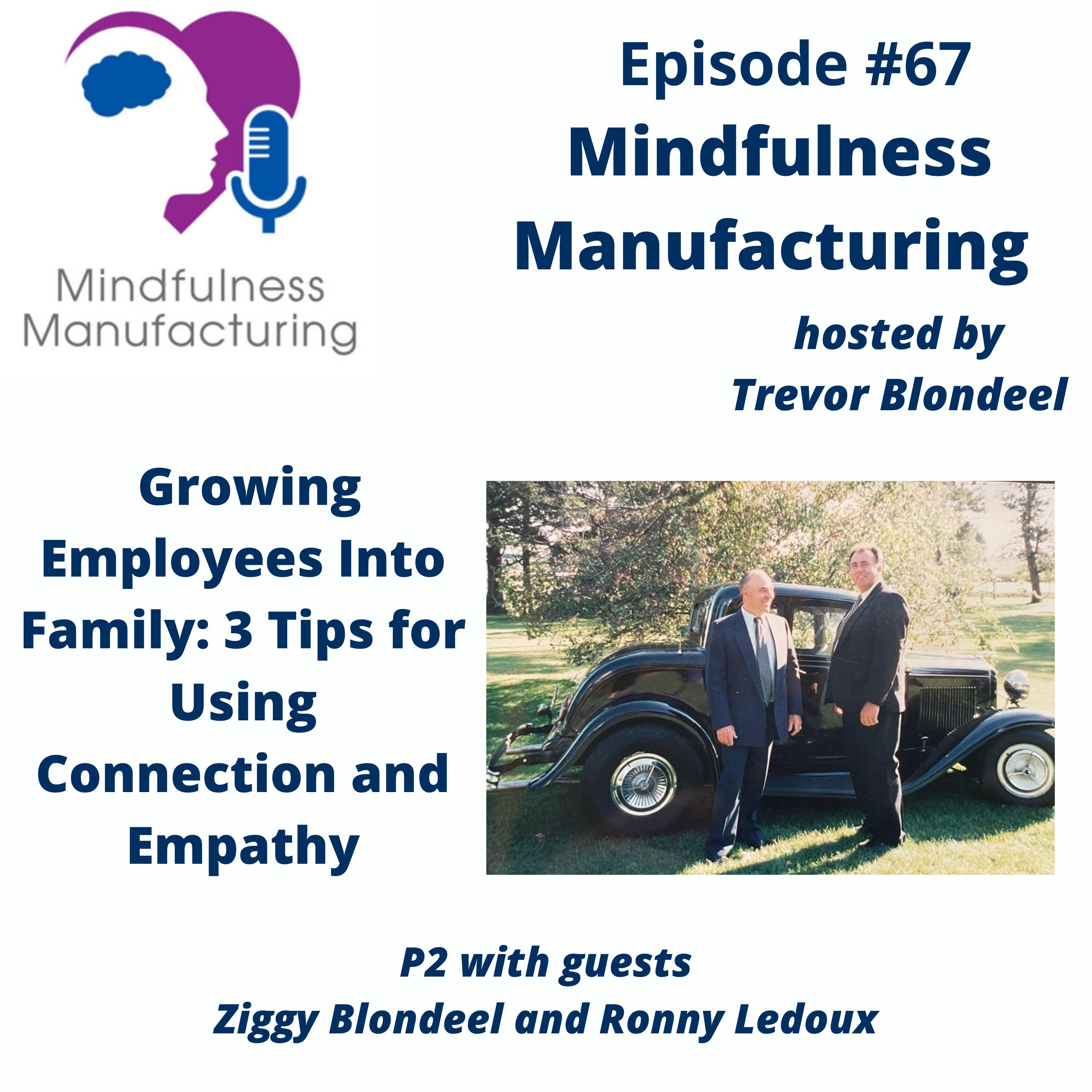
S1 Ep 67Culture + Engagement for Frontline Supervisors: Using Connection and Empathy to Strengthen Loyalty and Team Commitment with Ziggy Blondeel and Ronny Ledoux #67
Welcome to Manufacturing Greatness with Trevor Blondeel, where we work with organizations to manufacture greatness by leveraging resources you already have to achieve greater retention, productivity, and profits. To learn more, visit www.manufacturinggreatness.com and click here to subscribe to Trevor's monthly newsletter. Now, let's jump in! Welcome to part two of my conversation with Ziggy Blondeel and long time team member Ronny Ledoux, as they continue sharing lessons from years of working together at Blondeel Nursery. In this episode, we explore manufacturing leadership, trust building, communication skills, and accountability for Operations Managers, Production Managers, Manufacturing Managers, and Shift Supervisors. Ziggy and Ronny break down how they built lasting respect, handled conflict with calmness, and maintained strong employee relationships over time. You will hear practical insights on authentic leadership, difficult conversations, and creating a workplace culture where people feel valued and motivated to do their best work. 3:14 – Think about the whole team when making big decisions 3:42 – When your treat your employees with trust and respect, they will treat you in the same way 6:22 – Leaders can create workplace environments where employees want to do their best possible work 8:00 – When a leader sets a positive example, it rubs off on everyone 10:17 – You get what you give 13:05 – How you make people feel has an impact on how they show up and engage 19:20 – When hiring a new employee, you can usually tell right away if they'll be a good fit or not 20:44 – Make your best attempts to get along with other people, especially your team members
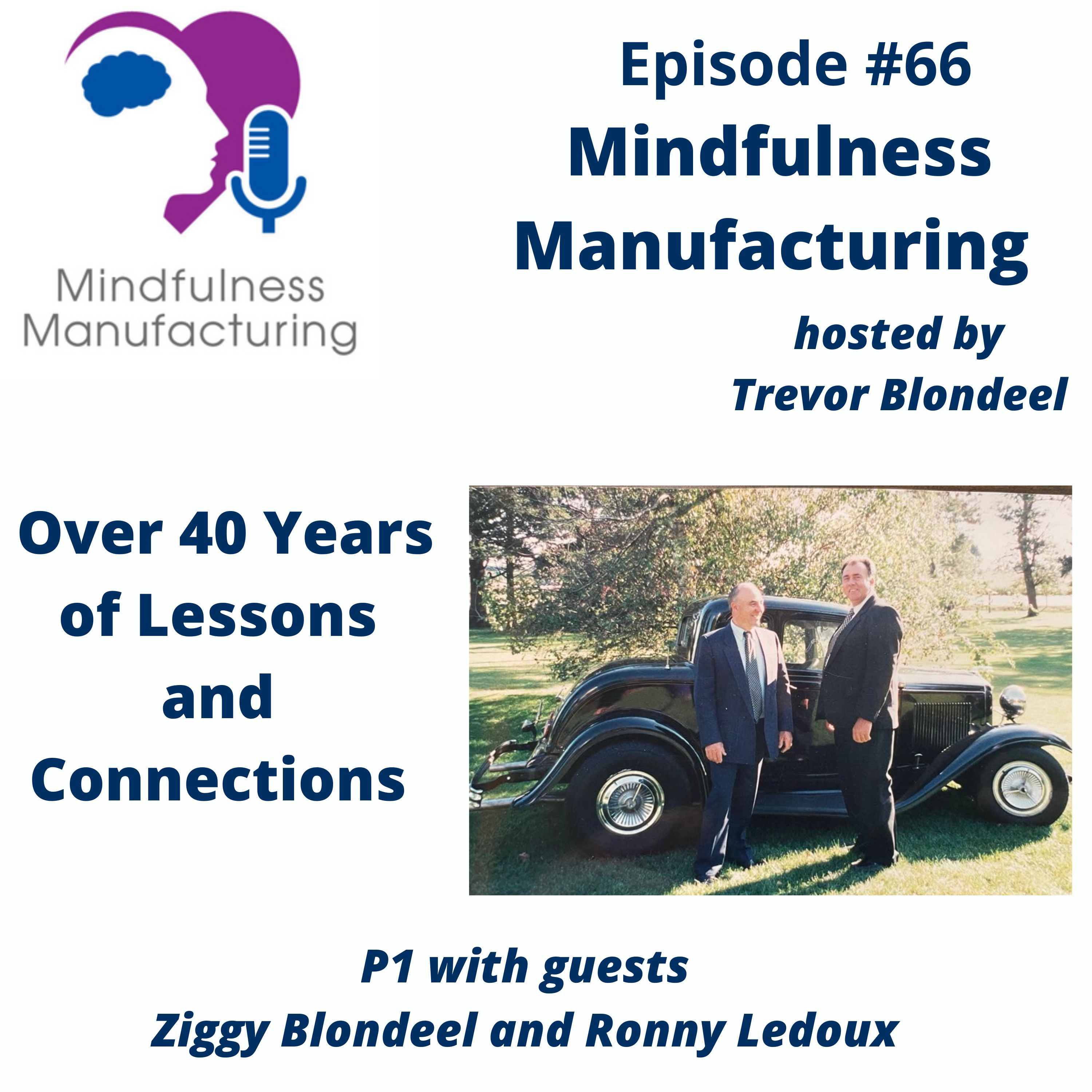
S1 Ep 66Culture + Engagement for Frontline Supervisors: Using Connection and Empathy to Strengthen Loyalty and Team Commitment with Ziggy Blondeel and Ronny Ledoux #66
Welcome to Manufacturing Greatness with Trevor Blondeel, where we work with organizations to manufacture greatness by leveraging resources you already have to achieve greater retention, productivity, and profits. To learn more, visit www.manufacturinggreatness.com and click here to subscribe to Trevor's monthly newsletter. Now, let's jump in! Great working relationships are built over time through trust, communication, and mutual respect. In this episode, Ziggy Blondeel and Ronny Ledoux share insights on manufacturing leadership, employee engagement, and trust building for Operations Managers, Production Managers, Manufacturing Managers, Team Leaders, and Shift Supervisors. Drawing from their 40 plus years working together, they explain how communication skills, emotional intelligence, and authentic leadership help leaders navigate difficult conversations, strengthen accountability, and support workforce retention. You will learn practical strategies for conflict resolution, growth mindset, and relationship building that create manufacturing cultures where people stay connected, committed, and productive. 2:30 – What can leaders do to retain their employees for a long time? 3:25 – Respect plays a big role in building strong relationships 4:30 – In times of disagreement, look for common ground 8:40 – It's important to think about long-term resolutions when settling disagreements 10:50 – Leaders can learn more about their employees by doing the work – to find out the problem, you have to be on the job 13:45 – There are ways to express emotions and handle conflict without losing your temper or tearing other people down 15:54 – Learn the difference between disagreement and disrespect 17:50 – Don't be afraid to take time to pause when needed to handle a conflict 22:23 – Take care of your people and you'll build productive, respectful relationships
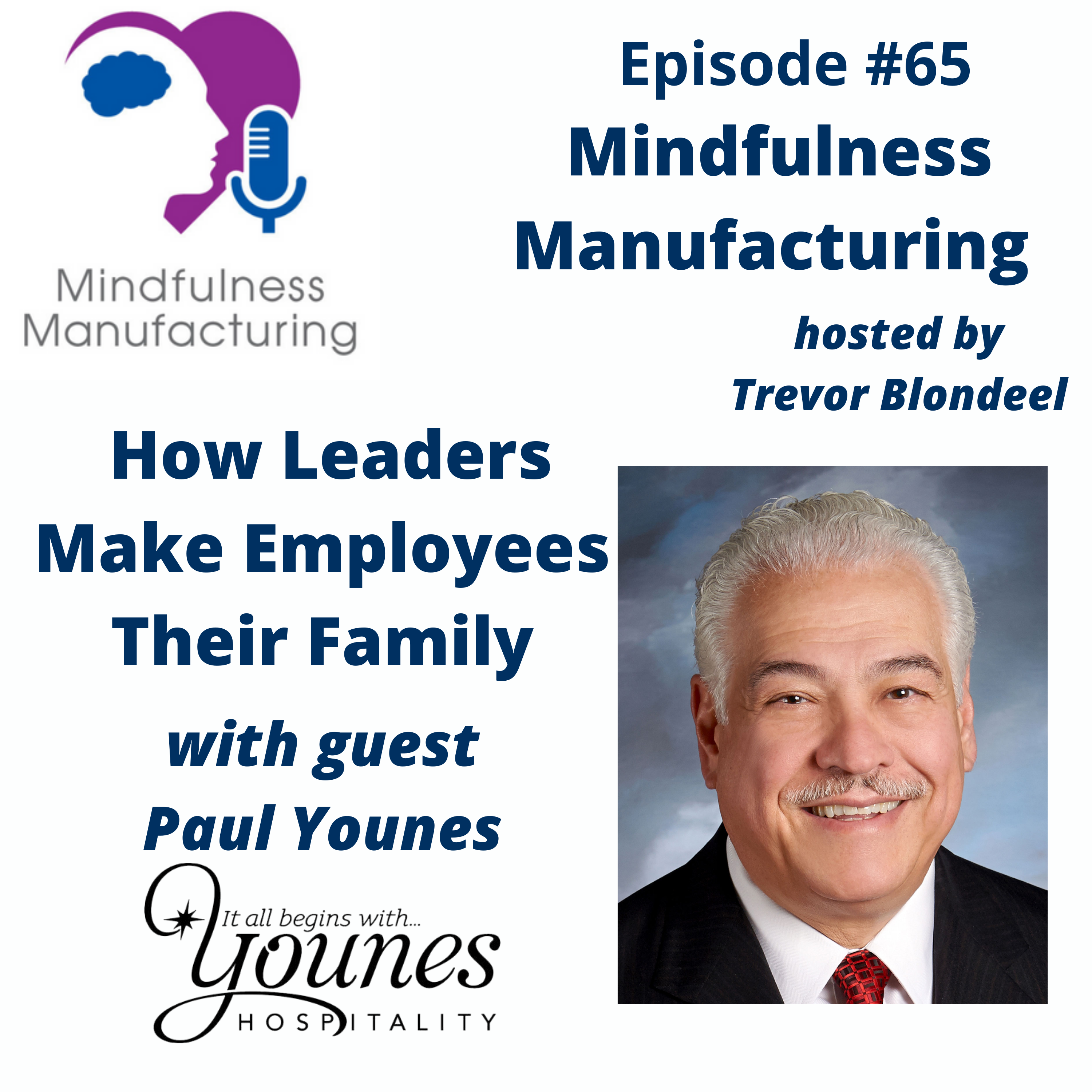
S1 Ep 65Culture + Trust for Plant Managers: Creating a Family Mindset That Strengthens Loyalty and Team Commitment with Paul Younes #65
Welcome to Manufacturing Greatness with Trevor Blondeel, where we work with organizations to manufacture greatness by leveraging resources you already have to achieve greater retention, productivity, and profits. To learn more, visit www.manufacturinggreatness.com and click here to subscribe to Trevor's monthly newsletter. Now, let's jump in! During a recent visit to Kearney, Nebraska, I noticed something different — every staff member, from housekeeping to the front desk, showed up with energy, pride, and genuine care. That experience led to a conversation with owner Paul Younes about what it really takes to build strong employee relationships and create a workplace where people feel valued. In this episode, we explore what manufacturing leaders can learn from hospitality — including how treating employees like family drives engagement, trust, and performance. Paul shares practical insights on creating a supportive culture, and why when your team is happy, customers and clients feel it too. 3:18 – To cut down on retention issue, create a great environment for your employees 4:20 – You're only as good as your employees 5:25 – Without great team members, a leader can't thrive and succeed 7:00 – It's important to use empathy and understand that all employees have different needs 10:29 – It's simple: respect others and they will respect you 11:50 – In both manufacturing and hospitality, a little connection can go a long way 13:30 – Opportunities for career advancement help to draw in new employees, especially young employees 15:25 – Take care of "your people" in the best way you can Connect with Younes Hospitality: Website Careers
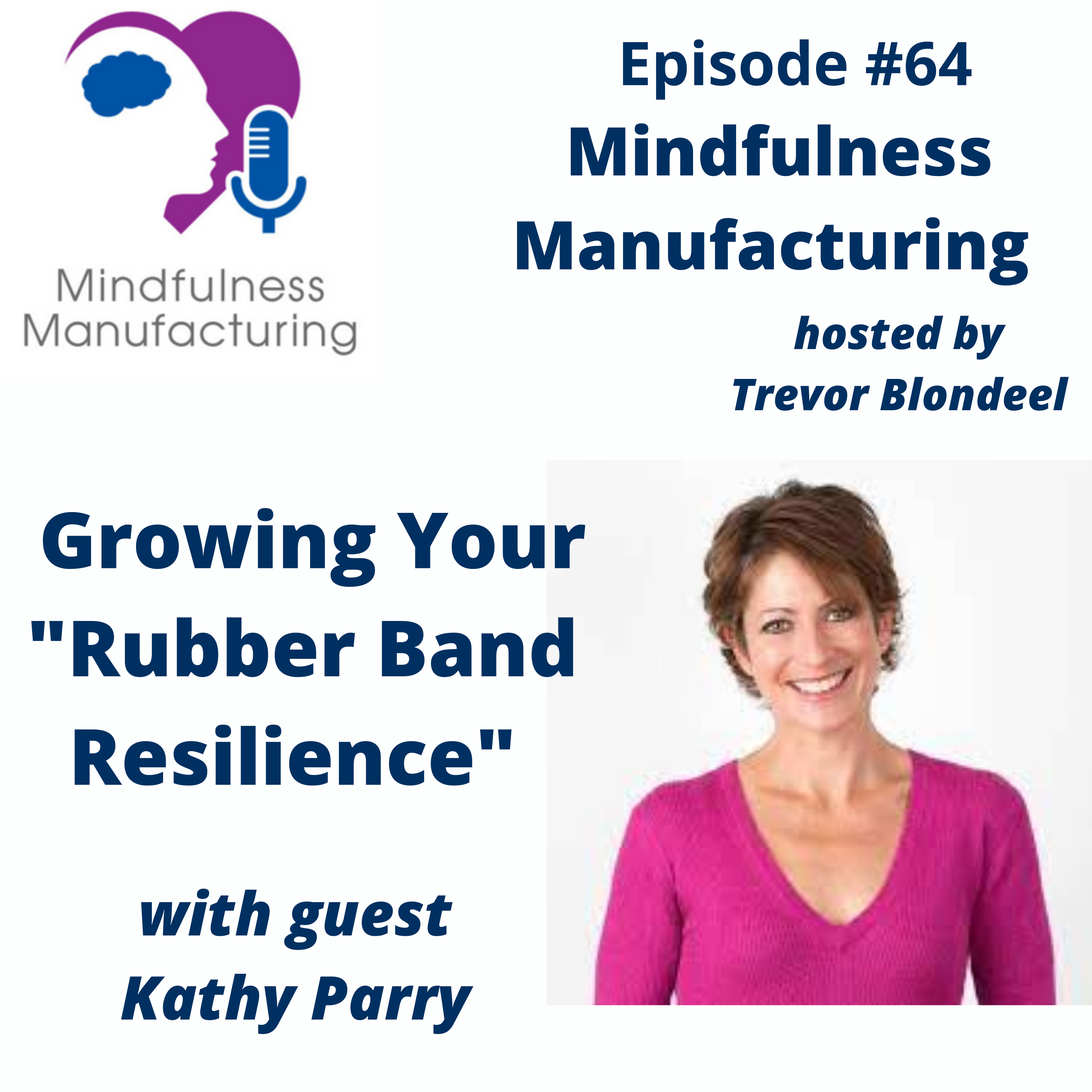
S1 Ep 64Resilience + Productivity for Operations Managers: Building "Rubber Band" Strength to Stay Focused and Perform Under Pressure with Kathy Parry #64
Welcome to Manufacturing Greatness with Trevor Blondeel, where we work with organizations to manufacture greatness by leveraging resources you already have to achieve greater retention, productivity, and profits. To learn more, visit www.manufacturinggreatness.com and click here to subscribe to Trevor's monthly newsletter. Now, let's jump in! Manufacturing leadership often feels like being stretched to the limit. But pressure does not have to lead to burnout. It can build resilience. In this episode, Kathy Parry, corporate energy expert, shares insights on manufacturing leadership, resilience, and employee engagement for Operations Managers, Production Managers, Manufacturing Managers, Team Leaders, and Shift Supervisors. Kathy explains how emotional intelligence, communication skills, and growth mindset help leaders manage stress and strengthen trust building. You will learn practical strategies for difficult conversations, accountability, and workforce retention that support productivity and create manufacturing cultures where teams bounce back, adapt, and perform under pressure. 2:32 – Knowing how people are going to react in different situations can make for great team building 3:04 – Differences in reactions can be handled through honest and efficient communications 6:32 – If emotions are trivialized or not respected, it can lead to retention and motivation issues 7:16 – Lack of emotional support in the workplace often leads to mental health issues or problems outside of work 11:02 – To create productive conversations, you may have to reframe things 12:47 – When needed, it's okay to take a step back. Pauses have power! 13:07 – If there's an issue, taken time to process and reframe instead of steamrolling ahead 17:17 – When people are overly emotional or don't take a pause, it leads to low productivity and safety issues 19:46 – In times of "stretch" and challenges, there are opportunities for growth and energy 23:10 – Sometimes, tension can create energy Connect with Kathy Parry: Website
S1 Ep 63Engagement for Manufacturing Managers: Using Connection, Collaboration, and Healthy Competition to Drive Team Performance with Thom Singer #63
Welcome to Manufacturing Greatness with Trevor Blondeel, where we work with organizations to manufacture greatness by leveraging resources you already have to achieve greater retention, productivity, and profits. To learn more, visit www.manufacturinggreatness.com and click here to subscribe to Trevor's monthly newsletter. Now, let's jump in! You probably know the golden rule. Treat others the way you want to be treated. But what does that have to do with manufacturing? A lot. In this episode, public speaker Thom Singer joins the podcast to talk about manufacturing leadership, empathy, and authentic leadership for Operations Managers, Production Managers, Manufacturing Managers, and Shift Supervisors. We explore how communication skills, curiosity in leadership, and trust building help leaders strengthen relationships, foster collaboration, and turn employees into true ambassadors for their organization. Thom also shares practical insights on consistency, growth mindset, and why staying curious about what your team is experiencing improves engagement, culture, and long term performance. 7:03 – Your employees are your company's great ambassadors 7:24 – When people feel connected at work, they are more likely to stay with your company and will be more productive 10:57 – High competition can make you a better leader 11:45 – If your employees are on platforms like LinkedIn, it's a chance for them to highlight the strengths of your company 12:45 – Oftentimes, employees leave jobs or being job searching on platforms liked LinkedIn because they don't see opportunities for growth or because they don't feel fulfilled or challenged 14:00 – Friendships and connections are a key part of making employees feel fulfilled at work 15:33 – Some companies worry that if they offer personal or career development, their employees will gain skills they can use to leave the company, but you can combat this by finding them growth and opportunities within your own company 16:06 – The best leaders want their employees to grow into their best selves 17:43 – Sometimes, it may be best for an employee to seek work elsewhere and it's important to make sure they still stay good things about your company once they're gone 18:58 – If you help an employee find a better opportunity, it reflects well on you and your values 25:15 – Don't be afraid of your employees making connections outside of the company 26:17 – Through sharing and collaborating, you have many chances to learn and grow through the feedback of others 28:01 – You want diversity of thought, not an echo chamber Connect with Thom Singer: Website Email
S1 Ep 62Manufacturing Leadership + Engagement for Plant Managers: Using Vision and Wisdom to Align Teams and Drive Measurable Results with W. Kevin Ward #62
Welcome to Manufacturing Greatness with Trevor Blondeel, where we work with organizations to manufacture greatness by leveraging resources you already have to achieve greater retention, productivity, and profits. To learn more, visit www.manufacturinggreatness.com and click here to subscribe to Trevor's monthly newsletter. Now, let's jump in! Sometimes a chance meeting leads to powerful conversations. After a random breakfast with W. Kevin Ward of WKW Consulting Services, I invited him onto the podcast to talk about manufacturing leadership, growth mindset, and authentic leadership for Operations Managers, Production Managers, Manufacturing Managers, and Shift Supervisors. Kevin shares practical steps for getting off autopilot, seeking wisdom, and reconnecting to vision and core values. We also discuss how intentional leadership, clear communication skills, and strategic thinking help improve morale, strengthen culture, and drive better results on the shop floor. 2:40 – Growing wise is the attention process 4:35 – We all tend to operate on "autopilot" 6:36 – Any role where you're teaching and influencing others is a leadership role 10:09 – It's all about finding a healthy level for yourself and taking intentional steps to manage yourself 10:49 – A big part of being a leader is leading by example 11:55 – The biggest challenge of being a leader can be listening to your own lessons and applying them 13:22 – If something goes wrong with your team, the first step is looking at yourself 16:00 – One big reason people feel like they're on autopilot is that they haven't given good consideration to their own vision 17:50 – Your vision should be a driving force in your life 18:39 – Once you find your vision, communicate it and surround yourself with people with a similar vision 19:34 – If it's something you can do yourself, it's not a vision! 20:04 – What's the difference between a vision and a goal? 20:53 – The pursuit of vision is rarely a straight line 24:56 – If you express your vision well, others will want to be involved 27:28 – A core value is something that you cannot be talked out of 27:56 – There's a need for more love and care in high-stress industries like manufacturing 29:03 – The beauty of wisdom is that when you see it, you gain many other things as a result Connect with Kevin: Website LinkedIn
S1 Ep 61Accountability for Operations Managers: Applying the Four Characteristics That Build Stronger Teams and Better Results with John Raymer #61
Welcome to Manufacturing Greatness with Trevor Blondeel, where we work with organizations to manufacture greatness by leveraging resources you already have to achieve greater retention, productivity, and profits. To learn more, visit www.manufacturinggreatness.com and click here to subscribe to Trevor's monthly newsletter. Now, let's jump in! Welcome to part two with John Raymer, a longtime manufacturing leader who now helps others revitalize their leadership and careers. In this episode, John dives into integrity, empathy, and challenge, and how Operations Managers, Production Managers, Manufacturing Managers, and Shift Supervisors can strengthen these traits to improve manufacturing leadership, communication skills, and team morale. We talk about why integrity builds trust, how empathy shapes authentic leadership, and why leaders must invite honest feedback. John also shares practical insights on growth mindset, accountability, and how showing genuine care directly impacts engagement, efficiency, and performance on the shop floor. 12:18 – To be effective, invest in your relationships with people 18:17 – You never know what trials other people are going through 19:40 – Even if you do care, your empathy might not always show up through your behavior 23:00 – The final characteristic of great leaders is "challenge" 24:00 – Leaders who act tired, defeated, or like they're not fully on board aren't inspiring 24:39 – If employees don't feel engaged or challenged, they will not step up in their role
S1 Ep 60Accountability for Operations Managers: Applying the Four Characteristics That Build Stronger Teams and Better Results with John Raymer #60
Welcome to Manufacturing Greatness with Trevor Blondeel, where we work with organizations to manufacture greatness by leveraging resources you already have to achieve greater retention, productivity, and profits. To learn more, visit www.manufacturinggreatness.com and click here to subscribe to Trevor's monthly newsletter. Now, let's jump in! People see who you are, even when you don't. In this episode, John Raymer, longtime manufacturing leader and former Toyota Motor Manufacturing professional, joins the podcast to talk about manufacturing leadership, humility, and authentic leadership for Operations Managers, Production Managers, Manufacturing Managers, and Shift Supervisors. In part one of this two-part conversation, John shares how teams learn everything from their leaders, both good and bad, and why practicing humility helps improve communication skills, build trust, and make employees feel valued. We explore how emotional intelligence, accountability, and growth mindset directly impact culture, engagement, and performance on the shop floor. 0:43 – "Serve the person you once were." 1:00 – How your land with other people don't always match your intentions 2:18 – There has never been a time where manufacturing leadership is more important than it is today 3:41 – Without people skilled in manufacturing and others trades, we're at risk of our whole economic engine fall apart 5:03 – True efficiency requires great leadership 5:59 – To find out why you organization is the way it is, look closely at yourself 6:17 – People learn everything, both good and bad, for leaders in their organization 8:40 – If someone is performing poorly, their leadership and who trained them is a big factor 9:00 – The people you're in charge of will only perform as well as they see you performing 10:45 – People perceive who you really are, even when you don't see it yourself 10:53: What's the different between mistakes and lessons? 12:08 – Change to the whole organization comes from the top 14:43 – When people feel like their contributions aren't valued, they're more likely to leave the organization 15:17 – Humility is an important foundational skill for leaders 16:06 – "Problem employees" can often be the ones with the most valuable insights 17:35 - The biggest mistake that a leader can make is to run over, talk over, or dismiss the opinions of those that work for you. 20:34 – Apologies and humility go a long way 22:44 – Most people remember the best leaders in their lives and the very poor ones, but not the ones in-between 24:59 – When you own your mistakes, people respect it
S1 Ep 59Engagement for HR Leaders: Breaking Down Barriers to Advance Women and Strengthen Team Performance with Nicole Provonchee #59
Welcome to Manufacturing Greatness with Trevor Blondeel, where we work with organizations to manufacture greatness by leveraging resources you already have to achieve greater retention, productivity, and profits. To learn more, visit www.manufacturinggreatness.com and click here to subscribe to Trevor's monthly newsletter. Now, let's jump in! Even with ongoing labor shortages, women in manufacturing remain a largely untapped workforce. In this episode, executive coach Nicole Provonchee from Bright Blue Consulting joins the podcast to discuss manufacturing leadership, workforce development, and authentic leadership for Operations Managers, Production Managers, Manufacturing Managers, and Shift Supervisors. Nicole breaks down common barriers women and other minorities face on the shop floor and shares practical strategies leaders can use to shift mindset, improve communication skills, and strengthen inclusion. You will learn how curiosity, trust building, and intentional leadership can help cultivate female leadership while supporting engagement, retention, and long term team performance. 2:54 – A lack of flexibility is a big challenge facing female manufacturing employees 3:58 – We need to address how we can help people live the lives they have while still flourishing in the workplace 6:19 – Workplace environments need to be accommodating for women and other primary caregivers 7:25 – By starting dialogues with their female employees about issues like flexibility, workplaces can reach the most productive outcomes 9:11 – Employees also need to have a level of accountability in order to create an open dialogue 12:58 – How can we lead differently to get more women into leadership positions in manufacturing? 13:81 – Even in female-dominated fields like healthcare, women and other minorities struggle to move up to leadership roles 14:54 – The best way to get women into leadership roles is to recruit them early 15:11 – Women can become better self-advocates and articulate what they need from their workplace 16:44- Generally, women only apply for jobs when they're between 60% to 80% confident they will get the position 17:55 – People in leadership positions can encourage women to apply for higher-up jobs 19:25 – Women often hold themselves back out of the misguided belief that they must be experts before they can move forward to a higher role 20:49 – To invest in female leaders, companies should look at their recruitment tactics 22:22 – Cultural systemic change must also take place over time Contact Nicole: Bright Blue Consulting Email LinkedIn
S1 Ep 58Manufacturing Retention + Accountability for Plant Managers: Using Giving Back to Build Loyalty and Stronger Team Commitment with Jon Finch #58
Welcome to Manufacturing Greatness with Trevor Blondeel, where we work with organizations to manufacture greatness by leveraging resources you already have to achieve greater retention, productivity, and profits. To learn more, visit www.manufacturinggreatness.com and click here to subscribe to Trevor's monthly newsletter. Now, let's jump in! What's the secret to retaining talent and building a healthy manufacturing culture? According to Jon Finch, Senior Vice President at Milwaukee Tool, it starts with giving back. In this episode, Jon joins the podcast to share insights on manufacturing leadership, employee engagement, and accountability for Operations Managers, Production Managers, Manufacturing Managers, and Shift Supervisors. We talk about building strong company values, delivering on mission, and creating opportunities for employees to contribute beyond the shop floor. Jon also shares how workforce shortages, changing talent expectations, and compensation pressure are forcing leaders to rethink retention strategies, communication skills, and culture to sustain productivity and long term performance. 7:09 – Get people rallied around a purpose, value, and mission 8:57 – Every business has a "why" statement and something that really matters to them 9:37 – Test and try your ideas and know that it won't be perfect the first time 10:15 – Values are particularly important to Gen Z Employees 13:32 – Find a way to give people who are connected and interested a way to help give back 14:36 – People like to be associated with organizations with positive values 17:41 – Give your employees and leadership a chance to connect to something that really matters 18:59 – Employees who feel like they've had a chance to give back will provide additionally efforts and have greater engagement 19:24 – By treating employees holistically, we see great thing happen and that's why flexibility and perspective are so important 20:29 – When you give to others, it grows your own mindset 22:45 – It's all about delivering stories that everyone wants to be a part of 26:04 – The team that you have at the beginning of the process is a good indicator of how the entire organization will look 27:04 – You can't figure out a company's culture just from an interview 29:12 – It's important for employees to search for accountability 32:37 – Through engagement, you'll see value Contact Jon: Linkedin Milwaukee Tool Careers at Milwaukee Tool
S1 Ep 57Accountability for Frontline Supervisors: Understanding Emotions to Improve Behavior and Team Performance with Sara Westbrook #57
Welcome to Manufacturing Greatness with Trevor Blondeel, where we work with organizations to manufacture greatness by leveraging resources you already have to achieve greater retention, productivity, and profits. To learn more, visit www.manufacturinggreatness.com and click here to subscribe to Trevor's monthly newsletter. Now, let's jump in! Is it really okay to lose it sometimes, or are we just making excuses? In this episode, Sara Westrook joins the podcast to talk manufacturing leadership, emotional intelligence, and accountability for Operations Managers, Production Managers, Manufacturing Managers, and Shift Supervisors. We go deep on owning your behavior, building communication skills, and treating emotions as a leadership skill. Sara shares practical strategies to shift mindset, strengthen self awareness, and show up with authenticity so you can improve trust, engagement, and performance on the shop floor. 1:45 – Leave your emotions at the door like a backpack, NO they are still coming in with you, so how do you move with and through them in a healthy way 3:02 – Do not want to make an emotionally based decision, can lead to regret 4:15 – Allowed to sit with that emotion, not going from emotion to choice, allow it to have room, move with and through, and have your own character based choice, bounce back and move forward 6:13 - emotional awareness, emotional management, and ultimately emotional resilience 8:00 – teams want to be emotionally intelligent, yet they do not know how, like going to the gym, how do you build those muscles? Not by watching videos, by putting things into action, habits 10:57 – first exercise has the end in mind, what's the circumstance, or what are circumstances that you feel hold you back or really trigger you, and what emotion comes out of you 13:08-learn to think and act beyond emotion to honour that the emotions there, but to start to use the emotion as information and even motivation 16:08-how we engage other people matters, the art of communication and that takes being very emotionally aware 19:15-why are emotions sometimes hard to talk about, you could have one group of people say well they're hard to talk about because I feel like i'll be seen as weak and another because of being seen as dramatic 20:13-self care starts to take a big plummet it also can decrease company morale you know just keep shoving emotions down pretending they're not their 20:30-breaking down the boxes, shifting a greater role for women in manufacturing 24:12-when you can start to see emotions is information your brain now knows that oh it's something that I can do something with it doesn't completely have to overwhelm me 26:40-sometimes you have to lean into that discomfort 27:05-doesn't mean you're an anxious person, it means you're a person that's experiencing the emotion of anxious and that's uncomfortable and awkward but it's part of the journey 28:48-emotions are a reason for a behaviour, not an excuse 30:00-Sara's company 3E Emotional Development is about really honing in skills on emotional awareness, emotional management and emotional resilience Connect with her here; Instagram: @iamsarawestbrook Twitter: twitter.com/SaraWestbrook LinkedIN: www.linkedin.com/in/sarawestbrook YouTube: https://bit.ly/3Asvqps
S1 Ep 56Leadership + Trust for Operations Leaders: Building Bridges and Leading from Behind to Strengthen Team Performance with LaVerne Roberts #56
Welcome to Manufacturing Greatness with Trevor Blondeel, where we work with organizations to manufacture greatness by leveraging resources you already have to achieve greater retention, productivity, and profits. To learn more, visit www.manufacturinggreatness.com and click here to subscribe to Trevor's monthly newsletter. Now, let's jump in! What happens when you put others first, work hard, and become a true bridge builder? You build a legacy. In this episode, LaVerne Roberts shares her journey to becoming a Director of Operations in a traditionally male dominated manufacturing environment. We explore manufacturing leadership, authentic leadership, growth mindset, and resilience for Operations Managers, Production Managers, Manufacturing Managers, and Shift Supervisors. LaVerne reflects on decades of research and development success, the leadership mindset that fueled her progression, and how trust building, communication skills, and accountability shaped her impact. You will walk away with practical insights on leading with confidence, strengthening culture, and paving the way for the next generation in manufacturing. 3:20 – building a network, not even realizing I was doing it, relationships 5:05 – any doubts came from within, Vice President support and getting surrounded by great people 7:00 – you must work hard, learning the fundamentals not so much the leadership skill, like going to school 8:05 – not asking for help, self imposter syndrome(for more science on this, check out Adam Grant's book Think Again) 10:00 – self-doubt more common, men verses woman may be different 12:00 – one on one coaching, identified my leadership style flexes from leading from behind and leading at the front 13:00 –leading from behind suggesting to the team, supporting them 13:55 – in the beginning, you may need to lead from the front, create the vision, help the team see what we wanted to look like 15:30 – Jim Collins, Good to Great, I or we, how LaVerne allows the team to take direction 16:30 – do more with the kernel, how it is received, will determine the next steps 17:54 – husband Scott says LaVerne is a bridge builder, not for LaVerne, for the excitement of what is going to happen when the connection is made 19:10 – when people can see you are not in it for yourself, people ask more questions about you 20:20 – finding the sweet spot-on building trust, finding the common ground, something we connect with 21:55 – you also must be a good listener, you can with enough ambition and desire achieve great things, and chart your journey, we are a lot stronger and smarter than we think
S1 Ep 55Culture + Accountability for Operations Managers: Creating Open Conversations Instead of Bottling Up Conflict with Troy Corrigan #55
Welcome to Manufacturing Greatness with Trevor Blondeel, where we work with organizations to manufacture greatness by leveraging resources you already have to achieve greater retention, productivity, and profits. To learn more, visit www.manufacturinggreatness.com and click here to subscribe to Trevor's monthly newsletter. Now, let's jump in! Not all family businesses successfully transition from one generation to the next, so what makes the difference? In this episode, Troy Corrigan joins the podcast to share lessons on manufacturing leadership, growth mindset, and authentic leadership for Operations Managers, Production Managers, Manufacturing Managers, and Shift Supervisors. Troy talks about the personal adjustments he and his brother had to make to succeed through their team, why accountability and communication skills matter, and how being connected to something bigger than your own business strengthens culture, trust building, and long term performance. 3:20 – the foundation of Corrigan Electric and how it all started, from college to the 4-year apprenticeship program, and decided to get involved in IEC leadership 6:25 – electricians are hands on, and young people can come out debt free, and make great money. Need for the industry is here to stay, look at electric vehicles 9:20 – need to be creative to keep employees 11:25 – cannot throw money to keep people, it is about the personalities, where do you want to be regarding culture 13:02 – they must know you care, by asking questions and being involved with them, open door process and be part of the team. What can we do to help? 14:35 – remind us of what we were taught, recognize when someone needs support, and what action may come out of that conversation. What's going on? Bottled up or blow up. 17:00 – we are all working on how we show up, we are all human. Not just for me, it is for my team that I need to work on myself, learning skills in Leading with Emotional Intelligence 19:02 – conversations create a different experience and that creates culture 19:30 – love the discussions with staff, you always learn something about the person 20:02 – getting aligned with brother and partner Shawn, game changer 21:15 – we must be able to take the feedback from each other, having conversations to call each other out, better result for the team be the role model 21:35 – Trevor personal example of still missing signs, and the power of having someone to call you out 23:45 - gotta invest and take the time and you will have the outcome, and act on what you are learning or being reminded of. Helped me learn and listen. You probably don't think you need it. 25:15 – stay in the zone, practice what you preach, and realize we all make mistakes Learn more about Corrigan Electric here https://www.corriganelectric.com
S1 Ep 54Manufacturing Leadership + Engagement for Operations Managers: Using Your Business as a Vehicle to Serve Others and Build Stronger Teams with Joel Davis #54
Welcome to Manufacturing Greatness with Trevor Blondeel, where we work with organizations to manufacture greatness by leveraging resources you already have to achieve greater retention, productivity, and profits. To learn more, visit www.manufacturinggreatness.com and click here to subscribe to Trevor's monthly newsletter. Now, let's jump in! Like me, Joel Davis grew up on a farm, starting his business as a small project at 17 and growing it into a multi-division family company in South Carolina with over 100 employees. In this episode, Joel joins the podcast to share lessons on manufacturing leadership, authentic leadership, and growth mindset for Operations Managers, Production Managers, Manufacturing Managers, and Shift Supervisors. We talk about how putting people first, investing in community, and building trust drives real results. Joel shares practical insights on accountability, communication skills, and culture, and why strong relationships are not just the foundation of his company, they are the outcome. 2:05 – spending more time with your people than you do your family, and when you look forward to helping your people personally and professionally, it no longer feels like a job 4:30 – sometimes things evolve on their own, neighbour to neighbour 5:10 – changed 10 years ago our mission, from providing quality construction service, to wanting to have a positive influence, insight from John Maxwell – 15 invaluable laws of growth 6:10 – challenges turn into growth opportunities, with turnover less than 5% extremely low for the industry, care for the employees! Not the highest paid, but fair, honest, and enjoyable to be around 8:30 – life is too short to put on a show, what transparency looks like in an owner 10:00 - start the morning with a devotional, keep the big thing the big thing 11:00 – Values, respect, innovation, safety, and ethics RISE 11:50 – Hard to find employees like ours – ask Chick-fil-A – Stopped focusing on the resume and skills, and now hire people that want to be part of a team and the right culture fit 14:35 – Referrals from employees still number one, and encourage team members to share and use social media 16:15 – When you are engaged you can grow – Challenge is not getting the business, getting more great people- watch the video focused on their employees the video is real 18:05 – Whole lot easier to be yourself, what is the impact you are having on other people. To break down the walls, you must be open yourself 19:10 – have a positive impact on as many people as we can 19:30 – can deal with mistakes, not a lack of integrity 21:01 - on-boarding new employees is like your relationship with your wife, create opportunities for fellowship and personal interactions to build relationships 22:30 – Community dedication started from the Bible, keeps the mindset of doing for others 24:46 – What do you want your tombstone to say between the dates? What do you want to be remembered by? Joel's website https://jdavisgc.com/#about-3 Watch the great video on Joel's culture! https://jdavisinc.com/culture/
S1 Ep 53Curiosity for Frontline Supervisors: Asking Better Questions to Improve Engagement and Daily Performance #53
Welcome to Manufacturing Greatness with Trevor Blondeel, where we work with organizations to manufacture greatness by leveraging resources you already have to achieve greater retention, productivity, and profits. To learn more, visit www.manufacturinggreatness.com and click here to subscribe to Trevor's monthly newsletter. Now, let's jump in! Two years in, and this podcast is still going strong thanks to you. No sponsors. Just curiosity, courage, and a shared commitment to better manufacturing leadership. In this solo episode, I reflect on what we've learned together and what Operations Managers, Production Managers, Manufacturing Managers, and Shift Supervisors need to think differently about moving forward. We cover manufacturing leadership, growth mindset, communication skills, and authentic leadership, plus why staying curious, strengthening accountability, and having deeper conversations are essential for improving team performance, engagement, and results as we head into a new year.
S1 Ep 52Manufacturing Culture + Engagement for HR Leaders: Building Social Capital Through Mindful Influence to Strengthen Team Performance with Vivian Blade #52
Welcome to Manufacturing Greatness with Trevor Blondeel, where we work with organizations to manufacture greatness by leveraging resources you already have to achieve greater retention, productivity, and profits. To learn more, visit www.manufacturinggreatness.com and click here to subscribe to Trevor's monthly newsletter. Now, let's jump in! In manufacturing, we spend plenty of time planning capital budgets and assembly lines. In this episode, we shift the focus to something just as powerful: social capital. Vivian Blade joins the podcast to talk manufacturing leadership, trust building, and authentic leadership for Operations Managers, Production Managers, Manufacturing Managers, and Shift Supervisors. With a background in Lean Six Sigma and talent development, Vivian shares why relationships matter more than ever, how values-driven leadership impacts retention, and why today's workforce is searching for organizations that truly align with who they are. You will walk away with practical insights on communication skills, engagement, and building influence that drives long term team performance. 3:53 - Old way of thinking with command and control, do as I say. 4:29 – People want to be more involved in their workplace, making decisions and contributing in valuable ways. 4:59 - Leading with influence and engaging people, rather than leading by dictating and telling people what to do. 7:56 – Giving people leeway and coaching them through. 9:59 – Leading as a coach and guide at a level of influence. 12:39 – Think about how you can selflessly add value to others. 16:06 – How are people being measured and are your measuring outcomes as a team or individuals. 18:29 – What are you measuring, are you measuring individual goals or the collective effort. it is truly having on your organization, and the health and well-being of your people.24:59- How do we turn this ship around from a people standpoint, which is your most important asset. 26:52 – What people want today is the authenticity from leaders. Connect with Vivian! https://vivianblade.com https://InfluenceWithScale.com https://ResilienceReady.today LinkedIn: https://www.linkedin.com/in/vivianblade/ Twitter: https://twitter.com/VivianBlade Influence in Talent Development on Amazon: https://amzn.to/3mC8z4B Resilience Ready: The Leader's Guide to Thriving Through Unrelenting Crises on Amazon: https://amzn.to/3s4pSvC
S1 Ep 51Productivity for Operations Managers: Using Economic Perspective to Improve Decision-Making and Team Performance with Jim Ray #51
Welcome to Manufacturing Greatness with Trevor Blondeel, where we work with organizations to manufacture greatness by leveraging resources you already have to achieve greater retention, productivity, and profits. To learn more, visit www.manufacturinggreatness.com and click here to subscribe to Trevor's monthly newsletter. Now, let's jump in! In this episode, Jim joins the podcast to talk manufacturing leadership, communication skills, and growth mindset for Operations Managers, Production Managers, Manufacturing Managers, and Shift Supervisors. Jim helped get Mindfulness Manufacturing up and running as a professional podcast, saving days of frustration and time. We also talk small business strategy, accountability, and why having the right support systems in place matters for productivity, clarity, and long term success. If you're looking to strengthen your leadership presence and simplify how you show up in your business, this conversation delivers. 1:33 - When you look at the economy you have inflation rising, issues with supply chain, it will take a long time to work its way out. 1:51 – People are getting a little nervous, I think that it is at the business level but also at the household level and you can bring it into the office. 3:19 – One of the things that is going to enable any business to succeed is their ability to communicate effectively, it will always come down to that. 3:40 – True leader need to be super cognizant even more than you have been. About what you say and what you hear, because there is going to be a lot of questions and people are nervous. 5:06 – It's ok to raise your hand and say I don't have all the answers right now, but the authenticity, honesty, and integrity that you back it up with will carry the day and help sooth people's nerves. 5:33 - Leaders need to be cognizant to allow people to voice their concerns. 6:07 – The one thing that is going to enable a company regardless of the balance sheet, or the economy is the people. The people in the business are what will make it win or lose. 12:54- What worked in the past I don't believe will work in the next 12 months. 14:28 – Allow people to arrive to the answer and they will have a stake in it. 17:12 - It's ok to be nervous and scared about things, it's ok to have those feeling it's what you do with those feeling that will determine your success or failure. 17:53 – Cultivating advisers outside your normal channels will make all the difference, especially when things get more difficult. 22:22- Making sure your team is diverse is a strength, and the smart companies are the ones that are cognizant of that and are working towards those goals.
S1 Ep 50Manufacturing Retention + Engagement for HR Leaders: Turning the Great Resignation into Long-Term Workforce Commitment with Debbie Muno #50
Welcome to Manufacturing Greatness with Trevor Blondeel, where we work with organizations to manufacture greatness by leveraging resources you already have to achieve greater retention, productivity, and profits. To learn more, visit www.manufacturinggreatness.com and click here to subscribe to Trevor's monthly newsletter. Now, let's jump in! Debbie Muno of Genos International joins the podcast to share insights from 25 years of assessment experience and why retaining today's workforce means getting comfortable with making average uncomfortable. In this episode, we talk manufacturing leadership, employee engagement, emotional intelligence, and accountability for Operations Managers, Production Managers, Manufacturing Managers, and Shift Supervisors. Debbie breaks down practical strategies for engaging the people you already have, strengthening communication skills, and building trust so leaders can improve retention, motivation, and team performance on the shop floor. 2:26 The last couple of years have really been a steak in the ground to make life changing decisions. 2:53 What is important in their lives? and how the world of work fits into what is important in their lives. 3:01 Friends that are energized and engaged, has to do with their work and has to do with how they are treated in the workplace. 3:36 Those who do not feel connected are making changes. 3:47 The world of work will never be the same. 5:08 People want to be valued and appreciated and empowered to get their work done. 6:31 It is all about how connected I feel, do I feel appreciated? do I feel valued? and am I engaged in my organization? 8:38 People feel empowered by being able to make choices. 9:19 75% of people leave their job because of their boss. 10:20 We never forget how people make us feel. 12:36 We don't realize the tiny incremental shifts can create massive outcomes. 16:23 If I was totally present in a conversation what difference would it make? 18:16 Putting your phones down as soon as you get into conversation. 20:42 Top performers do their job and carry the weight of low performers and they don't get the acknowledgment. 24:54 Organizations are realizing programs are needed to help enhance well-being and enhance people's ability to become more mindful. 27:09 It is critical to be present and mindful Contact Debbie directly at [email protected] or at https://www.genosnorthamerica.com
S1 Ep 49Manufacturing Leadership + Accountability for Production Managers: Becoming the Thermostat That Sets the Tone for Team Performance P2 with Mike Forhan #49
Welcome to Manufacturing Greatness with Trevor Blondeel, where we work with organizations to manufacture greatness by leveraging resources you already have to achieve greater retention, productivity, and profits. To learn more, visit www.manufacturinggreatness.com and click here to subscribe to Trevor's monthly newsletter. Now, let's jump in! 2:09 Walking in and being judgmental and pointing out all the stuff that is easy, like these guys that are perpetual list makers. 2:55 At Crossover we would not tell you what to do unless we are willing to do it ourselves. 3:32 We are always learning and don't have all the answers but have enough to get started. 3:53 Holding people accountable is all part of the right outcome. 4:12 "How the heck did they get here?" "What's so wrong that here's where we're at?" "Why did the emotion of a situation get so elevated?" 5:39 Make sure we protect the customer and support the employees of that organization. 7:14 Often times we are not given all the tools to be successful at the start, but find the best way to support. 12:52 We look for a way forward that is meaningful for everyone involved. 15:12 The experience and bandwidth to lend that type of help that is truly required. Something Crossover can support with speed and precision. 16:57 It's not necessary to say you know how you are going to help me; "it's why you think you can help me." 18:51 First step is somebody realizing and recognizing that they potentially need help, this is a huge step and it takes courage. 25:11 Authentic self and how you show up today is extremely important. Contact Michael at [email protected] Website xosol.com
S1 Ep 48Manufacturing Leadership + Accountability for Production Managers: Becoming the Thermostat That Sets the Tone for Team Performance with Mike Forhan #48
Welcome to Manufacturing Greatness with Trevor Blondeel, where we work with organizations to manufacture greatness by leveraging resources you already have to achieve greater retention, productivity, and profits. To learn more, visit www.manufacturinggreatness.com and click here to subscribe to Trevor's monthly newsletter. Now, let's jump in! With over 30 years across multiple manufacturing environments, Michael Forhan has seen organizational transformation at its most intense. In this episode, Michael, President and Managing Partner at Crossover Solutions, joins the podcast to talk manufacturing leadership, resilience in manufacturing, and authentic leadership for Operations Managers, Production Managers, Manufacturing Managers, and Shift Supervisors. We dig into staying mindful during supplier interventions and crisis moments of potential shutdown, plus how communication skills, emotional intelligence, and growth mindset help leaders navigate pressure while protecting team performance and morale. The conversation was so good, we split it into two episodes. 2:24 How do you mentor? How do you walk into situations under the gun? 2:57 Thoughtful and respectful of what is going on, and bringing sense of calmness, understanding and listening. 3:40 Benchmark of what performance should be and measure the performance, listen to how the company got to where they are is just as important. 5:09 Being calm and provide clarity to situation and how to work our way out of situation. 5:59 Walking in with a sense of listening to understand and rational what is going on, with standard of expectation off data. 7:03 Temperatures do get high particularly when put in by client, supplier has more anxiety. 7:28 Why 3rd party put in by OEM to understand actual risk and help figure out our way out. 11:25 Tornado ripped through plant and ripped the roof off, but we still needed to build parts. 11:59 We are there to help and not criticize, use helpful approach and getting thing calm and cool to temperature, rolling our sleeves up to help and not using a hammer. 15:16 What do we know for sure? Let's ground each other. 15:32 Can you trust someone that does not care about you? How do you build that trust? 22:25 Rebuild relationship and trust between client and supplier. Contact Michael at [email protected] Website xosol.com
S1 Ep 47Manufacturing Culture + Engagement for Frontline Supervisors: Leading Raw, Real, and Relevant Conversations That Improve Team Performance #47
Welcome to Manufacturing Greatness with Trevor Blondeel, where we work with organizations to manufacture greatness by leveraging resources you already have to achieve greater retention, productivity, and profits. To learn more, visit www.manufacturinggreatness.com and click here to subscribe to Trevor's monthly newsletter. Now, let's jump in! Raw, Real, and Relevant with Trevor & Dave 00:00 – Introduction 00:30 – Enjoy the moment and enjoy the new things; Dave Baker will be moving on 01:39 – 3 things known to be true 02:50 – Always be raw, real, and relevant and the rest will take care of itself 03:30 – Editing and Clean up – keeping it real 06:00 – Polished vs. Real 06:33 – Raw defined 07:14 – Real defined 08:56 – Relevant defined 09:50 – Overdoing it 13:28 – When others see you as raw, real, and relevant 14:50 – When you go home are you a different person? 18:15 – A platform for living with no regrets 20:00 – Being at peace in being who you are 21:25 – Keeping it all in context - Ecclesiastes 22:53 – A Relevant example 23:56 – Living in Fear 24:57 – Keeping it all in context 27:16 – Maintain your sense of humor 29:28 – Mindfulness in manufacturing 30:17 – Closing 30:54 - End
S1 Ep 46Self-Awareness + Engagement for Frontline Supervisors: Using Reflection to Build Confidence and Stronger Team Connections with Nikki Langman #46
Welcome to Manufacturing Greatness with Trevor Blondeel, where we work with organizations to manufacture greatness by leveraging resources you already have to achieve greater retention, productivity, and profits. To learn more, visit www.manufacturinggreatness.com and click here to subscribe to Trevor's monthly newsletter. Now, let's jump in! If you haven't listened to episode 44, head back and catch my first conversation with Nikki Langman. In this episode, Nikki returns to talk about stress in manufacturing and how leaders can build resilience by reconnecting to their core values and checking in with themselves. We explore manufacturing leadership, resilience in manufacturing, growth mindset, and authentic leadership for Operations Managers, Production Managers, Manufacturing Managers, and Shift Supervisors. Nikki shares practical strategies to strengthen emotional intelligence, improve communication skills, and support both short term and long term workforce stability while navigating pressure on the shop floor. 1:17 What are the core values in the business, that we're going to stick to no matter what? 1:40: When push comes to shove at the end of the day, there are decisions that we look back on and think, was I was true to who I am or I did I go against my core values 2:39 Self awareness and core values are two of the most pressing topics that any industry needs to be talking about 3:09 Leave your personal ideas at the door and put on your armor, no way! 4:55 My history of being a recovering alcoholic, and this is something that I never brought into the workplace until a few years ago 6:49 I think that's the heart of self-awareness and core values really lies is in our ability to be honest with ourselves 7:43 We are struggling with external pressure and our internal ways of coping with it and our ability to be honest with ourselves 9:27 There are things that we can do in the short term to relieve the pressures we're feeling 10:35 Might be starting to feel untenable with our employees or even desire to want to be a part of that company 11:05 Look at the person in the mirror and just be have an honest chat to say all right, gloves off, and be honest with yourself 12:45 What does okay look like to you? Why are we tempted to use this bland word, ok, when we know that having a strong emotional vocabulary is one of the keys to emotional self 19:21 If people start seeing the results of your behaviors, then that is either going drive you deeper into that behavior or it's going to be a wake-up call for you 27:18 Can you help me understand the impact I have had on you and how we can move forward and assist each other to be more present?
S1 Ep 45Productivity + Engagement for Manufacturing Leaders: Using Mindfulness Without Losing Operational Focus #45
Mindful Employment: Throwing the Baby Out with the Bath Water with Trevor & Dave #45 ______________________________________________ Welcome to Manufacturing Greatness with Trevor Blondeel, where we work with organizations to manufacture greatness by leveraging resources you already have to achieve greater retention, productivity, and profits. To learn more, visit www.manufacturinggreatness.com and click here to subscribe to Trevor's monthly newsletter. Now, let's jump in! 00:00 - Intro 00:28 – Mindfulness relative to the employment challenges today 02:07 – The "shortage 03:35 – We just need warm bodies 05:08 – The pressure on incumbents to feel valued 06:00 – Values and retaining your culture 06:41 – 6 X 12 workweek and its impact 08:18 – Are we driving our workforce away? 09:12 – Making mindful decisions as an employee and employer 10:56 – Intentionality 10:15 – "If you can label it, you can tame it" 10:50 – Turnover rationale 12:02 – Loving you workforce and why the relationship is sustained 13:48 – Go flip hamburgers somewhere. Really? 14:45 – Leaders' mindfulness messaging and alignment 15:15 – The huge disconnect 16:00 – The devil you know is better than the devil you don't know 17:06 – The employment equation 17:47 – A Mindful word for the Employee 19:46 – A Mindful word for the Employer 22:20 – It's time for us to talk about this 23:28 – Closing 24:00 - End
S1 Ep 44Self-Awareness for Frontline Supervisors: Gaining Clarity to Improve Relationships and Team Performance with Nikki Langman #44
Welcome to Manufacturing Greatness with Trevor Blondeel, where we work with organizations to manufacture greatness by leveraging resources you already have to achieve greater retention, productivity, and profits. To learn more, visit www.manufacturinggreatness.com and click here to subscribe to Trevor's monthly newsletter. Now, let's jump in! 00:00 - Intro 00:28 – Nikki Langman intro 00:51 – Emotional Intelligence and Safety in manufacturing 03:29 – Safety: the common denominator 03:57 – Safety is a 'safe' word – emotional intelligence not so much 05:03 – Taking 'emotion' out of the mix 06:02 – Psychological Safety training 07:48 – Results: 86% LTI(Lost Time Injury) reduction! 09:12 – Talking about trust, communication, accountability people make better choices 10:00 – Emotional Intelligence training can save lives 10:15 – The Genos Emotional Intelligence model 11:00 – The most impactful: Self-Awareness and Self-Management 13:50 – Opportunities for compromises. Really? 15:19 – The Leader's overall presence and empowerment 17:03 – Managing emotions for a positive outcome 18:25 – A story of Shawn's journey and realization – a life-changing impact 20:43 – You just don't know what others are going through – ever 21:46 – Awareness of those around 22:06 – We cannot inspire others if we can't inspire ourselves 23:06 – Becoming more self-aware 24:10 – The Wet Bathing Suit feeling 26:30 – What's the trick to getting out of it as soon as you can? It's time to Pause. 27:21 – Discomfort? An invitation to Pause. 29:04 – Tough conversations 29:50 – Closing 30:22 - End
S1 Ep 43Accountability for Operations Managers: Using Coaching to Break Burnout Cycles and Reignite Team Performance with Andrew Nietlich #43
Show Notes: Welcome to Manufacturing Greatness with Trevor Blondeel, where we work with organizations to manufacture greatness by leveraging resources you already have to achieve greater retention, productivity, and profits. To learn more, visit www.manufacturinggreatness.com and click here to subscribe to Trevor's monthly newsletter. Now, let's jump in! 00:28 – If you're going to coach others, you may want to look this guy up – Andrew Neitlich! 01:50 – Coaching: a term used rather flippantly 02:47 – What Coaching Is and what it's Not 06:36 – When to Coach and when not to 08:02 – The most powerful technique to apply in real life 09:11 – The 1, 2, 3 Punch 11:00 – Accountability and powerful Coaching – an example 13:49 – Understanding and being mindful of what's truly going on 14:43 – Ending a conversation with accountability with new actions 15:58 – "I don't have time to Coach others" 17:19 – Being Mindful of where you are in the conversation 18:22 – Sick and tired of being sick and tired – there is a better way 20:22 – Coaching is imperative to being a great leader 22:02 – Getting a lot more by making a small investment now 23:35 – How do you know when they get it – "I can't believe it!" 24:47 – Today YOU can do this… it's a game-changer 27:20 – Labeling it as a Coaching Conversation 29:38 – The secret is out now 30:14 - Conclusion 31:10 – Outro Contact Andrew Neitlich: [email protected] Center for Executive Coaching: https://centerforexecutivecoaching.com/ Andrew on LinkedIn: https://www.linkedin.com/in/andrewneitlich-executivecoachcertification/ Get your Complimentary 46-page ebook "The Three Keys to Success for Coaching Executives, Leaders, Managers, Up-and-Coming Talent, and Business Owners." https://centerforexecutivecoaching.com/#:~:text=Get%20your%20Complimentary,and%20Business%20Owners.%E2%80%9D
S1 Ep 42Trust for Operations Managers: Replacing Assumptions with Transparency to Strengthen Team Engagement with Joe Johnson #42
Welcome to Manufacturing Greatness with Trevor Blondeel, where we work with organizations to manufacture greatness by leveraging resources you already have to achieve greater retention, productivity, and profits. To learn more, visit www.manufacturinggreatness.com and click here to subscribe to Trevor's monthly newsletter. Now, let's jump in! Hey, I have something to tell you, but don't tell anyone! That makes me question whether I can trust you moving forward. Joe Johnson introduction Being Mindful of your Actions in what you Say and Do. Letting someone know of what's to come. Why share it? Why now? What will be gained? What are the risks and burdens you put on others by sharing what you know? Transparency and truthfulness vs. letting the cat out of the bag. Who is it about? You OR them? Keeping those lips sealed When do you have the license to share information? That's for those that need to know – and you're not one of them. Kind? Perhaps more than you know. We lean in and want to be friends, but now it's a burden to contain it within Respect for each other in honoring known information. Confiding in others can result in feeding the rumor mill. A serious risk in eroding trust Hey! Why don't you tell me? Here's why… and thanks for sparing me the angst. When we're in the know, sometimes our Pride wants others to know we're in the know. When you forget you're operating with 'confidential' information you are compromising everything Leaders take the burden! What are the motivations for sharing? Mindfulness advice on when/what to share. What's to be Gained vs. what's the Risk. Considering the impact on trust Is there a back door to 'your safe'? Check your Pride. Keeping front of mind and what's important. Self-awareness: being empathetic, authentic, and just smile It's a battle of the mind – is it really about "the people"? Mastered it or learned from it. A dose of humility. How do you build trust if you can't share the message?
S1 Ep 41Accountability for Frontline Supervisors: Creating Psychological Safety to Speak Up and Improve Team Performance with Ryan Forte #41
Welcome to Manufacturing Greatness with Trevor Blondeel, where we work with organizations to manufacture greatness by leveraging resources you already have to achieve greater retention, productivity, and profits. To learn more, visit www.manufacturinggreatness.com and click here to subscribe to Trevor's monthly newsletter. Now, let's jump in! Show Notes: 00:05 – Get out of your own way 01:30 – Ryan Forte – Jefferson Metal Products 03:28 – You can't do it by yourself 04:01 – When it's time to engage others and break the pattern of what you've always done 05:52 – That critical moment where there was a turning point 06:30 – Wow! Everything looks great, the way I wanted it 07:00 – 360 feedback – what an eye-opener 09:30 – What would have come up in that 360?! 10:30 – Mindfulness manufacturing at it's best 12:35 – If you always do what you've always done, you get what you always got 13:20 – What are you doing differently 14:00 – Consciously setting expectations 15:20 – How you show up 16:50 – The burning question on behalf of listeners 19:00 – Stress is contagious 20:50 – Holding up the fist – a symbol for the brain; it's time to curb it 22:05 – A license to call you out 24:03 – We're good, but we want to be great; so who does the heavy lifting 25:20 – Listen to your people, provide reasonable expectations and the tools 26:37 – Joy: this is what it looks and sounds like 28:28 – It's raw, the real deal - what you see is what you get