Manufacturing Greatness | Productivity | Retention | Profits | Continuous Improvement | Safety | Workforce Development | Labor Challenges | Skills Gaps | Industry 4.0
190 episodes — Page 2 of 4

S1 Ep 140Manufacturing Safety Leadership for Plant Leaders: Using De-Escalation to Prevent Conflict and Protect Teams with Carol Cambridge #140
Welcome to Manufacturing Greatness with Trevor Blondeel, where we work with organizations to manufacture greatness by leveraging resources you already have to achieve greater retention, productivity, and profits. To learn more, visit www.manufacturinggreatness.com and click here to subscribe to Trevor's monthly newsletter. Now, let's jump in! When your manufacturing organization faces a crisis, the last thing you want is to add fuel to the fire. Yet in technical environments, many leaders lack the skills needed to safely de escalate conflict or clearly communicate safety concerns. In this episode, Carol Cambridge, authority on workplace violence and founder of the Stay Safe Project, shares insights on manufacturing leadership, safety culture, and communication skills for Operations Managers, Production Managers, Manufacturing Managers, and Shift Supervisors. Carol explains how critical thinking, trust building, and clear communication help leaders manage conflict, address threats, and strengthen employee engagement during high stress situations. You will learn practical strategies to improve safety awareness, support your teams, and create a manufacturing culture where people feel protected, prepared, and empowered. 2:23 – In manufacturing, there can be a lack of critical thinking skills, and this plays a big role in crisis management 5:43 – When someone feels unsafe at work, they may be reluctant to report threats 8:22 – There is a different between "tattling" and "reporting" 15:41 – When a potential threat occurs, form a team to handle it, rather than simply leaving it to HR alone to address 18:54 – When you have clear communications and focus on making your employees feel safer, it creates a culture where people can report potential threats without fear 21:18 – Learn to recognize the behavioral signs that might indicate a potential for violence or distress 23:16 – When it comes to confliction resolution or handling heated conversations, timing is key Connect with Carol Cambridge Learn More About The Stay Safe Project Connect on LinkedIn

S1 Ep 139Leadership Resilience in Manufacturing for Plant Leaders: Embracing Discomfort to Build Stronger Teams with Paul Taylor #139
Welcome to Manufacturing Greatness with Trevor Blondeel, where we work with organizations to manufacture greatness by leveraging resources you already have to achieve greater retention, productivity, and profits. To learn more, visit www.manufacturinggreatness.com and click here to subscribe to Trevor's monthly newsletter. Now, let's jump in! In manufacturing, stress is familiar. But too much comfort and not enough challenge can also hurt mindset, productivity, and performance. In this episode, Paul Taylor, former British Royal Navy crew member and PhD candidate in applied psychology, shares insights on manufacturing leadership, resilience, and growth mindset for Operations Managers, Production Managers, Manufacturing Managers, and Shift Supervisors. Drawing from his book Death by Comfort, Paul explains how discomfort builds confidence and psychological strength. You will learn practical strategies to rethink stress, improve employee engagement, strengthen communication skills, and create manufacturing environments that support accountability, resilience, and team performance. 2:20 – In manufacturing, stress can be inevitable, so you need to find the right level of stress in your environment 3:36 - You can use principles from physical fitness and apply them to stress management 7:11 – To stay healthy and keep a productive mindset, you need to balance stress and recovery 11:54 – When you practice self-efficacy and do hard tasks, it builds your confidence 16:21 – Uncomfortable yet necessary conversations play a key role in workplace environments 17:38 – To change and improve how you give feedback and have challenging conversations, use the SBI (situation-behavior-impact) model 18:36 – Use the OARS model for motivational interviewing to encourage open questions, affirmations, reflective listening, and summarizing 24:58 – Take time to understand your purpose and the impact of your work 24:58 – Don't overlook the role of accountability in psychological safety Connect with Paul Taylor Visit his website Listen to The Paul Taylor Podcast Buy Death by Comfort on Amazon or at your favorite bookseller Read my book report on Death by Comfort
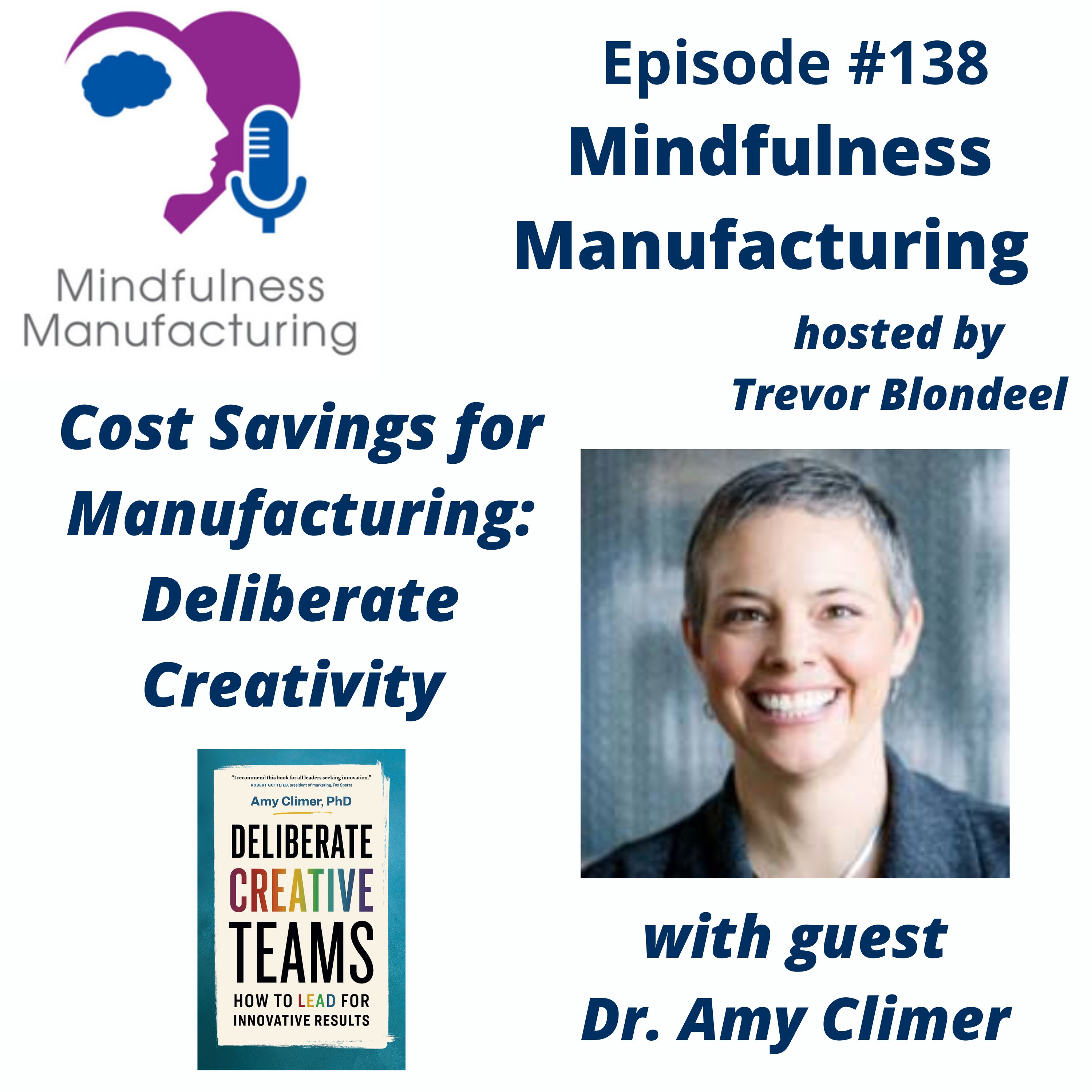
S1 Ep 138Cost Savings in Manufacturing for Operations Managers: Using Deliberate Creativity to Improve Performance with Amy Climer #138
Welcome to Manufacturing Greatness with Trevor Blondeel, where we work with organizations to manufacture greatness by leveraging resources you already have to achieve greater retention, productivity, and profits. To learn more, visit www.manufacturinggreatness.com and click here to subscribe to Trevor's monthly newsletter. Now, let's jump in! To find better cost savings and stronger team dynamics, manufacturing leaders need one powerful tool: creativity. In this episode, Dr. Amy Climer, speaker, trainer, and author of Deliberate Creative Teams, shares insights on manufacturing leadership, creativity, and continuous improvement for Operations Managers, Production Managers, Manufacturing Managers, and Shift Supervisors. With a PhD in Leadership and Change, Amy explains how deliberate creativity helps leaders improve problem solving, strengthen communication skills, and drive productivity in manufacturing. You will learn practical strategies to boost employee engagement, support innovation, and uncover cost savings while building more connected and high performing teams. 1:00 – In manufacturing, finding cost savings is often a challenge 5:33 – Through creative problem solving, plants can find improved cost savings 10:50 – To introduce more creativity in your organization, focus on team purpose, team dynamics, and creative process 17:14 – Creative abrasion occurs when a team can disagree on ideas, not personalities 21:54 – Switching up your language as a leader can play a role in encouraging creativity 24:00 – To find solutions through creativity, be deliberate Connect with Dr. Amy Climer Visit the website for Climer Consulting Connect on LinkedIn Read my book report of Deliberate Creative Teams

S1 Ep 137Root Cause Analysis in Manufacturing for Plant Leaders: Improving Decisions and Preventing Repeat Problems with Bob Latino #137
Welcome to Manufacturing Greatness with Trevor Blondeel, where we work with organizations to manufacture greatness by leveraging resources you already have to achieve greater retention, productivity, and profits. To learn more, visit www.manufacturinggreatness.com and click here to subscribe to Trevor's monthly newsletter. Now, let's jump in! Are you truly doing root cause analysis, or only scratching the surface of your manufacturing problems? In a fast paced environment, leaders want quick fixes. But without asking the right questions and considering the human element, you may miss deeper and more sustainable solutions. In this episode, Bob Latino, seasoned root cause analysis expert, shares insights on manufacturing leadership, root cause analysis, and operational excellence for Operations Managers, Production Managers, Manufacturing Managers, and Shift Supervisors. Bob explains how effective RCA goes beyond fixing broken equipment. You will learn how communication skills, accountability, and a growth mindset help leaders improve systems, strengthen reliability, and reduce recurring issues. This conversation highlights how focusing on human performance instead of blame leads to stronger culture, better productivity, and long term manufacturing success. 1:48 – RCA has a PR problem, and is typically only associated with technical failure rather than human factors 6:00 – To improve sustainability and reliability, consider how you approach accountability and blame 7:19 – When an organization is stuck in crisis mode, it looks very different from an organization with experienced reliability 11:32 – "What does right look like to you?" is a great question to ask when a problem occurs 15:41 – Understanding the difference between proactive and reactive approaches can help you shift your mindset when it comes to finding solutions 18:05 – Reliability and maintenance are different departments, as they have different focuses 22:04 – With improved reliability, you can address issues like high turnover and poor leadership retention Connect with Bob Latino Find him on LinkedIn, where he shares extensive content Visit the Prelical Solutions website

S1 Ep 136Manufacturing Productivity for Plant Leaders: Reducing the Hidden Costs of Mental Health on Team Performance with Adam Nemer #136
Welcome to Manufacturing Greatness with Trevor Blondeel, where we work with organizations to manufacture greatness by leveraging resources you already have to achieve greater retention, productivity, and profits. To learn more, visit www.manufacturinggreatness.com and click here to subscribe to Trevor's monthly newsletter. Now, let's jump in! In manufacturing, mental health is often overlooked, but ignoring it can lead to disengagement, burnout, and higher employee turnover. In this episode, Adam Nemer, former CFO and senior operations leader and founder of Simple Mental Health, shares insights on manufacturing leadership, employee engagement, and workforce retention for Operations Managers, Production Managers, Manufacturing Managers, and Shift Supervisors. Adam draws from his personal mental health journey to explain how leaders can strengthen trust building, improve communication skills, and create healthier manufacturing cultures. You will learn practical ways to support your team, reduce stigma, and build workplaces where people feel valued, connected, and motivated to perform. 1:00 – In manufacturing, one out of every five employees struggles with a diagnosable mental illness 7:58 – To promote better mental health in your manufacturing organization, learn to recognize the signs of mental health struggles, like changes in appearance, behavior, or performance 8:35 – Be aware of team members who might be showing up for work, but aren't mentally engaged 12:25 – To improve mental health at work, you need to have deep conversations that go beyond just talking about work 16:20 – When your employees are unhappy or struggling with mental health issues, it can lead to a massive drop in productivity, as well as high turnover 21:46 – As a leader, there is power in sharing your own mental health experiences 27:45 – When leaders normalize discussions about mental health, it improves performance and transforms lives Connect with Adam Nemer Visit his website Connect on Facebook and LinkedIn Learn more on YouTube

S1 Ep 135Problem-Solving Leadership in Manufacturing for Plant Leaders: Shifting from Blame to Solutions with Darcy Luoma #135
Welcome to Manufacturing Greatness with Trevor Blondeel, where we work with organizations to manufacture greatness by leveraging resources you already have to achieve greater retention, productivity, and profits. To learn more, visit www.manufacturinggreatness.com and click here to subscribe to Trevor's monthly newsletter. Now, let's jump in! In manufacturing, it often feels like everything is go go go. But what happens when leaders slow down, think more intentionally, and lead with purpose? In this episode, Darcy Luoma, author, consultant, and creator of the Thoughtfully Fit approach, shares insights on manufacturing leadership, communication skills, and employee engagement for Operations Managers, Production Managers, Manufacturing Managers, and Shift Supervisors. Darcy explains how intentional leadership strengthens manufacturing culture, improves team dynamics, and builds accountability. You will learn practical strategies to connect with your team, develop a growth mindset, and bring more thoughtfulness and clarity to daily leadership on the shop floor. 1:30 – Intentionally or unintentionally, culture is set from the top 2:39 – Using curiosity helps separate accountability from blame 4:21 – As a leader, you can help your team stay accountable by setting clear expectations and benchmarks 6:40 – Change your mindset to shift away from blame and toward solutions 8:26 – Don't ignore your team's dynamic, or else it can lead to issues like decreased morale and effectiveness 11:04 – By creating intentional space to address team dynamics and communicate styles, you'll find better results 17:10 – Through a Thoughtfully Fit model, focus on pausing, thinking, and acting intentionally 21:31 – Practicing self-awareness as a leader can improve your team's dynamics 23:20 – When applying Thoughtfully Fit principals, be consistent and practice even in small situations Connect with Darcy Luoma Visit her website Take the Thoughtfully Fit quiz

S1 Ep 133Frontline Engagement in Manufacturing for Plant Leaders: Rethinking Shop Floor Time to Better Support Technical Teams with Emily Nichols #134
Welcome to Manufacturing Greatness with Trevor Blondeel, where we work with organizations to manufacture greatness by leveraging resources you already have to achieve greater retention, productivity, and profits. To learn more, visit www.manufacturinggreatness.com and click here to subscribe to Trevor's monthly newsletter. Now, let's jump in! In manufacturing, leaders often focus on complex processes and emerging technologies like artificial intelligence. But lasting productivity and performance still depend on people. In this episode, Emily Nichols, professional engineer and manufacturing leader with experience at PepsiCo, Janssen, and Henkel, shares insights on manufacturing leadership, soft skills, and employee engagement for Operations Managers, Production Managers, Manufacturing Managers, and Shift Supervisors. Emily explains why human connection remains essential in a highly technical environment. You will learn how communication skills, trust building, and authentic leadership strengthen manufacturing culture, improve retention, and increase team performance. She also offers practical strategies for breaking down systemic barriers and improving your people score on the shop floor. 2:01 – Even in fields like manufacturing, human skills play a very important role 5:43 – Current and emerging trends, like AI, make human connection even more important in retention and recruitment 8:29 – To form connections, increase your presence on the shop floor 12:36 – Visual uniformity can foster better connections and help you break down perceived barriers 19:39 – If you want more connections, you need to listen to and respect the expertise of everyone on your team 20:37 – To support women in your organization, you need to address systemic issues 23:39 – Even small changes, like using more inclusive language, can have a big impact on your culture 25:06 – We are people first, not machines Connect with Emily Nichols Visit her website Connect on social media: @connectbettertoday
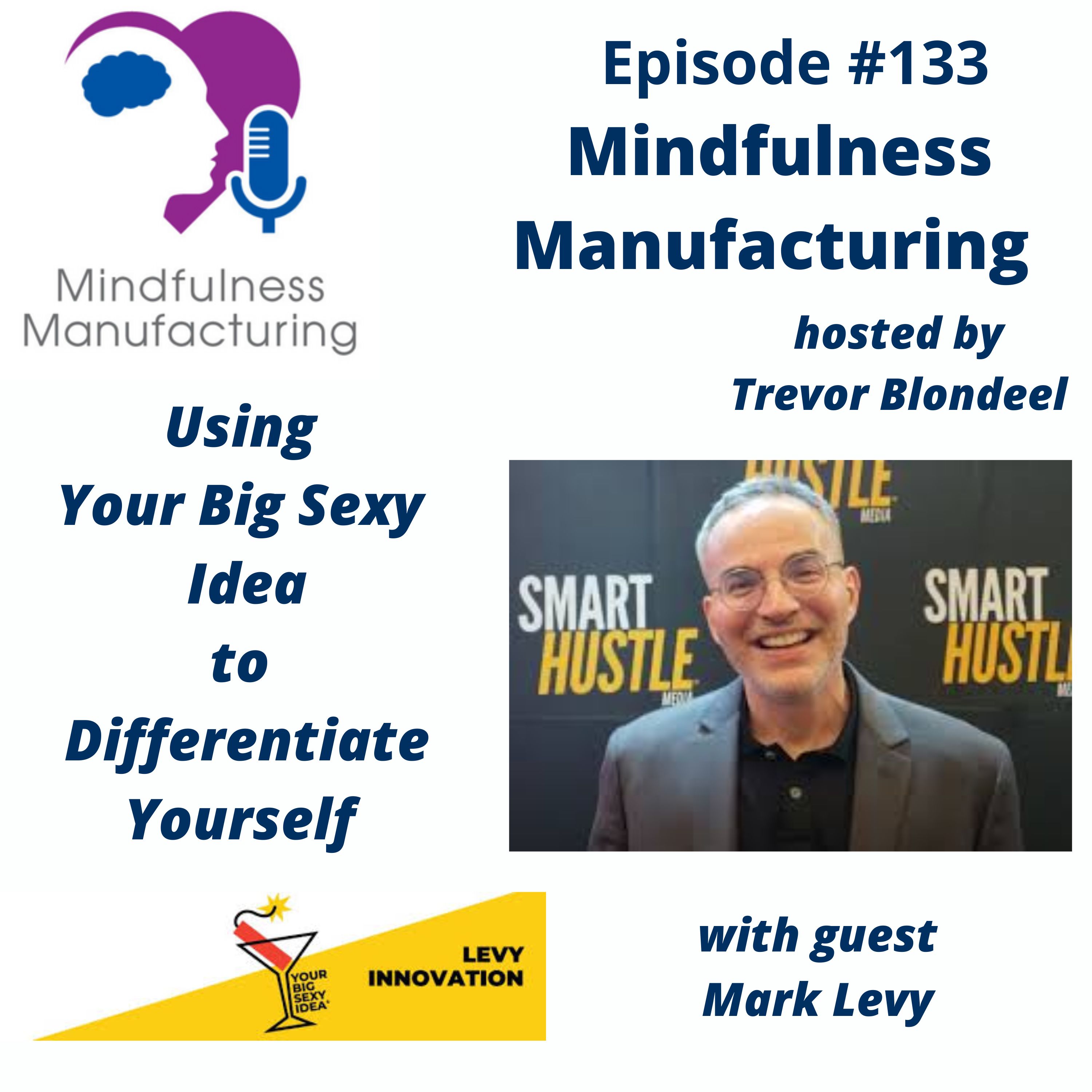
S1 Ep 133Strategic Differentiation in Manufacturing for Operations Leaders: Using Your Big Idea to Stand Out and Lead Boldly with Mark Levy #133
Welcome to Manufacturing Greatness with Trevor Blondeel, where we work with organizations to manufacture greatness by leveraging resources you already have to achieve greater retention, productivity, and profits. To learn more, visit www.manufacturinggreatness.com and click here to subscribe to Trevor's monthly newsletter. Now, let's jump in! In the fast paced world of manufacturing, how do you stand out as a leader and help your organization rise above the competition? In this episode, Mark Levy, differentiation expert and TEDx speaker, shares insights on manufacturing leadership, strategic thinking, and communication skills for Operations Managers, Production Managers, Manufacturing Managers, and Shift Supervisors. Mark explains how finding your big idea helps leaders strengthen culture, improve employee engagement, and communicate values with clarity. You will learn practical strategies to differentiate your organization, build trust, and inspire teams through authentic leadership and compelling storytelling. 2:18 – To inspire your organization, articulate your values and missions in clear, engaging, and memorable ways 3:44 – When making a claim or sharing information, back it up with stories and facts to make it memorable and relatable 10:22 – To help your team learn your organization's key values, keep a sheet with facts and stories that highlight your organization's strengths, mission, values, and other key facts 12:17 – In manufacturing, we often overlook successes in favor of focusing on problem-solving 26:11 – As a leader, communicate in a way that ensures your team members feel valued and integral to your organization's success 27:00 – Consider staring your meetings by sharing proud moments and highlighting recent successes Connect with Mark Levy Watch Mark's Tedx Talk Visit his website
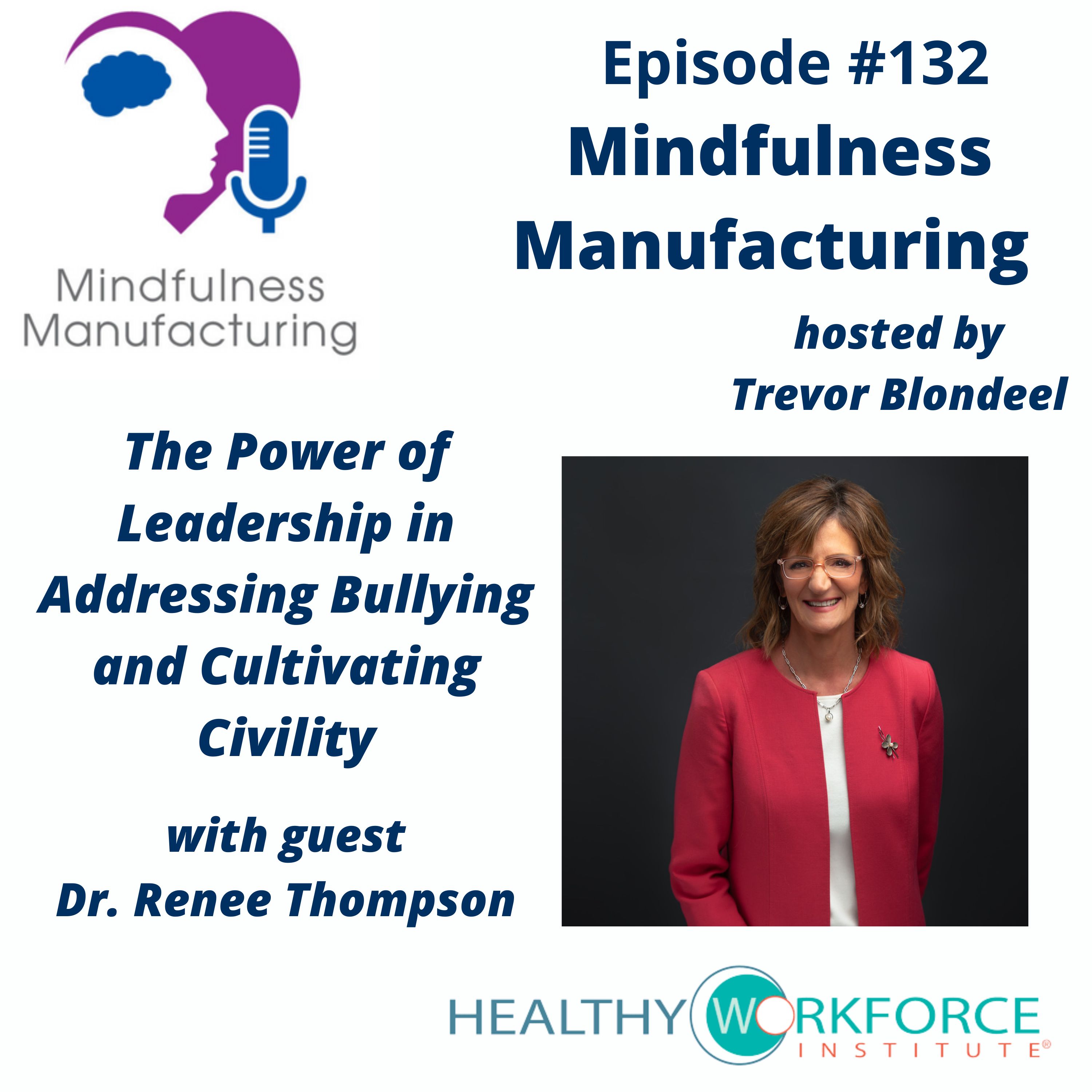
S1 Ep 132Leadership Accountability in Manufacturing for Plant Managers: Eliminating Bullying and Rebuilding Respect on the Shop Floor with Renee Thompson #132
Welcome to Manufacturing Greatness with Trevor Blondeel, where we work with organizations to manufacture greatness by leveraging resources you already have to achieve greater retention, productivity, and profits. To learn more, visit www.manufacturinggreatness.com and click here to subscribe to Trevor's monthly newsletter. Now, let's jump in! In manufacturing, it is easy to get stuck inside the four walls of your organization. But looking beyond your industry can unlock powerful insights to strengthen leadership, improve culture, and better support your team. In this episode, Dr. Renee Thompson, CEO and Founder of the Healthy Workforce Institute, shares insights on manufacturing leadership, workplace culture, and employee engagement for Operations Managers, Production Managers, Manufacturing Managers, and Shift Supervisors. Renee draws from her work addressing bullying and incivility in healthcare to explain how kindness, respect, and professionalism improve trust building and accountability. You will learn practical strategies to create a more inclusive workplace, strengthen communication skills, and build manufacturing cultures where people feel valued, connected, and motivated to perform. 4:14 – In the workplace, bullying and negative relationships can occur between coworkers, as well as between bosses and employees 5:34 – As a leader, it's important to equip yourself with the skills needed to address bullying and incivility 7:57 – There are many psychological barriers that can lead to challenges or inaction when faced with problematic workplace behavior 9:30 – Scripting is a way to effectively handle difficult conversations 12:27 – Learn the difference between overt bullying and subtle, more convert bullying, and find the strategies for dealing with both types of behavior 16:40 – Even though all industries are different, strategies for addressing bullying and incivility can still be applied across different industries Connect with Dr. Renee Thompson Learn more about Healthy Workforce Institute Find her on LinkedIn Connect on Facebook and Instagram

S1 Ep 131Team Alignment in Manufacturing for Production Managers: Turning Disconnected Groups into High-Performing Teams with Mark Kenny #131
Welcome to Manufacturing Greatness with Trevor Blondeel, where we work with organizations to manufacture greatness by leveraging resources you already have to achieve greater retention, productivity, and profits. To learn more, visit www.manufacturinggreatness.com and click here to subscribe to Trevor's monthly newsletter. Now, let's jump in!c When teams are aligned, productivity rises, morale improves, and workplaces become healthier. When teams are misaligned, leaders often face higher turnover and challenges attracting and retaining talent. In this episode, Mark Kenny, speaker, consultant, and author of The Hippo Solution, shares insights on manufacturing leadership, team alignment, and employee engagement for Operations Managers, Production Managers, Manufacturing Managers, and Shift Supervisors. Mark explains how communication skills, trust building, and authentic leadership strengthen teamwork and manufacturing culture. You will learn practical strategies to improve collaboration, reduce turnover, and create environments where people feel connected, motivated, and committed to shared results. 3:04 – There are some key differences between functional and misaligned teams 5:11 – When your team is disconnected, it can lead to issues like high turnover or struggles to recruit new talent 6:16 – As a leader, you play a critical role in setting the tone for your entire organization 8:07 – To strengthen your team, learn to look for dysfunctional team dynamics 10:17 – Connection, cohesion, and clarity are the pillars of a well-functioning team 14:47 – With more clarity and structure, you can improve your team's functionality 18:39 – Improving your culture can be transformational for your team 24:31 – To find the best solutions, stay curious and build deeper connections within your team Connect with Mark Kenny Visit his website Connect on LinkedIn More on The Six Types of Working Genius More on American Icon: Alan Mullaly and the Fight to Save Ford Motor Company

Frontline Empowerment in Manufacturing for Production Supervisors: Practical Leadership Lessons from the Drive-Thru with Monica Rothgery #130
Welcome to Manufacturing Greatness with Trevor Blondeel, where we work with organizations to manufacture greatness by leveraging resources you already have to achieve greater retention, productivity, and profits. To learn more, visit www.manufacturinggreatness.com and click here to subscribe to Trevor's monthly newsletter. Now, let's jump in! In this episode, Monica Rothgery, former Taco Bell general manager and former chief operating officer of KFC US, shares insights on manufacturing leadership, frontline leadership, and employee engagement for Operations Managers, Production Managers, Manufacturing Managers, and Shift Supervisors. Drawing from her book Lessons from the Drive Thru, Monica explains how curiosity, vulnerability, and authentic leadership strengthen trust building and accountability. You will learn practical strategies to improve communication skills, support your team, and create manufacturing cultures where people feel valued, connected, and motivated to perform. 2:00 – Frontlines leaders often feel the need to jump in and fix problems themselves, rather than letting their team figure it out 4:00 – Shift your mindset to emphasize coaching and supporting, not micromanaging 7:00 – Practice servant leadership through supporting and recognizing your team 13:00 – Instead of just providing instructions, look for ways to observe and provide feedback 15:00 – When problems occur, have deep and curious conversations to find the root of the issue 19:00 – Training is often seen as the problem, but a lack of support can also lead to performance issues 22:00 – All employees are unique and have different standards, so be curious to find out the kind of support and recognition they need Connect with Monica Rothgery Buy her book Visit her website

S1 Ep 129Manufacturing Productivity for Operations Managers: Using Mindfulness to Improve Focus and Results with Sarah Ohanesian #129
Welcome to Manufacturing Greatness with Trevor Blondeel, where we work with organizations to manufacture greatness by leveraging resources you already have to achieve greater retention, productivity, and profits. To learn more, visit www.manufacturinggreatness.com and click here to subscribe to Trevor's monthly newsletter. Now, let's jump in! In manufacturing, productivity and mindfulness are closely connected. A more intentional leadership approach can improve team performance, reduce burnout, and create a healthier workplace. In this episode, Sarah Ohanesian, keynote speaker and productivity consultant, shares insights on manufacturing leadership, productivity, and employee engagement for Operations Managers, Production Managers, Manufacturing Managers, and Shift Supervisors. Sarah explains how communication skills, growth mindset, and intentional time management help leaders reduce stress and strengthen trust building on the shop floor. You will learn practical strategies to improve focus, support workforce retention, and build a manufacturing culture where people feel energized and motivated to perform. 2:36 – There is a difference between busyness and productivity 4:20 – You can improve your productivity with practices like setting daily intentions or saving time for end-of-day reflection and planning 12:10 – Follow Sarah's COAT framework to clarify, organize, act, and take time 17:10 – To save time and be more productive, figure out which tasks are the most important and set clear priorities 18:32 – If you have a to-do list, keep it in a single, trusted location 18:40 – Be intentional with your schedule and time and don't be afraid to say no to requests 21:14 – Allowing time to rest plays a key role in creating sustainable, long-term productivity Connect with Sarah Ohanesian Visit her website Connect on LinkedIn and Instagram
S1 Ep 128Organizational Transformation in Manufacturing for Operations Leaders: Using People Power to Drive Performance with Hugh Hornsby #128
Welcome to Manufacturing Greatness with Trevor Blondeel, where we work with organizations to manufacture greatness by leveraging resources you already have to achieve greater retention, productivity, and profits. To learn more, visit www.manufacturinggreatness.com and click here to subscribe to Trevor's monthly newsletter. Now, let's jump in! There is power in your people. When manufacturing leaders learn how to harness that power, they can transform culture, performance, and retention. In this episode, Hugh Hornsby, Vice President of Everflow Supplies, shares insights on manufacturing leadership, employee engagement, and workforce development for Operations Managers, Production Managers, Manufacturing Managers, and Shift Supervisors. Drawing from his experience turning around struggling businesses and overcoming a life changing head injury, Hugh explains how gratitude, hiring strategy, and authentic leadership strengthen trust building and accountability. You will learn practical ways to improve your recruitment approach, unlock hidden talent, and build a manufacturing culture where people feel valued and motivated to perform. 2:27 – Everyone has a unique gift, which you can find by overcoming labels and looking for their personal potential 5:52 – Reframe the way you see others and yourself 6:25 – With a more progressive mindset, you can find more potential in both others and yourself 11:21 – If you invest in your team, they'll invest in your organization 14:13 – Hire for personality and to find the right cultural fit, not just because someone has a strong resume 15:35 – The hiring process should be curious, not transactional and restrictive 19:30 – Overcome your terror barrier 24:47 – Every day, find time for a gratitude check 27:00 – To transform your team, start by looking at the story you tell yourself Connect with Hugh Hornsby Learn more about Everflow Supplies Connect on LinkedIn Read my book review of Think and Grow Rich

S1 Ep 127Empathetic Leadership in Manufacturing for Operations Leaders: Using Storytelling to Strengthen Curiosity and Connection with Shane Zutz #127
Welcome to Manufacturing Greatness with Trevor Blondeel, where we work with organizations to manufacture greatness by leveraging resources you already have to achieve greater retention, productivity, and profits. To learn more, visit www.manufacturinggreatness.com and click here to subscribe to Trevor's monthly newsletter. Now, let's jump in! What is the secret to retaining your team members and creating an organization where people love to work? DigiKey, an electronic component manufacturer in Thief River Falls, Minnesota, offers powerful lessons, and Shane Zutz, Vice President of Human Resources, shares the insights behind their success. In this episode, Shane discusses manufacturing leadership, workforce retention, and employee engagement for Operations Managers, Production Managers, Manufacturing Managers, and Shift Supervisors. He highlights the importance of curiosity, empathy, and leadership presence, and shares practical strategies to strengthen trust building, improve communication skills, and increase accountability. You will learn how intentional leadership behaviors create stronger connections and build manufacturing cultures where people are motivated to stay and perform at their best. 5:12 – Building a better organization starts with being present and making personal connections 8:13 – If your organization is in a small community, making personal connections is extremely important 9:00 – To find curious ways to engage your team, one strategy is to create a list of questions to ask 13:30 - With a strong foundation, you'll be better equipped to tackle challenges or crises 15:11 - There is a lot of value in simple gestures, like greeting your team in the morning 18:12 - Personalization goes a long way 22:41 Show care and concern for your team members Connect with Shane Zutz Learn more about Digikey Connect with Shane on LinkedIn and reach out to get added to his newsletter Thanks for Listening! Thanks for tuning it to another episode of Mindfulness Manufacturing! To learn more about Trevor Blondeel and Manufacturing Greatness, please visit our website or contact Trevor here.
S1 Ep 126Workforce Retention in Manufacturing for Operations Leaders: Rethinking How You Keep Your Best People with Cara Silletto #126
Welcome to Manufacturing Greatness with Trevor Blondeel, where we work with organizations to manufacture greatness by leveraging resources you already have to achieve greater retention, productivity, and profits. To learn more, visit www.manufacturinggreatness.com and click here to subscribe to Trevor's monthly newsletter. Now, let's jump in! Are your team members houseplants or trees? It may sound unusual, but understanding the difference can help manufacturing leaders improve retention, strengthen engagement, and build stronger teams. In this episode, Cara Silletto, founder and Chief Retention Officer of Magnet Culture, shares insights on manufacturing leadership, employee engagement, and workforce retention for Operations Managers, Production Managers, Manufacturing Managers, and Shift Supervisors. Cara explains how emotional intelligence, communication skills, and trust building help leaders better support their people. You will learn practical strategies to reduce turnover, improve accountability, and create manufacturing cultures where employees feel valued, motivated, and committed to long term success. 2:49 – Some team members are trees, who stay with your company for a long time, while others are houseplants who needs more attention and support 3:23 – To retain your team members, understand the differences between your tree and houseplant employees 5:46 – With a diverse team, you need to approach different team members based on their different needs 8:10 – When you treat employees well, they are more likely to stay with your company 10:14 – Retaining your team members and providing support means adapting as a leader 12:47 – To retain employees, put a stronger emphasis on training, mentoring, and supporting your new hires from their first day 16:39 – Younger team members are more likely to bring their whole selves to work 24:02 – Leaders and managers should use continuous learning to improve their skills and gain a stronger understanding of their roles 25:47 – With a diverse team, you can't use the same rewards and recognitions for all employees 26:53 – To understand your team better, practice curiosity and active listening Connect with Cara Silletto Connect on LinkedIn Learn more about Magnet Culture Find special resources from Magnet Vault Thanks for Listening! Thanks for tuning it to another episode of Mindfulness Manufacturing! To learn more about Trevor Blondeel and Manufacturing Greatness, please visit our website or contact Trevor here.

Curiosity-Driven Leadership in Manufacturing for Operations Managers: Saying Less to Learn More and Improve Results with Michael Bungay Stanier #125
Welcome to Manufacturing Greatness with Trevor Blondeel, where we work with organizations to manufacture greatness by leveraging resources you already have to achieve greater retention, productivity, and profits. To learn more, visit www.manufacturinggreatness.com and click here to subscribe to Trevor's monthly newsletter. Now, let's jump in! We all love giving advice. But when advice becomes your default as a manufacturing leader, it can crush curiosity, create disconnect, and limit team performance. In this episode, bestselling author Michael Bungay Stanier shares insights on manufacturing leadership, communication skills, and growth mindset for Operations Managers, Production Managers, Manufacturing Managers, and Shift Supervisors. Michael explains how leaders can move beyond the advice trap by building curiosity, improving employee engagement, and strengthening trust. You will learn practical habits to support authentic leadership, encourage problem solving, and create manufacturing cultures where teams feel empowered, connected, and accountable. 2:17 – With more curiosity, you can engage your people, boost morale and retention, and create a thriving organization 3:31 – Slow down in your rush to provide immediate advice 4:16 – As a leader, shift away from making advice your default response 5:13 – With curiosity, you can become a more strategic leader 6:11 – Defaulting to giving advice is often an ingrained habit 6:48 – When you start being more curious, you let others shine 7:17 – Curiosity can also strengthen your relationship with your family and others outside of work 8:40 – Forming new curiosity habits can take time and practice 9:47 - If you always give answers and advice, your team can become over-dependent, more disconnected, and less productive 10:48 – Through more curiosity, you and your team can find the purpose of your work 12:22 – While practicing curiosity and other new skills, approach it with patience and grace for yourself 13:28 – Be specific and deliberate in building your coaching habit 14:13 – Your team are your allies 15:19 – Instead of answering right away, stay in a place of curiosity a little bit longer 16:53 – Ask curious questions to find the root cause of issues within your team 18:48 – Asking questions can be more effective than giving advice 20: 11 – Your job isn't to come up with the best answer, but to help your team come up with the right answer 21:42 – To practice curiosity, pay attention to your body language Connect with Michael Bungay Stanier Visit his website and download chapter one of The Coaching Habit Learn more about Box of Crayons Read my book reports of The Coaching Habit
S1 Ep 124Greenfield Leadership in Manufacturing for Operations Managers: Building Culture and Performance in a New Plant with Daniel Knecht #124
Welcome to Manufacturing Greatness with Trevor Blondeel, where we work with organizations to manufacture greatness by leveraging resources you already have to achieve greater retention, productivity, and profits. To learn more, visit www.manufacturinggreatness.com and click here to subscribe to Trevor's monthly newsletter. Now, let's jump in! What does it really take to launch a new manufacturing plant? A successful greenfield site is about more than equipment and facilities. It also depends on how leaders hire, communicate, and set the tone for their teams. In this episode, Daniel Knecht, Solar Project Director at NSG Group, shares insights on manufacturing leadership, team development, and strategic thinking for Operations Managers, Production Managers, Manufacturing Managers, and Shift Supervisors. Dan draws from his experience launching a greenfield site to explain how communication skills, trust building, and authentic leadership shape culture from day one. You will learn practical strategies to support your workforce, improve daily leadership behaviors, and drive long term performance during periods of growth and change. 4:04 – While manufacturing requires many technical skills, it's still all about people and connection 4:55 – If you're a technically minded person, you might need to shift your behavior to form stronger connections and learn to lead through others 5:22 – At a new plant, choosing and building a new team is an important part of the process 6:13 – As a leader, you want to hire a team who can respectfully challenge you, not just people who think exactly like you 7:27 – Changing how you show up for your team starts with authenticity and vulnerability 9:45 – Show up for your team with action, not just words 10:23 – Even with a large team, you can form great connections through intention and curiosity 12:54 – At a new plant, it's imperative to set the right tone 14:38 – Manage your emotions and use patience to navigate challenges and connect with your team 19:09 – How you show up in a moment of adversity says a lot about you as a leader 20:05 – You lead how you're led, so be aware of behaviors you might have picked up from others 20:40 – Take responsibility for your role as a leader in your organization 21:53 – Hire the right people and invest in them 23:20 – You can't successfully address every issue your team brings to you, but you can approach the issue with an open mind 24:14 – To get a better understanding of the pulse of your floor, create a safe space for your team Connect with Daniel Knecht Find him on LinkedIn Learn more about NSG

S1 Ep 122Leading Through Uncertainty in Manufacturing for Operations Leaders: Practical Tools for Creating Clarity and Confidence with Jay Baer #123
Welcome to Manufacturing Greatness with Trevor Blondeel, where we work with organizations to manufacture greatness by leveraging resources you already have to achieve greater retention, productivity, and profits. To learn more, visit www.manufacturinggreatness.com and click here to subscribe to Trevor's monthly newsletter. Now, let's jump in! In manufacturing, labor shortages and hiring challenges continue to impact retention and recruitment. Leaders who respond faster and communicate more clearly gain a competitive advantage in attracting and keeping talent. In this episode, Jay Baer shares insights on manufacturing leadership, communication skills, and workforce retention for Operations Managers, Production Managers, Manufacturing Managers, and Shift Supervisors. Jay explains how reducing uncertainty, improving response times, and strengthening strategic thinking help leaders build trust and improve employee engagement. You will learn practical strategies to close the skills gap, improve onboarding experiences, and create manufacturing cultures where top talent wants to stay and grow. 3:50 – There is a correlation between responsiveness and revenue 5:34 – People care about their time more than ever, which is why it's important to respect the time of others 6:11 – Creating an efficient recruitment process is one way to be respectful of other's time 7:43 – With a faster recruitment process, you won't miss out on great talent 10:32 – Having an efficient system for replying and following-up cuts down on team anxiety and improves your culture 11:52 – You don't always have to have the answer right away, but you can improve your relationships by giving a response 14:31 – As a leader, being responsive builds trust and helps you form better relationships within your organization 15:08 – Through responsiveness and strong communications, you can bridge the Uncertainty Gap 17:27 – People are trained to want more details and information 20:07 – Responsiveness should be a company policy, not an individual choice 21:40 – Find ways to continuously improve 23:57 – Customers will often go with the person who responds first, regardless of price Connect with Jay Baer Visit his website Learn more about The Time to Win Subscribe to his newsletter Thanks for Listening! Thanks for tuning it to another episode of Mindfulness Manufacturing! To learn more about Trevor Blondeel and Manufacturing Greatness, please visit our website or contact Trevor here.

S1 Ep 122Performance Measurement in Manufacturing for Continuous Improvement Leaders: Fixing Broken Processes to Elevate Team Results with Martin Low #122
Welcome to Manufacturing Greatness with Trevor Blondeel, where we work with organizations to manufacture greatness by leveraging resources you already have to achieve greater retention, productivity, and profits. To learn more, visit www.manufacturinggreatness.com and click here to subscribe to Trevor's monthly newsletter. Now, let's jump in! Results matter. Whether you are focused on safety, quality, or productivity, manufacturing leaders want clear performance metrics. But measuring the return on investment of your people can feel more complex. In this episode, Martin Low, Founder and CEO of On Plane Consulting, shares insights on manufacturing leadership, workforce development, and performance measurement for Operations Managers, Production Managers, Manufacturing Managers, and Shift Supervisors. Drawing from his experience in human resources at companies like Amazon and Blue Apron, Martin explains how strategic thinking, accountability, and communication skills help leaders measure team performance more effectively. You will learn practical strategies to strengthen processes, improve employee engagement, and build manufacturing cultures where people drive measurable results. 3:23 – You can't measure people in the same way you measure inventory, cash flow or other main areas of your organization 6:31 – If you don't invest in your people, it leads to issues like high turnover and halted productivity 7:36 – If you don't have a baseline, you can't measure 8:45 – If someone on your team is underperforming, use curiosity to find the cause 8:52 – Establish a baseline for what good looks like within your team or organization 9:45 – If someone on your team has higher rates than others, study their process and see how you can implement their methods for your whole team 11:50 – When results don't meet expectations, approach the issue with curiosity instead of judgement 14:08 – With clearer processes, your team can improve and your organization can reduce turnover 14:24 – As a leader, you should make your expectations clear and hold others accountable 15:33 – With clarity, your team members find more agency and can improve the way they show up 17:31 – Create a process where you and your team can use your energy in a productive way, instead of just trying to survive the day 19:37 – Surveying your team is a strategy for assuring everyone is aligned and understands your processes, values, mission, and goals 22:52 – With a survey, leadership can find solutions directly from their team on the floor 24:18 – Most people show up wanting to do a good job, and clear processes can help them improve how they show up Connect with Martin Low Learn more about On Plane Consulting Contact On Plane Consulting at [email protected] Contact Martin at [email protected]
S1 Ep 120Storytelling in Manufacturing for Production Managers: Using Real Stories to Improve Alignment and Team Performance with Terry Perry #121
Welcome to Manufacturing Greatness with Trevor Blondeel, where we work with organizations to manufacture greatness by leveraging resources you already have to achieve greater retention, productivity, and profits. To learn more, visit www.manufacturinggreatness.com and click here to subscribe to Trevor's monthly newsletter. Now, let's jump in! Stories connect people, build trust, and help manufacturing leaders drive engagement, accountability, and productivity. When used intentionally, storytelling becomes a powerful leadership tool on the shop floor. In this episode, Trevor Perry, award winning speaker and author, shares insights on manufacturing leadership, communication skills, and employee engagement for Operations Managers, Production Managers, Manufacturing Managers, and Shift Supervisors. Trevor explains how storytelling supports authentic leadership, strengthens trust building, and improves feedback delivery during difficult conversations. You will learn practical ways to use stories to grow your influence, support workforce retention, and create manufacturing cultures where teams feel connected, motivated, and aligned with shared goals. 4:04 – When someone owns, lives, and feels a story, that makes for powerful storytelling 5:31 – Some people might be bad storytellers with great stories to tell, or great storytellers with bad stories 6:24 – Storytelling is a way to connect and help others relate to what you're trying to share 7:12 – Good storytelling is transparent and draws on your own experiences 8:42 – If you're telling someone else's story, you still need to find a way to personally connect and own the story you're telling 11:18 – Storytelling is an inherent part of human nature, which is why stories resonate so well 12:47 – Every story needs a purpose, especially if you're in a leader or mentor role 15:15 – If you're trying to adopt someone else's story as your own, it won't feel authentic 16:19 – A culture of storytelling can bring more connection to your organization 17:44 – How you tell a story is always going to be different depending on your audience or situation 20:28 – Practicing improv is a unique way to hone your storytelling skills 20:30 - Learn more about improv and storytelling in Episode 97 22:55 – You can also learn about storytelling about listening to others 23:57 – As a human, you are a storyteller Connect with Trevor Perry Visit his website Thanks for Listening! Thanks for tuning it to another episode of Mindfulness Manufacturing! To learn more about Trevor Blondeel and Manufacturing Greatness, please visit our website or contact Trevor here.
S1 Ep 120High Performance in Manufacturing for Area Managers: Unlocking Individual Potential to Drive Team Results with Mike Mooney #120
Welcome to Manufacturing Greatness with Trevor Blondeel, where we work with organizations to manufacture greatness by leveraging resources you already have to achieve greater retention, productivity, and profits. To learn more, visit www.manufacturinggreatness.com and click here to subscribe to Trevor's monthly newsletter. Now, let's jump in! How can manufacturing leaders bring more mindfulness to the shop floor without sacrificing productivity or performance? In this episode, Mike Mooney, former senior executive in NASCAR, IndyCar, and Formula One, shares insights on manufacturing leadership, productivity, and employee engagement for Operations Managers, Production Managers, Manufacturing Managers, Team Leaders, and Shift Supervisors. Mike explains how communication skills, growth mindset, and authentic leadership help leaders improve trust building, accountability, and workforce retention. You will learn practical strategies for root cause analysis, strategic thinking, and feedback delivery while reducing burnout and supporting upskilling across your teams. This conversation connects soft skills with operational results, showing how intentional leadership strengthens culture, improves onboarding, and drives measurable performance in today's manufacturing environment. 3:46 – Like racecars, humans are high-performance vehicles that needs building, fixing, innovation, and restoration 5:04 – Being high-performance involves being present, intentional, and curious 8:13 – You can still get work done well and efficiently without sacrificing your relationships or workplace presence 9:22 – To improve your presence and how you show up, commit to shifting your micro-behaviors 12:00 – Sometimes, you need to slow down to go fast 13:33 – In the space between stimulus and response, you have a choice to jump to conclusions or react with curiosity 16:22 – Curiosity opens up conversations and leads to more productive outcomes 19:10 – Great ideas can come from anywhere, not just the executive team 23:20 – With curiosity, any idea can be interesting 25:05 – We were all designed to be high-performance vehicles and with time and authenticity, you can become the leader your organization needs Connect with Mike Mooney Visit his website Find him on LinkedIn Connect on X and Instagram @mike_mooney Connect on Facebook @mikemooney_speaks Thanks for Listening! Thanks for tuning it to another episode of Mindfulness Manufacturing! To learn more about Trevor Blondeel and Manufacturing Greatness, please visit our website or contact Trevor here.

S1 Ep 119Trust-Building in Manufacturing for Operations Leaders: Creating Stronger Teams Through Authentic Leadership with Justin Patton #119
Welcome to Manufacturing Greatness with Trevor Blondeel, where we work with organizations to manufacture greatness by leveraging resources you already have to achieve greater retention, productivity, and profits. To learn more, visit www.manufacturinggreatness.com and click here to subscribe to Trevor's monthly newsletter. Now, let's jump in! Trust is the foundation of strong manufacturing leadership. Without it, teams struggle with engagement, accountability, and productivity. In this episode, Justin Patton, leadership presence expert and author, shares insights on manufacturing leadership, trust building, and employee engagement for Operations Managers, Production Managers, Manufacturing Managers, Team Leaders, and Shift Supervisors. Justin explains how communication skills, feedback delivery, and authentic leadership help leaders strengthen relationships and improve workforce retention. You will learn practical strategies for difficult conversations, growth mindset, and transparency that support onboarding, reduce turnover, and create manufacturing cultures where people feel valued, connected, and motivated to perform. 3:10 – Trust requires transparency, tact, and togetherness 4:03 – Trust is your biggest competitive advantage 4:41 – When people don't have all the information, they fill it in with fear or make up stories 5:59 – As a leader, you can create a culture of trust by having the courage to be transparent and vulnerable 8:39 – You have to speak your truth, but also take accountability for how you deliver it 10:41 – When an organization values results over everything else, it leads to issues like a lack of trust, increased disconnect, and poor leadership 12:22 – Think about who you are at your best, then work to show up for others as that best version of yourself 14:37 – To grow as a leader, you don't have to fundamentally change who you are, but can learn how to lean into your best qualities and align your actions and behavior with who you are at your best 16:21 – Trust is built in small moments 17:46 – Find the balance between oversharing and transparency 20:51 – Trust does not leave people second guessing 21:20 – Choose discomfort over resentment 22:53 – There are also situations where building trust can require staying silent 25:43 – Every choice you make either gets you closer to trust or drives you away from it Connect with Justin Patton Visit his website Learn more about his books Check out my book reports of Your Road to Yes and The High-Impact Manager Thanks for Listening! Thanks for tuning it to another episode of Mindfulness Manufacturing! To learn more about Trevor Blondeel and Manufacturing Greatness, please visit our website or contact Trevor here.
S1 Ep 118Human-Centered Transformation in Manufacturing for Manufacturing Managers: How Compassion and Connection Drive Real Change with Karin J. Lund #118
Welcome to Manufacturing Greatness with Trevor Blondeel, where we work with organizations to manufacture greatness by leveraging resources you already have to achieve greater retention, productivity, and profits. To learn more, visit www.manufacturinggreatness.com and click here to subscribe to Trevor's monthly newsletter. Now, let's jump in! The manufacturing industry just keeps getting greater—and it's all thanks to passionate, mindful leaders who show up every day ready to engage their teams, improve their mindset, and create an environment where people love to work. One of these leaders is Karen J. Lund, a bestselling author and keynote speaker with a long career in the steel industry. Drawing on her experience in the steel industry, Karin now leads the team at G-Power Global, an organization she founded to inspires corporate and organizational entities to lead with compassion while continuing to focus on productivity, service, and profits. In this episode, Karin talks more about transformations facing the steel industry and manufacturing as a whole, and shares why compassion, connection, and conversations are the key to unlocking creative solutions, overcoming challenges, and bringing new energy to the manufacturing floor. 3:03 – In manufacturing, you can't do everything by yourself, which makes it very important to seek out and build strong connections 5:33 – It can be a challenge to form relationship on the floor, especially for younger professionals 6:48 – When people have connections on the floor, it makes it easier to voice feedback and navigate challenges 9:01 – By creating a culture that fosters connections and conversation, you'll find more productivity and more creative solutions 11:37 – Compassion is the competitive edge 15:55 – There is a difference between training and learning 16:39 – Employee resource groups are a strong tool for building connections and community in the workplace 19:20 – If you want to redefine your industry and image, start by having conversations about your values and how you present to the media and others 22:25 – In manufacturing, it's important to have conversations about how your role impacts the work of others, and vice versa 23:29 – Everyone learns in different ways and some people may need different accommodations 25:02 – When someone makes a commitment to their industry, it can have a positive impact for entire teams and organizations Connect with Karin J. Lund Visit her website Thanks for Listening! Thanks for tuning it to another episode of Mindfulness Manufacturing! To learn more about Trevor Blondeel and Manufacturing Greatness, please visit our website or contact Trevor here.

S1 Ep 117Frontline Decision-Making in Manufacturing for Operations Managers: Why You Can't Proceduralize Everything with Jake Mazulewicz #117
Welcome to Manufacturing Greatness with Trevor Blondeel, where we work with organizations to manufacture greatness by leveraging resources you already have to achieve greater retention, productivity, and profits. To learn more, visit www.manufacturinggreatness.com and click here to subscribe to Trevor's monthly newsletter. Now, let's jump in! When mistakes happen on the plant floor, many leaders focus on blame. But there is a better approach that improves safety, accountability, and performance. In this episode, Dr. Jake Mazulewicz shares insights on manufacturing leadership, safety culture, and root cause analysis for Operations Managers, Production Managers, Manufacturing Managers, and Shift Supervisors. Drawing from his background in high hazard industries, Jake explains how curiosity, communication skills, and trust building help leaders reduce errors and strengthen reliability. You will learn practical strategies to improve problem solving, support employee engagement, and create safer manufacturing environments where people feel supported and accountable. 3:35 – Procedures and policies are the work that is imagined, and on the floor is how the work actually gets done 4:19 – The work as-done is almost always radically different than the work as-imagined 5:20 – Even when you have standards and people show up wanting to do a good job, you can still see issues that need to be addressed 6:44 – There will always be areas that absolutely need to have procedures in place 8:02 – There are also adaptive jobs, which leans less into procedures and more intro troubleshooting and tacit human knowledge 10:56 - In an ideal environment, both mechanistic and adaptive models are used and respected and needed 12:11 – There are four levels, ranging from strict procedurals to looser guidelines that show what to do, but not how to do it 15:36 – Tacit knowledge gets shared through conversations 16:22 – A way to share important information is to have frontline experts record videos sharing their insights to problems, especially those that are not covered in procedures 19:44 – Through conversation and connection, more knowledge is shared 21:58 – Debriefing also plays a central role 23:45 – If you have strong discipline, you'll find more freedom 25:31 – In most situations, errors are signals, not defects 27:07 – When an error occurs, be curious and find the deeper cause of the problem Connect with Jake Mazulewicz Find him on Linkedin Visit his website
S1 Ep 116Crisis Leadership in Manufacturing for Operations Managers: Navigating Uncertainty with Confidence and Clarity with Dave Sanderson #116
Welcome to Manufacturing Greatness with Trevor Blondeel, where we work with organizations to manufacture greatness by leveraging resources you already have to achieve greater retention, productivity, and profits. To learn more, visit www.manufacturinggreatness.com and click here to subscribe to Trevor's monthly newsletter. Now, let's jump in! When crisis hits, manufacturing leaders must stay calm, communicate clearly, and guide their teams through uncertainty. In this episode, Dave Sanderson, Flight 1549 survivor, bestselling author, and leadership speaker, shares insights on manufacturing leadership, resilience, and communication skills for Operations Managers, Production Managers, Manufacturing Managers, Team Leaders, and Shift Supervisors. Drawing from his Miracle on the Hudson experience, Dave explains how trust building, growth mindset, and authentic leadership help leaders navigate adversity. You will learn practical strategies for difficult conversations, accountability, and employee engagement that strengthen safety culture, improve productivity, and support workforce retention during high pressure situations. 2:18 – Dave shares his Flight 1549 story 8:11 – In times of conflict, whether it's a plane crash or issue on the manufacturing floor, calmness and confidence play key roles 9:05 – To get through challenging situations, you need to manage your own mindset 10:05 – You don't need to know everything to handle a crisis, but you have to be able to lead yourself first 11:09 – Every moment in your life happens for a reason 13:38 – How to react to and cope with a challenging situation depends on the meaning you attach to it 14:22 – By reframing the meaning you attach to a situation, you can find healthy and productive ways to react and grow 15:33 – Everyone assigns different meanings to different challenges, so it's important to approach others with curiosity instead of judgement 17:56 – To truly understand others, you need be curious and have authentic interactions 21:52 – To feel included in an organization's mission, people need and want certainty, variety, connection, significance, growth, and the ability to contribute 24:48 – As a leader, it's up to you to find creative solutions and create opportunity from challenges 28:57 – If you get casual, it can lead to safety issues, accidents, and other serious problems for your organization Connect with Dave Sanderson Check out his website and download a free copy of his Moments Matter Magazine Connect on LinkedIn to see new blog content
S1 Ep 115Core Values in Manufacturing for Operations Managers: Turning Principles into Daily Action with Adam Hill #115
Welcome to Manufacturing Greatness with Trevor Blondeel, where we work with organizations to manufacture greatness by leveraging resources you already have to achieve greater retention, productivity, and profits. To learn more, visit www.manufacturinggreatness.com and click here to subscribe to Trevor's monthly newsletter. Now, let's jump in! In many manufacturing organizations, core values live on wall plaques but never show up in daily leadership behavior. Turning values into action is key to building trust, engagement, and real results on the shop floor. In this episode, Adam Hill, CEO, keynote speaker, and bestselling author, shares insights on manufacturing leadership, authentic leadership, and workplace culture for Operations Managers, Production Managers, Manufacturing Managers, and Shift Supervisors. Adam explains how communication skills, accountability, and growth mindset help leaders bring values to life. You will learn practical strategies to strengthen employee engagement, align behaviors with expectations, and create manufacturing cultures where people feel connected, motivated, and committed to shared success. 4:13 – Core values should serve as a driving force, but can sometimes become restrictive 6:26 – In some cases, holding onto an old or legacy core value can actually hold back your organization 8:15 – If your organization is struggling or plateaued, look toward your core values and address what ideals need to stay and which ones can be changed or removed 9:24 – Culture and strategy are very similar, but can't be treated as the same 10:51 – As culture shifts, you might have to shift your behavior while still staying true to your core values 13:06 – If you want change, you need to create a culture where people feel empowered to speak up 14:19 – If people in your organization don't feel comfortable speaking up, it can lead to unsafe environments 16:29 – Healthy conflict is often necessary when discussing which core values to keep or get rid of, especially in family or legacy companies 21:50 – The strongest core values are the ones that can grow and evolve with your organization 24:00 – Great results can arise from challenging conversations Connect with Adam Hill Visit his website Listen to his Flow Over Fear podcast

S1 Ep 114Positive Leadership in Manufacturing for Operations Leaders: Using Energy and Optimism to Strengthen Team Connection with Jon Gordon #114
Welcome to Manufacturing Greatness with Trevor Blondeel, where we work with organizations to manufacture greatness by leveraging resources you already have to achieve greater retention, productivity, and profits. To learn more, visit www.manufacturinggreatness.com and click here to subscribe to Trevor's monthly newsletter. Now, let's jump in! If you want to improve safety, quality, productivity, and results, the first step is looking toward improving connection. With more mindfulness and connection, your entire organization can thrive—and in this episode, guest Jon Gordon is here to show you exactly how you can improve connection and fight disconnect in your organization! Jon is one of the top three leadership speakers in the world, and his talks on mindset and leadership have inspired hundreds of individuals and organizations. He is also the bestselling author of 28 books, including one of my favorites, The Energy Bus: 10 Rules to Fuel Your Life, Work, and Team with Positive Energy. In this episode, Jon delves deeper into some of the insights in The Energy Bus to share how leaders can use positivity and connection to improve results and combat difficult situations. 3:31 – You are always going to have to deal with negative people, or energy vampires, but overcoming them is a key part of your journey to connection 4:40 – Every negative person is a test for you to find your own power and resiliency 6:40 – We are meant to be connected, which is why disconnect and isolation leads to anxiety and other mental health issues 7:55 – The more united and connected you are, the stronger you'll be as a team 10:10 – If you only focus on the results instead of the process, it can lead to disconnect and other negative outcomes 11:15 – Feed yourself with words of positivity and encouragement instead of listening to negative self-talk 12:30 – Understand the wound behind your negative thoughts, so you can find a way to speak truth to them 13:49 – By embracing opportunities to heal and grow, you become a stronger leader for your team 16:25 – A positive team starts with positive leadership 18:03 – Understanding the dynamics of your team can help you find ways to improve connection 20:23 – You need both love and accountability 22:48 – There will always been the need for difficult conversations, so find a way to deal with them and make them less difficult for you and your team 24:49 – You can't be thankful and stressed at the same time Connect with Jon Gordon Visit his website Learn More about The Energy Bus and his other books Read my previous book report on The Energy Bus Connect on LinkedIn and social media Hear Jon's podcast with Alan Mullally

S1 Ep 113Leadership Perspective in Manufacturing for Workforce Development Managers: Using Emotional Intelligence to See Challenges Differently with Karine Leblanc #113
Welcome to Manufacturing Greatness with Trevor Blondeel, where we work with organizations to manufacture greatness by leveraging resources you already have to achieve greater retention, productivity, and profits. To learn more, visit www.manufacturinggreatness.com and click here to subscribe to Trevor's monthly newsletter. Now, let's jump in! "I am great in my role and have valuable information to share, so why does no one want to work with me?" If you have ever asked yourself this question, this episode is for you. In this episode, Karine Leblanc, bestselling author and international speaker with an engineering background, shares insights on manufacturing leadership, emotional intelligence, and communication skills for Operations Managers, Production Managers, Manufacturing Managers, Team Leaders, and Shift Supervisors. Karine explains how self awareness, active listening, and authentic leadership help technical professionals strengthen trust building and improve employee engagement. You will learn practical strategies for difficult conversations, feedback delivery, and growth mindset that support workforce retention and create manufacturing cultures where collaboration and productivity thrive. 4:10 – In any role, there is much more to do that simply learn the technical role of your job 5:00 – By having a mentor or someone else you trust in your organization, you can gain valuable feedback and insights 6:18 – To better yourself through feedback, you need to be ready to hear feedback and make it clear to your team that you're open to listening to them 8:30 – When you work on yourself and improve your self-awareness, it can have a positive impact on all levels of your information, including your relationships with clients 9:45 – Emotional intelligence is not about being happy all the time, but learning to be self-aware of your own emotions and behaviors 10:42 – Through being intentional conversations with your team, you can still find productive outcomes and dynamics even when you're not at your emotional best 11:51 – Have the courage to be vulnerable 15:05 – By being self-aware and intentional, you can learn your own behavioral signals and find the best ways to navigate challenging situations 16:18 – Using emotional intelligence, you can also learn other people's behavioral signals and triggers, and find the best way to communicate with them 18:12 – If you're stuck, all you need is a fresh perspective 19:09 – To find new perspectives and feedback, take a pause and zoom out 21:23 – Through simple and honest dialogue, you can improve safety and find more productive results 22:37 – When you combine technical skills with human skills, magic happens Connect with Karine Leblanc Visit her website Connect on LinkedIn
S1 Ep 112Execution Discipline in Manufacturing for Business Unit Leaders: Why Hope Is Not a Strategy with Shawn Rhodes #112
Welcome to Manufacturing Greatness with Trevor Blondeel, where we work with organizations to manufacture greatness by leveraging resources you already have to achieve greater retention, productivity, and profits. To learn more, visit www.manufacturinggreatness.com and click here to subscribe to Trevor's monthly newsletter. Now, let's jump in! There is a four letter word manufacturing leaders should avoid: hope. Hope is not a strategy when it comes to safety, productivity, or workforce performance. In this episode, Shawn Rhodes, speaker, author, and change leadership expert, shares insights on manufacturing leadership, strategic thinking, and accountability for Operations Managers, Production Managers, Manufacturing Managers, Team Leaders, and Shift Supervisors. Drawing from his background as a war correspondent, Shawn explains how growth mindset, communication skills, and authentic leadership help leaders move from reaction to action. You will learn practical strategies for root cause analysis, difficult conversations, and workforce retention that replace hope with clear plans, stronger execution, and measurable results on the shop floor. 2:58 – If you rely on hope and wait for your environment to change, it can spell failure 3:15 – Identify where you're using hope in your plans, then replace it with something else 5:08 – As a leader, replacing hope starts with changing your mindset 6:03 – To replace hope, identify areas where issues could occur, then work to address the issues 8:50 – By making small changes, you can eliminate bigger issues and free up more time and resources for yourself and your team 11:18 – By changing your mindset to remove hope, you will also create a positive standard for your team and organization 13:51 – Take time to monitor your environment and assesses what is and isn't working 15:07 – Set objectives and figure out what you need to do to reach them 18:40 – As a leader, your biggest concern should be living up to your potential and fully showing up in how you serve 21:05 – Replace hope with systems and processes 21:53 – Take ownership and think about what you could do differently as a leader and how you can put those changes into action 25:16 – Have the courage to take a pause or briefly shut down operations, and it will save major time and stress down the line 27:30 – If you put in the work to replace hope and improve your leadership, success will find you Connect with Shawn Rhodes Find him on LinkedIn Learn more about Shawn's book Pivot Point

S1 Ep 111Self-Aware Leadership in Manufacturing for Workforce Development Managers: Becoming a Champion for Better Behavior and Results with Zovig Garboushian #111
Welcome to Manufacturing Greatness with Trevor Blondeel, where we work with organizations to manufacture greatness by leveraging resources you already have to achieve greater retention, productivity, and profits. To learn more, visit www.manufacturinggreatness.com and click here to subscribe to Trevor's monthly newsletter. Now, let's jump in! Do you want to improve relationships at your organization and change the way you show up for your team? It all starts with self-awareness . . . and in this episode, guest Zovig Garboushian is here to show you the tips you need to become a self-awareness champion! With years of experience in brand marketing, management consulting, and leadership development, Zovig now puts her passion and experience to use at Boldness Ablaze, a boutique professional firm that helps leaders overcome personal limitations and find authentic success. In this episode, Zovig delves into the important topic of self-awareness and shares her favorite tips on how leaders can use skills like curiosity and compassion to grow their self-awareness, form healthier connections, and find the life they want to have. 2:30 – Self-awareness is the key to having the kind of life you want to have 2:50 – It is also about the ongoing and evolving relationship you have with yourself 7:20 – Through self-awareness, you develop the ability to notice and change when something in your life feels incongruent with what you want for yourself 8:40 – The more we connect to ourselves, the more we behave in our natural ways 9:12 – Our essence is our unique way of showing up and adding value to the world 11:24 – Self-awareness also requires you to attend to yourself and practice self-care 13:25 – One way to practice self-awareness is to take small moments throughout your day to pause and reflect on how you want to show up 16:43 – Another self-awareness tip is to observe yourself, your behavior, and your interactions and reactions 18:40 – By staying self-aware and reflecting on your own behavior, you can improve your relationships with others in your organization 19:48 – Showing up with self-awareness takes courage 20:18 – Everything we do for others begins with ourselves 20:35 – Self-awareness includes curiosity, compassion, and acceptance for ourselves 22:05 – You're never going to treat someone else better than how you treat yourself 24:26 – You deserve to take time for yourself Connect with Zovig Garboushian Visit her website Email [email protected] Connect on LinkedIn
S1 Ep 110Entrepreneurial Leadership in Manufacturing: Using Passion, Purpose, and Perseverance to Drive Results with Tonia Jahshan #110
Welcome to Manufacturing Greatness with Trevor Blondeel, where we work with organizations to manufacture greatness by leveraging resources you already have to achieve greater retention, productivity, and profits. To learn more, visit www.manufacturinggreatness.com and click here to subscribe to Trevor's monthly newsletter. Now, let's jump in! What are the three Ps of success? Passion, purpose, and perseverance can shape how manufacturing leaders show up, engage their teams, and drive results. In this episode, Tonia Jahshan, founder of Sipology and successful entrepreneur, shares insights on manufacturing leadership, growth mindset, and employee engagement for Operations Managers, Production Managers, Manufacturing Managers, Team Leaders, and Shift Supervisors. Tonia explains how authentic leadership, strategic thinking, and resilience support productivity and workforce retention. You will learn practical strategies for building confidence, strengthening communication skills, and creating manufacturing cultures where people stay motivated, push through challenges, and perform at their best. 2:18 – Tonia shares stories from her experience on Dragons' Den 8:49 – When pitching a new idea, do your homework and know your audience 9:18 – Be transparent and show you truly care about your product or process 10:18 – Strong and long-lasting partnerships often start with a personal connection 12:04 – To drive change, you have to show up with passion 12:27 – The three P's of success are passion, purpose, and perseverance 13:26 – If you're not showing up with passion, others in your organization will feel it as well 16:24 – By setting boundaries and taking care of your own mental health, you can improve your mindset and how you positively show up for your team 18:52 – On the journey to success, you're not alone and it's okay to rely on your team and others in your life and organization 19:28 – If you're not passionate about w hat you're doing or feel like you're lost your purpose, reconsider and rework Connect with Tonia Jahshan Learn more about Sipology Connect with Tonia on Instagram or LinkedIn Visit Tonia's website
S1 Ep 109Leadership Stamina in Manufacturing for Operations Directors: Endurance Lessons That Build Stronger Shop Floor Performance with Steven Pivnik #109
Welcome to Manufacturing Greatness with Trevor Blondeel, where we work with organizations to manufacture greatness by leveraging resources you already have to achieve greater retention, productivity, and profits. To learn more, visit www.manufacturinggreatness.com and click here to subscribe to Trevor's monthly newsletter. Now, let's jump in! What does manufacturing leadership have in common with endurance sports like marathons and mountain climbing? Both require resilience, mindset, and consistent effort. In this episode, Steven Pivnik, entrepreneur, author, and endurance athlete, shares insights on manufacturing leadership, resilience, and productivity for Operations Managers, Production Managers, Manufacturing Managers, Team Leaders, and Shift Supervisors. Drawing from his experience leading Binary Tree and competing in extreme endurance events, Steven explains how growth mindset, authentic leadership, and strategic thinking help leaders improve employee engagement and accountability. You will learn practical strategies for workforce retention, difficult conversations, and building stamina for long term success on the shop floor and beyond. 2:19 - There are actually many tie-ins between endurance sports and entrepreneurship 6:11 – Avoid taking shortcuts, especially when it comes to tasks like hiring 6:55 – Shortcuts may feel good and lead to easy solutions, but they don't always lead to long-term, sustainable outcomes 8:20 – Many people have the false notion that there is always time to do sometime twice, but there's rarely time to do it right the first time 10:57 - If you rely on shortcuts, it can hurt you in the long-run 12:22 – Often, going slowly instead of rushing or using a shortcut leads to more positive outcomes and a greater chance of success 14:23 – When it comes to forming connections and having deeper conversations, it's especially important to slow down and be intentional about your behavior and mindset 14:50 – In relationships, quantity supersedes quality 16:50 – Stronger connections come from building true relationships through work 18:43 – When people have strong personal connections at work, they are more likely to show up and productively engage with their organization 21:20 – Forming stronger relationships takes work and patient, but the benefits can be very rewarding 22:43 – Everyone has stories and greatness, and you can discover opportunities for new connections by being open and willing to learn Connect with Steven Pivnik Visit his website Connect on LinkedIn Pre-order Built to Finish

Leadership Influence in Manufacturing: How Everyday Actions Create Infinite Impact with Alyson Van Hooser #108
Welcome to Manufacturing Greatness with Trevor Blondeel, where we work with organizations to manufacture greatness by leveraging resources you already have to achieve greater retention, productivity, and profits. To learn more, visit www.manufacturinggreatness.com and click here to subscribe to Trevor's monthly newsletter. Now, let's jump in! From retaining top talent to improving performance, manufacturing leaders use influence every day on the shop floor. In this episode, Alyson Van Hooser, keynote speaker, leadership expert, and author of Infinite Influence, shares insights on manufacturing leadership, communication skills, and employee engagement for Operations Managers, Production Managers, Manufacturing Managers, Team Leaders, and Shift Supervisors. Alyson explains how curiosity, intentionality, and authentic leadership strengthen trust building and accountability. You will learn practical strategies for difficult conversations, feedback delivery, and growth mindset that support workforce retention, improve productivity, and create manufacturing cultures where people feel motivated, valued, and connected. 2:57 – There are many ways to influence people, from convincing them to stay on your team to influencing someone to level up their performance at work 3:19 – Change the way you think about everyone you know and recognize your ability to influence anyone, anywhere, at any time 4:27 – Influence is very different from manipulation 5:21 – You can't motivate someone to do something they don't want to do 14:52 – Instead of making assumptions, stay curious and think about what others need 17:25 – By making assumptions, you might not be meeting your team's needs, if you are going in with good intentions 18:51 – You need a combination of good intentions and intentional actions 22:48 – Leading with biases and assumptions instead of curiosity and intentionality can lead to further disconnect in your organization 23:46 – You don't need radical shifts to change your leadership. Instead, you can focus on small moments of building curiosity and intention 26:03 – To find the best way to communicate with someone, you need build a relationship and get to know their story 28:33 – Successful organizations are built through the support and investment of others Connect with Alyson Van Hooser Visit her website Connect on LinkedIn Learn More About Infinite Influence
S1 Ep 107daptive Leadership in Manufacturing for Manufacturing Directors: Building a Reset Mindset to Navigate Change with Penny Zenker #107
Welcome to Manufacturing Greatness with Trevor Blondeel, where we work with organizations to manufacture greatness by leveraging resources you already have to achieve greater retention, productivity, and profits. To learn more, visit www.manufacturinggreatness.com and click here to subscribe to Trevor's monthly newsletter. Now, let's jump in! In the fast paced world of manufacturing, staying focused can feel impossible. Resetting your mindset is key to improving productivity, engagement, and performance. In this episode, Penny Zenker, international speaker, business strategy coach, and productivity expert, shares insights on manufacturing leadership, strategic thinking, and employee engagement for Operations Managers, Production Managers, Manufacturing Managers, Team Leaders, and Shift Supervisors. Penny explains how growth mindset, communication skills, and authentic leadership help leaders reduce distractions and strengthen accountability. You will learn practical strategies to improve focus, support workforce retention, and build manufacturing cultures where teams stay aligned, energized, and productive. 3:46 – Focus always coming back to setting objectives and aligning your actions with those objectives 4:47 – To find your focus, you need to step back, get out of your daily cycle, and reset 5:29 – To engage in reset practice, you have to recognize the trigger for the reset moment and then take a step back to get perspective and realign 7:03 – The more you practice, the easier it is to build a reset mindset 7:53 – If you don't give yourself permission to step back and reset, you increase the risk of errors that can hinder productivity and cause mistakes 8:53 – Taking small break is a way to relearn how to focus 9:30 – Another part of practicing a reset mindset is learning to recognize when something isn't working, like getting rid of an unproductive meeting 11:39 – Stepping back can mean giving up control in some areas 12:14 – Being able to step back creates a culture with less bureaucracy and more trust and autonomy 13:59 – Sometimes we focus on the wrong areas, like focusing on micromanagement when it would be more productive to focus on fostering autonomy 16:30 – A reset mindset starts with creating reset moments for yourself 17:44 – Constantly look for ways to bring out the best in yourself and in others 18:22 – A reset mindset also requires curiosity and a willingness to adapt 21:24 – If one person in an organization can demonstrate a reset mindset, others will learn to do the same Connect with Penny Zenker Visit her website Check out her Take Back Time podcast

S1 Ep 106Frontline Communication in Manufacturing for Line Supervisors: How Humor Creates Buy-In and Stronger Relationships with Tim Gard #106
Welcome to Manufacturing Greatness with Trevor Blondeel, where we work with organizations to manufacture greatness by leveraging resources you already have to achieve greater retention, productivity, and profits. To learn more, visit www.manufacturinggreatness.com and click here to subscribe to Trevor's monthly newsletter. Now, let's jump in! Is humor the secret weapon for improving connection on the manufacturing floor? In this episode, Tim Gard, Hall of Fame speaker and business coach, shares insights on manufacturing leadership, communication skills, and employee engagement for Operations Managers, Production Managers, Manufacturing Managers, Team Leaders, and Shift Supervisors. Tim explains how humor supports trust building, growth mindset, and authentic leadership while helping teams navigate difficult conversations. You will learn practical strategies to boost morale, improve productivity, strengthen workforce retention, and create manufacturing cultures where people feel connected, energized, and ready to perform. 2:49 – When humor comes at the expense of others, it fuels disconnect 4:14 – Self-effacing humor is a strong skill in the workplace, but can be difficult to master 4:49 – There is a difference between understanding humor and being humorous yourself 5:35 – If you can find humor in a stressful situation, it can lead to moments of connection for you and your team 7:04 – By figuring out what is humorous to your team members, you can find ways to bridge the disconnection gap with humor 10:25 – When you can work hard and laugh hard with you team, you can find results 10:58 – If you're not connecting with someone, you have to adapt to their communication style and figure out what's important to them 12:01 – You also need to be aware of your behavior and how others might interpret it or react to it 12:47 – If you don't connect with someone at first, don't abandon the process 15:32 – By having your own good mood and positive mindset, you can convey that to your team 17:34 – Humor can also be used to convey safety messages in your organization 20:07 – By using humor, you can draw others to you and your team and can get better results 22:35 – Harnessing your own positive thoughts and feelings is a powerful tool for connection 25:08 – We can't always choose what happens to us, but we can choose how we perceive and react Connect with Tim Gard Visit his website Learn more about Sticky Safety

S1 Ep 105Positive Leadership in Manufacturing: A New Thinking Model to Improve Focus, Engagement, and Results with Paul Jenkins #105
Welcome to Manufacturing Greatness with Trevor Blondeel, where we work with organizations to manufacture greatness by leveraging resources you already have to achieve greater retention, productivity, and profits. To learn more, visit www.manufacturinggreatness.com and click here to subscribe to Trevor's monthly newsletter. Now, let's jump in! Just think positive. We have all heard that phrase, but in manufacturing environments filled with pressure and challenges, positivity can feel out of reach. In this episode, Dr. Paul Jenkins, psychologist, author, and positivity expert, shares insights on manufacturing leadership, growth mindset, and employee engagement for Operations Managers, Production Managers, Manufacturing Managers, Team Leaders, and Shift Supervisors. Dr. Paul explains how emotional intelligence, communication skills, and authentic leadership help leaders shift perspective, strengthen trust building, and improve accountability. You will learn practical strategies for difficult conversations, resilience, and feedback delivery that support workforce retention, increase productivity, and create manufacturing cultures where people feel empowered, focused, and motivated to perform. 2:39 – Positive thinking is more than a trite motivational phase 4:35 – The equipment of your mind is amazing at what it's intended to do 5:55 – Your brain's job is to keep things really efficient 6:44 – Metacognition is thinking on a higher level, or thinking about thinking 7:06 – Metacognition creates a space where choice exists 9:19 – You are constantly judging and evaluating, so you brain can work to keep you safe and to prove you right 13:59 – You can't always get rid of a negative situation, but you can find a sense of relief and gratitude by comparing it to something worse 17:59 – If you assume something is bad or has no upsides, your brain will work to prove you right 18:40 – You can't tell others to just be more positive, and others can't do the same for you 20:03 – Toxic positivity is when you ignore the difficulty and act like everything is okay 22:37 – Creation mode is all about what is to be and what doesn't exist yet 23:34 – When you imagine that worse things are coming, it leads to anxiety 25:15 – What we imagine is our brain's blueprint for moving forward, even if what actually happens doesn't perfectly match what you envisioned 27:25 – The two stages of thinking are evaluation and creation 28:48 – As a leader, you can help others create their own positive visions 30:01 – Come to peace with how things are, then work to upgrade your situation Connect with Dr. Paul Jenkins Visit his website Get your free positivity model here

S1 Ep 104Intentional Leadership in Manufacturing for Site Managers: Turning Purpose into Daily Action with Jon Giganti #104
Welcome to Manufacturing Greatness with Trevor Blondeel, where we work with organizations to manufacture greatness by leveraging resources you already have to achieve greater retention, productivity, and profits. To learn more, visit www.manufacturinggreatness.com and click here to subscribe to Trevor's monthly newsletter. Now, let's jump in! If you missed part one with Jon Giganti, be sure to listen to Episode 103 before diving into this conversation. In this episode, Jon Giganti, speaker, tech executive, and USA Today bestselling author, shares insights on manufacturing leadership, intentionality, and employee engagement for Operations Managers, Production Managers, Manufacturing Managers, Team Leaders, and Shift Supervisors. Jon explains how agency, awareness, and authentic leadership strengthen communication skills, trust building, and accountability. You will learn practical strategies to support growth mindset, improve workforce retention, and create manufacturing cultures where leaders build stronger connections, drive productivity, and deliver meaningful results. 1:29 – Schedule white space or margins into your day to avoid overbooking yourself 3:29 – Quiet moments in your schedule give you a chance to rest your brain, body, and soul 8:06 – Setting aside time in your schedule is a way to invest in yourself and your future\ 10:00 – Scheduling margins also gives you time to form more productive connections within your organization 13:27 – When you have a lack of connection, you have a lack of engagement 13:40 – Let others see your authenticity 14:22 – By building trust and serving as your authentic self, you can work toward stronger results with your team 15:57 – You need self-awareness to find the best ways to improve and serve 17:27 – Get below the surface to know yourself, including your identities, beliefs, and values 20:20 – If you don't deal with what's in your head, it will impact your heart 22:26 – By building relationships, you can impact others and drive change 25:45 – Vulnerability is a superpower Connect with Jon Giganti Visit his website, where you can learn about his speaking, podcasts, and With Intention course Check out my book report of With Intention, then get your own copy

S1 Ep 103Leadership Clarity in Manufacturing for Manufacturing Managers: Setting Direction Through Intentional Action with Jon Giganti #103
Welcome to Manufacturing Greatness with Trevor Blondeel, where we work with organizations to manufacture greatness by leveraging resources you already have to achieve greater retention, productivity, and profits. To learn more, visit www.manufacturinggreatness.com and click here to subscribe to Trevor's monthly newsletter. Now, let's jump in! Do your days start with positive intentions but end without meaningful progress? Many manufacturing leaders struggle with intentionality while juggling productivity demands and daily challenges. In this episode, Jon Giganti, speaker, tech executive, and USA Today bestselling author, shares insights on manufacturing leadership, growth mindset, and employee engagement for Operations Managers, Production Managers, Manufacturing Managers, Team Leaders, and Shift Supervisors. Jon explains how self awareness, agency, and authentic leadership strengthen communication skills, trust building, and accountability. You will learn practical strategies to improve focus, support workforce retention, and create manufacturing cultures where intentional leadership drives productivity, engagement, and stronger results. 6:33 – To accomplish something, you need to show up, serve, and add value 7:08 – Intention is finding out what your priorities are, then living into it as much as possible 7:58 – Every day is a new day with opportunities to be intentional and make an impact 9:28 – In order to serve others, you have to serve yourself first by establishing a routine and setting yourself up for success 10:48 – To find sustainable results, you need to have self-awareness and self-intention 13:13 – You need to put yourself in the right position for success 14:08 – Your energy levels are not the same throughout the day, so being intentional about your time is important 15:44 – Journaling or writing down affirmations is one way to practice intentionality 16:34 – You should also set a core foundation yourself by working on your own standards and beliefs 18:30 – To accomplish what you want to accomplish, show up, and form habits 21:07 – If you want to be more intentional about how you lead or connect with others, start with curiosity, connection, and bridging disconnects 23:29 – To serve others on your team, act as a safe place to connect 24:00 – To get stronger results or find out what is driving a performance issue, stay curious and find ways to connect with your teams 24:39 – Trust also plays a large role in building connections and finding results 25:23 – Along with self-awareness, you also need agency and the ability to take ownership of your past, present, and future Tune in next episode to learn more about intentionality with Jon Giganti! Connect with Jon Giganti Visit his website, where you can learn about his speaking, podcasts, and With Intention course Check out my book report of With Intention, then get your own copy
S1 Ep 102Workplace Recognition in Manufacturing for Plant Directors: Why Being Seen and Seeing Others Builds Stronger Teams with Corban David Jenai #102
Welcome to Manufacturing Greatness with Trevor Blondeel, where we work with organizations to manufacture greatness by leveraging resources you already have to achieve greater retention, productivity, and profits. To learn more, visit www.manufacturinggreatness.com and click here to subscribe to Trevor's monthly newsletter. Now, let's jump in! Strong relationships drive curiosity, connection, and performance on the manufacturing floor. In this episode, Corban David Jenai, entrepreneur and Chief Hope Officer at HopeGuide, shares insights on manufacturing leadership, trust building, and employee engagement for Operations Managers, Production Managers, Manufacturing Managers, Team Leaders, and Shift Supervisors. Corban explains how vulnerability, intentionality, and authentic leadership strengthen communication skills and accountability. You will learn practical strategies for difficult conversations, growth mindset, and feedback delivery that support workforce retention and create manufacturing cultures where people feel seen, valued, and motivated to perform. 3:14 – Talking about ourselves and real aspects of our lives is a way to kick off strong connections 4:00 – Vulnerability is a path to connection 4:23 – By listening and getting to know others on your team, you build a sense of trust, which in turn leads to greater results on performance, quality, safety, and more 5:03 – To show others that you care, you have to actually care 6:36 – To build connections, think about what is important to you, and work with the assumption that others might have feelings similar to yours 8:23 – While modern society gives us the chance to connect with many people, we don't always have the time or capacity to form meaningful connections with every person we encounter 10:15 – By connecting with smaller groups, we have the chance to be a witness to others, and they can be a witness to hear, see, and feel us as we are 11:06 – By investing in others at a deeper level, you can improve productivity and results 12:56 – Being vulnerable and open with your team allows them to see your humanity as a leader 14:38 – By looking at someone and actually seeing them, you can make a major difference, even if you don't have a solution to their problems 16:51 – When people feel seen and heard, they are more likely to show up for you and your organization 20:06 – Even small moments of connection, like making eye contact, go a long way when forming connections 25:54 – Being a witness can help you show up better in all your relationships Connect with Corban David Janai Find Corban online at his website Learn More About HopeGuide here

S1 Ep 101Authentic Leadership in Manufacturing for Manufacturing Supervisors: Turning Relationships into Real Results with Kathy Miller #101
Welcome to Manufacturing Greatness with Trevor Blondeel, where we work with organizations to manufacture greatness by leveraging resources you already have to achieve greater retention, productivity, and profits. To learn more, visit www.manufacturinggreatness.com and click here to subscribe to Trevor's monthly newsletter. Now, let's jump in! To make better decisions and improve engagement across manufacturing teams, leaders need diversity of thought and authentic leadership. In this episode, Kathy Miller, former manufacturing executive at General Motors, Delphi Automotive Systems, and Rolls Royce, and Women in Manufacturing Hall of Fame inductee, shares insights on manufacturing leadership, workplace culture, and employee engagement for Operations Managers, Production Managers, Manufacturing Managers, Team Leaders, and Shift Supervisors. Kathy draws from her experience as a woman in manufacturing to explain how communication skills, trust building, and growth mindset help leaders create stronger connections and better results. You will learn practical strategies to improve collaboration, support workforce retention, and build manufacturing cultures where people feel empowered, valued, and motivated to perform. 3:29 – Steel Toes and Stilettos is inspired by the different roles women play to be both their authentic, feminine selves and hold their own on a shop floor 4:21 – A successful journey in manufacturing requires soft skills, which can be harder to develop than people realize 5:19 – To make a significant cultural transformation stick in your organization, you need to make it feel like it belongs to the employees, and make them feel it with their hands and the hearts 8:23 – To get more women and their perspectives into manufacturing roles, it's important to get women into manufacturing roles at a young age 9:12 – Inclusive environments get better business results 9:35 – Every person in your organization has a heart, a brain, and a set of hands, and you have to tap into all three 11:00 – By giving others an opportunity to contribute, you can find new and better results 13:50 – Kathy's equation for successfully improving plants involves relationships, realities, results, and authenticity 14:45 – Every single relationship matters 16:37 – Face your realities and work on what's in your control 17:27 – Focus on where you are and you'll find results 18:09 – If you're a man in manufacturing, work to amplify female voices 19:05 – Women in manufacturing can also advocate for their authentic selves Connect with Kathy Miller Connect with Kathy on Linkedin Learn more from Kathy and her coauthor Shannon Karels on their website Buy Steel Toes and Stilettos

S1 Ep 100Manufacturing Team Performance: Winning the Day Through Daily Leadership Habits with Eric Berdan #100
Welcome to Manufacturing Greatness with Trevor Blondeel, where we work with organizations to manufacture greatness by leveraging resources you already have to achieve greater retention, productivity, and profits. To learn more, visit www.manufacturinggreatness.com and click here to subscribe to Trevor's monthly newsletter. Now, let's jump in! Are you winning? It is one of the most important questions manufacturing leaders can ask when it comes to safety, quality, and productivity. In this episode, Eric Berdan, business optimization leader at Nestle North America with years of factory leadership experience, shares insights on manufacturing leadership, productivity, and employee engagement for Operations Managers, Production Managers, Manufacturing Managers, Team Leaders, and Shift Supervisors. Eric explains how strategic thinking, accountability, and communication skills help leaders motivate teams and drive measurable results. You will learn practical strategies for workforce retention, growth mindset, and daily performance improvement that support continuous improvement and create manufacturing cultures where teams focus on winning the day. 3:28 – Every person in your organization has a different definition of what it means to win 3:55 – By engaging your team in their daily activities and their goals, you'll find stronger overall success 6:11 – You don't have to be perfect, but you still need to win and set up a winning streak for yourself 7:19 – To achieve results, you need to break your paradigms, be willing to push through challenges, and find ways to motivate others 8:56 – Momentum always plays a key role 10:28 – Let you team work within their own frameworks and set goals that are attainable for them 14:10 – You can't expect everyone to share your goals or reach the same expectations you personally set for yourself 17:54 – By being intentional about how you start your day, you can set yourself up for wins 22:23 – Sometimes, a strong winning streak can actually hurt productivity 24:59 – Understanding how you're doing at work requires many different senses 27:38 – Discretionary effort adds to win and productivity 28:19 – The key to success is tapping into emotion and getting your team emotionally connected to a goal

S1 Ep 98Culture + Trust for HR Leaders: Being Relentlessly Helpful to Strengthen Relationships and Drive Engagement with Susan Baier #99
Welcome to Manufacturing Greatness with Trevor Blondeel, where we work with organizations to manufacture greatness by leveraging resources you already have to achieve greater retention, productivity, and profits. To learn more, visit www.manufacturinggreatness.com and click here to subscribe to Trevor's monthly newsletter. Now, let's jump in! "What else can I do to help?" That simple question can transform how manufacturing leaders build influence and strengthen their teams. In this episode, Susan Baier, founder and president of Audience Audit, shares insights on manufacturing leadership, strategic thinking, and employee engagement for Operations Managers, Production Managers, Manufacturing Managers, Team Leaders, and Shift Supervisors. Susan explains how communication skills, authentic leadership, and growth mindset help leaders become relentlessly helpful while strengthening trust building and accountability. You will learn practical strategies to improve feedback delivery, support workforce retention, and create manufacturing cultures where service, connection, and productivity drive measurable results. 2:08 – To be relentlessly helpful, ask other what else you can do to help them and think about what you can do to help the others around you or in your organization 3:44 – Shift your mindset to think about the ways you can have an impact on others 3:54 – We all know things that someone else doesn't know 8:15 – The people with the greatest experiences and the most unique perspectives are often not sharing their information 8:40 – Being generous reaps huge rewards and builds goodwill 10:37 – Being relentlessly helpful can also be a way to break out of your own routine and make yourself feel better about your own role 12:36 – Some days may have more opportunities to be helpful than others, but there are always small gestures you can make or questions you can ask to support others 14:34 – Both overconfidence and a lack of confidence can impact the ability to be relentlessly helpful 14:54 – Organizations, not just individuals, can embrace a culture of relentless helpfulness 18:39 – Learning on the job is a critical component of advancement 19:45 – To understand what is helpful for others, you need to listen and communicate 20:33 – As you shift your mindset, you'll grow your listening skills and find more way to be helpful 22:18 – We often dismiss our own knowledge and forget to think about how our knowledge can be important to someone else, even in a small way 23:34 – Just being open and available for conversation can help others Connect with Susan Baier Audience Audit website Contact Susan
S1 Ep 98eadership + Productivity for Manufacturing Leaders: Writing a Must-Read to Clarify Your Message and Expand Your Influence with AJ Harper #98
Welcome to Manufacturing Greatness with Trevor Blondeel, where we work with organizations to manufacture greatness by leveraging resources you already have to achieve greater retention, productivity, and profits. To learn more, visit www.manufacturinggreatness.com and click here to subscribe to Trevor's monthly newsletter. Now, let's jump in! Have you ever wanted to write a book or strengthen how you communicate ideas to your team? Storytelling is a powerful leadership skill that helps manufacturing leaders engage people and drive results. In this episode, AJ Harper, publishing strategist and author of Write a Must Read, shares insights on manufacturing leadership, communication skills, and employee engagement for Operations Managers, Production Managers, Manufacturing Managers, Team Leaders, and Shift Supervisors. AJ explains how authentic leadership, growth mindset, and strategic thinking help leaders tell better stories, improve feedback delivery, and build trust. You will learn practical strategies to strengthen influence, support workforce retention, and create manufacturing cultures where clear communication inspires accountability, productivity, and connection. 1:03 – In a previous episode with Michael Port, we talked about speaking and growing your speaking skills to improve your impact in your organization. 2:39 – As a ghostwriter for bestselling books, AJ gained the experiences and insights she now uses to help others craft must-read books 5:01 – Like manufacturing, crafting a good book means developing strong systems and processes 5:30 – By having a strong and repeatable system, you can overcome challenges like self-doubt or your inner critic 6:28 – A key point of strong storytelling is remembering details 6:48 – To remember details you want to write down or share with your team, write them down in your phone or even record them for later 8:33 – Even if you have a very busy schedule, you can still find times in your day to write 9:17 – Writing doesn't have to be daily and you don't have to write a ton of words every day, as long as you find time to write on a regular basis that works for you and your schedule 10:42 – Other people may have already written ideas similar to yours, but the world still hasn't heard it in your unique voice 11:43 – To connect with your audience, you need to put your reader first 13:35 – By using the reader first concept, you can also find better ways to connect and communicate with your team 14:50 – Even by just acknowledging an existing problem or condition, you can still motivate and support your team or audience 16:37 – Think about the hearts and minds of your audience and demographic 19:12 – Having a script is a way to prepare yourself before speaking, even if it's just a few key points 20:42 – Instead of only focusing on your own objective, think about how you want to make others feel 21:35 – Don't expect to be great at first Connect with AJ Harper Visit her website, where you can sign up for her newsletter with more writing tips Learn more in my review of Write a Must-Read
S1 Ep 97Leadership Communication in Manufacturing for Training Managers: Using "Yes, And" to Improve Engagement and Team Performance with Michael Port #97
Welcome to Manufacturing Greatness with Trevor Blondeel, where we work with organizations to manufacture greatness by leveraging resources you already have to achieve greater retention, productivity, and profits. To learn more, visit www.manufacturinggreatness.com and click here to subscribe to Trevor's monthly newsletter. Now, let's jump in! What do manufacturing leaders have in common with performers? More than you think. Leadership on the shop floor requires presence, communication skills, and the ability to influence outcomes. In this episode, Michael Port, bestselling author and founder of Heroic Public Speaking, shares insights on manufacturing leadership, communication skills, and employee engagement for Operations Managers, Production Managers, Manufacturing Managers, Team Leaders, and Shift Supervisors. Michael explains how authentic leadership, feedback delivery, and growth mindset improve influence and accountability. You will learn practical strategies for difficult conversations, trust building, and persuasive communication that support workforce retention, increase productivity, and help leaders motivate teams with clarity and confidence. 3:30 – Putting on a performance doesn't necessarily mean showcasing a fake version of yourself, and performances can still be intentional and mindful 5:02: To change what other people do, consider what you make them think and how you make them feel 5:30 – You need to earn the privilege of influencing how others think 8:11 – To be a person who others want to help, you need to create value for them 10:48 – Success is not just about numbers and goalposts, but about growing every single member of your team 12:05 – To build a long-term, sustainable organization, it always comes back to being intentional and thinking about how your team feels and how you make them feel through your leadership and behavior 15:28 – As a leader or manager, you need to be careful and deliberate about what you say on a everyday basis, and think about how others might interpret your words 17:14 – Before starting a conversation, especially in a time of conflict, think about how the other person might react to your words, and what you can say to start an engaging dialogue without them feeling attacked or defensive 18:40 – To increase productivity and create a healthier workplace culture, you need to make your team feel like they're in a safe environment 21:11 – You want to present you team with something that can get excited about, and show them something of value they'll get out of it 22:41 – Along with showing your team members what they'll get from your initiative, you also have to highlight the consequences of not doing it 23:59 – Most people don't really hear you until you're sick of saying the point you want me to hear 25:21 – To be a person who others want to help, you have to show others you can both make and fulfil commitments 29:55 – If you always shut down other's ideas, they will eventually learn to stop coming to you 30:27 – To have productive conversations, you need to keep them moving Connect with Michael Port Heroic Public Speaking website Heroic Public Speaking Substack Follow @HeroicPublicSpeaking on social media
S1 Ep 96Authentic Leadership Presence in Manufacturing for Department Heads: Dressing with Confidence to Strengthen Credibility with Morgan Wider #96
Welcome to Manufacturing Greatness with Trevor Blondeel, where we work with organizations to manufacture greatness by leveraging resources you already have to achieve greater retention, productivity, and profits. To learn more, visit www.manufacturinggreatness.com and click here to subscribe to Trevor's monthly newsletter. Now, let's jump in! First impressions matter on the manufacturing floor, and appearance plays a bigger role in leadership presence than many realize. In this episode, Morgan Wider, personal style expert, speaker, and founder of Wider Style, shares insights on manufacturing leadership, communication skills, and authentic leadership for Operations Managers, Production Managers, Manufacturing Managers, Team Leaders, and Shift Supervisors. Morgan explains how confidence, emotional intelligence, and intentional presentation support trust building and employee engagement. You will learn practical strategies to strengthen leadership presence, improve feedback delivery, and show up with clarity in male dominated manufacturing environments while supporting productivity, workforce retention, and professional growth. 2:42 – You only have seven seconds to make a strong first impression, and your appearance is typically one of first elements others notice about you 4:03 – By dressing as your authentic self, you also encourage your team to be themselves and show up in their own authentic ways 5:18 – Even if your role requires a uniform, there are still ways to show your own authentic personality and style, like through hair or makeup choices 6:20 – In male-dominated industries like manufacturing, women may feel like they need to blend in with their fashion choices, but this can also keep them from showing up as their most authentic selves 9:12 – In your clothing and appearance, you need to be both authentic and appropriate 10:33 – Make style choices that honor who you are and truly present who you are in the best way possible 11:33 – By being mindful of factors like your body type, age, strengths, and weakness, you can dress in a way that's both appropriate for your role and honors who you are as an individual 12:24 – When you're comfortable and happy with how you look, it improves your productivity and morale, plus makes you feel better and more confident 13:23 – By putting effort into your appearance, you can get yourself into the mindset you need 14:39 – Different audiences and occasions can mean different style choices 18:40 – If you don't put in the effort, it can affect how others perceive you and how you show up 25:30 – As a leader, think about what you can do to create a space than honors diversity 26:58 – If find yourself in a space or role where you can't be your authentic self, it might be time to consider if it's the right space for you Connect with Morgan Wider Website More on her book, The Worthy Wardrobe
S1 Ep 95Leadership + Engagement for Frontline Supervisors: Creating Memorable Moments That Boost Team Performance with Jon Petz #95
Welcome to Manufacturing Greatness with Trevor Blondeel, where we work with organizations to manufacture greatness by leveraging resources you already have to achieve greater retention, productivity, and profits. To learn more, visit www.manufacturinggreatness.com and click here to subscribe to Trevor's monthly newsletter. Now, let's jump in! On the manufacturing floor, you may not see magic tricks, but there are daily opportunities to create meaningful moments that improve engagement, morale, and performance. In this episode, Jon Petz, entrepreneur, speaker, bestselling author, and magician, shares insights on manufacturing leadership, employee engagement, and workplace culture for Operations Managers, Production Managers, Manufacturing Managers, Team Leaders, and Shift Supervisors. Jon explains how intentionality, creativity, and authentic leadership strengthen communication skills, trust building, and accountability. You will learn practical strategies to boost productivity, support workforce retention, and create manufacturing environments where people feel valued, connected, and motivated to perform. 3:11 – In the workplace, magic is all about creating moments that make your team feel valued, support, and like they're part of something special 4:24 – To create magic, be intentional, lean into organic moments, and create moments of surprise 5:15 – Don't overlook the simple moments 6:31 – Magical moments play a big role in improving productivity and efficiency 10:58 – Purpose drives passion and helps your team find ways to truly engage instead of just getting up in their role 12:39 – You can't always plan for moments of magic, but you can think about what your team needs to feel empowered and supported 15:05 – Deeper conversations drive results and solutions 16:06 – Take a genuine care in your team member's outside of their role in your organization 17:17 – Jon's book recommendation – Work Plus Love by Marcus Buckingham 18:01 – Take steps to truly appreciate and recognize your team 20:45 – You also need to pay attention to other's mindsets and see what they need to feel valued or encouraged 21:36 – With title comes authority, but title does not always come with leadership Connect with Jon Petz Website Buy Significance in Simple Moments, now available in paperback
Emotional Intelligence in Manufacturing for Team Managers: Practical Leadership Lessons from an Irish Pub with Irvine Nugent #94
Welcome to Manufacturing Greatness with Trevor Blondeel, where we work with organizations to manufacture greatness by leveraging resources you already have to achieve greater retention, productivity, and profits. To learn more, visit www.manufacturinggreatness.com and click here to subscribe to Trevor's monthly newsletter. Now, let's jump in! Why does communication break down and lead to conflict on the manufacturing floor? And how can leaders use emotional intelligence to improve engagement, trust, and productivity? In this episode, Dr. Irvine Nugent, author and emotional intelligence expert, shares insights on manufacturing leadership, communication skills, and employee engagement for Operations Managers, Production Managers, Manufacturing Managers, Team Leaders, and Shift Supervisors. Drawing from his experience growing up in Northern Ireland during the Troubles, Dr. Irvine explains how self awareness, active listening, and authentic leadership strengthen trust building and accountability. You will learn practical strategies for difficult conversations, feedback delivery, and growth mindset that help reduce conflict, improve workforce retention, and create manufacturing cultures where people feel respected, connected, and motivated to perform. 1:57 – How we present our emotions has a big impact on how we forge relationships, avoid conflict, and find more productive outcomes 5:04 – Before you can lead others, you need to lead yourself 6:59 – One tip for increasing your self-awareness is to take a one-minute pause before entering a room and give yourself time to process your emotions and get rid of any emotions you don't want to bring into the room 7:57 – You can't always make your emotions disappear, but you can manage and acknowledge them 8:16 – If you don't give people the information they need, they'll fill in the gaps themselves and are more likely to jump to conclusions about your emotions and behavior 9:43 – Emotions are contagious 11:32 – By taking the time to have quality interactions, you can find better outcomes and change the way you show up for your team 14:54 – Leaders need to know the truth, and that truth becomes data 17:57 – On a strong team, everyone holds each other accountable 19:17 – Anger, fear, disgust, contempt, surprise, happiness, and sadness are the seven universal emotions 20:20 – By learning to recognize facial expression and body language, you can understand when you need to ask more questions or start a deeper dialogue 25:15 – Even in times of violence and conflict, there are always reminders of humanity's resilience and potential Connect with Dr. Irvine Nugent Website YouTube More about Leadership Lessons from the Pub
eadership + Resilience for Manufacturing Managers: Saying No to Burnout and Building Sustainable Performance with Nina Nesdoly #93
Welcome to Manufacturing Greatness with Trevor Blondeel, where we work with organizations to manufacture greatness by leveraging resources you already have to achieve greater retention, productivity, and profits. To learn more, visit www.manufacturinggreatness.com and click here to subscribe to Trevor's monthly newsletter. Now, let's jump in! Do you dread Mondays or feel constant pressure to keep up on the manufacturing floor? You may be dealing with burnout, a growing challenge tied to chronic workplace stress. In this episode, Nina Nesdoly, expert in neuroscience and organizational behavior, shares insights on manufacturing leadership, resilience, and employee engagement for Operations Managers, Production Managers, Manufacturing Managers, Team Leaders, and Shift Supervisors. Nina explains how emotional intelligence, communication skills, and growth mindset help leaders reduce burnout and strengthen trust building. You will learn practical strategies to support workforce retention, improve productivity, and create manufacturing cultures where people feel supported, focused, and energized to perform. 2:43 – Burnout is different from just feeling tired or overwhelmed at work, and there are three major characteristics that set it apart from regular feelings of stress 2:50 – The first symptom of burnout is physical exhaustion, including physical symptoms like headaches and muscle tension 3:13 – The second symptom is cynicism and depersonalization 4:20 – The third and most difficult to spot symptom is professional efficacy, or a feeling like you and your work are not good enough 6:01 – When you tried to compensate for feeling like you're bad at your job or not meeting expectations, it can actually fed into the cycle of burnout 7:21 – The difference between stress and burnout is that stress is your body's response to demands in your environment, while burnout is the consequences of chronic stress built up over time 8:46 – Over time, burnout can change your brain and make it harder to regulate your emotions and stress response 10:16 – To combat and prevent burnout, evaluate when you're putting your energy and how you're expending your energy 11:25 – Oftentimes, we are the ones putting unnecessary stress on ourselves 12:45 – When you're feeling stressed, it's important to connect with others, and there are even hormones in your body that will push you toward wanting to connect with people 14:25 – To say yes to some things, you have to say no to others 15:34 – By being intentional about when you say no, you can make sure you have the time and energy to say yes to the projects that really serve your organization 16:36 – Thinking about your goals is another way to combat burnout, as we can get stuck in the same stressful trajectory 17:30 – If you find yourself in a position that doesn't align with your values or goals, have the courage to say reevaluate and say no 18:50 – You can practice saying no in low stakes situations 19:32 – You can also practice the 24-hour rule to give yourself more time to evaluate a situation before saying yes or no 21:30 – There are also alternatives to saying no, like telling someone you need to shift your priorities or that if you do one task, it means you won't be able to get to another 22:54 – To combat burnout, you need to REST, or recognize, evaluate, say no, and take care of yourself 33:00 – You can't focus on everything at once, so be intentional about how you use your time Connect with Nina Nesdoly Find her on Instagam and Tiktok @WorkplaceClarity Website LinkedIn
Leadership Presence in Manufacturing for Department Directors: Mastering First Impressions That Build Credibility with Sylvie di Giusto #92
Welcome to Manufacturing Greatness with Trevor Blondeel, where we work with organizations to manufacture greatness by leveraging resources you already have to achieve greater retention, productivity, and profits. To learn more, visit www.manufacturinggreatness.com and click here to subscribe to Trevor's monthly newsletter. Now, let's jump in! You only have seconds to make a strong first impression, and on the manufacturing floor those moments can shape trust, engagement, and performance. In this episode, Sylvie di Giusto, consultant, author, and international keynote speaker, shares insights on manufacturing leadership, communication skills, and emotional intelligence for Operations Managers, Production Managers, Manufacturing Managers, Team Leaders, and Shift Supervisors. Sylvie explains how self awareness, authentic leadership, and growth mindset help leaders overcome bias and strengthen trust building. You will learn practical strategies for feedback delivery, difficult conversations, and employee engagement that support workforce retention and create manufacturing cultures where meaningful connections drive productivity and results. 3:19 – In the first seven seconds of a new conversation, we all make up to eleven major decisions about the other person 4:21 – We all have unconscious biases, which are built on our past experiences 4:33 – One of these is confirmation bias, which is when we search for something to show that our initial opinion about someone was correct 4:47 – Another is anchoring bias, where we cannot get rid of information or perceptions we already have 5:04 – Overall, there are around 185 biases that influence our decisions every single day 6:11 – To form stronger relationships and get rid of biases, take a step back from your own mindset and stay curious in conversations with others 7:39 – In a diverse industry like manufacturing, first impressions are particularly important, and you will have interactions with a wide variety of people, from clients to your team on the floor 8:37 – First impressions are also especially important for women in the manufacturing industry, since it's a traditionally male-dominated industry 10:24 – Instead of letting your gender drive other's first impression of you, make sure they see your experience, expertise, skills, confidence, and leadership 11:53 – Making a strong first impression comes down to five elements, or the ABCDEs of making a good impression 12:00 - A is for appearance, or the way you look, dress, and present yourself 13:21 – B stands for behavior, which includes factors like your attitude, your charisma, and your mindset and ethics 14:15 – C is for communication, and this also includes your listening skills 15:44 – While making a first impression, it's important to always do your best, even if you make mistakes in those first seven seconds 17:30 – Your reputation is what people say behind your back, not what they say to your face 18:05 – Authenticity is a lie 18:58 - You can show up different ways in different roles, but you are still the same person throughout your day 20:10 – Your core values don't change throughout your day, but you just deliver them differently in different situations, like when interacting with your children or with your team on the floor 21:21 – The first 11 words of a conversation play a huge role in creating a first impression, but many of us waste them on small talk 22:00 – In the ABCDEs of first impression, the D refers to how your digital footprint and how you present yourself in the digital space like social media 24:22 – E is for environment, or how factors like your office space, car, and family reflect on you 25:00 – By focusing on factors you can control, like your appearance, you can take the steps toward making a strong first impression and forging great connections Connect with Sylvie di Guisto Website Take the free Perception Audit Quiz Learn more about Sylvie's new book, Discover Your Fair Advantage Reach you to Sylvie on social media and let her know you loved the podcast!
S1 Ep 91eadership + Accountability for Operations Managers: Becoming the Ultimate Diffuser of Drama and Restoring Team Focus with Cy Wakeman #84
Welcome to Manufacturing Greatness with Trevor Blondeel, where we work with organizations to manufacture greatness by leveraging resources you already have to achieve greater retention, productivity, and profits. To learn more, visit www.manufacturinggreatness.com and click here to subscribe to Trevor's monthly newsletter. Now, let's jump in! If leadership is not connected to the shop floor, miscommunication, productivity loss, and disengagement follow. Strong manufacturing results start with strong connections from the top to the frontline. In this episode, Jason A. Hunt, leadership educator and manufacturing problem solving expert, shares insights on manufacturing leadership, communication skills, and employee engagement for Operations Managers, Production Managers, Manufacturing Managers, Team Leaders, and Shift Supervisors. Jason explains how delegation, strategic thinking, and authentic leadership strengthen trust building and accountability. You will learn practical strategies for root cause analysis, feedback delivery, and growth mindset that improve productivity, support workforce retention, and create manufacturing cultures where teams think critically and stay aligned. 3:17 – When you're a leader, it's all too easy to set out to solve one problem, then get distracted by another problem and forget to solve the first issue 4:53 – Many leaders believe they have to have the answer to every problem, and feel like always having the answers is part of their job or what makes them important as a leader 5:58 – By always solving problems, leaders may actually be taking away valuable opportunities for their team members to learn, grow, and develop their own problem-solving skills 7:33 – Delegating can mean the difference between losing three minutes or losing three hours 9:36 – When you ask people to solve their own problems, they may pushback or be upset at first, but it's a valuable opportunity for them to learn how to think critically and come up with their own solutions 15:12 – Leadership is about far more than your title, your knowledge, and your ability to manage others 16:08 – If the front of a train is moving ahead without connecting with the other boxcars, it's not going to get to its destination 18:15 – Instead of solely focusing on KPIs or getting your products out the door, think about what you can do to connect with your team and really develop your relationships 21:29 Turn This Ship Around by L. David Marquet is a good resource for leaders 23:23 – To build better connections, shift your mindset and spend more time thinking about how you can build relationships with others Connect with Jason A. Hunt Website Connect with Jason on LinkedIn My book review of Turn This Ship Around