
Built to Sell Radio
570 episodes — Page 11 of 12

Ep. 69 A Cautionary Tale
Most of our Built to Sell Radio episodes have been success stories but this week's show is a cautionary tale of what happens when you don't plan ahead. It features Dan Bradbury, a young entrepreneur who was growing a successful business right up until the day he had a cycling accident and ended up in a coma. Bradbury made a full recovery after seven months, but his business didn't make out as well. It suffered in his absence, and instead of committing to build it back up upon his recovery, Bradbury decided to sell it, reasoning he needed to safeguard his family's finances should anything bad happen again. After a long search, Bradbury found a buyer but the offer he received revealed his weakened negotiating position.You'll hear Bradbury's cautionary tale along with: How to build leverage into your negotiations. Why you need a BATANA (Best Alternative To A Negotiated Agreement) when exiting your business. How you can you-proof your business. How you can use accretive value to your advantage.

Ep. 68 How to structure your earn-out
Mark Stephenson and his partners grew their conference business, Media Edge Communications, to north of $10 million in annual revenue when they were approached by an acquirer. They agreed to a deal that was just shy of eight times EBITDA—85% of the deal was in cash with 15% in an earn-out. If Stephenson had the deal to do over again, he would change his earn-out structure to avoid leaving money on the table. You'll learn about Stephenson's earn-out mistake along with: - The emotional impact of selling. - How buyers try to grind you down during diligence (and how to counter). - How to tell the difference between a time-kicker and a serious acquirer. - How long it takes to negotiate the sale of a business.

Ep. 67 The 8:1 Flip
Steve Huey bought The Learning House, a company that creates online courses on behalf of colleges, for $2.7MM in 2007 because he saw the opportunity to professionalize the sales and account management of the business. Five years later, Huey sold the business to Weld North, a private equity company for $27.5 MM earning his shareholders an 8 to 1 return. In this episode, you'll hear Huey's advice on: how to raise a $4MM angel round in 7 days an inexpensive way to figure out what your business is worth buying a business with little of your own money down Handling a buyer who drops their offer after signing an LOI Differentiating between an earning out an escrow

Ep. 66 Are you stacking a few Benjamins?
Joe Saul Sehy is the host of Stacking Benjamins, a popular personal finance podcast on which he has interviewed everyone from Jean Chatzky to David Bach. Sehy's journey to becoming a podcasting sensation was a little unusual: he started as a financial advisor, building a firm with $65 million in assets under management. Then, on his 40th birthday, Sehy received a letter from a friend which was the trigger that made him want to sell his business. His friend's letter became a catalyst for him to switch careers and become a professional podcaster. In this episode of Built to Sell Radio, Sehy describes the sale of his financial planning practice and you'll learn: How to use employee systems to "you-proof" your business. How to hire people inclined to follow systems (rather than renegades who want to re-invent your business). How to sell a franchise. The one thing Sehy wished he had done, which he estimates could have boosted the value of his business by 15–25%. What to do with your money after you sell your business. Why the 4% rule of investing may be too conservative for most entrepreneurs.

Ep. 65 The downside of accepting shares as payment from your acquirer
Doug Chapiewsky built CenterPoint Solutions Inc. into an Inc. 500 company with $5 million in revenue and more than $3 million in EBITDA before he sold it to Israeli-based Nice Systems. In this episode of Built to Sell Radio, Chapiewsky describes how to: scrutinize the various currencies used by acquirers (cash vs. stock vs. options). dress up your company to sell it. use an office manager to increase the perception—and ultimately the value—of your company. stimulate an unsolicited offer for your business. structure your employment agreement to keep control of your employees after you sell.

Ep. 64 Two to Tango
Manny Fernandez started HomeBuyingCenter.com in 2007, just as the real estate market started to wobble in the United States. As it turned out, his timing was perfect as his site helped underwater homeowners unload their real estate. In fact, Fernandez was generating so many opportunities for one real estate brokerage, that he received an unsolicited offer from them to purchase his business. He took their offer and parlayed it into a competing offer that helped provide the competitive tension to get a deal done – proving once again, it often takes two offers to maximize the value of your business.

Ep. 63 What Do You Need From The Sale Of Your Business?
Of course you want an all-cash offer at a beefy multiple with no strings attached, but what do you really need from the sale of your company? That's a question Dr. Frank Gibson thought a lot about. He had a successful healthcare business but had stumbled on a new opportunity in a related field. He wanted to sell his company to fund the new idea and, at the same time, needed to retain the rights to some intellectual capital in his old business.

Ep. 62 How One Pivot Doubled The Value of This Business
James Garvey and his partner grew Objective Loyalty from a standing start in 2005 to $2.5 million in EBITDA before they decided to sell their email marketing platform. Garvey's investment banker spent six months shopping the deal without a single offer. Then Garvey decided to switch tactics and approach the strategic partners who already knew the company well. Garvey got an offer and was able to double it quickly through some shrewd negotiation. Find out how Garvey 2X'd his original offer by listening now.

Ep. 61 How To Structure Your Earn-Out
An earn out is a way to bridge the gap between what you want for your business and what a buyer is willing to pay. In an earn out, a portion of the sale price of your business is set aside for payment in the future if you reach certain goals the acquirer sets for your business. You'll need to stay on for a few years as an employee of the acquiring company to lead your team to hit the earn out goals. Most owners would prefer all of their cash the day they sell their business and most buyers would prefer to pay the entire amount contingent on future performance. Deals get done in the middle where some portion of your money is paid up front with another slice available if you meet your goals as a division of the acquiring company. Traditional earn outs are typically tied to the profitability of your company as a division of your new owner and they are fraught with problems. Buyers may thwart you ability to hit your number in any number of ways. In this episode of Built to Sell Radio, you'll hear from Mac Lackey, a veteran entrepreneur who took an alternative approach to structuring his earn out which put up to 80% of the sale of his company, Kyck.com, at risk. You'll learn the surprising approach Lackey took to structuring his earn out to maximize his shot at hitting his number.

Ep. 60 When To Sell Your Business
Peach New Media was launched in 2001 by Dave Will, who carried the title "Chief Peach" until he sold the business in 2015. Will had built his learning-management software company up to 40 employees when he received an offer from the private equity group Accel-KKR that he simply could not refuse. In this interview, Will shares his wisdom on: - How to create a company acquirers will want to buy. - How to figure out when to sell. - How to look at your business as an investor would. - Cup-holder ideas and how they impact your company's value.

Ep. 59 Think Twice Before Starting That New Division
Jim Beach sold American Computer Experience for $200 million, which sounds like a fantastic exit, but when I asked Beach if he had any regrets I was surprised by how long a list of lessons he had to share including: How creating new divisions can help grow revenue but reduce the overall value of your company. - The dangers of raising venture capital. - Why growing faster than your cash flow may end up costing you more equity in your business than you want to give up. - The perils of partnering with a celebrity entrepreneur. - Why you should never take an angel investment from a friend or family member. - How to avoid a $250,000 legal bill when selling your company.

Ep. 58 The Surprising Truth About Who Will Buy Your Company
In 1999, Andrew Weinreich sold Six Degrees, a social networking site based on the same idea that sparked the likes of LinkedIn and Facebook, for $125 million. In the following years, he went on to sell three other companies including one to IBM and another to Match.com. Most founders are lucky to have one successful exit, but Weinreich has already had four. In this interview, you'll learn: The common denominator among all four of Weinreich's exits. Where to find the company with the highest probability of acquiring you. How to hire an M&A professional for a "Dual Track" mandate. The mistake most entrepreneurs make when they assemble a board. The simple technique Weinreich used to let buyers know he was interested in being acquired (without sounding desperate).

Ep. 57 How To Quadruple The Value Of Your Business
Intellectually, you know you need recurring revenue, but how do you build an annuity stream in an industry where subscription billing is not the standard? Take a look at the example of Laura Steward, the founder of Guardian Angel Computer Services. She was in the business of fixing her clients' computer problems when a valuation specialist told her that Guardian Angel was worth less than 50% of one year's revenue. Determined to get more for her business, she underwent a makeover focusing on her Angel Watch subscription program. Steward went on to sell her business two years later for four times what the valuation consultant thought it was worth. In this interview you'll learn how to: Switch customers from hourly to subscription billing. Overcome the objections hourly customers have for making the switch. Ensure customers stop asking for your personal attention on their job through one simple idea. Maximize the value of your contracts in the eyes of an acquirer.

Ep. 56 The $20 Million Mistake
Rod Drury is the founder and CEO of Xero, a cloud-based accounting platform that competes head on with Intuit's QuickBooks. Started in 2006, Xero now boasts 700,000 subscribers and a market capitalization of almost $3 billion. Xero was picked by Forbes as the World's Most Innovative Growth Company in 2014 and 2015. Drury got the capital to start Xero from selling another software company, AfterMail, for $15 million plus another $30 million in a potential earn-out—not bad for a company with a little more than $2 million in revenue. Drury offers all kinds of insight in this interview including: How to avoid the mistake he made in structuring his earn-out, which ended up costing him $30 million. The definition of R&D by acquisition. How to use public company arbitrage to increase the value of your company. How to transition from offering a service to a product. How to get an acquirer to come to you. How to exhibit at a trade show if your goal is to get acquired by someone in your industry.

Ep. 55 Lessons From A £20 Million Exit
Have you ever stayed in a fancy hotel and wondered how much they pay Aveda for those little bottles of shampoo? Turns out, there is a company called Pacific Direct that acts as a middleman between the hotel chain and the company supplying the shampoo. U.K.-based Pacific Direct was earning £3.3 million when founder Lara Morgan decided to sell. She got multiple offers for her company and ultimately sold it to a private equity group for £20 million. During our interview, Morgan shared her wisdom on how to sell your company, including: What to do if your acquisition falls apart at the last minute. How to reward your employees when you sell. How a "drag and tag" clause in a sale to a private equity acquisition works. How to evaluate multiple offers to buy your business.

Ep. 54 The Competitive Threat
A direct competitor can often be the most likely buyer for your business. A competitor already knows your industry and may see your company as a way to consolidate market share and gain more pricing control. They may also be able to buy your business and eliminate redundancies in your back office, meaning your business is worth more in their hands than in those of many other potential buyers. The challenge with negotiating the sale of your business to a competitor is, if the deal falls through, you can end up regretting all the secrets you shared with them in the process. John Bodrozic is the co-founder of Meridian Systems, which offered project management software to the construction industry. In 2005, Bodrozic began negotiations with a direct competitor and ended up living to regret it.

Ep. 53 Who Would Buy Your Business?
Part of building to sell is knowing who you are going to sell to. If you don't start thinking about your potential buyers list early, you may end up growing an entire appendage of your business that an acquirer will neither want nor value. Take Northern Lights as an example: Michael Glauser started Northern Lights to offer low-fat frozen yogurt through a growing wholesale distribution network of stores selling his desserts. At the same time, he built up a network of 60 company-owned stores under the Golden Spoon brand. The company-owned stores were expensive to start and complicated to manage. Glauser went on to sell Northern Lights to Cool Brands International for five times net income. Cool Brands turned around and immediately sold or shut down the 60 company-owned stores because they wanted Northern Lights' wholesale distribution channel – not a bunch of expensive retail stores. During our interview, I couldn't help but wonder how much more Glauser and his shareholders would have gotten for their company had Glauser figured out what a buyer would value and then invested all of his limited resources into building his brand and its wholesale distribution channel from the start.

Ep. 52 Selling The Baby In The Bathwater
If you run a service, my guess is you've dreamt of owning a product business instead. Service businesses are such a mess – demanding clients, scope creep, and more often than not, slow growth. Which leads many service company founders yearning for a product. They tinker with a product on the side, often sucking cash and other resources out of the service business to fund the development of a product, which can compromise the health of the service business. But there is an alternative: why not sell the service side of your business to have the cash and the freedom to properly invest in your product idea? That's exactly what Talia Mashiach, the founder of Eved, did.

Ep. 51 Your Training Wheels Business
Have you thought about when you want to sell your company? A lot of owners think selling equates to retirement, but selling your business and retiring are not the same thing. Sure, some people sell because they want to play more golf but many others sell because they want to go do something else. Take Josh Latimer as an example, he started Birds Beware, a Michigan-based window cleaning business. He built his company up to $800,000 in sales and decided to sell it so he could move his family of three young kids (with a fourth on the way) to Costa Rica.

Ep. 50 The 50% Bump
When Mark Carlson put Minnesota Mailing Solutions on the block, he got two offers for around $3 million, which represented about four times his pre tax profit – a respectable price for a postage meter reseller turning over $4.5 million in revenue. But Carlson wasn't satisfied, and in this week's episode you'll hear the one simple tactic he used to get the acquirer to boost their offer by 50%.

Ep. 49 The External vs. Internal Sale
When the time comes, do you want to sell your business externally, or internally to your employees or family members? Once you decide, a little piece of you may always wonder how the other option would have played out. That's why the story of Barry Wood is such an interesting case study. Wood is a door guy, who started M&I Door Systems in 1995, sold M&I in 1998, and then started another – virtually identical – door business in 2003, only to sell it in 2013. Wood sold his first door business externally and his second internally, so his two exits allow us to see clearly the differences between these two types of sale with an as close to apples-to-apples comparison as possible. The pros and cons of selling externally rather than internally may surprise you.

Ep. 48 The Biggest Mistake Most Owners Make When Selling Their Company
Mike McCarron sold MSM Transportation to the Wheels Group for $18.6 million. After receiving the letter of intent (LOI) he signed it immediately. If McCarron had the opportunity to do it all again he'd handle this request differently. Listen now and find out why.

Ep. 47 Why Was This Money-Losing Business Worth $10 Million?
For most of its 17 years, Imaging Path was a successful IT services contractor that peaked at more than $16 million in sales. Imaging Path founder and CEO Corey Tansom kept a close eye on his business until, a few years prior to its sale, Tansom went through a divorce that caused him to spend a lot of time away from the office. Tansom was distracted, costs ballooned and margins shrank. Imaging Path started losing about $500,000 a year. The situation at Imaging Path got worse when Tansom's bank decided to pull its financing. Tansom decided his best option was to sell his business – but who would buy a money-losing company?

Ep. 46 The Apple Acquisition
Carl Silbersky sold his facial recognition software company Polar Rose to Apple in 2010 for a reported $29 million. The negotiation was relatively smooth but Steve Jobs would not budge on one deal point. Learn how one of the savviest deal-makers of our time approached his strategic acquisition.

Ep. 45 Raising Money Vs. Going It Alone
Katherine Hague, co-founded ShopLocket in 2011 and sold her business two years later to PCH, a billion dollar Irish company. Hague was a prodigious fundraiser in her two years from idea to exit. She sold 2% of her company to a friend before she had a product, another 10% to an incubator before selling an even bigger chunk in a million dollar funding round. In our interview, Hague describes some of the landmines to avoid when raising outside capital and why she still has one regret about the sale of ShopLocket to PCH: listen now.

Ep. 44 Multiple of What?
Dennis Hart sold his advertising agency, Apex Media, for 7.1 times EBITDA. Selling for 7X sounds like a great exit but it disguises the complexity of the negotiations. Hart felt like he knew precisely how much EBITDA he generated until the buyer started questioning his math, adding back extra expenses, and driving down his EBITDA. Hart walked away from the negotiating table twice. Eventually both parties were able to agree on a set of "add backs," but this is a good reminder that, when it comes to selling your business, your EBITDA can be subjective.

Ep. 43 The Ambush
How much would someone have to pay you to buy your business today? That's the question Kris Jones was asked when billionaire Michael Rubin approached him about selling. Jones' answer to Rubin's question may surprise you.

Ep. 42 How One Email Triggered Seven Acquisition
Back in 2011, Nathan Latka started Heyo, a social media company that helped businesses advertise on Facebook. By 2016, Heyo had raised $2.5 million in seed and venture capital financing and, by all accounts, it was a growing and successful business. Then Latka sent an unusual email that would ultimately garner him seven offers to buy his business – with the winning bid amounting to an incredible 11 times revenue. Listen to Latka describe the content of the email.

Ep. 41 The Fishing Trip
When John Bowen received a $37 million offer to buy his business, he thought it was too good to be true. As it turns out, it was. Bowen had received a non-binding letter of intent from a global bank, who made their bid with no actual intent to buy his business. Bowen came to believe their offer was a decoy designed to disguise their real objective: to understand Bowen's strategy so they could compete better with him. Bowen got wise to their strategy and ended up selling his business to another buyer, Assante Wealth Management, for $25 million. Bowen reveals his three strategies for evaluating the authenticity of an offer to buy your business during our interview.

Ep. 40 Is Your Partnership A Ticking Time Bomb?
John Maddox co-founded the digital agency Ten Fast Feet in the depths of the financial crisis. Despite his timing, Maddox was able to grow the business to $2.3 million in sales by 2013, when he got a call that would change his life forever.

Ep. 39 A Brand That's Built to Sell
If you have ever put a label on a sippy cup, chances are Julie Cole’s company, Mabels Labels, produced it. Cole and her three partners built Mabel’s Labels into a $10 million business providing labels for kids’ clothing and accessories before being acquired in early 2016 by C.C.L. Industries, the parent company of Avery Labels. Cole and her partners were able to add hundreds of thousands of dollars to the price they got for their business using a negotiation technique called “normalization” – listen to find out how.
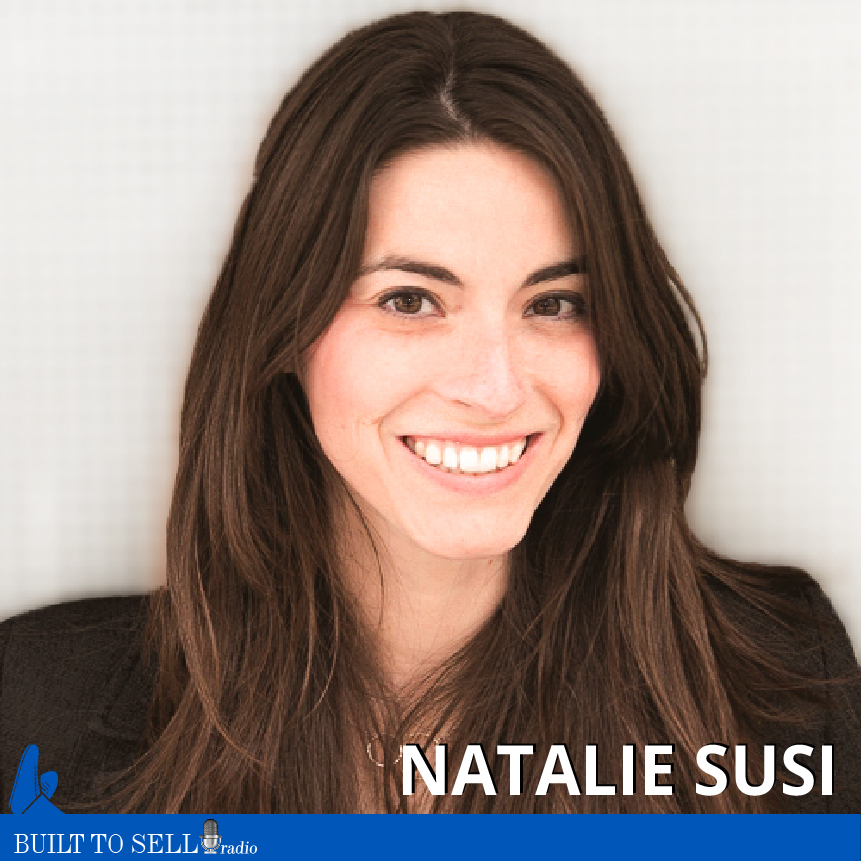
Ep. 38 Selling Your Company vs. Selling Your Product
Natalie Susi started Bare Organic Mixers to supply low-cal cocktail mixers to bars and restaurants in southern California. Susi got her product into 300 locations before she decided to sell her company to a strategic acquirer in the organic foods industry. In order to maximize her take from the sale, Susi had to decide whether she was offering an acquirer the chance to buy her company or her product.

Ep. 37 $250K to $180M
Aaron Houghton sold iContact in 2012 for $180 million. The first round of growth was financed by something called convertible debt, which Houghton recommends to any entrepreneur for its simplicity. To hear how Houghton parlayed an initial investment of $250,000 into a $180 million exit.

Ep. 36 The $20 Million Expiry Date
In eight years Ryan Born built Audio Micro, which began operations in his spare bedroom, into an Inc. 500 company. Born went on to sell his business for more than $20 million in 2014 – a deal that only happened because he had the foresight to put an expiry date on the "no shop” clause on his Letter of Intent.

Ep. 35 Playing Chicken
Jeff Hoffman sold Competitive Technologies, a business intelligence company serving the travel industry, to American Express in a nine-figure exit. After the Letter of Intent (LOI) was signed, American Express proposed paying part of the acquisition in an earn-out, and you’ll never guess what Hoffman did next.

Ep. 34 The Strategic
Most financial acquirers will arrive at an offer for your business by calculating the profit they expect you to make and deciding what they are willing to pay today, for your profit stream in the future. Because you are competing with lots of other places that the acquirer could invest their money, multiples are usually in the low to mid-single digits of your pre-tax profit. A strategic acquisition is an entirely different animal. A strategic acquirer will value your company based on how much more of their product they can sell, which is exactly what Business Objects (now SAP) did when they bought Nick Kellet’s business, Next Action Technologies, for more than eight times revenue.

Ep. 33 Identity Theft
Yvonne Tocquigny built her Austin-based advertising agency up over 35 years working with clients like Jeep, Dell, Hitachi, USAA and Caterpillar. Then in 2015, she got a call from New York wondering if she would consider selling. The problem was that her agency had become part of who she was. She had become something of a local celebrity and an inspiration for young female entrepreneurs in Austin. In selling, Tocquigny feared she would give up part of who she had become.

Ep. 32 The Atheist Bible Salesman Who Sold His Company for 5X Revenue
Trevor McKendrick had created the best-selling Spanish-language Bible app when he was approached about an acquisition offer. Salem’s original offer was 3.5x revenue but Trevor got them up to 5x with a combination of chutzpah and a knack for reading the fine print.

Ep. 31 Cut Your Earnout
Stephan Spencer went to sell his consulting business in the late 1990s but buyers all wanted him to sign up for a long, painful, and risky earnout. Keen for a clean exit, Spencer took the business off the market and set out to make it less dependent on him personally. In the episode, he details the three unique strategies he pursued for withdrawing from the day-to-day operations of his business. By 2010, Spencer had the business running so independently that at one point he was able to take a six-month sabbatical. That’s when he knew he could sell without such a lengthy earnout. Ultimately, Spencer sold his business to Covario in 2010 for a combination of cash, stock and a six-month earnout—an earnout so short it's almost unheard of for a marketing services business sale.

Ep. 30 Exiting the Automatic Business
Ian Schoen built Two Tree International, up to $4 million in revenue before he sold it in a multimillion dollar exit in 2015. Despite only working in the company for a handful of hours each week, Schoen was able to attract a number of buyers because he had created an operating manual employees could follow.

Ep. 29 The DIY Disaster
I loved watching David Price pitch for the Toronto Blue Jays in last year’s pennant race, so I was sad to see him sign a seven year, $217 million contract with The Boston Red Sox a few weeks back. Of course, it wasn’t Price himself sitting across the negotiating table from the Red Sox brass. He was represented by his agent, Bo McKinnis. Price—like just about every high stakes professional athlete—has an agent in his corner because there are just too many things that can go wrong, too many egos with the potential to be bruised, and too many zeroes at stake to negotiate on your own behalf. The same is true when you sell your business. When there are more zeroes involved than selling a home, you need someone representing your best interests. That’s a lesson Alexis Martin Neely found out the hard way when she tried to sell her company on her own. What started out as a promising relationship with a buyer ended up as a DIY disaster.

Ep. 28 The Shotgun Deal
A shotgun deal is the most brutal form of capitalism. When you can’t stand your partner anymore, you offer them a price for their shares. They have two choices: accept your offer or buy you out for the same amount. Triggering a shotgun deal can have explosive results, as Kim Ades found when she offered to buy out her husband’s share of Upward Motion.

Ep. 27 The 9-Figure Exit
Usually a nine-figure exit takes more than a year to complete but when Blackberry found itself behind schedule on the launch of its tablet, RIM founder Mike Lazaridis saw Jakobsson’s business as a saviour. This led Blackberry to a $150 million acquisition in less than six weeks—that has to be the fastest nine-figure exit ever.
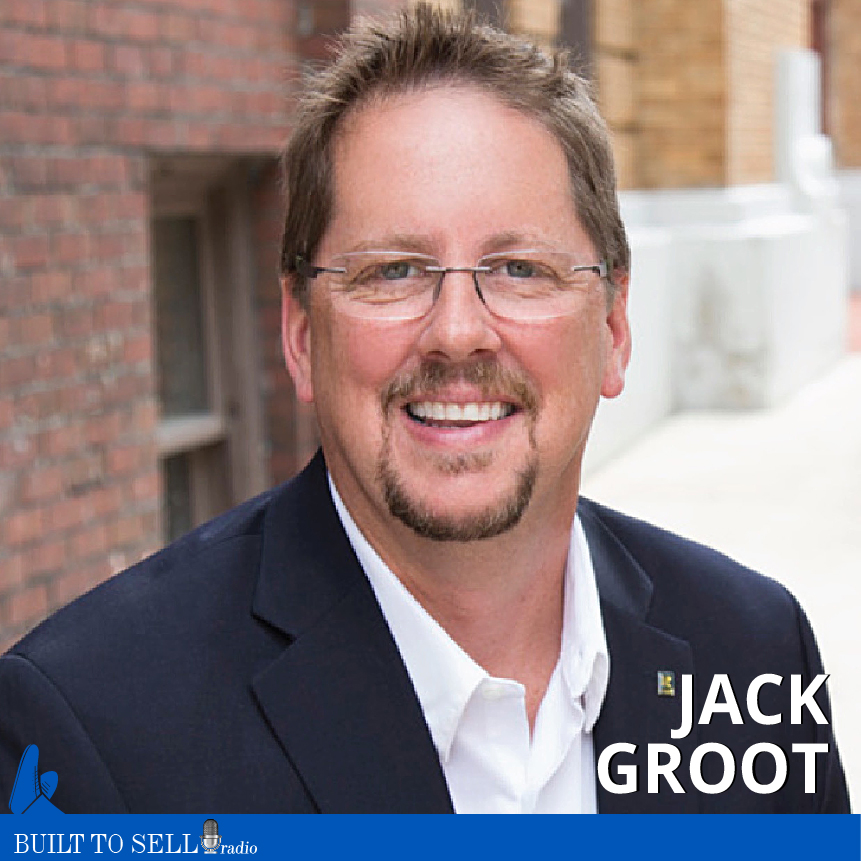
Ep. 26 3 Hidden Factors That Impact Your Business Valuation
When you get an acquisition offer your eye will immediately go to the offer price. That’s only natural. But — there could be two other negotiating points that could have just as large an impact on your windfall of selling your business. Jack Groot discovered all three when he went to sell JP’s Coffee Shop — a business that USA TODAY® voted one of the top 10 coffee houses in America.

Ep. 25 The Phantom Buyer
When negotiating to sell your company, the single fastest way to spike your earnings is to introduce a competing offer. But you don’t always have the luxury of multiple buyers. It may be better to simply fake it, which is exactly what Trent Dyrsmid did to boost his take for the sale of his company in 2008.

Ep. 24 How a Non Compete Almost Derailed The Sale Of This $14M Business
In this episode of Built to Sell Radio John Warrillow interviews New York Times best selling author and serial entrepreneur, Kevin Kruse. As Kruse went to exit Axiom, the ultimate buyer wanted to avoid competing with Kruse down the road…and that’s where the negotiation hit a giant snag.

Ep. 23 How to Sell Your Sweat Equity
When you start a business from nothing, it can be hard to place a value on your “sweat equity”. This is where Phil Carson found himself when he decided to get out of the diabetes testing supply company he and his partner had built from the ground up. He estimated his shares might be worth $250,000 but, through a fortunate sequence of events and some shrewd moves on his part, he was able to capture $1.2 million for his stake.

Ep. 22 Engineered to Sell
In this week’s episode of Built to Sell Radio, John Warrillow interviews Beate Chelette, the founder of a Beate Works, a creative company that she sold to Bill Gates for a significant premium in 2006.

Ep. 21 To Sell or Not to Sell?
Would you rather have one million dollars in the bank today or a chance to have ten million a decade from now? It’s a philosophical question that comes down to the time value of money and your tolerance for risk.

Ep. 20 - The $192M Exit
After starting and exiting BabyCenter.com, Mark Selcow built Merced Systems into a profitable business after year one. Ten years later he sold Merced for $192 million, equating to over 3 times top line revenue.