AdaptX Podcast
102 episodes — Page 2 of 3
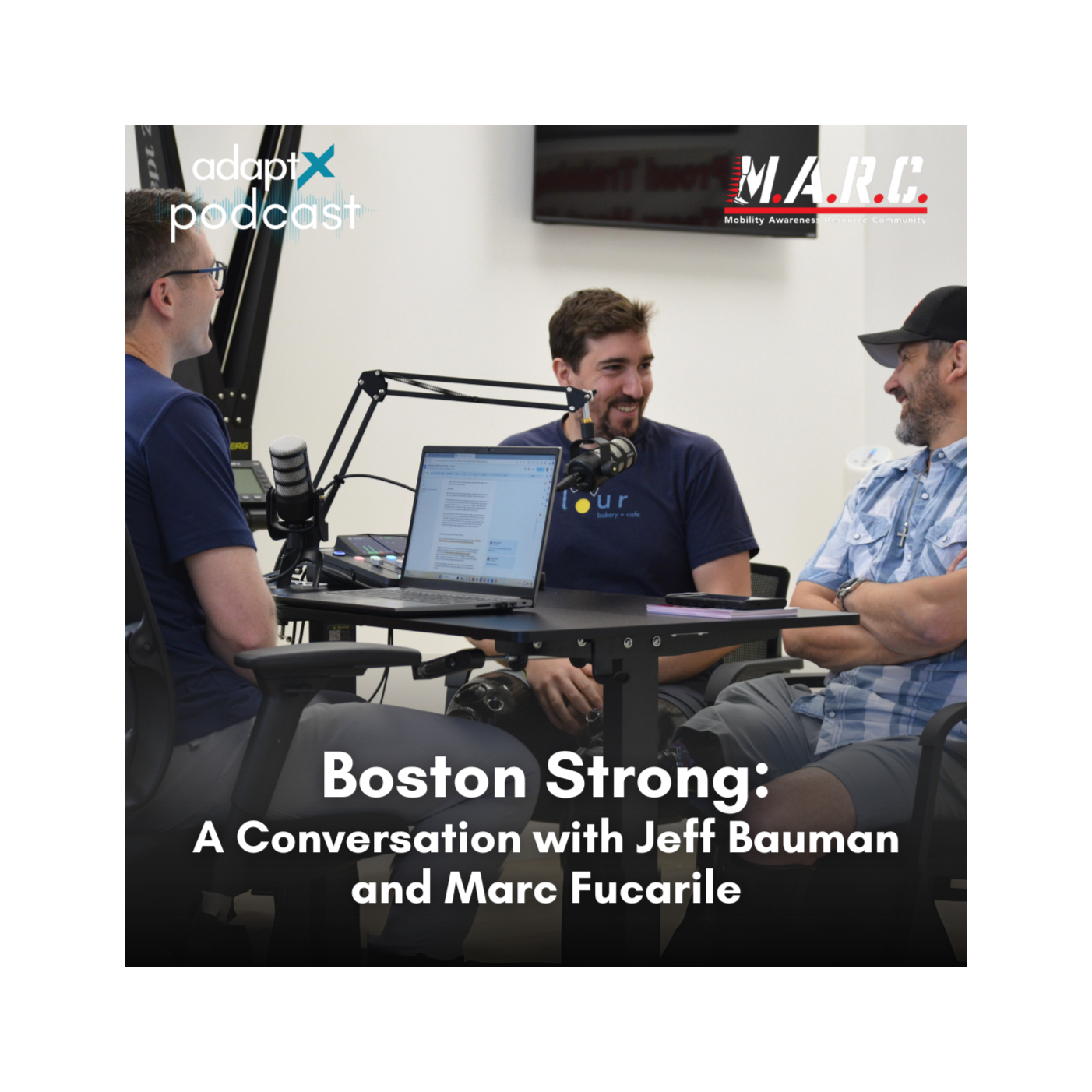
Ep 52#052 - Boston Strong: A Conversation with Jeff Bauman and Marc Fucarile
In this episode, Marc Fucarile and Jeff Bauman join Brendan Aylward for a live recording to discuss their experiences in inclusive fitness and the ways that the Boston Marathon bombings have affected both of their lives. As survivors of the 2013 Marathon bombings, Marc and Jeff’s introduction to the adaptive fitness world and disability advocacy was heavily influenced by the events of April 15th. Throughout the episode, they discuss their experiences as amputees, recovery journeys, the support they received, and the way that fitness came back into their lives post-injury. Marc shares his work with his platform “the Marc Network”, which is a valuable resource for connecting individuals with disabilities to adaptive sports and other support services. Additionally, Marc, Jeff, and Brendan cover some of the socioeconomic challenges associated with having a disability, including the costs of adaptive equipment and the need for financial accessibility.To learn more about Marc and Jeff and their individual endeavors, visit their websites linked below.Marc Fucarile’s website at https://marcfucarile.com/. Read Stronger by Jeff Bauman at https://a.co/d/3dId7Kh. Jeff Bauman’s Story by Boston Medical Center at https://www.youtube.com/watch?v=bL8t4KGpLTo.Episode 52 TakeawaysThe Marc Network and the Remarcable Foundations, created by Marc Fucarile, are valuable platforms for connecting individuals with disabilities to adaptive sports, equipment, and other disability support services.The Boston Marathon bombings brought attention to the resilience and strength of survivors and first responders, highlighting the necessity of empathy and action through traumatic experiences and recovery.The support and generosity of the Boston community have been instrumental in Marc and Jeff’s recovery and the well-being of other survivors.Adaptive sports are a valuable and empowering activity for individuals with disabilities, providing physical and emotional benefits.The cost of adaptive equipment can be a significant barrier to inclusive participation, and financial accessibility is crucial for individuals to participate in adaptive sports.Finding supportive organizations and communities is essential for individuals with disabilities to connect, participate, and thrive after injury, during recovery, and throughout the rest of their lives.Episode 52 Chapters02:05 - Experiences with the Boston Marathon Bombings and Recovery7:57 - Powerful Acts of Kindness on April 15th, 20138:55 - Forming Relationships with Veteran Amputees10:11 - The Role of Media in Tragedy11:26 - The Boston Strong Movement13:33 - Marc’s Story15:00 - “Stronger” and Advocacy16:27 - Life After the 2013 Marathon19:02 - Jeff and Marc’s Intro to Adaptive Sports19:35 - The Evolution of Disability Resources22:00 - The Marc Network and Essential Resources27:13 - Resolution Fitness: AdaptX Podcast’s First Show Sponsor27:35 - The Role of Adaptive Sports in Recovering from a Traumatic Injury34:05 - Expansion of Adaptive Sports38:25 - The Challenge of Learning Adaptive Sport39:45 - Overcoming Financial Barriers in Adaptive Sports42:05 - The Marc Network’s Role in Mitigating Financial Barriers45:00 - Children's Perception of Disability50:57 - Supporting a Family Member Through Recovery53:55 Finding Supportive Organizations and Communities
Ep 51#051- Building an Inclusive Remote Training Platform with Lee-Anne Reuber of Sekond Skin Society
Sekond Skin Society is a health and fitness app designed around accessibility, creating an inclusive experience for people with and without disabilities to work out together. In this episode, Brendan is joined by Lee-Anne Reuber, the company’s founder, as she takes us through the company’s start as a brick and mortar yoga studio and transition to a virtual platform. Lee-Anne reflects on her entry into the inclusive fitness space after receiving feedback from members who loved seated class and accessible workout options. Inclusion, to Lee-Anne, means creating a safe space where people feel a sense of belonging and where the environment is already created with them in mind. The fitness industry plays a large role in valuing bodies, and Sekond Skin Society aims to disrupt that space by including people with disabilities. Throughout their conversation, Brendan and Lee-Anne discuss their goals in creating an inclusive and accessible fitness platform for people of all abilities. Sekond Skin Society is focused on providing a community forum for members to connect with each other and share their experiences. The app will offer a variety of classes, including yoga, dance, cardio, strength training, and meditation. All classes will be on-demand to accommodate the convenience of members and the capacity of instructors. The app will utilize features such as captions, enhanced queuing, and American Sign Language to make the instruction more accessible. Sekond Skin Society is currently in beta testing and actively seeking feedback to improve their platform. To learn more, visit the Sekond Skin website linked here: https://www.sekondskinsociety.com/ Episode 51 TakeawaysWithin the fitness realm, where bodies are often valorized, there exists a pressing demand for broader inclusivity, particularly concerning individuals with disabilities. Sekond Skin Society challenges the status quo within the fitness industry, striving to amplify the representation of individuals with disabilities in both fitness marketing and instructor roles.Central to its mission, Sekond Skin Society aims to forge an all-encompassing and accessible fitness platform catering to individuals of diverse abilities. Through this platform, members are afforded a community forum, facilitating connections and the exchange of experiences.The app boasts a diverse array of classes, ranging from yoga and dance to cardio, strength training, and meditation, all available on-demand.To ensure utmost accessibility, Sekond Skin Society incorporates features such as captions, enhanced queuing, and American Sign Language, thereby enriching the instructional experience for all users.Sekond Skin Society is currently in beta testing and actively seeking feedback to improve their platform.Episode 51 Chapters00:00 - Introduction to Sekond Skin Society and its Founder00:27 - What is Sekond Skin?05:35 - A Sense of Belonging in Fitness06:35 - Marketing Fitness to People with Disabilities15:19 - Advantages of Virtual and Remote Fitness29:24 - Creating Community in a Remote Offering50:05 - Lack of Representation and Inclusion56:25 - Creating Space for Inclusion and Representation
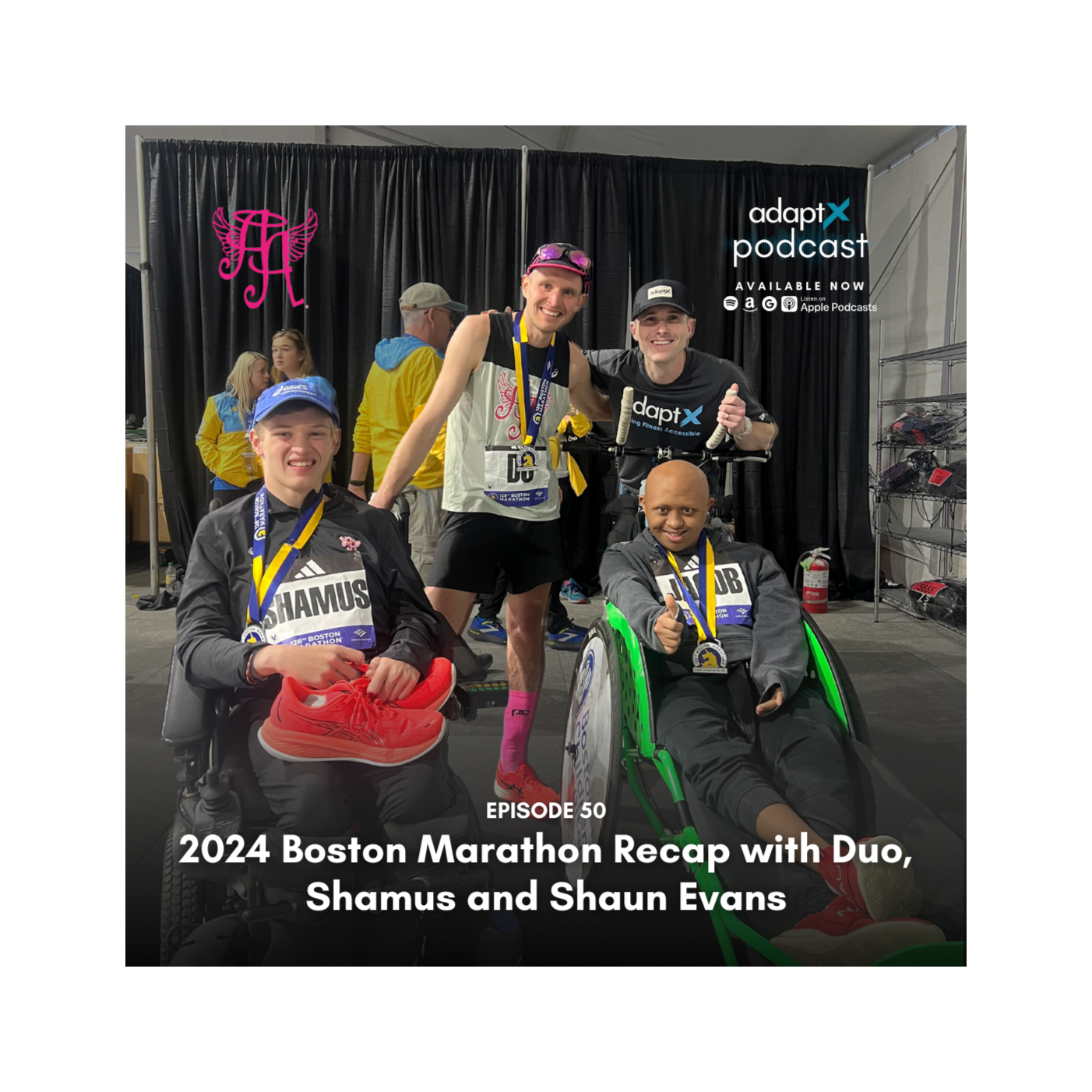
Ep 50#050- 2024 Boston Marathon Recap with Duo, Shamus and Shaun Evans
Shaun and Shamus Evans, a father-son team from Galway, New York, are ardent advocates for inclusivity and accessibility in endurance sports. As a power wheelchair user with cerebral palsy, Shamus has forged an impressive athletic journey alongside his father, Shaun, logging thousands of miles and partaking in numerous races. Notably, they completed their inaugural Boston Marathon this past Monday after achieving a remarkable qualifying time of 02:59:00. Their philanthropic spirit is evident in their participation in two transcontinental runs, during which they generously donated specialized running chairs to other individuals with disabilities.. They champion the synergy of inclusivity and competitiveness, aspiring for greater recognition of duo divisions in other endurance races and athletic competitions. In this conversation, Brendan, Shamus, and Shaun discuss their Boston Marathon experiences, the invaluable role of family support, and their collaboration with Ainsley's Angels, an organization facilitating partnerships between able-bodied runners and individuals with disabilities. They also share their aspirations for the future and their dedication to effecting positive change within their community.Episode 50 TakeawaysShaun and Shamus recently ran their first Boston Marathon together after qualifying with a time of 02:59:00.The duo has completed two transcontinental runs, during which they donated running chairs to children with disabilities.They believe that inclusivity and competitiveness can coexist, and hope to see more recognition for duo divisions in races. Shaun and Shamus are involved with Ainsley's Angels, an organization that promotes inclusion in endurance sports.They have future goals of continuing to participate in races and making their community more inclusive.Their book, available on Amazon and AinsleysAngels.org, shares their story and supports Ainsley's Angels.Episode 50 Chapters00:00- Introduction: Shaun and Shamus Evans08:17- The Power of Positivity and Perseverance14:57- Inclusivity and Competitiveness: A Winning Combination29:42- Ainsley's Angels: Promoting Inclusion36:05- The Boston Marathon Experience42:09- Closing Remarks and Congratulations
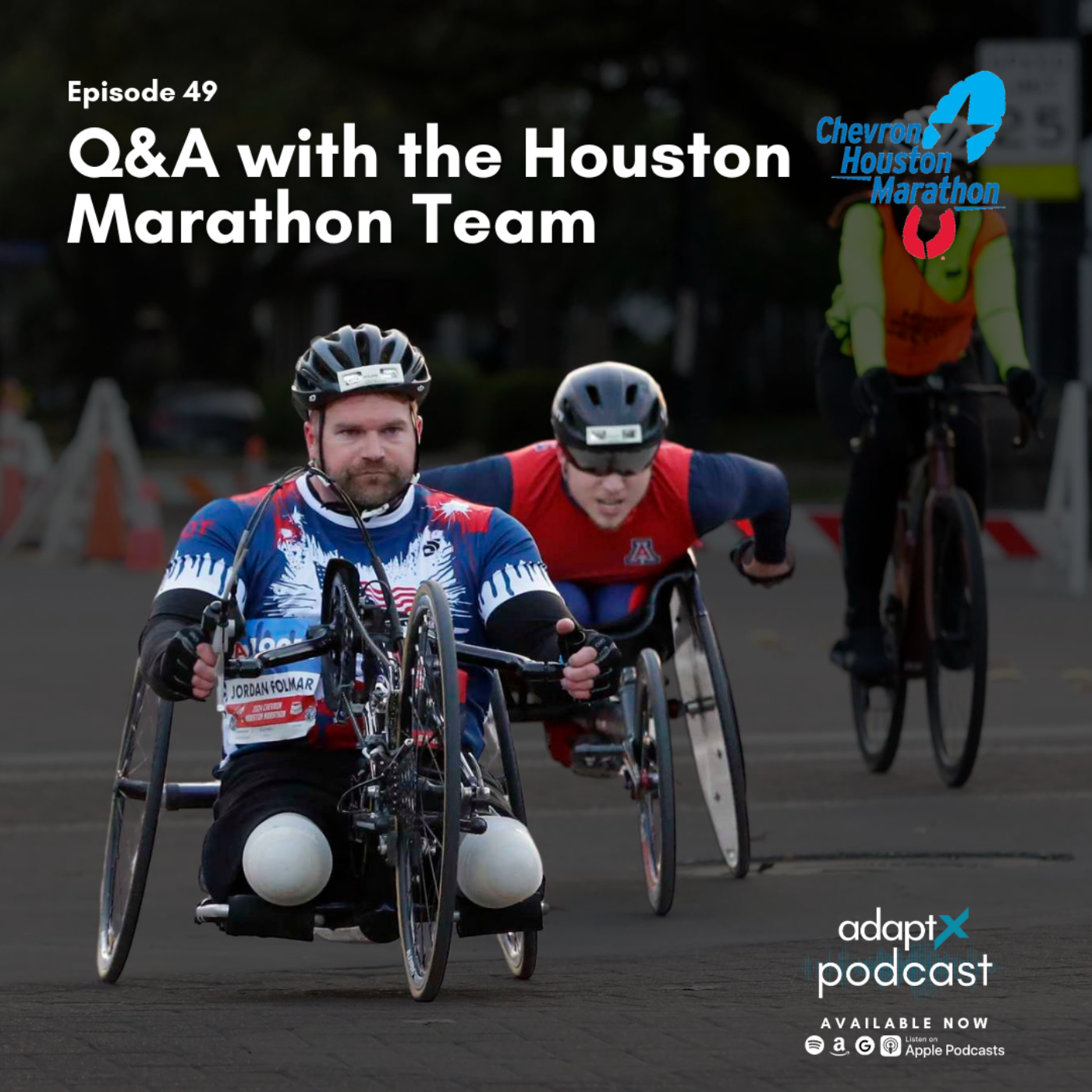
Ep 49#049- Q&A with the Houston Marathon Team
In this episode, Brendan is joined by Amanda Sandoval and Bernie Tretta from the Houston Marathon to discuss the inclusion of athletes with disabilities in the race. They share the initial reservations and safety considerations they had when implementing inclusive practices in the race, as well as the education and training provided to volunteers and athletes. They highlight the importance of feedback from athletes and the efforts made to accommodate their needs. The discussion also covers the accessibility of the course, partnerships with disability organizations, and the memorable moments and success stories from the race. The conversation concludes with suggestions for race directors to make their events more inclusive.For more information on the Houston Marathon and to get involved, visit the Houston Marathon Website linked here: https://www.chevronhoustonmarathon.com/ Episode 49 TakeawaysActively listen to the needs and feedback of athletes with disabilities to ensure their voices are heard and respected in all aspects of athletic events.Prioritize creating channels for open communication and feedback loops to continuously improve inclusivity and accommodation.Offer comprehensive education and training programs for both volunteers and athletes to increase awareness and understanding of disabilities.Provide resources and workshops to equip volunteers with the necessary skills and knowledge to facilitate inclusive participation.Prioritize safety measures that cater to the diverse needs of participants, including emergency procedures tailored to different abilities.Forge strategic partnerships with disability organizations to leverage their expertise and resources in promoting inclusivity.Embrace a culture of knowledge-sharing by actively seeking insights and best practices from other races and events.Proactively reach out to athletes with disabilities and create welcoming environments that prioritize their participation.Implement inclusive registration processes and accommodation options to ensure all athletes feel valued and supported in their athletic pursuits.Episode 49 Chapters00:00 - Introduction and Background01:07 - Inclusion of Athletes with Disabilities in the Houston Marathon02:28 - Biggest Safety Considerations03:25 - Education and Training for Volunteers and Athletes04:25 - Bike Guides for Wheelchair and Hand Cycle Athletes05:14 - Feedback and Insight from Athletes with Disabilities06:33 - Registration and Accommodations08:15 - Expansion of Categories and Future Inclusion10:42 - Memorable Moments and Success Stories13:14 - Course Accessibility and Safety Measures17:45 - Facilities and Accessibility Details22:40 - Volunteer Roles and Support for Athletes23:12 - Favorite Moments and Emotional Highlights26:21 - Comparison to Other Inclusive Marathons28:07 - Steps for Race Directors to Make Events More Inclusive33:30 - Importance of Communication and Learning from Other Races
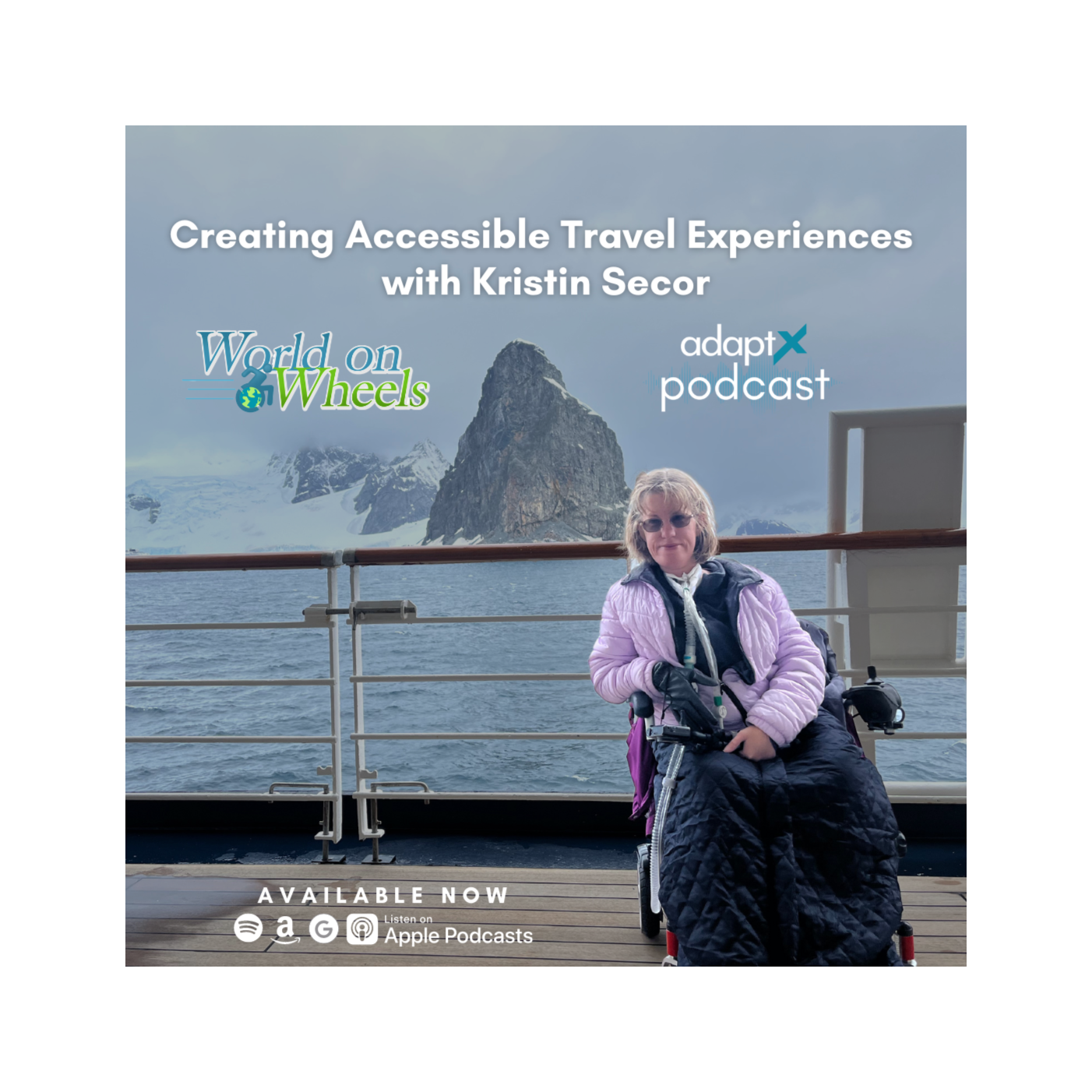
Ep 48#048- Creating Accessible Travel Experiences with Kristin Secor
Kristin Secor was born with a rare form of Muscular Dystrophy which affects her strength, endurance, balance, and breathing. Despite her physical challenges, she continues to pursue her love of travel and has explored 20 countries across 4 continents, including Antarctica. Now she uses her knowledge to help others with mobility challenges to travel to their dream destinations through the information and resources she provides on her wheelchair-accessible travel blog, World on Wheels Blog.In this episode, Kristin shares her passion for travel and how she overcomes challenges to explore the world with host, Brendan Aylward. She discusses accessible countries and the importance of advocating for accessibility in places that lack regulations. Kristin also emphasizes the need for individuals to take responsibility for their own travel experiences and educate businesses on accessibility. She provides insights into her planning process for accessible travel and highlights the barriers and concerns she faces in air travel. Kristin's goal is to create opportunities for people with disabilities to travel to bucket list destinations and make travel more affordable and accessible for all. Learn more about accessible travel and tourism by tuning into this episode.Visit World on Wheels to learn more about accessible travel and Kristin’s endeavors: https://worldonwheelsblog.com/Episode 48 TakeawaysIt is important to ask specific questions and make detailed requests in relation to accessibility accommodations, as standards for accessibility vary from location to location.Advocacy and education are essential to improve accessibility in countries without regulations.Individuals have a responsibility to advocate for themselves and educate businesses on accessibility.Planning ahead and taking precautions can help ensure a smooth and enjoyable travel experience for people with disabilities.Episode 48 Chapters00:00 - Introduction00:23 - Kristin's Passion for Travel01:20 - Transition to Blogging01:39 - Challenges with Muscular Dystrophy03:28 - First Trip that Ignited Kristin's Love for Travel04:30 - Accessible Countries05:57 - Traveling to Inaccessible Places06:42 - Responsibility of Individuals and Businesses08:06 - Planning Process for Accessible Travel10:20 - Barriers and Concerns in Air Travel11:32 - Trip to Antarctica13:22 - Importance of Fitness for Travel15:07 - Etiquette and Language16:38 - Goals for Travel and Blog21:02 - Where to Find Kristin's Blog and Trips21:35 - Inclusivity of Trips
Ep 47#047- Addressing Assessments, Asymmetries, and Program Design with Travis Pollen
Travis Pollen, PhD, is an author, personal trainer, and Assistant Professor of Exercise Science at Thomas Jefferson University in Philadelphia. His research focuses on athletic injury etiology and risk reduction. He’s particularly interested in pre-participation movement screening, return-to-sport testing, and training load and the roles these factors play in injury risk appraisal. In addition to his PhD in Health and Rehabilitation Sciences, Travis holds a master’s in Biomechanics and Movement Science. Outside academia, he's been personal training since 2013 and has worked with a variety of clientele, from an Olympic hopeful to post-rehabilitation and older adults. He’s also the co-founder of two companies, Strength for Yoga and ACL Care Pro. Athletically, he previously held two American records in Paralympic swimming and recently returned to competitive swimming after a decade-long hiatus. In this episode, Travis Pollen and Brendan Aylward discuss the limitations of movement screening and the importance of the social model of exercise, exploring the need to individualize assessments and exercise programs based on each person's unique movement patterns and goals. Travis also debunks the myth that movement screens can prevent injuries and highlights the complex nature of injury risk. He explores the role of flexibility in injury prevention and challenges the belief that more flexibility is always better. Throughout their conversation, Travis Pollen and Brendan Aylward explore the relationship between stiffness and stretching, the best forms of exercise for people with hypermobility, and how yoga can bias strength instead of flexibility. They also touch on the misconceptions of hard workouts, the evolution of core training, and the importance of making fitness more accessible. Additionally, they discuss training recommendations for unilateral amputees and the role of lived experience in training amputees.Episode 47 TakeawaysMovement screens should be individualized and take into account each person's unique movement patterns and goals.The Social Model of Disability emphasizes the need for societal accountability, inclusion, and accessibility, recognizing that disability presents differently in all individuals.Movement screens cannot predict individual injury risk, as there are many factors that contribute to injuries.Flexibility is not the sole determinant of injury prevention, and excessive flexibility may not always be beneficial.Episode 47 Chapters00:00 - Introduction01:21 - The Limitations of Movement Screening09:51 - Effective Assessment Process23:18 - The Relationship Between Flexibility and Injury30:40 - The Role of Flexibility in Injury Prevention37:34 - The Relationship Between Stiffness and Stretching40:03 - Exercise Recommendations for People with Hypermobility40:46 - How Yoga Can Bias Strength Instead of Flexibility43:40 - The Misconception of Hard Workouts45:13 - The Evolution of Core Training46:22 - Static vs. Dynamic Core Training49:38 - Making Fitness More Accessible55:21 - Training Recommendations for Unilateral Amputees58:50 - The Role of Lived Experience in Training Amputees01:05:04 - The Glorified Inspiration Narrative01:07:50 - Treating Adaptive Athletes Similarly
Ep 46#046- The Perfect Step, Rehabilitation, and Equitable Access to Fitness with Hal Hargrave
In this episode, Hal Hargrave joins Brendan for an engaging conversation on the projection of the Perfect Step and neurological disorders in the fitness space. Hal Hargrave, the owner and founder of The Perfect Step, discusses the global vision of the business, which is to become the largest neurological recovery network in the chronic stage of recovery in the world. They offer a holistic approach to recovery, addressing the mind, body, and soul. Throughout the episode, Brendan and Hal discuss The Perfect Steps’ business model, which is currently for-profit, though Hal also founded a non-profit entity called the Be Perfect Foundation that raises funds for the paralysis community's fundamental needs. The conversation with Hal Hargrave focuses on the Perfect Step's approach to training individuals with spinal cord injuries (SCI) and other neurological conditions. The key takeaway is that the goal of their training is not just to help clients regain movement, but to improve their overall health and well-being. The Perfect Step believes in the importance of transitioning from initial rehabilitation to reintegration within the community, and traditional gyms can play a role in this process. They also discuss how different levels of SCI respond to their training model, with cervical level injuries presenting more opportunities for healing and recovery.Episode 46 TakeawaysThe Perfect Step aims to become the largest neurological recovery network in the chronic stage of recovery worldwide. They provide an inclusive program option for people with neurological disorders resulting in paralysis.The business offers a holistic approach to recovery, addressing the mind, body, and soul.The Perfect Step is a for-profit entity but also has a non-profit arm called the Be Perfect Foundation that raises funds for the paralysis community's fundamental needs. The Perfect Step's training approach aims to improve overall health and well-being, not just regain movement.Transitioning from rehabilitation to community reintegration is an important part of the recovery process.Traditional gyms can provide a next step towards an individual's recovery process if their staff have the knowledge and willingness to do so.Cervical level spinal cord injuries present more opportunities for healing and recovery compared to lower motor neuron injuries.Episode 46 Chapters00:00 - Introduction to The Perfect Step03:02 - Business Model and Equipment06:35 - Inclusion in Traditional Gyms10:09 - Seamless Coexistence in Traditional Gyms15:30 - Value Proposition of Inclusion19:21 - Balancing Pricing and Financial Support22:20 - The STEP Certification Program31:46 - Research and Validation37:21 - Adoption in Traditional PT40:35 - Transition from Rehabilitation to Reintegration41:29 - Effectiveness of Training for Different Levels of SCI44:16 - Approaches for Cervical Level Spinal Cord Injuries45:22 - Benefits of Training for Different Types of Injuries46:42 - Recovery Beyond Physical Rehabilitation49:43 - Balancing Desire for Mobility with Contentment55:05 - Using Assistive Technology in Training59:45 - Opportunities for Learning from The Perfect Step01:05:12 - Recommendations for Working with Individuals with SCI01:09:35 - Contraindications and Ensuring Safety01:11:54 - Vision and Mission for Life01:17:33 - Influence on the Next Generation01:20:11 - Connecting with Hal Hargrave
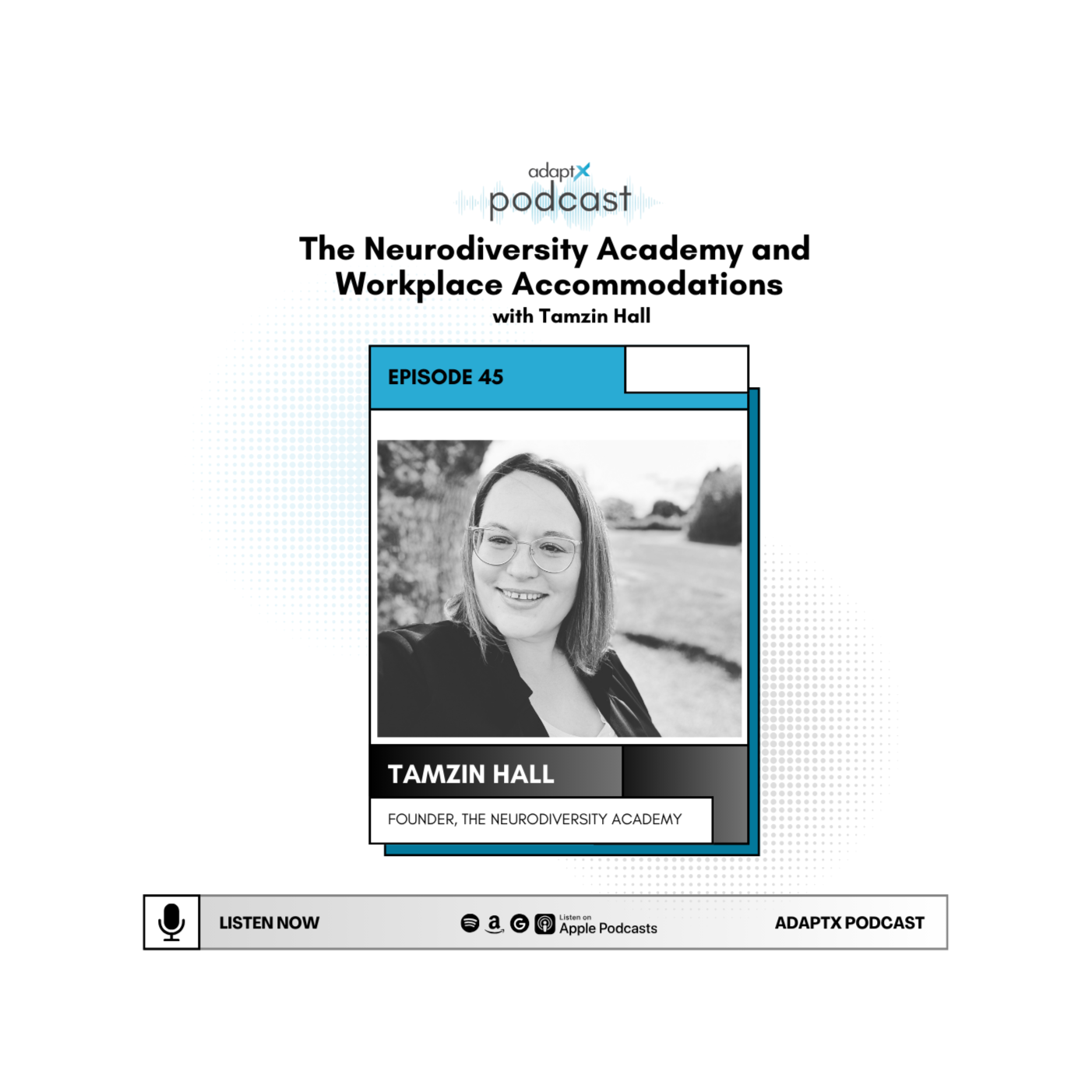
Ep 45#045- The Neurodiversity Academy and Workplace Accommodations with Tamzin Hall
In this episode of the AdaptX podcast, Brendan Aylward is joined by Tamzin Hall, the founder of the Neurodiversity Academy. They discuss the importance of creating inclusive workplaces and supporting individuals with neurodiversity. Tamzin shares strategies for bridging the gap between initial interest in accessibility and the concerns of businesses. They also explore the value proposition of inclusion and the unique advantages that individuals with neurodiversity bring to the workforce. The conversation highlights the need for better understanding and awareness of neurodivergent behaviors and the importance of creating environments that support diverse needs.Episode 45 TakeawaysThe Neurodiversity Academy aims to create inclusive workspaces and empower individuals who embrace their unique selves.Businesses can bridge the gap between interest in accessibility and concerns by providing education and support to employees.Inclusion in the workforce has a strong value proposition, including increased retention and unique skill sets.Creating environments that support diverse needs and behaviors is essential for promoting inclusion and advocating for individuals with neurodiversity.Remote work options and remote fitness programs can be effective ways to reach and support individuals with neurodiversity.Episode 45 Chapters00:00 - Introduction to Tamzin Hall and the Neurodiversity Academy01:12 - Creating Inclusive Workspaces07:05 - Encouraging Disclosure and Support09:45 - The Value of Inclusion in the Workplace12:57 - Unique Skills and Strengths of Neurodivergent Individuals16:19 - Balancing Inclusion and Individual Needs21:02 - Behavioral Therapies and Supporting Neurodiversity23:10 - Fostering Understanding and Awareness24:52 - Creating Inclusive Work Environments26:57 - The Importance of Disclosure and Support28:56 - Challenges in Disclosing Neurodiversity31:17 - Creating Inclusive Work Schedules33:43 - Supporting Inclusion through Remote Options35:13 - Connect with Tamzin Hall
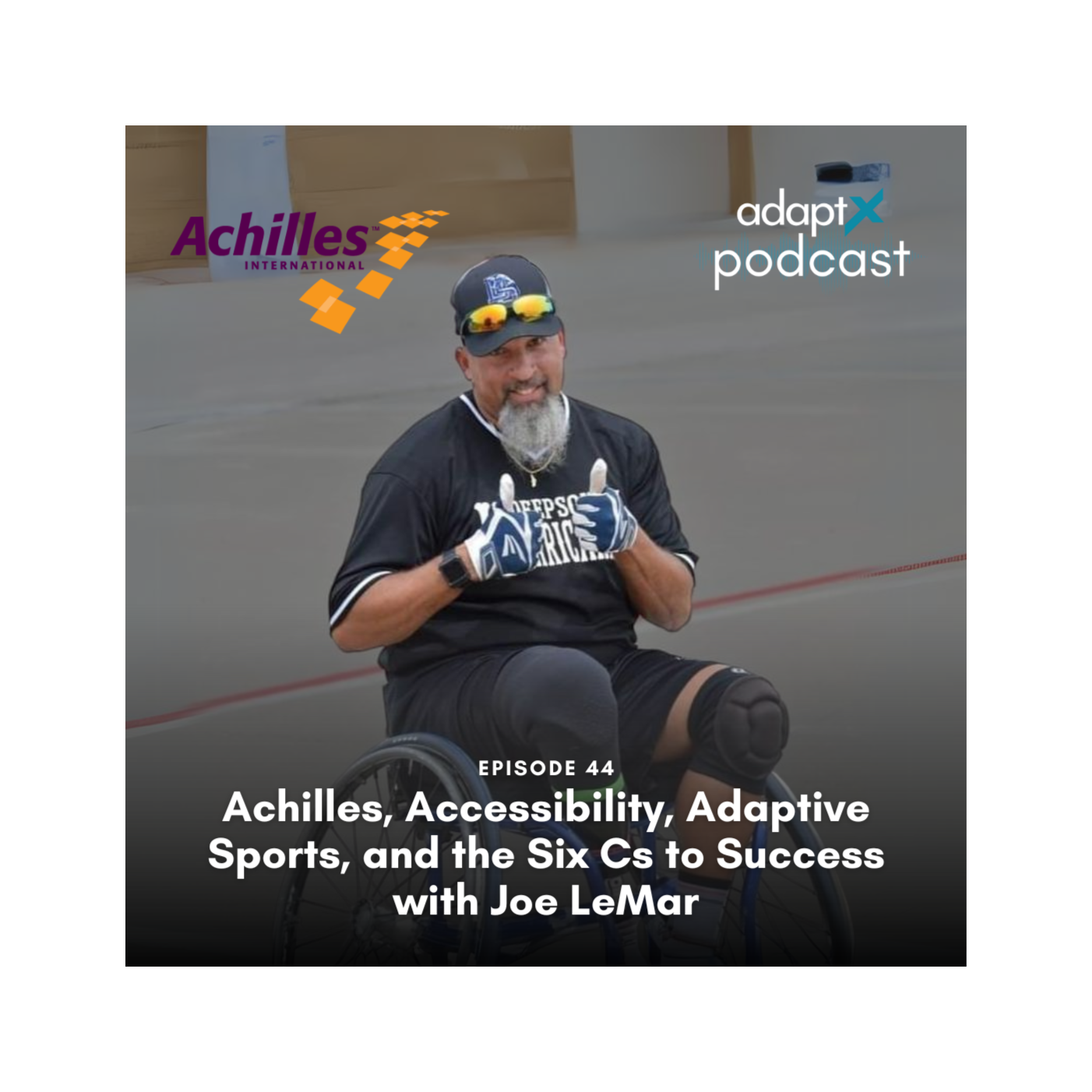
Ep 44#044- Achilles, Accessibility, Adaptive Sports, and the Six Cs to Success with Joe LeMar
In this episode, Joe LeMar, a Paralympic medalist and coach, shares his journey as an adaptive athlete and his involvement with Achilles International. Joe has spent more than 30 years serving as a coach, primarily in cross country, indoor and outdoor track and field. In addition to being a coach, Joe has also been a Paralympic medalist and world champion in wheelchair softball. Joe brings his experience in relationships with Special Olympics, Olympics and Paralympics together to lead the Boston Achilles team, a fully inclusive running club of Boston. Throughout the conversation, Brendan and Joe discuss his early career with running, overcoming setbacks, and the challenges of Paralympic classification. Joe highlights the evolution of Paralympic competition and the importance of inclusive educational experiences. He also provides insights into creating inclusive fitness environments and the programs and services offered by Achilles International. Episode 44 TakeawaysSport is for everybody, regardless of ability.Inclusive educational experiences can help dispel the narrative that adaptive athletes are less than able-bodied athletes.Joe’s Six Cs to Success include Courage, Commitment, Character, Class, Confidence, and CommunicationFitness professionals should prioritize communication and ask questions to better support the needs of amputees and individuals with disabilities.Gyms and fitness facilities can make their spaces more accessible by providing equipment that accommodates different abilities.Achilles International offers inclusive programs and services for individuals with disabilities, promoting a sense of community and empowerment.Episode 44 Chapters00:00 - Introduction00:42 - Early Career with Running04:31 - Paralympic Experience06:20 - Challenges with Paralympic Classification08:06 - Evolution of Paralympic Competition09:29 - Educational Experience with Adaptive Sports10:33 - Barriers to Hosting Paralympic Games19:21 - Involvement with Achilles International23:24 - Training Protocols for Amputees24:22 - Creating Inclusive Fitness Environments29:21 - Involvement with Achilles International Boston34:47 - Programs and Services of Achilles International36:22 - Starting a Chapter with Achilles International40:19 - Making Gyms More Accessible
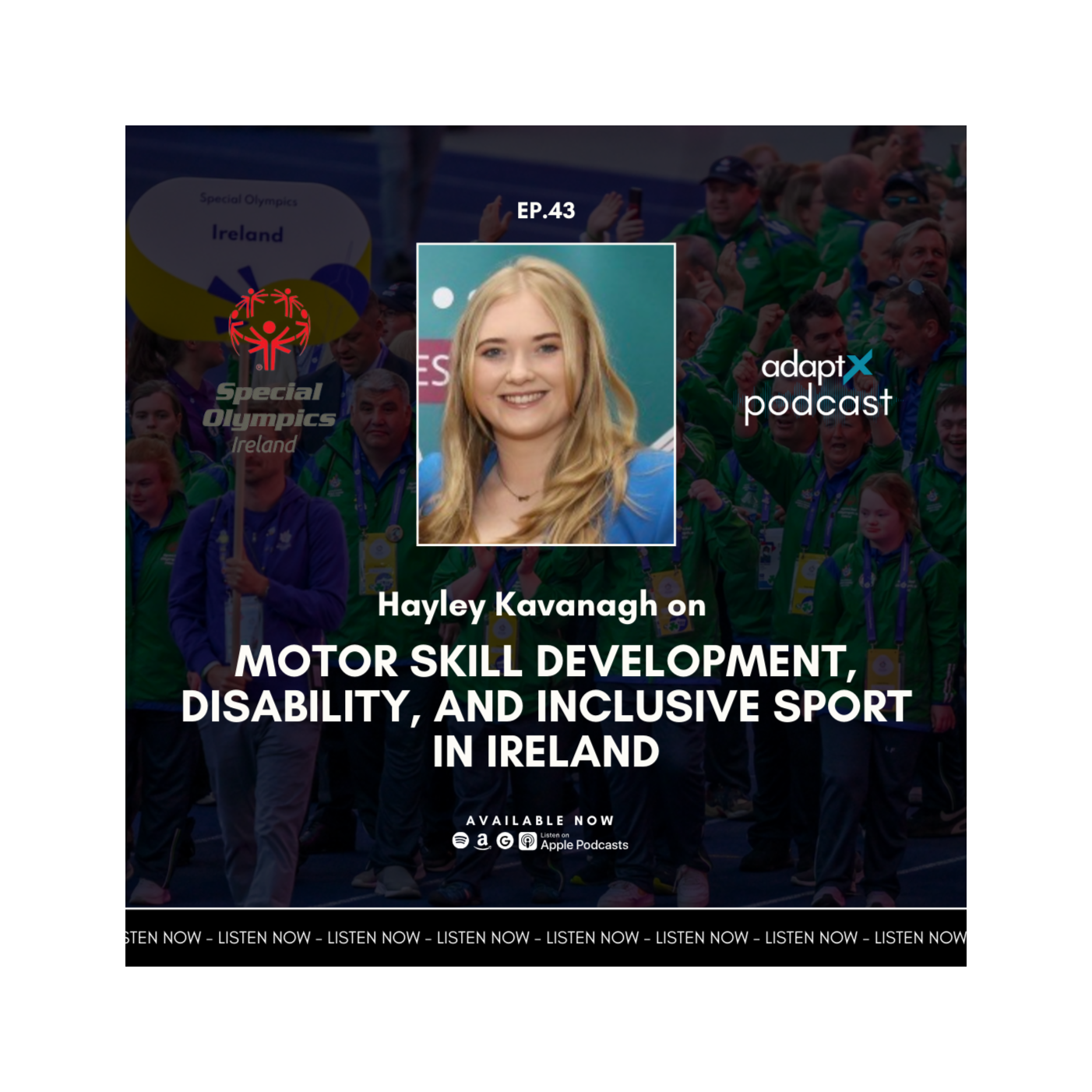
Ep 43#043- Hayley Kavanagh on Motor Skill Development, Disability, and Inclusive Sport in Ireland
In this episode of the AdaptX podcast, Dr. Hayley Kavanagh discusses her work in the Young Athletes Program with Special Olympics Ireland, focusing on fundamental movement skill intervention for children with intellectual disabilities. The conversation explores the nature versus nurture debate in motor skill development, the importance of year-round programming, and the need for specialized programs for individuals with disabilities. Dr. Kavanagh also shares insights on conducting research with this population and offers practical recommendations for fitness programs working with young adults with intellectual disabilities. More on Dr. Hayley Kavanagh:Dr. Hayley Kavanagh is currently working in the role of Research and Development Coordinator for the Young Athletes program with Special Olympics Ireland, designing and implementing a coach-led, fundamental movement skill intervention. Hayley previously undertook the role of Health and Wellbeing Coordinator for the organization, increasing their health education program reach by 300%. In October 2023, Hayley completed her doctoral studies with Dublin City University (DCU) and Special Olympics Ireland focusing on fundamental movement skill proficiency levels of children with intellectual disabilities. Connect with Hayley on LinkedIn.Learn More About Hayley’s Research.Hayley’s Impact on Special Olympics Ireland.Episode 43 TakeawaysFundamental movement skill intervention is crucial for the motor skill development of children with intellectual disabilities.Year-round programming is essential for improving motor skills and overall fitness.The nature versus nurture debate in motor skill development highlights the need for both opportunities and good programming.Collaboration between organizations and Special Olympics can help create robust and enjoyable programs for individuals with disabilities.Episode 43 Chapters00:00 - Introduction and Background01:20 - Personal Experiences and Career Path07:15 - High School Assessments and College Path08:00 - Doctoral Studies and Research Goals11:02 - Nature vs Nurture in Motor Skills Development13:15 - Importance of Year-Round Programming15:17 - Prerequisite vs Supplementary Participation18:57 - Inclusion as an Experience19:17 - Challenges of Conducting Research with this Population22:04 - Fundamental Movement Skill Assessments24:16 - Familiarization Period and Test Improvement26:36 - Motivation and Concentration27:29 - Designing the Intervention30:02 - Low Motor Skill Proficiency30:28 - Coach Education31:24 - Parent Involvement32:31 - Collaboration with Special Olympics38:20 - Inclusion in Education39:28 - Collaboration with Special Olympics41:29 - Misconceptions about Special Olympics
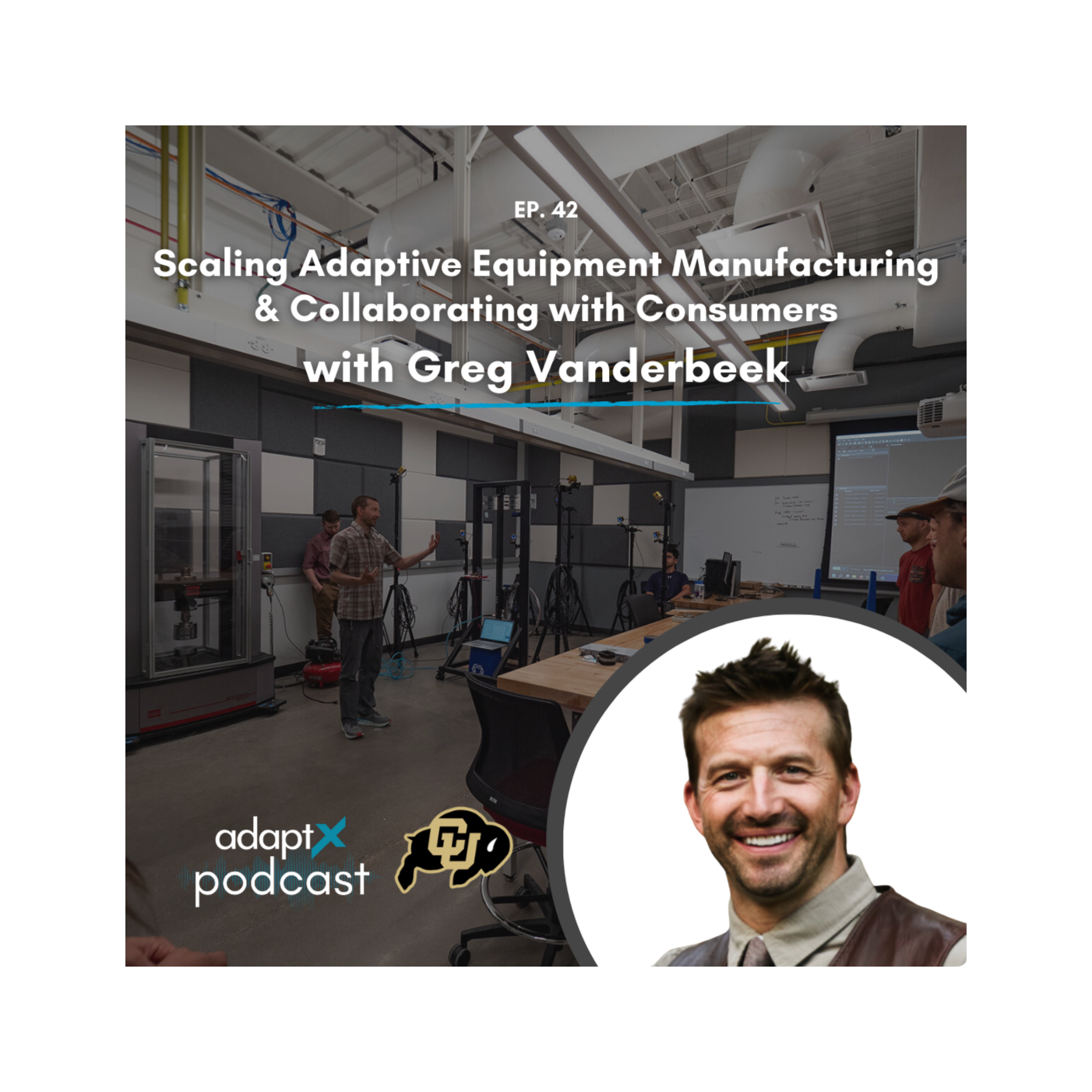
Ep 42#042- Scaling Adaptive Equipment Manufacturing and Collaborating with Consumers featuring Greg Vanderbeek
In this episode, Brendan and Greg Vanderbeek from the College of Engineering and Applied Science at the University of Colorado discuss the design and development of adaptive bikes in collaboration with local organizations in Boulder. The program aims to create lightweight, accessible bikes for individuals with disabilities, fostering a user-centered design process and meaningful collaboration with athletes to ensure the bikes meet their specific needs. The university's partnership with companies like SRAM and 3D Systems has been instrumental in supporting the project, as the future of 3D printing holds great potential for assistive technology and prosthetics, allowing for rapid prototyping and mold creation. The project not only creates tangible products but also fosters a shift in students' mindset towards accessibility and inclusion. Brendan and Greg discuss how collaboration between universities and organizations benefits both parties and provides valuable learning experiences for students, exploring the intersection between normative education and tangible experience. Greg also shares his motivation and the rewarding aspect of donating bikes to families, exploring the hierarchy of function, aesthetics, and affordability from a socioeconomic standpoint.To learn more about Greg’s work with the College of Engineering and Applied Science at Colorado, visit their website here: https://www.colorado.edu/mechanical/greg-vanderbeekEpisode 42 TakeawaysThe design and development of adaptive bicycles involves user-centered approaches and collaboration with athletes to meet their specific needs.Partnerships with companies like SRAM and 3D Systems have been instrumental in supporting and sustaining the project.Assignments that have real-world impact foster a shift in students' mindset towards accessibility and inclusion.Universities can effectively collaborate with organizations by reaching out and offering their resources and expertise. Collaboration and innovation are crucial in the design process for adaptive equipment.Donating bikes to families through the Adaptive Sports Center is a rewarding aspect of the project.Patents might not be a priority, as the goal is to make designs accessible and open source.The hierarchy of function, aesthetics, and affordability varies depending on the specific project.Episode 42 Chapters00:00 - Introduction and Background01:41 - Designing an Adaptive Bicycle07:01 - Design Process and User-Centered Approach10:51 - Accessibility and Scalability14:19 - Impact on Students' Mindset20:07 - Future of 3D Printing and Accessibility25:40 - Safety Factors and Testing28:22 - Collaboration and Innovation30:11 - The First Prototype and Initial Success32:18 - Donating Bikes to Families33:41 - Collaboration with Other Engineering Departments34:55 - Patent Protection and Open Source Design40:06 - Hierarchy of Function, Aesthetics, and Affordability41:50 - Advice for Students Interested in Engineering for Adaptive Equipment43:49 - Reflecting on Past Work and Discovering the Adaptive Market46:38 - Raising Awareness and Making Small Changes
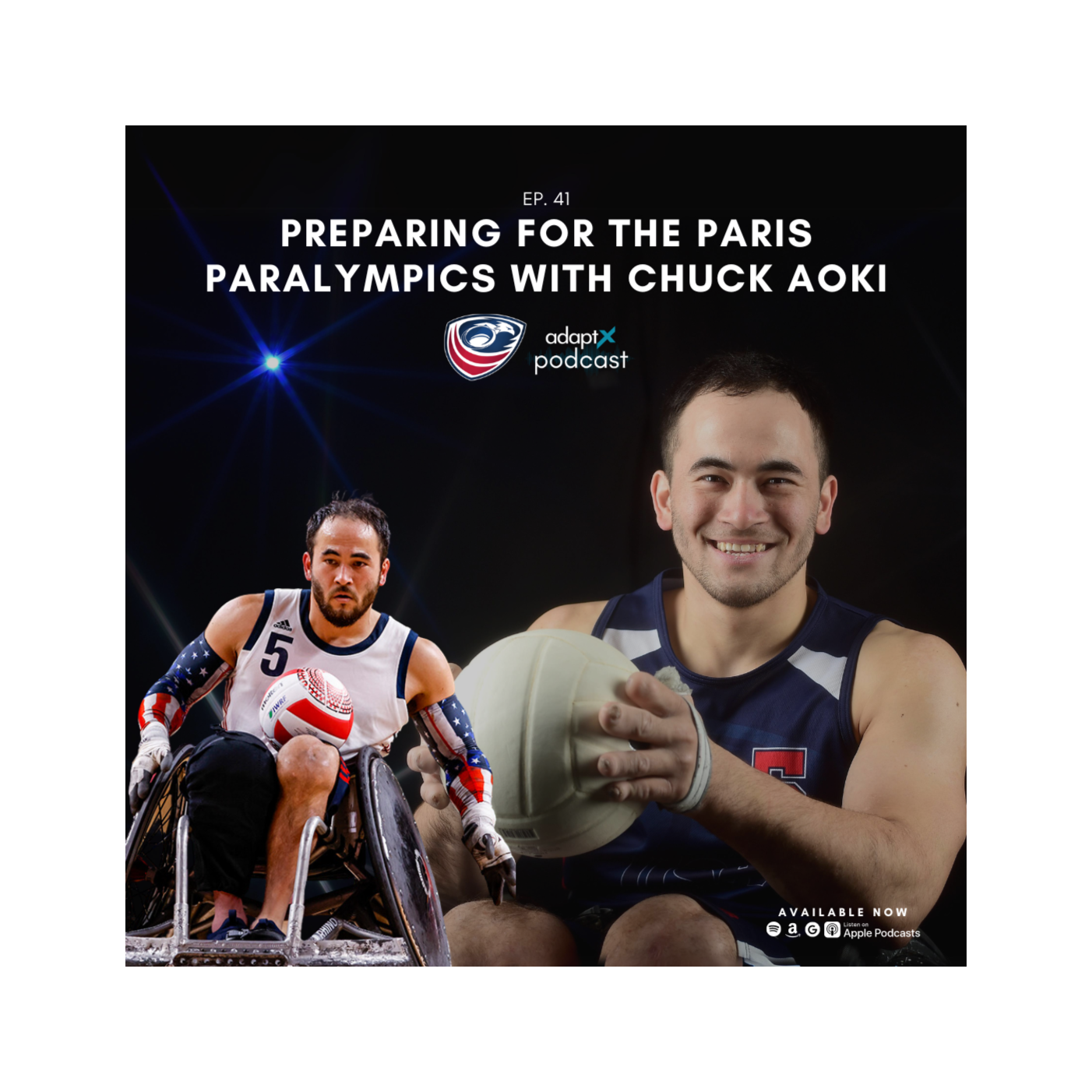
Ep 41#041- Preparing for the Paris Paralympics with Chuck Aoki
In this episode, Brendan Aylward is joined by Chuck Aoki, a well-decorated Paralympic wheelchair rugby player and the Community Access Navigator at the University of Michigan. As an educator and advocate in adaptive sports and fitness, Chuck discusses the importance of engaging the medical community in adaptive fitness in order to increase engagement between diagnostic practices, disability literature, and lived experiences. He also reflects on his childhood navigating disability and social dynamics, as well as the significance of connecting with others who have the same diagnosis. Brendan and Chuck go over the transition from wheelchair basketball to wheelchair rugby, and Chuck provides an overview of the sport's gameplay and classification system. He highlights the importance of training and physical traits in wheelchair rugby and shares his experience as a flag bearer at the Paralympic Games, where he first discovered the impact of television coverage on Paralympic sport and the increasing recognition and awareness of Paralympians. Episode 41 TakeawaysEngaging the medical community is crucial in promoting adaptive sports and creating pathways for individuals with disabilities to participate.The diagnostic process for rare genetic conditions can be complex and may require consultation with specialists.Navigating disability in childhood can be challenging, but having a supportive network and participating in adaptive sports can help foster a sense of community.The exposure and coverage of the Paralympic Games have increased over the years, leading to greater recognition and awareness of Paralympic athletes and their achievements. Paralympic athletes have seen tremendous advocacy growth and recognition, with many athletes gaining massive followings and attracting high-end sponsors.The gap between the Olympics and Paralympics exists due to logistical challenges, such as housing and venue availability.The inspiration narrative surrounding disability is nuanced, with different perspectives on whether it is positive or perpetuates stereotypes.Representation in sports, including the Paralympics, is important for wheelchair users and individuals with disabilities to see themselves competing at the highest level.Preparations for the Paralympics involve individual training, monthly training camps, and competitions to fine-tune strategies and lineups.Episode 41 Chapters00:00 - Introduction and Chuck Aoki's Role at the University of Michigan01:57 - The Community Access Navigator Role and Engaging the Medical Community03:23 - Experiences with Medical Professionals and Disability Etiquette05:34 - Diagnostic Process and Rare Genetic Condition07:08 - Navigating Disability and Social Dynamics in Childhood08:14 - Connecting with Others with the Same Diagnosis13:14 - Academic Background and Pursuit of Public Policy16:29 - Transition from Wheelchair Basketball to Wheelchair Rugby19:32 - Overview of Wheelchair Rugby and Gameplay22:39 - Classification System in Wheelchair Rugby25:25 - Training and Physical Traits in Wheelchair Rugby32:36 - Flag Bearer Honor and Overcoming Health Conditions36:48 - Television Coverage of the Paralympic Games37:43 - Impact of Exposure on Paralympic Sport38:13 - Growth and Recognition of Paralympic Athletes39:16 - Logistics and Gap between Olympics and Paralympics42:33 - The Inspiration Narrative and Achievements45:13 - Representation and Competitors at the Paralympics47:20 - Preparations for the Paralympics48:08 - Making Fitness Environments More Accessible51:47 - Importance of Being Active and Following Chuck Aoki
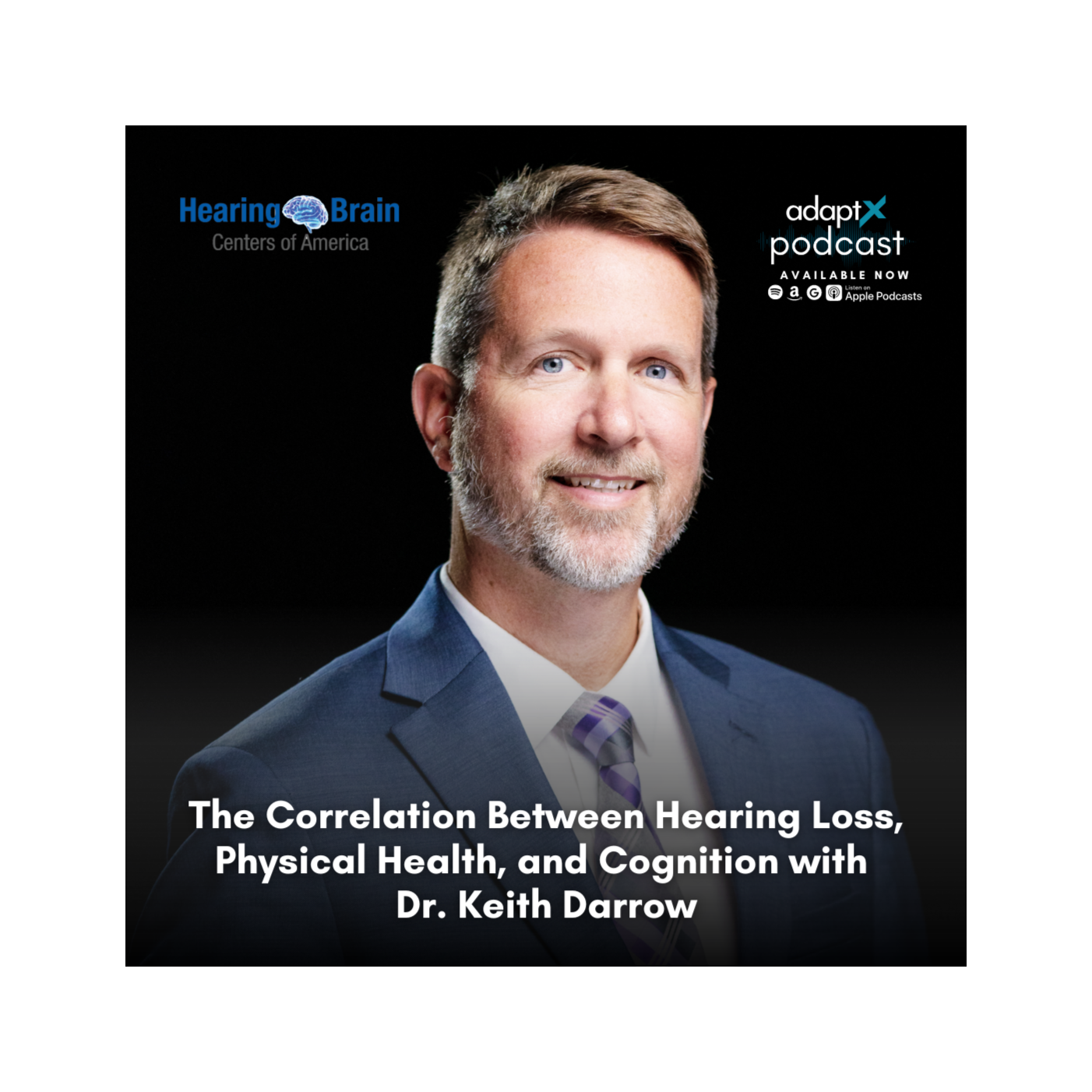
Ep 40#040- The Correlation Between Hearing Loss, Physical Health, and Cognition with Dr. Keith Darrow
Dr. Keith Darrow, a Harvard Medical School and MIT trained neuroscientist, clinical audiologist, professor, author of two Amazon bestselling books, and director of treatment at AudiExperts. He is the co-founder of the Hearing and Brain Centers of America and audiology movements across the country to improve the lives of the 1.5 billion people worldwide living with untreated hearing loss. Dr. Darrow is a nationally recognized speaker, trainer, and his research conducted at the Massachusetts Eye and Ear Infirmary has been cited over 1,200 times. In this episode, Brendan is joined by Dr. Darrow to discuss the importance of understanding and treating hearing loss and tinnitus while challenging the stigma and misunderstanding surrounding hearing loss. He shares his journey of discovering a passion for hearing loss research and the profound impact of hearing on communication and overall well-being. He also explores the link between hearing loss, tinnitus, and cognitive decline, emphasizing the importance of early treatment. The conversation emphasizes the importance of early screening for hearing loss and the role of nutrition and physical activity in maintaining brain health.View Keith Darrow's Published Works.Learn More About Dr. Darrow.Episode 40 TakeawaysThere is a stigma associated with hearing loss, and public education is needed to dispel misconceptions and promote understanding.Untreated hearing loss can lead to cognitive decline and dementia, highlighting the importance of early treatment.Noise exposure, including occupational noise, can contribute to hearing loss and tinnitus.Changing perspectives on aging and health have led to a greater emphasis on maintaining quality of life and addressing hearing loss and tinnitus as chronic neurologic conditions. Early detection and treatment of hearing loss is crucial for preventing cognitive decline and dementia.Excellent clinicians in audiology prioritize comprehensive testing and cognitive screening.Creating inclusive gyms requires accommodations such as direct audio input and acoustic improvements.Lived experience in audiology can provide valuable insights and empathy for patients.Practical recommendations for hearing health include early screening, a healthy diet, and regular physical activity.Episode 40 Chapters00:00 - Introduction01:18 - Discovering a Passion for Hearing Loss Research07:46 - The Link Between Hearing Loss, Tinnitus, and Cognitive Decline10:42 - The Importance of Treating Hearing Loss11:00 - The Relationship Between Tinnitus and Dementia15:32 - Occupations and Noise Exposure20:24 - Addressing Tinnitus and Hearing Loss22:37 - Resources for Education and Treatment23:25 - Understanding Tinnitus as a Chronic Neurologic Condition23:55 - Early Detection and Treatment of Hearing Loss24:17 - Differentiating Excellent Clinicians in Audiology27:32 - Growth of Hearing and Brain Centers of America29:04 - Creating More Inclusive Gyms29:25 - Scaling a Business and Maintaining Quality31:02 - The Importance of Lived Experience in Audiology33:29 - Accommodations for Hearing Loss in Fitness Facilities35:34 - Nutrition's Impact on Hearing Health38:26 - Practical Recommendations for Hearing Health41:20 - Early Screening for Hearing Loss
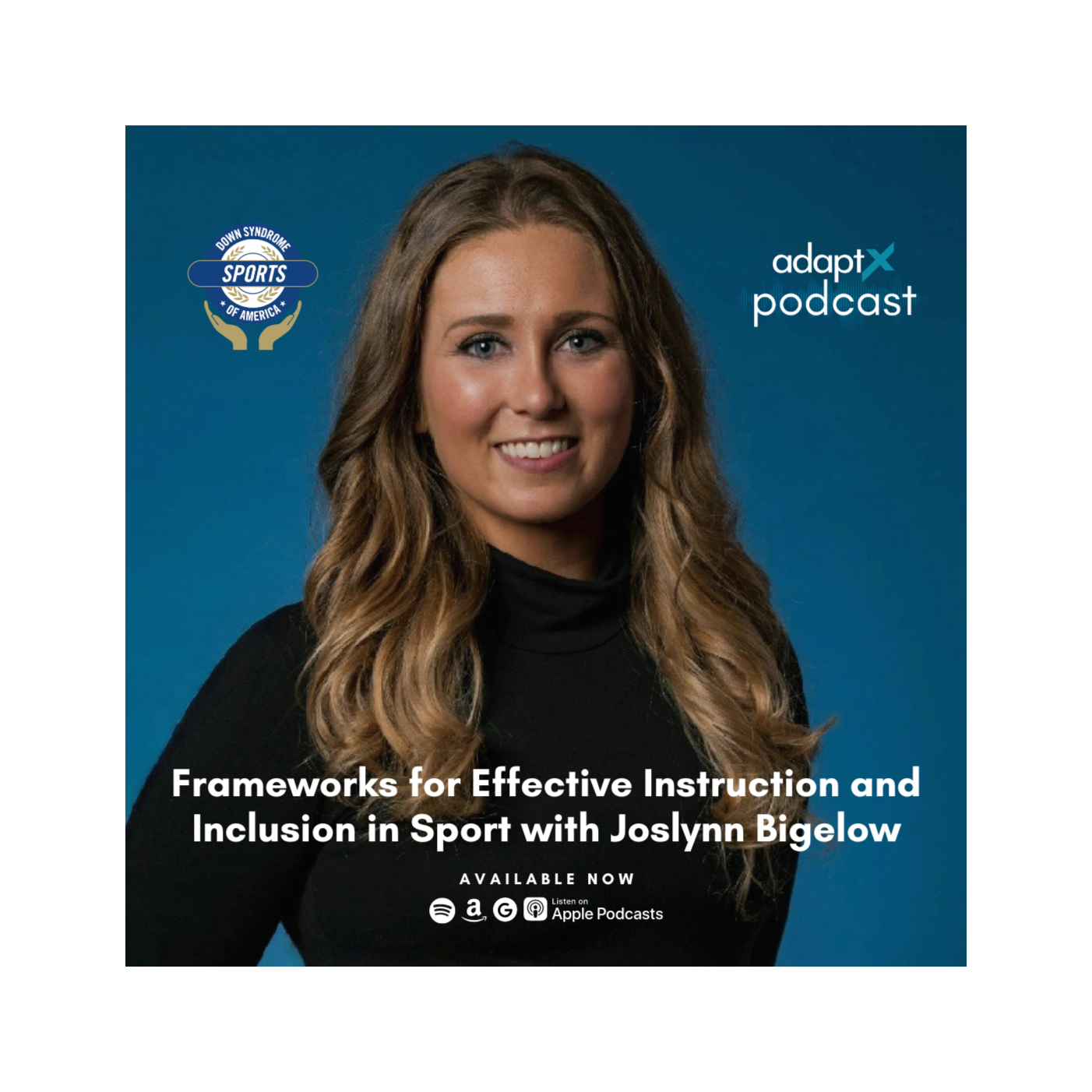
Ep 39#039- Frameworks for Effective Instruction and Inclusion in Sport with Joslynn Bigelow
In this conversation, Joslynn Bigelow, a board-certified behavior analyst (BCBA) and advocate for adaptive sports, discusses her journey and experiences in the disability community. Throughout her life and career, Joslynn has been involved in adaptive sports programs like Top Soccer and Special Olympics, where she would be awarded the third annual ADAPTandTHRIVE Disability Award, which recognizes an individual who is making an impact in the lives of adaptive soccer players. Bigelow earned the honor for her work with Down Syndrome Sports of America, where she helped develop the soccer pathway for adaptive athletes and serves as head coach of the organization’s Futsal National Team, as well as for her over decade-long commitment to TOPSoccer and the Special Olympics. In this conversation, Brendan and Joslynn discuss the application of behavior analysis principles in coaching and the significance of language and communication in disability sports. They cover the census and tracking of participation in disability soccer programs, discussing ideas for the creation of an interactive map to help players find disability soccer programs. They discuss the challenges faced in building the map and the lessons learned from the process while touching on the transition to entrepreneurship, choosing projects, and making fitness more accessible for people with disabilities. Episode 39 TakeawaysBehavior analysis principles can be applied in coaching to shape behavior and create positive and motivating environments for athletes with disabilities.Language and communication are important considerations in disability sports, and it is essential to use person-first language and be mindful of individual preferences and identities. Etiquette and communication play a crucial role in interacting with individuals with disabilities.Tracking participation and conducting a census are important for disability soccer programs to assess their impact and plan for the future.An interactive map can be a valuable tool for connecting players with disability soccer programs and improving accessibility. While building the map and gathering information can be challenging, it is essential for creating a comprehensive resource.Transitioning to entrepreneurship allows for more flexibility and the ability to choose projects that align with personal interests.Making fitness more accessible for people with disabilities requires representation, consistency, and exposure.Episode 39 Chapters00:00- Introduction and Background01:12- First Introduction to Disability and Adaptive Sports03:09- Positive Experiences in Special Olympics05:16- Creating a More Receptive and Understanding Youth07:07- Facilitating Inclusion through Unified Sports08:02- Involvement with Special Olympics and Unified Sports09:08- Educational Background and Career Path10:15- Recognition and Awards13:05- Focus on Collaboration and Serving the Disability Community15:56- Future Goals and Initiatives19:16- Extended National Teams and Membership23:13- Creating Inclusive Programs and Pathways30:09- Applying Behavior Analysis to Coaching36:22- Language and Communication in Disability Sports41:23- Developing US Soccer's Modern Language Document
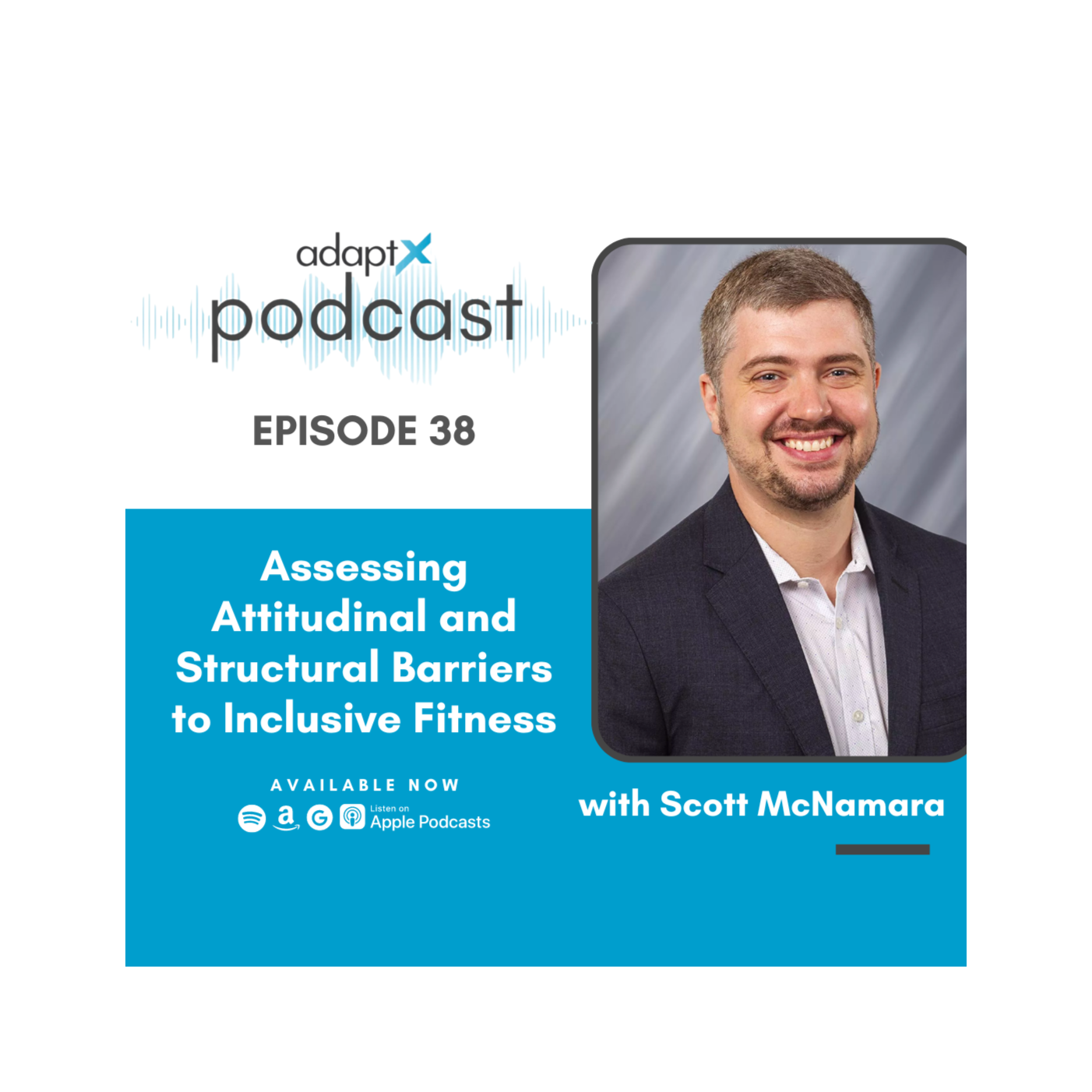
Ep 38#038- Assessing Attitudinal and Structural Barriers to Inclusive Fitness
Dr. Scott McNamara discusses his background in adaptive physical education (APE) and the challenges faced in promoting inclusion in physical education, emphasizing the importance of diverse options and autonomy in inclusive fitness environments. Brendan and Scott explore the barriers to better health and fitness for people with disabilities, breaking down the attitudinal and structural systems that hinder universal accessibility. Additionally, Scott discusses barriers to accessible physical activity, his current research interests, the research to practice gap, the new master's program in adapted physical education at UNH, evaluating the efficacy of educational curriculum, characteristics of a good podcast, and increasing accessibility in fitness.Learn more about UNH's Adapted Physical Education Program.Episode 38 TakeawaysOptions and autonomy are crucial in creating inclusive fitness environments.Attitudinal and structural barriers are the biggest challenges to better health and fitness for people with disabilities. Access and awareness are key to addressing these barriers.Inclusion should be defined as a sense of belonging and acceptance, rather than just the presence of people with and without disabilities in the same space.Collaboration between administrators, APE teachers, and other professionals is essential for a healthy educational ecosystem in a school setting. People with disabilities often face societal barriers that limit their access to physical activity.The new master's program in Adapted Physical Education at UNH aims to provide students with hands-on experience and engagement in research.Evaluating the efficacy of educational curriculum requires student feedback, job placement outcomes, and reflection.Increasing accessibility in fitness requires knowledge dissemination, representation of people with disabilities in leadership positions, and representation in sports and physical activity.Episode 38 Chapters00:00 - Introduction and Podcasting02:17 - Background and Interest in Adaptive PE05:11 - Exposure to Disabilities and Adaptive PE08:05 - Inclusion in Undergraduate PE Curriculum11:13 - Marginalization of Physical Education12:16 - Role of Administrators in Physical Education18:34 - Choosing a Career Path in APE, PT, or OT21:44 - Defining Inclusion26:18 - Critique of Inclusive Fitness Model30:17 - Creating Inclusive Fitness Environments38:27 - Options and Autonomy in Inclusive Fitness44:08 - Barriers to Inclusive Fitness49:44 - Barriers to Accessible Physical Activity50:02 - Current Research Interests53:22 - Research to Practice Gap56:09 - Master's Program in Adapted Physical Education57:33 - Evaluating Efficacy of Educational Curriculum01:00:09 - Characteristics of a Good Podcast01:04:33 - Increasing Accessibility in Fitness
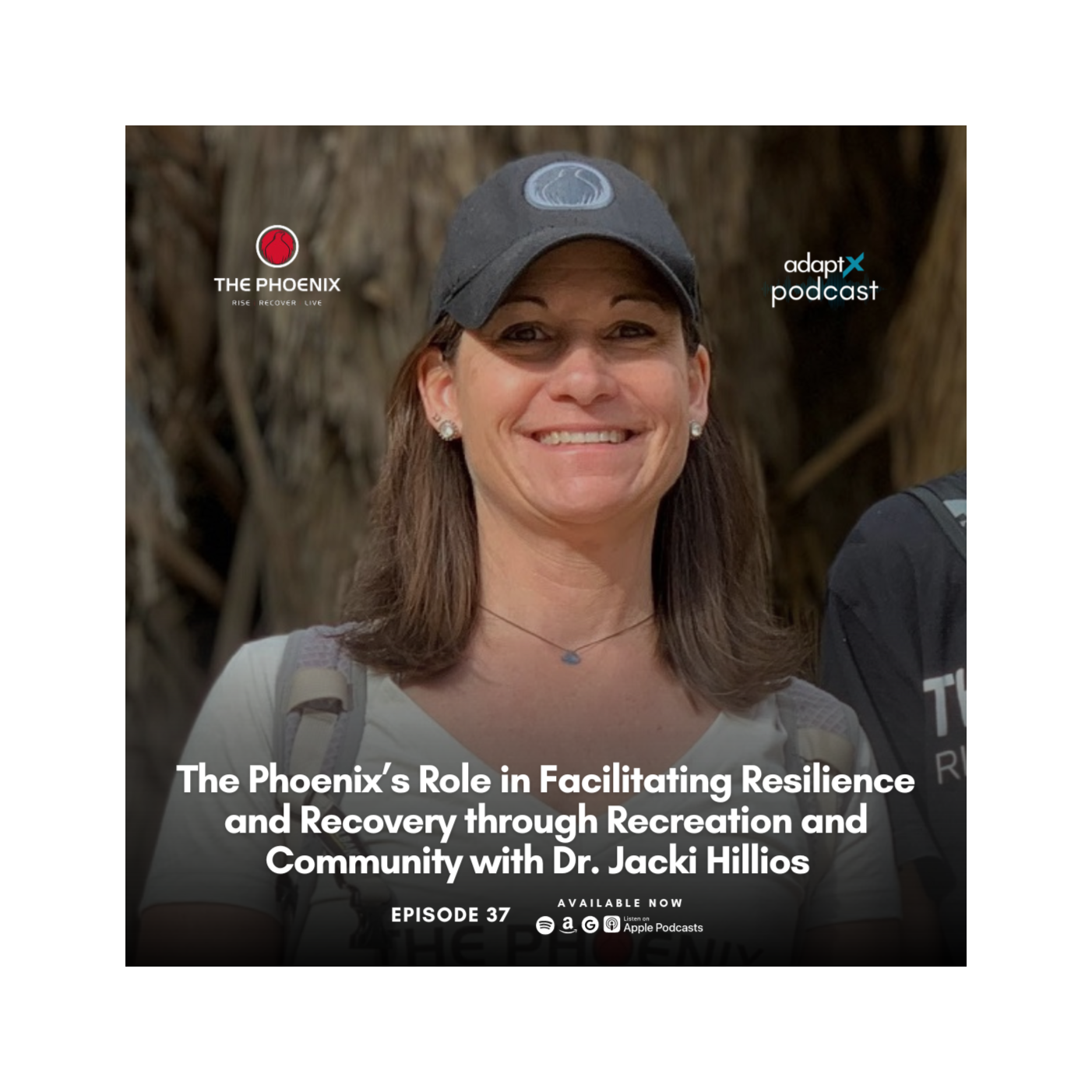
Ep 37#037- The Phoenix’s Role in Facilitating Resilience and Recovery through Recreation and Community with Dr. Jacki Hillios
In this episode, Dr. Jackie Hillios, co-founder and Deputy Executive Director of the Phoenix, discusses the importance of community in addiction recovery and the need for a shift in the treatment approach. The Phoenix is an organization that uses fitness and community to support individuals in recovery, and has expanded to become a global organization focused on creating conducive recovery communities. Dr. Hillios is an active public speaker who enthusiastically shares what she has learned from developing and scaling the Phoenix's healing community model. In 2013, Jacki presented Transcending Addiction and Redefining Recovery at TEDx Boulder. Her talk has been watched by nearly a million people and is being shared in university classrooms across the country. In this conversation, Jacki highlights the role of psychological safety in healing and explores the evolution of language in addiction terminology and the impact of partnerships in music and innovation. She shares personal experiences and memorable moments from the Phoenix community, emphasizing the transformative power of connection and support. The following themes emerged from the conversation: creating psychological safety and community connection, supporting employment through volunteering, expanding the Phoenix community, innovations in technology and virtual programming, and making fitness more accessible through psychological safety.Download the Phoenix app and learn more about the organization.TakeawaysCommunity is essential in addiction recovery, providing support, connection, and a sense of belonging.Psychological safety is crucial for healing, allowing individuals to be vulnerable and take risks in a safe environment.Language plays a significant role in shaping perceptions of addiction, and person-first language helps reduce stigma.Partnerships in music and innovation can create opportunities for healing and support in the recovery journey.Chapters00:00 - Introduction to the Phoenix and Dr. Jackie Helios03:08 - Challenges in Addiction Treatment and the Need for Community Approach08:20 - Defining Addiction and the Importance of Community13:58 - The Phoenix: A Sober, Active Community14:09 - Comparison with Alcoholics Anonymous and the Evolution of Recovery19:11 - The Role of Peer Professionals and the Power of Community23:03 - The Role of Psychological Safety in Healing27:01 - Addressing Stigma and Changing the Narrative29:11 - Misconceptions about Addiction31:35 - Volunteers and Inclusivity in the Phoenix Community33:24 - Training and Etiquette for Phoenix Volunteers35:37 - Language and the Evolution of Addiction Terminology37:31 - Maintaining Quality and Expanding Partnerships38:15 - Partnerships in Music and Innovation42:05 - The Influence of Culture and Stress on Substance Use43:26 - The Journey to Becoming a Clinician45:44 - Breaking the Cycle: Overcoming Family Influences47:35 - Creating Impactful Moments in the Phoenix Community48:21 - Creating Psychological Safety and Community Connection51:09 - Supporting Employment through Volunteering52:48 - Expanding the Phoenix Community55:39 - Innovations in Technology and Virtual Programming58:18 - Making Fitness More Accessible through Psychological Safety
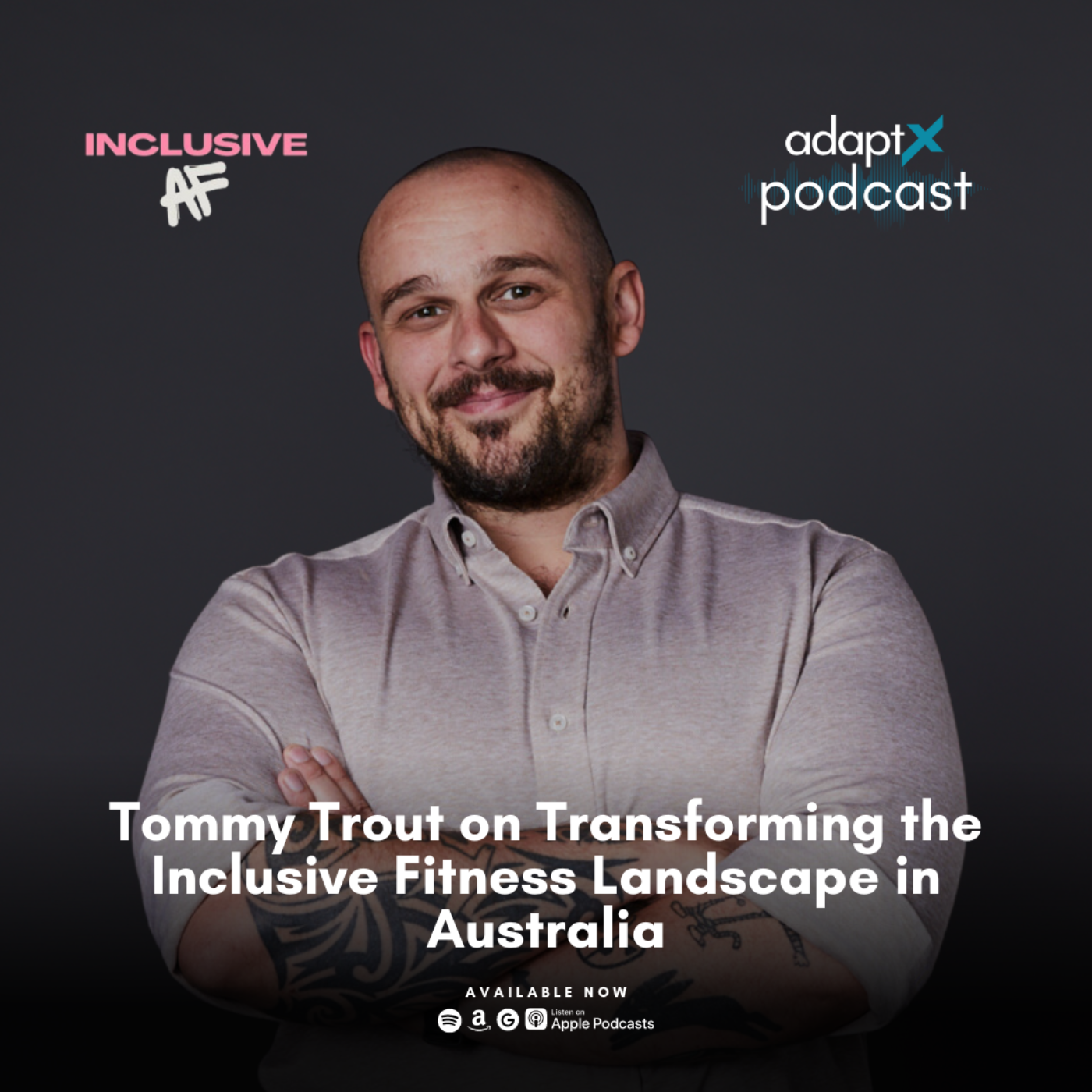
Ep 36#036- Tommy Trout on Transforming the Inclusive Fitness Landscape in Australia
In this episode, Tommy Trout, an award-winning leader in the inclusive fitness space, discusses his motivations for creating inclusive fitness programs and the benefits of inclusive gym environments for trainers, adaptive athletes, and nondisabled individuals alike. Throughout the episode, Tommy emphasizes the need for gyms to adapt and tailor their services to meet the needs of people with disabilities while making an active effort to serve all populations of individuals seeking fitness opportunities. Tommy and Brendan also discuss the role of the National Disability Insurance Scheme (NDIS) in Australia and explore the challenges of attracting talent to nonprofits and the strange set of rules that the nonprofit industry functions under. They also delve into the topics of gatekeeping, critiques, and incentives for change while highlighting the need for fitness facilities and professionals to break out of echo chambers and communicate directly with individuals with disabilities. Connect with Tommy on LinkedIn.Episode 36 Takeaways:Inclusive fitness programs can provide a sense of community and social benefits for people with disabilities.Gyms have an incentive to become more inclusive and accessible as it can attract a larger consumer base.The National Disability Insurance Scheme (NDIS) in Australia provides funding for people with disabilities to choose their own supports and services.Balancing multiple projects and goals requires letting go and allowing the brand to thrive independently. Nonprofits face challenges in attracting talent due to the allure of higher-paying jobs in other sectors and are often limited by the niche guidelines for nonprofit functioning.Gatekeeping and an echo chamber mentality can hinder progress in inclusion and accessibility.Critiques and shaming are not effective in driving change; open and respectful conversations are more productive.Direct communication with individuals with disabilities is crucial for understanding their needs and perspectives in any given setting or environment.Episode 36 Chapters:00:00- Introduction to Inclusive Fitness01:01- Motivations for Inclusive Fitness03:06- Creating Inclusive Gym Environments04:43- The Benefits of Inclusive Fitness06:10- Should Programs for People with Disabilities be Free?08:00- Incentives for Gyms to be Inclusive09:28- Accessibility and Inclusion in Gyms10:46- Understanding Support Needs13:24- The Importance of Soft Skills in Inclusive Fitness17:27- Defining Inclusion23:51- The Role of NDIS in Australia28:24- Transitioning from WeFlex to Inclusive AF31:04- Balancing Multiple Projects and Goals35:16- Letting Go and Allowing the Brand to Thrive39:02- Branding and Consulting with Inclusive AF40:05- Doing Good for a Business vs Making Money41:37- Attracting Talent to Nonprofits42:02- Weird Rules in the Nonprofit Industry42:48- Gatekeeping and Inclusion43:49- Critiques and Incentives for Change44:33- Having Conversations and Providing Advice45:04- The Importance of Meaning Behind Words46:14- Different Perspectives on Language47:18- Echo Chambers and Direct Communication48:17- Being a Platform for Others49:54- Making Fitness More Accessible51:02- Learning and Growing in the Field52:00- Including the Voice of Customers52:38- Where to Find Tommy Trout
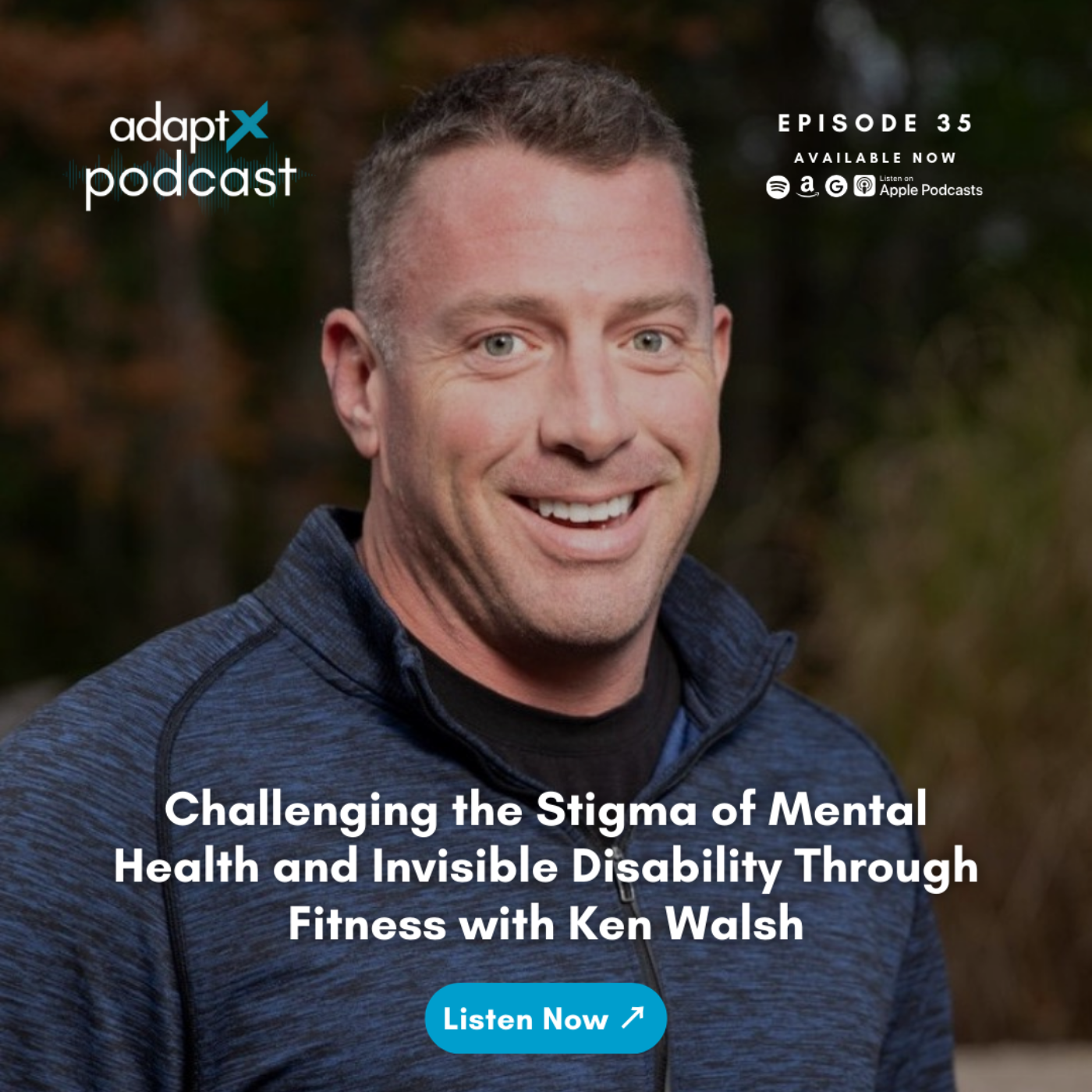
Ep 35#035- Challenging the Stigma of Mental Health and Invisible Disability Through Fitness with Ken Walsh
In this episode, Ken Walsh shares his remarkable journey of overcoming a challenging upbringing, a history of addiction, and mental health struggles to find strength and recovery through fitness and therapy. In their conversation, Brendan and Ken address the role of childhood trauma in addiction and mental illness, and the ways in which our society stigmatizes invisible disability. Ken discusses many of the factors that differentiate those who make it out of difficult environments which, for many, is defined by seeking help and support. He also highlights the power of vulnerability and sharing one's story to reduce stigma and inspire others. Ken encourages the audience to find a balance between self-care and responsibilities, and to seek professional help when needed- the steps are essential in creating safe spaces for mental health, changing the conversation on mental health, and making fitness more accessible and inclusive.Episode 35 TakeawaysChildhood trauma is a significant predictor of addiction and mental illness in adulthood.Vulnerability and sharing one's story can reduce stigma and inspire others.Finding a balance between self-care and responsibilities is crucial for overall well-being.Seeking professional help and support is essential for recovery and personal growth. Safe spaces should be created for individuals with mental health issues, not just physical disabilities.Fitness communities, like CrossFit, can provide a supportive and inclusive environment for individuals with mental health struggles.It is important to change the conversation around mental health and remember individuals for how they lived, not just how they died.Speaking engagements can have a powerful impact on raising awareness and promoting understanding of mental health.Episode 35 Chapters00:00- Introduction01:04- Challenging Upbringing05:27- Factors Differentiating Success07:34- Turning Point12:34- Impact on Family17:06- Motivation to Change24:53- Sharing the Story32:45- Work and Addiction36:06- Pressure and Guilt40:25- Finding Clarity and Perspective44:37- Balancing Self-Care and Responsibilities45:06- Medication and Treatment46:04- Creating Safe Spaces for Mental Health48:13- The Importance of Community in Fitness53:37- Changing the Conversation on Mental Health56:42- The Impact of Speaking Engagements01:03:10- Making Fitness More Accessible and Inclusive
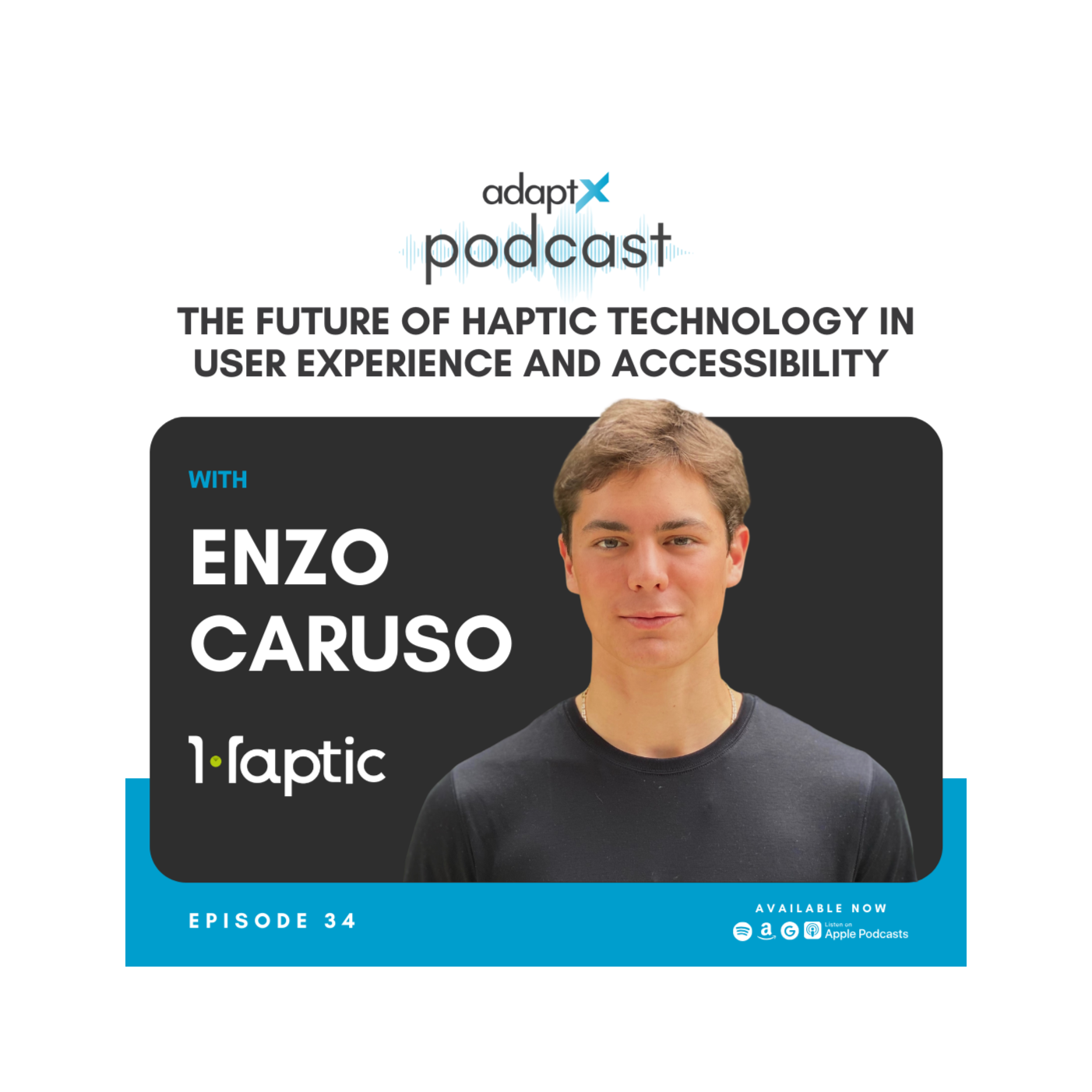
Ep 34#034- The Future of Haptic Technology in User Experience and Accessibility with Enzo Caruso
Enzo Caruso, an expert in haptic technology and the Head of Business and Operations at Haptic, joins Brendan to discuss the revolutionary capabilities of touch-based feedback and its potential to improve accessibility and inclusion. He explains the concept of haptic technology and its applications in various industries, exploring Haptic’s journey from the development of their first product, Waybands, to their current focus on software licensing. Enzo and Brendan highlight the universal benefits of haptic technology and its potential to enhance safety and awareness for all users, and they discuss the challenges and opportunities in haptic navigation, the rebranding of WearWorks to Haptic, and Enzo’s personal involvement with the company. He shares insights into investing in early-stage startups and the future trajectory of Haptic. Enzo explores new use cases for haptic technology, such as navigating gyms, and discusses the barriers to adoption and protection of haptic technology. Learn More and Download HapticNavEpisode 34 TakeawaysHaptic technology utilizes touch-based feedback to improve accessibility and inclusion and has applications in various industries, including navigation, ride-sharing, and event venues.Haptic technology benefits all users, not just those with visual impairments.The adoption of haptic technology faces challenges, such as the need for awareness and integration into existing systems.Haptic Nav is the primary software for users to experience haptic technology.Episode 34 Chapters00:00 - Introduction to Haptic Technology03:12 - The Journey of Haptic Technology06:51 - Expanding Haptic Technology to Other Industries08:40 - The Universal Benefits of Haptic Technology11:13 - Challenges and Opportunities in Haptic Navigation14:49 - Rebranding from WearWorks to Haptic17:15 - Enzo's Involvement with Haptic19:24 - Investing in Haptic and Determining Investment Opportunities20:41 - The Future of Haptic in the Next Five Years23:34 - Exploring New Use Cases for Haptic Technology26:52 - Barriers to Adoption and Protection of Haptic Technology27:17 - Primary Haptic Software for Users28:22 - Resistance and Reception from the Visual Impairment Community30:08 - Haptic Technology in Gyms and Indoor Navigation32:44 - Exciting Developments in the Next Year for Haptic34:37 - Closing Remarks and Call to Action
Ep 33#033- The Value Proposition of Inclusion and Spreading Happiness with John and Mark Cronin
In this episode, Brendan is joined by John and Mark Cronin, the father-son team behind John's Crazy Socks, a social enterprise with a mission to spread happiness. They bootstrapped their business into the world's largest sock store with multimillion dollar revenue, which led to them being recognized with the prestigious Ernst & Young Entrepreneurs of the Year Award. John and Mark are fierce advocates for inclusion and have testified twice before the US Congress and spoken at the United Nations. They are sought after keynote speakers, have recorded two TEDx talks, and are frequent guests on network television. Throughout this conversation, Brendan, John, and Mark share and exchange insights on starting a business and balancing product variety with scalability, and discuss the profitability of inclusion and the positive impact it has on the workforce.To learn more about John and Mark’s journey as entrepreneurs, visit the link below.John’s Crazy SocksMore on John and Mark’s MissionFacebook: https://www.facebook.com/johnscrazysocks Twitter: JCS: https://twitter.com/JohnsCrazySocks Instagram: https://www.instagram.com/johnscrazysocks/ YouTube: https://www.youtube.com/c/Johnscrazysocks/ TikTok: https://www.tiktok.com/@johnscrazysocks TakeawaysInclusion is not just an altruistic decision, but a profitable one.Businesses should focus on creating a diverse and inclusive workforce.Companies can benefit from hiring individuals with different abilities and providing accommodations.Legislative changes are needed to improve the lives of individuals with disabilities, such as raising the asset limits for social security income.Collaborations and partnerships with other businesses and organizations can help promote inclusion and spread awareness.Chapters00:00- Introduction to John's Crazy Socks03:00- Starting a Business and Choosing a Product05:36- Balancing Product Variety and Scalability07:16- Inclusive Practices and Structure of the Business08:27- The Five Pillars of John's Crazy Socks13:11- Advocacy and Giving Back16:22- The Profitability of Inclusion19:57- Companies Setting the Standard for Inclusion22:21- Challenges with Social Security Income Levels24:52- Advocating for Legislative Changes27:10- The Impact of Special Olympics28:46- Collaborations with Other Companies33:07- Lessons Learned and Goals for the Future37:51- Making Health and Fitness More Accessible41:07- Conclusion and Where to Find John's Crazy Socks
Ep 32#032- Tom Otis: Pioneering Innovation in Neurodegenerative Disease Research
In this episode, Brendan is joined by Tom Otis, a researcher and academic in the field of neurodegenerative diseases, discusses the latest advancements in understanding and treating conditions such as spinocerebellar ataxia (SCA) and amyotrophic lateral sclerosis (ALS). He explains the genetic basis of these diseases and the potential of CRISPR technology in developing targeted therapies. Tom emphasizes the importance of interdisciplinary collaboration and patient advocacy in driving progress in the field. He also highlights the role of physical activity in maintaining overall health and its potential impact on neurological diseases. Overall, Tom's work aims to improve the lives of individuals affected by these conditions and bring about transformative therapies.To learn more about Tom's work and his current endeavors as the Chief Scientific Officer at Lario Therapeutics and as a Professor in Neuroscience at University College London, visit the links below:More About TomTom's WorkTakeawaysAdvancements in genetics have greatly contributed to our understanding of neurodegenerative diseases and the development of targeted therapies. Interdisciplinary collaboration between researchers, clinicians, and patient advocates is essential for making progress in understanding and treating neurodegenerative diseases.Patient advocacy and awareness play a crucial role in driving research and development in the field of neurodegenerative diseases.Physical activity and rehabilitation are important components in managing and improving the quality of life for individuals with neurological conditions.Chapters00:00- Introduction01:16- Overview of Spinal Cerebellar Ataxia (SCA) and ALS03:56- The Impact of CRISPR on Genomic Research05:18- Motivation to Study Neurodegenerative Diseases07:23- Challenges in Identifying Genetic Causes of Neurodegenerative Diseases08:33- Advances in Genetics and Precision Medicine10:17- Current Treatments and Therapies for ALS13:55- Research on ALS and Genetic Subsets14:31- The Link Between Repeated Head Trauma and Neurodegenerative Diseases16:24- Collaboration with Researchers in Parkinson's and Alzheimer's17:40- The Importance of Patient Advocacy and Awareness20:43- Interdisciplinary Work in Neurodegenerative Diseases23:42- Challenges in Disseminating Information and Selling Treatments25:08- The Cost and Access to Pharmaceuticals27:40- The Nature of Ataxias and Current Treatments28:19- The Role of Public Advocacy and Awareness in Rare Diseases30:18- The Work of a Neuroscientist and Opportunities in the Field34:43- Understanding Ataxia and its Manifestation
Ep 31#031- Wyatt Spalding on Beating the Odds to Become an Elite Special Olympics Athlete and Advocate
In this episode, Wyatt Spalding, a Special Olympics athlete and podcast host, shares his journey and experiences living with Cerebral Palsy. Wyatt discusses the various medical challenges and procedures that he faced while growing up and the ways that he was able to discover sports and fitness during these times. He discusses his involvement in Special Olympics and the impact it has had on his life, as it provided him with opportunities to pursue competitive athletics and connect with his peers. Wyatt also talks about his relationship with his twin brother and the challenges that they have faced together, emphasizing the importance of their relationship in his adolescence. This episode also addresses the common misconceptions about disability and highlights the importance of accessibility and inclusion in fitness. Wyatt greatly encourages open conversations about the role of disability in adolescence and development, as Wyatt's lived experiences provide the audience with valuable context to the imperativeness of holistic inclusion.Use the links below to listen to Wyatt's three podcast channels and to learn more about his experiences in adaptive fitness:Brave in the Attempt:https://podcasts.apple.com/us/podcast/brave-in-the-attempt/id1680563973Be Unexpected:https://podcasts.apple.com/us/podcast/be-unexpected/id1643539234Spalding Brothers Show:https://podcasts.apple.com/us/podcast/spalding-brothers-show/id1724094964Episode 31 Takeaways:Special Olympics provides unique opportunities for athletes with disabilities to compete and excel in sports at a highly competitive level. For Wyatt, Special Olympics opened doors for Wyatt to compete for Team USA with his twin brother on their Unified Basketball Team, an experience that epitomized the powerful impact of inclusive fitness.Adaptive athletics should not be solely portrayed as a recreational form of inclusion- many of these sporting events and competitions feature athletes competing at an elite level. Many adaptive athletes train and strive for success while pursuing their respective sports, an idea that counters many of the normative stereotypes formed about disability and fitness.Medical adversity is not only physically taxing, but can be emotionally and mentally draining for many individuals. Finding outlets, such as fitness and sports, can play a key role in one's ability to cope with and fully recover from such challenges.Transparent marketing and messaging from fitness centers is key in the clear communication of their facilities intentions and inclusivity, and creates a more accessible environment.Episode 31 Chapters:00:00- Introduction and Background04:04- Involvement in Special Olympics09:05- Impact of Special Olympics13:16- Competitiveness in Special Olympics17:23- Relationship with Twin Brother19:52- Memorable Sporting Experiences20:10- Preparation for Podcasting22:42- Overcoming Adversity28:29- Future Goals34:36- Misconceptions about Disability37:53- Accessibility and Inclusion in Fitness42:44- Final Thoughts and Advice
Ep 30#030- Dustin Giannelli on Deaf vs deaf, Normalizing Disability, and How to “Be On Offense”
In this episode, Brendan Aylward is joined by Dustin Giannelli, a deaf motivational speaker and advocate for inclusion and accessibility. They discuss the importance of having conversations about disability, creating an inclusive environment, and the imperativeness of accessibility for those with hearing impairments. Dustin shares his experiences in sports and how his hearing loss has impacted him both positively and negatively. They also talk about Dustin's transition to a career in public speaking, the challenges he has faced, and the need for self-promotion and advocacy. The conversation concludes with a discussion on making fitness more accessible and the importance of considering accessibility in gym design.Visit Dustin's WebsiteView Dustin's InstagramEpisode 30 TakeawaysHaving conversations about disability is crucial for creating an inclusive environment.Captions play a significant role in accessibility and should be considered in various settings.Innovation and accommodations in sports can provide opportunities for individuals with disabilities to participate and excel.Self-promotion and advocacy are important for success in any career.Improving accessibility in fitness facilities can make fitness more inclusive for everyone.Episode 30 Chapters00:00- Introduction and Podcast Setup01:10- Introducing Dustin Giannelli03:12- Advocating for Inclusion and Accessibility06:23- Having Conversations about Disability08:23- Universal Design and Accessibility09:20- The Importance of Captions10:14- Different Types of Captions12:28- Creating an Inclusive Environment14:36- Understanding Deafness and Disability16:20- Choosing Lip Reading over Sign Language18:11- Advantages and Disadvantages in Sports20:31- Innovation and Accommodations in Sports22:56- Transitioning to a Career in Speaking25:31- Promoting and Advocating for Yourself28:22- Building Relationships and Partnerships30:29- Making Presentations Motivational and Actionable32:53- Challenges and Failures in the Journey35:48- Disability Simulations and Etiquette39:14- Embracing the Term 'Disabled'42:20- Highlights and Opportunities44:42- Making Fitness More Accessible46:02- Improving Accessibility in Gyms47:29- Closing Remarks
Ep 29#029- Ableism and Accessibility in Healthcare: Sarah Skeels on Models of Disability, Diversity, and How Patients Become Participants
Sarah Everhart Skeels, an expert in adaptive exercise and public health, shares her personal journey and professional insights in this conversation with host Brendan Aylward. She discusses her early interest in adaptive populations and the impact of disability on her identity while exploreing the Medical Model versus the Social Model of Disability. She also highlights the importance of the SCI-FI assessment protocol, the value of assistive technology, and the need for inclusive training environments and addresses the relationship between loneliness and health outcomes. They discusses the benefits of having people with and without disabilities training together, as it promotes education and breaks down barriers. The transition from being a patient to being a participant is explored, emphasizing the importance of moving beyond a medicalized approach to fitness. This episode provides holistic, valuable insights into creating a more accessible and diverse fitness environment.Episode 29 Takeaways:Inclusive environments that bring together people with and without disabilities promote education and break down barriers.Personalized support and guidance are essential in coaching individuals with disabilities, as it allows for tailored training and ensures safety.The transition from patient to participant is crucial in promoting independence and a sense of belonging in fitness and recreation.Measuring the impact of training should go beyond the number of gyms or programs created and focus on attitude change and improved accessibility.Changing expectations and attitudes towards disability is a slow process that requires continuous education and exposure. Fitness programs and facilities should strive to include different disability populations, including those with hidden or invisible disabilities.Utilizing client ideas for marketing and promoting inclusive fitness can lead to innovative and effective strategies. Creating a more accessible and diverse fitness environment requires ongoing collaboration and leadership.Episode 29 Chapters:00:00 - Introduction00:18 - Early Interest in Adaptive Exercise03:18 - Impact of Disability on Identity05:22 - Applying Exercise Science to Adaptive Populations06:14 - The Medical Model vs. the Social Model of Disability09:35 - Barriers to Accessibility in Healthcare13:45 - The Paradox of Physical Therapy19:52 - The SCI-FI Assessment Protocol23:48 - The Pursuit of Walking and the Value of Assistive Technology26:31 - Transitioning to Adaptive Sports32:31 - The Power of Peer Mentoring38:09 - Navigating Resistance to Support42:39 - The Role of Peer Health Coaches43:08 - Addressing Loneliness and Health Outcomes43:32 - Creating Inclusive Training Environments43:33 - Inclusive Environments45:11 - Coaching vs. Gym Environment48:09 - Personal Trainers vs. Physical Therapists50:40 - Transitioning from Patient to Person53:39 - Measuring the Impact of Training57:21 - Expanding Access to Fitness01:01:16 - Belonging in the Gym01:04:08 - Changing Expectations and Attitudes01:07:07 - Physical Therapy vs. Occupational Therapy01:12:09 - Making Fitness and Recreation More Accessible01:19:48 - Challenges of Inspiration Porn01:23:29 - Moving Forward and Trusting the Process01:24:35 - Inclusion of Different Disability Populations01:25:45 - Continuing to Foster Inclusion
Ep 28#028 Drafting Disability Policy in the White House, Access, and Equity with Kim Knackstedt
In this episode, Brendan interviews Kim Knackstedt, the first-ever director of disability policy for the Domestic Policy Council for the Biden-Harris administration. We discuss Kim's background in special education, her transition to government and policy work, and the impactful projects and initiatives she spearheaded during her time at the White House and in Congress. We explore the intersection of socioeconomic status and disability, the benefits of hiring a diverse workforce, and the challenges of transportation and accessibility. Kim shares her experiences in Government and offers insights into being an advocate and ally for people with disabilities. We touch on misconceptions about invisible illnesses, the challenges of digital accessibility, and the future of her consulting firm, Unlock Access. The conversation highlights the need for greater awareness and action to create a more inclusive society for people with disabilities.To learn more about Kim's business: https://www.unlockaccess.org/To learn more about the Kennedy Fellowship: https://jpkf.org/kennedy-fellows/Chapters00:00 Background and Education05:30 Transition to Government and Policy Work08:40 Kennedy Fellowship and Work in the White House11:39 Impactful Projects and Initiatives16:23 Disability Policy and DEIA17:51 Socioeconomic Status and Disability21:57 Hiring Practices and Accessibility Improvements27:36 Transportation and Accessibility34:52 Role in the White House and Interagency Policy Committee40:37 Transition to the White House and Work45:42 Misconceptions about Invisible Illnesses52:37 The Future of Accessibility54:17 Unlock Access Consulting57:58 Making Gyms More Accessible
Ep 27#027- Dawn Oates: Advocacy and Actions for a More Accessible World
In this conversation, Dawn Oates discusses her work with the Play Brigade and her advocacy for inclusion and accessibility. She shares her experiences in promoting inclusion without exploitation and her advocacy work in education and housing, emphasizing the rights of individuals with disabilities to access quality education and safe living spaces. Dawn highlights the ripple effect of advocacy and the impact it can have on creating inclusive and accessible environments. She encourages listeners to think about how they can make a difference in their own communities and support organizations like the Play Brigade.Chapters0:00 - Background and Introduction01:04 - Starting the Play Brigade03:28 - Promoting Inclusion without Exploitation07:10 - Challenges of Inclusion in the Fitness Industry11:48 - Marketing Inclusion without Exploitation18:12 - The Importance of Representation in Advocacy25:07 - Accessibility in Business and Digital Spaces36:31 - Equal Opportunity in Private Education41:37 - Addressing Accessibility Issues in Housing48:20 - Shifting Power and Advocacy52:57 - Being an Ally and Advocate53:23 - Creating Change in the Community01:00:47 - Taking Action and Making a Difference01:01:22 - Supporting the Play BrigadeTakeawaysPromote inclusion without exploiting individuals with disabilities, ensuring their consent and involvement in advocacy efforts.Representation and storytelling are powerful tools for raising awareness and promoting understanding of disability issues.Businesses should prioritize accessibility to attract a wider customer base and create a sense of belonging for individuals with disabilities.Advocacy efforts should focus on addressing accessibility barriers in education and housing to ensure equal opportunities for individuals with disabilities. Advocacy involves identifying decision-makers and empowering individuals to tell their own stories.Being an ally and advocate does not require lived experience or a specific role; it is about noticing problems and taking active steps to solve them.Advocacy can create a ripple effect, inspiring others to take action and leading to systemic change.Promoting inclusive and accessible environments requires considering the needs of individuals with disabilities in all aspects of life.
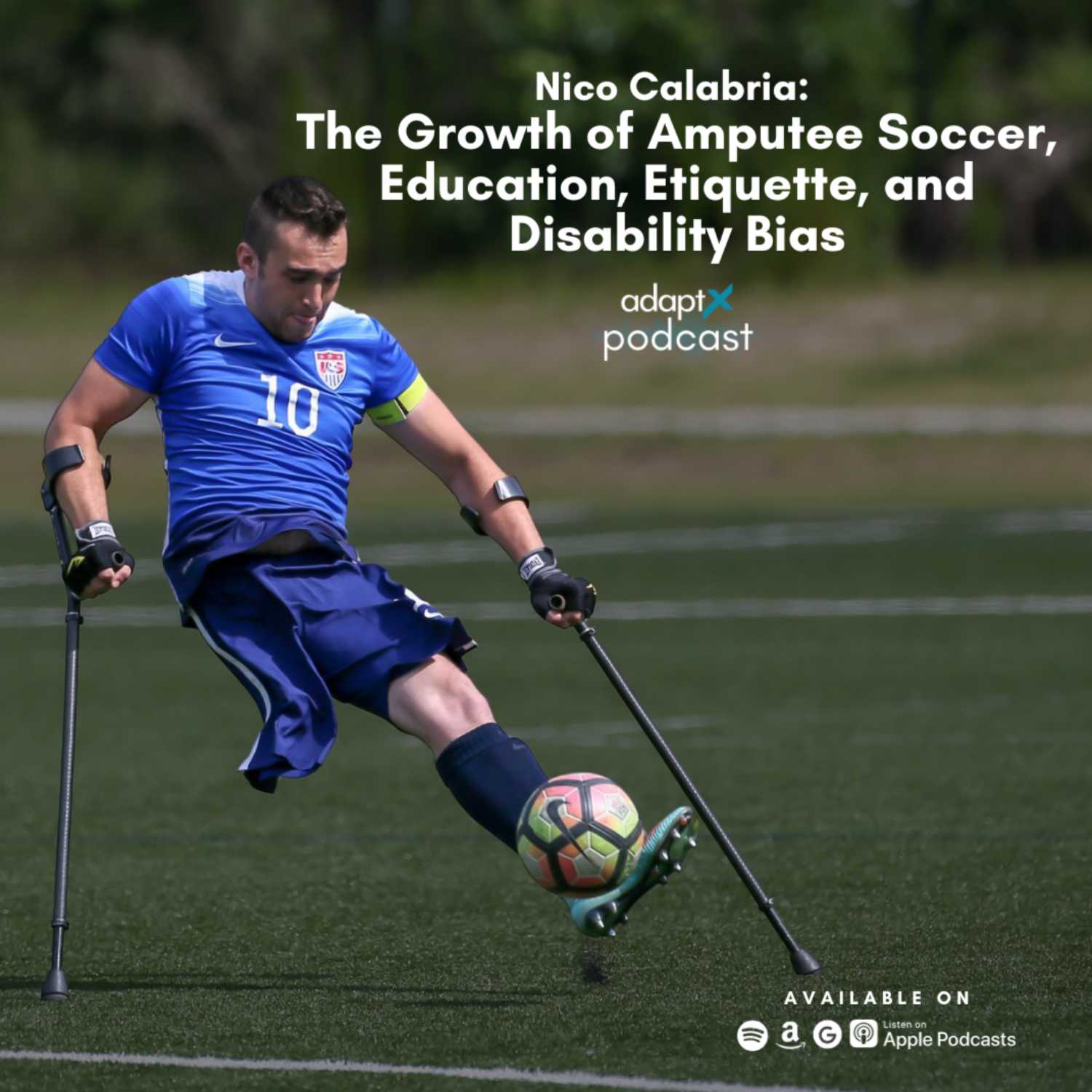
Ep 26#026 - Nico Calabria: The Growth of Amputee Soccer, Education, Etiquette, and Disability Bias
Nico Calabria joins Brendan Aylward for this week's episode of the AdaptX Podcast, where they discuss the projection of amputee soccer, Nico's involvement with the Bionic Project, and the nature of disability in the world of professional sport. Nico was born with congenital hemipelvectomy, a condition that manifests in the absence of a right leg and hip. Nico's disability provided him with the opportunity to scale his impact as an athlete and educator with the Bionic Project, which focuses on sharing disability education and advocacy with the youth. Nico is also the captain of the US Amputee Soccer Team, where he excels as a leader on the field. To learn more about Nico and the Bionic Project, visit https://www.bionicproject.org/our-team.Episode 26 Chapters:01:12 - Finding Community within the Disability2:06 - Born vs. Acquired Disability3:23 - Nico’s Upbringing and Its Influence on His Ambition5:12 - Resenting Disability in Adolescence7:31 - Looking at Different Mobility Devices9:34 - The Bionic Project14:06 - Gauging Project and Clinic Efficacy19:00 - Requiring Universal Disability Education25:10 - The Negative Repercussions of Disability Simulation30:38 - The Complexities of Competing with Crutches34:38 - The Progression of Amputee Soccer37:31 - Nico’s Impact on the Sport and His Role Models40:37 - Amputee Soccer Internationally43:38 - MLS Clubs and Their Association with Amputee Soccer45:37 - The Path to Sustained Profitability in Amputee Soccer48:25 - Barriers to Inclusive and Adaptive Fitness50:59 - The Inspiration Narrative53:48 - The Bionic Project 5k54:34 - The Expansion of the Bionic ProjectEpisode 26 Takeaways:1. Visibility can empower adaptive individuals, challenge stereotypes, and inspire a broader representation of diverse abilities. Positive representation not only enhances the opportunities available to amputee athletes but also contributes to a more inclusive society that values the capabilities and achievements of individuals with disabilities.2. Disability advocacy and education plays an essential role in the creation of greater opportunities in adaptive sports. Societal misconceptions to inadequate infrastructure make standards of inclusivity and accessibility more challenging, so it is important to encounter such misinformation and bias with proper education. 3. Many adaptive athletes will have to navigate challenges such as equipment limitations and varying degrees of physical ability when engaging in sport. But, by redefining the normative standards of athleticism that have been perpetuated in the past, it is clear that success in adaptive sports is not only attainable but scalable with the access to the right support systems.
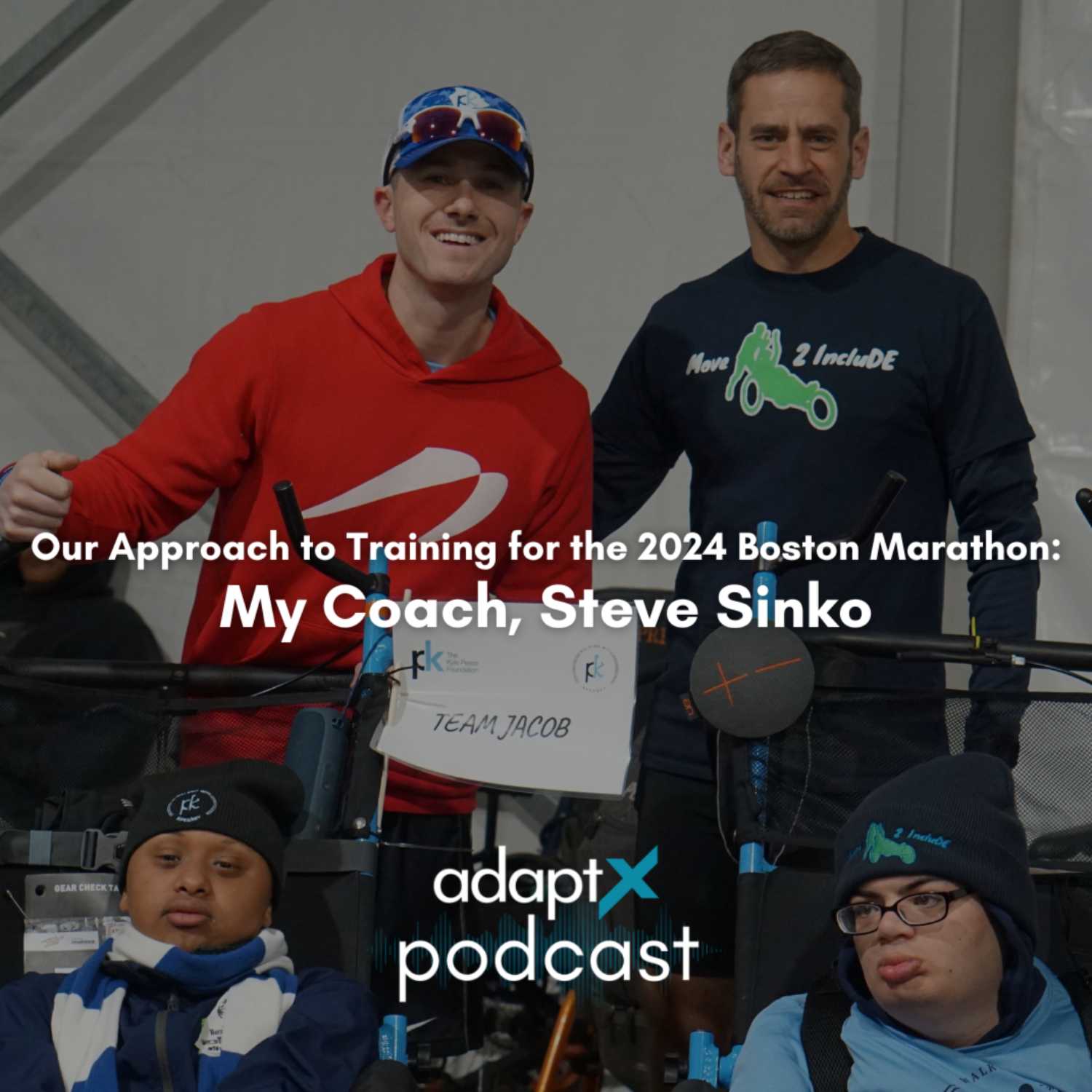
Ep 25#025- Our Approach to Training for the 2024 Boston Marathon: My Coach, Steve Sinko
This week, Brendan is joined by his own running coach of nearly four years, Steve Sinko. As an experienced run coach, AdaptX and ACE certified trainer, and seven-time Boston Marathon qualifier, Steve is well-versed in the world of endurance sports, and is particularly attuned to the barriers to inclusive participation in running. As a frequent duo team runner with Preston Buenaga, Steve has navigated many challenges involving the fostering of accessible and inclusive running environments. Listen along as Brendan and Steve discuss the intricacies of endurance training and Brendan’s journey to the 2024 Boston Marathon.Episode 25 Chapters 00:50 - Steve’s First Exposure to the Disability Space02:44 - Brendan and Steve’s Introduction05:06 - The Evolution of Fusion Inclusion to 501(c)(3) status07:24 - Steve’s Individual Running Career09:56 - Individual Accomplishments versus Duo Accomplishments13:30 - How Race Success Translates to Disability Representation16:05 - Building Connections in the Adaptive Running World17:48 - The Biomechanics of Running with a Racing Chair21:10 - Brendan’s Journey to the Boston Marathon and Steve’s Guidance25:41 - Training at the Elite Level: Mileage28:45 - Finding a Healthy Training Balance35:12 - Adapting to Training Challenges37:30 - Brendan’s Training for Boston 202443:50 - Barriers to Inclusion within RunningEpisode 25 TakeawaysBuilding connections is not only an essential part of success in the world of endurance sports, but it is also an impactful way to foster positive representation for adaptive athletes. The continued recognition of high-achieving athletes within the disability space slowly disproves the ableist narratives that have formerly dominated many endurance sports. Accepting and pursuing a training program despite the innate challenges involved with endurance training allows for greater adaptability. Consistency within a training program is essential to the accumulation of both speed and endurance, despite the tendency to alter a program in an attempt to accommodate one’s temporary needs. The importance of learning how to properly run when you are tired cannot be understated. Training, anticipating, and fighting fatigue simulates the sensations
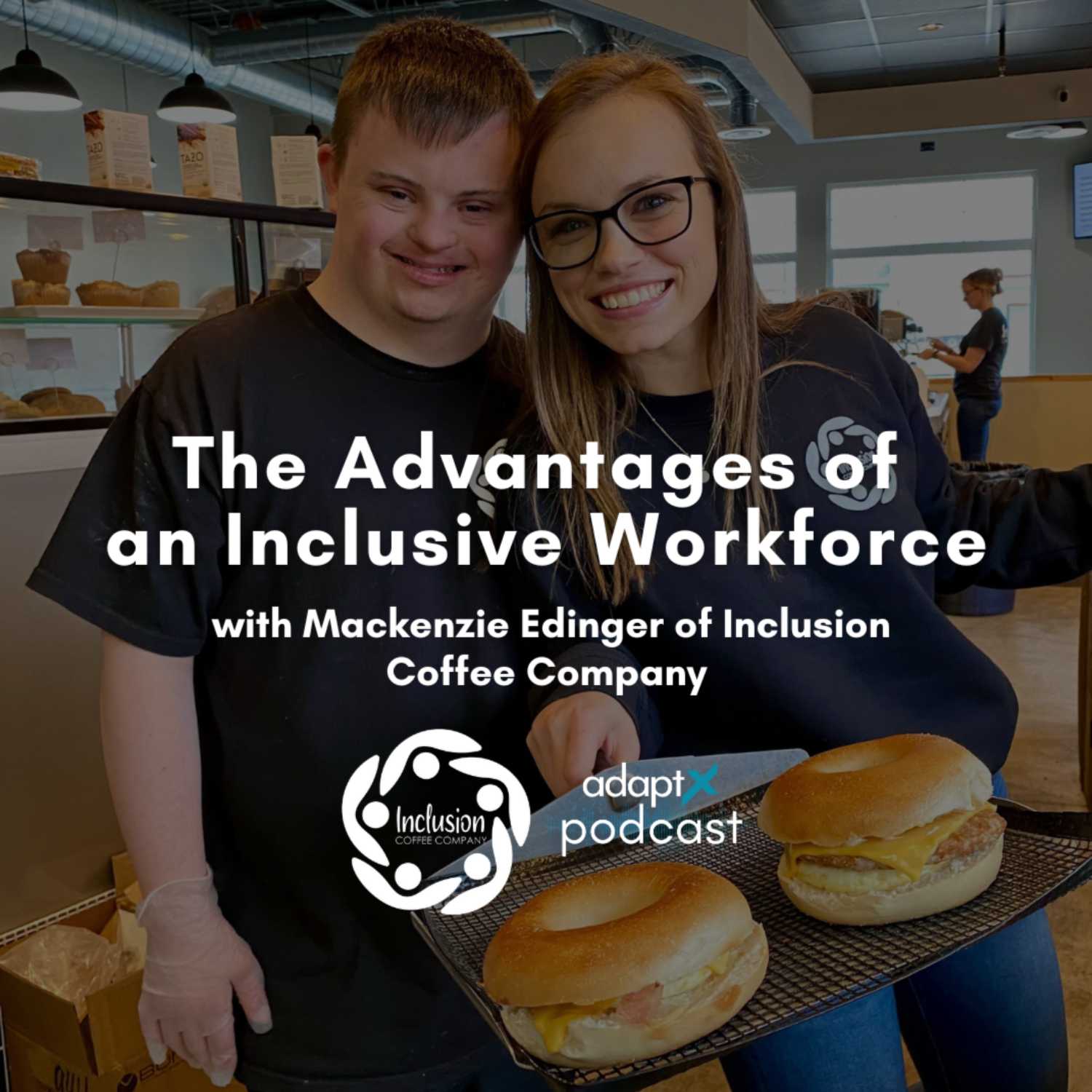
Ep 24#024- The Advantages of an Inclusive Workforce with Mackenzie Edinger of Inclusion Coffee Company
For our twenty-fourth episode, Brendan is joined by Mackenzie Edinger, a graduate from Mackenzie from UW-Whitewater’s Early Childhood and Special Education program and a rising entrepreneur within the disability space. Her continued involvement within the disability community and passion for inclusion led her to establish the Inclusion Coffee Company, an establishment that is centered around the employment of individuals with disabilities. Inclusion Coffee Company’s commitment to the fostering of a diverse workplace is a model for the necessity of inclusive employment, as it not only benefits the employees themselves, but also can promote business profitability and growth. Drawing on her restaurant background and extensive experience, including volunteering with Best Buddies, job coaching, and special education studies, Mackenzie aims to create a welcoming space where individuals with special needs feel equally valued and appreciated. To learn more about Mackenzie and Inclusion Coffee Company’s mission, visit their website here.Episode 24 Chapters:00:47 - Becoming an Entrepreneur in the Inclusion Space02:09 - Mackenzie’s Introduction to the Disability Community02:33 - Continuing and Sustaining Relationships through Inclusion Coffee Company03:35 - Learning from Other Inclusive Businesses04:24 - Why Coffee?05:32 - Adapting to the Customer Service and Business Industry06:03 - The Advantages to Navigating the Business Industry07:45 - Hiring Individuals with Disabilities08:45 - The Unique Skill Sets of Diverse Employees10:17 - Mackenzie’s Business Model11:00 - Navigating Social Security Policy13:16 - Inclusion Coffee Company’s Projection and Expansion14:25 - The Challenges of Franchising15:45 - What Can Businesses Do to Be More Inclusive?17:07 - Similar Employment ModelsKey Takeaways:Learning on the spot can prove to be an invaluable experience for business owners and entrepreneurs. This process demands heightened attention to detail, especially when navigating industries that may not be familiar to you. While it is often daunting to traverse unfamiliar business practices, the tangible experience gained from doing so creates multifaceted and tenacious companies.Inclusive employment practices do not only provide more opportunities for independence to individuals with disabilities, but they can also greatly benefit business models that are centered around inclusion and accessibility. Leveraging a diverse workforce in order to market one’s business to a larger, more expansive audience is an underrated facet of inclusion that should not be overlooked.
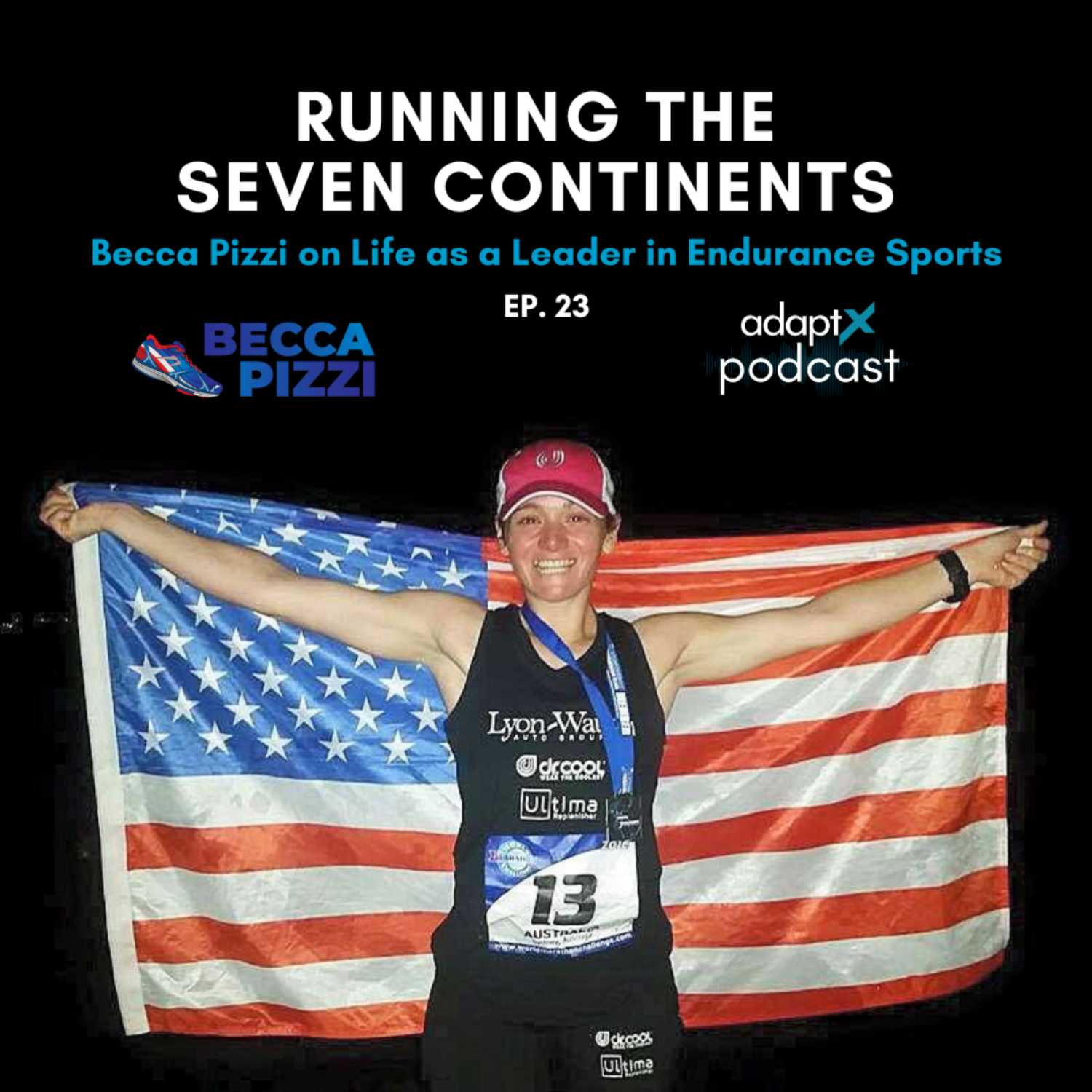
Ep 23#023 - Running the Seven Continents: Becca Pizzi on Life as a Leader in Endurance Sports
Becca Pizzi joins Brendan Aylward for an engaging discussion about her personal journey in endurance sports, which led her to becoming one of very few to win the World Marathon Challenge. Becca is the pinnacle of an endurance athlete, as she has completed over ninety marathons and has successfully ran a marathon on every continent, including Antartica. Not only is Becca an outstanding athlete, but her mission is also philanthropically-focused, as she has established the Becca Pizzi Foundation which benefits high school and college athletes with scholarships and financial support. Listen along as Becca explores her experiences in elite running, her personal motivators, and her perspectives on inclusivity in endurance sports. To learn more about Becca and to get involved with her foundation, visit her website linked here.Episode 23 Chapters:01:12 - Becca’s Introduction to Running03:04 - What’s Next? The 2023 Antarctic Marathon05:26 - Becca’s Introduction to the World Marathon Challenge06:51 - Striving for More08:20 - Racing Your Plan and Leaving Your Comfort Zone11:32 - Coping with High Pressure in the Endurance Sports World15:05 - Becca’s Proudest Achievements17:19 - Creating a Career from a “Hobby”19:15 - How to Make the Most Out of the Boston Marathon20:56 - Training Zdeno Chára23:16 - How Can Endurance Races Be More Accessible? 26:18 - Experiences with Accessibility in Road Races30:04 - Upcoming Races32:09- How Can Fitness Centers Be More Inclusive and Accessible?Key TakeawaysOutreach is an essential part of motivating employees and fitness centers to engage within a gym community or endurance program. By learning and catering to the needs of their target audiences, businesses create more opportunities to capitalize on the individualization of programming and group training.There is a level of pressure involved in endurance sports and racing that requires athletes to balance intrinsic drive with external pressures, such as the desire to live up to the expectations of others. For many, these confounding pressures can weigh heavily on race day, and it is important to release the burden of such expectations in order to be able to perform at the highest level. In creating inclusive road races, race directors and organizers must ensure that they consider the voices of affected populations while planning the event, preparing the course, etc. If the needs of individuals with disabilities are not understood and addressed directly by the event, then a population of participants is actively neglected, further accentuating barriers to participation in endurance sports for many.
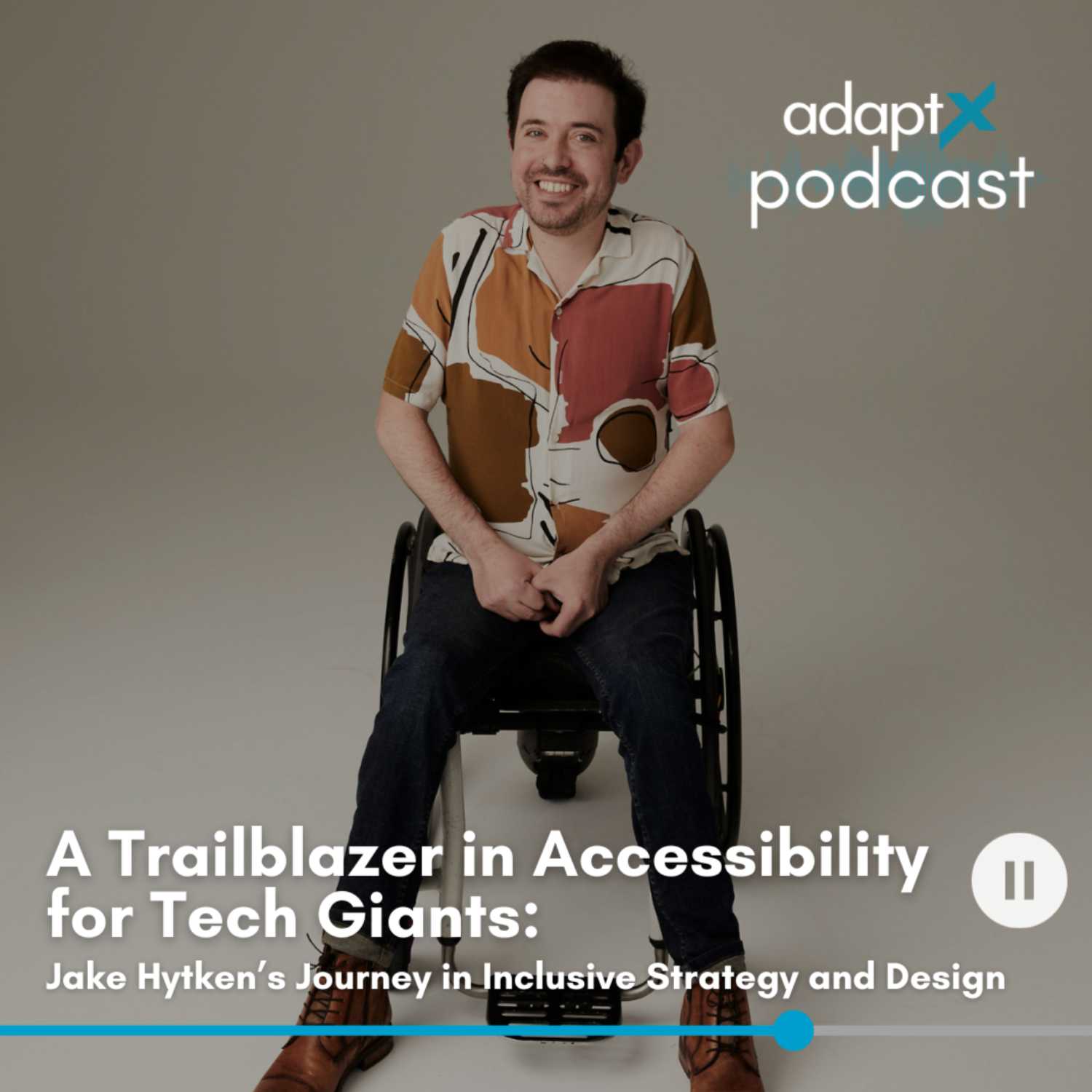
Ep 22#022- A Trailblazer in Accessibility for Tech Giants: Jake Hytken’s Journey in Inclusive Strategy and Design
This week, Brendan sits down with Jake Hytken, a trailblazer in the Product and Marketing Equity domain. With a rich career history, Jake has been at the forefront of delivering innovative solutions in diversity, equity, and inclusion for esteemed companies. As a passionate advocate within the disability community, Jake sheds light on best practices for fostering inclusivity in strategy and design. Tune in as he shares insights that resonate across industries and explores the transformative power of equitable marketing practices.Episode 22 Chapters:00:58 - Jake’s Work in Equitable Marketing02:19 - Media, Program, and Product Representation03:26 - Inclusion is Profitable08:47 - Socioeconomic Status and Disability10:54 - The Charity Model of Disability14:05 - Inclusion vs. Equity17:47 - Social Behavior in DEI18:35 - Experiences in Childhood and Adolescence24:58 - Navigating Towards Inclusive Content Creation28:28 - Jake’s Favorite Project32:16 - Accessibility in Endurance Sports34:15 - Using Lived Experiences to Ask the Right Questions37:32 - Redefining and Expanding on Normative Expectations40:20 - What Can the Fitness Industry Do To Become More Accessible?Episode 22 Takeaways:Inclusion and accessibility should start directly at the beginning of the design process. They are not practices that can be applied retroactively, they have to be at the forefront of strategy and design thinking.The significance of social behavior in relation to Diversity, Equity, and Inclusion (DEI) is just as crucial as the actual implementation of inclusive practices. Mere claims of inclusivity through performative actions are insufficient for a company. True commitment to fostering a culture of equity and authentic inclusion demands a comprehensive dedication across every facet of the company and its brand.Incorporating inclusivity into the provision of services and products is not merely an ethical consideration; it is a strategic imperative that transcends traditional business norms. By embracing inclusivity, businesses not only adhere to ethical principles but also unlock opportunities to engage with a broader and more diverse audience. This expansion of the consumer base not only reflects a commitment to social responsibility but also translates into tangible benefits for businesses, bolstering their profitability and long-term success.
Ep 21#021 - "We Just Need It To Be Possible" - Emmy Award Winning Speaker, Tim Alexander, On the Role of a Growth Mindset in Recovery
This week, Brendan Aylward travelled to New Hampshire for a live session with Tim Alexander, a disability advocate, keynote speaker, and athlete who recently received an EMMY award for his work on “Ever Faithful--The Resurrection of UAB Football”. Since becoming paralyzed in 2006, Tim has devoted his career, lifestyle, and mindset to the growth of himself and the disability community through community engagement and advocacy. Listen along as Tim and Brendan discuss Tim's involvement with the YMCA, the importance of a growth mindset, and perspective after injury.Episode 21 Chapters:00:46 - The YMCA’s Role in Tim’s Recovery7:50 - Tim’s Role Models9:04 - Finding Bright Spots in the Gym9:29 - Accepting New Opportunities as an Adaptive Athlete: Wheelchair Basketball at the University of Alabama13:38 - The Lakeshore Foundation14:07 - Differing Lived Experiences: Acquired Disability vs. Lifelong Disability18:07 - Disability Etiquette and Maintaining Respectful Relationships23:11 - Tim’s EMMY29:19 - “My Opposition is My Inspiration”33:07 - Making Fitness Accessible and InclusiveKey Takeaways:“Going back to the basics” is an essential part of recovery for many: reassessing your resources and the way you approach day-to-day life allows for the gradual adjustment to a new way of interacting with your environment.Demystifying disability is a key component in fostering inclusive fitness environments. By integrating the disability population into normative settings, gym owners are able to incrementally create and implement accessible systems in their facility.“My opposition is my inspiration”: not only did disability offer Tim a new perspective and a new way of living, but it also instilled a sense of mental toughness into him. Each morning, he has to mentally prepare himself for the unexpected challenges that he may inherently face as a person with a disability within an inaccessible world. He prepares to be constantly diligent in order to traverse social and physical environments that do not consider the specific needs of individuals with disabilities.
Ep 20#020 - Applying the Social Model of Disability to Adaptive Training Environments with Dane Stairs
For our 20th episode, Brendan Aylward is joined by Dane Stair, an adaptive exercise specialist at NeuAbility. Dane and Brendan shared their experiences working in the adaptive fitness space, and discussed how the social model of disability is an essential facet of the sustainment of accessibility in a fitness environment.For more on Dane Stair and NeuAbility, visit their website and Instagram page.Episode 20 Timestamps:00:39 - Dane’s Introduction to Adaptive Exercise02:05 - Finding NeuAbility02:34 - Membership Base and Training Structure05:46 - The Line Between Physical Therapy and Athletic Training**09:18 - Creating a Positive Gym Environment10:42 - Using Representation to Incentivize Fitness Engagement13:35 - Small Group Models for Adaptive Training14:57 - NeuAbility’s Facility and Equipment Barriers19:16 - Recommended Equipment to Increase Gym Access20:50 - The Development of NeuAbility Training Strategies24:50 - Building a Trainable Menu27:22 - Outcome of Training Clients Post-SCI29:51 - The Impact of Compassionate Training31:34 - Economic and Insurance Barriers During Recovery34:08 - Referral Networks36:36 - Monitoring Progress within Specific Populations39:57 - Compensation Patterns in Adaptive Fitness41:56 - Breaking Down Barriers for Trainers and Staff44:18 - Learn More About and Support NeuAbilityKey Takeaways:Athletic training is often an effective and more sustainable extension of physical therapy, particularly for clients with disabilities, as the continuation of PT practices through strength and conditioning exercises allows clients to rediscover their identity within a fitness environment. Transitioning from PT to an adaptive fitness setting helps to redefine exercise as an elective practice that promotes enjoyment and health over normative standards of functioning.While there is much discussion over whether or not adaptive equipment is becoming inaccessible from a socioeconomic standpoint, there are small solutions that fitness facilities can utilize to increase physical accessibility. Active Hands are a strongly recommended product to have available in gyms, as these portable gripping aids can greatly increase the accessibility of a variety of different machines and equipment. Additionally, a gym’s investment in wheelchair-adapted cardiovascular equipment, like a Ski Erg with an adapted base, will alleviate some of the challenges of creating an accessible environment.Promoting holistic training for staff and trainers is essential to creating a safe, adaptive environment for clients with disabilities. Knowledge of disability literature and training concepts alone is not enough- hands-on, practical experience is invaluable. Exposing trainers to clients with varying abilities allows them to learn how to train safely and effectively within the context of a training environment.
Ep 19#019 - Building Independence & Inclusive Communities Through Shared Lived Experience
This week, Tony Jacobsen joins Brendan Aylward for an engaging conversation about his lived experiences with Osteogenesis Imperfecta and how fitness has allowed him to foster independence, confidence, and community. They also cover Tony's book, "Disable Your Disability", and discuss the creative process for sharing insightful information on the intricacies of accessibility. To learn more about Tony and his mission, visit his website here.About Tony Jacobsen:Tony Jacobsen, who was born with Osteogenesis Imperfecta (O.I.), aka Brittle Bones Disease, is the author of “Disable Your Disability: Live the Healthy Life You Deserve!”, the first book to discuss the delicate yet important relationship between fitness and O.I. Tony is a NASM Certified Personal Trainer and runs a successful online adaptive fitness club called #UNBREAKABLE Body.In addition to providing powerful resources for his own disability community, Tony also gives motivational talks and hosts workshops and classes to promote and fuel an #UNBREAKABLE world!Episode 19 Chapters:00:42 - Tony’s Pathway to Adaptive Fitness Coaching04:34 - Transitioning from Crutches to Independent Mobility with Osteogenesis Imperfecta (OI)06:48 - Childhood and Finding Ways to Stay Active07:52 - Reflecting on Tony’s Fitness Journey09:36 - OI Literature- The Impact of Strength and Resistance Training12:41 - Tony’s Inspiration for His Book14:00 - The Writing Process: Sharing Lived Experiences through Targeted Work16:26 - The Influence of COVID on Tony’s Content Dissemination18:51 - Representation in the OI Community21:33 - “Just Start” - Discovering New Opportunities for Inclusion24:36 - Disability Language and How to Approach Semantics27:16 - Normalizing Inclusion for Younger Populations30:48 - Using Fitness as Catalyst for General Inclusion32:25 - Accessibility Benefits Everyone33:43 - The Impact of Toxic Positivity on the Disability Community38:49 - What Can the Fitness Industry Do to Be More Accessible?41:11 - Looking Forward: Goals for 5+ yearsEpisode 19 Key Takeaways:Embracing your own disability is the first step to making a difference in the lives of others: learning and understanding your own needs allows you to promote holistic accessibility and inclusion in the spaces you work, engage, and socialize in. By proving to yourself that it is possible to overcome the societal limitations that mitigate populations with disabilities, you can create environments that are conducive to the personal success of others.The process of creating and sharing one’s lived experiences is not bound to a specific timeline: the dissemination of meaningful information about inclusivity is a cumulative process that does not adhere to a specific timeline. One's understanding of inclusion evolves over time, so it is important that the expansion of disability knowledge and empathy is not limited to a definitive timeframe.Communicating about one’s disability is a 50/50 exchange: the sharing of lived experiences requires both the voices of impacted populations and the attention of those that want to listen. By listening to a diverse range of perspectives, inclusion becomes a more realistic concept that originates from the genuine, authentic needs of those that have a stake in accessibility.
Ep 18#018 - Defining Accessibility with Industry Leader Brad McCannell
Brad McCannell joins Brendan Aylward for an insightful conversation about how the culture of accessibility needs to be changed, and where business owners and able-bodied people should start. Brad uses his lived experiences as a person with a disability to supplement his extensive knowledge of the disability and accessibility space, providing Brendan and listeners with invaluable advice on how to commit to the fostering of inclusion. Episode 18 Chapters:01:06 - Career Progression: TV to Accessibility04:22 - Brad’s Spinal Cord Injury08:09 - Life Post-Injury and Transition Into the Disability Space10:24 - Outlook on Recovery After Injury16:15 - Sensationalization and Representation in the Paralympic World17:04 - Addressing Misconstrued Representations of the Disability Community18:22 - “Just Ask” - Communicating with a Person with a Disability22:45 - The Importance and Benefits of Accessibility for Key Stakeholders27:09 - The Function of Inclusion in Business28:15 - Accessibility and Inclusion Beyond the Physical Environment32:38 - Meaningful Access and Usability in the Rick Hansen Foundation Accessibility Certification Program40:08 - Changing the Culture Around Accessibility41:54 - RHFAC Prerequisites 43:30 - Validating the Course49:02- When Can a Facility Be Deemed “Accessible”?50:36 - Handling Inaccessibility as a Business Owner54:43 - What Needs to Be Done to Make the Fitness Industry More AccessibleKey Takeaways:Sympathy is not conducive to the creation and sustainment of inclusive environments, as it inherently implies that individuals with disabilities should be pitied. The dissonant relationship between sympathy and disability contributes to the social stigmatization of disability, further lowering expectations for a population that is already overlooked within an inaccessible society.Focusing solely on physical accessibility neglects the vast majority of the disabled population, as disability is much more extensive than what is often accounted for in public spaces. When business owners fail to provide comprehensive accessibility in the social, socioeconomic, and digital components of their business, and solely address mobility issues in their accessibility standards, they're failing to serve 70% of the disability community, and they are missing out on a 70% return on investment as a business.Accessibility is not black-and-white, and accessibility standards should not be understood as the end-all-be-all of inclusive environments. 100%, comprehensive accessibility can never be truly met, as the needs of each individual with a disability cannot be accurately compartmentalized into a list of “standards”. Consistent reevaluation and diligent communication between business owners and stakeholders is essential in progressing towards an accessible environment- there is no “end” to accessibility.
Ep 17#017 - Improving Health and Fitness Resources for Amputees
Listen along as Bob Mitchell of Inspirations Fitness joins Brendan Aylward for a conversation about his lived experiences as an amputee, the importance of compassionate coaching, and the necessity of effective communication in a fitness setting.Learn more about Inspirations Fitness.Episode 17 Chapters:00:25 - Bob’s Introduction to the Fitness Industry03:40 - Inspirations Fitness04:32 - Successful Strategies for Working with Lower Limb Amputees05:23 - Trainer Etiquette for Training Amputee Athletes06:26 - Bridging the Gap Between Rehab and Return to Fitness07:16 - Recreational Activity Preferences08:10 - Barriers to Participation11:19 - Pre-Amputation: Career12:59 - Life Improvements After Amputation13:59 - Recommended Organizations14:35 - Support Groups15:16 - Exploring Disability Etiquette18:29 - What Can Be Done to Make the Fitness Industry More Accessible?19:57 - Essential Resources Post-Amputation22:40 - Symptomatic Presentation of Bob’s Amputation23:26 - Exercise and Fitness Preferences24:23 - Lived Experiences
Ep 17#016 - Systems and Strategies to Make Functional Fitness Accessible with Gina Campbell
Gina Campbell joins Brendan Aylward as they discuss barriers and facilitators to participation in fitness environments, Gina’s perspective as a professional and as an individual with MS, and successful business models for fitness facilities. Listen along as Gina and Brendan cover a broad scope of topics related to culture building and communication models in the adaptive fitness space.Episode 17 Timestamps:00:42 - Gina’s Introduction to Fitness02:58 - Mission Barbell’s Coaching Structure04:00 - False Advertising and Rhetoric for Adaptive Fitness05:10 - Gina’s Recommendations for Adaptive Fitness Coaches07:02 - Unpacking the Tendency to Promote Elite Adaptive Athletes Online10:24 - Creating Accessible Physical Spaces: Crossfit Pioneering Physical Accessibility13:40 - The Overlap Between Coaching Adaptive and Non-Disabled Populations14:31 - Creating Universal Systems for the Highly Individualized Nature of Training18:55 - Crossfit Workout Methods and Their Relation to Inclusion23:53 - Lived Experiences as an Athlete with MS27:21 - The Importance of Exercise Selection29:10 - Being Both Anticipatory and Reactionary30:35 - Socioeconomic Function of the Fitness Industry40:26 - Keeping Members Invested in an Inclusive Fitness Environment43:40 - Building Inclusive Gym Culture45:12 - Representation on Social Media and in Marketing Materials47:02 - Setting Standards of Inclusion in Micro-gyms48:01 - Key Takeaways for Fitness FacilitiesLearn more about AdaptX and subscribe to our newsletter.
Ep 15#015 - How Losing My Leg Helped Me Find My Purpose with Sam Schaefer
This week, Sam Schaefer joins Brendan for a great discussion about Sam's current career, his experience as an amputee with Complex Regional Pain Syndrome, and his goals for his athletic career. This week's episode focuses on the complexity of one's individual journey within the world of adaptive fitness, and how Sam has reclaimed autonomy over his disability.For more about Sam, follow him on Instagram at @Samschaefer1Learn more about AdaptX and subscribe to our newsletter.Episode 15 Chapters: 00:49 - Sam’s Background 02:03 - The Choice to Enlist- Military Background 02:29 - The Initial Injury 03:36 - The Diagnosis of Complex Regional Pain Syndrome 05:10 - Coping with CRPS Diagnosis 06:30 - Life After the Military: Finding Crossfit 10:26 - Coaching as an Adaptive Athlete 12:19 - Sam’s Prior Exposure to Adaptive Fitness 13:48 - The Choice to Pursue Amputation 15:06 - Pushback from the VA 17:33 - The Intricacies of Classifying Disability 18:59 - Residual Discomfort Post-Amputation 19:59 - Shared Experiences with CRPS 24:18 - Training Adaptive Athletes Makes You a Better Coach 26:08 - Amputation Experience 26:39 - Sam’s Participation in Adaptive Sports 29:46 - Making Adaptive Sports More Mainstream 34:16 - Sam on the Inspiration Narrative 26:28 - Upcoming Fitness Competitions and Goals 37:37 - Local Organizations and Recs 38:05 - First Experiences Running with a Blade 39:42 - Different Classifications of Prosthetics 41:28 - Running Goals 44:24 - Less Leg More Heart 46:57 - Making Fitness More Accessible 51:09 - Raising Expectations of Individuals with Disabilities 51:27 - Upcoming 30k 52:04 - More About Sam and Social Media
Ep 14#014 - The Role of Sport in Facing Terminal Illness featuring Georgia Carmichael
In Episode 14, Brendan is joined by Georgia Carmichael, an adaptive athlete excelling in several activities while managing her recent diagnosis of MELAS Syndrome. Brendan and Georgia discuss her progression to becoming a Paralympic athlete, the intricacies of her diagnosis and symptoms, and her future athletic and health goals. Support Georgia and stay up to date on her journey @georgiacarmic on Instagram.Learn more about AdaptX and subscribe to our newsletter.Episode Fourteen Time Stamps:00:36 - Georgia’s Introduction to Sports01:13 - Competition Structure in Kayaking and Rowing01:53 - Equipment Differences02:14 - Georgia’s World Championship Experience03:41 - Georgia’s Accident and Symptoms04:56 - Experiences with Misdiagnosis06:09 - After 6 Years: MELAS Syndrome06:48 - The Unknown of Georgia’s Development of MELAS07:25 - Georgia’s Return to Traditional Sports Post-Accident08:52 - Mindset and Motivating Factors09:41 - Progression of Rehab11:21 - Barriers to Returning to Sport After Injury11:58 - Gateway to Paralympics12:22 - Georgia’s Acclimation to Paralympic Competition14:02 - Current Hospitalization and Treatment15:59 - What is MELAS?17:16 - Georgia’s Typical Day and Health Goals19:09 - Georgia’s Outlook20:57 - Imposter Syndrome and the Inspiration Narrative22:40 - How Can Fitness Centers Be More Inclusive?24:26- The Charity Model of Disability25:27 - Coach Experiences26:06 - 2024 Goals26:42 - How Our Audience Can Support Georgia27:56 - Representation in Sport and the Importance of Activity30:57 - Using Personal Goals to Fuel Progress31:31 - Paralympic Coverage in the Media32:28 - Disability Etiquette and the Word “Disabled”
Ep 13#013 - Rewriting the Narrative on Training Diverse Populations with Brad Clark
This week, Brendan is joined by Brad Clark of BC Adaptive fitness and the National Adaptive Fitness Foundation, two organizations centered around the creation of accessible fitness environments. As like-minded individuals in similar occupational positions, Brendan and Brad discuss the necessity of setting high expectations for their clients with disabilities while simultaneously creating an inclusive space for them to reach their goals. They also touch on the potential projection of Brad's organizations. Listen to the full episode on your favorite streaming platform and learn more about Brad's impact below. BC Adaptive Fitness and National Adaptive Fitness Foundation www.bcadaptivefitness.comwww.nationaladaptivefitnessfoundation.orgI nstagram handles: @bcadaptive@nafforgLearn more about AdaptX and subscribe to our newsletter.Episode 13 Timestamps:00:39 - Brad’s Educational and Experiential Background06:38 - Transitioning Into an Adaptive Fitness Coaching11:16 - BC Adaptive Fitness’ Training Format 12:35 - Staffing Structure14:53 - Rewriting the Narrative on Training Adaptive Athletes18:40 - Creating an Authentic Online Presence and Outsourcing Content20:09 - Managing BC Adaptive Fitness23:18 - Finding Welcoming Training Locations26:09 - Brad’s Business Models: National Adaptive Fitness Foundation and BC Adaptive Fitness28:10 - Future Facility and Expansion plans29:29 - AdaptX’s Nonprofit Funding Model32:28 - Creating a Community of Adaptive Fitness Professionals35:01- Looking Forward: Gym Ownership38:00 - The Value of Inclusive and Integrated Fitness Spaces39:57 - Finding Equipped and Well-Versed Coaches40:48 - How Can We Make Fitness More Accessible?
Ep 12#012 - Promoting High Performance and Community in Fitness and Endurance Sports
This week, Terence Reuben joins Brendan Aylward for a conversation about the complexities of building communities within the world of accessible endurance sports and training. As the founder of My Team Triumph West Michigan and PT Sports Pro, Terence is well-versed in the science and art of connecting with clients of all abilities, and offered a wealth of knowledge on his different focuses throughout the episode. More Information on Terence's Impact:PT Sports Pro: COMING SOON PT SPORTS PRO SOCIAL MEDIA myTEAM TRIUMPH West Michigan Chapter myTeam Triumph SOCIAL MEDIA Learn more about AdaptX and subscribe to our newsletter.
Ep 11#011 - Applying Lived Experiences to Coaching and Competing with Evan Schwerbrock
This week, Evan Schwerbrock of Cane & Able Fitness joins Brendan to discuss his journey as a student, coach, athlete, and individual with a visual impairment. Listen along as they cover the necessity of personal adaptability, incremental accessibility, and more.Learn more about Evan and Cane & Able Fitness here.Visit the AdaptX website and subscribe to our newsletter.
Ep 10#010- Models of Inclusion with Inclusive Sport Design
Michael Woods of Inclusive Sport Design joins Brendan in a discussion about the models of inclusion he implements in his business practices. Listen in as they cover the value of accessibility, how inclusion is not a program, the expansion of ISD, and more. Learn more about Inclusive Sport Design. Check out the AdaptX website and subscribe to our newsletter.
Ep 7#009- Running Her Own Race: Mary McManus on Endurance Sports, Resilience, and Life with Post-Polio Syndrome
This week, Brendan is joined by Mary McManus, an author, runner, and advocate for Post-Polio Syndrome whose impact on the world of endurance sports is undeniable. Listen to Brendan and Mary's conversation on the complexity of her diagnosis, her resilient approach to life, and her involvement in making endurance sports more accessible.Learn more about Mary and view her published works. Learn more about AdaptX and subscribe to our newsletter.
Ep 8#008- 17 Years Later: Normalizing Disability and Finding Faith After Injury
John McKenzie joined us in-person on the 17th anniversary of his accident that resulted in a spinal cord injury. In this conversation, Brendan and John discuss John's accident and all that followed, their views on walking as a goal of SCI recovery, appropriate etiquette in the disability space, and much more. Check out John on social media @thewheellifeofficial for more SCI and faith-related content.Learn more about AdaptX and subscribe to our newsletter here.
Ep 7#007- Incremental Accessibility: Designing Adaptive Solutions for the Fitness Industry
Brendan Aylward is joined by Mark Harris, the co-founder of Equip Products, a company designing and distributing adaptive fitness solutions for athletes of all abilities. Listen as Brendan and Mark discuss the necessity of incremental accessibility, and how Equip Products is working to make accessible fitness realistic and affordable.Visit the Equip Products website to view their products and learn more about their impact.Learn more about AdaptX and subscribe to our newsletter.
Ep 6#006- Perspective, Perseverance, and Patience: Tim Morris on Life with SCI
EThis week's guest, Tim Morris, joined Brendan in-person to discuss strategies for motivation, the importance of communication, and the intricacies of life with a spinal cord injury. Listen along as Tim shares his wealth of knowledge of the disability space with Brendan and our audience.
Ep 5#005 - Disability Identity in Sport
Austin Roth joins Brendan Aylward in a discussion about his CrossFit involvement, his Cerebral Palsy diagnosis, and his journey of finding identity in the world of adaptive sports.Learn more about AdaptX and subscribe to our newsletter here.
Ep 4#004- Becoming the Fastest Athlete with Dwarfism feat. Zachary Josie
Host Brendan Aylward is joined by Zachary Josie, an adaptive athlete with dwarfism. Just two weeks ago, Zach became the first athlete with dwarfism to complete a half IRONMAN triathlon in under five hours. In this episode, Zach shares his training process, race-day details, and his perspective on the nature of accessibility in endurance sports.Learn more about AdaptX and subscribe to our newsletter.
Ep 3#003- A Mobile Solution for Discovering Accessible Spaces and Communities
ERachel Zoeller and Joseph Foster join Brendan Aylward in a conversation about Roll Mobility, an app that provides a community for individuals to discuss and share accessible spaces.The link to download Roll Mobility is included here if you are interested in expanding Roll Mobility's reach in the world of accessibility.