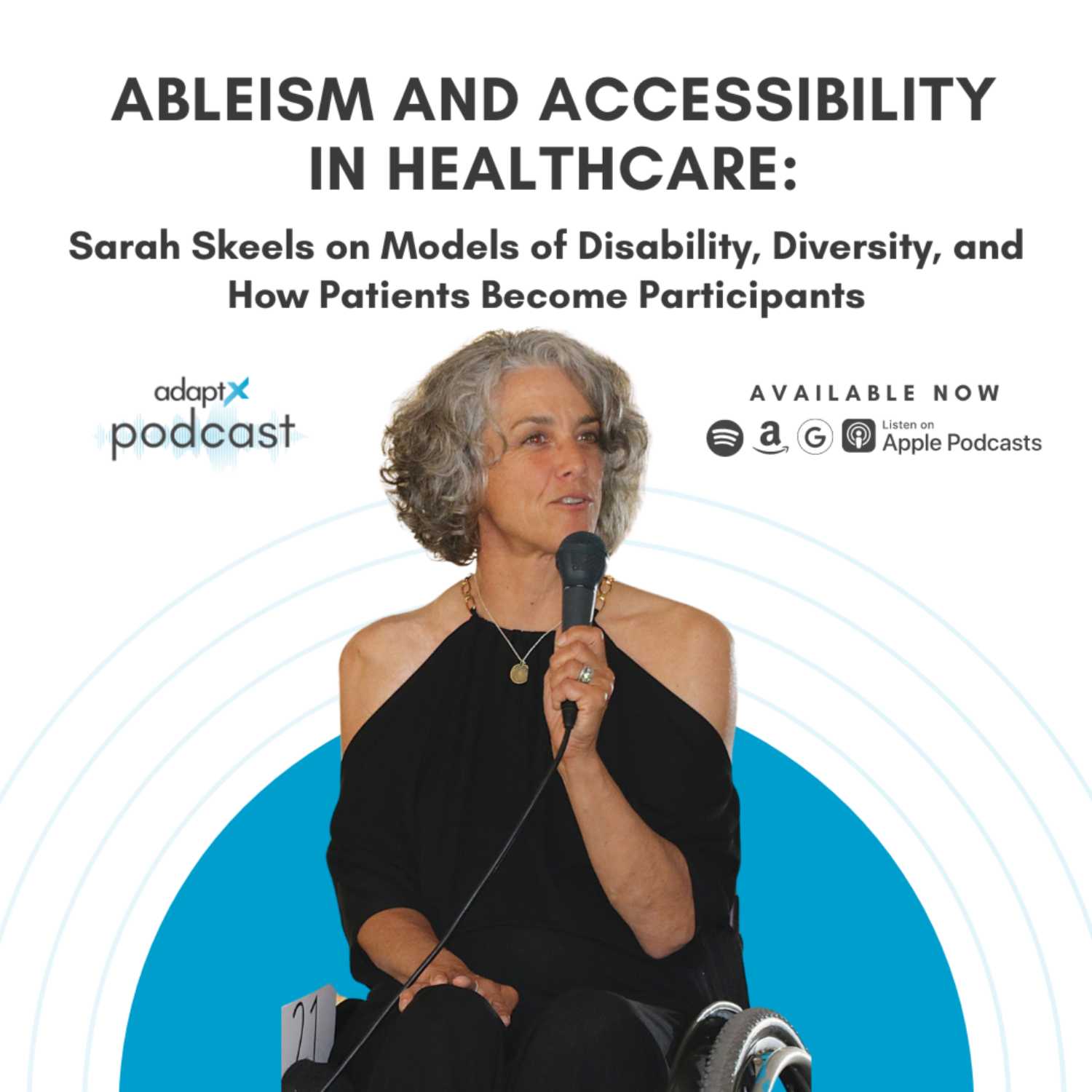
#029- Ableism and Accessibility in Healthcare: Sarah Skeels on Models of Disability, Diversity, and How Patients Become Participants
AdaptX Podcast · AdaptX
Audio is streamed directly from the publisher (content.rss.com) as published in their RSS feed. Play Podcasts does not host this file. Rights-holders can request removal through the copyright & takedown page.
Show Notes
Sarah Everhart Skeels, an expert in adaptive exercise and public health, shares her personal journey and professional insights in this conversation with host Brendan Aylward. She discusses her early interest in adaptive populations and the impact of disability on her identity while exploreing the Medical Model versus the Social Model of Disability. She also highlights the importance of the SCI-FI assessment protocol, the value of assistive technology, and the need for inclusive training environments and addresses the relationship between loneliness and health outcomes. They discusses the benefits of having people with and without disabilities training together, as it promotes education and breaks down barriers. The transition from being a patient to being a participant is explored, emphasizing the importance of moving beyond a medicalized approach to fitness. This episode provides holistic, valuable insights into creating a more accessible and diverse fitness environment.
Episode 29 Takeaways:
- Inclusive environments that bring together people with and without disabilities promote education and break down barriers.
- Personalized support and guidance are essential in coaching individuals with disabilities, as it allows for tailored training and ensures safety.
- The transition from patient to participant is crucial in promoting independence and a sense of belonging in fitness and recreation.
- Measuring the impact of training should go beyond the number of gyms or programs created and focus on attitude change and improved accessibility.
- Changing expectations and attitudes towards disability is a slow process that requires continuous education and exposure. Fitness programs and facilities should strive to include different disability populations, including those with hidden or invisible disabilities.
- Utilizing client ideas for marketing and promoting inclusive fitness can lead to innovative and effective strategies. Creating a more accessible and diverse fitness environment requires ongoing collaboration and leadership.
Episode 29 Chapters:
00:00 - Introduction
00:18 - Early Interest in Adaptive Exercise
03:18 - Impact of Disability on Identity
05:22 - Applying Exercise Science to Adaptive Populations
06:14 - The Medical Model vs. the Social Model of Disability
09:35 - Barriers to Accessibility in Healthcare
13:45 - The Paradox of Physical Therapy
19:52 - The SCI-FI Assessment Protocol
23:48 - The Pursuit of Walking and the Value of Assistive Technology
26:31 - Transitioning to Adaptive Sports
32:31 - The Power of Peer Mentoring
38:09 - Navigating Resistance to Support
42:39 - The Role of Peer Health Coaches
43:08 - Addressing Loneliness and Health Outcomes
43:32 - Creating Inclusive Training Environments
43:33 - Inclusive Environments
45:11 - Coaching vs. Gym Environment
48:09 - Personal Trainers vs. Physical Therapists
50:40 - Transitioning from Patient to Person
53:39 - Measuring the Impact of Training
57:21 - Expanding Access to Fitness
01:01:16 - Belonging in the Gym
01:04:08 - Changing Expectations and Attitudes
01:07:07 - Physical Therapy vs. Occupational Therapy
01:12:09 - Making Fitness and Recreation More Accessible
01:19:48 - Challenges of Inspiration Porn
01:23:29 - Moving Forward and Trusting the Process
01:24:35 - Inclusion of Different Disability Populations
01:25:45 - Continuing to Foster Inclusion