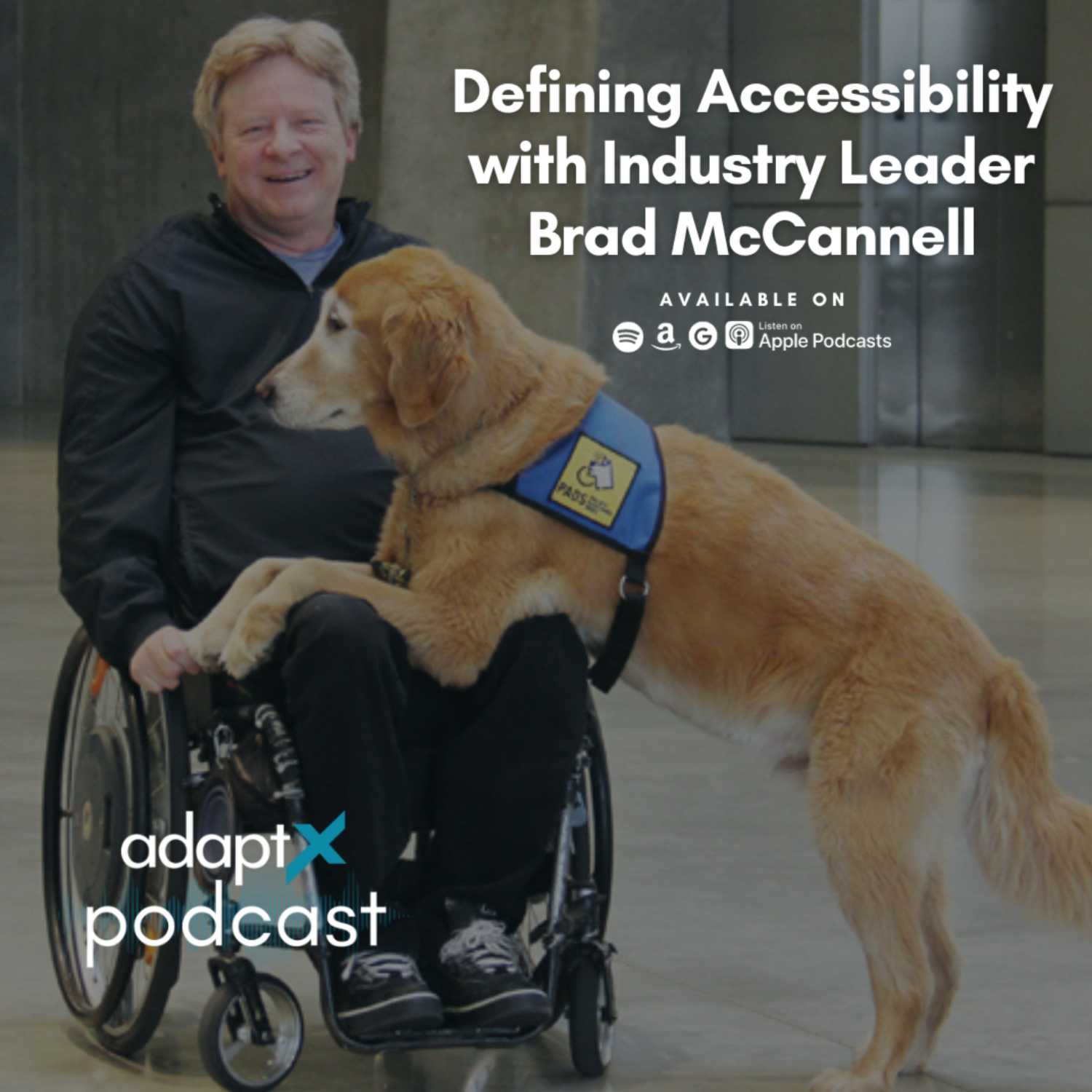
#018 - Defining Accessibility with Industry Leader Brad McCannell
AdaptX Podcast · AdaptX
Audio is streamed directly from the publisher (content.rss.com) as published in their RSS feed. Play Podcasts does not host this file. Rights-holders can request removal through the copyright & takedown page.
Show Notes
Brad McCannell joins Brendan Aylward for an insightful conversation about how the culture of accessibility needs to be changed, and where business owners and able-bodied people should start. Brad uses his lived experiences as a person with a disability to supplement his extensive knowledge of the disability and accessibility space, providing Brendan and listeners with invaluable advice on how to commit to the fostering of inclusion.
Episode 18 Chapters:
01:06 - Career Progression: TV to Accessibility
04:22 - Brad’s Spinal Cord Injury
08:09 - Life Post-Injury and Transition Into the Disability Space
10:24 - Outlook on Recovery After Injury
16:15 - Sensationalization and Representation in the Paralympic World
17:04 - Addressing Misconstrued Representations of the Disability Community
18:22 - “Just Ask” - Communicating with a Person with a Disability
22:45 - The Importance and Benefits of Accessibility for Key Stakeholders
27:09 - The Function of Inclusion in Business
28:15 - Accessibility and Inclusion Beyond the Physical Environment
32:38 - Meaningful Access and Usability in the Rick Hansen Foundation Accessibility Certification Program
40:08 - Changing the Culture Around Accessibility
41:54 - RHFAC Prerequisites
43:30 - Validating the Course
49:02- When Can a Facility Be Deemed “Accessible”?
50:36 - Handling Inaccessibility as a Business Owner
54:43 - What Needs to Be Done to Make the Fitness Industry More Accessible
Key Takeaways:
- Sympathy is not conducive to the creation and sustainment of inclusive environments, as it inherently implies that individuals with disabilities should be pitied. The dissonant relationship between sympathy and disability contributes to the social stigmatization of disability, further lowering expectations for a population that is already overlooked within an inaccessible society.
- Focusing solely on physical accessibility neglects the vast majority of the disabled population, as disability is much more extensive than what is often accounted for in public spaces. When business owners fail to provide comprehensive accessibility in the social, socioeconomic, and digital components of their business, and solely address mobility issues in their accessibility standards, they're failing to serve 70% of the disability community, and they are missing out on a 70% return on investment as a business.
- Accessibility is not black-and-white, and accessibility standards should not be understood as the end-all-be-all of inclusive environments. 100%, comprehensive accessibility can never be truly met, as the needs of each individual with a disability cannot be accurately compartmentalized into a list of “standards”. Consistent reevaluation and diligent communication between business owners and stakeholders is essential in progressing towards an accessible environment- there is no “end” to accessibility.