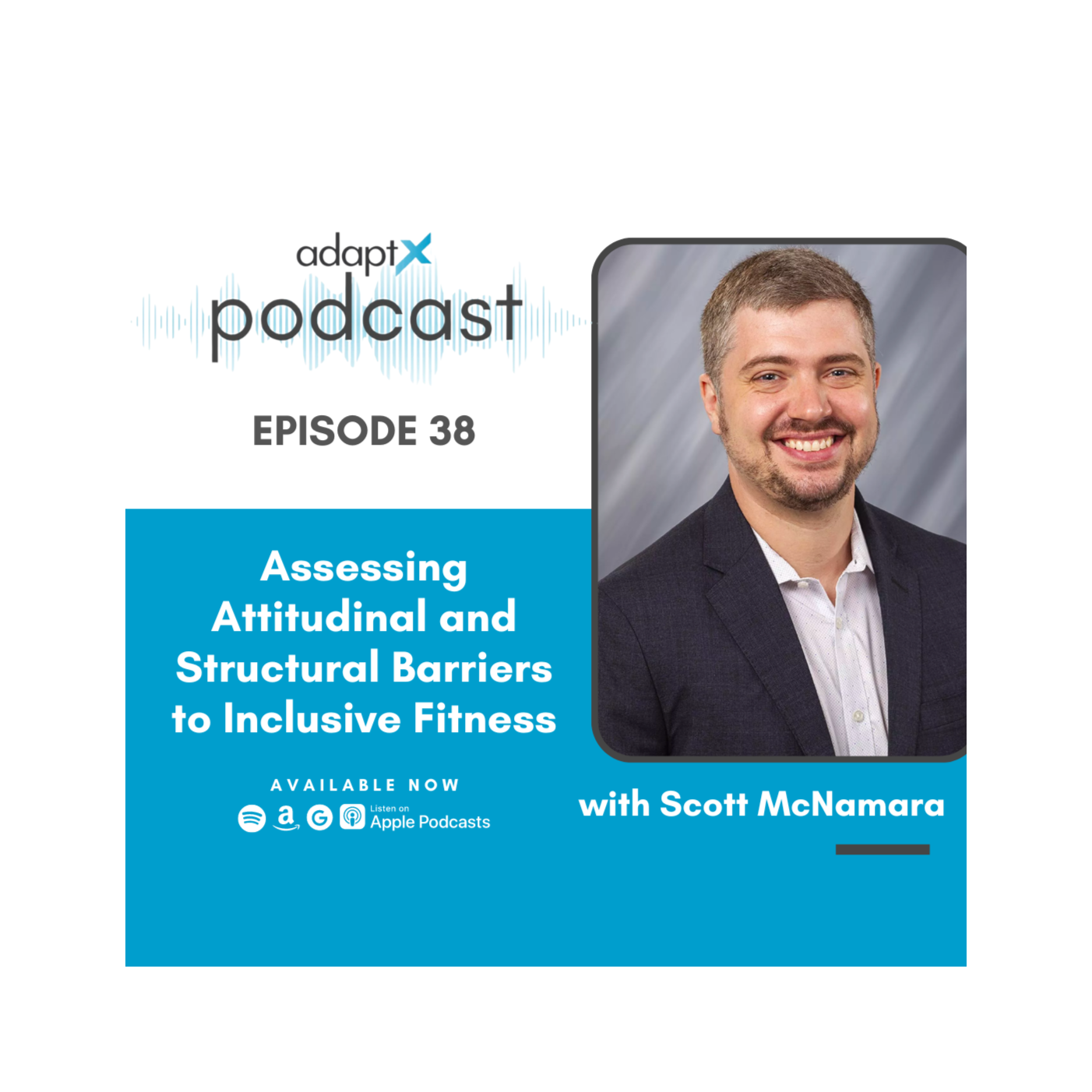
#038- Assessing Attitudinal and Structural Barriers to Inclusive Fitness
AdaptX Podcast · AdaptX
Audio is streamed directly from the publisher (content.rss.com) as published in their RSS feed. Play Podcasts does not host this file. Rights-holders can request removal through the copyright & takedown page.
Show Notes
Dr. Scott McNamara discusses his background in adaptive physical education (APE) and the challenges faced in promoting inclusion in physical education, emphasizing the importance of diverse options and autonomy in inclusive fitness environments. Brendan and Scott explore the barriers to better health and fitness for people with disabilities, breaking down the attitudinal and structural systems that hinder universal accessibility. Additionally, Scott discusses barriers to accessible physical activity, his current research interests, the research to practice gap, the new master's program in adapted physical education at UNH, evaluating the efficacy of educational curriculum, characteristics of a good podcast, and increasing accessibility in fitness.
Learn more about UNH's Adapted Physical Education Program.
Episode 38 Takeaways
- Options and autonomy are crucial in creating inclusive fitness environments.
- Attitudinal and structural barriers are the biggest challenges to better health and fitness for people with disabilities. Access and awareness are key to addressing these barriers.
- Inclusion should be defined as a sense of belonging and acceptance, rather than just the presence of people with and without disabilities in the same space.
- Collaboration between administrators, APE teachers, and other professionals is essential for a healthy educational ecosystem in a school setting. People with disabilities often face societal barriers that limit their access to physical activity.
- The new master's program in Adapted Physical Education at UNH aims to provide students with hands-on experience and engagement in research.
- Evaluating the efficacy of educational curriculum requires student feedback, job placement outcomes, and reflection.
- Increasing accessibility in fitness requires knowledge dissemination, representation of people with disabilities in leadership positions, and representation in sports and physical activity.
Episode 38 Chapters
00:00 - Introduction and Podcasting
02:17 - Background and Interest in Adaptive PE
05:11 - Exposure to Disabilities and Adaptive PE
08:05 - Inclusion in Undergraduate PE Curriculum
11:13 - Marginalization of Physical Education
12:16 - Role of Administrators in Physical Education
18:34 - Choosing a Career Path in APE, PT, or OT
21:44 - Defining Inclusion
26:18 - Critique of Inclusive Fitness Model
30:17 - Creating Inclusive Fitness Environments
38:27 - Options and Autonomy in Inclusive Fitness
44:08 - Barriers to Inclusive Fitness
49:44 - Barriers to Accessible Physical Activity
50:02 - Current Research Interests
53:22 - Research to Practice Gap
56:09 - Master's Program in Adapted Physical Education
57:33 - Evaluating Efficacy of Educational Curriculum
01:00:09 - Characteristics of a Good Podcast
01:04:33 - Increasing Accessibility in Fitness