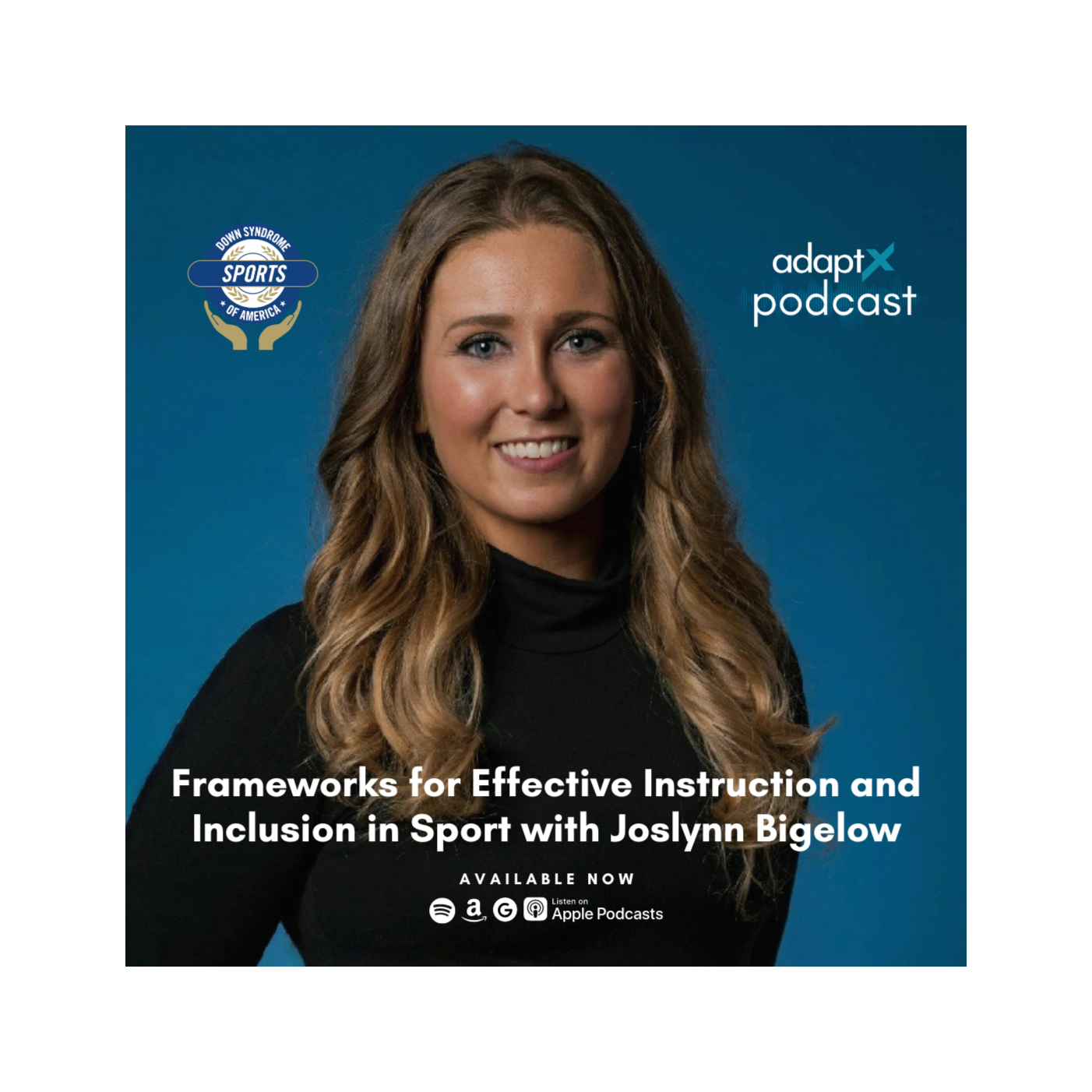
#039- Frameworks for Effective Instruction and Inclusion in Sport with Joslynn Bigelow
AdaptX Podcast · AdaptX
Audio is streamed directly from the publisher (content.rss.com) as published in their RSS feed. Play Podcasts does not host this file. Rights-holders can request removal through the copyright & takedown page.
Show Notes
In this conversation, Joslynn Bigelow, a board-certified behavior analyst (BCBA) and advocate for adaptive sports, discusses her journey and experiences in the disability community. Throughout her life and career, Joslynn has been involved in adaptive sports programs like Top Soccer and Special Olympics, where she would be awarded the third annual ADAPTandTHRIVE Disability Award, which recognizes an individual who is making an impact in the lives of adaptive soccer players. Bigelow earned the honor for her work with Down Syndrome Sports of America, where she helped develop the soccer pathway for adaptive athletes and serves as head coach of the organization’s Futsal National Team, as well as for her over decade-long commitment to TOPSoccer and the Special Olympics. In this conversation, Brendan and Joslynn discuss the application of behavior analysis principles in coaching and the significance of language and communication in disability sports. They cover the census and tracking of participation in disability soccer programs, discussing ideas for the creation of an interactive map to help players find disability soccer programs. They discuss the challenges faced in building the map and the lessons learned from the process while touching on the transition to entrepreneurship, choosing projects, and making fitness more accessible for people with disabilities.
Episode 39 Takeaways
- Behavior analysis principles can be applied in coaching to shape behavior and create positive and motivating environments for athletes with disabilities.
- Language and communication are important considerations in disability sports, and it is essential to use person-first language and be mindful of individual preferences and identities. Etiquette and communication play a crucial role in interacting with individuals with disabilities.
- Tracking participation and conducting a census are important for disability soccer programs to assess their impact and plan for the future.
- An interactive map can be a valuable tool for connecting players with disability soccer programs and improving accessibility. While building the map and gathering information can be challenging, it is essential for creating a comprehensive resource.
- Transitioning to entrepreneurship allows for more flexibility and the ability to choose projects that align with personal interests.
- Making fitness more accessible for people with disabilities requires representation, consistency, and exposure.
Episode 39 Chapters
00:00- Introduction and Background
01:12- First Introduction to Disability and Adaptive Sports
03:09- Positive Experiences in Special Olympics
05:16- Creating a More Receptive and Understanding Youth
07:07- Facilitating Inclusion through Unified Sports
08:02- Involvement with Special Olympics and Unified Sports
09:08- Educational Background and Career Path
10:15- Recognition and Awards
13:05- Focus on Collaboration and Serving the Disability Community
15:56- Future Goals and Initiatives
19:16- Extended National Teams and Membership
23:13- Creating Inclusive Programs and Pathways
30:09- Applying Behavior Analysis to Coaching
36:22- Language and Communication in Disability Sports
41:23- Developing US Soccer's Modern Language Document