AdaptX Podcast
102 episodes — Page 1 of 3
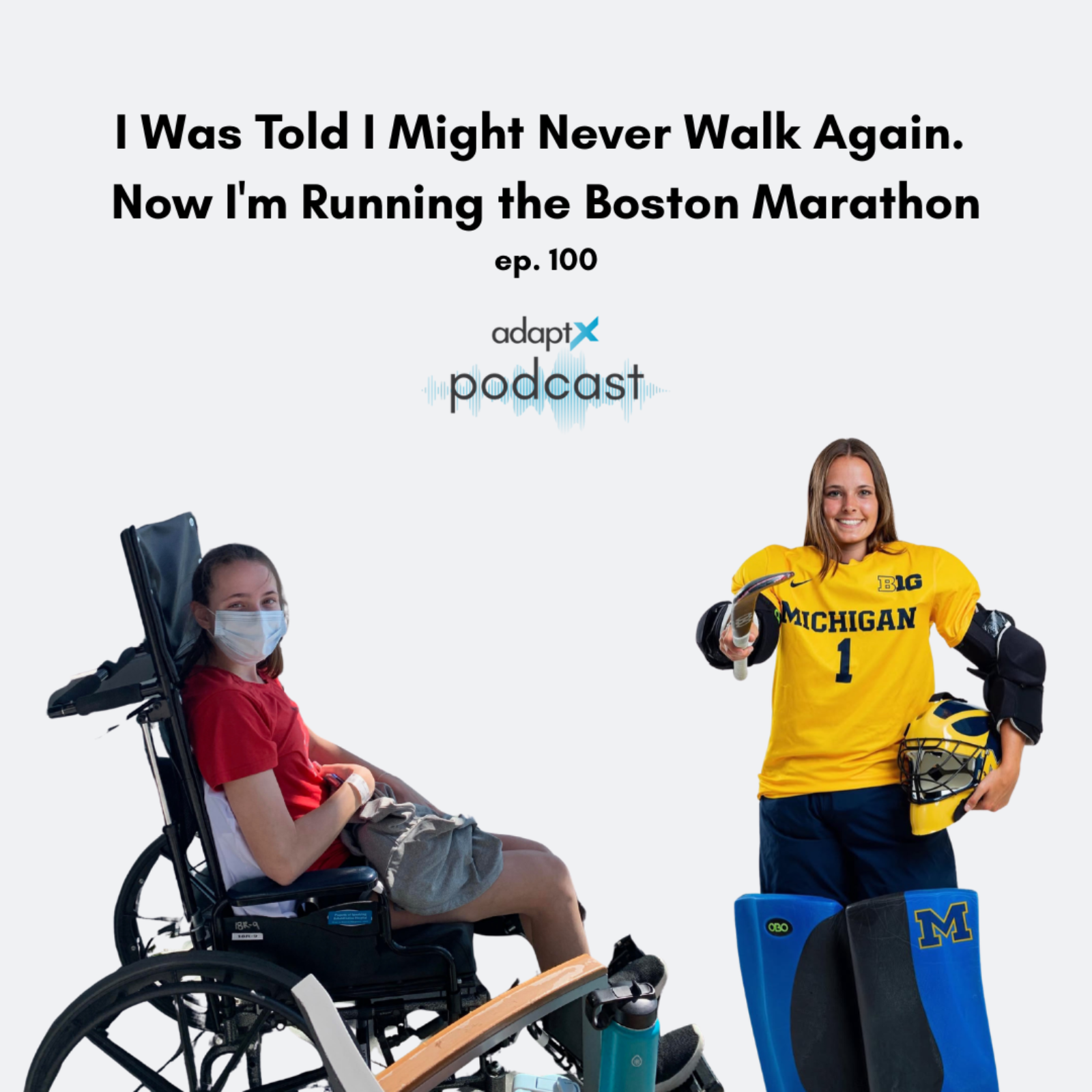
S1 Ep 100#100 - I Was Told I Might Never Walk Again. Now I'm Running the Boston Marathon
SummaryIn this conversation, Caylie McMahon shares her inspiring journey from realizing a lifelong dream to facing a life-altering diagnosis of a spinal tumor. She recounts her experiences during the pandemic and the challenges of surgery and recovery. With unwavering support from her family and the University of Michigan community, Caylie navigates her rehabilitation, relearning to walk and eventually returning to the field. She now has her sights set on the Boston Marathon this April, giving back to an organization that did so much for her. Subscribe to the AdaptX Podcast for more inspiring stories like Caylie's. TakeawaysCaylie's journey highlights the importance of resilience in the face of adversity.The support system from family and friends is crucial during rehabilitation.Relearning to walk after surgery was a significant mental and physical challenge.Training for the Boston Marathon symbolizes her recovery and determination.Her athletic background helped her navigate the challenges of recovery.The experience taught her to appreciate and celebrate the little things in life.Caylie plans to apply the lessons learned from her journey to her professional career.Chapters00:00 Introduction to Caylie's Journey00:56 The Stanford Commitment and Its Challenges03:47 Gap Year in England: A New Direction06:10 The Tumor Diagnosis: A Life-Altering Moment10:03 Surgery and Recovery: The Road to Healing13:52 Support from Michigan: A Team Family17:59 Relearning to Walk: The Mental Battle22:08 Returning to the Field: A New Perspective26:01 Training for the Boston Marathon: A New Challenge30:00 Transitioning to Professional Life: Lessons LearnedThank you to our show sponsor, Resolution Fitness. Resolution supplies commercial, home, and adaptive fitness equipment, supporting gyms, condos, and rehabilitation centers, and community spaces in creating inclusive, durable environments built to perform.Learn more at https://www.resolutionfitness.ca/
Ep 99#099 - Making Communication Accessible and Empowering for All: The Story of Verbali with Shay Cohen
SummaryIn this episode of the AdaptX Podcast, Brendan Aylward speaks with Shay Cohen, co-founder and CEO of Verbali, an innovative AAC platform designed to enhance communication for children with speech challenges. Shay shares the personal story behind Verbali, inspired by his son Matan, who is nonverbal. The conversation delves into the limitations of traditional AAC tools and how Verbali leverages AI to create a more fluid and natural communication experience. The discussion also covers customization options, the role of user feedback, and the future vision for the product, including potential integrations with fitness environments and eye gaze technology.TakeawaysShay Cohen's motivation for Verbali stems from his son Matan's communication challenges.Verbali aims to provide a more natural conversation flow for AAC users.AI is used to predict and suggest responses, enhancing communication speed.Customization is key to making AAC tools effective for individual users.The app learns from user interactions to improve its suggestions over time.User feedback is actively sought to enhance the app's features.The vision includes expanding Verbali's capabilities to various devices, including smartwatches.Social stories can be created using AI to prepare children for new environments.Eye gaze technology is on the roadmap for future integration.The goal is to make AAC accessible and engaging for all users.Chapters00:00 - Introduction to Verbali and Its Mission02:53 - The Personal Story Behind Verbali06:06 - Enhancing Communication with AI08:55 - Customization and User Experience12:01 - The Role of AI in AAC Technology15:12 - Addressing Concerns and Challenges with AI17:54 - User Personas and Their Needs21:09 - Integrating Contextual Signals for Better Communication23:47 - Future Plans and Pricing Models30:47 - The Evolution of Communication Tools39:23 - User Feedback and Iteration43:15 - Expanding Use Cases in Different Environments49:20 - Future Innovations and Inclusivity56:57 - Accessing and Supporting the TechnologyVerbali - linksWebsite: https://www.verbali.ioMa-Talk on the App Store: https://apps.apple.com/us/app/ma-talk-ai/id6747360381?platform=ipadMa-Talk on Google Play: https://play.google.com/store/apps/details?id=com.verbali.matalkai&pcampaignid=web_shareVerbali on the social networks:Youtube: https://www.youtube.com/@Verbali-AIX: https://x.com/verbaliAILinkedin: https://www.linkedin.com/company/verbali-aiFacebook: https://www.facebook.com/verbaliAI
Ep 98#098 - Bridging Communication Gaps: The Hi There Solutions Story with Chase and John Prieve
SummaryIn this episode of the AdaptX Podcast, Brendan Aylward speaks with Chase and John Prieve, founders of Hi There Solutions, a company dedicated to creating communication solutions for the deaf and hard of hearing community. They discuss their personal connections to the deaf community, the development of their products Hi There and Just Talk, and the challenges they face in scaling their business while ensuring compliance with the Americans with Disabilities Act. The conversation highlights the importance of community feedback, the need for awareness in the market, and their vision for the future of accessibility technology.TakeawaysHi There Solutions was inspired by personal experiences with hearing loss.The company offers two main products: Hi There and Just Talk.Hi There provides instant video calling with captions in multiple languages.Just Talk facilitates face-to-face communication between deaf and hearing individuals.The business model includes both B2C and B2B approaches.Compliance with the ADA is crucial for businesses using their technology.The founders emphasize the importance of community feedback in product development.Funding challenges are common for startups in the accessibility space.The company aims to expand its reach to various industries and communities.Future plans include innovations in education, music, and gaming.Chapters00:00Introduction to Hi There Solutions00:49The Origin Story of Hi There Solutions04:55Understanding the Business Model and Compliance11:55Challenges in Accessibility and Business Expansion17:20Demonstrating Value Beyond the Deaf Community22:33Overcoming Entrepreneurial Challenges25:02Navigating Software Development as Non-Technical Founders26:02Funding and Scaling Challenges26:53Targeting Diverse Business Verticals27:53The Importance of the Deaf Olympics30:13Fitness Industry's Role in Accessibility31:56Leveraging University Resources for Growth32:59Challenges with Major Tech Companies34:58The Spark of Innovation from Personal Experience35:51Improving Fitness Accessibility for All37:48Vision for the Future of Hi There SolutionsJust Talk! : https://www.youtube.com/watch?v=n_4S5uhstu0 Hi There!!! : https://www.youtube.com/watch?v=-yhNWknAWNA Website: www.hitheresolutions.com Hi There Solutions Instagram: https://www.instagram.com/hithere_solutions/?hl=en
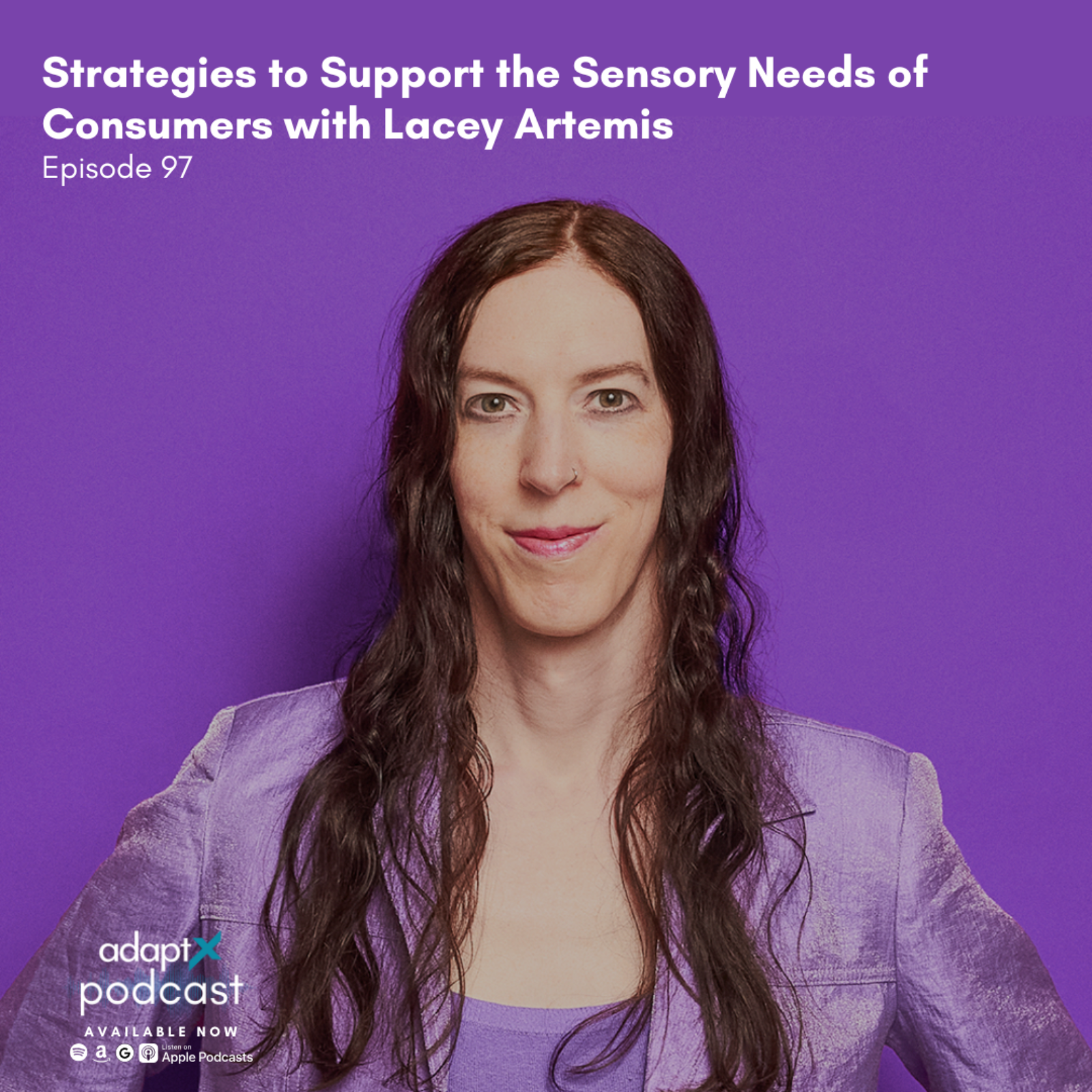
Ep 97#097 - Strategies to Support the Sensory Needs of Consumers with Lacey Artemis
SummaryIn this episode of the AdaptX Podcast, Brendan Aylward speaks with Lacey Artemis, a neurodiversity and accessibility advocate. Lacey shares her personal journey from being diagnosed with autism in her late 20s to becoming a consultant focused on creating neuro-inclusive environments. The conversation explores the challenges faced by neurodivergent individuals in various settings, including workplaces and public spaces, and emphasizes the importance of understanding sensory sensitivities. Lacey discusses her experiences in event planning, the significance of sound in public spaces, and her approach to consulting for organizations. The episode concludes with insights into Lacey's public speaking engagements and her unique presentation titled 'Fish and Trees,' which highlights the strengths of neurodivergent individuals.TakeawaysLacey's journey into advocacy began with her own experiences as an autistic individual.Creating neuro-inclusive environments can significantly enhance experiences for everyone, not just neurodivergent individuals.Sound sensitivity is a major concern for many neurodivergent people in public spaces.Event planning should prioritize sensory-friendly environments to foster inclusivity.Consulting for organizations can help them understand the value of neurodiversity in the workplace.Public speaking allows Lacey to advocate for those who may not have a voice.The 'Fish and Trees' presentation emphasizes that everyone has unique strengths.Small changes in venues can make a big difference for neurodivergent patrons.Data collection is essential for advocating for neuro-inclusive practices.Lacey aims to create a database of accessible venues to help others navigate public spaces.Chapters00:00 Introduction to Neurodiversity and Accessibility Advocacy03:11 Personal Journey to Neurodiversity Advocacy06:06 Understanding Neurodiversity in Work Environments09:13 Creating Inclusive Spaces: The Gym Experience12:08 Event Planning for Neuro-Inclusivity14:51 The Importance of Sound in Public Spaces18:08 Consulting for Neuro-Inclusive Practices20:47 Public Speaking and Advocacy24:05 Fish and Trees: A Unique Perspective on Abilities27:04 Future Directions in Neurodiversity Advocacy
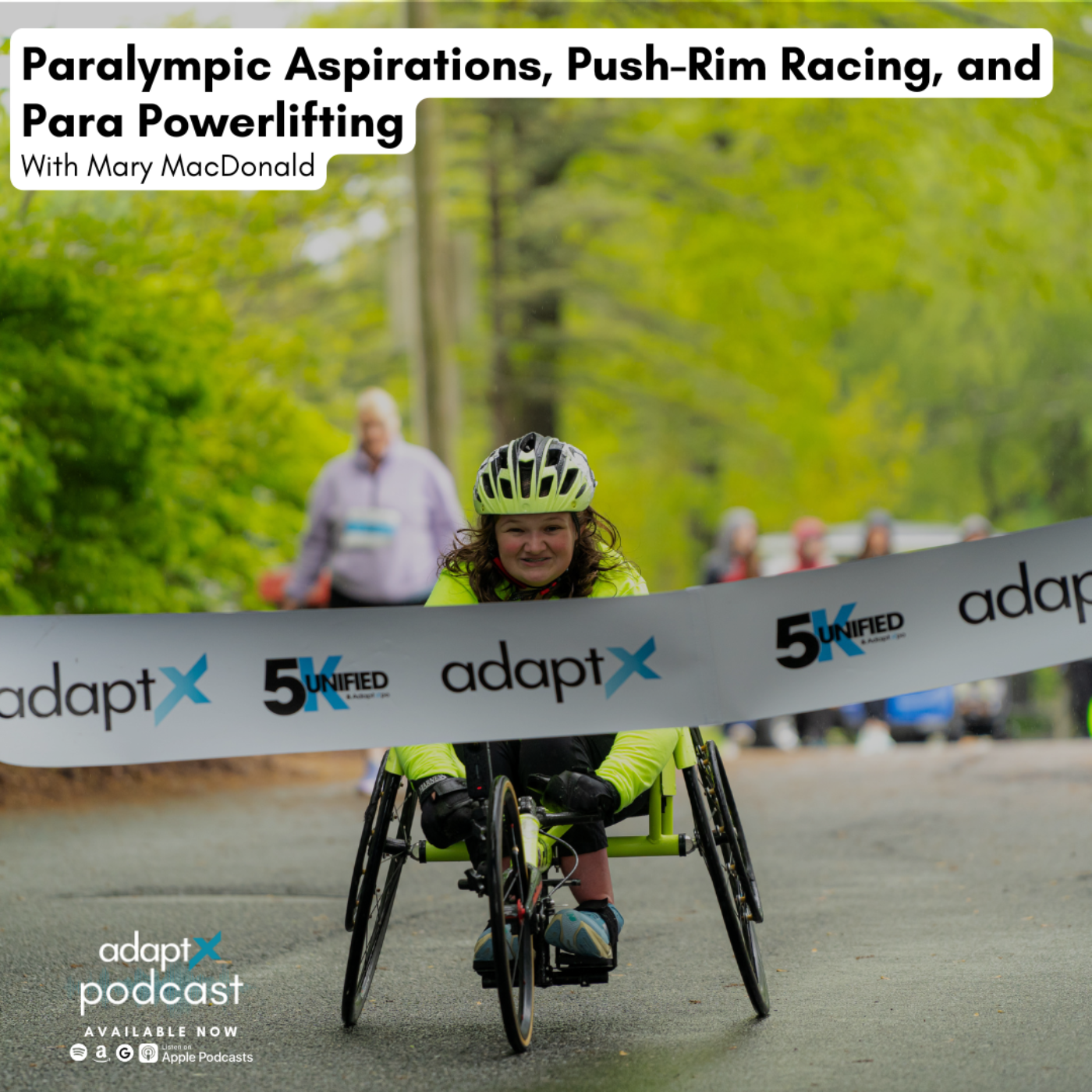
Ep 96#096 - Paralympic Aspirations, Push-Rim Racing, and Para Powerlifting With Mary MacDonald
In this episode of the AdaptX podcast, host Brendan Aylward speaks with Mary MacDonald, a 16-year-old adaptive athlete from Taunton, Massachusetts. Mary shares her journey into adaptive sports, her experiences in powerlifting and road racing, and the importance of confidence and community in her athletic pursuits. She discusses the challenges she faced, the support she received, and her aspirations for the future, including competing in the 2028 Paralympics. The conversation highlights the significance of visibility and representation in adaptive sports, as well as the barriers that young athletes may encounter.TakeawaysMary began her journey in adaptive sports through local clinics.She has a passion for music and theater, which boosts her confidence.Adaptive sports have helped Mary overcome personal barriers to health.She emphasizes the importance of community in sports.Mary has set records in the javelin and won multiple medals in competitions.She believes in showcasing adaptive sports to inspire others.Training for adaptive sports includes both gym work and outdoor practice.Mary aims to compete at the international level in the future.She encourages young athletes not to let stigma deter them from sports.Mary's ultimate goal is to participate in the 2028 Paralympics.Keywordsadaptive sports, inclusion, para sports, Mary MacDonald, powerlifting, road racing, youth athletes, confidence, community, training
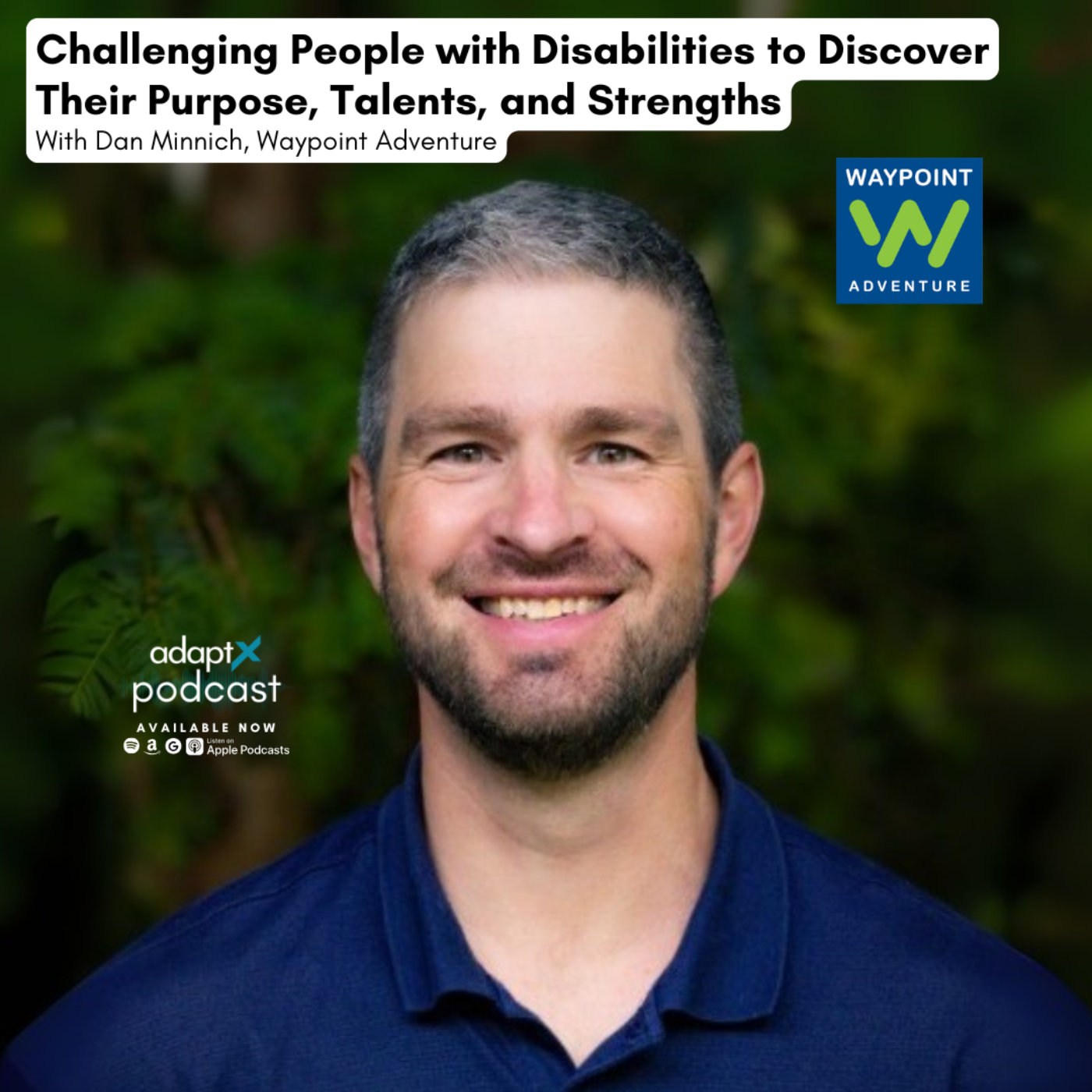
Ep 95#095 - Challenging People with Disabilities to Discover Their Purpose, Talents, and Strengths With Dan Minnich, Waypoint Adventure
In this conversation, Dan Minich, co-founder and executive director of Waypoint Adventure, shares his journey into disability advocacy and the founding of Waypoint, a nonprofit focused on providing accessible outdoor recreation. He discusses the importance of experiential learning, collaboration among nonprofits, and the challenges of measuring success in adaptive programs. The conversation also touches on legislation for accessibility, best practices for trail management, and the impact of COVID-19 on their operations. Dan emphasizes the need for sustainability in nonprofit funding and shares inspiring stories of participants, highlighting the organization's vision for a more inclusive future.TakeawaysDan's introduction to disability came through volunteering in middle school.Waypoint Adventure was founded to fill a gap in accessible outdoor recreation.Experiential learning is central to Waypoint's mission.Measuring success in adaptive programs involves qualitative metrics.Collaboration with other nonprofits enhances Waypoint's impact.Legislation like the Unpaved Trails for All aims to improve accessibility.Best practices for trail accessibility include considering diverse needs.Incremental improvements in accessibility are crucial for inclusivity.Education and training are essential for staff and community partners.COVID-19 prompted innovative adaptations in program delivery.KeywordsWaypoint Adventure, disability advocacy, outdoor recreation, experiential learning, nonprofit collaboration, accessibility legislation, adaptive sports, community engagement, COVID-19 response, sustainability
#095 - Challenging People with Disabilities to Discover Their Purpose, Talents, and Strengths With Dan Minnich, Waypoint Adventure
In this conversation, Dan Minnich, co-founder and executive director of Waypoint Adventure, shares his journey into disability advocacy and the founding of Waypoint, a non-profit focused on providing accessible outdoor recreation. He discusses the importance of experiential learning, collaboration among nonprofits, and the challenges of measuring success in adaptive programs. The conversation also touches on legislation for accessibility, best practices for trail management, and the impact of COVID-19 on their operations. Dan emphasizes the need for sustainability in non-profit funding and shares inspiring stories of participants, highlighting the organization's vision for a more inclusive future.TakeawaysDan's introduction to disabilityWaypoint Adventure was founded to fill a gap in accessible outdoor recreation.Experiential learning is central to Waypoint's mission.Measuring success in adaptive programs involves qualitative metrics.Collaboration with other nonprofits enhances Waypoint's impact.Legislation like the Unpaved Trails for All aims to improve accessibility.Best practices for trail accessibility include considering diverse needs.Incremental improvements in accessibility are crucial for inclusivity.Education and training are essential for staff and community partners.COVID-19 prompted innovative adaptations in program delivery.KeywordsWaypoint Adventure, disability advocacy, outdoor recreation, experiential learning, nonprofit collaboration, accessibility legislation, adaptive sports, community engagement, COVID-19 response, sustainability
Ep 94#094 - The Value Proposition of Disability Inclusion with Robert Ludke
In this episode of the AdaptX Podcast, Brendan speaks with Bob Ludke, co-founder of Value Inclusion and author of 'Case-Studies in Disability-Driven Innovation'. Value Inclusion is the only consultancy that brings together actionable, c-suite strategy, evidence-based research, and first-hand experience of driving competitive, integrated employment of persons across the disability spectrum in a way that drives brand, reputation, and bottom-line growth. They discuss Ludke's personal journey with disability, the importance of disability inclusion in business, and the role of both public and private sectors in advancing these initiatives. Ludke emphasizes the need for organizations to create inclusive environments and the significant impact investors can have in promoting disability-driven innovation.Bob has authored two books:Case Studies in Disability-Driven Innovation: Just published and currently an Amazon bestseller, the book showcases the strategies that will not only future-proof businesses butalso unlock markets worth trillions of dollars. Think of it as a masterclass in unlockingpotential. It guides companies, investors, and entrepreneurs toward a goldmine oftalent, innovation, and profitability.Transformative Markets: This is a book about the role of markets in fostering a moresustainable society.Learn more about Bob's WorkValue Inclusion - https://valueinclusion.com/Ludke Consulting - https://ludkeconsulting.com/Harkin Institute - https://harkininstitute.drake.edu/TakeawaysBob Ludke's journey began with personal experiences of disability.Disability can drive innovation and improve business outcomes.The private sector has a crucial role in the adoption of disability inclusion.Investors can influence companies to adopt inclusive practices.Empathy is important, but economic incentives are more effective for encouraging inclusion.Organizations should create space for employees to be their authentic selves.Allies can support individuals with disabilities by being resources and advocates.Finding the right roles for people with disabilities can lead to mutual success.Employee retention requires understanding individual motivations.Storytelling is crucial for raising awareness about disability inclusion.Perseverance is a common trait among entrepreneurs with disabilities.AI tools must be developed with disability nuances in mind.Gyms can foster a culture of belonging and support.Socioeconomic barriers remain a challenge in disability inclusion.Keywordsdisability inclusion, Bob Ludke, Value Inclusion, adaptive sports, entrepreneurship, public policy, private sector, case studies, innovation, accessibility, disability inclusion, employee loyalty, workplace diversity, advocacy, innovation, AI, socioeconomic barriers, gym accessibility, storytelling, perseverance
Ep 93#093 - Innovations in Prosthetic Technology with Vessl CEO, Sydney Robinson
In this episode of the AdaptX Podcast, Brendan Aylward speaks with Sydney Robinson, founder and CEO of Vessl, a company dedicated to creating innovative prosthetic solutions for amputees. Sydney shares her journey from childhood to college to her career as a passionate entrepreneur in the field of biomedical engineering. The conversation delves into her experiences during a pivotal fellowship that ignited her interest in prosthetics, the challenges of developing the Kinn socket, and the importance of making assistive technology accessible. We cover how essential it is to consistently seek feedback from users and clinicians, the pressures of being a CEO, and her vision for the future of Vessel and the prosthetics industry.Links for Vessl’s PagesLinkedIn: https://www.linkedin.com/company/vessl-prosthetics/?originalSubdomain=caSydney's LinkedIn: https://www.linkedin.com/in/sydneymrobinson/Instagram: https://www.instagram.com/vesslprosthetics/?hl=enTakeawaysSydney's early interest in engineering stemmed from her love of math and science.Capstone and fellowship experiences were crucial in shaping her career path.Vessl aims to solve the problem of static sockets in prosthetics.Kinn is designed to adapt to the changing size of the residual limb.The product focuses on mechanical solutions for reliability and ease of use.Feedback from clinicians and users has been overwhelmingly positive.Sydney's evolution and emphasis as a leaderThe company's goals of global expansionBuilding a brand behind a productThe importance of networking for aspiring innovatorsKeywordsVessl, Sydney Robinson, prosthetics, innovation, entrepreneurship, assistive technology, Kinn, engineering, accessibility, adaptive solutions
Ep 92#092 - From Exclusion to Empowerment, Musema Faruk’s Vision for Inclusion in Uganda
In this episode of the AdaptX Podcast, Brendan Aylward speaks with Faruk Musema from Ability Sports Africa, an organization dedicated to promoting sports as a platform for social inclusion in Uganda. They discuss the origins of Ability Sports Africa, the concept of reverse inclusion, the current landscape of disability inclusion in Ugandan schools, cultural barriers, and the organization's future goals. Faruk shares insights on the challenges faced in promoting inclusion and the importance of community engagement in changing perceptions about disabilities.TakeawaysAbility Sports Africa was founded to combat discrimination in sports.Faruk's personal experiences motivated him to advocate for inclusion.Reverse inclusion allows children with disabilities to lead and empower others.Cultural beliefs significantly impact the perception of disabilities in Uganda.Awareness creation is essential to change negative attitudes towards disabilities.The Ugandan education system is evolving towards more inclusive practices.Funding for disability sports is often limited and requires community support.Role models in sports can inspire youth with disabilities to pursue their dreams.Ability Sports Africa aims to expand its reach across Africa.Community engagement is crucial for the success of inclusive sports programs.Keywordsdisability inclusion, sports, Uganda, Ability Sports Africa, reverse inclusion, cultural barriers, Paralympics, community engagement, education, social inclusion
Ep 91#o91 - Bringing Adaptive Fitness to the Masses with Tony Jacobsen
In this conversation, Brendan Aylward and Tony Jacobsen discuss the evolution of adaptive fitness, focusing on Tony's personal journey with osteogenesis imperfecta and his initiatives to promote inclusivity in fitness. They explore the importance of overcoming self-limiting beliefs, the launch of the Stronger Bones Coaching Group, and the impact of strength training on bone health. Additionally, they highlight Tony's collaboration with Planet Fitness to create adaptive workouts and the challenges of inclusivity in commercial gyms. The discussion concludes with Tony's goals for expanding access to adaptive fitness and the importance of open conversations between trainers and clients.TakeawaysTony Jacobsen has a rare bone condition called osteogenesis imperfecta.Self-limiting beliefs are a significant barrier for individuals with disabilities.The Stronger Bones Coaching Group aims to provide personalized training for those with bone health issues.Strength training can significantly improve bone density, even for those with OI.Tony has increased his bone density by 70% over the last 10 years through strength training and nutrition.Adaptive fitness is gaining recognition on larger platforms like Planet Fitness.Inclusivity in commercial gyms requires thoughtful design and layout considerations.Creating a comfortable space for open conversations is crucial for effective training.Fitness professionals should be open to learning about their clients' unique needs.The goal is to make adaptive fitness a standard expectation in all gyms.Keywordsadaptive fitness, disability, strength training, bone health, coaching, inclusivity, personal journey, Planet Fitness, Stronger Bones, self-limiting beliefs
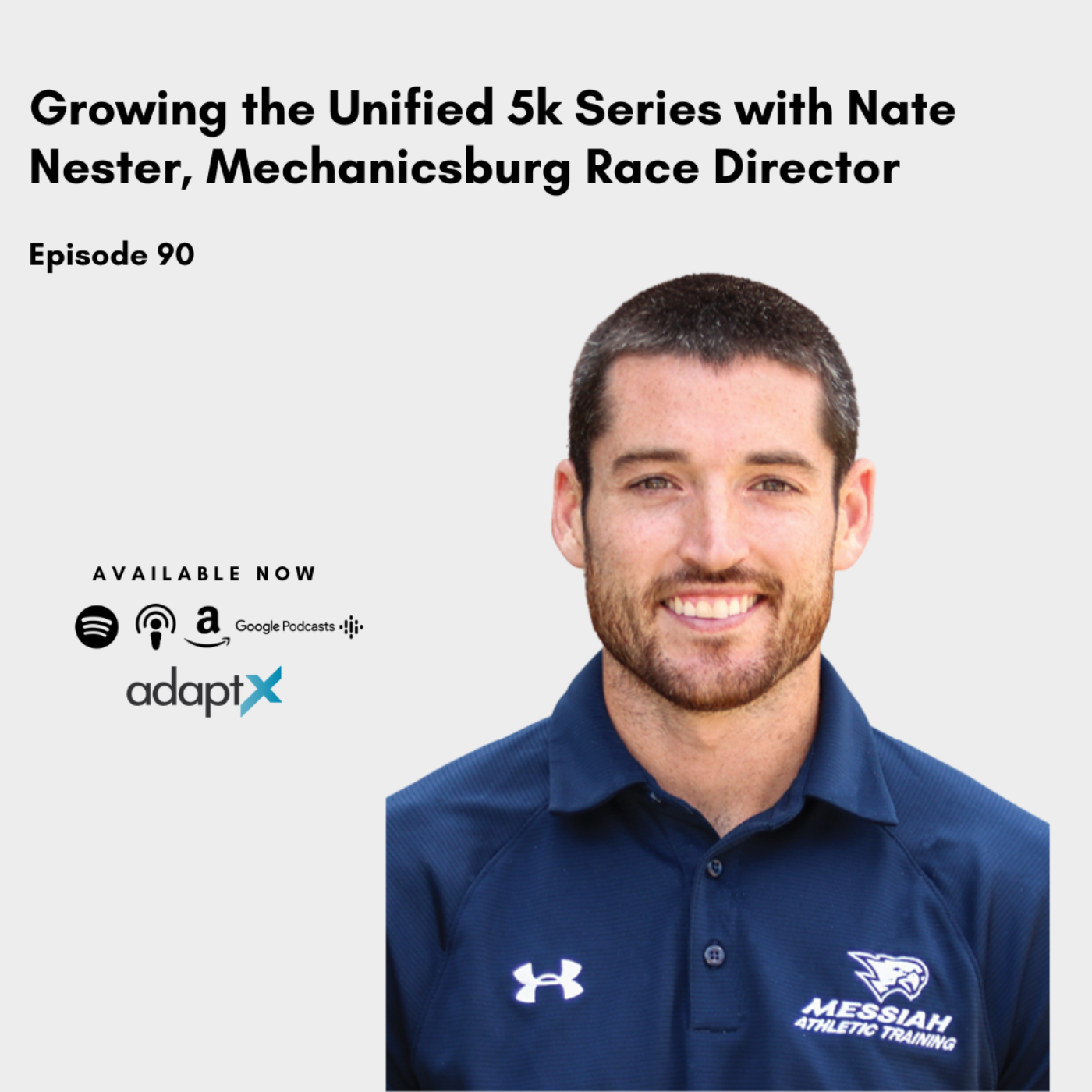
Ep 90#090 - Growing the Unified 5k Series with Nate Nester, Mechanicsburg Race Director
In this conversation, Brendan Aylward and Nate Nester discuss the importance of adaptive fitness and the role of the Unified 5K in promoting inclusivity within the community. They explore Nate's journey into adaptive fitness, the challenges faced in creating accessible environments, and the collaborative efforts of Messiah University in supporting individuals with disabilities. The conversation highlights the significance of community engagement, the mission of the Unified 5K, and future plans for improving accessibility and inclusivity in fitness.TakeawaysThe weather can impact participation in running events.Adaptive fitness is essential for inclusivity in sports.Community engagement is crucial for fitness programs.Accessibility and ADA compliance are often misunderstood.Collaboration among organizations enhances adaptive fitness initiatives.Creating a welcoming environment is key to inclusivity.Mistakes are part of the journey towards inclusivity.The Unified 5K aims to promote fitness for all.Nate's experience highlights the importance of education in adaptive fitness.Future events should focus on community involvement and accessibility.KeywordsUnified 5K, adaptive fitness, community engagement, Messiah University, inclusivity, accessibility, running events, fitness for all, disability awareness, collaboration
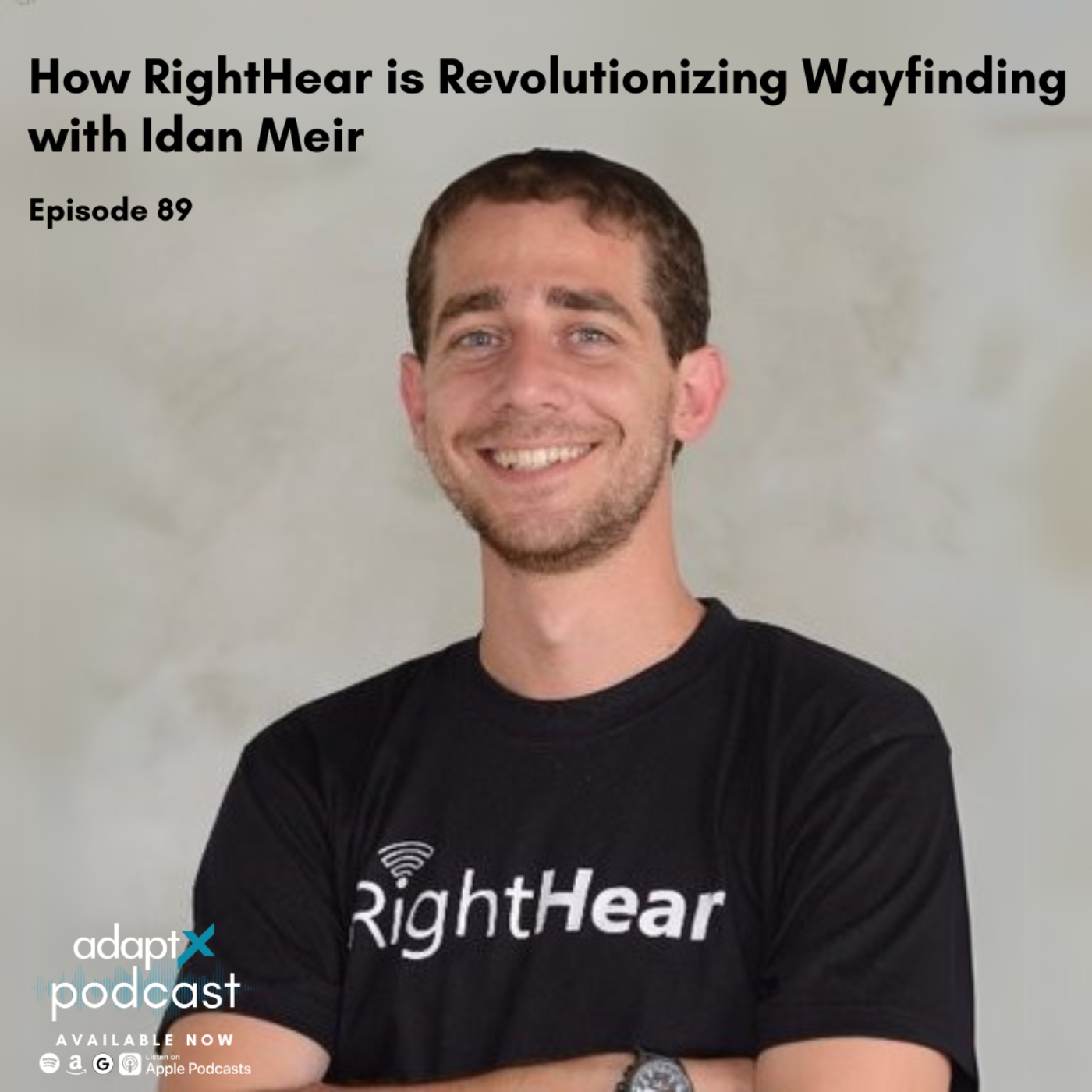
Ep 89#089 - How RightHear is Revolutionizing Wayfinding with Idan Meir
In this episode of the AdaptX podcast, Brendan speaks with Idan Meir, a mission-driven entrepreneur and the Co-founder & CEO of RightHear, an award-winning accessibility startup empowering people with orientation challenges to navigate public spaces independently. Based in Rockville, Maryland, Idan has been featured in Forbes, FastCompany, and HackerNews, and is a member of the exclusive CEO network, MindShare. He previously led Hubanana, a thriving startup hub, and co-founded Zikit. A veteran of an elite IDF unit and holder of an M.A. in Psychology and Management, Idan brings a rare blend of vision, leadership, and passion for impact - always fueled by strong espresso and a good plate of hummus.To learn more about Idan and RightHear, check out the following links,RightHear’s Website: https://www.right-hear.com/RightHear’s LinkedIn: https://www.linkedin.com/company/righthear/Idan’s LinkedIn: https://www.linkedin.com/in/idanmeir/Idan’s Email: [email protected]: RightHere was founded to address orientation challenges faced by individuals with low vision.Keeping the app free is a core principle to ensure accessibility for all.Awareness of orientation challenges is a significant barrier to adoption.The technology can benefit not only the blind community but anyone facing orientation difficulties.AI integration is expected to enhance the user experience and operational efficiency.User feedback has been crucial in shaping the product and its features.The future includes expanding partnerships and addressing language barriers in diverse settings.
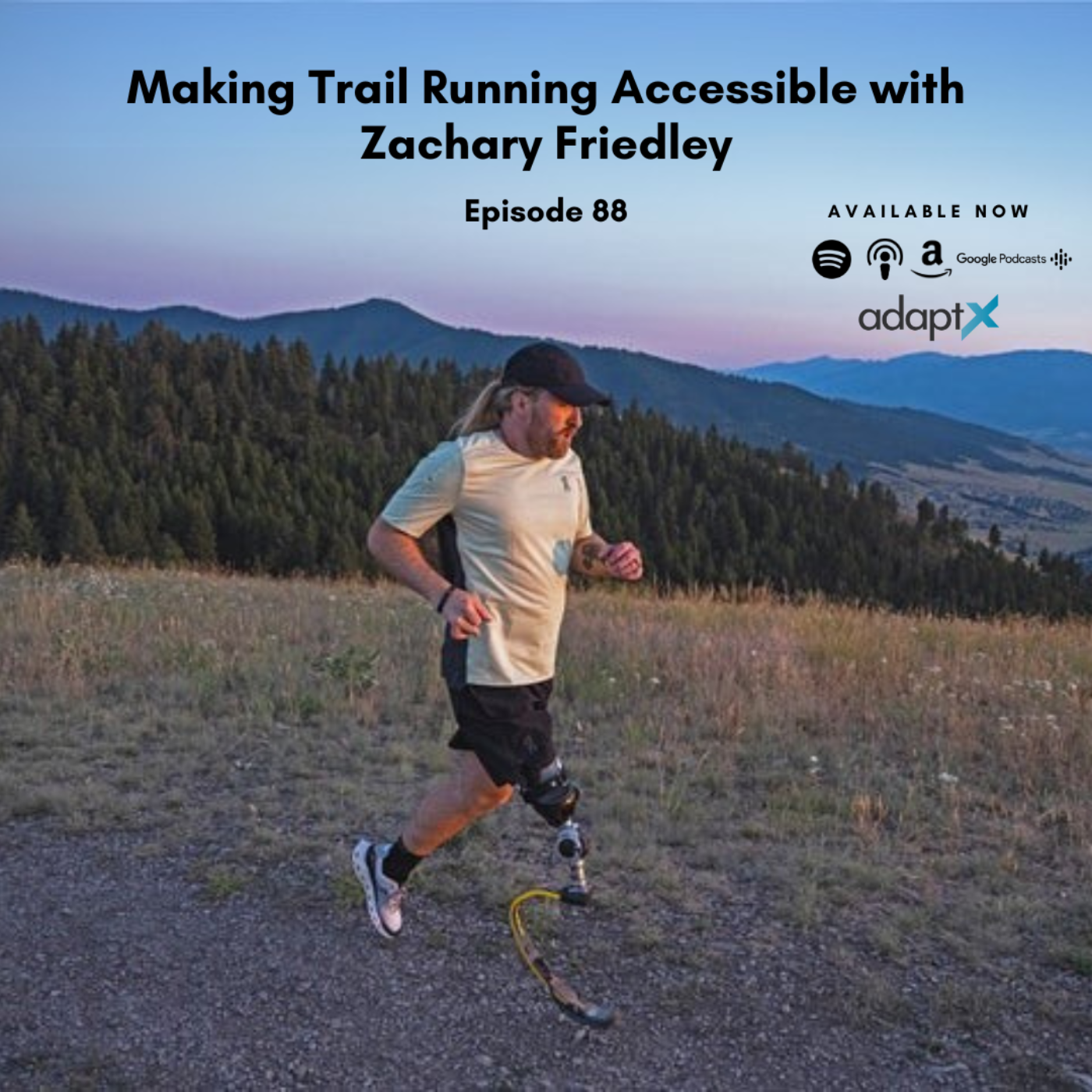
Ep 88#088 - Making Trail Running Accessible with Zachary Friedley
In this episode of the AdaptX Podcast, host Brendan Aylward speaks with Zach Friedley, a trail running pioneer and advocate for adaptive sports. They discuss Zach's journey from childhood experiences with disability to his current role in promoting inclusivity in trail running through his nonprofit, Born to Adapt. The conversation covers the evolution of disability perception, the challenges faced by adaptive athletes, and the importance of community engagement in sports. Zach shares insights on innovations in prosthetics, the impact of the Mendocino Movement Project, and his aspirations for the future of adaptive sports.TakeawaysZach Friedley is a pioneer in adaptive sports and trail running.The perception of disability has evolved significantly over the years.Community engagement is crucial for breaking down barriers in sports.Zach's journey into running officially began in 2019.The importance of visibility and representation in sports for disabled individuals.Innovations in prosthetics have greatly improved the experience for adaptive athletes.Born to Adapt aims to create inclusive running events for all abilities.Zach emphasizes the need for adaptive categories in major races.The Mendocino Movement Project focuses on changing lives through movement.Future goals include building inclusive run groups and expanding adaptive sports opportunities.Keywordsadaptive sports, disability inclusion, trail running, prosthetics, Born to Adapt, Mendocino Movement Project, community engagement, visibility, mentorship, running events
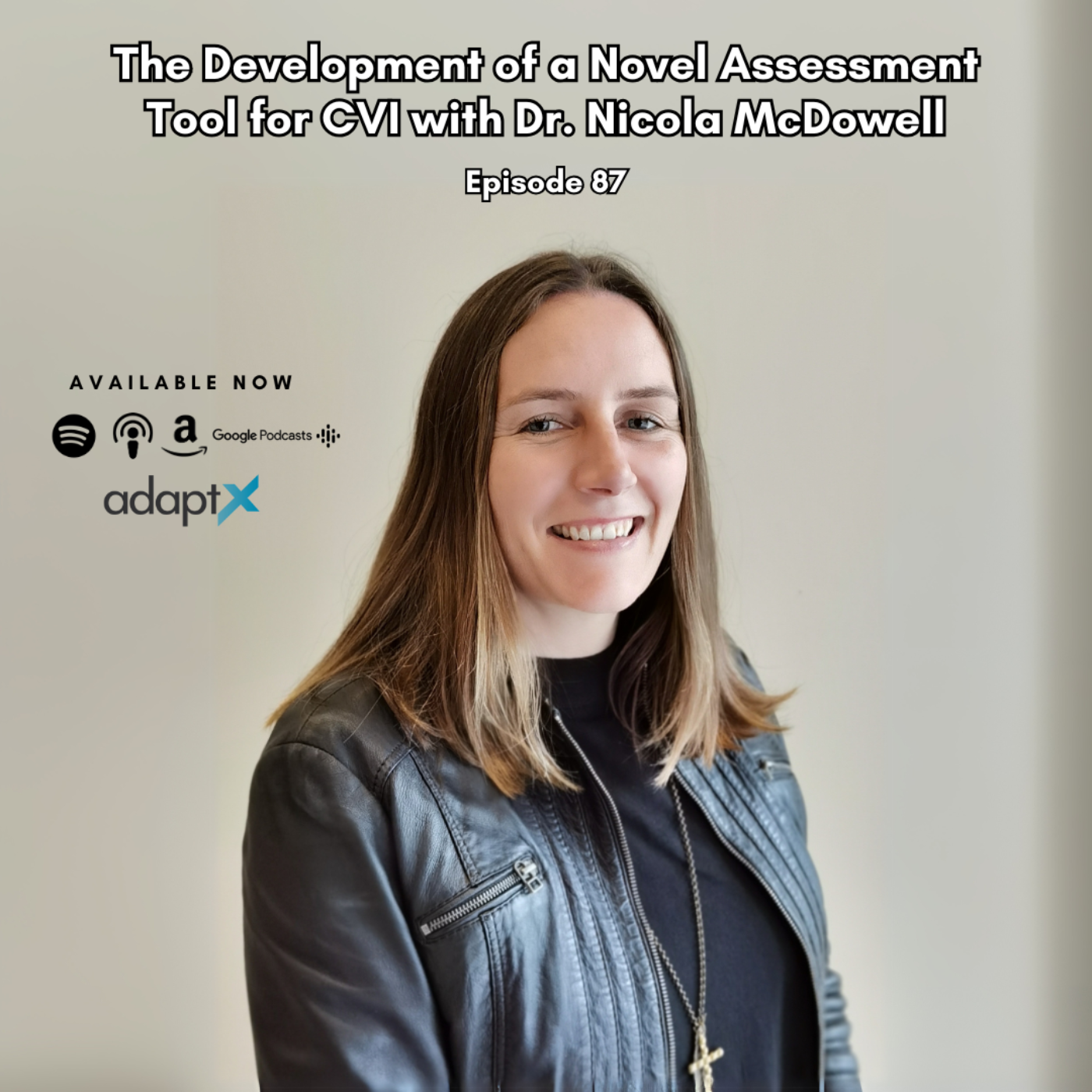
Ep 87#087 - The Development of a Novel Assessment Tool for CVI with Dr. Nicola McDowell
In this episode of the AdaptX podcast, Dr. Nicola McDowell, founder of the Austin McDowell Foundation and creator of the Austin Assessment App, discusses her journey with Cerebral Visual Impairment (CVI), a brain-based visual issue that affects how visual information is processed. She shares insights into the challenges of diagnosis, the importance of empowerment through knowledge, and the development of the Austin Assessment app, a screening tool designed to identify CVI-related visual issues. Dr. McDowell emphasizes the need for greater awareness and advocacy for individuals with CVI and discusses strategies for supporting those with visual impairments in various settings, including education and fitness.TakeawaysCerebral visual impairment (CVI) is a brain-based visual issue.Many children with CVI pass standard visual screenings and go undiagnosed.Dr. McDowell's personal experience with CVI took 17 years to diagnose.Empowerment through knowledge is crucial for rehabilitation.CVI requires a medical diagnosis but lacks a medical fix.3.4% of children in mainstream education may have visual issues related to CVI.The Austin Assessment app serves as a screening tool, not a diagnostic tool.Parents should be empowered to support their children with CVI.Raising awareness of CVI is essential for better recognition and support.CVI needs to be recognized similarly to autism for better advocacy.KeywordsCerebral Visual Impairment, CVI, visual impairment, accessibility, education, rehabilitation, Austin Assessment, advocacy, neuroplasticity, empowerment
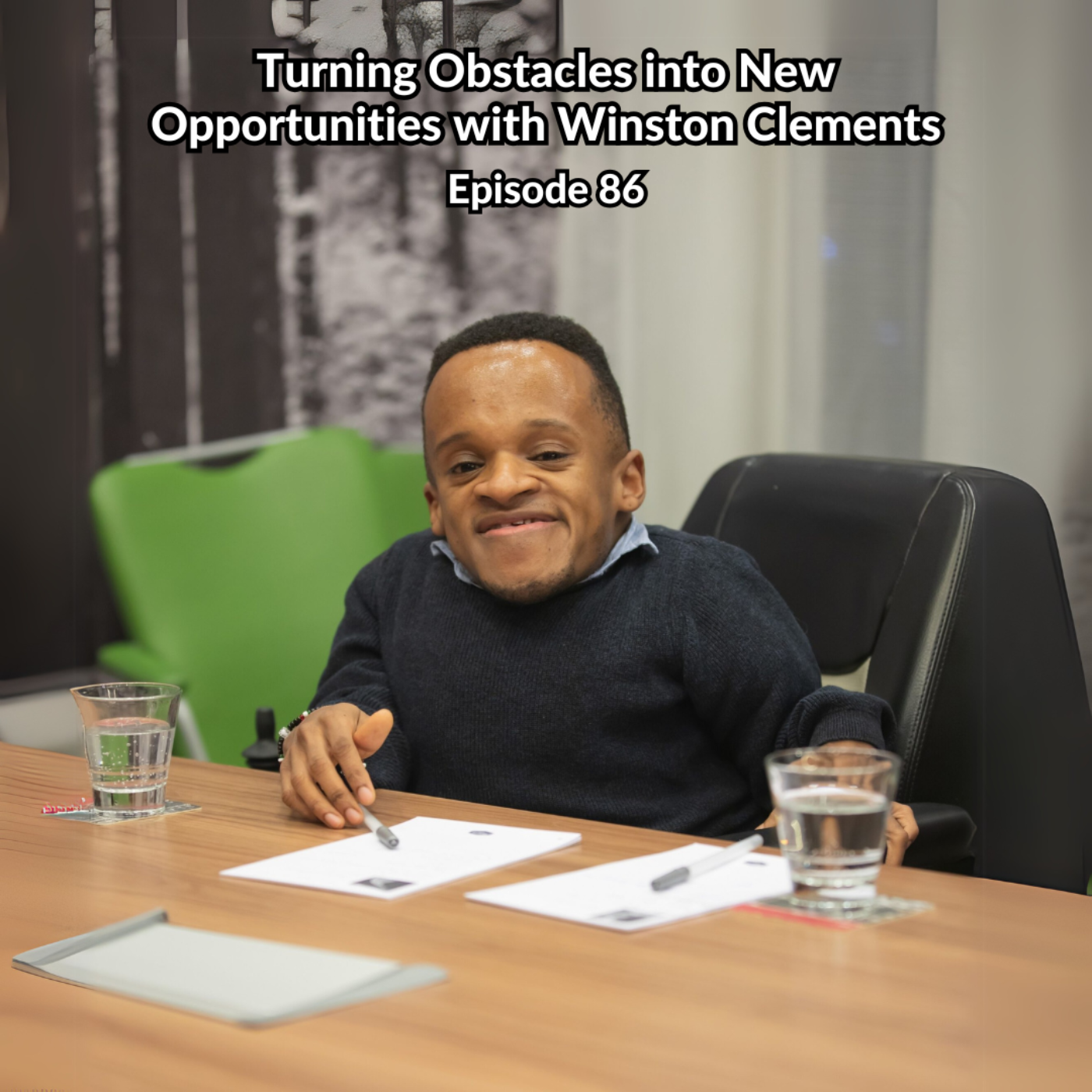
Ep 86#086 - Turning Obstacles into New Opportunities with Winston Clements
In this episode of the AdaptX Podcast, host Brendan Aylward speaks with Winston Clements, a keynote speaker and disability advocate. Winston shares his journey from the tech industry to public speaking, discussing the challenges he faced due to his disability, including unconscious bias in hiring processes. He emphasizes the importance of inclusivity in workplaces and offers insights on etiquette when interacting with disabled individuals. Throughout the conversation, Winston highlights the need for understanding and empathy, encouraging listeners to focus on commonalities rather than differences. He also addresses the expectations placed on him as a speaker and his passion for discussing resilience and high performance. In this conversation, Winston Clements shares his experiences navigating life with a disability, focusing on themes of resilience, content creation, and parenting. He discusses the challenges of accessibility, the impact of public perception, and the importance of normalizing the lives of people with disabilities through social media. Winston also reflects on the balance between sharing his family's journey online and protecting their privacy, as well as the lessons he hopes to impart to his daughter about kindness and adaptability. The conversation concludes with insights into healthcare interactions and Winston's aspirations for the future.TakeawaysPublic speaking became my second career after tech.I wanted to support people with disabilities through my story.Unconscious biases affect how we perceive others.Pigeonholing individuals based on disability is common.Accommodations for disabilities are often inexpensive.Treat disabled individuals like anyone else when meeting them.Inclusivity in hiring processes is crucial for success. Navigating transport systems can be challenging for those with disabilities.Public perception often includes stereotypes that need to be addressed.Balancing public life with family privacy is a continuous challenge.Children can be intuitive and adapt to their parents' needs.Healthcare professionals need to communicate inclusivity to patients with disabilities.Future aspirations include engaging more with the community and sharing messages of resilience.Keywordsdisability, public speaking, unconscious bias, inclusion, accessibility, hiring process, workplace culture, etiquette, resilience, high performance, disability, resilience, parenting, healthcare, content creation, accessibility, inclusion, family, social media, community
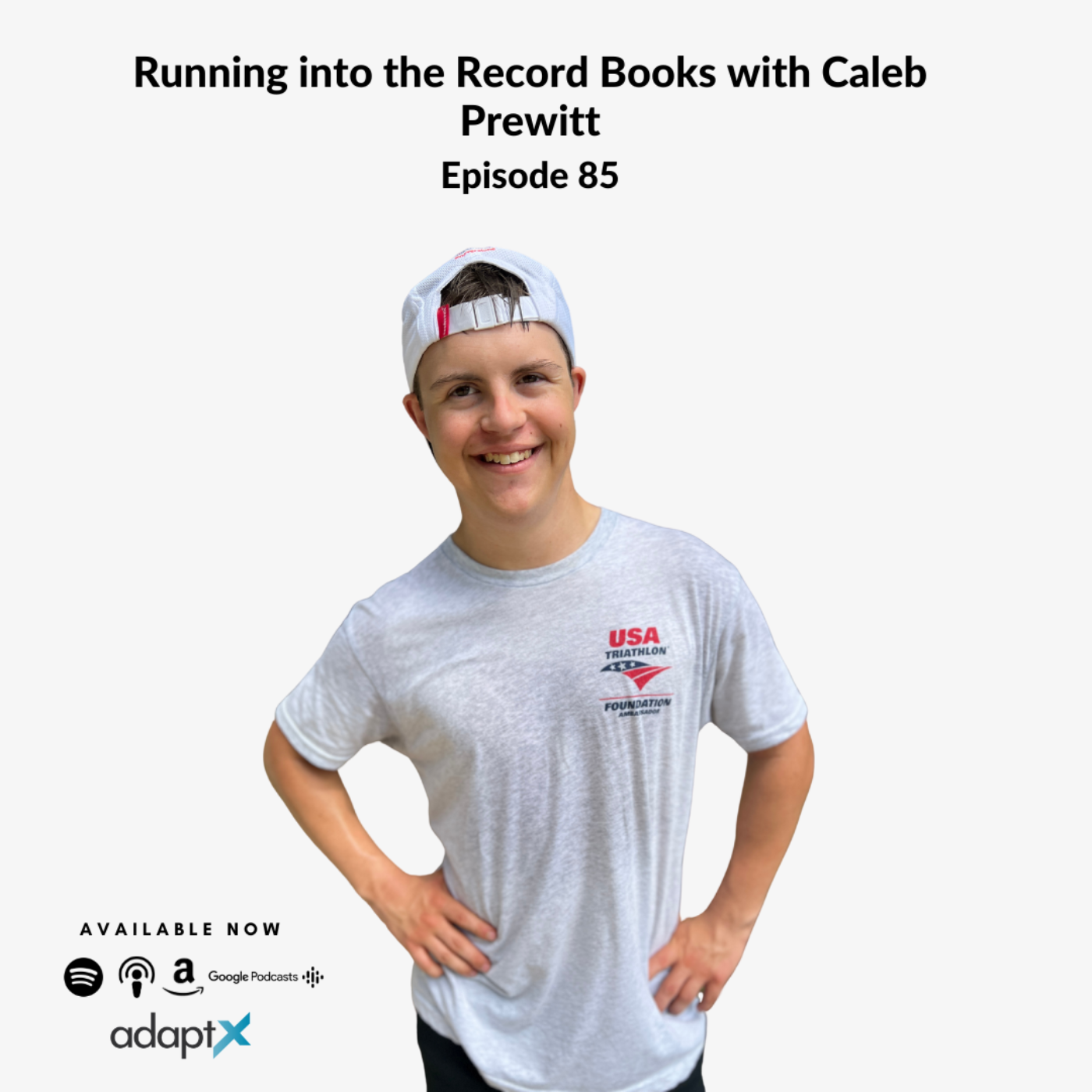
Ep 85#085 - Running into the Record Books with Caleb Prewitt
In this episode of the AdaptX podcast, host Brendan Aylward speaks with Caleb Pruitt, a 17-year-old athlete breaking barriers in running and triathlon, and his mother, Karen. They discuss Caleb's journey in sports, the impact of Special Olympics, the challenges of training, and the importance of inclusivity in athletics. Caleb shares his experiences of achieving world records and his aspirations for the future, including upcoming races and his goals beyond sports. The conversation highlights the significance of community support and motivation for individuals with disabilities.TakeawaysCaleb started running during the pandemic to stay active.Special Olympics played a crucial role in Caleb's socialization.Caleb enjoys biking the most in triathlons.He is one of the youngest people with Down syndrome to complete a triathlon.Caleb has set multiple world records in running.Community support is vital for athletes with disabilities.Motivation for individuals with ID often needs to be tangible.Inclusivity in races is beneficial for all participants.Caleb's journey inspires other families with disabilities.Awareness and training for gym staff can improve inclusivity.KeywordsCaleb Pruitt, Special Olympics, triathlon, world records, inclusivity, disabilities, running, motivation, training, community support
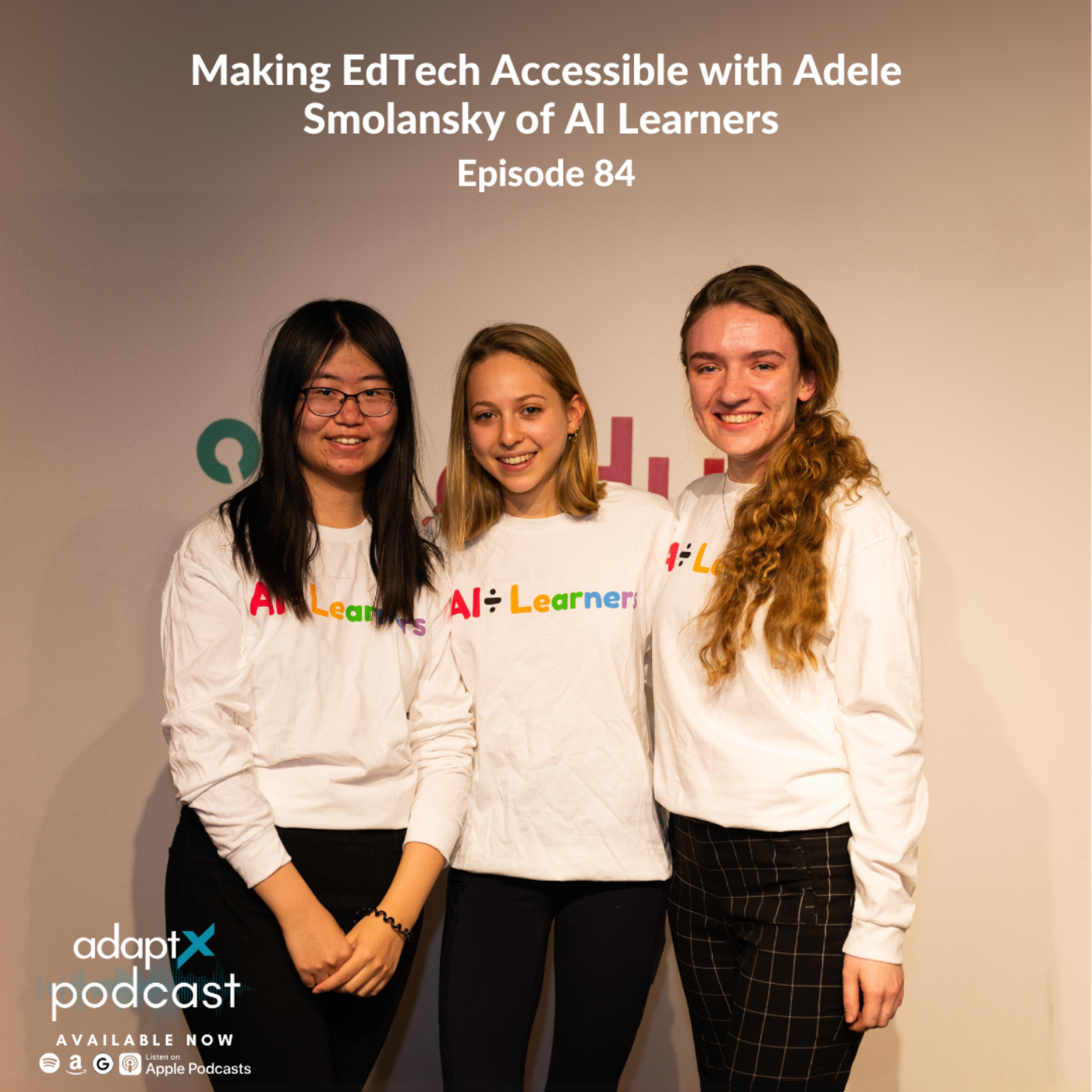
Ep 84#084 - Empowering Education through AI with Adele Smolansky
In this episode of the AdaptX Podcast, Brendan Aylward speaks with Adele Smolansky, founder and CEO of AI Learners, an educational platform designed to support students with disabilities through AI-powered learning tools. Adele shares her personal journey of creating AI Learners, inspired by her sister's challenges during the COVID pandemic. The conversation delves into the importance of customization and engagement in educational tools, the effectiveness of AI in enhancing accessibility, and the ongoing efforts to develop social skills in students post-COVID. They also discuss the challenges of building a sustainable business model in the ed-tech space and the significance of creating inclusive environments in fitness and education.To learn more about Adele and AI-Learners, visit these links,Linkedin: https://www.linkedin.com/in/adelesmolansky/Website: https://ai-learners.com/TakeawaysAI Learners focuses on making learning accessible for all abilities.The platform was inspired by personal experiences with disabilities.Customization is key for engaging students with disabilities.Measuring effectiveness involves both qualitative and quantitative data.The platform is subscription-based, charging by the student.Gamification elements are designed to motivate students without pressure.AI Learners serves a wide age range, from 3 to 22 years old.The platform is designed to facilitate lessons beyond just screen time.Accessibility in tech is often an afterthought but should be prioritized.Building relationships with educators is crucial for outreach and growth.KeywordsAI Learners, accessibility, education technology, disabilities, engagement, customization, social skills, digital accessibility, learning outcomes, inclusive fitness
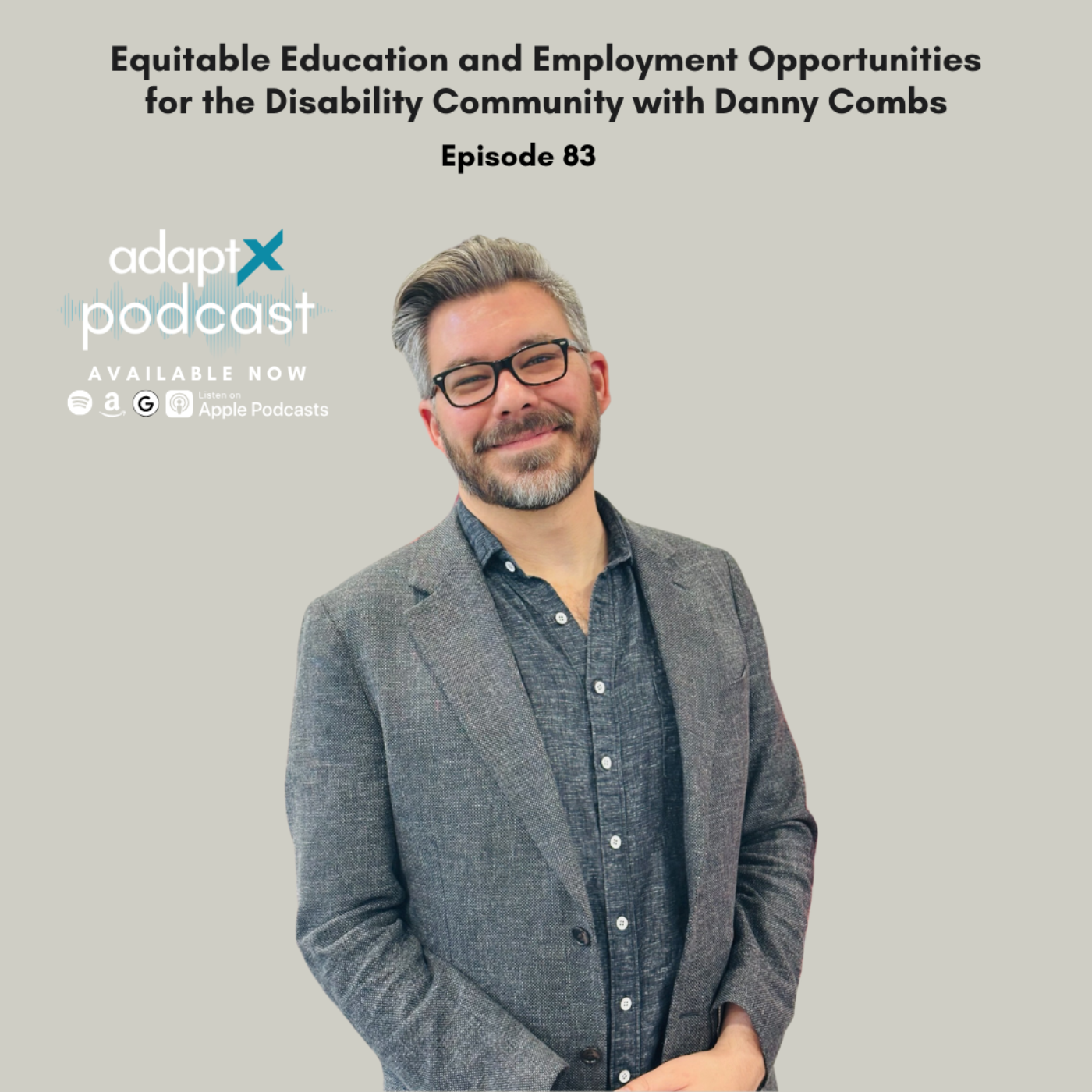
Ep 83#083 - Equitable Education and Employment Opportunities for the Disability Community with Danny Combs
In this episode of the AdaptX Podcast, host Brendan Aylward speaks with Danny Combs, a leading voice in creating equitable futures for neurodistinct individuals in business and equality of opportunity for the entire disability community. Mr. Combs is the inaugural Director of the Colorado Disability Opportunity Office, Colorado’s senior strategic and policy agency housed in the Colorado Department of Labor and Employment, working with the Governor and Lieutenant Governor to help make Colorado the best state in the country for people with disabilities. He is the founder of TACT (Teaching the Autism Community Trades), the state of Colorado’s leading transition to employment and training organization, and the co-founder of the Colorado Neurodiversity Chamber of Commerce, the first neurodiverse chamber in the country. They discuss Danny's personal journey, the importance of a strengths-based approach to neurodiversity, and the evolution of TACT from humble beginnings to a significant nonprofit. The conversation also covers the challenges faced by neurodivergent individuals in the workforce, the establishment of the Colorado Disability Opportunity Office, and the unique initiatives Colorado is implementing to support people with disabilities. Danny emphasizes the need for collaboration among organizations and the importance of creating inclusive environments in various sectors, including fitness.TakeawaysDanny's father inspired his passion for inclusion.The diagnosis of autism was initially met with resistance.A strengths-based approach is crucial for neurodivergent individuals.The trades offer valuable opportunities for neurodivergent individuals.Employers often ask the wrong questions in interviews.TACT evolved from a mobile program to a large facility.Funding for nonprofits is often reliant on grants.The Colorado Disability Opportunity Office aims to elevate disability services.Colorado is leading in digital accessibility initiatives.Creating inclusive fitness environments requires staff education.Keywordsinclusion, disability advocacy, neurodiversity, TACT, employment, strengths-based approach, trades, Colorado Disability Opportunity Office, fitness accessibility, nonprofit sustainability
Ep 82#082 - A Vision for Equal Opportunity in Employment with Tanner Gers
In this conversation, Tanner Gers and Brendan Aylward discuss the importance of accessibility for individuals with disabilities, focusing on employment, training, and the role of digital accessibility. Tanner shares his personal journey of losing his sight and how it led him to create a business aimed at helping others with disabilities find meaningful work. They explore the challenges faced by people with disabilities in the job market, the misconceptions surrounding adaptive sports, and the need for more inclusive practices in the fitness industry. The discussion also touches on the future of digital accessibility and the potential impact of technology on improving accessibility outcomes.To learn more about Tanner and AccessAbility Officer visit these links below:Company Website - https://accessabilityofficer.com/LinkedIn- https://www.linkedin.com/in/tannergers/TakeawaysThe interview process is crucial for meaningful conversations.The goal is to equalize the unemployment rates for disabled individuals.Changing societal perceptions about disabilities is essential.Employment opportunities should not be given based on disability but on qualifications.Digital accessibility requires thorough testing and reporting.Accessibility overlays can sometimes create more barriers than they solve.The future of digital accessibility will involve more technology integration.Small businesses often face challenges in understanding accessibility compliance.Tanner's entrepreneurial journey is driven by a desire to help others.Hope for recovery and improvement in vision is a powerful motivator.Keywordsaccessibility, disabilities, inclusion, adaptive sports, digital accessibility, employment, training, entrepreneurship, visual impairment, fitness
Ep 81#081 - Acceptance, Adversity, and the Art of Changing Course with Chris Ruden
In this episode of the AdaptX podcast, Chris Ruden is an amputee, Type 1 diabetic record-holding powerlifter, motivational keynote speaker, and author of The Art of Changing Course. From being humiliated and labeled broken because of his disability to struggling with mental health and living in a non-disabled-inclusive world, Chris learned to turn his obstacles into opportunities, now using his badass bionic arm, diabetes technology, and message of “creating your world without limits” to impact people around the world. He discusses the pivotal moments that led him to embrace his disability, the importance of representation, and how fitness became a coping mechanism. Throughout the conversation, he emphasizes the power of language and identity in personal growth and the importance of seeing individuals beyond their disabilities. In this conversation, Chris and Brendan explore the importance of focusing on end benefits in fitness and personal growth, the significance of storytelling in motivational speaking, and the need for genuine inclusion and accessibility in various sectors, particularly fitness.To learn more about Chris and his mission, visit these links!Linkedin- https://www.linkedin.com/in/chrisruden/Website- https://chrisruden.com/ TakeawaysEveryone manages change, whether they want to or not.Hiding my disability for 17 years shaped my identity.Representation matters in acceptance and growth.Fitness became a way to cope with my challenges.Innovative training techniques can empower individuals with disabilities.Understanding change is crucial for personal development.Language shapes our identity and self-perception.We must separate our past habits from our current identities.It's important to treat people as individuals, not conditions.Radical honesty is essential for personal growth.Finding fulfillment in work is crucial for happiness.Inclusion should be a continuous practice, not a one-time event.Burnout often stems from forgetting the importance of our work.Identifying when to pivot requires self-honesty.Everyone has the potential to influence and inspire others.Keywordsdisability, motivation, fitness, powerlifting, bodybuilding, change management, representation, mental health, personal growth, inclusion, fitness, inclusion, accessibility, personal growth, motivation, speaking, coaching, disability, empowerment, business
Ep 80#080 - Systems and Strategies to Support Clients of all Abilities with Karen Hurley
In this episode of the AdaptX podcast, Brendan Aylward speaks with Karen Hurley, a physical therapist and owner of AIM Therapy, where she provides fitness opportunities for athletes with all abilities, learning styles and communication preferences. AIM uses the principles of Least Restrictive Environment for her athletes to be successful as well as principles of Universal Fitness with all classes.They discuss the importance of individualized fitness plans, the role of physical therapy versus adaptive fitness, and strategies for behavior management and motivation. Karen shares her insights on inclusion, community support, transitioning to a non-profit model, and her future goals of creating a manual for coaches.TakeawaysKaren Hurley emphasizes the importance of getting out of your comfort zone in professional settings.Inclusion varies based on individual needs and preferences.Success in fitness for individuals with disabilities looks different than traditional metrics.Behavior is a form of communication that needs to be understood and addressed.Creating individualized fitness plans is essential for athletes with autism and neurodiversity.Community and peer support play a crucial role in the success of adaptive fitness programs.Embracing the messiness of adaptive fitness can lead to better outcomes for clients.Karen is developing a manual to help other coaches work with adaptive populations.Transitioning to a nonprofit model can help address inequities in access to fitness for individuals with disabilities.Keywordsaccessible fitness, adaptive sports, physical therapy, inclusion, autism, behavior management, community support, fitness for disabilities, neurodiversity, entrepreneurshipChapters00:00 Introduction to Accessible Fitness06:03 Understanding the Role of Physical Therapy vs. Adaptive Fitness14:04 Motivating and Managing Behavior in Adaptive Fitness19:50 The Importance of Collaboration with Support Teams26:07 Evolving Perspectives on Inclusion
Ep 79#079 - "Be the Example" - Fitness and Family Post-Spinal Cord Injury with Robert Costa
In this episode of the AdaptX Podcast, Brendan Aylward speaks with Robert Costa, an Ironman triathlete and business owner, about his journey through spinal cord injury and his transition into endurance sports. Robert shares his experiences of overcoming challenges, the importance of community support, and the lessons he hopes to impart to his children. He discusses the mental and physical aspects of recovery, adapting to new goals, and his training regimen as he prepares for future races. In this conversation, Robert Costa shares his experiences as an athlete with a disability, discussing the challenges he faced during races, the importance of community support, and the role of mindset in overcoming obstacles. He emphasizes the need for inclusivity in fitness and encourages individuals with disabilities to pursue their goals without self-limiting beliefs. The discussion also highlights the significance of community and personal growth in the journey of recovery and athletic performance.TakeawaysRobert's journey into endurance sports began after his injury.Community support played a crucial role in Robert's recovery.Mental resilience is key in overcoming challenges post-injury.Parenting has become a way for Robert to set an example for his children.Robert emphasizes the importance of not needing specialized equipment to participate in sports.He reflects on the emotional difficulty of accepting help from others.Training for endurance events requires a significant mental and physical commitment.Robert's career goals have shifted since his injury, focusing more on helping others.He believes in the importance of teaching children resilience and responsibility.Robert aims to return to Kona for another Ironman attempt. Self-medication can lead to serious health issues.The journey to a race is often more significant than the race itself.Community support plays a crucial role in recovery.Mindset is essential for overcoming challenges in sports.Inclusivity in fitness is vital for all individuals.Self-limiting beliefs can hinder progress and participation.Victory and failure are amplified for individuals with disabilities.Open communication is key in fitness environments.Personal actions can inspire others in the community.Setting and achieving small goals builds resilience.Keywordsadaptive sports, resilience, Ironman, spinal cord injury, community support, parenting, endurance sports, personal growth, mental health, goal setting, athletics, disability, inclusivity, community support, mental coaching, fitness, triathlon, recovery, mindset
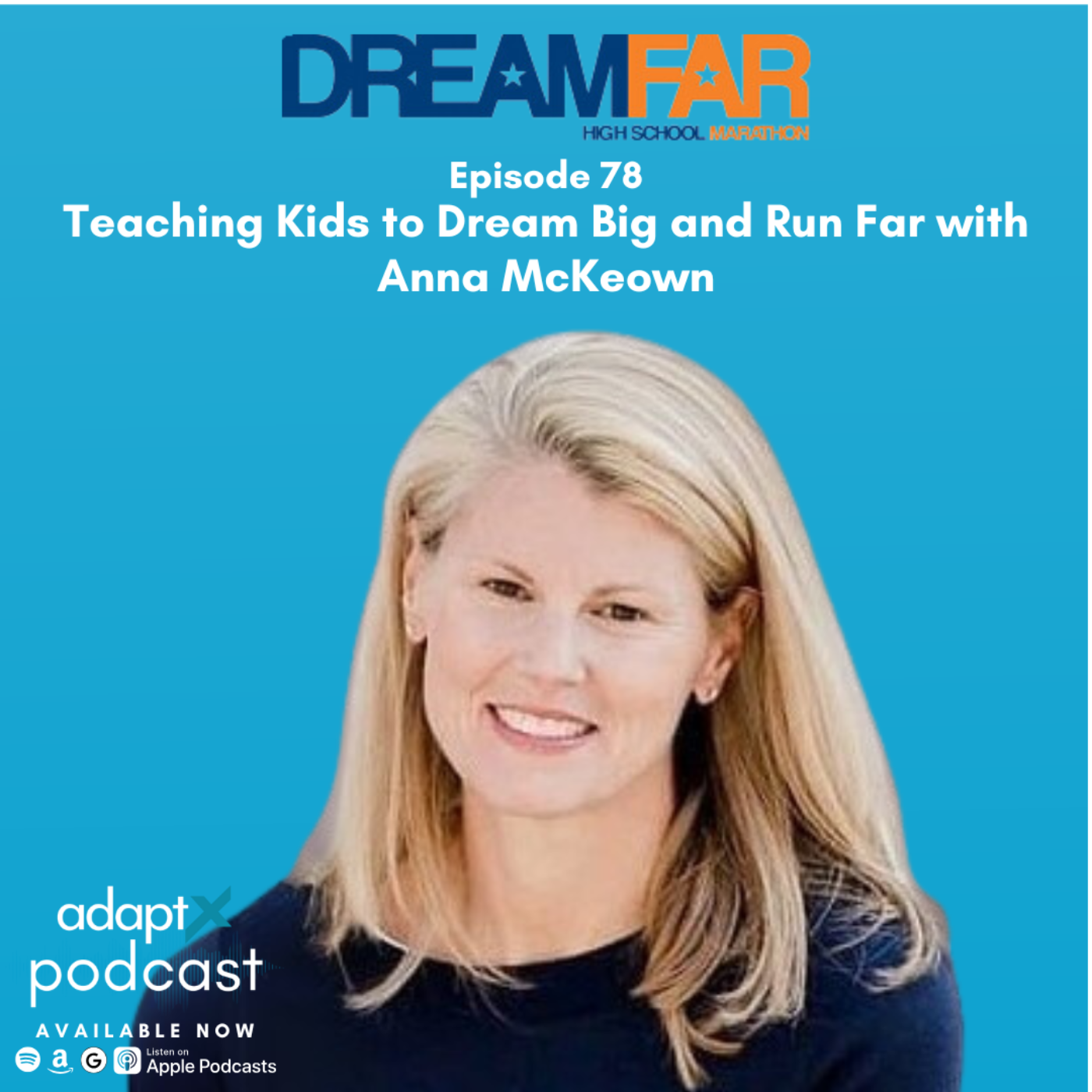
Ep 78#078 - Teaching Kids to Dream Big and Run Far with Anna McKeown
In this episode of the AdaptX podcast, Brendan Aylward speaks with Anna McKeown, the executive director of Dreamfar, an organization that welcomes teens with diverse backgrounds and abilities to take part in a program that combines mentorship and distance running as a pathway to improve their physical and mental fitness, build community, and develop self-efficacy.They discuss the impact of mentorship, the importance of inclusivity in sports, and the unique experiences of mentees. Anna shares insights on setting goals, community support, and the barriers faced by individuals with disabilities in endurance sports. To learn more about Anna McKeown and Dream Far, check the links below,Website: https://www.dreamfarhsm.org/LinkedIn: https://www.linkedin.com/in/anna-e-mckeown?utm_source=share&utm_campaign=share_via&utm_content=profile&utm_medium=ios_appInstagram:https://www.instagram.com/dreamfarhsm/?hl=en TakeawaysDreamfar combines mentorship and distance running for youth.The program has served over a thousand students since 2008.Inclusivity is a core value of Dreamfar's mission.Community support is essential for the program's success.Transportation can be a significant barrier for participants.The program adapts to meet the needs of each mentee.Success stories highlight the transformative impact of running.Future goals include expanding accessibility and outreach.Keywords: Dreamfar, mentorship, inclusion, adaptive sports, running, youth programs, community support, accessibility, fundraising, endurance sportsChapters00:00 Introduction to Dreamfar and Its Mission02:52 The Impact of Mentorship and Running06:09 Curriculum and Inclusivity in Training08:56 Setting Goals and Achieving Milestones12:02 Community Support and Fundraising18:13 Flexibility and Accessibility in Participation21:14 Unique Experiences and Success Stories23:55 Barriers to Participation in Endurance Sports27:08 Future Goals and Expansion Plans29:58 How to Get Involved with Dreamfar
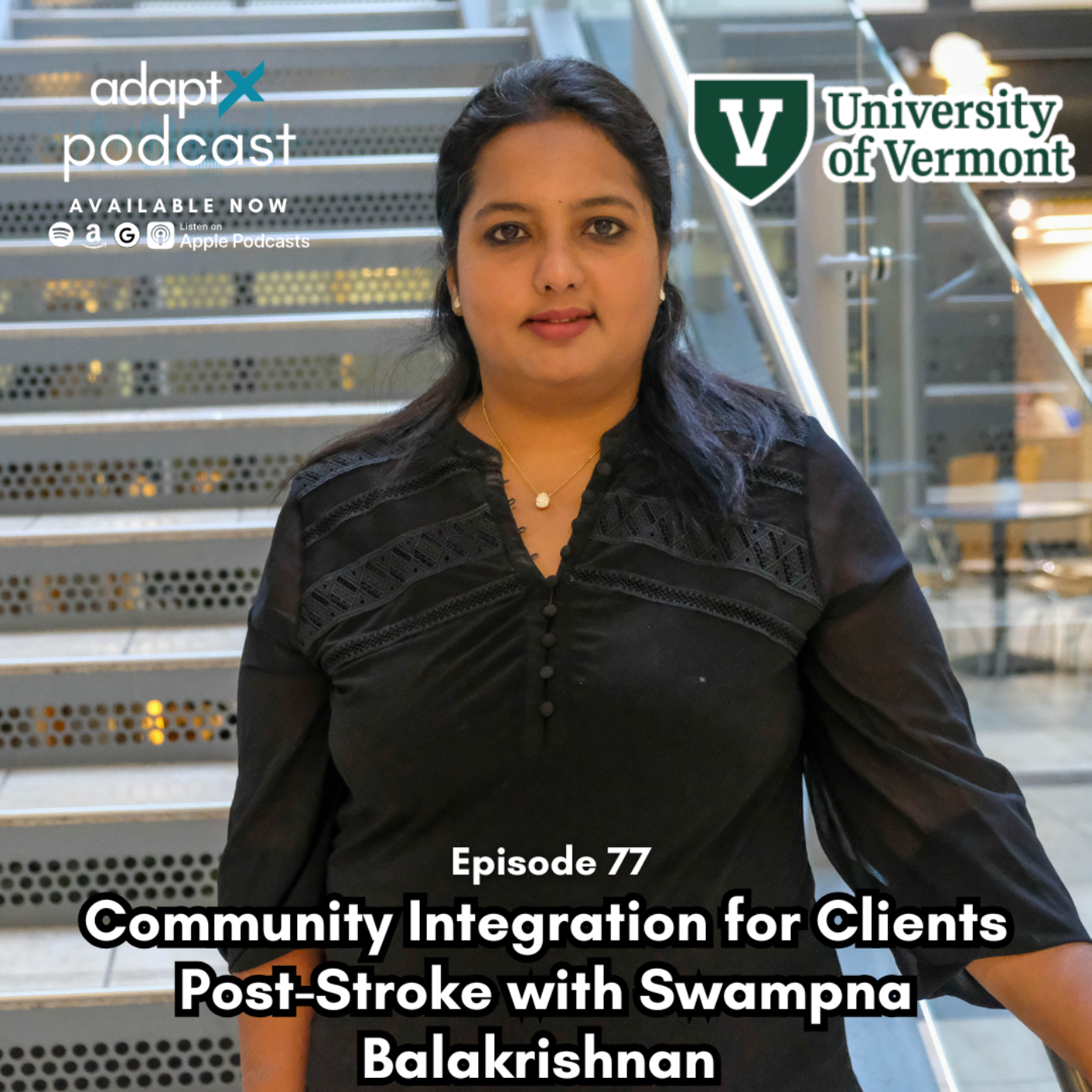
Ep 77#077 - Community Integration for Clients Post-Stroke with Swampna Balakrishnan
In this episode of the AdaptX podcast, Dr. Swapna Balakrishnan discusses her journey into the field of neurodegenerative diseases and the importance of bridging the gap between research and clinical practice. Dr. Swapna Balakrishnan is a Doctor of physical therapy and currently a PhD Candidate in the Mobility and Investigative Neuroimaging (MAIN) Lab at the University of Vermont. She has extensive experiences of providing evidenced based care to patients with advanced dementia, stroke, spinal cord injury, and other neurodegenerative disorders. Her current research focuses on the use of wearable sensors to better understand how people with stroke move in the community and stay physically active.To learn more about Swapna and the MAIN Lab, check the links below,Main Labs Website: https://mainlab.wixsite.com/mainlabWearable Lab Study: https://www.youtube.com/watch?v=NhSqUN9dsSQSwapna’s Email: [email protected]'TakeawaysThe transition from inpatient to community care is crucial for stroke recovery.Community fitness centers can play a significant role in post-stroke recovery.Wearable sensors can help monitor activity levels in stroke patients.There is a disconnect between research and clinical practice that needs to be addressed.Insurance coverage often limits ongoing support for stroke survivors.Motivation is key to encouraging physical activity post-stroke.Collaboration between clinicians and fitness professionals is vital for patient success.Keywords: accessible healthcare, neurodegenerative diseases, stroke recovery, wearable sensors, community fitness, rehabilitation, personal trainers, patient motivation, healthcare collaboration, research in physical therapyChapters00:00 Introduction to Accessible Healthcare06:51 Community-Based Recovery Post-Stroke13:41 The Importance of Ongoing Support20:22 Data Collection and Community Mobility27:12 Excitement for Research and Proactive C
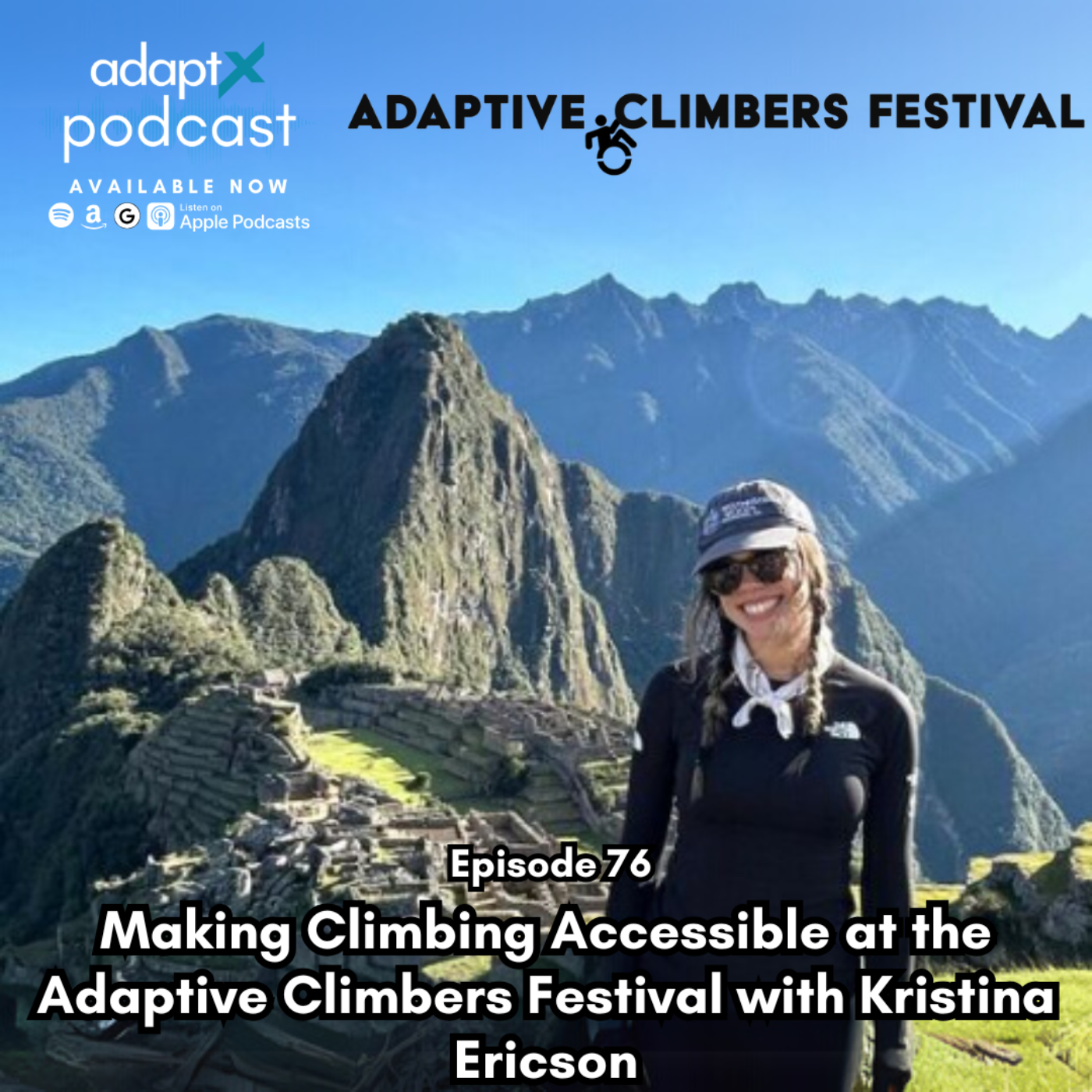
Ep 76#076- Making Climbing Accessible at the Adaptive Climbers Festival with Kristina Ericson
In this episode of the AdaptX podcast, Brendan speaks with Kristina Ericson, Kristina Ericson, MSW, CPACC, ADAC (she/her) is a disability policy advisor for the State of Colorado, and a Co-Founder and Director of the Adaptive Climbers Festival – an annual, non-profit, rock climbing event for the paraclimbing community. A social worker and accessibility specialist by training, her work centers around knocking down macro-level accessibility barriers through policy and systems change. Kristina holds a B.A. from Long Island University’s Global College, and a Masters in Social Work and Policy from Washington University in St. Louis. She proudly works on a variety of local, state, and national accessibility-focused boards and working groups. Kristina has lived in more than a dozen countries, is an NYC AmeriCorps alum, and lives in the mountains above Denver where she is an avid snowboarder, climber, and backpacker.To learn more about Kristina and the Adaptive Climber’s Festival, check the links below,Kristina’s LinkedIn: https://www.linkedin.com/in/kristinaericson/Adaptive Climbers Festival Website: https://www.adaptiveclimbersfest.org/TakeawaysDisability rights are often overlooked in global contexts.Creating inclusive environments requires open dialogue and education.Financial barriers are significant in accessing outdoor sports.Representation in teaching roles is crucial for disabled individuals.Inclusion can enhance business models rather than detract from them.Diverse experiences enrich the adaptive sports community. Mentorship is crucial in adaptive sports.Disability is a spectrum, not a box to check.Events should prioritize accessibility from the start.Sponsorships can enhance accessibility in outdoor activities.Collaboration with brands can lead to better designs for all.Keywords: accessibility, disability advocacy, adaptive sports, inclusion, policy change, community impact, outdoor sports, climbing, Adaptive Climbers Festival, global perspectives, adaptive climbing, disability inclusion, mentorship, fitness accessibility, community building, event organization, climbing festival, disability rights, sponsorship, adaptive sportsChapters00:00 Introduction to Accessibility Advocacy08:36 Global Perspectives on Accessibility14:05 Challenges in Outdoor Accessibility21:01 Mentorship in Adaptive Climbing27:35 Hosting Inclusive Events31:16 Making Fitness More Inclusive35:42 Sponsorship and Partnerships in ACF
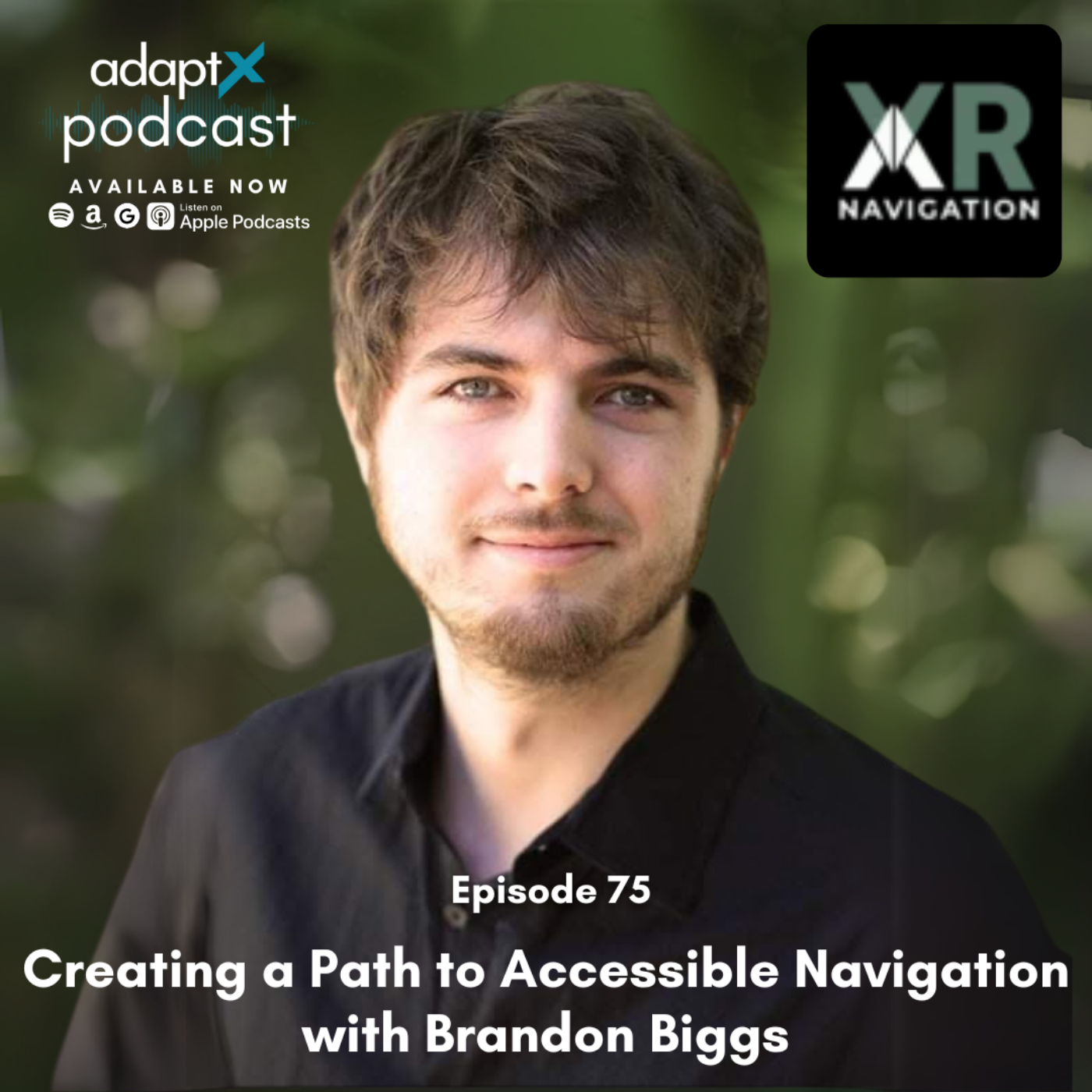
Ep 75#075- Creating a Path to Accessible Navigation with Brandon Biggs
Brendan speaks with Brandon Biggs, CEO and co-founder of XR Navigation, about his journey into technology and the development of Audiom, an inclusive digital map viewer designed to assist individuals with visual impairments. They discuss the challenges of accessibility in digital spaces, the importance of adhering to accessibility standards, and the role of AI in enhancing accessibility solutions. Brandon shares insights on how gyms and fitness centers can become more inclusive and emphasizes the need for advocacy in making digital content accessible for everyone.To learn more about Brandon and XR Navigation, check out the links below,Brandon’s LinkedIn: https://www.linkedin.com/in/brandonkeithbiggs/XR Navigation’s Website: https://xrnavigation.io/XR Navigation’s LinkedIn: https://www.linkedin.com/company/xrnavigation/TakeawaysAudiom allows users to access maps through auditory, visual, and tactile modalities.Accessibility in maps is crucial for blind individuals to navigate effectively.Many digital maps are inaccessible, providing little to no information for screen reader users.AI can assist in development but is not a replacement for human understanding in spatial reasoning.Gyms can improve accessibility by providing audio maps and avoiding touchscreen-only equipment.Advocacy for accessibility can come from anyone, not just those with disabilities.Keywords: accessibility, technology, Audiom, inclusive design, digital maps, assistive technology, Brandon Biggs, XR Navigation, visual impairment, navigation solutionsChapters00:00 Introduction to Accessible Innovation05:56 The Birth of Audiom: A Solution for Accessibility12:11 The Importance of Accessibility Standards18:00 The Role of AI in Accessibility23:50 Future Aspirations and Closing Thoughts
Ep 74#074- Paralympics to Adapted Physical Education with Chris Ahrens
In this episode of the AdaptX podcast, Brendan engages with Chris Ahrens, an educator and former member of the US Para 7v7 national soccer team. They discuss the profound impact of sports on personal development, the importance of adaptive sports for youth with disabilities, and the evolving landscape of adaptive physical education. Chris shares his journey from traditional sports to adaptive sports, the societal perceptions of disability, and the critical need for inclusivity in physical education. The conversation emphasizes the importance of empathy, understanding, and the role of parents in shaping attitudes towards disability. The conversation explores the importance of fostering student autonomy and inclusion in physical education, the need for feedback mechanisms to enhance inclusivity, and the preparation of general PE teachers to support students with disabilities.To keep up with Chris, check out the links below,X: https://x.com/chrisahrensKeywords: adaptive sports, inclusion, disability awareness, physical education, Paralympics, youth development, sports impact, adaptive physical education, societal perceptions, parenting, inclusion, adaptive physical education, student autonomy, feedback mechanisms, general PE teachers, gym accessibility, disability soccer, adaptive fitness, education, fitnessTakeawaysIncreased coverage of adaptive sports can change lives.There is a need to assess if inclusion efforts are effective.It's important to think critically about adaptive technologies. Student autonomy and choice are crucial for inclusion.Feedback from students is essential for program development.Creating inclusive environments benefits everyone, not just those with disabilities.Adaptive PE specialists play a vital role in education.Gyms need to foster a culture of acceptance and inclusivity.Inclusivity in fitness requires education and awareness.Collaboration among educators and specialists is key.Future initiatives should focus on expanding opportunities for individuals with disabilities.Chapters00:00 Introduction to Adaptive Sports and Inclusion05:55 The Impact of Adaptive Sports on Youth11:56 Parenting and Disability Awareness18:12 Evolution of Adaptive Physical Education23:56 Assessing Inclusivity in Physical Education30:54 The Role of Adaptive PE Specialists37:30 Advancing Disability Soccer and Future Initiatives
Ep 73#073- Do We Actually Know What It Means to Be Inclusive? with Justin Haegele
In this conversation, Dr. Justin Haegele and Brendan Aylward explore the complexities of inclusion in adaptive physical education and fitness. They discuss personal experiences that shaped their understanding of inclusion, the evolution of language used in the field, and the challenges faced in creating meaningful experiences for individuals with disabilities. The dialogue emphasizes the importance of listening to disabled voices, the need for comprehensive training for educators, and the balance between providing inclusive environments while recognizing individual needs. They discuss the challenges of making promises of inclusion, the need for qualitative insights over quantitative metrics, and the role of positive experiences in physical education in fostering lifelong physical activity. 00:00 Introduction and Personal Background02:27 The Evolution of Inclusion Perspectives13:16 Challenges in Adaptive Physical Education18:45 Creating Meaningful Experiences in Fitness24:51 Assessing Experience Beyond Performance32:40 The Role of Physical Education in Lifelong Activity38:42 Language and Perception of Disability48:17 Engaging Disabled Voices in Fitness Design
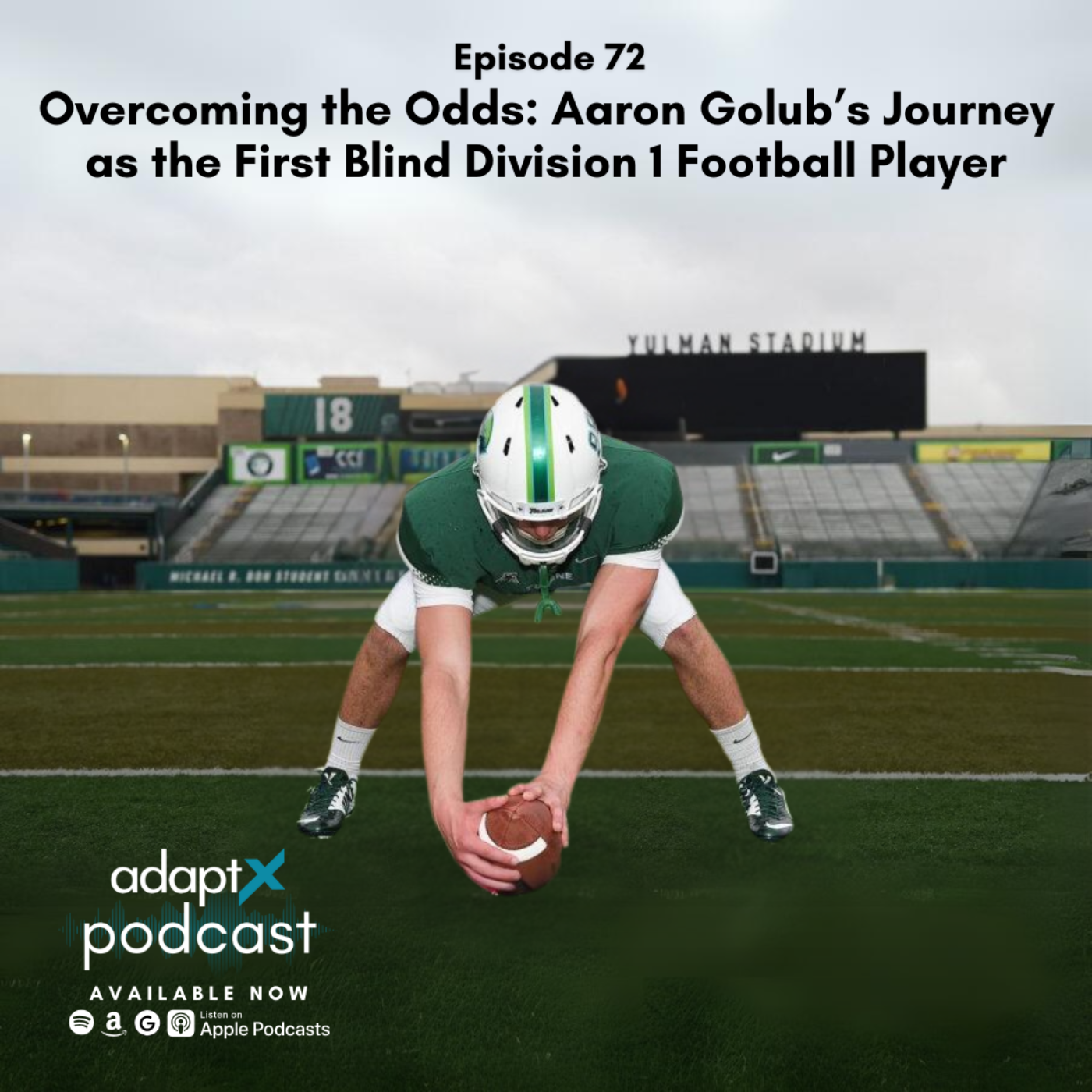
Ep 72#072- Overcoming the Odds: Aaron Golub’s Journey as the First Legally Blind D1 Football Player
In this episode of the AdaptX Podcast, Brendan speaks with Aaron Golub, a legally blind athlete who made history as a Division I football player at Tulane University. Aaron shares his journey from childhood sports to discovering his passion for football and long snapping. He discusses the challenges he faced in high school, the importance of assistive technology in his academic success, and how he navigated his identity as an athlete with a disability. Aaron emphasizes the significance of internal motivation, the role of leadership, and the need for accessibility in gyms. He also shares insights into his professional speaking engagements and his aspirations in the business world.Keywords: Aaron Golub, adaptive sports, disability awareness, long snapping, Tulane University, assistive technology, motivation, leadership, gym accessibility, entrepreneurshipTakeawaysInternal motivation is key to long-term success, beyond external inspiration.Accessibility in gyms can be improved with simple changes like color contrast.Leadership is about actions, not just words, and supporting others.Failure is a part of growth; it's important to learn from it.The importance of asking for help in the gym and overcoming intimidation.Chapters00:00 Introduction to Aaron Golub and His Journey05:02 Overcoming Challenges in High School Football10:32 Assistive Technology and Academic Success14:56 The Balance of Disability and Identity 17:53 The Role of Motivation and Internal Drive 20:31 Professional Speaking and Leadership26:56 Experiences in the Gym and Overcoming Barriers29:56 Future Aspirations and Business Ventures
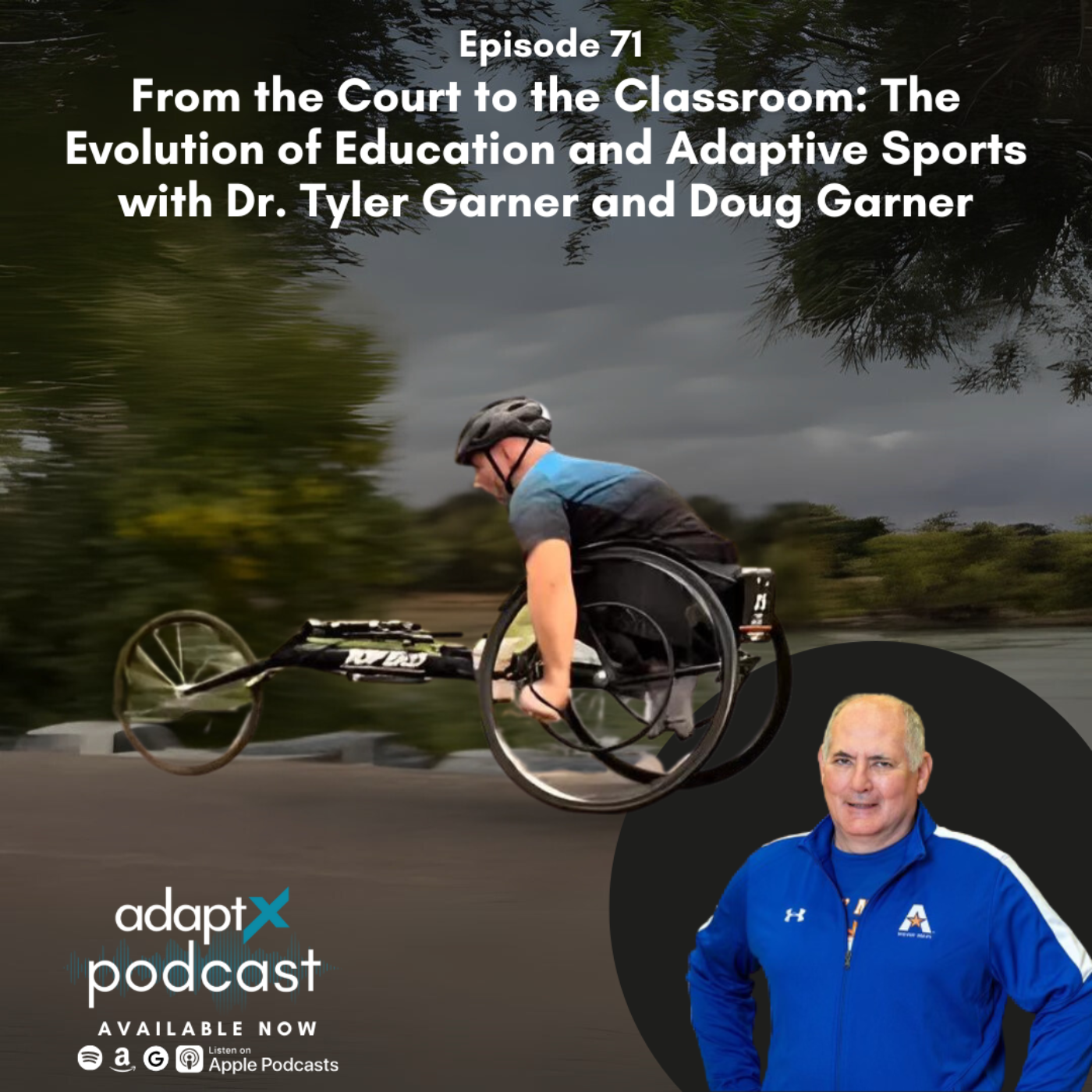
Ep 71#071- From the Court to the Classroom: The Evolution of Education and Adaptive Sports with Dr. Tyler Garner and Doug Garner
In this episode of the AdaptX Podcast, Brendan engages in a conversation with Dr. Tyler Garner and his father, Doug Garner, about the significance of adaptive sports in their lives. They discuss the advocacy efforts that shaped Tyler's early experiences in sports, the challenges faced in gaining acceptance and opportunities, and the impact of sports on identity and social dynamics. Tyler shares his journey in exercise science, his experiences as a professor with a disability, and insights into nutrition and physical activity for wheelchair users. The conversation also touches on the biomechanics of wheelchair propulsion, the importance of equipment fit, and the future of adaptive sports in the media landscape. This conversation explores the evolution of adaptive sports in universities, the challenges faced by athletes like Tyler Garner in preparing for events like the Ironman, and the importance of advocacy through literature. The discussion also touches on the reflections of a parent navigating the world of disability sports and the need for greater accessibility in fitness environments.Check out the links below to learn more about Dr. Tyler Garner and order the Garner’s book, Dr. Tyler Garner Faculty Profile: https://www.uta.edu/academics/faculty/profile?username=tgarnerAmazon link: Speed Training for Wheelchair Basketball: Skills and Drills for Improving Speed and AgilityTakeawaysAdaptive sports can significantly impact identity and social dynamics.Nutrition education is crucial for wheelchair users.Social media has increased visibility for adaptive sports.Equipment fit is essential for preventing injuries in athletes.Advocacy is necessary for inclusion in sports.The role of family dynamics in sports participation is significant.The future of adaptive sports looks promising with increased media exposure. Adaptive sports are gaining recognition at the university level.Coaching education for adaptive sports is still in its infancy.There's a need for practical applications of sports science for disabled athletes.Research on disability sports needs to be more accessible and applicable.Staff training is crucial for making fitness spaces accessible.Adaptive sports can inspire more literature and advocacy efforts.Keywords: adaptive sports, inclusion, disability advocacy, wheelchair basketball, exercise science, nutrition, biomechanics, social media, para-sports, identity, Ironman, fitness accessibility, coaching education, university sports, literatureChapters00:00 Introduction to Adaptive Sports and Family Dynamics05:56 Overcoming Barriers in Adaptive Sports11:47 Pursuing a Career in Exercise Science18:00 Nutrition and Physical Activity for Wheelchair Users23:55 Equipment Fit and Injury Prevention27:04 The Future of Adaptive Sports and Media Exposure35:06 Advocacy Through Literature: Writing for Adaptive Sports41:11 Reflections on Parenting and Disability43:02 Making Fitness Accessible: Insights and Innovations
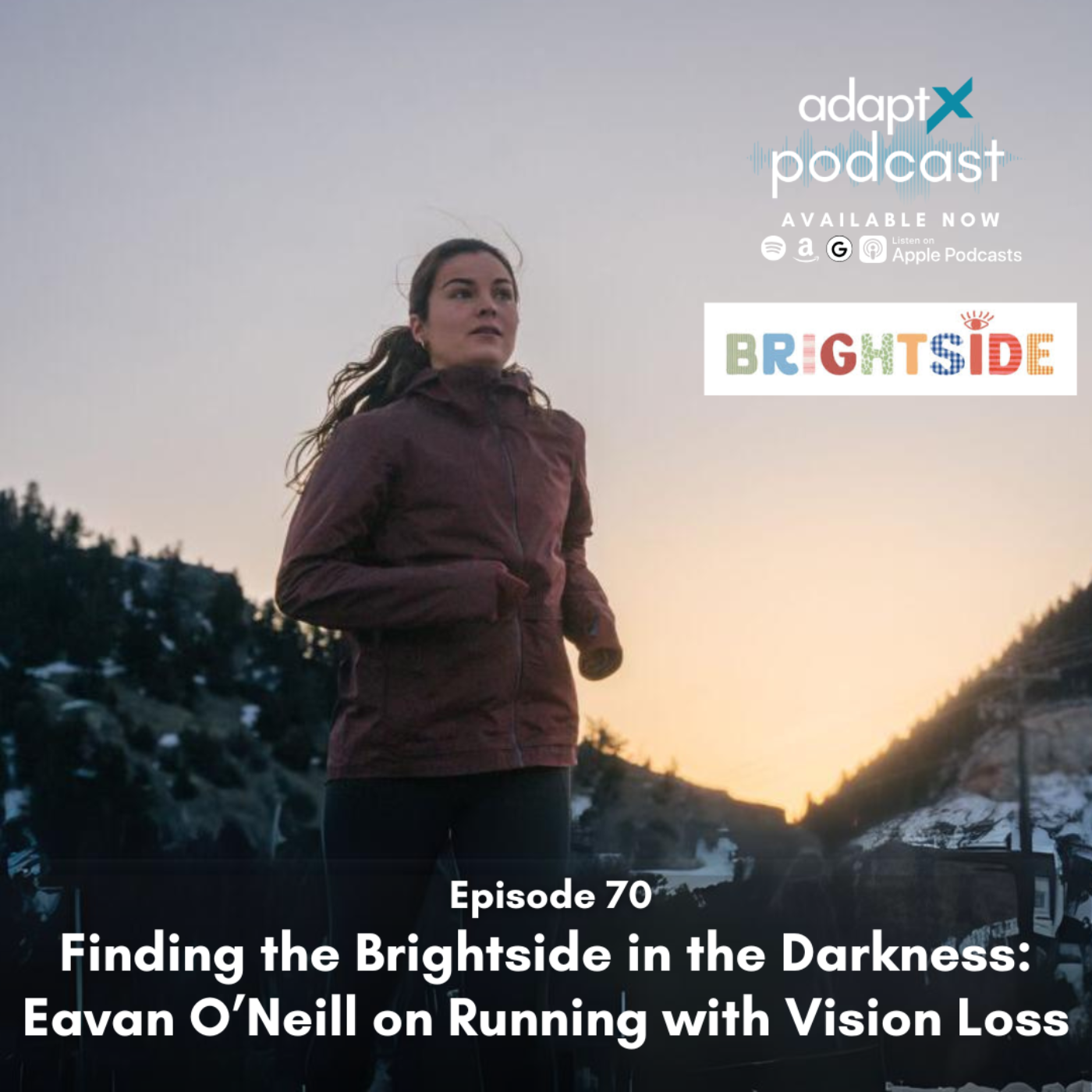
Ep 70#070- Finding the Brightside in the Darkness: Eavan O’Neill on Running with Vision Loss
In this episode of the AdaptX Podcast, Brendan sits down with Eavan O'Neill, a dedicated marathoner and passionate advocate for the blind and visually impaired community. Eavan shares her journey of being diagnosed with Stargardt's disease, a condition that causes progressive vision loss, and how it has shaped her life. She discusses the c6dxolhallenges of navigating college, her career aspirations in the healthcare field, and the importance of community support through her initiative, Brightside. Eavan also highlights her passion for running, including her experiences with the Speed Project and the Boston Marathon, and reflects on personal growth and the duality of desiring a cure while embracing her identity. The conversation emphasizes the significance of understanding and supporting individuals with disabilities, as well as the power of resilience and community.To learn more about Eavan and Brightside, check out the links below,Eavan’s Instagram: @eavanoneilllEavan’s LinkedIn: https://www.linkedin.com/in/eavan-o-neill-79996a135/Brightsides Instagram: @bright_side.groupKeywords: Stargardt's disease, vision loss, running, advocacy, community support, adaptive sports, personal growth, marathon, Brightside, disability inclusionTakeawaysPersonal challenges, such as living with a progressive condition, can shape one's life and perspective, requiring adaptation and resilience.Overcoming obstacles, whether in education or career, often involves finding ways to balance personal struggles with professional and academic goals.Having a strong support system is crucial in facing life's difficulties, and initiatives that foster community support can make a significant difference.Pursuing personal passions, like sports or hobbies, can provide motivation and serve as a powerful tool for personal growth and perseverance.The journey of accepting one's identity while still striving for improvement or change reflects the complexity of personal growth.Resilience is key to overcoming life's challenges, and it's important to foster understanding and support for those facing disabilities or other hardships.Chapters00:00 Introduction to Eavan O'Neill and Stargardt's Disease04:51 Coping with Diagnosis During the Pandemic10:05 Career Aspirations and Shifts Post-Diagnosis18:54 Adapting Running Techniques for Vision Loss28:24 Experiencing the Boston Marathon32:30 Building Community Through Brightside39:33 Challenging Assumptions About Visual Impairment46:15 Personal Growth Through Adversity
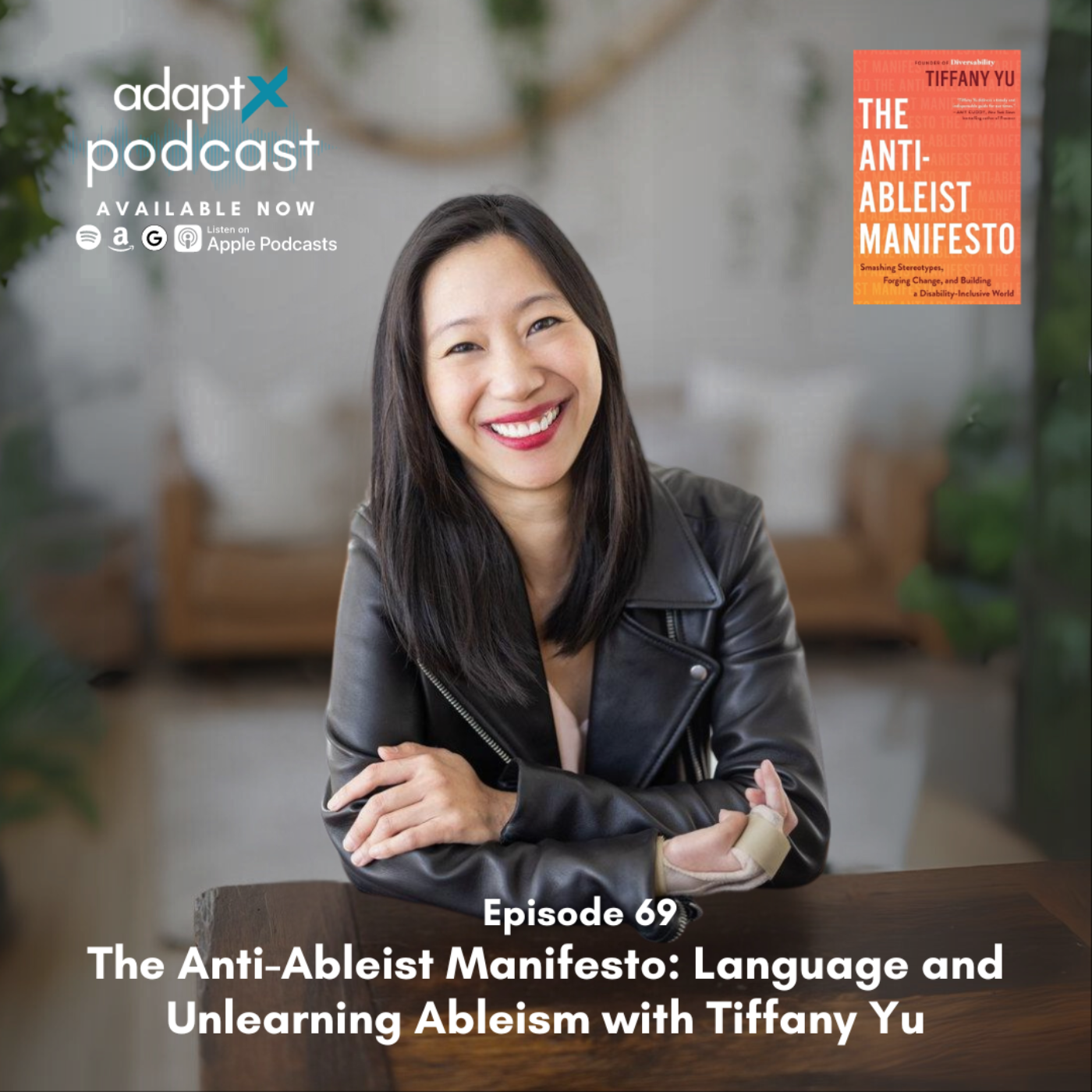
Ep 69#069- The Anti-Ableist Manifesto: Language and Unlearning Ableism with Tiffany Yu
Tiffany Yu is the CEO & Founder of Diversability, an award-winning social enterprise to elevate disability pride; the Founder of the Awesome Foundation Disability Chapter, a monthly micro-grant that has awarded $82.5k to 83 disability projects in 11 countries; and the author of The Anti-Ableist Manifesto: Smashing Stereotypes, Forging Change, and Building a Disability-Inclusive World.She serves on the LA28 Olympic and Paralympic Games Working Group and was a Co-Chair of the World Economic Forum Sustainable Development Impact Summit. At the age of 9, Tiffany became disabled as a result of a car accident that also took the life of her father.She started her career in investment banking at Goldman Sachs and has also worked at Bloomberg and Sean Diddy Combs’ REVOLT Media & TV. Her TED Talk, How to Help Employees with Disabilities Thrive, has over one million views. She has been featured in The Wall Street Journal, The New York Times, The Guardian, USA Today, Marie Claire, and Forbes.To learn more about Tiffany and her book, check out the links below,Tiffany’s Website: https://www.tiffanyyu.com/The Anti-Ableist Manifesto: https://www.tiffanyyu.com/bookTiffany’s LinkedIn: https://www.linkedin.com/in/tiffanyayu/The Awesome Foundation: https://www.awesomefoundation.org/enDiversability: https://mydiversability.com/Keywords: disability inclusion, non-disabled allies, learning without shame, passing the mic, fitness industry, inclusive spaces, shared recreation, disability inclusion, fitness industry, language and etiquette, accommodations, ableism, microaggressions, The Anti-Ableist Manifesto, Austin Foundation Disability ChapterTakeawaysNon-disabled allies play a crucial role in advocating for disability inclusion and should focus on amplifying disabled voices and supporting their initiatives.Learning about disability should be a shame-free process, allowing for mistakes and growth.In the fitness industry, creating inclusive spaces and providing options for people with disabilities to participate in their own way is essential.Shared recreation and coexistence between people with and without disabilities can help normalize disability and address bias and stigma. Trainers should ask individuals with disabilities about their specific accommodations needs and work with them to find suitable modifications.Ableism is a system of oppression that devalues individuals based on the way their body and mind works.Microaggressions in the disability space include erasing or diminishing someone's disability, chronic exclusion, and infantilization of disabled adults.Inclusion programs can be both beneficial and harmful, depending on the experiences and perspectives of the individuals involved.Chapters00:00 Introduction02:18 Amplifying Disabled Voices09:53 Creating Inclusive Fitness Spaces17:47 Shared Recreation and Normalizing Disability29:58 Creating Inclusive Fitness Spaces35:59 Understanding Ableism42:34 Microaggressions in the Disability Space48:38 The Complexities of Inclusion Programs53:02 The Austin Foundation Disability Chapter
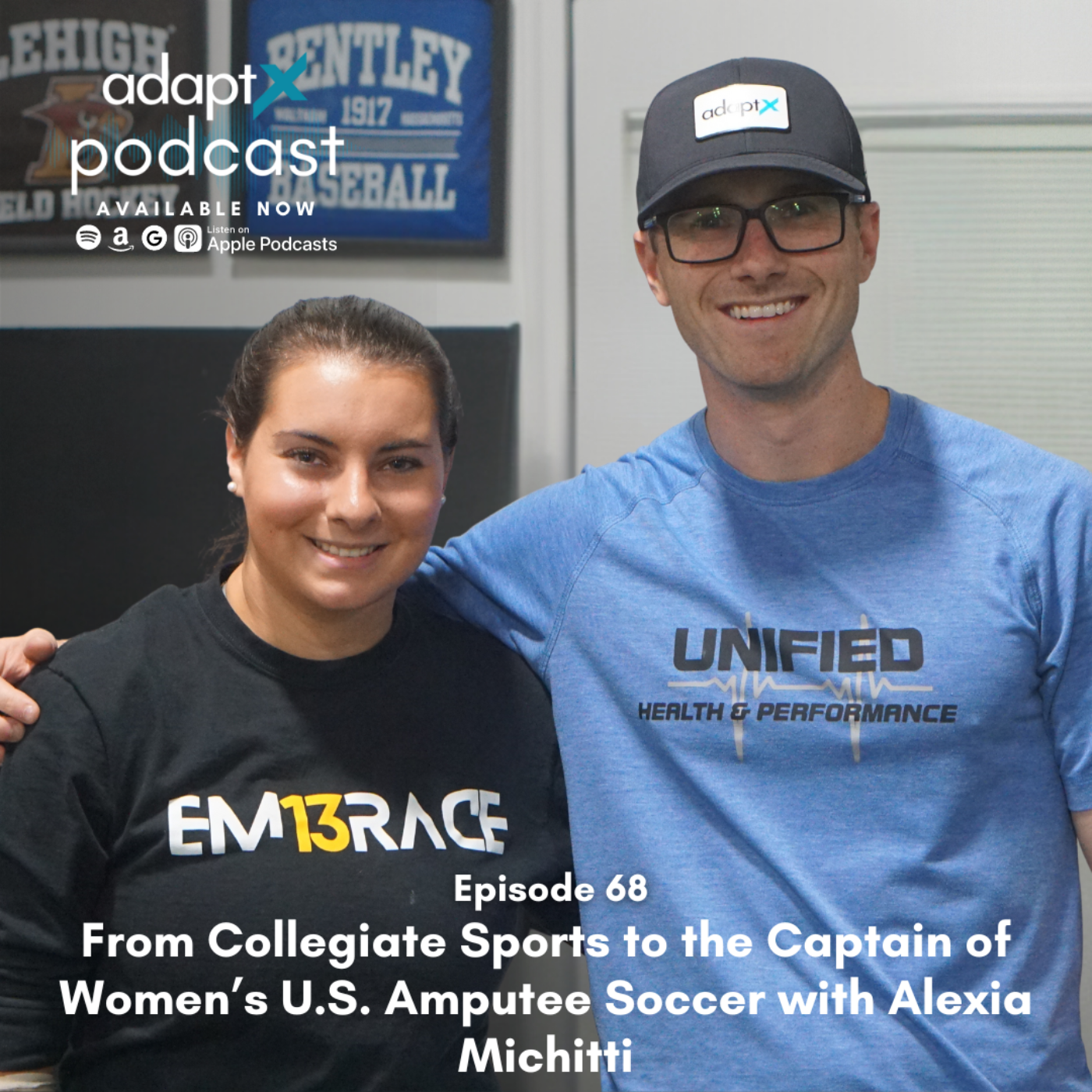
Ep 68#068- From Collegiate Sports to the Captain of Women’s U.S. Amputee Soccer with Alexia Michitti
Alexia Michitti, founder of Em13race LLC, joins the AdaptX Podcast to discuss her journey as a senior at SUNY Oneonta, a motivational speaker, and co-captain of the US Women's Amputee Soccer Team. She shares her experiences growing up with a limb difference and how she was encouraged to participate in traditional sports. Alexia talks about the lack of opportunities for adaptive sports in her high school and the importance of organizations such as Lucky Fin Project and Camp No Limits. She also discusses her entrepreneurial venture, Em13race, which offers adaptive clothing for people with limb differences. Alexia shares her personal journey and the accommodations she has made in the gym and in everyday life and emphasizes the importance of patience and understanding when working with individuals with disabilities. Alexia also talks about the upcoming Women's Amputee Soccer World Cup and the growth of amputee soccer as a sport. To keep up with Alexia and the U.S. Women’s Amputee Soccer Team, check out the links below,Alexia’s Social MediaTiktok: @alexia.michittiInstagram: @alexia_michittiLinkedIn: https://www.linkedin.com/in/alexia-michitti-20b7791b8/U.S. Amputee Soccer Official Site- https://www.usampsoccer.org/FaceBook- https://www.facebook.com/USAmputeeSoccerTeam/Instagram: @usamputeesoccer_womenKeywords: Limb differences, adaptive sports, Lucky Fin Project, Camp No Limits, entrepreneurship, amputee soccer, limb difference, accessibility, representation, fitness, accommodations, patience, Women's Amputee Soccer World Cup, growthTakeawaysAmputee soccer is a growing sport that provides opportunities for individuals with limb differences to participate in competitive athletics.Accommodations in the gym, such as activity-specific prosthetics and modified equipment, can help individuals with limb differences engage in fitness activities.Patience and understanding are crucial when working with individuals with disabilities, as they may require additional time and support to learn and adapt.The representation of disability in the fitness industry should focus on normalizing disability and appreciating everyday accomplishments, rather than solely highlighting exceptional athletic achievements.The upcoming Women's Amputee Soccer World Cup is a significant event for the sport and provides inspiration and role models for younger athletes with limb differences.
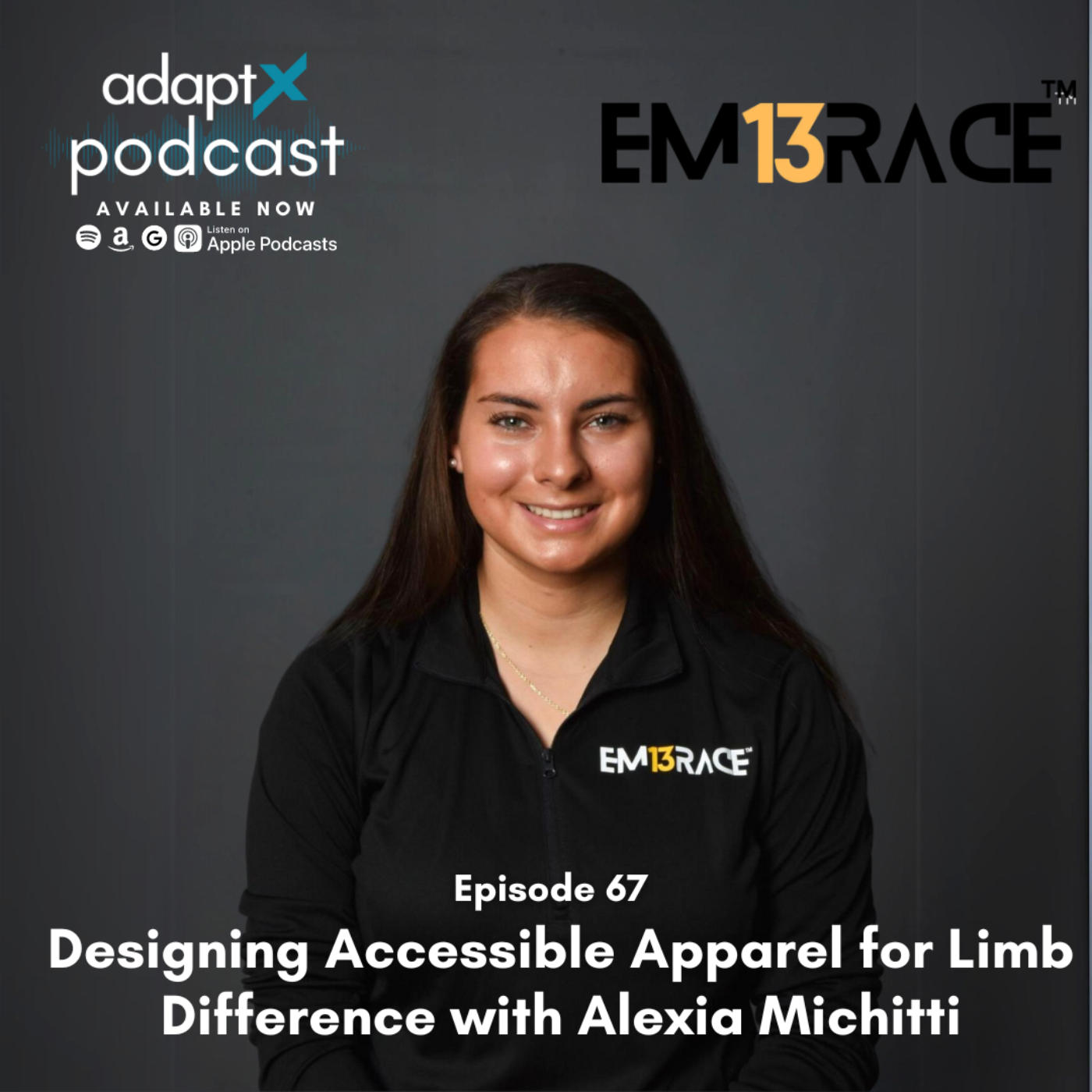
Ep 67#067- Designing Accessible Apparel for Limb Difference with Alexia Michitti
Alexia Michitti, founder of Em13race LLC, joins the AdaptX Podcast to discuss her journey as a senior at SUNY Oneonta, a motivational speaker, and co-captain of the US Women's Amputee Soccer Team. She shares her experiences growing up with a limb difference and how she was encouraged to participate in traditional sports. Alexia talks about the lack of opportunities for adaptive sports in her high school and the importance of organizations such as Lucky Fin Project and Camp No Limits. She also discusses her entrepreneurial venture, Em13race, which offers adaptive clothing for people with limb differences. Alexia shares her personal journey and the accommodations she has made in the gym and in everyday life and emphasizes the importance of patience and understanding when working with individuals with disabilities. Alexia also talks about the upcoming Women's Amputee Soccer World Cup and the growth of amputee soccer as a sport. To keep up with Alexia and discover more about Em13race, check out the links below,Em13race’s Website: https://em13race.com/Tiktok: @alexia.michittiInstagram; @em13raceFacebook: @EM13RACEKeywords: Embrace LLC, adaptive clothing, limb differences, adaptive sports, Lucky Fin Project, Camp No Limits, entrepreneurship, amputee soccer, limb difference, accessibility, representation, fitness, accommodations, patience, Women's Amputee Soccer World Cup, growthTakeawaysAmputee soccer is a growing sport that provides opportunities for individuals with limb differences to participate in competitive athletics.Accommodations in the gym, such as activity-specific prosthetics and modified equipment, can help individuals with limb differences engage in fitness activities.Patience and understanding are crucial when working with individuals with disabilities, as they may require additional time and support to learn and adapt.The representation of disability in the fitness industry should focus on normalizing disability and appreciating everyday accomplishments, rather than solely highlighting exceptional athletic achievements.The upcoming Women's Amputee Soccer World Cup is a significant event for the sport and provides inspiration and role models for younger athletes with limb differences.Chapters00:00 Alexia Michitti: From Traditional Sports to Adaptive Sports08:03 The Importance of Organizations like Lucky Fin Project and Camp No Limits15:27 Embrace LLC: Pioneering Adaptive Clothing for Limb Differences
#67- Designing Accessible Apparel for Limb Difference with Alexia Michitti
Alexia Michitti, founder of Em13race LLC, joins the AdaptX Podcast to discuss her journey as a senior at SUNY Oneonta, a motivational speaker, and co-captain of the US Women's Amputee Soccer Team. She shares her experiences growing up with a limb difference and how she was encouraged to participate in traditional sports. Alexia talks about the lack of opportunities for adaptive sports in her high school and the importance of organizations such as Lucky Fin Project and Camp No Limits. She also discusses her entrepreneurial venture, Em13race, which offers adaptive clothing for people with limb differences. Alexia shares her personal journey and the accommodations she has made in the gym and in everyday life and emphasizes the importance of patience and understanding when working with individuals with disabilities. Alexia also talks about the upcoming Women's Amputee Soccer World Cup and the growth of amputee soccer as a sport. To keep up with Alexia and discover more about Em13race, check out the links below:Em13race’s Website: https://em13race.com/ Tiktok: @alexia.michitti Instagram; @em13race Facebook: @EM13RACE Keywords: Embrace LLC, adaptive clothing, limb differences, adaptive sports, Lucky Fin Project, Camp No Limits, entrepreneurship, amputee soccer, limb difference, accessibility, representation, fitness, accommodations, patience, Women's Amputee Soccer World Cup, growth Takeaways - Alexia Makiti is a senior at SUNY Oneonta, a motivational speaker, and co-captain of the US Women's Amputee Soccer Team. - She grew up participating in traditional sports and was encouraged by her parents to be like everyone else regardless of her limb difference. - Alexia faced challenges as she got older and became more aware of the opportunities in the disability sports world. - She founded Em13race LLC, an adaptive clothing company for people with limb differences, to solve the problem of ill-fitting sleeves and provide innovative solutions for adaptive fashion. Chapters 00:00 Alexia Michitti: From Traditional Sports to Adaptive Sports 08:03 The Importance of Organizations like Lucky Fin Project and Camp No Limits 15:27 Embrace LLC: Pioneering Adaptive Clothing for Limb Differences
Ep 66#066- Disability is Human with Dr. Stephanie Cawthon
In this episode, Brendan is joined by Stephanie Cawthon, an internationally renowned author, researcher, and consultant who brings relatable insights and real-world skills to her mission that—when we tap the power of accessibility—we ensure disabled people can thrive and succeed. She is the Author of Disability is Human: The Vital Power of Accessibility in Everyday Life, which will be released this Fall.Dr. Cawthon earned her Bachelor’s and Master’s degrees from Stanford University and her doctorate from the University of Wisconsin at Madison. Her groundbreaking research has been funded by over $50 million in federal and other grants. In 2023 she founded the National Disability Center for Student Success at The University of Texas at Austin, where she is a tenured Professor of Educational Psychology. She also brings a lived experience to her work. In addition to her congenital hearing loss, she has several mental health and physical disabilities that have a significant impact on her ability to engage in important life activities.To find her book and learn more about Dr. Cawthon, follow the links belowStephanie’s Website- https://stephaniecawthon.com/Disability is Human- https://stephaniecawthon.com/disability-is-human/Stephanie’s LinkedIn- https://www.linkedin.com/in/stephanie-cawthon/Instagram- @drstephaniecawthon
Ep 65#065- Matt Downing on the Growth of Adaptive Sports and Concussion Research
Today’s guest Matt Downing is the Program and Events Coordinator at the Concussion Legacy Foundation. Prior to that he spent the last 3 years working in the Olympic and Paralympic movement planning and executing large scale events and tournaments at organizations such as U.S. Soccer, USA Triathlon, and USA Football. He is committed to making sports safer and accessible for all. He discusses how sports helped him overcome the challenges of cerebral palsy and become the person he is today. Matt highlights the differences and similarities between the Olympic and Paralympic movements, emphasizing the passion and camaraderie shared by athletes in both. He also discusses the importance of accessibility in event planning and the need for inclusive programming in the fitness industry. Matt concludes by sharing upcoming projects and initiatives of the Concussion Legacy Foundation.To learn more about Matt and the Concussion Legacy Foundation, check out the links below,Matt’s LinkedIn: https://www.linkedin.com/in/matthew-downing493/Concussion Legacy Foundation Website: https://concussionfoundation.org/Keywords: inclusion, accessibility, sports, cerebral palsy, Olympic, Paralympic, event planning, fitness, Concussion Legacy FoundationTakeawaysSports can be a catalyst for personal growth and overcoming challenges, even for individuals with disabilities.The Olympic and Paralympic movements share similarities in terms of camaraderie and teamwork among athletes.Event organizers should prioritize accessibility and inclusion by involving people with disabilities in the planning process.The fitness industry should focus on creating inclusive and accessible spaces for individuals of all abilities.The Concussion Legacy Foundation is working on raising awareness about concussions and traumatic brain injuries, as well as promoting safer sports practices.Chapters00:00 Introduction and Background01:20 Sports as a Catalyst for Personal Growth05:25 Differences and Similarities Between the Olympic and Paralympic Movements11:01 Prioritizing Accessibility in Event Planning18:47 Creating Inclusive and Accessible Fitness Spaces26:29 Overcoming Challenges and Embracing Resilience33:16 Connecting with the Concussion Legacy Foundation
Ep 64#064- Locked In: Jake Haendel on Recovery and Building an Accessible World
Ahoi is an accessibility app that identifies barriers in the environment and prioritizes businesses that are accessible. It also offers personalized accessibility ratings based on individual needs. The app aims to take the mystery out of accessibility and provide a customizable solution. The founder, Jake Haendel, was diagnosed with acute toxic progressive leukoencephalopathy and went through a four-year recovery process. The idea for the app came from his personal experiences of encountering accessibility challenges. The team focused on building a functional MVP and prioritized user research to address the biggest pain points. In terms of sustainability, Ahoi is working on partnerships with government organizations and exploring revenue generation opportunities. They discuss partnerships, monetization strategies, and future plans for expansion, touch on the importance of prioritizing safety, and the need for government support in the disability tech sector. The conversation concludes with a discussion about the personal experience of being trapped in a locked-in state and the coping mechanisms used during that time.To follow along with Jake and Ahoi, check out the following links,Instagram: @miraclman31LinkedIn: https://www.linkedin.com/in/jake-haendel-a8629a1b4/Ahoi's Website: https://ahoimate.com/TakeawaysThe disability tech sector is often undervalued, but it has a significant market size with over a billion people worldwide with disabilities.The personal experience of being trapped in a locked-in state was challenging, and coping mechanisms included focusing on positive memories and engaging in mental activities.The conversation also touches on the need for government support and legislation to address accessibility issues. Detecting consciousness in comatose patients is a new area of research, and methods like fMRI are being used to determine if patients are locked in.The bedside exam to detect consciousness in comatose patients is outdated and can lead to misdiagnosis.Recovery from locked-in syndrome involves regaining movement and communication abilities through intensive rehabilitation.Healthcare professionals should assume competence in patients with disabilities and provide personalized care.The fitness industry can improve accessibility by addressing physical barriers, providing adaptive equipment, and training trainers to work with people with disabilities.Chapters00:00 Introduction and Background05:17 The Challenge of Universal Accessibility09:02 Affordable Accessibility and ROI14:23 The Frustration of Uncertain Accessibility19:21 Building a Functional MVP for Ahoi24:04 Monetization Strategies and Future Plans30:33 User Ratings, Reviews, and Vetting Process38:19 Coping Mechanisms in a Locked-In State42:05 The Importance of Government Support49:04 The Timeline of Recovery from Locked-In Syndrome57:29 Creating an Inclusive Fitness Industry01:05:19 Personal Relationships and Problem-Solving in Rehabilitation
Ep 63#063- How Inclusive Design is Universally Beneficial with Mason Metzger
Mason Metzger, an award-winning keynote speaker and advocate, discusses his journey as a motivational speaker and consultant, integrating universal design principles into businesses. He shares his experiences as a wheelchair user and the challenges he faced in college. Mason emphasizes the importance of understanding the lived experiences of people with disabilities and integrating universal design principles in businesses. He also highlights the value of fitness in coping with disabilities and improving overall well-being. Mason provides insights on effective communication with people with disabilities and the misconceptions and assumptions often made about them. He offers advice for fitness professionals on supporting individuals with disabilities and discusses his speaking engagements and consulting services.To keep up with Mason, check out the links below, Mason’s Website: https://www.masonmetzger.com/Mason’s LinkedIn: https://www.linkedin.com/in/mason-metzger/Keywords: Mason Metzger, keynote speaker, advocate, universal design principles, wheelchair user, disabilities, fitness, communication, assumptions, consulting servicesTakeawaysIntegrating universal design principles and making environments more accessible is crucial for businesses to provide an inclusive experience for people with disabilities.Understanding the lived experiences of people with disabilities and fostering empathy among employees is essential for creating an inclusive culture.Fitness can have a profound impact on individuals with disabilities, improving their physical and mental well-being and enabling them to tackle opportunities more effectively.Effective communication with people with disabilities requires treating them as individuals, understanding their unique needs, and building trust and rapport.Fitness professionals can support individuals with disabilities by adapting exercises, focusing on individual goals, and using person-centered language.The fitness industry can improve accessibility by integrating universally designed equipment, providing braille and other support for visually impaired individualsChapters00:00 Introduction to Mason Metzger and Universal Design Works04:28 Mason's Journey as a Motivational Speaker and Consultant08:24 The Importance of Individual Mission and Authentic Communication14:31 The Value of Fitness for Individuals with Disabilities19:40 Supporting Individuals with Disabilities in the Fitness Industry22:23 Improving Accessibility in the Fitness Industry26:35 Effective Communication with People with Disabilities30:03 Building Trust and Rapport with People with Disabilities34:07 Misconceptions and Assumptions about People with Disabilities38:56 Mason's Speaking Engagements and Consulting Services
Ep 62#062- Paralympics, Prosthetics, and Policy: Creating Access to Adaptive Equipment and Fitness with John Edward Heath
John Edward Heath, a former Marine and Paralympic athlete, shares his journey as an amputee and advocate for amputees in Maryland. He discusses his passion for weightlifting and how it led him to become a Paralympic athlete. John also talks about the challenges he faced in the military and the decision to undergo an elective amputation. He highlights the importance of insurance coverage for secondary prosthetics and the legislation he is working on in Maryland to ensure access to these prosthetics. On May 16, 2024, Governor Moore of Maryland signed the “So Everybody Can Move Act of Maryland” into law, and John was the lead in making this happen. What this is, as of right now, is that if a Maryland resident were to become an amputee, insurance companies would only be required to provide ONE prosthetic. To be physically active, a secondary prosthetic is needed. As of Jan 1, 2025, insurance companies will now be required to provide a secondary prosthetic for movement! This significant milestone inspired John to found the Adaptive Athletic Foundation of Maryland. John’s personal mission is to make gyms more adaptive and disabled-accessible while providing adaptive coaching opportunities for coaches. John has pioneered the creation of adaptive crossfits to the Move United pipeline for our youth and expanded adaptive sports in Australia and New Zealand.To keep up with John and the Adapative Athletics Foundation, check out the links below, Instagram: @CarbonFiber_John_LinkedIn: https://www.linkedin.com/in/john-edward-heath-9b0620255/Adaptive Athletics Foundation of MD Instagram: @adaptiveathletics_mdKeywords: amputee, weightlifting, Paralympic athlete, elective amputation, insurance coverage, secondary prosthetics, legislation, Paralympic classification, adaptive sports, adaptive athlete, inclusive fitness, amputee, training, coaching, safety considerations, emotional reaction, Adaptive Athletics Foundation, accessibility, adaptive coaching, para programs, adaptive sportsTakeawaysInsurance companies often do not cover the cost of secondary prosthetics, which are necessary for amputees to be active and participate in various activities.Legislation is being introduced in Maryland to require insurance companies to provide coverage for secondary prosthetics.The Paralympic classification system needs better representation and understanding of amputees' unique needs and abilities in adaptive sports. Coaches working with amputees should understand their unique training requirements and communicate effectively with them.Safety considerations for amputees include managing heat and sweat, dealing with phantom pain, and avoiding cuts from prosthetics.Becoming an amputee can be emotionally challenging, but finding a new passion and surrounding oneself with supportive people can lead to personal growth.Creating para programs at universities and making adaptive sports more popular can provide opportunities for disabled students.Chapters00:00 Introduction and Childhood05:59 Importance of Insurance Coverage for Secondary Prosthetics15:43 Paralympic Classification System23:27 Competitive Focus on Paralympics28:45 Coaching Considerations for Amputees35:36 Emotional Reactions and Finding New Passions as an Amputee41:06 The Adaptive Athletics Foundation of Maryland47:56 Creating Para Programs at Universities
Ep 61#061- Making Exoskeletons and Assistive Technology Accessible with Ray Browning
Ray Browning is the CEO and co-founder of Biomotum, Inc., a wearable rehabilitation robotics company. Browning is an entrepreneur, innovator, and an academic and clinical researcher with over 30 years of product development, start-up, academic and Fortune 100 (Nike) experience. Ray has a strong technical and clinical background and has experience managing large research/product development programs and budgets. Ray has been involved in 3 startup companies in the clinical and health markets and has been successful in securing capital and non-dilutive grants to support these companies. Brendan and Ray discuss the development of wearable rehabilitation robotics and explore the benefits of resistance training for individuals with mobility impairments and the potential of the Spark device to improve their functional capacity. It discusses the customization and accessibility of the device, as well as the integration of AI technology. They also discuss the affordability of assistive technology and the importance of celebrating the uniqueness of individuals with disabilities in their movement.To learn more about Ray and Biomotum, check out the links below,Biomotum: https://www.biomotum.com/Biomotum Newsletter Sign-Up Form: https://share.hsforms.com/1rhUEAc68Q3mp43IBnNsmPg4xw0zKeywords: wearable rehabilitation robotics, exoskeletons, powered orthoses, cerebral palsy, gait rehabilitation, assistive devices, ankle joint, walking function, functional strength, resistance training, mobility impairments, Spark device, customization, accessibility, AI technology, affordability, assistive technology, uniqueness, lower extremity solutions, user needs, goalsTakeawaysBiomotum Inc. is developing wearable rehabilitation robotics, such as exoskeletons and powered orthoses, to improve gait rehabilitation and assistive devices.The Spark device offers customization options to accommodate different levels of functional capacity and foot deformities.The integration of AI technology in the device allows for dynamic biofeedback and personalized settings.The affordability of assistive technology is a key consideration, and the goal is to make the Spark device as accessible as custom ankle foot orthoses.The focus should be on celebrating the uniqueness of individuals with disabilities and supporting their movement goals, rather than conforming to a standardized definition of normal.The roadmap for the future includes expanding into other lower extremity solutions andChapters00:00 Introduction and Background03:05 Passion for Mobility and Robotics08:56 Improvements in Walking Function13:58 Listening to User Needs and Goals20:24 Designing for User Expectations28:55 Functionality and Real-Time Adjustment of the Device35:30 Training Modality vs. Assistive Device42:25 Affordability and Accessibility46:26 Celebrating Uniqueness and Future Expansion
Ep 60#060- The Road to Paris: Jack O’Neil's Journey to the Paralympics and D1 Athletics
Jack O’Neil started swimming at the age of six and spent two summers on a summer league swim team before moving on to a year-round club where he specialized in backstroke and middle-distance freestyle. Jack was born with congenital deformities in his left leg that required many surgeries to fix and after almost 10 years of trying to save his leg, Jack decided that having his leg amputated above the knee was the best decision. He returned to the pool just weeks after the amputation and grew to become an advocate for athletes with disabilities as well as an outstanding swimmer and triathlete. Jack qualified for USA Para-swimming nationals at the age of 10 and went on to second-place finishes at both the USA Para-swimming and USA Triathlon para-nationals. As a high school swimmer, he was the first athlete with a disability to qualify for the Colorado State Championships under able-bodied time standards. Jack was recruited to swim at the University of Wyoming by Head Coach Dave Denniston, a 2008 USA Paralympian in Swimming. Jack is a captain of the UW men's team and has led the Cowboys to a successful dual meet record and looks forward to the next season. Since coming to UW to swim, Jack has been a part of the US National Para-swimming team and has recently qualified for the 2024 Paralympic Games in Paris.To keep up with Jack and his paralympic journey, check out the links below,Jack’s Instagram: @jackoneil19Paris Para Swimming Schedule: https://olympics.com/en/paris-2024/paralympic-games/schedule/para-swimmingKeywords: adaptive sports, swimming, amputee, Paralympic Games, triathlon, representation, college swimming, training, technique, equipment accessibility, media, future plansTakeawaysSwimming can be a therapeutic option for individuals with disabilities and can lead to a successful athletic career.Representation in sports, media, and society is crucial for disabled athletes to feel included and recognized for their abilities.Gyms and fitness professionals can improve accessibility by gaining knowledge about supporting individuals with disabilities and being open to creative solutions.While sports can be a fulfilling career, it is important for athletes to have other interests and pursue education for future opportunities.The Paralympic Games provide a platform for disabled athletes to showcase their talents and compete at an international level.Chapters00:00 Introduction and Background06:27 The Importance of Representation in Sports13:22 Adapting Exercises and Training for Individual Needs18:33 Classification and Competition at the Paralympics22:18 Accessibility of Prosthetics and Adaptive Equipment28:46 Social Media and Staying Connected
Ep 59#059- Coaching Strategies to Create Inclusive Sports with Dr. Peter McGahey
In todays episode we are joined by Dr. Peter McGahey. Dr. McGahey is a teaching assistant professor at West Virginia University in the School of Sport Sciences within the College of Applied Human Science, the National Educator Developer for the U.S. Soccer Federation C-Course and as the assistant coach for the U.S. Soccer Federation Power Soccer National Team. He has degrees in Educational Leadership, Physical Education/Sport Coaching, Human Performance and Sport and Communications. He holds both a United States Soccer Federation ‘A’ License and a ‘Youth’ License. McGahey served as a NCAA Division I and II Women’s and Men’s Head and Assistant Soccer Coach for over 20 years. McGahey has coached athletes all along the developmental pathway from grassroots to Olympic Development Program to college, from youth to high school, and TopSoccer and developed programming at the local club, state, and national levels. Most recently serving as an Assistant Coach with CP Soccer, Technical Advisor to Down Syndrome Sports of America, the West Virginia Soccer Association - Olympic Development Program Director, and a pre-academy coach at Mountaineer United Soccer Club. Additionally, McGahey is the co-author alongside Dr. Peter Pierro of Grassroots Coaching: Using sports psychology and coaching principles effectively.To connect with Dr. Peter McGahey or learn more about him, check out the links below,Dr. Peter McGahey’s LinkedIn: https://www.linkedin.com/in/drpetermcgaheyDr. Peter McGahey’s book, “Grassroots Coaching”: https://www.amazon.com/Grassroots-Coaching-Psychology-Principles-Effectively/dp/1475864779/ref=tmm_pap_swatch_0?_encoding=UTF8&dib_tag=se&dib=eyJ2IjoiMSJ9.ke6kCKtdpan_2qR2laPf9g.YC6KBiQLElzUZEJU_lZqQGHx-OD5d1STOihe2es8XAI&qid=1721235032&sr=8-1TakeawaysCreating inclusive and accessible environments in sports is crucial for promoting participation and belonging for athletes with disabilities.Autonomy and choice are important in player-driven sports like soccer, allowing athletes to make decisions and adapt their skills to the game.Skill adaptation, rather than skill acquisition, should be the focus in coaching, allowing athletes to adapt their skills to meet the needs of the game.Positive relationships between coaches and athletes, along with a balance of support and challenge, contribute to a supportive and inclusive coaching environment.Assessing progress in team sports can be challenging, but focusing on observable behaviors and co-constructing assessments with athletes can provide meaningful feedback.Chapters00:00 Introduction and Background of Dr. Peter McGahey02:06 The Joy and Autonomy of Soccer06:14 Effective Learning in Sports: Structured Instruction vs. Autonomy12:32 Creating Inclusive Environments for Athletes with Disabilities17:28 Characteristics of an Effective Coach for Adaptive Populations18:30 Universal Design and Meaningful Experiences in Coaching22:11 Assessing Progress and Monitoring Growth in Team Sports31:12 The Importance of Openness and Positive Relationships in Coaching36:07 Creating an Accessible Fitness Industry44:26 Recommendations for Getting Involved in Adaptive Sports
Ep 58#058- 50 Marathons in 50 States: Hope Fights Back against ALS with Andrea Peet
In 2022, eight years after her initial diagnosis, Andrea Peet became the first person with ALS to complete 50 marathons in all 50 states. Racing in a recumbent trike, she is the inspiration behind the Team Drea Foundation, a non-profit organization that has raised more than $1 million towards ALS research. Her documentary, Go On, Be Brave, and memoir Hope Fights Back shares her incredible story of resilience. Over the episode Andrea and Brendan discuss how ALS research and awareness has changed over the years due to growing discussions and social media trends like the ALS Ice Bucket Challenge. Andrea details the filming of her documentary and the various challenges faced including Covid, and the writing of her book and how through those mediums she was able to tell her story. To learn more about Andrea and ALS research, check out the links belowTeam Drea: https://www.teamdrea.org/Go On, Be Brave documentary: https://goonbebravefilm.com/Hope Fights Back memoir: https://www.simonandschuster.com/books/Hope-Fights-Back/Andrea-Lytle-Peet/9781639364770Keywords: accessibility. adaptive fitness, ALS, disability, disability community, disease, endurance sports, fitness, inclusion, inclusive fitness, inclusive spaces, motivation, sportsTakeaways: Andrea highlights how she refused to let a serious diagnosis prevent them from achieving great things, showcasing resilience and determination.The process of getting diagnosed with ALS involved various tests and an initial period of uncertainty, followed by a confirmed diagnosis.The diagnosis of ALA had a significant emotional impact, but it also motivated a focus on accomplishing important goals before physical limitations increased.Campaigns and challenges, such as the Ice Bucket Challenge, have significantly increased awareness and funding for ALS research.It's important to maintain a positive outlook and treat bravery as a muscle that needs regular exercise.
Ep 57#057- Stroke Recovery, Fitness, and Recreation with Dennis Murphy
Dennis Murphy shares his recovery journey after a stroke and the importance of fitness and recreation in the recovery process. He emphasizes the need for consistency and determination in daily activities and therapy. Dennis also discusses the challenges of reacclimating to a new normal and the importance of treating individuals with disabilities as capable and independent. He shares his goals of riding his bike across the country and improving his swimming abilities. Dennis offers advice to others going through a similar experience, encouraging them to focus on daily progress and maintain a positive perspective.To learn more, check out the resources below,Mass General Brigham Spaulding Rehab: spauldingrehab.orgrehabhealth360.comTakeawaysConsistency and determination are key in the recovery process after a stroke.Treating individuals with disabilities as capable and independent is important.Maintaining a positive perspective and focusing on daily progress is crucial.Fitness and recreation play a significant role in the recovery process and mental health.Setting goals and working towards them can bring a sense of normalcy and purpose.Chapters00:00 Introduction and Background03:01 The Stroke Experience05:08 Language Recovery and Therapy08:30 Returning to Work10:45 Therapy Schedule13:15 Readjusting Goals and Perspectives20:50 Long-Term Goals23:30 The Gym Experience25:25 Disability Etiquette28:23 Advice for Others Going Through Recovery31:34 Conclusion
Ep 56#056- Accepting Disability through Adaptive Sports with David Figueroa
David Figueroa, a motivational speaker and advocate with cerebral palsy, shares his experiences and insights on building inclusive businesses and excelling in adaptive sports. He emphasizes the importance of adaptive sports in accepting and appreciating one's diagnosis and developing relationships with peers. David also discusses his journey through education, the challenges he faced in school, and the need for inclusive environments in gyms and fitness facilities. He highlights the importance of listening to individuals with disabilities and involving them in the decision-making process to create truly inclusive spaces. David's story and message inspire others to believe in themselves and work towards their goals.To learn more about David, check out his podcast or his social media:Youtube: https://www.youtube.com/c/DavidsCerebralPalsyandFitnessChannelDavid’s Instagram: @davidscpfitnessPodcast Instagram: @cerebralpalsyandfitnesspodcastX: @davidscpfitnessKeywords: Cerebral palsy, adaptive sports, inclusive businesses, education, challenges, inclusive gyms, fitness facilities, disabilities, inclusionTakeaways:Adaptive sports play a crucial role in accepting and appreciating one's diagnosis and developing relationships with peers.Inclusive gyms and fitness facilities should listen to individuals with disabilities and involve them in decision-making processes to create truly inclusive spaces.Education systems need to be more inclusive and supportive of students with disabilities, providing the necessary resources and accommodations.Fitness professionals should receive education and training on disability etiquette, communication strategies, and expectations to better support individuals with disabilities.Chapters00:00 Introduction and Background01:15 Living with Cerebral Palsy and Overcoming Challenges06:17 Navigating Education with a Disability09:02 Improving Inclusion in Fitness Environments16:19 Keynote Speeches and Presentations21:52 Positive Experiences with Fitness Professionals25:41 Where to Find David Figueroa
Ep 55#055- Disability Identity: Acceptance, Academics, and Athletics with Dr. Cort Schneider
On today’s episode, we were joined by Dr. Cort Schneider. Dr. Schneider was born with cerebral palsy, is the Director of Disability Services at the University of Richmond, and a professor. He is a passionate advocate for people with disabilities, and adaptive recreation. He is a runner who uses forearm crutches and he has completed 14 half marathons, and dozens of 5k races. He even wrote a book called the Trial of Miles: A Disabled Runner's Memoir. Currently, he has taken his passion for people with disabilities and adaptive recreation and has launched a podcast entitled Sports, Identity, and the Disability Blue. This podcast uses the lens of sports to explore the stories of people with disabilities which sheds light on the experience of those with disabilities, The podcast is also a celebration of disability as a cultural identity. Dr. Schneider discusses the importance of inclusion and accessibility in various aspects of university life and he emphasizes the need for inclusive environments that accept, embrace, educate, and empower people with disabilities. Dr. Schneider challenges the narrative of disability as a negative and highlights the importance of reframing disability as a natural part of the human experience. The conversation also touches on the challenges of implementing diversity, equity, and inclusion initiatives within universities and the portrayal of people with disabilities as inspirational. He shares his passion for running and the empowering nature of his athletic body as a person with a disability. Cort provides advice for personal trainers on how to create an inclusive and welcoming environment for clients with disabilities. To listen to Dr. Schneider’s podcast, check out the link below,Dr. Schneider’s Podcast: https://cortschneider.podbean.com/Keywords: disability, inclusion, accessibility, university, diversity, equity, inspiration, running, disability, races, adaptive equipment, inclusivity, gym, personal trainingTakeawaysInclusion is a set of relationships, and creating inclusive environments requires collaboration and buy-in from all members of a community.Disability should be reframed as a natural part of the human experience, and society should adjust to accommodate people with disabilities rather than expecting them to conform to able-bodied norms.The portrayal of people with disabilities as inspirational can create unrealistic expectations and perpetuate low expectations for individuals with disabilities.Universities and other institutions should prioritize accessibility and inclusivity in all aspects, including physical spaces, services, and programs.The cost of adaptive equipment for individuals with disabilities can be a significant barrier.Personal trainers should ask clients with disabilities about their specific needs and goals, and not be afraid to make mistakes.Chapters00:00 Introduction and Background02:19 Disability Statistics and the Norm of Able-Bodiedness06:11 Accessibility and Inclusivity in Campus Recreation Centers10:36 Creating an Inclusive Environment for Neurodiverse Students12:51 DEI Initiatives in Universities15:43 The Importance of Collaboration in Inclusion Work21:27 The Value of Disability and the Complexity of the Experience24:06 The Issue with the Inspirational Narrative30:13 Overcoming Challenges and Others' Opinions35:16 Barriers Faced by Individuals with Disabilities in Races38:18 Creating Inclusive Races45:31 Advice for Personal Trainers53:19 Fostering an Inclusive Gym Culture
Ep 54#054- Bridging the Gap Between Rehab and Fitness with Bethany Noble
Bethany Noble initially started working in adaptive fitness and with diverse populations when she was based at a rehabilitation center. She was recognized by the physiotherapist team and asked to work with their rehabilitation clients. She started with Spinal Cord Injuries as her first rehabilitation client and received direct referrals from physios. Bethany emphasizes the importance of understanding the value of physical exercise for everyone, not just individuals with disabilities. She believes that personal trainers should be directly referred to individuals who have experienced a life-changing circumstance. Bethany also discusses the importance of attitude, positive reinforcement, and personalized programming when working with diverse populations. In this conversation, Brendan and Bethany discuss the importance of accessibility and inclusivity in the fitness industry and they highlight the need for fitness professionals to think outside the box and adapt exercises and equipment to meet the needs of individuals with disabilities or health conditions. Bethany shares her experience of working in a non-traditional gym environment and how she markets her program through LinkedIn. They also discuss the landscape of inclusion and adaptive fitness in the UK compared to the US. Overall, the conversation emphasizes the importance of lifelong learning, being open to new ideas, and creating a supportive network. To learn more about Bethany and BGC Rehabilitation, visit the links below,Bethany’s LinkedIn: https://www.linkedin.com/in/bethany-noble-574077152/BGC Rehabilitation: https://www.bgcrehabilitation.com/Keywords: adaptive fitness, diverse populations, rehabilitation, physiotherapist, referrals, value of exercise, attitude, positive reinforcement, personalized programming, accessibility, inclusivity, fitness industry, adaptation, equipment, unconventional, mindset, environment, marketing, LinkedIn, learning, supportTakeawaysRecognition from the physiotherapist team led to Bethany working with rehabilitation clientsDirect referrals from physios are important in the field of adaptive fitnessUnderstanding the value of exercise for everyone is crucialAttitude and positive reinforcement play a significant role in training individuals with disabilitiesPersonalized programming is essential when working with diverse populations. Fitness professionals should focus on the bigger picture of exercise and fitness, rather than getting caught up in the minutia of specific exercises or rep schemes.Thinking outside the box and adapting exercises and equipment can make fitness more accessible and inclusive for individuals with disabilities or health conditions.Creating a quiet and distraction-free environment can be beneficial for clients with sensory sensitivities.Overcoming self-doubt and embracing vulnerability is essential for personal and professional growth.The landscape of inclusion and adaptive fitness varies between countries, but exposure and belief systems play a significant role in promoting inclusivity.Chapters00:00 Recognition and Referrals02:36 The Value of Exercise for Everyone03:21 Attitude and Positive Reinforcement09:19 Personalized Programming29:37 Adapting Exercises and Equipment for Accessibility32:26 Thinking Outside the Box in Fitness36:49 Creating an Inclusive Environment43:37 Marketing and Networking on LinkedIn48:25 Overcoming Self-Doubt and Embracing Vulnerability
Ep 53#053-The Execution and Etiquette of Inclusive Marketing with Ryan Wilson
In today's episode Ryan Wilson, CEO of Team Trust Productions, discusses the importance of inclusive and accessible marketing campaigns. He shares his experiences of living with a disability and how it inspired him to start his company. Wilson emphasizes the need to humanize individuals with disabilities and showcase their stories beyond their sports achievements. He also highlights the role of representation in film and the need for authentic and diverse portrayals of disability. Wilson provides insights into the process of creating marketing videos and the importance of storytelling. He offers advice on how gyms and fitness professionals can authentically represent disability in their campaigns and improve inclusivity in the fitness industry. To learn more about Ryan and Team Trust Productions, visit the links below,Team Trust Productions: https://teamtrustproductions.com/Team Trust Productions LinkedIn: https://www.linkedin.com/company/team-trust-productions/Ryan Wilson’s LinkedIn: https://www.linkedin.com/in/ryan-wilson-trust/Keywords: inclusive marketing, accessible marketing, disability representation, storytelling, video production, disability etiquette, fitness industry inclusivityEpisode 53 TakeawaysInclusive and accessible marketing campaigns are essential for demonstrating support and welcoming individuals with disabilities.Humanizing individuals with disabilities and showcasing their stories beyond their sports achievements is crucial for authentic representation.The film industry should strive for diverse and accurate portrayals of disability.The process of creating marketing videos involves understanding the organization's goals, analyzing data, and incorporating storytelling.Gyms and fitness professionals can improve inclusivity by establishing connections with the disability community, telling success stories, and making simple accommodations.Effective communication with individuals with disabilities involves asking important questions, focusing on goals, and listening.The fitness industry can become more inclusive by reverse engineering client goals, focusing on similarities rather than differences, and providing accessible options.Episode 53 Chapters00:00 Introduction and Company Overview03:03 Growing Up Without Disability Representation04:49 Depicting Disability in Sports and Beyond07:30 Creating Impactful Marketing Videos09:24 Authentic Representation in Hollywood12:06 Transition from Sports Announcing to Filmmaking20:03 Authentic Representation in the Fitness Industry24:28 Connecting with Team Trust Productions