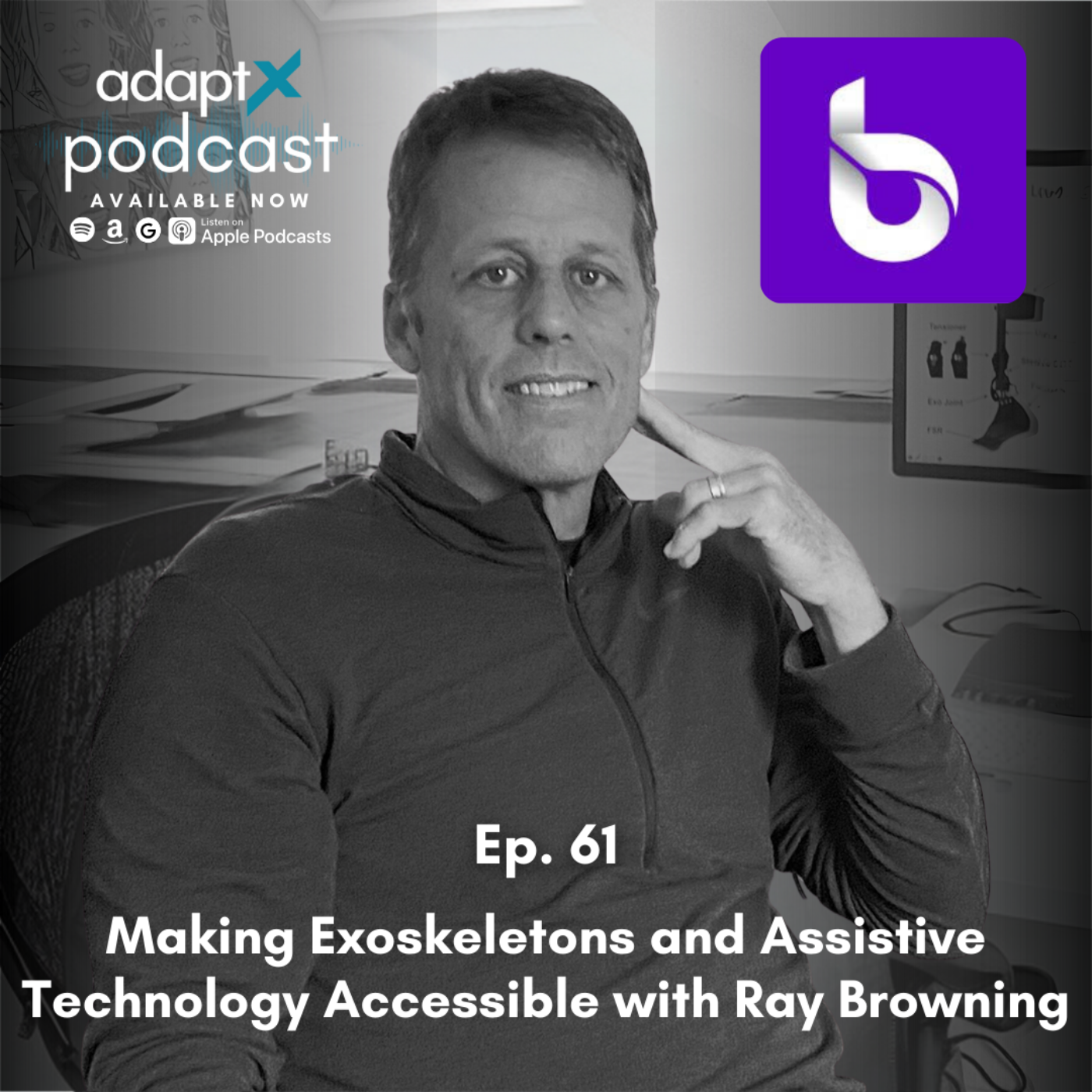
#061- Making Exoskeletons and Assistive Technology Accessible with Ray Browning
AdaptX Podcast · AdaptX
Audio is streamed directly from the publisher (content.rss.com) as published in their RSS feed. Play Podcasts does not host this file. Rights-holders can request removal through the copyright & takedown page.
Show Notes
Ray Browning is the CEO and co-founder of Biomotum, Inc., a wearable rehabilitation robotics company. Browning is an entrepreneur, innovator, and an academic and clinical researcher with over 30 years of product development, start-up, academic and Fortune 100 (Nike) experience. Ray has a strong technical and clinical background and has experience managing large research/product development programs and budgets. Ray has been involved in 3 startup companies in the clinical and health markets and has been successful in securing capital and non-dilutive grants to support these companies. Brendan and Ray discuss the development of wearable rehabilitation robotics and explore the benefits of resistance training for individuals with mobility impairments and the potential of the Spark device to improve their functional capacity. It discusses the customization and accessibility of the device, as well as the integration of AI technology. They also discuss the affordability of assistive technology and the importance of celebrating the uniqueness of individuals with disabilities in their movement.
To learn more about Ray and Biomotum, check out the links below,
Biomotum: https://www.biomotum.com/
Biomotum Newsletter Sign-Up Form: https://share.hsforms.com/1rhUEAc68Q3mp43IBnNsmPg4xw0z
Keywords: wearable rehabilitation robotics, exoskeletons, powered orthoses, cerebral palsy, gait rehabilitation, assistive devices, ankle joint, walking function, functional strength, resistance training, mobility impairments, Spark device, customization, accessibility, AI technology, affordability, assistive technology, uniqueness, lower extremity solutions, user needs, goals
Takeaways
- Biomotum Inc. is developing wearable rehabilitation robotics, such as exoskeletons and powered orthoses, to improve gait rehabilitation and assistive devices.
- The Spark device offers customization options to accommodate different levels of functional capacity and foot deformities.
- The integration of AI technology in the device allows for dynamic biofeedback and personalized settings.
- The affordability of assistive technology is a key consideration, and the goal is to make the Spark device as accessible as custom ankle foot orthoses.
- The focus should be on celebrating the uniqueness of individuals with disabilities and supporting their movement goals, rather than conforming to a standardized definition of normal.
- The roadmap for the future includes expanding into other lower extremity solutions and
Chapters
00:00 Introduction and Background
03:05 Passion for Mobility and Robotics
08:56 Improvements in Walking Function
13:58 Listening to User Needs and Goals
20:24 Designing for User Expectations
28:55 Functionality and Real-Time Adjustment of the Device
35:30 Training Modality vs. Assistive Device
42:25 Affordability and Accessibility
46:26 Celebrating Uniqueness and Future Expansion