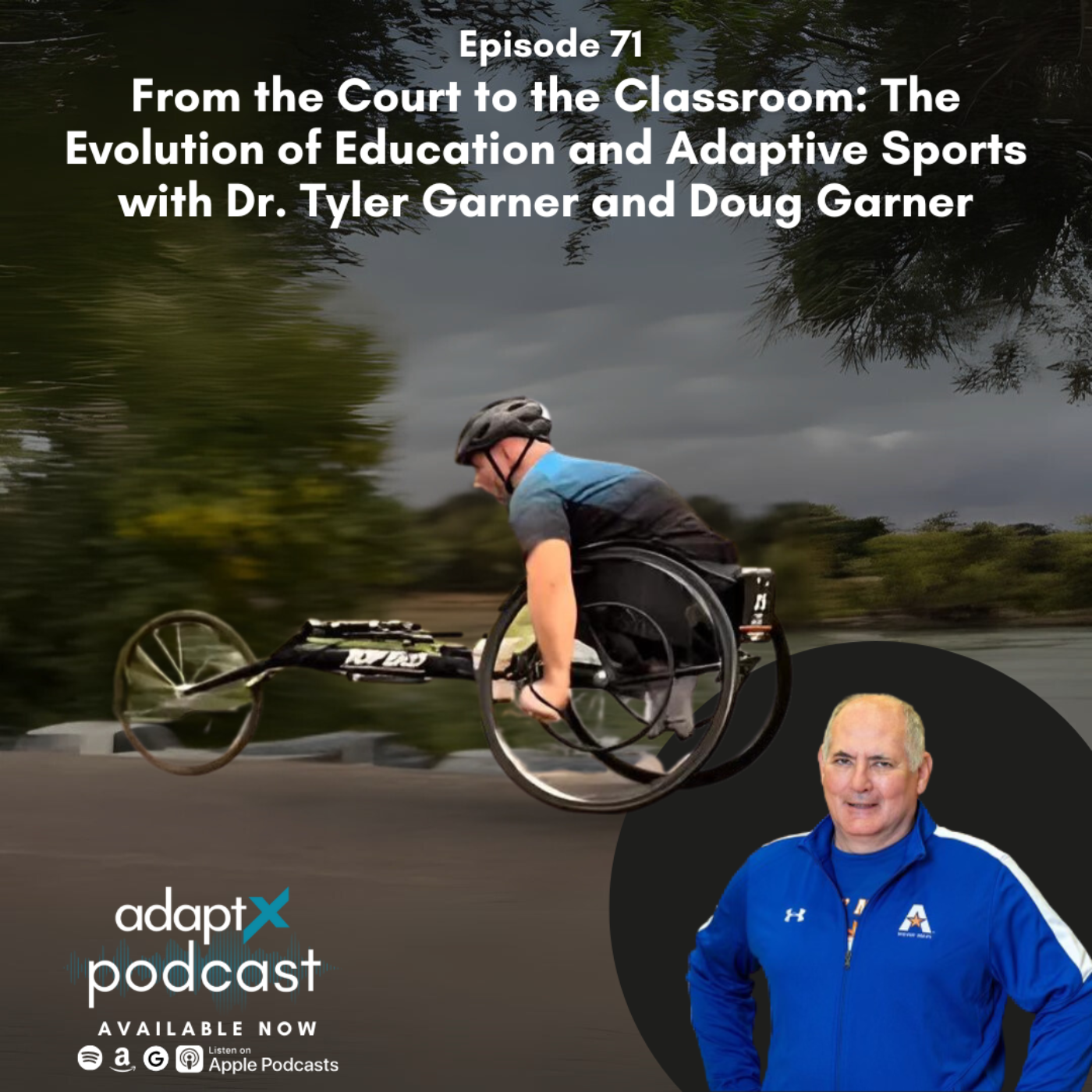
#071- From the Court to the Classroom: The Evolution of Education and Adaptive Sports with Dr. Tyler Garner and Doug Garner
AdaptX Podcast · AdaptX
Audio is streamed directly from the publisher (content.rss.com) as published in their RSS feed. Play Podcasts does not host this file. Rights-holders can request removal through the copyright & takedown page.
Show Notes
In this episode of the AdaptX Podcast, Brendan engages in a conversation with Dr. Tyler Garner and his father, Doug Garner, about the significance of adaptive sports in their lives. They discuss the advocacy efforts that shaped Tyler's early experiences in sports, the challenges faced in gaining acceptance and opportunities, and the impact of sports on identity and social dynamics. Tyler shares his journey in exercise science, his experiences as a professor with a disability, and insights into nutrition and physical activity for wheelchair users. The conversation also touches on the biomechanics of wheelchair propulsion, the importance of equipment fit, and the future of adaptive sports in the media landscape. This conversation explores the evolution of adaptive sports in universities, the challenges faced by athletes like Tyler Garner in preparing for events like the Ironman, and the importance of advocacy through literature. The discussion also touches on the reflections of a parent navigating the world of disability sports and the need for greater accessibility in fitness environments.
Check out the links below to learn more about Dr. Tyler Garner and order the Garner’s book,
Dr. Tyler Garner Faculty Profile: https://www.uta.edu/academics/faculty/profile?username=tgarner
Amazon link: Speed Training for Wheelchair Basketball: Skills and Drills for Improving Speed and Agility
Takeaways
- Adaptive sports can significantly impact identity and social dynamics.
- Nutrition education is crucial for wheelchair users.
- Social media has increased visibility for adaptive sports.
- Equipment fit is essential for preventing injuries in athletes.
- Advocacy is necessary for inclusion in sports.
- The role of family dynamics in sports participation is significant.
- The future of adaptive sports looks promising with increased media exposure. Adaptive sports are gaining recognition at the university level.
- Coaching education for adaptive sports is still in its infancy.
- There's a need for practical applications of sports science for disabled athletes.
- Research on disability sports needs to be more accessible and applicable.
- Staff training is crucial for making fitness spaces accessible.
- Adaptive sports can inspire more literature and advocacy efforts.
Keywords: adaptive sports, inclusion, disability advocacy, wheelchair basketball, exercise science, nutrition, biomechanics, social media, para-sports, identity, Ironman, fitness accessibility, coaching education, university sports, literature
Chapters
00:00 Introduction to Adaptive Sports and Family Dynamics
05:56 Overcoming Barriers in Adaptive Sports
11:47 Pursuing a Career in Exercise Science
18:00 Nutrition and Physical Activity for Wheelchair Users
23:55 Equipment Fit and Injury Prevention
27:04 The Future of Adaptive Sports and Media Exposure
35:06 Advocacy Through Literature: Writing for Adaptive Sports
41:11 Reflections on Parenting and Disability
43:02 Making Fitness Accessible: Insights and Innovations