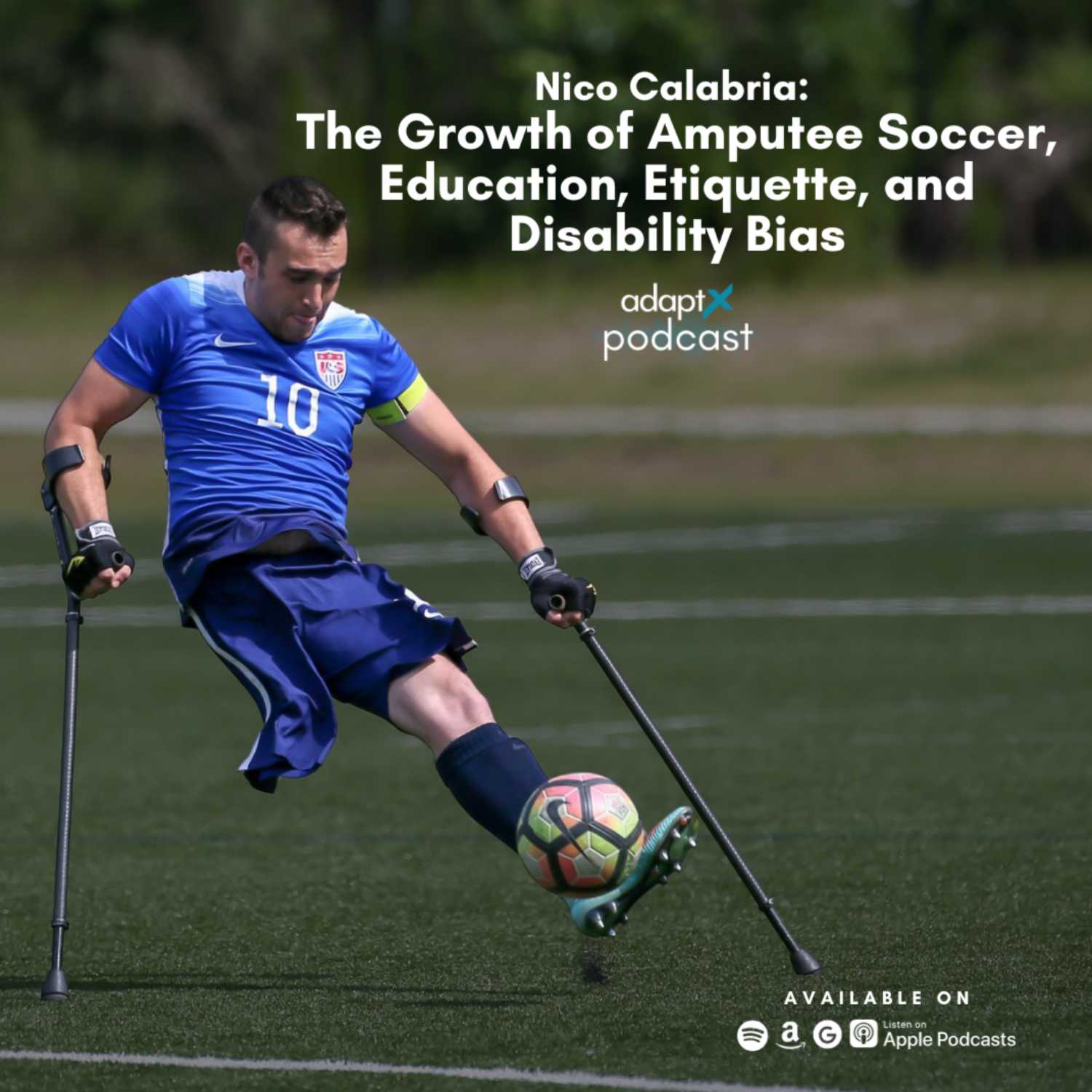
#026 - Nico Calabria: The Growth of Amputee Soccer, Education, Etiquette, and Disability Bias
AdaptX Podcast · AdaptX
Audio is streamed directly from the publisher (content.rss.com) as published in their RSS feed. Play Podcasts does not host this file. Rights-holders can request removal through the copyright & takedown page.
Show Notes
Nico Calabria joins Brendan Aylward for this week's episode of the AdaptX Podcast, where they discuss the projection of amputee soccer, Nico's involvement with the Bionic Project, and the nature of disability in the world of professional sport. Nico was born with congenital hemipelvectomy, a condition that manifests in the absence of a right leg and hip. Nico's disability provided him with the opportunity to scale his impact as an athlete and educator with the Bionic Project, which focuses on sharing disability education and advocacy with the youth. Nico is also the captain of the US Amputee Soccer Team, where he excels as a leader on the field. To learn more about Nico and the Bionic Project, visit https://www.bionicproject.org/our-team.
Episode 26 Chapters:
01:12 - Finding Community within the Disability
2:06 - Born vs. Acquired Disability
3:23 - Nico’s Upbringing and Its Influence on His Ambition
5:12 - Resenting Disability in Adolescence
7:31 - Looking at Different Mobility Devices
9:34 - The Bionic Project
14:06 - Gauging Project and Clinic Efficacy
19:00 - Requiring Universal Disability Education
25:10 - The Negative Repercussions of Disability Simulation
30:38 - The Complexities of Competing with Crutches
34:38 - The Progression of Amputee Soccer
37:31 - Nico’s Impact on the Sport and His Role Models
40:37 - Amputee Soccer Internationally
43:38 - MLS Clubs and Their Association with Amputee Soccer
45:37 - The Path to Sustained Profitability in Amputee Soccer
48:25 - Barriers to Inclusive and Adaptive Fitness
50:59 - The Inspiration Narrative
53:48 - The Bionic Project 5k
54:34 - The Expansion of the Bionic Project
Episode 26 Takeaways:
1. Visibility can empower adaptive individuals, challenge stereotypes, and inspire a broader representation of diverse abilities. Positive representation not only enhances the opportunities available to amputee athletes but also contributes to a more inclusive society that values the capabilities and achievements of individuals with disabilities.
2. Disability advocacy and education plays an essential role in the creation of greater opportunities in adaptive sports. Societal misconceptions to inadequate infrastructure make standards of inclusivity and accessibility more challenging, so it is important to encounter such misinformation and bias with proper education.
3. Many adaptive athletes will have to navigate challenges such as equipment limitations and varying degrees of physical ability when engaging in sport. But, by redefining the normative standards of athleticism that have been perpetuated in the past, it is clear that success in adaptive sports is not only attainable but scalable with the access to the right support systems.