
The Pomp Letter
521 episodes — Page 8 of 11
Grow or Die
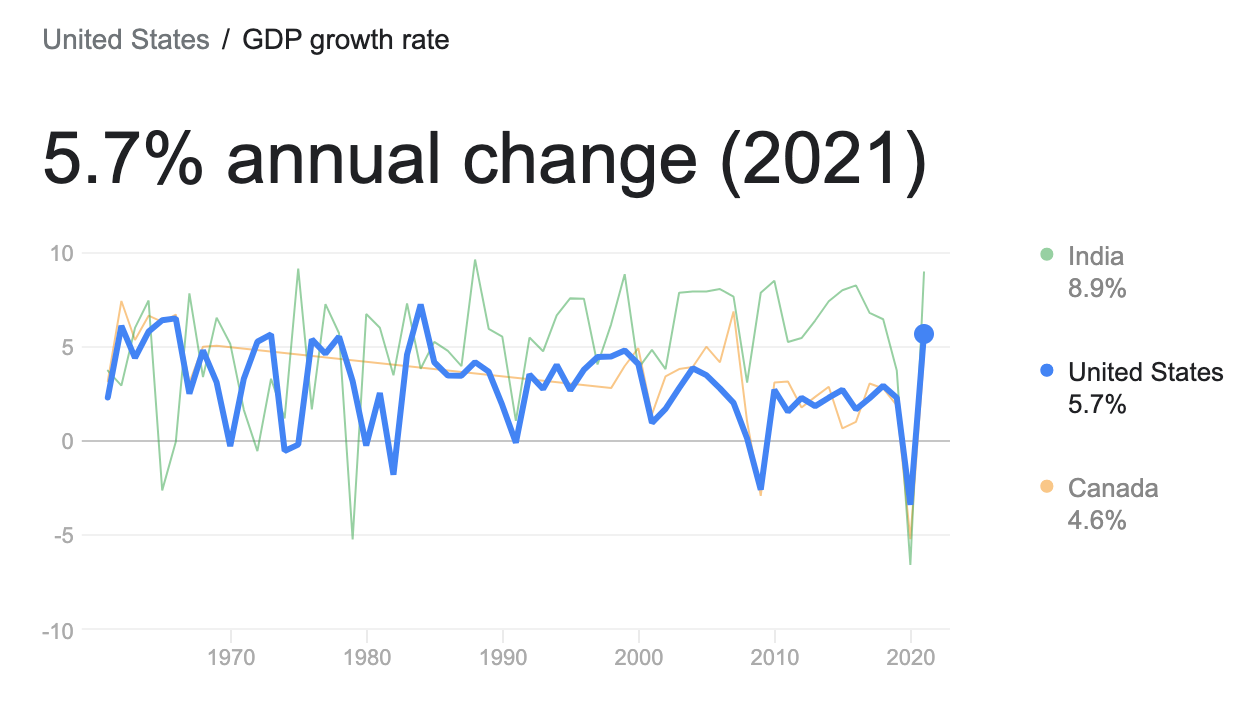
To investors,The US national debt is over $31 trillion and US GDP is just under $26 trillion. This gives the largest economy in the world a debt-to-GDP ratio of ~ 125%. Not exactly an ideal situation. The proposed solution for this problem by the majority of individuals and organizations is to reduce the United States’ debt. This would be incredibly difficult to do. Federal income tax revenue has been higher every single year since 2009 (except for 2020), yet the federal deficit has continued to expand each year.The deficit has not been expanding by small single-digit percentages in the last two years, but rather by double-digit numbers. The problem is getting worse and there is no solution in sight. This is the equivalent of a business capturing more revenue each year, but the losses remain. Eventually shareholders will ask the question — “can we ever stop losing money?”That answer is unclear. On the other hand, in an effort to be fair to all sides of the conversation, there are many people would would argue that a government is not a corporation and profitability is not a goal. That is a tough perspective for me to get onboard with because I believe a balanced budget is important.If we dig deeper into some of the statistics, we can see that GDP per capita continues to grow like a rocket ship in the US. If GDP per capita is growing, then GDP growth should be in a good place too, right? Well, it depends on how you look at it. GDP in the United States had been growing at ~2% per year from 2010 to 2019, which was followed by negative growth in 2020 and then a banner year of 5.7% growth in 2021. The sub-5% GDP growth has basically been the standard since the 1970s with only a few outlier years over the decades. This looks incredibly slow compared to a country like India where over 5% GDP growth has been the standard during the same time frame. This isn’t a huge surprise. US GDP was $23 trillion in 2021 and India’s GDP was just over $3 trillion. It is much harder to grow year-over-year when you are a double-digit trillion dollar economy. India’s economy is expected to slow down in 2023 to only 7% growth, which will take them out of the #1 spot globally for major markets in terms of annual GDP growth. They are being replaced by Saudi Arabia, who is expecting 7.6% GDP growth this year. The reason I bring up US debt-to-GDP and India’s GDP growth is that we may have been looking at the US problem incorrectly. We have two options — count on politicians to stop running a deficit or encourage the private sector to spur economic growth. That is really it. Stop making the problem worse or grow your way out.Majority of the US citizens that I speak with on a weekly basis have little confidence that the US government will return to spending surplus in any short timeframe. This is where the private sector must step up. We either grow our way out of this problem or we force the hand of the Fed to continue devaluing the currency, so they can monetize the debt. This leads to the multi-trillion dollar question — how do we potentially double the GDP growth of America?There is really only one viable path in my opinion. We have to double and triple down on technology and innovation. We have to create new products and services. We have to be the leader across artificial intelligence, bitcoin, space, genome sequencing, psychedelics, and much more. If the idea is fringe and potentially disruptive today, the United States must pour immense resources into the sector.Many things won’t work. That is perfectly fine. The venture capital model is proven for driving innovation. If the US government, and private investors, can unilaterally pursue a similar strategy of funding innovation, we may have a shot of turning this problem around. If not, the United States will continue to erode away as every great nation has done in the past. Grow or die. That is the motto for America over the next 80 years. History tells us what happens if we fail at the mission. Hopefully we are smart enough to avoid that fate.Hope everyone has a great weekend. I’ll talk to you on Monday.-PompAnnouncement: I am hosting a conference at the Miami Beach Convention Center on March 4, 2023. The goal is to bring together people from different walks of life to debate important ideas that impact our society on a daily basis. The speakers are many of the most popular guests from the podcast over the last few years, along with a few surprises. If you’re interested in attending, you can read about the event details here: https://www.lyceummiami.com/Reader Note: It feels good to be back writing longer letters to each of you. I have set up my personal schedule in 2023 to spend more time each morning putting these together. My goal is to provide the highest quality information and content possible. I don’t aspire to merely regurgitate the news you can read elsewhere, but rather present unique ideas and opinions that will make you think more critically about various business and i
The Fed Has A Shotgun, Not A Sniper Rifle
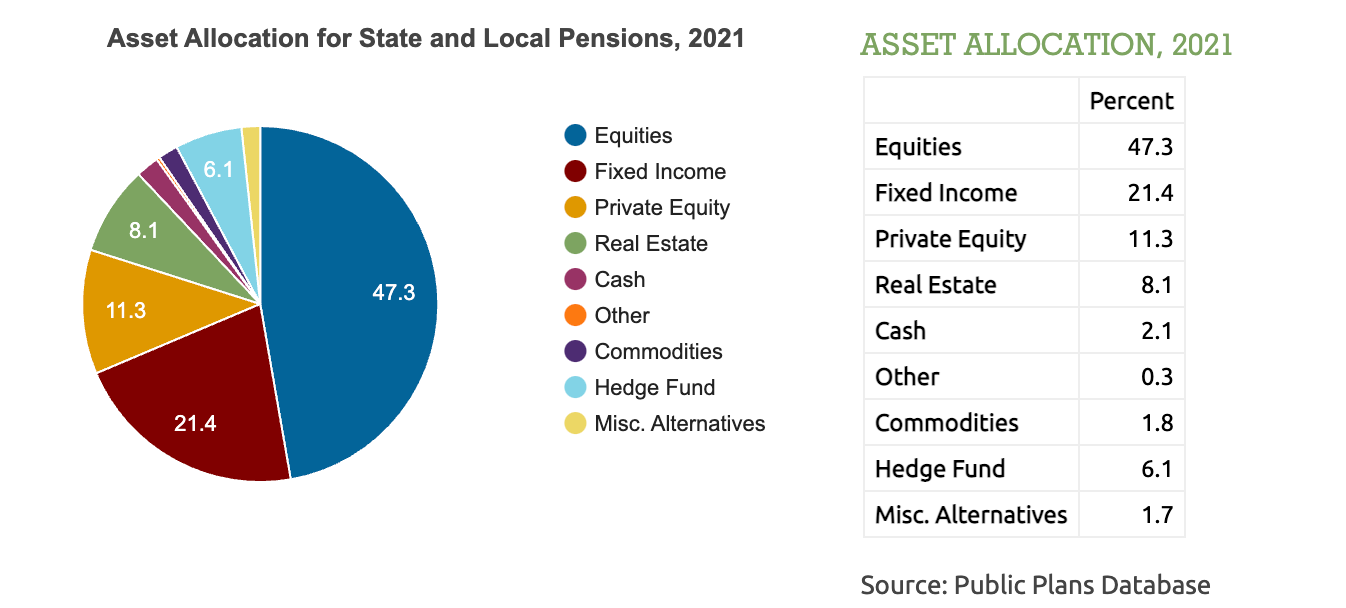
To investors,The Federal Reserve used low interest rates and quantitative easing to create one of the largest asset bubbles of our lifetime. They didn’t do it on purpose, but they were the leading contributor. In an effort to redeem themselves, and bring inflation under control, the US-based central bank has been on a mission of destruction for over a year now. The goal is to destroy demand from consumers. If consumers are still buying houses, cars, products, and services, then inflation will persist. No economy can thrive in a meaningful way if the official inflation metrics are compounding annually at 7%+. There is a big problem though — the Federal Reserve only has two major tools in their toolbox. They can manipulate interest rates and they can buy or sell assets off their balance sheet. These tools are more like shotguns, than sniper rifles. Although you can point the tool in the right direction, you can’t guarantee pinpoint accuracy. Here is an example: the Fed would love to get consumer spending to cool off. If there is less demand for general products and services, then market forces take over and price increases start to slow down. It doesn’t mean that the aggregate prices will return to their previous levels. The year-over-year price increases will slow though, which is ultimately the metric that the central bank will measure their success. The Fed is leveraging both tools — interest rate hikes and quantitative tightening — to “destroy demand.” As I mentioned, this shotgun approach can’t be applied with any level of precision in the economy. The tighter financial conditions hit the entire economy like a sledge hammer. This is why you see asset prices falling across markets. There is carnage everywhere. The Fed claims to not care about asset prices, especially the equities market, but their change in policy has led to immense demand destruction among investors. The S&P 500 is down 20% over the last 12 months. The QQQ is down 33% in the same timeframe. So why does this matter?Real people are hurt when equity prices fall. Let’s take a look at public pension funds in the United States. They collectively hold over $4.5 trillion with just under 50% of those assets invested in equities.Of the more than $2 trillion that is invested in equities globally, the majority is invested in the US stock market as well.This means that US public pension funds, and the pension recipients who are counting on these funds, are losing 20-30% on their multi-trillion dollar exposure to the US stock market. That is an unintended consequence of the Fed’s pursuit of getting inflation under control. The Fed would bring inflation down and prevent pain for pension funds if they could. They don’t have that ability though. Remember — shotgun, not sniper rifle. This issue is compounded by the fact that public pension funds in America are less than 80% funded compared to where their actuarial expectations are for funding future obligations. Not a good situation.It is easy for people to gloss over the connection between the Fed’s monetary tightening and pension recipient pain because there is a long time frame until the damage is realized. Additionally, the pension recipients aren’t holding these assets directly so they likely aren’t paying too much attention on a day-to-day basis. This brings me to my second example — US home prices. It is estimated that the average American citizen has upwards of 70% of their net worth tied up in their home. More than 30% of Americans have a net worth of zero or negative if you were to remove their home equity from their personal balance sheet. The easy way to think about this is when home prices go up, the average American becomes wealthier. When home prices go down, a significant number of Americans become drastically worse off financially. So how has the Fed’s tighter financial conditions affected home prices in America?The short answer is that it is complicated. Lance Lambert from Fortune put it well when he wrote:Across the country, mortgage brokers and builders are scrambling as millions of potential buyers sit on the sidelines after last year’s historic mortgage rate shock. The numbers aren’t pretty: On a year-over-year basis, mortgage purchase applications are down 36.4% and existing home sales have fallen 35.4%.While home transactions went into free fall in the second half of 2022, home prices have felt less of an impact. Through October, seasonally adjusted U.S. home prices were down just 2.4%, as measured by the Case-Shiller National Home Price Index. On one hand, that marks the second biggest home price correction of the post-WWII era. On the other hand, it’s mild compared to the 26% peak-to-trough U.S. home price crash from 2007 to 2012.It is obvious to most that the number of transactions, and mortgage applications, have been falling aggressively, but the actual home prices have held up decently well considering the environment. Some critics of this view will argue that the national av
Empire State of Mind -- Pomp's Notes
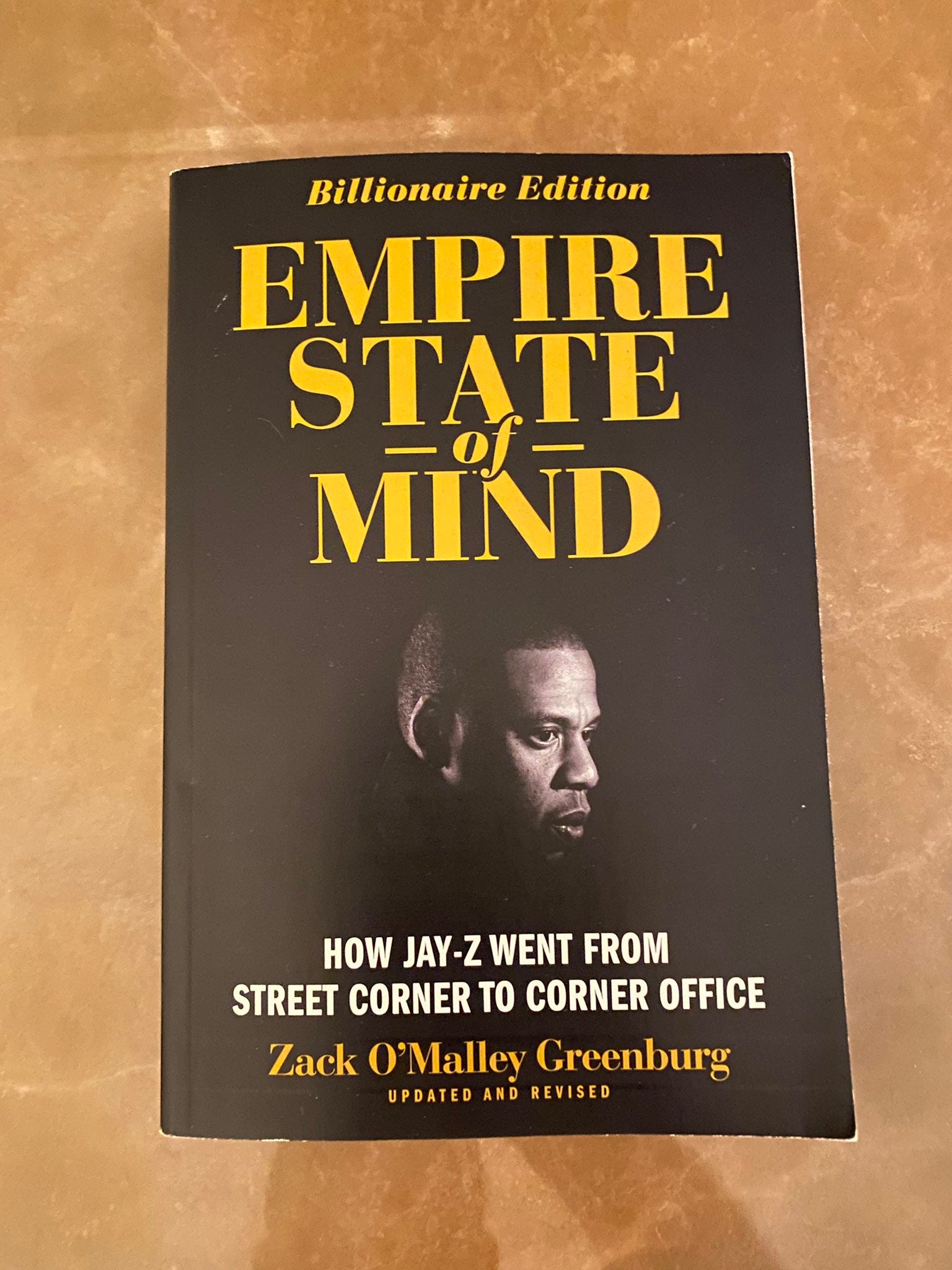
To investors,I have been reading one book per week this year. This past week’s book was Empire State of Mind written by Zack O’Malley Greenburg. Highly recommend reading it. If you are interested in the individual highlights that I made in the physical book, you can read those here. Hope you enjoy these notes every Monday morning.Book’s main argument:Jay-Z is one of our generation’s most notable music artists, but he has also established himself as one of the world’s best entrepreneurs. This book chronicles his rise from street corner to corner office, including the wins, losses, and lessons learned. There are stories that you have never heard before and behind-the-scenes decisions that highlight how a kid from the Bronx was able to become a billionaire in two decades. 6 Big Ideas:💡 Idea #1 — Evolution is the mark of every great success. Jay-Z started out selling drugs to make a living, but was able to evolve into a music artist and then a businessman. This ability to re-invent himself was essential to his accomplishments. Greenburg writes:Rather than stop and marvel at his own creation, he has continued to evolve personally and professionally.One of the main reasons for this continued success is Jay-Z’s ability to build and leverage his personal brand.One of the critiques of Jay-Z early on was that he was changing his music to appeal to the mass audience, which some considered an act of “selling out.” These critiques didn’t go unnoticed and Jay-Z said the following:“I dumbed down for my audience, doubled my dollars. They criticize me for it, yet they all yell, ‘holla.’” - Jay-Z in Moment of Clarity track💡 Idea #2 — Hard work is essential to achieving anything great. Jay-Z had natural talent for a number of different activities, but he still understood from an early age that he would have to work diligently to turn talent into profit. One of his childhood mentors, Jaz-O, said the following:“I taught him that in order to be the best, you don’t have to outwardly hone your craft. But in privacy, hone your craft. People don’t have to know how hard you work to get something.” - Jaz-O on what he taught Jay-ZThis hard work can be seen in the late 1980s when Jay-Z was willing to work for free to learn the craft. Greenburg writes:Though Jay-Z today grosses millions per show, he spent four months in 1989 working the hip-hop equivalent of an unpaid internship - rapping for room and board, which consisted of a spot on the tour bus floor and a free pass at the buffet.💡 Idea #3 — Necessity is the mother of invention. Jay-Z and his friend Damon Dash wanted to sign a record deal but no one would take them on. This forced them to create their own label, Roc-A-Fella Records. The rest is history. Greenburg writes:With Jay-Z’s debut album nearly complete, he and Dash shopped it to all the major record labels, but there were no takers.So Jay-Z and Dash pooled their resources with a silent partner, Kareem “Biggs” Burke, to start their own record label, Roc-A-Fella Records. They picked the name to signify wealth on the level of John D. Rockefeller, the world’ first billionaire, and to evoke images of the Rockefeller family’s enduring dynasty.It is telling that they named the record label after the world’s first billionaire and then Jay-Z potentially became hip-hop’s first billionaire. Another lesson that he learned from Damon Dash was that it would pay to have ownership in ventures outside of music. Greenburg writes:Roc-A-Fella Records soon expanded beyond music, thanks to two of Dash’s guiding principles: “We shouldn’t let other people make money off us, and we shouldn’t give free advertising with our lifestyle.”Rocawear was the cross-promotional title of the urban clothing line that Dash dreamed up shortly thereafter. The venture started with three sewing machines in the back of Roc-A-Fella Records office; early offerings were limited to t-shirts with the Roc-A-Fella logo stitched to the front.Within eighteen months of its birth, Rocawear had pulled in $80 million in revenues.💡 Idea #4 — Constantly understand your goals and lay out a plan to increase the odds of achieving them. Jay-Z realized that his music was going to slow down his business pursuits, so he walked away. Jay-Z came out of retirement later but it is obvious that he wanted to focus when he set his mind to something. Greenburg writes:Jay-Z’s main motive for retirement was business. He wanted to shift from the music side to the management side of the recording industry.It was clear Jay-Z’s desire to be seen as a legitimate businessman trumped his need to be seen as a big spender.A key component of Jay-Z’s plan for a new area of expertise was to find mentors he could learn from. Greenburg writes:In each case, Jay-Z absorbed the best qualities of his mentor, applied his own considerable talents to the subject at hand, quickly surpassed said mentor, and moved “on to the next one.”💡 Idea #5 — You have to constantly ask questions and try to learn new things. Jay-Z

My Top 10 Books of 2022
To investors,I have read approximately one book per week during 2022. It started off as a personal challenge — could I stay disciplined enough to read consistently? But as with most things in life, the benefits of the personal challenge ended up being much more than I originally anticipated.The main benefit that I discovered was an inverse relationship between reading and wasting time on social media. Many of you have heard me talk about it, but a friend gave me a physical book to read over the summer. I found it difficult to sit down and read without checking my phone every 30 seconds. The digital addiction was smacking me in the face. I committed myself to reading only physical books for the rest of the year and I haven’t looked back. Increasing my ability to focus for long periods of time has been a very rewarding benefit.As I have increased my ability to focus, I’ve spent more time reading and less time on social media. My overall productivity has shot through the roof and I also feel much more calm mentally. It is hard to describe, and I probably would think it was woo-woo nonsense if I didn’t experience it personally, but we are different animals when are our brains are on social media. Lastly, the more reading that I’ve done, the more learning that I’ve achieved. This is probably the most fun part for me. Below I have compiled a list of my favorite 10 books that I read in 2022. I’ve linked to the book notes that I produced where appropriate — if a book doesn’t have a link to notes, I’ll be publishing the notes in the coming weeks.Let me know in the comments or by replying to this email with your book recommendations. The best books that I find are always through others. Here are the best books I read this year:#1 — Mastery by Robert GreeneThe mastery of a subject has become an outdated idea. Most people associate mastery with genius or natural skill. The truth is that mastery is almost always accomplished by intense focus and hard work over a decade or more. This book explains how to build mastery in the modern world. (Pomp’s Notes on Mastery by Robert Greene)#2 — A Curious Mind by Brian GrazerCuriosity is a superpower. We often don’t talk about, nor think of, curiosity as an endeavor worth pursuing on its own. Many people talk about creativity and innovation, but Grazer argues that curiosity is the more important pursuit. He uses his personal experience with “curiosity conversations” to highlight the benefit. (Pomp’s Notes on A Curious Mind by Brian Grazer)#3 — Discipline Is Destiny By Ryan HolidayThe description on Amazon summarizes this book perfectly: “To master anything, one must first master themselves–one’s emotions, one’s thoughts, one’s actions. Eisenhower famously said that freedom is really the opportunity to practice self-discipline.” Ryan Holiday delivers again with a book that is hard to put down and makes you seek self-improvement. (Pomp’s interview with Ryan Holiday)#4 — Being Mortal by Atul GawandeNo one wants to talk about the experience of dying, nor the days, months, and years that lead up to that moment. Old age used to be a revered status in a society — technology changed that. Rather than require our elderly to live the last days in institutionalized care away from their families, we now have a better path forward. Atul Gawande shares personal stories, and many different studies, that will make you think more deeply about medicine’s role in aging and the end of your life. (Pomp’s Notes on Being Mortal by Atul Gawande)#5 — Good Profit by Charles KochProsperous societies depend on freedom, both for the market and the individual, so Charles Koch argues prosperous companies should follow a similar strategy. He uses Koch Industries (one of the world’s most valuable private companies) as his example of Market-Based Management. This book includes the perfect combination of tactics, entertainment, and humor. It has become one of my favorite business books. (Pomp’s Notes on Good Profit will be published in next 2-3 weeks)#6 — Empire State of Mind by Zack O’Malley GreenburgJay-Z rose from the streets of New York City to become one of the most successful businessmen in the world. This book unpacks the rapper-turned-business mogul’s life story, including the wins, losses, and lessons learned. The author does a great job of highlighting the macro trends, while exposing details of the story that really hammer home the point. (Pomp’s Notes on Empire State of Mind by Zack O’Malley Greenburg will be published in the next 2-3 weeks)#7 — Creative Selection by Ken Kocienda Apple is not only one of the most valuable companies in the world, but it is also widely considered one of the most creative and innovative. Ken Kocienda spent approximately 15 years working on numerous Apple products that you use on a daily basis, including the Safari browser and the keyboard on your iPhone or iPad. He uses anecdotes and analysis to unpack what made Apple special.Ken is refreshingly honest throughout the book -
Bitcoin's Volatility Is Near All-Time Lows
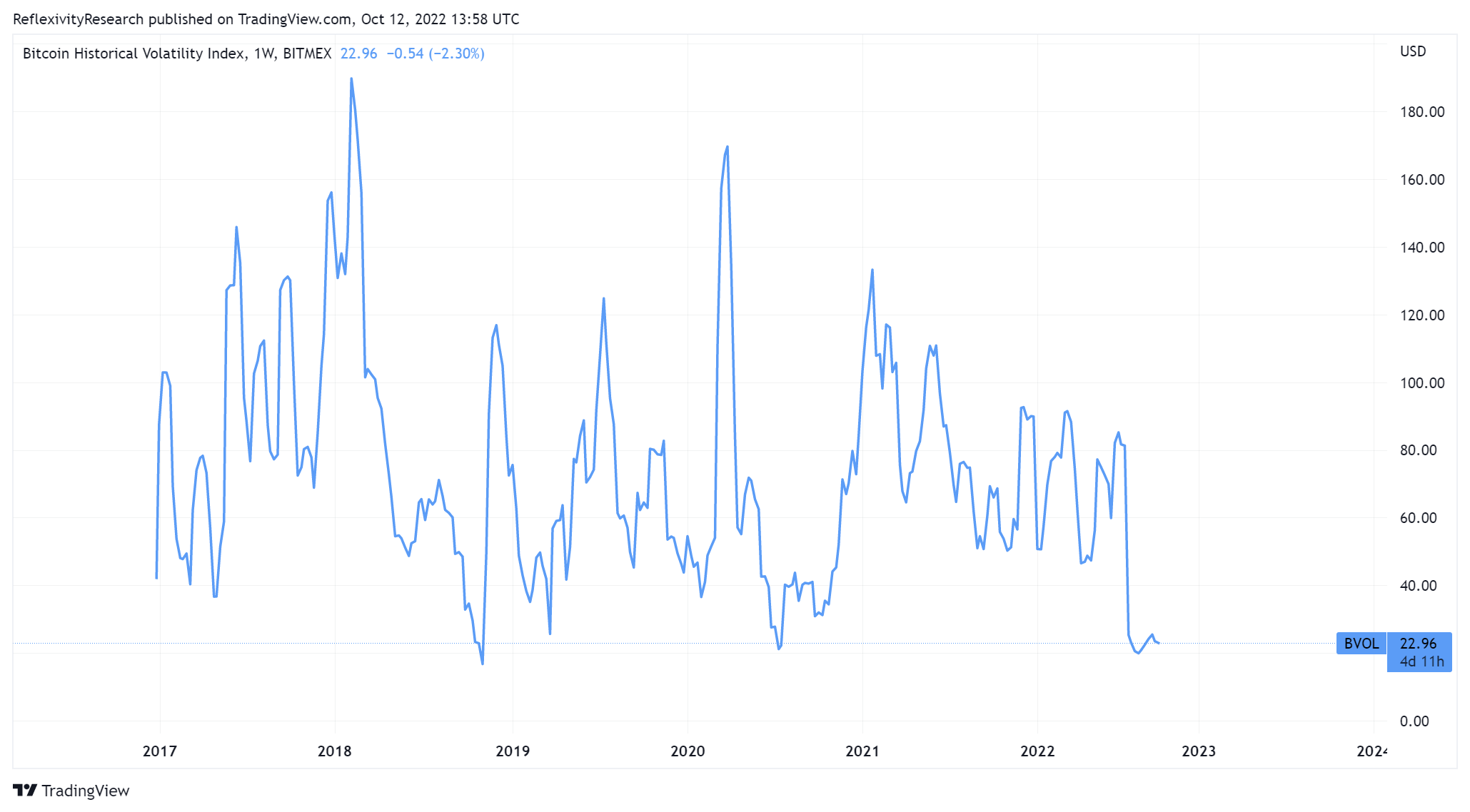
To investors,One of the most surprising data points over the last few weeks has been bitcoin’s stability against the uncertain and chaotic macro backdrop. The asset, which is historically considered highly volatile by legacy investors, has surprised many people. I asked Will Clemente, co-founder of Reflexivity Research, to write a guest post about this lack of volatility. Below is Will’s analysis.With a tremendous amount of macroeconomic uncertainty overhanging markets, it may be quite surprising for some to see Bitcoin maintain stability in the $18K-$19K range that its been in for several months now. Bitcoin volatility continues to compress near record lows, expressed by the Bitcoin Historical Volatility Index:When comparing Bitcoin’s volatility to equities volatility via the VIX, we see that the ratio of the two is at all-time lows.Comparing BTC’s 10 day realized vol to that of the Dow Jones, we can see that this has set new lows.Also comparing the Bitcoin Volatility Index to MOVE (Treasury market volatility index), we can see that this ratio is also at new lows.The Bitcoin options market is pricing in low volatility, with implied volatility across the spectrum approaching yearly lows.Meanwhile, Bitcoin futures open interest has screamed to new all-time highs along with the ratio of adjusting open interest for market cap size. With CPI this morning and plenty of potential macroeconomic catalysts over the coming weeks, there is a high likelihood for a substantial move in BTC price with the combination of volatility near all time lows and futures open interest at all time highs. The quick takeaway is to ensure that you pay attention in the coming days. The last few weeks are not necessarily indications of the next few weeks, although it has been a positive development to see the low volatility from Bitcoin.Hope each of you enjoyed this quick analysis. If you would like to receive in-depth reports and research from the team at Reflexivity Research, you can subscribe here.-PompTHE RUNDOWN:‘This is serious’: JPMorgan’s Jamie Dimon warns U.S. likely to tip into recession in 6 to 9 months: JPMorgan Chase CEO Jamie Dimon on Monday warned that a “very, very serious” mix of headwinds was likely to tip both the U.S. and global economy into recession by the middle of next year. Dimon, chief executive of the largest bank in the U.S., said the U.S. economy was “actually still doing well” at present and consumers were likely to be in better shape compared with the 2008 global financial crisis. Read more.Ark’s Cathie Wood issues open letter to the Fed, saying it is risking an economic ‘bust:’ The Federal Reserve likely is making a mistake in its hard-line stance against inflation Ark Investment Management’s Cathie Wood said Monday in an open letter to the central bank. Instead of looking at employment and price indexes from previous months, Wood said the Fed should be taking lessons from commodity prices that indicate the biggest economic risk going forward is deflation, not inflation. Read more.Paul Tudor Jones Tamps Down Bitcoin Bullishness: "I still have a minor allocation to bitcoin," said Paul Tudor Jones during a CNBC appearance on Monday morning. It wasn't exactly a rousing endorsement of the crypto given Jones' major bullishness two-plus years ago. At the time, in mid-2020, the hedge fund giant said he had allocated 1%-2% of his multibillion-dollar portfolio to bitcoin. He later said he could see allocating as much as 5% of his assets to bitcoin if the U.S. Federal Reserve continued on its path of monetary debasement. His remarks at that time helped pump crypto prices – then already in a bull market – even higher. Read more.Congress is still considering changes to the retirement system, including catch-up contributions: There’s still a decent chance that changes to the U.S. retirement system will be enacted before the end of the year. Despite there being just a few months left before the next Congress convenes Jan. 3 — the midterm elections will be Nov. 8 — the push to improve Americans’ ability to save for retirement is supported by both Republicans and Democrats. Read more.Geoff Woo is an entrepreneur, investor, and a partner with Jake Paul at Anti-Fund.In this conversation, we discuss the rise of creators, how creators are now private equity firms, Geoff's investment strategies, building vs. investing, and human optimization. We also talk about some of Geoff's companies including HVMN, betr, Archive.com and more.Listen on iTunes: Click hereListen on Spotify: Click hereEarn Bitcoin by listening on Fountain: Click hereGeoff Woo Explains Why MrBeast & Jake Paul Will Be BillionairesPodcast SponsorsThese companies make the podcast possible, so go check them out and thank them for their support!* Alto IRA can help you invest in crypto in tax-advantaged ways to help preserve your hard earned money. There are no setup or account fees, and it’s all you need to do to invest in crypto tax free. Open an Alto CryptoIRA to
PayPal Wants To Be The Thought Police
To investors,PayPal published a new policy towards the end of last week that was set to go into practice in November. Companies do this all the time and there is never any fanfare. But this policy update was quite different.PayPal explicitly stated that they would target anyone “sending, posting, or publication of any messages, content, or materials” that “promote misinformation.” How would they do this? The company would deduct $2,500 from your PayPal account if they deemed you were in violation.Unbelievable.To ensure that we have no misunderstanding here, let me break this down in the most simple terms. A private company was prepared to financially penalize their customers if they posted any message on the internet that the company believed was “misinformation.” Naturally, the internet had a field day with this. The backlash was loud and swift. Everyone from Elon Musk to former PayPal President David Marcus spoke out against this egregious encroachment on personal freedom, individual liberties, and free speech.This kind of lunacy from a corporation reminded me of the George Orwell line from 1984:“The ideal set up by the Party was something huge, terrible, and glittering—a world of steel and concrete, of monstrous machines and terrifying weapons—a nation of warriors and fanatics, marching forward in perfect unity, all thinking the same thoughts and shouting the same slogans, perpetually working, fighting, triumphing, persecuting—three hundred million people all with the same face.” - George OrwellThe beauty of America, and humanity at large, is that we all think different ideas. We question the status quo. People used to think that the Earth was flat and some individuals who spoke out against the idea were killed. People used to think it was perfectly fine for medical staff to refrain from washing their hands between seeing different patients in hospitals. People used to think that the light bulb could kill them.None of those ideas remain today because someone was willing to think differently. Someone was willing to ignore the talking points. They were willing to run the experiments, pursue the scientific method, or ask questions until they were satisfied. While PayPal may be the first private company to float this idea (which they are now claiming was by accident (lol) and never intended to have published), there are plenty of dictators of the past who wished they could have this type of control. Back to Orwell:“By comparison with that existing today, all the tyrannies of the past were half-hearted and inefficient…Part of the reason for this was that in the past no government had the power to keep its citizens under constant surveillance. The invention of print, however, made it easier to manipulate public opinion, and the film and the radio carried the process further.” - George OrwellTechnology has been a very large net positive for humanity. It has led to incredible economic prosperity and progress. But it has also created an environment which allows technology companies, and governments, to violate the rights of the individual. It positions the everyday citizen at a disadvantage when companies want to do dumb things like this “misinformation” proposal. It is during these times that we must remember that there is a better way. The world doesn’t have to end in surveillance, censorship, and dictatorships. Freedom is a viable option. Orwell pointed this out as well:“To the future or to the past, to a time when thought is free, when men are different from one another and do not live alone—to a time when truth exists and what is done cannot be undone: From the age of uniformity, from the age of solitude, from the age of Big Brother, from the age of doublethink—greetings!” - George OrwellThe PayPal news was a good reminder that weird, nasty things are on the horizon. There will be more proposals around combatting “misinformation.” It reminds me of the use of the term “terrorism” or “insurgent.” For nearly 20 years, almost anything was fair game for a government to do if they were doing it in the name of stopping terrorism. The same thing will be true for misinformation for the next 20 years. Private companies and governments are going to try a lot of things. The individuals will only be able to resist these overreaches if they are willing to band together and speak out. That is what happened over the weekend. PayPal quickly backpedaled. It didn’t come without cost though - many of my friends deleted their accounts already.The scariest situation wasn’t even the PayPal proposal though. Take the idea of PayPal’s banking authorization. They are allowed to debit your bank account, so if you had $0 in your PayPal account and this policy had been put into action, does that mean PayPal could have deducted $2,500 out of your personal bank account if they didn’t like something you said on the internet? That sounds horrific. No thank you.The second situation is central bank digital currencies (CBDCs). What happens when

Interesting People. Young People. Young Ideas.
To investors,There is a famous quote from Angela Bassett that I often think of:“It's important to surround yourself with good people, interesting people, young people, young ideas. Go places, learn new stuff. Look at the world with wonder - don't be tired about it.”Interesting people. Young people. Young ideas. This simple concept is a surefire way to preserve the plasticity of your brain. As we all get older, we tend to get set in our ways. We confuse experience for knowledge. We start to see the world as a static environment, rather than the dynamic, ever-changing reality that we all live in. This is true in life and investing. Over the years I have tried to keep a pulse on what young people are building, what content they are consuming, and what ideas they are most excited about. These conversations sometimes lead me to the discovery of young talent that I think has the opportunity to go far in their career.When I find these individuals, I try to ask myself two questions:* Is this person rapidly improving their skills and knowledge at an impressive rate?* Do I learn something from this person every time I talk to them?Whenever the answer to both questions is “yes,” I try to spend more and more time with the young person. My most recent example over the last 18 months is Will Clemente. Many of you probably recognize him from the various interviews and on-chain analysis that we have done in the past, but Will continues to impress me on a daily basis.One of the advantages of being a young person is that you have an abundance of time. Some people use the extra time for social activities. I definitely did in college. But there is a select few who spend countless hours reading, learning, and improving. This is Will. He spends all day reading any book suggested to him or talking to older investors who are willing to share their perspective with him. Will has more information, more understanding, and more questions every time I talk to him. His unlimited curiosity has transformed the 18 year old kid that I met a few years ago into one of the brightest young analysts in the bitcoin and crypto industry.As Will and I have gotten to know each other, it became obvious that we would enjoy working together in a more formal capacity. It also became obvious that his network and personal interests would be highly valuable to the professional investment community that I frequent. This week we announced that Will is starting Reflexivity Research, an institutional-grade research firm focused on bitcoin and cryptocurrencies. The company is co-founded by myself and Inflection Points Inc. This is not just another research firm though. For most of you reading this, you are not the intended audience.Reflexivity Research is specifically built for hedge funds, institutional capital allocators, and family offices. The larger pools of capital have been underserved with crypto-native research, but we plan to change that. Will has assembled a team of young people that live and breathe the crypto market. Some of them use their real identities and some of them are pseudonymous. All of them are great at what they do though. This team is obsessed with understanding what is happening in the fast-moving industry that continues to produce an astounding amount of economic value.I’ve had the pleasure of surrounding myself with young, interesting people for awhile now. I learn from them every day. It is humbling and energizing. And now, we have figured out a way to bring this experience to the institutional audience. If you’re interested in signing up for Reflexivity Research, you can sign up here. The first research report will go out on Monday and the first client call will be on Tuesday afternoon. Hope to see each of you there. Have a great weekend. Talk to you Monday.-PompDanny Jones is on a mission to talk to the world's weirdest people. In this conversation, Anthony Pompliano and Danny Jones discuss Danny's podcast, Koncrete, how he finds strange people, talking to members of the cartel, Charles Manson, scientology, censorship, and more.Listen on iTunes: Click hereListen on Spotify: Click hereEarn Bitcoin by listening on Fountain: Click hereThe Fed Is Promising Pain For EveryonePodcast SponsorsThese companies make the podcast possible, so go check them out and thank them for their support!* Alto IRA can help you invest in crypto in tax-advantaged ways to help preserve your hard earned money. There are no setup or account fees, and it’s all you need to do to invest in crypto tax free. Open an Alto CryptoIRA to invest in crypto tax-free by clicking here. * Eight Sleep is the most advanced solution on the market for thermoregulation by pairing dynamic cooling and heating with biometric tracking. Click here to check out the Pod Pro Cover and save $150 at checkout. * FTX US is the safe, regulated way to buy digital assets. Trade crypto with up to 85% lower fees than top competitors by signing up at FTX.US today.* Amberdata provides the critical

How To Find Great Talent
To investors,Everyone is in the talent business. Whether you are an entrepreneur, investor, or an employee of a large corporation, we are all trying to find great people to work with. This activity is fairly opaque, so most people rely on their intuition. If you ask them “are you good at finding great talent?,” they will quickly say yes. But is that really true? How do you know you are good? What does it take to find the best talent in the world?These questions led me to read a new book over the weekend from Tyler Cowen and Daniel Gross called Talent: How to Identify Energizers, Creatives, and Winners Around the World. As we all know, non-fiction business books can be dry and hard to read, but this one was very well done. It was concise, full of examples, and clearly communicated a number of powerful ideas.I took pages of notes from the book, but here are some of the main ideas that may help you in your day-to-day job:First, talent search is key to everything we do. * “Talent search is one of the most important activities in virtually all human lives.”* “The practical value is that identifying underrated talent is one of the most potent ways to give yourself a personal or an organizational edge.”* “Talent search is a fundamentally optimistic endeavor, based on the premise that there is always more value to be found in our world. But finding this talent is itself a creative skill, akin to music or art appreciation. It cannot be done by boilerplate interviews, groupthink, algorithms, studying PowerPoints, or simple formulas.”* “Any move to become a better appreciator of the talents and virtues of others probably also will improve your skills at ruthlessly identifying the causes of human failure.”Second, a key idea throughout the book is that you can usually tell more about someone from what they do outside their work hours. * “Daniel recalls that he first learned from Tyler this question for prospective hires: "What is it you do to practice that is analogous to how a pianist practices scales?" You learn what the person is doing to achieve ongoing improvement, and perhaps you can judge its efficacy or even learn something from it. You also learn how the person thinks about continual self-improvement, above and beyond their particular habits. If a person doesn't practice much, they still might be a good hire, but then you are much more in the world of "what you see is what you get," which is valuable information on its own. If the person does engage in daily, intensive self-improvement, perhaps eschewing more typical and more social pursuits, there is a greater chance they are the kind of creative obsessive who can make a big difference.”* “Personality Is Revealed During Weekends.”* “Especially for higher-level jobs, the question of spare time is a critical one. The very best performers don't stop practicing for very long, and if you hear or sense that a person doesn't do much practicing and skill refining in his or her spare time, they probably are poorly suited to assume a top position or to meet very high expectations.”Third, Sam Altman who used to run YCombinator has a quote in the book that describes one of the key differences between the program’s most successful founders and everyone else.* Sam: There was a big difference in “how quickly our best founders, the founders that run billion-dollar-plus companies answer my emails versus our bad founders. I don't remember the exact data, but it was mind-blowingly different. It was a difference of minutes versus days on average response times.”Daniel and Tyler saw this as interesting and important because “this quality of speed of response is picking up on how much the individual is focused on being connected to the world and responding to plausibly important queries.”Fourth, the book hammers home the point that most interview questions are actually very bad. * “A good rule of thumb is this: if you found your question in a job interview book or on a website, it is likely you are simply testing the candidate's preparation level.”So what exactly are Tyler and Daniel suggesting an interviewer should try to evaluate during the interview? It boils down to whether the person can do the job well. This leads to a discussion around the Big Five Personality Traits, how to conduct interviews, and the differences between in-person and remote interviews. Fifth, a very interesting point in the book surrounds the idea of intelligence. Most people would tell you that they are looking for an intelligent person when searching for talent. But the book lays out a strong argument that intelligence may not matter as much as you would think for most roles, but it could matter more than you think for the highest achievers. * “After a long back-and-forth, we've concluded that intelligence usually is overrated, most of all by people who are smart.”* “Intelligence can help a person find new ideas and put the pieces together where others cannot, and extreme intelligence may be required to
Why Is US Life Expectancy Dropping?
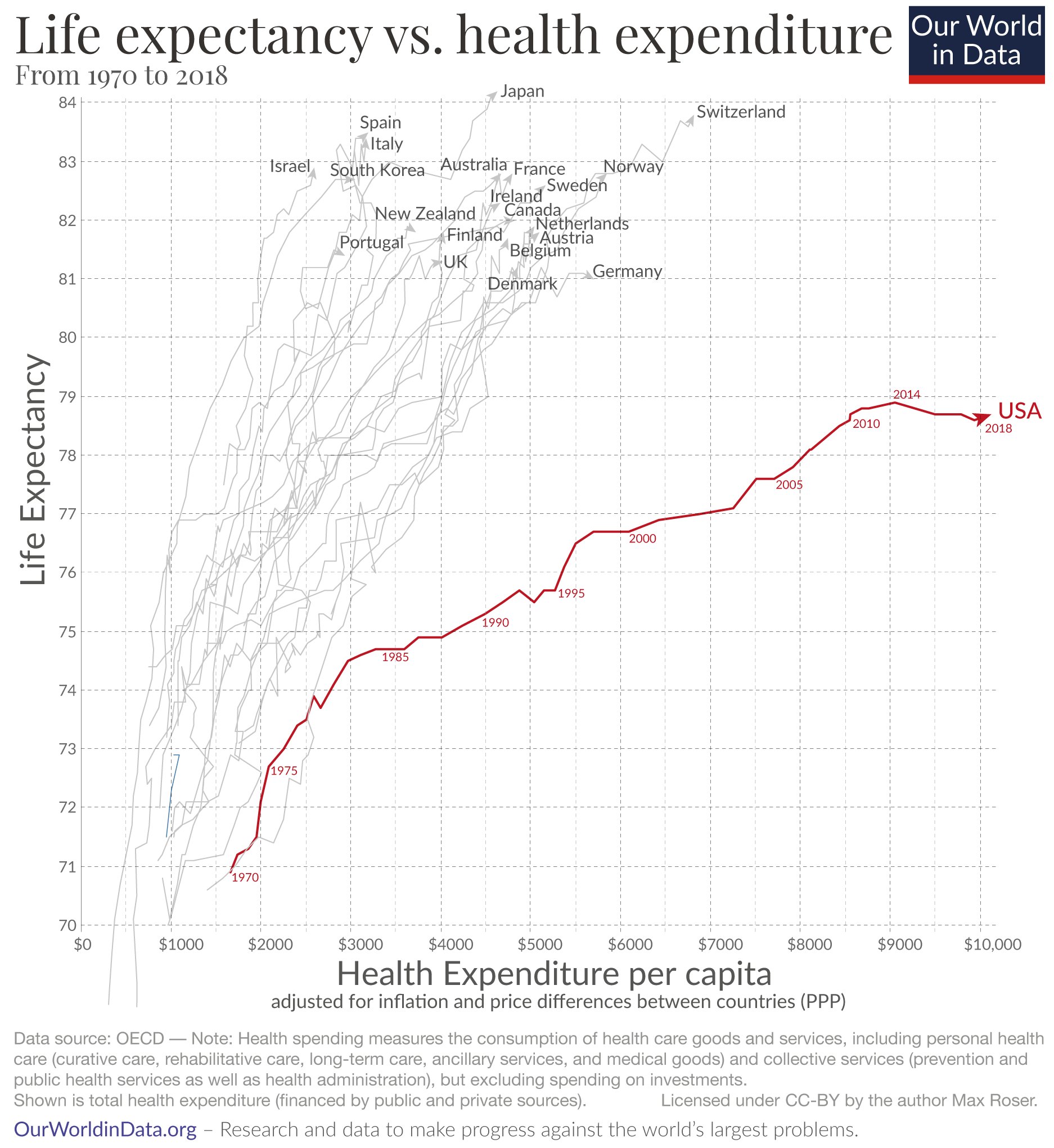
To investors,Investing is a game of demographics. You want to select markets that are ascending, not descending. Data points like population growth, percent of young people, and life expectancy are key indicators of where the world is going. Pick the right market and you can make the trend your friend. Pick the wrong market and you’ll have a strong headwind. I want to spend our time today focused on life expectancy, which is simply “the average period that a person may expect to live.” You would anticipate that the most developed nations have the highest life expectancy, but that is not necessarily the case. We’ll use the United States as an example. Max Roser and the team at Our World In Data point out that the United States has a lower life expectancy than other rich countries. Why is this? Roser explains:“Americans suffer higher death rates from smoking, obesity, homicides, opioid overdoses, suicides, road accidents, and infant deaths. In addition to this, deeper poverty and less access to healthcare mean Americans at lower incomes die at a younger age than poor people in other rich countries.”This is kind of crazy to think about. America, likely the most developed nation in the world, is worse off than other developed nations. But it gets even wilder when you add in how much Americans spend on healthcare in comparison to these other countries.The United States is in a league of its own. There is no other wealthy country in the world that has a life expectancy below 80 years old, nor is there another wealthy country that has a health expenditure per capita above $7,000. The US checks both boxes. These statistics alone would be concerning, but unfortunately there is another story that is capturing the attention of people who pay attention to national demographics. Wait, what is going on here? According to Mary Hui from Quartz:“The US’s life expectancy continued its decline from 2020 to 2021, dropping sharply to 76.1 years.With the latest decline, US life expectancy is now at its lowest since 1996, according to new data from the Centers for Disease Control and Prevention’s (CDC’s) National Center for Health Statistics. It also means that the gap in longevity at birth between people in the US and China has now widened to a full year.”This is not exactly shocking when you understand the reasoning. Hui writes:“The biggest driver in the drop in US life expectancy is covid, accounting for 50% of the decline, according to the CDC. Government figures show that as of Aug. 31, over 1.04 million deaths in the US have been attributed to covid.“Unintentional injuries”—which include opioid overdoses and motor vehicle crashes—were the second-largest contributor to the drop in life expectancy, making up 15.9% of the decline.”This begs the question — will the US life expectancy recover or will the US buck the trend of wealthy nations as it sees a further decline in future years?No one knows the answer. But we better hope that a quick reversal occurs, because other demographic data points like fertility rate aren’t going to make up for the loss. Data from Census.gov states:“Fertility rates in the United States gradually declined from 1990 to 2019. In 1990, there were about 70.77 births each year for every 1,000 women ages 15-44. By 2019, there were about 58.21 births per 1,000 women in that age group. While broadly stable, annual births in the United States declined from about 4.1 million to 3.7 million from 1990 to 2019.”So we are seeing US life expectancy recently drop for the first time in decades, and the fertility rate is on a three decade decline, so the demographics in the United States are not looking too hot right now. This doesn’t guarantee the leading democracy while fail, nor does it mean that investors should pull all of their capital out of US markets.It simply highlights that the future may not look like the past. Investing is all about demographics and there is a strong, data-driven argument to highlight the US could have some of its most compelling trends left in the past. There are few countries that have been able to thrive for decades in the face of deteriorating demographics, so this is worth continuing to watch in the coming years. Demographics are complex. There is plenty of debate and controversy around data collection, measurement methodologies, and what is actually important. Let this letter serve as inspiration for you to dig further and start doing your homework. Your future portfolio will probably thank you.Hope everyone has a great start to the week. I’ll talk to each of you tomorrow.-PompIf you are not a subscriber of The Pomp Letter, join 225,000 other investors who read my personal opinion on finance, technology, and bitcoin each morning.THE RUNDOWN:MicroStrategy Files to Sell Up to $500M of Stock to Fund Bitcoin Purchases: MicroStrategy, a software developer that has become a corporate bitcoin vault, plans to sell up to $500 million of stock to fund more purchases of the cryptocurrency. A

Did I Change My Mind On Bitcoin?
To investors,There seems to be a lot of conversation around my Twitter profile over the last day or two. It started with this viral tweet:And there are more tweets from other individuals in the crypto community. I even got phone calls and text messages from people I have great respect for. They wanted to know if I changed my mind on bitcoin? Did I sell my bitcoin? What was going on?The truth is that I haven’t changed my mind on anything. Not only do I still have deep conviction in bitcoin and its future potential, but I have also been buying more bitcoin, both personally and professionally, over the last few months. While my conviction in bitcoin is deeper than ever, there are a number of things that have changed though. The first is that bitcoin will humble anyone. I have been one of the loudest and most public proponents for the digital currency for half a decade. It allowed me to amass a large online audience, it gave me the opportunity to travel the world, and it opened up opportunities that I could have never dreamed of. It has been amazing. And I am incredibly thankful. But there are two essential rules of the internet — never believe your own b******t and never become the main character.In June 2019, with bitcoin sitting around $12,000, I predicted that the asset would rise to $100,000 within 2.5 years. Rather than the ~8x increase, bitcoin only went up ~6x in that time frame. Some people would argue that the difference doesn’t matter, but at the end of the day I was wrong. It was a great reminder that humans can’t predict the future and price predictions are a fool’s game. Bitcoin helped to humble me. As for the main character, this is a lesson that I have learned more recently. The internet is a weird, wild place. You can be a nobody and quickly become a somebody. But, as with everything in life, too much of a good thing can ruin it. When you start to become the main character, you can fool yourself into believing that you know more than you do. People start to see you as the teacher. But that is not who I am. I’ve always relished the student role. I know nothing and am hungry to learn. It is really hard to ask dumb questions and learn when people expect you to have the answers. “You are on television. You are speaking at conferences. You must have the answers!” Well, I don’t. I want to learn. This is a journey that never ends. The second point of conversation is around identity. I’ve always preached that you should avoid tying your identity to any company or organization, but rather, the most powerful thing is to tie your identity to your own name. Be self-sovereign. But I violated my own advice over the last two years.Laser eyes. #bitcoin in my Twitter bio. It is all noise.The truth is that it is really hard to be an independent person who thinks critically if your identity is tied to a financial asset. How can you seriously evaluate an asset if you have it in your bio? Are you really willing to change your mind if you receive new information if your entire identity is tied to something? Maybe. But it definitely makes it harder. As I told a friend months ago, it is hard to see with laser eyes on. The third point is around building. Anyone who has been around the bitcoin ecosystem for a few years knows that bear markets are the time for building. This is when the real work gets done. And that is exactly what I have been trying to do. My team and I have been building products and services across the various companies that I own and operate. The most public one is Inflection Points Inc. We have built the largest employment business in crypto over the last 18 months, where we have helped more than 1,000(!) people get a new job, and we are now scaling a corporate training product that will likely bring bitcoin to hundreds of thousands of people within the next 12 months. (NOTE: If your team needs to learn about bitcoin and crypto, reach out here)Twitter is not real life. There is an inverse correlation between the amount of time someone spends on that website and actually getting s**t done. I love larping and doom scrolling as much as anyone, but bear markets aren’t the time for that. It is time to build. Tweeting isn’t conviction, building is. To make sure I am abundantly clear — my views on bitcoin haven’t changed.I have deeper conviction than ever that a finite asset, with a programmatic monetary policy, will serve as the single best store of value in a world full of undisciplined monetary and fiscal policy. I don’t need laser eyes or hashtags in my Twitter bio to hold those views. I express them by purchasing more bitcoin.I am an independent person who tries to think critically. I am willing to change my mind if I receive new information. But my conclusion is that bitcoin will continue to gain global adoption and will be much more valuable in the future. And to the haters and trolls, I love you. Every single one of you. You motivate me to learn each day. You drive me to get better. I wouldn’t have
The Rise and Fall of American Growth
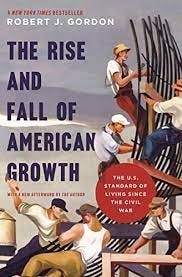
To investors,I hope each of you had a great holiday weekend. This week is going to be a little different than our normal schedule. I am in the middle of reading a fascinating book, The Rise and Fall of American Growth by Robert J. Gordon. Although the book is a New York Times bestseller, there are very few people I know who have read it. Gordon published the book in 2017 and it lays out a unique argument — he “challenges the view that economic growth will continue unabated, and demonstrates that the life-altering scale of innovations between 1870 and 1970 cannot be repeated.” This is an important topic given the current macro environment, coupled with the identified need for the United States to bring manufacturing and supply chains back home, as well as the missing GDP growth that has contributed to 140% debt-to-GDP domestically. I’ll be writing a few times this week with thoughts about the book, lessons learned, interesting data points, and any “ah-ha” moments that relate to the present day. The book is more than 700 pages, so this will be somewhat of a personal challenge to see if I can read fast enough to have something to write each day :) If you would like to read alongside me, you can purchase the book from Amazon (note: I get nothing from this and am not affiliated with the book or the author - just a fan of the book so far).Gordon’s main premise for the book is quite simple. Economic growth in the United States exploded between 1920 and 1970. The real output per US person during the 20th century doubled approximately every 32 years. This is in stark contrast to other times in history, including “no economic growth over the eight centuries between the fall of the Roman Empire and the Middle Ages” and “real output per person in Britain between 1300 and 1700 barely doubled in four centuries.” According to Gordon:“Scholars struggled for decades to identify the factors that caused productivity growth to decline significantly after 1970. What has been missing is a comprehensive and unified explanation of why productivity growth was so fast between 1920 and 1970 and so slow thereafter. This book contributes to resolving one of the most fundamental questions about American economic history.”To answer the question of why productivity growth was so fast in the 50 years preceding 1970, we have to look at Gordon’s “central thesis” — some inventions are more important than others. If I was to mention that idea to a random stranger on the street, most people would likely agree. They may even look at me like I was crazy for suggesting it WAS NOT true. But the traditional economist’s view of the world does not hold this idea as an accepted idea. Giorgos Kallis eloquently explained the widespread belief when he wrote:“One argument of those who defend growth is that growth is the natural and inevitable course of the economy. Liberated from governmental or other restrictions, and left to their own powers, entrepreneurs will make an economy grow, as they are endlessly inventive in growing their own incomes. Growth is then seen as the natural product of a free, ‘self-regulated market’. The destiny of the economy, unless human institutions mess with it, is to grow, like the destiny of a newborn is to grow up, and of a small tree to grow taller and taller. The pursuit of growth according to this view is imprinted in our instincts, if not our genes. Humans, like other species, given the opportunity, expand their habitat and resource use as much as possible. It might have taken us centuries to find the word for it (‘growth’), but the desire and potential was always there.”Surprisingly, both Gordon and Kallis agree that growth is not natural and inevitable. This brings us to a key distinction in Gordon’s book. He acknowledges that growth has occurred since 1970, but highlights that it was mostly in “entertainment, communications, and the collection and processing of information.” This means, according to his analysis, that “the rest of what humans care about” has seen a slow down in growth, including “food, clothing, shelter, transportation, health, and working conditions inside and outside the home.”The third distinction that Gordon makes is that the little growth that has occurred since 1970 has been captured unevenly by the US population as well. He states “the rise in inequality that since 1970 has steadily directed an ever larger share of the fruits of the American growth machine to the top of the income distribution.”With all this said, Gordon understands that many people will disagree with him. They will point to standard of living improvements using real GDP per person, or a similar measurement. He claims that there are two major failures in this data point — “GDP omits many dimensions of the quality of life that matter to people” and “the growth of GDP is systemically understated” due to price indexes overstating price increases. He suggests that a better measurement of the standard of living is to use Gary Becker’

The Unlikely Alliance Testing America
To investors,Zoltan Pozsar of Credit Suisse dropped a must-read piece last week entitled “War and Industrial Policy.” He starts off describing how global supply chains can only work efficiently during peacetime. Zoltan explains the three pillars of the recent low inflation world: * Cheap immigrant labor keeping nominal wage growth “stagnant” in the US* Cheap Chinese goods raising real wages amid stagnant nominal wages* Cheap Russian natural gas fueling German industry and Europe more broadlyNotice how he starts each of these pillars with the word “cheap.” We’ll come back to that in a little. Zoltan quickly moves to coin a new term to describe an important part of the economic strength over the last few decades. He states “implicit in this “trinity” were two giant geo-strategic and geo-economic blocks: Niall Ferguson called the first one “Chimerica”. I will call the other one “Eurussia.” This is an important distinction because the two alliances were separate, but similar. Zoltan describes how they work by writing:“Both unions were a “heavenly match”: the EU paid euros for cheap Russian gas, the U.S. paid U.S. dollars for cheap Chinese imports, and Russia and China dutifully recycled their earnings into G7 claims. All sides were entangled commercially as well as financially, and as the old wisdom goes, if we trade, everyone benefits and so we won’t fight. But like in any marriage, that’s true only if there is harmony. Harmony is built on trust, and occasional disagreements can only be resolved peacefully provided there is trust. But when trust is gone, everything is gone, which is the scary conclusion from Dale Copeland’s book: Economic Interdependence and War”The general idea is that peace between nations is built on trust. That trust can be based on the greed of future profits (economic trade) or the fear of future ruin (military strength). Sometimes it is one of these, but sometimes it is both. When nations lose trust with each other, it creates an environment where they are likely to engage in conflict to accomplish their goals. This could be driven by the pursuit of raw materials, cheaper labor, strategic military positioning, or a host of other potential reasons. Zoltan’s analysis of the end for the two global alliances is simple, yet eye-opening:“China got very rich making cheap stuff, and then wanted to build 5G networks globally and make cutting -edge chips with cutting -edge lithography machines, but the U.S. said “no way”. As a result, Chimerica is going through a messy divorce. The two sides don’t talk anymore: “Pentagon chief’s calls to China go unanswered amid Taiwan crisis” (see here).Russia got very rich selling cheap gas to Europe, and Germany got very rich selling expensive stuff produced with cheap gas. Current accounts swelled for both. Business was so good that Russia and Germany planned a vow renewal with Nord Stream 2. But the ceremony was called off abruptly and turned into divorce, as one side did something the other couldn’t tolerate. Events unfolded quickly and involved NATO, Ukraine, and the balance of power in continental Europe, and the result is another messy divorce, in which the two sides don’t talk anymore: “Olaf Scholz says partnership with Putin’s Russia is ‘inconceivable’” (see here).Finally, the U.S. got very rich by doing QE. But the license for QE came from the “lowflation” regime enabled by cheap exports coming from Russia and China. Naturally, the top of the global economic food chain – the U.S. – doesn’t want the lowflation regime to end, but if Chimerica and Eurussia are over as unions, the lowflation regime will have to end, period.”Translated into layman terms…the world is undergoing a seismic shift and the future will not look like the past. So what exactly would this new world look like? It is hard to tell, but Zoltan explicitly calls out the initial formation of US-sanctioned countries beginning to work together. “If I step back, I see a fierce, geo-strategic game of chess in progress on the Eurasian landmass. Forget the BRICS…and try to focus instead on Turkey, Russia, Iran, China, and North Korea playing “TRICKs ” on the Eurasian landmass – an alliance of economies sanctioned by the U.S. getting ever closer economically and militarily. This Eurasian “alliance of the sanctioned” is forcing the friends of the U.S. to play pragmatically.”Sounds less than ideal, right? Definitely. But what happens if this unlikely alliance continues to pick up steam? That is even less ideal. Zoltan explains how we could go from a low-inflation environment to a high-inflation crisis quickly.“If Pax Americana enabled globalization and globalization underwrote lowflation, the TRICKs trying to poke holes in the Pax means that inflation is a big risk. To understand the path of inflation from here, we will have to read more history and think about trust, trade, and Dale Copeland’s theory of trade expectations: if trust drove globalization, and globalization drove “The Great Moderation

Institutions Aren't Running From The Bear Market
To investors,There has been anticipation of Wall Street institutions joining the bitcoin and crypto industry for years. Fidelity started mining bitcoin back in 2014, which was followed in 2018 with the launch of their custody and trading platform. Cathie Wood’s ARK Invest became the first public fund to invest in bitcoin during the second half of 2015. Since these two pioneers entered the industry, there has been speculation that their peers would quickly follow. While the peers did not follow quickly, we have seen a large increase in institutional investor adoption between 2018 - 2021. There were the first two public pension funds, from Fairfax County, Virginia, who invested in a dedicated crypto venture fund with the understanding that bitcoin would make up ~20% of the fund. This was followed with the announcement from Paul Tudor Jones, and then Stanley Druckenmiller, that he was invested in bitcoin as part of an inflation hedge strategy. Things accelerated quickly once two of the best Wall Street investors in history publicly acknowledged their bitcoin allocations. The career risk had been removed for portfolio managers across hedge funds and various asset allocators. As long as the best in the business were in the trade, you couldn’t be fired for following their lead. We saw bitcoin’s price rocket to a new all-time high and all seemed well in the world. But as the macro landscape changed, and the Fed began to implement tighter financial conditions, bitcoin suffered along with all other assets. While this was happening, there was one big question outstanding — why had the world’s largest asset manager not dove into the wild world of bitcoin and cryptocurrencies?It appears we got more clarity this morning.BlackRock announced a partnership with Coinbase to allow investors the ability “to manage their portfolios and conduct risk analysis on investment decisions.” The announcement states that this partnership will only pertain to bitcoin initially and the two companies will look for client demand to determine if it will expand to other crypto assets. This partnership is a big deal, not because of what is happening, but rather because of what it signifies. The world’s largest asset manager is announcing a partnership with the largest publicly-traded crypto exchange after bitcoin has fallen approximately 70% from the all-time high of $69,000. Those who are bitcoin-native understand that the real value is captured during bear markets. It now appears that large institutions like BlackRock understand that as well. If the institutions aren’t leaving during bear markets, then the market outlook for bitcoin over the medium to long-term is quite compelling. A BlackRock spokeswoman told the Wall Street Journal that the Coinbase partnership was part of their long-term cryptocurrency strategy. That isn’t exactly something that would have been expected 2-3 years ago. BlackRock wasn’t the only institution with news this morning either. Fairfax County Retirement Systems CIO Katherine Molnar announced that the pension plan has received approval to invest $70 million in a pair of yield farming strategies. When asked why the team was leaning into the crypto opportunity now, Molnar told the Financial Times: “Some of the yields that you’re able to achieve in a yield farming strategy are really attractive because some of the people have stepped back from that space.”This translates to the classic theory of being greedy when others are fearful. With that said, there is immense risk still associated with the bitcoin and crypto industry. There are few other assets that can rise and fall with the level of volatility that is commonplace in crypto. There have been previous problems with a lack of disclosures or lack of regulation. And, of course, there are plenty of unknown risks that are difficult to identify.But that isn’t stopping the institutions from participating. The sophisticated investors understand that the short-term price movements are likely noise. They are continuing to invest capital, build products, and strike moat-building partnerships. These large institutions have the balance sheets to weather the bear market in crypto or the recession in the macro economy. They aren’t worried about what happens today, tomorrow, or next week. This is the 10+ year strategy being laid right before our eyes.It is rare to live through the birth, and subsequent scaling, of a new multi-trillion dollar asset class, but that appears to be what we are doing now. Timing is everything in investing and we seem to be quite fortunate. Hope each of you has a great day. I’ll talk to everyone tomorrow.-PompSPONSORED:The most anticipated crypto event of the year is back. Don’t miss Mainnet 2022, September 21-23rd in New York City. Connect with 4000+ crypto builders and thought leaders for 3-days of can't-be-missed keynotes, fireside chats, demos, networking, and more.Mainnet brings together a stellar cast of crypto pioneers to speak about the industr

We Are Revealing A Business We Built In Stealth For The Last 18 Months
To investors,Today we are announcing a brand new business, Inflection Points Inc, that has been in stealth since the beginning of 2021. I co-founded the business with Colton Sakamoto and it has grown into one of the key pieces of infrastructure across the bitcoin and crypto industry. Below is more information about the business, our mission, and why we are coming out of stealth.Inflection Points, Inc has quietly built the #1 corporate training and employment business in the bitcoin and crypto industry over the last 18 months. The business is coming out of stealth today and announcing a recent fundraise of $12.6 million from some of the best technology investors in the world. Investors in the round include Thiel Capital, Fifth Down Capital, XYZ Fund, Rose Park Advisors, Blockchange, Third Prime, former Palantir CFO Colin Anderson, Eight Sleep CEO Matteo Franceschetti, former Allergan CEO Brent Saunders, and real estate mogul Marc Roberts. Fifth Down Capital’s Andrew Spellman is joining the Board of Directors. Inflection Points, Inc, has been profitable since inception and raised outside capital only after it hit seven-figures in revenue. The founders of the business, Anthony Pompliano and Colton Sakamoto, are focused on building a durable business that can thrive over the long term. The MissionOne of the most pressing issues around the world is that global debt-to-GDP continues to rise at an alarming rate. The unsustainable debt levels force central banks to devalue their currencies, which in turn, punishes the billions of people who hold no investable assets. If you analyze this situation from first principles, there are two potential solutions to the problem:* Create a currency that is not based on debt; or* Stimulate economic growth to outpace increases in debtThe first potential solution is being addressed by bitcoin. The open-source, decentralized, digital currency is non-debt money that provides a neutral monetary network for anyone with an internet connection. The second potential solution is being addressed by Inflection Points, Inc. The company is relentless in its pursuit of creating a measurable inflection point in economic growth. “Stimulating global economic growth is the highest leverage opportunity outside of bitcoin development. This problem is incredibly difficult to solve, but we are committed to working on it for a very long time.” - Anthony PomplianoThrough its various products, Inflection Points, Inc ensures that every company in the bitcoin and crypto industry is able to hire the best talent, while simultaneously creating systems and programs to train existing employees on the technologies that make up the fastest growing economic vertical. Inflection Points Inc has helped nearly 1,000 people obtain a new job in the bitcoin and crypto industry over the last 18 months, or more than one person per day. Thousands of employees at companies including Coinbase, Gemini, Kraken, Strike, BTC Inc, Anchorage, OkCoin, TaxBit, and Reed Smith, have gone through the extensive training program as well. Inflection Points Acquires Proof of TalentIn addition to the fresh financing round, the company has also acquired Proof of Talent, the leading recruiting agency in the crypto industry. The acquisition will make it possible to help create a seamless process for identifying the right candidates for the hardest-to-fill roles. Proof of Talent's executive team, including founder Rob Paone, will join Inflection Points, Inc, to grow the business into the most dominant hiring and training platform in the industry.“Over the past three years, Proof of Talent has worked to build the premier crypto-native recruiting firm. By combining Proof of Talent’s specialist recruitment experience and talent acquisition team with the scale of Inflection Points education and training programs, we’re poised to create the most comprehensive hiring solutions for talent and employers in the industry.” - Rob Paone With the addition of the 9-person Proof of Talent team, Inflection Points, Inc now covers three domains — employment, training, and recruiting — in an effort to ensure the best and brightest are working in the bitcoin and crypto industry.If you are looking for a new job in the industry, or would like to have your team trained on the bitcoin and crypto industry, visit the website by clicking here. Hope you all have a great start to your day. I’ll talk to everyone tomorrow.-PompTHE RUNDOWN:Musk Scraps $42B Deal to Buy Twitter, Prompting Board to Threaten Suit: Tesla CEO Elon Musk scrapped his $42 billion takeover deal to buy Twitter, claiming the information provided by the social media giant was false and misleading, prompting the company to threaten to sue to enforce the agreement. Musk, in a filing with the U.S. Securities and Exchange Commission, claimed Twitter was in material breach of multiple provisions of the deal and had apparently made false and misleading representations that Musk had relied upon. Read more.US Job
Should We Brace For Higher Unemployment?
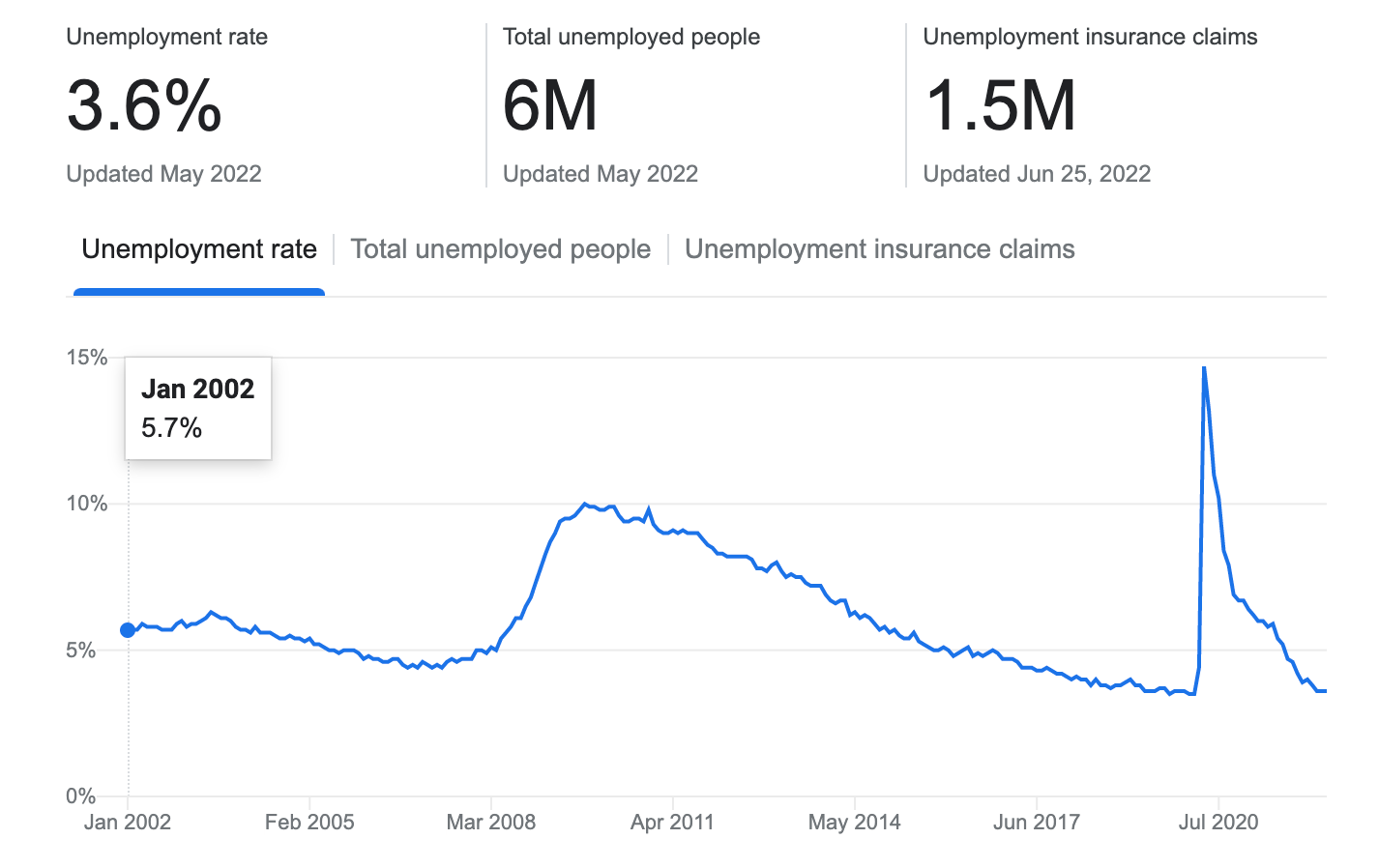
To investors,The unemployment rate in the United States is sitting near historic lows. This is impressive, especially post-COVID chaos, because it took nearly a decade to reach the ~3.5% unemployment rate after the Global Financial Crisis in 2008-2009.My concern at the moment is there is a strong probability that the unemployment rate will push higher over the coming weeks and months. The Federal Reserve is being forced to tighten financial conditions in an attempt to bring down the 40-year high inflation that Americans are experiencing. As they pursue this strategy, the stated goal is to destroy demand from consumers. That demand destruction will ultimately lead to lower revenues for businesses, which will apply financial pressure and likely lead to layoffs. But the market doesn’t always act in a perfect, sequential manner. Many business owners are anticipating the demand destruction, and potential economic downturn, so they are implementing hiring freezes or cutting material percentages of their workforce. Layoffs have been reported across industries, including companies like Tesla, Unity, Coinbase, and Tencent in recent days. This comes at a time where there are more than 11 million open jobs in America. No one said understanding the economy would be easy. But that isn’t even the most interesting part of the labor force analysis in my opinion.There are hundreds of jobs available to job candidates where they can drastically increase their salary. Take Walmart for example — they are now paying truck drivers more than $100,000 in their first year on the job. If you walked down the street and polled the general public, not many people would assume that you could make 6-figures driving for Walmart. Not everyone wants to take the time to get CDL certified and have the life of a truck driver though. It can be long hours, many nights spent away from family, and it doesn’t exactly scream “active lifestyle!” Truck drivers are essential to our economy. Not everyone is cut out for it though.So where will the people flow after they are laid off?In my opinion, many of them will start companies and others will gravitate to the fastest growing industries. We have historically seen an explosion in new business formation during times of economic uncertainty. We saw it around the Global Financial Crisis. We saw it during 2020. And I think we are going to see it again over the next 12-18 months.Not everyone wants to start and operate a business though. A large percentage of the population wants to work at a great company, with great compensation, and an important mission. This is why I anticipate that a material number of people who are laid off, especially from the technology and finance industries, will ultimately transition into the bitcoin and crypto industry. The technology is intellectually stimulating, the mission is important, and the compensation/benefits is attractive.There is one problem though. A good portion of people who will try to transition into the bitcoin and crypto industry are good at their respective roles (marketing, operations, customer service, accounting, etc), but they don’t have the industry-specific knowledge to get through the interview process. Similar to how the truck driver has to acquire the knowledge and skills included in the CDL certification, there is a need for upskilling among the new individuals coming into the bitcoin and crypto industry.This is why my team created a 3-week training program to upskill and place job candidates. We have helped everyone from mortgage loan officers to new college graduates to former public defenders find work in a matter of weeks. The program has more than 60 events packed into the 3 weeks, including lectures, discussion groups, interview prep, resume review, and much more.People who go through the program will leave with a basic understanding of every aspect of the industry, know how to run their own node, successfully execute self-custody, and make memes (no, seriously 😂). If we successfully do our job, we will drastically increase the quality of the workforce across bitcoin and crypto. As we get more and more highly skilled and knowledgable workers, we can accelerate our progress as an industry. If you’ve been laid off or know someone who has been laid off, you can check out the training program here: Get upskilled to work in bitcoin and crypto [Next cohort starts in July]As I continue to look at the macro environment, I am worried that most of the attention has been captured by the inflation conversation. Inflation is out of control in the United States. We should be watching it closely. But if the Federal Reserve is successful in their demand destruction goals, we are about to see many more unemployed individuals. Don’t take my word for it — former Treasury Secretary Larry Summers believes we will need 5 years of unemployment over 5% to quell inflation. If Summers’ diagnosis is remotely accurate, we are going to need all hands on deck. The inflati

G7 Bans Gold From Russia - Does It Matter?
To investors,Most people’s attention has been on the accelerating inflation and reactive monetary policy decisions in the United States. This is the problem that we can see when we go to the store and it is the problem we feel in our wallets. The problem is complex though. It can’t be attributed to any one issue, so it is important to continue to zoom out and see the entire playing field. One of the developments on that global playing field in the last few days has been the G7 decision to ban imports of Russian gold. I don’t spend a lot of time personally analyzing the gold markets, but feel this is another major milestone in the decades-long trend of attempted weaponization of currencies by developed nations leading to degrading trust in those very same currencies. I went looking for someone who had more informed opinions about this development and came across Danny Diekroeger. Here is a quick summary of Danny’s thoughts in his own words:This past weekend, news broke that the G7 will be banning imports of Russian gold. This could be the start of some big moves that goldbugs have been anticipating for years…Many believe the price of gold in US dollars has been held down for years by the fractional reserve systems implemented by the LBMA and COMEX. There are something like 100 paper claims to every gold ounce in existence.But fractional reserve systems are vulnerable to bank runs. If a lot of "paper gold" holders request to take possession of their gold, there simply isn't enough physical gold to match these claims. A supply/demand imbalance and a rush to obtain gold could pressure this system and cause these failures. Goldbugs have been talking about this situation for years.And the cracks are starting to show. We saw something similar earlier this year in the nickel market, where the price went vertical and the London Metals Exchange canceled a bunch of trades.Macro analyst Luke Gromen has theorized that destabilizing the western gold financial markets could be a key part of Russia's strategy to weaken the US dollar. We saw the beginnings of this when Russia tied the ruble to gold earlier this year.And now the G7 has banned gold imports from Russia.If people can't source their gold from Russia anymore, they may look to take delivery from the western fractional exchanges, putting pressure on the system as described above.So what would that look like in a gold-bug's wet dream? Here's one way it could play out:Increased friction of sourcing gold leads to a consistent rise in the price of gold, bringing it to new highs, etc. Then at one point on a delivery date in the futures market, one of the big western exchanges fails to deliver physical gold to a big paper holder who is requesting delivery.This would be major news - a major western gold exchange unable to deliver. At this point we'd see a separation of the physical price of gold from the paper price. The paper claims would get cashed out at yesterday's price (you get cash, not gold). Meanwhile the price of actual physical gold shoots up vertically. And paper claims like $GLD etf holdings won't be worth the same as the gold bars under your bed. This would be madness for financial markets, but something that goldbugs have been long predicting.Even a bitcoin maxi like myself can see this potential shock coming to the gold markets, and I can’t resist riding the wave. Got some physical gold coins secured in storage, hoping to sell for bitcoin when the panic hits.This is a fascinating situation and one that is worth following over the coming weeks and months. As I stated before, I am not an expert on the gold market. The interesting part of this story is the continued attempts to weaponizing currencies on the geopolitical stage. If Danny’s theory plays out, there will be ramifications to gold, bitcoin, and various fiat currencies. As with anything that you read in these letters, there is a risk that this situation does not play out. We would simply be watching an acceleration of the financial sanctions against Russia by G7 nations. It begs the question — what else is left for them to go after? How much more damage can they inflict?We may find out sooner rather than later. If you enjoyed this piece, make sure to give Danny a follow on Twitter: @dannydiekroegerHope you all have a great start to your week. I’ll talk to everyone tomorrow.-PompIf you are not a subscriber of The Pomp Letter, join 225,000 other investors who read my personal opinion on finance, technology, and bitcoin each morning.SPONSOR: Inflation is Vaporizing Your CashInflation was up 8.6% in May. That means that the cash in your savings account will lose 8.6% of its value this year. Add that to a market down 23% and it’s time to fight back…with algos. Composer gives traders and investors an easy way to develop, trade and automate investment strategies. How? Their intuitive no-code platform puts algorithms in charge of developing and executing trades so you can enjoy Hot Inflation Summer by the po

Listen To Earn & Bitcoin
To investors,The best companies create categories. They are able to identify new technology and apply it to solve large problems globally. These category creators are able to disrupt legacy companies, even if those legacy companies have significant scale, because the new technology allows for use cases that were previously unavailable. Take Uber as an example. The ride-sharing company was not possible until the invention of the iPhone. It was necessary for both the rider and driver to have GPS-enabled devices on them so the two parties could effectively and efficiently find each other for pickup or drop-off. Could someone have tried to build Uber with Garmin GPS devices? Sure, but the average citizen was not going to walk around with a large brick GPS device in their pocket just in case they may need to hail a cab.The iPhone created the foundation for Uber. The founders of Uber took that technology and applied it to the global problem of transportation. Billions of dollars in economic value followed. Today I am announcing a new investment in Fountain — a podcast player that is using new technology to disrupt Apple and Spotify. Apple Podcasts has long been the dominant podcast player because they were the default pre-installed podcast player on all Apple devices. The billions of devices that have been sold to customers created a significant distribution advantage for the podcast application. At one point, it was estimated that Apple Podcasts had more than 70% market share.Spotify, which began as a music streaming service, realized that podcasts and music were both audio files. They tried to find an entry point into the market, which eventually led them to pursue an intellectual property strategy. As Spotify spent hundreds of millions of dollars on exclusive deals with The Joe Rogan Experience or Call Her Daddy, the company saw listeners increase and they began to steal market share from Apple. In order for a new player to enter this market, you will have to do something different. This new entrant will have to use new technology, while pursuing a strategy that would be difficult for the incumbents to pursue due to the innovator’s dilemma. This is exactly what Fountain is doing. The team at Fountain has created a new category called “Listen-to-Earn.” Any mobile device user in the world can download the Fountain app and start listening to podcasts today. As you listen to your favorite podcast, you will earn money. Yes, read that again. Fountain has invented a way for people to get paid to listen to their favorite podcasts.Here is how it works. Fountain is using the bitcoin payment rails to allow for their users to receive economic value from podcasters or advertisers. When a user downloads Fountain, the mobile app creates a bitcoin Lightning wallet for them. The podcasts on the platform have a Lightning wallet enabled as well. Now that Fountain knows the wallet address of the podcast and the user, they can help to facilitate payments between these two parties. I got excited about this because I understand the problem.As someone with a large podcast, I spend a lot of time and effort to create great content. We would love for more people to discover the podcast and listen. I’ve experimented in the past with sharing ad revenue with the audience, but there is no good way to do it. Do listeners tweet at me and then I use Venmo to send them money? Do I have people leave a review in the app and then I email them for wire instructions? It is too cumbersome and not viable.This is where Fountain comes in. I can simply set a budget for every episode and the people who listen are paid a portion of that budget. The listener’s exact payout is determined by how long they listen to the episode. This not only gives me the ability to share in the economic success of the podcast with my audience, but it also ensures that the audience is listening to the entire podcast episode. There is one catch to this whole approach though — Fountain did not create their own token.The team at Fountain intimately understands bitcoin. They realized that there is no need for a new token. They can simply use the bitcoin payment rails to send economic value to anyone in the world. While a few dollars of bitcoin may not seem life-changing in the United States, this could replace someone’s salary in other parts of the world. And for US listeners, earning a few extra dollars of bitcoin every day for doing something you were already going to do is nice as well.The time and attention we give to tech platforms is incredibly valuable. Every minute that you spend consuming content, creating content, or viewing ads, increases the value of the platform you’re using. Most free apps we use every day don’t recognize or reward this - but Fountain is different. Not only can you earn for listing to your favorite shows, you can also earn by creating clips, and commenting on episodes, which provides signal to Fountain to surface the best content.There is always risk
Markets Take The Stairs Up And The Elevator Down
To investors,Below is a guest post from Nik Bhatia, financial researcher and Adjunct Professor at the University of Southern California Marshall School of Business and author of the Substack newsletter The Bitcoin Layer, providing a preview ahead of today’s Fed meeting. Enjoy!“Markets take the stairs up and the elevator down.” I’ve always loved this old trader adage because of how true it is, and nothing proved it like what happened this week to Treasuries, and to a lesser extent, equities and bitcoin. Today’s post is an overview of the recent chaos across asset classes and a preview of this afternoon’s Federal Reserve interest rate hike.On Friday, official inflation data remained at a 40-year high, not necessarily a surprise to economic observers. What did surprise was the lack of any slowdown in core and headline inflation, which sent markets into a flurry of repricing. Why did some traders expect for a marginal slowdown in inflation? Interest rates have skyrocketed across the economy over the past several months, and financial conditions have broadly tightened in a significant way. But the counter effects of trillions in monetary stimulus, trillions in fiscal stimulus, supply chain disruptions, and commodity price increases have been impossible to overcome with only a few rate hikes. In fact, it can be argued that inflation is stickier than ever as our post-pandemic world is going through generational adjustments and the rejiggering of how goods move around the world, not to mention a disruptive zero-COVID policy in China.All of this inflation, and the statistical strength of the trend, gave markets a shake Sunday evening. The Fed, which announces another rate hike this afternoon, was expected to raise rates by 50 basis points at its June and July meetings, and short-term interest rate markets reflected the same. But as markets opened in Asia and Europe on Sunday evening, a rapid adjustment ensued in Treasury yields, spilling over to risk markets. By Monday afternoon, the Fed leaked (via the Wall Street Journal) that it would be hiking rates by 75 basis points instead of 50, and the market understood that backdoor communication as a sign that July’s meeting would also see a hike of 75.A net increase of 50 basis points in Fed hikes over the coming six weeks was enough to send risk markets into freefall. Stocks entered a formal bear market, and bitcoin fell all the way back down to $20,000, nearing its 2017 highs and lowest level since December 2020. But the real move was in Treasury yields.The entire Treasury yield curve ratcheted higher by 50 to 75 basis points as prices went into a brief freefall (bond prices and yields move inversely), confirming the good ol’ elevator thesis. Two-year Treasury yields, which respond directly to monetary policy expectations, reached levels last seen in 2007, and 10-year Treasury yields, which trade off general growth and inflation expectations across the world economy, broke out to 2011 levels and surpassed a previously major barrier of resistance at 3.25%. The entire yield curve sits around 3.5% as of this writing. The main takeaway from all this chaos in the Treasury market and rapid adjustment in Fed hike expectations is the tightening of financial conditions.How can the Fed slow down inflation? By slamming the breaks on the economy via tightening policy and thereby financial conditions. And the tightening trends are certainly gaining steam. First, we have mortgage rates now topping 6% which is sure to slow down the housing sector as affordability plummets due to higher borrowing costs. Elsewhere in the economy, higher Treasury yields feed directly into higher corporate borrowing costs—making credit more expensive and causing companies to slow or stop expansionary plans and hiring. To make matters worse, credit spreads, or the borrowing premium above Treasury yields that companies pay their lenders, are widening. Higher rates are already impacting economic activity, and recessionary fears have increased as the Fed seems committed to its plan of attack on inflation. And its plan of attack appears more and more like causing a recession. A mild one, or so it hopes.Tightening financial conditions are also present in the level of the dollar versus other currencies—the dollar index is now at 20-year highs, making trillions of dollars borrowed abroad more burdensome to pay back when revenues are locally denominated. Add to that oil prices and other commodity prices at multi-year highs, and countries around the world are beginning to feel choked. Whether or not the Fed is to blame for commodity prices is besides the point—a strong dollar, expensive energy, and the reversal of hot-money trends spell disaster for emerging markets and their asset prices.We see the decline in equities as a result from this myriad of financial tightening, and bitcoin’s correlation to the stock market has made its price collateral damage. Bitcoin has its own fundamentals, but it has been unable to
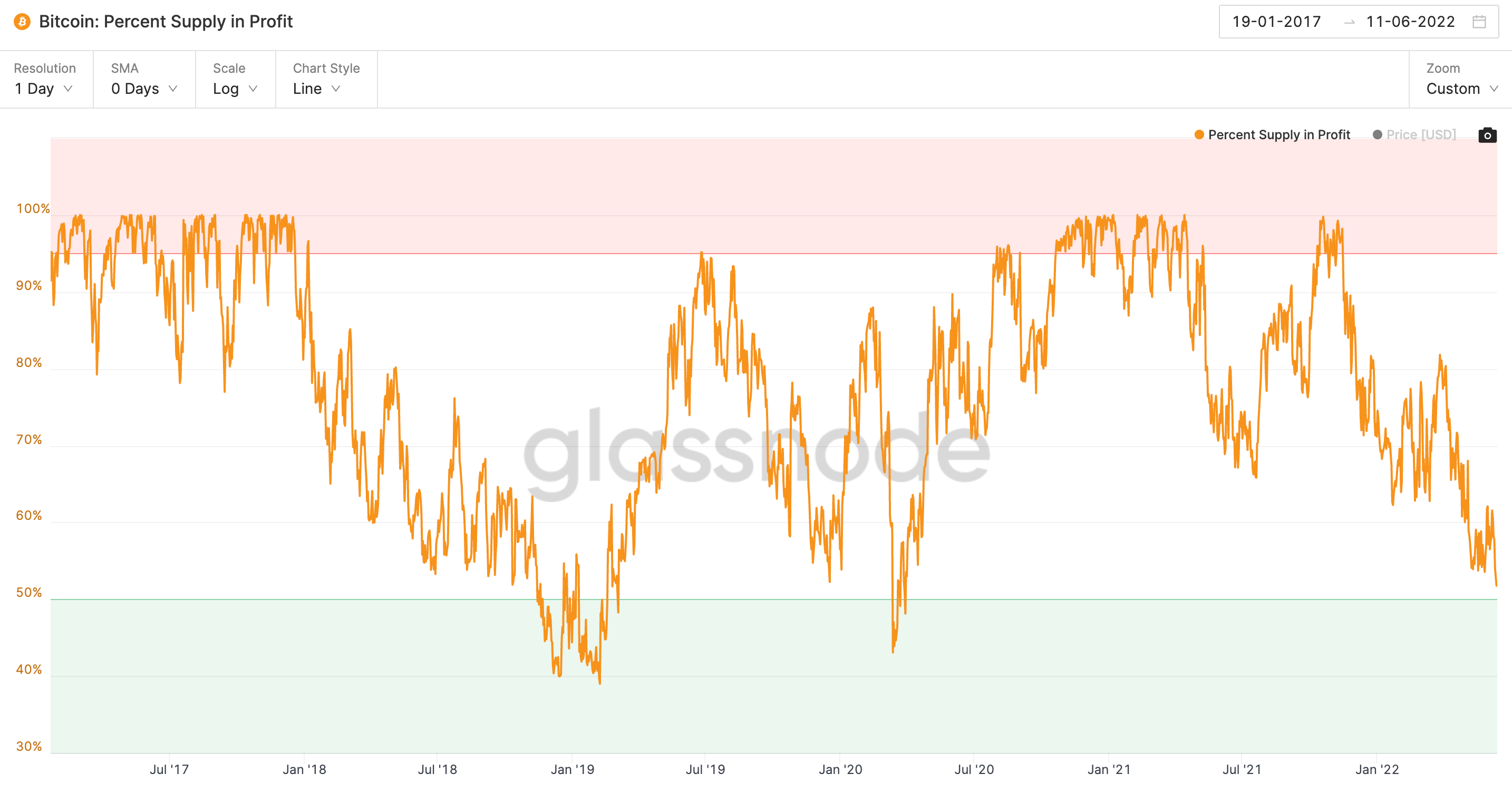
Bitcoin Value vs Price
To investors,Bitcoin’s price has been falling for months and now sits under $25,000. Although these price drawdowns never get easier, they have happened numerous times over the years. It is always a good reminder to re-evaluate the bitcoin thesis and check the underlying fundamental data.First, the bitcoin thesis is simple — an open-source, decentralized, digital currency that boasts a programmatic monetary policy and finite supply will be valuable in a digital world. Everyone still agrees that we are headed towards a digital world, so the question shifts towards the ideas of decentralization, programmatic monetary policy, and finite supply. In my opinion, people aren’t necessarily adopting bitcoin because of these features, but rather because of what the features empower (prevent currency debasement, censorship-resistance, seizure-resistance, etc). The thesis is equivalent to perceived long-term value. Price and value are different. But to ensure that value is not also falling as aggressively as price, we must take a look at the underlying fundamentals of bitcoin. The bitcoin network hash rate has more than quadrupled in the last three years. It continues to hit all-time high levels today, proving that the network has never been more secure. The average transaction fee paid on bitcoin is currently under $1.50 and we didn’t see a spike in fees when bitcoin was hitting all-time highs for the second time in 2021. This is a big improvement from the spike in fees when bitcoin hit the 2017 all-time high and Q1 of 2021. Much of the improvement in fees that started in the second half of 2021 can be attributed to layer-one technology innovation and the continued rise of the Lightning Network. If we look at the on-chain distribution of bitcoin, we see that wallet addresses with 0.01 bitcoin, 0.1 bitcoin, and 1 bitcoin continue to hit all-time high levels. This is different than the major whale wallet sizes, so you can infer that large wallets have been selling and small wallets have been buying. Another way to look at this is the cost basis for the long-term and short-term holders (measured by 155 days of holding). You can see here that Will Clemente pointed out that these two metrics are getting close to crossing, which signals the long-term holders are in the dominant position — “Long-term holder cost basis is rising as short-term holder cost basis declines. If this persists and STH crosses below LTH, historically has marked generational Bitcoin buying opportunities. We are getting close.”Transaction metrics continue to look healthy as well. We see active addresses and total successful transaction count remaining in line with their historical ranges. The percent of bitcoin in circulating supply that is in profit is now under 52%, which has historically been close to marking bear market bottoms (usually sub-50%). Lastly, the Lightning Network capacity continues to reach all-time high levels as well. It is important to understand that bitcoin’s current drawdown in price is largely driven by changes in the macro economy. Increases in interest rates, coupled with quantitative tightening, has driven correlations across assets towards 1 and we are seeing asset price sell-offs across the financial market. It is important to re-visit your thesis in these moments. Do the inputs still hold true? Do you reach the same conclusion when new information is included? Are the underlying fundamentals still attractive? Is price merely disconnected from value or has the value changed?After conducting the re-evaluation of bitcoin over the weekend, I come to the same conclusion. Bitcoin continues to be an attractive store of value for the long-term. The current price drawdown is in direct contradiction to many of the underlying fundamental metrics, which are near or at all-time high levels. The network is healthy. Adoption is continuing. The undisciplined monetary and fiscal policy backdrop is becoming more obvious to the average citizen. Bitcoin’s price falling is not fun. But value measurements of bitcoin are telling a different story. The best investors understand that controlling their emotions in these moments is important. They make decisions based on value, not price. The big variable here is the Federal Reserve — they are in control and assets generally are one big trade right now.Keep your head on a swivel. Constantly re-visit and re-evaluate your investment thesis. Think critically. Ensure you are willing to change your mind when the information changes. Your mind and wallet will thank you over the long-run. Have a great day. I’ll talk to everyone tomorrow.-PompIf you are not a subscriber of The Pomp Letter, join 220,000 other investors who read my personal opinion on finance, technology, and bitcoin each morning.SPONSOR: Brave Wallet is the first secure wallet built natively in a web3 crypto browser. No extension required.With Brave Wallet, you can buy, store, send, and swap assets. Manage your portfolio & NFTs. View real-ti
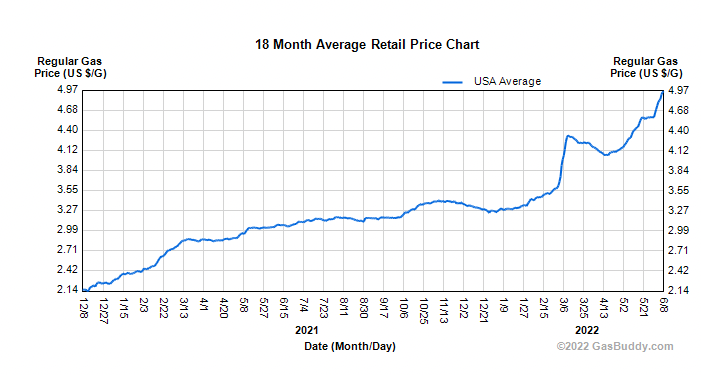
Inflation Is Out Of Control
To investors,Inflation in the United States was reported at 8.6% this morning. This is the fastest year-over-year growth in over 40 years. The most concerning part of this report is that economists and market analysts believed that inflation had peaked in March at 8.5% and was going to start trending downward in April and May. We saw 8.3% in the April report, but the May numbers surprised these “experts” to the upside. Inflation hasn’t peaked and is continuing to accelerate higher. There is plenty of debate on why inflation is occurring. Is it undisciplined monetary and fiscal policy? Is it supply chain disruptions? Is it the Russia-Ukraine conflict? The economy is a complex machine, so each of these situations likely plays a role. Rather than debate how we got here, we need to be focused on what can we do moving forward. The average American family is getting decimated financially right now. The cost of eating food at home has increased 11.9% over the last 12 months. Gasoline is up nearly 50% in the same time frame. That is almost impossible for a family to withstand, especially when wages aren’t growing at the same rate. But this data is not telling the full story. Take gasoline as an example — prices have doubled in the last 18 months.If you look at shelter, it is being reported at a 5.5% annual increase. That doesn’t make a lot of sense though. Rents are up more than 15% nationally and real estate is up more than 20%. The lower official number is the result of methodology that doesn’t accurately reflect reality. Speaking of methodology, many people may not realize that the last time inflation was this high in America, the methodology and calculation of the CPI metric was changed. In layman’s terms, CPI was historically calculated by simply measuring the increase in price of various goods over time. If an item cost $1.00 a year ago, and now it costs $1.10, the inflation reading would be 10%. Starting in 1980, and numerous times afterwards, the CPI metric began to change as the Bureau of Labor Statistics attempted to more “accurately” measure inflation.These changes included an assumption that people would stop buying expensive items during high inflation and swap them out for lower cost items. There is also a focus on incorporating changes in quality into the calculation. Regardless of whether you think these changes are good or bad, it is hard to see a world where the average American family is only experiencing the numbers that are being reported officially.There are other measurements of inflation that we can look at. Truflation is a private market attempt to more accurately measure inflation and they are reporting just under 11% over the last 12 months. This doesn’t mean they are right, but it does mean that they are showing different numbers than the official metrics.This brings me to my last point. Wages in America have failed to keep up with the historic levels of inflation. In fact, the inflation-adjusted average hourly earnings of American workers has been negative for more than a year. The cost of goods and services are increasing, while wages are not keeping pace. This is disastrous for millions of families. These folks don’t want to take over the world. They simply want to build a life of happiness and financial security for their loved ones. Without the right education, the bottom 45% of Americans get financially damaged during these high inflation times. They have no investable assets and then live with 100% of their life savings in US dollars.The Federal Reserve is backed into a corner now. You have Q1 GDP contracting. Inflation hasn’t subsided even though the Fed has been increasing interest rates and conducting quantitative tightening. They don’t have many more options other than to simply put their foot on the gas. The Fed could try to accelerate the interest rate increases, both in speed and severity, along with accelerate QT. I’m not sure that they will do it, but there aren’t many other avenues to pursue.If the Fed does nothing, the real situation on the ground is not going to get any better for the average American. Inflation reports may start to look like numbers are falling, but much of that will be due to the base effect of increasing inflation starting last summer. People need help. Undisciplined monetary and fiscal policy created this mess. We just have to be careful that a continuation of bad decision-making doesn’t create an even worse situation. Hope each of you has a great day. I’ll talk to everyone on Monday.-PompIf you are not a subscriber of The Pomp Letter, join 220,000 other investors who read my personal opinion on finance, technology, and bitcoin each morning.SPONSOR: Brave Wallet is the first secure wallet built natively in a web3 crypto browser. No extension required.With Brave Wallet, you can buy, store, send, and swap assets. Manage your portfolio & NFTs. View real-time market data with an integrated CoinGecko dashboard. Even connect other wallets and DApps. All
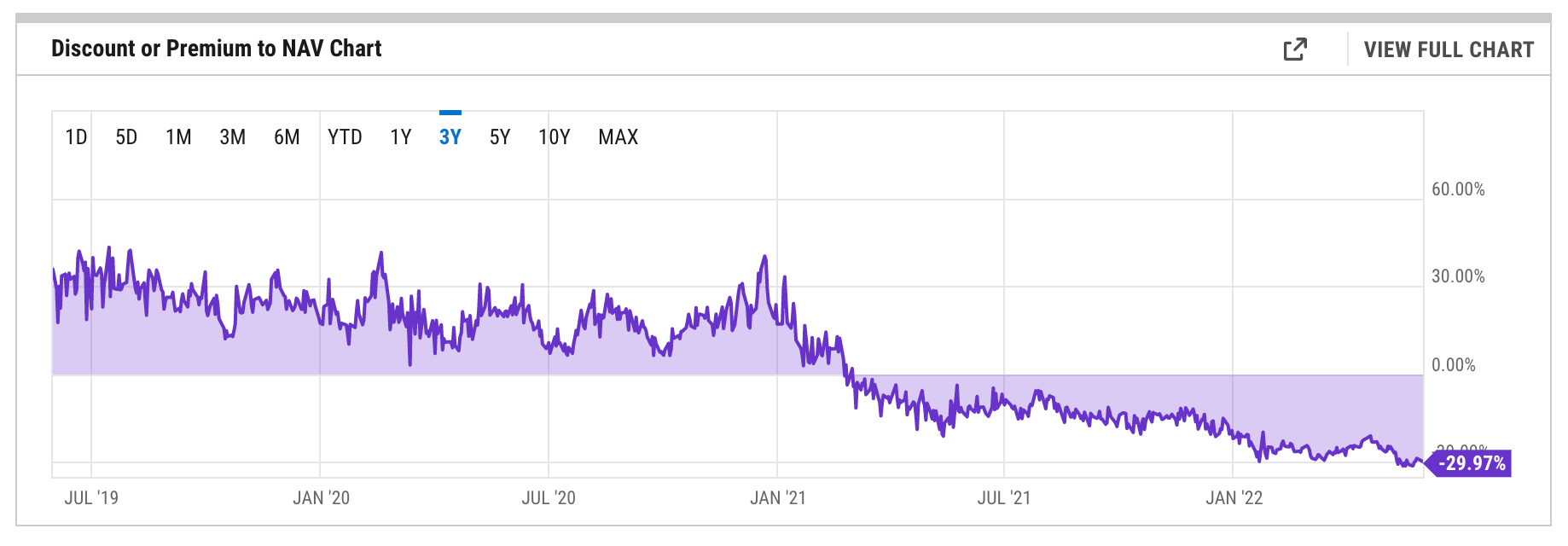
VIX Creator Wants GBTC Converted To ETF
To investors,The Grayscale Bitcoin Trust (GBTC) is the single largest bitcoin fund in the world. With more than $19.25 billion in AUM, they hold over 640,000 bitcoin inside the fund. The fund’s AUM was over $40 billion before bitcoin’s recent 2022 price drawdown.Many people may not realize though — GBTC was a major driver in bitcoin’s increase in price from ~ $10,000 in October 2020 to $64,000 in March 2021. Without getting too deep into the details, GBTC does not have a redemption functionality.This means that you could go to Grayscale and give them money in the private market. They would take your money to go purchase bitcoin for the fund. In return for your money, Grayscale would give you shares in GBTC under one condition — you were not allowed to trade those shares for 6 months. So a bunch of very smart investors started giving Grayscale millions of dollars in the private market. But why would they do that? Well, at the time, if you gave Grayscale $1 in the private market, then waited for 6 months and 1 day, you would be able to sell that sale at a premium in the stock market for approximately $1.20. This means that the GBTC shares were trading at ~ 20% premium to the value of bitcoin in the fund (NAV). You can easily understand why so many people were giving them money to exploit this detail. Here is Grayscale’s bitcoin holdings over the years and the ramp up in 2020-2021 is very obvious. The premium percentage went up and down, including reaching as high as 40% at one point, but it was always positive. It doesn’t take a genius to understand that giving someone $1 and being able to sell it for $1.20 about 6 months later is a good investment. This wasn’t risk-free though, so what was the risk?What happens if so many people realize that you could do this that the premium went away and eventually became a discount? That couldn’t happen, right? You guessed it — it happened. Grayscale’s Bitcoin Trust now trades at a 30% discount to the value of the fund. No one wants to give Grayscale $1 and get $0.70 for it 6 months later, so the fund has stopped taking inflows at the moment. Now here is where things get a little weird. Grayscale has about $20 billion of assets (at current BTC price) sitting in a fund, but the shares are trading at 30% less than that value. So if you’re holding the shares, which have gone done significantly, you would just want to tell Grayscale “hey, I’ll give you my shares and you give me back the equivalent bitcoin.” That sounds like a good idea but Grayscale doesn’t have a redemption feature. This is one of the big reasons why the company has been spending so much time trying to get the SEC to approve a conversion from the trust structure to a bitcoin spot ETF structure. If they are successful, investors will rush to buy the shares at a discount so they can redeem the bitcoin, which is worth more, driving a profit. As more investors buy the shares, the price will go back up towards the value of the fund and everything in the world will be good again. The problem is that the SEC hasn’t been too interested in this idea. SEC Chairman Gary Gensler and his team have approved bitcoin futures ETFs in the United States, but there is no bitcoin spot ETF yet. Other countries have them. The United States does not though.So this brings me to a development yesterday that is very interesting. There is a man named Robert Whaley who wrote a letter to the SEC about the Grayscale ETF conversion issue. He isn’t just a random guy, but rather Whaley created the Cboe Volatility Index (VIX) in the early 1990’s. It would be an understatement to say that Robert Whaley understands financial markets, indexes, and trading products or structures. He highlighted the main reason for his letter when he wrote:“Bitcoin is a new asset class. Its usefulness arises from the fact that its returns are relatively uncorrelated with traditional asset classes like stocks and bonds, thereby providing more efficient return-risk opportunity. Bitcoin ETPs are an effective mechanism for investing in bitcoin. Public demand for such investment tools is evidenced by the launch of ProShares bitcoin futures-based ETF (BITO) in October 2021. In its first 1 day of trading, its assets under management (AUM) reached more than $1B, one of the most successful product launches in the 30-year ETP history. However, as further described below, futures-based bitcoin ETFs like BITO are a much more costly and inefficient way for investors to access bitcoin compared to what would be a more transparent and well-designed spot-based bitcoin ETP like GBTC. And because the Commission has already approved futures-based bitcoin ETFs, it must implicitly be comfortable with a spot-based bitcoin ETP like GBTC.”Robert’s argument breaks down into three distinct categories:* Index construction* Market depth and liquidity* Product designThe first argument on index construction is quite simple. “Two bitcoin indexes are relevant to this discussion: the CME CF Bitcoi
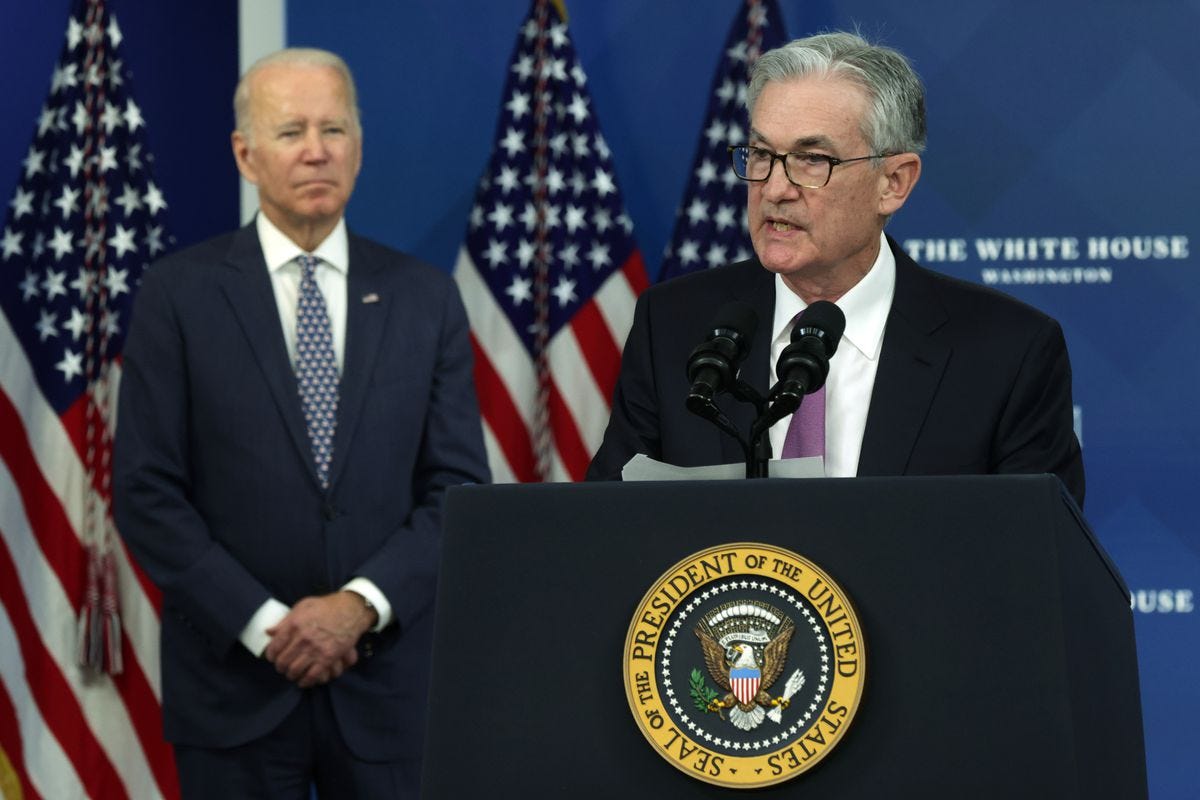
Jerome Powell Is Being Called To The Principal's Office
If you are not a subscriber of The Pomp Letter, join 220,000 other investors who read my personal opinion on finance, technology, and bitcoin each morning.To investors,President Joe Biden is hosting Federal Reserve Chairman Jerome Powell at the White House for a meeting on inflation. Alister Bull of Bloomberg reported the gravity of the situation by writing:“President Joe Biden will hold a rare Oval office meeting on Tuesday with Federal Reserve Chair Jerome Powell amid the highest inflation in decades, which has angered Americans and hurt his standing with voters.The two will discuss the state of the American and global economy, according to a White House statement. It’s the first meeting between the two since Biden in November announced his intention to nominate Powell for a second term at the helm of the US central bank, according to a record of the Fed chief’s public schedule which is available through March.”The idea of high inflation is hard to comprehend until you start looking at the data through the lens of an average American family. First, gasoline prices are at all-time high price levels.Asking people to pay nearly $4.50 per gallon is crazy, but that is just the national average. Some folks in California are paying more than $7 per gallon currently.Eating food at home is not doing much better. According to the US Department of Agriculture and CPI data, food prices are up 10.8% and they are expected to continue to rise through the rest of 2022.The level of food price inflation varies depending on whether the food was purchased for consumption away from home or at home:The food-away-from-home (restaurant purchases) CPI increased 0.6 percent in April 2022 and was 7.2 percent higher than April 2021; andThe food-at-home (grocery store or supermarket food purchases) CPI increased 1.3 percent from March 2022 to April 2022 and was 10.8 percent higher than April 2021.Food price increases are expected to be above the increases observed in 2020 and 2021. In 2022, food-at-home prices are predicted to increase between 7.0 and 8.0 percent, and food-away-from-home prices are predicted to increase between 6.0 and 7.0 percent. Price increases for food away from home are expected to exceed historical averages and the inflation rate in 2021.The average American worker already received a 2.4% pay cut in 2021 due to high inflation and wage growth that couldn’t keep up. Now add in accelerating costs of gasoline and food to get a really dire financial situation.This brings me to the meeting today between President Biden and Fed Chairman Powell. It is no secret that high inflation is a problem for a sitting US President, especially during a year of midterm elections. The looming risk of a recession driven by the Fed’s increasing interest rates can’t make the President comfortable either. Usually economies have to choose between inflation or recession in these scenarios, but the consensus is that we are going to get both in a bout of stagflation. So why is this meeting noteworthy?A central bank must be both (a) independent and (b) predictable in order to be effective. We already know that the Federal Reserve is unpredictable — you just have to look at the billions of dollars that are wagered on every FOMC press conference results. It is wild that in the 21st century we are all watching a human speak at a podium in order to figure out a big reveal with our monetary policy. That isn’t exactly predictable in advance.But the Federal Reserve has always claimed to be independent. When President Trump was aggressively tweeting at the Fed to devalue the dollar, the Fed claimed to be independent of political pressures. Now we have President Biden holding a rare Oval Office meeting with the Fed Chairman. No one believes they are simply going to have tea, chit-chat, and catch up on their weekend plans. President Biden is likely to deliver a message to Powell that he has to get inflation and economic growth in the right place. So much for the central bank being independent.This is equivalent to a teacher being called to the principal’s office. The teacher has all the control and leadership in their classroom, but that disappears in the principal’s office. Chairman Powell….welcome to Principal Biden’s office.We are watching a perfect example of why I personally choose to store majority of my wealth in bitcoin as a savings technology. The digital currency’s monetary policy is programmatic. It is written into code, can be audited by anyone at any time, and is not controlled by any one person or group. Bitcoin is an automated central bank with a programmatic monetary policy. It is completely insulated from any political pressure. No change of demand, in either direction, affects the supply. Bitcoin is the most independent central bank in the world.That detail doesn’t sound important when things are going well. But when you compare bitcoin to the current chaos of human-led monetary policy, bitcoin’s monetary policy looks incredibly attr

Non-Dilutive Funding Becomes Incredibly Important During Market Downturns
To investors,Asset prices have been drawing down in every market over the last few months. You can see it in stocks, bonds, real estate, commodities, and crypto. There have been numerous people warning business owners and founders of technology startups to prepare for a tough economic environment.This usually entails cutting costs, taking on outside investment, and focusing on profitability. The average small business is well prepared for these situations because profitability is the name of the game in good times or bad times. Technology startups have a different approach, which usually allows them to lose money for a period of time before they find product-market fit and profitability. So the technology companies are the ones who will have a tough time over the next few months if they can’t get access to new investment. But as the saying goes, beggars can’t be choosers. Raising new capital during a market downturn can be excruciatingly painful. There is heavy dilution and unfavorable terms. Venture capitalists are price makers and founders are price takers. This isn’t the only path though.With the recent rise in subscription revenue products, both consumer and enterprise, there has been the creation of a new financing option for founders as well. Pipe, and other companies like them, allow founders to access non-dilutive capital by using their recurring revenue as an asset. I am not an investor in the company, but I am friends with the founder Harry Hurst and have been working with Pipe on the podcast for awhile now. I asked the company to put together an overview of how founders can access this non-dilutive funding during these severe market downturns. Here is that overview:2022 has started out to be a wild year for founders and business owners. From the Fed raising interest rates and possibly planning to raise them again, to economists talking about impending recession, to valuations shrinking and VCs cutting back on deployment, the funding environment is very different than where we were just a year ago. But even with all that change taking place, there are some great opportunities for companies to grow if they can access the financing they need to make it happen. Alternative finance may just have the answer for that. What you can’t controlWhen the growth of your company depends on external financing, all the above factors can be massively disruptive. They can lead to paying a much higher interest rate than you otherwise would, raising a down round where you give up too much equity for too little capital, or even putting growth on hold because you’re not able to access capital at all. All those environmental factors are outside your control. For example, while you can work harder to convince VCs of your company's value, you can’t change the overall climate of valuations in your industry or the wariness of VCs to part with cash right now. It’s an uphill battle at best. But there is one factor you can control—and one which you work to control each and every day as part of running a company—your revenue. What you can controlIf your business is healthy and generating predictable revenue, you’re in a very good position to grow, especially if that revenue is recurring. Recurring revenue models like subscriptions and memberships are becoming more popular across almost every industry because they give customers convenience and they give companies predictable revenue streams. In fact, these streams are so reliable that they’ve become an asset class in their own right. And that asset class is the foundation of a new financing model—recurring revenue financing. What is recurring revenue financing Recurring revenue financing (RRF) capitalizes on the health of your business and the predictability of your recurring revenue assets. It allows you to trade your revenue streams for up-front capital so you can grow faster. To see how this works, let's talk about what recurring revenue financing is NOT. It’s not a loan. Loans involve borrowing money and repaying with interest, often using your assets as collateral. Instead of borrowing, recurring revenue financing (like what we offer on the Pipe platform) is actually the sale of future revenue for cash up front (at a slight discount). Investors love the steady, fixed-income-like returns, which helps keep the discounts low. Pipe uses a two-sided trading platform, so institutional investors actually bid on your anonymized revenue, which keeps the costs even lower. It’s not dilutive equity financing. When you trade your revenue streams, you’re trading just that—the revenue. You maintain complete control of your company and never dilute your equity. This also means the amount of financing you can access isn’t limited by valuations because investors aren’t buying a piece of the company. Your trading limits are based on the health of your business and the amount of recurring revenue you have, so you can trade more as your business continues to grow. And if you are looking to rai

Crypto Bahamas Review: Web3 isn’t Coming… it’s Already Here
To investors,There was a very large crypto conference hosted by FTX and SALT in the Bahamas last week. I thought it would be interesting to have a conference attendee share their perspective from the ground — here are Sherjan Husainie’s notes from the conference: SummaryCrypto Bahamas was a high-filter and high-ROI event in the Web3 space. Given the partnership of FTX and SALT (Anthony Scaramucci), it attracted all the tier-1 players in the space: including investors, projects, researchers, and talent.Key themes coming out of the event were as follows: * Momentum: Web3 is not the future, it has already arrived. Leading brands are not just leaning in, they are doubling down. * Talent: there is a one-way street for talent from traditional industries such as finance, consulting, and mature tech heading into Web3. * Regulation: policy-makers have taken notice, are peeling the onion, and getting smarter about the space. Many geographies are competing to take the crown of being “Web3-friendly.” * Investment: top Web3 funds are deploying capital fast, and non-Web3 funds, hedge-funds, and family offices, are carving out allocations to invest in the space. * Velocity: the space is moving at light-speed, staying out-of-sight means being out-of-mind. Having a presence digitally and physically builds relationships.Momentum Web3 is not the future, it has already arrived. Leading brands are not just leaning in, they are doubling down. Web3, only a few months ago, was a space most tier-1 brands and celebrities were hesitant to partner with. Now, that mindset has flipped and brands are doubling down to partner with leading Web3 projects. Companies like Mercedes-AMG Petronas Formula 1 team, Miami Heat, Major League Baseball, Tom Brady, and Bill Clinton, who historically have been very protective of their brand, are now wearing the Web3 badge on their chest. They are not simply sponsors taking the money, they are joining boards, being part of strategy, leading the conversation, and opening doors. This is bringing in a lot of consumer and enterprise interest into the space, giving it the momentum it needs. From a traditional enterprise perspective, brands such as Mercedes-AMG Petronas Formula 1 mentioned that when so much capital was flowing from the Web3 space towards traditional companies, it was hard to say no. But, as they dug in more, they realized the opportunity is much larger in the innovation, technology, and the experiences that can be offered to their millions of fans through Web3. The Washington Nationals, for example, used a DAO to get their fans’ approval on a recent contract. As the space grows, all brands will unlock new and unique experiences through Web3 platforms. The question is not of if, it is of when.Talent There is a one-way street for talent from traditional industries such as finance, consulting, and mature tech heading into Web3.Almost every person at the Crypto Bahamas conference came from a tier-1 traditional industry background. This was apparent across all sectors. Young and experienced professionals from leading tech companies to private equity and hedge funds, are all pouring into Web3 and not leaving. The mindset at the conference of joining Web3 wasn’t that of getting a better pay package, but leaned more towards the fact that this industry offered a better experience, a greater opportunity, unlimited growth, is borderless, and simply is just more fun to be in. During the 2000’s, the best places for people to work were firms like Goldman Sachs and McKinsey & Co., then, in the 2010’s it changed to companies like Google and Facebook. Now, in the 2020’s there is a new movement and it is all about joining Web3. We expect this flow of talent towards Web3 to grow faster than before, making it much harder for traditional tier-1 firms to attract and retain talent.Regulation Policy-makers have taken notice, are peeling the onion, and getting smarter about the space. Many geographies are competing to take the crown of being “Web3-friendly.”The government of Bahamas made it very clear that they are primed to be the most Web3-friendly country in the world. Under the leadership of Philip Davis, the nation of Bahamas is ready today for the Web3 community and is already seeing large and small Web3 companies relocate their headquarters and majority of their teams to the island nation. Companies like FTX are investing in a small campus on the island and plan to move 200 of their main employees locally. Other leading projects, such as LayerZero, have already moved their teams there, and we forecast many more would follow. From a policy-makers perspective, Tony Blair, Bill Clinton, and Andrew Yang, are well-versed in the space and found the environment similar to when the world was getting introduced to eCommerce in the early 1990’s. There were a lot of unknowns and uncertainties about the new “internet,” but policy-makers leaned in with an open mindset and let the builders build. That mindset brought in favor
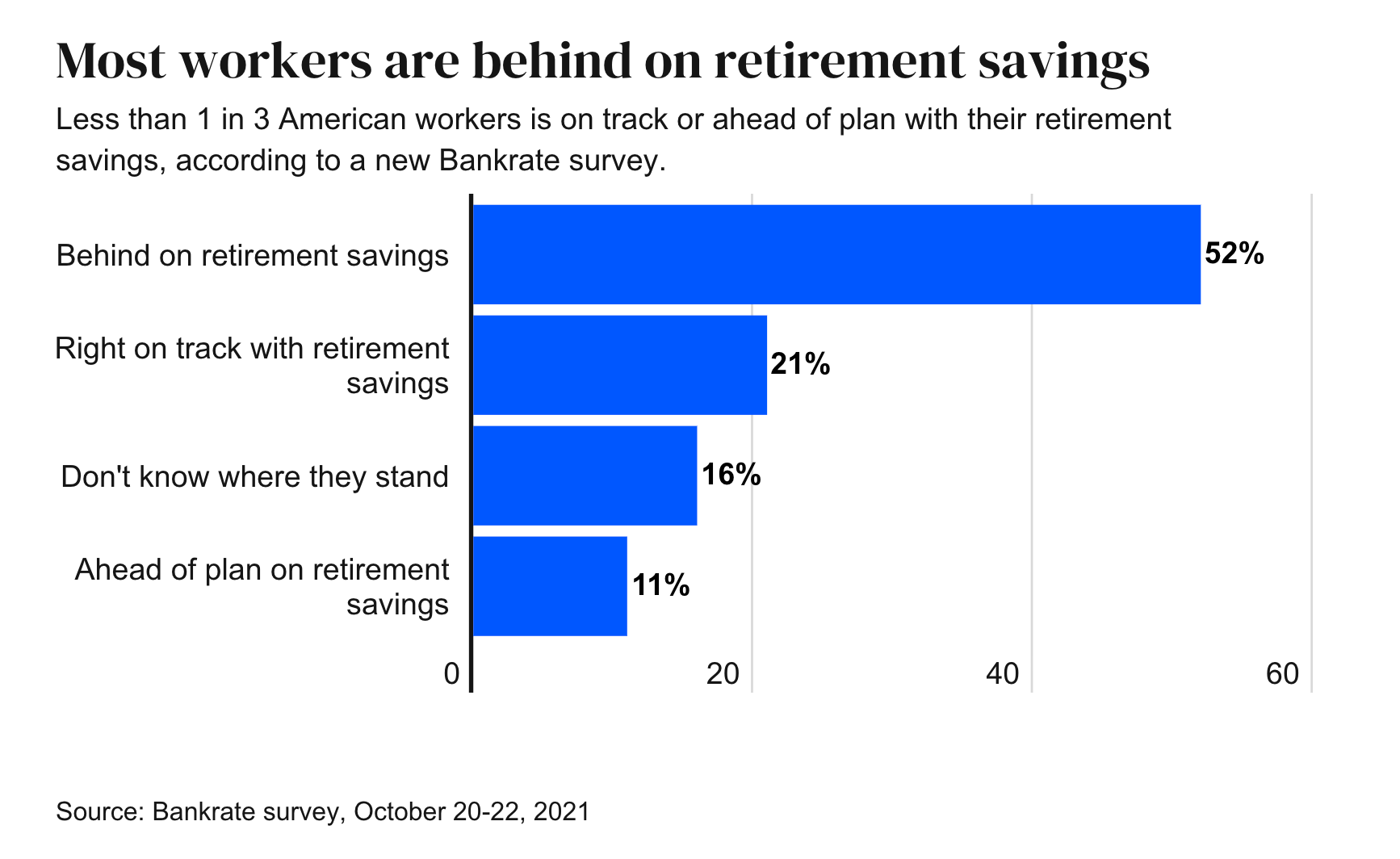
Fidelity Brings Bitcoin To Retirement Accounts
To investors,The retirement situation in America is dismal. According to a recent Bankrate survey, more than 50% of US workers say that they are behind on their retirement savings. At least 1 in every 3 people report that they don’t even have a retirement account. To make the situation worse, 51% of Americans say that they have previously taken an early withdrawal from their retirement savings and the economic chaos caused by COVID-19 hasn’t helped either. One strategy to help lessen the blow of financial duress later in life led to the creation of pension plans. The idea was that employees and employers would put money in, the investment teams would grow the money over time, and the employees would get paid out a portion of the proceeds in retirement. This is a great idea on the surface, but the main problem is that most pension plans have been drastically underperforming their target investment returns, which means that they won’t have enough money to pay retirees when the bill comes due. According to Richard M. Ennis, a prominent institutional investment consultant who was previously CEO of the respected consulting firm EnnisKnupp and edited the prestigious Financial Analysts Journal, said in an interview with Marketwatch:“The bottom line on public fund performance is that underperformance of 152 bps [1.52%] per year on $4.5 trillion in assets [for the 12 years ending June 30, 2020] translates to an outright waste of stakeholder value of $68 billion annually, a figure I find astonishing.”If the public pension funds have a tough time underperforming standard benchmarks, while simultaneously missing their actuary rate of returns, there is a risk that the 25+ million Americans counting on their pension fund for retirement will get an unwelcome surprise. So what exactly is the solution to the retirement problem in America?I wrote a letter to each of you in December of 2018 titled “Every pension fund should buy bitcoin.” In the letter, I argued the following:The retirement of hundreds of millions of corporate and government employees around the world depends on these pension funds’ ability to pay the individual a set amount of money post-retirement. Unfortunately, many pension funds are facing a significant crisis — it does not look like they will be able to pay their future obligations.The difference between the obligations and the resources allocated to pay them is actually widening. This is driven by a decreasing worker to retiree ratio. Workers pay into the pension fund (think of this as revenue for the pension fund) under the promise that the fund managers will grow the capital and be able to pay the employee’s pension post-retirement. Once an employee retires, they begin to draw their pension (think of this as expenses for the pension fund) and will continue to do so until they die.The gap between revenue and expenses is getting worse because of lower birth rates (fewer people entering the workforce) and longer life expectancy (the retirement age stays fixed so people are entitled to their pension for longer). Each of these trends is expected to continue, and possibly even accelerate, which will put additional pressure on pension funds to come up with the capital needed to fulfill their obligations.I then went on to discuss a potential solution being the purchase of bitcoin:If the thesis plays out how I anticipate though, an investment of 100 basis points or less would materially change the performance of each pension fund, which ultimately changes the future viability of retiring for hundreds of millions of people. These institutions have permanent, long-term capital which allows them to stomach more volatility than most investors.For example, an investment of 1% of assets at $4,000 BTC price would yield a 25% increase in the pension’s total assets if Bitcoin reached $100,000. If a fund decided to invest 0.1% of assets, the same price appreciation would increase total assets by 2.5%.Obviously bitcoin’s price has not yet reached $100,000, but the rise to $40,000 means that a 1% allocation would have increased a pension fund’s assets by 10% so far. This would close the underfunding gap for a large portion of pensions in the United States.While we wait on more pensions to purchase bitcoin, there is a light at the end of the tunnel for individuals. Fidelity announced this morning that they will be the first major retirement plan to allow investors to put bitcoin in their 401k plans. According to the Wall Street Journal coverage, “Employees won’t be able to start adding cryptocurrencies to their nest eggs right away, but later this year, the 23,000 companies that use Fidelity to administer their retirement plans will have the option to put bitcoin on the menu. The endorsement of the nation’s largest retirement-plan provider suggests crypto investing is moving further into the mainstream, but it remains to be seen whether employers will embrace it for their workers.”A quote in the article stuck out to me as

Elon Musk Is The Greatest Entrepreneur Of All Time 🐐
If you are not a subscriber of The Pomp Letter, join 215,000 other investors who read my personal opinion on finance, technology, and bitcoin each morning.To investors,Electric vehicle company Tesla has been the source of insane controversy for years. The critics believed the company would fail and file for bankruptcy and the proponents thought that Tesla would be the most valuable company in the world. This type of polarization is exactly what you would expect from a company that is trying to change the world with disruptive technology. As many of you already know, Tesla reported their Q1 earnings yesterday and they drastically outperformed Wall Street’s expectations. Any time a company can produce $5 billion in adjusted EBITDA and more than $3 billion in GAAP net income, the are likely to be quite valuable. The most shocking statistic isn’t about their financial performance exclusively though. Tesla has done all of this without any money devoted to marketing.Elon Musk and the Tesla team have built a $1 trillion company, yet they spend no money on marketing. Even better, Tesla’s sales jump significantly when their competitors run television ads or marketing campaigns for electric vehicles. Pretty wild.But while all eyes were on Tesla yesterday, there was another announcement that is worth paying attention to — The Boring Company, a technology company quickly building tunnels underneath cities, announced a $675 million Series C fundraise at a $5.675 billion valuation. The company’s press release states “TBC creates safe, fast-to-dig, and low-cost transportation, utility, and freight tunnels.” The description of their technology is also fairly interesting as well.As I was reading the press release, it reminded me of this amazing story about the sense of urgency that Elon and his team operates with. So this brings us to the ultimate question — is Elon Musk the greatest entrepreneur of all time?That may sound bombastic or a statement of hyperbole, but think about this for a second. Elon Musk is the wealthiest man in the world. He has built four multi-billion dollar companies and a fifth company worth more than $1 trillion dollars. We don’t know the exact valuation of a sixth company, Neuralink, but they have raised over $200 million so it is likely worth at least $1 billion as well. These companies include:* Tesla: $1+ trillion valuation* SpaceX: $100+ billion valuation* PayPal: $100+ billion valuation* The Boring Company: $5.6 billion valuation* Solar City: $2.6 billion valuation* Neuralink: ~ $1 billion valuationThis type of economic value creation is insane. Basically video game numbers. And you can trace it all back to one man — Elon Musk. So does this mean he is the greatest entrepreneur of all time? Probably. Does it really matter? Probably not.The most impressive part of the whole thing is that the best investment strategy of the last two decades was to simply bet on Elon. It isn’t every day that an entrepreneur with this type of skill, persistence, and success comes along. Investing can be hard as hell sometimes. And other times you just have to find the right person and keep doubling and tripling down on them. While a good portion of the world keeps hating on Elon Musk, I’ll continue to cheer him on. We need as many entrepreneurs and problem solvers in our society as we can get. Elon is a shining example of how private enterprise can help solve some of society’s greatest issues. Plus, we shouldn’t think Elon Musk is done yet. He may actually just be getting started.Hope each of you has a great start to your day. I’ll talk to everyone tomorrow.-PompIf you are not a subscriber of The Pomp Letter, join 215,000 other investors who read my personal opinion on finance, technology, and bitcoin each morning.SPONSORED: As Web3-enabled tech — like NFTs, smart contracts, and DAOs — drive more elements of our “real world” lives online, proving that you’re a person – without surrendering personal data – becomes exponentially more valuable. And exponentially more difficult.This is why Unstoppable Domains launched Humanity Check.Humanity Check proves that you’re, well, you – without revealing personal data. No matter where you go on the web, you’ll have total control over which apps you want to share data with…and which ones you don’t. Prefer to be completely clouded in mystique? No worries - Humanity Check is 100% opt in.If you want to feel alive, or at least prove you are, head to UnstoppableDomains.com and get your NFT domain with Humanity Check.THE RUNDOWN:Bitcoin Miner Bit Digital Files to Raise Up to $500M in Equity: Bitcoin miner Bit Digital filed a prospectus with the U.S. Securities and Exchange Commission (SEC) for the sale of up to $500 million in equity from time to time, also known as an “at-the-market” (ATM) offering. The equity offerings may include ordinary shares, preferred shares (including convertible preferred shares), warrants and units comprised of any combination thereof, according to the fili
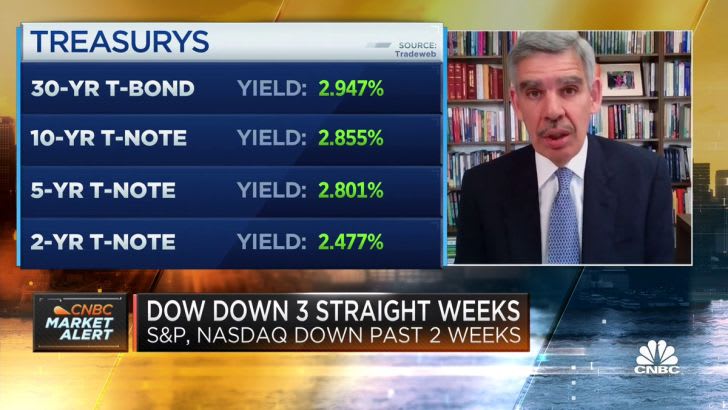
Is The Federal Reserve Preparing To Increase Their Inflation Target?
If you are not a subscriber of The Pomp Letter, join 215,000 other investors who read my personal opinion on finance, technology, and bitcoin each morning.To investors,There has been significant scrutiny of the US monetary and fiscal policy decisions over the last decade. The proponents believe that the various activities have helped mitigate severe short-term pain during the Global Financial Crisis and COVID-19 pandemic. The critics believe that market intervention has continued to kick the can down the road and created a larger problem that will only lead to more pain in the future. Maybe one side of the debate is right, but more likely, each argument has an element of truth to them. It is possible for people in positions of leadership to mitigate short-term pain at the expense of long-term crisis. In fact, I would argue this is the most accurate analysis of the past decade or so. A key driver of these monetary and fiscal policy drivers is inflation targeting. Sarwat Jahan writes for the IMF:“In recent years, many central banks, the makers of monetary policy, have adopted a technique called inflation targeting to control the general rise in the price level. In this framework, a central bank estimates and makes public a projected, or “target,” inflation rate and then attempts to steer actual inflation toward that target, using such tools as interest rate changes. Because interest rates and inflation rates tend to move in opposite directions, the likely actions a central bank will take to raise or lower interest rates become more transparent under an inflation targeting policy. Advocates of inflation targeting think this leads to increased economic stability.”When describing why inflation targeting is so effective, Jahan writes:“In general, a monetary policy framework provides a nominal anchor to the economy. A nominal anchor is a variable policymakers can use to tie down the price level.”To better understand how inflation targeting works, Sarwat Jahan highlighted:“Inflation targeting is straightforward, at least in theory. The central bank forecasts the future path of inflation and compares it with the target inflation rate (the rate the government believes is appropriate for the economy). The difference between the forecast and the target determines how much monetary policy has to be adjusted. Some countries have chosen inflation targets with symmetrical ranges around a midpoint, while others have identified only a target rate or an upper limit to inflation. Most countries have set their inflation targets in the low single digits. A major advantage of inflation targeting is that it combines elements of both “rules” and “discretion” in monetary policy. This “constrained discretion” framework combines two distinct elements: a precise numerical target for inflation in the medium term and a response to economic shocks in the short term.”Lastly, Jahan explains what is required for inflation targeting to be effective:“Inflation targeting requires two things. The first is a central bank able to conduct monetary policy with some degree of independence. No central bank can be entirely independent of government influence, but it must be free in choosing the instruments to achieve the rate of inflation that the government deems appropriate. Fiscal policy considerations cannot dictate monetary policy. The second requirement is the willingness and ability of the monetary authorities not to target other indicators, such as wages, the level of employment, or the exchange rate.”Alright, so now that we understand how inflation targeting works, why it is important, and what is required, you are probably wondering why I am spending so much time on a nuanced aspect of the financial market. The answer is that I have an intuition that the Federal Reserve is preparing to significantly increase the target inflation rate. This decision will not be taken lightly by the central bank and their leadership, but it ultimately signals that inflation has escaped their control and rather than pull it back in with aggressive monetary policy decisions, the next best option is to simply manipulate the benchmark to make the situation appear less bad. This isn’t a random conspiracy theory, nor is it an uniquely original idea. Yesterday CNBC had a conversation with Mohamed El-Erian, the Chief Economic Adviser of Allianz and former CEO of PIMCO, where they discussed this very topic of inflation target increases. The idea of increasing the inflation target by 50% is fairly extreme, but humans like round numbers and this would be a full-on capitulation by the Federal Reserve. They may not have many other options. Before the inflation target is increased though, it will be important to pay attention to the mainstream media conversation.My expectation is that there will be a flurry of expert guests who start to float this idea, which will then normalize it in the eyes of the market. Once the market has begun to digest the change and potential impact

Free Speech Is For Sale
If you are not a subscriber of The Pomp Letter, join 215,000 other investors who read my personal opinion on finance, technology, and bitcoin each morning.To investors,People around the world are watching in awe as the world’s richest man, Elon Musk, engages in a hostile takeover attempt of Twitter. While the mainstream media is distracted by the business details and day-to-day drama, there is something much bigger, and much more important, playing out in the shadows.We are watching the 21st century war over free speech.Historically the battle for free speech has boiled down to individuals vs the government. We saw John Peter Zenger tried in court for criticizing the Royal Governor of New York in 1735. Then we had The Federalist Papers where Alexander Hamilton argued “the liberty of the press shall be inviolably preserved.” This was followed up with the Sedition Act of 1918, which forbid any individual or organization from criticizing the US government. Finally, we got the Scopes Monkey Trial in 1925 where Tennessee school teacher John Thomas Scopes was “found guilty of violating a Tennessee law which prohibits teaching the theory of evolution in public schools.”In each of these instances, the US government was trying to stifle the free speech of their citizens. A key long-term trend in American society was the constant self-correction to preserve the citizens’ right to free speech, regardless of how many short-term missteps the country took along the way. But each of these important milestones had the same structure — US citizen vs US government. The nuances were different, including debates around evolution, religion, war, and much more, but the battle had always been between state and citizen. Publisher vs PlatformThe dynamics of the free speech debate changed in the 21st century. The first evolution was related to the difference between a platform and a publisher. It used to be clear that a media company was a publisher, which had to adhere to certain rules, and the phone company was a platform that facilitated communication, which ensured they adhered to a different set of rules. No one expected The New York Times to allow everyone and anyone to publish within their widely distributed newspaper, but the default expectation was that the phone company would allow anyone and everyone to make a phone call, regardless of the quality or accuracy of ideas and conversation. This distinct line between publisher and platform allowed for clear rules, but the lines got blurred with the advent of social media firms. Is Twitter a publisher or a platform? Well, the answer is “both.” Regardless of how you believe they should fit into the current discourse, Twitter has been providing a platform for user-generated content with an overlay of publisher-like decisions around content moderation and amplification. For example, what is the difference between The New York Times selecting what to put on the front page of the newspaper and Twitter deciding what gets put at the top of your newsfeed? The answers aren’t as cut and dry as they used to be. Platform vs UserThis leads us to the second evolution of the free speech debate. Not only is the line between publisher and platform blurred, but the battle is no longer between US government and US citizen. The modern battle is between social media platform and social media user. The social platforms have replaced the US government as the most powerful force in the free speech arena. Don’t believe me?If social media platforms can deplatform the sitting President of the United States, who has the ultimate power? If you can silence a king, you are the king. Once the platforms realized they had the power to censor alternative viewpoints, while simultaneously hiding behind the fact that they are a private business and reserve the right to make their own rules, it became apparent that the frequency of these decisions was only going to accelerate. The problem with this situation is that there is no clear response from users to push back. When the government was the censoring organization, citizens could take the fight to a court of law. When social networks dominate the censorship game, users are left powerless and voiceless. There is no day in court. There is no need for the platforms to prove their case. Censorship as a means of stifling dissent is now merely based on the whims of people we don’t know, based on standards we don’t understand, conducted with a lack of transparency only rivaled by authoritarian dictators across the world. Centralization vs DecentralizationThis brings us to our third transition in the free speech debate. The elites historically aspired to own the publications, but now it is clear that owning the platforms will be the superior position in the 21st century. Every existing platform at scale has been controlled and operated by the founders, which is a key reason why we haven’t dealt with transition periods before.Elon Musk is the world’s richest man and he is

Central Banks Are Showing Signs Of Extreme Stress
If you are not a subscriber of The Pomp Letter, join 215,000 other investors who read my personal opinion on finance, technology, and bitcoin each morning.To investors,We have been discussing the financial situation in Lebanon for the last two years. It started with the street protests in April 2020, continued with more severe social unrest as their currency devalued in June 2021, and finally culminated in a pseudo-bankruptcy by the government of Lebanon earlier this month. This has been an unfortunate situation to watch as it unfolds, but the outcome was obvious as the problems got larger and the central bank was unable to properly address the issues. This begs the question — is Lebanon a unique situation or does it signal a bigger problem in the system?The short answer is that no one knows for sure yet, but we just got another worrisome data point yesterday. The government of Sri Lanka announced that they will be unable to service their debt obligations, which essentially renders the country bankrupt. In the announcement, the Ministry of Finance stated:“Sri Lanka has had an unblemished record of external debt service since independence in 1948. Recent events, however, including the effects of the COVID-19 pandemic and the fallout from the hostilities in Ukraine, have so eroded Sri Lanka's fiscal position that continued normal servicing of external public debt obligations has become impossible.”The situation in Sri Lanka is a good example of what countries are facing at the moment. They had already pushed themselves to the limit of risk through past monetary and fiscal policy decisions, which left them unprepared for the events that would transpire from 2020 to 2022.First, the COVID-19 pandemic raged globally and locked-up citizens in their homes per government mandates. This drastically hampered the economic growth of a tourism-dependent country like Sri Lanka. Next, the undisciplined monetary and fiscal policy response to the pandemic led to drastic devaluation of various currencies, including a race between central banks to devalue on a relative basis as well. Lastly, the Russian invasion of Ukraine was the last straw once various commodities, from oil to natural gas to wheat to fertilizer, skyrocketed in price. For two years, governments and central banks have been thrown curveball after curveball. Those in the strongest economic positions have been able to weather the storm, but the countries in a weak economic position are being exposed.My friend Marty Bent put it eloquently when he wrote:“What we're seeing play out now is something we've discussed many times in this rag; the weakest free float fiat currencies in the world are failing first. Many may sit there and think, "Who cares if the Sri Lankan rupee fails? It's the Sri Lakan rupee." However, this is how the end game plays out. The weakest die first. And every weak currency that dies leaves behind a smaller pool of currencies that are doomed to the same fate. The Sri Lakan rupee may have been the weakest currency today, but at some point in the future we'll wake up to discover that the euro was the weakest currency to fail on a particular day. We'll wake up to find that the dollar found itself alone in the ring against something like bitcoin and ultimately faltered because it was the weakest currency at that particular point in time.It may be able to dismiss the Sri Lakan and Lebanese governments defaulting on their debt as nothing more than a nothingburger. But I urge you to recognize it as a leading indicator of things to come for the rest of the fiat currencies on the planet. Lebanon and Sri Lanka were two of the first to fall. Failure is climbling up the ladder and it will reach your fiat currency in due time. When that eventually happens, you better have a contingency plan.”There are many bitcoin critics who will roll their eyes and claim that bitcoin enthusiasts are cheering on the failure of these currencies, central banks, or governments. This is not accurate in my opinion. Bitcoiners have been warning about these issues for years and now the issues are playing out. Everyone understands that the failure of a currency or the bankruptcy of a government means significant pain for the average citizen. No one wants to see that happen. Most bitcoiners wish that bitcoin wasn’t necessary. Ideally, the legacy system could self-correct and prevent the potential pain that lays ahead. It doesn’t appear that is going to happen though, so bitcoin becomes a unique solution that provides an escape path for billions of people.We have seen Lebanon and Sri Lanka declare bankruptcy in the last two weeks. Hopefully they are the outliers and no other countries will follow. But I’m not counting on it. Many countries are buckling under the stress created by COVID, undisciplined monetary and fiscal policy, supply chain disruptions, and the commodities boom post-Russian invasion of Ukraine. Stay alert out there. The world is changing and it is important to remain
Inflation Is Here And Putin Didn't Create It
If you are not a subscriber of The Pomp Letter, join 215,000 other investors who read my personal opinion on finance, technology, and bitcoin each morning.To investors,Inflation was reported at 8.5% this morning, which is the highest inflation reading in 40 years. Core inflation was also high at 6.5%. These are obviously astronomical numbers and highlight a dire financial situation for hundreds of millions of Americans.Here are the drivers of these alarming numbers:Given that the Russia-Ukraine conflict has had a material impact on oil and natural gas prices, it is not shocking to see gasoline prices up nearly 50% in the last year. The price of gasoline had already been elevated so the conflict only exacerbated the situation. The most shocking number to me is the food at home. This 10% increase means that the average American family is paying materially more just to eat, which is obviously unsustainable for long periods of time. The current number is bad and the concern is that the increased prices in fertilizer, lack of high quality wheat exports from Russia/Ukraine region, and supply chain disruptions are only going to drive food prices even higher in the coming months. We can analyze the official inflation numbers until our eyes bleed, but there is no way that the majority of Americans are living with 8.5% inflation. Most of the population is likely experiencing double-digit inflation. For example, a new decentralized inflation dashboard (Truflation) measures the current situation at 13.5%. Is this a perfect measurement? No, it is nearly impossible to be perfect when measuring something as complex as inflation, especially when it is accelerating so rapidly. But 13.5% is likely closer to reality than 8.5% based on what the average citizen is experiencing on a day-to-day basis.This brings me to another point — the talking points around this inflation signal that politicians think the American public is stupid. The White House is now claiming that inflation is the result of a “Putin price hike” and they are refusing to claim responsibility, either directly or indirectly, for the current economic crisis. The use of Vladimir Putin as a scapegoat is as lame as it sounds. It is absurd to argue that the highest inflation in the last 40 years was caused by actions that are less than 6 weeks old. The administration knows this, the public knows this, and the media knows this. But everyone keeps playing this game of charades hoping that no one will call anyone else on it.This is ultimately the problem with politicians in the current environment. They aren’t incentivized to solve the problem, but rather they spend their time trying to figure out the right messaging. If wealthy people and politicians were suffering from high inflation, this nonsense would be over tomorrow. A concerning aspect of the current economic environment is that the Federal Reserve, our elected officials, and business leaders globally have no ammunition left to curb inflation without forcing the United States and other global economies into recession. Every tool that can be used to address the high inflation will only accelerate slowdowns in the economy. That is normally a good option when these inflation-fighting tools are used early on in an inflationary situation, but the tools are too little and too late now. So the only thing that the average American can do now is survive. Ask their boss for a raise. Try to move their assets into inflation hedge allocations. Prepare to weather the storm ahead, including potential stock market crashes, devaluation of the dollar, and crypto volatility. No one has a crystal ball. No one can predict the future. But we do know that our leadership is in an impossible situation — they are faced with a lose-lose decision. Double-digit real inflation was previously reserved for third world countries and dictatorships who lost monetary discipline, but now it has invaded the United States. We are at war with an invisible enemy and we have no line of sight to material solutions. While politicians and central bankers kept telling us not to worry about inflation, that it was transitory, or that it was even good for us, bitcoiners were yelling from the rooftop about what was likely to occur. The Jack Dorsey hyperinflation tweet was mocked endlessly.Time will tell if we ever meet the true definition of hyperinflation, but it is obvious that “high and accelerating” inflation is here to stay for the short term. I highly suggest you read Ray Dalio’s new book Principles for Dealing with the Changing World Order: Why Nations Succeed and Fail. The more things change, the more they stay the same.Have a great day and I’ll talk to everyone tomorrow. -PompIf you are not a subscriber of The Pomp Letter, join 215,000 other investors who read my personal opinion on finance, technology, and bitcoin each morning.THE RUNDOWN:New York Senate Authorizes NYDFS to 'Assess' Crypto Companies: The New York State Senate is boosting the state’s
Strike Is Bringing Freedom To Retail Merchants
If you are not a subscriber of The Pomp Letter, join 215,000 other investors who read my personal opinion on finance, technology, and bitcoin each morning.To investors,Jack Mallers, the founder and CEO of Strike, gave an inspiring presentation at the Bitcoin Conference yesterday. After walking through the lack of innovation in payment technologies over the last 60 years, he announced that the business has partnered with Shopify, Blackhawk, and NCR to power transactions across the bitcoin payment rails.There is a lot to unpack here, so I’ll do my best to summarize it. First, Strike’s technology does not require an individual to have bitcoin, use bitcoin, or understand bitcoin. The application allows any individual or business to send any currency (USD, EUR, JPY, BTC, etc) to anyone else in the world instantaneously and nearly for free. This is accomplished by using the bitcoin payment rails as the payment network, but regardless of what currency the sender or receiver prefers, it auto-magically gets turned into bitcoin to go across the Lightning Network. That bitcoin conversion occurs behind the scenes and is abstracted away from the user or merchant. When a user leverages Strike’s technology, there are no tax ramifications, no price volatility risk, and no required knowledge of bitcoin, Lightning, or any other technical features. I can send dollars to someone, Strike converts it to bitcoin, sends it across Lightning, then converts it back to euros, and hands it to the recipient. I call it “auto-magic” because it honestly is magical. This leads us to the announcements yesterday — Shopify was the initial announcement. Any Shopify merchant can now add Strike’s payment integration to their store in a few clicks. This allows the merchant to accept any currency in the world, circumvent the credit card network fees, and ultimately get paid out in their currency of choice. Mallers demonstrated the purchase flow during his speech at the conference and it is very slick. Next, partnerships with Blackhawk and NCR were announced. These are two of the largest payment processors in the United States. They service approximately 85% of all retail merchants, which means that in the coming weeks you will be able to spend US dollars, euros, bitcoin, or any other currency at these merchants and they will not have to pay the credit card fees. Stores include McDonald’s, Walmart, and many more. So what exactly does this all mean?Bitcoin is both an asset and a payment network. The financial asset, which is what everyone holds in their digital wallet, gets majority of the mainstream press. There is a price attached to it that goes up and down. Wall Street is obsessed with how they could make or lose money with it. Retail users don’t have a great way to use bitcoin for much more than fulfilling the promise of a currency. Bitcoin, the asset, is amazing - it isn’t the whole story though.Bitcoin is also a payment network. It allows anyone in the world to send value to anyone else without requiring the participation or approval of a third party. There is no CEO, board of directors, or shareholders. Bitcoin, the network, is a decentralized system that is secured by millions of miners and node operators around the world. This decentralization allows for lack of censorship, seizure-ship, or variability in the monetary policy. Strike is focused on bringing bitcoin, the payment network, to merchants around the world. By doing this, they can drop their payment fees to nearly $0, give customers the ultimate choice of which currency to use, and capture the benefits of cash finality without risk of disputes or chargebacks. The legacy payment networks may not have innovated in nearly 60 years, but Strike is bringing disruptive technology to payments in a way that threatens hundreds of billions of dollars in market cap. But here is the interesting thing — I don’t think the legacy payment providers are going to get disrupted in the short to medium term. The superiority of the bitcoin network as a payment solution is too obvious for them to ignore. Given that the system is built with open-source software and anyone can use it, I anticipate that the incumbent payment networks will eventually add support for bitcoin and the Lightning Network. If they don’t, they’re screwed. Historically people have thought innovation would come from startups vs incumbents. Bitcoin, both as an asset and as a payment system, are proving that innovation can come from the open-source community as well. Strike’s technology is cool, but it wouldn’t be possible without the bitcoin developers, miners, node operators, and holders. Quite literally, we are all in this together.I’ve been an investor in Strike for a long time. Jack Mallers is a special entrepreneur who genuinely cares about solving these problems. He has the unique ability to interface with the bitcoin community, the mainstream audience, and business executives. There is an incredible amount of work left to do so t

Takeaways From My Conversation With Chris Larsen, Co-Founder of Ripple
If you are not a subscriber of The Pomp Letter, join 215,000 other investors who read my personal opinion on finance, technology, and bitcoin each morning.To investors,There was a new ESG campaign launched earlier this week called “Change the Code, Not the Climate.” The goal was to bring awareness to bitcoin’s proof-of-work consensus mechanism, along with a perceived negative environmental impact from the perspective of the campaign creators. As part of the awareness effort, Ripple co-founder and Executive Chairman Chris Larsen provided $5 million to run campaign advertising across various media outlets. It should be no surprise to anyone reading this that I disagree with the conclusion of this ESG campaign, but I felt it would be important to have a conversation with Chris. While we may disagree on his perspective of bitcoin and proof-of-work, there are plenty of things that we agree on as well.You can listen to the podcast episode on iTunes or Spotify. I want to spend the rest of our time today discussing my takeaways from the conversation. To start, this was the first time that I have spoken to Chris Larsen. He seems like a nice guy who genuinely cares about the environment. You have to respect the fact that Chris was willing to come on the podcast to discuss controversial topics with me, especially since it is clear that we vehemently disagree. Second, both Chris and I have major skin in the game. He has majority of his net worth in crypto, with almost all of it being in XRP, and I have the majority of mine in bitcoin. Chris has also spent nearly $100 million on climate-related issues in the last few years. Some people will say that we are both biased, which could be a fair critique, but the counter-argument is that we both believe deeply in our perspective.Next, there are two major themes that Chris and I agree on. The first is that a decentralized, digital currency is highly valuable to the world and has the potential to solve a number of global issues. The second is that the free market will always be the referee on winners and losers, regardless of any of our personal opinions. These two themes are important to call out because they highlight that it is possible to agree with someone on high level ideas, but disagree on the nuance and details. Additionally, the market has deemed bitcoin to be the world’s most valuable digital currency and places a premium on the most popular proof-of-work consensus mechanism. Next, Chris’ concerns around proof-of-work appear to be rooted in a lack of understanding about what the energy consumption of bitcoin is today. During our conversation, he cites the Cambridge study on bitcoin mining numerous times. When I bring up that Cambridge and the Bitcoin Mining Council both estimate that ~ 66% of bitcoin mining energy consumption comes from renewables, he then says he doesn’t believe that number. For comparison, the United States uses 20% or less renewables as part of the entire country’s energy consumption, so the bitcoin miners are 3x higher than the United States in terms of percentage coming from renewables.Along these lines, Chris appears to not understand that bitcoin does not have a linear relationship between price and energy consumption. He kept mentioning that bitcoin’s energy consumption increased 10x in the last 5 years, but didn’t want to acknowledge that bitcoin’s price appreciated 4,300% in the same time frame. If we extrapolate this forward, bitcoin’s price would have to cross over $2 million for bitcoin’s energy consumption to increase 10x again. If this wasn’t enough, Chris also claims that bitcoin mining will consume 4% of global energy production in the future. It is estimated that it costs $200 billion to purchase ~ 0.9% of the global energy production ($0.126 per kWh). This means that miners would have to receive $800 billion in revenue from the block reward and transaction fees, and then spend 100% of the money on power consumption (not to include the cost of facilities or machines), and then they could purchase 4% of global power production. For comparison, bitcoin miners are making about $45 million per day right now, which comes out to a little less than $16.5 billion per year. This means that bitcoin would have to increase in price to $2.3 million per bitcoin, without any halving to the block reward, and then bitcoin miners would have enough money to purchase this amount of energy. In other words, the claim of 4% of global power consumption is either horrendous math or a disingenuous claim to create fear and outrage. Another interesting point from the conversation was when I asked Chris about the funding for bitcoin mining critiques. Multiple times I asked whether Chris, Ripple execs, or Ripple’s corporate entity was funding, or had funded, these prior critiques. Chris wouldn’t answer and kept dodging the question. I don’t want to make assumptions, but if the answer was “no” then I would think that it would be easy to say that. The lack of tra
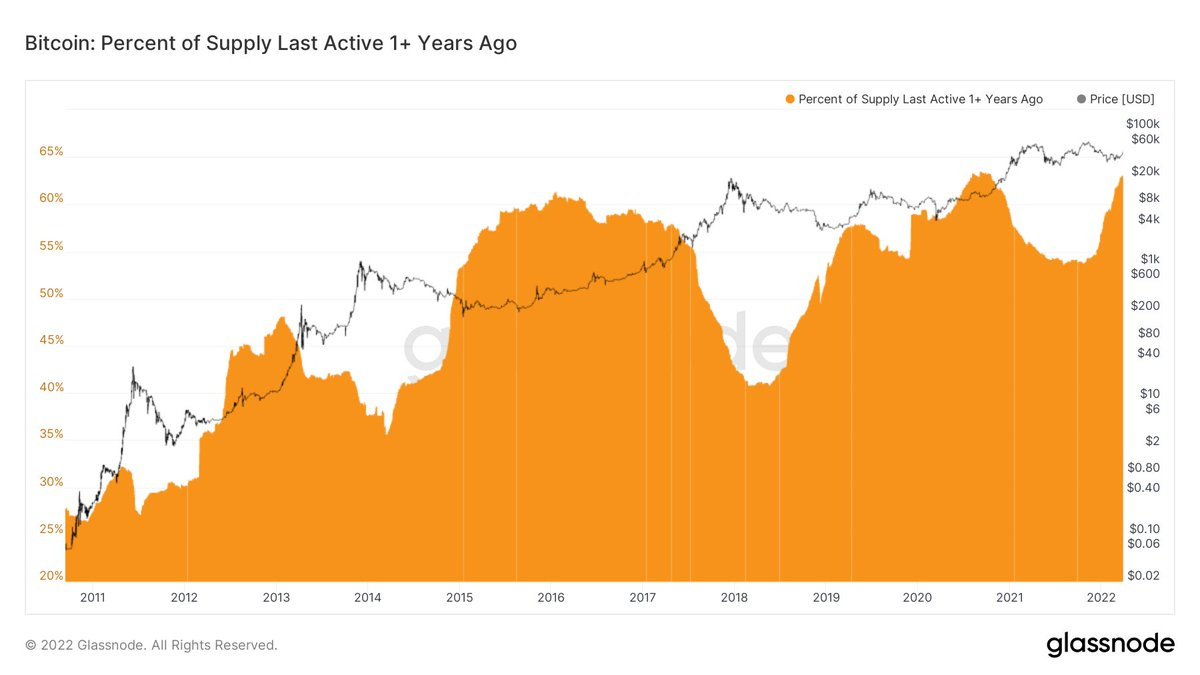
There Is Not Enough Bitcoin Available In The Market
If you are not a subscriber of The Pomp Letter, join 215,000 other investors who read my personal opinion on finance, technology, and bitcoin each morning.To investors,It is usually very difficult to predict why and when bitcoin’s price may move up or down. With the benefit of hindsight, this analysis becomes much easier. A great example is the bitcoin move from $10,000 to $64,000 during September 2020 into March 2021.We were in the heart of the pandemic and the central bank was engaged in historic levels of monetary stimulus. In May of 2020, we also had experienced the bitcoin halving, which brought the daily incoming supply to 900 bitcoin. This set the stage for what would become one of the most epic run ups in bitcoin price. The bitcoin halving created a supply shock, but a lesser known fact is that we saw a demand shock in Q3 and Q4 of 2020. First, Michael Saylor and MicroStrategy started to buy billions of dollars of bitcoin. At the same time, hedge funds and family offices were piling billions of dollars into the GBTC arbitrage trade. This was noteworthy because MicroStrategy was exclusively a buyer in the market - they have no intentions of ever selling their bitcoin. GBTC is similar in that they have no redemption functionality, which means that they can only buy and there is no ability for the ~ 3% of circulating supply held within their fund to be returned to the market. While these demand shocks were playing out, bitcoin holders were making the bitcoin supply highly illiquid. Nearly 65% of the circulating supply of bitcoin, as of September 2020, hadn’t moved in over a year. Supply shock plus demand shock means that the bitcoin price had to go up to accommodate everyone. This is exactly why bitcoin rose from ~ $10,000 to $64,000 from September 2020 to March 2021. So what exactly does that have to do with the current bitcoin market?Well, it appears we are watching the same situation play out again. Bitcoin’s illiquid supply is actually the highest it has ever been.The amount of bitcoin sitting on crypto exchanges, which could be sold into the market at a moment’s notice, is sitting at a multi-year low. As these market is becoming more illiquid, there is a significant increase in demand happening at the same time. Most notably, the Terra ecosystem is purchasing billions of dollars of bitcoin to put in the reserves of their UST stablecoin. When you have an illiquid market meeting a persistent bid of approximately $125 million in daily demand, the price has to move upwards to accommodate everyone. To put this in perspective, Terra is purchasing approximately 300% of the daily incoming supply of bitcoin issuance. The bitcoin miners are currently being paid about $43 million a day to secure the network via the block reward. Terra is purchasing $125 million a day or so. Quite literally, there just isn’t enough bitcoin available to satisfy demand and therefore the price is rising at a steady pace.History is not a perfect guide for the future, but the bull run of 2020-2021 is indicative of what can happen when the demand shock overwhelms the available amount of bitcoin. If you’re not paying attention to market dynamics, now would be a good time to start watching closely.Hope everyone has a great start to your day. Talk to you tomorrow.-PompIf you are not a subscriber of The Pomp Letter, join 215,000 other investors who read my personal opinion on finance, technology, and bitcoin each morning.SPONSORED: Bitcoin 2022 is the LARGEST Bitcoin event in the world that takes place April 6th - 9th in Miami Beach, Florida. All four days will be jammed-packed with exclusive content, exciting announcements and an incredible lineup of bitcoin speakers, artists and leaders. Day 1 is INDUSTRY DAY for enterprising bitcoiners who are looking to build a business or career within the ecosystem. Days 2 and 3 are general conference days featuring hundreds of speakers. The conference caps off on the fourth day with the world's first and largest Bitcoin Music Festival - Sound Money Fest. Last year’s conference SOLD OUT and this year’s is on pace to be 3x larger so make sure you grab your tickets before it's too late. Click here to learn more. Ticket prices increase on APRIL 1st, use promo code POMP for 10% off and I will see you in Miami.Blake Masters is the former COO of Thiel Capital and the Co-Author of "Zero To One". He is now running for the U.S. Senate in the state of Arizona.In this conversation we discuss the economy, Bitcoin, individual rights and how Blake intends to provide solutions to the American people if elected to the Senate.Listen on iTunes: Click hereListen on Spotify: Click hereHere Is Exactly Why Bitcoin Price is Going UpPodcast SponsorsThese companies make the podcast possible, so go check them out and thank them for their support!* Bitcoin 2022 is the largest Bitcoin event in the world that takes place 4/6 - 4/9 in Miami Beach. Click HERE to learn more and use promo code POMP for 10% off.* Fundrise is larg

Free Markets vs Market Interventionists
If you are not a subscriber of The Pomp Letter, join 215,000 other investors who read my personal opinion on finance, technology, and bitcoin each morning.To investors,There are various schools of thought in business, finance, and politics. Some people believe in free markets as a self-correcting mechanism, while others believe that market intervention is a better pursuit. Each of these ideas can be taken to the extreme — free market believers become anarchists and market interventionists become communists. Extremism in either direction has historically led to magnified problems in a society, so we’ll refrain from including those in this analysis. If we simply evaluate market intervention vs free markets, I believe we are beginning to see a recurring theme in the digital economy. First, the federal minimum wage in the United States is $7.25 and hasn’t changed since July 2009. Each state has their own minimum wage requirements as well, which range from no minimum wage (Mississippi, South Carolina, Tennessee, Louisiana) to $5.15 (Georgia) to $15 an hour (California and New York). Barring California and New York, which only require $15 an hour for a small selection of businesses in their state, there are no states that have successfully achieved the $15 per hour minimum wage that is constantly floated by politicians on the campaign trail.This is noteworthy because numerous studies highlight that approximately 80% of American workers are now paid at least $15 an hour. Andrew Van Dam and Heather Long from the Washington Post explained last August:“The U.S. labor market hit a new milestone recently: For the first time, average pay in restaurants and supermarkets climbed above $15 an hour. Wages have been rising rapidly as the economy reopens and businesses struggle to hire enough workers. Some of the biggest gains have gone to workers in some of the lowest-paying industries.Overall, nearly 80 percent of U.S. workers now earn at least $15 an hour, up from 60 percent in 2014. Job sites and recruiting firms say many job seekers won’t even consider jobs that pay less than $15 anymore. For years, low-paid workers fought to make at least that much. Now it has effectively become the new baseline.”So the politicians and regulators, who are acting as market interventionists, have been unsuccessful in achieving a $15 minimum wage at the federal or state level. At the same time, the free market has already driven the effective minimum wage for workers past that milestone. This is a classic example of the free market driving results while the market interventionists are bogged down in bureaucracy and politics. Another example of this comparison is in the accredited investor rules within the United States. Currently, only investors that meet specific wealth and income milestones are eligible to invest in private market opportunities. These opportunities traditionally fall in the private equity or venture capital bucket, but can include real estate or debt offerings in certain instances as well. Many people in positions of power and influence have discussed evolving these rules to allow more individuals to participate in these investment opportunities. Ideas have ranged from a knowledge-based test to lower wealth and income level requirements. While the regulatory and political apparatus continues to discuss potential solutions, the free market has found a unique solution. Bitcoin was launched as a decentralized asset that was rooted in open source software. There was no need to adhere to securities law because there was no team or individual that personally benefitted from the creation, launch, and scaling of the asset. While the asset failed to meet the securities framework, it provided the single best investment return over the last decade. These venture capital style returns meant that anyone in the world with an internet connection, regardless of wealth or income, finally had the opportunity to capture private market returns. The free market figured out how to democratize access to investment opportunities without the need to wait for the market interventionists to create the solution.It would be difficult for every asset in the private market to become a decentralized, open source software solution, so there are still challenges in the market, especially when you evaluate this solution for its ability to be replicated. With that said, the free market still was able to create a solution that addressed one of the hardest problems to solve in financial markets.These two examples show that the free market has the potential to create solutions before the market interventionists. It isn’t a guarantee and there are still questions about which approach can create the solution faster, but it is hard to ignore the efficacy of free markets in the digital economy. When you overlay the complexity across jurisdictions and geographies, the free market may actually be a better governor of the various aspects in this new world.Humans alw
The $10 Billion Bitcoin Bet On Stablecoins
If you are not a subscriber of The Pomp Letter, join 215,000 other investors who read my personal opinion on finance, technology, and bitcoin each morning.To investors,Algorithmic stablecoins elicit intellectual curiosity from people across disciplines. Whether you are coming from the technology industry, finance, or academia, creating a digital currency that holds stable value without being pegged to another asset is a fascinating problem. The value of this type of asset is obvious, but no one has been able to figure it out. In November, Ryan Clements published a paper tilted Built to Fail: The Inherent Fragility of Algorithmic Stablecoins, where he argued:“Algorithmic stablecoins are inherently fragile. These uncollateralized digital assets, which attempt to peg the price of a reference asset using financial engineering, algorithms, and market incentives, are not stable at all but exist in a state of perpetual vulnerability. Iterations to date have struggled to maintain a stable peg, and some have failed catastrophically. This Article argues that algorithmic stablecoins are fundamentally flawed because they rely on three factors which history has shown to be impossible to control. First, they require a support level of demand for operational stability. Second, they rely on independent actors with market incentives to perform price-stabilizing arbitrage. Finally, they require reliable price information at all times. None of these factors are certain, and all of them have proven to be historically tenuous in the context of financial crises or periods of extreme volatility.”This is important context because there is an experiment underway in crypto that is worth paying attention to. Terra is undergoing a transition from a dollar-pegged stablecoin to a bitcoin-backed stablecoin. There is a lot to unpack here, so let’s start from the top. Terra is described as a public blockchain protocol deploying a suite of algorithmic decentralized stablecoins which underpin a thriving ecosystem that brings DeFi to the masses. The stablecoin at the heart of this ecosystem, TerraUSD (known as UST), sits at more than $15 billion in market cap. This is the fourth largest stablecoin in the market behind Tether, USDC, and BinanceUSD. Based on a recent conversation with members of the Terra community, there is approximately $100 million to $200 million of new demand for UST per day. Not only is UST large, but it is growing quickly too. The other asset that you need to know about is LUNA. This is the native staking token to the Terra ecosystem. The purpose for LUNA is to absorb the price volatility of the fiat-pegged stablecoins, along with use in governance, mining, and staking. A simple framework to evaluate LUNA with is that “the more Terra is used, the more LUNA is worth.”So here is how UST gets created today — if someone wants UST, they have to burn LUNA. For every $1 of UST that the person seeks, they have to burn $1 of LUNA. This burn mechanism is similar to a stock buyback. It contracts the supply of LUNA and is used as mechanism to keep UST pegged to the US dollar at the preset value of $1. This is obviously not a simple mechanism though and the complexity can create significant challenges. Many of these challenges were highlighted in Ryan Clements paper that we talked about at the start of this letter. So what is Terra going to do differently with UST moving forward? They are going to back UST with bitcoin. There is approximately $3 billion in bitcoin, Tether, and LUNA sitting in the Luna Foundation reserves today. They are slowly converting the majority of this into bitcoin. As for new issuance, the Terra team will refrain from having market participants burn 100% of their LUNA when they seek UST.Instead, Terra may burn 60% of the LUNA and use 40% to purchase bitcoin. Here is an example — I want $10 of UST. Instead of burning $10 of LUNA, I may have $6 of LUNA burned and $4 would be used to purchase bitcoin. This dual strategy begins to slowly add a bitcoin-backing to the UST stablecoin that is in circulation. The math shows that UST won’t be 100% backed by bitcoin initially. The idea is that over time, bitcoin’s price will continue to rise and will eventually pull in-line with the outstanding value of UST. There is a strong likelihood that the bitcoin-backing will actually exceed the UST value over a long enough timeline. So what are the ramifications of this decision by Terra?First, Terra is becoming a persistent buyer of bitcoin. They are slowly purchasing $3 billion of bitcoin from the Luna Foundation reserves. This is being done via aggressive buying on price dips. Terra will then be a daily, persistent buyer of bitcoin based on the new issuance mechanism that I just described. You can think of Terra as new demand for bitcoin that will be measured in tens of millions of dollars per day to start. Second, Terra is highlighting the opportunity for bitcoin-backed assets. Terra’s Do Kwon has discussed at length his beli

Culture Is Fueling Interest In Money And Finance
If you are not a subscriber of The Pomp Letter, join 215,000 other investors who read my personal opinion on finance, technology, and bitcoin each morning.To investors,Culture is a hard thing to describe. Most people know it when they see it though. Culture influences what we think and how we act. Some aspects are derived from hundreds of years of history, while other aspects are created by athletes, celebrities, musicians, or the media. Culture surrounds us and is the invisible hand guiding much of our lives.One of the most surprising evolutions of culture in recent years is the renewed interest in money and finance. The world was obsessed with Wall Street, the stock market, and the pursuit of riches more than two decades ago. As that interest waned, culture moved on to other topics. The catastrophic events of the 2008-2009 Global Financial Crisis brought attention back to Wall Street, but it was the type of negativity that gave rise to Occupy Wall Street and other anti-capitalism movements. After a few years of intense hatred, culture appeared to move on to other things again. The 2017 bull market in bitcoin and cryptocurrencies set off another cycle of cultural obsession with money and finance though. This initial interest was almost exclusively rooted in capitalistic pursuits of profit. Just as the cyclical interest was scheduled to expire, including a multi-year bear market in crypto assets, the pandemic struck and governments around the world intervened in markets with immense amounts of monetary and fiscal stimulus. These actions created volatility in asset prices, pushed inflation to 40 year highs, and renewed the cultural obsession with money and finance. It is hard to ignore how pervasive these conversations and ideas have become across various aspects of society. For example, there is a viral video of UFC fighter Bryce Mitchell that has been circulating recently. He shares an unfiltered perspective on the Federal Reserve and the perceived negative impact the organization has on the average American.Mitchell isn’t the only UFC fighter who has been voicing his opinion on these types of topics. UFC fighter Matt Brown recently started talking about bitcoin in an interview, including his views on why a decentralized, digital currency is important in the fight for personal freedom. But this renewed interest in money and finance across culture is not just within the UFC. We have seen numerous NFL players ask to be paid in bitcoin, including Aaron Rodgers, Russell Okung, Saquon Barkley, Odell Beckham Jr, and many others. These announcements of bitcoin payment have almost always been accompanied by some sort of bitcoin giveaway as well. There are dedicated Twitter accounts that have been created to highlight the absurdities that are playing out across economics and politics. The most notable one is called “Clown World,” which has amassed 150,000+ followers in a short period of time. Athletes and social media aren’t the only place where we are seeing the cultural obsession. Soulja Boy, one of the top hip hop artists, created an entire song called “Bitcoin” that included these opening lyrics:Man this going crazy the crypto currency manMan, ayeI made 100 racks off of bitcoin (bit)You can catch me trapping with the bitcoin (bit)You can catch me running up the bitcoin (yeah)I spent 6,000 on the bitcoinBitcoin, bitcoin, I got big coins, big coins (yeah)Big coins, I got big coinsI spent 6,000 on a bitcoin (on a bitcoin)I made 100 racks off of bitcoinI got on a computer and bought a bitcoin (bit)I be so fresh when I pull up new foreigns (yeah)Baby girl left her boyfriend he too boring (woah)Stacking up bitcoins I got money pouring (oou)I'm doing shows [?] feeling me (oou)I'm running up the bands, on crypto currencySend it through the paypal, or the cash app (yeah)Send it through the bitcoin watch my bands stack (yeah)Not exactly a subtle reference to the digital currency. I could show example after example. It is hard to ignore the realities that majority of Americans are facing in the current economic environment. Gas prices continue to hit all-time highs. Inflation is the highest it has been in decades. Wage growth isn’t keeping up with what is necessary for people to avoid falling behind. Add in the fact that more information is available than ever before and you get a recipe for an educated population who wants to have their voice heard. Culture is the ultimate memetic engine. When the suits and bankers are talking about money, finance, inflation, and asset prices, no one really cares. But the second that athletes, musicians, and celebrities start talking about it, a big portion of people begin to care. Culture is accelerating the adoption of bitcoin and cryptocurrencies. This doesn’t even account for the rise in NFTs and other aspects of the industry. The technology revolution is underway and those that drive culture will continue to bring awareness and interest. This is when escape velocity is reached, we t
Inflation Is Officially Out Of Control
If you are not a subscriber of The Pomp Letter, join 215,000 other investors who read my personal opinion on finance, technology, and bitcoin each morning.To investors,Inflation was officially reported at 7.9% this morning, which is the highest inflation that the United States has experienced in more than 40 years. Core inflation, which excludes food and energy, is up 6.4% over the last 12 months. If we look at the breakdown of specific components in the Consumer Price Index, it becomes obvious that the average American is in a dire financial position. According to the government, it now costs 8.6% more to eat food in your home than it did a year ago. It costs 38% more to fill up your car with a tank of gasoline. Your electricity bill is 9% more expensive. These numbers are mind-boggling. High inflation is not just happening in the United States though. The ECB increased their 2022 inflation forecast from 3.2% to 5.1% this morning. That is a 50%+ increase in their inflation expectations. The important thing to call out is that these numbers are the official calculations according to the government and/or central banks, which are incentivized to report the lowest numbers possible. There is widespread belief that the real inflation, especially what is experienced by the lowest income brackets, is well into the double-digits at the moment. Almost half (45%) of Americans own no investable assets. This means they live paycheck-to-paycheck and have their entire savings in cash. These ~150 million people are being punished because of the undisciplined monetary and fiscal policy that has been pursued over the last 24 months. You can’t print trillions of dollars, manipulate interest rates to 0%, and conduct an enormous amount of asset purchases, while simultaneously expecting no negative ramifications. The establishment, both economists and the media, have been presenting the idea that inflation wasn’t going to happen, then it was transitory, and now it is supposedly somehow good for you. Obviously, this is all wrong. It always has been. Inflation was the natural outcome of these activities. Combine the current economic situation with the new Russia-Ukraine conflict and you have a recipe for disaster.The Federal Reserve can’t raise interest rates aggressively, because we now risk spiraling into a recession. Inflation or recession. Pick your poison. Maybe we get both. The whole situation is unfortunate and there is no clear off-ramp.While the economists, central bankers, and people in positions of power and influence try to address the current crisis, the average citizen is suffering. This highlights a severe lack of financial education in the United States and abroad. Inflation has been punishing those with no investable assets, but the wealthy, who store majority of their net worth in investable assets, have been getting wealthier and wealthier at the same time. The United States is currently engaged in an economic war with an invisible enemy. Inflation silently erodes the wealth of those savings in dollars. Wealthy individuals know that you can’t save your way to financial security. You have to learn to invest. You have to gain the knowledge needed to protect yourself from the invisible enemy. One of the most important things we could do right now is to immediately educate as many people as possible in personal finance topics. The faster we teach them about money, inflation, and personal finance, the quicker they will be armed with the information necessary to make sound decisions that benefit them and their families. I won’t hold my breath for a national personal finance education campaign though.There is no good answer on how we get out of the current economic crisis. Inflation is raging and a recession is peaking out around the corner. The central bankers and politicians who oversee monetary and fiscal policy have an impossible job. No matter what they do, they’ll be wrong.Complaining about these issues is no longer a productive exercise. We simply have to educate as many people as we can and help to position them to become immune to these issues. It is difficult work. It will take a long time. But rather than complain, we have to educate. That is the only hope that the average citizen has at this point.If not, inflation will continue to eat away at their wealth and the vicious cycle of falling behind will persist. Hope each of you has a great day. I’ll talk to you tomorrow. -PompIf you are not a subscriber of The Pomp Letter, join 215,000 other investors who read my personal opinion on finance, technology, and bitcoin each morning.SPONSORED: Brave Wallet is the first secure wallet built natively in a web3 crypto browser. No extension required.With Brave Wallet, you can buy, store, send, and swap assets. Manage your portfolio & NFTs. View real-time market data with an integrated CoinGecko dashboard. Even connect other wallets and DApps. All from the security of the best privacy browser on the market.Protect you
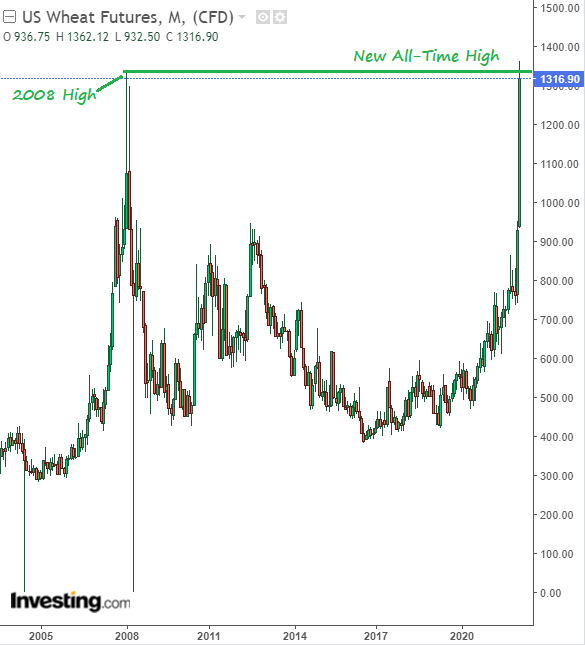
The Insiders Are Yelling Warning Signs
If you are not a subscriber of The Pomp Letter, join 215,000 other investors who read my personal opinion on finance, technology, and bitcoin each morning.To investors,The geopolitical chess game continues to evolve at an incredible rate. Over the last 24 hours, reports are surfacing that the United States is looking to ban imports of Russian oil and various options are being evaluated in an attempt to freeze Russia’s gold reserves. These punishments are being pursued as Russia continues their military offensive in Ukraine. The implications of the current events are unknown, but we are beginning to see commodity prices spike aggressively. First, wheat has hit an all-time high. Nickel has been increasing by hundreds of percent as well.And, of course, oil prices are going parabolic.It shouldn’t be shocking that commodities, especially ones where Russia and Ukraine are major producers, are being driven higher during this conflict. The surprising part is how quickly it is happening and how large the moves in price have become. The joke on Twitter is that commodities are trading like shitcoins, which has a hint of truth to it. But while all this is going on, I continue to ask myself what it all means for the future macro economy? No one has a crystal ball but can we use history as a guide?Social Capital’s Chamath Palihapitiya recently explained on the All-In Podcast that every time energy prices have spiked by 50% or more in the last 30-40 years, it was followed by a recession. Sven Henrich highlighted this morning that the last time wheat prices reached these levels, a recession followed.History doesn’t repeat perfectly, but the warning signs of a potential recession are growing louder and louder. Now the biggest curveball in the situation is that the Federal Reserve is still sitting with interest rates at 0%. Given that inflation is likely to come in at 8% or more during the next report, the normal reaction would be for the Fed to raise rates to bring that inflation more in-line with their goals and expectations. We have now entered into a dicey situation where hiking of interest rates could actually accelerate us into a recession. This means that the Federal Reserve has a nearly impossible job. Allow inflation to continue to ravage the financial well-being of hundreds of millions of people or risk pushing the global financial system into a downward spiral across financial assets. This is a lose-lose scenario with no clear off-ramp. So how does this play out for the United States, our allies, our adversaries, and the various fiat currencies that they control?Zoltan Pozsar of Credit Suisse published a note yesterday that will blow your mind. Before I highlight what he said, it is important to understand who Pozsar:Zoltan Pozsar is a Managing Director and is the Global Head of Short-Term Interest Rate Strategy based in New York. Prior to joining Credit Suisse in February 2015, Zoltan had a distinguished career in the public sector. During the Great Financial Crisis, Zoltan served at the Federal Reserve Bank of New York in charge of market intelligence for securitized credit markets and was the point person on market developments for senior Federal Reserve Board, US Treasury and White House officials throughout crisis. From 2011 to 2012, Zoltan was a visiting scholar at the IMF where he authored a number of papers, framed the Fund’s official position on shadow banking, and consulted G-20 working groups on global macro-financial developments. From 2012 until his arrival at Credit Suisse, he served as a senior adviser to the U.S. Department of the Treasury.Essentially, Zoltan Pozsar is the epitome of the insider or establishment, especially when it comes to his views on currencies, financial assets, and markets. In the note, which is titled Bretton Woods III, Pozsar starts off with the following excerpt:We are witnessing the birth of Bretton Woods III – a new world (monetary) order centered around commodity-based currencies in the East that will likely weaken the Eurodollar system and also contribute to inflationary forces in the West. A crisis is unfolding. A crisis of commodities. Commodities are collateral, and collateral is money, and this crisis is about the rising allure of outside money over inside money. Bretton Woods II was built on inside money, and its foundations crumbled a week ago when the G7 seized Russia’s FX reserves…Pozsar then went on to explain why people should be concerned about recent commodity price moves:The aggressor in the geopolitical arena is being punished by sanctions, and sanctions -driven commodity price moves threaten financial stability in the West. Is there enough collateral for margin? Is there enough credit for margin? What happens to commodities futures exchange s if players fail? Are CCPs bulletproof ? I haven’t seen these topics in the wide offering of Financial Stability Reports, have you? Is the OTC commodity derivatives market the gorilla in the room? The commodities mark
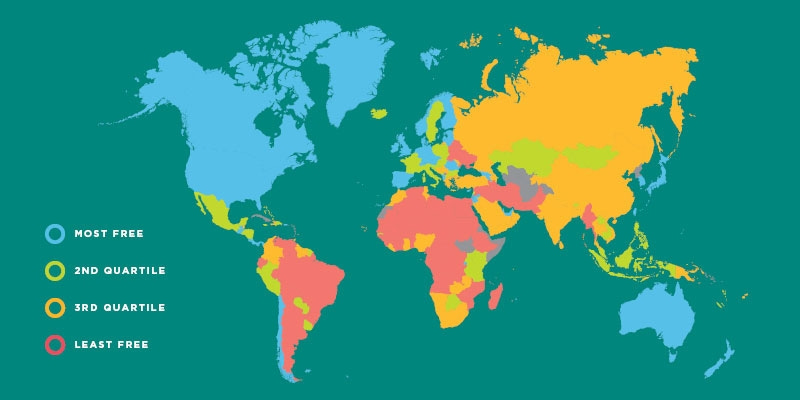
We Should Not Normalize Economic War On Innocent Civilians
If you are not a subscriber of The Pomp Letter, join 215,000 other investors who read my personal opinion on finance, technology, and bitcoin each morning.To investors,Russia’s invasion of Ukraine has led to a flurry of financial sanctions from the United States and their allies over the last week. These actions include cutting Russian banks off from SWIFT, seizing the assets of various Russian oligarchs, outlawing US citizens and companies from transacting with Russia’s central bank, and much more. Sanctions are levied during times of conflict to apply pressure to the leadership of our adversaries, but they accomplish this goal by actually cutting the average citizen off from the global financial system. Nearly 150 million Russian citizens have watched their savings evaporate as the ruble is in a free fall, their stocks are inaccessible since the stock market was shut down due to high volatility, and they can not withdraw or spend majority of their money due to sanctions and self-imposed limits by the banks. It should go without saying, but there is an incredible amount of inhumanity that goes into the decision to cut off the average citizen from the global financial system. What was their crime? Being born in the wrong city? This is obviously a complex issue and there is a strong argument for why sanctions are being pursued, but it is essential that we remember that financial censorship hurts the individuals who have no say, and usually no desire, to engage in this violent conflict. So why am I writing about this?There was an interesting development in the last 48 hours that highlights one of the key differences between the legacy financial system and the new, digital financial system. Vice Prime Minister of Ukraine, Mykhailo Fedorov, asked major crypto exchanges on Sunday to block all Russian users from using their platforms, regardless of whether they were accused of participating in any crimes or not. This request was followed up on Monday with a similar request from the White House’s National Security Council and the Treasury Department to major crypto exchanges. As of this writing, all major crypto exchanges have stated that they will not cut off the average Russian citizen from using their products to buy, sell, or store bitcoin and various other cryptocurrencies. The largest crypto exchange in the world, Binance, stated that they are “not going to unilaterally freeze millions of innocent users’ accounts.” The company spokesperson explained to CNBC that “Crypto is meant to provide greater financial freedom for people across the globe. To unilaterally decide to ban people’s access to their crypto would fly in the face of the reason why crypto exists.”Kraken CEO Jesse Powell publicly stated that his platform “cannot freeze the accounts of our Russian clients without a legal requirement to do so.” He continued with this explanation:“Our mission at [Kraken] is to bridge individual humans out of the legacy financial system and bring them into the world of crypto, where arbitrary lines on maps no longer matter, where they don’t have to worry about being caught in broad, indiscriminate wealth confiscation. Our mission is better served by focusing on individual needs above those of any government or political faction…Besides, if we were going to voluntarily freeze financial accounts of residents of countries unjustly attacking and provoking violence around the world, Step 1 would be to freeze all U.S. accounts. As a practical matter, that’s not really a viable business option for us.”This situation continues to evolve, but as of right now it is quite telling that the crypto companies are refusing to shut off access to the digital financial system at the same time that the legacy financial system is kicking innocent citizens out. There is a belief in the legacy world that financial freedom should only be afforded to those that act a certain way, subscribe to a certain worldview, and support those that monopolize the system. It is clear that the true test of free speech is to defend the speech of those you disagree with. In that vein, the true test of financial freedom is to defend the right to transact for the citizens that live in a country you disagree with. In some way, the countries that are levying sanctions right now are destroying the lives of almost 150 million innocent people, which is equivalent to just under 50% of the US population. There are reasons why these countries are doing this, but we wouldn’t wage violent war on innocent civilians so why are we okay with waging economic war on them? The idea of waging economic war against innocent civilians has been normalized over the last two decades, but that doesn’t make it right. Regardless of how unpopular an opinion it is, we must continue to have the courage to call out the intentional inflection of pain on those Russian citizens who are also against the invasion of Ukraine. Ultimately, we are watching the divergence of two financial systems. The

The US and NATO Mitigate Short-Term Problems At The Expense Of Long-Term Problems
To investors,The Russia-Ukraine conflict continued to increase in intensity over the weekend. While the violent combat has been playing out on the ground, the United States and their allies have been busy waging economic war against Vladimir Putin and Russia. There were a few key decisions made in the last 72 hours that got me thinking — we are watching a repeat of the conundrum that the Federal Reserve was in during the 2020 COVID crisis. First, let’s go back in time and revisit what happened in 2020. During March of that year, the government recognized the severity of the pandemic and ordered government-mandated lockdowns across the country. This created a significant slowdown in the velocity of money, forced thousands of businesses to shut down, led to millions of people filing for unemployment each week, and financial markets saw the worst liquidity crisis since the Global Financial Crisis. The Federal Reserve, in concert with their political colleagues, made the quick decision to do two things: (1) manipulate interest rates to 0% and (2) pump trillions of dollars into the financial system. There will be many books written about the efficacy of those decisions, including the size and scope. Regardless of where you come out on the impact of the monetary and fiscal decisions in 2020, it is clear that decision-makers optimized for mitigating short-term pain over the long-term potential consequences. As you would expect, these short-term optimized decisions led to significant long-term issues. We have inflation at the highest level it has been in 40 years, the wealth-inequality gap is wider than it has ever been, unemployment is still higher than pre-pandemic, and financial markets swing with the significant volatility. Was the short-term trade-off worth it? It is impossible to know. We will never be able to identify how bad the economic situation in 2020 would have became without the Fed and politician’s intervention. We do know how bad the long-term impact has become though. Short-term optimization in the face of long-term sound decision-making is a story as old as time. The United States is facing the exact same situation again — this time with a geopolitical twist.Russia’s invasion of Ukraine has forced the hand of NATO to respond. The consensus belief is that these countries will refrain from engaging in direct combat, but instead pursue economic sanctions against Putin, Russian banks, various Russian citizens, and the central bank of Russia. These hard-hitting measures are meant to inflict maximum pain on the country. It is important to remember that the leader of a country is almost never directly impacted by the financial sanctions levied, but rather the goal of the sanctions is to inflict pain on the citizens of Russia with the hopes that they will rise up and remove their leader. This is true of the sanctions targeting a variety of Russian oligarchs, but also of the average citizen as well.When Russian banks, or the country’s central bank, are sanctioned, the average citizen in Russia is who feels it most. They can’t use the bank. They can’t withdraw money. They can’t send money to loved ones. It becomes incredibly difficult to purchase goods and services. The billionaires and oligarchs have their assets frozen or confiscated. The list goes on and on.This morning the United States took these economic sanctions one step further and banned any US citizen or company from conducting business with Russia’s central bank. The only other time that the US has ever pursued an action this severe has been in Iran, which has played out over the last decade or so. Now I’m not an expert on geopolitics, nor am I an expert on the economic impact of financial sanctions on NATO’s adversaries. I know enough to be dangerous, but I don’t want to waste our time regurgitating what you can read elsewhere.Instead, I think it is important to call out that the United States and NATO are making a very specific trade-off decision — mitigate the short-term problem at the cost of a long-term problem. This is a repeat of the Federal Reserve’s decision during 2020. The short-term risks vary from the invasion of Ukraine to all-out nuclear war. It makes sense why the United States and their allies are pursuing the economic sanctions to neutralize as many of these situations as possible. If you’re going to err, it is better to err on the side of too aggressive here.But these actions don’t come without long-term consequences. Countries around the world have been officially put on notice — if you use the US dollar system, the health and sovereignty of your financial system are solely dependent on keeping a good relationship with the United States. While most countries disagree with Russia’s decision to invade Ukraine, and are celebrating or participating in the financial sanctions, they will likely all start developing a plan to reduce dependence on the US dollar system in the future. They understand that there is no resiliency without

Russia, Ukraine, China, Oil, and Bitcoin
If you are not a subscriber of The Pomp Letter, join 215,000 other investors who read my personal opinion on finance, technology, and bitcoin each morning.To investors,Russia invaded Ukraine last night. This conflict carries complexity across geopolitics, national security, and financial markets. It would be impossible for any one person to unpack the nuanced situation, and the subsequent ramifications, in great detail with only a few thousand words. Rather than regurgitate the sequence of events that have unfolded over the last 24 hours, I want to turn our attention to a few topics that I am thinking about this morning. First, war is an ugly thing. Violent conflict leads to loss of human life and incredible economic hardship for millions of people. Those who are affected most tend to be the average citizen who has no appetite for war, nor was a participant in any events leading up to the conflict. It should go without saying, but I hope that every single Russian and Ukrainian citizen is safe. My family and I are incredibly fortunate to live in the United States and have a daily life that doesn’t require us to worry about other nation states firing missiles at us or invading our city.Second, it feels like there is a significant shift in geopolitical order that is playing out before our eyes. Russia’s invasion of Ukraine is essentially an attempt by Vladimir Putin to call the United States and NATO’s bluff. He doesn’t believe they have the political will to impose painful enough sanctions, while also understanding that there is very little appetite for war among the citizens of member nations. Simultaneously, China is ratcheting up their provocations of Taiwan, including 9 Chinese Air Force planes entering Taiwan’s airspace this morning and a warship violating Taiwan’s defense zone. Both Russia and China understand that the long-standing American protectionism has weakened in the various regions and they are making a play to gain more global power, influence, and resources. I am not an expert on geopolitics, but it is hard to ignore the importance of these events, specifically through the lens of the confidence game on a global stage. Third, Russia is the third largest oil producer globally. They are responsible for approximately 12% of the global production. Brent oil prices in the United States, and globally, have been quite high in recent months, so the current US administration has been asking for more oil to be supplied to the market in an attempt to curtail price increases. Both Russia and Saudi Arabia have said they will not increase production, so that leaves the US in an awkward position. To further complicate the situation, brent oil prices spiked significantly on the news of Russian invasion and now is trading well over $100 per barrel.In some weird way, the increased price of oil combined with the continued purchasing of Russian oil by the international community, means that Russia is actually profiting handsomely from the invasion. Unfortunately, the United States and our allies can’t stop purchasing the oil for any material amount of time because we have made prior decisions that make us dependent on non-US oil producers. I won’t play Monday morning quarterback on those prior decisions, but the importance of energy independence is fairly obvious right now. Fourth, Russia’s actions will likely lead to a flurry of financial sanctions from the United States and our allies. The most significant action would be the removal of Russia from the SWIFT system. There could also be sanctions against Vladimir Putin personally, along with a cadre of other high-ranking Russian leaders. Regardless of the exact sanctions, it would be naive of the international community to think that Russia hasn’t war-gamed this situation in preparation. Many people don’t know this but Russia has one of the largest foreign currency and gold reserves in the world. They were the fourth largest behind China, Japan, and Switzerland at the end of 2020. This $600+ billion in foreign currencies and gold will be a tool in their toolbox once sanctions are implemented. Now I don’t know exactly what Russia has planned, but it is very clear that they are willing to take the risk of catastrophic sanctions. They either don’t believe the US and NATO will levy crippling sanctions or they have a plan on how to get around them. This brings me to my final point. The United States has been the producer and distributor of the global reserve currency for decades. One of the benefits of that position is that we can impose financial sanctions on those that we disagree with or those that are violating our view of good and evil. The nuance to financial sanctions though is that they only work if the intended target is using the currency that you produce and distribute. Given that Russia has an incredible amount of foreign currencies and gold, these sanctions may not be as effective as they would have previously been. This brings me to the most important

Central Bank Digital Currencies Will Be One Of The Greatest Violations Of Human Rights In History
To investors,The invention of blockchain technology solved a decades-long computer science problem and unleashed a monetary revolution in the form of bitcoin. This decentralized, digital currency has taken the world by storm. It has been adopted by hundreds of millions of people globally and is worth approximately $1 trillion in market cap based on daily fluctuations in US dollar price. Not bad for a technology that is completely open-source. Bitcoin has no CEO, no marketing department, and raised no venture capital dollars as it was being built or scaled. Decentralization means that no one individual or group controls the product. Any major changes need the agreement of a large portion of the community, including software developers to miners to node operators, in order to be implemented for users. As you can imagine, the legacy system has watched the rise of bitcoin with a combination of admiration and fear. Many of the traditional institutions, especially central banks, are impressed with the creation of truly digital currency, along with how quickly people have adopted this technology in every economy. These same people are watching in fear as they realize that their organizations have zero control of the money supply in this new digital financial system. The control and production of money has historically been reserved for central banks, but this monopoly on money is directly tied to the central bank’s close relationship with government. The government has a monopoly on violence, so they are able to ensure that central banks will continue their singular control and production of money. Any attempt to circumvent the central banking structure has been met with a swift and ruthless response. This is why the decentralization of bitcoin is so important. Without a single point of failure, including a CEO or corporation or centralized servers, there is a much smaller attack surface for governments and their violent monopoly. Since central banks can not rely on governments to shut down this new entrant to the system, central bankers have been forced to consider how they can compete in the free market. Central bankers aren’t known for being innovative. In fact, I would argue that central bankers are successful because they move at a glacial pace and make systemic bets on the world changing very slowly. But bitcoin has forced these institutions to consider digitizing their fiat currencies in a way that emulates bitcoin’s technology, but contains some key differences.Digitizing the dollar/euro/peso/etc is merely a technology upgrade. The monetary policy of these fiat currencies are unchanged. Similar to how physical currencies were transitioned to electronic CUSIPs in centralized databases, central banks are considering a technology upgrade to token-based fiat currencies that are compatible with digital wallets. So why are they considering this transition?The optimistic person would argue that the incorporation of new technology is an attempt at modernization for an antiquated system. Individual users of central bank digital currencies (CBDCs) would be able to send any amount of money 24/7/365. The thought of hours of operations would be a thing of the past. The payment rails that CBDCs would be built on would be more efficient - faster settlement times, cheaper transaction fees, etc. Lastly, there would be an increased transparency in the system which theoretically could decrease crime and increase the safety of the market. That is the positive perspective. But we have to be very careful here. Central bank digital currencies will likely be one of the greatest violations of human rights in history. Central bank digital currencies remove the privacy and decentralized nature of physical cash. It creates an environment where central banks have complete control over every aspect of a citizen’s financial life. Here are a couple of examples of the nasty s**t that we can expect to see in the coming decades:Personalized inflation — Central banks currently have the ability to manipulate interest rates and expand/contract the supply of money. Any changes that they make are applied to all citizens equally. Individual market participants may make decisions to benefit or suffer from these decisions, but the dollars that I hold are subject to the same monetary policy as the dollars that you hold. This is going to change with CBDCs. The central bank will be able to personalize the monetary policy to the individual. Just as your newsfeed, search results, and music playlists are personalized based on vast amounts of data, the same is coming to money. Maybe I get a higher inflation rate in an attempt to get me to spend money, while you receive a lower inflation rate. The differentiation of monetary policy can be cut a million ways, including where you live, who you are, your wealth status, your occupation, your purchase history, and much more. Financial censorship — Once a central bank digital currency is in the hands of a popula

Bitcoin Is The Freedom Technology The Western World Needs
To investors,The situation in Canada has received international attention across the internet. People are wondering how a liberal, democratic country could descend into authoritarian chaos so quickly. Disagreeing with subsets of your population, or opposite sides of the political debate, are an expected component of democratic societies, but the shocking aspect is how the Canadian government has decided to react. Rather than meet with the protestors to hear their complaints or encourage their protesting within a designated area of the city, the Canadian leadership has responded to dissent with a ruthlessness that is usually reserved for dictatorships. As David Sacks wrote over the weekend, “A Social Credit System Arrives In Canada.” In the piece, Sacks argued:“For years, ideologues have used accusations of bigotry to hound people from their jobs, kick them off social media, and rescind their right to participate in the online economy. However, many observers shrugged off these cases as outliers—fringe examples that could be ignored because they affected unsympathetic individuals. But now we have a wide-ranging group of working-class people and their supporters who are being financially deplatformed for civil disobedience.”It is pretty incredible to watch this play out in real-time. There are individuals who are being financially sanctioned in a way that was previously reserved for enemies of war. Take the Russia - Ukraine situation as a current example. The United States is threatening financial sanctions, including potential removal from the SWIFT system, if Russia chooses to invade Ukraine.There is not much difference between the threat of sanctions to Russia and the current financial sanctions that are being levied against Canadian citizens by their own government. That is wild to think about. If there is one positive outcome of this situation though, it is that millions of people in the western world are being alerted to the perils of financial censorship. Previously, most people thought these authoritarian measures would never happen in their own countries. Canada has made them change their mind and start paying attention.This morning, co-founder of Basecamp and creator of Ruby on Rails David Heinemeier Hansson (known as DHH), wrote a piece titled “I was wrong, we need crypto.” He started with the following excerpt:To say I've been skeptical about Bitcoin and the rest of the crypto universe would be an understatement of epic proportions. Since the early 2010s, some of my most ferocious Twitter battles have been against the HODL army with the laser eyes.There's just so much to oppose: Bitcoin's grotesque energy consumption, the ridiculous transaction fees and low throughput, the incessant pump'n'dump schemes in shitcoins, the wild price swings in the main coins, the obvious fraud that is Tether, the lack of real decentralization in most of the current web3 infrastructure, and on, and on, and on.Beyond all these very real problems and challenges, my bigger beef was actually fueled by a lack of imagination. I could see the fundamental promise of a digital currency free of banks if you were living in a failing state like Venezuela or an overtly authoritarian one like China or Iran, but how was this relevant to the vast number of Bitcoin boosters living in stable Western democracies governed by the rule of law? Beyond the patina of philosophical respectability it could apply to yet another get-rich-quick scheme?You have to give DHH credit for the intellectual humility necessary to admit you were wrong in public. But his journey is not that dissimilar from many others. The idea of bitcoin as freedom technology was a distant thought because it has been hard to see dystopian or authoritarian environments in the western world. Sure, maybe those situations play out in the developing world far away, but that couldn’t possibly happen in my country, right? RIGHT???DHH continues his write-up with the following comments:“I still can't believe that this is the protest that would prove every Bitcoin crank a prophet. And for me to have to slice a piece of humble pie, and admit that I was wrong on crypto's fundamental necessity in Western democracies.And that it was the Canadians who brought this on? You might as well have told me that it was really the Care Bears who ran Abu Ghraib.Especially since I had some sympathy with fears projected by the US progressive left who spent four years fretting Trump might pull stunts like these. Then it turns out that the worries of an authoritarian overreach would be fulfilled by Trudeu to the North instead? Who's writing this script? M. Night Shyamalan?Meanwhile, plenty of American commentators are cheering this on. Those terrible, horrible, no-good, very-bad truckers got what they deserved! To protest for a repeal of pandemic restrictions, so as to live the life enjoyed in Denmark by a population less vaccinated than the Canadians? That's clearly beyond the pale!But in a weird way,

Why BlockFi's $100 Million Settlement Is A Watershed Moment For Crypto Industry
To investors,BlockFi, a leading crypto lending company, announced yesterday that they have reached a resolution with the SEC pertaining to the regulatory scrutiny that they have faced over the last 8 months. As many of you know, I am a large investor in the business, but today’s letter is only my personal opinion. I do not speak for the company and nothing below should be attributed to BlockFi or their team. BlockFi’s suite of products includes lending against crypto collateral, interest-bearing accounts, crypto exchange, and a credit card that pays rewards in bitcoin. The company was a pioneer in developing, launching, and scaling a number of these products, but most notably was the interest-bearing accounts and the bitcoin credit card. Their interest-bearing accounts, known as the BlockFi Interest Account (BIA), came under regulatory scrutiny during the summer of 2021. The product is very similar to your checking or savings account at a bank — you deposit funds, the company lends them out to generate yield, and the company shares some portion of the yield with you before keeping the remainder for themselves. The big difference is that the banks pay an average of less than 0.05% nationally, while BlockFi has been paying up to 9% APY with their interest-bearing product. The delta between the legacy world and the crypto world seems steep, right? It is. But there is a simple explanation for how BlockFi and other lenders can pay such high interest rates — there is an imbalance in supply and demand for deposit funds in the market. Quite literally, there are tens of billions of dollars worth of borrowing demand, but total deposits (supply) haven’t been able to keep up at a similar pace. This imbalance leads to borrowers paying a high interest rate to lenders. Another contributing factor is that companies like BlockFi pass through a large portion of the yield they generate to their customers. For example, your bank makes more than 0.03-0.05% on your deposits but shares only a small percentage of that yield with you. BlockFi, and other crypto lending companies, have made a habit of sharing majority of the yield they generate with their customers. So if you combine the imbalance in supply and demand with a large portion of interest yield being passed on to the customer, you can see why BlockFi can offer up to 9% APY.This comparison to the legacy banks is important for another reason as well though — the banks are able to offer interest-bearing accounts to their customers without having to register them as securities, nor do the banks have to abide by securities law for that specific product. The general thought process in the crypto industry was that if a company offered interest-bearing accounts with bitcoin and crypto, rather than US dollars, the company would be required to follow the same legal and regulatory frameworks as the banks. As you already guessed, the regulators have a different perspective. The SEC and state regulators took a position that BlockFi is offering a debt security, which would require them to register the interest-bearing product and operate under securities law. I won’t bore you with the negotiation details, but it is safe to say that the regulators and the BlockFi team spent a lot of time discussing various options on how to proceed. The company announced yesterday that they have reached a resolution with the SEC and state regulators. This agreement entails the following:* BlockFi will register the BlockFi Interest Account product as a security offering* BlockFi will pay a $100 million settlement* BlockFi will be able to offer the BlockFi Interest Account to all Americans once the SEC approves the S-1 submissionThere are a few aspects of this resolution that I want to cover today. First, various market participants in crypto have been asking for regulatory clarity for years. This agreement between BlockFi and regulators creates crystal clear regulatory clarity related to interest-bearing crypto accounts. Some people won’t like the outcome, but that is one of the risks that come with seeking regulatory clarity. Now that the rules around this type of product are clear, every company in the industry will be able to offer this functionality to their users with the confidence that they are playing within the regulatory guidelines. Second, BlockFi’s resolution is highlighting an interesting development in the crypto market. They are being asked by US regulators to treat their customers in the United States differently than their international customers. BlockFi is able to offer a wider range of assets and products to those outside the United States than those within our domestic borders. While this may not seem like a huge deal, my personal opinion is that this trend will create a competitive disadvantage for US-based companies in the crypto industry. Third, the critics of the crypto industry have long claimed that it was opaque, filled with criminal activity, and a systemic risk if there was

Financial Censorship Is Becoming Pervasive
To investors,It was reported late last week that the United States would be confiscating billions of dollars from the central bank reserves of Afghanistan. This seemed a little weird at first, but I didn’t want to jump to conclusions since governments are always doing counter-intuitive or seemingly insane things.After digging into the story, it appears that this is a highly unusual decision that could have significant impact on finance, geopolitics, and technology moving forward. Here is what is happening:* Afghanistan’s central bank reserves have been kept in various US-based financial institutions.* There is approximately $7 billion of total assets that belong to the Afghan central bank, but are held in the US.* President Biden signed an Executive Order compelling all US financial institutions to “transfer this property into a consolidated account held at the Federal Reserve Bank of New York.”* Approximately $3.5 billion of the $7 billion in assets will be routed back to Afghanistan with the hopes of helping the Afghan citizens.* The remaining roughly $3.5 billion assets will be held by the US government and earmarked for victims of the 9/11 terrorist attack.Now it is important to call out that this is a highly complex situation. But it is also a highly irregular situation as well. The central bank of Afghanistan was holding billions of dollars in US-based financial institutions and had no sovereignty over those funds. This wouldn’t seem overly weird for a central bank except the US had invaded the country and was actively occupying it for the better part of 20 years.Second, the use of an Executive Order to compel US-based financial institutions to turn over client assets to the Federal Reserve is as outrageous as it sounds. The Federal Reserve is allegedly an independent, private organization so it is noteworthy that the President and his administration is forcing one private organization to allow another private organization to confiscate client assets.Third, the $7 billion of Afghan central bank assets are the property of Afghanistan. Any attempt by the United States, the President, or the Federal Reserve to prevent the country of Afghanistan, and it’s citizens, from accessing or retrieving their property is equivalent to theft. Regardless of the reasoning or the moral appeal, the United States is confiscating billions of dollars of assets from a country that we are no longer at war with, and a country that we are reportedly trying to help become independent.Fourth, the United States is conducting this highly suspicious activity at the same time that it is becoming clear that the Afghan people are suffering immensely. In the White House press release related to the Executive Order, these are the facts outlined to highlight the dire situation on the ground:* Even prior to the events of last August, Afghanistan’s economy was on the brink. Afghanistan faced poverty rates above 50 percent. International donor grants financed about 75 percent of public expenditures and 50 percent of the government’s budget. A two-year long drought had reduced many crops to 40 percent of their usual yields, and Afghanistan had one of the least developed financial systems in the world—with just 10-20% of adults holding bank accounts. Rampant corruption crippled sectors that should have been profitable.* The Taliban’s forced takeover made the already frail economic situation worse. The IMF estimates that Afghanistan faces an economic contraction of 30%, and many of the senior officials and technical experts needed to provide sound economic management have fled the country as a result of the Taliban’s actions.* These problems reflect longstanding, structural issues that predated the events of August 2021 and have worsened due to uncertainty and perceived risk surrounding the Taliban’s capacity to run the economy. This includes its ability to implement anti-money laundering measures and measures to counter the financing of terrorism.So we know the citizens of Afghanistan are struggling and the current administration has still decided to withhold potential aid, and the property of those citizens, because of political motivations. It is really crazy to think about the nuances of this entire situation.So why am I writing about this?The idea of financial censorship is becoming more pervasive. We have the US confiscating Afghan central bank assets. We have the US threatening Russia with removal from the SWIFT payment system depending on what actions Russia pursues in Ukraine. We have the Canadian government pressuring technology companies and financial institutions to confiscate any funds that are being sent to the truckers’ Freedom Convoy protest.Each of these situations is different, but they are all a form of financial censorship. The more aggressive that governments become with financial censorship, whether towards each other or towards their own citizens, the more popular that bitcoin becomes in the eyes of those on the internet
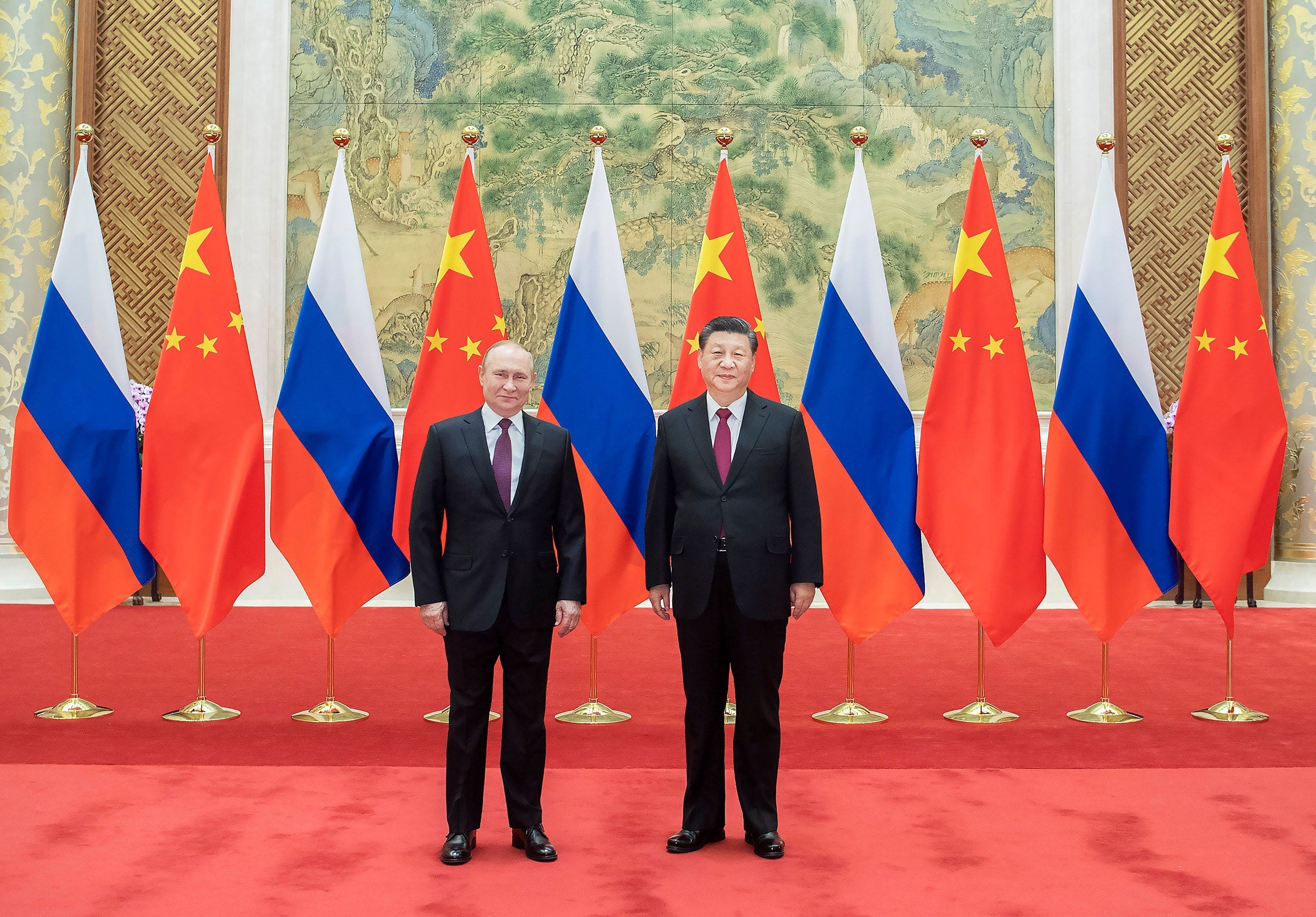
Russia Is Playing Geopolitical Chess
To investors,There have been a plethora of rumors about bitcoin and cryptocurrencies in Russia over the last few months. The country sits in a unique geopolitical position — they are frienemies of the United States and have a deepening relationship with China, another frienemy of the western superpower. As a refresher, the mainstream media has been pushing the narrative of a pending Russian invasion of Ukraine. The response by the United States in an attempt to deter the invasion is financial sanctions, including potentially the exclusion of Russia from the SWIFT payment system. It is important to caveat that no one actually knows what is going on between Russia and Ukraine. Americans have nearly zero appetite for another invasion or war. The average citizen couldn’t even point Ukraine out on a map, while they have little concern about their safety due to actions that Russia may or may not take halfway around the world. That doesn’t mean that the United States shouldn’t be paying attention, but there are major questions about the narrative being pushed by the mainstream media.Additionally, the threats of financial sanctions on a large country like Russia are noteworthy. More than a decade ago, these sanctions carried significant weight. The United States could cut you off from the global financial system and essentially sentence you to financial system purgatory. These sanctions are likely to be less effective in the current time period though. Let me give you two examples — China and bitcoin. Chinese President Xi Jinping hadn’t met with a foreign leader in person since the start of the global pandemic in 2020 until he recently sat down face-to-face with Russian President Vladimir Putin a few days ago. The two countries issued a 5,000+ word joint statement following that meeting. Here is the opening paragraph:“Today, the world is going through momentous changes, and humanity is entering a new era of rapid development and profound transformation. It sees the development of such processes and phenomena as multipolarity, economic globalization, the advent of information society, cultural diversity, transformation of the global governance architecture and world order; there is increasing interrelation and interdependence between the States; a trend has emerged towards redistribution of power in the world; and the international community is showing a growing demand for the leadership aiming at peaceful and gradual development. At the same time, as the pandemic of the new coronavirus infection continues, the international and regional security situation is complicating and the number of global challenges and threats is growing from day to day. Some actors representing but the minority on the international scale continue to advocate unilateral approaches to addressing international issues and resort to force; they interfere in the internal affairs of other states, infringing their legitimate rights and interests, and incite contradictions, differences and confrontation, thus hampering the development and progress of mankind, against the opposition from the international community.”This new interest in collaboration between Russia and China creates the potential for bi-lateral trade to be settled outside the US dollar regime. Obviously, if these countries begin to conduct trade without using the global reserve currency, the sanctions from the issuer of that global reserve currency will be significantly less effective. It is unclear how much of this is tough talk compared to committed action, but it is an important development. Second, the rise of bitcoin and cryptocurrencies provides an open, decentralized payment system that is not controlled by anyone. This may seem like a wild idea theoretically, but we are watching bitcoin gain adoption globally at an insane pace. It is important to highlight that sanctions is just another name for censorship. The creator and distributor of the global reserve currency is attempting to censor who uses their currency and payment system. There may be good reason for the censorship. There may not be. Either way, sanctions are just a different terminology for censorship. Bitcoin is censorship-resistent money. No one can shut down the system. No one controls it. Anyone in the world can send monetary value to anyone else in the world. There are no middlemen. There are no rent seekers. The peer-to-peer system is unique in design and powerful in application. So it is weird that the central bank of Russia started to question bitcoin’s relevance in the country at the same time that it may become incredibly important to the nation state. To explain further, the Bank of Russia recently floated the idea of banning bitcoin and cryptocurrencies within the country. This led to a heated debate internally and externally of the country. Last night, it appears that the Russian government and the central bank reached an agreement on digital assets. They will not be banning them, but rather treating

Will Staking and Mining Be Tax Free?
To investors,News broke yesterday that the tax treatment of staking protocols, and the subsequent tokens earned, could be changing in a positive way. I’m not an expert on taxation, nor staking, so I asked one of the groups (Proof of Stake Alliance) involved to write up a quick summary on what has happened and the potential implications. Here is their analysis:On December 20th, Josh Jarrett – a Tennessee business owner, father of three, and Tezos aficionado – received an early Christmas present. Just as his holiday vacation was starting, the DOJ sent him a letter informing him that the IRS had approved a tax refund, 18 months into his legal battle to determine how his staking reward tokens are taxed under the U.S. income tax. However the story is not over…In 2019, after Josh created XTZ tokens through staking on Tezos, he paid income tax on those rewards based on the price of the tokens when he created them. Like so many taxpayers involved in proof-of-stake blockchains, Josh faced uncertainty and a lack of clarity in determining how the IRS would treat his staking rewards. Even though proof-of-stake protocols represent billions of dollars – and seven of the top ten blockchain protocols by market cap use, or plan to use, a proof of state consensus mechanism – the IRS has not issued guidance about the taxation of tokens created from staking. In 2020, Josh’s legal battle with the IRS began in earnest. He filed for a refund on the income tax he paid on his staking rewards based on their value at creation, supported by a legal brief by Abe Sutherland. The brief articulated that these rewards were created property, and that, like all other created property – whether it’s gold that is mined or bread that is baked – it should be taxed at the time of sale, not at the time of creation. After two years, Josh finally received a note from the IRS in December 2021, offering Josh a refund. This is a big deal as the IRS doesn’t roll over easily – especially in cases that are so visible and will shape the taxation of multi-billion dollar industries. Josh’s win marks the first indication of just how strong Josh’s legal position is – a huge development for the growing industry. But for Josh, this offer of a refund is not enough. Because the IRS has not issued guidance confirming that it will not attempt to tax staking rewards at the time they are created, this refund could be a one-off and the Jarretts could face the same uncertainty in future years. In order to push the IRS to definitively state that it will tax staking rewards as property or have a judge decide the matter, Josh has refused the IRS refund – and is continuing his case against the IRS. What this means:The offer of a refund from the IRS is a promising sign that the US tax laws treat staking – a process of creating cryptocurrency rewards through participating in a proof-of-stake blockchain network – as new property and not income. But while this news is exciting, a one-off tax refund is not sufficient to offer clarity to a multibillion dollar industry. We need the courts to resolve this once and for all, or else for the IRS to clearly agree that such tokens are not taxable income until sold.POSA for the past three years has been leading the fight for clear IRS guidance that staking rewards are not taxable income the moment they are created. In order to advocate for the proof-of-stake industry, POSA coordinated a day of action on Capitol Hill and meetings at the Treasury Department in November 2019, during which they briefed the IRS about the need to confirm that staking tokens will be taxed as created property. Subsequently, the Blockchain Caucus wrote a letter to the IRS urging them to issue guidance that staking rewards would be treated as property. With proof-of-stake tokens approaching nearly $600 billion in value, and some 16% of American adults having traded, invested, or used cryptocurrencies, it's well past time for the US government to acknowledge this industry and provide it with clear, common sense and fair tax treatment. If the IRS does not offer explicit guidance confirming that staking rewards are not income, the US risks becoming a second-rate market for staking and pushing the burgeoning multi-billion dollar industry to inevitably take those dollars elsewhere. What’s next?* The Department of Justice is reviewing Josh’s lawsuit. If the case continues to move forward, the court could make a determination on the taxation of Josh’s staking rewards.* POSA is continuing to fight for a definitive statement from the IRS that it will not tax staking rewards as income when they are created – Only with explicit guidance can our growing and innovative industry plan for the future. * You can help us demand guidance from the IRS by raising your voice to advocate for fair taxation of staking rewards. * Learn more here: www.proofofstakealliance.org POMP’S REACTION: As you can see, this would be a really big improvement to the current tax treatment of proof-of-sta
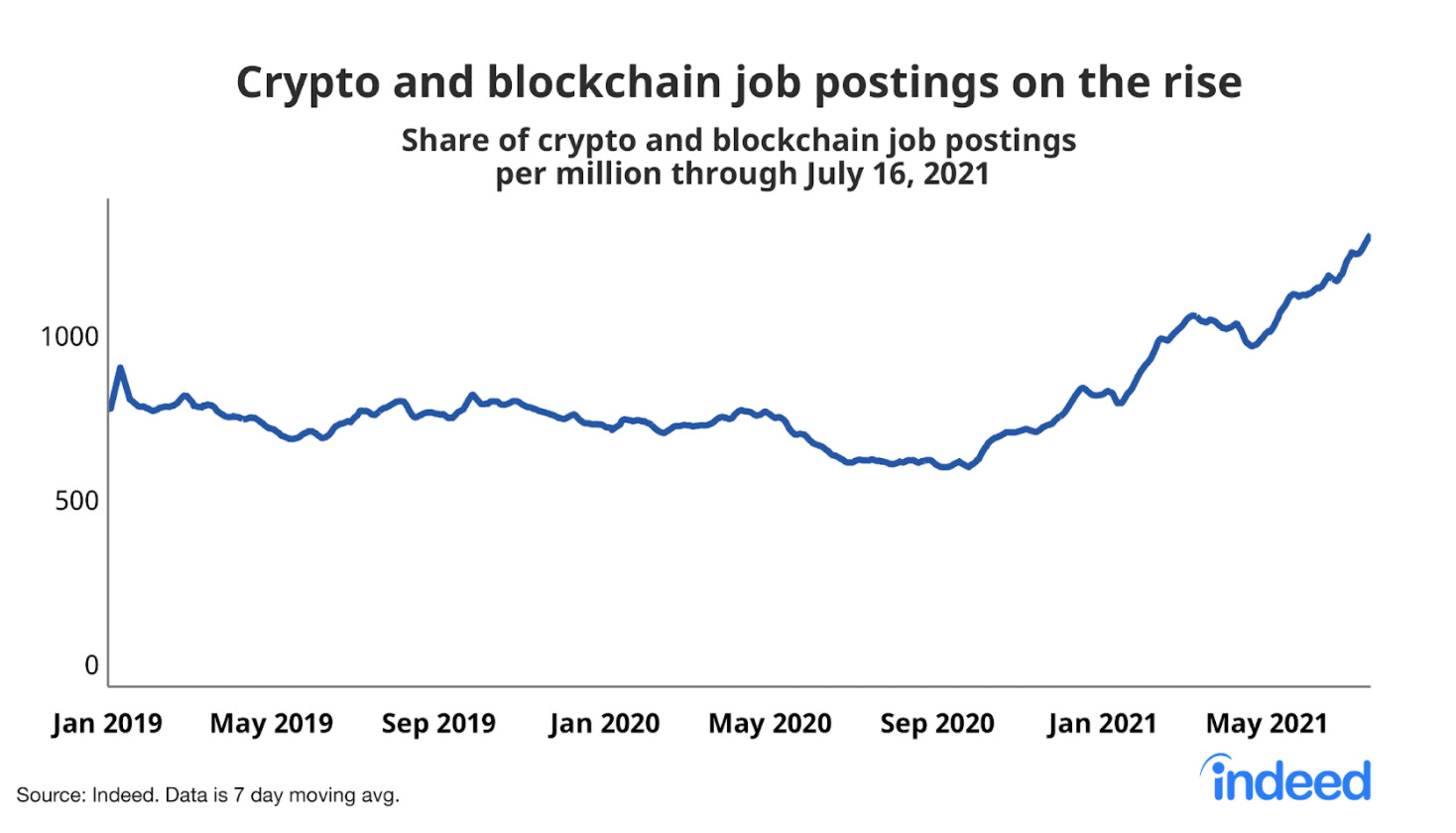
2021 Crypto Job Report
To investors,The job market in the bitcoin and crypto industry has exploded over the last 12 months. My team and I have built a standalone business that has become the largest employment and training company in the space. I asked Colton Sakamoto, CEO of that business, to put together a report on the trends in 2021. Below is the report. Enjoy!2021 was an inflection point that accelerated mass adoption of Bitcoin and crypto. Led by El Salvador making bitcoin legal tender, Coinbase going public, and Square rebranding to Block, Bitcoin and crypto took the world by storm. Out of fear of being unseated, the incumbents were also forced to adopt a Bitcoin and crypto strategy. Facebook underwent a rebrand and changed their name to Meta. Fintech companies like Robinhood, Webull, and SoFi adjusted their stances to accommodate crypto users. Even legacy financial institutions including Blackrock, Goldman Sachs, Morgan Stanley, and State Street added or expanded their bitcoin and crypto offerings. With disruption comes opportunity. In 2021, thousands of the brightest minds around the world left their jobs to join the Bitcoin and crypto revolution. According to LinkedIn, Bitcoin and Crypto job postings grew 395% in 2021, representing more than 3x the growth of the broader tech industry. “Bitcoin changes absolutely everything. I don’t think there is anything more important in my lifetime to work on” - Jack Dorsey, CEO of Block, Inc.Top talent is pouring into the Bitcoin and crypto industry. Here’s what the Bitcoin and crypto job market looked like in 2021:Estimations of hiring in 2021 put the total well above 10,000 people joining the Bitcoin and crypto industry. The Block collected responses from just 27 crypto firms and discovered that the interviewed companies hired 8,400 people in 2021. A LinkedIn “crypto” search reveals close to 200,000 people working in the industry in total. Job seeker demand for the crypto industry continues to rise, and new openings are quickly filled. “It feels a bit like the 1990s and the birth of the internet all over again. It’s that early, that chaotic and that much full of opportunity” -Sridhar Ramaswamy, CEO, NeevaExchanges were responsible for the most hires* Coinbase - 1,532 * Binance - 1,500 * Kraken - 1,035 * BlockFi - 520 * Gemini - 402 As retail demand for digital assets exploded in 2021, so did headcount at crypto exchanges. Coinbase more than doubled their headcount over the past year, and they expect to continue to hire aggressively in 2022. Retail demand drives infrastructure, and infrastructure drives hiring. “Even though Kraken has increased its headcount by 50% since the start of the year — and we have plans to hire a further 1,200 in the second half of 2021 — our demand for staff continues to outpace the supply of suitable candidates,” - David Ripley, CEO, KrakenAll skill sets neededThere is a common misconception that bitcoin and crypto companies are only looking for shadowy super coders. 2021 job data ran counter to this narrative. Accounting, Marketing, Sales, and Business Development openings were on the rise in 2021, and we can expect the continuation of this trend as more startups are formed, more companies go public, and job seeker interest continues to rise. Remote first36% of all crypto job postings allow for remote work, compared to just 7% for all other US job postings. Led by companies without headquarters like Coinbase and Kraken, crypto companies are looking for top talent and are often location agnostic. Gone are the days of commuting to a 9-5. Remote work is here to stay, and the crypto industry is leading the charge for remote-first work. $30B in Venture Capital Funding Venture funding in 2021 went parabolic in the crypto sector as VCs continue to place big bets on bitcoin and crypto companies. The crypto industry received more than $30B in funding across 1,700 deals in 2021, which represents a 709% year-over-year increase in total funding. “The investments I’m making now are not in traditional businesses. In fact, 80% of the investments that I make that are not on ‘Shark Tank’ are in or around cryptocurrencies.” - Mark Cuban (Source)$6B in Mergers & Acquisition Activity 2021 was also a big year for crypto mergers and acquisitions. The sector saw over $6B in M&A volume in 2021, which is a 730% year-on-year increase and is approximately 2x the amount of the industry’s previous 8 years combined. “Bridge transactions” — deals between more traditional companies and crypto firms, rapidly accelerated in 2021. Some examples include Nike buying virtual products company KTFKT and Robinhood acquiring cross-exchange crypto trading platform Cove. 65+ companies in the crypto sector have reached unicorn status with a valuation of $1B or moreThe past year created more unicorns than the previous 4 years combined. Entrepreneurs across the globe are taking risks and starting companies to solve real-world problems. In 2021, crypto companies took invested capital and used it to b
Micropayments Reduce Centralized Risk
To investors,There has been a rise in interest for audience funded content over the last few years. Some of this has been driven by a decreasing trust in the mainstream media. Some of it has been facilitated by the explosion in tools and services aimed at helping individuals create and distribute content more easily. And some of it is an attempt to create content that is immune from advertiser pressure.Regardless of the reason, it is hard to miss the increasing number of paywalls around the internet. Two of the most popular services for email paywalls are Substack and Ghost. These products allow an individual to create content, deliver it to their readers’ inbox, and receive payment in exchange. As Jack Dorsey pointed out over the weekend, there are trade-offs between these services.Substack is a centralized, closed-source software service that uses Stripe for payment processing. Ghost is an open-source software service that uses Stripe for payment processing. I am personally a fan of Substack from the user perspective, but both products are effective at serving their customers. The identification of Stripe as a crucial centralized point is important. It is true in both the closed-source and open-source model. Substack obviously recognizes this because they have added bitcoin payment integration using OpenNode. My guess is that Ghost, who currently has all payment APIs closed, will eventually add bitcoin payments as well. But what would the world look like if individuals didn’t want to wait on Substack, Ghost, or any service provider to create bitcoin-enabled paywall infrastructure? Strike, the payment infrastructure company focused on the Lightning Network, held a hackathon recently where someone created a product called PlebPay. This allows anyone in the world to create a paywall, for any piece of content, instantaneously and with no payment processing fee. The beauty of this product is that it leverages the Lightning Network, so you can require micropayments as small as $0.01 for someone to view the desired content. Here is an example:Click here to access the video via the paywall. You’ll see that with the scan of a simple QR code, you can pay $0.01 and immediately watch the hilarious video of young Jack Mallers. There was no need for YouTube to create paywall support. There was no requirement for YouTube to integrate with Bitcoin or the Lightning Network. This is what the future of the internet looks like. A decentralized, digital payment system that is built on open-source software, which is continuously improved on to facilitate global, frictionless, free payments. This idea of decentralization around payments is really important. We don’t need to accept the fact that payments will forever be a centralized point of failure. There is a better solution in bitcoin. The layer one technology is well understood, but quickly the world is going to wake up to the superiority of the Lightning Network as well. I don’t know what use cases internet users will come up with for PlebPay. It feels exciting though to have the capability of adding micropayments to any internet action with just a few clicks of a button. Companies have spent decades trying to figure out how to build this type of functionality, but an engineer built this functionality in approximately 4 hours at a hackathon. The revenue model for businesses online is rapidly shifting and the era of advertising is under pressure. Advertising won’t go away, but the trend of audience-funded content is only beginning. We are watching an innovation in the payment industry that is truly zero to one. There is nothing from the legacy system that can remotely compete. These early iterations look like a toy today, but they will be the basis for global disruption in the future. Hindsight will be 20/20. You just have to squint hard enough to see where we are going right now. But the light at the end of the tunnel is there. I can’t wait to see it come to fruition. Go check out PlebPay and set up a paywall for something on the internet. Send me the link and I’ll pay a small fee to help you experience the magic :) Have a great day. I’ll talk to everyone tomorrow. -PompDo you want a job in the crypto industry? My team and I have been working with the top HR teams in the industry to create a training program that teaches the fundamentals of crypto.We cover everything from how central banks work to bitcoin’s technical architecture to smart contract platforms to niches of the industry, such as NFTs, DAOs, and much more.This 3-week intensive program has 50+ events packed into the most valuable training program in crypto. We helped more than 400 people get hired last year and you can be one of them.Our next cohort starts in February. APPLY:https://www.pompscryptocourse.com/THE RUNDOWN:Google Cloud Hiring Team of Blockchain Experts: Google Cloud is hiring a team of blockchain experts to capitalize on the move to decentralized Web 3 applications, the company wrote in a blog post
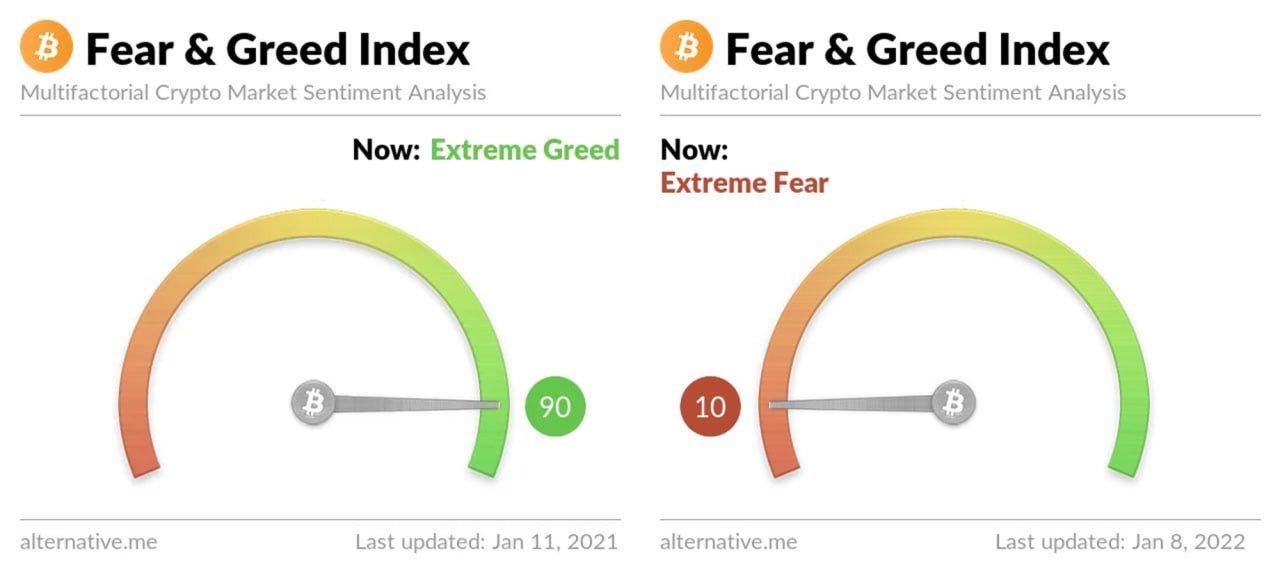
Long-Term Investors Have Less Stress
To investors,Financial markets can be crazy at times. The complexity of an economy makes it nearly impossible to predict what will happen in the short and long-term. Humans are really bad at dealing with uncertainty, specifically when there is a dopamine-driven feedback loop of volatile price movements thrown in their face every few minutes. Let’s use bitcoin as an example. On at least 6 occasions last year, the digital asset fell in price more than 20%. There was a 50% drawdown in approximately 95 days, which was the 4th time in 4 years that bitcoin had fallen by 50% or more. To say that bitcoin’s US dollar exchange price is volatile would be an understatement. There are few financial assets that compare.This volatility in price is mirrored by wild swings in investor sentiment in the market. During January 2021, Bitcoin crossed $38,000 for the first time in history. The Fear and Greed Index registered at extreme greed. In January of 2022, Bitcoin crossed below $38,000 and the Fear and Greed Index registered at extreme fear.This is a great example of wild swings in sentiment. The price of the asset is the exact same, but the difference of one year (and the direction of the asset’s movement) led to very different beliefs about the future. This is top of mind right now because we are watching the complexity of financial markets play out related to bitcoin. The Federal Reserve spent the last two years flooding the market with cheap capital, which pushed investors further out on the risk curve. Wall Street funds and institutional investors adopted bitcoin as an inflation hedge asset. Public companies started to put bitcoin on their balance sheet. The price of bitcoin pushed higher as inflation raged on. Now that the Federal Reserve is talking a tough game, including increasing interest rates and tapering quantitative easing, the price of bitcoin and other risk assets have fallen significantly. The anticipation of more expensive capital, and ultimately lower inflation growth year-over-year, has investors scrambling to gain more exposure to value investments. Simultaneous to the Fed-related speculation, there is a geopolitical game theory playing out involving bitcoin. China has taken an abrasive stance towards bitcoin miners and investors. This led to a massive migration out of China, which can be seen in on-chain metrics and the global hash rate measurements. Elected officials in the United States continue to propose legislation that would create high friction for companies, investors, and miners. El Salvador has leapt onto the global stage by embracing bitcoin in a major way. They are buying bitcoin, building bitcoin ATM networks, launching bitcoin software products, creating a bitcoin city, and raising capital through a bitcoin-backed municipal bond. The various approaches of China, United States, and El Salvador have been playing out for months. A new entrant to the global game theory is Russia. Their central bank has taken a fairly adversarial position to the industry, including a proposed ban on crypto trading and mining. It appears that Russian President Vladimir Putin disagrees with the central bank and has reportedly signaled his support for a proposal from the Finance Ministry that would allow crypto mining and trading, but in a heavily regulated manner. Price volatility. Sentiment swings to the extreme. Some countries embracing bitcoin. Other countries attacking bitcoin. The Fed saying one thing, but doing another. There is uncertainty in the market. No one knows what is going to happen. It is easy to be fearful. It is easy to get distracted. The world is moving fast. How can you possibly keep up? Well, maybe you don’t have to try. The beauty of taking a long-term approach to investing is that you can live a less stressful life. You are able to do the work to identify secular, multi-decade trends and allocate capital accordingly. Barring some significant invalidation of the thesis, a long-term investor can then focus on dollar cost averaging into the investment over time. MicroStrategy’s Michael Saylor was on UpOnlyTV yesterday and he clearly articulated his bitcoin strategy. Cobie, one of the hosts of the show, asked him “Is you strategy, you just don't give a s**t, you're buying Bitcoin no matter what?” to which Saylor answered “yeah.” This may seem crazy to the ill-informed eye, but the conversation evolved to unpack this even further. Michael Saylor explicitly explained that he would periodically buy the tops of bitcoin price cycles, along with buying bottoms.When you are dollar cost averaging, it is impossible to know whether you are buying the top or the bottom. But if you have a long-term view, you don’t care. You simply continue to convert your currency into the asset of choice. Regardless of what is happening in the world, a long-term bitcoin investor will continue to simply dollar cost average. Geopolitics? Noise. Fed decisions? Noise. Wall Street adoption? Noise. Sentiment? Noise. Price? No