
The Pomp Letter
521 episodes — Page 6 of 11
Bitcoin Enters Price Discovery - New All Time High
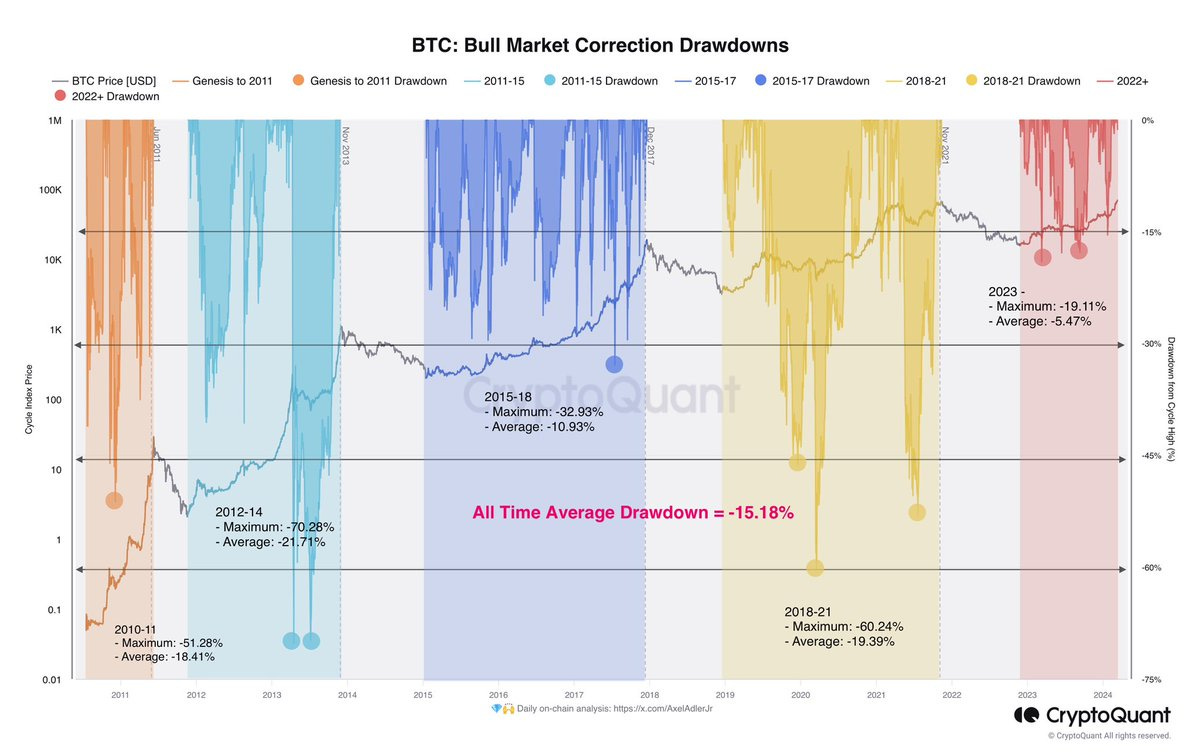
Today’s letter is brought to you by Bitcoin Investor Day!I am hosting the first Bitcoin Investor Day in New York City on March 22nd this year. It is an annual meeting for sophisticated Wall Street investors who are interested in bitcoin.Speakers include Cathie Wood, Mike Novogratz, Anthony Scaramucci, Mark Yusko, Head of Digital Assets at BlackRock, Bitwise CEO, Head of Research at Fidelity & VanEck, and many more.Tickets are only $50 and the venue is incredible. This will be one of the highest quality bitcoin conferences of the year. See you there!To investors,Bitcoin hit a new all-time high of $72,000 this morning. As Balaji Srinivasan highlighted, the digital currency has now hit a new all-time high in every currency in the world. In many recent conversations, investors from the traditional finance industry have asked me “what is the value of bitcoin today?” They are specifically referring to the difference between price and value. One way to think about this is through bitcoin energy value. As Capriole Fund’s Charles Edwards points out, bitcoin’s energy value currently sits at approximately $81,000.Regardless of the true value of bitcoin, the price has been acting in a different way than past market cycles. Bitcoin analyst Alex Adler Jr explains the risk of correction in this bull cycle by saying, “the average drawdown [in this cycle] is -5.47%, and the maximum is -19.11%. Compare this with past cycles and the all-time average drawdown of -15.18% to make informed decisions about your investments.”Adler also shows “starting from October 2023, the volumes of daily transactions show growth, with the peak occurring on March 5 with a volume of $111 billion. The figure is simply huge, as some island nations have a smaller annual GDP.”It is unprecedented for bitcoin to reach new all-time high prices before the halving. Given that we are less than 50 days away from that supply shock, it is hard to construct a bearish narrative through the end of 2024. We can see that two events over the last year led to bitcoin’s rise and my guess is that the halving will be the third event on this chart in hindsight.The spot bitcoin ETFs are still buying hundreds of millions of dollars of bitcoin per day. Microstrategy is pouring in hundreds of millions of dollars every few weeks. Most of the distribution platforms, such as Morgan Stanley, have not been turned on yet, but rumors are they have been racing to make the asset available to their clients. And President Trump said on CNBC this morning that bitcoin has too many use cases now, so he would find it difficult to ban. The funny thing about bitcoin is that it is immune to the noise. The network continues to produce block-after-block of transactions, regardless of what is happening in the world. Bitcoin didn’t care when the price was crashing and the bears were dancing on graves. Bitcoin doesn’t care today when price is surging and the world feels under-allocated to the asset. Hard money is eating the world. Investors are realizing that they need the asset in order to be prepared for an uncertain future. Eventually everyone comes to the same conclusion. Hope you have a great start to your week. I’ll talk to you tomorrow.-Anthony PomplianoReader Note: Today is a free email available to everyone. If you would like to receive these letters each morning, please subscribe to become a paying member of The Pomp Letter by clicking here.John Egan is the Head of Crypto at Stripe. In this conversation, we talk about the crypto industry and how Stripe is interfacing with the technology, what they have been building, how their products work, bridging the gap between Web2 and Web3, stablecoins, and more.Listen on iTunes: Click hereListen on Spotify: Click hereHow Stripe Is Building For Bitcoin & CryptoPodcast Sponsors* Supra - Join Supra’s early integration program for zero-cost access to the fastest oracles and dVRF across 50+ blockchains.* Propy - Now, anyone can start their on-chain journey by minting home addresses via PropyKeys and staking them for profit until they are ready to sell their home. * BetOnline - Use crypto to bet on sports, casino games, horse racing, poker and more with promo code POMP100.* Espresso Displays - The world's thinnest touchscreen portable monitor. Expand your workspace and work from anywhere.* Base - Base is shaping the future of the on-chain world with near-zero gas fees and rapid transaction speeds.* ResiClub - Your data-driven gateway to the US housing market.* Bay Area Times - A visual newsletter explaining the latest tech & business news.You are receiving The Pomp Letter because you either signed up or you attended one of the events that I spoke at. Feel free to unsubscribe if you aren’t finding this valuable. Nothing in this email is intended to serve as financial advice. Do your own research. This is a public episode. If you'd like to discuss this with other subscribers or get access to bonus episodes, visit pomp.substack.com/subscribe
Decentralized, Open-Source Technology Is Immune To Geopolitics
To investors,Liza Lin wrote a story in the Wall Street Journal this morning titled “China Intensifies Push to ‘Delete America’ From Its Technology.” It clearly articulates a renewed effort by China to reduce their dependency on American technology companies, including hardware and software producers. Lin writes:“The 2022 Chinese government directive expands a drive that is muscling U.S. technology out of the country—an effort some refer to as “Delete A,” for Delete America. Document 79 was so sensitive that high-ranking officials and executives were only shown the order and weren’t allowed to make copies, people familiar with the matter said. It requires state-owned companies in finance, energy and other sectors to replace foreign software in their IT systems by 2027. American tech giants had long thrived in China as they hot-wired the country’s meteoric industrial rise with computers, operating systems and software. Chinese leaders want to sever that relationship, driven by a push for self-sufficiency and concerns over the country’s long-term security.The first targets were hardware makers. Dell, International Business Machines and Cisco Systems have gradually seen much of their equipment replaced by products from Chinese competitors. Document 79, named for the numbering on the paper, targets companies that provide the software—enabling daily business operations from basic office tools to supply-chain management. The likes of Microsoft and Oracle are losing ground in the field, one of the last bastions of foreign tech profitability in the country.The effort is just one salvo in a yearslong push by Chinese leader Xi Jinping for self-sufficiency in everything from critical technology such as semiconductors and fighter jets to the production of grain and oilseeds. The broader strategy is to make China less dependent on the West for food, raw materials and energy, and instead focus on domestic supply chains.”If you ignore which countries are involved and merely evaluate this strategy on merit for a nation state, it makes a lot of sense. Reducing dependency on foreign countries and international supply chains makes your country more resilient. Driving innovation and focusing on domestic manufacturing creates jobs, while simultaneously creating GDP growth. Lastly, a vertically-integrated nation state has less security vulnerabilities to worry about. For some reason, the American economy and our politicians have a harder time pursuing this strategy than China. There is no guarantee that China will be successful, but at least they are trying. Imagine if you read the following:“The effort is just one salvo in a yearslong push by the American President for self-sufficiency in everything from critical technology such as semiconductors and fighter jets to the production of grain and oilseeds. The broader strategy is to make America less dependent on the East for food, raw materials and energy, and instead focus on domestic supply chains.”That description would be incredibly bullish for the future of America. Unfortunately, it is not true at the moment. One other idea came to mind as I read the article this morning — decentralization. Given the rise of blockchain technology, combined with an ever-increasing popularity of open source software, it would not be surprising to see more country-agnostic technology. Bitcoin is a solid example. It is not possible for a country to fight bitcoin on the premise that their citizens should not adopt another nation’s currency. Bitcoin has no nation. It is not American or Chinese. The digital currency simply exists in a global economy and can be used by anyone for their desired purpose. There are not many technologies that fit this description today, but my expectation is that many more will reach global adoption as geopolitical tensions continue to rise between the largest economies in the world. Politicians and militaries care about countries of origin. The end user just wants to use technology that solves their problem. The natural answer will be decentralized, open-source technology. It will be interesting to see what major products are next to seize the opportunity. Hope you all have a great day. I’ll talk to everyone tomorrow.-Anthony PomplianoAnthony Pompliano records a solo episode explaining what is going on in the bitcoin market, historical context, analysis of where we currently are, macro environment, and where we are headed.Listen on iTunes: Click hereListen on Spotify: Click hereBitcoin Update: All-Time High and Where We Are HeadedPodcast Sponsors* Frec.com - Use tax-loss harvesting to save on your tax bill, while keeping the same investment exposure you already have.* BetOnline - Use crypto to bet on sports, casino games, horse racing, poker and more with promo code POMP100.* Espresso Displays - The world's thinnest touchscreen portable monitor. Expand your workspace and work from anywhere.* Trust & Will - Estate planning made easy. They are fast, secure, and simple to
History Shows Bitcoin's Volatility Is Net Positive
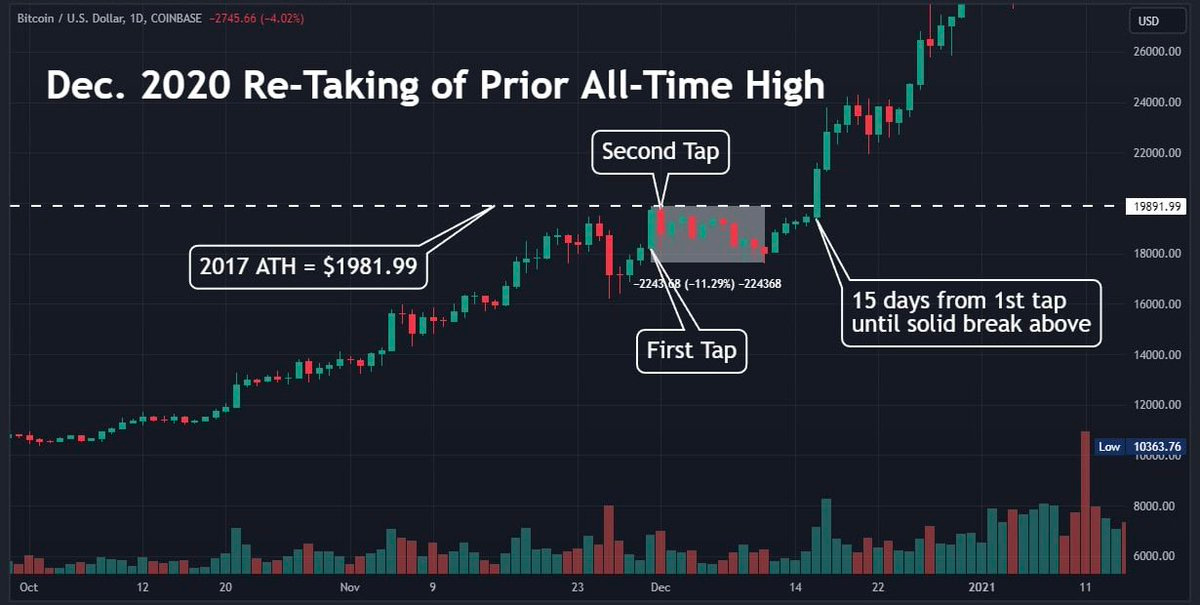
Today’s letter is brought to you by Bitcoin Investor Day!I am hosting the first Bitcoin Investor Day in New York City on March 22nd this year. It is an annual meeting for sophisticated Wall Street investors who are interested in bitcoin.Speakers include Cathie Wood, Mike Novogratz, Anthony Scaramucci, Mark Yusko, Head of Digital Assets at BlackRock, Bitwise CEO, Head of Research at Fidelity & VanEck, and many more.Tickets are only $50 and the venue is incredible. This will be one of the highest quality bitcoin conferences of the year. See you there!To investors,Bitcoin briefly broke the previous all-time high of $69,000 yesterday. The digital currency then proceeded to drop more than 10% shortly after. This type of volatility is unheard of in traditional financial markets, but it is just a normal day in the world of cryptocurrencies. Alex Thorn, the Head of Research at Galaxy Digital, correctly pointed out it is important to “remember that in December 2020, BTC touched its prior all-time high of ~$20k twice, then ranged and traded -11.3% lower over 15 days before definitively breaking ATH. It is likely to look similar here, and some consolidation would be healthy after +62% YTD / +77% from YTD low (jan 23).”Thorn went on to present an analysis of the volatility in the last two bull markets. First, he showed “bitcoin had 13 corrections of 10% or more between the March 12, 2020 covid-low ($3858) and the April 14, 2021 ATH ($64,899).”If we go back to the 2017 bull market, “from January 1, 2017 to December 17, 2017 bitcoin ATH ($19,891) there were thirteen 12%+ drawdowns (of those, 12 were 15%+, and 8 were 25%+).”Bitcoin is volatile. You need the volatility to get the upwards movement in price, so most holders view the thrashing of price to be a net positive over the long run. Now that bitcoin is larger than the entire US high-yield bond market, or larger than the entire silver market, some believed the volatility would subside. Personally, I have even talked about volatility dampening over the long-run. But bitcoin has not paid attention to those opinions in the short-term. The asset continues to oscillate in ranges of thousands of dollars per day. This is important to understand if you are buying bitcoin for the first time or if you have a weak stomach for volatility. The good news is that “Bitcoin is not only the best performing asset class of 2024, up 62% YTD, it also has the highest Sharpe ratio at 2.1,” according to Zerohedge. This continues to reinforce the point that bitcoin is one of the best, if not the best, risk-return assets available in the market. I write this to all of you because the market continues to be a little crazy. At the exact moment that the euphoria hits from breaking the all-time high, holders are immediately met with a 10% drawdown. It is easy for outsiders to say bitcoin holders “got lucky,” but the truth is that very few people in the world can hold an asset through this type of volatility. I hope this helps as we go through the next few weeks. Talk to everyone tomorrow.-Anthony PomplianoReader Note: Today is a free email available to everyone. If you would like to receive these letters each morning, please subscribe to become a paying member of The Pomp Letter by clicking here.Mauricio Tovar is the Co-Founder at Tropykus.com and CEO at TRUWeb3. Tropykus Fiance offers simple digital loan and credit products focused on emerging economies. In this conversation, we talk about bitcoin in Latin America, governments and leaders, benefits, risks, stablecoins, DeFi, Web3, and what the future may look like.Listen on iTunes: Click hereListen on Spotify: Click hereNew Bitcoin All-Time High Leads To Price Doubling QuicklyPodcast Sponsors* Frec.com - Use tax-loss harvesting to save on your tax bill, while keeping the same investment exposure you already have.* BetOnline - Use crypto to bet on sports, casino games, horse racing, poker and more with promo code POMP100.* Espresso Displays - The world's thinnest touchscreen portable monitor. Expand your workspace and work from anywhere.* Trust & Will - Estate planning made easy. They are fast, secure, and simple to use. Get your will or trust created today.* Base - Base is shaping the future of the on-chain world with near-zero gas fees and rapid transaction speeds.* ResiClub - Your data-driven gateway to the US housing market.* Bay Area Times - A visual newsletter explaining the latest tech & business news.You are receiving The Pomp Letter because you either signed up or you attended one of the events that I spoke at. Feel free to unsubscribe if you aren’t finding this valuable. Nothing in this email is intended to serve as financial advice. Do your own research. This is a public episode. If you'd like to discuss this with other subscribers or get access to bonus episodes, visit pomp.substack.com/subscribe
Bitcoin's Price Has Doubled Quickly After Every New All-Time High
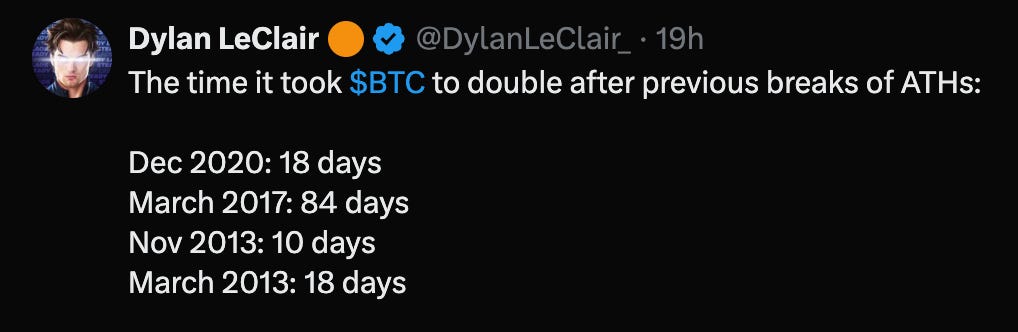
To investors,Bitcoin almost broke the previous all-time high of $69,000 yesterday. It came within $500 and has since retreated from the milestone. Given the persistent demand for the digital currency, and the lack of new production in response to this increased demand, we should assume that bitcoin will hit a new all-time high price in the next few days. This leads to the question “what happens when bitcoin hits a new all-time high?”Analyst Dylan LeClair points out that bitcoin’s price has doubled very quickly each time it has eclipsed the old all-time high. This is hard to fathom, but bitcoin’s price doubled in 18 days or less in 3 of the 4 times that the asset hit a new all-time high. This is what it looks like when people talk about “price discovery.”The world is trying to figure out what bitcoin is worth. It has determined that the 2022 valuation of $17,000 is wrong. Where the asset price will go, no one knows. We shouldn’t discount the past though. Bitcoin’s price is up 20% in the last week. It is up 60% in the last month. And the asset is up 200% in the last year. These are big numbers for any financial asset, but especially a controversial one that has been heavily debated publicly for 10+ years. We can’t evaluate bitcoin’s future solely on price. The past performance around all-time highs can serve as a guide, but we have to remember that the bitcoin halving is less than 50 days away. As this event occurs, I anticipate that there will be just as much, if not more, demand for bitcoin.This means that the demand will outstrip available incoming supply by at least 20:1. That ratio is unprecedented in global finance for any period of sustained time. We have seen 10-12x more demand than what the network is producing for the last 2 months. So the idea of that imbalance increasing in favor of bitcoin holders, and continuing to do so for many more months, would likely create a rapid appreciation in price. Lastly, BlackRock filed regulatory paperwork yesterday to get clearance to put some of the funds from their Strategic Income Opportunities Fund into a bitcoin ETF. That fund, which is a $36 billion conservative bond fund, signals a potential new source of capital inflows into bitcoin — trillions of dollars of existing funds that need to find a home in an asset that performs better than the current asset allocation.As I said on CNBC this morning, it is hard to construct an argument that is not bullish for bitcoin in the short-to-medium term. Obviously, I don’t understand the future any better than anyone else. I am merely looking at the data and trying to figure out the probabilities of various outcomes coming to fruition. You can watch the full segment here:The data is overwhelmingly telling us that bitcoin has a bright future ahead of itself. Hope you all have a great day. I’ll talk to everyone tomorrow. -Anthony PomplianoDarius Dale is the Founder & CEO of 42Macro.In this conversation, we look at their Weather Model and what it is telling us about stocks, bonds, bitcoin, we also talk about global liquidity, inflation, and impact of politics on financial markets.Listen on iTunes: Click hereListen on Spotify: Click hereBitcoin Continues To Look Bullish Against Macro BackdropPodcast Sponsors* BetOnline - Use crypto to bet on sports, casino games, horse racing, poker and more with promo code POMP100.* Espresso Displays - The world's thinnest touchscreen portable monitor. Expand your workspace and work from anywhere.* Base - Base is shaping the future of the on-chain world with near-zero gas fees and rapid transaction speeds.* ResiClub - Your data-driven gateway to the US housing market.* Bay Area Times - A visual newsletter explaining the latest tech & business news.You are receiving The Pomp Letter because you either signed up or you attended one of the events that I spoke at. Feel free to unsubscribe if you aren’t finding this valuable. Nothing in this email is intended to serve as financial advice. Do your own research. This is a public episode. If you'd like to discuss this with other subscribers or get access to bonus episodes, visit pomp.substack.com/subscribe
The Financial World Is Starting To Understand Bitcoin
To investors,There is something special happening in the bitcoin market right now. It feels like the global financial world has started to understand what the asset is and why it is important for them to own it. We are not talking about small retail investors or family offices, but rather large institutions who want to invest hundreds of millions or billions of dollars to bitcoin. There was $576 million of net inflow yesterday to the bitcoin spot ETFs according to BitMex Research. Investors put $520 million into Blackrock’s IBIT fund alone. These are incredibly large numbers. But inflows are not the only area where you can see the demand from Wall Street. Jim Bianco created this chart to show the number of individual trades in the bitcoin ETFs compared to SPY or QQQ. Eric Balchunas pointed out “there were more individual trades yesterday in the bitcoin ETFs than there were in SPY or QQQ. And this is before they have options and/or are available on many advisory platforms.”That is wild. Why are so many people buying bitcoin? As I mentioned in yesterday’s letter, the risk of inflation is looming on the horizon. Bloomberg’s Lisa Abramowicz quantified this when she said “traders are betting on substantially stickier inflation in the US for the next few years. Breakeven rates on 2-year notes are current at 2.75%, the highest level in almost a year.”There are not many places to hide in public markets if you think inflation is coming to make a serious comeback. The increase in demand for bitcoin has created a reflexive response. The higher the price goes, the more interest there is in the asset. Balaji Srinivasan highlights “bitcoin has passed all-time highs in 30+ countries, including China and India.”When price runs aggressively as it is doing right now, many people tell themselves that they will wait for a pullback. It makes them feel better if they can buy bitcoin at a price that they previously saw it trading for. The problem is that it can be nearly impossible to time a volatile market.According to Fundstrat’s Tom Lee, if you miss the 10 best days of Bitcoins return each year, you miss majority of the return. The ultimate example of “time in the market is more important than timing the market.”Humans are not built to time markets. Our fear and greed emotions get the best of us. My thought process has always been to let the best performing asset over the last 15 years continue to do its thing. It will go up, it will go down, and it will go sideways. But over a long enough time period, bitcoin seems to go up because it serves as an index for global liquidity.And the governments can’t help themselves — they’ll continue to print money, manipulate interest rates towards zero, and make sure there is liquidity is sloshing around forever. Hope you have a great day. I’ll talk to everyone tomorrow. -Anthony PomplianoAlex Tapscott is the author of a new book, "Web3: Charting the Internet's Next Economic and Cultural Frontier." Alex has been in the bitcoin and crypto industry for a long time. In this conversation, we talk about the current adoption of bitcoin, AR/VR, NFTs, metaverse, Web3, regulation, and how artificial intelligence plays into all of this.Listen on iTunes: Click hereListen on Spotify: Click hereOG Bitcoiner Explains What He Is Excited About NowPodcast Sponsors* Frec.com - Use tax-loss harvesting to save on your tax bill, while keeping the same investment exposure you already have.* BetOnline - Use crypto to bet on sports, casino games, horse racing, poker and more with promo code POMP100.* Espresso Displays - The world's thinnest touchscreen portable monitor. Expand your workspace and work from anywhere.* Trust & Will - Estate planning made easy. They are fast, secure, and simple to use. Get your will or trust created today.* Base - Base is shaping the future of the on-chain world with near-zero gas fees and rapid transaction speeds.* ResiClub - Your data-driven gateway to the US housing market.* Bay Area Times - A visual newsletter explaining the latest tech & business news.You are receiving The Pomp Letter because you either signed up or you attended one of the events that I spoke at. Feel free to unsubscribe if you aren’t finding this valuable. Nothing in this email is intended to serve as financial advice. Do your own research. This is a public episode. If you'd like to discuss this with other subscribers or get access to bonus episodes, visit pomp.substack.com/subscribe
Bitcoin Is Sounding The Alarm On Inflation
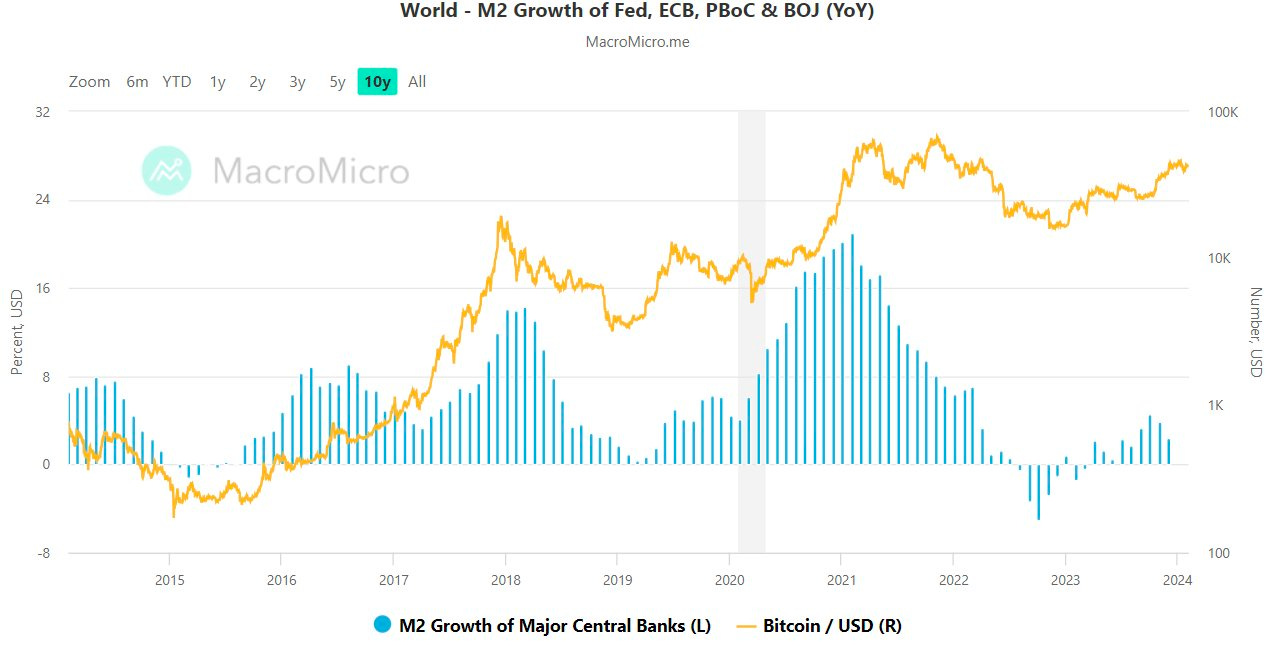
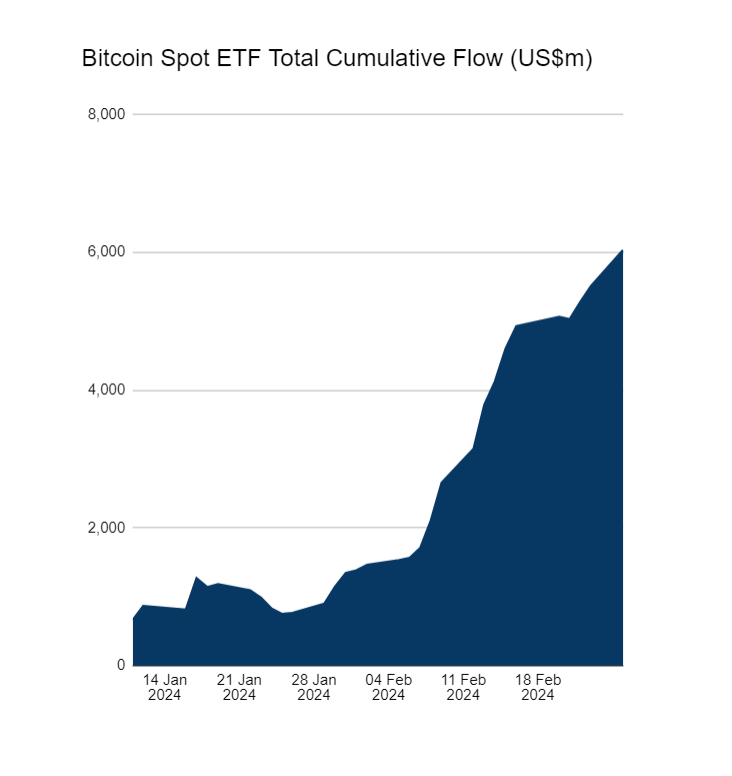
Today’s letter is brought to you by Crypto Academy!Do you want a job in the crypto industry?My team and I have been working with the top HR teams in the industry to create a training program that teaches the fundamentals of bitcoin & crypto. We’ve helped over 3,000 people get new jobs, and the training program has played a huge part in our success.This three-week intensive program offers over 60 lives events with me and our team of coaches. This includes workshops with me, deep dives, discussion groups, social events, and a Career Day with the industry’s top companies.You’ll learn a lot, meet a ton of new people, and accelerate the process of transitioning to your dream job in the bitcoin & crypto industry.Our next cohort starts in March. Apply today.To investors,Bitcoin went vertical yesterday. The digital currency is up more than 11.5% in the last 24 hours. This type of performance is rare in financial markets, especially if there is no obvious catalyst such as an earnings announcement or M&A activity.So why is bitcoin rapidly appreciating over the last few weeks?The common answer is that the bitcoin spot ETFs have led to significant demand for the asset. This answer is not wrong. Yesterday we saw $520 million in net inflows to the ETFs. As the folks at Bitmex Research pointed out, that is 9,510 bitcoin of net inflows when you price the capital flow in bitcoin. To put it in perspective, the bitcoin network is producing 900 net new bitcoin per day. So there is more than 10x demand for bitcoin than what the network can produce daily.That imbalance of supply and demand would not be shocking if we were evaluating it during the first few days of the ETF launch. But we are now 45 days after the ETF launch, so the 10x demand imbalance is mind-boggling. The ETFs have also officially crossed over $6 billion in cumulative net inflows since launch. Blackrock’s fund has $7.2 billion in assets as the leader and there are 5 ETFs with at least $1 billion in AUM. The launch of the bitcoin spot ETFs have been the single greatest launch of any ETF in history by almost every measurement. This brings us to the most important question — why are so many people buying bitcoin right now?The easy answer would be some version of “the institutions want to make money and now that they can buy the best performing asset of the last 15 years, they are going to buy as much as they can.” There is some truth in that statement, but I don’t think it is the full story.In fact, there is a hidden detail that most people are missing, which may scare the hell out of you.What if people are buying bitcoin because we are going to see a resurgence of inflation and investors are preparing for the inflation shock to their portfolio?Let me explain.First, let’s go back to 2020. The pandemic had a chokehold on the economy. Government officials and central bankers stepped in with unprecedented monetary and fiscal stimulus. Trillions of dollars in liquidity was sloshing around the economy. The state talking point was to not worry about inflation, which was later followed by “inflation is transitory.” Sophisticated investors were not fooled though. Paul Tudor Jones and Stanley Druckenmiller went on CNBC to say “inflation is coming!” They each said they were buying bitcoin because the belief was that inflation would be the fastest horse in the inflation-hedge category.That was a correct prediction.Bitcoin’s price was around $8,000 during the summer of 2020 and inflation was under 2%. By March 2021, less than 1 year later, bitcoin was trading at $64,000. That 8x increase in price was attributable to a few things, but a major reason was that markets are forward-looking.Investors saw that inflation was coming, so they began buying bitcoin hand-over-fist. They wanted to be protected when the inflation arrived. Remember, investors don’t wait for inflation to come before buying inflation-hedge assets. They buy them in anticipation.And there is a strong argument that investors are doing it again now.The Fed has worked tirelessly to get inflation down. The media has celebrated that year-over-year CPI continues to fall aggressively. But that is not an honest evaluation of the situation. According to Winfield Smart, “Inflation resurfacing is a real risk today. ISM services prices has been an accurate leading indicator for inflation. And it has just moved up sharply.”Most importantly Brent Donnelly points out, companies are still looking to raise their prices. This is the ultimate measure of future inflation — if companies continue to raise their prices then it won’t matter what the Fed is doing. So the risk of inflation coming back is getting higher each day. Some investors are buying bitcoin in anticipation of that situation coming to fruition. The new investment vehicle presented via ETFs gives more capital the option to use this asset than at any other time in history. As this capital flows in, the numerous investors who were short bitcoin are being liquidated. Bit
There Are No Winners In An Inflation Fight
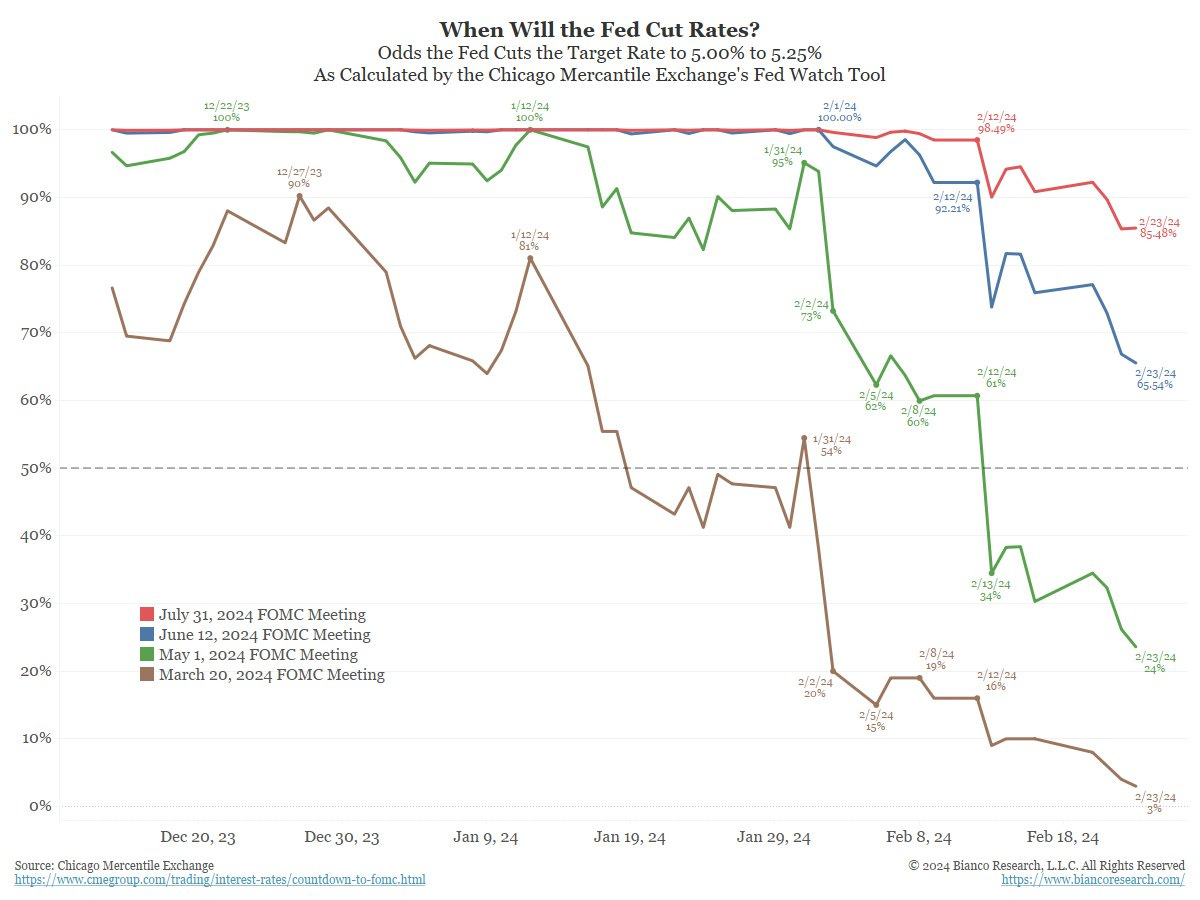
Today’s letter is brought to you by Espresso Displays!I normally work on my desktop computer and am hyper productive. The second that I leave my desk, I lose my productivity on a laptop.So I started to use a second screen and it seems to have fixed the issue.It took awhile to evaluate many different screens — Espresso Displays was by far the best one.I use it every day. I can’t imagine working from my laptop without it now. They are lightweight, thin, and look like Steve Jobs designed them himself.Any reader of The Pomp Letter who orders one today will get $100 off before midnight. Highly recommend!To investors,The US government is already paying more than $1 trillion in annual interest payments on the national debt. That is a mind-boggling number that is set to get much worse in the coming year if something doesn’t change quickly.The debt servicing cost of national debt around the world has been steadily rising in recent years. Smaller, low-income countries are suffering more than large countries, but no country has been immune to the problem. Countries had to take on significantly more debt to deal with the pandemic and various secondary issues. That debt came at a time of low-interest rates, but now that interest rates are rising, and many countries have not stopped borrowing, the servicing costs will continue to grow rapidly. The United States is a good example of the trouble ahead. More than 30% of all US federal debt is set to roll over in 2024, which is over $7.5 trillion.This is problematic because the refinancing cost of this debt is the worst it has been in more than two decades. The average interest rate on each global bond that rolls over will increase by more than 100 basis points.Thankfully, there was relief on the way at the start of this year. The market believed the Federal Reserve would cut interest rates and the refinancing costs of some of the debt would drop simultaneously. The market believes that story less today than it did just 7 weeks ago. Jim Bianco explains with this chart and overview:“Here are the probabilities of the first Fed cut over the next four FOMC meetings. * The next FOMC meeting is on March 20 (brown). The market is pricing just a 3% probability of a cut. This was nearly 90% at the beginning of the year. * The May 1 FOMC (green) is down to 24%. Being well below 50%, it is unlikely this meeting will see a cut. Right before the January Payroll report (massive beat of 353k), the pricing had a 95% probability of a cut in May. * The June 12 FOMC (blue) has a 65.54% probability that the Fed will cut at this meeting, so a cut is still priced in (above 50%). However, this was 100% the day before the beat in the January payroll report and 92% the day before the beat (more than expected) in January CPI. * The July 31 FOMC meeting (red) has an 85% probability of a cut. But note this was 98% the day before the January CPI report (February 12). In other words, all the probabilities are in a downtrend. So, while March and May are priced out, check back after February payrolls and CPI to see where all these probabilities are. If payrolls and CPI are again strong (above consensus), I would look for June and July cuts to get priced out.” - Jim BiancoThis is an important point from Bianco because the relief that was on the way seems to be quietly walking out the back door of the party. The US will continue to have higher interest payments on the debt until the Fed can cut rates. The Fed can’t cut rates until they are sure that inflation won’t come roaring back.According to Molly Smith and Craig Stirling at Bloomberg:“Underlying US inflation probably rose in January by the most in a year, as tracked by the Federal Reserve’s preferred metric, highlighting the long and bumpy path to taming price pressures.The core personal consumption expenditures price index, which excludes food and energy costs, is seen rising 0.4% from a month earlier. That would mark the second straight monthly acceleration in a gauge that’s largely been receding over the past two years.”The Fed is officially in a lose-lose situation. Keep interest rates high and you will probably push the US economy into a recession. Cut interest rates and risk inflation coming back to ruin your legacy. There are no winners in an inflation fight. And while this is going on, the American people will continue to see more than 40% of all personal income tax dollars spent on servicing the debt. Rather than having those dollars devoted to better education, defense, infrastructure, and various other services, the money evaporates into thin air as interest payments. Not exactly the news we want as the US heads into tax season.Hope you all have a great day. I’ll talk to everyone tomorrow.-Anthony PomplianoReader Note: Today is a free email available to everyone. If you would like to receive these letters each morning, please subscribe to become a paying member of The Pomp Letter by clicking here.Santiago Pilego is the Director who leads the
You Won't Believe These Stats About The Market
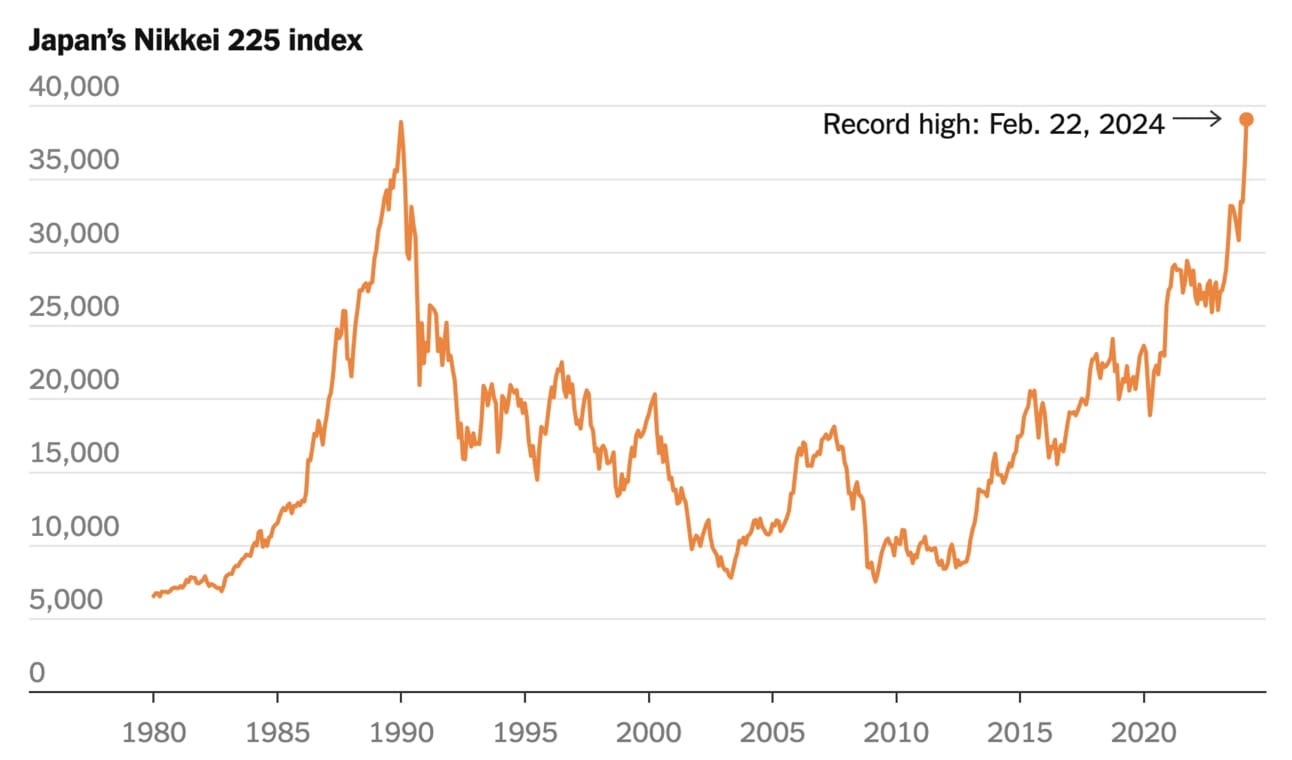
To investors,Investing is an endless pursuit of learning. No matter how much you think you know, there is always something new around the corner. The world is dynamic. The future is unknown. If you pay attention and put in the work, you can find small insights about how the world works. Many of these insights may surprise you. Over the last few days, I have stumbled across a few of these surprising data points. I’ve compiled them in today’s letter, so we can all attempt to learn together. First, Japan’s Nikkei 225 Index just hit a new all-time high after a 35 year bear market. I am often reminded of the phrase, “bubbles can get bigger than you think, crashes can go deeper than you think.” We may need to add a third part, which would be “bear markets can last longer than you think.”Next, Moscow’s stock market is up 47% since the invasion of Ukraine. This appreciation comes despite the immense level of financial sanctions against Russia, along with a general vibe shift to “don’t trade with the enemy.”On top of the stock market, Russian oil imports by foreign countries are at the same level now as they were before the Ukraine invasion. China, India, and Turkey have gladly taken extra Russian oil, while the rest of the world tries to grab the moral high ground.Domestically, the magnificent 7 stocks (Microsoft, Apple, Nvidia, Alphabet, Amazon, Meta Platforms, and Tesla) have been on an epic run. Surprisingly, the market does not appear to believe the companies are overvalued at the moment. Short interest on these 7 stocks has continued to remain suppressed, which likely is helping to drive the prices higher as well. The magnificent 7 are not the best performing stocks over the last 30 years though. That title belongs to Monster Beverage, which is up a whopping 68,825% all time. Everyone knows energy is valuable, but it was energy drinks instead of oil or natural gas that was the best investment. Lastly, something previously thought impossible happened yesterday. Varda, the space manufacturing company that wants to manufacture drugs in zero-gravity, successfully returned the first commercial space drugs ever manufactured in space (this photo is of the recovered drugs after the touched down in the desert).The company has created a space manufacturing facility, launched it into orbit, manufactured the drugs, and safely returned them to the United States yesterday. It took them less than 1,200 days to accomplish all of this. I am a tiny investor and couldn’t be more excited about what will be possible if we can commercialize space for the benefit of humans on Earth.Remember, investing is a journey of learning. Sometimes we are surprised by data and other times we get to peek into the future. I can’t believe we are all fortunate enough to live in the second best time in human history. What would be the first? Tomorrow.Hope you all have a great day. -Anthony Pompliano🚨 Reader Note: Today we are hosting a webinar to explain the current state of the US housing market. The webinar will be led by ResiClub’s Lance Lambert and is full of unique data and insights.The webinar is free to attend. You will definitely learn something about interest rates and the largest asset class in the world. If you would like to attend, please RSVP here and we will send you a calendar invite with Zoom information. Michael Zuber is a W-2 employee who retired at the age of 45 through real estate, and created a brand called "One Rental at a Time." In this conversation, we talk about the single family rental market, how Micheal built a life of financial security, thousands of hours of content on the internet teaching others, current market conditions, and more.Listen on iTunes: Click hereListen on Spotify: Click hereAnthony Pompliano Shares His Latest Thoughts On Markets And Geopolitics In This Episode of New FoundingPodcast Sponsors* Frec.com - Use tax-loss harvesting to save on your tax bill, while keeping the same investment exposure you already have.* BetOnline - Use crypto to bet on sports, casino games, horse racing, poker and more with promo code POMP100.* Espresso Displays - The world's thinnest touchscreen portable monitor. Expand your workspace and work from anywhere.* Trust & Will - Estate planning made easy. They are fast, secure, and simple to use. Get your will or trust created today.* Base - Base is shaping the future of the on-chain world with near-zero gas fees and rapid transaction speeds.* ResiClub - Your data-driven gateway to the US housing market.* Bay Area Times - A visual newsletter explaining the latest tech & business news.You are receiving The Pomp Letter because you either signed up or you attended one of the events that I spoke at. Feel free to unsubscribe if you aren’t finding this valuable. Nothing in this email is intended to serve as financial advice. Do your own research. This is a public episode. If you'd like to discuss this with other subscribers or get access to bonus episodes, visit pomp.substack.com/subscr
SURPRISE: What If The Fed Has To Raise Interest Rates Instead Of Cut Them?
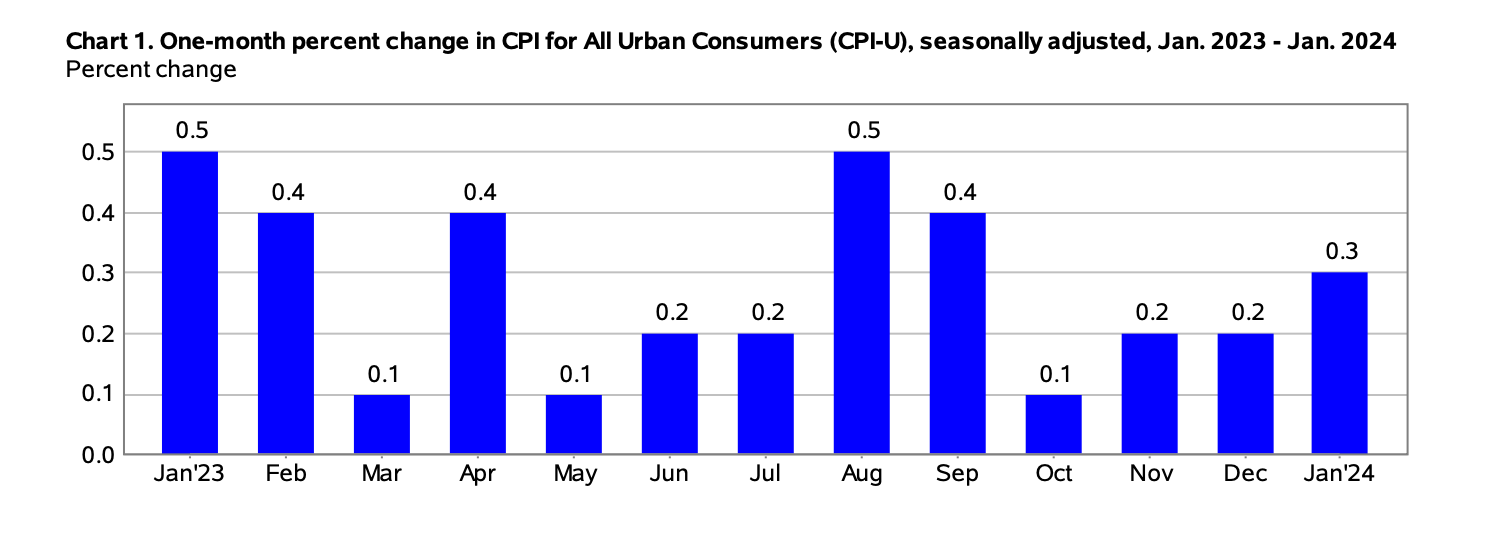
Today’s letter is brought to you by Bitcoin Investor Day!I am hosting the first Bitcoin Investor Day in New York City on March 22nd this year. It is an annual meeting for sophisticated Wall Street investors who are interested in bitcoin.Speakers include Cathie Wood, Mike Novogratz, Anthony Scaramucci, Mark Yusko, Head of Digital Assets at BlackRock, Bitwise CEO, Head of Research at Fidelity & VanEck, and many more.Tickets are only $50 and the venue is incredible. This will be one of the highest quality bitcoin conferences of the year. See you there!To investors,The consensus across Wall Street is that inflation has dropped and the Fed is ready to start cutting interest rates. Investors have positioned themselves to benefit from rising asset prices. The central bank is preparing to wave the victory flag. The media can’t stop writing about the elusive “soft landing.”But what if the consensus is wrong?This is an idea that Bianco Research founder Jim Bianco and I discussed yesterday in our recorded conversation. Neither one of us believe that interest rate hikes is the likely scenario, but it is hard to ignore that the odds are becoming higher with each passing month of new data that we receive. According to Bianco, here is a refresher on what has occurred so far:“On January 12th, the market was pricing in 7 interest rate cuts for all of 2024. There are only 8 Fed meetings per year, so they were saying the Fed wasn’t going to move on January 31st, which they didn’t, and then they were going to cut rates at every other meeting for the rest of the year. That was on January 12th. Now it (market prediction for the number of rate cuts) is down to 3. So we have already removed 4 rate cuts for the year and now the first rate cut is not priced in until June…the June probabilities are around 75%, but 10 days ago they were at 100%.”This degradation of confidence on how many interest rate cuts, and how quickly they will occur, is a direct response to the concerning inflation data that has been reported for the last 2-3 months. You can see in this chart from the BLS report of January’s inflation measurement that the month-over-month change has been accelerating for the last 3 months.The higher that monthly inflation goes, the harder it becomes for the Fed to justify cutting interest rates. One of the worst things that could happen for the central bank is a re-acceleration of inflation right before we finally cross the finish line of the inflation fight. This would not only be devastating to Chairman Jerome Powell’s legacy, but it would also create significant damage in the US economy.Consumers would be hurt by higher inflation and investors would be caught offsides since majority of them are prepared for asset prices to rise on the perceived incoming interest rate cuts. So why are so few people talking about potential interest rate hikes?Bianco highlights a little known fact — the central bank of New Zealand has been one of the leaders over the last few years in global monetary policy. He said:“New Zealand is a developed world and its central bank, the Reserve Bank of New Zealand, has been one of the forward-looking central banks in the world. They developed inflation targeting in 1989. It took the Fed 23 years to adopt it. Maybe it wasn’t a good idea, but they have been ahead of it. The New Zealand central bank was the first one to raise rates in early 2022…in January 2022. They were the first ones to pause in early 2023. They have been the leader. What are they talking about in New Zealand? Inflation is not solved. We have to raise rates again. And so they are now debating when and how they are going to raise rates, and how high they are going to go, and it looks like they are going to hike rates maybe two more times to 6% sometime by summer. So the leading central bank….they are talking about raising rates again.”This information will be shocking to many people. It was to me. But it makes sense. A small country has an easier time thinking independently than a large, globally important country because the smaller country has less scrutiny and pressure. If inflation is not going away, and it is continuing to accelerate month-over-month at a rate close to 4% annualized, central banks would continue increasing interest rates. However, the problem now is that the Fed told the market that they were done hiking interest rates. Market participants don’t want an unreliable Federal Reserve.They rely on the Fed to do what they said they were going to do. The Fed violated this once already in the last four years. They told the market that the interest rates were going to stay near 0% for years. By the time the central bank began hiking interest rates at the fastest pace in history, market participants found themselves completely unprepared. Remember when regional banks were failing on a daily basis? That was a direct result of the Fed doing something other than what they had said they were going to do.So now the Fed has backed them
Bitcoin Is Not A Popular Medium-Of-Exchange
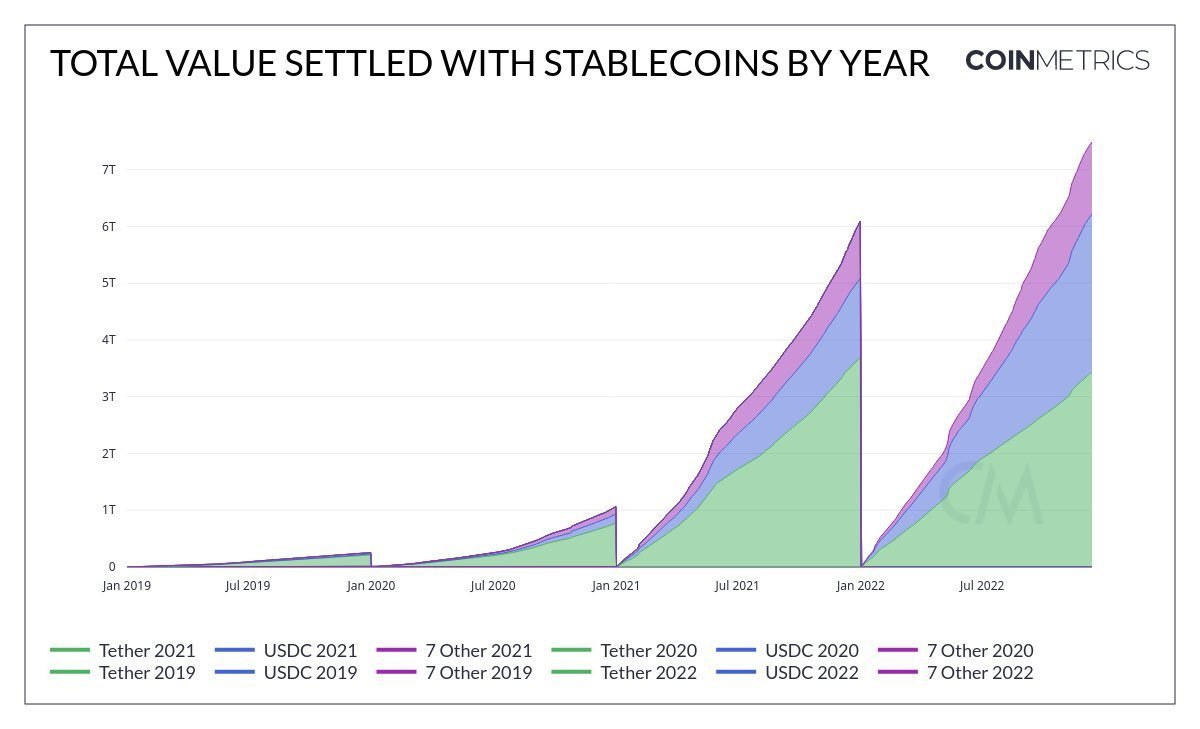
To investors,Satoshi Nakamoto published the bitcoin whitepaper on October 31, 2008. The paper was titled “Bitcoin: A Peer-to-Peer Electronic Cash System.” In the abstract, Nakamoto writes this as his first sentence:“A purely peer-to-peer version of electronic cash would allow online payments to be sent directly from one party to another without going through a financial institution.”The promise of bitcoin has been that it will replace fiat currencies for store-of-value AND medium-of-exchange. It is obvious that hundreds of millions of people are using bitcoin as a store-of-value, but the medium-of-exchange vision is becoming harder to see with each passing day. On the store-of-value front, bitcoin is a trillion dollar asset that has approximately 80% of the circulating supply which has not moved in the last 6 months. If you expand the timeline out to 1 year, the percentage of coins being held for the long-term is approximately 70%. Why would you sell an asset that is likely to appreciate in price in the future? You wouldn’t. This is the same reason that people hold real estate or gold. The assets appreciate as the dollar, which the asset is priced in, gets devalued.In order for any asset to become electronic cash (translation: medium-of-exchange), it must first become a store-of-value. So bitcoin has checked that box.The next step is to get users of bitcoin to transact with it to purchase goods and services. This happens in certain situations, but it has not become the dominant use case for bitcoin. In fact, other digital assets have become the de-facto asset for peer-to-peer transactions. Let me explain. It is true that the total number of transactions on bitcoin’s layer one blockchain have continued to increase over time. Today the number hovers per day between 300,000 transactions and 600,000 transactions. This means that the transaction rate — the number of transactions per second — has also been increasing at a similar pace.To put these numbers in context, Visa does 750+ million transactions per day and 8,750 transactions per second. Paypal does ~ 74 million transactions per day and 850 transactions per second. The Paypal comparison is probably better because it was founded within 10 years of bitcoin’s launch (1999) and has about the same number of users as bitcoin (less than 500 million people globally), yet Paypal’s transaction volume is almost 150x higher on a daily basis. Bitcoin’s challenge was historically thought to be the slow and expensive experience to send transactions. Enter the Lightning Network. This peer-to-peer layer two allows people to send transactions directly between each other without waiting for the layer one. But this technical improvement has not yielded the transaction volume explosion that many predicted. It is not that the technology can’t handle the transaction volume (it can handle millions of transactions per second), but rather the consumer preference is to transact using a different asset.I have long told people not to spend their bitcoin. Many people have given me a hard time about this over the years. We don’t accept bitcoin for almost any of the products and services that we have built over the years. I don’t want people to spend a currency that is going to appreciate in the future. It makes no sense to spend bitcoin for goods and services if you can avoid it. The majority of bitcoiners appear to agree. Not only are they holding their bitcoin and driving the circulating supply highly illiquid, but stablecoins have become the asset of choice for people in the crypto community. You can see the increasing usage every year from launch through 2022 (note: the trend continues into 2024 but I was having difficulty creating the right chart to show it):Stablecoins are doing more than $300 billion in weekly transaction volume, which puts it on a more than $15 trillion annual transaction run-rate. Why is this number important? Because Visa does $15 trillion in annual transaction volume. So while everyone was expecting bitcoin to become the electronic peer-to-peer cash, stablecoins were able to seize that opportunity so far.Now you may wonder if this is just a first-world development. Maybe people in the developing world prefer bitcoin over stablecoins? Former NFL star and successful entrepreneur/investor Russell Okung tweeted over the weekend: “Used to advocate weekly for merchants to accept Bitcoin as payment and utilize the Lightning Network, now I find myself questioning whether the Lightning Network is truly the only solution…During my time in Africa, while advocating for the Lightning Network, I faced a cold, hard realization. Despite my efforts, I found that more people were interested in dealing with USDT rather than Bitcoin. They desired USD, even if they were synthetic versions.”Castle Island’s Nic Carter followed this commentary up with what he calls the Orange Man’s Burden:“The mistaken belief that the global south requires bitcoin, despite their clear revealed prefe
Government Says People Better Off Now, Yet People Disagree
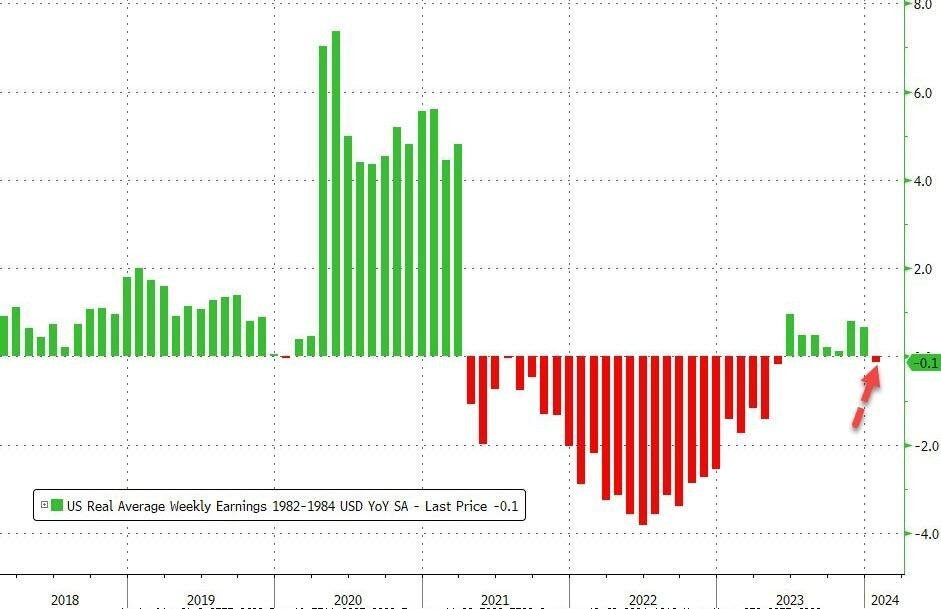
Today’s letter is brought to you by Sidebar!Ready to supercharge your career in 2024? Sidebar is an exclusive, highly curated leadership program designed to propel you to new professional heights.Sidebar’s approach to level-up your career is focused around small peer groups, a tech-enabled platform, and an expert-led curriculum. Members say it’s like having their own Personal Board of Directors. 93% of members say that Sidebar has made a significant difference in their career trajectory."Providing and receiving support from others who play a similar role to you is one of the best ways to grow your capabilities and succeed." - Vice President, Roku“The facilitation has been great. I love the timer bar, the way the conversation is structured, the commitment and accountability.” - Vice President, Clip“I've been impressed by Sidebar’s technology platform. The real time agenda tracker at the top of our weekly meetings really helps the group stay on track.” - Senior Director, Microsoft Nothing propels your career trajectory like a robust peer group. Learn more at sidebar.com, and join thousands of top senior leaders from companies like Microsoft, Amazon, and Meta who have taken the first step towards accelerating their career.To investors,Treasury Secretary Janet Yellen participated in an exclusive CBS interview last night about the US economy. When asked whether she and President Biden were happy with how inflation is going right now, Yellen said the following:“We know that Americans are experiencing discomfort because some important prices are higher than they were pre-pandemic, but what I think is really important is that wages have gone up along with prices, so people are better off than they were pre-pandemic.”This seems like a difficult talking point to continue reiterating because majority of the population disagrees. Only 14% of American voters say they are better off financially under the current administration. So 86% of citizens believe they are the same or worse than when Biden took office. To Yellen’s credit, wages did rise from 2020 to 2022. Just as the price of goods and services increased with higher inflation, wages went up too. But as inflation has come down, wage growth has come crashing down too. Here is the overall unweighted wage growth since the 1990s from the Federal Reserve Bank of Atlanta:The same wage growth decline is present for hourly workers as well. The trend has not discriminated in who it is affecting. So why is this important? Wage growth is slowing and it appears that things are going to erode for many citizens. We can use real wage growth as a measurement to understand the difference between inflation and wage growth. Here we can see that Americans experienced negative real wage growth for majority of 2021 and 2022.Real wage growth had improved for 7 straight months as inflation year-over-year came down to more manageable levels. But with the re-acceleration of inflation in the January 2024 numbers, real wage growth has turned negative again. This spells disaster for the average citizen. For approximately 2 years, Americans saw inflation outpace the growth in their wages. The prices that were increased are not going to come back down, plus the current annualized inflation rate from January’s number is over 3.5%, so unless an employer is planning to give employees a 4-5% raise each year it will be unlikely that wages can keep up. Secretary Yellen, President Biden, and others want to tell a story of a strong economy that is creating more opportunity for the population. Words fall on deaf ears though if the story is not true. The countdown has begun till the election. They have less than 9 months to get things turned around or many voters will enter the ballot box and vote based on their wallets. Cut rates. Print money. Get liquidity into the system. Make voters flush with cash. If you wanted to enhance President Biden’s chances of winning in November, that would be the playbook. The Fed and Treasury claim to make decisions regardless of the political outcomes, but we will see what happens in the coming months. Hope you all have a great day. I’ll talk to everyone tomorrow. -Anthony PomplianoReader Note: Today is a free email available to everyone. If you would like to receive these letters each morning, please subscribe to become a paying member of The Pomp Letter by clicking here.Lexy Franklin is the Founder & CEO of Sidebar, and a former Facebook employee who has tons of lessons learned from one of the greatest companies in all of Silicon Valley. In this conversation, we talk about professional development, future of work, importance of small groups for career growth, lessons from Facebook, and how Sidebar can accelerate your career.Listen on iTunes: Click hereListen on Spotify: Click hereFormer Facebok Exec Explains Product To Help Get PromotedPodcast Sponsors* Frec.com - Use tax-loss harvesting to save on your tax bill, while keeping the same investment exposure you already ha

Can The Average Person Retire By Buying Bitcoin Today?
READER NOTE: Today is a free email to everyone. I am hosting a webinar tomorrow morning at 930am EST for all paying members of The Pomp Letter. This webinar will be a review of a massive amount of data, charts, and graphs to explain the US economy, inflation, the global liquidity situation, and where I think various asset prices are going in the next 24 months.You can join us by becoming a paying subscriber here. I will send out the Zoom link to all members in the morning. Thank you.To investors,I went on CNBC’s Squawk Box yesterday morning. The conversation largely revolved around bitcoin’s recent price increase, the significant inflows for spot ETFs, and what I anticipate to happen in the future.You can watch the full interview here:This conversation was well received by the bitcoin community, except one sentence I said. Towards the end of the discussion, I stated “The return profile is going to come down. And so if you think you are going to buy bitcoin and retire, those days are probably behind us.”While it may not be popular, I believe it to be true.Let’s look at some math. 57% of Americans are uncomfortable with the amount of emergency savings they have and 22% of Americans don’t have any emergency savings at all. Add in the fact that 91% of Americans have a net worth less than $1 million. This means that majority of the population can’t invest $100,000 or more into any investment opportunity, let alone bitcoin.So we will have to make an assumption in our hypothetical situation — the average person could find $20,000 to invest in bitcoin. This amount is highly unlikely but we will give the detractors the benefit of the doubt for our example and use an inflated number.Next, let’s assume that bitcoin goes up 20x in the next decade. This would bring the digital currency from $50,000 to the coveted $1 million per coin. If this happened, then the person who put $20,000 into bitcoin would have $400,000 of bitcoin at the new, higher price. Sounds amazing, right? Not so fast.If bitcoin is trading at $1 million than it is likely that the dollar has been significantly devalued. $400,000 in a decade won’t be worth what $400,000 is worth today. Inflation punishes everyone. But inflation is not the only problem. If we completely remove inflation in our example, and say that $400,000 holds its purchasing power for a decade, than the subject of our hypothetical situation still can’t retire.What do I mean?A recent Northwestern Mutual study reported that the average American adult believes they need $1.3 million saved in order to retire. That is a BIG number.This study also proves that our $400,000 of bitcoin, which only occurred because bitcoin went up 20x and inflation wasn’t real, would still leave our hypothetical subject 70% short of what they would need to retire.But maybe our math is wrong. Maybe some of our assumptions are incorrect. Let’s go with the common belief in the bitcoin community that a holder “will only need 1 bitcoin to retire.” The thought process is that holding a single, whole bitcoin will allow someone to breach the coveted retirement threshold.But again, if bitcoin is trading at $1 million and you only hold one of them, then you don’t have the $1.3 million necessary to retire today. The $1.3 million number will continue to go up in value too because the dollar is being devalued. So, this brings me to the conclusion — the hardcore bitcoin holders may not like what I’m saying, but the future returns of bitcoin are unlikely to be enough for the average person to reach a comfortable retirement.That doesn’t mean that bitcoin won’t go up in price. It doesn’t mean you shouldn’t own any (you should own some after doing your own research!). It doesn’t mean that your favorite bitcoiner is wrong.I like bitcoin. I hold bitcoin. I think bitcoin is one of the best risk-reward investment opportunities currently present in financial markets. But we should be realistic about the dire financial position the average American is in and how unlikely it is that they have enough money to buy tens of thousands of dollars of bitcoin. The future returns won’t necessarily look like the past returns and assets historically have seen their financial returns dampen as they get larger. This is all part of the process of bitcoin being adopted by the mainstream.It is less risky to buy bitcoin today than any other time in history. Naturally, you will get paid a lower return for taking a lower risk.Hope this explanation is valuable to you. I’ll talk to everyone tomorrow.-Anthony Pompliano Travis Kling is the Founder & Chief Investment Officer of Ikigai Asset Management.In this conversation, we talk about cryptocurrency prices & protocols, the ultimate use case, liquidity, bitcoin vs gold, Saylor vs Schiff, financial nihilism, allocating capital in today’s market, and more.Listen on iTunes: Click hereListen on Spotify: Click hereMy Appearance on Fox Business with Charles Payne Podcast Sponsors* Frec.com - Use tax-loss harvesting

Shrinkflation Has Seeped Into The Housing Market - What You Need To Know
Reader Note: Today is a free email available to everyone. If you would like to receive these letters each morning, please subscribe to become a paying member of The Pomp Letter by clicking here. To investors,Everyone saw inflation spike in 2021 and 2022. You could feel it in the economy. Goods and services got more expensive. A single meal at a restaurant would shock you. Filling up your car at the gas pump became a horror show. The world had gone crazy and you were left wondering when it would end. Now that inflation’s year-over-year growth has dropped significantly, many people are being lulled into believing things are going back to normal. That is not true. Majority of those price increases are not going to come back down. We have simply entered a new normal. But there is another trend that you must be aware of — shrinkflation. Historically, this term has referenced manufacturers who sell goods at the grocery store putting less goods in their packaging, even thought they still sell the item for the same price. We are now seeing this trend clearly playing out in the housing market. Yes, home builders are building smaller homes at the same prices! ResiClub’s Lance Lambert wrote a guest post below that breaks down exactly what is happening. (You can subscribe to read Lance’s analysis daily by clicking here). I hope this is helpful as you all try to better understand what is happening in the US economy. Lance Lambert: On last month’s earnings call, D.R. Horton CFO Bill Wheat told analysts that “to adjust to changing market conditions during fiscal 2023 and into fiscal 2024, we have increased our use of incentives and reduced home prices and sizes of our home offerings, where necessary, to provide better affordability to homebuyers.”In 2023, D.R. Horton reduced its average square foot by 3%. Heading forward, the nation’s largest publicly traded homebuilder told investors that they expect “continued gradual moves down from a mix shift perspective in terms of average square footage.”In economics, there’s a term for when a business reduces the size or quantity of a product while keeping the price roughly the same: Shrinkflation.To find out just how much shrinkflation might be occurring in the new construction sector, ResiClub reached out to Parcl Labs, a fast-growing real estate analytics firm, to get the hard data.Before delving into the hard data, it's important to emphasize that ResiClub isn’t implying anything negative by our use of “shrinkflation.” From an economic perspective, it makes sense that a rapid deterioration in housing affordability—with mortgage rates rising from 3% to over 6% in 2022—would lead builders to opt for strategies that could, at the margins, keep affordability in check and maintain sales.According to Parcl Labs, the median square footage for new construction fell from 2,098 in 2022 to 2,036 in 2023. That 3% year-over-year decline marks the biggest single-year dip over the past decade.So it isn’t just D.R. Horton. A lot of homebuilders are reducing size.The trend has been accelerated by strained housing affordability; however, new construction was already getting smaller before mortgage rates spiked.In fact, Parcl Labs data shows that 2023 marked the 9th straight year that new single-family homes got smaller, going from a median square footage of 2,328 in 2014 to 2,036 in 2023.“While the median size of single family home square footage has remained constant over the last 10 years, with a notable exception being during the pandemic where larger homes were trading hands as consumer preferences shifted from urban environments to suburban environments, new construction footprints have declined over 12% over the last 10 years,” writes Jason Lewris, co-founder of Parcl Labs.While passing through Elm Trails, a community being built by Lennar in San Antonio, Scott Davis took the photo above last year. Single-family homes in the community range from just 350 square feet to 660 square feet and were priced last year from $135,000 to $171,000.In the grand scheme of the U.S. housing market, tiny home communities like Elm Trails are still outliers. However, Davis, who is the president at Location Strategy, a real estate consulting firm, has seen more builders consider smaller lots and homes given the ongoing affordability crunch.“Over the last few years we have seen home sizes decline slightly in response to pricing pressure. But that's after 40 years of increasing home sizes. What's new is builders are now going small—building homes that are similar to what we saw in the very early postwar suburbs. Builders are responding to more than price; the move to smaller houses is a result of demographics: more single households, fewer children and families having children later in life. Lack of buildable land is also a factor—builders have been pushed to sites previously considered undesirable for single-family [homes] where more lenient restrictions allow them to experiment with products that are more af

Is Ethereum Going To Be The AOL of Crypto?
Today’s letter is brought to you by Bitcoin Investor Day!I am hosting the first Bitcoin Investor Day in New York City on March 22nd this year. It is an annual meeting for sophisticated Wall Street investors who are interested in bitcoin.Speakers include Cathie Wood, Mike Novogratz, Anthony Scaramucci, Mark Yusko, Head of Digital Assets at BlackRock, Bitwise CEO, Head of Research at Fidelity & VanEck, and many more.Tickets are only $50 and the venue is incredible. This will be one of the highest quality bitcoin conferences of the year. See you there!To investors,A popular critique of bitcoin over the years has been that the first version of a technology is rarely the version that wins over the long run. Apple didn’t make the first computer or smart phone. Google didn’t make the first search engine. Facebook didn’t make the first social network. And Amazon didn’t make the first online marketplace. But each of these companies and products won over the long-term because they innovated on earlier versions and found some unique combination of features that led to a widening moat.Bitcoin is not the first digital currency. In fact, bitcoin was only launched after 40 years of research and development by many intelligent, hard-working people around the world. This group was working in silos trying to create a version of electronic money that could operate outside of the existing financial system.The pursuit led to many technology breakthroughs, but no one seemed to be able to crack the exact combination of features to reach break out success.Satoshi Nakamoto changed everything.The creator of bitcoin was able to innovate on the long history of electronic cash research and development to create an asset worth ~$1 trillion within 15 years. The level of success that Satoshi had, especially when compared to the prior 40 years of attempts, is breathtaking. But we shouldn’t only apply this framework of “first movers struggle to last” to bitcoin. The area where it becomes even more obvious is with Ethereum. The second most popular blockchain in history was able to catapult itself into a leading position by being first to launch a blockchain that incorporated smart contracts. This innovation has obviously been valuable. The asset is valued at $285 billion today and there are millions of people who use the technology on a daily basis. There is one problem though — it appears that Ethereum is under significant competition from various organizations that are making up significant ground. Take Solana as an example. The second most popular smart contract platform is up more than 300% in the last year, while Ethereum is only up 45%. Price is not the only thing that matters, but it is a good indicator for what is happening in the market. We can see in DEX volume by chain, Solana recently flipped Ethereum for a period of time. Ethereum is back on top for now, but you can see the long term trend of declining market share for Ethereum.Why is this happening? It is hard to tell exactly, but a big reason is that Solana is faster and cheaper. The technology has been improved upon, so users are flocking to the thing that serves them best. There is going to be even more competition coming from Sei, Monad, and a host of other chains that want to improve upon Ethereum and Solana. Improve or die. That is the name of the game here.Bitcoin is playing a different game. It is not trying to be the fastest or cheapest, but rather the most fixed and decentralized. That is a much harder concept to dethrone for the competition. No matter how smart you are as a developer, this is not about improving the technology to unseat bitcoin, but rather you have to gain a structural advantage globally to unseat the multi-billion dollar mining industry. I bring up this point because it is unlikely that bitcoin is the AOL of crypto. Bitcoin is the product of 40 years of R&D by some of the smartest people in the world. It is the last iteration, not the first. They were maniacally focused on creating a digital currency — eventually they succeeded. There doesn’t appear to be real competition to bitcoin as a global store of value in digital currency form. Ethereum can not say the same thing. This doesn’t mean that Ethereum is bad. It doesn’t mean that Ethereum’s price won’t increase in the future. It doesn’t even mean that Ethereum will be surpassed by any of the competition. But it does mean that if I had to make a bet now, Ethereum is more likely to be the AOL of crypto than Bitcoin.The critics are correct in their critique. They just have been pointed at the wrong asset. Hope you all have a great day. I’ll talk to everyone tomorrow.-Anthony PomplianoREADER NOTE: I am hosting a webinar Wednesday Februrary 14th at 930am EST for all paying members of The Pomp Letter. This webinar will be a review of a massive amount of data, charts, and graphs to explain the US economy, inflation, the global liquidity situation, and where I think various asset prices are going in the ne
The Chinese Are About To Give A Gift To The World
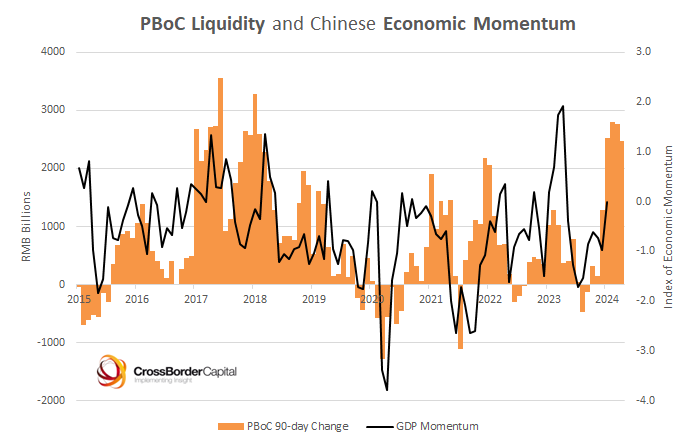
READER NOTE: I am hosting a webinar tomorrow morning at 930am EST for all paying members of The Pomp Letter. This webinar will be a review of a massive amount of data, charts, and graphs to explain the US economy, inflation, the global liquidity situation, and where I think various asset prices are going in the next 24 months.You can join us by becoming a paying subscriber here. I will send out the Zoom link to all members in the morning. Thank you.To investors,Kyle Bass shot to national fame when he correctly predicted the US housing crisis that kicked off the Global Financial Crisis. He was on CNBC yesterday claiming that recent problems out of China are “like the US financial crisis on steroids.”Bass has been critical of China’s economy for years. His point recently is that the two largest property developers in the country, Evergrande and Country Garden, have more than $500 billion in debt combined. That is a very big number, especially when you consider that these two companies have been large drivers of the Chinese economy in recent years. In fact, Bass argues that “when the Chinese ‘miracle,’ and I put the ‘miracle’ in quotes, when the Chinese ‘miracle’ was running its course…the substantial majority of Chinese GDP growth was real estate and the concentric circles that surround real estate. And now you’re having a reversal after an unregulated and unabated climb in real estate, and now you’re seeing a real estate collapse…they have three and a half more times banking leverage than we did going into the crisis.”If the American investor’s analysis is right, China is headed towards a gnarly situation.China disagrees though. For the last few months, the country has been manipulating the liquidity in their economy to prevent a collapse in financial markets. They cut banking reserves back in January and added more liquidity via reverse repos last night. There was even multiple inflection points in the last 24 hours based on various comments or actions from different Chinese officials and organizations. Why are they working so hard to keep liquidity high? As the folks at Crossborder Capital pointed out, China’s increasing liquidity creates positive GDP momentum. This development in China is worth paying attention to because it is the exact opposite of what is happening with America’s Federal Reserve. China is easing and pumping liquidity into the market, while America is tightening and trying to drain liquidity. The battle of liquidity on a global scale will ultimately determine what happens to your investment assets.Too many investors in the western world get overly focused on the Federal Reserve, while ignoring the liquidity decisions of foreign central banks. The US is still the top dog, but countries like China have a significant impact that can overwhelm the US in certain situations. These two countries are not always at odds with each other. As you can see here, China has been growing their central bank balance sheet at a rapid rate similar to the US over the last 15 years.The short-term trend is to expect higher volatility (China’s small and mid-cap stock index is down 25% year-to-date), but the long-term trend is obvious: asset prices are going to go up for the next few decades as central banks monetize their debts around the world. Don’t get distracted by only watching the United States and western central banks. They may be still tightening at the moment, but there is trouble brewing in the eastern world. This is going to bring an estimated $2 trillion of liquidity into the market. If that happens, investment assets globally will likely benefit. We live in a digital, hyper-connected world today. Your local geography can have an impact on you, but the global liquidity situation is the final boss. And it appears the Chinese are about to give a gift to the world. Hope you all have a great day. I’ll talk to you tomorrow.-Anthony PomplianoREADER NOTE: I am hosting a webinar tomorrow morning at 930am EST for all paying members of The Pomp Letter. This webinar will be a review of a massive amount of data, charts, and graphs to explain the US economy, inflation, the global liquidity situation, and where I think various asset prices are going in the next 24 months.You can join us by becoming a paying subscriber here. I will send out the Zoom link to all members in the morning. Thank you.Peter Diamandis is the Founder & Executive Chairman of the XPRIZE Foundation, which leads the world in designing and operating large-scale incentive competitions. He is also the Executive Founder of Singularity University, a graduate-level Silicon Valley institution that counsels the world’s leaders on exponentially growing technologies. In this conversation, we talk about XPRIZE, longevity, importance of health span & life span, artificial intelligence, bitcoin, and more.Listen on iTunes: Click hereListen on Spotify: Click hereMy Conversation with Peter Diamandis on Longevity, AI, Bitcoin, and XPRIZEPodcast Sponsors* Frec.

Fed Chairman Admits Mistakes & Predicts Economy Strength Moving Forward
Today’s letter is brought to you by Espresso Displays!I normally work on my desktop computer and am hyper productive. The second that I leave my desk, I lose my productivity on a laptop.So I started to use a second screen and it seems to have fixed the issue.It took awhile to evaluate many different screens — Espresso Displays was by far the best one.I use it every day. I can’t imagine working from my laptop without it now. They are lightweight, thin, and look like Steve Jobs designed them himself.Any reader of The Pomp Letter who orders one today will get $100 off before midnight. Highly recommend!To investors,Federal Reserve Chairman Jerome Powell was featured in a 60 Minutes interview last night. It was the most transparent and honest that I have ever heard the Fed Chair. The premise of the interview was stated upfront in the segment — “Jerome Powell, the chair of the Federal Reserve, may have just rescued the economy from inflation without throwing millions out of work.”Here were some of the main takeaways from the conversation:* While it is true that the current unemployment rate of 3.7% is near a 50-year low, it is also true that the damage of high inflation has already occurred. Powell was asked whether he expects prices to come down since inflation has been falling, but he delivered the following bad news: “The prices of some things will decline, others will go up. But we don’t expect to see a decline in the overall price level. That doesn’t tend to happen in economies except in very negative circumstances.”* When asked whether the Fed had made a mistake in the Silicon Valley Bank crisis, Powell agreed that they had missed the risk analysis to the bank before the collapse occurred happened. * Powell admitted another prior mistake — not acting quickly enough when it came to increasing inflation in 2021. * When asked why the Fed is not cutting interest rates now, Powell said “We have a strong economy, growth is going on at a solid pace. The labor market is strong. 3.7% unemployment. With an economy strong like that, we feel like we can approach the question of when to begin to reduce interest rates carefully…we want to see more evidence that inflation is moving down to 2%…we want more confidence…I can’t overstate how important it is to restore price stability.”* Powell says “it is not likely” that a rate cut will happen in March.* When asked about the aggressive growth of the national debt, Powell said “In the long run, the US is on an unsustainable fiscal path…the debt is growing faster than the economy…effectively we are borrowing from future generations.”* When asked how politics and the Presidential election play into monetary policy decisions, Powell said “We do not consider politics in our decisions. We never do and we never will.”* When asked if inflation was dead, Powell said “I wouldn’t go quite so far as to say that - what I can say is that inflation has come down really over the past year and fairly sharply over the last 6 months. We’re making good progress. The job is not done. And we are very much committed to restoring price stability for the American public.”I highly recommend watching the full interview. It is only 13 minutes long and Jerome Powell was in rare form. It almost felt like he was more revealing about various aspects of the Fed’s thought process as a way to combat different narratives in the market. Specifically, it was surprising to see the Fed Chairman openly critique fiscal policy and explicitly call it out as unsustainable. Everyone knows he is right, but friendly fire is rarely exchanged in elite leadership circles — maybe Powell just doesn’t give a F*** anymore.While most people will focus on the substance of Powell’s comments, I want to call out the form factor. It is powerful in a digitally-native world to sit for an interview like 60 Minutes and be frank / transparent. The 13 minute segment produced a plethora of viral clips all over the internet. If the goal was to get a message out to the American people, it is safe to say Jerome Powell accomplished the mission. So what was that message?The Federal Reserve is going to cut interest rates multiple times this year. Since the monetary policy is created and led by human decision-making, the Fed does it’s best to signal future decisions to the market in advance. Create certainty, not surprise. It doesn’t mean that the Fed can’t change it’s mind between now and decision time, but it does mean that the communication strategy can be just as important as the actual rate decision. Lastly, financial markets nailed this one. They have been pricing in multiple interest rate cuts for months, including the first rate cut to happen before the end of the first half of 2024. Everything Powell said last night seems to line-up with the market’s predictions. Crowds can be full of genius or full of madness. Sometimes both. At the moment, it looks like the crowd is going to be right. The various market participants who have been aggress
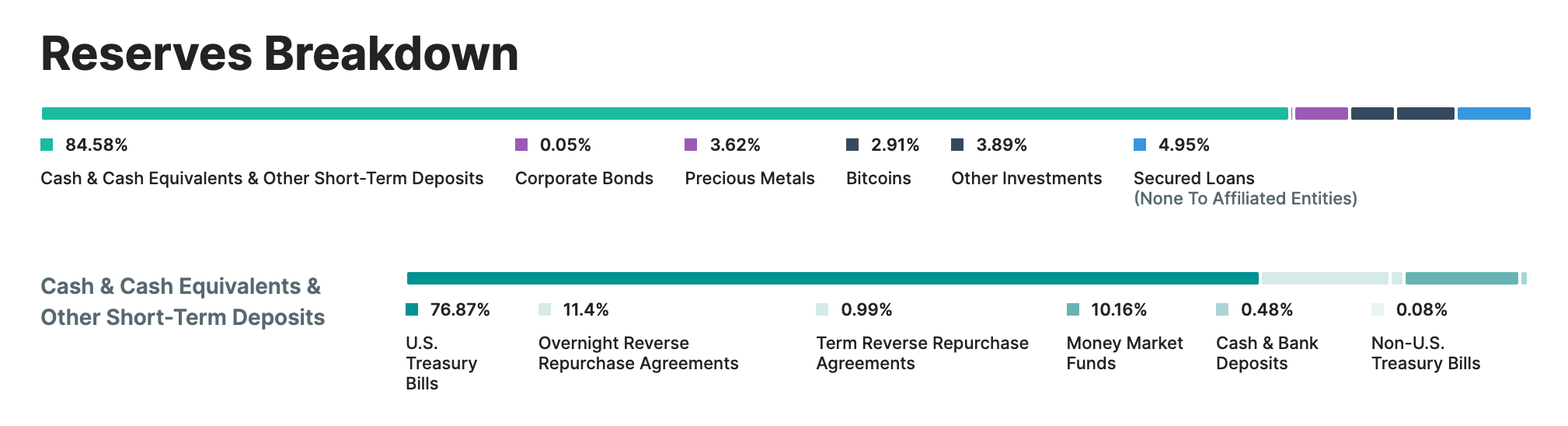
Tether May Be The Best Business In The World
Today’s letter is brought to you by ResiClub!* ResiClub is the leading publication for the residential real estate market.* Housing affordability is the worst that it has been in 40 years and the team at ResiClub has covered the decline in great detail.* Readers get news, commentary, data, and analysis from industry insiders.* ResiClub is written by Lance Lambert, who is widely considered the best residential real estate reporter in the country.* Subscribe today and stay informed on the largest asset class in the world.To investors,Critics of the new digital financial system are fond of claiming that blockchain technology has not created any real products. Their view of the world is that crypto enthusiasts are merely trading digital tokens back and forth for speculation, but no real problems have been solved to date. This is obviously not true. Bitcoin is an $850 billion asset that has approximately $600 billion being held by long-term holders who are seeking to protect their purchasing power. That alone should negate the critics, but they rarely accept that argument as valid for some unknown reason. This opens the door for an even more interesting response — stablecoins have become a killer app of blockchain technology. Let’s use Tether, the leading stablecoin, as the example. The company has almost $100 billion in various fiat currencies that have been tokenized on different blockchains. That money is held in a variety of investments to ensure the reserves are always available and protected. This approach to a tokenized asset (cash!) has turned Tether into one of the best businesses in the world. Yesterday, CEO Paolo Ardoino published the following statistics about their Q4 performance:* profit for the quarter: $2.85B, of which ~$1B in net operational profit (mainly US t-bill interests), ~$1.85B from gold and bitcoin holdings.* total profit for 2023: $6.2B. * cash & cash equivalents cover now 90% of all issued tokens, highest percentage in the last years. * total US T-bill exposure (direct + indirect): $80.3B. * excess equity: $5.4B (excess equity = undistributed profits on top of 100% reserves that Tether holds to back all issued tokens. Company decided to keep vast majority of profits within the stablecoin reserves to ensure highest resiliency).* excess equity > remaining secured loans ($5.4B vs $4.8B). In 2023, as promised, Tether accumulated enough excess equity to remove the impact of secured loans on token reserves.* VC investments portfolio (outside of token reserves and consolidated report): $1.45B. Investments span across AI infrastructure, Bitcoin mining, P2P telecommunications and others. These are confirmed to remain outside of the consolidated reserves report within a new segregated VC umbrella, so that such investments don’t and won’t have any impact on the token reserves.Any business that can do $2.85 billion in profit during a 90 day period is hard to ignore. This puts them on a $11.4 billion annual run rate in profit. As Bitwise CIO Matt Hougan pointed out, Tether made more money than Goldman Sachs last quarter.Messari CEO Ryan Selkis points out that Tether is now 10% of JP Morgan’s net profit, but with way fewer employees. As I have pointed out before, even if Tether has 100 employees, than the company would be doing more than $100 million per employee in profit. That is the craziest statistic I have ever heard in business. $100,000,000+ in annual profit per employee. So much for those critics that continue to claim there are no problems solved with this new technology. The actual truth is that one of the most profitable businesses, which is used by millions of people globally, was built on top of the technology. Stablecoins, including Tether, USDC, and others, will continue to be very popular around the world as people look for a way to send stable value quickly and inexpensively. Anyone arguing the opposite is either unaware of the facts of the market or has an incentive to see progress happen slower. But markets don’t wait on anyone. And Tether is proving the critics wrong day-after-day. Maybe the naysayers will realize their error at some point. Just don’t count on it. Hope you all have a great day. I’ll talk to everyone tomorrow. -Anthony PomplianoDarius Dale is the Founder & CEO of 42Macro. In this conversation, we talk about the labor market, economics, Federal Reserve, interest rates, election year, and macro outlook.Listen on iTunes: Click hereListen on Spotify: Click hereMy Conversation with 42 Macro’s Darius DalePodcast Sponsors* Frec.com - Use tax-loss harvesting to save on your tax bill, while keeping the same investment exposure you already have.* BetOnline - Use crypto to bet on sports, casino games, horse racing, poker and more with promo code POMP100.* Espresso Displays - The world's thinnest touchscreen portable monitor. Expand your workspace and work from anywhere.* Trust & Will - Estate planning made easy. They are fast, secure, and simple to use. Get your will or tru
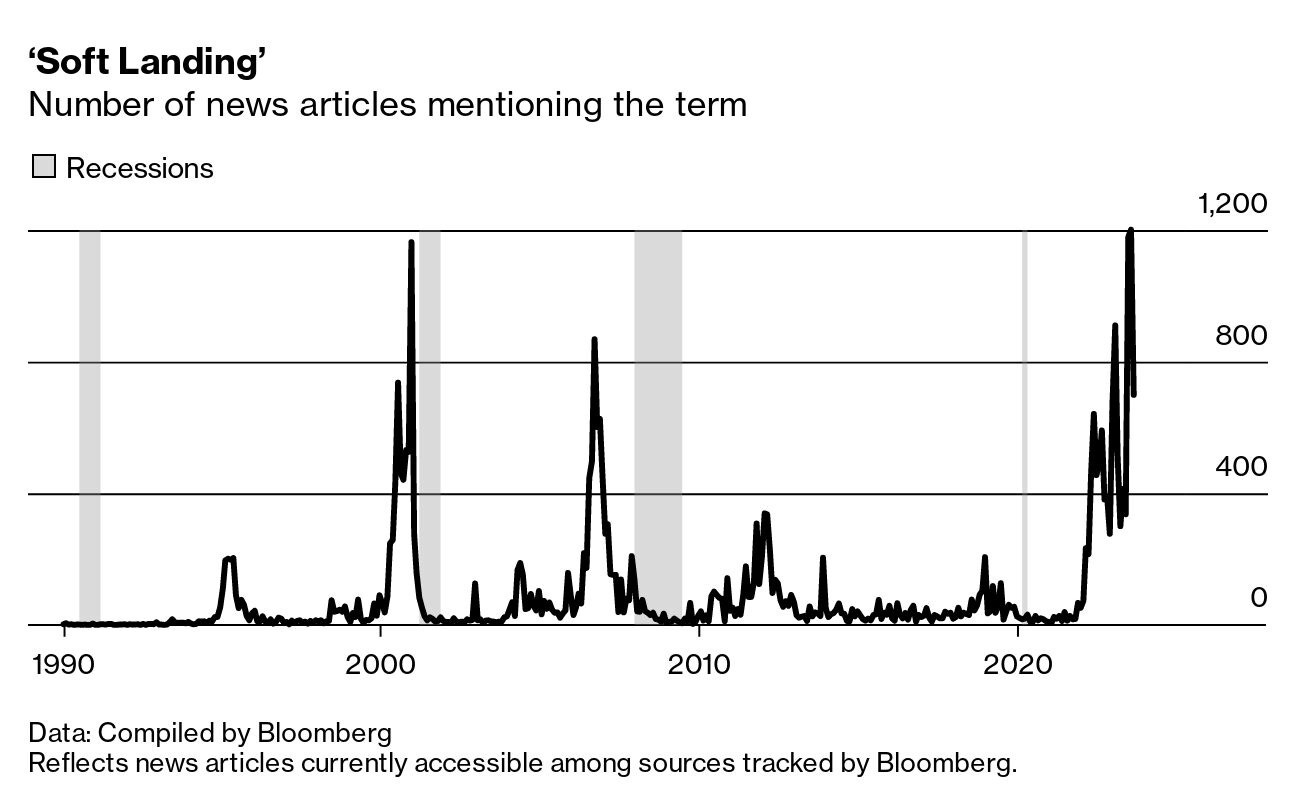
The Fed Should Cut Interest Rates Today But They Won't
To investors,The Federal Reserve is conducting their first meeting of the year today. The market expectation is that the Federal Open Market Committee will keep interest rates unchanged. I believe this could be a mistake. The current CPI reading shows 3.4%, which is more than 50% higher than the Fed’s stated target of 2%. From this perspective, the Fed has a 0% chance of cutting interest rates. They want to win the war on inflation and get back to the target. The CPI data could be wrong though. Truflation, the leading alternative economic data provider, shows inflation at just under 2% already.From this perspective, the Fed would have already achieved their target, could claim victory, and should be cutting interest rates now. But the Fed doesn’t use Truflation data. The argument to the Federal Reserve has to be rooted in a different angle. You could argue that the real interest rate of the economy is increasing as CPI falls. You could argue that private payroll growth has slowed worse than expected. You could argue that the explosion of articles arguing for a “soft landing” is actually an indicator of a looming recession. Regardless of which angle you take, the Federal Reserve is unlikely to listen. The data they look at is telling them a different story. Jeanna Smialek from the New York Times explains:“The United States’ economy grew 3.1 percent last year, up from less than 1 percent in 2022 and faster than the average for the five years leading up to the pandemic. Consumer spending in December came in faster than expected. And while hiring has slowed, America still boasts an unemployment rate of just 3.7 percent — a historically low level.The data suggest that even though the Fed has raised interest rates to a range of 5.25 to 5.5 percent, the highest level in more than two decades, the increase has not been enough to slam the brakes on the economy. In fact, growth remains faster than the pace that many forecasters think is sustainable in the longer run.”Those numbers look strong. But remember, that data is backwards looking. It tells us what already happened, not what is about to happen. This highlights the problem with most human-led monetary policy decisions. No one knows what is going to happen in the future. We saw the negative side-effect of this during the pandemic. The Fed continued to tell us that inflation was transitory. They took too long to act and inflation eventually went over 9% in the economy. This overshoot of inflation was a direct cause of a misunderstanding of how sticky inflation would be, along with a slow response to the data that showed inflation was growing aggressively. My concern is that the Fed is going to make the same mistake again. If they don’t cut interest rates soon enough, they risk overshooting to the downside and causing a recession. No one should want a recession to occur. So the Fed could wait a few more months before cutting interest rates, but they risk having to make extreme cuts very quickly if they are wrong. Instead, they should do a 0.25% interest rate cut today to start slowly pushing us back towards a lower interest rate.Extreme reactions should be avoided. Looking forward, not backwards, should be the name of the game. The Fed got inflation down and we should give them their victory so they don’t repeat their mistakes of the past simply to pursue a reputation achievement. I don’t think we get the rate cut, but at least I am on record now saying that we should.Hope you all have a great day. I’ll talk to everyone tomorrow.-Anthony PomplianoLeif Abraham is the Co-Founder & CEO of Public.com. They are creating technology that makes building a multi-asset portfolio fast, secure, and frictionless. In this conversation, we talk about the shift in investing trends, bitcoin ETF, technology vs financial advisors, giving revenue back to users, and operating the business.Listen on iTunes: Click hereListen on Spotify: Click hereMy Conversation with Public CEO Leif AbrahamPodcast Sponsors* Frec.com - Use tax-loss harvesting to save on your tax bill, while keeping the same investment exposure you already have.* BetOnline - Use crypto to bet on sports, casino games, horse racing, poker and more with promo code POMP100.* Espresso Displays - The world's thinnest touchscreen portable monitor. Expand your workspace and work from anywhere.* Trust & Will - Estate planning made easy. They are fast, secure, and simple to use. Get your will or trust created today.* Base - Base is shaping the future of the on-chain world with near-zero gas fees and rapid transaction speeds.* ResiClub - Your data-driven gateway to the US housing market.* Bay Area Times - A visual newsletter explaining the latest tech & business news.You are receiving The Pomp Letter because you either signed up or you attended one of the events that I spoke at. Feel free to unsubscribe if you aren’t finding this valuable. Nothing in this email is intended to serve as financial advice. Do your own research. This is
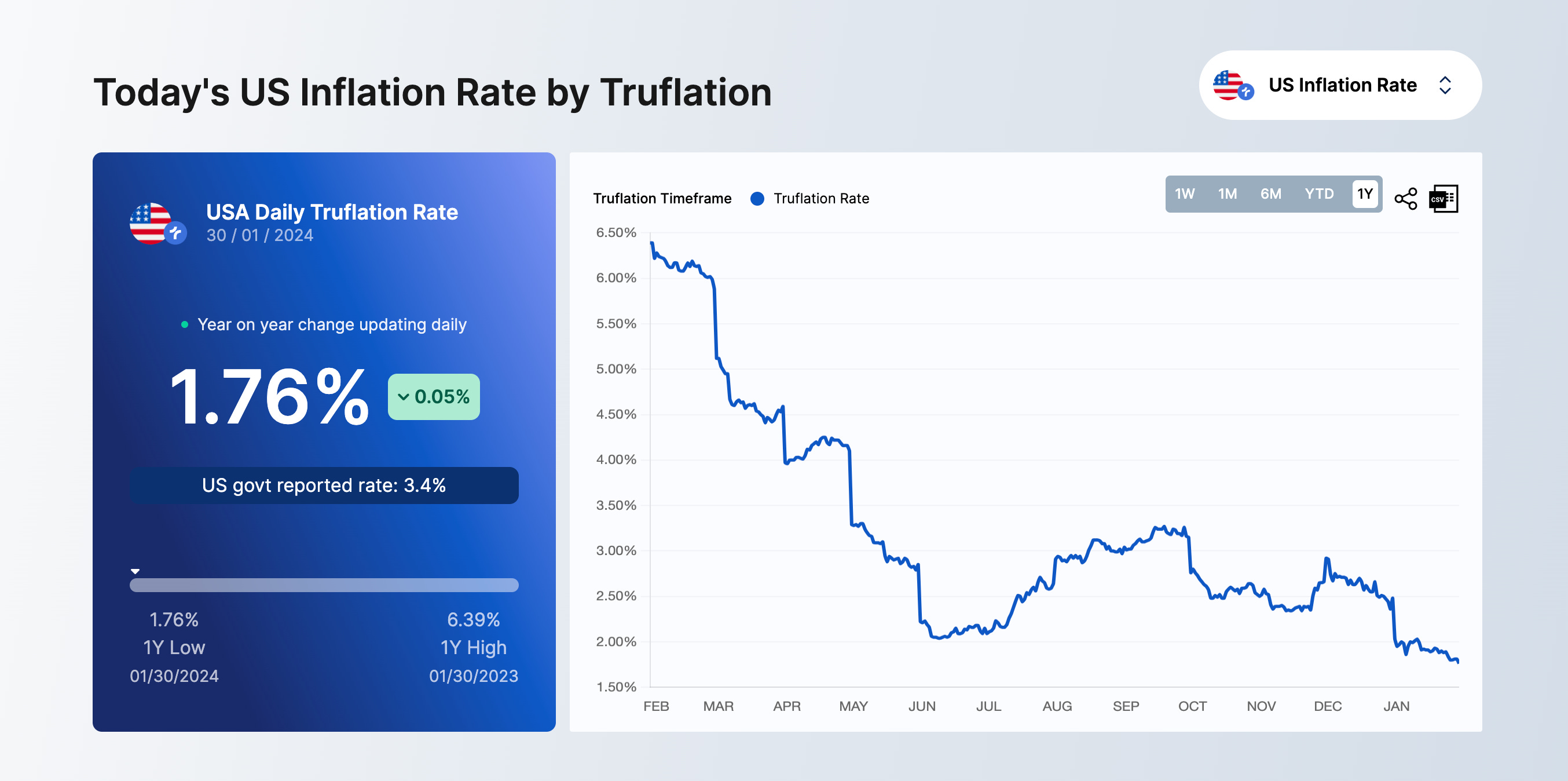
Politicians & Central Bankers Need To Get On The Same Page
Today’s letter is brought to you by Dream Startup Job!* Dream Startup Job is the premier marketplace for connecting ambitious job-seekers with the world's most innovative companies.* Search over 10,000 roles and apply quickly to cutting-edge companies like Traba, Varda, Eight Sleep, Flowhub, and many others.* If you're looking to join a team that is making a difference in the world, create a job-seeker profile in minutes and start applying for roles.* If you're a startup, post your open roles today or schedule a call with the Dream Startup Job team by clicking here.To investors,Monetary policy is thought to be the work of a central bank. The economists and bankers spend an inordinate amount of time sifting through mountains of data to understand what is happening in an economy, while simultaneously hoping to make decisions today that can have a predicted, positive impact tomorrow.The job is nearly impossible. But central bankers don’t operate in a silo. They are part of a larger economy that has many moving parts. Take politicians as an example — fiscal policy decisions can have a profound impact on the economy, regardless of what happens with monetary policy. This requires the central bank to hit a moving target at all times. Their difficult job gets even more difficult.During the 2020 pandemic, the politicians and central bankers were on the same page. The central bank was cutting interest rates and perfecting the quantitative easing playbook. Politicians were dropping fiscal stimulus packages left and right. Cheap money was flowing through the system in a way that would make any Keynesian proud. Financial markets responded exactly how you would expect — asset prices rose aggressively, the liquidity crisis was mitigated, and inflation took off. This is the beauty of politicians and central bankers being in lock-step with each other, even if it led to the punishment of millions of savers across the country. The party ended at the end of 2021 though.The Federal Reserve realized that the market became too frothy and someone needed to take the drinks away at the party. Within months, the central bank began increasing interest rates at the fastest pace in history and eventually reached more than 5%.There was only one problem — the politicians never got the memo.Our elected leaders continued to pass legislation that flooded the system with money. There was the Infrastructure Investment and Jobs Act, the CHIPS and Science Act of 2022, and hundreds of billions of dollars to support proxy wars around the world. At the same time that the central bank was trying to tighten monetary conditions, the politicians were playing loose and fast with money. Central bankers have an even harder job when they are not on the same page as the politicians. But the story is not over yet. Recently, politicians like Senator Elizabeth Warren have begun publicly calling for the Federal Reserve to drop interest rates. She and three other Senators wrote in a letter:“As the Fed weighs its next steps in the new year, we urge you to consider the effects of your interest rate decisions on the housing market. The direct effect of these astronomical rates has been a significant increase in the overall home purchasing cost to the average consumer.”This is an interesting development because the Senators are not wrong. High interest rates are definitely contributing to unaffordable housing. But that is not the only culprit. The immense fiscal spending that politicians have been doing for the last 15 years is also a significant component. This letter also raises the question of whether politicians should be attempting to influence the central bank’s decisions. Both sides of the political aisle have been doing this for years, but it doesn’t make it right. President Trump used to publicly tweet his opinion on what the central bank should do related to the strength of the dollar. President Biden has called Fed Chairman Jerome Powell into this office like a principal disciplining a student. Now these Senators are openly directing the Fed to take a specific stance on monetary policy decisions. If we want the central bank to be independent, which is how the organization is supposed to operate, then it is inappropriate for any politician to openly try to influence the decisions. Thankfully, I doubt the central bank pays much attention to what the politicians are asking for, but we are all human and anything is possible. Lastly, these complexities related to human decision-making and monetary policy are highlighted when you compare it to the software-driven monetary policy of an asset like bitcoin. The former system is subject to human error, but the latter can’t be changed regardless of what is happening in the world. Maybe there is a lesson in that comparison. Either way, the politicians and central bankers are on different pages right now. That makes the central bankers’ job more difficult. And the big losers in the situation are the American people.Ho
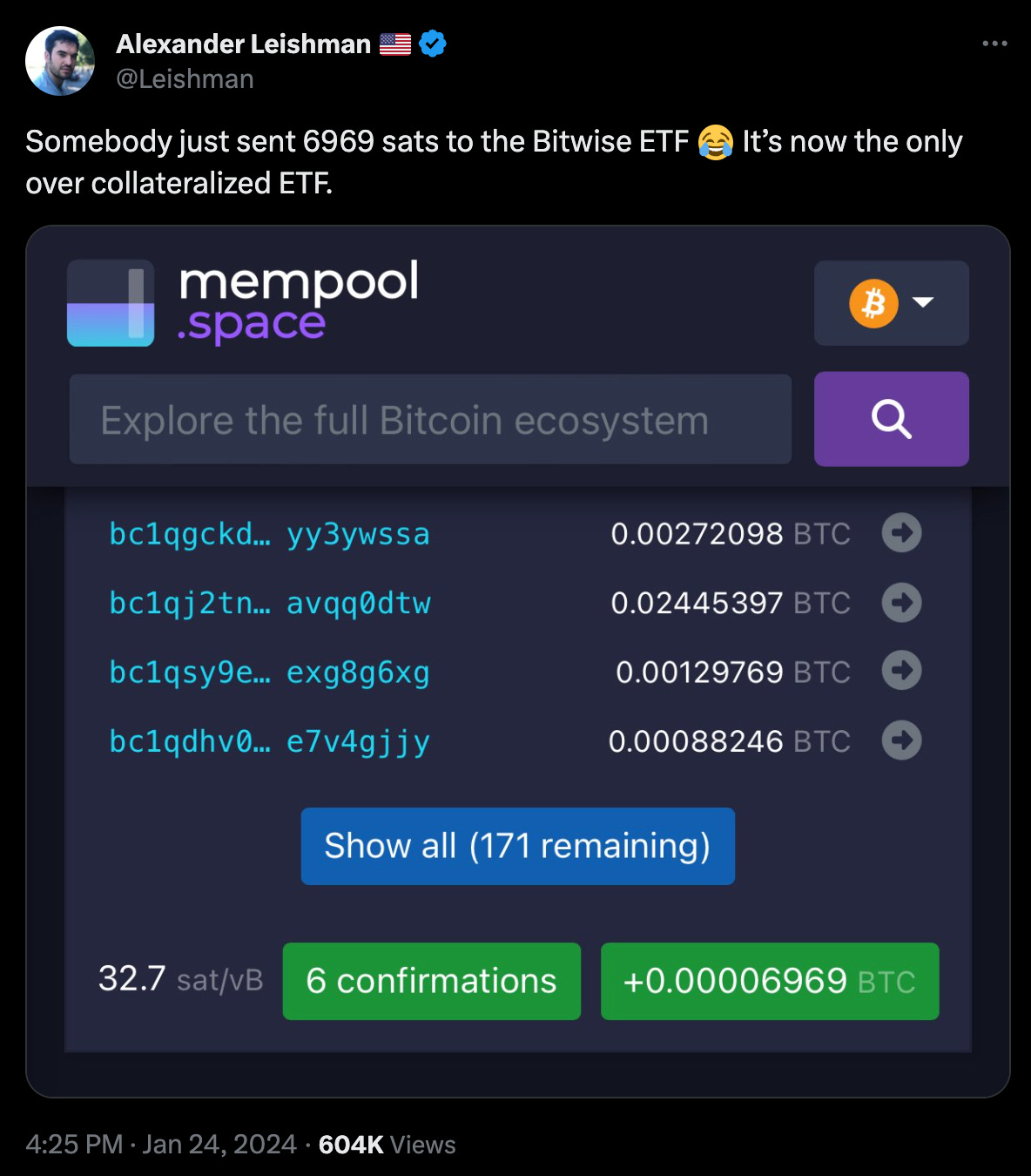
On-Chain Audits & Rules Are Going To Dominate Future
Today’s letter is brought to you by Frec!The wealthy have used a secret strategy to make money and save on taxes for decades — direct indexing and tax-loss harvesting.The problem historically is that it takes a large team and lots of money to pull these strategies off. That is all changing now.Frec makes direct indexing available to every investor at 1/10th the cost (0.1% annually to be exact). It’s nearly identical to investing in ETFs, except it allows investors to take advantage of tax benefits — by owning the stock directly.With Frec Direct Indexing, you can achieve index-like performance but end up with more money through tax loss harvesting.* Invest in popular indexes and we’ll automatically harvest your tax losses for you.* Automated and done for you. No extra effort required.Sign up today and start saving money on your taxes!To investors,One of the promises of blockchain technology is a public ledger that can be audited by anyone, at any time, from anywhere in the world. Industry proponents historically point to this feature as a way to confirm how many bitcoin are in circulation, how many bitcoin are created on a daily basis, and the 21 million limit has not been changed. That is not the only use case though. Yesterday we got another use case that could change finance. Bitwise, a $1.5 billion asset management firm focused on the crypto industry, published the public bitcoin address for their spot bitcoin ETF holdings. Their announcement read:“Today the Bitwise Bitcoin ETF (BITB) becomes the first U.S. bitcoin ETF to publish the bitcoin addresses of its holdings. Now anyone can verify BITB's holdings and flows directly on the blockchain. Onchain transparency is core to Bitcoin's ethos. We're proud to walk the walk with BITB.”You can see the public address on the fund website too:This may seem like a small item, but for the first time in history investors are able to verify the asset holdings of an ETF. It is easiest to understand the difference by looking at the gold ETF. There is reportedly billions of dollars in gold sitting in a vault, yet none of the GLD investors can verify or audit those holdings when they want. Bitwise’s bitcoin ETF allows investors to do that now. It wouldn’t be the crypto industry without some sort of chaos or jokes, so naturally someone sent 0.00006969 bitcoin to the public wallet address. This means that Bitwise now has the only over-collateralized bitcoin ETF on the market as well. Obviously, this is a joke, but it does highlight the ability for people to send bitcoin to this wallet address without Bitwise having to do anything.This idea of on-chain audibility, along with on-chain governance of rules, is only going to become more important in the world. Last year we saw three of the largest bank failures in history occur, which potentially could have been identified earlier if anyone in the world could have audited the various bank holdings.There will be less interest for companies to broadcast their internal balance sheets, but anytime a company is reportedly holding assets for customers or partners it makes sense for them to be publicly auditable.Remember, the Pentagon has failed six straight audits. Imagine a world where the government, who is entrusted with the citizens’ assets, had everything publicly verifiable. There would be less waste, more efficiency, and probably better outcomes. Anything that can be on-chain likely will move on-chain in the future. This on-chain world uses software to enforce the rules as well. The phrase “code is law” gets thrown around often to describe the phenomenon. This is possible because everything on-chain is digital. The assets are digital, the market participants are digital wallets, and the rules are written in a digital database.There will be instances in the future that can’t come on-chain for rule enforcement. Take the current southern border crisis as an example — Texas has declared an invasion of their state and is fortifying their border. The national government sued them in court to prevent them from fortifying the border. The Supreme Court ruled in favor of the national government. Texas is ignoring the Supreme Court decision and claiming this is a state’s right issue, not a federal government issue. Now a number of other states and governors are coming out in support of Texas and Governor Abbott. The US Constitution clearly lays out rules for our nation. The problem in the analog world is how to interpret these rules, along with how to enforce them. Comparing these challenges to the on-chain world, where software requires crystal clear rules and enforcement directions in advance, it is easy to see why people will continue preferring the digital version. Again, it won’t always be possible, but it will be the preference whenever it is possible. The idea of on-chain audibility and governance is at its infancy. The trend is clear though — we are going to see more things move on-chain as time passes. You can’t stop an idea who
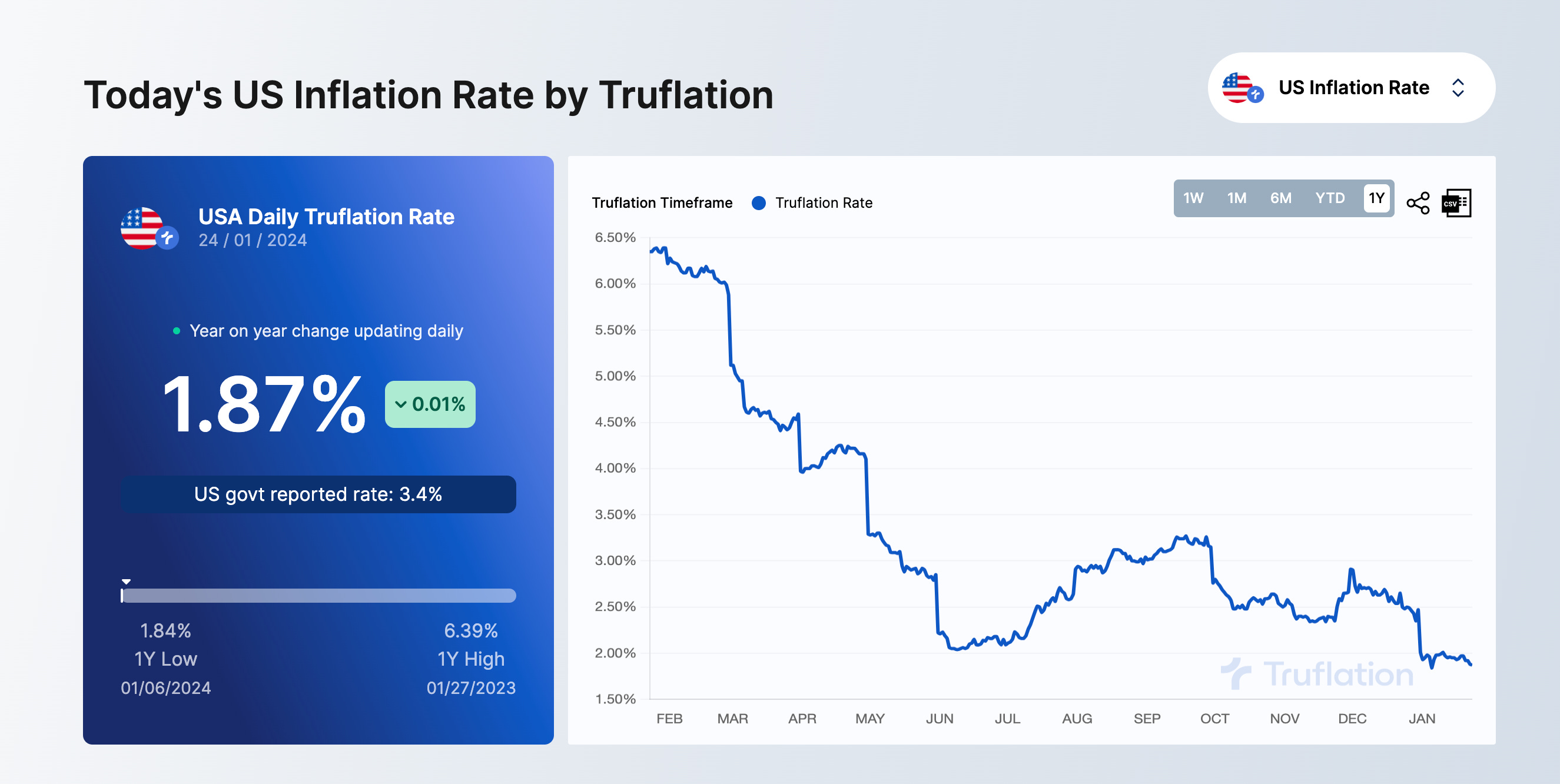
The New Players Won't Act Like The Old Players
To investors,The new capital flowing in the crypto industry from Wall Street and traditional investors will not behave like the capital that has been here for years. Let me explain. These new investors have different goals. They are not luddites. While the memes and narratives may be fun, these investors are more likely to manage their portfolio based on spreadsheets and academic theories. One good example is portfolio rebalancing. If a financial advisor allocates 1% of their client’s assets to bitcoin, and then bitcoin triples in price, many times the advisor will sell some of the client’s bitcoin to bring the portfolio allocation back to 1%. This activity would be blasphemous to hardcore bitcoin holders. They believe you should never sell your bitcoin. It doesn’t matter how large of a percentage the bitcoin position becomes. Hold what you have and then buy more. That is not how professional money managers operate though. Rebalancing is a core strategy that they use, regardless of whether you agree with it or not. This is important to understand because the new segment of investors will introduce net new selling pressure to the market as bitcoin’s price rises. There will also be cyclical times of year where rebalancing is more popular than others. Rebalancing is not the only behavioral difference either. Many of the sophisticated investors who will begin allocating to bitcoin or cryptocurrencies will choose to use derivatives instead of spot bitcoin. This introduces a new avenue for capital to enter the market without actually purchasing real bitcoin on a dollar-for-dollar basis.It also introduces new ways for large pools of capital to short the market as well. Lastly, many of the investors from the traditional world have morphed into passive indexers. They want to make market selection decisions, not asset selection decisions. This rise of passive investing is highly debated, but the numbers show that it is becoming a dominant approach to capital allocation.As those investors begin allocating to the new world, many of them will want a carbon copy of their traditional strategy. They want an index of the market, which will put some capital into bitcoin — just not all of it.The arrival of Wall Street and traditional investors should be celebrated. Tens of billions of dollars will flow into the industry that was previously on the sidelines. Just don’t buy the story that 100% of that capital is going to plow into bitcoin, nor will it all be investors going long. When the ground shifts beneath an industry, you have to pay attention. The more you understand the new players, the better you will be positioned to understand the future. Hope you all have a great day. I’ll talk to everyone tomorrow.-Anthony PomplianoJuan Meisel is the Founder & CEO of Grip Shipping.In this conversation, we talk about how he took his business from 0 to 8 figures in revenue, attacking an incumbent industry using innovation & technology, hiring, processes, and how the world is changing.Listen on iTunes: Click hereListen on Spotify: Click hereMy Appearance on Bloomberg Television YesterdayPodcast Sponsors* Frec.com - Use tax-loss harvesting to save on your tax bill, while keeping the same investment exposure you already have.* BetOnline - Use crypto to bet on sports, casino games, horse racing, poker and more with promo code POMP100.* Espresso Displays - The world's thinnest touchscreen portable monitor. Expand your workspace and work from anywhere.* Trust & Will - Estate planning made easy. They are fast, secure, and simple to use. Get your will or trust created today.* Base - Base is shaping the future of the on-chain world with near-zero gas fees and rapid transaction speeds.* ResiClub - Your data-driven gateway to the US housing market.* Bay Area Times - A visual newsletter explaining the latest tech & business news.You are receiving The Pomp Letter because you either signed up or you attended one of the events that I spoke at. Feel free to unsubscribe if you aren’t finding this valuable. Nothing in this email is intended to serve as financial advice. Do your own research. This is a public episode. If you'd like to discuss this with other subscribers or get access to bonus episodes, visit pomp.substack.com/subscribe
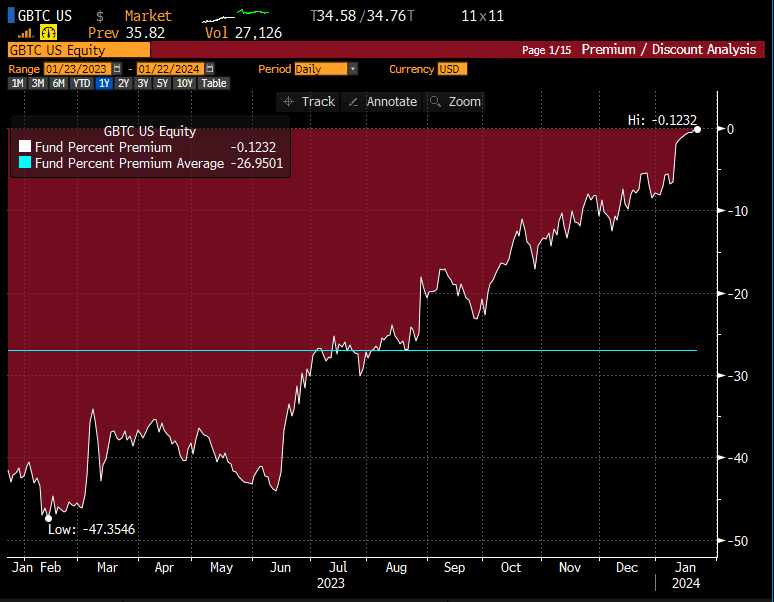
Price Is Trying To Distract Everyone
Today’s letter is brought to you by Espresso Displays!I normally work on my desktop computer and am hyper productive. The second that I leave my desk, I lose my productivity on a laptop.So I started to use a second screen and it seems to have fixed the issue.It took awhile to evaluate many different screens — Espresso Displays was by far the best one.I use it every day. I can’t imagine working from my laptop without it now. They are lightweight, thin, and look like Steve Jobs designed them himself.Any reader of The Pomp Letter who orders one this week will get a great deal. Highly recommend!To investors,The price of bitcoin and digital assets have fallen more than 20% since the bitcoin spot ETFs were approved. Sentiment online has degraded and it seems we are living in a different world than just a few weeks ago. But nothing has actually changed. Price is a liar and can make a fool of anyone who can’t control their emotions. These two insights are important to remember whenever the volatility of this asset class shows itself. It remains true whether the assets are going up or down in price. Since the ETF approval, the S&P 500 and Dow Jones Industrial Average have both hit new all-time high levels. Bitcoin’s hash rate has hit a new all-time high. And the market continues to think the Fed will cut interest rates in the first half of this year. Bitcoin’s software is executing exactly as designed — producing block after block of transactions. The halving is less than 100 days away. And more people have access to buy bitcoin now than two weeks ago. So all the fundamentals are signaling positive signs, and the macro market is preparing for an injection of significant liquidity, yet crypto prices are trying to distract investors from these facts. Don’t be fooled. As Benjamin Graham said, “In the short run, the market is a voting machine but in the long run, it is a weighing machine.” The fundamentals eventually prevail over the fear and greed in a market. So why is the price going down? People have been selling Grayscale’s GBTC shares. According to Bloomberg’s Katie Greifeld, there has been more than $3.4 billion in outflows over the last week and a half. The FTX estate is reported to have been approximately $1 billion of the $3.4 billion in outflows. This selling is largely due to the fact that GBTC’s previous discount to NAV has essentially closed back to 0%. This means the fund is now trading at NAV, so anyone who was previously underwater has a chance to get out without the discount penalty. Even with the heavy selling of GBTC, there has still been a net inflow of more than $1 billion to these spot bitcoin ETFs. Some people will point to the fact that price is down and say this is catastrophic for the Wall Street investors who are losing money on their first introduction to bitcoin. There may be some of that pain happening, although much of it is exaggerated because the asset was only trading at much higher levels for a short period of time, but another way to look at it is the hundreds of millions of dollars that are flowing into the ETFs at lower prices are getting a better entry level and will likely end up in a better position in the future.Short-term pain, long-term gain. Crypto investors have learned over the years to buy the dip when assets are in a bull market trend, which is what we are experiencing now. It has taken longer for Wall Street investors to learn this lesson in traditional markets — the dips experienced in the equities market are much less severe. It is natural to see multiple 30% declines in crypto bull markets, so Wall Street will have to get used to this type of volatility. That volatility will dampen over time. We just aren’t there yet. So investors have a choice to make this week — you can look at the fundamentals of these assets and markets, or you can panic because price is showing red.I bought more this morning. You should do your own research and think about what is best for your portfolio. We’ll see how everything plays out in the coming weeks. Hope you all have a great day. I’ll talk to you tomorrow.-Anthony PomplianoJuan Meisel is the Founder & CEO of Grip Shipping. In this conversation, we talk about how he took his business from 0 to 8 figures in revenue, attacking an incumbent industry using innovation & technology, hiring, processes, and how the world is changing.Listen on iTunes: Click hereListen on Spotify: Click hereEntrepreneur Built $100 Million Business In 1 YearPodcast Sponsors* Frec.com - Use tax-loss harvesting to save on your tax bill, while keeping the same investment exposure you already have.* Cal.com - Changing the calendar management game. Use code “POMP” for $500 off when you sign up.* Trust & Will - Estate planning made easy. They are fast, secure, and simple to use. Get your will or trust created today.* Auradine - A new bitcoin miner powered by the world’s first 4 nanometer silicon chip technology.* Base: Base is shaping the future of the on-chain world w
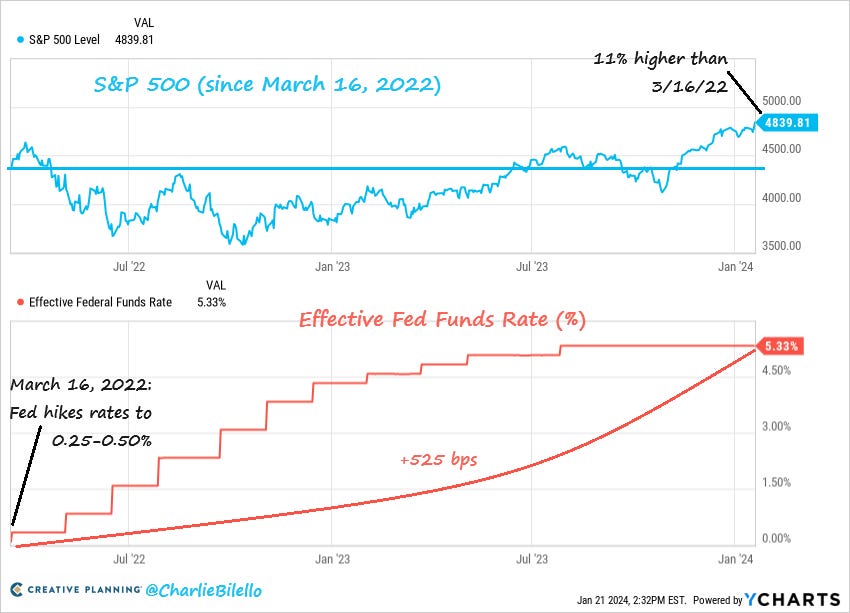
What If The Fed Already Won The Fight Against Inflation?
Today’s letter is brought to you by ResiClub!* ResiClub is the leading publication for the residential real estate market. * Housing affordability is the worst that it has been in 40 years and the team at ResiClub has covered the decline in great detail.* Readers get news, commentary, data, and analysis from industry insiders.* ResiClub is written by Lance Lambert, who is widely considered the best residential real estate reporter in the country.* Subscribe today and stay informed on the largest asset class in the world. To investors,There is strong debate in the market about the US economy. One side believes the Federal Reserve will pull off the impossible and guide us towards a soft landing. The other side thinks the economy is showing significant red flags and is destined for a recession. The truth is that no one knows what is going to happen. That won’t stop people from trying to figure it out though. There are trillions of dollars, and many reputations, on the line in this debate. Take Anne Walsh, the Chief Investment Officer for Guggenheim Partners Investment Management, who told Bloomberg last week “we still see a recession coming, although our base case is a mild recession, and as a result we still see rate cuts [coming]. We are actually predicting they start sooner rather than later.”James Solloway, the Chief Market Strategist at asset management firm SEI, told Marketwatch last week that the big problem in the economy today is how many people are expecting these interest rate cuts. His view is that 3% inflation is not problematic as long as the market believes the Fed will keep interest rates at the current level or potentially raise them further. These are just two anecdotal opinions though. What does the market believe?Ann Saphir writes for Reuters:“Futures contracts that settle to the Fed's policy rate fell, and now reflect about a 47% chance of a Fed rate cut by March, down from 55% earlier in the day.Just a week ago the probability of an interest-rate cut in March from the current range of 5.25%-5.5% was seen at nearly 80%, reflecting faster-than-expected declines in inflation. Fed policymakers themselves had also signaled at their December meeting that their rate-hike campaign was likely at an end and that in 2024 they would probably start to reverse course.In the last week, though, signs of the consumer's continued strength and indications that the inflation battle has not yet been won have eroded confidence in the likelihood that the Fed will pivot all that soon.Central bankers, in this last week of public commentary before a self-imposed quiet period ahead of their late-January meeting, have also suggested a rate cut may not be imminent, even as they continue to call out progress on the inflation fight and hold the door open to a rate hike a little later in the year.”That pesky inflation continues to rear it’s ugly head. Another interesting point comes from Creative Planning’s Charlie Bilello who explains “the S&P 500 is now 11% higher than where it was when the Fed started hiking rates in March 2022.”But there is one factor that most people are not considering at all — what if the Federal Reserve and the entire market is operating with bad data? What if inflation is already back to the 2% inflation target?Truflation, the leading alternative inflation measurement, is showing the current inflation rate is 1.86%. That is nearly 50% lower than the Fed’s current reading of 3.4%.This is noteworthy because almost no one is considering this possibility. If the Fed has already accomplished their goal of getting inflation back to the 2% target, and there are meaningful signs of a potential recession, it would be prudent for the Fed to start cutting interest rates sooner than the market expects. Some of you may ask me — what signs of a recession exist today?Paul Davidson of USA Today points out the following:* “A measure of small business hiring plans fell to the lowest level since June and marked the second lowest reading since the pandemic-induced recession in 2020, the National Federation of Independent Business said last week.”* “Both manufacturers and service companies said they cut jobs in December, the first time that’s happened since October 2022, according to Ludtka and surveys by the Institute for Supply Management.”* “Job growth was revised down in 11 of 12 months last year, Ludtka says. That often occurs when the economy is at an inflection point, or shifting from growth to contraction.”* “In the third quarter, credit card debt hit a record high of $1.1 trillion and delinquencies were at their highest level since 2011, according to the Federal Reserve Bank of New York and Ludtka.”* “Net profit margins for S&P 500 companies likely shrank to 10.9% in the fourth quarter, the lowest level since late 2020, FactSet, a financial data and software company, estimated Friday ahead of earnings season.”* “The yield on the 3-year Treasury bond has been well above the 10-year Treasury for more than a
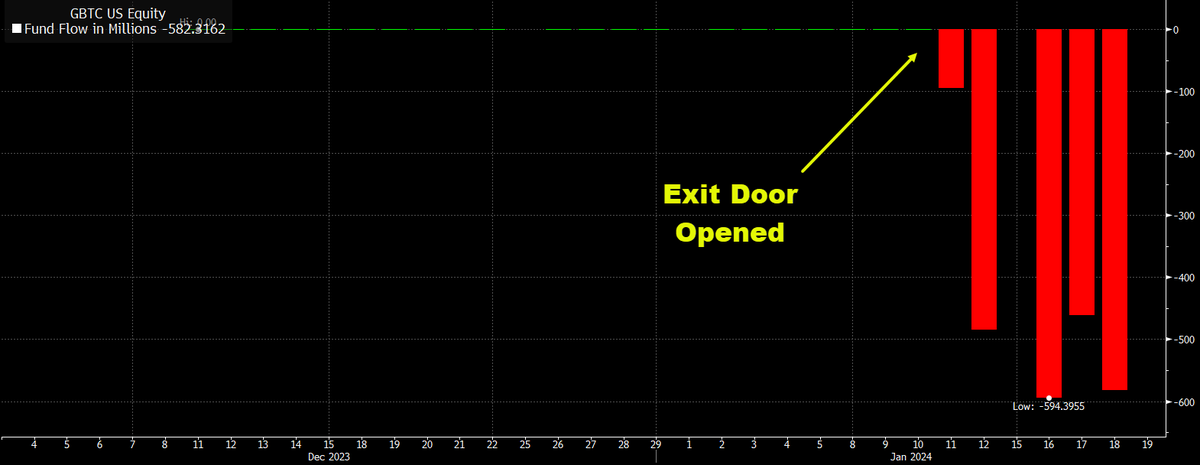
Bitcoin ETFs Receive Billions, But Price Goes Down?
Today’s letter is brought to you by Dream Startup Job!* Dream Startup Job is the premier marketplace for connecting ambitious job-seekers with the world's most innovative companies.* Search over 10,000 roles and apply quickly to cutting-edge companies like Traba, Varda, Eight Sleep, Flowhub, and many others.* If you're looking to join a team that is making a difference in the world, create a job-seeker profile in minutes and start applying for roles.* If you're a startup, post your open roles today or schedule a call with the Dream Startup Job team by clicking here.To investors,It has been one week since the bitcoin spot ETF began trading. The big surprise to many is that bitcoin’s price has traded down despite billions of dollars flowing into the various ETFs. How could that have happened?There are two main reasons in my opinion — first, investors across the market had built up anticipation of the ETF approvals. This led the asset to rise from around $27,000 in mid-October to ~$45,000 earlier this month. Whenever you get this type of rapid appreciation, it is likely that the market will sell the news. That is exactly what happened here. Investors took profits after their speculation was confirmed. “Buy the rumor, sell the news” has not been the only culprit though.There have been billions of dollars flowing out of Grayscale’s GBTC also, which is putting significant sell pressure on the bitcoin price. Bloomberg’s Eric Balchunas shared this visual to highlight more than $2 billion leaving the world’s largest bitcoin fund.This is happening because Grayscale’s management fee only dropped to 1.5% from the previous 2%. While the 25% drop may seem significant, the other ETFs are competing with sub-0.50% management fees. Simply, Grayscale is the most expensive fund based on fees.Why would they leave their fee so high?The asset management firm is betting that majority of the capital will not leave the fund. The current market cap is over $25 billion, so less than 10% of the capital has left in the first week, which probably signals that more than 50% of the fund will stay and continue to pay a 1.5% management fee. If that is the case, Grayscale will still pull in ~ $225 million annually without any increase in bitcoin’s price. Not a bad business. This nuance around Grayscale and the sell pressure in the market highlights an important development — the dynamics of the bitcoin market are changing because the holder base is changing. For example, the hardcore bitcoin holders, who helped turn the digital currency into the best performing asset over the last 15 years, have created a culture and meme where it is looked down upon to sell your bitcoin. HODL is a rallying cry. This meme created a highly illiquid asset, which led to asymmetry following material inflows of demand. But now the hardcore holder base is going to be diluted by the traditional financial players. Blackrock’s IBIT already has more than $1 billion in the fund after the first four days. I would expect Blackrock to eventually have more bitcoin than Michael Saylor’s Microstrategy. So why does this matter?Traditional financial investors have different behavior. For example, they like to rebalance their portfolios, which means they will sell assets that have increased in value. This taking of profits will be a new source of sell pressure that was previously not present in bull markets. Another example is the creation of derivatives. Many of the incoming capital flows will end up in these products, rather than buying spot bitcoin, which will reduce the actual positive impact on price. If the use of derivatives is used to heavily short the asset, it could even create a significant headwind for the asset.One more point is that the increase in liquidity, from more capital and more products, will generally dampen volatility as well. The positive is that we shouldn’t see severe 80% drawdowns in the future, but we also shouldn’t expect 1,000% price increases in a single year.Bitcoin is growing up. There is less risk investing in the asset today, so an investor should get paid a smaller return. That is how markets work. The true test of a great investor is whether you can continue to update your mental model and adapt to an ever-changing world. Bitcoin is one of the most interesting financial assets. It will continue to do very well, especially since governments can’t help themselves from printing trillions of dollars annually. But don’t expect the past performance to be indicative of future performance. Hope you all have a great end to your week. I’ll talk to everyone on Monday.-Anthony PomplianoDarius Dale is the Founder & CEO of 42Macro. In this conversation, we talk about global liquidity, Macro Weather Model, bitcoin & other risk assets, and impact of fiscal stimulus.Listen on iTunes: Click hereListen on Spotify: Click hereDarius Dale Highlights Global Liquidity Data Turning BullishPodcast Sponsors* Frec.com - Use tax-loss harvesting to save on your tax bill,
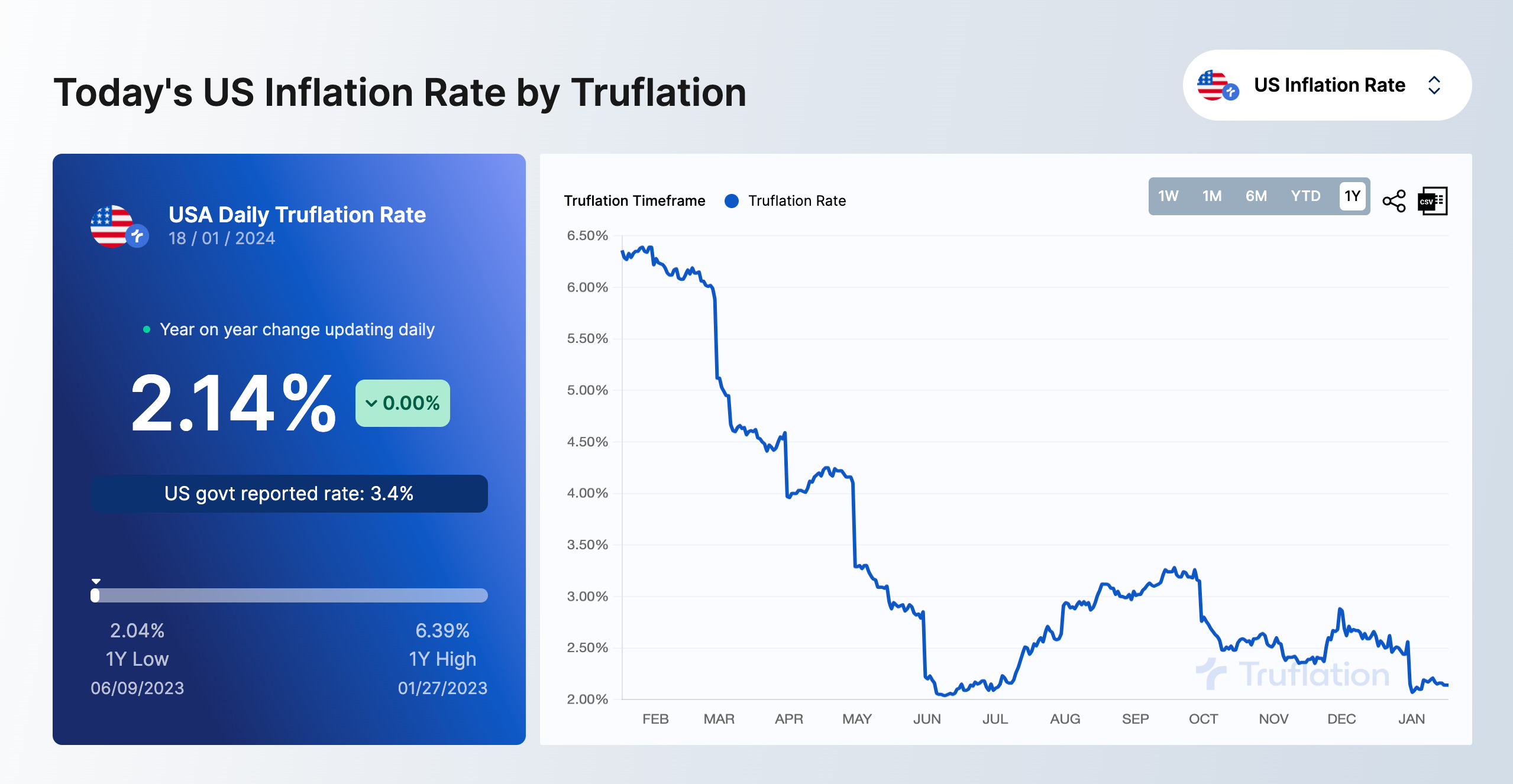
World Leaders Share Their Perspective On Markets
Today’s letter is brought to you by Espresso Displays!I normally work on my desktop computer and am hyper productive. The second that I leave my desk, I lose my productivity on a laptop.So I started to use a second screen and it seems to have fixed the issue.It took awhile but I evaluated tons of different screens — Espresso Displays was by far the best one.I use it every day. I can’t imagine working from my laptop without it now. They are lightweight, thin, and look like Steve Jobs designed them himself.Any reader of The Pomp Letter who orders one this week will get a great deal. Highly recommend!To investors,World leaders had a field day yesterday sharing their opinions on a variety of topics. Rather than pick only one to write about, below is a compilation of the best hits. First, we have President Donald Trump promising to ban central bank digital currencies if he gets back into the White House:“Tonight, I am also making another promise to protect Americans from government tyranny. As your president, I will never allow the creation of a Central Bank Digital Currency. Such a currency would give the federal government absolute control over your money. This would be a dangerous threat to freedom – and I will stop it from coming to America. We are also going to put in place strong protections to stop banks and regulators from trying to DE-BANK you for your political beliefs. That will NEVER happen while I am your president.”This was a pleasant surprise. Most politicians and central bankers are so enamored with blockchain technology that they can’t help themselves but to start thinking about the ridiculous, nefarious ways they could leverage this innovation. Social credit scores. Personalized monetary policy. Censorship. Seizure. The list goes on and on. Second, speaking of Trump, JP Morgan’s Jamie Dimon told CNBC’s Squawk Box that Trump was right on NATO, immigration, growing the economy, tax reform, and China. “I don't like how Trump said things, but he wasn't wrong about those critical issues. That's why they're voting for him. People should be more respectful of our fellow citizens...I think this negative talk about MAGA will hurt Biden's campaign.”Regardless of your politics, this was very surprising to see from Jamie Dimon, but the ensuing conversation online shows that many people agree with his comments. There is a popular belief that the Overton Window has moved so far that certain things that would have been taboo, such as “Trump was right,” are now safe to say for the CEO of JP Morgan. Third, Jamie Dimon also talked about bitcoin during the same interview. It was obvious that he felt uncomfortable being asked for the ten-millionth time about the digital currency. “There are cryptocurrencies that do something, that might have value. And then there's one that does nothing, I call it pet rock. The Bitcoin, or something like that. It has some use cases. Everything else is people trading among themselves.”This commentary was not surprising to me. Dimon is not a fan of bitcoin, so people should just stop asking him about it. It doesn’t matter if he is right or wrong, although it is hard to see a scenario where he will be right, because the free market is the referee. I did find it interesting that Dimon seems more excited or sympathetic to non-bitcoin cryptocurrencies though, including the idea of tokenization that BlackRock’s Larry Fink has been sharing in recent interviews. Fourth, we have Goldman Sachs’ David Solomon sounding the alarm on the national debt situation. "I'm very concerned about the growing debt. That's not something I think is going to come home to roost in 2024. That's one of the reasons I'm in the camp of higher rates longer as a general base case because we have to refinance this debt."It is great to see Solomon bringing constant awareness to this gigantic problem. There is probably no more important issue for our government to solve over the long-run than what they are going to do with the national debt, especially since it seems to be growing by $2 trillion or more per year currently. Lastly, Carlyle’s David Rubenstein shared thoughts on Federal Reserve Chairman Jerome Powell’s recent performance. “I think Jay Powell will go down in history for having done a good job if he gets the inflation rate down close to 2%. I think most people would say the hard landing scenario is not something they're worried about.”I agree with Rubenstein that Powell will be celebrated if he can get inflation back to 2% without crashing the US economy, but as I shared recently, there is a major risk to re-inflation at the moment. The government and central bank seem ready to pivot back to loose monetary policy, but Powell’s reputation may not be as positive if the economy doesn’t get back to 2%. The last percent seems to be the hardest. These world leaders are all openly sharing their ideas. You and I can watch the videos online of their interviews and speeches, so we can see for ourselves the context an

Global Liquidity Is Ready To Push Assets Higher
Today’s letter is brought to you by Espresso Displays!I normally work on my desktop computer and am hyper productive. The second that I leave my desk, I lose my productivity on a laptop. So I started to use a second screen and it seems to have fixed the issue. It took awhile but I evaluated tons of different screens — Espresso Displays was by far the best one. I use it every day. I can’t imagine working from my laptop without it now. They are lightweight, thin, and look like Steve Jobs designed them himself.Any reader of The Pomp Letter who orders one this week will get a great deal. Highly recommend! To investors,Central bankers learned the QE playbook during the Global Financial Crisis. They practiced it during the 2020 pandemic. And now they are about to perfect it.Multiple people are pointing out that the global liquidity drawdown has bottomed and it appears we are headed up for the foreseeable future. There is Michael Howell at Crossborder Capital with this chart:You can see the Global Liquidity Index (in orange) turning up on the bottom right of the chart. Crossborder goes on to point out that more than 1/3 of global central banks were easing at the end of 2023. That is a very different story than the mainstream narrative inside the United States where majority of the focus has been on when the Federal Reserve is going to cut interest rates. As I mentioned yesterday, GMI’s Raoul Pal recently pointed out that global liquidity is bouncing off the bottom of a well established trend line, which he believes signals a significant increase from here over the coming years. Onchain analyst Cole Garner recently pointed out that the stablecoin market cap ratio is a leading indicator of crypto market performance. But PBoC’s liquidity index is a leading index of the stablecoin ratio by approximately one week. Given that PBoC has flipped bullish, we should expect stablecoins to follow and then the rest of the crypto market. These three individuals, along with many others, are pointing out that asset prices are rising because total global liquidity is rising. The US and Federal Reserve may get all the attention, but they aren’t driving the asset price ship at the moment. This is important because when the Fed joins the party sometime in Q1/Q2 of this year, we should expect an even larger move in investment assets. So lets go back to the situation I posed at the start of the letter — are central banks about to perfect the QE playbook?Bryan Hardy and Goetz von Peter from the Bank of International Settlements published a paper in December titled “Global liquidity: a new phase?” In the paper, they state the following:“Foreign currency credit – a key aspect of global liquidity – has undergone distinct phases. The first phase recorded by the BIS global liquidity indicators (2003–09) featured soaring bank credit amid accommodative financial conditions in the run-up to the Great Financial Crisis (GFC). The second phase (2009–21) saw a shift towards bond markets and more dollar credit, especially to borrowers in emerging market economies (EMEs), on the back of tighter bank regulation and a loose monetary stance. Has the recent global surge in inflation and monetary tightening ushered in a new phase? Recent patterns point to a contraction in foreign currency credit, primarily in dollars, and particularly for EMEs.”Regardless of whether you call this developing situation a new phase or a perfected playbook, the data points are lining up to tell the same story—central banks are addicted to loose monetary policy and asset prices are ready to rip higher at the first sign of the central banks giving up on their tight monetary policy dreams. And it should go without saying, but just to make sure everyone understands my current view, if asset prices go higher then I believe crypto assets will outperform all other assets. There is something unique about asymmetric assets that are globally available during an injection of global liquidity. But don’t take my word for it. JP Morgan’s Jamie Dimon was at Davos this morning talking to CNBC and said that he believes the government should be very cautious right now. His point is that we may not understand quantitiative tightening nor quantitiative easing nearly as much as we think. So caution is warranted as we enter this new phase. Hope you all have a great day. I’ll talk to you tomorrow. -Anthony PomplianoRaoul Pal is the Co-Founder & CEO of Real Vision. He also writes ‘Global Macro Investor” and he has a brand new asset management firm (EXPAAM), with a mission to deliver leading returns on invested capital and serve as catalysts of crypto adoption. In this conversation, we talk about the bitcoin ETF, who is going to win the Cointucky Derby, Ethereum, Solana, his “Everything Code” thesis, macro environment, and more.Listen on iTunes: Click hereListen on Spotify: Click hereRaoul Pal on Bitcoin, Ethereum, Solana, and Macro EnvironmentPodcast Sponsors* Frec.com - Use tax-loss harvesting to sa
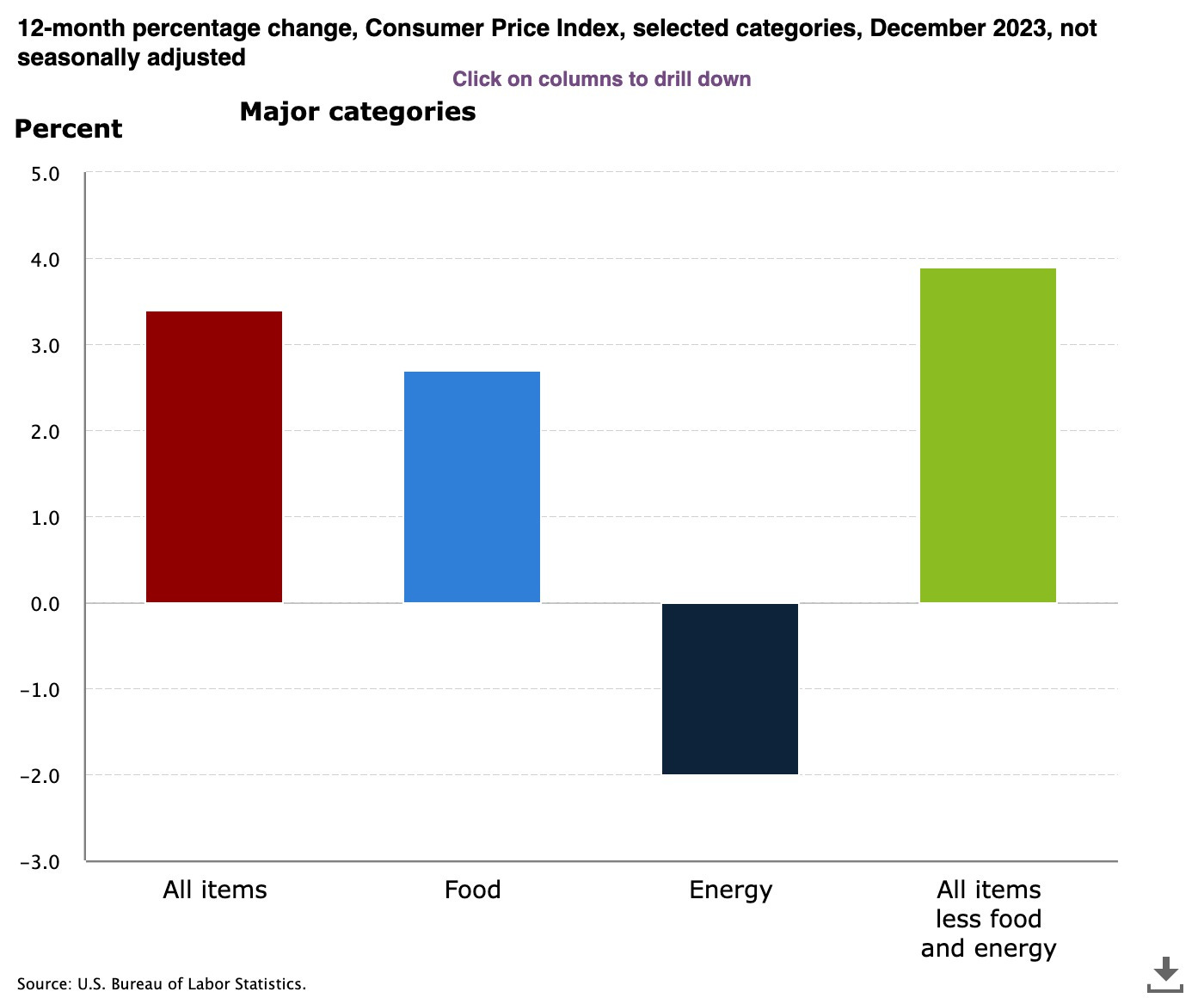
The Central Banks Work For Us Now
Today’s letter is brought to you by Frec!The wealthy have used a secret strategy to make money and save on taxes for decades — direct indexing and tax-loss harvesting.The problem historically is that it takes a large team and lots of money to pull these strategies off. That is all changing now.Frec makes direct indexing available to every investor at 1/10th the cost (0.1% annually to be exact). It’s nearly identical to investing in ETFs, except it allows investors to take advantage of tax benefits — by owning the stock directly.With Frec Direct Indexing, you can achieve index-like performance but end up with more money through tax loss harvesting.* Invest in popular indexes and we’ll automatically harvest your tax losses for you.* Automated and done for you. No extra effort required.Sign up today and start saving money on your taxes!To investors,The US economy is in a precarious position. After decades-high inflation, the Federal Reserve jacked up interest rates at the fastest pace in history. We went from 0% to over 5% in less than 2 years.The theory is that a rapid increase in the interest rate should crush asset prices and bring inflation down to the 2% inflation target.Unfortunately, that hasn’t happened yet. The government CPI report shows year-over-year inflation of 3.4%. If you remove food and energy, the measurement is 3.9% for major categories. This is a big deal because inflation is 50-100% higher than the stated Fed target of 2%. But maybe this wouldn’t be so bad if asset prices have come down and people aren’t spending money on ridiculous things in the economy, right? That hasn’t happened either. The S&P is sitting near all-time highs.The Nasdaq 100 is up ~ 50% last year and hit a new all-time high. The theory isn’t working. Asset prices should be going down. The academic equation is “interest rates up, inflation down, asset prices down.” That is how we have all been told the system works. So something is wrong.Maybe the inflation reading is inaccurate? This is a common argument on the internet. Let’s look at alternative inflation measurement Truflation.They are showing an inflation rate of 2.14%, which is much closer to the Fed’s target. This would suggest that asset prices are merely forward-looking and investors believe the Fed will cut interest rates throughout 2024, so they are positioning to benefit.Regardless of what the Fed does, the damage has already been done though. The aggregated inflation since January 2020 in the United States is over 22%. This means that $1 of purchasing power at the start of 2020 is the equivalent of $0.77 today.This type of currency devaluation is wrecking havoc on the American consumer. Household debt continues to skyrocket across the country and hit a record $17.2 trillion in Q3 2023.Credit card balances are $1.08 trillion currently. Auto loan balances are $1.6 trillion. Student loans are $1.6 trillion. Everywhere you look, citizens are piling on debt and continuing to spend in the economy. So why does this matter?If markets are correct and the Federal Reserve begins cutting interest rates in the first half of 2024, there is significant risk of inflation coming roaring back. I am not arguing that we would see 9%+ CPI readings, but it wouldn’t surprise me if 3% or higher becomes the new normal. As I have written to you all before, we could even see the Federal Reserve change their inflation target to 3% at some point in an effort to claim victory on this fight. Add in the fact that we are heading into a Presidential election and the argument for interest rate cuts only get stronger. Then you take a look at the global liquidity cycle and, as Raoul Pal points out in Global Macro Investor, we appear to be headed back into an upwards cycle that will bring trillions of dollars sloshing into the global economy. It is almost like we didn’t learn our lesson over the last 15 years. But there is nothing that you or I can do to reverse the path we are on. The only thing we can control is whether we are allocated to assets that will benefit from the incoming rate cuts and global liquidity injection. Get long and chill. That seems to be the best strategy. The central banks work for us now. What a time to be alive. Hope you all have a great day. I’ll talk to you tomorrow.-Anthony PomplianoJeff Sands is the Founding Partner at Dorset Partners. He is also the author of a great book, “Corporate Turnaround Artistry: Fix Any Business in 100 Days.” In this conversation, we talk about Jeff’s experience turning around struggling businesses, crisis mode, hard decisions & hard conversations needed, vendor relations, debt, labor, and more.Listen on iTunes: Click hereListen on Spotify: Click hereTurnaround Expert Jeff Sands Explains How To Fix Any Business In 100 DaysPodcast Sponsors* Frec.com - Use tax-loss harvesting to save on your tax bill, while keeping the same investment exposure you already have.* Cal.com - Changing the calendar management game. Use code “POMP” for $500 off whe
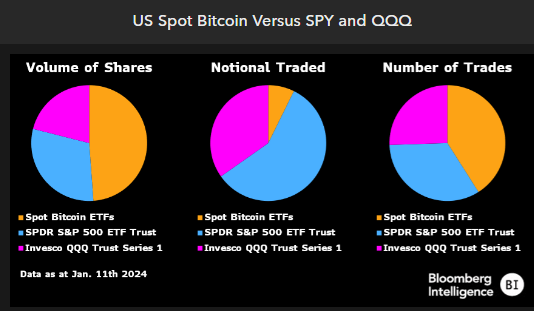
Bitcoin ETFs Saw Significant Inflows Yesterday
Today’s letter is brought to you by Trust & Will!Trust & Will is the most trusted name in online estate planning and settlement.The company has helped hundreds of thousands of families create their estate plans, and they’re just getting started. Trust & Will enables every American to create a plan that’s customized to fit their needs, their life, and their legacy.Their mission is to make estate planning simple, affordable, and inclusive.All of Trust & Will’s documents have been designed and approved by estate planning attorneys to meet the highest legal standards. Their process is simple, secure, complete, and customized for your specific needs and state requirements.To investors,The bitcoin spot ETFs started trading yesterday and the numbers blew away the previous ETF records. There was more than $4.6 billion in trading volume across the various funds. Grayscale saw more than $2 billion in trading volume and Blackrock had approximately $1 billion. But neither of those funds were the big winner yesterday based on the data we have so far. Bitwise’s BITB saw the most amount of inflows with $237 million, according to Bloomberg’s Eric Balchunas. The total inflows based on the current data is $720 million, but there will be more data that trickles in today that will update these numbers to over $1 billion most likely. Balchunas also tweeted this graphic showing how the spot bitcoin ETFs compared to $SPY and $QQQ in volume yesterday. He said the new entrants “really held their own, especially in number of trades and shares, and even notionally they got a respectable slice of the pie.” All of this activity is driving tons of coverage in the media. CNBC’s Squawk Box had approximately 12 different guests on yesterday during their 3 hour show to discuss the historic launch of these products. Not everyone was as excited as the media unfortunately. Within hours of the ETFs trading, reports started to pour in that various financial organizations were not going to offer the funds to their clients. Vanguard, which has over $ 7 trillion in assets under management, put out a statement saying the following:“While we continuously evaluate our brokerage offer and evaluate new product entries to the market, spot Bitcoin ETFs will not be available for purchase on the Vanguard platform. We also have no plans to offer Vanguard Bitcoin ETFs or other crypto-related products. Our perspective is that these products do not align with our offer focused on asset classes such as equities, bonds, and cash, which Vanguard views as the building blocks of a well-balanced, long-term investment portfolio.”The statement forgot to mention that Vanguard offers penny stocks, levered inverse ETFs, currencies that have been devalued for years, or a variety of other financial products that objectively have destroyed wealth for their clients. Imagine the arrogance it takes to prevent your clients from accessing the best performing asset in the last 15 years. Thankfully, not all financial institutions are taking this approach. Blackrock’s Larry Fink was on television this morning in an interview with Andrew Ross Sorkin talking about bitcoin. In the conversation, Fink said bitcoin is “no different than what gold represented for thousands of years. It is an asset class that protects you.”Again, the data supports Larry Fink’s view of the world. Another important point is that the internet conversation surrounding this asset is a big echo chamber. I received this message yesterday from a follower:The same follower updated me later that the funds will be available next week on the platform, but I was more surprised that the financial adviser said they had not even heard about the bitcoin spot ETF approval. So where do we go from here?The crypto ETF game is not over. We still need to see the data from yesterday, while monitoring the continued inflows today. Additionally, the attention will now shift to a rumored approval of the Ethereum spot ETF. Blackrock’s Fink explicitly said this morning he sees value in having one approved in the United States. Blackrock has a 576 - 1 record when applying for ETF approvals. This is also why you see Ethereum up since the ETF approval, while Bitcoin’s price is down. Markets are forward looking and people are already wondering what the next thing to speculate on will be.This industry never has a dull moment. It moves at warp speed. Do your best to stay informed with the various developments, but remember that the short-term noise will be unlikely to change the long-term trajectory. As I have learned in my career, time in the market is more important than timing the market if you have the macro trend correct.We will see if that remains true in the coming years. Hope you all have a great end to your week. I’ll talk to everyone on Monday. -Anthony PomplianoJames Seyffart is a ETF research analyst at Bloomberg Intelligence.In this conversation, we discuss bitcoin ETF approvals, what this means for capital inflow, predictions fo
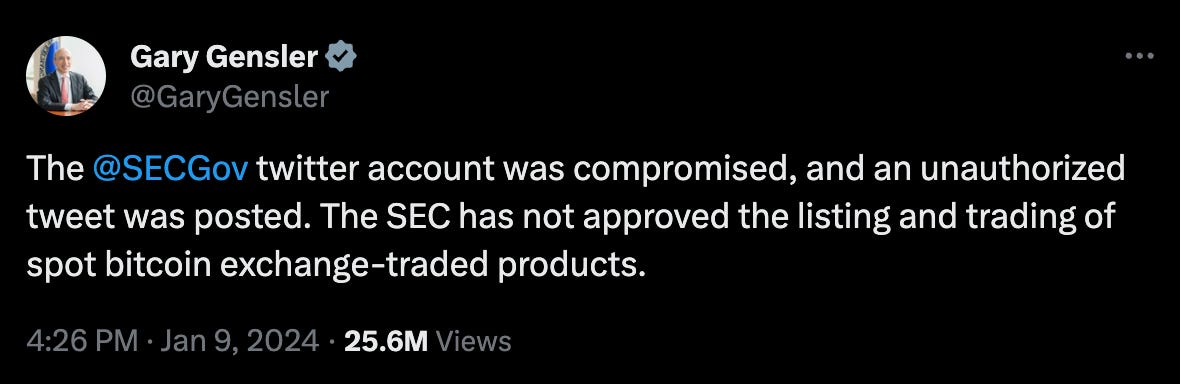
The Bitcoin ETF Dress Rehearsal Yesterday
To investors,Yesterday can only be described with one word — madness. The SEC’s account on Twitter/X posted the following message just after 4pm EST:The market immediately went into euphoria. Bitcoin’s price went from approximately $46,600 to nearly $48,000 in less than two minutes. The internet lit up with celebratory messages, memes, and “I told you so!”There was only one problem — the tweet from the SEC was inaccurate. Bitcoin spot ETFs have not yet been approved. SEC Chairman Gary Gensler quickly tweeted from his personal account the following clarification:As I told you, yesterday was madness. The market quickly readjusted from bullish to bearish and Gensler’s tweet was followed by a quick sell-off within minutes to a level lower than it was pre-announcement. So what exactly happened? That is still unclear. The SEC has not explicitly used the word “hacked” so far, but they have described a nefarious situation in the statement that followed later. It read:“The SEC has determined that there was unauthorized access to and activity on the @SECGov x.com account by an unknown party for a brief period of time shortly after 4 pm ET. That unauthorized access has been terminated. The SEC will work with law enforcement and our partners across government to investigate the matter and determine appropriate next steps relating to both the unauthorized access and any related misconduct.”Frankly, this is probably the worse case scenario for regulators at this moment. They have held up an ETF approval for years due to concerns around market manipulation, yet the day before a rumored approval the organization is compromised and someone is able to manipulate the price leveraging the SEC’s own account. Many people on the internet are claiming that the SEC may have made a simple mistake of scheduling a tweet for the wrong date. Their logic is that the tweet from the SEC account is worded too closely to what the regulatory organization would actually say. While it could be possible, it appears that theory is not true. X’s safety team tweeted the following statement last night:“We can confirm that the account @SECGov was compromised and we have completed a preliminary investigation. Based on our investigation, the compromise was not due to any breach of X’s systems, but rather due to an unidentified individual obtaining control over a phone number associated with the @SECGov account through a third party. We can also confirm that the account did not have two-factor authentication enabled at the time the account was compromised. We encourage all users to enable this extra layer of security. More information and tips on how to keep your account secure can be found in our Help Center.”We have to assume that there was foul play here until we hear otherwise. Another point that people have pointed out is that the lack of 2-factor authentication goes against prior warnings that the SEC Chairman had tweeted out as guidance for market participants. Again, this entire situation is nightmare fuel for regulators. But what insights can we take away from this debacle as investors? There seem to be three lessons at the moment:* The approval, which I expect to happen later this afternoon, will lead to short term euphoria and a multi-thousand dollar rally in price. * After the initial price surge, there will likely be a lot of selling that will fall in-line with the classic “buy the rumor, sell the news” phrase. * Traders will position themselves for the next speculative regulatory approval via an ETH ETF as they rotate out of bitcoin.The first two are self-explanatory, but this third one is interesting. Everyone has been paying attention to bitcoin for the last few months. The digital currency is up 160% in the last 12 months. Ethereum’s token is only up 79% in the same time period. But Reflexivity Research’s Will Clemente points out:In a weird way, although yesterday seemed like a complete s**t-show, it actually may have served as a dress rehearsal for the real show later today. Bloomberg is reporting that the ETF approval will likely happen after the market closes this evening, which would fall in-line with my expectations for the funds to be trading tomorrow (Thursday). This industry is full of chaos and uncertainty. There is never a dull moment. Through it all, the people who can keep their head calm and focused are the ones likely to find an outsized financial return. Hope you all have a great day. I’ll talk to you tomorrow. -Anthony PomplianoMitchell Askew is an analyst in the bitcoin community. In this conversation, we talk about volatility, bitcoin ETFs, institutions, inscriptions, miners, bitcoin halving, and more.Listen on iTunes: Click hereListen on Spotify: Click hereEarn Bitcoin by listening on Fountain: Click hereMy Conversation with Mitchell AskewPodcast Sponsors* Frec.com - Use tax-loss harvesting to save on your tax bill, while keeping the same investment exposure you already have.* Cal.com - Changing the calendar managemen

Our Company Reflexivity Research Has Been Acquired
To investors,We are announcing this morning that Reflexivity Research, a company that I co-founded with Will Clemente, has entered into a binding LOI to be acquired by DeFi Technologies, a publicly traded Canadian technology company. You can read the official press release below, but I wanted to share a few thoughts and context with this group.First, we started Reflexivity Research less than 18 months ago with the goal of creating world-class, crypto-native research for traditional finance investors. (Here is the letter that I wrote to all of you when we launched). So much of the content in the bitcoin and crypto industry is created for industry insiders. We believed there was an opportunity to create high-quality information for those outside the day-to-day industry. Second, we obsessed over building something unique. A key piece to this was ensuring that Reflexivity had the largest distribution of any crypto research firm. This was accomplished by building a large email list, along with signing a number of large third-party distribution deals with companies like TradingView, eToro, and others. Third, we want to have public market exposure, rather than private market exposure, going into a bitcoin/crypto bull market. Too many tech founders have been convinced to stay private for as long as possible. The public capital markets afford unique advantages for the right companies.Fourth, I believe the best way to monetize information in finance is through asset management. Given our advantage in the research business, it makes sense to team up with a tech-enabled asset management firm that has a differentiated offering. Fifth, this acquisition is a 100% stock deal. The fact that we are taking no cash should speak volumes about our thoughts on DeFi Technologies, their asset management subsidiary Valour, and their products. Lastly, I didn’t plan to build Reflexivity Research for such a short period of time before selling it. We have been exclusively focused on building a great business that delivers results for our customers. But when compelling opportunities present themselves, you need to be open to changing your mind and capitalizing on them. Will, myself, and the rest of Reflexivity Research team are excited to team up with DeFi Technologies. There is a lot of work ahead. Everyone is staying on the team and working diligently to scale our business. -Anthony PomplianoYou can read the official press release here:DeFi Technologies Inc. Announces Strategic Acquisition of Private Research Firm, Reflexivity Research LLC, Co-Founded by Anthony Pompliano and Will ClementeToronto, Canada, January 9, 2024 - DeFi Technologies Inc. (the “Company” or “DeFi Technologies”) (NEO: DEFI) (GR: RB9) (OTC: DEFTF), a crypto native technology company that pioneers the convergence of traditional capital markets with the world of decentralised finance (“DeFi”), is pleased to announce the signing of a binding letter of intent (the “LOI”) to acquire Reflexivity Research LLC (“Reflexivity”), a premier private research firm that specializes in producing cutting-edge research reports for the cryptocurrency industry (the “Acquisition”).Reflexivity, co-founded by Anthony Pompliano and Will Clemente, offers high-quality crypto-native research designed for traditional finance investors. The firm is known for unique bitcoin analysis, along with counting some of the most well-known cryptocurrency organisations as clients, including eToro, Solana, Avalanche, NEAR, Fantom, Sei Network, and many more. The company’s research is distributed via their homepage, a premium membership portal, and an email list of over 55,000 investors.Reflexivity has also focused on creating a large third-party distribution channel for their research, which has been accomplished by partnering with platforms such as TradingView, eToro, and others.The acquisition signifies DeFi Technologies' inaugural foray into the research domain, underscoring its dedication to fostering knowledge and understanding in the dynamic cryptocurrency sector. With the acquisition, DeFi Technologies not only reinforces its role as a pivotal bridge between traditional and decentralized finance but will now also offer valuable insights and intelligence to its clientele, further enhancing its comprehensive suite of services in the financial ecosystem.Pursuant to the LOI, DeFi Technologies will acquire all issued and outstanding securities of Reflexivity Research in return for 5 million common shares of DeFi Technologies (the “Payment Shares”). The Payment Shares will be subject to a lock-up schedule of 12 months, with the Payment Shares being released in equal tranches every three months, underscoring mutual confidence in the enduring value of this joint venture. No finder fees will be paid in connection with the Acquisition. The parties intend to enter into a definitive agreement in respect of the Acquisition (the “Definitive Agreement”) by January 31, 2024. Anthony Pompliano, co-founder of Reflex
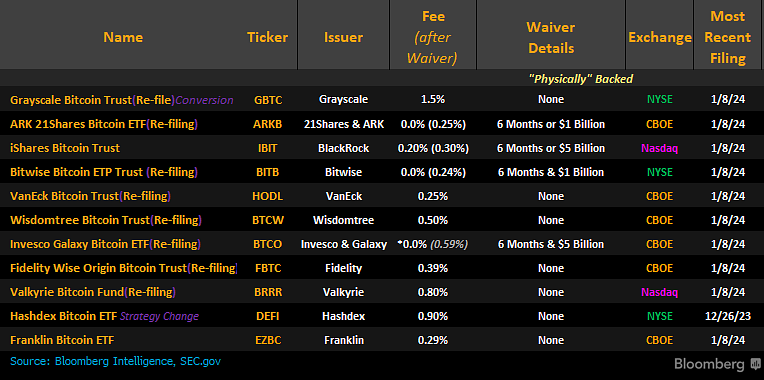
Fee War on Bitcoin ETF Has Begun - Plus 12 Predictions
Today’s letter is brought to you by Cal.com!What do I have in common with Chad Hurley (YouTube), Tobi Lütke (Shopify), and Alexis (776/Reddit)? We are all early investors in Cal.com and we use it instead of Calendly. Cal.com is the leading open-source scheduling platform, which gives you the same superpowers of efficiency previously reserved for elite corporations & tech gurus. Top performing teams choose Cal.com to increase business productivity, get insights on their team, and their automated workflows. Stop wasting your time with scheduling software that doesn’t work. Use technology to make your life easier. The best part? Set up is quick, easy, and you will never go back to your boring calendar tool. Exclusive for Pomp Letter subscribers/Pomp Podcast listeners, use code “POMP” for $500 off when you set your team up with Cal.com. Save time. Save money. Use Cal.com.To investors,The bitcoin spot ETF approvals will be announced this week. The final decisions will likely come on Wednesday with trading to commence before the end of the week. In preparation for that event, each ETF administrator must reveal what their management fee for the respective funds will be. Those numbers have started to come in this morning and there is only one way to describe what is happening — the fee war has begun. Grayscale’s GBTC has been the goliath in the room for years. They managed tens of billions of dollars in the largest bitcoin fund in the world. That trust structure had a 2% management fee, which is more than double the average ETF fee. The argument was that bitcoin was more expensive to manage, so the fee was justified.In reality, Grayscale had a monopoly in the US on the publicly traded bitcoin funds. They could charge whatever they wanted. This was an amazing business for them and they likely will never get the credit they deserve for the incredible work they did to educate, and onboard, so many investors to the digital currency. Competition is coming fast and furious though. Grayscale revealed this morning that their management fee will drop to 1.5% once they convert the trust structure to an ETF. While a 25% reduction in their management fee may sound large, this will leave Grayscale significantly higher than almost all of their competition. Here are some of the other management fees that ETF providers have revealed, according to James Seyffart from Bloomberg:These numbers are coming out very quickly this morning, so any changes or updates will not be included in my analysis. Another area of “fees” is the bid/ask spread for these ETFs. According to Bloomberg’s Eric Balchunas, the expectation is that any ETF with healthy volume the spread will only be 1-2 basis points. That won’t be a big deal for almost all investors in these ETFs.But something more interesting is happening with these fee wars on the ETF. Van Eck advisor Gabor Gurbacs points out that it will “cost less to hold a Bitcoin ETF for a year than a single trade on Coinbase.” So the ETFs may actually create a drop in transaction fees for the crypto exchanges as well, not just the crypto-native asset management firms. He goes on to highlight a potential downside to these low fees on the ETF applications:“Bitcoin ETFs are coming in with pricing structures in the low double digit range and many with waivers and discounts. This clearly benefits the holders. However, it scares me when little to no money is made. Issuers will look elsewhere to make money (securities lending, trading, etc) I personally just like an upfront higher fees with clear and sustainable incentives. If possible a deep look into total cost of ownership. But that’s not how the ETF pricing battles go. People like to see low numbers.”These are important points to keep in mind as the ETFs are approved and scaled. Now many of you have emailed me questions about what I expect to happen with the bitcoin ETF, so here are a few simple predictions:* The spot bitcoin ETF is approved this Wednesday and starts trading on Thursday* The ETFs receive at least $2 billion in AUM within 48 hours* The ETFs receive at least $5 billion in AUM in the first 30 days* Blackrock emerges with the highest AUM outside Grayscale after the first 90 days* The marketing spend to promote bitcoin spot ETFs is more than $100 million cumulatively* There are at least one bitcoin spot ETF ad played in the Super Bowl* Financial advisors around the country begin allocating 1-3% of client assets to bitcoin* At least one sovereign wealth fund announces they bought the spot bitcoin ETF within the first 12 months* Speculation around an ETH spot ETF will intensify by end of Q1* Non-bitcoin ETF issuers begin allocating some of their AUM into the bitcoin spot ETF* Bitcoin’s volatility drastically reduces in the next 3 years* Bitcoin’s compound annual growth rate falls to ~20% within 5 yearsIt will be interesting to see what I get right and where I am wrong. Predicting the future is hard. Regardless of what happens, the long-term outlook

Thoughts On The Bitcoin ETF That No One Is Talking About
Today’s letter is brought to you by Dream Startup Job!* Dream Startup Job is the premier marketplace for connecting ambitious job-seekers with the world's most innovative companies.* Search over 10,000 roles and apply quickly to cutting-edge companies like Traba, Varda, Eight Sleep, Flowhub, and many others.* If you're looking to join a team that is making a difference in the world, create a job-seeker profile in minutes and start applying for roles.* If you're a startup, post your open roles today or schedule a call with the Dream Startup Job team by clicking here.To investors,The speculation around spot bitcoin ETF approvals is intensifying. Market participants are preparing for the applications to get a green light from regulators. At the same time, the mainstream media is interested in predicting whether the digital currency price will go up or down upon approval.I shared my thoughts on CNBC’s Squawk Box this morning but figured it would be valuable to expand those thoughts here for all of you.First, the short term price action of bitcoin is a non-story in the grand scheme of things. I explained to Becky Quick that I anticipate the same thing happening whether the applications are approved or denied — there will be severe short-term volatility and then bitcoin will get back on track with the current medium-to-long term trajectory. Regardless of whether the price goes up or down thousands of dollars on decision day, the movement will look like a small blip on the chart after a year or two has passed. Keeping this in context of the broader picture is important. Second, it is important to warn Wall Street investors of the volatility bitcoin presents to the market. The great team over at Reflexivity Research explained what happened yesterday when more than $1 billion of open interest was wiped from the market, leverage was flushed out, and bitcoin went down thousands of dollars in mere minutes. (Highly recommend subscribing to Reflexivity by clicking here)All of the investors who thought it would be as easy as “go long with leverage into the ETF approval” started Wednesday morning with a surprise. Remember, bitcoin was $1,000 in 2017 and it has experienced a 45x increase since then. Along the way, there were two different drawdowns of about 80%, multiple 50% drawdowns, and five separate 30% drawdowns in 2021 alone. Bitcoin’s volatility is unlike anything else in traditional finance — that is attractive to some investors, but will ruin others. Third, most of the public conversation is focused on the primary flows from retail and institutions into the bitcoin ETF. Those flows will be measured in tens of billions of dollars in the coming years. But another area of fresh demand will be what I call “secondary flows.” These are inflows to the ETF that will come from other publicly traded funds. Earlier this week we saw one of these funds amend their prospectus so they can allocate up to 15% of their AUM to the bitcoin spot ETF when it is approved. Given that bitcoin is the best performing asset over the last 15 years, there are likely a lot of existing funds that would love to add a small exposure into their fund to juice returns. Fourth, Wall Street sales teams and meme accounts on Twitter/X are going to be reading from the same script for years to come. The talking points have become clear over the last few years, but the messenger is going to change once the ETFs are approved. We have never had large financial institutions spending hundreds of millions of dollars to market bitcoin to their clients. That effort is going to lead to capital inflow, but it is also going to do quite a bit to drive investor education as well. Lastly, bitcoin has had an impressive financial performance without the persistent bid of large financial institutions allocating to the asset. That is going to change with endowments, pension funds, insurance companies, sovereign wealth funds, and other large organizations buying the spot ETF. The benefit from this will be that bitcoin’s unlikely to continue to see large 80% drawdowns in the future. The downside is that some of the volatility of bitcoin will be taken away, which means it is unlikely to be as asymmetric to the upside as well. Bitcoin will continue to do very well, but as I explained on television this morning, don’t anticipate the asset to go to $1 million over night. Thankfully, it probably gets there over time though because the government won’t stop printing money. Hope you all have a great day. I’ll talk to everyone tomorrow. -Anthony PomplianoDarius Dale is the Founder & CEO of 42Macro. In this conversation, we talk about global liquidity, Wall Street investors on bitcoin ETF, Macro Weather Model on asset prices in 2024, and more.Listen on iTunes: Click hereListen on Spotify: Click hereEarn Bitcoin by listening on Fountain: Click hereMy CNBC Appearance From This Morning - Bitcoin Welcomes Wall Street To The PartyPodcast Sponsors* Cal.com - Changing the calendar management
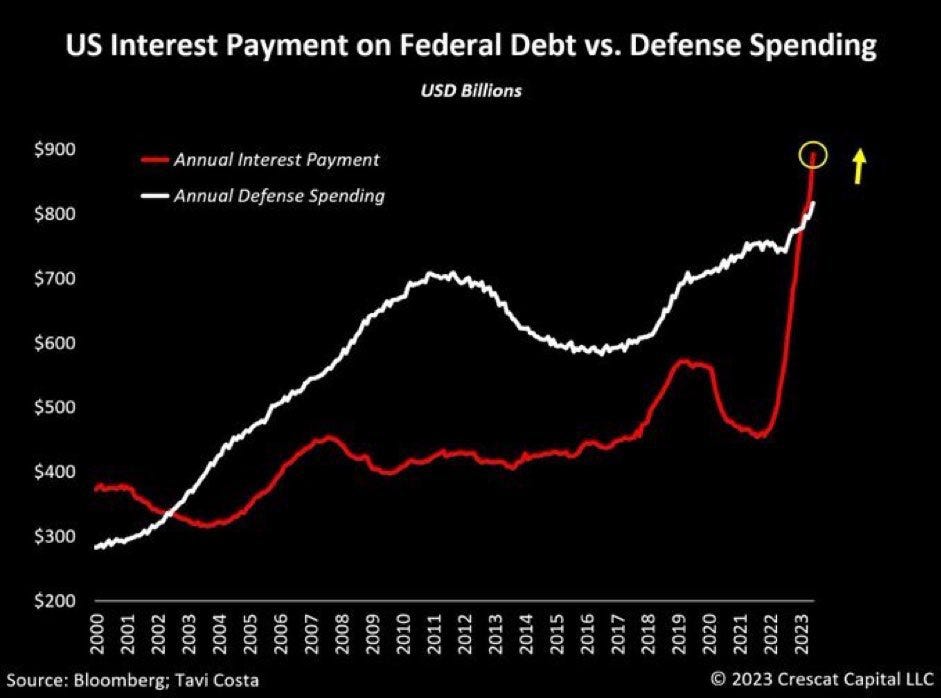
The Trade Of Our Generation
To investors,The US national debt crossed over $34 trillion yesterday, which is the highest it has been in history. This all-time high milestone is not one to celebrate. Charlie Bilello points out that the $12 trillion increase in the debt over the last 5 years signals a 55% increase during that time. The growth is hard to comprehend. Potentially more concerning, the US national debt as a percent of GDP has been increasing an alarming rate as well:* 1980: 31% * 1985: 40% * 1990: 52% * 1995: 65% * 2000: 58% * 2005: 61% * 2010: 87% * 2015: 101% * Today: 123%There has been a 50% increase since 2010, which highlights how much faster debt is growing than the economy. Simply, we are a nation addicted to printing money and there is no end in sight. This has caused catastrophic issues with interest rates high. The US is now spending materially more money on the national interest payment compared to our defense budget. That is quite a feat considering we are handing out weapons and equipment around the world like it is candy, so our allies can fight our proxy wars. The three data points — the national debt, debt-to-GDP ratio, and the US interest payment — highlight the need for the United States to continue debasing the currency. They literally have no other choice. There will be short periods of time where the government and the Fed can slow the rate of debasement, but the macro tailwind is for an accelerated debasement over the long run. Why is this important?The trade of our generation is to be long assets that benefit from currency debasement. Thankfully, most investment assets priced in US dollars will benefit from this trend. One of the biggest winners will naturally be bitcoin, specifically because of the finite supply and sound money principles. Gold will do well also, yet I believe that most of the asymmetric upside in the asset was captured by previous generations. Stocks are a forgotten asset class when it comes to currency debasement. Let’s use the MSCI World Equity Index as an example. Since the Global Financial Crisis, the index appeared to have gone on an epic run of appreciation. When you evaluate the same index priced in units of gold, instead of US dollars, you can clearly see that most, if not all, of the growth that was experienced in the 2010s was from currency debasement. Another asset class that will always do well in currency debasement periods is real estate. There is a reason why it is estimated that the industry produces 90% of millionaires in the United States. These investors have simply bought properties and had the patience to let the government debase the currency. It is not rocket science. So the trade of our generation is to simply get long investment assets that benefit from debasement and avoid cash and cash-like equivalents such as bonds. I truly believe it is that simple. Here is how that has played out in the last 15 years:And the compound annual growth rates are even more impressive:There is a lot of over intellectualization of investing in financial markets. If you try to optimize for the absolute best return, it can be very difficult. If you want to merely do well, then you can buy various investment assets and chill. Time in the market is more valuable than timing the market. It is almost like the boring, timeless investing advice is timeless for a reason :) Hope you all have a great day. I’ll talk to everyone tomorrow.-Anthony PomplianoDave Collum is a Professor of Chemistry at Cornell University. In this conversation we discuss his year in review of 2023, which includes financial markets, bitcoin, digital totalitarianism, political landscape, climate change, biological males, and more.Listen on iTunes: Click hereListen on Spotify: Click hereEarn Bitcoin by listening on Fountain: Click hereDisaster Is Coming In 2024 Says Dave CollumPodcast Sponsors* Cal.com - Changing the calendar management game. Use code “POMP” for $500 off when you sign up.* Trust & Will - Estate planning made easy. They are fast, secure, and simple to use. Get your will or trust created today.* Auradine - A new bitcoin miner powered by the world’s first 4 nanometer silicon chip technology.* Base: Base is shaping the future of the on-chain world with near-zero gas fees and rapid transaction speeds.* ResiClub: Your data-driven gateway to the US housing market.* Bay Area Times: A visual newsletter explaining the latest tech & business news.You are receiving The Pomp Letter because you either signed up or you attended one of the events that I spoke at. Feel free to unsubscribe if you aren’t finding this valuable. Nothing in this email is intended to serve as financial advice. Do your own research. This is a public episode. If you'd like to discuss this with other subscribers or get access to bonus episodes, visit pomp.substack.com/subscribe
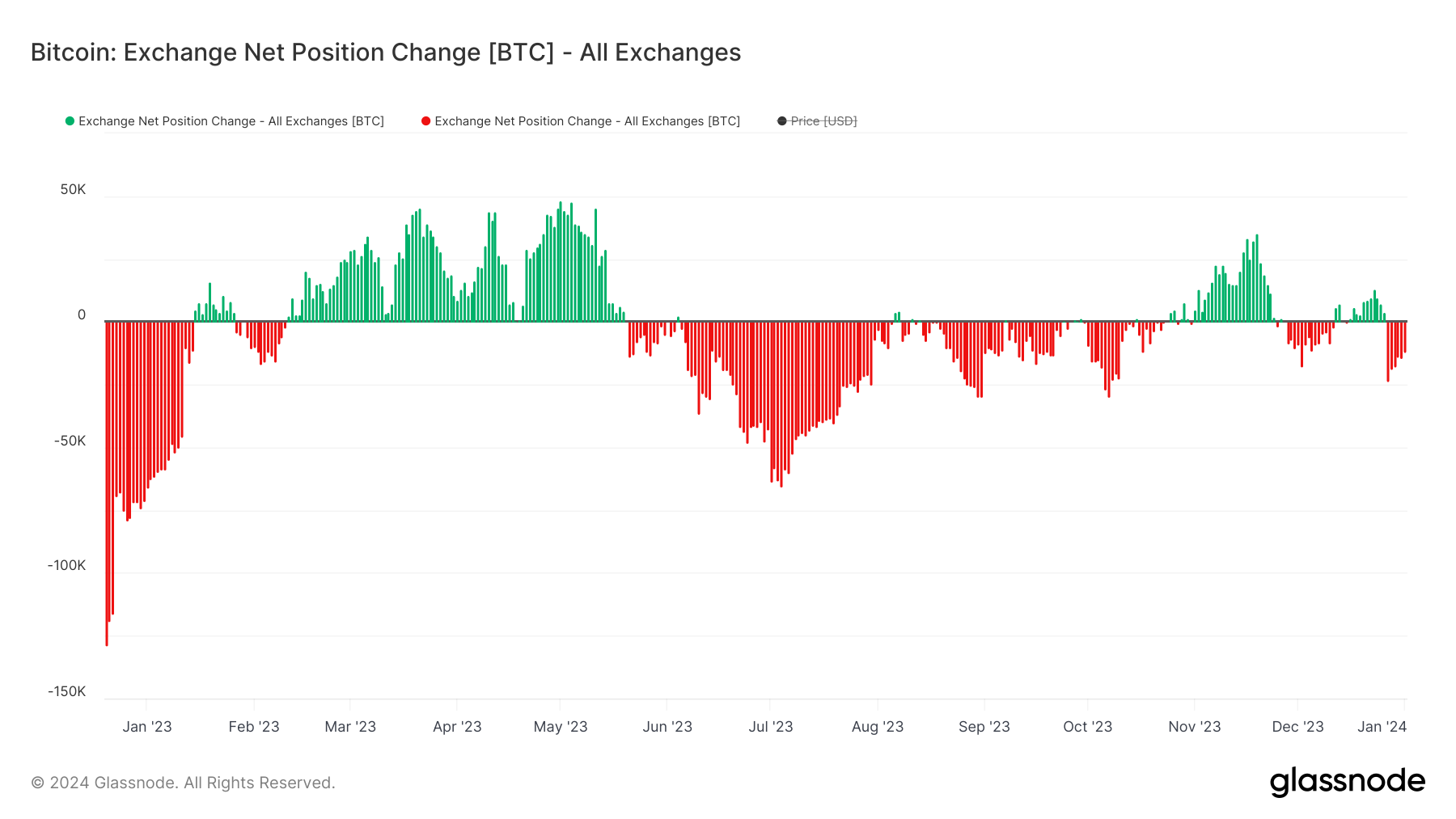
The State of Bitcoin Heading Into 2024
Today’s letter is brought to you by Cal.com!What do I have in common with Chad Hurley (YouTube), Tobi Lütke (Shopify), and Alexis (776/Reddit)? We are all early investors in Cal.com and we use it instead of Calendly. Cal.com is the leading open-source scheduling platform, which gives you the same superpowers of efficiency previously reserved for elite corporations & tech gurus. Top performing teams choose Cal.com to increase business productivity, get insights on their team, and their automated workflows. Stop wasting your time with scheduling software that doesn’t work. Use technology to make your life easier. The best part? Set up is quick, easy, and you will never go back to your boring calendar tool. Exclusive for Pomp Letter subscribers/Pomp Podcast listeners, use code “POMP” for $500 off when you set your team up with Cal.com. Save time. Save money. Use Cal.com.To investors,Financial markets are showing excitement for the potential spot bitcoin ETF. The digital currency is trading up approximately 8% after the first day of 2024. My advice is to go into the spot bitcoin ETF approval with low expectations. If things go well and bitcoin's price rises, you will be pleasantly surprised. If things don't go well and bitcoin's price goes down, you will have expected it. Life is all about closing the gap between expectations and reality. As we head into this milestone, I wanted to do an evaluation of where we sit with the asset, the network, and the current holder base. It is important to have a baseline understanding of the fundamentals, especially since many people are predicting such a large shift in the coming months. First, we can see that bitcoin’s price has had a strong recovery from the sub-$17,000 mark just a year ago. The appreciation of 173% felt rather quiet throughout 2023, but it is hard to ignore now. Second, retail investors spent much of the bear market buying more bitcoin. We can see the number of unique addresses holding at least 0.01 bitcoin (~ $450) has hit a new all-time high. We can see that the number of unique addresses holding one full bitcoin has also hit a new all-time high as well. Next, we see hash rate from bitcoin miners has continued to go parabolic and is now sitting at fresh highs.These miners are quite happy right now because they have seen multiple spikes in transaction fees throughout 2023, which can be attributed to a rise in Ordinals/Inscriptions. As revenue has been rising, miners spent much of November and December as net sellers of the bitcoin on their balance sheet. Exchanges were very similar. They spent most of the year as net sellers from their balance sheet too.Speaking of exchanges, Binance remains the dominant player in the futures market even though they went through the recent legal issues. Another interesting data point is that the number of successful transactions on the bitcoin network more than doubled in 2023 to approximately 650,000 per day. Another positive point is that more bitcoin being moved in the last quarter of the year has been in a realized profit state. This means that people who have participated in these transactions are no longer under water. Lastly, bitcoin’s market cap dominance was over 50% until the end of Q1 2021. It had been sub-50% since, but that changed a few months ago in Q4 2023. Seeing 50%+ market dominance for the oldest asset in the space speaks to the importance of first mover advantage, superior technical structure, and the initial capture of mindshare. There is a lot of speculation around the spot bitcoin ETF going into the next 9 days. The SEC has been feverishly working on the various applications and the consensus view in the market is that we will see an approval during this window. What happens once the applications are approved is anyone’s guess. Remember, low expectations should rule the day. Either way though, bitcoin — both as an asset and as a network — is in a very strong position. The decentralized digital currency continues to gain adoption globally, while also lengthening it’s lead as the strongest computer network in the world. Given the backdrop of a guaranteed monetary debasement in the fiat world, bitcoin’s best days are likely ahead of it. Hope you all have a great start to the year. I’ll talk to you tomorrow.-Anthony PomplianoJoe McCann is the Founder, CEO, & CIO of Asymmetric Financial.In this conversation, we discuss meme coins & internet culture, bitcoin vs BONK, macro environment, portfolio construction, and meaning behind “full blown depression, or dog coins to a trillion.”Listen on iTunes: Click hereListen on Spotify: Click hereYou are receiving The Pomp Letter because you either signed up or you attended one of the events that I spoke at. Feel free to unsubscribe if you aren’t finding this valuable. Nothing in this email is intended to serve as financial advice. Do your own research. This is a public episode. If you'd like to discuss this with other subscribers or get access to bonus episodes, vi
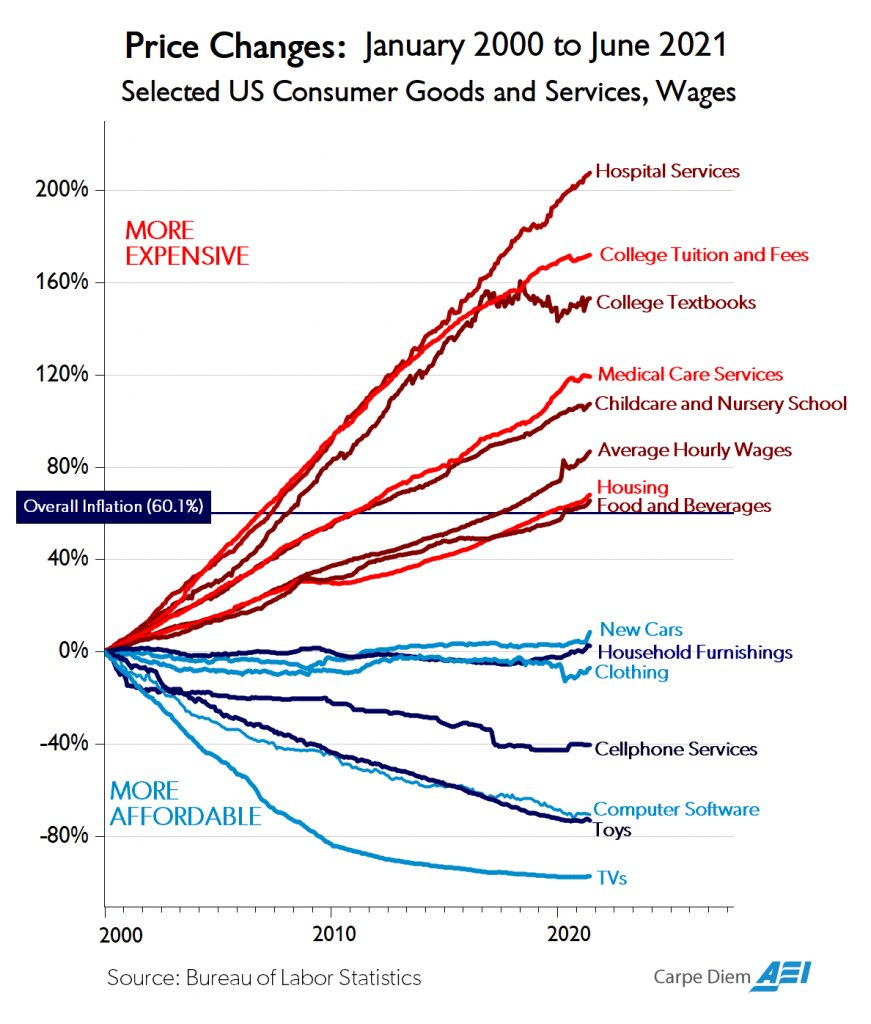
Powerful Technology Is Moving Into The Hands Of Retail Investors And It Will Revolutionize Markets
To investors,This is my last letter to you of 2023. I figured I would leave you all with some alpha on how to put yourself in a better financial position during the new year. Below is a simple idea that will require no changes to your current investment exposure, yet can help you capture significant benefit thanks to new technology and innovation. Before I explain what you can do, we must first understand how innovation works.The promise of technology innovation is that costs come down causing a deflationary tailwind in society, while simultaneously democratizing access to products and services that were historically reserved for the wealthy. You can see how innovation, particularly from the private sector, leads to cost decreases over time. Bureaucracy and the public sector have the opposite effect (red lines).This phenomenon is worth paying attention to because I believe it is coming to financial markets in a big way over the next decade. We have already seen fractionalized shares, ETFs, and other innovations lead to more capital invested in markets, but there is an even more powerful trend on the way in my opinion. Let’s use direct indexing and tax-loss harvesting as an example.I previously invested in a company called Frec that allows investors to invest in the S&P 500 stocks and leverage technology to automate tax-loss harvesting throughout the year. Some people will call it artificial intelligence. Others will call it automation. The nomenclature doesn’t matter nearly as much as the benefit it provides to the average investor. Here is how it works:A key difference between buying the traditional S&P 500 index vs the same individual stocks via direct indexing is that an investor can now use tax-loss harvesting to significantly decrease their capital gains tax when they ultimately sell the exposure. So why is this important?Tax-loss harvesting previously required a sophisticated team to execute and could be extremely expensive. Essentially the wealthy were the only people able to access and afford this nuanced strategy.The innovation that has occurred over the last few years is changing that. Frec and others can introduce new investment opportunities, bring costs down, and democratize access to tools and strategies. If you want Frec to help you with tax-loss harvesting, check them out here: Financial markets are riddled with data, so the explosion of technology related to artificial intelligence and automation is likely only beginning. We know that large financial firms such as Citadel and others have been making billions of dollars using some of these technologies for years, so imagine what happens when mass access is created for the average investor.My expectation is that the Robinhood effect of fractional shares and low dollar amounts was only the beginning of a financial technology revolution. As the more sophisticated technology is brought down market, not only will it lead to more interest in investing, but the financial returns that the average investor can capture will be materially increased.With Frec, they estimate a tax-loss harvesting amount equivalent to 40% of your invested capital over a few years. So if you invest $10,000, then Frec could generate a $4,000 tax savings bill. That sounds cool, right?Imagine when the technology is not only focused on helping reduce taxes — eventually the technology will help to generate outperformance as well. Remember, humans are arrogant enough to believe that we can outperform machines. The machines have proven us wrong in almost all aspects of our life so far. Finance will be no different. The costs will come down, the access to tools will go up.Technology innovation is a net positive for the world. Frec is a great example. There will be many more over time. I hope each of you has a great end to the year. My wish for everyone is that 2024 will bring abundance and happiness to your lives.Talk to everyone on Tuesday.-Anthony PomplianoJoe McCann is the Founder, CEO, & CIO of Asymmetric Financial. In this conversation, we discuss meme coins & internet culture, bitcoin vs BONK, macro environment, portfolio construction, and meaning behind “full blown depression, or dog coins to a trillion.”Listen on iTunes: Click hereListen on Spotify: Click hereEarn Bitcoin by listening on Fountain: Click hereMacro Trader Explains Bitcoin, BONK, Meme Coins, and Internet CulturePodcast Sponsors* Cal.com - Changing the calendar management game. Use code “POMP” for $500 off when you sign up.* Trust & Will - Estate planning made easy. They are fast, secure, and simple to use. Get your will or trust created today.* Auradine - A new bitcoin miner powered by the world’s first 4 nanometer silicon chip technology.* Base: Base is shaping the future of the on-chain world with near-zero gas fees and rapid transaction speeds.* ResiClub: Your data-driven gateway to the US housing market.* Bay Area Times: A visual newsletter explaining the latest tech & business news.You are receiving The
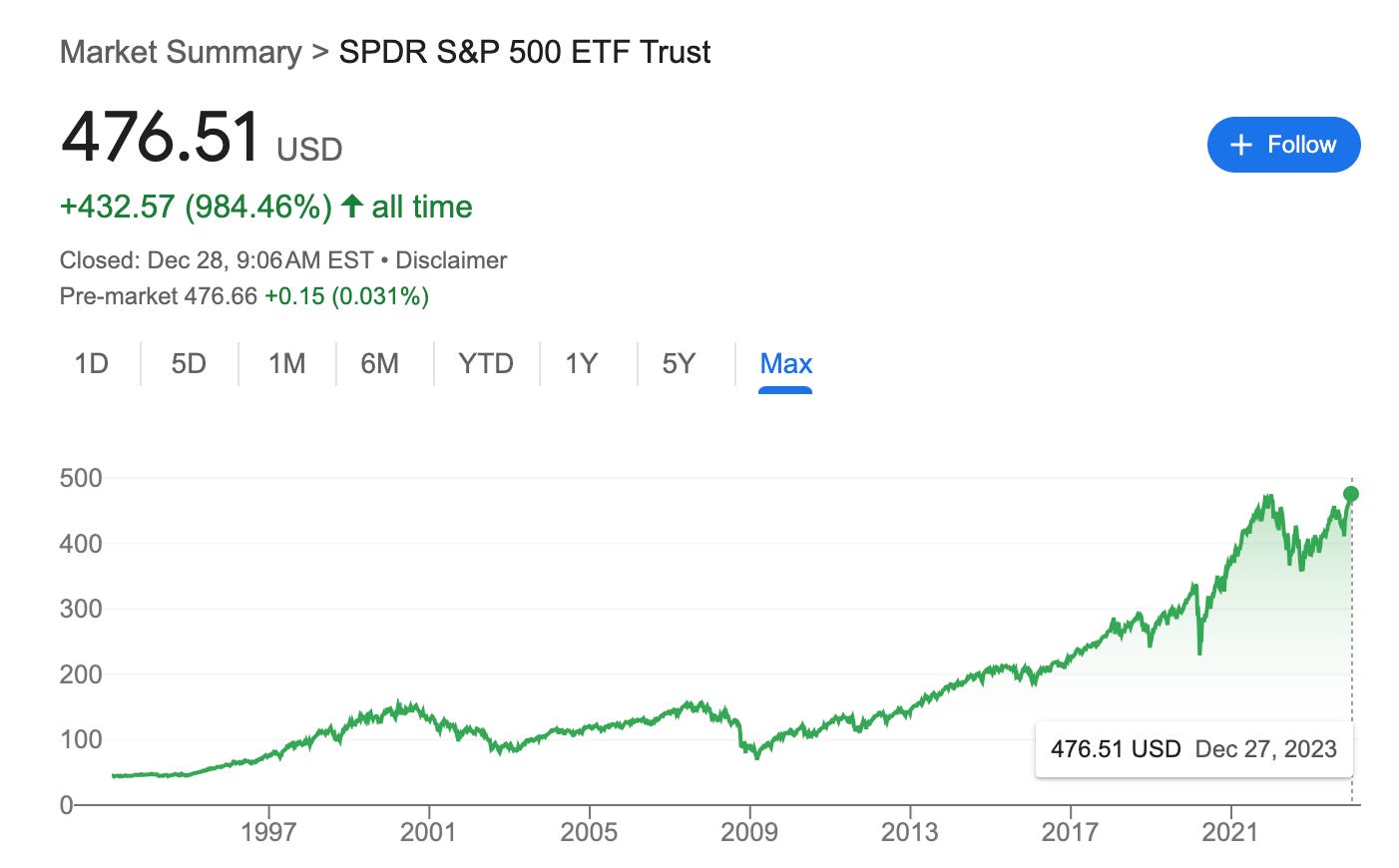
Asset Prices Are The Crouched Lion Approaching Their Prey
Today’s letter is brought to you by Cal.com!What do I have in common with Chad Hurley (YouTube), Tobi Lütke (Shopify), and Alexis (776/Reddit)? We are all early investors in Cal.com and we use it instead of Calendly. Cal.com is the leading open-source scheduling platform, which gives you the same superpowers of efficiency previously reserved for elite corporations & tech gurus. Top performing teams choose Cal.com to increase business productivity, get insights on their team, and their automated workflows. Stop wasting your time with scheduling software that doesn’t work. Use technology to make your life easier. The best part? Set up is quick, easy, and you will never go back to your boring calendar tool. Exclusive for Pomp Letter subscribers/Pomp Podcast listeners, use code “POMP” for $500 off when you set your team up with Cal.com. Save time. Save money. Use Cal.com.To investors,A lion stalks its prey by racing to find an area with high opportunity of finding food. The lion slows down as it arrives in the area and starts to sneak closer and closer. During this process, the lion will crouch down and continue inching forward at an undetectable pace to remain out of sight.Once the lion believes the risk-reward is in their favor, they explode out of the crouched position and run full speed to secure their prey. We can learn a lot from nature when trying to understand financial markets. I believe assets have been following this exact lion approach over the last four years. Let me explain. The asset price boom we saw in 2020 and 2021 was akin to the lion running fast from some far-away land to get close to the prey. During 2022 and 2023, asset prices then crouched down and started to inch closer to the intended target.While most people thought there was a significant asset crash, we have had the exact opposite. Single family home prices in the US have been increasing every month for the last 9 months even though interest rates are at 5%+ and the 30-year fixed mortgage crossed over 8% during that time period.Home prices were crouched down and inching forward without being noticed.Stocks followed a similar pattern. Both the S&P 500 and the Nasdaq 100 are sitting at, or near, all-time highs right now. Remember, high interest rates are supposed to destroy demand, but these stock indexes simply crouched down and inched closer while staying out of sight. If real estate and stocks are following a lion’s lead on their crouched approach, then it is safe to assume that bitcoin and cryptocurrencies are doing the exact same. Different assets but same story. You can see that although bitcoin has not returned to the previous all-time high, the digital currency has been sneaking up on people too. So what does this mean for 2024 and beyond?My expectation is for the Fed to cut interest rates in the first half of the year, followed by a full return to quantitative easing by year end. The impact of interest rate cuts will heavily depend on the severity of the cuts, but it wouldn’t surprise me to see rates back in the 2-3.5% range within the next 12-18 months. That type of tailwind should get investors even more excited about pouring capital into financial markets. As the United States returns to printing money, we are all likely underestimating how much they will need to print — there are proxy wars to fund, local governments begging the national government for financial support, a southern border that has become invisible, and national debt interest payments that have eclipsed the national defense budget. The government needs more money, so there will be more money in the system. This is an unwritten rule of the game. When more money is chasing the same amount of financial assets, the asset prices have to explode higher. Just as the lion pounces on their prey at the perfect moment, asset prices are poised to do the same thing in 2024. This leads me to areas that I anticipate the highest returns to be captured. Here is a list in no particular order:* Bitcoin should appreciate hundreds of percent from here, but I would be cautious about the 10x predictions that some are making. * Altcoins should be the biggest winner across all financial markets — the further out you go on the risk curve of the “riskiest” asset class (crypto), the more you should be paid for the risk you take.* Proxy bitcoin exposure, like bitcoin mining stocks and Microstrategy, will continue to perform well and likely outperform pure bitcoin exposure on the way up. You will need to be careful on the other side of this bull market because the opposite is true too on the drawdown. * The major tech stocks will do well during this period, but the real area of opportunity is found in companies that have confused the market. Take Tesla as an example, the market believes they are a car manufacturer but they are more akin to the most advanced artificial intelligence and robotics company in the world. * While it is not my game, there will be big money made by people betti
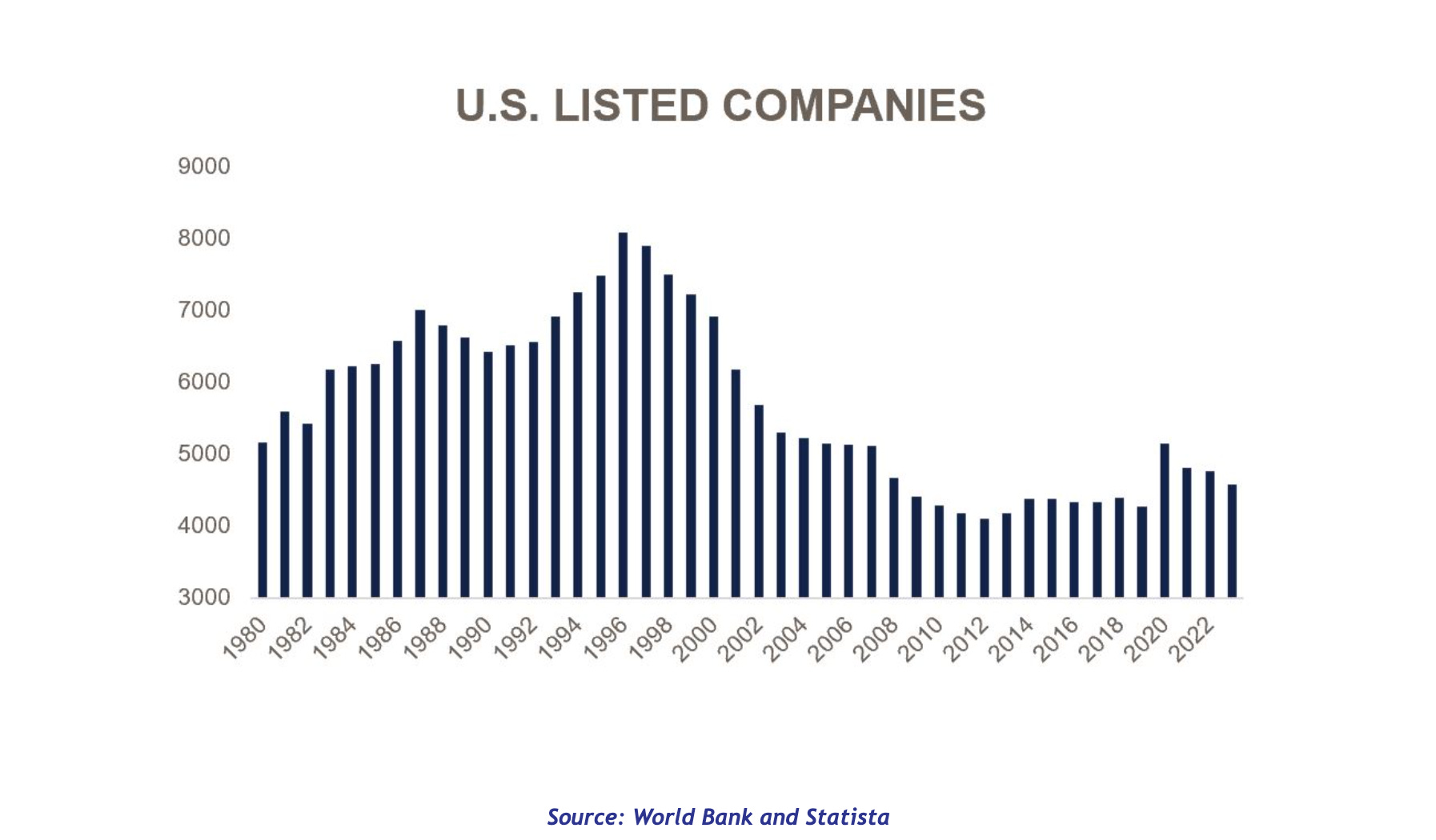
US Citizens Had To Become Market Speculators
Today’s letter is brought to you by Dream Startup Job!* Dream Startup Job is the premier marketplace for connecting ambitious job-seekers with the world's most innovative companies.* Search over 10,000 roles and apply quickly to cutting-edge companies like Traba, Varda, Eight Sleep, Flowhub, and many others.* If you're looking to join a team that is making a difference in the world, create a job-seeker profile in minutes and start applying for roles.* If you're a startup, post your open roles today or schedule a call with the Dream Startup Job team by clicking here.To investors,The citizens of America are being forced to become market speculators. Historically, some portion of the population was drawn to the idea of wagering capital to drive a return on their investment, yet a majority of individuals chose to refrain from this activity and merely save their money. To understand the phenomenon, we must first identify a key structural change that happened in the 1970s — the United States went off the gold standard, the government became addicted to running an ever-increasing deficit, and the national debt has ballooned to $33+ trillion. This chart from Pantera’s Dan Morehead is eye-opening.As the national debt became larger, the US government realized they had a more robust ability to devalue the currency so we theoretically could pay off a fixed debt amount with future devalued dollars. You can see a rapid decline in the purchasing power that began at the start of the 1970s.While the devaluation of the dollar allows for debt to be paid off at advantageous terms later, even though it is unlikely that the US will ever pay off their debt, the largest negative repercussion from this decision is the erosion of citizens’ savings value. The majority of citizens were holding cash in the bank account trying to save their way to wealth, yet the government was destroying that value simultaneously. This devaluation forced more citizens to seek paths to protect their wealth. Investment assets like stocks became a popular option because the belief has been that the stock market will outgrow any inflation implemented by the government. So how significant was this trend?Within 30 years, more than 50% of all US citizens owned stocks directly or indirectly. Last year the percentage of US citizens holding stocks hit an all-time high just under 60%. The rise from 53% stock ownership in 2019 to 58% stock ownership in 2022 is largely driven by the mania ushered in from zero-interest rates and trillions of dollars in quantitative easing. This problem is not going away. The national debt chart looks like an exponential growth chart a Series A startup would show investors to elicit their next mega-round of funding. Up and to the right. No end in sight.This runaway debt means the United States has no choice but to continue devaluing the US dollar. As they devalue the dollar, more citizens will seek investment assets like stocks, real estate, gold, or bitcoin to protect their wealth. We should see ownership of each of these assets, especially stocks, hit new all-time highs over and over again throughout the next decade. At the same time more capital and investors has flooded into the public stock market, the number of public companies has been declining at an alarming rate. The folks at BlueTrust write “In 1996 the number of listed companies in the U.S. peaked at 8,090, but as of Q1 2023, it had fallen to 4,572, a drop of 43%. The chart below highlights this dramatic decrease in public companies, which occurred in spite of growth in the economy, global market expansion, and new industries and technologies.”More capital chasing fewer companies. All this happening while the dollar, which stock prices are denominated in, continues to become less value over the long term. This is what drives the stock market up forever. There is immense wealth to be built by simply buying stocks and letting the market structure take over from there. If you take this analysis to the extreme, there is also more capital chasing a finite amount of bitcoin, so the same macro tailwind should work in the digital currency’s favor as well. Investors win, savers lose. That is the story in America for the foreseeable future. Don’t get caught on the wrong side of the equation. Hope everyone has a great day. I’ll talk to each of you tomorrow.-Anthony PomplianoIf you enjoyed this letter, you should consider subscribing to the Pomp Letter. I write 3-5x per week and explain in simple language what is happening in the economy, financial markets, and bitcoin.Bill Miller IV serves as CIO and Chairman at Miller Value Partners, he also serves as a Portfolio Manager. In this conversation, we talk about the bitcoin market, ETF’s, miners, regulation, halving, stablecoins, artificial intelligence, and a non-bitcoin yield focus fund that Bill also manages.Listen on iTunes: Click hereListen on Spotify: Click hereEarn Bitcoin by listening on Fountain: Click hereBill Miller IV Explai

Governments Need Revenue And More Taxes or Printing Is Not The Answer
Today’s letter is brought to you by Sidebar!Do you want to level up your career in 2024? As we all know, navigating a big career transition is hard to do.Sidebar is a private, highly vetted leadership program for those who want to do more, do it better, and do it faster. Sidebar’s approach is focused around small peer groups, a tech-enabled platform, and an expert-led curriculum. Members say it’s like having their own Personal Board of Directors. And it works: 93% of members say that Sidebar has made a significant positive change in their career trajectory. Join over 15,000 top senior leaders from companies like Nike, Stripe and Amazon who have taken the first step at sidebar.com. Request an invite to join before December 31st to become a founding member. To investors,The boom in artificial intelligence hype has created a few unlikely winners. One of the least likely is the government of Anguilla, which happens to have the country code top-level domain of “.ai” — in layman’s terms, if you want to buy any .ai domain, you have to buy it from the Anguilla government. So how much money is this worth for Anguilla?Amy Thorpe writes for Restofworld.org: “The rewards from selling web addresses are considerable: Cate estimates the revenue generated by Anguilla’s .ai domain — around $3 million per month — currently accounts for around a third of the government’s monthly budget.”The islands in the Caribbean are not the only British territory to benefit from this phenomenon. Thorpe writes:“Following a deal with GoDaddy in 2022, some reports said Tuvalu could make $10 million per year from the .tv domain — one-sixth of its GDP. That revenue has allowed Tuvalu to pave its roads, expand electricity access for its residents, and even pay its first annual United Nations membership in 2000.”Domain sales are equating to approximately 33% of one government’s budget and about 16% of another government’s GDP output. Wild. This recent development is going to become more important in the coming years. Remember, many governments around the world are broke. Some governments will try to rectify the issue by printing money until they fail. Other countries will continue hiking taxes until all the wealthy people leave. Neither of these strategies are long-term sustainable, but they are so simple that the short-term oriented politicians will pursue them with energy and passion. A bad solution is better than doing nothing in their eyes. I disagree. Don’t believe me they will do this? The state of California has floated the idea of raising state taxes for the highest tax bracket by up to 5%, which would push the total taxes paid by the wealthiest individuals to almost 60% if ever approved (I highly doubt they can rally support for this extreme measure). That means you don’t start working for yourself until August each year! But even if California can’t get the egregious tax proposal passed, they are already quite onerous in their tax treatment of citizens. Tanza Loudenback writes for Business Insider:“California has the highest marginal tax bracket for individuals at 12.3%. It also assesses an additional 1% tax on income exceeding $1 million. California also one of the highest-tax states for corporations, which pay a flat 8.84% tax on net taxable income.”Add in the fact that a mansion tax that charges an extra 4% - 5.5% for homes sold above certain price points went into effect in Q2 2023 and it becomes obvious that California is looking under every couch cushion for more revenue. They are not alone as a state though.New York is also trying new things to drive additional tax revenue. The craziest one is a “congestion tax” in Manhattan, which is the first congestion tax introduced in the United States. How does it work? If you drive into the main business area during work hours on weekdays you are hit with a brand new tax ($15 for passenger cars and up to $36 for trucks). The goal is to raise billions of dollars in revenue with this measure.California and New York may be on the tip of the spear for new tax revenue opportunities, but they both have also seen a major exodus of wealthy residents in the last three years. Not a good situation. The more people that leave, the more ridiculous the taxes need to become, which drives even more people out in a crazy feedback loop.If we take a look at governments printing their way out of the problem, we don’t have to look any further than the US government. Our national leaders have helped 10x the Federal Reserve’s balance sheet since the Global Financial Crisis. Think about that for a second — we have increased the balance sheet ten-fold in about 15 years. That seems unsustainable. This brings me to what I believe governments should be doing: creating products and services that people are willing to pay for. Does this sound unrealistic? We have examples where it is working. Florida’s Brightline, which is privately owned but could easily have been built and operated by the government, is growing 50% y
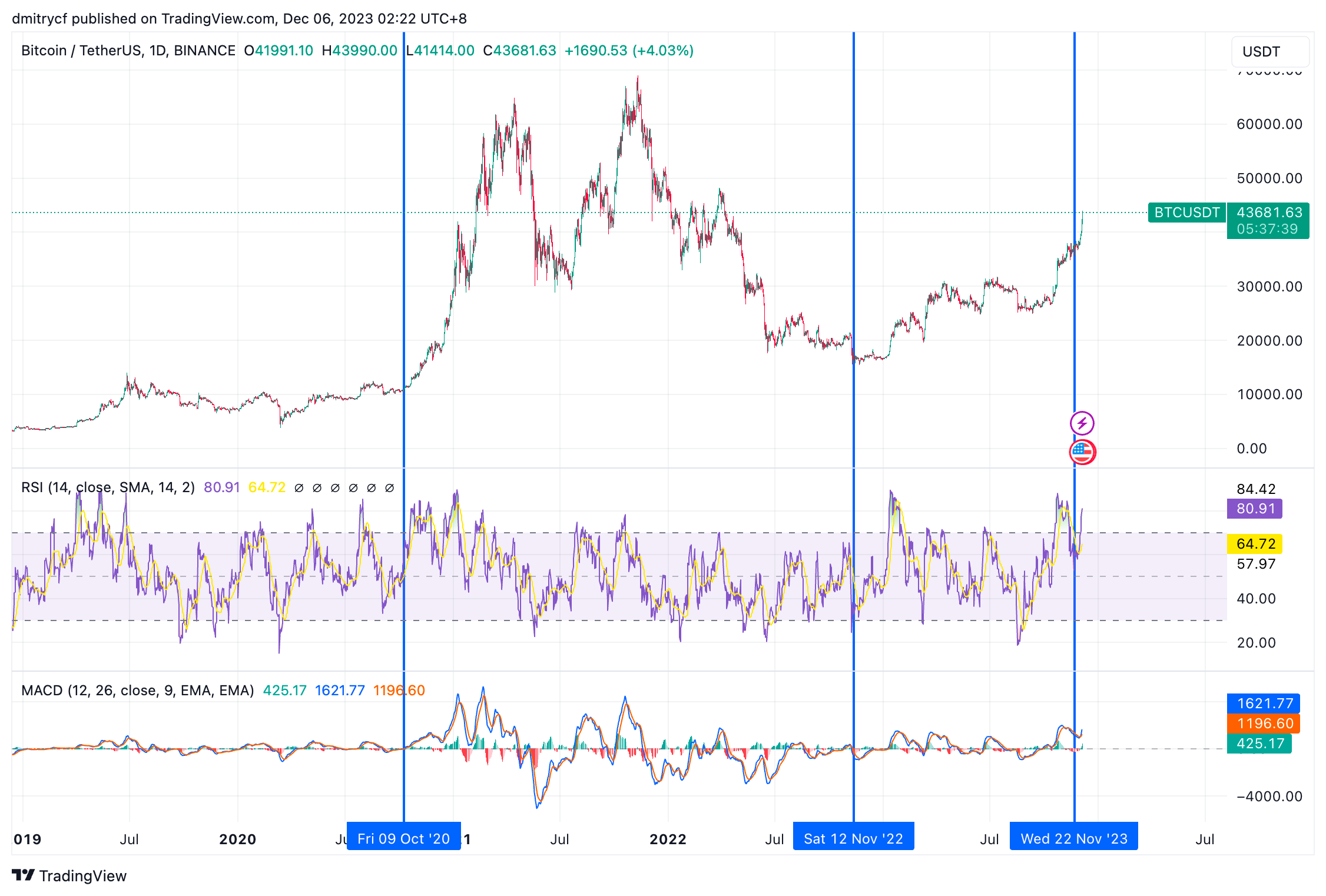
Certainty In Markets Ushers In New All-Time Highs
Today’s letter is brought to you by Cal.com!What do I have in common with Chad Hurley (YouTube), Tobi Lütke (Shopify), and Alexis (776/Reddit)? We are all early investors in Cal.com and we use it instead of Calendly. Cal.com is the leading open-source scheduling platform, which gives you the same superpowers of efficiency previously reserved for elite corporations and tech gurus. Top performing teams choose Cal.com to increase business productivity, get insights on their team, and their automated workflows. Stop wasting your time with scheduling software that doesn’t work. Use technology to make your life easier. The best part? Set up is quick, easy, and you will never go back to your boring calendar tool. Exclusive for Pomp Letter subscribers/Pomp Podcast listeners, use code “POMP” for $500 off when you set your team up with Cal.com. Save time. Save money. Use Cal.com.To investors,Markets like certainty. This has been a major takeaway from the last few years of investing. A great example is what happened in the bitcoin and cryptocurrency industry after major events with cryptocurrency exchange CEOs.David Pakman, Managing Partner of Coinfund, shared this chart with me recently:It is the price of bitcoin, with each blue vertical line representing when a major crypto exchange CEO was ousted from their role — from left to right: Arthur Hayes of BitMEX, Sam Bankman-Fried of FTX, and CZ of Binance. Shortly after each of these CEOs departed, markets rallied aggressively. This chart shows that capital had been sitting on the sidelines, but once there was clarity in the market, investors deployed the capital and drove the price of bitcoin higher. This phenomenon is not exclusive to crypto markets though. Federal Reserve Chairman Jerome Powell gave a speech revealing the central bank’s plan to cut interest rates in 2024. The market has long been speculating on when these interest rate cuts would take place, but the Fed had remained committed to higher interest rates for a longer period of time in all of their communication until yesterday. So what happened?The market got certainty and investors deployed capital into the market. We saw the Nasdaq-100 hit an all-time high in after-hours trading. The S&P 500 is sitting near the all-time high level as well. Bitcoin jumped 3% on the news. Apple hit a new all-time high. The list goes on-and-on. If I had told you that the Fed would crank interest rates at the fastest pace in history, yet the S&P 500 would be up 23% for the year, you wouldn’t have believed me. If that wasn’t crazy enough, the S&P is on track this year to outperform the S&P in 2020. Interest rates are over 5% today, but they were dropped to 0% in 2020. That shouldn’t happen in financial markets, but here we are. Investors hate chaos, uncertainty, and a lack of predictability. This is why the Fed spends so much time thinking about what words are used in a press conference or what information they are leaking to the press. Plenty of uncertainty remains going into 2024 — will we have a recession? Will the Fed follow through on their plan to return to loose monetary policy? How will the geopolitical conflicts in Ukraine and Israel impact US monetary and fiscal policy? Will China make a move on Taiwan? Can consumers continue to spend at record levels without wages materially increasing? What happens to the housing market, which has reached the most unaffordable level in 40 years? I don’t have answers to these questions. Investors have to consider each of them carefully. But fortunately, the Fed is still the big dog in financial markets. If the Fed cuts interest rates, and likely returns to quantitative easing as well, then asset prices are going to rip higher. And if our current starting point is at, or near, all-time high levels, then we are going to see some fairly ridiculous return percentages posted in the next 24 - 36 months. Hopefully this letter serves as a warning for you to consider the phase change we are undergoing right now and how it will impact your portfolio. The decisions you make today will likely determine your returns for the coming years. Hope everyone has a great day. Talk to you soon. -Anthony PomplianoIf you enjoyed this letter, you should consider subscribing to the Pomp Letter. I write 3-5x per week and explain in simple language what is happening in the economy, financial markets, and bitcoin.Kevin Erdmann is one of the most interesting analysts when it comes to the US housing market. He writes on Substack at kevinerdmann.substack.com. He also has 2 books, called “Shut Out” and “Building from the Ground Up: Reclaiming the American Housing Boom.” In this conversation, we go through ideas on how to make housing more affordable, how we get here, Federal Reserve, who is responsible, and solutions.Listen on iTunes: Click hereListen on Spotify: Click hereEarn Bitcoin by listening on Fountain: Click hereKevin Erdmann Explains Why Housing Is So UnaffordablePodcast Sponsors* Cal.com - Changing th

The Greatest Marketing Blitz In Finance History Is Coming
Today’s letter is brought to you by Trust & Will!Trust & Will is the most trusted name in online estate planning and settlement.The company has helped hundreds of thousands of families create their estate plans, and they’re just getting started. Trust & Will enables every American to create a plan that’s customized to fit their needs, their life, and their legacy.Their mission is to make estate planning simple, affordable, and inclusive.All of Trust & Will’s documents have been designed and approved by estate planning attorneys to meet the highest legal standards. Their process is simple, secure, complete, and customized for your specific needs and state requirements.To investors,We are on the precipice of one of the largest marketing blitzes in the history of financial markets. The bitcoin spot ETF is rumored to gain approval in early January 2024, which will kick off a global competition between financial heavyweights for billions of dollars in assets under management. Let’s dive into some of the numbers. When the ETF is approved, it is likely that $50 billion - $100 billion will flow into the various funds within the first 12 - 24 months. The approval of a futures bitcoin ETF was the fastest growing ETF in history, with approximately $1 billion invested into the fund in the first 48 hours, so we should see quite a bit of exuberance around the spot bitcoin ETF.Additionally, Grayscale’s GBTC had about $40 billion market cap in the 2021 bull market. Even though it was a less ideal trust structure, this signified how much investors wanted bitcoin exposure via public markets. Given these prior data points, we can assume the $50 billion - $100 billion number for ETF inflows. GBTC currently charges a 2% management fee. ProShares charges 0.95%. Let’s handicap the probable fee structure at a 1% management fee for easy numbers. This means $500 million to $1 billion is up for grabs in annual revenue to the winners of the ETF asset race. What would you do if you were the ETF issuers that get approved?Spend an insane amount of money to capture as much market share as you possibly can. We know from previous ETFs and markets that ETF AUM tends to be fairly sticky. Once a clear winner has been established, it tends to keep the dominant position. Liquidity begets liquidity. Assets attract assets. This is why I believe we will see the most insane marketing blitz in the history of financial markets in 2024. In my estimation, asset managers will collectively spend $100 million or more trying to woo investors and capital to their respective ETFs. There will be PR wars waged on the front pages of financial media. CEOs will be paraded around television news outlets as much as possible. There will be TV commercials. Super Bowl ads. Full page takeovers of newspapers. A flood of content on every social media platform. And billboards everywhere. Finance has never seen what is about to happen. But the reward is not only $500 million to $1 billion. The reward is that amount of money EVERY YEAR for the foreseeable future. Sure, there will be fee pressure over time, but for the next 5+ years, the ETF winner is going to capture billions of dollars in revenue. How much would you spend on marketing to capture $1 billion in annual revenue? A lot.We are about to find out the exact answer for BlackRock, ARK, Fidelity, Bitwise, and many others. The blitz is coming. It will be so epic that you will be tired of the ads. Everywhere you turn, someone will be asking you to invest in the bitcoin ETF. This is what bull markets are made of. And bitcoin is poised to benefit. Have a great day. I’ll talk to everyone tomorrow.-Anthony PomplianoIf you enjoyed this letter, you should consider subscribing to the Pomp Letter. I write 3-5x per week and explain in simple language what is happening in the economy, financial markets, and bitcoin.Anthony Pompliano sat down with CNBC's Talia Kaplan. Topics include Federal Reserve, financial markets, interest rates, bitcoin, why he expects capital to flow into the asset class, and why he believes bitcoin bull market has begun.Listen on iTunes: Click hereListen on Spotify: Click hereEarn Bitcoin by listening on Fountain: Click hereAnthony Pompliano’s Full Interview with CNBCPodcast Sponsors* Cal.com - Changing the calendar management game. Use code “POMP” for $500 off when you sign up.* Trust & Will - Estate planning made easy. They are fast, secure, and simple to use. Get your will or trust created today.* Auradine - A new bitcoin miner powered by the world’s first 4 nanometer silicon chip technology.* Base: Base is shaping the future of the on-chain world with near-zero gas fees and rapid transaction speeds.* ResiClub: Your data-driven gateway to the US housing market.* Bay Area Times: A visual newsletter explaining the latest tech & business news.You are receiving The Pomp Letter because you either signed up or you attended one of the events that I spoke at. Feel free to unsubscribe if you aren’t finding this va
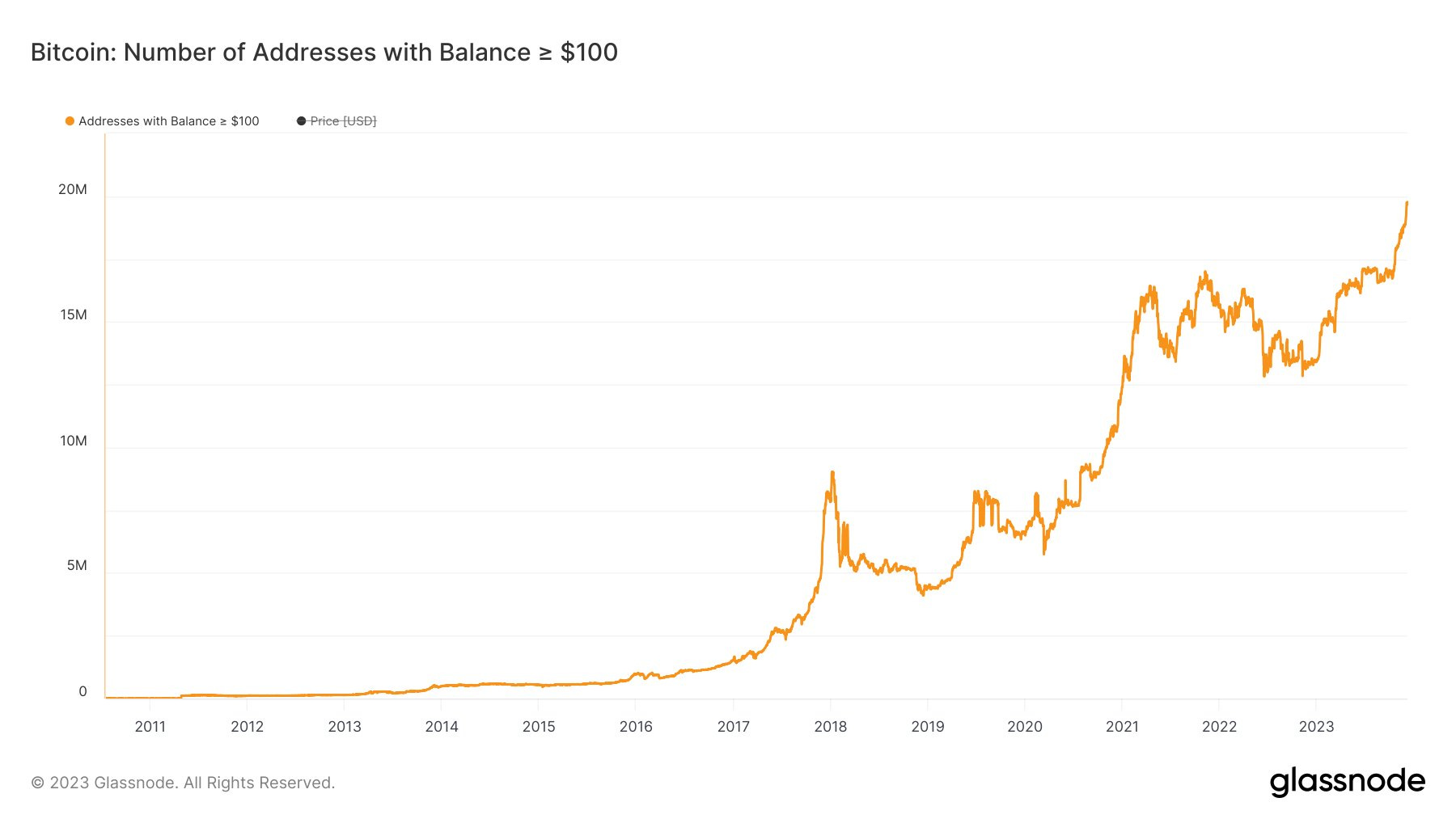
Retail Investors Were Unfazed By The Crash In Asset Prices
Today’s letter is brought to you by Cal.com!What do I have in common with Chad Hurley (YouTube), Tobi Lütke (Shopify), and Alexis (776/Reddit)?We are all early investors in Cal.com and we use it instead of Calendly. Cal.com is the leading open-source scheduling platform, which gives you the same superpowers of efficiency previously reserved for elite corporations and tech gurus.Stop wasting your time with scheduling software that doesn’t work. Use technology to make your life easier.Cal.com is transforming sophisticated calendar management into an accessible tool for all via a user-friendly interface. Set up is quick, easy, and you will never go back to your boring calendar tool.Exclusive for Pomp Letter subscribers, use code “POMP” for $500 off when you set your team up with Cal.com. Save time. Save money. Use Cal.com.To investors,There was peak hysteria at the top of the market in 2021. Most people were convinced that stocks, real estate, bitcoin, and other assets could only go up. Amid that chaotic environment, there were a few sane voices that issued words of caution. Lux Capital’s Josh Wolfe was one of them. Here was the tweet that caught my eye back then:At the time, I agreed with Josh that the market was frothy, but I disagreed with his conclusion that young people would get wrecked by a market correction. In fact, I made the opposite argument. I wrote on December 1, 2021 to each of you the following in a letter titled Young People Have Lived Through More Market Downturns Than Any Other Generation In History:“The public narrative is that young people have never experienced a market downturn. The older generations, the cynics, and the persistent bears like to propel a narrative that asset prices are being pushed up by young, naive investors who have never seen a bear market. That simply isn’t true though.The generation of investors who are under the age of 35 have actually lived through worse financial markets than any other generation of financial investors. How many of them can claim to have lived through at least five market downturns in 12 years? Additionally, how many folks in the older generations can say they lived through an 80-95% market downturn and didn’t sell their assets, but instead bought more?Young investors are the most resilient investors in history. They truly have diamond hands. The incumbents don’t have the stomach for this type of volatility. You could actually argue, digital natives are just built different. They store majority of their wealth in assets that have 80 vol and fluctuate 5-10% a day.This is what happens when we live in a world with undisciplined monetary and fiscal policy. The young people refuse to play the game based on old rules. They understand that bear markets in the stock market have been outlawed and market corrections are banned. The central bank and politicians have to step in every time and prop up asset prices. And alternative assets, like bitcoin and cryptocurrencies, are the only honest market left.”My perspective was not popular at the time. The commonly held belief by people in traditional finance is that market corrections hurt retail investors, but can be navigated by expert financial minds. This thought process presents the idea that inexperienced investors will simply get shaken out of their positions and sell at an inopportune time of market despair. That may have been true in past market cycles and with other asset classes, but as I said — bitcoin holders are built differently. Since my letter in December 2021, we have seen Wolfe’s prediction of a market crash play out. The S&P dropped about 25% from the market high to the market low in October 2022. Bitcoin was much more volatile. The digital currency dropped from a high of $69,000 to under $17,000 within less than a year. This nearly 80% drop in bitcoin was right in line with my analysis from previous market crashes. So what did these young, digitally-native investors do? Did they fall victim to human nature and sell in a panic as prices fell? Or did they brush off the market crash as a nothing burger as I had predicted they would?Two years later we finally have our answer — bitcoin holders have the strongest hands in financial markets. First, we can see that more than 57% of all bitcoin in circulation did not move in the last two years. This means that nearly 2 out of every 3 bitcoin being held was unfazed by a drop from $69,000 to sub-$17,000, followed by a rapid rise from sub-$17,000 to nearly $45,000. That is a drop of 80% quickly followed by an almost 300% increase. This would be an insane data point if it merely showed that bitcoin holders didn’t sell. But that is only the start of the story. These holders were not only refraining from selling, but they appear to have been buying aggressively once we got to the market bottom. We can see that bitcoin wallet addresses with at least $100 of bitcoin have been growing aggressively since November 2022, including a severe acceleration in the l
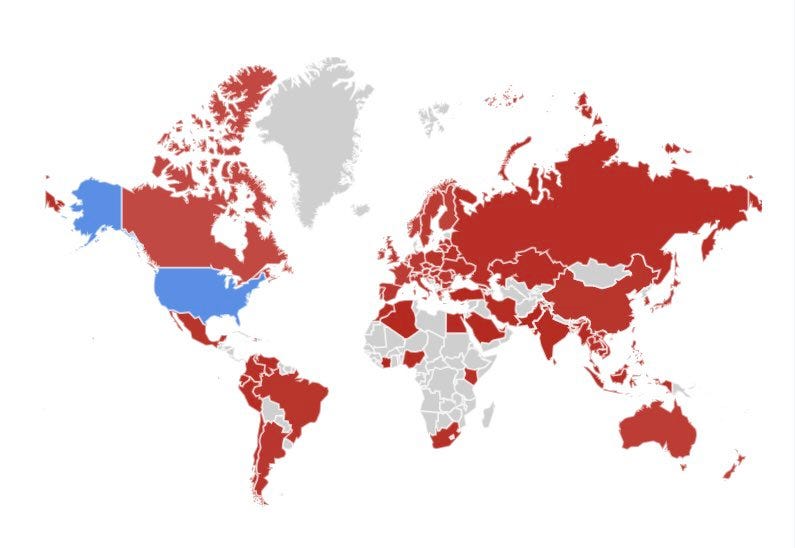
Keep Your Friends Close And Your Enemies Closer
Today’s letter is brought to you by Sidebar!Do you want to level up your career in 2024? As we all know, navigating a big career transition is hard to do.Sidebar is a private, highly vetted leadership program for those who want to do more, do it better, and do it faster. Sidebar’s approach is focused around small peer groups, a tech-enabled platform, and an expert-led curriculum. Members say it’s like having their own Personal Board of Directors. And it works: 93% of members say that Sidebar has made a significant positive change in their career trajectory. Join over 15,000 top senior leaders from companies like Nike, Stripe and Amazon who have taken the first step at sidebar.com. Request an invite to join before December 31st to become a founding member. To investors,The United States government has a heavy hand. Administration after administration spends billions of dollars, and untold amounts of time and energy, to concoct new rules and regulations for a variety of industries. One of the most popular areas of conversation in the last two years has been bitcoin and cryptocurrencies. There have been politicians calling for the banning of the technology. Others have tried to drastically increase the tax treatment to be more abrasive. Some have suggested that anyone using this technology is a criminal or nefarious actor. And plenty of politicians and regulators have regurgitated warnings of danger related to the industry by invoking phrases like money laundering, terrorism financing, fraud, and a plethora of other words that the American people have been trained to fear. The short story is that most of these fears are unfounded. Chainalysis, a blockchain analytics firm, has been studying illicit transactions for years and consistently finds that less than 1% of all bitcoin transactions are related to some sort of illegal nature. The facts don’t seem to matter in conversation between politicians and big bank executives though. Yesterday, Senator Elizabeth Warren and JP Morgan’s Jamie Dimon had an exchange that went viral online. In it, Dimon stated “the only true use case for it [cryptocurrencies] is criminals, drug traffickers, money laundering, and tax avoidance.”He went on to say that if he were the US government, he would shut down the crypto industry.Let’s put aside the hyperbole for a second and look at this situation more closely. First, the data suggests that less than 0.5% of all transactions in 4 of the last 5 years has been for illicit purposes. So Dimon’s claim is inaccurate. The more eye-opening thing, which the internet peanut gallery was quick to point out, is that JP Morgan has been fined $39 billion in the last 15 years for various violations and illegal activity. To put that number in perspective, if you spent one bitcoin per day at today’s price, it would take you 2,430 years to spend enough bitcoin to equal the amount of fines that JP Morgan has paid in the last 15 years. If you look at all major banks since the year 2000, the total fined amount grows to more than $300 billion. That is more than 1/3 of the total market cap of bitcoin right now. But this is not an eye-for-an-eye though. The fact that JP Morgan and other large banks have been fined so heavily is a testament to the fact that bad people will use whatever means necessary to do bad things. It doesn’t matter how transparent bitcoin’s protocol is, nor does it matter how big the compliance team is at a big bank. Nefarious actors will slip through the cracks in the traditional system and they will slip through the system in the new digital world as well. We have to be very careful that we don’t overreact though. One historical example is the War on Drugs. Since President Nixon announced the global effort to crack down on illicit drugs in the US in 1971, we have seen a constant rise in drug use in America. Think of how prevalent the opioid pandemic is today — that flies in the face of the stated goal of the War on Drugs. The harder that the system squeezed an action that citizens wanted to participate in, the more popular that action became. Could that happen with cryptocurrencies? Well, it may already be happening. Qiao Wang tweeted yesterday:“Learned something wild today. It’s now well known that USDT dominates USDC in Africa. But the reason is the compliant nature of USDC causes people to perceive it to be the “USA government coin” that can be censored. Whereas USDT is viewed as the wildwest uncensorable coin.”That may seem insane to people in the Western world but the data appears to back up the claim. We have seen USD Tether gaining in popularity, while USDC has been falling in recent months. Quite literally, the world is adopting the less regulated stablecoin.Additionally, we can see from Google trends that the United States is the only area where USDC interest appears to be the dominant interest for stablecoins. (Blue is USDC and red is USDT below).So why does all of this matter? Majority of market participants would agree tha
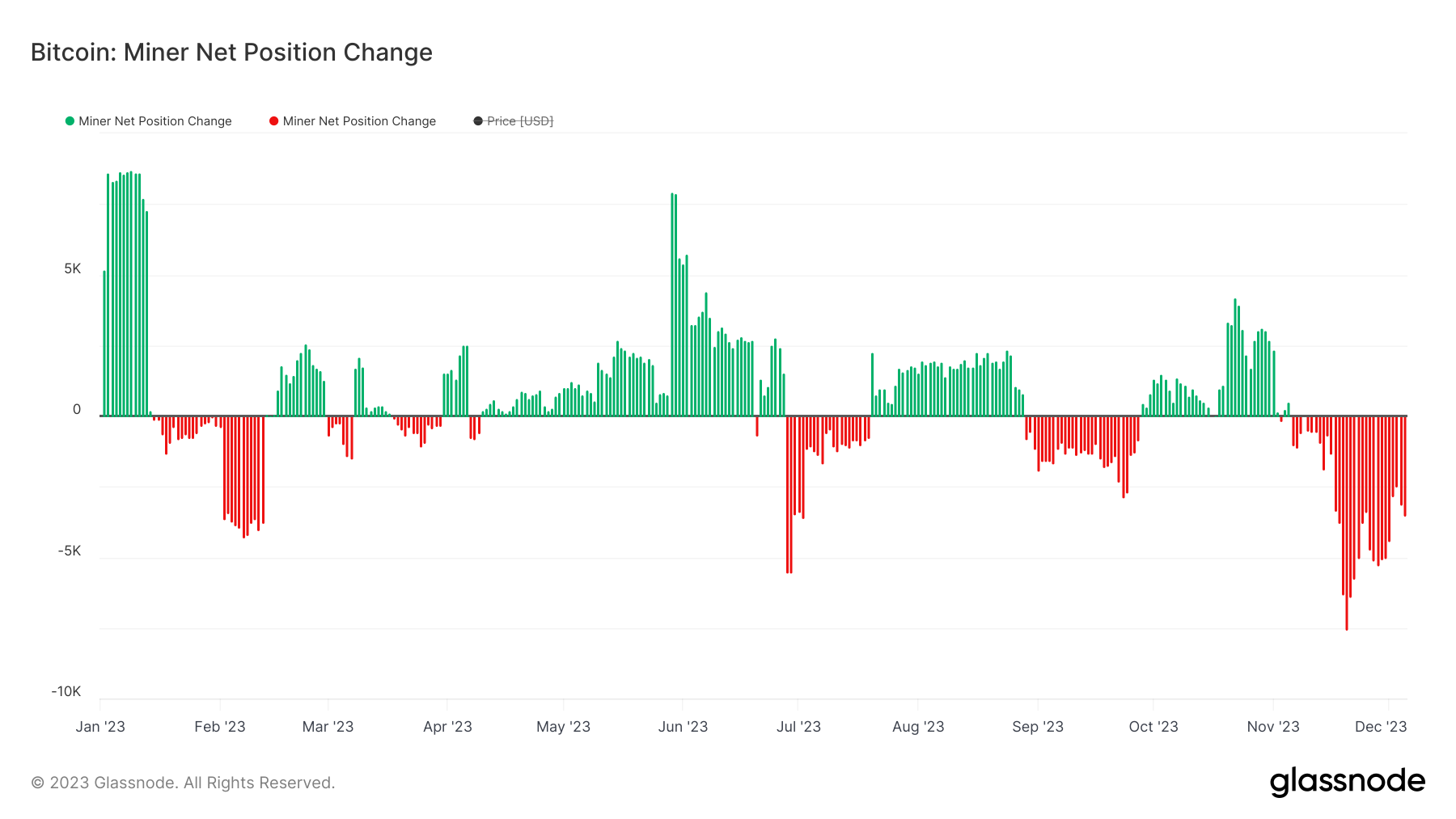
Bitcoin Miners Are Dominating Public Markets
Today’s letter is brought to you by Trust & Will!Trust & Will is the most trusted name in online estate planning and settlement.The company has helped hundreds of thousands of families create their estate plans, and they’re just getting started. Trust & Will enables every American to create a plan that’s customized to fit their needs, their life, and their legacy.Their mission is to make estate planning simple, affordable, and inclusive.All of Trust & Will’s documents have been designed and approved by estate planning attorneys to meet the highest legal standards. Their process is simple, secure, complete, and customized for your specific needs and state requirements.To investors,Bitcoin mining continues to be an area worth paying attention to, regardless of what role you play in the market. First, we can see the hash rate has been parabolic since the launch of the bitcoin protocol in 2009.This trend is even more pronounced if you zoom in on the timeframe from the 2018 bear market to today. You can see that hash rate has continued to accelerate even though China banned bitcoin mining when more than 50% of all mining was within the country’s border.As hash rate increases, competition for the block subsidy becomes more intense. What exactly is the financial reward for winning that competition today? There was $40.4 million paid out in the last 24 hours to miners. That is $14.7 billion annualized. There is almost no scenario where hash rate is going to stop growing when more than $14 billion in revenue is up for grabs on an annual basis. Another area to pay attention to is miner revenue from transaction fees. Usually transaction fee revenue would spike in the bull market — tons of people are trying to use the blockchain during the euphoric phase of the market cycle, so you have to pay higher prices to use the finite amount of block space. Recently, we have seen two major spikes in transaction fee revenue although we are in a bear market though. These are largely driven by Ordinals/Inscriptions, but still signal a significant departure from past trends and it has provided additional economic incentive for miners to continue competing for revenue.So how exactly have miners been performing? We can look at publicly traded miners to get a sense of how the industry players are doing this year:* Marathon Digital: +359%* Iris Energy: +356%* Cleanspark: +356%* Riot Platforms: +349%* Hive Digital: +159%* Terawulf: +128%* Hut 8 Corporation: +1,228% (note: they just completed an equal merger)This type of financial performance is impressive by itself, but it becomes even more eye-opening when you realize that 5 of the 7 companies listed have more than doubled the performance of bitcoin year-to-date. Another interesting data point is how miners are handling the bitcoin on their balance sheet. You can see that miners have been net sellers since the start of November, which suggests that these organizations are taking advantage of the recent price appreciation and selling into the strength to drive further cash reserves. Overall, bitcoin mining seems to be in a great spot. Hash rate is at all-time high levels. Miners are pulling in $14+ billion in annualized revenue. The stock price of publicly traded companies is wildly outperforming bitcoin’s price performance. And we have not yet experienced the bitcoin having slated for early Q2 2024.The narrative in the bitcoin community of buying and exclusively holding bitcoin sounds good as a talking point, but it is essential that you think critically about what you are trying to accomplish from an investment perspective. It is hard to ignore the benefit of bitcoin miners based on the market factors and stock performance. The gold community has long debated the pros and cons of holding gold vs buying gold mining stocks. The bitcoin community is following fast on their heels with a similar debate. But as with most things in life, maybe the truth can be found closer to the middle ground than the extremes. Hope you all have a great day. I’ll talk to everyone tomorrow.-Anthony PomplianoIf you enjoyed this letter, you should consider subscribing to the Pomp Letter. I write 3-5x per week and explain in simple language what is happening in the economy, financial markets, and bitcoin.Bradley Tusk is a venture capitalist, political strategist, writer, and owner of P&T Knitwear bookstore. In this conversation, we talk about his brand new book, called “Obvious in Hindsight.” It is all about a fictional story of innovative technology, flying cars, and what they have to go through with politicians, mafia members, etc. This is a great conversation about how technology meets politics, and the reality on the ground.Listen on iTunes: Click hereListen on Spotify: Click hereEarn Bitcoin by listening on Fountain: Click hereAnthony Pompliano’s CNBC Appearance From YesterdayPodcast Sponsors* Cal.com - Changing the calendar management game. Use code “POMP” for $500 off when you sign up.* Trust & Will - Est
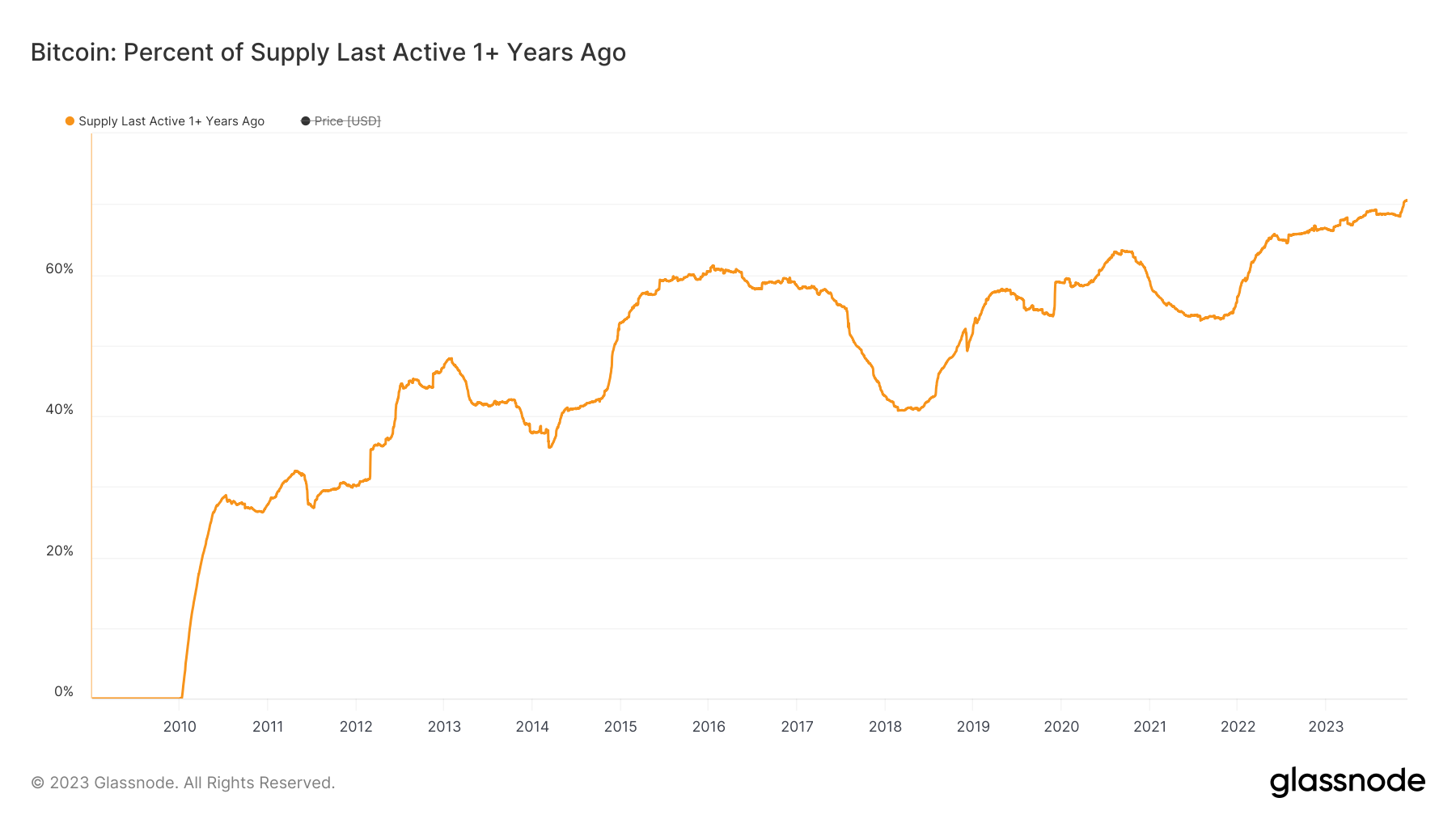
Bitcoin Is Surging And Holders Refuse To Sell
Today’s letter is brought to you by Cal.com!What do I have in common with Chad Hurley (YouTube), Tobi Lütke (Shopify), and Alexis (776/Reddit)?We are all early investors in Cal.com and we use it instead of Calendly. Cal.com is the leading open-source scheduling platform, which gives you the same superpowers of efficiency previously reserved for elite corporations and tech gurus.Stop wasting your time with scheduling software that doesn’t work. Use technology to make your life easier.Cal.com is transforming sophisticated calendar management into an accessible tool for all via a user-friendly interface. Set up is quick, easy, and you will never go back to your boring calendar tool.Exclusive for Pomp Letter subscribers, use code “POMP” for $500 off when you set your team up with Cal.com. Save time. Save money. Use Cal.com.To investors,Gold and bitcoin surged in price over the weekend. Gold hit an all-time high crossing over $2,130. Bitcoin touched $42,000 early this morning. These meaningful movements in price say more about the state of fiat currencies than it does about hard assets. Both communities of hardcore believers want to believe their asset is special, but ultimately global liquidity & currency debasement tell the story. The market is continues to accelerate their expectation of a return to loose monetary policy, including quantitative easing and interest rate cuts. It is notable that gold’s all-time high coincides with bitcoin still being approximately 40% below it’s 2021 high of $69,000. Gold bugs will argue this is bearish, while bitcoiners will claim it is bullish. Frankly, I don’t think it is either. The comparison of these two assets may be intellectually stimulating, but it is not productive.As bitcoin rises, there are some significant data points worth paying attention to. First, bitcoin’s market cap is now higher than Berkshire Hathaway’s market cap. This is a completely worthless point, except that it reinforces to the bitcoin community “we are right!” in the face of critique from Warren Buffett, one of the best investors in the world.Second, Nvidia was outperforming bitcoin over the last 5 years until the digital currency’s price appreciation over the last 24 hours. While that may not be what you expected, it speaks to the severity of bitcoin’s bear market drawdown and the rotation of capital to artificial intelligence. Now that bitcoin is once again prevailing in this comparison, we should start to see more bitcoin/crypto-centric media headlines. Historically this has led to additional capital flows and higher prices. Speaking of prices, bitcoin holders don’t appear to have any interest in selling into the strength of bitcoin’s price. Although the price is up almost 150% year-to-date, the amount of bitcoin in circulation that hasn’t moved in 1+ year hit a new all-time high over the weekend of 70.5%.This increasing lack of liquidity in the circulating supply creates a positive feedback loop on an increasing asset price because it takes less net new dollars to move the price upwards in the future. I don’t think I’ve ever seen an asset this large (~$800 billion) have such high illiquidity at the same time that the price is aggressively moving higher. So what does this mean for bitcoin holders?Let’s take a look at nation states first. El Salvador’s President took to Twitter/X this morning to highlight that the country’s bitcoin holdings are now profitable again. He said “Of course, we have no intention of selling; that has never been our objective. We are fully aware that the price will continue to fluctuate in the future, this doesn’t affect our long-term strategy.”El Salvador is not alone. Michael Saylor’s Microstrategy was underwater on their bitcoin holdings for almost a year, but now they have returned to an unrealized profit as well. The company now holds 174,530 bitcoin on their balance sheet. The nation states and corporations are not the only beneficiaries of the recent bitcoin price increase though. As Dylan LeClair pointed out, bitcoin is the significant winner if you had dollar cost averaged with $10 into various assets every day since 1/1/2020.* Bitcoin: +106% * Nasdaq: +28% * S&P 500: +18% * Gold: +16% * U.S. Treasury Bonds: -20%This is an important point because it shows that an investor, regardless of sophistication, would have been able to drive a material return by dollar cost averaging through the boom and bust of the pandemic era. Lastly, there is quite a bit of excitement about the incoming bitcoin spot ETF. I want to issue a word of caution about its potential ramifications. Here is some quick math — bitcoin is ~ $800 billion asset. Only 30% of that supply has moved in the last year, so that is $240 billion. If the spot bitcoin ETF gathered $50 billion overnight, which would be more than Grayscale’s GBTC had in assets at the 2021 peak, then we would only see an approximately 20% increase in capital compared to the liquid circulating supply.That would 100% lead to a mater
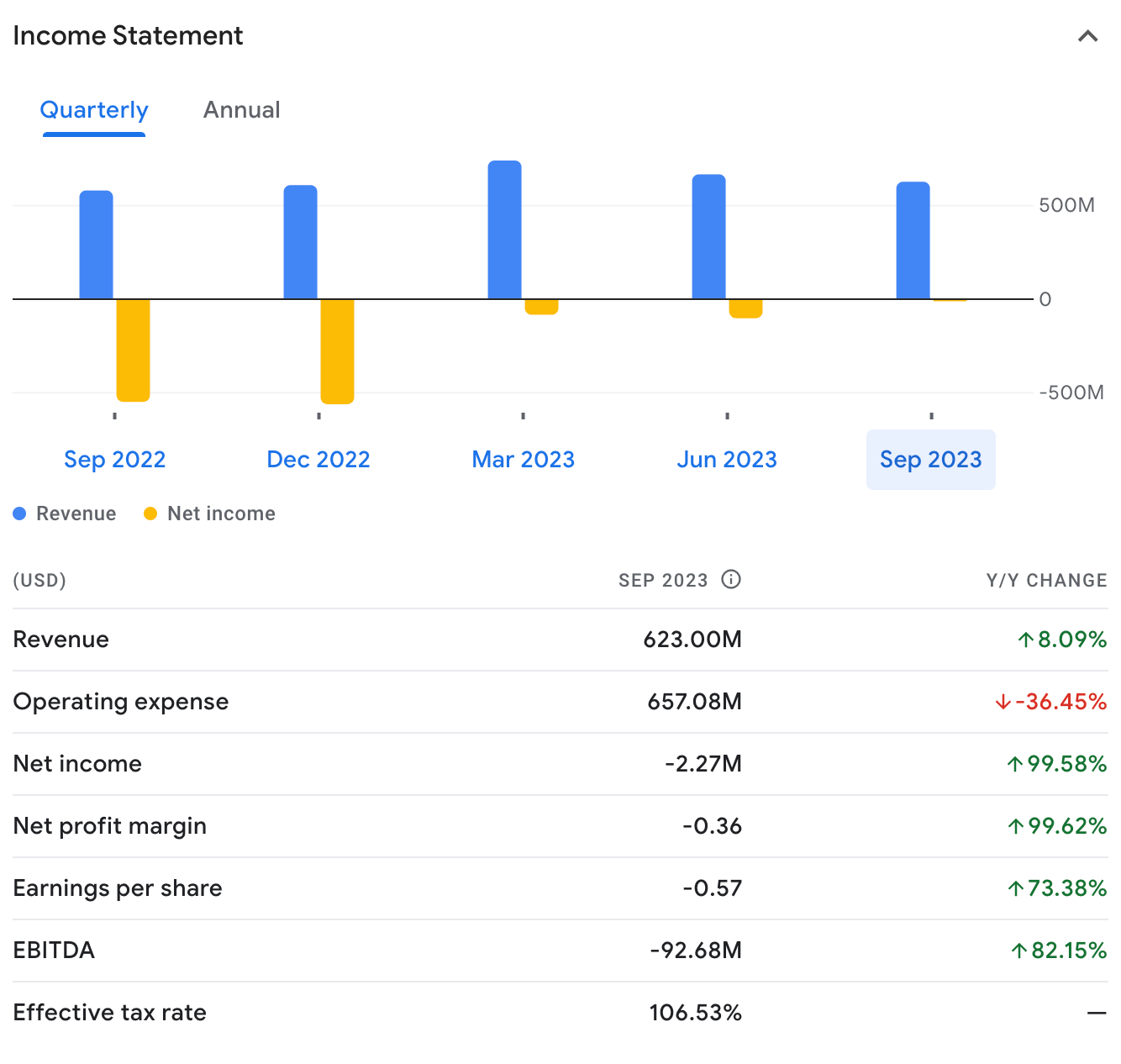
Crypto Equities Are Outperforming Bitcoin By 2x
Today’s letter is brought to you by Trust & Will!Trust & Will is the most trusted name in online estate planning and settlement.The company has helped hundreds of thousands of families create their estate plans, and they’re just getting started. Trust & Will enables every American to create a plan that’s customized to fit their needs, their life, and their legacy.Their mission is to make estate planning simple, affordable, and inclusive.All of Trust & Will’s documents have been designed and approved by estate planning attorneys to meet the highest legal standards. Their process is simple, secure, complete, and customized for your specific needs and state requirements.To investors,Most of the investor interest in cryptocurrencies has historically been concentrated in the digital tokens. Retail investors were first to the party, followed by family offices, corporations, and financial institutions. The big hope from many is that nation states will be the next big shoe to drop in the adoption curve.At the same time that adoption was sequentially moving from small accounts to large accounts, capital allocators were also moving horizontally through the market as well. First, investors were buying bitcoin, then Ether, and now a plethora of other crypto assets that push them further out on the risk curve. These are all digital tokens though. One of the areas that “crypto investors” seem to always leave as an afterthought is the public equities involved in the crypto market. For example, Alyssa Choo from Bitwise pointed out this week that 2023 continues to be a good year for crypto equities: * Coinbase $COIN: +263% YTD* Riot Platforms $RIOT: +274% YTD * Marathon Digital $MARA: +260% YTD * Galaxy Digital $GLXY: +114% YTDThe first three companies on this list have more than doubled the return of bitcoin year-to-date. While true, these results are not necessarily reflected in the public narrative at the moment. But the recent past results are not necessarily indicative of future performance. Some investors are bearish on the ability for a crypto-native firm like Coinbase to succeed against a litany of traditional financial firms competing for customers and assets. Maybe these bears are right, maybe they aren’t. Predicting the future is hard. Put that debate aside for a second though. A narrative that is forming around Coinbase specifically is that the company’s stock price will hit $1,000 during the bull market. If you search Twitter/X for “$COIN $1000” you will see many different accounts all but predicting this milestone as an eventuality. Again, I have no clue what will happen, and predicting the future is very hard, but let’s take a look at what it would take for that milestone to be achieved.Juan Leon from Bitwise broke down the financials of Coinbase and extrapolated the metrics needed to drive the ~8x share price increase to reach $1,000. Juan wrote:* 2023 Net Revenue Estimate: $2.6B* 2025 Net Revenue Estimate: $14.5B * 2023 Monthly Transacting Users Estimate: 8.5M * 2025 Monthly Transacting Users Estimate: 32M * 2023 Assets on Platform Estimate: $130B * 2025 Assets on Platform Estimate: $500BThis means that Juan’s analysis concludes that Coinbase’s stock would reach $1,000 if the company hit $14.5 billion in net revenue, 32 million monthly transacting users, and $500 billion of assets on the platform.Those are a significant increase from the current position, but a strong capital inflow during a bull market is the perfect tailwind to help a company like Coinbase achieve stunning potential growth like this. As many of you know, I have had financial exposure to Coinbase through the Morgan Creek Digital Assets fund for a number of years. The thesis ~ 5 years ago in the private market was that Coinbase would serve as the best US-based, regulated exchange. They had great brand awareness, the team continued to innovate on the product in an impressive way, and the institutional offerings were starting to serve as the default for large capital allocators as they came into the market. Each of these components of the thesis still remains true today. Additionally, Coinbase appears to have transitioned a big part of their business into a crypto-native format. According to Qiao Wang, “the most impressive thing about Coinbase is they transformed themselves from a CEX to a crypto-native organization: wallet, L2, onchain identity, payment, and more.”It is not every day that you see a public company rebuild the plane while in flight with such ease. I have no plans to change my personal portfolio based on these recent public comments from various analysts, nor do I ever recommend selling anything in crypto pre-halving, but I am curious to hear what each of you thinks about Coinbase. Here are the income statement, balance sheet, and cash-flow statement. Leave a comment or reply to this email with your thoughts. There is great debate in the market around this company, and the market will be the ultimate referee of who is right and
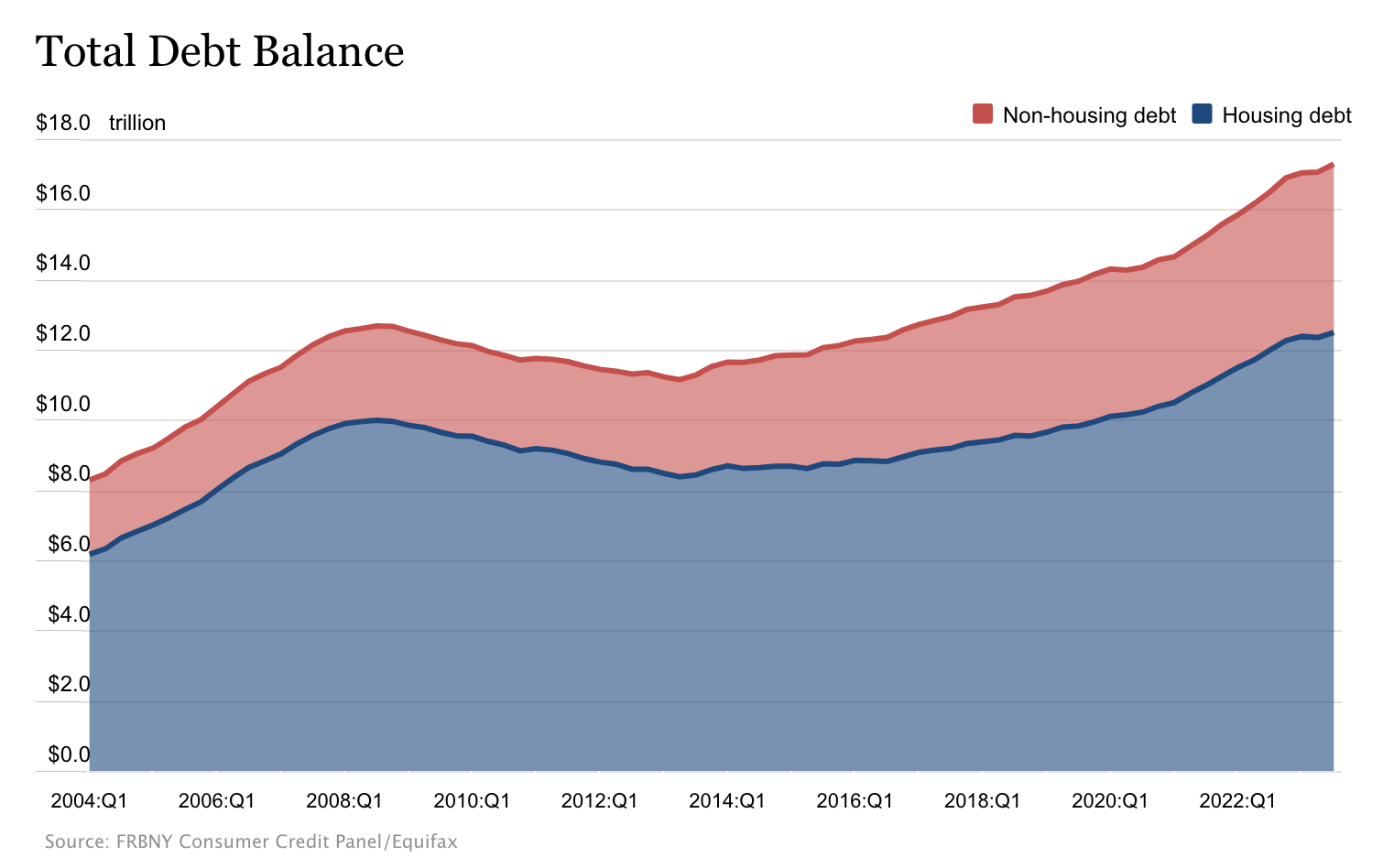
Consumers Ignore The Fed On Black Friday
Today’s letter is brought to you by Cal.com!What do I have in common with Chad Hurley (YouTube), Tobi Lütke (Shopify), and Alexis (776/Reddit)?We are all early investors in Cal.com and we use it instead of Calendly. Cal.com is the leading open-source scheduling platform, which gives you the same superpowers of efficiency previously reserved for elite corporations and tech gurus.Stop wasting your time with scheduling software that doesn’t work. Use technology to make your life easier.Cal.com is transforming sophisticated calendar management into an accessible tool for all via a user-friendly interface. Set up is quick, easy, and you will never go back to your boring calendar tool.Exclusive for Pomp Letter subscribers, use code “POMP” for $500 off when you set your team up with Cal.com. Save time. Save money. Use Cal.com.To investors,After an explosion in asset prices and inflation in 2020-2021, the Federal Reserve has remained committed to destroying demand and getting the economy under control. The fastest interest rate hikes in history since March 2022 had the desired effect of destroying investment demand. We saw the S&P 500 drop more than 20% from the peak of Q4 2021. TLT, the 20 Plus Year Treasury Bond ETF, is down more than 12% in the last 12 months. But seeing investment values fall significantly is only one part of the equation. Citizens have three options with their money — they can invest it, they can spend it, or they can save it. If the Fed is able to discourage people from investing, they still need to discourage people from spending the money if they want to succeed in their fight against a hot economy. The data from Black Friday suggests that the consumer may not be listening to the Fed nearly as much as the central bank would like. Rebecca Picciotto writes for CNBC:“Black Friday e-commerce spending popped 7.5% from a year earlier, reaching a record $9.8 billion in the U.S., according to an Adobe Analytics report, a further indication that price-conscious consumers want to spend on the best deals and are hunting for those deals online…… [Vivek] Pandya noted that impulse purchases may have played a role in the Black Friday growth since $5.3 billion of the online sales came from mobile shopping. He noted that influencers and social media advertising have made it easier for consumers to get comfortable spending on their mobile devices.”These are very large numbers. Stripe, the fast-growing payments company, built a live dashboard to track various metrics for Black Friday & Cyber Monday. As of 8:30am EST this morning, the dashboard showed more than 166 million transactions and $13 billion in transaction volume. These numbers are exclusively for Stripe, so you can imagine how much larger the numbers get when you incorporate all payment processors. Unfortunately we won’t have that data for a few more days. Another interesting data point from Salesforce that was highlighted by Bay Area Times, and supports Pandya’s analysis of impulse purchases, is that 79% of all purchases came from mobile, rather than the majority being driven by desktop users. So what does this have to do with the Federal Reserve and inflation? While the central bank has been successful in destroying investor demand, they seem to have failed at destroying consumer demand so far. That doesn’t mean they will not be successful in the future, but so far the data is overwhelming in proving that consumers are still ready to spend money on consumption. An important question to ask is where all this money is coming from that the consumer is spending. According to the New York Fed, the Q3 data shows that households continue to take on more debt across various debt types. “Total household debt rose by 1.3 percent to reach $17.29 trillion in the third quarter of 2023, according to the latest Quarterly Report on Household Debt and Credit. Mortgage balances increased to $12.14 trillion, credit card balances to $1.08 trillion, and student loan balances to $1.6 trillion. Auto loan balances increased to $1.6 trillion, continuing the upward trajectory seen since 2011.”Matt Egan explained for CNN why this rising debt situation, especially for consumer credit cards, is important to pay attention to:“In 2022, about one in 10 (9.9%) general purpose credit card accounts in the United States were in “persistent debt” — a difficult-to-escape situation where borrowers are charged more in interest and fees than they pay down in principal, according to a new Consumer Financial Protection Bureau report shared first with CNN.That’s up from 8.4% in 2021, a trend that the CFPB blames on shrinking paychecks (after adjusting for inflation) and rising borrowing costs.”To make matters worse, Egan continues:“Americans were hit with $105 billion in credit card interest last year alone, according to the CFPB’s biennial consumer credit card report. That includes $30.5 billion in the fourth quarter, the highest since at least 2015.”The problem is only going to get worse
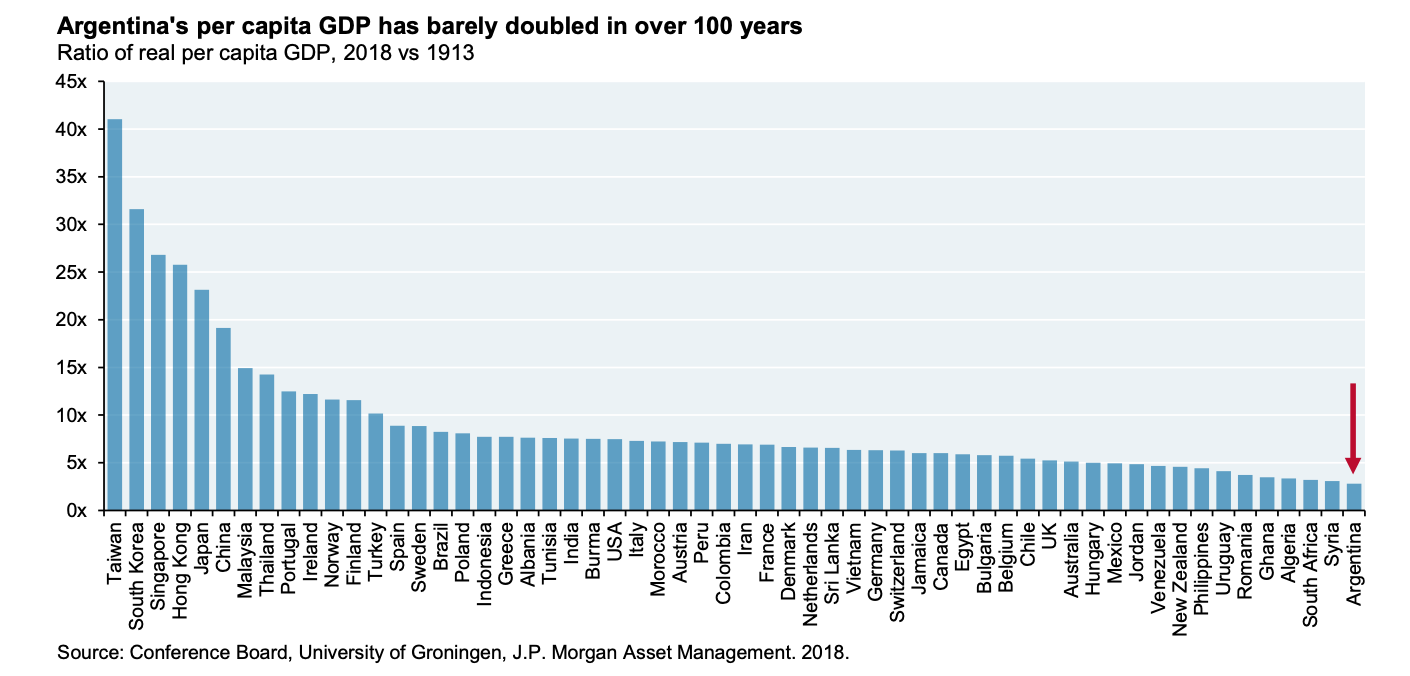
The People of Argentina Have Spoken & Americans Should Listen
Today’s letter is brought to you by Cal.com!What do I have in common with Chad Hurley (YouTube), Tobi Lütke (Shopify), and Alexis (776/Reddit)?We are all early investors in Cal.com and we use it instead of Calendly. Cal.com is the leading open-source scheduling platform, which gives you the same superpowers of efficiency previously reserved for elite corporations and tech gurus.Stop wasting your time with scheduling software that doesn’t work. Use technology to make your life easier.Cal.com is transforming sophisticated calendar management into an accessible tool for all via a user-friendly interface. Set up is quick, easy, and you will never go back to your boring calendar tool.Exclusive for Pomp Letter subscribers, use code “POMP” for $500 off when you set your team up with Cal.com. Save time. Save money. Use Cal.com.To investors,Javier Milei became President of Argentina last night. He was originally thought to be a long-shot candidate, but after running a high-energy campaign that embodied unique (and many times controversial) ideas, he prevailed with majority of the vote. Argentina’s economy and the 46 million citizens have had a tough run for the last few years. Inflation is nearly 140% year-over-year. More than 40% of the country is living in poverty. Farmers experienced the worst drought in over 60 years a few months ago. The problems were accelerating before the COVID pandemic ravaged the country. In the second half of 2019, Michael Cembalest of JP Morgan Asset Management wrote that Argentina had “defaulted 7 times since its independence in 1816, which has seen the largest relative standard of living decline in the world since 1900, and which is on the brink of political and economic chaos again in 2019.”To put these challenges in perspective, Cembalest pointed out that Argentina’s per capita GDP has barely doubled in over 100 years. The existing economic and political plan simply has not worked. The Argentinian people appear to be ready for a radical change. That is exactly what Javier Milei has promised. Nicolás Misculin and Walter Bianchi wrote for Reuters:“Milei is pledging economic shock therapy. His plans include shutting the central bank, ditching the peso, and slashing spending, potentially painful reforms that resonated with voters angry at the economic malaise, but sparked fears of austerity in others……But Milei's challenges are enormous. He will have to deal with the empty coffers of the government and central bank, a creaking $44 billion debt program with the International Monetary Fund, inflation nearing 150% and a dizzying array of capital controls.”While these economic promises may seem extreme in a Keynesian world, Milei is essentially pledging to do the unpopular things that seem to be necessary for the country to get back on track. One reason why this is interesting is because notable voices in the United States have been calling for similar radical reform. As I wrote to this group on November 1st in my letter titled Entrepreneurs Have To Build Since Government Is Spending Like Drunken Sailors about comments from Stanley Druckenmiller:“The national debt is over $33.5 trillion according to government measurements. The actual debt, including future entitlements that have been promised, is actually over $100 trillion already. In order to get spending under control, politicians would have to make incredibly difficult decisions that would be unpopular with voters. This would include cutting entitlements (which Druckenmiller has been saying for years) and refraining from sending hundreds of billions of dollars abroad in support of proxy wars.”The consensus view historically has been that it would be impossible to pledge a significant cut to entitlement spending and get elected. The people of Argentina basically just blew up that theory. In fact, Milei is promising to blow up the central bank and national currency too.This doesn’t mean that a Presidential candidate could be elected in the United States on an entitlement cut pledge too, but it doesn’t hurt to have people like Stanley Druckenmiller calling for the necessary cuts. We can take this analysis even a step further. Cardi B, who is better known for her musical talents than her economic analysis, went live on Instagram over the weekend and delivered a profanity-laden rant about the United States’ economic situation. She explicitly called out the Biden administration’s continued funding of two international proxy wars, while places like New York City and other major cities are begging the national government for more monetary relief to handle their mounting budget deficits. I highly recommend watching the 5-minute video. While the delivery is unique and entertaining, pay attention to the substance of what she is saying. A perfect example of “funds for thee, but not for me.”Now let’s go back to Javier Milei and his victory in Argentina. I mentioned that he plans to get rid of the national currency, which would open the dollar for th
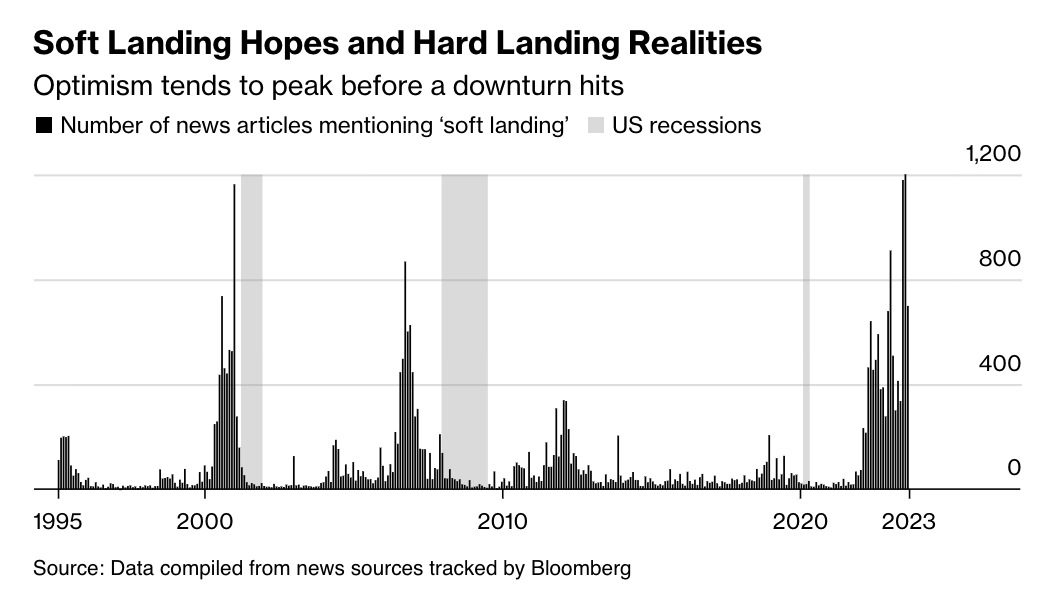
This Recession Indicator Is Sounding The Alarm
Today’s letter is brought to you by Trust & Will!Trust & Will is the most trusted name in online estate planning and settlement.The company has helped hundreds of thousands of families create their estate plans, and they’re just getting started. Trust & Will enables every American to create a plan that’s customized to fit their needs, their life, and their legacy.Their mission is to make estate planning simple, affordable, and inclusive.All of Trust & Will’s documents have been designed and approved by estate planning attorneys to meet the highest legal standards. Their process is simple, secure, complete, and customized for your specific needs and state requirements.To investors,Almost one month ago to the day (October 19th), I warned you to be fearful if we ever saw a barrage of articles claiming that a soft landing was going to happen. In that letter, I wrote the following and included this chart:“Bloomberg recently did a study that showed a rapid increase in articles talking about a soft landing was usually followed by a recession. You can see the large spike in recent articles mentioning a soft landing would suggest that a recession is incoming. Humans are optimistic and like to think that bad things are not on the horizon, but this study shows that we should be fearful when others are not.”I wish that I had better news, but it appears that the barrage of “soft landing” articles is upon us. James Lavish pointed out the rapid increase in frequency earlier this week.This phenomenon is not exclusive to the Bloomberg Terminal. A quick Google search turns up plenty of articles predicting a soft landing across every major media platform, including CNBC, Wall Street Journal, Financial Times, and many more. We don’t have to merely rely on the mainstream media’s sudden obsession with a soft landing to find reasons to be concerned. The real-time Sahm Rule Recession Indicator, which “signals the start of a recession when the three-month moving average of the national unemployment rate rises by 0.50 percentage points or more relative to the minimum of the three-month averages from the previous 12 months,” is the highest it has been since the Global Financial Crisis if you ignore the COVID anomaly. We can also look at the Conference Board’s Leading Economic Index (LEI). According to Justyna Zabinska-La Monica, Senior Manager of Business Cycle Indicators at The Conference Board:“The LEI for the US fell again in September, marking a year and a half of consecutive monthly declines since April 2022. In September, negative or flat contributions from nine of the index’s ten components more than offset fewer initial claims for unemployment insurance. Although the six-month growth rate in the LEI is somewhat less negative, and the recession signal did not sound, it still signals risk of economic weakness ahead. So far, the US economy has shown considerable resilience despite pressures from rising interest rates and high inflation. Nonetheless, The Conference Board forecasts that this trend will not be sustained for much longer, and a shallow recession is likely in the first half of 2024.”I have no idea whether a recession will actually come. Even if we have two consecutive quarters of negative GDP growth, which historically marked a recession, the government and economic organizations may not acknowledge it as they did in 2022. Predicting the future is hard. But it increasingly feels like the public narrative is offsides. We are not out of the woods yet, so people celebrating the Fed’s avoidance of a recession should be more cautious. Hope you all have a great weekend. I’ll talk to everyone on Monday.-Anthony PomplianoIf you enjoyed this letter, you should consider subscribing to the Pomp Letter. I write 3-5x per week and explain in simple language what is happening in the economy, financial markets, and bitcoin.Aaron Ginn is the CEO & co-founder of Hydra Host, revolutionizing the way data centers operate by bringing GPUs everywhere to you easily and quickly. He also is the founder of the Lincoln Network, which connects the tech industry with policy makers. In this conversation, we talk about the state of venture capital, advanced computing, geopolitical conflict, politics, contrarian ideas, and more.Listen on iTunes: Click hereListen on Spotify: Click hereEarn Bitcoin by listening on Fountain: Click hereThis Founder Raised $10 Million To Protect Artificial Intelligence From GovernmentsPodcast Sponsors* Cal.com - Changing the calendar management game. Use code “POMP” for $500 off when you sign up.* Trust & Will - Estate planning made easy. They are fast, secure, and simple to use. Get your will or trust created today.* Auradine - A new bitcoin miner powered by the world’s first 4 nanometer silicon chip technology.* Base: Base is shaping the future of the on-chain world with near-zero gas fees and rapid transaction speeds.* ResiClub: Your data-driven gateway to the US housing market.** Bay Area Times: A visual newsletter ex
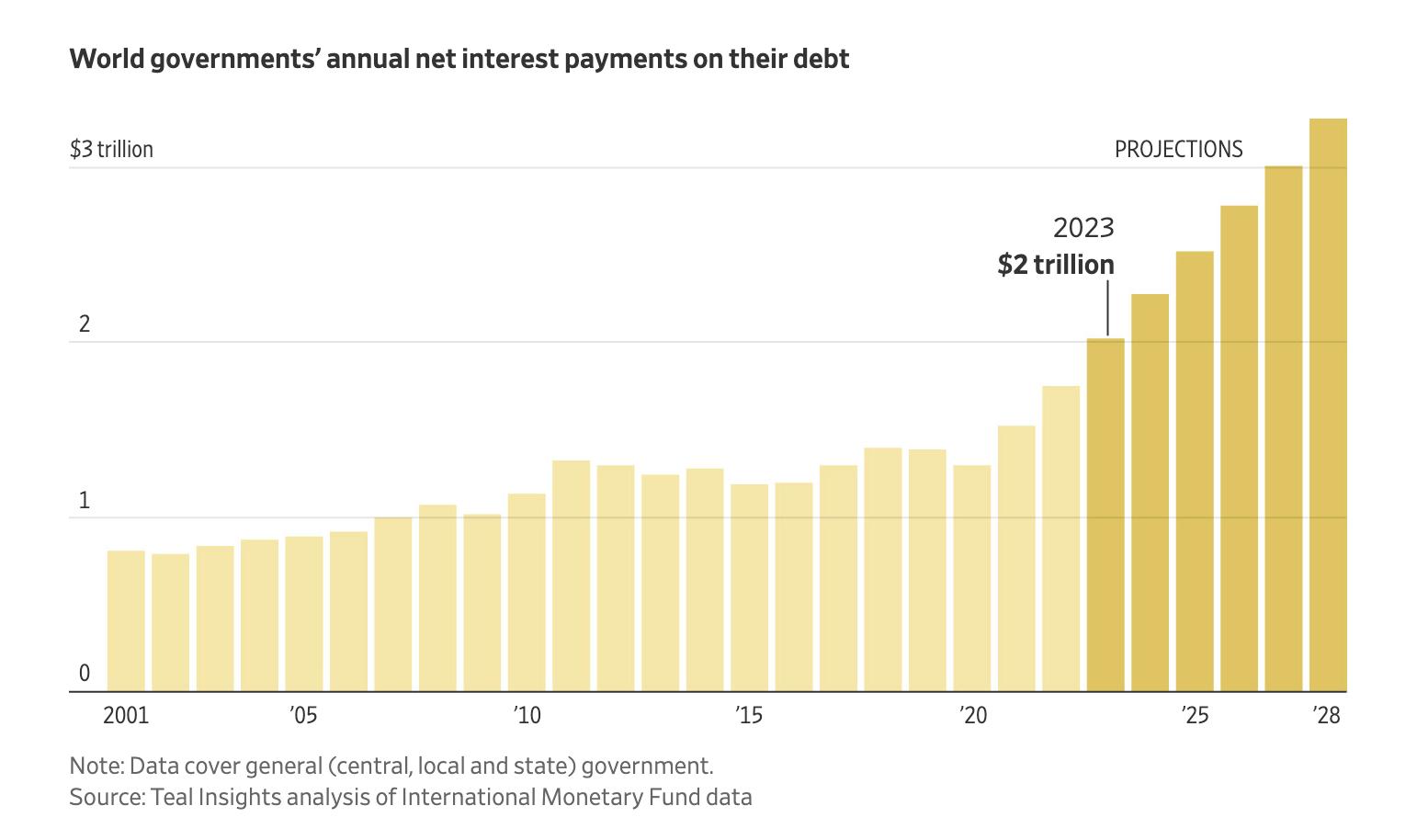
We Need A Zero-Based Budget For US Government
Today’s letter is brought to you by Sidebar!Ready to accelerate your career? As we all know, navigating a big career transition is hard to do. It’s one thing to set a lofty goal, and it’s another thing to have the support system for yourself to follow through.Sidebar is a private, highly vetted leadership program for those who want to do more, do it better, and do it faster. Sidebar’s approach to helping members level up their careers is focused around small peer groups, a tech-enabled platform, and an expert-led curriculum. Members say it’s like having their own Personal Board of Directors. 93% of members say that Sidebar has made a significant difference in their career trajectory."Providing and receiving support from others who play a similar role to you is one of the best ways to grow your capabilities and succeed." - Vice President, Roku“The facilitation has been great. I love the timer bar, the way the conversation is structured, the commitment and accountability.” - Vice President, Clip“I've been impressed by Sidebar’s technology platform. The real time agenda tracker at the top of our weekly meetings really helps the group stay on track.” - Senior Director, MicrosoftNothing will get you further in your career than learning from your peers - it’s a true competitive advantage. Join the growing waitlist of top senior leaders, and apply to become a founding member.To investors,The national debt is over $33.7 trillion. The US government paid approximately $659 billion on net interest payments last fiscal year. The problem has only become worse and the US is now spending more than $1 trillion annualized on net interest payments for the national debt. Sounds like madness, right?The global situation is not much better. There is an article in the Wall Street Journal this morning titled “The $2 Trillion Interest Bill That’s Hitting Governments,” which reveals the shocking statistic that governments around the world are going to spend $2 trillion annually on net interest payments in 2023.There are estimates that the interest payment bill could blow past $3 trillion by 2027, which would accelerate a number of issues in the US economy and abroad. According to the Wall Street Journal, here is how we could fix the problem:“The surge in interest costs leaves governments with difficult choices. As debt servicing takes up more revenue, politicians face unpopular decisions to raise taxes, cut spending or keep running deficits that will add to interest costs. That comes as they face higher military spending amid escalating geopolitical uncertainty, as well as the costs of responding to extreme and costly weather events and caring for rapidly aging populations.”The challenge with raising taxes, cutting spending, or running deeper deficits is that no one can agree on the correct path forward. You will be hard pressed to find someone who wants to pay more taxes to a government that has proven to be inept at managing their budget. Every time someone suggests cutting spending, especially around the necessary bloat of entitlements, there is an uproar across society. And running a deeper deficit is subject to the constant critique of the population who blames politicians for their errors.As an example, 2024 Presidential Candidate Nikki Haley was on CNBC this morning talking about the “hard truth” of cutting entitlements. Forget about politics for a second — it could have been any Presidential candidate saying this. It has become obvious that we will have to make drastic changes to the system if we want to avoid bankruptcy, not only for these individual entitlement programs but also the larger economy as well. Here is the thing though — we never hear a plan to conduct zero-based budgeting for government spending. If the US government was a corporation, which it is not, and it had run into significant financial trouble, there would be an internal push to start the budget over from $0 and add back anything that was absolutely necessary. This zero-based budget allows for a complete reduction in bloat, bureaucracy, and waste. It preserves the essential spending components of the budget, but only after the new leadership team agrees that the spending item is actually defendable as “essential.”If we were to pursue zero-based budgeting for the government, my guess is that we could reduce hundreds of billions, if not more than $1.5 trillion, in wasteful spending. Why is that an important number? That is approximately the annual deficit level, so this zero-based budget would allow us to balance the budget for the first time since 2001. It is hard to fathom an economic surplus in the United States at the moment. It is possible though. We just need leadership that would be willing to make the hard decisions. I have no clue which Presidential candidate could actually follow through with this difficult work, but it is more necessary now than ever. Cutting expenses is not good enough. Raising taxes won’t get it done either. We must have a z
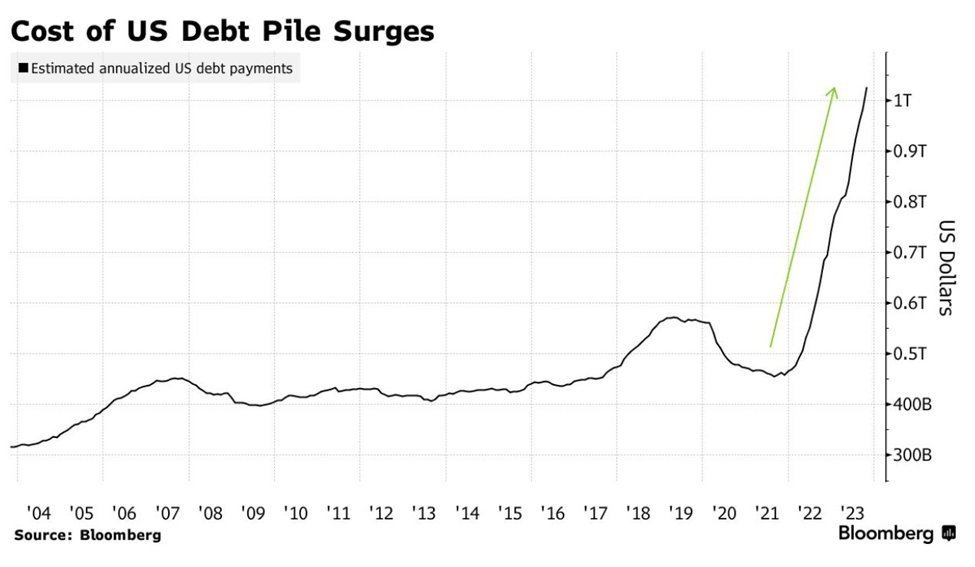
Ken Griffin Sounds Alarm On Inflation & Debt
Today’s letter is brought to you by Cal.com!What do I have in common with Chad Hurley (YouTube), Tobi Lütke (Shopify), and Alexis (776/Reddit)? We are all early investors in Cal.com and we use it instead of Calendly. Cal.com is the leading open-source scheduling platform, which gives you the same superpowers of efficiency previously reserved for elite corporations and tech gurus. Stop wasting your time with scheduling software that doesn’t work. Use technology to make your life easier.Cal.com is transforming sophisticated calendar management into an accessible tool for all via a user-friendly interface. Set up is quick, easy, and you will never go back to your boring calendar tool.Exclusive for Pomp Letter subscribers, use code “POMP” for $500 off when you set your team up with Cal.com. Save time. Save money. Use Cal.com.To investors,The United States is in a horrendous economic position. Our country has not had our back up against a wall like this in decades.Citadel’s Ken Griffin, one of America’s wealthiest investors, was sounding the alarm Thursday in Singapore. His main concerns revolve around inflation and the national debt. On inflation, Griffin is concerned that the recent rise in de-globalization will lead to a higher baseline of inflation for decades. He pointed out that the Federal Reserve has spent the last 20 years fighting deflationary forces in the economy, which made it difficult for the central bank to hit their 2% inflation target. Now the organization faces the opposite problem.The combination of de-globalization and monetization of the national debt provide tailwinds to inflation, which force the central bank to work diligently to suppress CPI as close to 2% as possible. But our politicians are working against our central bankers. Griffin explained that the government has been spending like drunken sailors and no one was planning on higher nominal and real interest rates when we drove ourselves into a national debt of $33.6 trillion. How bad is the problem right now?The United States is officially spending more than $1 trillion on annualized interest payments to service the national debt. That makes it the second largest budget item behind Social Security. That means we spend more money on interest payments than defense, education, or innovation. Not exactly the situation you want to be in when you are trying to strengthen a country’s financial position. Add in the fact that Ken Griffin believes interest rates are going to remain higher for the coming years and the outlook becomes even more concerning. This is why Stanley Druckenmiller and others have been vocal about the failure of the government to refinance the national debt at low rates for long durations during the madness of 2020 and 2021. So what can the government and Federal Reserve do now?The short answer is nothing easy. One option is for the government to balance the budget, create a surplus, and pay down the debt. This would be the responsible thing to do, yet it seems to be an impossible task at this point. We haven’t run a surplus on the national level since 2001. I wouldn’t hold my breath on this one. The other option is for the Fed to devalue the dollar in an effort to monetize the debt. Paying down the debt with future dollars that are less valuable has been a strategy long employed by central banks around the world. Unfortunately, this strategy hurts tens of millions of Americans and accelerates the country into a more dire long-term position. Ken Griffin seems to be worried about this second scenario of debt monetization as well. According to Lulu Yilun Chen and Dexter Low of Bloomberg, Griffin said “the economic consequences would be devastating…the minute we start to print dollars just to deal with the possibility of a default, our economy’s going into a deep tailspin.”It is not every day that one of the most respected investors in the world is articulating a “deep tailspin” scenario for the United States. This leads to the question “what can individuals do?”The answer for individuals is more complex than for the government. Each individual’s situation is different. Young people have a high risk appetite and time is on their side. Older people have the opposite scenario. I put the options in four major categories:* Eat inflation on the chin* Invest in equities* Invest in hard assets* Buy bitcoinThe first option, eat inflation on the chin, is the biggest one to avoid in my opinion. Official measurements of inflation appear to undercount the true state of the problem, so people who choose to keep 100% of their savings in dollars will likely be harmed much more than they realize. The other three options are directionally similar—getting out of a devaluing dollar and into an asset that is priced in dollars. As the dollar devalues, the asset prices will increase leading to an increase in purchasing power and wealth. The decision to buy equities, hard assets, or bitcoin is heavily dependent on an individual’s situation. Fo