
The Pomp Letter
521 episodes — Page 7 of 11
Fidelity Says Bitcoin Is Exponential Gold
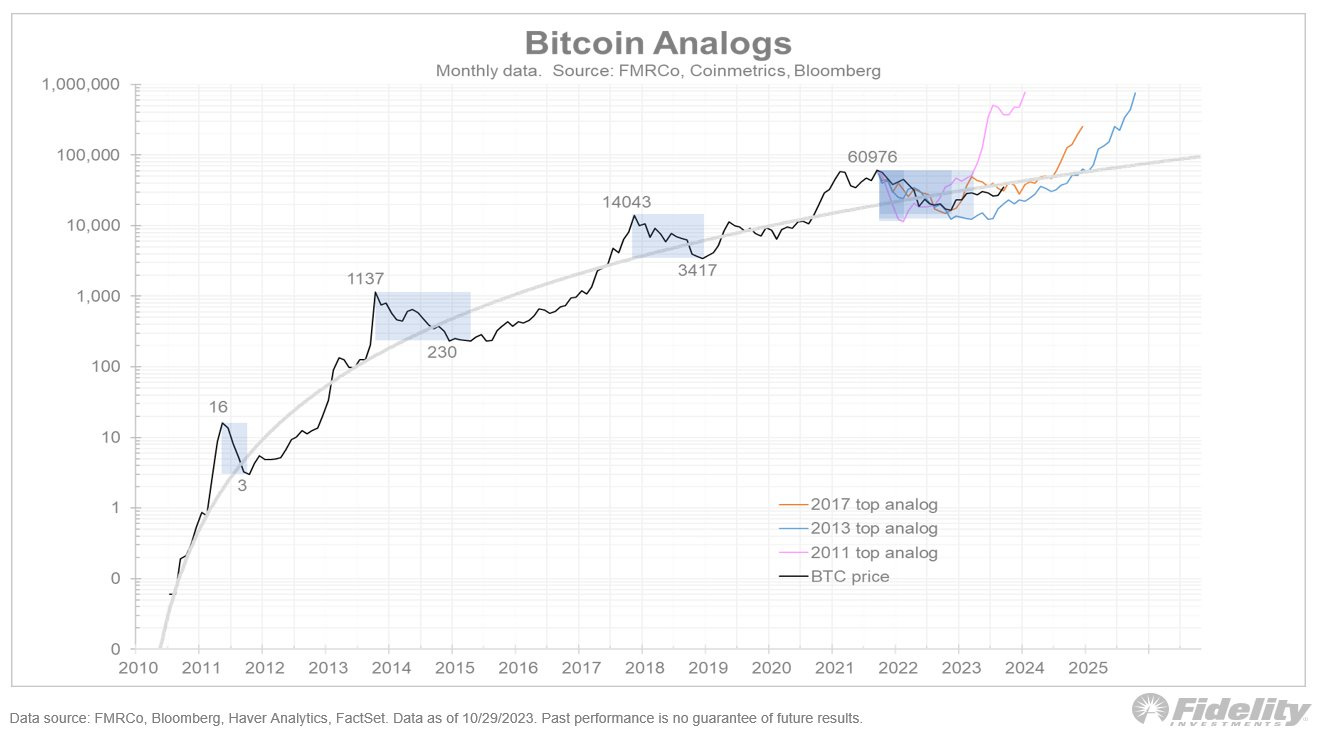
Today’s letter is brought to you by Sidebar!Ready to accelerate your career? As we all know, navigating a big career transition is hard to do. It’s one thing to set a lofty goal, and it’s another thing to have the support system for yourself to follow through.Sidebar is a private, highly vetted leadership program for those who want to do more, do it better, and do it faster. Sidebar’s approach to helping members level up their careers is focused around small peer groups, a tech-enabled platform, and an expert-led curriculum. Members say it’s like having their own Personal Board of Directors. 93% of members say that Sidebar has made a significant difference in their career trajectory."Providing and receiving support from others who play a similar role to you is one of the best ways to grow your capabilities and succeed." - Vice President, Roku“The facilitation has been great. I love the timer bar, the way the conversation is structured, the commitment and accountability.” - Vice President, Clip“I've been impressed by Sidebar’s technology platform. The real time agenda tracker at the top of our weekly meetings really helps the group stay on track.” - Senior Director, MicrosoftNothing will get you further in your career than learning from your peers - it’s a true competitive advantage. Join the growing waitlist of top senior leaders, and apply to become a founding member.To investors,Fidelity manages over $11 trillion in assets. They are one of the titans of the traditional financial system. When their team shares an opinion publicly, people around the world pay attention. This is why it is so interesting to take a look at recent comments by Jurrien Timmer, Director of Global Macro at Fidelity, who has been tracking bitcoin’s rise over the last 3-4 years and periodically updates his perspective. Timmer tweeted that bitcoin’s current price rise is in-line with past bull markets, which is objectively true. But that is not the interesting part of his analysis.He followed this chart with the following paragraph:“In my view, Bitcoin is a commodity currency that aspires to be a store of value and a hedge against monetary debasement. I think of it as exponential gold.”This is the first time that I have heard someone use the phrase “exponential gold.” It is a perfect way to describe bitcoin though. The digital currency embodies the sound money principles of gold (outside the system and can not be debased), while benefiting from the asymmetry of new technology adoption.Downside protection of gold, upside of tech stocks—exponential gold. Truly an unique asset.Timmer followed this comment with two more charts. The first shows purchasing power trends for various assets from 1900 till today. He writes “gold is money of course, but it’s too deflationary and clunky to be used as a medium of exchange. Hence, investors own it primarily as a store of value – and one of the many reasons Bitcoin is often compared to gold.”Then Timmer explains in the past “during structural regimes in which inflation runs hot, real rates are negative, and/or money supply growth is excessive, gold tends to shine and gain market share relative to GDP. Notable examples: the 1970s and 2000s.”Gold has done a fantastic job of preserving purchasing power over the years. I don’t know many young people who are interested in holding the precious metal though. They look at it as an asset with no upside return, regardless of whether that is right or wrong. If bitcoin can leverage the sound money principles to benefit from these periods of high-inflation and/or undisciplined monetary policy, just as gold has done for decades, then it would make sense that young people will continue to allocate capital to the digital version.As Balaji Srinivasan once said, by 2040 everyone under the age of 30 will have grown up in a world where bitcoin existed. They will see no difference in the “newness” of bitcoin vs gold. Both assets will have been around forever in their eyes. So now that Fidelity is publicly calling bitcoin “exponential gold,” we have to assume that Wall Street is waking up to this same idea. If you wanted to design an asset from scratch to benefit in a long-term loose monetary policy regime, it would be the downside protection of gold and the upside opportunity of tech stocks.More and more it appears this is a good description of bitcoin. Exponential gold. Let’s see if this phrase catches on. -Anthony PomplianoIf you enjoyed this letter, you should consider subscribing to the Pomp Letter. I write 3-5x per week and explain in simple language what is happening in the economy, financial markets, and bitcoin.Praying for Exits is a pseudonymous account that is run by one of the most interesting early stage investors in venture capital. In this conversation, we talk about aerospace, artificial intelligence, defense technology, current state of venture capital, media, and why being pseudonymous is so advantageous for this specific investor.Listen on iTunes: Clic
Entrepreneurs Have To Build Since Government Is Spending Like Drunken Sailors
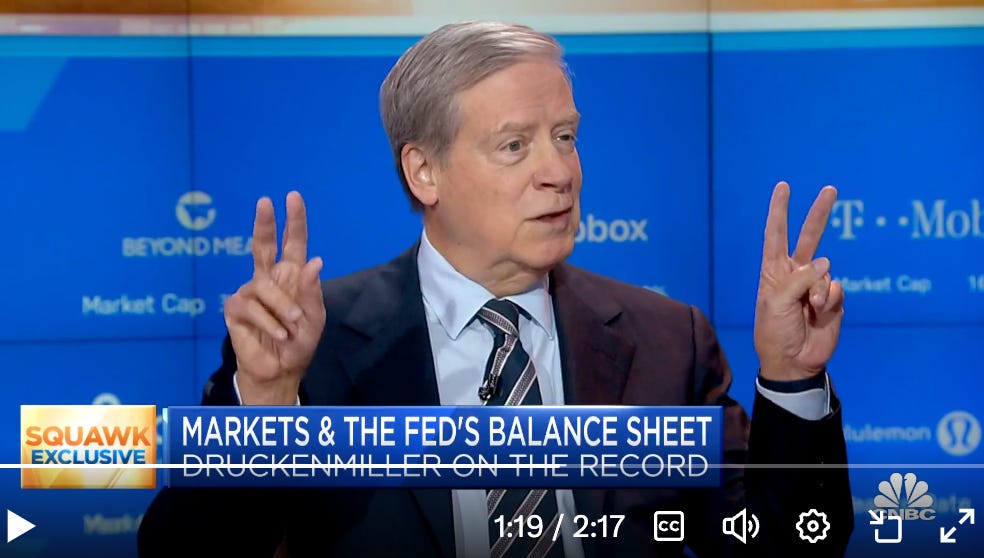
Today’s letter is brought to you by Sidebar!Ready to accelerate your career? As we all know, navigating a big career transition is hard to do. It’s one thing to set a lofty goal, and it’s another thing to have the support system for yourself to follow through.Sidebar is a private, highly vetted leadership program for those who want to do more, do it better, and do it faster. Sidebar’s approach to helping members level up their careers is focused around small peer groups, a tech-enabled platform, and an expert-led curriculum. Members say it’s like having their own Personal Board of Directors. 93% of members say that Sidebar has made a significant difference in their career trajectory."Providing and receiving support from others who play a similar role to you is one of the best ways to grow your capabilities and succeed." - Vice President, Roku“The facilitation has been great. I love the timer bar, the way the conversation is structured, the commitment and accountability.” - Vice President, Clip“I've been impressed by Sidebar’s technology platform. The real time agenda tracker at the top of our weekly meetings really helps the group stay on track.” - Senior Director, MicrosoftNothing will get you further in your career than learning from your peers - it’s a true competitive advantage. Join the growing waitlist of top senior leaders, and apply to become a founding member.To investors,Stanley Druckenmiller is an investing legend. He never had a down year in the three decades that he ran Duquesne Capital Management, while simultaneously achieving investment returns of about 30% annually during the same time period.To say he understands macro economics and financial markets would be an understatement.This is why it is so important to pay attention when Druckenmiller calls our attention to an issue. Lately, the famed investor has been on a roadshow of speeches and interviews to warn about the dire financial situation that the United States finds itself in at the moment. There are three big categories that I would put Druckenmiller’s comments in:* The United States has too much debt and should avoid worsening the situation* The United States has a serious spending problem and should cut expenses* The United States should have refinanced the national debt at low interest ratesThis is not the first time that Druckenmiller has raised these concerns, but given the recent explosion in spending (and the increase of $500+ billion in the national debt) he seems to have a renewed interest in surfacing the warning yet again.Rather than spend our time debating the nuances of Druckenmiller’s comments, including controversial analysis related to whether the Treasury could have found a bid in the market for extremely long duration bonds, I want to call out my biggest takeaway—the solution is not going to come from the government. The national debt is over $33.5 trillion according to government measurements. The actual debt, including future entitlements that have been promised, is actually over $100 trillion already. In order to get spending under control, politicians would have to make incredibly difficult decisions that would be unpopular with voters. This would include cutting entitlements (which Druckenmiller has been saying for years) and refraining from sending hundreds of billions of dollars abroad in support of proxy wars.Some of you will read that last sentence and say to yourself, “that is impossible” which highlights the lack of popularity in both decisions. Essentially, politicians would have to do the hard thing that would guarantee that said politician would lose their job at the next election. It would be a personal sacrifice for the future of our country.There are some great Americans who serve in positions of leadership, but the majority of politicians appear to be more interested in gaining and keeping power, rather than sacrificing themselves for the collective long-term good. So I would not hold your breath waiting for decreases in spending, regardless of which political party is in office. Instead, the American people will have a choice. We can either brace ourselves for the economic pain that comes from crippling national debt, a tailwind for higher inflation, and a complete lack of monetary policy discipline, or we can choose to build our way out of the situation through entrepreneurship, innovation, and technology. The default state for any human is entropy. A society is no different. If we do nothing, the economic pain will be brutal. We can look to numerous examples around the world where this has already happened. If we don’t want our fate to follow these failed economies, then we must create a renaissance of innovation. Rebuild our national infrastructure. Rebuild our military industrial base. Create the next 100 companies that reach $1 trillion market cap. Ensure we are the leader in aerospace, bitcoin, artificial intelligence, virtual reality, nuclear power, and a plethora of other important technol
Investors Are Dropping Bonds & Buying Bitcoin?
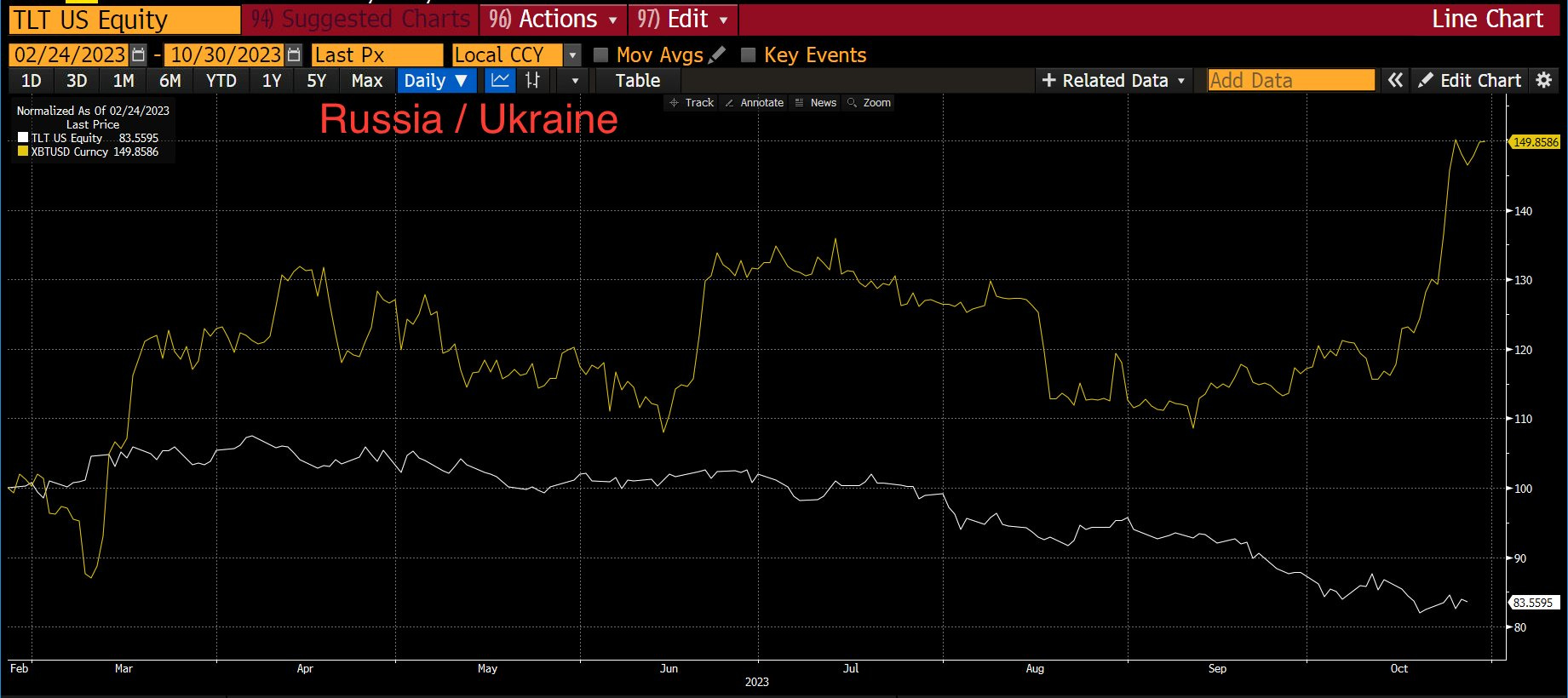
Today’s letter is brought to you by Trust & Will!Trust & Will is the most trusted name in online estate planning and settlement.The company has helped hundreds of thousands of families create their estate plans, and they’re just getting started. Trust & Will enables every American to create a plan that’s customized to fit their needs, their life, and their legacy.Their mission is to make estate planning simple, affordable, and inclusive.All of Trust & Will’s documents have been designed and approved by estate planning attorneys to meet the highest legal standards. Their process is simple, secure, complete, and customized for your specific needs and state requirements.To investors,The idea of safe haven assets is not new. These are assets that should retain or increase their value during times of uncertainty. Historically, US Treasuries have served as the ultimate safe haven because the bond came with a fixed rate of return if held to maturity and the only way you would not be paid back your principal is if the US government defaulted.Given the low likelihood of this situation, investors have been pouring capital into US Treasuries for decades whenever things got shaky in financial markets.But something weird has been happening over the last two years—US Treasuries are starting to lose their appeal as a safe haven asset. If this trend continues, it will force investors to recalibrate how they think about risk, safe havens, and capital allocation.For example, Arthur Hayes points out that TLT - the US Treasury ETF - is down approximately 16% since Russia invaded Ukraine and the same ETF is down about 3% since Hamas killed hundreds of civilians in Israel. US Treasuries being down in value weeks or months after these geopolitical events would not necessarily be noteworthy if all asset prices were down collectively. You could blame the macro market conditions, certain actions from the Federal Reserve, or claim that investors were spooked across the board. That is not what has happened though.At the same time that US Treasuries are falling in value during uncertainty, bitcoin continues to rise in value. These two assets have decoupled and investors appear to be treating bitcoin as the safe haven asset. In a way, investors are dumping bonds to buy bitcoin.Since the Russia/Ukraine conflict started, bitcoin has appreciated around 50%. Since the Hamas/Israel conflict started, bitcoin is up about 24%. Not only is bitcoin up materially on both time frames, but remember that bitcoin has appreciated at the same time that TLT has gone down. This development is surprising enough that people across the market are starting to verbalize their surprise. Mohamed El-Erian, the Chief Economic Adviser at Allianz, recently was on CNBC and said the following about US Treasuries losing their safe haven status:“We haven't seen the flight to quality and the flight to safety that you would expect, given what's happening in the world…So yes, it should be the safe-haven, it should have already benefited. But the reality is that the 10-year yield today is a good 70 basis points higher than it was before this latest conflict erupted.”El-Erian also pointed out that bitcoin and US equities appear to be the beneficiaries of this trend change, which each asset class becoming more of a safe haven in the minds of investors.In my opinion, US equities will always have a bid in the market. It goes back to the idea of Warren Buffett’s famous line: “Never bet against America.” Whether Buffett is right or wrong, an entire generation of investors are going to heed that advice. The more interesting conversation is around bitcoin. Why is a “risk asset” going up in value during times of uncertainty and tight monetary policy? The simple answer is that investors are starting to recognize that bitcoin is not a risk asset at all. In fact, these professional investors are actually warming up to the idea that bitcoin is the ultimate safe haven asset. As I wrote in March 2021, bitcoin already proved to be the best safe haven asset coming through the first 12 months of the pandemic crisis. But many people, including some of the smartest investors in the market, brushed this price performance off as an anomaly. It is getting harder to do that with each passing day. Take Blackrock CEO Larry Fink as the prime example. He previously said bitcoin was an “index of money laundering,” but has changed his tune in recent months and recently stated that bitcoin was a flight to quality. Fink is not an insane anon on the internet. He is the leader of the world’s largest money manger. So why is Larry Fink and the rest of the financial industry waking up to bitcoin’s role as the ultimate safe haven asset?Bitcoin provides certainty and predictability regardless of what is happening in the world. Whether there is peace or war, and whether we are in loose or tight monetary regimes, bitcoin will continue to produce 900 bitcoin per day until the next halving. At that point, bitcoin wi
Millions Finally Realize Bitcoin Is Certainty In A World Of Chaos
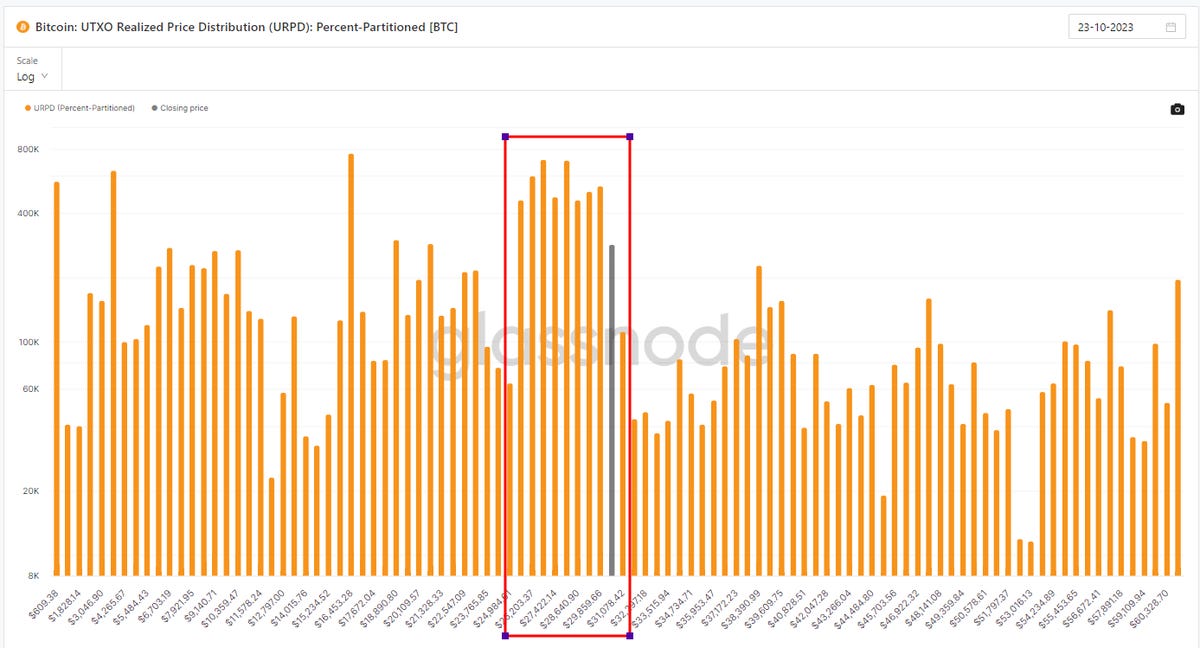
Today’s letter is brought to you by Trust & Will!Trust & Will is the most trusted name in online estate planning and settlement.The company has helped hundreds of thousands of families create their estate plans, and they’re just getting started. Trust & Will enables every American to create a plan that’s customized to fit their needs, their life, and their legacy.Their mission is to make estate planning simple, affordable, and inclusive.All of Trust & Will’s documents have been designed and approved by estate planning attorneys to meet the highest legal standards. Their process is simple, secure, complete, and customized for your specific needs and state requirements.To investors,There is chaos and uncertainty in the world right now. Russia and Ukraine. Hamas and Israel. China and Taiwan. The southern border. Our national debt. Housing affordability. Inflation. A lack of leadership. Undisciplined monetary policy. Loss of trust in mainstream media. The list seems to go on forever.In times of uncertainty, humans have a desire to take action so they can feel some semblance of control. This is most obvious in central bank’s constant reaction to whatever is happening in the world. If an outlook looks bleak, they will cut interest rates and print money. If an outlook looks strong, they will raise interest rates and sell assets off their balance sheet. The entire world runs off a reactive monetary policy which requires humans to understand complex situations, while predicting how their decisions today will affect the future.This is not only insane, but it has proven to be nearly impossible over the years. Humans are horrible at understanding complex situations. Try to get a group of people to agree on how to handle Russia, Hamas, our national debt, or inflation. It won’t happen. Thankfully, the world is realizing we have another option—bitcoin. The decentralized currency benefits from an algorithmic monetary policy that has become the most disciplined central bank ever created. Bitcoin’s monetary policy does not change, regardless of what happens in the world. Changes in geopolitics, consumer demand, or articles in the media can not influence what the software is designed to do. The idea of a disciplined central bank becomes incredibly important in a world filled with undisciplined central banks, which are obviously unprepared to deal with the ever-changing cocktail of chaos and uncertainty. Don’t take my word for it though. The market is screaming this message at the moment. Bitcoin’s price has appreciated more than 20% in the last 7 days. Some of that appreciation is due to speculation around the spot bitcoin ETF approval, but some of the global interest is being driven by the increasing global chaos and uncertainty. There is never one single thing that drives the movement of asset prices and bitcoin is no different.Upon further analysis, you will find some very interesting data points regarding bitcoin. For example, Dylan LeClair pointed out that treasury bonds are now down more than bitcoin. Think about that for a second. We have been told for decades that bonds were the safe investment. People flee to bonds in times of chaos and uncertainty. At least that is what the market analysts, investors, or economists would tell you.Again, the market is telling us something different. We have to listen or we risk misunderstanding the current situation.Another interesting data point related to the recent rise in bitcoin is how China’s current economic environment could be impacting the digital currency. Tyler Durden points out that “every time China FX outflows surge, bitcoin erupts.”This chart shows an acceleration of capital flight from China last Friday, which is quickly followed by the recent price appreciation of bitcoin. Chinese investors are not the only ones participating in the fun though. Speculation around a spot bitcoin ETF in the United States continues to drive significant interest domestically as well. Yesterday, news broke that Blackrock has successfully obtained a CUSIP number for their bitcoin ETF (normal part of the process) and they also amended their filing to state an intention of seeding the fund with capital before the end of October.Neither of these developments are a surprise, but any updates or movement on the ETF front will continue to elicit interest from various groups anticipating the spot bitcoin ETF approval. As if these data points were not enough, the bitcoin supply is highly illiquid at the moment. The total supply held by long-term holders is the highest it has ever been in history. More than 56% of all bitcoin in circulation has not moved in the last two years, which is despite the volatility associated with an approximately 80% drawdown in price from the previous all-time high of $69,000.That is a level of conviction from bitcoin holders that can not be found in any other financial asset. Because of this market illiqudity, Bloomberg’s Jamie Coutts points out:“For half a year, this
US Consumers Are Economic Punching Bags
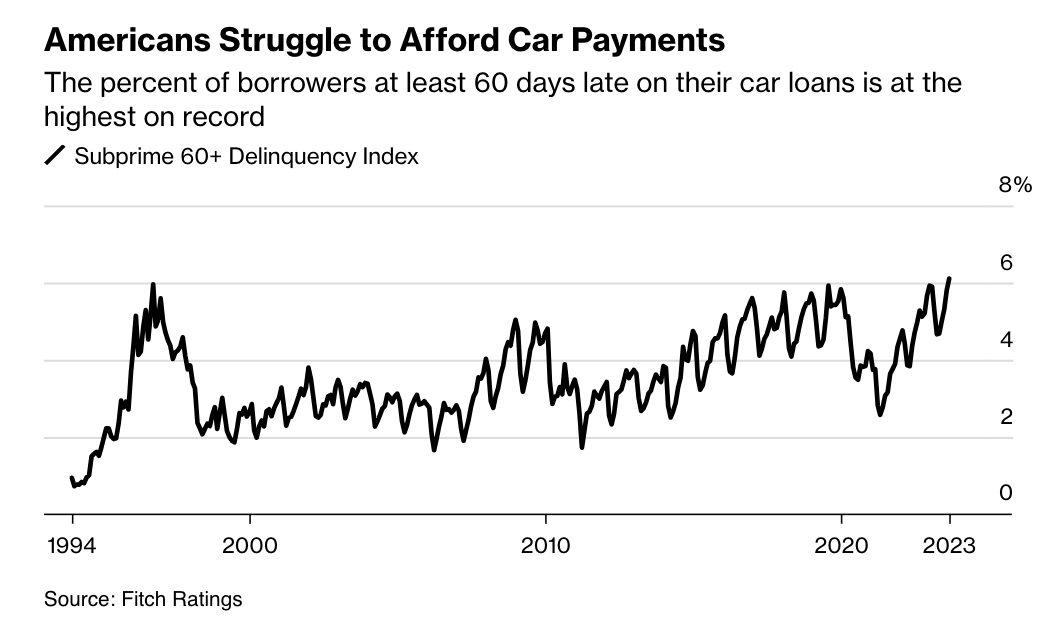
Today’s letter is brought to you by Trust & Will!Trust & Will is the most trusted name in online estate planning and settlement.The company has helped hundreds of thousands of families create their estate plans, and they’re just getting started. Trust & Will enables every American to create a plan that’s customized to fit their needs, their life, and their legacy.Their mission is to make estate planning simple, affordable, and inclusive.All of Trust & Will’s documents have been designed and approved by estate planning attorneys to meet the highest legal standards. Their process is simple, secure, complete, and customized for your specific needs and state requirements.To investors,The Federal Reserve pledged to “destroy demand” in early 2022 when they revealed their plan to begin hiking interest rates. For once, the Fed did what they said they would do and their actions had the intended consequences on the American consumer. These rate hikes did not simply destroy demand, but rather they turned the American consumer into an economic punching bag.For example, we can look at car loans. Financing for new cars can range from just over 5% for a great borrower (based on credit score) to 14% for the worst credit scores. Used car loan interest rates are slightly over 7% for the best borrowers and more than 21% for those on the other end of the quality spectrum. Imagine paying 21% interest on a loan for a used car — insane. These rising interest rates are forcing borrowers to miss their payments at a record rate. Claire Ballentine at Bloomberg writes “the percent of subprime auto borrowers at least 60 days past due on their loans rose to 6.11% in September, the highest in data going back to 1994, according to Fitch Ratings.”It makes sense that more consumers will fall behind on their payments as the payments become more expensive. But remember, majority of Americans need their car to get to work, school, the grocery store, etc. These are usually not exotic purchases, especially at the subprime level, rather they are for a car that is essential to the livelihood and survival of the owner. The Fed’s interest rate hikes has beaten up car owners.This is not the only place we can see this issue. Credit card delinquencies have been an interesting development. The second quarter credit card delinquency rate sat at 2.8%, which is not particularly concerning given that the delinquency rate was 6.8% during the Global Financial Crisis. The concerning aspect is how quickly the rate has almost doubled from 1.6% in 2021 to 2.8% in 2023.You can see the historical context and the rate of rapid acceleration in these charts from the St Louis Fed. Speaking of Fed data, one of the wildest charts is how depleted the personal savings of the American consumer has become. As interest rates have risen, coupled with the persistent appreciation of consumer good prices, citizens have to spend the money that is available to them, including from their hard-earned savings. The last time that the personal savings rate was this low? Leading up to the Global Financial Crisis. That doesn’t exactly instill confidence in market participants who are watching the American consumer get punched over and over again from every angle as interest rates rise.Related to consumer prices, food continues to be an area of concern for the American consumer as well. We have seen inflation ravage this area of citizen’s budget. There were times in the last 12 months where food prices has increased by more than 10% over the preceding year. According to the most recent data, food prices are up almost 4% in the last 12 months, which is slower growth than we have had previously, but the dirty secret is that none of the past price increases to food are going to be rolled back. Once food prices increase, they create a new normal at the elevated level.As Bloomberg showed, food price growth can fluctuate from year-to-year but the aggregate prices of food only continues to grow at a ridiculous rate. Food prices grow faster than wages, so people have a more difficult time affording food each year. This is just another example of the American consumer becoming a punching bag for the US economy. There is no end in sight for the economic pain that citizens are feeling right now. To make matters worse, there is an elevated chance of a recession on the horizon, which would punish consumers who are already in a precarious financial position. The Fed’s mandate to get inflation under control has worked to a degree, but there are concerns that much of the “wins” that have been attributed to the Fed can be explained by high base effects in the CPI numbers. Regardless of whether you think the Fed has done a good job or a bad one, it is objectively true that the American consumer is on the losing end of the current economic situation. We didn’t even get into the fact that according to the US government’s data, $1 in 2020 is worth only $0.83 today. These economic data points showcase why Ameri
The National Debt Should Fear A Recession
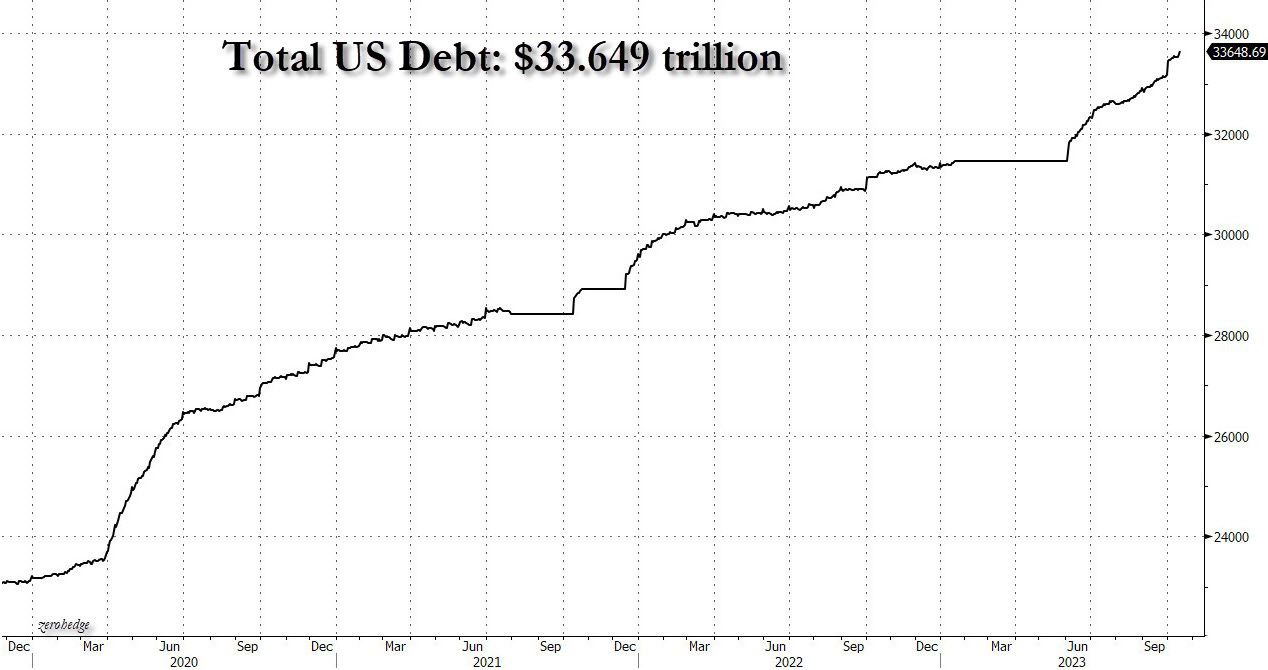
Today’s letter is brought to you by Sidebar!Ready to accelerate your career? As we all know, navigating a big career transition is hard to do. It’s one thing to set a lofty goal, and it’s another thing to have the support system for yourself to follow through.Sidebar is a private, highly vetted leadership program for those who want to do more, do it better, and do it faster. Sidebar’s approach to helping members level up their careers is focused around small peer groups, a tech-enabled platform, and an expert-led curriculum. Members say it’s like having their own Personal Board of Directors. 93% of members say that Sidebar has made a significant difference in their career trajectory."Providing and receiving support from others who play a similar role to you is one of the best ways to grow your capabilities and succeed." - Vice President, Roku“The facilitation has been great. I love the timer bar, the way the conversation is structured, the commitment and accountability.” - Vice President, Clip“I've been impressed by Sidebar’s technology platform. The real time agenda tracker at the top of our weekly meetings really helps the group stay on track.” - Senior Director, MicrosoftNothing will get you further in your career than learning from your peers - it’s a true competitive advantage. Join the growing waitlist of top senior leaders, and apply to become a founding member.To investors,The national debt has increased by more than $600 billion in the last month. That is $20 billion every day or $833 million every hour. We are now at a total of $33.65 trillion. It is hard to wrap our heads around how insane this pace has become. Unfortunately, there is no end in sight.At the same time as the debt is exploding higher, the US economy is showing signs of an incoming recession. Take the inverted yield curve as an example — short-term Treasury yields are higher than long-term Treasury yields.Over the last 55 years, every inversion between the 3-month and 10-year yield curve was followed by a recession. The shortest lag between inversion and the recession was 3 months and the longest lag was 15 months.But an economic indicator like yield curve inversion seems to be at odds with the public narrative that a soft landing will be possible, right? Well, Bloomberg recently did a study that showed a rapid increase in articles talking about a soft landing was usually followed by a recession. You can see the large spike in recent articles mentioning a soft landing would suggest that a recession is incoming. Humans are optimistic and like to think that bad things are not on the horizon, but this study shows that we should be fearful when others are not. Anna Wong and Tom Orlik have also pointed out that American household’s savings is beginning to run out. This savings had drastically increased during the quantitative easing period related to the pandemic, but households can only hold on for so long before the money starts to run dry.To recap, we have yield curves inverting, a spike in soft landing articles, and households running out of money — what is the Fed going to do?The answer is easy: If we enter a recession, the Fed will be forced to cut interest rates and print money.Herein lies the problem. The national debt has been growing at a rapid pace, so any additional money printing would only compound the problem. Without this acceleration in debt accumulation, we are on pace to hit $41 trillion by simply extrapolating the last month’s growth rate for the next 12 months.The number gets even more concerning if the Fed is forced to combat a recession in the US economy.As if that situation is not difficult enough to navigate, the Fed is not operating in a vacuum of economic data. The United States is also providing monetary support to two international conflicts in Ukraine and Israel to the tune of hundreds of billions of dollars. Each of those wars does not appear to have a clear objective or end date, so we run the risk of new forever wars putting a financial strain on an already bleak US financial health outlook.Lastly, the United States is going to be faced with hard decisions domestically as well. The southern border has become porous and there are reports that hundreds of thousands of migrants are crossing the border each month. These individuals, who are mostly seeking a better life provided by the democratic and capitalist society of America, are arriving in cities that are ill-equipped to properly support them, which has led to a series of calls from local and state leaders for more federal aid.This obviously adds to the financial strain on the national financial situation and accelerates the national debt issue.There are many people who will argue that the national debt does not matter. We are the controllers of the global reserve currency and we can print money whenever we want. My response is always the same, “if the national debt doesn’t matter, then we should print $500 trillion tomorrow and solve all of our problem
Will We See Interest Rates Cut Aggressively Soon?
Today’s letter is brought to you by Trust & Will!Trust & Will is the most trusted name in online estate planning and settlement.The company has helped hundreds of thousands of families create their estate plans, and they’re just getting started. Trust & Will enables every American to create a plan that’s customized to fit their needs, their life, and their legacy.Their mission is to make estate planning simple, affordable, and inclusive.All of Trust & Will’s documents have been designed and approved by estate planning attorneys to meet the highest legal standards. Their process is simple, secure, complete, and customized for your specific needs and state requirements.To investors,We don’t have to look far to realize that George Soros nailed the concept of reflexivity. Let’s go back to March 2020. The Federal Reserve perceived a major issue, so they conducted two emergency interest rate cuts to arrive at 0%. As any student of reflexivity knows, I use the term “perceived” because it ultimately does not matter whether there was a true crisis on their hands or not. As long as the Fed believed a crisis was on their hands, they were going to act.And act they did.Those emergency rate cuts, coupled with a level of money printing we have not seen in my lifetime, created the perfect storm for an explosion in asset prices. It was a great example of reflexivity…asset prices had fallen from the sky in March 2020 as fear set in, but they came roaring back once everyone realized the world was not ending. That period will likely not be the last example of the 2020s. Here is an interesting question—does the concept of reflexivity suggest the Fed will have to aggressively cut interest rates soon?Maybe.The Fed’s interest rate cuts back in 2020 were met with the reflexive response of the fastest interest rate hikes in history, which started almost exactly two years later in March 2022. Just as fast as rates went down, rates skyrocketed in an attempt to get inflation under control.This boom-bust cycle is the perfect example of what happens when humans, who have been tasked with the impossible job of managing an economy, begin to make rash decisions based on perceived knowledge. If rates went down aggressively, followed by an aggressive raising of rates, should we now expect another round of aggressive rate cuts? I am not positive, but the odds of that scenario appear to be increasing. The decision-making process of Fed officials is not going to change any time soon. These are humans who are forced to make decisions today based on backwards looking data, which is dependent on a perceived understanding of reality. There is a nearly 0% chance that the Fed, or almost any other market participant, could correctly articulate the current economic situation and what is going to transpire over the coming 6-12 months. Ignore Soros’ politics for a second. As I mentioned at the start of today’s letter, he seems to have nailed this idea. Add in the fact that the US national debt is accelerating to the tune of hundreds of billions of dollars per month at the moment, which is partially due to our decision to fund the war in Ukraine, and it is easy to see a scenario where the Fed has to conduct significant quantitative easing to be better positioned to monetize the debt. This analysis doesn’t even include potential future monetary support for Israel or Taiwan either. Think that is not going to happen? President Joe Biden was on 60 Minutes last night confirming his intention to ask Congress for billions of dollars in support of Ukraine and Israel. And Treasury Secretary Janet Yellen said in an interview this weekend that “we can certainly afford two wars.”Interestingly, Yellen did not mention in the interview that the US government almost shut down a few weeks ago because we couldn’t afford to operate domestically for a few days. Not sure what money she thinks we have, unless she is imaging all of the future dollars that the US will have to print out of thin air.That means the debt will have no end in sight.Ok, let’s get back to interest rates. These rates were reflexive from 2020 through 2023. If I was a betting man, I would be willing to bet the odds are over 50% that the Fed will have to reverse course and drop interest rates faster than expected as the government continues to spend like drunken sailors. You can’t have a government engaged in multiple violent conflicts as a financial sponsor if said government is spending more money on national debt interest payments than their defense budget. It is ridiculous that I even need to call that out, but here we are. There are very few people talking about a scenario where rates continue to be reflexive and the Fed is forced to drop interest rates aggressively. The theory of reflexivity suggests more of us should be considering the possibility and the math behind the aggressive growth of the national debt is simultaneously smacking us in the face.Hopefully this letter makes you think more deeply a
Paul Krugman Is Wrong About Inflation
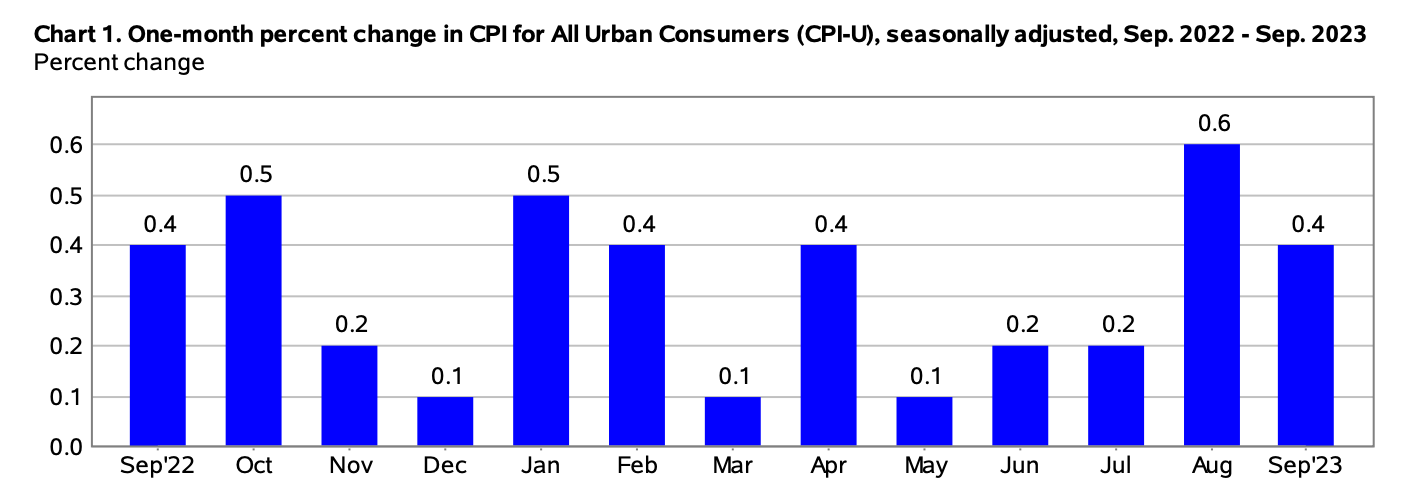
Today’s letter is brought to you by Dream Startup Job!* Dream Startup Job is the premier marketplace for connecting ambitious job-seekers with the world's most innovative companies.* Search over 1,000 roles and apply quickly to cutting-edge companies like Traba, Varda, Eight Sleep, Flowhub, and many others.* If you're looking to join a team that is making a difference in the world, create a job-seeker profile in minutes and start applying for roles.* If you're a startup, post your open roles today or schedule a call with the Dream Startup Job team by clicking here.To investors,Paul Krugman is a famous economist who teaches economics at the City University of New York. He writes a column for The New York Times. And in 2008, he won a Nobel Prize for his work on international trade and the distribution of economic activity globally. Krugman is also wrong in public A LOT. Take, for example, his analysis of the internet in 1998:“The growth of the Internet will slow drastically, as the flaw in ‘Metcalfe’s law’—which states that the number of potential connections in a network is proportional to the square of the number of participants—becomes apparent: most people have nothing to say to each other! By 2005 or so, it will become clear that the Internet’s impact on the economy has been no greater than the fax machine’s.”This could be cited as one of the all-time great bad takes. Not only does Metcalfe’s law remain intact, but Krugman’s analysis that “most people have nothing to say to each other” highlights a serious misunderstanding of how humans and societies function.Krugman has not been a fan of bitcoin either.He wrote column’s titled Adam Smith hates Bitcoin and Bitcoin is Evil in 2013. The digital currency has appreciated thousands of percent since these inaccurate public declarations. That hasn’t stopped Krugman from doubling and tripling down on his disdain for bitcoin. But nowhere has Krugman’s horrible takes been more apparent than on Twitter/X.Yesterday, Paul Krugman gifted us with one of his best (worst!) takes in years. He tweeted a chart of CPI excluding food, energy, shelter, and used cars, while exclaiming that the war on inflation is over.This is so ridiculous that it may not be worth responding to, but I honestly can’t help myself. The first problem is that Krugman is correct inflation is down as long as you don’t include anything we actually need to live, such as food, energy or shelter. That horrific take alone should be disqualifying, but I’m not done yet. As for Krugman’s comment that “we won at very little cost,” he must be forgetting that we widened the income inequality gap, made housing unaffordable, and destroyed billions in retirement savings over the last three years. Again, not a big cost as long as you aren’t one of the hundreds of millions of Americans being affected by the undisciplined monetary policy coming from the Federal Reserve. Lastly, the Bureau of Labor Statistics would like a word with the perpetually wrong economist regarding his commentary that the war on inflation is over. We saw a 0.6% increase in the month of August and a 0.4% increase in September of this year. Not many people are arrogant enough to claim victory when inflation is still increasing by half a percent each month. Now I don’t want to be too harsh on Paul Krugman. Everyone, including myself, is wrong in public if you play the investment game long enough. We shouldn’t condemn someone for inaccurate thoughts or predictions, especially since we are all trying to learn alongside each other, but we should vehemently call out the intellectual dishonesty that comes from a tweet like Krugman’s yesterday. The inflation concern is not over. Our national debt is exploding to the tune of hundreds of billions of dollars per month at the moment, so the Federal Reserve and US government will be forced to debase the dollar in response given enough time. That easing of monetary policy, coupled with the recent month-over-month increases in CPI metrics, should be a word of caution to every economist. Paul, if you’re reading this, buy some bitcoin, slow down on the ridiculous tweets, and stop fighting the inevitable. We either debase the currency to save our country and economy, or we risk falling victim to the same errors of past great civilizations. Hope you all have a great weekend.-Anthony PomplianoDarius Dale is the founder & CEO of 42Macro. In this conversation, we talk about their Weather Model, economy & financial market conditions, how US fiscal policy reacts to conflicts around the world, and how investors can think through various outcomes.Listen on iTunes: Click hereListen on Spotify: Click hereEarn Bitcoin by listening on Fountain: Click hereHow Markets Are Reacting To Global ConflictPodcast Sponsors* Trust & Will - Estate planning made easy. They are fast, secure, and simple to use. Get your will or trust created today.* Auradine - A new bitcoin miner powered by the world’s first 4 nanometer silicon chip techno

Housing Affordability Is The Worst It Has Been This Century
To investors,Housing affordability in the United States has become a national crisis.It is harder to own a home today than it has been in the last 40 years. Approximately 50% of American citizens are 40 years old or younger, so this is the worst housing affordability period in their lifetime thus far. When a national crisis arises, it is imperative that entrepreneurs spring into action. They can use the private market and economic forces to create meaningful change. It only takes a few courageous individuals with a good plan and an appetite for risk to build something that can have national impact. I deeply believe this. That is why we are announcing a brand new company today — ResiClub. My team and I have partnered with the number one residential real estate reporter in the country, Lance Lambert, to create a data-driven media outlet exclusively focused on this market. Lance, formerly at FORTUNE, is widely recognized for his incredible work on housing inventory, residential demand, geographic trends, interest rate changes, and mortgage implications. He has been covering this market for years and brings a level of professional journalism that is desperately needed to tackle a problem that affects millions of Americans.But Lance is not simply covering the market — he is betting his livelihood on this.Lance quit his job at FORTUNE recently to go all-in on this opportunity. He has burned the boats and there is no turning back. This either works or Lance is in a bad spot. That is the exact type of entrepreneur that I like to partner with — one who bets on himself.With his expertise in the housing market, and our expertise in operations, revenue, and growth, we believe that together we can increase awareness about the lack of housing affordability very quickly.Once we raise awareness, we plan to empower market participants with proprietary data products. Lastly, if we are fortunate enough to find success in those two avenues, we may even look to tackle real-world solutions through the building of affordable housing nationally. Before we get there though, we have to nail the media platform. If you are interested in staying on top of the housing market, interest rates, mortgage trends, or inventory impacts, I ask that you subscribe to Lance Lambert’s ResiClub today.The first piece of content will go out later today for subscribers. This will be high-quality information and analysis that you can not find anywhere else.If you aren’t into the housing market, but just want to back a founder who is betting his career on creating something that could solve a problem for many people, you should consider subscribing too. I am excited to work with Lance on this new company. He is the best in the world at what he does. It is going to be fun to turn it into a sustainable business that gives millions of people the information they need to make informed decisions. You can read the full press release below.I hope you join us.-Anthony PomplianoFOR IMMEDIATE RELEASE: Introducing ResiClub: New outlet tracking the U.S. housing market amidst unprecedented affordability challenges In a period characterized by soaring mortgage rates, overheating house prices, and dwindling affordability, October 2023 has emerged as the least affordable month for U.S. housing this century. The scorching pace of house price growth during the pandemic, coupled with a significant spike in mortgage rates from 3% to 7%, has pushed housing affordability beyond the levels seen at the peak of the housing bubble in 2006. Faced with this challenging housing landscape, Lance Lambert and Anthony Pompliano have joined forces to co-found ResiClub, a groundbreaking media and research company dedicated to in-depth tracking, reporting, and analysis of the U.S. housing market. Lance Lambert, the renowned outgoing real estate editor of Fortune Magazine, will lead the charge as ResiClub's editor. Lance Lambert has solidified his reputation as the nation's foremost data journalist and beat reporter in the residential real estate space, bringing a wealth of knowledge and expertise to ResiClub's endeavors. ResiClub's Mission: ResiClub will serve as an indispensable resource for both industry professionals and everyday Americans looking to navigate the complexities of today's housing market. The company's mission is to provide comprehensive coverage and insights into the U.S. housing sector, with a particular focus on: U.S. homebuilders, institutional homebuyers, proptech startups, and regional housing data.Research and Data Analysis: ResiClub will conduct its research, gathering proprietary local market data and producing in-depth analyses that will enable individuals and professionals to make informed decisions in an ever-changing housing environment. Lance Lambert, CEO/editor at ResiClub, expressed his excitement about the launch, saying, "The U.S. housing market is undergoing profound changes, and ResiClub's mission is to be at the forefront of providing insights and info
Global Conflict Will Create More Inflation
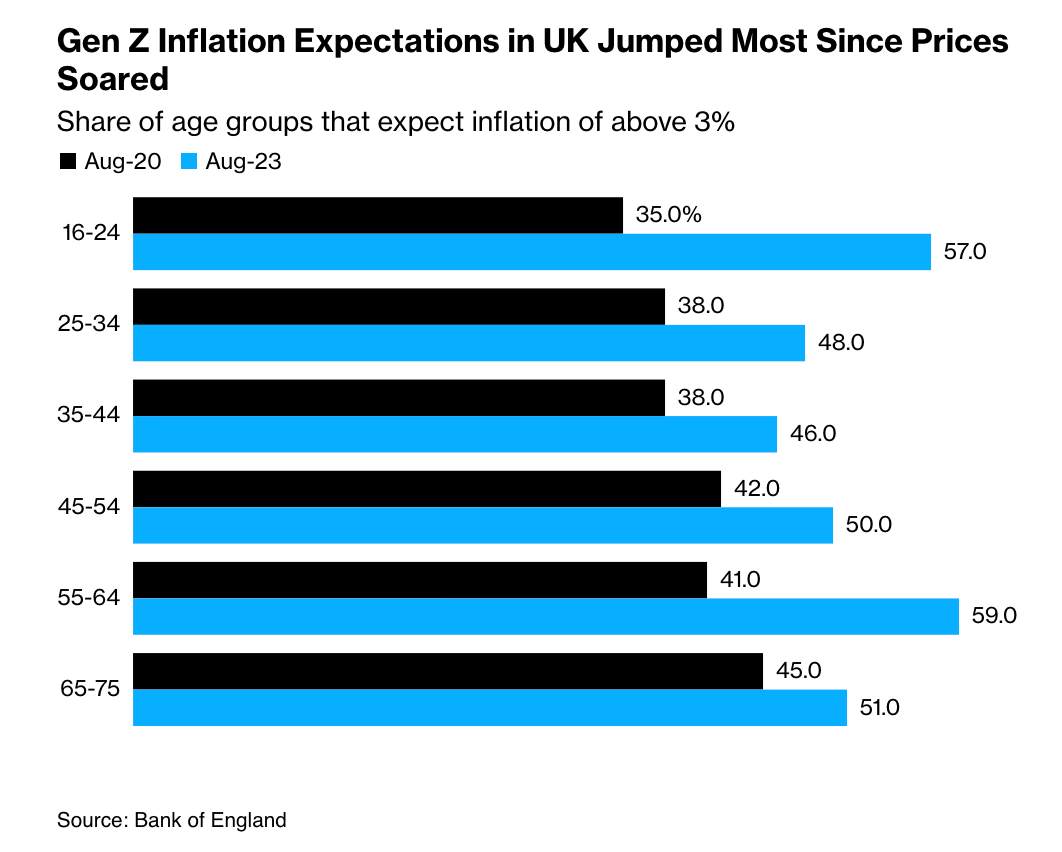
Today’s letter is brought to you by Trust & Will!Trust & Will is the most trusted name in online estate planning and settlement.The company has helped hundreds of thousands of families create their estate plans, and they’re just getting started. Trust & Will enables every American to create a plan that’s customized to fit their needs, their life, and their legacy.Their mission is to make estate planning simple, affordable, and inclusive.All of Trust & Will’s documents have been designed and approved by estate planning attorneys to meet the highest legal standards. Their process is simple, secure, complete, and customized for your specific needs and state requirements.To investors,Tom Rees wrote an article in Bloomberg recently titled, “Gen Z Will Carry the Deepest Psychological Scars From Inflation.” My first reaction was to point out how ridiculous it would be for young people to claim psychological scarring from an economic event. This just reinforces the idea of a generation of kids who have become soft and weak, right?Maybe.Put aside the use of the phrase “psychological scars” and focus on Rees’ larger point—young people have higher inflation expectations than any other generation. That doesn’t seem like such a ridiculous claim. These young people just lived through the highest inflation in decades, while not having a lengthy personal experience living through an economy with low inflation.You can only base your future expectations off your personal experience.The Bank of England conducted a study recently that shows at least 50% of people from ages 16-75, except those 25-44 years old, expect inflation to be over 3% in the future.This makes sense given the older generations lived through the high inflations of the 1980s and the younger generation had their formative years during the high inflation of the 2020s. So why is this important?It has long been the position of central banks that inflation expectations drive inflation outcomes. If a business owner believes higher inflation is on the horizon, then the business owner will begin to raise their prices in anticipation. If a consumer believes inflation is coming, they may start to buy more goods in bulk or change their consumption behaviors. Economies are complex machines. There is no right answer on how to handle these situations. Central bankers have two tools in their toolbox—expand/contract the money supply and increase/decrease interest rates. At the same time that central bankers are trying to manage the economy, which is a nearly impossible task by itself, they will also have to be cognizant of the increasing chaos and conflict around the world.For example, the United States is being forced to drastically increase our national debt in response to our geopolitical strategy. Here is how it works:War breaks out somewhere in the world. Other nations ask the US for weapons & money. The US gives the weapons and money to other nations. Then the US begins to run low on weapons & money. More war breaks out globally because the US is weakened. Other nations ask the US for weapons & money. The cycle repeats. As the US gets weaker, and the world becomes more chaotic, we are forced to increase our national debt at a furious pace in order to pay for all the weapons and money we are giving everyone else. You can see this happening with the conflict in Ukraine already. There has been more than $500 billion added to the national debt in a matter of weeks (not all for Ukraine but a material amount in response to that conflict). Some estimates are that the US will add $1 trillion to the national debt in a single month for the first time in history.This is insanity.Add in the fact that Israel is now asking the US for weapons and money, along with potential conflicts that could kick off in Taiwan and other geographic regions, and it is not hard to see a situation where the US gets stretched thin. We can’t fund every war on Earth without printing ourselves into ruin. You are watching a global chess game between superpowers. China and others never have to enter into direct conflict with the US to secure victory if they can simply watch us bleed ourselves dry. It is imperative we do not repeat the mistakes of the great civilizations that came before us.But here is the crazy part—remember the gen z crowd with high inflation expectations? They are probably going to end up being right. Central banks can not continue to print trillions of dollars annually without driving prices higher. Instead of laughing at the young generation because a journalist used the phrase “psychological scars,” we will be better off trying to understand what the young people know that we don’t.Hope everyone has a great start to their week. I’ll talk to you tomorrow.-Anthony PomplianoEmma Hinchliffe is a senior writer at Fortune, where she covers women in business. She also is the author of the 5-time a week newsletter called "Broadsheet." Emma recently wrote an article "Kim Kardashian turned Skim
The National Debt Is EXPLODING Higher
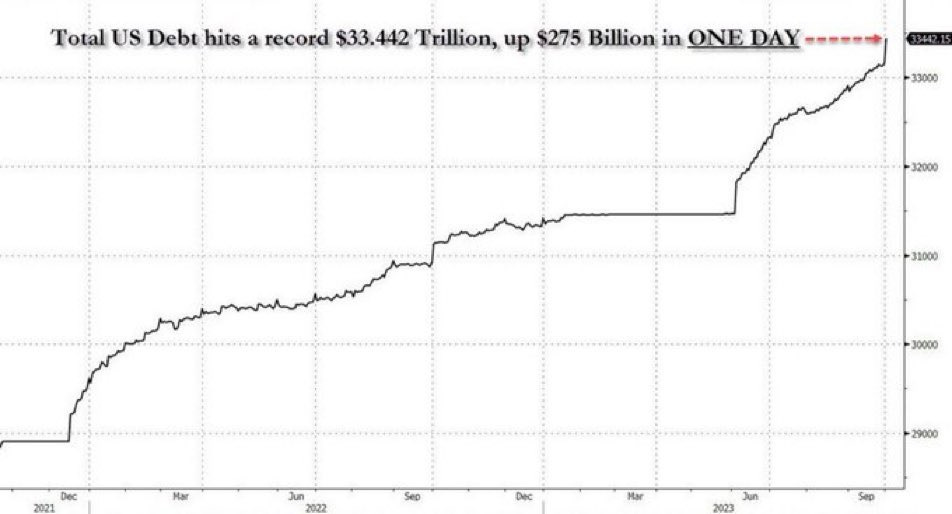
Today’s letter is brought to you by Sidebar!Ready to take your career to the next level? Make your transition successful by leveraging a Personal Board of Directors. A trusted peer group, with battle-tested perspective, and proven playbooks, to have real, tactical discussions with to propel you forward.With Sidebar, senior leaders are matched with a small group of highly-vetted, private, and supportive peers to lean on for unbiased opinions, diverse perspectives, and raw feedback. Everyone has their own zone of genius. Together, we’re better prepared to navigate professional pitfalls and push each other to do more, do it better, and do it faster. “Providing and receiving support from others who play a similar role to you is one of the best ways to grow your capabilities and succeed.” - Vice President, Roku“You’re the average of the people you keep closest; Sidebar helps you raise that bar.” - Global Director, Reddit“Tap into a new level of coaching support, professional development, and peer-driven accountability.” - Senior Director, Credit KarmaWhy spend a decade finding your people – join Sidebar today. Join the growing waitlist of over 5,000 top senior leaders, and apply to become a founding member.To investors,The national debt problem is very quickly getting much worse. We saw an increase of $275 billion added to the debt in a single day and as it was pointed out online, the US is on track to add $1 trillion to the national debt in a single month.This is bonkers. The United States now has $33.442 trillion in debt. We have not run a budget surplus since 2001, which means we have had 22 years of mismanagement, regardless of which political party is in power. Last year, the national government collected $4.9 trillion but spent $6.27 trillion. This created a budget deficit of $1.38 trillion, which is the fourth-highest of the 21st century.Not all of the politicians are asleep at the wheel though. Earlier this week, in a story that went largely uncovered, Indiana Congresswoman Victoria Spartz threatened to resign unless a national debt commission is formed. Here was part of her statement:“I’ve done many very difficult things being one woman standing many times with many very long hours and personal sacrifices, but there is a limitation to human capacity. If Congress does not pass a debt commission this year to move the needle on the crushing national debt and inflation, at least at the next debt ceiling increase at the end of 2024, I will not continue sacrificing my children for this circus with a complete absence of leadership, vision, and spine. I cannot save this Republic alone.”That is what we call a strongly worded statement. The problem is just starting though. High interest rates are creating a horrible feedback loop of high interest payments on the national debt. According to Scarlet Fu at Bloomberg:“The US government is currently spending more to pay interest on its $33 trillion national debt than it does on national defense, according to the US Treasury’s monthly statement. In the current fiscal year through August, the Treasury has spent $807.84 billion in interest on its debt securities. The Department of Defense’s outlay for military programs totaled $695.44 billion in the same period.”Spending more money on interest payments than the defense budget seems outrageous. Then again, it is 2023 so are we actually surprised by anything insane these days?I have a confession to make—I was shocked to see $275 billion added to the national debt in a single day. There are few things that surprise me anymore, but that one had my jaw on the ground.I wish I knew the solution. Unfortunately, it appears that a perpetual deficit is the name of the game for the government. You have to wonder if we would even know what to do with a budget surplus if we pulled off a miracle and created one. As the old saying goes, “no one is coming to save you.” You have to start thinking about how you will save, invest, and drive income in a world with an ever-increasing national debt. Because that is exactly where it looks like we are headed.Hope you have a great day. I’ll talk to everyone tomorrow.-PompLulu Cheng Meservey is the Executive Vice President of Corporate Affairs and Chief Communications Officer at Activision Blizzard. This conversation was recorded at the BUILD Summit in New York. In this conversation, Lulu breaks down how you can cut through the noise and make people care about what you're doing, how to tailor your message to people externally & internally, tactics you can use, how to prepare for a crisis way before it comes, and Lulu breaks down why there is no peace time.Listen on iTunes: Click hereListen on Spotify: Click hereEarn Bitcoin by listening on Fountain: Click hereHow To Handle The Mainstream Media As A Startup FounderPodcast Sponsors* Trust & Will - Estate planning made easy. They are fast, secure, and simple to use. Get your will or trust created today.* Auradine - A new bitcoin miner powered by the
How To Get More People Working In The American Economy
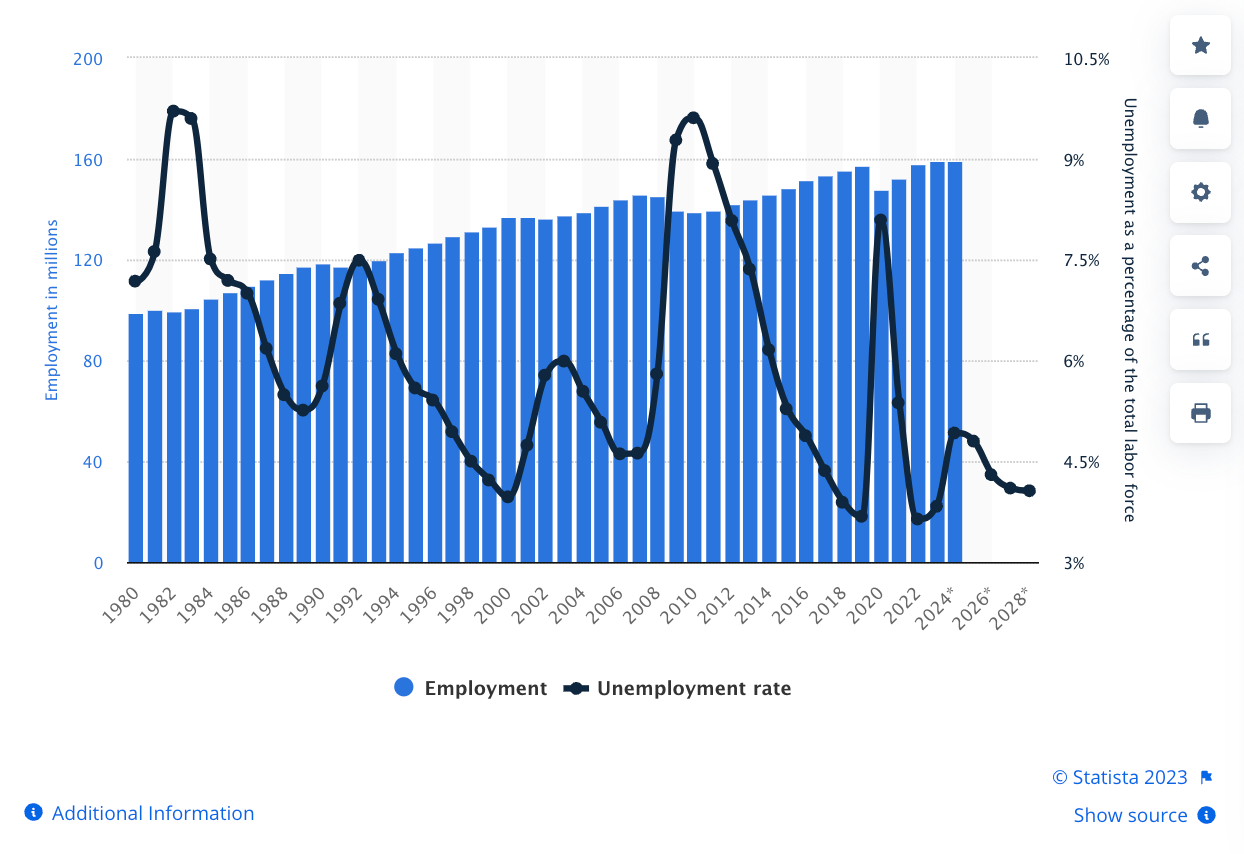
To investors,The number of people employed in the American economy has grown from just under 100 million in 1980 to approximately 160 million today. It doesn’t hurt that the current unemployment rate is sitting at under 4%, which remains near historic lows. Total employment and the unemployment rate in the United States from 1980 to 2022, with projections until 2028Even though unemployment is low and almost half the total US population is employed at the moment, there are still 8.8 million open roles in our country. I believe getting more people to work in the economy can help alleviate a number of problems we face as a society. GDP will grow faster. Companies will make more profits. Wages will increase. The inequality gap will shrink. And the US government will have a smaller burden placed on it for various social services. But I am not merely talking about a problem from afar. For the last two and a half years, my team and I have helped thousands of people get a new job. We lost count last year around 2,000 cumulative new hires and believe the number to be approximately 3,000 people today. Some of these individuals I personally trained so they could upskill and transition into the digital assets industry. Others were able to leverage a job marketplace we built to connect with a new employer. And even more people were placed in their new job by Proof of Talent, a recruiting firm we acquired.Think about this for a second — a small team of less than 20 people were able to help about 3,000 people get a new job over a two and a half year timeline. That is around 3 people per day, every day, for a few years. Imagine what we could do with a broader mandate than just bitcoin and digital assets?Well, we are about to find out. Today we are announcing that our job marketplace is expanding its service area to include any innovative startup company. The marketplace is rebranding under the name Dream Startup Job (website) and it is completely free to use for anyone who wants to get a new job in the startup world. I believe that startups are the single greatest tool we have to change the world. The definition of insanity is a small group of people believing they can create something from scratch that disrupts a group of incumbents and is adopted by millions of people globally. The odds are low, but the potential reward is high. These innovative startups need the best talent they can find. Every job role is applicable. Whether you are an engineer, an operations manager, an accountant, or an entry-level customer service agent, there is a startup out there that is looking for you. If you want to check out some of those open roles, you can now do so at Dream Startup Job.We still have hundreds of open roles at the top bitcoin and digital asset companies, but today we are launching the expansion into industry-agnostic startups with our partners at Eight Sleep, Varda, Flowhub, and Traba. The pool of potential companies to work at is now bigger, so my goal is to eventually help 10 people per day get a new job. Slowly, but surely, we will keep making progress.The more people employed in the American economy, the better off we all are. Hopefully our team can do a small part in cranking that employment rate even higher. If you have ideas on how we can partner, or how we can improve our solutions, please don’t hesitate to reach out. If you would like to list your open roles at your startup, you can do that by clicking here.Have a great day. I’ll talk to everyone tomorrow.-PompAvlok Kohli is the CEO of AngelList. This conversation was recorded at the BUILD Summit in New York. In this conversation, we talk about the culture of shipping speed at AngelList, fundraising environment, how cap tables are usually wrong, treasury management, hiring, private equity, and numerous industry trends.Listen on iTunes: Click hereListen on Spotify: Click hereEarn Bitcoin by listening on Fountain: Click hereHow To Improve Your Startup ImmediatelyPodcast Sponsors* Trust & Will - Estate planning made easy. They are fast, secure, and simple to use. Get your will or trust created today.* Auradine - A new bitcoin miner powered by the world’s first 4 nanometer silicon chip technology.* Velo Data: Do you want faster, easier crypto data? Sign up for Velo Data, a new product that we have been working on to solve this problem.You are receiving The Pomp Letter because you either signed up or you attended one of the events that I spoke at. Feel free to unsubscribe if you aren’t finding this valuable. Nothing in this email is intended to serve as financial advice. Do your own research. This is a public episode. If you'd like to discuss this with other subscribers or get access to bonus episodes, visit pomp.substack.com/subscribe
High Interest Rates Usher In New Normal For Young People
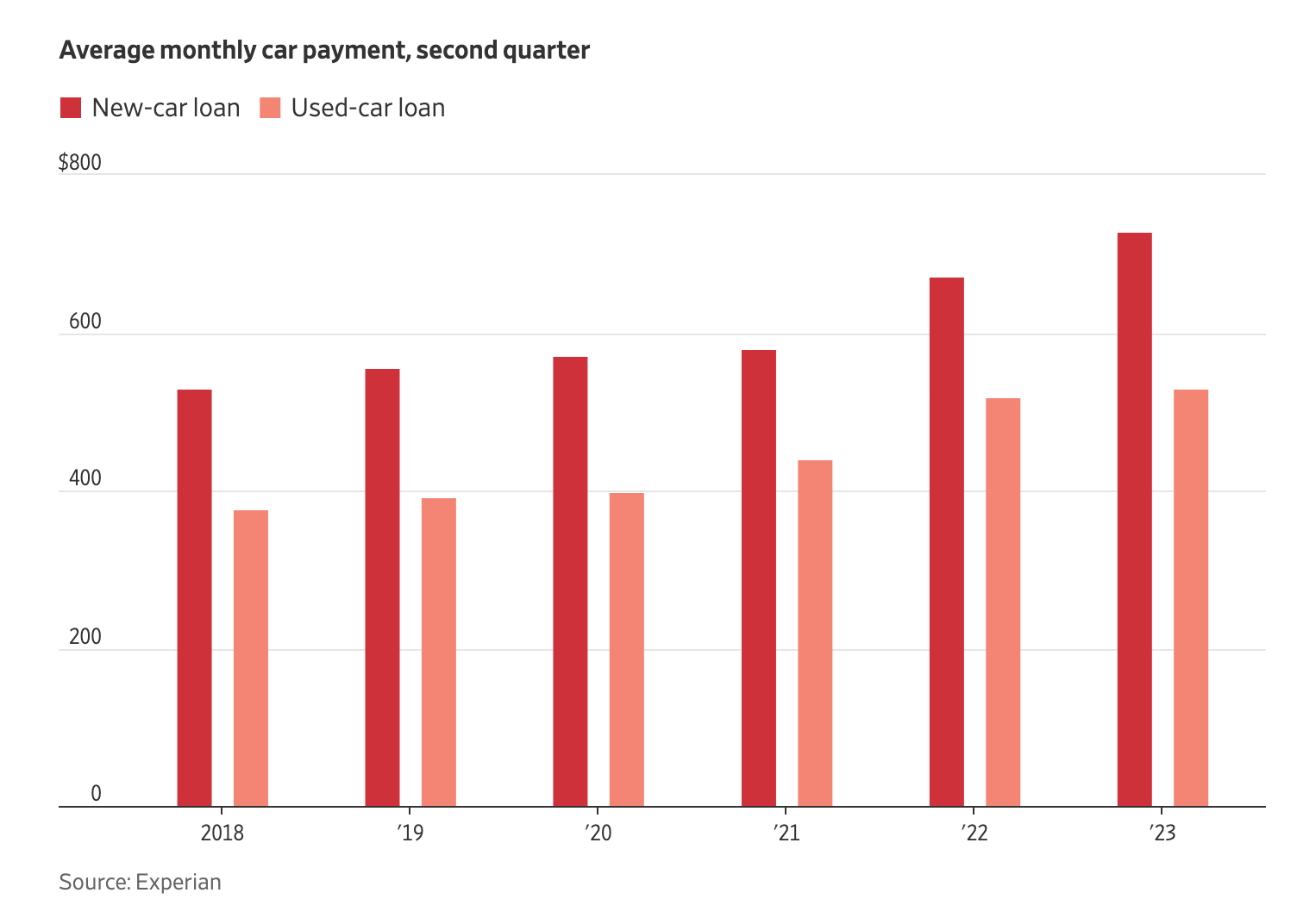
Today’s letter is brought to you by Sidebar!Ready to take your career to the next level? Make your transition successful by leveraging a Personal Board of Directors. A trusted peer group, with battle-tested perspective, and proven playbooks, to have real, tactical discussions with to propel you forward.With Sidebar, senior leaders are matched with a small group of highly-vetted, private, and supportive peers to lean on for unbiased opinions, diverse perspectives, and raw feedback. Everyone has their own zone of genius. Together, we’re better prepared to navigate professional pitfalls and push each other to do more, do it better, and do it faster. “Providing and receiving support from others who play a similar role to you is one of the best ways to grow your capabilities and succeed.” - Vice President, Roku“You’re the average of the people you keep closest; Sidebar helps you raise that bar.” - Global Director, Reddit“Tap into a new level of coaching support, professional development, and peer-driven accountability.” - Senior Director, Credit KarmaWhy spend a decade finding your people – join Sidebar today. Join the growing waitlist of over 5,000 top senior leaders, and apply to become a founding member.To investors,Federal Reserve officials are now saying the quiet part out loud—they intend to keep interest rates high for an extended period of time. This strategy is in-line with the central bank’s commitment to get inflation in the US economy under control. After manipulating the cost of money to 0% for years, the Fed had to reverse course at a record pace. The rise in interest rates from 0% to 5.25% happened at a pace that was never seen before, yet the estimated damage to GDP growth and the labor market never materialized. The economy is still growing and unemployment is under 4%.But consumers are now realizing that a long-term shift has happened in the economy. Originally, many citizens planned to wait out the Fed’s interest rate hikes. They thought they could buy a home or car next year. They could use their savings built up during the pandemic to outlast any negative wage growth. And they saw increased interest rates as a way to drive a little extra income from holding bonds.The problem is that the Fed has been in demand destruction mode for almost two years now and yesterday’s press conference signaled a long-term commitment to keeping rates high. This means the American consumer has a choice. They can continue to put their life on hold for a few more years or they can throw their hands up and subject themselves to more expensive capital. As Gina Heeb pointed out in the Wall Street Journal this morning, consumers are spending more of their income to cover housing costs, being forced to pay more on their car loans, and their credit card debt is exploding higher. Based on this data, it appears that consumers are finally starting to live their lives and deal with the cost of capital increase. This makes sense from a psychology standpoint. It wouldn’t be too difficult to convince someone to put off the purchase of a home or car for a few months, but once you begin to talk about years, people don’t have the patience.The average cost of a home, a mortgage payment, a car loan payment, and other ordinary living expenses will continue to rise nationally as rates remain persistently higher than they have been for the last decade.The interesting part is that current interest rates are not necessarily higher than the historical average, but there is an entire generation of millennials who have spent their adult lives in a low interest rate environment. It had become the new normal. Every investment decision was based on an assumption of low interest rates. So was every purchase decision. Now that rates are higher, and the Fed is signaling a commitment to long-term higher rates, this generation of consumers and investors will have to recalibrate. The irony of the situation is that boomers were slow to acclimate to low interest rates because it was foreign to their lived experience, but now millennials are likely going to be the ones who are slow to acclimate to high interest rates. There is no specific cure to the problem. The pain will continue until young people realize the world has changed and they now live in a new regime. Their investment decisions now have to account for 5% interest rates. Their car and mortgage payments are going to be higher than they anticipated.But that is the price for living today. It may not seem fair, but the worst mistake would be sitting around complaining rather than living life. Time is the most finite resource we get. Letting the central bank steal it from you because they made capital expensive sounds like a bad plan.It won’t be easy for many people to figure it out, especially because we are talking about income and rising expenses, but it is possible. And all we can ask for is a chance to live an extraordinary life that makes us happy. Hope you all have a great day. I’ll talk

"When The Facts Change, I Change My Mind"
To investors,John Maynard Keynes once said, “When the facts change, I change my mind.” This classic investment advice is equally true in our personal lives, so Keynes’ words rang in my head as I left New York City at the end of 2020. The city had become a skeleton of what it once was. I had lived on the island of Manhattan for years and fell in love with the density of ambitious people, the contagious energy of every day life, and the serendipity that comes from packing 8.5 million people into 300 square miles.New York City was home. I never thought I would leave. But here I was leaving the island for South Florida.I didn’t feel guilty. I had given New York a chance during the pandemic. My wife (Polina) and I got married in Manhattan with no guests in July 2020. I was almost late to the ceremony because I was stuck in an Uber that couldn’t get around a miles-long protest. Polina and I stayed in our apartment the entire year. We had not followed in our friends’ footsteps as they fled to rural Airbnbs or returned to their childhood bedrooms for months. We were New Yorkers. And New Yorkers can handle anything. But as weeks turned into months, and months turned into almost a full year, we realized things were only going to get worse in the city that we loved. On a spontaneous trip to see a friend in Miami during November 2020, we decided that we would move to South Florida for the winter. “Just a few months,” we told ourselves. We will come back to NYC once it gets warmer.Newsflash, we never came back. The unconstitutional mandates took hold. The crime got worse. People continued to flee the city in droves. And on the opposite end of the country, Miami was booming. It seemed like someone new was moving to town every day. Founders. Venture capitalists. Hedge fund mangers. Movie stars. Musicians. Professional athletes. You name an industry and someone well-respected from it was moving to South Florida. The good times were rolling.As Polina and I settled into our new Miami life, we felt it was important to be all-in on living there. We bought a home. We bought a car. We had our first child at Jackson Memorial Hospital. We opened up an 8,500 square foot office in the heart of Brickell. It was a real-time creation of the perfect life. Unfortunately, something felt off. We noticed it fairly early into our stint in the suburbs. Could it be a monotony that came with seeing fewer people every day? Did we miss being able to walk to a coffee shop downstairs? Maybe we were just nostalgic about our past life and the addition of a new child was messing with our minds? None of it made sense, but you know when something is off. It took two trips to NYC to realize what had happened. We had used our brains to move to Miami. Every aspect of our new life made rational sense. The weather was amazing. The taxes were low. The business was growing. But our hearts were still in New York City. Every single decision point told us that Miami was the better place to live, yet when we visited New York City, we felt more alive than ever. The city has an energy to it that is impossible to describe if you have never experienced it. We needed to leave to fully appreciate what it really means to live in the greatest city in the world. I was a big believer in Miami’s growth story. I still am. People and capital are still moving to the city. F1 racing. Citadel. Messi. The list goes on and on. But those positive things can be true, while it is also true that Polina and I are personally happier in New York City. As Keynes said, “When the facts change, I change my mind.” We made the decision to move to Miami with our brains. We are making the decision to move back to NYC with our hearts.Dear New York — “We’re back.”If you see me on the street, stop and say hello. Many of you do this already and I love meeting each of you. If you have an event that you’re putting together, send me an invite. If you have a company that is interesting, send me a message. Polina explained her perspective on our move, which I highly suggest reading.And I’ll leave you with a sentence someone recently told us, “New York City is the modern-day Rome.” And that is exactly where I want to be.-PompPeter Johnson is the Co-Head of Venture Investments at Brevean Howard Digital.In this conversation we talk about the epic rise of stablecoins, how they have become the killer app of blockchain technology, where stablecoins are being used, why they are being used, and who is using stablecoins.Listen on iTunes: Click hereListen on Spotify: Click hereEarn Bitcoin by listening on Fountain: Click herePomp’s Appearance on Fox Business with Liz Claman YesterdayPodcast Sponsors* Velo Data: Do you want faster, easier crypto data? Sign up for Velo Data, a new product that we have been working on to solve this problem.* Range - Get started today with code POMP15 for 15% off any quarterly plan for your first year.* Auradine - A new bitcoin miner powered by the world’s first 4 nanometer silicon chi
American Companies Must Manufacture Advanced Semiconductors and Systems for Bitcoin Mining
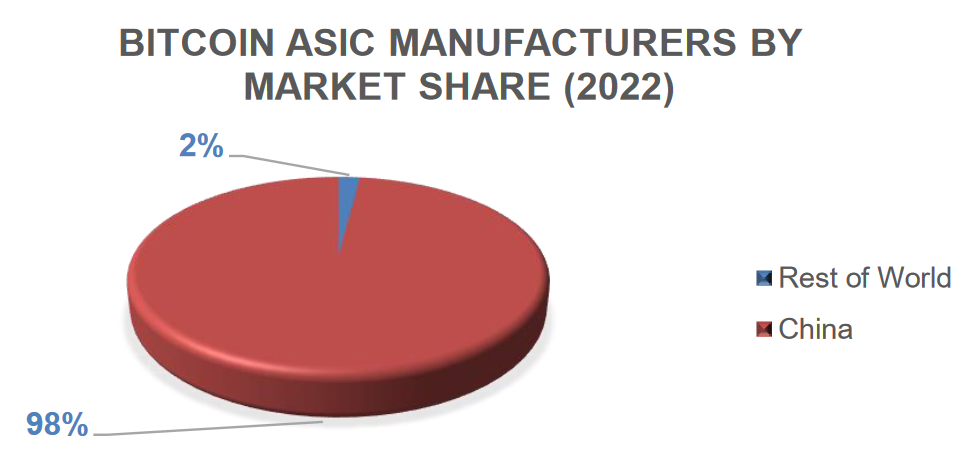
Today’s letter is brought to you by Sidebar!Ready to take your career to the next level? Make your transition successful by leveraging a Personal Board of Directors. A trusted peer group, with battle-tested perspective, and proven playbooks, to have real, tactical discussions with to propel you forward.With Sidebar, senior leaders are matched with a small group of highly-vetted, private, and supportive peers to lean on for unbiased opinions, diverse perspectives, and raw feedback. Everyone has their own zone of genius. Together, we’re better prepared to navigate professional pitfalls and push each other to do more, do it better, and do it faster. “Providing and receiving support from others who play a similar role to you is one of the best ways to grow your capabilities and succeed.” - Vice President, Roku“You’re the average of the people you keep closest; Sidebar helps you raise that bar.” - Global Director, Reddit“Tap into a new level of coaching support, professional development, and peer-driven accountability.” - Senior Director, Credit KarmaWhy spend a decade finding your people – join Sidebar today. Join the growing waitlist of over 5,000 top senior leaders, and apply to become a founding member.To investors,It has become obvious to me that American manufacturing is an essential component of our national security strategy moving forward. We need American companies building American technologies, including semiconductors. As I researched this topic more, I was introduced to the team at Auradine. They are tackling two things I am interested in — American manufacturing and bitcoin mining. The founders are highly successful Silicon Valley entrepreneurs who are dedicating their time and resources to tackle a very difficult problem.I asked Viswesh Ananthakrishnan, Head of Product Management, at Auradine to write a guest post on why it is critical to have US suppliers design & manufacture advanced semiconductors and systems for Bitcoin mining. Here are Viswesh’s thoughts:Advanced semiconductors are crucial components in Bitcoin mining solutions, providing the computational power necessary to solve complex mathematical problems and earn mining rewards in the form of Bitcoins. At present, China has a manufacturing monopoly on ASICs used in Bitcoin mining. However, the size of the Bitcoin mining industry (by market capitalization) outside China is disproportionately much larger.This lopsided distribution shows that even though China may have a stronghold on the manufacturing front, other countries and regions are contributing significantly to the overall growth, development, and profitability of Bitcoin mining. The decentralized nature of Bitcoin allows participants from around the world to engage in mining activities, resulting in a diverse and widespread ecosystem beyond the borders of any single country. It only makes sense that the design and manufacturing of Bitcoin mining ASICs should follow suit.Unfortunately, the US semiconductor industry’s share in global semiconductor production capacity has seen a sharp decline over the last 30 years, falling from 37% to just 12%. This decline has been driven by increased competition from other countries and a lack of investment in domestic manufacturing capabilities. Recent events have demonstrated how vulnerable US businesses are to supply from overseas ASIC manufacturers. The COVID-19 pandemic had a significant impact on the semiconductor supply chain, causing disruptions and shortages that have affected a wide range of US industries.Indeed, it has become crucial for the US to invest in and support its domestic semiconductor industry to ensure long-term growth and stability, in general for the broader economy and also specifically for the Bitcoin mining industry.“Making more semiconductors in the United States […] will strengthen our national security by making us less dependent on foreign sources”– Joe Biden, 46th President of the United States, July 2022In response to these challenges, the Biden-Harris Administration has launched efforts to bring semiconductor manufacturing back to America through the CHIPS and Science Act. While these efforts represent important steps forward, there is still much work to be done to rebuild the U.S. semiconductor industry and ensure its long-term competitiveness.Meanwhile, the economic significance of the Bitcoin mining industry in the US cannot be overstated, with a projected compound annual growth rate (CAGR) of 9.3% between 2023 and 2029, starting at $9 billion in 2022. The maturation of capital markets and the development of financial instruments have played a key role in the quick ascent of the Bitcoin mining industry in the U.S. In recent years, there has been a surge of interest in Bitcoin and other cryptocurrencies from institutional investors. Recently, several asset management firms, including BlackRock and Fidelity, have filed applications with the SEC to launch Bitcoin ETFs.“The role of crypto is digitizing gold. […]
The US Economy Is Drunk & Confused
Today’s letter is brought to you by Sidebar!Ready to take your career to the next level? Make your transition successful by leveraging a Personal Board of Directors. A trusted peer group, with battle-tested perspective, and proven playbooks, to have real, tactical discussions with to propel you forward.With Sidebar, senior leaders are matched with a small group of highly-vetted, private, and supportive peers to lean on for unbiased opinions, diverse perspectives, and raw feedback. Everyone has their own zone of genius. Together, we’re better prepared to navigate professional pitfalls and push each other to do more, do it better, and do it faster. “Providing and receiving support from others who play a similar role to you is one of the best ways to grow your capabilities and succeed.” - Vice President, Roku“You’re the average of the people you keep closest; Sidebar helps you raise that bar.” - Global Director, Reddit“Tap into a new level of coaching support, professional development, and peer-driven accountability.” - Senior Director, Credit KarmaWhy spend a decade finding your people – join Sidebar today. Join the growing waitlist of over 3,500 top senior leaders, and apply to become a founding member.To investors,People have been predicting a recession for months. But the economy doesn’t seem to care. The S&P 500 is up 15% year-to-date and nearly back to all-time highs. Unemployment also remains stubbornly low at 3.5%.As Charlie Bilello points out, “after a record 25 consecutive months of negative real wage growth, wages have now outpaced inflation on a year-over-year basis for 3 straight months. This is a great sign for the American worker that hopefully continues.”But the Federal Reserve is not out of the woods yet. In fact, the Fed is likely in an impossible situation. They have raised interest rates more than 500 basis points in about 18 months, which is the fastest pace on record. Headline inflation has fallen from over 9% to less than 4%, yet there are lingering concerns that inflation could reverse and accelerate again. These inflation fears are largely driven by the fact that numerous economic measurements continue to come in at higher levels than expectations. According to Bloomberg’s Lisa Abramowicz, “investors are throwing in the towel on hopes for near-term central bank rate cuts. Global bond yields are at the highest levels since 2009 as economic data keeps coming in hotter than expected.”She goes on to highlight that “a San Francisco Fed study estimates that US consumers have about $190 billion of excess savings left and that it'll likely be depleted during the current quarter.”Then we can look at something like retail sales — Bilello states “after adjusting for inflation, US retail sales fell 1.3% over the last year, the 9th consecutive YoY decline. That's the longest down streak since 2009. Nominal retail sales increased 2% YoY vs. a historical average of 4.7%.”But Kathy Jones says is more excited about the “large upside surprise in retail sales. Retail sales increased 0.7% vs. an expectation of 0.4% month-over-month. The control group, which feeds into GDP, increased 1.0% vs. an expectation of 0.5%.”So what exactly is going on in the US economy? Are we headed towards good times or bad times? Up or down? Pain or bliss? The short answer is that no one knows. The Federal Reserve has to use these conflicting data points to determine whether they have done enough rate hikes. If they have, then inflation will continue to come down, the Fed will eventually cut rates, and asset prices will continue their decade-long trend of up-only. But if the Fed misjudges this, and they mistakenly pivot now prematurely, then we could see an accelerating inflation trend that catches the central bank unprepared. Jeff Cox wrote for CNBC:“Federal Reserve officials expressed concern at their most recent meeting about the pace of inflation and said more rate hikes could be necessary in the future unless conditions change, minutes released Wednesday from the session indicated.That discussion during a two-day July meeting resulted in a quarter percentage point rate hike that markets generally expect to be the last one of this cycle.However, discussions showed that most members worry that the inflation fight is far from over and could require additional tightening action from the rate-setting Federal Open Market Committee.“With inflation still well above the Committee’s longer-run goal and the labor market remaining tight, most participants continued to see significant upside risks to inflation, which could require further tightening of monetary policy,” the meeting summary stated.”The public narrative in recent weeks has switched from “the Fed will have to continue hiking interest rates and a recession is on the horizon” to “the Fed is done hiking interest rates and the good times are coming back.” These meeting minutes reveal that the central bank has a different view of the economy.It is nearly impossible for a human
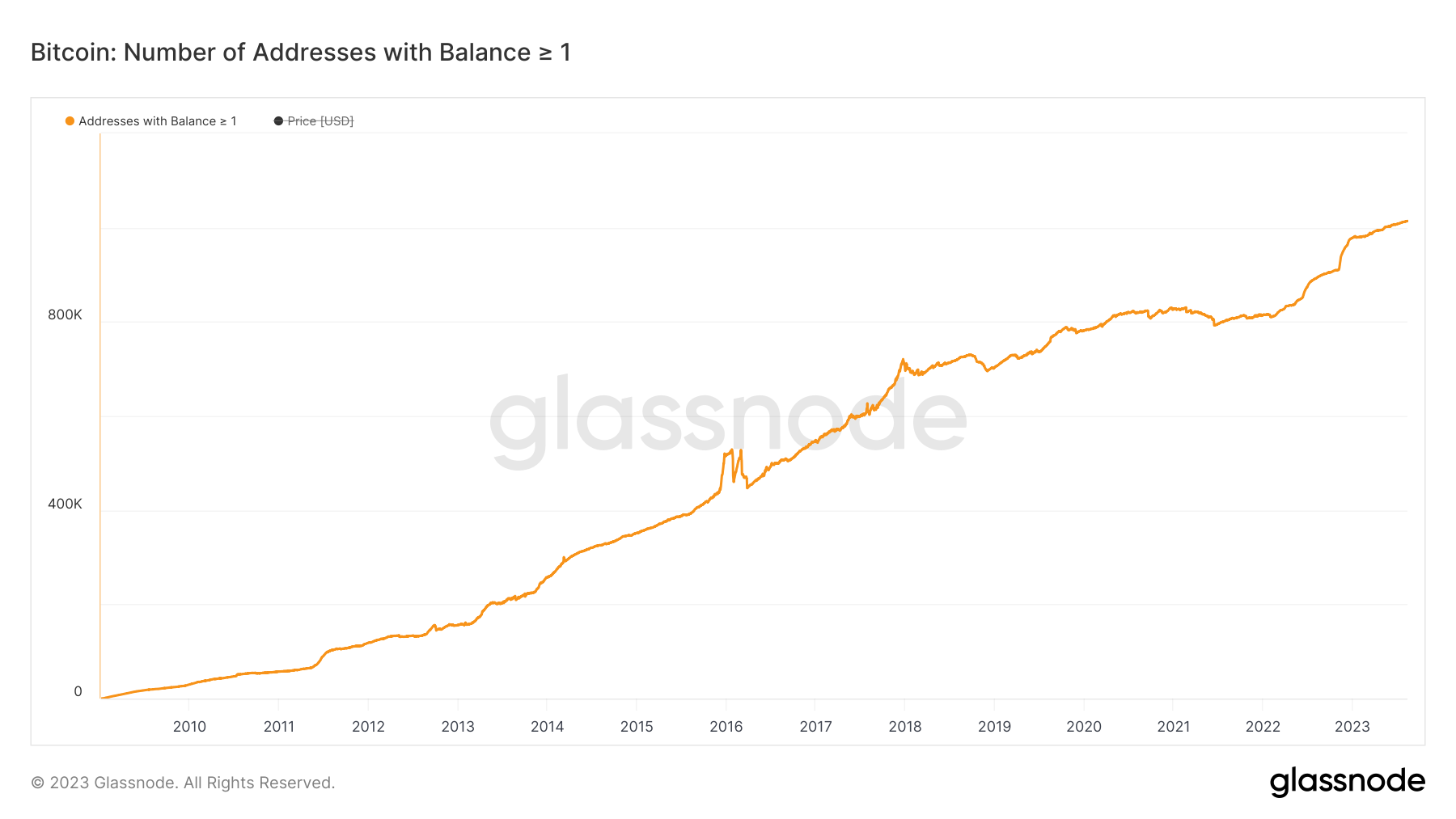
These 8 Bitcoin Charts Are Worth Watching
To investors,I found a number of interesting data points while I was digging into the bitcoin market over the weekend. First, there are now more than 1 million addresses on the bitcoin network with at least 1 bitcoin. That is growth of more than 100,000 addresses to this club in less than a year.The percent of bitcoin in the circulating supply that has not moved in the last two years is now at a new all-time high of 56%. This means that more than one out of every two bitcoin in circulation has not moved in two years. The percent of circulating supply that has not moved in 5 years is also at an all-time high of 29%. Over 70% of all bitcoin addresses are “in profit,” which means they acquired the current bitcoin they are holding at a lower price than today’s price point.Although there have been many people selling their bitcoin at a loss in recent months, bitcoin holders who have sold in the last few days are selling at a profit again.Miners had been selling bitcoin throughout the second half of 2022. These same market participants have been buying/holding bitcoin year-to-date. It is a strong sign to see the lack of sell pressure from miners in the market.Using the new data platform Velo Data, we can see the best day for bitcoin futures returns in a given week is Tuesday. The average futures return over the last year on Tuesday is more than double the average return for any other day of the week. Bitcoin is still down more than 50% from the 2021 all-time high in price, but the digital currency’s compound annual growth rate for the last decade remains more than 75%.The narrative over the last few months has been focused on the regulatory environment, along with a continued belief in the mainstream media that bitcoin was a bubble. These data points, along with various fundamental analysis, suggest that bitcoin is actually in a very strong position. Any time you have a highly illiquid asset that could potential see a large influx in demand (Wall Street ETF applications as one example), it is worth paying attention to. The supply/demand lesson you learned in Economics 101 still rules the day.Hope you all have a great start to your week. I’ll talk to everyone tomorrow.-PompAnthony Pompliano breaks down billionaire David Rubenstein’s thoughts on bitcoin, BlackRock, and why he believes bitcoin is not going away.Listen on iTunes: Click hereListen on Spotify: Click hereEarn Bitcoin by listening on Fountain: Click hereJoe Rogan and Post Malone Discuss Risks of CBDCsPodcast Sponsors* Velo Data: Do you want faster, easier crypto data? Sign up for Velo Data, a new product that we have been working on to solve this problem.* StartEngine - Sign up for a StartEngine account today explore live investment opportunities where you can start investing with as little as $100.* Range - Get started today with code POMP15 for 15% off any quarterly plan for your first year.You are receiving The Pomp Letter because you either signed up or you attended one of the events that I spoke at. Feel free to unsubscribe if you aren’t finding this valuable. Nothing in this email is intended to serve as financial advice. Do your own research. This is a public episode. If you'd like to discuss this with other subscribers or get access to bonus episodes, visit pomp.substack.com/subscribe
The Greatest Business Deal of the Last Decade
Today’s letter is brought to you by Sidebar!Ready to take your career to the next level? Make your transition successful by leveraging a Personal Board of Directors. A trusted peer group, with battle-tested perspective, and proven playbooks, to have real, tactical discussions with to propel you forward.With Sidebar, senior leaders are matched with a small group of highly-vetted, private, and supportive peers to lean on for unbiased opinions, diverse perspectives, and raw feedback. Everyone has their own zone of genius. Together, we’re better prepared to navigate professional pitfalls and push each other to do more, do it better, and do it faster. “Providing and receiving support from others who play a similar role to you is one of the best ways to grow your capabilities and succeed.” - Vice President, Roku“You’re the average of the people you keep closest; Sidebar helps you raise that bar.” - Global Director, Reddit“Tap into a new level of coaching support, professional development, and peer-driven accountability.” - Senior Director, Credit KarmaWhy spend a decade finding your people – join Sidebar today. Join the growing waitlist of over 3,500 top senior leaders, and apply to become a founding member.To investors,Dave Portnoy, the founder of media company Barstool Sports, just pulled off the greatest business deal of the last decade. This transaction will be studied in business schools for years to come. To understand how this happened, we must first understand what makes Barstool Sports special. I wrote an article more than 6 years ago that explained it in the following way:“The Barstool Sports magic is driven by charismatic personalities, a cultural obsession with memes / humor, and a system level evolution in distribution platforms. Gone are the days of writing long form, serious content. The last five years have ushered in an acceleration of shareable, humorous content in reaction to the shift in consumer interests and decreasing attention spans.The focus on “clicks” by media empires was once a recipe for success, but is now a bee line to negative unit economics and the inherent fall from grace that follows. Somehow a formerly small, unknown sports blog from New England avoided the errors of their idols and figured out the media model of the future.”Simply, the company figured out how to do something different and it resonated with a large audience. Readers and viewers were not the only people who noticed. Barstool Sports was able to solicit a number of different investors to put money into the business over the last few years.* January 2016 — The Chernin Group buys 51% of Barstool Sports for a rumored $7-10 million* January 2018 — The Chernin Group invests $15 million at $100+ million valuation* January 2020 — Penn National buys 36% of Barstool Sports for $163 million* February 2023 — Penn National buys the remainder of Barstool Sports for $388 millionAs of February 2023, Penn National owned 100% of Barstool Sports and they had paid $551 million for it. Not bad for a company that started out 20 years ago as a free physical newspaper handed out personally by the founder.But the deal between Barstool Sports and Penn National did not come without challenges. Penn is in the casino and gambling business, which is highly regulated. Dave Portnoy and Barstool Sports are a regulators’ nightmare. So it was clear how Barstool could bring more awareness and users to Penn, but it also became obvious that Barstool was making life more difficult for Penn as well. This is where ESPN comes in. The media company has been trying to figure out how to get into the gambling business for awhile now. Their traditional revenue business is struggling as consumers ditch cable networks and the overlap with gambling for a sports broadcast network is a no brainer. ESPN is a media company. Penn National is a gambling company. And yesterday they announced that the two companies are going to enter into a 10-year partnership. Penn will pay ESPN $1.5 billion over 10 years, along with grant them $500 million of warrants to purchase 31.8 million Penn common shares. There will be a new sportsbook, called ESPN Bet, that is launched out of the partnership.This left open the question — what about Barstool?Barstool and ESPN have a long history of not getting along. They have tried to work together in the past, but a TV show collaboration lasted less than a week. Portnoy and the Barstool team have also spent years mocking and ridiculing ESPN and their staff. It would be an understatement to say the two companies despise each other. Penn National had to make a decision about what to do with Barstool. It appears they couldn’t sell the property to a competitor, which is not surprising given how controversial Barstool has become over the years. So Penn did the next best thing — they sold the company back to founder Dave Portnoy.The announcements yesterday read “Dave Portnoy buys back Barstool Sports!” Suspiciously there was no purchase price thoug
Here Are 78 Charts To Explain The US Economy
To investors, This weekend I worked with the team at Bay Area Times to publish an overview of the US economy using 78 different charts. You can watch the video on YouTube or on Twitter. Here are five of my favorites:Most of the GDP growth is coming from the western and southern United States.There have been three of the five largest bank failures in US history this year.We have erased the past 20 years of gains in life expectancy after the metric fell to 76 years.And California has 70% of the top Artificial Intelligence startups in the United States. If you are interested in better understanding the US economy, I highly suggest watching this video. It takes about 10 minutes to see everything and it is jam-packed with information. The team at Bay Area Times explains the news every morning in 5 minutes or less using graphics and visuals. You should subscribe to the email. It is completely free and will make you more informed.Hope you all have a great day. I’ll talk to everyone tomorrow.-PompRemi Adeleke is a former Navy SEAL, and also the author of 2 books, "Transformed: A Navy SEAL’s Unlikely Journey from the Throne of Africa, to the Streets of the Bronx, to Defying All Odds" & "Chameleon: A Black Box Thriller."Chameleon" is his brand new fiction story of his life, and many of the experiences he went through. This man has not only gone from being a Navy SEAL, but he has also broke into the media & entertainment industry.Listen on iTunes: Click hereListen on Spotify: Click hereEarn Bitcoin by listening on Fountain: Click hereMy Fox Business Appearance From Last WeekGet Better Crypto Data: Do you want faster, easier crypto data? Sign up for Velo Data, a new product that we have been working on to solve this problem: velowaitlist.com 🚨You are receiving The Pomp Letter because you either signed up or you attended one of the events that I spoke at. Feel free to unsubscribe if you aren’t finding this valuable. Nothing in this email is intended to serve as financial advice. Do your own research. This is a public episode. If you'd like to discuss this with other subscribers or get access to bonus episodes, visit pomp.substack.com/subscribe
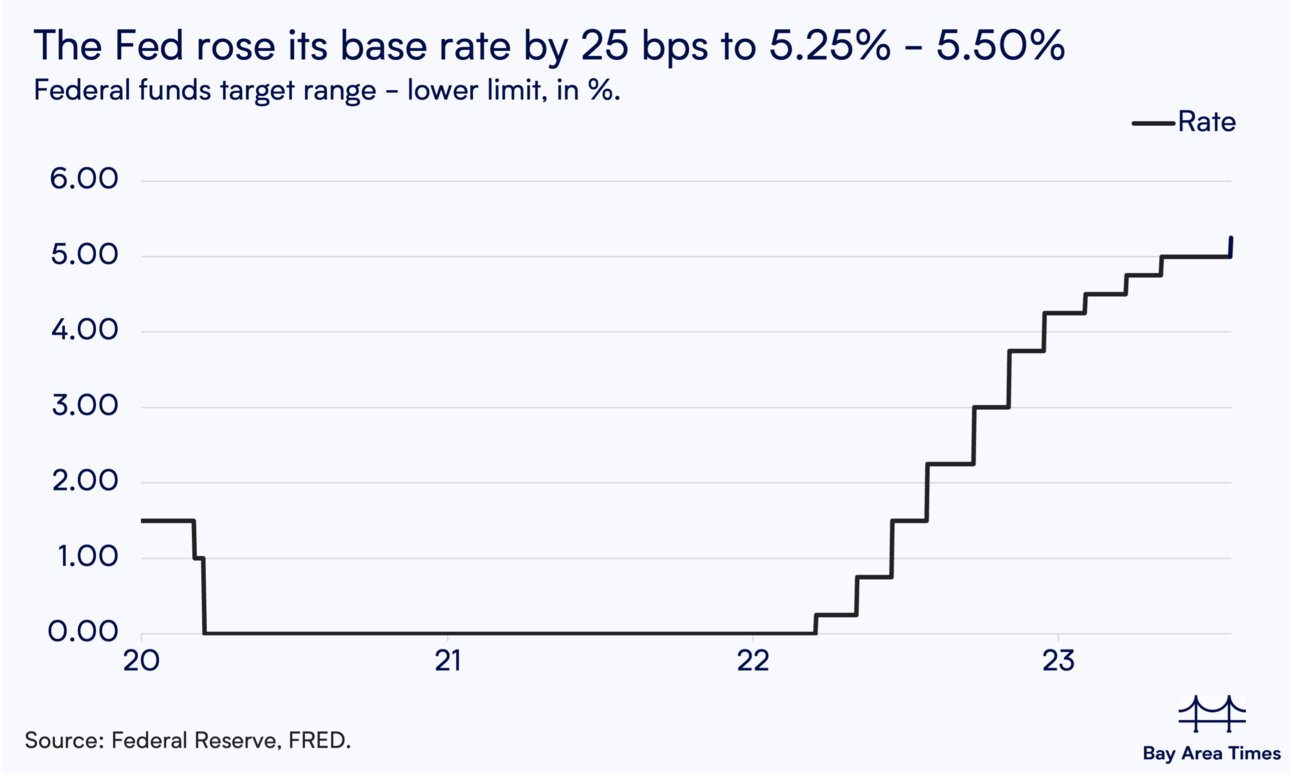
The Fed Promised A Miracle And It Looks Like They May Pull It Off
Today’s letter is brought to you by Sidebar!Ready to take your career to the next level? Make your transition successful by leveraging a Personal Board of Directors. A trusted peer group, with battle-tested perspective, and proven playbooks, to have real, tactical discussions with to propel you forward.With Sidebar, senior leaders are matched with a small group of highly-vetted, private, and supportive peers to lean on for unbiased opinions, diverse perspectives, and raw feedback. Everyone has their own zone of genius. Together, we’re better prepared to navigate professional pitfalls and push each other to do more, do it better, and do it faster. “Providing and receiving support from others who play a similar role to you is one of the best ways to grow your capabilities and succeed.” - Vice President, Roku“You’re the average of the people you keep closest; Sidebar helps you raise that bar.” - Global Director, Reddit“Tap into a new level of coaching support, professional development, and peer-driven accountability.” - Senior Director, Credit KarmaWhy spend a decade finding your people – join Sidebar today. Join the growing waitlist of over 2,500 top senior leaders, and apply to become a founding member.To investors,The Federal Reserve was mocked relentlessly during the pandemic for their atrocious understanding of their impact on inflation. After cutting interest rates to 0% and helping print trillions of dollars, the central bank was confident that inflation would be transitory.They were wrong.Inflation peaked at over 9% in the United States and the CPI metric remained above 5% for about two years. There was nothing transitory about the inflation that ravaged the bottom 50% of citizens who have no investable assets. As if that was not bad enough, the Fed appeared to compound the problem by jacking up interest rates over 500 basis points in just over a year.This was an important development because the Fed had previously given guidance in 2020 and 2021 that interest rates would remain below 1% for years to come. Since individuals and businesses planned their lives off that guidance, the central bank violated their trust when they did the exact opposite. These two mishaps make it clear why very few people believed the Fed when they stated their intention to achieve a soft landing of the US economy back in 2022. The idea was the monetary policy leaders would be able to increase interest rates and drain liquidity from the economy without experiencing a significant increase in unemployment or a meaningful contraction in economic activity. Everyone from market participants to former central bankers highlighted the near impossibility of this task. But, in a stroke of genius or a batch of good fortune, it appears more likely every day that the Federal Reserve may pull off their soft landing target.Yesterday, the central bank raised the interest rate by 25 basis points to a target range of 5.25% - 5.5%, which is the highest interest rate range in 22 years. This steep of an acceleration in the interest rate has never happened before. The consensus view has been a recession would be imminent because you can not increase interest rates this quickly without breaking things. After receiving more data, the answer appears more complicated than we previously thought.First, we already experienced a recession last year. The GDP data for Q1 and Q2 2022 was negative, so this met the standard of a recession in most people’s eyes, especially given the recession definition has long been “two quarters of negative GDP growth.” You probably don’t remember that recession though. Why? The National Bureau of Economic Research boasts of having a monopoly on calling a recession. You can’t make this stuff up. The organization has said that two quarters of negative GDP growth does not automatically qualify as a recession, but instead they will let the American people know when a recession has actually occurred. It would be funny if it was not so absurd. The second piece of nuance related to a recession and the financial tightening pursued by the Federal Reserve is how resilient the US economy has been throughout this period. Jeff Cox of CNBC explains why the economic strength is a leading indicator that the odds of a recession are diminishing:“Economic growth has been surprisingly resilient despite the rate hikes.Second-quarter GDP growth is tracking at a 2.4% annualized rate, according to the Atlanta Fed. Many economists are still expecting a recession over the next 12 months, but those predictions so far have proved at least premature. GDP rose 2% in the first quarter following a large upward revision to initial estimates.Employment also has held up remarkably well. Nonfarm payrolls have expanded by nearly 1.7 million in 2023, and the unemployment rate in June was a relatively benign 3.6% – the same level as a year ago.”This leads us to question how the Federal Reserve could aggressively hike interest rates, yet nothing is breaking in the
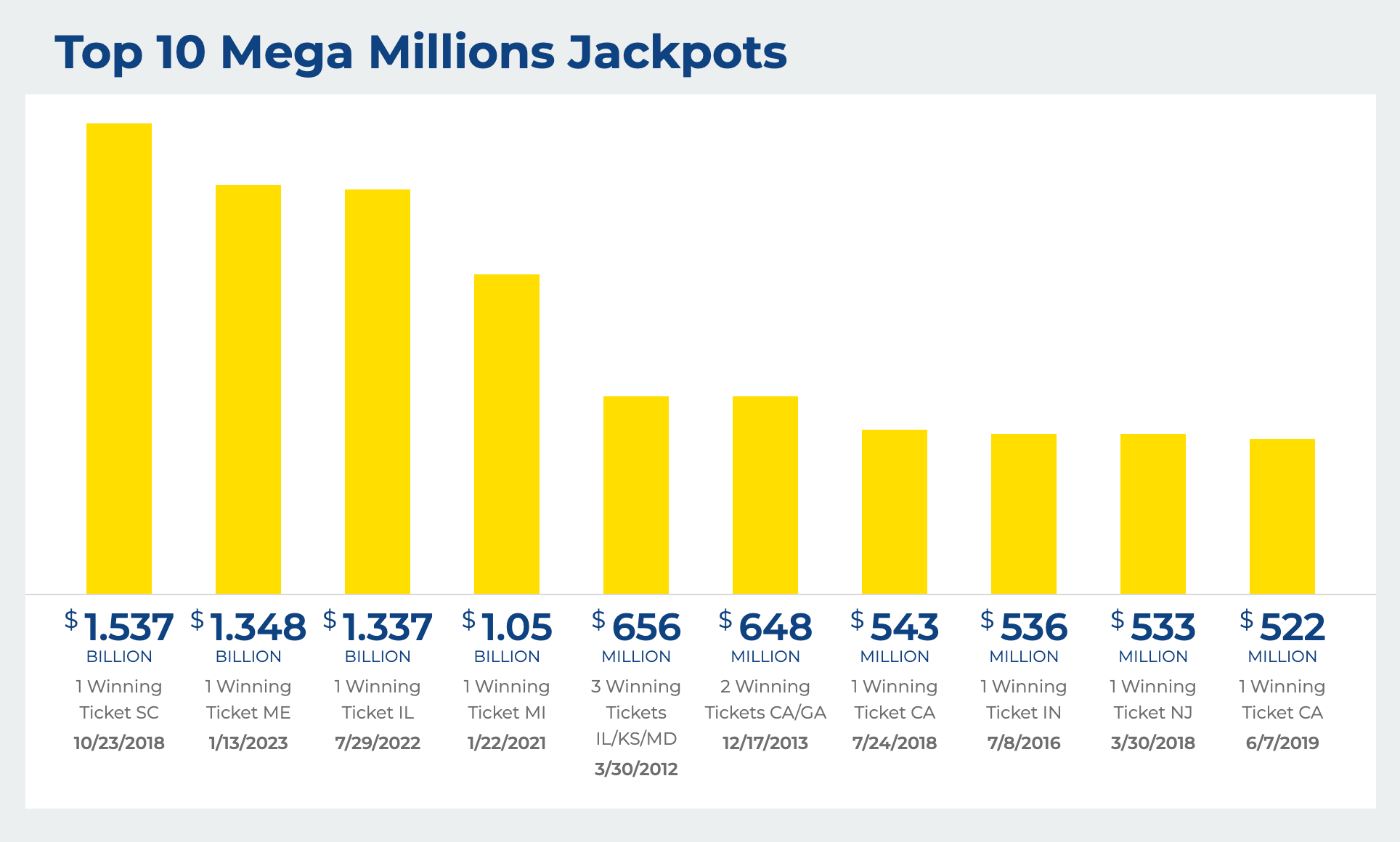
How The Lottery Funded America And Grew To $1 Billion Jackpots
To investors,Gambling is an American tradition. More specifically, the lottery has been a core component to funding the rise of America and many of our most respected institutions. The Virginia Company of London created the first lottery in America in 1616 to raise money for ventures chartered by King Charles, including the establishment of the first permanent settlement in Jamestown, Virginia.Over time, all 13 of the original colonies established their own lotteries with the goal of raising money for their operations. Given where the money was going, it became a civic responsibility to play the lottery.The lotteries didn’t stop there. These games have been used to fund churches, libraries, and various prestigious universities including Harvard, Yale, Columbia, Dartmouth, and Princeton.Lotteries have evolved over the years and now jackpots are reaching more than $1 billion. That seems insane, but why is it happening?The rules have changed and now millions more people can participate in a single lottery drawing. The more people who are playing, as long as no one wins the pot of money, gives fuel to a larger and larger amount up for grabs. There are two types of lotteries in the United States — state lotteries and multi-jurisdictional lotteries. State lotteries can only be played within the state borders and the winning ticket must be redeemed there as well. Multi-jurisdictional lotteries are available across multiple states.The state lotteries are usually smaller in size because fewer people are eligible to play them. The multi-jurisdictional lotteries are where the $1+ billion winning pots have been accumulated. There are two main lottery brands — Powerball and Mega Millions. According to the Powerball website, they have raised more than $29 billion for public programs and services. Here is how it works:“Powerball tickets are $2 per play. Tickets are sold in 45 states, the District of Columbia, Puerto Rico and the U.S. Virgin Islands. More than half of all proceeds from the sale of a Powerball ticket remain in the jurisdiction where the ticket was sold. Drawings are broadcast live every Monday, Wednesday and Saturday at 10:59 pm ET.Players select five numbers between 1 and 69 and one Powerball number between 1 and 26.The Powerball jackpot grows until its won. Players win a prize by matching one of the 9 ways to win. The jackpot is won by matching all five white balls in any order and the red Powerball.”The 10 largest jackpot winnings range from $2 billion to $632 million.* $2.040 Billion* $1.586 Billion* $1.080 Billion* $768.4 Million* $758.7 Million* $754.6 Million* $731.1 Million* $699.8 Million* $687.8 Million* $632.6 MillionMega Millions is slightly less popular, but they have been the recipient of a number of large jackpots as well. These jackpots are measured in hundreds of millions or billions of dollars, so where exactly does all this money go? The answer, as with most things in life, is it depends. Each lottery system is a little different and each state treats the lottery revenue in a different way.Generally, here is a breakdown of where the funds go:* 50% goes to the lottery winner* 10% goes to administrative costs* 5% is commissions to retailers who sell lottery tickets* 35% is divided among states based on pro-rata ticket salesThe amount of money given to the states is where things get interesting. Each state can receive tens of millions of dollars on the larger jackpots, so they have to decide what to do with that money. California, as an example, is exclusively focused on funding educational efforts, while Arizona supports the following programs:* Education* General Government* Health and Welfare* Inspection and Regulation* Natural Resources* Protection and Safety* Commerce Authority Arizona Competes Fund* Court Appointed Special Advocate Fund (Unclaimed prizes)* Dept of Gaming* Healthy Arizona* Heritage Fund* Homeless Shelters* General Fund (by Category)* Mass Transit* University Bond Fund* Automation Projects Fund* Internet Crimes Against Children Victims' Rights* Internet Crimes Against Children Victims* Tribal College Dual Enrollment ProgramMost people look at the lottery as a dumb game that is a tax on the unintelligent. There is a hint of truth to that thought process. Gambling addiction is real and every state sinks significant resources into addiction hotlines or other combative measures. Lotteries have also been apart of American culture since the founding of our country. They have helped to fund early settlements, well-respected institutions, and various public services in modern times. With billion dollar jackpots happening more frequently due to multi-jurisdiction games, the lottery has become a big business. In fact, it is so big that the business and investing world will have a hard time ignoring it in the future.Hope you all have a great day. I’ll talk to you tomorrow.-PompDarius Dale is the founder & CEO of 42Macro.In this conversation, we talk about the S&P 500, bitcoin, cons

This Movement Will Determine Your Great-Grandchildren's Economic Prosperity
Today’s letter is brought to you by Sidebar!Ready to take your career to the next level? Make your transition successful by leveraging a Personal Board of Directors. A trusted peer group, with battle-tested perspective, and proven playbooks, to have real, tactical discussions with to propel you forward.With Sidebar, senior leaders are matched with a small group of highly-vetted, private, and supportive peers to lean on for unbiased opinions, diverse perspectives, and raw feedback. Everyone has their own zone of genius. Together, we’re better prepared to navigate professional pitfalls and push each other to do more, do it better, and do it faster. “Providing and receiving support from others who play a similar role to you is one of the best ways to grow your capabilities and succeed.” - Vice President, Roku“You’re the average of the people you keep closest; Sidebar helps you raise that bar.” - Global Director, Reddit“Tap into a new level of coaching support, professional development, and peer-driven accountability.” - Senior Director, Credit KarmaWhy spend a decade finding your people – join Sidebar today. Join the growing waitlist of over 2,500 top senior leaders, and apply to become a founding member.To investors,Growth has been demonized over the last decade as something that we should fear. The technology industry is chastised for “growth at all cost.” The energy industry is protested for growth in consumption and production. Numerous billionaires warn of the risks associated with overpopulation. The message is clear — growth is bad.But I have long disagreed with this idea. For years, I have been trying to articulate that the opposite is true. Growth is not only good, but it is essential to human flourishing. I wrote a letter to each of you earlier this year titled, “Grow or Die,” where I argued this must be the motto for the United States of America over the next 80 years. Economic growth is the only rational answer to our financial and technological problems:“This leads to the multi-trillion dollar question — how do we potentially double the GDP growth of America?There is really only one viable path in my opinion. We have to double and triple down on technology and innovation. We have to create new products and services. We have to be the leader across artificial intelligence, bitcoin, space, genome sequencing, psychedelics, and much more. If the idea is fringe and potentially disruptive today, the United States must pour immense resources into the sector.Many things won’t work. That is perfectly fine. The venture capital model is proven for driving innovation. If the US government, and private investors, can unilaterally pursue a similar strategy of funding innovation, we may have a shot of turning this problem around. If not, the United States will continue to erode away as every great nation has done in the past.Grow or die. That is the motto for America over the next 80 years. History tells us what happens if we fail at the mission. Hopefully we are smart enough to avoid that fate.”In public talks at conferences I have discussed the importance of the technology industry to accelerate growth. We have to grow out of our problems or we risk being swallowed by them. A quick Twitter search turns up tweet-after-tweet on this idea as well. As if that wasn’t enough, I even started a company that is focused on training and employing people to put certain industries in a better position to accelerate economic growth.This is the single most important idea of our generation in my opinion — we must grow.There has only been one problem though…I have struggled to articulate the idea in a simple manner. Grow or die is a cute phrase, but it doesn’t fully encompass the different aspects of the issue. None of the existing movements or schools of thought fit perfectly with this problem and proposed solution. Thankfully, this has recently changed. A group of pseudonymous Twitter accounts have also identified the same problem and been championing growth as the solution. They appear to be much better at branding and marketing too. Their chosen name for this movement? “e/acc” which is short for Effective Accelerationism.In a Substack post explaining the idea, the founders of the e/acc movement write an explanation of the problem:“It’s hard to avoid the messages: mankind is bad. There are too many of us. Our problems are too many and they are too hard to solve. Many people are saying the solution to these problems is to take a step backwards, that the solution is degrowth. But degrowth is a kind of surrender. Degrowth is central planning hopped up on scarcity mindset. Degrowth is a wolf in sheep’s clothing.”Not exactly an optimistic message from the doomers amongst us. The founders go on to explain why e/acc is the counter-argument. An argument for optimism: “At the core of e/acc is a set of conclusions about the world drawn from the physics behind life itself, and the path forward it lays out is as clear as it is compelli
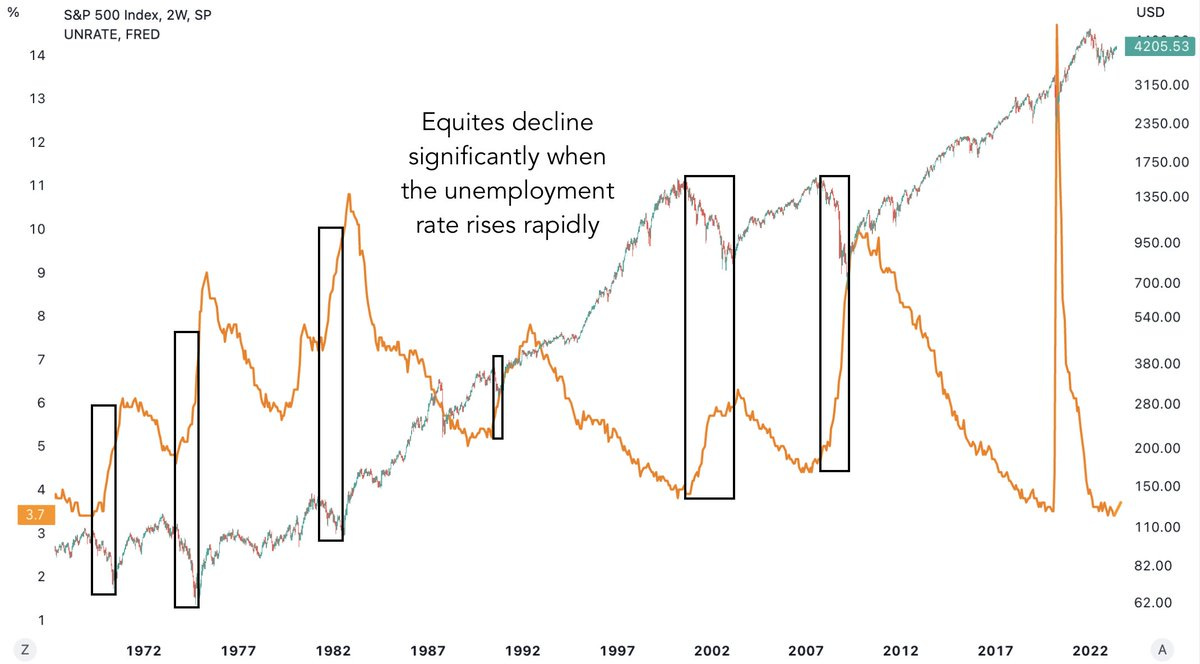
The Fed Is Playing Chicken With A Recession
Read the end of today’s letter for information on Sidebar:To investors,There are a few graphics and visuals that I came across over the weekend that tell a scary story for the US economy. First, we know that the Federal Reserve has been hiking interest rates aggressively. Most people have heard the Fed’s increase from 0% to 5%+ is the fastest in history, but it seems even crazier when you see the comparison visually. The United States has never seen anything like this before — the Fed has raised rates faster and further than any time in history. We had three of the four largest bank failures in history as a result. Now everyone is waiting for the supposed incoming recession. The Fed has not received the memo though. There is guidance from multiple members of the Fed that we should expect further rate hikes through the end of the year. The claim is that inflation needs to be snuffed out, the consumer is still strong, and the labor market is tight enough to handle the increased quantitative tightening. Some of those data points are correct — it is not the full story though. As @Gameoftrades_ on Twitter pointed out, “households' net worth is now contracting at the deepest levels since the 2008 Financial Crisis.”This is coinciding with retail money market funds rising at an alarming pace. Why is this important? This same development was seen before recessions related to the Dot Com bust, the Global Financial Crisis, and Covid-19. These data points do not guarantee a recession is on the horizon, but they are definitely giving us a reason to pay close attention. In these past recessions, GDP growth has been negative, unemployment has risen, and stock prices have fallen.The same analyst goes on to point out that “markets tend to decline considerably when the unemployment rate rises rapidly.”As you can see in this graphic, we had a drawdown in stock prices last year, yet the unemployment rate has remained stubbornly low. In recent months, we have seen a small creep up from 3.4% to 3.6% — that is not remotely close to past situations where the unemployment rate went up hundreds of basis points during market declines. Maybe we should be worried that unemployment is going to accelerate though? WisdomTree’s Jeff Weniger made the point on Friday that “the Fed's Senior Loan Officer Survey is a leading indicator of what happens next. Credit tightens, labor markets weaken.”Again, if these data points followed the historical trend then we are in for a lot of pain in the coming months. No one knows what is going to happen in the future. The Fed doesn’t know. Investors don’t know. And talking heads in the media don’t know either. This is why you can see bulls and bears wagering capital in the market to express their view of the future. With QQQ up 38% to start the year, and the SPY up 15% over the same timeframe, it is fairly clear that there are more buyers than sellers in the equities market through the first half of 2023. Add in the fact that bitcoin is up more than 80% from January to the first week of July and there is a compelling story that investors are plowing capital back into risk assets. I chalk this up to the classic reminder — don’t listen to what people are saying, just watch what they do. You can find people across finance and tech that are convinced the bad times are just around the corner. Investors in equities and bitcoin are making a very different bet. And the Fed? They are playing chicken with a recession.Narratives are cute, but they don’t pay the bills. The skin-in-the-game is where you want to keep your eye. Everything else is just noise. Markets are confusing and complex enough. If I had to boil down the only thing you needed to know in investing over the last 15 years, and still the single most important thing to know today, it would be “don’t fight the Fed.”Hope you all have a great day. I’ll talk to each of you tomorrow. -Pomp🚨 Today’s Letter Is Brought To You By Sidebar 🚨Land your next big career move with a Sidebar ‘Personal Board of Directors'* “Providing and receiving support from others who play a similar role to you is one of the best ways to grow your capabilities and succeed.” - Vice President, Roku* “You’re the average of the people you keep closest; Sidebar helps you raise that bar.” - Global Director, Reddit* “Tap into a new level of coaching support, professional development, and peer-driven accountability.” - Senior Director, Credit KarmaYou can spend a decade finding your people, or apply to Sidebar and find them today.Javier Ramírez Lugo is the founder of Cuota. He has had an incredible experience doing sales at Zenefits, Rippling, and WeWork. He is one of the most experienced and insightful people I have ever talked to about sales, and I always learn something every time we speak. This conversation breaks down how you as a founder or a salesperson can get better, how you can drive revenue, processes, hiring, firing, how to manage, and other hacks & tricks.Listen on iTunes: Click
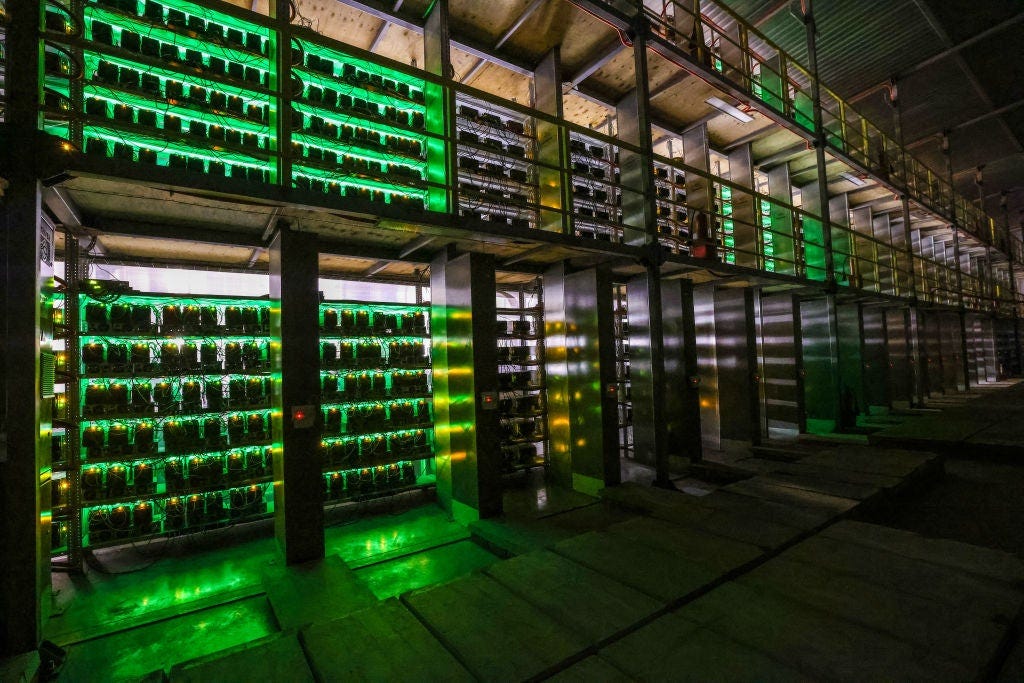
The State of Bitcoin Mining
To investors,I hosted a conference on bitcoin mining yesterday. Speakers included CEOs and leaders of the most successful mining companies in the industry. (view recording here)The conversations were packed with insights and I learned a lot. Below you will find my notes on each conversation, along with takeaways on bitcoin mining, regulation, power grids, hash rate, and where the industry is going over the coming 2-3 years. Bitcoin mining is a core component of the bitcoin industry — I hope this event and these notes are helpful as you learn more about the infrastructure behind the digital currency.Speaker #1 - Daniel Roberts, Co-Founder & Co-CEO of Iris Energy (website)* Iris Energy has used 100% renewable energy to mine bitcoin since day one, and they’ve only entered markets where the introduction of their load solves energy market problems. * The Fourth Industrial Revolution, which we’re already in, creates an exponential demand for energy-intensive computing power. The largest chokepoint is building enough infrastructure in a socially-acceptable manner to deliver services into the digital and exponential world that has begun to take off. * When I asked Daniel to explain how much they consider regulation as part of their site selection process, Daniel responded with their philosophy, “We just try to step back, and eventually, the truth wins. If you fundamentally are delivering good services, you're rehiring workers in local communities, and you're genuinely delivering benefits into an energy market, then just deal with the noise, block it out, address the fundamentals, educate people, and do the right thing.” Speaker #2 - Jaime Leverton, CEO of Hut8 (website)* Hut8 follows a more diversified strategy than many of the bitcoin miners that only focus on mining bitcoin. Why? Hut8 was one of the first bitcoin miners to go public in 2018, and they had a very difficult time during that bear market. When they brought Jaime in as CEO in 2020, they did so because they wanted someone with a background in traditional compute that could diversify the business in order to be better positioned for a bear market. They did this by purchasing a high-performance computing business and building out fiat-based revenue streams aimed at dampening the bitcoin mining-related volatility outside of the company’s control. * There are massive differences in the approach required for a bitcoin mining operation and a traditional data center. Traditional data centers require a stable base load running 24/7 with things like dual power feeds, high security, and multiple generators to ensure no downtime. Bitcoin mines, on the other hand, have a flexible workload with no customer data being protected, so they are much more straightforward. A traditional bitcoin mine costs $300,000 to $800,000 per megawatt, while a traditional data center could be anywhere between $8 million and $13 million per megawatt. * This most recent bear market has been particularly challenging for bitcoin miners. The energy crisis, combined with a low bitcoin price, and a constantly rising global hash rate created a sort of perfect storm for bitcoin miners. Because Hut8 shored up its balance sheet during the bull market, they’ve been able to take advantage of good opportunities during the bear market. * Jaime thinks that as an industry one of the areas that needs the most focus is education and breaking down a lot of the misunderstanding that surrounds bitcoin mining. This will drive more conversations that lead to thoughtful regulation and allow bitcoin miners to partner with grids and communities in a way that benefits all parties. * After spending 20+ years in the traditional technology world, Jaime has been most surprised by how supportive and collaborative the entire community is. Unlike many of the large public companies she previously worked at, she feels that all of the companies in the bitcoin mining space know each other and are broadly trying to do what’s in the best interest of the industry. Speaker #3 - Harry Sudock, Chief Strategy Officer of GRIID (website)* The GRIID team believes that money and energy are foundational infrastructure layers to a functioning society and a functioning economy, which is why they decide to focus their company on “infrastructure” rather than only “bitcoin.” * Bitcoin mining is still not very big in the context of our current power systems. A bitcoin mining operation will consume somewhere between 25 to 500 megawatts, while the large-scale providers of electricity in the US are generating in the 30,000 to 50,000-megawatt range. Harry currently sees bitcoin revenue streams as being a linchpin that may allow a project to get greenlit, but he thinks we’re still quite a ways out from bitcoin having a large influence on how major grids are structured. * Harry believes that bitcoin miner revenue today is a small fraction of what it’ll eventually become in the future. Why? Because he thinks people don’t have a clear appreciation y
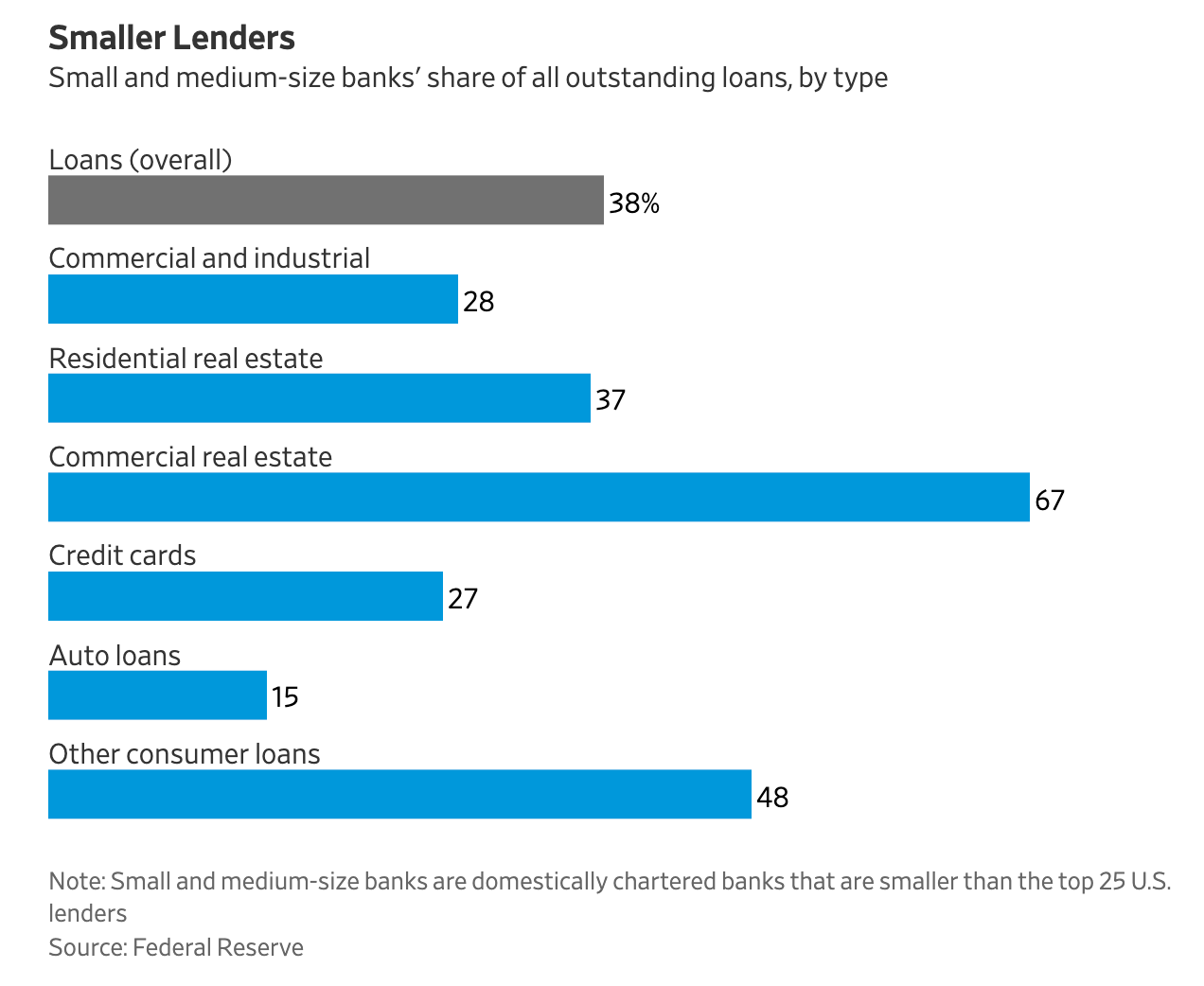
The Impending Collapse of Commercial Real Estate
To investors,The $20.7 trillion commercial real estate market is in big trouble. A few weeks ago Treasury Secretary Janet Yellen publicly stated “I do think that there will be issues with respect to commercial real estate.” Famed entrepreneur Elon Musk tweeted “Commercial real estate is melting down fast. Home values next.”Yellen and Musk don’t agree on much when it comes to economics, so it is important to pay attention when they are both sounding the alarm on the same issue.The first thing to understand is that demand for large commercial real estate buildings, such as office towers in big cities, has been rapidly declining as work from home trends turn into the market standard. According to a recent National Bureau of Economic Research Working Paper, attendance in the 10 largest business districts in the US is still below 50% of its pre-COVID level, as white-collar employees spend an estimated 28% of their workdays at home.The percentage of full days working from home was ~5% before the pandemic, so the recent trend has caused a more than 5x increase in the baseline. The national average vacancy rate is 19%, including Los Angeles at 26%, NYC at 23%, and even Miami—which has been a winner of the pandemic migration trend—at 16% vacancies.These are staggering numbers. As demand has dropped, equity and debt investors have been trying to identify the current value of these properties. We have seen a building in San Francisco, which was previously valued at ~$300 million, put on the market for an 80% discount.This was followed by reports last week that two office buildings in Midtown Manhattan sold for almost 50% less than asking price. As you can see in this data from the IMF, commercial real estate prices rarely go down, so it can quickly become catastrophic if the market does not correct and stabilize.The good news is that the blended delinquency rate on all commercial real estate debt is still relatively low compared to the historical trend. It is true that the overall US CMBS delinquency rate jumped to 3.62% up 53 basis points for the month of May, but the all-time high on this basis was 10.34% registered in July 2012. The COVID-19 high was 10.32% in June 2020.The problem in the debt market is not what has happened already. It is the tsunami of debt refinancing that will need to happen over the second half of 2023. Megan Henney writes:“About $1.5 trillion in commercial mortgage debt is due by the end of 2025, but steeper borrowing costs, coupled with tighter credit conditions and a decline in property values brought on by remote work, have increased the risk of default. Fitch Ratings already estimated that 35% — or $5.8 billion — of pooled securities commercial mortgages coming due between April and December 2023 will not be able to be refinanced.”This is problematic because interest rates have more than doubled in the last two years. To make matters more complicated, 67% of commercial real estate loans are issued by small and mid-sized banks. These are the same banks that have felt the brunt of the recent banking crisis which was induced by the Fed’s 500 basis point hike in interest rates at the fastest pace in history.Although most banks did not fall victim to the market in the way that SVB, Signature, and Silvergate did, there is still immense pressure on these institutions in the current environment. Add in the idea of the Fed conducting further rate hikes later this year and the doomsday scenario becomes clearer. As John Maynard Keynes observed, when you owe your banker $1,000, you are at his mercy, but when you owe him $1 million, “the position is reversed.”But there is a second-order effect that we need to call out. There is a very real chance that municipal government finances will take a hit as well. As Dror Poleg explains for The Atlantic:“Municipal governments have even more to worry about. Property taxes underpin city budgets. In New York City, such taxes generate approximately 40 percent of revenue. Commercial property—mostly offices—contributes about 40 percent of these taxes, or 16 percent of the city’s total tax revenue.NYU professor named Arpit Gupta and others estimate a 6.5 percent “fiscal hole” in the city’s budget due to declining office and retail valuations. Such a hole “would need to be plugged by raising tax rates or cutting government spending.”The potential solutions to this problem are few and far between. One idea is that private equity investors will step in to gobble up commercial real estate assets. This is probably true, but it will only happen at significantly depressed prices. There is significant economic pain between where we are today and where prices would have to trade in order to get transaction volume growing again.Another idea is that these commercial buildings could be converted into residential buildings. Theoretically this makes sense, yet there are a number of complexities that developers will have to navigate to make it a reality. Zoning and permitting is th
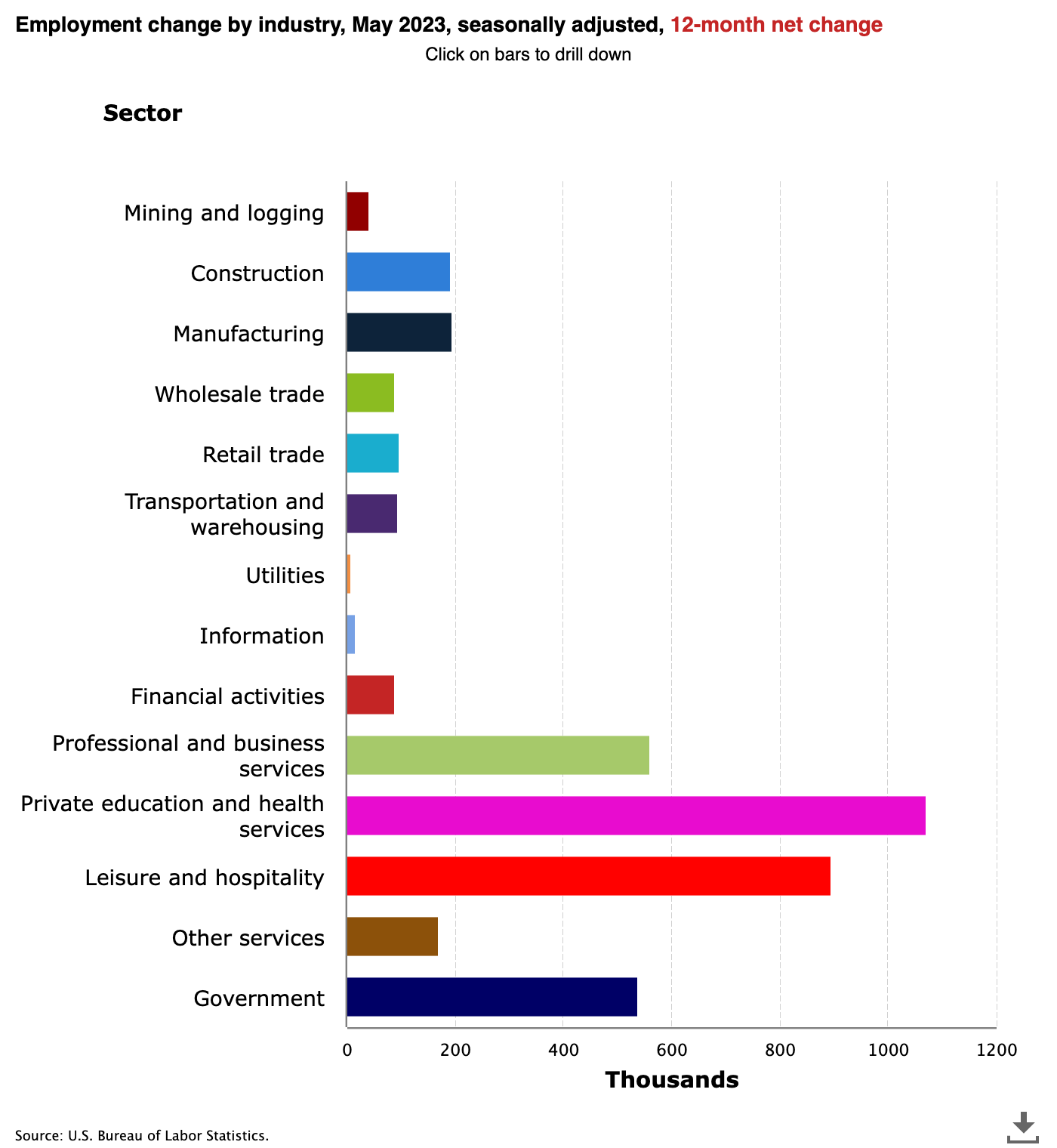
A Data-Driven Breakdown of the Labor Market
To investors,The Federal Reserve has been hiking interest rates aggressively for the last year and a half. Although multiple banks have failed and asset prices are down materially, the Fed has remained steadfast in their pursuit of tighter financial conditions.A key reason the Fed has not wavered is the labor market. We currently have an unemployment rate of 3.7%, which is low compared to the historical averages. The unemployment rate in the United States averaged 5.72% from 1948 until 2023, reaching a high of 14.70% in April 2020 and a record low of 2.50% in May 1953.South Dakota has the lowest unemployment rate at 1.9% and Nevada has the highest unemployment rate at 5.4%.According to the Bureau of Labor Statistics, there are 10.1 million open jobs in America and 6.1 million unemployed people, which means there is ~ 1.66 open jobs for each person looking for work. Although unemployment is low, there are still enough open jobs to employ every person who wants a job in America. Another important data point to evaluate the health of the labor market is the average hourly earnings for all employees on private nonfarm payrolls. The average is $33.44 today, which is significantly higher than the $7.25 federal minimum wage. Given that this is an average, the outliers in the data obviously skew the metric higher. Industry TrendsIf we dig deeper into the labor market, we can evaluate which industries are adding or losing jobs. One of the most surprising data points is that no industry saw a net loss in jobs in the past 12 months. The industry that saw the lowest growth is “Utilities,” which saw a net gain of 3,400 jobs (0.6%). The industry employs a total of 555,900 people.In the past 12 months, the “Private education and health services” industry gained the most new net jobs. The industry now employs a total of 25,254,000 people, a gain of 1,073,000 (4.4%) in the past 12 months. Another point to call out here is the resurgence of leisure and hospitality. This sector got decimated during the pandemic, but it has recovered nicely. There was an addition of just below 900,000 jobs in the last 12 months and more than 16.5 million people work in the sector currently. Remote WorkAccording to Forbes’ recent study, 12.7% of full-time employees work from home in 2023 and 28.2% of employees have adapted to a hybrid work model. The same report shows that approximately 16% of companies are fully remote, which means they are operating without any physical office.Tech LayoffsIf we drill into the tech layoffs, we can get a good sense for how certain industries are navigating the economic pain. Each layoff tracker has different data. They each agree directionally though. According to Layoffs.fyi, 785 tech companies have laid off 206,136 employees so far in 2023, which has already surpassed 2022’s 164,709 layoffs.There were more than 100,000 individual tech employees that were laid off in January of this year, according to TrueUp. We have seen three other months in 2023 with at least 50,000 people laid off. The current month of June appears to be on track for the lowest number of tech employees laid off in almost 9 months.It appears that the peak number of tech layoffs occurred in January, with 349 being reported that month, followed by a steady decline since. The month of June is not over so it is hard to predict if the trend will hold, but the significant decrease in recent months is encouraging.We are not out of the woods yet. The slowdown in layoffs across the tech sector will be important to watch. If we enter a deeper recession, it would not be surprising to see more layoffs occur. The tech industry has been a big beneficiary of the loose monetary policy era of the last decade — what the Fed gives, the Fed can take away.Overall, the labor market remains strong compared to historical trends. This strength is flashing a green light to the Fed to continue to keep financial conditions tight. It does not necessarily mean that the Fed will hike interest rates further, but we can’t discount that option either. We will find out more about the Fed’s plans later today — if they hike rates once more, then we have to believe that a recession is almost guaranteed. After talking to hundreds of people looking for a new job in the last few months, one of our companies has been diligently working to place these individuals in new opportunities. Thankfully, we have helped thousands of people find a job in the last two years, so the experience is paying off at the moment. We are hosting a free webinar on Monday June 19th at 6pm EST to teach people how to best position themselves to get a new job. We will focus on the bitcoin industry, but the lessons can be applied to any industry you are interested in. You can RSVP here.Hope you all have a great day. I’ll talk to everyone tomorrow.-PompThe US Economy Just Got StrongerYou are receiving The Pomp Letter because you either signed up or you attended one of the events that I spoke at. Feel free to u
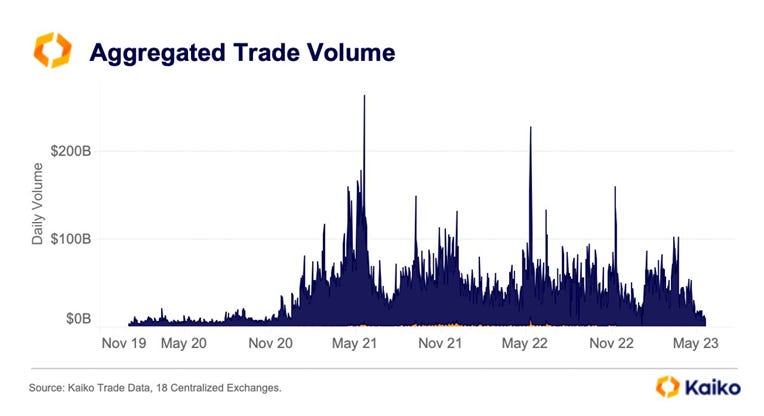
The State of Crypto Market Structure
To investors,Today is a guest post from Will Clemente, co-founder of Reflexivity Research, on the current state of crypto market structure. You can subscribe to Reflexivity’s research by clicking here.After a major first quarter we have seen a continued decline in trading volume across the board for major digital assets across all major centralized exchanges. Throughout the month of May, aggregated trading volumes declined from $23bn to $9bn to their lowest levels since 2020. This represents continued apathy and decline in speculative interest in crypto markets.Looking at the makeup of overall trading volume by exchange, Binance’s market share has fallen to 56% despite a slight rebound over the last week. This is a 15% percent decline from its peak at the start of 2023. The biggest beneficiaries of this dynamic fall under the “other” category, which includes exchanges such as Huobi, Kraken, and Kucoin.Offshore exchanges remain the dominant venues across the entire crypto landscape, making up a whopping 86% of all trading volume; this dynamic is likely to only accelerate with regulatory uncertainty in the United States. Even Coinbase, which historically has been recognized as the publicly traded highly regulatory compliant alternative option to other venues in crypto, announced the launch of its own offshore derivatives venue called Coinbase international exchange. Harsh regulatory efforts and posturing from government officials in the US with the intention of establishing control over the industry are only going to have the opposite effect and drive talent/capital/innovation off-shore and on-chain; ultimately giving the government less control than what it would have if it encouraged activity to take place in the US; allowing it to at least retain some degree of oversight. For the foreseeable future it’s unclear why the dominance of trading volume in offshore venues won’t continue.While USD denominated market depth has remained relatively stable, liquidity for both Bitcoin and Ethereum measured by coin denominated 2% market depth (coin denominated depth of bids and asks within 2% of current trading price) has remains roughly flat on the month; again, illustrating a period of apathy for the crypto market. This downtrend in liquidity that we’ve been tracking for the last few months was reflected in an announcement from Jane Street and Jump, in a statement from the two market makers, that they would be scaling back their crypto operations in the US. Jane Street went a step further stating that the firm would be scaling back its crypto operations globally due to regulatory uncertainty that has made it difficult for the firm to operate in a compliant fashion. This decline in liquidity makes it more difficult more entities operating in digital asset markets to execute larger trades without incurring slippage (price impact). In other words, declining liquidity in the market translates to higher volatility. In terms of trading pairs, TUSD has taken up an increasing amount of activity on centralized exchange, now 36% percent of all Bitcoin trading volume while Binance and Paxos’ BUSD pair has declined from 32% to 5% amidst regulatory uncertainty and the removal of zero-fee trading.Stablecoins remain the dominant pair of choice for centralized exchange market participants, with stablecoins making up 82% percent of overall trading volumes, relative to fiat, for Bitcoin specifically and 76% percent of centralized exchange crypto trading volumes overall.Of these stablecoins, Tether remains king with a whopping 76% of overall stablecoin market share on centralized exchanges.That is it for today’s analysis. Hope everyone has a great day. This was a guest post from Will Clemente, co-founder of Reflexivity Research, on the current state of crypto market structure. You can subscribe to Reflexivity’s research by clicking here.-Pomp This is a public episode. If you'd like to discuss this with other subscribers or get access to bonus episodes, visit pomp.substack.com/subscribe
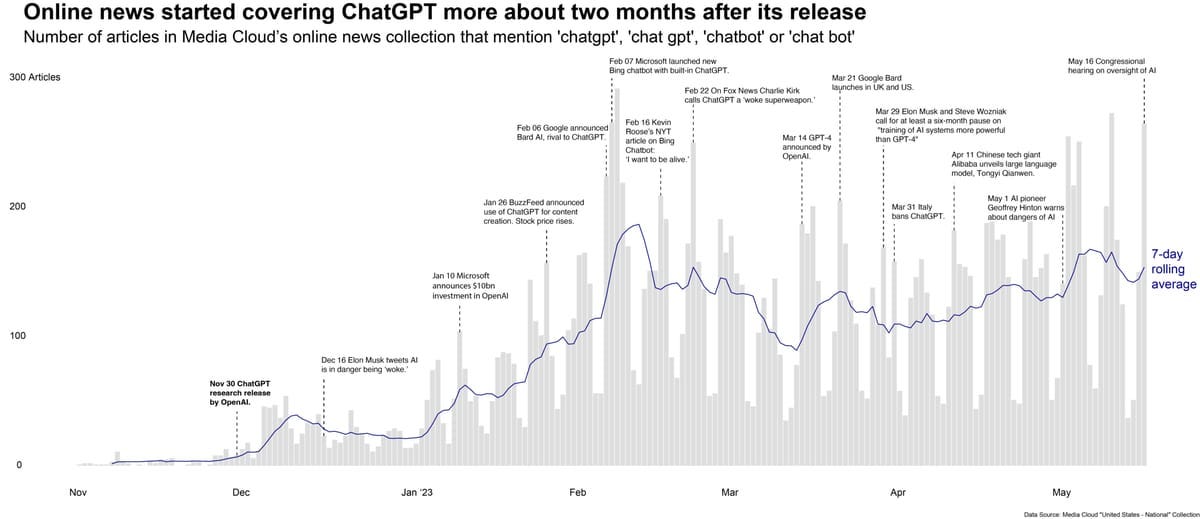
The AI Hype Cycle Learned From Bitcoin Hype Cycle
To investors,Artificial intelligence is now being talked about by the media as much as bitcoin was discussed during the all-time high run of 2021. This is noteworthy because the media’s coverage will only accelerate adoption, while also helping to solicit more investment dollars to the industry.As Bay Area Times explained, coverage of new product releases like ChatGPT have not slowed down months after the initial take-off.These hype cycles around new technologies, whether AI or bitcoin, always get a bad name from critics. But the hype cycles are essential in seeing the technology flourish. You need excitement to get people to leave their old jobs and come build products or companies in the new industry. You need excitement for investors to part with their hard-earned money and invest in the new industry. And you need excitement to break through the noise and capture the attention of potential new users.Think of the hype cycle as an industry-funded marketing campaign. The more people who get excited about a new technology, the more entrepreneurs, capital, and users will show up to help make dreams become reality. Now it should go without saying, but unsubstantiated hype can be a negative thing. There has to be substance underlying the excitement. Historically, these hype cycles have been related to some major breakthrough. Smart people are getting excited about something new — the timing may be off, but the breakthroughs usually end up creating something valuable.The internet bubble birthed the internet. The mobile bubble birthed the iPhone. The crypto bubble birthed bitcoin. And my guess is that the artificial intelligence bubble is going to birth a lot of compelling products as well. Remember, humans are bad at predicting the future. People get ahead of themselves in these hype cycles. As Bill Gates famously said, “most people overestimate what they can do in one year and underestimate what they can do in ten years.” If you look back through history, the hype ended up being real — it just happened on a much longer timeframe than initially thought.This brings me to the current hype cycle of AI. There is plenty of craziness that can already be identified. For example, Nvidia has the highest forward P/E of semiconductor stocks in the U.S.As this Twitter user pointed out, now would be a good time to remember the famous Scott McNealy (former CEO of Sun Microsystems) statement to Bloomberg just after the dot-com collapse:“At 10 times revenues, to give you a 10-year payback, I have to pay you 100% of revenues for 10 straight years in dividends. That assumes I can get that by my shareholders. That assumes I have zero cost of goods sold, which is very hard for a computer company. That assumes zero expenses, which is really hard with 39,000 employees. That assumes I pay no taxes, which is very hard. And that assumes you pay no taxes on your dividends, which is kind of illegal. And that assumes with zero R&D for the next 10 years, I can maintain the current revenue run rate. Now, having done that, would any of you like to buy my stock at $64? Do you realize how ridiculous those basic assumptions are? You don’t need any transparency. You don’t need any footnotes. What were you thinking?”So what has happened in the past to stocks trading at more than 10x sales? It hasn’t gone very well. According to GMO, stocks trading in this range have suffered against the S&P 500 index.The hype cycle is a necessary part of building out new technologies and industries. The capital shows up, but you need to be very cautious of how you choose to participate. Things will become overvalued incredibly quickly — don’t be the person buying at the top of a market.I have no clue if the AI bubble is going to peak this week, next week, next month, or next year. Timing markets is a fools game. But I do think it is important to identify bubbles as they form. People will make a lot of money through the full hype cycle, and thankfully real products and services will be built, but you have to be careful that you don’t follow the herd into a losing proposition. Contrary to popular belief, we need more hype cycles. That would be a sign that innovation and new technologies are coming to market. It also means that billions of dollars will trade hands, which will print massive winners and losers. Frankly, this is a story as old as time. Learn from history and try to avoid some of the mistakes that others already made.Hope you all have a great day. I’ll talk to everyone tomorrow.-Pomp🚨 I am hosting a private, invite-only conference for 500+ founders later this year 🚨It is completely free to founders. I want to invite a few people outside my immediate circle. If you're a founder, apply here & our team will be in touch if accepted:You are receiving The Pomp Letter because you either signed up or you attended one of the events that I spoke at. Feel free to unsubscribe if you aren’t finding this valuable. Nothing in this email is intended to serve as financ
Introducing the Bay Area Times
To investors,Today, we are publicly announcing the Bay Area Times — a new product that uses data and visuals to analyze what is happening across business, finance, and technology on a daily basis.The product has been in beta testing with 20,000+ readers for the last few weeks and the feedback has been phenomenal. Now we are ready for prime time, so you can subscribe here completely free.Why are we building Bay Area Times? Simple — it is the news product that we wish we received every morning. Narratives dominate the headlines on other platforms. Writers spend paragraphs regurgitating the same points over and over again. These legacy products take too long to read, they bury the data deep in paragraphs that are too long, and it is hard to recall most of the information that you read.But what if you just want cold, hard facts? What if you want to see the data visualized in a single chart? What if you don’t have 10 minutes to read each morning?This is exactly what Bay Area Times was built for. Each morning an email goes out with approximately five big stories of the day. You get a visual (ex: chart, graph, or infographic) to clearly communicate what is happening, along with a few bullet points that summarize the rest of the data or facts.No hidden agenda. No twisted facts. No biased narrative.If you sign up for Bay Area Times, you will get visuals, data, and facts about the top stories of the day that can be read in less than 5 minutes. Everything is completely free.Subscribe here: https://www.bayareatimes.com/I am very excited about this launch, so please send your feedback after you have received a few editions of the newsletter. Tell us what you like or don’t like, including where we can improve. Your feedback is invaluable when building something like this. Lastly, if you are interested in advertising to 20,000+ people from some of the top companies in the world, apply as an advertiser here: Click hereLaunching new things is always fun. This one feels like it could be very valuable to people. Hope you enjoy it. Have a great start to your week. I’ll talk to everyone tomorrow.-Pomp🚨 I am hosting a private, invite-only conference for 500+ founders later this year 🚨It is completely free to founders. I want to invite a few people outside my immediate circle. If you're a founder, apply here & our team will be in touch if accepted:You are receiving The Pomp Letter because you either signed up or you attended one of the events that I spoke at. Feel free to unsubscribe if you aren’t finding this valuable. Nothing in this email is intended to serve as financial advice. Do your own research. This is a public episode. If you'd like to discuss this with other subscribers or get access to bonus episodes, visit pomp.substack.com/subscribe

Is Bitcoin The Largest Insurance Company In The World?
To investors,The concept of an insurance policy is straightforward. A contract is created between a policyholder and an insurer. The contract states that the insurer is legally required to pay for losses outlined by the insurance policy when they occur. In exchange for having their losses covered, the policyholder must agree to pay a premium to the insurer over time. Policyholders pay for the right to insurance and only use it when necessary. These insurance policies can cover many different types of assets or risks. There is fire insurance, flood insurance, home insurance, medical insurance, and many more. The largest insurance companies will offer policies for any and all of these use cases.But maybe the largest insurance company in the world does not actually look like an insurance company at all. This was the idea proposed to me by two investors yesterday at breakfast. Their point was that bitcoin could be the largest insurance company in the world. Let me explain.Some people are buying bitcoin as insurance against currency debasement. Others are buying bitcoin as sovereign default insurance. Some are buying because they want insurance against undisciplined monetary and fiscal policy. Some are buying for insurance against seizure. And others are buying bitcoin for insurance against economic censorship. Just as there are different insurance policies that serve different purposes, Bitcoin is different things to different people. And just as most policyholders don’t want to ever have to use their insurance, most bitcoiners realize that bitcoin’s success will likely come on the heels of major issues in the legacy financial world. But how exactly is bitcoin insurance? First, a bitcoin holder pays a one-time premium (cost to purchase their bitcoin), rather than an on-going premium. If the bitcoin holder bought early, the premium is cheap. If they wait to buy much later, the premium will likely be much more expensive.Second, if bitcoin is going to be the asset that investors seek safety in during times of economic uncertainty or chaos, then there is an inverse relationship to catastrophe in the legacy financial system. Bad things happen in the legacy system, bitcoin gains in value. We saw this when high inflation hit the United States. We saw this in countries where seizure of assets became prevalent. And most recently, we saw this when banks in the United States were failing and bitcoin gained in value. When confidence in the legacy system is rocked, people want an alternative that is outside the system. There are very few options these days, especially given how digital and hyper-connected everything has become. Bitcoin serves as a “payout” when bad things happen in the old system. The decentralized, global nature of the asset increases the resilience and accessibility for billions of people. Another point worth mentioning — rather than have to trust that an insurance company will honor an insurance policy in times of crisis, bitcoin provides a programmatic digital product. You don’t have to submit your claim. The insurance company can’t make a unilateral decision whether to uphold the policy or not. Bitcoin is not owned or controlled by any one person or organization. You don’t have to trust anyone. The asset and network can be audited by anyone, at any time, from anywhere in the world. Don’t trust, verify.This idea of bitcoin as a large insurance company is noteworthy because it opens up the possibility that open-source software could introduce a new type of insurance against events that were previously uninsured. No insurance company is going to write you a legitimate policy against high inflation. They won’t write you a policy against government seizure of your assets. The insurance companies historically have not covered hyperinflation or economic collapse. These tail risks are too obscure and too hard to measure. They don’t fit into the insurance company model. But bitcoin was built in such a way, and has been adopted by people around the world for specific purposes, that now make it clear that bitcoin is serving as an insurance against catastrophe. I hope we never have to see bitcoin succeed because of outright failure in the legacy system. That would bring a level of pain that most people could not endure. We are talking double-digit unemployment for many years, people going hungry, no heat or power for families with young kids, violence becomes prevalent, etc. Just study any nation who has gone through a similar event and you will understand immediately why we should avoid those events as much as possible. However, on the off chance that any of these economic risks occur, I think it is prudent to have some insurance. Bitcoin provides that insurance in a unique way. Given that you also don’t have to pay a persistent premium, but rather only a one-time premium to acquire the asset, the risk-reward seems heavily skewed in favor of the bitcoin holder. If this insurance thesis is correct, you also don’t

The UK Attacks Bitcoin But Actually Ends Up Promoting It
Note: You all should have received my latest book summary (Excellent Advice for Living by Kevin Kelly) in your inbox this morning. It is under our new book brand — The Bookrat. If you don’t see it, please go to your spam folder and move it to your inbox. You can also reply to the email to solve the problem for the future too. Enjoy!To investors,British lawmakers from the U.K. Treasury Select Committee published a report yesterday claiming that bitcoin and cryptocurrencies have no intrinsic value. The report also claims that these tokens are similar to gambling and should be regulated in a similar manner.There are a number of problems with this line of thinking.First, every investment is a gamble. You can make money or you can lose money. This is true in stocks, real estate, bonds, commodities, currencies, and crypto. Investors are professional risk takers. Free markets should be determining the winners and losers. The stock market is a casino with a different name. If one financial asset is gambling, then all financial assets are gambling.Rather than put cryptocurrencies in the same bucket of entertainment games based on odds, they should be regulated as a tradable asset where people take both sides of a trade. We have rules for securities. We have rules for commodities. We have rules for currencies. Decide which asset each crypto token is and then regulate it accordingly.The next problem is that the Committee report claims that bitcoin and cryptocurrencies have no intrinsic value. This is a dumb argument. In fact, it is a VERY dumb argument. Intrinsic value is a concept that humans made up in an attempt to wrap their heads around financial instruments. What is the intrinsic value of a business? If you ask two different people, you can get two different answers. What is the intrinsic value of a barrel of oil today vs a barrel of oil tomorrow? Ask on different days and you’ll get different answers.Bitcoin and cryptocurrencies obviously have value. The assets are worth trillions of dollars. Hundreds of millions of people around the world, from politicians to investors to businesses to individual citizens, continue to acquire and hold these assets. We may debate what the value of the asset is today, along with the value in the future, but it is crazy to think people can argue these assets have no intrinsic value at all. So what is their argument on this front? Bitcoin and other crypto assets are not backed by anything.This argument is incorrect though. It highlights the lack of understanding from the Committee members. Let’s use bitcoin as an example. The decentralized, digital currency is backed by computing power. To put it more directly, bitcoin is backed by the strongest computing network in the world. This report out of the UK is arguing that the strongest computer network in the world has no value. As I said, this is a VERY dumb argument. Computing power may be the single most valuable commodity globally in the digital age. Whether you agree with that or not, I don’t know a single serious person who will argue computing power has no intrinsic value. This brings me to my overarching point — these types of ill-informed, bombastic reports from government agencies are actually having the opposite impact of their intended outcome. When people see the government being so wildly wrong, they lose confidence in the government’s ability to evaluate future technologies.Most people, especially in countries outside the United States, have learned that their government can’t be trusted to look out for their best interest. When the country bans something, the people become more interested in it. We saw this happen with bitcoin in countries like Nigeria and Pakistan. As soon as the government became openly abrasive to the asset, adoption skyrocketed.You can call it the Streisand effect. You can call it common sense. Whatever the name, this phenomenon is only going to accelerate in the information age where the internet increases transparency and the speed of information transfer.My guess is the U.K. Treasury Select Committee report is going to actually serve as a marketing campaign for bitcoin and cryptocurrencies. The mainstream media will write about the report, which drives awareness of these assets. More people adopt them and learn to hold them for the long-term. History will be unkind to people who publish these reports, but more importantly — these reports serve as one of the greatest marketing opportunities for digital assets.We should thank those who have the courage to publish such ridiculous work.Hope you all have a great day. I’ll talk to everyone tomorrow.-PompNote: You all should have received my latest book summary (Excellent Advice for Living by Kevin Kelly) in your inbox this morning. It is under our new book brand — The Bookrat. If you don’t see it, please go to your spam folder and move it to your inbox. You can also reply to the email to solve the problem for the future too. Enjoy!You are receiving Th
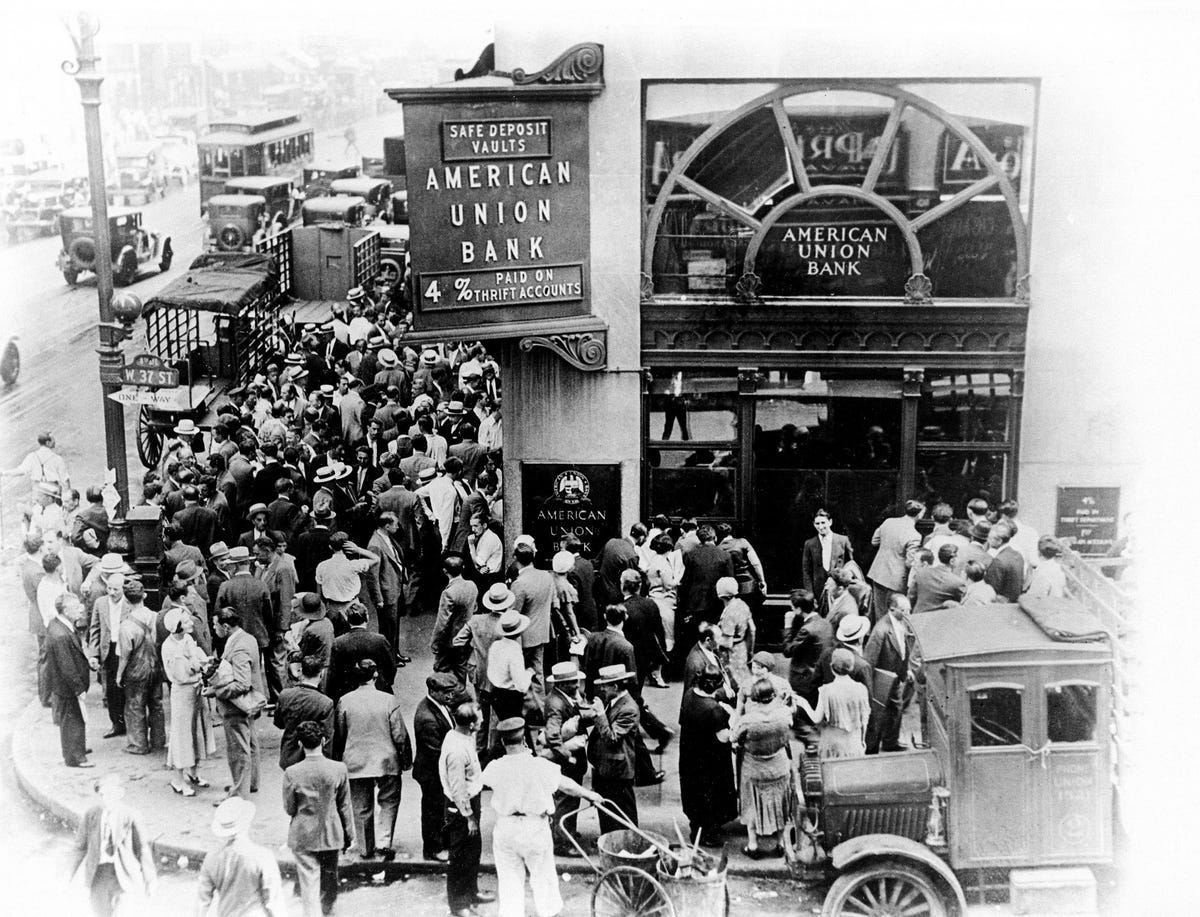
The Banking Crisis Is Not Over Yet
Note: A book summary went out this morning on The Dhandho Investor by Mohnish Pabrai. The sender is “The Bookrat,” so if you did not receive it yet please check your spam folder. Move the email to your inbox or respond to the email to make sure it doesn’t go to spam in the future. Thank you and enjoy.To investors,The second and third largest bank failures in US history happened earlier this year. As more large banks came under pressure around the world, there was concern that the contagion would spread out of control.The Federal Reserve and US Treasury, along with their counterparts in other countries, stepped in to backstop customer deposits. This action was seen by many to not only be necessary, but a proactive approach to calming fears and reassuring citizens that the banking system was strong.The government did not save equity or debt investors in these banks. This is exactly how capitalism should work. The risk-takers were wiped out for making a bad bet. The average citizen was protected and all is well in the world, right?Not so fast.There were a number of banks that did not require the government to save them and their depositors, but remain in a really bad situation. Take First Republic Bank (FRB) as an example. The stock price plummeted and customers withdrew billions of dollars as they watched Silicon Valley Bank fail. The largest banks in the country stepped in to contribute ~ $30 billion in deposits to FRB in an attempt to strengthen the prospects of survival.Crisis averted for the time being. But we are right back where we started in recent days. The bank’s stock is down more than 90% year-to-date and it fell ~50% just yesterday after a disappointing report, which highlighted a 40% drop in customer deposits in Q1. Simply, First Republic Bank is not out of the woods and it is on the brink of collapse. If First Republic Bank was to fail, it would be one of the five largest bank failures in US history. That would mean that three of the five largest bank failures in history have all happened in the last four months. Insane!The potential collapse of First Republic Bank is important to pay attention to because it highlights the ongoing problem for financial institutions around the world. They are still holding hundreds of billions of dollars in debt that is underwater. The mark-to-market losses would render many of the organizations insolvent. The only potential path out of this situation is for the government to step in and save these financial institutions. They can do it in a number of ways — they can try to manipulate the accounting rules as they have done in the past, they can print a significant amount of money, or they can let the banks fail while saving the depositors. I don’t think they will pursue the first strategy, so my expectation is for the government to print more money over the next 12 months.We are not only facing a private sector bank crisis though. There are a number of central banks that are under immense pressure as well. Let’s use Argentina as the example — inflation is over 100% in the country in the last 12 months and the central bank just raised interest rates to 81%. Think about how crazy that is. Anyone holding pesos has lost 50% of their purchasing power in the last year. The definition of destroying a currency and your citizen’s savings.Whether we are talking about central banks or the private banking sector, the pain is only just beginning it appears. Jason Karaian and Stacy Cowley wrote in the New York Times:On Friday, Moody’s downgraded the ratings of 11 regional banks, citing “a deterioration in the operating environment and funding conditions.”In calls with investors about their latest financial results last week, regional bank leaders tried to cast the crisis as a moment that had passed. The banks also distanced themselves from rivals still caught in the storm, like First Republic, which reported on Monday that it had lost $102 billion in customer deposits.The leadership of the banks continue to say everything is fine. Moody’s is downgrading many of them. First Republic Bank is on the brink of failure. And it feels like the average citizen in America is asleep at the wheel. They believe the banking crisis has been thwarted. We have all moved on. That is a dangerous situation. The banking crisis is still underway. It doesn’t mean that catastrophic failure is inevitable. In fact, I would argue that the banking sector will survive this test and thrive on the other side. The government and central bank are heavily incentivized to protect depositors and prevent a full-on bank run of the system. They don’t have very many tools to accomplish that mission though. So turn on the money printer and watch it go BRRRR! Markets need liquidity. Everyone knows the Fed was going to create tighter financial conditions until something breaks. It looks like we are watching many of the largest banks around the world buckle under the pressure. The question is — has there been enough pai

Is Crypto Dead In America?
Note: Tomorrow you will receive the next installment of our book summaries, which is now called The Bookrat. Many of you reported the email went to spam last week, so please search “Bookrat” in your spam folder and move it to your inbox. You can also respond to the email and that will solve the problem in the future as well. Thank you.To investors,Social Capital’s Chamath Palihapitiya recently said on the All-In Podcast that “crypto is dead in America.” He was referring to the recent increase in regulatory scrutiny, including more enforcement actions from the SEC.There is a lot of truth to what he is saying. It is hard to deny that regulatory pressure has drastically ramped up. It started with the collapse of Three Arrows Capital and Terra/Luna, continued with the unraveling of the alleged fraud of FTX, and hit a climax with the second and third largest bank failures in US history earlier this year. Whether you believe crypto is the culprit or not, the door has opened for regulators to apply more pressure to the industry and they are taking advantage of the opportunity.Before we continue, it is important to call out the difference between bitcoin and the rest of the crypto industry. Bitcoin is the only digital asset that has been labeled a commodity by every US regulatory organization. They all agree that bitcoin does not meet the security standard and therefore is not subject to those rules and regulations. The rest of the crypto industry, from Ethereum down to the smallest asset, is still widely debated — are they securities? Are they commodities? Are they currencies? How should they be regulated? Who has jurisdiction? What is the proper framework for entrepreneurs who want to participate in the industry?There are more questions than answers.Palihapitiya has a good point that “the United States authorities have firmly pointed their guns at crypto.” The critics of the crypto industry believe this is a positive development. Their argument is that Gensler and the SEC should have acted long ago, because it is obvious that crypto assets are securities and industry players have been skirting the rules for more than half a decade. The proponents of the crypto industry vehemently disagree. Some will argue that the introduction of decentralization means these assets don’t meet the securities standard, while others will argue that these new assets need entirely new regulatory frameworks. As an example, Coinbase announced last night that they are suing the SEC over the organization’s refusal to answer a rule-making petition that was filed last summer. There is nuance to this debate that usually is lost though.Most people will focus on the technical rules and who wins in court. They will look at the data, they will read through the various public filings, and they will scrutinize the SEC’s actions. This is the quantifiable approach to measuring impact of crypto regulation in the US.However, it appears that Palihapitiya is referring to the qualitative impact, which is more important in my opinion. Regardless of whether the SEC ends up winning their various enforcement actions, or if there are new rules passed or not, the posture of the US government and their regulators has become abrasive. We have even seen US politicians suggest banning this new technology. The abrasive stance deters entrepreneurs from building their companies in the United States or serving customers with US citizenship.We have seen a number of companies move off-shore in the last few years. Hundreds of founders have moved to places like Dubai, Singapore, or various islands with more friendly regulation to start their next business. And Coinbase has even alluded to the fact that they could move their business to a new jurisdiction if the lack of clarity continues in the US market. This is probably what Palihapitiya means when he said “crypto is dead in America.” It is no longer clear that the US is the best place to start a company or project in this new industry. In fact, many people would argue that it is better to start those businesses elsewhere in the world.The reason this is important is that the crypto industry is not going to die. If the US continues to be abrasive, the industry will shift to locations outside the country. I have long been a proponent of founders starting, building, scaling, and exiting their companies in America. The rule of law, access to capital, and dominant culture have been tailwinds for entrepreneurs. But the market is shifting under our feet and there are numerous data points that tell us people are changing their minds. Americans have to remember that we live in a global world. Facebook only had ~ 15% of their users in the US when I worked at the company in 2014/2015. I am sure that number is much lower now. Bitcoin is similar — majority of mining hash rate is outside the US and there are hundreds of millions of people who participate in the crypto industry from international markets. In some ways, the global natur
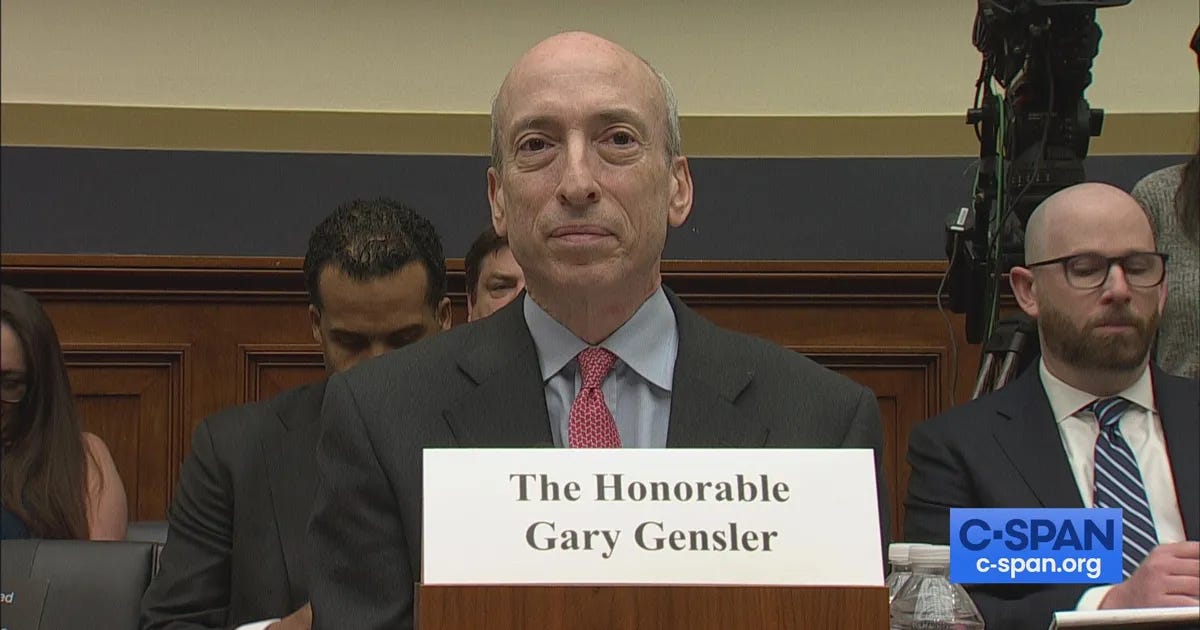
Gary Gensler Testifies Before The House Financial Services Committee
READER’S NOTE: Many of you have asked me when you will receive more book summaries from the books I am reading each week. I am splitting the content into two separate emails. You will continue to receive my commentary on finance and economics here in The Pomp Letter. You will receive the book summaries once a week through a separate email we are launching today called The BookRat.Separating the content into two dedicated emails is much clearer for readers. You are auto-subscribed to both emails if you are reading this note. If you only want finance and economics content, you can unsubscribe from The BookRat later today when you receive the first email. If you only want book summary content, you can unsubscribe from The Pomp Letter below. Hopefully this will help clear up the confusion and empower each of you to choose what content and information you receive in your inbox.To investors,SEC Chairman Gary Gensler testified in front of the House Financial Services Committee for four hours yesterday. His message was consistent — many crypto companies and projects are violating regulatory rules and need to come into compliance. This is a position that Gensler and his team at the SEC has continued to repeat in various interviews, speeches, and materials on their website. Many of the Republicans on the Committee took issue with this position. To say the questions and testimony got heated at moments would be an understatement. For example, Representative Patrick McHenry persistently asked Gary Gensler to explain whether Ethereum, the second largest digital asset, was a security or a commodity. Gensler would not directly answer. This could be because Gensler does not know how to categorize it, does not want to categorize it, or believes it is valuable to refrain from answering. Either way, the fact that the Chairman of the SEC did not answer with “yes” or “no” highlights the frustration that many people in the industry have. The actual answer is almost less important than an agreement from regulators on a single answer. If the conclusion is “yes, Ethereum is a security,” then market participants understand how to proceed. If the conclusion is “no, Ethereum is not a security,” then market participants understand how to proceed. But the lack of clarity is tough for everyone.Another interesting moment is when Rep Bryan Steil asked Gensler whether he owned any bitcoin or cryptocurrencies. Gensler said “no.” Steil went a step further and asked Gensler whether he has ever owned digital assets, including during the time he was teaching crypto courses at MIT. Gensler said no to this as well.This answer highlights the challenge of regulating innovation. It is hard to understand something without using it. The idea that we have regulators who are actively making rules for something that they have never used seems confusing. Additionally, to have professors at universities teaching courses about technologies they have never used highlights the absurdity of academia. One of the most explosive parts of the testimony was when Rep Tom Emmer pressed Gensler on the fact that China’s CCP is planning to open their banking apparatus to US-based crypto firms in an effort to capitalize on our country’s hostile posture towards the industry. Gensler continued to stick to his talking points that various crypto companies are operating outside the rules and should come into compliance. Regardless of whether you agree with Gensler or not, this exchange highlights the fact that bitcoin and cryptocurrencies are going to thrive globally with no regard for US securities law. The United States has a choice to make — do we want this innovation to happen in the US or elsewhere? The rules we create and apply to the industry will determine that answer. Lastly, Rep Warren Davidson revealed that he is putting forward legislation to remove the Chairman of the SEC and restructure the entire organization. The new structure would create the role of Executive Director who reported directly to the board. Davidson’s argument is that the current structure, along with Gensler’s body of work, has created more harm than good.It remains to be seen whether there will be support for Davidson’s proposed legislation. A complete restructuring of an integral organization like the SEC would be difficult and controversial. But there have been much bigger, more complex things that have occurred so never say never. I want to leave you with one more thought this morning — SEC Chairman Gary Gensler was grilled for four hours yesterday. Most of the viral video clips and various media coverage was focused on the questions coming from our public officials, rather than on specific answers from Gensler. In some way, that is a win for Gensler and the SEC. They didn’t necessarily make any mistakes during the testimony.Gensler stuck to his view that the existing securities law covers these new technologies. He believes majority of the crypto companies and projects are violating regulati
How The Best Investors Obsess Over Interest Rates
To investors,What the Fed gives, the Fed can take away. This has been the story for interest rates and asset prices for as long as fiat central banks have existed. Each new generation of investors have to learn this lesson the hard way and that is exactly what we have seen over the last 18 months.The Fed’s suppression of interest rates to 0%, coupled with trillions of dollars in QE, led to one of the most epic asset price bull markets in history. You could blindfold yourself and randomly pick winners across stocks, bonds, real estate, commodities, and crypto. In fact, Barstool’s Dave Portnoy was even picking Scrabble letters out of a bag to pick winning stocks. Incredibly entertaining, but obviously peak insanity too.But the Fed eventually ended the party. They waited until inflation hit approximately 8.5% before acting, but they moved with speed and a violence of action that has previously never been seen before with interest rate hikes. Within one year, the central bank jacked up interest rates from 0% to 5%, which created a cratering of assets that would make the biggest market bears smile with joy. None of this is new though. Warren Buffett famously said, “Interest rates are to asset prices what gravity is to the apple. When there are low interest rates, there is a very low gravitational pull on asset prices.” If asset prices go up, every asset owner is getting wealthier. The incentive is for people to demand lower and lower interest rates from their central bank. Ludwig von Mises nailed it years ago by stating, “Public opinion always wants easy money, that is, low interest rates.”Regardless of public opinion, professional investors know that interest rates are the name of the game. The old adage of “Don’t fight the Fed” has been popularized for a reason. Ray Dalio is famous for saying, “It all comes down to interest rates. As an investor, all you're doing is putting up a lump-sump payment for a future cash flow.” So when interest rates go up, there is pain in the economy.Former President Bill Clinton once said, “You know what higher interest rates mean. To you it means a higher mortgage payment, a higher car payment, a higher credit card payment. To our economy, it means business people will not borrow as much money, invest as much money, create as many new jobs, create as much wealth, raise as many raises.” It is not every day that we can point to a politician as a macro expert, but he got that one right.We can go back in time and see the best investors in the world calling out the issues that we are now facing. Back in 2004, real estate billionaire Sam Zell said “The single biggest issue that I'm very sensitive to is inflation. I'm very concerned that this extended period where the interest rates were quite low and stimulated a lot of activity could breed inflation and create a problem for us.” The problem that he foresaw did not necessarily happen to the severity he predicted then, but the same cause and effect is what landed us in the recent high-inflation, chaotic environment we have lived through over the last two years.So this begs the question — where do we go from here?Mark Zandi once said, “An overheating economy, characterized by accelerating inflation and rising interest rates, is another precondition for recession.” This basically describes what we have seen over the first quarter of 2023. It doesn’t guarantee that we will experience a recession, but it definitely increases the odds in my opinion. Maybe we are just paying for our past sins. Maybe we are merely in the spin cycle of the economic washing machine. No one really knows. But I will leave you with two quotes that highlight one way of thinking about the long term economic cycles.Michael Hudson said, “The underlying strategy of the Fed is to tell people, "Do you want your money to lose value in the bank, or do you want to put it in the stock market?" They're trying to push money into the stock market, into hedge funds, to temporarily bid up prices. Then, all of a sudden, the Fed can raise interest rates, let the stock market prices collapse and the people will lose even more in the stock market than they would have by the negative interest rates in the bank. So it's a pro-Wall Street financial engineering gimmick.”David Stockman said, “I think everybody in this generation, and I'm the leading edge of the baby boom - I was born in 1946 - has benefitted from a 30-year explosion of debt, which created temporary but unsustainable economic prosperity and a financialization of the system through lower, and lower, and lower interest rates that has created massive rewards to speculation but not real investments so I benefitted from it. Almost everyone who has been in the market has benefitted but they didn't earn it.”Interest rates are the name of the game. Will the Fed continue hiking or will they wave the white flag? No one knows for sure. Whoever guesses correctly in the coming months, both in terms of direction and magnitude, will have

The Era of Digital Catastrophe
To investors,We have entered the Era of Digital Catastrophes. The concept of a Digital Catastrophe is going to be important to understand over the coming years. I define it as a large, negative event that occurs in the analog world, which is accelerated by online action and conversation.The first big example we have of this phenomenon is the fall of Silicon Valley Bank, the second largest bank failure in US history. The bank went from operational to insolvent in less than 48 hours. As soon as the internet got spooked and believed there was a potential problem at the bank, the Digital Catastrophe mechanism took over.There was more than $42 billion withdrawn from the bank in a single day(!) and the nationalization of the bank was complete by the next morning. The size of the collapse, and the speed at which it happened, was breathtaking.This is the new normal though.Digital Catastrophes have two main components to them — (a) information and (b) action. As we saw with Silicon Valley Bank, millions of people were aware of the banks issues within hours, regardless of whether someone was a customer or not. But the customers didn’t need to leave their office, get in their car, drive to the local branch, and wait in line to withdraw their money. They could simply navigate to a new tab in their browser, log in to their account, press a few buttons, and move their money. It would have been physically impossible for Silicon Valley Bank to receive $42 billion in withdraw requests in 24 hours without the internet. People wouldn’t have even known that a bank run was underway, let alone had the time to get to the bank to make the request.Silicon Valley Bank was the victim of a Digital Catastrophe. The internet was weaponized by millions of people to create the second largest bank failure in the United States. Speed. Scale. Catastrophe. My guess is that we will see many more of these in the coming years. The ability for information to move at the speed of light has already led to a lack of trust in institutions, an increase in independent thinking, and a faster velocity of content creation and consumption. Couple the speed of information with dissipating friction when it comes to taking action, and you can clearly see that people will use these newfound capabilities for both good and bad.One way to think of the Silicon Valley Bank Digital Catastrophe is to see the withdrawals as a DDoS attack. Define as “a distributed denial-of-service (DDoS) attack occurs when multiple systems flood the bandwidth or resources of a targeted system, usually one or more web servers.” This is essentially what customers did to the bank — they withdrew so much money, and so quickly, that the bank ended up folding. Service denied. To take this analysis a step further, there have been a number of popular tweets suggesting political parties could weaponize the fragility of the banking system to express their views.We shouldn’t condone this type of behavior, but we must also understand that we won’t be able to stop it. Digital Catastrophes are going to be a staple of society moving forward. We have seen throughout history that people will use tools of coordination to help their fellow citizen, while also using the very same tools to destroy the things they disagree with. In this political example, citizens could easily be stopped from marching, protesting, or even gathering. The analog world has a response to various analog tactics. But what is the response if a large political group decides to log-in to their computer and withdraw their money from a single bank? This is no different than when a large group on the internet decided to target a single stock as part of the meme stock hysteria. I don’t have the answers here. Frankly, it is hard to wrap my head around all the ramifications of Digital Catastrophes, but it feels obvious that this is where the world is headed. I would love to hear from each of you what you’re thinking on this.What other Digital Catastrophes have occurred? How do you think governments or societies will respond to these in the future? Let me know in the comments below.Hope you all have a great day. I’ll talk to you tomorrow.-PompReader note: I write this letter every morning as a way to organize my thoughts and solicit feedback from smart individuals like yourself. The letter is sent for free once a week and to paid subscribers four times a week. If you would like to receive this letter every day, you can subscribe here for $100 per year. Hope you join us.🚨Want A New Job? 🚨My team and I have helped almost 2,000 people get a new job in the bitcoin and crypto industry. A big part of our success has been a training program we run, which teaches people the fundamentals of the industry and technology. If you are interested in transitioning into this new sector, I recommend you check out the training program for our April cohort.You are receiving The Pomp Letter because you either signed up or you attended one of the events that
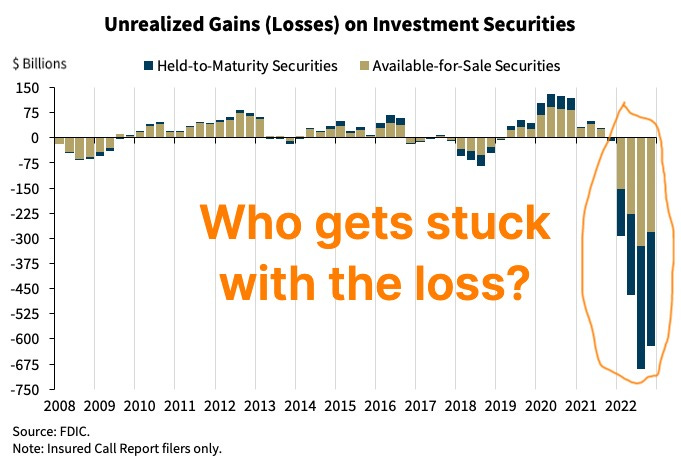
The Financial Crisis Is Upon Us
To investors,There is a massive financial crisis underway at the moment. Alarm sirens are going off almost every day. As a friend told me yesterday, “bodies keep floating to the surface.” This is really, really not good.The shut down of Silvergate Bank, along with the takeovers of Silicon Valley Bank and Signature Bank, have been well documented. Two days ago we got word that Credit Suisse was under immense stress and the Swiss National Bank agreed to step in with tens of billions of dollars in liquidity. Yesterday it was announced that First Republic Bank was going to receive $30 billion in deposits from 11 other banks.$30,000,0000,000 doesn’t get handed to you by your competitors if there aren’t some major issues at hand. But all these bank issues are just the appetizer in my opinion. The main course started last night when we received confirmation that the Federal Reserve increased their balance sheet last week by nearly $300 billion.This increase in the balance sheet comes after a year of quantitative tightening, which contracted the Fed’s assets. But now we have a pivot in the Fed’s balance sheet strategy.One of the biggest problems with this pivot is that the Fed has not yet won their battle against inflation. In fact, the Fed increased interest rates by 4.5% and dumped about $1 trillion off their balance sheet, but they never got inflation below 6%.MAJOR. PROBLEM.The Fed is increasing their balance sheet because they have to lend money to the banks. Without this new injection of liquidity, many of the banks appear to be insolvent due to their unrealized losses on long-duration, low-yield debt. Why do the banks have unrealized losses on that debt? Because the Fed jacked up interest rates at the fastest pace in history and the banks didn’t properly hedge their positions against this scenario. On one hand it is understandable why there was no hedging — the Fed told everyone that interest rates were going to be 0.5% or less right now. On the other hand, when has it ever been a good idea to believe everything a central bank tells you?It may be worse than that though — Balaji Srinivasan describes the gravity of the situation with the following:The record shows that the entire US banking system — the Fed, the banks, and the bank regulators — knew by 2022 that they had lost the money of many millions of depositors.Banks tried hiding the losses via hold-to-maturity accounting tricks (should be called hide-to-maturity). And regulators allowed them to bury the fact of their literal insolvency in footnotes. But this just deferred the judgment for a bit. In a sense, the entire bill for many years of printing was coming due all at once. Hundreds of billions of dollars in losses for the central bank, the commercial banks — all of it had to be imposed on someone.One way to think about what has happened here is to compare Sam Bankman-Fried’s FTX debacle to the actions of US-regulated banks. FTX reportedly took in customer deposits and invested them in high-risk assets, which ended up leading to massive financial loss of the depositors’ funds. These loses, and the overall failed scheme, was exposed when depositors conducted a run-on-the-bank last year.US-regulated banks have done something that looks eerily similar. They took customer deposits and invested them in the wrong assets. Now the big difference is that the banks were not buying crypto assets, but rather buying US Treasuries and other debt instruments, which have been historically seen as low-risk. Regardless of the risk profile though, the banks now have immense unrealized losses on their balance sheets and when the bank runs started at some of the banks last week, these losses were exposed for everyone to clearly see.It is absolutely insane to think that FTX and these regulated banks had a comparable mechanism at play. Thankfully, the regulated banks were able to preserve 100% of depositors’ money after the government bailed them out, but the equity and bond holders of both FTX and Silicon Valley / Signature Banks ended up in the same situation. That is exactly how capitalism is supposed to work.This brings us to the current crisis. The Federal Reserve and other central banks around the world are in a lose-lose scenario. If they increase their balance sheet and stop hiking rates, they will be able to quell the banking crisis. The trade-off will be a loose monetary policy in a high-inflation environment, which will almost certainly lead to significantly higher inflation in the future.If the Fed chooses to ignore the current banking issues and continue hiking rates, which would be in-line with what the economic data is telling them to do, then we will test whether the US government, who is currently facing a debt limit crisis, can actually come up with enough money to backstop every bank’s deposits.That is not an experiment I want to see us run.This leads me to what I believe the base case for the US economy and dollar will be moving forward. I do not think t
The American Banking Scandal of 2023?
To investors,The past week has seen three banks shut down, including the second and third largest bank failures in United States history. This appears to be created by a bad economic situation on the surface, but there is a controversy brewing behind the curtain that I think is worth taking a look at.As most of you know, I have the good fortune of speaking with many of the top venture capitalists and hedge fund managers on a weekly basis. Some of those interactions happen because of my investing activities, but a lot of them are a product of various topics I write about in this letter. I’ve found that it is worth exploring something if numerous people reach out about it, so that is what we are going to do today.I want to start with Signature Bank, which was “shut down” on Sunday afternoon by the New York State Department of Financial Services. The mainstream narrative is that the bank was insolvent due to a bank run. This all happened after the $100+ billion deposit bank took too much risk through service of crypto clients. These talking points were repeated over and over again from various news outlets. For example, The New York Times headline reads “Risky Bet on Crypto and a Run on Deposits Tank Signature Bank.”Sounds straight forward, right? Not so fast.More information has come out and it appears that the bank may have been a target of political games. A lot of this information is being publicized by Barney Frank, the former Congressman who is famous for his banking regulation work that culminated in the Dodd-Frank Act after the 2008 Financial Crisis. Frank was a board member at Signature Bank and it seems like he has a very different perspective of what happened.First, to understand the disagreement, it helps to find some common ground between Frank’s perspective and the NYDFS. Frank is adamant that Signature Bank was not insolvent and it appears that the NYDFS has avoided claiming that the bank was insolvent too. In an interview with Jen Wieczner of NY Mag, Barney Frank said the following when asked about the closing of the bank:I’m very disappointed to learn, apparently, the Department of Financial Services in New York, which did the closing, hasn’t said we were insolvent! They said, well, they had a problem, because they couldn’t get sufficient data. I mean, I was disappointed when they closed it, and sort of vindicated — they have not argued that we were insolvent. And I think it’s very clear if we had the benefit of those two announcements, we’d still be an ongoing bank.Now, the question is, why did they react so harshly to what they said was our inability to give them the sufficient data? I believe it was probably to send the message that even though we were doing crypto stuff responsibly, they don’t want banks doing crypto. They denied that in their statement, but I don’t fully believe that. I think that they overreacted to what they saw was our problem with data, which may well have existed, but the data was improving. I think sloppy data is not a reason to close a bank that you have not decided was insolvent, and they’ve never said we were insolvent.Think about what Frank is saying here — the New York regulator helped to nationalize a federally regulated bank that was not insolvent, simply because they didn’t like who some of the bank’s customers were?? If that is true, this is a national scandal that would require a federal investigation into who made the decision, what their logic was, and whether it was legal or not.Wieczner didn’t stop there in her questioning of Frank though. She explicitly asked him “I mean, is that even legal? Can the government just seize any bank, even if it’s not insolvent?” And Frank’s answer did not disappoint:Well, that’s worrisome. Let me say this. I don’t want to comment on that personally, because as a director, I could be conceivably involved in any kind of lawsuit that anybody brought, but I think that is a very good question you raise. And particularly, somebody ought to look and see, I wonder, are we the first bank to be closed, totally, without being insolvent? And if so, why? I think the DFS, the state of New York people should have to answer that.That’s why I speculate that using us as a poster child to say “stay away from crypto” was the reason.I was speechless when I read this. We have a former Congressman, who is one of the harshest bank regulation experts in the world, who is questioning the legality of what the New York regulators just did. This gives me COVID lab leak vibes…sounds like a conspiracy theory at first, but the more you think independently, the more you start to believe there could be a much, much bigger story here. This brings me to the next data point in our dive down the Signature Bank rabbit hole. Nic Carter eloquently pointed out that the “conspiracy theory” would have a lot more substance if the government forced the new owner of Signature Bank to shut down the bank’s crypto activity.Within hours, we received confirmation that thi

Did The Government Bailout Of Banks Just Seal The Victory For Inflation?
To investors,Silicon Valley Bank’s failure on Friday afternoon left the business and finance industries scrambling in uncertainty. Would depositors get their money back? What would happen to the equity and bond holders? How would so many startups meet their payroll requirements in the coming week?I know of multiple companies who had tens or hundreds of millions of dollars stuck in the bank. They spent the weekend planning what they would do next. The options ranged from mass layoffs to taking high-interest loans from neobanks at 1% per week. Thankfully, all of this work was for nothing. The FDIC, Treasury, and the Fed issued a joint statement Sunday afternoon stating that they would backstop every single depositor at Silicon Valley Bank, regardless of the deposit amount. This move has been celebrated by majority of people, and it likely will help mitigate a wide-spread bank run, but there is a lot to unpack in what they just did.First, the rescue package for Silicon Valley Bank is only for depositors. The equity and bond holders are being wiped out, which is exactly what should happen. If you take risk in the market and end up on the wrong side of a trade, it is important that you lose because it forces everyone to only take risks that they believe are worth taking in the future. If there were no losses in the market, everyone would just take as much risk as possible and then beg the government to save them when it went wrong.Second, the government also shut down Signature Bank on Sunday and put it in receivership. It is unclear why they did this, but the joint statement ensured that all depositors of that bank would be treated the same way. All equity and bond holders would also lose in the Signature Bank situation as well.Third, every depositor will have access to their funds starting this morning, Monday, so the risks of a bank run have been drastically reduced. This doesn’t stop customers from going to their regional banks and withdrawing all of their funds, but it will hopefully disincentivize them from doing so. An important part of this component is that the money used to cover depositors will not come from taxpayers. The money is instead coming from a fund that banks have been paying into for the last few years for this type of emergency situation. You can think of this as a fund that was created with bank revenue or profits, but at least it does not come directly from taxpayers.Fourth, the Fed and others are providing a massive, multi-billion dollar bailout to the entire banking industry. They won’t call it a bailout, but there is no other name for it. The government is going to allow banks to post collateral, mainly Treasuries, as collateral to borrow against, but they will be able to use the par value of the asset rather than the market value. That is insane. This is the equivalent of you buying a house for $100, the house value falls to $70, and you go to the bank to take out a mortgage and demand they honor the original $100 value. They would laugh you out of the room. But now the government is going to let the banks do it. The logic is the bank wants to post Treasuries, which have a maturity date, and the government could hold the assets to maturity. There is no guarantee of the future and this decision introduces a significant amount of risk into the system.We fail to ever learn our lesson. There are a number of other details in the statement and the government’s plan, but this is the high-level details. Frankly, it is what I think matters most. The ramifications of this are worth noting as well. We have effectively proven that the $250,000 FDIC limit is just a farce. The government will step in to protect depositors of any amount. I wouldn’t bet my life savings on them doing it again in the future, but the precedent has been set now where the FDIC limit should just be raised to $5-10 million.We must also call out that the Federal Reserve created this scenario. They held interest rates at 0% for too long and told everyone they would not aggressively raise rates by having forward guidance suggest less than 0.5% interest rates months and years out. Of course, the situation changed and the Fed increased interest rates by 4.5% and it completely screwed every bank that listened to what the Fed had originally told them. This created a $200+ billion hole of unrealized losses on bank balance sheets. Then we get a little bank run and now we have a crisis on our hands. The belief is that the government’s plan should mitigate the bank runs from spreading, but multiple reports this morning suggest that people are lined up outside regional banks to get their money anyways. The portion of the population that believes everything just changed is not exclusive to bank depositors. Investors across Wall Street are now predicting that the Fed will stop hiking interest rates beginning with the March meeting. If that is true, the banking system teetering on failure will have put a halt to the most aggressive inter
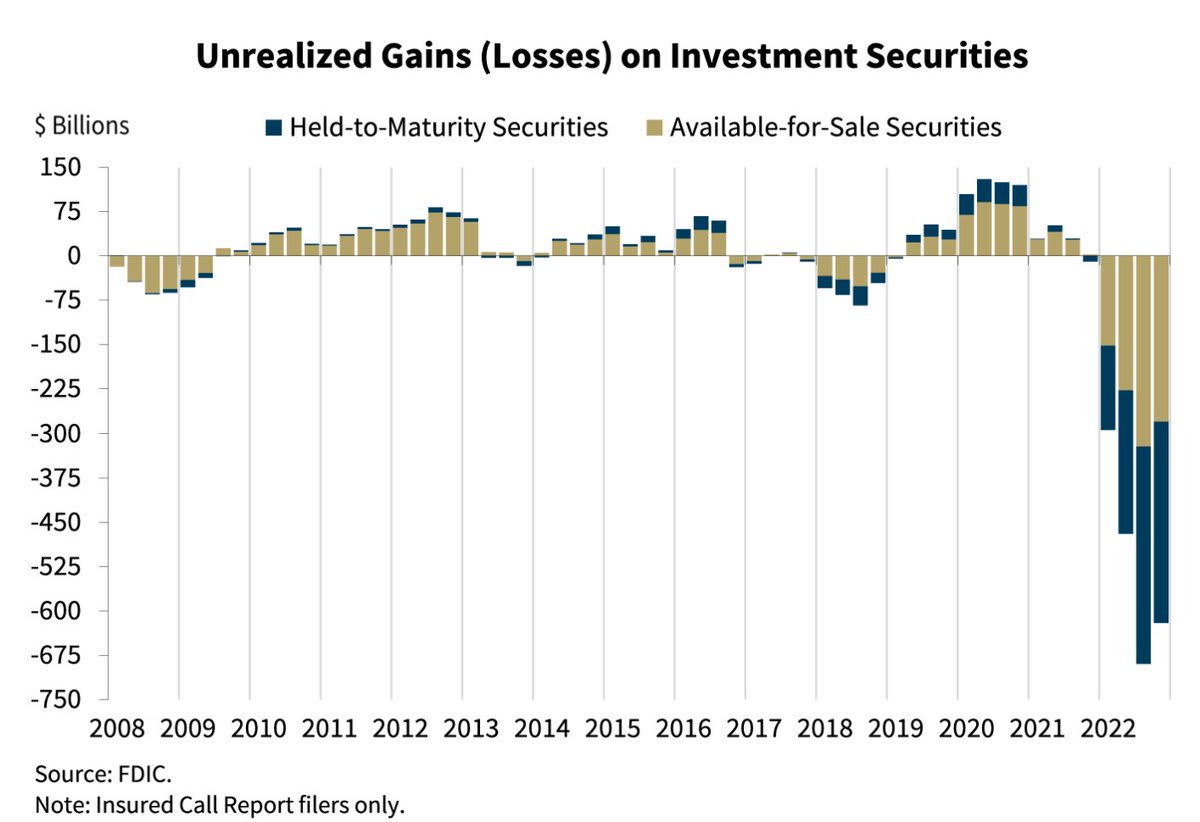
Silicon Valley Bank Is A Casualty Of The Fed's Market Intervention
To investors,Silvergate Bank announced they would liquidate earlier this week. Now Silicon Valley Bank has come under immense pressure as a bank run commenced yesterday. There is a lot to unpack in this situation, so let’s dig in.Silicon Valley Bank is the leading bank for Silicon Valley tech companies. Great marketing in their name. Their customer base is dominated by businesses, not retail. And the bank is notorious for extending lines of credit to companies and venture capital firms as well, which many banks are more shy about participating in. The main issue at play is a liquidity issue. Silicon Valley Bank is the perfect example of what happens when central banks intervene in markets and distort the free market forces. The financial organization had approximately $62 billion in deposits at the end of 2019 and that grew to almost $190 billion by the end of 2021. That sounds great, right?Yes, of course. The bank was becoming more popular and they were collecting more assets. But banks aren’t in the business of merely collecting more deposits. They are in the business of making money. This meant that Silicon Valley Bank could do two things — they could lend these new deposits out to companies and individuals to earn a yield, or they could buy financial assets to generate a yield. Given how difficult it would be to find borrowers for $130 billion in 2 years, Silicon Valley Bank ended up putting majority of these new deposits into financial assets. As Jamie Quint pointed out, the $80 billion or so that SVB invested was heavily concentrated in mortgage-backed securities. But not just any type of MBS — about 97% of these were 10-year maturity MBS that SVB was determined to hold till maturity. In layman terms, the bank took lots of money and bought long-duration assets. Why were they doing this? Because at the time, US Treasuries were providing 0-0.25% yield and the bank was seeking something higher. The MBS products that SVB was purchasing had a yield above 1.5%, which is obviously more attractive if your business is to make money for shareholders. There is only one problem though — the money that SVB was using to buy these long-duration assets was not their money to keep forever. This money was deposits from customers. And customers could ask for their money back at any time. Normally, this is not a big deal. A few customers ask to withdraw and the bank can easily process that from a day-to-day basis. But in a fractional reserve banking system, the problem arises when a lot of customers all want their money back at the same time.That would never happen though, right? Customers wouldn’t ask for tens of billions of dollars back all at once, right? Well, never say never.The last 36 hours have been a whirlwind for Silicon Valley Bank. Venture capitalists and technology companies are withdrawing assets at a frenetic pace. This is putting immense pressure on SVB and forcing the bank to make decisions that they would otherwise avoid. Before we get to those decisions, let’s look at why so many people are withdrawing.Silicon Valley Bank and many other financial organizations are all holding these long-duration bonds with low yields because of the investment decisions they made in a zero interest rate environment. As these assets have traded down in value because the Fed is increasing interest rates aggressively over the last 12 months, the banks are technically underwater on their investments. Joseph Wang tweeted “a graph from the FDIC's recent quarterly report showing that banks have a few hundred billion in unrealized losses on securities.”Not a good situation. But Silicon Valley Bank recently had to crystalize some of these losses in order to reduce risk and put the bank in a better financial position. Samir Kaji pointed out that SVB’s sale of $21 billion in medium-duration securities created a $1.8 billion loss for the organization. This wouldn’t be a huge deal normally, but we are living through uncertain times. Add in the fact that Silvergate Bank announced their intention to wind down operations and liquidate assets due to a duration mismatch in their portfolio and it is easy to see why SVB customers began to get a little uneasy. But SVB then made a second unintended mistake — they announced a large capital raise this week.The bank publicly stated that they were taking on $500 million from General Atlantic and would simultaneously conduct a $2.25 billion equity and debt offering to raise additional capital. Sounds fine, right? Ehhhh.Investors and customers just saw a financial organization with unrealized losses measured in the billions have to crystal a multi-billion dollar loss, which happened right after a similar business had to wind down for the same reason, and now that financial organization is trying to raise approximately $3 billion to help solidify their financial position. You can’t yell FIRE! in a movie theater, but you sure as hell can withdraw your money from the bank in an abundance of caution.

What I Learned Talking To Interesting People This Weekend — LYCEUM Miami Recap
To investors,I hosted a conference this weekend at the Miami Beach Convention Center. The event featured guests from across industries and I sat on stage for nearly 9 hours to interview as many interesting people as possible. Given that many of you were unable to make the Miami-based event, I wanted to share a few of the lessons that I took away from LYCEUM Miami. First, Cathie Wood of ARK Invest kicked off the day with a fireside chat on innovation, venture capital, and exponential growth in disruptive technologies. She continues to pioneer fund structures within the asset management industry — first with her active management strategy in an ETF wrapper and now with a publicly-traded venture capital fund. One of the main lessons that Cathie shared was the importance of transparency for her team. They publish almost all of their research. They publish an increasing amount of their financial models for various investments. And they even invite anyone to join their idea brainstorms once-a-week. This level of transparency allows for an open-sourcing of ideas, along with a more efficient path to gather critiques. Cathie mentioned that the team has made changes to models or research based on feedback, and they continue to realize the power of the crowd.Another key lesson that Cathie shared was her focus on the adult and gaming industries. She explained that many disruptive technologies are first used in those two sectors, so she always wants to understand what the early adopters are using to stay ahead of the game. These are the tools, techniques, and products that will be used by the mainstream in 5-10 years.The next guest was Chris Williamson, who shared 10 principles for thriving in a chaotic world. One that stuck with me was “in life we must choose our regrets.” The idea is that people inaccurately believe they could live their life with zero regrets, but that is impossible. Instead, you should make decisions with your eyes wide open on what your regrets will be. You can’t do everything, be everywhere, and accomplish it all. Make decisions with a regret minimization framework and you’ll end up happier.Chris’ second idea is “the key to confidence starts with action.” There is something empowering about taking the first step. You won’t always get things right. You will probably be really, really bad at some new activity. But, by acting, you start to gain confidence as you improve. You begin to feel more comfortable. You’ve been here before. You’ve done this thing before. Confidence comes from action.Another guest was Mike Solana, the founder of Pirate Wires. Mike elaborated on why sanity and truth is so difficult to come by in an insane world. It feels like social media continues to pull our society apart, but Mike is using those same digital tools to show people that common sense can win. It takes one person to stand up for what they believe in and then many others will follow. This could be related to specific topics, or it could be relevant to an individual’s opinion on a topic. Either way, citizen journalists have even the playing field with powerful institutions by simply having an internet connection.Next, we were joined by Vivek Ramaswamy, who previously built a multi-billion dollar biotech company and is now running for president in 2024. His message was simple — we need to bring back the national identity. People should be proud to say they are American. This concept is understood by immigrants and their children, but it needs to be shared publicly by leaders to ensure that a large majority of Americans also feel the same way. It is possible to be proud to be American, while still having critiques of the country or our society. But don’t be afraid. America is the best country in the world. There are millions of people trying relentlessly to become American citizens. A strong national identity is a sign of a strong nation. Codie Sanchez joined us after Vivek. She shared the idea of Financial Fridays. Codie sits down every Friday and goes over each of the 24 businesses that she owns. This includes a high-level “on-track,” “slightly behind,” or “in trouble” categorization, but it can become as specific as evaluating line-item after line-item in a financial model. You can’t move the metrics you don’t measure. You can’t address problems you are unaware of. Codie told the story of a mentor who once asked her what her net worth was — when she said she didn’t know, he told her that she would never be rich because she wasn’t measuring the metrics. Interesting to think about.Next, we had a panel of four of the highest-earning adult film stars in history. Each of these individuals have built companies or investment portfolios that would be the envy of financial market participants. We discussed how creativity was an essential component of any business, along with the desire to have faster feedback loops across their various businesses so they could iterate their products to better serve customers. I was blown aw
The Great CEO Within by Matt Mochary
To investors,I have been reading one book per week this year. This past week’s book was The Great CEO Within: The Tactical Guide to Company Building by Matt Mochary. Highly recommend reading it. If you are interested in the individual highlights that I made in the physical book, you can read those here. Hope you enjoy these notes every Monday morning.Book’s main argument:Matt Mochary is one of the best executive coaches in the world. After repeating the same advice to his various clients, Matt decided to write everything down in this book. It is a practical guide on how to run a startup, including hiring/firing, internal operations, fundraising, and building company culture. The book is relatively short but full of insight. 5 Big Ideas:💡 Idea #1 — Companies are intended to solve customer problems. This can be easily forgotten by founders, so it is important to remember why companies exist — and especially why great companies thrive. Matt writes:“There are many reasons to create a company, but only one good one: to deeply understand real customers (living humans!) and their problem, and then solve that problem.”The company is not a sterile organization though. It is made up of people. “Great companies are made up of great individual performers who work well together as a team.”A great way to increase the performance of your individual team members is to increase the odds they are having fun. Show them appreciation to make them feel good about themselves. Matt writes:“It turns out that we perform our best when we are having fun and feeling good about ourselves.”💡 Idea #2 — You have to conduct an energy audit. If you are spending time on things that steal your energy, rather than add to it, you are setting yourself up for disaster. Matt explains the importance of this idea:“It is important to maximize your energy. You perform best when you are doing things that energize you. Your goal should be to spend most of your time (75-80 percent) doing things that energize you. If you do, magic will occur.”He suggests you conduct the energy audit by doing the following:“Print out the last week of your calendar when you were working. Go through each workday hour by hour and ask yourself, “Did that activity give me energy or drain my energy?” Highlight in green those that gave you energy, and highlight in red those that drained your energy. There are no neutrals; every hour must be marked one color or the other.”This can be incredibly powerful for the whole organization to constantly conduct as well.“Energy audits are the single most powerful tool I know for creating joy and engagement in the workplace.”💡 Idea #3 — Clear your inbox so you can be as productive as possible. Matt is very focused on achieving inbox zero. He explains the importance:“Think of your combined inboxes as a single triage room at a hospital. Some cases that come in are urgent, others not so much. It is critical to notice the urgent cases immediately and get them in to see a doctor now. To do so, you must keep the triage room clear.”“This means addressing all the urgent cases right away and maintaining Inbox Zero every day.”“If you check your email incessantly, multiple times an hour, you are wasting hours of productivity. Instead, batch your time and clean out your entire inbox at those times.”Productivity can also be gained by being on time and fully present in meetings. Matt suggests:“In addition to being on time, you must also be present.”“I recommend scheduling 25 and 50 minute meetings only. This will give you 5 minutes each half hour and 10 minutes each hour to maintain yourself.”“During every meeting, leave your phone in your pocket or facedown.”💡 Idea #4 — You can not build a great company by yourself, so you must create a well-run organization. This relies on a set of systems that increases efficiency and productivity of the group. Matt writes:“No matter how original and innovative your ideas might be, and no matter how efficient and productive your own habits might be, you won’t be able to build a truly exceptional organization alone. Your company’s success depends on how well its members work together. Just as individuals develop habits, so do groups. And just as with individuals, it’s much easier to start off with good group habits rather than have to change bad group habits down the line.”A great way to make decisions within an organization is known as the RAPID decision-making process.* RAPID Decision-making: Someone identifies an issue or decision that needs to be made. They prepare a write-up with the following details:* The issue* The proposed solution* The list of people needed to make and implement the decision:* R (Recommend): The one who first proposed the issue and solution* A (Agree): Those people whose input must be incorporated in the decision* P (Perform): Those people who will have to enact any decision and therefore should be heard* I (Input): Senior people within the company whose departments and processes will be aff

Lessons From Bruce Lee on Being Phenomenal, Dealing With Crisis, and Personal Improvement
To investors,I have been reading one book per week this year. This past week’s book was Be Water, My Friend: The Teachings of Bruce Lee by Shannon Lee. Highly recommend reading it. If you are interested in the individual highlights that I made in the physical book, you can read those here. Hope you enjoy these notes every Monday morning.Book’s main argument:Bruce Lee was an international icon who used martial arts to teach the world how to be better human beings. Although he died at age 32, Lee wrote an immense of his lessons down in his journal before his death. This book is written by his daughter, Shannon, who interprets her father’s writing for the modern world. It covers everything from aspirational improvement to dealing with crisis to how to relentlessly pursue greatness.5 Big Ideas:💡 Idea #1 — Bruce Lee’s most famous lesson to the world was “Be water, my friend.” He realized that water was a natural phenomenon that humans could emulate for a better life. The origination of the idea came when Lee was angry while sitting in a boat in the South China Sea and he reached over to punch the ocean out of frustration. He later wrote in his journal:“Had not this water just now illustrated to me the principles of gung fu? I struck it but it did not suffer hurt. Again, I struck it with all my might—yet it was not wounded! I then tried to grasp a handful of it but this proved impossible. This water, the softest substance in the world, which could be contained in the smallest jar, only seemed weak. In reality, it could penetrate the hardest substance in the world. That was it! I wanted to be like the nature of water.”Shannon Lee expands on this idea of being water:“Water, an element that is soft yet strong, natural yet able to be directed, detached yet powerful, and above all, essential to life.”“At its essence, water flows. It finds its way around (or even through) obstacles. My father would call this having “no limitations.””“This is the basic way of water. It is unstoppable. And though the word water is reflected nowhere in my father’s core tenet above, the phrase represents perfectly one of the preeminent water basics that I want us to begin to sit with—that water is undeterred.”“Let’s think of water as unstoppable, similar to how many people think of Bruce Lee as unstoppable.”This idea of being unstoppable is tied closely to your personal decision to keep going, regardless of the obstacles you face. “We get to choose whether to stop at the first obstacle or keep going, unlike water, which always chooses to keep going if given the opportunity.”“If we want to fulfill our human potential, then we can’t let ourselves be complacent or stopped either—we have to find our way forward and keep being replenished again and again. And in order to find our way, we need to be paying attention. We need to be aware of what is happening all around us.”💡 Idea #2 — It takes incredible focus, persistence, and effort to become phenomenal at something. Bruce Lee was fanatical about this. Phenomenal is a word that is used by many people who knew him. Shannon Lee writes:“My father was a truly phenomenal specimen of a human being in many ways—intelligent, creative, learned, skilled, driven. He worked really hard to cultivate every aspect of himself. At one point he said, “Some may not believe it, but I spent hours perfecting whatever I did.” He worked not only at sculpting his body but at shaping his mind, educating himself, evolving his practices, developing his potential. He also worked at the little things, like having beautiful handwriting, writing and speaking grammatically well, developing a colloquial understanding of English through joke-telling, learning how to direct a film—the list goes on and on. And as a result, he created a legacy that continues to be relevant forty-seven years after his death.”Shannon goes on to explain that her dad knew exactly what he wanted to accomplish, but then put in the work to successfully achieve those outcomes.“Bruce Lee was phenomenal because he worked relentlessly to be phenomenal.”“I have heard story after story about how my father was always training, stretching, writing, reading, teaching, working, so I had to ask my mom if he ever just did nothing. And she said, “No.” Even when he was reading a book or watching a boxing match on TV, he was also stretching or doing something active. He would take the stairs instead of the elevator, and if he had to wait for an elevator, he would drop and do push-ups while he waited. Yep—that’s my dad!”This doesn’t mean that everything was easy. In fact, Bruce Lee dealt with many obstacles, but he learned how to use them to his advantage. He saw opportunity. Shannon writes:“Worry doesn’t solve a problem; it makes a problem out of the problem. Pessimism doesn’t solve a problem; it makes a problem harder by implying it is impossible to solve. Fear doesn’t solve a problem; it stops us from attacking the problem because we are afraid of failing or making
The Creative Act: A Way of Being by Rick Rubin
To investors,I have been reading one book per week this year. This past week’s book was The Creative Act: A Way of Being by Rick Rubin. Highly recommend reading it. If you are interested in the individual highlights that I made in the physical book, you can read those here. Hope you enjoy these notes every Monday morning.Book’s main argument:Rick Rubin was crowned the most important music producer of the last 20 years by MTV, so he knows a thing or two about the creative process. Rubin explains that creativity is not solely reserved for music artists though — in fact, every single human is an artist. Throughout this book, he defines creativity and details how you can leverage it and what to do if you get stuck at any point. Rubin walks us through his Experimentation, Crafting, and Completion phases, while sharing tactical advice on how to improve whatever art you pursue. 5 Big Ideas:💡 Idea #1 — Everyone is an artist. We all create things in our life. Embrace the act of creating and you will start enjoying life in a new way. “Regardless of whether or not we’re formally making art, we are all living as artists.”“To live as an artist is a way of being in the world. A way of perceiving. A practice of paying attention.”You must take the time to practice. You will improve with more reps. “Living life as an artist is a practice. You are either engaging in the practice or you’re not. It makes no sense to say you’re not good at it. It’s like saying, “ I’m not good at being a monk.” You are either living as a monk or you’re not.”The more time we invest in our ability to recognize greatness, the better we will become at allocating our time and attention. “If you make the choice of reading classic literature every day for a year, rather than reading the news, by the end of that time period you’ll have a more honed sensitivity for recognizing greatness from the books than from the media. This applies to every choice we make. Not just with art, but with friends we choose, the conversations we have, even the thoughts we reflect on. All of these aspects affect our ability to distinguish good from very good, very good from great. They help us determine what’s worthy of our time and attention.”💡 Idea #2 — An idea will come into existence when its time has come. The person who brings the idea to life is not nearly as important as the idea turning into reality.“If you have an idea you’re excited about and you don’t bring it to life, it’s not uncommon for the idea to find its voice through another maker. This ain’t because the other artist stole your idea, but because the idea’s time has come.”When an idea’s time has come, it will always be a combination of old ideas in a new way. Nothing is new. Everything is made up of the past. “There’s a time for certain ideas to arrive, and they find a way to express themselves through us.”“Art is a circulation of energetic ideas. What makes them appear new is that they’re combining differently each time they come back.”💡 Idea #3 — You have to follow your intuition. There will be many people in your life who will try to dissuade you from doing what you want. Hear them out, but be willing to ignore them. “It’s not always easy to follow the subtle energetic information the universe broadcasts, especially when your friends, family, coworkers, or those with a business interest in your creativity are offering seemingly rational advice that challenges your intuitive knowing. To the best of my ability, I’ve followed my intuition to make career turns, and been recommended against doing so every time. It helps to realize that it’s better to follow the universe than those around you.”Start with a beginner’s mind.“Beginner’s mind is starting from a pure childlike place of not knowing. Living in the moment with as few fixed beliefs as possible. Seeing things for what they are as presented. Tuning in to what enlivens us in the moment instead of what we think will work. And making our decisions accordingly. Any preconceived ideas and accepted conventions limit what’s possible.”You will doubt yourself along the creative process. That is normal. Realize it is happening and keep going.“Self-doubt lives in all of us. And while we may wish it gone, it is there to serve us.” “By accepting self-doubt, rather than trying to eliminate or repress it, we lessen its energy and interference.”“We’re all different and we’re all imperfect, and the imperfections are what makes each of us and our work interesting. We create pieces reflective of who we are, and if insecurity is part of who we are, then our work will have a greater degree of truth in it as a result.”You can stop pursuing the creative path if you don’t want to do it anymore. You are always in control.“We are not obligated to follow this calling because we have a talent or skill. It’s worth remembering that we are blessed to get to create. It’s a privilege. We’re choosing it. We’re not being ordered to do this. If we’d rather not do it, let’s not do it.”�
Meditations by Marcus Aurelius
To investors,I have been reading one book per week this year. This past week’s book was Meditations by Marcus Aurelius. Highly recommend reading it. If you are interested in the individual highlights that I made in the physical book, you can read those here. Hope you enjoy these notes every Monday morning.Book’s main argument:Marcus Aurelius was the Roman emperor and a Stoic philosopher. Although he had absolute power, Aurelius ruled with ethics and virtue. This book is a compilation of his personal notes to himself. They were never meant for publication or distribution, but thankfully they have been made available thousands of years later. It is fascinating to read the personal notes of one of history’s most powerful men. 5 Big Ideas:💡 Idea #1 — Humans need to have a purpose. Wandering aimlessly through life is not only unproductive, but it also leads to a life that lacks virtue. Marcus writes:“People who labor all their lives but have no purpose to direct every thought and impulse toward are wasting their time—even when hard at work.”“You could leave life right now. Let that determine what you do and say and think.” “Even the smallest things ought to be directed toward a goal.”You can use this clear purpose to inspire your daily actions. “At dawn, when you have trouble getting out of bed, tell yourself: “I have to go to work—as a human being. What do I have to complain of, if I’m going to do what I was born for—the things I was brought into the world to do? Or is this what I was created for? To huddle under the blankets and stay warm?””You can become distracted if you lack purpose. Combat the distractions with intense focus. “Concentrate every minute like a Roman—like a man—on doing what’s in front of you with precise and genuine seriousness, tenderly, willingly, with justice. And on freeing yourself from all other distractions. Yes, you can—if you do everything as if it were the last thing you were doing in your life, and stop being aimless, stop letting your emotions override what your mind tells you, stop being hypocritical, self-centered, irritable. You see how few things you have to do to live a satisfying and reverent life? If you can manage this, that’s all even the gods can ask of you.”A big part of remaining focused is to learn to refrain from worrying what other people think, do, or say.“Don’t waste the rest of your time here worrying about other people—unless it affects the common good. It will keep you from doing anything useful. You’ll be too preoccupied with what so-and-so is doing, and why, and what they’re saying, and what they’re thinking, and what they’re up to, and all the other things that throw you off and keep you from focusing on your own mind.”💡 Idea #2 — Don’t waste your time doing things in pursuit of praise or posthumous fame. You won’t be remembered. It is a waste of time and energy. Marcus writes:“Or is your reputation that’s bothering you? But look at how soon we’re all forgotten. The abyss of endless time that swallows it all. The emptiness of all those applauding hands. The people who praise us—how capricious they are, how arbitrary. And the tiny region in which it all takes place. The whole earth a point in space—and most of it uninhabited. How many people there will be to admire you, and who they are.” Chasing praise will ultimately make you susceptible to doing whatever other people want you to do. Your pursuit becomes a weakness. Eventually they own you. “Anything at all: the applause of the crowd, high office, wealth, or self-indulgence. All of them might seem to be compatible with it—for a while. But suddenly they control us and sweep us away.”Many of the people you are chasing for praise and fame are not able to live up to the artificial standards they have created. They will all eventually die too. “He cares nothing for their praise—men who can’t even meet their own standards.”“People who are excited by posthumous fame forget that the people who remember them will soon die too.”“People out for posthumous fame forget that the Generations To Come will be the same annoying people they know now. And just as mortal. What does it matter to you if they say x about you, or think y?”💡 Idea #3 — We all die. Life is short. We must remember it is important to enjoy life while you are here and don’t worry about small things. Marcus writes:“The age of Vespasian, for example. People doing the exact same things: marrying, raising children, getting sick, dying, waging war, throwing parties, doing business, farming, flattering, boasting, distrusting, plotting, hoping others will die, complaining about their own lives, falling in love, putting away money, seeking high office and power. And that life they led is nowhere to be found.”The sooner you accept your mortality, the faster you can start living your life. We all meet the same fate so don’t be arrogant enough to think you will get out alive.“Suppose that a god announced that you were going to die tomorrow “or the day after.” U

How to Resist the Zero Interest Rate Mind Virus
To investors,There is a trend online where individuals try to name “zero interest rate phenomenon.” Some of the popular answers include the Island Boys popularity, frustration with an inability to purchase a mansion, working more than one remote technology job, starting a podcast, or NFTs and meme stocks. These examples were all ridiculous and unsustainable in hindsight. They don’t get at the root cause of the problem though.Zero interest rates created a mind virus that infiltrated the brains of an entire generation and made them soft.That may sound like an exaggeration, but let me explain. Lower interest rates turned life on “easy mode” for a lot of people. There was extra money sloshing around the system. People felt like they were getting richer and richer every day. The government was handing out stimulus checks to tens of millions of Americans. Student loan payments were paused. PPP loans were being forgiven with almost no diligence. Every media company was highlighting the stories of kids in their basement short-squeezing Wall Street hedge funds.Investors were handing out investment dollars to anyone with an idea and a powerpoint deck. These venture dollars were empowering founders to pay employees whatever it took to grow. Grow. Grow. Grow. No matter the cost — you must grow.This tricked employees into thinking that “easy mode” was the default. If you are in your mid-20s or younger, you think money falls from the sky. Customers are banging down your door to buy whatever product you create. Investors have money dropping out of the pockets as they walk down the street. Easy mode is….easy.Of course, this was only a dream though.For three years, the world was operating in easy mode, but now we are back to reality. The dial is being turned back to “hard mode.” The easy money is gone. The companies have the upper hand in employment relationships. Meme stocks are down a gazillion percent. The government is broke and begging the American people to let it take on more debt.Venture investors are sitting on their hands. The media is taking victory laps of “we told you this was unsustainable!” It is mass chaos for the people who thought easy mode was the default. And the people who thrive in hard times are salivating. This is a story as old as time. Markets are fun on the way up, yet they punish people on the way down. Tourists show up to “build companies and change the world” during the former and the real entrepreneurs stick around to eat glass when everything becomes unsexy. How do I know this?Because I am watching it happen all over the market. Young founders are giving up and quitting. Literally just walking away from companies and teams. Numerous micro-VC funds have quietly shut down. Employees are confused why their companies are getting rid of certain benefits and perks. Layoffs are ripping through various industries.Hard mode has arrived.The good news is that hard mode is a great filter. It shows who are the pretenders and who are the real players. It exposes who has true persistence, rather than cute slogans and posters on the wall. Hard mode punches you in the face over and over again. It takes a breath, and then punches you again and again. It wants to punish you. It wants you to quit. It wants to make you dream of wasting the rest of your life away as a middle manager in a cubicle in the middle of nowhere at a corporation that your parents could be proud of. The allure of the “easy life” inside a big company is too powerful for many to resist.But don’t be soft. Don’t let the zero interest rate mind virus infect you. Resist the easy path.Building companies, investing money, and creating things people use is hard work. There would be no value to it if it wasn’t hard. You have to be resilient. You will watch friends and colleagues succumb to the pressure. The more people around you are affected, the more resistant you must become. Hard mode is trying to chew you up and spit you out. Don’t let it. Don’t become a statistic. Don’t be soft.The things most worth doing will be the hardest. We are in the depths of hard mode. If you can survive for a few more months, things will get better. The Fed will eventually have to pivot. They will return to loose monetary policy.And when they do, we’ll see who had the strength to stick around. Make sure it is you.-PompAnnouncement: I am hosting a conference at the Miami Beach Convention Center on March 4, 2023. Anyone can attend for free. The goal is to bring together people from different walks of life to debate important ideas that impact our society on a daily basis. The speakers are many of the most popular guests from the podcast over the last few years, along with a few surprises. If you’re interested in attending, you can read about the event details here:FREE TICKETS: https://www.lyceummiami.com/You are receiving The Pomp Letter because you either signed up or you attended one of the events that I spoke at. Feel free to unsubscribe if you aren’t finding this va
Four Thousand Weeks: Time Management for Mortals
To investors,I have been reading one book per week this year. This past week’s book was Four Thousand Weeks: Time Management for Mortals by Oliver Burkeman. Highly recommend reading it. If you are interested in the individual highlights that I made in the physical book, you can read those here. Hope you enjoy these notes every Monday morning.Book’s main argument:You have approximately four thousand weeks to live if you reach the age of 80 years old. Rather than focus on productivity, efficiency, and life hacks, we should optimize our life for enjoying the short, precious time we get. Modern society has prioritized getting more done, working harder, and spending more time on what other people think is important, but that may not be the best way to spend your four thousand weeks.5 Big Ideas:💡 Idea #1 — Our lives are much shorter than we realize. Measuring this time in weeks has a powerful way of hammering the point home. Burkeman writes:The average human lifespan is absurdly, terrifyingly, insultingly short.Assuming you live to be eighty, you’ll have had about four thousand weeks.Expressing the matter in such startling terms makes it easy to see why philosophers from ancient Greece to the present day have taken the brevity of life to be the defining problem of human existence: we’ve been granted the mental capacities to make almost infinitely ambitious plans, yet practically no time at all to put them into action.Some people respond to this shortness of time with a desire to pack as much action into the weeks and years as possible. Busyness has been rebranded as “hustle”—relentless work not as a burden to be endured but as an exhilarating lifestyle choice, worth boasting about on social media.It’s hard to imagine a crueler arrangement: not only are our four thousand weeks constantly running out, but the fewer of them we have left, the faster we seem to lose them.Society has evolved over time and modern citizens are born into a world of ever-increasing demands. The real problem isn’t our limited time. The real problem—or so I hope to convince you—is that we’ve unwittingly inherited, and feel pressured to live by, a troublesome set of ideas about how to use our limited time, all of which are pretty much guaranteed to make things worse.💡 Idea #2 — The goal throughout history was for individuals to accumulate enough wealth to enjoy their remaining days. This changed at some point. Everyone is chasing productivity today, but that may not be ideal. Burkeman writes:For almost the whole of history, the entire point of being rich was not having to work so much.Productivity is a trap.In a weird twist, this pursuit of more work has become a virtue signalers dream. Busyness has been rebranded as “hustle”—relentless work not as a burden to be endured but as an exhilarating lifestyle choice, worth boasting about on social media.It is natural to think you can work your way out of the backlog of work, but that is unlikely. Parkinson’s Law applies.“Work expands so as to fill the time available for its completion,” the English humorist and historian C. Northcote Parkinson wrote in 1955. [This is known as “Parkinson’s Law]The process of “getting through your email” actually generates more email. The general principle in operation is one you might call the “efficiency trap.”Rending yourself more efficient—either by implementing various productivity techniques or by driving yourself harder—won’t generally result in the feeling of having “enough time,” because, all else being equal, the demands will increase to offset any benefits.💡 Idea #3 — Planning for the future may not be as valuable as you have been taught by society. Burkeman explains:We treat our plans as though they are a lasso, thrown from the present around the future, in order to bring it under our command. But all a plan is — all it could ever possibly be — is a present-moment statement of intent.Planning is a luxury of those who believe they have time on their side.When we claim that we have time, what we really mean is that we expect it. Any number of factors could confound your expectations, robbing you of the three hours you thought you “had” in which to complete an important work project: your boss could interrupt with an urgent request; the subway could break down; you could die.Our entire society is built on the goal of doing things today that will benefit us in the future.One way of understanding capitalism, in fact, is a giant machine for instrumentalizing everything it encounters—the earth’s resources, your time and abilities (or “human resources”)—in the service of future profit.But in focusing so hard on instrumentalizing their time, they end up treating their lives in the present moment as nothing but a vehicle in which to travel toward a future state of happiness. And so their days are sapped of meaning, even as their bank balances increase.Our obsession with extracting the greatest future value out of our time blinds us to the reality that, in fact,
Never Finished (This Will Improve Your Life)
To investors,I have been reading one book per week this year. This past week’s book was Never Finished by David Goggins. Highly recommend reading it. If you are interested in the individual highlights that I made in the physical book, you can read those here. Hope you enjoy these notes every Monday morning.Book’s main argument:David Goggins is a former Navy SEAL who has a personal goal to become the hardest motherf***er in the world. That may seem like an ambitious, nearly unattainable, goal, but Goggins is a special human being. From 200 mile runs to setting the pull up world record, Goggins is a man on a mission. This book stitches together his personal experience and various insights, along with an entertaining style, that gives you something to apply to your daily life. The book is part motivation, part self-reflection, and part reality check. There is graphic language used throughout so consider this fair warning. 5 Big Ideas:💡 Idea #1 — Your mind is a powerful force. You may have heard that you need to believe in yourself, but Goggins believes that you need to truly do the work to be able to put that idea to work. He writes:Belief is a gritty, potent, primordial force.There are two levels to belief. There’s the surface level, which our coaches, teachers, therapists, and parents love to preach. “Believe in yourself,” they all say, as if the thought alone can keep us afloat when the odds are against us in the battle of our lives. But once exhaustion sets in, doubt and insecurity tend to penetrate and dissipate that flimsy brand of belief.There’s the belief born in resilience. It comes from working your way through layers of pain, fatigue, and reason, and ignoring the ever-present temptation to quit until you strike a source of fuel you didn’t even know existed. One that eliminates all doubt, makes you certain of your strength and the fact that eventually, you will prevail, so long as you keep moving forward. That is the level of belief that can defy the expectations of scientists and change everything. It’s not an emotion to be shared or an intellectual concept, and nobody else can give it to you. It must bubble up from within. Goggins is quick to call out that his potential was only obvious after years of hard work. That is an idea that successful people usually realize later in life, but those who are merely dreaming fail to understand.Many people get it twisted and think my accomplishments directly correlate to my potential. My accomplishments do not equate to my potential. The little bit I had was buried so deep, most people would never have found it. Not only did I find it, I learned to maximize it. 💡 Idea #2 — Born losers is a phrase that Goggins uses to highlight how many people are born with the deck stacked against them. You can’t change your starting point, but you have the power to change your direction and trajectory. He writes:Sure, I’m a winner now, but I was born a loser.I was a shell of a man at that point, with no self-esteem or self-respect. I was still haunted by the same old demons that had tailed me from birth, and the harsh reality was that I lacked everything I needed to become the man I wanted to be. When you’re born a loser, your goal is to survive, not thrive. Goggins likes to think of himself as a cockroach — an animal that won’t give up and is hard to kill. He uses that mentality to constantly seek improvement, regardless of his circumstances. Born losers are the ultimate cockroaches. We do what we have to, and that attitude often enables some pretty severe character defects.Roger that. It ain’t your f*****g fault that you were dealt a bad hand, but…it is your responsibility. How long will you allow your past to hold you back before you finally take control of your future?💡 Idea #3 — You can achieve your goals once you become comfortable knowing that it is okay to be different, or it is the right move to change what you’re doing on a daily basis. Many of your friends or family will try to hold you back — don’t let them. Goggins writes:You cannot be afraid to disappoint people. You have to live the life you want to live. Sometimes, that means being the motherfucker who can put a middle finger up to everyone in the room and be totally comfortable with that.Remember that no one will care about your problems as much as you.Your problems and your past aren’t on anybody else’s agenda. Not really. You may have a few people in your inner circle who care about what you’re going through, but for the most part, no one gives a s**t because they’re dealing with their own issues and focused on their own lives.Know who is in your foxhole and be sure that you want them there. They can be a great help…or cause incredible pain. Goggins writes:In military speak, the foxhole is a fighting position. In life, it’s your inner circle. These are the people you surround yourself with. They know your history and are aware of your future goals and past limitations. But because it’s a fighting positio
The War of Art (Stop procrastinating!)
To investors,I have been reading one book per week this year. This past week’s book was The War of Art by Steven Pressfield. Highly recommend reading it. If you are interested in the individual highlights that I made in the physical book, you can read those here. Hope you enjoy these notes every Monday morning.Book’s main argument:The world is littered with people who dream, but very few who have the courage to act. You can see this highlighted in every industry. Pressfield assigns a name to the friction that prevents action — Resistance — and then unpacks how you can overcome whatever you are facing, so you can produce your best work. This book is part motivation, part psychology lesson. It is worth reading every page. 5 Big Ideas:💡 Idea #1 — Everyone has a talent that arms them with the ability to create something valuable for the world. Very few people act on this talent because they give in to “Resistance.” Pressfield writes:There’s a secret that real writers know that wannabe writers don’t, and the secret is this: It’s not the writing part that’s hard. What’s hard is sitting down to write. What keeps us from sitting down is Resistance.People claim to be ignorant to what Resistance is. You may have never heard the name before, but you know what the friction is. It has beaten you before. You are human, so Resistance has won at least once. The goal is become the master of Resistance.Are you a writer who doesn’t write, a painter who doesn’t paint, an entrepreneur who never starts a venture? Then you know what Resistance is. Resistance is the most toxic force on the planet. It is the root of more unhappiness than poverty, disease, and erectile dysfunction. To yield to Resistance deforms our spirit. It stunts us and makes us less than we are and were born to be.The goal of Resistance is to simply prevent you from doing your work. Pressfield writes:Resistance cannot be seen, touched, heard, or smelled. But it can be felt. We experience it as an energy field radiating from a work-in-potential. It’s a repelling force. It’s negative. Its aim is to shove us away, distract us, prevent us from doing our work. Resistance is not a peripheral opponent. Resistance arises from within. It is self-generated and self-perpetuated. Resistance is the enemy within.Resistance will tell you anything to keep you from doing your work.💡 Idea #2 — Pay attention when you fear something. It is a good sign that you should attack that activity with an immense level of enthusiasm. You will be surprised by the positive impact of completing the task. Pressfield writes:The counterfeit innovator is wildly self-confident. The real one is scared to death.Remember our rule of thumb: The more scared we are of a work or calling, the more sure we can be that we have to do it. If you’re paralyzed with fear, it’s a good sign. It shows you what you have to do.💡 Idea #3 — There is one strategy that continually defeats Resistance. You must turn pro at your specific craft. If you do this, you have a shot of conquering Resistance. Pressfield writes:Aspiring artists defeated by Resistance share one trait. They all think like amateurs. They have not yet turned pro. Resistance hates it when we turn pro.Turning pro means that you are disciplined and focused. Someone once asked Somerset Maugham if he wrote on a schedule or only when struck by inspiration. “I write only when inspiration strikes,” he replied. “Fortunately it strikes every morning at nine o’clock sharp.”The act of turning pro is not just a nice idea, but rather a serious commitment. Pressfield writes:Qualities that define us as professionals: (1) We show up every day, (2) We show up no matter what, (3) We stay on the job all day, (4) We are committed over the long haul, (5) The stakes for us are high and real, (6) We accept remuneration for our labor, (7) We do not over identify with our jobs, (8) We master the technique of our jobs, (9) We have a sense of humor about our jobs, (10) We receive praise or blame in the real world.You have to be focused and avoid entertaining Resistance. Don’t even allow it to open the door. The amateur believes he must first overcome his fear; then he can do his work. The professional knows that fear can never be overcome. He knows there is no such thing as a fearless warrior or a dread-free artist.The professional knows that Resistance is like a telemarketer; if you so much as say hello, you’re finished. The pro doesn’t even pick up the phone. He stays at work.There is no secret to turning pro. Pressfield writes:There’s no mystery to turning pro. It’s a decision brought about by an act of will. We make up our mind to view ourselves as pros and we do it. Simple as that.💡 Idea #4 — You have to ignore the haters. They will always surface as you build momentum. The professional understands why they are haters and chooses to keep working. Pressfield writes:An amateur lets the negative opinion of others unman him. He takes external criticism to heart, allowing it to
How Good Profit Built A $125 Billion Business
To investors,I have been reading one book per week this year. This past week’s book was Good Profit by Charles G Koch. Highly recommend reading it. If you are interested in the individual highlights that I made in the physical book, you can read those here. Hope you enjoy these notes every Monday morning.Book’s main argument:Koch Industries is estimated to produce $125 billion in annual revenue, which makes it the second largest private company in America. CEO Charles Koch has a unique business philosophy that revolves around “good profit,” or profit that is created through economic means instead of political means. This book delves deep into how the Koch brothers built their father’s business into a multinational conglomerate by simply solving customer problems. Create value for others or eventually be disrupted. 5 Big Ideas:💡 Idea #1 — Koch Industries is laser-focused on creating “good profit.” Koch writes:What I consider to be good profit comes from Principled Entrepreneurship – creating superior value for our customers while consuming fewer resources and always acting lawfully and with integrity. Good profit comes from making a contribution in society – not from corporate welfare or other ways of taking advantage of people. This value creation can be for various participants in the market.We earn profit by creating value – for customers, society, our partners, and every employee who contributes. That is good profit. The Koch obsession with good profit means that they are against profits obtained via political means. Koch writes:Too often, Washington chooses winners and losers in the economy. This is corporate welfare, and it’s the opposite of freedom and good profit. Market-Based Management emphasizes Principled Entrepreneurship over corporate welfare, virtue over talent, challenge over hierarchy, comparative advantage over job title, and rewards for long-term value creation over managing to budgets. 💡 Idea #2 — Great companies are designed the same way that great societies are designed. Koch explains what makes a great society:Free societies, which are based on respect for what people value, enjoy the greatest prosperity. Societies that don’t embrace freedom wind up with the least prosperity. This prosperity is obtained by individuals and companies that figure out how to create value for others. Koch writes:From antiquity to today, the best societies, as well as the best companies, have been the ones with a framework of freedom in which individuals can improve their lives by improving the lives of others.💡 Idea #3 — Koch Industries is relentless in their pursuit of creative destruction. Koch writes:Koch strives to drive what Schumpeter called creative destruction, creating “the new commodity, the new technology, the new source of supply, the new type of organization.”The point of creative destruction is not to destroy for the sake of destroying, but rather to create value. Value creation is the upside of creative destruction. It makes people’s lives better, thereby contributing to well-being in society. A successful company creates value by providing products or services customers value more highly than their alternatives.The creative destruction philosophy is essential to survival in the eyes of Koch. He writes:MBM (Market-based management) teaches that we must continually drive constructive change in every aspect of our company or we will fail. As a result, we constantly pursue disruptive innovations and opportunities through internal and external development as well as acquisition. Similarly, we shed businesses and assets that are unprofitable or worth more to others. We believe we must drive creative destruction faster than our competitors; otherwise it will drive us out of business.💡 Idea #4 — Your business will not survive, nor grow into a large company, if you fail to have a clearly defined vision. Koch writes:Despite our superficial differences – David and I have gotten along as business partners for half a century because we have always shared the same vision for Koch: to innovate, grow, and reinvest in order to maximize long-term value by applying our core capabilities.While Koch’s approach to company building may seem different, they are still following the simple rule of compounding.Koch’s emphasis on compounding (sometimes called “the most powerful force in the universe”) is another difference between the vision of our company and that of many others.A strong, clear vision will also make other aspects of your business, such as recruiting, easier than it would be without a strong vision. Koch writes:Having a clear vision is critical to attracting the best talent, as well. Understanding what a business is trying to achieve and how it creates value – in other words, its vision – not only enables employees to focus and prioritize; it helps them develop and find fulfillment. Having a shared vision guides the development of roles, responsibilities, and expectations. That’s why getting the vi