
The Pomp Letter
521 episodes — Page 9 of 11

Competition Instead Of Conflict
To investors,I was recently listening to a conversation between Joe Rogan and General H.R. McMaster, a retired United States Army lieutenant general who served as the 26th United States National Security Advisor from 2017 to 2018. The discussion was quite wide-ranging, but a specific comment from General McMaster caught my attention.About 30 minutes into the conversation, the General was speaking about the United States and China. He described the difference between confrontation and competition. This excerpt highlights his main point:“What I would often hear from friends in Southeast Asia and beyond, these are my counterparts when I was engaging as the National Security Advisor, they would say ‘Don’t force us to choose! Don’t force us to choose between Washington and Beijing!’ And what I would tell them is ‘Hey…that’s not the choice you face. The choice you face is between sovereignty and servitude.’ The United States is on the side of sovereignty. China wants servitude. Because what Xi Jinping wants to do, and the Party is clear about this, is they want to establish exclusionary areas of primacy across the Indo-Pacific region. And excluding who? Us!As the first step in being able to rewrite some of the rules of international commerce and political discourse. And to isolate their regional rival, Japan. So I think we are at a critical moment where we have to compete effectively. This does not mean that we are on a path to confrontation…because we vacated these competitive spaces, China became more and more emboldened. And we were actually on a path to confrontation. Now I think this idea of transparent competition is what we ought to really pursue with China.”This idea of competition, rather than confrontation, is a nuanced concept that is important to understand. The United States and China are the two superpowers of the world. They have competing ideologies and political systems. The two countries are optimizing for the same end result, but they are choosing to take very different paths. Violent conflict was the default way of dealing with countries that are at odds with each other historically. That solution appears antiquated in today’s environment. Modern weapons have evolved to the point where they are almost too lethal. Either country could wipe out entire cities and wide swaths of the other country’s population with lightning fast speed. The collateral damage is unknowable, and frankly, the battlefield has shifted from atoms to bits. Cyber warfare is a bigger focus for both countries, compared to military operations that would require invasions, the dropping of bombs, and potential loss of human life. Regardless of the military tactics that are pursued, there is no denying that the United States and China are in a global competition. They are competing for resources, technology, talent, and ultimately, economic prosperity. The United States’ pursuit of efficiency over resilience was well documented by the COVID-19 pandemic. We were exposed to have little domestic manufacturing capabilities and a heavy reliance on international partners for the production and distribution of various goods. This realization has rekindled a concentrated effort to on-shore manufacturing and supply chains, while treating these important functions as national security issues. As we look forward to other areas of competition, it is hard not to identify the intersection of money and technology as an important area of focus. The Chinese Communist Party has created, and is testing, a central bank digital currency that gives them immense control over their citizens. This new currency carries the exact same monetary policy as the existing renminbi, but the technology upgrade empowers the centralized government to more easily confiscate wealth, censor transactions, punish citizens, and exert complete financial control over all users. You could argue that this won’t be a problem for the global population if China is merely going to hand this technology to their own citizens, but that is not their plan. Just as China has scoured the world for opportunities to lend capital and exert more influence or control, they are looking for opportunities to increase adoption of the digital renminbi by citizens outside of China. As I have written about before, this pursuit of the Chinese digital currency is all about accessibility. If you’re a citizen in Venezuela, Zimbabwe, or other faltering countries, you are frantically seeking for an asset that you can convert your fiat currency into. Your domestic currency is failing. Historically, gold and other analog assets were options, but there are too many horror stories of confiscation at borders, etc. The first option for many of these people is to seek US dollars. There is safety and stability that comes with holding the world’s reserve currency. The issue is that it may be dangerous to purchase physical dollars on the black market, your bank is likely to collude with your government to confisc
Politicians Don't Want To Ban Bitcoin. They Want To Ban Central Bank Digital Currencies.
To investors,Bitcoin critiques have been proposing the idea of a government ban for the digital currency over the last decade. Their argument is that bitcoin threatens the US dollar or other fiat currencies, so governments around the world will intervene to stop the adoption of the asset.Most critics are willing to admit that it is unlikely that governments, militaries, or central banks could actually shut down the decentralized computing network. Instead, the critique revolves around the idea that governments will ban or outlaw ownership. While this argument may seem absurd to the bitcoin community, there is historical precedent for these types of government actions.President Franklin D. Roosevelt signed Executive Order 6102 on April 5, 1933, which explicitly was aimed at "forbidding the hoarding of gold coin, gold bullion, and gold certificates within the continental United States." According to Wikipedia, the next few days and months were much the same:On April 6, 1933, The New York Times wrote, under the headline Hoarding of Gold, "The Executive Order issued by the President yesterday amplifies and particularizes his earlier warnings against hoarding. On March 6, taking advantage of a wartime statute that had not been repealed, he issued Presidential Proclamation 2039 that forbade the hoarding 'of gold or silver coin or bullion or currency', under penalty of $10,000 and/or up to five to ten years imprisonment."They go on to explain the impact of this Executive Order:“Executive Order 6102 required all persons to deliver on or before May 1, 1933, all but a small amount of gold coin, gold bullion, and gold certificates owned by them to the Federal Reserve in exchange for $20.67 (equivalent to $413 in 2020) per troy ounce. Under the Trading with the Enemy Act of 1917, as amended by the recently passed Emergency Banking Act of March 9, 1933, a violation of the order was punishable by fine up to $10,000 (equivalent to $200,000 in 2020), up to ten years in prison, or both.”The US government couldn’t shut down gold or gold production. They couldn’t put gold bars in jail or financially fine the inanimate asset. The only option was to outlaw ownership and require citizens to turn in their gold. Ultimately, the bitcoin critics have argued that the US government could pursue a similar strategy with the digital currency. Regardless of whether the network can be shut down, the government will simply ban ownership and require all US citizens to turn in their bitcoin. The idea would be two fold — the government would financially gain from the ownership of bitcoin, but they would also open an opportunity for a national central bank digital currency. In effect, the CBDC would replace bitcoin as the digital store of value, medium of exchange, and unit of account. The central bank would maintain their monopoly on the production and distribution of money, along with centralized control over the variable monetary policy that it holds today. Something happened yesterday though that the bitcoin critics did not expect — a sitting US Congressman put forward legislation to outlaw the Federal Reserve from creating and distributing a central bank digital currency.Yes, you read that right. Representative Emmer is attempting to ban the central bank digital currency, rather than trying to ban ownership of bitcoin. Emmer’s main issue with the current CBDC proposals is that they will likely lead to a lack of innovation and an increase in financial surveillance capabilities. It is telling that the Congressman decided to explicitly call out China’s CBDC efforts as an example of what the United States must avoid doing. Lastly, Representative Emmer left the door open for a central bank digital currency in the United States, but appears to require it to fit within a specific framework. That framework would produce an open, permissionless, and private central bank digital currency, which frankly is the exact opposite of what the Federal Reserve and other central banks around the world want. The bitcoin critiques have been pontificating for more than a decade about the potential government ban of the asset. None of them anticipated that sitting US politicians would actually attempt to ban the creation of a central bank digital currency. This is interesting because we have yet to see a politician put forward legislation to attempt banning bitcoin or other digital currency assets. My big takeaway on this development is that politicians, business owners, and every day citizens recognize the issue at hand. The blind belief in the Federal Reserve is eroding quickly and the concerns of future infringements on financial privacy are getting louder. Majority of people believe that the government should stay out of their financial life, including how much money they have, who they transact with, and what they are purchasing. The United States has historically served as the shining example on a global stage when it comes to freedom, innovation, and econo
Who Owns Web3?
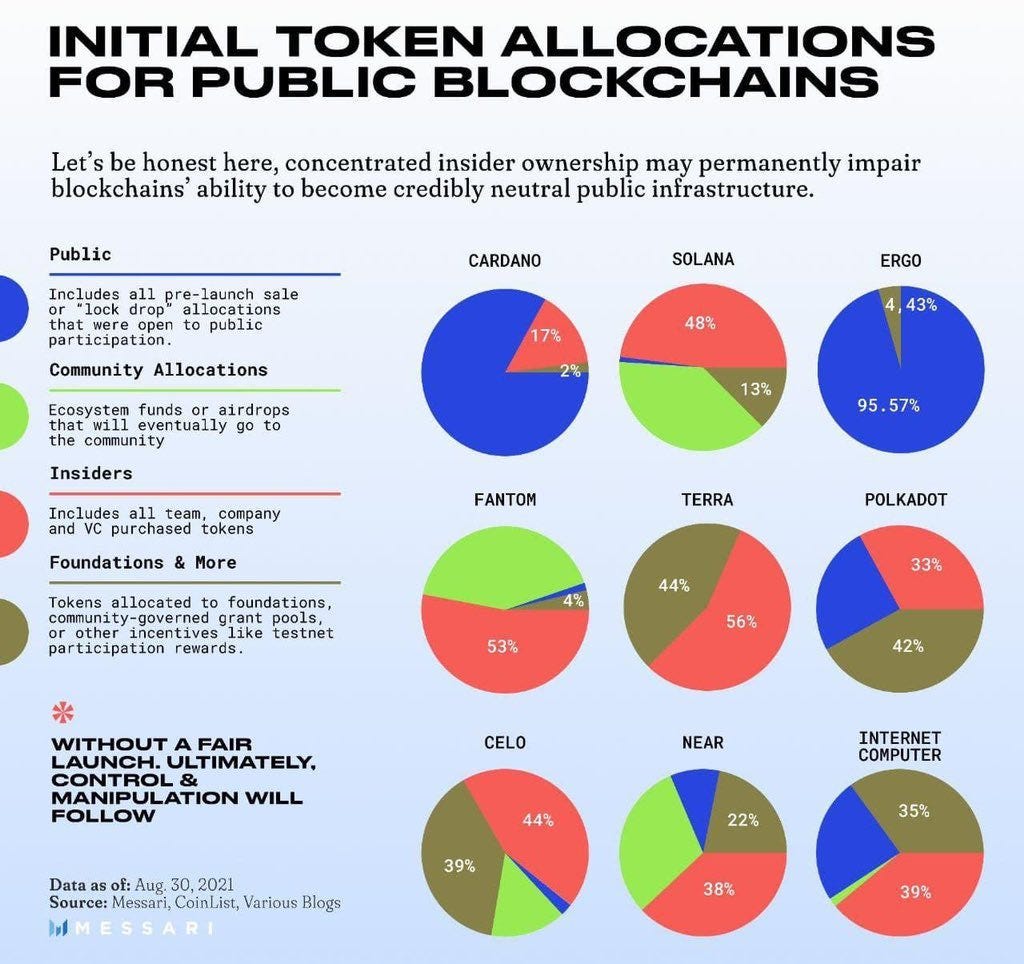
To investors,The phrase “Web3” has taken the technology world by storm. It is used to describe the next iteration of the internet, which includes the belief of Web3 proponents that decentralized protocols and tokens will be core features of a new system. There are thousands of entrepreneurs and investors betting their time, money and energy that this new iteration will be the future of technology. There are thousands more who believe that the entire Web3 system is unsustainable and simply a way to enrich the proponents.Regardless of where you fall on the debate, I thought it would be interesting to investigate the question “who owns Web3?” In order to do this, we can look at the token supply breakdown of various projects. First, here is Solana’s initial token distribution (source: Messari):The second example we will use is Uniswap’s initial token distribution:These two examples highlight a few takeaways. The team’s normally hold between 20-30% of the token supply, private investors are somewhere between 15-50%, which depends on how much of the token was sold before launch. And the remainder of the token supply is used for various activities, including premined rewards, airdrops, yield farming, ecosystem funds, and many others. Here is another visualization of various projects:This is interesting because in a recent study it was concluded that founders in “Web2” companies held approximately 15% of their company’s equity at the time of the IPO. The comparison isn’t perfect (not all of the founder/project token allocation goes to the founders specifically), but it appears that Web3 founders are able to hold on to more of the economic value for what they create compared to Web2 founders. But this still doesn’t answer the question of “who owns Web3?”There are three specific groups of people who own tokens in these ecosystems. They are the team, private investors, and the community. In the legacy Web2 world, only the team and private investors end up owning equity in a company, so the Web3 world has a structural advantage in their ability and desire to get economic incentives in the hands of their community. Web2 companies have tried this before, but were largely unsuccessful. Airbnb tried to give equity to the hosts on their platform and Uber tried to give equity to their drivers. The explicit acknowledgement of the asset being equity meant that regulations prevented these companies from doing it. Ok, back to the owners of Web3. The team is fairly straightforward. If you are the founder, early employee, or a contributor to the project, you are compensated for your efforts in a way that is determined by the team. This is no different than a traditional equity. The big debate in the Web3 world is about investors. Obviously, the more that a project claims that they are decentralized, the more critics will complain that any ownership by large investors (venture capitalists and private equity) is antithetical to that mission. Maybe this is true or maybe not, but it is important to remember that the actual investors are not the VC firms themselves.For example, if Sequoia Capital invests in a company or project, then the ownership mostly lies with nonprofits and schools. Here is an excerpt from the Sequoia website:“Sequoia invests primarily on behalf of nonprofits and schools, with organizations such as the Ford Foundation and Boston Children’s Hospital forming most of our limited partner base. Working for them gives us a greater sense of responsibility and purpose.”The average VC firm takes 20% carried interest on their investments, so if a firm owned 30% of a project’s tokens, the non-profit LPs would have 24% of the tokens and the venture capitalists would have approximately 6%. This doesn’t mean that venture investors owning large stakes of tokens is right or wrong, but it is important to understand the economics of who actually owns these tokens, rather than who purchased them. The next point is that Web2 companies are all owned by large venture capital and Wall Street firms. Chris Dixon of A16Z made this point last night when he tweeted the top 10 holders of various public company stock:As you can see in these breakdowns, most of the largest holders are passive investing vehicles from Vanguard and their peers. These passive vehicles are usually owned by retail investors and/or pension funds, etc. So in a crazy way, the VC fund LPs are nonprofits, foundations, pension funds, etc. These same investors are the owners of the Web2 companies through these passive investing vehicles as well. The more things change, the more they stay the same. The difference is whether Wall Street or Silicon Valley are getting to charge fees for the privilege of allocating the money. Lastly, the bitcoin community hangs their hat on no venture capitalist investment needed to launch the network. This is one of the strongest arguments that is put forward by the community. But the start of the network does not necessarily reflect the curren

Price Gouging, Price Controls, And Inflation
To investors,It is no secret that Turkey is experiencing painfully high levels of inflation right now. Economists’ expectations for inflation numbers in December are just over 30%, which includes estimations that range from 26% to 37%. Regardless of where the number officially ends up, the inflation that Turkish citizens are dealing with is hard to comprehend for investors in the developed, western world. Governments are not thrilled in these scenarios to take responsibility due to previous monetary or fiscal decisions. Instead, they historically blame corporations for price gouging, implement price controls, and even institute capital controls in the most extreme examples. The higher the inflation gets, the more severe the government’s response tends to be. The United States is experiencing nearly 7% inflation and we see our politicians calling out various industries, from beef producers to grocery stores, in regards to alleged price gouging. If history serves as a guide, it is unlikely that the corporations are actually price gouging. It is much more likely that their labor and material costs have drastically increased, so they need to raise their prices in order to still have any profit. Turkey has already gone one step further than the United States though. They are not only accusing corporations of price gouging, but they are actually using the police to enforce a form of price controls. Here is a video that was released by the local authorities that shows them in various grocery stores. The second tweet is translated by Google as saying:“As Polatlı Municipality, we continue our strict controls against exorbitant prices. In these difficult days, our fellow citizens; We will always be against those who are not on the side of the poor and the poor.”This reminds me of the classic “I am from the government and I am here to help you.” Obviously, these grocery store owners are unlikely to hike prices for the fun of it. They are dealing with a high inflation environment that has only become worse through 2021. If you put yourself in their position, I’m not sure there is much to do other than to continue to increase prices at the same rate as the devaluation of the currency. The scary part of this video is that you have the police intervening in markets, which obviously doesn’t allow for free market forces to take hold. You can’t have a system of supply and demand if you also have artificial constraints on the market. As we know from history, these types of price and capital controls can actually exacerbate the situation, rather than help to fix it. Regardless, this is a nasty situation for business owners and citizens alike. Let’s bring it back to the United States though. Politicians who have accused grocery stores domestically of price gouging have not looked at the numbers it appears. We can use Kroger as one example of what the actual financials are telling us:Not only is Kroger actually making less money this year, even though food prices are 5-6% higher based on the national average, but the business is also operating on a measly 2.4% profit margin. Those razor thin margins mean that the business must be insanely accurate at predicting supply chain and labor costs, along with any changes to demand. Whether we are talking about the United States, Turkey, or many other countries around the world, business owners are facing significantly higher inflation than usual. They are going to have to raise prices. This is how capitalism and free markets work. We shouldn’t allow politicians and central bankers to gaslight us. A large portion of the problem stems from undisciplined monetary and fiscal policy. The market intervention is not a solution.Besides ensuring that we are educated on how markets work and what the financials of these businesses are, it is important to focus on another simple idea as well:High inflation erases hope for the most financially vulnerable in a society. Politicians attack corporations and business owners in response, which demonizes success. These are some of the ingredients of how societies crumble. It doesn’t have to be this way though. The popular saying of “money is the root of all evil” can be slightly changed to be more accurate — “fiat money is the root of all problems.”Fix the money, fix the world. Billions of people around the world stand to benefit from a global store of value that can’t be debased or devalued by any one person, group, or government. We are well on our way to that solution. It can’t come fast enough for those living under high inflation though.Hope you have a great start to your day. I’ll talk to everyone tomorrow. -PompSPONSORED: Mode allows you to buy, earn and grow Bitcoin, all in one app. Not only is it an easy and safe way to buy and hold Bitcoin, Mode allows you to pay and receive up to 10% Bitcoin Cashback for FREE from its growing list of online partner brands.Mode, the UK fintech app is one of a kind.They are FCA registered and are listed on the LSE
Bitcoin Is Moving In Lockstep With Treasury Yields?!
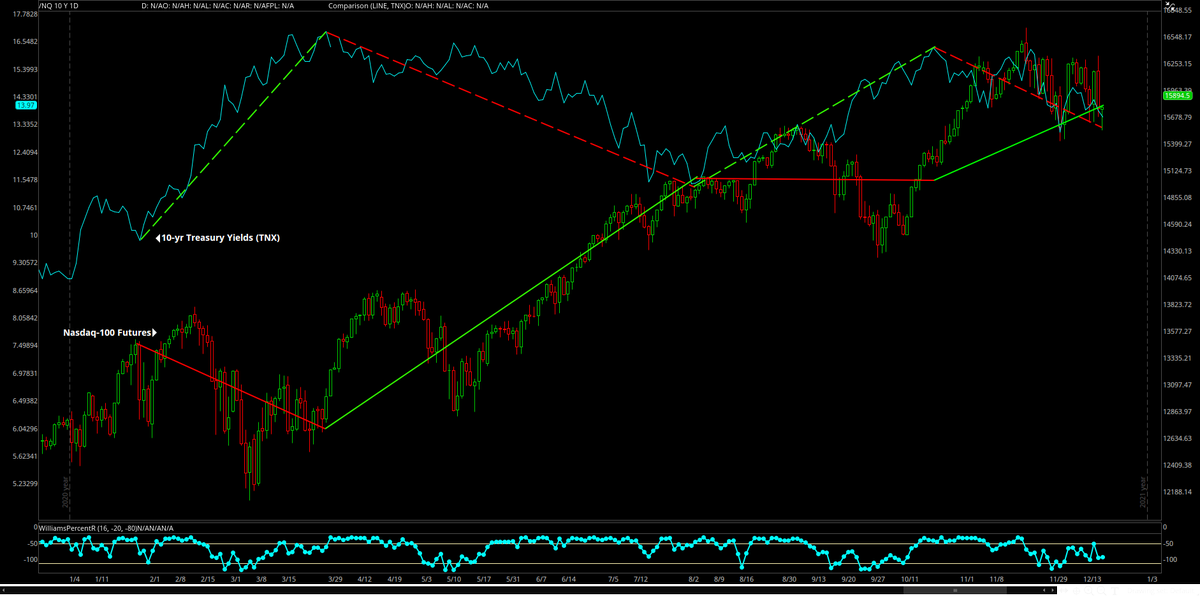
To investors,The global financial markets are obsessively watching what the Federal Reserve is going to do with interest rates in the coming months. Based on the most recent FOMC meeting, Fed Chairman Jerome Powell has signaled that the Fed is likely to hike interest rates approximately three times in 2022. I don’t want to spend our time together this morning debating whether the Fed will actually raise interest rates or not, but rather I want to talk through what is likely to happen if interest rates are increased. The general consensus is that high growth stocks, risk assets, and other recent big performers would sell off when that occurs. As any student of history knows, we have seen this story play out before. History doesn’t always repeat. It sure does rhyme though. Keith Rabois’ expectations are shared by a large portion of the investing community, particularly those who understand interest rates and their relationship to risk assets. So if we are operating under the assumption that risk assets will sell off when the Fed raises interest rates, we should expect bitcoin to suffer the same fate, right? Well….no one knows yet. The prevailing consensus view has been that bitcoin is a risk asset. It has an inverse relationship with interest rates. When central banks and politicians manipulate interest rates lower, and pump trillions of dollars into the market, bitcoin should go higher. Over the last 18-24 months, we saw interest rates moved lower and trillions of dollars injected into the economy, along with bitcoin’s price going up hundreds of percent. But what if bitcoin’s price increasing has less to do with interest rates and QE? What if bitcoin’s price increasing was more related to the bitcoin halving in May 2020? Hear me out for a second. The inverse correlation between tech stocks and treasury yields has been playing out exactly how you would expect. Yields go up and risk assets sell off. Yields go down and risk assets go up. This inverse relationship is not what we are seeing between bitcoin and Treasury yields though. We are actually seeing the exact opposite. Bitcoin’s price appears to be moving in lockstep with Treasury yields. So if this short-term trend continues to play out, what would that mean for bitcoin? Again, no one knows for sure. But it would be very interesting if the prevailing consensus view is misplaced and bitcoin would actually benefit from increasing interest rates. That would violate the framework that many people have been viewing the digital currency through. Caleb Franzen elaborates here:So why could this idea of bitcoin and yields increasing together potentially be true? Well…one idea is that some people actually deem bitcoin to be their reserve currency. They view cheap capital via low rates as a path to borrowing money and making investments that could earn them more bitcoin. If rates were to rise, risk assets would sell off and these people would go back into their safe haven asset — bitcoin.This may sound insane to the legacy Wall Street crowd, but there is an increasing number of young people who see the digital currency as that safe haven asset in their portfolio. The entire point of investing in anything outside of bitcoin is to outperform bitcoin and eventually convert back into bitcoin. Obviously, if you’re a good investor than you can pick up more bitcoin. If you’re a bad investor, you end up with less bitcoin. This is the new risk-reward that many young people are evaluating. Ultimately, none of us know what the Fed is going to do in 2022. We also don’t know how every single asset will react. If we see bitcoin moving in lockstep with interest rates though, my guess is that an entirely new crop of investors are going to start paying attention. Who doesn’t want an asset that moves with interest rates, yet produces a materially higher compound annual growth rate?Keep your eyes on the relationship between risk assets, bitcoin, and Treasury yields. We are likely to learn a lot over the next 12 months. It will be worth learning, regardless of what occurs. Hope each of you has a great day. I’ll talk to everyone tomorrow.-PompSPONSORED: This year has seen unbelievable growth of this community and I wanted to pass on a small thank you to all my old and new subscribers alike.To get your free unique code for a $40 credit at unstoppabledomains.com simply fill in this form.Unstoppable Domains are the #1 provider of NFT domains, These domains make sending and receiving crypto easy, can be used as your username on Twitter and better yet they don't have any renewal or gas fees. Don’t forget to fill in this form to get your unique $40 USD voucher.Thanks,Pomp.bitcoinPlease see full terms and conditions hereScot Wingo is the Co-Founder & CEO of Spiffy, an on-demand car cleaning and car servicing app.In this conversation, we discuss inflation, entrepreneurship, crypto, Web3 and NFTs.LISTEN TO THIS EPISODE OF THE POMP PODCAST HEREPodcast SponsorsThese companies make the podcast poss
The Automated Central Bank Is Superior
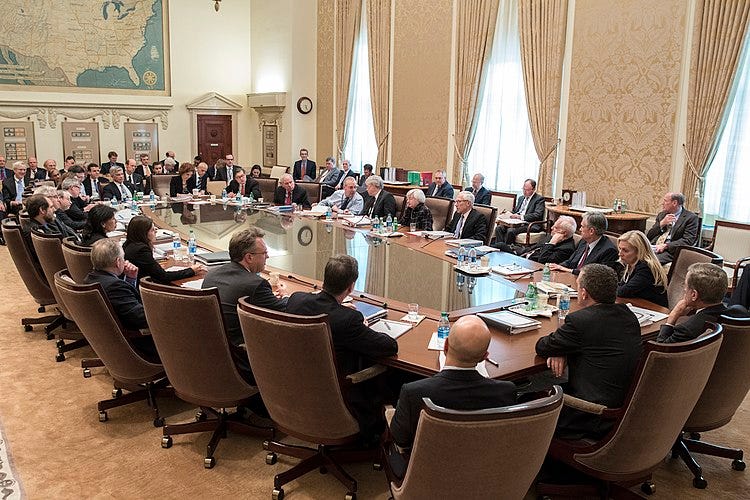
To investors,There has been immense scrutiny on the Federal Reserve and central banks around the world over the last 18 months. Everyone from investors to business owners to retirees are trying to figure out what the central banks will do with interest rates and asset purchases, so they can better prepare their portfolios for the future. It is easy to get lost in the day-to-day drama of what the central banks are going to do. Every mainstream media outlet is talking about the various scenarios. Investing forums and Twitter users are speculating on the color of the Fed Chairman’s tie or whether he uses the word “dovish” or not. Some analysts even spend time trying to measure correlations between the length of press conferences and future interest rate decisions.It has become absolute madness. The financial world, and various related aspects of society, all patiently wait for the decisions of a small group of 12 people who emerge from the FOMC meetings. There are other people in the room during the meetings, but ultimately 12 people are deciding what will happen to trillions of dollars in assets and billions of people. (here is a 2016 FOMC meeting as an example)It doesn’t have to be this way though. The elites who make up the minority don’t have to be the ones to make the decisions. In fact, I would argue that the world would be better off if humans weren’t in charge of making these decisions at all. We know that human decision-making is flawed. We are emotional animals. We have bias. There is academic study after academic study that shows how humans are experts at poor judgement. So what does that have to do with central banks?Central banks are supposed to have two core components to them — independence and predictability. José Manuel González-Páramo, a member of the Executive Board of the European Central Bank from 2004 - 2012, gave a speech in June 2007 titled “Inflation Targeting, Central Bank Independence and Transparency.” In that speech, he stated the following:“Indeed, the principle of central bank independence in the pursuit of the goals of monetary policy has been codified in the legal systems of many countries. Perhaps even more importantly, there is evidence that the importance of this principle seems to be increasingly well understood by society at large. According to all surveys among euro area citizens, an overwhelming majority of respondents support the pursuit of price stability as a goal of the European Central Bank (ECB) and back the ECB’s independence in order to guarantee the achievement of this goal….…But I am not here to talk about politics. Indeed, one of the great advantages of central bank independence is precisely that we can ignore the political furor and concentrate on the welfare-enhancing objective of keeping inflation under control. At the same time, I could not agree more with the view that central bankers must strive to fully comply with the standards of transparency and accountability that democratic societies rightly demand from independent public agencies.”Central bank independence is absolutely crucial. Additionally, Jose went on to say the following about a central bank’s predictability:“Going back to the subject of expectations, I have thus far focused on inflation expectations. Before concluding, however, I should like to mention another type of expectation which is of interest to central banks, namely expectations regarding future monetary policy rates. Such expectations provide benchmarks against which to assess various aspects of crucial importance for a central bank’s success, such as its transparency, its predictability, and the effectiveness of its communication strategy, among others. As a result, expectations regarding future policy rates, whether taken from surveys or financial market data, are an essential source of information for assessing the degree of understanding of a central bank’s monetary policy strategy and conduct by market participants and external observers.”These are the words from central bankers themselves — the independence and predictability of a central bank are essential to the organization’s effectiveness. This brings me to a new type of central bank that has been created. It is fully automated, completely independent, and the most predictable organization in the world. What do I mean?A pseudonymous person or group created an automated central bank a little over a decade ago. They ensured that no one person or organization would ever own it or control it. The central bank is decentralized, which gives it complete independence. This person or group also made sure to write the monetary policy for the central bank into software code and then ensured that no one would be able to change it unilaterally. As if that wasn’t enough, the creator(s) of this digital central bank also open-sourced everything so that it could be audited by anyone, at any time, from anywhere. This digital central bank structure allows for the most independent and most p
Warren Buffett, Bitcoin, and Compounding
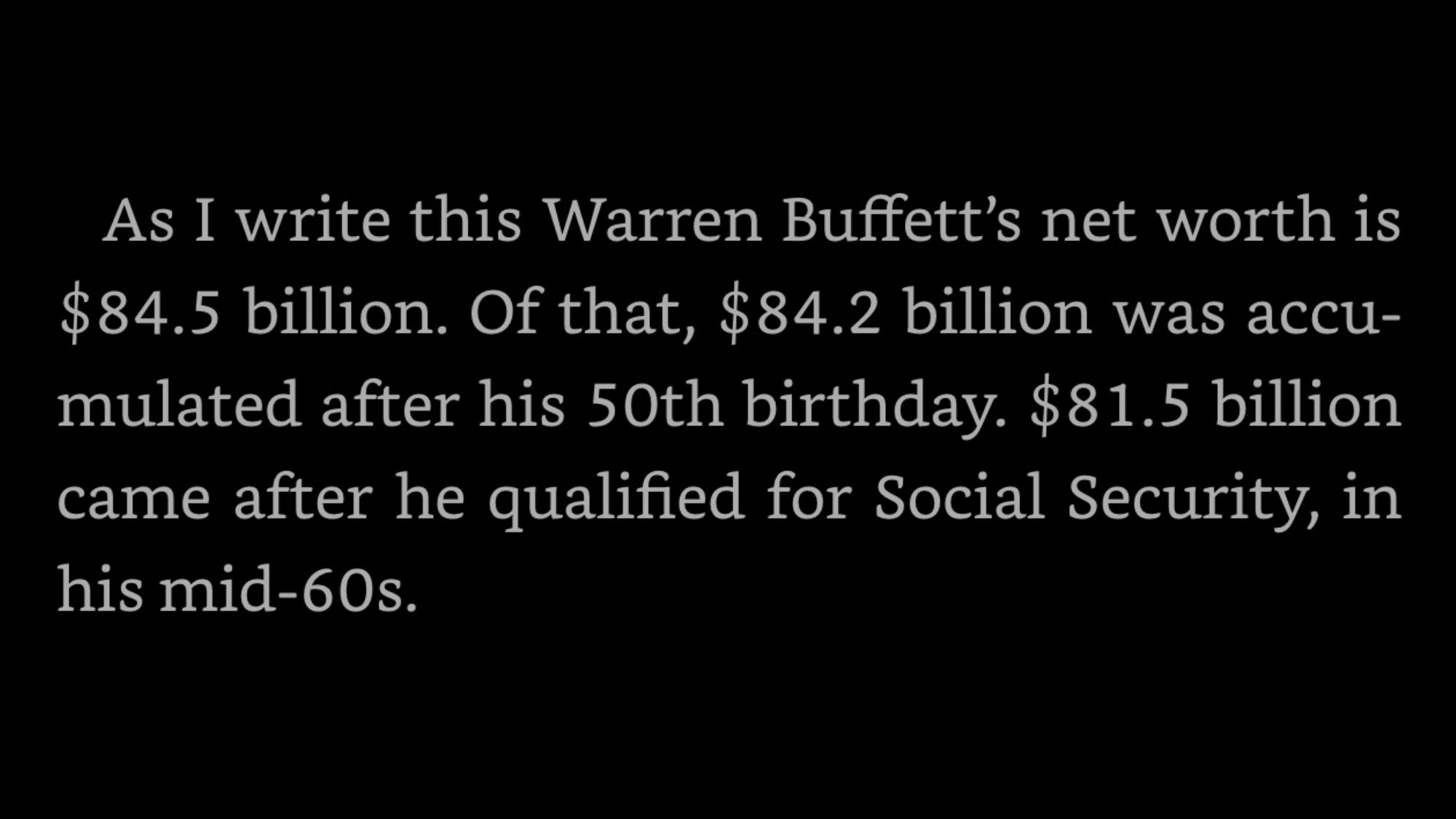
To investors,We have all heard Albert Einstein’s famous quote that “compounding is the eighth wonder of the world” and “he who understands it, earns it; he who doesn't, pays for it.” This concept sounds great as a theory, but there is something incredible when you actually see it play out in reality. The most recent example is when I saw Garry Tan tweet this excerpt from The Psychology of Money about Warren Buffett:This means that Warren Buffett accumulated 99% of his net worth in the second half of his life and 96% of his wealth after he qualified for social security. There may not be any better example of compounding in the financial world.Now one of the important things that many people miss in this analysis is that Warren Buffett has been fortunate enough to live to 91 years old. If he had passed away in his 60s, 70s, or 80s, the compounding story would never be told to the severity that it is today. Additionally, he took full control of Berkshire Hathaway in 1965 and has remained in control ever since.The average life expectancy in America is just under 79 years old and the average tenure for a public company CEO is just under 7 years. Warren Buffett has drastically outperformed both of those metrics, which helps him continue to benefit from compounding. As Buffett’s partner Charlie Munger says, “the first rule of compounding is to never interrupt it unnecessarily.”Here is an interesting angle for you though — In response to the Buffett example, Paul Graham posed the question: “I wonder how much of the increase in economic inequality is due simply to people living longer.”It is impossible to quantitatively arrive at a concrete answer, but there is definitely some anecdotal evidence that would suggest Graham is onto something. The average life expectancy in 1975 was 71.4 years and in 1990 it was 74.8 years. People are definitely living longer.If you have bad money habits, your financial situation will only continue to get worse the longer you live. The same is true if you have good money habits. The longer you live, the better your financial position. This is ultimately what Warren Buffett understands better than most. The pursuit of compounding over long periods of time is a competitive advantage. So how does this play out in financial markets?Over the past 30 years, the S&P 500 index has delivered a compound average annual growth rate of 10.7% per year. This means that if you start with $10,000 it would have grown into more than $211,000 over the 30 year period. Compare this with Bitcoin, which has a compound annual growth rate of 161.4% over the last decade, and you can see why so many young bitcoin investors are outperforming their stock investing peers. These data points made me think about an important piece of advice that a well respected hedge fund manager once told me — most of your financial returns will come from the markets you select to invest in, rather than the actual securities you decide to hold. Another way to think about it is through the lens of entrepreneurship advice “When a good team meets a bad market, the market wins. When a bad team meets a good market, the market wins.”So much of compounding is predicated on the idea that a high rate of compounding will continue for decades. If you’re successful in finding one of these markets, the challenge won’t be in making many good decisions, but rather in having the discipline and emotional control to avoid making any decisions at all. This is ultimately where I think bitcoin is at the moment. It continues to compound at an impressive rate. You just have to be patient enough to outlast everyone who can’t think long term. Hope you have a great Tuesday. I’ll talk to everyone tomorrow.-PompTHE RUNDOWN:Narendra Modi's Twitter Account Hacked With Announcement India Would Adopt Bitcoin: Narendra Modi's Twitter handle was "very briefly compromised," his office said, when a tweet was sent from the Indian Prime Minister's account saying his country had adopted Bitcoin and would be distributing the cryptocurrency. "The matter was escalated to Twitter and the account has been immediately secured," the Indian PM's office said in a tweet on Sunday. "In the brief period that the account was compromised, any Tweet shared must be ignored," officials added. Read more.Robinhood Working on New Crypto Gifting Feature: Code discovered in a beta version of Robinhood’s iPhone app reveals the popular no-fee trading platform is considering adding a feature that allows users to send cryptocurrency to each other via digital gift cards, according to a Bloomberg report. Read more.Sportswear Giant Nike Purchases NFT Fashion and Collectibles Startup RTFKT: Multinational footwear behemoth Nike just took a big step into the metaverse. On Friday, NFT collectibles and fashion startup RTFKT announced on Twitter that the company had been acquired by Nike. The terms of the deal were not disclosed. Read more.Elon Musk Named Time’s Person of the Year, Says Crypto Unlikely to R
Young People Have Lived Through More Market Downturns Than Any Other Generation In History
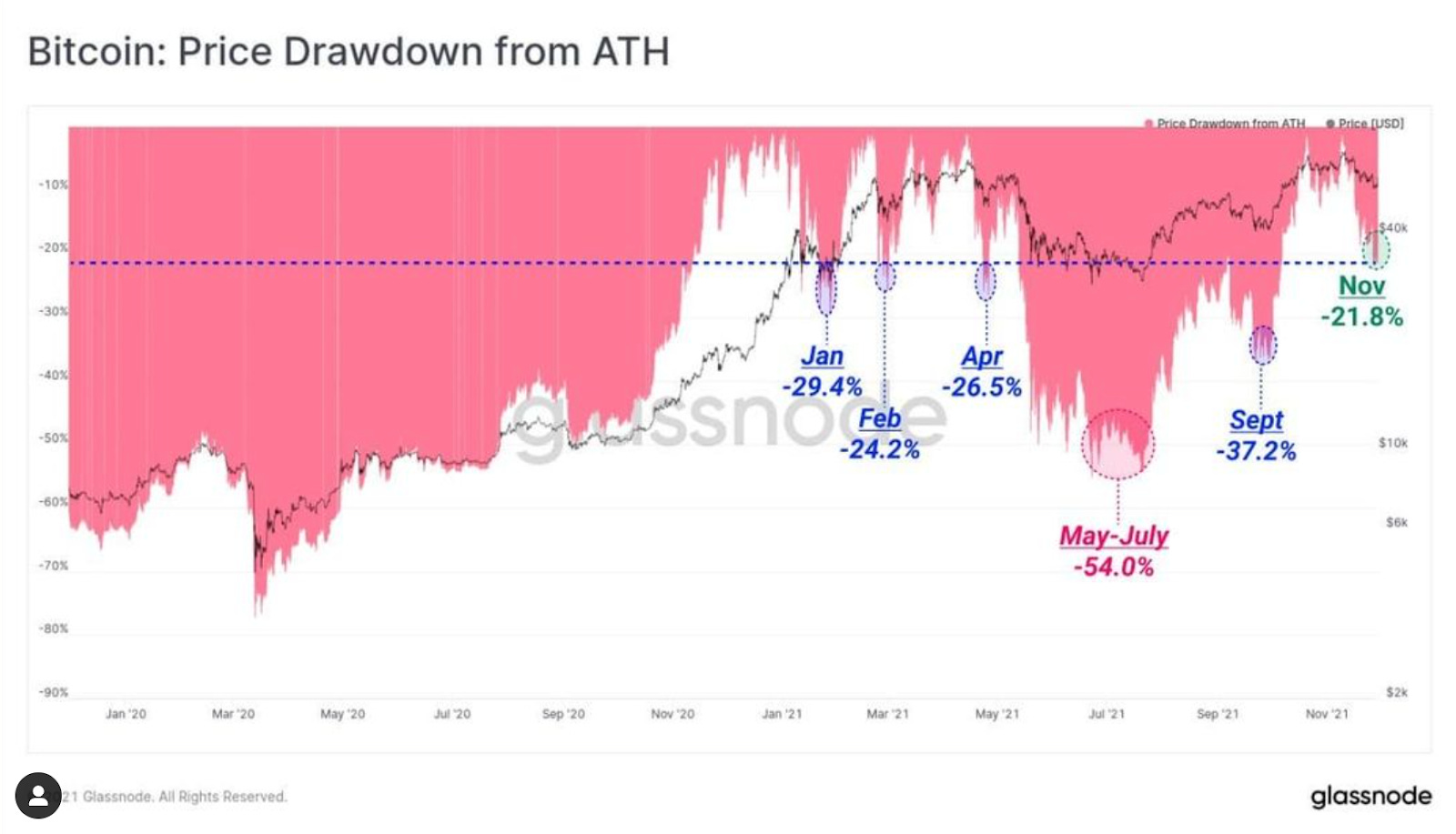
To investors,There was an article in the Financial Times recently that discussed market cycles, sell-offs, and investor risks. My friend Josh Wolfe from Lux Capital shared it on Twitter with a fairly sober warning that most young investors haven’t experienced a market downturn. Here is the article and the tweet:This got me thinking — has the generation of 35 year olds and younger actually never experienced a market downturn?We know that the 2009 - 2020 performance of the stock market was the single longest bull market in history. The trailing 10 year performance of the S&P 500 from today is approximately 265%. By numerous methods of evaluation, you could argue that financial assets and markets have done remarkably well over the last 12 years. So why are we talking about this?The more that I thought about this perspective, the more that I disagreed with it. In fact, I want to make the argument that people under the age of 35 have experienced some of the worst market downturns in history over the last 12 years. I know this is counter to the public narrative, but hear me out for a second. First, college students who were graduating in 2009 were thrust into the Global Financial Crisis. This was the worst economic downturn since the Great Depression in the United States. While they may not have had many personal financial assets, a large percentage of them saw their parents, friends, and family get wiped out financially. The job market was excruciatingly tough and many of these young people were forced to live at home with their parents for a few years until they got their feet under them. Although the multi-year bear market technically ended in March of 2009, there was still immense pain felt by people across the economy for a number of years. Take job growth for example - we didn’t see positive growth until March 2010 (a full year after the market downturn ended).So these young people graduated right into one of the worst economic crisis in history. But that isn’t the only economic crisis they have endured. These same investors were in their early 30’s last year when they lived through a second economic recession. The COVID-19 public health crisis led to a swift economic downturn and tough labor market. During March of 2020, all financial assets were falling at a blistering pace. Gold was down more than 10%, stocks were down 25-35%, and bitcoin was down more than 50% in a single day. There were multiple weeks where more than 6.5 million people filed for first time unemployment claims and the unemployment rate reached nearly 15% at one point. On top of that, business owners and leaders were faced with the single toughest business environment of the last 50 years — they were asked to continue to run their business while being locked in their homes by their government.Now we quickly forget the economic recession of 2020 because the central bank and government stepped in with an incredible amount of monetary and fiscal stimulus, which drove asset prices upwards quickly. But that doesn’t take away from the fact that (a) investors lived through an incredibly painful drawdown in financial markets and (b) that citizens who lost their jobs or had their businesses impaired were still dealing with the effects for many months later. Ok, so we have a demographic of investors that have lived through two of the worst financial markets in the last 50-100 years. That is the totality of the story, right? Nope. We forget that young people have been investing in bitcoin and cryptocurrencies in a fairly significant way for a number of years. During that time, there have been three separate bear markets of at least an 80% drawdown in prices since 2011. Yes, you read that right. 80% drawdowns have happened THREE TIMES since 2011.I’ll give the benefit of the doubt and say that most people were not invested in the market in 2011, or even pre-2017. But by 2017, numerous exchanges had tens of millions of users and there were hundreds of billions of dollars in market cap across the assets in the crypto industry. Those investors who were participating in the 2017 crypto bull market got smacked in the face with a year long market crash in 2018 that saw bitcoin drop more than 80% and many other assets drop more than 95%. You could easily argue that the crypto market participants in 2018 experienced a market crash that is worse than any single market crash the stock market has ever seen. It may sound like hyperbole, but it is just math. The crazy thing about that market crash in 2018? Majority of bitcoin holders never sold their assets. They simply held it. Stanley Druckenmiller actually cited this as the reason that he decided to invest in bitcoin. He recently shared that Paul Tudor Jones called him and said “Do you know that when bitcoin went from $17,000 to $3,000 that 86% of the people that owned it at $17,000, never sold it?” Maybe the young people were on to something with their strong hands. This brings us to 2021. Just this year, the
Bitcoin's On-Chain Distribution Continues To Be More Decentralized
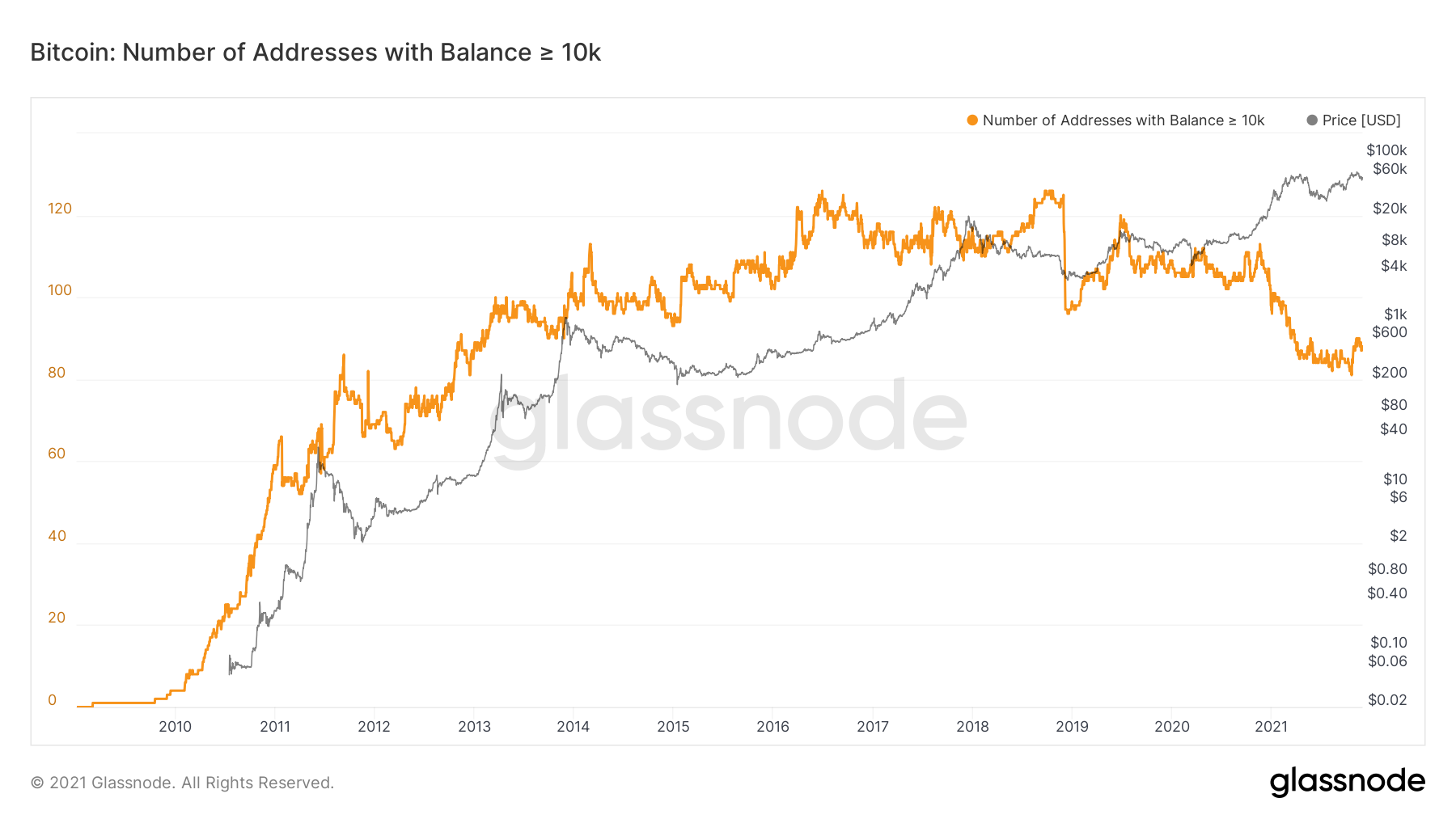
To investors,Bitcoin’s on-chain distribution continues to become more decentralized over time. We can explicitly prove this claim by looking at the on-chain metrics, which offer unique insight into the amount of bitcoin that is held by each individual bitcoin address. First, let’s take a look at the largest holders of bitcoin on-chain. We can see that the number of bitcoin addresses with at least 10,000 bitcoin in their balance peaked in October 2018. Bitcoin's price was ~ $6,500 and we were about to get the final puke down in price of the 2018 bear market.If we look at an order of magnitude smaller, the number of bitcoin addresses with a balance of 1,000 bitcoin or more peaked in February of 2021. There are currently about 2,100 bitcoin addresses that hold 1,000 bitcoin or more, which is very similar to where we were throughout most of 2020. Now let’s take a look at bitcoin addresses with a balance of 100 bitcoin or more. The all-time high for that measurement peaked in February 2017, which was before the craziness of the 2017 bull market. At the time, there were about 18,500 bitcoin addresses that met the criteria, but today we have only approximately 16,100 bitcoin addresses with 100 bitcoin or more. But here is what is really interesting — bitcoin addresses with at least 0.01 bitcoin or 0.1 bitcoin in their balance have continued to hit all-time highs. Today, there has never been more bitcoin addresses on-chain in the 12 year history that hold these smaller amounts of bitcoin. Here is the 0.01 bitcoin balance chart, which shows more than 9.33 million bitcoin addresses:Here is the 0.1 bitcoin balance chart, which shows more than 3.28 million bitcoin addresses:These distribution charts are noteworthy because they highlight a very important part of the bitcoin story. As time goes on, the digital store of value continues to become more decentralized. This increase in decentralized ownership is not only a positive security feature, but it also means that the benefits of economic empowerment that bitcoin presents will eventually be enjoyed by more people globally. You can think of the distribution of bitcoin holders as one piece of a three-legged stool. Bitcoin miners continue to get more decentralized over time and we continue to see more bitcoin node operators popping up around the world. This symbiotic relationship between holders, miners, and node operators allows bitcoin to gain strength, while continuing to run effectively without a CEO or centralized control.Bitcoin’s design is beautiful and things are playing out exactly how they were intended. The electronic peer-to-peer cash system is evolving into a fully decentralized, digital store of value that can’t be debased, censored, or manipulated. Hope each of you has a great start to your week. I’ll talk to everyone tomorrow. -PompGET HIRED IN CRYPTO: Are you looking for a job in the bitcoin and crypto industry, but don’t feel like you understand the nuances of the industry well enough to be hired? We have a training program aimed at helping people just like you.The 3 week intensive course was created with the help of the HR teams at top companies in the industry and has seen graduates get hired at Coinbase, Gemini, BlockFi, Kraken, Anchorage, Strike, BTC Inc, and many more.Our next cohort starts November 30th. APPLY HERE: www.pompscryptocourse.comSPONSORED: Gun.io is every fast-growing technology company’s secret weapon. With Gun.io, companies hire world-class developers in a fraction of the time. Finding the right technical talent is hard, especially in this competitive hiring market. Gun.io gives you access to peer-vetted developers who you won’t find on job boards. We combine our industry-leading matching algorithm with human relationships and support to uncover the right developer for your team, fast. The result? No stacks of resumes or endless interviews. Instead, you can have a conversation with the candidate our team of senior engineers believes is perfect for your role within days, not weeks. Whether you’re growing your team, in need of short-term help, or making your first technical hire, meet the right candidate for the job on Gun.io.THE RUNDOWN:El Salvador Buys 100 More Bitcoins as Crypto Market Falls: The government of El Salvador bought 100 more bitcoin, President Bukele tweeted on Friday, while the price of the largest crypto currency by market-cap fell near $54,000. “El Salvador just bought the dip. 100 extra coins acquired with a discount,” Bukele said. Bitcoin price fell about 8% on Friday around $54,237, as broader markets tumble on new COVID-19 variant fear. Read more.Crypto.com to Sponsor Latin America’s Leading Soccer Competition: After renaming the Staples Arena in a $700 million deal in November, Singapore-based crypto exchange Crypto.com will become an official partner of Latin America’s leading soccer competition, CONMEBOL Libertadores. Through an agreement with CONMEBOL, the governing body for soccer in South America, Crypto.co
10 Epic Bitcoin Mining Photos
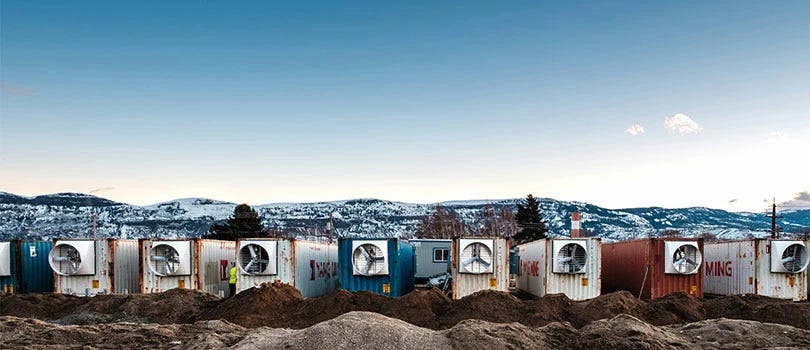
To investors,I thought it would be fun to assemble the most breathtaking photos that I could find related to bitcoin mining as we head into Thanksgiving here in the United States. The bitcoin miners spend immense time, effort, and capital to help secure the world’s strongest computer network. Here are some visualizations of their work:These are two Bloomberg photographs from inside Bitriver, the largest data center in Russia, which is attached to the Bratsk aluminum plant (the largest in the world). You can see that they have 3-story high stacks of bitcoin miners that run 24/7/365. This 100 megawatt facility requires immense cooling from fans that run throughout the building, which is insane to think about since the data center is located in an incredibly cold climate. This is a photo of Bitmain’s mining facility that was previously operated in Inner Mongolia, China. You can see that the site held rows of buildings that were outfitted to run bitcoin miners, including the sides of each wall containing the necessary cooling to run the machines all day, every day. Inside of Bitmain’s Inner Mongolia site, you can see that they simply had racks and racks of bitcoin miners constantly working to produce as much bitcoin as possible. The Bitfury mining farm in Amsterdam is one of the cleanest ones that you will likely find. This was rumored to have started as early as 2011 by Valery Vavilov. In contrast, the Dalian mining farm in China may not look like much from the outside, but this location was mining approximately 750 bitcoin per month at one point. They were also able to boast at the time that they were one of the largest bitcoin miners in the world. This is an iconic photo from TIME that shows a bitcoin mining farm located right next to a hydropower station in Sichuan region of China. Here we have one of Crusoe Energy’s gas flare mitigation sites in Montana. Not only do these types of bitcoin mining farms prevent destruction to the environment, but they are a great way to monetize power that was previously hard to profit from. It is a win-win for the energy producer and the bitcoin miners. This is a photo of liquid immersion bitcoin mining machines at a Beeminer facility. You can see how closely packed the machines are, along with how effective the liquid cooling must be in order to efficiently run a setup like this. Lastly, this is a picture of the geothermal energy facility that is built into a volcano in El Salvador, which is now home to bitcoin mining equipment thanks to the country’s President and his new interest in bitcoin. Also, the Blockstream team was recently on the ground in El Salvador and was able to hook this bitcoin mining facility up to their satellite infrastructure, which is pretty cool too.I share these photos with each of you today because it is a reminder that there is a lot of incredibly cool stuff going on to support and secure the bitcoin network. The system has no CEO, no employees, and never raised a dollar of venture capital money. People from around the world have flocked to it though and they continue to make it more powerful over time. Enjoy your Thanksgiving with family and friends. I won’t be writing Thursday or Friday this week, so I will talk to you all again on Monday.-PompGET HIRED IN CRYPTO: Are you looking for a job in the bitcoin and crypto industry, but don’t feel like you understand the nuances of the industry well enough to be hired? We have a training program aimed at helping people just like you.The 3 week intensive course was created with the help of the HR teams at top companies in the industry and has seen graduates get hired at Coinbase, Gemini, BlockFi, Kraken, Anchorage, Strike, BTC Inc, and many more.Our next cohort starts November 30th. APPLY HERE: www.pompscryptocourse.comPodcast SponsorsThese companies make the podcast possible, so go check them out and thank them for their support!* Mode allows you to buy, earn and grow Bitcoin, all in one app. Not only is it an easy and safe way to buy and hold Bitcoin, Mode allows you to pay and receive up to 10% Bitcoin Cashback for FREE from its growing list of online partner brands. Download Mode today and enjoy 0% trading fees on all Bitcoin buys and sells until Dec 31, 2021. Only available in the UK.* Coin Cloud has been serving customers since 2014 and has established itself as the world's leading digital currency machine (DCM) operator. More than just a Bitcoin ATM, Coin Cloud machines make it easy to buy and sell Bitcoin and 30+ other digital assets with cash. To get your $50 in free Bitcoin, visit www.Coin.Cloud/Pomp * Compass Mining is the world's first online marketplace for bitcoin mining hardware and hosting. Compass was founded with the goal of making it easy for everyone to mine bitcoin. Visit compassmining.io to start mining bitcoin today!* Choice is rebuilding the way bitcoiners approach retirement by making it possible to invest in bitcoin and 19 other digital assets inside your IRA. Choice enables you
Bitcoin City Will Be Funded By Bitcoin Bonds
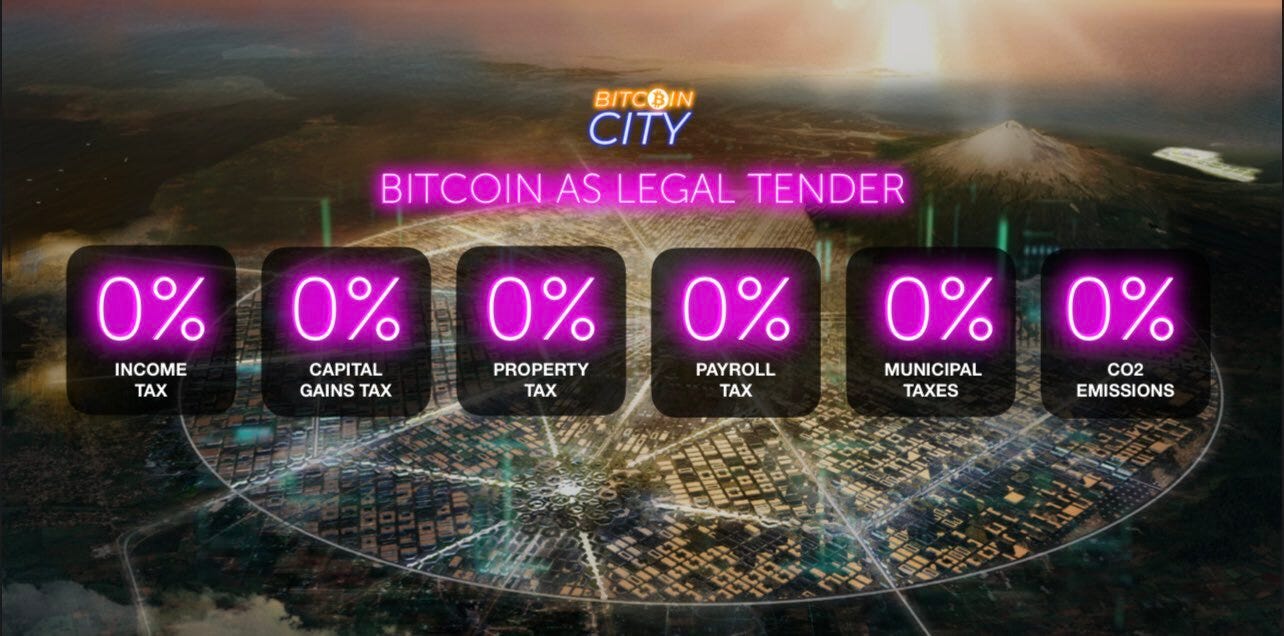
To investors,The President of El Salvador announced on Saturday night that he was planning to build the world’s first “Bitcoin city,” which would live at the foot of a volcano in his country. There is a lot to unpack here. Before we get into the details though, it is important to remember what El Salvador and President Bukele have already accomplished. The country announced in June at the Bitcoin Conference that they would make the digital currency legal tender across the nation. This legislation was proposed and approved just a few days later, which eventually led to “bitcoin is legal tender” going into effect in September of this year. Along with the legal tender decision, El Salvador has also created and launched a bitcoin wallet and payment system named Chivo, which has been downloaded and used by more than 50% of the 6.5 million Salvadorians. Bukele and his team then created a network of more than 200 bitcoin ATMs that have been spread across El Salvador to help onboard more bitcoin users. Lastly, the government created a bitcoin mining facility at one of the many volcanoes in the country so they could leverage volcano energy to mine bitcoin. This context is important because President Bukele has a track record of not only successfully executing on his plans, but doing so in lightning fast speed. We live in an age of politics where you can discount almost any announcement and reliably believe a very small percentage of plans will actually be accomplished — that doesn’t seem to be the case in El Salvador at the moment. So the country isn’t scared to make big announcements and then has a track record of delivering on them…great. But what about Bitcoin City?The general idea here is to create a brand new city that would serve as the shining example of what is possible in the 21st century. Bukele specifically referenced the need for nation states and leaders to build modern-day versions of what Alexander the Great built in Alexandria, Egypt. The city’s ancient history is described with the following:“Alexandria was best known for the Lighthouse of Alexandria (Pharos), one of the Seven Wonders of the Ancient World, its Great Library (the largest in the ancient world), and the Necropolis, one of the Seven Wonders of the Middle Ages. Alexandria was the intellectual and cultural centre of the ancient Mediterranean for much of the Hellenistic age and late antiquity. It was at one time the largest city in the ancient world before being eventually overtaken by Rome.”The idea of Bitcoin City in El Salvador would include a quadruple-threat approach to an urban location — renewed ideas around energy, physical space, and taxation. First, the energy approach is simple. The city will have no CO2 emissions and everything will be powered by the volcano that sits adjacent to the planned site. I’m not an expert on volcanic energy, nor do I have enough understanding of urban electrical grids to evaluate the potential efficacy of this plan. But the idea of using volcanoes to power energy demand isn’t a groundbreaking idea, so let’s give them the benefit of the doubt that this will be relatively straightforward to pull off.Second, the physical space will be a fully functioning city. Everything from an airport to housing to commercial real estate. The overall shape of the city will be circular in design and will include a central plaza, where people can gather, that will look like the bitcoin symbol from above. These ideas are not new. In fact, they are quite old, especially given some of the inspiration goes as far back as Alexander the Great. The renewed focus on applying these old ideas is what makes it novel in modern society. Third, there will be no income, capital gains, property, payroll, or municipal taxes in Bitcoin city. Yes, you read that right. The only taxation of a citizen in Bitcoin City would be a 10% sales tax. Every other tax plan that you have grown accustomed to in the developed world will be absent for residents.It is easy to see why people are getting excited about this new city, but you may be wondering why it is called Bitcoin City?It isn’t because bitcoin will be legal tender - bitcoin is legal tender in every city in El Salvador. It isn’t because many bitcoiners will consider moving there, although that is the hope. The new city is being called Bitcoin City because it will partially be funded by bitcoin-backed bonds. This is where things get interesting. The local government will be issuing a $1 billion tokenized bond that will carry a 6.5% yield for investors. Approximately $500 million will go towards building the city, maintaining the infrastructure, and generally solving the cold start problem when you create a new place for people to live. The other $500 million in proceeds from the bond offering will be invested in bitcoin.These are considered bitcoin-backed bonds for two reasons: (1) half of the bond proceeds will be invested in bitcoin and (2) the bonds will be tokenized on Blockstream’s Liquid
Your Portfolio Gains Aren't What You Think They Are
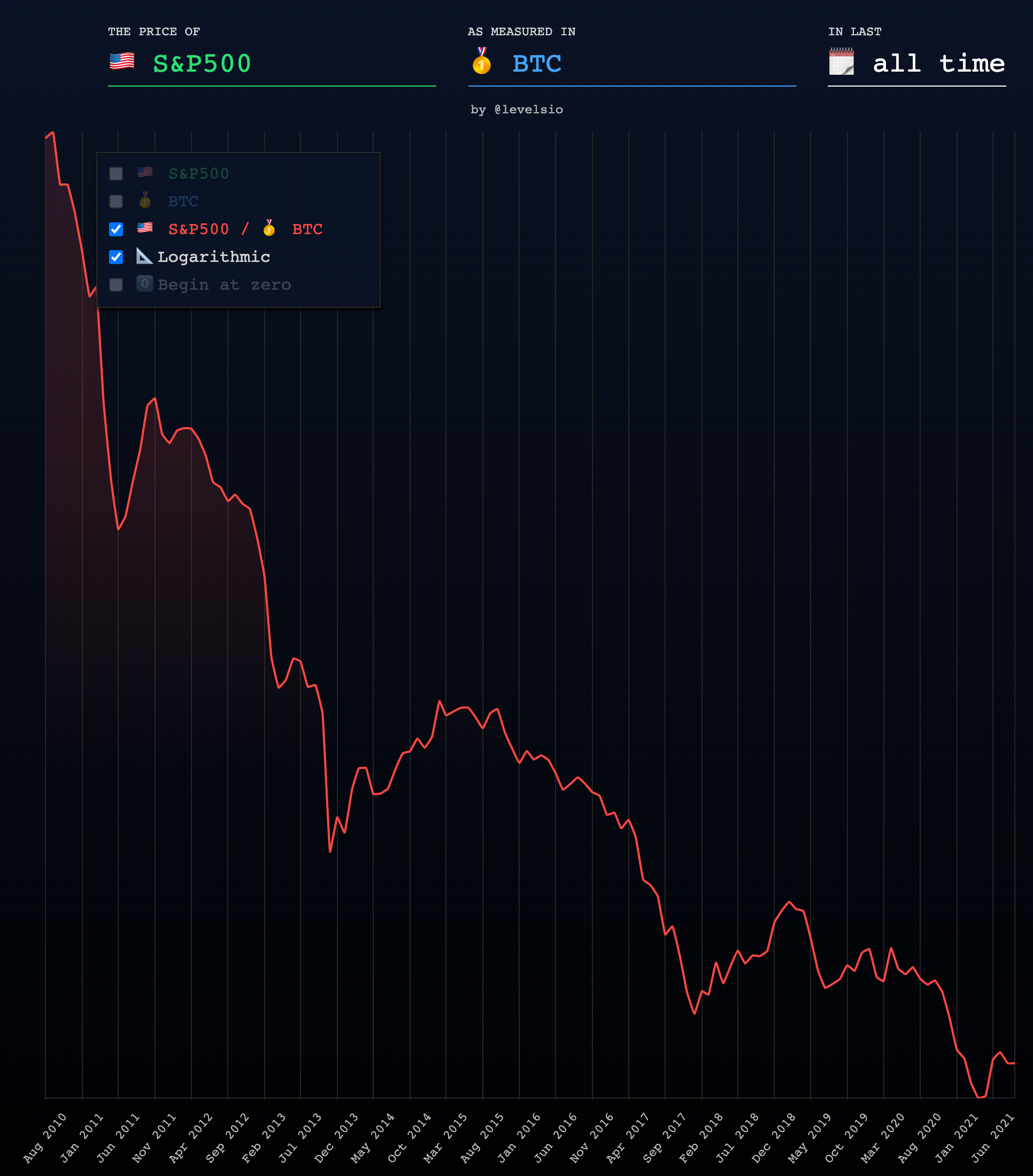
To investors,Financial markets have been on a tear for the last 12 months. Everything in your portfolio appears to be going up at an exciting rate. If I were to ask each of you the performance of your portfolio, you would quote me a percentage increase on a nominal basis. If I then asked you for the real rate of return, you would take the nominal number and subtract 6%+ inflation to get the real rate.The problem?Your nominal rate of return is based on a comparison to an asset that continues to fluctuate in value, so it doesn’t adequately represent the true return on investment that you are capturing. Let me explain more.Every investor in the western world denominates their portfolio in US dollars. They quote the prices of their stocks, bonds, and commodities in the US dollar exchange rate. When they say that the S&P 500 is up 29% over the trailing 12 months, they are explicitly highlighting the difference between the dollar value and the stock market. But we are living in a time where there has been historic expansion of the money supply, which means that the S&P 500 appreciating in value could have as much to do with the dollar depreciating in value as it could with the stock market actually increasing in value. This makes it tough to measure true value creation and value capture by investors.A better way to look at the value of your portfolio, and any appreciation or depreciation, is to denominate the assets in bitcoin. Now before you roll your eyes and move on to the next notification, hear me out. Bitcoin is a digital store of value that has a finite supply. It also has a much lower inflation rate (1.78%) than majority of the currencies that you have previously used to denominate your portfolio. When you look at the S&P 500 denominated in bitcoin, it doesn’t look pretty. Here is the all-time performance. And then here is the one year chart of the S&P 500 denominated in bitcoin. Almost every asset on earth is losing value against Bitcoin, the digital store of value. This is a really important concept to understand, because as Peter Thiel has continued to reiterate - Bitcoin is the most honest market we have. The supply of the asset is programmatic and can not be manipulated by anyone. The value is determined by a free market, without the intervention of a nation state, central bank, or financial organization. If you denominate your assets in a store of value that is constantly being devalued, everything you own will appear to be increasing in price. You feel like you’re getting richer and richer. It is easy to understand why you would rather own the assets than the depreciating store of value (dollars). But you must ensure you are intellectually honest with yourself. Are the assets accruing more value or is the denominating currency losing value? Both make the price of the asset increase, but only one of them is a true measure of value accrual and sustainability.A great way to conceptualize this idea is to remember that in any given year, countries with the highest inflation numbers also have the best performing stock markets. Whether we are talking about Venezuela, Zimbabwe, or Argentina, investors holding stocks in these markets appear to be getting wealthier and wealthier until all of a sudden there is a catastrophic tipping point and no one can get out. I’m not arguing that this is what is happening in the United States, but the extreme example makes the less extreme example more obvious. As many of you run through the calculation, you will find that your portfolio has been drastically losing value when measured in a digital store of value that is immune from supply manipulation. Your stocks are down. Your bonds are down. So are your currencies and commodities. Bitcoin has increased by more than 300% in the last 12 months when measured against the US dollar, so the rest of your portfolio simply follows suit. The US dollar will continue to be a fantastic medium of exchange. It is highly liquid, accepted by millions of businesses and individuals globally, and comes with the full faith and credit of the United States. But the dollar may not be the best store of value asset to denominate your portfolio at this time, especially when you consider approximately 40% of all dollars in circulation have been created in the last 18 months. My point in writing this is not to convince you to go put all of your assets in bitcoin, but rather to get you to switch your frame of reference. The assets you allocate towards have to keep up with, and ideally outperform, bitcoin. This is no easy task. The digital store of value has grown at a compound annual growth rate of 180% for the last decade. Hopefully this perspective is helpful as you all seek to better understand your portfolio, the true appreciation/depreciation, and how to allocate your resources moving forward. The pursuit of intellectual honesty is a noble one, but it is almost never easy. Hope you have a great start to your week. I’ll talk to everyone tomorrow

Focusing On What Is Most Important
To investors,Last week, I told the limited partners at Pomp Investments that I would be returning all outside capital at the end of the year and would be converting my investment activities into a family office. The response to this communication was incredibly powerful so I figured that I should share the decision publicly. No matter your occupation or life goals, my hope is that the letter below can help you. Here is the letter that I sent to the limited partners at Pomp Investments:To investors,Hope each of you is doing well. I am writing this letter to inform you that I will be returning all uninvested capital at the end of this year and retiring from managing any new outside capital moving forward. I will be converting all of my investment activities into a family office. This decision is the product of many weeks of deep thinking, so I wanted to share my logic with you below. We live in a world filled with endless dopamine hits. Every second, there is a social media feed to scroll, notification to check, or incoming message on the 10+ messaging apps we have on our phones. The constant roar competing for our attention creates an addiction that is hard to break for many of us. This digital addiction prevents us from stepping away to think. Unsurprisingly, if we are unable to find the time to think, then the art of long-term thinking gets completely lost. We are simply hamsters running on the wheel looking for the next dopamine hit. I took a few weeks recently to consciously step away from the digital world for a few hours a day. It allowed me to think deeply about what I was optimizing for over the long-term. I don’t define “long-term” as a few months or a few years, but as decades. This process continued to lead me back to two key points. First, the idea of a billionaire. Much of the world measures billionaire status by the number of dollars that a person possesses, but the measurement of billionaires based on dollars is not the right way to look at it in my opinion. Graham Duncan coined the phrase “Time Billionaire” and it has stuck with me ever since I read about it. The idea is that time is the only asset in the world that can’t be purchased. Warren Buffett is worth tens of billions of dollars, but no young person would switch lives with him if they had to be in their 90s. In turn, the young person is wealthier than Warren Buffett because of time. I’m 33 years old. If I am fortunate enough to follow the average life expectancy of an American today, I still have more than one billion seconds left in my life (more than 31.5 years). I’ll have to avoid catastrophe, but the odds are in my favor. The funny thing is that I’ll continue to increase my financial net worth, but I’ll continue to lose my time net worth. Most of my peers and colleagues are well into their 40s, 50s, and 60s. They’ve been chasing financial wealth for the majority of their life, yet they have wasted their wealth of time with reckless abandon. I’m committed to making sure that doesn’t happen. Ultimately, this is why I’m returning all external investor capital and will only be managing my personal portfolio moving forward. It will allow me to spend more of my time with my family. It will allow me to side-step the constant incentive to raise more money, charge higher fees, make more investments, and make wealthy people even wealthier. This brings me to my second key point — educating the average citizen. I don’t have it all figured out, but I have been able to build a knowledge base that allows me to walk away on top at a very young age. I’ve seen the impact that I can have by sharing this information with other people and it is the single greatest impact I believe I can have right now, so I’ll continue to create content with a focus on lifting more people out of their current situation. So what does this all mean for your investments?The short answer is that you’ll be in a good position. A number of the funds that I have fully invested are top performers. The portfolio that I have built with your capital continues to look more attractive every day as well. I will continue to manage the investments that have been made and will look for opportunities to liquidate positions as they become viable and make financial sense. For the uninvested capital, I’ll be returning 100% of that to each of you at the end of this year. And there will be no more capital calls moving forward. In essence, we have reached the end of our journey together in terms of new investments. Now many of you will be curious about whether I will be walking away from investing completely and the answer is no. I’ll continue to invest my personal capital into funds and early-stage opportunities. There is something freeing about being able to invest your own money. You have the ultimate skin in the game.When I started investing full time in 2016, I barely had enough money to make pathetically small investments. I needed the outside capital. It was the only way that I could g
Crypto Equities: One Of The Most Overlooked Corners of the Public Markets
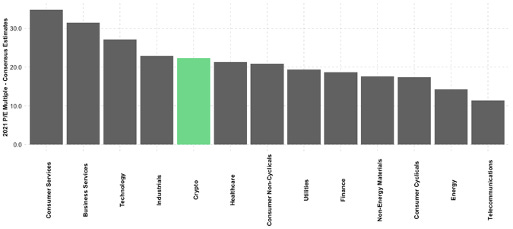
To investors,I was talking to a friend recently about the various investment opportunities in the crypto industry. He kept explaining how much exposure he had to publicly traded stocks, so I asked my friends at Bitwise to do an analysis on that piece of the market. Below is their write-up. Really fascinating stuff.Crypto assets are the best returning asset class over the past one, three, and five years. And yet, many traditional investors remain on the sidelines.Why? Among other reasons, because crypto assets are just different. You don’t buy them in traditional brokerage accounts. You can’t value them like stocks. There are no spot crypto ETFs. They can be intimidating to many investors.Fortunately, investors have a new choice: Publicly traded crypto equities. Over the past two years, dozens of crypto equities have listed on public markets, and you can now build a portfolio of companies across crypto mining, brokerage, asset management, and more.The best thing? These “picks and shovels” plays are among the fastest-growing and most-profitable companies in the world. They’re also being overlooked in certain ways by Wall Street.The Crypto Combo: High Growth and High ProfitabilityCrypto equities today combine two characteristics rarely found together: Exceptional top-line growth with very high levels of profitability.Take Coinbase, the premier crypto exchange. At a market capitalization above $50 billion, it is already ranked in the top 200 largest U.S. public companies. And yet, 2021 median estimates project astounding revenue growth of 426.9%, with a net profit margin of 43.6%. Usually, when companies are growing that fast, they are unprofitable; think Facebook (now Meta) in its earliest days. But thanks to massive growth in the crypto ecosystem, with aggregate crypto exchange trading volumes surpassing $10 trillion through August (more than 5x all of 2020), Coinbase has been able to pair that growth with significant profits.It’s not alone. The chart below compares the median top-line growth and net margins for pure-play crypto equities, as captured by the Bitwise Crypto Innovators 30 Index, with other industries in the S&P 500. Crypto equities are expected to deliver top-line growth and net margins of 371.0% and 37.5%, respectively, for 2021. That is higher than any other industry in the S&P 500, and significantly above the average company, which is scheduled to deliver 11.9% growth and 14.9% profit margins.CRYPTO EQUITIES STAND OUT IN TERMS OF THE PROFITABILITY GENERATED FROM THEIR TOP-LINE GROWTH2021 median estimates of revenue growth versus profitability levels for crypto equities and S&P 500 industries. (Area of each circle is proportional to the total market capitalization of each industry). Crypto stocks shine even compared to other fast-growing businesses. For instance, the median company in the disruptive technology oriented ARK Innovation ETF (ticker: ARKK) is expected to grow revenues by 40.4% while having a negative net profit margin of -9.4%. What’s even more interesting about crypto equities is that they are largely flying under the radar. Despite superior fundamentals, they currently trade at a median 2021 P/E ratio of 22.3x, just marginally higher than the S&P’s average of 21.2x. FAVORABLE GROWTH AND PROFITABILITY DYNAMICS ARE NOT REFLECTED IN 2021 P/E MULTIPLES2021 P/E multiples of crypto equities versus the industries of the S&P 500 IndexThere are many reasons for this unique combination. For one, reputational, regulatory and other concerns have prevented traditional companies from entering the crypto market in significant ways, shielding early movers from well-funded competitors for long periods of time. Additionally, crypto equities still have scant market coverage, depriving them of significant analyst coverage and institutional awareness. There are of course also significant risks. Crypto equities are exposed to crypto asset prices, which can be volatile and have historically demonstrated elements of cyclicality. The exceptional historical returns in crypto have been accompanied by sharp and sometimes prolonged corrections, and those drawdowns could happen again. Additionally, risks related to regulation, market infrastructure, technical developments, and user adoption can also affect these markets.Still, as a fast-growing and often overlooked sector, these companies bear real consideration, both from investors locked out of the traditional crypto market and from investors looking to augment their crypto exposure.Are Cryptoasset Correlated With Crypto Equities?A common question investors have about crypto assets is whether their returns are correlated with crypto assets. In other words, can you get crypto-like exposure with crypto equities?The chart below shows that the answer is yes … mostly. CORRELATIONS BETWEEN CRYPTO EQUITIES AND CRYPTO ASSETS TYPICALLY RANGE BETWEN 0.50 AND 0.7530-Day rolling correlations of daily returns between the top 10 constituents of the Bitwise Crypto Innova
Everyone Wants More Bitcoin
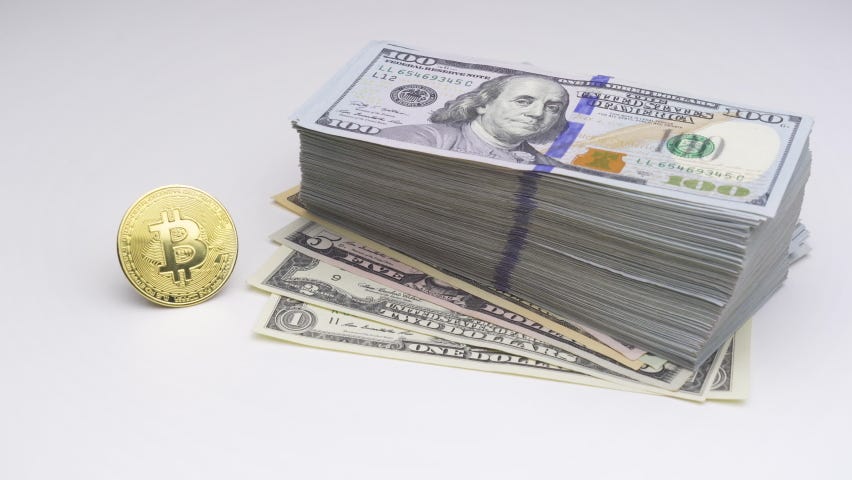
To investors,There are many deeply held beliefs in the bitcoin and crypto industry that get repeated over and over again. One that I have always found peculiar is that “[Fill in the blank] is merely an attempt to get more bitcoin.”The argument is presented as a negative swipe at anyone who is buying, holding, or creating any investment assets outside of bitcoin. Before we dig deeply into this perspective, it is helpful to take a look at what capitalism and investing actually mean.Capitalism is defined as “an economic system based on the private ownership of the means of production and their operation for profit.” Capitalism is the pursuit of profit by private market participants. According to Principal Financial, “investing is a way to potentially increase the amount of money you have. The goal is to buy financial products, also called investments, and hopefully sell them at a higher price than what you initially paid. Investments are things like stocks, bonds, mutual funds and annuities.” The idea of investing is simple — you buy assets with your money in order to sell them later for more money. In the legacy financial system, this means Americans are investing dollars with the goal of getting more dollars back at a later date. They may be investing their dollars in stocks, a piece of real estate, their own business, or a speculative bet that has low probability of succeeding. Each individual chooses to allocate their capital how they see fit, and according to their risk-return profile, but ultimately the free market will decide who made good decisions and who made bad decisions. The market is the referee and the scoreboard is who ends up with more dollars at the end of the day. We can argue ad nauseam about whether the system is fair, why people want to invest, or which investments are better than others, but it is fairly indisputable that the point of investing is to acquire more money (dollars). This brings us to the new digital financial system. Dollars are not the reserve currency, but rather it is widely accepted that bitcoin serves as the global store of value. There are a plethora of reasons why bitcoin is superior to dollars, so for the purposes of this analysis, we are going to operate under the assumption that everyone agrees bitcoin is money. Once you understand that bitcoin is money, it is obvious to see that individuals are going to take two actions — saving and investing. Bitcoin allows people to save in a way that preserves and increases their purchasing power over time. You can focus on spending less than you make and then storing that economic value in the decentralized, digital currency that has grown into a $1 trillion asset. This is no longer possible with dollars, specifically as a long-term store of value, because of the historic devaluation that we are witnessing. But not everyone will be satisfied by simply saving. They either don’t make enough gross income or the delta between their income and expenses won’t leave much to save. Some others will simply aspire to acquire more bitcoin and at a faster rate than through saving. These are the investors. They are willing to allocate their capital to risk-reward situations that may or may not end up working out. Those that choose to take risk will be judged by the free market. If they made good decisions, then they’ll get back more money. If they make bad decisions, they’ll get back less money.The two systems are the exact same. The store of value or money is different, but we have savers and investors in both the legacy and digital financial system. So let’s bring this back to the people who constantly state “[Fill in the blank] is merely an attempt to get more bitcoin.” Yes, of course. That is how capitalism works. Think of it this way — every bitcoiner building a business right now is trying to acquire more bitcoin. They aren’t doing it to acquire more dollars. These entrepreneurs want more bitcoin. Every content creator that sells sponsorships or subscriptions is trying to get more bitcoin. Every bitcoiner is going to work as an employee trying to earn more bitcoin. Everyone involved in the bitcoin industry is trying to create economic value to acquire more bitcoin. They each pursue this goal differently, but capitalism is the ultimate pursuit of more money. If bitcoin is money, everyone is going to pursue it. This is true of most investors and entrepreneurs in the non-bitcoin verticals within the crypto industry too. Many ICOs from 2017 ended up acquiring a lot of bitcoin with their proceeds or on their balance sheets. We see multiple DAOs that put bitcoin on their balance sheet. Almost every exchange, wallet provider, miner, and yield provider has bitcoin on their balance sheet. Bitcoin is money and everyone is trying to make more money!I think there is a psychological perspective held by most bitcoiners that anyone who uses a non-bitcoin path to acquire more bitcoin is a bad thing. If you build a bitcoin company, then acquiring mor
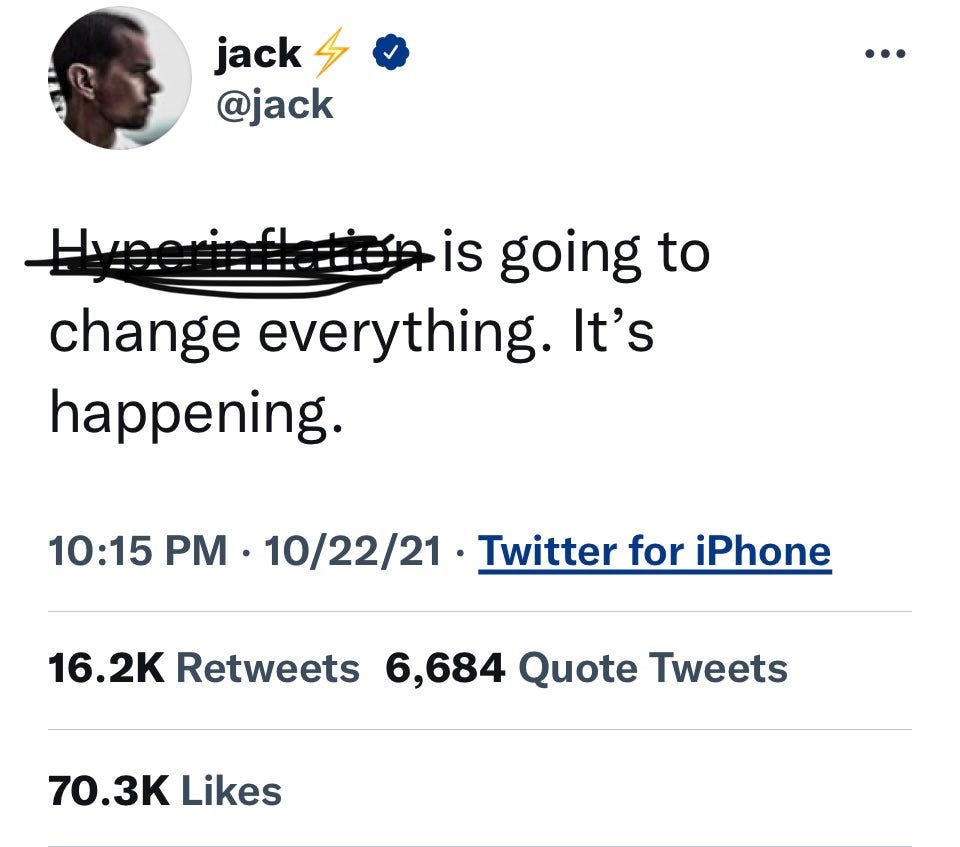
Corporations Understand Inflation Better Than The Fed
To investors,Jack Dorsey sent the tweet heard ‘round the world on Friday night. He explicitly called out hyperinflation, which has been historically considered an off-limits topic for executives and politicians in developed nations.As you would expect in today’s internet age, everyone started to pile in and call Jack Dorsey uninformed, stupid, irresponsible, and much more. No one topped this one though:Not everyone immediately took to yelling at Jack Dorsey though. A few people replied with anecdotes or clarifications, which Jack responded to. The first was a reminder of how bad hyperinflation can be:The second example was around the hyperinflation experienced in Nigeria:My absolute favorite one though is economist Steve Hanke who reminded everyone that the current measurement for true hyperinflation is absurd (50% month-over-month inflation):It doesn’t count if inflation is 49% month-over-month. It doesn’t count as hyperinflation if the people of the country literally can’t afford food to the point where they are literally willing to attempt to overthrow their governments. Why is the number 50% month-over-month? No one knows. Just a random round number that academics came up with to prove their value. The truth is that the entire concept of hyperinflation is technically just high, runaway inflation. If you were living in a country that had 10% month-over-month inflation, you would be trying to escape immediately. Now that we have established that the exact definition of hyperinflation is illogical and the mob is more interested in tweet dunks than facts, let’s bring this back to Jack Dorsey’s comments. I think most people are completely missing the point on this situation. Jack Dorsey sits on top of one of the most important and accurate data sets in the world to measure true inflation.Think about this. Square has a suite of products that gives them a multidimensional view of what is happening in the economy, how the price of goods are changing, and any differences between demographics, location, or income levels. Most people don’t realize how many products Square has:* Square Reader (physical device that allows mobile phones to process payments)* Square Register (more traditional register for merchants)* Virtual gift cards* CashApp (consumer mobile app for banking services & investing)* Square Capital (financing to merchants)* Square Payroll* Square Financial Services (bank charter)* Credit Karma Tax (acquired and integrated into CashApp)* Afterpay (Square acquired the “Buy now, Pay later” giant)So, quite literally, Square is sitting on one of the most robust data sets in the world to measure inflation within the United States. They have direct integration with more than 100,000 merchants at the point-of-sale (Reader, Register, Afterpay, etc). They have over 30 million monthly active users on CashApp and more than 7 million people using a CashCard (gives them exact transaction data). Square also has the payroll data of many companies across industries and geographies through the Square Payroll product.This robust, real-time data set is highly compelling when compared to the CPI data set and calculation methodology. I don’t want to divert into a takedown of CPI, but this description from Investopedia around the controversy of the index is enough to inform those of you that are unaware of the issues:“Originally, the CPI was determined by comparing the price of a fixed basket of goods and services spanning two different periods. In this case, the CPI was a cost of goods index (COGI). However, over time, the U.S. Congress embraced the view that the CPI should reflect changes in the cost to maintain a constant standard of living. Consequently, the CPI has evolved into a cost of living index (COLI).Over the years, the methodology used to calculate the CPI has undergone numerous revisions. According to the BLS, the changes removed biases that caused the CPI to overstate the inflation rate. The new methodology takes into account changes in the quality of goods and substitution. Substitution, the change in purchases by consumers in response to price changes, changes the relative weighting of the goods in the basket. The overall result tends to be a lower CPI. However, critics view the methodological changes and the switch from a COGI to a COLI as a purposeful manipulation that allows the U.S. government to report a lower CPI.”My main point here is to call out the fact that Square likely has a much more robust, accurate, and real-time understanding of the true inflation numbers across the United States. There is a strong argument that the US government, the Fed, and Treasury should all ask the payment and fintech companies to help them determine the real inflation rate, rather than continuing the charade of CPI.The CEO of a $100+ billion company that is ranked as one of the 400 largest companies in the United States has come out publicly to insinuate that his data is showing inflation significantly higher than the
The First Public Pension Funds Buys Bitcoin Directly
To investors,It was confirmed yesterday that the Houston Firefighters Pension Fund has officially become the first pension fund in the United States to purchase, and directly hold, bitcoin in their portfolio.As many of you will remember, two public pension funds from Fairfax County in Virginia previously invested in the first two Morgan Creek Digital funds. They were the first public pension funds to allocate to the industry. These were venture funds that had approximately 15-20% invested in bitcoin.After Fairfax, there was only one other pension fund that I’m aware of that had invested in the industry - the Municipal Employees’ Retirement System of Michigan allocated to Dan Tapiero’s 10T Holdings growth equity fund.Each of these three public pension funds were investing in venture capital style funds, even if they had some bitcoin exposure, simply because there was no clear framework for them to safely place the digital assets directly in their portfolio. Does bitcoin go in their currency allocation? Maybe commodities? Or maybe it is digital real estate? There has been no clear answer. So venture funds made sense because everyone understood that the allocation went in the venture capital bucket.This is all changing though. Bitcoin and cryptocurrencies are maturing to the point where public pension funds, along with financial institutions and corporations, are all comfortable holding the assets directly. They understand which bucket in their asset allocation to put them into. And the infrastructure is now available where institutions don’t have to worry about custody, insurance, or accounting support. The market has matured significantly since 2018. Even with all this progress though, it is still a big moment when the very first public pension puts bitcoin on their balance sheet. Eventually every pension fund is going to do it. I’ve been saying this for years.In this letter from December 24, 2018:The retirement of hundreds of millions of corporate and government employees around the world depends on these pension funds’ ability to pay the individual a set amount of money post-retirement. Unfortunately, many pension funds are facing a significant crisis — it does not look like they will be able to pay their future obligations.The difference between the obligations and the resources allocated to pay them is actually widening. This is driven by a decreasing worker to retiree ratio. Workers pay into the pension fund (think of this as revenue for the pension fund) under the promise that the fund managers will grow the capital and be able to pay the employee’s pension post-retirement. Once an employee retires, they begin to draw their pension (think of this as expenses for the pension fund) and will continue to do so until they die.The gap between revenue and expenses is getting worse because of lower birth rates (fewer people entering the workforce) and longer life expectancy (the retirement age stays fixed so people are entitled to their pension for longer). Each of these trends is expected to continue, and possibly even accelerate, which will put additional pressure on pension funds to come up with the capital needed to fulfill their obligations.I then went on to explain why bitcoin was a potential solution:“There are numerous potential solutions to address the problem. One is to increase the amount of contributions from workers (increase revenue) and another is to grow pension funds’ capital by investing it at higher rates of return. To identify the right answers, each fund hires an actuary to model a pension fund’s future outlook. These actuaries look at demographic data, life expectancy, investment returns, levels of contributions or taxation, and payouts to beneficiaries.The most important number is the “actuarial assumed rate of return,” or the target return on invested capital that is necessary to have enough resources to pay out future obligations to retirees. This assumed rate of return is typically between 6-8% annualized. As this number is adjusted up or down, the current workforce is directly impacted. Some estimates show that a decrease from 8% to 7% from the actuarial assumed rate of return would require workers to contribute up to 10% more to the pension. Not exactly an exciting idea for those currently working.Either way, pension funds have to do something different. The definition of insanity is to continue doing the same thing and expect a different result. Take the California Public Employees’ Retirement System, the largest public pension fund in the United States, who has over $300 billion in assets. They are less than 70% funded (they don’t have enough money to pay all of their obligations in the future based on their current assets) and in 2016 the fund reduced their assumed rate of return from 7.5% to 7%. This new target is still higher than the 10-year annualized performance of 5.1% though.Instead of lowering the assumed rate of return, which requires increased contributions from the cur
Plug Into The Network
To investors,The best entrepreneurs and investors seek efficiency. They are in a constant search for how they can do more with less resources. You see this in capital allocation decisions, supply chains, headcount, and strategic efforts. Invest the least amount of resources to get the highest amount of impact.One of the biggest arbitrage opportunities in this pursuit is for an individual or entity to plug into the bitcoin network. When you plug into the network, you are essentially hiring millions of volunteers around the world to come work for you. They work 24/7/365 and you have to pay them nothing. These volunteers are writing software code, securing the bitcoin network, building infrastructure, scaling payment rails, providing liquidity, conducting global marketing campaigns, and much, much more. Everyone is rallied around a single idea — usher this new digital currency to global adoption. If you wanted to hire millions of people around the world to work for you, it would cost billions of dollars. You would have to build a massive company to support them all. You would deal with a daily nightmare of coordinating that many people to all work together. There are very few companies in the world that employ more than 1 million people.But the Bitcoin team is more than 100 million strong. The community has leveraged an economic incentive to coordinate immense resources globally. We have built the strongest computer network in the world. We created a trillion dollar asset out of thin air. We have taken over mainstream television, newspapers, and media outlets. Bitcoin has become a global brand with awareness that would normally take billions of dollars to create.These assets and people are all willing to come work for you at a moments notice and they’ll do it completely for free. You just have to plug into the bitcoin network.Do you want to hire thousands of software engineers? Plug into the network. Do you want to hire one of the world’s best marketing teams? Plug into the network. Do you want to hire a world-class security team? Plug into the network. Do you want to hire a central bank to protect your purchasing power? Plug into the network. Do you want to build a global brand? Plug into the network.This is true for technology companies and non-technology companies alike. Take Tahinis Restaurant in Ontario, Canada. They have 8 locations and employ a relatively small team, but they have built a global brand that results in bitcoiners from around the world traveling to Ontario to come eat at their restaurant. How did they do it? They simply plugged into the network. The team behind Tahinis purchased bitcoin on their balance sheet (plugging their capital into the network!) and then got on the internet and told people about it. Bitcoiners took care of the rest.This is the beauty of the network. Once you plug in, Bitcoiners will take care of the rest. We have seen the community throw their support behind individuals, institutions, corporations, and even nation states. When you plug into the network, you’re hiring millions of people around the world to start working for you.We will protect your purchasing power. We will build your brand. We will support your software. From all corners of the Earth, Bitcoiners will join your team.The single most important decision a company can make right now is when and how they plug into the bitcoin network. It is the highest ROI chess move that you can make. Hire millions of people and pay them nothing. You just have to gain the courage and conviction to do it.Plug into the network. We’ll take care of the rest. -PompTHE RUNDOWN:US Treasury Department Says Cryptocurrencies Could Undermine Sanctions: The U.S. Treasury Department said on Monday in a report that cryptocurrencies could undermine the effectiveness of U.S. sanctions. The report, which followed a six-month review of U.S. sanctions against countries with whom it is at odds or suspects of being behind illegal activity, noted that “digital currencies, alternative payment platforms, and new ways of hiding cross-border transactions all potentially reduce the efficacy of American sanctions.” Read more.Australia Has Third Highest Rate of Crypto Adoption in the World: Australia is more bullish on cryptocurrencies than most other countries around the world, according to a survey published by comparison site Finder on Sunday. The survey, based on the site’s Cryptocurrency Adoption Index, measures the growth of crypto globally through a regular survey of over 41,600 individuals across 22 countries. Finder’s survey found Australia has the third-highest rate of crypto ownership at 17.8%, beating out countries such as Indonesia (16.7%) and the city of Hong Kong, a special administrative region of China (15.8%). Read more.DraftKings Steps Further Into Crypto With Plans to Become Polygon Validator: DraftKings tapped Polygon for its marquee non-fungible token release with Tom Brady’s Autograph back in August. Now the sports betting gian

Square Is A Bitcoin Company & Mark Cuban Is A Bitcoiner
To investors,Bitcoin is knocking on the door of a new all-time high in US dollar price as I begin to write this letter. The market structure for the asset has been quite clear for months now. The long-term, strong hands were accumulating as much bitcoin as they possibly could, while short-term, weak hands were selling their bitcoin.Approximately 85% of all bitcoin in circulation has not moved in the last 90 days. The last time that occurred was in October of 2020, which was followed by a 600% increase in price in under 6 months. No one knows what will happen moving forward. I wouldn’t want to be short a volatile asset like bitcoin right now though. With that said, the price of the asset is just one story. There are a few other interesting developments that I wanted to discuss this morning. Square is a bitcoin company?Let’s start with Jack Dorsey and Square. They announced a potential interest in building hardware to support the bitcoin network. There were two main takeaways that I had when I read through Jack’s Twitter thread on the topic. The big conclusion I reached was that we are about to watch Jack Dorsey transform Square into one of the world’s leading bitcoin companies. He already put the digital currency on the balance sheet, created an easy on-ramp for CashApp users to purchase bitcoin, announced intentions to build a hardware wallet, and hired a team to build “an open developer platform with the sole goal of making it easy to create non-custodial, permissionless, and decentralized financial services.”These actions are not the sign that someone is a tourist in the industry. Each of them is fundamentally difficult, yet could have a profoundly positive impact on bitcoin and the eventual billions of users. Today, Square is a $115 billion market cap company. It wouldn’t be hard to see a multi-trillion dollar company if Dorsey was able to successfully build the largest publicly traded bitcoin company in the world. My second big takeaway from this announcement was that Square is explicitly talking about system design thinking that would require them to start with re-engineering silicon chips. Yes, you read that right. A software company that has grown incredibly fast is now talking about crossing over into one of the hardest manufacturing verticals in the world. No one can claim that this team lacks ambition!There is no promise that Square will figure out the right strategy, nor that they will actually pull the trigger on this. But the thought exercise alone is a sign of how important the company believes bitcoin will become. They aren’t the only ones who think the digital currency is important though.Mark Cuban is a bitcoiner?Mark Cuban responded to a tweet that I wrote on Saturday about bitcoin embodying the American ethos. As expected, many people in the bitcoin community began bashing him for uttering any word that could be construed as negative towards the digital currency.Eventually, Mark Cuban and a bunch of others (Preston Pysh, Peter McCormick, Lyn Alden, myself, etc) ended up in a Twitter Spaces for a live conversation. More than 15,000 people were tuned in to hear the back-and-forth. Many of the people in the conversation were upset with Mark about previous comments he had made about other crypto assets or they felt like he didn’t fully understand bitcoin. While some of that may be true, I heard something slightly different in Mark’s comments. On multiple occasions the billionaire stated that he believed bitcoin to be a great store-of-value and owned the asset in his personal portfolio. One quote was “It's the best store of value on the planet, that's why I own it.” He even tweeted that bitcoin was the best store-of-value at one point on Saturday too:There is nuance to Mark’s view which is important to understand. He believes bitcoin is a great store-of-value but doesn’t see a high probability that it will be used as a medium of exchange globally. In comparison, bitcoiners put a higher probability on the global medium of exchange, but both camps agree on the store-of-value argument.This leads me to a big takeaway that I had from this conversation. Mark Cuban is a bitcoiner. He understands bitcoin in great detail, including what makes it valuable, why users are flocking to it, and what the biggest challenges are. The problem in the eyes of the bitcoin community is that Mark Cuban does not believe as much as they do. This is equivalent to a religion where the orthodox or purist population gets mad at those pursuing the same religion in a heterodox way. Both groups are believers, but they differ on the nuance and detail. If you scroll through Twitter and see the reaction from many people in the most toxic corners of the industry, they are calling Cuban a moron, an idiot, and a fraud. Remember, this all directed at a guy who publicly is stating that he believes bitcoin is the greatest store-of-value in the world. To make things even more interesting, the gigachad of all bitcoiners - Michael Saylor

The Bitcoin Futures ETF Timing Is Ridiculous
This installment of The Pomp Letter is free for everyone. I send this email to our investors daily. If you would also like to receive it every morning, join the 190,000 other investors today.To investors,Bloomberg reported last night that insiders have confirmed the SEC will not oppose the Bitcoin Futures ETF applications that are set to begin trading on Monday. This led to a short term price appreciation of bitcoin, along with quite a bit of excitement on Twitter.It is important to remember that the ETF is not approved and trading….until it is approved and trading. There is always the chance that someone steps in at the last second and tries to prevent the inevitable from happening. Barring that attempt being successful, the Bitcoin Futures ETFs will bring the first bitcoin-related ETF structure to American financial markets.The journey to a bitcoin ETF started back in 2013 with the first ETF application from Cameron and Tyler Winklevoss. Now eight years later we are on the doorstep of the very first approval. As the saying goes, the best things take time.But is the Bitcoin Futures ETF actually the best thing?Honestly, probably not. The approval of a bitcoin “spot” ETF would be better from investors, both from a price tracking and fee structure standpoint. But beggars can’t be choosers in the beginning. So we are likely going to see the Bitcoin Futures ETFs trading at the start of next week. The crazy part about this entire thing is that the government will now be complicit in two actions that contribute to significant bitcoin price appreciation. During Q2 of 2020, they printed trillions of dollars right into the bitcoin halving. This type of market manipulation sent investors seeking safety in inflation-hedge assets, which led the professionals, such as Paul Tudor Jones, to describe bitcoin as “the fastest horse.”Remember, bitcoin is completely unaware of any macro economic forces. It doesn’t know, nor does it care, if people are printing money or if they are decreasing interest rates. Bitcoin’s network continues to produce block of transactions after block of transactions without fail. That is the beauty of a decentralized, open monetary network. But the government is not done yet. The SEC appears poised to approve the Bitcoin Futures ETF at a very opportune time for bitcoiners. Approximately 85% of bitcoin’s circulating supply has not moved in the last 90 days. There is extreme illiquidity in the market, so if demand were to increase because of an ETF approval, the price is likely to rocket upwards in an insane way. Add in the fact that we are still experiencing persistent levels of 5%+ inflation and you can quickly see why there are so many forces pushing investors into bitcoin.The equation is simple — a highly illiquid asset is going to increase access to large capital pools while being overlaid with a macro backdrop that has investors scurrying to every corner of financial markets to find inflation-hedge assets.This is an absolutely gorgeous setup. The best part? It has been available to anyone in the world for years. There were no insiders. No one was able to get access in the private market at the expense of the public market retail investor. There were no special deals. It all came down to whether someone was willing to put in the work, educate themselves, and have the courage and conviction to convert their assets to digital sound money. Some people did it. Others thought they were too smart for the market. Ultimately, bitcoin is the most free market asset that we have. It is being repriced in real-time by investors. A decentralized, digital, open monetary network is worth multiples of the current $1 trillion in my personal opinion. But what do I know? I’m just a random volunteer on the internet who plugged into the bitcoin network and is doing my best to help us advance along to a better world. Hope each of you has a great end to your week. I’ll talk to everyone on Monday.-PompTODAY’S SPONSORS:Arculus is the crypto cold-storage wallet that combines the world’s strongest security protocols with an easy-to-manage app. Unlike other storage solutions that are less secure and more difficult to use, Arculus doesn’t compromise security or usability. You can store, swap, and send your crypto all with a simple tap of your Arculus Key™ card. Order the safer, simpler, smarter crypto cold storage solution at getarculus.com today.Gains in the number of crypto wallet holders have doubled over the past year—bringing millions of new users into the crypto space. In a major win for global crypto adoption, Unstoppable Domains and their alliance of 32 wallets and exchanges around the world just made moves to eliminate the stress of sending crypto for 40M+ crypto users; a great sign that wallet adoption rates will continue to accelerate. This global initiative aims to make Unstoppable's '.wallet' NFT username a universal standard. This .Wallet Alliance is creating a solution to address the largest pain point in cr
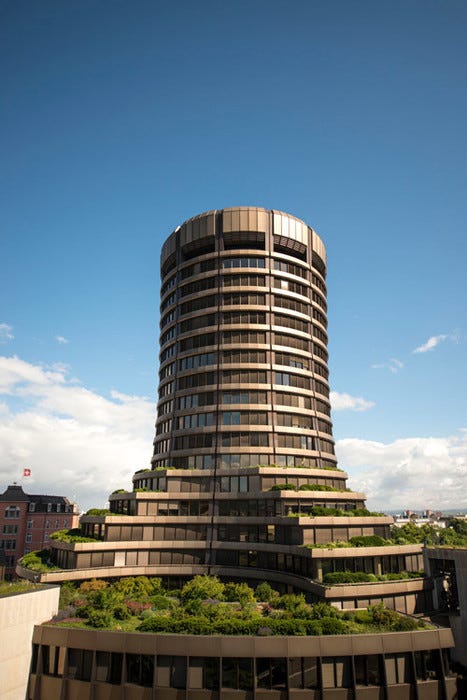
The Incumbents Are Taunting Us
To investors,The Head of the Bank of International Settlement Innovation Hub, Benoît Cœuré, gave a speech yesterday at the 23rd Geneva Conference on the World Economy. The speech was titled “Finance disrupted” and contained a number of interesting insights into how central banks are thinking about new digital technologies. The main theme of the speech is that disruption is upon us. Cœuré opened with:“Let me begin by stating the obvious: we live in an age of disruption. We hear every day about businesses, industries, and governments being disrupted. And, of course, our private lives have been disrupted by the pandemic. But tonight, I would like to talk about a specific type of disruption – disruption arising from technological innovation in the financial sector.”He went on to explicitly call out that technological progress, and the subsequent disruption, can be both positive or negative:“They tell us that technological innovation and associated disruptions can be good or bad. New technologies can foster greater efficiency, financial stability and inclusion. But they can also do the opposite, spawning financial instability, loss of privacy, and financial exclusion.”The speech goes on to highlight three specific areas that the BIS Innovation Hub sees as examples of digital disruption:* Digitalization disrupting payments and money* Big data and algorithms disrupting banking supervision* Changes in market structuresThe first thing that jumped out at me is in a speech that discusses financial disruption, and specifically mentioned the digital disruption of payments and money, there was zero mentions of bitcoin. Zero! The speech spends considerable time on CBDCs but it never acknowledges the $1 trillion market cap asset that is now held by 100+ million people globally, almost every large financial institution, and has recently become legal tender in a nation state.I’m not sure if the omission of bitcoin in the conversation is a sign of ignorance or malice, but it is a stunning revelation into the lack of importance that these legacy organizations put on the digital, decentralized, open monetary network. If hyperbitcoinization ever occurs, historians will point back to speeches like this to highlight how the central bankers were asleep at the wheel.Next, there is a section of the speech that attempts to put non-central bank attempts at stablecoins in direct opposition of CBDCs. It reads:“The history of private money initiatives is not a happy read. Whenever faced with the conflict of interest between making their money stable no matter what and making a profit, private issuers have always chosen profits.This is where central banks come in.Money is ultimately a public good whose stability and use needs to be protected by the public sector. This is why so many central banks around the world are working on central bank digital currency, or CBDC – essentially, to ensure that the next generation of money continues to serve the public interest.”Now this talk track is interesting because it is based on two assumptions: (1) private actors always choose profits over stability and (2) central banks always act in the best interest of the public. Both are incorrect. A great example is the last 18 months in the United States. Through both monetary and fiscal policy decisions, the bottom 45% of Americans are drastically worse off than they were before. Official CPI numbers are over 5% and unofficial numbers are close to 10% inflation. The goal of central banks is to have a stable currency and achieve full employment. We have neither in the United States. Approximately 40% of all dollars in circulation were created in the last 24 months and unemployment stands at more than 5% officially. The central bank is not achieving their goals, while also hurting the most vulnerable in our society.To top it off, the central bankers have enriched themselves drastically at the expense of the public. We have had multiple Fed presidents who had to step down amid controversy of day trading and personal investing. There are many more central bankers who have made millions of dollars from asset ownership, while they destroyed the wealth of the bottom 45% of Americans. Did the Fed choose the public good over enriching themselves? That is a hard argument to make given the facts that we have today.Let’s go back to Cœuré speech. The scariest part is when he begins to talk about data and the need for as much of it as possible. Here is exactly what was said:“They [financial firms] collect enormous amounts of data about our preferences, spending habits and payment history – and those of our peers, who may be similar to us - even before we ask for a service or apply for a loan. By using artificial intelligence and machine learning to study a treasure trove of data – typically more than 1,000 data points – they can determine how much we can borrow and repay. And they do it in part by using information that until recently did not have much financial value,

Helping 10,000 People Get A Job In Crypto
To investors, I set a goal earlier this year of helping 10,000 people leave their legacy jobs and get a new job within the bitcoin and crypto industry. That may seem like a big number initially, but we were able to create and launch a company that is well on the way to accomplishing that goal. Below is a guest post from CEO Colton Sakamoto on how we are training thousands of people this year to make the transition. In January of this year, we created a single product to start with — our Crypto Job Board. Since its inception, we’ve helped hundreds of job seekers find work in the industry. One company was able to hire more than 30 employees from the product, which makes up 4% of their global workforce. In partnering with both job seekers and employers, we noticed a common theme — job seekers felt like they didn’t have a way to stand out from the crowd of other applicants, and employers had a hard time finding candidates with basic crypto knowledge. Enter the Crypto Academy.In February, we launched our training program, The Fundamentals of Bitcoin and Crypto. The course has helped over 20 students start careers at some of the top companies in the industry, like Coinbase, Gemini, BlockFi, Kraken, Strike, BTC Inc, Anchorage, and more. While most of the students that go through the program are interested in starting a new career, our course surveys have identified three main desired outcomes for enrollees:* To work in the industry* To learn more about bitcoin and crypto* To meet others and join a community1. Working in the IndustryThere are thousands of open jobs in the bitcoin and crypto industry. Most people are unaware of the number of openings and types of roles available. The common misconception is that you need to be an engineer to work in bitcoin and crypto. You do not need to have technical experience to work in this industry – all of our hired program graduates have been non-technical.Top talent is leaving the legacy world to create a better financial system. We’ve actively worked with the hiring departments at the major bitcoin and crypto companies to form a curriculum that covers the baseline level of knowledge needed to work in the industry. Here’s how the certification program helps job seekers find work in the bitcoin and crypto space:Career eventsThe sixth and final workshop is hosted by top companies in the industry that actively hire from our candidate pool. We have exclusive events that have been hosted by Coinbase, BlockFi, Strike, Unstoppable Domains, Ava Labs, and more. This gives job seekers front row access to companies and while ensuring they don’t get lost in the shuffle of thousands of other applicants. Crypto Academy alumni are always welcome back to the job fairs for future cohorts.Resume and Interview guidanceWe have a coach that leads deep dives on how to tailor your resume to crypto companies and how to stand out in the application process. Alumni who have landed jobs in the industry regularly come back to join discussion groups and share information about what made them stand out.Networking All cohort graduates remain active in our Slack community. This means all of the hired alums are part of the community and can offer guidance on strategies that made them successful in the job hunt. We also have designated social events where you can meet your other classmates. Cohort members have met their podcast co-hosts, co-founders, and friends through these events.Certification Hiring departments want to see Proof of Work. In a new industry, there are few certifications that can separate you from the competition. We issue an NFT certificate to all course graduates which gives job seekers an accolade that they can put on their resumes.Meet Allen (@allenHODL on Twitter), who took our program and landed a job at BTC Inc:“From the very day I found bitcoin back in 2017, I knew I had to find a way to work in the industry. I had little to no industry knowledge and I did not have a single connection within the industry. I was like a deer in the headlights hoping to find a job.When I found Pomp’s Crypto Course I knew this was my way in. I met a tremendous amount of like-minded people that have now become my friends, both coaches, and classmates. They helped me refine my bitcoin knowledge and pointed me in the right direction.Since I participated in the course in May of 2021, I have started a podcast (Citizens of Blockchain), began educating others in Twitter Spaces, contribute weekly to the Slack channel the course provides, and most recently, gained employment with BTC Inc to build the bitcoin conference. All of this in 3 months. Were it not for the course I would not be in the position I am today to be working a dream job of mine.If you’re looking for proof-of-work to show employers, this is it.”2. Learning more about bitcoin and cryptoLearning about bitcoin and crypto can be challenging. There are tons of really solid free resources available, but the information is often segmented and not full
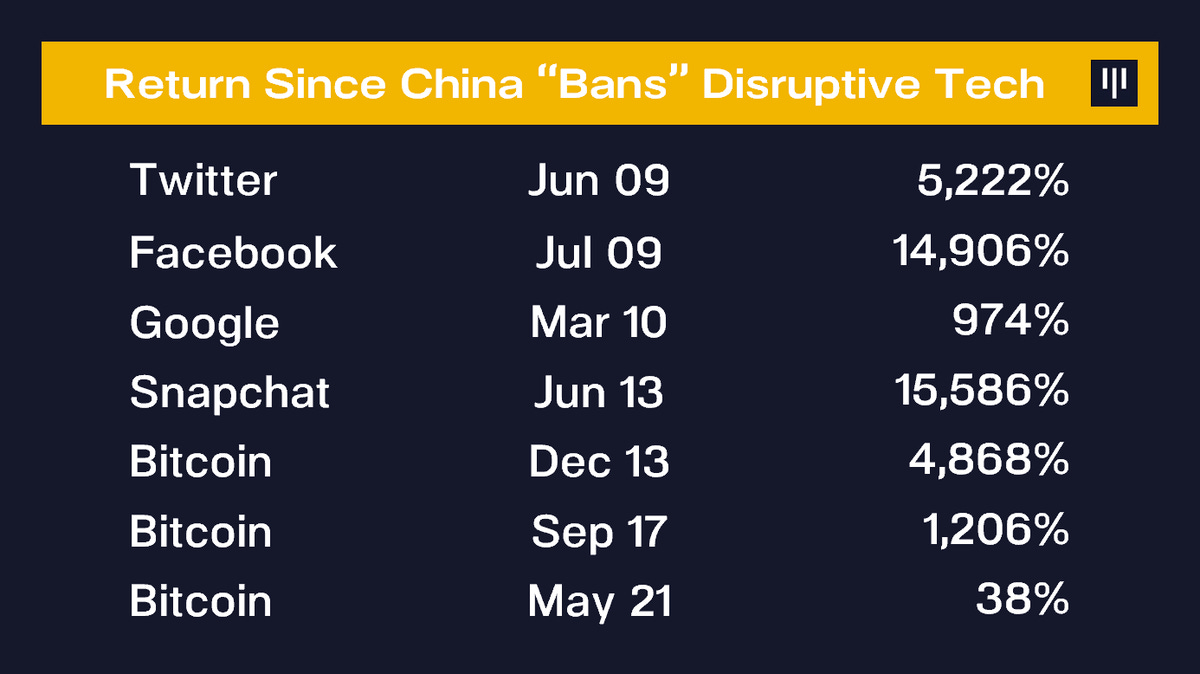
The US Should Buy Bitcoin For Strategic Reserves
To investors,We discussed last week the issues related to China’s decision to emphasize their existing ban on bitcoin and cryptocurrencies. This ban has manifested itself in multiple ways, including kicking miners out of the country, outlawing cryptocurrency transactions, and recently blocking access to various crypto websites that show asset prices and charts. There has been plenty of speculation about what China’s actions will mean for the crypto market, but the more interesting conversation to me is around how every other country is going to respond. Yesterday, Senate candidate Blake Masters put out a tweet talking about this very issue. The tweet took many people by surprise.Yes, you read that correctly. A potential future Senator is advocating for the United States to purchase a strategic reserve of bitcoin as a response to China’s decision to further ban the technology. First, this is probably one of the most logical responses that I’ve seen. The United States and China are locked in a forever competition over who will ultimately prevail as the global superpower in the digital age. China’s advantage is a centrally planned, heavily controlled economy and population. The US advantage is our ability to move quickly, be entrepreneurial, and leverage democracy and capitalism. Second, China works tirelessly to prevent any open technologies from being adopted by their citizens. The best example is the Great Firewall, which prevents the average citizen from accessing most default Western websites. This rejection of the open internet has significantly hurt the people of China, but it has made the government more powerful and resilient. You have to ask yourself if you believe citizens should have access to open technologies or not? You know where I stand. Third, it has been a great historical decision to embrace the technologies and products that China is trying to ban. Everything from Twitter to Facebook to Google ended up being worth much more in the future. Lastly, the United States is in the game of being prepared for the future. If we decide that Bitcoin has only a 1% chance of becoming the global reserve currency, then here is the math that we could use to determine what to do from a strategic reserve perspective:* The FY 2022 fiscal budget laid out by President Biden in May of this year calls for just over $6 trillion. Only 1% of that would be $60 billion. * The current bitcoin market cap is $792 billion. We know that about 60% of the circulating supply of the digital currency is held by long term holders who are unwilling to sell their bitcoin. That leaves approximately $316 billion of available circulating supply that could potentially be bought and sold at any time. This means that the United States could attempt to buy $60 billion of bitcoin, which would be 1% of their annual budget and approximately 20% of the tradable circulating supply. Now it would be very difficult to purchase that amount of bitcoin without moving the market or tipping off various market participants. So let’s say that the US would only be able to purchase $20 billion worth of bitcoin at today’s prices. That would be approximately 465,200 bitcoin at today’s price or more than 2% of the total bitcoin supply of 21 million bitcoin that will ever be available. When you put it in those terms, the United States would be one of the largest bitcoin holders in the world for less than 0.5% of a single year’s national budget. This seems like a no brainer risk-reward decision. If bitcoin ends up not working out, the US spent a rounding error amount of money. If bitcoin ends up being what bitcoin holders believe it will become, the US will be best positioned out of any nation state to lead from the front in the digital age. Asymmetry is the name of the game in new industries and this idea of the US building a strategic reserve of bitcoin is the ultimate example.I won’t hold my breath for it to happen, but the math is clear. As Jack Mallers likes to say, Pawn to E4…will the US make the right move? Hope each of you has a great day. Talk to you tomorrow. -PompThis letter is free to everyone. If you’re not subscribed, join over 194,000 other investors who receive my opinions and insights into bitcoin, business, and finance each morning. THE RUNDOWN:Coinbase to Allow US Users to Deposit Paychecks Directly in Crypto: Coinbase will enable direct paycheck deposits, the U.S. cryptocurrency exchange giant announced in a blog post Monday. The nine-year-old, publicly traded company said it will allow users in the U.S. to deposit “as much or as little” of their paycheck at no fee, whether in crypto or fiat currency. Coinbase said that direct deposit would address concerns that making frequent transfers was too time consuming, and will allow users to make investments, earn interest on digital assets or pay for goods and services with greater speed and efficiency. Read more.Almost a Third of Salvadorans Are Using the Bitcoin Wallet, Bukele Says: Almost a t
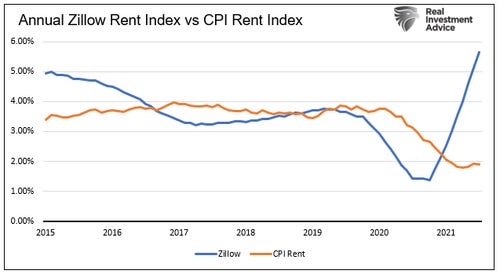
The Economic Data Can't Possibly Be Accurate. Here Is Proof.
To investors,I hope each of you had a great weekend. At the end of last week, I saw a chart that really confused me. It showed the difference between the CPI Rent Index and the Zillow Rent Index. These numbers show that Zillow is estimating rents are increasing about 5.5% to 6% annually right now. The CPI Rent Index is showing just under 2% rent growth.The confusing part of this was that the two metrics, which are supposed to be measuring the exact same thing, are apparently coming in at such different numbers. The Zillow Rent Index is almost 300% higher than the CPI Rent Index. But they weren’t the only ones.The Apartment Guide rent report published on August 31, 2021 also showed numbers significantly higher than the CPI Rent Index.The lowest rental increase for the national average was more than 2x the CPI Rent Index number. How could this be?Well, I started to dig deeper into the data and what I found was honestly shocking. It all starts with the data sets that are being used by the various reports. First, the CPI Rent Index uses the following definition for rent in the CPI:“The rent estimates used in the CPI are contract rents. They are the payment for all services provided by the landlord to the tenant in exchange for rent. For example, if the landlord provides electricity or other utilities, these would be part of the contract rent. The CPI item expenditure weights also include the full contract rent payment. Rents are calculated as the amounts the tenants pay their landlords, plus any rent reductions tenants receive for performing services on behalf of the landlord, plus any subsidy payment paid to the landlord. Reductions for any other reason are not considered part of the rent.”So how exactly do they do select which units and/or tenants or landlords to survey? The government uses the 1990 Census data obviously. No, seriously. I had to read this about 50 times before I actually believed it. Here is the exact explanation:“Using data from the 1990 Decennial Census of Population and Housing, the CPI defined small geographic areas, called segments, within each of the 87 CPI pricing areas. Segments are one or more Census blocks. The Census provided the numbers of renter and owner housing units in each segment and the average rent of the renter units in each segment; BLS estimated the average implicit rent of the owner units in the segment, enabling the CPI to calculate the total spending (rent plus implicit rent) for each segment. The CPI selected a sample of segments in each pricing area using stratified sampling in proportion to total shelter value. CPI agents visited the segments and selected a small number (usually 5) of renter-occupied housing units in each one to represent the segment. For segments that contain largely owner occupied housing units, rental units from segments close to the selected segment to help represent the segment.”Ok, that seems crazy but maybe we are just overreacting. How many units are included in the national rent index? Must be millions, right? Nope. It is only 32,000 total units. Here is the explanation:“The CPI Housing survey has about 32,000 renter-occupied housing units. In the 1990 Census, which was the sampling frame for the primary CPI Housing survey, there were about 28.6 million renter-occupied units and 41.3 million owner occupied housing units in the urban United States.”This is starting to look absolutely ridiculous. But it is about to get even better. If you’re going to report a monthly change in the national rent average, you’re obviously going to survey the units on a monthly basis, right? Nope. The government only surveys the units every 6 months. “Because rents change rather infrequently, the CPI program collects rent data from each sampled unit every six months. (Price collection is monthly or bimonthly for most other CPI items.) Collecting rent data less frequently allows a much larger sample. The CPI divides each area’s rent sample into six sub-samples called panels. The rents for panel 1 are collected in January and July; panel 2, in February and August, etc.”Now the government does their best to account for the lack of monthly surveying…by increasing rents by one dollar (lol). I wish that I was making this up. But here is the information directly from the BLS’ fact sheet. “In addition the CPI adjusts the rent for the effect of aging of the rental units over time. The Housing sample collects the rents from the same housing units every six months. Consequently, each time the CPI observes the rent of a sample unit it is six months older. To account for this aging, an age-bias factor is applied to the current rent; this raises the rent slightly because the older unit is slightly less desirable. For example, a unit with a rent of $900 might have the rent adjusted to $901.”Alright, in case you weren’t paying attention, here is what we have making up the CPI Rent Index — Approximately 32,000 units across the US that were selected based on the 1990 census dat
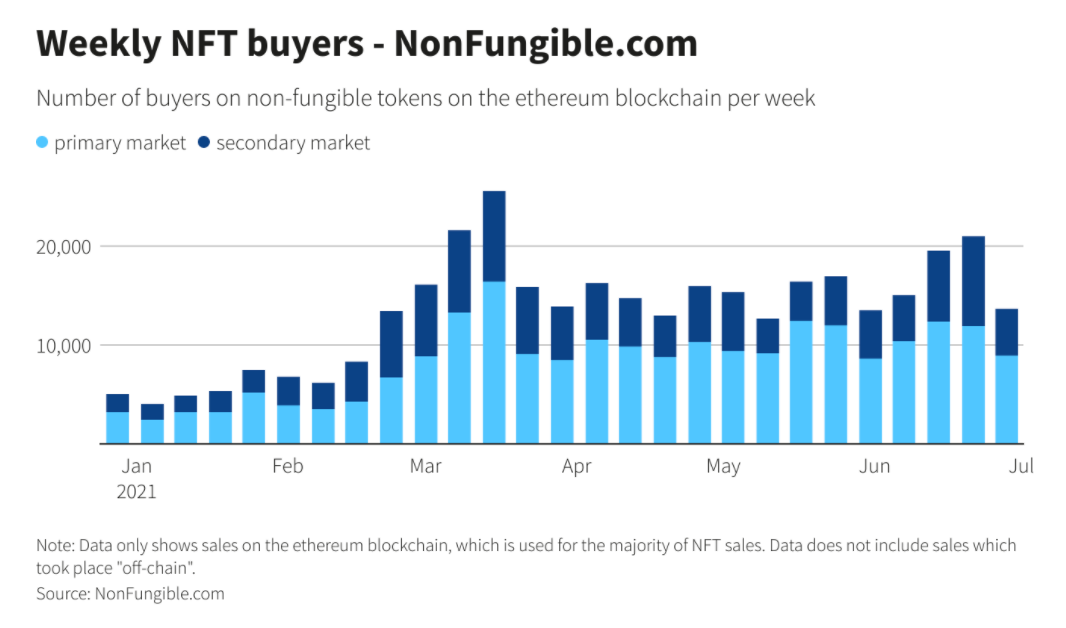
I made a mistake. NFTs are going to be much bigger than I anticipated.
To investors,The NFT industry has exploded in popularity this year. There was more than $2.5 billion in sales volume during the first half of 2021 and it has only accelerated since then.Here you can see the weekly NFT buyers through the end of June consisted of both primary and secondary market participants.And this chart shows that NFT sales had hit a record high in Q2 of 2021.But all records are made to be broken. OpenSea, the most popular NFT marketplace, saw more than $3 billion in NFT sales volume just during the month of August. So what exactly is driving all this interest in non-fungible digital files? The short answer is that NFTs live at the intersection of a few different tailwinds. The positive perspective is that digital natives would rather own digital goods than physical goods, which means that we are watching the digitization of the collectibles industry. These digital natives want to use the NFTs as a way to play games, transact with each other, and generally recreate the collectibles industry.Another perspective is that we are watching the real time creation of a new status game. Each individual that would normally drop $50,000 to $1,000,000 to purchase a car, watch, house, boat, etc is now realizing that you can spend the same money on a digital good and flex in front of more people on the internet. Only so many friends can check out your house and be impressed. But millions of people a month will see your Twitter avatar. The less exciting perspective is that monetary and fiscal policy has created a manipulated financial environment. This means that many of the traditional assets, like bonds, now produce a negative real rate of return, which forces investors to push further and further out on the risk curve. The only way to drive returns and capture yield is to start doing things that you previously thought were insane. Ya know, like buying JPEG images on the internet for millions of dollars.In reality, the truth is probably a combination of all of these perspectives. As with most things in life, there is no black and white answers. That is likely a good thing. You can’t argue with the attention and sales volume of the industry, so rather than sitting around complaining about it, you have to decide if you want to participate.Many of you already know this, but I wrote to you almost exactly one year ago (September 21, 2021) and told you that the next big bet was going to be on digital art. There was approximately $10 million in market cap for digital art at the time and I laid out an argument for why the market would likely see a 6,000x increase in size in the coming years. So far, so good.But as I’ve watched the NFT industry continue to grow in the last few months, it has become clear to me that I was drastically underestimating how big this whole thing will be. Comparing NFTs to the traditional art market was such an elementary analysis of the market. The non-fungible token industry is a market expanding technology that will eat into not only digital art, but also collectibles, high-end luxury goods, and much, much more. Additionally, there is new technology that is being brought to life that will only increase the potential market opportunity as we move forward. One example is Ethernity Chain’s new “interactive NFT” with Dallas Cowboys QB Dak Prescott. The team describes the NFT with the following:“At the peak of the collection is Ethernity’s first “Interactive NFT” with 3 settings set to change during the 2021 football season according to gameplay. Each week, the blockchain-based smart contract will trigger a change between digital trading cards according to Dak’s football QBR rating. This is a first for the Ethernity team, and the first for its community to experience real-time interactivity across its line of NFTs……Each week the NFT will change styles according to gamer performance: standard performance of a QBR rating of 60–75 sees Dak in futuristic blue and silver, in throwing motion, ready to lead his team to victory. A red hot performance with a QBR rating of 75+ sees Dak in fiery red being hoisted up by his teammates. A less than stellar performance with a QBR of 50–60 — happenstance in the ups and down of football — sees Dak set in a storm, with lightning striking, looking back, but ready for the next big play.”Here are the various images that the NFT could embody:This is the equivalent of your parents or grandparents autographed baseball changing colors whether the team is winning or not. It is the equivalent of a trophy you previously won that sits on your mantle morphing based on some new event that occurs. Obviously, this is nearly impossible in the physical world, but it comes to life easily in the digital world. Having a collectible for a star athlete or professional sports team that changes based on their performance is just the tip of the iceberg though. Alethea AI, a startup that’s creating “intelligent” versions of NFTs, is taking this entire idea one step further. They
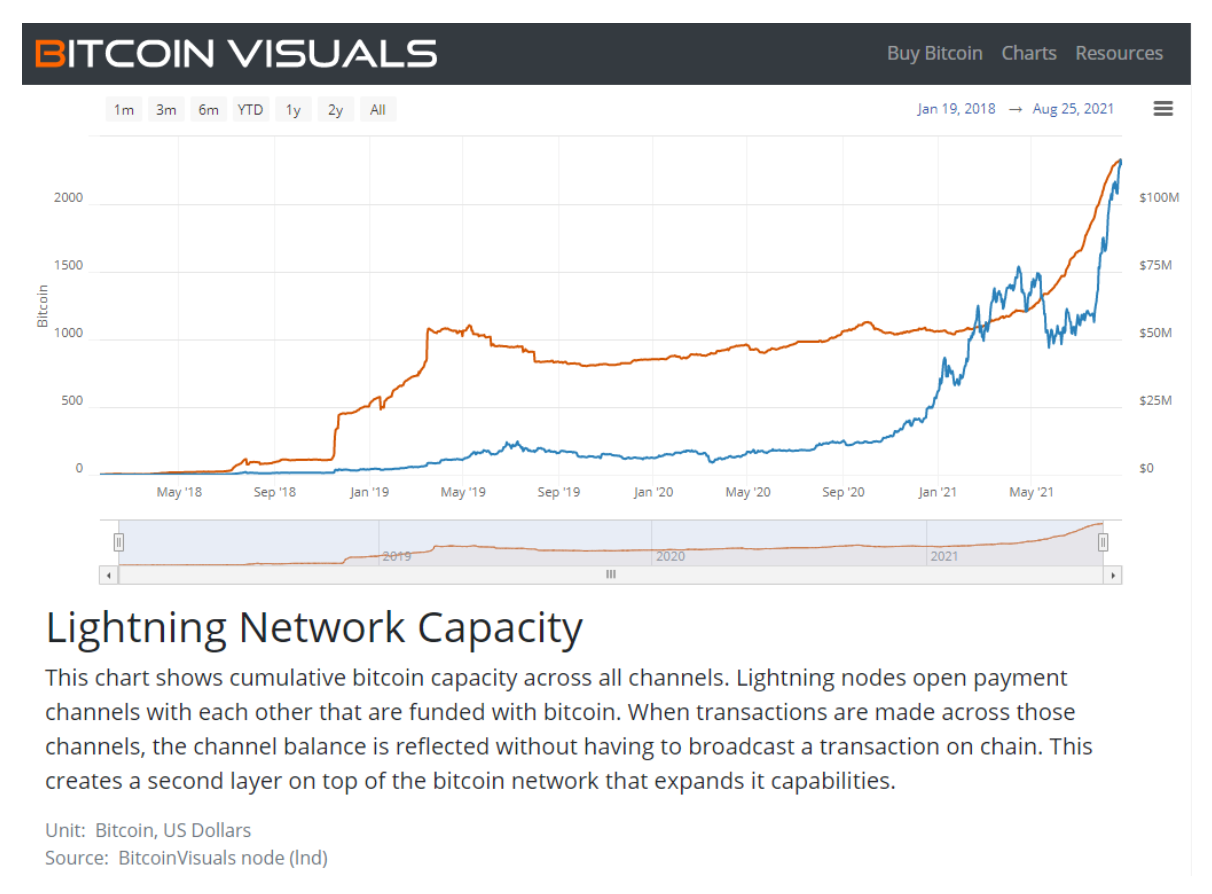
Lightning Network Overview
To investors,Below is a guest post overview of the Lightning Network from Mitch Klee. You can follow him on Twitter by clicking here. Lightning network has been on track to change the game for Bitcoin. Drafted in 2015 and launched in 2018 by lightning labs, the lightning network has made leaps and bounds for Bitcoin in multiple areas, some of which are still yet to come. Using native smart contract scripts of Bitcoin, Lightning gives the ability for users to make near instant payments at less than a cent. This low-cost scalability solution brings micro-payments to the forefront of our everyday lives. Historically Bitcoin has had a transaction rate of about 7 transactions per second. Legacy solutions like Visa took 30 years to get to 40k transactions per second, Lightning has the ability to scale to 100k or more. Growth of the Past Few YearsLighting has grown at an incredible rate. Because of the growing ecosystem and open source nature of the technology, many developers are able to build and add value to the payment systems network, bringing new innovations on top of Bitcoin’s Base layer. (https://bitcoinvisuals.com/ln-capacity) After explosive growth in the bear market, we have seen a building period that culminates in a huge rise in the number of Bitcoin inside lightning channels. The orange line is the number of Bitcoins in channels and blue bars are the dollar amount. This means Bitcoin is being added to more and more channels, giving the network the ability to create more connections and liquidity.(https://bitcoinvisuals.com/ln-channels)A good way to understand a lighting channel is to compare it to a bar tab. You keep an open channel (tab) with someone (bartender), and every time you interact (buy a beer), those Bitcoins are sent through the channel. Once you finish the transactions, you close the channel (tab), and that interacts with the base layer of Bitcoin sending it to the on-chain wallet. The beauty of the lightning network, is that even if you don’t have a direct channel with someone, you can find a path through other nodes, making a number of hops to the final destination. Scaling with the Lightning Network Being that Lightning is an open source network, people can opt in and create new functionalities. Umbrel has been a huge contributor for a plug and play way of getting onto the lightning network, making it easy to setup your own node. Other apps like Muun and Strike have made transacting on the lightning network extremely easy, and its only getting better from here.Bitcoin’s base layer benefits huge from Lightning and transaction fees are reduced largely because of how secure lighting is to use. Previous to 2018, transacting on Bitcoin’s base layer was extremely costly in times of congestion. With exchanges like Kraken implementing lightning payments, this will save the users, exchanges, and base layer a huge amount of congestion causing a cascade into lightning as other exchanges get more competitive.Peer to Peer Network and the Creator EconomyIt’s not only the plebs and exchanges that see benefits, but content creators as well. Substack just recently announced in partnership with Opennode, they are giving subscribers the ability to send Bitcoin over the lightning network to pay for subscriptions. This is huge for the content creator community. In the future, it may be possible to send micropayments to read single articles, rather than subscribing. Adam Curry’s Podcasting 2.0 has also made waves in the lightning and podcasting community promoting podcasting to what his original vision was, “Value 4 Value”. An app called Sphinx Chat allows you to listen to podcasts, stream sats every minute and even send tips. There has even been talks about Jack from Twitter implanting lightning payments in the app itself. Imagine joining a Twitter Space and being able to tip the speakers sats for useful information, real time. Cross Border Payment TechnologyOne of the biggest innovations using Lightning is in the form of cross border payments. In 2019, Jack Mallers announced a new platform called Strike, which used lightning and Bitcoin infrastructure to implement cross border payments. It converts dollars in real time from your account, sends them over the lightning network instantly and converts back to dollars. So, say you were an immigrant working in the United States wanting to send money back to your family, usually you would have to pay anywhere from 10 – 50% in fees through western union and conversion, just to get that money back home. With strike and the lightning network, you can send that money back for less than a penny.Lightning and the Future of BitcoinAs the Bitcoin Lightning Network grows in adoption, Bitcoin is beginning to transform into a high transaction rate currency without borders. Before, Bitcoin’s base layer was the first and most decentralized immutable ledger, but it was slow. Layer 2 is starting to transition us into the world that we all knew was possible. It is faster, more
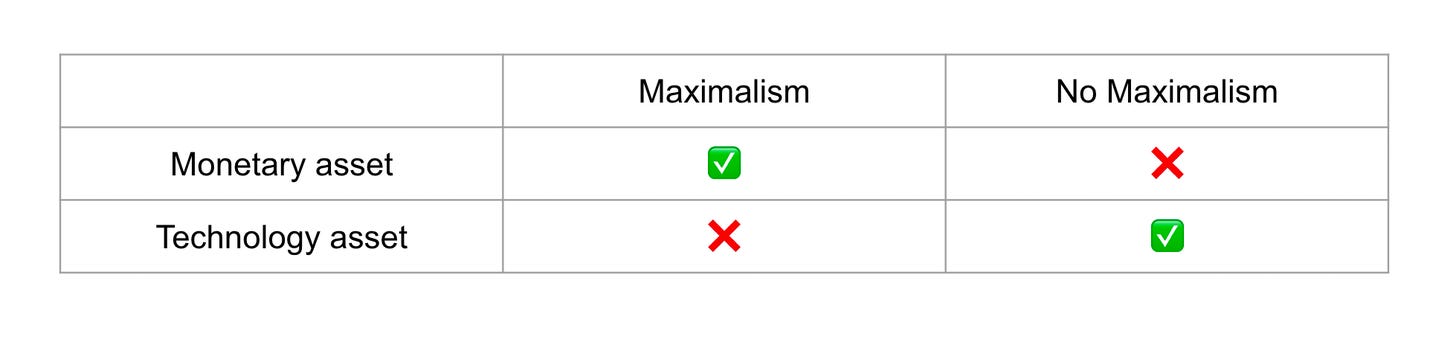
Monetary Maximalism & Technology Competition
To investors,I am often asked about my opinion on bitcoin and the crypto industry. While it is easy to articulate the answers to specific questions, I’ve recently found it difficult to express my macro view of the industry. That all changed on Friday when I read this tweet by Brandon Quittem. Brandon explained my view of the industry better than I could. After reading the tweet, here is how I would explain my current framework:* There was a computer science breakthrough in 2008 that solved the double spend problem. That solution (a blockchain) created an inflection point in what was possible in the digital world. Certain attributes like scarcity, immutability, and trust-less transactions could now be applied to all industries. * The creation of blockchain technology has led to two separate revolutions that are under way. One is a monetary revolution and the other is a technology revolution. While these two revolutions share a similar technology, they are very different in nature. * The monetary revolution has manifested itself in bitcoin. This is disruption in the purest form. Fiat currencies lack transparency, have variable monetary policies, are highly unpredictable, and require third parties for transactions. Bitcoin is the exact opposite — fully transparent, with a programmatic monetary policy, completely predictable, and removes the need for a third party. The monetary revolution will be winner take (nearly) all, which means that monetary maximalism is the only natural end state. * The technology revolution has manifested itself in thousands of non-bitcoin crypto assets. There are commodities, equities, and debt. The identification of two separate revolutions is important because it gives us a framework to discuss the importance of monetary maximalism, while still acknowledging tremendous value accrual to non-monetary assets. Before we look at the crypto industry, let’s look at the traditional financial system. Investors understand that it wouldn’t make much sense to compare the US dollar to Amazon. They are two different assets. It also wouldn’t make sense to compare Amazon to oil or the US dollar to steel. They are all different types of assets. The exact same thing is true in the bitcoin and crypto markets. Comparing bitcoin to NFTs doesn’t make a lot of sense. They are two different applications of a technology that are attempting to solve two different problems. The same could be said about comparing Bitcoin’s layer one to any smart contract platform’s layer one blockchain. They are different applications of a technology that are trying to solve different problems.Let’s dive deeper into each component of this analysis. The monetary revolution is an important one for reasons that we have discussed over the last few years in this letter. We must remember that monetary maximalism is the historical norm, rather than a new idea. US citizens are USD maximalists. European citizens are Euro maximalists. Chinese citizens are Renminbi maximalists. When it comes to currencies, maximalism drives resilience and value.The same is true for digital currencies as well. The maximalist viewpoint is a product of a market structure that presents outsized reward to the competition winner. As Brandon Quittem said, monetary maximalism is rational. With that said, maximalism is exclusive to the currency category. The technology revolution has thousands of small teams of entrepreneurs and operators working relentlessly to innovate in various industries. Any level of maximalism, whether from a technology or application perspective, would be highly irrational. The value accrual in this revolution will be similar to the stock, commodity, or debt markets. Thousands of companies accrue value. Thousands of commodities accrue value. And thousands of debt mechanisms accrue value. Imagine if you were a python maximalist. Or an iOS maximalist. Or an Amazon maximalist. If you picked the right technology or company, you could make money - but you would miss out on the thousands of other assets that also created and captured value. You also would be ignoring the fact that someone can always build faster, cheaper technology. Maximalism in anything but a currency is irrational.Maximalism is appropriate in currencies. Maximalism is inappropriate in equities, commodities, or debt. Both statements can be true at the same time. There are still many unanswered questions for those that hold this worldview. What is the proper asset allocation strategy? How should you think of portfolio construction if you’re a pure capitalist who wants to optimize returns? How about if you want to capture an attractive financial gain, while also helping to usher in more good in the world? The crazy part is that if monetary maximalism ends up playing out how I believe it will, bitcoin will eventually be incredibly stable in value. The price of goods and services will be denominated in bitcoin and the average bitcoin holder won’t see any level of volatility. When
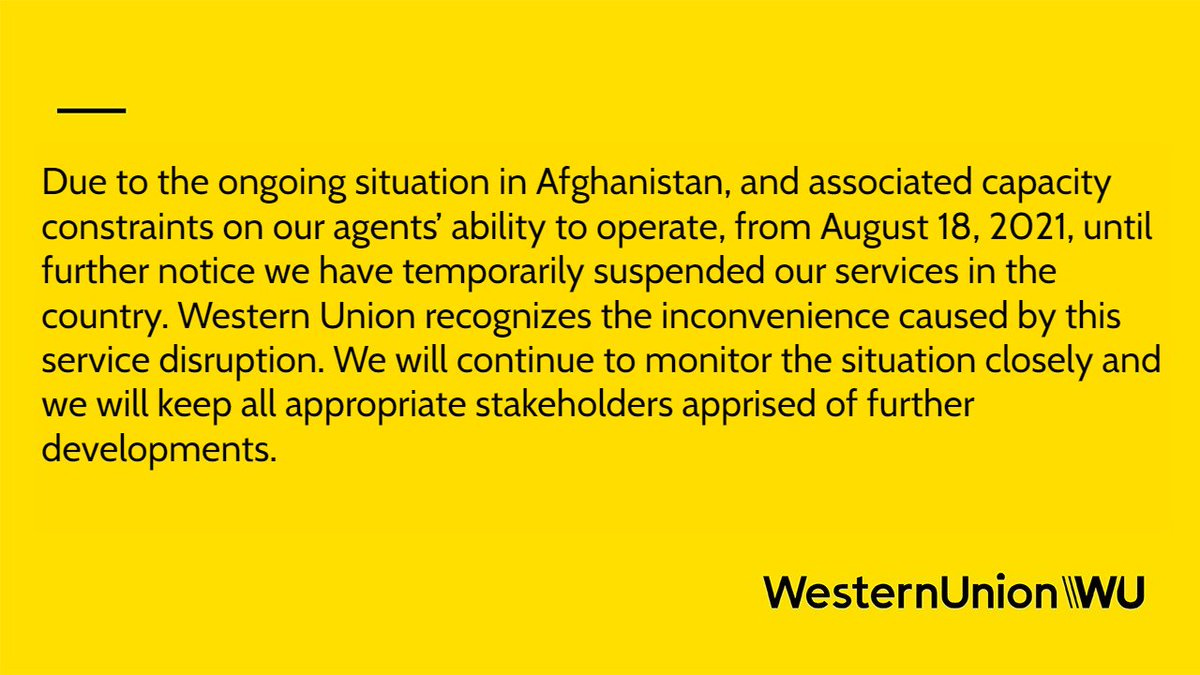
Lightning Network vs Western Union
To investors,Western Union is one of those businesses that the average American has heard of, but doesn’t pay attention to on a daily basis. The approximately $9 billion market cap company is essential for the people of more than 200 countries and territories that rely on their transfer rails to send money back and forth to family and loved ones. One of the countries that no longer has access to Western Union is Afghanistan. This is because the company decided to suspend all services to the embattled country until the current situation is better understood. Yes, you read that right. The money transmitter that is one of the two most popular services in the country has decided to shut down operations at the exact time that the average citizen needs help the most. Afghanistan receives just under $800 million a year in remittances and it makes up approximately 4% of GDP. These aren’t massive numbers from a global perspective, but they are incredibly meaningful to the people on the ground that rely on Western Union for financial access. It was infuriating to see this statement from the business. Rather than capitulate and shut down operations, they didn’t even attempt to increase agent capacity to deal with an increase in demand for their services. But it is useless to get mad. There is nothing that you or I can do about these types of situations.Instead, the only solution is to build a better system. That is exactly what Jack Mallers and Strike are doing, which is interesting because Jack released a video today that shows how valuable his product has become. You can click here to read his entire Twitter thread that explains how the technology works. To the untrained eye, this transaction may look like any other financial payment on your favorite fintech app. But let’s unpack exactly what is happening.Jack’s technology and users are able to immediately transact with Bitnob users, although the two companies don’t know each other, nor do they have any formal relationship. This is like Cash App allowing you to send money to Venmo. It would never happen in the legacy world. The systems aren’t built on open standards. They are walled gardens. Which brings us to the next point.Jack was able to immediately connect to Bitnob’s node right after they connected to the Lightning Network. He now has the cheapest, most instantaneous remittance option between the US and Nigeria. Strike didn’t build that. Bitnob didn’t build that. It was built by bitcoin and the Lightning Network over the last decade. Absolutely incredible.The Lightning Network is an open system that anyone can plug into. No one can censor you. No one can shut you down. You don’t need millions of dollars in venture capital to build your own network. You don’t need to strike business development deals. You don’t need to hire thousands of employees. You can simply set up a Lightning node and immediately have access to a global payments system that offers superior functionality to any legacy platform. Now compare the two different systems — Western Union vs Bitcoin and Lightning.You can’t. One is a thing of the past and the other is a peek into the future. They are headed in two different directions. But guess what the best part is? That regardless of the technical superiority of the Lightning Network, the critical component is that it is censorship resistant. No one can decide to cut off a country’s access. No one can stop you from sending or receiving value on the network. Bitcoin doesn’t solve every problem in the world. However, it does solve the remittance problems that many Afghan citizens are experiencing right now. That doesn’t begin to address all of the challenges that these people are dealing with right now, but it at least addresses the money issue. It is no secret that I believe Jack Mallers is building one of the most valuable technology companies in the world. Strike is innovating in a place where the average entrepreneur and operator doesn’t yet understand how to play. That is the best time to be building. Make sure you don’t blink — this is going to happen very fast :)Have a great weekend. I’ll talk to everyone on Monday. -PompSPONSORED: Amber Group is a leading global crypto finance service provider operating around the world and around the clock with a presence in Hong Kong, Taipei, Seoul, and Vancouver. Founded in 2017, Amber Group is committed to combining best-in-class technology with sophisticated quantitative research to offer clients a streamlined crypto finance experience.The platform now services over 500 institutions and 100,000+ individual investors across the Amber Pro web platform, the Amber App, as well as their 24/7 trading desk. To date, Amber Group has cumulatively traded more than $330 billion across 100+ electronic exchanges, exceeding $1 billion in assets under management. In 2019, Amber Group raised $28 million in Series A funding led by global crypto heavyweights Paradigm and Pantera Capital, with participation from Polychai

Speed vs Security: The Ultimate Trade-off
To investors,There was a fairly interesting series of events yesterday that went largely unnoticed by people who aren’t deep in the weeds of the bitcoin and crypto industry. A research partner at Paradigm, Sam Sun (known as Samczsun), discovered a potentially critical security flaw in the code of SushiSwap's MISO platform. The details of this white hat rescue are fairly technical in nature, so I won’t bore this audience with the exact details. You can read more about the sequence of events by reading Samczsun’s write up. The key takeaway is that over $300 million worth of ETH was exposed to a potential exploit and could have been stolen. After reading through the various analysis of the situation, I had two main takeaways.First, Samczsun wrote an opening paragraph to his analysis that I thought highlighted a great point:“A common misconception in building software is that if every component in a system is individually verified to be safe, the system itself is also safe. Nowhere is this belief better illustrated than in DeFi, where composability is second nature to developers. Unfortunately, while composing two components might be safe most of the time, it only takes one vulnerability to cause serious financial damage to hundreds if not thousands of innocent users. Today, I’d like to tell you about how I found and helped patch a vulnerability that put over 109k ETH (~350 million USD at today’s exchange rate) at risk.”This idea of safe components do not equal a safe system is really good. You can apply it to many aspects of life, but software code may be one of the most complex applications of this rule. As we know, the more complex a system, the higher the likelihood that vulnerabilities will exist. Complexity is a weird topic. To the uneducated, complexity appears to be a signal of sophistication and intelligence. But as the experienced know, complexity is actually the exact opposite of sophistication in most cases. The famous line from Blaise Pascal applies here — “I would have written a shorter letter, but I did not have the time.” The same thing goes with software code to a degree. The more time someone has, the cleaner and more efficient it can become. This brings me to my second takeaway. So much of the progress that is being made across the industry is being done at an incredible speed. Rightfully so, most developers are focused on innovation and experimentation. They are seeking new and profound ways to apply the various technologies that have become available over the last 10 years or so. The downside to this approach is that speed is historically a direct trade-off with security and resilience. The faster that developers innovate, the higher the likelihood that vulnerabilities will be introduced into software. Sometimes that trade-off is acceptable. Other times it is not. Knowing the difference is important. One framework to apply to this analysis would be a spectrum of innovation speed to security. Let’s start with bitcoin as an example of the extreme pursuit of security. The bitcoin core developers have an arduous, methodical, and intentional development process. There is over $800 billion of economic value that is at stake. If we have to go slower from an innovation standpoint, it is worth the continued achievement of the ultimate security. You can see the end result of this approach in everything from the decentralization of miners and nodes to the software review process. Resilience and security over everything.The other end of the extreme is a pursuit of innovation and speed over everything. There are various altcoins and protocols that are attempting to invent new technologies or applications. They can’t win on a first mover advantage and they can’t win on the most secure or decentralized, so they choose to pursue a strategy of innovation. It is a rational strategy. These projects don’t have a lot of economic value at risk, which means the cost of making a mistake is minuscule compared to bitcoin. These are the ultimate extremes in the industry. Do you value security and resilience as the most important aspects of a protocol or do you value speed and innovation? The interesting answer to that question is that each path is valuable for a different kind of desired end result. If you are building something that requires decentralization (like a transparent, programmatic monetary policy for a digital currency that has aspirations to become the global store of value) than security is the single most important thing. If you are building something that requires speed of innovation, like an application built on top of a smart contract platform, than you aren’t as worried about security and resilience in the early days.Remember, we are still so early in all of this. The industry is only 12 years old and majority of companies or projects have only been around for 3-4 years. That is nothing in terms of lifetime in the technology sector. There will be immense mistakes made, similar to what we saw a few

The Gold Standard - 50 Years Later
To investors,Yesterday was the 50th anniversary of President Nixon taking the US dollar off the gold standard. While you may be familiar with the basics, there is quite a bit to unpack from that historic moment.First, let’s take a look at what Nixon’s exact comments were when he decided to execute this idea. You can read more of the speech here:The language used here was important. There was reference to the American economy being the strongest in the world, the importance of defending the US dollar against speculators, the promise of temporary action, and of course - the confirmation that the US dollar would be stable and immune from being devalued. Cute idea, but historically this has been proven to be one of the worst policy decisions in history. Don’t believe me? Our friends over at River have collected a few charts to highlight the impact:Just incredible to see the impact of the United States going off the gold standard. Remember, President Nixon said that “inflation robs every American, every one of you.” That is correct. But while he was referring to pre-1971 conditions, he should have foreseen how destructive his decision would be. It is interesting to look back on the 50 year anniversary and realize that we currently are experiencing 5.4% CPI and 4.3% core inflation numbers. These are basically the highest they have been in decades. There are currently 78% of Americans who live paycheck-to-paycheck and 45% of Americans who hold no investable assets. These are the people who have suffered at the hands of poor policy decisions. While disheartening, the free market appears to have created a brand new global competitor — bitcoin.There is no need to replace the US dollar in the short term, so bitcoin is likely to serve as the global store of value for decades to come. The transparent, programmatic monetary policy of a digital currency that has decentralized infrastructure is too powerful an idea, especially when compared to the backdrop of continued insane monetary and fiscal policy decisions. The legacy organizations are doing just as much to market an alternative store of value as any bitcoiner could dream of. As Niall Ferguson wrote in a Bloomberg Opinion piece this morning, “If we have learned nothing else from the past half-century, it is surely that the best way to win a race with totalitarian rivals is not to copy them, but to out-innovate them. Make the wrong decision at this historic turning point, and we shall be interrupting a much bigger bonanza than Nixon did.”If you have any material amount of wealth, you are not able to preserve it by holding US dollars, bonds, or gold. All are producing negative real rates of return. You essentially are left with bitcoin or equities, which leads you to consider an allocation to bitcoin given the high degree of volatility that will likely serve to outperform equities over a long enough time period.We are living in weird, weird times. President Nixon kicked off the fiat experiment in 1971 and 50 years later, we are watching the global adoption of a potential solution to that problem. There is still a lot of work to do. Plenty more people to educate around the structural disadvantage they have as they pursue financial security in the legacy system. But….slowly we continue to head in the right direction.Stay alert out there. Make sure you are educating yourself as best you can. The uncertainty and chaos of markets can be calmed by further understanding of history. Hope your week is off to a great start. I’ll talk to everyone tomorrow. -PompSPONSORED: It's no secret I hold Bitcoin as majority of my portfolio. But even I know you have to diversify into other asset classes like elite investors. You need an asset that won’t get murdered by the Fed's money printing and Biden's $6T stimulus plan. In my search for other alternatives, I found something game-changing. It's an art investment platform that lets you invest in multi-million dollar paintings by artists like Basquiat and Banksy.Art as an investment excites me because, like BTC, its supply is not only fixed but can decline. Contemporary art prices outperformed traditional inflation hedges like gold and real estate, while crushing S&P 500 returns by 174% from 1995-2020. Take a look at investing in art. I hooked it up and partnered with Masterworks, so you all can get to the front of the line with this private link.Podcast SponsorsThese companies make the podcast possible, so go check them out and thank them for their support!* Exodus is an absolute game changer in the crypto wallet space. With over 100 assets supported, one-click built-in exchange, Trezor hardware wallet integration and 24/7 customer support, this is a no brainer for both newcomers and crypto heavyweights. Download Exodus on desktop, iOS, and Android using my code http://get.exodus.com/pomp* Cosmos is building the Internet of Blockchains, marking a new era of interoperability, scalability, and usability. The free flow of assets and data betw
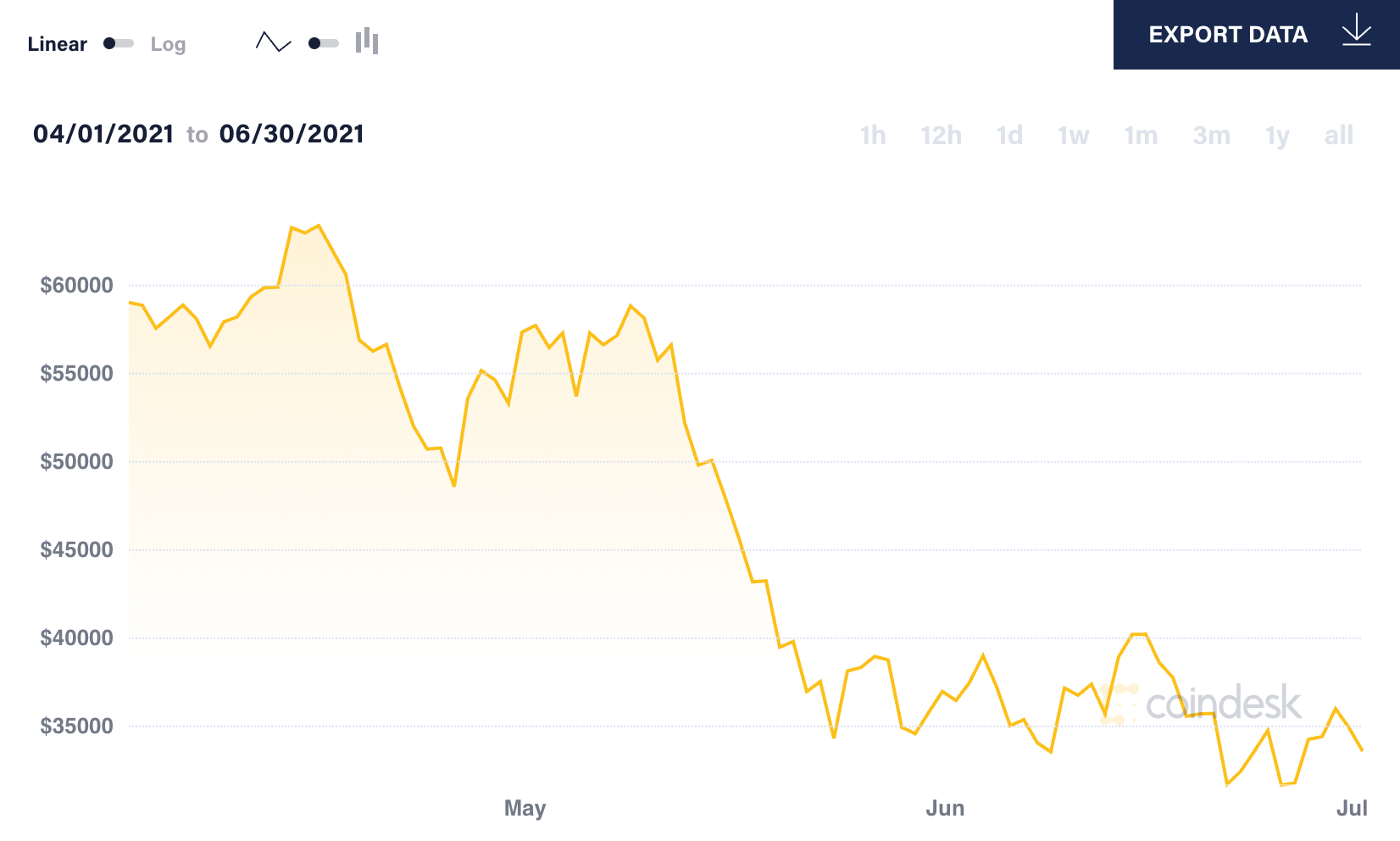
Coinbase Beats Expectations & The Future Is Bright
To investors,Coinbase reported their earnings yesterday and beat Wall Street’s expectations on almost every metric. Here is a quick breakdown:* Revenue - expected was $1.85 billion, but actual was $2.23 billion* Adjusted EBITDA - expected was $961.5 million, but actual was $1.15 billion* Verified users - expected was 63.1 million, but actual was 68 millionIt shouldn’t be a surprise that Wall Street expectations were off. A study showed that “the median Wall Street forecast from 2000 through 2020 missed its target by an average 12.9 percentage points.” This is nothing new.What is surprising though is that Coinbase’s business posted such great financial numbers in the middle of a significant market downturn. Remember, bitcoin was trading at $58,900 on April 1st and ended the quarter at $34,855. Not exactly a walk in the park from a volatility standpoint. This serves as a good reminder to investors that exchange businesses benefit from volatility, regardless of which direction it occurs. The drop in price for bitcoin and other cryptocurrencies was the main driver of the outperformance of Coinbase’s performance. The volatility leads to the media talking about the assets more. It creates more organic conversation among users as well. These two forces opens the door for an exchange to acquire more users than normal as people look to buy or sell as price moves. Additionally, the increased user acquisition, combined with the increase in trading volume of retail users, eventually creates significant outperformance on revenue. These high revenues are largely driven by high exchange fees for the retail user base, which now tops 68 million registered users. Over time I would expect that increased competition in the market will lead to lower and lower exchange fees that Coinbase and others can charge. In order to combat the eventual decrease in fees, Coinbase is working to increase their user base and expand into other product lines. They have done a great job capturing a significant portion of the institutional custody market and appear to be seeking a similar strategy with decentralized finance features. It remains to be seen how well these centralized exchanges will stand-up to the increasing competition from decentralized offerings in the industry, but it is hard to see traditional Wall Street organizations running to use decentralized protocols before becoming a customer of Coinbase or other centralized platforms. It would be irresponsible when evaluating Coinbase’s future prospects to not mention the most important aspect of the business — the macro tailwinds. Coinbase has to continue to build a great company, but it is more likely that the macro environment will be the greatest driver of growth or contraction in the coming decade. First, the crypto industry is just getting warmed up in my opinion. We have reached over 100 million users across the world, but it appears that adoption is only accelerating as we reach mainstream audiences. The users traditionally start with buying and holding bitcoin, but eventually move into the various other assets and features. Second, the institutionalization of the industry will serve as a big plus for Coinbase, who is obviously trying to position themselves as the institutional leader within North America. As more of these large financial institutions enter the space, they’ll be using everything from the prime brokerage to the custody to staking, etc. Lastly, the macro economic outlook couldn’t be more attractive. We have low interest rates, big appetite for continued QE, high inflation, and a population that is waking u to the need to push further out on the risk curve to protect their wealth. This tailwind will push more and more people into the crypto industry, which nicely positions Coinbase as one of the greatest benefactors. The July inflation numbers were reported today and CPI came in at 5.4% for the second month in a row, along with core inflation coming in at 4.3%. It is insane to think about these as the official numbers, while knowing that the true inflation metrics are likely much higher. The average American has very little choice but to seek out investments as the only way to protect their purchasing power and grow their wealth. Overall, Coinbase continues to be an excellent business. I’m impressed with Brian Armstrong and the executive team’s ability to execute. They continue to grow their business and adapt to the changing environment. I’ve had financial exposure to the business from the private market and continue to hold majority of those shares today. It will be interesting to watch the business over the remainder of the year, but I wouldn’t bet against this team or company. Hope you all have a great day. Talk to you tomorrow. -PompSPONSORED: Unstoppable Domains allows you to replace cryptocurrency addresses with a single, easily-readable name like mine, Pomp.crypto. Instead of worrying about getting 1 character wrong in a long string of random letters and n
Bitcoin doesn’t need Presidents, but Presidents need Bitcoin
This installment of The Pomp Letter is free for everyone. I send this email to our investors daily. If you would also like to receive it every morning, join the 190,000 other investors today.To investors,The world of politics has been focused on the infrastructure bill as it has been debated over the last few weeks. The most surprising thing to the incumbent political class has been how quickly and effectively the bitcoin and crypto industry were able to mobilize.Whether we are talking about phone calls, tweets, or traditional lobbying efforts, it feels like the industry went from 0 to 100 in a matter of days. This was possible because the industry has an incredibly engagement online community that isn’t scared to voice their opinions. Additionally, there has been incredible wealth generated in an industry that went from $0 to about $2 trillion in market cap in a little over a decade. When you combine wealth and engagement, you have a recipe for action. The surprising thing in my opinion has been the response from the incumbent political class though. There are still a good portion of them, both elected officials and those who generally operate around them, that seem to believe this is an anomaly. They are utterly befuddled by what is happening, yet they seem to think that the crypto industry will move on to something else once this bill is voted on. As you probably guessed, I tend to think that this conclusion is inaccurate. First, it is very clear that the bitcoin and crypto industry will continue to lead to more innovation, economic production, jobs, and technological progress. This is going to happen regardless of whether the United States wants to participate or not.Second, it is estimated that approximately half of the Forbes 400 list will come from this industry when bitcoin hits somewhere between $175,000 and $200,000. That is an incredible amount of global wealth that is concentrated in a single industry. Those people, just like the disruptive industries before them, will eventually become larger players in the political arena — they won’t be able to avoid it. The policies and decisions that are made in Washington DC will have an effect on their businesses, their wealth, and their freedom. Lastly, there is an entire generation of citizens that have grown up with a disdain for the incumbent system. They watched the horrific events of 9/11 get leveraged into two forever wars in the Middle East, while simultaneously expanding the surveillance capabilities of the nation state. Shortly thereafter, the same generation watched as their parents and loved ones were decimated by the global financial crisis. The government bailed out corporations and large financial institutions, but left the average citizen out to dry. This millennial generation has record low levels of trust in the mainstream media and in the government, but rather than simply complain about these challenges (as previous generations have done), the young people have gone out and built a better system. The media’s power has been significantly weakened by the advent of social media platforms, podcasts, and technology companies like Substack. The legacy financial institutions are on the brink of losing significant power with the advent of bitcoin, stablecoins, and decentralized financial applications. This is the difference between the generations. This is the difference between the political class and the technology industry. One is focused on building. On action. The other is focused on advocating and complaining. There are politicians who have spent their entire careers complaining about the financial system, yet in less than a decade the technologists were able to simply build a better one. That framework is important to understand because it is ultimately playing out in nearly every facet of our lives. The doers are making progress at a faster rate than the talkers. When this occurs, the talkers have no tools in their toolbox to compete. They simply attempt to use their words to complain about what the new class of doers have chosen to pursue. Now this brings me back to the political arena. The folks in Washington DC are being woken up abruptly to this new class of doers. As an example, FTX founder Sam Bankman-Fried was one of the top two donors to Joe Biden’s Presidential campaign last year. Another example is that the relatively unknown and outsider industry has been able to effectively stop all progress on a $500+ billion infrastructure bill as the nation’s elected leaders debate the specific words used in less than 3 or 4 paragraphs. This type of activity and results led me to tweet the following yesterday:Before long, someone tagged Twitter and Square CEO Jack Dorsey with the insinuation that maybe one day he would run for President. While most people already would have thought that to be unlikely, Jack’s response was perfect:This got me thinking. Not only is Jack correct, but the initial framing of the conversation completely missed
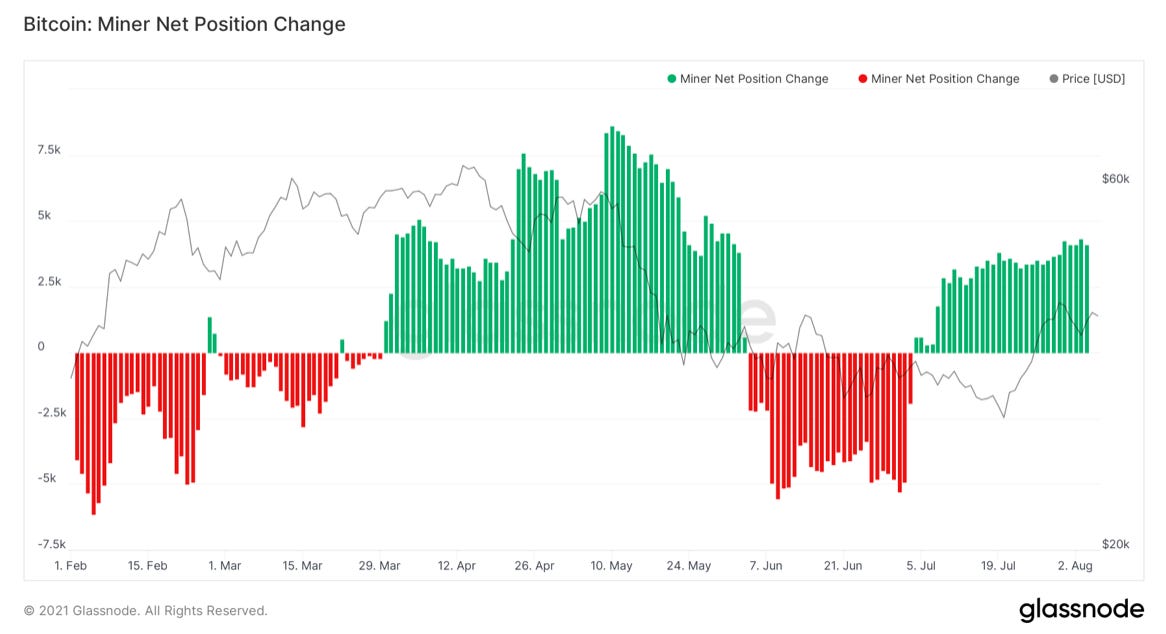
Are We Repeating October 2020 Before The Big Bull Run?
To investors,Will Clemente breaks down this week’s bitcoin situation using on-chain metrics to separate the signal from the noise. You can follow Will on Twitter or sign up for his email by clicking here. Here is Will’s analysis:Hope all is well, and you had an awesome week. Bitcoin showing some strength, but now we watch for the follow through over the next week. We’ll look at key levels to watch for as well as patterns to keep an eye on from an on-chain perspective. Hope you enjoy, have a great weekend! Let’s dive in. Here’s some key takeaways from this week: * Bitcoin still consolidating below resistance at the top of a multi-month range * Every cohort in net accumulation, retail leading the way* Both qualitative and quantitative measures of supply shock/shortage showing strong upward trends* On-chain activity still quiet, less transactions but bigger sized transactions* Market trading in a state of profit, got the bounce off 1 in SOPR we wanted to see* Dormancy has almost fully reset* Broader trend of miners still in accumulationWhat to watch for: * Could still see another retest of mid-range between $35K-$37.5K, but unlikely imo* $42,000 Range breakout/On-chain volume cluster breakout * $45,000 200 Day Moving Average * $48,000-$50,000 Key price structure technical level, Overhead supply (breakdown level from distribution), round psychological number* $53,000 On-chain price model “mean”, has been a pivotal price level historically * Potential hash ribbon buy signal* Are long-term holders dumping hard on the first bit of exit liquidity they get? * Would like to see SOPR stabilizing above 1* Want to see on-chain activity pickup, Mempool fill up First up let’s take a look at URPD, basically an on-chain volume profile. This shows the amount of BTC moved at different price levels. We’ve now carved out this large zone of re-accumulation between $31K-$42K; 21.71% of Bitcoin’s money supply has now moved here. 2.61% of Bitcoin’s money supply has moved at $39.5K alone; making it the largest single bar of volume since $3.8K. Watching $42K and the 200-day moving average at roughly $45K for resistance on a potential move up.Next up we have what I labelled as top/bottom models. This looks at the Top price model (a variant of the all-time moving average of Bitcoin), Delta price (realized price – average price), Realized price, the mean between Top/Delta price, and lastly the mean between realized price and the average between Top/Delta. Overlaying these all together, we see that price has always hovered between top price and delta. Market price going below realized price is a great signal to start accumulating heavily in macro bottoms. This is because price is below the average price investors paid for their coins; meaning the market is in capitulation by definition. Reaching the orange and red lines have marked historical overheated/euphoric price levels. Market price going above the yellow mid-line has historically been a key level for Bitcoin to confirm a strong bull market trend. In 2013 price went vertical after breaking through, bear market began after breaking below. In early 2017 served as resistance, before switching to support propelling us into the final latter phase of the bull market. Also was the level that the dead cat bounce got rejected from in 2018. Served as support in January 2021, marked the major drawdown in May, and now I would like to see us get back above that yellow line for confirmation. Currently sits at roughly $53K.Accumulation has continued, which we can look at in several ways. In blue, Illiquid Supply Shock Ratio, which compares the movement of coins from liquid (weak hands) entities to illiquid (strong hands) entities. In purple, Exchange Supply Shock Ratio, which compares the amount of supply held on exchanges relative to overall circulating supply. Both of these are trending strongly upwards, with price lagging behind. I still am patiently waiting to see these massive multi-month-long divergences get fully priced in. Also, worth noting that the Illiquid Supply Change RSI is also in a macro buy zone, just chose not to include it this week to save some space. When we look at who exactly is buying by size, almost every cohort is in strong accumulation. In particular, the little guys have really caught my eye. This metric takes a ratio of all the entities on-chain with less than 10 BTC and dividing that by overall circulating supply. What you get is essentially a representation of how much supply retail holds on a relative basis. This has hockey sticked upward since late May. This along with new all-time highs in net user growth illustrate healthy network adoption/distribution. Note: net user growth is trending up, while the number of new entities is trending down. This means that the number of “dormant entities” is decreasing at an even greater rate than the number of new entities. To me this shows that the users coming on the network are staying. On a similar note, let’s look at the d

The Infrastructure Bill, Bitcoin and Crypto
To investors,The infrastructure bill that is currently making its way through the government has a lot of crazy things in it. This isn’t exclusive to this specific piece of legislation. The document is over 2,500 pages in length, which means that it is impossible that any politician has personally read the entire thing. Earlier this week, I sat down and tried to read some of the document. It was quite hilarious because even after reading some of the sections, I still didn’t know what it was saying. Additionally, we found sections that included the removal of invasive plant species, $1 billion for an organization that is overseen by a politician’s wife, and what appears to be authorization for the US government to purchase marijuana to be used in studies of the impact of driving high. Seriously…you can’t make this stuff up.Buried within the infrastructure bill is another concerning topic — there is a drastic increase in the government’s surveillance capabilities related to the bitcoin and cryptocurrency industry. As you all know, I rarely care about politics. I don’t identify with any political party. It all generally strikes me as confusion of motion with progress. I choose to focus on bodies of work that are more quantifiable, along with less reliant on the bureaucracies of a government. With that said, this is one of those situations where politicians are willing to change their mind if they hear from people in their districts.The intricacies of this legislation is beyond the scope of this letter, so I suggest you read this article that does a great job outlining what is happening: Click to read hereOnce you are up to speed on the issue, it brings up the most interesting part in my mind. We are likely going to find out which technology is truly decentralized and which is not in the coming months and years. There are a lot of folks who continue to market their work as having decentralization, but yet they can censor transactions, ban users, and generally act in a centralized manner.That is unlikely to stand the test of time. Regulators are beefing up their scrutiny of the industry. There will be more legislation in the future. The technology that has true decentralization will survive. The technology that is centralized will not survive or it will be heavily impaired. This is the difference between the creation of rules and the ability to enforce them. As I constantly remind people, jaywalking is illegal in NYC but everyone still does it. The police couldn’t possibly enforce the rules. Going back to the current infrastructure bill, I am not a fan of telling anyone what they should or shouldn’t do. We all live in a free country where you have the right to participate (or not!) in the democratic process. If you’re interested in contributing 5 minutes of your time, you can call your local representative by following the instructions here: Call your senatorOtherwise, remember that the people building decentralized technology have the tailwinds of a digital economy. The more we digitize, the more decentralization becomes important. No individual or organization needs to have so much power. The trends of automation will usher in a new era that is marked by collective governance of systems, along with full transparency and programmatic, immutable systems.Hope each of you has a great day. I’ll talk to you tomorrow. BONUS: We are running our 6th cohort for the Bitcoin and Crypto Training Course starting Tuesday August 10th. Graduates have already been hired at Coinbase, BlockFi, Gemini, Kraken, and many other great companies. Want to increase chances of being hired? Apply here: https://pompscryptocourse.com-PompSPONSORED: You don’t have to be a hedge fund guru to know that markets can rise and fall quickly (Dogecoin anybody?). Sometimes, the most attractive growth can be found in some of the oldest of places. Despite being hundreds of years old, the art market is poised for tremendous market capitalization growth.Deloitte projects the total wealth held in art and collectibles to expand from $1.7T to $2.7T by 2026. I largely attribute this to the rise of securitized assets, opening the doors to the art market for all. Founded in 2017, Masterworks.io is the leading platform for blue-chip art investing with over 185,000 registered users. They have purchased over $180MM in art from artists like Banksy, Basquiat and KAWS.I’m a big fan of what Masterworks is building - so check out more here.THE RUNDOWN:A16z, BlockTower, Alameda Back $12.5M Round for TrustToken: TrustToken, operator of decentralized finance lending protocol TrueFi and stablecoin TUSD, has raised $12.5 million in a new funding round. Blocktower Capital, Andreessen Horowitz (a16z) and Alameda Research led the round by purchasing TRU, TrueFi’s native token, according to a company statement. TrustToken said it would use the proceeds to expand its team and TrueFi’s operations. Read more.Grayscale Hires David LaValle to Be ETF Head: Digital asset management fi
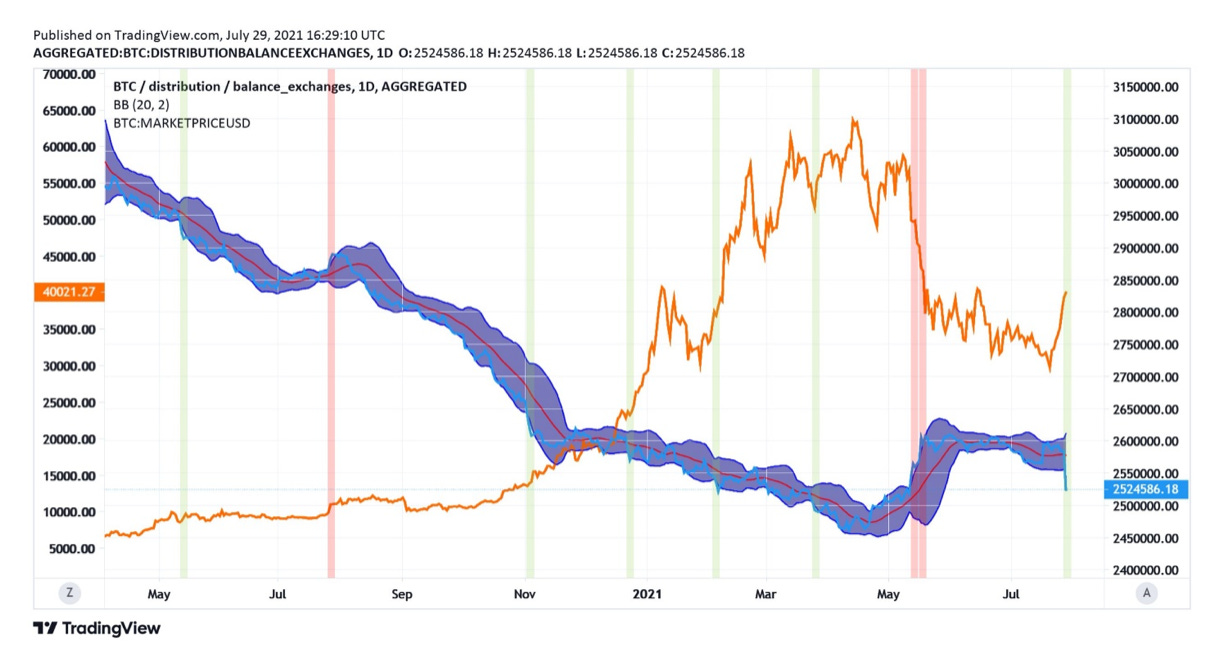
The Supply Shock Is Underway
To investors,Will Clemente breaks down this week’s bitcoin situation using on-chain metrics to separate the signal from the noise. You can follow Will on Twitter or sign up for his email by clicking here. Here is Will’s analysis:Hope all is well. After weeks of following the strong divergence between on-chain investor behavior and price, it looks like we are finally starting to see that translation into price action. As we were watching for in last Friday’s letter, we got a short squeeze on Sunday evening that liquidated over $110M in shorts within minutes. This added momentum to a rally that now has given the market 9 straight green daily candles. Let’s dive into some of the developments from this week. As always, here’s some high-level takeaways: * Very strong outflows from exchanges* Continued miner accumulation* Continued accumulation from “strong hands” (entities with little selling history)* Every major cohort adding except for 100-1K BTC (sideways) * Some profits taken during the rally over the last few days, young coins mostly (likely from this range)* On chain activity (active addresses, transfer volume, etc.) is still overall flat * Supply is trading in profit againTo start, let’s look at a metric that follows the broader context of accumulation in the Bitcoin market. This indicator I created runs a 365-day stoch RSI over the 30-day net change of illiquid supply. 30-day net change meaning the difference between illiquid supply today and this date last month. I use this to follow the wave of “supply shock” brewing underneath the market. You can see in the RSI what I’m referring to by the “wave” of supply shock; highlighted by the green arrow. This supply shock propelled the bull run higher in late 2020. Looking at it now, this has not only started printing a buy signal, but the rate of change from the sell signal in May to now is quite impressive. To me this indicates that the momentum from this wave of supply shock is strong.Just for kicks, here’s the metric back tested in 2017/2018. Buy signals don’t come often, but when they do, they are very accurate in a broader context. Important note: The data used below for illiquid supply, exchange balances, and supply held by different cohorts is all one day old. I have never done this before in the newsletter, but I feel that it’s appropriate because of the following: On Thursday there were massive reported outflows from several exchanges, including over 108K BTC from Kraken; showing their balance has dropped down to 62,859 BTC. I am highly skeptical of these flows, which effect other entity related data including illiquid supply. I suspect it is just end of month routine internal shuffling that will be picked up in a few days by Glassnode’s heuristics. Hope you understand, would rather be on the safe side and not spread data that likely needs to be updated. We’ll have confirmation by the time we speak again next week, as Glassnode is looking deeper into the flows.So, we’ve looked at the supply shock in a broader sense, but now let’s take a more real time look at this movement of coins from “weak” to “strong” hands. To do so we’ll use liquid supply ratio, showing another uptick. After tracking this re-accumulation process since May, it is now almost fully complete. Supply shock is at levels that previous priced Bitcoin at 50K-60K.Exchange balances have taken another drop, once again showing accumulation: down 66,655 BTC this week. As mentioned, this is excluding data from Thursday. This drop in exchange balances has triggered a buy signal in the exchange flow Bollinger bands. This follows large moves in exchange flows: when massive inflows occur selling is assumed, when massive outflows occur accumulation is assumed. With this framework we can create buy/sell signals based on when the metric breaks out of the bands in either direction.The market is taking some profits on this rally though, realizing up to $2.4B in net realized profit on Tuesday. This isn’t alarming imo and is to be expected after we’ve sat at the bottom of a range for weeks. But just to do some further investigation, I find it prudent to look at the age of the coins being sold. If we see strong profit taking from older coins fading every bounce looking for exit liquidity that’s not ideal. So, here’s what can be found upon further investigation. Looking at the average age of the coins being sold, this continues to go sideways, with the broader multi-month trend still clearly down. We actually had a downtick in the age of coins sold on Tuesday, coinciding this with the $2.4B of profit realized means those coins were likely newly bought in this range, not experienced market participants. And to just go a step further, here’s the spike on Tuesday of coins being spent between 1 week and 3 months old. (within this 30k-40k range) No major coinciding spike from older cohorts. On a similar note, this recent rally has increased the percentage of total supply in profit from 65.82% on the 20th to 82
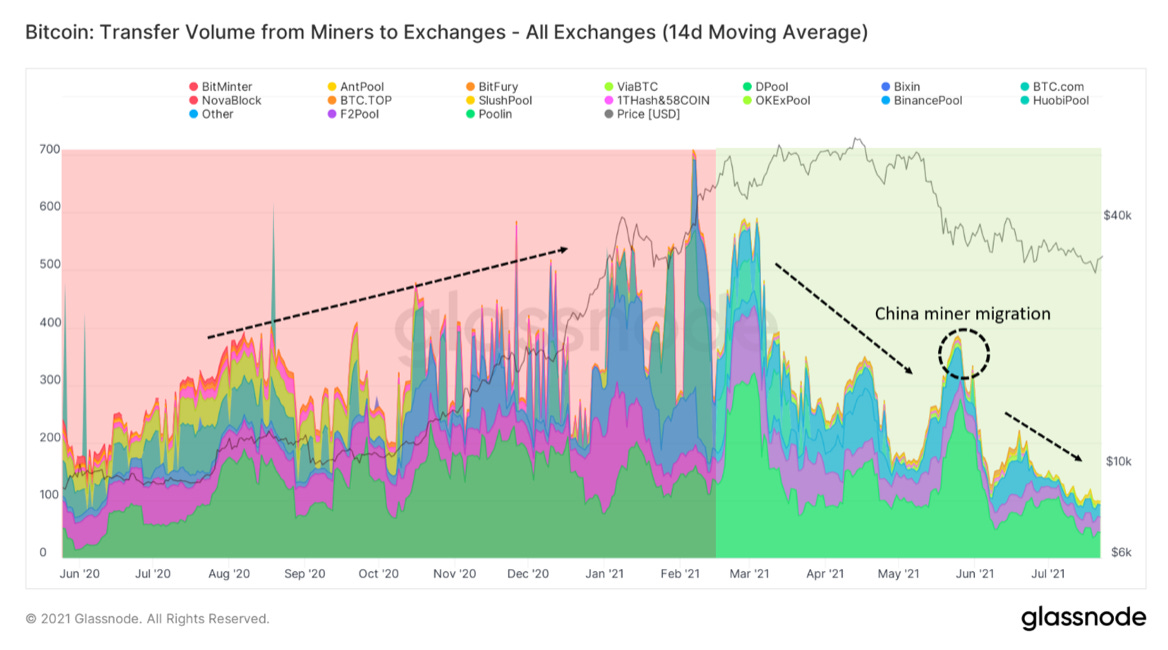
Is A Short Squeeze Upon Us?
To investors,Will Clemente breaks down this week’s bitcoin situation using on-chain metrics to separate the signal from the noise. You can follow Will on Twitter or sign up for his email by clicking here. Here is Will’s analysis:Hope all is well, and you’ve had a great week. After a sweep below range lows, it looks like price action is starting to reflect some of the trends we’ve been following over the last few weeks; but we’re still not out of the woods yet. In the short term BTC needs to clear $36.5K, $41-42K, and then ultimately get above its 200-day moving average. I personally see getting back above that 200DMA as confirmation of bull run continuation, but others may have different opinions as to what that level of confirmation is. Let’s dive into this week’s on-chain overview. Hope you enjoy!Key takeaways from this week’s newsletter:* Still not out of the woods… yet* RSI sitting beneath 7-month resistance * Volatility looks ready for a breakout* Funding remains negative* Buyers with little selling history continue to accumulate heavily * Miners are accumulating * Strong outflows from OTC Desks* Supply squeeze very much in play First up we have a rare appearance from a technical indicator on this newsletter, the RSI. The relative strength index is a momentum tool that helps identify overbought and oversold zones. On the daily, the RSI has been in a downtrend for 7 months. This downward sloping trend line has served as resistance 8 times. At the time of writing, it looks like we’ve broken out above the trend line, but will need to see confirmation at the daily close. Something to keep an eye on for sure. Another non on-chain indicator that I have my eye on closely is the perpetual funding rate. This is the mechanism that pegs the perp contract to the index (weighted average price of all major exchanges). When funding is positive, longs are paying shorts to keep their positions open; when negative, vice versa. As a rule of thumb, prolonged positive funding = bearish, prolonged negative funding rates = bullish. We’ve seen mostly negative funding rates since late May, the last time we’ve had prolonged negative funding like this was following the covid crash. Funding being negative means twofold: 1. Sentiment from traders is bearish 2. Spot BTC is being bought more aggressively than futures. Seeing funding stay negative throughout this pump over the last 24 hours shows we could potentially be setting up for a short squeeze. There is certainly underlying accumulation going on. Here we have the liquid supply ratio, showing movement of coins from weak to strong hands. Looks like we’re starting a potential third local leg up. We went from slow grind up in the ratio to more aggressive accumulation over the last few weeks. Bitcoin’s supply shock is currently equivalent to levels it was at earlier this year between $50K-$60K BTC. Zooming out, we can see how a drop off in the ratio would have helped time the 2017 top and 2018 capitulation during the bear market. We can also see how the lockup of coins squeezed Bitcoin’s price upwards through a massive supply shock in 2020. However, in late May we saw a reversal of that; young whales selling that likely were likely taking a momentum trade or capturing a market-neutral spread between spot/futures. After the tidal wave of coins became liquid, it was stated in the newsletter that the re-accumulation process would take some time. As mentioned in the previous paragraph, this process has gone from a slow grind up to a more aggressive climb recently. Next up we have another indicator I created, the OTC Outflow RSI. This is showing the strongest buy signal since July of last year. Looking at OTC outflows/inflows on an intraday basis can get quite noisy, so this shows clear outliers of strong OTC outflows or lack thereof. Essentially, it’s an alternative way to measure buying strength from institutions/high net worth individuals. This has provided some nice signals over the last year, but the reason why I place emphasis on this signal is because of how strong it is. Here’s another way at looking at this but measuring OTC outflows against inflows. Going deeper on who has been accumulating, here’s a breakdown of each major cohort’s accumulation behavior. I would have added more but, Glassnode only allows me to compare 4 charts at once. Just to preface, I’m using the May 19th capitulation as a starting point for these numbers. Seeing very strong buying from retail, along with buying from mid-sized entities holding between 10-100 BTC; retail +37,266 BTC and octopus/shrimp adding +29,280 BTC. As far as the big boys, dolphins and sharks have actually been slowly selling; reducing their holdings by -17,980 BTC. The number of coins this 100-1K BTC cohort was adding to their holdings at the beginning of this bull market was unprecedented. And lastly the whales with 1K-10K, adding 110,384 BTC since May 19th.Overall, selling is coming from younger market participants. This can be seen
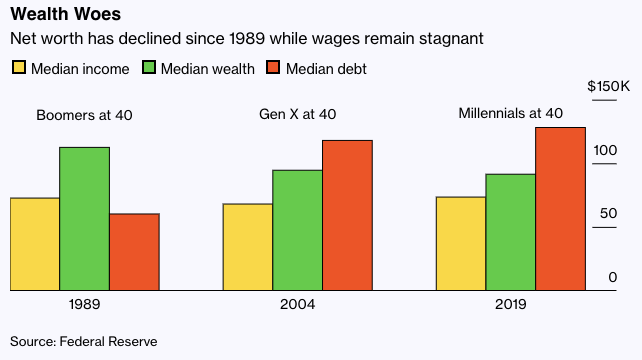
Fix the money, Fix the world
This installment of The Pomp Letter is free for everyone. I send this email to our investors daily. If you would also like to receive it every morning, join the 185,000 other investors today.To investors,The highly anticipated virtual bitcoin conference was held yesterday. The opening conversation was between Jack Dorsey, Cathie Wood, and Elon Musk. The moderator was Steve Lee, who did a fantastic job moving the conversation along.Before we dive into the substance of the conversation, it is hard to ignore the fact that we were watching three of the most impressive people in business and finance. Cathie Wood has taken the finance world by storm leveraging actively managed ETFs, which also benefits from a research heavy approach. I’ve had Cathie on the podcast multiple times and each time I am struck by her commitment to transparency and community engagement. Not exactly the standard for a multi-billion dollar money manager.Jack Dorsey is one of the best entrepreneurs ever. He has built two multi-billion dollar companies between Twitter and Square. As if that wasn’t difficult enough, Jack currently runs both businesses as the CEO. These two companies are in completely different industries and require the ability to navigate seemingly different complexities. On top of his executive duties, Jack Dorsey has also become one of the most visible proponents of bitcoin globally. Elon Musk needs no introduction. Similar to Dorsey, he runs multiple multi-billion dollar companies. He spent his early career thinking about payments through the creation of PayPal and has recently become interested in bitcoin and various other cryptocurrencies. The big controversy was Musk’s recent comments about bitcoin’s energy consumption and whether there should be concern over the mix between renewable / non-renewable sources. So what happened yesterday? This was one of the most interesting conversations I have heard in awhile. Each person brought a different perspective. Cathie understands the institutional investment world better than almost anyone. Jack understands the bitcoin ethos, the internet, and potential impact on developing nations from bitcoin. Elon is much more focused on the technical components of the network. When you combine these three different interests, you get a holistic picture of what is being built before our eyes. There was a comment at the end that I think ultimately sums up the opportunity though. Jack Dorsey explicitly stated that “my hope is that [bitcoin] creates world peace.”That is the entire point of this global effort. Earlier in the day, I had explained something similar to Greg Foss in a recorded conversation. Here were my comments:An entire generation is growing up with the awareness that the devaluation of their currency is leading to an inability to get ahead. People feel like they can’t afford the basics. They have to keep taking on more debt to simply enjoy an average lifestyle. This dire situation is attributable to numerous factors. Wages don’t rise at the same pace as inflation. Our parents were taught to save money, rather than shown why they must invest to keep up. Here are two charts that tell the entire story:As you can see, people have less wealth and more debt. The devaluation of fiat currencies has made everything more expensive around us. The promise of bitcoin is that we will usher in a new era of sound money. The currency is outside the system. No one controls it. People will once again be able to simply save their way to financial freedom. The money won’t lose value over time. In fact, the purchasing power will increase.We know that central banks are likely the largest contributor of wealth inequality in the world. Here is Stanley Druckenmiller, one of the best investors on Wall Street over the last 30 years, explicitly stating it:So when Jack Dorsey states that bitcoin has the potential to usher in world peace, he isn’t very far off. If we fix the money, we have a chance to fix the world. We can lift billions of people out of poverty. We can return to free markets where everyone has an opportunity to build a life of wealth, happiness, and freedom. That is what most people want — to simply build a better life for themselves and their families. Fix the money, fix the world. The conversation yesterday pushed us closer to that goal. Watching Jack Dorsey, Cathie Wood, and Elon Musk discussing this technology was incredible. From non-existence 12 years ago to an international stage with the world’s best entrepreneurs and investors. The crazy part? We are all likely underestimating how big this will be.Hope each of you has a great day. I’ll talk to you tomorrow.-PompSPONSORED: With the markets swinging wildly this year, the need for diversification has never been more apparent. Vinovest gives investors access to investment grade wines, an asset class that had only been available to the ultra wealthy until now.Vinovest uses an algorithm to select and manage your portfolio, delivering cli
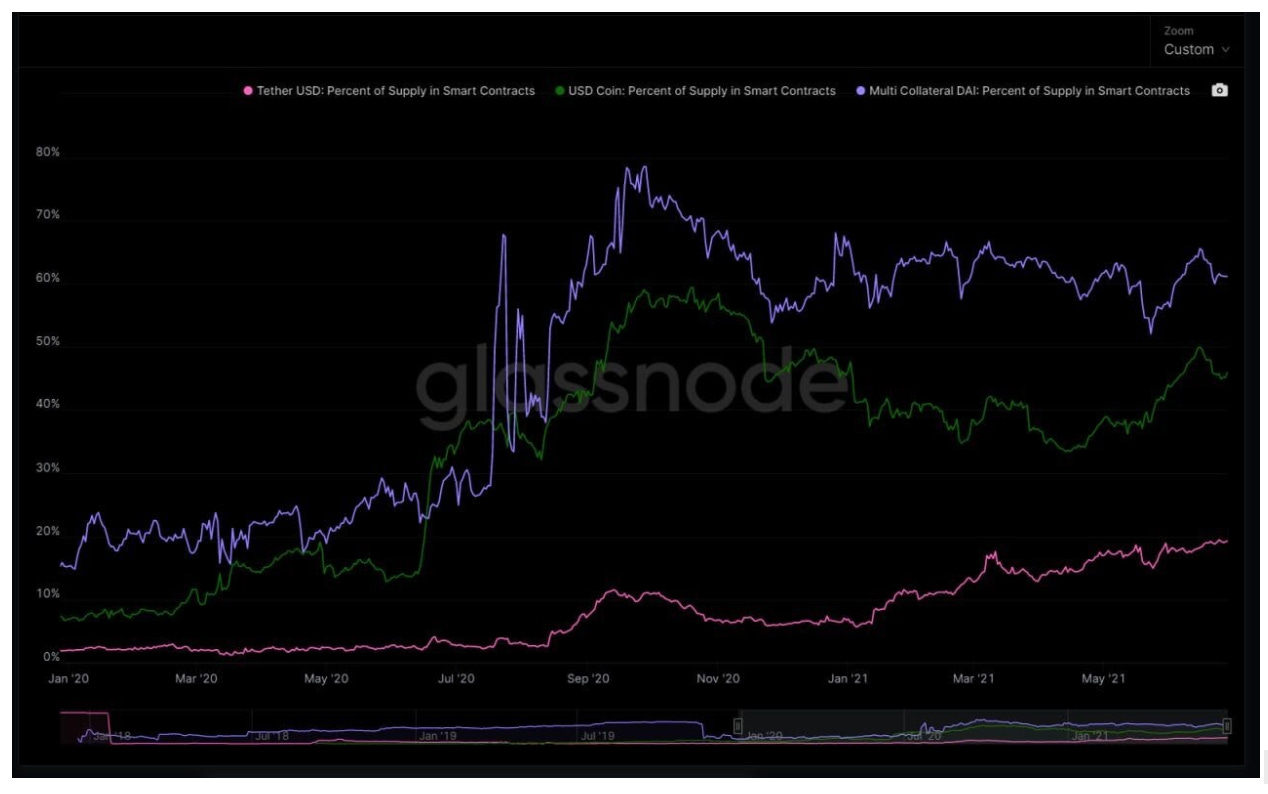
Stablecoins, Institutions, and DeFi
To investors,I have been doing a deep dive on the stablecoin market, which is quickly becoming an important of the crypto industry. Adoption is occurring across various market participants — from individuals to corporations to financial institutions. The technology is drastically more superior than anything else out there, so it feels inevitable that people will begin to leverage stablecoins for a large chunk of transactions.The folks at Circle have built the fastest growing, regulated stablecoin (USDC). It has increased market cap by more than 50x over the last 12 months or so. Insane. I asked them to put together a guest post about what they are seeing in the market. You can read their response here:The Growth of DeFiThe emergence of DeFi has been a major catalyst for growth of the entire crypto industry since 2020, attracting media attention and spawning a host of new blockchain-based protocols that are democratizing financial services around the globe.Total Value Locked (TVL) measures the aggregate value of all digital assets held in DeFi protocol smart contracts, including cryptocurrencies like Bitcoin and Ethereum and dollar digital currencies like USD Coin (USDC). Value locked in DeFi protocols provides liquidity for trading between different tokens, borrowing on-chain, minting derivative assets, and insuring digital and real world products.At the beginning of July 2021, TVL stood at less than $400 million. In just one year, TVL across DeFi protocols has grown to nearly $50 billion, an increase of more than 100x in that short time.USDC plays an integral role in some of the largest and most popular DeFi protocols. Dollar digital currencies allow DeFi yields to be denominated in familiar terms, and USDC trading pairs on decentralized exchanges like Uniswap dominate trading volume, with more than $3.2 billion in USDC volume in the last seven days.USDC is also one of the largest sources of collateral and TVL across the DeFi ecosystem. Of more than $25 billion in circulation, nearly half of all USDC is allocated to DeFi protocol smart contracts, according to data from on-chain analytics provider Glassnode.Between two of the largest DeFi lending protocols on the market today, Compound and Aave, more than $5.2 billion USDC is locked providing liquidity for borrowers — more than 20% of the 25 billion USDC currently in circulation.Institutional InvestmentEstablished financial institutions have looked on with great interest; DeFi has the potential to lower fixed costs by reducing centralized technical infrastructure, addresses many pain points of cross-border value transmission, and opens the door to innovative new financial products and services that could unlock additional revenue streams.In an era of near-zero national interest rates, DeFi yields between 2% and 20% using protocols like Compound Finance are attractive to retail customers and financial institutions alike. But interacting with DeFi protocols still requires meaningful technical and subject matter expertise, and relies on critical inputs like smart contract addresses and wallet infrastructure with little customization and few guardrails.Institutions that capture a first-mover advantage when it comes to DeFi will have a distinct edge over those that arrive late to the party. In addition to gaining valuable experience in a fast-paced industry, institutions early to DeFi will benefit from governance token distributions that in most cases are only slated to remain active a few years after launching.These governance tokens, used in voting on the future direction and decisions of the protocol, can be sold right away like other digital assets — but could prove more valuable for their stake in decentralized applications that could one day coordinate billions or trillions of dollars in value.Accessing DeFi is a challenging but critical initiative for financial institutions in the coming years. That’s why Circle will soon release DeFi API, the easiest way to deploy capital into DeFi using trusted Circle infrastructure, right from the Circle Account. Create structured, guided DeFi access for your organization or customers using powerful and simple Circle APIs to reap the rewards of DeFi innovations without the challenges of unhosted wallets and complicated UX interactions.The Circle DeFi API waitlist is open now. Add your business to the list and be a pioneer of Institutions in DeFi.Pomp’s analysis:These comments from Circle are fascinating because they really highlight the institutional adoption that is underway. When you start thinking about the yield generation that is available in the market today, it is hard to see a scenario where majority of Wall Street institutions continue to sit on the sidelines. I personally know of numerous multi-billion dollar asset managers, who fancy themselves as ultra conservative, that are beginning to dip their toes in the water. They are specifically looking for risk-mitigated ways to generate 8-12% yields. This has bec

Financial Education Is A National Emergency
This installment of The Pomp Letter is free for everyone. I send this email to our investors daily. If you would also like to receive it every morning, join the 185,000 other investors today.To investors,The lack of financial education should be a national emergency in the United States. Only about 50% of states require high schools to teach students personal finance and there are many statistics that point out just how financially illiterate our society is currently:* More than 53% of adults say thinking about their financial situation makes them anxious (source)* 44% of adults say discussing their finances is stressful (source)* About 66% of American families don’t have savings that are equivalent to 6 weeks of expenses (source)* 78% of adults live paycheck-to-paycheck (source)* 80% of young people (people under the age of 35 years old) couldn’t answer majority of financial literacy questions accurately (source)* 54% of millennials are concerned about their student loan debt (source)… there is currently over $1.5 trillion in student loan debt* Less than 20% of adults feel confident in their savings habits (source)These are just some of the statistics that highlight how bad the problem has become. There are plenty more. Here is the craziest part in my opinion — most people believe they will never be able to build a life of wealth because they don’t inherit anything and they don’t have a large salary.While counterintuitive, here is what the data says:* Approximately 80% of millionaires inherited $0* 33% of millionaires never made $100,000 in a single yearThe truth is that you can build a life of wealth by simply being educated and having a disciplined approach. It is easy to learn, but obviously difficult to execute. It has become more apparent over the years that our school systems are not going to solve this financial education problem. Rather than waste time complaining about the lack of change, my brothers and I have decided to do something about it.Today we are launching The Best Business Show, which we hope will become the most entertaining way for people to learn about business, finance, and investing. Simply, it is the business show that we wish we had when we were learning. Here is the announcement video:The idea here is that we will livestream for 2 hours every weekday from 11am to 1p EST. We’ll explain what is happening in business and investing, why it is happening, how it impacts the average person, and explain various timeless investing principles. We aren’t journalists. We will leave that important job to the real professionals. We are simply three guys who educated ourselves over the years and have been able to build a nice life through those acquired skills. Now we’re going to share that information with young people by bringing it to them on the platforms that they are already on. The internet is powerful. We don’t need a cable news network and we don’t need to ask permission from anyone. With just an internet connection, we can create what we believe will become the largest business show in the world. It won’t be easy. It will take a lot of hard work. But it is the single most impactful thing we can think to do in an effort to make an impact on this pervasive problem. * If you’re interested in checking it out, you can subscribe to the YouTube channel here: https://www.youtube.com/c/anthonypomplianoIt would be awesome to see you there each day as we build this :) Hope each of you has a great day. I’ll talk to everyone tomorrow. BONUS: If you’re really passionate about this, you can purchase a “Day One” t-shirt from our new merchandise store. We’ll only sell these through the month of July, so we’ll always know who was actually tuned in from the beginning! Check it out: Go to the merchandise store-Pomp🚨 BONUS: We are running our 5th cohort for the Bitcoin and Crypto Training Course starting tomorrow, Tuesday July 13th. Graduates have already been hired at Coinbase, BlockFi, Gemini, Kraken, and many other great companies. Want to increase chances of being hired? Apply here: https://pompscryptocourse.comTHE RUNDOWN:USDC Assets to Be Disclosed in SEC Filings, Circle CEO Says: Circle CEO Jeremy Allaire reiterated his pledge to pull back the curtain a little more on the USDC stablecoin a day after he announced plans to take his company public. “Stablecoins are a more powerful innovation than the closed-loop, wallet garden proprietary types of payment systems of the past,” Allaire said Friday on CoinDesk TV’s “First Mover.” “They deserve a greater degree of transparency.” Read more.Another Large Bank in South Korea to Provide Custody of Crypto Assets: Woori Financial Group, one of South Korea’s largest banking companies, is getting into digital asset custody. According to a report in The Korea Economic Daily, the bank is setting up a custody joint venture with Coinplug, one of the earliest bitcoin exchanges in South Korea and a blockchain financial services provider. Read more.Single Buyer Apes
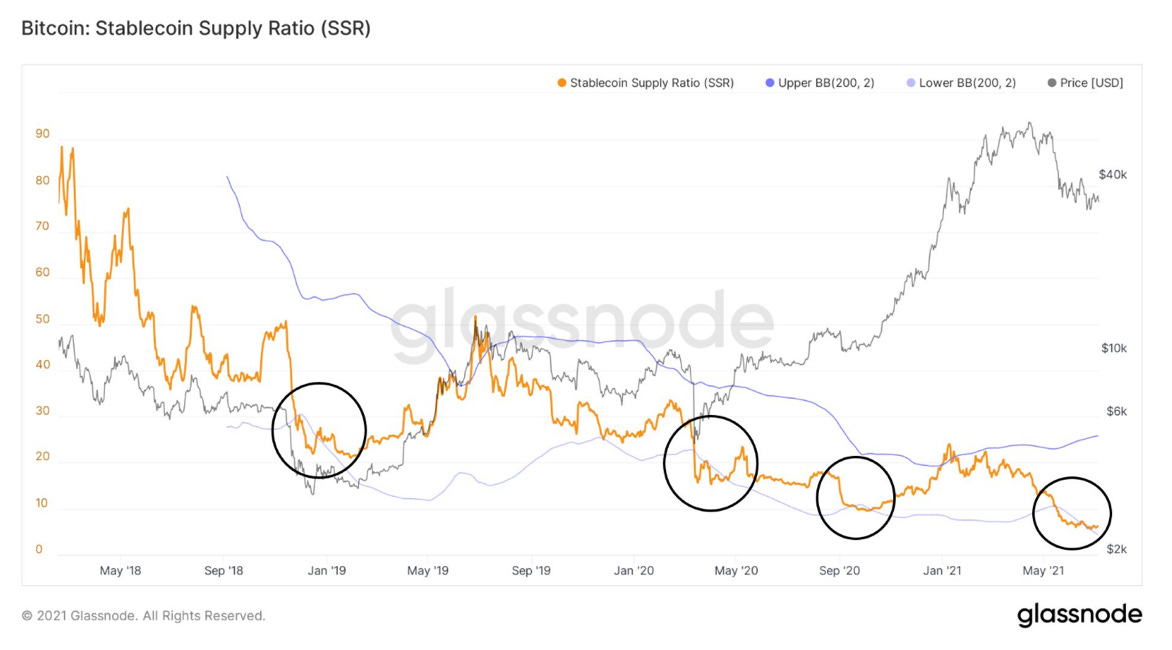
New Whales Entering The Market & Bitcoin Leaving Exchanges
To investors,Will Clemente breaks down this week’s bitcoin situation using on-chain metrics to separate the signal from the noise. You can follow Will on Twitter or sign up for his email by clicking here. Here is Will’s analysis:Hope all is well and you had a great week. Another week of ranging, although on-chain is showing some interesting developments. Let’s dive in.Here are the key takeaways from this week: * Supply continues to be re-accumulated by entities with little history of selling, this has vamped up heavily* Exchange flows have returned to a clear trend of accumulation, down -17,794 BTC * Hash Rate seems to have found at least a local bottom * Grayscale premium getting bid up, but share unlocking on the horizon * Finally, an uptick in positive whale activity * Stablecoins flowing in* New all time highs in users coming on the network * On-chain activity transfer is dead First, let’s take a look at this chart representing the net growth of users, or “entities”, coming on the Bitcoin network. The growth of new users is now reaching new all-time highs, over 50,000 new entities coming on-chain a day.Next we’re going to break down the re-accumulation that’s been taking place. This trend has done nothing but accelerate this week. There’s a few aspects to this: the amount of supply being replenished from the marketplace, the size of the entities absorbing that supply and the spending behavior of the entities absorbing that supply. We’ll go through this in the previously stated order.Let’s look at exchange flows. Exchanges are down -17,794 BTC this week. Instead of just showing you the balance on exchanges chart you’ve seen a million times; here’s a variant of it that I created. Using Bollinger Bands, the signal looks at times that coins are either moved onto exchanges heavily or pulled off exchanges heavily. This just flashed the first “buy” signal in over 3 months, giving you another way to see the trend reversal into accumulation. Next up we have the size of the entities that have been buying. Retail has been buying heavily for weeks now, but we finally got the uptick in whales that we were waiting for. There were 17 new whales birthed on the blockchain this week, while at the same time the overall holdings of whales increase up by 65,429 BTC. Lastly, we have the spending behavior of the entities that are buying. Entities that have a very low history of selling are continuing to absorb more coins from speculative traders, with the liquid supply ratio jumping. This force continues to grind upwards against price. Given no capitulation event, in my humble opinion it is a matter of “when” the re-accumulation process will be finished rather than “if”. Once the process completes the market would experience a supply shock. Next up we have the Stablecoin Supply Ratio Oscillator created by Willy Woo, using Bollinger Bands. This current recovery is resembling that of late 2018, March 2020, and September 2020 as well. Stablecoins are starting to flow back in from the sidelines. Grayscale’s premium seems to be in an uptrend, another sign of capital starting to flow back into the market. Will be interesting to see how the upcoming unlock affects the premium. Someone like Lyn Alden could probably give you a much better explanation, but from my understanding these are the bull and bear cases I came up with. Bull: Anyone who was long the shares and shorting futures that sells their shares once unlocked will be covering those shorts as well. Bear: If the premium gets sold back down, institutional capital might flow into GBTC instead of spot BTC. Hash Rate finally seems to have found at least a local bottom, trending actually slightly upward throughout this week. It’s a long road to full recovery but good to see this possible end to the hash crash. Miners also appear to be accumulating again slightly, adding 1,045 BTC to their balance this week.Overall, on-chain activity is dead, shown by the number of Bitcoin transactions. If I had to build up a bear case and challenge my own opinion this is one of the charts I would use; however, a portion of this drawdown is likely from people using the Bitcoin network less due to slower block times.That is it for today’s analysis. Hopefully you found this helpful. I highly suggest you subscribe to Will Clemente’s email where he breaks down on-chain metrics multiple times per week: Click hereSPONSORED: Amber Group is a leading global crypto finance service provider operating around the world and around the clock with a presence in Hong Kong, Taipei, Seoul, and Vancouver. Founded in 2017, Amber Group is committed to combining best-in-class technology with sophisticated quantitative research to offer clients a streamlined crypto finance experience.The platform now services over 500 institutions and 100,000+ individual investors across the Amber Pro web platform, the Amber App, as well as their 24/7 trading desk. To date, Amber Group has cumulatively traded more than $330 billion acros
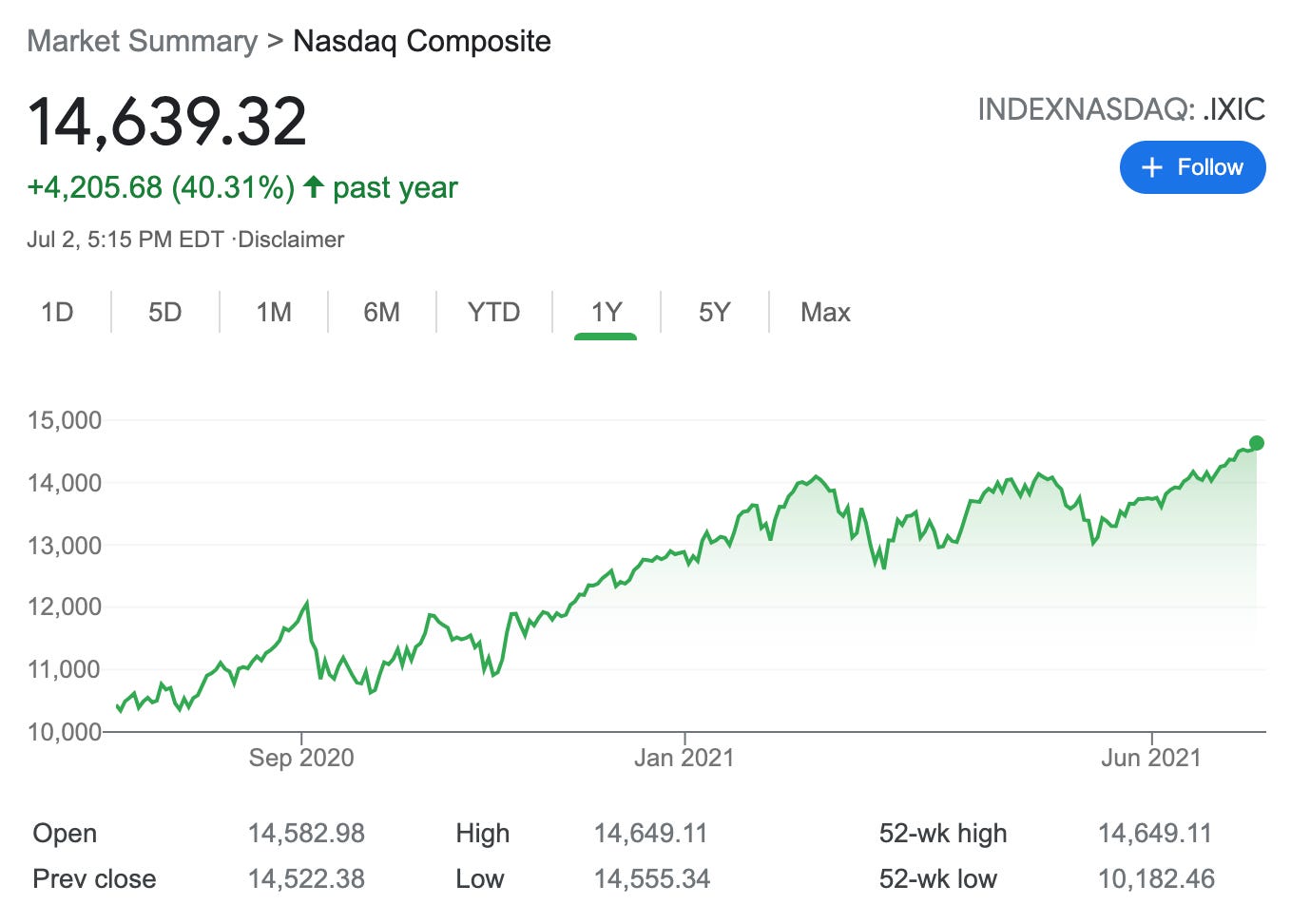
The World Is So Crazy That Grocery Stores Are Speculating Like Hedge Funds Now
This installment of The Pomp Letter is free for everyone. I send this email to our investors daily. If you would also like to receive it every morning, join the 185,000 other investors today.To investors,Something very unique is happening in the public markets. The S&P 500 has hit a new all-time high every day for the last 7 days. The Nasdaq also sits at an all-time high as well. Look at this chart — everything is up and to the right. The bull market rages on.This is all happening while millions of Americans are still experiencing pandemic-related issues. It seems like the complex beast known as the economy has broken all preconceived notions of how it is supposed to work. Gasoline prices have increased $1 from a year ago, which brings the national average to $3.13 currently. The prices of commodities have increased so rapidly that home builders are throwing their hands up and refusing to participate in the market until they can better forecast their cost structures (read this epic thread for context). This is not a problem specific to the United States though. The Washington Post had a great article highlighting the exploding food prices around the world. In the piece, Adam Taylor writes:“The U.N. Food and Agriculture Organization said its food price index, which measures the global price of select foods, had in May hit highs not seen since 2011, up 40 percent year-on-year.A variety of factors are to blame, including a surge in orders from China, fluctuating oil prices, a sliding U.S. dollar, and looming above all: the pandemic, and in some places, reopening.But experts say that in the face of growing populations, globalization and climate change, higher prices may not be a blip.”So what about the United States? Surely we couldn’t be experiencing the same thing in the most developed nation in the world, right? Wrong. Take this opening from Jaewon Kang’s article in the Wall Street Journal this morning:“Supermarkets are stocking up on everything from sugar to frozen meat before they get more pricey, girding for what some executives anticipate will be some of the highest price increases in recent memory.Some supermarkets said they are buying and storing supplies to keep their shelves full amid stronger demand. Grocery sales in the U.S. for the week ended June 19 rose about 15% from two years earlier and increased 0.5% from a year earlier, according to Jefferies and NielsenIQ data.Stockpiling by food retailers is driving shortages of some staples, grocery industry executives said, and is challenging a U.S. food supply chain already squeezed by transportation costs, labor pressure and ingredient constraints.The move is a reversal from last year when consumers hoarded groceries because of concerns about food availability, disrupting the food industry. Now, retailers themselves are stockpiling to keep costs down and protect margins.”There is a level of insanity at the moment that is hard to comprehend. Grocery stores are acting like hedge funds through their speculation on future food prices. Think about that for a second. The current economy is so out of whack that the grocery stores are speculating. Speaking of speculation, Robinhood revealed quite a bit of information in their S-1 filing. Here are a few statistics that stood out to me:* Robinhood has 18 million funded accounts* Almost 100% of the funded accounts are active monthly (17.7 million)* Robinhood has $81 billion of assets under custodyThis is an incredibly large business, but there are some nasty sides to it too. For example, Tanay Jaipuria correctly identified one issue:“The DAU/MAU ratio is ~47%. For context, the very best social networks tend to be in the 50-65% range, so it’s quite crazy that the daily usage rate for Robinhood is that high.”Given the research around less trading historically equating to higher long-term returns, this level of activity is a big negative for the user base’s economic outlook. But that isn’t even the worst part. Check out this insanity:* Approximately 6% of Robinhood’s total revenue comes from users trading Dogecoin.* Approximately 37% of Robinhood’s total revenue comes from users trading options. * Over 6.5% of Robinhood’s total revenue comes from providing margin loans to users.These statistics scream SPECULATION! to me. Speculation isn’t necessarily a bad thing on its own, but when you add in the context of the broader financial markets and economic calamities, the current situation is alarming to say the least.But as I mentioned at the top of this letter, the S&P 500 and Nasdaq continue to hit all-time highs. That means the wealthiest people in our society continue to get richer and richer, while things like rising food costs continue to eat away at the financial well-being of the economy’s most vulnerable. Rather than spend time complaining about the situation, my suggestion to every person is to get educated about how the economy works and position yourself to benefit from the macro economic forces. You, nor I,
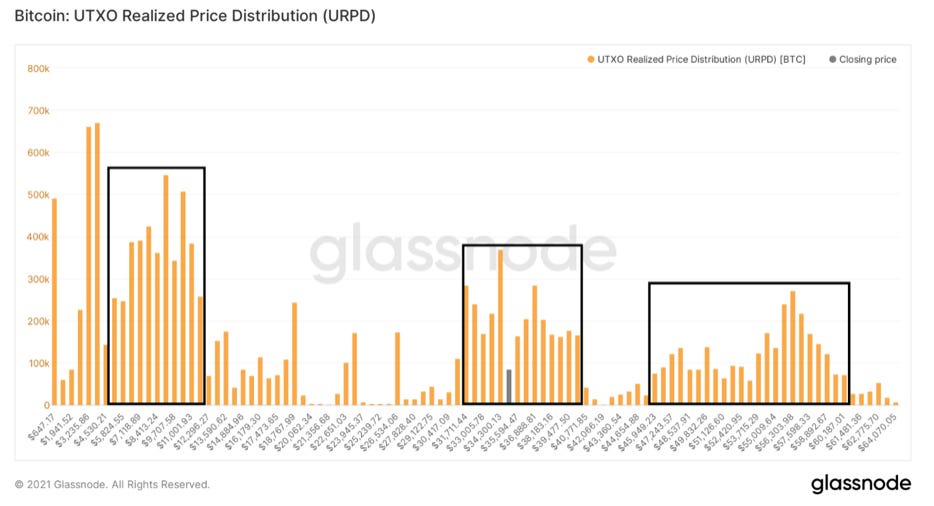
How China's Crackdown Is Impacting On-Chain Metrics
To investors,Will Clemente breaks down this week’s bitcoin situation using on-chain metrics to separate the signal from the noise. You can follow Will on Twitter or sign up for his email by clicking here. Here is Will’s analysis:Hope all is well and you had a great week. It’s been yet another week of ranging for Bitcoin, with price trading in this current $30K-$40K range for over 6 weeks now. Let’s dive into this week’s on-chain overview for 6/25 to 7/1, hope you enjoy. Here are some key takeaways from this week:* Bitcoin continues to build up a big base of capital between $32K-$40K, over 15% of BTC’s money supply has moved in this current range* Mean daily Hash Rate continues to trend down, reaching the lowest it has been since late 2019 at one point; >23 minute Block intervals at one point, Issuance slowed, Difficulty adjustment coming in the next few days* Miners slightly selling over the last month (assumed to be part of the China miner migration) * Younger coins continue to sell, including the largest day of net losses in Bitcoin’s history (in USD terms)* Still no major uptick in new whales, Retail adding aggressively (broken down in detail)* Re-accumulation continues (looked at in detail)* Exchange flows sideways bullish* Stablecoins continue to slowly flow back in* New users “W” shaped recovery continues, back over 36,000 new users coming on-chain a dayGiven the amount of time we have spent in this range, there is now a clear third zone of on-chain volume for this bull market. 15.91% of Bitcoin’s money supply has now moved in this current range.One of the most talked about phenomenon regarding Bitcoin lately has been the dramatic drop in hash rate. Hash rate continues to trend down, with a very small bounce on Wednesday the 28th. On the 27th it dropped to the lowest levels it has been since late 2019. Despite some minor impacts, the network continues to function as it always has and always will. Let us look at some of these minor impacts that the drop in hash rate has had on the Bitcoin protocol.One last note on miners. It has been widely spread that miners have played a big role in the price decline over the last few weeks, as supposedly miners have needed to sell BTC in order to cover the costs of migrating out of China. However, according to Glassnode, miners have reduced their holdings by 5,269 BTC since May. Most of this selling came at the beginning of June and is nothing that the Bitcoin market cannot easily absorb.In raw dollar terms, this was the largest day of realized losses in Bitcoin’s history, outpacing the previous record set in May. In total, $4,456,786,884 of losses were realized.Here’s the breakdown of buy/sell behavior of different cohorts since early June 5th to now (7/1 at time of writing):* Retail or Shrimp (0.001-1 BTC): + 4,396 BTC * Crab (1-10 BTC): +14,942* Octopus/Fish (10-100) BTC: +15,705* Dolphins/Sharks 100-1,000 BTC: -17,374 * Whales/Humpbacks 1,000-10,000 BTC: -27,037So in a general sense it appears smaller entities have been buying heavily while larger entities have been trimming their holdings. Looking at the age of coins being sold according to metrics such as coin days destroyed, dormancy, ASOL, liveliness it appears, in combination with the cohort data, young whales have done most selling over the last month. Let’s hone in on whales; which of course are the cohort that moves the market the most. The number of new whales has continued to trend down, something we’ve been tracking for weeks now.With this being said, we can conclude that the vast majority of this big w shaped recovery in new users coming on-chain is retail; given that the number of whales is trending down, retail is buying, and whales are selling. Would be fascinating to know how much of this move up is coming from Latin American countries. The network is back above 34,000 new users coming on a day. Remember, this is not addresses, but rather uses heuristics to identify entities on the blockchain. In regard to re-accumulation, illiquid supply change is still in the green and the liquid supply ratio; created with help charting from Willy Woo; continues to trend up. These indicators both suggest the same concept, supply continues to flow into illiquid entities. I think a good way to analogize what is going on to the following: a lot of liquid (no pun intended) has spilled out on the counter, the market is now slowly adding paper towels. The speed of the paper towels being added is represented by the slope in the liquid supply ratio, but as long as there is no more spill (capitulation where a lot of new supply becomes liquid), eventually the liquid (loose coins) will be absorbed by strong hands. With this being said, as we have talked about since we initially began ranging over a month ago, we will range until this re-accumulation is complete. Exchange flows are also now looking sideways bullish; a change in trend from what we saw leading up to May’s big price drawdown. This also shows accumulation.Look
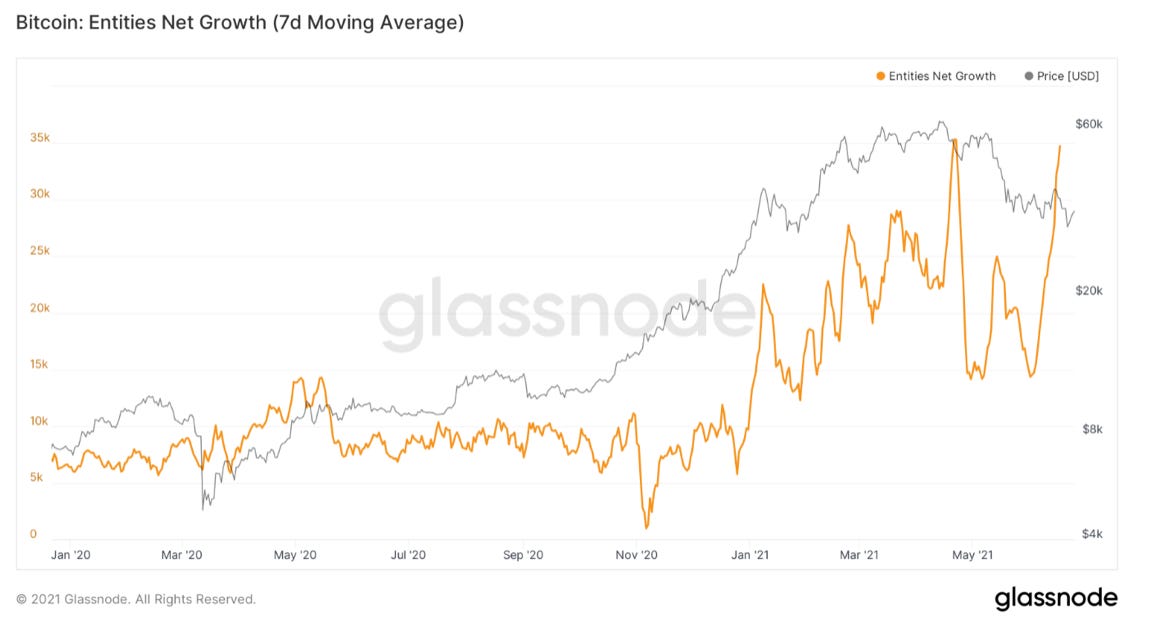
Strong Hands Are Aggressively Accumulating Bitcoin
To investors,Will Clemente breaks down this week’s bitcoin situation using on-chain metrics to separate the signal from the noise. You can follow Will on Twitter or sign up for his email by clicking here. Here is Will’s analysis:Hope all is well, and you had a great week. This was an interesting week in terms of price, with BTC dipping below 30K, retracing all the gains from 2021. Since then, we’ve rallied back above the short term hourly downtrend and retested that trend as support at the time of writing ($35,118). Despite price fluctuations, not much has changed in terms of on-chain structure from last week. Mostly seeing continuation of trends in investor behavior we have already been following. Let’s dive in.From a high level, here are some of the key takeaways this week:* Long-Term Holder buying offset selling from Short-Term by 21,136 BTC this week* Miners selling, Hash rate down* “W” shaped recovery in new users coming on the network* Still a lack of new whales coming on the network * Stablecoins rotating back in from the sidelines* Supply continues to rotate into entities with little history of selling (illiquid entities)* OTC Desk Flows are bullish, while exchange flows slightly bearish (up ~10K BTC this week) Accumulation from strong-hands and experienced market participants has continued. The illiquid supply change metric, also dubbed the “Rick Astley Indicator” by Willy Woo, is still continuing its trend of strong accumulation from entities that statistically have a very low likelihood of selling. For weeks now, we’ve been watching the reversal of the drawdown this metric has had during the original price drawdown that dropped us into this current 30K-40K range. When we looked at this metric last week, we only had 3 days in the green and they weren’t large bars, however this week we’ve gotten strong confirmation of the positive trend with 7 straight fairly large green days; with the 30 day change of liquid to illiquid supply reaching as high as 95,800 BTC on Monday.As a variant of this, I introduced an idea to Willy Woo of comparing liquid to liquid supply in a simple ratio. This ratio is very similar to the metric above, essentially describing the same thing, but is just a trendline of this simple ratio. Willy charted out the ratio for me and noticed something very interesting. What he noticed was a clear bullish divergence (when an oscillator makes a higher low, but price makes lower low) in the ratio. The last time we had a divergence this clear in the ratio was during the recovery from the correction in late January earlier this year. This supports the idea of re-accumulation we’ve been talking about heavily. Simplified, the trend of strong hands buying is increasing as price is decreasing. By the way, yes, selling is still coming from young entities. I think this point has been made in this newsletter for well over a month now, but all indication of the age of coins being sold on-chain are still trending down. This week, long-term holders buying is now offsetting selling from short-term holders in a big way, with LTHs adding 21,136 more BTC to their holdings than STHs have reduced their holdings by. In the last week LTHs have added 120,739 BTC while STHs have reduced their holdings by 97,333 BTC. To be noted: some of this is STH entities aging into the LTH cohort that bought Bitcoin around late January (155 day cutoff). This divergence between the two in the chart below can be interpreted differently depending on your view of market structure based on other things; it resembles what occurs both at the tail end of a bull market, but also what occurred in the middle of both previous bull markets. What you see is this large divergence between the 2013 “double pumps”, as well as a more moderate, but still noticeable divergence in late 2016. This essentially means that experienced were setting the floor for bull run continuation. I highly suspect this is what is going on now, when combined with other broader metrics that are not signaling Bitcoin being in a bear market. Although the number of new whales (entities holding over 1,000 BTC) is still flat, which is something I think is crucial to see for big a continuation of the bull market, the number of new entities coming on the network overall is showing a very nice W shaped recovery. I would be very curious to see how many of these new users are coming from Latin America. Nonetheless, this uptick is not resemblance of what occurred at the tail end of any previous bull market. Next up we have SOPR, something I believe we’ve touched on every week; a metric that looks at the profit taking of coins trading on any given day. Similar to the liquid supply ratio, this is showing a clear bullish divergence. To me this indicates that any strong capitulation that was going to be done has already taken place and that the panic behavior and willingness to sell at a loss is dissipating. This is the clearest bull div that I’ve seen in this indicator since lat

China Just Made A Significant Geopolitical Mistake
This installment of The Pomp Letter is free for everyone. I send this email to our investors daily. If you would also like to receive it every morning, join the 185,000 other investors today.To investors,Majority of geopolitical mistakes in history have been related to violent combat. They either occur in the high tension period leading up to the conflict or they occur during the actual conflict with another nation state. This is a story as old as time.Every once in awhile a mistake is made on the global stage that doesn’t involve violent combat though. These situations almost always rely on a nation state impairing themselves in some way, instead of there being some sort of harm done to another nation. You can think of this as a self-inflicted wound.One historical example of these self-inflicted wounds is internet access in North Korea. According to Wikipedia, “Internet access is available in North Korea, but is only permitted with special authorization. It is primarily used for government purposes, and also by foreigners. The country has some broadband infrastructure, including fiber optic links between major institutions. Online services for most individuals and institutions are provided through a free domestic-only network known as Kwangmyong, with access to the global Internet limited to a much smaller group.”The country’s leadership essentially made the decision that the internet would only be used by the government and ruling family. The every day citizens and business owners are not allowed to access the open internet without special permission. However, they are allowed to use an intranet that mimics the value proposition of the internet, yet has none of the freedoms or true value that an open system provides. It doesn’t take a rocket scientist to see that the decision from North Korea has been a big mistake. They chose to pursue authoritarian control of the country and population over economic prosperity. While this likely has been a key decision to consolidating power, it has spelled disaster for the citizens of the country. China is in the process of repeating this mistake. The superpower of the East has had an interesting relationship with bitcoin over time. The government has essentially banned the digital currency and any related activities for years. That ban only applies to the average citizen or entrepreneur though. If you are a government official, or if you’re able to secure special permission, the bitcoin network was available for your legal use. This is almost an exact replica of the North Korea internet strategy — keep the empowering technology for the elites or their friends.But China has recently doubled down on their anti-bitcoin stance. They are enforcing the ban in a much more aggressive manner in the last few weeks. This has led to upwards of 90% of all bitcoin miners in the country being shut down. These miners have two choices — patiently wait to see if the regulators will allow them to resume operations later or pick up and leave the region to begin re-building their business elsewhere. As you would expect, many of the Chinese miners have decided to leave China. This decision means that they operationally have to shut down their mining equipment, pack it up, ship it to a new location, set it up again, and then commence mining activities. We can see this happening in real time as the total mining hash rate appears to have fallen off a cliff recently. The beauty of bitcoin is that a drop in hash rate like this will be quickly corrected by the mining difficulty adjustment that occurs approximately every two weeks. For those who are unaware of how this works, the simplest explanation is that mining bitcoin will become easier for those still on the network (this makes the remaining miners more profitable until the miners who left are able to return to their mining activities). There are a few ramifications that I think are worth calling out here.First, this move by China is a significant blow to the bitcoin critics. The anti-bitcoin argument historically revolved around China’s market share of mining or the ability for the country to control/manipulate the network. As we are watching miners move out of the country, this argument is losing most of its teeth. China doesn’t control bitcoin and never has. Also, the free market of economic incentives will always lead bitcoin miners to seek the lowest cost power, specifically in regions where there is the greatest political and regulatory stability. Next, the United States is a massive winner in this situation. Take for example the exclusive gain in hash rate for the largest American bitcoin mining pool, Foundry USA.While China is losing market share in bitcoin mining, the United States is gaining market share. It won’t necessarily be one-for-one because some Chinese miners will not come to the US, but it is hard to argue any country is going to benefit more from this than the United States. This is why I started the letter with referen
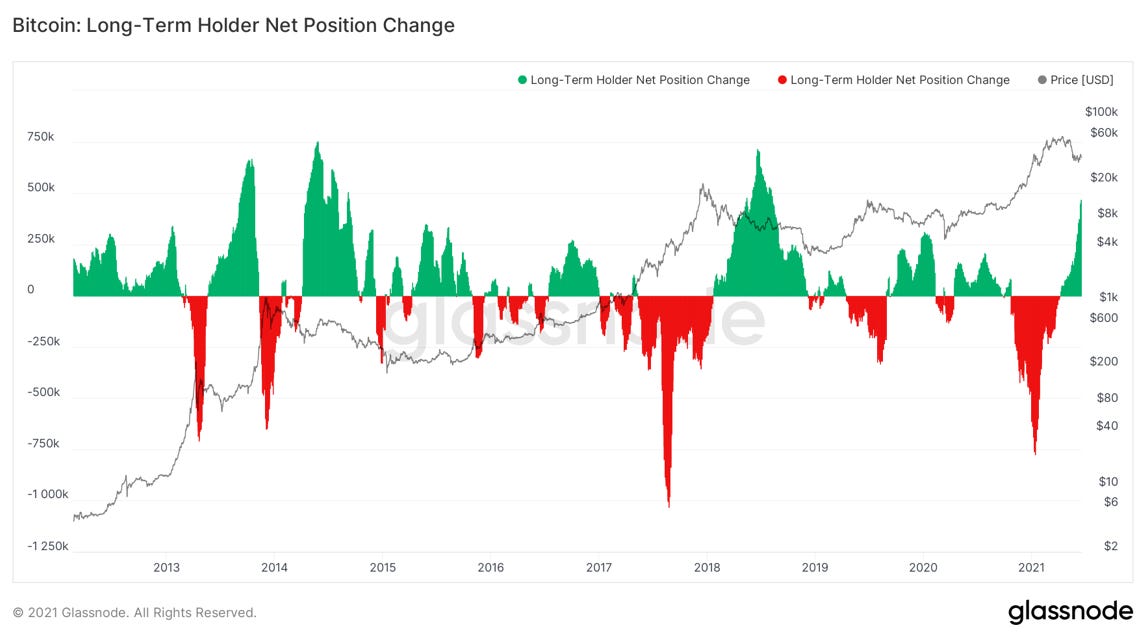
Bitcoin Is Heavily Oversold & Strong Hands Can't Stop Buying
To investors,Will Clemente breaks down this week’s bitcoin situation using on-chain metrics to separate the signal from the noise. You can follow Will on Twitter or sign up for his email by clicking here. Here is Will’s analysis:Hope all is well and you had a great week. Last week we discussed how Bitcoin was moving into the later stages of the re-accumulation phase that we have been tracking throughout the last month. Since then, we retested range highs just above $41K before dipping back down to the middle trend line of the current range, trading between $37K-$38K at the time of writing. Firstly, let’s zoom out to some metrics that can help us establish positional awareness of where we stand in a broader sense Then, we’ll zoom into some of the trends that are key to watch over the next week(s) in my humble opinion.These are the key takeaways from this week’s letter:* Bitcoin is very oversold in accordance with on-chain* BTC now sits on historically important inflection points for several major on-chain indicators* Long-term holders continue to scoop up discounted BTC* Selling from STHs continues to lose steam* Accumulation continues to grow stronger* Still a lack of what resembles new institutional/high net-worth buyers. (whales)NUPL is one of my favorite metrics to look at for determining broader market structure. This looks at the difference between realized cap (the capitalization of Bitcoin based on the price of which each coin was last moved) and market cap, and then dividing this difference by market cap. This can give a representation of market sentiment, as during the euphoric later stages of the bull market investors realize profits at a lower rate, and during bearish stages investors begin to realize profits at a higher rate. Glassnode separates these “stages” into different zones: Greed, Optimism/Denial, Hope/Fear, and Capitulation. Glassnode is then able to apply this metric to long-term holders and short-term holders specifically. Looking at LTH-NUPL on a 14-day moving average, we are right on what has been the threshold for bull/bear markets historically. Between the 2013 double pumps we bounced off the lower band of the euphoria zone, whereas in the end of 2017 we dropped through the zone like a rock after a very small relief bounce. We will have to keep an eye on this over the next few weeks to get a better gauge of bull/bear in terms of this metric.The next metric that suggests this same concept of being at an inflection point is long-term holder SOPR. We’ve discussed SOPR many times but have never looked at this metric in terms of long-term holders. The current level this metric is approaching served as support in 2013 and in late 2017, but also as resistance after the 2013 bull run, after the 2017 bull run, and in 2019. And third we have MVRV ratio, which is a simple ratio of market cap to realized cap. This also is at a historically important level that has either served as support or resistance for Bitcoin. Notice a commonality between the three: we are at a decision/inflection point for continuation over the coming weeks. One other thing to note: BTC did not reach any historically overheated or greed zones on these broader metrics. With this being said, Bitcoin needs to make a move up to gain momentum over these next weeks to clear this zone of uncertainty. However, zooming into some intermediate-term trends, in my opinion fundamental investor activity looks slightly bullish; hence why I have stated we have been in what looks like a re-accumulation phase. This week on-chain has confirmed my thoughts from last week that we are in the latter half of the phase. Let’s take a look at some of the metrics that make me think this.One important thing to preface, I know I sound like a broken record here: selling continues to come from short term holders. Dormancy is still trending down. (younger coins being sold) This is also shown by looking at the raw number of supply held by short term holders, although some of this is STHs aging into the LTH cohort.Next up we exchange net position change. This is showing that exchange flows are no longer bearish and have moved into net accumulation. Next, we have illiquid supply change, something we had looked at last week as we took note of the decreasing amount of liquid supply. This looks at the 30-day change of supply to determine if supply is becoming liquid or illiquid in aggregate. Just as we had been expecting last week, the metric has now flipped green for the first time since before the sell-off.Next up we have Long-Term Holder net position change. This continues to climb up. Long Term Holders have added 127,760 BTC in the last 7 days. This is offsetting the selling from short-term holders, which have reduced their positions by 122,423 BTC. This shows a net difference between the two of 5,337 BTC in favor of LTHs. *Note: Some of this is STHs aging past the 155-day threshold to move into the LTH cohort.Should also be noted: zooming out this metric

The Market Manipulators Are Laughing As They Ruin The World
This installment of The Pomp Letter is free for everyone. I send this email to our investors daily. If you would also like to receive it every morning, join the 185,000 other investors today.To investors,The global pandemic caused incredible uncertainty and chaos in financial markets last March. Every day felt like a month. Each asset class seemed to bleed more and more every time the market opened. At one point, circuit breakers were tripping almost daily, the Federal Reserve was announcing multiple emergency interest rate cuts, and most “capitalists” on Wall Street proved to be socialists as they begged the government for bailouts.Simply, it was an utter disaster and no one knew how much worse it would get. This is when the Federal Reserve and the US government decided to intervene. As you would expect from the Keynesian economic viewpoint, the market intervention was seen as a badge of honor. In fact, a noble act. The cavalry was here to save the day. And save investors’ wallets.There were the two emergency interest rate cuts to a 0% environment. There was incredible support and attention measured in hundreds of billions of dollars directed at the repo markets. The politicians couldn’t stop passing monetary stimulus bills that led to trillions of dollars being injected into the economy as if it was a drug addict reliant on another hit before a painful withdrawal. The crazy part was that the intervention from central banks and politicians was met with applause and admiration by the leaders of the legacy financial system. They claimed that the little people….the every day citizens….needed help immediately. If not, people would die, people would be put out in the street, and the entire system could potentially collapse. Seriously. You saw them tweeting this nonsense. You saw them talking about it on television. And you saw them applauding every intervention, along with asking the government for their own bailouts and stimulus money.There were airlines that received billions of dollars in free loans that never had to be paid back. There were Wall Street asset management firms who took PPP loans. The encouragement for market intervention from the wealthiest in society was rather odd, right?Not at all. They knew exactly what was going to happen. These individuals are intelligent. They have been in markets for a long time. The secret escaped into the public during the global financial crisis. If you can convince the government and central bank to intervene in the market, they will not only remove all risk from that market, but they will also drastically enrich anyone holding assets. Guess what? That is exactly what happened.This past week we saw the S&P 500 hit an all-time high on the very same day that the Federal Reserve’s balance sheet hit an all-time high of over $8 trillion. THE EXACT SAME DAY! Coincidence? I think not. The US government, Federal Reserve, and US Treasury department have been manipulating the market for more than a decade now, but they really turned up the intensity in the last 12-15 months. With COVID-19 as an excuse, the market interventionists did what they did best — they brought the cost of capital down to 0% and they pumped trillions of dollars into the economy.We are now living in an economy that has the worst wealth inequality gap in history. Small business owners can’t find enough labor to run their businesses because most people are making more money from government support than they would in the labor market. There are more open jobs in the US economy than ever before, including pre-pandemic. People literally refuse to go back to work. On top of this, inflation hit 5% in the month of May. For most of last year, economists and the mainstream media told us that inflation wouldn’t be a problem. They said we lived in a deflationary period and the market could soak up all the extra monetary stimulus. But now that inflation is here, we are told that the inflation is only transitory. It will go away in the short to medium term. Nothing to worry about!Wrong. There is not a single business that is raising the prices of their goods or services that has intentions to lower the prices in the future. There is no such thing as transitory inflation. Prices move up over time as a currency is devalued. You can’t increase the value of a currency that can, and will be, printed infinitely at will. You may be able to slow the pace of inflation, but you can’t reverse it. The prices of goods and services don’t come back down because of any monetary policy decisions. But the lack of labor force participation and accelerating cost of goods is not the only story here. The Federal Reserve and various political administrations have made a complete mockery of markets. They have manipulated them so badly at this point that a generation of kids is growing up with the belief that all risk has been removed from the market. The leaders of our monetary system have outlawed bear markets. They have banned market cor
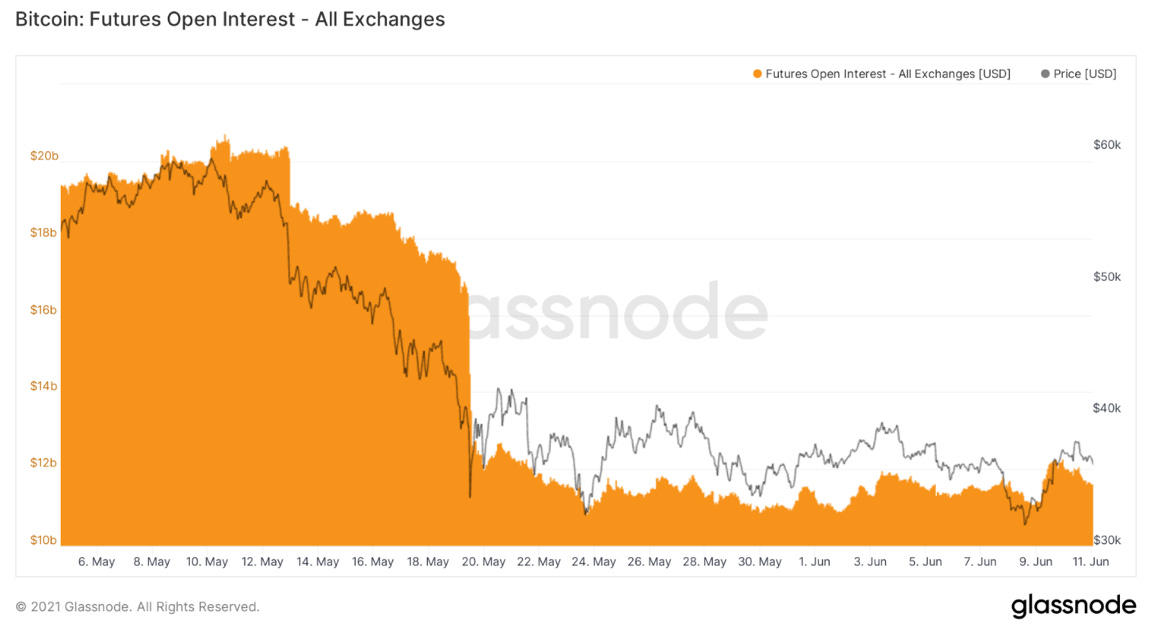
The Re-Accumulation Phase Is Almost Over
To investors,Will Clemente breaks down this week’s bitcoin situation using on-chain metrics to separate the signal from the noise. You can follow Will on Twitter or sign up for his email by clicking here. Here is Will’s analysis:Hope all is well and you had a great week. It’s been another week of ranging for Bitcoin with some interesting price action in the later portion of the week, retesting range lows at 31K followed by a sharp rebound. Let’s take a look at what clues we can gather from on-chain. Key takeaways:* Accumulation process is nearly complete* Profit-taking nearly reset on all time frames* The rate of which short-term holders have been selling has decreased, while the rate that long-term holders are buying has increased * Futures Open Interest creeping back up* Miners selling, hash rate trending down* Sitting on lower band of Stock-to-Flow* Large cluster of on chain volume forming at these levels Firstly, I wanted to look at SOPR. This is something we look at often, a ratio of the profit-taking between coins trading on any given day. SOPR looks bullish for several reasons:* Back above the 1.0 threshold (coins are no longer being sold at a loss)* Double Bottom/Higher low* Deepest reset since March 2020* Bullish Divergence Would like to see SOPR stabilize above 1. One trend that we have been following for 2-3 weeks now is the rate of which Long and Short-Term Holders have been adding to their positions. In the last week, STHs moved 106,319 BTC out of their holdings. Over the last month STHs moved 422,188 BTC out of their holdings. Now let’s look at long term holders and compare. In the last week long term hodlers have added 137,434 bitcoin to their holdings. In the last month they have added 389,968 BTC to their holdings. With that noted you get the following when looking at the difference between STHs and LTHs:* 7 day change: LTHs +31,115 (or) STHs -31,115* 1 month change: STHs +32,220 (or) LTHs -32,220Short-term holders had been selling at a greater pace than long-term holders were selling throughout the recent drawdown. However in the last week especially, long-term holders are now buying at a greater rate than short-term holders are selling. Along with what we looked at with SOPR, this shows that the re-accumulation process is almost complete. *note some of this is short term holders aging into the long term cohort (155 day threshold)Another metric to look to asses accumulation is illiquid supply change. This is one of the main metrics that had been talked about throughout the early bull market, showing strong accumulation. It was even dubbed the “Rick Astley Indicator” by Willy Woo, given that these holders appeared that they were never gonna let us down. However, this metric flipped from strong accumulation to distribution quite rapidly at the end of May/early June as a lot of coins that appeared to be in strong hands were sold off amidst the price drop. However, since the price drop, this metric has started slipping back into what can be thought of as accumulation/strong hands. Futures Open Interest has started to creep back up, briefly reaching over $12.2B on Wednesday during the rally off 31K. As OI comes back, futures data will become more influential in trying to asses the market, with metrics such as funding rates. One interesting thing that I saw was a huge increase of shorts piling on from Bitfinex throughout the week. The only other time I’ve seen something similar was the day before the liquidation crash to 30K a few weeks ago. Potentially this is just a big player hedging, but something to take note of. Miners have been selling off throughout the week, this comes after strong accumulation over the last month. From what I can tell it appears to be a lot of selling coming from Chinese miners mostly. This is not a large portion of supply, they’ve only sold about 4K BTC in the last week, just a change in trend to keep in mind.Plan B’s stock to flow is currently having the largest deflection from the model price in its history. We’re sitting on the lower bound of the model’s outer band. If the model is going to stay valid price needs to start moving up soon. In conclusion, the accumulation and profit-taking process we've been tracking is nearly complete. The rate of which short-term holders have been selling has decreased, while the rate that long-term holders are buying has increased. Futures Open Interest creeping back up; would expect that to come back in a big way if we get a strong move to either the up or downside. Miners selling, especially from China, hash rate trending down. Lastly, we continue to carve out a large cluster of on-chain volume at these levels. Looking forward to touching base on my channel Monday. Hope you all have a great weekend. Cheers!That is it for today’s analysis. Hopefully you found this helpful. I highly suggest you subscribe to Will Clemente’s email where he breaks down on-chain metrics multiple times per week: Click hereThis installment of The Pomp Le
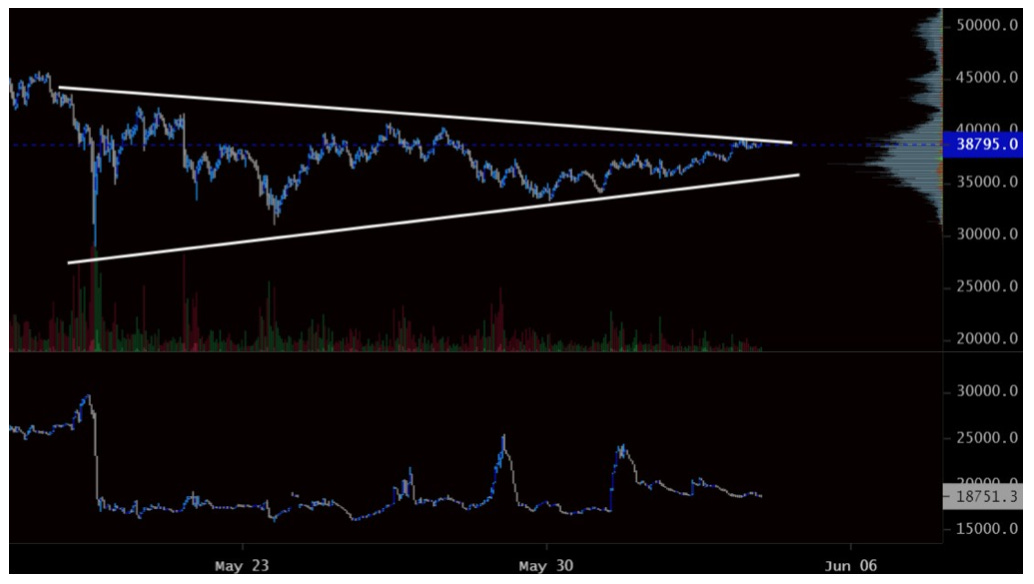
Bitcoin Is Stuck In No Mans Land
To investors,Will Clemente breaks down the volatility from this week using on-chain metrics to separate the signal from the noise. You can follow Will on Twitter or sign up for his email by clicking here. Here is Will’s analysis:Key takeaways for this week:* BTC is still rangebound between 32K-40K* Exchange flows have plateaued, no real directional trend* Stablecoins are waiting on the sideline * The perp traders that didn’t get wrecked over the last few weeks are waiting on the sideline (futures open interest and number of futures contracts is flat)* Selling is still mostly being done by younger coins* Long term holders still adding, offsetting selling from short-term holders over the last week* Retail buying heavily (possibly attracted by lower prices)* Bitcoin remains undervalued compared to the capital flows on-chain Hope all is well. At the time of writing, Bitcoin is still consolidating in the upper bound of a range between $32,000 and $40,000. Until price makes a decisive move in either direction, there is a lot of capital on the sidelines waiting to be deployed once the market decides. There are a lot of bids beneath us, set at $33,000 and below. In addition, there are a lot of sell orders around $40,000 and above. To break out of the range, high volume will be needed to fill those order walls. After consolidating this long, I would expect a strong move in either direction once price has that break out of this range. Until then, we are in no man’s land.In the bottom half of the chart above, you can see the number of futures contracts has been flat. Also, in the chart below you can see that futures open interest is flat. To me, this suggests the futures traders that didn’t get rekt in the drop to $30K got spooked and now are waiting for confirmation out of this range before taking a directional position. The annualized spreads between spot and 1-month futures contracts are flat as well. This comes after these spreads reached above 50% annualized in early April. I think this also visualizes how the amount of leverage on these different exchanges correlates to the spot/futures spreads. Notice that CME (the bottom line) is significantly lower than others up until mid to late May when we saw leverage get wiped out from the other platforms listed. There is also a lot of dry powder in the form of stable coins on the sideline waiting to be deployed. This can be shown by the stablecoin supply ratio. When the stablecoin market cap grows in relation to Bitcoin market cap, the ratio goes down. Some of this decline has to do with Bitcoin’s market cap going down as well.With that being said, whenever the move comes, it will likely be large. Until then, we keep trading between $32K-$40K. All that trading volume is adding up. We have now formed the third largest cluster of on-chain volume this bull run, only behind the one we’ve talked about often between $53,000 and $59,000, and between $7K-$11K. This is one of the reasons I had been bullish prior to the crash, as strong volume zones have historically formed a base of capital for the remainder of the bull market. Of course, that 10.5% in supply of volume is going to serve as a resistance on the way back up. Over 10 percent of Bitcoin’s money supply has now moved between $33,000 and $40,000. However, if we lose the low 30Ks, we do not have much distribution below aside from some at 27K, 23K, and of course 20K.One interesting trend to note: another spike in selling from coins aged 3-6 months old. These entities would have bought back between December and March. There is another spike in selling from 1–3-month-old coins as well.Coins are still being sold at a loss, although realized losses are trending down following the big price dump. Even yesterday (Thursday) over $540M of losses were realized by the market. Bitcoin has an uphill battle because there is fair portion of supply bought overhead in the consolidation between $50K-60K. Some of these buyers will be looking to minimize their losses realized by selling on what they believe is a complacency bounce on the way up. It will probably take some more time for these coins to be accumulated, but we’re on the right track. Similarly, SOPR on a weekly timeframe, (which we’ve described in multiple newsletters now), is on the threshold of the market selling at a profit or loss. Long-term holders continue to add to their holdings, +158,641 over the last week. They’ve added +305,305 BTC to their holdings over the last month now.Zooming out you get this divergence between the two (short and long term holders). Based on historical behavior of these cohorts, we are either headed into a full-fledged bear market or are in a “mini bear market” similar to the consolidation between the two double pumps (but still in a broader bull market). At that time there was a similar phenomenon of long-term holders stepping in and doing the heavy lifting while short-term holders panic sold. Based on metrics looking at the broader cycle, I ten
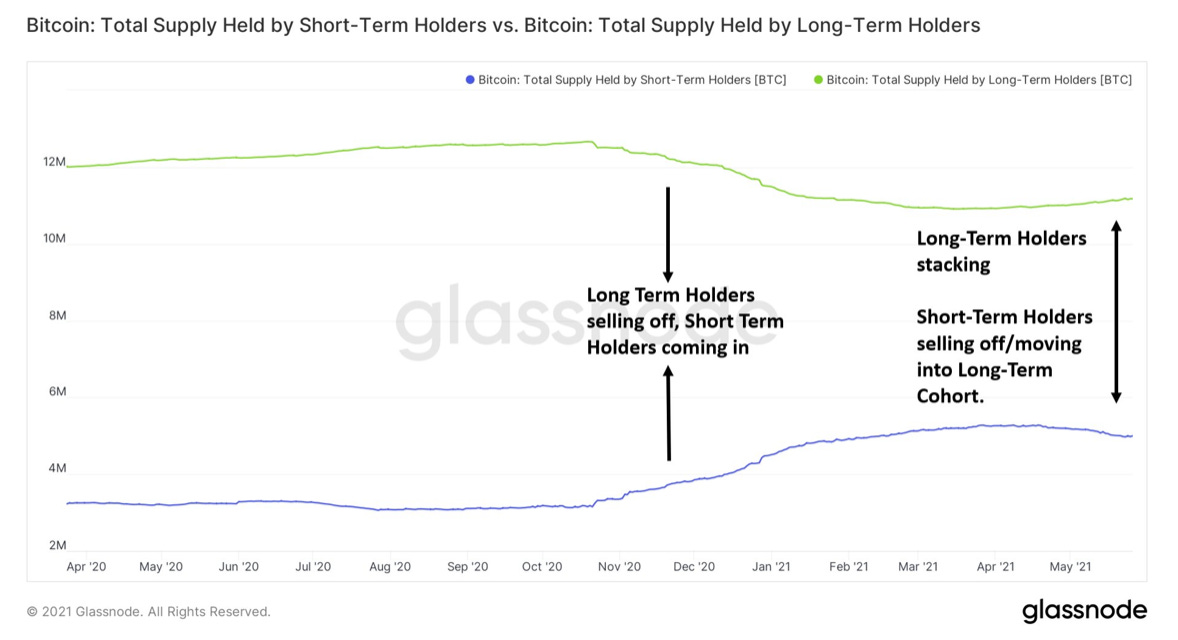
Is the Sell-Off Over Or Will There Be More Pain?
This installment of The Pomp Letter is free for everyone. I send this email to our investors daily. If you would also like to receive it every morning, join the 180,000 other investors today.To investors,Will Clemente breaks down the volatility from this week using on-chain metrics to separate the signal from the noise. You can follow Will on Twitter or sign up for his email by clicking here. Here is Will’s analysis:Hope all is well and you had a great week. Last time we spoke we discussed the price drop of Wednesday 5/19 and how outlook was moving forward. At the time I didn’t have a strong opinion on the speed of the recovery. I still hold don’t have a strong opinion, but this week has shown some positive signs and I would now expect that full recovery will take place sooner rather than later. Some key takeaways from this week’s recap:* There is a clear rotation of supply from short-term holders to long-term holders* Exchange flows have reversed from being bearish recently, now showing net outflows* Accumulation is in process * After a big drop off earlier this month, new entities are coming on the network, possibly attracted by lower prices; mostly retail* Miners not accumulating as heavily as they had been recently In the shorter term, some key price resistances to the upside are the 200DMA (~$47,750), $50K, $53K, and $59K. In terms of support, the strongest zones are $30K of course, but then $20K after. If $30K is broken I would see $20K as the next likely support level based on price structure and on-chain volume.One interesting theme that has taken developed is seeing long-term holders and accumulation addresses stacking through this dip. Let’s break this down; first with a quick overview of who is selling on the other side and then the buy side. This metric looks at the different age of coins selling every day. Running a simple 7 day moving average over this can smooth out the picture. This week there was a larger amount of selling coming from coins aged 1 day to one week old than usual. Coins aged this young are traders moving in and out of the market. Perhaps this spike is highlighting some swing trading while Bitcoin ranges between the low $30K’s-$40K and traders are not confident in taking a directional bet at this time. Also, you can see a lot of recent selling has been done by coins aged 1 month to 3 months old, and also 3-6 months old. These coins were last moved in the green zone highlighted below.At the same time, long-term holder have been steadily accumulating.The chart below compares short-term holder supply to long-term holder supply. You can see short-term holders take up a larger portion of supply between November to mid-April. On the right side, you can see the divergence that we are currently in. This is showing the following: long-term holders are adding to their positions, short-term holders are selling, some entities in the short-term cohort have now reached the 155-day threshold for this metric and are now in the long term cohort.On a similar note, another way to illustrate convicted buyers stacking through the dip is looking at accumulation addresses and accumulation balance. An accumulation address is defined as an address that has received at least two BTC txs but has never moved funds out of the address. This cohort continues to climb, with 7,430 new accumulation addresses in the last 7 days.These new accumulation addresses are likely overlayed with this next metric: net entity growth. Glassnode clusters addresses together forensically to identify entities, they then subtract the new entities from dormant entities with 0 balance. This shows a v shaped recovery in new users coming onto the network after a downtrend since early March.Meanwhile, supply held by entities with .001 BTC to 1 BTC continues to grow. Overall, it seems that retail is accumulating while whales sell-off. Regardless of who is exactly buying/selling, the market is no longer selling at a loss on aggregate. This sharp uptick is a sign of a recovery.The behavior from miners has slightly changed from the previous letters sent out. For the last 1-2 months miners have been stacking heavily. However, in the last week this trend seems to be stalling out. This plateau in miner unspent supply can be seen in the chart below.This miner selling looks to be coming primarily from China. One of the most constant sellers over the last week has been Poolin, the second largest mining pool in China. This can be shown in the chart below by looking at larger than usual transfers to exchanges. General exchange flows are no longer bearish, exchanges are down 14,207 BTC in the last 7 days. However, it appears the broader trend of coins moving off exchanges has come to a halt. Looking forward to touching base Monday. Hope you have a great weekend. Cheers!That is it for today’s analysis. Hopefully you found this helpful. I highly suggest you subscribe to Will Clemente’s email where he breaks down on-chain metrics multiple times per
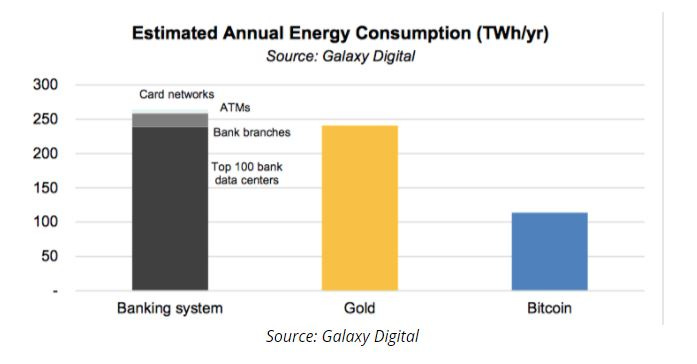
Bitcoin Energy Consumption Is Non-Linear
To investors,The conversation around the energy consumption of the bitcoin network continues to be front and center in the mainstream media. Last night I saw a tweet from Andrew Ross Sorkin of the NY Times and CNBC that reminded me how nuanced the details can be.It all started with a screenshot of this chart from Galaxy Digital’s research team:Andrew immediately jumped on the chart and said that the comparison was laughable. His main point is that the legacy banking system serves many more people, along with many more transactions, so of course it is going to consume more energy. Makes sense, right?This is where the nuances come into play. The legacy financial system has a linear relationship between usage and energy consumption. The more users that participate in the system, the more energy it consumes. The more transactions that occur in the legacy system, the more energy it consumes. This increase in energy consumption comes from more bank branches, more ATMs, more bank data centers, more end points in the card networks, and much more. Increase the users, increase the energy consumption. Increase the number of transactions, increase the energy consumption. Thankfully, this is not how the bitcoin network works. There is no linear relationship between usage and energy consumption. The blockchain requires the same energy consumption to process blocks of transactions whether the blocks have 10 or 100 or 1,000 transactions in them. In the same vein, the network consumes the same energy regardless of whether 2 people are using it or 2 million people. This is what a non-linear relationship between usage and energy consumption looks like. As if that wasn’t important enough, there are also numerous efforts underway across blockchains to leverage layer 2 technology for scaling. This would allow for more and more transactions to occur on the blockchain, but without stuffing the blocks with transactions (which causes higher fees and slower transaction times). A perfect example of this is Stacks, which builds smart contracts for bitcoin. The founder jumped into the thread last night and explained:In the most simplistic sense, there are thousands or millions of transactions that can happen on a layer 2 or a side-chain. Those high volume of transactions can then be settled in a single transaction entry on the bitcoin blockchain. This means that the addition of thousands or millions of transactions (and by proxy many more users) would have no impact to the energy consumption of the layer 1 bitcoin blockchain. This brings us back to the point that Galaxy Digital was making in their research that was shared in the first tweet of this letter. The legacy banking system has to increase energy consumption as more people become banked, while also increasing energy consumption to service more transactions. Bitcoin, on the other hand, does not need to do this. It simply leverages scaling technology to increase user adoption and transaction velocity without having to materially increase energy consumption.So where exactly does the increase in energy consumption come from? The simple answer is the financial incentive for decentralization. Here is how it works — every block of transactions carries with it the “block reward.” This block reward started out as 50 bitcoin and has been cut by 50% every 4 years. Today the block reward is 6.25 bitcoin (about every 10 minutes). This means that miners in totality are paid approximately $36.2 million per day at the current price of bitcoin. If you want your share of the $36.2 million in daily revenue, you start bringing more mining equipment online. The more miners that the join the network, the more decentralized the network becomes. This is a beautiful financial incentive to optimize for the one thing that bitcoin presents as the most important thing — decentralization. It doesn’t matter how many users or how many transactions occur on the bitcoin network. The greatest input for determining energy consumption increase or decrease is the value of the block reward (or daily revenue for miners). I bring this up because it is important to understand that the comparison of the legacy banking system and the bitcoin network is a solid analysis. Bitcoin could run the entire financial system on the current energy consumption (in terms of users and transactions). That would occur via the scaling technologies on layer 2 / side-chains. Obviously, the technology is not ready for that level of velocity, but ultimately that is where we are moving towards. That doesn’t meant that energy consumption won’t increase in the future. In fact, it is nearly guaranteed to increase over time. But the reason for the increase won’t be more users and transactions, but rather because the economic reward for improving the decentralization will only increase in value.Understanding the nuances of this debate are important. It leads to a much clearer picture of why decentralization is so important, how that decentralizatio