
The Pomp Letter
521 episodes — Page 10 of 11

There Are No Gods Among Us
This installment of The Pomp Letter is free for everyone. I send this email to our investors daily. If you would also like to receive it every morning, join the 175,000 other investors today.To investors,Elon Musk couldn’t contain himself over the weekend. He doubled and tripled down on his chaos-inducing perspective from last week. The story is getting rather complex, but simplistically here is where we were going into the weekend:* Elon Musk held no bitcoin for the first 10+ years of the digital currency’s existence.* Tesla announced they had purchased about $1.5 billion of bitcoin in Q1 2021 for their balance sheet. The company also began to accept bitcoin as payment for Tesla cars.* Rumors later surfaced that Elon Musk personally bought bitcoin, along with SpaceX as well. * Tesla announces that it had sold approximately 10% of its bitcoin to test market liquidity in the latest earnings call. * Last week, Elon Musk posted a statement saying that Tesla would not be accepting bitcoin for payments anymore amid energy consumption concerns.* Tesla also made it clear that they had not sold their bitcoin and did not plan to do that either. Now it is important to understand a few things before we go any further. The bitcoin community accepted Elon Musk with open arms when he announced that he was purchasing the digital currency for Tesla’s balance sheet. “Accepted” is probably too conservative of a term, frankly. Bitcoiners were jumping up and down. Another meme lord had finally capitulated and realized that they must join us on our path to global dominance. What was not to like about this new development?Well, it turns out quite a bit. All hell broke loose this weekend on Twitter. Elon Musk started Saturday off with suggestions on how to improve the technical efficiency of Dogecoin.For those who have been around for a while, this type of proposal immediately triggered numerous red flags. It could have been Musk’s obvious lack of understanding in the popularity of Dogecoin. His suggestion that there were any technical issues with the crypto asset is an immediate sign that he didn’t realize that most blocks weren’t even close to being full of transactions. It also could have been the common, yet inaccurate, suggestion from newcomers that the block size (how many transactions can be processed in a single block on a blockchain) should be improved.The community already had a heated block size debate years ago. The winning strategy ended up being keeping smaller block sizes and pursing scaling solutions on layer 2 of a blockchain. But as if these ridiculous issues weren’t enough, Musk had to kick the hornet’s nest one more time. On Sunday, he responded to a rather thoughtful and rational Twitter thread from my friend Peter McCormick with this comment:It is one thing to say dumb things. It is another thing to say those dumb things to someone like Peter who is well respected and liked in the bitcoin community. The difference here is that Elon Musk wasn’t just kicking any hornets nest. He was kicking the hornets nest of the most engaged, passionate audience in the world. And the bitcoin community didn’t disappoint. As they began to berate one of the richest men in the world with tweets and memes, Elon dug his heels in. He couldn’t help himself. He had to show that as a billionaire, he had the answers. The plebs couldn’t possibly understand more than him. This insecurity from Musk led to his attempt at credentialism:Obviously, the plebs of bitcoin were not only unimpressed, but this kicked up the online battle even further. One of the world’s elites being absolutely torched online by pseudonymous accounts, meme’d to death by amateur meme lords, and my personal favorite “double doge dare” from yours truly:That should give you enough of the play-by-play on what happened. As this was all playing out, the price of bitcoin was falling off a cliff. First it went sub-$50,000. Then it went sub-$47,000. Then sub-$45,000. Eventually it seemed to bottom out around $42,000. While this was happening, one thought kept going through my head:This entire event was the equivalent of one of the world’s wealthiest people waging a direct attack on bitcoin. Last week, he went after the security of the network by challenging the validity of proof-of-work mining. This weekend, he went after the utility of the asset, along with taking elementary shots at the community surrounding the asset. These weren’t sophisticated attacks, nor well coordinated ones. They were just public narrative attacks that had serious ramifications. Ultimately, this will all be futile though. Elon Musk was quickly accepted into the bitcoin community with open arms weeks ago. He will be encouraged to leave just as quickly if he keeps acting foolish. The thing that people don’t realize is that true bitcoiners don’t care who you are, what school you went to, how much money you have, or who your parents were. Either you understand bitcoin and are here to further the assets’
What Happened To Bitcoin When Elon Tweeted
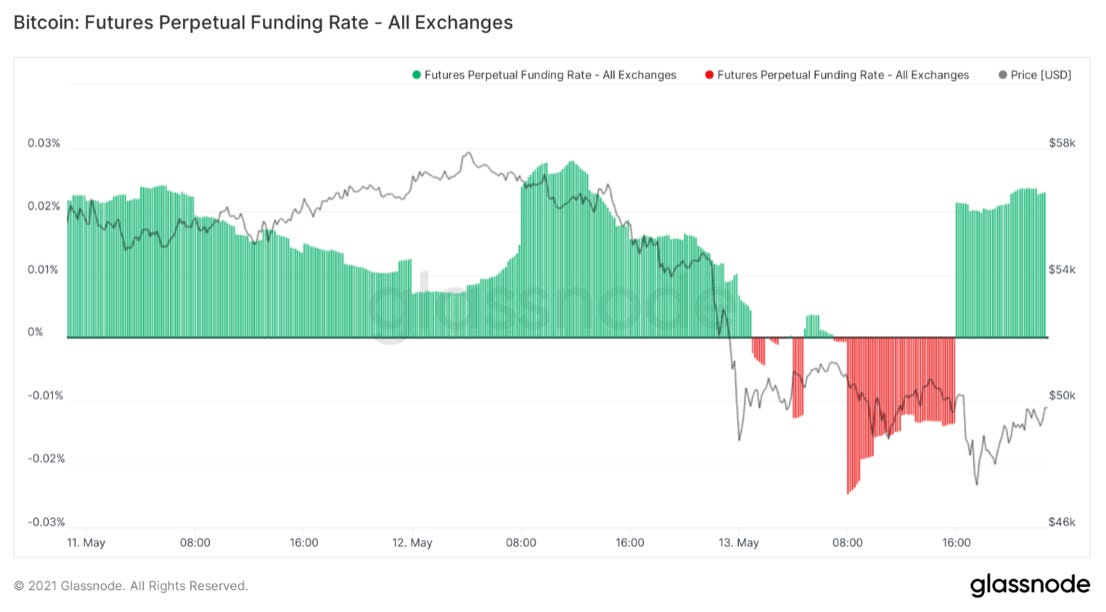
To investors,Will Clemente breaks down the volatility from this week using on-chain metrics to separate the signal from the noise. You can follow Will on Twitter or sign up for his email by clicking here. Here is Will’s analysis: Hope you are all doing well and had a great week. At the time of writing, BTC sits at $50,312 after hitting a weekly high of $59,592 on Monday and low of $46,000 on Wednesday. Previous letters described a bullish setup, which still holds true based on fundamental investor activity. However, Wednesday’s events may have put a damper on how immediate the end of this consolidation may come. We have a lot to discuss so let’s get straight into it. Let us first cover the elephant in the room: the Elon dump. Firstly, there were 19,259 BTC moved onto exchanges before Elon’s tweet and ensuing price dump. I do not think this is coincidence and was likely someone with insider information.Elon’s tweet regarding the energy use of Bitcoin at 6:06PM EST initiated a cascade of long liquidations, including $208M within a 10-minute period. This cascade of liquidations is why the price dump down to $46,000 was so aggressive. It’s very interesting to see inflows to exchanges (presumed selling) spike in the time before the tweet, followed by net outflows ramping up after the event. This data makes a strong case for someone having insider information. Would be quite a coincidence to say the least.Speaking of exchange flows, one of the largest exchange outflows of the year took place amidst all the panic. OTC outflows also spiked during the dip; it appears big money bought the fear.Roughly $460,000,000 of Tether was printed following the sell off. In the chart below showing net transfer volume, over $650,000,000 of Tether was moved onto exchanges Thursday. Tether does not always signal instant buys, but capital is on exchanges waiting to be deployed.Short term holder SOPR reset to the lowest it has been this entire bull run. This means the market was taking losses on aggregate. This metric has timed each major bottom throughout the bull run. This metric along with funding rates going negative signals to me that we are very close to the bottom, if we have not reached one already. As just mentioned, funding rates went negative Wednesday night for the first time in almost a month. This means traders were seeking to go short on aggregate and shorts began funding longs. Funding rates are a good way to gage sentiment of traders. Negative funding rates show they were scared to go long on aggregate. However, funding rates came back rather quickly, unlike anything I have seen in previous corrections. Some silver lining of the event is that leveraged traders getting wiped out. Roughly $1.8B of futures open interest was wiped out. This is always healthy for the market as price is then more influenced by organic spot buying and not speculation.Despite the short-term price action, this still does not change broader on-chain trends for this cycle. One that we have not discussed yet in previous letters is NVT. NVT is a ratio of market cap to on-chain transactional volume. When market cap is growing faster than underlying investor activity, NVT goes up. When market cap growth is not keeping up with underlying investor activity, NVT goes down. Since January, NVT has steadily trended down. This means that this bull run is becoming less overheated as underlying investor activity continues to outpace market cap. This also is a sign of consolidation.The number of whales (entities with balances over 1,000 BTC) is still trending down. This is not abnormal or anything to be concerned about, as whales usually begin to scale out of their positions mid-way through the bull run. In fact, in 2017 the growth of whales peaked around $675, which of course was far from the top. Despite the sell off from the whale cohort, entities with 100-1,000 BTC continues to trend upward, actually offsetting the decrease in the 1k-10k cohort by 86,160 BTC.Miners still do not seem phased by short term price action and continue to accumulate as they have throughout this entire consolidation. This can be illustrated by two metrics: the first of which is miner net position change. This measures the trailing 30-day average of miner balance movements. This metric has been in the green for well over a month now.Miner unspent supply is also still trending up and saw a spike during the sell off. Supply held by long-term holders seems to be ticking back up after bottoming out in late March/early April. This sign of re-accumulation is good to see after this cohort trimmed their holdings throughout October to March.Long-term net position change illustrates a similar picture, with these entities selling off after all time highs, but now steadily accumulating throughout this consolidation for over a month now.In conclusion, Wednesday’s event was unfortunate for short term price action, but changes nothing in the longer-term bull structure. This does not change the
Bitcoin, Mining, and Elon Musk
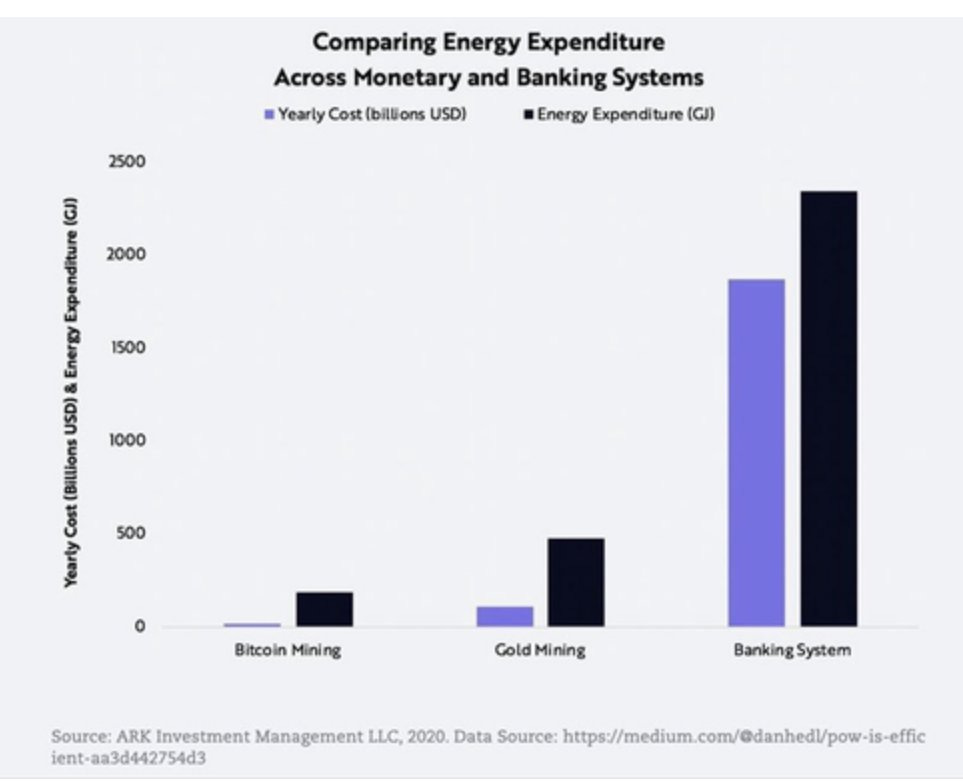
This installment of The Pomp Letter is free for everyone. I send this email to our investors daily. If you would also like to receive it every morning, join the 160,000 other investors today.To investors,Elon Musk posted a tweet last night that stated Tesla would be ceasing acceptance of bitcoin for any purchases. All hell broke loose almost immediately. Bitcoin was already down about 8% for the day, but the price dropped even further to under $50,000.The reasoning for Tesla’s decision is that the company has concerns around the energy consumption needed to run the digital currency. There is a lot to unpack here, so let’s dig into it.First, Elon Musk and Tesla did not sell any bitcoin because of these energy concerns. They explicitly stated that they are holding their bitcoin. As I always say, don’t listen to what people say. Simply watch what they do with their money. Elon Musk owns billions of dollars of bitcoin across his personal holdings, Tesla, and SpaceX. He isn’t selling that bitcoin because of this inaccurate narrative. That should tell you everything you need to know.Next, the entire narrative of “bitcoin is bad for the environment!” is inaccurate. There is study after study that concludes bitcoin is one of the single greatest financial incentives for the world to develop and adopt renewable energy. You can read fintech firm Square’s white paper titled “Bitcoin is key to an abundant, clean energy future.”The logic behind this claim is that bitcoin mining as a business requires an operator to find the cheapest power possible. The cost of electricity is the largest input in the business model. So in order to attain the highest levels of profitability, bitcoin miners have been running around the world to find cheap power. That usually results in the miners consuming renewable power, which is historically the lowest cost power available. An additional point is that bitcoin miners are persistent consumers of power. This is important because a material amount of energy production around the world is wasted because there is no one to consume it in real-time and the storage of energy is still facing too many obstacles. Because of this challenge, bitcoin miners have become a preferred method for power grids to ensure that they can have a balanced grid at all times. When they have a surplus of power, they can monetize it by sending it to the bitcoin miners. In an interesting, nuanced way, the bitcoin network serves as one of the most effective batteries in the world. When we start talking about energy consumption and bitcoin, many people will claim that miners in China predominantly use coal to mine the digital currency. That is not necessarily true either. According to Nic Carter and the team over at Coin Metrics, here are some interesting facts about power consumption and mining in China:* Inner Mongolia was the 2nd biggest coal-powered province in china for mining, but they recently banned mining. This reduced a big portion of coal miners. * Xinjiang, which is the last remaining mining-heavy province in China with lots of coal power, is still approximately 40-50% renewables. * Sichuan and Yunnan, which accounts for about 50% of total hash rate during the wet season (starting this month), are almost 100% hydro-powered miners. * There was a blackout in Xinjiang that only reduced bitcoin hash rate by 25% in the dry season. This suggests that China has lost significant market share when looking at global hash rate. I highly suggest you follow Nic or pay attention to the research that the team puts out around this topic.So if China’s miners are becoming more green, while also losing market share, what is happening in the rest of the world? The United States and Canada are quickly gaining market share. These countries tend to have much more renewable energy focused power grids. This leads to more renewable energy mining facilities as well. One of my favorite examples is Great American Mining, an early stage company that is partnering with oil and gas companies to capture flare gas for use as the power source in bitcoin mining rigs. Flare gas is one of the worst things that humans do for the environment, so the fact that bitcoin miners are able to capture that waste before it harms the environment is quite interesting. Not only are they refraining from the use of coal, but they are actually preventing other industries from creating environmental destruction. Next up in the debunking of this nonsense is the comparison of bitcoin and US dollar energy consumption. This is frankly the easiest part of the conversation. Michael Arrington posted this image on Twitter:It shouldn’t surprise anyone that the banking system has higher energy expenditure. The banking system is bigger (for now). But as Mark Cuban said yesterday, the disruption of both gold and physical coins will be a big environmentally friendly development in the world.So now we have two billionaires that are both trying to improve the environment, yet the

Fix The Education, Fix The World
To investors,Today I am announcing that I have led a $5 million Series A investment in Synthesis, which is the education spin-out from the school that Elon Musk custom built for his own children.If you remember, I previously led the seed round of the company about two and a half months ago. Here is what I wrote about the business at the time:“The traditional school system teaches our children rote memorization and measures success based on end of year test results. This is not the best way to prepare young children for the real world. The system leaves children lacking critical thinking skills, along with problem solving, independent thought, creativity, and teamwork experience.Elon Musk realized this years ago and decided to build a school on the SpaceX campus for his own children. Musk partnered with Josh Dahn to create Ad Astra, which became the educational experience that he believed would be best for the children that he wanted to raise. Ad Astra (now known as Astra Nova) uses simulations, case studies, fabrication and design projects, labs, and corporate collaboratives to develop students that are enthralled by complexity and solving for the unknown.The only problem is that the Astra Nova experience was only available to a select few families who could get into the program. But Josh Dahn, the co-creator of Astra Nova, wanted to bring this game-changing educational program to the masses.Enter Synthesis.Josh Dahn has teamed up with Chrisman Frank, an early employee at ClassDojo, to create a software based solution that puts children ages 7-14 through the one-of-a-kind program. These children are taught critical thinking, problem solving, leadership, creativity, independent thought, and teamwork. Simply, Synthesis prepares children for the real world in a way that the traditional education system does not.”At the time of the seed round, Synthesis had gone from $0 to $1 million in annualized recurring revenue in approximately 3 months. Fast forward to today and the company is now doing more than $3 million in annualized recurring revenue. So why are thousands of parents signing their children up for this enhanced educational experience?Easy…it actually works. The lack of critical thinking and problem solving skills being taught in our education system should be a national emergency. Rather than complain about it, the team at Synthesis is doing something about it. Josh and Chrisman have put together an incredible team, including former teachers like Ana Lorena Fabrega and others.If you want your child to be more proficient and better prepared for the real world, you should consider signing up here: https://www.synthesis.is/The company has been growing incredibly fast. They have seen 50% monthly compounded growth since the start of November and are now doing over $3 million in annual run rate. More than 85% of all students stay in the program after 90 days.I’m joined in this round by a list of other incredible investors, including Sahil Lavingia, Bobby Goodlatte, Shane Parrish, Austin Rief, Polina Pompliano, Brianne Kimmel, Julian Shapiro, Steven Galanis, Kat Cole, Sam Parr, Zac Prince, Ryan Denehy, Shaan Puri, Andrew Wilkinson, Melanie Shapiro, Ryan Shea, Matt James, Matteo Franceschetti, Jack Butcher, Matthew Delladova, Jeff Richards, Andrew Spellman, Jayni Shah, John Danner, and Alan Rutledge.We have assembled an incredible team of operators and investors with one simple mission — educate your child with the problem solving and critical thinking skills that will prepare them for success in life. If that sounds compelling to you, you really should consider giving it a try.Sign up your child for Synthesis: https://www.synthesis.is/The world deserves to have a society filled with innovators, entrepreneurs, and creatives. Help us, help your child. Have a great day and I’ll talk to everyone tomorrow.-PompThis installment of The Pomp Letter is free for everyone. I send this email to our investors daily. If you would also like to receive it every morning, join the 160,000 other investors today.THE RUNDOWN:Coinbase Boosts Compensation, Will No Longer Negotiate During Hiring: In a series of changes affecting compensation and incentives at the cryptocurrency exchange, Coinbase said it’s eliminating negotiations on salary and equity from its recruiting process. In a blog post, Coinbase also said it's increased cash and equity compensation – from the 50th percentile amongst the company's peers to the 75th – across the entire firm. Read more.Ark Investment’s Cathie Wood Joins Board of 21Shares Parent: Ark Investment Management CEO Cathie Wood has joined the board of cryptocurrency platform Amun Holdings, the parent company of 21Shares, which specializes in exchange-traded products. Wood announced Monday she has joined Amun’s board after personally investing in the operator of 21Shares AG, according to a Bloomberg report. She met the Amun team at a conference in 2019. Read more.Cboe Kicks Fidelity-Linked Bitcoin ETF A
On-Chain Metrics Show Bitcoin Is Coiling Like A Spring And Ready To Rip Higher
To investors,The letter today is from Will Clemente, who has become one of the best bitcoin analysts in the industry in my opinion. He recently started his own, free email that I highly suggest you subscribe to receive: Click here to get Will’s work each weekHe will also be joining me each week for a new Saturday podcast episode that will review the weekly on-chain metrics as well. Will is a smart, hard working guy who has a bright future. Your support of his work would mean the world to me.Hope you are all having a great week. At the time of writing, (7:30EST 5/6) Bitcoin sits just above $56,000 after a choppy week of trading. Price is up 5.28% on the week, with the high being $58,986 and low being $52,913. Let us dive into some of the on-chain trends that are developing.Broader Cycle Trends Worth NotingFirstly, we will take a look at some of the broader macro trends that are still pointing to this cycle being far from overheated. One of the most accurate metrics that can be used to estimate tops is MVRV Z-Score. MVRV was created by David Puell and Murad Mahmudov, but the idea of z-scoring it came from analyst on-wonder. This metric takes a ratio of Bitcoin’s market cap and its realized cap. Realized cap can be thought of as market cap based on the time coins were last moved. For example, if someone bought $100,000 of BTC at $1 and never moved them, $100,000 would be added to realized cap, rather than $5.6B of market cap (100,000 x 56,000). Remember, price trades on the margin. After taking this ratio of market cap to realized cap, the metric is z-scored, a term meaning that it is adjusted for volatility. This gives it a more precise signal.As you can see in the chart, the metric shows distinct cycle peaks (red zone), in addition to highlighting great buy zones during the bear market. (green zone) Contrary to a spike that would be seen during a cycle top, the metric has actually been declining over the last few weeks, thus giving it a lot of room to run. This is partially to do with market cap declining, but more importantly realized cap being up $43,545,000 since the beginning of April. This is bullish, meaning coins are moving at these higher sustained price levels, thus validating Bitcoin at these price levels. This is also supported by on-chain volume, with over 15.63% of BTC’s money supply having moved over the 1 trillion-dollar market cap threshold. The second macro metric I wanted to touch on this week is market cap-thermocap. This metric takes a ratio of market cap to thermocap, which is the total of all revenue generated by the network and rewarded to miners over time. In Glassnode’s words, the metric “can be used to assess if the asset's price is currently trading at a premium with respect to total security spend by miners.” Similar to MVRV, this metric gives distinct spikes at cycle tops, as well as good zones to accumulate in the bear market. We can also see this metric cooling off, another indication that this bull run has a while to go before becoming overheated.Developments this weekOne of the first things that has been attention grabbing this week is stable coin prints. In the last 10 days alone, $6,688,804,340 of Tether & USDC have been printed. Roughly $30B of stable coins have now been printed above $50,000. This is showing a lot of new demand from investors entering the crypto space. Although it is unknown exactly how much of this capital is going to buy BTC, it is at least a substantial portion.On a side note, it cannot be denied that some of this capital is going into other cryptocurrencies. Although most exchanges’ balances are trending down, Binance’s continues to go up. In my opinion this is a good way to visualize the capital that is flowing into highly speculative altcoins. Binance is minimally regulated compared to most other exchanges like Coinbase, therefore giving them the ability to offer so many coins and having derivatives built off them. This increase could also potentially be showing higher amounts of selling coming from the East as well, although I would suspect it’s a combination of both of these factors. Over the last week, it can be assumed that at least a portion of the recent selling has been derived from traders swapping their BTC holdings into speculative altcoins to capture those gains.So after showing the increase in stablecoin printing, I’m sure you’re asking, “this sounds great, but who in the world is selling??” In addition to traders swapping coins to speculate on altcoins, the answer is younger coins; AKA inexperienced market participants. One way to determine this is by looking at Average Spent Output Lifespan. Since February, this metric has been trending downward, meaning older coins have decreased selling pressure. This lines up with when Tesla announced their $1.5B buy, is there causation there? That’s up for you to decide, but I suspect yes. In regard to newer participants selling, we actually saw a cycle high in selling coming from coins that were 1
Bitcoin Continues To Move To Strong Hands
To investors,Below is the weekly write-up from bitcoin analyst Will Clemente, where he uses on-chain metrics to explain what is happening in the bitcoin ecosystem. Hope you enjoy it.Happy Friday, hope you all had a great week. At the time of writing, Bitcoin currently sits just above $53,600. Last week we described how price was either at a bottom or within days of reaching one based on the metrics that we looked at. Two days after the newsletter was sent out, price reached a local bottom on Sunday, retesting the key on-chain volume support zone of $47,000 before aggressively shooting back up. Let us take a look at the latest developments in on-chain data structure to develop an understanding of market participants’ behavior. Leverage Wipeout/Price Correction RecapThroughout the last week we have seen a total wipeout of leverage from the Bitcoin derivatives markets. (Something also discussed in the podcast Pomp and I recently put out on Wednesday) Since all-time highs two weeks ago, futures open interest has declined by $8,912,806,107 across all major exchanges. In addition, we have seen a huge decline in funding rates. Funding rates are used to peg the perpetual swap to Bitcoin spot price. The perpetual swap is unique to Bitcoin, as it is a non-expiring future’s contract. The ease of access to leverage for these contracts make them very attractive to speculative traders. The way these contracts are pegged to Bitcoin price is through funding rates. When the majority of traders go long, funding rates rise, meaning longs are paying shorts to take the other side of the trade. This works the other way around as well, meaning when funding rates go negative, shorts are paying longs. In last week’s newsletter we discussed how funding rates going negative was a buy signal. Interestingly, throughout the recent price rally since Sunday’s bottom, funding rates have remained low. This means that the rally is likely driven from spot markets and not by speculators. In other words, this price rally has come from organic spot buying, making it very healthy. This is also supported by massive stable-coin flows seen on-chain.The sell-off was also healthy for the market for another reason aside from the leverage wipeout; coins were washed from weak-hands to strong-hands. This can be illustrated by looking at metrics that describe the age of the coins being sold. These metrics showed a pattern of young-coins, AKA new market participants selling, as older market participants held strong throughout the dip and continued to accumulate. One metric to illustrate this is dormancy. Simplified, older coins hold more dormancy and as they are sold, dormancy rises. Throughout the drop in price, we actually saw dormancy go down, meaning old coins were not being sold and more experienced market participants held tight as they are accustomed to these huge price corrections in Bitcoin bull markets. Another metric to visualize this is Glassnode’s Spent Output Age Band metric. This clusters coins together by age and stacks these cohorts together to understand which types of market participants are driving selling. Throughout the drop in price, we saw a sharp spike from younger cohorts, with minimal movement in older cohorts. In this regard, the sell off was bullish, as coins were moved to stronger hands.Throughout the sell-off we also saw miners accumulate very heavily, scooping up cheap coins and taking advantage of the dip.On a final note regarding the sell-off, we have seen hash rate rebound dramatically, showing the resiliency of the Bitcoin network.Broader Metrics:More and more of Bitcoin’s supply is being locked up every day in the hands of investors that have no history of selling. This can be illustrated by Glassnode’s liquid supply metric. Glassnode clusters together addresses through blockchain forensics to determine different entities. They are then able to evaluate the selling behavior of these entities and separate them into 3 cohorts: highly liquid, liquid, and illiquid. Since the March liquidity crisis last year, there has been a strong trend of coins becoming illiquid, AKA being scooped up by strong-hands with no history of selling. In fact, 78.3% of Bitcoin’s supply is now considered illiquid by Glassnode, a number which has steadily increased throughout the asset’s lifespan.The final metric I would like to present this week is URPD (UTXO Realized Price Distribution). This metric determines on-chain volume at different price levels. After rallying back above the trillion-dollar market cap threshold, (currently $53,500 but increasing as supply grows) over 14% of Bitcoin’s money supply has now moved at these levels. This shows strong validation of BTC as a legitimate macro asset and that is here to stay. This is also the strongest zone of volume seen on-chain since $11,000 last year. Hope this was helpful. Enjoy!You can follow Will on Twitter: Click here-PompDo you want to work in the Bitcoin and crypto industry? Do you run a bus
Information Markets Create A New Asset Class
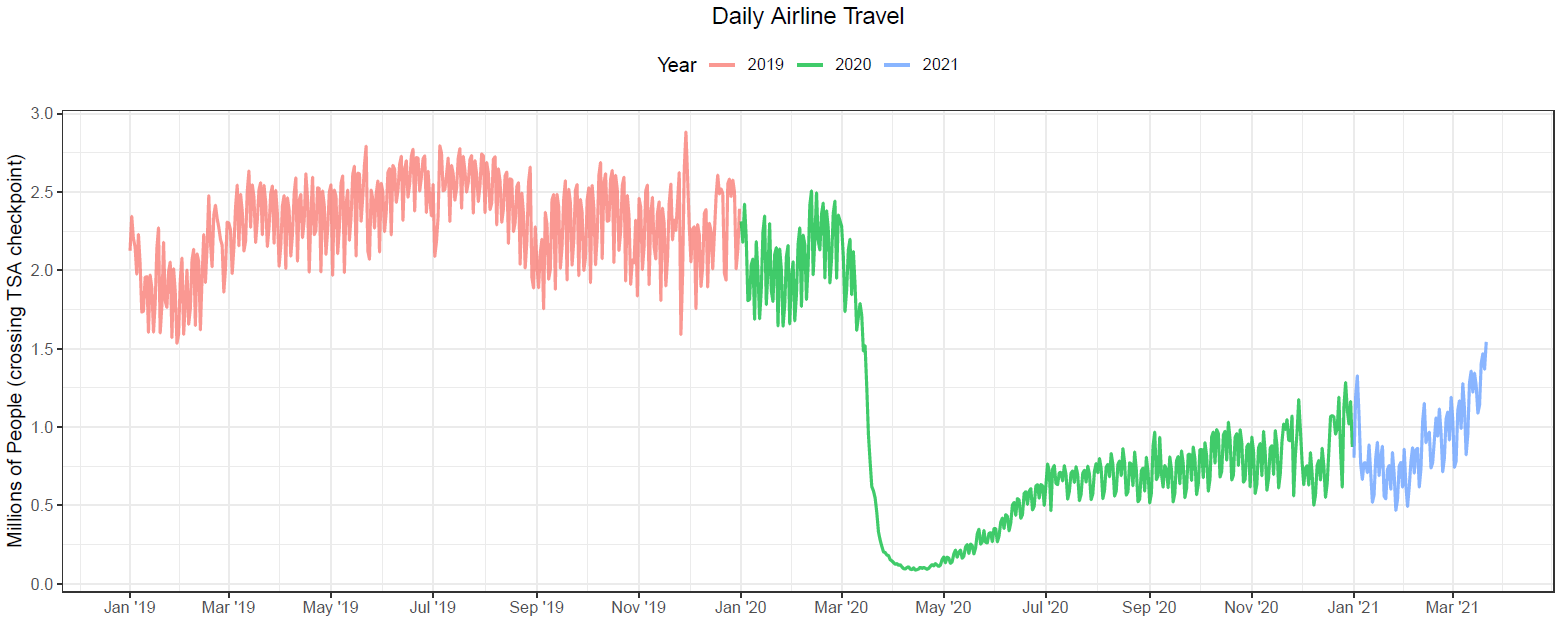
To investors - I’m personally fascinated by the creation of new asset classes or investment types. Previously, I’ve looked at companies like Pipe, which turn a company’s recurring revenue into a tradable asset. There will be many more creations of new asset classes via technology in the coming years. One of those that appears to be interesting is information markets. Below is a write-up from Sebastian Deri and the team at Polymarket, the largest blockchain-based information markets platform. They explain what information markets are and why they’re long on this new financial asset.Why Bet on Tokens and Stocks When You Can Bet On Events?It’s April 2021 and you have 60% of your net worth in crypto. You’re long on BTC. You're long on ETH. But you also have some beliefs about the non-crypto world. And you want to make money off them. After months of lockdowns and masks, you think the pandemic is going to finally wind down over the summer. Travel is going to return, sports events and concerts are going to come back, and no more masks.What do you do? A traditional strategy is to think about the companies that might benefit from that return to life and put some money on them. Since you expect air travel to return to normal maybe you expect some of the big airlines like United Airlines (UAL) to bounce back and earn higher revenues. So you try to find some mirror asset (there are none), or (worse yet) cash out of your crypto and buy some United stock on a traditional exchange. But even if you do this, your investments are subject to the million other events that affect airline stock prices. Maybe you are totally right, and flights surge upwards, but because of larger than anticipated fuel costs, United misses earnings expectations and the stock price drops further.How do you just place a simple bet that airline travel will increase? A new asset class coming out of the Decentralized Finance (DeFi) space finally lets you tie your money directly to these events rather than stocks, tokens, or other proxy agglomerations: information markets. This is a financial asset that’s tied to the outcome of a specific event. For example, here are just a few of the specific events you can trade on Polymarket:* Will airline travel increase?* Will NFT sales increase this month?* Will Donald Trump launch a social media platform?* Will the Biden administration meet its vaccination targets?At Polymarket, we’re long on information markets for 5 reasons.Prices Reflect RealityFirst, even if you’re not invested in them, they’re genuinely informative. Unlike the price of GME or Dogecoin, the price of a share in an information market directly translates to something concrete and useful--the market’s view on the expected probability of an event happening. Since “Yes” shares pay out $1.00 if the event happens (and “No” shares pay out $1.00 if the event doesn’t happen), the shares trade at the expected probability of an event happening. For example, “Yes” shares on the “Will the 2021 Tokyo Olympics take place?” market are currently trading at $0.83, implying an 83% chance of the Tokyo Olympics taking place.Because these markets force participants to put their money where their mouth is, they’re stunningly accurate. One study comparing an early political information market to 964 political polls found that the information markets outperformed the polls 74% of the time in predicting the winner of the Presidential election, both in the short- and long- term. Information markets have also been used internally by companies like Google and Ford to predict product launch dates, where they’ve improved these deadline forecasts by 25%. And recently, the British government launched their own information market, the Cosmic Bazaar, which has since been used to successfully identify terrorist activity in Mozambique.This accuracy comes not only from these markets’ ability to price-in relevant information, but also their tendency to price-out bad or irrelevant information. For example, amid the contentious unionization efforts at Amazon’s Alabama fulfillment center, on April 6 at 2:10 PM ET, an account tweeted, “BREAKING: AMAZON WORKERS IN BESSEMER, ALABAMA HAVE VOTED TO UNIONIZE WITH @RWDSU PER SOURCES,” receiving hundreds of likes and retweets. A seemingly breaking tip, amid media narratives that the union drive might “resurrect the labor movement.” How did the markets respond? Absolute silence. “No” share prices, which had solidly been centered around $0.85 for a week (indicating an 85% chance of the unionization drive failing) didn’t budge. The market, unlike the attention economy of Twitter, was able to disregard this low-value information. The market only moved from $0.85 to $0.99 when votes tallies started rolling in publicly on April 8th and 9th, definitively revealing that the workers had indeed voted by almost 2-to-1 not to unionize, and proving the initial market forecast correct.Radically TransparentSecond, financial transactions on information marke
On-Chain Metrics Explain The Bitcoin Price Dip
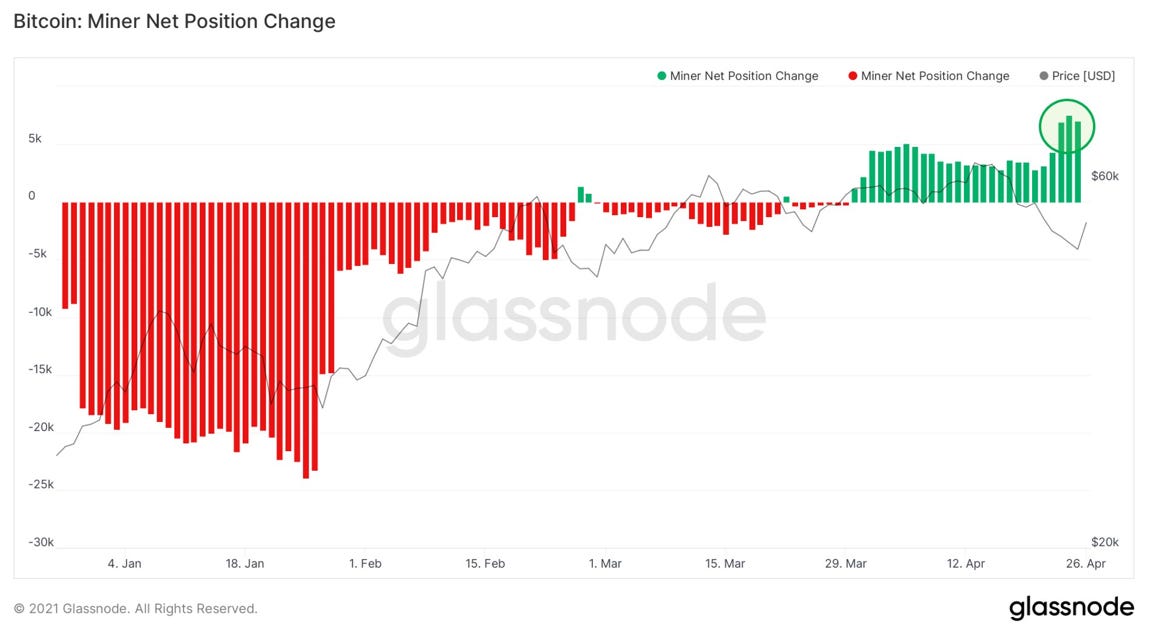
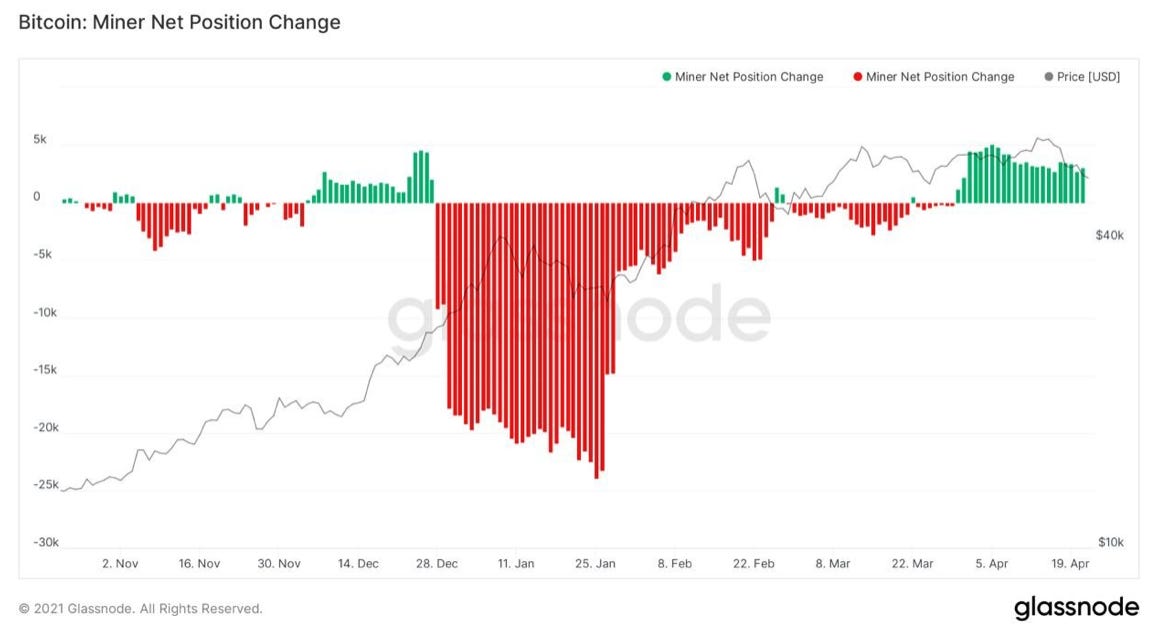
This installment of The Pomp Letter is free for everyone. I send this email to our investors daily. If you would also like to receive it every morning, join the 160,000 other investors today.To investors,Below is the weekly on-chain metric analysis from Will Clemente of Bitcoin Magazine Research. Hope all is well, and happy Friday! At the time of writing, Bitcoin’s price sits at $52,200 after a choppy week, price is currently down 18.63% in the last 7 days. This letter will recap the events of last weekend’s rapid price drop, try to estimate where we are in the current price correction, and some other interesting on-chain metrics. Let’s dive into some of the latest developments seen on-chain.Last Weekend Over the weekend Bitcoin saw one of its largest days of long liquidations in history, with data provider Glassnode reporting $1,847,700,724 of longs being liquidated throughout the event. The catalyst/cause of these liquidations can’t be known for certain, but several on-chain analysts such as Willy Woo suspect the catalyst was 9,000 BTC that were moved onto Binance, an exchange used primarily in Asia. Nonetheless, the massive leverage that been in the Bitcoin derivates markets was wiped out and caused the rapid price decline.On Binance quarterly futures contracts, price fell as far as $35,000 during the event. To put the event into perspective, this number of liquidations dwarfed that of the March price crash last year, when price fell roughly 50% in a single day. Over 1 million trader accounts were liquidated in total.There was some silver lining to this event, greed and leverage was flushed out. In addition to the liquidations, this can be illustrated by funding rates. To peg the perpetual swap contract to Bitcoin spot price, funding rates are used. When majority of traders go long, it becomes profitable to go short, and vice versa. During the event, funding rates flipped negative, meaning it became profitable for traders to take the long side of the trade. This has shown to be a buy signal in the previous two times this happened during this bull market. Another indicator suggesting we have either reached, or are very close to reaching, the bottom of this correction is SOPR. SOPR (Spent Output Profit Ratio) measures the net profit/loss of the market, it is relatively rare to see the aggregate of market participants to take losses in a bull market except during significant corrections. During these corrections, you will see the metric reset to 1(black line), indicating that participants are neither in profit/loss, but rarely reset below 1, indicating that participants have realized a net loss in aggregate. However, as the bull market goes on, it is increasingly likely that SOPR dips fully below 1, especially as unconvicted retail arrives who have tendency to panic sell. Any dips below 1 have historically been great buy opportunties. In January’s correction SOPR reset to just above 1 and in February’s correction SOPR did a full reset below 1. Currently, SOPR is approaching the full reset mark, meaning price has either reached, or is very closing to reaching, the bottom of the current correction.Price action aside, another interesting development on-chain is the continuation of miners accumulating. This can be illustrated by Glassnode’s “Miner Net Position Change” metric. Accumulation from miners has clearly become a trend over the last few weeks. This indicates two things: miners are expecting higher prices to come and are reluctant to sell their stack now, and also the fact that they are able to cover their CAPEX without having to dump coins onto the market. Throughout the 2016/2017 bull market, miners consistently sold. This is a key differentiating factor between that cycle and the current one, possibly made possible by newly matured Bitcon borrowing/lending platforms. This allows miners to borrow against their holdings while generating fiat to cover their cost to maintain operations. Another interesting trend is Canada’s Purpose Bitcoin ETF. This ETF has already reached over 1 billion dollars in assets under management in just two months. Not only that, but they have only had two days of outflow total, both of which were insignificant. This is great to see as there is clearly demand for new on-ramps to take on Bitcoin exposure via ETF and leads one to think the magnitude of the flows a US-based fund would generate. With several major ETF applications on the SEC’s desk, it’s only a matter of time.Finally, I’d like to introduce entities net growth. Anyone bearish on Bitcoin is not taking this into account. There are currently over 50,000 new entities a day coming onto the blockchain, we are in the “hockey stick” adoption curve phase of the cycle. This is great for the Bitcoin network as there is a tremendous amount of new individuals, corporate treasuries, investment funds, etc. that are all onboarding to the Bitcoin monetary network.To support this, let’s take a look at the chart below visualizing walle

Bitcoin: Origins And Cultural Significance
To investors, Today we have a guest post from Cameron and Tyler Winklevoss, who have been investors in Bitcoin and Ethereum for quite awhile. They are also the founders of Gemini, one of the leading cryptocurrency exchanges in the United States. SummaryBitcoin has grown from a small movement of computer scientists, Cypherpunks, and cryptographers into an increasingly mainstream phenomenon. It has started to force a redesign of the world’s financial system and its philosophical, technological, and economic ramifications continue to expand. This article provides an overview of Bitcoin’s historical and cultural significance. If you’d like to read up on other aspects of Bitcoin, be sure to check out our other articles, including Bitcoin: Fundamental Technical Structure and Bitcoin: Network Security.Bitcoin’s Predecessors Bitcoin is the world’s first cryptocurrency and blockchain as we have come to now know these terms. Bitcoin (capital "B") refers to the peer-to-peer Bitcoin network that maintains a decentralized public ledger called the “blockchain,” which records the ownership of all bitcoin (lowercase "b"), the native digital asset token of the Bitcoin network. In addition to creating trustless, digital money, Bitcoin has ushered in a movement to decentralize existing, centralized financial services. Bitcoin was not, however, the first attempt at creating digital money. It was built upon the shoulders of giants that came before it and it’s hard to imagine that it would have been successful if not for the lessons learned and ideas proposed in these earlier attempts. The notion of scarcity with respect to digital money was famously envisioned by Nick Szabo when he proposed Bit Gold in 1998, which he later wrote about in his blog. Szabo is a computer scientist and early member of the Cypherpunks, a group of technologists dedicated to promoting privacy through encryption and electronic money. The Cypherpunks formed in the 1980s and communicated regularly on the Cypherpunks mailing list on a range of topics related to cryptography, economics, and censorship. Eric Hughes, a mathematician and one of the founders of the Cypherpunk movement along with Timothy C. May and John Gilmore, published A Cypherpunk's Manifesto in 1993 that captures its ethos.In the late 1990s Szabo noticed that “precious metals and collectibles have an unforgeable scarcity due to the costliness of their creation.” So he set out to create a protocol “whereby unforgeably costly bits could be created online with minimal dependence on trusted third parties.” Enter Bit Gold. In an effort to impose “cost” around the creation of property on a distributed public registry, a computer (Alice) would have to spend resources solving a proof of work (PoW) puzzle that would generate a PoW chain — the more resources spent, the longer the chain — the longer the chain, the greater the theoretical value of Alice’s newly created property. This was a digital analogy to the work (i.e., energy) required to mine gold in the real world.If Alice’s PoW chain was verified and accepted by the majority of the computers on the network (i.e., nodes) — a process known as reaching consensus — her non-fungible chain would be added to the distributed public registry and she would be given Bit Gold in exchange for it. The registry solved the double-spending problem — the risk that a user could spend the same Bit Gold twice — since any node could easily confirm cryptographically what Bit Gold Alice owned on the registry. But the Bit Gold consensus mechanism fell short due to the fact that it would be inexpensive for a bad actor to create a large number of nodes (known as “sybills”) and tamper with the property registry (known as a “Sybil attack”). If Bit Gold were to protect against this by limiting the number of nodes that were able to participate in managing the property registry, the network would become more centralized and the permitted nodes would have an inordinate amount of power. B-Money was another precursor to Bitcoin that arose around the same time as Bit Gold. It was proposed by Wei Dai, a computer engineer, Cypherpunk, and cryptographer and is referenced in the Bitcoin whitepaper. B-Money conceptualized an "anonymous, distributed electronic cash system.” And while it was never developed beyond the whitepaper stage, it included a number of concepts, such as a distributed ledger, the digital signing of transactions, and the creation of money via PoW (like Bit Gold) that eventually made their way into Bitcoin and the multitude of other cryptocurrencies that Bitcoin has subsequently inspired.The idea of building cost (or digital scarcity) into a system using proof of work was first conceptualized by Cynthia Dwork and Moni Naor in 1993 as a way to protect Internet services from abuse such as spam. In 1997, an English Cypherpunk named Dr. Adam Back implemented this concept into his project Hashcash, a service aimed at limiting spam and denial of service attacks. Sending m
The Bull Run Has More Room To Run
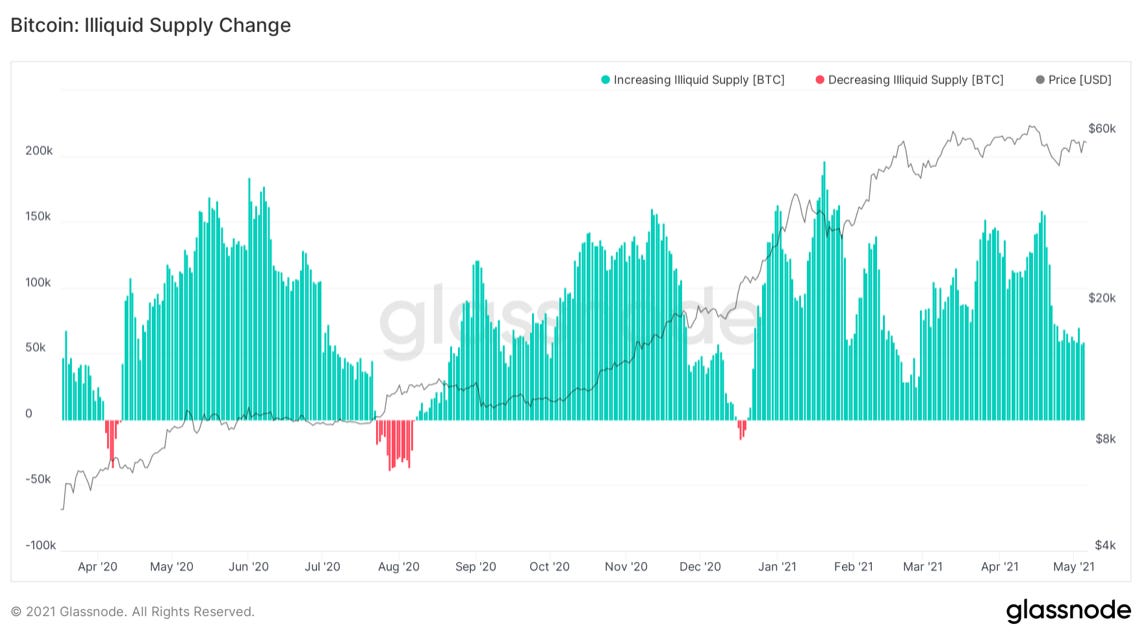
This installment of The Pomp Letter is free for everyone. I send this email to our investors daily. If you would also like to receive it every morning, join the 155,000 other investors today.To investors,The response to Will Clemente’s on-chain analysis last week was great. We are going to turn this into a weekly column that will be published every Friday. Below is this week’s analysis.Happy Friday everyone! Welcome back to the newsletter’s weekly on-chain update. At the time of writing, Bitcoin sits at $63,500 following a long-awaited breakout above $60,000 on Wednesday, which had served as a major price resistance over the last few weeks. This comes as no surprise, with last week’s letter describing a very bullish setup on-chain and was just a waiting game until price broke out of consolidation. Let us take a look at some of the current on-chain trends worth noting, both short and long term. Let us first start by looking at where we are in the broader macro cycle and then zoom in to current trends towards the end of the newsletter. As always, the data used in this writing is derived from Glassnode, one of the leading data providers in the Bitcoin industry. Hope you enjoy.Long Term MetricsOne of the most useful ways to analyze where Bitcoin price is in the broader bull/bear cycle is by looking at the behavior of long-term holders. At the end of bull cycles, we see long-term holders (smart money) begin to sell off into strength during the final parabolic pushes of the run. The data shows that we are no where near that stage. One of the best metrics to illustrate this is dormancy. In on-chain terms, older coins (coins that have not moved) hold more dormancy. The dormancy metric illustrates the amount of dormancy in the coins being sold onto the market. In bear markets we see lower dormancy, as long-term investors scoop up cheap coins without selling. However, higher prices incentivize those holders to sell, and as the bull market goes higher, dormancy rises. In the chart below you can see the historical peaks of dormancy that Bitcoin has reached in previous bull cycles. In comparison, the current trend still has a lot of room to run upwards. Another metric that can be used to follow holding behavior is HODL Waves, a metric that analyzes the behavior of different “aged” coins. Each colored band shows the percentage of Bitcoin in existence that was last moved within a specific time period. In bear markets, short-term speculators leave, and long-term holders (smart money) take up a larger portion of supply as they accumulate. In bull market, particularly as they come to an end, short-term holders (retail) take up a larger portion of supply as long-term holders sell off. In comparison to Bitcoin’s history, HODL Waves also shows a lot of room upwards for this bull cycle. To close out with long-term metrics, let us take a look at illiquid supply. According to Glassnode, illiquid supply is considered supply in wallet addresses that has not been moved for at least 6 months. This means that the huge down draw we are currently seeing is representative of coins purchased back in November/December, as they cross the “illiquid” threshold now. Aside from the current massive down draw, supply has consistently become illiquid throughout the entire bull market. In other words, throughout the entire bull market coins continue to be scooped up by strong hand wallets with no intention of selling for short term gains. These levels of illiquidity are unprecedented in terms of Bitcoin’s historical data. Short-Term MetricsOne metric we touched on last week was long-term holder net position change. Since that time, the metric has actually flipped green, a very bullish sign. This metric uses a 155 day threshold to consider supply “long-term”. According to Glassnode, the metric flips green when more coins mature across the 155-day age threshold than old coins being spent. Although we did see some selling following ATH around $27k-$32k (to be expected), this flip green suggests long-term holders are now expecting more upside to come. Another metric that has caught my eye lately is accumulation addresses. This measures the number of Bitcoin addresses that have received at least two transactions but have never spent funds. (filters out major entities such as exchanges) This illustrates a large number of new Bitcoin holders that have emerged through the year, as we saw the metric go parabolic in mid-February. In conclusion, a lot of metrics do point to further upside, but here are two to keep in mind: funding rates and SOPR. Funding rates can be used to gage sentiment from traders in the market. Prolonged high funding rates are a bearish sign, as there is excessive leverage in the market and therefore is very fragile and subject to a cascade of liquidations. SOPR measures profit taking and is mostly used to time bottoms of corrections but can also serve as a rough gage of how overheated price rallies are. SOPR shows some more room for pri

A Fighting Chance Is All You Can Ask For
This installment of The Pomp Letter is free for everyone. I send this email to our investors daily. If you would also like to receive it every morning, join the 150,000 other investors today.To investors,The more things change, the more they stay the same. I spend my day talking to entrepreneurs looking to build the next great innovation, investors seeking alpha in some hidden market opportunity, or individuals who are explaining how the world is evolving in a way that no one quite understands yet.These conversations are fascinating. They give me a view into the future. What technology is being built? How will it change the way that people or organizations conduct their daily activities? What are investors thinking? How will capital flows change? On a day-to-day basis, it can almost be overwhelming. So much innovation, so little time. But is that really true?I’ve been spending more time thinking about the long term. Zooming out in a way. Where did we come from? What is happening today? And how does that impact where we are going? These questions don’t have a single right answer, but instead can usually be boiled down to my personal interpretation of the set of facts that I have. More frequently though, I am concluding that very little has actually changed over the last few decades. Here are a few examples of what I mean:* Innovation — this body of work is driven by the activity and movement of intellectual capital. When engineers, entrepreneurs, and innovators begin to all work on the same industry in a given time period, there is incredible progress made. These innovation cycles follow similar paths. You have early adopters and late adopters. Boom and bust cycles. Excitement and disappointment. The easiest way to find innovation is to simply follow the talent. * Investment alpha — the best investors are constantly seeking asymmetry. This lopsided risk-reward payoff can be found by believing in technology and innovation trends before the masses. You have to allocate your capital somewhere that others don’t yet believe has value, while also being right. If you do something different and are wrong, that just makes you an idiot. Additionally, following the intellectual talent, particularly young people, can help to easily identify where innovation is happening, and innovation leads to outsized returns.* Capital flows — many investors spend too much time trying to outsmart the market, when in reality they simply need to understand the human psychology that drives capital flows. Take inflation as an example. It doesn’t matter if inflation actually occurs or not. If people fear inflation, capital will flow to inflation-hedge assets. If you move your capital before the masses, you will capture a return once the bulk of capital starts to flow. The psychology of markets is still the main driver behind price movements of various assets.These are just three simple examples that I use to highlight that almost nothing is different this time around. Sure, the technology is different. Some of the players are different. But the core principles of building companies and investing capital have not changed.An unfortunate story that proves the point is Bill Hwang and Archegos Capital Management. For those that don’t know the story from last week, Bill is a well respected investor who had billions of dollars in assets. Today he has almost nothing left. According to CNBC, here is what happened:“Archegos held large and leveraged bets in U.S. media stocks ViacomCBS and Discovery, as well as a few Chinese internet ADRs including Baidu, Tencent and Vipshop. Some of the positions were held via total return swaps, a type of derivative that allows investors to take big, levered stakes without disclosing those positions publicly.These bets started to go south after ViacomCBS’ $3 billion stock offering through Morgan Stanley and JPMorgan earlier in the week fell apart. It triggered a domino effect where prime brokers rushed to exit the positions on Archegos’ behalf and resulted in a massive margin call.”Bill Hwang lost billions of dollars. Big financial institutions like Nomura and Credit Suisse lost billions of dollars. Frankly, this is the equivalent of financial carnage. So what does this have to do with my point that nothing is different? Even in the good times, lack of risk management and the use of too much leverage can be fatal. This story is as old as time. As I’ve thought more about the exciting advancements today, it has brought me back to the book that always grounds me in the long-term view of the world: Mark Spitznagel’s The Dao of Capital. Here are just a few of my favorite quotes from the book:* “No one should expect that any logical argument or any experience could shake the almost religious fervor of those who believe in salvation through spending and credit expansion.” - Mises* "The whole of economics can be reduced to a single lesson, and that lesson can be reduced to a single sentence: The art of economics consists in

The Education Behind Elon Musk's Children
This installment of The Pomp Letter is free for everyone. I send this email to our investors daily. If you would also like to receive it every morning, join the 145,000 other investors today.To investors,Today I am announcing an investment in Synthesis, which is the education spin-out from the school that Elon Musk custom built for his own children. The traditional school system teaches our children rote memorization and measures success based on end of year test results. This is not the best way to prepare young children for the real world. The system leaves children lacking critical thinking skills, along with problem solving, independent thought, creativity, and teamwork experience. Elon Musk realized this years ago and decided to build a school on the SpaceX campus for his own children. Musk partnered with Josh Dahn to create Ad Astra, which became the educational experience that he believed would be best for the children that he wanted to raise. Ad Astra (now known as AstraNova) uses simulations, case studies, fabrication and design projects, labs, and corporate collaboratives to develop students that are enthralled by complexity and solving for the unknown.The only problem is that the AstraNova experience was only available to a select few families who could get into the program. But Josh Dahn, the co-creator of AstraNova, wanted to bring this game-changing educational program to the masses. Enter Synthesis.Josh Dahn has teamed up with Chrisman Frank, an early employee at ClassDojo, to create a software based solution that puts children ages 7-14 through the one-of-a-kind program. These children are taught critical thinking, problem solving, leadership, creativity, independent thought, and teamwork. Simply, Synthesis prepares children for the real world in a way that the traditional education system does not. Listen to this 10 year old kid talk about his assessment of a situation, his team’s resources, and his decision to pass the leadership position to the best suited team member. Most adults can’t do this:The lack of critical thinking and problem solving skills being taught in our education system should be a national emergency. Rather than complain about it, the team at Synthesis is doing something about it. Josh and Chrisman have put together an incredible team, including former teachers like Ana Lorena Fabrega and others. If you want your child to be more proficient and better prepared for the real world, you should consider signing up here: https://www.synthesis.is/The company has been growing incredibly fast. They have seen 50% monthly compounded growth since the start of November and are now doing over $1 million in annual run rate. More than 85% of all students stay in the program after 90 days. The takeaway? Synthesis works.I’m joined in this round by a list of other incredible investors, including Alexis Ohanian, Austen Allred (founder of Lambda School), Sam Teller (Elon's former chief of staff and partner at Valor Equity), Katie Wells (known as Wellness Mama), David Perrell, Austin Rief (founder of Morning Brew), my friend and former Facebook colleague Jonathan Gheller, and many others.We have assembled an incredible team of operators and investors with one simple mission — educate your child with the problem solving and critical thinking skills that will prepare them for success in life. If that sounds compelling to you, you really should consider giving it a try.Sign up your child for Synthesis: https://www.synthesis.is/If it is good enough for Elon Musk and his kids, it is probably good enough for you. Have a great day and I’ll talk to everyone tomorrow. -PompDo you want to work in the Bitcoin and crypto industry? Do you run a business that has open roles to fill? I recently launched the industry-leading job board focused on our industry. We have hundreds of open roles at companies like Coinbase, Gemini, BlockFi, and many others.Get a Job or Post a Job here: http://www.pompcryptojobs.comLISTEN TO THIS EPISODE OF THE POMP PODCAST HERESynthesis is an innovative new way for young students to learn critical thinking and problem solving skills. Pomp was so fascinated with the program that he invested. This episode is with Josh Dahn, Chrisman Frank, and Ana Lorena Fabrega.In this conversation, the Synthesis team and I discuss:* Challenges is legacy education* Why critical thinking and problem solving is so important* How Josh started a school with Elon Musk* What Synthesis is doingI really enjoyed this conversation with the Synthesis team. Hopefully you enjoy it too.LISTEN TO THIS EPISODE OF THE POMP PODCAST HEREPodcast SponsorsThese companies make the podcast possible, so go check them out and thank them for their support!* If you own crypto in a lot of places like me you know how difficult it can be to keep track of it all. Whether you keep your crypto on hardware wallets, mobile wallets, exchanges, liquidity pools, or somewhere else, CoinStats lets you track it all in one place on your iPh

Bitcoin's Information Insurgency
This installment of The Pomp Letter is free for everyone. I send this email to our investors daily. If you would also like to receive it every morning, join the 140,000 other investors today.To investors,There has been a lot of discussion recently about the bitcoin community’s communication tactics. Insiders believe that bitcoiners are some of the most educated minds on finance, technology, and innovation. They literally can’t believe that so much information is available for free to be consumed by anyone on the internet. Outsiders see something very different. They see a group of people who appear to be religious zealots that only know how to communicate via memes, laser eyes, and aggressive tweeting. Here is the funny thing — both are correct.The bitcoin community is filled with people who have dedicated years to understanding the intersection of multiple disciplines, including economics, finance, technology, cryptography, geopolitics, game theory, and many more. Not only have they acquired the knowledge, but they have had those ideas tested in the intellectual arenas of Twitter, Reddit, Telegram, etc. Simply, bitcoiners have done their homework and they come prepared.But bitcoiners also have a very unique way of communicating with people. While there are podcasts and email newsletters, much of the information is actually shared through internet culture. Where else will you find someone telling a billionaire to “have fun staying poor!” or someone telling a legend of Wall Street “Ok, boomer!”To the outsider, this appears to be disrespectful, non-constructive, and a misstep for a group of people who are hoping to gain widespread adoption. These outsiders are put off by the bitcoiner antics at times, while believing the community will be the single point of failure in other situations.The outsiders don’t understand the genius of the bitcoin community though. Bitcoin, and by proxy the bitcoin community, is competing with the most respected establishments in our society. Whether we are talking about the Federal Reserve, the Treasury, the US government, or large financial institutions, these organizations pride themselves on being the elite. They wear their suits and ties with an air of arrogance that is only acquired after an education at an Ivy League school and enough cocktail parties to fill a lifetime.So why would bitcoin try to out class the elites? Well, it shouldn’t.Just as an insurgency increases the odds of prevailing on a combat battlefield by employing non-traditional tactics, the bitcoin community has chosen to play a game that the elite can’t participate in.Bitcoiners are conducting an information insurgency.They are quite literally controlling the public narrative through an overwhelming amount of content that has no reliance on traditional distribution methods. Up until recently, the only time that journalists or television shows wanted to speak with bitcoiners was to ridicule, mock, and attack them.The bitcoin community ignored those short term challenges and instead built a direct relationship with the mass population. Twitter. Reddit. Telegram. Podcasts. Instagram. Facebook. Email. You can’t exist on the internet for 24 hours without coming in contact with content that is created by this community. So why are things like laser eyes so important? Easy — the memes are the message. You are watching information warfare conducted in a way that can’t be responded to by the elite and the establishment. What is the Federal Reserve going to do? Start firing off memes, gifs, and ALL CAPS BULLISH USD TWEETS??No chance. The incumbents, from the government to the Fed to the banks, can only sit by passively and get bombarded day in and day out with the content. If they choose to acknowledge it and respond, they will only legitimize bitcoin and the surrounding community. If they continue to ignore it, bitcoiners will control the public narrative and continue recruiting more and more people to see their world view.This is fascinating to watch because this information insurgency will likely be analyzed in retrospect as one of the most important psychological operations in human history. Millions of strangers on the internet are coordinating to meme a financial asset into retail investors’ portfolios, corporate balance sheets, financial institutions’ product roadmaps, and eventually central bank reserves.Wait, what? Yes, read that again. The bitcoin community is using internet culture and speaking the language of digital natives to gain traction against the stuffy elites. Half the people running these establishments don’t know what a meme is, let alone have a coherent response on how to deal with what is happening. In fact, many of the older folks in the bitcoin community are against these tactics as well. They constantly tell bitcoiners that they will have to wear suits and ties to meetings. They explain that bitcoin won’t be accepted until the laser eyes and memes go away. The alleged toxicity is seen as a b
Bitcoin Was The Safe Haven Asset We All Needed
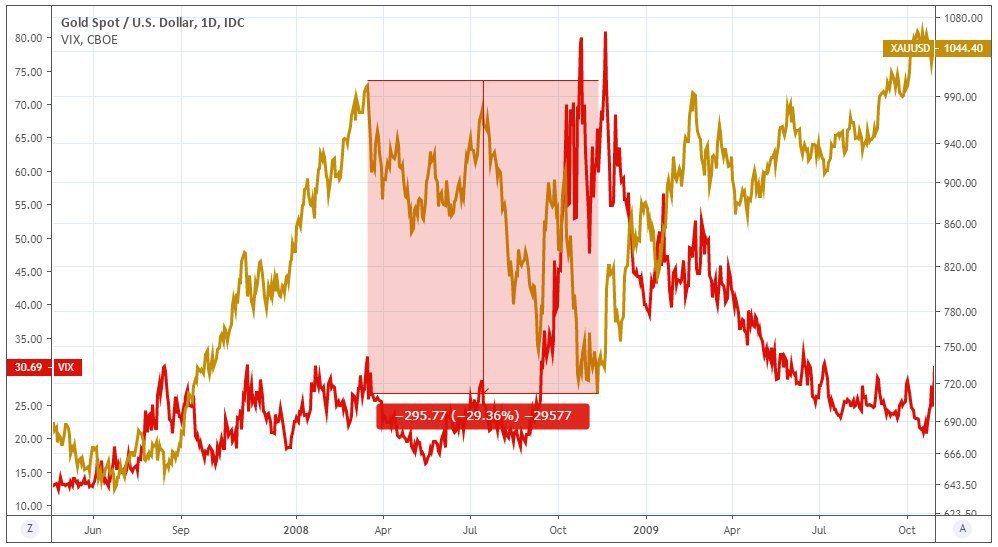
This installment of The Pomp Letter is free for everyone. I send this email to our investors daily. If you would also like to receive it every morning, join the 140,000 other investors today.To investors,There was blood in the streets a year ago. March 12, 2020 will be a day that financial investors will never forget. Bitcoin fell over 50% in a single day. Every other asset was in a free fall as well. Circuit breakers were tripped every few hours it seemed. Investors were full of fear. They couldn’t sell every liquid asset in their portfolio fast enough. The pandemic had hit full stride. The NBA was shutting down. Countries around the world were going into lockdown. The S&P 500 dropped 7% the second it opened. The Dow Jones was down over 8%. Oil and gold were both suffering a similar fate.It was ugly. But not everyone was scared. The liquidity crisis was actually quite obvious to those who understood how investor psychology and markets interact. The morning of March 12th I wrote a letter to each of you titled “The Liquidity Crisis Will Drive Monetary Stimulus, Which Will Force The Adoption Of Sound Money Properties.”I started the letter off with the following:“We are watching history unfold. There will be books written about the events that are transpiring in financial markets right now. Every day feels like a month. Fear and panic are dominating the minds of most people. As I wrote earlier this week though, like most things in life — this too shall pass.”Next, I highlighted a simple framework for investors to think through what was happening:* COVID-19 has officially been labeled a pandemic by the World Health Organization. The necessary response requires social distancing and shutting down of large gatherings or various forms of economic activity.* The virus is grinding economies around the world to a halt.* The structural flaws in various markets are exposed when economies slow down, including too much leverage and lack of liquidity.The key piece to preparing investors for what was about to happen in the coming days was the identification of the liquidity crisis. Some people saw fear. But fear is a psychological concept and a liquidity crisis is a market structure manifestation of the fear. I went on to write:“Unfortunately, we are watching a liquidity crisis play out in real-time. These liquidity issues are well understood structurally, but feel much worse than expected when they occur in reality. A liquidity crisis means that investors all rush to the exit doors at the same time, but there are so many more sellers than buyers that investors actually have a hard time offloading their assets for cash. Quite literally, investors begin aggressively lowering the price they are willing to accept for each asset in exchange for the cash which they are desperately seeking right now.This is why you are seeing any asset with a liquid market tanking so hard right now.”As if that wasn’t enough to grab people’s attention, I went on to show what had happened to gold during the 2008 financial crisis.“During the 2008 global financial crisis, gold dropped in price by more than 30% leading into the depths of the real pain. This isn’t because gold is a bad store of value or that it had lost safe haven status after 5,000 years. It is because gold has a liquid market and investors needed liquidity over anything else.”“Even though gold fell 30% during the 6 month liquidity crisis, the asset still went from approximately $650 in 2006 to over $1,800 in 2011. Why? Because people ran to gold when they feared that the United States would default on debt, that the US monetary policy measures were a bad idea, and/or that inflation was rising. Simply, gold served as a store of value and safe haven asset over the full timeline of the crisis, but it succumbed to the liquidity crisis during the worst 6 months.”So let’s take a look at what actually happened to Bitcoin during the liquidity crisis. Simply, it was in free fall just like every other asset. The difference is that bitcoin is a more volatile asset, so while other assets went down 15-30% in price, bitcoin was down 50%. As I always say, volatility is not inherently bad. It is a positive thing when it works in your favor and a negative thing when it goes against you. You need volatility for prices to move upwards if you’re long. But the week of March 12, 2020 was a bad volatility period for the holders of the digital currency.Here is the funny thing though — if you Zoom out and look at bitcoin’s price chart from about a year before the liquidity crisis till today, you can barely even see that 50% drop in price.As we continue to discuss in this letter, long term holders have a significant advantage over the weak handed short term traders. Humans are emotional. We succumb to fear and greed. But if you have deep conviction in a thesis and refuse to allow the short term price movements to affect your decision making, you will do fairly well over the long term. My favorite analysis is
The Stimulus Package Won't Cut Poverty, It Will Accelerate It
This installment of The Pomp Letter is free for everyone. I send this email to our investors daily. If you would also like to receive it every morning, join the 135,000 other investors today.To investors,The United States Senate narrowly voted in favor of the American Rescue Package over the weekend. The $1.9 trillion stimulus package is being presented as a savior for the citizens still suffering from the COVID-induced economic crisis, but the actual impact of the package is likely to be a net negative.Before we get started, here is a quick overview of where the $1.9 trillion is reportedly going:* Stimulus checks: Individuals making less than $75,000 and married couples making less than $150,000 will receive direct payments of $1,400 per person. The bill will also provide $1,400 per dependent.* Unemployment benefit boost: The bill extends unemployment programs through early September, including the $300-per-week federal supplement provided in the last stimulus plan passed in December.* Child tax credit: For 2021, the bill would temporarily expand the child tax credit, which is currently worth up to $2,000 per child younger than 17. Under the legislation, the tax credit would be as much as $3,600 for children up to age 5 and as much as $3,000 for children 6 to 17.* Local government: It would provide $350 billion for states, local governments, territories and tribal governments, and it contains $130 billion for schools. It also includes funding for colleges and universities, transit agencies, housing aid, child care providers and food assistance.* Small business: The bill contains funding to help businesses, including restaurants and live venues, and it includes a bailout for multi-employer pension plans that are financially troubled.* Vaccine: The legislation includes $160 billion for vaccine and testing programs to help stop the virus’s spread and ultimately end the pandemic. The plan includes money to create a national vaccine distribution program that would offer free shots to all U.S. residents regardless of immigration status. There is plenty more in the $1.9 trillion stimulus package but you get the idea. The new administration is being heralded as the savior of the low and middle class. It is being praised for sending minimal amounts of money to small businesses (less than $50 billion for restaurants, venues, and other small businesses). We, the American people, are even being told that the government has cut poverty!No, seriously. The Washington Post published an article over the weekend titled “Biden stimulus showers money on Americans, sharply cutting poverty and favoring individuals over business.” How these journalists know that the stimulus package, which hasn’t even been implemented yet, has cut poverty is confusing to me. They must be able to see into the future.Obviously, no one can see into the future. No one knows exactly the impact of this stimulus package. Some people claim it will help the people who need it most. Others believe it will lead to higher levels of inflation, which disproportionately hurt the lowest socioeconomic classes. One thing we should all be able to agree on is that the Washington Post headline is pure propaganda. These journalists have become a mouthpiece for the state. Showering money on Americans. Sharply cutting poverty. It sounds like a third-world dictator wrote these headlines in an attempt to tell their citizens that everything is going to be alright.The truth is that the new stimulus package drastically reduces the number of people who are eligible to receive stimulus checks. The cap used to be anyone who made up to $100,000 but that has been cut by 20% down to $80,000. The unemployment insurance boost was originally $600, but it got cut down to $300 in the extension at the end of 2020. The Biden administration proposed a $400 per week extension, but that was cut by 25% in the last few hours leading up to the Senate vote. So if one hyperbolic headline includes showering money and cutting poverty, the other extreme could read “Biden Stimulus Withholds Money From Those In Need To Bail Out Failing Local Governments and States.” Wait, what? Think about this — the stimulus package includes $360 billion in relief for state, local, and territorial governments. That is almost 20% of the entire allocation of capital in this measure.While $360 billion may sound small, the total cost of the stimulus checks would be $245 billion if we gave a $1,400 stimulus check to each of the 175 million who make less than $75,000 a year. Add in $300 unemployment insurance per week for the 10 million Americans who are out of work and you could fund the $3 billion of unemployment insurance for almost 10 months before you had given more money to the people, rather than to local and state governments.So for those keeping track at home, the government gave more money to bail out poorly run local and state governments that shut down their economies than they gave the actual citizens that e
Gold Bugs Are Capitulating
To investors,Bitcoin has unique properties that continue to prove valuable in the market. This value leads to increases in demand, which drive the US dollar price higher. As the price goes higher, previous bitcoin bears are forced to re-evaluate their prior analysis.Some of the bears continue to conclude that bitcoin is over-hyped at best and worthless at worst. It is unclear if they reach the same conclusion because they truly believe their analysis or if it is the product of a lack of intellectual rigor. Either way, plenty of prior bears are still bearish today.There are a few people, and I mean a select few, who have been previously skeptical of bitcoin publicly and are now changing their mind. The latest person to do this is Jeffrey Gundlach, the founder of DoubleLine Capital. For those of you who don’t know Gundlach, he is known as the bond king and has been a gold bug for years.The revelation came from one of his tweets yesterday:The idea of Bitcoin: The Stimulus Asset has a nice ring to it. But what is more interesting to me is that Gundlach’s analysis is not a statement on bitcoin exclusively, but rather a three pronged analysis of the US dollar, gold, and bitcoin. This is exactly how someone should think of these assets — each can serve as a store of value in different environments or time periods. Over the last 12 months though, holding bitcoin was a better decision over dollars or gold. In fact, it is becoming increasingly clear that gold is seeing outflows at the same time that bitcoin is seeing inflows. Bloomberg’s Lynn Thomasson explained it well by saying “Gundlach’s comments are another sign the investment case for Bitcoin is winning over institutional money managers and possibly siphoning cash from the gold market. Historically, traders have turned to the precious metal as a way to play rising inflation expectations. But over the past year, it has been range-bound and gold exchange-traded funds have seen outflows.”While the chart is clear that gold is losing and Bitcoin is winning, that doesn’t necessarily guarantee causality. It is hard to argue against the data and results though.Investors have a short memory unfortunately. If they did not, you would remember people were yelling and screaming about Bitcoin’s correlation to traditional assets during the start of the economic crisis in March of 2020. As I wrote at the time, we were not seeing sustainable correlation, but rather a liquidity crisis where all assets would sell off together. As predicted, assets eventually were bailed out by government and central bank intervention. We saw an aggressive recovery and eventual decoupling of correlations that trended back to the historical non-correlation for bitcoin. The question that I keep asking myself is “how long will gold bugs hang on to their gold while they watch the digital store of value gain market adoption?” The short answer is that no one actually knows. Some people are likely to bail in the short term because of the US dollar price of bitcoin. Some people will take time to critically think about their world view and then change their mind. And a few people are more focused on being “proven right” than actually “being right.”Ultimately, everyone capitulates though. Bitcoin is the hardest, soundest money the world has ever seen. That may sound like a bombastic claim, but it is proving to be more accurate with each passing day. Remember, changing your mind when you receive new information is a sign of intelligence. We should encourage people to do it. The real sign of stupidity is watching the market, and related data, tell a story that is impossible to ignore, yet you sit idly by submerged in your ignorance. Gold has done a fantastic job for thousands of years. We live in a digital world now and the old solution just doesn’t cut it anymore. You don’t send all of your communications via physical letters anymore. You’re intelligent enough to use email, text message, and phone calls.Holding on to your gold is the equivalent of physical letters. Does it get the job done? Yes, in the most basic sense, but it is drastically inferior to the digital application of communication. This is what the world is waking up to and realizing at almost the same time. The world’s richest entrepreneurs and investors. The largest financial institutions. They all see the writing on the wall and they’re trying to figure out how they want to participate.It is a beautiful thing to watch. Bitcoin doesn’t care though. It continues to produce block after block after block of transactions. Enough to process nearly $15 billion of on-chain transaction volume in the last 24 hours. That puts it on a path to $5+ trillion annualized transaction volume, which is approximately 50% of Visa and MasterCard. Just as everyone eventually capitulates, bitcoin will eventually eclipse these monolithic payment networks. It is just a matter of time. Have a great day. I’ll talk to everyone tomorrow.BONUS: If you want a job in the bitc

The Game Has Changed
This installment of The Pomp Letter is free for everyone. I send this email to our investors daily. If you would also like to receive it every morning, join the 120,000 other investors today.To investors,The world now knows what many of us have known for awhile — the game has changed. That is my takeaway from what has transpired around Wall Street Bets and Game Stop. This isn’t something that took hold overnight, but rather the culmination of a number of trends that have been evolving and accelerating for a decade.First, let’s start with the psychology. There is a deep disdain in western society for the hedge funds and banks who constantly profit at the expense of the little guy. Whether it is the 2008 housing crisis, naked short selling, or hedge funds front running trades, the average citizen feels like they are constantly at a disadvantage. Many times they are hurt and don’t even realize they were participating in the game.Read this Reddit post that was surfaced by Alexis Ohanian:This feeling of pain manifested itself in 2008 with the Occupy Wall Street movement in Zuccotti Park. The people may have dispersed from the park since then, but that feeling of being screwed by Wall Street never disappeared. The feeling has actually been exasperated by the Federal Reserve and our elected officials. They continue to intervene in markets and conduct market manipulation via quantitative easing. The dollar is being devalued at an incredible rate, but nobody seems to care about that. This punishes the 45% of Americans who own no investable assets. They feel like they can’t get ahead. They feel like everything is getting more expensive, but they’re not making more money.Well, they’re right. That is exactly what is happening. People have been screwed from a system structure that is built to reward investors and punish savers. All this market manipulation and intervention inflates asset prices and devalues savings. So you have millions of people who are psychologically scarred from the past combined with a continued feeling of being left behind. But the internet steps in and creates a lifeline — the access to information, communication tools, and financial markets has suddenly increased significantly in the last decade. You don’t need a Bloomberg terminal and a legacy brokerage account to play the game.You don’t have to go to Harvard or Wharton to be invited to the hedge fund idea dinners. You don’t need to wear a suit and tie for someone to listen to what you have to say. Instead, you can live anywhere in the world and research and learn on the internet. You can freely communicate with like-minded folks. And the barrier to accessing financial markets has dropped to nearly zero. When you arm the every day person with information, communication tools, and access to markets, you create a scenario where the crowd can face-off against these institutions that have played a rigged game for so long. Except there is one problem — the second that the tide starts to turn, the game is being shut off.Quite literally, the hedge funds and financial institutions are crying because they’re losing money. What a joke. They presented themselves as genius stewards of capital, but are currently being exposed by random people on the internet that go by user names “DeepFuckingValue” and “Roaring Kitty.” You absolutely love to see it.This morning it got even worse. Not only is the legacy financial world up in arms about all this, but Robinhood disabled the ability for most of their users to trade the very stocks that everyone is piling into. Discord kicked Wall Street Bets off their platform last night. Excuse my language, but what the f**k is going on???As I always say, the pirate either dies or lives long enough to become the establishment. The very companies that prided themselves on being anti-establishment are falling right in line the second that they actually have to prove their courage and conviction. They’re not on retail investors side. They’re on whatever side protects their business. That is their right and we have to respect it. But we don’t have to like it and we don’t have to continue to give them our business.So where do we go from here?This is the best marketing campaign for the future digital, decentralized financial system. Bitcoin is throwing the middle finger to central banks. Decentralized exchanges are telling centralized peers to kick rocks. Digital assets that trade 24/7/365 without manipulation or intervention is where we are all heading. Whether you’re rich/poor, American/Chinese, smart/dumb, or informed/uninformed, you will be allowed to participate in the markets.We aren’t going to be using wealth as a proxy for intelligence anymore. We are going to have free markets where people wager capital on future outcomes of asset prices. If you’re right, you win. If you’re wrong, you lose. That is it. Forget all this market manipulation and intervention. The legacy institutions won’t like it but they don’t have a say in th
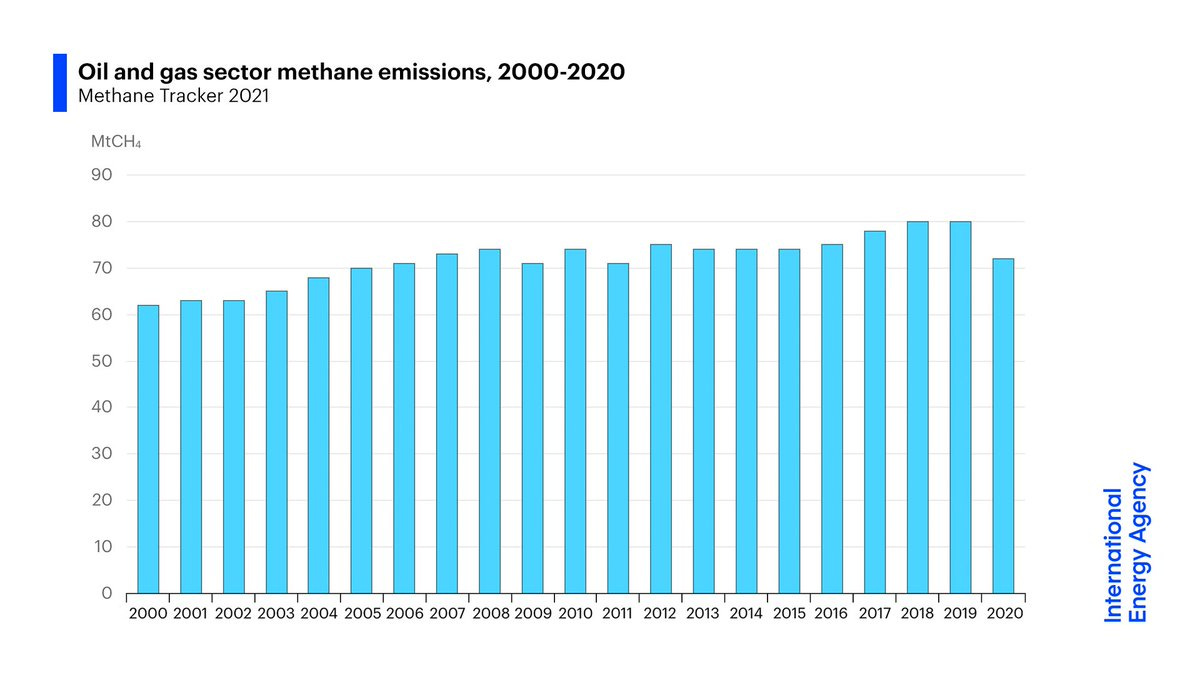
Bitcoin Mining Is Good For The Environment
To investors,One of the biggest misconceptions I hear repeated about Bitcoin is regarding the energy consumption needed to run the decentralized computing network. The theory goes like this — Bitcoin consumes a lot of energy, so Bitcoin is bad for the environment.In reality, this couldn’t be further from the truth. Bitcoin is actually one of the greatest financial incentives to transition the world to clean energy. There are two components to this analysis:* Bitcoin miners are seeking out clean energy as their core power source* Bitcoin miners are helping to divert the environmental impact of non-clean energyLet’s start with the first component. Bitcoin miners have a very simple business model. They consume power, run a specialized computer, and earn Bitcoin in exchange for running the computer/software. This is obviously generalized, but you get the point. The mining business model has two variables — the cost of power that the miner consumes and the price of the Bitcoin that is earned. The miner can not control the price of the Bitcoin that is earned, so they must solely focus on reducing the cost of the power they consume in order to become more profitable. Due to this constraint, Bitcoin miners are financially incentivized to find the cheapest power available to them.James Ellsmoor wrote in Forbes in 2019 that “according to a new report by the International Renewable Energy Agency (IRENA), unsubsidized renewable energy is now most frequently the cheapest source of energy generation.” So now that unsubsidized renewable energy is the cheapest form of electricity to consume, Bitcoin miners have been racing to set up operations that can benefit from this cost arbitrage. Remember, the miner doesn’t care where the power comes from. They simply want the cheapest power available. So what was I talking about when I said the second component was that Bitcoin miners are helping to divert the environmental impact of non-clean energy?Methane.The International Energy Agency is reporting that methane emissions are down 10% for last year, but Fatih Birol had a great summary of why this is not as encouraging as it seems:The reason why everyone is focused on methane is because it is really nasty stuff. Birol goes on to explain:He finishes his analysis by saying that responsible operators should address these methane emissions immediately.The good news? Bitcoin mining companies like Great American Mining are stepping in with a win-win solution for these responsible operators. According to their website, “Great American Mining monetizes wasted, stranded and undervalued gas throughout the oil and gas industry by using it as a power generation source for bitcoin mining. We bring the market and our expertise to the molecule. Our solutions make producers more efficient and profitable while helping to reduce flaring and venting throughout the oil and gas value chain.”Want to see what that looks like in practice? Behold this beauty.Great American Mining, and many other companies around the world, are racing to help the greatest methane emitters to capture the negative side effects of their work and turn it into the soundest money the world has ever seen.Bitcoin isn’t bad for the environment. In fact, Bitcoin is very, very good for the environment. The University of Cambridge reported at over 75% of miners use renewable energy and now there are solutions to turn methane emissions into mining as well. It is important to think for yourself during a paradigm shift. Many people from the legacy world will constantly share information that is built on outdated mental frameworks. They can’t fathom the future. Always do your own research. Question everything, including what is written in this letter each morning. You are responsible for educating yourself and forming your own opinion.I’ve done the work on Bitcoin mining and the energy sources used. My conclusion has me more excited about the future of the Bitcoin network. More miners. More hash rate. More decentralization. And ultimately, more value. Have a great start to your week. I’ll talk to everyone tomorrow.-PompTHE RUNDOWN:Goldman Sachs to Enter Crypto Market ‘Soon’ With Custody Play: U.S. banking powerhouse Goldman Sachs has issued a request for information to explore digital asset custody, according to a source inside the bank. When asked about timing, the Goldman source said the bank’s custody plans would be “evident soon.” Goldman’s digital asset custody RFI was circulated to at least one well-known crypto custody player toward the end of 2020. Read more.CoinLab Cuts Deal With Mt. Gox Trustee Over Bitcoin Claims: Creditors seeking to regain Bitcoin lost on the Japanese exchange Mt. Gox in 2014 have a chance to get their digital assets back before legal claims are settled. CoinLab Inc. said an agreement with Nobuaki Kobayashi, the trustee to the Mt. Gox bankruptcy, and MGIFLP, a unit of Fortress Investment Group LLC, will allow creditors to consider an offer of as much as 90% o

Decentralization Is A Necessity Now
This installment of The Pomp Letter is free for everyone. I send this email to our investors daily. If you would also like to receive it every morning, join the 110,000 other investors today.To investors,This weekend it became apparent that centralization is now a significant business risk. We saw specific social media posts taken down, social media accounts banned from multiple platforms, apps removed from the App Store, cloud computing services refuse service to companies, and websites removed from the internet. If I was a conspiracy theorists, I would have a strong argument for an Orwellian view of the world. Fortunately, I don’t want to waste our time together this morning talking about what happened in the last 3-4 days. You can read that on news websites. I am more interested in thinking through where we go from here. The answer I continue to come back to is quite simple — the world is about to be disrupted by decentralized services.We will see decentralized websites, decentralized mobile apps, decentralized social networks, and much more. The risk of a centralized organization imposing their will, regardless of the validity of that decision, has become too great to ignore now. It was previously believed that decentralization was only a fascination of those who were paranoid, but now we are seeing that it is becoming a business imperative at a breakneck speed.This transition won’t happen overnight. It also won’t only be about decentralization. We are likely to see a significant rise in privacy technologies, along with decentralization. These renewed focuses will leverage technology to equalize power on the internet. The days of large centralized companies overseeing their dictatorships without fear of being held accountable are over. The people can’t change the status quo, but they can vote with their feet and start using new technology stacks.These new decentralized, privacy-centric tech stacks will take time to build. It isn’t about building a new front end. We literally have to rebuild everything at this point. You can’t simply rely on Amazon’s AWS. You have to leverage Amazon, Google, Microsoft, and self-hosting in combination with each other to drastically improve the resiliency of what you’re building. You have to allow for the natural adoption of these new technologies and products, so that they can reach true decentralization.Any shortcuts that someone takes will jeopardize the very decentralization and privacy that is going to be sought now. Developers and entrepreneurs will have to do the work. Investors will have to fund the work. And users will have to adopt the work. This mission is too big for any one person. A global shift is underway and it is likely to impact every company, every industry, and every product. Why are people going to use communication products where companies spy on their every word if there is a product that has feature parity, dense network effect, and also happens to be privacy-centric? (Hello, Signal!)The age of decentralization is here. The age of privacy is here. As I tweeted yesterday:Those in power don’t realize the significant miscalculation that they just made. I have already had an influx of founders and developers pitching me on the decentralized products they want to build. Most aren’t going to be successful, but a select few have a chance. Technologists are fed up with the wide ranging use of power being exhibited here. We live in a world where everyone is trying to one up each other with shock and awe. I’ll see your “fascism” and raise you with a “domestic terrorism!” I’ll see your “insurrection” and raise you with a “private companies can do whatever they want!”That is the thing — private companies can do whatever they want. And they are reminding us of that. But in doing so, they are also reminding millions of people that there can be a better world. A world where no single person or organization gets to dictate what information we receive. No single person or organization gets to choose who gets amplified and who gets silenced. The power of choice was striped from the user and is now being monopolized by the platform creators.This is not the promise of the internet. The upstarts have thrived enough to now have successfully become “the man.” But as the saying goes, “you either die a hero or live long enough to become the villain.” That is what is happening right now. The beloved tech giants are becoming villains. This will lead to a rise in new challengers. This is the circle of life in technology. If you can’t influence the status quo, just disrupt it. And I think that is exactly what we need at this point. We can leverage technology to take the power back from these monopolies and allow the user to choose who and what to consume. Bitcoin has obviously been a decade ahead of this trend. It is decentralized. It is privacy focused. And it allows the user to be in full control without the constant babysitting, and potential censorship, of a centralized ov
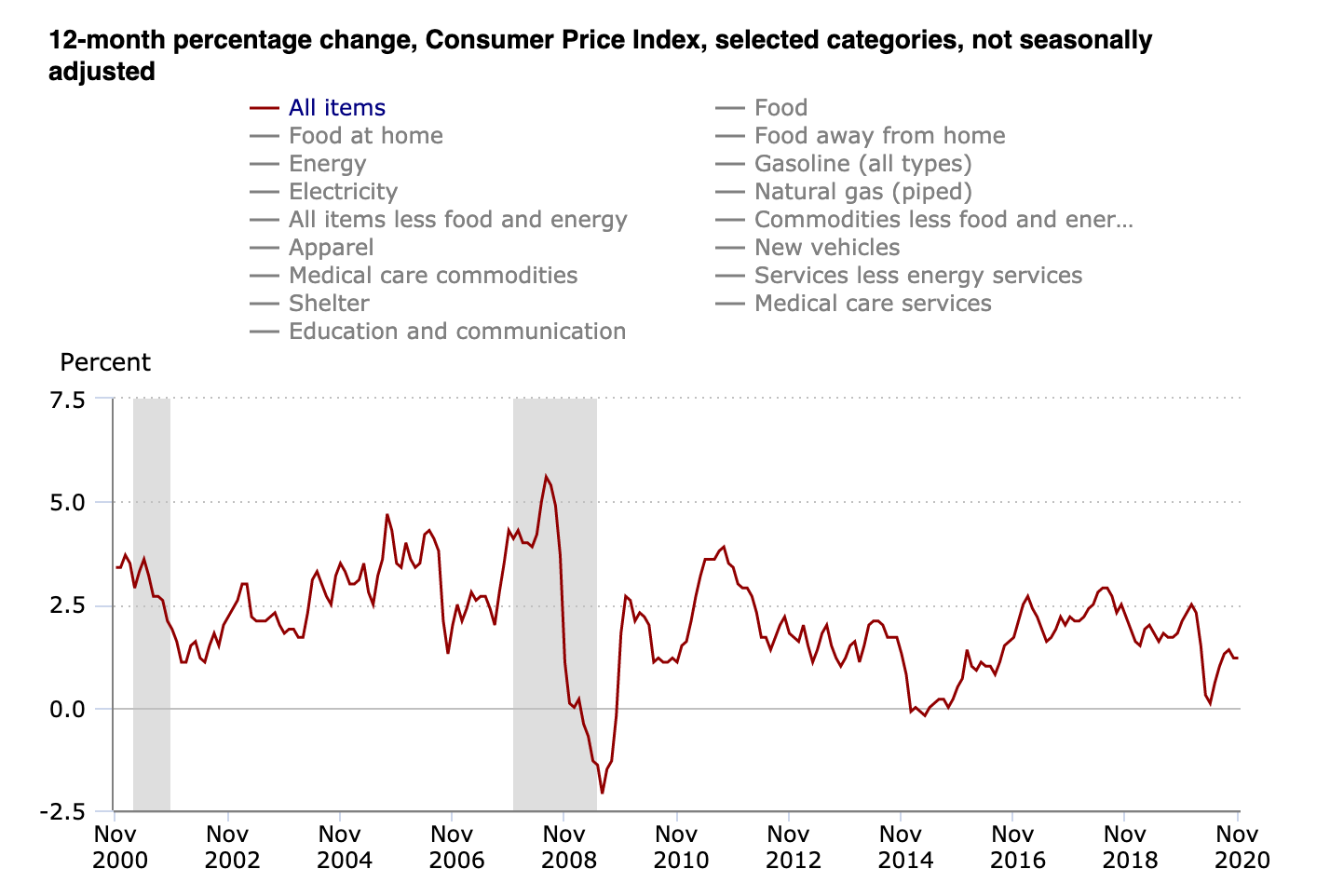
Inflation Is Killing The American Dream
This installment of The Pomp Letter is free for everyone. I send this email to our investors daily. If you would also like to receive it every morning, join the 100,000 other investors today.To investors,I have been talking to a lot of friends about inflation lately. The great debate in finance and investing is whether we will see high levels of inflation after the trillions of dollars in quantitative easing over the last 12 months or so. Those who believe we won’t see inflation have relied on two separate, yet related, arguments. First, they will point to the official Consumer Price Index (CPI) inflation numbers. As you can see in this chart from the US Bureau of Labor Statistics, CPI has been relatively rangebound between 2.5% and 0% since 2008-2009. The belief is that despite the monetary interventionism conducted by the Federal Reserve and our elected officials, inflation has not been prevalent in the daily lives of Americans over the last decade.You can extrapolate this historical argument to then say that there will be low levels of inflation moving forward, regardless of what the Fed does. This leads to the second argument.The second argument is that the world is moving towards a more technology-enabled world, which should create a deflationary tailwind. Technology forces the cost of labor down. Technology forces the cost of production down. And technology could potentially create a constantly decreasing impact of inflation in the eyes of those who support this argument.So according to these folks, whether the Fed chooses to print trillions or they choose to sit on their hands, inflation will remain relatively low. It isn’t a big worry. While I acknowledge there are some important points to each argument, I disagree with the conclusion.We can start with how inflation impacts a population — there is no single inflation number for the various socioeconomic groups. For example, the top 20% of the socioeconomic ladder experience lower levels of inflation than the bottom 20% of a population. Some of that is due to the percent of investable assets each group has and some of it is due to the types of goods and services that they each consume. The second thing is that people in different geographic locations experience different levels of inflation. Someone in New York City is unlikely to have the same experience as someone who lives in Lincoln, Nebraska. So how can we understand what is happening with inflation?The best indicator of true inflation I have found is the Chapwood Index. The creator, Ed Butowsky, set out to more accurately measure inflation because he was tired of seeing a large percentage of Americans falling further and further behind in their financial lives. His initial assumption was that Americans were living their lives with the goal of beating 2% inflation, but that inflation was actually higher, therefore creating a scenario where people could never get ahead.This summary from the Chapwood website is crucial to understanding the issue:“It exposes why middle-class Americans — salaried workers who are given routine pay hikes and retirees who depend on annual increases in their corporate pension and Social Security payments — can’t maintain their standard of living. Plainly and simply, the Index shows that their income can’t keep up with their expenses, and it explains why they increasingly have to turn to the government for entitlements to bail them out.It’s because salary and benefit increases are pegged to the Consumer Price Index (CPI), which for more than a century has purported to reflect the fluctuation in prices for a typical “basket of goods” in American cities — but which actually hasn’t done that for more than 30 years.The middle class has seen its purchasing power decline dramatically in the last three decades, forcing more and more people to seek entitlements when their savings are gone. And as long as pay raises and benefit increases are tied to a false CPI, this trend will continue.The myth that the CPI represents the increase in our cost of living is why the Chapwood Index was created. What differentiates it from the CPI is simple, but critically important. The Chapwood Index:* Reports the actual price increase of the 500 items on which most Americans spend their after-tax money. No gimmicks, no alterations, no seasonal adjustments; just real prices.* Shines a spotlight on the inaccuracy of the CPI, which is destroying the economic and emotional fiber of our country.* Shows how our dependence on the CPI is killing our middle class and why citizens increasingly are depending upon government entitlement programs to bail them out.* Claims to persuade Americans to become better-educated consumers and to take control of their spending habits and personal finances.The inaccuracy of the CPI began in 1983, during a time of rampant inflation, when the U.S. Bureau of Labor Statistics began to cook the books on its calculation in order to curb the increase in Social Security and feder

KYC and AML Help Bad Actors, Instead of Good Actors
This installment of The Pomp Letter is free for everyone. I send this email to our investors daily. If you would also like to receive it every morning, join the 95,000 other investors today.To investors,News broke yesterday that a foreign government has been sponsoring an elaborate scheme to gain access to some of the most sensitive government communication and information. While some of the details are still unknown, it is clear that this activity should cause concern for every American citizen.David Sanger of the New York Times summarized the situation with the following:“The Trump administration acknowledged on Sunday that hackers acting on behalf of a foreign government — almost certainly a Russian intelligence agency, according to federal and private experts — broke into a range of key government networks, including in the Treasury and Commerce Departments, and had free access to their email systems.Officials said a hunt was on to determine if other parts of the government had been affected by what looked to be one of the most sophisticated, and perhaps among the largest, attacks on federal systems in the past five years. Several said national security-related agencies were also targeted, though it was not clear whether the systems contained highly classified material.”Sanger later went on to explain that this cyber attack could have been underway for a number of months before it was detected:“The motive for the attack on the agency and the Treasury Department remains elusive, two people familiar with the matter said. One government official said it was too soon to tell how damaging the attacks were and how much material was lost, but according to several corporate officials, the attacks had been underway as early as this spring, meaning they continued undetected through months of the pandemic and the election season.”This development reminded me of an incredibly detailed investigative report that I read back in September 2020. The report was titled The FinCen Files and was put together by Jason Leopold and his colleagues at BuzzFeed News. The explosive article starts with the following:“A huge trove of secret government documents reveals for the first time how the giants of Western banking move trillions of dollars in suspicious transactions, enriching themselves and their shareholders while facilitating the work of terrorists, kleptocrats, and drug kingpins.And the US government, despite its vast powers, fails to stop it.”This may not be a complete surprise to many people, but the next part is even more damning.“Laws that were meant to stop financial crime have instead allowed it to flourish. So long as a bank files a notice that it may be facilitating criminal activity, it all but immunizes itself and its executives from criminal prosecution. The suspicious activity alert effectively gives them a free pass to keep moving the money and collecting the fees.The Financial Crimes Enforcement Network, or FinCEN, is the agency within the Treasury Department charged with combating money laundering, terrorist financing, and other financial crimes. It collects millions of these suspicious activity reports, known as SARs. It makes them available to US law enforcement agencies and other nations’ financial intelligence operations. It even compiles a report called “Kleptocracy Weekly” that summarizes the dealings of foreign leaders such as Russian President Vladimir Putin.”So whether you are talking about the US Treasury and Commerce departments, or FinCEN, it is becoming abundantly clear that the US government is creating honeypots of data that are acting as prizes for malicious actors. The thought process goes like this — government organizations are collecting billions of data points on people and organizations in an effort to prevent or solve crimes. The problem is that they are doing a fantastic job of collecting the information, but they’re not doing a good job of stopping majority of the illegal activity. In fact, you could easily argue that governments are collecting so much data that it is actually making them more ineffective, rather than more effective.The Institute of International Finance and Deloitte LLP actually wrote a white paper on this exact topic, including the following:“It is a truism to state that that the SARs (Suspicious Activity Report) regime presents challenges to both financial institutions and law enforcement. A significant number of SAR disclosures made to law enforcement are assessed to be of limited intelligence value or are of poor quality. Processing high numbers of low-quality reports which do not improve the investigation of criminal activity diverts already limited FIU resource and is ineffective in driving law enforcement outcomes.”Think about this for a second. The US government, along with financial institutions and other nation states, have been gathering so much information that they can’t find the high quality information because it is buried in a plethora of low qualit

Time Billionaire
This installment of The Pomp Letter is free for everyone. I send this email to our investors daily. If you would also like to receive it every morning, join the 93,000 other investors today.To investors,Graham Duncan, the co-founder of East Rock Capital, appeared on the Tim Ferris podcast in March 2019. He spoke of a concept during that conversation that I can’t stop thinking about — the idea of “time billionaires.”This insight was flagged by my friend Blake Robbins who described it as “truly profound.” I actually think Blake may be understating how incredible this idea is. Here is the transcript from the podcast conversation:Tim Ferriss: So time billionaires. What does that refer to?Graham Duncan: I was listening to a guy introduced a speaker a while ago. And he was saying people don’t really understand the difference between billionaires and millionaires. He said a million seconds is like 11 days. A billion seconds is 31 years. And I remember that …Tim Ferriss: Oh, s**t. That’s a hell of a way to think about it.Graham Duncan: Right?Tim Ferriss: Wait. Can you say that one more time?Graham Duncan: A million seconds is 11 days. A billion seconds is slightly over 31 years. And I was thinking about – Tyler Cowen has a thing about cultural billionaires –Tim Ferriss: Marginal Revolution?Graham Duncan: Yeah. In one of his books, he talks about cultural billionaires. I feel like in our culture, we’re so obsessed, as a culture, with money. And we deify dollar billionaires in a way that – it’d be nice to co-opt that term the way Tyler Cowen did with cultural billionaires. And I was thinking of time billionaires that when I see, sometimes, 20-year-olds – the thought I had was they probably have two billion seconds left. But they aren’t relating to themselves as time billionaires. And I was thinking about how if you could – what would Rupert Murdoch, who’s worth $20 billion – he’s 87 years old. What would he pay if he could take the next five years of someone’s 20-year-old healthy body, mind, etc.? And for that 20-year-old, how would they price it? Because I was thinking at various points of my career, I might have sold the next five years for something.And over time, my pricing has gone vertical because the next five years, if I were to lose – and the key to this question is that you can’t sell the five at the end of your life. You gotta sell them right now. I don’t know how I’d price it because my kids are of a certain age that they’ll never be again. But I don’t know that I live every day that way. But I aspire to. So I was trying to capture – I heard Tim Urban on your podcast. And I started reading his stuff. And I find his writing style and the topics he is interested in just amazing. He has this concept of life calendar. And I bought his life calendar. He sells it as a poster. And what he does is he puts a week – he does a circle for each week. So he has 52 circles on the horizontal and then 90 rows so that you can see a 90-year life in weeks. And what’s startling about the picture – again, to this question of how long is a billion seconds – is how short it actually is.I have read this excerpt of the transcript too many times to count at this point. It perfectly breaks down the difference between a time billionaire and a dollar billionaire. One has financial resources and the other has life resources. Our society overvalues the former, but undervalues the latter.This concept of a time billionaire really hits home for me, because one of my favorite movies is the 2011 movie In Time starring Justin Timberlake. Ignore the Timberlake detail. The premise of the movie is that everyone is paid in time, rather than money. You live until you are 25 years old and then the clock on your forearm starts ticking down towards 00:00:00. If all of your time expires, you die young. If you have accumulated enough time, you can effectively live forever. The metaphors are deep in this one. From rich and poor to young and old, the idea of time as money is a powerful one. Which brings me to a question that someone tweeted at me recently (wish I could credit them but can’t find the reply this morning):If you had the opportunity to switch places with Warren Buffett, would you do it? You could be one of the richest people in the world. But you would also have to be 90 years old. Majority of people think they want money until they are forced to evaluate the lack of time that comes with it in this scenario. Quickly, the value of time becomes evident and people opt for being younger, rather than richer.So what exactly does this have to do with investing?Well, frankly everything. We constantly think of billionaires as having significant advantages in financial markets. They have enormous resources. They have experience. They have a network. And they can use their resources to buy leverage (employees, more capital, etc) to accomplish their goals. Maybe this is the wrong way to think about it though?Having a billion dollars is great, but having

Niall Ferguson Calls For US Adoption of Bitcoin
This installment of The Pomp Letter is free for everyone. I send this email to our investors daily. If you would also like to receive it every morning, join the 92,000 other investors today.To investors,Niall Ferguson, the famous historian, published an important op-ed in the Bloomberg Opinion section yesterday. The piece was titled “Bitcoin Is Winning the Covid-19 Monetary Revolution” and the sub-header read “The virtual currency is scarce, sovereign and a great place for the rich to store their wealth.”The argument laid out by Ferguson is noteworthy not only for what was written, but also because of who is writing it. For those that don’t know, Niall Ferguson is currently the Milbank Family Senior Fellow at the Hoover Institution at Stanford University. He was previously a professor of history at Harvard, New York University and Oxford. Ferguson was named one of Time magazine’s 100 most influential people in the world in 2004 and has written a handful of books, including the The Ascent of Money, which was published in 2008 and examines the history of money, credit, and banking.In the Bloomberg piece, Ferguson makes a strong argument that “We are living through a monetary revolution so multifaceted that few of us comprehend its full extent. The technological transformation of the internet is driving this revolution. The pandemic of 2020 has accelerated it.” He goes on to compare the price movements of US dollars, gold, and Bitcoin. This analysis has been done over and over again by investors, so it isn’t novel or overly interesting at this point.However, I found Ferguson’s historical context around monetary evolution to be very interesting. He wrote:“First, we should not be surprised that a pandemic has quickened the pace of monetary evolution. In the wake of the Black Death, as the historian Mark Bailey noted in his masterful 2019 Oxford Ford lectures, there was an increased monetization of the English economy. Prior to the ravages of bubonic plague, the feudal system had bound peasants to the land and required them to pay rent in kind, handing over a share of all produce to their lord. With chronic labor shortages came a shift toward fixed, yearly tenant rents paid in cash. In Italy, too, the economy after the 1340s became more monetized: It was no accident that the most powerful Italian family of the 15th and 16th centuries were the Medici, who made their fortune as Florentine moneychangers.In a similar way, Covid-19 has been good for Bitcoin and for cryptocurrency generally. First, the pandemic accelerated our advance into a more digital word: What might have taken 10 years has been achieved in 10 months. People who had never before risked an online transaction were forced to try, for the simple reason that banks were closed. Second, and as a result, the pandemic significantly increased our exposure to financial surveillance as well as financial fraud. Both these trends have been good for Bitcoin.”This historical context is important as we think through what is happening at the moment. Ferguson’s argument is that Bitcoin is quickly taking the lead position as a viable store-of-value for individuals and organizations around the world. He isn’t a blind believer by any means, because he dedicated a good portion of the article to some of the “defects” of Bitcoin from his perspective (slow, high cost, energy consumption). It is good to see a healthy amount of skepticism or detraction in the same piece that ultimately concludes a positive outlook for the digital currency.Regardless of the accuracy of Ferguson’s defect analysis, he goes on by saying:“But these disadvantages are outweighed by two unique features. First, as we have seen, Bitcoin offers built-in scarcity in a virtual world characterized by boundless abundance. Second, Bitcoin is sovereign.”This is interesting because Bitcoin is not the only digital currency trying to capture global adoption. Ferguson dedicates a section of his article to central bank digital currencies:“At the same time, the People’s Bank of China has accelerated the rollout of its digital currency. The potential for a digital yuan to be adopted for remittance payments or cross-border trade settlements is substantial, especially if — as seems likely — countries participating in the One Belt One Road program are encouraged to use it. Even governments that are resisting Chinese financial penetration, such as India, are essentially building their own versions of China’s electronic payments systems.Some economists, such as my friend Ken Rogoff, welcome the demise of cash because it will make the management of monetary policy easier and organized crime harder. But it will be a fundamentally different world when all our payments are recorded, centrally stored, and scrutinized by artificial intelligence — regardless of whether it is Amazon’s Jeff Bezos or China’s Xi Jinping who can access our data.”This excerpt comes simultaneous to Christine Lagarde, President of the ECB, writing an a

Janet Yellen Is About To Create The Ultimate Bitcoin Tailwind
This installment of The Pomp Letter is free for everyone. I send this email to our investors daily. If you would also like to receive it every morning, join the 90,000 other investors today.To investors,The news broke yesterday that Janet Yellen will be Joe Biden’s selection for Treasury Secretary in his new administration. This nomination will have a significant impact on asset prices over the coming years, so it is worth digging deeper on Yellen and her perspective on various policies. Janet Yellen is one of the ultimate trail blazers in American history. She is a classically trained economist who became the first woman to Chair the Federal Reserve in 2014. She served in that role for 4 years. Before that, Yellen was the Vice Chair of the Federal Reserve, President of the Federal Reserve Bank of San Francisco, and served two stints as a Federal Reserve Board Governor. Simply, Janet Yellen has been around for a long time and served in some of the most important economic roles our country has to offer.If you want to learn more about Janet Yellen, you can read her Wikipedia page. There are a few things that I find very interesting about her nomination in the current environment:* Yellen has previously shown a bias to allow bubbles to continue much longer than her peers. One example is “In a 2005 speech in San Francisco, Yellen argued against deflating the housing bubble because "arguments against trying to deflate a bubble outweigh those in favor of it" and predicted that the housing bubble "could be large enough to feel like a good-sized bump in the road, but the economy would likely be able to absorb the shock."* Yellen is known to have an “inflationary bias.” One of the elected officials who voted against her 2010 nomination to Vice Chair of the Federal Reserve actually used that exact phrase as rationale for his vote against her. Additionally, “Yellen has been an outspoken advocate for using the powers of the Federal Reserve to reduce unemployment, and has seemed more willing than other economists to risk slightly higher inflation to accomplish this goal.”* In 2013, during the confirmation hearing for Yellen to take over as the Federal Reserve Chair, she defended the $3 trillion of monetary stimulus that was used during the housing crisis. This was followed in 2017 when she stated that she did not believe we would see another financial crisis “in our lifetime.” A year later though, “Yellen later warned of the possibility of a financial crisis by citing "gigantic holes in the system" after her departure from the Federal Reserve.”The key thing you need to know is that Yellen is a classic Keynesian economists who believes that an economy can only operate properly with the intervention of a central bank. She is widely considered a “dove,” which means that she is more likely to focus on unemployment and other metrics, rather than ensure that we keep low levels of inflation.Essentially, Janet Yellen is likely to be Bitcoin’s greatest ally over the coming 4-8 years. She has never seen an opportunity to print money that she didn’t like. She has never seen a situation of high inflation that scared her. Given that we are currently living during a period of high unemployment due to the coronavirus, it would be my expectation that Janet Yellen will begin pulling out every tool of monetary stimulus to get unemployment lower.This perspective is identical to the Federal Reserve’s current stance that they would like to see inflation hit 2%+ for a sustained period of time. You don’t have to be a genius to see what we are being set up for — high levels of inflation that will be disguised as “normal” by career economists who believe they are omnipotent, omnipresent, and omniscient.As we have discussed previously, Bitcoin will benefit from the fear of high inflation, regardless of whether it actually occurs or not. When people think high levels of inflation are coming, they will move their capital to be positioned in inflation-hedge assets. If the inflation comes, great. If the inflation never happens, the capital flows will drive asset prices higher anyways. This concept is counter-intuitive, but we have seen it play out numerous times in the past.Janet Yellen will solidify the narrative that higher inflation is coming. She will drive home the point that monetary stimulus bombs are always right around the corner. This will be an even stronger tailwind for Bitcoin in the coming 12 months. With Bitcoin poised to hit an all-time high in the coming days, you can’t help but smile.Have a great day. I’ll talk to everyone tomorrow.-PompSPONSORED: Withum is a forward-thinking, technology-driven advisory and accounting firm committed to helping our clients be more profitable, efficient and productive in today's complex business environment. Our Digital Currency group is proud to partner with members of the cryptocurrency community. Get to know us at withum.com/crypto.THE RUNDOWN:PayPal CEO Schulman Say He’s Bullish on Bitcoin as a C
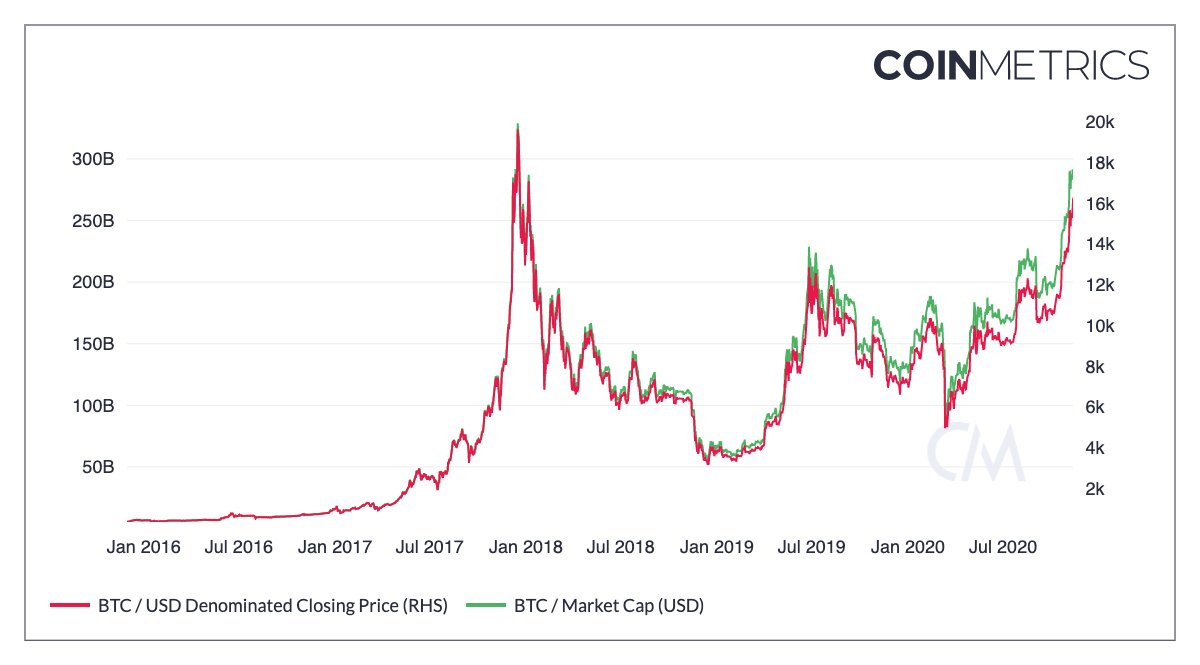
Bitcoin's Market Cap Is Better Reference Than Price
This installment of The Pomp Letter is free for everyone. I send this email to our investors daily. If you would also like to receive it every morning, join the 85,000 other investors today.To investors,Bitcoin has continued a breathtaking run and eclipsed $17,000 per bitcoin this morning. This puts the year-to-date appreciation of the digital currency at more than 135% against the dollar, while also being up 88% since the halving in May 2020.All eyes are now on the all-time high price of $20,000. As a reminder, bitcoin moved from $10,000 to $20,000 in only 10 days in 2017. The digital currency spent less than 72 hours at that level before experiencing a nasty 80%+ drawdown that took almost an entire year to play out. The bears were out in full force during this entire drawdown. They were screaming that bitcoin was going to $0. They were telling everyone bitcoin was nothing more than Chuck E. Cheese tokens. Well, in a wild twist of fate, oil futures went negative and Chuck E. Cheese went bankrupt, yet bitcoin still didn’t go to $0. In fact, it has come back with a vengeance. We are now sitting at $17,000 in price, which is leading many people to start the countdown to a new all-time high. The milestone they are waiting for is $20,000, but I’m not convinced that is the best way to evaluate an all-time high in price. Nic Carter, from Castle Island Ventures, has been all over this for weeks:Additionally, if we take a look at the new www.casebitcoin.com site, we can see a few other great data points:This is important because I believe the market cap metric is much more important than the price of a single bitcoin. The supply slowly increases, so total market cap better represents where the market is over time. We are currently sitting at just over $315 billion — only 3 days in the history of bitcoin have ever been higher. Price is not the only metric to watch either. Nic Carter put out a piece that hit on a bunch of other metrics that are at an all-time high, including wallet addresses with at least $10 in them, open CME futures interest, realized capitalization, bitcoin options open interest, bitcoin priced in various currencies other than USD, bitcoin held by Grayscale, and stablecoin free float. I highly recommend reading his write up here.While the price, and many other metrics, are aggressively accelerating, there is much less discussion about bitcoin in the mainstream media and on social media platforms. Yesterday, Bloomberg wrote an article saying that no one is talking about it — the irony is awesome when one of the largest financial media companies writing an article claiming that no one is talking about something. Additionally, we saw Bitcoin trending on Twitter in the United States this morning as well.The momentum we are seeing is really strong. I have no clue where short term price movements will go. Bitcoin is a beast — it can increase and decrease in price rapidly. My thesis for the next 12-14 months continues to remain intact. If the mainstream conversation shifts at some point and people start talking about bitcoin like they did in 2017, we could see price movements even larger than I previously anticipated.It is crucial during euphoric times like this to remember a few simple rules:* Don’t get cocky. The market is the ultimate referee.* Information and data can change quickly. Make sure you’re paying attention.* Be open to changing your mind if you get new information.* The best investors press their winners harder than anyone else.* It is our responsibility to educate and welcome everyone who shows interest in bitcoin, regardless of whether they were previously bearish or not.Bitcoin will hit a new all-time high in market cap at some point and then eventually hit an all-time high in price. The bears will be proven wrong. The bulls will be vindicated. I’m just not convinced that this will be the end of the story. It still sounds crazy to many, but I believe we are watching the rise of the next global reserve currency. If that happens, we are all still so early. Have a great day. I’ll talk to everyone tomorrow.BONUS: I wrote a piece for Polina’s The Profile this weekend on the importance of focusing on HOW to think, rather than WHAT to think. Click here to read.-PompThis Fintech Startup Just Returned 32% to Its Investors: New York-based art investment platform Masterworks reported a sale of their Banksy masterpiece resulting in a 32% annual return (net of fees) to investors in a little over 12 months. This successful exit represents nearly twice the S&P 500 total return over the same period, reaffirming the company’s mission of providing access to outperforming non-correlated assets to investors of all types. Bitcoin has been en fuego this year and if you're looking for another asset that's not correlated to the stock market, then check out Masterworks. Their art experts will help you create a custom portfolio of artworks to round out your portfolio - from artists like KAWS, Banksy and Monet.SP
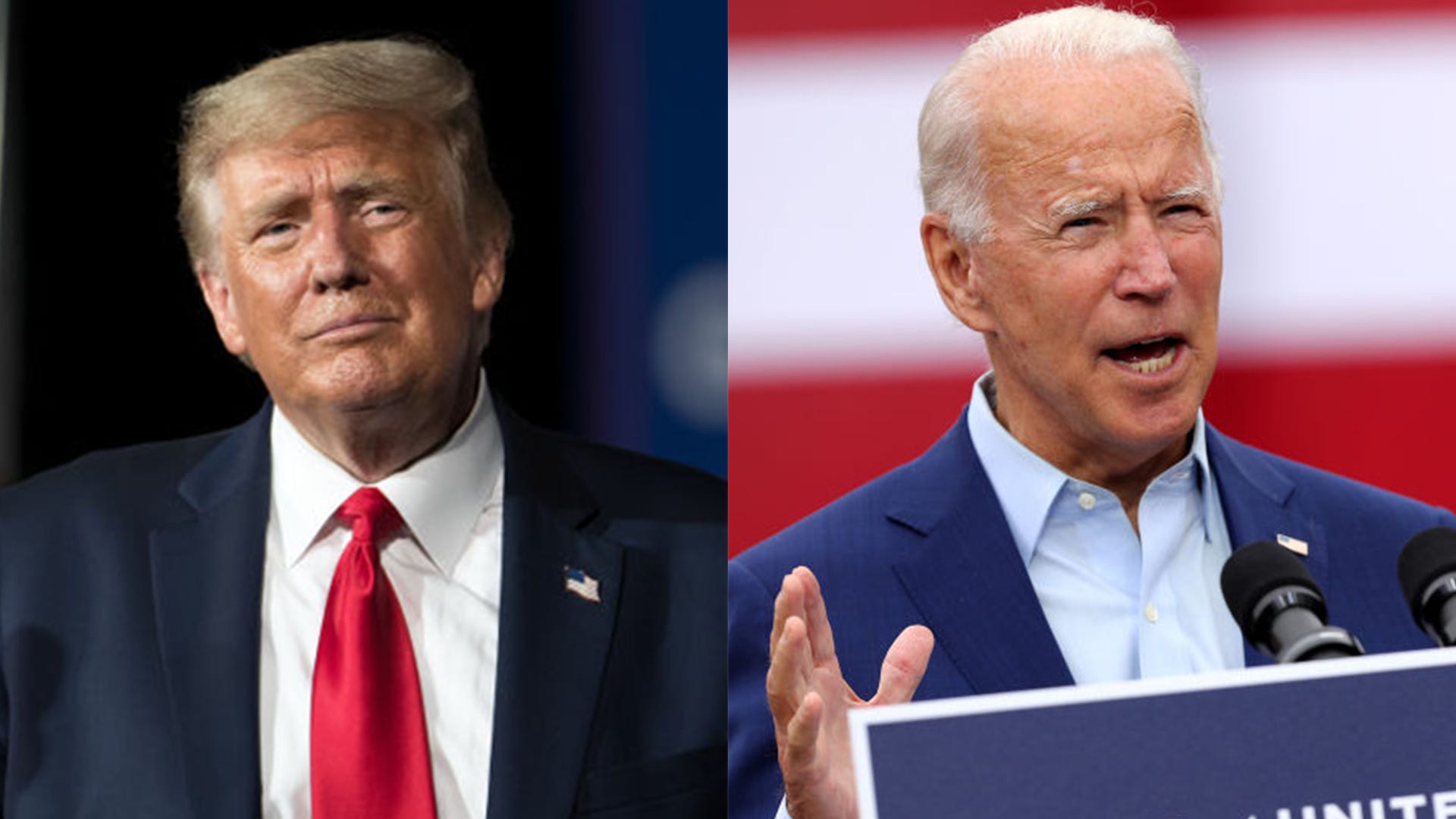
How Investors Are Preparing For Election 2020
This installment of The Pomp Letter is free for everyone. I send this email to our investors daily. If you would also like to receive it every morning, join the 85,000 other investors today.To investors,I’ve spent the last few days talking with many of the smartest investors I know. My goal was to get an understanding of how they are thinking about various markets and assets, while also identifying what they are excited or worried about. Here are a few takeaways that I found interesting and/or worth sharing:First, many investors feel that COVID-19 and any impending stimulus packages will have a much greater impact on markets than who wins the Presidential election. The thought process is that the President could create long-term systemic environment changes, but most of the short-term changes are going to be related to whether businesses are impacted by government-mandated shut downs, along with how much liquidity is being injected into the market by the Federal Reserve. The general consensus is that the United States is unlikely to experience another shelter-in-place order. This doesn’t absolve the markets from reacting to negative headlines or lockdown orders in other countries. As the virus continues to run its course, the Federal Reserve and our elected officials are going to have to introduce more stimulus. The size of this stimulus package appears to fall along party lines — Democrat investors see $2B+ on the horizon and Republican investors see less than $2B in the next package. My guess is that we will end up somewhere in between at approximately $2B. Second, every single investor I talked with brought up concerns related to taxes. There appears to be a strong fear of significant increases in various taxes — from income taxes to capital gains to inheritance taxes — under a Joe Biden administration. As one Democrat investor put it to me, “I’m a Democrat but I don’t like giving more of my money to the government.”It is unclear what every investor is doing to mitigate these risks, but it does appear that some investors are positioning themselves to accelerate estate planning if Biden wins. There was also a recent article in Bloomberg that highlighted Ken Griffin’s recent comments about potentially moving Citadel to Florida or Texas. This article reflected something else I heard a few times — the President is important, but it may be more important to see how significant the Democrats control of lower levels of government are (House, Senate, Governors, etc).Third, investors are definitely prepared for high levels of volatility over the coming months. Each person is positioning themselves to deal with the volatility differently, but they are all anticipating it. Some people are considering holding more cash in the short term. Others want to play the VIX. And others are acknowledging the higher probability for volatility, but claim that it won’t change their investment strategy over the medium to long-term. Fourth, if every investor brought up tax considerations, then inflation was the second most popular topic. Majority of the investors I spoke with feel that inflation is a foregone conclusion at this point — they pointed to the Federal Reserve’s public commitment to get to 2%+ inflation or they commented about the unlikely scenario of printing trillions of dollars without inflation ever occurring. When I asked investors what they were doing to protect themselves, the answers varied drastically. Some investors are buying up precious metals and mining stocks (more stocks than the metals themselves is my feeling), while others are seeking refuge in real estate and luxury art. It was interesting that majority of the investors I spoke with did not volunteer the fact that they held bitcoin. I would have to specifically ask and then the investors would admit that bitcoin was a part of the inflation hedge strategy. It was weird. Almost like we were talking about a dirty secret, but then once the topic was broached, investors seemed very bullish on the asset’s outlook over the next 12-24 months. Lastly, most of the investors I spoke with brought up some version of the following — Presidential elections create opportunities for entries to new investment positions, but they rarely lead to mass selling or position exits. The general thought process is that it would be really short-sighted to bet against the United States, regardless of who is the President of the country. Almost every single investor had a feeling that the long-term impact of this election, along with all elections, is minimal at best. I reminded one of the more bearish investors that we live in the safest, most prosperous time in human history. His response was “Yes, that is definitely not a trend that I see changing any time soon.” So with a long-term tailwind, investors appear to be paying attention to the election but they aren’t making significant investment decisions around the event. However, they are definitely making decisions based on tax

The First Investor Endorsement Deal In Crypto
This installment of The Pomp Letter is free for everyone. I send this email to our investors daily. If you would also like to receive it every morning, join the 80,000 other investors today.To investors,I am announcing the first investor endorsement deal in the crypto industry today.I’ve always been fascinated by the way that brands work with world-class athletes in an endorsement model. These brands aren’t paying for impressions, nor are they seeking direct response measurement of how many people convert to customers. Endorsement deals aren’t advertising deals. They are something much more pervasive than that. The brand is choosing to align themselves with someone they feel embodies the ethos of the brand and the athlete is choosing to align themselves with a brand and product that they believe in. The most famous example of an athlete endorsement deal is Michael Jordan and Nike, but there are countless others. So why exactly does this only happen in sports if it is such a win-win for the brand, the athlete, and the customer? My hypothesis has always been that the endorsement model would eventually find its way to business and finance. Investors and founders are the new athletes. They have an audience. They have influence. They have opinions. And they have perspectives on which products are good and which ones aren’t.So why should we wait around for this trend to happen? I’m not a patient guy and I prefer to create the world I want to live in.So today I am announcing the first investor endorsement deal in Bitcoin and crypto — I have partnered with Kingdom Trust, an independent qualified custodian with more than $15 billion in assets under management, who powers over 100,000 retirement accounts and currently custodies more than 20,000 alternative assets.The number one question I get from people is “how can I buy Bitcoin in my retirement account?” This was a big problem for me as well. Not anymore though. Kingdom Trust recently launched a new product, Choice by Kingdom Trust, that solves this in a unique way that remains true to the Bitcoin ethos. Here is how it works:* You open an account with Choice (click here)* You contribute new funds to your account or roll over existing retirement funds* You purchase Bitcoin and can hold your own private keysThis is a really big deal. There are millions of people who currently hold Bitcoin, yet don’t have any Bitcoin in their retirement accounts. That is going to change very quickly with Choice. The best part though? You get to hold your private keys. As every Bitcoin investor knows, “not your keys, not your coins.” Personally, I’ve opened a Choice account and put 100% of my retirement funds in the product. The team has been advertising on the podcast for awhile and over time it became very obvious that we were aligned on a lot of things. Most importantly, we wanted to work together in a more meaningful way to get Bitcoin in every retirement account in America. So here we are — Choice by Kingdom Trust is the first company to be forward thinking enough to sign an investor endorsement deal.With this deal, they are aligning themselves with me and I’m publicly stating that they are the best solution on the market for buying Bitcoin in your retirement account. I’m not saying this because of the endorsement deal, I’m doing the endorsement deal because I believe in them enough to put all of my retirement money with them. We are planning a lot of cool things under this endorsement deal — events, appearances, merchandise, content, and much more. This should be a lot of fun and I anticipate many other brands will follow suit. The founders and investors across industries have too much audience and influence to be ignored moving forward. The investor endorsement deal will become an industry staple over time. If you want to sign up for a Choice account and put Bitcoin in your retirement account, you can sign up here.Have a great day and I’ll talk to everyone tomorrow. -PompTHE RUNDOWN:Bitcoin Approaches Highest Level Since Post-Bubble Crash in 2018: Bitcoin is approaching levels not seen since just after the burst of the cryptocurrency market bubble almost three years ago. The biggest digital token by market value rose as much as 4.8% to $13,638 on Tuesday, just below the high of $13,851 set on June 26, 2019. If it surpasses that level, it would be highest since Bitcoin traded at $16,932 in January 2018, or just weeks after the token reached an all-time level of around $20,000. It dipped to $3,136 in December 2018. Read more.JPMorgan Creates New Unit for Blockchain Projects: At JPMorgan Chase, the firm’s digital currency JPM Coin is being used commercially for the first time this week by a large technology client to send payments around the world, said Takis Georgakopoulos, the bank’s global head of wholesale payments. Read more.MicroStrategy Is Looking to Buy More Bitcoin, President Says: MicroStrategy is looking to add to its $521 million stash of bitcoin, the company’s presiden

The Digitally Native Financial System Is Being Built Right Before Our Eyes
To investors,The United States financial system has long enjoyed a position of global leadership due to the clear regulatory environment, deep liquidity, strong economy, large asset management firms, and advanced technology. You can see the leadership highlighted in the US dollar’s global reserve status, the US stock exchanges, and the flow of capital to US investors and companies.These country-specific advantages made a lot of sense in a world where companies and products were tied to a geography. The NASDAQ or New York Stock Exchange are both based in New York. A US financial firm is based in an American city. The Federal Reserve is based in Washington, DC. You get the picture.We are transitioning to a world where physical geography doesn’t matter anymore though. This transition started under the current system when traders didn’t have to go the stock exchange floor and computers could execute transactions. You then started to see the transition continue during COVID-19 when the Federal Reserve was holding remote meetings. But this is all small evolution type change — there is a tidal wave of disruption that is about to occur and the US financial system is not ready for it.The most important economy in the world is not tied to a single geography. It is instead the digital world that we all live in when we get on our computers and smartphones. In order to thrive in the digital world, you have to become proficient in the native currency (Bitcoin), native communication (asynchronous), and native customs (memes/gifs). But there has been one thing missing from this digital world over the last few decades — a native financial system.We have merely been using the legacy financial system (that was built for the physical, geographic-based world) with a few tweaks in the digital world. It is becoming clear that this old system is holding back progress though. It takes too long to send money around the world. The power is still concentrated too heavily in the hands of the politically connected, powerful people of the past. There are antiquated regulations that allow incumbents the ability to slow down, or even stop, progress so that they can continue to profit. Simply, the bandaid solution was to evolve the legacy financial system to appear effective in the digital world, but we are now beginning to understand that this won’t be sufficient.A new digitally-native financial system is being built from scratch to serve digital citizens globally. We had to start with the creation of a native currency for this economy and we now have Bitcoin. No one controls it. No one has an outsized advantage in acquiring it. No one can use it to hurt anyone else. It is fair, equitable, and the embodiment of the internet ethos that digital citizens have come to know and love.The next step is for digital citizens to build fully decentralized financial applications. These products and services will serve the same purpose as the centralized versions, but they will follow the same principles as Bitcoin. No one will own them. No one will have an outsized advantage in using them. And no one can use them to hurt anyone else. There are lots of teams trying to build these decentralized applications now, but so far there have been very few that adequately fulfill the necessary elements of what will make one of these products sustainable. If we can have fully decentralized money and fully decentralized financial applications, we will achieve the impossible — a new, fully functioning financial system that is native to the digital world. The incumbents of yesterday will be on the same level playing field as everyone else. Technology will serve as the great equalizer. It won’t be about who has the most money, is the most connected, or can capture gains based on regulatory arbitrage. Instead, the system will reward those who are the most intelligent, those who have the courage and conviction to act earliest, and those who show a proficiency in the skills necessary for the digital world. Governments and incumbents are not oblivious to what is going on here. They are watching closely. Whether it is the Chairman of the CFTC talking positively about Bitcoin and Ethereum, or it is China trying to build a centralized digital currency, they are all paying attention. One of the most interesting developments to watch will be who remains a passive onlooker compared to who becomes an active participant. We are seeing most of the innovation come from the private sector (as you would expect), but eventually these governments are going to start jumping in the game. An easy first step would be to begin putting Bitcoin in their central bank reserves. If that happens in a major country, it will set off a global game of FOMO. There are countries that will also start to embrace the decentralized applications as well. They will realize that it is ineffective to fight the transition and those who lead the way will be rewarded nicely. It appears that Dubai is getting ready

Central Bank Digital Currencies Are All The Rage Right Now
This installment of The Pomp Letter is free for everyone. I send this email to our investors daily. If you would also like to receive it every morning, join the 80,000 other investors today.To investors,I have been advocating for the United States to digitize/tokenize the dollar for almost a full year at this point. We are finally starting to see some movement on the issue from our elected officials or the Federal Reserve, but they are not doing nearly enough to address the dire situation they will find themselves in.We saw a Democrat stimulus bill include reference to a digital dollar system being leveraged for delivering stimulus checks earlier this year. Ultimately this section of the bill was removed, but it was a positive development to at least see elected officials considering the possibility. As for the Federal Reserve, there was an IMF press conference this morning where Chairman Powell shared his thoughts on central bank digital currencies.Powell’s general perspective appears to be the following:* Central bank digital currencies (CBDCs) provide some value* CBDCs will not be a replacement for physical cash, but rather a compliment* There are many challenges with implementing a CBDC, including cyber security, proof of no counterfeiting, potential monetary policy changes, etc.* The Fed has been working on a faster/cheaper payment system (FedNow), but that won’t be implemented and operational for a number of years.* The CBDC idea is merely an idea that is being explored right now and there won’t be any work done on it until the Fed fully understands the pros/cons.To be fair to Chairman Powell, we don’t have too much information from him to go off of at the moment. With that said, it appears the Fed is intrigued by the idea of a central bank digital currencies but not taking it nearly as seriously as they should. I laid out the condensed argument for the immediate US action the last time I discussed CBDCs on CNBC.The argument has two key elements — accessibility and monetary policy competition. Let’s tackle accessibility first. We know that China has been working on a digital currency for a number of years now. They are actively piloting the technology within certain cities and geographic regions within their country. The early reports are suggesting that people are adopting the digital currency and more than willing to use it as a replacement for the legacy system. This is important to keep an eye on because if China is able to digitize their currency before the United States, the renminbi will be more accessible to people around the world than the US dollar. Here is an example that I use to show this — imagine if you are in a country like Venezuela where the national currency has failed due to hyperinflation. You know you need to get out of Bolivars and you definitely desire to hold US dollars. The dollar is deemed “safe,” but the problem is that it is hard to acquire dollars. The black market can be marked up hundreds of percent and is physically dangerous to interact with. Your bank and government have put significant capital controls in place, plus you have to worry about the bank confiscating your dollars if you leave them in your account. So you begin to look for alternative currencies to hold. Gold is an option but it is also hard to acquire and difficult to transport, especially if you need to leave quickly. So what are your options? You essentially are going to turn to the internet and ask yourself “what currency can I get my wealth into that only requires an internet connection?”The answer today is Bitcoin. The problem with Bitcoin for short term holders is that it is highly volatile. There are not many people that like the idea of putting their life savings into something that could be up or down 20% in a matter of days. But if you’re optimizing for security, Bitcoin is a great option. That is until a nation state gets their currency fully digitized. So now you are in a situation where you can buy digital renminbi, but you can’t buy US dollars. Of course, the renminbi is going to be more attractive for short term use than the non-existent digital dollar.This difference in accessibility may not sound like a big deal right now, but if China has a 2-3 year head start on the US, it is possible that the US dollar’s reserve status comes under immense pressure as renminbi gains adoption. This is the Chinese government’s dream scenario and the US is playing right into it. But before we all start to believe that the world is ending and China will be the sole superpower, there is a big catch to this entire theory — the monetary policy competition. I personally believe that every fiat currency in the world will eventually be digitized or tokenized. There may be slight differences in the technology stack that each nation state uses, but each currency will end up being leveraged via digital wallets and have similar functionality. When you get feature parity on the technology competition, the only thing

The Investment Case For Bitcoin
This installment of The Pomp Letter is free for everyone. I send this email to our investors daily. If you would also like to receive it every morning, join the 80,000 other investors today.To investors,I sent an email last night to a group of friends. These individuals are across industries, but they all share a common interest in investing. I thought it would be worth sharing with each of you as well. This is not investment advice, so do your own research. Hope you enjoy it.We sit at an unprecedented time in the macro-economy, so I wanted to send you a message with my “best idea.” The Federal Reserve has cut interest rates to 0%. They plan to keep us in a zero-rate environment for the foreseeable future. Multiple stimulus packages in 2020 now total more than $3 trillion in QE. We have another $2 trillion on the way. The Fed’s balance sheet has expanded by 75% since the start of the year. While there is a strong argument that this QE won’t lead to higher inflation because of the current deflationary environment, the Fed has publicly committed to sustaining a 2%+ inflation level. The average investor fears inflation right now, regardless of whether we actually see that inflation or not. This fear has driven significant capital flows into inflation-hedge assets (Gold, Bitcoin, Real estate, etc). The combination of the Fed’s asset price manipulation and inflation fears has driven gold and Bitcoin to drastically outperform equities and other commodities. I’m writing this specifically to call out my thesis for the next 15 months of Bitcoin’s performance. Many investors will look at the historical price increase of the digital asset and believe they “missed it.” That couldn’t be further from the truth in my opinion. I believe we are at the start of another boom cycle in Bitcoin, which is likely to drive us 10-20x higher in the 15 month window.Let’s first look at the demand side of the equation. The macro environment is serving as a tailwind. Bitcoin is up more than 50% year-to-date. The continued 0 rate environment and QE will continue to drive demand. Additionally, we are seeing traditional asset management firms start to make the leap into owning Bitcoin. Fidelity Investments recently published a paper showing positive impact for 1%-5% Bitcoin allocation in clients’ portfolios. Stone Ridge ($10B asset manager) now owns $115M in Bitcoin. Paul Tudor Jones publicly revealed that he has put 2% of assets into Bitcoin. Multiple public pensions in the US have now gained exposure to Bitcoin via fund managers. Grayscale, the largest digital asset investment manager, saw record inflows of $1B+ in 3Q20 and now has almost $6B in total AUM. The list goes on and on. Wall Street has woken up to the Bitcoin trade. But the increase in demand is not only happening with traditional asset managers. We are also seeing a new trend emerge where corporations are using Bitcoin as a reserve asset for part or majority of their treasury. It started with publicly traded digital asset focused firms like Galaxy Digital and others. Then we saw MicroStrategy ($1.2B+ market cap on NASDAQ) put 85% of their $500M balance sheet ($425M) into Bitcoin. And most recently, financial technology company Square announced that it had purchased about $50M of Bitcoin for their balance sheet (approximately 1% of assets). This increase in demand is just starting in my opinion. We can list all of the leading, forward-thinking firms in only two paragraphs. Eventually their peers will join them. The demand outlook is strong, and it shows signs of actually accelerating into the first half of 2021.This brings us to the supply side of the price discussion. Bitcoin only has 21 million total Bitcoin that will ever be available. There are approximately 18.4 million currently in circulation. New Bitcoin enters the market on a pre-determined schedule that is coded into software and cannot be changed without agreement from 51% or more people (highly unlikely it will ever change). That programmatic monetary supply schedule started in 2009 with 7,200 Bitcoin entering circulation every day. That continued for 4 years, before the 7,200 daily Bitcoin was cut to 3,600 Bitcoin each day. 4 years later it was cut to 1,800 Bitcoin per day. Most recently, in May 2020, we experienced the latest “Bitcoin halving” which now has 900 Bitcoin per day entering the circulating supply. Historically, these supply shocks have led to significant price increases of 20X+ in the following 18 months post-halving. So to recap, we have significant increases in demand and a material supply shock that has historically led to price increase. Just those two factors alone should be compelling enough to ensure that you have some exposure (1-10% of your portfolio) to Bitcoin. The asymmetric risk-reward scenario is unlikely to be present in any other asset you are currently invested in.There is a third factor that you should understand, which further cements the bullish argument for Bitcoin over the next 15
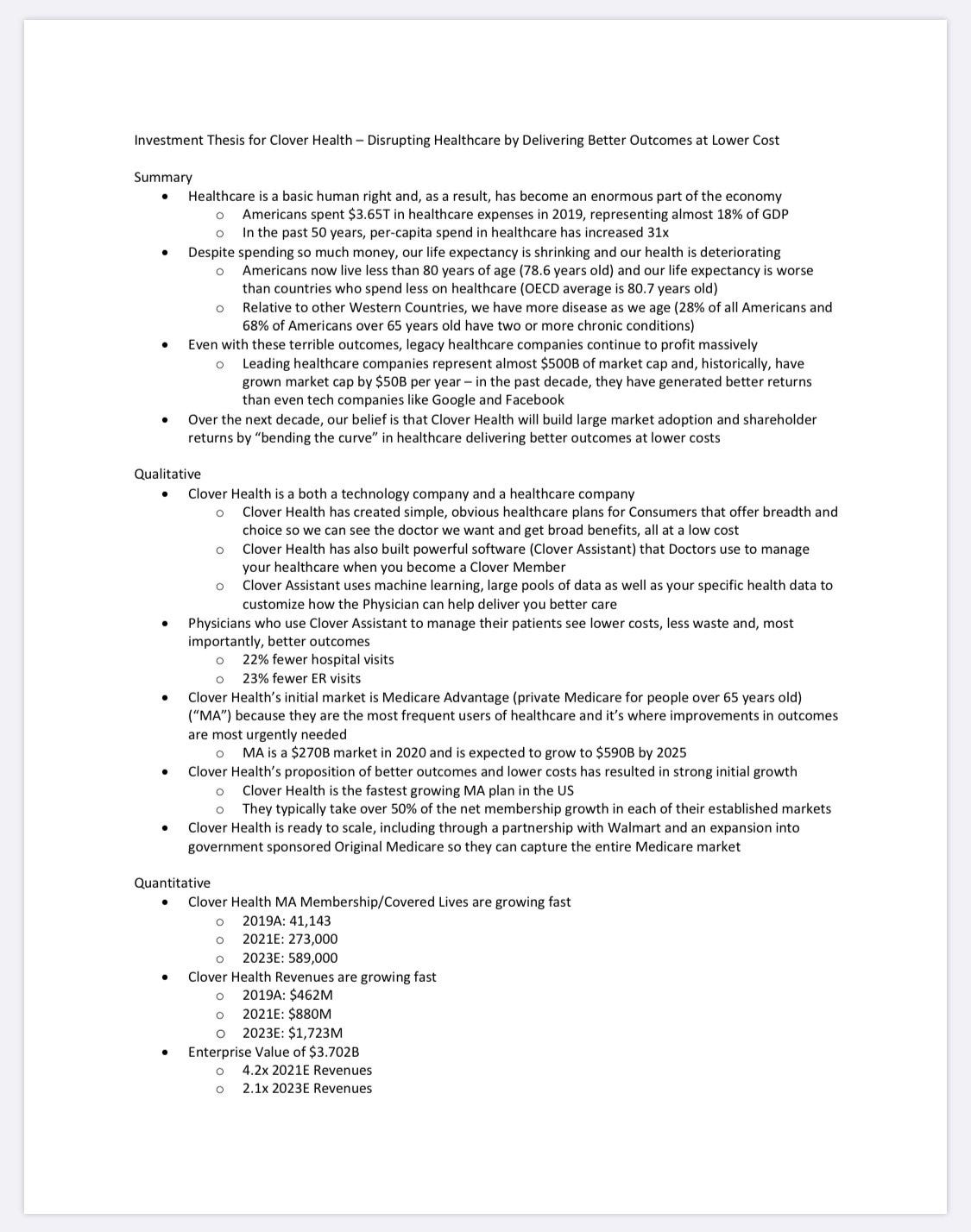
The Game Has Changed
To investors, Chamath Palihapitiya is executing better than anyone we have seen in the public markets in a long time. He has successfully taken an old financing mechanism, the SPAC, and popularized it in a way that unleashed billions of dollars of liquidity into the market. His first deal was to bring Virgin Galactic public, which was followed by the $4.8 billion deal for OpenDoor. This morning Chamath unveiled the deal for his third SPAC — Clover Health. The Medicare insurance company will be valued at $3.7 billion and nearly $1.2 billion in cash proceeds. There will be $400 million PIPE transaction done by Chamath and additional investors as part of the deal as well. Here is the one page summary of the deal that Chamath tweeted out this morning:The legacy media will do a good job covering what is happening here, so I want to talk about the why, along with a few trends that are starting to emerge. First, let’s start with healthcare investing in general. The quick summary is that we have seen very little innovation and large outcomes in US-based healthcare companies, which explains why American healthcare is worse than many other places around the world.Josh Wolfe highlighted the lack of innovation and large outcomes yesterday in his tweet storm announcing Lux Capital’s new Health + Tech initiative: “Today' medtech industry hasn't kept pace with the rate of innovation + value creation of TECH companies. VC-backed medtech has produced only a HANDFUL of innovative companies with large cap valuations since the turn of this century...There are incredible success stories — Insulet, Livongo, 10x Genomics, NovoCure, Guardant, Penumbra, and iRhythm, to name a few — but only ONE of the companies sits above $15 billion in market value....To find larger success stories we have to look back to Intuitive Surgical (now $81 billion in market cap), which was founded in... 1995! Another huge success founded by Lux's late partner Larry Bock––last century––Illumina–– in 1998 is now over $45 billion in value. BUT...Beyond that––slim pickings. In CONTRAST over the same time TECH created trillions of dollars in shareholder wealth from a blank canvas, propelling once humble start-ups to the upper echelon of the S&P 500: AMZN, FB, GOOG, Salesforce, Paypal, Netflix, Broadcom, ServiceNow…The list of multi-billion public TECH founded since 1995 is in the hundreds So too biotech––from 1976 creation of Genentech (+ Amgen in 1980) scores of public co's valued in billions — Gilead, Vertex, Biogen, Regeneron, Alexion, Incyte, BioMarin, Moderna... Medtech? BUBKIS.Current crop of public US medtech — Abbott , Baxter , Becton Dickinson, Boston Scientific, J&J, Medtronic, Stryker, Zimmer — have an average founding date of... 1924. Their age creates one significant disadvantage––REALLY dated business models.WHY? medtech VC for too long saw success in tuck-in M&A fetching relatively low price tags in the low-to-mid hundreds of millions. The result? Low ambitions + consolidation in the industry around a few REALLY old centenarian incumbents.”This lack of innovation and ambition for large outcomes will have to change to drive significant improvements in American healthcare. It appears that investors like Lux Capital and Social Capital are both ready to help spearhead that change. They’re quite literally putting their money where their mouths are. Another trend is that the SPAC mechanism is definitely here to stay. As of this morning, there have been 127 SPACs this year and over $48 billion in gross proceeds.This process allows companies to get into the public markets faster and more efficiently. One fun statistic for you — Chamath has reserved ticker symbols IPOA through IPOZ, but he is only on IPOC right now. That means we could see another 23 SPACs from him before he runs out of ticker symbols :)So what is driving the underlying investor interest in SPACs and the recent flip in founders’ minds about getting into the public markets?The macro economy is going to be a gigantic tailwind for public equity asset prices. The Federal Reserve has publicly committed to keeping interest rates at 0% for the foreseeable future and it has become politically correct to pressure the government into unloading more and more quantitative easing on the market. With so much cheap capital sloshing around, it will be nearly impossible for stocks to avoid benefitting. Given this macro environment, we are likely to see a significant shift in capital allocation strategy from investors. Everyone has been pouring money into the private markets over the last few years. Companies were staying private longer because of the enormous availability of cheap capital from private investors. But the shift is underway. There is going to be an explosion of startups looking to get into the public markets as quickly as possible, since that is where the returns are going to start flowing. It has been taboo over the last decade for tech companies to attempt to go public if they were value
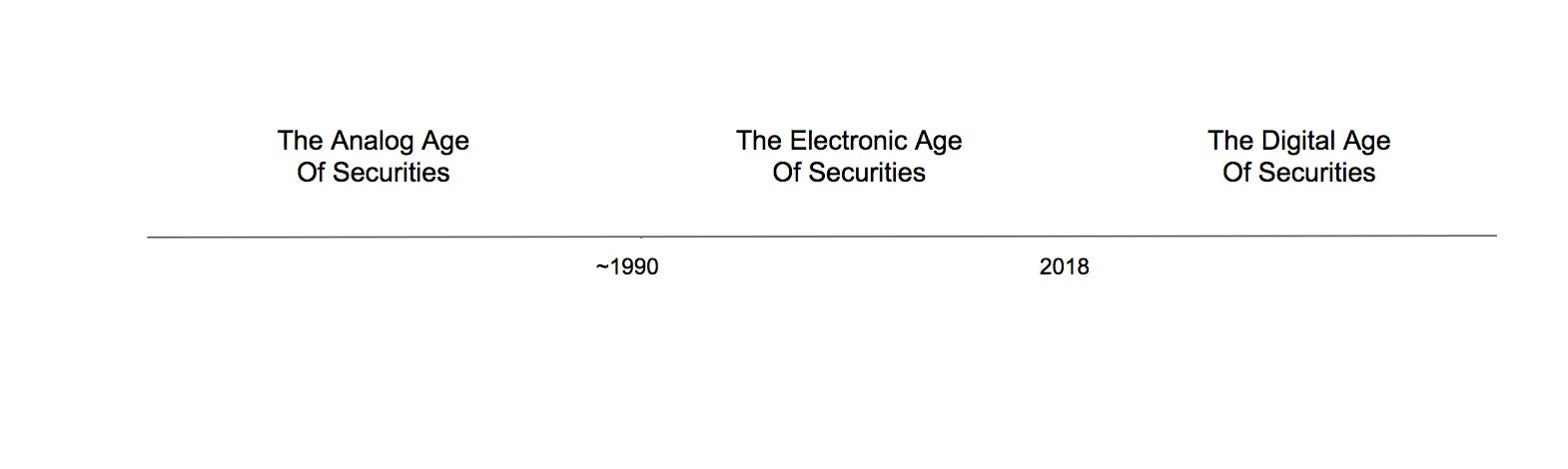
The SEC Chairman Sees A Tokenized Future
This installment of The Pomp Letter is free for everyone. I send this email to our investors daily. If you would also like to receive it every morning, join the 75,000 other investors today.To investors,Everyone is well aware of my bullish outlook on Bitcoin as the next global reserve currency. The digital application of sound money principles appears to be the solution to many of the world’s most difficult economic issues at the moment. Contrary to popular belief though, I’m not a Bitcoin maximalist.I believe that there will be many different digital technology innovations that occur over the coming 10-20 years. One of those innovations is in the digital art space, where I foresee a seismic shift from analog art to digital. Just as Bitcoin is superior to gold as a store of value, I believe digital art is superior to analog art. Which blockchain this occurs on will be debated by the market, so I won’t waste time discussing that here.Another innovation that I have been bullish on for years is tokenization. You have probably heard me say that “every stock, bond, currency, and commodity will be tokenized.” This mantra encompasses many different ideas, but the core belief is that the assets and market participants will remain the same, while the technology form factor will improve. I’ve explained this idea before using the following framework:The Analog Age of Securities required physical assets (stock certificates, mortgages, etc). The Electronic Age of Securities required electronic CUSIPs to serve as the representation of the physical assets which remained in centralized custody (ex: DTCC). These electronic CUSIPs move from one centralized database to another and require lengthy/inefficient settlement procedures. The Digital Age of Securities is where we are now. It is still really, really early. The writing is on the wall though — the idea of market participants trading tokenized stocks, bonds, currencies, and commodities seems like a foregone conclusion. The technology is better. It provides cheaper, faster, and more efficient trading for investors. Digital assets open the financial system to a broader set of global participants.And now it appears that government regulators are starting to see the same future that I have been talking about. According to Yogita Khatri of The Block:“In a webinar hosted by the Chamber of Digital Commerce on Friday, Clayton said all stock trading is today electronic, compared to 20 years ago. In the past, there were stock certificates, and today there are digital entries representing stocks. "It may be very well the case that those all become tokenized," said Clayton.The webinar, titled "Two Sides of the American Coin: Innovation & Regulation of Digital Assets," focused on what is needed to grow the blockchain and crypto space. Brian Brooks, the acting comptroller of the currency at the Office of the Comptroller of the Currency (OCC), also participated.Both Clayton and Brooks said that they welcome innovation in the crypto space, but of course, within regulatory frameworks.”This is important to hear Jay Clayton and Brian Brooks focusing on this talk track. It shows that they are not anti-Bitcoin or anti-crypto. They see the potential for innovation and positive impact. It appears they just want to see working products that follow the existing legal framework. Here is my favorite prediction about how this is all going to unfold — I believe the SEC is eventually going to mandate every company and traditional exchange to tokenize the securities that are traded in the market. This would allow regulators to become proactive in their security law enforcement and would save them enormous amounts of time, money, and energy. It is inefficient and costly for two investors to do something that breaks the rules, then have the SEC build a case and enforce the law. In this Digital Age of Securities, the law will be written into code and specific actions will be prevented from occurring. The easy example I always use is the following:* Every investor’s digital wallet will have specific information associated with it. (Are you accredited? What geography do you reside? What are you allowed to own or not allowed to own?)* Every asset or security will have specific information coded into the token (who issued the asset? is it only available for accredited investors? non-accredited investors? certain geographies it can not trade in? are there limits on how much someone can own?)* As one investor wants to buy/sell an asset, the code will instantaneously check and confirm that the transaction meets all of the regulatory requirements. This will prevent illegal or ill-advised transactions, while ushering in a more efficient system for the market. The key to this vision is that regulators will actually be creating a safer, more efficient marketplace by mandating the transition to digital assets. Most people question whether the regulators have the power to mandate something like this, but we have seen
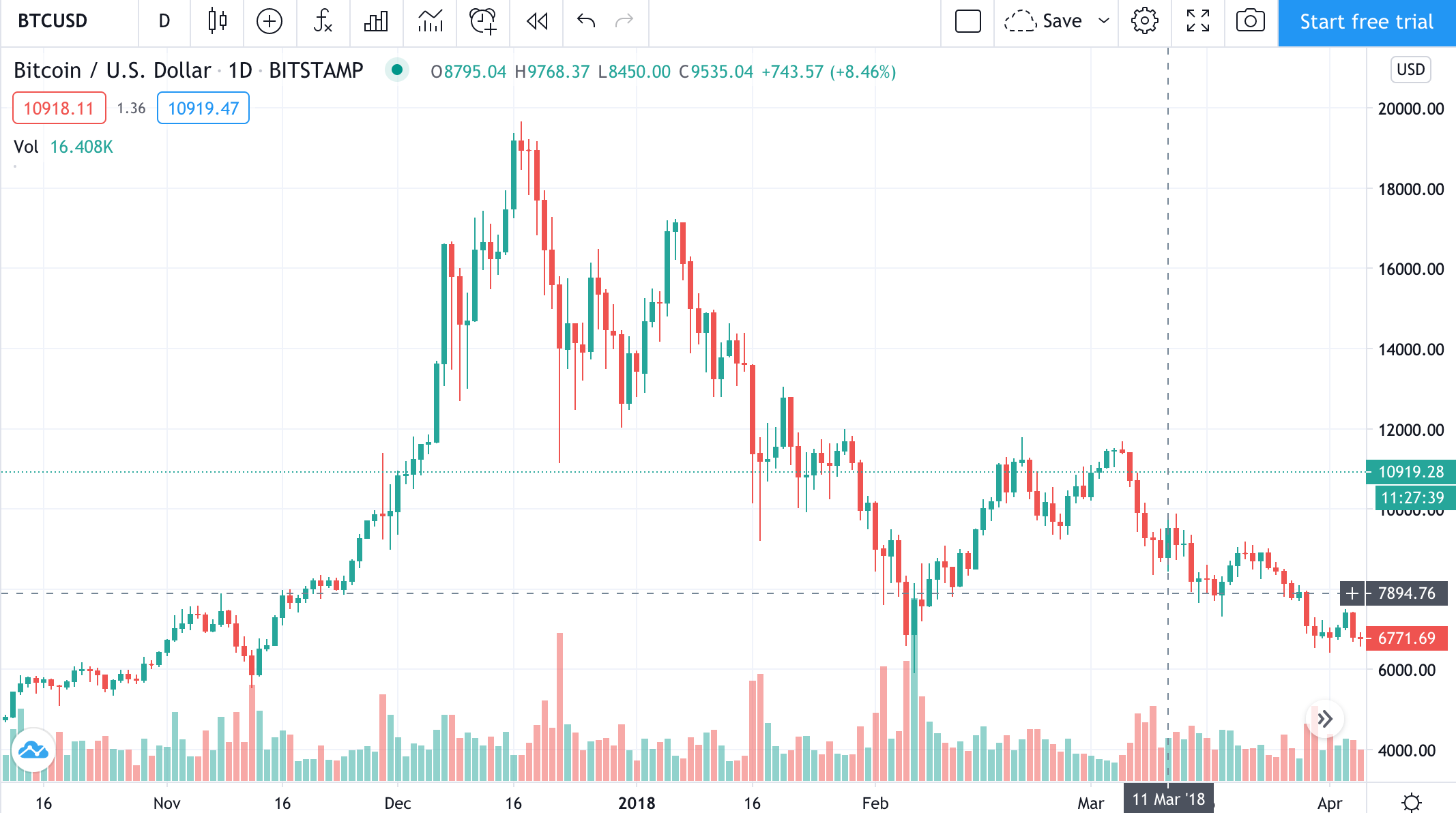
Bitcoin Is At An All-Time High*
This installment of The Pomp Letter is free for everyone. I send this email to our investors daily. If you would also like to receive it every morning, join the 75,000 other investors today.To investors,The biggest recent knock against Bitcoin from the peanut gallery has been something along the lines of “yeah, but Bitcoin is still down almost 50% from the all-time high.” This is not only a lazy argument intellectually, but it also is highly misleading when presented without context.First, why are people yelling about this on Twitter and television? The simple answer is because Bitcoin has violated the mainstream narrative. It didn’t die in 2018, although most of the talking heads were calling for the digital currency’s death. If that wasn’t bad enough, Bitcoin and crypto has served as the best performing asset class this year. The pandemic, economic shock, and subsequent intervention by the Federal Reserve has created a situation that resulted in a 50%+ increase in Bitcoin’s price year-to-date.But remember, you wouldn’t know it by reading Wall Street / finance talking head Twitter or watching television. They’re still screaming “yeah, but Bitcoin is still down almost 50% from the all-time high.”What these people are referring to is the spot market price for Bitcoin. In 2017, we saw Bitcoin rise from around $1,000 to a high of $20,000 in the calendar year. The asset went from $10,000 to $20,000 in a mere 18 days. It was sitting around $19,000 for about 72 hours, before falling almost 85% over the next 12 months to nearly $3,000. Finally, Bitcoin was above $10,000 for less than 60 consecutive days in December 2017-January 2018.This context is really important because it shows that the end of 2017, and into the beginning of 2018, was a classic blow-off top in a market that had reached an unsustainable level of frothiness. Any sophisticated investor would heavily discount this data when looking at historical price analysis, because it doesn’t serve as a good representation of where Bitcoin was being priced.Here are two other data points to evaluate that I believe will serve as better indicators of Bitcoin’s price over the long-run:* Bitcoin’s 200-week moving average* Bitcoin’s number of consecutive days over $10,000Let’s look at the 200-week moving average first. As you can see in this visual representation, Bitcoin’s price has never fallen below the 200-week moving average. It rises significantly above the average in the bull markets and has historically bounced off the 200-week moving average in bear markets. Additionally, according to the 200-week moving average of Bitcoin, the asset is currently sitting at an all-time high in price. Next, let’s look at the number of consecutive days that Bitcoin’s price is above $10,000.The previous all-time high was 62 consecutive days back in 2017-2018, but as of last night, Bitcoin has established a new all-time high in consecutive days above $10,000. Shout out to Zack Voell of Coindesk for pointing this out. So wait a minute? The 200-week moving average and the consecutive days above $10,000 are both at all-time highs, but the talking heads are still screaming about $20,000?Their argument makes for great headlines. It doesn’t tell the full story though. The spot price is worth being aware of, but the 200-week moving average and consecutive days above $10,000 are much better metrics to watch in my opinion. They give you an idea of how strong the Bitcoin price is over a period of time. It helps to smooth over the outlier data and show the general and relative trend in price. Remember, look at that 200-week moving average. It continues to go up-and-to-the-right in a fairly compelling manner. This is exactly what long-term holders (and investors) want to see. I don’t care about the short-term price movements. I care A LOT about the long-term price movements. And so far, so good.As I continue to talk about, there is an incredible amount of misinformation being thrown around in the Bitcoin world. The narratives that get laid out can be quite misleading. Stay focused on long-term trends and keep a low time preference. This advantage of having a long time horizon will ensure that you can benefit from one of the greatest wealth transfers in human history.Have a great start to your week and don’t forget, Bitcoin is sitting at an all-time high in the metrics that actually matter :)-PompThis installment of The Pomp Letter is free for everyone. I send this email to our investors daily. If you would also like to receive it every morning, join the 75,000 other investors today.THE RUNDOWN:Vulture Investor Feasts on Crypto Whales Seeking Quick Exits: When big investors commonly referred to as whales need to quickly or quietly get out of the cryptocurrency world, they often turn to Brian Estes. Estes, 52, runs Off The Chain Capital LLC, a nearly $40 million fund that specializes in buying digital assets from people strapped for cash due to divorce, loss of income or other unforeseen cir
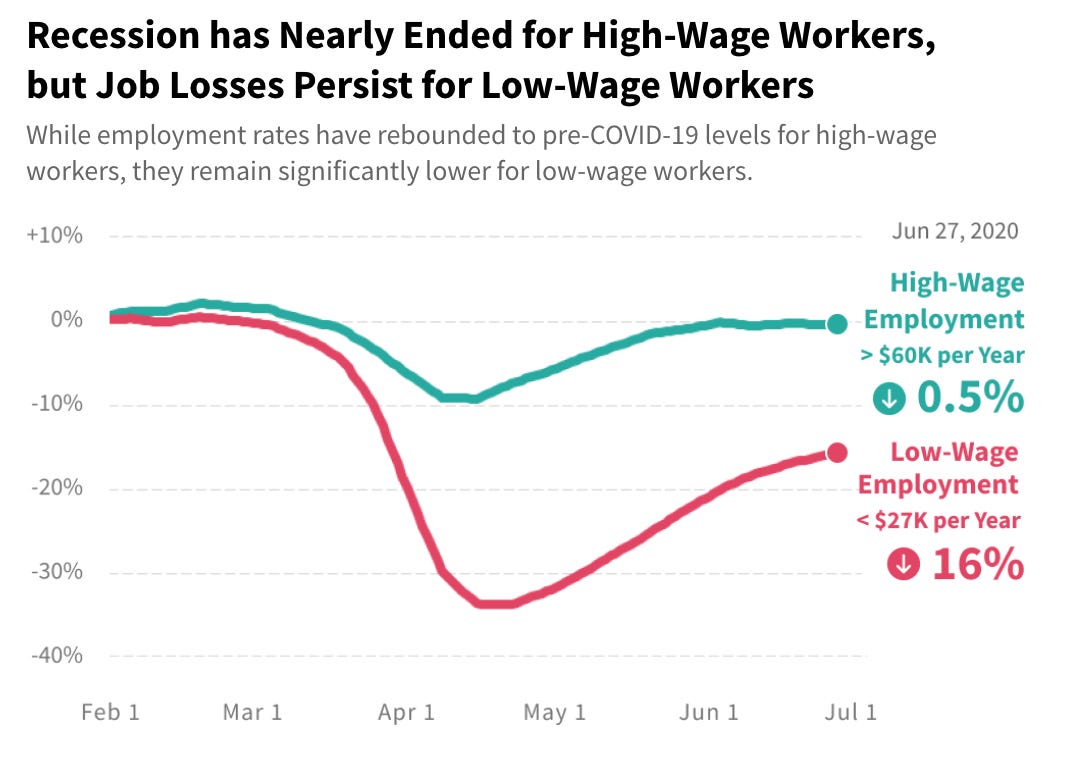
The K-Shaped Recovery Is Now Undeniable
This installment of The Pomp Letter is free for everyone. I send this email to our investors daily. If you would also like to receive it every morning, join the 75,000 other investors today.To investors,One of the recurring themes in this letter over the last few weeks has been a “K-shaped" recovery. The idea is that coming out of the economic shock earlier this year, the wealthiest Americans were recovering quickly, while those without significant assets or income were continuing to struggle. Putting the debate over a specific letter in the alphabet aside, this idea of two Americas and their polar opposite responses to the economic shock made sense. We just didn’t have material data to unpack around the thesis.Thankfully, Harvard economist Raj Chetty has been working diligently to solve that problem. He and his team released a new tool in the last few months that highlights the economic situation on a county, city, and neighborhood level across the United States. Bloomberg wrote a great article about Chetty and the work he has been doing, which you can read here. I played around with the tool for awhile this morning and was impressed with the insights that it provided. First, it is obvious that high-wage worker employment has basically recovered to pre-COVID levels, but low-wage workers are still suffering significantly.As of September 2020, total consumer spending in the United States is only down 3.8% compared to January of this year.But when you break consumer spending down by socioeconomic class, you realize that low income citizens are spending more today than they were in January and high income citizens are spending almost 10% less. So what industries are winning and losing during this volatility of consumer spending? Across all socioeconomic classes, grocery spending is up 10% year-to-date, and restaurant/hotels (-24%) and transportation (-46%) are down significantly.Chetty’s team also tracks small business revenue. As you would imagine, the national small business revenue across industries is down more than 20% since January.Leisure and hospitality are down almost 50% nationally, while other industries are hovering around 10% decreases year-to-date.Some of the drop in revenue may be attributed to the percentage of small businesses that are open. Unsurprisingly, more than 20% of small businesses remain closed compared to January of this year.And Leisure and Hospitality businesses are more than twice as likely to be closed at the moment compared to other industries.If so many businesses are still closed, you would expect open job roles to be down as well. While this is true, the 6% decrease in job postings compared to January 2020 was a much lower drawdown than I would have anticipated.What is interesting is that the job postings that require the highest amount of education are down more than job postings that require minimal education.Lastly, the student progress in math is actually up nationally since January 2020.But when broken out by socioeconomic class, we see a very different story.Raj Chetty and his team are finally presenting data that supports the idea of a “K-shaped” recovery. If you’re wealthy or have high income, the recession is essentially over for you. If you are less fortunate, you are still struggling to navigate the economic carnage.Hope each of you has a great day.-PompThis installment of The Pomp Letter is free for everyone. I send this email to our investors daily. If you would also like to receive it every morning, join the 75,000 other investors today.THE RUNDOWN:Coinbase Hires Executives From Venmo, Adobe and Google: Cryptocurrency exchange and wallet platform Coinbase announced it has hired Shilpa Dhar, Ravi Byakod and Frank Yoo for VP roles on its product, engineering, and design & research teams. In an announcement published on its website, Coinbase said it was also creating a new “Platforms” team across its product and engineering organisations and that Dhar and Byakod would head the new team. Read more.Startup Behind Siacoin Storage Platform Raises $3M, Rebrands as Skynet Labs: The startup formerly known as Nebulous has raised a $3 million funding round led by Paradigm with participation from Bain Capital Ventures, Bessemer Venture Partners, A.Capital, Collaborative Fund, Dragonfly Capital Partners, Hack VC, INBlockchain, First Star Ventures and others. Read more.Economist Stephen Roach Issues New Dollar Crash Warning: Economist Stephen Roach warns next year will be brutal for the dollar. Not only does he see growing odds of a double-dip recession, the Yale University senior fellow believes his “seemingly crazed idea” that the dollar would crash shouldn’t be so crazy anymore. “We’ve got data that’s confirmed both the saving and current account dynamic in a much more dramatic fashion than even I was looking for,” Roach said. Read more.JPMorgan to Pay Almost $1 Billion Fine to Resolve US Investigation Into Trading Practices: JPMorgan Chase is close to paying almost $1 bil

The Next Big Bet — Digital Art
This installment of The Pomp Letter is free for everyone. I send this email to our investors daily. If you would also like to receive it every morning, join the 50,000 other investors today.To investors,Jason Williams and I are making a big bet on digital art.World-class investors know that the best way to make generational returns is to pursue investment strategies that are unpopular, while ensuring that the new investment strategy is also correct. If you merely do something different than everyone else, but you’re wrong, then that only makes you the idiot in the room. If you do something different than others, and you’re right, then you capture significant profits.In my opinion, one of the easiest ways to pursue a non-consensus investment strategy is to look for markets that have either (a) been abandoned by the crowd or (b) are so new that most investors don’t realize they exist. Selecting the right market is the most important decision. This second category — the industries that are incredibly early in their lifecycle — is my favorite place to go hunting for opportunity.Jason Williams and I have been searching for a new market that is too early for most people to have spent the time building an investment thesis. We finally think we have found the perfect opportunity — digital art. Before we spend time talking about the digital art market, let’s take a quick look at the traditional art market: * The art market is estimated to have a market cap of approximately $65 billion for the last few years.* The United States, United Kingdom, and China make up about 85% of the entire market.* US sales of traditional art was nearly $30 billion in 2018, which made up more than 40% of the market.* Art dealers are responsible for about $36 billion in global sales.* Art auctions are responsible for about $29 billion in global sales.* Online art sales are only responsible for about $6 billion in global sales.* More than 50% of US art collectors are over the age of 50.* Asia, particularly Singapore (46%) and Hong Kong (39%), have high percentages of millennials as art collectors.The traditional art market has done incredibly well over the last 20 years. From 2000 to 2018, the art market outperformed the S&P 500 by over 180% (see today’s sponsor Masterworks for more details and a cool traditional art opportunity). The world’s wealthiest people have been acquiring art for decades, whether it was for store of value, capital appreciation, or pure creative and intellectual stimulation. Regardless of your personal experience with traditional art, the numbers are absolutely staggering. There is a shift about to happen though. The world is going to change and it is going to change much quicker than most people realize. Similar to how Bitcoin is superior to gold in almost every way, digital art is superior to traditional art in almost every way also. A traditional piece of art is static and sits on a wall. There is no motion. The art does not change unless someone takes the art off the wall and hangs a different piece. Physical art is hard to move around the world, it can be easily damaged, and there is difficulty in proving what is authentic and what is not.Digital art is the next evolution of art. Each piece can incorporate complex movement and motion into the art. A single screen on a wall can periodically cycle through different pieces of art at the predetermined direction of the homeowner or art collector. The digital art can be sent to anyone in the world with a few clicks of a button, it is immune from damage, and authenticity and provenance is transparently available for anyone to verify. Quite literally, digital art has significant advantages over traditional art in the same way that digital news has advantages over physical newspapers.This transition to a digital art world is not a question of if it will happen, but rather when. In fact, I personally believe that the digital art market cap will grow to become larger than the physical art market cap. This may sound ridiculous today, especially since the digital art market cap is less than $10 million and the traditional art market is more than $60 billion, but this is exactly what disruption looks like. Estimating the exact timing of the digital art market eclipsing traditional art is hard, so I’ll refrain from making a fool of myself on that front. My confidence level that we see a future 6,000x increase in the digital art market cap is fairly high though. Jason Williams and I have spent the last few months thinking through the best way to capitalize on the potential growth of the digital art market. We ultimately settled on the idea to partner with the best digital artists in the world in an attempt to bring attention and awareness to the great work they have been doing. Recently, we have commissioned a number of pieces and collections with the artists we believe to be absolute world-class. The first artist we are revealing is FEWOCIOUS. In my opinion, FEWOCIOUS is the
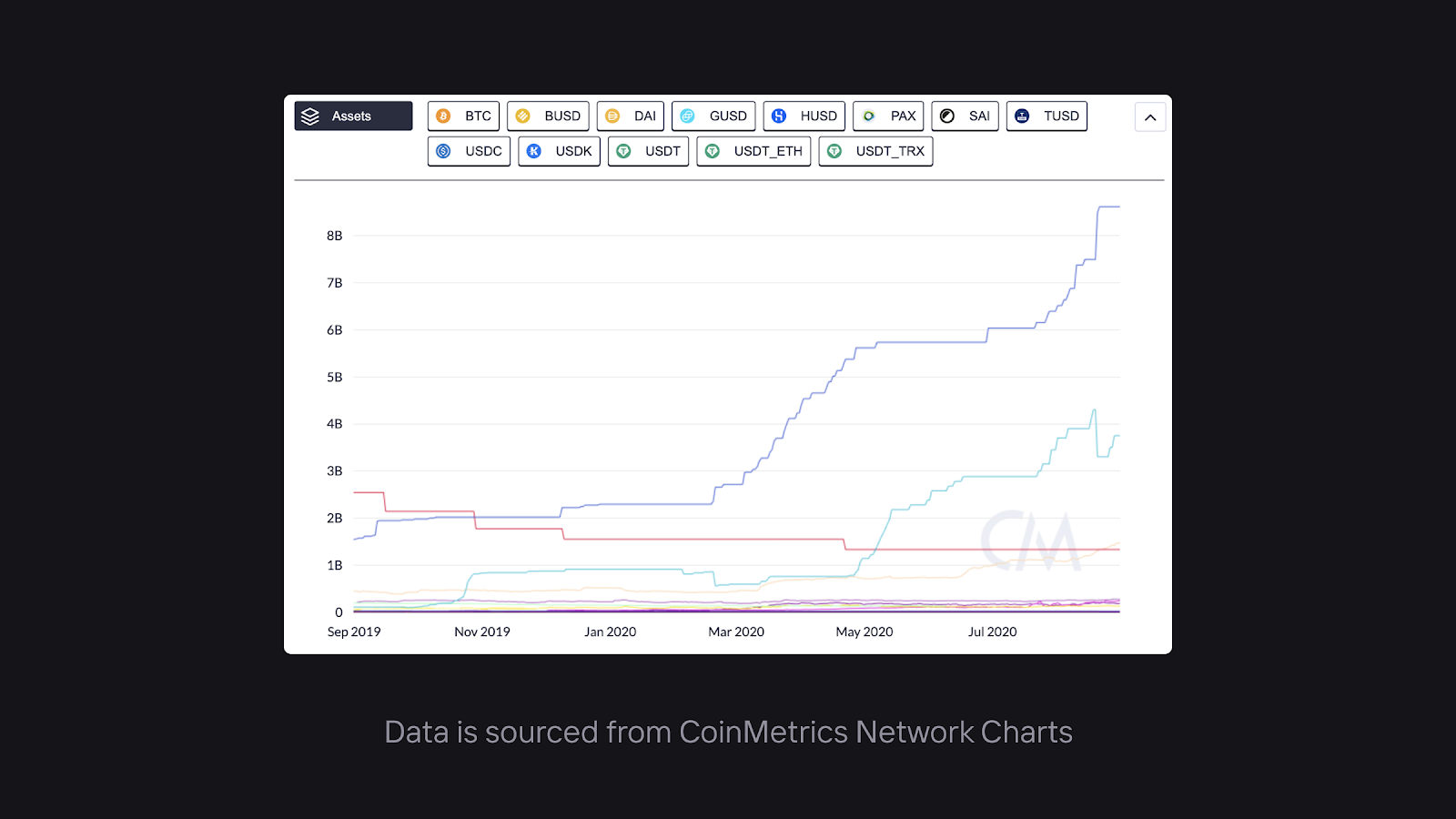
How DeFi is Eating Traditional Finance
Many people have been asking me to discuss the bull case for DeFi. The following write-up is from the research team at dYdX, which spells out their perspective. I don’t agree with everything written, but I think they did a good job laying out the argument.If you aren’t subscribed to the daily installment of The Pomp Letter, you should join 50,000+ other investors and subscribe today.With the introduction of Bitcoin’s genesis block, the world had its first truly decentralized financial application. Bitcoin enabled anyone in the world to store wealth without the need for a centralized party. That wealth could be taken and sent anywhere in the world, the only requirement was an internet connection. As the Bitcoin network grew in terms of number of holders and value transferred, developers began looking for ways to create more complex financial transactions. This was at odds with how the Bitcoin community viewed the tradeoffs between security and expressive financial applications, which created an unmet opportunity for a blockchain that could facilitate more complex financial contracts.When Ethereum launched, it aspired to be a world computer capable of powering an arbitrary number of applications through smart contracts. The ICO mania of 2017 reflected this vision, but Ethereum as a platform ultimately left much to be desired for most applications. Amidst all the noise, it became increasingly obvious that Ethereum was fertile ground for financial application experimentation. Ethereum drastically dropped the costs associated with a variety of financial transactions including capital formation, asset issuance (hence the ICO bubble), asset exchange, loan administration, collateral management, and much more. After the rubble of 2017 cleared, the Ethereum community was left with a burgeoning movement dubbed, “DeFi” (short for decentralized finance).DeFi had immense promise given both how inefficient traditional finance was and how well its aims aligned with the core ethos of the crypto community. Ethereum’s smart contracts enabled money to be managed programmatically, without the need of a central party, which in turn created many efficiency gains. Similarly, DeFi applications were open and permissionless. Just like Bitcoin, anyone could access them, all they needed was an internet connection. Compare this to the traditional financial system and it’s easy to see how much more desirable DeFi is. In the traditional world, financial applications are difficult to access, rigid, hard to use, and most importantly, expensive. Early Signs of Product Market FitShortly after the Ethereum community rallied around DeFi and allocated engineering resources towards building out infrastructure, early signs of traction emerged. In these early days, the most promising developments were DeFi primitives: building blocks that could be built on top of each other to create more expressive applications. The composability of these primitives help create strong network effects, where the value of products and services grow as the number of DeFi users increases.The first use case to see large growth was stablecoins. Stablecoins are simple, they are assets designed to keep a peg to another asset, which in the case of the most popular stablecoins, is the dollar. With stablecoins, anyone can transact in dollars, globally, and with no delays. Stablecoins seem rudimentary on the surface, but being able to send dollars freely within the crypto ecosystem has always been difficult — the fiat world and the crypto world aren’t very interoperable. Stablecoins really started to see growth when new primitives came to market. The ability to exchange stablecoins for crypto through decentralized exchanges such as dYdX, 0x, and Kyber or the ability to borrow and lend stablecoins through platforms like dYdX and Compound, made stablecoins that much more powerful. Users could remain on-chain for a lot of their banking needs. We can see clearly that stablecoin issuance really took off in late 2018, right as many of DeFi’s first primitives came to market. The amount of USDT tokenized on Ethereum has grown to over $6 billion USD from virtually 0. USDC has also seen astronomic growth, growing to over $1 billion market cap in less than two years. Decentralized exchange was another primitive that took off in 2019. With decentralized exchanges, smart contracts handle all parts of the exchange process — they verify that each holder owns the assets, that they approved the transfer, and once those are satisfied, the contracts atomically swap assets between the two counterparties. Again, it seems simple, but the traditional exchange process can be costly and exposes users to a lot of counterparty risk. As we have seen time and time again, exchanges can go down with all of their customers’ crypto.Automated market makers took the decentralized exchange concept one step further by removing the need for a centralized market maker to quote both sides of the book. There are man
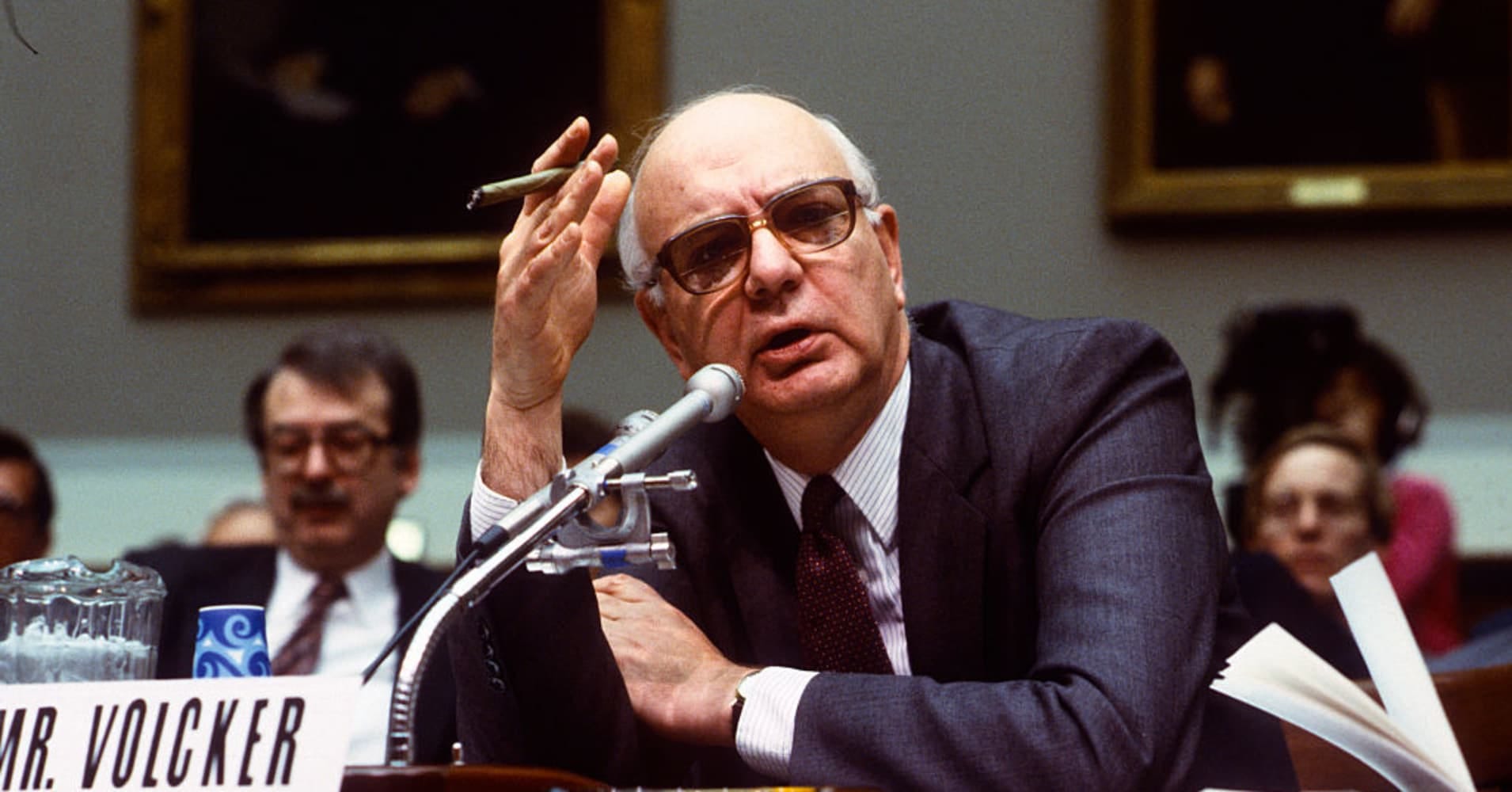
The US Economy & Federal Reserve Need To Have More Pain Tolerance
This installment of The Pomp Letter is free for everyone. I send this email to our investors daily. If you would also like to receive it every morning, join the 50,000 other investors today.To investors,This week is shaping up to be one of the most historic in modern monetary history. Federal Reserve Chairman Jerome Powell is set to deliver a speech on Thursday that will outline a significant change in the way that the organization thinks about inflation and their annual targets.This speech will be part of the Fed’s virtual conference that is replacing their traditional get-together in Jackson Hole, Wyoming. Rumors are Powell’s speech is titled “Monetary Policy Framework Review” and will specifically focus on increasing inflation as a means of creating a better economic environment. There is only one problem though — history tells us that decreasing inflation is not only better for the bottom 50% of Americans, but it is also creates a stronger outcome over the long run.In order to understand why the upcoming decision is so important, we must first take a trip back in history to October 1979. Paul Volcker had been Federal Reserve Chairman for a mere two months, but he was quick to realize the errors of his predecessors. They had allowed, and even encouraged, high levels of inflation. Here is the St. Louis Fed’s summary of how bad the situation was at the time:“The inflation rate, a mere 1 percent in 1965, hit 14 percent by 1980. Unemployment trended up from a low of 3.5 percent (annual average) in 1969 to 9.7 percent in 1982. The stock market was in the dumps. Oil prices jumped off the charts. Presidents Richard Nixon and Jimmy Carter became desperate enough to tinker with price controls, the results being disastrous.”Paul Volcker immediately made a number of tough decisions upon assuming the Chairmanship. The first decision was to ignore the short-term impact of any monetary policy decisions and optimize for long-term economic strength. The second decision was to stop obsessing over a low interest rate environment, which shifted the focus to the money supply. The impact of these decisions are hard to comprehend in today’s world of instant gratification. Volcker essentially took the hard road in the short-term, so the US economy could be healthier over time. The short-term difficulties included a transition from the easy/cheap credit environment to an expensive credit environment, prime lending rates were over 20%, unemployment reached double digits numerous times, and the dollar was severely weakened in foreign exchange markets. Ultimately, Paul Volcker oversaw two economic recessions before his policies had the intended impact of creating a prosperous market and economy.Think about how difficult that would be in the current world. A Federal Reserve Chairman choosing to pursue the correct, yet unpopular, decisions. Leadership that optimized for long-term strength, rather than short-term pain mitigation. It is nearly impossible to fathom the idea that any politician or Federal Reserve member would be willing to oversee two separate economic recessions in order to put the United States back on track.So what exactly happened once the United States got through the short-term pain? We had an incredible economic boom cycle starting in the 1980s and carrying through the 1990s. The economy had found solid footing. There was a direct relationship between Volcker’s decisions and the economic boom, stabilized prices, and general prosperity of the United States.As I have learned more about Paul Volcker and the drastic measures he took, one paragraph from the St. Louis Federal Reserve stood out to me. Here is what they said about the lessons learned:“For starters, ideas matter. Bad economic advice, much of it from economists, contributed greatly to policy mistakes in the pre-Volcker days. Keynesian economics had been in vogue by then for decades. This school argued that the government could tax and spend its way to full employment. Inflation was acceptable if it put more people to work. Thankfully, such thinking has been discredited today, although our economic models still need improvement.”Read through that paragraph again. Keynesian economics had been in vogue. Government could tax and spend its way to full employment. Inflation was fine as long as more people went back to work. Sounds familiar, right?My greatest fear is that the United States is about to make the same mistakes that we made decades ago. Rather than allowing the current economic reality of low inflation and high unemployment to naturally correct itself in the market, the Federal Reserve feels compelled to intervene. This interventionism is a natural human emotion — we feel like we lack control if we do nothing in uncertain times.Remember though, just because we have the urge to act doesn’t mean that we should. That won’t matter when Jerome Powell takes the stage on Thursday. According to Jeff Cox at CNBC, here is what the current Fed Chairman is going

BlockFi Raises $50 Million Series C
This installment of The Pomp Letter is free for everyone. I send this email to our investors daily. If you would also like to receive it every morning, join the 50,000 other investors today.To investors,This morning BlockFi announced that they have raised a $50M Series C round of funding. The investment round was led by my partners and I at Morgan Creek Digital, alongside an amazing list of co-investors like Valar Ventures, CMT Digital, Castle Island Ventures, Winklevoss Capital, SCB 10X, Avon Ventures, Purple Arch Ventures, Kenetic Capital, HashKey, Michael Antonov, NBA player Matthew Dellavedova and two prestigious university endowments. I will be joining BlockFi’s board of directors as part of this investment. It is hard to describe how excited I am to continue supporting Flori Marquez, Zac Prince, and the rest of the BlockFi team as they build out the industry-leading wealth management platform for crypto investors. We made our first investment in the business a little more than 18 months ago and this team has impressively executed their vision since. For those that are unaware, let me break down what BlockFi does today, why I think this business can be one of the next multi-billion dollar fintech giants, and where they are going next. Today they have the following products:* A lending product that allows an individual or organization to deposit crypto assets and take US dollar loans out against the collateral. This is popular for people who want USD liquidity, but would rather not sell their Bitcoin or other assets.* An interest-bearing account where users can deposit Bitcoin, Ether, or stablecoins and earn up to 8.6% APY interest.* A cryptocurrency exchange that has no transaction fees.The business was doing just under $1 million a month in revenue and had about $200 million in AUM when we made our third investment in the company at their Series B during Q4 2019. They have grown aggressively since the start of this year, which means they are now doing nearly $10M a month in revenue and have over $1.5B in assets under management. This type of hyper-growth is historically reserved for businesses that have found product-market fit in large addressable markets. Ultimately, that is exactly what BlockFi has done in my opinion. Before I get to that though, I want to call out a very specific structural component of BlockFi — their focus on deposits, rather than transactions. I’ll use Robinhood and Square as two companies in the legacy finance world to highlight the difference.Robinhood was started as a brokerage business that could help retail traders buy and sell public equities cheaper or in a fractional share model. Square was started as a financial services company that could help merchants and users more easily transact, while also providing a place for them to store their deposits. These two starting points feel very different, but they are ultimately going after the same business of financial services.Years later we can now see how these two starting points have significantly determined the direction that each company can take, including what products they offer and how large the addressable market is. Robinhood remains a brokerage-focused business. They have tried to scale by adding new products (crypto trading, cash accounts, etc), but that appears to be a much more difficult road than originally anticipated. Square on the other hand has been able to build a serious ecosystem of products that includes payment infrastructure, point-of-sale technology, CashApp, Bitcoin brokerage, and fractional share brokerage for public equities.Simply, starting with a focus on deposits has served as a much more scalable model than beginning with brokerage. This has not been true in the crypto space to date, but not because I believe the framework has been invalidated, but rather because there had been very few companies starting with a focus on deposits. BlockFi is the first business to not only do this, but to do it really, really well.I have learned over the years to press your winners as hard as possible and that is exactly what we and many other existing investors are doing. We understand the scalability of the business model and we see how big the addressable market is. The hope here is to build a generation-defining business that serves as the leader in Bitcoin and crypto. BlockFi has already built a great business, but they still have a lot of work ahead. They are hiring for many different positions and will need the absolute best people to help them build this future world. There will be plenty of obstacles and challenges to overcome, but this team has intelligence, experience, and a level of determination that is rare in companies who experience a lot of success early. You should expect to see them continuing to roll out new products (including the Bitcoin rewards credit card!) and going deeper in various markets.The future of finance is digital. Every stock, bond, currency, and commodity will eventually be
Warren Buffet's Foray Into Gold Is Prime Example Of What Bitcoiners Have Been Preaching
This installment of The Pomp Letter is free for everyone. I send this email to our investors daily. If you would also like to receive it every morning, join the 50,000 other investors today.To investors,News broke late Friday that Warren Buffett’s Berkshire Hathaway made some big investment decisions during the second quarter of 2020. This shouldn’t be that shocking given the market volatility and a significant shift in the macro environment due to the COVID-19 crisis. However, what was surprising was the specific investments that Berkshire and Buffett decided to enter and exit.Here is a quick summary of the most notable decisions:* Berkshire bought 20.9 million shares in Barrick Gold, a Toronto-based gold miner, which was a $563.6 million investment at the time it was reported* Berkshire sold 85.6 million shares of Wells Fargo, which is approximately 26% of the previous ownership position* Berkshire sold 35.5 million shares of JPMorgan, which was approximately 60% of the previous ownership position* Berkshire completely divested of their financial stake in Goldman Sachs* Berkshire continued to invest in Bank of America and now owns almost 12% of the financial services company, which is worth about $28.2 billionWarren Buffett and his team have essentially decided to dump bank stocks and start gaining exposure to gold. This is a complete U-turn from the perspective Buffett has publicly stated for many years, which downplayed the value of gold and boasted of the banks’ future prospects. So what exactly is driving this change of opinion?Many people are speculating that changes in the macro environment are to blame. That thought process would include the following:* COVID-19 created a public health crisis* Governments had to respond, so they forced everyone to sit in their homes* The velocity of money drastically slowed while everyone was sheltering in place* Governments realized that they could mitigate the short term pain if they intervened* That intervention was produced in the form of trillions of dollars in quantitative easing* If governments are printing trillions of dollars, there will be high levels of inflation in the future* Gold will be a great inflation hedge asset to put in your portfolio, so that is what Buffett didThis thought process has many valid arguments, but there is only one major problem — Warren Buffett and Berkshire Hathaway did not buy gold. They bought equity in Barrick Gold, which is a gold miner. This is an investment in a cash producing business, rather than an investment in the precious metal. Now before everyone freaks out, yes, the future prospects of Barrick Gold are partially dependent on the future performance of gold. But it is important to call out that the investment Buffett made was in a business, not a commodity.So if he is not actually buying the commodity itself, why would Buffett be buying into a gold miner?An easy first place to look is the poor performance of Berkshire Hathaway’s top 10 stock holdings. As of August 10th, here they are ranked by portfolio percentage (largest to smallest) and their financial performance year-to-date:* Apple +54.4% * Bank of America -23.6% * Coca-Cola -12.3% * American Express -17.3% * Kraft Heinz +10.8% * Wells Fargo -52.0% * Moody’s +14.7% * JPMorgan -25.9% * U.S. Bancorp -35.4% * Bank of New York Mellon -22.8%According to Yahoo! Finance, “the seven financial stocks have an average year-to-date total return of -23.2%, 40 basis points less than Bank of America’s total return so far in 2020. The three non-financial stocks have an average total return of 17.6%, primarily on the back of a fantastic performance by the maker of iPhones.” The quick takeaway is that Buffett has been invested in a number of old-school businesses that have not been able to convince the public markets of their technology prowess.In fact, the most technologically innovative business that Berkshire is invested in has been their best performer — shocker! When your portfolio is being crushed this bad, it forces people to reevaluate their strongest held beliefs. I have no doubt that the investment team at Berkshire Hathaway has been discussing what they can do to mitigate the potential risk from high inflation in the coming years. If that conversation has been occurring, the natural conclusion in the conservative world of Wall Street is to gain exposure to gold.Buffett has preached for decades about his disdain for non-cash producing commodities, so it makes sense that they would get indirect exposure to gold through a gold miner. But ultimately this is still a less superior decision than the one that Paul Tudor Jones made just a few weeks ago. Warren Buffett and Berkshire Hathaway have chosen to gain exposure to gold in the fcae of potential inflation and Paul Tudor Jones chose to get exposure to Bitcoin because it is likely to be the “fastest horse.” So what exactly is the difference between gold investors and Bitcoin holders?The good news is that both groups have
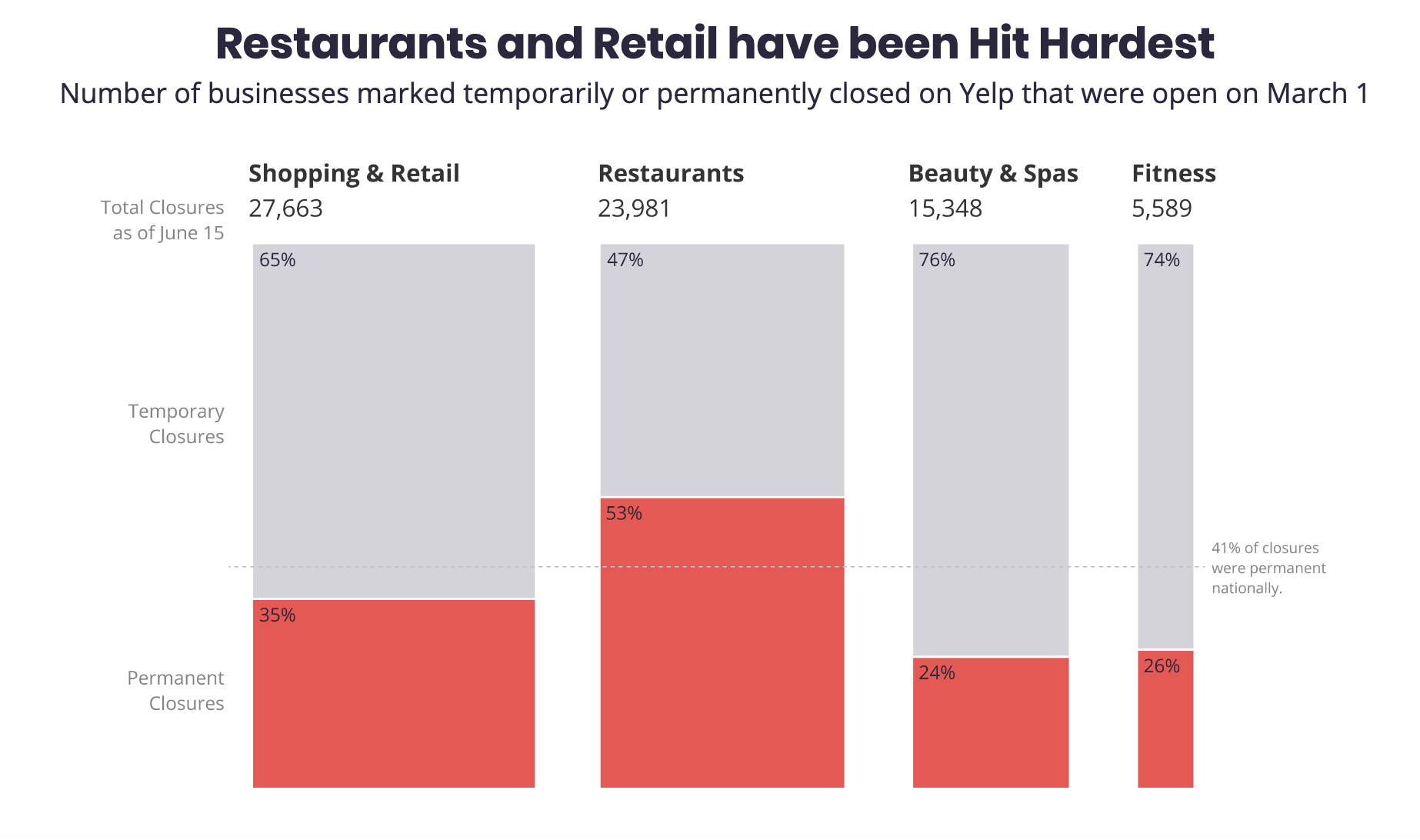
A Recap of the Pandemic-Related Economic Crisis & What You Can Do Moving Forward
This installment of The Pomp Letter is free for everyone. I send this email to our investors daily. If you would also like to receive it every morning, join the 50,000 other investors today.To investors,It has been almost exactly 5 months since the original lockdown orders went into place in the United States. There has been incredible economic carnage that transpired since, so today I want to spend time zooming out and recapping those developments.During times of uncertainty and chaos, it is always important to level set on what has happened, where we are now, and what are the possible situations yet to play out. Fortunes are going to be won and lost throughout this financial crisis. Certain narratives will disappear and many trends will be accelerated. The best investors are merely trying to be right more times than they’re wrong. Let’s start with an analysis of the job market. We started the year with a historic low in unemployment around 3.5%. Once the pandemic hit the US in March, it quickly became clear that businesses would be unable to keep employees on payroll if they had near zero revenue. In my March 18th letter to each of you, I wrote the following:“As I have talked to people about this issue [unemployment] over the last 24 hours, most are relatively calm about it because the general belief is that it would take quite awhile for high levels of unemployment to take hold. The data says otherwise though. These large increases in unemployment filings tells a much different, and very scary, story.While I don’t want to cause panic or fear monger, it appears that most investors are drastically underestimating the economic crisis we have on our hands. This is not going to be a few weeks of pain. This is likely to be months and months, if not a few years, of material slowdown in economic activity.”My belief at the time was that we would see unemployment reach approximately 9% by the end of Q3, but we ended up in a much worse position than I could have imagined. There have been more than 56 million first time unemployment claims filed since the week of March 20th, which is approximately 1 in every 3 people in the US workforce. The continuing jobless claims currently sit at just over 15 million and the civilian unemployment rate is being reported at 10.2% for July 2020.We all know that these official unemployment numbers can be wildly misleading — they don’t account for certain types of workers, they rely on self-reporting, etc — but they are the best data points we have to understand the general magnitude of the situation and any directional trends. In the last 5 months, more people lost their job than most investors had expected and it appears that there will be inflated unemployment levels for many years to come.Why are the unemployment numbers going to be high?The businesses that employ many of these people are getting decimated throughout this economic crisis. It doesn’t matter how big or small the business is. Governments forced people to shelter in place, which drastically slowed the velocity of money. They even mandated the shut down of many types of businesses, which only further accelerated the damage. Take restaurants, one of the most heavily affected business sectors. A recent Yelp report from the end of June showed that “23,981 restaurants that are listed on their platform shut down completely at some point during the pandemic, and 53% of those have already decided to close their doors for good.” It also shows that approximately 41% of the businesses on Yelp that chose to close their doors at some point since March 1 have since decided to permanently shut down the business. We won’t know the true damage on small businesses until the government releases a more complete data set later this year or in early 2021. With that said, my belief is that we are likely to see 20-25% of small businesses in the United States be shut down for good before this economic crisis is over. If that were to be the case, we could see 10% of all jobs in America destroyed (small businesses make up 50% of jobs in the US).Big businesses aren’t doing much better. As you would expect, the damage is sector specific. Ride hailing companies like Lyft saw revenue decline more than 60% and airlines like Southwest experienced an 80%+ decline. This is in direct contrast to the big tech sector, where we saw revenue gains of 10% or more in year-over-year Q2 numbers in some cases.The damage was not exclusive to the revenue, and subsequently the equity, of businesses though. McKinsey created an interesting report that highlights the probability of default among various industries:The nuances of the damage are important, but the macro picture is quite clear — the public health crisis led to a government mandated shut down. That shut down created a scenario where tens of millions of Americans lost their jobs and millions of businesses lost majority of their revenue or were forced to shut down permanently. Thankfully, the US government

A Public Company Just Converted Their Balance Sheet Cash To Bitcoin As Their Reserve Asset
This installment of The Pomp Letter is free for everyone. I send this email to our investors daily. If you would also like to receive it every morning, join the 50,000 other investors today.To investors,This morning it was announced that a publicly traded company, MicroStrategy Incorporated (Nasdaq: MSTR), has completed a two-prong capital allocation strategy. The first aspect is fairly traditional — a “cash tender offer for up to $250 million of MicroStrategy’s class A common stock via a modified Dutch Auction offer.”The second aspect is where things get interesting. MicroStrategy has taken $250 million of their balance sheet capital and purchased 21,454 bitcoin. This is not a wild, speculative investment decision though. Michael Saylor, CEO of MicroStrategy, clearly articulates his belief and thought process when he said:“Our investment in Bitcoin is part of our new capital allocation strategy, which seeks to maximize long-term value for our shareholders. This investment reflects our belief that Bitcoin, as the world’s most widely-adopted cryptocurrency, is a dependable store of value and an attractive investment asset with more long-term appreciation potential than holding cash. Since its inception over a decade ago, Bitcoin has emerged as a significant addition to the global financial system, with characteristics that are useful to both individuals and institutions. MicroStrategy has recognized Bitcoin as a legitimate investment asset that can be superior to cash and accordingly has made Bitcoin the principal holding in its treasury reserve strategy.MicroStrategy spent months deliberating to determine our capital allocation strategy. Our decision to invest in Bitcoin at this time was driven in part by a confluence of macro factors affecting the economic and business landscape that we believe is creating long-term risks for our corporate treasury program ― risks that should be addressed proactively. Those macro factors include, among other things, the economic and public health crisis precipitated by COVID-19, unprecedented government financial stimulus measures including quantitative easing adopted around the world, and global political and economic uncertainty. We believe that, together, these and other factors may well have a significant depreciating effect on the long-term real value of fiat currencies and many other conventional asset types, including many of the assets traditionally held as part of corporate treasury operations.”My initial reaction to reading Saylor’s thoughts was “Wow - MicroStrategy has a Bitcoiner CEO.” This is a perfect articulation of the argument for the decentralized, digital currency. But Saylor wasn’t done yet. He goes on to say:“We find the global acceptance, brand recognition, ecosystem vitality, network dominance, architectural resilience, technical utility, and community ethos of Bitcoin to be persuasive evidence of its superiority as an asset class for those seeking a long-term store of value. Bitcoin is digital gold – harder, stronger, faster, and smarter than any money that has preceded it. We expect its value to accrete with advances in technology, expanding adoption, and the network effect that has fueled the rise of so many category killers in the modern era.”So there you go. We now have a publicly traded corporation that has decided to use Bitcoin as the reserve asset on their balance sheet. They aren’t in the Bitcoin business. They have no blockchain-based products. This isn’t a cash grab by adding “blockchain” or “crypto” to their name. This is a simple analysis done by a team that is worried about protecting their shareholder value in uncertain and chaotic times in the macro economy.MicroStrategy won’t be the only company to do this. Eventually, most companies will add Bitcoin to their treasury. They will probably start small and then ratchet up to a majority percentage at some point in the future. This trend will take awhile to get underway, but it is the natural progression in adoption.First, we saw individuals start to convert their “balance sheet” dollars into Bitcoin. It began on the fringes and then has become more mainstream. The initial conversions were small percentages of total wealth, but now there are many people I know with majority of their wealth denominated in Bitcoin. Next, we will see corporations doing this. We obviously don’t know what has happened in the private markets, but we know that a publicly traded company just did it. It will start with smaller market cap companies and then eventually take hold with larger corporations as well. Lastly, every central bank in the world will add Bitcoin to their reserves. This has been rumored as an option by nefarious governments such as Venezuela already, but I anticipate we will see all of them do it — large or small, good actor or bad actor.The reasoning behind why individuals, corporations, and central banks will move to Bitcoin as the reserve asset is simple. It is sound money built for a digit
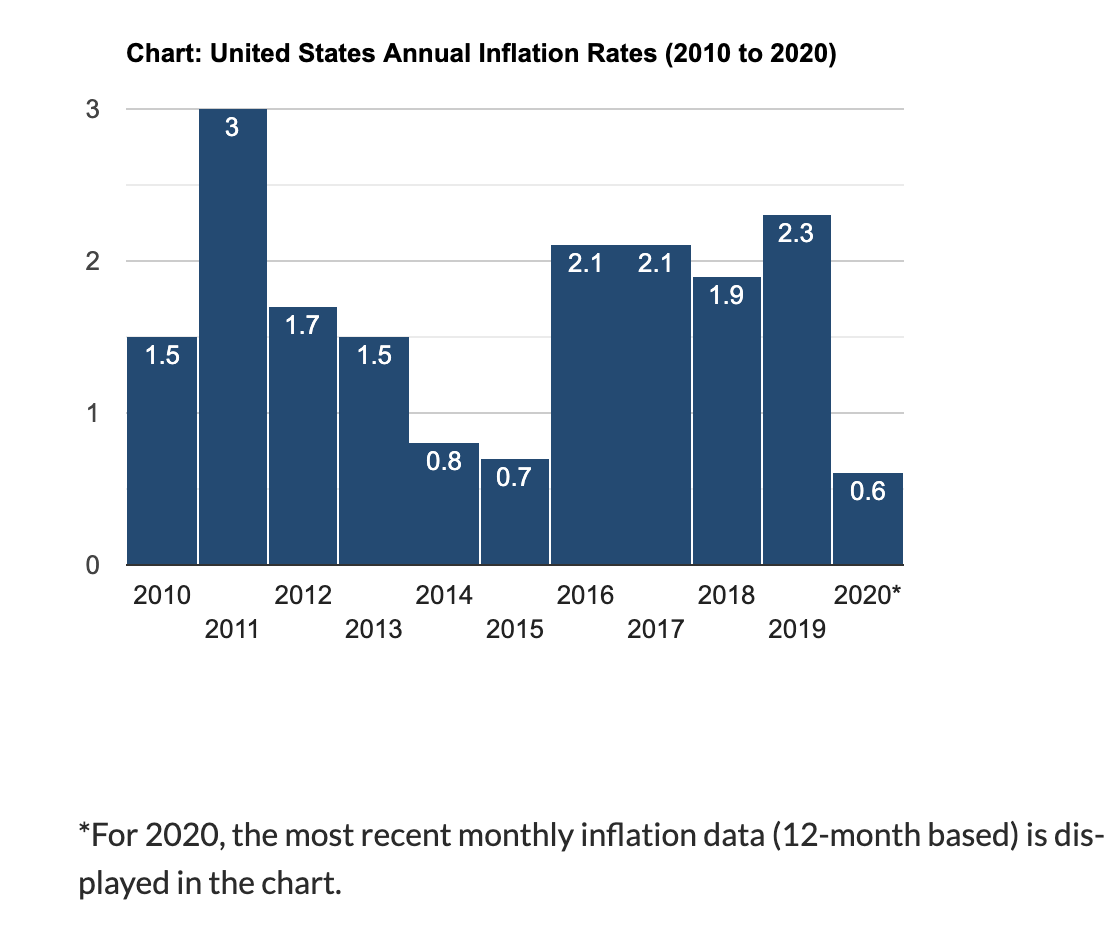
The Wizards of The Federal Reserve
This installment of The Pomp Letter is free for everyone. I send this email to our investors daily. If you would also like to receive it every morning, join the 50,000 other investors today.To investors,The movie Wizard of Oz can teach us a lot about life. In the film, there is ruler of the Land of Oz that is highly respected by all of his subjects. The various characters in the movie believe that this prophetic ruler, the Wizard of Oz, can solve all of their problems, so they travel a long distance to speak with him.As you would expect, this all turns out to be a sham. According to the Wikipedia description, “it is revealed that Oz is actually none of these things, but rather an ordinary conman from Omaha, Nebraska, who has been using elaborate magic tricks and props to make himself seem "great and powerful". Working as a magician for a circus, he wrote OZ (the initials of his first two forenames, Oscar being his first, and Zoroaster being the first of his seven middle names) on the side of his hot air balloon for promotional purposes. One day his balloon sailed into the Land of Oz and he found himself worshipped as a great sorcerer. As Oz had no leadership at the time, he became Supreme Ruler of the kingdom and did his best to sustain the myth.”History has taught us over and over again that the “great and powerful” organizations and people tend to be something different. Nowhere is this more obvious in real life than at the Federal Reserve. I thought of the Wizard of Oz this morning, while reading an article in CNBC titled “The Fed is expected to make a major commitment to ramping up inflation soon.”As you read through the piece, you realize that the Federal Reserve actually believes they are similar to the Wizard of Oz. The central bankers are finalizing a year-long policy review that is likely to end in a set of policy recommendations to keep interest rates artificially low for a number of years as they attempt to increase inflation and decrease joblessness. There is one major problem though — the Federal Reserve has been horrible at hitting their targets in the past.The Federal Reserve has held a 2% inflation target for many years, yet they have only come within +/- 10% of that target 3 of the last 10 years.This lack of accuracy and effectiveness around the inflation target is not necessarily because the Federal Reserve is clueless. In fact, there are an incredible number of highly intelligent people that work there. The challenge is that a large economy like the United States is a complex system that is nearly impossible to manipulate with nuanced control.Due to this complexity and lack of control, I am worried that the Federal Reserve is about to embark on a path that could end disastrously. The general premise is that the organization will keep rates artificially low for an extended period of time. This should increase inflation and lead to less joblessness. Jeff Cox eloquently outlined the scary part though when he wrote:“The Fed and other global central banks have been trying to gin up inflation for years under the reasoning that a low level of price appreciation is healthy for a growing economy. They also worry that low inflation is a problem that feeds on itself, keeping interest rates low and giving policymakers little wiggle room to ease policy during downturns.In the latest shot at getting inflation going, the Fed would commit to enhanced “forward guidance,” or a commitment not to raise rates until its benchmarks are hit and, in the case of inflation, perhaps exceeded.In recent days, Fed regional presidents Robert Kaplan of Dallas and Charles Evans of Chicago have expressed varying levels of support for enhanced guidance. Evans in particular said he would like to keep rates where they are until inflation gets up around 2.5%, which it has not been for most of the past decade.”That is right — the Federal Reserve is talking about keeping interest rates low (probably at 0%) until we see inflation over 2% and potentially even higher than 2.5%. This is absolute madness for a number of reasons:* The Federal Reserve believing that they have nuanced control of inflation and an economy makes little sense. They are batting .300 over the last decade, so they don’t exactly have the best track record with hitting their targets, nor being able to effectively manipulate various aspects of the system.* Higher levels of inflation means that the wealth inequality gap will continue to widen. The rich will get richer and the poor will get poorer. Quite literally, this policy decision is a direct attack on the bottom 50% of Americans and their wealth.* Every socioeconomic class experiences different levels of inflation. There are plenty of people who believe that coming out of the 2008 crisis the lowest socioeconomic classes saw inflation reach 6-10%, while the official numbers remained below 2%. If that is true (and I tend to believe that it is), than we could see the lowest socioeconomic classes experiencing 10-

Why The Financial Media Got The Bitcoin Halving Wrong & How Bloggers Are Infiltrating These Organizations
This installment of The Pomp Letter is free for everyone. I send this email to our investors daily. If you would also like to receive it every morning, join the 50,000 other investors today.To investors,It seems that everyone has an opinion when it comes to financial assets and markets. There are two very different groups of people who provide commentary though. One group has significant skin in the game and the other group does not. The issue historically is that the commentary provided by those without skin in the game has been more widely available than the commentary that originates from the actual market participants. This is all changing with the adoption of social media, email newsletters, blogs, and various other content platforms. In fact, I anticipate that we will see the individuals who have skin in the game acquire larger audiences than those without skin in the game within the next 12-24 months. While this should be a net positive for content consumers, it doesn't solve the problems that we are facing today. Currently, there are three types of content producers in the financial industry — journalists, bloggers, and market participants. The journalists investigate, ask questions, interview, report facts, and hold market participants accountable. The bloggers analyze and opine on the market sometimes even without speaking to market participants for their pieces. The market participants are the people who consider their full-time job to be that of an investor, yet create content as an auxiliary activity.One of the issues with finance information today is that a plethora of bloggers are now masquerading as financial journalists. Many people will associate negative connotations with the term "blogger," but that is not what my intention is. Instead, I am using "blogger" and "journalist" as categorizations for two different types of content production. A journalist has specific ethics, process, and requirements to meet before publishing an article. A blogger has different ethics, process, and requirements to meet before publishing an article. I'll leave others to debate the merits of which is better.In an overgeneralization, journalists have historically reported on the facts. What happened? When? Who was involved? What are those people saying? Why is this happening? Bloggers have pursued a different path. They are much more opinionated. Their focus leans toward their opinion on why this happened, and they often try to answer, “what will happen next?” Neither is right or wrong, but there is a clear difference between objective reporting and opinion-based blogging.This leads us to the infiltration of bloggers in legacy media organizations. The incumbents realized they were losing the battle for attention on the internet, so they sought out those people who were best at capturing and holding attention (ex: clickbait, opinion, etc). Additionally, the bloggers desired legitimization, and they gladly answered the call when the incumbent organizations came calling.When one of these individuals was hired at a well known publication in 2014, another media company wrote “he brings an altogether different voice: Over-the-top, all-caps headlines, hyperactive tweeting, and outspoken opinions about who is on the right and wrong side of contentious economic debates.” The piece goes on to describe an inherent problem with bringing together bloggers and journalists:“The Bloomberg Way also insists on ample documentation and sourcing for any assertions or heavy-handed characterizations. "A story is incomplete and untrustworthy when it includes unsupported assertions," Winkler writes. "The best reporters assemble the details, anecdotes, and comments and then let the readers decide who's right, wrong, guilty or innocent.”The writer then hammers home the point by saying “"If you tried to make [redacted person’s name] follow The Bloomberg Way to the letter, it would destroy what makes him effective as a writer.” The transition from strict, traditional journalism to internet-friendly, blogger-centric coverage is well documented. It is not about one person or one organization. This has played out at almost every publication, while also materially altering the type of content. This evolution of content on the internet opened the door for financial market participants. They have always understood markets and assets better than anyone, but they previously only had a voice when a journalist or media organization lent a platform to them. The internet now provides the tools for these market participants to communicate directly with the audience and cut out the middle man (ex: media organizations).This is obviously not exclusive to the finance industry, so why is this important?There is a big difference in the quality of information being shared by the three groups of content creators that we have identified. Journalists continue to adhere to the highest standards and focus on unbiased reporting. Bloggers and market participants ar
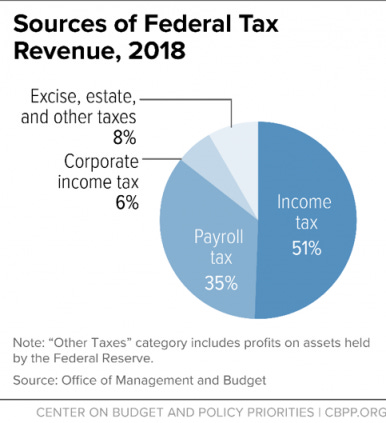
How The US Government Is Collecting Record Tax Revenue, Yet Continues To Lose More Money Each Year
This installment of The Pomp Letter is free for everyone. I send this email to our investors daily. If you would also like to receive it every morning, join the 50,000 other investors today.To investors,Every business and household knows that the secret to sustainable financial success is to spend less money than you make. This simple rule can prevent bankruptcy, while ensuring that there is more money in the bank account at the end of each month or quarter. Remember, access to cash is the oxygen of a business or household.The United States government obviously missed the memo though. The Treasury Department announced yesterday that the government spent $864 billion more than they took in as revenue in the month of June. This is more than a 10x increase in year-over-year growth of the June deficit after June 2019 only saw approximately a $8 billion deficit. So how exactly can the US government be spending so much more money than they are making?Frankly, the perfect storm has occurred. June 2020 saw the government spend about $1.1 trillion, which is nearly double what they have historically spent on a monthly basis. Couple this drastic increase in spending with near zero growth in historical monthly revenue (approximately $240 billion) and you get the single largest monthly deficit ever recorded in American history (previous largest monthly deficit was $234 billion). The $1.1 trillion in spending was a direct response to the COVID-19 induced economic shock that rocked the US economy. This enormous number was part of more than $2 trillion that has been spent since April 2020, which was authorized in the monetary stimulus package approved by Congress back in March. Since then, the government has been handing out money in every way they can imagine in an effort to mitigate the economic damage. There was billions of dollars sent directly to millions of Americans in the form of stimulus checks, a significant increase in weekly unemployment benefits, and various financial relief programs for businesses of all sizes. Another important factor to the large increase in the deficit is that the US government was previously not counting the forgivable PPP loans as part of their monthly spending. The logic behind this original decision is questionable, but the money used for PPP loans is finally being counted as government spending as of May 2020. So the increase in spending makes sense, by what is going on with the lack of increase in tax revenues?First off, the tax deadline was moved from April to July this year. That means that most Americans aren’t going to be sending in their final checks until after June, which drove a lack of “new” tax revenue for the month. Additionally, the government mandated shut down of most cities and local economies has led to less opportunities for traditional tax revenue as well. For those that don’t know, here is a breakdown of the various tax revenue sources for the federal government. Just over 50% of all federal taxes comes from income tax and another 35% is from payroll taxes. But did federal tax revenue really stay flat? It is hard to tell, but we do know one wild statistic —Federal tax revenue has increased each of the last six full fiscal years, including an all-time high record of $3.4 trillion in fiscal year 2019. Here is a breakdown of the previous six fiscal years according to Countable:* FY2014: $3.021 trillion in revenue and $3.506 trillion in spending yielded a $485 billion deficit (2.8% of U.S. gross domestic product or GDP).* FY2015: $3.250 trillion in revenue and $3.692 trillion in spending yielded a $442 billion deficit (2.4% of GDP).* FY2016: $3.268 trillion in revenue and $3.853 trillion in spending yielded a $585 billion deficit (3.2% of GDP).* FY2017: $3.316 trillion in revenue and $3.982 trillion in spending yielded a $665 billion deficit (3.5% of GDP).* FY2018: $3.329 trillion in revenue and $4.108 trillion in spending yielded a $779 billion deficit (3.8% of GDP).* FY2019: $3.4+ trillion in revenue leading to a $984 billion deficit.So wait a minute, if the federal government continues to collect more and more money each year, why are we generally running a larger deficit every year as well? Welp, it is because we continue to spend more and more money. The US government is breaking the number one rule in finance of spending less than you make. Government spending is a black box to most people, but once you start to dig into the details it can become fairly crazy almost immediately. For example, 40% of the $3.8 trillion spent in fiscal year 2018 was for Americans over the age of 65. As the US population continues to get older, we will spend 50% or more on people over the age of 65 by the end of the 2020s.Additionally, as the national debt continues to increase, so does the amount of money needed to service the debt. The current US national debt sits at over $26 trillion. Yes, you read that right. The US government has more than $26,000,000,000,000 in debt. Absolutely

The Weaponization Of Non-Violent Technologies
This installment of The Pomp Letter is free for everyone. I send this email to our investors daily. If you would also like to receive it every morning, join the 50,000 other investors today.To investors,India’s Ministry of Electronics and Information Technology decided to ban more than 50 Chinese mobile apps from being used by Indian citizens. The move came as a response to violent conflict between India and China at their shared border. The banned list included many apps that I had never heard of, but it also included TikTok, which reportedly had 200 million users in India.Timothy Bella of the Washington Post wrote that Indian officials believe TikTok and others “represented a threat to citizens’ privacy and national security. The agency noted it had received complaints that the apps were “stealing and surreptitiously transmitting users’ data” to servers outside the nation, an activity that, the ministry said, “ultimately impinges on the sovereignty and security of India.”” The threat posed by Chinese-owned technology has long been a concern in the United States as well. For example, the current presidential administration has labeled any technology products built by Huawei a security threat and they have banned any US firms from doing business with the communications firm. This is a really big deal because Huawei is the second largest smartphone manufacturer in the world, which means that it is even larger than Apple.So where exactly is the concern about TikTok, Huawei, and other Chinese technology companies coming from?According to Tim Bowler of the BBC, this all centers around China's 2017 National Intelligence Law, which stated that any Chinese company must "support, co-operate with and collaborate in national intelligence work.” The idea is that the Chinese government would avoid directly spying on non-Chinese users of these technologies, but rather they would compel the companies to do it themselves. In the case of Huawei, this could include anything from capturing private communications to denying service in a time of crisis. For TikTok, there have been rumors of everything from mass data collection to content being used to build a facial recognition database.The entire situation is interesting because the facts are hard to come by, the stakes are incredibly high, and the US-China economic war isn’t helping to ease tensions at all. One thing that is clear though is that companies like TikTok have access to an incredible level of information.If someone is collecting all this data and doing nothing with it, it begs the question of “why are you collecting it?” If someone is collecting all this data and using it for nefarious purposes, it begs the question of “why is this not already banned in the United States and elsewhere?”Either way, India does not appear to be alone in their unilateral action to ban numerous Chinese mobile apps. US Secretary of State Mike Pompeo said yesterday that the US government is “looking at” banning TikTok and other mobile apps built by Chinese companies. He went on to say that you should only download TikTok if “if you want your private information in the hands of the Chinese Communist Party.” This is a fairly strong position for him to take, especially given that no official decision has been made. Regardless of where the US government ends up on this issue, the writing is on the wall that we are moving towards a world of nationalized platforms. I don’t mean in the sense that national governments will own and control the platforms, but rather that entrepreneurs will be limited to putting their technology products in the hands of their country’s citizens and their allies. We have previously seen this happen for competitive reasons, but never for national security reasons. There were hundreds of copycat versions of Facebook in various countries around the world as the social network began to rise in popularity over a decade ago. There was the Russian Facebook, the Indian Facebook, etc. Each copycat was trying to get ahead of Facebook’s global expansion and build a network effect that would force Facebook to lose in that market or have to purchase the nation-specific version.This happened time and again with various companies. Uber, AirBnb, etc. History tells us that it very rarely worked and most times the original innovator was able to scale globally despite these copycats. I don’t think we will see the same results though if the obstacle is not copycats, but instead actual government bans on specific platforms.When India banned the 58 Chinese mobile apps, US investors Balaji Srinivasan and Naval Ravikant immediately put the word out that they were looking to fund development of India-specific versions of the same applications.The ramifications of this shift in development and new total addressable market will be felt for many years to come. First, companies will have much less growth potential in the future. TikTok boasts more than 1 billion users, but if it was a mobile a
The IPO Process Is Broken
This installment of The Pomp Letter is free for everyone. I send this email to our investors daily. If you would also like to receive it every morning, join the 50,000 other investors today.To investors,The lifecycle of technology companies has historically looked something like this: start the company, raise venture capital, launch a product, find product-market fit, raise more venture capital, scale the business, raise more venture capital, and eventually take the company public in the equity markets.This process has historically created immense value, including many of the world’s most valuable companies today. There are two trends that are accelerating that highlight the process can be significantly improved though. The first relates to the length of time companies stay in the private markets and the second has to do with how the traditional IPO pricing mechanism works.Private Market Returns DominateAccording to CNBC, “On average, the age of companies going public over the past quarter century has stayed roughly the same at eight years -- except when it comes to technology companies. The average tech company age in a public debut rose from three years in 2001 to 13 years in 2018.” One way to think about this is that the longer a company stays private, the less potential return available to public market investors. It doesn’t mean that no return is available, but it does mean an increasing amount of the returns are going to venture capitalist and accredited investors. Take Amazon as an extreme example. The company was founded July 5, 1994 and went public on May 15, 1997. Amazon’s time in the private markets aligns almost perfectly to the previous three year average. The stock was priced at $18 per share when they entered the public market and today it trades for $2,890 a share. There were also three stock splits before the year 2000, so a public market investor who held since IPO day would have returned over 200,000% in the last two decades.But what happened in the private markets before Amazon went public?Jeff Bezos raised just under $1 million of angel investment from 20 - 23 individuals at approximately a $5 million valuation to get the company started. A year or so later, Bezos raised $8 million in 1996 at a $60 million valuation from Kleiner Perkins. Amazon had a market cap of $438 million when it went public in 1997.Without dilution, the angel investors would have made about 87 times their money and Kleiner Perkins would be up a little more than 7x. These numbers aren’t exact, but it gives you a general idea of the private market return for investors. Compared to the 3,287x increase in the company’s market cap since it has been public, it is easy to see that majority of the value creation has been captured by public market investors.This trend has changed drastically over the years. A plethora of capital has flooded the private markets, so founders have the ability to stay private longer. The longer they stay private, the more value creation can be captured by private market investors. Use the following companies as examples:* SpaceX has been private for 18 years* Palantir has been private for 17 years* AirBnB has been private for 12 years* Slack was private for 11 years* Uber was private for 10 yearsThe increased access to capital and lack of scrutiny/reporting required in the private markets makes it attractive to stay private longer for many founders. These same companies lose many advantages as well though, including accurate price discovery, liquidity for employee equity, and tradable shares that can be used as a currency for acquisitions and future hires. My guess is that we are going to see a reversal of this trend in the coming years. Founders will start thinking that it is cool again to get into the public markets sooner rather than later. The average time in the private markets won’t drop back down to 3 years, but I could see it retreating to around 8 years.This brings us to the second trend that highlights an area for improvement.IPO Pricing Is BrokenThe traditional process for pricing an IPO has increasingly swung financially in favor of investment bankers and their clients. The overgeneralized version of the process is that companies declare that they plan to go public, they select an investment banking team to work with, the bankers set up a road show full of presentations from management, an IPO price is set, and the company eventually enters the public equity markets at the pre-determined price per share.The problem with this process is that companies are incentivized to sell shares to investment bankers, their clients, and public market investors at the highest price possible, yet non-company investors are incentivized to buy the shares at the lowest price possible. This difference of incentives theoretically should help to find market equilibrium. In practice, it doesn’t.Remember, the investment bankers have much more experience than founders in this process. It is literally the j

Public Pensions Are About To Make Major Mistakes, But They Don't Have To
This installment of The Pomp Letter is free for everyone. I send this email to our investors daily. If you would also like to receive it every morning, join the 50,000 other investors today.To investors,Investing is a game of risk and reward. If you take intelligent risks, you can profit handsomely. If you take the wrong risk, the market can humble you quickly. This framework is important to remember as we enter a world where interest rates are hovering around 0% and the Federal Reserve has made it clear they won’t be increasing them any time soon.This low interest rate environment creates a big problem for public pension funds. They are already heavily underfunded. According to The Pew Charitable Trusts data from fiscal year 2017 (the most recent data available), there is “a combined $1.28 trillion in state pension plan funding deficits. While massive, this was actually a decrease from Fiscal Year 2016’s $1.35 trillion gap.”So how exactly did we get to this point and why are public pension funds so underfunded?The issues are quite complex, so I am going to focus on only one of the major issues — investment returns. The National Association of Retirement Administrators (NASRA) describes the importance of investment returns best:As of December 31, 2019, state and local government retirement systems held assets of approximately $4.8 trillion. These assets are held in trust and invested to pre-fund the cost of pension benefits. The investment return on these assets matters, as investment earnings account for a majority of public pension financing. A shortfall in long-term expected investment earnings must be made up by higher contributions or reduced benefits. Each public pension fund has an actuary assumed rate of return. This is the percentage return that the plan is targeting on an annual basis in order to have enough capital in the future to fulfill the plan’s obligations.The assumed rate of return is calculated using a complex formula, and it is different for each pension fund, but the average assumed rate of return for public funds is 7.3%, according to a survey by the NASRA. This means that the Chief Investment Officer and their staff need to attain a 7.3% annual return to keep the average pension fund on track to have the adequate amount of capital in the future.The last few years have been incredibly kind to these public pension funds. The average investment return for 2018 was 13.4% for all plans reporting that year, which was much higher than the 7.8% average return that occurred in 2017. Most of these increases in returns have been driven by (1) higher interest rates and (2) the longest bull market in stocks in history.The world has changed now though. COVID-19 ushered in a lot of uncertainty, while also forcing the Federal Reserve and other organizations to take drastic measures in an attempt to deal with the ensuing economic shock. One of those drastic measures was to drop interest rates to 0% through two emergency rate cuts. This floods the market with cheap capital, but it also significantly decreases the return expectations of fixed income portfolios.Who is one of the largest holders of fixed income portfolios? Public pension plans! So now we have a low yield environment that will create a drag on performance for a group of investors that are already under immense pressure to beat their 7.3% targets. In order to highlight what is happening, I am going to use the California Public Employees' Retirement System (CALPERS) as an example.CALPERS is the largest public pension plan in the United States. They have almost $350 billion in assets under management, are responsible for the benefits for nearly 2 million beneficiaries, and employ almost 3,000 employees. This is not a simple operation by any stretch of the imagination and it is incredibly important that they come as close as possible to hitting their actuary rate of return every year. CALPERS currently has 28% of their portfolio allocated to fixed income. This includes 15% in long-spread fixed income, 10% in long Treasury bonds, and 3% in high yield fixed income. The low yield environment means that more than 1/4th of their portfolio is likely to come under significant pressure now. So what are they going to do?Rather than reallocate their funds to other asset classes or strategies, CALPERS is considering a move that would add incredible amounts of leverage to their fund and allow them to allocate this “new money” to illiquid assets. The Financial Times summarized it by saying:“Calpers is to move deeper into private equity and private debt by adopting a bold leverage strategy that the $395bn Californian public sector pension fund believes will help it achieve its ambitious 7 per cent rate of return. In a presentation to the Calpers board, Ben Meng, chief investment officer, said the giant fund would take on additional leverage via borrowings and financial instruments such as equity futures. Leverage could be as high as 20 per cent of the value

The Four Steps To The Fall Of A Nation
This installment of The Pomp Letter is free for everyone. I send this email to our investors daily. If you would also like to receive it every morning, join the 50,000 other investors today.To investors,There has been a lot of talk recently about the issues across the United States. We have seen incompetent leadership at the local, state, and federal level. This weakness was exposed first by the virus, then the economic shock, and finally by the handling of police brutality. But is the United States really spiraling into demise? Or are we simply seeing a repeat of history that is less concerning when you understand our past?To answer this question, we must first ask ourselves “what does the demise of a country actually look like?”There are many opinions on how nation states spiral into obscurity or ruin, but one of the best explanations I have heard comes from Yuri Bezmenov, a former Russian KGB official who defected to the United States. In this television interview from 1985, Bezmenov explains that there are four main steps to ideological subversion (h/t Marty Bent & his newsletter for finding this)This subversion is defined as “actions designed to undermine the military, economic, psychological, or political strength or morale of a governing authority” or “the undermining or detachment of the loyalties of significant political and social groups within the victimized state, and their transference, under ideal conditions, to the symbols and institutions of the aggressor.” The four main steps to ideological subversion are:* Demoralization - This process can take 15 - 20 years (approximately a generation) and involves the intellectual reprogramming of young people to become sympathetic to ideas that gravitate closer to socialism and communism. The idea is to cement ethos, ideals, and frameworks into the minds of people who will one day become the leaders of a nation’s government, corporations, and military. As this new generation begins to take leadership roles, the older generation begins to cede control to a subset of the population that has different ideas. * Destabilization - This stage of the process is intended to change a country's economy, foreign relations, and defense systems. The driving force is a larger and larger government, which continues to promise a variety of social welfare benefits. It ultimately doesn’t matter if they successfully deliver on their promises, because the mere promise of a stronger social safety net becomes too much for the demoralized generation to resist. * Crisis - This stage is the shortest in terms of timeline, meaning it could be merely weeks long. There is a catastrophic event that takes place and leads to social unrest dividing the nation. The division of the population presents an opportunity for a significant shift in power and control at the government level. Past examples would include the overthrowing of the government in Egypt and Libya in the last decade.* Normalization - This is the final stage of the cycle. It is the process of citizens accepting communism/socialism as the selected way of life. They no longer fight the new model, but rather believe that it is the standard of governance for everyone around the world. There are people much smarter than me who will spend their time debating which stage of demise the United States is currently in. That holds little to none of my interest. Instead, I am intrigued by two questions — (1) has there been an ideological shift in American’s mindset over the last few decades and (2) what can we do to prevent the downfall of our country?The first question is actually the easier of the two. We can look to the last 4 - 5 months as an example of how our mindset has shifted. The United States, along with the rest of the world, was hit with the coronavirus. Our reaction was to attempt to prevent every single death in the population. This reaction was driven from the top down and saw citizens succumbing to a government that violated the constitution on multiple occasions (example of state supreme court rulings here and here).On the economic front, most of the capitalist on Wall Street turned out to be socialists. They immediately ran to the government and began demanding bailouts within days of the government mandated shut down being put in place. These people included investors, corporate executives, television talking heads, and politicians. It seemed like everyone saw the government as a free money tree and they wanted a piece. There was no outcry when the government interfered in the markets, nor was there an uproar when circuit breakers were tripping multiple times a day. The era of a capitalist, free market in America are long gone. Lastly, the recent violation of civil liberties has occurred with relatively little pushback. We have seen everything from curfews implemented to quell the freedom of assembly to armed men & women of the government beating unarmed citizens in the streets. There has been a complete breakdown

America In Turmoil: How Racial, Economic, And Power Privilege Led Us To Social Unrest
This installment of The Pomp Letter is free for everyone. I send this email to our investors daily. If you would also like to receive it every morning, join the 50,000 other investors today.To investors,Everyone is well aware of the current social unrest in the United States. We spent the weekend watching video after video of protestors taking to various cities to voice their concerns. Some of those protests remained peaceful, while others became violent. The display of defiance may have been different in each city, but the root cause of this unrest is the same. The driving forces are not simply explained. The rest of this letter will be aimed at explaining as much of the complexity as possible. It will then end with a few potential options to pursue moving forward to create systematic change.Before we get into the problem though, many of you are going to ask, “What do you know about these issues?” I think it would be helpful to address this question directly upfront. First off, I don’t have all the answers. I can’t pretend to know or imagine what it is like to be black in America. These issues are complex and no one person fully understands them. But to give you context, I do however have a unique combination of experiences and education that likely creates a different perspective than what many of you are reading in the legacy media outlets.I studied Economics and Sociology at Bucknell University, a predominantly white university in the Patriot League. While in school, I played football on their Division 1-AA team. Additionally, I served in the US Army and National Guard for 6+ years, including a deployment to Iraq in 2008 - 2009. I finished my military career as a Sergeant in the Infantry.So why does this experience and education matter?A good portion of my life has been spent balancing the academic theories of economics and sociology with the real-life experiences of racism and war. The education experience was fairly traditional. It consisted of everything from Economics 101 to macro and micro economic courses. The sociology course load was heavy on criminal justice, psychology, and legal studies. The real-life experience is the part that would be hard for most to replicate. Let’s start with the football team. Most of my teammates were minorities from urban areas around the country. Many of them became my closest friends and still are today. These teammates were drastically outnumbered on the predominately white campus, and I was personally there for many racist encounters. Some of these situations were diffused when a teammate would collect themselves and walk away, but some of them would end in fist-fights between football players and racist students. It was always shocking to me to see the blatant racism. The “n” word would be thrown around liberally. Entry to a party would be denied. Or my black teammates would be specifically targeted by police and campus security. Many of these incidents would happen with white teammates standing nearby, and there was a clear difference in the way that each of us was treated in the situation. It would be an understatement to say that I not only had my eyes opened to racism in our country, but also to the arrogance that racists had when acting on their ideas.Next, there are very few people who have stood in a foreign combat zone with a rifle in their hand. The power and responsibility that comes with that is hard for most to understand. I’ve seen the fear in citizens’ eyes when a gun is pointed at them. I’ve seen the anger in a family when they lost a loved one to violence. And I’ve spent time with men and women who have done some incredibly heroic things during heavy combat. These experiences, overlaid with the academic education, have led to the formation of a worldview that recognizes incredible nuance in the situation that the United States is facing today. This chaos is not one-dimensional. It is multi-faceted. But ultimately, it is backlash over privilege.There are three types of privilege at play right now — racial privilege, economic privilege, and power privilege. I will explain each in detail below. They are different, yet interrelated. Racial PrivilegeThere are very few people who would argue that racism does not exist in American society today. Racial privilege is more nuanced than that though. It refers to the way that minorities, especially African-Americans, are treated differently by law enforcement and the government. There are mountains of academic research that back up these claims, but one of the best reads is a book by Jeffrey Reiman titled “The Rich Get Richer and The Poor Get Prison: Ideology, Class, and Criminal Justice.” The best selling book is summarized as follows: “The criminal justice system is biased against the poor from start to finish. The authors argue that even before the process of arrest, trial, and sentencing, the system is biased against the poor in what it chooses to treat as crime….the dangerous acts of the well-off are al

College Students, Gap Year, and Bitcoin
This installment of The Pomp Letter is free for everyone. I send this email to our investors daily. If you would also like to receive it every morning, join the 50,000 other investors today.The following is a guest post by Ryan Selkis, the founder and CEO of Messari. They build research tools for crypto enterprises and professionals.One of the most fascinating second-order effects of the coronavirus is its impact on higher education. It’s no longer a given that colleges will be able to physically welcome their students back to campus this fall. Even assuming they can, the college experience will likely feel much different than it did in 2019, and universities may not fully return to normal until a vaccine becomes widely available and distributed.For the first time, many college students may soon grapple with an unfamiliar choice: stay enrolled in an entirely virtual semester of school (or a deprecated live experience) and rack up tens of thousands of dollars worth of tuition bills; or opt out of the inferior product, and try to take advantage of a “gap year” to pursue other options.What would a student do in a gap year during a time like today?World travel, a common gap year experience, is off the table. Landing an internship or a full-time job? Good luck amidst record unemployment, even including major employers across Big Tech. Finally, "self-study" sounds good in theory, but would probably prove ineffective for all but the most disciplined students, and lead to a lost and listless year for the remainder. I’d offer an alternative: encourage young people to take a "gap year" and dive into crypto and start building. And this comes from experience!In early 2013, I started my first company, a charitable gift payments processor. Since it was my first startup, and there was a ton of execution risk, I gave myself six months to get the idea off the ground, and applied to business schools and a summer accelerator program. Lo and behold, I got accepted into both grad school and the summer accelerator.Great!I chose the accelerator, and deferred my grad school offer for a year. But it didn’t take long after that to realize that the startup would flame out, and it would be wise to wind things down and move on to other projects. I found myself with an unexpected "gap year” right after I happened to make my first bitcoin purchase and right before bitcoin’s first mega-rally to $1,000.The things that made crypto an interesting gap year dive for me then are the same things that make crypto even more exciting today given the unique macro economic backdrop. Here’s what a crypto gap year might mean for young people today:* The world’s economic response to the coronavirus makes this an excellent time to learn about money and how the financial markets and economy actually work. Once you get invested in bitcoin and other crypto currencies and start experimenting with their applications, it sucks you further down the proverbial rabbit hole of central banking, monetary policy and credit cycles. When the entire finance intelligentsia is talking about things like MMT and ZIRP; and hedge fund titans like Paul Tudor Jones, Howard Marks, and Ray Dalio are weighing in on the long-term debt cycle, inflation, and hard money alternatives. You could do worse than to scrap your college textbook to keep tabs on current policy prescriptions given our move into increasingly uncharted territory. * There are actual jobs in crypto today, and the industry standard for work is remote and meritocratic. In 2013, there weren’t many jobs to be had, but there was a strong global community that lived on reddit, twitter, and other online forums that you could learn from and collaborate with remotely. Today, there may be hundreds of startups employing thousands of people worldwide, and many may operate out of the typical hubs of SF and NYC, but the industry’s top employers (Binance, Coinbase, and Kraken) are still remote-first organizations, as are some of the largest grant making foundations associated with the biggest crypto asset foundations). Many of these companies would hire well-credentialed college drop-outs, and those opportunities could even lead to full time jobs. * Open protocols and open standards mean that absolutely anyone can begin contributing to bitcoin and other nascent crypto projects without seeking permission. We’re hosting nearly 75 community leaders from these various projects at our flagship virtual event, Mainnet, next week, who will be tasked with presenting 20 minute updates and answering questions about their protocols from investors and builders. For anyone interested in assets beyond bitcoin, this may be the most comprehensive set of major projects presenting on any agenda you'll see. The risk-reward pendulum for college students has swung, and crypto offers a compelling gap year deep dive alternative for anyone who would rather not spend $20-30k this fall on a glorified YouTube channel. There is very little to lose and an eno