
Show overview
The Pomp Letter has been publishing since 2019, and across the 7 years since has built a catalogue of 521 episodes. That works out to roughly 40 hours of audio in total. Releases follow a weekly cadence.
Episodes typically run under ten minutes — most land between 3 min and 6 min — though episode length varies meaningfully from one episode to the next. None of the episodes are flagged explicit by the publisher. It is catalogued as a EN-language Business show.
The show is actively publishing — the most recent episode landed 3 months ago, with 8 episodes already out so far this year. The busiest year was 2025, with 147 episodes published. Published by Anthony Pompliano.
From the publisher
Audio edition of Pomp's daily newsletter where he shares his analysis on the latest in business, finance, the economy, and bitcoin. pomp.substack.com
Latest Episodes
View all 521 episodesThe Inflation Data Is Telling A Different Story Than What People Are Feeling
These AI Agents Want To Help You Make Money

My 10 Takeaways From Bitcoin Investor Week
Today’s letter is brought to you by MoonPay!Join over 30 million users who trust MoonPay as their universal crypto account.We make it easy to buy and sell crypto in over 180 countries, with no-to-low fees and all your favourite payment methods like Venmo, PayPal, Apple Pay, card and more.MoonPay is the only account you need in the DeFi ecosystem. Trade, stake and build your portfolio all in one place.Start now and get zero MoonPay fees on your first transaction.To investors,I hosted Bitcoin Investor Week in New York City last week. Thousands of investors attended to hear from more than 45 speakers or meet new people at the various side events and happy hours. Conversations ranged from understanding the recent drawdown in bitcoin’s price to underwriting the odds of deflation to unpacking the convergence of artificial intelligence and bitcoin.Here are the major takeaways that I had from the week:* Bitcoin investors have been here before — many investors have previously held bitcoin through numerous drawdowns of 50% or more, so there was a lack of panic that was noticeable throughout the event. Multiple members of the media explicitly called this out to me as well. This lack of panic gives me the idea that odds are higher that the current bear market will be shallower and shorter than historical comparisons. * Institutions have arrived — past bitcoin conferences were filled with promises of institutions on the way. The conversation this year was centered around the progress that institutions have made in bitcoin, including the highly successful launch of the Bitcoin ETFs, the various public companies that hold bitcoin on their balance sheet, the accelerated adoption of digital credit, the fast growth of stablecoins, the current initiatives in tokenization, and the requirement that each legacy financial organization have a bitcoin or crypto strategy.* Bitcoin and artificial intelligence are on a collision course — it was nearly impossible to have a conversation with a professional investor or an entrepreneur without both technologies coming up. It is obvious that bitcoin and AI are the future of finance. There was plenty of speculation on how AI agents will transact or store value, so naturally bitcoin and stablecoins were the popular answers. * Deflation is a big risk — my personal view is that deflationary pressure from tariffs, deportations, artificial intelligence and robotics are swallowing the US economy. I asked many speakers or attendees whether they agreed and the majority of answers were aligned with my view. There are some outstanding concerns about the economic data or the government’s continued money printing, but overall people seemed satisfied that high inflation was not going to be a problem in the short-term.* Financial advisors are holding or adding bitcoin to portfolios — Bitwise CIO Matt Hougan explained that a recent survey showed that 99% of financial advisors who already had client assets in bitcoin were either “holding” or “adding” based on the recent price drawdown. That data suggests the RIA channel is convinced of the long-term return potential of the asset, which creates sticky capital from their clients.* Institutions holding Bitcoin ETFs are not selling — Blackrock’s Robert Mitchnick explained that majority of the institutions holding Bitcoin ETFs have been holding their exposure during the bitcoin drawdown. He sees continued demand from Blackrock clients and believes there is considerable more room for growth in the ETF allocations.* Stablecoins are not going away — multiple speakers explained that stablecoin growth has been impressive, but the more important data point is how ingrained stablecoins are becoming in legacy institutions’ strategies. It feels like stablecoins are the third crypto product to find true product-market fit after bitcoin and crypto exchanges. * No one wants to call “bottom” yet — the price of bitcoin may be down 50%, yet there were not many takers when I asked various folks to claim the market had bottomed. People are cautious because it seems the past scars of previous bear markets has forced them to prepare for an even more significant drop in price. * All eyes are on the Strategic Bitcoin Reserve — the consensus feeling about the SBR is happiness that it was put together, but disappointment that the government has not purchased more bitcoin. If the market needs a new catalyst to rally higher, purchases for the SBR could be a simple way to ignite the end of the bear market.* Nothing stops this train — there was not a single person I spoke with at the conference who believes the US government can balance the budget, stop printing money, or lower the national debt. The widespread belief is that assets that benefit from debasement (bitcoin/gold/real estate/etc) will do very well over the next decade, especially as the current administration runs the economy hot and drives economic growth.I really enjoyed putting together Bitcoin Investor Week. We will be po

Introducing The World's First Publicly Traded Agentic Finance Firm
The world's first publicly traded agentic finance firm, including 5,000+ bitcoin on the balance sheet. This is a public episode. If you'd like to discuss this with other subscribers or get access to bonus episodes, visit pomp.substack.com/subscribe
The Three-Headed Deflation Monster: Tariffs, AI, and Robotics
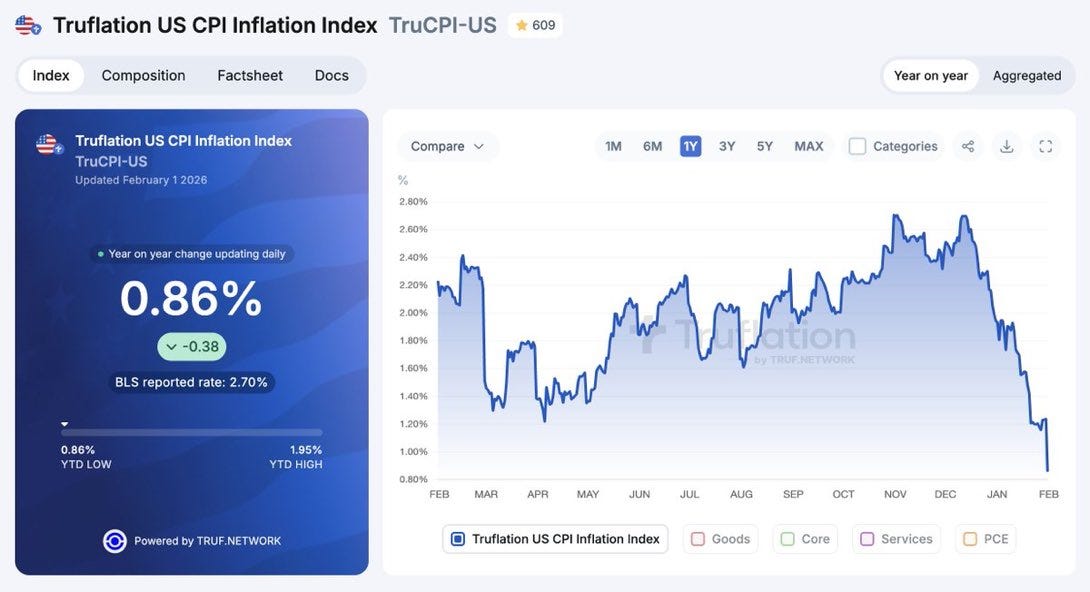
Today’s Letter is brought to you by Arch Public!Unlock unparalleled returns with Arch Public’s algorithmic trading tools. Our Bitcoin Algorithm Arbitrage Strategy has delivered an astounding 247% annual return over the past three years. The entries, and exits speak for themselves; precision that drives success. Trusted by more than 15,000 customers and industry leaders, we’ve partnered with Gemini, Kraken, Coinbase and Robinhood to bring you cutting-edge solutions. Whether you’re a seasoned investor or just starting, our proven strategies maximize your potential. Join the ranks of those who trust Arch Public to navigate the markets with confidence. Talk to us today and discover why our expertise sets us apart.To investors,There is a national crisis unfolding in the US economy, but it isn’t the type of crisis you got used to over the last few years. Rather than the persistent risk of high inflation driven by out of control government spending, the economy is being swallowed by an expansive deflationary force.This new risk is dangerous because it requires humans to update their mental models to be able to identify, understand, and mitigate it. And we know humans are horrible about changing their mind, especially when it requires them to synthesize new information.First, let’s discuss where the challenges lie in identifying this deflation risk. There is a past experience issue and a modern data error that is driving the problem. The past experience issue is that an entire generation finally capitulated in recent years after realizing that undisciplined government spending led to higher levels of inflation. These folks failed to see the cause and effect coming out of the global financial crisis and they only took the lesson to heart after the pandemic era insanity that drove inflation over 9% in the government’s data.The folks in this cohort are now trained to look at government spending and conclude that inflation will rise if the national debt is increasing. That was true in the past, but it is not true right now, which is why I call it a “past experience issue.” People are looking at the inputs, but not thinking critically about what that means for modern outputs.The second big issue is a modern data error. Most of the “experts” and mainstream reporters are still relying on the Bureau of Labor Statistics to tell them what the inflation reading is. It doesn’t matter that the BLS is estimating more than 40% of the CPI inputs, nor does it matter that the BLS continues to manipulate the data collection by leveraging unproven and discredited methods.These people simply believe whatever the government says.The Bureau of Labor Statistics is reporting inflation to be 2.7% year-over-year. But compare that number to Truflation, which is reporting inflation under 0.9% as of yesterday.This is a very wide gap in the metrics. In fact, the most concerning part is that the BLS is saying inflation is almost 50% higher than the Fed’s stated target, yet Truflation is saying inflation is more than 50% lower than the Fed’s stated target.The sky can’t be blue and green at the same time, nor can inflation be high and low simultaneously either.It is no secret that I trust the Truflation data much more than the BLS. Truflation uses more than 14 million daily data points provided by over 40 independent data providers. I’ll take the real-time, verifiable metric over the lagging, estimated metric any day of the week.But this brings us back to the most important question in the economy today…why is inflation falling if the government is continuing to print money like drunken sailors?This is where the deflationary force swallowing the US economy comes in.There are three main contributors in my mind:* Tariffs are deflationary, not inflationary. I know this is still heavily debated, but I continue to explain that tariffs bring down domestic prices over time and they change consumer demand trends. There are anecdotal businesses that will show their input costs are rising, which is then being passed on to the consumer, but those anecdotes are heavily outweighed by the aggregate impact of tariffs on the US economy.* Artificial intelligence is the largest deflationary force of our lifetime. Companies are literally bragging on a daily basis how they are being more productive with less employees. The industry is moving so fast that it is hard for most people to keep up and the economic incentive to adopt this technology is only going to get larger. Lastly, A.I. is now in the “exponential production” phase where A.I. is writing code, so we are no longer limited by human time and energy.* Robotics is a subset of the A.I. story, but it deserves its own call out. It is very obvious that self-driving cars are going to be cheaper and safer, so they will become the standard. Companies like Amazon are the perfect example…the e-commerce giant employs 1 million robots and 1.5 million humans. They are reportedly looking to replace 500,000 jobs with robots
The Fed Has Lost Control: Supply-Side Economics Are The Captain Now
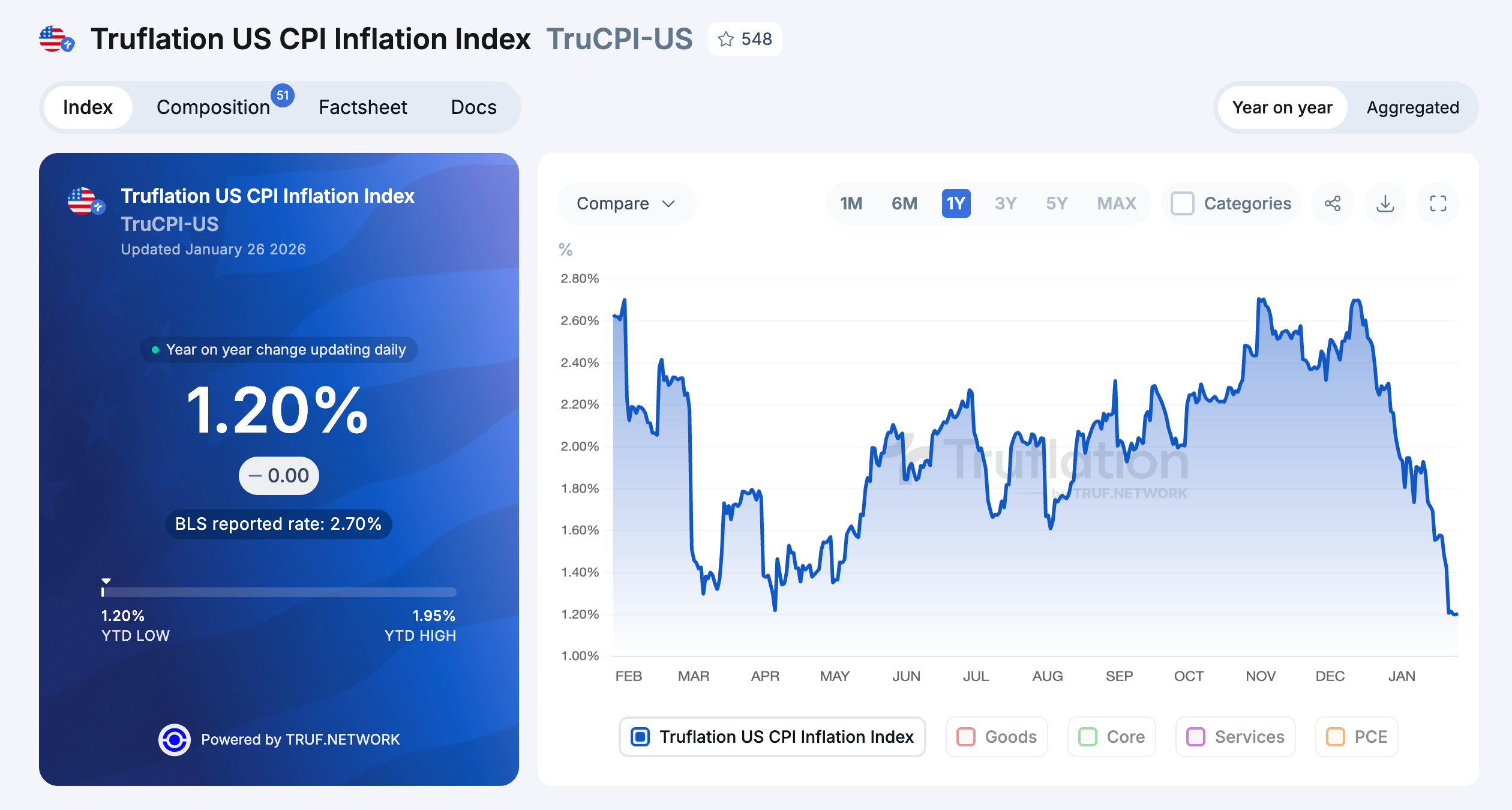
Today’s Episode is brought to you by Figure!Figure’s building the future of capital markets through blockchain with $20B unlocked in equity.Use Democratized Prime for your chance to win big with $25k USDC and Earn ~9% APY. The more you participate, the better your odds!Figure is the only account you need in the DeFi ecosystem. For every dollar you commit, you get another chance to win $25K USDC.Start now and enter to win while earning money on your crypto with Democratized Prime1.To investors,If you listened to the Fed for the last few decades, you made a lot of money. When the Fed was easing, you could have just plowed your money into the market. When the Fed started tightening, all you had to do was sell everything and hide in cash for a few years.Investors have been yelling “don’t fight the Fed” for a long time.But I don’t think that old adage applies the same way anymore. At least it doesn’t apply right now. Let me explain…The US economy, and corresponding financial markets, have been hyper sensitive to the Fed’s monetary policy decisions for the last ~ 30 years. The central bank was cutting rates in the mid-to-late 1990s, which helped propel the internet boom higher. Finally, when the Fed started to raise rates in the second half of 1999, the tech bubble popped shortly afterwards and everything came back down to reality.During the Global Financial Crisis, the Fed invented the insane Quantitative Easing policy that led to a prolonged period of 0% interest rates and hundreds of billions of dollars bring printed. This QE playbook kicked off a decade-long bull market that made every stock market bear look like a fool.Finally, during the 2020 pandemic, the Federal Reserve pulled out the old QE playbook again. Interest rates went to 0% via two emergency cuts and the government decided to print trillions of dollars, which created more than 9% inflation within a 24-month period.The main thing that stopped the 2021 party was the Fed’s decision to reverse course and start hiking interest rates at the fastest pace in history. We went from 0% to over 5% rates in a very short period of time. The regime shift was so abrupt that multiple banks failed because of their inability to navigate the volatility.This brings us back to the “don’t fight the Fed” adage. It made sense because the Federal Reserve would set policy and the world would react to those decisions. Quite literally, the Fed was in control.That doesn’t seem to be the case right now though.The current President and his administration have effectively taken control of the US economy and financial markets. They have implemented a set of policies to reimagine the country, including deregulation, tax cuts, smaller government, and re-shoring of American jobs and manufacturing.In taking this approach, the government is rapidly changing the economic conditions of the market and it is putting the Fed on their back foot. The central bankers already had a hard enough time trying to make monetary policy decisions based on faulty data from the Bureau of Labor Statistics. Now these folks are being asked to understand substantial changes across the economy, including policy differences and advancements in cutting-edge technology like artificial intelligence.This is why I don’t believe the Fed is in control anymore. In fact, I think the exact opposite is true. The market is forcing the hand of the Fed. America’s central bank begrudgingly cut interest rates at the end of 2025 because the labor market was softening at a much faster pace than forecasted. The softness in the labor market was not due to normal business cycle developments, but rather a combination of policy decisions and technology innovation.Jerome Powell essentially said he and his colleagues were more worried about the labor market than about inflation coming back. But the Fed’s fight against the market is not over yet. My base case is that inflation is going to continue falling in the coming months.Truflation is reporting inflation at 1.2% as of last night. If you take the BLS’ methodology, and you replace the ~ 40% of inputs that are estimations with accurate measurements of the input goods, then Truflation shows inflation would be less than 1% year-over-year.The big takeaway from this situation, according to Truflation, is that inflation has collapsed from its recent peak, dropping 151 basis points in just three months.Truflation’s real-time data, which is sourced from over 14 million daily price points across 40+ independent providers, captures this deceleration far faster than traditional metrics, revealing a pricing environment that’s shifted decisively toward disinflation. For investors, this signals a fundamental reset in cost pressures that official data will only confirm weeks later.So what is my big takeaway from this situation?The Federal Reserve has lost control of the economy. They are serving at the pleasure of market forces now. The labor market is weakening, inflation is falling aggressively

Fed Chairman Under Fire: Taxpayer-Funded Luxury, DOJ Subpoenas, and Jerome Powell’s Defense
Today’s letter is brought to you by MoonPay!Join over 30 million users who trust MoonPay as their universal crypto account.We make it easy to buy and sell crypto in over 180 countries, with no-to-low fees and all your favourite payment methods like Venmo, PayPal, Apple Pay, card and more.MoonPay is the only account you need in the DeFi ecosystem. Trade, stake and build your portfolio all in one place.Start now and get zero MoonPay fees* on your first transaction.To investors,News broke last night that the Department of Justice has opened an investigation into Federal Reserve Chairman Jerome Powell over comments he made while testifying about renovations to the Federal Reserve building.This development comes after months of disagreement about monetary policy between the Trump administration and the Federal Reserve. Before we get into what is likely to happen with this investigation and how it will impact the market, I want to remind everyone of the context.Background on Powell’s previous commentsThe investigation centers on whether Powell made false or misleading statements to Congress during his testimony before the Senate Banking Committee in June 2025. This testimony addressed the Federal Reserve’s ongoing multi-year renovation project for its headquarters buildings in Washington, D.C., which is estimated to cost around $2.5 billion and has experienced significant cost overruns (reportedly around $600-700 million).Key points of contention include:* Powell allegedly denied or downplayed the inclusion of certain luxury or non-essential features in the final project plans, such as private elevators, premium marble, water features/fountains, a VIP dining room, a rooftop terrace garden, and other upgrades.* These features appeared in earlier project documents submitted to bodies like the National Capital Planning Commission, but Powell stated during testimony that many had been removed or were not part of the current scope, attributing cost increases to factors like inflation in materials/labor, asbestos removal, soil contamination, and accessibility requirements.* Critics (including some Republican lawmakers and Trump administration figures) claim these statements were inaccurate or deceptive, potentially constituting perjury or false statements to Congress.The probe announced last night involves analyzing Powell’s public statements (including the congressional testimony), reviewing spending records, and other documents related to the renovation.An important point is that the renovation was reportedly approved in November 2025 by U.S. Attorney Jeanine Pirro (a Trump appointee). Prosecutors have contacted Powell’s staff for documents, and on Friday, January 9, 2026, the DOJ served the Federal Reserve with grand jury subpoenas threatening a potential criminal indictment tied to the June testimony.Powell’s responseAfter the New York Times broke the story of the investigation, Jerome Powell released a video message defending his actions and calling into question the motivation behind the investigation. Powell said:“This new threat is not about my testimony last June or about the renovation of the Federal Reserve buildings… Those are pretexts. The threat of criminal charges is a consequence of the Federal Reserve setting interest rates based on our best assessment of what will serve the public, rather than following the preferences of the President.”There are a few takeaways I had from this response. First, Powell posted a video response to the allegations within minutes of the New York Times report being published. That seems highly suspicious. It takes time to create a script, record a video, edit the video, and get it posted online. The Federal Reserve is not exactly known as a world class content creator, so my guess is that the Fed or Powell are the ones who leaked the investigation to the media.There is nothing wrong with that decision per se, but it does beg the question of why would the Fed or Powell want to create a flame war in the public eye? I don’t know the answer. I suspect we will get answers later that provide clarity in hindsight.Second, the response seemed much more focused on the argument “this is political!” than denying the allegations. I have learned over time that the more someone yells about something, the more likely they are hiding something about it. As one user on X said, the response can usually tell you more than the initial accusation.This means that Powell is probably more political than most people realize. I wouldn’t blame him. The President and the administration have been pressuring him for months. It is human nature to dislike someone attacking you or to want to get revenge. It wouldn’t make the decision to succumb to politics the right decision, but it is understandable how humans get into these situations. The Federal Reserve renovationsIn order to understand what is happening with the Federal Reserve renovations, you have to ignore the noise and go to the source material. I
The 4 Reasons Why Bitcoin Did Not Perform Well In 2025
Today’s Letter is brought to you by Arch Public!Unlock unparalleled returns with Arch Public’s algorithmic trading tools. Our Bitcoin Algorithm Arbitrage Strategy has delivered an astounding 247% annual return over the past three years. The entries, and exits speak for themselves; precision that drives success. Trusted by more than 15,000 customers and industry leaders, we’ve partnered with Gemini, Kraken, Coinbase and Robinhood to bring you cutting-edge solutions. Whether you’re a seasoned investor or just starting, our proven strategies maximize your potential. Join the ranks of those who trust Arch Public to navigate the markets with confidence. Talk to us today and discover why our expertise sets us apart.To Investors,I have spent the last few days thinking about why bitcoin underperformed expectations in 2025. My conclusion is that multiple trends, forces, and developments came together to create the perfect storm for the digital currency to end the year lower than where it started.Lower risk = lower returnFirst, bitcoin is much less risky today than at any other point in the history of the asset. No one believes the US government is going to shut bitcoin down. The government isn’t going to come and arrest bitcoin holders. There is true decentralization, including from individual retail investors to the largest financial institutions in the world.This decentralization removes the risk of a 51% attack, along with other nefarious actions that could fundamentally change the bitcoin value proposition. Bitcoin has also gone through numerous economic situations without failing or going to $0. The digital asset has dropped ~80% numerous times, weathered the COVID liquidity crisis, resisted the FTX collapse, and then survived the Federal Reserve hiking interest rates at the fastest pace in history.This proven resilience means that the risk of holding bitcoin is low. Add in the fact that many of the top financial institutions in the world are embracing the asset and it becomes very difficult to see a scenario where bitcoin “fails.” Because of this newfound conviction in bitcoin’s continued success, we should all expect a lower return moving forward.Buying bitcoin a decade ago was high risk, high reward. Buying bitcoin today is low risk, medium reward. I expect bitcoin to continue outperforming the stock market indexes over the next decade, but it won’t deliver the 80%+ compound annual growth rate that we enjoyed in the past.Global stability is returningBitcoin is supposed to be a hedge against chaos and economic uncertainty. When wars break out, and citizens around the world feel it will be necessary to resist censorship and seizures, bitcoin becomes an attractive asset.However, since President Trump took office there has been more global stability than before. The Israel/Hamas conflict is over. Russia and Ukraine are closer to signing a peace deal than ever before. Iran’s nuclear capabilities have been drastically reduced. The southern border is closed. And former Venezuelan President Nicolas Maduro was removed from his country over the weekend.This “peace through strength” approach is really about the United States returning to its position atop the global world order. There are consequences for people who get out of line. Bad people understand that the US will hunt them down to capture or kill them.All of this creates less chaos and more predictable geopolitical relationships. If there is less chaos, then the chaos hedge (bitcoin) is not sought after like it would otherwise be.Wall Street plays different gamesBitcoin was a long-only game for most of the last 15 years. Anyone with an internet connection could acquire the asset and hold it while they hoped the price went higher. Once Wall Street and the large financial institutions got involved, the game changed substantially.You can think of these changes as a way of “civilizing” bitcoin. Many of the early bitcoiners, who are more akin to cowboys, don’t want to be civilized though. They were attracted to the asymmetric returns and they loved the fact that bitcoin had a libertarian flavor to it. The more “outside the system” bitcoin was, the more these cowboys wanted to buy.Now that bitcoin is being pulled into the legacy financial system (ETFs, treasury companies, funds, options, etc), early holders of bitcoin are exiting at a higher pace than normal. Some of them are selling their bitcoin outright. Others are using complex financial structures to reduce tax burdens, including renouncing US citizenship.But ProCap Financial CIO Jeff Park points out that some OGs are intelligently using options to sell away the upside of their bitcoin exposure in exchange for yield. These covered call strategies are applying significant pressure on bitcoin’s price, which is contributing to the asset’s lack of upside movement.Bitcoin is not the only girl at the partyLastly, bitcoin has historically been the most popular asset available to investors seeking extreme asymmetry and
The Market Isn’t as Nervous as the Headlines Want You to Believe
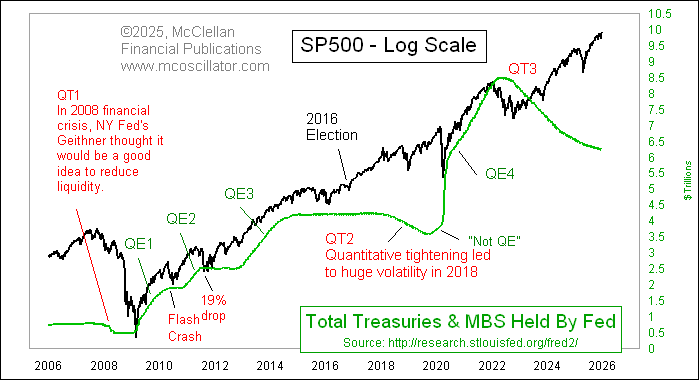
Today’s Letter is brought to you by Arch Public!Unlock unparalleled returns with Arch Public’s algorithmic trading tools. Our Bitcoin Algorithm Arbitrage Strategy has delivered an astounding 247% annual return over the past three years.The entries, and exits speak for themselves; precision that drives success. Trusted by more than 15,000 customers and industry leaders, we’ve partnered with Gemini, Kraken, Coinbase and Robinhood to bring you cutting-edge solutions.Whether you’re a seasoned investor or just starting, our proven strategies maximize your potential. Join the ranks of those who trust Arch Public to navigate the markets with confidence.Talk to us today and discover why our expertise sets us apart.To investors,It seems like every day we are being bombarded with negative headlines, scary predictions of a big market crash, and the promise of economic destruction right around the corner. The people pushing this negative view of the world will point to data points like the University of Michigan Consumer Sentiment Survey as evidence that American citizens are in big trouble.But as the Wall Street Journal’s Gunjan Banerji recently pointed out, the Goldman Sachs Social Media Economic Sentiment Index has diverged in a big way from the Consumer Sentiment Survey.Which one should you believe? The Goldman survey that measures what people are saying online when they think no one is watching or the academic survey that asks people to fill out an online form with specific “measurement” questions? I’ll take the social media sentiment every day of the week.It isn’t just social media though. Mike Zaccardi shows Google searches for “AI bubble” have started declining from their recent peak.My takeaway from that rapid decline is that most of the AI-related fear was actually just a hysteria induced by mainstream media coverage that served a constant barrage of negative stories for the last few weeks. Nothing has really changed about the AI market or the AI companies, so the fact that people are not furiously asking “are we in a bubble?!” tells me that people are probably not worried about a real bubble being present yet.They shouldn’t be worried about a bubble either. The Federal Reserve is starting to pump capital back into the market. Tom McClellan says “tor those keeping score at home, this new QE will actually be QE5. We had QE4 after the Covid Crash in 2020.”This QE is happening at a time where the US government’s finances are improving too. Treasury Secretary Scott Bessent said yesterday that “the current calendar year-to-date deficit is $1.52 trillion, which compares to a deficit of $1.93 trillion for the comparable period last year under Biden, a 21% drop.Not only is the deficit smaller under President Trump - the economy is also bigger. The full 2025 calendar year budget deficit to GDP may total only 5.5%, substantially lower than the unsustainably high 6.8% in calendar year 2024 under Biden.”Forget the political sharpshooting and focus on what is important: the US government’s finances are improving. This is good for every American citizen. You can see another area where this is showing up in national gasoline prices. These prices are now the lowest they have been since March 2021.And if that doesn’t get you excited, the Carson Group shows the last two weeks of December have historically been one of the best periods of the year for stocks.I know people are winding down for the holidays, but the market may be coiling for an end of year run. It would be a welcomed Christmas present for investors across markets.Hope everyone has a great day. I’ll talk to you tomorrow.- Anthony PomplianoFounder & CEO, Professional Capital ManagementHow Fed Rate Cuts Affect Bitcoin, AI & The MarketJordi Visser is a macro investor with over 30 years of Wall Street experience and the writer behind the VisserLabs Substack. In this conversation, we break down the latest Fed decision, rate cuts, and their impact on bitcoin and public equities.Then we go deep into the AI landscape — where value is emerging, where risks remain, and how investors should be thinking about positioning for 2026.Enjoy!Podcast Sponsors* Figure - Need liquidity without selling your crypto? Figure’s Crypto-Backed Loans allow you to borrow against your BTC, ETH, or SOL with 12-month terms and lowest rates in the industry at 8.91%. Access instant cash or buy more Bitcoin without triggering a tax event. https://figuremarkets.co/pomp* Abra - This podcast is sponsored by Abra. Abra is the secure way to access crypto and crypto based yield and loan products through a separately managed account. www.abra.com.* Bitizenship – Get Italian Residency with €250k investment in Bitcoin Startup Italy , maintaining Bitcoin exposure. Book a free strategy call at bitizenship.com/pomp.* BitcoinIRA - Buy, sell, and swap 75+ cryptocurrencies in your retirement account. Pay less taxes. Earn up to $1,000 in rewards.* Arch Public - Arch Public’s cutting-edge algorithm tools ignite profi
How AI, Easier Money, and Deregulation Could Supercharge U.S. GDP Growth
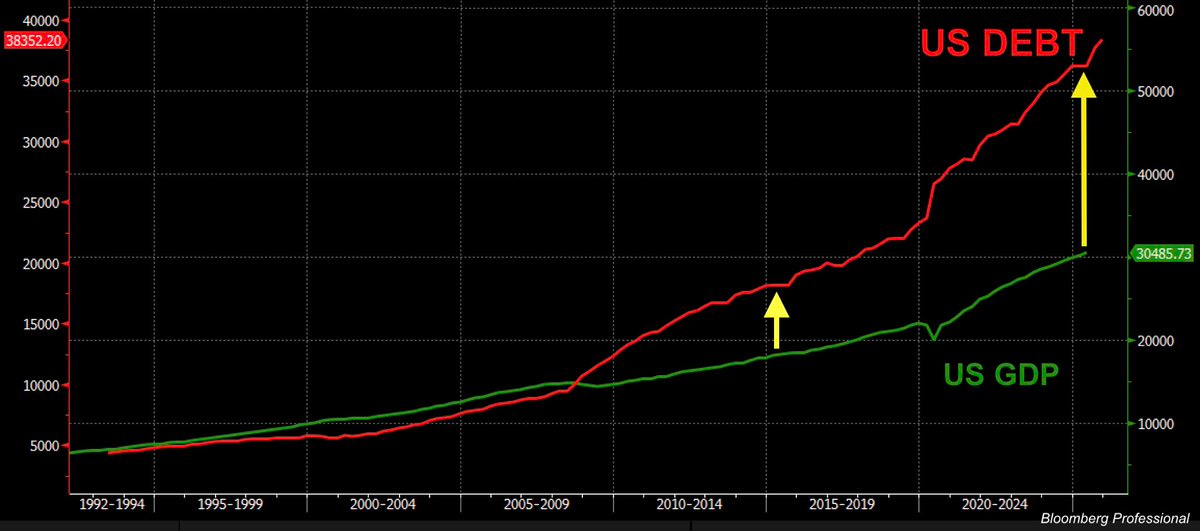
Today’s Letter is Brought To You by MoonPay x Phantom!Crypto is easy when your wallet just works. That’s why millions trust Phantom, powered by MoonPay.Phantom gives users one home for crypto across Solana and top chains. With MoonPay built in, anyone can buy in seconds using Apple Pay, PayPal, Venmo or cards — no bridges, no friction, no waiting.Together, Phantom and MoonPay make onboarding to crypto as simple as tapping “Buy”. Phantom keeps your assets safe while MoonPay opens the door to everything crypto has to offer.Keep your crypto in one place with MoonPay + Phantom. Controlled by you, secured by us.To investors,Financial markets have learned to listen when the President of the United States talks about asset prices or the economy. When he said to buy stocks earlier this year, it was a great time to buy stocks. When he said tariffs wouldn’t lead to empty shelves or the Great Depression, you should have gone long stocks immediately.This makes sense because the leader of the free world, regardless of his political party, had immense power and influence over financial markets. Simply, he can make things happen.But every once in awhile Trump says something about the economy that sounds downright outrageous. The latest example was a few days ago when he said GDP growth should be 20-25% year-over-year. The exact quote was: “instead of a 4% GDP or 3% GDP, it should be able to be 20 or 25%. I don’t know why it can’t be.”At first, this comment sounds ridiculous because the US has averaged 3.2% annual GDP growth since 1947. So the President is telling us he thinks that his economic policies can get us to a growth number that is 700% higher. Again, sounds ridiculous, right?Maybe not. There is a possible path to significant GDP growth. It may be unlikely, but it is possible.First, Michael Arouet highlights the real driver on how we could get to 20-25% GDP numbers. Michael writes “Hear me out, was the entire period since the Great Financial Crisis just an unsustainable artificial debt binge?”If that is true, the US economy could easily grow faster if we were willing to take on substantially more debt. That may sound like a crazy idea, but that is exactly what we have been doing for the last 25 years.The United States’ debt-to-GDP has exploded from about 55% in the year 2000 to nearly 125% in 2024. We are addicted to debt. There is no other way to describe the situation.But the Trump administration has somehow figured out a way to stimulate GDP growth upwards of 3.5%, while reducing the federal budget deficit by around $600 billion.Kevin Hassett went on television last week and said “It’s looking like the deficit for this year will be $600 billion lower than it was last year. That really helps lower inflation. We’ve got the trade deficit cut in half from last year. All of these things are things that should continue to move us towards the Fed target of 2%.”Now this doesn’t mean they are going to balance the budget. In fact, I went from being excited about a balanced budget earlier this year to very cynical about any President in our lifetime being able to balance a budget in light of the structural challenges. But reducing the deficit by $600 billion is still a great development.So this brings us back to growing GDP at a substantially higher rate. The way you do this is ease monetary policy, encourage technology innovation like AI, and deregulate as much as possible. There will be trade-offs to these decisions, but this is the blueprint for growing GDP much faster.Take AI as one example. The explosion of innovation and investment from Silicon Valley has essentially saved the US economy. More than 60% of GDP growth is estimated to be from AI-related investments. Couple that with the interest rate cuts, the return of QE, and a Trump-friendly Fed Chairman for 2026…that should spell faster growth across the US economy.We were promised an economic boom. It looks like we are going to get exactly that. Will it be 20-25% annual GDP growth? Doubtful. But I’ll take 5-7% growth any day of the week.Hope everyone has a great start to their Monday. I’ll talk to you tomorrow.- Anthony PomplianoFounder & CEO, Professional Capital ManagementHow Fed Rate Cuts Affect Bitcoin, AI & The MarketJordi Visser is a macro investor with over 30 years of Wall Street experience and the writer behind the VisserLabs Substack. In this conversation, we break down the latest Fed decision, rate cuts, and their impact on bitcoin and public equities.Then we go deep into the AI landscape — where value is emerging, where risks remain, and how investors should be thinking about positioning for 2026.Enjoy!Podcast Sponsors* Figure - Need liquidity without selling your crypto? Figure’s Crypto-Backed Loans allow you to borrow against your BTC, ETH, or SOL with 12-month terms and lowest rates in the industry at 8.91%. Access instant cash or buy more Bitcoin without triggering a tax event. https://figuremarkets.co/pomp* Abra - This podcast is sponsored by Abra
QE Is Back and Asset Prices are going Higher
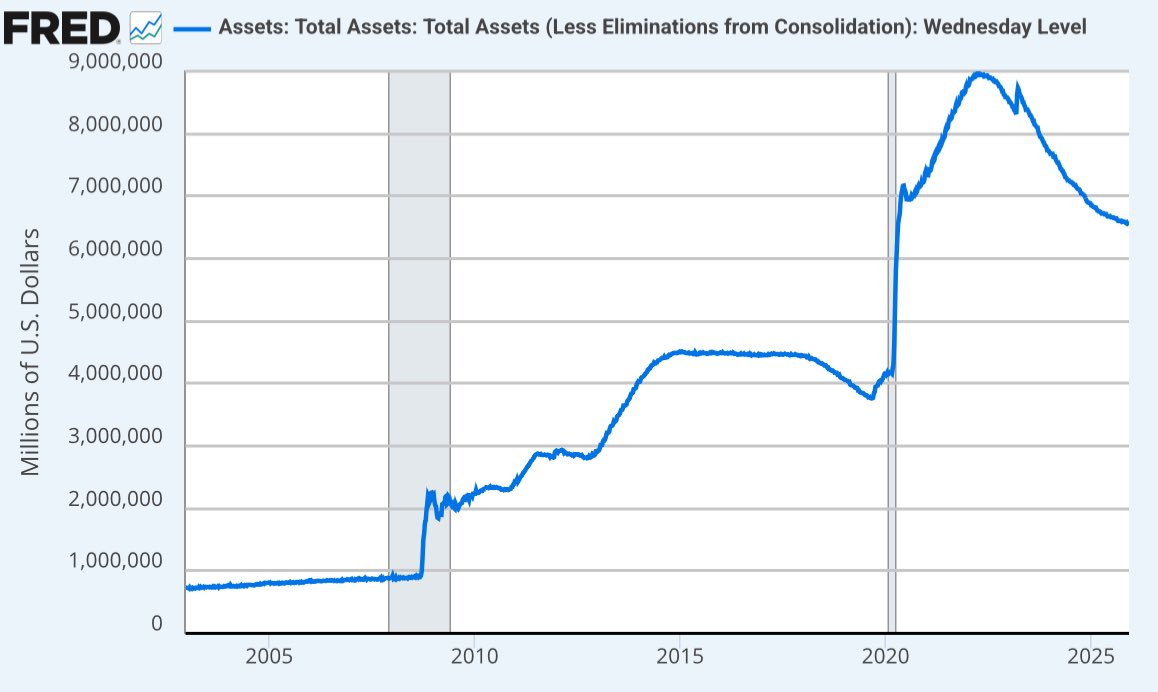
Today’s Letter is Brought To You by Abra!Borrow up to 50% of the value of your crypto holdings with Abra in a highly flexible open term loan. Your collateral is held in a separately managed account where you retain legal title to the assets. Rates are highly competitive, ranging from 4-7%APY.No interest payments are required during the life of the loan. There are no minimums or maximum loan sizes.To learn more, click here. To set up an account, click here for individuals and here for entities.To investors,Quantitative easing is back. The Federal Reserve announced a 25 basis point cut yesterday, which brings the federal funds rate down to 3.50-3.75%. The vote had three dissenters, including two people who thought we should have left rates unchanged and Fed Governor Stephen Miran who wanted a 50 basis point cut. While the interest rate cut is important, it was consensus across Wall Street that the central bank would reduce the cost of capital by 25 basis points. The big surprise coming out of the two day meeting was the Fed’s announcement to restart balance sheet expansion with $40 billion in monthly Treasury bill buys.My friends at Geiger Capital put it best when they reminded us that Ben Bernanke promised in 2008 that QE was temporary and the Fed’s balance sheet would soon be lower than when they started.As you can see, the Fed’s balance sheet has continued to grow over time and now Jerome Powell is telling us that it is time to go back higher. This entire situation is highly unusual. Creative Planning’s Charlie Bilello outlined it perfectly:* Stocks: all-time high* Home Prices: all-time high* Gold: all-time high* Money Supply: all-time high* National Debt: all-time high* CPI Inflation: 4% per year since Jan 2020, 2x the Fed’s “target”* Fed: cut rates again today & will start QE on FridayBut as I wrote earlier this week, multiple deflationary forces are headed for a collision with the US economy. We have AI, robotics, tariffs, and a surge in deportations. Each would be worth watching on their own, but they collectively create the perfect storm for the Fed to fail at monetary policy.Add in weakness in the job market and it becomes clear why the Fed has to get interest rates lower. So now that we know QE is coming back, what will happen to asset prices?Remember, when the Fed buys bonds, it pushes bond yields down and encourages investors to move into riskier assets in search of higher returns. This “liquidity wave” makes borrowing cheaper, boosts confidence, and raises demand across financial markets. The biggest beneficiaries of QE are almost always risk assets. Stocks tend to rise because future earnings are discounted at lower rates, making companies appear more valuable. Bitcoin and other digital assets benefit because investors look for assets that outperform cash when money supply expands. Real estate goes up because mortgages become cheaper and investors chase hard assets. Long-duration assets—like tech stocks, growth companies, and venture-backed businesses—often rise the most because their value depends on future cash flows, which become more attractive when rates fall.So what assets suffer during QE?One of the big losers should be the U.S. dollar, which tends to weaken when more dollars are created, and short-term cash-like investments, which offer lower yields and become less attractive relative to risk assets. Traditional value stocks, commodities tied to economic stress, and defensive sectors may lag because QE shifts investor appetite away from safety and toward growth and speculation. Overall, QE is designed to inflate financial assets, and historically it has done exactly that.This means investors are about to be very happy.I took my analysis of QE’s impact one step further and I asked Silvia, the AI CFO that we built, to explain how the return of QE should impact my personal portfolio. She told me “the rate cuts are highly favorable for your portfolio, particularly your private investments and crypto. Your Opendoor position is also well-positioned to benefit from housing market recovery.However, the Fed’s signal of fewer cuts ahead means the easy gains may be behind us. The key risk is your extreme concentration in private investments, which makes you exceptionally sensitive to any Fed policy changes.Your portfolio is essentially a leveraged bet on lower rates — which has worked brilliantly so far, but requires careful monitoring as the Fed slows its cutting pace in 2026.”You can ask Silvia to analyze your personal portfolio by signing up for free by clicking here.Hope everyone has a great day. I’ll talk to you tomorrow.- Anthony PomplianoFounder & CEO, Professional Capital ManagementBitcoin vs The Fed: Who Wins in 2026?Jeff Park is a Partner & Chief Investment Officer at ProCap Financial. In this conversation, we break down the Fed’s year-end shift toward rate cuts and easier liquidity, what it means for markets, and why bitcoin sentiment feels so negative despite strong performance. Jeff al
Two Economies, One America: How AI Is Driving Growth While Small Businesses Collapse
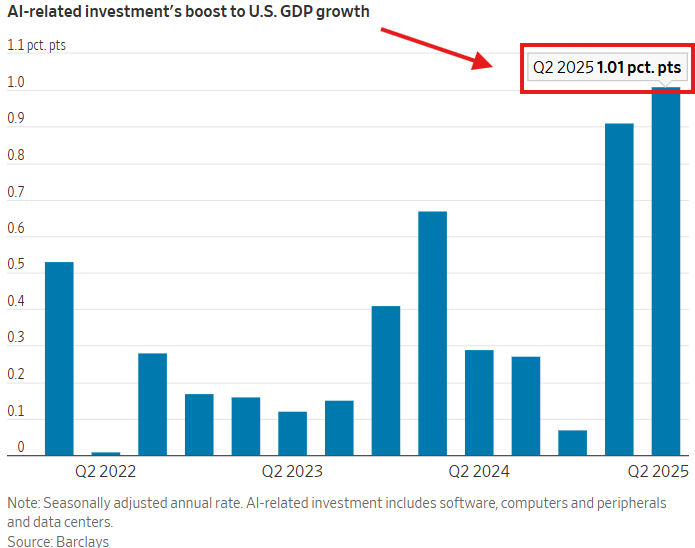
Today’s Letter is brought to you by Arch Public!Unlock unparalleled returns with Arch Public’s algorithmic trading tools. Our Bitcoin Algorithm Arbitrage Strategy has delivered an astounding 247% annual return over the past three years. The entries, and exits speak for themselves; precision that drives success. Trusted by more than 15,000 customers and industry leaders, we’ve partnered with Gemini, Kraken, Coinbase and Robinhood to bring you cutting-edge solutions. Whether you’re a seasoned investor or just starting, our proven strategies maximize your potential. Join the ranks of those who trust Arch Public to navigate the markets with confidence. Talk to us today and discover why our expertise sets us apart.To Investors,The American economy is booming. At least that is what the GDP numbers are telling us. US GDP grew 3.8% year-over-year in Q2 and the Atlanta Fed is estimating Q3 growth to be between 3.5% - 3.8%.Historical context is important to understand the magnitude of these numbers. The average GDP growth for countries around the world is approximately 2.9% and the United States has outperformed for the last 80 years by growing GDP on average 3.2% annually from 1947 to 2025.So what is driving the good times right now?The answer is very simple: artificial intelligence. Adam Kobeissi shows that approximately 63% of all GDP growth is coming from AI-related spending. This means that without the AI CAPEX boom, the US economy would be in a significantly worse position.This AI-related spending can be best visualized by looking at data center spending since 2020. Kobeissi writes “spending on data centers in the US has tripled since the release of ChatGPT in November 2022. Spending on structures excluding data centers is down ~20% since the 2023 high. The strength of technology companies has created two “economies” in the US.”Speaking of two economies, compare the explosion in AI-related spending with the fact that US small business bankruptcies reached a record 2,221 year-to-date. This is up 83% over the last five years. These bankruptcies reflect high borrowing costs, cautious consumer spending, and economic pressures disproportionately affecting smaller businesses.This second economy also saw US employers announce 1.2 million job cuts in 2025, which is the second-highest in 16 years. These job cuts create a paradox where labor market deterioration coincides with the S&P 500 adding $17 trillion since April.Think of how crazy that is.Small businesses are going bankrupt and more than a million people lost their job, but US corporate profits hit record highs in Q4 amid strong demand and pricing power.If you looked up the definition of opposing outcomes, you would find these data points front and center as they expose inequality between corporate performance and worker outcomes. Plenty of people will use this information to rail against the system. They will stoke populism and claim that the only path forward is socialism.But we know that is not true. In fact, history shows us over and over again that economic incentives drive outcomes. Programs like Invest America will give people a stake in the capitalist system, while providing a financial head start for millions of young people.And the data shows that young people, particularly Gen Z, may be more enthusiastic about financial markets than you would think.Gen Z is starting to invest earlier than previous generations. About 54% of this cohort are beginning by age 21 compared to 31% of millennials and 27% of Gen X.Additionally, 63% of young adults view the stock market as an excellent wealth-builder. Gen Z favors stocks and millennials lean more into crypto as their primary investment. What is maybe most interesting, younger generations are nearly 3x more likely to hold speculative assets, including crypto-related stocks and day trading.So what is my big takeaway from all of this?There are pockets of great data in the economy and financial markets, but those big trends like AI are covering for areas of weakness. That is normal. There are people claiming everything is great or everything is horrible…both of the groups are right.But maybe the real lesson here is that we should trust the kids. They are enthusiastic. They are pouring capital into financial markets. They see value in AI, bitcoin, crypto, and robotics. These young people are predicting the future. We all should just make sure we are listening.Hope you all have a great day. I’ll talk to everyone tomorrow.- Anthony PomplianoFounder & CEO, Professional Capital ManagementIs the Fed About to Trigger the Next Bitcoin Boom?I recently sat down with John Pompliano to dig into what’s really at stake at the upcoming Federal Reserve meeting - whether the move should be 25 bps, 50 bps, or nothing at all.We breakdown how those decisions ripple through markets and why bitcoin’s unique monetary policy is becoming impossible for the world to ignore. Plus, discuss the shift as bitcoin miners move into AI infrastructur
The Case for a 50 Basis Points Cut: Weak Jobs Data, Cooling Inflation, and a Split Fed
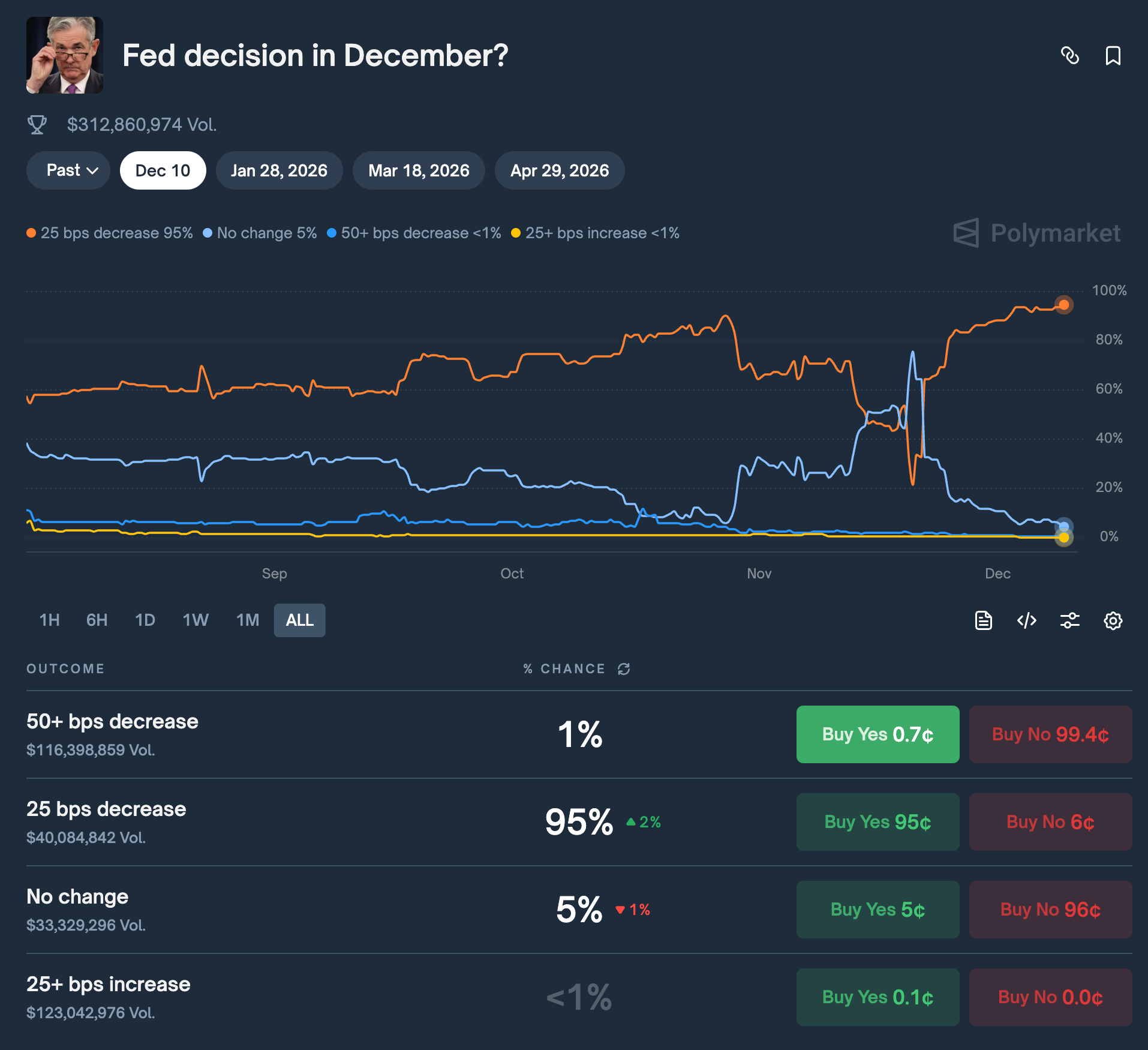
Today’s letter is brought to you by Lava!Lava’s bitcoin line of credit (BLOC) allows you to unlock your bitcoin’s purchasing power— instantly, flexibly, and securely— without selling your bitcoin.Now through the end of the year, Lava is offering a special promotional rate to all borrowers. Anyone who opens a BLOC this month will lock in a 5% interest rate, fixed for a full year. This is the last month to secure this rate for 2026.With Lava Refinance, you can easily bring your existing loans over to Lava and access the lowest fixed interest rates in the industry. Their white glove client services team will help you through the whole process.Lava allows you to borrow dollars in real time with no monthly payments, open terms, and full flexibility. Plus, you earn 5% APY on your USD balance, buy bitcoin with zero fees, and off-ramp globally.Grow your bitcoin wealth— without ever selling your bitcoin.To investors,Jerome Powell and the Federal Open Market Committee start their two day meeting later today and the market is closely watching whether the Fed will cut interest rates or not.Polymarket odds have a 25 basis point cut at 95%, while no change sits at a 5% chance.If the Federal Reserve cuts rates, this will mark the third consecutive cut of the year (following 50 basis points in September and 25 basis points in October) and serve as “insurance” against deepening labor market risks, even as inflation remains sticky above the 2% target. But I want to lay out the argument for the Fed to actually make a 50 basis point cut tomorrow. First, we know the labor market is softening, which is raising fears of a broader slowdown or recession if the situation is not addressed aggressively.Nonfarm payrolls added only 119,000 jobs in September. This is a sharp deceleration from post-pandemic averages and the report came in below expectations. Due to this deceleration, the unemployment rate has ticked up to 4.4%.We have also seen layoff announcements surge to 1.17 million year-to-date. This is the highest level of layoff announcements we have seen since the 2020 pandemic. Simultaneously, hiring plans have reportedly hit their lowest level since the end of the Great Financial Crisis.Lastly, private-sector indicators like ADP jobs data and Challenger layoff reports have weakened even more in November. These trends suggest job growth is insufficient to match labor force expansion. The case for a 50 basis point cut related to the labor market is a larger cut would bolster employment and prevent a vicious cycle of reduced spending and further hiring freezes.But the argument for a 50 basis point cut doesn’t solely rely on the labor market.The government inflation metrics, which I believe to be wildly overestimating inflation, also provide support for a larger interest rate cut. Core PCE inflation is currently around 3% (about 1% above target), but disinflationary forces mitigate reacceleration risks. This should free the Fed to focus on their dual mandate employment goals.Critics claim goods prices remain sticky due to tariffs and fiscal stimulus, but falling crude oil prices, excess rental supply, and declining home prices introduce deflation risks that give the green light for deeper cuts in my opinion.On top of these converging forces, Fed projections and market-implied inflation show expectations anchored near 2%. This is obviously lower than consumer surveys which are projecting closer to 4% expectations, but we know the surveys are corrupted and likely further off than the market consensus. A 50 basis point cut would align with the Fed’s October statement committing to adjust policy “as appropriate if risks emerge,” so America’s central bank could easily frame the larger cut as targeted support rather than a policy pivot.So we have a weakening labor market and an inflation environment, but ultimately the decision to cut more than 25 basis points still has to be made by humans that make up the FOMC.Thankfully, there are a few common sense folks inside the building that seem to believe in the benefit of a larger cut. We know the FOMC is unusually divided right now and this could lay the foundation for a surprise aggressive cut.Governor Stephen Miran has recently dissented twice in favor of 50 basis point cuts. He argued in November it’s “appropriate” for a large December cut to counter labor risks. At the time, he said about the severity of the December cut “at a minimum 25 [basis points], but failing new information... 50 is appropriate.”Miran isn’t the only one. New York Fed President John Williams and San Francisco Fed President Mary Daly have signaled support for looser monetary policy. Williams explicitly said he views a cut as “insurance” against labor slippage without jeopardizing inflation goals.So what do analysts think is going to happen inside the Fed?Analysts at Nomura forecast a dovish dissent from Miran pushing for 50 basis points, while others will have potential hawkish dissents against even a 25 basis point m

The Coming Deflation Shock: Why AI, Demographics, and Policy Are Forcing the Fed’s Hand
Today’s Letter is brought to you by The Bitcoin Dolce Visa!You can now access Italy’s Investor Visa with a €250K equity investment into Bitizenship Italia, a Milan-based Bitcoin startup. Visa approval arrives first, investment happens only after authorization. The company operates with a Bitcoin-aligned treasury, non-custodial L2 staking, and clear redemption windows every 24 months.To date, Bitizenship has facilitated €25M+ in Bitcoin-aligned residency investments.A compliant, Bitcoin-native pathway into one of Europe’s strongest economies.Private placements now open.1To investors,The US economy is getting hit with multiple deflationary forces at the same time. These converging trends are forcing the hand of the Federal Reserve towards lower interest rates and more money printing.First, we know that artificial intelligence and robotics are squeezing an insane amount of inefficiency out of every corner of the system. Companies can now drive more profits with fewer employees, which is usually referred to as “good deflation.” This is when supply expands faster than demand.So where can we see this happening in today’s economy? We see example after example of productivity surges, cost compression, and quality enhancements. This fosters a “deflationary boom,” where goods and services become cheaper, enhancing consumer purchasing power and supporting GDP growth without overheating.AI is not only making companies more productive, but we are reaching a point where AI can write its own software. Eventually, technologists promise us that humanoid robots will be doing many things in society, including manufacturing and assembling more humanoid robots. This type of exponential productivity is hard to understand today. It is probably the most important deflationary trend though.Elon Musk, the founder of numerous multi-billion dollar companies at the intersection of AI and robotics, recently discussed how these technologies should create deflation and help address the national debt crisis.Take a listen:It seems like deflation is the obvious end state when Elon explains his view on these technologies in relation to the growth of America’s money supply.But Elon understands that AI and robotics are still not making a big enough impact on the economy to reach a deflationary state yet. Part of that gap is because of the ridiculous amount of money that is being printed by the US government, but another aspect is that AI and robotics remain in a relatively nascent stage. Elon’s estimation is that the US economy will hit a deflationary period in three years:Now Elon Musk is known for aggressive timelines and plenty of critics will argue that his estimation is off by a decade or more. I wouldn’t be so sure though. The pace of innovation, and the acceleration in adoption for AI and robotics, tells me the deflationary impact is much closer than most people realize.These technology trends are not happening in a silo either.The second big trend we have to pay attention to are demographics and proposed policy shifts. Both of these are curbing consumer demand and shrinking the labor supply, creating a potential “deflationary shock.” Economist David Rosenberg highlights three converging forces:* Aging workforce: The US median age is 42.3 (up from 36 in 2000), with the dependency ratio (the number of non-working people vs people of working age) rising to 37% by 2035, reducing spending on discretionary goods.* Immigration restrictions: Tighter policies limit population growth and low-wage labor inflows, suppressing household formation and service-sector demand.* Tariffs: broad tariffs (e.g., on imports) could slash consumer spending by raising costs, leading to a demand cliff.These three factors could weaken aggregate demand, which can cause prices to fall as businesses face oversupply and cut prices to clear inventory. On the positive side, lower demand might stabilize housing and services inflation, but it risks a vicious cycle of delayed spending and job losses, especially in retail and construction.Getting this balance right is very important. You want deflation without recession. This can only be done by creating positive supply-side factors rather than a collapse in demand. This is often called “good deflation” or “growth deflation,” where prices fall due to increased productivity, technological advancements, or efficiency improvements that boost output and real incomes.As one example, we are seeing this “good deflation” happen in energy costs over the last year. The decline in energy costs are due to increased domestic production, milder global demand, and efficiency gains from renewables and AI-optimized grids. US gasoline prices are projected to drop 3% (11 cents/gallon) in 2025 vs. 2024, with energy inflation at -1.6% year-over-year as of July 2025.These cheaper energy prices act as a broad disinflationary tailwind, including lower input costs for manufacturing and transportation. This boosts household disposable income (ex: sav
Inside the Fed Soap Opera: Firings, Scandals, Crypto Ties… and the Rise of Kevin Hassett
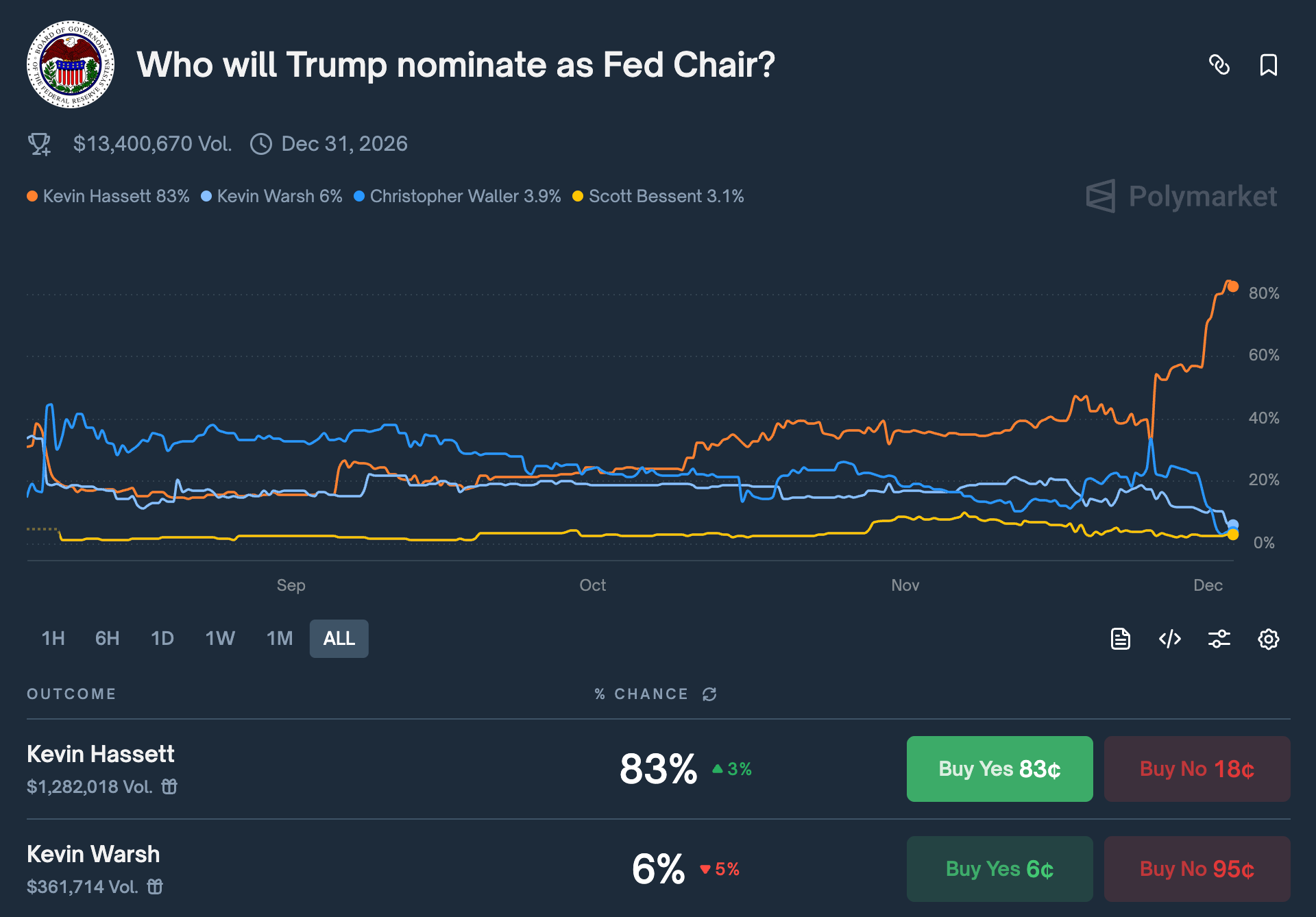
Today’s letter is brought to you by Lava!Lava’s bitcoin line of credit (BLOC) allows you to unlock your bitcoin’s purchasing power— instantly, flexibly, and securely— without selling your bitcoin.Now through the end of the year, Lava is offering a special promotional rate to all borrowers. Anyone who opens a BLOC this month will lock in a 5% interest rate, fixed for a full year. This is the last month to secure this rate for 2026.With Lava Refinance, you can easily bring your existing loans over to Lava and access the lowest fixed interest rates in the industry. Their white glove client services team will help you through the whole process.Lava allows you to borrow dollars in real time with no monthly payments, open terms, and full flexibility. Plus, you earn 5% APY on your USD balance, buy bitcoin with zero fees, and off-ramp globally.Grow your bitcoin wealth— without ever selling your bitcoin.To investors,There is wild speculation over who the next Federal Reserve Chairman will be. It has essentially become a finance soap opera. There was a period of time where the President was threatening to fire Jerome Powell. We saw the administration pressuring the Fed into cutting rates more aggressively. Housing Director Bill Pulte found reported mortgage fraud emanating from one of the Fed Governors, which led to a big legal dispute on whether the President could fire the Governor. And most recently, Stephen Miran replaced Adriana Kugler on the Fed’s Board of Governors after Kugler stepped down to return to academic life.This type of chaos is relatively unprecedented for America’s central bank. But the entire Trump administration has been relatively unprecedented, so maybe that makes the chaos part of the strategy.This brings us to the big question: who will be the next Fed Chairman?While we won’t know until the official announcement, President Trump seemed to give us a hint yesterday during a public appearance at the White House. Watch what he said about Kevin Hassett and the Fed Chairman speculation:Polymarket odds have Kevin Hassett as the dominant favorite (83%) to be the next Fed Chairman as well.So who exactly is Kevin Hassett and do we think this is a good choice?Kevin Hassett is a well-known supply-side economist. His policy views are focused on unleashing economic growth through tax cuts, deregulation, and accommodative monetary policy. A key component of his world view is that we should prioritize growth over very strict inflation control.Many people consider Hassett to be a “pro-growth” conservative. This is based on his argument that lower barrier to investment and production can raise wages, boost innovation, and enhance national security. None of those seem like bad ideas. The question is how do we get those outcomes? That is where the big debate and controversy lies.Now another aspect of Hassett’s views comes from a book he wrote in 2014 where he discusses a “4% Solution.” This idea is a roadmap for sustained 4% GDP growth through tax certainty, spending restraint, and energy deregulation. Again, this sounds a lot like Ronald Reagan’s supply-side ideas.Hassett has been pushing this idea recently as he argues booming consumption under Trump policies signals “lower-income optimism,” contrasting with what he calls overstated Biden-era stagflation.Here are some of Hassett’s key policy positions as summarized by Grok:Now one other interesting data point on Kevin Hassett, which was pointed out by Opening Bell’s Phil Rosen, is that Hassett “is a former Coinbase advisor who still reportedly holds a sizable stake in the cryptocurrency exchange.”So we have Trump fanning the flames of speculation. We have Kevin Hassett leaning into the supply-side economic policies. And we have market participants that are salivating over the idea of a new Fed Chairman who would bring interest rates down and drive more growth in asset prices. It ain’t over until the fat lady sings. But I say bring on Mr. Hassett and let him bring some common sense back to the central bank. Hope everyone has a great day. I’ll talk to you tomorrow.- Anthony PomplianoFounder & CEO, Professional Capital ManagementBitcoin Drops 40% — Should We Be Worried?Anthony and John Pompliano break down the chaos inside today’s markets — from Bitcoin’s pullback to what’s really happening with the ETFs. We dig into why Vanguard suddenly capitulated, how a Trump-appointed Fed chair could reshape the entire macro landscape, and why political goggles are destroying people’s ability to think clearly about money. Plus, we unpack Michael and Susan Dell’s massive $6.25 billion donation to jump-start investing accounts for 25 million American kids — and what it means for the next generation of wealth-building.Enjoy!Podcast Sponsor* Figure - Need liquidity without selling your crypto? Figure’s Crypto-Backed Loans allow you to borrow against your BTC, ETH, or SOL with 12-month terms and lowest rates in the industry at 8.91%. Access instant cash or buy more Bitcoin withou
Stocks Up, Gold Soaring, Bitcoin Lagging: What the New Market Regime Means for Investors
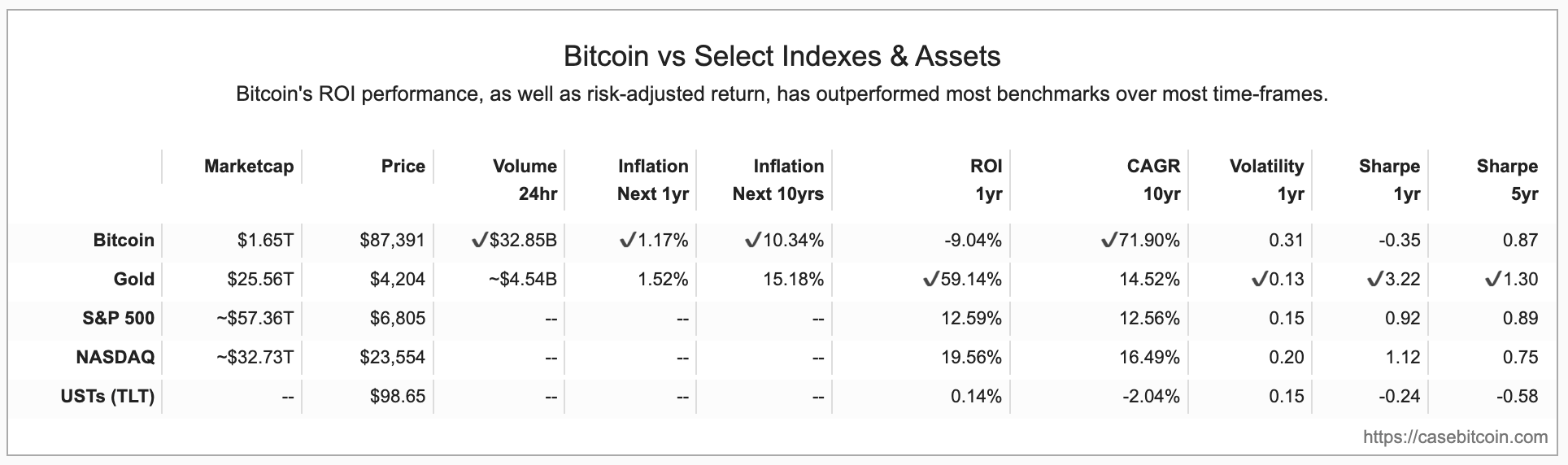
Today’s Letter is brought to you by The Bitcoin Dolce Visa!You can now access Italy’s Investor Visa with a €250K equity investment into Bitizenship Italia, a Milan-based Bitcoin startup. Visa approval arrives first, investment happens only after authorization. The company operates with a Bitcoin-aligned treasury, non-custodial L2 staking, and clear redemption windows every 24 months.To date, Bitizenship has facilitated €25M+ in Bitcoin-aligned residency investments.A compliant, Bitcoin-native pathway into one of Europe’s strongest economies.Private placements now open.1To investors,Professional investors care about their returns and they care about the correlation in their portfolio. The return measures how much money they are making, while correlations measure how much pain they could feel if a recession or financial panic sets in.The former shows you upside and the latter illuminates potential downside.This is important right now because we are living through a regime change in asset correlations. Remember, we saw all assets (stocks, bitcoin, gold, etc) go higher together in 2021, they all fell in unison in 2022, and these assets collectively recovered very aggressively in the last few years. Just like a hand in a glove, these assets ebbed and flowed with each other.That is starting to change though. Take a look at the performance of various assets over the last 12 months:* S&P 500: +12%* Gold: +59%* US Treasuries (TLT): -1.25%* Bitcoin: -10%There are a few major takeaways from these data points. First, US treasuries continue to be a money-losing proposition over the short and long-term. TLT is down more than 40% over the last 5 years and it is negative over the last 12 months too. Second, stocks and gold have done very well in light of the return to monetary easing and misplaced inflation fears. Add in the AI boom for the equity market and it has been a great year for anyone holding these assets.In fact, Adam Kobeissi explains how strong the current stock market momentum is:“The S&P 500 has finished positive for 7 consecutive months, the longest streak since 2018. Over this period, the S&P 500 has gained +23.9%. This is also in line with the rallies seen in 2009, 2013, and 2021. Meanwhile, the Dow has seen 7 straight monthly gains, the longest streak since early 2018. With December historically one of the strongest months for the market, upside momentum is strong. The bulls are in control.”This brings us to bitcoin. The digital currency has been a big disappointment performance wise for many investors in 2025. The widely held belief was that bitcoin would continue the 4-year cycle, including a big blow off top in Q4. Instead, bitcoin is down double digits over the last year and to throw salt in the wound, bitcoin’s dismal performance has been against the backdrop of equities and gold doing so well.Look at this chart from Justin Gallum. It shows that gold has continued to track M2 global liquidity, while bitcoin departed in the opposite direction sometime in Q3 of this year.This brings us back to correlations. Investors want to add non-correlated assets into their portfolio so they can increase their risk-adjusted return and reduce the volatility of their investments without giving up potential returns.The general thesis is that various assets have different demand drivers. For example:* Stocks → driven by earnings & liquidity* Gold → driven by real rates & currency strength* Bitcoin → driven by liquidity, adoption, risk-on sentiment* Farmland → driven by crop yields & climate* Art → driven by collector demandThis is why you constantly hear financial advisors yell about diversified portfolios. They are playing a spreadsheet game that attempts to decrease risk without sacrificing returns. Of course, that is not what actually happens in the real world. You actually have to increase risk and volatility in a portfolio to optimize for total returns. You quite literally should be getting paid for the risk you are taking. But that is not how all investors think. They instead will look at a comparison of these various assets and see that gold’s one year performance is high, the one year volatility is low, and both the one and five year Sharpe ratios are superior. This is a dream for many investors. The question is whether the dream can continue or if nightmares are right around the corner. If you have been listening to me throughout the year, you probably know I am very optimistic about the next few years in financial markets.Public equities are poised to continue moving higher. The AI boom is very real and likely only beginning. The fact that our politicians can’t stop spending money means that gold and bitcoin will continue doing well. And maybe the only asset I am bearish on for the next 2-3 years is US treasuries, which seem to be designed to go down forever in value.Time will tell if I am right or not. But in the current moment, we are watching the breakdown of correlations. Assets are not moving in lock ste

The $4 Trillion Club: Why Apple, Microsoft, Nvidia, and Google Are Just Getting Started
Today’s Letter is brought to you by The Bitcoin Dolce Visa!You can now access Italy’s Investor Visa with a €250K equity investment into Bitizenship Italia, a Milan-based Bitcoin startup. Visa approval arrives first, investment happens only after authorization. The company operates with a Bitcoin-aligned treasury, non-custodial L2 staking, and clear redemption windows every 24 months.To date, Bitizenship has facilitated €25M+ in Bitcoin-aligned residency investments.A compliant, Bitcoin-native pathway into one of Europe’s strongest economies.Private placements now open.1To investors,Yesterday Google became the fourth company in history to hit a $4 trillion market cap. They join Nvidia, Apple, and Microsoft in this rare club of companies.Nvidia became the first company ever to reach $4 trillion in July of this year, which was quickly followed by Microsoft crossing the same threshold in intraday trading on July 31st. The only problem is that Microsoft closed below $4 trillion that day and the company didn’t surpass the milestone again until last month, which is when they finally closed the trading day above the magic number of $4 trillion.Apple followed closely behind and crossed the milestone in late October. This means we had never seen a single company reach a $4 trillion market cap, but all of a sudden we have four companies that pulled off the accomplishment in the last five months.Welcome to the new world of business and finance.The winners are worth more than you thought and the losers become irrelevant faster than you thought possible. So we must ask ourselves, what is driving the meteoric growth for these large tech companies?There are a few drivers of valuation. First, these companies are producing insane amounts of revenue.* Apple revenue: $416 billion (+6%)* Google revenue: $385 billion +13%)* Nvidia revenue: $130 billion (+114%)* Microsoft revenue: $281 billion (+15%)These numbers are ridiculous. Multi-trillion dollar companies growing double-digit percentages year-over-year and Nvidia more than doubling over the last 12 months.But this is not only a story of top line revenue growth. These four companies are producing real free cash flow too.* Apple FCF: $98 billion* Google FCF: $73 billion* Nvidia FCF: $60 billion* Microsoft FCF: $78 billionInvestors look at a lot of data points to measure a company’s value, but nothing is more important than free cash flow and these companies are delivering on that metric.This free cash flow is being used to do three big things: buyback shares, pay dividends, and make substantial CapEx investments in AI infrastructure. The first two uses of free cash flow are self-explanatory, but it is this third one that has everyone’s attention.Google is projected to spend around $90 billion on CapEx this year and a significant portion will go to AI infrastructure for their cloud, search, and YouTube businesses. Microsoft is planning to spend around $80 billion with a big focus on AI-data centers and cloud infrastructure for training models, along with deploying AI and cloud applications. Apple is taking a different approach. They plan to only spend $12.7 billion on CapEx, but majority of it is focused on first-party AI data center infrastructure and proprietary silicon. A big reason why Apple spends so much less on CapEx is their decision to use a hybrid model with third-party cloud providers for large compute demands. And finally, Nvidia. They don’t spend CapEx on data centers or other traditional AI infrastructure. Instead, Nvidia is one of the big winners from all the CapEx spend by these large companies, because analysts believe Nvidia will capture 25-35% of the total $405 billion in AI-related infrastructure spending globally.So this brings us back to the fact that four different companies have become $4 trillion companies in the last five months. That is only possible because of the large, addressable market of artificial intelligence. If you evaluate these companies through the rearview mirror of history, you may be worried about their future prospects. You will claim things are expensive or you will question the future durability of their demand.But if you evaluate these companies as the winners of the largest addressable market of our lifetime, then you realize it is much more likely that each of these four companies are undervalued relative to their future financial performance. Take humanoid robots as a single example. Wall Street banks see the industry growing into a multi-trillion dollar juggernaut over the next 25 years, including a compound annual growth rate of 40-100% for the foreseeable future. Companies are going to have to innovate on hardware and software to make those projections become a reality. This is noteworthy because humanoid robots are a net new industry. It didn’t previously exist, so that will be trillions of dollars in economic value up for grabs. And who do you think is going to capture some of it?The largest, fastest-growing, most innovativ
Jerome Powell’s Silent Crisis: The Growing Revolt Inside the Federal Reserve
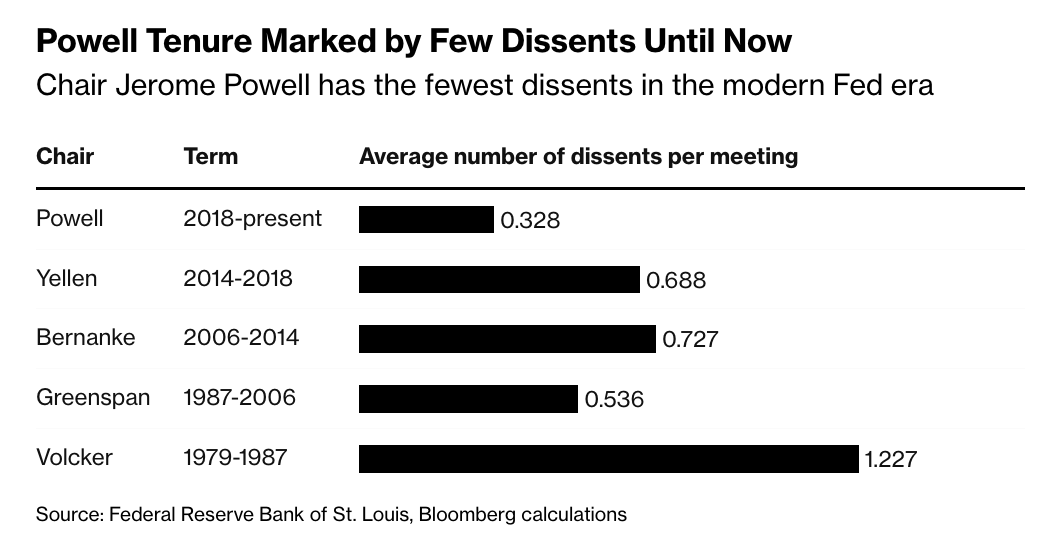
Today’s letter is brought to you by Lava!Lava’s bitcoin-backed line of credit allows you to unlock your bitcoin’s purchasing power— instantly, flexibly, and securely— without selling your bitcoin.Borrow dollars in real time with no monthly payments, open terms, and the lowest fixed interest rates in the industry— starting at just 5%.Lava is the only bitcoin lending platform available globally—you can borrow from any country or state.With Lava, you can access a full suite of bitcoin-powered financial tools:→ Borrow dollars instantly→ Earn 5% APY on your USD balance→ Buy bitcoin with zero feesIt’s everything you need to grow your bitcoin wealth— without ever selling your bitcoin.To investors,The Federal Reserve and the Board of Governors have a history of debating policy decisions behind closed doors, yet they almost always put on a united front when it comes time for their periodic vote on monetary policy. That is why it was such a big deal when two Fed Governors dissented at the same time back in July of this year.Not one, but two Governors dissenting in the same meeting. We had not seen two Fed Governors dissent in the same meeting since 1993, so the rarity of the situation raised eyebrows. At the time, most people wrote off the anomaly as a politically driven outcome. Fed Chairman Jerome Powell doesn’t seem to be a fan of Donald Trump and the two Fed Governors who dissented were Trump nominees.The Fed is supposed to be independent, but if you believe that I have a bridge to sell you. The institution is made up of humans. Humans are biased. That bias doesn’t have to surface in a malicious or nefarious way, but every human is affected by their personal beliefs. That is how human nature works. No one, not even a central bank, is safe from it.But now we are getting information that those two Governor dissents in July may have been the warning sign of things to come. Bloomberg’s Catarina Saraiva published an article over the weekend titled Fed Watchers Turn to Vote Counting as December Rate Drama Grows. In the article, Catarina writes:“Division at the Federal Reserve has intensified in recent weeks, with officials staking out disparate positions ahead of the central bank’s December policy meeting — all while Chair Jerome Powell stays silent.The drama was amped up Friday when New York Fed President John Williams, sometimes seen as a proxy for the Fed chief, signaled his support for a rate cut after several other policymakers came out leaning against one.Powell himself hasn’t spoken publicly since the central bank’s last rate decision on Oct. 29. But a tally of recent remarks suggests the other voting members of the rate-setting Federal Open Market Committee are now nearly evenly split over what to do, all but ensuring some will vote against the Dec. 10 decision regardless of the outcome.”These dissents are a big deal because they show cracks in the central banks’ armor. You can think of the constant dissents, especially from Fed Governors, as a very negative signal. There is no consensus. There is no peace. These dissents also highlight how difficult and complex the current economic environment is. The recent disagreements are even more pronounced because Chairman Powell has done a good job driving consensus during his tenure, but that is all changing now. This situation reminds me of the book Lords of Easy Money, which is the best break down of the Federal Reserve’s actions during the Global Financial Crisis.The book is important because it lays out what many people are afraid to say in public: the Federal Reserve may have done more harm than good to the US economy in the last 20 years.The book’s description states:“If you asked most people what forces led to today’s unprecedented income inequality and financial crashes, no one would say the Federal Reserve. For most of its history, the Fed has enjoyed the fawning adoration of the press. When the economy grew, it was credited to the Fed. When the economy imploded in 2008, the Fed got credit for rescuing us.But here, for the first time, is the inside story of how the Fed has reshaped the American economy for the worse…The Lords of Easy Money skillfully tells the fascinating tale of how quantitative easing is imperiling the American economy through the story of the one man who tried to warn us.”That one man was Thomas Hoenig and he looks very smart in hindsight. So what did Hoenig do? His legacy is explained with the following:“In the aftermath of the 2007 recession, Hoenig was thrust upon a national stage as he spoke out frequently about the financial crisis and its causes, as well as the response to the crisis in terms of both regulatory changes and monetary policy. He cast the lone dissenting vote against the FOMC’s easy money policies at each of the eight FOMC meetings in 2010 and was troubled by the FOMC’s stated promise of keeping the federal fund rates at a historic low for “an extended period.”He also spoke out frequently about the large and systemically
There Is Blood In The Streets Across The Stock Market
Today’s Letter is brought to you by Bitizenship!You can now access Italy’s Investor Visa with a €250K equity investment into Bitizenship Italia, a Milan-based Bitcoin startup. Visa approval arrives first, investment happens only after authorization. The company operates with a Bitcoin-aligned treasury, non-custodial L2 staking, and clear redemption windows every 24 months.To date, Bitizenship has facilitated €25M+ in Bitcoin-aligned residency investments.A compliant, Bitcoin-native pathway into one of Europe’s strongest economies.Private placements now open.To investors,Baron Rothschild once said “the time to buy is when there’s blood in the streets.” And we saw nothing but blood yesterday across financial markets. The S&P was down 1.5%, Nasdaq fell almost 2.5%, and bitcoin was down about 5% over the last 24 hours.Those are big numbers for these assets to fall in a single trading period. Interestingly, the S&P 500 actually displayed some very rare price action yesterday. The Market Stats writes “S&P gapped up more than +1.5% today, then closed down more than -1.5%. Before today, this only happened in October 2008 and April 2025.”As I recently heard Chris Burniske say, this roller coaster goes both ways. And the index showed us that yesterday, but now we are left to wonder why we are experiencing such abnormal volatility? Alex Kruger explains that we had “Extreme price action [yesterday], equities selling off on extraordinary volume and no news. VIX up to 28.”You don’t see that often. No specific catalyst, especially not an obvious, catastrophic one, yet stocks are falling materially in a single day. But this volatility makes sense when you realize the Fear and Greed Index was sitting at 6 last night. I don’t know if I have ever seen the index that low. Investors are scared. That is easy to recognize. But what are they scared of? That is a much harder question to answer. Is it the weak labor market data? Could it be the worries about AI CAPEX spending? Or maybe it is the belief that inflation is higher and the Fed won’t cut in December? No one knows. None of those things strike me as a reason for the S&P to drop 1.5% in a day and the Nasdaq to lose 2.5% in the same timeframe.But here is the thing, regardless of whether we have a specific reason, Rothschild told us to buy when blood in the streets. So how exactly do you do it?Famed investor Howard Marks explained his philosophy in a 2018 interview at Wharton:“My vision is that when the stuff hits the fan and there’s blood in the streets most people…say well we’re not going to buy until the knife stops falling, until the dust settles, until all the uncertainty has been resolved. But the trouble is that once that happens then the price will have rebounded.So we want to buy at a time of upset and while the knife is still falling and I think the refusal to catch a falling knife is a rationalization for inaction. It’s our job to catch falling knives, That’s how you get bargains. But you have to do it carefully.”Most people try to avoid catching the falling knife, but Howard Marks realizes that is not possible. This is the type of alpha you get from someone who has built one of the best investing careers in history. Straight contrarian takes that create billions of dollars in profit.You have to realize that Marks and Oaktree were always willing to buy assets on the way down, keep dollar-cost averaging lower, and then continue buying on the other side of the recovery. This type of conviction during a moment of chaos can only be built through strong analysis that highlights how undervalued an asset is. Most people aren’t built to be greedy when others are fearful.So where do we go from here?The short answer is that no one knows. Carson Group’s Ryan Detrick pointed out earlier this week that the stock market very rarely peaks in the month of October, so history would suggest the bull market is not over yet. If the historical trend was wrong, this would only be the 7th time since 1950 that the market peaked in the month of October.Never say never though. Just when you think you have financial markets figured out, something will happen to make you question everything again. That is the beauty of investing. It is an intellectually stimulating game because the puzzle never ends.Now before I let you go, I am going to leave you with two charts from Ryan Detrick that will leave you a little more optimistic. The first is that the performance of the stock market on Thursdays has recently been horrible, so yesterday’s big drop is less surprising when you realize the intra-week cyclicality at play.In addition, Detrick points out “November historically bottoms on November 20th before the seasonal late month rally. What is more interesting is one the weaker parts of the year is Nov 18-20. Looks to have played out this year, now will the rally?”So yesterday was a blood bath in markets. The seasonality data suggests we could have the worst behind us. But no one can predict the futur
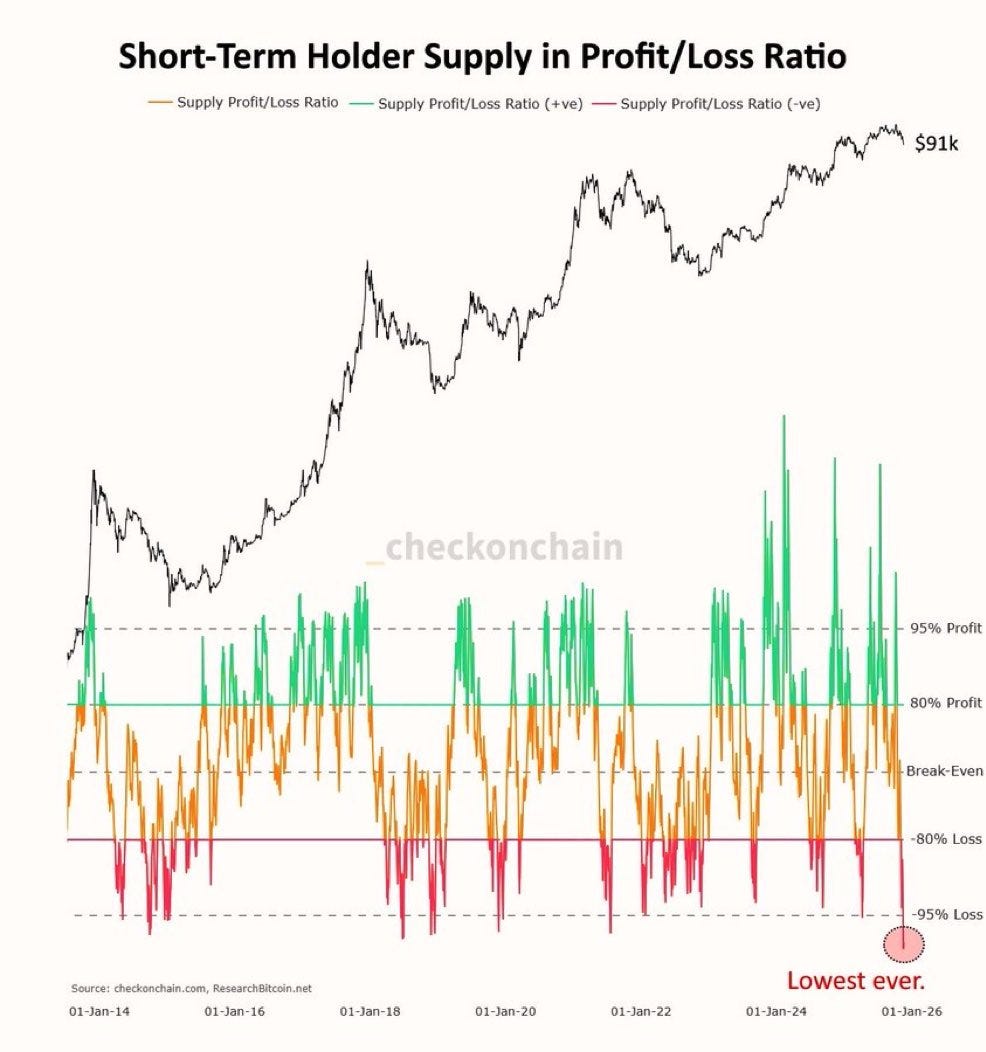
These 5 Charts Explain The Bitcoin Market Right Now
Today’s Letter is brought to you by Arch Public!Unlock unparalleled returns with Arch Public’s algorithmic trading tools. Our Bitcoin Algorithm Arbitrage Strategy has delivered an astounding 247% annual return over the past three years.The entries, and exits speak for themselves; precision that drives success. Trusted by more than 15,000 customers and industry leaders, we’ve partnered with Gemini, Kraken, Coinbase and Robinhood to bring you cutting-edge solutions.Whether you’re a seasoned investor or just starting, our proven strategies maximize your potential. Join the ranks of those who trust Arch Public to navigate the markets with confidence.Talk to us today and discover why our expertise sets us apart.To investors,Bitcoin has crashed approximately 30% from the all-time high of $126,000 on October 6th. The digital currency is now negative on the year and up less than 1% over the last 12 months. As you would expect, bitcoin holders are very disappointed in the asset’s performance.Sentiment online is about as negative as I can remember it ever being. But ancedotes on the internet can be misleading. Reddit or X can be echo chambers. So what exactly is the data telling us?Here are five charts that explain what is happening.First, Zerohedge shows that “the last time bitcoin was here, global liquidity was $7 trillion lower.” That data point is a big narrative violation. Everyone, including me, expected bitcoin to close the gap between bitcoin’s price and global liquidity. Since that hasn’t happened, many people are wondering if the market has fundamentally changed now that Wall Street has started adopting the asset.Regardless of the reason, no one can dispute that bitcoin has corrected 30% in the last month and a half. James van Straten explains this is the “third 30% correction for Bitcoin this cycle. Each correction, the time from peak to trough has compressed, this has accelerated the max fear sentiment. * August 2024 (Yen Carry): 147 days * April 2025: (Tariffs) 77 days * November 2025: 42 days”And this correction has now hit oversold territory. Coin Bureau shows “Bitcoin’s daily RSI has dropped to 26, its lowest since February, putting Bitcoin in oversold territory.”Quinten Francois highlights a similar dynamic is playing out with short-term holder supply in profit or loss. We are seeing more than 95% of all coins that have been acquired in the last 155 days are now underwater.This is obviously a fast way to drive fear into a market and tank sentiment. But markets don’t bleed forever. Eventually an asset gets cheap enough where it becomes attractive to investors. Maybe that is bitcoin at $90,000 per coin or maybe it is lower. I don’t know the exact level where we see the persistent bid return. However, Bitwise’s André Dragosch says bitcoin whales, those with more than 1,000 bitcoin, have suddenly started buying bitcoin aggressively at the current price level.So we have bitcoin’s price crashing even though global liquidity is surging higher. We have an asset that is now deeply oversold, which is enticing the bitcoin whales to start buying again. And we have a Fear and Greed index that is still registering below 20.This is the volatility, chaos, and uncertainty that forged bitcoiners over the years. Those who can keep their head straight when everyone else is losing their mind have traditionally done well. It is much easier said than done though.Hope everyone has a great day. I’ll talk to you tomorrow.- Anthony PomplianoFounder & CEO, Professional Capital ManagementBitcoin Market Just ROTATED This Month - Here’s What’s NextJordi Visser is a macro investor with over 30 years of Wall Street experience. He also writes a Substack called “VisserLabs” and puts out investing YouTube videos.In this conversation, we break down the recent sell-off in asset prices, including why the absence of a clear catalyst matters, how it may change the way you think about your portfolio, and where Jordi believes capital could rotate over the next 12–16 months.Enjoy!Podcast Sponsors* Figure - Need liquidity without selling your crypto? Figure’s Crypto-Backed Loans allow you to borrow against your BTC, ETH, or SOL with 12-month terms and lowest rates in the industry at 8.91%. Access instant cash or buy more Bitcoin without triggering a tax event. https://figuremarkets.co/pomp* BitcoinIRA - Buy, sell, and swap 75+ cryptocurrencies in your retirement account. Pay less taxes. Earn up to $1,000 in rewards.* Arch Public - Arch Public’s cutting-edge algorithm tools ignite profits, harnessing razor-sharp data analytics to nail perfect entries, exits, and risk management. Turn volatility into opportunity and do it hands free with Arch Public. (Oh, and yes, try us out for FREE too!)* Defi Development Corp - DeFi Development Corp. (Nasdaq: DFDV) is building the first Solana-focused public treasury, giving investors exponential exposure to Solana’s growth.* easyBitcoin - Stack sats with easyBitcoin.app—earn 1% extra on buys, 2% annual reward