
The Pomp Letter
521 episodes — Page 5 of 11
Will The Stock Market Trade 24/7?
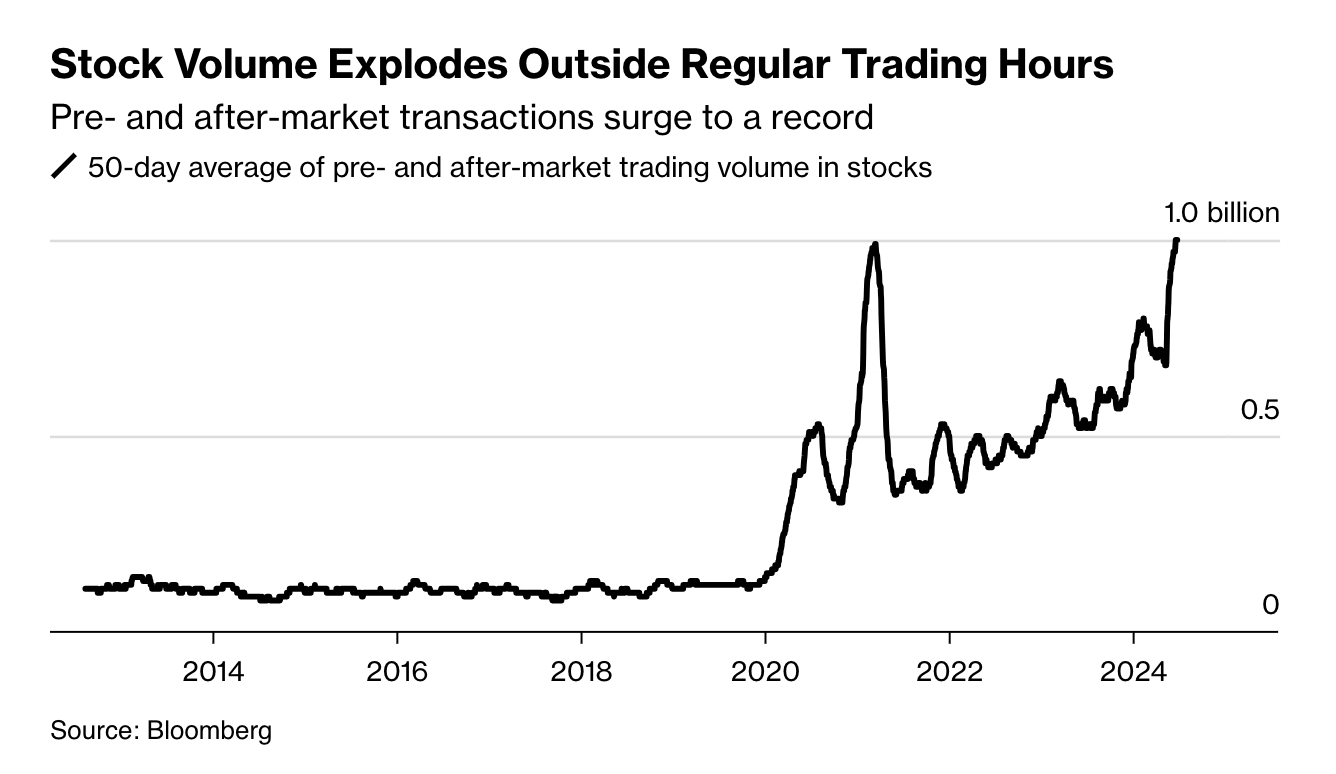
To investors,The crypto market has been trading 24/7/365 since the first coins traded hands nearly 15 years ago. Anyone in the world with an internet connection can buy or sell assets, regardless of the time of day. Weekdays? Market is open. Weekends? Market is open. Midnight? Market is open. Holidays? Market is open. This type of always-on market is how assets should trade. It allows market participants maximum flexibility to express their views at all times. The US stock market hasn’t followed suit though. Stocks still trade in the normal 9:30am to 4pm EST timeframe. While these hours of operation have worked for investors over the last few decades, there are new types of investors showing up who want better access to markets. Lu Wang and Katherine Doherty wrote the following in Bloomberg over the weekend:“Wall Street pros are feeling uneasy about retail investors again. Only this time it's not about the trades they're making — it’s about when they're making them.The amateur-investing revolution that has swept US markets since the pandemic is helping fuel a boom in overnight stock trading. It’s playing out at the likes of Robinhood Markets Inc. and Interactive Brokers Group Inc., which have adopted ways to offer the buying and selling of American shares 24 hours a day, five days a week.That has effectively eliminated the traditional eight-hour overnight break, and the move has proved so popular that others are taking note.”According to Lu and Katherine, the benefits of trading outside the normal hours is obvious:“It lets investors react to market-moving events whenever they occur. It also benefits retail traders who often don’t have the same opportunity as other players to transact during business hours (pre- and post-market volumes surged amid the influx of amateurs during the pandemic). Plus it serves international investors clamoring for a slice of US equity exceptionalism from distant time zones.”And these benefits are leading to increased trading volumes for pre- and post-market trading hours. So who are these people that want to trade outside normal hours?The first example is a rise in algorithmic trading. Software doesn’t need time to eat or sleep. It doesn’t get sick. Computer code isn’t required to go to their child’s little league baseball game on Saturday. The code can execute 24/7/365, which means that money can be gained or lost at any time of day. Another example is the young retail investor who has grown up with a phone in their hand. Persistent access to the internet created a desire to have persistent access to financial markets as well. These young people already have 24/7/365 access to the new financial system, so they want the same access for the old system.This is proven when Lu and Katherine explained “after-hours trading accounts for as much as 25% of Robinhood’s total volumes.” Retail is at the gate. Now before you roll your eyes, remember that many of the largest financial institutions are expanding their product offerings to court self-directed retail investors. Wall Street is beginning to realize how much money these individuals have, along with their willingness to invest in various ideas. This brings me to where I think we are headed — the stock market will eventually trade 24/7/365. There are many nuances around things like clearing and settlement that need to be figured out, but persistent access to the market is coming. This means that attractive investment opportunities are coming too. There will be points of illiquidity or mispricing that are introduced when market trading hours are expanded. The kinks will be worked out over time, but in the short-term those opportunities will be present. Additionally, expanded hours of operations will lead to more trading volume, which most likely leads to higher prices across the stock market. This would be a welcomed tailwind by equity investors who are constantly looking for more catalysts to drive assets higher. And lastly, 24/7/365 trading hours will be another building block for the automated future we are headed towards. Many are excited about artificial intelligence at the moment, but there is a larger trend at play. Assets are going to be digitized, they will be traded by algorithms, and settlement will be instantaneous. I don’t know how long this evolution will take. The writing is on the wall though. Superior technology tends to triumph over people’s feelings. I am spending time thinking about where opportunity will exist in the new world so I am prepared. You may want to spend a few hours doing the same. Hope you all have a great start to your week. I’ll talk to everyone tomorrow. -Anthony PomplianoAlex Thorn is the Head of Firmwide Research at Galaxy Digital. In this conversation, we talk about bitcoin, bitcoin mining, ETFs, regulation, politics, global adoption, potential problems, token unlocks, Galaxy Digital, and more.Listen on iTunes: Click hereListen on Spotify: Click hereMy Conversation with Galaxy’s Alex ThornPodcas
Prepare For A Volatile Second Half Of The Year
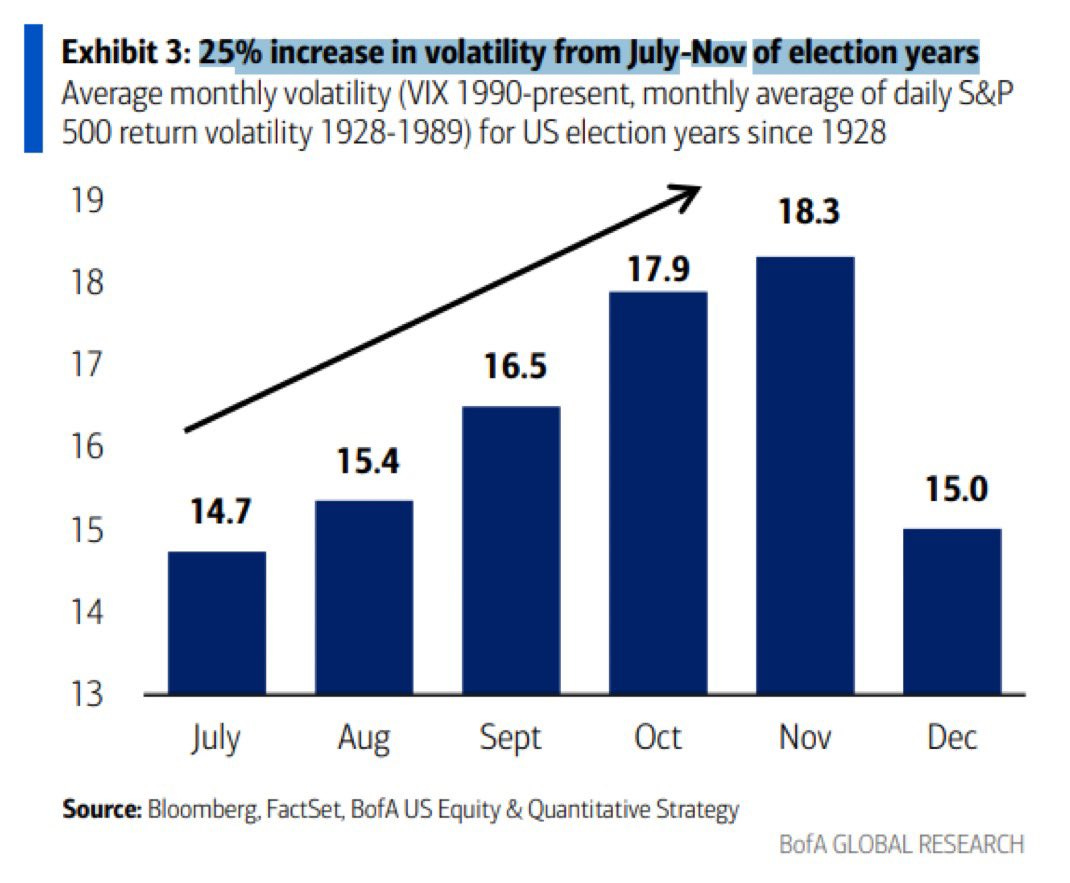
To investors,Many financial assets are trading sideways as we enter the summer months. This can cause investors to question whether certain investment ideas have been disproven and/or should be shut down. Humans are really bad at being bored.But Charlie Munger said it best when he stated, “the big money is not in the buying and the selling but in the waiting.” To those who can survive these sideways months are likely to have relief on the way in the second half of the year. Bank of America’s research team recently put out a report showing a 25% increase in volatility from July to November of election years. You can expect movement in the second half of this year.This level of volatility would be a welcomed change from the current boredom. During the boredom, some asset prices like bitcoin have traded slightly down. Some have traded flat. And others, like the S&P 500, continue to grind higher at a slow pace. For example, the 500 largest companies in the US have not seen a draw-down of at least 2.05% in more than 375 days, which marks the longest such stretch since the Great Financial Crisis.And we know that many new all-time highs packed into the first 6 months of the year usually leads to a monster year for the stock market. Momentum is a hell of a drug. Already this year, we have seen 30 new all-time highs in the S&P, which suggests the second half of the year should be volatile and fun. And bitcoin seems to have some positive data, although the asset has traded off its all-time high a few weeks ago. Checkmate, one of the leading on-chain analysts, points out how weak the bitcoin drawdowns have been in this bull market.So what is my take? Volatility in the stock market should be expected for the second half of the year, but bitcoin appears to be losing the asymmetric volatility in both directions. The asset doesn’t drawdown as much as it used to and my expectation is the asset won’t have the parabolic bull markets that we have grown accustomed to.Bitcoin is growing up. The price will grind up over time. There are new market participants here. This is the next step of mass adoption. Just don’t pigeon hole yourself into only investing in one asset. Volatility can show up in different places at different times. Make sure you are prepared to capitalize on it. Hope you have a great day. I’ll talk to everyone tomorrow.-Anthony PomplianoNic Carter is the Co-Founder and General Partner at Castle Island Ventures. In this conversation, we talk about bitcoin, artificial intelligence, energy consumption, regulation, politics, Trump vs Biden stance on crypto, stablecoins, impact of ETH ETF, and future outlook on the industry.Listen on iTunes: Click hereListen on Spotify: Click hereMy Conversation with Castle Island’s Nic CarterPodcast Sponsors* Meanwhile is the world’s first licensed and regulated life insurance company built for the Bitcoin economy. * iTrustCapital allows you to buy and sell cryptocurrency in a tax-advantaged crypto IRA. Open and fund an account today to receive a $100 USD funding bonus.* Supra - Join Supra’s early integration program for zero-cost access to the fastest oracles and dVRF across 50+ blockchains.* BetOnline - Use crypto to bet on sports, casino games, horse racing, poker and more with promo code POMP100.* Espresso Displays - The world's thinnest touchscreen portable monitor. Expand your workspace and work from anywhere.* CrossFi is the Apple Pay for Crypto. For the first time in history, anyone with a web 3 wallet can spend crypto through a physical or virtual Visa card where Visa is accepted.* ResiClub - Your data-driven gateway to the US housing market.* Opening Bell Daily - Get the 5-minute newsletter that Wall Street reads.You are receiving The Pomp Letter because you either signed up or you attended one of the events that I spoke at. Feel free to unsubscribe if you aren’t finding this valuable. Nothing in this email is intended to serve as financial advice. Do your own research. This is a public episode. If you'd like to discuss this with other subscribers or get access to bonus episodes, visit pomp.substack.com/subscribe
Inflation May Have Been Much Higher Than We Thought
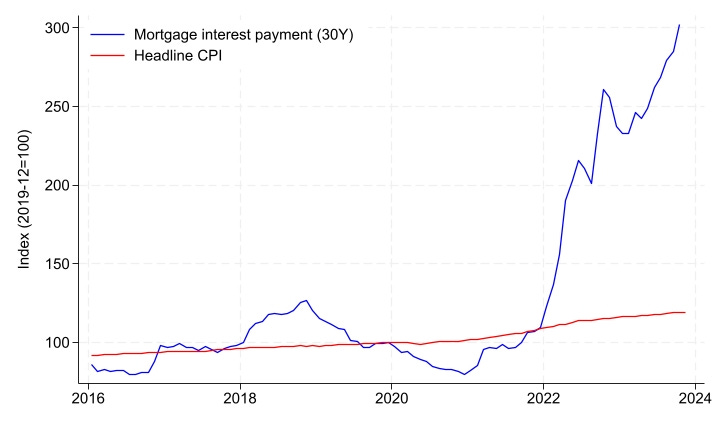
To investors,Former Secretary of the Treasury Larry Summers put together a Twitter thread back in February which was widely ignored. In his comments, Summers makes an argument that increasing interest rates drastically accelerated the true inflation rate experienced by an average citizen. He specifically calls out this increased inflation was missed by the current CPI measurement. For example, Summers argues the following:“Pre-1983, mortgage costs were in the CPI as were car payments pre-1998. Now, price indexes do not include borrowing costs. Thus, when interest rates jumped last year, official inflation did not fully capture the effects it would have on consumer well-being.”Summers goes on to show that citizens are very worried about the increasing borrowing costs.“We also show that the underlying questions in the survey provide direct evidence that concerns of consumers about borrowing costs are at historic highs, surpassed only by the Volcker-era.”The former Secretary of the Treasury was not looking to simply complain though. He and his colleagues created a new methodology to calculate CPI in an attempt to get closer to the truth about what has been going on.“We then develop alternative CPI measures that explicitly incorporate the cost of money. The CPI does not only exclude mortgage costs, but also personal interest payments, which increased by more than 50 percent in 2023.”This brings us to the main point that Summers wanted to make — inflation was substantially higher than what the official metric showed in the last few years. “We show that if we make an effort to reconstruct the CPI of Okun’s era—which would have had inflation peak last year around 18%, we are able to explain 70% of the gap in consumer sentiment we saw last year.”Calculating inflation is nearly impossible to do because every person experiences the phenomenon differently. We live in different areas. We buy different goods and services. The uniqueness of the problem makes deriving a single, accurate answer even harder. But one thing is clear — everything has been getting more expensive. Larry Summers’ calculation has inflation peaking at 18%. The Bureau of Labor Statistics had inflation peaking just over 9%. That is a wide gap. Regardless of an exact number, it should be clear that interest payments and other interest rate-related costs should be factored into what people are living through right now. The headline CPI number may have come down, but these interest payments have no relief in sight. Don’t expect good decisions to come out of the Federal Reserve as long as they are asked to evaluate bad data. Hope you all have a great day. I’ll talk to everyone tomorrow.-Anthony PomplianoAnnelise Osborne is the author of a brand new book, “From Hoodies to Suits: Innovating Digital Assets for Traditional Finance.” She also is the Chief Business Officer at Kadena. In this conversation, we talk about a brand new trend where Wall Street is starting to interface with the hoodies, what the suits are interested in, where they are putting their money, what the hoodies are doing, banks vs. bitcoin, and more.Listen on iTunes: Click hereListen on Spotify: Click hereWhy Wall Street Is All-In On Bitcoin & Crypto Podcast Sponsors* Meanwhile is the world’s first licensed and regulated life insurance company built for the Bitcoin economy. * iTrustCapital allows you to buy and sell cryptocurrency in a tax-advantaged crypto IRA. Open and fund an account today to receive a $100 USD funding bonus.* Supra - Join Supra’s early integration program for zero-cost access to the fastest oracles and dVRF across 50+ blockchains.* BetOnline - Use crypto to bet on sports, casino games, horse racing, poker and more with promo code POMP100.* Espresso Displays - The world's thinnest touchscreen portable monitor. Expand your workspace and work from anywhere.* CrossFi is the Apple Pay for Crypto. For the first time in history, anyone with a web 3 wallet can spend crypto through a physical or virtual Visa card where Visa is accepted.* ResiClub - Your data-driven gateway to the US housing market.* Opening Bell Daily - Get the 5-minute newsletter that Wall Street reads.You are receiving The Pomp Letter because you either signed up or you attended one of the events that I spoke at. Feel free to unsubscribe if you aren’t finding this valuable. Nothing in this email is intended to serve as financial advice. Do your own research. This is a public episode. If you'd like to discuss this with other subscribers or get access to bonus episodes, visit pomp.substack.com/subscribe
The Stock Market Can Tell Us Things About Crypto
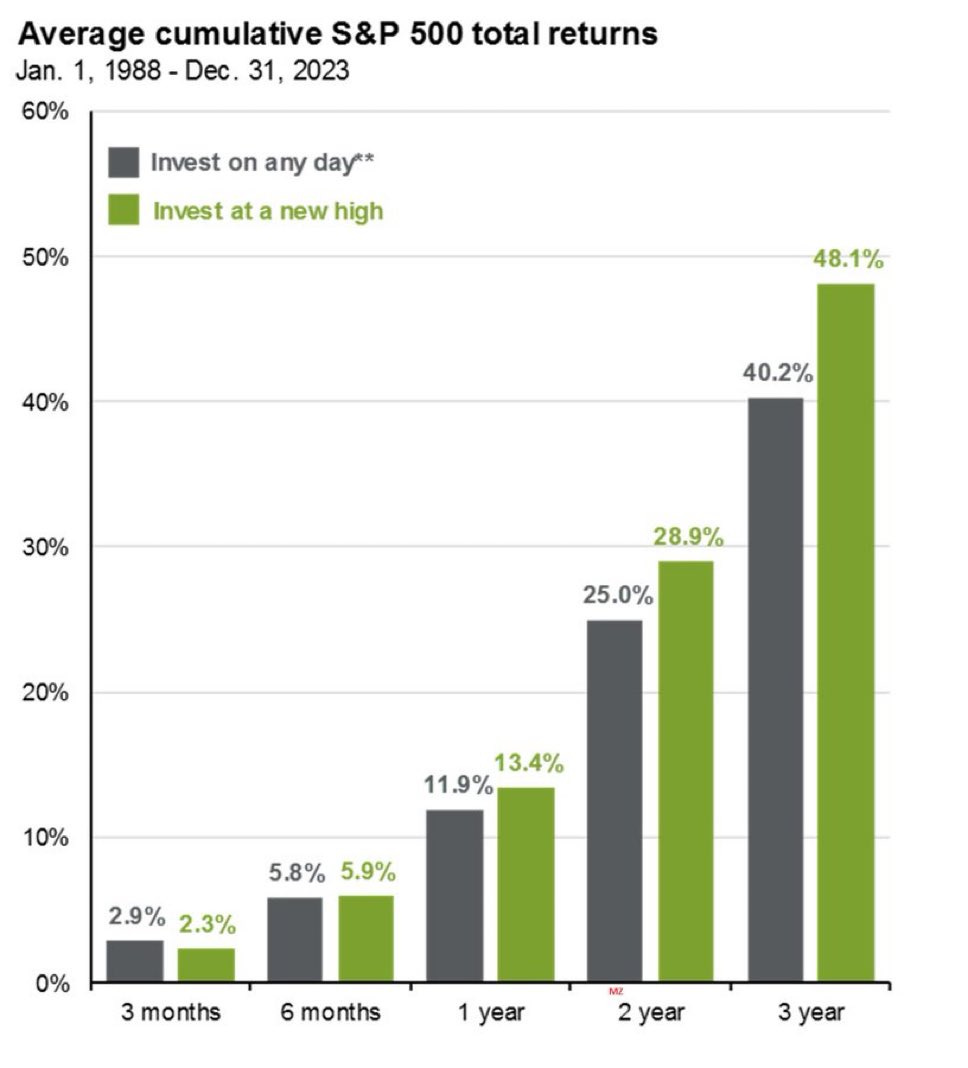
To investors,The crypto market is separate and distinct from the stock market in many ways. The assets in this new industry trade 24/7/365, are available to anyone with an internet connection, and historically have gone up or down based on different value drivers than public equities. But it would be a mistake to completely ignore what happens in the stock market when evaluating crypto assets. For example, the stock market and crypto both succumbed to rising interest rates during 2022 and 2023. As the cost of capital got more expensive, investor demand was destroyed. It didn’t matter what assets someone held. This relationship between stocks and crypto is likely to only get more important over time too. Wall Street is starting to look more closely at various cryptocurrencies. They will slowly add them to their portfolio. This means that the institutional world will begin to allocate capital to crypto based on a similar risk-on or risk-off analysis. Over time financial assets become more correlated as the holder base widens to include majority of finance. So what is happening in the stock market right now? Things look a little dicey. Michael Arouet points out that the Nasdaq index is the most overbought it has been since 2018. Charles Schwab’s Kevin Gordon shows the “S&P 500 Tech sector's price/sales ratio is going vertical and at an all-time high.”Like I said, things are getting dicey. This doesn’t mean that you should avoid investing in the stock market though. Since 1988, it has been more profitable to invest at all-time high prices than any other day in the market as long as your time horizon was at least 6 months. And right now we have an all-time high of the S&P market cap concentrated in the 5 largest companies. Where do we go from here? Your guess is as good as mine. But I do think it is important that crypto investors start paying more attention to the stock market. Defiance Capital’s Arthur Cheong articulated this well recently with the following comments:“Nuanced take: Entirely possible the crypto market is maturing and we dont see a complex wild swings with 70-80% drawdown every 2 years but instead a complex secular growth like what S&P 500 went through post 2008 GFC. Excluding the Covid-19 crash on 2020, US stock market either range bound or gradually grind up where every bears calling for major crash proven wrong but returns also increasingly concentrate on the big cap and mega caps while value and small caps remain unloved for a long time. Similar things playing out would mean most alts are uninvestable but some winners will deliver ground shattering returns and hopefully we get an Nvidia like outcome every few years while most alts are gonna disappoint.”I have no clue if Arthur is right or not, but his nuanced take is worth considering. The crypto market is growing up. The assets have been de-risked from just a few years ago, so you shouldn’t expect to get paid as much in returns if you are taking less risk. The ground is shifting. Update your mental models. Seek out as much information as you can. The future of your portfolio will depend on it. Hope you all have a great end to your week. I’ll talk to everyone on Monday.-Anthony PomplianoJP Thor is one of the lead contributors to THORChain, master of the memes, and has some insane ideas. In this conversation, we talk about his background, we talk about building a billion dollar platform with only 5 engineers in 18 months, promise of crypto, milestones and obstacles we need to overcome, and then conversation ends with some wild ideas you need to listen to.Listen on iTunes: Click hereListen on Spotify: Click hereTHORChain Founder Built $2+ Billion Platform While Being AnonymousPodcast Sponsors* Meanwhile is the world’s first licensed and regulated life insurance company built for the Bitcoin economy. * iTrustCapital allows you to buy and sell cryptocurrency in a tax-advantaged crypto IRA. Open and fund an account today to receive a $100 USD funding bonus.* Supra - Join Supra’s early integration program for zero-cost access to the fastest oracles and dVRF across 50+ blockchains.* BetOnline - Use crypto to bet on sports, casino games, horse racing, poker and more with promo code POMP100.* Espresso Displays - The world's thinnest touchscreen portable monitor. Expand your workspace and work from anywhere.* CrossFi is the Apple Pay for Crypto. For the first time in history, anyone with a web 3 wallet can spend crypto through a physical or virtual Visa card where Visa is accepted.* ResiClub - Your data-driven gateway to the US housing market.* Opening Bell Daily - Get the 5-minute newsletter that Wall Street reads.You are receiving The Pomp Letter because you either signed up or you attended one of the events that I spoke at. Feel free to unsubscribe if you aren’t finding this valuable. Nothing in this email is intended to serve as financial advice. Do your own research. This is a public episode. If you'd like to discuss this with other subscribers o

Regulators Say Ethereum Is Not A Security
To investors,A popular bitcoin maximalist talking point for years has been “bitcoin is the only crypto commodity and the rest of the tokens are unregistered securities.” How do I know that has been the talking point? Because it is something that I believed for a long time. It is something that I have heard repeated over and over again by various bitcoin friends. But over the last 12 months I’ve changed my mind. It became obvious that assets other than bitcoin would end up on Wall Street. Some of them would be considered a security, but most of them wouldn’t be. The issuers of these assets became too skilled at launching tokens and networks, while making sure to not create a security based on the traditional definition and regulation. Yesterday we got word from Consensys, one of the most important players in the ethereum ecosystem, that the SEC has closed their investigation into ethereum 2.0. They wrote:“Today we’re happy to announce a major win for Ethereum developers, technology providers, and industry participants: the Enforcement Division of the SEC has notified us that it is closing its investigation into Ethereum 2.0. This means that the SEC will not bring charges alleging that sales of ETH are securities transactions.”This notice from regulators, combined with the incoming approval of the Ether ETFs, confirm that the SEC will not classify ethereum as a security. The CFTC has already classified the asset as a commodity and it appears that will be the agreed upon status moving forward. There will be many people in the bitcoin community who ignore these data points. This will be a mistake. When the facts change, you must change your mind. It is a sign of intelligence when you do. Ethereum’s classification as a commodity will have far-reaching implications in the market. As I wrote to you all on June 7th in my letter titled Altcoins Are Coming To Wall Street:“Capital allocators have a lot of options of where to put their money. Stocks. Bonds. Currencies. Real estate. Commodities. Crypto. The list goes on and on.But crypto appears to provide more risk than most asset classes, which in turn means that a higher potential return is present. You get paid for the risk you take. At least that is the way a market should work.Now here is the part that may seem counterintuitive — Wall Street loves risk.Many people believe the suits are risk-adverse. They aren’t smart. Wall Street doesn’t know what is going on. But that is wrong.Wall Street has created the greatest casino in history. Every day trillions of dollars are wagered in the market based on risk-reward. The more risk that is present, the more someone on Wall Street will seek out the opportunity.”The altcoin market provides volatility and risk. Wall Street is salivating over the opportunity to allocate to this part of the market. Now that ethereum is a commodity, I would expect regulatory clarity on a number of other assets in the next 12 months.As we get that regulatory clarity, capital will flow. ETFs will be approved. Retail will keep buying. Institutions will get in the game. The market caps of many assets will grow to be much larger than we ever imagined. And many of the altcoins will also be worth zero. They will end in ruin and tears. But this is how markets work. A truly free market allows participants to allocate their private capital how they see fit. The rewards go to those who are right and the losses gravitate to those who are wrong. Rather than debate which assets will win or lose, we can let the market be the referee. There is something beautiful in that. Hope you all have a great day. I’ll talk to everyone tomorrow.-Anthony PomplianoPhil Rosen, the Co-Founder of Opening Bell Daily, interviews Anthony Pompliano. Topics include bitcoin, President Trump's recent support of the industry, interest rates, financial media, and more.Listen on iTunes: Click hereListen on Spotify: Click hereAnthony Pompliano on Bitcoin, Bull Markets, Interest Rates, and the Presidential RacePodcast Sponsors* Meanwhile is the world’s first licensed and regulated life insurance company built for the Bitcoin economy. * iTrustCapital allows you to buy and sell cryptocurrency in a tax-advantaged crypto IRA. Open and fund an account today to receive a $100 USD funding bonus.* Supra - Join Supra’s early integration program for zero-cost access to the fastest oracles and dVRF across 50+ blockchains.* BetOnline - Use crypto to bet on sports, casino games, horse racing, poker and more with promo code POMP100.* Espresso Displays - The world's thinnest touchscreen portable monitor. Expand your workspace and work from anywhere.* CrossFi is the Apple Pay for Crypto. For the first time in history, anyone with a web 3 wallet can spend crypto through a physical or virtual Visa card where Visa is accepted.* ResiClub - Your data-driven gateway to the US housing market.* Opening Bell Daily - Get the 5-minute newsletter that Wall Street reads.You are receiving The Pomp Letter because you e
Are Retail Investors Beating Institutions To The Bitcoin Spot ETFs?
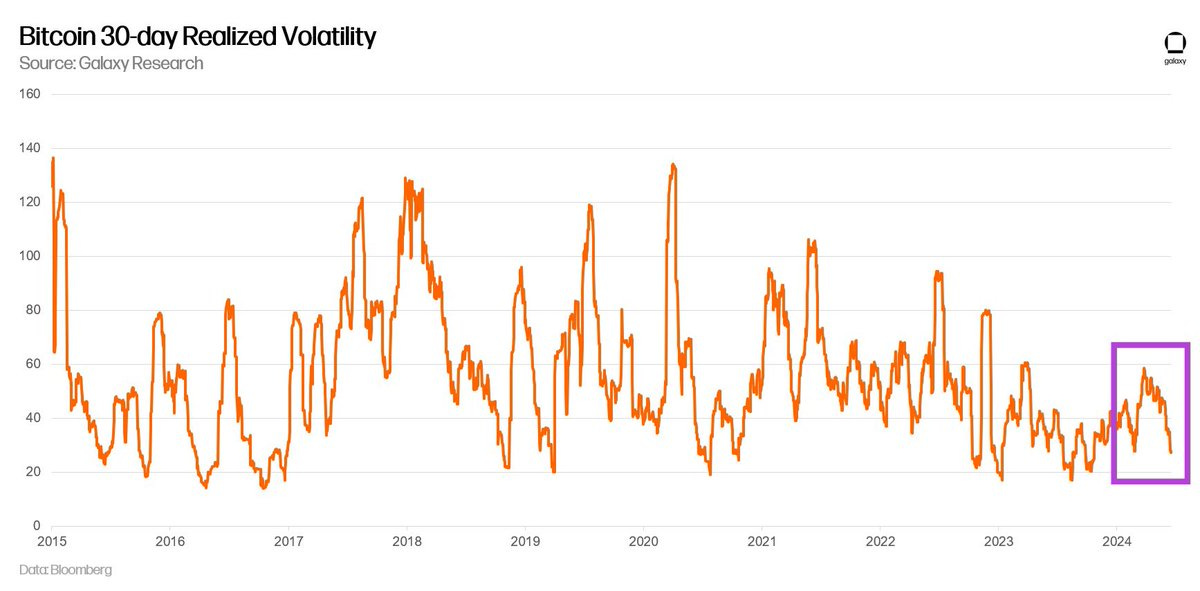
To investors,A few people have been asking me why bitcoin spot ETF inflows have been occurring, but the price of bitcoin is not drastically increasing. This is a good question, so I figured I would do my best to answer.We must first understand that financial markets are highly complex. There is almost never a single answer for why the price of an asset is moving up, down, or sideways. Bitcoin is the perfect example. The second thing we must understand is that bitcoin’s volatility has been dropping significantly. Galaxy’s Head of Research Alex Thorn shared this chart, which shows a historically low reading on the 30-day realized volatility metric.The next important data point is that ETF inflows have largely been from individual retail investors, not institutional allocators. CNBC’s Tanaya Macheel wrote over the weekend the following about comments made by Blackrock’s chief investment officer of ETF and index investments:“The long-awaited bitcoin exchange traded funds launched in January, and financial advisors are on their way – though gradually – toward adopting them, according to BlackRock’s Samara Cohen.For now, about 80% of bitcoin ETF purchases have likely been coming from “self-directed investors who have made their own allocation, often through an online brokerage account,” she said, speaking at the Coinbase State of Crypto Summit in New York City on Thursday.”This is a narrative violation because people have been bragging about institutional adoption of the ETFs. I have also personally thought that much of the inflows must be coming from institutions given the billions of dollars that are now sitting in those funds. It looks like I was wrong. Bianco Research’s Jim Bianco points out a recent data point from JP Morgan suggesting that the spot ETFs are not only getting retail capital, but they are actually not receiving net new capital:“tl:dr —$16 billion has flowed into bitcoin ETFs YTD. But $13 billion has left existing digital wallets, suggesting only $3 billion of net new money this year. As the chart from JPM below shows, estimates of flows into all digital assets are down from last year. Add to this that BlackRock says (above) 80% of bitcoin ETF purchases have likely been coming from “self-directed investors who have made their own allocation via online brokerage accounts. The narrative about these flows and their meaning does not match the reality of their actual nature. This means there has been hardly any adoption outside of degen money and swapping from on-chain to regulated brokerage accounts. The movement from on-chain to regulated brokerage accounts is a big problem in the long run. What BTC needs is on-chain adoption. It needs to be part of a new financial system. The existence of the ETF is moving money off-chain, further away from this ultimate goal.”Jim’s point here is interesting — not only is he arguing that retail has been moving capital from outside the system to inside the system, but he claims the ETFs are doing the opposite of what bitcoin originally set out to do.This brings me to the Ether ETFs which will supposedly be approved before the end of the summer.If these funds follow a similar path, there will be little to no institutional participation. Retail investors will move some of their capital from the spot asset to the spot ETF. And price will likely appreciate to a degree, but I doubt it will be the ~ 50% gain we saw in bitcoin’s price.Lastly, it is important to be aware of the basis trade. Many of the sophisticated investors who are participating in the ETF market have been going long spot bitcoin and short futures. This allows them to clip basis points while remaining market neutral.You can easily see the ETF inflows, but what most people have been missing in the analysis is the increase in short futures interest.As I started this letter, financial markets are highly complex. There is never a single culprit for why an asset price goes up, down, or sideways. Bitcoin has been lulling everyone to sleep. Don’t view that as a bad thing. Spend your time trying to understand why it is happening. Hope you all have a great day. I’ll talk to everyone tomorrow.-Anthony PomplianoPhil Rosen, the Co-Founder of Opening Bell Daily, interviews Anthony Pompliano. Topics include bitcoin, President Trump's recent support of the industry, interest rates, financial media, and more.Listen on iTunes: Click hereListen on Spotify: Click hereAnthony Pompliano on Bitcoin, Bull Markets, Interest Rates, and the Presidential RacePodcast Sponsors* Meanwhile is the world’s first licensed and regulated life insurance company built for the Bitcoin economy. * iTrustCapital allows you to buy and sell cryptocurrency in a tax-advantaged crypto IRA. Open and fund an account today to receive a $100 USD funding bonus.* Supra - Join Supra’s early integration program for zero-cost access to the fastest oracles and dVRF across 50+ blockchains.* BetOnline - Use crypto to bet on sports, casino games, horse racing, p

Stablecoins & Artificial Intelligence Want To Save The US From Crisis
To investors,The Wall Street Journal published an op-ed over the weekend from former House speaker Paul Ryan titled Crypto Could Stave Off A US Debt Crisis. In the article, Ryan highlights the impending crisis our country faces:“The American experiment is being tested. Nowhere is this more evident than in the trajectory of the national debt. The U.S. is headed toward a predictable yet avoidable debt crisis. If nothing is done, the economy will stall while government promises of healthcare and retirement security will be broken. Cuts to national defense will put the country at risk.With no fiscal solution in sight, the crisis is likely to start with a failed Treasury auction forcing an ugly surgery on the budget. As the economy contracts, the dollar will suffer a major confidence shock, further imperiling prospects for growth. The obvious answer is to deal with the root causes of the problem. Entitlement programs are driving the debt and require reform, but politicians can’t find the courage to do what needs to be done. The country thus proceeds down this perilous path. What can be done?”One of Ryan’s proposed solution is to watch what is happening with dollar-backed stablecoins. He isn’t claiming that stablecoins will be the only solution, but the following two paragraphs highlight the current momentum in stablecoins and increasing importance of their rise:“We might start by taking stablecoins seriously. According to the Treasury Department and DeFi Llama, a cryptocurrency analytics site, dollar-backed stablecoins are becoming an important net purchaser of U.S. government debt. If fiat-backed dollar stablecoin issuers were a country, it would sit just outside the top 10 in countries holding Treasurys—smaller than Hong Kong but larger than Saudi Arabia. If the sector continues to grow, stablecoins could become one of the largest purchasers of U.S. government debt and a reliable source of new demand.Their emergence as a mechanism for promoting the dollar couldn’t be timelier. The U.S. benefits from the dollar’s status as the primary international reserve currency. Among the perks: cheap, reliable financing for fiscal spending and substantial influence over the global financial system. Most financial activities eventually flow through U.S. banks thanks to the dollar’s dominance. As the global economy becomes more digital and multipolar, the dollar’s primacy is constantly under threat.”This analysis would be important regardless of who was presenting it, but it carries more weight when coming from the former House speaker. Paul Ryan intimately understands the economic and monetary policy issues we face as a country. His focus on stablecoins will only bring more attention to the potential solution.Stablecoins are not the only solution though — I was talking to friends at lunch yesterday about an interesting scenario worth sharing. The explosion in artificial intelligence is drastically increasing the efficiency and productivity of companies. I am not talking about the shiny, new “AI companies” that seem to be everywhere, but rather the existing companies that are leveraging AI internally to improve operations. These companies can now get more done with less people or less capital. This efficiency boom in productivity will lead to an increase in GDP. Based on some of the early data I am seeing, the GDP growth could be faster than the US debt growth. If this holds, which there is no promise that it will, then we could have a scenario where the debt-to-GDP ratio declines in the US over the coming months and years. This seemed impossible less than two years ago. If it happens though, the GDP growth would be a much-needed relief valve for a debt environment that seems out-of-control. The true solution is probably a mix of options. Stablecoins are going to provide a new set of buyers for US debt. Artificial intelligence is going to drive GDP growth at a faster pace than without it. Hopefully serious, responsible politicians are elected into office who attempt to balance the budget as well. Complex problems like the US economy can’t be solved with magic bullets. We need many different things to go right, which means we need various groups of people to work together. Politicians on both sides of the aisle. Wall Street, Silicon Valley, and Washington DC. We need everyone.Let’s work together like our country depends on it. Hope you all have a great day. I’ll talk to everyone tomorrow.-Anthony PomplianoPhil Rosen, the Co-Founder of Opening Bell Daily, interviews Anthony Pompliano. Topics include bitcoin, President Trump's recent support of the industry, interest rates, financial media, and more.Listen on iTunes: Click hereListen on Spotify: Click hereAnthony Pompliano on Bitcoin, Bull Markets, Interest Rates, and the Presidential RacePodcast Sponsors* Meanwhile is the world’s first licensed and regulated life insurance company built for the Bitcoin economy. * iTrustCapital allows you to buy and sell cryptocurrency in a tax
Bitcoin Is Infiltrating Public Company Balance Sheets
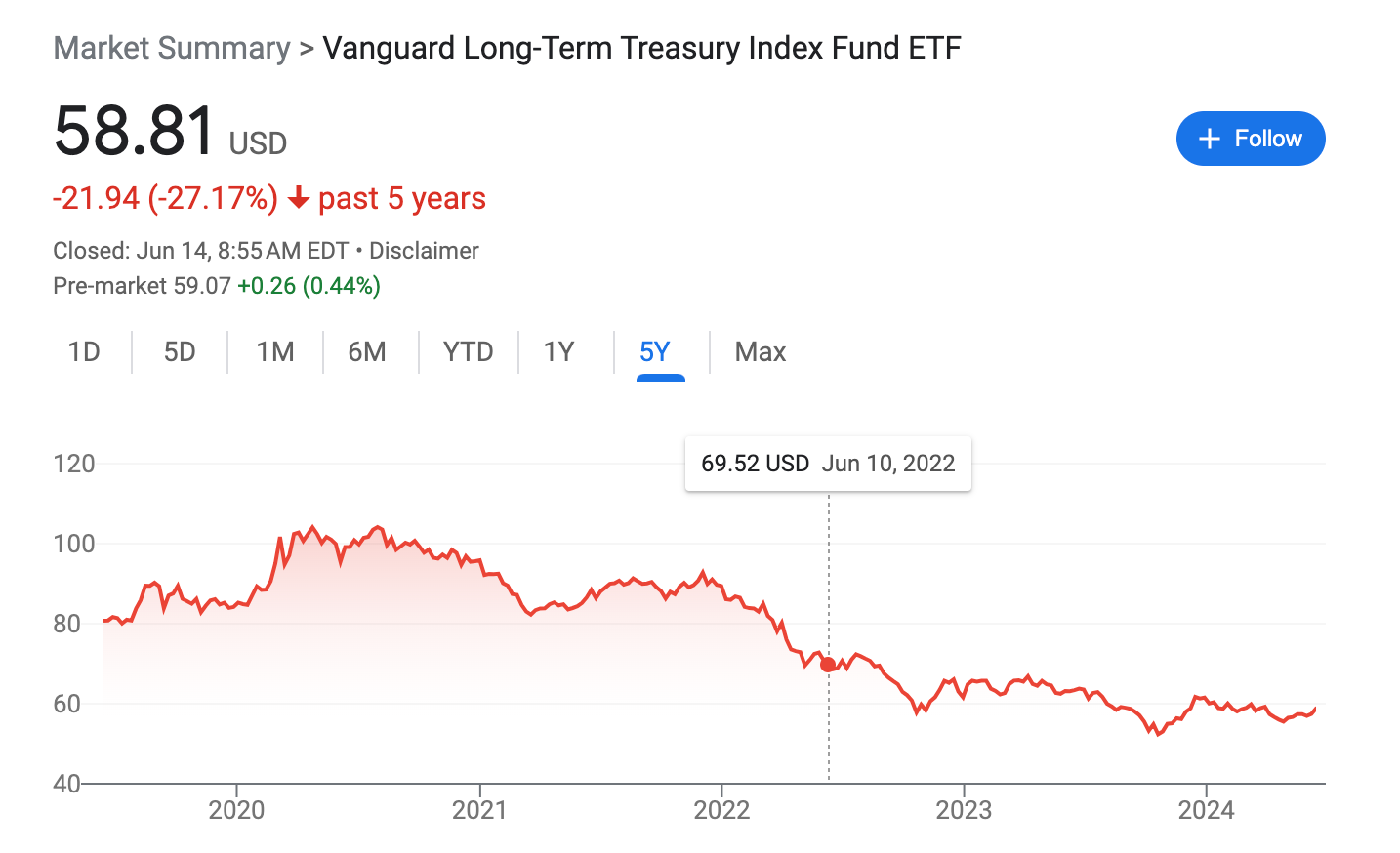
To investors,The public markets are starting to embrace bitcoin globally. MicroStrategy started the game with their announcement of a bitcoin treasury strategy. MicroStrategy owns 214,400 bitcoins as of May 1, 2024. The company claims the average purchase price of these bitcoin is $35,158 per bitcoin with a total cost of $7.5 billion.Next we saw Tesla and Square (now known as Block) get in the game. Tesla has sold some of their bitcoin, but still holds approximately 9,720 for a total value of more than $670 million. Block is still holding more than 8,000 bitcoin themselves. These three companies were the lone bitcoin trio for awhile. I don’t count the bitcoin miners and other crypto-native companies in this analysis. What made MicroStrategy/Tesla/Block special was the fact they had nothing to do with bitcoin/crypto, yet were choosing to embrace the asset as a reserve currency. We no longer have a special trio though. The flood gates have opened in the last 6 months.We have seen DeFi Technologies in Canada, Metaplanet in Japan, and Semler Scientific in the US announce a bitcoin treasury strategy. Each company saw their stock increase in value shortly after the announcements. Game theory is going to take over now.If a company sees an increase in their stock price in the short-term, and an increase in their balance sheet value over the long-term, then we should anticipate many companies to adopt bitcoin as a reserve asset in the future. Economic incentives are a powerful drug. This does not mean a public company is going to move 100% of their assets into bitcoin. It means that a portion of the balance sheet will be converted to bitcoin and held for the long-term. Bitcoin doesn’t have to be the only reserve asset, it just has to be one of a few held by companies. Something about this is counter-intuitive. Many people on Wall Street would point to a bitcoin treasury strategy as a gimmick. They will claim people are merely trying to increase their share price or grab headlines. While that could be true to a degree, these companies are actually pursuing a sound financial strategy built on timeless investing principles — they are putting their economic value in a long-term oriented asset.Wall Street is full of short-termism. Everyone wants to know what you’re going to do in the next 90 days or what you did in the last quarter. Bitcoin may slowly change some of that thinking.It is a competitive advantage to think long-term in a world full of people who don’t. As we continue to watch the US government, and many governments around the world, debase their currency bitcoin will likely become a more attractive asset. Historically, US treasuries were considered a safe investment, but we can see how horrendous this strategy has been over the medium-term recently. Use the Vanguard Long-Term Treasury Index Fund ETF as an example — holders of these treasuries are down more than 25% over the last 5 years. This doesn’t include the real loss, which could be double as bad. What happens in a world where corporations stop using treasuries as a long-term vehicle for balance sheet management? How do things change if bitcoin becomes the default asset for a portion of the balance sheet?I don’t know those answers, but it feels like we are going to start getting answers in the months and years to come. Hope you all have a great end to your week. I’ll talk to everyone on Monday.-Anthony PomplianoWill Clemente is the Co-Founder of Reflexivity Research.In this conversation, we talk about Bitcoin, Ethereum, Solana, meme coins, portfolio management, ETFs, regulation, culturally relevant ideas, what you should be paying attention to, and where opportunities exist in the next 18 months.Listen on iTunes: Click hereListen on Spotify: Click hereWill Clemente on the Bitcoin Bull MarketPodcast Sponsors* Meanwhile is the world’s first licensed and regulated life insurance company built for the Bitcoin economy. * iTrustCapital allows you to buy and sell cryptocurrency in a tax-advantaged crypto IRA. Open and fund an account today to receive a $100 USD funding bonus.* Supra - Join Supra’s early integration program for zero-cost access to the fastest oracles and dVRF across 50+ blockchains.* BetOnline - Use crypto to bet on sports, casino games, horse racing, poker and more with promo code POMP100.* Espresso Displays - The world's thinnest touchscreen portable monitor. Expand your workspace and work from anywhere.* CrossFi is the Apple Pay for Crypto. For the first time in history, anyone with a web 3 wallet can spend crypto through a physical or virtual Visa card where Visa is accepted.* ResiClub - Your data-driven gateway to the US housing market.* Opening Bell Daily - Get the 5-minute newsletter that Wall Street reads.You are receiving The Pomp Letter because you either signed up or you attended one of the events that I spoke at. Feel free to unsubscribe if you aren’t finding this valuable. Nothing in this email is intended to serve as financial advi
Presidents Want To Protect Bitcoin?
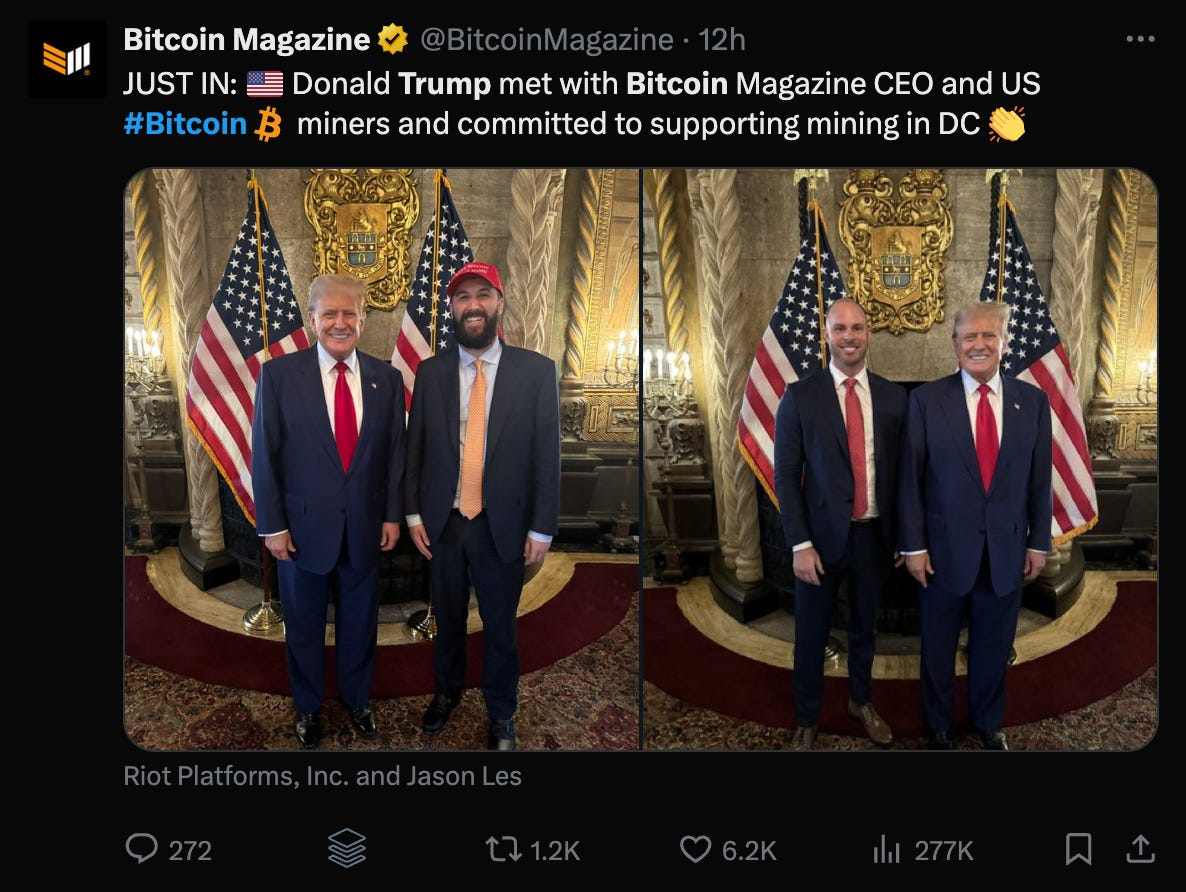
To investors,There are two goals when investing — protect your downside and optimize your upside. Most investors focus on the latter, but protecting your downside is critically important when investing in new asset classes. A good investor must understand the risks. They must underwrite all possible situations. The more you know what you can lose, the more you can mitigate those situations. But some investors take this too far. This is where the pessimists thrive. These doomsday advocates will find a low probability situation and harp on it endlessly. Their goal is to scare people, while believing they look smart. That is not how markets work though. Probabilities live in the math discipline, not psychology. No amount of fear-mongering can change the probability of an outcome. This is a point that I have been explaining for years now. The bitcoin critics are a prime example of what happens when you let sloppy thinking trick you into believing math doesn’t exist. One of the main arguments that bitcoin critics have had for awhile is that the US government is going to ban bitcoin. These individuals point to the executive order criminalizing gold almost a century ago. They pontificate on academic theories for why bitcoin or crypto is bad for America. It is all nonsense. Pessimists sound smart, optimists make money. The truth is that these critics have been proven wrong. Bitcoin mining is solving many of America’s energy problems, bitcoin is protecting Americans’ purchasing power better than any other asset, and stablecoin issuers have become one of the largest buyers of US debt. Crypto is solving real problems for the country. Don’t just take my word for it though. President Trump met with many of the largest bitcoin miners yesterday at Mar-a-Largo. Bitcoin Magazine described the situation with the following:“Donald Trump met with Bitcoin Magazine's CEO David Bailey and several prominent U.S. Bitcoin miners. The meeting saw Trump commit to championing Bitcoin mining both in Washington D.C. and on the global stage.Among the attendees were representatives from leading Bitcoin mining firms, including CleanSpark, Riot Platforms, Marathon Digital, and other notable industry players. Key figures present included S Matthew Schultz from CleanSpark, Jason Les and Brian Morgenstern of Riot Platforms, Salman Khan of Marathon Digital, and Amanda Fabiano of Fabiano Consulting, formerly Head of Mining at Galaxy and Director of Bitcoin Mining at Fidelity.”This situation would have been unfathomable just a few months ago. It doesn’t stop there. After the meeting, Trump took to Truth Social to confirm his interest in protecting bitcoin mining in the United States.Forget the politics of who is saying the message. Focus on the fact that the leading Presidential candidate is openly supporting the industry. It is getting harder to see a world where the US government would ban bitcoin, shut down mining, or kick the crypto industry out of the country. The technology has proven that it can solve too many problems. Remember, investing is about protecting the downside and optimizing for the upside. Having the US government embrace bitcoin and crypto, rather than ban it, increases the odds that the downside is protected. My guess is there will be more competition between Trump and Biden as we get closer to the election. Each candidate will make grand promises. They will do their best to gather votes from the industry. Some of the things they say will come true. Others will not. It doesn’t matter though. Both candidates are headed in a pro-crypto direction. That will be a large tailwind for the industry in the coming years. Hope you all have a great day. I’ll talk to everyone tomorrow.-Anthony PomplianoWill Clemente is the Co-Founder of Reflexivity Research.In this conversation, we talk about Bitcoin, Ethereum, Solana, meme coins, portfolio management, ETFs, regulation, culturally relevant ideas, what you should be paying attention to, and where opportunities exist in the next 18 months.Listen on iTunes: Click hereListen on Spotify: Click hereWill Clemente on the Bitcoin Bull MarketPodcast Sponsors* Meanwhile is the world’s first licensed and regulated life insurance company built for the Bitcoin economy. * iTrustCapital allows you to buy and sell cryptocurrency in a tax-advantaged crypto IRA. Open and fund an account today to receive a $100 USD funding bonus.* Supra - Join Supra’s early integration program for zero-cost access to the fastest oracles and dVRF across 50+ blockchains.* BetOnline - Use crypto to bet on sports, casino games, horse racing, poker and more with promo code POMP100.* Espresso Displays - The world's thinnest touchscreen portable monitor. Expand your workspace and work from anywhere.* CrossFi is the Apple Pay for Crypto. For the first time in history, anyone with a web 3 wallet can spend crypto through a physical or virtual Visa card where Visa is accepted.* ResiClub - Your data-driven gateway to the US housing mark
The Public Market Pivot
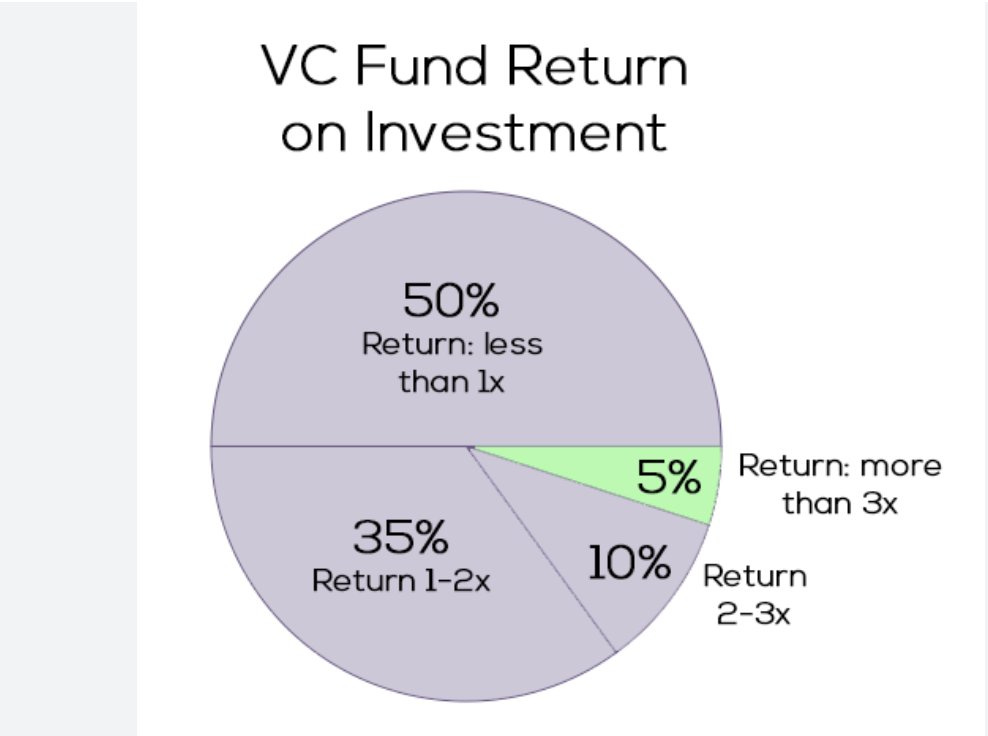
To investors, The last 15 years of investing have been dominated by private market investors. The average venture capital fund returned ~ 17% compounded. During the same time period, QQQ compounded at 13% annually. This 400 basis points of outperformance would make any market participant salivate.But the analysis is not that simple. First, the average venture fund is probably holding shares in companies that haven’t been marked-to-market, so those companies are worth much less than currently stated. Remember, the data can be very confusing. On one hand, reports are that about 50% of venture funds fail to return their original investors’ capital. But other reports claim that 50% of all venture funds actually outperform the stock market. Regardless of which it is, everyone agrees that venture funds keeps investors illiquid for 8-12 years. The story seems messier now, right? Are venture funds worth the complexity and uncertainty?Just wait - it is only going to get more complex. There are nearly 3x more venture capital funds today compared to 15 years ago.On top of the increase in venture funds, investors are also gaining new ways to access private market deals. The secondary market is more liquid than ever and we even have a closed-end, publicly traded fund that gives investors exposure to the most popular private companies.These developments mean that competition is significantly increasing for venture capitalists. When competition increases, returns begin to compress.My guess is that the average venture fund will not outperform QQQ by 400 basis points moving forward. The best VCs in the world will continue to dominate (and beat the market by a large margin), but the new competition is going to arb the outperformance away for the average fund.Why is that important to understand?Because I believe we are about to see a renaissance of public market investors. In a way, this is not some profound insight. Crypto has popularized publicly available, liquid financial markets. These digital assets are now collectively valued at more than $2.5 trillion. So if you combine the popularity of crypto with the incoming competition in venture capital, you can see why the younger generation will start investing in the public stock market more often. You have already seen public market hedge funds crossing over to invest in private markets, but now I am starting to see private market investors crossing over to invest in public markets. The largest example is Sequoia, but there are many others who have not explicitly stated their strategy expansion. Critics of the “public markets will become more popular” view will point to the decline in number of US public companies. According to Google AI, “the number of publicly traded companies in the United States has been declining since the 1990s. In 1996, the number of companies peaked at around 8,090, but by 2019 it had dropped to 4,266. As of April 2024, the number was around 4,300.”Proponents of the view will simply point to the current trend of public market infrastructure blending with crypto assets, which is highlighted by the ETFs, mainstream exchanges evaluating crypto, and legacy finance investment firms allocating billions of dollars to the new asset class. I will take it one step further though — the best investors of the new generation won’t simply invest in crypto companies in the public market, but rather they will seek out the best investment opportunities regardless of the industry. Venture capital will always have a place in an investors’ portfolio, especially if you invest with the best VCs. But public markets are going to make a roaring comeback in popularity over the coming years. I see it in my own personal investing. I see it in my friends’ investing. And I can’t find a reason why the trends will slow down. Thankfully, more investors participating in the public market is ultimately a positive development for financial markets. Now we need the amazing private companies to go public earlier. That won’t happen as long as the private market is flooded with cheap capital though. Hope you all have a great day. I’ll talk to everyone tomorrow. -Anthony PomplianoMatthew Sigel is the Head of Digital Assets Research and Portfolio Manager at VanEck.In this conversation, we talk about bitcoin, ethereum, miners, global adoption, regulation, conversations VanEck is having with their clients, where opportunities exist, and how crypto and politics are intersecting with each other.Listen on iTunes: Click hereListen on Spotify: Click hereVanEck’s Matthew Sigel Explains What The $100 Billion Asset Manager Is Doing In CryptoPodcast Sponsors* Meanwhile is the world’s first licensed and regulated life insurance company built for the Bitcoin economy. * iTrustCapital allows you to buy and sell cryptocurrency in a tax-advantaged crypto IRA. Open and fund an account today to receive a $100 USD funding bonus.* Supra - Join Supra’s early integration program for zero-cost access to the fastest

Altcoins Are Coming To Wall Street
To investors,Franklin Templeton is considering a big push into the altcoin market. This is the latest development for large financial institutions based on reporting from Yueqi Yang at The Information. This fund would be targeted at institutional capital with a focus on crypto exposure outside of bitcoin and ether. While that may sound like a high-risk strategy, it actually is a natural progression for an asset manager. Investors are looking for returns. They want to risk capital and watch their money grow into more money. This is the essence of investing. Capital allocators have a lot of options of where to put their money. Stocks. Bonds. Currencies. Real estate. Commodities. Crypto. The list goes on and on.But crypto appears to provide more risk than most asset classes, which in turn means that a higher potential return is present. You get paid for the risk you take. At least that is the way a market should work. Now here is the part that may seem counterintuitive — Wall Street loves risk. Many people believe the suits are risk-adverse. They aren’t smart. Wall Street doesn’t know what is going on. But that is wrong. Wall Street has created the greatest casino in history. Every day trillions of dollars are wagered in the market based on risk-reward. The more risk that is present, the more someone on Wall Street will seek out the opportunity. Just look at zero-day options. They now make up more than 50% of all option trading. Bet what you think will happen to the market by the end of the day. This is akin to gambling. This brings me to the altcoin market. Some of the assets will have long-term value. Many of them won’t. It doesn’t really matter though. Investors on Wall Street are no different than the crypto degens. They all want to find risk and volatility. The long-term value of an asset is much less important compared to the short-term opportunity. This approach violates everything you have learned about traditional investing principles. Yet this is the current state of financial markets. Wall Street investors are going to flock to the altcoin market the same way they have flocked to zero-day options. If an asset moves, Wall Street will be there. If an asset moves a lot, Wall Street will be there with size. Franklin Templeton understands this. They wouldn’t be contemplating this fund unless they felt there was significant demand for the strategy. Right now the fund would be a private fund. Eventually we will see public funds that give altcoin exposure inside the United States. You may not like it. You may disagree with the investment case for buying these assets. But the market is the referee and it is telling you that altcoins are coming to Wall Street. Hope you have a great end to your week. I’ll talk to everyone on Monday.-Anthony PomplianoMatthew Sigel is the Head of Digital Assets Research and Portfolio Manager at VanEck.In this conversation, we talk about bitcoin, ethereum, miners, global adoption, regulation, conversations VanEck is having with their clients, where opportunities exist, and how crypto and politics are intersecting with each other.Listen on iTunes: Click hereListen on Spotify: Click hereVanEck’s Matthew Sigel Explains What The $100 Billion Asset Manager Is Doing In CryptoPodcast Sponsors* Meanwhile is the world’s first licensed and regulated life insurance company built for the Bitcoin economy. * iTrustCapital allows you to buy and sell cryptocurrency in a tax-advantaged crypto IRA. Open and fund an account today to receive a $100 USD funding bonus.* Supra - Join Supra’s early integration program for zero-cost access to the fastest oracles and dVRF across 50+ blockchains.* BetOnline - Use crypto to bet on sports, casino games, horse racing, poker and more with promo code POMP100.* Espresso Displays - The world's thinnest touchscreen portable monitor. Expand your workspace and work from anywhere.* CrossFi is the Apple Pay for Crypto. For the first time in history, anyone with a web 3 wallet can spend crypto through a physical or virtual Visa card where Visa is accepted.* ResiClub - Your data-driven gateway to the US housing market.* Opening Bell Daily - Get the 5-minute newsletter that Wall Street reads.You are receiving The Pomp Letter because you either signed up or you attended one of the events that I spoke at. Feel free to unsubscribe if you aren’t finding this valuable. Nothing in this email is intended to serve as financial advice. Do your own research. This is a public episode. If you'd like to discuss this with other subscribers or get access to bonus episodes, visit pomp.substack.com/subscribe

The Exchange Wars Are Heating Up
To investors,Robinhood announced this morning they are buying crypto exchange Bitstamp for $200 million. This consolidation in the exchange space is a continuation of what I wrote to this group last week. As a reminder, the big traditional exchanges want to get in the crypto game. Here is an excerpt from that letter:“Yesterday, the NYSE President stated the following at the Consensus conference in Austin, Texas:“If there was clear regulatory guidance [in the U.S.], it would be an opportunity to look at…The fact that you've seen $58 billion or so come to the ETFs has been a strong sign that the market is looking for regulation in traditional structures. So, hopefully, the [U.S. Securities and Exchange Commission] saw the inflows and said, 'Hey, this makes a lot of sense,' considering bitcoin ETFs have been a tremendous success.”If you don’t think the major stock exchanges want in on the action, you are severely mistaken.Coindesk’s Krisztian Sandor pointed out:“NYSE's U.S.-based rival, the Chicago Mercantile Exchange (CME), a giant in regulated crypto futures trading, is planning to launch spot crypto trading to clients, the Financial Times reported earlier this month.”This is one of the last giants to slay for the crypto industry. If the legacy exchanges allow for spot trading of these assets, there will be an incredible increase in the capital that flows into the industry.”These traditional exchanges are trying to find areas for expansion, but it doesn’t come without risk. Earlier this week the Texas Stock Exchange was announced, which wants to compete directly with the NYSE and Nasdaq. The New York Times’ Joe Rennison wrote:“A start-up stock exchange headquartered in Dallas and backed by the financial powerhouses BlackRock and Citadel Securities is set to challenge the dominance of the New York Stock Exchange and Nasdaq in the listing and trading of companies and funds.The Texas Stock Exchange, or TXSE, has raised roughly $120 million from more than two dozen investors, including BlackRock and Citadel Securities as well as some unnamed business leaders, according to a statement on Wednesday.”So the legacy exchanges want to compete in the crypto sector. Startup stock exchanges want to steal market share from the traditional exchanges. The crypto exchanges, such as Coinbase, want to start stealing market share from the traditional markets. And companies like Robinhood or Public.com want a piece of the trading landscape as well, regardless of the asset class. So why is Robinhood buying Bitstamp? According to Paige Smith at Bloomberg:“The Bitstamp acquisition provides the Menlo Park, California-based company a greater presence outside of the US, as well as a boost to the firm’s crypto capabilities, which have bolstered Robinhood’s earnings. Bitstamp has licenses and registrations in European Union countries including Italy, Spain, the Netherlands and France, according to its website.The EU’s first unified crypto legislation, called Markets in Crypto Assets, takes effect in January and license holders in member states will then have until July 2026 to obtain full MiCA permits. They can operate with existing licenses until then under a so-called “grandfathering clause.””The exchange wars are upon us. We have already seen major startup players like FTX and Binance run into issues that derailed their plans. But there are still plenty of startup exchanges, both in the traditional market and the crypto market, which are gunning for their share of the ever-growing financial market. Here are my predictions for what is going to happen:* The legacy exchanges are going to rapidly add crypto assets* The crypto exchanges are going to start adding traditional assets in this bull market* We will call them all “exchanges” instead of traditional vs crypto* The big players will start buying up the smaller players in an industry-wide consolidation / arms race* The startup stock exchanges will struggle to compete with the incumbents, but there is a real chance of disruption from the current crypto exchanges — they have a differentiated product and momentum* Investors won’t have loyalty to any exchange outside of where liquidity and best pricing existsI am fascinated by what is happening in the exchange landscape. It will have significant impact on the future, especially if an exchange outside of NYSE and Nasdaq can dominate in stocks and crypto. Although Coinbase is the leader in crypto, Robinhood may have the best position given their mindshare, along with the penetration across assets. Hope you all have a great day. I’ll talk to everyone tomorrow.-Anthony PomplianoMatthew Sigel is the Head of Digital Assets Research and Portfolio Manager at VanEck. In this conversation, we talk about bitcoin, ethereum, miners, global adoption, regulation, conversations VanEck is having with their clients, where opportunities exist, and how crypto and politics are intersecting with each other.Listen on iTunes: Click hereListen on Spotify: Click
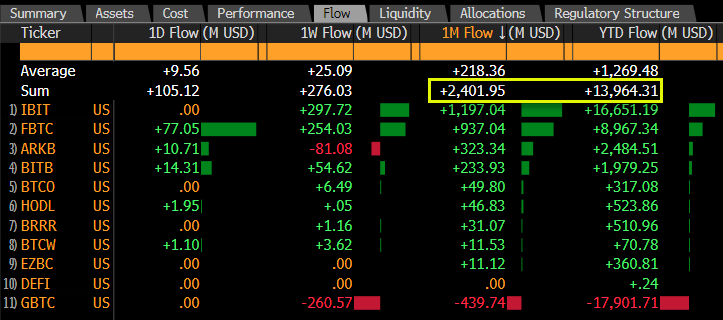
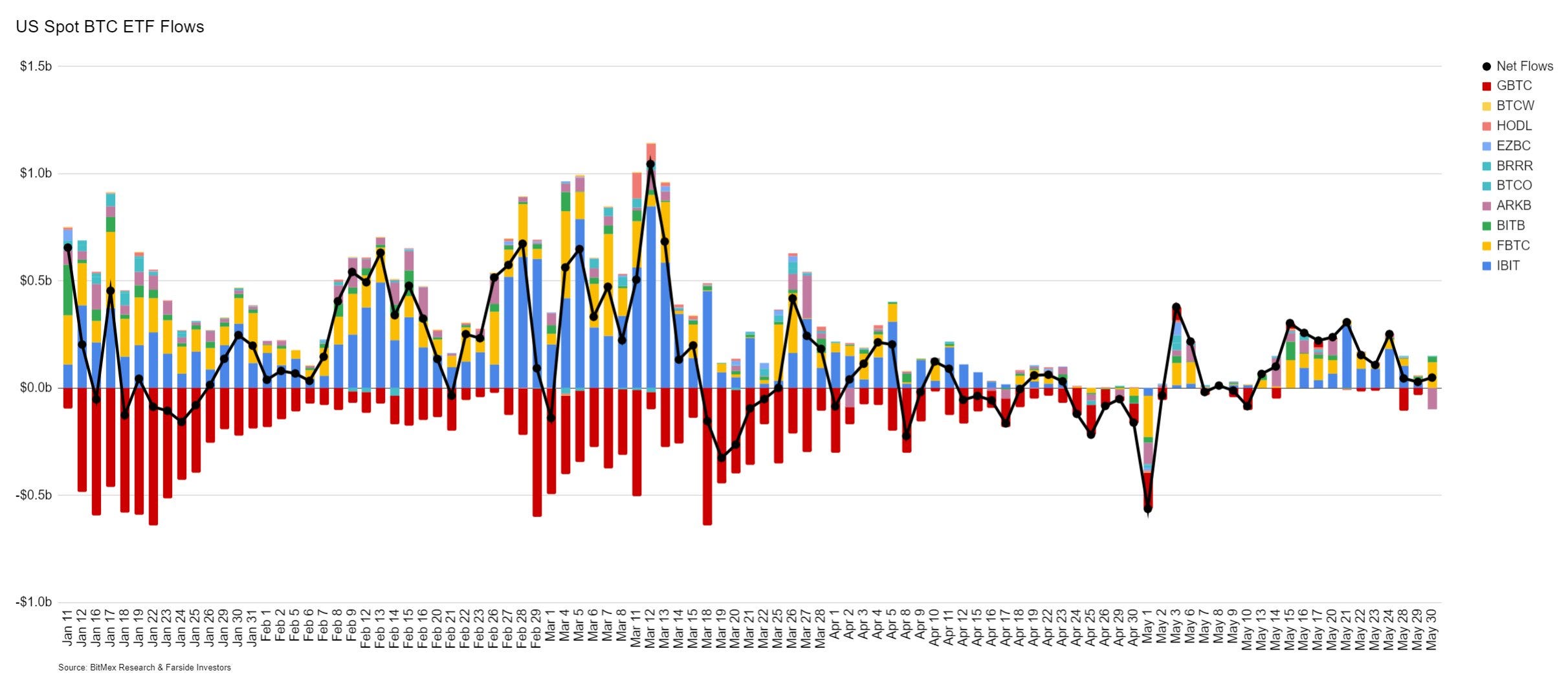
Bitcoin ETFs Continue To See Material Inflows
To investors,Bitcoin has been lulling the market to sleep in recent weeks. However, as the digital currency continues to trade sideways, the ETFs are quietly accumulating more assets. Bloomberg’s Eric Balchunas pointed out this morning:“The bitcoin ETFs on a 15-day inflow streak, pulled in $2.4b in the past month (only two ETFs have taken in more $SPY & $VOO). YTD net +$14b. The ability to bounce back w/ renewed interest after a couple nasty selloffs is rare for hot sauce type strategies. Shows staying power.”It is hard to decipher a difference between retail and institutional flows in these ETFs, but capital is flowing regardless of who is putting money to work. This capital doesn’t care about the price of the asset. It continues to flow in an attempt to gain price exposure to one of the best performing assets in history. Last week I attended the Consensus Conference in Austin, Texas. One of the big takeaways was how certain the institutional world has become when thinking about bitcoin. This certainty has nuance to it. Institutions have not reached consensus on what bitcoin will become — there is wide disagreement on how to value bitcoin, along with various price targets that people have thrown out to the public. Instead, institutions are building certainty around bitcoin’s survival. They have developed confidence in the downside protection of allocating to bitcoin. This confidence changes market behavior.Long-term thinking is derived from confidence and conviction. Without those, insecurity drives impatience.Bitcoin is antithetical to impatience. You can see this quantitatively in the fact that majority of the bitcoin in circulation has not moved in over two years. It didn’t matter that the price dropped 80% or that the asset rebounded back to all-time highs. Most bitcoin holders aren’t selling. Combine this newfound certainty and conviction from institutions with their existing trend of passive investing and you can see how persistent capital in-flows are likely the name of the game for years to come. At the same time that the existing institutional leadership is building their certainty and conviction, there is a rising demographic of young people in these institutions who are poised to take up the cause as they ascend into leadership positions. An interesting way to think about this is how Bitcoin Magazine’s David Bailey explains it:“The Bitcoin nation is stronger than anyone realizes. We share a common ideology, economic incentives, and vision (more or less). We wear no uniform. We've infiltrated every institution, every country, every social network. Aristocrats + working class alike. We can not be stopped.”That view of the current bitcoin holder base almost sounds too good to be true. But I am constantly surprised at how many people I meet who hold bitcoin and don’t work in the industry. This weekend I was at a dance recital for my daughter and a guy came up to me. He works at Apollo, but is a big bitcoin believer. Last week at the conference I met people from almost every continent, and from many different industries, who were all interested in seeing the Bitcoin vision come to fruition. Some of the individuals will eventually sit in positions of influence and power. They will run the large financial firms. They will become our political leaders. They will create the next generation of world-changing companies. A true decentralized network of people all working towards a common cause. This is what capitalism looks like. This is how economic incentives work. What a beautiful thing to see. And this is why the ETFs will continue to see persistent in-flows over the long-term. Bitcoin is an idea whose time has come. Have a great day. I’ll talk to everyone tomorrow.-Anthony PomplianoPeter McCormack is the Chairman of Real Bedford, and the host of “What Bitcoin Did” podcast.In this conversation, we talk Peter buying Real Bedford men’s team and plugging it into the bitcoin network, his plan to make the Premier League, raising capital, sponsors, merchandise, treasury management, bitcoin market cycles, women’s team, opening a bar, building a stadium, investing in the community of Bedford, and potential risks.Listen on iTunes: Click hereListen on Spotify: Click herePeter McCormack’s Football Plans & How Bitcoin Saved ThemPodcast Sponsors* Meanwhile is the world’s first licensed and regulated life insurance company built for the Bitcoin economy. * iTrustCapital allows you to buy and sell cryptocurrency in a tax-advantaged crypto IRA. Open and fund an account today to receive a $100 USD funding bonus.* Supra - Join Supra’s early integration program for zero-cost access to the fastest oracles and dVRF across 50+ blockchains.* BetOnline - Use crypto to bet on sports, casino games, horse racing, poker and more with promo code POMP100.* Espresso Displays - The world's thinnest touchscreen portable monitor. Expand your workspace and work from anywhere.* CrossFi is the Apple Pay for Crypto. For the first time in his
Is Bitcoin Ready To Break Out?
To investors,Bitcoin has been trading sideways for a number of weeks. This follows the euphoria from the bitcoin spot ETF approvals, along with the market-wide exhale post-halving. As I previously shared with you all, bitcoin historically has not performed exceptionally well following the halving, so this is not necessarily an unexpected outcome. But now there is a new narrative forming — is bitcoin ready to break out?Twitter user TechDev_52, an entrepreneur and crypto analyst, shared some interesting charts over the weekend. First, we may be seeing a bitcoin breakout compared to M1 money supply. TechDev_52 writes:“You're looking at the first breakout of Bitcoin against M1 money supply since March 2017 when it went historically parabolic for 9 months. Comparisons and trend projections involving 2021 may end up dramatically underestimating things. One interpretation: In 2021 Bitcoin was carried to new USD highs by increased money supply. In 2024 it’s gotten there on its own demand (and thus broke out against M1). Add the anticipated M1 growth this time and we likely see Bitcoin outpace expectations based in part on 2021.”Next, the analyst points out “Bitcoin has only seen blow-off tops after breakouts against M1 money supply. And the longer its consolidated, the longer its run. This breakout follows the longest consolidation yet.”Lastly, the analyst writes “Historic move imminent. Bitcoin’s 5-day bullish compression has reached its highest level in 8 years.”Seems bullish, right? Maybe. This analyst has a strong argument looking at bitcoin, the historical price performance, and M1 money supply. If you are unfamiliar with the insane M1 money supply growth over the last four years, here is a refresher:But bitcoin seems to be overpowering the recent contraction in money supply. The asset has appreciated more than 50% year-to-date and we can see that each ETF is now seeing multiple day streaks of net-inflows. It is impossible to predict whether bitcoin is going to break out at any given moment. However, it is very easy to see the structural tailwind at play for bitcoin.The government is going to continue debasing the dollar. Wall Street will keep buying more bitcoin. Retail is not going to sell the bitcoin they already hold. Illiquid supply. Increasing demand. Debasing currency denominating the asset. The long-term perspective remains just as bullish as ever. Don’t get lulled to sleep. Don’t take your foot of the gas. Too many early bitcoin/crypto investors I know are celebrating being “right,” instead of realizing that we are in the early days of a systemic change in financial markets. The best investors in the world press their winners. If you think bitcoin is a winner, and you start celebrating before you cross the end zone, things may not end as well as they could have otherwise. Just ask the Cowboy’s Leon Lett what happens when you celebrate too early:Hope you all have a great day. I’ll talk to everyone tomorrow.-Anthony PomplianoReader Note: Today is a free email available to everyone. If you would like to receive these letters each morning, please subscribe to become a paying member of The Pomp Letter by clicking here.Peter McCormack is the Chairman of Real Bedford, and the host of “What Bitcoin Did” podcast. In this conversation, we talk Peter buying Real Bedford men’s team and plugging it into the bitcoin network, his plan to make the Premier League, raising capital, sponsors, merchandise, treasury management, bitcoin market cycles, women’s team, opening a bar, building a stadium, investing in the community of Bedford, and potential risks.Listen on iTunes: Click hereListen on Spotify: Click herePeter McCormack’s Football Plans & How Bitcoin Saved ThemPodcast Sponsors* Meanwhile is the world’s first licensed and regulated life insurance company built for the Bitcoin economy. * iTrustCapital allows you to buy and sell cryptocurrency in a tax-advantaged crypto IRA. Open and fund an account today to receive a $100 USD funding bonus.* Supra - Join Supra’s early integration program for zero-cost access to the fastest oracles and dVRF across 50+ blockchains.* BetOnline - Use crypto to bet on sports, casino games, horse racing, poker and more with promo code POMP100.* Espresso Displays - The world's thinnest touchscreen portable monitor. Expand your workspace and work from anywhere.* CrossFi is the Apple Pay for Crypto. For the first time in history, anyone with a web 3 wallet can spend crypto through a physical or virtual Visa card where Visa is accepted.* ResiClub - Your data-driven gateway to the US housing market.* Opening Bell Daily - Get the 5-minute newsletter that Wall Street reads.You are receiving The Pomp Letter because you either signed up or you attended one of the events that I spoke at. Feel free to unsubscribe if you aren’t finding this valuable. Nothing in this email is intended to serve as financial advice. Do your own research. This is a public episode. If you'd like to discuss this with other

Corporations Want A Lot More Bitcoin
Today’s letter is brought to you by Consensus 2024!Consensus 2024 is happening May 29-31 in Austin, Texas. This year marks the tenth annual Consensus, making it the largest and longest-running event dedicated to all sides of crypto, blockchain and Web3. Don’t miss Bitcoin: We Are So Back, where Anthony Pompliano will discuss what the next bull market will look like, how it will differ from previous run-ups and the broad macro investment thesis for bitcoin and crypto more broadly.Consensus has tailored programming for Bitcoin maxis and multi-chain mavericks alike, covering everything from post-halving strategies to mining and more. Plus, you absolutely won’t want to miss the epic BTC (Nic Carter) vs ETH (David Hoffman) battle at Karate Combat.That’s just a taste of what's to come at crypto’s only big-tent event. Join Consensus in Austin alongside 15,000+ investors, founders, brands and more to take in all that blockchain has to offer. Get your pass today and use code POMP to save 20%.Can’t make it to Austin for Consensus 2024? Livestream from wherever you are with the Virtual Pass for $79. Available here.To investors,Another public company announced this morning that they are adopting bitcoin as their treasury reserve asset. Here is the opening of their press release:“Semler Scientific, Inc. (Nasdaq: SMLR), a pioneer in developing and marketing technology products and services to healthcare providers to combat chronic diseases, announced today that its board of directors has adopted bitcoin as its primary treasury reserve asset. In addition, Semler Scientific announced that it has purchased 581 bitcoins for an aggregate amount of $40 million, inclusive of fees and expenses.”Why would they do this? According to the Chairman of the company:“Our bitcoin treasury strategy and purchase of bitcoin underscore our belief that bitcoin is a reliable store of value and a compelling investment. Bitcoin is now a major asset class with more than $1 trillion of market value. We believe it has unique characteristics as a scarce and finite asset that can serve as a reasonable inflation hedge and safe haven amid global instability. We also believe its digital, architectural resilience makes it preferable to gold, which has a market value of approximately 10 times that of bitcoin. Given the gap in value between gold and bitcoin, we believe that bitcoin has the potential to generate outsize returns as it gains increasing acceptance as digital gold.Furthermore, we are energized by the growing global acceptance and 'institutionalization' of bitcoin -- reflected most recently by the Securities and Exchange Commission's January 2024 approval of 11 bitcoin exchange-traded funds. These funds have reported more than $13 billion of net inflows, with investments from nearly 1,000 institutions, including global banks, pensions, endowments and registered investment advisors. It is estimated that more than 10% of all bitcoins are now held by institutions.”The Semler Scientific announcement comes on the same day that Metaplanet, a Japan-based company pursuing the Microstrategy bitcoin playbook, announced they received board approval to purchase more bitcoin for their balance sheet. When one company does something, it is a dot. When two do something, it is a line. When three companies do something, it is a trend. There are at least five publicly-traded non-crypto companies that I know of that are using bitcoin as a treasury asset. This is on top of the many crypto-related companies that are also holding bitcoin on their balance sheet. I don’t anticipate that every company is going to put bitcoin on their balance sheet. But I do think we will see many more companies pursue the strategy in the coming months. Bitcoin has shown itself to be a superior asset to store value long-term. The institutional adoption, coupled with the recent regulatory approval, is only going to green light even more executives to consider this option. Bitcoin is the only asset in the world where retail investors were able to front-run the institutions and corporations. But the corporations are not going to watch this pass them by. Capitalism is an incredible system of incentives, so we know the outcome of actions by simply looking at the incentives that bitcoin provides — protect your hard-earned economic value over the long-term regardless of what the fiat currency debasement rate is. There may be no greater pitch to corporate America. While everyone thought bitcoin was going to be a high-risk asset, it turned out to be the risk-mitigation tool for the suits. What a beautiful thing to see. Hope you all have a great start to your week. I’ll talk to everyone tomorrow.-Anthony PomplianoReader Note: Today is a free email available to everyone. If you would like to receive these letters each morning, please subscribe to become a paying member of The Pomp Letter by clicking here.Jack Mallers is the Founder & CEO of Strike.In this conversation, we talk about the macro enviro
The Ether ETFs Are Causing Controversy
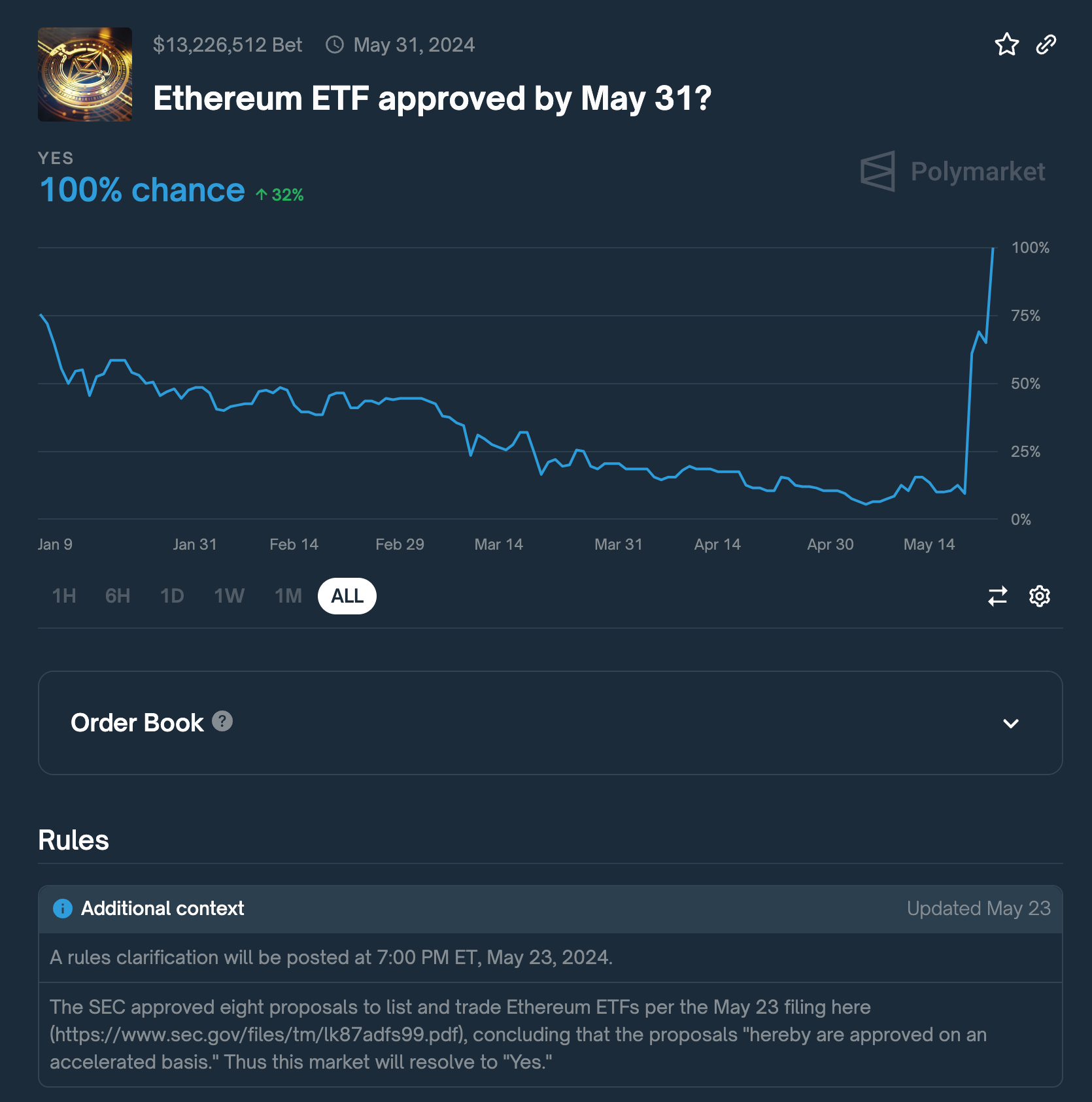
To investors,The SEC approved important rule changes for various traditional exchanges yesterday which will allow them to list spot Ether ETFs in the near future. This is another step towards Wall Street allocating to the second largest crypto asset in the world. It is important to call out that the actual ETF applications from various issuers have not yet been approved, but it is now obvious that the SEC is going to allow the Ether ETFs to be traded. That is the most important part.Given that the exchange rule changes have been approved, but the individual funds have not yet been approved, there are some interesting nuances that have been introduced.First, prediction markets are causing some controversy between their users. Polymarket had a prediction market for the approval of the Ether ETF. When the SEC approved the rule changes, people who had bet that the SEC would approve the ETF funds began celebrating. But the people who had bet against the ETF approval claimed that the rule changes were not a technical approval of the ETFs themselves.I tend to agree with the people arguing that the actual ETFs have not technically been approved, yet the spirit of the prediction market is obvious that people were betting on a broader yes/no from the SEC. Regardless of my thoughts, Polymarket has ruled that the recent developments from the SEC is enough to give the “yes” bettors the victory. You can see the odds change on this chart and then read the clarification provided by Polymarket below. The second controversy that has been spun up is whether the SEC should approve all eight ETF applications simultaneously or if they should approve the applications in the order that they were filed. Historically, the SEC has created an unspoken rule of “first application in, first application approved.” This changed recently when the SEC approved all spot bitcoin ETFs at the same time. In my opinion, the approval of so many applications simultaneously creates a more free market, which means that the market is ultimately the referee on where capital will flow.With this said, it is not lost on me that the incentive for people to file for ETFs early is that they could be listed first. Incentives are essential to capital markets, so this situation is not as clear as simply saying “make it fair!”Matthew Sigel, VanEck’s Head of Digital Asset Research, said the following:“The SEC has long followed a first-come, first-served approach when it comes to approving financial products, including ETFs. This method is seen as fair and predictable, allowing issuers to plan their product launches based on a clear understanding of the regulatory timeline, and incentivizing innovation by letting risk-takers potentially profit. Any break this in longstanding precedent not properly communicated to the market undermines the first-mover advantage and competitive fairness, and possibly conflicts with existing rules and laws such as the Administrative Procedure Act (APA), which governs the process by which federal agencies develop and issue regulations. The APA requires that the process be fair and transparent. Why is this a big deal? It creates an uneven playing field for issuers who filed earlier and had to wait longer. Those who filed months ago had to keep their applications updated and compliant for a longer period, incurring more costs and legal fees compared to later filers. It sets a concerning precedent of the SEC appearing to make ad-hoc decisions based on external factors rather than following established procedures. Filing FIRST used to mean something, but now it seems the US government is keen to pick winners at an unprecedented scale. Property rights cannot exist without a clear order. A queue may seem but a small act of respect, but it upholds a much larger principle of equity and innovation. Respect the queue, and you respect ownership itself. We filed first, we should list first.”Regardless of who is listed first, it is clear that the Ether ETFs are inbound. I’ll be watching to see how much attention and capital flows they receive. My guess is that we won’t see anything close to the Bitcoin spot ETF inflows, but I was surprised by how large and fast capital came into those funds. Hopefully I don’t make the same mistake twice here. Have a great Memorial Day weekend. I’ll talk to everyone on Tuesday.-Anthony PomplianoJack Mallers is the Founder & CEO of Strike. In this conversation, we talk about the macro environment, the edge case, use case, investment case for bitcoin, bitcoin vs shitcoins, politics, regulation, and why he believes Wall Street will capitulate and all become bitcoiners.Listen on iTunes: Click hereListen on Spotify: Click hereStrike CEO Jack Mallers on Bitcoin, Macro Environment, and AltcoinsPodcast Sponsors* Consensus is the largest event dedicated to all sides of crypto, blockchain and Web3. Use code POMP to get 20% off your pass and join me in Austin this May 29th-31st* Meanwhile is the world’s first licensed and regu

The Global Domino Effect Once The US Embraces Crypto
To investors,The recent 180-degree change in the Democratic party related to crypto may have global repercussions. As I wrote to you yesterday, there has been a noticeable shift in the way politicians, especially Democrats, are treating the crypto industry.The Ether ETFs continue to increase their odds of approval. The DTCC listed VanEck’s Ether ETF ticker yesterday, which confirms the acceleration of progress on these applications. This was believed to be a 0% chance of approval on Monday morning, but the consensus by Monday night was that approval was more likely than not. Additionally, President Trump is now accepting cryptocurrency donations for his campaign. This was a promise he made about two weeks ago during the event at Mar-a-Lago with various cryptocurrency proponents.This is putting immense pressure on the Biden administration. As the Blockchain Association’s Dan Spuller pointed out, compare these two messages sent out by the campaigns on the same day:It is pretty clear that crypto is now a campaign issue that politicians are going to have to continue to address.So what happens if both political parties are forced to support crypto?That would obviously be positive for prices and adoption in the United States. It would also stop the leaking of innovation internationally by crypto builders who have been leaving the US to seek friendly jurisdictions. And it would cement US capital markets as the leader on the global stage for the foreseeable future. But those are simple things to conclude. The most interesting thing to me is whether we could see a global domino effect. At the moment, according to Perplexity, here are the countries that have banned bitcoin or cryptocurrencies:* Algeria - Banned the use, buying, selling, and holding of cryptocurrencies in 2018.* Bangladesh - Banned crypto transactions and possession, with penalties of up to 12 years in prison under money laundering laws.* Bolivia - Imposed a complete ban on cryptocurrencies in 2014.* China - Banned crypto mining, trading, and usage in 2021, citing volatility and lack of central control.* Colombia - Advised financial institutions against facilitating Bitcoin transactions in 2014.* Egypt - Declared Bitcoin transactions "haram" or prohibited under Islamic law in 2018.* Iraq - The central bank prohibited use of cryptocurrencies in 2017, and a regional government confirmed the ban in 2021.* Kosovo - Banned crypto mining in 2022 due to energy shortages, but not trading or holding.* Mexico - Announced a ban on cryptocurrencies in 2021, stating they are not legal tender.* Morocco - The central bank has made crypto transactions subject to penalties and fines.* Nepal - Declared Bitcoin illegal in 2017.* North Macedonia - The only European country with an official ban on cryptocurrencies.* Qatar - Banned all crypto-related services through its financial regulatory authority.* Russia - While not fully banned, has imposed restrictions and conflicts around crypto usage.* Turkey - Banned the use of cryptocurrencies for goods and services in 2022.* Vietnam - Banned the issuance, supply, and use of cryptocurrencies as means of payment in 2017.Not exactly a short list. If the United States embraces the technology, it is likely that most of these countries will have to change their position as well. This is what I mean by global dominos. The United States dictates so much of what happens across the world and the stakes for the future of finance are incredibly high. You can see the adoption of US dollar stablecoins as a great example of how this new industry is having profound impacts on global finance, so it makes sense that the lines will be blurred and countries are going to have to embrace it. Lastly, it is not lost on me that various politicians embracing crypto right now are doing so out of personal benefit. Most of them couldn’t care less about the technology or the future, but rather they see the industry as a way to further their goals and/or campaigns. That is perfectly fine. The world runs on incentives.Crypto investors have long talked about the personal incentives for individuals and companies will drive global adoption. Now we are seeing it with politicians who believe they have found a new area that can lead to more fundraising and more votes. More power to them. The rest of us will simply continue watching the global adoption of new technology that we have been predicting for years. Beautiful sight to see.Hope you all have a great day. I’ll talk to you tomorrow.-Anthony PomplianoNoah Kerner is the CEO & Chairman of Acorns, the financial app helping everyday citizens invest with spare change. In this conversation, we talk about building a brand, design & product decisions, why they are serving such a unique customer, surprises, and what Acorns looks like in the future.Listen on iTunes: Click hereListen on Spotify: Click hereAcorns CEO on Building Fintech App for the MassesPodcast Sponsors* Consensus is the largest event dedicated to all si
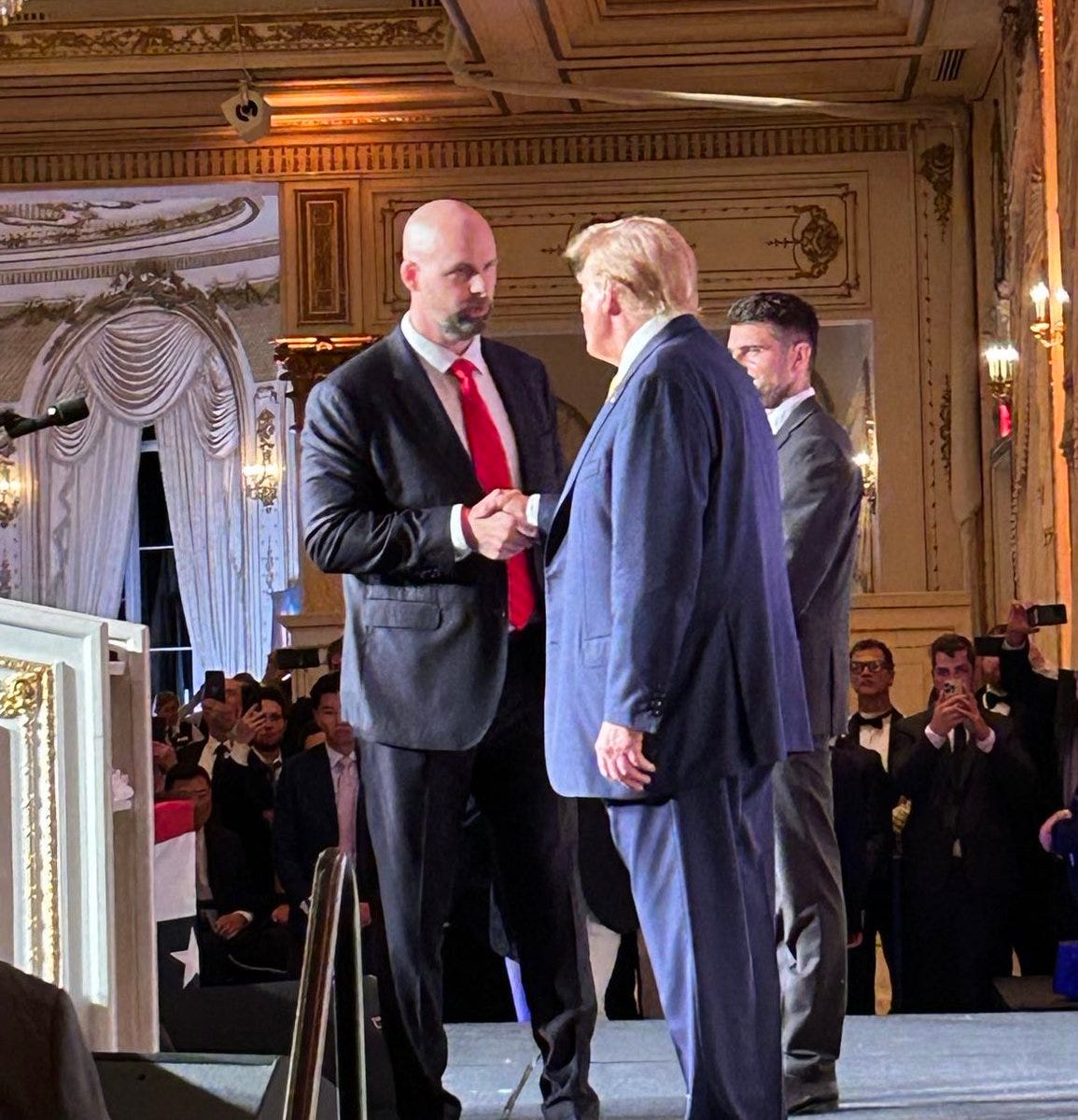
Crypto Just Won Support From The Politicians
Today’s letter is brought to you by Meanwhile!Meanwhile is the world’s first licensed and regulated life insurance company built for the Bitcoin economy. Protect your loved ones with sound money built to manage life’s uncertainty and a broken financial system. Their BTC-denominated Whole Life Insurance policies allow HODLers to pass more BTC on to their loved ones and a tax-advantaged way to access BTC for liquidity during their lifetime.Visit their website at https://meanwhile.bm/ to join the waitlist for a policy and to learn more.To investors,I was having lunch yesterday with the CEO of a large asset manager who has an Ethereum ETF application submitted. The application came up during our conversation and he told me there was a “zero percent chance” that the Ethereum ETFs would be approved right now based on what he had seen. When I asked him why he thought that, he explained that the SEC had not been asking for comments on the applications, nor had they been engaging with the application owners in the same way they had with the Bitcoin ETF process.This seemed reasonable to me. But a few hours later the game changed — Bloomberg’s Eric Balchunas and James Seyffart suddenly changed their prediction of an ETH ETF approval from 25% odds to 75%. Eric wrote:“Update: James and I are increasing our odds of spot Ether ETF approval to 75% (up from 25%), hearing chatter this afternoon that SEC could be doing a 180 on this (increasingly political issue), so now everyone scrambling (like us everyone else assumed they'd be denied). See Nate's tweet below for probably order of events (but again we capping at 75% until we see more, eg filing updates).”This is a significant development that may be hard to understand for the casual observer. Let me break down a few things.First, President Trump held a campaign event about a week ago where he explicitly stated that he was going to be a pro-crypto candidate. Trump referenced Biden and the current administration’s abrasive stance towards the industry, while claiming that he would protect the industry so it could thrive in America. These comments were met with skepticism by many at the time. But Trump was saying all of this with many crypto entrepreneurs, including Messari’s Ryan Selkis, standing by his side. It felt like a real-time vibe shift for the former President of the United States to clearly state that crypto would be a campaign advantage for him. The next development was the SAB 121 repeal vote. A number of Democrats broke from party lines to vote in favor of the crypto industry. Variant Fund’s Chief Legal Officer Jake Chervinsky explained “The SAB 121 repeal vote clearly shows how crypto is a bipartisan issue in DC. Democrats aren’t a monolith opposed to crypto. Many are supporters, and more will come around over time. The best path to good crypto policy is to embrace both parties, not to pick one over the other.”It felt like the tide was turning, but there was still a very long way to go. At lunch yesterday I shared with my friend that it felt like the Biden administration could not continue their abrasive stance towards the industry. Trump’s recent embracing of bitcoin and crypto meant that Democrats were backed into a corner — if they continued to be abrasive to crypto, they risked losing a very large percentage of a key demographic during the election.I had no idea how important Democrats thought the crypto issue has become though. It appears that in the last 48 hours a decision was made. No one knows who made it, but someone in a position of power and influence has decided that the Democratic party could not cede the crypto issue to Trump for the 2024 election. There will be no pro vs anti-crypto candidate showdown in November. You are watching both political parties actively position themselves to compete for votes from bitcoin & crypto holders. It took only 15 years for the industry to go from creation to shaping campaign policies. The ground shifted this week - the world will never be the same.We have previously seen cities and states within the US compete for these individuals. NYC, Miami and Texas were all bragging about being the bitcoin capital of the world within the last two years. Now it is happening in national politics. The industry got too big to ignore.A bunch of people on the internet created a $2.6 trillion industry in the face of government pressure. Imagine what happens when the government is now actively courting these individuals and companies, along with embracing the technology. The headwind becomes a tailwind quickly.Now, to be clear, there is not a guarantee that the Ethereum ETF will be approved on this specific round of applications. The guys from Bloomberg are only at 75% confidence for a reason. But the odds definitely increased materially in the last 48 hours. The broader shift in tone and policy is becoming obvious. Don’t celebrate yet, but this feels like the crypto industry just scored a touchdown to take the lead in the 4th qua
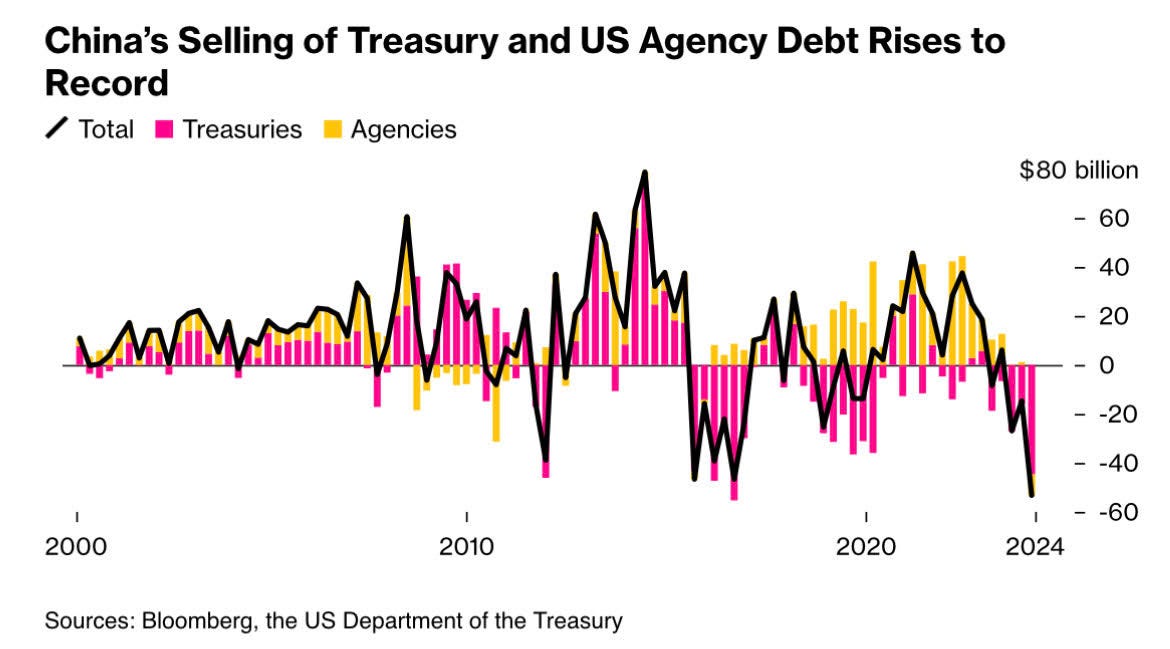
China Dumps Treasuries, But Stablecoins Could Save The Day?
Today’s letter is brought to you by Consensus 2024!Consensus 2024 is happening May 29-31 in Austin, Texas. This year marks the tenth annual Consensus, making it the largest and longest-running event dedicated to all sides of crypto, blockchain and Web3. Don’t miss Bitcoin: We Are So Back, where Anthony Pompliano will discuss what the next bull market will look like, how it will differ from previous run-ups and the broad macro investment thesis for bitcoin and crypto more broadly.Consensus has tailored programming for Bitcoin maxis and multi-chain mavericks alike, covering everything from post-halving strategies to mining and more. Plus, you absolutely won’t want to miss the epic BTC (Nic Carter) vs ETH (David Hoffman) battle at Karate Combat.That’s just a taste of what's to come at crypto’s only big-tent event. Join Consensus in Austin alongside 15,000+ investors, founders, brands and more to take in all that blockchain has to offer. Get your pass today and use code POMP to save 20%.To investors,We are headed towards a multi-polar world. This is the perspective from an 18-month old podcast called Multipolarity. The hosts Andrew Collingwood and Philip Pilkington write for various publications on topics across finance and macroeconomics, while hosting the podcast which presents itself using the following description:“After the US retreat in Afghanistan, after the war in Ukraine, the old unipolar world is dead. America's imperial power is finally waning. Its rivals are rising. In trade and diplomacy, the US can no longer make all the rules all the time. Now, new alliances will emerge. New trade routes will open. Countries will compete as never before.Multipolarity is the podcast that explores this changing reality, every week. New era; new rules.”This context is important because Philip Pilkington recently put out an excellent Twitter thread on China’s continued selling of US debt. Normally when you see these opinion-laden posts, you can ignore majority of them because they were created by armchair critics. Pilkington may or may not be right in his conclusions, but at least he has credibility in evaluating geopolitical developments. So what is Pilkington worried about?China has been dumping US treasuries and debt at an accelerated clip, which has driven the measurement to an all-time high.This is not necessarily concerning by itself. But China is selling this debt at the same time that they are accumulating gold for their central bank reserves.This accumulation is still slightly below 5% of their total reserves, but that number is up more than 50% since the start of 2020. You can see an acceleration starting in the second half of 2022 in the chart above. Again, China being a net seller of debt has happened a few times before. China buying gold and increasing the percentage of their reserves has been happening for years as well. So what is the big deal?This is all happening at the exact same time that interest rates in the US have been increasing, which suggests that China is selling their debt to investors looking for higher yield. Pilkington points out this is important because it signifies a shift from a yield-insensitive buyer (China) to a yield-sensitive buyer (investment organizations). Everything is fine at the moment with this transition. Trouble will appear if the Fed starts to lower interest rates at a meaningful pace, which could happen if a recession was to hit the US economy, because these investors will start selling the debt as well. If foreign countries won’t buy our debt, and neither will investors like pensions or endowments, then who will buy the US debt?In a surprise development, stablecoin issuers may be the saviors that the Fed needs. I wrote to this group on December 1, 2023 in a letter titled “Are stablecoins saving the Treasury market?” the following:“China and Japan have decreased their share of US Treasuries by approximately 68% over the last 10 years. Not a great situation.Thankfully, at the same time that nation states have been decreasing purchases in US Treasuries, another buyer has shown up in the market. It isn’t the buyer you would expect though.Stablecoin issuers are buying US treasuries by the handful. They have collectively become the 16th largest holder of treasuries, and as CoinFund’s Chris Perkins pointed out, hold more than Norway, South Korea, Saudi Arabia, Germany, The Netherlands, Mexico and the UAE.”This is not just the crypto industry talking about this development either. Former Speaker Paul Ryan recently sat down with Bloomberg to promote stablecoin legislation as a way to increase demand for US Treasuries. You can watch the clip here:Castle Island’s Nic Carter nailed the implications of Ryan’s comments with the following comments:“First of all, he mentions stablecoins unprompted in response to a question about how Congress can deal with the debt. this is pretty interesting; the first thing he thinks of is stablecoins.Second, he's repeating industry points verbat
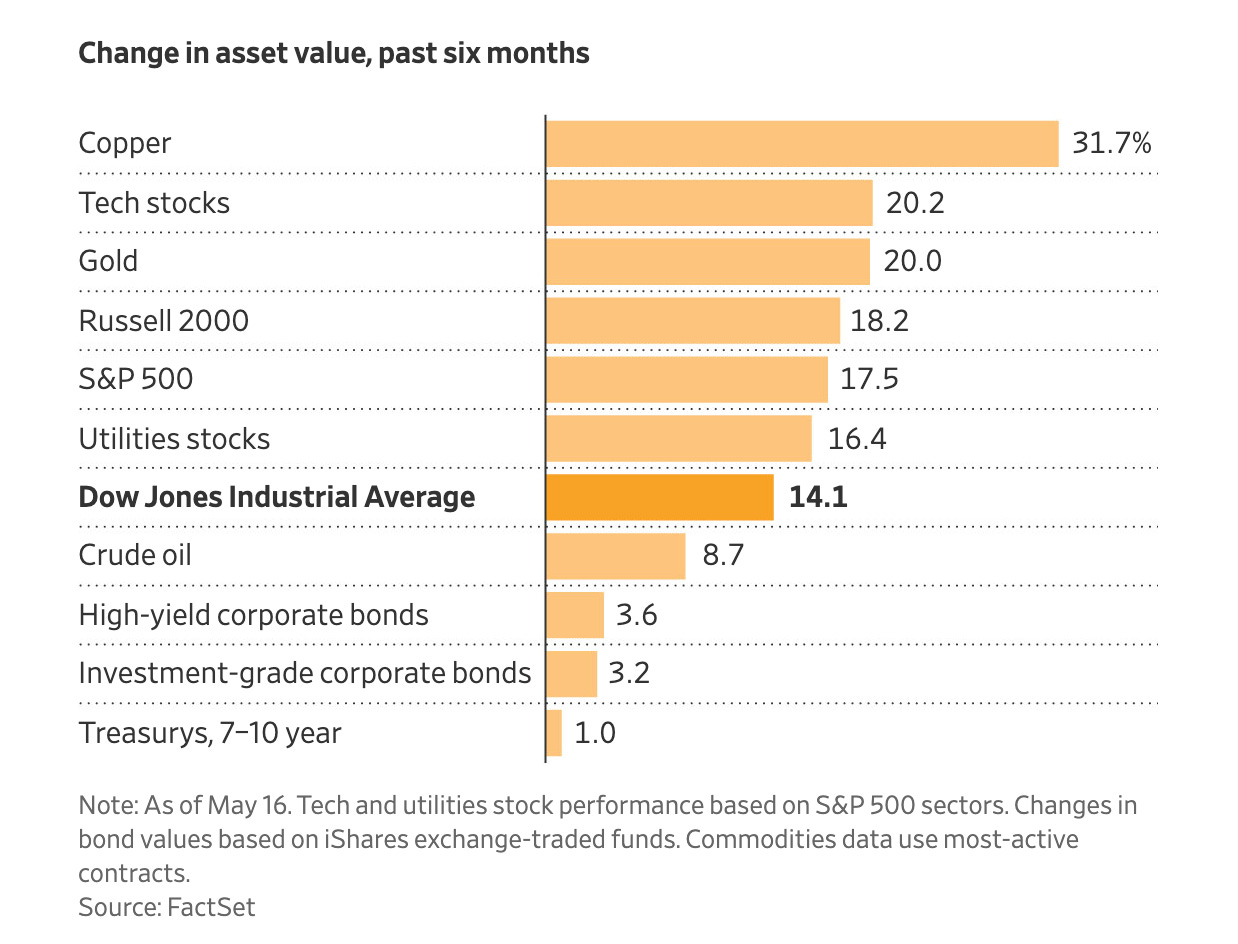
Redneck Rich Financial Markets
To investors,The last few weeks have been filled with fear, uncertainty, and doubt in financial markets once the Fed made it clear that the anticipated interest rate cuts would not be coming as quickly or aggressively as most market participants were hoping for. But don’t let market sentiment fool you. The good times are still rolling.In a Wall Street Journal article this morning titled “Investors Are Striking Gold All Over,” Gregory Zuckerman and Gunjan Banerji highlight how well asset prices have performed over the last 6 months. “The Dow Jones Industrial Average crossed the 40,000 mark for the first time Thursday amid an almost picture-perfect investing environment featuring resilient corporate profits, low unemployment and easing inflation.Most everything is going up—established Dow stocks, faster-growing tech shares, bitcoin and other cryptocurrencies, and even gold and other precious metals. Risk-averse investors have a bounty of options, too, including certificates of deposit offering yields of about 5% and rising junk bonds and other fixed-income investments, adding to the glow.”If you were to add bitcoin’s price to this chart, which is up more than 80% in the last 6 months, it would be the best performing asset on the list by a wide margin. But here is what is the most interesting part to me — if you look at the Dow Industrial Average, you see that COVID and the 2022 rate hikes barely created blips in a longer trend that has seen the index surge parabolically since the Global Financial Crisis. When you hear people talk about a “regime change” in financial markets, the data is becoming overwhelming. Investors have benefitted from one of the longest bull markets in history. The scale and speed of this is hard to comprehend until you zoom out and see the difference with any time period before 2008-2009. While this bull market has raged on, some investors have preached about assets being overvalued. They have called for a deflating of asset prices. They have predicted doom and gloom. The story for these individuals or organizations has long been that markets are broken and eventually we will see a return to prior trends and values.But that hasn’t happened.Instead, asset prices have merely accelerated even faster and further, regardless of what the critics preached. Historical trends and valuations haven’t mattered nearly as much as the pessimists wanted you to believe. The best investment strategy was literally to get long and chill. Unfortunately they don’t teach that in finance classes. The reason I bring this up is because the pessimists have been wrong for almost 15 years now. The Dow Jones shouldn’t be at a new all-time high with interest rates over 5%, but that is exactly what has happened.You can be right or you can make money.Be very careful about trying to win the intellectual debates. Your portfolio doesn’t care about the number of likes you get on your social media posts. It only cares if you were correctly positioned to benefit from the structural changes that have occurred in the market. This doesn’t mean that you should indiscriminately buy every stock or asset you hear about. Gamestop went up quite a bit in the last few days, but it has dropped 20% in the last 24 hours. The market still has some semblance of reality. Laws of supply and demand still rule the day. When I was growing up in North Carolina, there was something called “redneck rich.” Urban dictionary defines it as “when your truck costs more than your house or owning an expensive truck for which you are too poor to buy gas.”There are even songs about it. This one starts with “I ain’t Elon Musk, but I got a quarter-inch socket trying to make a rocket out of this truck.”I feel like markets are becoming redneck rich. The average American is struggling to pay increasing home and food prices, but the $500 they put in their Robinhood account continues to grow in value. The sophisticated math geeks on Wall Street keep saying their models predict a big crash right around the corner, yet the everyday person keeps buying a few stocks and watching them go up. Redneck rich is all about having money to get the things you find important. Maybe the equivalent in financial markets is being able to have a small enough brain where you don’t need models — you just get long and chill.That is my new strategy. Be redneck rich in markets. Don’t overthink it. Don’t fight the trend. Just let the Fed and politicians debase the currency and increase asset prices over time. They will make you rich, regardless of whether you are a redneck or not :) Hope you all have a great end to your week. I’ll talk to everyone on Monday. -Anthony PomplianoKenny DeGiglio is the Co-Founder of Dream Startup Job and Crypto Academy. In this conversation, we discuss tips and tricks for landing a job in crypto, remote work vs in-office, US-based vs. international firms, compensation, bear vs. bull market, Dream Startup Job, an overview of Crypto Academy, and the benefits of g

This Stock Continues To Appear Highly Undervalued
To investors,The Sohn Conference, where investors pitch their best investment idea, was hosted on April 3rd. The next day, I wrote to this group and said that I would have pitched DeFi Technologies, Inc (NEO: DEFI) (GR: R9B) (OTC: DEFTF) if I had attended Sohn this year. You can re-read my analysis here. Here is an excerpt on why I thought DeFi Technologies was highly undervalued:“By my calculation, Valour’s average fee generation on their AUM is approximately 7.2%. That is a monster number for the asset management industry.This understanding alone would make DeFi Technologies and Valour an interesting potential investment. But you have to remember that these ETPs they manage are holding crypto assets, with Solana being their largest ETP, so the asset values continue to grow rapidly during a bull market.For example, here is an excerpt from the company’s recent earnings report:“Assets Under Management ("AUM") grew 476% to approximately $508 million as of December 31, 2023, up from $106 million as of December 31, 2022. Valour Inc. and Valour Digital Securities Limited's ("Valour's") current AUM stands at C$880 million.”That means Valour’s AUM has grown more than 800% from December 2022 till today. There are very few businesses in the world who can see this type of revenue acceleration without having to expend an insane amount of money on sales and marketing.As of this morning, the current market cap of the DeFi Technologies is about $140 million USD. That may seem reasonable on the ~ $10 million they reported for 2023.There are two points that may change the way to look at those numbers though. It appears that more than 75% of those revenues were created during the last 90 days of the year. Additionally, given the ~ $650 million USD in current AUM, that would imply an annualized revenue run rate of $46.8 million.”It appears the market is starting to pay attention. The stock is already up more than 16% in the ~ 6 weeks since I wrote about my pick. But I think the company is still undervalued. DeFi Technologies released their Q1 earnings report yesterday and the numbers were incredibly impressive. Here are the highlights:* Record Operating Revenues and Net Income: DeFi Technologies recorded its strongest quarter ever, achieving Operating Revenues of C$13.4 million and Operating Net Income of C$5.3 million for Q1 2024.* Strategic Advancements and Product Launches: The quarter featured the launch of multiple Exchange Traded Products ("ETPs") by subsidiary Valour Inc, and Valour Digital Securities Limited (together, "Valour") alongside strategic acquisitions such as Reflexivity Research LLC, significantly enhancing the company's product offerings and market position.* Substantial Growth in Assets Under Management (AUM): AUM grew by 78.7% to approximately C$908 million, driven by favorable market conditions, new product launches, and strategic corporate actions that enhanced trading volumes and overall financial performance.* 2024 Outlook: Looking ahead, DeFi Technologies projects its annualized Operating Revenues to reach approximately C$119 million (US$87.45 million) for 2024, supported by ongoing AUM growth, upcoming ETP launches, and the integration of new acquisitions, which are poised to capitalize on the favorable conditions in the digital asset sector.These numbers show a business that is on an annualized profit run rate of $15 million USD, yet the company is only trading at ~ $180 million market cap. What is interesting though is that DeFi Technologies gave 2024 guidance yesterday for about $87 million in revenue and more than $75 million in profit. If you take those numbers as reported, this means that DeFi is only trading at ~ 2.4x their projected 2024 profit.Now you see why it appears to be an undervalued company.But let’s say you don’t believe the company’s guidance. The business still reported approximately the same revenue in the first 90 days of the year that it did in all of 2023. A growth rate like that would suggest a much higher multiple for a company that has high capital efficiency. There was one other thing buried in the earnings report that is worth paying attention to. The company said:“In addition to the Company's existing business units, a new alpha-generating business ("DeFi Alpha") unit was formed in Q2 2024 in order to generate yield on the Company's excess liquidity. The focus is on arbitrage trading opportunities in the digital asset space with low risk in both centralized and decentralized markets (with minimal market or protocol exposure), thereby minimizing downside revenue volatility. DeFi Alpha has come off to a promising start, generating approximately US$40 million thus far in 2024.”If I am reading this correctly, DeFi Technologies is saying that they have already booked $40 million of revenue in Q2 from a newly created business unit that didn’t previously exist. That would mean that the company has done 5x growth in revenue over their 2023 numbers in just the first 5 months o

The AI Bots Are Going To Need Money
To investors,OpenAI announced GPT-4o yesterday. The demos were incredible, including real-time language translation, a clean verbal interface where users can speak to the model, the model’s use of photo and video inputs, and the ability for AI bots to speak with each other to accomplish tasks. The most impressive part to me was the voice interface. If humans are able to transition from typing on their computer to simply speaking to the machine, it will have profound implications to productivity. Given that the model can now process voice instructions with a high degree of accuracy, the bots are able to talk with one another. For example, watch this demo of two bots talking to each other in a customer service scenario. Companies are going to save enormous amounts of money. Customers are going to save even more time and headache in the future.So the bots can now talk to each other. The use cases people invent in the coming years is going to be incredible to watch. But there is one area of artificial intelligence that most people seem to have a blind spot — how will the bots interact with money?Let me explain. These AI bots are now reaching a point where you can instruct them to do things on your behalf. You can tell them to talk to a customer service representative at a company you purchased something from. You can tell them to call a store and get information on a product or service. You could ask the bot to make a reservation for you.You can even tell the bot to go shopping for you.In many of these scenarios, the bot may have to make a purchase on your behalf. Let’s say that you ask the bot to find an item on the internet and purchase it for you. If the bot locates the desired item on Amazon, it can simply use your stored credit card information to complete the purchase. Painless and fast. There is a reason that Bezos and team invented the one-click check out. But what if the bot finds the item located at a different online store? There is still a chance that the bot can utilize your credit card information, either because you explicitly gave the bot the information to save or perhaps the bot has access to your Apple Pay or equivalent digital wallet. Again, not a big deal for a bot to purchase a product or service from a retailer that is set-up to process payments. That is not inclusive of all potential money transactions though. How will these bots handle paying each other when appropriate?This is where things get really interesting in my opinion. When bots are acting on behalf of humans or corporations, they can leverage the same financial infrastructure that the human or company owns. But when a bot is acting on behalf of itself, there is no bank account or payment processing infrastructure available in the legacy financial world.I believe this is where stablecoins and digital wallets will come into play. You can easily spin up a digital wallet without having to hand over any personal information. As long as you have the seed phrase, you own the wallet and have access forever. If a bot wants to send or receive money with another bot, then using these digital wallets will empower them to do so. They don’t need the traditional bank account.Given that the digital wallet will now serve as the financial infrastructure, this means that the bots will use digital currency for the actual payments as well. You may think that bitcoin will be their currency of choice. It is the largest market cap cryptocurrency and has the best brand awareness. It also has a degree of volatility to it as well. So I don’t think bitcoin will be the bot’s choice currency. Instead, the bots are more likely to use stablecoins. The stablecoins are…”stable.” That stability comes from the fact that products and services are priced in the underlying currency. When a bot requests a specific amount of money, they will likely do it in dollars. Hence, the appearance of stability becomes obvious.So one way the bots could change their preference to bitcoin rather than stablecoins is to have products, services, and bot money requests denominated in bitcoin. Maybe that will happen. But it doesn’t happen nearly as frequently as dollar denomination today.Bitcoin is a great store of value. Dollars are great for medium of exchange. I don’t see either of those two facts changing any time soon. The bots are not inventing a new use case, but rather trying to emulate what humans already do. There will be a ton of open questions, including how taxes will apply to bots, what occurs in legal disagreements between bots or bot owners, and many more we haven’t even thought of. Too many market participants believe that artificial intelligence and cryptocurrencies are separate industries. They are actually two technologies that fall under the automated future that we are headed towards. Make sure you are paying attention to all of this. It will impact your life, your business, and your investment portfolio.Congratulations to the team at OpenAI. Yesterday’s demos we
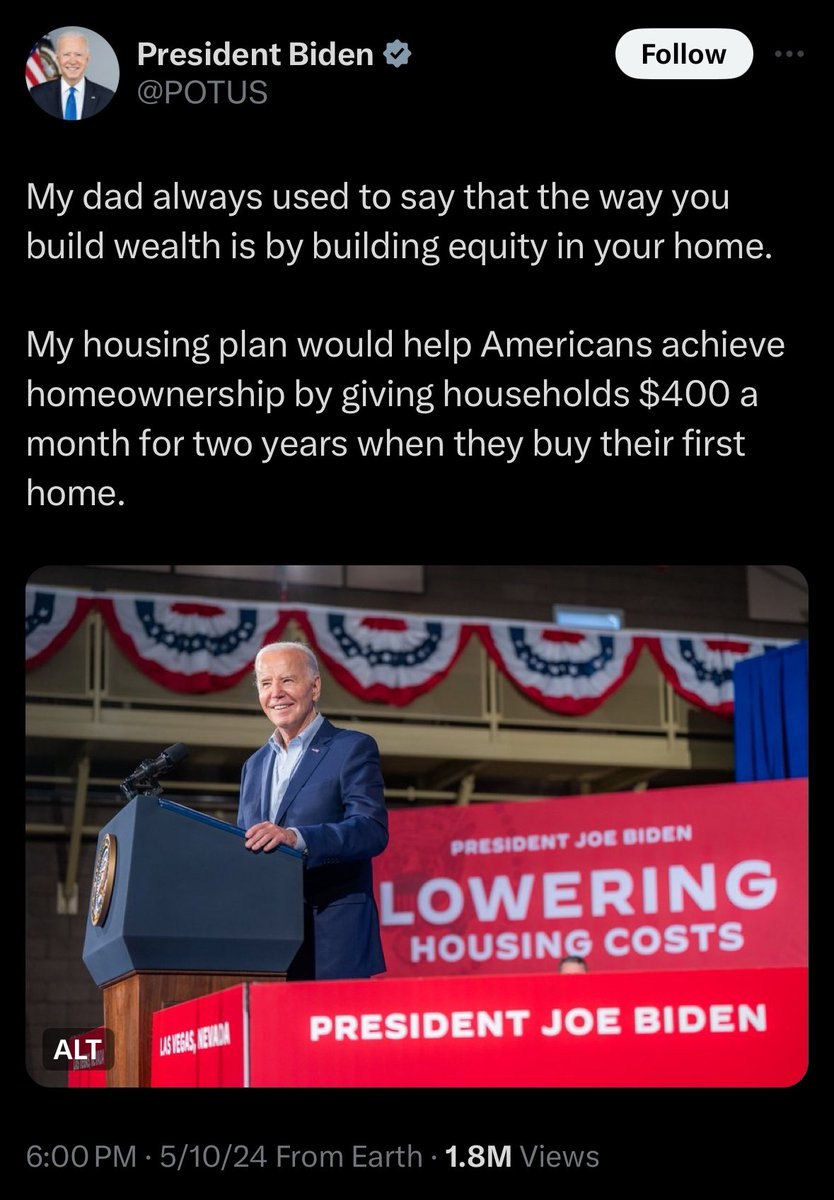
Crypto Is Being Politicized Which Should Not Be Surprising
Today’s letter is brought to you by Consensus 2024!Consensus 2024 is happening May 29-31 in Austin, Texas. This year marks the tenth annual Consensus, making it the largest and longest-running event dedicated to all sides of crypto, blockchain and Web3. Don’t miss Bitcoin: We Are So Back, where Anthony Pompliano will discuss what the next bull market will look like, how it will differ from previous run-ups and the broad macro investment thesis for bitcoin and crypto more broadly.Consensus has tailored programming for Bitcoin maxis and multi-chain mavericks alike, covering everything from post-halving strategies to mining and more. Plus, you absolutely won’t want to miss the epic BTC (Nic Carter) vs ETH (David Hoffman) battle at Karate Combat.That’s just a taste of what's to come at crypto’s only big-tent event. Join Consensus in Austin alongside 15,000+ investors, founders, brands and more to take in all that blockchain has to offer. Get your pass today and use code POMP to save 20%.To investors,The bitcoin and crypto industry has finally become big enough to enter the political arena. In the last week, we saw President Biden and his administration continue their war path against the growing industry. Within days, President Trump held an event where he not only came out in strong support of crypto, but featured a number of crypto speakers as well. The politicians are picking sides. It appears that the left sees their abrasive stance against bitcoin and crypto as something that will have no negative repercussions. The right appears to believe that embracing the new technology could help them gain voters in November. Regardless of what side you are on, this is a fascinating development. I thought it may be helpful to share the commentary from a few folks related to these political decisions. First, here is Castle Island’s Nic Carter:“I’d love to live in the fantasy blank slate world many of your dwell in where new technologies have no partisan mapping and politicians just choose positions tabula rasa but that’s not our world. Crypto is inherently political and has always been; to the extent leftism relies on the politicization of finance, crypto will be a rightist technology, definitionally. It is delusional to meekly intone that crypto is nonpartisan and hope for the best. This will not be persuasive to leftists whose agenda is threatened by open finance.It is suicidal not to align yourself with the faction that actively supports your cause”Balaji Srinivasan followed Nic’s comments with the following statement:“Crypto is for American conservatives and Chinese liberals. It’s for small countries and dispossessed minorities. Because it gives power to those without state power. Democrats and Communists control powerful states, so they don’t benefit from crypto. But everyone else does.So I agree with Nic’s point but with one major qualifier: crypto is to the right of American Democrats and to the left of Chinese Communists. In other words, it’s in the global center.”Unchained’s Laura Shin shared this:“Gensler and Warren are trying to politicize crypto. If the industry falls into the trap and takes the bait and does the same, then, game over — they win. If crypto becomes politicized, then automatically 40+% of Americans will be against it without ever really learning about it. IMO, if the industry focuses on education and explaining what crypto is and why it isn’t and shouldn’t be a political issue, then as the tech becomes more developed and used, there will gradually be more acceptance and adoption without having to overcome the hurdle of it having been politicized. Take it, leave it, this is just my perspective”These comments came after massive blowback for an op-ed that was written in Blockworks by Molly Jane Zuckerman titled “Only a fool would vote on crypto alone.”In the piece, Molly writes:“What I see is a small number of wealthy individuals, who made that wealth from cryptocurrency, looking for the government to let them continue growing that wealth unfettered.Among diehard crypto evangelists right now, “voting for crypto” means voting Republican for president. According to this side of the debate, any other decision will virtually assure the death of the American crypto industry. This fear (true or not) has led some major personalities in Web3 to push crypto supporters into becoming single-issue voters. Their message is clear: Choose your 2024 candidates based solely on their cryptocurrency stance, or else.In other words, Americans should prioritize their own selfish financial interests over broader societal and ethical concerns. When you promote the idea of voting for America’s crypto industry above all else, you’re deciding to ignore all of the other issues that are really at stake this election season — healthcare access, Social Security, gun legislation, women’s rights, LGBT issues, immigration, to name a few. I want to be clear — I do not care if you vote Republican, Democrat, or third-party, as long
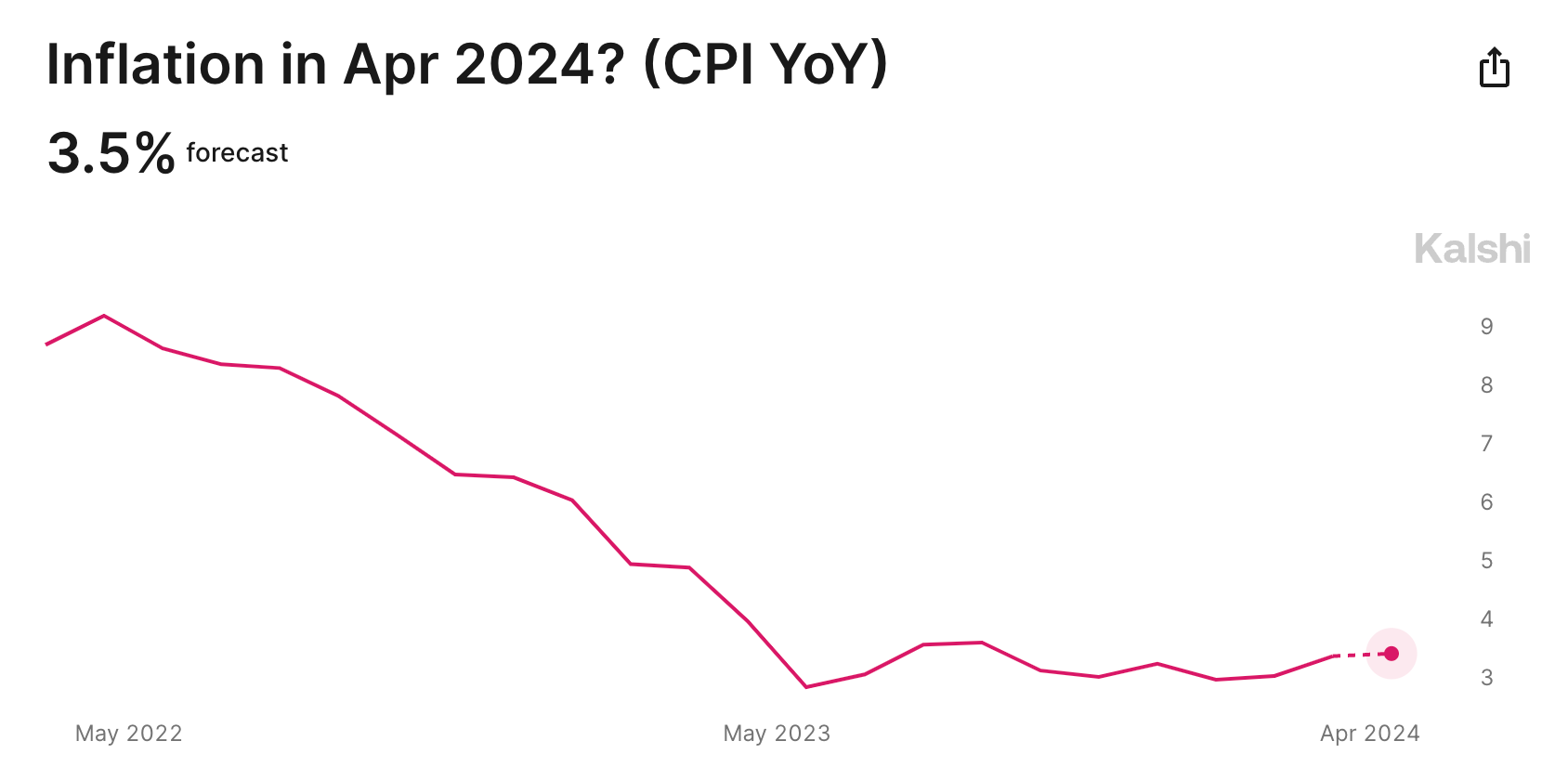
Prediction Markets Say No Recession Is Coming
To investors,There was more than a 70% chance of a recession occurring in 2023, according to Kalshi prediction markets in July 2023. Not only did the recession never come, but nearly one year later the same Kalshi market is predicting an 8% chance of a recession throughout the rest of 2024. People are obviously feeling good about where the economy is at the moment. Another way to gauge the positive sentiment is to see how low the odds are of inflation running higher.For example, most people don’t see a world where inflation will be higher than 3.5% year-over-year based on April’s report.If you are one of the people who believe inflation will come in higher than the predicted 3.5%, you can wager $100,000 to win more than $800,000 in profits.This is fascinating because the Bureau of Labor Statistics reported a 0.4% increase in CPI month-over-month in March. Inflation has been accelerating for months, yet people continue to believe that the year-over-year number will remain at 3.5% or lower. Some of this disconnect between the data and people’s perspective could be a psychological scarring from the last few years. We saw inflation eventually peak at over 9%, which will leave a lasting impact on the way people think and how they behave. While all of this has been going on, the US dollar has lost purchasing power. Truflation estimates that the aggregated inflation since 2020 is more than 25%. At the same time, bitcoin has done a fantastic job of protecting and increasing citizen’s purchasing power. The asset is up more than 200% over the last year. So people feel positive about the economy. Inflation remains elevated and appears to be accelerating month-over-month. The US dollar is being devalued. Citizens are losing purchasing power. And bitcoin continues to be one of the best ways to provide economic protection to your hard-earned wealth. Unfortunately, it looks like the bitcoin community is more right with each passing day. I say “unfortunately” because the vast majority of citizens around the world don’t hold bitcoin yet, so they are on the losing end of this situation.Hopefully that will change in the coming years. Have a great end to your week. I’ll talk to everyone on Monday.-Anthony PomplianoJihan Bowes-Little is the Co-Founder & Managing Partner at Bracket Capital, an investment firm focused on special situation opportunities in growth / late-stage private companies.In this conversation, we talk about the similarities and differences investing in Coinbase, SpaceX, Stripe, landscape of private markets, financialization of venture capital, investing trends & sectors, cross-over investment example, market liquidity, bitcoin, and more. Listen on iTunes: Click hereListen on Spotify: Click hereBracket Capital’s Jihan Bowes-Little on Coinbase, SpaceX, Stripe, Bitcoin, and morePodcast Sponsors* Core Scientific is one of the largest public Bitcoin miners and hosting solutions providers for Bitcoin mining in North America.* iTrustCapital allows you to buy and sell cryptocurrency in a tax-advantaged crypto IRA.* Supra - Join Supra’s early integration program for zero-cost access to the fastest oracles and dVRF across 50+ blockchains.* Propy - Now, anyone can start their on-chain journey by minting home addresses via PropyKeys and staking them for profit until they are ready to sell their home. * ResiClub - Your data-driven gateway to the US housing market.* Bay Area Times - A visual newsletter explaining the latest tech & business news.You are receiving The Pomp Letter because you either signed up or you attended one of the events that I spoke at. Feel free to unsubscribe if you aren’t finding this valuable. Nothing in this email is intended to serve as financial advice. Do your own research. This is a public episode. If you'd like to discuss this with other subscribers or get access to bonus episodes, visit pomp.substack.com/subscribe

Argentina's President Slashed The Government & Now Is Reaping The Benefits
To investors,The President of Argentina, Javier Milei, is running one of the largest economic experiments in history. He assumed power with the country experiencing 300%+ inflation and a population that was quickly losing hope that the future could see improvement.Milei won the Presidency by promising radical reform that would unleash free market capitalism and bring economic prosperity back to the country. While many people liked his ideas (enough to elect him!), very few thought he could have such a large impact in a short-period of time. Argentina has seen inflation fall to 11% monthly, the Argentinian peso was the best performing currency in Q1, and the country ran a budget surplus in the first 90 days of the year for the first time since 2008. These are major milestones for a country and economy that was previously run by top-down bureaucrats who wanted to paternalistically oversee every aspect of the economy. Matthew Lynn has a great piece in The Telegraph titled “Milei is already proving the Left-wing economic establishment wrong.” In the article, Lynn explains why Milei is having so much success already:“First, even without a majority in parliament, he has been ruthless. Whole government departments have been closed down overnight, regardless of the immediate consequences. The Ministry of Culture was axed, so was the anti-discrimination agency, and the state-owned news service. Only last month, he unveiled plans to fire another 70,000 state employees. Milei hasn’t attempted to cut gradually, to control budgets, or to ease people out with early retirement, or hiring freezes. Instead, he has, as promised, taken a ‘chainsaw’ to the machinery of the state, yielding huge savings in the process. Next, he has been bold. The president massively devalued the peso on day one, taking the financial hit upfront, and then tore up rent controls, price restrictions and state subsidies. He pared back workers’ rights, reducing maternity leave and severance compensation, and allowed companies to fire workers who went on strike. He ripped away fuel subsidies, even though it meant a temporary spike in inflation. Sure, there has been some short-term pain, but the results are now becoming evident. Rents, for example, are falling by 20pc a year as landlords, freed from controls, put more supply on the market, instead of withdrawing it as they do in countries where the price is set by the government. Finally, Milei has never stopped making the argument. He promotes freedom, liberalisation and a smaller state with a messianic zeal. Many of the measures he has taken might be rough, but the president has never attempted to dismiss that, instead explaining patiently and persistently why the reforms are justified, and how they will create greater prosperity for everyone in the long run.”This type of bold, ruthless approach to changing the economic situation in a country is commendable. It is not only difficult to implement, but it guarantees you won’t make many friends. Americans have historically viewed Argentina as a country that lost control of their economy. We couldn’t imagine a scenario where the leader of the West followed in Argentina’s footsteps. That may be true today, but we are cooking with a number of the same ingredients that our South American counterpart was previously. America has out of control spending. The national debt is ballooning. Our government has become a bloated bureaucratic machine that continues to hire needlessly. The central bank has created an inflation fire and is now struggling to put it back out. The average family is losing hope that they can ever achieve financial security. And the American Dream is at risk as we watch the middle class disappear.We need bold leadership to get us back on track. We need to significantly cut spending. The entitlement programs will need to be changed. We’ll have to reduce the number of employees employed by the government. Free markets will have to reign. Politicians and regulators will need to understand their important role in encouraging innovation. And GDP will have to accelerate.None of this is easy. The odds are stacked against us. But we are facing a fork-in-the-road. Continue on our path and risk becoming the Argentina from the last decade. Or return to our roots of capitalism and free markets so we can beat Argentina to the punch and continue to be the greatest economic machine ever created. Hope you all have a great day. I’ll talk to everyone tomorrow.-Anthony PomplianoJihan Bowes-Little is the Co-Founder & Managing Partner at Bracket Capital, an investment firm focused on special situation opportunities in growth / late-stage private companies. In this conversation, we talk about the similarities and differences investing in Coinbase, SpaceX, Stripe, landscape of private markets, financialization of venture capital, investing trends & sectors, cross-over investment example, market liquidity, bitcoin, and more. Listen on iTunes: Click hereListen on Sp

Headlines Saying FTX Is Paying Everyone 100% Are Inaccurate
Today’s letter is brought to you by Consensus 2024!Consensus 2024 is happening May 29-31 in Austin, Texas. This year marks the tenth annual Consensus, making it the largest and longest-running event dedicated to all sides of crypto, blockchain and Web3. Don’t miss Bitcoin: We Are So Back, where Anthony Pompliano will discuss what the next bull market will look like, how it will differ from previous run-ups and the broad macro investment thesis for bitcoin and crypto more broadly.Consensus has tailored programming for Bitcoin maxis and multi-chain mavericks alike, covering everything from post-halving strategies to mining and more. Plus, you absolutely won’t want to miss the epic BTC (Nic Carter) vs ETH (David Hoffman) battle at Karate Combat.That’s just a taste of what's to come at crypto’s only big-tent event. Join Consensus in Austin alongside 15,000+ investors, founders, brands and more to take in all that blockchain has to offer. Get your pass today and use code POMP to save 20%.To investors,Mainstream media headlines this morning read “FTX Has Billions More Than Needed to Pay Bankruptcy Victims” and “FTX says most customers of the bankrupt crypto exchange will get all their money back.”This is inaccurate. Let me explain. FTX’s advisors filed a disclosure statement yesterday that revealed a plan to end the Chapter 11 bankruptcy. In the document, the advisors claim they have between $14 billion to $16 billion to pay out to creditors in the coming months. These are big numbers considering that FTX only owes approximately $11 billion to various people and entities. So how did FTX get so much money?First, they had cash on their balance sheet before they went bankrupt. Second, they were able to sell a number of investments they had, such as an investment in hot AI startup Anthropic, to generate more cash. And lastly, the various crypto assets FTX held have appreciated hundreds of percent over the last year. So if the company has more money than what they owe, everyone should get paid back 100%, right? Not quite — it is not that easy. There is some funny math going on here. FTX users who had crypto on the platform are owed money based on crypto prices back in November 2022. So if you had 1 bitcoin on the platform, you would be owed approximately $18,000. Although FTX is claiming they will pay you 100% of the $18,000, this means that you are actually only getting ~ 0.28 bitcoin back from the exchange. That is only 28%. If you price the claim in dollars at the time of the bankruptcy, then FTX can take a victory lap and claim they are paying everyone back 100% of their funds. But if you denominate the claims in the native asset that a user put on the platform, then FTX is not even paying back 30% of the users’ funds. Unfortunately, this is how bankruptcy works. The courts need to pick a date to use for the value of claims. The court also historically has used a single currency, US dollars, to denominate all claims. The same phenomenon at play in the FTX case is also present in other crypto bankruptcy cases (Celsius, Blockfi, etc). The fact that crypto assets are involved here has thrown a curveball to the courts. They have never seen financial assets appreciate hundreds of percent in a year, which drastically changes the calculation of the true value of a creditors’ claim. I don’t know what the right answer is for future bankruptcy cases. That is for people much smarter than me to figure out. But I do know that the headlines boasting that FTX users are going to be paid back 100% of their money are misleading. Hope you all have a great day. I’ll talk to everyone tomorrow.-Anthony PomplianoMarko Papic is a macro strategist who incorporates geopolitics into his investment analysis. He is also the author of "Geopolitical Alpha: An Investment Framework for Predicting the Future." In this conversation, we talk about geopolitical alpha, how to apply it to your investment process, China, Ukraine, Russia, Isreal, El Salvador, United States, rest of the world, commodity prices, public media narrative, inflation, proxy wars, bitcoin, and more.Listen on iTunes: Click hereListen on Spotify: Click hereGeopolitical Investor Marko Papic Breaks Down The Global SituationPodcast Sponsors* Core Scientific is one of the largest public Bitcoin miners and hosting solutions providers for Bitcoin mining in North America.* iTrustCapital allows you to buy and sell cryptocurrency in a tax-advantaged crypto IRA.* Supra - Join Supra’s early integration program for zero-cost access to the fastest oracles and dVRF across 50+ blockchains.* Propy - Now, anyone can start their on-chain journey by minting home addresses via PropyKeys and staking them for profit until they are ready to sell their home. * ResiClub - Your data-driven gateway to the US housing market.* Bay Area Times - A visual newsletter explaining the latest tech & business news.You are receiving The Pomp Letter because you either signed up or you attended one of the events that I s
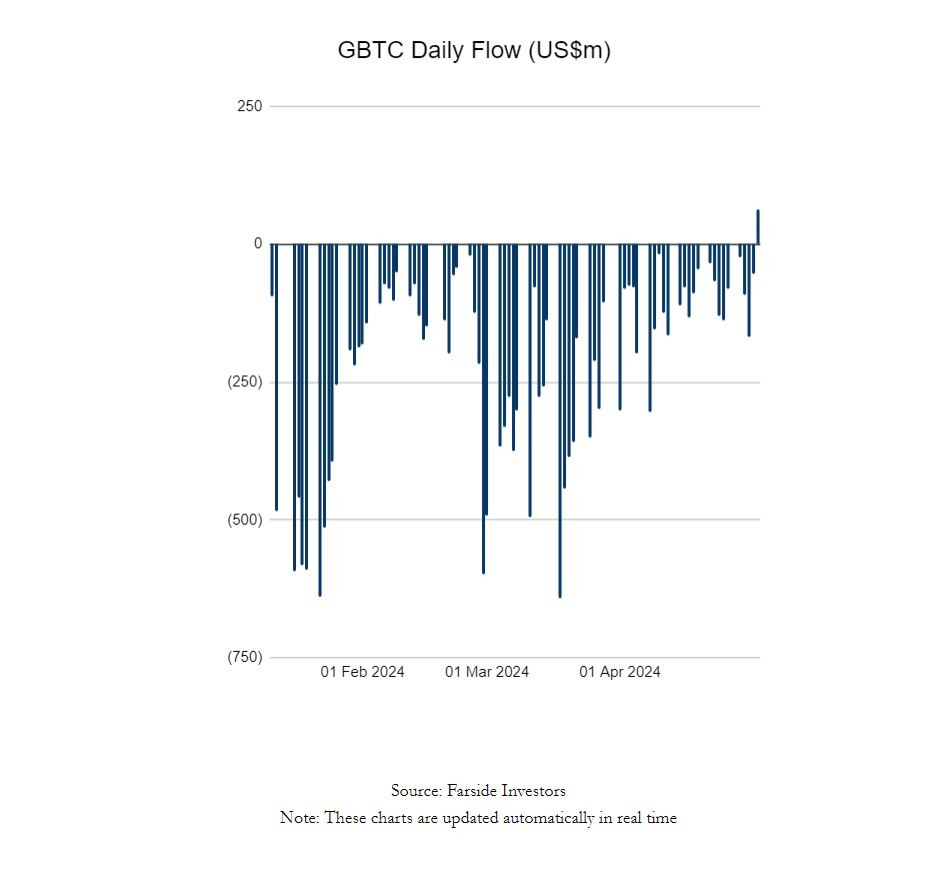
Bitcoin's 200 Day Moving Average Hits All-Time High
To investors,The bitcoin network launched on January 3, 2009. In just over 15 years, the network has become the strongest computer network in the world. There are hundreds of millions of people who have exposure to bitcoin across the spot market, ETFs, and mining. And the bitcoin brand is recognized around the world.But those are just the high-level accomplishments so far. Marty Bent points out that the bitcoin network achieved a major milestone last night — it has processed 1,000,000,000 total transactions since the network launched. A billion transactions is no joke.As I was digging into this milestone, I came across another interesting data point — if you hold at least one full bitcoin, then you are in the top 2% of all bitcoin holders according to DanielGotHits on Twitter/X.Bitcoin is not the only asset that is seeing enthusiasm right now either. The total market cap of stablecoins has hit a new all-time high. One way to view this is that tons of dry powder is sitting on the sidelines ready to be deployed into bitcoin and other crypto assets. Another argument is that the stablecoin market cap is rising because people were selling their crypto assets in the last two weeks and going to cash in the form of stablecoins on various crypto platforms. My guess is that both of these arguments have a hint of truth in them.The good news, as Thomas Fahrer points out, is that bitcoin’s 200 day moving average just hit a new all-time high. This is on top of the fact that GBTC’s 78-day streak of outflows since the ETF approvals ended on Friday. For the first time in almost 3 months, the world’s largest Bitcoin fund saw inflows of $63 million.It is easy to get distracted by the day-to-day price action of bitcoin. Don’t let that happen to you. The digital currency has shown that those who have the longest time horizon tend to do best. Hope you all have a great start to your week. I’ll talk to everyone tomorrow.-Anthony PomplianoHannah Maruyama is the Founder of Degree Free.In this conversation, we talk about the data as to why college may not be as lucrative as people think, examples that include an 18-year-old bitcoin developer, why proof-of-work is so important, role of the parents, and a brand new launch program working one-on-one with teenagers.Listen on iTunes: Click hereListen on Spotify: Click hereBitcoin 200 Day Moving Average Hits All-Time High Podcast Sponsors* Core Scientific is one of the largest public Bitcoin miners and hosting solutions providers for Bitcoin mining in North America.* iTrustCapital allows you to buy and sell cryptocurrency in a tax-advantaged crypto IRA.* Supra - Join Supra’s early integration program for zero-cost access to the fastest oracles and dVRF across 50+ blockchains.* Propy - Now, anyone can start their on-chain journey by minting home addresses via PropyKeys and staking them for profit until they are ready to sell their home. * ResiClub - Your data-driven gateway to the US housing market.* Bay Area Times - A visual newsletter explaining the latest tech & business news.You are receiving The Pomp Letter because you either signed up or you attended one of the events that I spoke at. Feel free to unsubscribe if you aren’t finding this valuable. Nothing in this email is intended to serve as financial advice. Do your own research. This is a public episode. If you'd like to discuss this with other subscribers or get access to bonus episodes, visit pomp.substack.com/subscribe
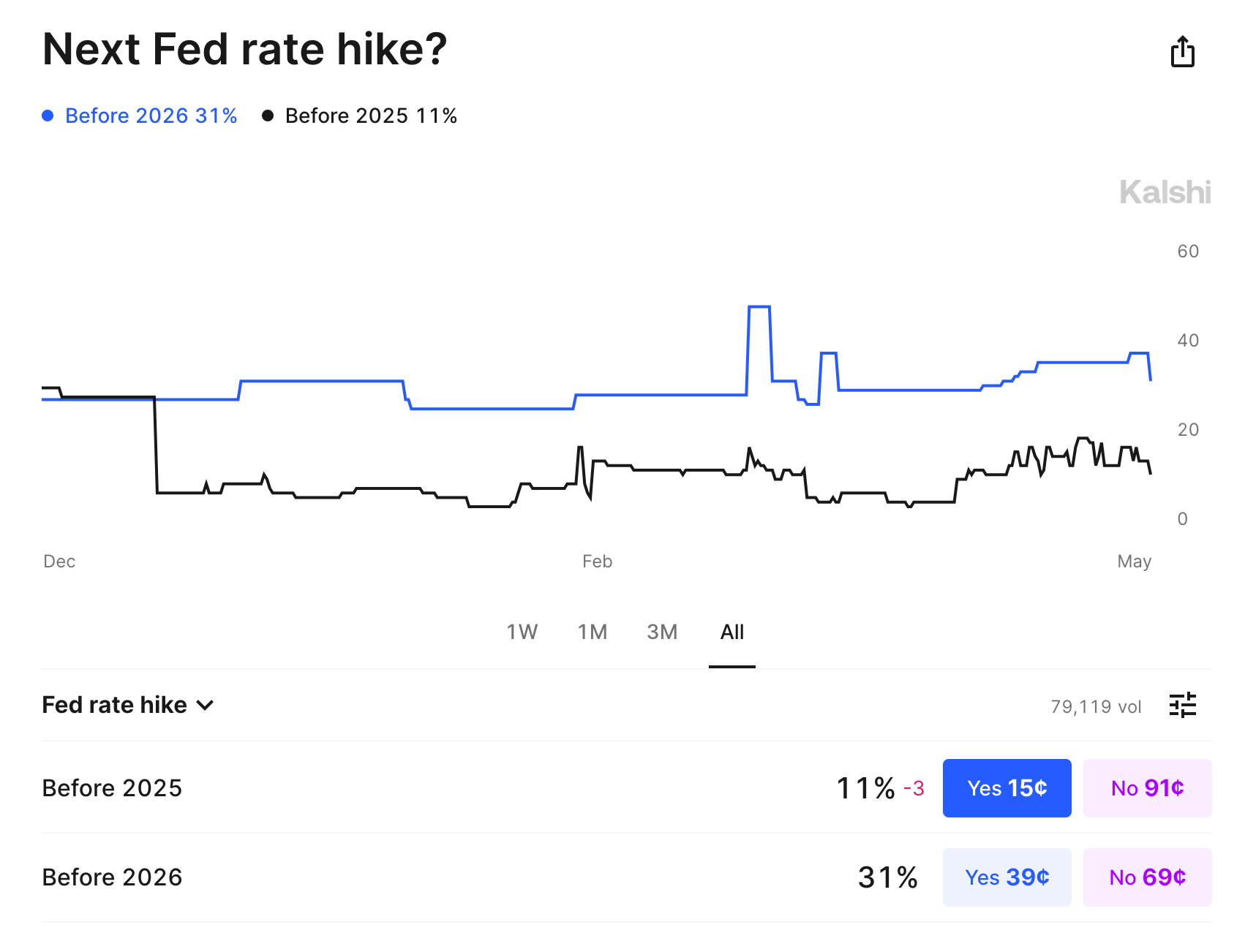
Prediction Markets Don't Believe The Fed
Today’s letter is brought to you by Consensus 2024!Consensus 2024 is happening May 29-31 in Austin, Texas. This year marks the tenth annual Consensus, making it the largest and longest-running event dedicated to all sides of crypto, blockchain and Web3. Don’t miss Bitcoin: We Are So Back, where Anthony Pompliano will discuss what the next bull market will look like, how it will differ from previous run-ups and the broad macro investment thesis for bitcoin and crypto more broadly.Consensus has tailored programming for Bitcoin maxis and multi-chain mavericks alike, covering everything from post-halving strategies to mining and more. Plus, you absolutely won’t want to miss the epic BTC (Nic Carter) vs ETH (David Hoffman) battle at Karate Combat.That’s just a taste of what's to come at crypto’s only big-tent event. Join Consensus in Austin alongside 15,000+ investors, founders, brands and more to take in all that blockchain has to offer. Get your pass today and use code POMP to save 20%.To investors,The market continues to work overtime trying to figure out the Federal Reserve’s plan to cut interest rates. Optimism ruled the day as we entered 2024, including a belief that we would have majority of the Fed’s interest rate decisions lead to rate cuts before the year ended. Today the sentiment is very different.Rather than opine on the qualitative feelings of the market, we can look to the Kalshi prediction market for a quantitative read on how people are thinking about what should unfold related to interest rates. According to these prediction markets, we were set for 5 interest rate cuts in January, but that number has now fallen to under 2.Quite a fall in expectations in just 5 months. You can see that the most popular prediction now is a single rate cut in 2024. At the start of the year, the market predicted an interest rate cut by July was more than 90% likely. Today that percentage has fallen to 27%.These same markets think there is a 92% chance of no change to interest rates in the next meeting, but an 8% chance to cut at least 25 basis points and a 2% chance of a cut larger than 25 basis points. What about the crowd that thinks there is going to be another increase in the interest rate, rather than cuts on the horizon? Those people are in the minority according to prediction markets. If you wager $100,000 on an interest rate hike happening before the end of 2024, you stand to make ~$566,000 if you are correct. Finally, the prediction markets believe there is a 37% chance that we will see an interest rate below 5.25% this year, while there is a 33% chance below 5% interest rate and an 11% chance we see lower than 4.75%. Most people don’t think in terms of probabilities. However, it can be one of the best ways to navigate complex, unknown scenarios. These prediction markets are not crystal balls, but rather can show you a quantifiable measurement on how sentiment and market expectations is changing in real-time. I will keep seeking information on my journey to learn. Hopefully you find this valuable. Have a great weekend and I’ll talk to everyone on Monday.-Anthony PomplianoHannah Maruyama is the Founder of Degree Free. In this conversation, we talk about the data as to why college may not be as lucrative as people think, examples that include an 18-year-old bitcoin developer, why proof-of-work is so important, role of the parents, and a brand new launch program working one-on-one with teenagers.Listen on iTunes: Click hereListen on Spotify: Click hereHow The Idea of Proof-of-Work Is Changing CollegePodcast Sponsors* Core Scientific is one of the largest public Bitcoin miners and hosting solutions providers for Bitcoin mining in North America.* iTrustCapital allows you to buy and sell cryptocurrency in a tax-advantaged crypto IRA.* Supra - Join Supra’s early integration program for zero-cost access to the fastest oracles and dVRF across 50+ blockchains.* Propy - Now, anyone can start their on-chain journey by minting home addresses via PropyKeys and staking them for profit until they are ready to sell their home. * BetOnline - Use crypto to bet on sports, casino games, horse racing, poker and more with promo code POMP100.* Espresso Displays - The world's thinnest touchscreen portable monitor. Expand your workspace and work from anywhere.* ResiClub - Your data-driven gateway to the US housing market.* Bay Area Times - A visual newsletter explaining the latest tech & business news.You are receiving The Pomp Letter because you either signed up or you attended one of the events that I spoke at. Feel free to unsubscribe if you aren’t finding this valuable. Nothing in this email is intended to serve as financial advice. Do your own research. This is a public episode. If you'd like to discuss this with other subscribers or get access to bonus episodes, visit pomp.substack.com/subscribe
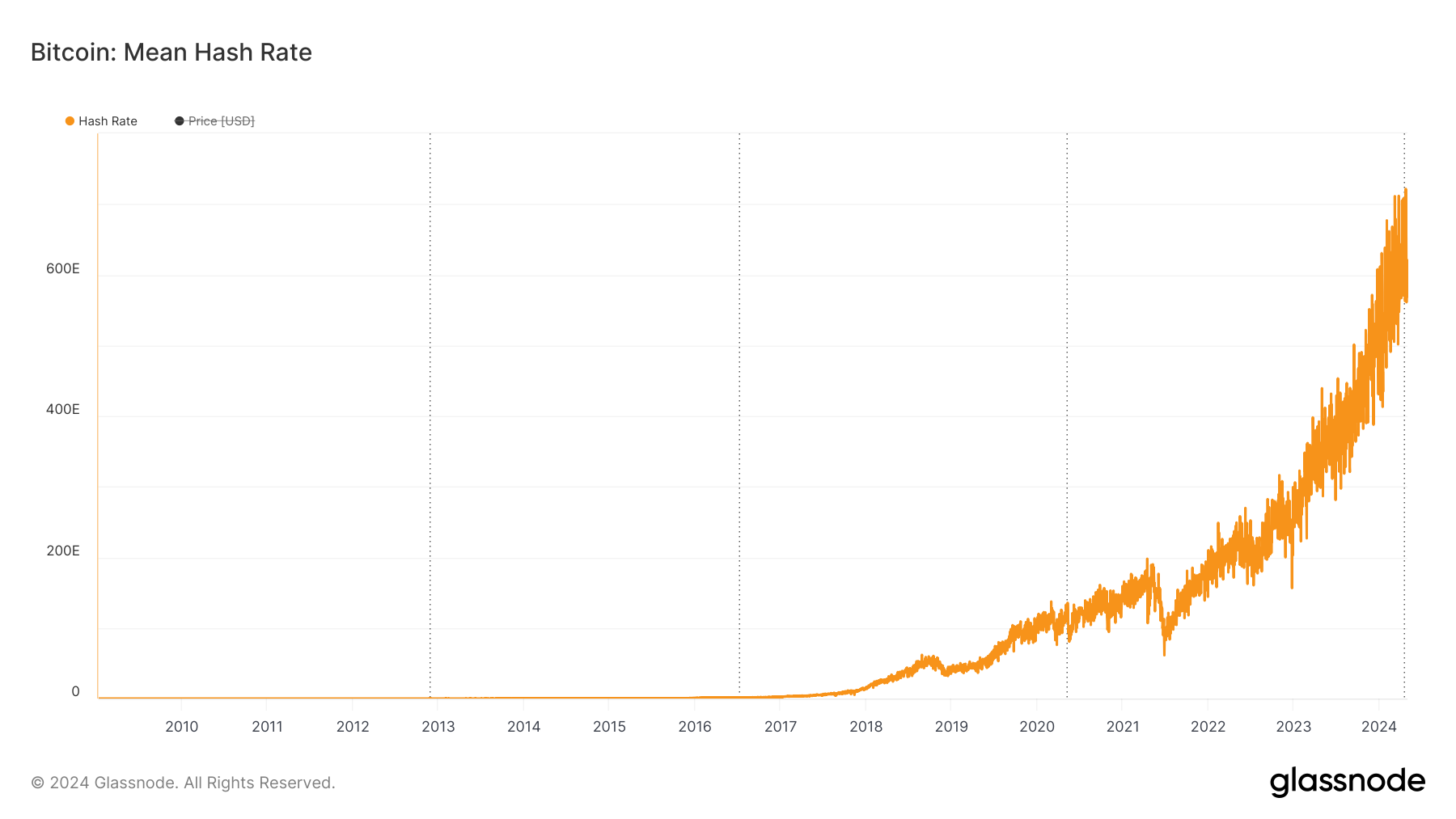
Bitcoin Is Beaten Down By The Macro Environment
To investors,Bitcoin’s price has been falling in recent weeks. This may be surprising to market participants that expected the digital currency to rise aggressively after the halving, but those of you reading this letter daily probably had a different viewpoint.As I wrote to you on April 19th, Bitwise research analyst Juan Leon pointed out that bitcoin’s price action in the month after the halving would not be impressive according to historical data:“On average, the price of bitcoin has risen 19.03% in the month preceding the halving, versus 1.70% in the month following the halving. Zooming out, however, the reverse is true: On average, bitcoin has risen 3,224% in the year following the halving, versus 185% in the year preceding it.”So we are seeing history repeat in the first month after the halving, but the big question is whether we will see the significant price increase in the first year after the halving. There are still 11.5 months left until we have that answer.In the meantime, there are many people asking me why bitcoin’s price has dropped 10% in the last 5 days and 17% in the last month. One argument is that the halving was a “sell the news” event, but that seems too easy and naive of an answer. Instead, it is more likely that bitcoin is acting as the global alarm system once again. Jeroen Blokland explains one theory:“Yikes! Bitcoin is down a whopping 12% from its peak yesterday. It's another confirmation investors are forced to abandon their goldilocks scenario of decent GDP growth, slowing inflation, and a series of central bank rate cuts on the horizon. The US GDP number, which was significantly lower than expected, combined with a significantly higher PCE core deflator, seems to have pushed investors over the 'hopium' edge. Equities, bonds, gold, oil, and Bitcoin are all selling off. Let's see if and how Powell takes recent developments into account.”If Blokland is correct, which I tend to think that he is, then the drawdown we are seeing in bitcoin having nothing to do with the digital network or asset, but everything to do with the macro backdrop the asset is trading in. The network looks very healthy. The number of on-chain wallet addresses with at least 0.1 bitcoin has not gone down.Hash rate on the network remains strong and growing, signaling the blockchain is secure and resilient. And the number of transactions continues to rise. Regardless of intra-month price movements, people around the world continue to find value in bitcoin’s peer-to-peer system. I lay out this analysis because it is easy to lose emotional control when the price of an asset drops lower with such speed. But don’t forget, this is normal for a bitcoin bull market. You should expect multiple 30% drops along the way to hundreds of percent in price appreciation during the expansion periods. Take a deep breath. Stay calm. The world isn’t ending. Bitcoin is not failing. Nothing has changed about the investment thesis. Our central bankers and politicians have just mismanaged the economy to the point that people are getting worried.Bitcoiners have known this for years.Hope you have a great day. I’ll talk to everyone tomorrow.-Anthony PomplianoNick Neuman is the Co-Founder & CEO of Casa, one of the preeminent custody providers in bitcoin and crypto industry. In this conversation, we talk about what custody used to look like before the digital age, how Casa is solving problems around bitcoin custody, examples of why self-custody makes it more secure, brand new inheritance feature, risks, and future of self-custody.Listen on iTunes: Click hereListen on Spotify: Click hereCasa CEO Nick Neuman Explains How The Rich Protect Their BitcoinPodcast Sponsors* Core Scientific is one of the largest public Bitcoin miners and hosting solutions providers for Bitcoin mining in North America.* iTrustCapital allows you to buy and sell cryptocurrency in a tax-advantaged crypto IRA.* Supra - Join Supra’s early integration program for zero-cost access to the fastest oracles and dVRF across 50+ blockchains.* Propy - Now, anyone can start their on-chain journey by minting home addresses via PropyKeys and staking them for profit until they are ready to sell their home. * BetOnline - Use crypto to bet on sports, casino games, horse racing, poker and more with promo code POMP100.* Espresso Displays - The world's thinnest touchscreen portable monitor. Expand your workspace and work from anywhere.* ResiClub - Your data-driven gateway to the US housing market.* Bay Area Times - A visual newsletter explaining the latest tech & business news.You are receiving The Pomp Letter because you either signed up or you attended one of the events that I spoke at. Feel free to unsubscribe if you aren’t finding this valuable. Nothing in this email is intended to serve as financial advice. Do your own research. This is a public episode. If you'd like to discuss this with other subscribers or get access to bonus episodes, visit pomp.substack.com/subscribe
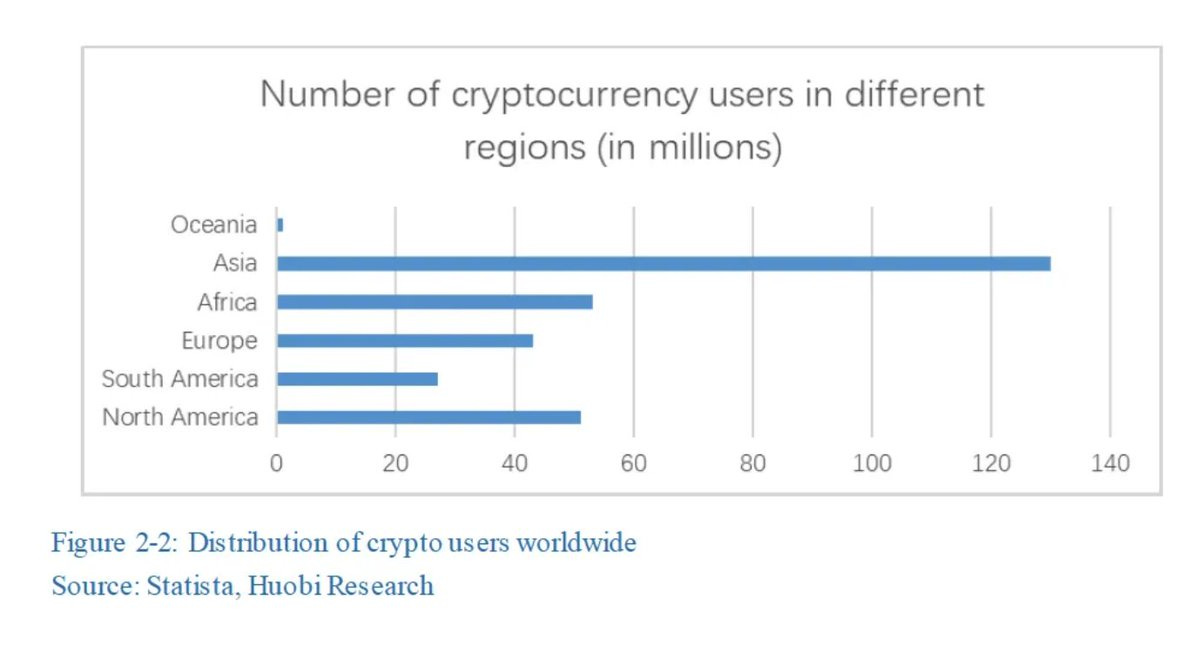
Hong Kong Launches Crypto ETFs To Lackluster Trading Volumes
To investors,There were six new crypto ETFs that started trading in Hong Kong on Tuesday. These were the first spot bitcoin and spot ether ETFs to launch in the region, but the trading volumes were quite lackluster.Total trading volume for the Hong Kong ETFs was slightly over $100 million. In comparison, the US debut for the bitcoin ETFs saw more than $4.5 billion in trading volume on day one earlier this year. These new ETF launches are important to watch because Asia boasts a much larger crypto user base than any other region in the world. As Willy Woo pointed out, Asia’s user base is larger than the US and Europe combined. On one hand, you can argue that the overall interest in crypto is higher in Asia, so there should be many more investors interested in these spot ETFs. On the other hand, you could argue that the higher amount of Asian users means that people in the region have already allocated to the native assets, therefore leading to less interest in the publicly traded funds. When you look at it on a percentage basis, rather than an aggregate analysis, I would go with the former argument when talking about retail investors. But the United States capital markets is still the dominant playing field for institutions around the world and these institutional allocators have much more money than retail. It is hard to see a world where the Hong Kong ETFs become larger than the US-traded funds. Another thing to keep in mind is that crypto is still outlawed in mainland China. Unless that legal position is reversed, there are close to 1.4 billion people in Asia who will not be allowed to allocate capital to these funds. Obviously incorporating such a large number of people into the addressable market would be a tailwind for these new ETFs. Additionally, it is important to keep in mind that there are very real currency issues in some of these Asian countries. Let’s use the Japanese yen as an example. Jesse Colombo highlights that gold is up approximately 165% in the last 5 years when priced in yen. This is compared to gold only being up about 85% in the same timeframe when priced in US dollars. That is 2x the performance, which is really just a statement on how poorly the yen has performed. So it is not hard to formulate an argument that Asian investors could seek exposure to bitcoin as relief from their devalued local currencies. The open questions are:* How much pain are local Asian investors actually experiencing from these currency issues?* How much capital are they willing to allocate to bitcoin and crypto?* Will these choose to buy the ETFs or seek out the underlying assets directly?* Will investors pick US-traded funds over Hong Kong-traded funds?We won’t know these answers for awhile, but with each incremental positive response there should be a stronger tailwind for bitcoin through this bull market. It is obvious that the idea of a decentralized currency has become a global phenomenon. People are watching their currencies get debased at an accelerated rate, so they are seeking a long-term store-of-wealth. Bitcoin appears to be one of the solutions that has become an accepted answer. Now we must wait and see how that popularity translates to capital flows over the next 12-18 months. Hope you all have a great day. I’ll talk to everyone tomorrow.-Anthony PomplianoBill Barhydt is the Co-Founder & CEO of Abra, a global platform for digital asset prime services and wealth management, leveraging trusted DeFi expertise to connect the on-chain and off-chain ecosystems for private clients and institutions. In this conversation, we talk about the brand new regulatory approval as a registered investment advisor, what that means for Abra, how they can service both credited & uncredited investors now, why allowing basic financial services has been so difficult, and where the industry is going.Listen on iTunes: Click hereListen on Spotify: Click hereAbra CEO Says $50 Trillion Is Coming To Bitcoin & CryptoPodcast Sponsors* Core Scientific is one of the largest public Bitcoin miners and hosting solutions providers for Bitcoin mining in North America.* iTrustCapital allows you to buy and sell cryptocurrency in a tax-advantaged crypto IRA.* Supra - Join Supra’s early integration program for zero-cost access to the fastest oracles and dVRF across 50+ blockchains.* Propy - Now, anyone can start their on-chain journey by minting home addresses via PropyKeys and staking them for profit until they are ready to sell their home. * BetOnline - Use crypto to bet on sports, casino games, horse racing, poker and more with promo code POMP100.* Espresso Displays - The world's thinnest touchscreen portable monitor. Expand your workspace and work from anywhere.* ResiClub - Your data-driven gateway to the US housing market.* Bay Area Times - A visual newsletter explaining the latest tech & business news.You are receiving The Pomp Letter because you either signed up or you attended one of the events that I spoke at. Feel free to unsub
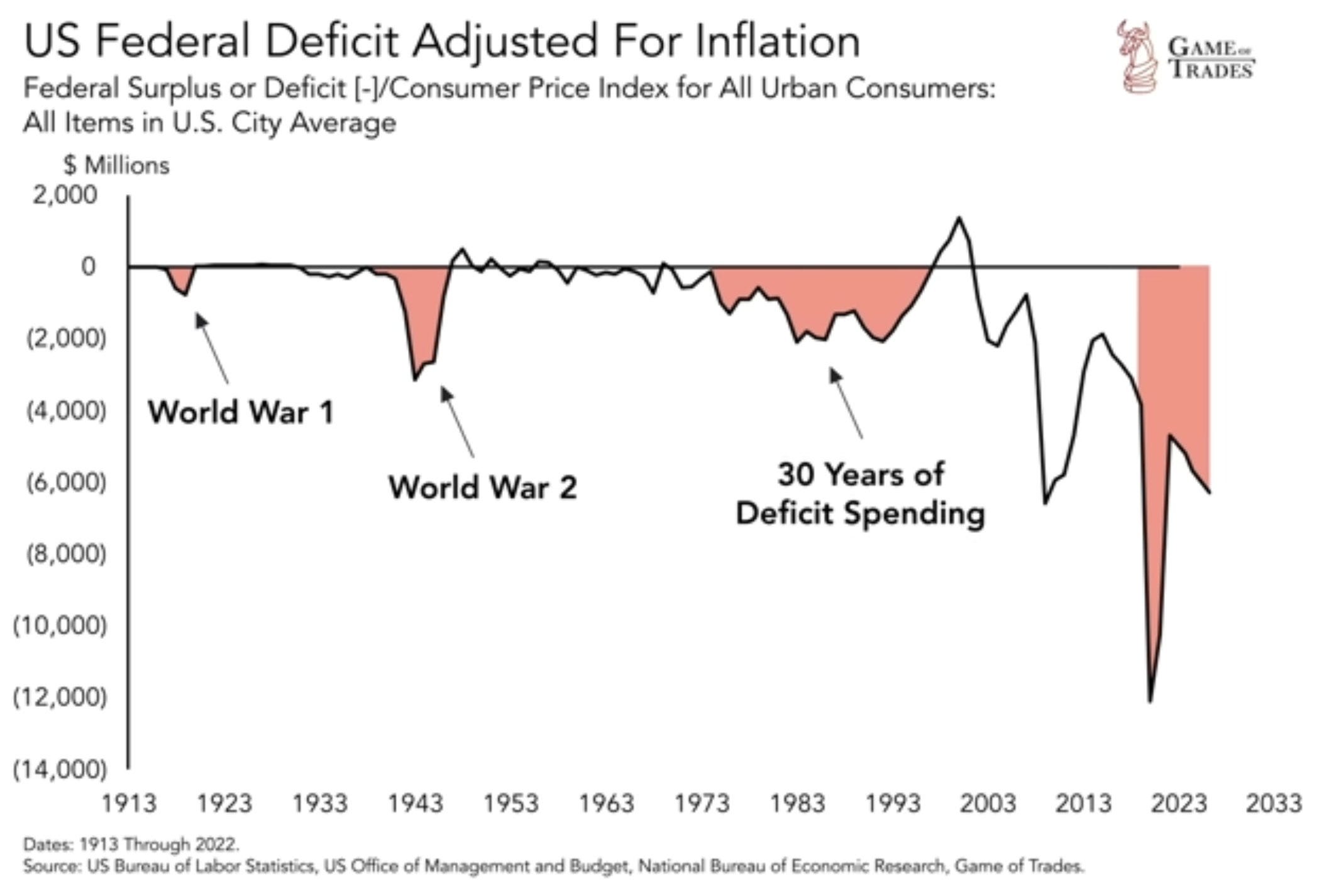
There Is So Much Money Sloshing Around The System
READER NOTE: This Thursday I am hosting a free webinar for anyone who is trying to transition into a new job in the bitcoin and crypto industry. Previously, my team and I have helped more than 3,000 people find a new role, so I will break down the lessons learned and provide actionable advice on how to make the jump efficiently. The event is completely free and I will also be joined by people from BTC Inc, Compass Mining, Rhino Bitcoin, and Serotonin who will share their experience in finding a new job.To investors,One of the big differences in the US economy post-pandemic is how much extra capital is sloshing around the financial system. You can see the impact everywhere. First, the Fed’s balance sheet has nearly doubled since 2020 even though the central bank has been trying to aggressively drain liquidity from the system and sell assets. Second, according to Axios, “the average household wealth for those under 40 in the U.S. is up 49% from its pre-pandemic level.”Third, US corporations are sitting on all-time high amount of cash, which comes in today at $4.4 trillion. Fourth, US home prices are up about 30% bringing the median sales price of homes sold in the US to over $400,000.Fifth, all this extra money flowing through the system has a record amount of people planning to go on vacation to a foreign country in the next 6 months. Most of this extra money is coming as a byproduct of government spending. According to Game of Trades, “US government spending (inflation-adjusted) since 2020 now exceeds the combined spending of: World War I, World War II, and the 1970 to 1990 time period.”So it shouldn’t be surprising that inflation refuses to come down. The government is spending like drunk sailors. The US consumer has extra cash that they want to spend like it is a hot potato. And US corporations have never had more cash on-hand than they do right now. This is a cocktail for higher inflation, regardless of what the Fed does with interest rates.Hope you all have a great day. I’ll talk to everyone tomorrow.-Anthony PomplianoRenato Moicano is a UFC Fighter who went viral after his most recent fight, talking about defending liberty, importance of private property rights, and suggest everyone read the 6 lessons of Ludwig Von Mises. In this conversation, we talk about the lessons he has learned from Brazilian constitution vs American constitution, private property rights, why he suggested Ludwig Van Mises, principles of America, why he views bitcoin as a lifeboat, capitalism, national debt, taxation, upcoming elections, inflation, the responses he has received, and crypto in Brazil.Listen on iTunes: Click hereListen on Spotify: Click hereInterview with UFC Fighter Renato Moicano on Economics, Freedom, and BitcoinPodcast Sponsors* Core Scientific is one of the largest public Bitcoin miners and hosting solutions providers for Bitcoin mining in North America.* iTrustCapital allows you to buy and sell cryptocurrency in a tax-advantaged crypto IRA.* Supra - Join Supra’s early integration program for zero-cost access to the fastest oracles and dVRF across 50+ blockchains.* Propy - Now, anyone can start their on-chain journey by minting home addresses via PropyKeys and staking them for profit until they are ready to sell their home. * BetOnline - Use crypto to bet on sports, casino games, horse racing, poker and more with promo code POMP100.* Espresso Displays - The world's thinnest touchscreen portable monitor. Expand your workspace and work from anywhere.* ResiClub - Your data-driven gateway to the US housing market.* Bay Area Times - A visual newsletter explaining the latest tech & business news.You are receiving The Pomp Letter because you either signed up or you attended one of the events that I spoke at. Feel free to unsubscribe if you aren’t finding this valuable. Nothing in this email is intended to serve as financial advice. Do your own research. This is a public episode. If you'd like to discuss this with other subscribers or get access to bonus episodes, visit pomp.substack.com/subscribe
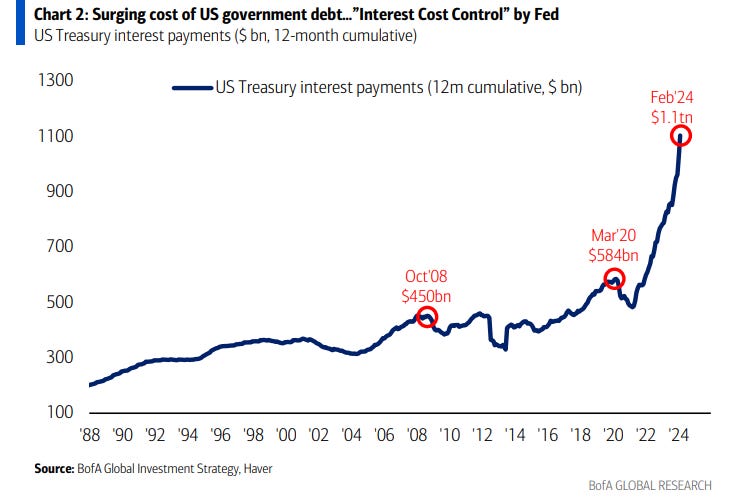
Politicians Want Higher Taxes To Cover For Their Lack of Discipline
Today’s letter is brought to you by Shortform!Shortform has the world’s best guides to 1000+ nonfiction books. Learn key points and gain insights you won't find anywhere else. Understand the world’s best ideas.* Crystal-clear logic — We take confusing ideas and explain them in plain and simple ways. Never get confused by a complicated book again.* Brilliant new insights — We add smart analysis, connecting ideas in novel ways and discussing key updates since the book was published.* Always concise — Your time is valuable, and we don't waste it. We write with zero fluff, making every word and sentence deserve your time.They cover the world's most popular books, including New York Times #1 bestsellers and universally recommended titles. Learn from books in categories like: management, entrepreneurship, business, money and finance, career and success, productivity, and health & well-being.Join Shortform today (www.shortform.com/anthony) and get a free trial. Once the free trial is over, you will get 20% off the service as well. Highly recommend if you want to get smarter and be time efficient!To investors,The national debt is now over $34.6 trillion. Despite that insane number, the US government continues to run a deficit that is estimated to be ~ $2 trillion annually. Given the high interest rate environment, our interest payment on this debt has now crossed over $1 trillion annually.As The Kobeissi Letter put it:“The annual interest expense on US debt is literally moving in a straight line higher, now at $1.1 TRILLION. To put this in perspective, less than 3 years ago the annual interest expense on this debt was $450 billion. That's a 144% jump as total US debt has surged by over $11 TRILLION since 2020. Even in 2008, at the peak of the Financial Crisis, annual interest expense was just $450 billion. As interest rates surge and debt levels hit record highs, we are paying the prices for decades of deficit spending. The era of "free money" is over.”So the government is broke and they need more money. One solution is to keep borrowing and driving the national debt higher. But another solution is to raise taxes on American citizens. While unpopular, politicians may feel like they have no other choice. Yesterday, there were a number of tax proposals that went viral online and caused significant uproar. The most egregious proposal was for the government to tax unrealized gains. Technically they want to focus on the wealthiest Americans, but that doesn’t matter here. The idea of taxing unrealized gains is probably one of the stupidest ideas ever created by the political class.Under this proposal, an American would owe taxes each year based on the price appreciation of their home. So if you have a $500,000 home and it appreciates $100,000 in 2025, then you would owe $25,000 - $40,000 in unrealized capital gains taxes depending on your income bracket and the state you live in. Obviously this would bankrupt a large portion of the population considering the average American doesn’t have $400 for an emergency payment. Additionally, imagine a tech founder who starts a new company. If they raise capital at $5 million valuation, work hard throughout the year to build a solution to a real problem, and then raise capital again at a $10 million valuation, the founder would owe tens or hundreds of thousands of dollars in taxes.The problem in both of these situations is that the individual holding the unrealized gain never had true profit from the asset, so there is no money to pay the taxes. Plus, we won’t get into the difficult questions like “what happens if the asset depreciates later?” or “who gets final say on what an asset is worth?”As I tweeted last night, “If they want to collect unrealized gains, we’re going to need refunds on unrealized losses.” The latter will never happen, but thankfully neither will the former. On a more realistic basis, another tax proposal put forward is that the Biden administration would like to reinstate the 39.6% income tax for high earners. President Trump had removed this tax bracket and made the highest income tax only 37%. My guess is that this proposal’s fate will be determined by whoever is elected in November. So, in conclusion, the US government is broke and we only have two options ahead of us — borrow more money or tax our citizens more egregiously. Even if the politicians are able to force a tougher tax regime through the legislative process, I don’t see a path where tax revenue can cure the federal deficit we run annually.The only viable path the US has in my opinion is to continue borrowing money. That means the national debt will grow to the sky. The US dollar will be debased. Hard assets will continue to appreciate in value. And the investors who understand investing, not saving, is the path to financial freedom will be rewarded handsomely. It is a tale as old as time. We have reached the point of no return. Our government is allergic to a balanced budget. They have a money pri
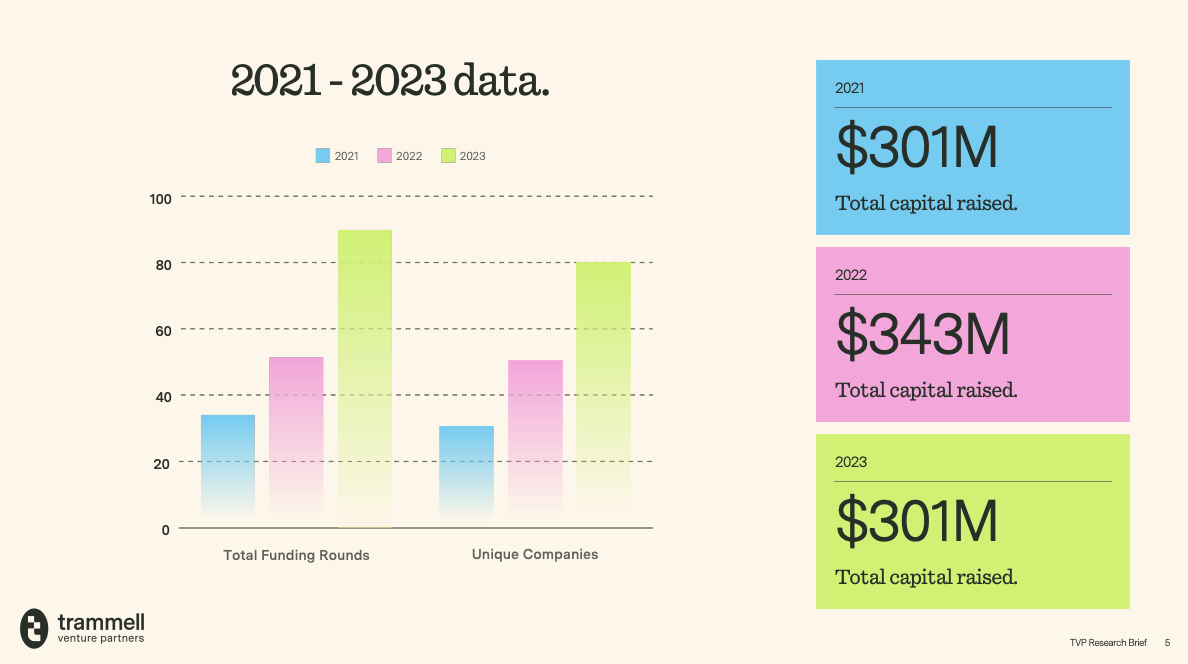
The Banks Don't Want The Crypto Wealth
To investors,New industries bring new problems. The market has been focused on the various ramifications of bitcoin and crypto adoption, but these conversations have historically revolved around geopolitics, nation state acceptance, and portfolio construction. People find it easy to discuss the large, easy-to-identify ramifications. The devil is always in the details though. One of the small problems that has become obvious over the last few years is a disconnect between legacy banks and the wealth generated in this new industry. Here is how the problem works — someone bought bitcoin early and has held the asset till today. On paper, they have “made” approximately $10 million in gains on that bitcoin position. This same person currently has $150,000 in cash sitting in their bank account. They have no other investable assets other than their bitcoin. In this scenario, if the person wants to go to the bank and get a mortgage or a loan, the bank will measure the individual’s net worth at $150,000.Yes, you read that right. The banks do not count bitcoin or cryptocurrency holdings towards an individual’s net worth calculation for the purposes of underwriting traditional financial products or services. This makes it difficult for people who have majority of their net worth in this new asset class to access these legacy products/services. At the same time this is happening, an entire generation of investors are creating material wealth in the new asset class. So either the banks will have to capitulate and change their underwriting methodology, or new companies will be created to service the crypto wealth holders with various financial services. One example of a newcomer is Meanwhile, a startup that has created the world’s first bitcoin life insurance company. They denominate everything, from their internal P&L to the policies they service, in bitcoin. Clients can contribute bitcoin and clients can get paid out from the policies in bitcoin. Not only is this a pretty good idea, but investors such as Sam Altman, Lachy Groom, Google’s Gradient Ventures, and Stillmark are all betting that the company will be very successful. Here is a conversation that I did with Meanwhile CEO Zac Townsend recently:I have no clue if this company will work. Startups are hard. Meanwhile appears to have momentum and I found the team to be impressive. The bigger story to me is that bitcoin-focused (and crypto-focused) financial service providers are coming to fill the gap left by the legacy banks.If the incumbents are going to ignore the trillions of dollars in wealth that has been generated, the economic incentive is too strong for startups to stay on the sidelines. Someone is going to service these people. The question is whether the startups can quickly get big enough to compete with the large incumbents once they change their mind. The folks at Trammel Venture Partners put out a report on bitcoin-focused venture capital trends recently. These two slides caught my attention to help quantify this development:You can read the full report from TVP by clicking here.New industries bring new problems. New problems bring new opportunities for new companies. This is going to be worth paying attention to as the startups and incumbents battle it out for billions of dollars in future value. Hope you all have a great day. I’ll talk to everyone tomorrow.-Anthony PomplianoZac Townsend is the Co-Founder & CEO of Meanwhile, the world’s first bitcoin denominated life insurance company. In this conversation, we talk about traditional life insurance, protection, tax advantages, opportunities, and what Zac is building at Meanwhile using bitcoin to eliminate risk.Listen on iTunes: Click hereListen on Spotify: Click herePodcast Sponsors* Core Scientific is one of the largest public Bitcoin miners and hosting solutions providers for Bitcoin mining in North America.* iTrustCapital allows you to buy and sell cryptocurrency in a tax-advantaged crypto IRA.* Supra - Join Supra’s early integration program for zero-cost access to the fastest oracles and dVRF across 50+ blockchains.* Propy - Now, anyone can start their on-chain journey by minting home addresses via PropyKeys and staking them for profit until they are ready to sell their home. * BetOnline - Use crypto to bet on sports, casino games, horse racing, poker and more with promo code POMP100.* Espresso Displays - The world's thinnest touchscreen portable monitor. Expand your workspace and work from anywhere.* ResiClub - Your data-driven gateway to the US housing market.* Bay Area Times - A visual newsletter explaining the latest tech & business news.You are receiving The Pomp Letter because you either signed up or you attended one of the events that I spoke at. Feel free to unsubscribe if you aren’t finding this valuable. Nothing in this email is intended to serve as financial advice. Do your own research. This is a public episode. If you'd like to discuss this with other subscribers or get access to bonus
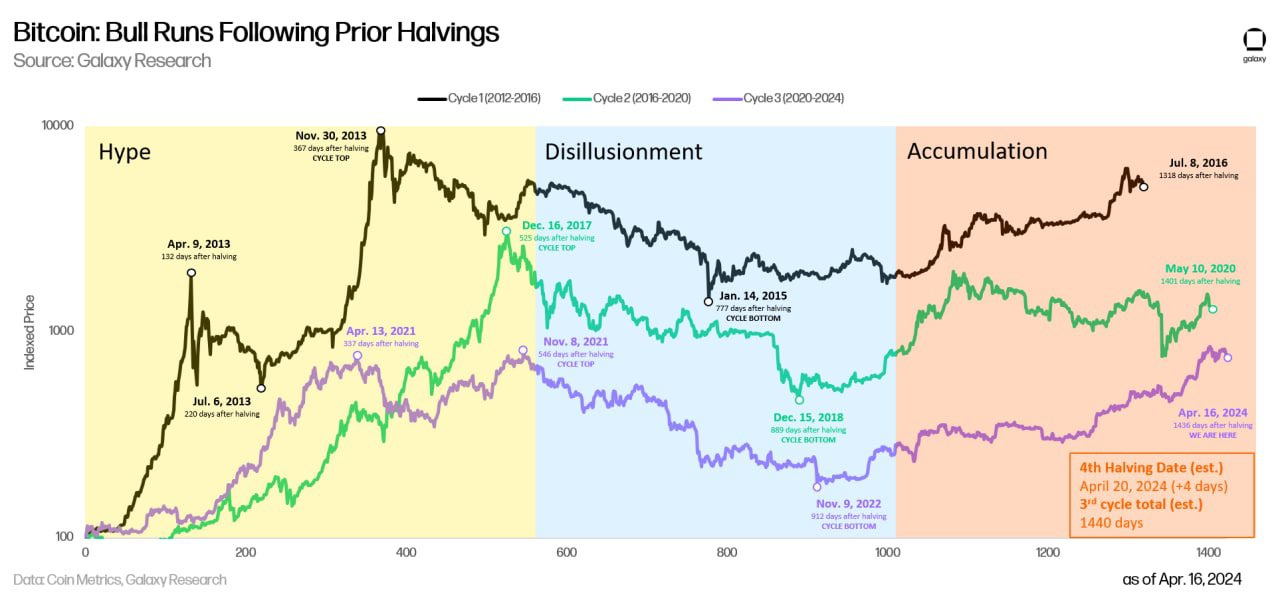
Overview of Today's Bitcoin Halving
To investorsThe bitcoin halving is scheduled to happen later today. I asked Meta’s new AI model to explain what the halving was and here is the output:“The Bitcoin Halving is a preprogrammed event that occurs roughly every four years and impacts the production of bitcoin. The halving reduces the reward for mining Bitcoin transactions by half, which reduces the rate at which new coins are created and thus lowers the available amount of new supply.”Not a bad description. There are a few important things to unpack around this event, so I will do my best to address each of them.First, investors want to know — has the halving been priced in? Bitcoin is up approximately 40% year-to-date. Theoretically, if everyone knows the halving is happening, especially if they all know when it is happening, then the market should price the event in advance. The problem with that theory is that everyone doesn’t know about the halving though. You could take a poll of bitcoin holders and a non-zero percentage of them would be hearing about the bitcoin halving for the first time. On top of that, some portion of the investors could not accurately describe what the halving is, how it works, where the impact is seen on the supply side, nor when it is scheduled to occur.This information gap is a clear sign that the halving can’t be priced in. The second question is how impactful will the halving be on bitcoin’s price in the coming days, weeks, months, and years? Castle Island’s Nic Carter made a great point yesterday on Bloomberg when he said “the halving represents an issuance reduction on an annual basis of 83 basis points.” Nic and I disagree on the halving being priced in, but his point here about the relatively small change in issuance percentage for this halving is important. The smaller the percentage, the less impact that the halving event should have on the price of the asset. Bitwise analyst Juan Leon quantified the historical impact on bitcoin’s price when he wrote:“Historical data tells us that on a short-term return basis, the halving is a “sell the news” event. On average, the price of bitcoin has risen 19.03% in the month preceding the halving, versus 1.70% in the month following the halving. Zooming out, however, the reverse is true: On average, bitcoin has risen 3,224% in the year following the halving, versus 185% in the year preceding it. Those numbers are skewed by the huge (8,839%) return in the year following the 2012 halving. But ignoring absolute numbers, returns have been higher post-halving than pre-halving in each of the three historical examples we have.”Placeholder’s Chris Burniske looked at the past price movements and showed that strong hands have benefitted greatly within 18 months from holding bitcoin post-halving. Galaxy Research’s Alex Thorn came to a similar conclusion when analyzing the post-halving bull run data.So my big takeaway is that the actual halving is historically a sell the news event. The price of bitcoin does not immediately take off higher. Instead, it takes a few weeks or months to see the supply change impact the market. Over the coming months, we should see bitcoin’s price continue to rise aggressively as demand stays constant or potentially increases.One thing to call out, which runs counter to the public narrative, is that we should not expect bitcoin to experience as large of a return to the upside as we have seen in past bull markets. The market size is much larger and net new capital into the market has a smaller percentage impact. You can see in Thorn’s analysis above that the price appreciation in percentage terms has been decreasing in the last few bull markets. Bitcoin still remains one of the best performing assets in the world, but it is much less risky to buy the asset today so you should expect to capture a lower return than those who took higher risk years ago. Speaking of risk, I am constantly asked what I perceive as the biggest risks to bitcoin. One of my answers is some version of “the software potentially not executing as designed.” I measure this risk to be near-zero probability, but it remains a small risk worth watching. Today is one of the days where we will get another data point that bitcoin continues to do what it was designed to do — the halving should come and go without a hitch. But we never have 100% certainty until it happens.Here is to hoping that we have an uneventful day. Happy Halving Day to all of you. I’ll talk to everyone on Monday.-Anthony PomplianoSandy Kaul is the Senior Vice President at Franklin Templeton. In this conversation, we talk about bitcoin, client demand, tokenization, real world assets, regulation, portfolio construction, future narratives, meme coins, and where Franklin Templeton sees value in the future.Listen on iTunes: Click hereListen on Spotify: Click hereTrillion Dollar Investor Is All-In On Crypto Podcast Sponsors* Core Scientific is one of the largest public Bitcoin miners and hosting solutions providers for Bitcoin mi

New Bitcoin ETP Just Launched That Generates Yield
To investors,The finance industry is built on capital appreciation and yield. Investors scour the world to find assets that will go up in price or assets that will give them income. That is what it all boils down to when investing.Each investor has a different view on which strategy to pursue. Warren Buffett is famous for avoiding assets that don’t produce cash-flow. Other investors seek capital appreciation over anything else. But what if an asset could be highly asymmetric, while also producing an attractive yield? This would be the holy grail of financial assets. Over the years, investors have tried to put bitcoin in this bucket. Various companies have come and gone that offered yield on your bitcoin. At times, the yield was very high and quite tempting. Unfortunately, these yield-oriented bitcoin offerings required you to give up your private keys, which meant that you no longer had control of your assets. Someone else held your keys and you had to trust them to give the bitcoin back when you wanted. As we saw with different companies in 2022, this was a painful lesson for many people including myself. But rehypothecation is how traditional finance works for yield-generation. It just goes against the point of bitcoin as an asset that was designed to be held via self-custody.So how can the pursuit of yield be solved for bitcoin holders? There is a new experiment called Core DAO that is taking parts of bitcoin and ethereum to create a new hybrid technology solution. I won’t bore you with the technical details, but you can read those here if you would like.What you need to know is that the Core team has created a way for individual bitcoin holders to generate yield on their bitcoin without surrendering their private keys. The way this is done is via the timelock feature on the bitcoin blockchain. Most people don’t know this, but every bitcoin transaction has the option to create a timelock or not for the bitcoin that is being sent. Majority of people don’t use the functionality because they want immediate access to the bitcoin. In the case of Core though, users are essentially using the timelock function to have the opportunity to generate yield. The minimum amount of time is one week and there is no maximum amount of time. While bitcoin is being timelocked, Core is working with bitcoin miners to recycle hash from transactions to secure the new hybrid tech. As of this week, approximately 50% of bitcoin’s total hashrate is participating in Core’s system. Now this system is quite technical and it can be hard to understand exactly how to participate. I am fairly well versed in these technologies, yet find using the more technical products difficult at times. So it would make sense for financial organizations to figure out ways to offer exposure to various strategies in a familiar interface that makes it easier for investors to allocate capital.That is where DeFi Technologies and Valour Asset Management comes in. As I wrote previously, I am a shareholder and believe the company is drastically undervalued. Their strategy is to find unique assets or strategies that they can offer in an ETP format.Yesterday, Valour announced the world’s first ETP that allows investors to earn yield on bitcoin. It is called the Yield Bearing BTC ETP. This is being accomplished via the Core technology. Valour/DeFi Technologies are going to contribute approximately $200 million to the fund and investors will be able to start buying the ETP shortly. I find this development fascinating because it attempts to solve a very difficult problem — hold the private keys to an asymmetric asset, while simultaneously earning yield. The problem is so hard that most people are not willing to experiment with potential solutions. But if the problem is solved, then there is billions of dollars that will be allocated to bitcoin from yield-seeking investors. Remember, the debt market is significantly larger than the equity market for a reason. Before I let you go, I want to emphasize that I consider Core and the use case they are pursuing as an experiment. It appears to be an experiment that is working well, but it is important to exercise caution when doing anything with your bitcoin. Whenever I want to try something new, or participate in an experiment, I am only usually willing to do it with a very small percentage of my portfolio. With that said, we need as much experimentation as we can get. We need to solve problems. We need to build new financial infrastructure. It appears we are making progress. But there is still plenty of work to do.Hope you all have a great day. I’ll talk to everyone tomorrow.-Anthony Pompliano Chris Dixon is the Founder & Managing Partner at a16z crypto, and the author of “Read Write Own: Building the Next Era of the Internet.” In this conversation, we talk about the original promise of the internet, what went wrong, lack of control from companies in the digital world, how blockchains and crypto can change that, bitcoin, et
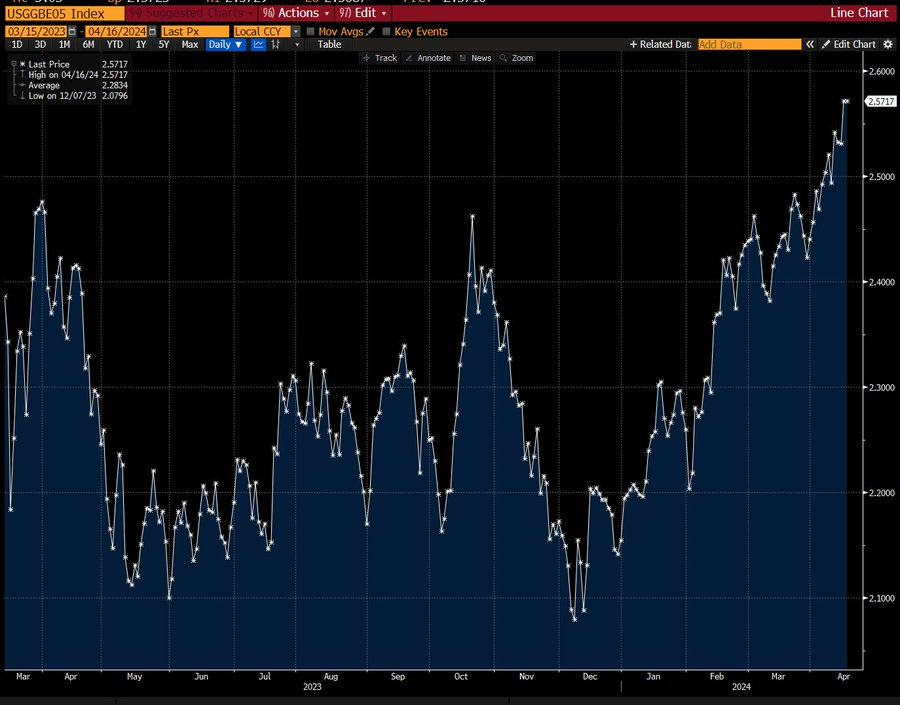
The Conflicting Data of the US Economy
To investors,The current economic situation is confusing to most investors. Many data points are pointing to an incoming recession, while the metrics that the Fed uses to gauge economic strength continue to show a hot economy with no signs of slowing down. Below are a few charts that highlight these differences.Bloomberg’s Lisa Abramowicz shows “longer-term inflation expectations are rising again. The market's implied rate of inflation over the next five years has risen to the highest level in more than a year, at 2.6%, according to breakeven rates.”Inflation expectations rising usually leads to behavior from market participants that causes inflation to rise. Not a great sign of things to come if this becomes reality. Will this cause investors to panic? Maybe. Winfield Smart explains that the “Goldman Sachs Panic Index soars to highest level since March 2023.”CNBC’s Carl Quintanilla points out an opposing viewpoint from JP Morgan, which stated the recent retail sales beat, “alongside upward revisions to previous months, suggests a strong 3.3% rise in 1Q real consumer spending and some upside risk to our 2.25% GDP forecast, as well as building momentum going into 2Q.”The Kobeissi Letter shared a shocking statistic: “US CPI inflation is on track to hit 4.8% by the 2024 election, according to Bank of America. Over the last 3 months, CPI inflation has averaged 0.4% on a month-over-month basis. If this trend continues it puts year-over-year inflation on pace to hit 4.8% by November, its highest since April 2023. That would be more than DOUBLE the Fed’s 2% inflation target. Inflation has been above the Fed's 2% long-term target for 37 straight months. Inflation is far from over.”Lastly, the full-time employment situation in America is getting bad very quickly. This should lead to a major drag on US home prices in the future if the historical trends hold. So what happens from here? How do we reach a conclusion based on the conflicting data points? The short answer is that I don’t know. It is an impossible situation to figure out. Rather than focus on the short-term price movements of assets, I am spending all of my time focused on what I believe to be true over the next 5-10 years. Those trend lines appear to be easier to identify than what will happen in the US economy over the next 1-2 years.Hope you all have a great day. I’ll talk to everyone tomorrow.-Anthony PomplianoTrevor Bacon is the Co-Founder & CEO of Parcl, a decentralized real estate trading platform. In this conversation, we talk about where they are getting real estate data from, how they want to help you trade on real estate prices, the impact of real time real estate data, and more.Listen on iTunes: Click hereListen on Spotify: Click hereParcl Will Let You Trade Real Estate Prices Without Owning Real EstatePodcast Sponsors* Core Scientific is one of the largest public Bitcoin miners and hosting solutions providers for Bitcoin mining in North America.* iTrustCapital allows you to buy and sell cryptocurrency in a tax-advantaged crypto IRA.* Supra - Join Supra’s early integration program for zero-cost access to the fastest oracles and dVRF across 50+ blockchains.* Propy - Now, anyone can start their on-chain journey by minting home addresses via PropyKeys and staking them for profit until they are ready to sell their home. * BetOnline - Use crypto to bet on sports, casino games, horse racing, poker and more with promo code POMP100.* Espresso Displays - The world's thinnest touchscreen portable monitor. Expand your workspace and work from anywhere.* ResiClub - Your data-driven gateway to the US housing market.* Bay Area Times - A visual newsletter explaining the latest tech & business news.You are receiving The Pomp Letter because you either signed up or you attended one of the events that I spoke at. Feel free to unsubscribe if you aren’t finding this valuable. Nothing in this email is intended to serve as financial advice. Do your own research. This is a public episode. If you'd like to discuss this with other subscribers or get access to bonus episodes, visit pomp.substack.com/subscribe
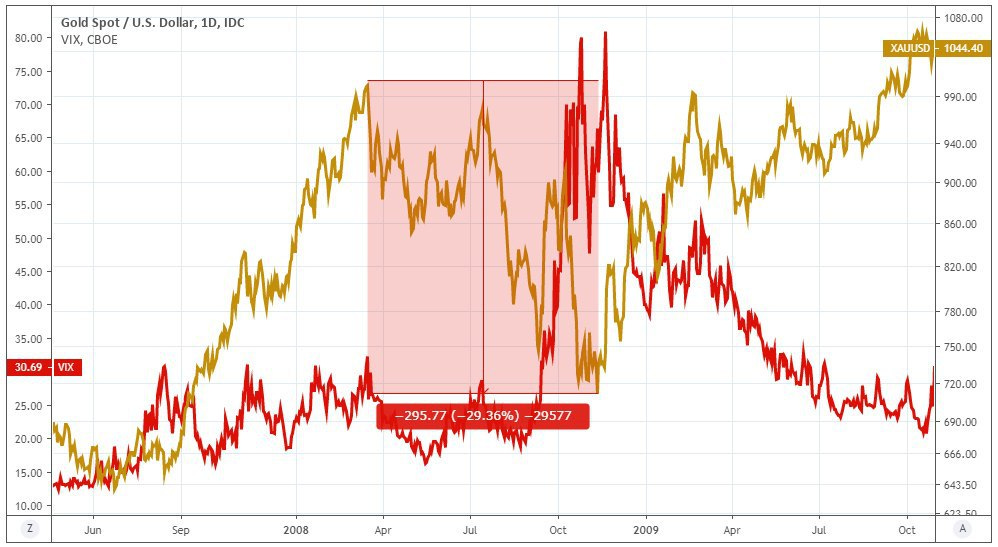
Why Did Bitcoin's Price Drop Over The Weekend?
To investors,Iran launched a barrage of missiles and drones at Israel over the weekend. This escalation of force did not come as a surprise to the United States and our allies. Days in advance, Iranian leadership told various countries that they planned to retaliate after Israel reportedly destroyed Iran’s embassy in Damascus, Syria. Thanks to this heads up, almost 100% of the 300 missiles launched by Iran were intercepted and/or thwarted during the attack. There was even an exoatmospheric interception of a ballistic missile, which may be the first time it was captured on video for social media. This all happened less than 48 hours after I wrote a letter to this group on Friday titled Is Gold Warning Us About An Incoming Geopolitical Event? It appears that gold was sounding the alarm bell. I tweeted on Saturday shortly after the attacks:Potential gold all-time high theory — Gold’s recent price increase could have been Iran buying large amounts of gold. They were doing this because they anticipate swift and severe financial sanctions from the US after the drone attack launched today. I am not arguing that this is true, but it is an interesting theory that would line-up with the current timeline of events. The world is becoming more dynamic. The intersection of finance and geopolitics is only going to become more complex in the coming years.We don’t know if this theory is true, but we will probably find out in the coming weeks. Gold wasn’t the only story in finance related to the recent attacks. We also got more data from the bitcoin market. This data begs the question — if Iran had given everyone a heads up that they were going to attack, and the barrage of missiles and drones was successfully defended against, why would the price of bitcoin drop more than 10% in an hour and remain suppressed throughout the weekend?CNBC’s Andrew Ross Sorkin asked on X:“Trying to understand Bitcoin's price movements this weekend...If it is, as Bitcoin bulls believe, a store of value, during a war, wouldn't it be a considered safe haven? And if it is a hedge against inflation, wouldn't buyers rush to it out of fear that countries will spend more on conflict? What explains its fall? I'm genuinely curious to hear various perspectives...”These are great questions. Bitcoin has been put on a pedestal as many different things to different people. Here is my best attempt to answer Andrew’s questions, while also explaining why bitcoin and other assets act erratically during times of global instability.If you remember during COVID, all assets sold off as it became apparent the pandemic was going to be a big, negative situation. Investors were in panic. I wrote a letter to this group on March 12, 2020 titled The Liquidity Crisis Will Drive Monetary Stimulus, Which Will Force The Adoption Of Sound Money Properties. Here is an excerpt from the letter:“Unfortunately, we are watching a liquidity crisis play out in real-time. These liquidity issues are well understood structurally, but feel much worse than expected when they occur in reality. A liquidity crisis means that investors all rush to the exit doors at the same time, but there are so many more sellers than buyers that investors actually have a hard time offloading their assets for cash. Quite literally, investors begin aggressively lowering the price they are willing to accept for each asset in exchange for the cash which they are desperately seeking right now.This is why you are seeing any asset with a liquid market tanking so hard right now.”I went on to explain that the properties of an asset don’t change just because investors enter a moment of panic. Here is an excerpt from the same letter describing gold’s performance during the Global Financial Crisis:“During the 2008 global financial crisis, gold dropped in price by more than 30% leading into the depths of the real pain. This isn’t because gold is a bad store of value or that it had lost safe haven status after 5,000 years. It is because gold has a liquid market and investors needed liquidity over anything else.”This shows that all assets, regardless of why investors are holding them, will sell off during desperate moments of uncertainty and chaos. The correlations between asset classes moves towards 1. The investment community only wants US dollars in these moments over the last 15-20 years. A similar dynamic played out over the weekend. It just so happens that the stock market and other tradable markets were closed during Iran’s attack. Bitcoin/crypto was the only market open on Saturday, so we shouldn’t be surprised that the assets sold off aggressively within minutes of the attack being launched. Additionally, the attacks were not occurring within a silo. Bitcoin’s sell-off in the last 3 days coincided with the last 3 days before American citizens have to make tax payments today. Historically, we have seen bitcoin drop in the 2-3 days before tax day as holders sell the asset to raise cash to pay their taxes. This means t
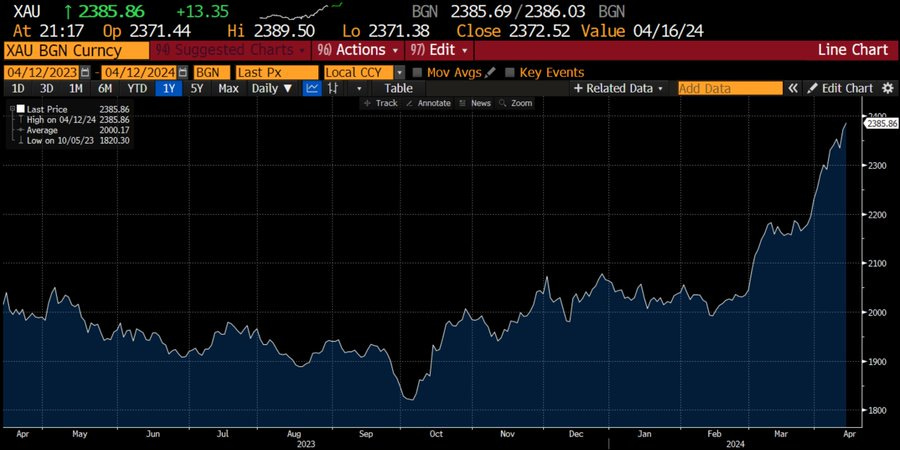
Is Gold Warning Us About An Incoming Geopolitical Event?
To investors,Gold hit $2,400 over the last 24 hours, which is a new all-time high price for the precious metal. Most of you would not expect me to cover gold given my interest in bitcoin, but I think there are a few things worth calling out related to the recent rise in gold.First, when the price of gold rises most people will point to existing geopolitical turmoil as the main driver. In a Reuters article this morning, Ashitha Shivaprasad writes:“Safe-haven gold prices hit an all-time high on Friday on track for a fourth straight weekly gain as geopolitical risks in the Middle East and economic concerns about China spurred robust demand….There is potential for more upside in prices amid central bank purchases and as demand for safe-haven assets rise with growing anxiety among investors about geopolitical conflicts escalating, said Ricardo Evangelista, senior analyst at ActivTrades.”It is not crazy to think that existing geopolitical events could be driving some of the price movement, but the question is whether the entire price movement could be explained by these issues which have been going on for months now.That seems unlikely. Joseph Wang, who runs FedGuy.com, has a different hypothesis: “Gold still surging - kinda concerning. Maybe someone is preparing for a big geopolitical move as they know they'll lose their dollars and euros after the fact.”That is eye-opening because the seizure of your central bank assets are now a going concern for all foreign nations who step on the toes of the United States. Castle Island’s Nic Carter explained it well by responding to Wang with the following commentary: “Interesting thesis. For sure there’s no going back after 2022. Anyone that offends the US knows their FX reserves are getting frozen. New era.”A new era is a great description. But the seizure of central bank assets may not fully explain the price appreciation either. Meb Faber, the founder of Cambria Funds, pointed out recently that gold’s performance in a portfolio will be quite shocking for most people:“Here's a crazy stat that no one will believe. The universal investment benchmark is the 60/40 portfolio of stocks and bonds. What if you replaced the bonds entirely with gold....crazy right? Turns out it makes no real difference.”If you widen the timeline to the last 100 years, the results are similar. I love narrative violations. This one won’t sit well with the traditional financial advisor crowd that preaches a classic 60/40 portfolio, but data is data. The best counter-argument to putting gold/stocks instead of bonds/stocks is that the bonds will pay yield along the way, while gold does not. Before you all think I’ve gone all-in on gold, which I own exactly $0 of, I will remind you that digital gold (aka bitcoin) has been a much better investment over the last 15 years. For example, Bitcoin Archive on Twitter pointed out that $1 invested in bitcoin in 2009 is now worth $91 million, but $1 invested in gold in 2009 is now worth $2. Just as bitcoin’s increase in price during January/February of this year probably was an early warning sign of incoming hot inflation, the current rise in gold may be telling us more about the future than the current geopolitical situation. This will be an interesting development to watch. Hope you all have a great end to your week. I’ll talk to everyone on Monday.-Anthony PomplianoReader Note: Today is a free email available to everyone. If you would like to receive these letters each morning, please subscribe to become a paying member of The Pomp Letter by clicking here.Chris Kuiper is the Director of Research for Fidelity Digital Assets. Yassine Elmandjra is the Director of Digital Assets at Ark Invest. Matthew Siegel is the Head of Digital Assets Research for Vaneck. Will Clemente is the Co-Founder of Reflexivity Research. This conversation was recorded at Bitcoin Investor Day in New York. In this conversation, they discuss bitcoin evaluation process, bitcoin ETFs, client demand, regulation, crypto industry, and future outlook.Listen on iTunes: Click hereListen on Spotify: Click hereFidelity, ARK, VanEck Reveal How They Evaluate BitcoinPodcast Sponsors* Core Scientific is one of the largest public Bitcoin miners and hosting solutions providers for Bitcoin mining in North America.* iTrustCapital allows you to buy and sell cryptocurrency in a tax-advantaged crypto IRA.* Supra - Join Supra’s early integration program for zero-cost access to the fastest oracles and dVRF across 50+ blockchains.* Propy - Now, anyone can start their on-chain journey by minting home addresses via PropyKeys and staking them for profit until they are ready to sell their home. * BetOnline - Use crypto to bet on sports, casino games, horse racing, poker and more with promo code POMP100.* Espresso Displays - The world's thinnest touchscreen portable monitor. Expand your workspace and work from anywhere.* ResiClub - Your data-driven gateway to the US housing market.* Bay Area Times - A visual newsletter
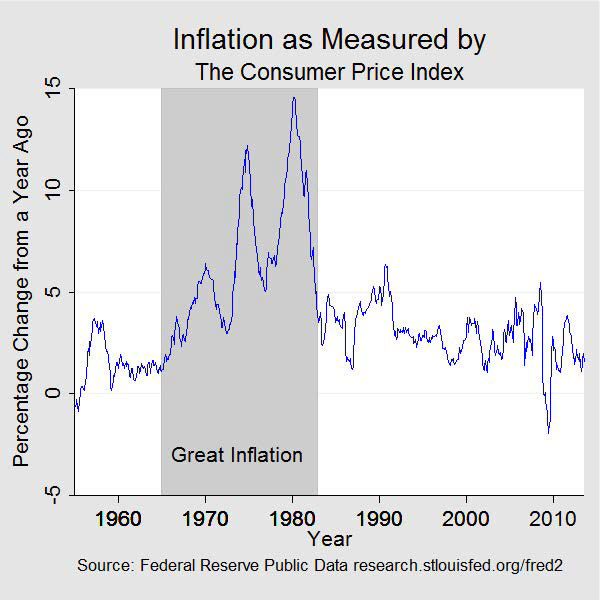
Inflation Is Accelerating And The Fed Has No Control
To investors,The inflation report this morning shows that the economic measurement is headed in the wrong direction. Year-over-year CPI came in at 3.5% and the month-over-month growth in inflation was 0.4%. This means that inflation is going up, not down, which is a major problem for the Federal Reserve. The central bank has been talking about cutting interest rates. The market has been expecting those interest rate cuts. But this economic report is going to make it nearly impossible for the Fed to follow through on it’s promise. The inflation report is actually signaling that the Fed should be RAISING interest rates, rather than cutting them. That is a big narrative violation. But maybe we shouldn’t be surprised by the hot inflation reading. In the letter I wrote on February 27th to this group, which was titled “Bitcoin Is Sounding The Alarm On Inflation,” I highlighted that bitcoin could be acting as an alarm system for incoming hot inflation:“Why are so many people buying bitcoin right now?The easy answer would be some version of “the institutions want to make money and now that they can buy the best performing asset of the last 15 years, they are going to buy as much as they can.” There is some truth in that statement, but I don’t think it is the full story.In fact, there is a hidden detail that most people are missing, which may scare the hell out of you.What if people are buying bitcoin because we are going to see a resurgence of inflation and investors are preparing for the inflation shock to their portfolio?”Later in the letter I stated:“First, let’s go back to 2020. The pandemic had a chokehold on the economy. Government officials and central bankers stepped in with unprecedented monetary and fiscal stimulus. Trillions of dollars in liquidity was sloshing around the economy.The state talking point was to not worry about inflation, which was later followed by “inflation is transitory.” Sophisticated investors were not fooled though. Paul Tudor Jones and Stanley Druckenmiller went on CNBC to say “inflation is coming!” They each said they were buying bitcoin because the belief was that inflation would be the fastest horse in the inflation-hedge category.That was a correct prediction.Bitcoin’s price was around $8,000 during the summer of 2020 and inflation was under 2%. By March 2021, less than 1 year later, bitcoin was trading at $64,000. That 8x increase in price was attributable to a few things, but a major reason was that markets are forward-looking.Investors saw that inflation was coming, so they began buying bitcoin hand-over-fist. They wanted to be protected when the inflation arrived. Remember, investors don’t wait for inflation to come before buying inflation-hedge assets. They buy them in anticipation.And there is a strong argument that investors are doing it again now.”It turns out that this phenomenon of bitcoin as an alarm system was correct once again. The risk now is what I called out in our March 13th letter titled “Will We Repeat The Great Inflation?”“The truth is that the Fed shouldn’t be worried about their reputation at this point — they have a much bigger problem on their hands with the potential resurgence of inflation.Unfortunately, we have a historical example of what could happen. The Great Inflation of 1965 - 1982 had an initial surge of inflation, followed by what seemed to be inflation falling to manageable levels, before inflation resurged to even higher levels of pain and destruction.”A true resurgence in inflation would be catastrophic to the US economy. The Federal Reserve has done so much work, including raising interest rates at the fastest pace in history, that it is unclear whether they have the commitment to continue raising interest rates from here. I don’t envy their position. It feels like there is a lose-lose scenario in front of them. If they keep raising rates to fight inflation, they will most likely push the US economy into a painful recession. If they don’t raise interest rates, then inflation is going to come back with a vengeance. Regardless of what happens in the coming months, American citizens are the ones who lose. We are living in an economy with 3.5% inflation, an accelerated pace of currency debasement, a national debt that is growing to the sky, over $1 trillion of credit card debt, a housing situation that makes it cheaper to rent than buy in the 50 major metros, and tens of millions of Americans who feel like there is no path forward for them financially. Insane. But the hot inflation reading is now reality. Bitcoin sounded the alarm bell. Hopefully more people will pay attention to this economic signal in the future. Have a great day. I’ll talk to everyone tomorrow.-Anthony PomplianoReader Note: Today is a free email available to everyone. If you would like to receive these letters each morning, please subscribe to become a paying member of The Pomp Letter by clicking here.Darius Dale is the Founder & CEO of 42Macro. In this conversation, we ta

Fake Currencies, Meme Coins, And History Lessons
Today’s letter is brought to you by Espresso Displays!I normally work on my desktop computer and am hyper productive. The second that I leave my desk, I lose my productivity on a laptop.So I started to use a second screen and it seems to have fixed the issue.It took awhile to evaluate many different screens — Espresso Displays was by far the best one.I use it every day. I can’t imagine working from my laptop without it now. They are lightweight, thin, and look like Steve Jobs designed them himself.Any reader of The Pomp Letter who orders one today will get $100 off before midnight. Highly recommend!To investors,The market thinks that meme coins are a new idea, but as always, we can learn quite a bit from studying history. 1RT’s Dan Tapiero recently recommended a history book to me that helped me do the necessary homework — A Nation of Counterfeiters: Capitalists, Con Men, and the Making of the United States.In the book, author Stephen Mihm explains the problem with counterfeited currencies during the late 1700s and early 1800s. The federal government had not yet consolidated power, so states still had significant say over things like monetary policy. These states gave out charters to banks within their geographies that would allow the banks to create their own currencies. Banks loved this idea. They each began to create their own currency. The promise was that paper currencies would have the equivalent gold or precious metals available for redemption at the bank. Unfortunately, no one could actually verify if the banks had the necessary metals. This was the first form of counterfeiting that took place — some of the paper was not actually backed by gold reserves. But humans are not stupid and they can spot an opportunity when they see one. A number of enterprising individuals (aka nefarious actors) realized that anyone could create a currency and put their own paper notes into circulation. Because there were so many banks approved to create currencies, the market would not know which currencies were real and which were not, so individuals began to use all available paper currencies for trade. Although the individuals who were creating currencies had figured out how to legitimize counterfeited currency, these non-approved “bank notes” were still fake. Throughout the book, Mihm refers to “alchemy” when discussing the magic tricks of these infamous individuals. Eventually the US government had enough of the madness though. It wasn’t possible to operate a country that had hundreds of different currencies. The laws were enforced, the counterfeit currencies were reigned in, banks were held accountable for holding the appropriate amount of metals, and the US dollar eventually emerged victorious. But the parallels from that time period to today are many. First, in the same way that anyone could spin up their own currency a few hundred years ago, anyone can spin up their own crypto asset / meme coin today. Neither the fake currency or the meme coin have any value tethered to “reality,” but both assets carry the legitimacy bestowed upon them by the groups of people that opt-in to holding, trading, or using them. Second, central banks are still playing the same games, although their goal is to make the situation appear differently in the modern world. Let’s use Zimbabwe as an example. Bloomberg’s Ray Ndlovu writes:“In yet another attempt to devise a credible national currency, Zimbabwe has replaced its dollar with the ZiG, short for Zimbabwe Gold. The new unit is backed by bullion and foreign currency reserves held at the central bank. All told, the ZiG is the country’s sixth attempt at establishing its own currency since 2008, when inflation crossed 500 billion percent, according to International Monetary Fund estimates. Not only did that render it worthless, it turned the unit into a global punchline: US Treasury secretaries would sometimes carry the notes around in their wallets as a reminder of the evils of hyper-inflation.”This is insane. Zimbabwe is on their 6th national currency in the last 15 years or so. There is very little reliability that (a) the government has the assets backing the currency that they claim and (b) the government won’t make changes to the assets backing the currency in the future. You can see the parallels to the old counterfeiting world of currencies. It doesn’t matter who is supposed to have the “right” to create currencies if both the government and the people continue to create bad currencies. A bad currency may even be worse than a fake currency that everyone believes in. And if your government failed the first 5 times at creating a currency that can be trusted by the people, it is nearly impossible to get citizens to trust you on the sixth attempt.But maybe I am wrong. Maybe the current crop of meme coins will all be around in 10 years. Maybe the Zimbabwe Gold currency will become the next global reserve currency. And maybe the lessons from history are not worth paying attention to.

The Stock I Would Have Pitched At The Sohn Conference
Today’s letter is brought to you by Shortform!Shortform has the world’s best guides to 1000+ nonfiction books. Learn key points and gain insights you won't find anywhere else. Understand the world’s best ideas.* Crystal-clear logic — We take confusing ideas and explain them in plain and simple ways. Never get confused by a complicated book again.* Brilliant new insights — We add smart analysis, connecting ideas in novel ways and discussing key updates since the book was published.* Always concise — Your time is valuable, and we don't waste it. We write with zero fluff, making every word and sentence deserve your time.They cover the world's most popular books, including New York Times #1 bestsellers and universally recommended titles. Learn from books in categories like: management, entrepreneurship, business, money and finance, career and success, productivity, and health & well-being. Join Shortform today and get a free trial. Once the free trial is over, you will get 20% off the service as well. Highly recommend if you want to get smarter and be time efficient!To investors,The Sohn Conference was yesterday. This unique event brings together some of the world’s greatest investors to pitch their best investment ideas, while helping to raise money for philanthropic causes. From their website: “The Sohn Conference Foundation takes a unique, selective investor’s approach to grant making. The Foundation supports cutting-edge research, innovative technologies, and bold initiatives that will have the greatest impact in treating and curing today’s public health priorities.”Some of the picks from yesterday’s conference included Carpenter Technology Corp. (NYSE:CRS), Natera Inc. (NASDAQ:NTRA), European chemicals company Solvay, and cryptocurrency Ethereum. Each of these picks has a solid thesis behind them, but I think they will be drastically outperformed by the stock that I would have pitched yesterday if I was at the conference. My pick would be DeFi Technologies, Inc (NEO: DEFI) (GR: R9B) (OTC: DEFTF).Let me explain my logic. The publicly-traded company has a few different products or services across the cryptocurrency sector, but there is one area that is worth truly understanding. DeFi Technologies has a subsidiary called Valour Asset Management. This organization’s strategy is to create ETPs in non-US markets for the long-tail of cryptocurrency assets. The thesis is that investors in traditional markets and on Wall Street want exposure to potential 10x - 100x opportunities just as much as the degens of crypto do. If Valour can be the first company to provide public market exposure to these assets, they will be able to attract meaningful capital to their ETPs. But that is when things get interesting. Because Valour is holding crypto-native assets in these ETPs, they are able to generate higher fee revenue from these assets. Instead of charging less than 50 basis points as we are seeing for the bitcoin ETFs in America, Valour charges 1.5% or higher to manage the more esoteric assets. Additionally, many of the assets give Valour the ability to generate yield from staking or other crypto-native revenue opportunities. Lastly, Valour periodically engages in market-making for these assets which can generate additional fees. By my calculation, Valour’s average fee generation on their AUM is approximately 7.2%. That is a monster number for the asset management industry. This understanding alone would make DeFi Technologies and Valour an interesting potential investment. But you have to remember that these ETPs they manage are holding crypto assets, with Solana being their largest ETP, so the asset values continue to grow rapidly during a bull market. For example, here is an excerpt from the company’s recent earnings report:“Assets Under Management ("AUM") grew 476% to approximately $508 million as of December 31, 2023, up from $106 million as of December 31, 2022. Valour Inc. and Valour Digital Securities Limited's ("Valour's") current AUM stands at C$880 million.”That means Valour’s AUM has grown more than 800% from December 2022 till today. There are very few businesses in the world who can see this type of revenue acceleration without having to expend an insane amount of money on sales and marketing. As of this morning, the current market cap of the DeFi Technologies is about $140 million USD. That may seem reasonable on the ~ $10 million they reported for 2023. There are two points that may change the way to look at those numbers though. It appears that more than 75% of those revenues were created during the last 90 days of the year. Additionally, given the ~ $650 million USD in current AUM, that would imply an annualized revenue run rate of $46.8 million.Why is $46.8 million an interesting number?That is the exact number that DeFi Technologies shared as the forward guidance for 2024 revenue. Here is the excerpt from the earnings report:“Given the current AUM, price of digital assets and activity level in the digi

The Pomp Letter Takes On Wall Street
To investors,I started writing The Pomp Letter in May 2018. Next month will mark 6 years of writing every morning about bitcoin and financial markets. Throughout this time, I have been the sole writer and operator behind our work. I started writing because it helped me to formulate my thoughts each day. You can’t write clearly if your thinking is messy. Although writing is the most selfish thing I do, it has been very cool to see The Pomp Letter grow to more than 30 million readers annually — this makes you part of one of the largest reader audiences in finance. But now I want to do something even bigger and better.Today I will announce a push into the traditional finance vertical. We are going to do original reporting through the same outlook on the world that you have come to expect from The Pomp Letter — an outlook that ignores mainstream narratives, obsesses over finding truth, and constantly questions everything. This is a big, bold bet on my part. It is a little scary and very risky. It is a bet worth making though.In order to pull this off, I have teamed up with Phil Rosen — an award-winning journalist from Business Insider who previously wrote one of the most popular finance newsletters on Wall Street. Phil has a set of skills that I don't have. Together we are a great team. So…buckle up. We are going to start covering Wall Street just as passionately as we have covered bitcoin. You can expect unique insights, exclusive interviews, and a data-driven analysis of various markets that are driving capital flows across finance. For those of you who only want bitcoin content, nothing will change for you. You will still get The Pomp Letter every morning. I will write it with the same focus and intensity that I have for the last 6 years. The new content will be sent under the name Opening Bell Daily. We will slowly roll it out to each of you over the next two weeks. This is a deliberate strategy to ensure that the product and content is as high-quality as we can make it. Please give us feedback early on — feedback is a gift that will help us continue to improve. If you don't want to join us for the ride into enemy territory (Wall Street!), I get it. You can unsubscribe from the new coverage by clicking the unsubscribe button when you receive the welcome email. I only want you to get information from us if you find it valuable and informative. There is more information in the press release below. For those of you who want the Wall Street content, I can promise you we are going to do our best to build something that is worth 5 minutes of your precious time every morning. I appreciate all of you immensely. You have made the last 6 years incredibly fun and informative. I can't wait to see what the next 6 years hold. -Anthony PomplianoPRESS RELEASE — Introducing Opening Bell DailyThis is one of the most pivotal financial chapters in our lifetime. Federal Reserve policy is up in the air, investors are piling into the stock market in droves, and the US economy is flashing signals of both an imminent recession and unusual strength. Meanwhile, the media landscape has never been more fractured. Smaller newsrooms continue to shutter and legacy outlets publish the most critical financial stories behind paywalls, leaving many readers out of the loop. Now, award-winning financial journalist Phil Rosen and investor Anthony Pompliano are teaming up to launch Opening Bell Daily, an independent news and research outlet committed to demystifying markets, investing, and Wall Street — at no cost to readers. Rosen, an outgoing senior reporter with Business Insider, will be the outlet’s lead editor. With a weekday newsletter and a long-form podcast, Opening Bell Daily will deliver original reporting, exclusive interviews, and expert analysis to an audience ranging from industry professionals to retail traders. The outlet will debut with iTrust Capital, a leading IRA platform, as its launch partner. “I quit a job I loved because I believe smart, even-handed financial news should not be a luxury,” Rosen said. “The economic and markets landscape is shifting fast, and I’m eager to make information more accessible and easier to understand.”“I have been writing publicly about bitcoin and the macro environment for 6 years,” Pompliano said. “We now reach more than 3 million readers per month. But there is much more to financial markets than what I have historically covered, so I am excited to team up with Phil Rosen to expand into original reporting on the traditional finance industry.”If you are a long-term optimist interested in becoming a smarter, more informed investor, Opening Bell Daily is for you. Markets move fast. We help you stay ahead. You are receiving The Pomp Letter because you either signed up or you attended one of the events that I spoke at. Feel free to unsubscribe if you aren’t finding this valuable. Nothing in this email is intended to serve as financial advice. Do your own research. This is a public episode. If you'd
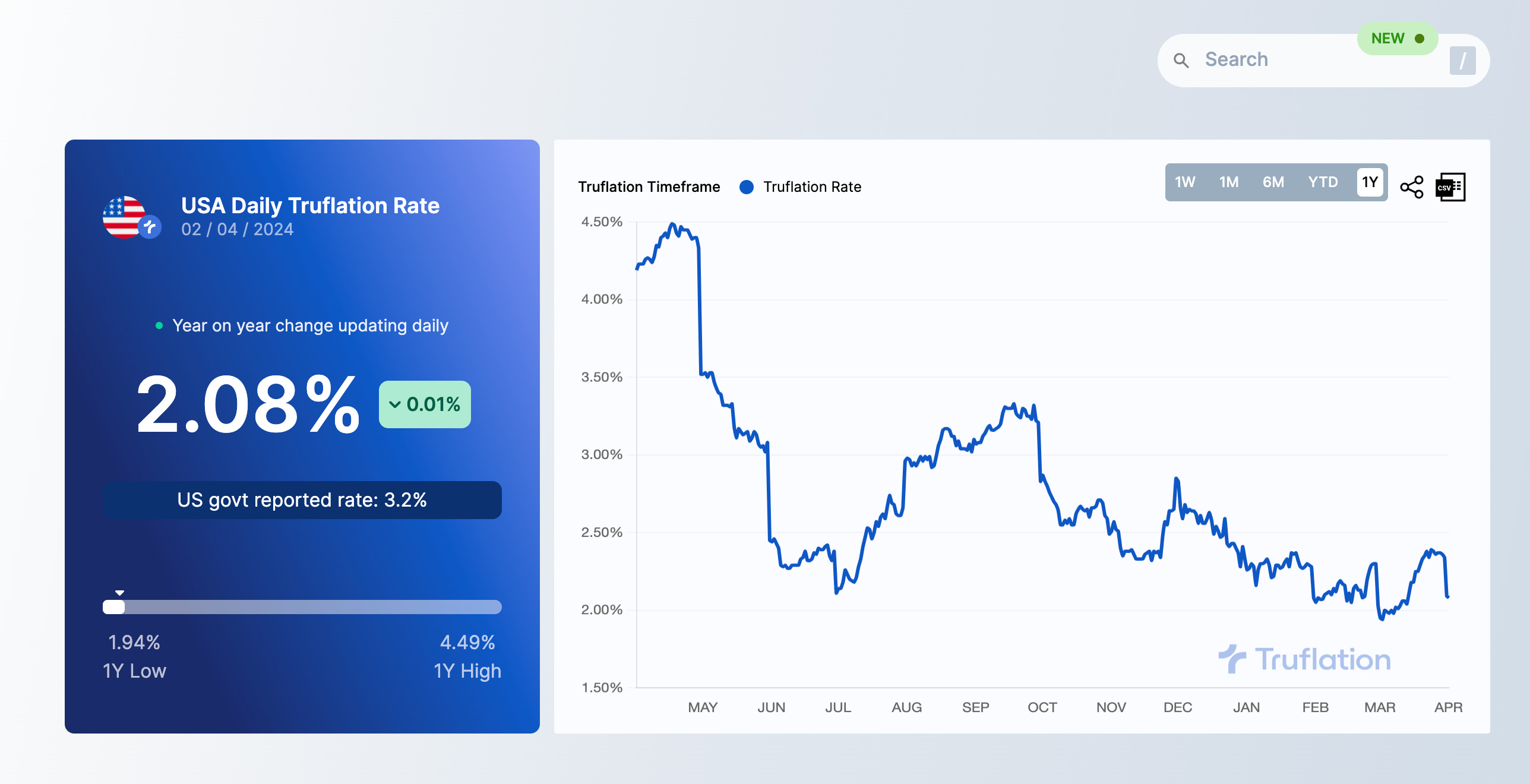
The Last Gasp From Wall Street
To investors,There is an article in the Wall Street Journal titled “Bitcoin Is Soaring This Year. Goldman’s Crypto Skeptic Isn’t Biting.” The piece profiles Goldman Sachs’ Wealth Management Chief Investment Officer Sharmin Mossavar-Rahmani, who happens to be the firm’s second-longest tenured partner. Although Sharmin has a storied career and deserves every ounce of respect she has earned throughout the years, there are numerous claims in this specific article that are inaccurate. I thought it would be helpful to go through them one-by-one. First, Sharmin was talking to a Goldman Sachs intern in 2022 and posed two questions: “Have you thought about what it’s worth? Have you thought about at what point you’ll get out?”These are fair questions to ask about any investment asset, but the questions are harder to ask about a native currency. For example, if I asked someone what is the US dollar worth, they would likely have a hard time quoting an acceptable answer. If I also asked an American at what point will they get out of the US dollar, people would look at me like I was crazy.Bitcoin, the world’s largest and most valuable digital currency, is becoming the native currency of the internet. An entire generation that spends most of their time in front of a screen, and mainly interacts with other humans in the digital realm, sees bitcoin as the global internet reserve currency that serves as the default store-of-value.The second point Sharmin makes in today’s article is “We do not think it is an investment asset class. We’re not believers in crypto.” This is a tough position to take on a $2.5 trillion asset class that is currently seeing tens of billions of dollars invested into it year-to-date from sophisticated institutional investors. Sharmin is essentially claiming that she is smarter than everyone else and she is smarter than the market. Everyone else must be wrong. It is kind of wild to think this, but even more insane to say it out loud to the Wall Street Journal. It would be one thing to say that you don’t think bitcoin’s future is bright. You could say that the assets may not be worth what people are valuing them at today. But to claim that the $2.5 trillion industry is not an asset class is simply detached from reality. Third, WSJ’s Gregory Zuckerman writes that Sharmin’s “view is based on the fact that it is nearly impossible to accurately value cryptocurrencies, which don’t produce earnings, cash flow or dividends.” This is an easily disproven point and it highlights that Sharmin has likely not done the work to study the assets and the industry. For example, bitcoin produces earnings via the block subsidy and transaction fees. Rather than those earnings being captured by a centralized entity on a single P&L, the earnings and cash-flow are captured collectively by the decentralized network participants. If you were to count up that revenue, you would see that bitcoin is currently producing more than $21 billion in annualized revenue from the block subsidy alone. If you take this analysis a step further, there are plenty of blockchain protocols that allow for staking, which can be compared to dividends and/or cash-flow. I am not claiming that these assets are companies, nor am I claiming that it is a perfect 1-to-1 comparison, but I am stating that various crypto assets have earnings, cash-flow, and dividends. This means that Sharmin’s claim, which I find to be an intellectual crutch used by people who haven’t done the time to study the industry, is inaccurate.Fourth, Sharmin claims that investors should steer clear of cryptocurrencies because of the crimes they facilitate. Again, this shows a lack of awareness of basic facts. As it has been proven time and again, nefarious or illegal transactions using crypto makes up less than 0.5% of all crypto transactions. Additionally, when compared to fiat currencies like the US dollar, crypto is not even in the same ball park in terms of popularity. And if those two points weren’t enough, law enforcement leadership has routinely told me that the public ledger component of a blockchain makes it very easy for them to track criminal activity, so they prefer when people are using these assets for criminal behavior. Lastly, Sharmin points to the fact that bitcoin is “too volatile” to become a medium-of-exchange and that the industry “creates absolutely no value in any shape or form.” The idea of bitcoin being too volatile is really a comment on the exchange price between bitcoin and US dollars. One bitcoin continues to equal one bitcoin, just as one dollar equals one dollar. But since 2020, the US dollar has lost 25% of its purchasing power and bitcoin has gained 800% of its purchasing power — I will leave it to you all to decide which one of those scenarios is better for holders of the respective assets. On Sharmin’s point of no value being created “in any shape or form,” this is obviously incorrect given the $2.5 trillion asset class, multiple public companies valu
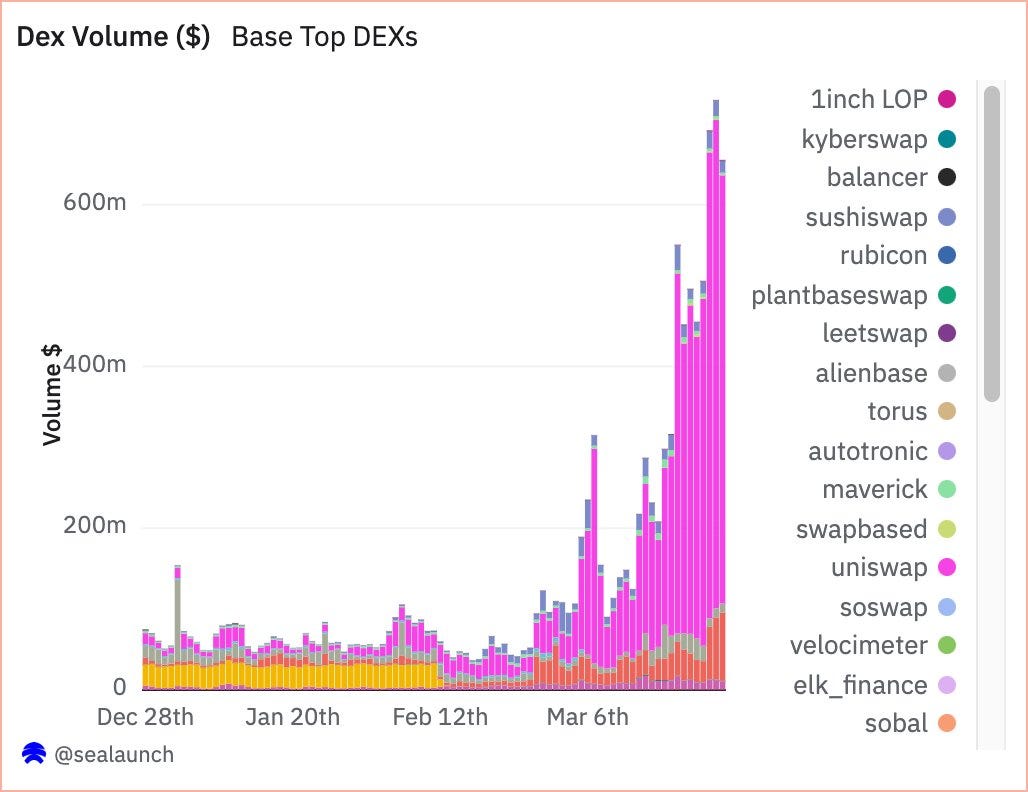
Decentralized Exchanges Are Becoming Very Popular
To investors,The promise of crypto was that decentralization would rule the day. The story was centralized institutions had overreached and now we needed a new ownership or governance model in order to fully capture the potential of the internet. Bitcoin’s launch marked the creation of the first mass market asset that found product-market fit. Decentralized money has a very large addressable market and it is encouraging to see hundreds of millions of people adopting the technology globally. The second big wave came from smart contract platforms. Although there is debate around how decentralized Ethereum, Solana, or any other platform may be, it is hard to argue that these technology stacks are not more decentralized than the traditional technology industry provides. There are more than 260 million unique address on Ethereum currently. It is estimated the network has more than 500,000 daily active users and over 100 million people hold Ether, the chain’s native cryptocurrency. So where is the third major area of innovation and adoption going to come from?The short answer is that no one can predict the future perfectly. We don’t know. But there is something very interesting happening with exchanges at the moment. First, Uniswap is estimated to have over 2.5 million monthly active users. These users conduct billions of dollars in transactions per day across various blockchains. For example, you can see Uniswap’s activity on Base, the new blockchain from Coinbase, has been skyrocketing. Volume on the decentralized exchanges built on top of Base look exactly how you would want them to look if you were trying to find product-market fit. This is an important development because Coinbase, one of the most popular centralized exchanges, has apparently realized they can be a major player in the decentralized game as well. Coinbase is not doing this merely out of the goodness of their heart though. On one hand, a decentralized offering allows them to become more crypto native and resilient as regulators around the world put more pressure on them. On the other hand, Coinbase stands to make a lot of money if this is successful. According to Defi Llama’s 0xngmi, it appears Base is already on a $500 million annualized run rate and continuing to accelerate. Coinbase and Base are not the only players in town though. Last night ShapeShift founder Erik Vorhees explained how successful their transition from a centralized player to a decentralized front-end for DEXs has been:“Six years after ShapeShift's business collapsed under an onslaught of state tyranny, its transformation into a decentralized, open-source project has proven effective. Over the last month, huge trade volumes surging through ShapeShift helped carry Thorchain's monthly volume over $10 billion. All of it permissionless and non-custodial; a beautiful resurrection of the dream that began way back in 2014 when we processed our first BTC to LTC trade without custody in the wake of the MtGox collapse. All credit for the recent resurgence belongs with the ShapeShift DAO, of which I am only a grateful observer and occasional participant. Thank you guys. And thank you ThorChain for your resilience and ambition in building the most impressive DEX aparatus in all cryptoland. Despite every setback, crypto is relentlessly working, and the saddened defenders of those fiat ramparts have but years of decay ahead, while a more virtuous civilization builds justly upon their ruins.”These decentralized exchanges are seeing big trading volumes. The underlying blockchains are becoming very interesting pieces of infrastructure that can’t be ignored. The front-end affiliates are driving adoption at a pace that industry leaders previously dreamed of. It is too early to claim victory, but the recent developments signal a growing adoption of decentralization outside of just bitcoin and smart contract platforms. If the trend continues, the promise of crypto related to decentralization will be one step closer to coming to fruition. Pretty cool to see.Hope you all have a great end to your week. I’ll talk to everyone on Monday. -Anthony PomplianoMike Novogratz is the Founder & CEO of Galaxy Digital. This conversation was recorded at Bitcoin Investor Day in New York. In this conversation, we talk about the macro environment, bitcoin, political overlay, regulation, what Galaxy is doing, and how Mike sees the next couple months playing out.Listen on iTunes: Click hereListen on Spotify: Click hereMike Novogratz Explains Why Bitcoin Keeps Going UpPodcast Sponsors* Supra - Join Supra’s early integration program for zero-cost access to the fastest oracles and dVRF across 50+ blockchains.* Propy - Now, anyone can start their on-chain journey by minting home addresses via PropyKeys and staking them for profit until they are ready to sell their home. * BetOnline - Use crypto to bet on sports, casino games, horse racing, poker and more with promo code POMP100.* Espresso Displays - The world's thinnes
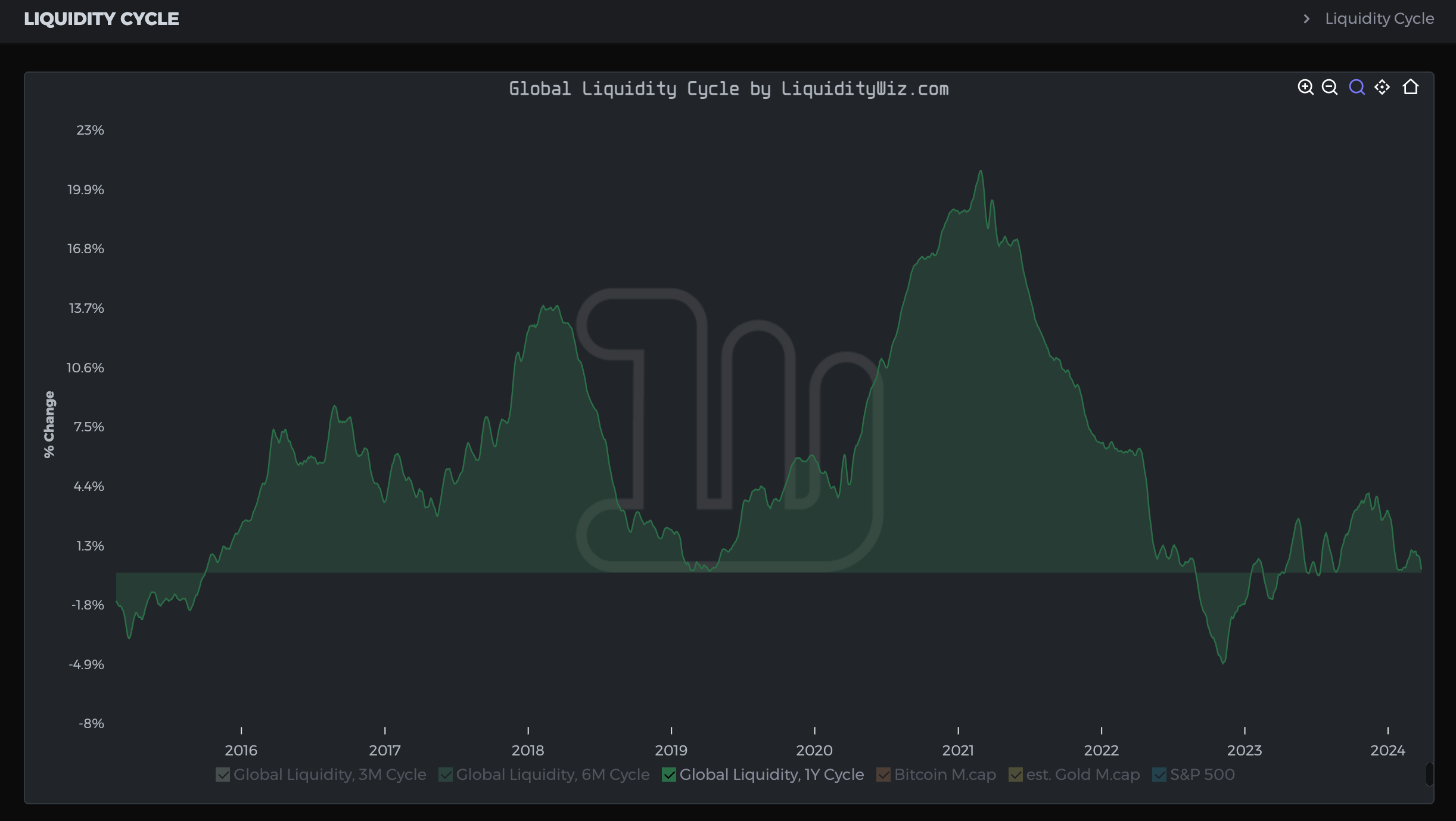
Global Liquidity Is Being Ignored By Asset Prices
Today’s letter is brought to you by Espresso Displays!I normally work on my desktop computer and am hyper productive. The second that I leave my desk, I lose my productivity on a laptop.So I started to use a second screen and it seems to have fixed the issue.It took awhile to evaluate many different screens — Espresso Displays was by far the best one.I use it every day. I can’t imagine working from my laptop without it now. They are lightweight, thin, and look like Steve Jobs designed them himself.Any reader of The Pomp Letter who orders one today will get $100 off before midnight. Highly recommend!To investors,Liquidity drives asset prices. As liquidity increases, asset prices go up. As liquidity is drained, asset prices go down. This is a fairly well understood phenomenon in economics and the professional investment community. Historically, the problem is that liquidity can be very difficult to track. I recently met the team behind Liquidity Wiz and have been impressed with their product. It tracks liquidity by allowing the user to cut the data in a variety of different ways. As a disclaimer, I have no financial relationship with the company and am not incentivized to share their product. I am just a fan, but figured we could do a deep dive today on global liquidity using their data. First, we can see that global liquidity is down approximately 8% over the last 12 months. If we drill into the broad money supply growth by country, we can see that global liquidity has been driven by China’s continued expansion (blue line below). It doesn’t hurt that China is not only growing their broad money supply, but they are also the largest country in the world by money supply with double the United States’ $20.8 trillion. A deep dive into the liquidity cycle shows that the 3-month liquidity cycle reveals draining of liquidity globally since the local high in January of this year. The 1-year cycle shows the same phenomenon, but this chart does a better job of highlighting how outrageous the increase in liquidity was during the 2020-2021 zero-interest rate days. Next, we can see that bitcoin, gold, and the S&P 500 all tend to move in the same general direction based on these liquidity changes. What is interesting though is that bitcoin and the stock market have been appreciating in price since the start of the year, yet global liquidity has been draining. One argument is that markets are forward-looking and investors are trying to front run central banks. They want to buy assets before the Fed and others pivot to looser monetary policy, while simultaneously pumping the global economy with liquidity. Remember, the Fed has been draining their balance sheet and trying to create tight financial conditions. And the US central bank has been successful in getting year-over-year CPI to fall drastically from the elevated levels that we previously saw. But if asset prices have continued to rise, despite the tighter financial conditions, then we must ask the question “what happens when loose monetary policy returns and global liquidity begins growing aggressively again?”The simple answer is that asset prices will take off, just as we saw in 2020 and 2021. The investors who were able to hold on to their investments over the last 2-3 years during this tighter period will be rewarded. But it would be hard to argue that central banks around the world are excited about pivoting back to loose policies given where the stock market, bitcoin, and gold currently are. Asset prices at all-time highs during tight conditions spell disaster for preventing euphoria and speculation when the macro environment improves. Hope you all have a great day. I’ll talk to everyone tomorrow.-Anthony PomplianoReader Note: Today is a free email available to everyone. If you would like to receive these letters each morning, please subscribe to become a paying member of The Pomp Letter by clicking here.John Arnold is the Principal at Ten31, a bitcoin focused investment platform. In this conversation, we talk about the total addressable market for bitcoin, what that means for financial returns, where to place capital, products, services, industries that will get built around bitcoin, and more.Listen on iTunes: Click hereListen on Spotify: Click hereBitcoin Is Eating The World with John ArnoldPodcast Sponsors* Supra - Join Supra’s early integration program for zero-cost access to the fastest oracles and dVRF across 50+ blockchains.* Propy - Now, anyone can start their on-chain journey by minting home addresses via PropyKeys and staking them for profit until they are ready to sell their home. * BetOnline - Use crypto to bet on sports, casino games, horse racing, poker and more with promo code POMP100.* Espresso Displays - The world's thinnest touchscreen portable monitor. Expand your workspace and work from anywhere.* Base - Base is shaping the future of the on-chain world with near-zero gas fees and rapid transaction speeds.* ResiClub - Your data-driven gateway to
Six Takeaways From Bitcoin Investor Day
To investors,We hosted the inaugural Bitcoin Investor Day on Friday. There were over 800 people who attended the event, which made it the single largest gathering of institutional investors interested in bitcoin in history. Insane to see that level of turnout for an event that was put together in less than 100 days. The speaker lineup was really strong and I learned quite a bit. Here are a few of the biggest takeaways:* Galaxy CEO Mike Novogratz claims bitcoin will continue to rise until government spending is brought under control: “What's the macro story for bitcoin? It's relatively simple. Our government can't keep its pants on and stop spending money. That went from a problem in the early 2000s to a crisis with Donald Trump and Joe Biden. They go down as the two presidents who destroyed our fiscal stability…Until you see a government, both Dems and Republicans, that says 'enough,' bitcoin's going to keep going higher.”* Ark Invest CEO Cathie Wood has updated her bitcoin price target to $3.8 million: “Last year we put out our bull case for bitcoin. It was $1.5 million. With this institutional green light that the SEC has provided, kicking and screaming though it did, the analysis we've done is that if institutional investors were to allocate a little more than 5% of their portfolios to bitcoin, as we think they will over time, that alone would add $2.3 million to the projection I just gave you…We think [bitcoin] has miles to go. We're at the very beginning of really putting in place the financial ecosystem native to the internet and disintermediating all of the toll-takers.”* Skybridge Founder Anthony Scaramucci explained his bitcoin investment strategy in simple terms: “The dead people at Charles Schwab do far better than the living people. So act like you're dead with your bitcoin and don't sell your bitcoin. Don't do anything with it. Hopefully, we can continue to coach our clients to listen to that mantra.”* Blackrock’s Head of Digital Assets Robert Mitchnick revealed that their clients have very little interest in the long-tail of crypto assets: “For our clients, Bitcoin is overwhelmingly the number one priority. And then a little bit ethereum, and very little everything else.”* Bitwise CEO Hunter Horsley highlighted that their firm did 20,000 investor meetings and calls last year, which has been a major contributor to why the crypto-native ETF provider has been able to attract more than $2 billion in AUM against formidable competitors like Blackrock and Fidelity. * Grayscale’s Managing Director of Research explained that investors should expect GBTC’s management fee to continue to fall in the future.Each of the conversations was recorded and will be published in audio and video form on my podcast over the coming weeks. My biggest takeaway from the event was how impactful the spot bitcoin ETF approvals have been to institutional interest. I knew that the approvals had been helpful, but I was blown away by the night-and-day difference between the pre-and-post approval conversations. Many organizations are now at a point where they want to allocate to the asset, but there are bureaucratic processes that must be followed. This means that many capital flows are delayed and will take weeks or months to enter the market. Given this detail, it is encouraging to see the price appreciation without full institutional participation, because it signals increasing future demand that will show up post-halving. If things go as planned, we should continue to see bitcoin’s price rise through the end of 2024. For years people would predict that the institutions were coming. Now the institutions are actually here. They are allocating to the asset. They have the green light and no one wants to miss out. Such a beautiful thing to see. Hope you all have a great start to your week. I’ll talk to everyone tomorrow.-Anthony PomplianoAnthony Pompliano records a solo episode breaking down the question, "is this time different?" Topics include historical bitcoin cycles, bitcoin halving, bitcoin drawdowns, interest rates, global liquidity, gold, volatility, El Salvador, Microstrategy, and more.Listen on iTunes: Click hereListen on Spotify: Click hereIs This Bitcoin Cycle Different?Podcast Sponsors* Supra - Join Supra’s early integration program for zero-cost access to the fastest oracles and dVRF across 50+ blockchains.* Propy - Now, anyone can start their on-chain journey by minting home addresses via PropyKeys and staking them for profit until they are ready to sell their home. * BetOnline - Use crypto to bet on sports, casino games, horse racing, poker and more with promo code POMP100.* Espresso Displays - The world's thinnest touchscreen portable monitor. Expand your workspace and work from anywhere.* Base - Base is shaping the future of the on-chain world with near-zero gas fees and rapid transaction speeds.* ResiClub - Your data-driven gateway to the US housing market.* Bay Area Times - A visual newsletter explaining the l

Depression Or Dog Coins To A Trillion
To investors,There is one phrase that has been seared into my brain over the last few months — “Depression or dog coins to a trillion.” This sentence was shared with me by Asymmetric’s Joe McCann during an interview where we discussed the current economic situation in America. Joe’s comment was meant to highlight the difficulty that the Federal Reserve is facing. The central bank can keep interest rates at the current level in an attempt to cool off some of the craziness in financial markets, especially since stocks and crypto are at all-time highs, but that would risk pushing the larger economy into a recession (note: depression sounds scarier for the shock effect of his comment). No one wants a recession. The alternative option is for the Fed to cut interest rates and stimulate the economy. Under this scenario, dog coins go to a trillion dollar market cap. In Joe’s phrase, dog coins are a proxy for the insanity that is playing out in the edges of financial markets. If you scroll Twitter/X for a few minutes, you see numerous people talking about how much money they made by buying some stupid name cryptocurrency coin.As Avi Felman points out here, the market makes no sense. Serious investors know that these assets have zero real world utility, nor do they have any fundamental value. The only reason that the memecoins are going up-and-down in value is because humans love to gamble. They love the promise of getting rich quickly.But the history of finance has taught us how this ends — it is fun in the short-term and disastrous in the long-term. That won’t stop people from speculating on these new coins. To put the velocity of this trend in context, Ram Ahluwalia highlighted that 2,500 memecoins were created on Solana in a single hour. Think of how insane that number is. This is exactly what Travis Kling means when he talks about financial nihilism. Here is how he defined that phrase in a recent article:“financial nihilism – the idea that cost of living is strangling most Americans; that upward mobility opportunity is out of reach for increasingly more people; that the American Dream is mostly a thing of the past; and that median home prices divided by median income is at a completely untenable level…Financial Nihilism goes hand in hand with Populism – a political approach that strives to appeal to ordinary people who feel that their concerns are disregarded by established elite groups.”That sounds about right. People feel like there is no other option than to speculate in markets, regardless of how small the probability of this strategy working. Hope is not a math equation, but it sure feels good if you are desperate. Speaking of desperation, remember the Fed is in a similar situation as individual Americans. They have a $34 trillion debt hanging over their head and no clear path to solving problem. If the dollar continues to be debased, the insanity of financial markets continues. If the Fed stops debasing the dollar, the US possibly defaults on the debt. Heads you lose, tails you lose. Gamblers run the casino in either scenario. So what is going to happen moving forward? This may shock you, but the central banks and governments are going to have to enter the corners of financial markets. The Fed is not going to buy dog coins, but we are starting to see larger governments become interested in bitcoin.This morning a report surfaced from Arjun Kharpal with the following information:“Japan’s government pension fund on Tuesday said it is requesting information on “illiquidity assets” such as bitcoin, as part of research into potential new investments.The Government Pension Investment Fund (GPIF) of Japan, the world’s largest pension fund by assets under management on several different rankings, said it is looking for “basic information” on illiquid assets other than those in which it already invests.GPIF said it currently puts funds in domestic and foreign bonds and stocks, real estate, infrastructure and private equity. It is now looking for information about other assets such as forests, farmland, gold and bitcoin and how these might be incorporated into the portfolio of pension funds.”This doesn’t mean that GPIF is going to buy bitcoin, but it does mean that it is at least willing to evaluate the prospects of doing so. Remember, depression or dog coins to a trillion. The game has changed. Asset allocators now have to consider a range of possibilities that they previously would have only laughed at. You can either stand in the way of the macro problems and get steamrolled, or you can join the insanity and position yourself to benefit from the macro tailwinds. Slowly, but surely, more organizations are realizing that they may have no choice. To conclude, the story of the crypto market right now is bitcoin and memecoins. They live at opposite ends of the risk spectrum, but that is what everyone is focused on. The natural barbell separates the logical capital allocators from the speculators and gamblers. But both
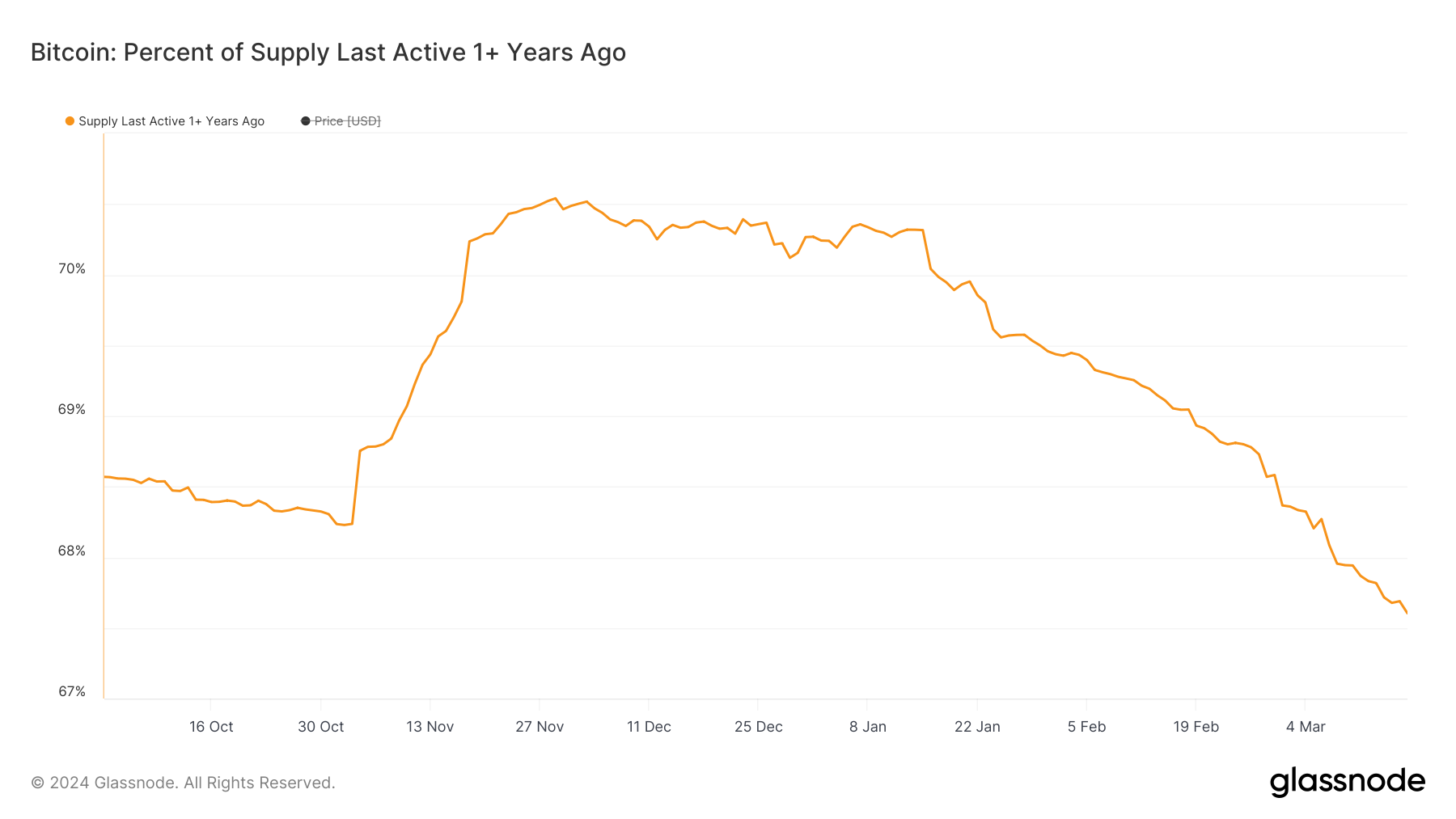
Long-Term Bitcoin Holders Are Beginning To Sell
To investors,Bitcoin holders that previously showed strong-hands are starting to sell their bitcoin. This shouldn’t be a surprise — as the price of bitcoin rises, some percentage of holders are willing to sell their assets to take profit off the table. We can see the number of bitcoin in the circulating supply that had not moved in at least 1-year topped out at just over 70% from November 2023 to late January 2024. If zero bitcoin holders were willing to sell their bitcoin at the current price levels, the price of bitcoin would have to keep going up aggressively until the net new demand from spot ETFs could find a clearing price in the market. Let’s zoom out and look at this same metric over time. You can see a similar trend occurred in 2013, 2017, and 2020. Bitcoin holders began to sell their bitcoin as the bull market got kicked off. The selling of bitcoin continued to accelerate as the market saw prices increase over time. Technically this chart is showing activity, so holders could also be spending their bitcoin, but for the purpose of our analysis we are going to consider that selling as well. Regardless of whether you are selling bitcoin for USD, a product, or a service, you are still getting rid of your bitcoin.So a big takeaway from this metric is that the bull market has definitely begun. A small percentage of bitcoin (This trend is confirmed by looking at the percentage of bitcoin that has not moved in the last 2-years as well. We saw a top to that metric in January 2024 as well. We see the same thing when looking at the net change of the 30-day supply for long-term bitcoin holders. The deep drawdowns in red started in 2013, 2017, and 2020. It seems like we will be able to add “2024” to that list by end of year. The good news? Bitcoin’s network is completely oblivious to what is happening with the asset’s dormancy. We have continued to see hash-rate increase at an exponential rate and we hit a new all-time high last night.And interestingly enough — the number of successful transactions on the bitcoin network has seen a step-function change over the last 18 months or so. I am not personally changing anything in my portfolio at the moment due to this information, but I am spending a lot of time watching it. The market is showing us that the weakest hands in the bitcoin industry have found their pain tolerance threshold to be around $70,000 per bitcoin.They either sold because they needed to or they felt that the current offering price was more than sufficient. Most of the bitcoin holders, especially those who have been holding for at least 1 year, are not yet convinced that bitcoin’s price is high enough to part with their digital currency.Just as in past cycles, this will change in the coming months or years. But in order to find out where that clearing price is, bitcoin’s price will have to continue to appreciate. Hope you all have a great start to your week. I’ll talk to each of you tomorrow.-Anthony PomplianoNatalia Karayaneva is the Founder & CEO of Propy. In this conversation, we talk about the real estate market, how blockchain technology can potentially make transactions cheaper and faster, why she is launching a brand new product, PropyKeys, and more.Listen on iTunes: Click hereListen on Spotify: Click hereCrypto & Real Estate Discussion with Natalia KarayanevaPodcast Sponsors* Supra - Join Supra’s early integration program for zero-cost access to the fastest oracles and dVRF across 50+ blockchains.* Propy - Now, anyone can start their on-chain journey by minting home addresses via PropyKeys and staking them for profit until they are ready to sell their home. * BetOnline - Use crypto to bet on sports, casino games, horse racing, poker and more with promo code POMP100.* Espresso Displays - The world's thinnest touchscreen portable monitor. Expand your workspace and work from anywhere.* Base - Base is shaping the future of the on-chain world with near-zero gas fees and rapid transaction speeds.* ResiClub - Your data-driven gateway to the US housing market.* Bay Area Times - A visual newsletter explaining the latest tech & business news.You are receiving The Pomp Letter because you either signed up or you attended one of the events that I spoke at. Feel free to unsubscribe if you aren’t finding this valuable. Nothing in this email is intended to serve as financial advice. Do your own research. This is a public episode. If you'd like to discuss this with other subscribers or get access to bonus episodes, visit pomp.substack.com/subscribe
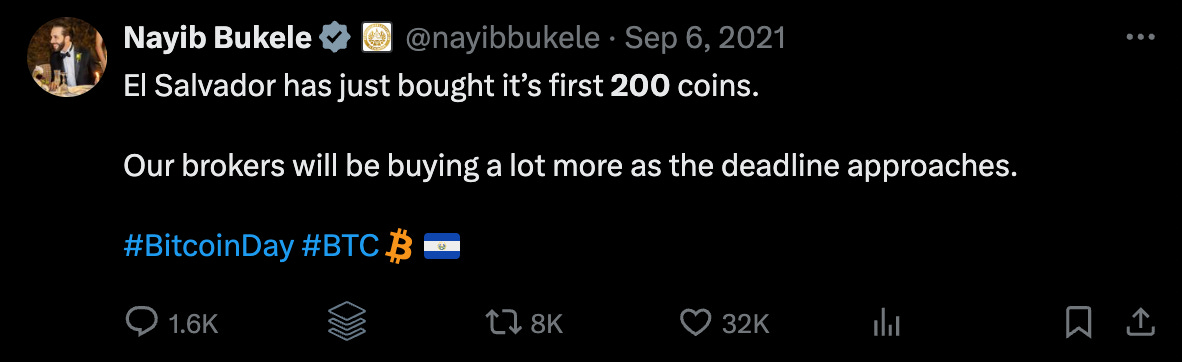
El Salvador Owns More Bitcoin Than We Thought
To investors,The bitcoin spot ETFs have sucked all the air out of the room over the last two months. With more than $60 billion collectively in the various ETFs and more than $1 billion in net inflows, there is good reason for so many people to be paying attention. But the new shiny development has allowed most people to stop thinking about a prior shiny story: nation-state adoption of bitcoin.Back in the summer of 2021, the country of El Salvador decided to embrace bitcoin in a way that no other country ever had. They made bitcoin legal tender in the country. They created a bitcoin wallet app and gave every citizen $30 of bitcoin who wanted it. They also started mining bitcoin with their volcano-energy production facilities. And the icing on the cake? The President of El Salvador started buying bitcoin directly on the country’s balance sheet. His first purchase was 200 bitcoin on September 6, 2021 — a historic moment in history.President Bukele followed up the first purchase with another 200 bitcoin later in the same day. For those who were not paying attention at the time, you can imagine the reaction from people when they saw the President of a small country market-buying bitcoin and then tweeting after each purchase. It was entertaining to say the least. The bitcoiners loved it. Nation states were finally adopting bitcoin. Shortly after Bukele began buying bitcoin, various politicians across Latin America pledged to help their countries buy bitcoin as well.Almost none of them have been successful so far, especially when compared to the level of success and speed that Bukele has implemented in El Salvador. That was the end of the story though, right? El Salvador bought some bitcoin and did a few experiments in their country. It was cute. The country is small. No one really cared after awhile. You didn’t hear any stories about bitcoin — instead most of the El Salvador stories were around the reduction in crime that the President was able to usher into reality. The novelty of the bitcoin game had worn off. Well, that all changed yesterday. President Bukele announced that El Salvador would be moving their bitcoin to cold storage and holding the cold storage device within the country’s borders. This development alone would be newsworthy. A country’s leadership was taking custody of their bitcoin, which shows how well they understand the value proposition of bitcoin.But there was a new detail in this announcement — Bukele tweeted the country’s bitcoin wallet address and it was revealed that El Salvador has 5,689 bitcoin which are worth more than $400 million today. That may not seem like a massive number, but this is coming from a country that has less than $2.5 billion in total revenue and grants on an annualized basis. So the ETFs are fun to watch because we get a daily update of the net inflows. We can see the price of the digital currency rapidly appreciating. And the mainstream media is covering the progress daily. Just don’t forget that there are plenty of other people, corporations, and countries vying to get as much bitcoin as they can purchase as well. Watching El Salvador go from their first 200 bitcoin purchase to more than 5,000 bitcoin is quite impressive, especially since they did it so quietly. We will find out in the coming decades how important it is for a country to buy and hold bitcoin, along with how prescient President Bukele will appear with the benefit of hindsight. Hope you all have a great weekend. I’ll talk to each of you on Monday.-Anthony PomplianoSam Corcos is the Founder & CEO of Levels. In this conversation, we talk about how to run a high performing startup, calendar management, team management, personal productivity tips, decision making, networking, and more.Listen on iTunes: Click hereListen on Spotify: Click hereHow To Run A High-Performance StartupPodcast Sponsors* Supra - Join Supra’s early integration program for zero-cost access to the fastest oracles and dVRF across 50+ blockchains.* Propy - Now, anyone can start their on-chain journey by minting home addresses via PropyKeys and staking them for profit until they are ready to sell their home. * BetOnline - Use crypto to bet on sports, casino games, horse racing, poker and more with promo code POMP100.* Espresso Displays - The world's thinnest touchscreen portable monitor. Expand your workspace and work from anywhere.* Base - Base is shaping the future of the on-chain world with near-zero gas fees and rapid transaction speeds.* ResiClub - Your data-driven gateway to the US housing market.* Bay Area Times - A visual newsletter explaining the latest tech & business news.You are receiving The Pomp Letter because you either signed up or you attended one of the events that I spoke at. Feel free to unsubscribe if you aren’t finding this valuable. Nothing in this email is intended to serve as financial advice. Do your own research. This is a public episode. If you'd like to discuss this with other subscribers or get access to
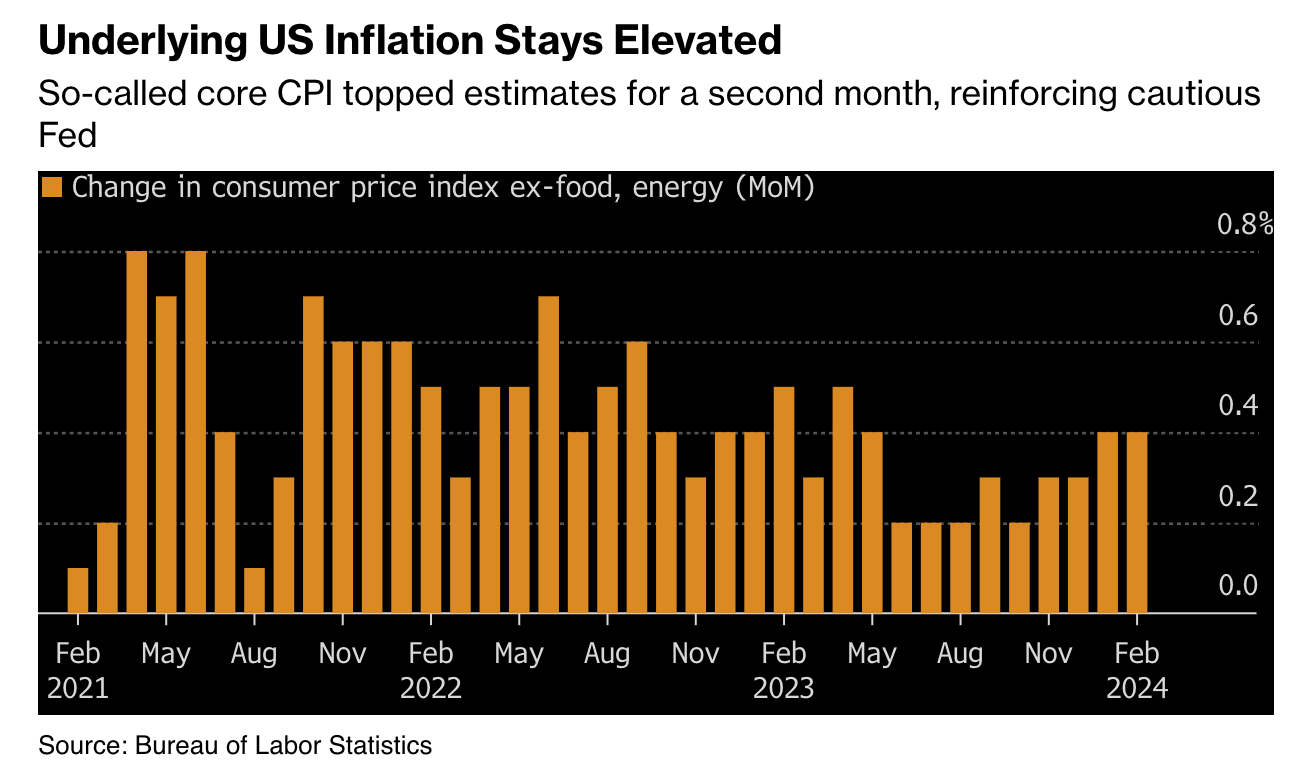
Will We Repeat The Great Inflation?
Today’s letter is brought to you by Espresso Displays!I normally work on my desktop computer and am hyper productive. The second that I leave my desk, I lose my productivity on a laptop.So I started to use a second screen and it seems to have fixed the issue.It took awhile to evaluate many different screens — Espresso Displays was by far the best one.I use it every day. I can’t imagine working from my laptop without it now. They are lightweight, thin, and look like Steve Jobs designed them himself.Any reader of The Pomp Letter who orders one today will get $100 off before midnight. Highly recommend!To investors,Inflation is becoming a big problem again. February’s core CPI numbers show that month-over-month inflation growth has been accelerating since October 2023.Augusta Saraiva writes, “the so-called core consumer price index, which excludes food and energy costs, increased 0.4% from January, according to government data out Tuesday. From a year ago, it advanced 3.8%.”Ken Griffin, the founder of Citadel, sees this rise in inflation as a key reason why the Federal Reserve should not rush to cut interest rates. Griffin said the following at a conference yesterday:“If I’m them, I don’t want to cut too quickly. The worst thing they could end up doing is cutting, pausing and then changing direction back towards higher rates quickly. That would, in my opinion, be the most devastating course of action that they could pursue. So I think they are going to be a bit slower than what people were expecting two months ago in cutting rates. I think we are seeing that play out.”It makes sense that people would be spooked if the Federal Reserve became unpredictable or volatile in their decision-making. But the truth is that the Fed shouldn’t be worried about their reputation at this point — they have a much bigger problem on their hands with the potential resurgence of inflation. Unfortunately, we have a historical example of what could happen. The Great Inflation of 1965 - 1982 had an initial surge of inflation, followed by what seemed to be inflation falling to manageable levels, before inflation resurged to even higher levels of pain and destruction. Michael Bryan, who served at the Federal Reserve Bank of Atlanta, describes that time period with the following paragraph:“The Great Inflation was the defining macroeconomic event of the second half of the twentieth century. Over the nearly two decades it lasted, the global monetary system established during World War II was abandoned, there were four economic recessions, two severe energy shortages, and the unprecedented peacetime implementation of wage and price controls. It was, according to one prominent economist, “the greatest failure of American macroeconomic policy in the postwar period” (Siegel 1994).It would be catastrophic to endure another two decade period of mismanagement to the degree we saw during The Great Inflation. While I don’t think our future is that bleak, it wouldn’t be surprising to see inflation continue to return with a vengeance. Ben Hunt posted this chart and said, “Friends, every month I make the same post. Inflation stopped going down 8 months ago. Wage and price inflation is embedded well above target. I don't know why this is so hard to understand.”Again, not exactly what you want to see if the Fed has been telling you that inflation should continue to come down and will be under control shortly. This chart seems to show a new average inflation number post-pandemic that is noticeably higher than pre-pandemic levels. As Lisa Abramowicz from Bloomberg explains, “the Atlanta Fed's gauge of sticky inflation has risen to about 5% on a 3-month annualized basis. Inflation is moving in the wrong direction for the Fed, so it's interesting that the market's base case is still that the Fed is going to cut rates by about 100bp by January 2025.”So rather than scratch your head asking yourself why bitcoin and the stock market are at all-time highs when interest rates are over 5%, you should probably ask yourself why these assets aren’t higher given how crazy things could get if inflation mounts a comeback. Let’s hope for everyone’s sake that inflation will be slayed, but don’t hold your breath for it to happen. Hope you all have a great day. I’ll talk to each of you tomorrow.-Anthony PomplianoDarius Dale is the Founder & CEO of 42Macro. In this conversation, we talk about inflation, small business optimism, bitcoin, stocks, energy, global liquidity, and macro environment.Listen on iTunes: Click hereListen on Spotify: Click hereBitcoin and Stocks at All-Time Highs - But Things Are Still Bullish?Podcast Sponsors* Supra - Join Supra’s early integration program for zero-cost access to the fastest oracles and dVRF across 50+ blockchains.* Propy - Now, anyone can start their on-chain journey by minting home addresses via PropyKeys and staking them for profit until they are ready to sell their home. * BetOnline - Use crypto to bet on sports, casino games, horse