Restitutio
673 episodes — Page 7 of 14
373 Postmodernism 4: Cross-Cultural Conversations
Today in our fourth and final part of our series on postmodernism Pastor Jacob Ballard explains four key guidelines for cross-cultural ministry. Always change the language, but never change the messageExchange meta-narrative for personal narrative or community narrativeExchange certainty for humility, clues, hints, and mysteriesExchange absolutist morality for personal accountability and communal action —— Links —— Find out more about Jacob Ballard at the Timberland Bible Church websiteBooks mentioned: They Like Jesus but Not the Church by Dan Kimball and Who's Afraid of Postmodernism by James K. A. SmithCheck out our episode about Gender in Bible TranslationIf you’d like to support Restitutio, you can donate here.Leave a voice message via SpeakPipe with questions or commentsIntro music: Good Vibes by MBB Attribution-ShareAlike 3.0 Unported (CC BY-SA 3.0) Free Download / Stream: Music promoted by Audio Library
372 Postmodernism 3: Postmodernism’s Effect Today (Jacob Ballard)
Today, in part three of our series on postmodernism we ask the question, "How is postmodernism affecting our world today?" Pastor Jacob Ballard explains how narrative, experience, community, and subjective truth are key ways that postmodern-minded people go about making sense of reality. Then he shows how movements like Black Lives Matter and LGBTQ+ rights draw strength from these postmodern ways of thinking. —— Links —— Find out more about Jacob Ballard at the Timberland Bible Church websitecheck out episode 358 A Christian Perspective on BLM (Russell Brown) and 292 A Change of Affection (Becket Cook), which was recorded just after Cook lost his job for no longer agreeing with the gay lifestyleIf you’d like to support Restitutio, you can donate here.Leave a voice message via SpeakPipe with questions or commentsIntro music: Good Vibes by MBB Attribution-ShareAlike 3.0 Unported (CC BY-SA 3.0) Free Download / Stream: Music promoted by Audio Library
371 Postmodernism 2: Modernism vs. Postmodernism (Jacob Ballard)
In our last episode, Pastor Jacob Ballard explained what worldviews are. Today he covers the two major worldviews: modernism and postmodernism. Although many today still approach life from a modernist mindset, postmodernism is here in increasing force. What are we as bible-believing Christians to do about this? The first step is to become aware of what's going on and how it both fits with and challenges the biblical worldview. —— Links —— Find out more about Jacob Ballard at the Timberland Bible Church websiteIf you’d like to support Restitutio, you can donate here.Leave a voice message via SpeakPipe with questions or commentsIntro music: Good Vibes by MBB Attribution-ShareAlike 3.0 Unported (CC BY-SA 3.0) Free Download / Stream: Music promoted by Audio Library
370 Postmodernism 1: Worldview (Jacob Ballard)
Have you noticed the shifts happening all around us in our culture? Skepticism of traditional institutions from the government to the media to churches is at an all time high, while increasingly we're told to discover our authentic self and live it out courageously. Universal truth claims sound like power grabs while individual personal truths are celebrated no matter how patently false they seem. Corrosive deconstructionism has decimated traditional virtues, traditional ethics, and traditional ways of making sense of the world. The only hero that remains is the triumphant victim who boldly stands against the majority, shouting "This is who I am, you must accept me or we will take you down." Ok, so I hammed it up a little there. Not all expressions of postmodernism are so strident. Even so, what is going on? Pastor Jacob Ballard from Timberland Bible Church in Indiana will help us understand and engage with this incredible worldview shift that has occurred over the last few decades. Over the next four weeks, Ballard is going to share key insights from a class taught at the Atlanta Bible College designed to help students understand and minister to our changing society. —— Links —— Find out more about Jacob Ballard at the Timberland Bible Church websiteCheck out Dan Kimball's They Like Jesus but Not the ChurchIf you’d like to support Restitutio, you can donate here.Leave a voice message via SpeakPipe with questions or commentsIntro music: Good Vibes by MBB Attribution-ShareAlike 3.0 Unported (CC BY-SA 3.0) Free Download / Stream: Music promoted by Audio Library

369 Civil Discourse (Peter Miano)
Have you noticed the shrill tone that permeates public discourse in our time? It seems like everyone is on a hairpin trigger ready to rage and vent at their ideological enemies. What is a Christian to do? Should we stand up for our beliefs, morals, and politics? Should we disengage from conversation about controversial issues? Is there another way? Peter Miano, my guest for today, shares how respect, courtesy, and love can navigate us through these stormy waters. After earning degrees from Boston University, Union Theological Seminary, and Harvard Divinity School and becoming an ordained United Methodist Minister, Miano founded the Society for Biblical Studies, which coordinates trips to the Holy Land and other interesting places where conflict abounds. —— Links —— Learn more about Peter Miano and get in contact with him at The Society for Biblical Studies of which he is the executive director.You may also like to read this article: "The Power of Unity in a Polarized Time"If you’d like to support Restitutio, you can donate here.Leave a voice message via SpeakPipe with questions or commentsIntro music: Good Vibes by MBB Attribution-ShareAlike 3.0 Unported (CC BY-SA 3.0) Free Download / Stream: Music promoted by Audio Library
368 Introducing the UCA Podcast (Mark Cain)
Did you know the Unitarian Christian Alliance just launched a podcast? In this interview, Mark Cain explains what he aims to do with this newest addition to one God podcasts and how the UCA podcast is different from the others. Ultimately, he wants to see unitarian Christians carry ourselves with confidence, knowing that our faith is firmly rooted in the scriptures. —— Links —— Contact Mark Cain: [email protected] or by calling 615-581-1158 and leaving a messageCheck out the UCA podcast webpage or subscribe on SpotifyMore about Cain's church: Church of the Open Bible in Bedford, OHMore about Cain's denomination: Church of God General ConferenceIf you’d like to support Restitutio, you can donate here.Leave a voice message via SpeakPipe with questions or commentsIntro music: Good Vibes by MBB Attribution-ShareAlike 3.0 Unported (CC BY-SA 3.0) Free Download / Stream: Music promoted by Audio
367 Excommunicated for My Beliefs (Sam)
Sam who asked me not to use his last name for fear that he will get kicked out of his current church, tells his story of navigating evangelical Christianity as a biblical unitarian. He shares two sad stories of excommunication from a college ministry and a local church. As you might suspect, this harsh treatment drove Sam to question his non-trinitarian beliefs. Even though he had every reason to abandon his unorthodox convictions, his research into bible, theology, and history strengthened his faith that the Father of Jesus is the only true God. Now he has a YouTube channel where he interviews theologians and recently he debated Chris Date on Preston Sprinkle's Theology in the Raw podcast. —— Links —— Leave a voice message via SpeakPipe with questions or comments Check out Sam's YouTube Channel "Transfigured" Listen to Sam's debate against Chris Date If you’d like to support Restitutio, you can donate here. Intro music: Good Vibes by MBB Attribution-ShareAlike 3.0 Unported (CC BY-SA 3.0) Free Download / Stream: Music promoted by Audio

366 Who Was Christ before the Creeds? (Jeff Deuble)
Pastor Jeff Deuble of the Churches of Christ in Sydney, Australia shares his journey to uncover the genuine Jesus from scripture alone. After his brother Greg challenged him to understand Christ from a Jewish perspective, Jeff set out on a quest, reading through all of scripture to see what it really said about the Messiah. What he found upended his life, bringing both delight at his clearer understanding of Christ and heartbreak over losing the church he planted and pastored for 19 years. This is his story. Here are some of the questions that caused Deuble to doubt the "traditional" understanding of Christ taught in the creeds: How can you have a singular God who is also plural? How can you explain three “persons”, who constitute one “being”?How can Jesus be both “fully human” and “fully God”? How does that work?How can Jesus be eternal, yet “begotten” by God? The Bible says that “God cannot be tempted” but Jesus was tempted – in fact “in every way, just as we are” (Hebrews 4 says)We know “God alone is immortal” and therefore unable to die (Rom 1:23; 1Tim 6:16) yet Jesus was died, and was raised to life again by the Father. We read that “no one has seen, or can see” God (1Tim 6:16) - that “no one has ever seen God” (Jn 1:18; 1Jn 4:12) yet Jesus was seen.God “knows everything” (1 Jn 3:26) yet Jesus himself admitted there were things that his Father knew that he himself did not (Mt 24:36; Mk 13:32).Why would “all authority in heaven and on earth” have to be given to him (Mt 28:18)? Wouldn’t this already be his by virtue of him being God?If Jesus is God, how can he have a God over him (Which Paul clearly states is the case on many occasions, especially in 1 Cor 15) —— Links —— Leave a voice message via SpeakPipe with questions or commentsGet in touch with Jeff Deuble via email: [email protected] out the interview with Greg Deuble (Jeff's brother) They Never Told Me This in ChurchMore interviews with those who studied their way out of the TrinityIf you’d like to support Restitutio, you can donate here.Intro music: Good Vibes by MBB Attribution-ShareAlike 3.0 Unported (CC BY-SA 3.0) Free Download / Stream: Music promoted by Audio
365 Challenging Soul-Making Theodicy 2 (Brandon Duke, Jerry Wierwille)
This is the second part of a conversation where Jerry Wierwille challenges Brandon Duke's soul-making theodicy. In particular, Wierwille raises the following questions: Why is hiddenness and epistemic distance considered a necessity for moral development considering the biblical examples where people experienced God and still retained their ability to make real moral choices either to obey or reject him?How can the four Ds (death, decay, deprivation, and damage) be considered good when scripture calls death itself God's enemy?Considering that evil and suffering are not 100% effective in bringing about moral development and are in some cases even deleterious to that end, how can soul-making work as a thoroughgoing theodicy? —— Links —— Leave a voice message via SpeakPipe with questions or commentsGet in touch with Brandon Duke on his website: TruthBornSee other episodes with Jerry WierwilleGet in touch with Wierwille at his websiteMore episodes and posts about the problem of evil and sufferingIf you’d like to support Restitutio, you can donate here.Intro music: Good Vibes by MBB Attribution-ShareAlike 3.0 Unported (CC BY-SA 3.0) Free Download / Stream: Music promoted by Audio
364 Challenging Soul-Making Theodicy 1 (Brandon Duke, Jerry Wierwille)
In our last two episodes, Brandon Duke laid out his way of answering the question of why God allows so much suffering in our world. He did so by putting forward a modified version of the late John Hick's soul-making theodicy. In this episode, Jerry Wierwille pushes back on a few issues with soul-making, preferring instead a classic free will theodicy. First we'll see how Duke's version of soul-making differs from John Hick's then we'll examine how soul-making lines up with the four major elements of the biblical meta-narrative: creation, fall, redemption, and restoration. Lastly we'll discuss whether moral improvement necessitates suffering. —— Links —— Leave a voice message via SpeakPipe with questions or commentsMichael Murray vs. Phil Harper on Unbelievable, discussing "Animal Suffering and God"Internet Encyclopedia of Philosophy entry on John HickSee Sean Finnegan's atonement research, outlining seven major views Christians have taken over the centuriesGet in touch with Brandon Duke on his website: TruthBornSee other episodes with Jerry Wierwille Get in touch with Wierwille at his websiteMore episodes and posts about the problem of evil and sufferingIf you’d like to support Restitutio, you can donate here.Intro music: Good Vibes by MBB Attribution-ShareAlike 3.0 Unported (CC BY-SA 3.0) Free Download / Stream: Music promoted by Audio

363 Why God Allows Suffering 2 (Brandon Duke)
In part one, Brandon Duke laid out some of the important groundwork for thinking about how a good and powerful God might have a world capable of experiencing immense amounts of evil and suffering. In our conversation today, we'll delve further into the idea of soul-making to explain why suffering like death, damage, decay, and deprivation along with the limitation of God's hiddenness are necessary conditions for a world where authentic moral decisions occur and human development becomes possible. —— Books—— God and the Problem of Evil: Five Views by Chad Meister, James Dew Jr.Divine Foreknowledge: Four Views by Gregory Boyd, David Hunt, William Craig, Paul HelmThe Triumph of God over Evil by William HaskerFour Views on Divine Providence by Paul Helseth, William Craig, Ron Highfield, Gregory BoydDivine Hiddenness: New Essays by Daniel Howard-Snyder, Paul Moser —— Links —— Leave a voice message via SpeakPipe with questions or commentsGet in touch with Brandon Duke on his website: TruthBornCheck out Duke’s videos at the Unitarian Christian Alliance YouTube ChannelWatch Duke’s Trinity debateAlso check out this six part series on various theories of divine foreknowledge, including Calvinism, Arminianism, and Open Theism.More episodes and posts about the problem of evil and sufferingIf you’d like to support Restitutio, you can donate here.Intro music: Good Vibes by MBB Attribution-ShareAlike 3.0 Unported (CC BY-SA 3.0) Free Download / Stream: Music promoted by Audio Library
362 Why God Allows Suffering 1 (Brandon Duke)
If God is so good and powerful, why is there so much evil in our world? Although you might retort, "It's because humanity fell into sin and we are all suffering the consequences." Such an answer merely pushes the question back one step, since God is the one who determined just how fallen our world would become once sin entered the picture. Why doesn't he allow more suffering or less? What are his aims in having the world be how it actually is? Why doesn't he intervene more to stop harm? Brandon Duke has wrestled with this question extensively and today he'll provide a lay of the land to help you think through the issue. He breaks up the problem into three categories (1) human evil, (2) natural suffering, and (3) God's hiddenness. Today he'll cover a number of presuppositions about God's knowledge that play into how we approach evil as well as what God's objectives are that he ultimately will bring to pass. Here is the full John Hick quote that Duke paraphrased in this episode: "We can imagine a paradise in which no one can ever come to any harm. Instead of having its own fixed structure, the world would be plastic to human wishes. Or perhaps the world would have a fixed structure, and hence the possibility of damage and pain, but a structure that is whenever necessary suspended or adjusted by special divine action to avoid human pain. Thus, for example, in such a miraculously pain-free world, one who falls accidentally from a high building would presumably float unharmed to the ground; bullets would become insubstantial when fired at a human body; poison would cease to be poison; water to drown, and so on. We can at least begin to imagine such a world, but... a world in which there can be no pain or suffering would also be one without moral choices and hence no possibility of moral growth and development. For in a situation in which no one can ever suffer injury or be liable to pain or suffering, no distinction would exist between right and wrong action. No action would be morally wrong, because no actions could ever have harmful consequences; likewise, no action would be morally right in contrast to wrong. Whatever the values of such a world, its structure would not serve the purpose of allowing its inhabitants to develop from self regarding animality to self giving love." —— Books—— God and the Problem of Evil: Five Views by Chad Meister, James Dew Jr.Divine Foreknowledge: Four Views by Gregory Boyd, David Hunt, William Craig, Paul HelmThe Triumph of God over Evil by William HaskerFour Views on Divine Providence by Paul Helseth, William Craig, Ron Highfield, Gregory BoydDivine Hiddenness: New Essays by Daniel Howard-Snyder, Paul Moser —— Links —— Get in touch with Brandon Duke on his website: TruthBornCheck out Duke's videos at the Unitarian Christian Alliance YouTube ChannelWatch Duke's Trinity debate Also check out this six part series on various theories of divine foreknowledge, including Calvinism, Arminianism, and Open Theism.More episodes and posts about the problem of evil and sufferingIf you’d like to support Restitutio, you can donate here.Intro music: Good Vibes by MBB Attribution-ShareAlike 3.0 Unported (CC BY-SA 3

361 Paralyzed by Doubt (Joshua Anderson)
When Joshua Anderson left home and attended a secular college, the environment bombarded him with skepticism and criticism of Christianity. He internalized the general attitude manifested on campus from professors, students, and text books to such a degree that he began doubting his faith. He fell into a two year period of existential despair as he desperately read book after book trying to find satisfying answers to his nagging anxieties about Christianity. In this episode he shares how he was able to escape his dark night of the soul and reclaim his walk with God. If you've ever struggled with your own doubts about God's existence or the bible's veracity, or the Christian worldview, this episode will help you understand the mental forces at work as well as the limits of absolute certainty. —— Links —— More Joshua Anderson podcastsSee Anderson's 5 part evangelism class, called "Announcing the Kingdom"Visit Anderson’s website Pascal’s JacketMore episodes about doubtIf you’d like to support Restitutio, you can donate here.Intro music: Good Vibes by MBB Attribution-ShareAlike 3.0 Unported (CC BY-SA 3.0) Free Download / Stream: Music promoted by Audio Library

360 The Making of an Old Testament Professor (Bob Jones)
I love hearing people's stories--especially people of faith. In this episode you'll get to know Bob Jones, a professor at the Atlanta Bible College. He's equally adept teaching chemistry or physics as he is Old Testament or Systematic Theology. Now in his seventies, Jones looks back on his life to see how God led him through it all, even in the darkest of times. —— Links —— To get in touch with Bob Jones, you can email him at [email protected] out his distance learning classes at the Atlanta Bible CollegeIf you’d like to support Restitutio, you can donate here.Intro music: Good Vibes by MBB Attribution-ShareAlike 3.0 Unported (CC BY-SA 3.0) Free Download / Stream: Music promoted by Audio Library
359 Faithfully Serving the Church of God (David Krogh)
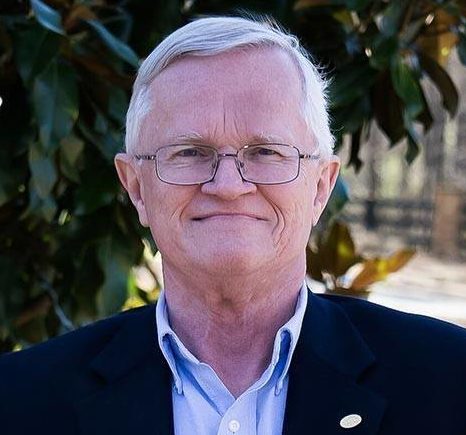
Although powerful preaching, serving the poor, and missionary work often take the lime light in Christian ministry, the truth is that home groups, churches, and especially denominations will fall to pieces without competent and consistent administrators. The job isn't glitzy or glamorous and it is often beset with equal parts of tedium, stress, and failure, but without it nothing gets done--or at least not for long. Meet David Krogh, a faithful servant who who has found himself in roles ranging from pastor to executive director in a denomination to academic dean of a bible college. Over more than five decades of ministry, Krogh has been involved with countless decisions that have made the Church of God General Conference what it is today. —— Links —— More about David Krogh on the staff page for the Atlanta Bible CollegeSee also the main website of the Church of God General ConferenceLearn more about the missions organization: Lord's Harvest InternationalIf you’d like to support Restitutio, you can donate here.Intro music: Good Vibes by MBB Attribution-ShareAlike 3.0 Unported (CC BY-SA 3.0) Free Download / Stream: Music promoted by Audio Library

358 A Christian Perspective on Black Lives Matter (Russell Brown)
We’re delving into a topic rife with controversy, polarization, and intense emotion. We’re asking the question, how should bible-based Christians respond to the Black Lives Matter movement. No doubt, some of you will answer that we should all be out marching in full support while others think BLM is itself racist and should be resisted. Of course, between these two extremes are many more options for responding to this. In order to navigate our way through the choppy seas of this issue, I’ve invited on Russell Brown who offers an interesting perspective, since he finds himself at the intersection of all three camps. —— Links —— More podcasts from Russell Brown Check out Brown’s parenting teaching, “Disciplining Children“ More YouTube videos featuring Russell Brown If you’d like to support Restitutio, you can donate here. Intro music: Good Vibes by MBB Attribution-ShareAlike 3.0 Unported (CC BY-SA 3.0) Free Download / Stream: Music promoted by Audio Library

357 A Christian Perspective on COVID-19 (Russell Brown)
Last December the Coronavirus pandemic began spreading from Wuhan, China across the world. As of today, globally we know of approximately 30 million cases across 188 countries and territories resulting in 941,000 deaths and 20.3 million who have recovered. The United States has the most cases with 6.7 million infected (roughly 2% of the population) and nearly 200,000 deaths (a mortality rate of almost 3%). In this interview, I'm bringing on Russell Brown (my brother-in-law) to share about his own COVID-19 experience, including his symptoms and recovery. He is a passionate Christian who can bring a faith-based perspective to this situation. —— Links —— Watch Russell and Joelle Brown's video retelling their experience, "Trusting through Storms"More podcasts from Russell BrownCheck out Brown's parenting teaching, "Disciplining Children"More YouTube videos featuring Russell BrownIf you’d like to support Restitutio, you can donate here.Intro music: Good Vibes by MBB Attribution-ShareAlike 3.0 Unported (CC BY-SA 3.0) Free Download / Stream: Music promoted by Audio Library
356 Unitarian Bible Translations 3 (Jerry Wierwille)
Today, we've got three more texts to look at in our selection of unitarian Bible translations. Unlike last time where we focused on Christologically interesting passages, today, we'll examine Luke 23.43, John 7.53-8.11, and 1 Thessalonians 1.3 to look at a punctuation issue, a textual issue, and a grammatical issue. By the end of this episode we hope you'll have a firmer grasp on the differences between these translations. Of course, we could go on to compare many more verses, but we're going to draw this to an end here and this episode will round out this series on unitarian Bible translations. —— Links —— Read Wierwille's research paper on John 7.53-8.11, "My Favorite Fake Bible Passage"354 Unitarian Bible Translations 1 (Jerry Wierwille)355 Unitarian Bible Translations 2 (Jerry Wierwille)Check out these other episodes with Jerry WierwilleFor my class on How We Got the Bible, half of which covered translation issues, follow this link.If you’d like to support Restitutio, you can donate here.Intro music: Good Vibes by MBB Attribution-ShareAlike 3.0 Unported (CC BY-SA 3.0) Free Download / Stream: Music promoted by Audio Library
355 Unitarian Bible Translations 2 (Jerry Wierwille)
Last time we reviewed six unitarian Bible translations, covering some basic information about where each came from and their overall strategy for translation. Today, we're going to analyze how they translate three key texts, including Philippians 2.6, John 1.1-3, and John 8.58. Our goal is to measure these translations against what the Greek says as well as noting significant variations from mainstream translations and each other. —— Links —— Check out these other episodes with Jerry WierwilleFor previous episodes that cover these verses in greater detail see God’s Form or God’s Nature (Translating Philippians 2.6-7) and Did Jesus Claim to Be the I AM? (Translating John 8.58)For John 1, see Dale Tuggy's "Trinities" podcast episode 290: Is the “Socinian” interpretation of John 1 correct?For my class on How We Got the Bible, half of which covered translation issues, follow this link.If you’d like to support Restitutio, you can donate here.Intro music: Good Vibes by MBB Attribution-ShareAlike 3.0 Unported (CC BY-SA 3.0) Free Download / Stream: Music promoted by Audio Library
354 Unitarian Bible Translations 1 (Jerry Wierwille)
In our last episode, I recommended some mainstream Christian Bible translations, but I would remiss if I didn’t also review some important unitarian Bible translations. Although often overlooked, these versions are important because they have the opposite bias when it comes to passages commonly offered as proof texts for the Trinity. Also, I asked Dr. Jerry Wierwille to join me today, since he is Bible translator, currently working on a unitarian bible translation. In today’s episode we’ll review the following: Emphatic Diaglott by Benjamin Wilson (1864) New European Version by Duncan Heaster (2013) New World Translation by Jehovah’s Witnesses (2013) Kingdom of God Version by Raymond Faircloth (2018) The One God, the Father, One Man Messiah Translation by Anthony Buzzard (2020) The Revised English Version by Spirit and Truth (ongoing) In this episode, we’ll offer some background on each of these versions and in our next episode we’ll compare them and see how they handle a number of interesting texts. —— Links —— Check out these other episodes with Jerry Wierwille Episodes mentioned in this podcast: Evaluating the Message Bible and the Passion Translation, Evaluating the King James Version, Reconstructing the New Testament, and New Testament Textual Criticism If you’d like to support Restitutio, you can donate here. Intro music: Good Vibes by MBB Attribution-ShareAlike 3.0 Unported (CC BY-SA 3.0) Free Download / Stream: Music promoted by Audio Library
353 Bible 24 – Recommended Bible Translations (Which Bible Is Best?)
This is now our last episode in this 24 part class on How We Got the Bible. Today after a quick review and an appeal to learn the biblical languages, I’ll recommend a number of Bible translations. Although I’m hesitant to do this, so many have written in asking for it that I would be negligent to avoid making some recommendations in this last episode. Additionally, we’ll cover a list of 7 verses you can use to check translations accuracy (see below). —— Verses to Check for Translation Accuracy —— Genesis 4.8 Cain says “Let’s go into the field” (SP, LXX, Syriac, Vulgate) Isaiah 53.11 “he shall see light” not “he shall see it” (DSS, LXX) 1 Samuel 14.41 does it say “Urim?” (LXX) Psalm 145.13 is it 2 sentences or just 1? (DSS, LXX, Syriac) Honesty about Mark 16.9-20 and John 7.53-8.11 Revelation 22.19 “tree of life” not “book of life” Matthew 2.2 “pay homage” not “worship” —— Recommended Translations —— Jewish Publication Society Tanakh (JPS): dynamic equivalence from Jewish perspective English Standard Version (ESV): formal equivalence from evangelical perspective New English Translation (NET): dynamic equivalence from evangelical perspective New American Bible (NAB): dynamic equivalence from Roman Catholic perspective New Revised Standard Version (NRSV): formal equivalence from a mainline/liberal perspective —— Biased Translations to Avoid —— Message Bible (MSG): extreme dynamic equivalence Passion Translation (PT): extreme dynamic equivalence New Living Translation (NLT): dynamic equivalence —— Outdated Translations —— 1769 King James Version (KJV): formal equivalence 1982 New King James Version (NKJV): formal equivalence 1995 New American Standard Bible (NASB): formal equivalence any versions not taking into account the Dead Sea Scrolls (see verses above to check) —— Links —— Check out all the lectures in How We Got the Bible See what other classes are available here or on the Restitutio Classes podcast (subscribe in Apple, Spotify, RSS feed) If you’d like to support Restitutio, you can donate here. Intro music: Good Vibes by MBB Attribution-ShareAlike 3.0 Unported (CC BY-SA 3.0) Free Download / Stream: Music promoted by Audio Library
352 Bible 23 – Spirit Who or Spirit Which? (Translating the Holy Spirit)
This is our fifth and final example of bias in translation. After this episode, we’ll have one more to conclude our class on How We Got the Bible. Today our focus is God’s spirit. Should it have an uppercase ‘S’ or a lowercase ‘s?’ Should pronouns referring back to spirit be masculine (like “he”) or neuter (like “it”)? Is the spirit a “who” or a “which?” In this episode we’ll get into the grammar of holy spirit in an attempt to show how translation bias steers unsuspecting readers in the direction of the traditional teaching about the personality of the spirit. —— Books & Papers —— Truth in Translation by Jason David BeDuhn Greek Grammar Beyond the Basics by Daniel Wallace “Greek Grammar and the Personality of the Holy Spirit” by Daniel Wallace “The Holy Spirit and Translation Bias: A Smoking Gun of Trinity Mischief (1)” by Sean Finnegan “The Holy Spirit and Translation Bias: A Smoking Gun of Trinity Mischief (2)” by Sean Finnegan —— Links —— Watch “The Holy Spirit” video by the Bible Project (note the lack of personhood) Listen to podcast Theology 14 — The Holy Spirit to hear a biblical theology of the spirit and five biblical reasons why the spirit is not a person apart from either the Father or Jesus Listen to podcast Theology 15 — Challenging the Holy Spirit to hear sound biblical explanations of misunderstood verses that defenders of the spirit’s personality point to as evidence of their position More posts and podcasts about the holy spirit Check out all the lectures in How We Got the Bible See what other classes are available here or on the Restitutio Classes podcast (subscribe in Apple, Spotify, RSS feed) If you’d like to support Restitutio, you can donate here. Intro music: Good Vibes by MBB Attribution-ShareAlike 3.0 Unported (CC BY-SA 3.0) Free Download / Stream: Music promoted by Audio Library
351 Bible 22 – Did Jesus Claim to Be the I AM? (Translating John 8.58)
Did Jesus claim to be “The Great I AM” in John 8.58? If not, what was he saying? In this episode we examine the alleged parallel passage in Exodus where God reveals his name to Moses at the burning bush. Next, we’ll explore texts with the same Greek construction that Jesus used in an effort to sniff out bias. In the end we’ll see there are three viable possibilities for translating John 8.58, the least likely of which is what we find in most translations. —— Books —— The First Testament by John Goldingay The Hebrew Bible by Robert Alter The Schocken Bible by Everett Fox A Greek-English Lexicon of the New Testament and Other Early Christian Literature, 3rd Edition (BDAG) Greek Grammar by Herbert Weir Smyth (see rule 1885) A Greek Grammar of the New Testament and Other Early Christian Literature by F. Blass, A. Debrunner, and Robert Funk (see rule 322, note the typo John 5.58 should be John 8.58) Truth in Translation by Jason David BeDuhn —— Links —— Did Jesus Claim to be the “I Am” in John 8.58? by Victor Gluckin (audio sermon) Explanation of John 8.58 by John Schoenheit (from One God & One Lord) John 8.58 by Steve Katsaras (audio sermon) Debate: Patrick Navas vs. James White on Chris Date’s Theopologetics Podcast (part 2 addresses the “I am” statements in John) Check out all the lectures in How We Got the Bible See what other classes are available here or on the Restitutio Classes podcast (subscribe in Apple, Spotify, RSS feed) If you’d like to support Restitutio, you can donate here. Intro music: Good Vibes by MBB Attribution-ShareAlike 3.0 Unported (CC BY-SA 3.0) Free Download / Stream: Music promoted by Audio Library
350 Bible 21 – Firstborn Of or Firstborn Over? (Translating Colossians 1.15)
Colossians 1.15 presents an interesting test case to examine translation bias. Well-meaning Bible students have taken this text in at least three different ways. However, some translators, motivated by a fear that readers might see Christ as a member of creation, have increasingly pushed for translating this text so that it says Christ is superior to all creation and thus on the creator side of the creator-creature divide. In what follows I examine several popular translations and discuss the two main issues in this verse. —— Books —— A Greek-English Lexicon of the New Testament and Other Early Christian Literature, 3rd Edition (BDAG) Greek Grammar Beyond the Basics by Daniel Wallace Truth in Translation by Jason David BeDuhn —— Links —— Colossians 1.15-20: Preexistence or Preeminence by William Wachtel (paper) Christ the Firstborn Head of the Universe by Nathan Crowder (paper) Explanation of Colossians 1.15 -20 by John Schoenheit (from One God & One Lord) Resurrection Impact by Sean Finnegan (audio sermon on Colossians 1.15-20 as ascension theology) Debate: Patrick Navas vs. James White on Chris Date’s Theopologetics Podcast (part 2 addresses Colossians 1) Check out all the lectures in How We Got the Bible See what other classes are available here or on the Restitutio Classes podcast (subscribe in Apple, Spotify, RSS feed) If you’d like to support Restitutio, you can donate here. Intro music: Good Vibes by MBB Attribution-ShareAlike 3.0 Unported (CC BY-SA 3.0) Free Download / Stream: Music promoted by Audio Library
349 Bible 20 – Bow or Worship? (Translating Proskuneo)
How should translators render the word προκσυνέω (proskuneo) into English? Since this word has a range of meanings from bowing as a sign of respect to worshiping God, translators sometimes decide what English words to use based more on their theological presuppositions than the grammar or textual context. For example, some translations (mostly those done by evangelicals) employ the language of worship when proskuneo is done to Jesus but then interpret the term as a respectful gesture when done to others. This, I suggest, is another smoking gun of translation bias. —— Books —— A Greek-English Lexicon of the New Testament and Other Early Christian Literature, 3rd Edition (BDAG) The Hebrew and Aramaic Lexicon of the Old Testament (HAOT) Truth in Translation by Jason David BeDuhn Did the First Christians Worship Jesus?: The New Testament Evidence by James Dunn —— Links —— Who Should Christians Worship? by Dale Tuggy Podcast 21: Should We Worship Jesus? by Sean Finnegan Pliny the Younger’s statement about Christians singing hymns to Christ as if to a god Check out all the lectures in How We Got the Bible See what other classes are available here or on the Restitutio Classes podcast (subscribe in Apple, Spotify, RSS feed) If you’d like to support Restitutio, you can donate here. Intro music: Good Vibes by MBB Attribution-ShareAlike 3.0 Unported (CC BY-SA 3.0) Free Download / Stream: Music promoted by Audio Library
348 Bible 19 – God’s Form or God’s Nature (Translating Philippians 2.6-7)
This is our first of five examples of bias in translation. Today we’ll examine Philippians 2.6-7, specifically focusing on how translators render two important words (ἁρπαγμός harpagmon and μορφή morphe). We’ll see how a couple of the most popular evangelical versions break free from the underlying Greek syntax in order to inject their own doctrinal bias into scripture. Regardless of your own interpretation of this passage, can we all agree that translators should not read their beliefs into scripture? —— Books —— A Greek-English Lexicon of the New Testament and Other Early Christian Literature, 3rd Edition (BDAG) New American Bible (NAB) The New Oxford Annotated Bible (NRSV) Truth in Translation by Jason David BeDuhn —— Links —— Check out all the lectures in How We Got the Bible See what other classes are available here or on the Restitutio Classes podcast (subscribe in Apple, Spotify, RSS feed) If you’d like to support Restitutio, you can donate here. Intro music: Good Vibes by MBB Attribution-ShareAlike 3.0 Unported (CC BY-SA 3.0) Free Download / Stream: Music promoted by Audio Library
347 Bible 18 – Bias in Bible Translation
Last time we evaluated two popular single-translator Bibles: the Message and the Passion Translation. This time, we’re switching gears to consider committee-based versions. I want to shine a spotlight on the whole subject of bias in translation in an effort to point out what often goes unnoticed. We’ll consider both the committee effect that tends to eliminate non-traditional renderings as well as how the concept of sola scriptura exerts immense pressure on evangelicals to nudge their translations in the direction of their doctrinal commitments. —— Books —— The Art of Bible Translation by Robert Alter The New Testament by David Bentley Hart Truth in Translation by Jason David BeDuhn —— Links —— Check out all the lectures in How We Got the Bible See what other classes are available here or on the Restitutio Classes podcast (subscribe in Apple, Spotify, RSS feed) If you’d like to support Restitutio, you can donate here. Intro music: Good Vibes by MBB Attribution-ShareAlike 3.0 Unported (CC BY-SA 3.0) Free Download / Stream: Music promoted by Audio Library
346 Bible 17 – Evaluating the Message Bible and the Passion Translation
Last time we looked at the King James version which is one of the strictest formal equivalence Bibles every made. This time we are going to analyze two Bibles on the other end of the spectrum: the Message Bible and the Passion Translation. These two versions share a number of characteristics in common. For example both are very popular, both were done by single translators, and both employ a very free application of dynamic equivalence. —— Books —— The Message Bible by Eugene Peterson The Passion Translation by Brian Simmons The Hebrew Bible by Robert Alter The New Testament by David Bentley Hart —— Links —— Check out all the lectures in How We Got the Bible See what other classes are available here or on the Restitutio Classes podcast (subscribe in Apple, Spotify, RSS feed) If you’d like to support Restitutio, you can donate here. Intro music: Good Vibes by MBB Attribution-ShareAlike 3.0 Unported (CC BY-SA 3.0) Free Download / Stream: Music promoted by Audio Library
345 Bible 16 – Evaluating the King James Version
What do you know about the King James Version? Is it an accurate translation? Does it have flaws? Should you use it as a measuring stick for other translations? In today’s episode, we’ll cover the making of the KJV of the Bible, going back to William Tyndale’s courageous work before delving into four areas of evaluation. We’ll examine the KJV’s manuscript base, translation accuracy, lexicography, and vocabulary in an effort to objectively decide how the KJV compares to other English versions. —— Books —— William Tyndale: A Biography by David Daniell The Complete Guide to Bible Translations by Ron Rhodes Essential Guide to Bible Versions by Philip W. Comfort The Journey from Texts to Translations by Paul D. Wegner How to Choose a Translation for All Its Worth by Gordon Fee and Mark Strauss The Art of Bible Translation by Robert Alter “History of the English Bible” by Philip W. Comfort in The Origin of the Bible: Newly Updated, ed. F. F. Bruce, J. I. Packer, Philip Comfort, Carl F. H. Henry “English Versions of the Bible” by J. H. Skilton in New Bible Dictionary, ed. D. R. W. Wood “English Versions Since 1611” by Luther Weigle in The Cambridge History of the Bible: Vol 3 The English Bible from KJV to NIV, 2nd ed. by Jack Pearl Lewis The King James Only Controversy by James White The King James Bible after Four Hundred Years by Hannibal Hamlin and Norman W. Jones —— Links —— Check out all the lectures in How We Got the Bible See what other classes are available he
344 Bible 15 – Gender in Bible Translation
Did you know that controversies surrounding how to translate gender in the Bible had a major impact on Bible translation over the last 30 years? In this episode we’ll briefly overview various feminist movements before examining the NRSV, which proved to be a forerunner for gender inclusive Bible translations. Next we’ll take a journey through the NIVI and TNIV controversies at the turn of the 21st century before seeing how evangelical Bible translations both reacted against (ESV, HCSB) and appropriated (NIV2011, CSB) varying degrees of gender accuracy into their Bibles. —— Books —— The Handbook of Nonsexist Writing: For Writers, Editors, and Speakers by Casey Miller and Kate Swift, 1980 “Femme Fatale” by Susan Olasky, World, March 29, 1997 Colorado Springs Guidelines “Statement by Participants in the Conference on Gender-Related Language in Scripture” May 27, 1997 “Bailing Out the Stealth Bible” by Susan Olasky, World Magazine, June 14, 1997 “Hands Off My NIV!” by Doug LeBlanc, Christianity Today, June 16, 1997 What’s Wrong with Gender-Neutral Bible Translations? by Wayne Gruden, 1997 D. A. Carson, The Inclusive Language Debate: A Plea for Realism Mark L. Strauss, Distorting Scripture? The Challenge of Bible Translation and Gender Accuracy The Gender-Neutral Bible Controversy: Muting the Masculinity of God’s Words by Wayne Gruden and Vern Polythress, 2000 Two Views on Women in Ministry by Linda L. Belleville, Craig L. Blomberg, Craig S. Keener, Thomas R. Schreiner, 2001, updated 2005 Southern Baptist Convention Resolution “On Today’s New International Version,” June 11-12, 2002 How To Choose a Translation for All It’s Worth by Gordon Fee and Mark Strauss, 2007 (see especially chapter chapter 7) “Why the English Standard Version (ESV) Should Not Become the Standard English Version” by Mark Strauss, 2008 (presented at ETS) “An Evaluation of Gender Language in the 2011 Edition of the NIV Bible,” Council on Biblical Manhood and Womanhood, June 6, 2011 Jesus, Justice, and Gender Roles by Kathy Keller, 2012 —— Links —— Check out all the lectures in How We Got the Bible See what other classes are available here or on the Restitutio Classes podcast (subscribe in Apple, Spotify, RSS feed) If you’d like to support Restitutio, you can donate here. Intro music: Good Vibes by MBB Attribution-ShareAlike 3.0 Unported (CC BY-SA 3.0) Free Download / Stream: Music promoted by Audio Library
343 Bible 14 – Bible Translation Default Decisions
Last time we focused on the two main translation theories: formal and dynamic equivalence. This time, we need to take a look at five major default decisions translation teams make at the outset. Units of Measurement and Currency Hebrew Idioms English Vocabulary Editorial Enhancements God’s Name By becoming familiar with these five topics, you’ll be able to better assess English Bible translations and less susceptible to misunderstandings. —— Books —— The Complete Guide to Bible Translations by Ron Rhodes Essential Guide to Bible Versions by Philip W. Comfort The Journey from Texts to Translations by Paul D. Wegner How to Choose a Translation for All Its Worth by Gordon Fee and Mark Strauss The Art of Bible Translation by Robert Alter How We Got the Bible by Neil Lightfoot The Theory and Practice of Translation by Eugene Nida —— Links —— “Q&A: Translation Decisions for the Christian Standard Bible” Check out all the lectures in How We Got the Bible See what other classes are available here or on the Restitutio Classes podcast (subscribe in Apple, Spotify, RSS feed) If you’d like to support Restitutio, you can donate here. Intro music: Good Vibes by MBB Attribution-ShareAlike 3.0 Unported (CC BY-SA 3.0) Free Download / Stream: Music promoted by Audio Library
342 Bible 13 – Bible Translation Philosophies (Formal and Dynamic Equivalence)
Up until now we’ve focused our attention on the text of Scripture. We took five episodes looking at the Hebrew Bible, including it’s sources, transmission, and how textual scholars go about deciding the initial text. Then for the last seven episodes we did the same for the New Testament, examining the surviving source material and looking at the work of textual criticism. Now, we are in a good position to shift gears and turn to the whole world of translation. As it turns out, English Bible translators divide into two broad styles of translation: formal equivalence and dynamic equivalence. In this episode we’ll explore these two translation philosophies and the trade offs each makes in order to produce English Bibles. —— Books —— The Complete Guide to Bible Translations by Ron Rhodes Essential Guide to Bible Versions by Philip W. Comfort The Journey from Texts to Translations by Paul D. Wegner How to Choose a Translation for All Its Worth by Gordon Fee and Mark Strauss The Art of Bible Translation by Robert Alter How We Got the Bible by Neil Lightfoot The Theory and Practice of Translation by Eugene Nida —— Links —— Andi Wu, “A Quantitative Evaluation of the Christian Standard Bible” Check out all the lectures in How We Got the Bible See what other classes are available here or on the Restitutio Classes podcast (subscribe in Apple, Spotify, RSS feed) If you’d like to support Restitutio, you can donate here. Intro music: Good Vibes by MBB Attribution-ShareAlike 3.0 Unported (CC BY-SA 3.0) Free Download / Stream: Music promoted by Audio Library
341 Bible 12 – Two Uncorrected Corruptions (Mark 16.9-20 and John 7.53-8.11)
Last time we covered two corrected corruptions (1 Timothy 3.16 and 1 John 5.7). This time we’ll consider two uncorrected corruptions, including the long ending on Mark (16.9-20) and the passage about the adulterous woman that Jesus saves (John 7.53-8.11). Although these two texts are not found in the earliest and best manuscripts and translators have known this for decades, they continue to include them in virtually all English translations. What’s going on here? In this episode you’ll learn the textual basis for both passages and the reasons why textual scholars don’t accept their authenticity. —— Books —— New Testament Text and Translation Commentary by Philip W. Comfort Textual Commentary of the Greek New Testament by Bruce Metzger The NET Bible with 60,932 Translators’ Notes (online here) —— Links —— For background on textual criticism see part 10 New Testament Textual Criticism as well as 6 Greek New Testament Papyri, 7 Greek New Testament Uncials, and 8 Other New Testament Manuscripts Check out all the lectures in How We Got the Bible See what other classes are available here or on the Restitutio Classes podcast (subscribe in Apple, Spotify, RSS feed) If you’d like to support Restitutio, you can donate here. Intro music: Good Vibes by MBB Attribution-ShareAlike 3.0 Unported (CC BY-SA 3.0) Free Download / Stream: Music promoted by Audio Library
340 Bible 11 – Two Corrected Corruptions (1 Timothy 3.16 & 1 John 5.7)
Today we move from learning about manuscripts and textual criticism to actually doing textual criticism. I’ve chosen two well-known corruptions to illustrate the process of textual criticism: 1 Timothy 3.16 and 1 John 5.7. In each of these cases scribes have altered the text of scripture and we have the manuscript evidence to show exactly what happened. —— Books —— New Testament Text and Translation Commentary by Philip W. Comfort Textual Commentary of the Greek New Testament by Bruce Metzger The NET Bible with 60,932 Translators’ Notes (online here) The Orthodox Corruption of Scripture by Bart Ehrman Revisiting the Corruption of the New Testament by Daniel Wallace et al. The King James Only Controversy by James White —— Links —— Read my more thorough treatment of 1 John 5.7-8: “The Story behind the Comma Johanneum“ For background on textual criticism see part 10 New Testament Textual Criticism as well as 6 Greek New Testament Papyri, 7 Greek New Testament Uncials, and 8 Other New Testament Manuscripts Check out all the lectures in How We Got the Bible See what other classes are available here or on the Restitutio Classes podcast (subscribe in Apple, Spotify, RSS feed) If you’d like to support Restitutio, you can donate here. Intro music: Good Vibes by MBB Attribution-ShareAlike 3.0 Unported (CC BY-SA 3.0) Free Download / Stream: Music promoted by Audio Library
339 Bible 10 New Testament Textual Criticism
Last time we surveyed five hundred years of New Testament textual criticism. Today we address the process by which these scholars have done and continue to do their work. We’ll see how they weigh internal and external evidence. We’ll cover reasoned eclecticism, the refined documentary approach, and the computer-driven coherence based genealogical method. (Don’t worry if these terms don’t mean much to you yet.) Lastly, we’ll see what resources you can access to find out the inside scoop on what’s going on with a particular NT verse. —— Books —— New Testament Text and Translation Commentary by Philip W. Comfort An Introduction to the New Testament Manuscripts and their Texts by D. C. Parker The Text of the New Testament: Its Transmission, Corruption, and Restoration by Bruce M. Metzger and Bart D. Ehrman NA28: Nestle-Aland 28th Edition, aka Novum Testamentum Graece UBS5: United Bible Society 5th Edition, aka The Greek New Testament THGNT: Tyndale House Greek New Testament, aka The Greek New Testament —— Links —— Editio Critica Maior Coherence Based Genealogical Method (CBGM) tool Read Peter Gurry’s article, “How Your Greek NT Is Changing: A Simple Introduction to the Coherence-Based Genealogical Method (CBGM)” from the Journal of Journal of the Evangelical Theological Society. Check out all the lectures in How We Got the Bible See what other classes are available here or on the Restitutio Classes podcast (subscribe in Apple, Spotify, RSS feed) If you’d like to support Restitutio, you can donate here. Intro music: Good Vibes by MBB Attribution-ShareAlike 3.0 Unported (CC BY-SA 3.0) Free Download / Stream: Music promoted by Audio Library
338 Bible 9 Reconstructing the New Testament
Before we can understand how textual scholars do their work today, it’s important to understand the history of how they have endeavored to reconstruct the Greek New Testament over the years. In this episode you’ll learn about the rich and important history of how our understanding of the Greek New Testament changed over the last five hundred years. This history is vital for you to understand why older translations are often based on younger manuscripts–a key paradox we’ll return to in future sessions. —— Books —— An Introduction to the New Testament Manuscripts and their Texts by D. C. Parker The Text of the New Testament: Its Transmission, Corruption, and Restoration by Bruce M. Metzger and Bart D. Ehrman The Text of the Earliest New Testament Greek Manuscripts by Philip Wesley Comfort and David P. Barrett (2 volumes) The King James Only Controversy by James White NA28: Nestle-Aland 28th Edition, aka Novum Testamentum Graece UBS5: United Bible Society 5th Edition, aka The Greek New Testament THGNT: Tyndale House Greek New Testament, aka The Greek New Testament —— Links —— Check out all the lectures in How We Got the Bible See what other classes are available here or on the Restitutio Classes podcast (subscribe in Apple, Spotify, RSS feed) If you’d like to support Restitutio, you can donate here. Intro music: Good Vibes by MBB Attribution-ShareAlike 3.0 Unported (CC BY-SA 3.0) Free Download / Stream: Music promoted by Audio Library
337 Bible 8 – Other New Testament Manuscripts
We’ve been working our way through the various sources for our Greek New Testament. We’ve looked at the papyri and the uncials, but there is so much more to consider. In fact, the New Testament papyri and uncials combined make up less than 2% of our manuscripts. Today, we’ll consider the other 98% of manuscripts including minuscules, lectionaries, quotations in the church fathers, and ancient translations. —— Books —— Constantine Tischendorf: The Life and Work of a 19th Century Bible Hunter by Stanley E. Porter An Introduction to the New Testament Manuscripts and their Texts by D. C. Parker The Text of the New Testament: Its Transmission, Corruption, and Restoration by Bruce M. Metzger and Bart D. Ehrman The Text of the Earliest New Testament Greek Manuscripts by Philip Wesley Comfort and David P. Barrett (2 volumes) Encountering the Manuscripts by Philip Comfort —— Links —— See SBL’s publications of The New Testament in the Greek Fathers Visit The Center for the Study of New Testament Manuscripts and look at high resolution pictures of many manuscripts. Visit the Institute for New Testament Textual Research (INTF) to see the work they are doing to compare access and analyze New Testament manuscripts Check out all the lectures in How We Got the Bible See what other classes are available here or on the Restitutio Classes podcast (subscribe in Apple, Spotify, RSS feed) If you’d like to support Restitutio, you can donate here. Intro music: Good Vibes by MBB Attribution-ShareAlike 3.0 Unported (CC BY-SA 3.0) Free Download / Stream: Music promoted by Audio Library
336 Bible 7 – Greek New Testament Uncials
Today we are moving into our second group of New Testament manuscripts–the uncials. However, before describing them, we’ll need to focus on how Christian scribes went about their work. As it turns out the situation is quite different than the Jewish scribes who preserved the Hebrew Bible. Then we’ll follow the exciting career of Bible hunter Constantine Tischendorf as he brought to light two huge discoveries. Lastly, we’ll take a brief survey of the five most famous uncial New Testament manuscripts: Codex Sinaiticus, Alexandrinus, Vaticanus, Ephraemi Rescriptus, and Bezae. —— Books —— Constantine Tischendorf: The Life and Work of a 19th Century Bible Hunter by Stanley E. Porter An Introduction to the New Testament Manuscripts and their Texts by D. C. Parker The Text of the New Testament: Its Transmission, Corruption, and Restoration by Bruce M. Metzger and Bart D. Ehrman The Text of the Earliest New Testament Greek Manuscripts by Philip Wesley Comfort and David P. Barrett (2 volumes) Encountering the Manuscripts by Philip Comfort —— Links —— Check out all the lectures in How We Got the Bible See what other classes are available here or on the Restitutio Classes podcast (subscribe in Apple, Spotify, RSS feed) If you’d like to support Restitutio, you can donate here. Intro music: Good Vibes by MBB Attribution-ShareAlike 3.0 Unported (CC BY-SA 3.0) Free Download / Stream: Music promoted by Audio Library
335 Bible 6 – Greek New Testament Papyri
Today we are shifting gears from the Old Testament to the New Testament, from Hebrew manuscripts to Greek ones. We’ll begin with the earliest evidence for the Greek New Testament, the papyri. Made from the papyrus plant, approximately 130 of these manuscripts survive today in museums around the world. In this lecture you’ll learn the important role collectors like Chester Beatty and Martin Bodmer played as well as the earth-shattering discovery made by archeologists Bernard Grenfell and Arthur Hunt at Oxyrhynchus Egypt. —— Books —— The Text of the New Testament: Its Transmission, Corruption, and Restoration by Bruce M. Metzger and Bart D. Ehrman Christian Oxyrhynchus: Texts, Documents, and Sources by Lincoln H. Blumell and Thomas A. Wayment The Text of the Earliest New Testament Greek Manuscripts by Philip Wesley Comfort and David P. Barrett (2 volumes) Encountering the Manuscripts by Philip Comfort —— Links —— Check out all the lectures in How We Got the Bible See what other classes are available here or on the Restitutio Classes podcast (subscribe in Apple, Spotify, RSS feed) If you’d like to support Restitutio, you can donate here. Intro music: Good Vibes by MBB Attribution-ShareAlike 3.0 Unported (CC BY-SA 3.0) Free Download / Stream: Music promoted by Audio Library
334 Bible 5 – Jewish Bible Translations
Today we are going to take a brief break from manuscripts and dip our toes into the pool of Bible translations. Specifically, we’ll take a look at six of the most prominent Jewish translations of the Hebrew Bible, including: Jewish Publication Society (1917) Koren Jerusalem Bible (1961) New Jewish Publication Society (1985) Artscroll’s Stone Tanach (1996) Schocken Bible of Everett Fox (1995, 2014) Robert Alter’s translation (2018) For each of these versions we’ll get a brief sense of the translation style from the preface and then we’ll compare four texts from each: Genesis 1.1-3; Psalm 23.1-2; Isaiah 9.6; and Micah 7.20. —— Books —— Jewish Publication Society Bible (1917) New Jewish Publication Society Bible (1985) Koren Jerusalem Bible Artscroll Stone Tanach Everett Fox‘s Schocken Bible Robert Alter’s three volume Bible with commentary The Song of Songs by Ariel and Chana Bloch (translation and commentary) —— Links —— Check out all the lectures in How We Got the Bible See what other classes are available here or on the Restitutio Classes podcast (subscribe in Apple, Spotify, RSS feed) If you’d like to support Restitutio, you can donate here. Intro music: Good Vibes by MBB Attribution-ShareAlike 3.0 Unported (CC BY-SA 3.0) Free Download / Stream: Music promoted by Audio Library
333 Bible 4 – Determining the Best Hebrew Reading
For our Hebrew Bibles we have three main groups of manuscripts to compare: the Masoretic Text group, the Samaritan Pentateuch group, and the Septuagint group. Each of these groups contain many manuscripts with the Masoretic Text group containing the most. In this episode of How We Got the Bible, we’re going to look at the history of how textual scholars have and continue to pour over all of this information and determine the best reading when they encounter differences in the texts. —— Books —— Biblia Hebraica Stuttgartensia ed. by Karl Elliger and Wilhelm Rudolph Biblia Hebraica Quinta series (available as individual volumes) Proverbs: An Eclectic Edition with Introduction and Textual Commentary by Michael V. Fox Old Testament Textual Criticism by Ellis Brotzman and Eric Tully Textual Criticism of the Hebrew Bible by Emmanuel Tov —— Links —— Check out all the lectures in How We Got the Bible visit The Hebrew Bible: A Critical Edition site See what other classes are available here or on the Restitutio Classes podcast (subscribe in Apple, Spotify, RSS feed) If you’d like to support Restitutio, you can donate here. Intro music: Good Vibes by MBB Attribution-ShareAlike 3.0 Unported (CC BY-SA 3.0) Free Download / Stream: Music promoted by Audio Library
332 Bible 3 – Samaritan Pentateuch and Ancient Translations
In How We Got the Bible, we’re continuing on in our quest to understand the sources for the Hebrew Bible. We’ve already covered the Masoretic Text and the Dead Sea Scrolls, but we have one last important Hebrew source to look at before surveying several significant ancient translations. As it turns out the Samaritans have their own Hebrew version of the Torah, commonly called the Samaritan Pentateuch. In this episode you’ll learn about the Samaritan Pentateuch and why scholars take it more seriously today than they did in previous centuries. We’ll also consider very important ancient translations of the Tanakh, in Greek, Aramaic, Syriac, and Latin. —— Books —— The Israelite Samaritan Version of the Torah by Benyamin Tsedaka and Sharon Sullivan A New English Translation of the Septuagint by Albert Pietersma and Benjamin G. Wright The Septuagint with Apocrypha by Lancelot C. L. Brenton The Targums: A Critical Introduction by Paul V. M. Flesher and Bruce Chilton The Aramaic Bible Volume 1A: Targum Neofiti: Genesis by Martin McNamara The Aramaic Bible Volume 2: Targum Neofiti and Targum Psuedo-Jonathan: Exodus by Martin McNamara Old Testament Textual Criticism by Ellis Brotzman and Eric Tully —— Links —— Check out all the lectures in How We Got the Bible See what other classes are available here or on the Restitutio Classes podcast (subscribe in Apple, Spotify, RSS feed) If you’d like to support Restitutio, you can donate here. Intro music: Good Vibes by MBB Attribution-ShareAlike 3.0 Unported (CC BY-SA 3.0) Free Download / Stream: Music promoted by Audio Library
331 Bible 2 – Earliest Hebrew Manuscripts
Last time we looked at the Hebrew manuscripts known as the Masoretic Texts from the middle ages. Today, we’ll focus on the earliest Hebrew manuscripts ever found, including those at the Cairo Genizah, the Ein-Gedi Scroll, the Nash Papyrus, the Dead Sea Scrolls, and the Ketef Hinnom Silver Scroll. This is going to be very helpful for future lectures when we cover the process of figuring out which readings are best when manuscripts differ from one another. —— Books —— Old Testament Textual Criticism by Ellis Brotzman and Eric Tully Sacred Trash: The Lost and Found World of the Cairo Genizah by Adina Hoffman and Peter Cole The Dead Sea Scrolls Bible by Martin Abegg Jr., Peter Flint, and Eugene Ulrich The Dead Sea Scrolls: A New Translation by Michael Wise and Martin Abegg Jr. The Complete Dead Sea Scrolls in English by Geza Vermes —— Links —— Check out all the lectures in How We Got the Bible Frieberg Genizah Project digitizing Cairo genizah manuscripts (see also the free app) See what other classes are available here or on the Restitutio Classes podcast (subscribe in Apple, Spotify, RSS feed) If you’d like to support Restitutio, you can donate here. Intro music: Good Vibes by MBB Attribution-ShareAlike 3.0 Unported (CC BY-SA 3.0) Free Download / Stream: Music promoted by Audio Library
330 Bible 1 – The Masoretic Text
Today we are beginning a major new class on how we get our English Bibles. I’m so excited about sharing with you so much about what I’ve learned in doing the research for this project. We’re going to have a great time together. My goal here is to cover the transmission of manuscripts and translation process so you understand where Bibles come from. In fact, I was thinking of calling this class, “Where Bibles Come From,” but when I searched for that phrase the search engine in its infinite wisdom had auto corrected it to “Where do babies come from,” which needless to say wasn’t the target audience for this material. Today marks part one of this class, How We Got the Bible, and our focus will be on the manuscripts that underlie the Masoretic Text. You’ll learn about the Aleppo Codex: probably the most accurate Masoretic Text on the planet. We’ll cover the Leningrad Codex which to this day dominates textual studies since it is the oldest complete Hebrew Bible. We’ll look at a handful of other important manuscripts in an effort to begin understanding where our Bibles come from. Introduction to How We Got the Bible 1: The Masoretic Text —— Books —— Old Testament Textual Criticism by Ellis Brotzman and Eric Tully The Aleppo Codex by Matti Friedman —— Links —— Check out all the lectures in How We Got the Bible See what other classes are available here or on the Restitutio Classes podcast (subscribe in Apple, Spotify, RSS feed) If you’d like to support Restitutio, you can donate here. Intro music: Good Vibes by MBB Attribution-ShareAlike 3.0 Unported (CC BY-SA 3.0) Free Download / Stream: Music promoted by Audio Library

329 Parenting 5 – Balancing Oversight with Independence
This is the fifth and final part of our parenting class. Today you’ll learn about striking the balance between oversight and independence. Although many parents today think their children are at risk of kidnapping and other terrible crimes, our society is actually much safer than it has been in decades. The tendency to protect our children at all times has resulted in a culture of “safteyism” that leads to ill-preparedness when children grow up and move out of the house. On the opposite side chronic neglect or toxic stressors result in adults who are likewise unable to cope with and overcome the complexities of adult life. Download [5.21 MB] In this episode we’ll take a close look at David to see what evergreen lessons we can learn about parenting our own children today. In the end, we want to do our best to prepare our children for the road ahead so that they can be their best for God and others. —— Links —— Watch a panel discussion between the teachers of this class: Mary Ann Yaconis, Sean & Ruth Finnegan, and Russell & Joelle Brown. If you prefer, you can watch the unedited videos here See other episodes in this parenting series Check out Greg Lukianoff & Jonathan Haidt’s excellent book The Coddling of the American Mind: How Good Intentions and Bad Ideas Are Setting Up a Generation for Failure See what other classes are available here or on the Restitutio Classes podcast (subscribe in Apple, Spotify, RSS feed) If you’d like to support Restitutio, you can donate here. Intro music: Good Vibes by MBB Attribution-ShareAlike 3.0 Unported (CC BY-SA 3.0) Free Download / Stream: Music promoted by Audio Library
328 Parenting 4 – Anxiety, Depression, and Screens (Ruth Finnegan)
In part 4 of our parenting class, Ruth Finnegan tackles the issue of screen time for children. Although technology itself is neutral, much of what our children spend their time doing with screens is self-destructive and worldly. As parents our responsibility is to bring God and his scriptures into the family and curtail exposure to worldly entertainment. Doing so may help prevent adolescent anxiety and depression. —— Links —— For more Ruth Finnegan, check out this episode on consumerism If you prefer, you can watch the unedited videos here See other episodes in this parenting series Check out Greg Lukianoff & Jonathan Haidt’s excellent book The Coddling of the American Mind: How Good Intentions and Bad Ideas Are Setting Up a Generation for Failure See what other classes are available here or on the Restitutio Classes podcast (subscribe in Apple, Spotify, RSS feed) If you’d like to support Restitutio, you can donate here. Intro music: Good Vibes by MBB Attribution-ShareAlike 3.0 Unported (CC BY-SA 3.0) Free Download / Stream: Music promoted by Audio Library
327 Parenting 3 – Dealing with Anger (Mary Ann Yaconis)
Welcome to part three of our parenting class where Dr. Mary Ann Yaconis will help us deal with episodes of anger both within ourselves and our children. This is such an important issue because childhood anger can lead to serious characterological disorders in adulthood if not dealt with appropriately. In this episode you’ll learn about what’s underneath anger, what prevents anger, and what provokes anger. The goal here is to learn how to relate to our children in a godly way that incorporates both age-appropriate discipline and unconditional love. Download [3.89 MB] Mary Ann Yaconis has served Living Hope Community Church for more than a dozen years in the areas of counseling and hospitality. She is a licensed Mental Health Counselor with her doctorate degree in pastoral counseling from Loyola University Maryland. She maintains a full-time counseling practice ,helping scores of people over the years to work through troubling issues. —— Links —— Handout 1: Manipulation Test Handout 2: Manipulation Behavior Handout 3: God Centered Home Article (Mary Ann Yaconis) Handout 4: Proverbs about Parenting Listen to Victor Gluckin on “I’m Angry,” taught at Revive 2020. (Note this is not on the podcast (yet). It’s an mp3 file.) Also check out The Insidious Danger of Self-Righteousness (Sean Finnegan) Dr. Mary Ann Yaconis’ class on parenting is available here If you prefer, you can watch the unedited video here See other episodes in this parenting series Check out Greg Lukianoff & Jonathan Haidt’s excellent book The Coddling of the American Mind: How Good Intentions and Bad Ideas Are Setting Up a Generation for Failure See what other classes are available here or on the Restitutio Classes podcast (subscribe in Apple, Spotify, RSS feed) If you’d like to support Restitutio, you can donate here. Intro music: Good Vibes by MBB Attribution-ShareAlike 3.0 Unported (CC BY-SA 3.0) Free Download / Stream: Music promoted by Audio Library
326 Parenting 2 – Disciplining Children (Russell & Joelle Brown)
In this the second part of our parenting seminar, we will broach the topic of disciplining children. For many of us, this is the hardest part of parenting. We’d rather enjoy harmony in our homes rather than having to lay down the law. Even so, the scriptures call us to do the hard work of holding our children accountable. In this brief but incredibly helpful episode, you’ll learn about setting proportionate consequences to disobeying, affirming children when they do what is right, taking away privileges like screen time, and the controversial topic of spanking. Download [575.68 KB] Your teachers for this session are Russell and Joelle Brown, the proud parents of two young children, Hosanna and Isaiah who at the time of this recording were five and three and a half years old. They live in Rhode Island and serve in several ministries at Living Faith Christian Church. —— Links —— Handout: the four parenting styles of Diana Baumrind Dr. Mary Ann Yaconis’ class on parenting is available here If you prefer, you can watch the unedited video here See other episodes in this parenting series Check out Greg Lukianoff & Jonathan Haidt’s excellent book The Coddling of the American Mind: How Good Intentions and Bad Ideas Are Setting Up a Generation for Failure See what other classes are available here or on the Restitutio Classes podcast (subscribe in Apple, Spotify, RSS feed) If you’d like to support Restitutio, you can donate here. Intro music: Good Vibes by MBB Attribution-ShareAlike 3.0 Unported (CC BY-SA 3.0) Free Download / Stream: Music promoted by Audio Library
325 Parenting 1 – Preparing Our Kids for the Road (Sean Finnegan)
For many of us during this COVID-19 pandemic, quarantine has been difficult. A huge number of us are working from home and those of us with children are home schooling as well. Add to that cold and rainy spring weather, and you’ve got a perfect storm for challenging parenting. In an effort to help out, I thought we’d spend a few weeks equipping, challenging, and encouraging parents. Now, I realize that many of you are not parents, but you may have grandchildren, nieces, nephews, or other children in your life. I’m sure some of you plan to have children one day as well. This parenting class will help you both understand ways in which our culture is hurting our children and the how the scriptures can guide us in a better direction. Our first session is called, “Preparing Our Kids for the Road.” The simple fact is that our children are going to suffer at different times in their lives. They are going to face failure, rejection, and disappointment. This is absolutely unavoidable for everyone. Rather than protecting them from everything, our goal as parents is to prepare them for real life in the real world. —— Links —— If you prefer, you can watch the unedited video here See other episodes in this parenting series Check out Greg Lukianoff & Jonathan Haidt’s excellent book The Coddling of the American Mind: How Good Intentions and Bad Ideas Are Setting Up a Generation for Failure See what other classes are available here or on the Restitutio Classes podcast (subscribe in Apple, Spotify, RSS feed) If you’d like to support Restitutio, you can donate here. Intro music: Good Vibes by MBB Attribution-ShareAlike 3.0 Unported (CC BY-SA 3.0) Free Download / Stream: Music promoted by Audio Library
324 Original Sin Debate 2 (Kegan Chandler vs. Jerry Wierwille)
This is part four of our series on original sin. Last time Kegan Chandler and Jerry Wierwille discussed their different views of original sin and the resultant human condition. In this final part of our series, we circle back to Romans 5 one last time and both explain how they understand it. What drives our desire to sin? Is it our mortality, our toxic environment, or our fallen flesh? Listen in as these two scholars discuss this important issue. —— Links —— Part 1: 321 Origins of Sin (Kegan Chandler) Part 2: 322 Inherited Sin in Romans 5 (Jerry Wierwille) Part 3: 323 Original Sin Debate 1 (Kegan Chandler vs. Jerry Wierwille) More podcast episodes with Kegan Chandler More podcast episodes with Jerry Wierwille If you’d like to support Restitutio, you can donate here. Intro music: Good Vibes by MBB Attribution-ShareAlike 3.0 Unported (CC BY-SA 3.0) Free Download / Stream: Music promoted by Audio Library