Restitutio
673 episodes — Page 6 of 14

423 One God 13: The Fourth Century
This is part 13 of the One God Over All class. What happened in the fourth century? You've probably heard all kinds of rumors about Arius of Alexandria and his newfangled heresy. But, was Arius really a sinful outsider who tried to corrupt Christianity? Was his idea of a Son with a beginning even new? In this episode we'll cover an outline of the major events that happened in the controversy that raged from 318 to 381. You may be surprised to discover that Arius was actually and elderly conservative with an impeccable character who quite consciously worked to avoid established heresies. Listen to this episode on Spotify or Apple Podcasts https://youtu.be/OZeMX_Ni6O0 —— Links —— More one God resources and posts available here, including “Five Major Problems with the Trinity” and “The Trinity before Nicea.” Check out the video Is God a Trinity? If you’d like to support Restitutio, you can donate here or designate Restitutio as your charity of choice for Amazon purchases Join our Restitutio Facebook Group and follow us on Twitter @RestitutioSF Leave a voice message via SpeakPipe with questions or comments and we may play them out on the air Intro music: Good Vibes by MBB Attribution-ShareAlike 3.0 Unported (CC BY-SA 3.0) Free Download / Stream: Music promoted by Audio Library. Who is Sean Finnegan? Read his bio here.

422 One God 12: Early Church History
This is part 12 of the One God Over All class. If the entire bible clearly and repeatedly teaches that there is one supreme God who is over all and that Jesus is his subordinate son, then surely we should find evidence of this idea in the historical writings of Christians after the New Testament period. Within the four broad strands of Christianity in the second and third centuries, three of them embraced thoroughgoing subordinationism while the fourth--the modalists--taught that Jesus was the Father. In this episode, we'll focus on the three early subordinationist groups: the Gnostics, the Dynamic Monarchians, and the Logos Incarnationists to explore what they each believed about Jesus. Listen to this episode on Spotify or Apple Podcasts https://youtu.be/Or5KAXkc6Jc —— Links —— More one God resources and posts available here, including “Five Major Problems with the Trinity” and “The Trinity before Nicea.” Check out the video Is God a Trinity? If you’d like to support Restitutio, you can donate here or designate Restitutio as your charity of choice for Amazon purchases Join our Restitutio Facebook Group and follow us on Twitter @RestitutioSF Leave a voice message via SpeakPipe with questions or comments and we may play them out on the air Intro music: Good Vibes by MBB Attribution-ShareAlike 3.0 Unported (CC BY-SA 3.0) Free Download / Stream: Music promoted by Audio Library. Who is Sean Finnegan? Read his bio here.

421 One God 11: Spirit of God & Christ
This is part 11 of the One God Over All class. Who or what is the spirit of God? It won't do to read later tradition back into the scriptures. Rather, we need to see how the bible itself talks about the holy spirit. To get at that answer we'll take a look at a couple of bible dictionaries along with dozens of texts. Next we'll explore how the spirit solves the problem of a God who is both transcendent and immanent. Lastly, we'll briefly examine three commonly misunderstood texts, including lying to the spirit in Acts 5.3, blaspheming the spirit in Matthew 12.31, and how Jesus talks about the spirit in the upper room discourse (John 14-16). Listen to this episode on Spotify or Apple Podcasts https://www.youtube.com/watch?v=zWrN8EX8lLs —— Links —— Link to Blinkist wish list to up-vote Christ before Creeds More one God resources and posts available here, including “Five Major Problems with the Trinity” and “The Trinity before Nicea.” Check out the video Is God a Trinity? If you’d like to support Restitutio, you can donate here or designate Restitutio as your charity of choice for Amazon purchases Join our Restitutio Facebook Group and follow us on Twitter @RestitutioSF Leave a voice message via SpeakPipe with questions or comments and we may play them out on the air Intro music: Good Vibes by MBB Attribution-ShareAlike 3.0 Unported (CC BY-SA 3.0) Free Download / Stream: Music promoted by Audio Library. Who is Sean Finnegan? Read his bio here.

420 One God 10: Christ’s Exaltation & Priestly Service
This is part 10 of the One God Over All class. We've looked at Jesus' identity as Messiah, his relationship to God throughout his ministry, his crucifixion, and his resurrection. Repeatedly we've asked the question, if Jesus is not the one God over all, then how should we interpret him? Today we delve into his exaltation and priestly ministry in heaven. We'll explore a little about what it means to be at God's right hand before spending a good deal of time working through Colossians 1.15-20. Lastly, we'll cover how Jesus' humanity uniquely equips him to sympathize with us in his role as our high priest. Listen to this episode on Spotify or Apple Podcasts https://youtu.be/kdKv52WkI5Q —— Links —— More one God resources and posts available here, including “Five Major Problems with the Trinity” and “The Trinity before Nicea.” Check out the video Is God a Trinity? If you’d like to support Restitutio, you can donate here or designate Restitutio as your charity of choice for Amazon purchases Join our Restitutio Facebook Group and follow us on Twitter @RestitutioSF Leave a voice message via SpeakPipe with questions or comments and we may play them out on the air Intro music: Good Vibes by MBB Attribution-ShareAlike 3.0 Unported (CC BY-SA 3.0) Free Download / Stream: Music promoted by Audio Library. Who is Sean Finnegan? Read his bio here.

419 One God 9: Christ’s Crucifixion and Resurrection
This is part 9 of the One God Over All class. If Jesus is not the one God over all, then how should we interpret his death and resurrection? How does his death pay for our sins? What does the resurrection tell us about Jesus? Unlike medieval Christianity that taught God the Son united himself to impersonal human nature, the bible portrays a whole person, a second Adam, who died for our sins. When the Almighty raised Jesus from the dead, that marked him out as God’s true messiah. In this episode, we’ll also briefly consider Thomas’ statement in John 20.28 when he called Jesus, “my Lord and my God.” Listen to this episode on Spotify or Apple Podcasts —— Links —— More one God resources and posts available here, including “Five Major Problems with the Trinity” and “The Trinity before Nicea.” Check out the video Is God a Trinity? If you’d like to support Restitutio, you can donate here or designate Restitutio as your charity of choice for Amazon purchases Join our Restitutio Facebook Group and follow us on Twitter @RestitutioSF Leave a voice message via SpeakPipe with questions or comments and we may play them out on the air Intro music: Good Vibes by MBB Attribution-ShareAlike 3.0 Unported (CC BY-SA 3.0) Free Download / Stream: Music promoted by Audio Library. Who is Sean Finnegan? Read his bio here.

418 One God 8: Jesus Called God?
This is part 8 of the One God Over All class. Does the bible call Jesus God? If so, how many times? This seems like such a straightforward question, but it's pretty hard to answer. We'll examine three types of texts in which Jesus might be called God, including those with manuscript issues, translation issues, and interpretation issues. In each case we'll see that, in fact, the text in question doesn't have to be taken in that way.Texts covered include: 1 Timothy 3.16; 1 John 5.7-8; John 1.18; Acts 20.28; Romans 9.5; Titus 2.13 (2 Peter 1.1; 2 Thessalonians 1.12); and 1 John 5.20. Listen to this episode on Spotify or Apple Podcasts https://www.youtube.com/watch?v=MvQ32LLM9cU&list=PLN9jFDsS3QV0lS6ELFoLnZovP0NKxqTGG&index=8 —— Links —— More one God resources and posts available here, including “Five Major Problems with the Trinity” and “The Trinity before Nicea." Check out the video Is God a Trinity? If you’d like to support Restitutio, you can donate here or designate Restitutio as your charity of choice for Amazon purchases Join our Restitutio Facebook Group and follow us on Twitter @RestitutioSF Leave a voice message via SpeakPipe with questions or comments and we may play them out on the air Intro music: Good Vibes by MBB Attribution-ShareAlike 3.0 Unported (CC BY-SA 3.0) Free Download / Stream: Music promoted by Audio Library. Who is Sean Finnegan? Read his bio here.

417 One God 7: Jesus, God’s Agent
This is part 7 of the One God Over All class. In the bible we encounter a strange phenomenon. Sometimes beings other than Yahweh are called Gods. How can we square that with monotheism–the idea that the Father is the only true God? Although most Christians are aware that the bible calls Jesus God a couple of times, most have never noticed that the scriptures also use the term for Moses, angels, judges of Israel, the divine council, and the king of Israel. What do all of these individuals have in common? They are all agents commissioned to do God’s will on earth. In this episode we’ll explore the principle of agency so we can better understand Jesus’ role as God’s supreme representative. Listen to this episode on Spotify or Apple Podcasts —— Links —— More one God resources and posts available here, including “Five Major Problems with the Trinity” and “The Trinity before Nicea“ and If you’d like to support Restitutio, you can donate here or designate Restitutio as your charity of choice for Amazon purchases Join our Restitutio Facebook Group and follow us on Twitter @RestitutioSF Leave a voice message via SpeakPipe with questions or comments and we may play them out on the air Intro music: Good Vibes by MBB Attribution-ShareAlike 3.0 Unported (CC BY-SA 3.0) Free Download / Stream: Music promoted by Audio Library. Who is Sean Finnegan? Read his bio here.

416 One God 6: Jesus, God’s Subordinate Son
This is part 6 of the One God Over All class. The bible routinely recognizes the subordination of the Son to his Father. Throughout his ministry on earth, Jesus repeatedly and unapologetically taught, "The Father is greater than I" (John 14.28). Further, after his exaltation, Jesus remains dependent on the Father as his superior (1 Cor 11.3). Then, even once the age to come arrives, the Son will remain in subjection to the Father forever (1 Cor 15.28). In addition to covering many of these subordination texts, we'll also consider what Jesus meant when he said "I and my Father are one" in John 10.30 and overview some of the possibilities for interpreting John 1.1. Listen to this episode on Spotify or Apple Podcasts https://youtu.be/zsCh3iIGDaI The Father planned salvation, commissioned his Son, authorized him as his agent, empowered him with miraculous powers, guided him in his ministry, provided him the words to speak, instructed him to give his life, raised him from the dead, elevated him to his right hand, poured out the spirit through him, appointed him a priest to intercede in his heavenly ministry, and will one day send him back to restore our world. Then, when the end comes, he will turn everything back over to his Father so that God may be all in all. The Father is the supreme authority who directs his subordinate Son to do the work of salvation. From the Son we see a loyal and loving heart, willing to heroically obey his Father even when it costs everything. He provides the quintessential model for what humanity can be when totally dependent on God. —— Links —— More one God resources and posts available here, including “Five Major Problems with the Trinity” and “The Trinity before Nicea“ If you’d like to support Restitutio, you can donate here or designate Restitutio as your charity of choice for Amazon purchases Join our Restitutio Facebook Group and follow us on Twitter @RestitutioSF Leave a voice message via SpeakPipe with questions or comments and we may play them out on the air Intro music: Good Vibes by MBB Attribution-ShareAlike 3.0 Unported (CC BY-SA 3.0) Free Download / Stream: Music promoted by Audio Library. Who is Sean Finnegan? Read his bio here.

415 One God 5: Jesus, God’s Messiah
This is part 5 of the One God Over All class. Last time we looked at what Jesus taught about God. Although this class is called "One God Over All," it's also important for us to talk about Jesus. If the Father alone is the one God over all, then what does that mean about Jesus? Who is he? We're going to take the next few sessions to explore what the bible teaches about Jesus. Today our focus is on his primary title--Messiah. In addition we'll briefly look at John 8.58 and whether or not Jesus claimed to be "The Great I AM." Listen to this episode on Spotify or Apple Podcasts https://www.youtube.com/watch?v=tQbyTyKpuJc&list=PLN9jFDsS3QV0lS6ELFoLnZovP0NKxqTGG&index=5 —— Links —— More one God resources and posts available here, including “Five Major Problems with the Trinity” and “The Trinity before Nicea“ If you’d like to support Restitutio, you can donate here or designate Restitutio as your charity of choice for Amazon purchases Join our Restitutio Facebook Group and follow us on Twitter @RestitutioSF Leave a voice message via SpeakPipe with questions or comments Intro music: Good Vibes by MBB Attribution-ShareAlike 3.0 Unported (CC BY-SA 3.0) Free Download / Stream: Music promoted by Audio Library Who is Sean Finnegan? Read his bio here.

414 One God 4: Yahweh, the God of Jesus
This is part 4 of the One God Over All class. Today we enter the New Testament and ask the question, “What did Jesus believe about God?” After all, whatever Jesus said on the matter is primary for us as Christ-followers, right? As it turns out, Jesus not only believed the Shema, but strongly endorsed it as his core understanding of what’s most important! Furthermore, he repeatedly spoke of the Father as “my God.” We’ll also engage with the ideas of “compound unity” as well as “splitting the Shema.” Listen to this episode on Spotify or Apple Podcasts —— Links —— More one God resources and posts available here, including “Five Major Problems with the Trinity” and “The Trinity before Nicea“ If you’d like to support Restitutio, you can donate here or designate Restitutio as your charity of choice for Amazon purchases Join our Restitutio Facebook Group and follow us on Twitter @RestitutioSF Leave a voice message via SpeakPipe with questions or comments Intro music: Good Vibes by MBB Attribution-ShareAlike 3.0 Unported (CC BY-SA 3.0) Free Download / Stream: Music promoted by Audio Library Who is Sean Finnegan? Read his bio here.

413 One God 3: Yahweh Versus the Idols
This is part 3 of the One God Over All class. Yahweh is particularly sensitive about fidelity. He wants his people to be solely devoted to him; he’s not content to share them with other gods. Century after century, when Israel strayed from him, Yahweh sent prophets to confront his people. Eventually, he could not abide their treachery and he took drastic measures, removing them from the land. We’ll cover this tragic history and how God cured his people from their idolatry addiction. Lastly, we’ll cover Isaiah 7.14 and 9.6–two texts that some allege teach that a coming child would be God. Listen to this episode on Spotify or Apple Podcasts —— Links —— More one God resources and posts available here, including “Five Major Problems with the Trinity” and “The Trinity before Nicea“ If you’d like to support Restitutio, you can donate here or designate Restitutio as your charity of choice for Amazon purchases Join our Restitutio Facebook Group and follow us on Twitter @RestitutioSF Leave a voice message via SpeakPipe with questions or comments Intro music: Good Vibes by MBB Attribution-ShareAlike 3.0 Unported (CC BY-SA 3.0) Free Download / Stream: Music promoted by Audio Library Who is Sean Finnegan? Read his bio here.

412 One God 2: Yahweh Our God, Yahweh Is One
This is part 2 of the One God Over All class. This class is all about who God is. That Yahweh is our God and that Yahweh is one are truths we must take to heart if we want to think biblically about God. Today we'll continue our march through the Hebrew Bible, stopping to see how God reveals himself through his ten commandments, the golden calf incident, and the Shema creed. Although the Shema teaches that "Yahweh is one," some have interpreted the Hebrew word "echad" (translated "one") to mean "compound unity." Fortunately, we can easily dispel this misunderstanding by consulting a standard Hebrew lexicon (HALOT). Not only will this episode introduce you to the Shema, but you'll also learn about the remarkable Jewish legacy of integrating this creed into their daily lives. Listen to this episode on Spotify or Apple Podcasts https://youtu.be/heWcstW7oeI —— Links —— More one God resources and posts available here, including "Five Major Problems with the Trinity" and "The Trinity before Nicea" If you’d like to support Restitutio, you can donate here or designate Restitutio as your charity of choice for Amazon purchases Join our Restitutio Facebook Group and follow us on Twitter @RestitutioSF Leave a voice message via SpeakPipe with questions or comments Intro music: Good Vibes by MBB Attribution-ShareAlike 3.0 Unported (CC BY-SA 3.0) Free Download / Stream: Music promoted by Audio Library Who is Sean Finnegan? Read his bio here.

411 One God 1: Yahweh, the Supreme Creator
Today we are starting a brand new class called "One God Over All!" My plan is to work through scripture to build a biblical theology of the one true God and his Son, Jesus the Messiah. This class will cover both texts supporting God's exclusive oneness as well as misunderstood verses that seem to teach otherwise. Additionally, we will briefly explore how Christian theology developed from the New Testament period to the Trinity's full articulation at the Council of Constantinople in a.d. 381. This is part 1 of the One God Over All class. Who is God? Let's begin in the beginning with Genesis 1.1. We encounter the word elohim and ask ourselves, "What does this word mean?" and "Why is it plural?" Even more to the point, was this what ancient readers would have fixated upon? In this first class session you'll learn all about the word elohim, what God's name is, and how singular and plural pronouns tell us how many God is. Listen to this episode on Spotify or Apple Podcasts https://youtu.be/tSO106waGnA —— Links —— More one God resources and posts available here, including "Five Major Problems with the Trinity" and "The Trinity before Nicea" If you’d like to support Restitutio, you can donate here or designate Restitutio as your charity of choice for Amazon purchases Join our Restitutio Facebook Group and follow us on Twitter @RestitutioSF Leave a voice message via SpeakPipe with questions or comments Intro music: Good Vibes by MBB Attribution-ShareAlike 3.0 Unported (CC BY-SA 3.0) Free Download / Stream: Music promoted by Audio Library Who is Sean Finnegan? Read his bio here.

410 Thomas Emlyn and the Unitarian Christian Alliance Conference (Dale Tuggy)
Have you heard about the upcoming Unitarian Christian Alliance conference (or as I like to call it, UCA-con)? It's going to happen next month from October 15-17. My guest today is Dr. Dale Tuggy, the chairman of the board of the UCA. Listen in as he discusses what's on the docket for our inaugural UCA conference as well as a teaser for what he will be saying about John 1 in his presentation. (By the way, if any of you Restitutio listeners make it to the conference, stop by and say "hello" and get your free Restitutio sticker while supplies last.) We also spend some time talking about the newest UCA publication, a reprint of an interesting book by Thomas Emlyn from the year 1702. Dale Tuggy and Kegan Chandler worked hard to modernize the old English, provide lots of helpful footnotes, and include an excellent introduction. Listen to this episode on Spotify or Apple Podcasts https://youtu.be/lFPjQDRfG3g —— Links —— Get more information about registering for the UCA Conference (October 15-17, 2021) held near Nashville, TN Get the Thomas Emlyn book at Theophilus Press Watch Tuggy's latest talk, "Who Do You Say That I Am?" on YouTube Check out these other Restitutio episodes with Dale Tuggy Follow Tuggy at his Trinities website, on Twitter @DaleTuggy, on Instagram @hermanootics, and on TikTok @Dale_Tuggy If you’d like to support Restitutio, you can donate here or designate Restitutio as your charity of choice for Amazon purchases Join our Restitutio Facebook Group and follow us on Twitter @RestitutioSF Leave a voice message via SpeakPipe with questions or comments Intro music: Good Vibes by MBB Attribution-ShareAlike 3.0 Unported (CC BY-SA 3.0) Free Download / Stream: Music promoted by Audio Library

409 Serving God as a Single Person (Matthew Elton)
When was the last time you heard a sermon about singleness? Married people have lots of sermons, classes, books, and conferences dedicated to them, but singles are largely ignored. Today, Matthew Elton, himself a single millennial, shares what Jesus and Paul have to teach us about the incredible advantages of singleness for God's people. Far from second class citizens, singles have much to offer the body of Christ. Listen to this episode on Spotify or Apple Podcasts https://www.youtube.com/watch?v=2ZqXEJw4u7Y —— Links —— Check out podcast 154 Spiritual Friendship: Celibacy as a Call to Love by Wesley Hill More podcasts and posts on singleness If you’d like to support Restitutio, you can donate here or designate Restitutio as your charity of choice for Amazon purchases Join our Restitutio Facebook Group and follow us on Twitter @RestitutioSF Leave a voice message via SpeakPipe with questions or comments Intro music: Good Vibes by MBB Attribution-ShareAlike 3.0 Unported (CC BY-SA 3.0) Free Download / Stream: Music promoted by Audio Library
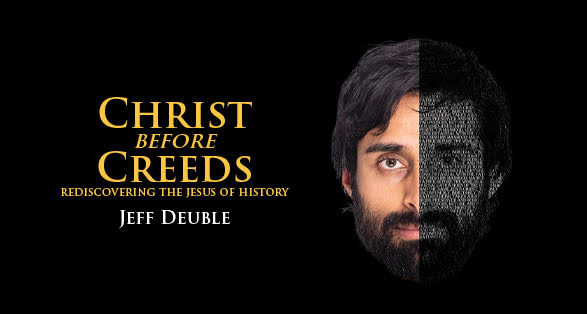
408 Christ before Creeds Book (Jeff Deuble)
Nearly a year ago, I interviewed Pastor Jeff Deuble from Sydney, Australia about his journey of discovering the genuine Jesus of the first century. At the close of that interview, he mentioned that he had written a book that makes a case for his understanding of the biblical Christ. Well, I’m happy to say that this book is now available, published by Living Hope International Ministries. In what follows, I ask Deuble about the content, purpose, and tone of the book. Listen to this episode on Spotify or Apple Podcasts —— Links —— Get your copy of Christ before Creeds on Amazon (USA) or Amazon (Australia) today! Here’s the previous interview with Jeff Deuble from November 2020 Also see the interview I did with his brother, Greg Deuble, back in December of 2018, called They Never Told Me This in Church More podcasts and posts covering biblical monotheism here If you’d like to support Restitutio, you can donate here or designate Restitutio as your charity of choice for Amazon purchases Join our Restitutio Facebook Group and follow us on Twitter @RestitutioSF Leave a voice message via SpeakPipe with questions or comments Intro music: Good Vibes by MBB Attribution-ShareAlike 3.0 Unported (CC BY-SA 3.0) Free Download / Stream: Music promoted by Audio Library

407 Reaching LGBT+ People (Sean Finnegan)
How should those of us committed to a biblical sexual ethic treat those who are same-sex attracted or who identify as the opposite sex? In our polarized world, it seems like only two options are available to us: (1) we accept, approve, and celebrate LGBT+ lifestyles or (2) we deny, denigrate, and dismiss them. Either we reject scripture or reject love. Surely, there must be a better way. Can we show love without compromising our morals? In this episode, we’ll take a look at what the bible says about sexual ethics before asking how we can be like Jesus in loving outsiders without betraying our own code of ethics. Listen to this episode on Spotify or Apple Podcasts —— Links —— For a very helpful book on transgenderism, see Preston Sprinkle’s Embodied: Transgender Identities, the Church, and What the Bible Has to Say. This is the book that contained the story of Leslie that I quoted from in this message. Check out these other podcasts and posts about same-sex attraction Listen to Becket Cook’s interview “A Change of Affection” where he describes his own walk as a Christ-follower with same-sex attraction If you’d like to support Restitutio, you can donate here or designate Restitutio as your charity of choice for Amazon purchases Join our Restitutio Facebook Group and follow us on Twitter @RestitutioSF Leave a voice message via SpeakPipe with questions or comments Intro music: Good Vibes by MBB Attribution-ShareAlike 3.0 Unported (CC BY-SA 3.0) Free Download / Stream: Music promoted by Audio Library
406 Difficult Texts for Annihilationism? (Warren Prestidge)
This is the third and final part of our series on conditional immortality with Warren Prestidge. Although most Christians today believe hell is a place where the dammed suffer eternal conscious torment, the bible teaches that the lost will perish. For example, the most famous verse in the bible says, "For God so loved the world that he gave his one and only son that whoever believes in him would not perish but have eternal life" (John 3.16). Did you see the two options there? On the one hand, those who believe will have eternal life. On the other, those who do not believe will perish. Now, considering that eternal life contrasts with perishing, we shouldn't envisage perishing as also having eternal life, but of a much less pleasant variety. But, if this "annihilationist" perspective is true, then what do you do with the handful of texts that seem to imply that the lost suffer continuous and unending torture? My guest today, once again, is Baptist pastor Warren Prestidge of Auckland, NZ. He will help us work through a few key texts to make sense of everything, including Matthew 25.41, 46; Mark 9.47-48; Revelation 14.11 and 20.10; and Luke 16.19-31 (The Rich Man and Lazarus). What you'll see is how Prestidge's careful reading explains what these verses really mean in their context without reading in medieval assumptions about infernos and torture chambers. Listen to this episode on Spotify or Apple Podcasts —— Links —— Order Prestidge's book: Life, Death, and Destiny (paperback on Amazon, ebook on Lulu, or pdf on Afterlife.co.nz) Many more resources available at The Conditional Immortality Association of New Zealand More episodes about annihilationism If you’d like to support Restitutio, you can donate here or designate Restitutio as your charity of choice for Amazon purchases Join our Restitutio Facebook Group and follow us on Twitter @RestitutioSF Leave a voice message via SpeakPipe with questions or comments Intro music: Good Vibes by MBB Attribution-ShareAlike 3.0 Unported (CC BY-SA 3.0) Free Download / Stream: Music promoted by Audio Library
405 Difficult Texts about the Intermediate State (Warren Prestige)
Last time Warren Prestidge walked us through a case for conditional immortality. Today, we'll delve into some of the key texts that proponents of natural immortality employ to make their case, including these four texts: Luke 23.43; John 14.2-3; 2 Corinthians 5.8; and Philippians 1.23. In each case, Prestidge appeals to the context of the passage and basic logic to make his case. If you've ever wondered about what these verses mean, this episode will equip you to understand them from a conditional immortality perspective. Listen to this episode on Spotify or Apple Podcasts —— Books —— Freeman Barton, Heaven, Hell, and Hades Warren Prestidge, Life Death and Destiny George Carry, I Believe in Man Oscar Cullman, Immortality of the Soul or Resurrection Murray Harris, Raised Immortal Joel Green, What about the Soul Paul Elthouse, The Theology of Martin Luther "Eschatology" in New Bible Dictionary —— Links —— Order Prestidge's book: Life, Death, and Destiny (paperback on Amazon, ebook on Lulu, or pdf on Afterlife.co.nz) Many more resources available at The Conditional Immortality Association of New Zealand More episodes about conditional immortality If you’d like to support Restitutio, you can donate here or designate Restitutio as your charity of choice for Amazon purchases Join our Restitutio Facebook Group and follow us on Twitter @RestitutioSF Leave a voice message via SpeakPipe with questions or comments Intro music: Good Vibes by MBB Attribution-ShareAlike 3.0 Unported (CC BY-SA 3.0) Free Download / Stream: Music promoted by Audio Library
404 What Is Conditional Immortality? (Warren Prestige)
What happens when you die? This is such a big question for all of us. Do we go somewhere like heaven or hell? Do we stay on earth as a disembodied spirit? Or are we unconscious? My guest today is Warren Prestidge of New Zealand, who contends that we should embrace the biblical language of the sleep of the dead. The idea--often called conditional immortality--is that immortality is not automatic or innate, but conditioned on resurrection. Prestidge is a retired Baptist pastor, living in Auckland, NZ. He has degrees in English and Theology. As well as pastoring churches in Auckland for over 30 years, he has lectured at the Bible College of NZ and Tyndale College. He has also served as a pastor in UK and, for two years, as a Bible college director in the Philippines. He has been married for over 50 years and has three sons and six grandchildren. He continues to preach and also to work with the Conditional Immortality Association of NZ. He has had an impact on me through his book, Life, Death and Destiny, which both lays out a biblical case for the sleep of the dead and offers solid explanations for confusing texts. Listen to this episode on Spotify or Apple Podcasts —— Links —— Order Prestidge's book: Life, Death, and Destiny (paperback on Amazon, ebook on Lulu, or pdf on Afterlife.co.nz) Many more resources available at The Conditional Immortality Association of New Zealand More episodes about conditional immortality If you’d like to support Restitutio, you can donate here or designate Restitutio as your charity of choice for Amazon purchases Join our Restitutio Facebook Group and follow us on Twitter @RestitutioSF Leave a voice message via SpeakPipe with questions or comments Intro music: Good Vibes by MBB Attribution-ShareAlike 3.0 Unported (CC BY-SA 3.0) Free Download / Stream: Music promoted by Audio Library
403 Why Christianity 16: Changed Lives (Sean Finnegan)
This is the last episode of our class, Why Christianity. We've covered so many different reasons why Christianity is attractive, makes sense, and is worthy of our attention. We've looked at scientific, logical, epistemological, social, psychological, and historical reasons for God's existence, Christ's resurrection, and the gospel's effectiveness. Today, we consider three stories of changed lives. The proof, they say, is in the pudding. Can Christianity deliver healing, forgiveness, and purpose for real people in our world today? What about people who are deeply entrenched in atheism, partying, or gay activism? Listen to this episode on Spotify or Apple Podcasts This is part 16 of the Why Christianity class. https://youtu.be/iCxsuTKrKB4 —— Links —— See other episodes of Why Christianity More episodes about defending your faith here Join our Restitutio Facebook Group and follow us on Twitter @RestitutioSF If you’d like to support Restitutio, you can donate here or designate Restitutio as your charity of choice for Amazon purchases Leave a voice message via SpeakPipe with questions or comments Intro music: Good Vibes by MBB Attribution-ShareAlike 3.0 Unported (CC BY-SA 3.0) Free Download / Stream: Music promoted by Audio Library —— Notes —— God Has Power to Change Lives- Titus 3:3-7- sometimes our faith is too little- we are too easily intimidated Lee Strobel- 1 Peter 3:1-2- 1 Corinthians 7:13-16 - Case for Christ: A Journalist's Personal Investigation of the Evidence for Jesus- both a book and a movie Brian Welch- lead guitarist for Korn- Matthew 11:28-30- Save Me from Myself: How I Found God, Quit Korn, Kicked Drugs, and Lived to Tell My Story David Bennett- A War of Loves: The Unexpected Story of a Gay Activist Discovering Jesus- David recounts his dramatic story, from his early years exploring new age religions and French existentialism to his university experiences as an activist. Following supernatural encounters with God, he embarked on a journey not only of seeking to reconcile his faith and sexuality but also of discovering the higher call of Jesus Christ.
402 Why Christianity 15: Jesus the Revolutionary (Daniel Fitzsimmons)
Although many throughout the Western world are quick to criticize Christianity, Jesus remains well-liked. In fact, one of the most obvious answers to the question, “Why Christianity?” is “Jesus.” To this day, reading the Gospels draws the reader to Jesus’ magnetic and compelling way of life. What’s more, the less satisfied we are with our own society, the more we find ourselves drawn to counter-cultural forces. Jesus of Nazareth is just such a person. He spoke truth to power and challenged the religious status quo of his own day. He remains counter-cultural, and this just may be a strong reason for unbelievers to consider him today. Listen to this episode on Spotify or Apple Podcasts This is part 15 of the Why Christianity class. —— Links —— See other episodes of Why Christianity More episodes about defending your faith here More with Daniel Fitzsimmons Join our Restitutio Facebook Group and follow us on Twitter @RestitutioSF If you’d like to support Restitutio, you can donate here or designate Restitutio as your charity of choice for Amazon purchases Leave a voice message via SpeakPipe with questions or comments Intro music: Good Vibes by MBB Attribution-ShareAlike 3.0 Unported (CC BY-SA 3.0) Free Download / Stream: Music promoted by Audio Library —— Notes —— • Countercultural forces and revolutions appeal to people because they’re different than what has been done or experienced before. • Rejection by the established political and cultural norms can greatly heighten that appeal. • True countercultural forces/revolution substantially affect culture going forward. • Countercultural forces are often co-opted, first through mainstream acceptance, then by assimilation and appropriation. • Jesus Christ’s ministry was revolutionary and counter-cultural, as evidenced by his radical message, rejection and ultimate execution by those in power. • We are to live as examples of Jesus to a desperate and dying world, presenting the message of the gospel as the true alternative to other life-defining – yet ultimately empty – belief systems.

401 Why Christianity 14: Hypocrisy and Community (Daniel Fitzsimmons)
Community is so important. As so many continue to struggle with the ache of loneliness, anxiety about social encounters, and the gnawing pain of depression, we who belong to Christian communities have a huge opportunity and obligation to invite outsiders in, provide them a taste of God’s goodness, and welcome them with a spirit of genuine hospitality. However, as soon as you begin reaching out to friends, coworkers, and neighbors, you may encounter a flurry of criticisms about Christianity. “What about the crusades and the Spanish inquisition?” they may ask. Or perhaps they’ll ask about pedophilia among priests or greedy mega pastors with private jets and multi-million dollar houses. What can you say when these issues come up? In this episode Daniel Fitzsimmons shares a about answering charges of hypocrisy as well as what authentic Christian community looks like. Listen to this episode on Spotify or Apple Podcasts This is part 14 of the Why Christianity class. —— Links —— See other episodes of Why Christianity More episodes about defending your faith here More with Daniel Fitzsimmons Join our Restitutio Facebook Group and follow us on Twitter @RestitutioSF If you’d like to support Restitutio, you can donate here or designate Restitutio as your charity of choice for Amazon purchases Leave a voice message via SpeakPipe with questions or comments Intro music: Good Vibes by MBB Attribution-ShareAlike 3.0 Unported (CC BY-SA 3.0) Free Download / Stream: Music promoted by Audio Library —— Notes —— • Evil that is perpetrated by so-called Christians or in the name of Christianity is a reality that must be acknowledged and addressed. • God hates hypocrisy (1 John 4:20; James 1:22-25; 1 John 2:1-6) • There are many examples, both ancient and recent, of Christ-followers embodying his teachings of radical love, self-sacrifice, service and forgiveness. • The best example of what a Christian community looks like should be the one you set within your own community. People who are skeptical about the Christian faith will be persuaded more by how you treat those around you and in your church community than by rote recitation of the gospel message alone. • There are copious opportunities to live out Christ’s teachings within your church and community. • The defining characteristic of an authentic Christian community is love.

400 Why Christianity 13: The Heart (Sean Finnegan)
What is the proper role of your emotions? Should you trust them? How do you know when they are helping and when they are hurting? Today we'll take a look at another exciting advantage that Christianity provides. In this episode, you'll learn about the problems endemic to emotional reasoning, the robust biblical teaching about your heart, and how God provides us away to exercise self-control. Even if these are not new concepts, I believe they provide fresh insights in our emotionally fraught time while helping us to lead better lives. Listen to this episode on Spotify or Apple Podcasts This is part 13 of the Why Christianity class. https://youtu.be/M_6CuLEOTsM —— Links —— More information about KingdomFest (Sep 24-26, 2021) See other episodes of Why Christianity More episodes about defending your faith here Join our Restitutio Facebook Group and follow us on Twitter @RestitutioSF If you’d like to support Restitutio, you can donate here or designate Restitutio as your charity of choice for Amazon purchases Leave a voice message via SpeakPipe with questions or comments Intro music: Good Vibes by MBB Attribution-ShareAlike 3.0 Unported (CC BY-SA 3.0) Free Download / Stream: Music promoted by Audio Library —— Notes —— Cognitive Distortions----------------------- Emotional Reasoning- Catastrophizing- Overgeneralization- Dichotomous Thinking- Mind Reading- Labeling- Negative Filtering- Discounting Positives- Blaming Biblical View of the Heart---------------------------- The problem is worse than you think (Jeremiah 17.9; Mark 7.21-23)- We are the problem- Yet, God has provided a comprehensive solution both now and in the age to come Good News-----------1. New Birth- admit you are lost, believe in Christ’s death for you, accept God’s gift of salvation, repent, enter into covenant- he’ll give you a new heart (Ps. 51.1-2, 10)- regeneration via the spirit (Titus 3.3-7) 2. Sanctification- enkrateia ἐγκράτεια = “restraint of one’s emotions, impulses or desires, self-control” (BDAG); Proverbs 16.32; 12.16- God will help us through his spirit- (Proverbs 3.5-6; Galatians 5.16-23)- Jesus is our example (1 Peter 2.21-23)- ultimately we will benefit from a heart transplant (Ezekiel 36.24-28)

399 Why Christianity 12: Inclusiveness (Sean Finnegan)
One of the most enduring problems we have faced throughout human history is tribalism. From the Nazis to the Rwandan genocide, we’ve repeatedly seen the devastating results of group think and dehumanizing outsiders. Although some Christian groups have tragically fallen into this sin, we don’t have to. Christianity provides a better way. We can draw upon our roots in scripture to live out a faith that recognizes insiders from outsiders while simultaneously inviting outsiders to become insiders. Rather than excluding and shunning those who are different, we are called to love them and invite them in. Listen to this episode on Spotify or Apple Podcasts This is part 12 of the Why Christianity class. —— Links —— See other episodes of Why Christianity More episodes about defending your faith here Join our Restitutio Facebook Group and follow us on Twitter @RestitutioSF If you’d like to support Restitutio, you can donate here or designate Restitutio as your charity of choice for Amazon purchases Leave a voice message via SpeakPipe with questions or comments Intro music: Good Vibes by MBB Attribution-ShareAlike 3.0 Unported (CC BY-SA 3.0) Free Download / Stream: Music promoted by Audio Library —— Notes —— Racial Inclusion —————– – glimpses in the Old Testament. Jethro, Rahab, Ruth, Jonah – Philip in Samaria – Philip with Ethiopian treasurer – Peter with Cornelius the Roman soldier – Antioch (Acts 11.19-26) – Barnabas and Paul’s missionary journey – the Jerusalem council – Paul’s 2nd and 3rd missionary journeys – see also Eph 2.11-16 and Rev 5.9-10 Gender Inclusion —————– – in a.d. 177, Celsus criticized Christianity, “It is only foolish and low individuals, and persons devoid of perception, and slaves, and women, and children, of whom the teachers of the divine word wish to make converts” (Origen, Contra Celsum 49) – Galatians 3.27-29 How to Treat Outsiders ———————– – love your neighbor as yourself – love your enemies – 1 Peter 2.11-15; 3.14-16; 4.12-16 – listen and be humble (Acts 17.11) – invite them to follow Christ (Luke 9.23-24) – if ANYONE will put Jesus first…then she or he is welcome to follow him – once God and his son begin to live in someone through the spirit, they will change him/her (sanctification)
398 Why Christianity 11: Christian Identity (Jerry Wierwille)
Who are you and why does your life matter? These two piercing questions get to the heart of your identity. Our society in the West has increasingly embraced an internally discovered identity on the basis of individual passions. Such expressive individualism is exciting to live out, especially if those around you push back, however, the resulting identity is both fragile and abrasive. In contrast, the Christian identity begins with a surrender and an acceptance of who God says you are. This received identity is both more durable and more loving. Listen to this episode on Spotify or Apple Podcasts This is part 11 of the Why Christianity class. https://www.youtube.com/watch?v=KEEoHr42eGk —— Links —— See other episodes of Why Christianity More episodes about defending your faith here Join our Restitutio Facebook Group and follow us on Twitter @RestitutioSF If you’d like to support Restitutio, you can donate here or designate Restitutio as your charity of choice for Amazon purchases Leave a voice message via SpeakPipe with questions or comments Intro music: Good Vibes by MBB Attribution-ShareAlike 3.0 Unported (CC BY-SA 3.0) Free Download / Stream: Music promoted by Audio Library —— Notes —— Identity--------Sense of self—who are you and your understanding of yourself in relation to your family, friends, society, and the world. Sense of worth—your assessment of your personal value in life. Individualism--------------Expressive Individualism—a desire to pursue one’s own path but also a yearning for fulfillment through the definition and articulation of one’s own identity. It is a drive both to be more like whatever you already are and also to live in society by fully asserting who you are. • You be you; Be true to yourself• Follow your heart; Find yourself Christian Identity------------------Not outward or inward, but upward. Grounded in the immutability, the unconditional love, and the faithfulness of God. A secure sense of worth and value that is not dependent upon anything but God alone.

397 Why Christianity 10: Suffering and Evil (Jerry Wierwille)
Let's face it, suffering is a major problem for those of us who believe in a good and powerful God. How do you answer skeptics who challenge your belief in God because of the gratuitous suffering endemic in human history? In this episode we'll explore some answers to this question offered by several worldviews before looking at how the Christian metanarrative offers hope. Listen to this episode on Spotify or Apple Podcasts This is part 10 of the Why Christianity class. https://youtu.be/Lu-TyjXB-Nc —— Links —— More podcasts about suffering and evil See other episodes of Why Christianity More episodes about defending your faith here Join our Restitutio Facebook Group and follow us on Twitter @RestitutioSF If you’d like to support Restitutio, you can donate here or designate Restitutio as your charity of choice for Amazon purchases Leave a voice message via SpeakPipe with questions or comments Intro music: Good Vibes by MBB Attribution-ShareAlike 3.0 Unported (CC BY-SA 3.0) Free Download / Stream: Music promoted by Audio Library —— Notes —— Suffering---------Natural Evil—suffering that is caused by impersonal agents (e.g., hurricanes, famine, fires, illness, etc). Moral Evil—suffering that is caused by personal agents (e.g., murder, rape, torture, theft, slander, etc). The BIG Questions1) Why me?2) Where’s God?3) What does it mean? How do the 3 major categories of metanarrative answer these questions? Tri-Lemma----------• Is evil, evil?• Is God all good?• Is God all powerful?• Evil exists• God is omnibenevolent• God is omnipotent Critics: “Which of these do YOU deny?” Response: “How are they all true?”
396 Why Christianity 9: Christian Freedom and Morality (Sean Finnegan)
Freedom and morality are two interrelated concepts that everyone has an opinion about. From a Christian perspective, we limit our freedom based on our received moral code. We believe that the restrictions the bible provides us are for our good; They are not the result of a capricious deity's arbitrary or stifling whims. In fact, we believe that the limits God places on our freedom lead to the best human flourishing available in our fallen world. After thinking through Christian freedom, we'll delve into the much more important question of moral motivation. Most people believe in right and wrong, but many of us lack the drive to chose the good over the convenient or self-serving course of action. In this episode we'll survey some of the popular moral systems out there, including classic systems such as virtue ethics, categorical imperatives, and utilitarianism as well as religious systems, including Hinduism, Buddhism, Islam, and Christianity. Although we'll only scratch the surface, I hope you will find this approach useful when conversing with people who call into question your Christian moral commitments. Listen to this episode on Spotify or Apple Podcasts This is part 9 of the Why Christianity class. https://www.youtube.com/watch?v=8D8wiyxxJOw —— Links —— More podcasts about Christian ethics See other episodes of Why Christianity More episodes about defending your faith here Join our Restitutio Facebook Group and follow us on Twitter @RestitutioSF If you’d like to support Restitutio, you can donate here or designate Restitutio as your charity of choice for Amazon purchases Leave a voice message via SpeakPipe with questions or comments Intro music: Good Vibes by MBB Attribution-ShareAlike 3.0 Unported (CC BY-SA 3.0) Free Download / Stream: Music promoted by Audio Library —— Notes —— Jesus Explains Morality------------------------Mark 12:29-3129 Jesus answered, "The most important is, 'Hear, O Israel: The Lord our God, the Lord is one. 30 And you shall love the Lord your God with all your heart and with all your soul and with all your mind and with all your strength.' 31 The second is this: 'You shall love your neighbor as yourself.' There is no other commandment greater than these." 5 Biblical Reasons To Do the Right Thing----------------------------------------1. fear of God (Deuteronomy 6:1-2)2. duty (Ecclesiastes 12:13; Luke 17:10)3. personal/communal benefits/detriments (Psalm 7:14-16; Galatians 6:7-8)4. love (1 John 4:9-11)5. prophetic witness (1 Corinthians 6:1-3) Other Worldviews-----------------1. Atheisma. Virtue Ethicsb. Deontological Ethicsc. Teleological Ethics 2. Hinduisma. karma, rebirth 3. Buddhisma. life is suffering, eliminate desires 4. Islama. five pillarsb. Yawm al-Qiyamah

395 Why Christianity 8: Metanarrative 2 (Jerry Wierwille)
Listen to this episode on Spotify or Apple Podcasts This is part 8 of the Why Christianity class. Last time we delved into the first two components of scripture's overarching story line: creation and fall. These two explain where the world came from and what went wrong with it. Today we'll consider the last two components: redemption and restoration. These two tell us what God has done about the problems of our world already and what he yet plans to do in the future. Taken together, these four elements of the Christian metanarrative provide a robust explanation that not only makes sense of the human experience, but also gives us purpose and hope. https://youtu.be/HxVEkcyeuAQ —— Links —— More podcasts with Jerry Wierwille See other episodes of Why Christianity More episodes about defending your faith here Join our Restitutio Facebook Group and follow us on Twitter @RestitutioSF If you’d like to support Restitutio, you can donate here or designate Restitutio as your charity of choice for Amazon purchases Leave a voice message via SpeakPipe with questions or comments Intro music: Good Vibes by MBB Attribution-ShareAlike 3.0 Unported (CC BY-SA 3.0) Free Download / Stream: Music promoted by Audio Library —— Notes —— Redemption-----------Redemption – Greek apolutrōsis, meaning “to release,” connoting the deliverance effected through the death of Christ from the retributive wrath of God and the merited penalty of sin. Eph 1:17—“In whom we have redemption through his blood, the forgiveness of our transgressions, according to the riches of his grace” Rom 8:24—“Now in this hope we were saved, yet hope that is seen is not hope, because who hopes for what he sees?” Restoration-----------Restoration – Greek apokatastasis, meaning “to return to a previous good state,” connoting the restoring of what was once good but has since been altered. Acts 3:21—“Therefore, repent and turn to God, so that your sins may be erased; so that times of refreshing may come from the Lord's presence; and he may send the Messiah appointed in advance for you, that is, Jesus. He has to remain in heaven until the time comes for restoring everything, as God said long ago, when he spoke through the holy prophets.”

394 Why Christianity 7: Metanarrative 1 (Daniel Fitzsimmons)
Listen to this episode on Spotify or Apple Podcasts This is part 7 of the Why Christianity class. So far in this class we have stuck to classic apologetics topics like reasons for God’s existence, the historicity of the resurrection, and the rationality of Christian epistemology. Now we are going to shift gears and do some work on worldview. One of the reasons Christianity appeals to someone is how it “works.” In other words, from inside a Christian worldview life makes sense. We understand where the world came from, how it got corrupted, what God has already done to remedy the situation, and what he still plans to do in the future. This four stage metanarrative provides us with a framework to understand not only history, but also our place in the world. Today we’ll focus on just the first half of the biblical metanarrative (creation and fall) and next time we’ll cover the second half (redemption and restoration). —— Links —— More podcasts with Daniel Fitzsimmons See other episodes of Why Christianity More episodes about defending your faith here Join our Restitutio Facebook Group and follow us on Twitter @RestitutioSF If you’d like to support Restitutio, you can donate here or designate Restitutio as your charity of choice for Amazon purchases Leave a voice message via SpeakPipe with questions or comments Intro music: Good Vibes by MBB Attribution-ShareAlike 3.0 Unported (CC BY-SA 3.0) Free Download / Stream: Music promoted by Audio Library —— Notes —— What Are Metanarratives? ————————- An overarching story or storyline that gives context, meaning, and purpose to all of life; a worldview Examples of metanarratives, or the “-isms” —————————————— • Marxism, capitalism, nihilism, atheism, agnosticism, enlightenment & scientism • Religions: Christianity, Buddhism, Islam etc… Why are metanarratives useful? —————————— • Give structure to our existence • Give meaning and purpose to our lives • Help explain why things are the way they are, provide a lens through which to view and interpret the world • Metanarratives are comforting and allow us to think about other things besides the ostensible mystery of our existence What is the Christian metanarrative? ————————————- • God created the world and all that is within it • God’s original design was that we be together in paradise, living in harmony with Him, the land and the animals • Through original sin – the fall – both man and earth became corrupted • The consequences of sin endure to this day and created the need for redemption
393 Why Christianity 6: The Origin and Authority of the Bible (Jerry Wierwille)
Listen to this episode on Spotify or Apple Podcasts This is part 6 of the Why Christianity class. The Bible is such a strange thing. On the one hand, it looks like a big book, on the other hand, it’s a library of books. It’s loaded with very different kinds of literature from poetry and wisdom to history and prophecy. Dozens of people were involved in it’s production over centuries…and most important of all, it claims that the creator God inspired it all! In this presentation, Jerry Wierwille briefly covers what the Bible is, how Christians decided which books belong in it, how we transmitted it over the eons, and why other collections of books like the Apocrypha, Psuedepigrapha, and Gnostic Gospels didn’t pass muster. —— Links —— See other episodes of Why Christianity More episodes about defending your faith here Join our Restitutio Facebook Group and follow us on Twitter @RestitutioSF If you’d like to support Restitutio, you can donate here or designate Restitutio as your charity of choice for Amazon purchases Leave a voice message via SpeakPipe with questions or comments Intro music: Good Vibes by MBB Attribution-ShareAlike 3.0 Unported (CC BY-SA 3.0) Free Download / Stream: Music promoted by Audio Library —— Notes —— How We Got the Bible ——————— Bible – from Greek biblia, meaning “books,” and then from the Latin biblia, meaning “book.” The Bible refers to the collection of sacred writings of the Christian Faith. Canon – from Greek kanōn, meaning “a rule or standard.” A canon refers to an authoritative list of books accepted as Holy Scripture. Criteria for Canonicity 1) Apostolicity 2) Orthodoxy 3) Catholicity Inspiration – from Greek theopneustos, meaning “God-breathed.” It refers to the origin and character of a writing as being authored by and produced according to God’s will. Supposed “Lost Books” of the Bible ———————————– Apocrypha – from Greek apokryphos meaning “hidden, concealed, obscure.” It refers to a body of writings that are considered noncanonical. Pseudepigrapha – writings with anonymous authorship that are falsely attributed to other individuals.
392 Why Christianity 5: The Resurrection of Jesus Happened (Sean Finnegan)
Listen to this episode on Spotify or Apple Podcasts This is part 5 of the Why Christianity class. How would you go about convincing someone that the resurrection of Jesus actually happened? Now, what if that person didn't recognize the scriptures as inspired by God. How would you go about making a case for Jesus' resurrection in that kind of scenario? In this presentation, you learn four key pieces of historical evidence for the resurrection of Jesus, including (1) the honorable burial, (2) the empty tomb, (3) appearances, and (4) resurrection belief. You'll also become familiar with competing theories and how to respond to them. https://www.youtube.com/watch?v=Uax_VwrUS94 —— Links —— See other episodes of Why Christianity More episodes about defending your faith here Join our Restitutio Facebook Group and follow us on Twitter @RestitutioSF If you’d like to support Restitutio, you can donate here or designate Restitutio as your charity of choice for Amazon purchases Leave a voice message via SpeakPipe with questions or comments Intro music: Good Vibes by MBB Attribution-ShareAlike 3.0 Unported (CC BY-SA 3.0) Free Download / Stream: Music promoted by Audio Library —— Notes —— Honorable Burial-----------------1. multiple, early, independent sources say he was buried in a known marked tomb (1 Cor. 15.4, Mark 15.46, John 19.42) 2. Joseph of Arimathea is unlikely to be a Christian invention since he is not one of the disciples, but a member of the Sanhedrin, the very body that condemned Jesus3. no competing burial story exists (even enemies never claimed a common grave or that Joseph’s grave was inaccurate) Empty Tomb-----------1. several independent sources attest to empty tomb (Mark 16.6, Luke 24.5/Acts 13.29-31, John 20.2)2. a movement founded on Jesus’ resurrection could not get far if his body was still in a known tomb…otherwise early opponents could just bring Jesus’ corpse out disproving resurrection3. that women first discovered the empty tomb is unlikely a Christian invention since Josephus tells us women weren’t even allowed to serve as legal witnesses in a court of law4. the Gospels lack marks of legendary development and theologizing in the resurrection narratives (cp. to Gospel of Peter)5. the earliest Jewish polemic, “His disciples came by night and stole him away while we were asleep” (Matthew 28.13) presupposes an empty tomb Appearances-----------1. the early creed of 1 Cor. 15.3-7 contains a list of eyewitnesses2. the Gospel appearance narratives contain earmarks of eyewitness testimony and their divergences exclude the possibility of collusion3. that the disciples failed to anticipate or believe in Jesus’ resurrection even after they found out about the empty tomb is unlikely to be a Christian invention4. James & Paul both did not believe in Jesus as Messiah, but became leaders in the church after they claimed they saw him Resurrection Belief--------------------1. belief that God raised Jesus from the dead is unlikely to be a Chr

391 Why Christianity 4: Believing in God Is Not Stupid (Jerry Wierwille)
Listen to this episode on Spotify or Apple Podcasts This is part 4 of the Why Christianity class. Is Christianity irrational? Is believing in God intellectually vacuous? Jerry Wierwille will address the criticism of skeptics that Christian belief is arrogant, unjustified, and irrational. Next, he'll describe the popular secular belief in scientism before exposing its deleterious effects. —— Links —— See other episodes of Why Christianity More episodes about defending your faith here Join our Restitutio Facebook Group and follow us on Twitter @RestitutioSF If you’d like to support Restitutio, you can donate here Leave a voice message via SpeakPipe with questions or comments Intro music: Good Vibes by MBB Attribution-ShareAlike 3.0 Unported (CC BY-SA 3.0) Free Download / Stream: Music promoted by Audio Library —— Notes —— Arrogant, Unjustified, & Irrational?-------------------------------------Justified – a belief is justified if after careful reflection and investigation of a matter, including objections and counter-arguments, it is still found to be strongly compelling.Rational – a belief is rational if it is produced by cognitive faculties that are functioning properly and successfully aimed at discovering what is true.Warrant – a belief is warranted if it is produced by cognitive faculties that are functioning properly in an appropriate framework of knowledge according to a design plan successfully aimed at discovering what is true.Science & Scientism---------------------Science – the investigation and study of the structure and behavior of the physical world through observation and experimentation.Scientism – the belief that science alone has the intellectual authority to give us knowledge of reality.

390 Why Christianity 3: God Is Real (Sean Finnegan)
Listen to this episode on Spotify or Apple Podcasts This is part 3 of the Why Christianity class. How do you know God is real? What sorts of evidence would you marshal to make a case for God’s existence? It won’t do to tell skeptics you believe in God because you’ve always believed in him, because you were raised to believe in him, or because the Bible says so. In this episode you’ll learn six main lines of evidence for God’s existence to equip you to have meaningful conversations with your secular friends, coworkers, and relatives. —— Links —— See other episodes of Why Christianity More episodes about defending your faith here Join our Restitutio Facebook Group and follow us on Twitter @RestitutioSF If you’d like to support Restitutio, you can donate here Leave a voice message via SpeakPipe with questions or comments Intro music: Good Vibes by MBB Attribution-ShareAlike 3.0 Unported (CC BY-SA 3.0) Free Download / Stream: Music promoted by Audio Library —— Notes —— Objective: to provide six reasons to believe in God and marvel at that God’s attributes. 1 The Beginning of the Universe ——————————– 1. everything that has a beginning has cause of its beginning 2. the universe has a beginning 3. therefore, the universe has an external cause of its beginning 2 Fine-Tuning for Life ———————– 1. our universe is finely-tuned for the existence of complex life 2. fine-tuning is not the result of physical laws 3. therefore, a super-natural fine-tuner exists 3 DNA Code ———– 1. all languages come from a mind not natural processes 2. DNA is a language 3. all biological life requires DNA to exist 4. therefore, a non-biological DNA designer exists 4 Moral Absolutes —————– 1. moral absolutes exist (i.e. torturing children for the fun of it is always wrong) 2. nature, society, and individuals do not supply moral absolutes 3. therefore, a supernatural source for moral absolutes exists 5 Miracles ———- 1. miracles are events in which the laws of nature are interrupted by an agent outside of the natural realm 2. documented miracles have happened 3. therefore, a miracle causer exists 6 Personal Experience ———————- 1. I’ve experienced God 2. therefore, God exists

389 Why Christianity 2: Lay of the Land (Sean Finnegan)
Listen to this episode on Spotify or Apple Podcasts This is part 2 of the Why Christianity class. It’s so easy to universalize our own local context. For example, I (Sean) live in a secular, post-Catholic part of New York state. It would be easy for me to think that most of the state or country or world is just like my area. However, this ethnocentric perspective will not do justice to the data we have about Christians in the world today. Sociologists have long held to the “secularization thesis”–the idea that world religions die out as societies improved education, technology, and health-care. Is this what we see happening globally? Join me in this episode as we explore the data from a number of sources to get a lay of the land. How popular is Christianity today? —— Links —— See other episodes of Why Christianity More episodes about defending your faith here Join our Restitutio Facebook Group and follow us on Twitter @RestitutioSF If you’d like to support Restitutio, you can donate here Leave a voice message via SpeakPipe with questions or comments Intro music: Good Vibes by MBB Attribution-ShareAlike 3.0 Unported (CC BY-SA 3.0) Free Download / Stream: Music promoted by Audio Library —— Notes —— Objective: to understand the local and global religious landscapes in light of Christianity’s popularity and its claims about Christ’s universal supremacy. Secularization Thesis “The seminal social thinkers of the nineteenth century—Auguste Comte, Herbert Spencer, Émile Durkheim, Max Weber, Karl Marx, and Sigmund Freud—all believed that religion would gradually fade in importance and cease to be significant with the advent of industrial society.” -Pippa Norris and Ronald Inglehart, Sacred and Secular, p. 3. Future Projections Religion, especially Christianity, Islam, and Hinduism, is expected to either keep pace with population growth or surpass it while non-religious ideologies are predicted to fall 3% by 2050. Universal Claims about Christ Scriptures that make big claims about Christ’s cosmic importance: – Colossians 1:19-20; 2:1-3 – Ephesians 1:9-10 – Philippians 2:9-11 Christianity’s geographic distribution testifies to its transnational, transracial, transcultural appeal.

388 Why Christianity 1: Introduction (Jerry Wierwille)
Listen to this episode on Spotify or Apple Podcasts This is part 1 of the Why Christianity class. In a culture where biblical Christianity is falling more and more out of fashion, it’s increasingly important to have confidence in your faith. Today we are beginning a class called Why Christianity, in which we will lay out a few of the ways that our faith makes sense and works best. In this first session, Jerry Wierwille will introduce our class premise, describe the cultural tension, and speak on the value of taking this class. Although this is an apologetics class, it is significantly different from the previous class we aired starting with Podcast 50 (back in 2016) though there will be some overlap. Our end goal for this class is that it would build your confidence and encourage you to share your faith with others. —— Links —— More episodes about defending your faith here Check out these other podcasts with Jerry Wierwille For more about Wierwille, see his site: JerryWierwille.com Join our Restitutio Facebook Group and follow us on Twitter @RestitutioSF If you’d like to support Restitutio, you can donate here Leave a voice message via SpeakPipe with questions or comments Intro music: Good Vibes by MBB Attribution-ShareAlike 3.0 Unported (CC BY-SA 3.0) Free Download / Stream: Music promoted by Audio Library —— Notes —— Class Premise Worldview: A worldview is a set of beliefs about fundamental aspects of reality that ground and influence all of a person’s perceptions, thoughts, knowledge, and behavior. Correspondence Theory of Truth: The view that what is “true” is that which corresponds to, or with, reality (i.e., “what is”). Worldviews are not equal, e.g., religion, science, philosophy Cultural Tension Cultural Polarization: The differences in how people think, especially when two views emerge that drive people apart. Religious Privatization: When people no longer feel comfortable or accepted to discuss or express religious attitudes or behaviors in public. Purpose and Value of This Class Gain a better understanding of the coherence and validity of the Christian worldview. Become more confident and bolder about your faith and the reasons why Christianity is awesome.
387 God Is Enough (Sean Finnegan)
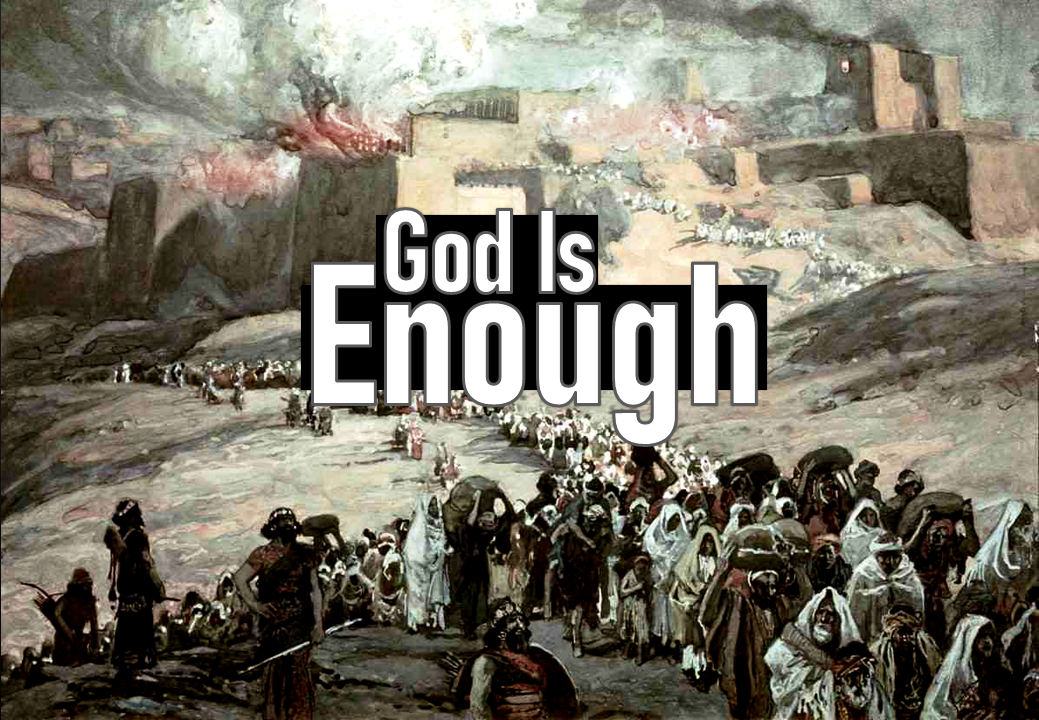
What do you do when everything is stripped away? You find out who you really are. In this sermon you'll see what happened in ancient Judah when the Babylonians besieged Jerusalem, ultimately resulting in utter destruction, humiliating shame, and forcible deportation. Although our times today can't really compare to the level of suffering these people went through, their experience has much to teach us about hope in dark times. I pray that as you consider this traumatic episode in biblical history that you too would learn to say when you go through suffering, "God is enough." —— Links —— More episodes about suffering here. If you’d like to support Restitutio, you can donate here. Leave a voice message via SpeakPipe with questions or comments Intro music: Good Vibes by MBB Attribution-ShareAlike 3.0 Unported (CC BY-SA 3.0) Free Download / Stream: Music promoted by Audio Library —— Notes —— Jehoiachin - reigned 3 months- did evil before God- surrendered to Neb. after siege- thousands deported 2Ki 24.13-14 13 He carried out from there all the treasures of the house of the LORD, and the treasures of the king's house, and cut in pieces all the vessels of gold which Solomon king of Israel had made in the temple of the LORD, just as the LORD had said. 14 Then he led away into exile all Jerusalem and all the captains and all the mighty men of valor, ten thousand captives, and all the craftsmen and the smiths. None remained except the poorest people of the land. Zedekiah - reigned 11 years- did evil before God- rebelled against Babylon- city besieged again- as Babylonians swept through countryside on way to Jerusalem, - lodging would become difficult- surround city w/ army 2Ki 25.1 Now in the ninth year of his reign, on the tenth day of the tenth month, Nebuchadnezzar king of Babylon came, he and all his army, against Jerusalem, camped against it and built a siege wall all around it. - Jerusalem was fortunate- fuel to cook food- disease Lam 5.9-10 9 We get our bread at the risk of our lives Because of the sword in the wilderness. 10 Our skin has become as hot as an oven, Because of the burning heat of famine. - food Lam 1.11 All her people groan seeking bread; They have given their precious things for food To restore their lives themselves. "See, O LORD, and look, For I am despised." Lam 2.11-12 11 My eyes fail because of tears, My spirit is greatly troubled; My heart is poured out on the earth Because of the destruction of the daughter of my people, When little ones and infants faint In the streets of the city. 12 They say to their mothers, "Where is grain and wine?" As they faint like a wounded man In the streets of the city, As their life is poured out On their mothers' bosom. - corpses- 18 months! 2Ki 25.1-3 1 Now in the ninth year of his reign, on the tenth day of the tenth month, Nebuchadnezzar king of Babylon came, he and all his army, against Jerusalem, camped against it and built a siege wall all around it. 2 So the city was under siege until the eleventh year of King Zedekiah. 3 On the ninth day of the fourth month the famine was so severe in the city that there was no food for the people of the land. Lam 4.8-10 8 Their appearance is blacker than soot, They are not recognized in the streets; Their skin is shriveled on their bones, It is withered, it has become like wood. 9 Better are those slain with the sword Than t
386 Christian Giving Today (Will Barlow)
This is part three of our Biblical Giving Series. In this third and final interview with Will Barlow, we'll spend some focused time looking at Malachi 3 to understand what this passage meant in it's original context and how it relates to us today. Next we'll take a look at three myths about Christian giving: 1. Christians are in debt to God. 2. Christians must pay for God’s protection. 3. The gifts of God can be purchased with money. Lastly, Barlow will share four keys to Christian giving: Everything that we have, from our finances to our abilities, are God’s. We are only giving back to God what we have from Him. When we give financially, let’s keep in mind the biblical precedent for giving: to support ministers, to support missions work, and to help the poor or those in need (especially among believers). As we follow Jesus and the examples of other faithful disciples in the NT, we will develop an attitude of service, which fuels the amount given. God works in the financial category to teach us about how to walk with Him. —— Links —— Find out more about Will Barlow on his ministry website: Study Driven Faith Check out these other episodes and posts about giving, especially A Biblical Theology of Finance (Craig Blomberg) If you’d like to support Restitutio, you can donate here. Leave a voice message via SpeakPipe with questions or comments Intro music: Good Vibes by MBB Attribution-ShareAlike 3.0 Unported (CC BY-SA 3.0) Free Download / Stream: Music promoted by Audio Library
385 Giving in the New Testament (Will Barlow)
This is part two of our Biblical Giving Series. Today Will Barlow continues to lay out a comprehensive biblical theology of giving. First he looks at three areas of continuity between the Old and New Testaments: regarding ourselves as stewards of God's wealth giving to the poor giving to ministers Next, Barlow explains three ways in which the New Testament diverges from the Old Testament: no more sacrifices greater emphasis on freewill giving the need for wealthy believers to give liberally —— Links —— Find out more about Will Barlow on his ministry website: Study Driven Faith Check out these other episodes and posts about giving, especially A Biblical Theology of Finance (Craig Blomberg) If you’d like to support Restitutio, you can donate here. Leave a voice message via SpeakPipe with questions or comments Intro music: Good Vibes by MBB Attribution-ShareAlike 3.0 Unported (CC BY-SA 3.0) Free Download / Stream: Music promoted by Audio Library

384 Giving in the Old Testament (Will Barlow)
This is part one of our Biblical Giving Series. Having grown up with a prosperity theology, Will Barlow begins by sharing about his background regarding tithing before tackling five myths about giving: The tithe was monetary and applied to all Israelites.The tithe was the first fruits of the harvest The tithe was always 10%.The poor Israelites tithed to God.Abraham's tithing makes it applicable for all time. Now, I realize that finances, tithing, and giving are sensitive subjects within Christianity. Even so, I think you'll benefit a great deal from what Barlow has to share in this series. Today we'll mostly focus on the Old Testament tithe and next time we'll get into what the New Testament says about this important topic. —— Links —— Find out more about Will Barlow on his ministry website: Study Driven FaithCheck out these other episodes and posts about giving, especially A Biblical Theology of Finance (Craig Blomberg)Here is the Myth Busters Series that Barlow mentionedIf you’d like to support Restitutio, you can donate here.Leave a voice message via SpeakPipe with questions or commentsIntro music: Good Vibes by MBB Attribution-ShareAlike 3.0 Unported (CC BY-SA 3.0) Free Download / Stream: Music promoted by Audio Library

383 Coming to America (Timypaul Lupe)
Growing up in the Democratic Republic of the Congo, Timypaul Lupe came face to face with poverty, hunger, and even war. However, his relationship with God provided him with stability and strength through the hardest of times. In this interview, you'll hear about what life was like in Africa, how Timypaul came to America as a student, and how he eventually came to find his role as a passionate evangelist and caretaker for the elderly. —— Links —— To get in touch with Timypaul Lupe on facebook, twitter, instagram, or by email: [email protected] Find out more Living Hope International Ministries LHIM and the Congo Mission Check out these previous episodes about evangelism If you’d like to support Restitutio, you can donate here. Leave a voice message via SpeakPipe with questions or comments Intro music: Good Vibes by MBB Attribution-ShareAlike 3.0 Unported (CC BY-SA 3.0) Free Download / Stream: Music promoted by Audio Library

382 Salt & Light Study Night (John and Paola Ely)
Have you ever attended an online bible study? Would you like to start one, but don't know how? In our episode today, John Paola Ely share about their own journey of faith and how they have come to appreciate the interactive bible study model of fellowship. Not only does this type of meeting help attendees engage with the text of scripture, but it also fosters genuine community in an age where we are all increasingly isolated. —— Links —— For more information, email the Elys at [email protected] or visit the Salt & Light Study Night facebook group.Check out Jerry Wierwille's episodes, especially Paul and Covenantal NomismOn the topic of baptism, listen to Ken LaPrade's Baptism JourneyIf you’d like to support Restitutio, you can donate here.Leave a voice message via SpeakPipe with questions or commentsIntro music: Good Vibes by MBB Attribution-ShareAlike 3.0 Unported (CC BY-SA 3.0) Free Download / Stream: Music promoted by Audio Library
381 Bible Fed, Spirit Led (Kevin Guigou)
This is part 7 and the final episode in our holy spirit series. Are you on a journey with God or have you arrived? Are you still willing to learn and grow and try new things or have you erected boundaries around your current understanding and practice? Today my guest is Kevin Guigou, a full-time minister at Christian Family Fellowship in Tipp City, Ohio. Although he came from a background that stressed rigidity when manifesting the holy spirit, he's come to enjoy a greater freedom as he has continued to grow and learnx. Not only does Guigou encourage us to remain open to God's leading, but he also shares how we shouldn't let fear of doing something wrong stop us from stepping out in faith. —— Links —— Find out more about Kevin Guigou at Christian Family Fellowship's website and YouTube channelCheck out a few of Guigou's audio teachings hereSee the previous podcasts in this series on the holy spiritIf you’d like to support Restitutio, you can donate here.Leave a voice message via SpeakPipe with questions or commentsIntro music: Good Vibes by MBB Attribution-ShareAlike 3.0 Unported (CC BY-SA 3.0) Free Download / Stream: Music promoted by Audio Library
380 Test the Spirits (Carlos Jiménez)
This is part 6 of our holy spirit series. Today we hear a new perspective on the manifestations of the spirit from Carlos Jiménez who stakes out what he calls an "evidentialist" position. He is neither a cessationist nor a continuationist, but someone who retains a certain level of skepticism towards reports of spiritual activity. His concern is to test the spirits to make sure they are biblically valid. —— Links —— See more of Carlos Jimenez at Focus on the Kingdom website and YouTube channelFor the paper referenced in this episode, see "A Brief History of Spiritual Gifts"See the previous podcasts in this series on the holy spiritIf you’d like to support Restitutio, you can donate here.Leave a voice message via SpeakPipe with questions or commentsIntro music: Good Vibes by MBB Attribution-ShareAlike 3.0 Unported (CC BY-SA 3.0) Free Download / Stream: Music promoted by Audio Library
379 Gifts of the Spirit for the Common Good (Victor Gluckin)
Today we enter into part 5 of our series on the holy spirit. We've seen a couple of perspectives, but my guest today is bringing in a third view to our exploration of this important topic. Growing up with the belief that tongues were the only evidence of salvation, Pastor Victor Gluckin eventually changed his view to accept more diversity in how the spirit shows up in believers' lives. Victor Gluckin attended George Washington University, the University at Albany, and the Atlanta Bible College, studying political science, history, Judaic studies, and theology. He served as the assistant pastor at Living Faith Christian Church in Warwick, RI for thirteen years before becoming the lead pastor there in 2018 (where he continues to serve). He's been an influential mentor and lifelong friend of mine, and I think you'll appreciate his candor and tone even if you see spiritual manifestations differently. —— Links —— Visit Victor Gluckin's church website: Living Faith Christian ChurchSubscribe to Gluckin's church's channel on YouTubeCheck out these other podcast episodes, featuring GluckinSee the previous podcasts in this series on the holy spiritIf you’d like to support Restitutio, you can donate here.Leave a voice message via SpeakPipe with questions or commentsIntro music: Good Vibes by MBB Attribution-ShareAlike 3.0 Unported (CC BY-SA 3.0) Free Download / Stream: Music promoted by Audio Library
378 Speaking in Tongues Discussion 2 (Deuble, Truitt)
This is part 4 of our holy spirit series. Today we continue to hear John Truitt and Greg Deuble discuss speaking in tongues. If you haven't listened to the previous three episodes in this series, it would be good to do that before listening to this one. Also, if you want to get the most out of this bible-heavy discussion, you should read 1 Corinthians 14 prior to listening--and maybe also keep it open while you listen. These two go deep into the chapter to discuss this issue. —— Links —— More about John Truitt’s ministry: Allegiance to the KingMore about Greg Deuble’s ministry: The Bible JesusHere’s Deuble’s article, “Testing, Testing, One, Two…Nine!“If you’d like to support Restitutio, you can donate here.Leave a voice message via SpeakPipe with questions or commentsIntro music: Good Vibes by MBB Attribution-ShareAlike 3.0 Unported (CC BY-SA 3.0) Free Download / Stream: Music promoted by Audio Library
377 Speaking in Tongues Discussion 1 (Truitt, Deuble)
This is part 3 of our holy spirit series. Do you know what I don't hear enough of today? Dialogue--honest-hearted, biblically-informed, respectful dialogue. So often we silo ourselves off in echo chambers with our doctrinal comrades, occasionally lobbing malotov cocktails at the other side, never taking the time to understand them, much less ask the question, "Could I be wrong on this?" My goal here in this holy spirit series is to get various perspectives out there. We heard John Truitt a couple episodes back make the case that the gifts of the spirit are available to all Christians today while Greg Deuble explained why he believes tongues have ceased even though the other gifts remain. Today (and next week) the two of them are going to engage--not as sworn enemies, taking cheap shots at the other side, but as brothers who agree on way more than they disagree. —— Links —— More about John Truitt's ministry: Allegiance to the KingMore about Greg Deuble's ministry: The Bible JesusHere's Deuble's article, "Testing, Testing, One, Two...Nine!"If you’d like to support Restitutio, you can donate here.Leave a voice message via SpeakPipe with questions or commentsIntro music: Good Vibes by MBB Attribution-ShareAlike 3.0 Unported (CC BY-SA 3.0) Free Download / Stream: Music promoted by Audio Library
376 Tongues Have Ceased (Greg Deuble)
Last week John Truitt explained why he believes the gifts of the spirit are still available for Christians to experience. Today, Greg Deuble pulls on his own biblical research and personal experience to present an opposing case. What's fascinating about Deuble is that he believes in God's miraculous activity in the world today. However, he doesn't believe that speaking in tongues (glossalalia) is genuinely available anymore. Rather, based on his reading of 1 Corinthians 14.21-22, he makes the case that the purpose for tongues ceased the moment Gentiles destroyed Jerusalem, its temple, its people and dispersed them. —— Links —— Check out Deuble's website: TheBibleJesus.comArticles mentioned in this episode: My Experience with Tongues and Testing, Testing, One, Two...NineMore podcasts with Greg DeubleOther podcasts about speaking in tonguesIf you’d like to support Restitutio, you can donate here.Leave a voice message via SpeakPipe with questions or commentsIntro music: Good Vibes by MBB Attribution-ShareAlike 3.0 Unported (CC BY-SA 3.0) Free Download / Stream: Music promoted by Audio Library
375 Gifts of the Spirit Are Available Today (John Truitt)
Restitutio exists to restore authentic Christianity and live it out today. As a restorationist, it really does matter to me how the earliest Christians practiced their faith. A question I ask myself is if I jumped in a time machine and went back to the late first century and attended a house church meeting, would I fit in? Is what I believe about the bible what they believed? Is how I do Christianity how they did it? Or, to bring in today's topic, would tongues, interpretation, prophecy, or other holy spirit activity be part of the service? Today we are beginning a new series on the manifestations of the spirit. We'll begin with John Truitt, a founder and leader of Alegiance to the King, a ministry with a thriving virtual fellowship and lots of teaching resources. He's also a successful entrepreneur and the CEO of Kalleo Technologies an IT company based out of Paducah, Kentucky. He's going to provide evidence for the view that the gifts of the spirit are available for all Christians today. Then, next week, we'll have Greg Deuble from Australia share an opposing viewpoint. Lastly, we'll listen in as these two discuss the subject more in depth. This should be a rewarding time for all of us, whatever your current views of the spirit are. It will at least help us to understand the other side. And...who knows, you may change your mind on this subject. —— Links —— Check out Truitt's ministry: Allegiance to the KingWatch past meetings of his virtual fellowship on YouTubeYou may also want to hear the interview we did with Sam Storms on this same subjectMore podcasts with John TruittIf you’d like to support Restitutio, you can donate here.Leave a voice message via SpeakPipe with questions or commentsIntro music: Good Vibes by MBB Attribution-ShareAlike 3.0 Unported (CC BY-SA 3.0) Free Download / Stream: Music promoted by Audio Library

374 I’m Offended (Sean Finnegan)
As our society increases in polarization and ideological tribalism, it's easy to become thin-skinned, taking offense at the slightest remark. Even certain words can trigger us to explode in outrage and vitriol. What are we to do? Should we cloister ourselves in echo chambers, surrounded by those who already agree with us? Should we listen when criticisms come our way? After all, sometimes they may be right? Should we always avoid emotional pain or can insensitive remarks, ideological attacks, and harsh criticisms ultimately make us stronger? In this sermon, you'll see how God's love is a game changer that anchors your value in his opinion of you while simultaneously freeing you to engage with offensive statements by others in a healthy and productive way. —— Links —— This sermon came from Revive 2020. Listen to other sermons about anger, jealousy, anxiety, and not being good enough by a variety of speakers on this page.You may also enjoy this teaching about Resilience on YouTubeIf you’d like to support Restitutio, you can donate here.Leave a voice message via SpeakPipe with questions or commentsIntro music: Good Vibes by MBB Attribution-ShareAlike 3.0 Unported (CC BY-SA 3.0) Free Download / Stream: Music promoted by Audio Library