Restitutio
673 episodes — Page 3 of 14
574 Pursue Your Blessing (Sean Finnegan)
It’s easy for complacency to set in our walk with God. It’s easy to settle into apathy with respect to spiritual growth. It’s easy to stop dreaming about what God can do in our lives. Today we’ll hear another message from Revive earlier this year–this one from yours truly. We’ll consider three examples of people who pursued blessing from God: Jabez, Rahab, and Jacob. This episode should nicely round out our four-part series on walking with God. Listen to this episode on Spotify or Apple Podcasts —— Links —— Get the transcript of this episode Support Restitutio by donating here Join our Restitutio Facebook Group and follow Sean Finnegan on Twitter @RestitutioSF Leave a voice message via SpeakPipe with questions or comments and we may play them out on the air Intro music: Good Vibes by MBB Attribution-ShareAlike 3.0 Unported (CC BY-SA 3.0) Free Download / Stream: Music promoted by Audio Library. Who is Sean Finnegan? Read Sean’s bio here
573 Prophetic Words of Encouragement (Garrett Bova)
Over our last two episodes we’ve been hearing from Pastor Bob Carden on the topic of healing and walking by the spirit. Today I’d like to play out a sermon by Carden’s successor, Garrett Bova who is the lead pastor now at Align Ministries. Now I realize his message will challenge some of you to consider speaking prophetically in a way that may be foreign to you. All I ask is that you hear him out. He talks about the power of words of encouragement and speaking blessings over people. Listen to this episode on Spotify or Apple Podcasts —— Links —— Visit the Align Ministries website for more about Garrett Bova Get the transcript of this episode Support Restitutio by donating here Join our Restitutio Facebook Group and follow Sean Finnegan on Twitter @RestitutioSF Leave a voice message via SpeakPipe with questions or comments and we may play them out on the air Intro music: Good Vibes by MBB Attribution-ShareAlike 3.0 Unported (CC BY-SA 3.0) Free Download / Stream: Music promoted by Audio Library. Who is Sean Finnegan? Read Sean’s bio here
572 Isaiah 9.6 Explained: A Theophoric Approach
Comparing the Hebrew of Isaiah 9.6 to most popular English translations results in some serious questions. Why have our translations changed the tense of the verbs from past to future? Why is this child called “Mighty God” and “Eternal Father”? In this presentation I work through Isaiah 9.6 line by line to help you understand the Hebrew. Next I look at interpretive options for the child as well as his complicated name. Not only will this presentation strengthen your understanding of Isaiah 9.6, but it will also equip you to explain it to others. Listen to this episode on Spotify or Apple Podcasts —— Links —— See my other articles here Check out my class: One God Over All Get the transcript of this episode Support Restitutio by donating here Join our Restitutio Facebook Group and follow Sean Finnegan on Twitter @RestitutioSF Leave a voice message via SpeakPipe with questions or comments and we may play them out on the air Intro music: Good Vibes by MBB Attribution-ShareAlike 3.0 Unported (CC BY-SA 3.0) Free Download / Stream: Music promoted by Audio Library. Who is Sean Finnegan? Read Sean’s bio here Below is the paper presented on October 18, 2024 in Little Rock, Arkansas at the 4th annual UCA Conference. Access this paper on Academia.edu to get the pdf. Full text is below, including bibliography and end notes. Abstract Working through the grammar and syntax, I present the case that Isaiah 9:6 is the birth announcement of a historical child. After carefully analyzing the name given to the child and the major interpretive options, I make a case that the name is theophoric. Like the named children of Isaiah 7 and 8, the sign-child of Isaiah 9 prophecies what God, not the child, will do. Although I argue for Hezekiah as the original fulfillment, I also see Isaiah 9:6 as a messianic prophecy of the true and better Hezekiah through whom God will bring eternal deliverance and peace. Introduction Paul D. Wegner called Isaiah 9:6[1] “one of the most difficult problems in the study of the Old Testament.”[2] To get an initial handle on the complexities of this text, let’s begin briefly by comparing the Hebrew to a typical translation. Isaiah 9:6 (BHS[3]) כִּי־יֶ֣לֶד יֻלַּד־לָ֗נוּ בֵּ֚ן נִתַּן־לָ֔נוּ וַתְּהִ֥י הַמִּשְׂרָ֖ה עַל־שִׁכְמ֑וֹ וַיִּקְרָ֨א שְׁמ֜וֹ פֶּ֠לֶא יוֹעֵץ֙ אֵ֣ל גִּבּ֔וֹר אֲבִיעַ֖ד שַׂר־שָׁלֽוֹם׃ Isaiah 9:6 (ESV) For to us a child is born, to us a son is given; and the government shall be upon his shoulder, and his name shall be called Wonderful Counselor, Mighty God, Everlasting Father, Prince of Peace. Curiosities abound in the differences between these two. The first two clauses in English, “For to us a child is born” and “to us a son is given,” employ the present tense
571 Give God a Shot (Bob Carden)
This is part two of my conversation with Bob Carden who served as the lead pastor of Grace Christian Fellowship for decades before retiring. (The church is now called Align Ministries, led by Garrett Bova.) Continuing on the topic of healing and deliverance from last week, we begin by talking about evil spirits and pornography addiction. Next we spend a good deal of time discussing how Align Ministries enables holy spirit activity during their weekly services. Carden ends with a challenge, saying, "Put yourself out there for God. Don't be afraid to attempt something the Bible says you should be able to do." Listen to this episode on Spotify or Apple Podcasts —— Links —— Learn more about Bob Carden at Align Ministries Get Carden's book, One God: The Unfinished Reformation Get the transcript of this episode Support Restitutio by donating here Join our Restitutio Facebook Group and follow Sean Finnegan on Twitter @RestitutioSF Leave a voice message via SpeakPipe with questions or comments and we may play them out on the air Intro music: Good Vibes by MBB Attribution-ShareAlike 3.0 Unported (CC BY-SA 3.0) Free Download / Stream: Music promoted by Audio Library. Who is Sean Finnegan? Read Sean's bio here
570 My Journey into Healing Ministry (Bob Carden)
People need the touch of God in their lives. People are broken, wounded, and sick. Jesus Christ has already come and made available deliverance from sin and its consequences. He did this throughout his ministry and continues to bring healing through his church today. Bob Carden shares about his own journey of faith from Catholicism to the Way Ministry to pastoring a non-denominational church in Naperville, IL. Now retired, he relates his decades-long pursuit of the miraculous, especially deliverance and healing. Now I realize this can be a controversial subject, which is why I'm so thankful for how Carden's kind and compassionate tone comes through in this conversation. Listen to this episode on Spotify or Apple Podcasts —— Links —— Learn more about Bob Carden at Align Ministries Get Carden's book, One God: The Unfinished Reformation Get the transcript of this episode Support Restitutio by donating here Join our Restitutio Facebook Group and follow Sean Finnegan on Twitter @RestitutioSF Leave a voice message via SpeakPipe with questions or comments and we may play them out on the air Intro music: Good Vibes by MBB Attribution-ShareAlike 3.0 Unported (CC BY-SA 3.0) Free Download / Stream: Music promoted by Audio Library. Who is Sean Finnegan? Read Sean's bio here
569 The Cost of Truth (Seneca Harbin)
Seneca Harbin became a Christian later in life through reading the Bible. However, when he was attending a megachurch in Indianapolis, he starting hearing the pastor preach about Christ in a way that seemed bizarre and unbiblical. To his surprise Seneca discovered that the vast majority of Christians held to these extra-biblical speculations about multiple persons in the godhead and dual natures of Christ. This set him on a quest to find others who, like him, preferred to stop where scripture stops and understand Jesus as the Messiah not a God man. After relating his own spiritual journey, he talks about his recent book, The Cost of Truth, which adds in the testimonies of several others, including Bill Schlegel, Will Barlow, Johnny Barnes, Seth Ross, Susanne Lakin, Candise Tuggy, and Ryan Russell. I believe this book will fire you up. It's easy to get complacent, but this little book of testimonies shows us that God is not done yet. He's reaching people in our time, calling them out of darkness and confusion into his marvelous light. Listen to this episode on Spotify or Apple Podcasts —— Links —— Pick up your copy of The Cost of Truth Check out these other podcast interviews about leaving the Trinity. Get the transcript of this episode Support Restitutio by donating here Join our Restitutio Facebook Group and follow Sean Finnegan on Twitter @RestitutioSF Leave a voice message via SpeakPipe with questions or comments and we may play them out on the air Intro music: Good Vibes by MBB Attribution-ShareAlike 3.0 Unported (CC BY-SA 3.0) Free Download / Stream: Music promoted by Audio Library. Who is Sean Finnegan? Read Sean's bio here
568 The Witch of Endor and the Rich Man and Lazarus Parable (Dustin Smith, Sam Tideman)
Last week Dustin Smith and Sam Tideman discussed the intermediate state--what happens after death but before resurrection on the last day. Although most Christians affirm the folk idea of going immediately to heaven or hell at death, Smith and Tideman argue that the Bible teaches the dead are in Sheol or Hades. However they disagree on what's happening there. Smith holds to soul-sleep while Tideman believes the dead are conscious. We went through many scriptures last time, but today we'll discuss two critical texts on this subject: the witch of Endor and the parable of the rich man and Lazarus. Listen to this episode on Spotify or Apple Podcasts https://youtu.be/B42ZendSYJU —— Links —— More about Dustin Smith here More about Sam Tideman here Check out these other episodes discussing the intermediate state Get the transcript of this episode Support Restitutio by donating here Join our Restitutio Facebook Group and follow Sean Finnegan on Twitter @RestitutioSF Leave a voice message via SpeakPipe with questions or comments and we may play them out on the air Intro music: Good Vibes by MBB Attribution-ShareAlike 3.0 Unported (CC BY-SA 3.0) Free Download / Stream: Music promoted by Audio Library. Who is Sean Finnegan? Read Sean's bio here
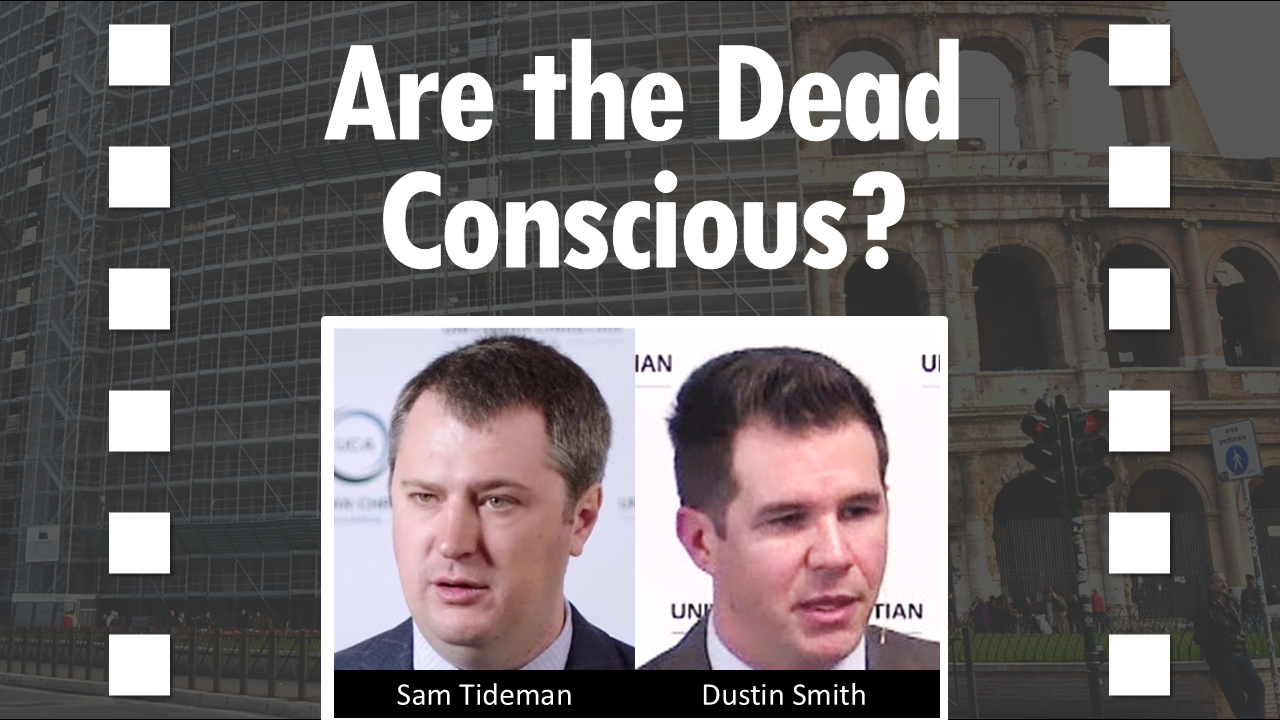
567 Are the Dead Conscious? (Dustin Smith, Sam Tideman)
Dustin Smith and Sam Tideman discuss whether people are conscious in the intermediate state (between death and resurrection). Interestingly, neither of them think the deceased are currently in heaven or hell. Smith affirms the sleep of the dead, seeing all the dead, whether good or bad, as unconscious and unaware of the passage of time. Tideman puts forward the idea that the souls of the dead are in a semi-conscious dreamlike state in a chamber called Sheol or Hades. Today is part one of their discussion in which both lay out their positions and then discuss Ecclesiastes 9.10 and Isaiah 14.9-11. This is part one of their conversation. Stay tuned for part two next week. Dr. Dustin Smith currently serves as a New Testament scholar at Spartanburg Methodist College in South Carolina. Smith has authored or edited six books, including the 2024 monograph, Wisdom Christology in the Gospel of John. He is also the weekly host of the Biblical Unitarian Podcast. Sam Tideman is a Harvard educated data scientist at Google who has keen interests in biblical studies, theology, and especially church history. He hosts the YouTube channel, "Transfigured," which has a total of nearly 250k views with interesting guests like Tim Mackie, Alister McGrath, and John Vervaeke. https://youtu.be/v6IBqLHlzQ4 Listen to this episode on Spotify or Apple Podcasts —— Links —— More about Dustin Smith here More about Sam Tideman here Check out these other episodes discussing the intermediate state Get the transcript of this episode Support Restitutio by donating here Join our Restitutio Facebook Group and follow Sean Finnegan on Twitter @RestitutioSF Leave a voice message via SpeakPipe with questions or comments and we may play them out on the air Intro music: Good Vibes by MBB Attribution-ShareAlike 3.0 Unported (CC BY-SA 3.0) Free Download / Stream: Music promoted by Audio Library. Who is Sean Finnegan? Read Sean's bio here
566 Kingdom Seminar 5: Kingdom Ambassadors
This is part 5 of the Kingdom Seminar, based on the book Kingdom Journey. This episode begins by delving into the history of how the theologians of the third and fourth centuries rejected the kingdom since they thought it was too crude, too hedonic, and too Jewish. Next I briefly cover three rediscovery movements, including the Anabaptists of the 16th century, the Adventists of the 19th century, and the New Testament scholars of the 20th century. Still, the majority of Christendom lies in the shadow of heaven-at-death mythology, hidden from the light of God's grand vision for our world. You and I have work to do. The kingdom of God is not a side doctrine--a footnote in eschatology. It's extremely important. We are kingdom ambassadors. And we have a winning message to tell the world. https://youtu.be/QduueQxY-jo Listen to this episode on Spotify or Apple Podcasts —— Links —— Get your copy of Kingdom Journey here. Check out the full Kingdom Seminar series Get the transcript of this episode Support Restitutio by donating here Join our Restitutio Facebook Group and follow Sean Finnegan on Twitter @RestitutioSF Leave a voice message via SpeakPipe with questions or comments and we may play them out on the air Intro music: Good Vibes by MBB Attribution-ShareAlike 3.0 Unported (CC BY-SA 3.0) Free Download / Stream: Music promoted by Audio Library. Who is Sean Finnegan? Read Sean's bio here
565 Kingdom Seminar 4: Kingdom Allegiance
This is part 4 of the Kingdom Seminar, based on the book Kingdom Journey. Jesus didn't just believe in a future kingdom that didn't affect the present. His entire ministry was saturated with kingdom symbology and activity. Wherever he went, he brought a bubble of the kingdom with him. As Christ-followers, we too, are called to prophesy the kingdom in how we live. This should include adopting the kingdom's culture, as well as pledging allegiance to the kingdom. https://youtu.be/xsynGDjUjP0 Listen to this episode on Spotify or Apple Podcasts —— Links —— Get your copy of Kingdom Journey here. Check out the full Kingdom Seminar series Get the transcript of this episode Support Restitutio by donating here Join our Restitutio Facebook Group and follow Sean Finnegan on Twitter @RestitutioSF Leave a voice message via SpeakPipe with questions or comments and we may play them out on the air Intro music: Good Vibes by MBB Attribution-ShareAlike 3.0 Unported (CC BY-SA 3.0) Free Download / Stream: Music promoted by Audio Library. Who is Sean Finnegan? Read Sean's bio here
564 Kingdom Seminar 3: Defining the Kingdom
This is part 3 of the Kingdom Seminar, based on the book Kingdom Journey. The kingdom of God is the golden thread running throughout the whole Bible from beginning to end. In this presentation, we'll consider some of the key texts from the Old and New Testaments that define what the kingdom is. In contrast to many who think the goal of Christian salvation is to go home to be with the Lord in heaven, the Bible offers a consistent vision of God's children living forever on a restored world. Rather than leaving the planet or physicality, the kingdom is the idea that God will fix up this place, healing everything in it from national strife to animal violence--and everything between. https://www.youtube.com/watch?v=8l66rBsPzYU&feature=youtu.be Listen to this episode on Spotify or Apple Podcasts —— Links —— Get your copy of Kingdom Journey here. Check out the full Kingdom Seminar series Get the transcript of this episode Support Restitutio by donating here Join our Restitutio Facebook Group and follow Sean Finnegan on Twitter @RestitutioSF Leave a voice message via SpeakPipe with questions or comments and we may play them out on the air Intro music: Good Vibes by MBB Attribution-ShareAlike 3.0 Unported (CC BY-SA 3.0) Free Download / Stream: Music promoted by Audio Library. Who is Sean Finnegan? Read Sean's bio here
563 Kingdom Seminar 2: Defining Heaven
This is part 2 of the Kingdom Seminar, based on the book Kingdom Journey. What is heaven? Although it is not the place where the dead go when they die, it is, still, a real place. Today we'll survey different ways in which the Bible talks about heaven, including the sky, God's throne, the storehouse, and the heaven of heavens. Next we'll consider what other religions teach about the afterlife. Finally, we'll conclude by seeing how the Biblical authors courageously took a radically unpopular view about life after death. https://www.youtube.com/watch?v=fryp8pkMJHA Listen to this episode on Spotify or Apple Podcasts —— Links —— Get your copy of Kingdom Journey here. Check out the full Kingdom Seminar series Get the transcript of this episode Support Restitutio by donating here Join our Restitutio Facebook Group and follow Sean Finnegan on Twitter @RestitutioSF Leave a voice message via SpeakPipe with questions or comments and we may play them out on the air Intro music: Good Vibes by MBB Attribution-ShareAlike 3.0 Unported (CC BY-SA 3.0) Free Download / Stream: Music promoted by Audio Library. Who is Sean Finnegan? Read Sean's bio here

562 Kingdom Seminar 1: Why Should You Care
Last December, my first ever published book came out, called Kingdom Journey. Recently I recorded a seminar on the kingdom at a church in South Carolina based on the book that I will be playing out over the next 5 weeks. In this seminar I highlight some of the key points in my book and also add in some new content. Today we're going to start by asking the question, "Why should I care about the kingdom of God?" In what follows I make the case that we should care because Jesus said to prioritize the kingdom and because he preached it as gospel. Whether you've long believed in God's kingdom coming to earth at Christ's return or you're new to it, I hope this message will encourage and inspire you to share the message with others. https://youtu.be/_33DdEnbyKE Listen to this episode on Spotify or Apple Podcasts —— Links —— Get your copy of Kingdom Journey here. Get the transcript of this episode Support Restitutio by donating here Join our Restitutio Facebook Group and follow Sean Finnegan on Twitter @RestitutioSF Leave a voice message via SpeakPipe with questions or comments and we may play them out on the air Intro music: Good Vibes by MBB Attribution-ShareAlike 3.0 Unported (CC BY-SA 3.0) Free Download / Stream: Music promoted by Audio Library. Who is Sean Finnegan? Read Sean's bio here
561 United Kingdom UCA Conference Review (Daisy Jones, Mark Cain)
Last month the Unitarian Christian Alliance put on the first conference in Europe. A mixture of British and American speakers presented on various aspects of unitarian Christianity. In today's episode I speak with Daisy Jones, one of the main coordinators of the event as well as Mark Cain who assisted in planning and in recording the presentations. They share some highlights from this year's conference as well as what they are planning for next year. Listen to this episode on Spotify or Apple Podcasts https://youtu.be/bG62n-JyEv8 —— Links —— Find out more about the Unitarian Christian Alliance as well as about future events Listen to the interview with Josh and Daisy Jones: Walking with God Get the transcript of this episode Support Restitutio by donating here Join our Restitutio Facebook Group and follow Sean Finnegan on Twitter @RestitutioSF Leave a voice message via SpeakPipe with questions or comments and we may play them out on the air Intro music: Good Vibes by MBB Attribution-ShareAlike 3.0 Unported (CC BY-SA 3.0) Free Download / Stream: Music promoted by Audio Library. Who is Sean Finnegan? Read Sean's bio here
560 Pentecost Reversing Babel (Sean Finnegan)
Pentecost, as described in Acts 2, was a strange event. We read about unusual miraculous signs such as the sound of a great wind and tongues of fire. Still, the most interesting moment is when the apostles of our Lord began speaking in foreign languages that they didn't know. Such divine utterance is called speaking in tongues and everyone, it seems, has an opinion about it. But, have you ever asked yourself why? God is launching the church to go into Judea, Samaria, and to the ends of the earth. Christ pours out the spirit to enable them to be his witnesses. OK. But, why have them speak in foreign languages? Now, this can't just be a nifty trick to grab people's attention, though it certainly did that. Join me as we consider the Old Testament background to Pentecost, which I believe goes all the way back to Babel when God originally confused the languages. Listen to this episode on Spotify or Apple Podcasts https://youtu.be/eRgD-t0tskw —— Links —— Check out these other episodes about speaking in tongues Get the transcript of this episode Support Restitutio by donating here Join our Restitutio Facebook Group and follow Sean Finnegan on Twitter @RestitutioSF Leave a voice message via SpeakPipe with questions or comments and we may play them out on the air Intro music: Good Vibes by MBB Attribution-ShareAlike 3.0 Unported (CC BY-SA 3.0) Free Download / Stream: Music promoted by Audio Library. Who is Sean Finnegan? Read Sean's bio here
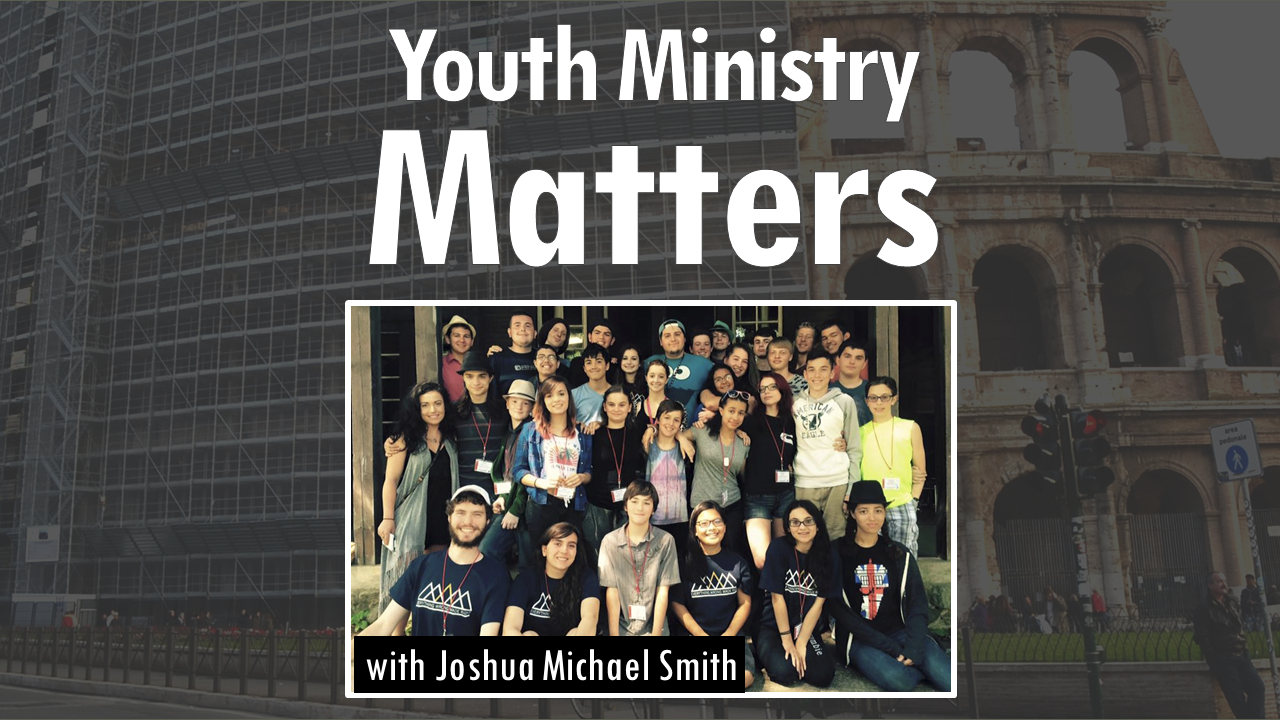
559 Youth Ministry Matters (Joshua Michael Smith)
Last week Joshua Michael Smith began sharing his testimony from childhood to his college years when he changed his mind about Jesus's identity. In part two he talks about cage stage unitarianism--where one seeks to confront everyone about this important truth regardless of their interested or antagonism. Smith shares how he matured while continuing to work within Assemblies of God and Baptist churches in Tennessee. Then we broach the topic of youth ministry. Smith explains why it is so important and what he hopes to accomplish as the new youth ministry coordinator at Living Hope. Listen to this episode on Spotify or Apple Podcasts https://www.youtube.com/watch?v=Cmk5_q7Lh9w —— Links —— Visit Guthrie Grove in Pelzer, SC (Aug 11-14) Sign up to come to Kingdom Fest at Living Hope near Albany, NY (Sep 13-15) Register to attend the UCA conference near Little Rock, AK (Oct 17-19) Check out these other interviews about people leaving the Trinity to embrace a biblical unitarianian understanding of God. Get the transcript of this episode Support Restitutio by donating here Join our Restitutio Facebook Group and follow Sean Finnegan on Twitter @RestitutioSF Leave a voice message via SpeakPipe with questions or comments and we may play them out on the air Intro music: Good Vibes by MBB Attribution-ShareAlike 3.0 Unported (CC BY-SA 3.0) Free Download / Stream: Music promoted by Audio Library. Who is Sean Finnegan? Read Sean's bio here
558 Courageous Baptist Seeks Biblical Truth (Joshua Michael Smith)
Joshua Michael Smith grew up in northern Florida in a Baptist church. In this interview he shares his journey of faith, including how came to Christ as well as how he ended up in ministry training at Word of Life before earning a bachelors at Tennessee Temple University in Chattanooga. While there, he began questioning his received doctrinal package based on the Bible. As a result, he came to discover the human Messiah of scripture and courageously embraced this new understanding despite the consequences. This is part one of his story. Listen to this episode on Spotify or Apple Podcasts https://youtu.be/bMDi7DMGPsE?si=ABYRX2wrLdNbiOFv —— Links —— Check out these other interviews about people leaving the Trinity to embrace a biblical unitarianian understanding of God. Get the transcript of this episode Support Restitutio by donating here Join our Restitutio Facebook Group and follow Sean Finnegan on Twitter @RestitutioSF Leave a voice message via SpeakPipe with questions or comments and we may play them out on the air Intro music: Good Vibes by MBB Attribution-ShareAlike 3.0 Unported (CC BY-SA 3.0) Free Download / Stream: Music promoted by Audio Library. Who is Sean Finnegan? Read Sean's bio here
557 Bridging the Testaments (George Athas)
Many believe there is 400 years of silence between the Old and New Testament. My guest today is Professor George Athas, director of research and senior lecturer in Hebrew, Old Testament, and Early Church History at Moore Theological College in Sydney, Australia. He's the author of Bridging the Testaments, which covers four major periods, including Persian, Hellenistic, Hasmonean, and Roman. By studying the four centuries before Christ you can gain key insights to help you understand both the Old and New Testaments. You will discover that God was still speaking all the while. Listen to this episode on Spotify or Apple Podcasts https://www.youtube.com/watch?v=_aWT83oT2ts —— Links —— More about George Athas here Check out his book: Bridging the Testaments Get the transcript of this episode Support Restitutio by donating here Join our Restitutio Facebook Group and follow Sean Finnegan on Twitter @RestitutioSF Leave a voice message via SpeakPipe with questions or comments and we may play them out on the air Intro music: Good Vibes by MBB Attribution-ShareAlike 3.0 Unported (CC BY-SA 3.0) Free Download / Stream: Music promoted by Audio Library. Who is Sean Finnegan? Read Sean's bio here
556 Recruiting Ancients for the Creation Debate (Andrew Brown)
Christians have approached the first chapter of Genesis differently over the centuries. There are those who hold to young earth creationism, day-age theory, gap theory, and progressive creationism, just to name a few. Oftentimes defenders of a particular view will provide biblical, scientific, and historical evidence for their position. Our focus today is on the use of church history to find witnesses for this or that view. Rather than cherry picking a quote here and quote there, it's better to read ancient Christians in their own context to be sure we are interpreting them correctly. My guest today is Dr. Andrew Brown, a lecturer in OT and Hebrew at Melbourne School of Theology. He did his thesis on the creation week in Genesis 1 and 2 and has written a book called Recruiting the Ancients for the Creation Debate. In today's episode he shares his concerns and recommendations for handling our historical sources wisely. Listen to this episode on Spotify or Apple Podcasts https://www.youtube.com/watch?v=xX2P-ksSIHw —— Links —— More about Andrew Brown here Check out his book: Recruiting the Ancients for the Creation Debate Get the transcript of this episode Support Restitutio by donating here Join our Restitutio Facebook Group and follow Sean Finnegan on Twitter @RestitutioSF Leave a voice message via SpeakPipe with questions or comments and we may play them out on the air Intro music: Good Vibes by MBB Attribution-ShareAlike 3.0 Unported (CC BY-SA 3.0) Free Download / Stream: Music promoted by Audio Library. Who is Sean Finnegan? Read Sean's bio here
555 Was Paul Really Subverting Caesar? (Clint Burnett)
Scholars and pastors regularly point to specialized "technical" language in Paul's epistles to make the case that Paul was intentionally subverting Roman power by applying to Jesus terms that the ancients commonly applied to the Caesars. My guest today has done the hard work of analyzing the inscriptions, coins, and material remains of several key ancient cities to see how they talked about the Roman emperors in the New Testament period. In our conversation he shares his own journey to become an independent scholar as well as how his research offers a corrective to what many are saying about imperial divine honors. Listen to this episode on Spotify or Apple Podcasts https://www.youtube.com/watch?v=ErL9D90JL7k —— Links —— More about Clint Burnett here Check out his book Paul & Imperial Divine Honors Get the transcript of this episode Support Restitutio by donating here Join our Restitutio Facebook Group and follow Sean Finnegan on Twitter @RestitutioSF Leave a voice message via SpeakPipe with questions or comments and we may play them out on the air Intro music: Good Vibes by MBB Attribution-ShareAlike 3.0 Unported (CC BY-SA 3.0) Free Download / Stream: Music promoted by Audio Library. Who is Sean Finnegan? Read Sean's bio here

554 Biblical Unitarian Christians in New Zealand (Zach Mayo)
Something is going on in New Zealand...and I'm excited to tell you about it. In today's interview I speak with Zach Mayo who along with his wife, Kayla, were serving as youth pastors at an evangelical church when they came to change their minds on the doctrine of the Trinity. Now they're organizing a conference to unite one-God believers in New Zealand and invite folks from Australia and beyond to come. Listen to this episode on Spotify or Apple Podcasts https://youtu.be/U27POf3dKnI —— Links —— To register for the upcoming conference, use this link Get in touch with Zach Mayo at [email protected] See other testimonies of people who left the Trinity and came to believe in the biblical unitarian Jesus Get the transcript of this episode Support Restitutio by donating here Join our Restitutio Facebook Group and follow Sean Finnegan on Twitter @RestitutioSF Leave a voice message via SpeakPipe with questions or comments and we may play them out on the air Intro music: Good Vibes by MBB Attribution-ShareAlike 3.0 Unported (CC BY-SA 3.0) Free Download / Stream: Music promoted by Audio Library. Who is Sean Finnegan? Read Sean's bio here

553 Pro Golfer Turned Christologist Tells All (Kermit Zarley)
Kermit Zarley was a professional golfer who had an interest in studying the Bible about the end times when he came across a disturbing verse. Reading Jesus's words in the Olivet Discourse, he noticed that only the Father knew the day and hour of the end. Neither the angels nor the son of God were privy to it. As a good trinitarian evangelical, Zarley was familiar with the dual natures idea, but just couldn't square that with the scripture. If Jesus was God in his being, he knew everything. Why did he say he didn't know the time of the end? Surely, Jesus couldn't be lying! This conundrum set Zarley down a path of research and investigation for many years until he slowly uncovered a different way of understanding Christ. Although he knew going public with his new belief would result in ostracism and rejection, he went ahead with it anyhow. This is his story. Listen to this episode on Spotify or Apple Podcasts https://youtu.be/3bZ7t2Z-ql8 —— Links —— Take a listen to my previous interview with "Servetus the Evangelical" from 2009 Get in touch with Kermit at kermitzarley.com Read his blog at Patheos Check out his books on Amazon See other testimonies of people who left the Trinity and came to believe in the biblical unitarian Jesus Get the transcript of this episode Support Restitutio by donating here Join our Restitutio Facebook Group and follow Sean Finnegan on Twitter @RestitutioSF Leave a voice message via SpeakPipe with questions or comments and we may play them out on the air Intro music: Good Vibes by MBB Attribution-ShareAlike 3.0 Unported (CC BY-SA 3.0) Free Download / Stream: Music promoted by Audio Library. Who is Sean Finnegan? Read Sean's bio here
552 Seminary Convinced Me the Trinity Is Wrong (Susanne Lakin)
From her childhood in a Jewish family to a 7-year stint with the Jehovah's Witnesses to attending evangelical churches, Susanne Lakin never felt comfortable with the doctrine of the Trinity. She signed up to attend Phoenix Seminary, a conservative evangelical school, thinking they would help her finally get to the bottom of it. She was willing to agree to the idea, thinking, surely, studying with scholars like Wayne Grudem, the prince of evangelical systematic theology, would answer her questions and settle the issue for her once and for all. Amazingly, the opposite happened. This is her story. Listen to this episode on Spotify or Apple Podcasts https://youtu.be/W35IRYHjfP8 —— Links —— Get in touch with Susanne at livewritethrive.com Check out her theological book about annihilationism: Hell No Get Leeland Ryken's book, God's Word in English See other testimonies of people who left the Trinity and came to believe in the biblical unitarian Jesus Get the transcript of this episode Support Restitutio by donating here Join our Restitutio Facebook Group and follow Sean Finnegan on Twitter @RestitutioSF Leave a voice message via SpeakPipe with questions or comments and we may play them out on the air Intro music: Good Vibes by MBB Attribution-ShareAlike 3.0 Unported (CC BY-SA 3.0) Free Download / Stream: Music promoted by Audio Library. Who is Sean Finnegan? Read Sean's bio here
551 Read the Bible for Yourself 18: Helpful Tools to Understand the Bible
This is part 18 of the Read the Bible For Yourself. What tools can help you understand the bible better? Today we'll cover some recommended resources for you to deepen your study of the scriptures, including bible dictionaries, commentaries, bible software, AI, and more. Of course, it's impossible to cover everything in a reasonable time frame, so I'll just recommend two or three of each resource type, focusing primarily on tools that I personally have and use regularly. Listen to this episode on Spotify or Apple Podcasts https://www.youtube.com/watch?v=PJOFFIkNdUg&list=PLN9jFDsS3QV2TrdUEDtAipF3jy4qYspM_&index=18 —— Links —— See other episodes in Read the Bible For Yourself Other classes are available here, including How We Got the Bible, which explores the manuscript transmission and translation of the Bible Get the transcript of this episode Support Restitutio by donating here Join our Restitutio Facebook Group and follow Sean Finnegan on Twitter @RestitutioSF Leave a voice message via SpeakPipe with questions or comments and we may play them out on the air Intro music: Good Vibes by MBB Attribution-ShareAlike 3.0 Unported (CC BY-SA 3.0) Free Download / Stream: Music promoted by Audio Library. Who is Sean Finnegan? Read his bio here —— Notes —— 18 Helpful Tools to Understand the Bible Why do we need extra-biblical tools to help us understand the Bible? Different geography Different history Different cultures (ancient Near Eastern, first-century Jewish, Greco-Roman) Different economics Different literacy rates Different scientific and philosophical knowledge Bible Dictionaries International Standard Bible Encyclopedia (1915) Eerdmans Dictionary of the Bible (2000) Holman Illustrated Bible Dictionary (2015) The IVP Bible Dictionary Series Dictionary of OT: Pentateuch (2002) Dictionary of OT: Historical Books (2005) Dictionary of OT: Wisdom, Poetry, & Writings (2008) Dictionary of OT: Prophets (2012) Dictionary of NT Background (2000) Dictionary of Jesus & Gospels (2013) Dictionary of Paul & Letters (2023) Dictionary of the Later NT (1997) Commentaries Fee & Stuart: “Jesus says, ‘…It is easier for a camel to go through the eye of a needle than for someone who is rich to enter the kingdom of God.’ You will sometimes hear it said that there was a gate in Jerusalem known as the “Needle’s Eye,” which camels could go through only by kneeling, and with great difficulty. The point of this “interpretation” is that a camel could in fact go through the “Needle’s Eye.” The trouble with this “exegesis,” however, is t

550 Read the Bible for Yourself 17: How to Choose a Bible Translation
This is part 17 of the Read the Bible For Yourself. After reviewing the resources you can use to learn Hebrew, Aramaic, and Greek, we delve into the sources that translators use for their work. Next, we'll look at translation philosophies, including formal and dynamic equivalence. Lastly we'll cover the controversial issues of gender accuracy and translation bias. Over all, this episode should give you a nice introduction to a deep answer for what translations you should use and why. Listen to this episode on Spotify or Apple Podcasts https://www.youtube.com/watch?v=OsxuNfkTt-U&list=PLN9jFDsS3QV2TrdUEDtAipF3jy4qYspM_&index=18 —— Links —— See other episodes in Read the Bible For Yourself Other classes are available here, including How We Got the Bible, which explores the manuscript transmission and translation of the Bible Get the transcript of this episode Support Restitutio by donating here Join our Restitutio Facebook Group and follow Sean Finnegan on Twitter @RestitutioSF Leave a voice message via SpeakPipe with questions or comments and we may play them out on the air Intro music: Good Vibes by MBB Attribution-ShareAlike 3.0 Unported (CC BY-SA 3.0) Free Download / Stream: Music promoted by Audio Library. Who is Sean Finnegan? Read his bio here —— Notes —— 17 How to Choose a Bible Translation Translation basics Fee & Stuart: “Your Bible, whatever translation you use, which is your beginning point, is in fact the end result of much scholarly work. Translators are regularly called upon to make choices regarding meanings, and their choices are going to affect how you”[1] “Every translation is a commentary” -Lee Brice The Bible is in three languages. Hebrew: Old Testament except the Aramaic part Nearly 99% of the OT (22,945 of 23,213 verses) Aramaic: half of Daniel and two passages in Ezra Daniel 2.4b-7.28; Ezra 4.8-6.18; 7.12-26 About 1% of the OT (268 of 23,213 verses) Greek: New Testament (all 7,968 verses) How to begin learning Hebrew or Greek Immersion program in Israel or Greece Whole Word Institute offers a 9-month program. In-person college class (usually 2 semesters) Local colleges, RTS offers an 8-week summer program. In-person classes at a Jewish synagogue or Greek church or community center Online program with live instructor Biblical Language Center, Liberty University, etc. Digital program with pre-recordings Aleph with Beth (YouTube), Bill Mounce’s DVD course, etc. How to improve your existing knowledge of
549 Read the Bible for Yourself 16: How to Read Revelation
This is part 16 of the Read the Bible For Yourself. Revelation is a complicated book of the Bible. It contains some of the most incredible and awe-inspiring descriptions of God's throne room and the final paradise on earth. It also describes sinister mayhem, wanton destruction, and toe-curling persecution. How can we make sense of it? In today's episode we'll go over the basics of authorship, audience, occasion, and purpose. Then we'll explore how Revelation uses visionary symbols to convey truth. Lastly, we'll go over five interpretive lenses through which you can understand the timing of the events in Revelation. We may not settle every issue, but my hope is that this overview will at least prepare you to read Revelation for yourself. Listen to this episode on Spotify or Apple Podcasts https://youtu.be/98OFG5OSjNE?si=jcN6wZnbeqavNFRi —— Links —— See other episodes in Read the Bible For Yourself Other classes are available here, including How We Got the Bible, which explores the manuscript transmission and translation of the Bible Get the transcript of this episode Support Restitutio by donating here Join our Restitutio Facebook Group and follow Sean Finnegan on Twitter @RestitutioSF Leave a voice message via SpeakPipe with questions or comments and we may play them out on the air Intro music: Good Vibes by MBB Attribution-ShareAlike 3.0 Unported (CC BY-SA 3.0) Free Download / Stream: Music promoted by Audio Library. Who is Sean Finnegan? Read his bio here —— Notes —— How to Read Revelation Authorship John is the author. (Rev 1:1-2) It is hard to say if this was the same John who wrote the Gospel of John and the Epistles. Later Christians generally believed Revelation was by the same John. The style, vocabulary, and themes are completely different. John was exiled to the island of Patmos because of his faith. (Rev 1:9) “The Roman government, beginning with the emperor Nero, no longer considered Christianity as a sect of Judaism, which was a legal religion in the empire. Instead, Rome began to view it as an undesirable foreign cult that was a menace to society. John’s testimony about Jesus Christ was viewed as a political crime and hence punishable under Roman law. His suffering was the price paid for obeying a different King and testifying to a different Lord.”[1] Audience Rev 1:10 says John wrote to seven churches in the province of Asia Minor (western Turkey). These churches were in Ephesus, Smyrna, Pergamum, Thyatira, Sardis, Philadelphia, and Laodicea. Occasion Ephesus: enduring well, not growing weary, having discerned false apostles well, not loving Smy

548 Read the Bible for Yourself 15: How to Read the General Epistles
This is part 15 of the Read the Bible For Yourself. In previous episodes, we've looked at Paul's church epistles and pastoral epistles. Today we move into the third section of epistles in the New Testament--the general epistles. Instead of surveying each of the eight general epistles, we'll just focus on two: Hebrews and 1 John. We'll ask about author, audience, occasion, purpose, and mode for each. Going through these two will hopefully provide you with helpful examples to enable you to read these epistles more fruitfully on your own. Listen to this episode on Spotify or Apple Podcasts https://youtu.be/alXkHkkhn_w —— Links —— See other episodes in Read the Bible For Yourself Other classes are available here, including How We Got the Bible, which explores the manuscript transmission and translation of the Bible Get the transcript of this episode Support Restitutio by donating here Join our Restitutio Facebook Group and follow Sean Finnegan on Twitter @RestitutioSF Leave a voice message via SpeakPipe with questions or comments and we may play them out on the air Intro music: Good Vibes by MBB Attribution-ShareAlike 3.0 Unported (CC BY-SA 3.0) Free Download / Stream: Music promoted by Audio Library. Who is Sean Finnegan? Read his bio here —— Notes —— The General Epistles Hebrews, James, 1 Peter, 2 Peter, 1 John, 2 John, 3 John, Jude Some consider Hebrews to be Pauline, but even if Paul wrote it, it’s not to a church or a pastor, so it still fits as a general epistle 2 John and 3 John are technical to specific individuals and thus not general epistles Hebrews Authorship Evidence for Paul Associated with Timothy and Rome (Heb 13:23-24) Pauline themes Evidence against Paul Non-Pauline themes Ancient uncertainty (Origen, Eusebius, etc.) Non-standard opening Not an eyewitness (Heb 2:3) Daniel Wallace suggested Barnabas with help from Apollos. Audience As title indicates, the audience was Jewish. Persecuted (Heb 10:32-36) Occasion Became aware of some falling away from faith (Heb 3:6; 4:14; 6:4-6; 10:23, 26-27) Concern that they will return to Judaism Purpose Convince Jewish Christians to endure in the faith instead of falling away (presumably back into Judaism) Mode Show that Jesus is better Ch 1: Jesus as God’s promised Messiah is better than the angels who gave the Law. Ch 2: Jesus’ salvation is better b/c he is human. Ch 3: Jesus is better than Moses. Ch 7: Jesus’ priesthood is better than Aaron’s. Ch 8: Jesus’ covenant is better than the old covenant b/c it has bett
547 Read the Bible for Yourself 14: How to Read the Pastoral Epistles
This is part 14 of the Read the Bible For Yourself. The Pastoral Epistles are letters to church leaders, instructing them how churches should function. Though they are not well read by most Christians today, they remain authoritative for pastors, elders, and deacons. Today we'll cover 1-2 Timothy, Titus, and Philemon. We'll explore the major theme of how the church should be a well-run household where godliness prevails. Additionally, we'll consider qualifications for leadership, warnings against false teachers, and the incredible importance of sound teaching. Listen to this episode on Spotify or Apple Podcasts https://www.youtube.com/watch?v=H-zdww6-Udk&list=PLN9jFDsS3QV2TrdUEDtAipF3jy4qYspM_&index=14&t=1004s&pp=iAQB —— Links —— See other episodes in Read the Bible For Yourself Other classes are available here, including How We Got the Bible, which explores the manuscript transmission and translation of the Bible Get the transcript of this episode Support Restitutio by donating here Join our Restitutio Facebook Group and follow Sean Finnegan on Twitter @RestitutioSF Leave a voice message via SpeakPipe with questions or comments and we may play them out on the air Intro music: Good Vibes by MBB Attribution-ShareAlike 3.0 Unported (CC BY-SA 3.0) Free Download / Stream: Music promoted by Audio Library. Who is Sean Finnegan? Read his bio here —— Notes —— The Pastoral Epistles 1 Timothy, 2 Timothy, Titus, Philemon Philemon is not always included as a pastoral Epistle since it only deals with a specific issue regarding a single person. Household Paul employs the metaphor of a household in the pastorals to illustrate the order he’d like to see in the churches (1 Tim 3:14-15). ZIBBC: “In Xenophon’s essay, the husband instructs his fourteen-year-old bride (the average age for marriage among Greek and Roman girls was fourteen to sixteen) on her vital role in managing the household resources, including the care and supervision of household slaves, while he supervised the gathering of produce from the farms. Because of the presence of slaves and freedmen in an average ancient household, management of sometimes large households could be demanding.”[1] Lynn Cohick: “The family in the Greco-Roman world valued the community over the individual and promoted corporate honor and fortune. Those living in the domus (“home”) included parents and children, and perhaps extended family, such as adult siblings, cousins, and grandparents, as well as slaves, freedmen, and freedwomen. Each individual had a specific status within the home, and each family member deemed the social status of the family, including its wealth and social prestige, as of equal or greater val
546 Read the Bible for Yourself 13: How to Read the Church Epistles
This is part 13 of the Read the Bible For Yourself. Before getting to the Church Epistles, we'll begin with an overview of how letters were written, read, and performed. Then we'll see how they are arranged in our Bibles. We'll spend a good deal of time talking about occasion. Why did Paul write each letter? What was going on that prompted him to initiate the expensive and elaborate process of writing to them? Lastly, we'll briefly consider how to apply what we read to our lives. Listen to this episode on Spotify or Apple Podcasts https://www.youtube.com/watch?v=Qg3tInZU9JY&list=PLN9jFDsS3QV2TrdUEDtAipF3jy4qYspM_&index=13&pp=iAQB —— Links —— See other episodes in Read the Bible For Yourself Other classes are available here, including How We Got the Bible, which explores the manuscript transmission and translation of the Bible Get the transcript of this episode Support Restitutio by donating here Join our Restitutio Facebook Group and follow Sean Finnegan on Twitter @RestitutioSF Leave a voice message via SpeakPipe with questions or comments and we may play them out on the air Intro music: Good Vibes by MBB Attribution-ShareAlike 3.0 Unported (CC BY-SA 3.0) Free Download / Stream: Music promoted by Audio Library. Who is Sean Finnegan? Read his bio here —— Notes —— Letters in the First Century Letters written on papyrus with ink by a professional scribe (amanuensis) Though most letters that have survived from the ancient world were short and to the point, Paul’s Epistles are extremely long. Because there was no postal system, someone had to carry the letter to its destination. Upon arrival, most people couldn’t read, so a professional would need to read it aloud. This was difficult because there were no chapters, verses, paragraphs, punctuation, or spaces between words (scriptio continua). Name Greek Words English Words Verses Chapters Romans 7113 9506 432 16 1 Corinthians 6832 9532 437 16 2 Corinthians 4480 6160 257 13 Galatians 2232 3227 149 6 Ephesians 2424 3047 155 6 Philippians 1631 2261 104 4 Colossians 1583 1993 95 4 1 Thessalonians 1484 1908 89 5 2 Thessalonians 826 1065 47 3 Church Epistles in Chronological Order

545 Read the Bible for Yourself 12: How to Read Acts
This is part 12 of the Read the Bible For Yourself. Acts is an action-packed book full of excitement and wonder. We learn about the early expansion of the Church from a small group of ragged Christ-followers to dozens of house churches throughout major cities in the Mediterranean world. How did Christianity "go public"? The book of Acts tells that story. In this episode you'll learn four major emphases in Acts as well as how to think through application for us today. Listen to this episode on Spotify or Apple Podcasts https://www.youtube.com/watch?v=3TIzpc3mfOg&list=PLN9jFDsS3QV2TrdUEDtAipF3jy4qYspM_&index=12&pp=iAQB —— Links —— For more about Family Camp visit LHIM Check out the UCA conferences for USA, UK, and NZ here See other episodes in Read the Bible For Yourself Other classes are available here, including How We Got the Bible, which explores the manuscript transmission and translation of the Bible Get the transcript of this episode Support Restitutio by donating here Join our Restitutio Facebook Group and follow Sean Finnegan on Twitter @RestitutioSF Leave a voice message via SpeakPipe with questions or comments and we may play them out on the air Intro music: Good Vibes by MBB Attribution-ShareAlike 3.0 Unported (CC BY-SA 3.0) Free Download / Stream: Music promoted by Audio Library. Who is Sean Finnegan? Read his bio here —— Notes —— Luke wrote Acts. Acts 1:1-2 Acts is the second volume. Luke is about the life of Christ. Acts is about the early expansion of the church. Major events of Acts 1:1-11 Jesus commissions and ascends. 1:12-27 Peter initiates replacing Judas. 2:1-47 Spirit is poured out, and Peter preaches. 3:1-26 Peter heals lame man and preaches. 4:1-6:7 Communal living in Jerusalem 6:8-7:60 Stephen’s martyrdom 8:1-40 Philip’s expansion to Samaria, Ethiopia 9:1-31 Paul’s conversion, expansion to Damascus 9:32-9:43 Peter’s mission to Lydda and Joppa 10:1-11:18 Peter converts Cornelius in Caesarea. 11:19-30 Barnabas brings Paul to Antioch. 12:1-24 Peter’s arrest and miraculous escape 12:25-16:5 Paul’s 1st missionary journey 16:6-19:20 Paul’s 2nd missionary journey 19:21-21:17 Paul’s 3rd missionary journey 21:18-28:31 Paul’s arrest and trip to Rome Organization of the book The first half is about Peter (1-12). The second half is about Paul (13-28). Acts 1:8 outlines the book: they expanded from Jerusalem to Judea to Samaria to the ends of the earth. Leading and experience of God’s spirit <
544 Read the Bible for Yourself 11: How to Read the Gospels
This is part 11 of the Read the Bible For Yourself. The Gospels are evangelistic biographies of Jesus. In today's episode you'll learn the basic storyline of the four biblical Gospels: Matthew, Mark, Luke, and John. Then we'll go through them from shortest to longest to see how each brings a unique and helpful perspective in telling the life of Christ. We'll also hit some important concepts like the kingdom of God, parables, and the word of God. Lastly, we'll ask about application. How can you figure out which sayings of Christ apply to you today and which ones do not? Listen to this episode on Spotify or Apple Podcasts https://youtu.be/0iHhidbL4e8?si=3rs4fGGtQjsJAObB —— Links —— See other episodes in Read the Bible For Yourself Other classes are available here, including How We Got the Bible, which explores the manuscript transmission and translation of the Bible Get the transcript of this episode Support Restitutio by donating here Join our Restitutio Facebook Group and follow Sean Finnegan on Twitter @RestitutioSF Leave a voice message via SpeakPipe with questions or comments and we may play them out on the air Intro music: Good Vibes by MBB Attribution-ShareAlike 3.0 Unported (CC BY-SA 3.0) Free Download / Stream: Music promoted by Audio Library. Who is Sean Finnegan? Read his bio here —— Notes —— The Four Gospels Matthew, Mark, Luke, and John Gospel = good news The Gospels are biographies about Jesus which seek to convince readers about the good news that he is the Messiah. Basic Storyline of the Gospels Birth narratives John’s ministry John baptizes Jesus. Jesus calls the twelve. Teachings of Jesus Miracles of Jesus Conflict with critics Triumphal entry Intensified conflict Last supper Arrest, trial, execution Resurrection appearances Great commission Mark (11,305 words) Papias: “And the elder used to say this: ‘Mark, having become Peter’s interpreter, wrote down accurately everything he remembered, though not in order, of the things either said or done by Christ. For he neither heard the Lord nor followed him, but afterward, as I said, followed Peter, who adapted his teachings as needed but had no intention of giving an ordered account of the Lord’s sayings. Consequently Mark did nothing wrong in writing down some things as he remembered them, for he made it his one concern not to omit anything that he heard or to make any false statement in them.’”[1] John (15,633 words) Purpose statement: John 20:30-3130 Now Jesus did many other signs in the presence of his disciples that are
543 Read the Bible for Yourself 10: Key Background for Reading the New Testament
This is part 10 of the Read the Bible For Yourself. We've taken our time working through the Old Testament, section by section. Before we tackle the New Testament and look at the Gospels, we need to talk about the time between the Old and New Testaments. In the gap of roughly four hundred years, massive political and cultural changes occurred. Nowhere in the Old Testament do we see anything about the Romans, Pharisees, Sadducees, or the Sanhedrin. In today's episode I'll catch you up on what happened after the OT and before the NT so you can better understand the world in which Jesus functioned. Listen to this episode on Spotify or Apple Podcasts https://www.youtube.com/watch?v=B3humYIVYho&list=PLN9jFDsS3QV2TrdUEDtAipF3jy4qYspM_&index=10 —— Links —— See other episodes in Read the Bible For Yourself Other classes are available here, including How We Got the Bible, which explores the manuscript transmission and translation of the Bible Get the transcript of this episode Support Restitutio by donating here Join our Restitutio Facebook Group and follow Sean Finnegan on Twitter @RestitutioSF Leave a voice message via SpeakPipe with questions or comments and we may play them out on the air Intro music: Good Vibes by MBB Attribution-ShareAlike 3.0 Unported (CC BY-SA 3.0) Free Download / Stream: Music promoted by Audio Library. Who is Sean Finnegan? Read his bio here —— Notes —— Recent History Persians: Cyrus the Great Greeks: Alexander the Great, Antiochus Epiphanes Hellenization (2 Maccabees 4.7, 10-15; 1 Maccabees 1.41-53) Maccabean Revolution: Mattathias, Judah the Maccabee, Jonathan Apphus, Simon Thassi, John Hyrcanus, Aristobulus I, Alexander Jannaeus, Salome Alexandra, Hyrcanus II, Aristobulus II Romans: Pompey the Great annexed Judea in 63bc Herodian Dynasty: Herod the Great and his descendants Geographical and Political Setting Roman Empire: Augustus (27bc-ad14), Tiberius (14-37), Caligula (37-41), Claudius (41-54), Nero (54-68) Provinces: every region outside of Italy Galilee: Herod the Great (37-4bc), Herod Antipas (4bc-ad39), Herod Agrippa I (37-44) Judea: Herod the Great (37-4bc), Herod Archelaus (4bc-ad6), Coponius (6-9), Marcus Ambivulus (9-12), Annius Rufus (12-15), Valerius Gratus (15-26), Pontius Pilate (26-36), Marcellus (36-37), Marullus (37-41), Herod Agrippa I (41-44) Samaria: under Judean jurisdiction; Samaritans and Jews conflicted with each other Jewish Groups Sadducees controlled the temple partners with Roman governors wealthy aristocrats chief priests were the leaders only accepted the Torah as scripture didn’t believ
542 Read the Bible for Yourself 9: How to Read the Prophets
This is part 9 of the Read the Bible For Yourself. The 17 books of the prophets comprise 27% of the Old Testament. Although some parts can be difficult to comprehend, they reveal the heart of God with raw pathos and brutal honesty. To read the prophets, then, is to draw near to God. No other section of scripture so beautifully and tragically reveals God's feelings. In this episode you'll learn about the major time periods, how to read the prophets within their context, and some of the major themes. As always, this brief survey should help you read and understand the bible for yourself. Listen to this episode on Spotify or Apple Podcasts https://www.youtube.com/watch?v=3nOkfIUxJJw&list=PLN9jFDsS3QV2TrdUEDtAipF3jy4qYspM_&index=9 —— Links —— See other episodes in Read the Bible For Yourself Other classes are available here, including How We Got the Bible, which explores the manuscript transmission and translation of the Bible Get the transcript of this episode Support Restitutio by donating here Join our Restitutio Facebook Group and follow Sean Finnegan on Twitter @RestitutioSF Leave a voice message via SpeakPipe with questions or comments and we may play them out on the air Intro music: Good Vibes by MBB Attribution-ShareAlike 3.0 Unported (CC BY-SA 3.0) Free Download / Stream: Music promoted by Audio Library. Who is Sean Finnegan? Read his bio here —— Notes —— Canonical Arrangement 5 Major Prophets Isaiah Jeremiah Lamentations Ezekiel Daniel 12 Minor Prophets Hosea Joel Amos Obadiah Jonah Micah Nahum Habakkuk Zephaniah Haggai Zechariah Malachi Chronological Arrangement early pre-exilic: Amos, Hosea, Jonah, Micah, Isaiah late pre-exilic: Nahum, Zephaniah, Obadiah, Joel, Habakkuk, Jeremiah exilic: Ezekiel, Daniel post-exilic: Haggai, Zechariah, Malachi Setting The historical context is helpful In Jer 1.1-3, Jeremiah prophecies during the last days of the kingdom. He’s the last chance for the people to repent. Since they go into exile anyhow, it’s easy to anticipate that the people will not respond to Jeremiah. The Prophet God calls prophets into his service (Jer 1.4-6) oftentimes, the prophet has access to the king and speaks to him competition with false prophets (Jer 28.1-3, 15-17) Acting out prophecies Ezekiel built a model of Jerusalem and acted out a siege against it (Ezek 4.1-3) lay on his side for 390 days (Ezek 4.4-5)</
541 Read the Bible for Yourself 8: How to Read the Psalms
This is part 8 of the Read the Bible For Yourself. The Book of Psalms is an eclectic collection of poetry that you can use to connect to God. In today's episode you'll learn about the different kinds of psalms, who wrote them, and how Hebrew poetry works. The goal, as always, is to equip you to read and understand on your own. Whether you've been reading the Psalms for years or are brand new to them, this episode should empower you to get more out of them than ever before. Also, I conclude by recommending a method of reading, called Lectio Divina, which you can use to meditate on the Psalms. Listen to this episode on Spotify or Apple Podcasts https://www.youtube.com/watch?v=X2lJMxFR7n4 —— Links —— Check out All 150 Psalms Categorized See other episodes in Read the Bible For Yourself Other classes are available here, including How We Got the Bible, which explores the manuscript transmission and translation of the Bible Get the transcript of this episode Support Restitutio by donating here Join our Restitutio Facebook Group and follow Sean Finnegan on Twitter @RestitutioSF Leave a voice message via SpeakPipe with questions or comments and we may play them out on the air Intro music: Good Vibes by MBB Attribution-ShareAlike 3.0 Unported (CC BY-SA 3.0) Free Download / Stream: Music promoted by Audio Library. Who is Sean Finnegan? Read his bio here —— Notes —— Basic Facts Phenomenal for devotional reading, emotional connection 150 total psalms Called psalms, not chapters (Psalm 50:4 not Psalms 50:4) Authors: David (73), Asaph (12), Sons of Korah (11), Heman the Ezrahite (1), Ethan the Ezrahite (1), Moses (1), Solomon (2), Anonymous (49) Book 1: 1-41 Book 2: 42-72 Book 3: 73-89 Book 4: 90-106 Book 5: 107-150 David reassigned the Levites to develop a music ministry to worship God (1 Chron 16:4-6, 41-42). Chesed כִּי לְעוֹלָם חַסְדּוֹ (1 Chron 16:41) for his chesed (is) forever. הוֹדוּ לַיהוָה כִּי־טוּב כִּי לְעוֹלָם חַסְדּוֹ (Ps 118:1) O give thanks to Yahweh for (he is) good for his chesed (is) forever. chesed is an extremely important word in the Psalms. “EVV [English versions] translate chesed by expressions such as ‘steadfast love’ and ‘constant love.’ It is sometimes described as covenant love, though in the OT it rarely appears in the company of the word ‘covenant.’ It is used in two connections: when someone makes an act of commitment for which there is no reason in terms of prior relationship, and when someone keeps their commitment when they might be ex
540 Dustin Smith’s Take on the Tuggy-White Debate
As the dust continues to settle from last week's debate between Dale Tuggy and James White, reviewers are coalescing on a rather exciting conclusion. Tuggy handedly won the debate! Rumor has it that James White has even requested a rematch! We'll have to wait and see if anything happens on that front, but requesting a rematch is not something the winner typically does. In today's episode, I bring on Dr. Dustin Smith of the biblical unitarian podcast to respond to James White's arguments, not only in his opening statement, but also in his rebuttal, cross-examination time, and conclusion. Yes, he introduced new arguments in every single phase of the debate. One wonders why he didn't respond to any of Tuggy's arguments. Let's see what Dustin Smith has to say. Listen to this episode on Spotify or Apple Podcasts —— Links —— Watch the original debate between Dale Tuggy and James White Check out Dale Tuggy's review of the debate See Sean Finnegan's paper and video presentation "The Deity of Christ from a Greco-Roman Perspective" See the video responses of Dustin Smith on Hebrews 1.10-12, Sean Finnegan on 1 Peter 3.15, Jerry Wierwille on Philippians 2.6-11, and William Barlow on John 12.41 Get the transcript of this episode Support Restitutio by donating here Join our Restitutio Facebook Group and follow Sean Finnegan on Twitter @RestitutioSF Leave a voice message via SpeakPipe with questions or comments and we may play them out on the air Intro music: Good Vibes by MBB Attribution-ShareAlike 3.0 Unported (CC BY-SA 3.0) Free Download / Stream: Music promoted by Audio Library. Who is Sean Finnegan? Read his bio here

539 Dale Tuggy’s Thoughts on the James White Debate: Is Jesus Yahweh?
We're taking a break this week from our class on Reading the Bible for Yourself. By the way, did you know that there's a separate podcast just for classes without any interruptions like this? You can find it if you search your podcast app for Restitutio Classes. Anyhow, I had an opportunity to speak with Dr. Dale Tuggy about his recent debate with Dr. James White and wanted to share that conversation with you now rather than waiting until the end of this class. On March 9, 2024 in Houston Texas at the First Lutheran Church, Dale Tuggy debated James White on the question, "Is Jesus Yahweh?" White affirmed and Tuggy denied. Just to give you a little background on these two scholars, James White is a professor of Apologetics at Grace Bible Theological Seminary and has a bachelors from Grand Canyon University, a masters from Fuller Theological Seminary, and a doctorate of ministry from Columbia Evangelical Seminary. He has participated in over 180 public moderated debates and has written the book The Forgotten Trinity in which he presented his case that the Trinity is biblical. Dale Tuggy is an Analytic Theologian who has a bachelors from BIOLA, a masters from Claremont School of Theology, and a Ph.D. from Brown University. He's the chair of the Unitarian Christian Alliance and the author of What Is the Trinity?, which explains the major Trinity theories and the problems each faces. In what follows, I ask Tuggy how he thought the debate went. Listen to this episode on Spotify or Apple Podcasts The debate lasted over two hours and is accessible on YouTube. The format of the debate was as follows: Opening Statement (25 min each) Rebuttal (10 min each) Cross Examination (10 min each) Concluding Statement (5 min each) Audience Questions (20 min total) Here's the video: https://www.youtube.com/watch?v=ky2SaHscSIo —— Links —— More interviews with Dale Tuggy here Visit Tuggy's website at trinities.org Check out his books on Amazon, especially <a href="https://www.amazon.com/What-Trinity-Thinking-Father-Spirit/dp/154677260X/ref=tmm_pap_swatch_0?_encoding=UTF8&dib_tag=se&dib=eyJ2IjoiMSJ9._mRE5Xjh5HXTnQHe9hsbntNJUVBi5EVIUmJWJTO1NaNuQVtYpUb8Atcni9iEsrbgyZUgc5b7h2oG2Y7ZbzkqZ8aXIZKL1MluwHzYIyS73bfXotqcpfo9zYpg7qMNEmC7zknGFoGDwKJ_-AXJRO1SIbkEyZAs

538 Read the Bible for Yourself 7: How to Read Wisdom Literature
This is part 7 of the Read the Bible For Yourself. The Bible contains a treasure trove of wisdom literature that can help you navigate the ups and downs of life. Today you'll learn how to read and understand the books of Proverbs, Song of Songs, Job, and Ecclesiastes. Proverbs and Song of Songs teach us how to handle ourselves when the world is working the way it should while Job and Ecclesiastes address how to think and live when chaos strikes. Taken together these four books offer a full-orbed perspective on practical wisdom that you can incorporate into your life. Listen to this episode on Spotify or Apple Podcasts https://www.youtube.com/watch?v=9MZCAxSSNzU —— Links —— See other episodes in Read the Bible For Yourself Other classes are available here, including How We Got the Bible, which explores the manuscript transmission and translation of the Bible Get the transcript of this episode Support Restitutio by donating here Join our Restitutio Facebook Group and follow Sean Finnegan on Twitter @RestitutioSF Leave a voice message via SpeakPipe with questions or comments and we may play them out on the air Intro music: Good Vibes by MBB Attribution-ShareAlike 3.0 Unported (CC BY-SA 3.0) Free Download / Stream: Music promoted by Audio Library. Who is Sean Finnegan? Read his bio here —— Notes —— Proverbs “[Proverbs] should not be read as promises but as guidelines, as principles for living. They show the way life works best 80 to 95 percent of the time. The Bible is clear throughout Scripture: if you live a life oriented to God, you will tend to have a good life.”[1] Proverbs 14:7: Leave the presence of a fool, for there you do not find words of knowledge. The Fool Mouth of a fool brings ruin near (10:14) Utters slander (10:18) Doing wrong for fun (10:23) Broadcasts folly (12:23) No restraint, careless (14:16) Despises parent's instruction (15:5) Does not receive a rebuke (17:10) Has plenty of personal opinions (18:2) Perverse speech (19:1) Quick to quarrel (20:3) Devours wealth (21:20) Despises wise words (23:9) Vents anger (29:11) Hasty in speech (29:20) The Wise Honoring your parents (1:8-9; 10:1) Handling money well, avoiding debt (3:9-10; 22:7 Discernment between right and wrong (3:21; 10:9; 28:5) Understanding (3:13; 4:7; 18:2) Fidelity in marriage (5:15-19; 6:32-35) Hard work instead of laziness (6:6-11; 15:19) Fearing the LORD (9:10; 24:21; 31:30) Teachability, humility (9:9; 11:2) Controlling what you say (10:19; 21:23) Righ
537 Read the Bible for Yourself 6: How to Read the Law
This is part 6 of the Read the Bible For Yourself. Tragically, many Christians skip over reading the Torah. They focus on the Gospels or Epistles of the New Testament. However, the first five books of the Bible contain many rich insights into God's heart and how he asked Israel to live. In fact, it's impossible to understand the rest of the Bible, or even Jesus, without first becoming familiar with the Law. This episode will provide you an overview of the Torah's instruction about holiness, sacrifice, justice, and sacred time. Listen to this episode on Spotify or Apple Podcasts https://youtu.be/a9wxI1TWBlE —— Links —— See other episodes in Read the Bible For Yourself Check out the class New Covenant Theology to learn more about biblical covenants as well as this podcast episode on the New Covenant and this one responding to typical arguments for Torah observance today Other classes are available here, including How We Got the Bible, which explores the manuscript transmission and translation of the Bible Get the transcript of this episode Support Restitutio by donating here Join our Restitutio Facebook Group and follow Sean Finnegan on Twitter @RestitutioSF Leave a voice message via SpeakPipe with questions or comments and we may play them out on the air Intro music: Good Vibes by MBB Attribution-ShareAlike 3.0 Unported (CC BY-SA 3.0) Free Download / Stream: Music promoted by Audio Library. Who is Sean Finnegan? Read his bio here —— Notes —— Reading the Law takes work Sometimes it’s just weird (Lev 11:20-23) Sometimes it’s tedious (Ex 26:7-9) Important to focus while reading Eliminate distractions Read aloud if you can Keep track of things (underline, highlight, write notes in the margin) The books of the Law (Torah) Genesis Exodus Leviticus Numbers Deuteronomy Four categories of Law Holiness Sacrifice Justice Sacred time Sinai and the giving of the Law God came down on the mountain and spoke audibly (Ex 19:16-21) The people agreed to obey and then “stood at a distance” while Moses went up and received the rest of the Law (Ex 20:18-21) Tabernacle The 2nd half of Exodus contains meticulous instructions on how to build the tabernacle and everything that went outside and inside of it. The tabernacle is where
536 Read the Bible for Yourself 5: How to Read OT History
This is part 5 of the Read the Bible For Yourself. Now we begin the second main part of this class on reading the Bible for yourself. We'll be breaking the Bible into major sections so I can explain how each works. To start we'll consider the first 17 books of the Bible--the books of Old Testament historical narrative. You'll learn what to look for while reading, the major events covered, the various cultural backgrounds of those periods, God's personal name, and why reading OT history is extremely valuable. Listen to this episode on Spotify or Apple Podcasts https://www.youtube.com/watch?v=FtvJv-NfvBU —— Links —— See other episodes in Read the Bible For Yourself Other classes are available here, including How We Got the Bible, which explores the manuscript transmission and translation of the Bible Get the transcript of this episode Support Restitutio by donating here Join our Restitutio Facebook Group and follow Sean Finnegan on Twitter @RestitutioSF Leave a voice message via SpeakPipe with questions or comments and we may play them out on the air Intro music: Good Vibes by MBB Attribution-ShareAlike 3.0 Unported (CC BY-SA 3.0) Free Download / Stream: Music promoted by Audio Library. Who is Sean Finnegan? Read his bio here —— Notes —— Old Testament history includes the following books: Genesis Exodus Leviticus Numbers Deuteronomy Joshua Judges Ruth 1 Samuel 2 Samuel 1 Kings 2 Kings 1 Chronicles 2 Chronicles Ezra Nehemiah Esther Chronology of major OT events: Creation and Eden Rebellions and Consequences Abraham & Sarah & Descendants Sojourning in Egypt 10 Plagues and Exodus Receiving Torah at Mount Sinai 40 Years of Wandering Entering the Promised Land Judges Samuel (Hinge of History) Kings of the United Kingdom Succession of the Northern Tribes Assyrian Deportation of Israel Babylonian Deportation of Judah 70 Year Exile Return from Exile Cultural backgrounds: Pre-flood Patriarchs Egypt Tribes (Judges 17:6) Monarchy Empires Their History vs. Our History: Real Events Ancient Historiography Biased but Honest Genealogies Etiologies The Name of God: God’s Name is יְהוָה Hebrew Letters: yod hey vav hey (YHVH) Pronounced “Yahweh” Typically translated “the LORD” God’s proper name (Ex 20:2-3)</l

535 Kingdom Journey Interview (Sam Tideman)
I've been putting out podcast episodes on Restitutio since 2015. I've interviewed many authors in that time. However, I've never been interviewed as an author. That changed a couple of days ago when Sam Tideman of Transfigured had me on his show to talk about my new book, Kingdom Journey.We discussed the biblical idea of God's kingdom coming to earth for well over an hour. It was an awesome chance to share about the central theme of scripture and the clear emphasis of Jesus's ministry. Although it breaks my heart that so much of Christianity still clings to heaven as their home and destiny, I'm optimistic that the word will get out about the biblical vision of a renewed world with everything wrong with it made right. Listen to this episode on Spotify or Apple Podcasts https://youtu.be/lsykGsETgNw?si=HAxsK7x4W02aqJNp —— Links —— Get your copy of Kingdom Journey today! It's available as a hardcover, paperback, and e-book. See these other episodes with Sam Tideman More episodes about the kingdom of God Get the transcript of this episode Support Restitutio by donating here Join our Restitutio Facebook Group and follow Sean Finnegan on Twitter @RestitutioSF Leave a voice message via SpeakPipe with questions or comments and we may play them out on the air Intro music: Good Vibes by MBB Attribution-ShareAlike 3.0 Unported (CC BY-SA 3.0) Free Download / Stream: Music promoted by Audio Library. Who is Sean Finnegan? Read his bio here

534 Read the Bible for Yourself 4: How to Determine Content and Application
This is part 4 of the Read the Bible For Yourself. Exegesis and application take work. Today you’ll learn how to grasp the content of scripture by asking the question, “What did this text mean to the original audience?” Looking for a book’s author, audience, occasion, and purpose will help you answer that question. Next, we’ll consider application and answering the question, “What does this text mean to me today?” We’ll follow Gordon Fee and Douglas Stuart’s application strategy as well as their four warnings about extended application, particulars that are not comparable, cultural relativity, and task theology. Listen to this episode on Spotify or Apple Podcasts —— Links —— See other episodes in Read the Bible For Yourself Other classes are available here, including How We Got the Bible, which explores the manuscript transmission and translation of the Bible Get the transcript of this episode Support Restitutio by donating here Join our Restitutio Facebook Group and follow Sean Finnegan on Twitter @RestitutioSF Leave a voice message via SpeakPipe with questions or comments and we may play them out on the air Intro music: Good Vibes by MBB Attribution-ShareAlike 3.0 Unported (CC BY-SA 3.0) Free Download / Stream: Music promoted by Audio Library. Who is Sean Finnegan? Read his bio here —— Notes —— “If there was one bit of wisdom, one rule of thumb, one single skill I could impart, one useful tip I could leave that would serve you well the rest of your life, what would it be? What is the single most important practical skill I’ve ever learned as a Christian? Here it is: Never read a Bible verse. That’s right, never read a Bible verse. Instead, always read a paragraph at least.”[1] What to Look For Author Audience Occasion Purpose Two Tasks Figure out what a text meant to its original audience. Figure out what it means to you today. Understand Then Apply Get the author’s point before asking about application. What’s the author’s train of thought? Do not ask, “How does this affect my life?” Do not ask, “How does this fit into my theology?” Just focus on getting what the author is conveying in his own historical context. Paragraph style Bibles help with this tremendously, whereas verse paragraphs make it hard to see what is connected to what. Look up words and phrases that you don’t understand like a “Sabbath day’s journey”, “high places”, a “talent” or a “mina”. In most cases, a simple internet search will provide the answer. A paper study Bible or some apps will provide footnotes with helpful information. Have an O
533 Read the Bible for Yourself 3: How to Read the Bible in Context
This is part 3 of the Read the Bible For Yourself. Today is the first of two episodes on how to understand and apply the Bible. One of the greatest problems facing Bible readers today is the lifted verse. It's so common to see a verse or even half a verse posted on social media or on a sign somewhere. When most people read a random verse, they impose their own modern context and background information on it. As a result, it's easy to accidentally give a scripture new meaning that the original author never intended. How can we overcome this problem? Context. Today you'll learn about the 5 major contexts that are important to keep in mind when reading the Bible. Listen to this episode on Spotify or Apple Podcasts https://www.youtube.com/watch?v=n2UQeDoPKHA —— Links —— See other episodes in Read the Bible For Yourself Other classes are available here, including How We Got the Bible, which explores the manuscript transmission and translation of the Bible Get the transcript of this episode Support Restitutio by donating here Join our Restitutio Facebook Group and follow Sean Finnegan on Twitter @RestitutioSF Leave a voice message via SpeakPipe with questions or comments and we may play them out on the air Intro music: Good Vibes by MBB Attribution-ShareAlike 3.0 Unported (CC BY-SA 3.0) Free Download / Stream: Music promoted by Audio Library. Who is Sean Finnegan? Read his bio here —— Notes —— Exegesis: a careful explanation of a text synonyms: explanation, exposition, elucidation to exegete a text is to understand it correctly so that you can explain it Hunger for Scripture Ask God to give you a desire to read the Bible Two Questions What did it mean to the original audience then? What does it mean to you today? Context, Context, Context Immediate context Canonical context Historical context Geographical context Cultural context Immediate Context Philippians 4:13 I can do all things through him who strengthens me. Putting this verse in context:Philippians 4:10-1410 I rejoiced in the Lord greatly that now at length you have revived your concern for me. You were indeed concerned for me, but you had no opportunity. 11 Not that I am speaking of being in need, for I have learned in whatever situation I am to be content. 12 I know how to be brought low, and I know how to abound. In any and every circumstance, I have learned the secret of facing plenty and hunger, abundance and need. 13 I can do all things through him who strengthens me. 14 Yet it was kind of you to share my trouble. Canonical Context Leviticus 11:4, 74 But among
532 Read the Bible for Yourself 2: What You Need to Know about Your Bible
This is part 2 of the Read the Bible For Yourself. As I endeavored to show last time, the Bible is one of a kind. It's the result of dozens of authors, working under God's inspiration to produce scrolls of text over centuries. This process resulted in sixty-six books, including histories, legal texts, poetry, prophetic oracles and much more. Today we'll spend some time just getting oriented. We'll cover which books are in the Bible, the various genres, how references work, and ways that you can access the Bible. Listen to this episode on Spotify or Apple Podcasts https://www.youtube.com/watch?v=-UTTk73BX7E —— Links —— See other episodes in Read the Bible For Yourself Other classes are available here, including How We Got the Bible, which explores the manuscript transmission and translation of the Bibe Get the transcript of this episode Support Restitutio by donating here Join our Restitutio Facebook Group and follow Sean Finnegan on Twitter @RestitutioSF Leave a voice message via SpeakPipe with questions or comments and we may play them out on the air Intro music: Good Vibes by MBB Attribution-ShareAlike 3.0 Unported (CC BY-SA 3.0) Free Download / Stream: Music promoted by Audio Library. Who is Sean Finnegan? Read his bio here —— Notes —— The Bible is not a single book, but a collection or library of sixty-six books. Genesis Exodus Leviticus Numbers Deuteronomy Joshua Judges Ruth 1 Samuel 2 Samuel 1 Kings 2 Kings 1 Chronicles 2 Chronicles Ezra Nehemiah Esther Job Psalms Proverbs Ecclesiastes Song of Solomon Isaiah Jeremiah Lamentations Ezekiel Daniel Hosea Joel Amos Obadiah Jonah Micah Nahum Habakkuk Zephaniah Haggai Zechariah Malachi Matthew Mark Luke John Acts Romans 1 Corinthians 2 Corinthians Galatians Ephesians Philippians Colossians 1 Thessalonians 2 Thessalonians 1 Timothy 2 Timothy Titus Philemon Hebrews James 1 Peter 2 Peter 1 John 2 John 3 John Jude Revelation The Old Testament includes 39 books, written in Hebrew and Aramaic. History [Torah, Judges, Kings, Exilic] Poetry [Philosophy, Songs, General Wisdom, Subversive Wisdom, Romance] Prophecy [Pre-Exilic, Exilic, Post-Exilic] The New Testament includes 27 books, written in Gre

531 Read the Bible for Yourself 1: Why Should You Read the Bible for Yourself?
This is part 1 of the Read the Bible For Yourself. Today we are beginning a new class called Read the Bible for Yourself. Whether you are new to scripture, or you’ve been reading it for years, this class will empower you to read and understand the bible like never before. You’ll gain key insights into the context, content, and application of scripture so you can take your reading and understanding to the next level.Today I want to begin with the question, "Why should you read the bible for yourself?" Why is this book even worth your time? For those of you who have been reading it for years, you get it, but how would you inspire a desire in someone else to go through the hard work of learning to read the bible proficiently? In this episode you'll see why everyone, even non-Christians, should put in the effort to read the good book. Listen to this episode on Spotify or Apple Podcasts https://youtu.be/wXXnD1LLl-A —— Links —— See other episodes in Read the Bible For Yourself Check out the class How We Got the Bible Other classes are available here Check out Sean's book, Kingdom Journey Get the transcript of this episode Support Restitutio by donating here Join our Restitutio Facebook Group and follow Sean Finnegan on Twitter @RestitutioSF Leave a voice message via SpeakPipe with questions or comments and we may play them out on the air Intro music: Good Vibes by MBB Attribution-ShareAlike 3.0 Unported (CC BY-SA 3.0) Free Download / Stream: Music promoted by Audio Library. Who is Sean Finnegan? Read his bio here Notes The Bible survives in more manuscripts than other ancient documents.[1] The Bible is available in more languages than other books.[2] The Bible sells more copies than other books.[3] Which two sayings are in the Bible? Cleanliness is next to godliness Am I my brother’s keeper? God helps those who help themselves This too shall pass A living dog is better than a dead lion God works in mysterious ways Moderation in all things
530 God’s Heart for Shalom
Although most often defined as "peace," the Hebrew word "shalom" is much bigger than that. It refers to not only the absence of war, but also the presence of wholeness and safety. In this sermon you'll gain a better understanding of this important biblical word as well as what God's heart is for shalom in the world and in your life. At times we all go through periods of crisis in which we lose our shalom, but thankfully we can return to God over and over and he can cause his face to shine upon us and give us peace. Listen to this episode on Spotify or Apple Podcasts —— Links —— See these other posts about shalom and peace Check out Sean's brand new book, Kingdom Journey available on Amazon, Walmart, and Wipf and Stock Get the transcript of this episode Support Restitutio by donating here Join our Restitutio Facebook Group and follow Sean Finnegan on Twitter @RestitutioSF Leave a voice message via SpeakPipe with questions or comments and we may play them out on the air Intro music: Good Vibes by MBB Attribution-ShareAlike 3.0 Unported (CC BY-SA 3.0) Free Download / Stream: Music promoted by Audio Library. Who is Sean Finnegan? Read his bio here
529 Remember!
Listen to this episode on Spotify or Apple Podcasts In Deuteronomy Moses famously taught the Jewish people the Shema--the heart of Judaism. He told them to repeat those words day in and day out: when they sit, when they walk, whey they lie down, and when they rise. In fact God built many mechanisms to remember him into the scriptures. What about us Christians? How can we build routines to likewise remember God throughout our day, week, month, and year? I shared this message at a weekend event, called Revive, last year. You may not recognize some of the references, but most of it should make sense. Also, during the sermon I played two videos I took of the Western Wall in Jerusalem. I've uploaded them to the Restitutio YouTube channel and posted them on Restitutio.org so you can watch them, if you're curious. https://youtu.be/ZFQFux7-MUo https://youtu.be/Ddgara8vcIY —— Links —— Listen to the other messages from past Revive events Information is available about attending Family Camp here or other Living Hope events here. Get the transcript of this episode Support Restitutio by donating here Join our Restitutio Facebook Group and follow Sean Finnegan on Twitter @RestitutioSF Leave a voice message via SpeakPipe with questions or comments and we may play them out on the air Intro music: Good Vibes by MBB Attribution-ShareAlike 3.0 Unported (CC BY-SA 3.0) Free Download / Stream: Music promoted by Audio Library. Who is Sean Finnegan? Read his bio here —— Notes —— Remember story of Akiva and the water dripping in a cave story of Akiva’s supportive wife who married him though he was poor, but made him promise to go away to study around the time of the 3rd Jewish-Roman War (Bar Kokhba Revolt), Emperor Hadrian outlawed the teaching of Torah in the land on pain of death- Rabbi Akiva kept teachingstory of his arrest and martyrdom [Talmud, Berakhot 61b, cited from Sefaria: https://www.sefaria.org/Berakhot.61b.9?lang=bi&with=all&lang2=en, accessed Jan 3, 2023.]- Talmud: “The Gemara relates: When they took Rabbi Akiva out to be executed, it was time for the recitation of Shema. And they were raking his flesh with iron combs, and he was reciting Shema, thereby accepting upon himself the yoke of Heaven. His students said to him: Our teacher, even now, as you suffer, you recite Shema? He said to them: All my days I have been troubled by the verse: With all your soul, meaning: Even if God takes your soul. I said to myself: When will the opportunity be afforded me to fulfill this verse? Now that it has been afforded me, shall I not fulfill it? He prolonged his uttering of the word: One, until his soul left his body as he uttered his final word: One.” דְבָרִים 6.4-5 שְׁמַ֖ע יִשְׂרָאֵ֑ל יְהוָ֥ה אֱלֹהֵ֖ינוּ יְהוָ֥ה ׀ אֶחָֽד׃ 5 וְאָ
528 Dynamic Monarchianism: The Earliest Christology (Thomas Gaston)
Listen to this episode on Spotify or Apple Podcasts Today my guest is Thomas Gaston who’s book is called Dynamic Monarchianism: the Earliest Christology? Dr. Gaston earned his Ph. D. from Oxford University and this book one of the fruits of that labor. In this interview we talk about the earliest Dynamic Monarchians, including Ebionites and Theodotus as well as how logos incarnational christology took off under the influence of Middle Platonism in the writings of Justin Martyr and his doctrinal successors. Dynamic Monarchians affirm the supremacy of the Father as the only true God and that Jesus was miraculously conceived, but did not pre-exist. The term more or less refers to what we today call “biblical unitarians,” but typically applies to Christians that held this view in the second, third, and fourth centuries. —— Links —— Get Thomas Gaston’s book on Amazon Follow Thomas Gaston at his website: Thomas-Gaston.com Check out Theophilus Press, the publishing arm of the Unitarian Christian Alliance Get the transcript of this episode Support Restitutio by donating here Join our Restitutio Facebook Group and follow Sean Finnegan on Twitter @RestitutioSF Leave a voice message via SpeakPipe with questions or comments and we may play them out on the air Intro music: Good Vibes by MBB Attribution-ShareAlike 3.0 Unported (CC BY-SA 3.0) Free Download / Stream: Music promoted by Audio Library. Who is Sean Finnegan? Read his bio here

527 Should Christians Celebrate Christmas? (Dale Tuggy)
Listen to this episode on Spotify or Apple Podcasts Should Christians celebrate the birth of Christ? If so, where should we draw the line with respect to ancient pagan customs like bringing an evergreen tree into our houses or giving presents to each other? How much pagan practice is too much? My guest today is philosopher Dale Tuggy, the host of the Trinities podcast and the chair of the board of the Unitarian Christian Alliance. However, in this episode we're not talking about analytic theology or Christology. Instead we're discussing Christmas and how Christians should think about it. Tuggy argues that Christians have the freedom to celebrate or not celebrate Christmas. "Cultural appropriation is the birthright of the human race."- Dale Tuggy "How would the medieval pagans be so powerful that they could just eternally corrupt pine trees or wrapping gifts up in pretty paper and exchanging them or having a feast? They just don't have that much power. They're just people like us."- Dale Tuggy —— Links —— Follow Dr. Tuggy at his website, Trinities.org See Dale Tuggy's "What John 1 Meant" See Dustin Smith's "The Incarnation of Wisdom in Pre-Christian Judaism" Check out the Restitutio podcast on YouTube Get the transcript of this episode Support Restitutio by donating here Join our Restitutio Facebook Group and follow Sean Finnegan on Twitter @RestitutioSF Leave a voice message via SpeakPipe with questions or comments and we may play them out on the air Intro music: Good Vibes by MBB Attribution-ShareAlike 3.0 Unported (CC BY-SA 3.0) Free Download / Stream: Music promoted by Audio Library. Who is Sean Finnegan? Read his bio here
526: The Role of Assumptions in Bible Conversations (Jeff Deuble)
Listen to this episode on Spotify or Apple Podcasts It's the holidays and many of us are seeing family members and coworkers and neighbors at parties. Sometimes the topic of Christianity comes up, and you may be having conversations about your beliefs. You may find yourself defending your belief in Jesus in general or even trying to convince trinitarian loved ones and friends to understand who he really is. In today's episode Jeff Deuble explains how powerful and important presuppositions are in these conversations. Additionally, he recommends the approach of asking good questions to open the door to changing people's minds. Jeff Deuble is a retired pastor who has served in the Churches of Christ in Australia in various capacities for four decades. He's also the author of the book, Christ before Creeds: Rediscovering the Jesus of History. A book that has a conversational and friendly approach which in my opinion makes it a more effective tool at winning people over. —— Links —— Check out these other podcast episodes with Jeff Deuble Get Christ before Creeds (English) or Cristos ante los credos (Español) Get the transcript of this episode Support Restitutio by donating here Join our Restitutio Facebook Group and follow Sean Finnegan on Twitter @RestitutioSF Leave a voice message via SpeakPipe with questions or comments and we may play them out on the air Intro music: Good Vibes by MBB Attribution-ShareAlike 3.0 Unported (CC BY-SA 3.0) Free Download / Stream: Music promoted by Audio Library. Who is Sean Finnegan? Read his bio here
524 Kingdom Postponed (Troy Sallinger)
Listen to this episode on Spotify or Apple Podcasts Do the Gospels give you the impression that the kingdom of God is about to arrive? My guest today is Troy Salinger who wrote an interesting article called, "The Postponement of the Kingdom – A Response to Preterists and Anti-Missionary Rabbis." His idea is that the kingdom of God is a political restoration of the kingdom of Israel to one of David's descendants--and that this kingdom could have come during the time of Christ. However, because the Jewish people, especially the leaders, rejected Jesus as their Messiah, God postponed the coming of the kingdom until a later time. Salinger lays out four points: John and Jesus said the kingdom was about to be established The establishment of the kingdom was contingent. The Jewish leaders and most of the people rejected Jesus as their king After the ascension, Christians are still waiting for the kingdom to come —— Links —— See Troy Salinger's blog here and read his article, "The Postponement Of The Kingdom – A Response To Preterists And Anti-Missionary Rabbis" Read Salinger's three-part series of articles on the kingdom of God Check out my class on the kingdom of God here Get the transcript of this episode Support Restitutio by donating here Join our Restitutio Facebook Group and follow Sean Finnegan on Twitter @RestitutioSF Leave a voice message via SpeakPipe with questions or comments and we may play them out on the air Intro music: Good Vibes by MBB Attribution-ShareAlike 3.0 Unported (CC BY-SA 3.0) Free Download / Stream: Music promoted by Audio Library. Who is Sean Finnegan? Read his bio here