Restitutio
673 episodes — Page 4 of 14
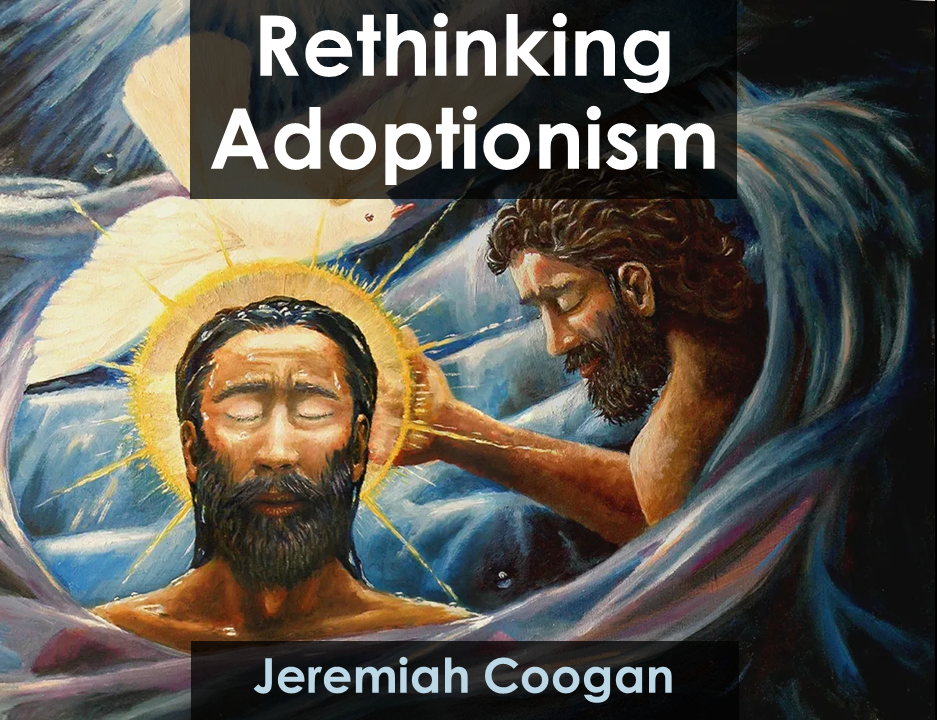
523 Rethinking Adoptionism (Jeremiah Coogan)
Listen to this episode on Spotify or Apple Podcasts For centuries heresy hunters have labeled those who deny the pre-existence of Jesus "adoptionists." This ancient category was based on the idea some Christian groups denied the virgin birth, thinking instead that Jesus became the son of God at his baptism when God adopted him. Modern scholars such as Bart Ehrman and Michael Bird employ this term to describe several early unitarian Christian groups. My guest today is Dr. Jeremiah Coogan, a scholar of the New Testament and early Christianity. He's written a really helpful journal article analyzing the early so-called adoptionist groups. His conclusion? None of them actually qualifies as adoptionists. https://youtu.be/zPL25MPwvbM —— Links —— Read Jeremiah Coogan's article here Visit Professor Coogan's faculty page More episodes on adoptionism See also my class on early church history Get the transcript of this episode Support Restitutio by donating here Join our Restitutio Facebook Group and follow Sean Finnegan on Twitter @RestitutioSF Leave a voice message via SpeakPipe with questions or comments and we may play them out on the air Intro music: Good Vibes by MBB Attribution-ShareAlike 3.0 Unported (CC BY-SA 3.0) Free Download / Stream: Music promoted by Audio Library. Who is Sean Finnegan? Read his bio here —— Interview Questions —— - Today I'm interviewing Dr. Jeremiah Coogan. He is the Assistant Professor of NT at the Jesuit School of Theology. He has a PhD from Notre Dame in Christianity and Judaism in Antiquity. Welcome to Restitutio, I'm so glad to talk with you today.- Today we're talking about your article "Rethinking Adoptionism: An Argument for Dismantling a Dubious Category," published in the Scottish Journal of Theology early this year. In this article you argue that the label of adoptionism is a problematic anachronism. To make sure everyone is up to speed on this issue, could you briefly describe what adoptionism is?- Describe the problem with modern scholars retrojecting Nicene controversies into earlier Christian history.- You argue that though there may have existed adoptionists somewhere in the ante-Nicene period, we have no evidence for them. What about Cerinthus?- Let's talk about the Ebionites? Weren't they adoptionists?- Do you think there's a connection between the Christian community of James in Jerusalem and the Ebionites?- What about Theodotus? He and his followers are often cited as adoptionists, but they affirmed the virginal conception of Christ, right? - Let's move on to Paul of Samosata. I see you cited Paul Sample. I got a hold of his dissertation from Northwestern a little while ago and was impressed to see he had collected and translated so many sources about Paul. What do you make of Paul of Samosata's christology?- So your conclusion after analyzing the evidence is that none of these authors were adoptionists? Why
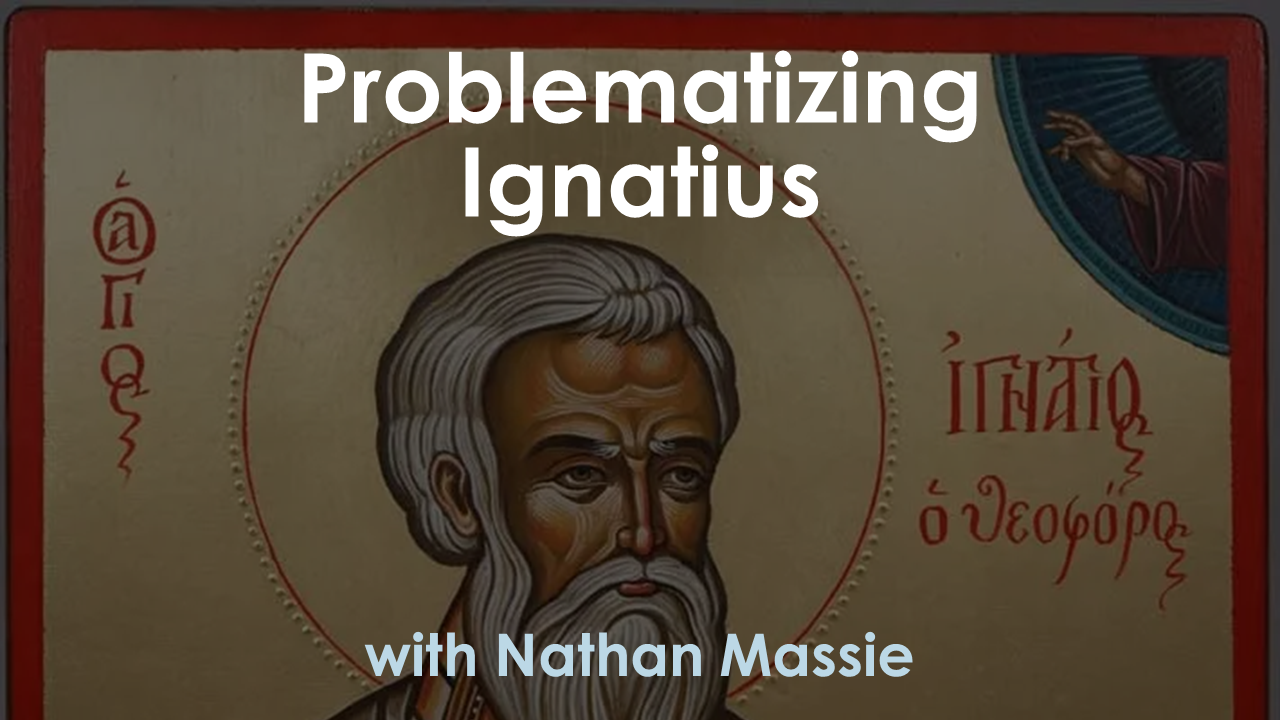
522 Problematizing Ignatius of Antioch’s Middle Recension (Nathan Massie)
Listen to this episode on Spotify or Apple Podcasts Ignatius of Antioch lived in the first generation of Christians after the apostles died during the late first and early second century. Modern day apologists regularly point to Ignatius' letters to prove the antiquity of the deity of Christ and one-bishop church governance (monarchical episcopate). But did you know that Ignatius' letters have survived in three different versions or recensions? Although most scholars and textbooks recognize the middle recension as authentic Ignatius, rejecting the shorter and longer versions, my guest today, Pastor Nathan Massie, says otherwise. He argues that the shorter recension is the most authentic. https://www.youtube.com/watch?v=pUUesuqB0pw —— Links —— Support Pastor Nathan Massie to go to grad school at GoFundMe Check out these other episodes that mention Ignatius of Antioch Take our Early Church History class on the web, Apple Podcasts, Spotify, or YouTube. Get the transcript of this episode Support Restitutio by donating here Join our Restitutio Facebook Group and follow Sean Finnegan on Twitter @RestitutioSF Leave a voice message via SpeakPipe with questions or comments and we may play them out on the air Intro music: Good Vibes by MBB Attribution-ShareAlike 3.0 Unported (CC BY-SA 3.0) Free Download / Stream: Music promoted by Audio Library. Who is Sean Finnegan? Read his bio here
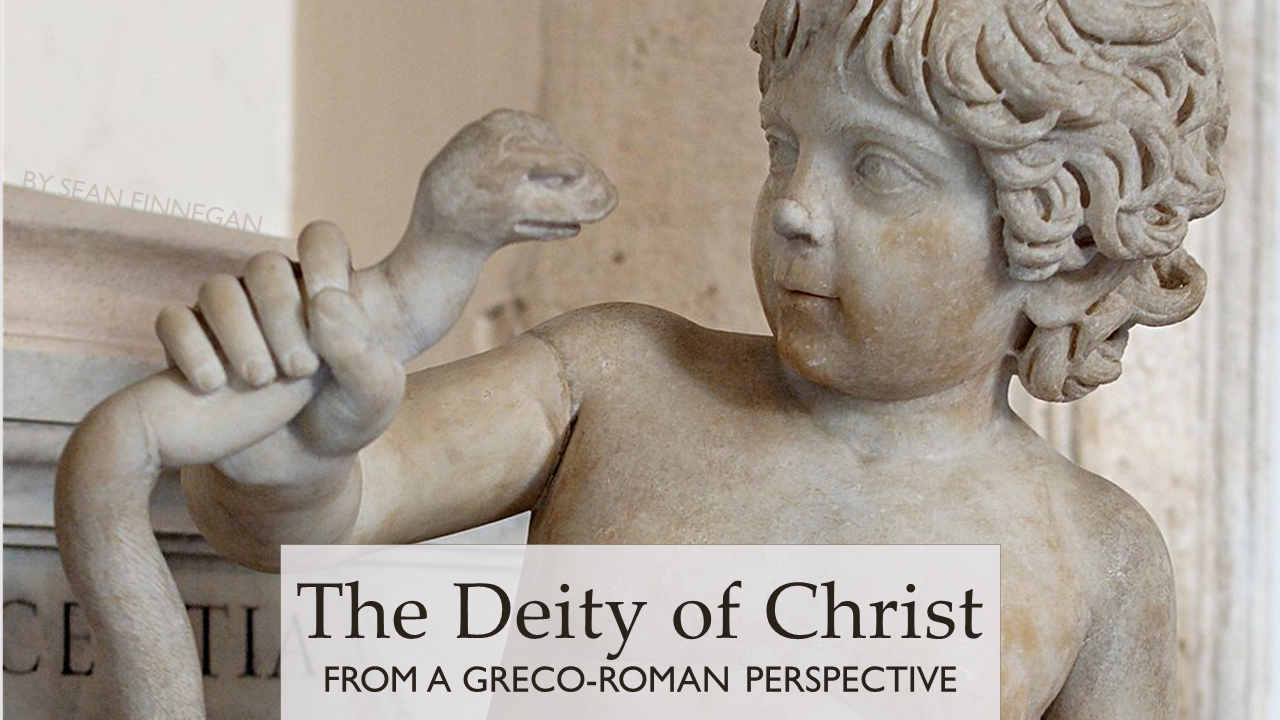
521 The Deity of Christ from a Greco-Roman Perspective (Sean Finnegan)
Let’s face it the New Testament probably calls Jesus God (or god) a couple of times and so do early Christian authors in the second century. However, no one offers much of an explanation for what they mean by the title. Did early Christians think Jesus was God because he represented Yahweh? Did they think he was God because he shared the same eternal being as the Father? Did they think he was a god because that’s just what they would call any immortalized human who lived in heaven? In this presentation I focus on the question from the perspective of Greco-Roman theology. Drawing on the work of David Litwa, Andrew Perriman, Barry Blackburn, and tons of ancient sources I seek to show how Mediterranean converts to Christianity would have perceived Jesus based on their cultural and religious assumptions. Listen to this episode on Spotify or Apple Podcasts —— Links —— See more scholarly articles by Sean Finnegan Get the transcript of this episode Support Restitutio by donating here Join our Restitutio Facebook Group and follow Sean Finnegan on Twitter @RestitutioSF Leave a voice message via SpeakPipe with questions or comments and we may play them out on the air Intro music: Good Vibes by MBB Attribution-ShareAlike 3.0 Unported (CC BY-SA 3.0) Free Download / Stream: Music promoted by Audio Library. Who is Sean Finnegan? Read his bio here Below is the paper presented on October 20, 2023 in Springfield, Ohio at the 3rd annual Unitarian Christian Alliance Conference. Access this paper on Academia.edu to get the pdf. Full text is below, including bibliography and end notes. Introduction When early Christian authors called Jesus “god” (or “God”) what did they mean?[1] Modern apologists routinely point to pre-Nicene quotations in order to prove that early Christians always believed in the deity of Christ, by which they mean that he is of the same substance (homoousios) as the Father. However, most historians agree that Christians before the fourth century simply didn’t have the cognitive categories available yet to think of Christ in Nicene or Chalcedonian ways. If this consensus is correct, it behooves us to consider other options for defining what early Christian authors meant. The obvious place to go to get an answer to our initial question is the New Testament. However, as is well known, the handful of instances in which authors unambiguously applied god (θεός) to Christ are fraught with textual uncertainty, grammatical ambiguity, and hermeneutical elasticity.[2] What’s more, granting that these contested texts[3] all call Jesus “god” provides little insight into what they might mean by that phrase. Turning to the second century, the earliest handful of texts that say Jesus is god are likewise textually uncertain or terse.[4] We must wait until the second half
520 In the Form of a God (Andrew Perriman)
Listen to this episode on Spotify or Apple Podcasts Philippians 2.6-11 has generated an immense amount of scholarly literature such as journal articles and monographs not to mention blog posts, video lectures, and podcasts. What does the enigmatic phrase "in the form of God" mean? Did Paul intend us to think Jesus refused to grasp at equality with God or that he refused to exploit the equality he already had? What does it mean that Jesus emptied himself? Today we are getting into the weeds in order to understand what Philippians 2 is all about. I don't want to say too much before you get a chance to listen, but I can at least tell you this: Dr. Perriman does not believe it's about a pre-existent being becoming a human. "Morphe is never used of the one living God, the one true God, for the simple reason that it always has reference to the external appearance of an object or a person or a god." -Andrew Perriman My guest today is Andrew Perriman who has a degree in English Language and Literature from Oxford as well as an MPhil and PhD from the London School of Theology where he currently works as an Associate Research Fellow. He teaches New Testament and works with graduate students on biblical interpretation. See also the previous episode on the other texts in Paul's epistle that traditional Christians think teach Jesus pre-existed. https://youtu.be/pLBX_DA1acQ —— Links —— Follow Andrew Perriman at his postost blog Get In the Form of a God from Wipf & Stock or from Amazon Check out these previous episodes about pre-existence Get the transcript of this episode Support Restitutio by donating here Join our Restitutio Facebook Group and follow Sean Finnegan on Twitter @RestitutioSF Leave a voice message via SpeakPipe with questions or comments and we may play them out on the air Intro music: Good Vibes by MBB Attribution-ShareAlike 3.0 Unported (CC BY-SA 3.0) Free Download / Stream: Music promoted by Audio Library. Who is Sean Finnegan? Read his bio here
519 No Pre-Existence in Paul? (Andrew Perriman)
Listen to this episode on Spotify or Apple Podcasts My guest today is Dr. Andrew Perriman of London who will discuss his recent book In the Form of a God, which is part of the Studies in Early Christology series. (Read Perriman's helpful summary of the book here.) The focus for our conversation is looking at the subject of pre-existence in Paul's epistles. The question before us is whether Paul taught or assumed that Christ had a literal prehuman career prior to his birth. In this interview we'll cover five of the six major texts, including Galatians 4.4, 1 Corinthians 8.6, 1 Corinthians 10.4, 2 Corinthians 8.9, and Colossians 1.15-16. Next week we'll tackle Philippians 2. Andrew Perriman has a degree in English Language and Literature from Oxford and an MPhil and PhD from the London School of Theology where he currently works as an Associate Research Fellow. He teaches New Testament works with graduate students on biblical interpretation. https://youtu.be/KfuCJCGVY00 —— Links —— Follow Andrew Perriman at his postost blog Get In the Form of a God from Wipf & Stock or from Amazon Check out these previous episodes about pre-existence Get the transcript of this episode Support Restitutio by donating here Join our Restitutio Facebook Group and follow Sean Finnegan on Twitter @RestitutioSF Leave a voice message via SpeakPipe with questions or comments and we may play them out on the air Intro music: Good Vibes by MBB Attribution-ShareAlike 3.0 Unported (CC BY-SA 3.0) Free Download / Stream: Music promoted by Audio Library. Who is Sean Finnegan? Read his bio here
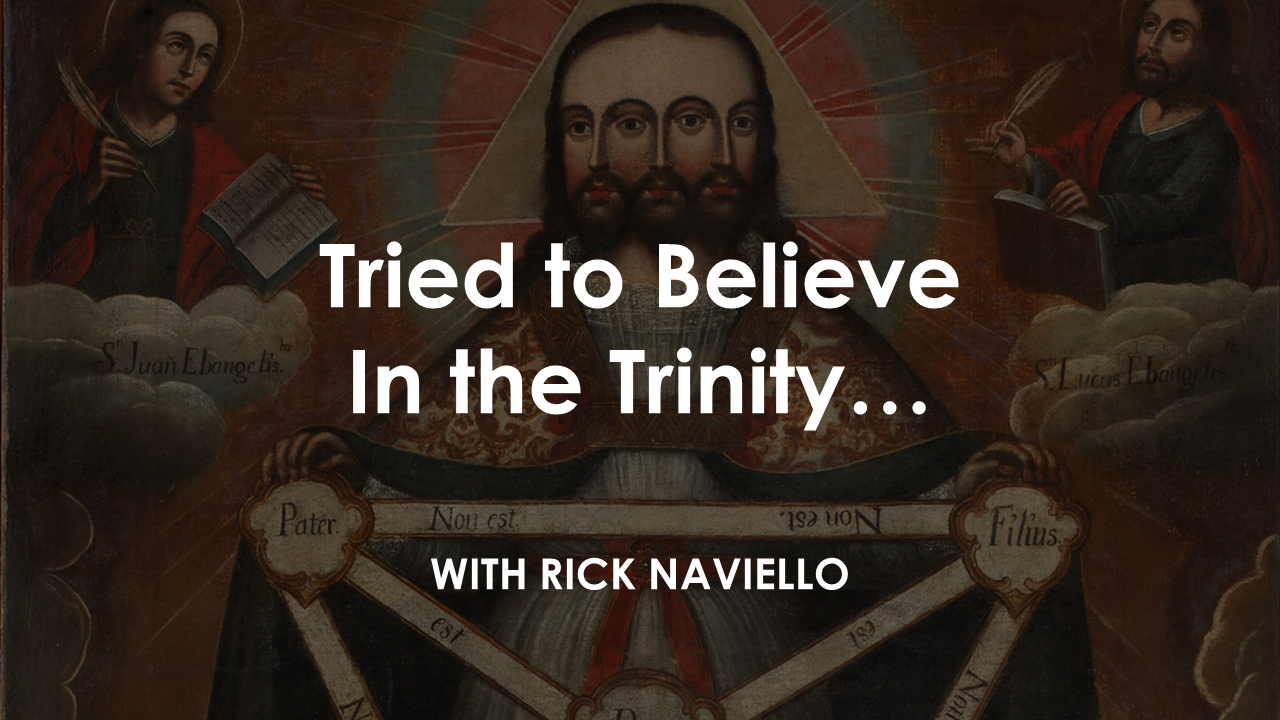
518 Tried to Believe in the Trinity (Rick Naviello)
Listen to this episode on Spotify or Apple Podcasts We've all heard plenty of stories of Trinitarians who begin questioning their received teaching and eventually become Unitarian. However, today, we're bringing you a story that's a little different. My guest is Rick Naviello who held a biblical unitarian view of Jesus for decades before attending evangelical churches and really trying to believe in the Trinity. He did everything he could to convince himself it was true. He thought he had succeeded until... Well, I don't want to give away the punchline, but let's just say he's more convinced of his biblical unitarian faith than ever. (And church history was involved.) https://www.youtube.com/watch?v=NiKgnzXcOes —— Links —— Get the transcript of this episode More testimonies here Check out the Early Church History class to learn about the development of the Trinity on Apple Podcasts, Spotify, or YouTube. Support Restitutio by donating here Join our Restitutio Facebook Group and follow Sean Finnegan on Twitter @RestitutioSF Leave a voice message via SpeakPipe with questions or comments and we may play them out on the air Intro music: Good Vibes by MBB Attribution-ShareAlike 3.0 Unported (CC BY-SA 3.0) Free Download / Stream: Music promoted by Audio Library. Who is Sean Finnegan? Read his bio here

517 Walking with God (Josh and Daisy Jones)
Listen to this episode on Spotify or Apple Podcasts Have you ever read miracle stories in the bible and asked yourself, "I wonder if this happens today?" My guests today are Josh and Daisy Jones of the UK who share their testimonies of God intervening in and through their lives. Hear about Josh's miraculous healing from asthma, Daisy's baptism when a Muslim spoke in tongues, and various adventures walking with God both at home and abroad, especially in Israel. They also talk about their interesting journey to unitarianism as well as their plans to organize the first UCA (Unitarian Christian Alliance) conference in the London area in the summer of 2024. —— Links —— Get the transcript of this episode For more about the Unitarian Christian Alliance (UCA) see unitarianchristianalliance.org. Check out episode 500 The Gifts of the Spirit in Early Christianity See also our 7-part series on the Holy Spirit, covering various major views of the manifestations of the spirit, especially speaking in tongues. Take a listen to episode 310 Are Gifts of the Spirit Available Today? with Sam Storms Lastly, check out these previous episodes on healing Support Restitutio by donating here Join our Restitutio Facebook Group and follow Sean Finnegan on Twitter @RestitutioSF Leave a voice message via SpeakPipe with questions or comments and we may play them out on the air Intro music: Good Vibes by MBB Attribution-ShareAlike 3.0 Unported (CC BY-SA 3.0) Free Download / Stream: Music promoted by Audio Library. Who is Sean Finnegan? Read his bio here
516 Sean Finnegan on Restoring Authentic Christianity (Tom Huszti)
Listen to this episode on Spotify or Apple Podcasts Recently Tom Huszti interviewed me for his YouTube channel, the Unitarian Anabaptist. We talked about the importance of geography, archeology, and Greco-Roman history for interpreting the bible, especially the New Testament. Next we delved into early church history, starting with the earliest forms of Jewish Christianity in the first and second centuries. We talked about the Jerusalem church, the Nazarenes, and the Ebionites. Next we considered the persecution many Christians faced at the hands of the Romans for their unwillingness to give their ultimate allegiance to Caesar. The conversation was wide ranging, but what came through over and over is the importance of studying the bible and history in order to restore authentic Christianity and live it out today. https://www.youtube.com/watch?v=_KefOimH6ZU —— Links —— Get the transcript of this episode For the trip to Greece and Turkey with Jerry Wierwille, see the itinerary here and the map here. Follow Huszti's YouTube Channel, the Unitarian Anabaptist Check out episode 478 Unitarian Anabaptist (Tom Huszti) Get the free class on Early Church History here. Support Restitutio by donating here Join our Restitutio Facebook Group and follow Sean Finnegan on Twitter @RestitutioSF Leave a voice message via SpeakPipe with questions or comments and we may play them out on the air Intro music: Good Vibes by MBB Attribution-ShareAlike 3.0 Unported (CC BY-SA 3.0) Free Download / Stream: Music promoted by Audio Library. Who is Sean Finnegan? Read his bio here
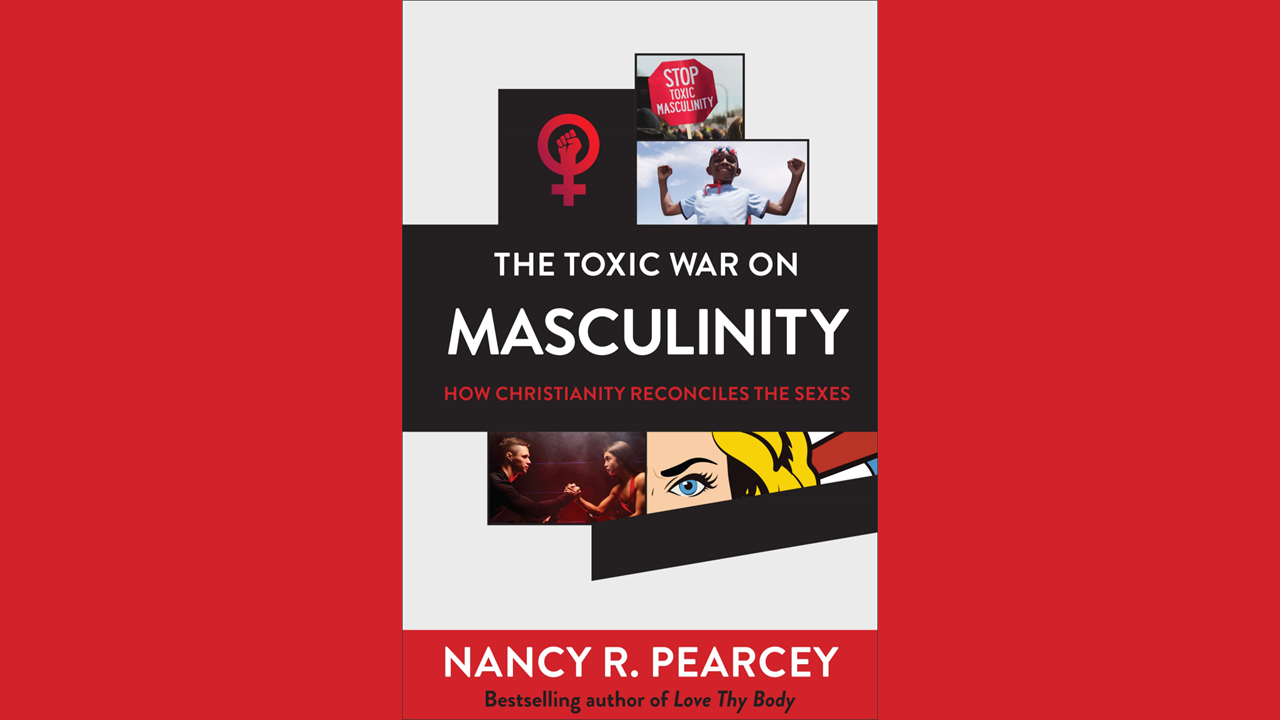
515 The Toxic War on Masculinity (Nancy Pearcey)
Listen to this episode on Spotify or Apple Podcasts I'm so delighted to present you with an interview I did with Professor Nancy Pearcey, an author whose books have significantly helped me understand and live out my faith better. Today we're talking about masculinity. Have you noticed the critical and uncharitable tone in our culture towards men? Although our society celebrates women and girls who excel at sports, education, and business, men and boys often receive nothing but criticism, even outright hostility. Some even say masculine men are the cause of all the problems with the world. Listen in as I ask Pearcey about her recent book and how Christians should approach the whole issue of masculinity both biblically and historically. https://www.youtube.com/watch?v=fOmzSm2_4RI Here are my 8 myths about masculinity that Pearcey responded to in this episode: Bible-believing Christians are slightly more likely to divorce than non-Christians or liberal Christians. Bible-believing Christian men are more likely to be harsh and abusive to their wives and children The Bible's endorsement of male patriarchy causes toxic masculine behaviors. Women initiated the suffragette movement in America because they wanted to be treated as individuals of equal value. Our time is the first when women in America have publicly accused men of toxic behavior. Men have traditionally worked outside of the home and have been the breadwinners. Traditionally women focused on keeping the home and raising the children rather than contributing economically. Blocking or limiting men's testosterone will solve the problems our society has with badly behaved men. Professor Nancy Pearcey is the author of The Toxic War on Masculinity: How Christianity Reconciles the Sexes,as well as Love Thy Body,The Soul of Science, Saving Leonardo, Finding Truth, and Total Truth. She is professor and scholar in residence at Houston Christian University. She's been quoted in The New Yorker and Newsweek, highlighted as one of the five top women apologists by Christianity Today, and hailed in The Economist as "America's preeminent evangelical Protestant female intellectual." —— Links —— Get the transcript of this episode Get The Toxic War on Masculinity here More about Pearcey at NancyPearcey.com Support Restitutio by donating here Join our Restitutio Facebook Group and follow Sean Finnegan on Twitter @RestitutioSF Leave a voice message via SpeakPipe with questions or comments and we may play them out on the air Intro music: Good Vibes by MBB
514 Aphrahat and Early Persian Christianity (Sam Tideman)
Although he's one of the lesser known Christian authors of the fourth century, Aphrahat is extremely important for our understanding of early Persian Christianity prior to the advent of Islam in the region. Amazingly a full-length book of his survives, called The Demonstrations. In today's interview I ask about Aphrahat's beliefs in general and his christology in particular. My guest today is Sam Tideman. Other than a master's degree from Harvard and working full time for Google as a data scientist, Tideman is also the host of Transfigured, a Youtube channel and podcast that covers a wide range of Christian topics, including church history our topic for today. He's had all kinds of guests on his show, including many notable scholars. Jordan Peterson even shared a clip of Tideman's conversation with John Vervaeke on social media a while back. But, today our focus is on the research Tideman has done on Aphrahat. Listen to this episode on Spotify or Apple Podcasts https://youtu.be/8QpqvZYkI4E —— Links —— Get the transcript of this episode Support Restitutio by donating here Join our Restitutio Facebook Group and follow Sean Finnegan on Twitter @RestitutioSF Leave a voice message via SpeakPipe with questions or comments and we may play them out on the air Intro music: Good Vibes by MBB Attribution-ShareAlike 3.0 Unported (CC BY-SA 3.0) Free Download / Stream: Music promoted by Audio Library. Who is Sean Finnegan? Read his bio here
513 The Historical Jesus and the Gospel of John (Craig Blomberg)
Have you heard of the quests for the historical Jesus? This has been going on for two and a half centuries. It has produced a massive amount of literature and occupied the minds of some of the most impressive biblical scholars over the years. What's all this about? Why do we need to search for the historical Jesus? Isn't he right there in the Gospels that we find in the New Testament? My guest today is Craig Blomberg whose new book, Jesus the Purifier lays out a thorough yet accessible survey of the four quests for the historical Jesus. He also explains why bible-believing Christians should care about critical scholarship. Lastly, he describes how his own work on the Gospel of John has revealed some exciting insights that challenge the Church today. Listen to this episode on Spotify or Apple Podcasts https://youtu.be/gJtEbv56xNg —— Links —— Get the transcript of this episode Check out Craig Blomberg's books on Amazon Listen to Blomberg's presentation on handling money in 4: A Biblical Theology of Finance Support Restitutio by donating here Join our Restitutio Facebook Group and follow Sean Finnegan on Twitter @RestitutioSF Leave a voice message via SpeakPipe with questions or comments and we may play them out on the air Intro music: Good Vibes by MBB Attribution-ShareAlike 3.0 Unported (CC BY-SA 3.0) Free Download / Stream: Music promoted by Audio Library. Who is Sean Finnegan? Read his bio here

512 Healing from Bullying – 2 (Jon Nessle)
We continue in our conversation on the topic of healing from bullying. This episode applies not only to those who suffered in school, but also should prove helpful to any who have suffered abuse later in life as well. Jon Nessle taps into Jesus' Sermon on the Mount to gain practical advice on what to do to find wholeness. In particular, he went into much greater detail about forgiveness and praying for one's abuser. Once again, Nessle's example and personal testimony help illustrate how these principles work in real life. Listen to this episode on Spotify or Apple Podcasts https://youtu.be/QwLAXO_T_B8 —— Links —— Support Restitutio by donating here Join our Restitutio Facebook Group and follow Sean Finnegan on Twitter @RestitutioSF Leave a voice message via SpeakPipe with questions or comments and we may play them out on the air Intro music: Good Vibes by MBB Attribution-ShareAlike 3.0 Unported (CC BY-SA 3.0) Free Download / Stream: Music promoted by Audio Library. Who is Sean Finnegan? Read his bio here

511 Healing from Bullying – 1 (Jon Nessle)
Were you bullied in school? How did you deal with it? Do you still harbor feelings of bitterness and vengefulness in your heart towards those who mistreated and abused you? Today my guest is Jon Nessle who faced ruthless ridicule and physical abuse from kindergarten to the tenth grade. He shares seven points to help you get the healing you need to let go of past trauma and experience God's healing. You have value; you are special. Find something you're good at and invest in that, especially education. Sublimate your emotional urges into good outlets. Don't allow rage to build and blow. Get help. Tell you guidance counselor or pastor. Cast your cares upon God. Pray. Forgive the bully. Refuse to seek vengeance for yourself. Pray for your enemies. Listen to this episode on Spotify or Apple Podcasts https://www.youtube.com/watch?v=C-VuEBrWPTE —— Links —— Support Restitutio by donating here Join our Restitutio Facebook Group and follow Sean Finnegan on Twitter @RestitutioSF Leave a voice message via SpeakPipe with questions or comments and we may play them out on the air Intro music: Good Vibes by MBB Attribution-ShareAlike 3.0 Unported (CC BY-SA 3.0) Free Download / Stream: Music promoted by Audio Library. Who is Sean Finnegan? Read his bio here

510 Hospitality Evangelism (Sean Finnegan)
Do you struggle with evangelism? Do you feel like you should tell others about the gospel and yet, you can't seem to find a way to do that? If so, then this episode is for you. Part of our aim here at Restitutio is not just exploring the bible and church history to recover authentic Christianity, but also figuring out how to live your faith today. This means we sometimes have practical episodes. In this presentation, you'll learn about hospitality evangelism. The idea is simple: invite neighbors or coworkers over for dinner. Rosaria Butterfield put it this way: make strangers neighbors and neighbors family. This presentation will not only give you some useful advice on how to be faithful to the Great Commission, but will also provide you with some comedic examples of what not to do. Listen to this episode on Spotify or Apple Podcasts https://www.youtube.com/watch?v=MLyvaJoK2OQ —— Links —— See other episodes about evangelism Check out the evangelism seminar of Josh Anderson Get Rosaria Butterfield's book: The Gospel Comes with a House Key Support Restitutio by donating here Join our Restitutio Facebook Group and follow Sean Finnegan on Twitter @RestitutioSF Leave a voice message via SpeakPipe with questions or comments and we may play them out on the air Intro music: Good Vibes by MBB Attribution-ShareAlike 3.0 Unported (CC BY-SA 3.0) Free Download / Stream: Music promoted by Audio Library. Who is Sean Finnegan? Read his bio here

509 Theological Options for Understanding Non-Human Intelligence (Kegan Chandler)
Today we are continuing where we left off with part 2 of my interview with Kegan Chandler. In our last episode we spent most of our time talking about UAPs and the evidence that has come to light for their existence as well as non-human origin. Today, we are shifting gears to focus on the faith question. If aliens exist, what would that mean for Christian theology? What biblical categories exist to think about non-human intelligences (NHIs)? The answers Chandler provides may surprise you. Listen to this episode on Spotify or Apple Podcasts —— Links —— See other episodes with Kegan Chandler Follow Chandler on Adademia.edu Check out his books on Amazon Support Restitutio by donating here Join our Restitutio Facebook Group and follow Sean Finnegan on Twitter @RestitutioSF Leave a voice message via SpeakPipe with questions or comments and we may play them out on the air Intro music: Good Vibes by MBB Attribution-ShareAlike 3.0 Unported (CC BY-SA 3.0) Free Download / Stream: Music promoted by Audio Library. Who is Sean Finnegan? Read his bio here —— Notes —— 5. You seem to be pointing to a potential overlap between science and what religions have been saying. How do you see this information impacting the ongoing discussion about “faith” versus “science”? – History of separation of methodological categories – a convergence of discussion with scientific or non-religious institutions – example of Bohr, etc. (short answer) 6. Do you think this is a difficult topic for Christians in particular to investigate? – Explain (long answer) 7. Are Christian theological discussions about the existence of NHIs something new, or something that’s been motivated only by recent events in the news? Have Christian theologians been interested in this topic before? – Brief history of this discussion in Western thought – Greek philosophers – anthroposolism vs. cosmic pluralism – The Church Fathers – Modern “exotheology” (CS Lewis, etc) – Contemporary Evangelical UFO/Alien demonological and eschatological literature (short answer) 8. In what ways have theologians imagined that the existence of extraterrestrial life or NHIs could affect Christian theology? – soteriology – Christology/The Incarnation – doctrine of creation; evolution (medium answer) 9. What are some interpretive options for UAPs/NHI from a Christian theological perspective? Most important: a realization of our current category problem. “Aliens” vs. “angels.”<– explain in detail >>>>Christians already believe in NHIs.<<<<< (!) From here, the options: – “Demons” or “fallen angels” (negative) – “good angels” (positive) – Or a mixture of the above – The “gods” as referred to in the OT and in ANE literature; or the “divine council” – Simply other creatures of god who aren’t referenced in the Bible (long answer)

508 Are UFOs Real? (Kegan Chandler)
Last month, the US Congress held a hearing with three whistle-blowers who provided testimony about UFOs. Yes, I just said UFOs. No, I haven’t lost my mind or started subscribing to the tabloids. This is a topic that has moved from the fringes of conspiracy land right into serious public hearings in the US government. In today’s episode I’m interviewing Kegan Chandler who has been seriously thinking about this subject for many years. Kegan Chandler is a historian of religion currently working on his Ph.D. in Religious Studies at the University of Cape Town where he is researching monotheism in Japanese religions. He also holds a Master of Theology degree from Campbellsville University. He is the author of several books and articles and currently writes for his blog, Exploring Religion. Now, I know this is a Christian theology podcast, but we need to talk about this subject, and Chandler is the guy to guide us. He’s intimately familiar with the evidence and has thought this topic through. I think you’ll agree that there are significant theological implications if it turns out non-human intelligence is behind these unexplained flying objects. But, before we get to that, we need to first talk about the evidence and different theories for what these objects are. Listen to this episode on Spotify or Apple Podcasts —— Links —— See other episodes with Kegan Chandler Check out his books on Amazon Follow Chandler on Adademia.edu Support Restitutio by donating here Join our Restitutio Facebook Group and follow Sean Finnegan on Twitter @RestitutioSF Leave a voice message via SpeakPipe with questions or comments and we may play them out on the air Intro music: Good Vibes by MBB Attribution-ShareAlike 3.0 Unported (CC BY-SA 3.0) Free Download / Stream: Music promoted by Audio Library. Who is Sean Finnegan? Read his bio here —— Notes —— 1. What are UAPs and NHIs (non human intelligences)? Where did these terms come from and why are people using them now? 2. What are the possible explanations of UAPs? – Prosaic hypotheses (incl. advanced human technology) – Extra-terrestrial hypothesis – Crypto-terrestrial hypothesis – Ultra-terrestrial / Inter-dimensional – Time-traveling humans hypothesis – Jacque Valle’s Control System hypothesis – Reverse Engineered technology hypothesis – Warning: fallacy of oversimplification 3. Why is the mundane explanation that these are experimental craft of terrestrial origin problematic? Explain. – Government studies – some still “unexplained” – Reported flight capabilities/characteristics – Near-peer adversaries? – Older reports – Credible sources’ testimony 4. We sometimes hear that news of “aliens” would somehow negatively affect religion on planet earth. What impact do you think widespread acknowledgemen
507 Eating Christ’s Flesh – 2 (Steven Nemes)
Today we are picking up where we left off with Dr. Steven Nemes. We've been talking about communion (also called the eucharist or the Lord's supper). He's been presenting a case for memorialism. Today we begin with the words of institution, which Jesus gave at the last supper. What did he mean when he said, "This is my body?" Next I ask Nemes about church history and what he's learned there. He talks about the Didache, Ignatius of Antioch, and Cyril of Jerusalem. Then I ask him how we should engage with the eucharist today. His answer may surprise you. Listen to this episode on Spotify or Apple Podcasts —— Links —— See other episodes with Steven Nemes Check out Nemes’ personal website, blog on substack, and YouTube channel Follow Nemes on Twitter @snemes2 Support Restitutio by donating here Join our Restitutio Facebook Group and follow Sean Finnegan on Twitter @RestitutioSF Leave a voice message via SpeakPipe with questions or comments and we may play them out on the air Intro music: Good Vibes by MBB Attribution-ShareAlike 3.0 Unported (CC BY-SA 3.0) Free Download / Stream: Music promoted by Audio Library. Who is Sean Finnegan? Read his bio here
506 Eating Christ’s Flesh – 1 (Steven Nemes)
What do you think happens during communion? In my interview today, Dr. Steven Nemes provides a biblical, historical, and theological defense for memorialism--the idea that the eucharist memorializes what Christ has done (and will do) for us rather than actually becoming Christ in some metaphysical sense. Thus, the bread and wine signify or represent Christ's body and blood without mystically becoming them. I think you'll appreciate not only Nemes' argument, but also his clear and logical approach. Listen to this episode on Spotify or Apple Podcasts https://www.youtube.com/watch?v=8oCivff4ujQ —— Links —— See other episodes with Steven Nemes Check out Nemes’ personal website, blog on substack, and YouTube channel Follow Nemes on Twitter @snemes2 Support Restitutio by donating here Join our Restitutio Facebook Group and follow Sean Finnegan on Twitter @RestitutioSF Leave a voice message via SpeakPipe with questions or comments and we may play them out on the air Intro music: Good Vibes by MBB Attribution-ShareAlike 3.0 Unported (CC BY-SA 3.0) Free Download / Stream: Music promoted by Audio Library. Who is Sean Finnegan? Read his bio here

505 The Key of Truth: A Monument of Armenian Unitarianism
The Key of Truth is a fascinating book, written by a sect of Armenian Unitarian Christians in the 1700s. Originally under Muslim rule, this group of Christians migrated to Russian-controlled Armenia in the nineteenth century. Sadly, they faced investigation, persecution, fines, and probably exile at the hands of the Armenian Church authorities. Although lost to history, this group of twenty-five families lives on in their intriguing and bold surviving text--the Key of Truth. Translated into English by Frederick Cornwallis Conybeare, this book testifies to a biblical unitarian community trying to survive in a hostile environment. Here's the original paper (available to read online or to download as a pdf) that accompanied this presentation. It delves into the proposal that the Key of Truth was actually a medieval Paulician document. I conclude that the arguments of Conybeare (19th c.) and Garsoïan (20th c.) fail to stand up to scrutiny, especially in light of the work of Hamilton (20th c.) and Ohanjanyan (21st c.). Listen to this episode on Spotify or Apple Podcasts https://www.youtube.com/watch?v=y4hQa-3g_YE —— Links —— Read the Key of Truth for yourself (Conybeare translation) See my original paper (available to read online or to download as a pdf) More Restitutio resources on Christian history Support Restitutio by donating here Join our Restitutio Facebook Group and follow Sean Finnegan on Twitter @RestitutioSF Leave a voice message via SpeakPipe with questions or comments and we may play them out on the air Intro music: Good Vibes by MBB Attribution-ShareAlike 3.0 Unported (CC BY-SA 3.0) Free Download / Stream: Music promoted by Audio Library. Who is Sean Finnegan? Read his bio here
504 Early Church History 22: Byzantine Empire from Constantine to Justinian
This is part 22 of the Early Church History class. This episode aims to wrap up our early church history class. We'll cover relics and pilgrimage, emperors Zeno and Justinian, as well as the theological battles that continued to rage in the 5th and 6th centuries. Unsurprisingly the christological controversy of the 5th century did not come to an end when the emperor endorsed the Council of Chalcedon of 451 that declared Jesus to have two natures "unconfusedly, unchangeably, indivisibly, and inseparably." In addition to covering the Second Council of Constantinople of 553, we'll also briefly consider how the dual natures doctrine continued to foment division resulting in the Third Council of Constantinople in 681 and the Second Council of Nicea in 787. Listen to this episode on Spotify or Apple Podcasts https://www.youtube.com/watch?v=59zyj9dMH4k&list=PLN9jFDsS3QV2lk3B0I7Pa77hfwKJm1SRI&index=22 —— Links —— More Restitutio resources on Christian history See other classes here Support Restitutio by donating here Join our Restitutio Facebook Group and follow Sean Finnegan on Twitter @RestitutioSF Leave a voice message via SpeakPipe with questions or comments and we may play them out on the air Intro music: Good Vibes by MBB Attribution-ShareAlike 3.0 Unported (CC BY-SA 3.0) Free Download / Stream: Music promoted by Audio Library. Who is Sean Finnegan? Read his bio here —— Notes —— Byzantine Beginnings 293 Diocletian initiated the division between east and west with his tetrarchy. 330 Constantine built a “New Rome” on the cite of old Byzantium, naming it Constantinople. Constantine’s mother, Helena, initiated the pilgrimage movement. 381 Egeria wrote a travelogue to her friends that influenced later pilgrimages. Helena also sent Constantine relics of the true cross. 397 Martin of Tours died, leaving behind his cloak, which became a famous relic. Fifth Century Developments Theodosius I (r. 379-392) had outlawed pagan sacrifices and endorsed Trinitarian Christianity as the official religion of the Roman Empire. Arian Germanic tribes moved into the western Roman Empire and began taking territory. 378 Visigoths win at Adrianople. 410 Alaric sacked Rome. 455 Vandals sacked Rome. 476 Odoacer deposes the last Roman Augustus. 493 Theodoric and the Ostrogoths took Italy. Zeno’s Henotikon 451 Chalcedon affirmed the dyophysite position (two natures in one person). 488 Byzantine Emperor Zeno attempted to reconcile monophysites and dyophysites by condemning Eutyches and Nestorius and approving Cyril’s 12 anathemas (Henotikon). Chalcedon remained controversial with Christianity now split into several groups: Arian Germanic kingdoms, monophysites (Egypt and Ethiopia), Chalcedonian dyophysites (Rome & Constantinople), and Nestorian dyophysites (Syria and Persia). Justinian (482-565) 525 Justinian married Theodora and becam
503 Early Church History 21: The Dual Natures Controversy of the Fifth Century
This is part 21 of the Early Church History class. In the fifth century Christians waged a theological civil war that ended in a massive church split. The issue was over the dual natures of Christ. How was he both divine and human? Did he have a human soul and a divine soul? Did his two natures fuse into one new nature? Although such abstruse distinctions would hardly get anyone’s blood boiling today, these doctrinal distinctives resulted in a zero sum war for supremacy involving not only theological argumentation, but also political conniving and outright gangster tactics in the battles that led to the famous Council of Chalcedon in 451. Though church history textbooks often whitewash this period of theological creativity, this episode will give you a brief but unapologetic overview of the major players and their deeds in the dual natures controversy. Listen to this episode on Spotify or Apple Podcasts —— Links —— More Restitutio resources on Christian history See other classes here Support Restitutio by donating here Join our Restitutio Facebook Group and follow Sean Finnegan on Twitter @RestitutioSF Leave a voice message via SpeakPipe with questions or comments and we may play them out on the air Intro music: Good Vibes by MBB Attribution-ShareAlike 3.0 Unported (CC BY-SA 3.0) Free Download / Stream: Music promoted by Audio Library. Who is Sean Finnegan? Read his bio here —— Notes —— Options for Two Natures Athanasius (c. 357) affirmed Jesus as God and man but did not explain how the natures united. He called Mary Theotokos (God-bearer). Apollinarius of Laodicea (d. 382) said the Word became flesh without assuming a human mind (Apollinarianism). Gregory of Nazianzus (d. 390) condemned Apollinarius and said that what God has not assumed, he has not healed. Eutyches of Constantinople (380-456) said the divine and human natures combined to form one new nature (Eutychianism/Monophysitism) Nestorius (c. 429) denied Mary as Theotokos, calling her instead Christotokos, and allegedly taught that Christ had two distinct natures in two persons (Nestorianism/dyophysitism). Leo I said Christ had two natures united in person, though the two natures remained distinct (Chalcedonian dyophysitism). Condemning John Chrysostom John Chrysostom represented the Antiochene school of thought (as opposed to the Alexandrian). 397 Chrysostom became bishop of Constantinople. Eudoxia, wife of the emperor Arcadius, worked with Theophilus of Alexandria to depose Chrysostom. 403 Synod of the Oak deposed Chrysostom. 404 Chrysostom exiled. 407 Chrysostom marched to death Condemning Nestorius 428 Nestorius became bishop of Constantinople. He immediately began persecuting “heretics” as a defender of orthodoxy. 429 Anastasius of Antioch preached in Constantinople that no one should call Mary Pu
502 Early Church History 20: Early African, Armenian, and Asian Christianity
This is part 20 of the Early Church History class. So far we've been focusing primarily on Christianity within the Roman Empire in Europe, North Africa, and the Middle East--the land surrounding the Mediterranean Sea. Nevertheless, Christianity also spread south to Africa, north to Armenia, and east to Asia where it reached Persia, India, and China. Hopefully this session will counterbalance the Mediterranean focus we've had so far, expanding your perspective to be a little more global. Listen to this episode on Spotify or Apple Podcasts https://www.youtube.com/watch?v=Ni_EnPzxJ4k&list=PLN9jFDsS3QV2lk3B0I7Pa77hfwKJm1SRI&index=20&t=2890s&pp=iAQB —— Links —— See my lecture on YouTube: History of Christianity in Africa For more on Armenian Christianity, see The Key of Truth: A Monument of Armenian Unitarianism More Restitutio resources on Christian history See other classes here Support Restitutio by donating here Join our Restitutio Facebook Group and follow Sean Finnegan on Twitter @RestitutioSF Leave a voice message via SpeakPipe with questions or comments and we may play them out on the air Intro music: Good Vibes by MBB Attribution-ShareAlike 3.0 Unported (CC BY-SA 3.0) Free Download / Stream: Music promoted by Audio Library. Who is Sean Finnegan? Read his bio here —— Notes —— Africa First Century Jesus took refuge in Africa as a baby (Matthew 2:13-15) An African from Cyrene carried Jesus’ cross (Mark 15:21). At Pentecost, Jews from Egypt and Libya were present (Acts 2:10). At Antioch, Simeon called Niger and Lucius of Cyrene were part of the Jew-Gentile mixed church (Acts 13:1). Egypt By the 2nd c., New Testament scriptures were translated into Coptic. Alexandria was a center for Christianity (Clement, Origen, Arius, Alexander, Athanasius). Maghreb (North Africa) Christianity attested from at least the second century through martyrs of Scilla in Numidia and Perpetua and Felicitas in Carthage. Tertullian, Cyprian, Novatian, Donatus, and Augustine Ethiopia Frumentius and Edesius became slaves to the King of Axum. Athanasius of Alexandria ordained Frumentius a bishop. King Ezana became a Christian between 330 and 350. In the late 5th c., the nine saints came and founded monasteries, including at Debre Damo. In the 6th c., King Kaleb crossed the Red Sea to defeat Du Nawas, king of Himyar (Yemen). He then rebuilt the churches there and spread Christianity in the region. Nubia In the second half of the 6th c., Christian missionaries began converting key people in Makuria. Makuria became a mighty kingdom that held off the Muslims
501 Early Church History 19: Arian Kingdoms from Ulfilas to Clovis
This is part 19 of the Early Church History class. Even though the Roman Empire chose Nicene Christianity as it's "orthodoxy," subordinationist Christianity continued to exist, especially outside among the Germanic tribes. In this episode, you'll learn about Ulfilas the Missionary to the Goths who not only brought Christianity to these "barbarians," but also made them an alphabet and translated most of the bible into Gothic. Next, we'll briefly survey the major Germanic tribes, including the Visigoths, Ostrogoths, Vandals, Burgundians, Lombards, and finally the Franks. This little known chapter of history when the Arian kingdoms took over the Roman Empire had a massive effects on Europe and North Africa for centuries to come. Listen to this episode on Spotify or Apple Podcasts https://www.youtube.com/watch?v=jP9T3V1AWIs&list=PLN9jFDsS3QV2lk3B0I7Pa77hfwKJm1SRI&index=19&t=27s&pp=iAQB —— Links —— See also 494 Early Church History 12: Arius and Alexander of Alexandria and 423 One God 13: The Fourth Century More Restitutio resources on Christian history See other classes here Support Restitutio by donating here Join our Restitutio Facebook Group and follow Sean Finnegan on Twitter @RestitutioSF Leave a voice message via SpeakPipe with questions or comments and we may play them out on the air Intro music: Good Vibes by MBB Attribution-ShareAlike 3.0 Unported (CC BY-SA 3.0) Free Download / Stream: Music promoted by Audio Library. Who is Sean Finnegan? Read his bio here —— Notes —— Ulfilas, Missionary to the Goths 340 Subordinationist bishops ordained Ulfilas bishop to the Visigoths 341-347 lived with the Goths and preached to them Ulfilas translated the Bible into Gothic. Rule of Faith: “I believe in one God the Father, alone ingenerate and invisible, and in his only-begotten Son, our Lord and God, artificer and maker of the whole creation, who has nobody like him–therefore there is one God the Father of all who is also God of our God–and in one Holy Spirit, the power which illuminates and sanctifies, as Christ said after the resurrection to his apostles, and he (i.e. the Spirit) is not God nor our God, but the minister of Christ ... subordinate and obedient in all things to the Son, and the Son subordinate and obedient in all things to his God and Father…”[1] Huns The Huns were a nomadic confederation of Mongolian tribes who began entering Europe in the fourth century. Ammianus Marcellinus described them as utter savages who never bathed or changed their clothes and lived on their horses. Atilla the Hun (r. 434-453) attacked Persia, the Balkans, Constantinople, Gaul, and Italy, terrifying many within the Roman Empire (both East and West). Visigoths Eudoxius, B
500 Early Church History 18: The Gifts of the Spirit in Early Christianity
This is part 18 of the Early Church History class. I wonder how many Christians in the world today believe the gifts of the spirit ceased in the time of the apostles? I know there are quite a few. Many others, however, believe they are available today and make time for them in their worship services. This is one of those topics about which we don’t need to guess. We have the historical record and can just look and see if generations after the apostles continue to speak in tongues, prophecy, cast out demons, or perform miraculous healing. In today’s episode we’ll survey what the data say about the first five hundred of Christian history. We’ll also cover the Montanists, a lesser-known movement centered on prophecy, tongues, and asceticism. Listen to this episode on Spotify or Apple Podcasts —— Links —— Check out our series on gifts of the spirit with interviews from different perspectives here. More Restitutio resources on Christian history See other classes here Support Restitutio by donating here Join our Restitutio Facebook Group and follow Sean Finnegan on Twitter @RestitutioSF Leave a voice message via SpeakPipe with questions or comments and we may play them out on the air Intro music: Good Vibes by MBB Attribution-ShareAlike 3.0 Unported (CC BY-SA 3.0) Free Download / Stream: Music promoted by Audio Library. Who is Sean Finnegan? Read his bio here —— Notes —— Gifts of the Spirit in General Justin Martyr, Dialogue with Trypho 82.1; 88.1 Irenaeus of Lyons, Against Heresies 2.32.4 Tertullian of Carthage, On Baptism 20 Novatian of Rome, On the Trinity 29 Apostolic Constitutions 8.1-2 Speaking in Tongues and Prophecy Didache 11.7-12 Irenaeus of Lyons, Against Heresies 5.6.1 Tertullian of Carthage, Against Marcion 5.8; On the Soul 9 Hilary of Poitiers, On the Trinity 8.33 Montanism (Excursus) 165 – Montanus began speaking in tongues and prophesying, initiating a movement called the New Prophecy[1] Sayings of Montanus “Behold, man is like a lyre and I fly to him like a plectrum. Man sleeps and I stay awake. Behold, the Lord is the one who throws human hearts into ecstasy and gives a heart to men.” (Panarion 48.5.1)[2] “I am the Lord God, the Almighty, who abide in man.” (Panarion 48.11.1) “Neither angel nor envoy, but I the Lord God, the Father, have come.” (Panarion 48.11.9) Maximilla and Priscilla became prophetesses. The New Prophecy people emphasized obedience to God, asceticism, fasting, celibacy, and spiritual experiences. They rejected remarriage and any serious sin after baptism. They survived until the mid-sixth century when Justinian initiated a persecution in Pepuza.
499 Early Church History 17: The Kingdom of God in Early Christianity
This is part 17 of the Early Church History class. Throughout the first five hundred years of Christian history, a significant shift occurred in what we believed about our ultimate destiny. The New Testament and the early church fathers repeatedly expressed belief in God’s kingdom coming to earth. Over time, however, this idea gave way to the more recognizable medieval dichotomy of heaven or hell immediately at death. In this episode you’ll learn who the major players were on both sides of this struggle as well as the main reasons why Christianity ultimately rejected the kingdom. Listen to this episode on Spotify or Apple Podcasts —— Links —— Check out our entire class on the Kingdom of God available on Apple Podcasts and Spotify. This class includes the four original lectures on which this single one was based. More Restitutio resources on Christian history See other classes here Support Restitutio by donating here Join our Restitutio Facebook Group and follow Sean Finnegan on Twitter @RestitutioSF Leave a voice message via SpeakPipe with questions or comments and we may play them out on the air Intro music: Good Vibes by MBB Attribution-ShareAlike 3.0 Unported (CC BY-SA 3.0) Free Download / Stream: Music promoted by Audio Library. Who is Sean Finnegan? Read his bio here —— Notes —— The Kingdom of God is the idea that the Messiah Jesus will come back to earth, resurrect the saved, and initiate an age of restoration, eventually making everything wrong with the world right. We find robust belief in this idea in the New Testament; however, by the Middle Ages, heaven or hell at death had entirely replaced the Kingdom idea. Kingdom Believers First Century Didache 8.2; 9.4; 10.5; 16.7-8 Clement of Rome, 1 Clement 42.3; 50.3 Psuedo-Barnabas, Epistle of Barnabas 1.7; 6.13; 10.11; 15.4-5 Second Century Ignatius of Antioch, Epistle to the Ephesians 16.1 Polycarp of Smyrna, Epistle to the Philippians 5.2; 11.2 Hermas, Similitude 9.15.2-3; 9.20.2-3 Pseudo-Clement; 2 Clement 5.5; 9.6; 11.7; 12.1, 6; 17.4-5 Papias of Hierapolis, cited in Irenaeus, Against Heresies 5.33.3-4; see also Jerome, Lives of Illustrious Men 18 Justine Martyr, Dialogue with Trypho 80 Irenaeus of Lyons, Against Heresies 5.32-5.36 Third Century Hippolytus, On Genesis Fragment 3; On Daniel 2.4; Scholia of Daniel 7.22; Treatise on Christ and Antichrist 65 Commodian, Instructions 29; 33; 34; 35; 44 Nepos of Egypt, cited in Eusebius, The Church History 7.24.1 Victorinus, Commentary on Revelation 1.5, 15; 14.15; 20.2, 5, 6 (Greek version<a href="#_ftn1
498 Early Church History 16: Jerome and Augustine
This is part 16 of the Early Church History class. Jerome and Augustine are two of the most influential Latin Christians of the first millennium of Christianity. This episode will introduce you to their lives, personalities, and some of their most important ideas. You'll see how significantly asceticism affected their lifestyles as well as how their particular take on Christianity came to set the norm for Roman Catholic Christianity. Listen to this episode on Spotify or Apple Podcasts https://www.youtube.com/watch?v=BtNF5-rvmwU&list=PLN9jFDsS3QV2lk3B0I7Pa77hfwKJm1SRI&index=16&pp=iAQB —— Links —— More Restitutio resources on Christian history See other classes here Support Restitutio by donating here Join our Restitutio Facebook Group and follow Sean Finnegan on Twitter @RestitutioSF Leave a voice message via SpeakPipe with questions or comments and we may play them out on the air Intro music: Good Vibes by MBB Attribution-ShareAlike 3.0 Unported (CC BY-SA 3.0) Free Download / Stream: Music promoted by Audio Library. Who is Sean Finnegan? Read his bio here —— Notes —— Jerome’s Life (347-419) Actual name: Eusebius Sophronius Hieronymus Excellent Latin education, highly intelligent Learned Greek and Hebrew Lived as a hermit in the Syrian desert 382-385 - served as secretary to Pope Damasus I, bishop of Rome Jerome’s Asceticism Believed everyone should be celibate Worked a lot with wealthy widows from the senatorial class and their daughters Thought the only benefit from marriage was the production of more virgins After Paula’s daughter Blaesilla died, he moved to Bethlehem. Spent his time engaging in controversies by letter, translating the Bible and other literature into Latin, and writing commentaries on scripture Jerome’s Writings Though deeply influenced by classical literature, especially Cicero, he advocated reading only the Bible and Christian literature. Worked on the Vulgate (382-405) Became the dominant Latin Bible for the Roman Catholic Church from 600 onwards; though in Jerome’s day, many still preferred a translation of the Septuagint (including Augustine) Translated Origen’s On First Principles, Pachomius’ Rule, and Eusebius’ Historical Chronicle into Latin Lives of Illustrious Men provides short biographies of many early Christians. Commentaries on many books of the Bible Augustine’s Early Life (354-430) Grew up in North Africa with a Christian mother, Monica, and a pagan father, Patrick Had an excellent education in Carthage Particularly influenced by Cicero’s dialogues, especially his Hortensius Became a teacher of rhetoric in Rome, then Milan Augustine’s Sexual Life Stealing pears as a teenager “I was burning t
497 Early Church History 15: Monasticism from Anthony to Benedict
This is part 15 of the Early Church History class. We are shifting gears away from Christology to talk about the desert fathers and mothers. These were people that decided to leave the city and go off alone or in communes to practice spiritual disciplines and asceticism. They denied themselves pleasure in their pursuit of sanctification and spiritual warfare. Today we'll go over four early founders, including Anthony, Pachomius, Basil, and Benedict. Although this subject may seem somewhat tangential to the main arc of early church history, as it turns out, these monks exercised a huge influence on Christianity at large. Listen to this episode on Spotify or Apple Podcasts https://www.youtube.com/watch?v=EEUeiVsNeo0&list=PLN9jFDsS3QV2lk3B0I7Pa77hfwKJm1SRI&index=15 —— Links —— More Restitutio resources on Christian history See other classes here Support Restitutio by donating here Join our Restitutio Facebook Group and follow Sean Finnegan on Twitter @RestitutioSF Leave a voice message via SpeakPipe with questions or comments and we may play them out on the air Intro music: Good Vibes by MBB Attribution-ShareAlike 3.0 Unported (CC BY-SA 3.0) Free Download / Stream: Music promoted by Audio Library. Who is Sean Finnegan? Read his bio here —— Notes —— Anthony the Great (251-356) One of the earliest hermits Athanasius of Alexandria wrote the Life of Anthony, which became an extremely popular hagiography. Heard what Jesus said to the rich young ruler in Matthew 19.21 and sold his possessions to give to the poor Trained under an old hermit (a.k.a eremite or anchorite) before going off alone Practiced extreme asceticism and isolation Repeatedly tempted and beaten by demons Lived in a tomb, then an abandoned Roman fort, then on a mountain Athanasius had Anthony come to Alexandria to endorse the eternality of the Son over against the subordinationists. Pachomius (292-348) Studied 7 years under a hermit named Palaemon near Anthony in the Egyptian desert Went off on his own and lived as an anchorite Started a XXfor hermits unable physically or mentally to live alone Known as founder of cenobitic monasticism Developed a rule to govern monastery life Monasteries dotted the desert in Egypt, Judea, and Syria Basil Caesarea (329-379) Grew up wealthy and well-educated Became a Christian and donated his fortune to the poor Studied with monks in Egypt and influenced by Pachomius Returned to Caesarea and began founding monasteries Diminished the austerity of Pachomian monasteries and adapted to life in the city where monks ran orphanages, hospices, and hospitals Designed a rule for monasteries, incorporating interspersed periods of worship and manual or scholarly labor Adapted and popularized monastery life in the Greek-speaking East Died

496 Early Church History 14: Paul of Samosata and Photinus of Sirmium
This is part 14 of the Early Church History class. We've been learning about the controversy over Christ's origins in the last couple of episodes. This battle raged between groups of Christians who agreed that Jesus pre-existed for sixty years. But today we are taking a break from that and looking instead at the early Christians who held to a dynamic monarchian Christology. Specifically, we'll consider two influential bishops: Paul of Samosata and Photinus of Sirmium. Although sometimes mislabeled as adoptionists, these two believed in the virgin birth but did not think Christ existed before then. Although what we know about these two survives in the writings of their enemies, we can reconstruct sketches of their beliefs and influence. Listen to this episode on Spotify or Apple Podcasts https://www.youtube.com/watch?v=IFKAwd6Cqzc&list=PLN9jFDsS3QV2lk3B0I7Pa77hfwKJm1SRI&index=14 —— Links —— See other episodes featuring famous biblical unitarians: Thomas Emlyn, Michael Servetus, Adam Pastor, Claude of Savoy, Armenian Unitarians, Socinian Movement in Poland and Transylvania, British Unitarians More Restitutio resources on Christian history For the postscript discussion about the Constantinian Shift, see Preston Sprinkle's book, Nonviolence (previously called Fight), and his interview with George Kalantzis as well as his book Caesar and the Lamb See other classes here Support Restitutio by donating here Join our Restitutio Facebook Group and follow Sean Finnegan on Twitter @RestitutioSF Leave a voice message via SpeakPipe with questions or comments and we may play them out on the air Intro music: Good Vibes by MBB Attribution-ShareAlike 3.0 Unported (CC BY-SA 3.0) Free Download / Stream: Music promoted by Audio Library. Who is Sean Finnegan? Read his bio here —— Notes —— Over the last couple of sessions, we’ve looked at the shameful battle between egalitarians and subordinationists. Both parties believed Jesus pre-existed but couldn’t a
495 Early Church History 13: Trinity Controversy in the Fourth Century
This is part 13 of the Early Church History class. Between the year 325 and 381 titanic shifts occurred that changed Christianity forever. Rather than ending conflict and ushering in a golden era of lasting peace, Constantine's Council of Nicea ignited a theological civil war within Christianity that raged for six more decades. In today's episode you'll learn about the struggle over Christology that eventually ended with the emperor Theodosius endorsing the trinitarian creed of Constantinople in 381. Rather than sugarcoating this tumultuous period, my hope is to relentlessly tell the truth in hopes that you can draw your own conclusions. Listen to this episode on Spotify or Apple Podcasts https://www.youtube.com/watch?v=tZXXcufcuis —— Links —— See other episodes and posts about the Trinity here More Restitutio resources on Christian history See other classes here Support Restitutio by donating here Join our Restitutio Facebook Group and follow Sean Finnegan on Twitter @RestitutioSF Leave a voice message via SpeakPipe with questions or comments and we may play them out on the air Intro music: Good Vibes by MBB Attribution-ShareAlike 3.0 Unported (CC BY-SA 3.0) Free Download / Stream: Music promoted by Audio Library. Who is Sean Finnegan? Read his bio here —— Notes —— 325 Council of Nicaea Constantine invited many bishops to his lake summer palace at Nicaea. Between 250 and 300 bishops attended, but only 5 from the West. Constantine suggested adding the word homoousios to the creed that Eusebius of Caesarea presented. The Creed of Nicaea declares the Son to be “begotten of the Father…that is, from the essence (ousia) of the Father…begotten not made, one in essence (homoousia) with the Father”. Decades of Controversy The Council of Nicaea did not pacify the controversy but instead fueled it. Everyday people were informed and argued about the various positions in the streets, baths, and marketplaces. Three Main Parties Homoousions (Athanasius) Anomoeans (Eunomius) Homoians (Acacius) Athanasius of Alexandria (296-373) 326 - Became bishop of Alexandria Took up mantle of Alexander and fought tirelessly for the eternal Son position and homoousios Repeatedly deposed and exiled from Alexandria Spent at least 15 years in exile of his 45 year bishopric Used violent speech and physical violence to defeat his enemies Anomoeans Believed the Son was not like the Father Most famous representative was Eunomius. Strong subordinationists 357 - Second Creed of Sirmium Homoians Believed the Son was like the Father but not the same substance Constantinople was a homoian stronghold for decades prior to 381.
494 Early Church History 12: Arius and Alexander of Alexandria
This is part 12 of the Early Church History class. Today we begin a two part series on the Christological controversies of the fourth century. Our focus for this episode is the conflict between Alexander, bishop of Alexandria, and his presbyter, Arius. You may be surprised to learn that Arius was not some youthful outsider spouting off obvious heresy. Rather than depending on what modern historians and biased apologists say, we'll depend on ancient historians and the surviving letters from Arius, Alexander, and Constantine to reconstruct what really happened. You may be surprised what we find. https://www.youtube.com/watch?v=3BFihtpvP2o&list=PLN9jFDsS3QV2lk3B0I7Pa77hfwKJm1SRI&index=12 Listen to this episode on Spotify or Apple Podcasts —— Links —— See other episodes and posts about Arius More Restitutio resources on Christian history See other classes here Support Restitutio by donating here Join our Restitutio Facebook Group and follow Sean Finnegan on Twitter @RestitutioSF Leave a voice message via SpeakPipe with questions or comments and we may play them out on the air Intro music: Good Vibes by MBB Attribution-ShareAlike 3.0 Unported (CC BY-SA 3.0) Free Download / Stream: Music promoted by Audio Library. Who is Sean Finnegan? Read his bio here —— Notes —— Bishop Alexander of Alexandria (bishop from 313-326) Authoritarian bishop (in the steps of Demetrius 80 years prior) Called together a meeting of clergy wherein “with perhaps too philosophical minuteness”[1], he explained the unity of the Father and the Son. Arius of Libya (260-336) Presbyter of ancient Baucalis Church in Alexandria Austere, ascetic, older man Highly intelligent and an expert logician Objected to Alexander’s teaching about the unity of the Father and the Son, thinking it sounded like Sabellianism Investigation Alexander held two rounds of debates among clergy in which Arius participated. Alexander found both sides convincing but ended up siding with the eternal Son position. Alexander held a council of bishops and requested Arius to sign a confession of faith. Arius denied; Alexander excommunicated him 89 others left with Arius. Letter Wars Alexander wrote letters to other bishops against Arius. Alexander wrote an encyclical against Arius. Arius wrote letters looking for support. Eusebius of Nicomedia and Eusebius of Caesarea had Arius write a conciliatory letter to Alexander. Constantine wrote Alexander a letter which requested him to make peace with Arius. Arius’ Theology Word/Son is first created being (before the ages) He is superior to all other created beings and objects. “There was when he was not.” God begat/created Christ out of nothin

493 Early Church History 11: The Constantinian Shift
This is part 11 of the Early Church History class. Have you heard of the Roman emperor Constantine? He had a massive impact on Christianity. Not only did he end the brutal persecutions of his predecessors, but he also used the Roman government to actively support the Church. However, his involvement also resulted in significant changes that eventually led to the merger between Church and State called Christendom. In this episode you'll learn about the good and the bad effects of Constantine's involvement in Christianity. https://www.youtube.com/watch?v=bQDFaIh2SsY&list=PLN9jFDsS3QV2lk3B0I7Pa77hfwKJm1SRI&index=11 Listen to this episode on Spotify or Apple Podcasts —— Links —— More podcasts about Constantine Get Kegan Chandler's book, Constantine and the Divine Mind Find out more about this summer's Family Camp here. More Restitutio resources on Christian history See other classes here Support Restitutio by donating here Join our Restitutio Facebook Group and follow Sean Finnegan on Twitter @RestitutioSF Leave a voice message via SpeakPipe with questions or comments and we may play them out on the air Intro music: Good Vibes by MBB Attribution-ShareAlike 3.0 Unported (CC BY-SA 3.0) Free Download / Stream: Music promoted by Audio Library. Who is Sean Finnegan? Read his bio here —— Notes —— Today, we’re looking at one of the most influential people in church history: Constantine (272-337). Also called Constantine the Great or Constantine I There would be 10 more emperors named Constantine. Constantine 11th was the last Roman emperor who died when the Muslims conquered Constantinople in 1453. Constantine’s “Edict of Milan”[1] 303-313 - The Great Persecution 313 - Toleration granted to Christians and all religions Restore confiscated property Constantine’s Favoring of Christianity Exemption from public office Tax exemption Use of cursus publicus Printing of Christian scriptures Closing of law courts on Sundays Abolition of face-branding as a punishment Constantine and Churches Donated 3,000 bags of money to church in African provinces Rebuilt and enlarged damaged churches Built new churches, especially through his mother, Helena Helena also allegedly finds the true cross (relic). Constantine’s Government Appointed government officials that were Christians Sought advice from Christian bishops on decisions Shared his table with Christians Had bishops accompany soldiers
492 Refuting Samuel Nesan’s Case That Jesus Is Yahweh
This is part two of a two part series refuting the opening statement of a debate on the question "Is Jesus Yahweh?" This week Brand Duke and I are going to critique Samuel Nesan's opening statement in his recent debate over the question, "Is Jesus Yahweh?" Nesan has a Master of Christian Studies at Seminari Theoloji Malaysia and another Masters of Theology from Southwestern Baptist Theological Seminary. He is currently pursuing a PhD at Southwestern. He's served as a pastor, speaker, and apologist. He's the co-founder of Explain International, a ministry seeking to equip the church to accurately articulate and defend the Christian faith. In our episode today, we'll play out sections of Nesan's opening statement and respond. Listen to this episode on Spotify or Apple Podcasts https://www.youtube.com/watch?v=iSPU45IWErA —— Links —— Read Troy Salinger's article on the Aramaic word pelach in Daniel 7.14 Check out these other debates and this multi-part refutation of Michael Brown's case for the deity of Christ More about Brandon Duke at TruthBorn.org and on his YouTube channel For an entire class on the biblical unitarian understanding of God, see One God Over All on the web, Apple Podcasts, Spotify or YouTube Support Restitutio by donating here Join our Restitutio Facebook Group and follow Sean Finnegan on Twitter @RestitutioSF Leave a voice message via SpeakPipe with questions or comments and we may play them out on the air Intro music: Good Vibes by MBB Attribution-ShareAlike 3.0 Unported (CC BY-SA 3.0) Free Download / Stream: Music promoted by Audio Library. Who is Sean Finnegan? Read his bio here
491 Refuting Kyle Essary’s Case That Jesus Is Yahweh
Listen to this episode on Spotify or Apple Podcasts This is part one of a two part series refuting the opening statement of a debate on the question “Is Jesus Yahweh?” This week and next week we are taking a little break from our Early Church History class to do discuss a recent debate about Christ’s identity. So, if you’re not interested in that, just skip ahead two episodes and you can pick up on the class. But, since this debate just happened, I wanted to take a couple of episodes to respond while it’s still fresh in people’s memories. If you haven’t listened it yet, you can watch it on YouTube or listen on Spotify. Just search “Is Jesus Yahweh debate.” You’ll find the Gospel Truth channel on YouTube or the Biblical Unitarian podcast episode 271 in your podcast app. But, even if you haven’t yet listened to this debate, we are going to play out the audio and respond, so you should be able to follow along fine. Now this was a two on two debate between Dr. Dustin Smith and Pastor William Barlow who took the negative position “Jesus is not Yahweh” vs. Dr. Kyle Essary and Apologist Samuel Nesan who took the affirmative position that “Jesus is Yahweh.” In this episode Brandon Duke of TruthBorn and I are going to perform a postmortem critique of the debate. We’ll play out Dr. Essary’s opening statement and respond to it. Of course Dr. Smith and Pastor Will responded to several of these points in the debate, but I thought it would be helpful to take a little more time with them. Then in our next episode we’ll take on Samuel Nesan’s opening statement. Before jumping into my conversation with Brandon Duke, I first want to formally introduce Kyle Essary. He’s a scholar of the Old Testament with a PhD in biblical studies. He is currently a lecturer at the Malaysia Baptist Theological Seminary where he also serves as the interim dean. He is originally from Dallas, USA, but has lived in China, the Middle East, and Malaysia for most of the past decade. And I hasten to add to this little bio, that he also seems like a genuinely kind man. Maybe that’s just his southern accent, but he came across as fair minded and respectful. Well, that’s enough of an introduction. Here now is episode 491 Refuting Kyle Essary’s case that Jesus is Yahweh with Brandon Duke. —— Links —— Check out these other debates and this multi-part refutation of Michael Brown’s case for the deity of Christ More about Brandon Duke at TruthBorn.org and on his YouTube channel For an entire class on the biblical unitarian understanding of God, see One God Over All on the web, Apple Podcasts, Spotify or YouTube Support Restitutio
490 Early Church History 10: Persecution of Early Christians
This is part 10 of the Early Church History class. The Roman government persecuted Christians for the first three centuries. In this episode, you'll learn about various persecutions that flared up during the reigns of Trajan, Marcus Aurelius, Decius, Valerian, and Diocletian. We'll also cover why Romans both despised and feared Christianity. Learning about the martyrs among our spiritual ancestors helps us to put in perspective our own situation as well as provide us with inspiring examples of how to face dire situations courageously. Listen to this episode on Spotify or Apple Podcasts https://www.youtube.com/watch?v=Gl4dHYePy8g&list=PLN9jFDsS3QV2lk3B0I7Pa77hfwKJm1SRI&index=10 —— Links —— More Restitutio resources on Christian history See other classes here Support Restitutio by donating here Join our Restitutio Facebook Group and follow Sean Finnegan on Twitter @RestitutioSF Leave a voice message via SpeakPipe with questions or comments and we may play them out on the air Intro music: Good Vibes by MBB Attribution-ShareAlike 3.0 Unported (CC BY-SA 3.0) Free Download / Stream: Music promoted by Audio Library. Who is Sean Finnegan? Read his bio here —— Notes —— Disclaimer: In order to do this subject justice, I need to describe some actions that are inappropriate for children. So, if there are little ones in ear shot, you should probably wait until later. To be honest, this material is traumatizing for all ages. Still, I think we need to know our own history. Pliny the Younger (61-113) governor of Bithynia wrote and received letters from emperor Trajan Trajan forbade an assembly of firemen Pliny had heard Christians would not worship statues Christian lifestyle was morally upright, thought their refusal to comply with the government infuriated Pliny Pliny was worried about diminishment of worship at the temples Criticisms of Christianity lump us in w/ Epicureans (atheists) stubborn and oppositional miracles were falsely reported or tricks gullible, easily deceived by charlatans anti-reason (blind faith) Rumors Christians ate babies Christians participated in incestuous orgies Persecutions (155) Polycarp of Smyrna, Asia Minor (177) Blandina and Sanctus in Lyons, Gaul (203) Perpetua and Felicitas in Carthage (249-251) Decian Persecution (257-260) Valerian Persecution (303-313) The Great Persecution (Diocletian) We Survived Jesus said to Peter after he confessed that Jesus was the Messiah, “on this rock I will build my church, and the gates of hades shall not prevail against it” (Mat 16.18) death did not prevail against us not only did we survive, we also grew from 100s of thousands in the 3rd c. to millions in the 4th c. Jesus said, “They will deliver you up to tribulation
489 Early Church History 9: Early Church Orders
This is part 9 of the Early Church History class. How did Christians organize themselves in the first few centuries? We're taking a break from theology and switching to focus on practical matters of church offices, church governance, church discipline, conversion, and charity. As it turns out we have a surprising amount of information about how early Christians did church not only from scattered quotes, but from a series of church manuals that have survived. In some ways these church orders sound eerily familiar to modern ears and in other ways, utterly foreign. See what you think. Listen to this episode on Spotify or Apple Podcasts https://www.youtube.com/watch?v=v7tCjuTbHx8&list=PLN9jFDsS3QV2lk3B0I7Pa77hfwKJm1SRI&index=9&t=1892s —— Links —— More Restitutio resources on Christian history See other classes here Support Restitutio by donating here Join our Restitutio Facebook Group and follow Sean Finnegan on Twitter @RestitutioSF Leave a voice message via SpeakPipe with questions or comments and we may play them out on the air Intro music: Good Vibes by MBB Attribution-ShareAlike 3.0 Unported (CC BY-SA 3.0) Free Download / Stream: Music promoted by Audio Library. Who is Sean Finnegan? Read his bio here —— Notes —— Sources The Didache (100)[1] Apostolic Tradition (215) (Hippolytus?)[2] Didascalia Apostolorum (230)[3] Apostolic Church Order (300)[4] Apostolic Constitutions (380)[5] quotes from others like Justin, Tertullian, Hippolytus, Cyprian, etc. Church Orders are notoriously hard to date (composite documents). They don’t necessarily reflect the whole church and sometimes disagree with each other. They simply represent a snapshot of what Christians were doing in a particular time and place. Joseph Lynch: “In the innermost circle were the people who were full members, the baptized faithful. Two groups were in the second circle: the unbaptized catechumens (“those under instruction”) who were seeking entry to the inner circle and the baptized penitents who had been expelled from the inner circle and were trying to get back in. The huge third circle held the non-believers (pagans and Jews), the former Christians (apostates), and the unacceptable Christians (heretics).”[6] Bishops (Overseers) qualifications in 1 Timothy 3.1-7; Titus 1.7-9 extraordinary honor as God’s representative 50 years old (if possible) learned (if possible) and skillful with words preach, administer communion, baptize, rebuke sin, restore repentant, visit the sick supported financially, but live moderately coordinate burying believers Presbyters (Elders) qualifications in Titus 1.6-9 functions
488 Early Church History 8: Origen of Alexandria
This is part 8 of the Early Church History class. Origen of Alexandria is the man behind the curtain. Although few Christians today would recognize his name, most denominations are still on a trajectory he initiated eighteen hundred years ago. His influences in theology, christology, eschatology, apologetics, textual criticism, asceticism, hermeneutics, and Christian philosophy are astonishing. Understanding Origen's life and ideas is a major key to comprehending the history of ideas within Christianity's most creative and speculative period. With the knowledge you've gained from our previous two episodes, you'll be able to see how Origen drew on Philo and Clement and also moved beyond them to synthesize a doctrinal package in response to pressures and criticisms from the Gnostics, Valentinians, pagans, philosophers, and Jews. Listen to this episode on Spotify or Apple Podcasts https://www.youtube.com/watch?v=pg_Hz1TDjg0&list=PLN9jFDsS3QV2lk3B0I7Pa77hfwKJm1SRI&index=8 —— Links —— Additional podcasts and articles on Origen of Alexandria More Restitutio resources on Christian history See other classes here Support Restitutio by donating here Join our Restitutio Facebook Group and follow Sean Finnegan on Twitter @RestitutioSF Leave a voice message via SpeakPipe with questions or comments and we may play them out on the air Intro music: Good Vibes by MBB Attribution-ShareAlike 3.0 Unported (CC BY-SA 3.0) Free Download / Stream: Music promoted by Audio Library. Who is Sean Finnegan? Read his bio here —— Notes —— “Origen was the most important Christian thinker between Paul in the first century and Augustine in the fifth century.” –Joseph Lynch Life (186 - 253) grew up in a Christian home a committed ascetic Scripture strong commitment to the inspiration of Scripture an early textual critic: one who compares manuscripts to figure out the original reading Hexapla Hebrew (had learned from a Jew) Secunda (transliteration of Hebrew into Greek letters) Aquila of Sinope (2nd c., ad 130) very literal translation Symmachus the Ebionite (late 2nd c.) Septuagint with textual critical notes to mark where it differs from the Hebrew Theodotion (late 2nd c.) (Jewish Christian?) interpreted Scripture looking for hidden treasures preferred “spiritual” readings rather than reading according to “the letter” (2 Corinthians 3.6, 14-16) esoteric interpretation for elite, educated Christians (2 Corinthians 2.6-7) Books Commentaries Commentary on Matthew, John, Song of Songs, etc. Sermons (Homilies) approximately 280 survive Treatises on Subjects On Prayer, Exhortation to Martyrdom, On Passover An Apology <li
487 Early Church History 7: Philo and Clement of Alexandria
This is part 7 of the Early Church History class. Philo of Alexandria was the most well-known representative of Hellenistic Judaism in the first century. His many books combine Platonism with scripture via allegory--a daring project that had a massive influence on Christian thinkers. Clement of Alexandria followed in Philo's footsteps a century later, doing for the Christian scriptures what Philo had done for the Jewish bible. In addition to covering these two we'll take a couple of detours to learn about the city of Alexandria as well as a few of Plato's important ideas. Although overlooked today in most discussions of the history of Christology, Philo and Clement lay the foundations upon which Origen, the Cappodocians, and Augustine would build generations later. Listen to this episode on Spotify or Apple Podcasts https://www.youtube.com/watch?v=WijYP1cGJlI&list=PLN9jFDsS3QV2lk3B0I7Pa77hfwKJm1SRI&index=7 —— Links —— More Restitutio resources on Christian history More classes here Support Restitutio by donating here Join our Restitutio Facebook Group and follow Sean Finnegan on Twitter @RestitutioSF Leave a voice message via SpeakPipe with questions or comments and we may play them out on the air Intro music: Good Vibes by MBB Attribution-ShareAlike 3.0 Unported (CC BY-SA 3.0) Free Download / Stream: Music promoted by Audio Library. Who is Sean Finnegan? Read his bio here —— Notes —— Alexandria (founded 331BC) named after Alexander the Great capital of Egypt for a millennium (until the Muslims came in 641) still the largest city on the Mediterranean had the Pharos light house (one of the 7 wonders of the ancient world) had a massive world-famous library port city providing grain to Rome center of philosophical learning diverse and populous metropolis Philo of Alexandria (20 BC – AD 50) Jewish Platonist philosopher heavily influenced by Plato The true realm is the upper, spiritual, invisible world. (Allegory of the Cave) A craftsman created our world based on the pattern of the eternal realm. (Timaeus) Our souls are immortal and will escape our bodies at death, enabling us to perceive the eternal, unchanging realm. (Phaedo) applied allegorical interpretation method to the Old Testament (LXX) Logos God’s organ to create and govern universe second place next to God God is the Father and wisdom [Sophia] is the mother of the Word [Logos] Clement of Alexandria (AD 150 – 215) grew up non-Christians traditional religion mystery religion schools of philosophy found Pantaenus to teach him books Protrepticus (Exhortation to Greeks) c. 195 Paedagogus (Tutor or Educator) c. 198 Stromata (Miscellanies) c. 203</l
486 Early Church History 6: Apologists & Heresy Hunters
This is part 6 of the Early Church History class. In the latter half of the second century, two kinds of Christians arose to defend the faith. On the one hand, apologists wrote defenses of Christianity directed at the Roman government. They responded to rumors, arguing that Christians were decent people who should be shown toleration. On the other hand, heresy hunters (or heresiologists) began to combat Christian groups that diverged significantly from apostolic Christianity, such as the Gnostics, Valentinians, and Marcionites. Today we'll briefly overview this fascinating period of Christianity when persuasion not coercion was the means to defeat one's opponents. Listen to this episode on Spotify or Apple Podcasts https://www.youtube.com/watch?v=43mIuUVqCK0&list=PLN9jFDsS3QV2lk3B0I7Pa77hfwKJm1SRI&index=6 —— Links —— More Restitutio resources on Christian history More classes here Support Restitutio by donating here Join our Restitutio Facebook Group and follow Sean Finnegan on Twitter @RestitutioSF Leave a voice message via SpeakPipe with questions or comments and we may play them out on the air Intro music: Good Vibes by MBB Attribution-ShareAlike 3.0 Unported (CC BY-SA 3.0) Free Download / Stream: Music promoted by Audio Library. Who is Sean Finnegan? Read his bio here —— Notes —— Apologists (Defenders) of the 2nd C. - Quadratus (130?)- Aristo of Pella (c. 140?)- Aristides (c. 145)- Miltiades (c. 160-180?)- Justin Martyr (d. 165)- Athenagoras (c. 170-180)- Melito of Sardis (c. 170-180?)- Appolinaris of Hierapolis (170-180)- Tatian (d. 180?)- Theophilus of Antioch (c. 180-185)- Epistle of Diognetus (150-225) Quadratus of Athens (130) - addressed book to Hadrian (r. 117-138)- claimed to know people healed by Jesus Epistle of Diognetus (150-225) - author ideas: Hippolytus, Aristides, Pantaenus- common criticisms are that Christians are incestuous b/c we call each other brother and sister, cannibals b/c we eat body and blood of Jesus, atheists b/c we didn’t believe in the gods, politically subversive b/c we didn’t honor the emperor by offering incense to his statue- Diog. 5.1-17 provides an excellent example of an effective apologist Justin Martyr (100-165) - Stoic -> Peripatetic -> Pythagorean -> Platonist -> Christian- founded a school in Rome- claimed Greek philosophers accessed truth of the Logos, thus Christianity is not a novel religion- Justin addressed his case to the Roman emperor and his sons and the senate and the Roman people (First Apology 1.1-2)- Dialogue with Trypho employed the idea of heresy as defined by a key belief—resurrection (see chapter 80) Heresy Hunters - Justin (140-160)- Irenaeus (180-199)- Tertullian (200-213)- Hippolytus (200-230)- Eusebius (324)- Epiphanius (374-377)- Theodoret (452-453) Standard Arguments - too complicated- trace beliefs to heresiarch- unnatural interpretation of scripture- can’t trace beliefs back to the apostles- perverted truth leads to pe

485 Early Church History 5: Gnostics and Valentinians
This is part 5 of the Early Church History class. Have you heard of the Gnostics before? Gnostics of different types claimed to have secret knowledge of humanity's true origins and destiny. They were intellectuals who combined the philosophical thinking of their day with Jewish and Christian scripture to produce a compelling alternative to biblical Christianity in the second century. In today's episode you'll learn what the Gnostics believed, mostly from their book, The Secret Revelation of John. Next we'll see briefly how Valentinus adapted the Gnostic myth and recruited Christians to join his secret meetings. Although this material is esoteric and somewhat difficult to grasp, I'm convinced a working knowledge of Gnosticism is necessary to understand theological and christological development in the third and fourth centuries (especially in Alexandria). Listen to this episode on Spotify or Apple Podcasts https://www.youtube.com/watch?v=yxGsWx7OfKE&list=PLN9jFDsS3QV2lk3B0I7Pa77hfwKJm1SRI&index=5 —— Links —— More Restitutio resources on Christian history More classes here Support Restitutio by donating here Join our Restitutio Facebook Group and follow Sean Finnegan on Twitter @RestitutioSF Leave a voice message via SpeakPipe with questions or comments and we may play them out on the air Intro music: Good Vibes by MBB Attribution-ShareAlike 3.0 Unported (CC BY-SA 3.0) Free Download / Stream: Music promoted by Audio Library. Who is Sean Finnegan? Read his bio here —— Notes —— The Gnostic Myth According to The Secret Revelation of John1 – the Monad (SRevJohn 4.1-4, 10-11, 28, 30, 34)– initial emanations of aeons in the pleroma (5.13-17, 20, 23; 6.1-3, 7- 10, 12-14, 18-20, 23, 25)– Christ’s unique origin and creation of the All (7.1-6, 8-10, 19, 22, 29-30; see also John 1.1-5 in the Bible)– Sophia’s rogue reproduction (10.1) and repentance (14.22)– Yaldabaoth generates his own aeons (12.11-12; 14.2)– Yaldabaoth and his aeons create Adam (15.12-15, 19; 17.64; 18.7, 18; 19.12-13)– paradise as a prison and the trees of life and knowledge (20.1, 6, 22; 21.16, 20, 26-31)– Cain, Abel, and Seth (22.16-21, 32-33) Afterlife Possibilities – souls who flees from evil “will be admitted into the repose of the aeons” (SRevJohn 23.24)– souls who are ignorant goes to Yaldabaoth’s authorities who “cast it into prison and they consort with it until it awakens from the forgetfulness and receives knowledge” (SRevJohn 23.29-30)– souls who understood but turned away will be tortured “and they will be punished with an eternal punishment” (SRevJohn 23.40) David Brakke: “David Brakke “The myth, then, emphasizes the transcendence of the ultimate God and the corresponding unfolding of God into lower, mediating divine principles, the lowest of which
484 Early Church History 4: The Apostolic Fathers
This is part 4 of the Early Church History class. Our focus for this episode is the collection of second-century Christian literature known as the Apostolic Fathers. In total, there are 11 authors in this collection, 9 of whom we will briefly cover today. You'll learn about the earliest Christian documents outside the New Testament, two of which were possibly written even before the last book of the New Testament. What did Christians write about? Although the Apostolic Fathers is far from cohesive, they do give us a great window into some of the dominant threads of Christian thought in the generation after the apostles died. Listen to this episode on Spotify or Apple Podcasts https://www.youtube.com/watch?v=lyJwqv-Y87M&list=PLN9jFDsS3QV2lk3B0I7Pa77hfwKJm1SRI&index=4 —— Links —— More Restitutio resources on Christian history More classes here Support Restitutio by donating here Join our Restitutio Facebook Group and follow Sean Finnegan on Twitter @RestitutioSF Leave a voice message via SpeakPipe with questions or comments and we may play them out on the air Intro music: Good Vibes by MBB Attribution-ShareAlike 3.0 Unported (CC BY-SA 3.0) Free Download / Stream: Music promoted by Audio Library. Who is Sean Finnegan? Read his bio here —— Notes —— The Apostolic Fathers is a collection of Christian writings primarily from the second century. The Didache Epistle of Barnabas 1 Clement Shepherd of Hermas Epistles of Ignatius Fragments of Papias 2 Clement Epistle of Polycarp Martyrdom of Polycarp Fragment of Quadratus Epistle to Diognetus Sources for APF (Apostolic Fathers) Christian Classics Ethereal Library (ccel.org) Michael Holmes’ translation (available in English or English in parallel with Greek) Didache (60-150) Jewish-Christian document partly focused on righteous living and partly on church order (baptism, communion, fasting, hospitality, etc.) citations: Didache 9.1-3; 8.1; 2.1-2 Research Recommendation David Bercot’s A Dictionary of Early Christian Beliefs Epistle of Barnabas (70-132) author referred to as Psuedo-Barnabas allegorizing method of interpreting scripture, especially the Old Testament citation: Barnabas 10.11-12; 1 Clement (80-100) letter written from Roman leader to help church of Corinth resolve a dispute citations 1 Clement 59.4 Shepherd of Hermas (100-150) freed slave writing on holiness and repentance citation: Shepherd 59.5-7 Epistles of Ignatius (108-160) bishop in Antioch arrested and brought to Rome where he faced martyrdom three recensions survive: long, middle, and short Long Recension To the Ephesians To the M
483 Early Church History 3: Christianity in the Second Century
This is part 3 of the Early Church History class. Today we begin to look at the second century. We’ll start by considering Jewish Christian movements, including the Nazarenes and the Ebionites. Next we’ll shift gears and explore the cultural pressure of asceticism and how it began infiltrating Christianity. We’ll briefly survey the influence of Marcion and his followers before sketching out the various christologies of second century. This episode is a hodgepodge of unrelated topics that overlap in the same time period. This will serve as a good introduction before we get into other topics in the second century. Listen to this episode on Spotify or Apple Podcasts —— Links —— More Restitutio resources on history More classes here Support Restitutio by donating here Join our Restitutio Facebook Group and follow Sean Finnegan on Twitter @RestitutioSF Leave a voice message via SpeakPipe with questions or comments and we may play them out on the air Intro music: Good Vibes by MBB Attribution-ShareAlike 3.0 Unported (CC BY-SA 3.0) Free Download / Stream: Music promoted by Audio Library. Who is Sean Finnegan? Read his bio here —— Notes —— Outline Jewish Christianity Asceticism Marcion Gnostics Christologies in the 2nd c. Jewish Christianity Patricia Crone: “Originally, the bastion of law-observing Christianity was the Jerusalem church, the undisputed center of Christianity until the first Jewish war with Rome (AD 66–70). When this war broke out, the Jerusalem Christians reportedly fled to Pella (Ar. Fiḥl) in the Decapolis in Transjordan, and though some returned to the devastated city in 70, they were expelled again after the suppression of Bar Kokhba’s revolt in 135, when Hadrian forbade Jews to reside in Jerusalem. Thereafter, Jewish Christians were concentrated in the Aleppo region in northern Syria, in the Decapolis around Pella…and in the Dead Sea region, as we know from Epiphanius (d. 403) and Jerome (d. 420). They would seem also to have been present in the Golan, where excavators of an abandoned village have found lintels decorated with a combination of crosses, menorahs, and other mixed Jewish and Christian symbols, probably indicating that the building was a Jewish Christian synagogue. After Epiphanius and Jerome, however, we have no certain evidence for the existence of Jewish Christians in Greek, Latin, or Syriac sources written before the rise of Islam.”[1] For Nazarenes see Epiphanius, Panarion 29.7.1-6; 29.9.2-4 For Ebionites see Eusebius, Ecclesiastical History 3.27.1-6 Asceticism ἄσκησις, askesis = exercise, training asceticism is the rigorous pursuit of discipline in avoiding bodily pleasures Examples Acts of Paul and Thecla Proto-Gospel of James Acts of John Marcion of Sinope Lived from 8
482 Early Church History 2: The Jewish-Roman War and Jewish-Christian Relations
This is part 2 of the Early Church History class. Before the great revolution of 66 in which the Jewish nation declared independence from the Roman empire, no fewer than five micro-revolution occurred between 4 BC and 58 AD. In the years that led up to the first Jewish-Roman war (66-73), incompetent Roman governors repeatedly and egregiously antagonized the Jewish populous until there was no turning back. After the war that destroyed the temple that Herod had renovated, Christians and Jews began parting ways. This episode will briefly cover the three Jewish-Roman wars and how Christians and Jews gradually began to separate. Listen to this episode on Spotify or Apple Podcasts https://www.youtube.com/watch?v=TZ9ExalbABs&list=PLN9jFDsS3QV2lk3B0I7Pa77hfwKJm1SRI&index=2 —— Links —— More Restitutio resources on history More classes here Support Restitutio by donating here Join our Restitutio Facebook Group and follow Sean Finnegan on Twitter @RestitutioSF Leave a voice message via SpeakPipe with questions or comments and we may play them out on the air Intro music: Good Vibes by MBB Attribution-ShareAlike 3.0 Unported (CC BY-SA 3.0) Free Download / Stream: Music promoted by Audio Library. Who is Sean Finnegan? Read his bio here —— Notes —— Flavius Josephus (AD 37-100) primary source for first-century Jewish history Antiquities of the Jews The Jewish War Revolutionary Movements Athronges (4 BC) Judah the Galilean (AD 6) The Samaritan Prophet (AD 36) Theudas (AD 45) The Egyptian Prophet (AD 58). Four Types of Judaism Pharisees Sadducees Essenes Fourth Philosophy Sicarii The First Jewish-Roman War (66-73) Began in 12th year of Nero’s rule anti-taxation protests Roman governor, Gessius Florus, plundered the temple rebellion took Antonia fortress, forcing King Agrippa II and his government to retreat from the city Nero sent Vespasian with four legions In 69 Vespasian went to Rome to become emperor, leaving his son, Titus, to conquer Jerusalem Titus breached the city in 70 He plundered and burned the temple, leaving for Rome in 71 at the head of a Roman triumph The last holdouts fell at Masada in 73 Christians Fled from Jerusalem Jesus warned his followers to flee “when you see Jerusalem surrounded by armies” (Luke 21.2-24) Eusebius (AD 324) and Epiphanius (AD 375) both mention the desertion of Christians from Jerusalem Exclusion of Christians from Synagogue Berkat haMinim = blessing the heretics actually a curse upon Christians whom the Jews called “Nazarenes” late first century or early second century In AD 160, Justin Martyr mentions the curse in the synagogues Rabbinic Judaism <u

481 Early Church History 1: Christianity in the First Century
This is part 1 of the Early Church History class. Introducing Early Church History Get answers to questions, like: Did early Christians prophecy and perform miracles? How do I research church history for myself? How did heaven replace paradise on earth? What happened to the Jewish Christians? How did the Trinity become mainstream? How did Constantine affect Christianity? Who were Dynamic Monarchians? Who were the Gnostics? And so much more... Some people believe the strand of Christianity that eventually merged with the government and became dominant is the authentic original form. Others believe Christianity got off track immediately after the first century and has not been restored until recent times. This class will put you in touch with what really happened. As it turns out, there were quite a few Christian groups that competed for adherents in the first few centuries. Some of these groups maintained key New Testament beliefs and practices while others mutated under pressure from philosophy, society, and the government. This class will cover what happened in the main Christian groups in the first five centuries of our history in Europe, Africa, and Asia. Part 1: Christianity in the First Century In this episode you'll learn why Church history matters, why primary sources are king, and how historical dating systems work. In addition to introducing this class, we'll also briefly cover the life of Christ and the early growth of the church in the Greco-Roman world. Lastly, we'll look at early persecution, including the fire that decimated Rome and the emperor Nero's viscous pogrom of the Christians in that city. Listen to this episode on Spotify or Apple Podcasts https://www.youtube.com/watch?v=etUHkoDdevU&list=PLN9jFDsS3QV2lk3B0I7Pa77hfwKJm1SRI&index=1& —— Links —— Access the class on the historical Jesus on the web, Apple Podcasts, Spotify, or YouTube. Check out the church history class on the last 500 years (from Martin Luther to Joel Osteen) on the web, Apple Podcasts, Spotify, or YouTube More Restitutio resources on history Support Restitutio by donating here Join our Restitutio Facebook Group and follow Sean Finnegan on Twitter @RestitutioSF Leave a voice message via SpeakPipe with questions or comments and we may play them out on the air Intro music: Good Vibes by MBB Attribution-ShareAlike 3.0 Unported (CC BY-SA 3.0) <a href="

480 Interpreting Your World (Justin Bailey)
How do you engage with culture? Are you aware of how culture is shaping your sensibilities about meaning, power, morality, religion, and aesthetics? Do you blindly reject everything in the culture so that you can remain separate from the world or do you blindly accept everything so that you remain relevant? My guest today is Dr. Justin Bailey of Dordt University in Iowa. Today we’re talking about his book Interpreting Your World. Rather than accepting or rejecting culture, professor Bailey advocates exegeting the culture and evaluating it in light of the gospel and the Christian worldview. Then we can better understand our own hearts as well as reach unbelievers with the gospel. Listen to this episode on Spotify or Apple Podcasts —— Links —— More about Dr. Justin Bailey on his website pjustin.com See these posts about culture or apologetics Support Restitutio by donating here Join our Restitutio Facebook Group and follow Sean Finnegan on Twitter @RestitutioSF Leave a voice message via SpeakPipe with questions or comments and we may play them out on the air Intro music: Good Vibes by MBB Attribution-ShareAlike 3.0 Unported (CC BY-SA 3.0) Free Download / Stream: Music promoted by Audio Library. Who is Sean Finnegan? Read his bio here —— Questions—— To begin, could you tell us a little about yourself and your work? You seem like the kind of person who straddles the fence between theology and praxis. Is that a fair characterization? You’ve written a book about culture. It’s called Interpreting Your World: Five Lenses for Engaging Theology and Culture, published by Baker Academic. Why did you write this book? I’ve been in pastoral ministry for 17 years so far. During that time, I’ve seen two extremes. On the one hand, you’ve got the people who fully embrace separation from the world and for the sake of holiness, disengage from the culture as much as possible. On the other hand, you’ve got the people who so inhabit the culture that they are super relatable to unbelievers, but they also indulge in the sinful behaviors of the world to such a degree that they lose their witness. Have you seen that too? (How can your book help people figure out a good balance on this?) Let’s talk about your concept of Christianity as a virus. What do want to get across with that analogy? (Little awkward writing this during COVID, eh?) You structure the book around five main dimensions of culture. If it’s alright with you, I’d like to go through each–if time permits. Let’s begin with meaning. What does our culture say about meaning? What does the bible say about meaning? What about power? It seems like we’ve fully entered the Nietzschean age when everyone is obsessed with power. It’s the lens through which we judge each other. What’s going on? What does the bible say about power? Can you briefly explain the other three lenses? morality, religion, aesthetics Dr. Justin Bailey, thanks for joining me today. Once again the book is called, Interpreting Your World. How can people learn more

479 Scripture & Science 16: Science in the Bible (Will Barlow)
What do we do when the science in the bible seems wrong by today's standards, but typical for their world? For example, those who believe in a flat earth often point to scripture as evidence for their belief. Indeed the bible arguably does contain some texts that imply a flat earth. But, if the Hebrew people believed in a flat earth, does that mean we should today? Should we posit an elaborate conspiracy that Google, SpaceX, and NASA are trying to hide the truth of a flat earth? In addition to tackling scientific inaccuracies, Will Barlow will also cover many scientific accuracies that point to divine inspiration in scripture. Listen to this episode on Spotify or Apple Podcasts https://www.youtube.com/watch?v=tBPmdNyROgQ&list=PLN9jFDsS3QV1Etu1jXO3jbUQ6CFI-2k6W&index=16 See below for notes. —— Links —— We are doing follow-up discussions to these episodes on YouTube. Check them out! See other episodes in this Scripture and Science Class Check out Barlow’s previous podcast episodes Learn more about and support the church Barlow and his team are starting in Louisville, KY, called Compass Christian Church Find more articles and audios by Barlow on his website: Study Driven Faith Support Restitutio by donating here Designate Restitutio as your charity of choice for Amazon purchases Join our Restitutio Facebook Group and follow Sean Finnegan on Twitter @RestitutioSF Leave a voice message via SpeakPipe with questions or comments and we may play them out on the air Intro music: Good Vibes by MBB Attribution-ShareAlike 3.0 Unported (CC BY-SA 3.0) Free Download / Stream: Music promoted by Audio Library. Who is Sean Finnegan? Read his bio here —— Notes —— Science in the Bible • Cases when the science is “wrong”• Cases when the science is “right”• Overview and concluding thoughts Cases when the science is “wrong” • Flat Earth• Dome over the Earth• Unmovable Earth• Foundations of the Earth• Thinking with your intestines Flat Earth Isaiah 40:22 It is he who sits above the circle of the earth, and its inhabitants are like grasshoppers; who stretches out the heavens like a curtain, and spreads them like a tent to dwell in; Daniel 4:10-11 The visions of my head as I lay in bed were these: I saw, and behold, a tree in the midst of the earth, and its height was great. The tree grew and became strong, and its top reached to heaven, and it was visible to the end of the whole earth. Matthew 4:8 Again, the devil took him to a very high mountain and showed him all the kingdoms of the world and their glory. Dome over the Earth Job 37:18 Can you, like him, spread out the skies, hard as a cast metal mirror? This question by Elihu assumes a hard dome ove
478 Unitarian Anabaptist (Tom Huszti)
When COVID first broke out many endeavored to put their extra time to good use. Tom Huszti began listening to podcasts. He was intensely curious about theology. Huszti came to question several key beliefs he had imbibed as a lifelong Anabaptist, living in rural Ohio. Eventually he saw that the church's God and the bible's God were at odds with each other. Huszti embraced unitarianism and faced significant troubles because of this change. He is now launching a new ministry on YouTube called "The Unitarian Anabaptist" in which he intends to share his insights about Christ's identity with others. Listen to this episode on Spotify or Apple Podcasts https://www.youtube.com/watch?v=0vKDRJOklzU —— Links —— Check out Tom Huszti's website unitariananabaptist.com as well as his YouTube channel Listen to Mark Cain's interview with Huszti on the UCA Podcast Support Restitutio by donating here Designate Restitutio as your charity of choice for Amazon purchases Join our Restitutio Facebook Group and follow Sean Finnegan on Twitter @RestitutioSF Leave a voice message via SpeakPipe with questions or comments and we may play them out on the air Intro music: Good Vibes by MBB Attribution-ShareAlike 3.0 Unported (CC BY-SA 3.0) Free Download / Stream: Music promoted by Audio Library. Who is Sean Finnegan? Read his bio here
477 Questioning the Trinity (Steven Nemes)
Dr. Steven Nemes is an analytic philosopher and theologian who uses a phenomenological approach to reading scripture and constructing theology. In this interview I ask him about his unique approach to evaluating doctrine, especially the Trinity, from a phenomenological perspective. We also discuss restorationism as a common ground and delve into Church history extensively. In the end Nemes argues for freedom rather than dogma when evaluating various doctrines related to the Trinity. Listen to this episode on Spotify or Apple Podcasts —— Links —— Check out Nemes’ personal website, blog on substack, and YouTube channel Here is his interview with Dale Tuggy from three months ago Follow Nemes on Twitter @snemes2 Support Restitutio by donating here Designate Restitutio as your charity of choice for Amazon purchases Join our Restitutio Facebook Group and follow Sean Finnegan on Twitter @RestitutioSF Leave a voice message via SpeakPipe with questions or comments and we may play them out on the air Intro music: Good Vibes by MBB Attribution-ShareAlike 3.0 Unported (CC BY-SA 3.0) Free Download / Stream: Music promoted by Audio Library. Who is Sean Finnegan? Read his bio here —— Questions for Interview —— 1. Most people know what systematic theology is–simply the categorizing of doctrines or beliefs–but most don’t know what phenomenology is. Can you offer a brief explanation? 2. A lot of your work focuses on reading scripture. Why did you decide to focus on the phenomenology of reading the bible? 3. Let’s talk about the Trinity. When I listened to your interview with Dale Tuggy in September you listed off a whole series of problems with the Trinity. Then he asked you, “Well, why do you still believe in it?” You replied because it’s hard to disprove one ousia in 3 subsistences. Now, however, you no longer identify as a trinitarian. What changed? 4. You mentioned Mark Edwards’ book, Catholicity and Heresy that what the Gnostics did–hypostatizing attributes of God like wisdom, spirit, mind, etc.–influenced Nicene reasoning. Could you talk more about that? 5. You’ve recently been making a public case for unitarian theology and christology, what has prompted that? 6. It seems like you’re a fan of the Polish Brethren and specifically, their book The Racovian Catechism. What drew you to this work? Would you identify as a Socinian? 7. Tell me about your book, Orthodoxy and Heresy. What’s the main idea. 8. As you probably know unitarians have been excluded, deplatformed, persecuted, and even martyred for centuries. Have you faced any opposition? 9. What advice would you give to unitarian Christians to help us grow as a movement?

476 Scripture & Science 15: What Happened in the Exodus? (Will Barlow)
What happened in Egypt during the ten plagues? Approaching the matter from a scientific perspective, our teacher, Will Barlow, brings to light some interesting connections. Probably most of us think God's miracles are akin to magical interventions where he breaks the laws of nature to perform a supernatural feat. As we saw last time, the bible doesn't require that view nor does it shy away from offering details occasionally about how God achieved the miraculous. Drawing on the work of Colin Humphreys, Barlow takes a close look at the events surrounding Israel's exit from Egypt, including the timing of the event, the number of people involved, the ten plagues, and the location of Mount Sinai. Listen to this episode on Spotify or Apple Podcasts https://www.youtube.com/watch?v=e7QRFotwkkw See below for notes. —— Links —— We are doing follow-up discussions to these episodes on YouTube. Check them out! See other episodes in this Scripture and Science Class Check out Barlow’s previous podcast episodes Learn more about and support the church Barlow and his team are starting in Louisville, KY, called Compass Christian Church Find more articles and audios by Barlow on his website: Study Driven Faith Support Restitutio by donating here Designate Restitutio as your charity of choice for Amazon purchases Join our Restitutio Facebook Group and follow Sean Finnegan on Twitter @RestitutioSF Leave a voice message via SpeakPipe with questions or comments and we may play them out on the air Intro music: Good Vibes by MBB Attribution-ShareAlike 3.0 Unported (CC BY-SA 3.0) Free Download / Stream: Music promoted by Audio Library. Who is Sean Finnegan? Read his bio here —— Notes —— The Miracles of Exodus • Background• The Ten Plagues of Egypt• A Possible Route Background Colin Humphreys received a Ph.D. in physics from Cambridge University. He is also an expert in chemistry, astronomy, and geology. He has spent a great deal of time and effort researching ways to reconcile Scripture and science. Dating the Exodus • If we take the evidence from Exodus 1:11, the Hebrews built the city of Rameses (1300 BC)• But 1 Kings 6:1 seems to indicate that the Exodus occurred 480 years before the Temple (1446 BC) Humphreys prefers the later date because it is easier to reconcile historically. How then can we understand the 480 years of 1 Kings 6:1? The Septuagint says 440 years, and this is a great clue. Really, 480 years could be an approximation based on the numbers of generations since the prior events. Humphreys actually goes much further than this. He demonstrates that there are 14 high priests starting from Aaron and ending at Azariah, the high priest at the time of the construction of the Temple of Solomon. But Aaron is 2 generations old (age

475 Scripture & Science 14: What Are Miracles? (Will Barlow)
What is a miracle? Does it mean God breaks the laws of physics or merely that he intervenes within the system? After considering several definitions of miracles from Christian thinkers, Will Barlow interacts with a number of biblical incidents to explain what a miracle is and is not. He examines the parting of the Red Sea, Moses getting water from the rock, the collapse of Jericho’s walls, Shadrach, Meshach, and Abednego in the fire, and Daniel in the lions’ den. For each Barlow looks at how God performed the miracle, shedding light on how science and scripture interact. Listen to this episode on Spotify or Apple Podcasts See below for notes. —— Links —— We are doing follow-up discussions to these episodes on YouTube. Check them out! See other episodes in this Scripture and Science Class Check out Barlow’s previous podcast episodes Learn more about and support the church Barlow and his team are starting in Louisville, KY, called Compass Christian Church Find more articles and audios by Barlow on his website: Study Driven Faith Support Restitutio by donating here Designate Restitutio as your charity of choice for Amazon purchases Join our Restitutio Facebook Group and follow Sean Finnegan on Twitter @RestitutioSF Leave a voice message via SpeakPipe with questions or comments and we may play them out on the air Intro music: Good Vibes by MBB Attribution-ShareAlike 3.0 Unported (CC BY-SA 3.0) Free Download / Stream: Music promoted by Audio Library. Who is Sean Finnegan? Read his bio here —— Notes —— Miracles • Defining a Miracle • Archetypal Example • Other Examples What is the big deal with miracles? Why are miracles important? • Thomas Jefferson famously refused to believe in miracles – his edited version of the NT had all of the miracles removed • In modern times, miracles are still controversial Richard Swinburne on miracles: “What the theist claims about God is that he does have a power to create, conserve, or annihilate anything, big or small. And he can also make objects move or do anything else…He can make the planets move in the way that Kepler discovered that they move, or make gunpowder explode when we set a match to it…” “or he can make planets move in quite different ways, and chemical substances explode or not explode under quite different conditions from those which now govern their behavior. God is not limited by the laws of nature; he makes them and he can change or suspend them – if he chooses.” Francis Collins on miracles: A miracle is “an event that appears inexplicable by the laws of nature and so is held to be supernatural in origin.” —The Language of God, page 48. William Lane Craig on miracles: “You see, natural laws have implicit ceteris paribus conditions—that’s Latin meaning, ‘all other
474 Scripture & Science 13: Noah’s Flood (Will Barlow)
Having looked at the basics of earth science last time, we are now ready to consider Noah's Flood. As always you'll learn the major options for interpreting this biblical event. Some Christians understand the flood to have been a local event, largely limited to the region of Mesopotamia. Others hold to the notion that this flood covered the entire planet, rising above even the highest mountains. No matter which position you take, you'll have to answer key biblical and scientific questions. Listen to this episode on Spotify or Apple Podcasts https://www.youtube.com/watch?v=B0xPsa6WrPE&list=PLN9jFDsS3QV1Etu1jXO3jbUQ6CFI-2k6W&index=13&t=4s See below for notes. —— Links —— We are doing follow-up discussions to these episodes on YouTube. Check them out! See other episodes in this Scripture and Science Class Check out Barlow’s previous podcast episodes Learn more about and support the church Barlow and his team are starting in Louisville, KY, called Compass Christian Church Find more articles and audios by Barlow on his website: Study Driven Faith Support Restitutio by donating here Designate Restitutio as your charity of choice for Amazon purchases Join our Restitutio Facebook Group and follow Sean Finnegan on Twitter @RestitutioSF Leave a voice message via SpeakPipe with questions or comments and we may play them out on the air Intro music: Good Vibes by MBB Attribution-ShareAlike 3.0 Unported (CC BY-SA 3.0) Free Download / Stream: Music promoted by Audio Library. Who is Sean Finnegan? Read his bio here —— Notes —— Noah’s Flood • Considerations• Global or local?• Evidence for Noah’s Flood• Implications of Noah’s Flood Considerations • Rain before the flood?• Plate tectonics and evolution• Scope and evolution• How big was the ark? Rain before Noah’s flood? Many have taught that, before Noah’s flood, there was no rain: Genesis 2:5-6 When no bush of the field was yet in the land and no small plant of the field had yet sprung up--for the LORD God had not caused it to rain on the land, and there was no man to work the ground, and a mist was going up from the land and was watering the whole face of the ground-- Scholar Mark Futato suggests that “mist” should be translated as “rain.” • In the context, there are two “problems” • No rain• No man to till the ground • Thus, “mist” could equal “rain” Reasons why “mist” could be better: • If you hold late tectonic shift, mist would be required (“land” singular in Genesis 1:10)• The sign of the rainbow — the rainbow is only physically possible with rain• Possibly rain kicked off the modern water cycle - this answers the objection “where did the water go?” Plate Tectonics and evolution What we believe about plate tectonics impacts our view on