Restitutio
673 episodes — Page 8 of 14

323 Original Sin Debate 1 (Kegan Chandler vs. Jerry Wierwille)
This is part three of our series on original sin. In part one, Kegan Chandler discussed the history of Augustine’s doctrine of original sin, arguing that the whole idea is post biblical. Last time Jerry Wierwille responded to Chandler, explaining that we do have solid biblical grounding to believe in some form of inherited original sin based on Romans 5.12-21. Today, we put these two scholars in dialogue with each other. In today’s episode we being by defining how Chandler and Wierwille understand original sin. Then Chandler lays out his case for a positive view of children in the bible, using Deuteronomy 1.39, Isaiah 7.15-16, Ezekiel 28.15, Isaiah 53.6, Matthew 18.3, Mark 10.13-16, and Romans 9.11, 4.15, 7.8. Next we consider Ephesians 2.1-3, a major text for believing all humans are fallen and sinful as a default. Although we’ll have to wait until next week to get into Romans 5, this discussion helpfully elucidates two important views on original sin to help you think through your own position. —— Links —— Part 1: 321 Origins of Sin (Kegan Chandler) Part 2: 322 Inherited Sin in Romans 5 (Jerry Wierwille) More podcast episodes with Kegan Chandler More podcast episodes with Jerry Wierwille You may also be interested in our 6-part Calvinism Debate or our series on foreknowledge and free will If you’d like to support Restitutio, you can donate here. Intro music: Good Vibes by MBB Attribution-ShareAlike 3.0 Unported (CC BY-SA 3.0) Free Download / Stream: Music promoted by Audio Library
322 Inherited Sin in Romans 5 (Jerry Wierwille)
In our last episode Kegan Chandler presented his case against the classic doctrine of original sin. Today we are going to hear a critique from Jerry Wierwille of Chandler’s presentation. Wierwille makes the case for a middle position between Augustine and Chandler on the basis of the flow of thought in Romans 5.12-21. He agrees with Augustine that Adam’s sin corrupted human nature so that we are all born with rebelliousness in our hearts. However, he agrees with Chandler that these impulses are resistible, especially with God’s spirit living within us. This is part two of a four part series on Original Sin. —— Links —— Other Restitutio podcasts with Jerry Wierwille Check out his website at JerryWierwille.com If you’d like to support Restitutio, you can donate here. Intro music: Good Vibes by MBB Attribution-ShareAlike 3.0 Unported (CC BY-SA 3.0) Free Download / Stream: Music promoted by Audio Library —— Notes —— Romans 5.12 Greek Διὰ τοῦτο ὥσπερ δι᾽ ἑνὸς ἀνθρώπου ἡ ἁμαρτία εἰς τὸν κόσμον εἰσῆλθεν καὶ διὰ τῆς ἁμαρτίας ὁ θάνατος, καὶ οὕτως εἰς πάντας ἀνθρώπους ὁ θάνατος διῆλθεν, ἐφ᾽ ᾧ πάντες ἥμαρτον· Latin propterea sicut per unum hominem in hunc mundum peccatum intravit et per peccatum mors et ita in omnes homines mors pertransiit in quo omnes peccaverunt ESV Therefore, just as sin came into the world through one man, and death through sin, and so death spread to all men because all sinned– Five ways to translate Romans 5.12 with the result that (Kegan Chandler) in whom (Augustine of Hippo) by imitating because in Adam because in themselves Romans 5.12-21 12 Therefore, just as sin came into the world through one man, and death through sin, and so death spread to all men because all sinned– 13 for sin indeed was in the world before the law was given, but sin is not counted where there is no law. 14 Yet death reigned from Adam to Moses, even over those whose sinning was not like the transgression of Adam, who was a type of the one who was to come. 15 But the free gift is not like the trespass. For if many died through one man’s trespass, much more have the grace of God and the free gift by the grace of that one man Jesus Christ abounded for many. 16 And the free gift is not like the result of that one man’s sin. For the judgment following one trespass brought condemnation, but the free gift following many trespasses brought justification. 17 For if, because of one man’s trespass, death reigned through that one man, much more will those who receive the abundance of grace and the free gift of righteousness reign in life through the one man Jesus Christ. 18 Therefore, as one trespass led to condemnation for all men, so one act of righteousness leads to justification and life for all men. 19 For as by the one man’s disobedience the many were made sinners, so by the one man’s obedience the many will be ma
321 Origins of Sin (Kegan Chandler)
Today we are beginning a new series on original sin based on Kegan Chandler’s presentation from last year, entitled, “Origins of Sin: The New Heretics and the Metaphysics of Disobedience.” I’m excited about this four part series for a couple of reasons. First off, I’m glad to host a place where we can discuss genuine theological differences in a respectful and constructive way. So often in Christianity today, there’s just not an opportunity for peer review. Well, here on Restitutio, we are going to do just that. Secondly, I’m excited because this is an important topic that many of us have not through. Oftentimes until someone challenges our beliefs, we just go with the flow. However, whether we realize it or not, that flow was determined long ago by Christians whose reasoning may or may not stand up to scrutiny today. In what follows Chandler is going to present his case that the idea of original sin goes back to Augustine who combined bits and pieces from earlier Christians like Cyprian and the Manicheans. Now, this is a strong position Chandler takes. Essentially, he argues that the doctrine of original sin is not native to scripture, an innovation of the fifth century. If Chandler is right then all of us are born neutral without the stain of Adam’s sin upon us. Furthermore, Christians need to stop making excuses for sinning and realize that we can live without sin. Next week, I’ll air part two, which will be Jerry Wierwille’s critique of this presentation. Then I have two more interviews where Chandler and Wierwille discuss this topic at length. Also, I took notes on Chandler’s presentation which may help you navigate your way through this talk as well as show you the spelling for these ancient Christians in case you want to research any of them further. (See below.) —— Links —— You can watch the raw video of this talk on YouTube (including the Q&A, starting at 1:18:00) Other Restitutio podcasts with Kegan Chandler Check out his books The God of Jesus in Light of Christian Dogma and Constantine and the Divine Mind Follow Chandler on his Buried Deep blog and his God of Jesus website. Read his scholarly papers on Academia.edu If you’d like to support Restitutio financially, you can donate here. Intro music: Good Vibes by MBB Attribution-ShareAlike 3.0 Unported (CC BY-SA 3.0) Free Download / Stream: Music promoted by Audio Library —— Notes —— Augustine’s Doctrine Defined A) Adam’s disobedience caused transgressions to enter the world of humanity B) Adam’s disobedience caused all of his progeny to physically die C) Adam’s disobedience fundamentally changed human nature. D) Adam originally had free will, but it became corrupt as a consequence of his disobedience. E) Adam’s disobedience caused all of his progeny to be born without free will (a ‘non-free’ free will). F) Adam’s disobedience transmitted sin-guilt to all his progeny. G) Adam’s disobedience transmitted a sinning-nature

320 Evangelism Panel Discussion (Josh Anderson, Jerry Wierwille, Sean Finnegan)
This is the sixth and final part of Joshua Anderson’s Announcing the Kingdom evangelism class. In this panel discussion Josh Anderson, Jerry Wierwille, and I discuss several issues before taking questions from the audience. Questions we cover include: How can we develop relationships with non-Christians? How should we handle rejection? What should we say when asked a question we don’t know the answer to? How do we respond when someone brings up all the pain and suffering in the world? What should we do when the conversation stalls out? What about Ray Comfort’s method of confrontational evangelism? If you haven’t yet, check out the previous episodes in this six-part series here. —— Links —— See all the sessions in this class, Announcing the Kingdom Download the notes for this seminar along with the 5 Thresholds Worksheet Watch the unedited videos of this seminar. Visit Joshua Anderson’s website Pascal’s Jacket See more podcasts, posts, and book recommendations about evangelism If you’d like to support Restitutio financially, you can donate here. Intro music: Good Vibes by MBB Attribution-ShareAlike 3.0 Unported (CC BY-SA 3.0) Free Download / Stream: Music promoted by Audio Library
319 How To Get Better at Evangelism (Josh Anderson)
We are living in an unprecedented time. As many of you know, I live in New York, the state with the most positive coronavirus cases in America. In my lifetime, I have never seen a disease spread like this all around the world. This pandemic is taking lives every day even if most of us who get it will probably recover in a week or two. We’ve seen hoarding and panic, but neither of these is fitting for Christ-followers in this time. Thankfully, we are not without guidance on how to behave in these times, for we have the scriptures, the example of Jesus, and the historical record of those who went through much worse plagues than COVID-19. From all of this, I have come to see that we have been in training for this moment all our Christian lives. We have learned the priorities of loving God and loving our neighbor as ourselves. We have learned to pray, to read scripture, to repent of our sins, to live out the fruit of the spirit. And we have learned that through Christ, God has decisively defeated death, leaving behind an empty tomb and rock solid hope in his return to resurrect the saints. This hope is not wishy-washy or nebulous, but the anchor of our souls–a concrete expectation that when Messiah comes, he will make everything wrong with the world right. However, our unbelieving friends, neighbors, coworkers, acquaintances, and family members, do not have the example of Jesus. They do not have a hope to anchor them through the storms of life. They have only the news, their instincts for self-preservation, and the uncertainty of the future. Now is our time to let our lights shine before people so that they may see our good deeds and glorify our Father who is in heaven. Now is our time to be salt, the seasoning that grabs attention rather going with the flow. Now is our time to share the good news with people who are asking the big questions like “What happens when I die?” or “What’s the meaning of life?” or “Is there a God?” This is your chance to practice cross-shaped love, self-sacrificial generosity, and heroic kindness. Although, I’ve thought about interrupting this evangelism class, honestly, I can’t think of a better topic for your consideration today than this evangelism session. This is part five of Joshua Anderson’s Announcing the Kingdom evangelism class. Today you’ll learn how to diagnose people’s spiritual condition, based on five thresholds that they typically cross on their way to becoming a Christians as well as how to handle objections. This approach will relieve pressure from you of thinking you have to convert someone in just one conversation and it will provide guidance to know what to do to help them along to the next threshold. Now, I did want to mention that in this episode Anderson seems to equate the kingdom of God with the church. Although these two are obviously close ideas theologically, strictly speaking the kingdom arrives at the second coming. We are the citizens of the kingdom who preach the gospel of the kingdom while living out the kingdom ethics in anticipation of the kingdom, and there’s no question that the Jesus is already the crowned king who has inaugurated his kingdom in seed form, but we await his return for the consummation when the meek will inherit the earth and God will heal our world. So, I just wanted make that point that the kingdom is still primarily future. In light of the topic of evangelism during the pandemic, I’m interested in hearing your stories. Have any of you seen opportunities to testify about your faith or open doors to speak to folks in this crazy time of pandemic? How have you been dealing with it? Leave a comment below or check out our facebook group. <a href="https://restituti
318 Building Relational Credibility (Josh Anderson)
This is part four of Joshua Anderson’s Announcing the Kingdom evangelism class. Francis of Assisi allegedly said, “Preach the gospel at all times; use words if necessary.” Sadly, many of us have taken this way of thinking as an excuse to remain silent. However, as Anderson points out, the scriptures specifically call us to open our mouths and use words (Romans 10). In fact, remaining silent can actually disprove Christianity, especially if you work really hard to show Christian love, but never mention your faith. People will assume you are a well-adjusted non-believer and may even use you as an example of why they don’t need to look into Christianity! In this episode, Anderson shares two secret tools of the missionary craft that he learned when he went off with his family to be missionaries in Japan. The first is running a language route and the second has two do with parties. I don’t want to give a way too much, but these common sense strategies have the potential to get you back on track reaching people with God’s love. —— Links —— Visit Joshua Anderson’s website Pascal’s Jacket See all the sessions in this class, Announcing the Kingdom Download the notes for this seminar Watch the unedited videos of this seminar. See more podcasts, posts, and book recommendations about evangelism Restitutio on Spotify Check out the 20s and 30s Conference in Paducah, KY If you’d like to support Restitutio financially, you can donate here. Intro music: Good Vibes by MBB Attribution-ShareAlike 3.0 Unported (CC BY-SA 3.0) Free Download / Stream: Music promoted by Audio Library
317 What Evangelism Is (Josh Anderson)
This is part three of Joshua Anderson’s Announcing the Kingdom evangelism class. In the previous teaching we learned what evangelism is not as well as some ineffective methods to avoid. Today, we’ll hear about what evangelism is and one key to sharing your faith more effectively. Anderson also explains the history of how our culture shifted from seeing religious matters as objective to subjective. The end result is that people now see evangelism as rude and inappropriate. Knowing this can help us navigate the challenges of sharing our faith authentically today. —— Links —— See all the sessions in this class, Announcing the Kingdom Download the notes for this seminar Watch the unedited videos of this seminar. See more podcasts, posts, and book recommendations about evangelism Intro music: Good Vibes by MBB Attribution-ShareAlike 3.0 Unported (CC BY-SA 3.0) Free Download / Stream: Music promoted by Audio Library
316 What Evangelism Is Not (Josh Anderson)
Today we are gong to hear part two of Joshua Anderson’s Announcing the Kingdom evangelism class. His topic is “What Evangelism Is Not.” Evangelism is not forcing a decision, converting people, condemning people’s sins, or arguing endlessly. This material is critical for us to grasp so we don’t get frustrated or stuck in ineffective methods. We do well to keep in mind that whatever your evangelism system is right now, it’s perfectly designed to keep getting the same results. Do you want to see different results? Then you have to change something! —— Links —— See all the sessions in this class, Announcing the Kingdom Download the notes for this seminar Watch the unedited videos of this seminar. See more podcasts, posts, and book recommendations about evangelism The Unitarian Christian Alliance Conference (October 16-18) in Nashville, TN area. Intro music: Good Vibes by MBB Attribution-ShareAlike 3.0 Unported (CC BY-SA 3.0) Free Download / Stream: Music promoted by Audio Library
315 Why We Hate Evangelism and Why We Aren’t Doing It (Josh Anderson)
How do you feel about evangelism? Do you have a heart for the lost? I know that for me, sharing my faith is pretty challenging, not because of a lack of commitment or a lack of knowledge, but because my culture makes it difficult. And that stinks, because I want to be faithful to Jesus who commissioned us to make disciples of all nations. I want to do that. But, many times, I’m not sure how. Today we begin a brand new class on evangelism that is going to cover what evangelism isn’t, what evangelism is, and how we can get better at it. Our teacher is Joshua Anderson of Rogers, Arkansas who recently got back from Japan after serving there as a missionary for two years. Anderson has a bachelor of arts from the University of Arkansas, a master’s in theology from Fuller Theological Seminary, and a second master’s in philosophy from Talbot at Biola University. He’s an expert on apologetics and Christian philosophy and has varying degrees of proficiency in Hebrew, Greek, Latin, Spanish, and Japanese. Not only is he well educated and super intelligent, but he has the gift of explaining topics in a way that is easy to understand. I think you are really going to enjoy this. This class totally shifted my paradigm on how I think about and carry out evangelism and I think it will help you as well. Here’s the handout for this class: Loading... Taking too long? Reload document | Open in new tab Download [522.10 KB] —— Links —— See all the sessions in this class, Announcing the Kingdom Download the notes for this seminar Watch the unedited videos of this seminar. See more podcasts, posts, and book recommendations about evangelism Intro music: Good Vibes by MBB Attribution-ShareAlike 3.0 Unported (CC BY-SA 3.0) Free Download / Stream: Music promoted by Audio Library

314 Adopting with Bethany Christian Services (Renee Rogowski)
Have you ever heard of Bethany Christian Services? They are a large Christian adoption agency in the USA and internationally, working hard to find good homes for babies. In this interview I visit my local branch in Latham, NY and speak with adoption specialist Renee Rogowski about how adoptions work. I’m so impressed by the work she does and how Bethany provides an alternative to abortion in our country. In fact, Christian couples have signed up throughout the US to adopt children born with drug addictions, disabilities, birth defects, and even babies who won’t live beyond a year! Although you don’t hear about this in the news, so many are self-sacrificially putting into practice the teachings of Jesus by loving and investing in these vulnerable children. —— Links —— Visit Bethany Christian Services for more information about adopting, foster care, and other related services Contact Renee Rogowski at the Albany branch of Bethany See also Interview 38: Advocating for the Unborn (Kirk Walden) Intro music: Good Vibes by MBB Attribution-ShareAlike 3.0 Unported (CC BY-SA 3.0) Free Download / Stream: Music promoted by Audio Library

313 Questioning Way International Doctrines (William Barlow)
How much control should Christian groups exercise over their people? Should people be free to research and diverge from past ways of thinking? In this interview, I talk with William Barlow who grew up in the Way International, but ran into problems when he started suggesting changes to the administrators at the Way Corps leadership training program. After three and a half years of attending, when he was just a few months from graduation, they dismissed him from the program, dashing his dreams of becoming a minister. Thankfully his story did not end there. —— Links —— Visit studydrivenfaith.org to read articles and listen to teachings by William Barlow Get in touch via email: [email protected] Check out LHIM free online classes Intro music: Good Vibes by MBB Attribution-ShareAlike 3.0 Unported (CC BY-SA 3.0) Free Download / Stream: Music promoted by Audio Library

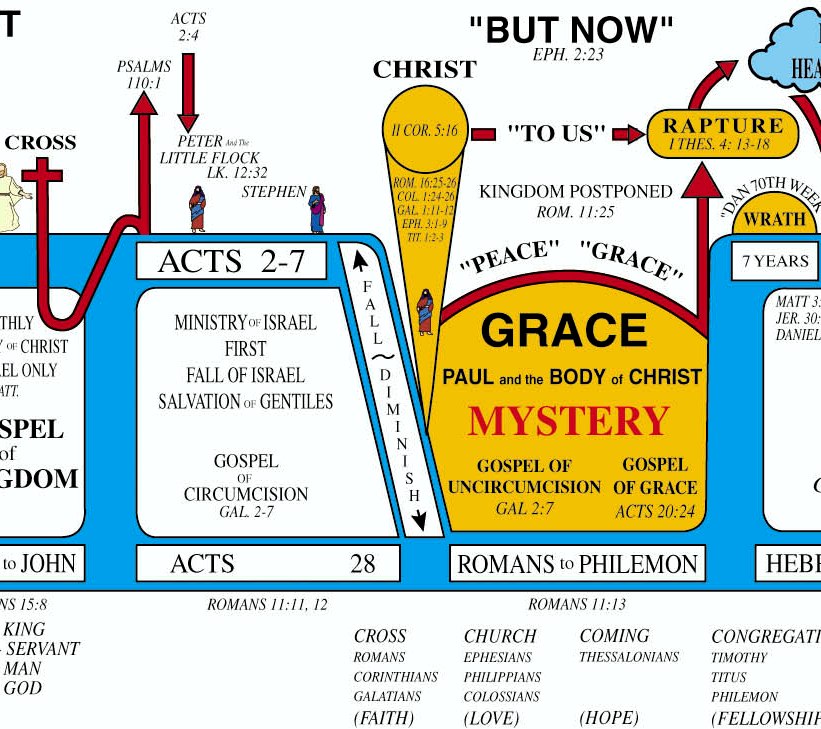
312 Evaluating Dispensationalism 2 (John Truitt)
Last week John Truitt began discussing the theological framework of dispensationalism, especially the “mid-Acts dispensationalism” taught by the Way International. He pointed out some flaws that got his attention and made him explore the issue more deeply. In the course of his research, Truitt discovered another way of approaching scripture known as covenantalism. In this episode he explains his covenantal approach with special emphasis on the new covenant, including the responsibilities and benefits of this new way of relating to God. —— Links —— Get in contact with John Truitt through the Allegiance to the King site or by joining his Facebook Group To join one of Allegiance to the King’s weekly virtual fellowship meetings, visit here or email [email protected] If you would like to attend the 20s and 30s Christian Conference in Paducah, KY (June 12-14), check out the Facebook Page – 20’s & 30’s Christian Conference Check out previous podcast episodes with Truitt including Virtual Fellowship for Isolated Believers and Apologetics Conference: 6 Evangelism, Jesus’ Way See all interviews with Truitt Intro music: Good Vibes by MBB Attribution-ShareAlike 3.0 Unported (CC BY-SA 3.0) Free Download / Stream: Music promoted by Audio Library
311 Evaluating Dispensationalism 1 (John Truitt)
Have you ever been on a long drive in the summer when you wore sunglasses for hours and hours? It’s getting dark and then suddenly you realize you’re still wearing sunglasses. You take them off and the whole world brightens and you realize it’s not nearly as dark as you thought? This is the nature of looking through a lens–it colors your perception of reality. Today, we are beginning a two part series to talk about lenses through which we read scripture. What’s your hermeneutic or interpretation strategy? Today we’ll focus on the view known as dispensationalism, championed by Dallas Theological Seminary, the Way International, many Baptists, Charismatics, and non-denominational churches as well as theologians like Charles Ryrie, C. I. Scofield, and E. W. Bullinger. We’ll get into what this system entails in just a moment, but let me first introduce my guest. John Truitt grew up in California and Texas converting to Christianity as a Methodist at 14. After a few years of not attending church, at 21 he converted to biblical unitarianism in the shadow of the Way International through an ex-Way group and learned to read the bible in line with classic dispensationalism. Later on he joined Spirit and Truth Fellowship and even served on the board for a number of years. After this, Truitt co-founded Allegiance to the King, a web-based ministry with over 150 video teachings, regular virtual church video-conferencing meetings, and an annual young adult event in Kentucky. Truitt is also the founder and owner of Kalleo Technologies, a managed IT service provider company, based out of Paducah, Kentucky. Today he’s going to talk to us about dispensationalism. Whether that’s where you’re coming from or not, this interview should broaden your understanding of the topic. —— Books —— Progressive Dispensationalism by Craig Alan Blaising Kingdom through Covenant: A Biblical-Theological Understanding of the Covenants by Peter Gentry and Stephen Wellum (also see God’s Kingdom through Covenant: A Concise Biblical Theology) Progressive Covenantalism by Stephen Wellum and Brent Parker Dispensationalism and the History of Redemption by Jeffrey Bingham and Glenn Kreider The Last Days of Dispensationalism: A Scholarly Critique of Popular Misconceptions by Alistair Donaldson Three Central Issues in Contemporary Dispensationalism: A Comparison of Traditional & Progressive Views by Darrell Bock, Elliott Johnson, Herbert Bateman, e

310 Are Gifts of the Spirit Available Today? (Sam Storms)
Are spiritual gifts available today or did they cease after the original apostles died? In this interview, I talk to Dr. Sam Storms about his own personal experience with speaking in tongues, his biblical case for why gifts are available today, and how he makes room for them in his church services. Before delving in, I want to just clarify some quick vocabulary. You are going to hear two terms a lot, and I want to be sure you know what they mean. The first is cessationist. This is someone who believes spiritual gifts ceased with the death of the apostles. The other term is continuationist, which is someone who believes these manifestations continue right down to our own day. Dr. Sam Storms has a Ph. D. from the University of Texas and has pastored for about forty-five years in Texas, Missouri, and Oklahoma. He taught at Wheaton College for four years and now serves as the lead pastor of Bridgeway Church in Oklahoma City, Oklahoma. He’s the founder of Enjoying God Ministries and serves on the boards of Desiring God Ministries, Bethlehem College and Seminary, and Acts 29 Network. He’s the author of numerous published books and articles (see below). He describes himself as “an Amillennial, Calvinistic, charismatic, credo-baptistic, complementarian, Christian Hedonist who loves his wife of 47 years, his two daughters, his four grandchildren, books, baseball, movies, and all things Oklahoma University.” —— Books —— Language of Heaven: Crucial Questions about Speaking in Tongues by Sam Storms Understanding Spiritual Gifts: A Comprehensive Guide by Sam Storms (not yet released) Practicing the Power: Welcoming the Gifts of the Holy Spirit in Your Life by Sam Storms Simply Spirit Filled by Andrew Gabriel —— Links —— Find out more about Enjoying God Ministries and Sam Storms at samstorms.org Check out the Bridgeway Church website Listen to David Bercot’s lecture, “What the Early Christians Believed about the Gifts of the Spirit“ See more Restitutio resources on the holy spirit Intro music: Good Vibes by MBB Attribution-ShareAlike 3.0 Unported (CC BY-SA 3.0) Free Download / Stream: Music promoted by Audio Library
309 Introducing the Unitarian Christian Alliance (Dale Tuggy, Kegan Chandler, Mark Cain, Sean Finnegan)
Today, we are publicly announcing the launch of a new para-church organization called the UCA or the Unitarian Christian Alliance. This is a new ministry that I’ve been working on with Dale Tuggy, Kegan Chandler, and Mark Cain for months and I believe it will help all of us, but especially those who don’t live near a church that allows for biblical unitarian members. Currently the UCA is a website and a conference, though we are hoping it will grow to be much more. The site is unitarianchristianalliance.org and it’s where you can register to be found by others looking for fellowship with one-God believers. The conference is slated for the Fall of 2020 in the Nashville, TN area. I’ll get you more details about that once we settle on a venue and a date. I hope that if you are a unitarian Christian–someone who believes the Father of Jesus is the only true God–you’ll sign up. It’s free and raising your hand to be counted will help others find you so that our scattered movement can coalesce into more home fellowships as well as brick-and-mortar churches.

308 Foreknowledge and Free Will 6 (Sean Cole Defending Calvinism)
This is part 6 of our Foreknowledge and Free Will series. Last time Dr. Sean Cole introduced the Calvinist understanding of God’s foreknowledge and the limitations on our freedom as a result of our fallen nature. This time I ask Cole about unconditional election and how that compares to a lottery. After all, if God has no conditions by which he decides whom he elects to salvation, then isn’t randomness all we have left? Also, I ask Cole to respond to a number of texts including John 3.16, 1 Timothy 2.4, 2 Peter 3.9, and Luke 7.30. —— Books —— Divine Sovereignty and Human Responsibility by D. A. Carson Excusing Sinners and Blaming God: A Calvinist Assessment of Determinism, Moral Responsibility, and Divine Involvement in Evil by Guillaume Bignon The Reformed Doctrine of Predestination by Loraine Boettner Whomever He Wills by Matthew Barrett and Thomas Nettles No Place for Sovereignty: Whats Wrong with Freewill Theism by R. K. McGregor Wright Chosen for Life: The Case of Divine Election by Sam Storms The Bondage of the Will by Martin Luther —— Links —— See other episodes in this series on Foreknowledge and Free Will Understanding Christianity Podcast See more about Dr. Cole at seancole.net
307 Foreknowledge and Free Will 5 (Sean Cole Introducing Calvinism)
This is part 5 of our Foreknowledge and Free Will series. We’ve considered Open Theism and Arminianism and now we are going to begin thinking about Calvinism. This way of conceiving of God’s foreknowledge argues for both exhaustive foreknowledge and meticulous providence. Thus, no one comes to Christ apart from God’s predestination since our natures are so corrupted that we do not have the ability to choose God. I’m happy to have Dr. Sean Cole as my guest today. He is the lead pastor at Emanuel Baptist Church in Sterling, Colorado. He is the host of a podcast called “Understanding Christianity” and he teaches Old Testament and New Testament theology as well as biblical interpretation as an adjunct instructor at Colorado Christian University. He has a Doctor of Ministry degree in expository preaching from the Southern Baptist Theological Seminary. He is the author of Your Identity in the Trinity: Discovering God’s Grace in the Gospel, which came out last April. In this episode I ask Cole to share about his background and lay out a positive case for his view of foreknowledge and free will. —— Links —— See other episodes in this series on Foreknowledge and Free Will Understanding Christianity Podcast Check out Cole’s recent debate with Tuggy on the Trinity See more about Dr. Cole at seancole.net
306 Foreknowledge and Free Will 4 (Leighton Flowers Defending Arminianism)
This is part 4 of our Foreknowledge and Free Will series. Last time Dr. Leighton Flowers of the Soteriology101 podcast laid out his commitment to both God’s complete knowledge of all future events as well as humanity’s ability to freely choose. Rather than explaining philosophically how that is possible, he suggested that we do not need to know “how” God does something in order to believe “that” he does it. In this episode, I ask him about one more Calvinistic text, Romans 9, before delving into a number of Open Theism texts to get his exegesis of these interesting passages, including Genesis 6.5; Isaiah 5.3-7; Jeremiah 7.31; and Psalm 106.23. —— Books —— Consolation of Philosophy by Boethius on internet archive and on amazon Problem of Pain by C. S. Lewis The Potter’s Promise by Leighton Flowers God’s Provision for All by Leighton Flowers —— Links —— See other episodes in this series on Foreknowledge and Free Will Soteriology101 Podcast: YouTube, RSS, Apple, Stitcher YouTube debate: Romans 9, James White vs. Leighton Flowers Purchase Flowers’ class, “Tiptoeing through TULIP,” a six-week study on the doctrines of human responsibility and God’s saving grace ($39) Check out the affirmations and denials about the provisionalist soteriology
305 Foreknowledge and Free Will 3 (Leighton Flowers Introducing Arminianism)
We are now in part 3 of our Foreknowledge and Free Will series. We’ve considered Open Theism–the idea that God’s foreknowledge is limited to what he plans to do as well as what he can ascertain from past and present conditions. In a couple of weeks we’ll examine Calvinism, which holds that God not only foreknows but also predestines all who will be saved. But, for today, our focus is on the Arminian position. Today, I’m happy to have Dr. Leighton Flowers the host of the Soteriology101 a podcast that puts forward an Arminian understanding of salvation as well as responds to prominent Calvinist thinkers. Flowers is also the Director of Evangelism and Apologetics for Texas Baptists. He has authored two books, including The Potter’s Promise, which rebuffed the theology found in James White’s The Potters Freedom. More recently, he came out with God’s Provision for All, which sets out a positive case for provisionalism, an understanding of salvation that teaches everyone is free to choose to believe the gospel. Flowers earned his PhD from New Orleans Baptist Theological Seminary where his dissertation focused on the rise of Calvinism in the Southern Baptist Convention. In this episode, I ask Flowers to share about his background in Calvinism and how he changed his mind about it. We discuss his middle position that both affirms God’s exhaustive foreknowledge and our free will. Then we take a look at a couple of texts like Ephesians 1 and Romans 8 to hear his exegesis of them. —— Books —— The Potter’s Promise by Leighton Flowers God’s Provision for All by Leighton Flowers —— Links —— See other episodes in this series on Foreknowledge and Free Will Soteriology101 Podcast: YouTube, RSS, Apple, Stitcher YouTube debate: Romans 9, James White vs. Leighton Flowers Purchase Flowers’ class, “Tiptoeing through TULIP,” a six-week study on the doctrines of human responsibility and God’s saving grace ($39) Check out the affirmations and denials about the provisionalist soteriology
304 Foreknowledge and Free Will 2 (Dale Tuggy Defending Open Theism)
Last week we began our Foreknowledge and Freewill series with Dr. Dale Tuggy who gave us an overview of the various positions. He also commended Open Theism as a view that triumphs where others suffer from logical contradictions. Now, today in part two, Tuggy will further explore and defend Open Theism against a number of common critiques including: If God doesn’t know the future, how can there be prophecy? Specifically, how could Jesus predict that Peter would deny him? Why do evangelicals generally look down on Open Theism? Isn’t Open Theism just Process Theology dressed up with some bible references? Doesn’t open theism posit a small God with limited knowledge? Additionally, we delve into how Open Theism deals with prayer, especially in light of Hezekiah’s prayer for healing. Now, I realize some of you listening are ardent Open Theists and some of you are not. Keep in mind that next week we are going to hear from Dr. Leighton Flowers on the Ariminian view and then Dr. Sean Cole is going to lay out the case for Calvinist compatabilism. My goal here is to expose you to multiple views so you can see all of the options laid out side by side. —— Books —— The Openness of God: A Biblical Challenge to the Traditional Understanding of God by Clark Pinnock, Richard Rice, John Sanders, William Hasker, and David Basinger God of the Possible: A Biblical Introduction to the Open View of God by Gregory Boyd The God Who Risks: A Theology of Divine Providence by John Sanders Most Moved Mover: A Theology of God’s Openness by Clark Pinnock God, Time, and Knowledge by William Hasker —— Links —— See other episodes in this series on Foreknowledge and Free Will More about Dale Tuggy at Trinties.org Get his book, What Is the Trinity?, or read his article in the Stanford Encyclopedia of Philosophy about Trinity theories Listen to previous Restitutio podcasts with Tuggy here Check out <a href="https://www.imdb.com/title/tt
303 Foreknowledge and Free Will 1 (Dale Tuggy Introducing Open Theism)
Today we are beginning an exciting new series on one of the most interesting ongoing controversies within Christian theology. Does God have exhaustive foreknowledge of the future? Does he know everything that is going to happen before it happens? If so, what does that mean for human free will? What are the various options within Christian theology and philosophy that well-meaning bible students have taken over the years? Now, I’ve been working hard on getting competent representatives from various backgrounds so that you can hear the major options to chose from. As such, I’ve got interviews with an Open Theist, an Arminian, and a Calvinist, resulting in a six-part series on foreknowledge and freewill. To begin with Dr. Dale Tuggy will give us a lay of the land, going through seven different ways that Christian philosophers have understood divine foreknowledge and human free will. He makes the case that the notion of exhaustive foreknowledge makes libertarian free will impossible. After all, if we are unable to do other than what God knows we are going to do, then we don’t really have the freedom to chose, right? See what you think. Dr. Dale Tuggy served as Professor of Philosophy at the State University of New York at Fredonia for 18 years. He has taught courses in analytic theology, philosophy of religion, religious studies, and the history of philosophy. Tuggy has a PhD from Brown University. He has authored about two dozen peer-reviewed articles and book chapters relating to the Trinity and other topics in analytic theology and philosophy of religion. —— Notes —— Options for Foreknowledge and Freewill God’s foreknowledge does not cause you to act, rather he foreknows something because you are going to do it (Origen) Divine Timelessness: God is timeless. He timelessly exists. Any kind of change is impossible for God. God is outside of time. His knowledge is timeless as well (Boethius, Thomas Aquinas) Middle knowledge. God knows all necessary truths (like 2 + 2 = 4). He also knows all contingent truths b/c he knows what people will freely choose in any circumstances. (Luis de Molina, William Lane Craig) Determinism, no libertarian free will (Calvinism) Your free will changes past facts and changes God’s knowledge. Causation occurs from the future to the past or from the present to eternity It’s a mystery. God knows what I’m going to do and yet in the moment, I could have chosen otherwise and have free will. (Arminianism) The future does not yet exist. God knows everything that can happen and everything in the past and present, and everyone’s inclinations, and everything that he has planned to do. (Open Theism) —— Links —— See other episodes in this series on Foreknowledge and Free Will Check out the 6 part Calvinism vs. Arminianism debate between Blake Cortright and Jacob Rohrer More about Dale Tuggy at Trinties.org Also check out these six episodes from the Trinities podcast about God and time: podcast 206 – Florian Fischer – A Slightly Opinionated Introduction to Philosophy of Time <a title="podcast 207 – Ryan Mullins – In Defense of Divine Temporality" href="https://trinities.org/blog/podcast-207-ryan-mullins-in-defense-of-divin

302 Five Reasons to Thank God (Sean Finnegan)
Gratitude is a key to spiritually healthy living. We have so many reasons to be thankful, but in this message, I’d like to focus on just five: Thankful because God Commanded It Thankful for the Basics Thankful for the Family of God Thankful for God’s Attention Thankful for the Cross As God’s people, our lives should not look just the same as the world. Rather, they should be marked by an enduring sense of gratitude. —— Links —— For more sermons from the team at Living Hope International Ministries, visit this YouTube channel Intro music: Good Vibes by MBB Attribution-ShareAlike 3.0 Unported (CC BY-SA 3.0) Free Download / Stream: Music promoted by Audio Library

301 The Bible’s View of the Body (Sean Finnegan)
We’ve had quite a number of folks commenting in on episode 299, my interview with Dr. Jerry Wierwille, called “Does the Bible Support Abortion“. That episode was very limited to focusing on a couple of texts relevant to building a Christian perspective on abortion. Essentially, we concluded, as on several previous episodes, that abortion-on-demand doesn’t fit with the biblical worldview. However, this is just one aspect of what the bible teaches about bodies. In fact there is much more to say on the subject. So I thought it would be good this week to play out my presentation from a theological conference last year called, “Biblical Somatology.” My aim for this research project was to mine the scriptures for information on the body, both how we should think about our bodies as well as the boundaries God has placed on what we should and shouldn’t do with our bodies. Then by contrasting the biblical approach with our own social issues related to bodies and sexuality, we can glimpse just a small bit of how genius God’s boundaries are as well as how they unleash human flourishing. Now there is also a video version of this talk you can access as well as a much more comprehensive paper with all the references and footnotes in it. So I encourage you to check those out if you are interested. —— Links —— See my Biblical Somatology paper and the YouTube video More podcasts and posts related to God’s boundaries to enable human flourishing For the comments at the end of this episode see episode 299 Does the Bible Support Abortion with Jerry Wierwille For information about attending the 2020 Theological Conference, visit theologicalconference.org Intro music: Good Vibes by MBB Attribution-ShareAlike 3.0 Unported (CC BY-SA 3.0) Free Download / Stream: Music promoted by Audio Library

300 Christian Disciples with a Mission (Stan and Pam Chee)
Are you sold out for God? Would you move to a foreign land if he called to the mission field? Well, Stan and Pam Chee of Australia have done just that. In this interview, they share about their lives of service to God and Christ. They grew up in Australia but have been serving in Toronto, Canada for the last decade. Of particular note is how they started and continue to do college outreach at the University of Toronto. —— Links —— Visit the Christian Disciples Church website For more on the Christian Disciples Church listen to Interview 47 Christian Disciples Church and the Only True God with Calvin Chan More episodes and posts on evangelism here. Intro music: Good Vibes by MBB Attribution-ShareAlike 3.0 Unported (CC BY-SA 3.0) Free Download / Stream: Music promoted by Audio Library
299 Does the Bible Support Abortion? (Jerry Wierwille)
Abortion has been and remains a hot-button issue in our culture at large and even within some corners of Christianity. In this episode Jerry Wierwille will explain the issues with the only biblical text that directly addresses this subject (Exodus 21.22-5). In addition to exegeting this confusing passage, Wierwille also draws on evidence from Psalm 51 before discussing some of the big picture ethical issues related to modern abortions. —— Related Podcasts —— Interview 38: Advocating for the Unborn with Kirk Walden Off Script 34: Killing the Unborn (A Christian View of Abortion) with Rose Rider and Daniel Fitzsimmons Off Script 46: Should Christians Outlaw Abortion? with Rose Rider and Daniel Fitzsimmons —— Links —— For a biblical theology of the body, see the paper, “Biblical Somatology,” presented at Restoration Fellowship’s 27th Theological Conference Intro music: Good Vibes by MBB Attribution-ShareAlike 3.0 Unported (CC BY-SA 3.0) Free Download / Stream: Music promoted by Audio Library
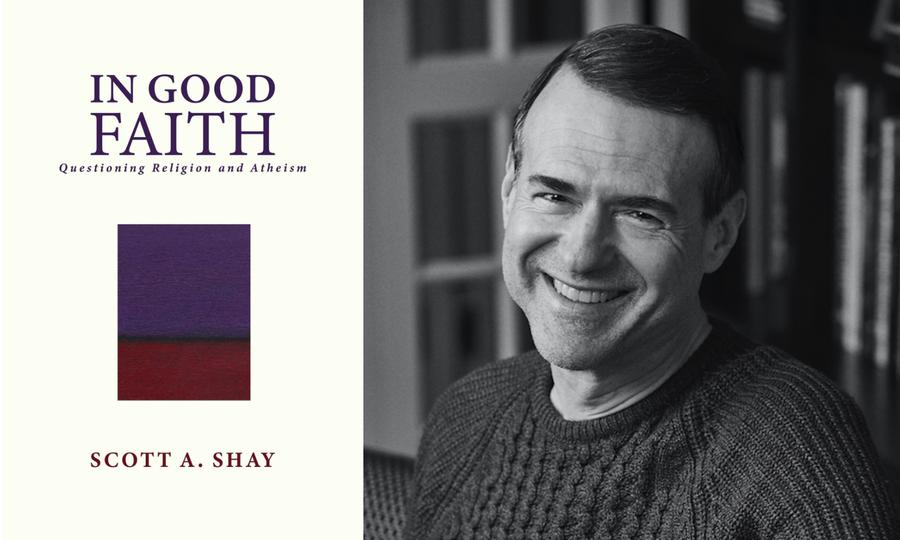
298 Orthodox Jew Defends God, Bible (Scott Shay)
Scott Shay is an interesting man. He’s a succesful business man and banker who co-founded a bank in 2001. He even has a TEDx talk where he spoke on Wall Street on the theme, “More Banks, Fewer Problems.” However, he’s also an orthodox Jew who is passionate about his faith. In this interview we talk about his book, In Good Faith, including why he wrote it, why monotheism matters today, how he can believe in God despite the holocaust, and why he believes the bible is trustworthy in the face of higher biblical criticism. —— Links —— Get his books In Good Faith: Questioning Religion and Atheism and Getting Our Groove Back: How to Energize American Jewry Find out more about Scott Shay at scottshay.com Also check out K. A. Kitchen’s book On the Reliability of the Old Testament More podcasts defending the bible here Intro music: Good Vibes by MBB Attribution-ShareAlike 3.0 Unported (CC BY-SA 3.0) Free Download / Stream: Music promoted by Audio Library
297 The Gospels: Jesus’ Wisdom (Daniel Calcagno)
Jesus once said, “The queen of the South will rise up at the judgment with the men of this generation and condemn them, for she came from the ends of the earth to hear the wisdom of Solomon, and behold, something greater than Solomon is here” (Luke 11.31). In our wisdom series so far, we’ve looked at the wisdom of Solomon from Proverbs and Ecclesiastes. We’ve also delved into the wisdom of Job. But there is one greater than Solomon and Job. In our last episode in this series, Daniel Calcagno of Ontario, Canada is going to share with us a little bit of the wisdom of Jesus, mainly based on his Sermon on the Mount. Tune in to our Saturday seminar (October 26, 2019) via webcast. Here’s Joshua Anderson giving a short preview: https://restitutio.org/wp-content/uploads/2019/10/Announcing-the-Gospel-Seminar.mp4 For more information about this seminar, click here. —— Links —— Check out the other podcasts in this wisdom series Check out these other podcasts with Daniel Calcagno Get info about coming to Revive 2020 (Jan 3-5, 2020) This message was from Revive 2019, click here to see other teachings and music from that year Watch the Announcing the Gospel seminar Saturday (October 26, 2019) via this YouTube link Intro music: Good Vibes by MBB Attribution-ShareAlike 3.0 Unported (CC BY-SA 3.0) Free Download / Stream: Music promoted by Audio Library
296 Ecclesiastes: Meaningful Life (Victor Gluckin)
Like Job, the book of Ecclesiastes wrestles with anomalies to the general principles of wisdom contained in much of the bible. Sometimes our world functions in chaotic and unpredictable ways. Sometimes the race is not won by the swift, nor the battle by the strong, nor bread harvested by the wise, nor riches acquired by the intelligent, nor favor gained by those with knowledge (Ecclesiastes 9.11). Instead, time and chance happen to them all. What is a person to do in these confusing and unfair circumstances? In this message, Pastor Victor Gluckin shares key insights from the book of Ecclesiastes to help you know how to make sense of these situations and what to prioritize when the world seems broken. —— Links —— Check out the other podcasts in this wisdom series Check out these other podcasts with Victor Gluckin Get info about coming to Revive 2020 (Jan 3-5, 2020) This message was from Revive 2019, click here to see other teachings and music from that year Intro music: Good Vibes by MBB Attribution-ShareAlike 3.0 Unported (CC BY-SA 3.0) Free Download / Stream: Music promoted by Audio Library

295 Job: It’s Complicated (Sean Finnegan)
The Hebrew Bible contains different kinds of wisdom literature. For example, wise sayings in Proverbs typically express general principles, providing guidance for what to do when the world is working the way it’s supposed to. However, Job deals with just the opposite issue. What happens when you do everything right and still face extraordinary loss and suffering? In this teaching we’ll work through the major themes in Job to uncover the overall message of the book. We’ll see how Job refutes the simplistic idea of karma, so commonly assumed by so many today. In the end we’ll see that our world is complicated, but God is here through it all. Click here to read a short but helpful quote by William Lane Craig on our complicated world. —— Links —— Check out the other podcasts in this wisdom series Go deeper and listen to Podcast 63: Why Does God Allow Suffering? Get info about coming to Revive 2020 (Jan 3-5, 2020) This message was from Revive 2019, click here to see other teachings and music from that year Intro music: Good Vibes by MBB Attribution-ShareAlike 3.0 Unported (CC BY-SA 3.0) Free Download / Stream: Music promoted by Audio Library
294 Proverbs: Simple Wisdom for a Complicated World (Jerry Wierwille)
What is the book of Proverbs all about and what can this book teach you about wisdom? Join Jerry Wierwille as he leads you through Proverbs to gain key insights to be able to read it and benefit from it on your own. Proverbs are not merely cutesy clever sayings, but helpful insights into how to act in a given situation. Although you may think of the bible’s proverbs as unconditional promises, they are, in fact, practical principles that generally work. Join Wierwille as he explains how Proverbs can provide us with simple wisdom for a complicated world. Here is the short video played in this episode: —— Links —— Check out the other podcasts in this wisdom series Go deeper and listen to Interview 27: Understanding Proverbs with Jerry Wierwille Get info about coming to Revive 2020 (Jan 3-5, 2020) This message was from Revive 2019, click here to see other teachings and music from that year Intro music: Good Vibes by MBB Attribution-ShareAlike 3.0 Unported (CC BY-SA 3.0) Free Download / Stream: Music promoted by Audio Library
293 What Is Wisdom? (Stan Chee)
Have you ever heard the saying, “doing the same thing over and over while expecting different results is the definition of insanity?” It certainly sounds foolish to try the same approach over and over, thinking something different will happen. So often, what we need is not more education or life hacks, but bona-fide wisdom. Today we are beginning a series on wisdom. Stan Chee of the Christian Disciples Church in Toronto, Canada, will give you four key points on getting genuine wisdom so you can lead a meaningful and worthwhile life. Four Steps to Getting Wisdom Have the right attitude; fear God (Proverbs 9.10) Have a heart for people, not just for yourself (2 Chronicles 1.10) Ask for wisdom in faith, not doubting (James 1.5-7) Ask God to number your days (Psalm 90.12) —— Links —— Reach Pastor Stan Chee via email: [email protected] visit the Christian Disciples Church website Check out the other podcasts in this wisdom series See more Restitutio podcasts and posts about wisdom Get info about coming to Revive 2020 (Jan 3-5, 2020) This message was from Revive 2019, click here to see other teachings and music from that year Intro music: Good Vibes by MBB Attribution-ShareAlike 3.0 Unported (CC BY-SA 3.0) Free Download / Stream: Music promoted by Audio Library

292 A Change of Affection (Becket Cook)
I’ve got a fascinating interview for you with Becket Cook. Now some of you may recognize his name from the interview I did with him two years ago (Interview 18). In that episode Cook shared his amazing testimony of how he went from a committed gay production set designer in Hollywood to experiencing God in a church service so deeply that it completely changed his life forever. Here’s a description of that moment: All of a sudden, a giant wave of God’s presence came crashing over me. A flood of intense warmth, emotion, and power coursed through me. I didn’t understand it at the time, but I now believe it was the Holy Spirit. I had no prior experience with this, no framework for it, and no way of anticipating it…God revealed himself to me. In that moment, everything became clear: God was real, Jesus was real, the Bible was real, the resurrection was real, heaven was real, hell was real–it was all real…It felt like gallons of love were being poured into me…After my stunning encounters with God, I knew I could no longer pursue romantic relationships with men…Put plainly, I accepted that it was a sin. -Becket Cook, A Change of Affection, (Nashville: Thomas Nelson, 2019), pp. 19, 20, 22. Cook’s book, A Change of Affection, is out and it goes way more into detail than our earlier interview. It’s an engaging relatively short read (less than 200 pages), all telling Cook’s history and conversion and how he thinks about same-sex attraction now. And what’s so cool about Becket Cook’s story is that this all happened 10 years ago. He’s not some fly by night testimony-today and fall-away-tomorrow kind of person. He’s stood the test of time. He’s gone to seminary at Talbot and he understand the Christian worldview and he has a seminary-level understanding of the bible. In this interview I ask him about the book, how it’s been received, and about his future. —— Links —— Get the book A Change of Affection Listen to my first interview: God Woo’s Fashion Set Designer from Gay Lifestyle To get in touch with Cook or to book him to speak at your church or event, visit becketcook.com or email him [email protected] Watch his excellent talk at BIOLA from 2014 on YouTube Check out these other Restitutio posts on Christians who struggle with same sex attraction Intro music: Good Vibes by MBB Attribution-ShareAlike 3.0 Unported (CC BY-SA 3.0) Free Download / Stream: Music promoted by Audio Library
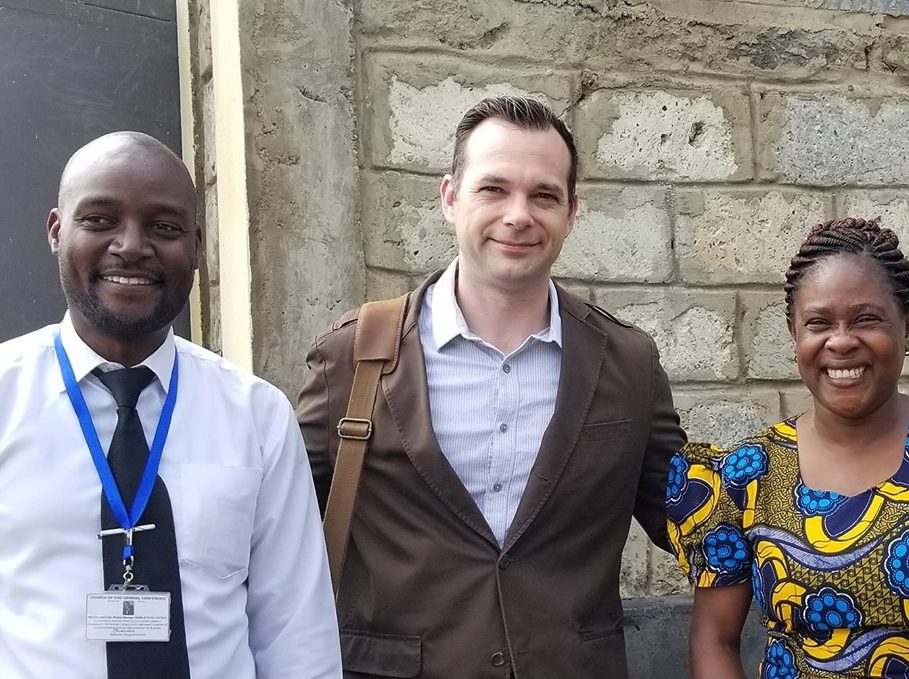
Interview 59 God at Work in Kenya 3 (Maurice Chahilu)
This is the third and final part of our series, God at Work in Kenya with Maurice Chahilu of Kingdom Life Ministries. We’ve come to see so much about what is going on over there, but there’s still more to learn. Last time I had asked bishop Maurice about his greatest challenges and what he is doing to overcome them. He shared about a number of concerns, but the last of them was about raising enough money to do outreach and support himself. This time, we pick up where we left off to hear about an innovative solution Maurice has proposed to become more financially independent. Additionally, for those of you who are visiting on Restitutio.org, I’ve included a video below of Maurice that Joe Martin did in 2018. This way you can put a face to the voice. https://restitutio.org/wp-content/uploads/2019/09/Maurice-Chahilu-interviewed-by-Joe-Martin-2018.mp4 —— Links —— Email Maurice Chahilu ([email protected]) and Joe Martin ([email protected]) Lord’s Harvest International missions organization (LHI), the missionary wing of the Church of God General Conference Intro music: Jazzy Frenchy by bensound.com. Licensed under Creative Commons: By Attribution 3.0 License.
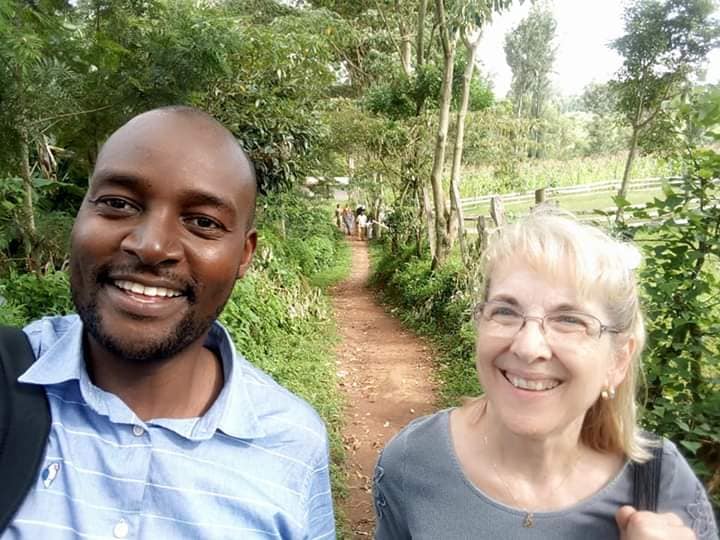
Interview 58 God at Work in Kenya 2 (Maurice Chahilu)
Maurice Chahilu and Rebekah Martin This is part two of our series on God at Work in Kenya with a focus on Kingdom Life Ministries and Maurice Chahilu. In our last episode we saw how Maurice got started in his ministry. (If you haven’t listened to that episode yet, go back and listen to it first). Today, we’ll hear about some of his major challenges, his emphasis on the great commission, and a little more about his needs for growth. What will come through in this episode crystal clear is this man’s utter dedication and commitment to proclaiming the gospel of the kingdom no matter the cost. —— Links —— See part one here: Interview 57 God at Work in Kenya 1 (Maurice Chahilu) Email Maurice Chahilu ([email protected]) and Joe Martin ([email protected]) Lord’s Harvest International missions organization (LHI), the missionary wing of the Church of God General Conference Intro music: Jazzy Frenchy by bensound.com. Licensed under Creative Commons: By Attribution 3.0 License.
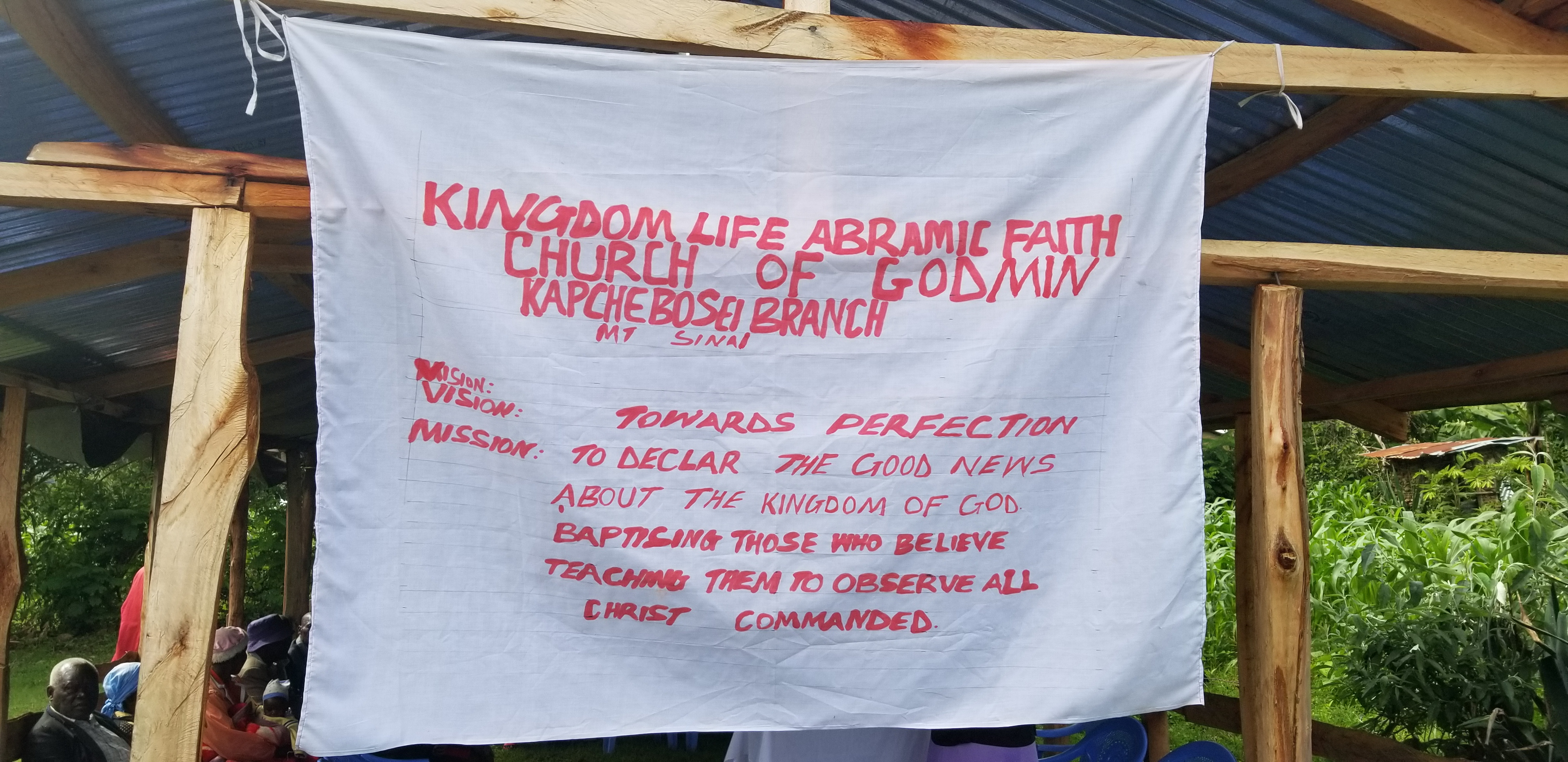
Interview 57 God at Work in Kenya 1 (Maurice Chahilu)
God is doing something in Kenya and churches are forming and growing rapidly. Today we are beginning a series of shows on the work of Kingdom Life Ministries and the visionary who began the work there, Maurice Chahilu. A few weeks ago I went to Africa to visit Maurice and the churches he oversees. I was part of a team of missionaries who were going over to support the work that has been going on in western Kenya for the last 8 years, including Joe and Rebekah Martin, Rolin and Linda Carlbom, and Lacey Dunn. On my last day there, I asked the team for their impressions of what it was like and also recorded Maurice sharing his story. —— Links —— Email Maurice Chahilu ([email protected]) and Joe Martin ([email protected]) Lord’s Harvest International missions organization (LHI), the missionary wing of the Church of God General Conference Intro music: Jazzy Frenchy by bensound.com. Licensed under Creative Commons: By Attribution 3.0 License.

Interview 56 Detoxing Your Brain 2 (Leah Fronczek)
Today is the second and final part of my interview with Leah Fronczek on detoxing your brain. See part one here. We begin by talking about the importance of free will in effecting change before getting into the specifics of how to combat toxic thinking. Learn about multitasking, daydreaming, community, forgiveness, and honesty as ways to combat negativity. This episode will help you in your quest to “be transformed by the renewal of your mind” (Romans 12.2). —— Links —— Check out these books by Carolyn Leaf that we mentioned in this podcast. Check out our past young adult event, “Revive“ Intro music: Jazzy Frenchy by bensound.com. Licensed under Creative Commons: By Attribution 3.0 License.
Interview 55 Detoxing Your Brain 1 (Leah Fronczek)
At the beginning of each year, we have a young adult event called Revive in Connecticut. This year Leah Fronczek was one of the workshop leaders. Her topic was detoxing your brain and I asked her to come on Restitutio to share with you what she learned in studying this topic. This is so important for us as Christians, because God expects us to be able to control our thinking (Romans 12.2). How do you get rid of toxic thoughts? Leah is going to help us think through not only how negative thoughts affect us, but how to combat them. Now, before we get into this, I want to make a distinction. The mind, as we are using it in this discussion, is your mental state, consciousness, memories, feelings etc. , i.e. where you do your thinking, whereas the brain is the physical organ in your head that makes the mind possible. Obviously, these two are connected, but they aren’t necessarily the same. We’ll get into this more, but I just wanted to point that out before we get started. —— Links —— Check out these books by Carolyn Leaf that we mentioned in this podcast. Intro music: Jazzy Frenchy by bensound.com. Licensed under Creative Commons: By Attribution 3.0 License.

Interview 54 Beating Guns (Shane Claiborne and Mike Martin)
Last Saturday while I was attending a Christian festival in Ohio, a 21 year-old man entered a Walmart in El Paso, TX and murdered 22 people, injuring 24 more, making it the 7th deadliest shooting in modern US history. What’s so crazy about this, is that walking into a huge store like Walmart and shooting a semi-automatic assault rifle and hitting 46 people is only 7th! Can you agree with me that we have a gun-violence problem in America? Then, the next day, a 24 year-old man shot 10 people outside a bar in Dayton, Ohio, injuring 27 more. He used another semi-automatic assault rifle. What is the Christian response to all of this? Well, today we are going to hear from two Christians who think it’s time for Christ-followers to lead the way in enacting and living out the prophecies of Isaiah and Micah to beat our swords into plowshares and our spears into pruning hooks (and our guns into mattocks.) In fact, they’re already doing just that. I went to see Shane Claiborne and Mike Martin on their “Beating Guns” tour when they came to New Haven, CT (the same town as Yale University). I stood there outside the church watching as a woman whose life was traumatized by gun violence beat on a glowing hunk of metal, that had once been a gun, confiscated by the police and now being transformed into an actual garden tool. As she brought the hammer down on the softened metal, she began weeping. As she continued hitting it harder and faster she started wailing. I stood there watching as she took out her overwhelming pain and personal loss on that piece of metal. It was cathartic, prophetic, and transformative. Now I realize that gun-violence is a hot-button issue in our culture today and that many of you listening to this own guns for a variety of purposes. I don’t expect you to just change what you believe about guns after a single podcast episode, but I simply ask that you listen to these guys as they talk about this subject from a Christian perspective. —— Links —— Check out RAWtools.org and follow them on twitter @RAWtools Get the Beating Guns book in print or in audio format through Christian audio or Audible or visit the website You can follow Shane Claiborne on twitter @ShaneClaiborne Listen to Restitutio episodes Podcast 15: A Theology of Nonviolence, Podcast 67: It’s Just War (Debate), Off Script 38: Killing in War: A Christian View of Violence, and Off Script 43: Can Christians Use Non-Lethal Violence? (Q&A). Intro music: Jazzy Frenchy by bensound.com. Licensed under Creative Commons: By Attribution 3.0 License.

Interview 53 Why Knowing the Land of Israel Matters (Bill Schlegel)
Bill Schlegel lived in Israel for 34 years, much of that time spent studying and then teaching about the geography of the scriptures. In this interview he provides three reasons why every bible-student should study the land of Israel: historical accuracy archeological accuracy geographical accuracy He also talks about his upcoming tour to Israel (March 19-April 2). Get more information about that here. Lastly, he weighs in a little on the modern situation between the Israelis and the Palestinians. —— Links —— visit Schlegel’s new website at One God Report read his blog Land and Bible get the Satellite Bible Atlas the details about the trip to Israel Intro music: Jazzy Frenchy by bensound.com. Licensed under Creative Commons: By Attribution 3.0 License.

Interview 52 The Plight of Palestinians (Gloria Olivier)
An Antique Map of Palestine What do you know about Palestinians? In this eye-opening interview with Gloria Olivier, we discuss the plight of Palestinians today. Did you know that thousands of Christians live in the West Bank today under Israeli occupation? In this interview, you’ll learn a little about the history of this conflict as well as what conditions are like on the ground. Now I realize this can be a sensitive subject, but I just ask that you hear out Gloria and keep an open mind on this important topic. Listen to this episode on Spotify or Apple Podcasts Also, here’s a picture of some of Gloria’s family when she was only 9 years old and visited Ramallah. (She’s on the right with white top and dark skirt.) —— Links —— Books mentioned in this episode: Blood Brothers by Elias Chacour, Fast Times in Palestine by Pamela Olson, Justice and Only Justice by Naim Ateek, and A Wall in Jerusalem by Mark Braverman Intro music: Jazzy Frenchy by bensound.com. Licensed under Creative Commons: By Attribution 3.0 License.

Theology 24 — Challenging the New Covenant
In our last episode, we laid the theological foundation for a new covenant doctrine: Christ fulfilled the Law and ratified the new covenant, which opened a new way of relating to God apart from obedience to Torah. Now we will discuss a number of texts that sometimes confuse Christians into thinking the Law is still in effect today. We’ll cover Jesus’ obedience to Torah, several scriptures that imply the Torah is forever, the sabbath’s association with creation, and a number of prophecies that mention keeping aspects of the Law in the kingdom. Although, I realize these are not all of the texts and strategies that Torah-observant Christians use to make their case, these are some of the significant ones. —— Notes —— State the Doctrine Simply Because of Christ’s obedient life, atoning death, and justifying resurrection, he has opened a new way of relating to God via the new covenant. Thus, the old covenant (the Law of Moses) is obsolete for both Jews and Gentiles. Texts that Support This Teaching Acts 15.23-29; Rom 2.25-29; 3.21-31; 4.13-16; 6.14-15; 7.1-7; 8.1-4; 13.8-10; 1 Cor 9.20-21; 2 Cor 3.1-18; Gal 2.14, 19-21; 3.10-29; 4.21-31; 5.1-6; 5.13-25; 6.15-16; Eph 2.11-19; 3.4-6; Col 2.11-17; Heb 7.11-12, 21-22; 8.4-13; 9.11-15; 10.8-22; 12.18-29 The Example/Teaching of Jesus Hebrews 4.15 15 For we do not have a high priest who is unable to sympathize with our weaknesses, but one who in every respect has been tempted as we are, yet without sin. in the context of Jesus’ life, sinless means he kept the Law just b/c Jesus kept the law, doesn’t mean we should continue to keep it, especially if his whole mission was to open a new way for us to relate to God Think of the generation that first received the Torah in the time of Moses. They were not free to continue living the old way if they wanted to relate to God through the new way Moses had delivered to them. Numbers 15.32-36 (the guy who collected sticks on the Sabbath) 32 While the people of Israel were in the wilderness, they found a man gathering sticks on the Sabbath day. 33 And those who found him gathering sticks brought him to Moses and Aaron and to all the congregation. 34 They put him in custody, because it had not been made clear what should be done to him. 35 And the LORD said to Moses, “The man shall be put to death; all the congregation shall stone him with stones outside the camp.” 36 And all the congregation brought him outside the camp and stoned him to death with stones, as the LORD commanded Moses. Matthew 5.17-20 17 “Do not think that I have come to abolish the Law or the Prophets; I have not come to abolish them but to fulfill them. 18 For truly, I say to you, until heaven and earth pass away, not an iota, not a dot, will pass from the Law until all is accomplished. 19 Therefore whoever relaxes one of the least of these commandments and teaches others to do the same will be called least in the kingdom of heaven, but whoever does them and teaches them will be called great in the kingdom of heaven. 20 For I tell you, unless your righteousness exceeds that of the scribes and Pharisees, you will never enter the kingdom of heaven. booster rocket analogy of N. T. Wright Jesus did not abolish, but to fulfill the Law, but once he fulfilled it, a new way became available what is a covenant? it’s a way God has set up to relate to him all of Hebrews teaches that the new way is better he is a better mediator of the covenant than the angels (Heb 1) he offers better salvation (Heb 2) he is better than Moses as a son is better than a faithful servant (Heb 3) his priesthood is better than Aaron’s b/c it’s after Melch
Theology 23 — New Covenant
We are now in our second-to-last episode in this 24-part theology class, covering the major biblical doctrines as well as various counterarguments. Today we will focus our time on the New Covenant. We’ll make our way through biblical history in order to understand the grand sweep of the bible, paying special attention to the old and new covenants. Of special note for this lecture is what happened when Gentiles started entering Jewish Christianity. We’ll briefly touch upon the first Jerusalem council, Judaizers, and Paul’s capitulation to Jame’s request. Lastly, we’ll see how Paul’s epistles as well as Hebrews make it clear that neither Jewish nor Gentile Christians need to keep the law in order to be saved. —— Notes —— New Covenant Basics testamentum: covenant, testament, will your bible has one main division between Malachi and Matthew Old Testament relates to the old covenant and NT to the new that came through Christ Jer 31.31-34 is the origin for all talk about the new covenant Jesus’ ministry new wine into new wine skins antitheses in Sermon on the Mount Last supper is when Jesus talks about his death as ratifying the new covenant in his blood nothing happens until the Gentiles start to come in Historical Progression Gentiles begin entering the church Samaritans? Ethiopian treasurer (he’s the first!) Cornelius, the Italian soldier Peter confronted for entering the house of “uncircumcised men” and eating with them (Acts 11.3) Peter defends his actions by telling them God accepted them so how could he stand in the way? speaking in tongues => God granted them spirit => God accepts them => Peter baptized them, accepting them into the family (Acts 11.15-18) The Antioch Church (lots of Gentiles enter) some Christians preached in Antioch to Greeks (Acts 11.19-21) The Jerusalem leadership sent Barnabas (Acts 11.22) Barnabas “saw the grace of God” and “he was glad” and lived there (Acts 11.23-24) Barnabas went to get Paul and ministered together in Antioch for a year (Acts 11.25-26) Antioch was B&P’s home base before going on missionary trips Paul’s Influence Cyprus: proconsul Sergius Paulus believed (Acts 13.6-12) Pisidian Antioch: B&P turn to Gentiles (Acts 13.45-47) other cities: Iconium, Lystra, Derbe, then reverse order and go back to Antioch Controversy Breaks Out read Acts 14.27-15.5 Paul confronts Peter: “If you, being a Jew, live like the Gentiles and not like the Jews, how is it that you compel the Gentiles to live like Jews” (Gal 2.14) Jerusalem Council first council meets: council called to deal with controversy over Gentiles coming in Peter talks about Cornelius Barnabas & Paul tell about what God has done among the Gentiles James speaks they pen an official letter (Acts 15.23-29) double standard allows for table fellowship Some “Judaizers” teach Gentiles need to keep the Law, especially in Galatian churches Paul started Paul writes to congregations, strongly arguing against Law-keeping Gal 2.19-21 righteousness does not come through the law Gal 3.10-29 no one is justified by the law; Christ redeemed us from the law’s curse for disobedience by becoming a curse; Abrahamic promises before law; God gave law to deal with transgressions until the offspring of Ab. came; law was guardian until Christ came; now that faith
Theology 22 — Challenging Conditional Salvation
Pull up a chair and listen in as we discuss and wrestle with some verses that proponents of eternal security use to make their case. Now there will be some overlap here with our last episode, but also some new content as well. We’ll discuss texts that seem to imply that salvation has nothing to do with works, that we already have eternal life, that salvation is permanent, and lastly that the holy spirit guarantees salvation. —— Notes —— State the Doctrine Simply Salvation is a gift given by God’s grace that we receive by faith and repentance, resulting in a lifestyle of obedience. If someone turns away from following Christ, whether in a definitive moment of rejection or through a gradual turning away into sin, he or she becomes lost. Texts that Support This Teaching Mat 7.21-23; John 15.1-8; Rom 11.16-24; 1 Cor 6.9-10; 9.27; 15.1-2; Gal 5.19-21; 6.8-9; Eph 5.3-12; Phil 3.11-14; Col 1.22-23; 1 Tim 4.16; 5.8; 2 Tim 2.11-13; Heb 2.1-3; 3.12-14; 4.1, 11; 6.4-8; 10.26-29; Jam 2.18-20; 2 Pet 2.20-22; Rev 3.1-5 Difficult Texts Below are a number of texts used to teach that salvation cannot be lost. Also, here’s a website (jesus-is-savior.com/Believer’s Corner/eternal_security.htm) to present a strong argument for eternal security. Salvation Is Based on Faith Alone Not Works John 3.16 For God so loved the world, that he gave his only Son, that whoever believes in him should not perish but have eternal life. “believe” in John is more than just mental assent; it implies obedience John 3.36 36 Whoever believes in the Son has eternal life; whoever does not obey the Son shall not see life, but the wrath of God remains on him. Ephesians 2.8-9 8 For by grace you have been saved through faith. And this is not your own doing; it is the gift of God, 9 not a result of works, so that no one may boast. The initial moment of salvation is truly by grace through faith. However, once saved we need to perform works Ephesians 2.10 (very next verse) 10 For we are his workmanship, created in Christ Jesus for good works, which God prepared beforehand, that we should walk in them. several other verses in Ephesians make it clear that sinful living results in destruction Ephesians 5.5-8 5 For you may be sure of this, that everyone who is sexually immoral or impure, or who is covetous (that is, an idolater), has no inheritance in the kingdom of Christ and God. 6 Let no one deceive you with empty words, for because of these things the wrath of God comes upon the sons of disobedience. 7 Therefore do not become partners with them; 8 for at one time you were darkness, but now you are light in the Lord. Walk as children of light 2 Timothy 1.9 [God] who saved us and called us to a holy calling, not because of our works but because of his own purpose and grace, which he gave us in Christ Jesus before the ages began yes, the calling is not because of our good works but, once we accept the call we must live that out I once got a call from Anastasia at BU, offering me a scholarship I had to accept it, but then I also had to move away and enroll and go to the school the calling was free, but it required action or else it would result in nothing Titus 3.5-6 5 he saved us, not because of works done by us in righteousness, but according to his own mercy, by the washing of regeneration and renewal of the Holy Spirit, 6 which he poured out on us richly through Jesus Christ our Savior yes, we
Theology 21 — Conditional Salvation
We’ll delve into the multifaceted theology of salvation (aka soteriology). We’ll look at all three tenses of salvation: how we were saved, are being saved, and will be saved. Now, I realize this can be a very sensitive and controversial subject, depending on what your preexisting doctrinal commitments are. However, I simply ask that you listen carefully and test what I say here against the scriptures to see whether it holds up. Be a good Berean and see where God leads you. —— Notes —— Past Tense[1] In Paul’s letters we find several different ways of talking about what God has done in Christ. The most common is that we are “saved.” Here is (perhaps) the most famous Scripture about how God has saved us. Ephesians 2:8-9 God’s salvation is a gift that we accept by faith. His grace reaches down, and we reach up through faith. Then He pulls us up and out. Because salvation doesn’t depend on works, no one can say, “I’ve earned it; I’m so great.” Instead, we say God did it. Isn’t He glorious? In addition to describing gracious act as “salvation,” we also see these other ways of talking about, each emphasizing a different aspect of what He has done for us through Christ: justified Rom 2:13; 3:4, 20, 24, 28; 4:2; 5:1, 9; 8:30; 10:10; 1 Cor 6:11; Gal 2:16-17, 3:11; 3:24; 5:4; Tit 3:7 reconciled Rom 5:10-11; 1 Cor 7:11; 2 Cor 5:18-20; Eph 2:16; Col 1:20-22 adopted Rom 8:15, 23; Gal 4:5; Eph 1:5 sanctified 1 Cor 1:2; 6:11; Eph 5:26 redeemed Gal 3:13; 4:5; Tit 2:14 regenerated Tit 3:5 When considering salvation (in the past tense), we may ask the question, “What are we saved from?” This question is extremely helpful in clarifying our understanding. Fortunately, we need only go back up to the beginning of the chapter to get the answer we seek. Ephesians 2:1-10 According to verses 1-3, we’re saved from being dead in sin, going along with evil spiritual forces, living in the passions of our flesh, and being a child of wrath. Verse 7 tells us we have a future to look forward to as well. But, if we’re saved, what does that mean about how our lives should look? Verse 10 tells us the purpose of our salvation is for good works that we should walk in. Present Tense[2] 1 Corinthians 15:1-2 The Corinthians had already received the gospel some time ago; they believed it when they heard it. Now they are “being saved.”[3] Salvation is not just a one-time event, though there is an entry point. We become saved, and then we continue in that reality. Is it possible to lose your salvation? Southern Baptist Convention Article Nine: The Security of the Believer[4] We affirm that when a person responds in faith to the Gospel, God promises to complete the process of salvation in the believer into eternity. This process begins with justification, whereby the sinner is immediately acquitted of all sin and granted peace with God; continues in sanctification, whereby the saved are progressively conformed to the image of Christ by the indwelling Holy Spirit; and concludes in glorification, whereby the saint enjoys life with Christ in heaven forever. We deny that this Holy Spirit-sealed relationship can ever be broken. We deny even the possibility of apostasy. Lutheran Churches Formula of Concord: XI Election Therefore we should judge concerning this our election to eternal life neither from reason nor from the Law of God, which lead us either into a reckless, dissolute, Epicurean life or into despair, and excite pernicious thoughts in the hearts of men, for they cannot, as long as they follow t
Theology 20 — Follow Jesus
Finally, we arrive at practical theology or Christian ethics. Although, we could easily spend fifteen lectures together building up a full edifice of how God wants us to live, in this episode we’ll simply lay the foundation stones of following Jesus. What I mean by follow is to read his words and do them, especially when what he says conflicts with our sensibilities, comfort, or common sense. If we only “follow” Jesus when what he says agrees with us and then diverge when he disagrees, then we are not following, but merely walking in the same direction occasionally. —— Notes —— Two requirements of Christianity believe the gospel (conversion/soteriology) follow Jesus (ethics) Following Christ is worth it Jn 10.27-28 sheep hear voice and get eternal life Mt 19.27-30 what will we get for following you? those who follow Christ get eternal life!!! that’s worth it Confess Jesus as Lord to be saved (Rm 10.9-10) Jesus says can’t call him “Lord” if you don’t do what he says (Lk 6.46) Jesus defines the word “Lord” as those who do what he says if you are a Christ-follower you do what he says even when it disagrees with what you think Different Jesuses hippie Jesus (love is all that matters) one and done Jesus (salvation and then do what I want)…oh yeah, I prayed a prayer once American Jesus (patriotic, my country right or wrong), we forget Jesus was a middle-eastern Jewish rabbi who counseled against violent revolution against Rome prosperity Jesus (he wants me to be rich!, sow/reap blessings) poverty Jesus (unless I’m dirt poor I’m not a true follower) part-time Jesus (compartmentalized life, Sunday Christians, cafeteria Christianity) real Jesus average Semite was 5’1, weighing 110 pounds (meaning he DIDN’T look like this! [muscular Jesus]) if Jesus worked outdoors as a carpenter, he probably would have weathered tan skin popular mechanics the real Jesus is the one we read about in Scripture but how do we know which Jesus is the REAL Jesus? we are not left without help here the bible tells us who Jesus is and what he wants us to do “The Christ that Harnack sees, looking back through nineteen centuries of “Catholic darkness”, is only the reflection of a Liberal Protestant face, seen at the bottom of a deep well” –George Tyrrell[1] Absolute Commitment Mk 3.31-35 Those Who Do God’s Will Are Jesus’ Family notice what Jesus doesn’t say he doesn’t say, the one who has an emotional connection to God he doesn’t say, the one who sings uplifting, positive, and encourage Christian music he doesn’t say, the one who prays or reads the Bible or goes to church he says, the one who does the will of God here Jesus redefines the family! this might seem radical to you, but it is merely the first step your closest relatives, according to Jesus, are not truly your mother or brother or sister anymore, but those who are unrelated to you by blood but do the will of God are the Palestinian Christ-follower is more your family than the apple-pie eating American who shares your politics but doesn’t follow Jesus just look at what Jesus says about his own mother Lk 11.27-28 Blessed Mary Becomes Blessed Obedient 27 While Jesus was saying these things, one of the women in the crowd raised her voice and said to Him, “Blessed is the womb that bore you and the breasts at which you nursed.” 28 But he said, “On the
Theology 19 – Conversion
In this lecture, you’ll learn what Jesus and the book of Acts have to say about conversion. From Jesus, we will examine his parable of the Sower with special focus on the good soil–those who hear the message, understand it, accept it, hold it fast, and bear fruit. Next we’ll work through all of the conversions in the book of Acts to discover the four elements of conversion: belief, repentance, baptism, and receiving the holy spirit. Lastly, we’ll dig deeper into each of those elements to understand them better. —— Notes —— Jesus on Salvation comparison of soils in Sower and Seed parable Mt 13.23; Mk 4.20; Lk 8.15 hear, understand, accept, hold fast, bear fruit Four Elements of Conversion in Acts These examples of conversion from Acts that show 4 elements of conversion: believe repent get baptized receive the spirit reference belief repentance baptism spirit Acts 2.38 x x x Acts 3.19 x Acts 8.12, 17 x x x Acts 8.13 x x Acts 8.36 x Acts 9.17; 22.16 x x Acts 10.44, 47-48 x x Acts 11.21 x Acts 13.12 x Acts 13.48 x Acts 14.1 x Acts 16.15 x Acts 16.31, 33 x x Acts 17.30, 34 x x Acts 18.8 x x Acts 19.5-6 x x Acts 28.24 x Believe the Gospel what is the gospel? message preached, that if believed results in salvation 2 Tim 1.10 what the gospel is not music a biography of Jesus (originally called “according to Mark”, etc.) any kind of good news a general communication about the bible (confusion of the “word”) Understanding the “Word” Old Testament God’s activity in the world “By the word of the LORD the heavens were made, and by the breath of his mouth all their host” (Ps 33.6) “he sent his word and healed them, and delivered them from their destructions” Ps 107.20; cf. Ps 147.15, 18-19; Is 55.10-11 “The three (spirit, wisdom, and word) are simply alternative ways of speaking about the effective power of God in His active relationship with His world and its inhabitants.”[1] God’s message spoken by the prophet “And the word of the LORD came to Elijah the Tishbite saying, ‘Have you seen how Ahab has humbled himself before me? Because he has humbled himself before me, I will not bring the disaster in his days; but in his son’s days I will bring disaster upon his house.’” 1 Kings 21.28-29 a synonym for the law “I will delight in your statutes; I will not forget your word. 17 Deal bountifully with your servant, that I may live and keep your word.” Psalm 119.16-17 New Testament God’s command in the law “thus making void the word of God by your tradition…” Mk 7.13 typically it refers to the message or gospel “word of the kingdom” Mt 13.19 (shortened to “the word” in vv20, 21, 22, 23) the word (v4) = Christ (v5) = the good news about the kingdom of God and the name of Jesus Christ (v12) = word of God (v14) = word of the Lord (v25) = the gospel (v25) Acts 8.4, 5, 12, 14, 25 can’t be scriptures b/c in Berea they checked Paul’s word against the scriptures to see if was true Ac 17.11 born again through the living and enduring word of God…this is the word which was preached as gospel to you 1 Pe 1.23 God’s activity in the word to search people’s hearts and find out the truth “11 Let us therefore strive to enter that rest, so that no one may fall by the same sort of disobedience. 12 For the word of Go
Theology 18 — Atonement Theories
Last time we looked at the major categories the scriptures use to answer the question, “Why did Jesus die?” This time, we’ll take a journey through church history, making stops along the way to see how our forebearers have made sense of the crucifixion of our Lord. You’ll learn about these seven theories: Ransom Christus Victor Moral Exemplar Satisfaction Penal Substitution Governmental Communal Substitution For each I quote someone from Church History who advocated for that position and offer some criticisms. Note: This episode is from a talk I gave at Restoration Fellowship’s 2016 Theological Conference and you can get the full paper here. —— Notes —— Here is part two of my “Why Did Jesus Die?” paper. You can find the whole essay here. Introduction Are we satisfied to leave matters where the biblical data lies or should we press on to, as James Orr put it, “seek the inmost secret of atonement?”[19] Alas, for centuries, Christians have meditated on Christ’s redemptive work in an effort to better understand what happened behind the scenes. In this part I will cover seven theories in roughly chronological order. Before we begin, I should note that these various ways of looking at atonement are not mutually exclusive. I will begin with the two theories that emphasize spiritual warfare. 1. Ransom Theory Satan once showed Jesus all the kingdoms of the world in a moment of time and then said, “To you I will give all this authority and their glory, for it has been delivered to me, and I give it to whom I will” (Luke 4.6). On the basis of this text, some have concluded that when the first humans rebelled against God, they transferred the dominion and authority over this world to Satan. This is why Jesus called him, “the ruler of this world” (John 14.30), Paul said he was “the god of this age” (2 Cor 4.4), and John termed him “the deceiver of the whole world” (Rev 12.9). In Christ’s atoning work, he delivered humanity “from the domain of darkness and transferred us to the kingdom of his beloved Son in whom we have redemption” (Col 1.13-14). In fact, when he ascended, “he led a host of captives” with him, liberating them from Satan’s custody. Augustine of Hippo (ad 354-430) writes: For men were held captive under the devil, and served devils; but they were redeemed from captivity. They could sell, but they could not redeem themselves. The redeemer came, and gave a price; he poured forth his blood, and bought the whole world…The blood of Christ was the price. What is equal to this? What, but the whole world?[20] Thus, through Christ’s valuable sacrifice, God paid the devil the required ransom to release us from his custody. But, would Satan just release his captives merely because God offered to purchase them? He probably would refuse. Thus, the ransom theory often includes the element of deception. Somehow God would have to trick the devil into overreaching. The devil only had legal right over those who commit sin. However, when he murdered Jesus of Nazareth, he overstepped his authority. Augustine explains it this way: But the redeemer came, and the seducer was overcome. And what did our redeemer to him who held us captive? For our ransom he held out his cross as a trap;
Theology 17 — Atonement Scriptures
Why did Jesus die? Historically, we could say it was because the Roman Empire perceived him as a threat or the religious leaders in Jerusalem feared he would ignite an unwinnable revolution. Even so, the bible offers a number of theological answers that go far beyond the immediate circumstances of his crucifixion. In this lecture you’ll learn about the eight main biblical reasons why Jesus died. Then we’ll cover the sometimes controversial subjects of substitution and propitiation. —— Notes —— Definitions at-one-ment: bringing together God and humanity through the death of Christ justify: to make just, right; to declare free from blame reconcile: reestablish a close relationship between those who are not unified sanctify: to make holy (pertains to how you live) 1. He died for our sins 1 Cor 15.3-4 Christ died for our sins in accordance w/ the scriptures was Paul the first person to understand the theological significance of the cross? no, b/c he delivered to the Corinthians what he received himself (from others!) so, who first gave the cross a meaning and when? Jesus explained the meaning of his broken body and poured out blood at the last supper (Mat 26.28; cp. Lk 22.19) but Jesus also firmly believed that the OT explained the meaning (Luk 24.25-27, 44-48) a fact to which Peter likewise testified (1 Pet 1.11) does anyone know the two primary OT texts that point to the cross? Psalm 22 Isaiah 52/53 also the typology of the Levitical sacrificial system (especially the Day of Atonement) as explained in Hebrews also Passover celebration no coincidence that the Last Supper was actually a Seder meal! a number of other texts also[1] 1 Cor 11.23-26 communion memorializes his death (bread is body which is broken for us) 2 Cor 5.17-21: if anyone is in Christ he is a new creation. God reconciled us to himself through Christ, not counting our trespasses against us. For our sake God made Jesus to be sin so that in him we might become the righteousness of God. Rom 3.23-26: We are justified by grace (as a gift) through the redemption in Christ Jesus whom God put forward as propitiation by his blood. In this God demonstrated his righteousness because he had passed over previously committed sin and in such a way God is righteous and the one who makes those who have faith in Jesus righteous (justified) as well. more on propitiation 1 Jn 2.2: Jesus Christ the righteous is the propitiation for our sins and not for ours only but also for the sins of the whole world 1 Jn 4.10 God sent his son to propitiate for our sins. Is he then the source and the recipient? Heb 2.17 Chris is the high priest making propitiation for the sins of the people Heb 7.27 he offered himself as the final sacrifice ὁ ἱλασμός BDAG 1. appeasement necessitated by sin, expiation (τῶν θεῶν, Arg. 39; Plut., Fab. 18, 3; cp. Plut., Sol. 12, 5. In these cases we have the pl., prob. referring to the individual actions to be expiated. But also sg.: Plut., Mor. 560d, Camill. 7, 5; Lev 25:9; Ps 129:4; Philo, Leg. All. 3, 174) εἰς ἱ. ἐμοί for my expiation GJs 1:1; so perh. abstr. for concr. of Jesus as the ἱ. περὶ τ. ἁμαρτιῶν ἡμῶν 1J 2:2; 4:10. But mng. 2 has been popular. 2. instrument for appeasing, sacrifice to atone, sin-offering (Ezk 44:27 προσοίσουσιν ἱ. cp. Num 5:8; 2 Macc 3:33) s. above.—S. also lit. cited s.v. ἱλάσκομαι. DELG s.v. ἱλάσκομαι M-M. TW. ὁ ἱλασμός LSJ a means of appeasing, in pl., Plu.Sol.12, Orph.A.39,554,etc. atonement, sinoffering, LXXEz.44.27, 2 Ma.3.33, 1 E
Theology 16 — Angels, Demons, and Satan
In this episode we’ll consider what the bible says about angels, demons, and Satan. My goal here is to be as biblical as possible, not giving in to wild speculations or dismissing an understanding because it offends my modern sensibilities. The scriptures have a lot to say about the spiritual realm, and we can’t possibly work through it all in one episode, but we can at least overview the various major categories of thought. —— Notes —— Angels “…[A]ngels are spiritual beings separate from God, yet, unless they be fallen, of unquestioned integrity, goodwill and obedience to him.” (New Bible Dictionary, p. 37) 1. Worshipers ever notice God is usually portrayed with others? seraphs, cherubs, living creatures Isaiah 6.1-3 Ezekiel 1.1-3, 5, 22, 26-27; 10.15, 20 Daniel 7.9-10 Revelation 4.1-11; 5.11; 7.11 Genesis 1.26; 3.22; 11.7 2. Messengers The angel of Yahweh speaks to Hagar (Gen 16.7-13): this is called the principle of agency another example is Moses at the burning bush (Ex 3.3-7, 2) deceptive messages: Micaiah’s vision shows how God involves the spirits in carrying out his plans also Luke 1 where Gabriel announces the birth of Christ to Mary 3. Warriors angels who destroy Assyrian army (2 Kings 19.35) angels blinded then destroyed Sodom & Gomorrah (Gen 19) angel killed Herod (Acts 12.23) typically they begin by saying “Do not be afraid” Joshua met an angelic warrior (Josh 5.13-15) God is the LORD of hosts (battle name) 4. Helpers fed Elijah when he was severely disappointed (1 Kings 19.5-8) sees a 4th man in fiery furnace (Dan 3.24-25, 28) God sent Daniel an angel to shut the lions’ mouths (Dan 6.22) broke apostles out of jail (Acts 5.19-20) ministering spirits set out to serve (Heb 1.13-14) 5. national vicegerents Deuteronomy 32; Daniel 12: Michael your prince Daniel 10: Gabriel said he was fighting w/ prince of Persia Demons 1. Some spirits “fell” in the time of Noah 1 Peter 3.18-20 2 Peter 2.4-5 Jude 6-7 Genesis 6.1-5 this also happened later Numbers 13.33; Deut 1.28 killed Og of Bashan whose bed was 13.5’ long and 6’ wide (Deut 3.11) Goliath was of the Anakim (1 Sam 17.4) others killed by David’s mighty men (2 Sam 21.16-22) these events could be what Revelation 12 calls the dragon’s tail pulling down 1/3 of the stars and casting them to earth 2. Demons associated with idols Deut 32.15-17 “they made him jealous with strange gods…they sacrificed to demons that were no gods, to gods they had never known” Ps 106.34-38 Israelites mixed w/ nations and served their idols and sacrificed their kids to demons (see also sacrificing to “goat demons” in Lev 17.7) 1 Cor 10.19-22 pagans offering sacrifices to demons; don’t partake! Rev 9.20 during chaotic end-times people don’t repent of worshiping demons and idols an idol is just a statue, but the demon behind the idol may be real 3. Demons are not things but personal agents James 2.19 they believe God is one and shudder Acts 19.15 the spirit said, “Jesus I know, and Paul…” 4. Usage of “demon” Luke: 30% Mat 23% Mark 21% John 9% 1 Cor 6% Rev 4% J
Theology 15 — Challenging the Holy Spirit
Last time we worked through a ton of scripture, trying to get a multidimensional view of how the bible describes the holy spirit. This time we’ll consider a few scriptures that have confused some into thinking the spirit is really an individual or person distinct from the Father and the Son. This study is pretty technical, though I did my best to make the grammatical Greek points understandable. Even so, it will be difficult to follow along unless you download the handout we used in class. Here is the handout I used in class: Loading... Taking too long? Reload document | Open in new tab Download [857.29 KB] —— Notes —— I didn’t follow these notes very closely, but instead mostly worked from this handout at least until later in the lecture. Even so, I thought these additional notes may be useful for your study. State the Doctrine Simply The spirit is God/Christ in action Reasons that Support Non-Personality of the Spirit The Holy Spirit Does Not Have a Name The Holy Spirit Never Sends Greetings (1 Cor 1.3; 1 Jn 1.3) The Holy Spirit Is Owned by God (Spirit of God) (1 Cor 2.11) The Holy Spirit Is Never Prayed To (Jn 16.23) The Holy Spirit Is Left Out of Key Passages (Jn 10.30; Mt 11.27; Mk 13.32) The Holy Spirit Not in Visions of Heaven (Rev 3.21; 4; 5) What about All Those Personal Pronouns in John 14-16? the word “spirit” πνευμα in the NT is neuter not masculine or feminine use handout instead of what’s below unless we are short on time Nearly all modern translations have adopted the standard of using personal pronouns (like “he” and “him”) in reference to the holy spirit. This is unusual because the word “spirit” or pneuma is neuter in Greek, and the pronouns the Bible uses are likewise neuter (like it and which). Although it is often the case that masculine and feminine Greek pronouns are translated in English as “it” or “which,” neuter words in Greek are virtually never translated into English using personal pronouns except when referring to the spirit. Immediately, this double standard should grab our attention as a potential area of bias in translation. Jason BeDuhn insightfully explains the matter as follows: Jason BeDuhn on Translating Greek Gender into English Now it turns out that both “masculine” and “feminine” Greek nouns can be used for impersonal things as well as persons. But “neuter” nouns are used only for impersonal things, such as objects, animals, forces, abstract principles, and so on. The same holds true for “masculine,” “feminine,” and “neuter” pronouns…But even though the “personal” category is larger in Greek than in English, the “Holy Spirit” is referred to by a “neuter” noun in Greek. Consequently, it is never spoken of with personal pronouns in Greek. It is a “which,” not a “who.” It is an “it,” not a “he.” This is the case, then, where the importance of the principle of following primary, ordinary, generally recognized meaning of the Greek when translatin