Restitutio
673 episodes — Page 11 of 14
112 God’s Not Done with You Yet (Sean Finnegan)
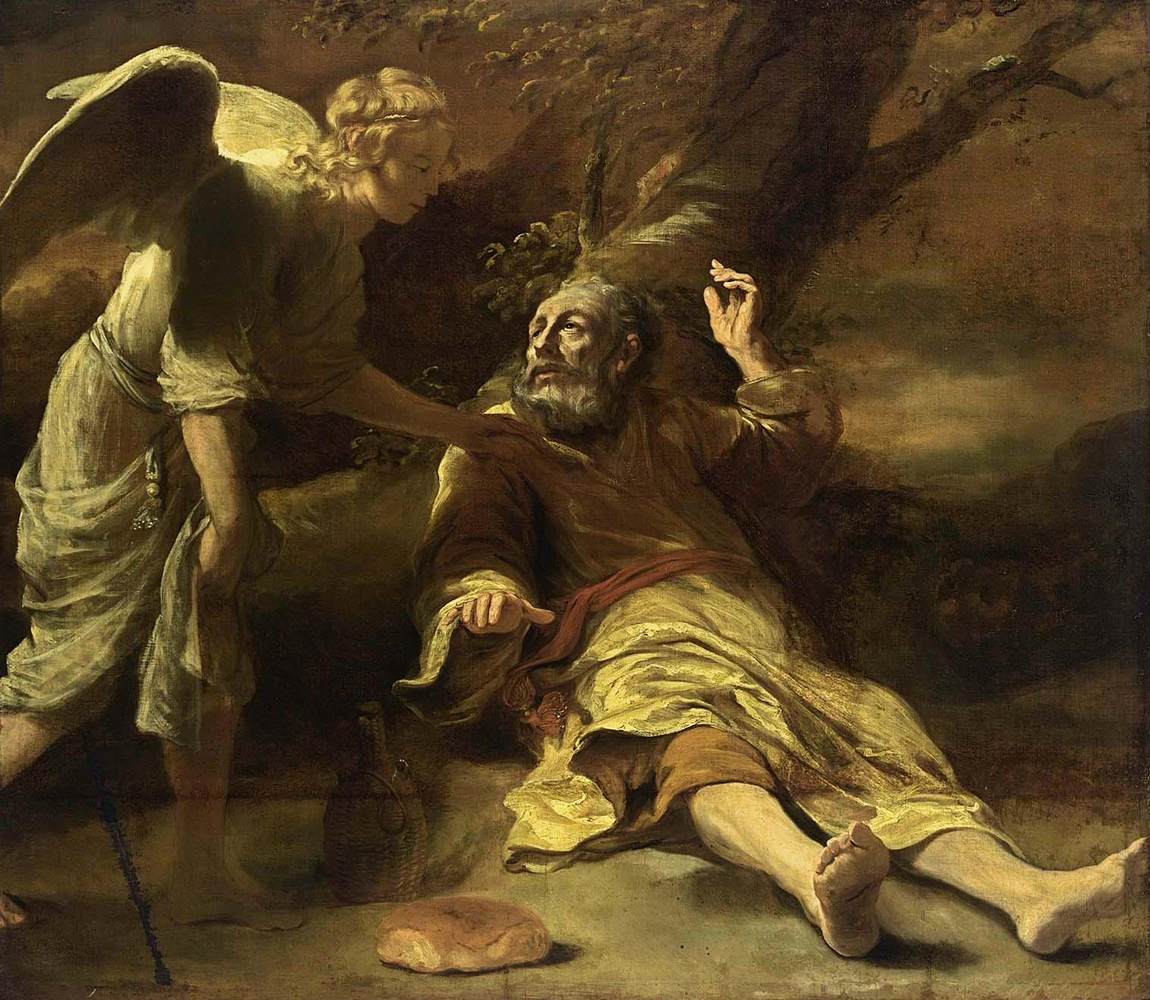
We all get beaten down in life. Whether it’s catastrophes like hurricanes, shootings, or economic meltdowns, or just dealing with the day to day demands and responsibilities of life, we all go through periods of dryness, feeling like we aren’t making a difference. This is where Elijah’s example is particularly pertinent. Having reached the peak of his influence and achieved a mighty victory over the prophets of Baal and Ashera, Elijah still found himself on the run from the government, hunted like an animal. In the deepest time of despair and discouragement, we encounter a message that can help us today as well. God told Elijah that he wasn’t done with him yet. I believe God’s not done with you yet either. He has work for you to do. —— Notes —— 1 Kings 17:1 Elijah’s name means “Yahweh is my God.” He wants to attack Baal directly, by undermining his alleged weather powers. It will not rain until Yahweh’s prophet says so. 1 Kings 18:5-18 After 3 1/2 years (James 5:17), Elijah meets Ahab again who hasn’t repented or turned away from supporting Baal worship in the land. 1 Kings 18:19-22 Elijah challenges the prophets of Baal and Asherah to a contest. Whoever answers by fire is the true God. This occurs before an assembly of Israelites who stand as witnesses. 1 Kings 18:27 Elijah mocks Baal publicly. He’s certainly not holding back here. 1 Kings 18:36-39 Yahweh comes through, and the people say, “Yahweh, He is God; Yahweh, He is God.” 1 Kings 18:46 Elijah ran before Ahab’s chariot for 17 miles while the rain storm approached. Upon arrival, Elijah’s heart must’ve thought, “This is it! Revival at last!” 1 Kings 19:1-4 However, Jezebel, undaunted by her god’s obvious inferiority to Yahweh, vows to capture and execute Elijah. He’s ready to quit. 1 Kings 19:9-18 Elijah speaks to God at Mount Horeb, where Israel first became a nation when they left Egypt. God asks him, “What are you doing here, Elijah?” He is worn out; he needs a word from the Lord. 1 Kings 19:13-18 God doesn’t spend much time comforting Elijah, but gives him important work to do. He assures him that he’s not alone, but that 7,000 others are faithful as well. God’s not done with him yet. Is God done with you, or does He still have more work for you to do? What’s God calling you to do? Is it to volunteer here on Sundays, invite your neighbors over for dinner, invite your coworker to church, start teaching your kids the Bible, go to a foreign land as a missionary, serve the poor, feed the hungry, or clothe the naked? Whatever God’s calling you to do, it’s time to do it. —— Links —— Listen to other sermons by Sean Finnegan Watch or listen to a message on St. Patrick Intro music: “District Four” by Kevin MacLeod. Licensed under Creative Commons: By Attribution 3.0 License.
111 John 1.1 Explained (John Schoenheit)
The first verse of John’s Gospel reads: “In the beginning was the word, and the word was with God, and the word was God.” Typically, Christians understand the Word to refer to the Son and God to refer to the Father. However, as John Schoenheit explains, this reading owes more to later trinitarian theology than the native biblical context. Instead of assuming the Word just is the Son, Schoenheit carefully shows how God’s word is his plan for salvation. In fact this is what became incarnate in Jesus in verse 14. Here’s a link to John Schoenheit’s slideshow Links: Listen to my interview with Schoenheit, called Word of Faith vs. Trusting God More on John 1.1 from a biblical unitarian perspective available at ChristianMonotheism.com Check out videos of the other presentations from KingdomFest 2017 Intro music: “District Four” by Kevin MacLeod. Licensed under Creative Commons: By Attribution 3.0 License.

110 Heaven Is Not My Home (Sean Finnegan)
This world is not my home I’m just a passing through My treasures are laid up somewhere beyond the blue The angels beckon me from heaven’s open door And I can’t feel at home in this world anymore Oh lord you know I have no friend like you If heaven’s not my home then lord what will I do The angels beckon me from heaven’s open door And I can’t feel at home in this world anymore So goes the classic hymn, “This World Is Not My Home.” However, the bible frequently portrays the final destination of the righteous as occurring on earth. In this message we’ll take our cue from Daniel’s vision in chapter seven to see what God’s plan is for his people. Ultimately, he wants a restored world without suffering and sin so that he can enjoy a relationship with his people forever. This world is your home. You were born here. You currently live here. And your hope is to remain here. Notes: Vision Daniel 7.1-8: Vision of the four beasts: a lion, a bear, a leapord, a dreadful beast, little horn Daniel 7.9-12: The Ancient of Days passes judgment against the dreadful beast Daniel 7.13-14: The Son of Man rules over all peoples forever Daniel 7.15: Daniel’s response Interpretation Daniel 7.16-18: first clarification – the beasts are kings, but saints will receive a kingdom and rule forever Daniel 7.19-27: second clarification – the fourth kingdom and the little horn who persecutes the saints Daniel 7.28: Daniel’s response The Saints Will Reign Matthew 19.28; 20.21-23; 1 Corinthians 6.2; 2 Timothy 2.12; Revelation 2.26-27; 5.9-10; 20.6 Kingdom Driven Luke 4.43; Matthew 24.14 Links: Check out the kingdom of God class podcasts More posts about conditional immortality (the sleep of the dead) Get the book Heaven Is Not My Home by the late David Burge or listen to my interview of him here Check out these additional audios, videos, articles, and ebooks on conditional immortality Intro music: “District Four” by Kevin MacLeod. Licensed under Creative Commons: By Attribution 3.0 License.
Interview 29: God’s Faithful Minister (John McCave)
John McCave has faithfully served God as a minister for 36 years. In this interview he shares his story of how God brought him from a hardened tough guy to a humble servant, motivated by love. McCave also shares key insights he’s gained along the way, especially with regard to his wife, Mary without whose support he could never have succeeded. Although this interview is chock-full of fascinating first-hand accounts of what God has done in his life, McCave’s humility, more than anything else, shines through as an example for all of us. Notes and Links: Watch McCave’s recent sermon from KingdomFest called “Yahweh, the Only God“ Visit his ministry website at Christian Outreach Fellowships Order his book, Worship: God’s Desire for All Ages Take a look at our KingdomFest 2017 videos Intro music: “District Four” by Kevin MacLeod. Licensed under Creative Commons: By Attribution 3.0 License.
109 Five Reasons I Changed my Mind about the Trinity (Sid Hatch)
Sid Hatch, a former Baptist minister and graduate of Dallas Theological Seminary explains his reasons for questioning the Trinity. Ultimately he concluded the bible does not teach that Jesus is “God the Son” but that he is “the Son of God.” In this presentation, he discusses various key texts including John 1.1 and Philippians 2.1-9 among others. Notes: Watch the video of this lecture More podcasts on monotheism Intro music: “District Four” by Kevin MacLeod. Licensed under Creative Commons: By Attribution 3.0 License.
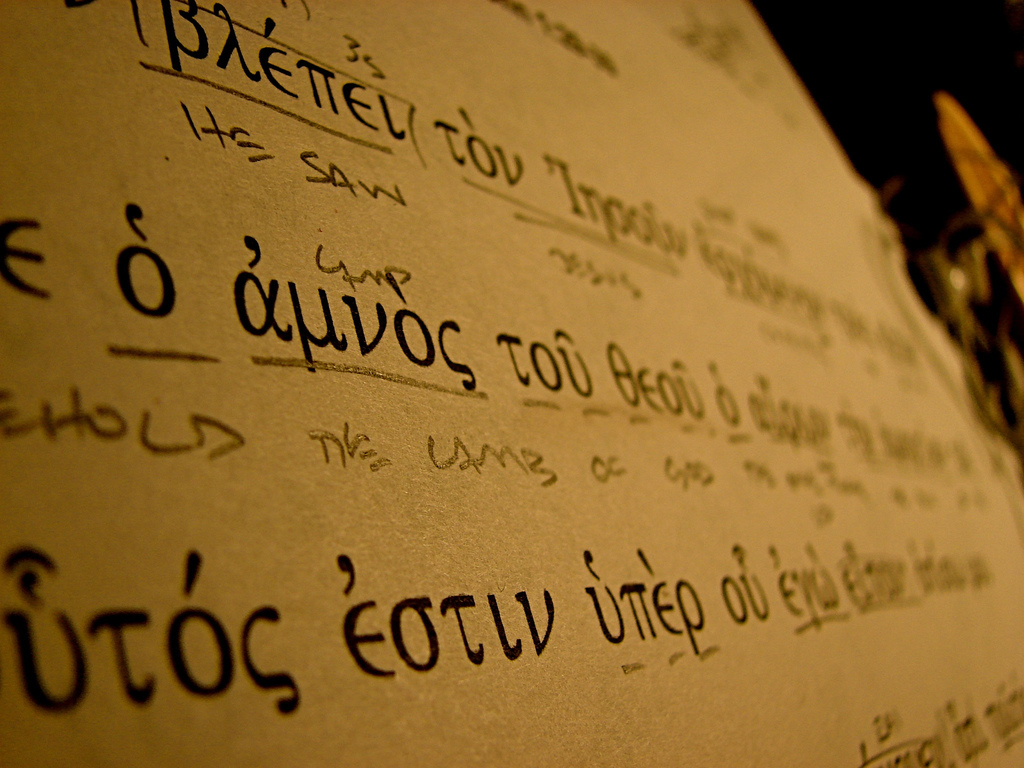
Interview 28: Exegetical Fallacies (Jerry Wierwille)
Why are there so many divergent beliefs about what the bible teaches? Partially, this results from mistakes we make when reading scripture. In this interview, Dr. Jerry Wierwille enumerates seven typical fallacies that bible students commit when reading: Root Fallacy Time-Frame Fallacy Misusing Parallels Fallacy Single Meaning Fallacy Word-Concept Fallacy Disjunctive Fallacy Lexical Fallacy Avoiding these pitfalls will help you engage with scripture better and build solid understandings that can stand up to critical analysis. Notes and Links: Dig deeper by reading Introduction to Exegetical Fallacies and Overview of Exegetical Fallacies Listen to Wierwille’s earlier interviews, especially the one he did on Hermeneutics (interpreting scripture) Check out these sermons and articles on Wierwille’s website (JerryWierwille.com) To delve deeper, take a look at D. A. Carson’s Exegetical Fallacies Intro music: “District Four” by Kevin MacLeod. Licensed under Creative Commons: By Attribution 3.0 License.

108 Indigenous Missionaries (Sean Finnegan)
Are you a missionary? Although we typically think of missionaries as those who travel to foreign lands to share the gospel with people, the simple fact is that we are all called to the work of sharing the gospel. Furthermore, as HeartCry Missionary Society points out, indigenous missionaries have huge advantages over foreign missionaries since they are more plenteous, less expensive, culturally literate, fluent, and avoid nationalistic biases. What if you altered your thinking just a little? Rather than seeing your role as a member of a church or a participant in a community of faith, what if you thought of yourself as an indigenous missionary? How would that change your life? Please pardon the quality of this recording. This meeting happened outside in a park in the Albany, NY area. Notes: Info about KingdomFest 2017 More podcasts on evangelism Intro music: “District Four” by Kevin MacLeod. Licensed under Creative Commons: By Attribution 3.0 License.
Interview 27: Understanding Proverbs (Jerry Wierwille)
What do you know about the book of Proverbs? It can be quite difficult to understand what’s going on without some knowledge of how Hebrew poetry works. In this episode Jerry Wierwille, serves as our guide to get a better grip on what Proverbs is all about. He explains the poetic structures, general approach, and theological content of this incredibly important book so you can get more out of it. Notes and Links: Listen to Wierwille’s earlier interviews: Caring Enough to Confront, Hermeneutics, and Emotionally Healthy Spirituality Check out these sermons and articles by Jerry Wierwille on his website (JerryWierwille.com) Read the recently completed Revised English Version of Proverbs To delve deeper, take a look at Robert Alter’s The Art of Biblical Poetry Intro music: “District Four” by Kevin MacLeod. Licensed under Creative Commons: By Attribution 3.0 License.
107 Each One Serve (John Cortright)
Service is an important part of Christian living. We are not spectators waiting to be entertained, but participants looking for ways to help out. In this sermon, John Cortright shows what Jesus taught us about service at the last supper as well as what sort of attitude we should have. So often we either critique from the sidelines or remain oblivious to the needs around us. Instead, we can take the initiative and jump in where there’s a need. This is a call to action! Notes: At the last supper, Jesus shared many important truths with his disciples that they would need to know after his departure. John 13:1-17 Jesus washed the disciples’ feet and then explained why. Foot washing was an Eastern/biblical custom of service towards others (Gen 18:1-4; 19:1-2; 24:30-32; 43:16-24; 1 Samuel 25:40-41; Luke 7:44; 1 Tim 5:10). Jesus was their Teacher (Master) and Lord. If we are Christ’s disciples, he should be also our Lord and Master (Roman 10:9). If he is our Lord, then we ought to wash one another’s feet. The slave (the servant) is not greater than his master. Neither is the one who is sent greater than the one who sent him. Blessed are you if you “do” these things. Luke 22:24-27 This account also took place during the last supper. The greatest should become the servant. Romans 12:1 We are urged to present our bodies a living sacrifice, a spiritual service of worship. Romans 12:2-11 We are individually members of the body of Christ, “each” having a function to perform. Ephesians 4:7, 14-16 — “Each one” of us was given grace according to the measure of Christ’s gift. 1 Corinthians 12:4-6 — There are a variety of gifts, ministries, and effects, but it is one spirit, one Lord, and one God that works all things in all persons! 1 Corinthians 12:11 — One and the same spirit works all these things, distributing to each one individually. 1 Corinthians 12:27 — Now you are Christ’s body and individually members of it. 1 Peter 4:7-11 The end of all things is near! So serve!!! As each one has received a special gift, employ it in serving one another. Philippians 2:1-13 Be intent on one purpose. Do nothing from selfishness or empty conceit. Do not look out for your own interests but also for the interests of others. Have this attitude which was also in Christ Jesus! It is God who is at work in you, both to will and to work for His good pleasure. Links: More Restitutio podcasts featuring John Cortright include 45 Talking with Jesus and 77 God Is Enough Check out dozens of more sermons by Cortright at the Living Hope International Ministries archive Take Cortright’s classes, including Isaiah and The Twelve (aka the ‘minor’ prophets) Intro music: “District Four” by Kevin MacLeod. Licensed under Creative Commons: By Attribution 3.0 License.
Interview 26: Word of Faith vs. Trusting in God (John Schoenheit)
What is faith? To some it is believing in something without evidence. To others it is a means by which to attain God’s blessings like prosperity and health. John Schoenheit explains how neither of these definitions best encapsulates the biblical understanding. Instead, he shows how faith is really just trust in what God says, whether in scripture or by revelation. In this fascinating interview you’ll learn about how the meaning of the word faith has changed throughout Christian history as well as how the “Word of Faith” approach could ruin your life. Notes and Links: Read the full article “Faith is Trust” or check out his ongoing by translation project, the Revised English Version (REV) More resources by John Schoenheit are available at Spirit and Truth Fellowship and at Truth or Tradition and at Biblical Unitarian More information about KingdomFest here (Sept 8-10, 2017) Intro music: “District Four” by Kevin MacLeod. Licensed under Creative Commons: By Attribution 3.0 License.

106 Misunderstood Texts (Kingdom of God 15)
Find out what the most commonly misunderstood texts about the kingdom are as well as how to interpret them within their own contexts. In this final session of the kingdom of God class, we’ll look at these important verses: Matthew 16.28 “Some…will not taste death until they see…the kingdom” Luke 17.21 “The kingdom of God is in your midst” Matthew 24.34 “This generation will not pass away until all these things take place” Luke 23.43 “Truly, I say to you, today you will be with me in Paradise” John 18.36 “My kingdom is not of this world” John 14.3 “I go and prepare a place for you” 2 Corinthians 5.8 “to be absent from the body and to be at home with the Lord” Philippians 1.23 “My desire is to depart and be with Christ, for that is far better” Ecclesiastes 12.7 “The dust returns to the earth…and the spirit returns to God” This is lecture 15 of the Kingdom of God class, originally taught at the Atlanta Bible College. To take this class for credit, please contact ABC so you can do the work necessary for a grade. Notes: Some will not taste death until kingdom comes Matthew 16.28-17:9 28 Truly, I say to you, there are some standing here who will not taste death until they see the Son of Man coming in his kingdom.” 1 And after six days Jesus took with him Peter and James, and John his brother, and led them up a high mountain by themselves. 2 And he was transfigured before them, and his face shone like the sun, and his clothes became white as light. 3 And behold, there appeared to them Moses and Elijah, talking with him. 4 And Peter said to Jesus, “Lord, it is good that we are here. If you wish, I will make three tents here, one for you and one for Moses and one for Elijah.” 5 He was still speaking when, behold, a bright cloud overshadowed them, and a voice from the cloud said, “This is my beloved Son, with whom I am well pleased; listen to him.” 6 When the disciples heard this, they fell on their faces and were terrified. 7 But Jesus came and touched them, saying, “Rise, and have no fear.” 8 And when they lifted up their eyes, they saw no one but Jesus only. 9 And as they were coming down the mountain, Jesus commanded them, “Tell no one the vision, until the Son of Man is raised from the dead.” they received a vision of the kingdom; this fulfilled Jesus’ prophecy that they wouldn’t die before “seeing” the son of man coming in his kingdom Kingdom is within you Luke 17.20-31 20 Being asked by the Pharisees when the kingdom of God would come, he answered them, “The kingdom of God is not coming in ways that can be observed, 21 nor will they say, ‘Look, here it is!’ or ‘There!’ for behold, the kingdom of God is in the midst of you.” 22 And he said to the disciples, “The days are coming when you will desire to see one of the days of the Son of Man, and you will not see it. 23 And they will say to you, ‘Look, there!’ or ‘Look, here!’ Do not go out or follow them. 24 For as the lightning flashes and lights up the sky from one side to the other, so will the Son of Man be in his day. 25 But first he must suffer many things and be rejected by this generation. 26 Just as it was in the days of Noah, so will it be in the days of the Son of Man. 27 They were eating and drinking and marrying and being given in marriage, until the day when Noah en

Interview 25: Studying the Trinity, Discovering God Is One (Sean Holbrook)
Sean Holbrook was attending a typical evangelical church when he heard a series of sermons teaching the Trinity. Ironically, these very messages, designed to bolster faith in the doctrine, ended up inspiring Holbrook to question the age old dogma. As a result, he set out to study the topic more and watched James White debates and read his book The Forgotten Trinity. Once again, what was meant to convince Holbrook of the Trinity opened his eyes to more flaws and shaky logic that spurred him on to study the subject even further. After much investigation and careful consideration, he concluded the bible teaches that the Father of Jesus is the only true God. Early in 2017, Sean Holbrook debated Joshua Lovell on the question: Is God a Trinity? Here’s another link to the debate with better audio quality. Notes and Links: Check out Sean Holbrook’s blog: droptozro Follow him on Twitter @titus2_11_14 Listen to more episodes about biblical unitarianism Intro music: “District Four” by Kevin MacLeod. Licensed under Creative Commons: By Attribution 3.0 License.
105 Recovering the Kingdom (Kingdom of God 14)
We’ve looked at how and why Christianity lost the kingdom message; in this episode you’ll learn how we got it back. Over the last five hundred years, three different movements have made significant strides in recovering the kingdom: the Anabaptists (16th century), the Adventists (19th century), and liberal scholars (20th century). In this lecture you’ll get a brief overview of each of these groups and see a bit about how they learned about the kingdom and did their part to restore it. This is lecture 14 of the Kingdom of God class, originally taught at the Atlanta Bible College. To take this class for credit, please contact ABC so you can do the work necessary for a grade. Notes: (16th c.) Anabaptists and Radicals Rediscover the Kingdom in the 1440s, the invention of Gutenberg’s printing press led to the reexamination of traditional Catholic doctrines the bible revolution initiated a new interest in doctrine 1454 Gutenberg Bible (Latin) 1516 Erasmus’ Greek NT 1522 Luther’s German NT 1526 Tyndale’s English NT 1534 Luther’s German Bible 1535 Coverdale English Bible George Williams: “Because the New Testament uses the euphemism of sleep, the term soul sleep (Seelenschlaf) is often encountered in the sixteenth century. It will be sharply opposed by Calvin in his first theological work, Psychopannychia (1534; Strasburg ed., 1542). This important work against Anabaptists and perhaps Servetus supplies our generic term psychopannychism in the present narration for that full range of Christian views not in line with the decree on the natural immortality of the soul of the V Lateran Council and of Calvin himself who would come to hold to the continued consciousness of the departed souls, as saints ‘under the alter’ (Rev 6.9-11), participants as the elect in the invisible Church, awaiting the Last Judgment. Luther, for his part, was himself, at the outset of his scriptural career as reformer a psychopannychist, as was his most renowned English follower, the Bible translator, William Tyndale.”[1] why do you think Calvin wrote this book? his book, Psychopannychia, fought against people who believed in the sleep of the dead this means sufficient people believed in this idea that he felt it was the first doctrine he had to attack! apocalypticism vs. millennialism vs. millenarianism active apocalypticism (Melchior Hoffman and the Munster debacle) passive apocalypticism George Williams: “Not only psychopannychism but also Antitrinitarianism was to find its fullest ecclesial expression in Polish Socinianism and Hungarian Unitarianism. The leaders of these two parallel and closely interrelated movements…were Italians or palpably dependent upon Italians.”[2] these 2 groups combined sleep of the dead w/ biblical unitarianism Polish Socinians, Hungarian Unitarians (19th c.) Adventists and Restorationists William Miller (1782-1849) father of Adventism Adventism: movement based on rediscovery of the return of Christ Adventist: someone who believes Jesus is coming back and usually also believes in conditional immortality American Baptist who preached in upstate New York (Hampton, east of Lake George on VT border) studied prophecies of Daniel and used day-year method in 1822 he predicted Christ would come by 1843 (made public in 1831) submitted 16 articles to <e

Off Script 33: Stewarding Your Resources
We all have resources, whether money, time, talents, or skills. How should we steward these resources? In this episode, we conclude our series on stewardship by talking about work, debt, contentment, retirement, volunteering, industriousness, and laziness. We conclude that as with all areas of life, we need to seek God’s glory with our resources. Links: Check out the other episodes in the Stewardship Series Listen to Off Script 6: Consumerism or read this article Listen to Podcast 4: A Biblical Theology of Finance (Craig Blomberg) Intro music: “Protofunk” by Kevin MacLeod. Licensed under Creative Commons: By Attribution 3.0 License.
104 The Kingdom Is Too Jewish (Kingdom of God 13)
This is part three of a series of three lectures on why some Christians ended up rejecting the kingdom message in the first few centuries of Christianity. In this part, I work through the major differences between how Jews and Greeks read scripture. What we find is that the Christians who didn’t like the kingdom idea lumped in those who did believe in it with the unbelieving Jews who rejected Jesus as the Messiah. In other words, kingdom advocates got labeled “Judaizers” for supporting biblical (literal) interpretations that the Jews were using to show that Jesus could not be the Messiah because he did not literally fulfill the kingdom prophecies. This is lecture 13 of the Kingdom of God class, originally taught at the Atlanta Bible College. To take this class for credit, please contact ABC so you can do the work necessary for a grade. Notes: Christians Who Spoke Against the Kingdom as Too Jewish Origen of Alexandria (3rd c.) Now some men, who reject the labour of thinking and seek after the outward and literal meaning of the law…picture to themselves the earthly city of Jerusalem rebuilt with precious stones laid down for its foundations and its walls erected of jasper and its battlements adorned with crystal…Then, too, they suppose that ‘aliens’ are to be given them to minister to their pleasures, and that they will have these for ‘plowmen’ or ‘vinedressers’ or ‘wall-builders’…and they consider that they are to receive the ‘wealth of nations’ to live on and that they will have control over their riches, so that even camels of Midian and Ephah will come and bring ‘gold, incense and precious stones’. All this they try to prove on prophetic authority from those passages of scripture which describe the promises made to Jerusalem…and they quote from the scriptures many other illustrations, the force of which they do not perceive must be figurative and spiritual. Then, too, after the fashion of what happens in this life, and of this world’s positions of dignity or rank or supreme power, they consider that they will be kings and princes…And, to speak briefly, they desire that all things which they look for in the promises should correspond in every detail with the course of this life, that is, that what exists now should exist again. Such are the thoughts of men who believe indeed in Christ, but because they understand the divine scriptures in a Judaistic sense, extract from them nothing that is worthy of the divine promises. (De Principiis 2.11.2) Eusebius of Caesarea (4th c.) In addition to all these letters, he [Dionysius of Alexandria] composed two treastises, On Promises, occasioned by Nepos, a bishop of Egypt, who taught that the promises made to the saints in the divine Scriptures should be interpreted in a more Jewish fashion and that there would be a sort of millennium of bodily indulgence on this earth. (Ecclesiastical History 7.24) Like the Jewish people who read the Scriptures literally, one could assume that it is the land of Palestine. But according to the deeper meaning, according to the final word, the high and heavenly and angelic word of God and the divine apostle of the “heavenly” Zion teaches that it is “the Jerusalem above, which is the mother of us all.” (Commentary on Isaiah 2.1-4) And though the lion is carnivorous by nature, he shall be nourished with husks as a herbivorous animal. So too there are savage and coarse people who understand only the literal interpretation of the graces of the divine Scripture. The divine Scripture is the nourishing word of souls, but its secrets escape the notice of our minds, for the meaning is surrounded by a husk. (C

Off Script 32: Stewarding Your Image (Can Christians Get Tattoos?)
Last week we looked at stewarding your body. In this episode we focus on a phenomenon that has been growing over the last couple of decades–tattoos and piercings. What was once seen among sailors, bikers, and soldiers is now rampant among celebrities, athletes, and countless others. What’s a Christian to do? Should we go with the flow? Does the bible condemn tattoos and piercings outright? If tattoos are ok, how should we figure out what is appropriate and godly versus what is inappropriate and sinful? In this Off Script episode we discuss these questions in an effort to set aside cultural bias and think biblically about tattoos and piercings. Here’s a quick list of questions to ask before getting a tattoo or piercing: 10 Questions to Ask before You Get a Tattoo or Piercing Will it portray something God is against? Is your motivation vanity (drawing attention to yourself)? Will this limit your career options? Are you ok with strangers coming up and asking you about it? Are you sure you want this on your body permanently? Would this cause issues or offense in your cultural setting? Does your spouse agree with you on getting it? Will it cause irreversible damage? Will it remind you of something God has done or give God glory? Will it open doors for evangelism? Here are some pictures we reference in the episode: “The LORD is my shepherd” Wife’s matching tatoo Dan (cohost of Off Script) Close up of Dan’s tattoo Links: Listen to Podcast 68: Soli Deo Gloria Check out the other episodes in the Stewardship Series Intro music: “Protofunk” by Kevin MacLeod. Licensed under Creative Commons: By Attribution 3.0 License.
103 The Kingdom Is Too Hedonic (Kingdom of God 12)
Last time we saw that some influential Christians rejected the biblical teaching on the kingdom because the idea of living on earth forever seemed crude to them. This time, we look at how the ancients thought about bodies and bodily pleasures. As it turns out, from (at least) Plato onward, many philosophers tended to embrace a very negative view of pleasure, arguing that the truly enlightened person should exercise abstinence and discipline as much as possible. This idea flourished among the Stoics and Neo-Platonists and infiltrated Christianity from the second century onward. Consequently, the biblical descriptions of feasting in the kingdom with the patriarchs in resurrected bodies seemed to demand reinterpretation. Additionally kingdom deniers labelled kingdom advocates hedonists, as if their uncontrollable desire for pleasure motivated their belief in the kingdom. This is lecture 12 of the Kingdom of God class, originally taught at the Atlanta Bible College. To take this class for credit, please contact ABC so you can do the work necessary for a grade. Notes: ἡ ἡδονή (e edone): pleasure, enjoyment, delight hedonism, hedonist, hedonic hedonism: belief that pleasure is life’s goal Our Plan show you that some Christians rejected the kingdom belief because it was too hedonic explain why they had such an ascetic bias (ascetic means anti-pleasure) Greco-Roman background how this infiltrated Christian thinking biblical view on bodily pleasures how this affects us today Quotes showing rejection of the kingdom on the charge of hedonism Gaius (early second century) “But Cerinthus also, by means of revelations which he pretends were written by a great apostle, brings before us marvelous things which he falsely claims were shown him by angels; and he says that after the resurrection the kingdom of Christ will be set up on earth, and that the flesh dwelling in Jerusalem will again be subject to desires and pleasures. And being an enemy of the Scriptures of God, he asserts, with the purpose of deceiving men, that there is to be a period of a thousand years5 for marriage festivals.” (H.E. 3.28.2) Origen (early third century) Certain persons, then, refusing the labour of thinking, and adopting a superficial view of the letter of the law, and yielding rather in some measure to the indulgence of their own desires and lusts, being disciples of the letter alone, are of opinion that the fulfilment of the promises of the future are to be looked for in bodily pleasure and luxury; and therefore they especially desire to have again, after the resurrection, such bodily structures as may never be without the power of eating, and drinking, and performing all the functions of flesh and blood (De Princip. 2.11.2) “And even as those who because of the fact that they do not interpret the prophecies allegorically suppose (that) after the resurrection we will eat and drink bodily food and drink, since also the words of the prophetic writings embrace such as these, so also what has been written concerning marriages of both men and women, keeping to the literal and supposing (that) we will take part in intercourse then, on account of which it is not even possible to have time for prayer when being in (a state of) defilement and uncleanness partaking in sexual pleasures.” (Commentary on Matthew 17.35) Dionysius (mid third century) “For the doctrine which he [Cerinthus] taught was this: that the kingdom of Christ will be an earthly one. And as he was himself devoted to the pleasures

Off Script 31: Stewarding Your Body
How should you steward your body? Are all bodily pleasures inherently sinful? In order to grapple with these questions, we take a tour through the bible from the Garden of Eden through to the time of Jesus to observe the balanced biblical perspective between asceticism (denying all pleasures) and hedonism (living for pleasure). As it turns out, God designed us to experience pleasure, but within his boundaries. We discuss several of these before considering how sometimes we may need to enter a period of abstinence to recenter ourselves. Lastly, we look at how legalism can sneak in and wreak havok when we impose our own personal boundaries on other Christians. Links: Check out the other episodes in the Stewardship Series Read an article on how ancient asceticism invaded the church, leading to the rejection of the kingdom message Intro music: “Protofunk” by Kevin MacLeod. Licensed under Creative Commons: By Attribution 3.0 License.
102 The Kingdom Is Too Crude (Kingdom of God 11)
Now that you’ve seen the historical defenders of the kingdom faith, it’s time to turn our attention to those who fought against it. Over the next three lectures you’ll learn the main reasons why Christianity rejected the kingdom message of the bible and replaced it with going to heaven or hell at death. First up, we’ll take a tour of how the ancients thought about creation and the universe, giving special attention to how Plato and Philo influenced Christian thinking. This is lecture 11 of the Kingdom of God class, originally taught at the Atlanta Bible College. To take this class for credit, please contact ABC so you can do the work necessary for a grade. Notes: Kingdom Called Crude Dionysius of Alexandria (d. 265) “But since they bring forward a certain work of Nepos, on which they especially rely as irrefutably proving that the kingdom of Christ will be on earth…we should…examine and correct whatever appears to be unsoundly composed…But when a book is published which seems most convincing to some and do[es] not allow our simpler brethren to have high and noble thoughts, either regarding the glorious and truly divine coming of our Lord or our resurrection from the dead or our gathering together unto Him and being like to Him, but persuade them to hope for the small and mortal and such as are of the present in the Kingdom of God…then it is necessary that we, too, argue with our brother Nepos as if he were present.” (Eusebius, History of the Church 7.24) Origen of Alexandria (d. 253) “Because of this it happens that certain of the simpler Christians, since they do not know how to distinguish and to keep separate what in the divine Scriptures must be allotted to the inner man and what to the outer man, misled by the similarities in the designations, have turned themselves to certain foolish stories and vain fictions, so that even after resurrection they believe that corporeal foods must be used and drink taken not only from that true Vine which lives forever, but also from vines and fruits of wood.” (Comm. of the Song of Songs, Prologue) Eusebius of Caesarea (d. 339) “Among these he [Papias] says that there will be a period of about a thousand years after the resurrection of the dead, when the kingdom of Christ will be established on this earth in material form. I suppose that he got these ideas through a perverse reading of the accounts of the Apostles, not realizing that these were expressed by them mystically in figures. For he appears to be a man of very little intelligence, to speak judging from his books, but he was responsible for the great number of Church writers after him holding the same opinion as himself, who proposed in their support the antiquity of the man, as, for instance, Irenaeus and whoever else appeared to hold similar views.” (Church History 3.39) Augustine of Hippo (d. 430) “The same Evangelist John has spoken of these two resurrection in his book which is called the Apocalypse, but in such a way that some of us have not understood the first of the two, and thereby have turned it into some ridiculous fancies….Those who, because of this passage in this book, have suspected that the first resurrection is future and bodily…This opinion would be somewhat tolerable, if the delights of that Sabbath to be enjoyed by the saints were, through the presence of the Lord, of a spiritual kind. For we too were at one time of this opinion.” (City of God 20.7.1) “If we were to tell those pagan philosophers that our bodies are going to be victorious on a new earth and not in heaven, we would be speaking boldly and rashly, yes, even against the faith. For we ought to believe

Off Script 30: Stewarding the Earth
We’re beginning a new series on stewardship. To start with, we’ll discuss the biblical mindset towards stewarding the earth. Future episodes will address stewarding our bodies and finances. In this show, we begin with creation theology and move to consider how God injected covenantal significance into how Israelites were to think about their land. Lastly, we look at how believing in the renewal of our earth in the age to come should affect us now. We also overcome several typical Christian objections to creation care while trying to avoid any kind of legalism. Links: Check out the other episodes in the Stewardship Series Intro music: “Protofunk” by Kevin MacLeod. Licensed under Creative Commons: By Attribution 3.0 License.
101 Historical Kingdom Advocates (Kingdom of God 10)
Who has believed in the kingdom over the history of Christianity? In this lecture, you’ll find out who defended the kingdom belief in the first four centuries, before it faded out of the mainstream and got replaced with going to heaven instead. In order to put you in contact with the primary sources, we read through a bunch of quotes, so you can hear the unfiltered voices of these remarkable kingdom advocates. This is lecture 10 of the Kingdom of God class, originally taught at the Atlanta Bible College. To take this class for credit, please contact ABC so you can do the work necessary for a grade. Notes: 1st Century Author(s) of Didache (wrote/edited ad 60-150) Didache 8.2 Nor should you pray like the hypocrites. Instead, pray like this, just as the Lord commanded in his Gospel: “Our Father in heaven, hallowed be your name, your kingdom come, your will be done on earth as it is in heaven…” Didache 9.4 Just as this broken bread was scattered upon the mountains and then was gathered together and became one, so may your church be gathered together from the ends of the earth into your kingdom; for yours is the glory and the power through Jesus Christ forever. Didache 10.5-6 5 Remember your church, Lord, to deliver it from all evil and to make it perfect in your love; and from the four winds gather the church that has been sanctified into your kingdom, which you have prepared for it; for yours is the power and glory forever. 6 May grace come, and may this world pass away. Hosanna to the God of David. If anyone is holy, let him come; if anyone is not, let him repent. Maranatha! Amen. Didache 16.6-8 6 And then there will appear the signs of the truth: first the sign of an opening in heaven, then the sign of the sound of a trumpet, and third, the resurrection of the dead—7 but not of all; rather, as it has been said, “The Lord will come, and all his saints with him.” 8 Then the world will see the Lord coming upon the clouds of heaven. Clement of Rome (wrote ad 80-100) 1 Cl. 42:3 3 Having therefore received their orders, and being fully assured by the resurrection of our Lord Jesus Christ, and established in the word of God, with full assurance of the Holy Ghost, they went forth proclaiming that the kingdom of God was at hand. 1 Cl. 50:3 3 All the generations from Adam even unto this day have passed away; but those who, through the grace of God, have been made perfect in love, now possess a place among the godly, and shall be made manifest at the revelation of the kingdom of Christ. Barnabas (wrote ad 70-132) Epistle of Barnabas 1.7 For the Master has made known to us through the prophets things past and things present, and has given us a foretaste of things to come. Epistle of Barnabas 6.13 Again, I will show thee how, in respect to us, He has accomplished a second fashioning in these last days. The Lord says, “Behold, I will make the last like the first.” In reference to this, then, the prophet proclaimed, “Enter ye into the land flowing with milk and honey, and have dominion over it.” Epistle of Barnabas 10.11…Because the righteous person not only lives in this world but also looks forward to the holy age to come…. Epistle of Barnabas 15.4-5 Observe, children, what “he finished in six days” means. It means this: that in six thousand years the Lord will bring everything to an end, for with him a day signifies a thousand years…”And he rested on the seventh day.” This means: when his son comes, he will destroy the time of the lawless one and will judge the ungodly and will change the sun and the mo
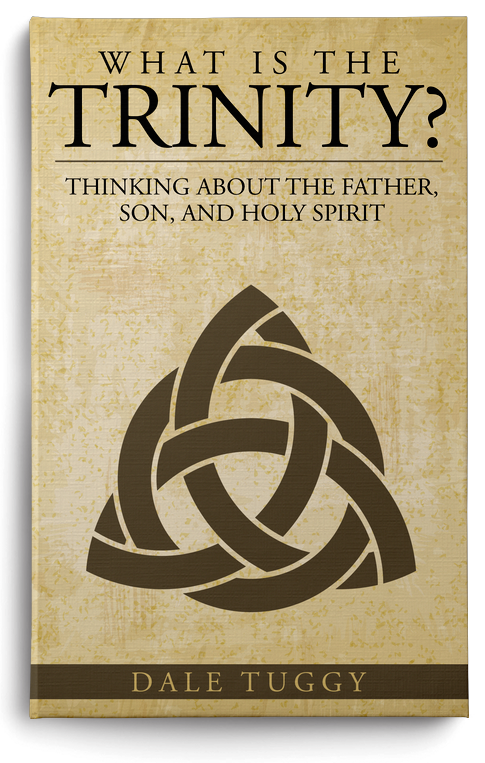
Interview 24: What Is the Trinity with Dale Tuggy
Do you know what the Trinity is? Could you explain it to someone else or is it just a confusing collection of impenetrable statements hidden under a cloud of fog? In his recent book, Professor Dale Tuggy seeks to clarify everyone’s perceptions of the various Trinity theories so that we can have productive conversation on the subject. He delves deep into the various key concepts like explaining various ways of thinking about persons and essence (ousia) to help you make sense of it all. Whether you believe in the Trinity or not, this interview will help you understand how to have more focused and profitable conversation on this important doctrine. Notes and Links: Visit Dr. Tuggy’s website at Trinities.org Purchase his book at Create Space or on Amazon (Also, write him a review!) Follow him on twitter @DaleTuggy Intro music: “District Four” by Kevin MacLeod. Licensed under Creative Commons: By Attribution 3.0 License.
100: Kingdom Allegiance (Kingdom of God 9)
Like all kingdoms, God’s kingdom is political in nature. As a result, the kingdom requires allegiance from its citizens. By examining Jewish messianism and Roman political sensibilities, you’ll come to better see how early Christians prioritized their allegiance to the age to come over their local and national allegiances. This is lecture 9 of the Kingdom of God class, originally taught at the Atlanta Bible College. To take this class for credit, please contact ABC so you can do the work necessary for a grade. Notes: two parts: Jewish Messianism Roman Allegiance politics and religion were not separate realms in antiquity Other leaders of messianic movements: Athronges (4 bc) Judah the Galilean (ad 6) the Samaritan Prophet (ad 36) Theudas (ad 45) the Egyptian Prophet (ad 58) Simon bar Giora (ad 69) Simon ben Kosiba (ad 132) the Roman empire always perceives the leaders of Jewish messianic movements as threats and moves decisively to eliminate them I bring up these leaders of messianic and quasi-messianic movements to contextualize Jesus he knows what he’s doing and he’s smart about it Messianic Secret messianic secret: Jesus kept the fact that he claimed to be the messiah a secret Jesus had been extremely careful up to this point casting out many demons Luke 4.40-41 40 Now when the sun was setting, all those who had any who were sick with various diseases brought them to him, and he laid his hands on every one of them and healed them. 41 And demons also came out of many, crying, “You are the Son of God!” But he rebuked them and would not allow them to speak, because they knew that he was the Christ. Peter’s Confession (Mark 8.27-30) Matthew 16.15-20 15 He said to them, “But who do you say that I am?” 16 Simon Peter replied, “You are the Christ, the Son of the living God.” 17 And Jesus answered him, “Blessed are you, Simon Bar-Jonah! For flesh and blood has not revealed this to you, but my Father who is in heaven…20 Then he strictly charged the disciples to tell no one that he was the Christ. until…the Triumphal Entry Mark 11. 7-11 7 And they brought the colt to Jesus and threw their cloaks on it, and he sat on it. 8 And many spread their cloaks on the road, and others spread leafy branches that they had cut from the fields. 9 And those who went before and those who followed were shouting, “Hosanna! Blessed is he who comes in the name of the Lord! 10 Blessed is the coming kingdom of our father David! Hosanna in the highest!” 11 And he entered Jerusalem and went into the temple. And when he had looked around at everything, as it was already late, he went out to Bethany with the twelve. three coded actions riding the donkey waving palm branches called “Son of David” Riding the Donkey By riding the donkey Jesus provocatively fulfilled Zechariah’s prophecy.[1] Zechariah 9.9-10 9 Rejoice greatly, O daughter of Zion! Shout aloud, O daughter of Jerusalem! Behold, your king is coming to you; righteous and having salvation is he, humble and mounted on a donkey, on a colt, the foal of a donkey. 10 I will cut off the chariot from Ephraim and the war horse from Jerusalem; and the battle bow shall be cut off, and he shall speak peace to the nations; his rule shall be from sea to sea, and from

Interview 23: Bible Lock-Screens with Ryan Maher
Are you interested in online ministry? Would you like to reach more people? Ryan Maher shares what he’s learned about combining his love for God and graphic design into his bible lock-screen app. Once Instigram came out, he jumped on board and developed a following that numbers around a million people. In this interview Maher talks about his journey of faith, how he’s found success in reaching people online, as well as some tips on how to be more effective on social media. Notes and Links: Get more info about Ryan Maher’s bible lock screen app Check out his daily encouragement blog at ryanmaher.net Subscribe to his podcast Follow him on twitter @RyanMaher Intro music: “District Four” by Kevin MacLeod. Licensed under Creative Commons: By Attribution 3.0 License.
99: The Kingdom Way (Kingdom of God 8)
How does your belief in the God’s coming kingdom affect your life now? Now that we’ve looked at the kingdom as hope (what we look forward to) and gospel (what we preach to others), we’ll examine how God calls us to embody the kingdom now. Taking our cue from Jesus’ kingdom-saturated ministry, we’ll see how he enacted the future in the present as a testimony and a taste of what’s to come. This is lecture 8 of the Kingdom of God class, originally taught at the Atlanta Bible College. To take this class for credit, please contact ABC so you can do the work necessary for a grade. Notes: three dimensions of the kingdom kingdom hope (including, judgment and restoration) kingdom gospel (message preached) kingdom way (lifestyle, motivation, allegiance) Jesus was obsessed w/ the kingdom we’ve already established that Jesus was a kingdom preacher that Jesus believed he was messiah—God’s anointed king of the kingdom that Jesus chose 12 disciples and promised them 12 thrones in the kingdom his parables were all about the kingdom parable of the sower: responding to the “word of the kingdom” seed parable of the tares & wheat: righteous and wicked grow together until the kingdom age when judgment occurs parable of the minas: teaches how to steward what God has given you so as to be rewarded in the kingdom parable of the sheep and the goats: treat those in need well so when the son of man sits upon his throne he will grant you entrance to kingdom you wanna tell me you can understand Jesus w/o understanding the kingdom? he was obsessed with it it was his hope, his destiny, his dream, his sermon, he gave his life for it (Rev 5.9-10) he called the kingdom a treasure in a field and a pearl of great price (Mt 13.44-46)—something worth selling everything to get as for priorities, Jesus said, “Therefore do not be anxious, saying, ‘What shall we eat?’ or ‘What shall we drink?’ or ‘What shall we wear?’ 32 For the Gentiles seek after all these things, and your heavenly Father knows that you need them all. 33 But seek first the kingdom of God and his righteousness, and all these things will be added to you.” (Mt 6.31-33) (on quiz: in what verse does Jesus tell his disciples to seek first his kingdom?) but, he doesn’t stop here his whole ministry, including preaching, healing, exorcisms, dinner parties all enacted the kingdom I want to look at three incidents his inaugural sermon his answer to John’s delegation an exorcism inaugural sermon Luke 4.16-21 16 And he came to Nazareth, where he had been brought up. And as was his custom, he went to the synagogue on the Sabbath day, and he stood up to read. 17 And the scroll of the prophet Isaiah was given to him. He unrolled the scroll and found the place where it was written, 18 “The Spirit of the Lord is upon me, because he has anointed me to proclaim good news to the poor. He has sent me to proclaim liberty to the captives and recovering of sight to the blind, to set at liberty those who are oppressed, 19 to proclaim the year of the Lord’s favor.” 20 And he rolled up the scroll and gave it back to the attendant and sat down. And the eyes of all in the synagogue were fixed on him. 21 And he began to say to them, “Today this Scripture has been fulfilled in your hearing.” Isaiah 61.1-11 1 The Spirit of the Lord G

Interview 22: The 21st Century Reformation (J. Dan and Sharon Gill)
J. Dan and Sharon Gill are part of a growing movement of bible students who have concluded that the Father of Jesus is the only true God. They’re so passionate about this truth that in 2008, they launched their website, called Twenty-First Century Reformation (21stcr.org). To date they’ve received over 700,000 views on YouT ube, not to mention visitors to the site. In this interview you’ll here a bit about the Gill’s journey of faith from oneness to one, why they decided to launch 21st century reformation, how Sharon became “the most tech savvy grandma in America,” how they came up with the name, and their vision for the future. Notes and Links: Visit 21st Century Reformation Subscribe to 21st Century Reformation’s YouTube channel Get J. Dan Gill’s book, The One: In Defense of God Also check out these audios, featuring J. Dan Gill One God, One Message (sermon) Is the Trinity Necessary for Salvation? (interview) From Oneness to One (testimony) Intro music: “District Four” by Kevin MacLeod. Licensed under Creative Commons: By Attribution 3.0 License.
98: The Gospel of the Kingdom (Kingdom of God 7)
What is the gospel of the kingdom of God? It’s not about Jesus dying for your sins or going to heaven when you die. In fact, Jesus’ gospel of the kingdom is not new at all; it’s the message the prophets of old proclaimed–that one day God was going to make everything wrong with the world right and extend his reign from heaven to earth. In this lecture, you’ll see how John the Baptist, Jesus Christ, the twelve, the seventy, and Philip the evangelist, and Paul the Apostle all preached about God’s coming kingdom. This is lecture 7 of the Kingdom of God class, originally taught at the Atlanta Bible College. To take this class for credit, please contact ABC so you can do the work necessary for a grade. Notes: first off, what is the gospel? τό εὐαγγέλιον (to evangelion): good message holding this message results in salvation 1 Corinthians 15.1-2 Now I would remind you, brothers, of the gospel I preached to you, which you received, in which you stand, 2 and by which you are being saved, if you hold fast to the word I preached to you– unless you believed in vain. 2 Timothy 1.10 and which now has been manifested through the appearing of our Savior Christ Jesus, who abolished death and brought life and immortality to light through the gospel, Romans 1.16 For I am not ashamed of the gospel, for it is the power of God for salvation to everyone who believes, to the Jew first and also to the Greek. thus, getting the gospel wrong is huge! since believing in the gospel results in salvation, getting the gospel right is absolutely paramount! begin by looking at an interesting incident (why did Jesus rebuke peter?) Matthew 16.21-23 21 From that time Jesus began to show his disciples that he must go to Jerusalem and suffer many things from the elders and chief priests and scribes, and be killed, and on the third day be raised. 22 And Peter took him aside and began to rebuke him, saying, “Far be it from you, Lord! This shall never happen to you.” 23 But he turned and said to Peter, “Get behind me, Satan! You are a hindrance to me. For you are not setting your mind on the things of God, but on the things of man.” Why in the world did Peter rebuke Jesus? he had told him he was going to suffer and die Why was this so shocking to Peter? Surely he had heard Jesus preaching the gospel! note v. 21: “From that time Jesus began to show his disciples…” this was the first time they heard about it how did they react? outrage if he didn’t talk about his crucifixion prior to this, what was he preaching for 16 chapters!?!?!? John the Baptist preached the kingdom gospel Matthew 3.1-2 In those days John the Baptist came preaching in the wilderness of Judea, 2 “Repent, for the kingdom of heaven is at hand.” what is the “kingdom of heaven?” (same as kingdom of God) heaven probably substitutes as a circumlocution for God or else it derives from Dan 2.44 “And in the days of those kings the God of heaven will set up a kingdom that shall never be destroyed” this OT verse may account for the two phrases (kingdom of heaven AND kingdom of God) Jesus preached the kingdom as gospel Mark 1.14-15 14 Now after John was arrested, Jesus came into Galilee, proclaiming the gospel of God, 15 and saying, “The time is fulfilled, and the kingdom of God is at hand; repent and believe in the gospe
Interview 21: Anthony Buzzard, Tireless Herald of Jesus’ Gospel and Creed
Sir Anthony Buzzard has led a fascinating life. He grew up in the Church of England in the 1930s and 40s. While at Oxford, he attended a “get saved” meeting and went forward. Next he joined Herbert Armstrong’s Worldwide Church of God, but then left and studied with the Christadelphians, before joining the Church of God General Conference. He’s written seven books, publishes a monthly magazine, co-founded the annual Theological Conference, initiated a thriving mission in Africa, trained dozens of current pastors, launched a radio program, and produced nearly a thousand YouTube videos. He’s tirelessly promoted Jesus’ gospel of the kingdom and the simple truth that the Father is the only true God (biblical unitarianism). In this interview, you’ll learn about Buzzard’s journey of faith as well as his hopes for the future of the movement. Notes and Links: Visit Sir Anthony Buzzard’s website: focusonthekingdom.org Subscribe to Restoration Fellowship’s YouTube channel Check out Podcast 71: What Good Is Jesus without His Gospel? Intro music: “District Four” by Kevin MacLeod. Licensed under Creative Commons: By Attribution 3.0 License.
97: The Sleep of the Dead (Kingdom of God 6)
What happens when you die? Is there an intermediate state? What does the bible teach about the dead before resurrection? These questions are important for our study of the kingdom of God. If you go straight to heaven when you die, you’re not going to care very much about what happens when Jesus returns. You may find it marginally interesting, but it’s what’s next for you. In this way, the doctrine of heaven-at-death eclipses Jesus’ gospel of the kingdom. However, as it turns out, the bible teaches that the dead are asleep until the resurrection on the last day. In this lecture you’ll learn the primary texts that support conditional immortality and you’ll see how this Hebrew notion compares to what other cultures and religions say about the afterlife. This is lecture 6 of the Kingdom of God class, originally taught at the Atlanta Bible College. To take this class for credit, please contact ABC so you can do the work necessary for a grade. Notes: difference between conditional immortality and natural immortality natural means immortality is part of nature conditional means immortality is conditioned on God giving it death is sleep (sleep = not awake) RIP = rest in peace sleep is the dominant metaphor the bible uses to talk about death David slept with his fathers 1 Kings 2.10 10 Then David slept with his fathers and was buried in the city of David. Solomon slept with his fathers 1 Kings 11.43 43 And Solomon slept with his fathers and was buried in the city of David his father. And Rehoboam his son reigned in his place. Jeroboam slept with his fathers 1 Kings 14.20 20 And the time that Jeroboam reigned was twenty-two years. And he slept with his fathers, and Nadab his son reigned in his place. death is lying down, quietly in sleep, and at rest Job 3.11, 13-14, 17, 19 11 “Why did I not die at birth, come out from the womb and expire?…13 For then I would have lain down and been quiet; I would have slept; then I would have been at rest, 14 with kings and counselors of the earth who rebuilt ruins for themselves…17 There the wicked cease from troubling, and there the weary are at rest…19 The small and the great are there, and the slave is free from his master. the dead know nothing and do nothing Ecclesiastes 9.5, 10 5 For the living know that they will die, but the dead know nothing, and they have no more reward, for the memory of them is forgotten…10 Whatever your hand finds to do, do it with your might, for there is no work or thought or knowledge or wisdom in Sheol, to which you are going. no remembrance or praise of God in sheol Psalm 6.4-5 4 Turn, O LORD, deliver my life; save me for the sake of your steadfast love. 5 For in death there is no remembrance of you; in Sheol who will give you praise? help me or else I’ll sleep the sleep of death Psalm 13.3 Consider and answer me, O LORD my God; light up my eyes, lest I sleep the sleep of death, the dead do not praise the LORD Psalm 115.17 The dead do not praise the LORD, nor do any who go down into silence. breath [ruach/spirit] departs, return to earth, plans perish Psalm 146.3-4 3 Put not your trust in princes, in a son of man, in whom there is no salvation. 4 When his breath departs, he returns to the earth; on that very day his plans perish. Jesus calls Lazarus asleep when he is dead John 11.11-14 11 After saying these things, he said to them, R

96: Nicholas Hlifka Faith Journey (2017 Theo. Conf.)
Nicholas Hlifka grew up as an atheist until a Christian teacher shared his faith with him in high school. While attending the State University of New York at Fredonia, he took a class with Dale Tuggy. When he found out that Tuggy was a biblical unitarian, he was immediately wary of such a heretical belief. Over time, he challenged Tuggy, his best trinitarian proof-texts to him. Tuggy explained the various texts and eventually Hlifka felt compelled to follow the evidence where it was leading. Next, in an online coversation with Kegan Chandler, he learned about how God plans to establish his kingdom on earth (rather than going to heaven at death). Once again Hlifka didn’t balk at the challenge, but embraced the biblical teaching. Notes and Links: Other faith stories from Theological Conferences More information about Restoration Fellowship’s Theological Conference available here. Intro music: “District Four” by Kevin MacLeod. Licensed under Creative Commons: By Attribution 3.0 License.

95: Chad Hoffman Faith Journey (2017 Theo. Conf.)
After a bad divorce, Chad Hoffman became a Christian. He attended a number of different churches and something didn’t sit right at each. In 2006, he was diagnosed with a inoperable tumor on his brain stem. After some treatment it shrank and grew back. During this tumultuous time, he started considering what he believed about the afterlife. He took some seminary courses to get more information and learned about hermeneutics (how to interpret the bible). Armed with these tools, he began understanding that the bible taught that the dead are asleep until resurrection. He continued in his studies and discovered more about God’s nature and his coming kingdom. He still battles cancer, but since this recording a recent mri has revealed this his tumor is currently stable. Please pray for the Hoffmans as they continue in the walk with the Lord. Notes and Links: Other faith stories from Theological Conferences More information about Restoration Fellowship’s Theological Conference available here. Intro music: “District Four” by Kevin MacLeod. Licensed under Creative Commons: By Attribution 3.0 License.

94: Carouthers Family Faith Journey (2017 Theo. Conf.)
Steve and Phyllis Carouthers have attended many churches throughout their Christian journey. A couple of years ago Phyllis was researching the gifts of the spirit and came across an article on the Truth or Tradition website and saw that they were biblical unitarians. Initially she found this quite disturbing as she associated all unitarians with the very liberal Unitarian Universalist denomination. However, after learning that biblical unitarians actually hold to the inspiration and authority of scripture, she began considering the idea that the Father is the only true God. She searched around online and began watching the free classes from Living Hope International Ministries. After much study she came to agree that Jesus is not God the Son, but the Son of God. She shared this with her step son, Thomas Brewer who had been studying with the Jehovah’s Witnesses for a year. (He could never quite bring himself to join them because of their opposition to blood transfusions.) He came to see the light and attended the Theological Conference in 2016. This year the whole family came. Notes and Links: Other faith stories from Theological Conferences More information about Restoration Fellowship’s Theological Conference available here. Intro music: “District Four” by Kevin MacLeod. Licensed under Creative Commons: By Attribution 3.0 License.
93: Jouke Elsinga Faith Journey (2017 Theo. Conf.)
Even though he grew up in the Calivinist Reformed tradition as a pastor’s kid, Jouke Elsinga was not sure he believed in God’s existence. After reading Frank Turek’s I Don’t Have Enough Faith to Be an Atheist, he came to believe in God and started searching for apologetics. He came across my apologetics class on youtube (also available on podcasts 50-65) and deepened his reasons for believing in the bible. Next he began digging into theology, trying to discern the teachings of the bible. He came to believe in conditional immortality (the sleep of the dead), but still held to the doctrine of the trinity. However, after researching a little more he came across the Trinity Delusion website and youtube channel and found the arguments there very convincing. Notes and Links: Other faith stories from Theological Conferences More information about Restoration Fellowship’s Theological Conference available here. Intro music: “District Four” by Kevin MacLeod. Licensed under Creative Commons: By Attribution 3.0 License.

92: Danny Tanner Faith Journey (2017 Theo. Conf.)
Danny Tanner grew up in the Lutheran Church and later got heavily involved with the Brethren in Christ group. He’s served as a worship pastor, an associate pastor, and an executive pastor. Currently he’s involved in a church plant. Over the years he’s questioned his faith, but never let himself dive in deep enough to reconsider his core beliefs. He didn’t want to give himself permission to reconsider any of them, because he was worried he might end up renouncing his faith. After hearing about biblical unitarianism from Jeremy Bowders, he began working through his understanding of God and Christ. The bible starting making sense and coming alive in a fresh way for him. Notes and Links: Other faith stories from Theological Conferences More information about Restoration Fellowship’s Theological Conference available here. Intro music: “District Four” by Kevin MacLeod. Licensed under Creative Commons: By Attribution 3.0 License.

91: Jeremy Bowders Faith Journey (2017 Theo. Conf.)
While working in a casket factory as an upholsterer, one day Jeremy Bowders reflected on the fact that he would be in one eventually. He began asking the big questions about his life’s purpose. He began reading the bible and became a Christian. In the course of researching open theism, he read an article by William Lane Craig that mentioned Dale Tuggy. He came to trinities.org and began listening to Tuggy’s podcast, specifically episode 6 where a Muslim, a biblical unitarian, and a trinitarian debated Jesus’ identity. Strangely enough, he found himself agreeing with the biblical unitarian! According to Bowders, understanding that the Father is the only true God and that Jesus is his human messiah was like finding the decoder ring in a cereal box. Suddenly the bible made much more sense to him. Notes and Links: Other faith stories from Theological Conferences More information about Restoration Fellowship’s Theological Conference available here. Intro music: “District Four” by Kevin MacLeod. Licensed under Creative Commons: By Attribution 3.0 License.

90: Jonathen Favors Faith Journey (2017 Theo. Conf.)
Having overcome his desire to remain in the background, Jonathen Favors boldly shared his testimony of coming to understand who God is. After a severe football injury, he had a lot of time to spend time with and think about God. While attending BIOLA University, he had learned that the title “Son of God” is a messianic title, but he didn’t understand how God could be three in one. He began reading through scripture to discover Jesus’ conception of God. Notes and Links: Other faith stories from Theological Conferences More information about Restoration Fellowship’s Theological Conference available here. Intro music: “District Four” by Kevin MacLeod. Licensed under Creative Commons: By Attribution 3.0 License.
89: Kingdom in the New Testament (Kingdom of God 5)
Now that we’ve looked at many of the kingdom texts from the Old Testament, today we’ll get into the New Testament and see what Jesus and the apostles taught about the kingdom. We’ll examine the titles of Jesus, a couple of his parables, some texts from Paul and James, and conclude in Revelation. In this lecture, we’ll restrict our focus to just those verses that speak of the kingdom as future. We’ll come back to the other kingdom scriptures in the New Testament in subsequent lectures. This is lecture 5 of the Kingdom of God class, originally taught at the Atlanta Bible College. To take this class for credit, please contact ABC so you can do the work necessary for a grade. Notes: My goal is to cruise through the New Testament and look at texts pertaining to the coming kingdom (Matthew to Revelation) defining Messiah/Christ: the one God anoints to rule over the kingdom Mark 15.32 32 Let the Christ, the King of Israel, come down now from the cross that we may see and believe.” Those who were crucified with him also reviled him. defining Son of Man: the one Daniel saw in a vision to whom God gave the kingdom Daniel 7.13-14 13 “I saw in the night visions, and behold, with the clouds of heaven there came one like a son of man, and he came to the Ancient of Days and was presented before him. 14 And to him was given dominion and glory and a kingdom, that all peoples, nations, and languages should serve him; his dominion is an everlasting dominion, which shall not pass away, and his kingdom one that shall not be destroyed. defining Son of David: the promised descendant to rule on the throne of David forever triumphal entry Matthew 21.9 “Hosanna to the Son of David! Blessed is he who comes in the name of the Lord! Hosanna in the highest!” Mark 11.9-10 “Hosanna! Blessed is he who comes in the name of the Lord! 10 Blessed is the coming kingdom of our father David! Hosanna in the highest!” Luke 19.38 “Blessed is the King who comes in the name of the Lord! Peace in heaven and glory in the highest!” John 12.13 “Hosanna! Blessed is he who comes in the name of the Lord, even the King of Israel!” defining Son of God: same as God’s messiah (2 Sam 7.14) and God’s creation (Luke 1) John 1.49 49 Nathanael answered him, “Rabbi, you are the Son of God! You are the King of Israel!” Luke 1.35 35 And the angel answered her, “The Holy Spirit will come upon you, and the power of the Most High will overshadow you; therefore the child to be born will be called holy– the Son of God. Jesus clearly believed in a coming (future) kingdom Matthew 5.3-5 3 “Blessed are the poor in spirit, for theirs is the kingdom of heaven. 4 “Blessed are those who mourn, for they shall be comforted. 5 “Blessed are the meek, for they shall inherit the earth. “kingdom of heaven” is only in Matthew (32x) and is identical to “kingdom of God” cf. Mat 19.23 vs. 24 this is as powerful as it is terse bottom line: if you inherit the earth, you aren’t floating around in heaven Dietrich Bonhoeffer: They [the meek] show by every word and gesture that they do not belong to this earth. Leave heaven to them, says the world in its pity, that is where they belong. But Jesus says: “They shall inherit the earth.” To these, the powerless and the disenfranchised, the very earth belongs. Those who now possess it by violence and injustice shall lose it, and those who here have utterly renounced it, who

88: Restorationist Manifesto
Simply put, restorationism is the approach to Christianity that seeks to compare accepted doctrines and practices against the bible to see if they are valid. Our intention is to recover authentic New Testament Christianity and live it out today. We hold God’s inspired scriptures above traditions, creeds, and clergy. The time is ripe for us to reach over denominational lines and dialogue with each other about our differences in a respectful and constructive manner. We are restorationists and this is our manifesto. Read the Restorationist Manifesto. Here’s the full-length YouTube presentation: Notes and Links: Read the Restorationist Manifesto here Intro music: “District Four” by Kevin MacLeod. Licensed under Creative Commons: By Attribution 3.0 License.
87: Kingdom in the Prophets (Kingdom of God 4)
Last time we looked at the kingdom prophecies in Isaiah. Today we’ll examine Amos, Micah, Zephaniah, Zechariah, Ezekiel, and Daniel to continue developing a biblical picture of the age to come. This is lecture 4 of the Kingdom of God class, originally taught at the Atlanta Bible College. To take this class for credit, please contact ABC so you can do the work necessary for a grade. Notes: We’ve already looked at God’s promises to Abraham and David as well as the richest kingdom book of the bible—Isaiah. Now we will examine several other key prophecies and psalms. Amos 9.11-15 11 “In that day I will raise up the booth of David that is fallen and repair its breaches, and raise up its ruins and rebuild it as in the days of old, 12 that they may possess the remnant of Edom and all the nations who are called by my name,” declares the LORD who does this. restoration of Davidic throne 13 “Behold, the days are coming,” declares the LORD, “when the plowman shall overtake the reaper and the treader of grapes him who sows the seed; the mountains shall drip sweet wine, and all the hills shall flow with it. what does it mean, “the plowman will overtake the reaper?” look at how tactile this kingdom vision is! plowing, reaping, treading grapes, wine how far is this from floating on a cloud or “polishing rainbows” 14 I will restore the fortunes of my people Israel, and they shall rebuild the ruined cities and inhabit them; they shall plant vineyards and drink their wine, and they shall make gardens and eat their fruit. 15 I will plant them on their land, and they shall never again be uprooted out of the land that I have given them,” says the LORD your God. rebuilding the cities enjoying the produce of the land Micah 4.6-8 Micah 4.6-8 6 In that day, declares the LORD, I will assemble the lame and gather those who have been driven away and those whom I have afflicted; 7 and the lame I will make the remnant, and those who were cast off, a strong nation; and the LORD will reign over them in Mount Zion from this time forth and forevermore. 8 And you, O tower of the flock, hill of the daughter of Zion, to you shall it come, the former dominion shall come, kingship for the daughter of Jerusalem. lame, outcasts, afflicted will live in Mount Zion w/ God forever Zephaniah 3.8-20 8 “Therefore wait for me,” declares the LORD, “for the day when I rise up to seize the prey. For my decision is to gather nations, to assemble kingdoms, to pour out upon them my indignation, all my burning anger; for in the fire of my jealousy all the earth shall be consumed. does anyone remember the catch phrase from last lecture that encapsulates the kingdom? everything wrong with the world made right part of what’s wrong with the world is human rebellion and wickedness two sides to the kingdom coin judgment restoration many of the majestic kingdom restoration passages come after macabre judgment prophesies 7 Be silent before the Lord GOD! For the day of the LORD is near; the LORD has prepared a sacrifice and consecrated his guests. 8 And on the day of the LORD’s sacrifice– “I will punish the officials and the king’s sons and all who array themselves in foreign attire. 9 On that day I will punish everyone who leaps over the threshold, and those who fill their master’s house with violence and fraud.

Interview 20: How To Quit Pornography (Blake Cortright)
Let’s face it; it’s difficult to talk about pornography, especially among Christians. We get overwhelmed with feelings of shame and embarrassment while fearing how others will regard us with disgust or disdain. However, this issue is a huge struggle for a ton of Christians (and non-Christians) in the world today. Drawing on some of what he shared last week about spiritual disciplines, Blake Cortright joins us once again to tackle this sensitive topic. He explains why porn is so hard to quit as well as reasons why it’s worth it to gain freedom from this taskmaster. In a remarkable display of courage and honesty, Cortright also shares his own 10+ year struggle with pornography and what measures he took that finally liberated him. Warning, if children are around, although we do not discuss any graphic content, the general topic is probably inappropriate, depending on the ages. Notes and Links: Follow Blake Cortright on Twitter @blakecortright Check out Interview 19: Spiritual Disciplines Intro music: “District Four” by Kevin MacLeod. Licensed under Creative Commons: By Attribution 3.0 License.
86: Kingdom in Isaiah (Kingdom of God 3)
The prophet Isaiah spoke more about the kingdom than any other prophet in the Hebrew bible. Consequently, his book is a phenomenal place to begin developing our understanding of what the kingdom will be like. Stitching together his various snapshots, we encounter a magnificent collage detailing a new world full of peace, justice, and healing. This is lecture 3 of the Kingdom of God class, originally taught at the Atlanta Bible College. To take this class for credit, please contact ABC so you can do the work necessary for a grade. Notes: God will make everything wrong with the world right. Isaiah 2.1-4 all nations will go to God’s mountain to learn how to live God will settle disputes between nations and peoples weapons of war will turn into tools of agriculture no more learning or waging war Isaiah 9.2-7 human child will shoulder the government no end to the increase of his government he will reign on the throne of David uphold kingdom with justice forever Yahweh’s zeal will get this done Isaiah 11.1-10 the spirit of God will rest upon the king his delight will be in the fear of Yahweh he won’t judge by eyes and ears he will make just decisions for the poor and meek with the “rod of his mouth” and “the breath of his lips” he will kill the wicked he will be righteous and faithful animals will live in peace w/ each other and humanity no one will hurt or destroy in God’s holy mountain the earth will be full of the knowledge of Yahweh as waters cover the sea the nations will inquire of the “root of Jesse” Isaiah 25.6-9 reach feast of well-aged wine and choice meats he will swallow up death forever the Lord Yahweh will wipe away tears from all faces he will wipe away the reproach of his people from the earth people will be glad and rejoice in his salvation Isaiah 35.1-10 desert will blossom abundantly they will see the glory and majesty of our God God will come with vengeance and recompense he will come and save you the disabled will find healing (blind, deaf, lame, mute) singing and “everlasting joy” coming to Zion sorrow and sighing will flee away Isaiah 51.3-8 God will make Zion’s waste places like Eden, the garden of Yahweh thanksgiving and voice of song will be found in Zion God’s salvation and righteousness will be forever Isaiah 60.1-22 wealth of the nations will come to Jerusalem foreigners will build up Jerusalem’s walls Jerusalem’s gates will be open continually (24/7) any nation that refuses to serve Jerusalem will perish, utterly laid waste Yahweh will be Jerusalem’s everlasting light instead of the sun all the people will be righteous they will possess the land forever all so God might be glorified Isaiah 61.1-7 good news to the poor liberty to the captives comfort those who mourn call people oaks of righteousness to God’s glory repair ruined cities strangers/foreigners will tend flocks and work land you will be priests of Yahweh possess a double portion Isaiah 65.17-25 create new heavens and earth God will rejoice in Jerusalem and his people no more will people hear the sound of weeping or the cry of distress mortals will live very long lives (no more infant deaths)

Interview 19: Spiritual Disciplines (Blake Cortright)
What spiritual disciplines do you practice? We’re all familiar with reading our bibles and prayer, but there’s so much more available. In this interview, Blake Cortright guides us through his own journey into discovering ancient Christian disciplines that can help us today, including prayer, fasting, meditation, bible study, simplicity, solitude, submission, service, confession, worship, guidance, and celebration. Pulling on the work of Richard Foster, Henri Nouwen, Dallas Willard, and John Eldredge, Cortright shares how these spiritual disciplines can help center us and sanctify us so we can live for God better today. Notes and Links: Follow Blake Cortright on Twitter @blakecortright Books mentioned in this podcast: Celebration of Discipline by Richard Foster, Way of the Heart by Henri Nouwen, Renovation of the Heart by Dallas Willard, Wild at Heart by John Eldredge Watch the epic “Trinity Schminity” song by Winterband here More on Dale Tuggy vs. James White here Intro music: “District Four” by Kevin MacLeod. Licensed under Creative Commons: By Attribution 3.0 License.
85: Kingdom Covenants (Kingdom of God 2)
It’s impossible to understand the kingdom of God or Jesus without having a grasp of the history-changing promises God made with Abraham and David. To Abraham God covenanted the land and to David, a descendant to rule. Ultimately these two covenants find their fulfillment in Jesus of Nazareth–the Messiah. This is lecture 2 of the Kingdom of God class, originally taught at the Atlanta Bible College. To take this class for credit, please contact ABC so you can do the work necessary for a grade. Notes: defining a covenant בְּרִית: agreement, alliance, covenant, pact The brit milah (Hebrew: בְּרִית מִילָה, pronounced [bʁit miˈla]; Ashkenazi pronunciation: [bʁis ˈmilə], “covenant of circumcision”; Yiddish pronunciation: bris [bʀɪs]) is a Jewish religious male circumcision ceremony performed by a mohel (“circumciser”) on the eighth day of a male infant’s life. (Wikipedia) ἡ διαθήκη: a will, covenant, contract Καινή Διαθήκη: new testament where do we have covenants in our society? marriage, homeowner associations, airports Abraham (Land Promise) Gen 12.1-4: the pre-covenant 1 Now the LORD said to Abram, “Go from your country and your kindred and your father’s house to the land that I will show you. 2 And I will make of you a great nation, and I will bless you and make your name great, so that you will be a blessing. 3 I will bless those who bless you, and him who dishonors you I will curse, and in you all the families of the earth shall be blessed.” 4 So Abram went, as the LORD had told him, and Lot went with him. Abram was seventy-five years old when he departed from Haran. move to this land and I will bless you make your name great bless those who bless you and curse those who dishonor you all families of earth will be blessed in you Gen 12.5-7 5 And Abram took Sarai his wife, and Lot his brother’s son, and all their possessions that they had gathered, and the people that they had acquired in Haran, and they set out to go to the land of Canaan. When they came to the land of Canaan, 6 Abram passed through the land to the place at Shechem, to the oak of Moreh. At that time the Canaanites were in the land. 7 Then the LORD appeared to Abram and said, “To your offspring I will give this land.” So he built there an altar to the LORD, who had appeared to him. Abram obeyed: this is the key to everything v7 is the first land promise Gen 17.1-12, 23-27: the blood covenant 1 When Abram was ninety-nine years old the LORD appeared to Abram and said to him, “I am God Almighty; walk before me, and be blameless, 2 that I may make my covenant between me and you, and may multiply you greatly.” 3 Then Abram fell on his face. And God said to him, 4 “Behold, my covenant is with you, and you shall be the father of a multitude of nations. 5 No longer shall your name be called Abram, but your name shall be Abraham, for I have made you the father of a multitude of nations. Abram gets renamed Abraham (a father of a multitude of nations) ironic that the first Hebrew is “the father of many peoples” 6 I will make you exceedingly fruitful, and I will make you into nations, and kings shall come from you. 7 And I will establish my covenant between me and you and your offspring after you throughout their generations for an everlasting covenant, to be God to you and to your offspring after you. v7 everlasting covenant! <l

Off Script 29: Dealing with Doubt
What role does doubt play in your life? Do you think of it as something to push aside and ignore or do you pursue your doubts to get answers? In this episode we examine the role of doubt for Christians, avoiding both extremes of refusing to engage with doubt as well as obsessing on it. Our goal is to face doubt honestly and ask God for help as we do the hard work of getting good answers. Links: See Sean Kelly’s Off Script on Resting from Work Apologetics Class podcast episodes (on Restitutio) Releveant.com articles on doubt Unbelievable podcast with Justin Brierley William Lane Craig’s apologetics site: ReasonableFaith.org Craig Blomberg’s Historical Reliability of the Gospels Tim Keller’s book Reasons for God and Making Sense of God Intro music: “Protofunk” by Kevin MacLeod. Licensed under Creative Commons: By Attribution 3.0 License.
84: Kingdom Restoration (Kingdom of God 1)
Today we begin a new class on Restitutio on the Kingdom of God. Jesus said the kingdom was like a treasure hidden in a field—it’s so valuable it’s worth selling everything to purchase. He said to seek the kingdom of God and his righteousness above what we eat or wear. In this class we’ll spend a great deal of time exploring what the bible teaches about the kingdom, including hope, gospel, and way. We will also work through the main reasons why Christianity lost the kingdom before looking at how some Christians recovered it. This class will not only provide a panoramic and nuanced view of the kingdom, but it will also offer a cohesive proleptic ethic to aid navigating our complex world while remaining true to Jesus, the king of the coming kingdom. In this first lecture we look at the bookends of the bible: Genesis and Revelation. By developing a robust creation theology we’ll have a better grasp on what the end will be like. In addition to looking at Genesis, we’ll consider some of the marvels of God’s creation, including relativity, quantum theory, the hydrologic cycle, and bees. In the end my goal is to convince you that God did a good job making our world so it makes sense that he would want to restore it in the end. This is lecture 1 of the Kingdom of God class, originally taught at the Atlanta Bible College. To take this class for credit, please contact ABC so you can do the work necessary for a grade. Notes: eschatology = study of the end two key restoration texts Matthew 19.28 Jesus said to them, “Truly, I say to you, in the new world, when the Son of Man will sit on his glorious throne, you who have followed me will also sit on twelve thrones, judging the twelve tribes of Israel. ἡ παλιγγενεσία: (1) state of being renewed with focus on a cosmic experience, renewal, (2) experience of complete change of life, rebirth NASB: regeneration Acts 3.21 whom heaven must receive until the time for restoring all the things about which God spoke by the mouth of his holy prophets long ago. ἡ ἀποκατάστασις: restoration this is what the whole bible is about! creation theology close your eyes and picture earth ever since 1972 when an astronaut took this picture, called “The Blue Marble” during the Apollo 17 lunar mission, this is how we think of earth if I asked an ancient Israelite to picture earth, they would think of soil, land, crops so, we have to be very careful about reading our own assumptions into what the bible says we need to adjust our thinking to the bible rather than the other way around the first book of the bible begins with a poem, detailing God’s creation of universe Genesis 1 what repeats? And God said let there be and God saw that it was good and there was evening and there was morning—the ?? day every stanza begins with, “And God said” and “let there be” every stanza ends with, “and God saw that it was good” and “it was evening and morning” more patterns God creates heavens on day 1 God populates heavens on day 4 God creates the waters on day 2 God populates waters on day 5 God creates the land on day 3 God populates the land on day 6 orderliness of creation! billions of stars, galaxies, and quasars and they move in totally predictable ways millions of plant and animal species w/ highly specialized niches determined by insanely detai

Off Script 28: Seeking a Christian View on Refugees and Immigrants
Christians protecting Muslims while they prayed in Tahrir Square, Egypt in 2011 On January 27, 2017, President Trump issued Executive Order 13769, called “Protecting the Nation from Foreign Terrorist Entry into the United States,” in which he banned immigration from seven countries, including Iran, Iraq, Libya, Somalia, Sudan, Syria, and Yemen. This unpopular order caused much controversy throughout the US and led to significant litigation, delaying it’s implementation. Much of the president’s motivation for this order (and subsequent revisions) is to protect Americans from terrorists posing as refugees. In this episode we look at few significant biblical passages on sojourners (immigrants) and attempt to stake out a Christian position on this subject. Whether you are for or against immigration, this episode should help you think through your position from a distinctly Christian perspective. Links: 99% Invisible podcast on the Sanctuary Movement of the 1980s: podcast 1, podcast 2 Washington Post article: ‘Now they live in the light’: A Syrian refugee family finds only love and compassion in America “World Poverty, Immigration, & Gumballs” by Roy Beck visually demonstrates how immigration cannot solve world poverty Jeff Palmer, executive director of Baptist Global Response: “Caring for Refugees from the Middle East” (interview with Darrell Bock on The Table Podcast) Info about Stan and Pam Chee’s ministry to Chinese students at the University of Toronto Intro music: “Protofunk” by Kevin MacLeod. Licensed under Creative Commons: By Attribution 3.0 License.

Podcast 83: Questions about Gay and Lesbian Christians
In the last episode (Boundaries for Same-Sex Attraction), we looked at what the bible says about same-sex attraction. In this one, we consider seven important questions about gay and lesbian Christians: How should same-sex attracted Christians think of themselves? Isn’t the Christian sexual ethic harmful to gays and lesbians? Is having same-sex feelings a sin? Can someone go from gay to straight? Do people choose to be gay or are they born gay? As a Christian, how should I treat gay people? How can we support same-sex attracted folks who choose Christ over their sexual gratification? Links: Becket Cook’s podcast, YouTube talk Sam Allberry’s book: Is God Anti-Gay?, website: LivingOut.org Rosaria Butterfield’s book: Secretly Thoughts of an Unlikely Convert Jackie Hill-Perry podcast Mark Yarhouse’s book: Homosexuality: The Use of Scientific Research in the Church’s Moral Debate Wesley Hill: Celibacy as a Call to Love (YouTube) Intro music: “District Four” by Kevin MacLeod. Licensed under Creative Commons: By Attribution 3.0 License. Notes: Becket Cook’s story can help us think through some really tough questions related to same-sex attraction.[1] Our culture pressures us through songs, movies, and stories about finding romance to believe singleness is inferior to relationships. It’s easy to get the impression that to achieve human flourishing and experience humanity to its fullest, you need to get married (or at least be in a serious relationship). What does that say about Jesus? Are we saying he wasn’t a full human being? Did Christ mope around, longing for romance? Did the great missionary Paul think singleness was a curse? Far from it, he wrote, “To the unmarried and the widows I say that it is good for them to remain single as I am” (1 Cor 7.8). He goes on to extol the benefits of celibate singleness, including freedom from worrying about how to please a spouse and freedom to serve the Lord better. He concludes, “So then he who marries his betrothed does well, and he who refrains from marriage will do even better…Yet in my judgment she is happier if she remains as she is [i.e. single]” (1 Cor 7:38, 40). Question 1: How should same-sex attracted Christians think of themselves? Sam Allberry, author of Is God Anti-Gay, an excellent book, writes: The gospel of Jesus is wonderful news for someone who experiences same-sex attraction. I used the term “same-sex attraction” just then because an immediate challenge is how I describe myself. In western culture today the obvious term for someone with homosexual feelings is “gay.” But in my experience this often refers to far more than someone’s sexual orientation. It has come to describe an identity and a lifestyle. When someone says they’re g
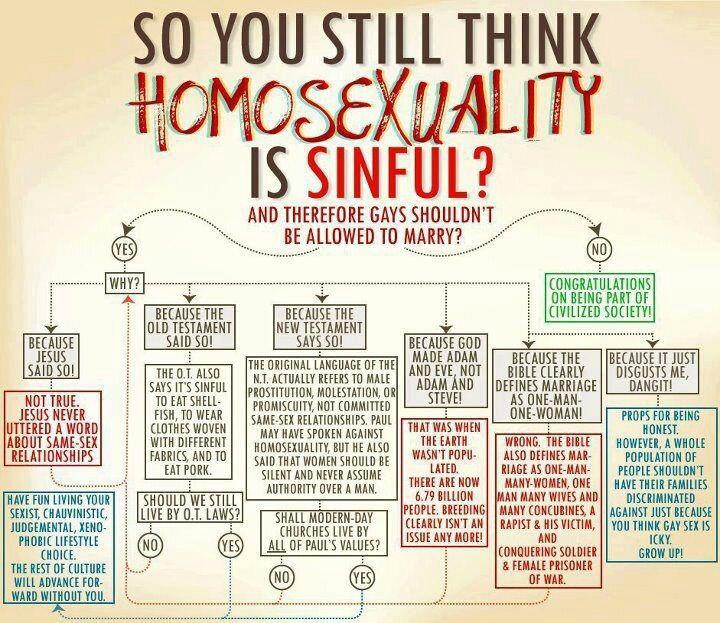
Podcast 82: Biblical Boundaries for Same-Sex Attraction
Is it a sin to be gay? What does the bible say about same-sex attraction? In this episode you’ll become familiar with the relevant scriptures that talk about homosexuality. You’ll also learn what arsenokoitai (ἀρσενοκοῖται) means in 1 Corinthians 6.9, a key battleground text for discussions of biblical sexuality. Here the Apostle Paul pulls from the Greek translation of Leviticus 20.13 as well as Roman sexual sensibilities to condemn both active and passive participants of same-sex acts. Whether you believe in accepting gay lifestyles or think homosexual behavior is sinful, it’s important to get a grasp on what the bible says about this incredibly controversial subject. Notes: Creation provides the foundation for what the bible says about human sexuality: Genesis 2:23-24 23 Then the man said, “This at last is bone of my bones and flesh of my flesh; she shall be called Woman, because she was taken out of Man.” 24 Therefore a man shall leave his father and his mother and hold fast to his wife, and they shall become one flesh. God’s original design was a man and a woman, complementing each other in marriage. However, when our first parents rebelled, humanity fell from its original condition. The serpent asked, “Did God actually say, ‘You shall not eat of any tree in the garden?’” (Gen 3:1). After Eve confirmed God’s restriction not to eat of the tree of the knowledge of good and evil, the serpent said, “God knows that when you eat of it your eyes will be opened, and you will be like God, knowing good and evil” (Gen 3.5). He wanted the first people to distrust God, to think he’s holding them back, to imagine he’s restricting them from enjoying something good. As a result Adam and Eve committed high treason against their maker in an act of open rebellion. Consequently “fallenness” contaminated them and their descendants ever since. Romans 5.12, 17, 18, 19 12 Therefore, just as sin came into the world through one man, and death through sin, and so death spread to all men because all sinned…17 because of one man’s trespass, death reigned through that one man… 18 one trespass led to condemnation for all men…19 by the one man’s disobedience the many were made sinners… Today we are imperfect mirrors stamped with God’s image, but broken in all kinds of ways. Some of us are tempted with losing our tempers, others with adultery, still others with greed. Our fallen condition means that from birth we are out of tune with how God wants for us to think and live. Of course, redemption is available in Christ today and ultimately complete restoration will flood our world when the kingdom comes, healing everyone from sinful impulses, physical sickness, and relational dysfunction. Although the incident in Sodom and Gomorrah (Gen 19) is the first mention of same-sex desire, it’s not particularly helpful for figuring out the bible’s position on homosexuality, since the men of the city wanted to rape the visitors. (Rape, of course, is condemned throughout scripture.) Instead, we’ll begin in the Law of Moses with two texts in Leviticus. Leviticus 18.22 You shall not lie with a male as with a woman; it is an abomination. abomination: something that causes disgust or hatred. Example: “Although once common, torture is now an abomination to the civilized peoples of the earth.”[1] Lest you think abomination is a radical word, solely used for sexual acts, here are some other abominations in scripture: for Egyptians to eat with Hebrews (Gen 43:32) the gold and silver on idols (Deut 7:25) child sacrifice (Deut 12:31) eating unclean animals (Deut 14:3) practicing magic or sorcery (Deut 18:9-10) prideful eyes, lying, shedding innocent blood, devising

Podcast 81: My Life as a Stud (Jackie Hill-Perry)
Jackie Hill-Perry used to dress like a boy to go out and pick up girls. She ended up in a long-term relationship with another woman, but then she came to a sudden realization that she was living a lie. She’s completely changed her life and now embraces her femininity and even got married to a man (Preston Perry). She’s a poet, a hip-hop artist, and a powerful speaker. This is her testimony. Warning! This episode contains sexually explicit content and is not appropriate for children. Notes: Watch”My Life as a Stud” on YouTube here and here. Listen to “The Art of Joy” album here Also, see a powerful piece about the conversation Adam and Eve may have had after the Fall Visit Jackie Hill-Perry’s official website at jackiehillperry.com More Restitutio posts about same-sex attraction Intro music: “District Four” by Kevin MacLeod. Licensed under Creative Commons: By Attribution 3.0 License.

Interview 18: God Woos Fashion Set Designer from Gay Lifestyle (Becket Cook)
Meet Becket Cook. He’s a very well-connected gay fashion set designer who has traveled the world, attended the Oscars, Golden Globes, Emmys, etc., and rubbed shoulders with Hollywood’s A-list actors. One day he saw Christians reading their bibles in a trendy coffee shop in LA and engaged them in conversation. One of them invited Cook to church and he went to check it out. That Sunday God encountered him in a spectacular way that instantaneously changed his life from that day forward. God gave him a vision of his holiness and in a moment Cook knew that God was real, Jesus was real, eternal life was real and that homosexuality was wrong. In addition to his testimony, I ask him what questions he gets asked, including: Can you be a Christian if you’re gay Isn’t it unfair that you don’t get to have a partner for the rest of your life? Are you straight now that you’re a Christian? Are people born gay? Cook answers these questions confidently and biblically. Throughout this interview his enthusiasm for God and life will draw you in. Even though his conversion was nearly eight years ago, Cook says he wakes up every day “in awe of God and his holiness and his grace on me.” He’s just about to finish up his seminary degree at BIOLA (Talbot), working with JP Moreland and others. His goal is to develop a ministry that helps the church understand homosexuality biblically, theologically, culturally, and personally. Notes and Links: To get in touch with Cook or to book him to speak at your church or event, visit becketcook.com or email him [email protected] Watch his excellent talk at BIOLA from 2014 on YouTube Check out these other Restitutio posts on Christians who struggle with same sex attraction Also, watch these YouTube testimonies about Christians who’ve left the gay/lesbian lifestyle Rosaria Butterfield Christopher Yuan Jackie Hill Wesley Hill Sam Allberry Caleb Kaltenbach Intro music: “District Four” by Kevin MacLeod. Licensed under Creative Commons: By Attribution 3.0 License.