Restitutio
673 episodes — Page 13 of 14

Podcast 54: Four More Reasons Why God Exists (Apologetics 5)
Apologetics 5: Arguments for God (Part Two) In this lecture, you’ll learn four more reasons for God’s existence, including the cosmological argument, moral argument, miracles argument, and the ontological argument. These are each quite different from each other, which is great because it increases their cumulative effect. Last of all, you’ll learn about “Pascal’s Wager,” which is really just an appeal to self-interest, so you can share your faith effectively with skeptics. If you would like to take this class for credit, please contact the Atlanta Bible College so you can register and do the necessary work for a grade. Notes: First Cause (Cosmological Argument) Here are all the possibilities for thinking about the beginning of the universe: Three step argument Everything that has a beginning has a cause of its beginning The universe has a beginning 2nd law of thermo (Meister, p. 93-94) big bang theory(Meister, p. 96) cannot cross an actual infinite series of events (Mesiter, p. 99) The universe has a cause of its beginning The universe did not cause itself because it did not exist before its beginning The cause of the universe must be external to it (i.e. super-natural) This cause must be sufficiently powerful to bring the universe into existence There are only two kinds of causes: personal or impersonal processes If a process caused the universe to come into existence then how does one explain the fact that the universe did not always exist? Can an impersonal process one day begin to do something? Thus the cause must have been personal (i.e. a being or beings with a will(s)) Two drawbacks to this argument it does not rule out multiple gods it does not rule out the possibility of an infinite succession of gods Who made God? God was always there. Since he does not have a beginning he does not need a cause. then the universe could have always been here and we don’t need to posit the existence of a god to explain it theoretically this is correct except for one thing: all scientists now agree that the universe did not always exist (2nd law of thermodynamics) Argument from Morality Some actions are morally wrong (like torturing children for the fun of it) These actions are moral absolutes If there are moral absolutes there must be some moral law by which they can be determined If there is a moral law then there must be a moral law giver or else it must be produced by natural processes Assuming naturalism one social “law” becomes apparent: might makes right (also called survival of the fittest) If this is the true law by which morals are to be determined then it is moral to do anything one wants so long as he or she is strong enough to accomplish it This legalizes rape, murder, genocide, and torturing children for the fun of it But we have already said that torturing children for the fun of it is absolutely morally wrong Thus, morals are not determined by nature and there exists (or existed) a moral law giver who is itself the locus of true morality this doesn’t mean athiests are not moral people, they may be, they just don’t have a grounding or foundation for being moral God Experiences miracles defined as an event that could not happen based on the laws of nature there are many claims to miracles throughout time and also in our own day </
Interview 7: An Analytic Philosopher Unleashes Logic on the Trinity (Dale Tuggy)
In my previous interview with Professor Dale Tuggy, we discussed his journey of faith. In this conversation I ask him to discuss logical and biblical problems with the Trinity. This is a higher level conversation, but well worth the listen if you are at all curious about the Trinity or are interesting in hearing how analytic philosophers approach complex doctrines. For more about Professor Tuggy and his work, including his amazing podcast, visit trinities.org.
Podcast 53: Does God Exist? (Apologetics 4)
Apologetics 4: Teleological Arguments for God’s Existence If someone asked you, “Why do you believe in God?” How would you answer? Sadly, most of us would flounder around, maybe talking about the bible or second-hand miracles. However, philosophers have long identified three classic approaches to reasoning about God’s existence: the ontological, cosmological, and teleological arguments. In this lecture, you’ll learn several versions of the teleological argument–evidence for intelligent design–so that you can reason from the complexity of creation to the existence of the creator. If you would like to take this class for credit, please contact the Atlanta Bible College so you can register and do the necessary work for a grade. Notes: introduce three main arguments cosmological: cause and effect teleological: order and design ontological: reason alone general approach for teleological arguments: the universe exhibits a certain level of order and design a design requires a designer a designer of the universe exists what proof is there that a painter exists? a painting what does a building prove? a builder exists what about a tree? it is more complex than a painting or building, doesn’t this prove a tree-maker exists relating to design or purpose especially in nature (m-w.com) it is based on order and design Romans 1.18-20 and Psalm 19.1-4 Advantages to the teleological argument It is very easy to prove because it is in experience The argument uses well established scientific facts to prove the existence of God True science will always lead to God. In the end science it the study of the creation and thus an indirect study of the Creator. “The conflicts between ‘science’ and ‘religion’ occur in historical science, not in operational science.” (Answer’s Book, p. 21) classic formulation: William Paley’s Watchmaker Argument Suppose you were walking along the beach and saw a watch on the ground… How many parts are in the watch? biological complexity, cosmic complexity, the just right conditions for earth (distance from sun, etc.) Cell Complexity (Biological Teleological Argument) Consider a human cell blood-clotting mechanism, the bacterial flagellum, photosynthetic apparatus, pupal transformation from caterpillars to butterflies, complexity of human brain, “The most reasonable inference from such observations is that outside intelligence was responsible for a vast original store of biological information in the form of created populations of fully functioning organisms. Such intelligence vastly surpasses human intelligence…” (Answer’s Book, p. 29) Information in DNA (Origin of Code Approach) it is an encoding/decoding system the sequence represents something other than itself (i.e. the genes contain the information about what an organism will be) It has an alphabet and a syntax (the combinations of letters mean something) A DNA sequence can be copied and stored on other media without a loss of information (only language has this property) In fact even committed atheists will refer to it as the DNA code (code is a language; think of Morse code or computer code) The DNA code contains information which is neither matter nor energy (though it is stored/transmitted/encoded/decoded by matter and energy) Language comes from a mind (there are no languages that do not come from a mind) this argument hinges on this assertion <
Interview 6: Dale Tuggy’s Journey
In this interview with philosopher Dr. Dale Tuggy, I ask him questions about his personal spiritual journey. Dr. Tuggy is an analytic philosopher who works on world religions and the doctrine of the Trinity. He’s a tenured professor of philosophy at the State University of New York at Fredonia. Furthermore, he runs a popular website called trinities.org where he blogs and hosts a podcast of the same name. Dr. Tuggy also wrote the Stanford Encyclopedia of Philosophy article on the Trinity, an excellent read, including a very informative supplemental reading called “unitarianism.” In what follows I interview Dr. Tuggy about his own journey of faith, including how he became a Christian, what got him into philosophy, how he came to doubt the traditional doctrine of the trinity, and where he sees the future of the biblical unitarian movement going. To get in touch with Professor Tuggy, visit Trinities.org or his personal bio page. Also, you can subscribe to his podcast on iTunes or Google Play and follow him Youtube.
Podcast 52: Theism, Atheism, and Pantheism (Apologetics 3)
Apologetics 3: Theism, Atheism, and Pantheism In Building Belief, Chad Meister uses a worldview comparison chart to simplify all the religions of the world into three broad categories: theism, atheism, and pantheism. This strategy will help you to compare and contrast five major aspects of these three worldviews, including theology, ontology, epistemology, axiology, and anthropology. Next, you can evaluate each of the three main possibilities on the basis of logic and livability. This way of looking at world religions can especially help you in talking to others about the faith. If you would like to take this class for credit, please contact the Atlanta Bible College so you can register and do the necessary work for a grade. Here now is lecture three: Theism, Atheism, and Pantheism. Notes: worldview: “a collection of beliefs and ideas about the central issues of life…the lens through which we ‘see’ all of reality” (Meister, 39)[1] theology: is there a God, if so what is God like? ontology: what is ultimate reality? epistemology: how do we acquire knowledge? axiology: what is the basis for morality? anthropology: who are we as human beings (Mesiter, p. 40) origin, meaning, morals, destiny the worldview approach is so helpful because there are thousands of religions and no one would have the time to study and evaluate them all since they can be categorized into three main worldviews, we can immediately eliminate huge numbers of them if we can disprove or prove one of these to be correct According to Meister, there are three worldviews: atheism, theism, and pantheism common objection1: how do you know that Christianity is right and all the other thousands of religions are wrong? how can you be so arrogant? common objection2: all religions are just the same anyhow like the blind man and the elephant paradigm atheism pantheism theism God/gods/divinity (theology) no supernatural arguments for God God is everything; everything is God if God has a mind then he can’t be a rock; if he doesn’t have a mind then he is not a person one or more gods exist apart from nature problem of evil; no empirical test for supernatural beings reality (ontology) naturalism (big bang + evolution) big bang needs cause, origin of 1st life, Cambrian explosion no distinction between creator and creation why can’t I read minds if there is only one mind? physical and spiritual realities both exist; spiritual first then physical God of the gaps knowledge (epistemology) scientific method can’t prove logic, can’t understand love or altruism can’t trust senses; learn through meditation; look with in then I don’t need to listen to you teach me how to think about pantheism (only ideas I conceive of are true) knowledge gained through senses (scientific method) and revelation (divine insight) what about wackos who say God told them to kill their children? morality (axiology/ethics) socially constructed, determined by evolution if no absolute source for morals, then why follow them? selfishness leads to dysfunction evil is an illusion; eliminate attachments can’t detach from loving my children God sets absolute standard for right and wrong Euthyphro dilemma humanity (anthropology) physical only, electro-mechanical machines difficult to explain consciousness spiritual only, physical is a deception but I know I have a physical body! both physical and spiritual brain damage affects personality atheism description: theology: no God or supernatural ontology: naturalism (big bang + evolution) nothing outside of nature exists epistemology: scientific method, empiricism <l

Off Script 13: Should Christians Watch TV?
What standards should Christians have when it comes to entertainment? Can the bible offer any guidance for such a modern issue? Every day shows, movies, books, and songs bombard us with all kinds of ideas and depictions that constantly nudge us in different directions. Although, we like to think of ourselves as impervious to the subtle effects of violent movies, sex scenes, foul language, and so on, the truth is we are more like sponges than stones. This is an important topic worthy of your consideration.
Podcast 51: Pluralism, Post-Modernism, Relativism, and Truth (Apologetics 2)
Apologetics 2: What Is Truth? In order to establish any of the claims of Christianity, we must first make a case for truth itself. How can you hope to provide reasons for God’s existence or Christ’s resurrection if the person your talking to claims, “That’s just your truth, and I’m glad it works for you, but it’s not true for me?” Learn how to use the law of non-contradiction to help explain what an objective truth claim is. Although many prefer the mushy relativism of our age, in the end, as Christians, we are stuck with Chris who claimed to be “the way, the truth, and the life,” and that “no one comes to the father but through me” (John 14.6). If you would like to take this class for credit, please contact the Atlanta Bible College so you can register and do the necessary work for a grade. Notes: pluralism/multi-culturalism definition: a theory that there are more than one or more than two kinds of ultimate reality a state of society in which members of diverse ethnic, racial, religious, or social groups maintain and develop their traditional culture or special interest within the confines of a common civilization when Christians and non-believers are the only two options, life is simple throwing in Muslims, Hindus, Buddhists, Diana Eck’s four points on pluralism[1] First, pluralism is not diversity alone, but the energetic engagement with diversity. Diversity can and has meant the creation of religious ghettoes with little traffic between or among them. Today, religious diversity is a given, but pluralism is not a given; it is an achievement. Mere diversity without real encounter and relationship will yield increasing tensions in our societies. Second, pluralism is not just tolerance, but the active seeking of understanding across lines of difference. Tolerance is a necessary public virtue, but it does not require Christians and Muslims, Hindus, Jews, and ardent secularists to know anything about one another. Tolerance is too thin a foundation for a world of religious difference and proximity. It does nothing to remove our ignorance of one another, and leaves in place the stereotype, the half-truth, the fears that underlie old patterns of division and violence. In the world in which we live today, our ignorance of one another will be increasingly costly. Third, pluralism is not relativism, but the encounter of commitments. The new paradigm of pluralism does not require us to leave our identities and our commitments behind, for pluralism is the encounter of commitments. It means holding our deepest differences, even our religious differences, not in isolation, but in relationship to one another. Fourth, pluralism is based on dialogue. The language of pluralism is that of dialogue and encounter, give and take, criticism and self-criticism. Dialogue means both speaking and listening, and that process reveals both common understandings and real differences. Dialogue does not mean everyone at the “table” will agree with one another. Pluralism involves the commitment to being at the table — with one’s commitments. challenges of pluralism compete for adherents, financial contributions, legitimacy, political influence intermarriage (raising children), national identity, public education (Halloween for Christians), workplace (prayer time for Muslims, Sabbath for Jews) specific challenge to Christianity is Jesus really the only way? are all non-Christians going to hell? (more than 2/3 of the world) isn’t it intolerant and bigoted to say we have the only right way to God? cultures have their own moral standar

Interview 5: Seeking Truth Wherever It Leads (Brian and Rochelle Allen)
Brian and Rochelle Allen of Vermont share their journey of faith, including how they became discontent with the traditional evangelical doctrines they grew up believing. In this interview they discuss how recontextualizing the bible in its Hebrew thought-world opened their eyes to understand Jesus so much better. He is the Jewish Messiah sent to redeem Israel, not an eternally generated, second-person of a metaphysical Trinity. In addition, they discuss how they studied their way out of the rapture ideology, popularized by the Left Behind book series. I think you’ll find their story intriguing and heartfelt, but even more compelling is their intellectual humility. This husband and wife team is a true example of what it means to be a Berean in the 21st century.
Podcast 50: Why Defend Your Faith? (Apologetics 1)
Apologetics 1: Introduction Have you ever heard of apologetics? This is the field where Christians seek to provide the reasons for why they believe what they believe. In a post-Christian society, it is increasingly important to understand the reasons for your faith. For example, why do you believe in God’s existence? Why do you think the bible is true? How do you know God raised Jesus from the dead? What about pain and suffering, modern science, or Christianity’s sexual ethics? In the next fifteen lectures, you’ll get answers to these important questions so you can build your own faith as well as get better at sharing it with others. If you would like to take this class for credit, please contact the Atlanta Bible College so you can register and do the necessary work for a grade. Here now is lecture one: Introduction. Notes: The Biblical Mandate for Apologetics 1 Peter 3.14-16 apologetics has nothing to do with apologizing, it is simply giving a reasoned defense of the faith two key guidelines: (1) gentleness, (2) respect ἀπολογία: a speech of defense, the act of making a defense as a speech: Acts 22.1 as written: 1 Corinthians 9.3 in court: 2 Timothy 4.16; Acts 25.16 defending the gospel: Philippians 1.7 “The task of apologetics is to show that the evidence that the New Testament calls people to commit their lives to is compelling evidence and worthy of our full commitment. That often involves a lot of work for the apologist. Sometimes we would rather duck the responsibility of doing our homework, of wrestling with the problems and answering the objections, and simply say to people, ‘Oh, you just have to take it all in faith.’ That’s the ultimate cop-out. That doesn’t honor Christ. We honor Christ by setting forth for people the cogency of the truth claims of Scripture, even as God himself does.[1]” Objections: Faith by definition excludes the possibility of certainty “Sadly, in our day many Christians argue that we ought not to be engaged in attempts to ‘prove’ the truth claims of Christianity, that faith and proof are incompatible. ”[2] blind faith vs. informed faith what did Jesus do? did he ask people to just believe that he was the Messiah without offering any reasons for that belief? John 5.36; John 10.24-25, 37-38; 14.10-11 Later on Jesus’ resurrection became the single most important proof of his claim to be Messiah. Acts 17.30-31; Romans 1.1-4 In the book of Acts, Jesus’ resurrection was mainly argued for on the basis of eye-witness testimony. Acts 1.22; 2.32; 3.15; 10.39-42; 13.31 this is not to say we can have complete certainty, faith is still required, but it’s not a leap of blind faith “The Bible never tells us to take a leap of faith into darkness and hope that there’s somebody out there. The Bible calls us to jump out of the darkness and into the light. That is not a blind leap.[3]” only the holy spirit can illuminate someone’s heart to believe much of apologetics is clearing out of the way barriers to belief Bible is full of contradictions Christians are all hypocrites How can there be a God if there is so much pain and suffering? Doesn’t God command genocide? Hasn’t science disproved miracles? What about evolution? What about the Big Bang? think of it like picking up rocks from the field before planting the seeds besides, God has chosen to work with the spoken word. foolishness of preaching (1 Cor 1.21) <l
Interview 4: Spiritual, Emotional, and Physical Healing (Bill and Anne DeNenno)
Some say faith-healing is a charade, concocted by charlatans to build their empires on the backs of the afflicted and suffering. Others think that Christians who reject healing contradict what Jesus said and did, preferring the comfort of tradition instead of unleashing God’s mighty power. What do you believe about supernatural healing? Listen in to this interview with Bill and Ann DeNenno to hear what they’ve learned in four decades of pursuing and practicing healing. In this interview they discuss the benefits of keeping an open mind so that you can learn from others outside your own tradition. They go on to talk about deliverance (casting out demons), including both some of the excesses they witnessed as well as the genuine results they’ve encountered. Next they explain inner healing and how God can set us free from emotional wounds that happened long ago, but still push us around today. Lastly, they share about Christ-centered healing, where they look to Christ as both the example and the active agent in healing today. You can contact the DeNennos directly via email at [email protected].
Podcast 49: Abide in Me (Keith Daniel)
How much time do you spend with God alone? Do you have a quiet time each day for scripture reading and prayer and meditation? Drawing on the image of the vine in John 15, Keith Daniel passionately advocates for a daily devotional time to abide in him. He argues that this time is the key to holy living. If we commune with God consistently, then we can draw on the strength we receive then to walk with God the rest of the day. Daniel believes this time is always under attack so you have to fight for it each and every day.

Interview 3: A Letter to a Trinitarian (Hugh Knowlton)
Today Hugh Knowlton joins Restitutio to talk about how to handle important doctrinal differences with other Christians. So often such intra-Christian discussions generate more heat than light. Does that mean we should all just ignore our differences, forcing smiles and hoping that no one peers beneath our thin veneer of unity? Or should we charge headlong like a bull at the matador, eager to present our case and defeat all objections whatever the cost? This interview will help you strike the balance between empathy and courage as Knowlton shows how he stood up for his monotheistic beliefs in a gracious way that refused to forsake kindness while disagreeing on a core issue. In the course of the interview, Knowlton addresses five main questions from a biblical unitarian point of view: Based on John 1.1, do you believe that Jesus is eternal? Do you believe that Jesus is the creator? Does Isaiah 9.6 refer to Jesus when it calls him “God” and “eternal?” Why does Jesus receive worship if He is not God? If you do not believe that Jesus is God, who is he? Here is the text of the letter he sent: Dear Ben, As I have mentioned I don’t come from a traditional Trinitarian background and as a result, I have a different paradigm or way of thinking in regards to the relationship of God and His son, Jesus. Even though there is a difference I sincerely pray that what I believe will not bring offense or cause you to think that I am diminishing the Son if I believe, as I do, that he is not exactly the same (identical) as the Father. You will surely agree that Christology is a massive subject! I don’t consider myself a theologian or a master on this subject but do enjoy studying it occasionally; more so during the last several years when I have been attending an orthodox church where the Trinity is not questioned and alternative beliefs as to who Christ is are not generally welcomed. I am not out to change the Christian world to my beliefs but do like to do “a check up from the neck up” to see if what I hold true still makes sense or whether I need to consider changes. By fellowshipping with men like you, Larry and many others at PBC I have grown in my respect and understanding of your mindset and beliefs. It is good to gain understanding even if it does not end up with agreement on all points. Before I address your questions I want to say that my answers are, in my estimation, more of a summary of what I believe; they are certainly incomplete and are not as full an explanation with all the reasoning, historical evidence and scriptural support that I would like to include. I think that would take writing a book, which I want to avoid! I am sure more questions will be raised and if we want to continue a dialog, either in person or by email, we can both share more. In your email below you express a concern about ‘agreeing on His nature’. I don’t see a similar concern shared by Jesus, Paul, John or the other writers in the New Testament. I am not saying the concern does not exist but I don’t recall scriptures that place an abundant emphasis on it other than what I read in Math 16:13-17 where Jesus asks his disciples ‘Who do you say that I am?’ and Peter’s reply ‘You are the Christ (the Messiah), the son of the living God’. I think this is a great start for having common ground. And this is where I would like to start by addressing your last question as who I think Jesus is. I believe him to be the son of God, the Christ, the Messiah, the promised seed, my redeemer and savior, the image of the invisible God, the first born of all creation, the resurrection, the way, the truth and the life, the bread of life, the living Word of God, He declared the Father and reveals

Podcast 48: The Courage of Esther (Sean Finnegan)
Have you heard about Esther’s courage? She had the audacity to stand for God in an incredibly dark time. Though the Persian Empire had decreed the genocide of her people, she could have easily remained in the closet about her ethnicity and enjoyed the comforts of the palace. Nonetheless, she would not stand idly by, but courageously trusted in God and risked her life to petition the king for the lives of her people. Even if you already know the story of Queen Esther, it’s worth your time to consider how her example can encourage you to stand up for God in your own context. Notes: Act 1: Queen Vashti disobeys Ahasuerus Esther 1.15-20 Act 2: The Search for a New Queen Esther 2.17 Act 3: Haman’ Plot Esther 3.8-14 Act 4: Esther Takes a Stand Esther 4.11, 13-14, 16; 5.13-14 Act 5: Mordecai Exalted Esther 6.3-11 Act 6: Haman’s Demise Esther 7.2-6, 8-9 Act 7: The Jews Delivered Esther 8.15-17 What is one area in your life where fear is holding you back? What is one change you would make in your life if you had the courage of Esther? Do you think God would back you up if you made this change?

Off Script 12: Forgiveness
What does the bible teach about forgiveness? Is it optional or mandatory? Are Christians allowed to hold grudges? Do we only have to forgive if someone apologizes? Join us as we discuss four reasons why you should forgive: (1) if we don’t forgive others, God won’t forgive us; (2) forgiving others makes sense in light of how much God forgave us; (3) forgiveness offers an opportunity to testify; (4) forgiving is better for your health. Forgiving others is simple but far from easy. Even so, it’s something we need to become good at doing.
Podcast 47: Resurrection Implications (Richard Hays)
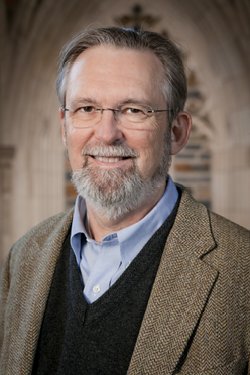
Richard Hays, Professor of New Testament at Duke Divinity School, explains the incredible effect Jesus’ resurrection has on theology and practice. His lecture divides into two parts: (1) a proper New Testament understanding of the resurrection requires a robust affirmation of the resurrection of the body and (2) resurrection of the body is a sign of God’s power invading creation and therefore preaching resurrection requires embodying resurrection ethics as well.
Off Script 11: Resting from Work
This is now our third and last episode in our series on work. We’ve talked about the Christian work ethic and honorable work (i.e., what sorts of jobs Christians should shoot for as well as avoid) and now today we are talking about work’s opposite: rest. This is a really important topic to consider. Listen in to the discussion with Sean Finnegan, Rose Rider, and Sean Kelly as we talk about the crazy pace of American life today as well as why we need to take breaks each day, each week, and each year. What is the Sabbath? Should Christians keep the Sabbath? How can we lead balanced lives?

Podcast 46: Hospitality Challenge (Sean Finnegan)
What do you believe about hospitality? The scriptures lay out three major kinds: (1) hospitality to the saints; (2) hospitality to the needy; (3) hospitality to the unbeliever. As it turns out showing hospitality is an important Christian practice, even if it takes courage to invite others into our houses. In our present age, hospitality just might be the secret the church has been looking for to reach out to others with God’s grace and love. For example, when a pastor invited over Rosaria Butterfield, a lesbian, feminist, vegetarian, English professor, she was able to begin seeing through the negative hype about bible-believing Christians and started on a journey that ultimately led to her conversion.
Off Script 10: Honorable Work, Millennials, and Unemployment
Picking up where we left off last week, we continue discussing the Christian work ethic and, in particular, delve into Max Weber’s “Protestant work ethic” hypothesis. Next Rose shares about her own career path, including graduating with a 4.0 in graphic design and her two year struggle to find a career job. After that, we looked at three criteria for honorable work: Does your job require you to sin? Are you contributing to something that causes harm? Is it dishonest work? If you can say, “No,” to each of these, then you’re in good shape. However, considering that the most common jobs in America are retail salespersons, cashiers, food preparers, and office clerks, all of which pay well under the mean wage, how should a Christian feel about such work? We talk about how we have to be careful to find our identity in Christ rather than in our job, no matter how well or poorly it pays. Drawing on the work of Mihaly Csikszentmihalyi we talked about ideal jobs that produce enjoyment, enable a team mindset, and better our world. Last of all, we addressed how we as Christians should think about unemployment.

Podcast 45: Talking with Jesus (John Cortright)
This is now the third in a series of messages related to monotheism. Having established that the Father of Jesus is the only true God (John 17.3), we must be careful not denigrate or demote Jesus in any way. He is the perfect one who lived without sin and courageously faced death on behalf of all of us. In this message, John Cortright shares what the scriptures say about talking with Jesus. His full notes are available online here.
Off Script 9: Christian Work Ethic
What is the Christian work ethic? What does the bible say about work? Join Rose Rider, Sean Finnegan, and Daniel Fitzsimmons for an honest conversation about how the biblical understanding of work challenges us. Leaning on Ecclesiastes and Proverbs, as well as the epistles of Paul, they share how work is God’s gift to us, that we should take pleasure in it, and that we should work hard regardless of who’s watching.

Podcast 44: The Immutable Shema (Sean Finnegan)
by Sean Finnegan The Shema has been the core creed of Judaism from the time of Moses to today. It stands as an immovable witness to God’s identity as well as our proper relation to him. Even though Jesus confessed the Shema, most Christians today aren’t familiar with it. This is because after the New Testament age, under the influence of Greek philosophy Christian thinking metastasized into Trinitarian dogma, scorning its native Hebrew context in the process. Eventually, “Yahweh” became “Lord” and “one” became “three in one” and the church became estranged from the bible’s legacy of unitarianism. This led to persecuting Jews and Christian monotheists. Listen in to this message about the Shema to find out how to stay true to the bible’s teaching about God’s identity. Notes: Deuteronomy 6:4 This verse begins the passage known as “the Shema.” Shema Yisrael, Yahweh eloheinu, Yahweh echad Hear, O Israel: Yahweh [is] our God, Yahweh [is] one Deuteronomy 6:5 Not only is God one, but we are to love Him with everything we have, including all our heart, all our soul, and all our might. These are more than just words on a page for Jews. It’s what they die for, what they live for. Deuteronomy 6:6-7 Jews say the Shema each morning and night in obedience to this command. The Shema is not a silent belief but something spoken aloud daily. Deuteronomy 6:8 For prayer, Jews wear tefillin, small black leather boxes with scrolls in them. Deuteronomy 6:9 On Jewish homes all around the world you can find mezuzah, small decorative cases hung on their door posts containing scrolls. Deuteronomy 6:10-15 Sadly, Israel did forget God’s commands, and they did worship other gods, which resulted in their exile from the Promised Land. However, after they returned, they remembered. How do we process this as Christians? We must look to Christ and see what he said about this idea. Did he accept it, reject it, or change it? Mark 12:28-34 Jesus and the scribe completely agree on who God is. “He is one, and there is no one else besides him.” Jesus knows the Shema and endorses it. What about you?
Off Script 8: Relativism
Who determines truth? Is there such a thing as objective truth or are all claims subjective in nature? Join Rose Rider, Daniel Fitzsimmons, and Sean Finnegan as they discuss the good, the bad, and the ugly about relativism before bringing in a biblical perspective to help you think through this critical issue.

Podcast 43: Identity Theft (Vince Finnegan)
by Vince Finnegan From Exodus and Deuteronomy, God makes clear who he is and how he wants his chosen people to worship him. He is Yahweh, the one God of Israel, the only one. His identity does not change. Sadly, later on God became the victim of identity theft, as Christians developed the dogma of the Trinity and substituted three for one. Now is the time to repent of this egregious act of hubris and return to how God defines himself. He is the only one who is truly God who reigns supreme over all, even Jesus. Join Vince Finnegan (my dad) as he teaches with boldness and conviction in a message that is sure to fire you up! Notes: Exodus 6:1-8 The revealing of YAHWEH as Almighty God. YAHWEH is the proper name of the one true God. The manner in which God led Israel out of the bondage of Egypt showed them that YAHWEH is God. Exodus 7:4 and 5, 14-17; 8:10, 22 This incredible event also showed the Egyptians and the entire world that YAHWEH is God. God’s salvation for Israel and His judgment on Egypt is how He revealed His Identity. Exodus 16:1-14 The manna from heaven revealed that He was YAHWEH their God. Exodus 20:1-7 After making clear His identity as YAHWEH their God, He gave commandment that there were to be no other gods before Him. Deuteronomy is a recapitulation of what was communicated in Exodus to their fathers. Moses therefore repeated, and also more largely explained; to which are likewise added several particular laws, instructions, and directions. The time frame addressed is the fortieth year, eleventh month when Israel was in the wilderness. Deuteronomy 1:6-8, 10, 30-40 The people Moses addressed in the book of Deuteronomy are the children of those who went into the wilderness. Only two of the millions went into the Promised Land. All the rest died in the wilderness, primarily because they refused to believe that YAHWEH was the one true God. They held onto the false gods of Egypt. During the years they lived in Egypt (about 210), everyone believed in the many gods of Egypt. The reason God selected the ten plagues was it directly challenged the gods of Egypt. Everyone they (Israel) knew believed in these gods. For them to believe in YAHWEH, a monotheistic God, would have made them outcasts or weird. Everyone believed in polytheistic gods. Moses is declaring YAHWEH as Almighty God to a people who have experienced His supernatural intervention all their lives fire by night, cloud by day, manna, Mount Horeb, angel leading them, etc. Deuteronomy 2:29, 31, 33, and 36; 3:2, 3, 18, 21-26 “YAHWEH” is used 439 times in Deuteronomy; “YAHWEH YOUR GOD,” 239; and “YAHWEH OUR GOD,” 21 times. “YAHWEH” is used 1,555 times in the books of Genesis to Deuteronomy. Christians who witness tell new people to read the gospel of John to learn about God. It is no wonder that so many people think Jesus is God because the emphasis is placed on Jesus with the exclusion of God. Thus, many followers of Christ are ignorant of the information YAHWEH provided about Himself. It is absolutely impossible to understand the Son without first knowing the Father. Deuteronomy 4:23 and 24, 35-39; 5:6-10; 6:4 and 5; 7:9-11; 10:17-21 YAHWEH wants to be identified and worshiped. Malachi 3:5-7 YAHWEH does not change. He is Who He is and has always been. His identity did not change with the birth of His Son. 5,789 times, YAHWEH is used in the Old Testament, and not once is there the slightest indication that He is three in one. Contrariwise is the powerfully empathic communication that YAHWEH IS ONE. Yet, the commonly accepted belief of most Christians is the Trinity dogma of the unity of Father, Son, and Holy Spirit as three persons in one Godhead. Ezekiel 25:17; 36:22-32; 39:7-10, 22 In Exodus, God’s wrath against Egypt and His salvation for Israel showed the world that He was YAHWEH. So it will

Interview 2: Jerry Wierwille on Hermeneutics
Have you ever struggled to interpret the bible? Although many today think only professionals who are trained in seminaries can understand the bible, the truth is that every reader is a theologian to some degree. The moment you pick up the book and begin reading, you also begin interpreting what you read. The only question is: are you going to be a good theologian or a bad one? Join Jerry Wierwille as he explains some of the key strategies you can use to understand scripture accurately. He also covers some of the common pitfalls to avoid. For more information about Wierwille, visit his website at jerrywierwille.com.
Podcast 42: My Testimony (Sean Finnegan)
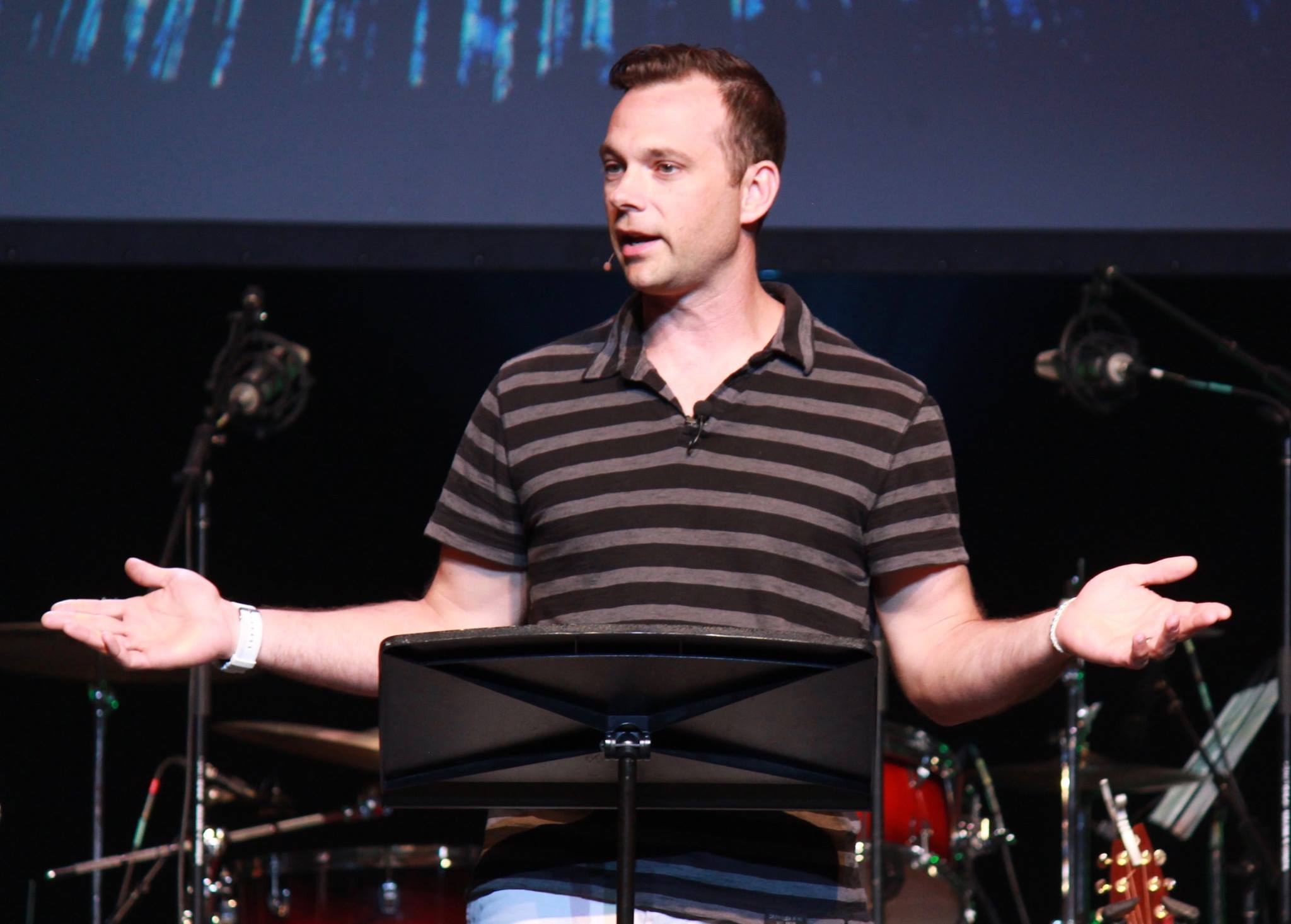
Last week I attended a youth camp in Indiana called FUEL. They assigned me the text on the Prodigal Son (Luke 15). As I pondered and prayed how I should approach this powerful parable, I sensed God wanted me to interweave my own story in with the prodigal. As a result, I decided to share my testimony in an honest and raw way. The next day, John Guthrie wrote this summary, which I felt well-encapsulated my message: Pastor Sean Finnegan used the Parable of the Prodigal Son as a jumping off point to tell his personal “prodigal son story.” Sean, the son of a pastor, seriously strayed from God when he first attended college. Sean spoke of his several serious addictive behaviors that led to situations that could have very well killed him. His addiction to video games was primarily the cause of his academic dismissal after only 2 semesters of college. His dad was furious at this news and told Sean he was a loser (which he acknowledged he was). He sank even further into trouble when he renewed his connections with former high school friends. His mom insisted he go to a community college, but he continued his destructive behavior which led to poor academic performance again. Like the prodigal son of Luke 15, Sean finally “came to himself.” He finally realized how out of control he was. And so, one night, he cried out to the God of his youth, “save me,” and if he would, Sean would live for Him. In spite of what may have been the wrong attitude, God did save him and Sean literally woke up a new man. He found new friends, went back to community college, learned how to study, and his grades were almost all A’s. He eventually had his way paid to attend RPI where he graduated with a 3.9 GPA in engineering. He asked us to access where we were in our spiritual journey. He hoped some could learn from his story and not follow the wrong path that he had taken. He shared Romans 10.9 and asked that those who had not yet decided to follow Christ might consider that. He asked, “Why not tonight?”

Interview 1: Emotionally Healthy Spirituality (Jerry Wierwille)
Drawing on the work of Peter Scazzero, Jerry Wierwille discusses how we can avoid some of the common unhealthy emotional pitfalls. No matter if you are new to the faith or someone who has persevered for decades, this subject will make you examine yourself to see if there are issues you need to overcome. Access more of Wierwille’s thoughts, including his blog and sermons, at jerrywierwille.com.

Podcast 41: Counterfeit Gods (Tim Keller)
by Tim Keller What drives you? What is that one person or thing or dream that you couldn’t live without? What thing if you lost it, could mean that almost all significance and value would be drained out of your life? Whatever that thing is, the bible calls it an idol, a counterfeit god. Tim Keller expertly explains how any idol, no matter how good or wonderful, will ultimately break your heart. Taking his cue from Augustine of Hippo, Keller argues that idolatry results from disordered love. Thus, when we put our family or career or cause or goals first, we end up suffering rather than getting what we want. God must be first and when he is, everything else falls into place.
Off Script 7: Patriotism
Should Christians be patriotic? How patriotic should we be? Join Daniel Fitzsimmons, Rose Rider, and Sean Finnegan as they discuss issues related to patriotism and stake out a Christian perspective based on the example of Jesus and his earliest followers.
Podcast 40: Resurrection (Historical Jesus 16)
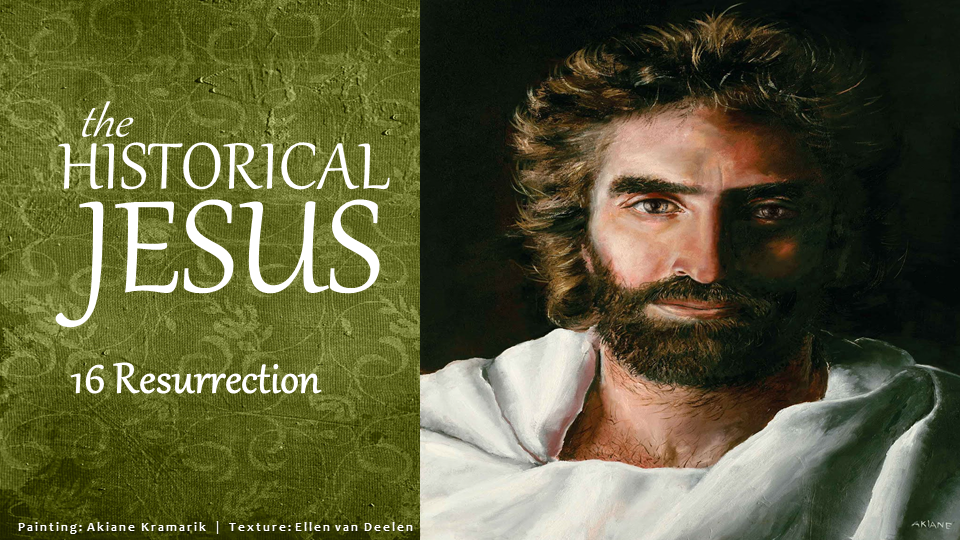
Historical Jesus 16: Resurrection Traumatized by their rabbi’s crucifixion, Jesus’ disciples endured maddening grief and cognitive dissonance as they tried to come to grips with what had happened. Into the midst of despair and helplessness, Jesus appeared. Although the first “Christians” were also the worst believers in his resurrection, eventually they came to see him, in the flesh, and their doubts were assuaged as rejoicing replaced their mourning. The power of death is broken! He really is the messiah! All is not lost! He is risen! Course notes are available here.
Off Script 6: Consumerism
Is consumerism a force for good or ill in our society today? How should Christians think about the ubiquity of advertising, our innate desire for novelty, and the allure of finding a deal? For this episode Ruth Finnegan joins in with Daniel Fitzsimmons, Rose Rider, and Sean Finnegan to consider the pros and cons of consumerism as well as discuss what wisdom the bible has to share on this important subject. Read a detailed article on Consumerism here.
Podcast 39: Crucifixion (Historical Jesus 15)
Historical Jesus 15: Crucifixion One of the most significant events in all of human history, Jesus’ crucifixion was at once a supreme miscarriage of justice while, at the same time, the supreme illustration of God’s love to humanity. We’ll join Jesus from the Garden of Gethsemane, agonizing in prayer before his God, to his arrest, trials, and ultimately his torture and crucifixion. Course notes are available here.
Off Script 5: Scientism
Is scientific knowledge superior to all other forms of knowledge? How should Christians balance faith and reason? Join Rose Rider, Daniel Fitzsimmons, and Sean Finnegan as they discuss science and religion in an effort to describe and deconstruct the naive notion that science has all the answers. Read a detailed article on Scientism here.
Podcast 38: Last Supper (Historical Jesus 14)
Historical Jesus 14: Last Supper Why did Judas betray Jesus? What did Jesus teach his closest friends and followers at the last supper? Learn about the first “Lord’s Supper” or communion as well as what was on Jesus’ mind in his last hours before his arrest. He taught them how to carry on after he was physically gone and showed them how to serve one another by washing their feet. This tender dinner is the calm before the storm. Course notes are available here.
Podcast 37: Olivet Discourse (Historical Jesus 13)
Historical Jesus 13: Olivet Discourse Did Jesus predict the destruction of the Temple in a.d. 70? Did he predict the end of the world? Learn about Jesus’ Olivet Discourse and discover what he said about false Christs, persecution, the abomination of desolation, and the coming of the son of man. Course notes are available here.
Off Script 4: Progress
Is the world getting better and better over time or worse and worse? Listen in to Rose Rider, Daniel Fitzsimmons, and Sean Finnegan as they discuss how our culture thinks about progress in order to help you understand the hidden forces at work. After discussing and deconstructing the idea of progress, they offer a helpful and balanced Christian perspective. Read a detailed article on Progress here.
Podcast 36: Intensified Conflict (Historical Jesus 12)
Historical Jesus 12: Intensified Conflict Once Jesus came into Jerusalem, his enemies threw “stumper questions” at him in an effort to discredit him before the populace. Jesus ably diffused these theological bombs and lobbed his own in return. He told parables about the religious leaders that infuriated them while delighting the crowds. Coupled with his earlier acts, Jesus’ public defiance was sure to land him in serious trouble. Course notes are available here.
Off Script 3: Tolerance
Join Sean Finnegan, Dan Fitzsimmons, and Rose Rider for some interesting cultural analysis. We begin by looking at how the ethic of tolerance works in our culture before deconstructing it and providing a Christian point of view. Though many times tolerance can be a force for good, sometimes people use it as a stick to beat others who hold a minority opinion. Furthermore, tolerance is shallow whereas the kind of love Jesus calls us to is deep. Tolerance often complies with the status quo but love gives of itself in risky and exciting ways. Tune in to here our full conversation. Read a detailed article on Tolerance here.
Podcast 35: Entering Jerusalem (Historical Jesus 11)
Historical Jesus 11: Entering Jerusalem When Jesus entered Jerusalem, it was not quietly, but triumphantly, riding a donkey while the crowds shout, “Hosanna!” This moment brings to and end his “messianic secret” and publicly declares to everyone that he was claiming to be the Jewish Messiah. His action in the temple further underlined this claim. The Sadducees took note and resolved to deal with him. Course notes are available here.
Off Script 2: Hyper-Individualism
Daniel Fitzsimmons and I probe the culture by discussing one of the most influential hidden philosophies of life in our culture today–hyper-individualism. In a nut shell, hyper-individualism is a two step process: search within your heart to discover your deepest longings realize your dreams over against any external resistance This mindset has benefits and detriments for society, but in the end it fails to work as a philosophy of life. After analyzing this cultural narrative, we offer a Christian perspective that can competently replace hyper-individualism. Read a detailed article on Hyper-Individualism here.
Podcast 34: Conflict (Historical Jesus 10)
Historical Jesus 10: Conflict From his birth to his untimely death, conflict dominated Jesus’ life. During his ministry the Pharisees disagreed with Jesus about the Sabbath, purity, divorce, and his style of ministry. Jesus called them out on pride, greed, and hypocrisy. Looking at how Jesus handled conflict serves as an example to those of us today who seek to follow him. Course notes are available here.
Off Script 1: Seeing the Filter
In what ways is the culture putting a filter over your eyes? How is our world rewriting your script, adjusting your plausibility intuitions? For our first ever “Off Script” episode, I’m joined by two cohosts, Dan Fitzsimmons and Rose Rider, to discuss how our culture influences our lives as well as how to share the gospel with those who hold defeater beliefs. Right now I’m not sure how often we’ll be able to put this out, but you’re feedback will be key in evaluating if this idea is worthwhile. Please take the time to drop a comment on this episode or email me at [email protected] with your thoughts. Let us know how we did and how we can improve. Read an article called “Seeing the Filter” here.

Podcast 33: Jewish Groups (Historical Jesus 9)
Historical Jesus 9: Jewish Groups In order to understand Jesus, it helps to know what kinds of Jewish groups were around in his time. In particular, four massively influential Jewish groups vied for influence among the people of Christ’s time: the Pharisees, Sadducees, Essenes, and Zealots. Learn how Jesus compares and contrasts to these sects. In addition, we need to consider four other groups, mentioned in the Gospels: the chief priests, Sanhedrin, scribes, and Samaritans. Course notes are available here.
Podcast 32: Paradoxical Submission (Historical Jesus 8)
Historical Jesus 8: Paradoxical Submission Jesus enjoyed an intimate relationship with his Father. He often spent time with him in prayer, sometimes all night long. Throughout his ministry Jesus frequently spoke about how his words and deeds were not his own, but the Father’s who sent him. Paradoxically, by utterly submitting himself to God, he experienced the greatest exaltation in human history. Learn from Jesus the true path to greatness. Course notes are available here.
Podcast 31: Disciples of Jesus (Historical Jesus 7)
Historical Jesus 7: Disciples of Jesus What does Jesus expect of his followers? What does it mean to be a disciple of Jesus? What is the cost of discipleship? Join me as I work through what Jesus said about his expectations and requirements of his disciples as well as the rewards he promises. This is a topic you’ll want to take seriously, after all what would be worse than thinking you were Christ’s disciple when in fact, you are deceived. You can gather an army of theologians together and survey their opinions, but in the end, all that really matters is what Rabbi Jesus says he requires. Course notes are available here.
Podcast 30: Rabbi Jesus (Historical Jesus 6)
Historical Jesus 6: Rabbi Jesus Jesus was a Jewish rabbi who gathered disciples and taught them how to interpret the Torah–the sacred Scriptures of Moses. Learn how Jesus’ compared to other famous Jewish rabbis like Hillel and Shamai. In this episode, we’ll look at Jesus’ emphases and style in his teaching ministry. Anyone seeking to understand the historical Jesus, cannot hope to genuinely grasp him apart from his role as rabbi. Course notes are available here.
Podcast 29: Kingdom Saturated Ministry (Historical Jesus 5)
Historical Jesus 5: Kingdom Saturated Ministry How should you understand Jesus’ miracles, healing ministry, and exorcisms? Surely, these are acts of compassion, but they are so much more. In this lecture, learn how Jesus’ deeds and words coalesce around his primary ministry focus–the kingdom of God. By examining three ancient Hebrew prophecies, you’ll see how Jesus’ own self-understanding helps make sense of his kingdom saturated ministry. Course notes available here.
Podcast 28: Baptism and Temptations (Historical Jesus 4)
Historical Jesus 4: Baptism and Temptations Before he began his ministry, Jesus first had to receive John’s baptism and then overcome Satan’s temptations. After briefly explaining his baptism, we’ll go into detail exploring why Satan’s temptations were so tempting as well as what we can learn from Jesus’ example. How does Jesus defeat Satan where Eve failed? Course notes are available here.
Podcast 27: Rulers in Christ’s World (Historical Jesus 3)
Historical Jesus 3: Rulers in Christ’s World Life was very different in the world of Jesus, especially politics. In this lecture you will learn about the three main leaders that shaped Jesus’ time: Herod the Great, Herod Antipas, and Pontius Pilate. Drawing on the Jewish historian, Josephus, you will discover the cut-throat way that Roman rulers managed provinces like Galilee and Judea in the first century. Understanding how leaders wielded power sets a glaring contrast to how Jesus carried himself. Course notes are available here.
Podcast 26: Birth of the Messiah (Historical Jesus 2)
Historical Jesus 2: Birth of the Messiah Drawing on the promises God gave Abraham and David, and the historical events prior to Jesus’ life, we can get an idea of what messianic expectations were like when Jesus of Nazareth was born. In this lecture, learn how the birth of the messiah both fulfilled prophecy as well as set the stage for what Jesus’ ministry would be like. After seeing all of the remarkable events surrounding the birth of this baby, we can’t help but ask the question: “Who will this child grow it to be?” Study notes available here.
Podcast 25: Sources for Jesus’ Life (Historical Jesus 1)
The Historical Jesus: What the Bible Says about the Life of Christ In this 16 lecture class I seek to answer the question: “Who is Jesus?” Join me as we journey through Gospels to see what the bible says about Jesus’ life. It is my hope that this class will inspire you to love Jesus, teach you to follow Jesus, help you to understand Jesus, and empower you to navigate the Gospels on your own. Throughout I will seek to situate Jesus within his own historical context to enable you to see him as clearly as possible. Historical Jesus 1: Sources for Jesus’ Life How do we know what we know about the life of Jesus of Nazareth? Join me as I cover the non-Christian sources that mention Jesus, including Josephus, Pliny, and Tacitus. Next discover the reasons why the four biblical Gospels are such good and credible sources. Download the course notes here.