
Restitutio
673 episodes — Page 12 of 14
Podcast 80: Resurrection People (Sean Finnegan)
The best chapter on resurrection in the bible is 1 Corinthians 15. In it, the Apostle Paul masterfully lays out the Christian position on resurrection while overcoming common objections in the culture. As it turns out, people living in Corinth thought the idea of resurrection seemed real bizarre. Looking at tombstone inscriptions, Plato’s Phaedo, and Celsus’ criticism of Christianity, we can get a sense for why the Corinthians balked at resurrection. However, there’s no way around it; if we get rid of our belief in resurrection, then Jesus himself is not raised and our faith is worthless. But, since Jesus is risen, we know that resurrection is possible and it awaits God’s people on the last day. Notes: More episodes on resurrection Podcast 56: Evidence for the Resurrection of Jesus (William Lane Craig) Podcast 57: More Evidence for the Resurrection (NT Wright) Podcast 47: Resurrection Implications (Richard Hays) Intro music: “District Four” by Kevin MacLeod. Licensed under Creative Commons: By Attribution 3.0 License.

Interview 17: Will All Israel Be Saved? (Matthew Elton)
How does salvation work? Is Israel still God’s chosen people or are they on the same footing as everyone else now that the Messiah has come? In Off Script episode 17, Is Jesus the Only Way to God?, Brian wrote in, inquiring if a Torah-observant Jew could be saved even if he or she didn’t believe in Jesus. He sharpened his question by pointing out how painfully aware many Jews are of how Jesus’ followers have horribly mistreated their people over the centuries. In this interview, Matthew Elton deftly works his way through several of Paul’s epistles, giving special attention to Romans 9 to find an answer. Whether you are interested in Jewish-Christian relations or struggle to understand the doctrine of election, this bible-heavy interview is sure to stimulate your thinking on these important issues. Notes and Links: Check out Off Script 17: Is Jesus the Only Way to God? Listen to another interview with Elton called Churchology vs. Christianity from way back when he was still in high school. Visit here to read a number of Elton’s theological articles, especially the one called “A Free Will Perspective on Romans 9 and Predestination“ Intro music: “District Four” by Kevin MacLeod. Licensed under Creative Commons: By Attribution 3.0 License.

Podcast 79: Proud of Our God (Victor Gluckin)
Are you embarrassed of your non-traditional beliefs about God? Victor Gluckin says that it’s time to stand up for what we believe. Believing God is one (instead of three-in-one) is not some sort of fringe doctrine; it’s at the very heart of biblical faith. After all, Jesus himself identified the Jewish “shema” as the most important command. He said: The most important is, ‘Hear, O Israel: The Lord our God, the Lord is one. And you shall love the Lord your God with all your heart and with all your soul and with all your mind and with all your strength.’ (Mark 12.29-30 ) Knowing that Yahweh our God is one and loving him (not them) with everything is paramount for authentic Christ-centered Christianity. Drawing on the examples of the prophets of old, Michael Servetus, and John Biddle, Gluckin urges us to boldness: “The testimony of scripture to the proclamation of the identity and personality of Yahweh is clear and consistent…Yet today many believers in the unity of God remain silent, afraid and ashamed. My brothers and sisters, things should not be this way. Our God and our Lord deserve more from their followers.” Notes: Here’s the paper that accompanied Gluckin’s presentation Watch Gluckin’s sermons on YouTube or visit his church website: Living Faith Christian Church (Warwick, RI, USA) For another rousing appeal to proclaiming God’s oneness, see Podcast 43: Identity Theft (Vince Finnegan) To learn more about the Shema, listen to Podcast 44: The Immutable Shema (Sean Finnegan) Check out more biblical unitarian podcasts here Intro music: “District Four” by Kevin MacLeod. Licensed under Creative Commons: By Attribution 3.0 License.

Interview 16: Church of God Vision (Seth Ross)
Back in Interview 11, Joe Martin talked about how he was soon to step down from his leadership position at the Church of God (General Conference). In this episode, you’ll hear from Seth Ross, who has taken up the mantle and who casts his vision for the future. You’ll learn about his background, his twenty years pastoring a church in Ohio, and how he came to be the executive director. What I found particularly refreshing about Ross’ outlook is how non-sectarian he is. Rather than looking at the Church of God as a denomination to be protected from hostile secularists, on the one hand, and heresy hunting evangelicals, on the other, he sees his role as a cheerleader and facilitator not only for his network of churches, but also individuals far and wide who are studying the bible and coming to discover God’s identity, the kingdom gospel, conditional immortality, and believers’ baptism. Whether you are a member of the Church of God or not, this interview should get you excited about the future of what God’s doing in the world in our time. Notes and Links: Participate in the Christian Workers’ Seminar in Pigeon Forge, TN on April 23-28, 2017 Come to the Theological Conference in Hampton, GA on May 18-21, 2017 Here’s a list of churches affiliated with the Church of God General Conference in the United States and Canada (see here for other countries). Please note that there are several groups with the name “Church of God.” To find out about Ross’ group, visit coggc.org Contact Robin Todd on the Worldwide Scattered Brethren Network to see he can connect you with someone in your area Get more information about Eric Chang and the Christian Disciples Church (mostly in Asia) Check out Interview 11: Joe Martin, Looking Back on His Service at the Atlanta Bible College Intro music: “District Four” by Kevin MacLeod. Licensed under Creative Commons: By Attribution 3.0 License.

Podcast 78: The Insidious Danger of Self-Righteousness (Sean Finnegan)
No one joined the Pharisees out of desire to practice professional hypocrisy. They were the devout, the separated, the ones who took God and holiness seriously. However, by the time of Jesus, they had confused godliness with self-righteousness and lost compassion in the process. It’s so easy for us to root for Jesus as he calls them on their hypocrisy. Nonetheless, this same attitude–thinking we’re better than others–is not just a Pharisee problem. When we look within our own hearts, we see our own self-righteousness masking itself as moral outrage. What’s the cure? The way to heal a judgmental heart is with the medicine of grace and humility. Quotes from This Episode Dale Tuggy: “God would rather have ten humble Trinitarians that are trying to follow Jesus every day, and act his teachings in their daily lives, he’d rather have ten of those guys than one constantly battling and self-righteous, angry, condemning, doctrine-obsessed unitarian, who’s got the correct theology. So…don’t be that guy. If we’re that guy, the movement’s doomed.” Frederick Douglass: “I find, since reading over the foregoing Narrative, that I have, in several instances, spoken in such a tone and manner, respecting religion, as may possibly lead those unacquainted with my religious views to suppose me an opponent of all religion. To remove the liability of such misapprehension, I deem it proper to append the following brief explanation. What I have said respecting and against religion, I mean strictly to apply to the slaveholding religion of this land, and with no possible reference to Christianity proper; for, between the Christianity of this land, and the Christianity of Christ, I recognize the widest possible difference—so wide, that to receive the one as good, pure, and holy, is of necessity to reject the other as bad, corrupt, and wicked. To be the friend of the one, is of necessity to be the enemy of the other. I love the pure, peaceable, and impartial Christianity of Christ: I therefore hate the corrupt, slave-holding, women-whipping, cradle-plundering, partial and hypocritical Christianity of this land. Indeed, I can see no reason, but the most deceitful one, for calling the religion of this land Christianity. I look upon it as the climax of all misnomers, the boldest of all frauds, and the grossest of all libels. Never was there a clearer case of “stealing the livery of the court of heaven to serve the devil in.” I am filled with unutterable loathing when I contemplate the religious pomp and show, together with the horrible inconsistencies, which everywhere surround me. We have men-stealers for ministers, women-whippers for missionaries, and cradle-plunderers for church members. The man who wields the blood-clotted cow skin during the week fills the pulpit on Sunday, and claims to be a minister of the meek and lowly Jesus. The man who robs me of my earnings at the end of each week meets me as a class-leader on Sunday morning, to show me the way of life, and the path of salvation. He who sells my sister, for purposes of prostitution, stands forth as the pious advocate of purity. He who proclaims it a religious duty to read the Bible denies me the right of learning to read the name of the God who made me… The Christianity of America is a Christianity, of whose votaries it may be as truly said, as it was of the ancient scribes and Pharisees, “They bind heavy burdens, and grievous to be borne, and lay them on men’s shoulders, but they themselves will not move them with one of their fingers…Woe unto you, scribes and Pharisees, hypocrites! for ye pay tithe of mint, and anise, and cumin, and have omitted the weightier matters of the law, judgment, mercy, and faith; these ought ye to have done, and not to leave the other undone. Ye blind guides! which s

Off Script 27: Worshiping God
Now that we’ve worked through several counterfeit gods, including love, money, success, and power, it’s time to dig in a little deeper. Do you understand your own heart? Can you discern where you are tempted to idolize something or someone? In order to figure this out, ask yourself these four questions: What do you daydream about? What do you spend your money on? What happens when you don’t get an answer to prayer? What instigates the most uncontrollable emotions within you? Asking these kinds of questions can help you discover your own counterfeit gods. However, even once you’ve identified and uprooted them, you still have to put God on the throne. One of the best ways to do this is to recognize the incredible worth and value of God. To that end, here are ten reasons why God is is worthy of worship. 10 Reasons Why God Is Awesome Creation (dna, clouds, gravity) God calls the underdog (Saul, Esther, Mary Magdalene, Peter) The cross shows God’s love In the resurrection God defeats death When the kingdom comes, he plans to make everything wrong with the world right God’s love, compassion, grace (kings of Judah) Justice, wrath Power (10 plagues) His eye is on the sparrow (Matthew 10) Forgiveness Ultimately, we need to cultivate our relationship with God. Worshiping him takes work and diligence, but it is grounded in God’s unfathomable love shown to us through the cross. Notes and Links: Episodes in this series on Counterfeit Gods: Worshiping Love Worshiping Money Worshiping Success Worshiping Power Worshiping God Check out Kim Walker’s exhortation in the middle of this song on YouTube. For an excellent overview of this topic, listen to Tim Keller’s talk on Podcast 41: Counterfeit Gods or watch it on YouTube To purchase the book this series is based on by Tim Keller, go here Intro music: “Protofunk” by Kevin MacLeod. Licensed under Creative Commons: By Attribution 3.0 License.

Podcast 77: God Is Enough (John Cortright)
Covetousness, self-reliance, and envy can rob us of gratitude and contentedness. So much of our world programs us to feel restless, entitled, and discontent regarding our possessions, how we look, our work, and our relationships. Have you ever asked yourself, “How much is enough?” Taking his cue from the Apostle Paul, John Cortright shares the secret of being content: recognizing that what God has done through Christ is already enough. In the end, Cortright concludes based on Psalm 73, that God is his chief good, his portion, his refuge, therefore, come what may, God is enough! Psalm 73.25-28 Whom have I in heaven but you? And there is nothing on earth that I desire besides you. My flesh and my heart may fail, But God is the strength of my heart and my portion forever. For behold, those who are far from you shall perish; You put an end to everyone who is unfaithful to you. But for me it is good to be near God; I have made the Lord GOD my refuge, That I may tell of all your works. Notes: More podcasts with John Cortright on Restitutio Living Hope sermon archive for John Cortright Listen to Off Script 6: Consumerism Check out Off Script 24: Worshiping Money Intro music: “District Four” by Kevin MacLeod. Licensed under Creative Commons: By Attribution 3.0 License.

Off Script 26: Worshiping Power
The 19th century philosopher, Friedrich Nietzsche, believed that our desire for success, money, or love really went back to our “will to power.” Whereas other philosophies focused on calibrating our internal state to accept reality, Nietzsche focused more on conforming reality to our desires. Although it’s terribly out of fashion to admit one desires and pursues power, this counterfeit god is alive and well. We can get so involved with a political party, a social justice issue, or advocating some cause that we begin to live for it rather than God. We seek to make the world better and this often takes heroic sacrifice and commitment, which, in turn, can easily lead to removing God from the throne of our hearts and even defying how he says to live in the process. The solution is not to divest ourselves of power, but to submit our wills to God. Humility is the way God can redeem our influence for his purposes. In his earthly ministry, Jesus was powerful, but he did not let it go to his head; instead, he constantly recognized that God was the source of his words and works. In the end, God exalted Jesus, bestowing on him a name that is above everyone else. This is our example. Notes and Links: Episodes in this series on Counterfeit Gods: Worshiping Love Worshiping Money Worshiping Success Worshiping Power Worshiping God Check out Off Script 16: Christians Discussing Politics For an excellent overview of this topic, listen to Tim Keller’s talk on Podcast 41: Counterfeit Gods or watch it on YouTube To purchase the book this series is based on by Tim Keller, go here Intro music: “Protofunk” by Kevin MacLeod. Licensed under Creative Commons: By Attribution 3.0 License.
Podcast 76: The Real St. Patrick (Sean Finnegan)
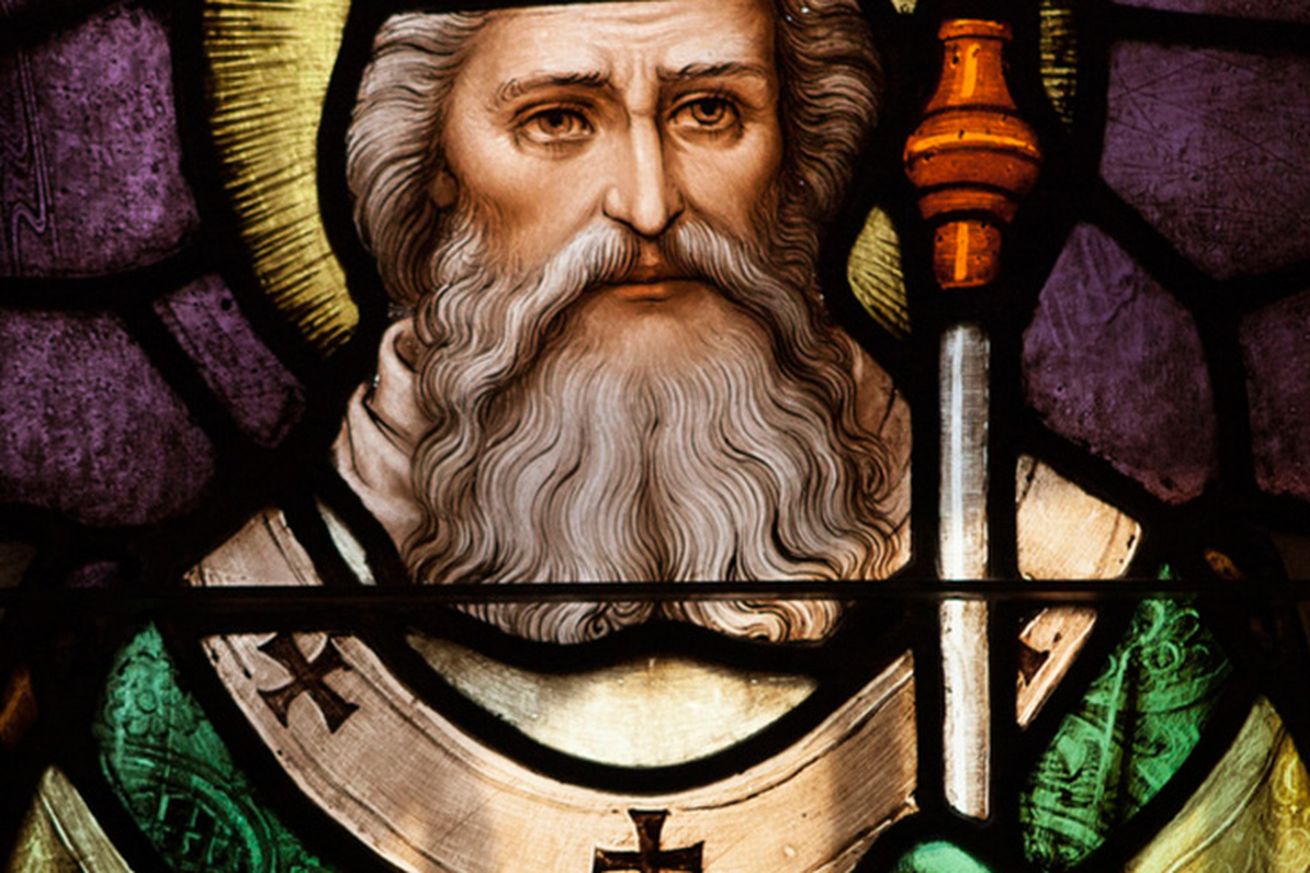
Saint Patrick is one of the most courageous missionaries of Christian history. Although revelers mark his day with debauchery and drunkenness, he pursued holiness and risked his life to preach to the Irish barbarians. He held out to the ancient Irish tribes a promise of protection from their gods and demons, if only they would come to Christ. Not only is he an example of virtue and courage, he also shows how far forgiving and loving our enemies can go. After patiently waiting for years for his non-missionary-minded church to send him, he got to preach to the very people who had kidnapped and enslaved him as a teenager. Learn who the real St. Patrick was and how his life can inspire you to live for Christ in our post-Christian society today. Notes: Sources I used for research on Saint Patrick How the Irish Saved Civilization by Thomas Cahill Let Me Die in Ireland by David Bercot Confessio by St. Patrick Intro music: “District Four” by Kevin MacLeod. Licensed under Creative Commons: By Attribution 3.0 License.

Off Script 25: Worshiping Success
Everyone enjoys accomplishment and achievement, but what happens when we take success and make it our ultimate goal in life? When you reach the pinnacle of success in any field, it’s easy to get depressed, asking yourself, “Is this all there is?” Furthermore, you may begin to fear that you won’t be able to maintain your position as other star-eyed would-be achievers are climbing to the top in an effort to push you off. How can we guard against worshiping the counterfeit god of success without settling into complacency or laziness? In this episode we answer this question by embracing the goodness and joy of achievement while recognizing that our ultimate worth comes from God’s gracious offer of love, demonstrated on the cross of his dear Son. Notes and Links: Episodes in this series on Counterfeit Gods: Worshiping Love Worshiping Money Worshiping Success Worshiping Power Worshiping God Watch David Foster Wallace’s entire commencement speech For an excellent overview of this topic, listen to Tim Keller’s talk on Podcast 41: Counterfeit Gods or watch it on YouTube To purchase the book this series is based on by Tim Keller, go here Intro music: “Protofunk” by Kevin MacLeod. Licensed under Creative Commons: By Attribution 3.0 License.

Podcast 75: Heretic! 4 Approaches to Dropping H-Bombs (Dale Tuggy)
The history of Christianity can sometimes be really depressing, especially when we look at the “heresy hunters.” From Justin Martyr and Irenaues in the second century to Athanasius and Epiphanius of the fourth century, as Christians we progressively came to define ourselves on the basis of what we don’t believe. As a result, so much energy focused on precisely defining and policing the boundaries of orthodox doctrine. This tendency continued to develop throughout the middle ages, culminating with the Catholic Inquisition in Spain where the church interrogated, tortured, and executed “heretics” (typically Jews who had been forcibly converted to Catholicism). In the sixteenth century, even Protestants executed heretics like the founders of the Anabaptists and Michael Servetus. Thankfully, the world has changed so much from the days when one could be executed for thought crimes. However, especially with the advent of the internet, the heresy-hunting impulse is alive and well within Christianity. Across countless blogs, chatrooms, and youtube channels, self-appointed orthodox defenders continue to bully and blackball other honest-hearted Christians for their unwillingness to accept their list of essential doctrines. In this eye-opening talk, Dr. Dale Tuggy discusses four approaches to heresy, including (1) Catholic, (2) Protestant, (3) “free” Protestant, and (4) apostolic. He argues that there is such a thing as heresy, and we should take it seriously, but it has a lot more to do with divisiveness than doctrinal errors. Ironically, the heresy-hunters are the ones guilty of causing αἵρεσεις (factions) in the body of Christ. Notes: Find out more about professor Tuggy at his website and subscribe to his excellent podcast in iTunes or via RSS or check out his YouTube channel. Here’s a transcript of this talk (pdf) Watch the full video of this talk (posted by 21st Century Reformation) Watch Tuggy’s screencast version of this presentation (includes slides) For information about this year’s Theological Conference, including to register, go here. Intro music: “District Four” by Kevin MacLeod. Licensed under Creative Commons: By Attribution 3.0 License.

Off Script 24: Worshiping Money
I bet you don’t think you struggle with greed. In fact, I’ve never met anyone who told me this was a problem for him or her. But greed is subtle. It sneaks up on you when you think you’re just working towards financial security or building your confidence or taking control of your life. In this episode we discuss how greed lurks in the shadows as well as how to slay the beast through gratitude and generosity. Notes and Links: Episodes in this series on Counterfeit Gods: Worshiping Love Worshiping Money Worshiping Success Worshiping Power Worshiping God For more on money, especially consumerism, check out Off Script 6: Consumerism For an excellent overview of this topic, listen to Tim Keller’s talk on Podcast 41: Counterfeit Gods or watch it on YouTube To purchase the book this series is based on by Tim Keller, go here Intro music: “Protofunk” by Kevin MacLeod. Licensed under Creative Commons: By Attribution 3.0 License.

Podcast 74: Which You Are You? (Sean Finnegan)
We all have competing impulses within us vying for our attention and expression. How do you know which ones to amplify and which to repress? How should we think of ourselves? Are we powerful and valuable creatures made in God’s image or accidental byproducts of time plus chance plus matter? In order to live out authentic humanity we need to grasp who we are and how God calls us to live. Only when we live in conformity with our designer and creator can we flourish and bring him glory. Notes: For more on authentic Christianity, take a look at Rosaria Butterfield’s testimony Intro music: “District Four” by Kevin MacLeod. Licensed under Creative Commons: By Attribution 3.0 License.
Off Script 23: Worshiping Love
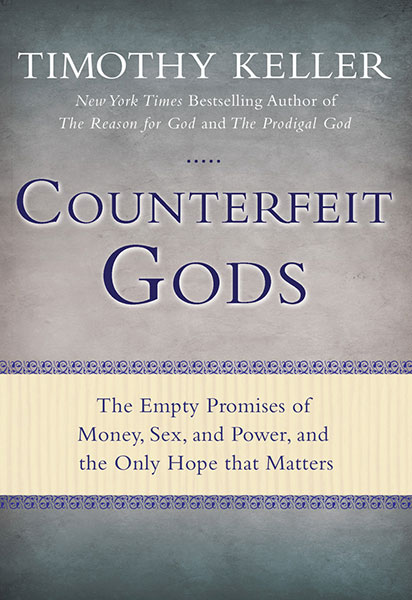
Today we are starting a series based on Tim Keller’s book, Counterfeit Gods, wherein we’ll consider a number of idols that vie for worship in our society. In this episode we consider Aphrodite, the ancient goddess of love, and her modern counterparts. We begin by examining the somewhat dysfunctional love story of Jacob and Rachel in the book of Genesis. We conclude that love and romance are goods God has given people, but they should not be our ultimate pursuit or what we look to for salvation. In addition, Rose rebukes the tendency among Christians to hold out romance and marriage to singles as an ultimate goal to find completion. Dan also shares some great advice about attracting a godly spouse. Whether you are married or single, this Off Script episode will help you think through the proper place you should have for romantic love in your life. Notes and Links: Episodes in this series on Counterfeit Gods: Worshiping Love Worshiping Money Worshiping Success Worshiping Power Worshiping God For an excellent overview of this topic, listen to Tim Keller’s talk on Podcast 41: Counterfeit Gods or watch it on YouTube To purchase the book, go here Intro music: “Protofunk” by Kevin MacLeod. Licensed under Creative Commons: By Attribution 3.0 License.

Podcast 73: Relating to the Government (Vince Finnegan)
How should Christians relate to the government? In this sermon, Vince Finnegan works through Romans 13 to show how we should relate to the powers that be. Ultimately God is in charge of raising up and tearing down regimes and nations over the course of human history. Our goal is to love one another as examples of genuine faith rather than get overwhelmed with political concerns. Notes: Romans 13:1 – In order to stay constantly living for God, we must have the right mindset and proper behavior in relationship to the kingdoms of this world. Subjection is very common. Wives to husbands (Ephesians 5:22-24), children to parents (Ephesians 6:1-3), servants to masters [employees to employers] (Ephesians 6:5-8), younger to elders (1 Peter 5:5), and believers to church elders (Hebrews 13:17). Husbands tell wives to worship. Parents tell children to steal. Employer tells employees to lie. Church leadership tells people to have sex. Government tells clerk about marriage licenses to homosexuals. Daniel 3:18; Daniel 6:10; Acts 4:18-20; 5:29 Deuteronomy 13:4 Submission in human relationships is commanded, but never when it breaks God’s commandments. We must obey God rather than man. Romans 13:2 If we do not submit to the laws of the government, we will be judged by those laws. By no means is God saying to us that worldly governments are holy or that their reign is equitable, fair, and right. Governments are a temporary necessity in this present evil age to maintain a semblance of order until God’s perfect Kingdom comes. The main danger was that the early Christians would err in refusing submission, even when it was proper, rather than in undue conformity to idolatrous rites and ceremonies. Daniel 2:21; 4:17, 26, 34, 35 By God’s permission or appointment, those in office obtain their power. God often claims and asserts that He sets up one and puts down another. Romans 13:5 – The word “minister” could also be translated “servant” as it often is in other translations. Kings, presidents, governors are God’s servants just as Pharaoh, Nebuchadnezzar, and Cyrus were. They were not serving us because they understood God’s Word and believed it, but because God is almighty and the supreme ruler of the earth. 7 – Mark 12:15-17; Matthew 17:24-27 8 – God does not want us to owe anyone because indebtedness may place us in a compromising position to be controlled or influenced by someone other than Him. Genesis 14:21-24 Abraham refused to be indebted to the king of Sodom when he was offered great wealth. Nor would he accept the land to bury Sarah without paying, so he remained free from obligation to anyone other than God 1 John 3:16; 4:11 – We all love because God loved us, and He commands us to love others. Romans 13:12 – We are to maintain an awareness of the urgency of our times. Each day, we are one day closer to his return or our death, whichever comes first. Ephesians 5:14-16 – We cannot afford to fall into a lackadaisical slumber and squander the time we could have with God. Romans 13:14 Check out this Off Script on patriotism for more on this subject Intro music: “District Four” by Kevin MacLeod. Licensed under Creative Commons: By Attribution 3.0 License.

Interview 15: Healing from Abuse and Abandonment (Claudia Scott)
Claudia Scott is one of the pillars of our church, a woman of faith who carries herself with dignity and poise. Growing up, she’s been an example to me of faithfulness and passion for God. Having only known her over the last twenty or so years, I was clueless about how much she had been through in her past. She suffered repeated sexual abuse for years as a child. Once she left the house, her life didn’t fair much better. When she met God and discovered his power to heal her, she began a journey that eventually led her to mental relief and peace of mind. This is her story. Notes and Links: Check out Interview 4: Spiritual, Emotional, and Physical Healing with Bill & Ann DeNenno Intro music: “District Four” by Kevin MacLeod. Licensed under Creative Commons: By Attribution 3.0 License.

Podcast 72: Free as a Fish on Land (Sean Finnegan)
What is true freedom? We tend to think of freedom as the lack of restrictions so that we can do whatever we want. However, I want to make the case that freedoms is not the lack of boundaries, but finding the right ones to enable us to be our best for God. After God liberated the ancient Israelites form Egypt, they were free: politically, religiously, economically, etc. However, they continued to distrust God and hold to an enslaved mindset. We have much to learn from their example. Notes: Freedom: autonomy, independence, liberty, license, self-determination, self-governance, sovereignty Exodus 3:7-8 God tells Moses His plans to deliver His people from slavery. Exodus 6:5-8 God plans to rescue them so they can become His people and He can become their God. Exodus 12:30-32 After the ten plagues, the Egyptians released the Israelites. Exodus 14:27-31 God splits the Red Sea and then destroys the Egyptian army, freeing His people once and for all. Exodus 16:2-4 Remember sitting by the meat pots and eating bread to the full? Numbers 11:4-6 Remember the cucumbers, melons, leeks, onions, and garlic of Egypt? Numbers 14:1-4 Let’s choose a leader and go back to Egypt! Numbers 20:4-5 Why have you made us come up out of Egypt? 1 Corinthians 10:1-14 Let’s learn from their example and not desire evil or give ourselves to idolatry. Hebrews 3:7-4:2 Do you trust God? The issue comes down to belief. “Come to me, all who labor and are heavy laden, and I will give you rest. Take my yoke upon you, and learn from me, for I am gentle and lowly in heart, and you will find rest for your souls. For my yoke is easy, and my burden is light.” —Jesus (Mt 11:28-30) Check out this Off Script on tolerance for more on this subject Read more about a Christian analysis on tolerance here Intro music: “District Four” by Kevin MacLeod. Licensed under Creative Commons: By Attribution 3.0 License.

Interview 14: Ken LaPrade’s Baptism Journey
What do you believe about baptism? In this interview, I ask Ken LaPrade, a house church pastor in El Paso, Texas and Juarez, Mexico, to share his baptism journey. Coming from a Way International background, LaPrade learned that spirit baptism had replaced water. As a result he had interpreted the water baptisms in Acts to be incidents where the apostles held to an outdated methodology. Apparently, they had not realized that spirit baptism had replaced water. However, when LaPrade went back through the book of Acts, he failed to detect any negative remarks about baptism in water. He started to see how baptism in water and spirit actually went together in several conversion narratives in Acts. After careful study and much prayer, LaPrade decided to take the plunge himself and was surprised when he received significant physical healing as well. Whether you accept baptism or not, please take the time to consider LaPrade’s humble and honest-hearted approach to this important issue. Notes and Links: You can get in touch with Ken LaPrade at [email protected] Intro music: “District Four” by Kevin MacLeod. Licensed under Creative Commons: By Attribution 3.0 License.
Podcast 71: What Good Is Jesus without His Gospel? (Anthony Buzzard)
In this vintage message, Sir Anthony Buzzard makes the case that the gospel Jesus preached was about the kingdom. Although Jesus remains incredibly popular all around the world today, his message remains obscured even among many sincere followers. How can we call ourselves Christians if we are ignorant of Christ’s proclamation? The kingdom is not living in heaven nor is it a clever way of talking about the church or Jesus reigning in your heart. Rather, it refers to the age when Jesus returns to fulfill all the prophecies of the Hebrew bible, bringing wholeness, judgement, and God’s reign to our world. We’ve substituted the gospel of Jesus for a gospel about Jesus. Of course, we don’t want to lose out the magnificent truths of his death and resurrection, but we dare not re-contextualize these within an overall scheme that defies Jesus’ kingdom announcement. According to Jesus, “This gospel of the kingdom will be proclaimed throughout the whole world as a testimony to all nations, and then the end will come” (Mt 24.14). How can we hope to be faithful to Jesus’ commissioning here, unless we recover and proclaim “this gospel of the kingdom” that Jesus preached?

Interview 13: Caring Enough to Confront (Jerry Wierwille)
How are you at handling conflict? Do you withdraw and avoid conflict at any cost? Do you rush in headlong, eager to set the other person straight? Are you a compromiser who looks at everything like a contract where both parties inevitably have to make trade-offs to get some advantage? As with so many really important aspects of life, we rarely receive any instruction on how to confront one another or deal with conflict in a constructive manner. In this episode, Dr. Jerry Wierwille reviews David Augsburger’s book Caring Enough To Confront, which will help you learn which of the four main postures towards conflict you hold as well five helpful strategies to help you improve your skills. Notes and Links: Listen to Jerry Wierwille’s other interviews Interview 1: Jerry Wierwille on Emotionally Healthy Spirituality Interview 2: Jerry Wierwille on Hermeneutics Visit his website at JerryWierwille.com Intro music: “District Four” by Kevin MacLeod. Licensed under Creative Commons: By Attribution 3.0 License.
Podcast 70: Getting the Gospel Right (Sean Finnegan)
The gospel is the message we believe in that results in immortality (2 Tim 1.7-10). If I were the devil, I would target the gospel message so that even if some Christians rustled up the courage to actually share it with others, they’d have a distorted or partial message. In fact, scripture tells us that the god of this world blinds the minds of unbeliever to keep them from seeing the light of the gospel (2 Cor 4.4)! We cannot just go along with the flow of evangelical or Catholic Christianity. We need to examine the scriptures to see what the original gospel was. When we do this, we discover a radically different message from what we hear on radio, TV, and in most churches today. In this message I make the case for a gospel with a minimum of three elements: the kingdom, the cross, and the resurrection. Take away or alter one of these and you no longer have the whole gospel. Notes and Links: Does Amos 9.11-15 seem strange to you? Two Major Problems most of us do not speak the gospel those who do speak it know a partial gospel Importance of Getting the Gospel Right Is the gospel like a paint color or a medical diagnosis? It is a matter of life and death (Galatians 1.6-9; 2 Timothy 1.7-10) the gospel is the pill of immortality, washed down with faith Three Elements kingdom (Matthew 4.23; 5.5; 6.9-10) cross (1 Corinthians 15.3; Romans 5.8) resurrection (1 Corinthians 15.4) Four Reasons the Kingdom Matters it is God’s idea it was Jesus’ primary focus it is gospel promotes stewardship Satan attacks the believing of the gospel (2 Corinthians 4.3-4; Matthew 13.19; Luke 8.12) But just knowing isn’t enough! believe repent persevere Check out Jacob Rohrer’s interview about his journey of getting the gospel right Intro music: “District Four” by Kevin MacLeod. Licensed under Creative Commons: By Attribution 3.0 License.
Interview 12: Jacob Rohrer on the Gospel (Jacob Rohrer)
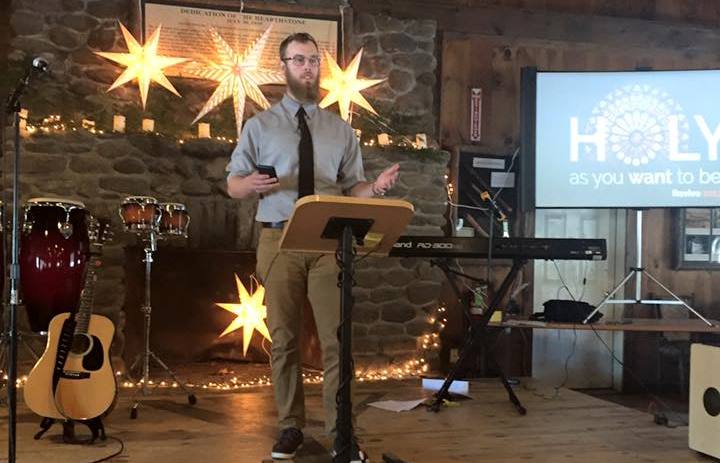
What is the gospel? Growing up, Jacob Rohrer heard about Jesus dying for his sins so he could go to heaven. However, he’s come to see that this way of thinking is not only wrong, but goes against what Jesus himself taught. Listen in to Rohrer as he explains the five elements of the gospel, including (1) repentance, (2) kingdom, (3) Jesus’ death, (4) Jesus’ resurrection, and (5) obedience to Jesus. You may be surprised to discover that the gospel you received is not the whole message. Jacob Rohrer is a 2015 graduate of the Atlanta Bible College who is currently interning at Cornerstone in Gatesville, Texas. Notes and Links: Listen to Jacob Rohrer’s recent sermon from Revive 2017, “What To Do When You Fail“ Watch a number of his sermons on YouTube, here If you want to get in contact, email Rohrer: [email protected] You can read some of his work on KingdomUprising.com Intro music: “District Four” by Kevin MacLeod. Licensed under Creative Commons: By Attribution 3.0 License.

Podcast 69: Teen Comes out as Christian to Gay Parents (Caleb Kaltenbach)
We hear a particular narrative over and over: “Gay teen courageously comes out to Christian parents and faces consequences.” This is the hero’s journey of the early 21st century. From gay pride marches to hit songs to movies and TV shows, this story is ubiquitous in our culture. For example, I used to listen to the Moth podcast and heard story after story championing the gay lifestyle and supporting the choice to live “out and proud.” In the hundreds of stories I listened to, not once did I ever hear a story of someone who came to Christ, even though it is a much more common occurrence. It’s hard not to absorb the impression that LGBTQ folks are courageous and tolerant while Christians, especially bible-believing ones, are repressive and unloving. However, could it be that there’s an alternative narrative that few are hearing? Caleb Katenbach has an interesting story. He grew up with two moms and learned to hate Christians. However, when he unexpectedly became a Christian in high school, he had to “come out of the closet” to his moms. Were they supportive? Did they embrace his new sense of identity? Did they accept him for following his heart? No! They kicked him out and expressed intolerance. Of course, his story doesn’t end there. Listen to this fine interview between Darrell Bock and Caleb Kaltenbach to learn both how we as Christians need to repent as well a how we can reach the LGBTQ community. Notes and Links: Caleb Kaltenbach’s book, Messy Grace: How a Pastor with Gay Parents Learned to Love Others Without Sacrificing Conviction, is available here Thanks to Darrel Bock for persmission to replay this episode. Check out his stimulating podcast, “The Table,” here Intro music: “District Four” by Kevin MacLeod. Licensed under Creative Commons: By Attribution 3.0 License.
Interview 11: Joe Martin, Looking Back on His Service at the Atlanta Bible College
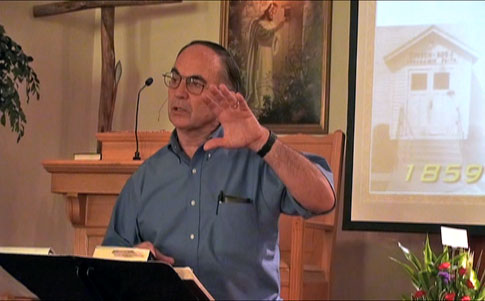
Dr. Joe Martin has taught at the Atlanta Bible College for over 25 years. He’s worked as an adjunct professor, full-time professor, academic dean, and the president. In this interview he talks about his favorite class to teach, his greatest challenge as a teacher, and his advice to those interested in going into ministry. He shares several stories about God’s mighty provision during his tenure as president, including one incident when he marched the staff around the building for seven days in prayer before a mighty miracle happened. His endearing spirit and passionate heart come through in this conversation along with his bold faith. “I will live and die by the simplicity of the word of God rather than orthodox credal systems.” –Joe Martin Notes and Links: To watch Dr. Joe’s sermons and theological presentations, check out the 21st Century Reformation youtube channel or his own personal channel For more information about the Atlanta Bible College, see this website For more about Martin, see Interview 10: Twenty Years of Missions in Africa Intro music: “District Four” by Kevin MacLeod. Licensed under Creative Commons: By Attribution 3.0 License.

Podcast 68: Soli Deo Gloria (Sean Finnegan)
Did you make any new year’s resolutions this year? We are now three weeks into 2017 and I bet many of us have already reverted to our old ways. However, what I want to propose here is not a new habit or a trick to stop an old one. Rather, I want to encourage you to adopt a particular perspective. Whether you gain weight or lose it, whether you go to bed early or stay up late, whether you get consistent with flossing or not, everything you do can and should be done to the glory of God. What’s more, living with this perspective doesn’t mean you have to give up pleasure. In fact, just the opposite is true. When we live for God’s glory, we can enjoy our lives more than ever before. Notes and Links: “Being sensible that I am unable to do anything without God’s help, I do humbly entreat him by his grace to enable me to keep these Resolutions, so far as they are agreeable to his will, for Christ’s sake. Remember to read over these Resolutions once a week. Resolved, that I will do whatsoever I think to be most to God’s glory, and my own good, profit and pleasure, in the whole of my duration, without any consideration of the time, whether now, or never so many myriads of ages hence. Resolved to do whatever I think to be my duty, and most for the good and advantage of mankind in general. Resolved to do this, whatever difficulties I meet with, how many and how great soever…4. Resolved, never to do any manner of thing, whether in soul or body, less or more, but what tends to the glory of God; nor be, nor suffer it, if I can avoid it.” — Jonathan Edwards (c. 1720) 1 Corinthians 10.31 So, whether you eat or drink, or whatever you do, do all to the glory of God. Westminster Shorter Catechism (1647) Q: What is the chief end of man? A: Man’s chief end is to glorify God,1 and to enjoy him forever. 1 Corinthians 10.31 Do all to the glory of God Judges 6-7 God’s whittling down of Gideon’s army provides us a prime example of how important it is to God that he receives proper glory for what he does. He could have worked with thousands, but then they would have thought they had won the victory because of their own military prowess. 1 Peter 4.11 In everything we should give God glory through Jesus Christ. This is not limited to when we are here on Sundays or at other fellowships, but our whole lives. Matthew 6.1-18 Jesus teaches us about doing righteous deeds for God not people pray to God in private fast secretly so God sees not people give to the poor secretly Romans 16.27 To God be glory forevermore Ephesians 3.21 To God be glory in the church and in Christ Jesus Philippians 1.11 Righteousness comes through Jesus to the glory and praise of God 1 Thessalonians 2.4 We speak not to please people but God who tests our hearts Jesus made his whole life about glorifying God Jn 5.41 “I do not receive glory from people” Jn 7.18 “The one who speaks on his own authority seeks his own glory; but the one who seeks the glory of him who sent me is true, and in him there is no falsehood” Jn 8.50, 54 “Yet I do not seek my own glory…if I glorify myself, my glory is nothing. It is my Father who glorifies me, of whom you say, ‘He is our God’” Jn 12.43 “for they loved the glory that comes from man more than the glory that comes from God” John 5.30 “I can do nothing on my own. As I hear, I judge, and my judgment is just, because I seek not my own will but the will of him who sent me. How to glorify God in 2017: Love God and Love People! John Piper, “God Is
Interview 10: Twenty Years of Missions in Africa (Joe and Rebekah Martin)
Joe and Rebekah Martin have labored for twenty years in Africa to bring the gospel and humanitarian aid to some of the poorest people in the world. They minister primarily in Malawi and Mozambique, though the work in Kenya is now gaining traction as well. In this interview, you’ll hear how a single tract led to one believing family, which eventually resulted in more than 450 churches, 20 years later! In addition, the Martins share several stories of what they’ve seen God do in the missionary field. They’ve run missions trips virtually every summer with other pastors and students. I went myself (with Ruth) back in 2004. Now that they’ve reached the age for retirement, they’ve purchased a house in Malawi so they can spend even more time there each year. Notes and Links: If you would like to get in touch to contribute to their work (financial or volunteering), you can reach Rebekah at [email protected] For more about the Lord’s Harvest International (LHI), the missionary wing of the Church of God General Conference, visit their website or like their facebook page. For more information about the Atlanta Bible College where Joe Martin teaches, see this website Intro music: “District Four” by Kevin MacLeod. Licensed under Creative Commons: By Attribution 3.0 License.
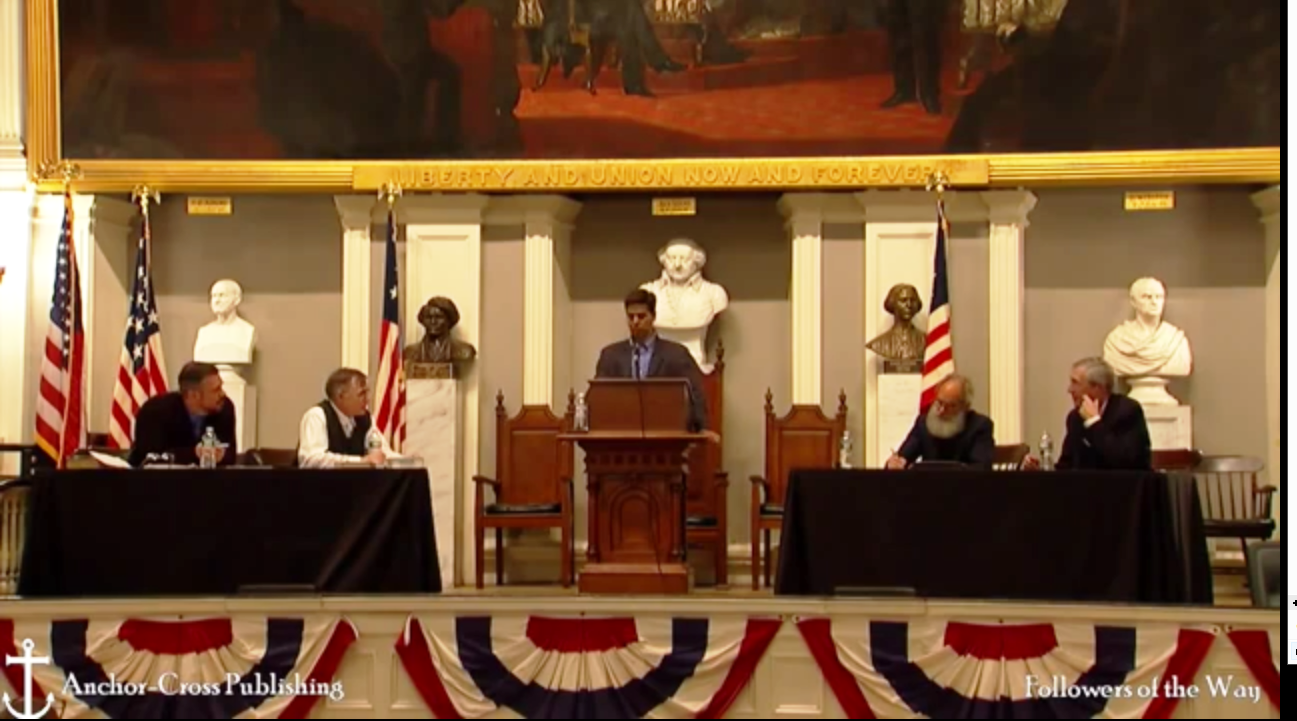
Podcast 67: It’s Just War (Debate)
Martin Luther King Jr. day is on Monday, so I thought this would be a good time to replay a phenomenal debate on the question of whether or not Christians should use violence or participate in the military. Peter Kreeft and J. Daryl Charles defend the classic just war position while David Bercot and Dean Taylor advocate for the Anabaptist view. The debate is cordial and the recording is top-notch. What’s more the speakers are evenly matched and the debate moves right along. If you’ve ever wondered about whether or not Christians can use violence, this debate will give you a window into how sincere Christians on both sides explain their positions. Notes and Links: Thank you to Followers of the Way for permission to rebroadcast this debate. You can watch the full video on youtube as well. Check out Podcast 15: A Theology of Nonviolence, which includes both the audio of my presentation at the 18th Theological Conference as well as the full text of my paper. For more research and resources on Christian pacifism, visit loveyourenemies.wordpress.com Intro music: “District Four” by Kevin MacLeod. Licensed under Creative Commons: By Attribution 3.0 License.

Off Script 22: Christianity Is Lame
Let’s say you are sharing your faith with a friend and they say to you, “Well, I’m glad that Christianity works for you, but it sounds like no fun to me.” How would you respond? Is Christianity no more than a set of restrictions we set on our lives like a straitjacket? Listen in to this episode as we discuss how following Jesus is an exciting adventure worth pursuing. Notes and Links: Episodes in this series on Overcoming Objections to Christianity: Is Jesus the Only Way to God? Christians Are Hypocrites Why Does God Allow Suffering? The Bible Is Too Antiquated Christianity Is Lame Check out Shane Claibourne’s book, Jesus for President: Politics for Ordinary Radicals Intro music: “Protofunk” by Kevin MacLeod. Licensed under Creative Commons: By Attribution 3.0 License.

Podcast 66: What I’ve Been Saved From (Victor Gluckin)
Pastor Victor Gluckin of Living Faith Christian Church (Warwick, RI) shares about his journey of faith. He was Mr. Popularity in High School; everyone loved him. However, he was spiritually dead and lifted up with pride. His breaking point came when he left his small town and attended George Washington University in DC. He planned to study political science before launching a career in public service, eventually culminating in his election as the president of the United States. However, when he got to GW, he discovered that he was just one of many ex-high school presidents with big dreams. God humbled him and showed him the truth about his heart. Listen to this episode to hear the rest of his story as well Gluckin’s appeal to you to consider your own life. Notes and Links: You can find more sermons by Victor Gluckin on his church website and on youtube For another episode with Gluckin, check out Podcast 24: Now Is Our Time to Speak Check out his classes Son of David and Kingdom Story You can follow him on Twitter @vgluckin Listen to more testimonies here Intro music: “District Four” by Kevin MacLeod. Licensed under Creative Commons: By Attribution 3.0 License.

Off Script 21: The Bible Is Too Antiquated
The youngest part of the bible is nearly 2,000 years old. How can such an ancient book have any relevance to our complex and technologically advanced world? How would you answer this objection? It’s certainly undeniable that our world is so much different from the nomadic shepherds of three millennia ago. However, science, political innovations, and technology have failed to generate a golden age of tranquility and prosperity. Our world is just as fragmented and fraught with dysfunction and injustice as ever. The internet has enabled us to access an unprecedented amount of information from all around the world quickly and cheaply. However, the net effect has led to information overload as searchers find themselves paralyzed by all of the “authoritative” perspectives and “experts” clamoring for attention. Increasingly people are turning to ancient analog faiths for answers in our digital age. The luster of virtual reality has worn off for many as they find their souls empty and isolated after binging on the dainties of television shows and social media. Many are looking for something real, something tried and tested, something with substance. This is where the bible has fresh appeal for our age. When we compare the scriptures to other historical books, they stand head and shoulders above them in that they are better preserved, more accessible, and more practical than the others. Timeless moral principles, powerful motivation, and encouraging hope make the bible an elixir to the soul’s of countless readers worldwide. Listen in as we discuss how the bible remains relevant and powerful in our time. Notes and Links: Check out our Off Script episode on Progress where we talk about chronological snobbery and the invisible fictive force many believe is moving us towards a better world. More podcasts and resources on Apologetics available here. Episodes in this series on Overcoming Objections to Christianity: Is Jesus the Only Way to God? Christians Are Hypocrites Why Does God Allow Suffering? The Bible Is Too Antiquated Christianity Is Lame Intro music: “Protofunk” by Kevin MacLeod. Licensed under Creative Commons: By Attribution 3.0 License.

Podcast 65: Christian Views of Sexuality (Apologetics 15)
Apologetics 15: Gender and Sexual Ethics (Objection 3) This lecture covers some basic Christian sexual ethics, including marriage, divorce, pornography, homosexuality, cohabitation, and adultery. Sadly, since this was the last lecture, time did not permit a thorough analysis of these subjects. Even so, I touched on each briefly and biblically in an effort to stake out a Christian position on each and give some evidence to equip you to give an answer to those who critique us. If you would like to take this class for credit, please contact the Atlanta Bible College so you can register and do the necessary work for a grade. Notes: on all of these controversial issues comes down to whether or not the bible is true and authoritative how to interpret the bible statistics of success/failure reason from creation (again depends on scripture) remember Satan is working on culture to make it hard to understand the gospel (Mt 13.19) and to blind people’s eyes from seeing it (2 Cor 4.4) Marriage live together before marriage divorce of you don’t get along God invented sex for marriage who do you think designed our genitals, packing them with a ridiculous concentration of erotogenic nerve endings? God’s vision of the world included: naked vegetarians living in a garden making lots of babies God proclaimed the first two people married (Gen 2.23-24) Jesus speaks on divorce & remarriage “whoever divorces his wife, except for sexual immorality, and marries another, commits adultery” (Mt 19.3-9) Paul speaks on singleness vs. marriage (1 Cor 7.1-17) good to be single wife does not have authority over her own body..husband does not… don’t deprive each other of sex except for a time of prayer otherwise Satan will tempt you b/c of your lack of self-control remain single better to marry than burn (with passion) Lord says: wife should not separate from her husband if she does anyhow, she should remain unmarried or be reconciled to her husband if spouse is unbeliever, don’t divorce him/her spouse is made holy by believer (and kids too) if unbelieving spouse separates, let it happen marriage represents relationship between Christ and the church (Eph 5.31-33) three views of marriage western: it’s good so long as I’m happy or at least not miserable the individual is at the center of the western cultural view towards marriage traditional: it’s good so long as it helps the family/clan biblical: my marriage is a living illustration of Christ and the church Sex Outside of Marriage God designed sex for marriage in the beginning. Thus, sex within marriage is godly and holy and enjoyable and not shameful. problem is when someone takes sex out of this boundary it’s like a nuclear reactor so long as it is contained behind a lead barrier w/ plenty of cooling systems functioning all is well and this immensely powerful reaction does good but take it out from that protected system and you have Fukushima or Chernobyl Jesus on sexual purity Mat 5.8 “Blessed are the pure in heart, for they shall see God. Mat 5.27-30 don’t look at a woman w/ lustful intent same as committing act of adultery need to be extreme here (gouge out eye, cut off hand): he’s really talking about lust! Paul on purity 1 Thessalonians 4.3-8 3 For this is the will of God, your sanctification: that you

Off Script 20: Christmas Special
We take a break from our normal Off Script format to share some seasonal reminiscences and lighthearted banter about Christmas past and present. In this somewhat silly episode you’ll learn what Christmas song Rose hates, Dan’s most cherished childhood present, and Sean’s Christmas-eve meal preference. Other exciting topics discussed in this podcast include: why Handel’s Messiah is awesome, how to poach a Christmas tree from state land, and when it’s ok to start listening to Christmas music. Additionally, Rose will reveal an ethnic secret about herself that you won’t want to miss.
Podcast 64: Science vs. the Bible (Apologetics 14)
Apologetics 14: Science (Objection 2) Although our culture commonly pits science and faith against each other, as if they’ve been at war for centuries, the truth is that faith gave birth to science. In this lecture, you’ll learn about some of the main science objections that skeptics bring against Christianity and how to respond to them. If you would like to take this class for credit, please contact the Atlanta Bible College so you can register and do the necessary work for a grade. Notes: Why Isn’t God’s Existence Obvious? no scientific test you can use to prove God’s existence “Confronted with the Almighty, [Bertrand Russell] would ask, ‘Sir, why did you not give me better evidence?'”[1] Isaiah 45.15 talks about the hiddenness of God Dembski’s point in In Defense of the Bible ch 14 is that God is hidden enough not to coerce belief God is visible enough to be found by those who seek him “This seems to be the pattern in God’s revelation of himself: provide enough evidence to convince those who are honestly seeking truth but not so much evidence as to force belief on those who prefer to believe a lie.”[2] Theists Pioneered Most Branches of Science belief in God led to belief in rational universe belief that external world cohered w/ our observation/perception belief that God used stable physical laws belief that studying creation was a good b/c it indirectly extolled the Creator Copernicus, Kepler, Newton, James Clerk Maxwell “To know the mighty works of God, to comprehend His wisdom and majesty and power; to appreciate, in degree, the wonderful workings of His laws, surely all this must be a pleasing and acceptable mode of worship to the Most High, to whom ignorance cannot be more grateful than knowledge.” –Nicolaus Copernicus, the mathematician and astronomer (1473-1543) who formulated a heliocentric model of the universe “…Those laws are within the grasp of the human mind. God wanted us to recognize them by creating us after his own image so that we could share in his own thoughts.” –Johannes Kepler, the German mathematician and astronomer who discovered the laws of planetary motion “If you study science deep enough and long enough, it will force you to believe in God.” —Lord William Kelvin, who was noted for his theoretical work on thermodynamics, the concept of absolute zero and the Kelvin temperature scale based upon it. “In the absence of any other proof, the thumb alone would convince me of God’s existence.” “I have a fundamental belief in the Bible as the Word of God, written by those who were inspired. I study the Bible daily.”—Sir Isaac Newton, who is widely regarded to have been the greatest scientist the world has ever produced. “There can never be any real opposition between religion and science; for the one is the complement of the other. Every serious and reflective person realizes, I think, that the religious element in his nature must be recognized and cultivated if all the powers of the human soul are to act together in perfect balance and harmony. And indeed it was not by accident that the greatest thinkers of all ages were deeply religious souls.” —Max Planck, the Nobel Prize winning physicist considered to be the founder of quantum theory, and one of the most important physicists of the 20th century, indeed of all time. “The gift of mental power comes from God, Divine Being, and if we concentrate our minds on that truth, we become in tune with this great power.” –Nikola Tesla, the inventor and futurist scientist known for nume

Off Script 19: More on Why God Allows Suffering
In this episode, we pick up the conversation where the last lecture in my Apologetics class left off. We review six reasons the bible gives for suffering as well as how to face pain and hardship. By looking at Jesus and Paul, we see that God did not spare either of them from adversity. Jesus came into this world as a hunted refugee, faced conflict and opposition his entire ministry, and then, in =the end, faced torture and execution. Similarly Paul endured rejection, whippings, beatings, shipwreck, and martyrdom. We can learn from these examples about how we can deal with difficulty in our own lives. Also, we discuss the prosperity gospel and play a clip from John Piper who puts his finger on why such a theology is so dangerous. Lastly, we draw inspiration from the words of the prophet Habakkuk who cried out to God to do something to deal with the rampant injustice of his day. If you haven’t already, I encourage you to first listen to podcast episode 62: Why Does God Allow Suffering? before listening to this episode. It should be the one right before this one. Here now is off script episode 19: more on why God Allows Suffering Notes and Links: Episodes in this series on Overcoming Objections to Christianity: Is Jesus the Only Way to God? Christians Are Hypocrites Why Does God Allow Suffering? The Bible Is Too Antiquated Christianity Is Lame Intro music: “Protofunk” by Kevin MacLeod. Licensed under Creative Commons: By Attribution 3.0 License.
Podcast 63: Why Does God Allow Suffering? (Apologetics 13)
Apologetics 13: Problem of Evil (Objection 1) Now that we’ve established the existence of God, the historicity of Christ’s resurrection, and the bible’s veracity, we come to objections commonly brought against Christianity. The chief classical question posed to Christians throughout the eons is, “How can you believe in God when there is so much pain and suffering in the world?” Thankfully, the bible provides a range of answers to that question though, it’s not always clear which answer applies to a given situation. In what follows I address the logical argument against God’s existence before going on to cover 6 major reasons why God allows suffering, including: (1) the Fall, (2) the devil, (3) God’s judgments, (4) using suffering for good, (5) lack of faith, and (6) time and chance. Lastly, I explore some of what the scriptures teach us about dealing with suffering. If you would like to take this class for credit, please contact the Atlanta Bible College so you can register and do the necessary work for a grade. Notes: The Problem of Evil This is a serious problem I don’t have the problem of evil totally figured out, however this is the way I understand it right now. Your thoughts, doubts, and comments are appreciated. “The problem of evil is the most serious problem in the world. It is also the one serious objection to the existence of God. More people have abandoned their faith because of the problem of evil than for any other reason. It is certainly the greatest test of faith, the greatest temptation to unbelief. And it’s not just an intellectual objection. We feel it. We live it.” –Peter Kreeft[1] outline show how this objection fails to disprove God’s existence explore reasons why God allows evil consider how to deal with suffering 1. How the POE Fails to Disprove God’s Existence The problem stated and some possible solutions the problem of evil is “If there is a God then why is there so much pain and suffering?” Proof against God’s existence God is all-loving God is all-powerful Evil exists \There is no God Some suggested solutions God is not all loving: He really can stop all evil but he doesn’t care enough about our puny lives to put forth the effort. he is distant (deists) hard predestination (you’re a worthless maggot to whom God owes nothing) molinism (God’s arranged the proper amount of suffering to maximize the number who would freely choose him) his focus is not on individual but the group (utilitarian) God is not all-powerful: Harold Kuschner: “God does not reach down to interrupt the workings of laws of nature to protect the righteous from harm. This is a second area of our world which causes bad things to happen to good people, and God does not cause it and cannot stop it”[2] reformulating the proof proof God is all-loving God is all-powerful evil (still) exists God has not eliminated evil yet can’t prove God doesn’t have some reason(s) for allowing evil a world w/ minimal suffering might not be best from God’s perspective a world w/ constant gratuitous evil would probably crush people’s faith a world w/ lots of suffering, lots of beauty, lots of kindness would probably maximize the number of people who turn to God and freely choose to put their faith in him evil points to a source of evil shouldn’t presume the absence of a source of good<

Off Script 18: Christians Are Hypocrites
In part two of our series on objections to Christianity, we look at the issue of hypocrisy. Many are unwilling to even consider Christianity as a viable option because they’ve witnessed or heard about some horrible act of hypocrisy by a Christian leader. It’s hard to deny that hypocrisy is a major problem in Christianity today. Whether we look at child molestation among Catholic priests, evangelicals who fall into adultery, or prosperity gospel preachers who squeeze every penny out of their poor congregations, hypocrisy is a black eye on the bride of Christ. How can we talk to skeptics and unbelievers about this issue? How can we avoid hypocrisy in our own lives? The cure lies in the teaching and example of Jesus. Listen to this frank discussion and learn how to respond to this ubiquitous objection. Notes and Links: For more on Rosaria Butterfield’s story, see this post. Episodes in this series on Overcoming Objections to Christianity: Is Jesus the Only Way to God? Christians Are Hypocrites Why Does God Allow Suffering? The Bible Is Too Antiquated Christianity Is Lame Intro music: “Protofunk” by Kevin MacLeod. Licensed under Creative Commons: By Attribution 3.0 License.
Podcast 62: Is the New Testament Trustworthy? (Apologetics 12)
Apologetics 12: New Testament Trustworthiness For the New Testament we can employ several of the same lines of reasoning as the Old Testament, though there are a couple more to consider like internal evidence and messianic prophecies that help bolster the case. Furthermore, many people’s lives have been changed by reading and believing the words of the New Testament. No other book has such a legacy for radical life transformation. If you would like to take this class for credit, please contact the Atlanta Bible College so you can register and do the necessary work for a grade. Notes: Reason #1: Archeology Supports the Bible Handout from Skeptics Search for God pages 227 to 234 Handout from Case for Christ pages 92-99 Building Belief, pages 145-146 In Defense of the Bible ed. by Cowan and Wilder pages 236-239 Reason #2: Unflattering Honesty Consider the heroes of faith and their recorded failures: If they made it up, why would they paint themselves so true to life (moles and all)? Peter’s denials (Matthew 26.69-74) Paul’s persecution of the church (Acts 8.1-3) All of this is evidence that the Bible is legitimate—it honestly chronicles what happened. And if we can trust it when people would be inclined to change it for the sake of embarrassment, we can certainly trust it on matters such as the kingdom and the crucifixion/resurrection of Christ. Reason #3: Changed Lives There is an old story about an atheist who challenged a Christian to a debate. The Christian responded, if you can provide me with one person who has been delivered from alcoholism, drug addictions, sexual perversion, violence, or another significant vice by atheism then I will debate you. And I will bring a dozen who have drastically changed as a direct result of their belief in the Bible. Reason #4: Preservation Antiochus Epiphanes tried to destroy the Hebrew bible and Jewish practices The Roman Emperor Diocletian, following an edict in ad 303, attempted to destroy every New Testament 25 years after Diocletian, the next emperor, Constantine, paid for 50 more bibles to be copied Voltaire (18th century) predicted within a hundred years the bible would be gone, but 50 years after he died, the Geneva Bible Society used his house and printing press to produce many more bibles Today the bible is available in more languages than any other book (over 500) This reason alone does not prove the bible is true, but it coheres with the idea. In other words, if the bible were from God, we would expect he would have his hand on it to preserve it throughout the centuries Reason #5: Internal Evidence What sort of books are the Gospels? What did the writers think they were doing? Luke 1.1-4; 2 Peter 1.16; 1 Corinthians 15.6 they claim to have reported historical facts accurately Reason #6: Messianic Prophesies Ralph Muncaster has calculated the odds of 118 non-messianic historical prophecies being true to be 1 chance in 10118. Thus it is more likely that the Bible is true than this pen will hit the floor when I drop it! In other words, to not believe in the Bible is more suicidal than to jump off a cliff and think that the law of gravity will not take effect! Promise to Abraham (Genesis 12:3, 18:18, 22:18) (Acts 3:25-26) Prophet like Moses (Deuteronomy 18:15-19) (Acts 3:22-23, John 1:43-49, 6:13-14) Raised from the dead (Psalm 16:10) (Acts 13:33-37 </

Off Script 17: Is Jesus the Only Way to God?
With this episode we are beginning a series on overcoming objections to Christianity. To start with we want to address the criticism often leveled at bible-believing Christians today that our perspective on salvation is too narrow-minded and exclusive. Who are we to say that all the other religions are wrong? In order to tackle this issue, we begin with the words of Jesus himself who said, “I am the way, and the truth, and the life. No one comes to the Father except through me” (John 14.6). If we remain committed to scripture then the question is not, “Is Christ the only way to salvation?” but “How is that fair?” What about the old lady in Fiji who never got a chance to hear about Jesus? Listen in as we explore five answers to this important question. Notes and Links: For a masterful presentation concerning Christian exclusiveness, check out Tim Keller’s lecture at Berkley. See also Podcast 51: Pluralism, Post-Modernism, Relativism, and Truth Episodes in this series on Overcoming Objections to Christianity: Is Jesus the Only Way to God? Christians Are Hypocrites Why Does God Allow Suffering? The Bible Is Too Antiquated Christianity Is Lame Intro music: “Protofunk” by Kevin MacLeod. Licensed under Creative Commons: By Attribution 3.0 License.
Podcast 61: Is the New Testament Reliable? (Apologetics 11)
Apologetics 11: New Testament Transmission With the New Testament we can’t argue for a reliable transmission on the basis of meticulous Hebrew scribes. More often, especially early on, the Christian scribes focused more on quantity than quality so they could get the word out as quickly as possible. However, the sheer number of manuscripts that survived and the relatively early date of several ensure that we can employ a range of strategies to recover the original text with 99.5% accuracy. In fact, when we compare the New Testament to other ancient literature it is almost embarrassing how much better it is than the others. If you would like to take this class for credit, please contact the Atlanta Bible College so you can register and do the necessary work for a grade. Notes: How To Determine Reliable Transmission Two factors that need to be tested to prove reliability number of copies time span between extant copy and autograph extant means the existing copy autograph means what was originally written A Wealth of Manuscripts extant means currently in existence Uncial manuscripts all-capital Greek letters 306 manuscripts dating to as early as the third century (200’s ad) Codex Sinaiticus and Codex Vaticanus (both date to around ad350 about 250 years between the completion of the NT and the first full copies of it Minuscule Cursive writing emerged in ad 800 2,856 manuscripts Lectionaries Contain NT Scripture in the sequence that it was to be read in the early churches at appropriate times of the year 2,403 manuscripts Total Greek Manuscripts = 306 + 2856 + 2403 = 5,565 currently (according to Bruce Metzger) Also there are ancient translations Approximately 10,000 copies of the Latin Vulgate 9,300 copies in Ethiopic, Syriac, and Aramaic. Grand Total = over 24,000 manuscripts critical editions NA28 \ all modern translations for the NT are based on one of these UBS4 / Stephanus[1] (KJV was translated from Stephanus) see footnote and next page originated from Erasmus’ 1516 critical edition and complutensian polyglot of 1522 based on 20 to 25 mss, mostly medieval 8th c. or later notable differences Comma Johanneum two later additions that still appear in our Bibles are Adulteress woman and long ending of Mark resources Bruce Metzger’s A Textual Commentary of the Greek New Testament NET Bible Translations major strategies formal equivalence (word for word) dynamic equivalence (thought for thought) translations using outdated Greek manuscripts KJV, NKJV, YLT, ASV, Amplified range of Bibles from most literal to least NASB HCSB ESV NRSV NET NAB NJB NIV NCB GNB CEV NLT Living Message Time Between Autograph and Extant Manuscript see chart on pp. 142-143 in Building Belief The John Rylands papyri manuscript found in Egypt, which is a small portion of the Gospel of John, is dated from ad 117-138. This means that we have a manuscript within nearly 30 years of the autograph. (Only 30 years between Gospel of John and P52 – John Ryland’s Papyrus) Variants between Manuscripts If we
Podcast 60: Be Ye Holy for I Am Holy (Keith Daniel)
What do you believe about holiness? Do you view it as an impossible ideal? Slogans like “I’m not perfect, just forgiven” and “I don’t want to be holier than thou” show how uncomfortable we are with this whole subject. Even so, God calls us to be holy as he is holy. We cannot ignore or dismiss such a calling. There must be some way to live up to his ideals. In this episode, Keith Daniel, the revival preacher and evangelist from South Africa, brings a convicting and much needed message about holiness. Notes and Links: Other Restitutio podcasts with Keith Daniel Find more Keith Daniel sermons at Sermon Index To get more information about Winter Teen Camp in RI (Dec 28-30, 2016), visit http://livingfaithri.org/events/wtc For our young adult retreat, Revive, held in CT (Jan 6-8, 2017), visit http://lhim.org/register/?id=205 Intro music: “District Four” by Kevin MacLeod. Licensed under Creative Commons: By Attribution 3.0 License.
Podcast 59: Is the Old Testament Trustworthy? (Apologetics 10)
Apologetics 10: Old Testament Trustworthiness Last time we looked as reasons to believe the Jewish scribes reliably transmitted the Old Testament so that what we have today is what they actually wrote. This time you’ll learn five main reasons why we believe the Hebrew bible is true: (1) archaeology, (2) medical insights, (3) unflattering honesty, (4) predictive prophecy, and (5) martyrdom. Although some of these are stronger than others, cumulatively they establish the veracity of scripture quite convincingly. If you would like to take this class for credit, please contact the Atlanta Bible College so you can register and do the necessary work for a grade. Notes: Five reasons to believe the bible is true: archeology medical insights brutal honesty predictive prophecy martyrdom Reason #1: Archeology Supports the Bible Archeology is a soft science based on hard evidence. The clay pot is hard evidence but when it is dated and what it means are based on interpretation. The longer that archeology exists the more detail we get on antiquity Why would the author take the time to report so many things accurately and then make up a story in between? Many times when Israel had conflict with other nations we can look in the secular history and find corroborative evidence of the event Sennacherib’s Prism chart on pp. 140-141 in Building Belief Reason #2: Miraculous Medical Accuracy Leviticus continues incredible medical insights far ahead of its time http://www.apologeticspress.org/APContent.aspx?category=13&article=2024&topic=102 8th day circumcision http://www.apologeticspress.org/apcontent.aspx?category=13&article=1118 Reason #3: Brutal Honesty If they made it up, why would they paint themselves so true to life (moles and all)? Consider the heroes of faith and their recorded failures: Noah gets drunk (Genesis 9.20-24) Abraham is deceptive about Sarah (Genesis 12.19; 20.5) Moses disobeys and speaks presumptuously (Numbers 20.7-12) David’s sin with Bathsheba (2 Samuel 11.1-27) Reason #4: Predictive Prophesy Prophecy is an objectively testable criterion that could prove the bible true or false. Objective is true no matter who believes it; Subjective is true depending on how it is perceived. Amazingly, the bible repeatedly predicts historical events before they happen! This is the strongest argument for the bible being true because it is testable. The bible is made falsifiable by predictive prophecy. Some allege that it is easy to predict the future. Try predicting the weather, stock market, gambling, lottery ticket (and don’t forget that if you are wrong once, then you are stoned to death!) Nostradamus made extremely vague prophecies. For more information on what he prophesied and how it has to be twisted in order to fit modern events see EvangelicalOutreach.org/nostradamus.htm “Jeane Dixon’s supposed “prediction” about John F. Kennedy’s election and assassination. In reality, her prediction in Parade magazine in 1956 said that “a Democrat” would win the election and would “die in office.” This was far less specific than predicting “John F. Kennedy would be assassinated,” as some later retold the “prophecy.” Just how amazing was this prediction?” Let’s figure out the odds here: Dem
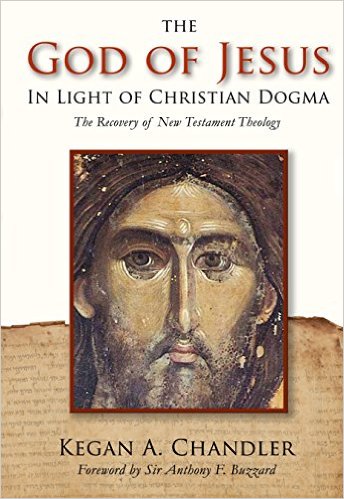
Interview 9: Pagan Influences on the Development of the Trinity (Kegan Chandler)
Kegan Chandler joins me once again to talk about the history of theology. If you haven’t yet heard his story, check out Interview 8: A Restorationist Finds the God of Jesus. In this episode, I ask Chandler about his book, The God of Jesus in Light of Christian Dogma. If you are at all interested in the history of ideas that influenced what Christians in the 2nd, 3rd, and 4th centuries believed about Jesus, this show is for you. Chandler address the how Plato’s Greek philosophy influenced Christian theologians as well as how the Gnostics not only anticipated much trinitarian language, but also how they influenced “orthodox” theology. After exposing the pagan influnences on the development of the Trinity, Chandler goes on to offer a better way of reading the New Testament–through the lens of second temple Judaism. Instead of reading later ideas into scripture, why not read it in light of the Hebrew bible and contemporary Jewish literature, like the Dead Sea scrolls. Notes and Links: Review Kegan Chandler’s The God of Jesus in Light of Christian Dogma: The Recovery of New Testament Theology on Amazon. Chandler’s websites include: thegodofjesus.com and burieddeepblog.wordpress.com R. P. C. Hanson wrote the definitive history of 4th century doctrinal development in his The Search for a Christian Doctrine of God. Richard Rubenstein wrote a much shorter, easier history of Trinity history in his When Jesus Became God. Intro music: “District Four” by Kevin MacLeod. Licensed under Creative Commons: By Attribution 3.0 License.
Podcast 58: Is the Old Testament Reliable? (Apologetics 9)
Apologetics 9: Old Testament Transmission What reasons do we have for believing the Old Testament (Hebrew Bible) was reliable transmitted from antiquity to today? This lecture provides four arguments: (1) Jewish scribes were competent, (2) people memorized large portions of the text, (3) the consequences for false prophecy, and (4) the Dead Sea Scrolls function as a time capsule. The Old Testament is excellently preserved, especially in comparison to other ancient texts. If you would like to take this class for credit, please contact the Atlanta Bible College so you can register and do the necessary work for a grade. Notes: Introduction Circular reasoning: Why do you believe that there is a God->the Bible says so->How do you know that the Bible is true?->God wrote it This is the fundamental question of Christianity: “Anyone who knows the content of the Bible knows that its reliability is the single most important question in the history of humanity.” (Can You Trust the Bible by Ralph Muncaster, p. 4) Remember 1Peter 3.15 Question:=>Too many translations, how do you know which is right? The Bible was written in Greek, translated to Aramaic then to Latin then to German and then to English. Answer:=>We have more than 5,000 manuscripts extant today and there are several million people who speak the original language. We do not depend on a translation. (Pass around the Hebrew and Greek Bibles) a. OT written in Hebrew b. NT written in Greek OT Manuscript Tradition manuscripts (hand written) Hebrew Aleppo Codex (a.d. 920) Leningrad Codex (a.d. 1009) Dead Sea Scrolls (250 b.c. to a.d. 70) early translations Aramaic Targum (5th c. a.d.) Samaritan Samaritan Pentateuch (11th c. a.d.) Syriac Peshitta (5th c. a.d.) Greek Septuagint (fragments from 2nd c. bc, complete from 4th c. a.d.) Theodotion, Aquilla, Symachus (before 3rd c.) (extant?) Coptic Crosby-Schoyen Codex (3/4th c. a.d.) Latin Codex Amiatinus (5th c. a.d.) critical editions Biblia Hebraica Stuttgartensia based mostly on Leningrad Codex but with variants from other sources as well last updated1997 Biblia Hebraica Quinta incorporates Dead Sea Scrolls 20 volumes partially published since 2004, to be completed in 2015 Oxford Hebrew Bible Project extensive critical edition underway at Berkeley, California Scribal Argument Only master scrolls were used for duplication Scribes were highly trained (noble profession) Held in training until age 30 Ceremonial washing before copying Scripture Any time the name of God was written a sanctification prayer was said. (6,824 times in the NASB) Memorization was a problem so they visually confirmed the letters one by one Each letter was counted and compared to master Each word was counted and compared to master The middle letter in each scroll was located and compared to the master If there is one mistake, the scroll was discarded Scrolls are buried ceremonial when they wear out Memorization argument Object Lesson: driving laws What do you do when school bus stops and you are driving towards it? What do you do at a stop sign? Yield sign? Green, yellow, & red lights? What do you do at a four way stop? What is the cell phone law? Why do you have all of t

Interview 8: A Restorationist Discovers the God of Jesus (Kegan Chandler)
Kegan Chandler grew up as a bible-believing Christian in Texas. His grandfather, Pat E. Harrell, was a leader within Church of Christ who founded their Restoration Quarterly publication. As a result of his grandparents’ and parents’ passion for God, Chandler grew up in a family steeped in bible study and theological reflection. One day the Mormon’s came knocking and Chandler, the consummate apologist and champion of orthodoxy, licked his lips at the chance to set them straight. However, in the course of that conversation, one of the missionaries asked Chandler, “Well, who do you say that Jesus is?” Strangely enough, this one question caught him off guard. The young man wasn’t asking, “Who do your parents, your pastor, or your seminary say that Jesus is?” but “Who do you say that Jesus is?” The intensely personal nature of this question started Chandler on a quest to firm up his orthodox answer, which eventually led to a complete reconsideration of his beliefs about God, Jesus, and the spirit. Over the course of several years, he came to see the bible from a more Hebrew perspective. After intense bible study and a thorough investigation into church history, he discovered the God of Jesus. Here is his story. Notes and Links: The conference we met at was Restoration Fellowship’s Theological Conference. Next year the date for this weekend is May 18-21, 2017. For “the Protestant burden” see Jason David BeDuhn’s book, Truth in Translation. Chandler referenced my presentation, “Five Major Problems with the Trinity.” (This video now has over 33,000 views.) Chandler’s book, The God of Jesus, is now available on amazon. Chandler’s websites include The God of Jesus and Buried Deep For J. Dan Gill, visit the 21st Century Reformation website as well as his voluminous youtube channel. For Anthony Buzzard, visit the Restoration Fellowship site or watch his videos on youtube. Intro music: “District Four” by Kevin MacLeod. Licensed under Creative Commons: By Attribution 3.0 License.
Podcast 57: More Evidence for the Resurrection (Apologetics 8)
Apologetics 8: More Evidence for the Resurrection Because secular historians don’t accept the inspiration of the bible, they don’t trust the Gospels as reliable witnesses about Jesus. Consequently, they’ve come up with various “criteria of authenticity” to sift the sayings and deeds recorded in the Gospels into historical and mythical categories. Last time we saw how Jesus’ resurrection still passes with flying colors when employing such a skeptical approach. This time we’ll discuss another historical consideration under the able guidance of N. T. Wright. He enumerates seven mutations within Judaism that cry out for an explanation. In the end, history seems to have a hole in it about the size and shape of an actual resurrection. The most plausible explanation is that God really did intervene in the middle of history and perform a miracle. If you would like to take this class for credit, please contact the Atlanta Bible College so you can register and do the necessary work for a grade. Notes: Criteria secular historians use to determine authenticity: multiple attestation: the more independent witnesses the better dissimilarity: if something is dissimilar from Jewish historical context and later Christian tradition it is more likely to be historical embarrassment: if something would have been embarrassing it is more likely to be historical (i.e. disciples not getting what Jesus is saying, Peter cutting ear off, aramaisms: sayings that align with Aramaic: “straining out the gnat (galma) and swallowing a camel (gamla)” coherence to Jewish context coherence to early Christian tradition coherence with other authentic material anachronism Two indisputable facts about Jesus (according to Paula Fredriksen) Jesus died by crucifixion attested by Paul, Gospels, Tacitus, Josephus Romans were involved w/ his death None of Jesus’ followers were crucified with Jesus pulls in the opposite direction Jesus as apocalypticist (Ehrman, Fredriksen, Sanders, etc.) Fredriksen, “w/o apocalyptic framework a conviction of resurrection is incoherent” N.T. Wright has articulated seven mutations from the Jewish understanding of resurrection in the early Christian communities which cry out for an explanation. It turns out that the explanation of the missing event which would make sense of these mutations takes the exact shape of a grave-emptying bodily resurrection. His seven mutations are as follows: Though the early Christians came from a variety of backgrounds there was virtually no spectrum of belief about what resurrection meant to the early Christians. In Judaism there were quite a few different views, that of the Pharisees, that of the Sadducees, that of Philo, and so on. However, the Christians leave no room for speculation as to what resurrection means and what it looks like. Resurrection has moved from a peripheral idea to the central focus of the early Christian community. The word “resurrection” appears 43x in NT as opposed to none in the OT. In Judaism it is often rather vague regarding what sort of body the resurrected will possess but in Christianity there is unanimous agreement that the body will be a transformed physical body which will use up the matter of the old body though it will itself also possess new properties. The Christians saw The Resurrection as having been split into (at least) two stages—first Messiah is raised and then the rest at his return. The resurrection means that God’s future (the resurrection is always seen in the OT as an end times event) has arrived early in the person of Jesus. This means that now his followers are i

Off Script 16: Christians Discussing Politics
This election cycle American political discourse has sunk to a new low. Rather than presenting facts and offering persuasive arguments based on policies, we’ve seen a whole slew of false claims and personal attacks. The exchanges between Donald Trump and Hillary Clinton have been so caustic and shameful that when I discovered my ten year-old was watching one of the presidential debates with his mom, I immediately ushered him out of the room, muttering that such language and behavior was inappropriate for him to see. (He had weaseled his way in to watch it on the excuse that he couldn’t sleep.) What does it say about the way politics works itself out on national TV that I felt horrified that my son was exposed to such bickering and animosity among those who are vying for the highest and noblest governmental office in the land? I could deal with all of this, but what I can’t handle is the fact that Christians don’t seem to carry themselves any differently than their worldly counterparts. Social media channels and email boxes overflow with vitriol and exaggeration as each side shouts ever louder, trying to drown out the sound of the other. In this episode of off script, we offer some suggestions on how to think and behave when engaging in political discourse as Christians. We begin by discussing an episode of Ira Glass’ This American Life podcast episode “Seriously?” in which he addressed how misinformation and lies dominate political conversations. Listen to the first 20 minutes to hear the part we discuss. Also, we engaged with Justin Brierly’s Unbelievable? podcast episode “Should Christians vote for Trump?” where Republican John Zmirak and Democrat Christina Rees discuss what Christians should do. For Zmirak’s “dead moose” comment, skip to 18 minutes. Intro music: “Protofunk” by Kevin MacLeod. Licensed under Creative Commons: By Attribution 3.0 License.
Podcast 56: Evidence for the Resurrection of Jesus (Apologetics 7)
Apologetics 7: Evidence for the Resurrection During this lecture, I played a video of William Lane Craig making a case for the historicity of Jesus’ resurrection from the dead. What’s so brilliant about Craig’s approach is that he doesn’t assume the bible is true to make his case. He treats the Gospels and Paul’s letters as normal historical sources and uses the standard historiography of skeptics and atheists to establish this ancient miracle. He employs the minimal facts strategy, arguing that (1) the honorable burial, (2) the empty tomb, (3) the appearances, and (4) the resurrection belief are agreed to by critical scholars. Thus, the hypothesis, “God raised Jesus of Nazareth from the dead,” is the best historical explanation of facts. If you would like to take this class for credit, please contact the Atlanta Bible College so you can register and do the necessary work for a grade. Notes: Four Historical Facts Agreed upon by Most Historical Jesus Scholars 1. Honorable Burial: Jesus was buried by Joseph Arimethea in a known grave attested by very old tradition in 1 Cor 15 uses technical rabbinic terminology for tradition formulaic Paul received this within 5 years of his crucifixion burial story is part of an old source used by Mark when he wrote most of Mark is like pearls on a string, but once we get to the passion narrative it is smooth and chronological….which suggests that the passion narrative was from an actual written source gospels don’t diverge until after the burial account as a member of the Sanhedrin, Joseph of Arimathea is unlikely to be a Christian invention strong resentment toward Jewish leadership responsible for the execution of Jesus so it is highly improbable that Christians would invent that a member of the very court that condemned Christ would be the one to give him an honorable burial no competing burial story exists no controversy over the issue if it were false, we should expect to find some historical trace of what really happened 2. Empty Tomb: On Sunday after the crucifixion women found the empty tomb empty tomb is in pre-Markan passion source Mark’s source did not end with burial but with empty tomb old tradition in 1 Cor 15 implies an empty tomb “that he was buried and that he was raised” clearly implies an empty grave was left behind apostolic preaching in the book of Acts Mark’s story is simple and lacks signs of legendary embellishment compare to Gospel of Peter (from 2nd half of 2nd century)…tomb is surrounded by Roman guard and by chief priests, Pharisees, and a huge crowd….suddenly during the night a voice rings out….three gigantic figures come out of the tomb with heads reaching to the sun….the cross comes out of the tomb and speaks women’s testimony was less trustworthy than men counts in favor of the women’s role in the discovery of the empty tomb Josephus says, “due to the levity and temerity of their sex, women should not be allowed to serve as legal witnesses in a court of law” any later legendary account would have made male disciples like Peter and John to be the first to discover the empty tomb earliest Jewish allegation that the disciples had stolen Jesus’ body presupposes that the body was in fact missing from the tomb 3. Appearances: on multiple occasions and under a variety of circumstances, individuals and groups of people experienced appearances of Jesus after his death list of eyewitnesses quoted by Paul in 1 Cor 15 Paul actually knew these people

Off Script 15: Should Christians Celebrate Halloween?
Halloween comes from the ancient Gaelic festival of Samhain when the Celts believed the boundary between our world and the spirit world grew thin, allowing spirits, fairies, and disembodied souls to enter our realm. Consequently, they employed several strategies to appease and misdirect these nefarious ghosts from messing with them. However, in our secular age, most Americans who participate in Halloween neither believe in this ancient mythology nor are they even aware of it when they dress their children in costumes and ring doorbells for free candy. What’s a Christian to do? On one end, the purists refuse to participate and put signs on their doors alerting trick-or-treaters not to disturb them, and on the other, Christians decorate their lawns with grizzly scenes from horror movies and encourage their children to dress up as ghosts and monsters. Listen to this episode of Off-Script as we discuss this seasonal issue.
Podcast 55: Did Jesus Exist? (Apologetics 6)
Apologetics 6: Historical Jesus Have you ever heard of the Jesus mythicists? They teach that Jesus never existed, that he’s a myth. How would you go about debunking this claim? Are you aware of what historical sources mention Jesus and early Christianity? In this lecture you’ll learn what’s out there from biblical authors, historians, and hostile witnesses. The cumulative case for the historicity of Jesus of Nazareth is nothing short of staggering. If you would like to take this class for credit, please contact the Atlanta Bible College so you can register and do the necessary work for a grade. Notes: New Testament is not one witness. It was not originally published as a single volume. Pre-Pauline Quotations 1 Corinthians 15.3-4 Philippians 2.6-10 Paul (wrote between a.d. 51 and 62) earliest written documents that mention Jesus written 20 – 30 years after death of Jesus born of a woman (Gal 4.4; Rom 1.3) had disciples (1 Cor 15.5) had brothers (1 Cor 9.5; Gal 1.19) Lord’s Supper (1 Cor 11.23-25) crucified (1 Cor 2.2; 11.23; Gal 3.1) put to death by Jews (1 Thes 2.15) buried (1 Cor 15.4; Rom 6.4) raised from the dead (1 Cor 15.21) ascended into heaven (Eph 1.20-23) James (a.d. <62) slave of Jesus (1.1) Jesus is Lord Messiah (1.1) he is coming back (5.7) coming is near (5.8) Peter (a.d. <62) Christ suffered, sinless, bore our sins, did not revile (1 Peter 2.21-24) eyewitness of his majesty (transfiguration) (2 Peter 1.16-17) he is coming back (2 Peter 3.2-4) Jude (?) slave of Jesus several mentions of him, but not historical, mostly future Mark (a.d < 62) got his gospel from Peter miracles some sayings passion narrative resurrection stated Simon of Cyrene (Mark 15.21)…as if his audience knew Alexander and Rufus Matthew (after Mark) eye-witness birth narrative extensive teachings miracles passion narrative resurrection appearances Luke (after Mark) investigator, second hand birth narrative extensive teachings miracles lots of dinners passion narrative resurrection appearances ascension continuity with the church (Acts) Hebrews (after 62 before 70) mostly theological concerned with making the point that Jesus is superior to angels, Moses, Aaron, etc. because he is priest after Melchizedek, better covenant, better promises, etc. Christ died (9.26; 10.12; 12.2) tempted yet sinless (4.15) made like his brethren in all things (2.17) John (<a.d. 100) eye-witness pre-ministry miracle (wedding at Cana) miracles as signs attending festivals self-revelatory (“I am… statements) resurrection appreances Flavius Josephus (a.d. 93) first non-Christian to write about Jesus Passage 1 (about James) “but this younger Ananus, who, as we have told you already, took the high priesthood, was a bold man in his temper, and very insolent; he was also of the sect of the Sadducees, {a} who are very rigid in judging offenders, above all the rest of the Jews, as we have already observed; when, therefore, Ananus was of this disposition, he thought he had now a proper o

Off Script 14: Should Christians Watch Horror Movies?
Horror movies inspire fear, causing our hearts to beat faster and our adrenaline to flow. Their monsters, murder, and jump scares have won them a dedicated following. In this episode, we discuss whether Christians have any business watching horror movies. We talk about where to draw the line and what exactly is problematic about this genre. Furthermore, we talk about haunted houses and the idea of using such fear tactics to win people to the Lord. Whether you love horror or hate it, this episode should help you to think through this issue from a biblical perspective.