
Restitutio
673 episodes — Page 9 of 14
Theology 14 — The Holy Spirit
How do you think of holy spirit? In this lecture we’ll build up a biblical theology of the spirit, in an effort to comprehend its variegated facets. We’ll consider the Old Testament and the Synoptic Gospels before spending a good deal of time in John, looking at the fascinating way that Jesus talks about the spirit in the upper room discourse. —— Notes —— The Old Testament on Spirit How ruach is translating in the NASB: air 2 anger 1 blast 2 breath 31 breathless 1 cool 1 courage 1 despondency 1 exposed 1 grief 1 heart 1 inspired 1 mind 3 motives 1 points 1 side 4 sides 2 Spirit 76 spirit 127 spirits 3 strength 1 temper 2 thoughts 1 trustworthy 1 wind 98 winds 7 windy 2 wrath 1 Dictionary of Judaism in the Biblical Period When used of living beings, ruach refers to the essence of the life and vitality in both human beings and animals that is manifested through movement and breathing (Genesis 2:7; 6:17; 7:15; Numbers 16:22; Ezekiel 10:17). Just as “spirit” was considered the essence of human life, so analogously the term “spirit” was used of the presence, activity, and power of God, that is, characteristics that demonstrate that God is truly a “living God” (Deuteronomy 5:26; Joshua 3:10; 1 Samuel 7:26; Isaiah 37:4; Daniel 6:20; Matthew 16:16; Revelation 7:2). Jacob Neusner, William Scott Green editors, Dictionary of Judaism in the Biblical Period ©1996, Hendrickson Publishers, page 298 New Bible Dictionary At its heart is the experience of a mysterious, awesome power—the mighty invisible force of the wind, the mystery of vitality, the otherly power that transforms—all ruach, all manifestations of divine energy. JDG Douglas, New Bible Dictionary (second edition) ©1962, ed. By JD Douglas, FF Bruce, JI Packer, N Hillyer, D Guthrie, AR Millard, DJ Wiseman, Tyndale House Publishers, Inc., pages 1137 James Dunn on the Holy Spirit There can be little doubt that from the earliest stages of pre-Christian Judaism, ‘spirit’ (ruach) denoted power—the aweful, mysterious force of the wind (ruach), of the breath (ruach) of life, of ecstatic inspiration (induced by divine ruach)…In other words, on this understanding, Spirit of God is in no sense distinct from God, but is simply the power of God, God himself acting powerfully in nature and upon men. James DG Dunn, Christology in the Making (second edition) ©1989, Eerdmans Publishing Co., page 133. Examples of Ruach: The spirit of God may be taken from one and distributed to others (Numbers 11:17) inspire prophecy (Numbers 11:25, 29; 24:2-3; 1 Samuel 10:6, 10; 1 Chronicles 12:18; 2 Chronicles 15:1; 20:14; 24:20; Nehemiah 9:30; Zechariah 7:12) be a way God speaks to people (2 Samuel 23:2) lead someone to a different location (1 Kings 18:12) transport someone from one location to another (2 Kings 2:16) be defined parallel with the anointing of Yahweh (Isaiah 61:1 cp. Acts 10:38) empower leaders to judge/rule the people (Judges 3:10) impart warlike energy/confidence (Judges 6:34; 11:29; 14:6, 19) supply supernatural strength (Judges 15:14) cause righteous anger (1 Samuel 11:6-7) impart regeneration/peace (Isaiah 32:15) give the Messiah wisdom, understanding, counsel, strength, knowledge, th
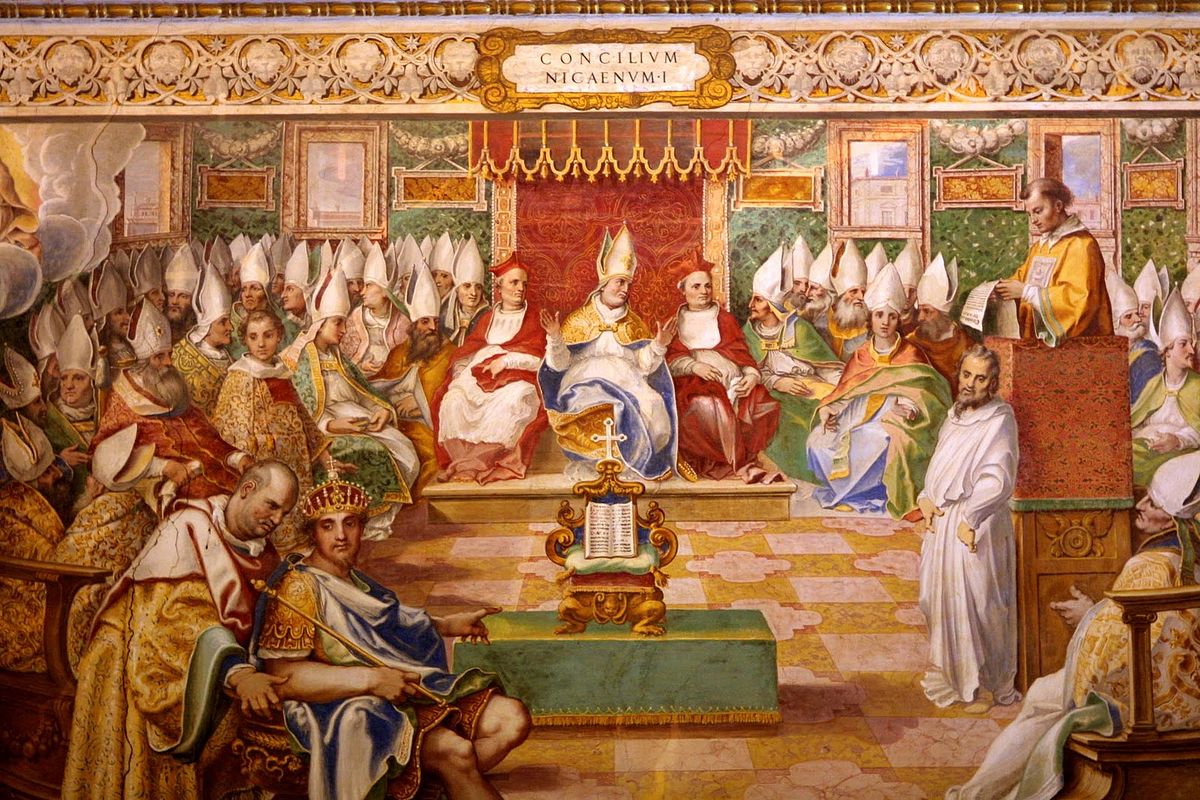
175 Did Christians Believe in the Trinity before 325 (Council of Nicea)?
Now I realize we are in the middle of our theology class, but I thought this would be a good time to take a quick break and put out my recent presentation from Restoration Fellowship’s 2019 Theological Conference, titled, “The Trinity before Nicea.” Next week we’ll get back to theology and build up a biblical theology of the holy spirit, but for now, let’s dive into the second and third centuries and wrestle with the question of whether Christians believed in the Trinity before the year a.d. 325. Did Christians believe in the Trinity before a.d. 325 when the Council of Nicaea established that the Lord Jesus Christ exists as one substance (homoousios) with the Father? In what follows, I intend to investigate the beliefs of key Christians in the second and third centuries to answer this question, using Matt Slick’s “Early Trinitarian Quotes” as our guide. —— Links —— Read the entire paper, “The Trinity before Nicea“ Check out the video of this presentation, including slides Intro music: Jazzy Frenchy by bensound.com. Licensed under Creative Commons: By Attribution 3.0 License.
Theology 13 – Jesus, God’s Supreme Representative
Although later Christianity interpreted the handful of texts that call Jesus God as evidence that he shared the same rank, substance, and age as the Father, a more Hebrew-sensitive reading of these same verses yields more organic fruit. Instead of bringing in complex Greek philosophy to distinguish person from being and divine from human natures, the bible provides clear precedents for the idea that Jesus as God’s agent can be called God because he represents him. Thus, we do not have two Gods, but one God and his representatives, whether human judges, angelic beings, prophets, or the messiah himself. Suddenly centuries of harebrained distinctions and intellectual confusions dissipate like so much fog in the morning sun and we are left with Jesus of Nazareth, God’s man to announce and enact the good news. Texts discussed in this episode include Isaiah 9.6 (by Daniel Calcagno), Matthew 1.23, Psalm 82.1, 6, John 10.34ff, Psalm 45.6, Hebrews 1.8, Exodus 21.5-6, 22.8-9, John 20.28, and John 1.8. To follow along with this class, please download this handout as I refer to it repeatedly. —— Notes —— State the Doctrine Simply Because Jesus is God’s supreme agent, people can call him “God” in the same sense that God called the judges “Gods” and Israelite kings could be called “God.” He is at once subordinate to God and he bears the divine authority and name as his representative. Texts that Support This Teaching Jn 5.19, 30; 8.28; 12.49-50; 14.10, 28; 1 Cor 11.3; 15.28 Difficult Texts Although we worked through shaky texts last time where the bible might call Jesus God, now we want to work on the remaining key texts, including Hebrews 1.8, John 20.28, and John 1.18. The word “God” is more flexible than you think. Principle of Agency angels prophets judges kings Ex 3.3-6 Ex 4.14-16 Ex 21.5-6 Ps 45.1-7 Ex 20.1-3 Ex 7.1-2 Ex 22.8-9 Is 9.6 Psalm 8.5 Joel 3.16-17 Ps 82.1-8? (Heb 2.7) Isaiah 9.6 For a child will be born to us, a son will be given to us; And the government will rest on His shoulders; And His name will be called Wonderful Counselor, Mighty God, Eternal Father, Prince of Peace. The Messiah is prophesied to be called “Mighty God” and “Eternal Father.” First of all, Trinitarians do not believe that Jesus is the Eternal Father; they believe he is the Eternal Son. So they too would argue that this name should not to be taken in a strict literal sense. Furthermore, there are many others who bore names that included the word God (Heb. El or Yah). Eliab means “My God Father”; Jehoram means “Yahweh Exalted”; Ithiel means “God with Me”; Isaiah means “Salvation of Yahweh.” Having a name doesn’t necessarily describe you it may describe your God. Also, it is possible to call a human being “God” if he represents God to the people. For example, Solomon (or whoever is in mind in Psalm 45) is called God (Ps 45.6-7). The judges of Israel are called Gods (Ps 82.6), a fact which Jesus played upon when he was accused of calling himself God (John 10.33-36). Jesus is called “Mighty God” because he represents the Mighty God. He is called “Eternal Father” because through him the Eternal Father discloses truth (John 14.10). John 10.27-39 27 My sheep hear my voice, and I know them, and they follow me. 28 I give them eternal life, and they will never perish, and no one will snatch them out of my hand. 29 My Father, who has given them to me, is greater than all, and no one is able to snatch them out of the Father’s hand. 30
Theology 12 – Challenging Jesus’ Humanity
Last time we considered Jesus’ identity as God’s messiah. Today, we’ll look at a number of texts that are sometimes misunderstood to teach that Jesus is God. We’ll go through three classifications of verses: (1) those with manuscript issues, (2) those with translation issues, and (3) those with interpretation issues. Here is the breakdown. Manuscript Issues: 1 Timothy 3.16, 1 John 5.7-8 Translation Issues: Acts 20.28, Romans 9.5, Titus 2.13, 2 Thessalonians 1.12, 2 Peter 1.1 Interpretation Issues: John 5.18, John 10.30, 1 John 5.20, Colossians 2.9 See below for links to the various handouts mentioned in this episode. —— Notes —— State the Doctrine Simply Jesus is God’s human messiah—a man attested to you by God with mighty works and wonders and signs that God did through him in your midst (Acts 2.22). Texts that Support This Teaching Ex 8.10; 19.16-20; 20.1-6; Deut 4.35-39; 5.1-7; 6.4-5; 7.9-10; 10.17-21; 32.12, 39; 1 Sam 2.2; 2 Sam 7.22-24; 1 Kings 8.60; 2 Kings 19.15, 19; 1 Chron 17.20; Neh. 9.6; Ps. 83.18; 86.9-10; 135.5; Is 37.16, 20; 41.4; 42.5-8; 43.10-13; 44.6-8, 24; 45.5-7, 12, 18, 21-22; 46.9; Jer 10.7-10; Joel 2.27; Zech 14.9; Mat. 19.17; Mk 10.17-18; 12.28-33; Jn 5.44; 8.41; 17.3; 1 Cor 8.4-6; Gal 3.20; Eph 4.6; 1 Tim 2.5; Jam 2.19; Jud 25 Difficult Texts Before examining these texts, we should note how even Trinitarians have sometimes observed what a shaky foundation their belief in the deity of Christ rests: Christopher Kaiser: “Belief in the deity of Christ has traditionally been the keystone of the doctrine of the Trinity, yet explicit references to Jesus as ‘God” in the New Testament are very few, and even those few are generally plagued with uncertainties of either text or interpretation.”[1] William Barclay: “But we shall find that on almost every occasion in the New Testament on which Jesus seems to be called God there is a problem either of textual criticism or of translation. In almost every case we have to discuss which of two readings is to be accepted or which of two possible translations is to be accepted.”[2] Manuscript Issues 1 Timothy 3.16 [NKJ] 16 And without controversy great is the mystery of godliness: God was manifested in the flesh, Justified in the Spirit, Seen by angels, Preached among the Gentiles, Believed on in the world, Received up in glory. 1 Timothy 3.16 [ESV] 16 Great indeed, we confess, is the mystery of godliness: He was manifested in the flesh, vindicated by the Spirit, seen by angels, proclaimed among the nations, believed on in the world, taken up in glory. ὅς {A} The reading which, on the basis of external evidence and transcriptional probability, best explains the rise of the others is ὅς. It is supported by the earliest and best uncials (א* A*vid C* Ggr) as well as by 33 365 442 2127 syrhmg, pal goth ethpp Origenlat Epiphanius Jerome Theodore Eutheriusacc. to Theodoret Cyril Cyrilacc. to Ps-Oecumenius Liberatus. Furthermore, since the neuter relative pronoun ὅ must have arisen as a scribal correction of ὅς (to bring the relative into concord with μυστήριον), the witnesses that read ὅ (D* itd, g, 61. 86 vg Ambrosiaster Marius Victorinus Hilary Pelagius Augustine) also indirectly presuppose ὅς as the earlier reading. The Textus Receptus reads θεός, with אe (this corrector is of the twelfth century) A2 C2 Dc K L P Ψ 81 330 614 1739 Byz Lect Gregory-Nyssa Didymus Chrysostom Theodoret Euthalius and later Fathers. Thus, no uncial (in the first hand) earlier than the eighth or ninth century (Ψ) supports θεός all ancient versions presuppose ὅς or ὅ and no patristic writer prior to t
Theology 11 – Jesus the Messiah
Have you joined the Restitutio facebook group? The idea behind the group is that its a place where anyone can start topics for discussion. So, please join if you’d like to see what’s going on. What is the defining title for Jesus of Nazareth? Although he kept it mostly a secret during his ministry, Jesus’ role as messiah was and is the organizing center of his identity. Join me as we work through the Gospels to understand Jesus by his own words and deeds. —— Notes —— Vocab: מָשַׁח meshach: anoint, spread a liquid. מָשִׁיחַ meshyach: anointed one. (for quiz, what does messiah mean? Χριστός = anointed one, messiah, christ Mashiack = Christos Messiah = Christ meaning anointed Examples of anointing (prophet, priest, king) Moses anointing Aaron as high priest (ordination) Ex 30.22-33; Lev 8.1-12, so all the high priests were “messiahs” Samuel anointing Saul; David 1 Sam 9.27-10.1; 1 Sam 16.6-7, 11-13 David would not take revenge on Saul b/c he was the LORD’s anointed 1 Sam 24.8-10, so all the kings were “messiahs” Elijah anointing Elisha 1 Ki 19.14-17 THE messiah “The Hebrew word means literally ‘anointed one,’ hence in theory either a prophet, priest or king. In Greek this translates as Christos; ‘Christ’ in early Christianity was a title, and only gradually became an alternative proper name for Jesus. In practice ‘Messiah’ is mostly restricted to the notion, which took various forms in ancient Judaism, of the coming king who would be David’s true heir, through whom YHWH would rescue Israel from pagan enemies.”[1] messianic prophecies Gen 49.10 scepter will not depart from Judah 1 Chronicles 17.11-14: David’s son, God’s son Psalm 2: God’s son and world ruler Isaiah 11: supremely insightful and just ruler[2] Jer 23.5-6 God will raise up for David a righteous branch to reign as king[3] Zech 9.9-10 king comes on a donkey and cuts off weapons of war and rules from sea to sea Jesus’ birth Luke 1.31-33 promised to set on throne of David and rule over Jacob Mat 2.2 where is he born king of the Jews? Interchangeable terms son of God Luke 4.41 demons rebuked for saying “You are the son of God” b/c they knew he was the Christ John 11.27 Martha believes Jesus is “the Christ, the son of God, who is coming into the world” John 20.31 purpose of Gosp. Jn to believe Jesus is the Christ, the son of God Mat 26.63-64 Messiah, son of God, and Son of Man son of David Mat 12.22-23 this can’t be the son of David, can it? Mat 22.42 whose son is the Christ? they said, ‘the son of David’ king of Israel John 1.49 Nathanael says “you are the son of God! you are the king of Israel!” Mat 27.42-43 if he is king of Israel let him come down from cross; he said, I am the son of God Messianic secret and the son of man Mark 3.11 demons told to keep quiet about him being the son of God Mat 16.13-20 Jesus strictly charge disciples not to tell anyone he was the Messiah “We know of several other Jewish movements, messianic movements, prophetic movements, during the one or two centuries either side of Jesus’ public career. Routinely they e
Theology 10 — Challenging God’s Oneness
How many is God? Although the ancient Shema (recorded in Deuteronomy 6) teaches that God is one, Christian theologians have put forward a number of reasons arguing for a plurality within God. We will examine a number of these words, texts, and reasonings in an effort to agree with Jesus who wholeheartedly affirmed the Jewish Shema as his own greatest commandment. —— Notes —— State the Doctrine Simply God is one. Texts that Support This Teaching The Shema! שְׁמַ֖ע יִשְׂרָאֵ֑ל יְהוָ֥ה אֱלֹהֵ֖ינוּ יְהוָ֥ה׀ אֶחָֽד׃ וְאָ֣הַבְתָּ֔ אֵ֖ת יְהוָ֣ה אֱלֹהֶ֑יךָ בְּכָל־לְבָבְךָ֥ וּבְכָל־נַפְשְׁךָ֖ וּבְכָל־מְאֹדֶֽךָ׃ Deuteronomy 6.4-9 4 “Hear, O Israel: The LORD our God, the LORD is one. 5 You shall love the LORD your God with all your heart and with all your soul and with all your might. 6 And these words that I command you today shall be on your heart. 7 You shall teach them diligently to your children, and shall talk of them when you sit in your house, and when you walk by the way, and when you lie down, and when you rise. 8 You shall bind them as a sign on your hand, and they shall be as frontlets between your eyes. 9 You shall write them on the doorposts of your house and on your gates. story of Akiva Roman commander, Turnus Rufus: “Have you no feeling of pain? Are you a sorcerer?” Akiva: “I am no sorcerer; but I rejoice at the opportunity now given to me to love my God ‘with all my life,’ seeing that I have hitherto been able to love him only ‘with all my means’ and ‘with all my might,’” and with the word “one” he expired”[1] Akiva set a precedent for dying, especially in persecution from the persecution of the Romans that Akiva faced to the forced conversions and subsequent burning at the stake by the Spanish Inquisition of the middle ages to the murmur of Jewish voices in the Nazi gas chambers to the victims of Hamas today this people repeats the words of the Shema in the manner of Akiva over and over and die with it on their lips what a legacy! Isaac Peretz: “The Hebrew language… is the only glue which holds together our scattered bones. It also holds together the rings in the chain of time…. It binds us to those who built pyramids, to those who shed their blood on the ramparts of Jerusalem, and to those who, at the burning stakes, cried Shema Yisrael!”[2] Rabbi Shraga Simmons: “Seth Mandel, the father of 13-year-old Koby Mandel who was bludgeoned to death in a cave by Arab terrorists, spoke at the massive pro-Israel rally in Washington DC in April 2002. He told the following story: In the Sbarro Pizza bombing which killed 15 people in Jerusalem, five members of a Dutch family were killed. One was a 4-year-old boy named Avraham Yitzhak. As he was lying on the ground – bleeding, burning and dying – he said to his father, “Abba, please help me. Save me.” His father reached over and held his hand. Together they said the words of the Shema. Seth Mandel told the DC crowd: “My son Koby died alone. I didn’t have the chance to say the Shema with him. So now I want you to help me say the Shema for the hundreds of Jews who have been killed in Mideast violence. Say the Shema with me in the merit of the boy in Sbarro’s. And say the Shema with me in the merit of my son Koby.” He then led the crowd of 250,000 in reciting the Shema together. [3] Talmud: “Jerusalem was only destroyed because its inhabitants desecrated the Shabbat, they refrained from reciting the Morning and Evening Shema…” (Talmud, Shabbat 119b) <
Theology 9 — God
Today we’ll tackle the biggest question of all: who is God? We’ll take a journey through scripture together to discover what God is like, stopping at key moments to consider what this or that interaction tells us about him. —— Notes —— theology: one’s understanding of God Ontology vs. Functionality ontology: understanding something based on what it is (it’s essence) tendency to define God based on what he is (omnipresent, omnipotent, omniscient, omnibenevolent) perfect being theology: reasons from perfection to generate characteristics that God must have independent from what he reveals about himself in the bible bible tends to define God based on what he’s done and his relationship w/ people Creator desiring trusting relationships creation Adam and Eve Limited participant in human affairs in time, with us, not aloof (we’ll get to predestination later) Cain and Able warns Cain does not force him or prevent him Lamech Heartbroken exception maker Nephilim Gen 6 Noah’s flood Preemptive preventer Babel the God of Abraham, Isaac, & Jacob the call (Gen 12.1-4) Yahweh is going to be Abraham’s God he’ll have his back bless those who bless curse those who curse he’s just looking for someone to believe him, to trust him, to do what he says three tests of trust leave your land circumcise yourself and all your men the Akedah (binding of Isaac) with Abraham and Sarah we find the opposite of Adam and Eve believed God’s promises left their native land to be with God in promised land trusted God to perform the impossible over time grew more faithful died trusting God by the end of all of this, God irreversibly yoke’s himself to this family through covenants covenant faithfulness and chesed henceforth, God’s dealings w/ Abraham affect how he PRIMARILY refers to himself I am the God of Abraham, Isaac, and Jacob Powerful liberator and god-mocker burning bush how does God introduce himself to Moses? the God of Abraham, Isaac, and Jacob the name Pharaoh’s question (Ex 5.1) 10 plagues as God telling Egypt and the world who he is vis-à-vis the Egyptian gods he is the God above all other gods Passover meal memorializes the historical event of God liberating Israel this is how God intends to imprint faith on each generation (festivals) Exclusive moralist ten commandments begin w/ several statements of exclusivity singular pronouns! whenever anyone ever uses a pronoun for God in the bible it is singular: he, him, his, you (sg.) basic moral code 8 attributes of God Exodus 34.6-7 6 The LORD passed before him and proclaimed, “The LORD, the LORD, a God merciful and gracious, slow to anger, and abounding in steadfast love and faithfulness, 7 keeping steadfast love for thousands, forgiving iniquity and transgression and sin, but who will by no means clear the guilty, visiting the iniquity of the fathers on the children and the children’s children, to the third and the fourth generation.” chesed (חֶסֶד) John Goldingay: “It is sometimes described as covenant love, though in the OT it rarely appears in the company of the word “covenant.” It is used in two connections: when someone makes an act of commitment for which there is no reason in terms of prior relatio
Theology 8 — Challenging Annihilationism
Today we’ll take a look at a number of confusing scriptures that seem to indicate that hell is a place where the wicked are consciously tormented forever. We’ll look at texts that talk about weeping and gnashing of teeth as well as the how the worm will not die nor the fire be quenched. We’ll consider biblical phrases like “eternal punishment,” “eternal fire,” and “everlasting contempt.” Last of all we’ll analyze two verses in Revelation that use the language of eternal torment to describe the final punishment. —— Notes —— State the Doctrine Simply The biblical punishment for the wicked is destruction not an eternal life of torture. This is why we find scores of text that use words like perish, cut off, and death to describe the fate of the wicked. Texts that Support This Teaching Gen 2.17; 3.19, 22-23; 5.5; Ps 37.2, 9, 10, 20, 22, 27, 28, 34, 36; Mal 4.1-3; Mt 3.12; 7.13-14; 10.28; 18.8-9; Jn 3.16; Rom 6.23; Gal 6.8; 1 Tim 1.17; 2 Tim 1.9-10; Heb 10.26-27; 2 Pet 2.6; 3.6-7; 1 Jn 5.11-12; Jud 1.6-7 Logical Arguments that Support This Teaching If Jesus paid our penalty for sin and the penalty for sin is eternal conscious torment, then Jesus had to suffer eternal conscious torment. However, Jesus suffered temporary torture followed by death. What does it say about God that he set up our world to be such that those who refuse him must suffer day and night forever and ever without relief? How is he a God of love? Justice is proportional so if a man sins for 80 years, he should not suffer eternally. If God punishes people infinitely for a finite number of sins, then this is unjust. Difficult Texts[1] Weeping and Gnashing of Teeth in Fire/Outer Darkness Matthew 8.11-12 (cp. 13.42) 11 I tell you, many will come from east and west and recline at table with Abraham, Isaac, and Jacob in the kingdom of heaven, 12 while the sons of the kingdom will be thrown into the outer darkness. In that place there will be weeping and gnashing of teeth.” “weeping and gnashing of teeth” says nothing about the duration of a punishment. If someone faces judgement they are likely to weep and gnash, whether it is temporary or ongoing. “weeping” connotes grief and “gnashing of teeth” anger not suffering In the stoning of Stephen the mob got so angry that gnashed their teeth Acts 7.52-54 52 Which of the prophets did your fathers not persecute? And they killed those who announced beforehand the coming of the Righteous One, whom you have now betrayed and murdered, 53 you who received the law as delivered by angels and did not keep it.” 54 Now when they heard these things they were enraged, and they ground their teeth at him. [NASB: “they began gnashing their teeth at him”] Acts 7.54 ἔβρυχον τοὺς ὀδόντας Matthew 8.12 ὁ βρυγμὸς τῶν ὀδόντων. Unquenchable Fire, Worm Does Not Die Matthew 3.11-12 11 “I baptize you with water for repentance, but he who is coming after me is mightier than I, whose sandals I am not worthy to carry. He will baptize you with the Holy Spirit and fire. 12 His winnowing fork is in his hand, and he will clear his threshing floor and gather his wheat into the barn, but the chaff he will burn with unquenchable fire.” unquenchable fire is a fire that cannot be put out it refers to the quality of the fire not to its duration have you ever seen a fire raging so hot, you could not put it out if you tried? think of forest fires in California; they are unquenchable Mark 9.47-48 47 And if your eye causes you to sin, tear it out. It is better for you to enter the kingdom of God with one eye than with two eyes to be thr
Theology 7 — Annihilationism
What is the destiny of the unrighteous? Christians over the centuries have put forward three major options: eternal conscious torment (traditionalism), temporary torment followed by salvation (universalism), temporary torment followed by destruction (annihilationism). In this lecture we'll cover the main texts supporting the annihilation of the wicked as well as three logical problems with the traditional view. —— Notes —— Understanding Immortality Gen 2.17 what was the original consequence for sin that God promised? death! Gen 3.19, 22-23 expelled from tree of life Gen 5.5 Adam died from the beginning the punishment for sin was death proof 1 only God is immortal by nature (1 Tim 1.17;15-16) 2 humans are by nature mortal (will not by default live forever) 3 God gives the saved immortality through the gospel (2 Tim 1.9-10) through resurrection (1 Cor 15.52-53) therefore damned will not be immortal (John 3.16; Rom 6.23[1]; 1 John 5.11-12) Biblical Language of Destruction Psalm 37 uses terms to describe the fate of the wicked v2 wither quickly like the grass v9 cut off v10 be no more v20 perish v20 vanish like smoke v22 cut off v27 reward for good is to live forever v28 cut off v34 cut off v36 passed away Mal 4.1-3 day is coming that will set them ablaze, they’ll be ashes under your feet Mat 3.12 burn up chaff [wicked] w/ unquenchable fire unquenchable = cannot be put out until it consumes the fuel Jer 7.20: God’s wrath is unquenchable, so he tells Jer to stop praying…but after the Babylonians destroyed Jerusalem and carried the people into exile, his wrath ended Mat 7.13-14 narrow gate leads to life; broad way leads to destruction Mat 10.28 destroy body and soul in hell Hades = greek for Sheol = realm of dead (the grave) Gehenna = valley of Hinnom = burning garbage dump where they used to sacrifice children to Moloch that Jesus used as an analogy for the final judgment Mat 13.40-42 all law-breakers thrown into fiery furnace “weeping and gnashing of teeth” indicates anger not suffering see Luke 13.28: weeping & gnashing b/c you see Abr. Is. Jac. in kingdom but yourselves cast out Mat 18.8-9 better to enter life crippled than to be thrown into eternal fire (hell of fire) life contrasted with fire Mat 25.46 eternal punishment vs. eternal life punishment that lasts forever not that is experienced forever (death penalty is irreversible) Heb 5.9 eternal salvation: process of saving was finite but outcome lasts forever Heb 9.12 eternal redemption: process of redeeming was finite but outcome lasts forever Gal 6.8 sow to the flesh -> reap corruption sow to the spirit -> reap eternal life Heb 10.26-27 those who go on sinning will get a fury of fire that will consume 2 Peter 2.6 Sodom&Gomorrah condemned to extinction as example of what happens to ungodly 2 Peter 3.6-7 future destruction is like Noah's flood Jud 1.6-7 Sodom & Gomorrah are an example in undergoing the punishment of eternal fire inhabitants of S&G were violently slain by fire Atonement Romans 5.6 “Christ died for the ungodly”</p
Theology 6 — Challenging the Kingdom
In our last episode, we examined the broad scope of scripture, stopping at many texts along the way that teach about a future kingdom when Jesus returns. In this session, we’ll take a look at a number of sometimes misunderstood texts that seem to imply the kingdom is either already present or in heaven. Here is the picture of the Greek manuscript known as Codex Vaticanus on Luke 23.43 with an arrow pointing to the alleged comma: And here is Codex Sinaiaticus on 1 Timothy 3.16, with the hand of a later scribe “correcting” ος to θς, changing “who” to “God.” —— Notes —— State the Doctrine Simply The kingdom is the age when Jesus rules over the world from the throne of David in Jerusalem. It is present in that the sense that his followers already recognize him as king and submit to his kingdom way. (It’s been inaugurated but not consummated.) When it arrives, it will fill the earth. Texts that Support This Teaching Gen 1.28; Ps 2.6-9; 37.9-11, 22, 29, 34; 110; Is 11.1-9; 25.6-9; 35; Dan 2.44; 7.13-14, 18, 22, 27; Mic 4.1-8; Am 9.11-15; Zeph 3.8-20; 45.18; Mt 5.5; 6.9-10; 13.24-30, 36-43; 19.27-28; 25.31-46; Lk 1.31-33; 13.23-30; Acts 1.3-8; 3.19-21; 1 Cor 6.1-3; 15.24-28; 2 Tim 2.11-13; Rev 2.26-27; 5.10; 11.15-18 Difficult Texts: Kingdom Is Already Here (Either as Spiritual Reality or Came on Pentecost) Luke 10.9 Heal the sick in it and say to them, ‘The kingdom of God has come near to you.’ Luke 11.20 But if it is by the finger of God that I cast out demons, then the kingdom of God has come upon you. these two clearly imply the kingdom is not future but present in the ministry of Jesus we don’t have to take an “either or” hermeneutic; we can take a “both and” position Luke 17.20-31 20 Being asked by the Pharisees when the kingdom of God would come, he answered them, “The kingdom of God is not coming in ways that can be observed, 21 nor will they say, ‘Look, here it is!’ or ‘There!’ for behold, the kingdom of God is in the midst of you.” 22 And he said to the disciples, “The days are coming when you will desire to see one of the days of the Son of Man, and you will not see it. 23 And they will say to you, ‘Look, there!’ or ‘Look, here!’ Do not go out or follow them. 24 For as the lightning flashes and lights up the sky from one side to the other, so will the Son of Man be in his day. 25 But first he must suffer many things and be rejected by this generation. 26 Just as it was in the days of Noah, so will it be in the days of the Son of Man. 27 They were eating and drinking and marrying and being given in marriage, until the day when Noah entered the ark, and the flood came and destroyed them all. 28 Likewise, just as it was in the days of Lot– they were eating and drinking, buying and selling, planting and building, 29 but on the day when Lot went out from Sodom, fire and sulfur rained from heaven and destroyed them all– 30 so will it be on the day when the Son of Man is revealed. 31 On that day, let the one who is on the housetop, with his goods in the house, not come down to take them away, and likewise let the one who is in the field not turn back. Albert Nolan: “Many Christians have been misled for centuries about the nature of God’s kingdom by the well-known mistranslation of Lk 17:21: “The kingdom of God is within” Today all serious scholars and translators agree that the text should be read: “The kingdom
Theology 5 — Kingdom Hope
We now begin a series of four lectures on the eternal destiny of the righteous and the wicked, including the kingdom and the judgement. For today we are going to focus on what God promises for his own people in the age to come. We’ll cruise through the entire bible (right from Genesis to Revelation), making key stops along the way to understand the golden thread, woven throughout scripture of the kingdom. —— Notes —— eschatology understanding of the last things or end times destiny of the righteous: kingdom destiny of the wicked: hell 3 dimensions to kingdom hope gospel way we are just talking about hope right now creation theology the first book of the bible begins with a poem, detailing God’s creation of universe Genesis 1 what repeats? And God said let there be and God saw that it was good and there was evening and there was morning—the ?? day every stanza begins with, “And God said” and “let there be” every stanza ends with, “and God saw that it was good” and “it was evening and morning” more patterns God creates heavens on day 1 God populates heavens on day 4 God creates the waters on day 2 God populates waters on day 5 God creates the land on day 3 God populates the land on day 6 Gen 1.26: The poem climaxes at the creation of humanity first time God brings others into creation the first thing he says about humans is for them to have dominion over everything else on earth Gen 1.27: God made us in his own image we are similar to him in some way also similar to the angels (cf. v26) he does not say the animals are in his image Gen 1.28: first commands God gives reproduce rule the world Gen 1.29: God gives his people food (vegetables, grains, & fruits) robust creation theology is the foundation for eschatology example of Gnostics who believed the physical universe was an accident people generally believe God will get in the end what he wanted in the beginning Isaiah 45.18 God’s plan is not to evacuate but to have his world inhabited last book reflects the first book Genesis records the beginning Revelation records the end river flowing out of Eden river flowing from God’s throne tree of life in the garden tree of life on either side of the river gold, bdellium, and onyx a ton of different precious stones God walking in the garden God dwelling with his people (see his face) garden city probationary permanent satan deceives satan done away with God curses ground no more curse first marriage last marriage what God originally wanted in the beginning he will get in the end! typically people conceive of the end based on what they believe God originally wanted in the beginning Promise to Abraham Gen 17.4-8 father of a multitude of nations (not just Israel!) to be God to you and your offspring give you land Canaan as an everlasting possession Promise to David 1 Chronicles 17.11-14 raise up one of your sins he will build me a house I will establish his throne forever Psalms Psalm 2.6-9 Psalm 37.9-11, 22, 29, 34 Psalm 110</li
Theology 4 – Challenging Conditional Immortality
In our last episode we looked at what the scriptures teach about humanity, including creation, death, and resurrection. I laid out a case for conditional immortality from several important texts. This time, we will consider a number of challenges to this understanding including: Philippians 1.23 “depart and be with Christ” 1 Corinthians 5.8 “absent from the body…present with the Lord” Luke 23.43 “Today you will be with me in paradise” Revelation 6.9-10 “under the altar the souls…cried out” Luke 16.19ff Rich man and Lazarus 1 Samuel 28.7ff the witch of Endor —— Notes —— State the Doctrine Simply The dead are asleep—unconscious—until the resurrection when they are brought back to life at the return of Christ. Texts that Support This Teaching Gen 2.7; 1 Kings 2.10; 11.43; 14.20; Job 3.11-14; Ecc 9.5-10; Ps 6.4-5; 13.3; 115.17; 146.3-4; Dan 12.2; Jn 11.11-14;5.28-29; 6.39-40, 44, 54; Acts 2.29, 34; 7.60; 1 Cor 15.6, 21-23, 51-55; 1 Thes 4.13-17 Logical Arguments comfort to know loved one is just resting in peace (RIP) would be weird if they watched everything you do don’t need to pray for them a million times hoping to change God’s mind immortality of the soul opens the door for spiritualism Lev 20.6 people whoring after mediums and necromancers will be cut off Lev 20.27 any medium/necromancer will be put to death Deut 18.9-13 abominable practice, a reason why Canaanites were expelled derives from pagan sources Plato, Egyptians, Norse, Hindu, etc. creepy to think deceased loved ones are watching everything we do has led to church abuse, i.e. sale of indulgences Difficult Texts Hand out article by Matt Perman at Desiring God: The “intermediate state” is the time between the death and the resurrection. Some have held that during this time we are unconscious or possibly even go out of existence. We do not think that this is biblical. The biblical evidence is that our soul continues on after death and that we remain conscious in the intermediate state while awaiting our final destiny of resurrected existence in the new heavens and new earth. First, Paul spoke of having the desire “to depart and be with Christ, for that is very much better” (Philippians 1:23). Notice first of all that Paul speaks of death as a departure (from the body) not into temporary nothingness or unconsciousness but to be with Christ. If we are with Christ once we have died, then we continue existing. Second, notice that Paul speaks of this state as “very much better” than the present state. It would be hard to say such a thing of a state of complete unconsciousness. Particularly when we consider that Paul’s passion was to know Christ, it would seem that the reason the state beyond death is better than this present life is because we are with Christ and know it. If we were suddenly unconscious at death until the resurrection, wouldn’t it be better to remain in this life because at least then we would have conscious fellowship with Christ? Second, Paul also said that “while we are at home in the body we are absent from the Lord” and that therefore he would “prefer rather to be absent from the body and to be at home with the Lord” (<a class="rtBibleRef" href="h
Theology 3 – Conditional Immortality
In this lecture, you'll learn about anthropology--the bible's view of humanity. In particular, we'll focus on the two ends of the spectrum: creation and death. We'll see how the biblical view of humanity is rather exalted since we are made in God's image. We'll examine what the bible teaches about death and resurrection and how the intermediate state is regularly labeled sleep. —— Notes —— Why start here? it’s where the bible starts (creation) anthropology: your understanding of humanity where do humans come from? two typical answers unguided natural processes based on huge amounts of time and inconceivably unlikely chance events (evolution) God made the first people (imago dei) Genesis account Gen 2.7: God personally creates humans with heavenly bodies God says, “let there be” with plants God says, “let there be” with animals (air, land, or sea) God says, “let there be” with humankind God stoops down he forms us; he shapes us from dust, like clay he breaths into our nostrils the breath of life sounds like mouth to mouth animals have the breath of life, but not such a tender description consider God’s human design 22 square feet of skin 206 bones 25 feet of intestines 45 miles of nerves 100,000 miles of blood vessels can live from hottest equatorial climates to the frigid polar caps skin provides waterproof barrier temperature regulation sensory input fingers are both finely tuned (painting) and strong (boxers) wrists enjoy 160 degrees of motion throw frisbee ride a motorcycle ball and socket shoulder joint allows 360 degrees of motion lift an object from the ground over our heads in one fluid motion hearts pump 2,000 gallons of blood each day never rest stomachs produce hydrochloric acid powerful enough to digest solid metal biped design allows for ridiculous range of activities climb trees run marathons ballet ears pick up incredible range of sounds soft sounds rock concerts voices can whisper, speak, yell, sing eyes allow for nearly 180 degrees of horizontal vision three dimensions brains process everything effortlessly and assemble a realistic perception of the external world capable of thinking abstractly (what’s better courage or integrity?) can imagine future possibilities mental simulator to run through plans art, science, relationships, sports, etc. people are capable of incredible creations Shakespeare your favorite song Burj Khalifa skyscraper in Dubai (more than a half mile high) Danyang-Kunshan Grand Bridge in China (more than 100 miles) bicycles, performance cars, submarines, airplanes, and spaceships we are discoverers charted a billion stars catalogued over a million animals species we are producers 130 million books over 28 million songs more than 2 million movies we peer into space far away and examine the minute DNA within the microscopic world you gotta admit, that God did a pretty amazing job making us! God’s creation was good (7x) significant b/c it means God made the universe and people the way he wanted it wasn’t some accident (Gnostics) was God’s origin

163 Jesus, God’s Agent
In this presentation you'll learn about the core creed of the bible, both in the Old and New Testaments, the Shema, and how that relates to the smattering of texts in which Jesus may be called "God." If Yahweh alone is God then how can Jesus be God too? Are there two Gods or is something else going on? The answer is the principle of agency. Jesus can be called God because he represents God. It is much more likely that Jesus is called God because he represents God, just like Moses did to Pharaoh, the judges did to Israel, and the king did as God’s anointed one. Jesus is the ultimate proxy, God’s agent through whom God’s word became a human being and spoke to his people. Jesus was utterly transparent, always doing his father’s works, pursuing his God’s will, and speaking Yahweh’s words and thus can rightly be called God. He’s not a separate God, but God’s human representative. To meet Jesus is to meet God, not because he is God in himself, but because God was so at work within him. —— Links —— For a written version of this talk, see my article, “Explanations to Verses Commonly Used to Teach that Jesus Is God”Intro music: Jazzy Frenchy by bensound.com. Licensed under Creative Commons: By Attribution 3.0 License.

162 Refuting Michael Brown’s Case for the Trinity 4
We continue our refutation of Michael Brown’s opening statement by addressing a whole smattering of texts, including Isaiah 9.6, John 20.28, Colossians 2.9, 2 Peter 1.1, Romans 9.5, and 1 John 5.20. We explain and debunk Brown's unusual singular verb argument from 1 Thess 3.13, 2 Thess 2.16-17, and Rev 22.3-4. We briefly touch upon Zech 14.3-4 and Mat 28.19 before handling Brown's case for the independent personality of God's spirit (Acts 5.3-4; 2 Cor 13.14; John 15.26; Mat 12.32). We look at the angel passage from Gen 48.15-16 and the whole concept of seeing God in OT times. In the end we find that Brown's case is not only confusing and self-contradictory, but he also repeatedly presupposes the deity of Christ in exegesis, he cherry picks texts without regard for their contexts, and he regularly disregards the Hebrew culture of key passages. In the end we remain unconvinced by his case for the Trinity. Here are two manuscripts on Romans 9.5. The first is Codex Vaticanus and the second is Codex Alexandrinus. Note the very interesting punctuation after the word σάρκα (flesh) in each. This indicates that the 4th and 5th century scribes took the latter clause as a distinct unit from the former in agreement with the punctuation we find in the New American Bible (NAB), "theirs the patriarchs, and from them, according to the flesh, is the Messiah. God who is over all be blessed forever. Amen." For comparison, here is the Greek from the NA28, "ὧν οἱ πατέρες καὶ ἐξ ὧν ὁ Χριστὸς τὸ κατὰ σάρκα, ὁ ὢν ἐπὶ πάντων θεὸς εὐλογητὸς εἰς τοὺς αἰῶνας, ἀμήν." To help you follow along, here is the relevant portion of the manuscript Brown used for his opening statement: That’s why Isaiah said in 9:6 that one of the Messiah’s titles would be, “Mighty God,” yet in Isaiah 10:21, it is Yahweh who is called “Mighty God.” That’s why Thomas said to the risen Jesus, “My Lord and my God!” in John 20:28. The text is totally clear! Thomas called Jesus his Lord and his God. And that’s why Paul wrote in Colossians 2:9 that “the whole fullness of deity” dwelt in bodily form in Jesus. Peter is clear as well, writing in 2 Peter 1:1 about “the righteousness of our God and Savior Jesus Christ.” And it is very likely that Paul speaks of Jesus as God in Romans 9:5, while it is most likely that in 1 John 5:20, John states that Jesus Christ is “the true God.”That’s why Jesus could say that the Father was in Him and He in the Father (John 14:9-11). That’s why Paul identifies the Spirit of God with the Spirit of Christ in Romans 8:9-11. That’s why Paul could pray to the Father and Son together in 1 Thessalonians 3:13, saying, “Now may our God and Father himself, and our Lord Jesus, direct our way to you,” using a singular verb for the Father and Jesus. And why else would Paul include Jesus in a prayer to the Father, let alone pray to the Father and Son using a singular verb in the Greek – unless they are one? (See also 2 Thessalonians 2:16-17, where Paul puts Jesus first in the prayer, using a singular verb again: “Now may our Lord Jesus Christ himself, and God our Father, who loved us and gave us eternal comfort and good hope through grace, comfort your hearts and establish them in every good work and word.”)And that’s why prayer is offered directly to the Son in the New Testament. Stephen prays to Him in Acts 7:59 (“Lord Jesus, receive my spirit”); we are taught to pray, “Maranatha,” which in Aramaic means, “Our Lord, come!” And John calls out to Him in prayer in Revelation, “Even so, come Lord Jesus!” (Rev 22:20). Jesus even told us to ask Him for anything and He would do it (see John 14:14). And that’s why, in Revelation 22, we read th

161 Refuting Michael Brown’s Case for the Trinity 3
We continue our refutation of Michael Brown's opening statement by addressing some alleged pre-existence texts in John 17.5, John 12.41, Philippians 2.6-11, and Matthew 23.37. (See previous episodes here.) Lastly we spend some considerable time working through Hebrews 1, giving special attention to verses 8 and 10. To help you follow along, here is the relevant portion of the manuscript Brown used for his opening statement: There are other texts which explicitly point to the Son’s eternal preexistence. In John 17:5, Jesus prays to the Father, “And now, Father, glorify me in your own presence with the glory that I had with you before the world existed.” Once again, the text is clear. John also tells us in chapter 12 that when Isaiah saw the Lord’s glory (meaning, Yahweh in His glory in Isaiah 6), it was the Son of God he saw, the one who suffers and dies in Isaiah 53. Isaiah saw the Son of God, and the Son was called Yahweh. That’s why Paul tells us explicitly in Philippians 2 that Jesus existed in the form of God yet emptied Himself and became a servant, dying for us. And that’s why Paul uses a text speaking of Yahweh in Isaiah 45:23, where God swears that every knee will bow to Him and every tongue swear to Him and applies the verse to Jesus, saying that every knee will bow to Him and every tongue confess that He is Lord. If the Son is not deity, that’s blasphemous, and it cannot possibly be to the glory of the Father. Just think if the verse were referred to an angel, rather than Yahweh. It’s unimaginable. Note also that Paul in this passage uses the example of Jesus in Philippians as an example of humility. He didn’t take what rightly belonged to Him – namely, the privileges of deity – but rather emptied Himself on our behalf. He who was eternally God came to earth as a servant to die for us! That’s why Jesus says that He had often longed to have mercy on Jerusalem, but it was not willing (Matthew 23:37). He was the one wooing His people throughout Old Testament times. That’s why Hebrews 1:8, quoting from Psalm 45:7, says to the Son, “Your throne, O God, is forever and ever.” Yes, the Son is God and has an eternal throne! (The plain sense of the Hebrew and Greek texts is quite clear and the major reason there is any debate in how to translate the words is because of theological objections to the Messiah being God.) Not only so, but Hebrews continues, quoting from Psalm 102 and applying these words to the Son, “And, ‘You, Lord, laid the foundation of the earth in the beginning, and the heavens are the work of your hands; they will perish, but you remain; they will all wear out like a garment, like a robe you will roll them up, like a garment they will be changed. But you are the same, and your years will have no end.’” (Heb 1:10-12) The Son is the eternal creator, the one who always was and always will be. That’s what Scripture states! We don’t need to play games with this text and try to make it say something it is not saying. The text clearly and indisputably speaks of the Lord creating the heavens and the earth, which will ultimately wear out, but He – the eternal Lord – will remain the same. Yet Hebrews applies this to the Son! And Psalm 102 makes frequent reference to Yahweh, yet the psalm is referred to the Son in Hebrews 1. Not only so, but the Greek text speaks of the Lord creating the universe in the beginning (archas). There is no denying the plain truth of these words! And Hebrews makes the consistent argument that the Son is greater than the angels, yet in first-century Judaism, the very context of these words, there was no one higher than the angels other than God Himself. —— Links —— You can

160 Refuting Michael Brown’s Case for the Trinity 2
In this episode we tackle the next chunk of Michael Brown’s opening statement in the recent Trinity debate. We address his argument that since God’s words remain forever and Christ’s words remain forever, they must be the same (cf. Mat 24.35 vs. Isaiah 40.7-8). Next we briefly explain the grammatical issues related to Titus 2.13 and the alleged Granville Sharp Rule. Then we discuss Brown’s case for Jesus as the eternal, uncreator, creator of the cosmos (John 1, 1 Cor 8.6, and Col 1). To help you follow along, here is the relevant portion of the manuscript Brown used for his opening statement: That’s why in the Old Testament, Yahweh’s words remain forever (Isa 40:7-8) but in the New Testament it is Jesus’ words that will remain forever (Matt 24:35). The Lord declared in Isaiah 43:11, “I, I am the LORD, and besides me there is no savior,” yet throughout the New Testament, Jesus is hailed as our Savior. Either He is one with God, or there is more than one true savior. Paul leaves us no doubt, referring to “our great God and Savior Jesus Christ” in Titus 2:13. That’s the most obvious and clear sense of the Greek. Jesus is our great God and Savior. We also learn from this same section in Isaiah that when Yahweh created the universe, He did it alone. As written in Isaiah 44:24, “I am the LORD, who made all things, who alone stretched out the heavens, who spread out the earth by myself.” Yet the New Testament tells us explicitly that the Son was involved in creation. In John 1:1, John uses the language of Genesis 1:1 in the Septuagint, saying that the Word was in the beginning (en arche), and explaining that what God was, the Word was. And, he continues, “All things were made through him, and without him was not any thing made that was made. In him was life, and the life was the light of men” (John 1:3-4). And, John tells us, it is this preexistent Word, this Word through which all things were created, which became flesh and dwelt among us (John 1:14). And that’s why John the Immerser explained that Jesus “ranks before me, because he was before me” (John 1:30). That’s why Jesus said that He was from above, that He came down from heaven, that He came from God and was returning to God (John 3:13; 6:38, 41; 8:23; 13:3). That’s why Paul wrote in 1 Corinthians 8:6, “yet for us there is one God, the Father, from whom are all things and for whom we exist, and one Lord, Jesus Christ, through whom are all things and through whom we exist.” Even more emphatically, he wrote, “For by him [meaning the Son!] all things were created, in heaven and on earth, visible and invisible, whether thrones or dominions or rulers or authorities– all things were created through him and for him. And he is before all things, and in him all things hold together” (Col. 1:16-17). The text is clear. The Son is eternal. The Son is uncreated. All things were created through Him and for Him. You really have to engage in a hopeless series of exegetical gymnastics to deny the plain sense of these words. And remember: In Isaiah, Yahweh said no one was with Him when He created the universe, yet these texts say He created all things through His Son. That can only mean one thing: The Father and Son are one God! And that’s why Jesus explained that it was His Father’s will “that all may honor the Son, just as they honor the Father” (John 5:23). —— Links —— For a more extensive treatment of John 1.1, see Podcast 111 with John Schoenheit You can find the other episodes in this series on Refuting Brown’s Opening Statement here You can li

159 Refuting Michael Brown’s Case for the Trinity 1
Listen to this episode on Spotify or Apple Podcasts. Jerry Wierwille and I systematically refute Michael Brown’s problematic case for the deity of Christ in his recent debate with Dale Tuggy. Due to the number of texts Brown crammed into his opening statement, this will have to be a multipart series. In this episode we begin by covering Brown’s assertion that believing that Jesus is a glorified man “neuter[s] the gospel” since a man’s death for our sins “is hardly a demonstration of the immeasurable love of God.” We discuss his contention that Isaiah 42.8 means that God does not share his glory with anyone else in light of the worship scene in Revelation 5. We explain the absurd claim that Jesus claimed to be the “I am” of the burning bush in John 8.58 as well as the alpha and omega texts in Revelation. To help you follow along, here is the relevant portion of the manuscript Brown used for his opening statement: Thanks so much for coming out tonight and for tuning in to our livestream, and thanks, Dr. Tuggy, for your comments, which I’m quite eager to rebut. The fact is, you claim that Jesus is simply a glorified man, and I want to declare in the clearest possible terms that the Son of God of the Bible – the one we rightly worship as God – is infinitely more than a glorified man. To make Him into a glorified man is to deny the clear and consistent witness of Scripture. To make Him into a glorified man is to neuter the gospel, since the idea that a glorified man died for our sins is hardly a demonstration of the immeasurable love of God. To the contrary, when God sent His Son to pay for our crimes, He was giving of His very self. So, again, I’m eager to rebut Dr. Tuggy’s opening comments, and it’s clear that a lot of his difficulties come from the fact that Son took on human form, hence praying to the Father and having the Father as His God. But for now, in my opening statement, I will lay out the clear scriptural case that the Son is fully divine, and since there is only one God, then God must be complex in His unity. Simply stated, this one God has revealed Himself to us as Father, Son, and Spirit, and if we are to accept the testimony of the Scripture, this is the only fair conclusion. For Dr. Tuggy and others, this is a logical contradiction, but the day we can fully wrap our minds around the nature of God is the day we’ve reduced Him to our level, thereby making a god in our image. The God of the Bible is marvelous and transcendent, without beginning and without end, rightly called in Judaism the eyn sof – the infinite One – and, according to the Scriptures, clearly complex in His unity. Will we accept the biblical witness, or will we try to create a god based on our own limitations and perceptions? In the Old Testament, the Lord stated categorically that He would share His glory with no one. As written in Isaiah 42:8, “I am the LORD; that is my name; my glory I give to no other, nor my praise to carved idols.” (See also 48:11, “For my own sake, for my own sake, I do it, for how should my name be profaned? My glory I will not give to another.”) Yet we see in the New Testament that massive glory and honor are given to the Son. As Revelation records, “Then I looked, and I heard around the throne and the living creatures and the elders the voice of many angels, numbering myriads of myriads and thousands of thousands, saying with a loud voice, ‘Worthy is the Lamb who was slain, to receive power and wealth and wisdom and might and honor and glory and blessing!’ And I heard every cre

Interview 51 Dale Tuggy Post-Debate Review
Are you curious how Dale Tuggy thinks he did on the Trinity debate with Michael Brown? In this post-debate interview I ask him about his strongest points as well as what he thought Brown’s strongest arguments were. I ask Tuggy about Brown’s Trinity theory and he explains the “one self” version of the Trinity as well as some of the major problems with that position. In the end, Tuggy both gave Brown a lot of credit for his rhetorical style while remaining completely unconvinced that Brown’s position can stand up to the bible or plain old logic. Stay tuned next time when Jerry Wierwille and I discuss Brown’s opening statement and give brief answers to his many opening arguments. —— Links —— Visit Dale Tuggy’s website and podcast at trinities.org Check out Tuggy’s excellent YouTube video entitled, “Who Should Christians Worship“ You can either listen to the entire debate on podcast 158 or watch it on YouTube Intro music: Jazzy Frenchy by bensound.com. Licensed under Creative Commons: By Attribution 3.0 License.

Interview 50 Michael Brown Post-Debate Review
Are you curious how Michael Brown thinks he did on the Trinity debate last weekend? In this post-debate interview I ask him about his strongest points as well as what he thought Dale Tuggy's strongest points were. We talk about his reticence to use traditional trinitarian language in light of his own unique heritage and ministry focus. I press him gently to explain his view of the Trinity in light of some of the confusion that arose during the debate. Next time, I'll be interviewing Dr. Tuggy and getting his response and then after that Jerry Wierwille and I are planning on thoroughly reviewing and rebutting Dr. Brown's opening statement, verse by verse. Now, I realize that a number of you may not appreciate me giving Dr. Brown an opportunity to defend his view of the deity of Christ, but if you've listened to this podcast for any length of time, you know that I end every episode with the words "the truth has nothing to fear." For me, that's not just a tag line, it's how I believe. I'm not afraid to hear arguments for the deity of Christ or the Trinity. It's healthy for those of us who are biblical unitarians to be challenged by passionate defenders of opposing positions. If I'm wrong about Jesus, I want to be corrected and if I'm right then hearing another viewpoint shouldn't be a threat. —— Links —— Visit Michael Brown's website and radio show at askdrbrown.org You can either listen to the entire debate on podcast 158 or watch it on YouTube Intro music: Jazzy Frenchy by bensound.com. Licensed under Creative Commons: By Attribution 3.0 License.
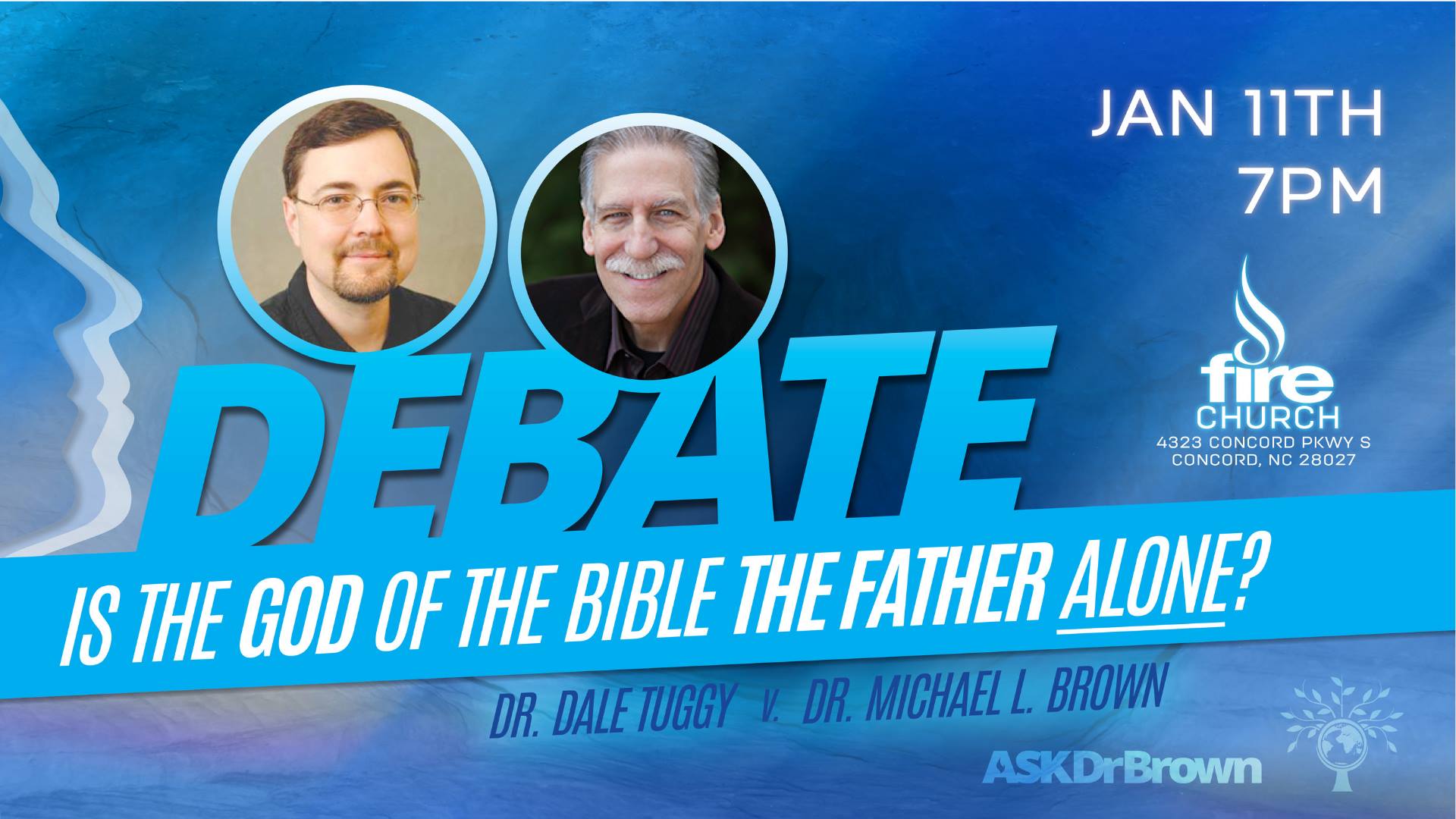
158 Dale Tuggy vs. Michael Brown Debate: Is the God of the Bible the Father Alone?
Last night Michael Brown (PhD NYU) and Dale Tuggy (PhD Brown U) debated the question, “Is the God of the Bible the Father Alone?” Tuggy affirmed while Brown denied. Both scholars recognize the inspiration and the authority of scripture over tradition. Both made an effort to found their beliefs using the bible, reason, and history. The debate went for nearly three hours and followed this format: Opening Statements (20 minutes each) Rebuttals (12 minutes each) 2 Rounds of Cross-Examination (7 minutes each) Concluding Statements (5 minutes each) Questions from the Audience (54 minutes total) Please leave your comments below. Who do you think won? Were both sides fairly represented? Whom should Tuggy debate next? Here are my notes for the two opening statements. They aren’t perfect, but I tried to keep up with each. —— Notes —— Dale Tuggy’s Opening Statement The Father is the only God (1 Cor 8.6; John 8.54) Jesus is not God but messiah, God’s agent (1 Tim 2.5) compare 2 hypotheses in light of 6 indisputable facts 1. NT believe Father is one God alone 2. NT believes one God is the Trinity 6 Indisputable Facts all 4 Gospels feature a “mere man” compatible main thesis Jn 20.31 -> that’s it? nothing about Jesus being God the word God nearly always refers to the Father and no word refers to the Trinity they should sometimes use the word God to refer to the Trinity but they never do in the NT God is nearly always the Father no more than 8 texts where the term God refers to the Son a human can be referred to with the title God Jesus makes that point in Psalm 82 only the Father and Jesus are worshiped no worship of the Trinity no worship of all 3 persons-> no spirit! Phil 2.11 says that Jesus’ worship is indirectly to God by worshiping Jesus we worship the creator that God is triune or tripersonal is never clearly asserted in the NT poor Jewish theology is always assumed Jesus never gets around to telling us that God is 3 persons in 1 essence no controversy about the Trinity in the NT Trinity theories always engender controversy the NT controversies are over whether Jesus is messiah and whether non-Jews can be saved apart from Torah observance no NT author lifts a finger to limit or qualify clear implications of the son’s limitations Jesus got his mission, authority, message, power, from God no author shows any embarrassment that Jesus is subordinate Jesus is a real human man w/ a real human mom but w/ God as his father he was brought into existence in the womb the one God is eternal why aren’t the NT authors at all concerned to exert the eternal existence of the son will grant pre-existence but not eternality for purposes of this debate Michael Brown’s Opening Statement not a catholic bone in my body Son of God is infinitely more than a glorified man this denies Scripture neuters the gospel a man dying for our sins is hardly a demonstration of God’s love son is fully divine can’t wrap our minds around the nature of God God is complex in his unity making a God based on our own limitations and perceptions God shares his glory w/ no one (Is 42.8) in Rev 5, massive glory a
Theology 2 – Bibliology
Before delving into specific biblical doctrines, we need to first think about what the bible is. In this lecture you’ll learn what the bible says about itself, some reasons to believe God inspired it, as well as the major types of biblical scholars and how they approach scripture. This episode, along with the last one, serves to round out the introduction to this course. —— Notes —— bibliology: one’s understanding about the bible what is the bible? a library of 66 books written by 40 people how should you interact with it? claims that God inspired the bible Matthew 1.22-23 Mark 12.36 Acts 1.16 Acts 3.18 Acts 4.25 Acts 28.25-26 Hebrews 3.7 Hebrews 10.15-17 2 Timothy 3.16 2 Peter 1.16-21 Revelation 1.1-2 reasons why I believe the bible is genuinely inspired it claims it predictive prophecy unflattering honesty medical insights martyrdom archeology some more reasons ear-marks of eye-witnesses historicity of the resurrection of Jesus changed my life incredible preservation survived some Israelite and Judean kings who disregarded it (Manasseh->Amon->Josiah) survived 70 year exile in Babylonia survived Antiochus Epiphanes who tried to destroy the Torah survived destruction of Temple in a.d. 70 survived destruction of Jerusalem in a.d. 135 survived several Muslim empires survived all the crusades OT survived in high quality manuscripts (Aleppo, Leningrad, DSS, LXX) Diocletian tried to destroy the NT NT survived in over 5,000 Greek mss 531 language for whole bible, 1329 languages for NT dichotomy today between bible-believing and bible-critical approaches to doctrine refer to youtube video of my lecture on Losing Faith from 500 enlightenment gave rise to intense philosophical and biblical criticisms most bible professors in most secular universities examine the bible from an atheist worldview some Christians affirmed these criticisms but tried to save Christianity Schleiermacher (1822): feeling of absolute dependence; entering into Christ’s perfect God consciousness Albrecht Ritschl (1852): kingdom of God = community of brotherly love (focus on Jesus’ ethics not miracles) Adolf Harnack (1886): fatherhood of God, brotherhood of man, worth of each soul, love rather than law Walter Rauschenbusch (1917): social gospel movement—focus on humanitarian needs other Christians dug in and fought the criticisms John Locke (1695) published The Reasonableness of Christianity William Paley (1802) early proponent of intelligent design Charles Hodge (1874) defended infallibility and attacked Darwinism Fundamentalist Movement (1910) In 19th and 20th centuries the liberals and conservatives fight it out major denominations split (Methodists, Baptists, Presbyterians, Lutherans) as universities go liberal and biblical conservatives leave and start new schools 1806 Harvard splits to form Andover Theological Seminary 1908 Lyman Stewart started BIOLA; he’s the man who funded the 1910 “The Fundamentals” 1929 Princeton splits to form Westminster Theological Seminary 1976 Liberty University Founded a
Theology 1 – Introduction
Happy New Year. I’m so excited to begin with you a new class that covers a whole range of biblical doctrines. In fact, I’m going to combine two classes into one and I think they will work together really well. The first class was originally titled “Basic Bible Doctrine” and it covered approximately fifteen different major beliefs. The goal was to explain these aspects of theology and give supporting scripture and reasons for them. I’m combining this with a more advanced class called “Solutions to Bible Texts,” which deals with commonly misunderstood verses on a bunch of doctrines. I’m going to attempt to interweave these two, so that you get a comprehensive understanding of theology. Now I realize that you very well may disagree with my understanding on some of these beliefs, so we may have some exciting dialog in the comments on these episodes. I will freely admit at the outset that I don’t know everything and that I have been wrong in the past. I just ask that you give this class a charitable listen and check it against the scriptures to see if it is true. Hopefully, this will be a good way to lay it all out there and see what you think. To begin with, this episode is an introduction that covers some important basics about approaching truth and building biblical doctrines. —— Notes —— In one sense there’s nothing basic about bible doctrine. Constructing a coherent biblical theology on any topic takes immense effort from collecting the many texts on the topic to interpreting each of them based on their own literary, historical, and theological contexts to conceiving of an understanding that simply yet elegantly embraces the most texts possible while minimizing the number of difficult texts to comparing other doctrinal systems both ancient and modern—the process is anything but “basic.” Even so, the end result is often simple enough to comprehend and communicate, though it rests upon the work of teams of specialists drawn from a variety of fields. the bereans Acts 17.11 what was Paul trying to convince them to believe? neither accepted nor rejected<–really impressed Paul tested Paul’s message against the scriptures why is it so important to be willing to change our beliefs? b/c it’s easy to misunderstand the bible geographic separation (what’s the Arabah?) cultural separation (did they have divorce? could they read? did they have running water?) different religious groups (what’s the difference between a Saducee and a Pharisee?) language (what language did Jesus speak? how do we know that? ephphatha) metaphysics: function over essence (why did God call the light day?) anachronism: since everything is so different, it takes serious work to not read our own ideas into the bible reasons why it can be hard to change our beliefs easier to keep them the same might need to leave our church might lose friends, relationship with kids (Ray Faircloth), marriage (1 Cor 7) might lose job opportunities identity might be wrapped up in being 3rd generation church of God or whatever remember when I went to BU and got asked what I was anabaptist, adventist, biblical unitarian, restorationist my core identity (what defines me at more core, but doesn’t change no matter where I am on my quest for understanding) love God follow Christ seek truth typical to think doctrine doesn’t matter or worse that it’s divisive not taught to argue constructively head knowledge vs. heart knowledge mind vs. emotions vs. actions fal

Interview 49 They Never Told Me This in Church (Greg Deuble)
Greg Deuble grew up in the Church of Christ in Australia, went to N.S.W. Bible College in Sydney, and spent fifteen years serving as a pastor and evangelist. One day he attended a meeting during which Anthony Buzzard challenged him on his belief in the deity of Christ. Rattled, Deuble began on a quest to reassess all of his doctrinal convictions in light of scripture. As a lifelong member of the restorationist tradition, Deuble always wanted to practice the authentic Christianity of the apostles and couldn’t just slough off such important questions. The result was his book, They Never Told Me This in Church, an exposé of how bad philosophy corrupted the teaching of scripture. —— Links —— Visit Greg Deuble’s website at thebiblejesus.com Get his book They Never Told Me This in Church on Amazon Take a look at this YouTube video where Deuble shares his testimony Get in touch with Deuble at [email protected] Intro music: Jazzy Frenchy by bensound.com. Licensed under Creative Commons: By Attribution 3.0 License.

Interview 48 Korean Ministry (Sam An)
For more than a decade, Sam An has faithfully served as an administrator and teacher at the Korean Extension of the Atlanta Bible College. In this interview, you’ll learn about his own story of faith as well as what God is doing through his ministry to touch Koreans both in America and in South Korea. —— Links —— Check out the Korean Extension’s website at abcke.weebly.com Watch Steve An teaching in Korean on his YouTube channel Apply to be a student at the Atlanta Bible College Korean Extension Get in touch with Sam An at [email protected] or by calling (678) 392 – 2600 Intro music: Jazzy Frenchy by bensound.com. Licensed under Creative Commons: By Attribution 3.0 License.
Interview 47 Christian Disciples Church and the Only True God (Calvin Chan)
Have you heard of the Christian Disciples Church? They are a biblical unitarian group scattered throughout Asia primarily. In this episode Calvin Chan, who has been with the disciples since the beginning, will tell you the story of how this group got started as a student disciple movement. He also shares about how the founder, Pastor Eric Chang, reexamined what the bible says about Jesus and had the courage to change his mind when he was in his seventies. —— Links —— Check out the Christian Disciple Church online Take a look at The Only True God online or on Amazon. Also, here’s the sequel, The Only Perfect Man Intro music: Jazzy Frenchy by bensound.com. Licensed under Creative Commons: By Attribution 3.0 License.
Interview 46 Misunderstood Texts about Jesus 4 (Bill Schlegel)
This is the fourth and final part of our Misunderstood Texts about Jesus series with Bill Schlegel. In this episode he offers remarks on Philippians 2.5-6, Colossians 2.9, and Revelation 1.17. After this, I ask him one of the biggest questions on this subject: if Jesus isn’t God then how can his sacrifice possibly pay for our sins? As usual Schlegel points out that this is not a biblical question–Jesus never asked it, Paul never asked it, and John never asked it. If no one ever makes this point in scripture, maybe we should wonder why our questions are so out of line with theirs? —— Links —— Check out the other episodes in the Misunderstood Texts about Jesus series. To learn about Schlegel’s backstory, listen to Interview 31: Master’s University Prof. Finds Son of God, Loses Job Check out his excellent book, the Satellite Bible Atlas Follow Bill Schlegel on his blog or on YouTube For an extensive list of verses and explanations from a biblical unitarian perspective, visit christianmonotheism.com (use the scripture index on the right) Watch “Five Major Problems with the Trinity” on YouTube Intro music: Jazzy Frenchy by bensound.com. Licensed under Creative Commons: By Attribution 3.0 License.
Interview 45 Misunderstood Texts about Jesus 3 (Bill Schlegel)
In parts one and two, we examined ten misunderstood verses in the Gospel of John. In part three, we’ll examine seven more texts from the rest of the bible: Genesis 1.26 Isaiah 9.6 Matthew 2.2 Matthew 28.9 Matthew 28.19 (cf. 2 Cor 13.14) Romans 9.5 Acts 20.28 Repeatedly, Bill Schlegel calls us back to understand each verse within its immediate and canonical contexts, rather than reading in later theological commitments. —— Links —— Check out the other episodes in the Misunderstood Texts about Jesus series. To learn about Schlegel’s backstory, listen to Interview 31: Master’s University Prof. Finds Son of God, Loses Job Check out his excellent book, the Satellite Bible Atlas Follow Bill Schlegel on his blog or on YouTube For an extensive list of verses and explanations from a biblical unitarian perspective, visit christianmonotheism.com (use the scripture index on the right) Watch “Five Major Problems with the Trinity” on YouTube Intro music: Jazzy Frenchy by bensound.com. Licensed under Creative Commons: By Attribution 3.0 License.
Interview 44 Misunderstood Texts about Jesus 2 (Bill Schlegel)
This is part two of my series with Bill Schlegel, former professor of the Israel Bible Extension and long time bible teacher and geography expert. Last time we discussed five major texts in the Gospel of John and this time we cover four or five more: John 10.30 John 10.33 John 13.18-19 John 20.28 1 John 5.20 Next time we’ll discuss a number of more important verses in the rest of the bible. —— Links —— Check out the other episodes in the Misunderstood Texts about Jesus series. To learn about Schlegel’s backstory, listen to Interview 31: Master’s University Prof. Finds Son of God, Loses Job Check out his excellent book, the Satellite Bible Atlas here Follow Bill Schlegel on his blog or on YouTube For an extensive list of verses and explanations from a biblical unitarian perspective, visit christianmonotheism.com (use the scripture index on the right) Watch “Five Major Problems with the Trinity” on YouTube Intro music: Jazzy Frenchy by bensound.com. Licensed under Creative Commons: By Attribution 3.0 License.
Interview 43 Misunderstood Texts about Jesus 1 (Bill Schlegel)
Today we are beginning a new series called “Misunderstood Texts about Jesus” with Bill Schlegel. Professor Schlegel lived and taught the bible and geography in Israel for more than three decades. Recently, he came to change his mind on the deity of Jesus, seeing him now as God’s man rather than a God-man. Since he made this change, several friends and acquaintances have brought up a number of scriptures that they believe prove Jesus is God. This podcast series is Schlegel’s opportunity to answer these commonly misunderstood verses and explain what they mean. In this episode we discuss the following texts: John 1.1 John 1.14 John 1.18 John 5.18 John 8.58 Next time we’ll discuss five more scriptures from John. —— Links —— To learn about Schlegel’s backstory, listen to Interview 31: Master’s University Prof. Finds Son of God, Loses Job Check out his excellent book, the Satellite Bible Atlas here Follow Bill Schlegel on his blog or on YouTube For an extensive list of verses and explanations from a biblical unitarian perspective, visit christianmonotheism.com (use the scripture index on the right) Watch “Five Major Problems with the Trinity” on YouTube Intro music: Jazzy Frenchy by bensound.com. Licensed under Creative Commons: By Attribution 3.0 License.

155 God’s Book (Sean Finnegan)
Q: How do you know the bible is true? A: Because God wrote it. Q: How do you know God wrote it? A: Because the bible says God wrote it. Q: But, how do you know the bible is true? Here we encounter the classic circular argument for the bible’s inspiration. Surely, there’s a better way to go about establishing God’s influence on this book. In this episode we’ll take a look at three main comparative texts from the same part of the world and same time as the bible was written, including the Enuma Elish, the Code of Hammurabi, and the Ebers Papyrus. By comparing the bible to these Babylonian and Egyptian texts we can see just how unusual it was in its own context. This, in turn, helps up have more confidence that God in fact did work with the authors of his book, providing them with an alternative source of information that cut against the grain of wisdom of their age. Stay tuned afterwards for a couple of event announcements Winter Teen Camp held at Living Faith Christian Church in Warwick, RI (Dec 28-30) winterteencamp.com a weekend for teens to learn about God and spend time together building relationships and serving the community early bird rate is only $60.00 for those who register by December 9th. After December 10th the cost is $75 Revive 2019 held at Woodstock, CT (Jan 4-6) lhim.org/revive a weekend for young adults (20+) to worship and enjoy time with other believers theme is Wisdom, looking at the wisdom literature, including Job, Proverbs, and Ecclesiastes $146 per person, please register if you know you’re coming so we can get a good count —— Links —— See also the YouTube video God Speaks through Scripture (10 reasons to believe the bible is true) More resources on the reliability and trustworthiness of the bible Intro music: Jazzy Frenchy by bensound.com. Licensed under Creative Commons: By Attribution 3.0 License.

154 Spiritual Friendship: Celibacy as a Call to Love (Wesley Hill)
Our world seems intent on trotting out the same extremist examples of Christianity as either a homophobic religion (think Westboro Baptist Church) or a totally accepting faith (think Episcopalians). However, these are not the only positions Christians take on this subject. In this talk, Wesley Hill, assistant professor of biblical studies at Trinity School for Ministry, not only advocates for but lives out a third way. Hill identifies as gay while agreeing with the historic view of the church that marriage is only between a man and a woman. Not only that, he wants to help other gay and lesbian people come into Christianity without compromising what the bible teaches on sexuality or lying to themselves about same-sex attraction. Consequently, he is committed to singleness for life. This is hard road to walk, but he believes it’s the best way forward. Even so, he’s concerned about gay Christians getting their needs met for intimacy and friendship within the church. How tragic would it be to heroically sacrifice marriage and parenthood on the altar of biblical faithfulness only to wake up at 65 years old, alone, single, isolated, and without meaningful connections to anyone? Hill says the church needs to step up not only by rooting out homophobia, but also building and strengthening friendship bonds between singles and singles as well as singles and families. He concludes, “God calls us precisely in saying, ‘No’ to same-sex marriage to say, ‘Yes’ to intimacy, ‘Yes’ to Christian community, ‘Yes’ to same-sex friendship, ‘Yes’ to a life of love in the body of Christ.” —— Links —— Read more about spiritual friendship at spiritualfriendship.org Hill’s faculty page at the Trinity School for Ministry Check out his book, Washed and Waiting: Reflections on Christian Faithfulness and Homosexuality, which tells his story of reconciling his faith with his sexuality and how he came to think of celibacy as his calling. See also Interview 18 with Becket Cook, a fashion set designer who likewise embraced celibacy to follow Christ For more, search Youtube for testimonies by Christopher Yuan, Rosaria Butterfield, Jackie Hill, and Sam Allberry. Also, see Podcast 82: Biblical Boundaries for Same-Sex Attraction as well as Podcast 83: Questions about Gay and Lesbian Christians Intro music: Jazzy Frenchy by bensound.com. Licensed under Creative Commons: By Attribution 3.0 License.

153 Be You — Colossians 3 (Sean Finnegan)
Our culture longs for authenticity. We’re tired of fakers and phonies who say one thing and do another. People should just be true to themselves and have the courage to flout tradition when it holds them back from genuine self-expression. However, this mentality results in major individual and social problems from sexually transmitted diseases to sexual harassment to racism and mass shootings. Christianity offers a better way, by providing a standard to conform ourselves to that maximally enables human flourishing. —— Notes —— Colossians 3:1-5 The terminology in v5 is excessively hostile: “put to death what is earthly in you.” Don’t reason with it, or seek to diminish its influence. Don’t try to understand it, or make excuses for it. Kill it! Put it down. Colossians 3:6 God did not design us to behave this way. He gave us passions but placed boundaries on them. When people defy His original intention, it bothers Him. Colossians 3:7-10 This is the language of clothing: put off and put on. We must strip off the old way of being a human (Adam) and clothe ourselves with the new way of being a human (Christ), which is being renewed in knowledge according to the image of its Creator—the way God originally designed us. Colossians 3:11 Not only behavior but social barriers need to change. Ethnicity, social status, education, independence are all outshone by the splendor of Christ’s radiant glory, enabling harmony between us all. Colossians 3:12-17 Imagine that there are two towns that live by each of these opposing ways: Freetown and Corpus Christi. Which would you rather live in? As you conform to the Christian lifestyle, it becomes second nature. It does not crush you or rob you of your humanity, but it provides the necessary boundaries to make human growth and flourishing possible. —— Links —— More episodes like this: Off Script 1: Seeing the Filter Off Script 2: Hyper-Individualism Off Script 3: Tolerance 72: Free as a Fish on Land Intro music: Jazzy Frenchy by bensound.com. Licensed under Creative Commons: By Attribution 3.0 License.

152 Why Didn’t God Call the Light Light? (John Walton)
When it comes to Genesis 1, Christians tend to divide into two major camps: old earth and young earth creationists. The former sees the days as long periods of time (e.g. Hugh Ross) while the latter insists on literal twenty-four hour periods (e.g. Ken Ham). Professor John Walton of Wheaton College advocates for a different reading of the bible’s first chapter. By carefully comparing Genesis to other ancient near eastern creation texts, he proposes that it’s talking about God providing functionality to the already-existing cosmos rather than creating structures ex nihilo. —— Links —— For a much more in depth explanation of Walton’s perspective on Genesis 1, see his book The Lost World of Genesis One Visit his faculty page at Wheaton College See podcast Off Script 30: Stewarding the Earth or 84: Kingdom Restoration Intro music: Jazzy Frenchy by bensound.com. Licensed under Creative Commons: By Attribution 3.0 License.

151 God of Wonder (Sean Finnegan)
Do you ever stop and marvel at God’s creation? Are you in wonder at what he has made? Too often we take God’s masterful creations for granted, instead of seeing them as pointers back to God’s ingenuity, generosity, and artistry. Although we can’t always take time out to praise God for plums, palm trees, and panthers, when we can it’s helpful to meditate on his handiwork. Here’s the video from this message that shows the relative sizes of our solar system’s planets and sun with other much bigger stars: Here are a couple of praise songs that tap into the proper sense of wonder we should experience because of God’s works: Notes Psalm 19.1-6 The heavens declare God’s glory Psalm 104.1-35 The psalmist works through creation, marveling at God’s manifold artistry and brilliance. Psalm 8.1-9 Even though God is so powerful, so transcendent, so majestic, he still cares about us puny humans. C. S. Lewis’ attention to God’s every-day marvels: Lewis’s keen, penetrating sense of his own heart’s aching for Joy, combined with his utter amazement at the sheer, objective realness of things other than himself, has over and over awakened me from the slumbers of self-absorption to see and savor the world and through the world, the Maker of the world… Lewis gave me, and continues to give me, an intense sense of the astonishing “realness” of things. He had the ability to see and feel what most of us see and do not see. He had what Alan Jacobs called “omnivorous attentiveness” (Alan Jacobs, The Narnian, p. xxi.) I love that phrase. What this has done for me is hard to communicate. To wake up in the morning and to be aware of the firmness of the mattress, the warmth of the sun’s rays, the sound of the clock ticking, the coldness of the wooden floor, the wetness of the water in the sink, the sheer being of things (quiddity as he called it). And not just to be aware but to wonder. To be amazed that the water is wet. It did not have to be wet. If there were no such thing as water, and one day someone showed it to you, you would simply be astonished. He helped me become alive to life. To look at the sunrise and say with an amazed smile, “God did it again!” He helped me to see what is there in the world — things which if we didn’t have them, we would pay a million dollars to have, but having them, ignore. He convicts me of my callous inability to enjoy God’s daily gifts. He helps me to awaken my dazed soul so that the realities of life and of God and heaven and hell are seen and felt. I could go on about the good effect of this on preaching and the power of communication. But it has been precious mainly just for living. John Piper, “Lessons from an Inconsolable Soul,” Feb. 2, 2010, Desiring God Conference for Pastors —— Links —— This message was inspired by Jerry Wierwille’s phenomenal sharing, “God — Our Spectacular Creator,” presented at Revive 2016. Check out Podcast 53: Does God Exist? for more examples of God’s creation pointing to him more sermons by Sean Finnegan see also John Cortright’s sermon, “The Living God“ Intro music: Jazzy Frenchy by bensound.com. Licensed under Creative Commons: By Attribution 3.0 License

Interview 42 Christian Solidarity vs. Polarizing Politics (Kenneth Laprade)
Kenneth LaPrade lives in El Paso, Texas, on the border between the United States and Mexico. His wife is Mexican and many of the folks in his house church are from Mexico. In such a context, immigration is always a touchy subject, but lately some Christians have baptized certain political rhetoric and presented it as “the” Christian position on this complicated issue. LaPrade sees this as merely one aspect of the much larger problem of Christians trying to take power in America as if establishing God’s kingdom here, now. In this interview, he urges us to retain the bible’s teaching about the future kingdom and see ourselves as Christians first and Americans (or Mexicans) second. Here’s the text of Ken LaPrade’s statement on how Christians should orient themselves politically that inspired this interview: I honestly feel a bit frustrated concerning the following situation (which I will briefly describe), and I believe its persistence is related to Satan’s tricks to promote biblical unawareness concerning the priority of the future kingdom. I know that my attempted reminders, in certain cases, keep falling on deaf ears. Please, pray concerning this highly distracting issue. I am earnestly still prayerfully concerned about so-called Christian efforts at erroneous “kingdom NOW” thinking – such as an obsession with American politics, either defending or demonizing “Trump” or current social or political trends. I personally work with several immigrants who have been quite hurt by very strange, insensitive comments (even bullying remarks) posted quite publicly as if representing a “Christian” perspective! In my estimation, ALL such misguided trends (either to justify or condemn pagan leaders in a pagan nation) are a failure (among so-called Christians) to really grasp the Kingdom of God as FUTURE! Present hurtful rhetoric is tantamount (in my assessment) to the hypothetical absurdity of retroactively getting 1st century Christians to hotly debate whether Tiberius, Nero, or Domitian were better or worse for the Roman Empire! As is obvious, 1st century Christians were far too future Kingdom focused to be so distracted! We, as 21st century Christians, do not help anyone by being seduced into speaking for one side or another of two (or more) warring camps of Gentile hate-mongers who are ruled in typically corrupt Gentile fashion! “Christian” pop-culture labels pasted on political & social movements do not “Christianize” blatant disregard for Jesus himself. Neither do they “COVER” for outright demonic evil – whether from “the left” or from “the right.” We’d be better off suffering NOW for obeying him, rather than getting bamboozled by a pseudo-Christian ( with NO Future Kingdom focus) bandwagon to get our way now – as if entitled …. by an “American idol.” Biblically speaking, the USA, and all current nations (Gentiles by nature) await JUST dismantling when our true theocratic King (Jesus) comes to reign. I still pray that King Jesus’ perspective NOW have the priority that it should have, at least among those who try to faithfully await his much needed intervention. —— Links —— Get in touch with Kenneth LaPrade at [email protected] Listen to Interview 14: Ken LaPrade’s Baptism Journey Read articles by LaPrade that he wrote for Glad Tidings Books mentioned in this interview: <a href="https://www.amazon.com/Coming-Kingdom-Theology-Changing-Church

150 What Is Hell? (John Cortright)
Last week we examined what the bible teaches about heaven. This week we’ll see what it says about hell. John Cortright explains there are three meanings of hell in scripture, including tartarus where fallen angels are temporarily imprisoned, hades/sheol where the dead remain until resurrection, and gehenna where the wicked are destroyed in the final judgment. —— Links —— More Restitutio podcasts with John Cortright Also, get more of Cortright’s sermons, classes, and articles at Living Hope Community Church Listen to an excellent debate on hell (eternal conscious torment vs. annihilationism) Podcast 10: Is Hell Forever? Chris Date vs. Phil Fernandez Check out the kingdom of God class podcasts Intro music: Jazzy Frenchy by bensound.com. Licensed under Creative Commons: By Attribution 3.0 License.

149 Heaven’s for the Birds (Sean Finnegan)
What is heaven? Throughout the bible we find different layers of meaning, including (1) heaven as sky, (2) heaven as God’s throne, and (3) heaven as God’s realm or dimension. Although heaven is a reality, it is not where we go when we die. Rather the bible teaches that the dead are asleep until the resurrection when they inherit the earth, renewed and restored. —— Notes —— Louis Armstrong and Ella Fitzgerald famously sang about heaven: Heaven, I’m in heaven And my heart beats so that I can hardly speak And I seem to find the happiness I seek When we’re out together dancing cheek to cheek Yes, heaven, I’m in heaven And the cares that hung around me through the week Seem to vanish like a gambler’s lucky streak When we’re out together dancing cheek to cheek[1] 2 Samuel 18.9 9 And Absalom happened to meet the servants of David. Absalom was riding on his mule, and the mule went under the thick branches of a great oak, and his head caught fast in the oak, and he was suspended between heaven and earth, while the mule that was under him went on. he was between heaven and earth what does that mean? he was between the sky and the land heaven is the sky Heaven as Sky (Realm of the Birds) Genesis 1.14-20 14 And God said, “Let there be lights in the expanse of the heavens to separate the day from the night. And let them be for signs and for seasons, and for days and years, 15 and let them be lights in the expanse of the heavens to give light upon the earth.” And it was so. 16 And God made the two great lights– the greater light to rule the day and the lesser light to rule the night– and the stars. 17 And God set them in the expanse of the heavens to give light on the earth, 18 to rule over the day and over the night, and to separate the light from the darkness. And God saw that it was good. 19 And there was evening and there was morning, the fourth day. 20 And God said, “Let the waters swarm with swarms of living creatures, and let birds fly above the earth across the expanse of the heavens.” Genesis 1.28 28 And God blessed them. And God said to them, “Be fruitful and multiply and fill the earth and subdue it, and have dominion over the fish of the sea and over the birds of the heavens and over every living thing that moves on the earth.” this is where my title comes from heaven’s for the birds! Matthew 6.26 26 Look at the birds of the air [οὐρανός]: they neither sow nor reap nor gather into barns, and yet your heavenly Father feeds them. Are you not of more value than they? so heaven’s for the birds but, it’s more than that! Heaven as God’s Throne Isaiah 66.1-2 1 Thus says the LORD: “Heaven is my throne, and the earth is my footstool; what is the house that you would build for me, and what is the place of my rest? 2 All these things my hand has made, and so all these things came to be, declares the LORD. But this is the one to whom I will look: he who is humble and contrite in spirit and trembles at my word. control room (throne): where God makes plans/decisions storehouse: where rewards are stored up w/ God Jesus says to lay up treasures in heaven where moth and rust cannot destroy (Mt 6.20) Peter says we have an inheritance imperishable kept in heaven (1 Pet 1.4) Paul says our citizenship is in heaven (Phil 3.20) N. T. Wright: “What then do the New Testament writers mean when they speak of an inheritance waiting for us in heaven? This has been much misunderstood…The point of such passages, as in 1 Peter 1.4, 2 Corinthians 5.1, Philippians 3.20, and so forth, is not that one must ‘go to heaven’, as in much-popular imagination, in o

Interview 41 The Scattered Brethren Network with Robin Todd
Robin Todd has faithfully served as the director of the Worldwide Scattered Brethren Network for the last 10 years. He helps biblical unitarians find each other all over the United States as well as some other countries. In this interview, we talk about how he got started, what it takes to get on his list, and how he sees the future of the network. —— Links —— Visit the Worldwide Scattered Brethren Network or email Todd to get on his list or to volunteer to help with the website: [email protected] If you live in Europe and you’d like to get in touch with Werner Bartl, you can reach him at [email protected] For more about virtual church, see Interview 32: Virtual Fellowship for Isolated Believers (John Truitt) To tune into Living Hope’s weekly live webcast, go to lhim.org/webcast on Sundays from 10:30 am – 12:00 pm EST Intro music: Jazzy Frenchy by bensound.com. Licensed under Creative Commons: By Attribution 3.0 License.

148 Apologetics Conference: 6 Evangelism, Jesus’ Way (John Truitt)
In this concluding teaching of our apologetics conference, John Truitt gleans from Christ’s example key ways that we can imitate him in our own evangelistic efforts today. He begins by looking how Jesus was completely obedient to God and how he prepared himself (both in knowledge and experience). Next Truitt urges us to get moving, expecting God to direct us as we are obedient. Lastly, he emphasizes the importance of radical love to our neighbors and the need for community. Here now is podcast 148 Evangelism, Jesus’ Way with John Truitt —— Links —— To find out how to join John Truitt’ s virtual church online watch this video or contact him directly at [email protected] Check out the podcast episode with Truitt: “Virtual Fellowship for Isolated Believers“ Check out the other talks in this Apologetics Conference For more, here’s an entire Apologetics Class Intro music: Jazzy Frenchy by bensound.com. Licensed under Creative Commons: By Attribution 3.0 License.
147 Apologetics Conference: 5 Metanarratives and Failed Promises
Have you ever been in a corn maze? The reason they work is because you can only see right in front of you. If you had a live drone feed, you could easily orient yourself and find the way out. This is the benefit of history. We live in a postmodern culture, but it’s hard to see or understand what that means since we’re surrounded with it. In this exceptional presentation, Kegan Chandler guides us through the history of premodernism, modernism, and postmodernism so that we can orient ourselves to how many people in our world think and approach life. Not only will this give you a drones-eye perspective of our current situation, but it also will help you understand how to better share your faith with postmodern people. —— Notes —— Metanarratives and Postmodernism (Kegan Chandler) What is postmodernism? How in the world did we get here? Where do we go from here? Postmodernism is a worldview based on French philosophers, Derrida, Foucault, Lyotard w/ these four characteristics: no objective truth (Derrida) only interpretations (Derrida) no meta-narrative (Lyotard) interpretation in society results from power not truth (Foulcault) meta-narrative: overarching account that provides a pattern or structure for ppls beliefs and experiences postmodernist mission: deconstruction identify social constructs in the world and break them down if everything is deconstructed, what do we fill it with? our experiences community First Star Wars w/ Luke vs. last star wars w/ Luke, deconstructs everything premodernism belief in objective truth problem: priestly class determines truth problem: superstition authority structure suffocated learning and creativity Renaissance was a way to recover art and classics that the church had suppressed premodernism crumbles Reformation Galileo defeats Aristotle (dropping 2 lead balls from leaning tower of Piza) this challenges authority of Aristotle heliocentricity also challenges church’s imprimatur of Ptolemaic geocentricity modernism rejection of authority time and numbers don’t guarantee truth reason alone can find truth naïve optimism (holocaust, communism, eugenics) epistemological revolution, exalting empiricism, which reduced miraculous to superstition we can save the world if we just apply reason and science postmodernism glad that modernism rejected authority reject the idea that human institutions and states can save us only the individual can be free get rid of objective truth to build our own realities rejection of meta-narratives distrust that reason can bring enlightenment or satisfaction pomo is good for Christianity b/c it defeat naïve secular utopian dreams defeats empiricisms accepts supernatural, transcendent ennobles the individual’s journey of discovery problems w/ postmodernism the statement “there is no objective truth” is self-defeating you can always disagree, saying “that’s just your interpretation” I can just say “pomo is wrong” and no one can disagree b/c then they would have to appeal to objective reality just b/c everyone has their own interpretation doesn’t mean that there isn’t one correct one on any given subject a post-postmodernism worldview belief in objective truth belief in the right authoritative sources of truth (scripture) value
146 Apologetics Conference: 4 Are All Religions the Same? (Dale Tuggy)
How should we think through the different major religions of our time? Are they all the same? What are their differences? In this presentation, philosopher of religion, Dale Tuggy, works through key questions that can help us differentiate and distinguish religions from each other. In the second half of his talk, he invites the audience to diagnose various quasi-religious perspectives popular in our culture, before offering comments on each. Loading... Taking too long? Reload document | Open in new tab —— Notes —— aspects of religion practical & ritual experiential & emotional narrative doctrinal & philosophical ethical & legal social & institutional material religious diversity vs. religious pluralism diversity: people are loyal to different religions pluralism: all religions are equally valuable on moral questions, major religions have a lot of common-sense overlap if they weren’t plausible and didn’t help they wouldn’t have gotten so popular four core claims diagnosis: fundamental problem facing humanity cure: how to positively and permanently resolve the problem methods: what to do to get the cure exemplar: actual person(s) whose lives show us how to live out the methods, getting the cure Christianity is more focused on truth than any other religion this is why we’re so quarrelsome this is why we write and read so many books shouldn’t assume other religions care about doctrine like we do there’s one theology/teaching per religion not even w/in Christianity Christianity on the four core claims we are fallen and sin, which causes dysfunction, harm, and death Christ died to pay for sin conversion, disciplines, follow Christ Jesus, apostles, Christian heroes over time —— Links —— Visit Dale Tuggy’s website and podcast at trinities.org Listen to other podcasts with Dale Tuggy Check out the other talks in this Apologetics Conference For more, here’s an entire Apologetics Class Intro music: Jazzy Frenchy by bensound.com. Licensed under Creative Commons: By Attribution 3.0 License.
145 Apologetics Conference 3: Moral Argument (Kenny Willenburg)
How do you know the difference between what's right and wrong? Do morals have an absolute source or does society determine them? In this talk, Kenny Willenburg explains the classic moral argument as well as how we can use this approach to "turn the tables" when people object to Christianity on moral grounds. I've also left in a fair amount of discussion following Willenburg's presentation. —— Notes —— if morals are objective then they are obligatorythere must be a source for moralsthe most reasonable source is God if there is no God, there couldn't be objective morality Richard Dawkins (God Delusion)- God of the OT is jealous, petty, control freak, etc. three problems saying God is immoral doesn't disprove God's existence○ Hitler didn't exist b/c the things he did were too badsaying the creator is evil is arrogant○ if there is a creator then he would have the right to interact w/ creation however he wantedcan't claim God is immoral b/c w/o God's existence there's no standard by which to judge God relativism is taught in our culture as the only absolute truth tolerant of anything but intolerancecan't push religious ideas on others, but that is pushing secularism on usno one is allowed to criticize anyone's actions sources for morality morality can't be individually determinedmorality can't be socially constructed○ actually, our culture got its ideas from a Judea-Christian background○ thus, this proves what the non-theist is trying to disprovemorality comes from nature (i.e. Darwinian evolution)○ how is self-sacrificial care of the weak/unproductive helpful to the herd?○ morals are simply evolutionary hold overs○ not clear how this is obligatory —— Links —— Check out the other talks in this Apologetics ConferenceFor more, here’s an entire Apologetics ClassIntro music: Jazzy Frenchy by bensound.com. Licensed under Creative Commons: By Attribution 3.0 License.
144 Apologetics Conference 2: A Strategy to Reach Our Postmodern World (Sean Finnegan)
In the second presentation of this Apologetics Conference, we delve into a comparison of three major time periods: (1) the age of authority, (2) the age of reason, and (3) the age of authenticity. We look at how people practiced their faith in each as well as what criticisms apologists answered. For our post-modern time, I recommend the strategy of discussing a social issue, showing how our society is failing to address it, and how Christianity can offer a solution. Last of all we try out this strategy on a number of controversial issues, including gun violence, sexual harassment, and technology use. Here is the handout I used: —— Links —— Check out the other talks in this Apologetics ConferenceFor more, here's an entire Apologetics ClassIntro music: Jazzy Frenchy by bensound.com. Licensed under Creative Commons: By Attribution 3.0 License.
143 Apologetics Conference 1: The Problem of Privatization (Jerry Wierwille)
Today we are starting something new. I’m very excited to present to you in its entirety, the apologetics conference held in Paducah, KY last June. We’ve got a great line up of speakers for you including Jerry Wierwille, myself, Kenny Willenburg, Dale Tuggy, Kegan Chandler, and John Truitt. It was a wonderful time of meeting people and working together to figure out ways of reaching the millennial generation with the gospel. As it turned out, a great majority of the presentations focused on understanding the post-modern worldview. This was so helpful, because it’s nearly impossible to discuss important issues if both people are unaware of the fact that they are each coming from incompatible worldviews. Although, for many of us, our natural inclination is to show someone why their underlying assumptions are invalid, a better starting point for evangelism is to work within their post-modern outlook to show how attractive and awesome the gospel is. In this first presentation, Jerry Wierwille covers a brief history of how major philosophers initiated a movement that led to sequestering away of faith as something personal and private. Then he shares how to broach spiritual topics with secular people around us. His talk is relatively short, only 34 minutes long, but I also included the questions and comments, which went for another half hour. —— Notes —— Rene Descartes (1596-1650) early 1600s cogito ergo sum put himself at the center of reality rather than God previously, scientists located God at the center of the universe and from there derived his laws divided mind from matter John Locke (1632-1704) empiricism sense perception is the basis for true knowledge/reality David Hume (1711-1776) skepticism anything not proven using scientific method is not verifiable Immanuel Kant (1724-1804) appearances of forms absolute idealism law of non-contradiction freedom above nature Georg Hegel (1770-1831) dialectic idealism thesis, antithesis, synthesis value/fact divide religion relegated to the mind, but not objective humanism manifestos in 1933, 1973, 2003 progressive philosophy of life that w/o supernaturalism affirms our responsibility to lead ethical lives live well, fully values and ideals however carefully wrought are subject to change knowledge derived by empirically humans are part of nature, the result of unguided evolution ethics derived from trial and error, treat others as having inherent worth and dignity life’s fulfillment found in wonders and joy of human existence humans find meaning in relationships; want a world free of cruelty; differences resolved cooperatively w/o violence working to better society maximizes happiness; support a just distribution of nature’s resources so as many as possible can enjoy a good life; human rights; civil liberties; civic duties to vote the responsibility for our lives is ours and ours alone private life (values) ————————- public life (facts) you can have beliefs, but they are private privatization is one of the main problems in our society for evangelism culture/public life must be devoid of religion you can believe what you want, but don’t tell me what to believe we all make our own truth called judgmental, traditionalist, intolerant </u

Interview 40: How Much Does Truth Matter? (Chuck Whitlock)
How much does truth matter to you? In particular, how should we think about Christians who hold very different views on key subjects? For example, I’m a biblical unitarian, someone who believes that we should take Jesus literally when he called his Father “the only true God.” Of course I believe Jesus is God’s only begotten son, the anointed Messiah who died for our sins, but I don’t affirm the fourth century doctrine of the Trinity. Some Christians would call me a heretic beyond the pale of fellowship or even salvation (even if I do believe the gospel message with all my heart). Others would say I’m deceived but would have no problem working together in various areas. Chuck Whitlock, a bible student, husband, and father of five has been wrestling with precisely these questions over the last 5 or so years. Having grown up in strong evangelical denominations his whole life, he had to rethink his relationship with mainstream Christianity when he began changing several of his key beliefs. In this interview, we discuss various ways to think about this issue, based on Whitlock’s paper (see below). He steaks out a balanced position between writing everyone off who disagrees with him and accepting everyone as brothers and sisters without regard for their beliefs. —— Links —— Read Chuck Whitlock’s entire paper below Email him at [email protected] Check out his blacksmith forges For Dale Tuggy’s presentation on John Locke’s minimalist definition of Christians based on the simple confession that Jesus is Messiah, see Heretic! Four Approaches to Dropping H-Bombs For more on biblical unitarianism, check out these podcasts, especially Podcast 44: The Immutable Shema as well as christianmonotheism.com More info about KingdomFest (Sep 7-9, 2018) Intro music: Jazzy Frenchy by bensound.com. Licensed under Creative Commons: By Attribution 3.0 License. Does Truth Matter? Truth matters! … but how much? Introduction: There is a significant distance between the Biblical Unitarian faith and ‘orthodoxy’ in its various forms. If you haven’t come to this conclusion, just try to advance the idea that Jesus is not God and see what kind of reception this gets:) Even less divisive topics, such as resurrection or the gospel of the kingdom, meet with great opposition. The apparent incompatibility between Biblical Unitarianism and ‘orthodoxy’ causes one to wonder what it means that other Christians don’t seem to be interested in the truths we’ve discovered. Both parties reference the same book and so there is something very familiar in ‘orthodoxy’. A little scholarship shows us how ‘orthodoxy’ represents the Hellenization of the original Jewish Christian faith. Most of the terms and characters are retained but the meanings are either co-opted or obscured such that, today, in very real terms, they have a different Jesus, a different God, and a different Gospel. How much does that matter? What does it mean? Who is saved?: I recognize that this bumps into the impossible question of who is truly saved. That s

Interview 39: First Faith (Kirk Walden)
Are you looking for a Christian blog to encourage you in your faith? In this short interview Kirk Walden shares about his new website, 1stfaith.com, and the work he and his team are doing to live out 1st century Christianity in the 21st century. First Faith aims to simplify and strengthen your faith so you can take the next step in your journey with God. —— Links —— Visit 1st Faith at 1stfaith.com Check out Jennifer Walden’s fine articles “Buried Desires” and “When Life Sucks, Jesus Carries Us“ More about Kirk Walden’s pro-life work here Listen to his earlier interview, “Advocating for the Unborn“ Intro music: Jazzy Frenchy by bensound.com. Licensed under Creative Commons: By Attribution 3.0 License.

Interview 38: Advocating for the Unborn (Kirk Walden)
Kirk Walden has been advocating for the lives of the unborn since 1991 when he became the director of a small pregnancy help center in Auburn, Alabama. Over the last 17 years, he’s focused on fundraising for Heartbeat International, which supports pregnancy centers, adoption agencies, and maternity homes. In this interview I ask him about how he talks to both Christians and non-Christians about this sensitive and emotionally explosive issue. He lays out his case using biblical and scientific reasoning, but what really comes through strongest is his incredible sense of compassion for those who find themselves in this situation. —— Links —— More about Kirk Walden here Get a copy of his book, The Wall, on Amazon Find out more about Heartbeat International Intro music: Jazzy Frenchy by bensound.com. Licensed under Creative Commons: By Attribution 3.0 License.
142 Calvinism vs. Arminianism 6: Perseverance of the Saints
This is part 6 of the Calvinism Debate Can you lose your salvation? If God saves someone, will they always persevere? What about people who leave the church? These are important questions and they are at the heart of this last discussion on Calvinism. Blake affirms that after regeneration, absolutely nothing can separate someone from God’s saving love. Jacob denies “once save always saved,” putting forward instead that the warning passages in the bible make the most sense if someone can actually fall away. Note: There is a poll embedded within this post, please visit the site to participate in this post's poll. —— Links —— Check out the other posts in this Calvinism debate here More info about Jacob and Blake here See Jacob Roher’s interview on the gospel or watch his sermon, “How to Treat Other Christians.” His email is [email protected] See Blake Cortright’s podcast on spiritual disciplines as well as how to quit pornography. Follow him on Twitter @blakecortright Intro music: Jazzy Frenchy by bensound.com. Licensed under Creative Commons: By Attribution 3.0 License.
141 Calvinism vs. Arminianism 5: Irresistible Grace
This is part 5 of the Calvinism Debate When God calls you, can you say, “No?” According to Calvinism, God’s grace is irresistible, meaning when he determines to save someone, he always achieves his goal. In other words, his call is always effectual. On the other side, Arminianism teaches that God offers grace, but people can freely choose to accept it or reject it. His call is general and people respond differently. Note: There is a poll embedded within this post, please visit the site to participate in this post's poll. —— Links —— Check out the other posts in this Calvinism debate here More info about Jacob and Blake here See Jacob Roher’s interview on the gospel or watch his sermon, “How to Treat Other Christians.” His email is [email protected] See Blake Cortright’s podcast on spiritual disciplines as well as how to quit pornography. Follow him on Twitter @blakecortright Intro music: Jazzy Frenchy by bensound.com. Licensed under Creative Commons: By Attribution 3.0 License.