Restitutio
673 episodes — Page 10 of 14
140 Calvinism vs. Arminianism 4: Limited Atonement
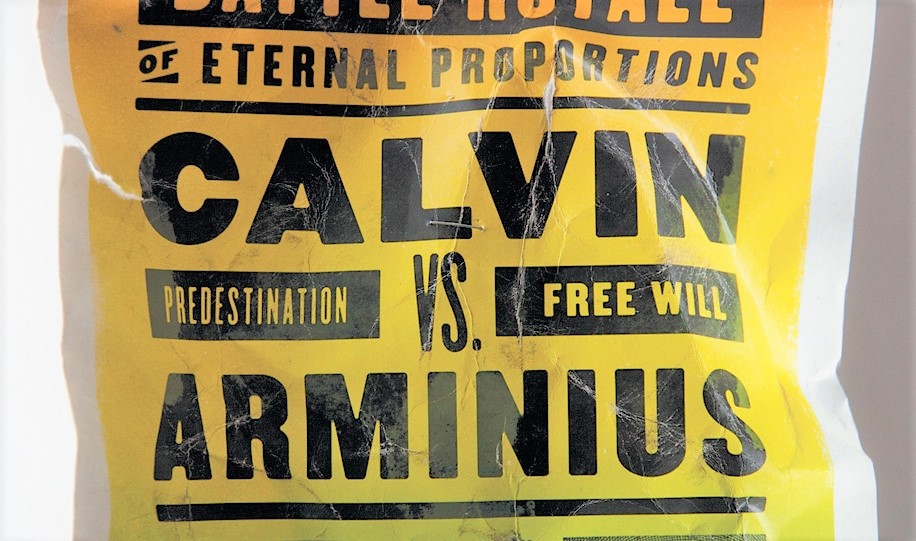
This is part 4 of the Calvinism Debate Did Jesus die to make it possible for anyone to be saved or did he only die for the elect? In this discussion between Blake Cortright and Jacob Rohrer, they discuss this important issue and how it relates to evangelism. Blake affirms limited atonement while Jacob argues that Jesus died for sinners in general. Note: There is a poll embedded within this post, please visit the site to participate in this post's poll. —— Links —— Read my biblical and historical survey of the atonement, called Why Did Jesus Die?, or watch the video presentation. Also check out these other posts on the subject. Check out the other posts in this Calvinism debate here More info about Jacob and Blake here See Jacob Roher’s interview on the gospel or watch his sermon, “How to Treat Other Christians.” His email is [email protected] See Blake Cortright’s podcast on spiritual disciplines as well as how to quit pornography. Follow him on Twitter @blakecortright Intro music: Jazzy Frenchy by bensound.com. Licensed under Creative Commons: By Attribution 3.0 License.
139 Calvinism vs. Arminianism 3: Unconditional Election
This is part 3 of the Calvinism Debate Does God predestine everyone who will ever be saved before they’re even born? Blake affirms that not only does God choose whom he will save in eternity past, but he did so without regard to any conditions or qualities of what these people will do. Jacob denies, arguing that everyone has free will to choose God or reject him. God does predestine, but in a general rather than specific way. Note: There is a poll embedded within this post, please visit the site to participate in this post's poll. —— Links —— Check out the other posts in this debate here More info about Jacob and Blake here See Jacob Roher’s interview on the gospel or watch his sermon, “How to Treat Other Christians.” His email is [email protected] See Blake Cortright’s podcast on spiritual disciplines as well as how to quit pornography. Follow him on Twitter @blakecortright Intro music: Jazzy Frenchy by bensound.com. Licensed under Creative Commons: By Attribution 3.0 License.
138 Calvinism vs. Arminianism 2: Total Depravity
This is part 2 of the Calvinism Debate Just how fallen are we? What does it mean to be dead in trespasses and sins? Are we so depraved and mired in sin that we cannot even have faith in God? Blake Cortright says answers, “Yes.” Unless God quickens us through his spirit, we are innately unable and unwilling to reach up to him in faith. Jacob Rohrer says, “No.” Though we are fallen, we are still capable of responding to God’s call. Note: There is a poll embedded within this post, please visit the site to participate in this post's poll. —— Links —— Check out the other posts in this debate here More info about Jacob and Blake here See Jacob Roher’s interview on the gospel or watch his sermon, “How to Treat Other Christians.” His email is [email protected] See Blake Cortright’s podcast on spiritual disciplines as well as how to quit pornography. Follow him on Twitter @blakecortright Intro music: Jazzy Frenchy by bensound.com. Licensed under Creative Commons: By Attribution 3.0 License.
137 Calvinism vs. Arminianism 1: Introduction
This is part 1 of the Calvinism Debate Today we begin an extended series on Calvinism and Arminianism. For those of you not familiar, Calvinism, named after John Calvin (d. 1564), holds that God sovereignly chooses and effectually saves all whom he decides to save based on his predestined will whereas Arminianism, named for Jacobus Arminius (d. 1609), asserts that people freely choose to accept or reject the gospel message that God graciously offers to all. Traditionally, Calvinism breaks into five major points, summarized by the acronym, TULIP, which stands for the following: Total Depravity Unconditional Election Limited Atonement Irresistible Grace Perseverance of the Saints In this episode we begin by laying down the framework for future discussions. Subsequent episodes will each take up one of these five points of Calvinism. Jacob Rohrer Holding the Arminian position is Jacob Rohrer, a graduate of the Atlanta Bible College. At the time of this recording he served as the Lead Worship Pastor of Living Hope Community Church in Latham, New York. Now he serves as the Assistant Pastor and Worship Leader at Lawrenceville Church of God in Springfield, Ohio. Blake Cortright On the Calvinist side, Blake Cortright graduated from Regent University in Virginia. He serves in missions work to the Democratic Republic of the Congo and leads worship at Living Hope Community Church in Latham, New York. Cortright also wrote and directed The 46ers, a documentary about the high peaks in the Adirondacks of New York State. Sean Finnegan is the moderator. He serves as the Associate Pastor at Living Hope Community Church and has degrees in theology (B.A., Atlanta Bible College) and church history (M.T.S., Boston University). You can find out more about Sean here. Our aim in this initial episode is to briefly discuss the origins of Calvinism and Arminianism, as well as their predecessors. Additionally we urge listeners to have an open mind going forward, regardless of which side of the issue you are approaching it from. Don’t confuse the value of an idea with the person’s name associated with it (the genetic fallacy). Instead measure the theology against scripture, logic, and life experience. Pray and ask God to help you understand his book. Here is proof that discussing deep theology and leading worship are not mutually exclusive. In this shot, Jacob is on the drums and Blake is playing guitar at Living Hope Community Church. Subsequent episodes will be audio only and appear here each Thursday at 8pm EST, starting on May 31, 2018 and following. —— Links —— See Jacob Roher’s interview on the gospel or watch his sermon, “How to Treat Other Christians.” His email is [email protected] See Blake Cortright’s podcast on spiritual disciplines as well as <a href="http://restitutio.org/2017/05/
Interview 37: A New Perspective on Galatians (Jerry Wierwille)
Last time, Jerry Wierwille explained the concept of covenantal nomism–the idea that rather than seeking to earn their salvation through perfect obedience, Jews at the time of Christ looked at the Law as a covenant God graciously entered into with his people. They enter that covenant by birth and then need to remain faithful to it through obedience to Torah. This time he shows how this new perspective on Paul affects how we read his epistles. Looking at the first few chapters of Galatians, Wierwille deciphers what Paul was saying about the Law for Christians both Jewish and Gentile. —— Links —— Listen to Wierwille’s previous interviews here Check out these sermons and articles on Wierwille’s website (JerryWierwille.com) Intro music: Jazzy Frenchy by bensound.com. Licensed under Creative Commons: By Attribution 3.0 License.

Interview 36: Paul and Covenantal Nomism (Jerry Wierwille)
How did Jews at the time of Jesus understand their relationship to the Law? Did they believe in “works righteousness”–the idea that only by obeying the commandments of Torah could they earn salvation? Did they believe in grace? Jerry Wierwille leads us through this important issue so that we contextualize the epistles of Paul within their own thought-world. Drawing on the work of Krister Stendahl, E. P. Sanders, and James D. G. Dunn, Wierwille presents the view known as covenantal nomism, often associated with the new perspective on Paul. —— Links —— Listen to Wierwille’s previous interviews here Check out these sermons and articles on Wierwille’s website (JerryWierwille.com) Intro music: Jazzy Frenchy by bensound.com. Licensed under Creative Commons: By Attribution 3.0 License.
Interview 35: Should Messianic Jews Keep Torah? (Daniel Calcagno)
Pastor Daniel Calcagno lays out a his case for what he calls a positive view of Torah. He believes that the cleavage with Judaism in early church history is something the apostles never envisioned. Sadly, this parting of the ways led to confusion, doctrinal drifting, and persecution. Although Calcagno does not believe Gentiles need to keep the Law, he sees no reason for Jews to stop observing Torah. Here are his notes: TOWARDS A POSITIVE VIEW OF THE TORAH by Daniel Calcagno Restoring the Jewish Identity Markers to the Church The Hebrew word “torah” means “instruction” and refers primarily to the first five books of the Bible but more specifically can refer to the commandments of God in those books. In this podcast, Daniel attempted to show that it is biblical and proper for a disciple of Jesus to have a positive view of the Torah, specifically those elements of the Torah that are usually associated with Jewish identity (i.e. the Sabbath, the festivals, keeping kosher, etc.). The Torah’s own presentation of the enduring nature of the commandments associated with Jewish identity: The Sabbath: Exodus 31:13 Passover: Exodus 12:14 The Day of Atonement: Leviticus 16:29 The Aaronic priesthood: Exodus 29:9 Sign of a False Prophet: Deuteronomy 13:1-5 Positive Statements about the Torah in the rests of the Hebrew Scriptures: Psalm 19; Psalm 119; Joshua 1:7-8; Jeremiah 9:12-13; Malachi 4:4; Ecclesiastes 12:13. Jesus and the Apostles were Torah-observant: The Sabbath: Luke 4:16-17; Mark 1:21; Luke 23:56 Passover: Luke 22:15-20; 1 Corinthians 5:6-8 Pentecost: Acts 2:1; Acts 20:16, 1 Corinthians 16:8-9 The Day of Atonement: Acts 27:9 The Feast of Booths: John 7:2, 10, 14, 37 Hanukkah (extra-biblical Jewish holiday): John 10:22-23 Daily Jewish Prayer: Acts 2:42, 3:1, 6:4 Liturgical Blessings: Matthew 14:19-20, 26:27; Acts 27:35 Tzitzit: Matthew 9:20-21 Keeping Kosher: Acts 10:14 Circumcision: Luke 1:59-60, 2:21, Philippians 3:5, Acts 16:3 Offering Sacrifices: Acts 24:17 Baptism/Ritual Immersion: Acts 2:41, 9:18 They Torah will be observed in the kingdom: Isaiah 2:3; Isaiah 66:23; Ezekiel 45:17; Zechariah 14:16-17; Isaiah 56:6-8 Positive Statements about the Torah by Jesus: Matthew 5:17-19; Matthew 23:23 Paul was a Torah-observant Jew: Paul was born to Jewish parents: Philippians 3:5 His name was both Saul and Paul: Acts 13:9 Paul was educated under Rabbi Gamaliel: Acts 22:3 Paul attended synagogue on the Sabbath: Acts 17:2-3, 18:3-5 He said that served God “…believing everything that is in accordance with the Torah…” (Acts 24:14). He testified that he had “…committed no offense either against the Law of the Jews” (Acts 25:8). He was NOT teaching the Jewish people to forsake Moses, to not circumcise their children, nor keep Jewish tradition. James said about Paul: “…there is nothing to the things which they have been told about you, but that you yourself also walk orderly, keeping the Torah.” (Acts 21:24). Positive Statements about the Torah by Paul: Paul said “…it is not the hearers of the Torah who are just before God, but the doers of the Torah will be justified.” (Romans 2:13). He said “Do we then nullify the Torah through faith? May it never be! On the contrary, we establish the Torah.” (Romans 3:31). He said “the Torah is holy, and the commandment is holy and righteous and good.” (Romans 7:12). He said “…I joyfully concur with the Torah of God in the inner man” (Romans 7:22). He said “…the mind set on the flesh is hostile toward God; for it does not subject itself to the Torah of Go
Interview 34: From Pentecostal to Messianic Unitarian (Daniel Calcagno)
Born to Italian immigrants, Daniel Calcagno grew up in Canada, near Niagara Falls and attended a Pentecostal church. After he began taking his faith seriously, he started researching the Jewish people–especially those who believe in Jesus. Over time he founded Messianic Niagara, a local home group with a website that promoted audio teachings. However, it was in listening to Michael Brown’s show that Calcagno came across the biblical unitarian theology of Anthony Buzzard. For some time he had felt uneasy about the Trinity, and now he had an alternative that fit much better with the bible’s Hebrew context. Now he serves as the pastor of Glad Tidings Church of God in Fonthill, ON. —— Links —— Follow Daniel Calcagno on Twitter, YouTube, or at MessianicNiagara.com Visit him at Glad Tidings Church of God in Fonthill, Ontario, Canada Listen to Michael Brown’s discussion with Anthony Buzzard on his show Line of Fire Listen to more Restitutio interviews here Intro music: Jazzy Frenchy by bensound.com. Licensed under Creative Commons: By Attribution 3.0 License.
Interview 33: Can You Lose Your Salvation? (Dan Gallagher)
Having believed in the permanence of salvation for 46 years, Dan Gallagher recently changed his mind to believe in what he calls continuance in faith–the idea that those who fail to continue in faith can be lost. The whole process took about fourteen years from when a book introduced him to a number of verses that are difficult to interpret from a once-saved-always-saved perspective. Here is his account of how he came to a new understanding on this issue and why he thinks it’s so important. —— Links —— Email Dan Gallagher at [email protected] His ministry is called Lean on Jesus and you can follow him on his podcast, YouTube, facebook, or at leanonjesus.com Listen to more Restitutio interviews here Intro music: Jazzy Frenchy by bensound.com. Licensed under Creative Commons: By Attribution 3.0 License.

Interview 32: Virtual Fellowship for Isolated Believers (John Truitt)
Are you longing for fellowship with other like-minded believers? In this interview, John Truitt of Kentucky shares how he uses video conferencing to have interactive and encouraging virtual fellowships. Whether you want to join in with what he does or you want to start your own, this conversation is loaded with helpful guidance on how to succeed. —— Links —— Get in touch with Truitt at [email protected] Here’s a link to Truitt’s facebook See the Christian Virtual Fellowship YouTube channel More information about the 20s and 30s Apologetics Conference (June 8-10) Listen to more Restitutio interviews here Intro music: Jazzy Frenchy by bensound.com. Licensed under Creative Commons: By Attribution 3.0 License.

Interview 31: Master’s University Prof. Finds Son of God, Loses Job (Bill Schlegel)
Bill Schlegel, professor and cofounder of The Master’s University extension program in Israel (IBEX), was studying the phrase “Son of God” and came to understand the term did not correlate with the traditional “God the Son” teaching, but instead meant God’s heir, the king he has designated to rule the world. Although he had taught the bible faithfully in Israel for more than two decades, he knew that this discovery would cost him dearly. In the end he lost his job at the institution he founded as well as any opportunity to preach and lead the church he helped to start. He’s been maligned by many who used to regard him as a brother and blackballed in the evangelical world. Why would Professor Schlegel go through all of this? Why wouldn’t he just sign the statement of faith for another year and carry on in his work? He had discovered a truth so profound and so irrefutable, that he could not hide it under a basket–he had to let it shine, even if it cost him everything. Here is his story. —— Links —— Follow Bill Schlegel on his blog or on YouTube Purchase The Satellite Bible Atlas on Amazon Master’s official statements about the termination of Schlegel Israel Bible Extension (IBEX) John MacArthur’s The Master’s University Listen to more Restitutio interviews here Intro music: Jazzy Frenchy by bensound.com. Licensed under Creative Commons: By Attribution 3.0 License.
136 Whatever Did St. Paul Do with the Kingdom of God? (N. T. Wright)
Join Professor N. T. Wright as he shows how well Paul’s epistles fit with the Hebrew prophets and the Gospels. Rather than seeing Paul as the purveyor of a heavenly hope wherein saints may enjoy disembodied bliss, Wright highlights a number of key passages that unlock Paul’s kingdom-centered hope. —— Links —— Take a look at Wright’s big book on Paul or his recent shorter one Delve deeper into Wright’s courses at ntwrightonline.org Access free audios/videos at the ntwrightpage.com Check out my youtube talk on Pauline Eschatology Listen to more Restitutio podcasts on the kingdom of God, including “Heaven Is Not My Home“ Intro music: Jazzy Frenchy by bensound.com. Licensed under Creative Commons: By Attribution 3.0 License.

Off Script 47: Is God’s Violence in the Bible Wrong? (Q&A)
This is part six in our series on responding to your questions and comments. In light of our killing series, we considered whether Christians should kill the old, the young, enemies, or criminals, however we never addressed the morality of God killing. Brian asked: Can I expect a subsequent episode where you discuss a sort of ‘divine inflicted’ death, for example, the event with Nadab and Abihu in Leviticus 10; also the deaths of Ananias and his wife, Sapphira, in Acts 5? If yes, wonderful, if no, then perhaps you could consider it. Hopefully in the future we can delve more deeply into this subject, but for now, here is a brief response to this important question. —— Links —— Check out the episodes in our killing seres See other episodes responding to your questions and comments Intro music: “Protofunk” by Kevin MacLeod. Licensed under Creative Commons: By Attribution 3.0 License.

Off Script 46: Should Christians Outlaw Abortion? (Q&A)
This is part five in our series on responding to your questions and comments. In this Q & A episode, we address two commenters who responded to Off Script 34: Killing the Unborn (A Christian View of Abortion). Dan Fitzsimmons responds to Candace who inquired why Dan would vote against capital punishment but not against abortion even though he opposes it on moral grounds. Rose Rider responds to John’s lengthy comments in which he called into question the legitimacy of using the bible to arrive at a position on abortion. —— Links —— Listen to the episode that this comment came from: Off Script 34: Killing the Unborn (A Christian View of Abortion) See other episodes responding to your questions and comments Intro music: “Protofunk” by Kevin MacLeod. Licensed under Creative Commons: By Attribution 3.0 License.
Off Script 45: Should Christians Support Capital Punishment? (Q&A)
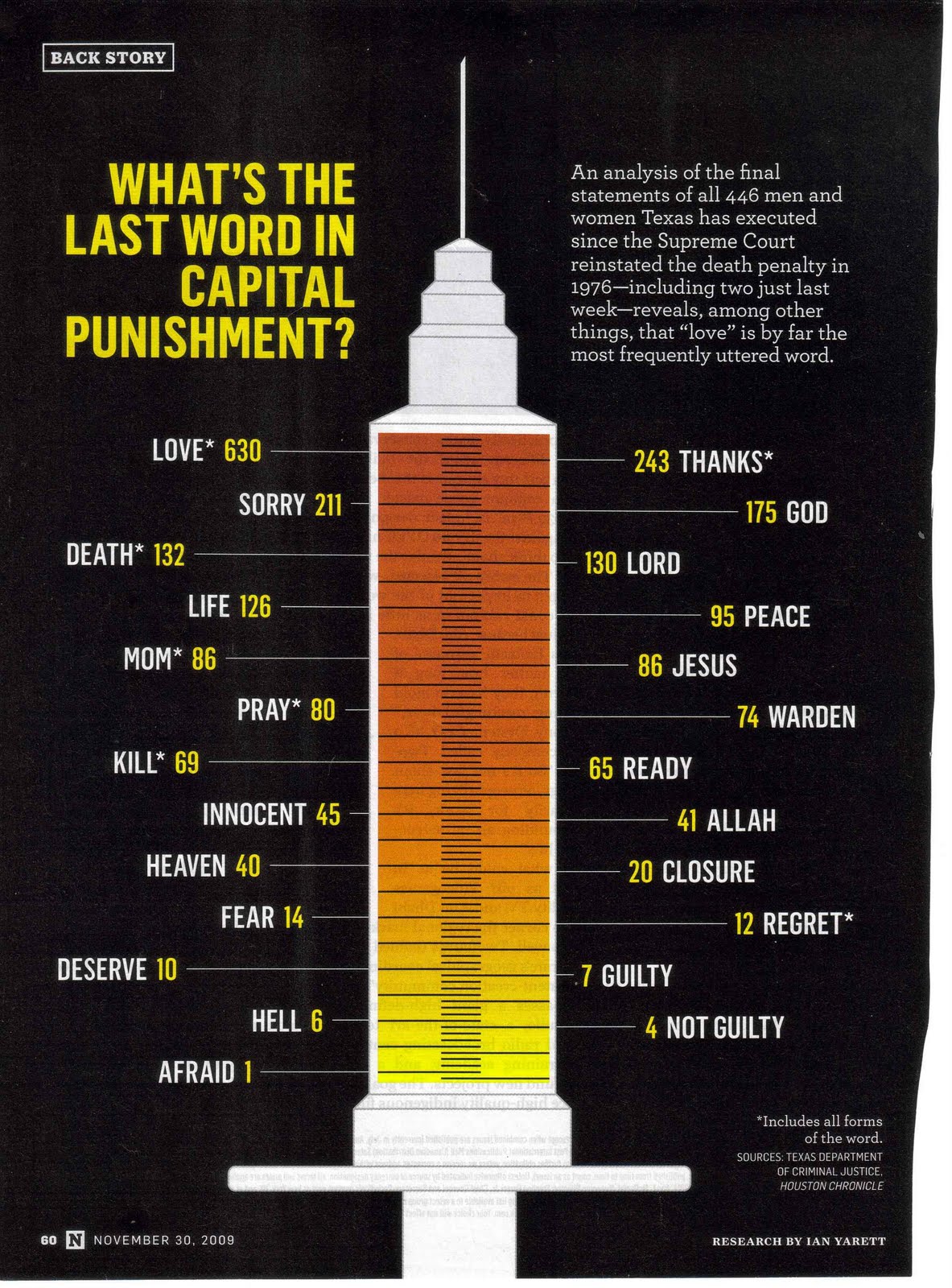
This is part four in our series on responding to your questions and comments. In this episode, we respond to a comment made on Off Script 37: Killing Criminals, in which we took the position that capital punishment is a biblically justifiable practice, but in America today it is fraught with problems, including the outrageous cost of death row and the possibility of executing the innocent. We respond to the comment of someone named Sean who challenges us on our view of the Sermon on the Mount that Jesus is challenging the old way of living and laying out a new way. He also makes a couple of secular arguments in favor of capital punishment. Here is Sean’s comment in full: I think this discussion has to take a lot more into account, but clearly this would take hours and hours to encompass it all… This is a huge subject really. But for example, such as Abraham saving Lot by killing people to rescue him. This was obviously when there were less governmental type controls but the point remains the most righteous man on earth, the father of the faith killed to save someone. There’s also laws about the requirements of helping someone being attacked, which could clearly result in the death of an attacker. I don’t think vengeance is the same as self-defense, and many equate these two… I used to. And I still have the same objection that seems to arise about Matthew 5 and Jesus’ “…but I say unto you…” statements having to do with contradicting the Torah. I don’t see this as logical, nor a possible understanding if you believe the Messiah was a sinless man. To have any man come into Israel and start teaching contrary to God’s law(even if just in THAT time period) by definition would have been sin and the man should have been ignored/killed. (Isaiah 8:20, Matthew 5:19, Deut 4:2) No one could convict the Messiah of sin, that one would have been obvious if that’s what he was doing. He *had* to keep the Torah, right? Or do you believe he didn’t keep it? That might have to be clarified. The secular arguments are based on the risk of human error. By those types of standards no one should drive automobiles either because thousands of people die each year innocently due to the error of other operators. As sad as the situation is—there’s always a risk of human error/corruption, and God -still- gave the death penalty in his Torah. The young man seems to be arguing against God’s own commands. And one also must address the many assumptions that are built into his objections against capital punishment. To say “it costs more” to prosecute for the death penalty versus lifetime of prison is not the point—even if it were, it’s still proper justice according to God’s laws. God never said to hold anyone in confinement for the entire life. It also likely WOULDN’T cost more if there were so many other regulations in place that make it that much more expensive. It’s morally reprehensible to pay for convicted murderers to continue to live on our own backs for their lifetime. Take note also, that even with Paul as a former murderer and what he taught later–he said if he did anything worthy of death, he’d submit to it. Acts 25:11 Overarching all of this is clearly the most poignant thing of all—without the death penalty you would have no death of the Messiah and a risen savior. Again, I know this is a huge topic and I just thought I’d weigh in a few things on my mind that I don’t think really got full weight in this discussion. I think I also have more to say on the subject from Scripture because I used to hold the same view as many of you until I re-examined it. —— Links —— Listen to the episode that this comment

Off Script 44: Should We Ban Muslim Immigrants? (Q&A)
This is part three in our series on responding to your questions and comments. In Off Script 28: Seeking a Christian View on Refugees and Immigrants, we concluded on the basis of several scriptures in the Old Testament as well as the Great Commission that Christians should welcome refugees into their countries. In response to this, William wrote: First, Thank you for your podcasts and all the work that you do preaching the word of God and your Unitarian teachings. I have to take the other side when it comes to Muslim immigrants coming into this country from the mentioned 7 Muslim countries. In December 2015, President Obama signed into law a measure placing limited restrictions on certain travelers who had visited Iran, Iraq, Sudan, or Syria on or after March 1, 2011. Two months later, the Obama administration added Libya, Somalia, and Yemen to the list, in what it called an effort to address “the growing threat from foreign terrorist fighters.” So Trumps “temporary 90 day ban” was justified considering he is coming into office and now it’s his problem to solve and protect the American people from terrorism. I don’t want to turn this into me defending Trump because I don’t agree with all of his policies, but I do agree with the temporary ban to come up with a way a vetting refugees who come with less then amiable intentions. Ok, first Exodus 23:9 “You shall not oppress a sojourner. You know the heart of a sojourner, for you were sojourners in the land of Egypt”. The key word for me is “heart” The heart of the sojourner. What are the intentions of the refugee? do they plan to live among you and abide in God’s law? If they don’t, do you still accept them as your brother even if they want to kill you or convert you through force? Do you allow mosques to operate that call for jihad and sharia law, infecting peaceful Muslims? Surly you wouldn’t invite someone into your home if you thought their intentions were to harm you or your family. Europe has has a policy of dropping off Muslims into their country and Europe is mess. All I’m saying is that it was not Gods intention to have his people treat sojourners as brothers if they would not assimilate into the culture or worse…destroy it. God Bless. In this episode, Dan takes the lead in responding to William. Here are some quotes from our discussion: “How many minds can be changed by radical love like that [the Good Samaritan Parable]? How many barriers of racism and nationalism could be torn down by that, by that kind of radical love? That’s the attitude we should have toward outsiders, not, ‘Hey stay away because we’re afraid that you might shoot us even though our own countrymen are shooting us at a far higher rate.” –Dan “The kingdom will be a melting pot anyway; it will be a true melting pot where the one thing that we have in common and the only thing that matters is that we are citizens of the kingdom of Christ. So we look forward to that day and in the meantime we are have the opportunity to live like that now.” –Rose “How cool is it that other nations want to come here? How much easier does it make it to fulfill the Great Commission where Jesus says, ‘Go make disciples of all nations?’ Well if the nations are all coming here? There are all in Chinatown and Koreatown and Polishtown or whatever towns in New York City, then how much easier is it to fulfill that Great Commission?” –Sean —— Links —— Listen to the episode that this comment came from: Off

Off Script 43: Can Christians Use Non-Lethal Violence? (Q&A)
This is our second answer in our series on responding to your questions and comments. In Off Script 38: Killing in War: A Christian View of Violence, we discussed whether it is appropriate for Christians to participate in war, concluding that Jesus’ command to love our enemies means that Christians should not kill others. If you haven’t already, check out that episode first before listening or commenting on this one. In this episode we respond to Zak’s comment. He wrote: I really enjoyed this episode. It challenged my current worldview with scripture(a very good thing, even if not pleasant at times). I do have few questions. 1.Can none lethal self defense be put under “confrontational nonresistance” or is it always finding “exceptions to Jesus’ commands.” For example in the highly unlikely event that I would be walking a busy street and someone pulled out a gun and started shooting other people/family/etc. Would it be against the bible to(if I had the training)Disarm the individual. —— Links —— Listen to the episode that this comment came from: Off Script 38: Killing in War Check out these other posts on how Christians should love their enemies, including a full length debate between Christians on this issue More information about Christian pacifism: loveyourenemies.wordpress.com See other episodes responding to your questions and comments Intro music: “Protofunk” by Kevin MacLeod. Licensed under Creative Commons: By Attribution 3.0 License.

Off Script 42: Hillary Clinton, a Dead Moose, and Christians Discussing Politics (Q&A)
Welcome to our series answering your questions and responding to some of your comments. We’ve been saving these up and over the next few weeks, we’ll address a number of them. We’ve decided to do these in individual episodes, so if you’re not interested in the topic, you can just skip it and listen to the ones that matter to you. As a result, these are each significantly shorter than our typical Off Script episodes. First up is a statement someone made on an old episode. In Off Script 16: Christians Discussing Politics, we cited John Zmirak’s comment that he made on Unbelievable, a Christian talk radio show in London, as an example of inappropriate Christian discourse. Zimrak said, I would vote for a dead moose strapped to the hood of a car in order to stop Hillary Clinton or really any of the Democrats in America because their policies are fundamentally incompatible with Christianity and really just with human decency. This episode responds to the following comment by Levi: A dead moose would in fact be less threatening to freedom of religion, the lives of the unborn, the sexual purity of our young people, etc etc etc. The left is an atheistic, perverted agenda and the Truth is, the Facts are such that no disciple of Christ should ever countenance no less support their godless agenda. —— Links —— Listen to the episode that this comment came from: Off Script 16: Christians Discussing Politics Check out these other posts on how Christians should think politically See other episodes responding to your questions and comments Intro music: “Protofunk” by Kevin MacLeod. Licensed under Creative Commons: By Attribution 3.0 License.

135 The Fate of the Apostles (Sean McDowell)
Have you ever heard the martyrdom argument for the resurrection of Jesus? It goes something like this. Jesus’ apostles faced persecution and martyrdom for their confession that God raised Jesus from the dead, sealing their witness with their blood. Why would they die for a lie? Their martyrdom unequivocally proves that they sincerely believed in Christ’s resurrection. Since they were in a position to know if it was true or not, we have every reason to trust their testimony. However, if I asked you to prove to me that these apostles suffered martyrdom, how would you do it? How do you know they died as martyrs? The only apostle whose execution the bible records is James, the brother of John (Acts 12.2). Furthermore, critics like Candida Moss have argued that the martyrdom stories we have are historically unreliable and are full of exaggerations at best and completely made up at worst. This is where Sean McDowell’s research is so helpful for us. He’s taken the time to sift through countless pages of primary documents to collect and then evaluate the martyrdom accounts of the apostles. After rating the historical likelihood of each on a nine-point scale, he’s concluded that four of them definitely died for their faith: Peter, Paul, James the brother of Jesus, and James the brother of John. In addition, he argues that two more have a probability greater than 50%, including Thomas and Andrew. —— Links —— Check out Sean McDowell’s book The Fate of the Apostles Follow McDowell on twitter: @Sean_McDowell Visit his personal website at seanmcdowell.org Listen to more Restitutio podcasts on apologetics Intro music: Jazzy Frenchy by bensound.com. Licensed under Creative Commons: By Attribution 3.0 License.
134 Finding the Love of Your Life (Book of Ruth)
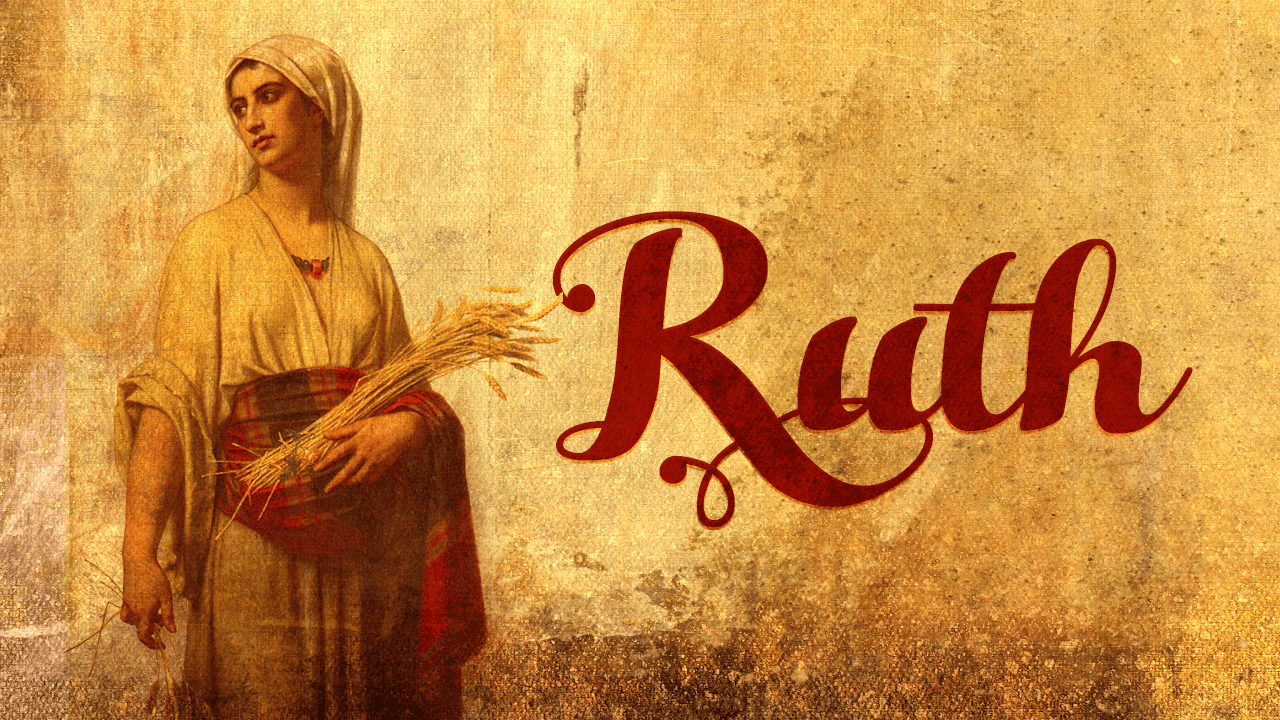
Have you ever read the book of Ruth? Though it’s only four chapters, it contains timeless truths that can help us today. Our culture puts an incredible amount of pressure on spouses to never change, be perfectly compatible, and fulfill our deepest longings that it’s no wonder that singles often can’t seem to find the right one. However, the lesson of Ruth’s life is that she pursued God and then he took care of finding her a spouse and even built her a lasting dynasty. —— Notes —— 1|Tragedy Strikes Ruth 1.1 The famine in the land left people with few options find a way to get food from someone who has some move to a land that is not experiencing famine starve Ruth 1.2-5 The widow’s options go back to family remarry (these were arranged) depend on charity of others practice prostitution starve Ruth 1.6-14 Naomi decides everyone should go with option 1 Ruth 1.15-18 Ruth abandons her country, her gods, and her family Background on Moab Moab was the son of Lot and his firstborn daughter (Gen 19.29-33, 37) God commanded Israel not to harass or fight with Moab (Deut 2.9) (but) Balak hired Balaam to curse Israel before they came into the promised land (Num 22.1-6) Moabite women seduced Israelite men to worship Baal (Num 25.1-3, 9; 31.16) God commanded that no Moabite should enter his assembly (Deut 23.3-6) During time of judges, Eglon, king of Moab, conquered Israel (Judges 3.12-14) 2|Ruth Gleans Ruth 2.1-12 Gleaning in the barley fields was an accepted norm for the poor Deut 23.25; 24.19, Lev 19.9 Mat 12.12 Ruth 2.20 Boaz is a potential redeemer 3|Ruth Proposes Ruth 3.1-14 Levirate marriage Deut 25.5-10; Gen 38.6-10 “Any childless widow had the right to expect her dead husband’s brother to marry her. If no brother existed, some more distant male relative was required to perform this duty. Whichever relative married the widow became her “go’el” (redeemer or protector). The first son born to the widow by the new marriage was counted as a child of the dead husband and inherited his property.”[1] 4|Boaz Redeems Ruth 4.1-17 Boaz does the right things and Naomi and Ruth both benefit Although she has every reason not to, Ruth chooses Yahweh and his people. Even if it is a forbidden love, she wants the God of Naomi. Instead of spurning her, this great lover accepts Ruth and provides for her. She comes under the protection of his wings and he takes care of the rest. Not only does he provide her with a husband and the means to thrive, but he grafts her into the ancestral tree that one day would sprout the branches of not only king David but even Jesus the Messiah! Ruth is no longer an unfortunate Moabitess widow, but a matriarch—the great grandmother of David—and the premier example of a heart who found the love of her life. [1] Great People of the Bible and How They Lived, (Reader’s Digest Association, 1974), p. 132 —— Links —— To go deeper into this topic, check out Off Script 23: Worshiping Love For a great message on dealing with frustration and disappointment in marriage, see Podcast 12: Don’t Let Them Go (Keith Daniel) More podcasts and resources on marriage Intro music: Jazzy Frenchy by <a href="http://bensound.com

133 Is God a Misogynist? (Mary Willson)
Mary Willson, director of women’s initiatives for the Gospel Coalition, wrestles with a couple of the Old Testament texts that critics use to show that God hates women, including Deuteronomy 21.10-14 and Numbers 5.11-31. First she looks at how we perceive these ancient scriptures from the perspective of our own culture, then she shows how they functioned in their original historical contexts. She concludes that God gave these laws to protect women not oppress them. —— Links —— Check out Mary Willson’s writings at the The Gospel Coalition Intro music: “District Four” by Kevin MacLeod. Licensed under Creative Commons: By Attribution 3.0 License.

132 Twentieth Century American Christianity (Five Hundred 15)
In this last episode of our 500 class, we’ll cover a bunch of 20th century American groups including Christian Science, the Evangelicals, Plymouth Brethren, Pentecostals, Calvary Chapel, Vineyard Churches, Christian and Missionary Alliance, the Way International, the Worldwide Church of God, Scientology, the Moonies, and Megachurches (Rick Warren, Craig Groeschel, and Joel Osteen). It’s a whirlwind, but it should aid you in making some interesting and helpful connections between present day Christian groups and their past. This is lecture 15 of a history of Christianity class called Five Hundred: From Martin Luther to Joel Osteen. All the notes are available here as a pdf. —— Notes —— Christian Science (a.k.a. Church of Christ, Scientist) (85,000) 1866 – Mary Baker Eddy (1821-1910) experienced healing from back pain after studying the Gospels and devoted her life to studying healing 1875 – published findings in Science and Health early 20th century had major growth but declined towards the end Evangelicals/Born Again Christians (similar to fundamentalists, but different focus) National Association of Evangelicals[1] defines an evangelical as someone who believes in The need for everyone to have a “born again” experience The engagement in missionary and social reform efforts The obedience to the Bible as ultimate authority Sacrifice of Christ on the cross as a central focus Plymouth Brethren (1 million) 1827 meeting in Dublin, Ireland by John Nelson Darby (1800-1882) Father of dispensationalism including pre-tribulational rapture Dallas Theological Seminary’s Professor Dr. Chafer’s 1948 Systematic Theology I. Scofield Bible’s 1909 Study Bible W. Bullinger’s 1909 Companion Bible (finished in 1922) Hal Lindsey’s 1970 Late Great Planet Earth (a Dallas Theological Seminary graduate) Tim LaHaye and Jerry Jenkins’ 1995 Left Behind 12-part series Met together in the name of the Lord without reference to a denomination 1831 – first meeting held in England at Plymouth; 1845 – assembly at Plymouth had 1,000 people Distinctives Avoidance of traditional symbols (no crosses, unembellished rooms, no stained glass) No membership, what matters is who is written in the Lamb’s book of life in heaven No clergy, but they have elders and sometimes support a “full-time worker” Weekly communion as a separate meeting from worship service (Quaker feel) Pentecostals (279 million) Holiness Movement Asa Mahan (1799-1889), Charles Finney (1792-1875), Phoebe Palmer (1807-1874) 1881 – Church of God (Anderson, Indiana) founded (currently 1.2 million) 1895 – Church of the Nazarene founded (currently 2 million) Charles Parham (1873-1922), a holiness preacher, formulated the doctrine of “initial evidence” 1901 – During a service, a woman asked for prayer and the laying on hands to be filled with the holy spirit and started speaking in tongues. William Seymour (1870-1922) One of Parham’s students, an African American 1906 – Seymour went to LA and ignited the Azusa Street Revival, which lasted until 1915 People came from all over to see/experience tongues, including Europe

131 Love without Limits (Victor Gluckin)
How do you deal with difficult people? Jesus teaches us that there’s nothing noteworthy about showing love to those who love us. Rather, he says we are to be like God who sends rain on the just and the wicked. He calls us to love annoying people, boring people, monopolizing people, vengeful people, shallow people, prideful people, and all other kinds of difficult people. We are not free to set our own artificial boundary on love, instead we must love without limits. Listen to this powerful message by Victor Gluckin, originally taught at Revive 2018. This sermon will challenge you to strengthen your relationship with God since he alone can sustain you with his love so you can freely love those who don’t love you back. —— Links —— Listen to all the other messages from Revive 2018 Find out more about pastor Victor Gluckin at his church website or follow him on Twitter Browse other Restitutio episodes with Victor Gluckin 115 Don’t Put It on a Cart 79 Proud of Our God 66: What I’ve Been Saved From 24: Now Is Our Time To Speak Intro music: “District Four” by Kevin MacLeod. Licensed under Creative Commons: By Attribution 3.0 License.
130 Missionaries, Adventists, and Mormons (Five Hundred 14)
The 1800s was an exciting time for Christianity in America. At the same time that secularism and liberal Christianity made huge gains, several renewal movements occurred throughout the land, including the Second Great Awakening. In this episode you learn about the birth of the Protestant missionary movement with the Moravians and the Baptists, how the various Adventist denominations got their start, and last of all the most successful made-in-America religion–Mormonism. These thumbnail sketches will help you understand a number of groups that are still around today. This is lecture 14 of a history of Christianity class called Five Hundred: From Martin Luther to Joel Osteen. All the notes are available here as a pdf. —— Notes —— Pietism (late 17th c. to 20th c.) Movement within Reformed and Lutheran countries (happened during Enlightenment) 1675 – Philipp Jakob Spener (1635-1705) published Pious Desires The earnest and thorough study of the Bible in private meetings Laity should share in the spiritual government of the Church Knowledge of Christianity must be attended by the practice A sympathetic and kindly treatment of Christians of other groups Universities should give more prominence to the devotional life Rather than pleasing rhetoric, preach to implant Christianity in the inner man Emphasized inner life and conversion Millennialism (Pietists had millennialist leanings) Continued baptizing infants but de-emphasized it in favor of conversion experience Halle in Saxony established as center of Pietism Moravians (Unitas Fratrum) Descendants of the 15th Hussites; persecuted during 30 years war in Bohemia In late 17th c., they went to Poland; 18th c. they went to Saxony 1722 – Count Nikolaus Ludwig von Zinzendorf (1700-1760), a Pietist who attended school at Halle (godson to Spener) gave the Moravians land which became the community of Herrnhut 1731 – Some Moravians went to the coronation of the King of Denmark. 1732 – Johann Leonhard Dober (1706-1766) chose David Nitschmann (1695-1772) as his travelling companion; petitioned the Danish government for passage to St. Thomas in Virgin Islands Teaching them about God and how to read and write In less than a century, the Pietist Moravians sent 300 missionaries throughout the world and baptized some 3,000 converts. Moravian motto: “In essentials, unity; in nonessentials, liberty; and in all things, love” Today, around 825,000 members worldwide (largest concentration is in Tanzania) Modern Missions 1792 – William Carey (1761-1834) published An Enquiry into the Obligations of Christians to Use Means for the Conversion of the Heathens Used the best available geographic and ethnographic data to map and count the number of people who had never heard the gospel “It is inconsistent for ministers to please themselves with thoughts of a numerous auditory, cordial friends, a civilized country, legal protection, affluence, splendor, or even a competency. The flights, and hatred of men, and even pretended friends, gloomy prisons, and tortures, the society of barbarians of uncouth speech, miserable accommodations in wretched wildernesses, hunger, and thirst, nakedness, weariness, and painfulness, hard work, and but little worldly encouragement should rather be the objects of their expectation. Thus the apostles act

Off Script 41: Guns, Immigrants, and White Evangelicals
This is part two of our discussion about Charles Mathewes’ Washington Post article, “White Christianity is in big trouble. And it’s its own biggest threat.” Check out part one here. In this episode we consider gun control, immigration, the death penalty, and treatment of the poor in an effort to understand and respond to evangelicalism’s ongoing public relations problem. Are “white evangelicals” as Mathewes puts it “a breathtakingly cruel bunch?” —— Links —— Read the original Washington Post article here Listen to part one of this discussion: Off Script 40: Roy Moore, Gay Wedding Cakes, and White Evangelicals Check out these Off Script episodes mentioned in this discussion: Off Script 38: Killing in War (A Christian View of Violence) Off Script 28: Seeking a Christian View on Refugees and Immigrants Off Script 37: Killing Criminals (A Christian View of Capital Punishment) Off Script 16: Christians Discussing Politics Intro music: “Protofunk” by Kevin MacLeod. Licensed under Creative Commons: By Attribution 3.0 License.
129 Losing Faith (Five Hundred 13)
This lecture covers the two main types of criticisms leveled against Christianity during the Enlightenment period: biblical and philosophical. In addition you’ll see how some Christians dug their heals in and worked hard to defend their faith while others gave ground but reinterpreted Christianity in a way that would not only survive the criticisms but also attract “cultured despisers.” We’ll conclude with a brief sketch of unitarianism in America. This is lecture 13 of a history of Christianity class called Five Hundred: From Martin Luther to Joel Osteen. All the notes are available here as a pdf. —— Notes —— Early Views of Biblical Inspiration “The Holy Spirit did not simply inspire the meaning or sense of the words contained in Scripture, which the prophets and apostles then set forth, expressed, and embellished with their own words by their own will. The Holy Spirit supplied, inspired, and dictated the very words and each and every utterance to the writers.” –Johann Quenstedt (1623-1687)[1] “The Hebrew Original of the Old Testament…is, not only in its consonants, but in its vowels—ether the vowel points themselves, or at least the power of the points—not only in its matter, but in its words, inspired of God” –Helvetic Consensus (1675)[2] In the 18th c., we have Deism and Pietism. In the 19th c., we have higher criticism and revivalism. In the 20th c., we have secularism and Pentecostalism. Enlightenment[3] (1650-1890) Not an organized movement but widespread current of thought Critical of superstition, enthusiasm, fanaticism, and supernaturalism Philosophy is no longer the handmaiden of theology but an independent field Though in France the Enlightenment was anti-Christian, it was embraced by Christians in other places like England and Germany Three phases (according to Alister McGrath) Demonstrating the rational nature of Christian belief (John Locke’s The Reasonableness of Christianity) Could derive Christian beliefs from reason alone Reason sits in judgment over revelation 1751 French Encyclopédie: multi-volumes covering all human knowledge and written by atheist Denis Diderot (1713-1784) and the Philosophes Deism (17th-18th centuries) Revelation, ritual, and traditional practices minimized or written off as superstitious Clergy criticized for Keeping people in bondage Monopolizing truth using their authority Freedom to inquire and religious toleration Essence of religion is morality expressed in universal principles Idea that all religions contained the same basic moral precepts 1738: Pope Clement XII denounced Deism Thomas Jefferson (1743-1826) Cut miracles out of the gospels[4] Benjamin Franklin (1706-1790) Philosophical Criticisms of Christianity 1656 – Baruch Spinoza (1632-1677) excommunicated from Talmud Torah congregation 1777 – Dialogues Concerning Natural Religion by David Hume (1711-1778) Only have knowledge of what we directly experience (empiricist) Cannot determine cause from effect (the world does not point to a creator) Miracles were made up, based on hearsay, or the result of ignora

Off Script 40: Roy Moore, Gay Wedding Cakes, and White Evangelicals
While scrolling through Facebook, I came across Charles Mathewes’ Washington Post article, “White Christianity is in big trouble. And it’s its own biggest threat.” At first reading, I was infuriated at what I felt were unfair criticisms, but after I thought about it, I realized what an opportunity this article presented. It collects together no less than thirteen criticisms against Christianity. In this episode Dan Fitzsimmons, Rose Rider, and I (Sean Finnegan) respond to the first seven, including: Our society’s war on Christmas bothers Christians A Christian baker refused to sell a cake for a gay wedding 80% of white evangelicals in Alabama voted for a pedophile We’re ignorant of history We’re ignorant of the current state of the world We’re ignorant about scientific knowledge We’re surprisingly ignorant about our own religion —— Links —— Read the original Washington Post article here Intro music: “Protofunk” by Kevin MacLeod. Licensed under Creative Commons: By Attribution 3.0 License.
128 Colonials and Methodists (Five Hundred 12)
Hear the winding tale of early Christian history in the Americas with a special focus on the thirteen colonies. Right from the start the Americas were full of Christian diversity including Catholicism, the Church of England, Puritans, Baptists, and Quakers. In this lecture you’ll see how this diversity led to an unprecedented level of religious tolerance and flourishing. Other significant issues in this period include the horrors of the slave trade and the treatment of native Americans as well as the impressive success of the Great Awakening under the preaching of George Whitefield and Jonathan Edwards. This is lecture 12 of a history of Christianity class called Five Hundred: From Martin Luther to Joel Osteen. All the notes are available here as a pdf. —— Notes —— Founding the Colonies Catholicism in the Americas Spanish claims included American west coast, Florida, and much territory in central and South America (Catholic) French claims included eastern Canada (Quebec) and the territory of Louisiana (Catholic) 1634 Catholics founded “Mary land” 1607 Virginia founded as first English Colony founded as joint effort by the Virginia Company to make money (Tobacco export) brought Church of England to New World Separatists founded New England 1620 Plymouth settled (from Brownists who were sojourning in Holland) 1630 Puritans establish Massachusetts Bay Colony fleeing from Archbishop Laud 1648 Cambridge Platform: Westminster Confession w/ congregational polity No religious freedom 1636 Harvard founded for training of Puritan ministers 1631 Roger Williams (1603?-1683) arrived 1639 Williams founds first Baptist church in RI 1681 William Penn founded Pennsylvania (Penn’s Forrest) he was a Quaker who tolerated all monotheists many people outside of England moved to Pennsylvania including Moravians, Lutherans, German Reformed, Amish Immorality tobacco 1602 an English doctor wrote Chimney-Sweepers or a Warning for Tabacconists warning about health risks 1604 King James wrote a tract against tobacco 1617 Virginia exported 10 tons; 1622 30 tons; 1627 250 tons; 1639 1,500 tons; 1688 colonies exported 14,000 tons; 1771 52,000 tons rum 1667 Boston’s first distillery 1774 Mass had 63 distilleries, producing 2.7 million gallons of rum a year RI had more than 30 distilleries colonists preferred rum made in the West Indies so they sold it in Africa and to Indians Golden Triangle molasses bought in New England to make rum rum sold in Africa to purchase slaves slaves sold in West Indies to purchase molasses slavery 1619 first Africans came to VA as indentured servants (work for a set time to pay off travel debt) by 1680 racial slavery insanely inhumane conditions on slave trader ships Falconhridge: “The hardships and inconveniences suffered by the Negroes during the passage are scarcely to be enumerated or conceived. They are far more violently affected by seasickness than the Europeans. It frequently terminates in death, especially among the women.The exclusion of fresh air is among the most intolerable. Most ships have portholes for air. But whenever the sea is rough and the rain heavy, it becomes necessary to shut these and every other conveyance by which air is admitted. The fresh air being thus excluded, the Negroes’ quarters very s

Off Script 39: Sexual Harassment, A Christian Response
Several significant sexual harassment cases have come to light in the last few months. Now a whole range of behaviors have come under scrutiny as women (and some men) have felt emboldened to make public their experiences. In this episode we even out our Off Script panel with one more female voice, Terri Crowder, to help us discuss this prevalent phenomenon from street corners to workplaces to churches. After discussing sexual harassment in some detail, we bring relevant scriptures to light to provide a Christian response. —— Links —— More on the Christian work ethic here Also check out Off Script 31: Stewarding Our Bodies Check out the first part of episode 603 of This American Life to hear what happens when a woman confronts men after catcalling her. Intro music: “Protofunk” by Kevin MacLeod. Licensed under Creative Commons: By Attribution 3.0 License.
127 Catholicism (Five Hundred 11)
Although the focus of this class is on the history of Protestants of various stripes, it’s also important to realize that Catholicism changed a good deal during the last five hundred years. In this lecture, you’ll get a brief sketch of the history of significant Catholic movements and doctrinal declarations during this period, including the inquisition, Council of Trent, the Jesuits, doctrines about Mary, the first and second Vatican Councils, and much more. This is lecture 11 of a history of Christianity class called Five Hundred: From Martin Luther to Joel Osteen. All the notes are available here as a pdf. —— Notes —— Initial Responses to Reformation Pope Leo X thought Reformation was just a drunken brawl among German monks 1541 Regensburg Colloquy Inquisition started in 12th France to combat heresy of Cathars and Waldensians The 1578 handbook for inquisitors spelled out the purpose of inquisitorial penalties:”… for punishment does not take place primarily and per se for the correction and good of the person punished, but for the public good in order that others may become terrified and weaned away from the evils they would commit.” 1821 Inquisition abolished in Portugal; 1834 Inquisition outlawed in Spain 1908 Inquisition renamed to The Sacred Congregation of the Holy Office 1965 Inquisition renamed to The Congregation for the Doctrine of the Faith (CDF) Council of Trent (1545-1563) response to Protestant movement Catholicism after Trent is called Tridentine Catholicism 7 sacraments, recognized Apocrypha as canon, Scripture and Tradition determine doctrine bishop as pastor of diocese rather than prince of the church: have to live in their diocese, preach regularly, inspect clergy to insure proper teaching, meet regularly at synods support of Baroque style of art, music, and architecture 1559 Index of Prohibited Books list had circulated since 1521 in Paris and Louvain 1966 Index of Prohibited Books abolished still to this day the word Imprimatur (let it be printed) is on approved Catholic books 2011 imprimatur first applied to iPhone app Jesuits (Society of Jesus) Ignatius of Loyola (1491-1556) 1521 severely wounded by a cannon ball 1522 stayed in a cave for a while practicing severe asceticism 1523 pilgrimage to the holy land 1524 finished Spiritual Exercises (Ignatian Contemplation) returned to Spain and preached on street corners 1528 attended University of Paris and got master’s degree 1534 started Jesuits with 6 companions, taking solemn vows 1540 Society of Jesus approved by pope Rules of the Order: vows of poverty, chastity, obedience to pope, go anywhere in the world Rule 13 “That we may be altogether of the same mind and in conformity … if [the Church] shall have defined anything to be black which to our eyes appears to be white, we ought in like manner to pronounce it to be black.” Missionary Activity Francis Xavier (1506-1552) preached in India and had success in Japan Matteo Ricci (1522-1610) dressed as Confusion scholar, brought Christianity to China Robert Nobili (1577-1656) brought Christianity to Brahman caste in India Alexander de Rhodes (1591-1660) preached in Vietnam Colonialism
126 Dissidents in Britain (Five Hundred 10)
Learn about the dissident groups in Britain in the 17th and 18th centuries, including the Puritans, Baptists, Quakers, and Unitarians. In addition, Sean Kelly presents a vignette of John Biddle’s life and influence. This is lecture 10 of a history of Christianity class called Five Hundred: From Martin Luther to Joel Osteen. All the notes are available here as a pdf. —— Notes —— Puritans Robert Browne (1550-1633) Treatise of Reformation without Tarrying for Any, and of the Wickedness of those Preachers which will not Reform…till the Magistrate Command and Compel Them Reformation needed to take place whether or not the king wanted it or not Congressionalist rather than Presbyterian A group of Dutch Brownists were the ones who came to the New World in 1620s English Baptists Not related to continental Anabaptists Founded by John Smyth in 1609, an Englishman from Cambridge who fled to Amsterdam General [Arminian] vs. Particular [Calvinist] are two types of Baptists Reject role of the state in matters of conscience (church should be independent of the state) John Bunyan (1628-88), Grace Abounding to the Chief of Sinners (1666) Wrote autobiography Grace Abounding to Chief of Sinners Pilgrim’s Progress (1678), second part appeared in 1684 Roger Williams (1603?-1683) brought Baptist faith to America Quakers (“Society of Friends”) Founded by George Fox (1624-1691) “Inner Light” written in 1647: The word of God is not confined to the Bible but rather came directly to each person (inner light or inner voice) He rejected social distinctions, allowed women to preach Pacifists and egalitarians (worked against slavery in the US using underground railway) No sacraments at all b/c they were physical Total silence during meetings until someone is inspired to speak British Unitarians John Biddle (1615-1662), the father of English Unitarianism brilliant man 1634 his anthology he published his translations from classics into English at university he “outran his instructors and became tutor to himself” (Protesters, 131) 1634 he went to Magdalen Hall at Oxford 1641 he was headmaster of the Crypt Grammar School in Gloucester immersed himself in Scripture for years knew entire NT by heart in English and most in Greek, though about Rev. 4 his memory got fuzzy claimed he never read Socinian literature before coming to his own opinions wrote a pamphlet, Twelve Arguments against the Deity of the Holy Spirit 1646 summoned to London’s parliament and imprisoned for 5 years 1648 Publishes two anti-Trinitarian documents A Confession of Faith Toughing the Holy Trinity According to Scripture The Testimonies of Irenaeus, Justin Martyr, Tertullian, Novatianus, Theophilus, Origen. As Also of Arnobius, Lactanius, Easebius, Hilary and Brightman Concerning the One God and the Persons of the Holy Trinity 1652 Biddle released and remained in London where he found fellowship 1654 Biddle published his Twofold Catechism when Oliver Cromwell got in power Biddle was released returned to quiet active work in a church two months later he was imprisoned in Newgate prison remained at St Mary’s for 3 years<
125 The Reformation in Britain (Five Hundred 9)
In this sprint through British church history, you’ll learn about King Henry VIII and his staggering Act of Supremacy when he pulled the Church of England out of Catholicism and appointed himself the head of the church. After Henry’s death, England swayed back and forth as Henry’s successors adopted Protestantism then Catholicism then Protestantism again. Still none of this tumult compares to the chaos of the English Civil War a century later when a Protestant Parliament executed a too Catholic King Charles I for treason and initiated stringent Puritanical laws throughout the land. You’ll also learn about the persistent and tenacious John Knox who was instrumental in bringing the Reformation to Scotland. This is lecture 9 of a history of Christianity class called Five Hundred: From Martin Luther to Joel Osteen. All the notes are available here as a pdf. —— Notes —— Henry VIII (1491-1547) Wives, Heirs Catherine of Aragon (m. 1503), mother of Mary Tudor The Great Issue: could not divorce her to marry mistress Ann Bolin 1534: Act of Supremacy (Henry declared “Supreme Head” of the church Ann Bolin (m. 1533), mother of Elizabeth Jane Seymour (m. 1536), mother of Edward Anne of Cleves (m. 1540) Catherine Howard (m. 1540) Catherine Parr (m. 1543) Religious Policies Ostensibly Catholic, apart from his great issue (Cardinal Wolsey) Dissolution of monasteries and shrines 200 hangings of people who resisted Henry’s royal assertions as head of the church Six Articles (1539) affirmed traditional Catholic understandings of Transubstantiation, no cup for laity during communion, chastity for clergy, private Masses, confession William Tyndale (1495-1536) Languages: Greek, Latin, French, German, Spanish, Italian, English 1521 – ordained a Catholic priest 1522 – he was called before John Bell—chancellor of the diocese of Worcester but was released “We were better to be without God’s laws than the pope’s.” Master Tyndale, hearing this, full of godly zeal and not bearing that blasphemous saying, replied, “I defy the pope, and all his laws;” and added, “If God spared my life, ere many years I will cause a boy that driveth the plough to know more of the Scripture than thou doest.” 1523 – he went to Bishop Cuthbert Tunstall to ask permission to translate the Scriptures 1524 – he fled England to the continent possibly to study at Wittenberg (12 years a fugitive) 1525 – he finished the NT 1526 – the NT was printed in Worms and Antwerp 1526 – Tunstall had as many copies as he could find publicly burned 1529 – Cardinal Wolsey condemned Tyndale as a heretic 1530 – he finished the Torah (Gen-Deut) 1530 – he wrote The Practice of the Prelates, opposing Henry VIII’s divorce as unscriptural 1531 – he finished Jonah 1534 – a new edition of the NT published (thoroughly revised) 1535 – Henry Philips gained Tyndale’s trust and friendship and betrayed him to the authorities. Letter from Tyndale to overseer of the castle in September: “I believe, most excellent Sir, that you are not unacquainted with the decision reached concerning me. On which account, I beseech your lordship, even by the Lord Jesus, that if I am to pass the winter here, to urge upon the lord commissary, if he will deign, to send me from
124 Asian Christianity with Matthew Elton (Five Hundred 8)
Did you know that Christianity spread to Asia in the first century? At one time the Church of the East was bigger than the Roman Catholic Church. Although often overlooked, this part of the world is critical to our understanding Christianity in the last five hundred years. Our guest lecturer, Matthew Elton, guides us through an enlightening and helpful survey of the history of Asian Christianity. This is lecture 8 of a history of Christianity class called Five Hundred: From Martin Luther to Joel Osteen. All the notes are available here as a pdf. —— Notes —— Early Christianity (1st Century) Christianity spreads in Arabia, Persia, India. Nestorian Schism (431) Nestorius was bishop of Constantinople (present day Istanbul, Turkey). Disagreement over unity vs. separation of human and divine natures in Christ. Disagreement over title of Mary: theotokos (“God-bearer”) vs. Christotokos (“Christ-bearer”). Nestorius accused of heresy, excommunicated, and exiled to Egypt. 17 other bishops also excommunicated. Nestorian view of Christ accepted by Church of the East (Nestorian Church). The Church of the East (~431 to Present) Also called the Nestorian Church. Split from the western church as a result of the Nestorian Schism. Main power base was in Persia (present day Iran). Spread east into India, Nepal, Mongolia, China. Height of power c. 700-1000. During this time it was the largest and possibly most populous church in the world, more powerful than the Catholic church. Islam founded by Muhammad in early 7th Church of the East collapses under Muslim persecution and war, almost extinct by 1500. Survives today in very small “Assyrian Church of the East” in U.S. and groups active in Iraq, Syria, etc. Early Christianity in China (7th Century) Aluoben was a Nestorian Christian from Persia. Led the first mission to China in 635. Emperor Tang Taizong calls Christianity “religion of light,” commands that it be spread throughout China. Oldest church in China is in Xi’an, dates to 640, still standing today. Nestorian Monument erected in 781 to celebrate Chinese Christianity. “Jesus Sutras”: Early Chinese Christian texts discovered in a cave in Dunhuang. Recently translated into English. Persecution in later dynasties diminished Christianity in China. Christianity in Japan: Francis Xavier (active 1541-1552) Jesuit missionary from Portugal. Wins converts in Africa, India, Indonesia. Meets Anjiro, an exiled samurai, in Indonesia. Travels to Japan with Anjiro aboard a pirate ship. Third European to go to Japan, and first to learn Japanese. Preached in Japan 3 years but won few converts due to cultural barriers. Christianity in Japan grew rapidly c. 1550-1600. The Tokugawa Shogunate (1600-1868) Shoguns (warlords) ruled Japan for almost 300 years. They hated foreigners and persecuted Christians. February 5, 1597: 26 Christians crucified in Nagasaki. 1632: 55 Christians crucified. The Meiji Restoration (1868) Emperor Meiji restores the rule of the emperor. Modernizes Japan with western technology. Establishes a democratically elected parliament (Diet of

123 The Fall by Preston & Jackie Perry
Have you ever thought about what it must have been like for Adam and Eve have that conversation after the Fall, after they had become ashamed of what they had done and they had to come to grips with the new reality. In this stunning piece of poetry, written by Preston and Jackie Perry, we see the two of them embodying Adam and Eve in a very intense exchange where they blame each other and then come to an understanding and resolution of this issue. I found this piece to be at once melodic and beautiful, but also deep and profound. —— Transcript —— Eve: So I guess it was convenient for you to turn your back on the woman who held your spine. Adam: Woman – you were brought fourth from my side- created to support me like the gravity stricken moon does to brisk breath of nightfall- but when fear clawed its way into my heart when he called my name in the garden you shrunk and hid your shameful body- Both: Where were you? Eve: When the prince of night found his way to your star, you watched him lie… I watched you sit and set like sun you morning of a man. You can’t even see the nightmare you have become. Adam: I was there, standing in the distance having a conversation with my backbone. I wanted to stop you but you let that evil reptile with eyes slow dancing with deceit and tongue swift as breeze woo you dumb to think we could be wise as the God who thought the galaxies into existence. Eve: Adam, I thought he was my friend, letting me in on secrets God pinky promised the leaves not to tell. He pointed me to the tree, told me of what I was missing and as my faith in his lies led me to stare, I watched death become gorgeous. Adam: But God is beautiful. Eve: Adam, my tongue became sight. The fruit looked too good not to- Both: Taste Adam: -and see that God is Good Eve: God is thief. He kept us from the one thing he knew would turn our minds deity. Adam: No God is wise, Eve cant you see? In our feast for knowledge we have become fools, searching for wisdom in a mere branch we forgot about the God who had the power to grow us from dust with no roots. His mind is wide as sky and we were free as clouds, but now the silent hum of shame echoes the land–the eerie chill of fathers curse crawls across our conscience and the very river we bathe our naked souls in is damned because of you. What have you done? Eve: Do not blame me for murder and name yourself victim as if we are not both ghosts with skin. Both: You left me for dead. Did you forget the sixth day when God made you? Eve: From dust. Adam: But he made you from me for me! While sleeping he carved you from my caged bones beautiful, but you with your pride of dis-positioned switched positions and tried to lead, took heed to a snake without consulting me first. You didn’t respect me! Eve: He gave you authority. He made you the head of us but you became neck. I can still see the apple stuck in your throat, Adam. Swallow your pride. You were supposed to lead me, yet I am to blame? Your wife, your Eve, the one who is now shame once beauty the moment you saw her breath. Maybe, I should noose a ribbon around my neck, make a skirt of wrapping paper, stuff my natural naked chest with leaves. Maybe then these bones will be enough gift for you again, this flesh enough body for you to bathe in. The day you removed God from your soul. Emptied your nest of his glory is the day you begged me to take his place. Fill your voids, become this image of perfection to satisfy your insecurities. Both: God forbid. Eve: -Our sons grow up treating their sisters like cemeteries. Stacking their bodies and bones in one closet to wear as one flesh every time they want to feel alive. Adam: Eve please understand that you further prove my point. That prideful o
122 Reformations on the Continent (Five Hundred 7)
Zooming out, this episode casts a wide net to summarize how the movement started by Luther, Zwingli, and Calvin affected Europe over the next century. We’ll see how the Reformation took root in Germany, Scandinavia, and the Netherlands while simultaneously failing to find fertile ground in France, especially among those in power. Lastly, we’ll consider the Thirty Year’s War (1618-1648) and how this brutal conflict fundamentally changed the way religion and politics related henceforth. This is lecture 8 of a history of Christianity class called Five Hundred: From Martin Luther to Joel Osteen. All the notes are available here as a pdf. —— Notes —— Germany Philipp Melanchthon (1497-1560): systematic theologian of Lutheran movement 1521 – Diet of Worms: edict outlawed Luther and followers 1526 – Diet of Speyer suspended the edict of Worms 1529 – Diet of Speyer re-enacted the edict of Worms 1530 – Diet of Augsburg Lutherans presented Augsburg Confession[1] (written by Melanchthon) Johann Eck prepared a confutation against the Augsburg Confession Charles demanded Lutherans sign this refutation 1531 – Schmalkaldic League 1532 – Emperor called a truce at Nuremberg that lasted a decade 1546-7 – First Schmalkaldic War 1552 – Second Schmalkaldic War 1555 – Peace of Augsburg Cuius regio, eius religio: whose region, his religion Scandinavia (Norway, Sweden, Denmark) All of Scandavia ultimately became Lutheran during the 16th Monarchs converted to the faith 1527 – Gustav Vasa (1496-1560), king of Sweden split with Rome King took possession of all church property Subjected clergy to civil law Declared all churches to preach “the pure Word of God” Netherlands Anabaptist movement was popular Spanish government (Philip II) harshly persecuted Protestants in the Netherlands 1560s – Dutch Reformed Church dominated France French Protestants were called Huguenots Francis I (r. 1515-1547) initially was tolerant, owing to humanist tendencies until 1534 1534: Affair of the Placards stirred Catholics against Protestants 1562-1698: French Wars of Religion were civil wars “The parish pulpits of Paris taught hatred of heretics and suspicion of those—including the magistracy and monarchy—who allowed their continuing existence. Catholic preachers goaded people into a frenzy of fear and hatred of the religious and moral depravity of the ‘Deformed’ that would undermine royal efforts for toleration and produce deadly fruit. …For over the next 30 years Huguenots and Catholics murdered and assassinated each other with increasing barbarity.”[2] 1572: St. Bartholomew’s Day massacre Marriage between Marguerite of Valois and Henry of Navarre brought many prominent people into Paris August 24th King Charles IX (1550-1574) had gates of Paris locked “The streets were covered with dead bodies, the rivers stained, the doors and gates of the palace bespattered with blood. Wagon loads of corpses, men, women, girls, even infants, were thrown into the Seine, while streams of blood ran in many quarters of the city…One little girl was bathed in the blood of her butchered fa
Interview 30: When God Speaks (Alan Cain)
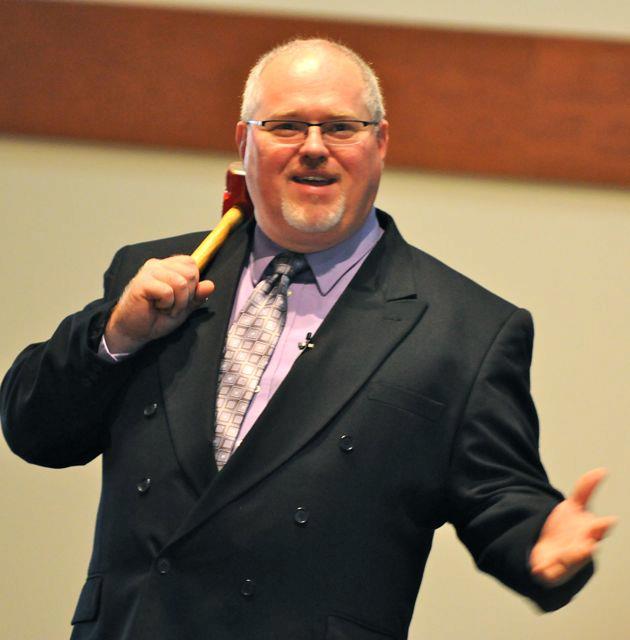
Have you ever noticed that pastors tend to get called to bigger churches over time, usually with better pay. However, after fifteen years of serving at a church in rural South Carolina, Pastor Alan Cain heard God calling him to move to a smaller church that was having financial difficulty. Although he took some convincing, Cain moved his wife and children up to Ohio and began serving at the Lawrenceville Church of God. Over the past thirteen years, they’ve gone from 30 people in attendance on a typical Sunday to 175! In this interview I ask Cain what his secret is. The answer he gives may surprise you. —— Links —— Check out Alan Cain’s sermons on his church YouTube channel Visit the Lawrenceville Church of God website Intro music: “District Four” by Kevin MacLeod. Licensed under Creative Commons: By Attribution 3.0 License.
121 The Socinian Movement (Five Hundred 6)
In the 1500s scholars in northern Italy began questioning the traditional doctrine of the Trinity. Before long the Inquisition forced these burgeoning Italian biblical unitarians to flee, resulting in the spread of their ideas to other parts of Europe. The two most significant groups that emerged were the Polish Brethren and the Unitarian Church of Transylvania. In this lecture, you’ll learn about this interesting though typically overlooked chapter of church history. This is lecture 6 of a history of Christianity class called Five Hundred: From Martin Luther to Joel Osteen. All the notes are available here as a pdf. —— Notes —— “Not only psychopannychism but also Antitrinitarianism was to find its fullest ecclesial expression in Polish Socinianism and Hungarian Unitarianism. The leaders of these two parallel and closely interrelated movements…were Italians or palpably dependent upon Italians.”[1] Italian Roots Marsiglio Ficino (Marsilio Ficino) (1433-1499) Subordinated Son to Father “Made bold to translate Verbum as sermo, thereby sloughing off the philosophically freighted conception of Christ as the Eternal Word (Logos, Verbum), as the Mind and Instrument of God, and substituting the idea of Christ as merely the voice of God. Although Ficino, basing his thought allegedly on Paul, wrote of approaching the preached sermo with the same reverence as the eucharistic corpus, he had started a train of thought that would equate the Word with the prophetic vox of the Old Testament, and even with rational meditation and literary scripta, and which would inevitably render philosophically difficult the received formulation of the Logos-Son as consubstantial with the Father.”[2] 1540s – Vicenza Society Vicenza is a city in Italy that had a strong unitarian church Fled and ended up all over Europe in Moravia and Switzerland Lelio Sozzini (1525-1562) Part of the Vicenza Society, a leader Visited Poland in 1551 Fausto Sozzini (1539-1604) Went to Poland and Hungary and worked with unitarians there In 17th, people started calling the Polish brethren “Socinians” Polish Brethren (1565-1658) Also called Minor Reformed Church of Poland and Socinians by outsiders, but called themselves “brethren” or “Christians” Peter Gonesius (1525?-1573) Studied at University of Padua in northern Italy and graduated with a doctorate in philosophy 1556 – Synod of Secemin: excommunicated for non-Trinitarian beliefs Became the leader of the Ecclesia Minor in Poland along with Marcin Czechowic Georg Schomann (1530-1591) Left a letter to children and grandchildren (a kind of will) “If you want to find out these things yourselves, there is my second catechism which I compiled from Holy Scripture privately for you. It explains about the Most High God the Father and the Lord Jesus Christ, man, only begotten Son of God our Lord, who are to be worshipped in spirit and in truth…May your understanding of God be that which we have from the prophets of Israel and not after the fashion of the Lutherans and Papists.”[3] In 1574, a little work, Confession of Faith of the Congregation Assembled in Poland (thought to be Schonmann’s work) <p

Off Script 38: Killing in War: A Christian View of Violence
Is war ever justified? If so, can Christians participate in killing? In this episode we delve into a sensitive and controversial subject to figure out what the bible has to teach us about how we should treat our enemies. Our aim here is not be provocative, but faithful to what our lord taught us. Here now is the conclusion of our series on killing: off script 38: Killing in War: A Christian View of Violence —— Notes —— Four Texts in the Sermon on the Mount Clearly Show What Jesus Taught Mat 5.5 Blessed are the meek, for they shall inherit the earth. Mat 5.9 Blessed are the peacemakers, for they shall be called sons of God. Mat 5.38-42 You have heard that it was said, ‘An eye for an eye and a tooth for a tooth.’ But I say to you, Do not resist the one who is evil. But if anyone slaps you on the right cheek, turn to him the other also. And if anyone would sue you and take your tunic, let him have your cloak as well. And if anyone forces you to go one mile, go with him two miles. Give to the one who begs from you, and do not refuse the one who would borrow from you. Mat 5.43-48 You have heard that it was said, ‘You shall love your neighbor and hate your enemy.’ But I say to you, Love your enemies and pray for those who persecute you, so that you may be sons of your Father who is in heaven. For he makes his sun rise on the evil and on the good, and sends rain on the just and on the unjust. For if you love those who love you, what reward do you have? Do not even the tax collectors do the same? And if you greet only your brothers, what more are you doing than others? Do not even the Gentiles do the same? You therefore must be perfect, as your heavenly Father is perfect. Jesus’ Apostles Furthermore Continued His Teaching: 1 Thess 5.15 See that no one repays anyone evil for evil, but always seek to do good to one another and to everyone. Rom 12.14, 17-21 Bless those who persecute you; bless and do not curse them…Repay no one evil for evil, but give thought to do what is honorable in the sight of all. 18 If possible, so far as it depends on you, live peaceably with all. Beloved, never avenge yourselves, but leave it to the wrath of God, for it is written, “Vengeance is mine, I will repay, says the Lord.” To the contrary, “if your enemy is hungry, feed him; if he is thirsty, give him something to drink; for by so doing you will heap burning coals on his head.” Do not be overcome by evil, but overcome evil with good. 1 Pet 3.8-11 Finally, all of you, have unity of mind, sympathy, brotherly love, a tender heart, and a humble mind. Do not repay evil for evil or reviling for reviling, but on the contrary, bless, for to this you were called, that you may obtain a blessing. For “Whoever desires to love life and see good days, let him keep his tongue from evil and his lips from speaking deceit; let him turn away from evil and do good; let him seek peace and pursue it. Three Views of “Resist Not Evil” total nonresistance find exceptions to Jesus’ commands confrontational nonresistance Quotes: Hippolytus (a.d. 215) A soldier of the civil authority must be taught not to kill men and to refuse to do so if he is commanded, and to refuse to take an oath. If he is unwilling to comply, he must be rejected for baptism. A military commander or civic magistrate who wears the purple must resign or be rejected. If an applicant or a believer seeks to become a soldier, he must be rejected, for he has despised God.” [1] Origen (a.d. 248) In the next place, Celsus urges us “to help the king with all our might, and to labour with him in the maintenance of justice, to fight for him; and if he requires it, to fight under him, or lead an army along with him.” To thi
120 Biblical Unitarian Trailblazers of the 16th Century (Five Hundred 5)
Although sometimes lumped in with enlightenment rationalism, the biblical unitarian movement came to prominence right from the start of the Reformation. Essentially, as soon as bible translations started getting into the hands of regular people, a great many Catholic doctrines came under scrutiny. In this episode you’ll learn about three major biblical unitarian trailblazers of the sixteenth century, including Claude of Savoy, Adam Pastor, and Michael Servetus. These men did not give definitive shape to the larger groups that soon emerged, but they tread along the path, preparing the way for those who would come after. This is lecture 5 of a history of Christianity class called Five Hundred: From Martin Luther to Joel Osteen. All the notes are available here as a pdf. —— Notes —— Claude of Savoy (Claudius Aliodus) (1500?-1560?) Itinerant preacher 1534 – exiled from Basel and Bern 1534 – Henry Bullinger (1504-1575), Zwingli’s successor in Zurich, wrote a defense of the dual natures’ doctrine to refute Claude’s teachings. Claude’s confession of faith: “’The Lord thy God is one.’ Whence then are there two others? particularly since it is written [Rom. 11:34]: “Who hath been his counselor?” That man alone, whom Mary conceived and brought forth, is called Jesus, which is proved [by Luke 1:31 -32]: “Behold thou wilt conceive and bring forth a son and thou shalt call his name Jesus; and he will be called great and the Son of the Most High.” Who therefore is so holy, so great, who is called the Son of God, but he who was conceived in the womb of the Virgin and born? Therefore a Christian should acknowledge none other to be the Son of God than him whom Scripture so declares. Behold, the same man, the first born of Mary, is called the Savior and not some divinity of Christ. He is declared to have saved us by his blood, not by his divinity. For this reason he himself says of himself [John 6:54]: “who eats my flesh and drinks my blood has eternal life.” He does not say. “who eats my deity.” Therefore I am not held to eat the deity of Christ but rather his flesh and to drink his blood. They blaspheme therefore who say of the Virgin that she is the Mother of God, for she did not bear God but Christ. If heaven and earth cannot contain God, how much the less the womb of a woman? In any case, if Jesus were thus divided into God and Man, the Virgin would not be the Mother of Christ, but only of a part of him. Observe also the expression “this day” [I have begotten thee: Ps. 2:7; Acts 13:33; Heb. 1:5; 5:5], which indicates a definite time. He was not, therefore, begotten eternally of the Father, as they [the orthodox] falsely imagine. But when came the fullness of time he sent his Son made of woman. Therefore he is precisely called the Son of God, who is made of woman. The Father gives testimony concerning him [cf. Matt. 3:17]: “This is my Son with whom I am well pleased.” Concerning whom is this said, unless it be about him who had been baptized? For surely the divinity of Christ is not said to have been baptized, but only the man was shown forth. Again [John 1:29]: “Behold the Lamb who taketh away the sins of the world.” In that he is said to be a Lamb, nothing of deity is included, but exactly what is appropriate for sacrifice. It is also sufficiently shown, by the declaration [Heb. 2:16]: “he took not on him (assumpsit) the nature of angels, but he took on the seed of Abraham” that the Father, wishing to reconcile the world to himself, willed to do this by a creature and by blood, and not by any divinity. But the Father was in him through the plenitude of the Spirit reconciling himself to the
Off Script 37: Killing Criminals: A Christian View of Capital Punishment
Determining the validity of capital punishment is a complex task, especially when approached from a Christian perspective. To arrive at a biblically informed decision we need to consider both the Old and New Testaments, giving special attention to the nuanced understanding the Apostle Paul gave in Romans 13. Furthermore, in America we have quite a few other issues we need to balance out such as the exorbitant cost of sustaining convicts on death row and the handful of cases where an executed person turns out to be innocent on the one hand, and capital punishment’s ability to deter crime and mete out justice on the other. —— Links —— Check out the other episodes in the series on Killing Intro music: “Protofunk” by Kevin MacLeod. Licensed under Creative Commons: By Attribution 3.0 License.
119 Sattler, Münster, and Simons (Five Hundred 4)
In this lecture you’ll learn about the Anabaptist movement and their distinctive beliefs. We’ll consider the life of Michael Sattler, an important leader of the Anabaptists, and see how he stood firm in his faith even when his life was at risk. Next, you’ll find out about Melchior Hoffman and how his followers took over the city of Münster, eventually resulting in chaos, immorality, and significant loss of life. Sadly, European governments tended to lump all radicals together so that peaceful Anabaptists and violent apocalypticists got painted with the same brush. Lastly, we’ll look at Menno Simons who became so influential among the Anabaptists that a sizeable group took his name, becoming the Mennonites. Significant events in this lecture include: 1527 Schleitheim Confession 1527 Michael Sattler burned at the stake 1535 Münster captured 1537 Menno Simons becomes an Anabaptist 1544 Anabaptists in Netherlands called Mennonites 1569 Dirk Willems rescues pursuer This is lecture 4 of a history of Christianity class called Five Hundred: From Martin Luther to Joel Osteen. All the notes are available here as a pdf. —— Notes —— Anabaptist Distinctives Bible as the standard, not tradition or church hierarchy Discipleship & love (literal obedience to Jesus’ Sermon on the Mount) Separation from the world (especially government) Home fellowships (voluntary church, no infant baptism) Congregational polity Michael Sattler (1495-1527) 1525 -left Benedictine monastery, married a nun named Margaretha, expelled from Zurich 1526 – became Anabaptist 1527 – major leader in writing Schleitheim Confession[1] Baptism for those who repent only The ban practiced according to Matthew 18.15-17 Communion for baptized only Separation from the world (including government, Catholics, & Protestants) Pastors supported and given authority The sword not to be used Oaths are not to be taken May 21, 1527 – burned at the stake Articles or Charges against Michael Sattler[2] First, that he and his adherents have acted contrary to the mandate of the Emperor. Secondly, he has taught, held, and believed that the body and blood of Christ are not present in the sacrament. Thirdly, he has taught and believed that infant baptism does not conduce to salvation. Fourthly, they have rejected the sacrament of extreme unction. Fifthly, they have despised and condemned the mother of God and the saints. Sixthly, he has declared that men are not to swear before the authorities. Seventhly, he has commenced a new and unheard of custom in regard to the Lord’s Supper, placing the bread and wine on a plate, and eating and drinking the same. Eighthly, he has left the order and married a wife. Ninthly, he has said that if the Turks should invade the country, no resistance ought to be offered them; and if it were right to wage war, he would rather take the field against the Christians than against the Turks; and it is certainly a great matter, to set the greatest enemies of our holy faith against us. Thereupon Michael Sattler requested permission to confer with his brethren and sisters, which was granted him. Having conferred with them for a little while, he began and undauntedly answered thus: “In regard to the article
Off Script 36: Killing the Suffering: A Christian View of Euthanasia
Is it ever right to end someone’s life early? If so, under what conditions? In this episode we turn to the bible to sort out a Christian position on euthanasia. Drawing on the inherent dignity God has invested in each person by making us in his image and the fact that God claims sovereignty over life and death, we conclude that physician assisted suicide is a sin. In difficult cases of extreme and continuous suffering, Christians have pioneered palliative care in the hospice movement as a compassionate alternative to euthanasia. —— Links —— Check out the other episodes in the series on Killing Watch a short testimony of Joni Eareckson Tada Read more about Cicely Saunders, the founder of hospice Intro music: “Protofunk” by Kevin MacLeod. Licensed under Creative Commons: By Attribution 3.0 License.
118 Zwingli and the Swiss Anabaptists (Five Hundred 3)
Learn about the Swiss Reformation, spearheaded by Ulrich Zwingli in Zurich as well as the formation of the sect of Anabaptists known as the Swiss Brethren, including Conrad Grebel, Felix Manz, and George Blaurock. Key events covered in this episode include: 1519 Ulrich Zwingli begins Reformation in Zurich 1529 Zwingli and Luther part ways over communion 1523 Conrad Grebel broke with Zwingli 1525 Founding of first Anabaptist house church 1527 Felix Manz martyred by Protestants 1529 George Blaurock burned at the stake This is lecture 3 of a history of Christianity class called Five Hundred: From Martin Luther to Joel Osteen. All the notes are available here as a pdf. —— Notes —— Ulrich Zwingli (1484-1531) “Zwingli’s reputation for biblical preaching led to his nomination for the post of people’s priest at the Great Minster in Zurich in 1518. Detractors raised the issue of Zwingli’s womanizing. Zinwgli responded to the rumor that he had seduced the daughter of an influential citizen by admitting his struggle with sexual temptations but denying both the woman’s ‘purity’ and her father’s influence. ‘Some three years ago I firmly resolved not to touch a woman;…I succeeded poorly in this, however. In Glarus I kept my resolution about six months, in Einsiedeln about a year,…That girl was a ‘virgin’ during the day and a ‘woman’ at night. She was such a ‘day’ virgin, however, that everyone in Einsiedeln knew exactly her role…She had had affairs with many men, finally with me. Or let me say it better: she seduced me with more than flattering words.’ The charge of immorality was finally ineffective since the other priest vying for the post lived openly in concubinage and had six children. In light of this specific example and the generally widespread practice of priestly concubinage in the late Middle Ages, it is not surprising that one of the first reforms initiated in the Swiss Reformation was the right of the clergy to marry. …[Only months after the ‘Affair of the Sausages,’ Zwingli, then living with the widow Anna Reinhart, led ten other Swiss priests in a petition to the bishop of Constance To Allow Priests to Marry, or at Least Wink at their Marriages (July 1522). The priests signing this petition declared that chastity is a rare gift of God, and that they hadn’t received it. Zwingli married Anna in a public ceremony in 1524 shortly before the birth of their child. In 1525 the Zurich magistrates instituted a marriage ordinance mandating clergy living in concubinage either to end the relationship or to marry.”[1] The following happened in 1519 Zwingli became leading priest in Zurich He preached from his own text rather than the church’s calendar He instituted Bible study groups He decided everything should be judged by Scripture He ministered during the plague 1522 – “Affair of the Sausages” 1523 – public disputation (Zwingli vs. Catholic Representative) 1525 – marriage required for priests/monks w/ concubines 1529 – Marburg Colloquy 1531 – died in battle The Swiss Brethren Conrad Grebel (1498-1526), a scholarly aristocrat 1521 – came to Zurich and studied under Zwingli 1522 – experienced conversion 1523 – broke with Zwingli over the Mass issue “He [Zwingli] continued to defend the principle of the sole authority of Scripture; in practice he followed the wishes of the council, thus virtually committing the
Off Script 35: Killing Yourself: A Christian View of Suicide
On average, 121 people commit suicide per day in America. It is now the tenth leading cause of death in this country. In this episode we discuss this phenomenon and seek to understand what the bible can teach us about this subject. In addition, we wrestle with a number of hard questions about suicide such as: Is suicide a sin? Will suicide bar someone from eternal life? How do we explain God strengthening Samson to commit suicide at the end of his life? How can we show compassion and love to those with suicidal thoughts? Lastly, we consider how the bible provides hope for when we go through the darkest of times. —— Links —— Check out the other episodes in the series on Killing For more on Wendy Savage and her interlocutor, Hayood Robinson, check out this Unbelievable episode Intro music: “Protofunk” by Kevin MacLeod. Licensed under Creative Commons: By Attribution 3.0 License.
117 Luther and Calvin (Five Hundred 2)
In this episode, you’ll get a brief introduction to the contributions of Martin Luther and John Calvin to the initiation and spread of the Protestant Reformation of the 16th century, including these events: 1505 Martin Luther becomes a monk 1517 Martin Luther nails 95 Theses on Wittenberg church door 1524-5 Peasants War 1536 John Calvin publishes Institutes of the Christian Religion 1541 John Calvin returns to Geneva as leader This is lecture 2 of a history of Christianity class called Five Hundred: From Martin Luther to Joel Osteen. All the notes are available here as a pdf. —— Notes —— Martin Luther (1483-1546) An Augustinian Monk (1505) Professor of Bible at Wittenberg (1512) 95 Theses (October 31, 1517)[1] Debate with Johann Eck at Leipzig (1519) “On 4 July Luther came into the debate. Eck prodded him with charges of being a ‘Hussite’ and a ‘Bohemian.’ This was tantamount to being labeled a communist in the 1950s, because this area still recalled the numbers of Germans expelled from Bohemia during the Hussite revolt. Luther protested Eck’s charges but finally went to the library and looked up Hus’s teachings. When he returned, he stated that many of the condemned Hussite articles were truly Christian and evangelical, and ought not to be condemned by the church. After a moment of shocked silence, there was uproar. Eck pressed on and got Luther to state that both the papacy and councils may err. This was an immediate triumph for Eck. After this, Karlstadt returned to take up the debate again, but Duke George was anxious to bring the whole thing to a close.” (Lindberg, pp. 86-7) Three admissions Officially excommunicated (1521) Diet of Worms (April 16, 1521) “My conscience is captive to the Word of God. I cannot and I will not recant anything, for to go against conscience is neither right nor safe. God, help me.” Translated New Testament into German at Wartburg Castle (1522) Marriage to Katharina von Bora (1523) Peasants’ War (1524-1525) Against the Murderous, Thieving Hordes of Peasants: “The peasants have taken upon themselves the burden of three terrible sins against God and man; by this they have merited death in body and soul… they have sworn to be true and faithful, submissive and obedient, to their rulers… now deliberately and violently breaking this oath… they are starting a rebellion, and are violently robbing and plundering monasteries and castles which are not theirs… they have doubly deserved death in body and soul as highwaymen and murderers… they cloak this terrible and horrible sin with the gospel… thus they become the worst blasphemers of God and slanderers of his holy name.” Finished translating Old Testament so complete Bible was in German (1534) Believed in the sleep of the dead John Calvin (1509-1564) Child prodigy (employed by bishop as clerk by age 12) Conversion experience (1533) “God by a sudden conversion subdued and brought my mind to a teachable frame, which was more hardened in such matters than might have been expected from one at my early period of life. Having thus received some taste and knowledge of true godliness, I was immediately inflamed with so intense a desire to make progress therein, that although I did not altogether leave off other studies, yet I pursued them with less ardour.”[2] Published I
Off Script 34: Killing the Unborn (A Christian View of Abortion)
Today we are beginning a new series on life and death, in which we’ll consider abortion, suicide, euthanasia, and capital punishment. Our goal is to address each topic from a biblical framework in order to arrive at a Christian position. At the outset, I’ll admit that we don’t know everything and could be wrong, so we appreciate your engagement in helping us arrive at a godly position. Today we’ll focus on abortion and consider whether it’s ever right for a Christian to have an abortion. We’ll cover the scriptures that relate to this topic, the track record of early Christianity, and how this relates to our own time. We discuss the major objections and consider the toughest cases like rape, incest, and when the mothers’ life is in danger. Please note that some of what we discuss here is probably inappropriate for children. —— Links —— Check out the other episodes in the series on Killing For more on Wendy Savage and her interlocutor, Hayood Robinson, check out this Unbelievable episode Intro music: “Protofunk” by Kevin MacLeod. Licensed under Creative Commons: By Attribution 3.0 License.
116 Introduction (Five Hundred 1)
500 years ago, there was only one Christian denomination throughout most of the world. 500 years ago, the church and the government killed those who resisted tradition. 500 years ago, no one could read the bible in their own language. How did we get from there to here? Discover the wild and exciting story of Christianity for the last 500 years, so you can understand how the world ended up the way it is now, avoid repeating the mistakes of the past, and gain inspiration from heroic people who made a difference. In this first lecture, you’ll learn: 1. What the religious world was like 500 years ago in Europe 2. Precursors to the Reformation, including John Wycliffe and Jan Hus 3. The movement called humanism, including Gutenberg’s printing press and Desiderius Erasmus All the notes are available here as a pdf. —— Notes —— Three aims for this class: to understand why the world is the way it is now to avoid repeating the mistakes of the past to gain inspiration from heroic people who made a difference I want to talk about Martin Luther, but first need to do some background key person reason why this class if 500 instead of 600 or 400 on Oct 31st 1517 he started the Reformation (i.e. the changing of Christianity) before we can understand what he reformed, we have to understand what was already there Three points for today: Setting the Scene Precursors of the Reformation Humanism 1| Setting the Scene life and death no electricity, running water, indoor plumbing, gas heat, computers, phones, facebook, cars, postal service thinly populated (black death in 14th) high infant mortality 15-35% of infants died before first birthday 10-20% of children died before 10 agricultural subsistence 65-90% were peasants or small farmers suffering and death were pervasive (bad medical care, famine, epidemic disease, war) highly stratified society, most stay at same status they were born into towns had extreme differences in wealth beliefs/practices infant baptism church as God’s instrument of salvation on earth death => eternal torment in hell, purgatory, heaven needed right belief and right behavior, which was determined by church faith was not enough for salvation, needed concrete actions authority on the basis of apostolic succession and good standing with hierarchy hierarchy: pope, bishops, local priests religious orders: monks, nuns, contemplative orders: Benedictines, Cistercians, etc. cloistered lives of prayer and devotion mendicant orders: Franciscans, Dominicans, Augustinians, etc. served through preaching, teaching, missionizing, and hearing confessions weekly mass with Eucharist as weekly sacrifice to God (transubstantiation) priest’s words make bread and wine Christ’s actual body and blood sacraments: means by which God dispenses grace through priests who claimed authority on the basis of apostolic succession baptism, penance, communion, confirmation, matrimony, extreme unction, and holy orders communion was only once a year before which one did confession and penance to cleanse sins processions and pilgrimages (relics) vigorous practices books of hours were most common printed book 50 years before Reformation endowing masses, paying for urban preachers, paying for church upkeep many were taking their faith seriously anti-cler

115 Don’t Put It on a Cart (Victor Gluckin)
Have you ever read about the time Uzzah touched the ark and God struck him down? When’s the last time you heard a sermon preached on this text? Anytime I’ve reflected on this passage, I’m so focused on trying to explain how God could be just in carrying out this judgment that I’ve missed the point for my own life. In this rousing sermon, Victor Gluckin argues that we often commit the same sin as Uzzah. We reject God’s good way of doing life and prefer instead to “put it on a cart,” that is, come up with our own easier way of handling the situation. —— Notes & Links —— Listen to more Restitutio podcasts with Victor Gluckin Get info about Revive 2018 (Jan 5-7) at Woodstock, CT To stay up to date with Revive (any year), like the Revive facebook page Watch or listen to Victor Gluckin’s sermons delivered at Living Faith Christian Church Intro music: “District Four” by Kevin MacLeod. Licensed under Creative Commons: By Attribution 3.0 License.

114 Divorce and Remarriage (Sean Finnegan)
Divorce is a painful and complicated subject to talk about in America today where about half of all marriages end in divorce. Our laws have changed to accept “no-fault” divorce and many of us are unaware of what the bible teaches on this critical subject. To figure out the biblical perspective on divorce and remarriage, we will consider three scriptures from the Old Testament (Mal 2.13-16; Deut 22.13-21; 24.1-4) and three from the New (Mat 5.31-32; 19.3-12; 1 Cor 7.10-40). We’ll give particular focus to the reasons that allow for divorce both in Deuteronomy as well as how Jesus interpreted it when he was asked about it. —— Notes —— To figure out the biblical perspective on divorce and remarriage, we will consider three Scriptures from the Old Testament (Mal 2:13-16; Deut 22:13-21; 24:1-4) and three from the New Testament (Mat 5:31-32; 19:3-12; 1 Cor 7:10-40). Although other verses touch on this subject, the constraints of time limit what we can consider here. Other texts include: Lev 21:7, 14; 22:13; Num 30:9; Is 50:1; Jer 3:8; Hos 2:2; Mat 1:19; Mark 10:2-12; Luke 16:18. Malachi 2:13-16 13 In antiquity, divorced women had limited options. A man could get rid of “the wife of his youth” and upgrade to a younger wife. God takes a strong stand on this. He will not accept the offerings of a man who has done this. He hates divorce.[1] Deuteronomy 22:13-21 This law protects the virtuous woman from getting divorced. If her husband falsely accuses her of pre-marital sex, he will get whipped, fined, and barred from divorcing her henceforth. If she’s guilty, she’ll suffer capital punishment, a harsh ruling by our standards. Even so, this shows how seriously they treated pre-marital sex and virginity. Deuteronomy 24:1-4 Providing a divorced woman with a certificate of divorce (today called “a get”) was a huge step forward for women. It meant she was legally free and could remarry. This law specifically prohibited remarrying a woman who had an intervening marriage with someone else, but our interest is more on the reason for the initial divorce. The Hebrew word in question is עֶרְוַת (ervat), the word for “nakedness.”[2] Translation ervat davar ESV/NASB some indecency JPS (1988) something obnoxious KJV some uncleanness NET something offensive NRSV something objectionable The rabbis argued over what ervat precisely meant. From the Babylonian Talmud, we gather three perspectives: Hillel, Shammai, and Akiva. Hillel (110 – 10 BC) died before Jesus was born, Shammai (50 BC – AD 30) overlapped with Jesus, and Akiva (AD 50 – 132) was born a generation after Jesus. Here are their positions on divorce: Tractate Gittin 90a Mishnah. The house of Shammai says: a man should not divorce his wife unless he has found her guilty of some unseemly conduct, as it says, because he has found some unseemly thing in her. The house Hillel, however, says [that he may divorce her] even if she has merely spoiled his food, since it says, because he hath found some unseemly thing in her. Rabbi Akiva says, [he may divorce her] even if he finds another woman more beautiful than she is, as it says, it comes to pass, if she find no favor in his eyes. Shammai some unseemly conduct Hillel spoiled his food Akiva finds another more attractive How did Jesus compare to these other rabbis from this period? Matthew 5:31-32 31 “It was also said, ‘Whoever divorces his wife, let him give her a certificate of divorce.’ 32 But I say to you that everyone who divorces his wife, except on the ground of sexual immorality, makes her commit adultery, and whoever marries a divorced woman commits

113 Trinity History (Stan Chee)
Stanley Chee of the Christian Disciples Church in Toronto, Canada shares a brief overview of how the doctrine of the trinity developed in the first four centuries. Pulling on the work of Eric Chang, Bentley Chan, Hans Kung, and Richard Rubenstein, Chee explains four major factors that played a role in this process: The church’s gradual separation from its Jewish roots The subtle exaltation of Jesus towards deity Worldly and political motivations The introduction non-biblical words and concepts Chee delivered this message at LHIM‘s annual 2017 Kingdom Fest. —— Links —— Information about Stan Chee and the college outreach he does at the University of Toronto available here Books referenced in this message: The Only True God by Eric Chang The Only Perfect Man by Eric Chang and Bentley Chan Christianity: Essence, History, and Future by Hans Kung When Jesus Became God by Richard Rubenstein More biblical unitarian podcasts Intro music: “District Four” by Kevin MacLeod. Licensed under Creative Commons: By Attribution 3.0 License.