Reframing Neurodiversity
56 episodes — Page 1 of 2
S2 Ep 4Season 2 | Ep 4: The 5 Personality Patterns Behind ADHD, High Sensitivity & Emotional Overwhelm
✨ Take the Free Quiz: https://learn.theneurodiversityadvocate.com/self-regulation-quiz-podcastIf you have ever wondered why you react the way you do when you feel overwhelmed, this conversation will connect some powerful dots.In Season 2, Episode 4, Melissa breaks down the five personality patterns that develop in early childhood as survival strategies and how they show up in adulthood, especially for highly sensitive women and women with ADHD.These patterns are not flaws. They are intelligent adaptations your nervous system created to keep you safe.Melissa explores how ADHD symptoms and high sensitivity often overlap with what’s known as the “leaving pattern” and how emotional overwhelm, dissociation, perfectionism, people pleasing, and reactivity are often nervous system responses, not character defects.When women understand their primary survival pattern, they can begin healing at the root instead of trying to fix surface behaviors.This episode is about awareness, compassion, and building the nervous system capacity to respond differently in motherhood, relationships, and everyday life.You are not broken. 💛 Your system learned how to survive. And you can teach it something new.✨ In This Episode, Melissa Talks About…The five personality patterns that form in early childhood as survival strategiesWhy highly sensitive women and women with ADHD often run the “leaving pattern.”How shutdown, dissociation, zoning out, or feeling spacey are nervous system responsesWhy people pleasing, perfectionism, and overworking are rooted in early coping mechanismsHow reactivity and control can be protection strategies when feeling unsafeWhat it actually takes to build nervous system capacity instead of relying on willpowerHow self-awareness opens the door to healing at the rootThis episode moves the conversation beyond labels and into understanding how your nervous system developed to keep you safe and how to gently begin shifting those patterns.When we heal ourselves, we shift the patterns we pass down.🔔 SUBSCRIBE & RATE ⭐⭐⭐⭐⭐Share this episode with someone who’s on their own neurodivergent healing journey. Every share helps more people feel seen, safe, and supported. 💛🤝 Let’s Stay Connected: Resources + Links✨ Free Nervous System Quiz: https://learn.theneurodiversityadvocate.com/self-regulation-quiz-podcast📞 Work With Melissa 1:1: https://www.theneurodiversityadvocate.com/contact📬 Join the Substack Community: Neurodiversity Advocate🌐 Website: https://www.theneurodiversityadvocate.com/🎧 Subscribe + Share Thank you for listening to the podcast! If this episode supported you, please subscribe on Apple or Spotify, leave a review, or send it to someone you love. This podcast grows through your stories, your shares, and your courage to say, “me too.” 💛
S2 Ep 3Season 2 | Ep 3: ADHD, Motherhood, and the Sensitive Nervous System
✨ Free Nervous System Quiz: https://learn.theneurodiversityadvocate.com/self-regulation-quiz-podcast In this episode, Melissa explores a truth many women quietly carry but rarely have language for: why ADHD often feels more challenging later in life, especially during motherhood or when adult responsibilities increase.Rather than framing ADHD as a childhood issue or a problem to fix, this conversation gently reframes it as a nervous system experience that evolves over time. Melissa walks listeners through how a highly sensitive nervous system, combined with increasing emotional and mental demands, can lead to overwhelm, shutdown, emotional reactivity, and self‑judgment in adulthood.Through both personal reflection and professional insight, she connects the dots between ADHD, high sensitivity, nervous system overload, and the early survival patterns many women learned long before they understood themselves. This episode invites you to move away from self‑blame and toward understanding, compassion, and real support at the root.If you have ever wondered why life suddenly feels harder, why coping tools that once worked no longer do, or why motherhood seemed to intensify everything you already struggled with, this episode offers clarity, validation, and a new way forward.🧭 This Episode Is Especially For You If…You feel more overwhelmed, reactive, or shut down than you did earlier in lifeYou suspect ADHD or high sensitivity plays a role in your emotional experienceMotherhood or increased responsibility has pushed you into burnoutYou struggle with self‑regulation, emotional overstimulation, or chronic exhaustionYou feel guilt or shame about not being able to handle what others seem to manageYou want to understand yourself instead of criticizing yourselfYou are ready to support your nervous system rather than force yourself to cope🔔 SUBSCRIBE & RATE ⭐⭐⭐⭐⭐If this episode supported you, please subscribe on Apple or Spotify, leave a review, or share it with someone who might need to hear it. Your support helps this conversation reach more women who are learning they are not broken. 💛🤝 Let’s Stay Connected: Resources + Links✨ Free Nervous System Quiz: https://learn.theneurodiversityadvocate.com/self-regulation-quiz-podcast📞 Work With Melissa 1:1: https://www.theneurodiversityadvocate.com/contact📬 Join the Substack Community: Neurodiversity Advocate🌐 Website: https://www.theneurodiversityadvocate.com/🎧 Subscribe + ShareIf this episode supported you, please subscribe on Apple or Spotify, leave a review, or send it to someone you love. This podcast grows through your stories, your shares, and your courage to say, “me too.” 💛
S2 Ep 2Season 2 | Ep 2: Why Reparenting Works When ADHD Hacks Don't
If you’ve ever felt like you're too much, too sensitive, or just not wired to thrive the way others seem to…this episode is for you.Melissa Jackson returns with a deeply personal conversation about what actually creates long-lasting change for women with ADHD, emotional overwhelm, and highly sensitive nervous systems. Instead of chasing surface-level productivity tips, Melissa invites her community to go deeper: to the root of self-doubt, burnout, and dysregulation through the healing practice of reparenting.Drawing from her lived experience and professional training, she explores how emotional safety, nervous system capacity, and inner nurturing are the keys to true, sustainable transformation.🎧 In This Episode, Melissa Talks About... 💛 Why traditional ADHD tips and self-help advice fail to support sensitive women🧠 How masking, people-pleasing, and perfectionism are signs of deeper unmet needs🌿 What reparenting actually looks like, and why it’s the key to root-level healing👩👧 The ripple effect of healing: how supporting yourself transforms your parenting📉 How disconnection from the body leads to shutdown, burnout, and survival mode💫 A new approach to building nervous system capacity (without pushing or forcing)🧭 This Episode Is Especially For You If…You’re a woman with ADHD or emotional sensitivity who’s exhausted by overwhelmYou feel disconnected from yourself, constantly “performing” to be acceptedYou’ve tried mindset work and productivity hacks, but still feel stuckYou’re curious about nervous system healing, reparenting, and embodied safetyYou want to raise your children differently, but feel like you need support first✨ Free Nervous System Quiz: https://learn.theneurodiversityadvocate.com/self-regulation-quiz-podcast🔔 SUBSCRIBE & RATE ⭐⭐⭐⭐⭐Share this episode with someone who’s on their own neurodivergent healing journey. Every share helps more people feel seen, safe, and supported. 💛🤝 Let’s Stay Connected: Resources + Links✨ Free Nervous System Quiz: https://learn.theneurodiversityadvocate.com/self-regulation-quiz-podcast📞 Work With Melissa 1:1: https://www.theneurodiversityadvocate.com/contact📬 Join the Substack Community: Neurodiversity Advocate🌐 Website: https://www.theneurodiversityadvocate.com/🎧 Subscribe + ShareIf this episode supported you, please subscribe on Apple or Spotify, leave a review, or send it to someone you love. This podcast grows through your stories, your shares, and your courage to say, “me too.” 💛
S2 Ep 1Season 2 | Ep 1: What Taking a Break Taught Me About Reparenting, ADHD, and the Healing We Actually Need
After six months of deep inner work, soul rest, and rediscovery, I’m back, and I’m so grateful to be here with you.This episode marks the beginning of a new season. One that feels softer, more honest, and more aligned with how I want to show up in this work. I’m starting 2026 with a renewed commitment: to create meaningful conversations that help you come home to yourself, especially if you’ve been navigating life in survival mode for far too long.In this solo episode, I share what reparenting has taught me, not just as a practitioner, but as a woman, mother, and human trying to feel safe in her own body again. If you’ve felt overwhelmed, disconnected, or like you’ve been performing just to be accepted, I hope this conversation reminds you:✨ You are not broken.✨ You do not have to earn your worth.✨ And there is another way to live, one that honors your wiring and your truth.You’ll walk away with a deeper understanding of:🧠Why mindset tools and productivity hacks don’t work for everyone🌿How nervous system regulation creates the foundation for real change💛And why healing yourself changes everything, including your relationship with your kidsThis isn’t about fixing yourself. It’s about feeling safe enough to finally be yourself. That’s where the healing begins.🎧 In This Episode, I Talk About...🧠 Why ADHD “tips” and productivity hacks rarely work for sensitive, neurodivergent women💛 How reparenting helped me stop abandoning myself and build nervous system safety🌿What it feels like to come home to your body after years of dissociation and burnout👩👧 How healing ourselves impacts the way we show up for our children and communities🌫️ The emotional toll of masking, self-silencing, and trying to “do life right”, and how to begin unraveling it🧭 This Episode Is Especially For You If…You’ve been diagnosed with ADHD or suspect you may be neurodivergentYou’re a mom, educator, or sensitive woman feeling burnt out and unseenYou struggle with self-trust, harsh self-criticism, or emotional shutdownYou’ve tried mindset work and still feel stuck or overwhelmedYou’re curious about what reparenting really looks like, and how to start🔔 SUBSCRIBE & RATE ⭐⭐⭐⭐⭐Share this episode with someone who’s on their own neurodivergent healing journey. Every share helps more people feel seen, safe, and supported. 💛🤝 Let’s Stay Connected: Resources + Links✨ Free Nervous System Quiz: https://learn.theneurodiversityadvocate.com/self-regulation-quiz-podcast📞 Work With Melissa 1:1: Schedule a complimentary consultation call with me!📬 Join the Substack Community: https://neurodiversityadvocate.substack.com/about📸 Instagram: @neurodiversity_advocate🌐 Website: https://www.theneurodiversityadvocate.com/🎧 Subscribe + ShareIf this episode supported you, please subscribe on Apple or Spotify, leave a review, or send it to someone you love. This podcast grows through your stories, your shares, and your courage to say, “me too.” 💛
Ep 5151. Dissociation, ADHD and Why You Really Tune Out (and How to Reconnect)
In this episode, Melissa explores how dissociation, numbing, and emotional avoidance keep ADHDers stuck in cycles of overwhelm and self-judgment. She shares personal reflections and somatic strategies to help listeners reconnect with their bodies and interrupt these patterns. Through an honest look at her own nervous system responses, Melissa introduces a powerful reparenting approach that supports deep healing from the inside out.Covered in this episode:What dissociation looks like in day-to-day life for ADHDersWhy avoidance reinforces old coping mechanismsThe somatic practice that helps process emotions in 90 secondsHow Melissa used reparenting tools to shift her anxiety during a triggering momentWhy self-awareness and body-based healing are essential for transformationDetails about Melissa’s upcoming 8-week reparenting programThis episode is packed with insight and support, especially if you’re feeling overwhelmed, stuck in old coping loops, or ready to explore emotional healing from a root-level perspective.Take the FREE quiz: What Self-Regulation Technique do you need right now?Join the community: https://neurodiversityadvocate.substack.com/aboutConnect with Melissa:Schedule a complimentary consultation call with me!Instagram: @neurodiversity_advocate
Ep 5050. Learning to Trust Yourself Again After Years of Self Doubt
In this episode, Melissa explores the deep impact that years of masking, self-doubt, and external validation-seeking can have on adults—especially those with ADHD or heightened sensitivity. She shares her own journey of reclaiming self-trust, the limiting beliefs that kept her stuck, and how reparenting herself somatically has helped her—and her clients—begin to heal from the inside out.What you’ll learn:Why ADHDers often struggle to trust themselves after a lifetime of being misunderstoodHow childhood conditioning creates unconscious limiting beliefs that persist into adulthoodThe difference between intellectually knowing something and somatically believing itHow reparenting gets to the root of self-doubt, people-pleasing, and emotional dysregulationHow to recognize and break free from outsourcing your power to othersWhy self-trust starts with nervous system safety—not mindset work aloneWhat an “evidence journal” is, and how it helps rebuild confidenceWhat it means to somatically rewire old emotional wounds and beliefsWhy external validation can never replace internal safety and self-acceptanceHow Melissa is now working with moms to reparent themselves—and why it changes everythingJoin the waitlist to get access to work with me 1:1 - spots are opening soon!Take the FREE quiz: What Self-Regulation Technique do you need right now?Join the community: https://neurodiversityadvocate.substack.com/aboutConnect with Melissa:Schedule a complimentary consultation call with me!Instagram: @neurodiversity_advocate
Ep 4949. Calm the ADHD Chaos and Your Nervous System This Summer With Megan Barnett
In this episode, we reconnect with executive function coach Megan Barnett for another rich conversation about the intersection of ADHD, parenting, nervous system regulation, and real-world executive function support. We talk candidly about why so many “quick fix” tips fall flat—and how true transformation starts with grounding the whole family system. We also announce a brand-new offering for moms and families that’s launching this summer to help you move into the next school year empowered, supported, and steadyWhat you’ll learn:Why executive function coaching for kids isn’t enough without support for parentsHow regulating your own nervous system is foundational to helping your child regulate theirsWhat co-regulation really means—and why it matters so much for neurodivergent familiesHow mindset work can fall short when the nervous system is in survival modeThe missing role of “real-time” support in creating lasting behavior changeWhy so many families feel overwhelmed by scattered solutions—and what they really need insteadHow fear and overwhelm impact advocacy and decision-making in the school systemHow to build an individualized, holistic roadmap for your familyThe power of community, co-regulation, and support during high-stress parenting seasonsDetails of our new summer coaching container launching June 2025Questions answered in this episode:Why do executive function strategies often fail when parents feel dysregulated?How do we support moms who are also living with ADHD while trying to help their children?What’s missing from most school-based and therapeutic interventions for neurodivergent kids?How can parents confidently advocate for their children’s needs in IEP/504 meetings?Why is nervous system regulation more foundational than mindset shifts?What do families really need in the early stages after a diagnosis?What kind of plan helps reduce parental overwhelm and increases confidence?How do we help parents step into leadership when they’ve been socially conditioned to doubt themselves?What’s the role of intuitive knowing in parenting—and how do we access it?What is the summer coaching program, and who is it for?🚨Launching June 2025!Megan and I are teaming up to support moms and kids this summer with an individualized 2-month coaching container including:1:1 Zoom coaching callsVoxer voice note support (real-time help!)IEP/504 supportExecutive function planningNervous system regulation toolsAccess to Megan’s 7-week ADHD parent courseAccess to my guided emotional regulation video archive✨ Join the waitlist here to schedule your free discovery call and see if it’s a fit.Take the FREE quiz: What Self-Regulation Technique do you need right now?Join the community: https://neurodiversityadvocate.substack.com/aboutConnect with Megan Barnett:Website: https://www.meganjbarnett.comInstagram: @meg.barnett.coachingADHD Executive Function Parent Course (included in the summer program)Connect with Melissa:Schedule a complimentary consultation call with me!Instagram: @neurodiversity_advocate
Ep 4848. Gut Health, Intuitive Eating, and Listening to Your Body, While Having ADHD With Courtney Lee
In this episode, Melissa sits down with author, scientist, and advocate Courtney Lee, the founder of Wellness Without Walls, to unpack the fascinating and critical connection between ADHD and gut health. Courtney shares her personal journey with ADHD, her extensive academic background in medical microbiology, and how she’s using science-backed, intuitive healing methods to help others reframe and heal. From understanding the gut-brain axis to actionable tips for diet and mood support, this conversation is both empowering and deeply informative.What you'll learn:How gut health and ADHD are connected through the gut-brain axisWhy supporting the microbiome can help regulate mood and focusSimple, science-based dietary changes that can reduce neuroinflammationThe role of intuitive eating and personalized nutrition in ADHD managementHow to support children with ADHD using gut-friendly strategiesWhich foods and ingredients to limit or avoid to reduce brain fog and behavioral symptomsHow early childhood development and gut microbiota affect lifelong mental healthThe link between protein intake and emotional regulation in childrenHow fermented foods, prebiotics, and probiotics boost cognitive performanceHow Courtney's children’s book and programs empower families to take charge of their mental wellnessQuestions answered in this episode:What is the gut-brain axis and how does it impact neurodivergent brains?Can diet really help reduce anxiety, depression, and hyperactivity in ADHD?What are practical, parent-friendly ways to incorporate gut-healthy foods into a busy lifestyle?What’s the science behind gut microbiome testing and how can it help?Why is protein critical for emotional regulation in ADHD children?How do early life eating patterns shape gut health and cognitive development?What is the difference between a “difference” and a “disorder” in neurodevelopmental terms?What are the most effective natural alternatives to ADHD medication?What supplements or nutrients support dopamine, serotonin, and GABA production?How can parents support their neurodivergent children without feeling overwhelmed?Connect with Courtney Lee:Website: https://www.wellnesswithoutwalls.coInstagram: @wellnesswithoutwallsChildren’s book: Mimi’s Adventures (coming Summer 2025)Root Cause + Gut Testing Program: available on her websiteTake the FREE quiz: What Self-Regulation Technique do you need right now?Join the community: https://neurodiversityadvocate.substack.com/aboutConnect with Melissa:Schedule a complimentary consultation call with me!Instagram: @neurodiversity_advocate
Ep 4747. How to Find Safety in Unmasking and Being Authentic
In this deeply personal episode, I dive into how our old wounds and childhood stories can hijack our present experiences — especially around authenticity and connection. I share real-time tools for healing these patterns, finding safety in our bodies, and showing up as our true selves. If you've ever struggled with feeling seen, feared rejection, or found it painful to "unmask," this conversation is for you.What you'll learn:Why being authentic can feel so uncomfortable for neurodivergent peopleHow early childhood wounds shape adult reactions and relationshipsThe three core questions to ask yourself when you feel triggeredHow to begin reparenting your inner child to heal old woundsWhy nervous system regulation is key to authentic livingHow to set boundaries with others — and with yourselfThe truth about rejection and what it actually means about youHow to reframe old stories that are holding you backWhy self-trust is foundational to freedom and joySteps to build nervous system capacity for showing up as your full selfTake the FREE quiz: What Self-Regulation Technique do you need right now?Join the community: https://neurodiversityadvocate.substack.com/aboutConnect with Melissa:Schedule a complimentary consultation call with me!Instagram: @neurodiversity_advocate
Ep 4646. Shifting Generational Cycles Through Repair and Regulation
In this episode of Reframing Neurodiversity, Melissa explains how parents can begin shifting generational cycles through nervous system self-regulation and the powerful practice of repair. She offers insight into how even imperfect parenting moments can become healing opportunities, and how showing up differently—especially in moments of disconnection—can change everything.What you'll learn:What the "gift of repair" means and why it’s vital in parentingHow self-regulation helps interrupt inherited patternsWhy difficult behavior in kids often signals a deeper need for connectionHow validating a child’s experience helps prevent traumaA real-life example of healing a strained parent-teen relationshipTools and resources to support emotional regulationQuestions answered in this episode:What do I do when I repeat the parenting patterns I swore I wouldn’t?Can I still be a good parent if I mess up sometimes?Why is it important to apologize to children?How can I hold space for my child when I’m triggered myself?What does it look like to shift cycles in real life?Take the FREE quiz: What Self-Regulation Technique do you need right now?Join the community: https://neurodiversityadvocate.substack.com/aboutConnect with Melissa:Schedule a complimentary consultation call with me!Instagram: @neurodiversity_advocate
Ep 4545. Heal the Inner Critic and Build Emotional Resilience With Anat Peri
In this episode of Reframing Neurodiversity, Melissa sits down with Anat Peri—inner child expert, emotional mastery coach, and founder of Training Camp for the Soul—to explore the root of perfectionism, emotional overwhelm, and why so many women with ADHD struggle with being truly seen. Together, they unpack Melissa’s personal breakthrough during a recent retreat, and how Anat’s methods help expand our nervous system’s capacity to handle uncomfortable emotions and heal core wounds.What you’ll learn:Why many women with ADHD carry survival-based patterns from childhoodWhat it really means to reparent yourself and work with your nervous systemHow your nervous system reacts to fear in 0.2 seconds—and what to do about itThe power of inner child work and riding the 90-second emotional waveHow to build a greater window of tolerance and feel safe being your authentic selfPractical tools to stop self-sabotage and start embodying the life you wantWhy healing the adult supports healing the child—especially for momsConnect with Anat: Anat's Safety Meditation: Instagram: @anat.periTake the FREE quiz: What Self-Regulation Technique do you need right now?Join the community: https://neurodiversityadvocate.substack.com/aboutConnect with Melissa:Schedule a complimentary consultation call with me!Instagram: @neurodiversity_advocate
Ep 4444. ADHD and Fear of Failure: How to Reframe Mistakes
In this episode of Reframing Neurodiversity, we explore how perfectionism often develops as a coping strategy for women with ADHD—and how to begin shifting it through reparenting and nervous system regulation. Melissa vulnerably shares her own experiences and offers tools to reframe mistakes and failure as essential parts of healing and growth.What you’ll learn:Why perfectionism often stems from childhood conditioning and the need to feel safeHow to begin releasing the need to be perfect through reparenting and somatic practicesHow perfectionism and people-pleasing are linked, and how they affect women with ADHDWhy reframing failure is critical for healing and modeling healthy behavior for your kidsTools to regulate your nervous system and find safety in being imperfect and authenticTake the FREE quiz: What Self-Regulation Technique do you need right now?Join the community: https://neurodiversityadvocate.substack.com/aboutConnect with Melissa:Schedule a complimentary consultation call with me!Instagram: @neurodiversity_advocate
Ep 4343. Healing the Core Wounds Behind Perfectionism and People Pleasing
In this episode of Reframing Neurodiversity, we dive into my personal healing journey and explores how three core wounds—feeling unseen, misunderstood, and alone—are often at the root of masking and self-abandonment for women with ADHD. I share how facing the fear of being authentically seen helped me to begin to rewire my nervous system, expand my emotional capacity, and step more fully into my true self Hit play- It's time for you to do the same!What you’ll learn:How core wounds from childhood contribute to masking and people pleasingWhy your nervous system may perceive authenticity as a threatTools and strategies to begin healing ADHD-related self-abandonmentHow to gently stretch your comfort zone and build internal safetyThe connection between emotional regulation and showing up as your true selfTake the FREE quiz: What Self-Regulation Technique do you need right now?Join the community: https://neurodiversityadvocate.substack.com/aboutConnect with Melissa:Schedule a complimentary consultation call with me!Instagram: @neurodiversity_advocate
Ep 4242. Regulating Our Nervous System Is Foundational to Healing and Shifting Generational Cycles
In this powerful episode of the Reframing Neurodiversity podcast, host Melissa Jackson explores why true ADHD support for kids must begin with the adults in their lives—especially mothers. Drawing from personal experience, professional work, and research, Melissa explains how regulating our own nervous systems, understanding our triggers, and reparenting ourselves lays the foundation for our children to thrive. When adults feel more empowered and equipped, kids benefit naturally—emotionally, behaviorally, and academically.What you'll learn:Why healing and ADHD support starts with parents, not just the childHow your own nervous system impacts your child's ability to regulateThe importance of self-awareness, reparenting, and co-regulationPractical strategies to move from dysregulation to grounded calmHow small, nervous-system-safe steps lead to big changes over timeWhy traditional approaches to "fixing the child" miss the mark—and how to shift that narrativeThis episode is an invitation to pause, reflect, and begin your own healing journey so you can better support your neurodivergent child from a place of calm and authenticity.Take the FREE quiz: What Self-Regulation Technique do you need right now?Join the community: https://neurodiversityadvocate.substack.com/aboutConnect with Melissa:Schedule a complimentary consultation call with me!Instagram: @neurodiversity_advocate
Ep 4141. Healing from Good Girl Conditioning and Finding Confidence as a Woman with ADHD
In this episode of Reframing Neurodiversity, we're exploring the deep-rooted impact of good girl conditioning and perfectionism, particularly for women with ADHD. She shares personal insights and practical strategies for unlearning people-pleasing behaviors, setting boundaries, and creating a sense of safety in the nervous system. It's all about the importance of taking small, manageable steps toward authenticity and self-acceptance to foster true emotional and physical well-being. You got this!What you'll learn:How ADHD and good girl conditioning contribute to people-pleasing and self-abandonmentThe connection between ADHD, nervous system regulation, and emotional dysregulationPractical strategies for setting boundaries and taking up space in a way that feels safeWhy small, intentional steps are key to unmasking and embracing authenticityHow releasing perfectionism and people-pleasing can improve mental and physical healthThe role of nervous system regulation in healing ADHD-related burnout and overwhelmHow to shift your mindset to feel safer in your body while making life changesTake the FREE quiz: What Self-Regulation Technique do you need right now?Join the community: https://neurodiversityadvocate.substack.com/aboutConnect with Melissa:Schedule a complimentary consultation call with me!Instagram: @neurodiversity_advocate
Ep 4040. Myths and Truths About ADHD in Women- Why So Many Women Don’t Get Diagnosed Until Later in Life
Take the FREE quiz: What Self-Regulation Technique do you need right now?Join the community: https://neurodiversityadvocate.substack.com/aboutConnect with Melissa:Schedule a complimentary consultation call with me!Instagram: @neurodiversity_advocate
Ep 3939. Navigating Late ADHD Diagnosis, Emotional Regulation & Hormone Awareness with Kate Moryoussef
In today’s episode, I sit down with Kate Moryoussef, a wellbeing and lifestyle coach specializing in late-diagnosed women with ADHD. We discuss why so many women have gone undiagnosed for years, how ADHD symptoms can become overwhelming as we navigate motherhood and hormonal shifts, and what steps we can take to support ourselves. Kate shares her expertise on emotional regulation, the role of hormones in ADHD, and holistic strategies like EFT (Emotional Freedom Technique) that help women move from overwhelm to empowerment.What you’ll learn:Why many women are diagnosed with ADHD later in lifeHow undiagnosed ADHD can contribute to anxiety, burnout, and self-doubtThe role of hormones in ADHD and how they impact mood and cognitionHow emotional regulation and nervous system work can improve ADHD symptomsThe benefits of EFT (Emotional Freedom Technique) for managing overwhelm and stressPractical self-care strategies to prevent burnout and create balanceHow breaking generational cycles of dysregulation benefits both moms and their childrenConnect With Kate:Website: www.adhdwomenswellbeing.co.ukTake the FREE quiz: What Self-Regulation Technique do you need right now?Join the community: https://neurodiversityadvocate.substack.com/aboutConnect with Melissa:Schedule a complimentary consultation call with me!Instagram: @neurodiversity_advocate
Ep 3838. Can Trauma Cause ADHD As a Highly Sensitive Person?
In today’s episode, we explore the deep connection between high sensitivity, trauma, and ADHD symptoms. I discuss how early attachment experiences shape our nervous system responses and how trauma—especially for highly sensitive individuals—can impact attention, emotional regulation, and self-perception. I also share insights from Dr. Gabor Maté’s work and my personal journey with ADHD, motherhood, and healing. This conversation may be triggering, but leaning into discomfort is often where the most profound growth happens. If you’ve ever wondered how trauma and ADHD intersect, this episode is for you!What you'll learn:How early attachment and nervous system regulation influence ADHD symptomsThe role of high sensitivity in experiencing and processing traumaWhy trauma isn’t just about major events but also chronic, subtle experiencesHow dissociation and people-pleasing develop as survival mechanismsThe connection between trauma, ADHD, and emotional dysregulationSteps to begin healing by setting boundaries and reconnecting with yourselfThe importance of nervous system regulation in breaking generational patternsTake the FREE quiz: What Self-Regulation Technique do you need right now?Join the community: https://neurodiversityadvocate.substack.com/aboutConnect with Melissa:Schedule a complimentary consultation call with me!Instagram: @neurodiversity_advocate
Ep 3737. How To Shift Your Relationship With People Pleasing As an ADHD Mom
In today’s episode, we dive deep into the root of self-abandonment, masking, and people-pleasing—and how these survival mechanisms not only disconnect us from our true selves but can also manifest as emotional and physical illness. Building on last week’s discussion about the link between people-pleasing and autoimmune conditions, we explore how to create safety within ourselves to show up authentically and heal. I share practical steps to start setting boundaries, recognizing your true needs, and shifting your nervous system into a place of regulation and self-trust.What you'll learn:How masking and people-pleasing lead to emotional and physical sufferingWhy boundaries are an act of self-love and a key step in healingHow to create safety in your nervous system to be your authentic selfThe impact of self-abandonment on relationships and how to rebuild from withinHow healing yourself helps you model authenticity for your childrenTake the FREE quiz: What Self-Regulation Technique do you need right now?Join the community: https://neurodiversityadvocate.substack.com/aboutConnect with Melissa:Schedule a complimentary consultation call with me!Instagram: @neurodiversity_advocate
Ep 3636. Autoimmune Disease And The Hidden Costs of People-Pleasing
In this episode, I explore the powerful connection between people-pleasing, self-abandonment, and autoimmune disease. Inspired by Dr. Gabor Maté’s insights, I dive into why 80% of autoimmune conditions occur in women and how the societal conditioning to be "good girls" can take a serious toll on our physical health. I share my personal journey of developing and healing multiple autoimmune conditions—without medication—by addressing the emotional wounds and nervous system dysregulation that kept me stuck. If you’ve ever felt like you’ve lost yourself to meet the expectations of others, this episode will help you understand how returning to your true, authentic self can be the key to healing both emotionally and physically.What you’ll learn:The connection between people-pleasing, self-abandonment, and autoimmune diseaseWhy women are disproportionately affected by autoimmune conditionsHow suppressed emotions, especially anger, contribute to chronic illnessWhy nervous system regulation is a crucial piece of healingThe role of authenticity in reversing autoimmune symptomsSmall, tangible steps to start reconnecting with your true self and healing your bodyTake the FREE quiz: What Self-Regulation Technique do you need right now?Join the community: https://neurodiversityadvocate.substack.com/aboutConnect with Melissa:Schedule a complimentary consultation call with me!Instagram: @neurodiversity_advocate
Ep 3535. Supporting ADHD from a Holistic Lens with Megan Barnett
In this episode of Reframing Neurodiversity, I chat withMegan Barnett, an Executive Function coach, to dive into the holistic ways we can support neurodivergent children and their families. We discuss the importance of addressing ADHD, anxiety, and other challenges from a strengths-based and compassionate lens, rather than focusing solely on behaviors. You'll hear us explore how nervous system regulation, emotional connection, and rethinking traditional systems play a pivotal role in helping neurodivergent kids—and their parents—thrive!What you’ll learn:How emotional regulation and nervous system awareness are key to supporting neurodivergent childrenWhy addressing root causes, like trauma and chronic stress, can transform executive function strategiesThe challenges of navigating traditional school systems for neurodivergent kidsHow parents’ self-regulation and support can positively impact their child’s successThe benefits of a holistic approach that combines neuroscience, emotional connection, and family collaborationTake the FREE quiz: What Self-Regulation Technique do you need right now?Join the community: https://neurodiversityadvocate.substack.com/aboutConnect with Melissa:Schedule a complimentary consultation call with me!Instagram: @neurodiversity_advocate
Ep 3434. New Year, Real Me- Embracing Authenticity and Transformation
In this episode, I reflect on the energy of the new year and how it can often feel like a time of pressure to change quickly, especially for those of us who are neurodivergent. Let's talk about moving away from rigid resolutions and embracing a gentler, more intentional approach to creating the life we want. Together, we explore the core wounds many neurodivergent people carry—like feeling unseen or misunderstood—and how these can lead to patterns like people-pleasing and perfectionism.You'll learn: Why traditional New Year’s resolutions may not align with neurodivergent minds and how to set more intentional goalsThe core wounds many neurodivergent people carry, such as feeling unseen, misunderstood, or alone, and how they impact our livesHow survival mechanisms like people-pleasing and perfectionism develop and keep us from living authenticallyThe importance of befriending your nervous system to break free from old patterns and feel safe being your true selfPractical steps to shift self-limiting beliefs and create more aligned, meaningful connections in your lifeWhy showing compassion and curiosity toward yourself is key to embracing your unique giftsSchedule a complimentary consultation call with me!Take the FREE quiz: What Self-Regulation Technique do you need right now?Join the community: https://neurodiversityadvocate.substack.com/aboutConnect with Melissa:Website: https://www.theneurodiversityadvocate.com/Instagram: @neurodiversity_advocate
Ep 3333. Finding Your Self-Worth in Your Sensitivity with Alissa Boyer
Watch or Read this Episode Here.I'm so excited to have my friend, Alissa Boyer, on today- who is a mentor and coach for highly sensitive people.Alissa is a personal friend who's helped me on my journey as a highly sensitive, ADHD mom, and I just can't wait to dive into:* Finding your self-worth in your sensitivity* And helping you get to the root of living your best life.High sensitivity is a common characteristic of ADHD and neurodivergence. While that neurowiring can be a challenge, I feel like it's so easy for us to fall into that victim mentality around life is hard, things are hard, things are harder for me.And I feel that we are so aligned in how we empower people to see this high sensitivity as a gift. That it's actually a strength and an advantage.P.S. Craving a safe space to reparent yourself, self-regulate and cycle break with other ADHD moms who get it? Check out my community here on Substack.Connect with AlissaThe Sensitive and Soulful ShowLearn more about her coachingFollow her on InstagramThis is a public episode. If you’d like to discuss this with other subscribers or get access to bonus episodes, visit neurodiversityadvocate.substack.com/subscribe

Ep 3232. [QUIZ] Which Self-Regulation Technique Do You Need Right Now?
Read this article hereHi guys.I have been working on something for you that I think you're really going to love.A Quiz to Help you Find the Self-Regulation Technique YOU need right nowIt's practices like these, that I'm still bumping into on the daily.The difference just is I now have the tools to meet myself there. And to bring myself out of it.This is what I want to share with you guys, because it's so empowering.Whether it's:* Trying to move through procrastination* or perfectionism* or overwhelm* or if it's trying to show up differently and not be in that state of fight when your kid has big feelings and it dysregulates youYou need space to show up for yourself so you can show up for them and co-regulate together in a way you feel good about.It really is the foundation for all the things you guys.So I'm very excited about this quiz.It's literally three questions. It will take you all of a minute to answer.* And it will tell you what state of your nervous system you're predominantly in.* And a specific self-regulation strategy that would support you best in your current state.* So that you can bring yourself back to feeling safe and grounded in your body.And it's something you can take multiple times because our nervous system goes in and out of these states of: fight, flight, freeze and fawn…. multiple times a day.Because when we come back to the mother as the root and can heal her and her experience and her relationship with her nervous system…. We then automatically heal the kid.And we get to hold space for our children in these new ways of compassion and curiosity and understanding, and co-regulation that literally changes people's lives.And so doing this for ourselves and then doing this with our children alongside us, is truly cycle shifting at its finest.And that's why I just think this work is so incredibly powerful.And it's really foundational to many other strategies we'll dive into later in the Reframing Neurodiversity course, which is for ADHD, moms who are looking to show up for themselves so they can show up for their kids in new ways.But to get started now…this quiz and these tools available to teach, not only yourself, but your kids, is such an easy first step. And just the beginning to shift the cycles within our families that have been passed down unconsciously, unintentionally, generationally. So if you're looking for an opportunity to shift things this quizzes for you.This is a public episode. If you’d like to discuss this with other subscribers or get access to bonus episodes, visit neurodiversityadvocate.substack.com/subscribe

Ep 3131. You Might Be Stuck In Flight Mode If You Anxious, Hypervigilant, Or Self Isolating
Read this episode hereHey guys.I'm really excited to talk to you today about the state of flight in the nervous system.This might be you if when faced with confrontation or conflict:* Your go-to response is to avoid.* To retreat and self-isolate.* To hide.* You may experience a lot of anxiety or hypervigilance.A lot of times this can happen…* when we grow up in families where it's glorified and praised to self-sacrifice.* To ignore your own needs in order to take care of other people's* and can even become a bit of an expectation that, if you don't meet, then you're mean, wrong, difficult, bad, all of these things.These messages can become our internal voice, right?Our harsh self-critic that, if we stand up for ourselves or we set boundaries or we say what we need, that that will be unsafe. That love will be withheld, that we’ll be judged and criticized and maybe seen as selfish or mean, or wrong or bad.These are a lot of the narratives that I've personally had to work through with the help of internal family systems, inner child work and parts work.It's really helpful to better understand these narratives and find safety in our body.And we get to choose to step out of the old cycle.So here are 4 techniques that have helped me step out of the flight stateHeel DropsHeel Pushes + Heels UpThe Tense + Relax SequenceVisualizationTaking off the armor does feel scary because it's not familiar.And when we have trauma, as many of us ADHD moms do, we often find ourselves stuck in one of these protective states, whether it's:* Flight* Fight* Freeze* or FawnBut as you begin to learn these tools and how to self-regulate and how to better understand your nervous system and meet yourself in that space.You'll find that it naturally starts drawing in healthier dynamics with people who honor your boundaries, who appreciate your honesty, who are curious about your experience, who can hold space for what you're going through.But it all starts within us…If you're interested in this work and want to dive deeper, I would love for you to join me over on the paid side.And if you're a mom with ADHD and you are struggling with these things…I'm creating a course called Reframing Neurodiversity to support you.Add Your Name to the Waitlist hereThis is a public episode. If you’d like to discuss this with other subscribers or get access to bonus episodes, visit neurodiversityadvocate.substack.com/subscribe

Ep 3030. Here Is What It Means If You Are Annoyed, Irritated, and/or Frustrated With Even The Littlest Things
Read and comment on this episode here.Hi guys.Today, we're going to be talking about some specific strategies that we can apply when we find ourselves in the state of fight in our nervous system.This is when we feel:* Annoyed* Irritated* Angry* Frustrated* And oftentimes when we're in this state, you’ll notice, you kind of feel this way about everything.A few weeks back, we started at the bottom of the nervous system ladder and really got into what it feels like to be in shutdown, dissociated, in that disconnection state. We then talked through what it feels like to be in the fawn state where we’re people pleasing, masking and self-abandoning.As we begin to support ourselves in these states and move up the nervous system ladder we’ll move into the next rung, which is fight or flight.The best way to approach this is with so much self compassion and curiosity and with the right tools to process these sensations in a slow titrated way.When we're feeling activated in the state of fight, we're going to want to do things that move towards that activation and allows us to release those survival hormones that are going on in our body like these 4 techniques:- Clenched Jaw- Air Scream- Clenched Fists- Wall PushesThis is a way of building capacity to be with our anger because we're pendulating back and forth between finding safety and being with the feelings of frustration and anger in our body. And the more we can go back and forth in this way, the more we build this capacity within our nervous system to be with these things that are uncomfortable.I'm here for you.Drop me a note, I'd love to hear if you relate to this at all? And if you're liking any of these techniques, drop them in the comments.I really, really would love to hear from you guys.And if you want to reparent and self-regulate in community, with fellow ADHD moms who get you- join us here.This is a public episode. If you’d like to discuss this with other subscribers or get access to bonus episodes, visit neurodiversityadvocate.substack.com/subscribe

Ep 2929. It Took Me 20 Years To Feel That Childlike Feeling of Fun Again...Here's Why
Read + comment on this episode hereI have to tell you, I’ve been feeling really good lately, and to be honest it feels a little weird because I'm realizing feeling good is not a sensation I'm super familiar with.I started doing this work with Brit Piper, my mentor and friend. She has this wonderful program called Body First Healing and she is who introduced me to what it feels like to truly be in my body.So for the last four months, I've been on this journey of slowing down…* feeling into my sensations* getting curious* not judging the way I feel* and honoring where I am.And I have to tell you guys, my mind is blown.I've been on this path for so long, of self-healing through:* traditional talk therapy* coaches* programs* degrees* and all the things* Thinking, “I can think and do my way into finding safety in my body.”* And it never worked.I feel like I've been let in on this little secret and I just have to share it with you.P.S. Craving a safe space to reparent yourself, self-regulate and cycle break with other ADHD moms who get it? Check out my community here on Substack.This is a public episode. If you’d like to discuss this with other subscribers or get access to bonus episodes, visit neurodiversityadvocate.substack.com/subscribe
Ep 2828. Here's What To Do If You Are People Pleasing, Masking, and/or Self-Abandoning
Watch or read this episode here.Hey guys.Today I want to talk through something I've personally struggled with my whole life: people pleasing.As neurodivergent people, we so often talk about this idea of masking and how it's a coping mechanism so many of us unconsciously adopted in childhood* to feel safe* to feel loved* to feel accepted.And many times it's not till we're much older that we realize we've created this false identity, or we don't have a real strong sense of self, because we've been people pleasing in order to fit in.People pleasing falls into the bottom of the nervous system ladder- in the fawn state.So how do we stop people pleasing when it feels literally unsafe in our nervous system?The solution is the nervous system.* So, for me, learning to rewire that thought process from an intellectual perspective, happened first.* Then on a bodily level, I had to show my body, in titrated steps using specific self-regulation techniques, that boundaries externally and internally were safe.So here are the 4 Self-Regulation Strategies that helped me get out of the Fawn State.This is a public episode. If you’d like to discuss this with other subscribers or get access to bonus episodes, visit neurodiversityadvocate.substack.com/subscribe

Ep 2727. Do We Really Need Neurodivergent Labels?
You can read this episode here.Hey guys.So I just had the best conversation with Dr. Emma Offord from Divergent Life and it's really got me thinking…. why do we need labels?We needed these labels as a result of a world that we created that privileges one right way to be and do. Which can be put into a label of neurotypical.But we know there's no such thing as a normal brain.* That all of our brains are as unique as our fingerprints.* That we're all uniquely wired in our own way to do and be and contribute to this world.And so if it's all by design that we're all created, so vastly different. Because we need one another and we all fit together as these pieces of a perfect puzzle in order to make the world go round…. Then why in the world are we saying that certain puzzle pieces are better or worse than others?And the bigger issue at hand, really is the system that we've createdIt's like, it’s all preventable, if we just had a bit more of an open mind about how we looked at one another.* Like what if there is no right or wrong.* There's just right for me and right for you.* And the right for me might be wrong for you.* And what if there was no judgment about that? Because that's how it's supposed to be.If you look at human design, we're all so uniquely wired for a specific reason.And so we've built this world and this educational system around the idea that we're all supposed to be doing things the same. Yet, we all know that's not true.And we're still operating on old, outdated conditioned belief systems that were really established to exert control.So what if we could just tap into our nervous system, which is really the creator of our thoughts and our feelings, and then our actions?And what if we could bring more attention to what's at the root.If we change the system we live in, to one where we all could thrive…Would we need labels?And I get it- It's a big ask. It's a big shift.But, I'm just speaking the truth that I'm feeling in the work that I'm doing.So, although I get it. That these labels serve a purpose within the system that we currently exist.I want better.And what if the path forward was empowering each of us to get so connected to our own truth, what is right for us without worrying about judgment or acceptance or being rejected or all the projections of the outside world?So I'm just curious, and would love to hear your opinions on this.If you relate to this at all. If you hear what I'm saying or resonate with this. Drop it in the comments.Because I honestly think, you guys, that we're stepping into a new way of operating and being as a collective. And it's just time for a massive shift in the way that we look at these things.P.S. Craving a safe space to reparent yourself with other ADHD moms who get it? Check out my community here on Substack.This is a public episode. If you’d like to discuss this with other subscribers or get access to bonus episodes, visit neurodiversityadvocate.substack.com/subscribe
Ep 2626. What To Do If You Are Suppressing Your Disregulation With Dr. Emma Offord
In this episode I speak with clinical psychologist and Divergent Life founder, Dr. Emma Offord. We both come from the medical “deficit” based model in the neurodivergent community but through our own lived experiences have focused on a strengths and somatic based approach to this work.You can watch or read this episode here.Craving a safe space to reparent yourself with other ADHD moms who get it? Check out my community here on Substack.The work I've been doing has been getting really curious about: What's really going on at the root? Like, what's causing this?And that's what's led me to the nervous system…Which I hear you speaking to a lot. So I would love to hear, how your work is connecting people with understanding their nervous systems?I feel like the nervous system holds a lot of wisdom for people and a lot of explanation for these things that we call traits or these symptoms that we attribute to, what other people might refer to as disorders.My understanding, very much like you Melissa, has been focused on putting the pieces of the jigsaw together and in that I found that the nervous system organizes:* The mind and the body* The choices you might make* Your sensory world* Your relationshipsActually trying to understand why the nervous system is shifting and changing is really crucial, more so than looking at the list of traits associated with the labels. Because looking at the traits is looking at the outcome whereas looking at the nervous system is looking at the cause.Understanding what's at the root, ultimately breeds more compassion for everybody and then supports us in truly helping this next generation.Connect with Dr. Emma and Divergent LifeDiscover more about your ND self- Neurodivergent Identity Discovery InfoPackCurrent Divergent Life Programs@DivergentLives on InstagramThis is a public episode. If you’d like to discuss this with other subscribers or get access to bonus episodes, visit neurodiversityadvocate.substack.com/subscribe

Ep 2525. Procrastinating? Overwhelmed? Dissociating? You May Be In A State of Functional Freeze
Read this article hereI've spoken to quite a bit lately about intellectualizing my feelings as opposed to actually feeling them.Even though I consider myself pretty in touch with my emotions. I'm sensitive and I feel deeply, there's still this disconnect between my mind and body.And the more I've been leaning into this nervous system healing work, the more I'm becoming aware of the different states that I've been in. Not just throughout my day, but in whole periods of my life, where I've been predominantly in one state.There are 1 of 3 states your nervous system could be in and the more I've been consciously aware of these states, the more I’ve been looking back and recognizing periods of time where I've been predominantly in one.Especially functional freeze during pockets of more traumatic periods of my life.If you’re stuck in functional freeze… you might be feeling dissociated, on autopilot where your body is there going through the motions, you're still doing all the things, holding your job, taking the kids to and from school, cooking dinner, doing the laundry, but where your mind is not there.* This isn't a bad thing.* We're not doing something wrong.* We can hold so much shame that we're doing something wrong if we're dysregulated or we're in any other state besides ventral.* And it's just not true.Our body is literally protecting us. It's trying to keep us safe. And so I feel like:* The softer, we can be.* The more curious we can become about these different states.* The more educated we can become about what our body needs when we're in these different states of the nervous system.* To bring ourselves out of fight or flight or functional freeze which basically means: anxiety or people pleasing or overwhelm.In order to bring ourselves out of these states, we need to know the types of tools that our nervous system is going to respond to.If you're feeling overwhelmed, disassociated, and struggling with procrastination in that functional freeze state, then these are specific tools that are going to support you in getting back into your body. Helping you feel more present, connected and regulated.Give them a try and let me know what you think.Guided self-regulation sessions are part of my paid ADHD mom’s community here on Substack. Want to dip your toes into self-regulation? Start with my free post here.Ready to dive deeper? Join us in this safe space where neurodivergent moms raising neurodivergent kids learn to self-regulate and reparent themselves in community.This is a public episode. If you’d like to discuss this with other subscribers or get access to bonus episodes, visit neurodiversityadvocate.substack.com/subscribe
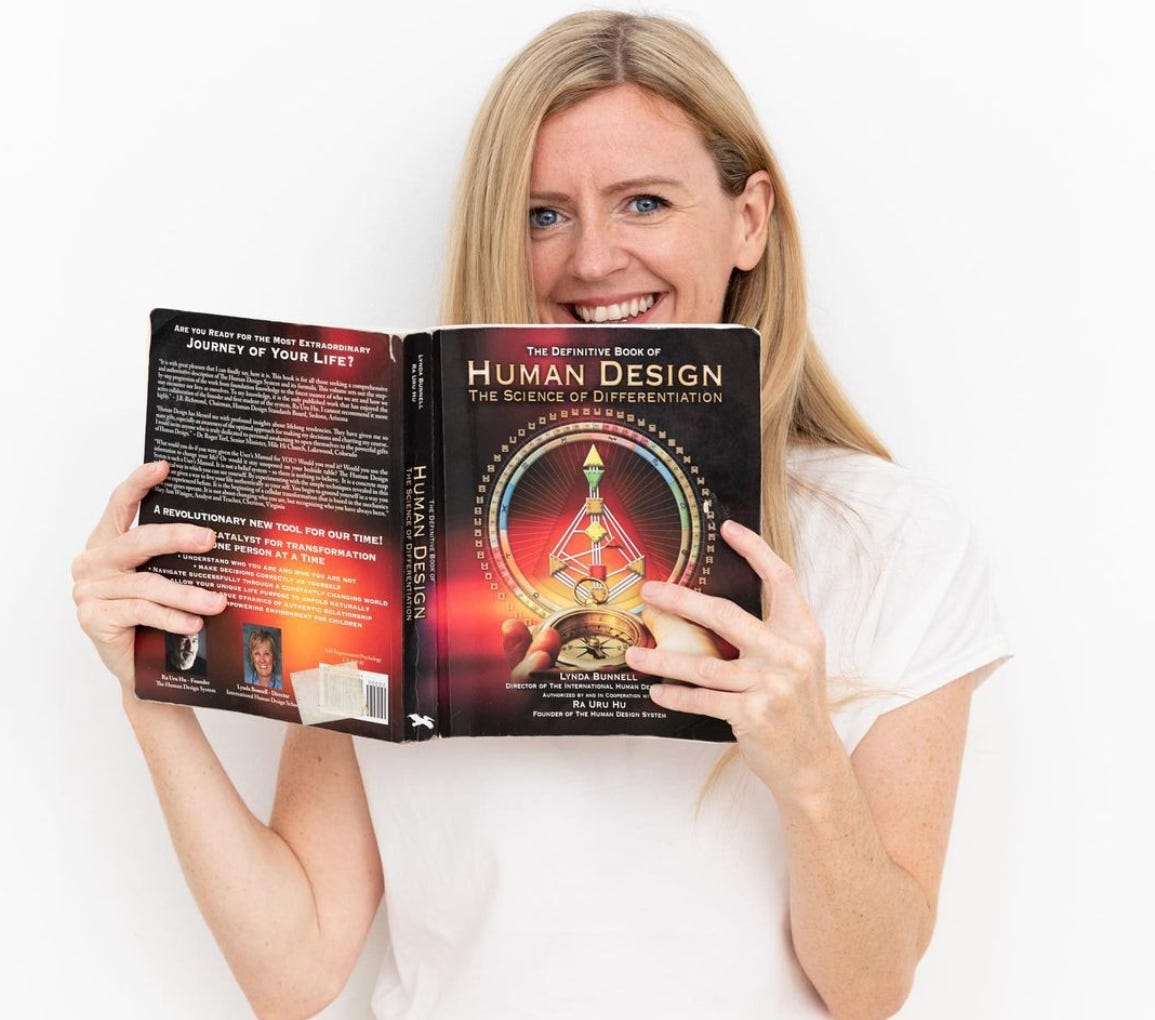
Ep 2424. You're Not Doing it Wrong, You're Just Being You! Understanding Human Design with Abbey Wilson
Read or watch this episode hereAbbey Rae Wilson is not only a good friend but an incredible Human Design Guide. We met at Danny Morel’s event, Awaken, a few weeks ago and we immediately connected over our mutual love of Human Design (in addition to her being a Manifesting Generator- the people I gravitate towards most. More on that in this episode.)I’ve found when you're aware of your Human Design, you can connect and know people more deeply, which is why I immediately felt connected to Abbey.Our community is primarily ADHDers, and there's just so much shame around feeling like we're always “doing it wrong.”There's that feeling of “we don't fit in the box” or there's this good “right” way to do it that we’re not.And so for me, Human Design has been this permission giving resource of “oh wait, that's not actually real. There is no right. We're not actually all supposed to be doing it the same way.”That’s why I'm so excited to have this conversation with Abbey because it's such a reassuring resource, not only to better understand yourself, but then to live your life in more aligned ways that just flow easier and that validate your own experience.All of this wisdom is so valuable and affirming to understand ourselves in this way. And it gives us this template to start moving through life in this new way that gets to feel better, easier, and softer on ourselves because it's all by design.Connect with AbbeyFree Human Design Mini-ReadingHuman Design Parenting ResourcesDive Deeper in a 1:1 with AbbeyFollow Abbey on InstagramCheck out her website to learn moreP.S. Craving a safe space to reparent yourself with other ADHD moms who get it? Check out my community here on Substack.This is a public episode. If you’d like to discuss this with other subscribers or get access to bonus episodes, visit neurodiversityadvocate.substack.com/subscribe

Ep 2323. What To Do When Your Perfectionism Brings Up Shame As An ADHD Mom
It all started with this conversation I was having with a friend the other day. She’s really been struggling with the emotions that come up in her parenting, the way that she responds in those moments and the shame she'll then feel about her response. Really wanting to do it perfectly.I just found what she was sharing so relatable to my own path as a mom. Which means it's likely relatable to a lot of us.There’s no such thing as perfect parentingSo often as moms, we have this desire, whether we're fully conscious of it or not, to never fail our kids.* To do things perfectly.* To do it right.* To do all the things for our kids that our parents didn't do for us.And it can be easy to think, I'm never going to make those mistakes my parents made. But what I've found is, we have our whole new slew of mistakes that we make.Sometimes we are unconsciously passing the same things down, but sometimes we're reacting to new situations from our wounded childhood parts.And so, until we're fully integrated and whole with all the different parts of us that have trauma in our bodies.* It's normal to make mistakes.* It's normal to hurt our kids.It hurts me to say those words. It feels like an oxymoron, like that should not happen.The idea of hurting my kids is so uncomfortable that it's like physically painful.And I think that this is common amongst mothers.So, when this comes up, how do we meet that discomfort? What do we do with that?Read and comment with the article here.P.S. Craving a safe space to reparent yourself with other ADHD moms who get it? Check out my community here on Substack.This is a public episode. If you’d like to discuss this with other subscribers or get access to bonus episodes, visit neurodiversityadvocate.substack.com/subscribe

Ep 2222. The Missing Piece In The Healing Puzzle: Somatic Therapy With Britt Piper
I've been really drawn to ADHD as a trauma response lately. That’s why I’m excited I got to pick Britt Piper’s brain about this idea of complex trauma as something that often coincides with neurodivergence.So, how do we meet the needs of these wounded parts of ourselves, when as a culture, we've been taught: talk therapy is the answer?As someone who's been in talk therapy for most of my life, I've found that there's parts of it that are so valuable in understanding myself. But then I have this tendency to get stuck overanalyzing my trauma. I know why all of this is happening, but there's this disconnect between my mind and my body.That's how I landed on Britt's work. The somatic space feels like this bridge that we're not all receiving access to. The body informs the mind, the mind informs the body, and it's just two different pieces of the exact same puzzle.I think that we're finally at a moment in the healing space where people realize the mainstream is missing half the conversation, which has been so focused on mindset, cognition, and talk therapy.So often there's this warring conversation of you're either body based or you're focusing on the mind. And what I really aim to do is to help people recognize that they need to work both.So, that’s what we're trying to do. Is allow ourselves to be with the experience of the body rather than out of it.This is what really made the difference for me, the combination of body based healing with therapy.Healing is not a blanket approach. It's going to look so different for everyone, but I do think having a combination between bottom up and top down approaches can be most beneficial.It changes your patterns, but it also creates greater resilience within your system.Connect with BrittFree Trauma Healing Mini-CourseThe Body First Healing ProgramInstagramP.S. Craving a safe space to reparent yourself with other ADHD moms who get it? Check out my community here on Substack.This is a public episode. If you’d like to discuss this with other subscribers or get access to bonus episodes, visit neurodiversityadvocate.substack.com/subscribe

Ep 2121. Befriending Your Nervous System After Years Of Overthinking
I just got back from a three-day retreat in Palm Springs, with Danny Morel. He does these events called Awaken.And I will tell you, it opened up my heart and my capacity to be with a lot of things in a new way.That amongst a lot of work I've been doing internally to: * befriend * heal * and better understand my nervous system. Now I'm finally at this place of:* Let me be.* Let me feel.* Let me embody. And this is why I've been bringing you guys a lot of strategies with emotional regulation like my NEW toolkit freebie to help you keep track and stay organized with the different high payoff tools for your nervous system.Having strategies that ground me into my body, connect my body to my mind. As people with ADHD, many of us have complex trauma. We struggle with emotional regulation and we're highly sensitive. We feel things really deeply and so no wonder we try to run away from our feelings…. Cause it hurts. It's intense. We've been told it’s too much.So it makes so much sense why we’d be running from it, hiding from it, looking for ways to suppress. But I think that there comes a point in our life where we're desperately longing to feel.I'm starting to create more space in my nervous system to be with myself. I'm starting to create more space around those moments where I’m dysregulated or triggered.Tearing all of those things off to just be with yourself is very vulnerable. But I really want you to think of it as this entry point into creating enough space to be in your body. To be with whatever's there. To stop running from it. And to not judge it. Mothers are the root. So healing our own nervous systems as primary caregivers, as mothers, as women who, I'm just going to say it, the vast majority of us have complex trauma- especially if we're neurodivergent. Ultimately, allows us to hold space so we can co-regulate and support our kids.That is empowerment. We are in control. We create our realities. We create our experiences. It always comes back to us. I would love to hear if you have any thoughts, feelings, or if you can relate over on Substack? The nervous system needs us to baby step into these things. So stay tuned for these episodes where we'll dive deeper into it all.Watch or read the episode here.Join our community for ADHD Moms here.P.S. Looking for support in reparenting yourself? I’m here for you. Click here to learn more about my 1:1 packages.This is a public episode. If you’d like to discuss this with other subscribers or get access to bonus episodes, visit neurodiversityadvocate.substack.com/subscribe

Ep 2020. Reparenting Ourselves Through Low Demand Parenting with Amanda Diekman
In this episode, I chat with Amanda Diekman, the author of Low Demand Parenting. If you've ever felt exhausted by the daily demands of parenting—especially if you're raising a neurodivergent child—this episode is for you!What you'll learn in this episode:What Low Demand Parenting is and why it’s a game-changer for neurodivergent kidsThe connection between Pathological Demand Avoidance (PDA), ADHD, and high-masking autismWhy traditional parenting strategies often fail kids with high demand sensitivityHow dropping non-essential demands can actually help kids (and parents) thriveThe difference between fake dropping demands vs. truly creating a supportive environmentWhy reparenting yourself as a neurodivergent mom is just as important as supporting your kidsHow to balance your own needs as a parent while meeting your child's needs without burnoutResources mentioned in this episode: Get the first chapter of Amanda's book: Low Demand Parenting here for freeTake the FREE quiz: What Self-Regulation Technique do you need right now?Join the community: https://neurodiversityadvocate.substack.com/aboutConnect with Melissa:Schedule a complimentary consultation call with me!Instagram: @neurodiversity_advocate
Ep 1919. Helping Neurodivergent Kids By Helping Their Moms First
In this episode, I share a big shift in my work—focusing on supporting moms of neurodivergent kids. While I started out wanting to help educators, I’ve realized that the biggest impact comes from empowering moms first. When we have the tools, support, and space to care for ourselves, it changes everything for our kids.I’m also introducing my ADHD Mom Support Group on Substack, a space for moms to connect, feel seen, and get the support they deserve. If this speaks to you, I’d love for you to join me!Take the FREE quiz: What Self-Regulation Technique do you need right now?Join the community: https://neurodiversityadvocate.substack.com/aboutConnect with Melissa:Schedule a complimentary consultation call with me!Instagram: @neurodiversity_advocate
Ep 1818. Healing Trauma & Breaking Generational Cycles
In this episode, I explore the connection between trauma, self-sabotage, and the limiting beliefs we carry from childhood. Drawing from the work of Dr. Gabor Maté and Susan Bohm, I discuss how trauma isn’t just about what happened to us, but what we made it mean about ourselves. I reflect on how these unhealed wounds shape our decisions and keep us stuck in patterns of self-doubt and people-pleasing. As cycle breakers, we have the opportunity to heal ourselves and future generations by recognizing these patterns, reparenting ourselves with compassion, and shifting into conscious living.Read on Substack: https://neurodiversityadvocate.substack.com/p/were-the-cycle-breakersTake the FREE quiz: What Self-Regulation Technique do you need right now?Join the community: https://neurodiversityadvocate.substack.com/aboutConnect with Melissa:Schedule a complimentary consultation call with me!Instagram: @neurodiversity_advocate

Ep 1717. Creating Your Self-Regulation Toolbox As an ADHD Parent
In this episode, I break down the connection between our nervous system, emotions, and daily actions as ADHDers. Understanding how to create safety in our bodies when we feel triggered or disregulated is essential for emotional regulation and overall well-being. Since no two nervous systems are the same, I share practical ways to identify high-payoff tools that work for you and how to build a personalized regulation toolkit.Key takeaways from this episode:How do we apply nervous system regulation tools in daily life?Why do different strategies work for different people?How can we create a personalized toolkit for emotional regulation?Read on Substack: https://neurodiversityadvocate.substack.com/publish/post/145089819Take the FREE quiz: What Self-Regulation Technique do you need right now?Join the community: https://neurodiversityadvocate.substack.com/aboutConnect with Melissa:Schedule a complimentary consultation call with me!Instagram: @neurodiversity_advocate

Ep 1616. What is Reparenting?
If you've been following me for a bit, you may have noticed a transition in the work that I'm doing and how I’m supporting our neurodivergent community.Through my work, masters education and personal experiences, my perspective has really been shifting from focusing on supporting the kids to supporting the mothers- because they are truly the root.As mothers, when we can embody:* Our higher selves* Our imperfections* Our differences in a way that we radically accept ourselves.* It allows us to then radically accept our children. It allows us to create connection in a way that is deep and meaningful and present.When we're in denial or we're ashamed or we're hiding or masking or conforming to feel approved and loved by people based on a version of us that isn't us. We're going to pass that inauthenticity down to our kids.Unintentionally, we're going to then support them in doing the same because kids do what we do, right? What we're modeling is so much more powerful than our words. It's like we can say: “Be true to yourself” and if we're not true to ourselves- nothing will change.This ADHD community holds a lot of shame, a lot of pain, a lot of grief, I feel from feeling:* Misunderstood* Alone* Like we don't really fit in.* And really feeling unseen in our experiences.* And that's painful.And so as adults, we carry these wounds, whether they came from our parents, society, our culture, our school settings, from our teachers or all of the above. We carry these things within ourselves on some level, whether we're fully aware of them or not, and it impacts us:* It impacts the way we feel about ourselves.* It impacts the way we show up in the world.* It impacts our nervous system.* How we respond to environments and situations and relationships.* It really impacts everything.And so this idea of reparenting ourselves as mothers, I feel, is the path of least resistance to truly heal ourselves and then inadvertently (without a whole lot of effort) heal our kids and our kids' kids.Really shifting this generational experience that we're having within families and within our collective that's that's harmful.If you haven't checked it out yet- I've been sharing my favorite go to’s for emotional regulation: Creating your ‘Self-Regulation Toolbox’P.S. Want to create your own self-regulation toolbox and work on reparenting yourself together? I’d love to support you in my paid community for ADHD Moms. Click here to learn moreThis is a public episode. If you’d like to discuss this with other subscribers or get access to bonus episodes, visit neurodiversityadvocate.substack.com/subscribe
Ep 1515. Validating Neurodivergent Trauma and Creating a Sensory Friendly Lifestyle with Kelsea Newman
In today’s episode, Kelsea Newman, a sensory trauma occupational therapist and fellow ADHDer, shares her expertise on sensory-friendly lifestyles for neurodivergents and highly sensitive individuals. As someone who is both an ADHDer and highly sensitive, the intersection of neurodivergence, trauma, and sensory processing is a topic of deep curiosity. These concepts can often feel overwhelming or unclear, especially for those unfamiliar with the field. This conversation explores how sensory processing affects ADHDers, the role of sensitivity in daily life, and ways to create environments that better support the nervous system.Connect with Kelsea:WebsiteThe Sensory MembershipLet’s Get Sensory PodcastInstagramTake the FREE quiz: What Self-Regulation Technique do you need right now?Join the community: https://neurodiversityadvocate.substack.com/aboutConnect with Melissa:Schedule a complimentary consultation call with me!Instagram: @neurodiversity_advocate
Ep 1414. How Our Classroom Anxiety Can Follow Us Into Adulthood
In today’s episode, Dr. Emily King joins the conversation to explore anxiety in the classroom and how it follows many of us into adulthood. While Emily identifies as neurotypical and I identify as neurodivergent, we’ve both experienced the challenges of anxiety in learning environments. This discussion takes a comprehensive look at the topic from multiple perspectives—educational, parental, and personal—offering insight into how these early experiences shape us and how we can better support neurodivergent children in academic settings.Connect with Dr. Emily:For ParentsFor TeachersWebsiteTake the FREE quiz: What Self-Regulation Technique do you need right now?Join the community: https://neurodiversityadvocate.substack.com/aboutConnect with Melissa:Schedule a complimentary consultation call with me!Instagram: @neurodiversity_advocate
Ep 1313. Navigating ADHD As a Parent with Brooke Schnittman
In today’s episode, Brooke Schnittman, founder of Coaching with Brooke, joins the conversation to share her expertise in executive function coaching for students and adults with ADHD. With years of experience helping people shift from chaos and frustration to confidence and focus, Brooke offers valuable insight into navigating ADHD in both personal and professional life. As a mom with ADHD raising children with ADHD, I’m especially curious to explore the challenges of balancing our own neurodivergence while supporting our kids. This discussion dives into the tools and strategies that help families thrive.Connect with Brooke:WebsiteInstagram - DM me “pod” and I'll send you a link to a free guide for ADHDTake the FREE quiz: What Self-Regulation Technique do you need right now?Join the community: https://neurodiversityadvocate.substack.com/aboutConnect with Melissa:Schedule a complimentary consultation call with me!Instagram: @neurodiversity_advocate
Ep 1212. Understanding, Supporting, and Advocating for Your Twice Exceptional Child
In today’s episode, I’m joined by Julie Skolnick, author of Gifted and Distractible and a passionate advocate for twice-exceptional (2e) children. As a mother of 2e kids herself, Julie brings deep insight into the unique challenges and strengths of gifted children who also have learning differences. We explore how reframing giftedness can help parents and educators provide the support these children are silently craving. This conversation dives into why a strengths-based approach is critical and how simple shifts in communication can empower 2e kids to thrive.In this episode, we discuss:What giftedness really means and why it’s often misunderstoodHow to check in with your 2e child in a way that fosters connectionThe long-term effects of solving your child's problems for themA powerful mindset shift for parents before school drop-offThree game-changing strategies to support 2e kids: the pause button, communicating the "why," and "noticing verbs"Resources mentioned: Equitable Learning Environments Pamphlet to share with your child’s teacher and create a more supportive classroom environmentTake the FREE quiz: What Self-Regulation Technique do you need right now?Join the community: https://neurodiversityadvocate.substack.com/aboutConnect with Melissa:Schedule a complimentary consultation call with me!Instagram: @neurodiversity_advocate
Ep 1111. A Neurodiversity-Affirming Approach to the IEP Process
In today’s episode, I sit down with Lisa Baskin-Wright, a former educator and IEP coach who specializes in a neurodiversity-affirming approach to the IEP process. We explore how shifting from a compliance-based mindset to a strengths-based framework can empower both children and parents navigating the complexities of IEPs. Lisa shares how parents can advocate more effectively, collaborate with educators, and ensure their child’s unique needs are truly met. This conversation is a must-listen for any parent looking for a more affirming and student-centered IEP experience.In this episode, we discuss:What a neurodiversity-affirming IEP is and why it mattersHow parents can craft effective Parent Input Statements and advocate during meetingsThe problem with compliance-based focus goals and how to reframe themStrategies for rebuilding focus goals that set students up for successThe role of connection, collaboration, and healthy conflict resolution in the IEP processKey federal regulations parents should knowPractical goal ideas for neurodivergent learnersA mindset shift that helps parents navigate the IEP journey with more confidenceTake the FREE quiz: What Self-Regulation Technique do you need right now?Join the community: https://neurodiversityadvocate.substack.com/aboutConnect with Melissa:Schedule a complimentary consultation call with me!Instagram: @neurodiversity_advocate
Ep 1010. ADHD, Executive Function, and Perfectionism
In today’s episode, I sit down with Megan Barnett, an ADHD and Executive Function coach with The Learning Collective, to explore why kids with ADHD struggle with task initiation, procrastination, and perfectionism. We discuss how executive function challenges impact motivation and self-esteem, and how parents and educators can better support neurodivergent learners. Megan and I share practical strategies to help kids feel more confident in their abilities and develop healthier approaches to learning and productivity.In this episode, we discuss:What ADHD really is and the three types of ADHDWhy grades shouldn’t be the ultimate measure of successHow executive function skills affect task initiation and motivationThe concept of cognitive offloading and how it can support ADHD brainsThe link between perfectionism, procrastination, and fear of failurePractical strategies to help kids start tasks with confidenceHow to introduce the topic of ADHD to children in a supportive wayTake the FREE quiz: What Self-Regulation Technique do you need right now?Join the community: https://neurodiversityadvocate.substack.com/aboutConnect with Melissa:Schedule a complimentary consultation call with me!Instagram: @neurodiversity_advocate
Ep 99. Neurodivergent By Design: The Evolutionary Advantage of Thinking Differently
In today’s episode, I sit down with clinical pediatric psychologist Dr. Alex Reed to explore why neurodiversity isn’t just an accident—it’s an essential part of human evolution. We discuss how neurodivergent minds have played a critical role in human survival, adaptation, and innovation, and how we can harness these strengths today. Dr. Reed shares insights on how to embrace and support neurodiverse ways of thinking in education, parenting, and daily life.In this episode, we discuss:Why neurodiversity is an evolutionary advantage, not a flawHow neurodivergent thinkers have historically helped communities thriveThe importance of embracing different cognitive strengths in today’s worldHow we can support neurodiverse children in education and parentingPractical ways to nurture specialized thinking and unique abilitiesGrab my FREE equitable Learning Environments Pamphlet to help your child’s teacher create a more inclusive and supportive classroomTake the FREE quiz: What Self-Regulation Technique do you need right now?Join the community: https://neurodiversityadvocate.substack.com/aboutConnect with Melissa:Schedule a complimentary consultation call with me!Instagram: @neurodiversity_advocate
Ep 88. Understanding Twice-Exceptional (2e) Learners
In today’s episode, we explore the complexities of Twice Exceptional (2e) students—those who are gifted in certain areas while facing learning differences in others. It can be baffling for parents and educators to see a child excel in math while struggling with reading, leading to misdiagnosis or a lack of support. This conversation sheds light on why 2e students often go unnoticed and how we can better support them in educational settings.In this episode, we discuss:What it means to be Twice Exceptional (2e)Why giftedness can sometimes mask learning challenges (and vice versa)The importance of recognizing and supporting 2e students in schoolsStrategies for parents and educators to help 2e children thriveHow to create equitable learning environments that nurture both strengths and challengesGrab the FREE equitable Learning Environments Pamphlet to help your child’s teacher create a more inclusive and supportive classroom.Take the FREE quiz: What Self-Regulation Technique do you need right now?Join the community: https://neurodiversityadvocate.substack.com/aboutConnect with Melissa:Schedule a complimentary consultation call with me!Instagram: @neurodiversity_advocate
Ep 77. The Weight of Masking and How I Stopped Hiding My True Self
In today’s episode, I’m opening up about my experience as a highly sensitive and neurodivergent person—how masking my true self began at a young age and how I’ve learned to unmask, set boundaries, and prioritize what truly fills me up. I share my journey of recognizing the emotional toll of people-pleasing, understanding why I felt safe and valued when I met others’ expectations, and the moment I realized it wasn’t sustainable. This episode is all about reclaiming energy, emotional regulation, and embracing authenticity.In this episode, we discuss:What it means to be both highly sensitive and neurodivergentHow masking begins early and why it feels necessary for survivalThe emotional impact of people-pleasing and self-abandonmentHow to set healthy boundaries and protect your energyPractical ways to regulate emotions and say yes to what truly alignsTake the FREE quiz: What Self-Regulation Technique do you need right now?Join the community: https://neurodiversityadvocate.substack.com/aboutConnect with Melissa:Schedule a complimentary consultation call with me!Instagram: @neurodiversity_advocate
Ep 66. What Helps Neurodivergent Students Feel Engaged at School?
In today’s episode, Ana Lorena Fábrega joins me to explore how we can make learning more engaging and help kids express their creative energy. We dive into rethinking traditional schooling methods, the power of letting kids share their own ideas, and what video games can teach us about motivation and fulfillment. Ana, a former teacher turned author and edupreneur at Synthesis, shares insights from her book The Learning Game on how to encourage kids to think independently, embrace challenges, and develop a lifelong love for learning.What you’ll learn in this episode:Why we should question the “right” way to do schoolThe one thing kids are most excited to write or share aboutHow video games tap into key elements for happiness and engagementStrategies to help kids embrace challenges and think for themselvesHow to nurture a love for learning in and beyond the classroomTake the FREE quiz: What Self-Regulation Technique do you need right now?Join the community: https://neurodiversityadvocate.substack.com/aboutConnect with Melissa:Schedule a complimentary consultation call with me!Instagram: @neurodiversity_advocate