Naked Scientists, In Short Special Editions Podcast
989 episodes — Page 13 of 20

Ep 389Growing Human Hearts
Growing a human heart from a single cell may seem like science fiction, but scientists at the Gladstone Institute at the University of California San Francisco, have taken a huge step forward, by producing the first three-dimensional, beating, human heart chamber. Previously, it had been possible to produce a two dimensional sheet of beating heart cells, but to really gain an understanding of heart formation in a developing foetus and perhaps more importantly, how drugs given to women during pregnancy may affect this development, a three dimensional structure was needed. By treating stem cells... Like this podcast? Please help us by supporting the Naked Scientists

Ep 388Volcanoes may have ended the Roman Empire
Volcanic eruptions can be both beautiful and destructive at the same time, but now scientists have found evidence they may have also been linked to plagues, and even the fall of the Roman Empire. When a volcano erupts, chemicals are released into the atmosphere in huge quantities, which reflect light away from the earth and therefore cause climate change, in the form of summer cooling. These chemicals are also locked away in the ice, providing a snapshot of the time of an eruption. Now scientists have dated the ice cores, and the records of summer cooling, from tree rings and have found they... Like this podcast? Please help us by supporting the Naked Scientists

Ep 387Benefitting medically from marijuana
Marijuana has a reputation for helping people who are in pain. But achieving the analgesic effect comes at a cost: users of the drug complain of memory loss and mood disturbances. Now, by identifying the pathway in the brain that is responsible for these psychoactive side effects, University of East Anglia researcher Peter McCormick has found that in experimental mice it's possible to isolate just the pain killing actions Like this podcast? Please help us by supporting the Naked Scientists

Ep 386Climate change is bad news for bees
It's hard to miss the fact that bees are in trouble, with worrying news of colony collapse disorder devastating bee numbers, and concerns about the effects of pesticides on our most important pollinators. Now there's something else for our buzzing friends to worry about: climate change! Jeremy Kerr and his colleagues at the University of Ottawa have been using museum specimens to track how bee populations have shifted over the past century. What they've discovered is that bees and climate change don't mix... Like this podcast? Please help us by supporting the Naked Scientists

Ep 385Why do our brains age?
One of the key factors that makes the brain age has been uncovered by scientists in the US. Young mice infused with the blood of older animals developed a drop in their cognitive abilities. This is down to a chemical made by the immune system called beta2-microglobulin. Why it has this pro-ageing effect, we don't know; but, encouragingly, removing it reverses cognitive decline, and promotes the growth of stem cells throughout the body and brain. Chris Smith spoke to Saul Villeda and the University of California, San Francisco to find out more.... Like this podcast? Please help us by supporting the Naked Scientists

Ep 384Predicting depression and anxiety
More than a quarter of people are affected by anxiety or depression each year. But are some people more at risk than others? By studying groups of rhesus monkeys, Dr Ned Kalin from the University of Wisconsin in Madison found that individuals displaying a trait known as "anxious temperament" may be up to 50% more likely to go on to develop anxiety disorders later in life, and the same seems to be true in humans... Like this podcast? Please help us by supporting the Naked Scientists

Ep 383RoboCabs: the key to curbing emissions?
How does being driven around in a robotic taxi grab you? Currently, cars contribute 13% to our greenhouse gas emissions worldwide. However, a new study has found that were we to switch to using a fleet of electrified, autonomous taxis - dubbed "robocabs" - we could reduce our emissions to next to nothing.Graihagh Jackson debated the merits of these self driving vehicles with the author of the study, the Lawrence Berkeley National Laboratory's Jeffrey Greenblatt... Like this podcast? Please help us by supporting the Naked Scientists

Ep 382Men and women may feel pain differently
It's an age-old debate, who feels more pain, men or women? Scientists at McGill University have taken us one step closer to answering this question with a study using mice. Jeff Mogil and his team have discovered that the biological pathway that causes chronic pain is completely different in male and female mice. If the same is found to be true in humans it could lead to gender specific, or 'his n' hers', painkillers in the not too distant future. Tom Crawford spoke to Jeff Like this podcast? Please help us by supporting the Naked Scientists

Ep 381What do fish and aircraft have in common?
What do fish and aircraft have in common? Well, water and air are both fluids. And when fish move their tails and bodies from side to side, they push against the surrounding water and leave behind a mini whirlpool or vortex, which contains information about the drag forces experienced by the fish as it moved along. And if you can wind back the events that produced the vortex you can work out how it formed in the first place and therefore how much drag the fish felt. This is what Florian Huhn, from the German Aerospace Centre, has managed to do. And because aeroplanes produce very similar... Like this podcast? Please help us by supporting the Naked Scientists

Ep 380Just give me a second...
Rejoice because at midnight tonight, a second will be added to clocks across the world. Seeing as you now have all of this extra time, here's Naked Scientist Tom Crawford with everything you need to know about the leap second... Like this podcast? Please help us by supporting the Naked Scientists

Ep 379PPI's Increase Heart Attack Risk
One of the world's most widely-used classes of drugs could significantly increase your risk of suffering a heart attack; that's according to a new study by researchers at Stanford University, in California and published in PloS One this week. Nick Leeper and Nigam Shah used a computer programme to identify patients who were using so-called proton pump inhibitors or PPIs; these block stomach acid production so they're useful for treating conditions like heartburn. But there might be serious side effects, as Nick Leeper explains to Chris Smith... Like this podcast? Please help us by supporting the Naked Scientists
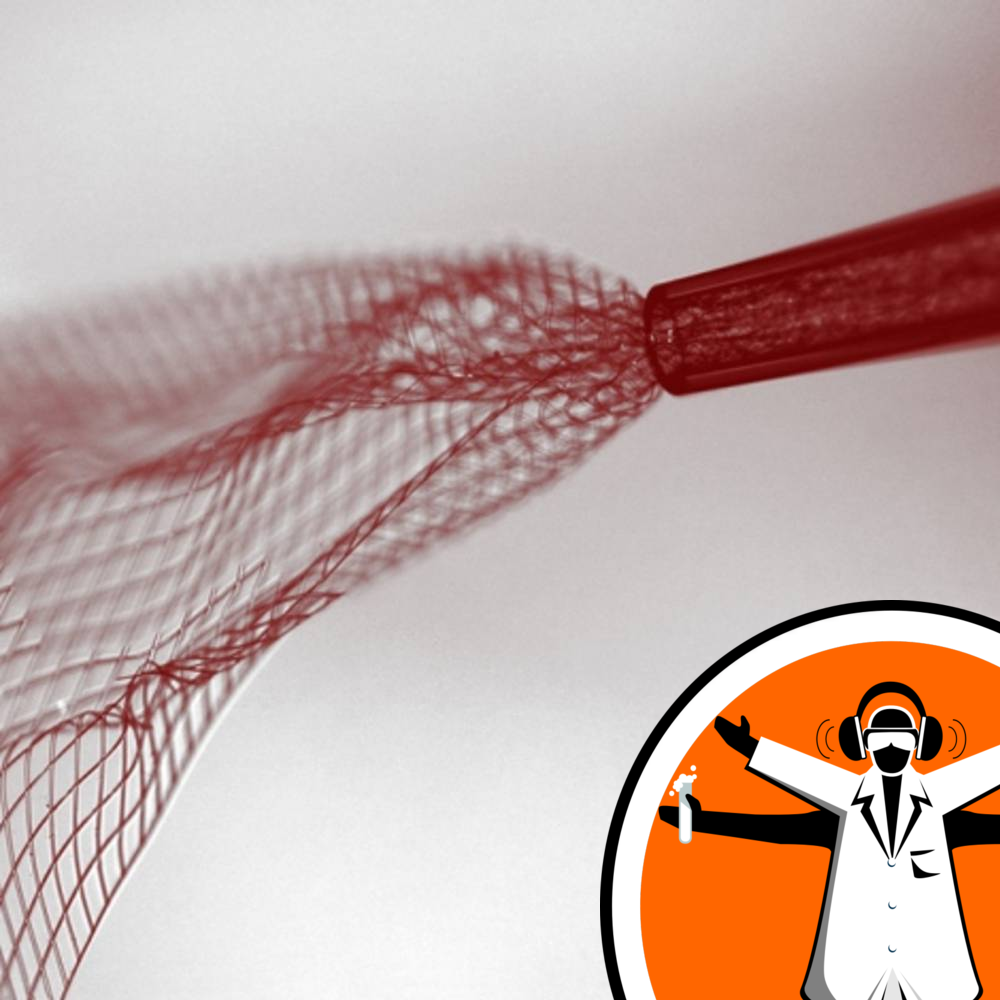
Ep 378Self-unrolling Brain Implant
Scientists in the US have developed a new brain implant that can be used to record information from nerve cells, and also to transmit signals into the nervous system, to stimulate parts of the brain. Unlike existing electrode devices, which can trigger a scar to form around the implant that eventually prevents it from working, the new device is made from a polymer-coated nickel mesh resembling miniature chicken wire, which can be rolled up before it is introduced into the brain. Chris Smith spoke to Harvard's Charles Lieber... Like this podcast? Please help us by supporting the Naked Scientists

Ep 37775 million year-old Dinosaur Cells found
While Jurassic World may be wowing the crowds at the cinema, a new study from researchers at Imperial College has been making waves in the world of real-life dinosaurs. Although scientists have previously found evidence for soft tissues, such as blood, in very well-preserved dinosaur fossils, this has been controversial. Now cutting-edge microscopy techniques have revealed what looks like blood cells and even protein fibres in fossilised bones dating back 75 million years. Kat Arney took a trip to the Natural History Museum to meet the fossils - as well as researcher Susannah Maidment - to dig... Like this podcast? Please help us by supporting the Naked Scientists

Ep 376Hawkmoths Shadowy Existence Uncovered
Hawkmoths live a shadowy existence; they stick their tongues down the flowers' neck, all the while being tossed about in the wind. And as if that wasn't enough, they do it all in the pitch black. With tiny brains and even tinier eyes - they seem to defy what's physically possible. So how do they do it? Simon Sponberg has uncovered the secret and explained his findings to Graihagh Jackson Like this podcast? Please help us by supporting the Naked Scientists

Ep 375Exploring Saturn's Newest Ring
Saturn is one of the most well-known planets in the solar system, perhaps owing to its distinctive set of rings. The largest of these rings, the H-ring, was only discovered as recently as 2009 and cannot be seen from Earth. Now, using images taken by NASA's WISE spacecraft, scientists at the University of Maryland have given us the first insights into the structure and formation of Saturn's outermost ring. Thomas Crawford spoke to lead researcher, Doug Hamilton, to try to remove the shroud around Saturn's most mysterious ring... Like this podcast? Please help us by supporting the Naked Scientists

Ep 374Ending Earthquakes With Water
Earthquakes occur at faults, or fractures, in the Earth's crust - where two big slabs of rock meet. Movement under the surface tries to push the rocks past each other but the rough edges get stuck together until enough stress builds up to jerk them past each other - and this violent jerking can cause devastating quakes. But a new instrument, and an experiment in France, has shown that we might actually be able to relieve this stress using fluid injection, as Jean-Philippe Avouac explains to Heather Douglas Like this podcast? Please help us by supporting the Naked Scientists

Ep 373Coffee staves off depression
Coffee is an essential part of life for many of us, but could it help to cut depression? Like this podcast? Please help us by supporting the Naked Scientists

Ep 372Sequencing Schizophrenia
The specific genes that cause schizophrenic symptoms have been found by researchers at Cardiff University. A huge study of the DNA of over 10,000 schizophrenics and 15,000 controls helped identified the genes involved, and determine that they are in fact the cause rather than an effect. Chris Smith spoke to Professor Michael Owen about the impact these findings could have on our understanding of this mental illness... Like this podcast? Please help us by supporting the Naked Scientists

Ep 371Choose Your Treatment Wisely
A campaign to combat "over-treatment" of patients has been announced by doctors' leaders this week. Called "Choosing Wisely", the initiative promotes more open conversations between doctors and patients, rather than an obsessive - and frequently financially incentivised - adherence to targets and guidelines. Consultant cardiologist Dr Aseem Malhotra authored the report, which was published this week in the British Medical Journal... Like this podcast? Please help us by supporting the Naked Scientists

Ep 368Baboon Buddies
Humans, like all other primates, are a sociable bunch and we tend to pick friends who are fairly similar to us in terms of education, religion, personality and so on. Now researchers studying a troop of wild Chacma baboons living in Namibia have discovered that these animals pick their buddies in the same way, tending to hang around with animals that share similar personality traits. To find out more about these cliquey monkeys, I took a trip to London Zoo to meet primate expert Guy Cowlishaw, who was part of the study team. Like this podcast? Please help us by supporting the Naked Scientists
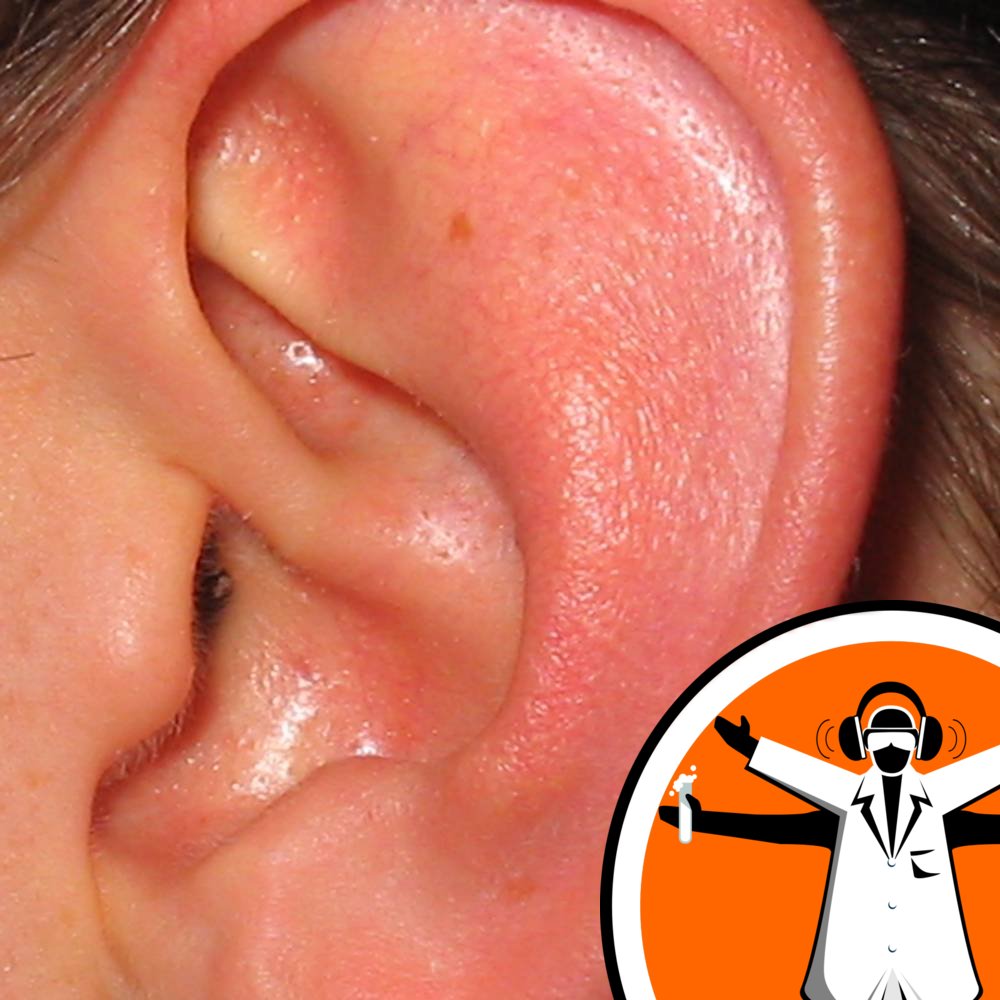
Ep 367Selective Hearing
How our ears screen out sounds so that we can listen selectively only to those sounds we want to hear - like a friend's voice across a noisy room for instance - has been revealed by scientists in Australia. Gary Housley, from the University of New South Wales, has found that the inner ear, known as the cochlea, contains a population of sound-sensitive "hair cells" that communicate with the brain and work like miniature amplifiers to control the sensitivity of the ears to different sound frequencies... Like this podcast? Please help us by supporting the Naked Scientists

Ep 369A Study in Scarlet
Dressing in red around the office might have your colleagues seeing you in a different light! A new study from Durham University's Robert Barton has found that when the same person is shown wearing a red-coloured top, rather than a blue one, they tend to be rated as dominant, aggressive, and even more anger-prone by others Like this podcast? Please help us by supporting the Naked Scientists

Ep 370Winter Immune Blues
The incidence of many diseases, including heart attacks and multiple sclerosis, peaks in winter time. Now it looks like this could be an unfortunate throw-back to our prehistoric origins. Cambridge University scientist John Todd has found that the immune system goes through annual cycles of activity, with peak levels of inflammation coinciding with winter time. Historically, this would have protected our ancestors, but in the more luxurious modern era we inhabit, it's boosting our disease risk, as he explained to Georgia Mills... Like this podcast? Please help us by supporting the Naked Scientists

Ep 366Cells Turn Inside-Out
Plants and animals are incredible constructions, built from the fundamental building blocks of cells. But how are we made? By modelling how algae cells literally turn themselves inside out, researchers are hoping to understand how our own bodies are formed. Heather Douglas spoke to Professor Raymond Goldstein, Schlumberger Professor of Complex Physical Systems at the University of Cambridge, to find out how Like this podcast? Please help us by supporting the Naked Scientists

Ep 365Facebook leads to biased views
Content curation and news filtering by Facebook, as well as other social media websites, likely leads to ideological biases in the information individuals see and read, a new study has shown. Like this podcast? Please help us by supporting the Naked Scientists
Ep 364Males donate competitively
If you are thinking of raising money for charity, what's the best way to ensure you hit your fundraising target? According to Nichola Raihani from UCL, you need to be an attractive woman so men will compete with each other to donate the most to your online giving page. Kat Arney went to find out why this is the case... Like this podcast? Please help us by supporting the Naked Scientists

Ep 363Modern lifestyles reduce gut bug diversity
You are not alone! Your body is home to a whole host of bacteria that live in and on you: your microbiome. You might be slightly repulsed by this idea, but these tiny organisms are really important for our health. There is now growing evidence that our microbes at risk from our modern lifestyles? Comparing samples of human bowel bugs from America with remote populations in Papua New Guinea, a research team have identified significant differences between the two microbiomes, and what's more, they think they know why. Georgia Mills spoke to Jens Walter from the University of Alberta Like this podcast? Please help us by supporting the Naked Scientists

Ep 362How do we hear time within sounds?
While you listen to a noise, nerve cells in your brain are busy processing sound information and helping you make sense it. One big mystery in the world of hearing research has been how we perceive repeated sounds that hit our ears slowly - like the tapping of a woodpecker on a tree - compared to much faster noises that seem to blend into a continuous tone. UCL's Daniel Bendor has been investigating how the cells in our brains manage to distinguish these different types of sound, and hopes his findings could lead to the development of better hearing aids. Kat Arney went to hear what he had to... Like this podcast? Please help us by supporting the Naked Scientists

Ep 361GM Salmonella shrinks cancers
Salmonella bacteria can be modified to make a safe anti-cancer treatment, scientists have shown. Like this podcast? Please help us by supporting the Naked Scientists

Ep 360Dark matter may not be completely 'dark'
Druham Universtiy's Richard Massey takes Chris Smith to a galaxy far, far away; or, more accurately, several galaxies over, which also happen to have just collided with each other, providing in the process new insights into one of the Universe's biggest enigmas, dark matter... Like this podcast? Please help us by supporting the Naked Scientists

Ep 359How the Moon was Made
How the Earth came by its Moon has always been something of a mystery: Scientists had theorised that a Mars-sized planet, called Theia, crashed into Earth and that the moon formed from the debris. But, analysis of the rock chemistry from the lunar surface reveals that the moon and Earth are practically identical. There appeared to be no chemical trace of Theia. So where did it disappear to? This chemical conundrum has thrown a lot of doubt on the impact theory. But a series of papers in the journal Nature suggests that the theory still holds up. Using simulations and isotope measurements,... Like this podcast? Please help us by supporting the Naked Scientists

Ep 358Evidence of dinosaur cannibalism
Evidence has been revealed that a type of dinosaur fell victim to occasional cannibalism. Daspletosaurus was a member of the tyrannosaurs group, and relative of the famous T. rex. A skull was found to have scratches matching the teeth of a predator around the same size, leading researchers to conclude that they did occasionally have the odd snack on one another. Georgia Mills spoke to Dave Hone, from Queen Mary, University of London, to find out more. Like this podcast? Please help us by supporting the Naked Scientists

Ep 357Yeast: Rising from the bread
A favourite Easter tradition are hot cross buns, but there's one particular ingredient which no bread can do without: yeast. What is about this strange powdery ingredient that makes it so useful? Philip Garsed took some freshly baked hot cross buns to molecular biologiest Lia Chappell to find out. Like this podcast? Please help us by supporting the Naked Scientists
Ep 356Listening to the bat highway code
If you've ever seen huge flocks of birds or a shoal of fish, you might have wondered how they are all able to move together without ever colliding. Now scientists at the University of Bristol believe they have been able to explain how flocks of bats are able to avoid collisions, by using just a few simple traffic rules. Like this podcast? Please help us by supporting the Naked Scientists

Ep 355When humans made their mark on the world
Geologists like to divide up history into epochs, or eras, separated by events that leave an indelible mark in the geological record of the earth - for example, the meteorite strike that finished off the dinosaurs 66 million years ago, whose impact is written in rocks across the globe. Similarly we humans have made our own irreversible impact on the planet, ushering in what's become known as the anthropocene era. But when did it actually start? Simon Lewis spoke to Kat Arney about how he's has been figuring it out. Like this podcast? Please help us by supporting the Naked Scientists

Ep 354How light can transmit WiFi
Anyone who has struggled with a lousy WiFi connection in a busy public space knows only too well that there are limits to how much data can be beamed over the airwaves like this. Now scientists have come up with a new technology that uses the room lighting to transmit data: effectively by causing the lights to blink billions of times per second using a form of visual morse code. Mark Peplow spoke to Chris Smith and shed some light on the process... Like this podcast? Please help us by supporting the Naked Scientists

Ep 353Adapting to Arsenic
In a remote area in the Andes mountain there exist perilously high levels of arsenic: one of the most toxic substances known to man. But people have been living there for thousands of years, and it has now been discovered that this population has adapted to this dangerous environment. The group have a DNA mutation associated with a fast metabolism- this means they can flush arsenic out of their system much more quickly than most people. Georgia Mills spoke to researcher Karin Broberg to find out more... Like this podcast? Please help us by supporting the Naked Scientists

Ep 352Sophie the Stegosaurus
Dr Kat Arney meets Sophie the Stegosaurus, and Natural History Museum researcher Charlotte Brassey. Like this podcast? Please help us by supporting the Naked Scientists

Ep 351What can we learn from NASA's Dawn probe?
After a seven and a half year journey, and with a price tag just shy of half a billion Dollars, NASA's Dawn spacecraft finally has the asteroid Ceres in its sights. Ceres is a massive asteroid which sits among a clutch of much smaller boulders, pebbles and dust out beyond the orbit of Mars. This field of debris is the rocky rubble left over from the time when the inner planets, including the Earth, were first forming, about 4 and a half billion years ago. This means asteroids like Ceres can help to uncover the origins of Earth and the minerals and materials, including the water, that we have... Like this podcast? Please help us by supporting the Naked Scientists

Ep 350FameLab: the snapping shrimp
FameLab is a competition where scientists battle it out to be the best at giving engaging short talks on their favourite areas of research. Six Cambridge-based finalists have been chosen by a panel of judges and we're hearing from a selection of them. In this episode we meet Daphne Ezer and hear about the fascinating (and terrifying) snapping shrimp... Like this podcast? Please help us by supporting the Naked Scientists

Ep 349Holes give diamonds their colour
Using a new super powerful electron microscope, scientists have discovered tiny holes are responsible for giving brown diamonds their colour. Like this podcast? Please help us by supporting the Naked Scientists

Ep 348Space Worms
Worms are about to help scientists to boldly go where no researcher has been before, by venturing into space to help us to understand how changes in gravity might affect our DNA. Although scientists don't think that the physical genetic letters of DNA can be altered by low-gravity space travel, or living on the Moon or another planet, there are signs that chemical markers, called epigenetic modifications, which control the activity of certain genes and can be passed on from parents to their offspring, can be altered by exposure to low gravity environments. Like this podcast? Please help us by supporting the Naked Scientists

Ep 347Detecting dark matter
It makes up most of the stuff in our universe, but we can't see it or weigh it - but we know it has to be there. This elusive substance is dark matter, and according to a new paper in the journal Nature Physics this week, it's all around us in our own galaxy - the Milky Way. To find out more about dark matter, and what this new map of the dark matter in our galaxy might tell us, Kat Arney went to speak to UCL astrophysicist Chamkaur Ghag, who's working on ways to detect dark matter here on earth. Like this podcast? Please help us by supporting the Naked Scientists

Ep 346Positive thinking improves your health
Has anyone ever told you to lose a few pounds? Get a bit more active? Work harder in school? We can sometimes become a bit defensive when given this type of advice even if we know it's probably the right thing to do. Now scientists have revealed how a simple activity - called self-affirmation - can improve the way we react to this type of advice, which can have positive effects on our health. Like this podcast? Please help us by supporting the Naked Scientists

Ep 345Differences between male and female brains
Your brain is more complex and powerful than the world's biggest supercomputer, built while you're a baby growing in the womb from the recipes encoded in your genes. But how do your growing brain cells know which genes to use? The answer comes from epigenetic modifications - the special chemical markers that are put on your genes that help cells switch them on or off at the right time and in the right place. Helen Spiers from Kings College London has been finding out how these epigenetic changes are involved in building the brain, and how they could explain some of the differences between... Like this podcast? Please help us by supporting the Naked Scientists

Ep 344From venom to medicine
A novel approach to detecting interactions between scorpion venom and its target molecule could aid in the discovery of new drugs for treatment of a wide range of nerve disorders. Like this podcast? Please help us by supporting the Naked Scientists

Ep 343Mitochondrial Diseases: 3 Parent Embryos
What are so-called "3 parent embryos", and what are the arguments for allowing it? Hannah Critchlow discussed the issues with MP Julian Huppert, who supported the recent motion to permit the process in the House of Commons... Like this podcast? Please help us by supporting the Naked Scientists

Ep 341How close are we to the next mass extinction?
Around 250 million years ago our world was a very different place. Rather than the different continents we know today, there was only one giant land mass - Pangea - covered with plants and animals. But then something went horribly wrong. Over a few million years, more than 95 per cent of all species on the early earth were wiped out in an event known as the Permian mass extinction. So what caused it? One researcher who thinks he might know is Mark Sephton from Imperial College London and, as he explained to Kat Arney, this wasn't the first time that our world has come to the brink of disaster. Like this podcast? Please help us by supporting the Naked Scientists

Ep 342Chicks can count too!
Humans do it. Primates do it. And now it's been found out that birds can also do it - 3 day old chickens have been shown to order numbers low to high, from left to right - just like on a ruler! The findings, published in Science, could indicate that this numerical ability is a feature of evolution, rather than culture - and could help explain why we pay more attention to things presented to our left... Zoologist Hannah Rowland from the University of Cambridge put Graihagh Jackson's numerical skills to the test... Like this podcast? Please help us by supporting the Naked Scientists

Ep 340Nano-Scale Quill Pen
Quill pens might be about to make a comeback - but not in a stationers! Because researchers have developed a nano-scale ink pen that can be used to control the shapes of polymers that can be used to make superfast computers. Polymers are are giant chemical structures made by linking lots of smaller molecules together, and what Imperial College's Alex Perevedentsev and his colleagues have discovered is that, with a dab of nano-ink delivered in the right way from their nib-pen, they can make polymers adopt specific shapes that alter the way light passes through them. And as he explained to Kat,... Like this podcast? Please help us by supporting the Naked Scientists