Naked Scientists, In Short Special Editions Podcast
989 episodes — Page 14 of 20

Ep 339Super-slippery, water repellent surfaces
A new breed of super metals, that are extremely water repellent have been created. Their potential applications range from rust and frost free aircraft to self-cleaning toilets. Danielle Blackwell spoke to Prof. Chunlei Guo from the University of Rochester to find out more... Like this podcast? Please help us by supporting the Naked Scientists

Ep 338Sea turtle sat nav
Sea turtles follow unique magnetic signatures to return to their home beaches to lay their eggs. Like this podcast? Please help us by supporting the Naked Scientists

Ep 337Crashing Cars
Over 3000 people are killed on the world's roads every day with further 20-50 million people left injured or disabled. And whilst the number of serious injuries have come down - one type of injury -damage to the spinal cord - has remained stubbornly high. The car company Volvo have announced that are aiming to reduce the number of people killed or seriously injured in one of their vehicles in exactly five years time - to zero by 2020. Graihagh Jackson went to their HQ in Gothenberg, Sweden, to hear how... Like this podcast? Please help us by supporting the Naked Scientists

Ep 336Geese fly over the Himalayas like a roller coaster
Bar-headed geese reach altitudes of several thousand meters in their annual migration across the world's highest mountain range. A new study shows that they have a peculiar way to save energy on this long journey, as Khalil Thirlaway finds out from Dr. Charles Bishop of Bangor University... Like this podcast? Please help us by supporting the Naked Scientists

Ep 335Can cycling keep you younger?
A common New year's resolution is to hit the gym and get fit. But while most people might give up and return to the comfort of the sofa by February, research suggests that being physically active for your whole life has big health benefits. But can it slow down the ageing process? One problem with studying this is that most older people are pretty inactive, or sedentary, and tend to do little if any physical exercise at all. As a result, it's difficult to know whether some of the health issues seen in ageing, such as heart and lung problems or loss of muscle and bone, are just the result of... Like this podcast? Please help us by supporting the Naked Scientists

Ep 334Could a brain scan predict your future?
Could a brain scan predict your weight, your school grades and your happiness levels two years down the line? Like this podcast? Please help us by supporting the Naked Scientists

Ep 333Cartoons are deadly (for lead roles)
Whether it's an outing to the cinema or gathered in the living room, films are a great way to spend time as a family at Christmas. If children are involved, the choice of title will often be made with them in mind. Reservoir Dogs might be shelved in favour of Shrek, perhaps. We tend to assume that films aimed at children are less likely to involve complex, frightening or upsetting themes, such as death. Not so, according to a recent study published in the British Medical Journal which found two and a half times more death in children's cartoons than grown-up films. Khalil Thirlaway talks to... Like this podcast? Please help us by supporting the Naked Scientists

Ep 332Has Curiosity found life on Mars?
Last week scientists attending the American Geophysical Union meeting in California unveiled measurements made on Mars by the Curisoity rover, which has been exploring the red planet for the last 2 years. What Curiosity has uncovered are organic molecules and also periodic puffs of methane gas, both of which might be signs that life is, or once was, present on Mars. Chris Smith spoke with the Open University's Professor of Planetary Science David Rothery to hear more about what these findings might mean... Like this podcast? Please help us by supporting the Naked Scientists

Ep 330Feeling old shortens your life
People often talk about feeling their age, but how old you say you feel is strongly linked to your life expectancy. A new study at UCL in London has shown that people who feel their age, or feel even older than their real chronological are almost 40% more likely to die than someone of the same age who - in their head at least - feels younger, as Andrew Steptoe explains to Chris Smith... Like this podcast? Please help us by supporting the Naked Scientists

Ep 331Machine makes people more empathic
There's the old saying that if you want to understand someone, you should walk a mile in their shoes. But what if you could walk in their actual body? Thanks to virtual reality headsets, this is now - at least virtually - possible. And by fooling people into thinking they have a child's body, or one belonging to someone of a different skin colour, Mel Slater and his colleagues in Barcelona discovered, as he explained to Kat Arney, that this changes their behaviour too... Like this podcast? Please help us by supporting the Naked Scientists

Ep 329Foraging for Fossils
How do we know about the ancient animals that used to roam the Earth? If all life got its start in the sea, then why do most animals now live on land?Sara Sjosten went behind the scenes at the Sedgwick Museum of Earth Science with Sarah Finney to find out more about where fossils come from and one special little creature from 360 million years ago... Like this podcast? Please help us by supporting the Naked Scientists

Ep 328reCAPTCHA with Luis von Ahn
Luis von Ahn invented CAPTCHA - the system that uses a picture of a word to determine whether you are a human or a computer. But when von Ahn realised just how much time was being wasted by filling in CAPTCHAs, he wondered whether that man-power could be used for something good. Now the very same process is digitising millions of books, that are available for free, as von Ahn told Chris Smith. Like this podcast? Please help us by supporting the Naked Scientists

Ep 327Does your dog understand you?
Does your dog pay attention to what you say? Thinking back to the last time it rolled in something stinky, or ran off with your socks, you may not be convinced. But new research from the University of Sussex shows that man's best friend is at least listening; and not only to what we say, but how we say it. Georgia Mills spoke to Victoria Ratcliffe, who tested over 200 willing canines... Like this podcast? Please help us by supporting the Naked Scientists

Ep 326The science behind fasting
What's the science behind the so-called 5:2 or intermittent fasting diet? Like this podcast? Please help us by supporting the Naked Scientists

Ep 325The fight against Ebola
Marie Blackman Northwood is a biomedical scientists normally based in Cambridge,who is currently in Sierra Leone, lending her hand to the fight against Ebola. She spoke to Chris Smith about her experiences. Like this podcast? Please help us by supporting the Naked Scientists

Ep 324Shift Work Shafts Brains
Researchers say that doing anti-social shifts over many years can dent your brain power. In other words you can't think straight. The team collected data from three thousand workers in France, who underwent memory and other tests of brain function. Individuals who had worked shifts for over ten years had the same results as someone six and a half years older than them. But here's the good part. Luckily the effect may be reversible. Chris Smith spoke to study author Philip Tucker, from Swansea University, to find out more... Like this podcast? Please help us by supporting the Naked Scientists

Ep 321Religion and nature
Religion and nature might have more to do with each other than you thought. In the biggest study of its kind, a team of evolutionary biologists, anthropologists, linguists and religious scholars examined the religions of societies from around the world to see if there was any link between where they lived and what they believed. They found that they can predict which societies will worship moralising high gods - gods who are believed to have created the earth and who care about how humans treat each other - based on how harsh the environments are that people live in. Sara Sjosten spoke to lead... Like this podcast? Please help us by supporting the Naked Scientists

Ep 323How wildcats became kitty cats
Just a handful of genetic changes are what turned wildcats into domestic pets, scientists have now shown. And many of these changes are linked with genes that affect how the brain processes rewards and pleasure. In other words, humans won over cats by appealing to their desire for kitty treats and stroking. Over time, those that responded best to this nurturing were more likely to be bred by humans, leading to increasingly docile, domesticated pets. Graihagh Jackson has been hearing from some cat lovers but first she spoke to one of the researchers - Bronwen Aken from the Wellcome Trust's... Like this podcast? Please help us by supporting the Naked Scientists

Ep 322Body Clocks
Are you a morning person or a night owl? Whichever you are, your daily rhythm is determined by your circadian clock - powered by a small group of cells in the brain - and it tells you when to get up and when to sleep. Now Professor Bill Wisden and his team at Imperial College have discovered a second biological clock in the brain, located in a little cluster of nerve cells that produce a chemical called histamine, which helps to wake us up. Kat spoke to him to find out more about this molecular alarm clock. Like this podcast? Please help us by supporting the Naked Scientists

Ep 319Women in Science
Tim Bussey, professor, budding rock star and performer explains to Hannah Critchlow how he's addressing scientific gender inequality with a re-release from the 80s... Like this podcast? Please help us by supporting the Naked Scientists

Ep 320Healthy-Looking Leaders
Would you prefer your prime minister, president, or beloved leader to look healthy, intelligent, or both? Researchers from the VU University of Amsterdam say that given the choice, people prioritise healthy-looking candidates over intelligent ones. Like this podcast? Please help us by supporting the Naked Scientists

Ep 318Imaging the Genome
The quest to understand the fundamental rules governing life has taken another step forward, as new research from the University of Cambridge reveals. Like this podcast? Please help us by supporting the Naked Scientists
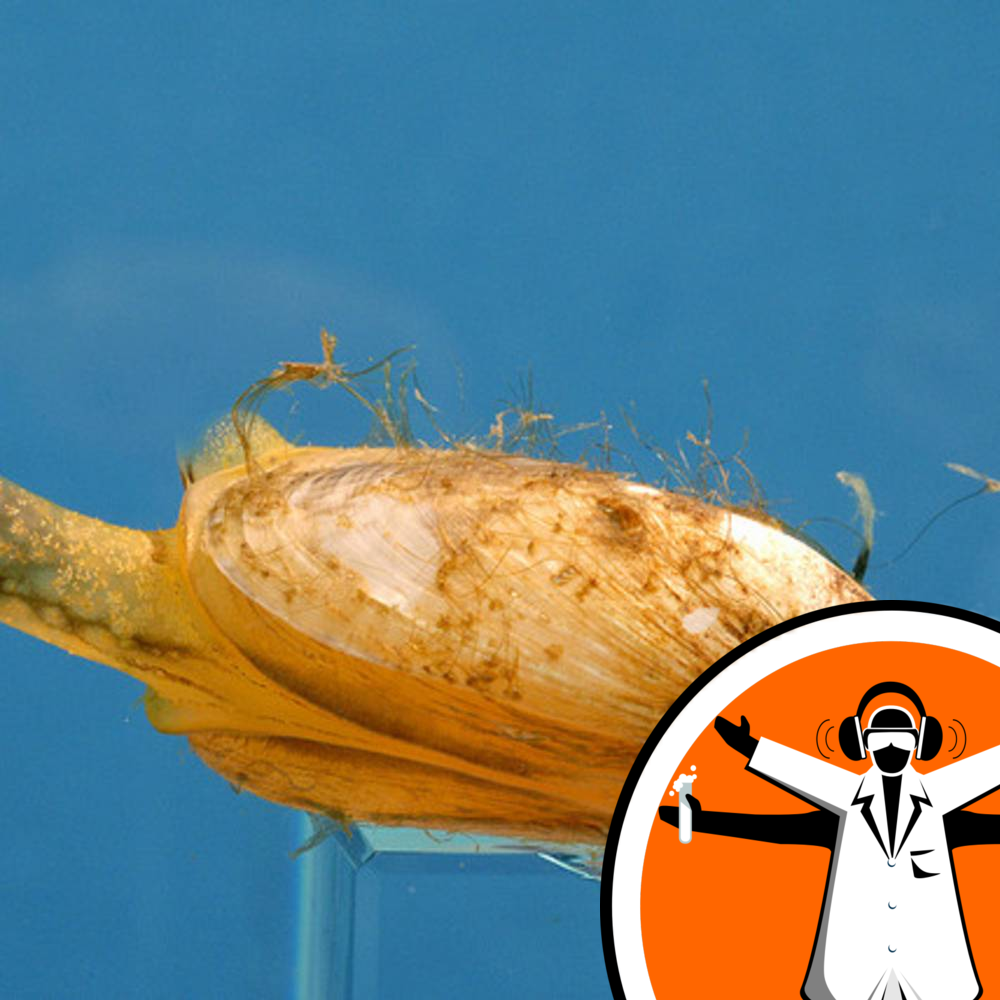
Ep 317Foreign species invading the UK
As international trade increases, particularly by sea, we're seeing more stowaways; but not of the human variety. Scientists are reporting that animals and plants are hitching rides around the world on boats - and even on fishing tackle. They then setup home in other countries where, with nothing to eat them, they can become dangerously invasive. Timothy Revell spoke to David Aldridge an expert in invasive species about the UK's most recent arrival. Like this podcast? Please help us by supporting the Naked Scientists

Ep 316Detection dogs
Whilst Magic - a young golden retriever - may love chasing a stick, curling up on a rug and enjoying a biscuit as much as the next dog, he is certainly no ordinary dog. Trained by Milton Keynes based organisation Medical Detection Dogs, he can sniff out when his owner Claire Pesterfield, a sufferer of Type 1 diabetes, is about to suffer an attack brought on by low blood sugar levels, that could lead to her losing consciousness. By alerting and getting assistance, this extraordinary dog helps Claire lead a more ordinary life.Amelia Perry spoke to Claire, at Addenbrooks Hosptial, where she is... Like this podcast? Please help us by supporting the Naked Scientists

Ep 315The price of alcohol
Thousands die due to alcohol consumption each year, did raising the price of alcohol in the UK reduce these costs? Like this podcast? Please help us by supporting the Naked Scientists

Ep 314The smartest part of our brain
Which part of our brain helped us become the social and (for the most part) intelligent creatures we are today? Like this podcast? Please help us by supporting the Naked Scientists

Ep 313How plastic pollution may harm marine life
This week in the Planet Earth Podcast: Tamara Galloway, Matt Cole and Ceri Lewis of the University of Exeter talk about their research on the effects of fragments of plastics from food packaging, drinks bottles and even facial scrubs on marine wildlife. Like this podcast? Please help us by supporting the Naked Scientists
Ep 312Your nose knows death is imminent
Until recently when technology took over, a coal miner's best friend was a caged canary that would warn of a build-up of life-threatening gases. Now US scientists are saying that the sense of smell is the coalmine canary of human health, with people who fail a smell test being at much greater odds of dying within the following 5 years. Jay Pinto, from the University of Chicago, tested over 3000 over 55s on their ability to correctly identify rose, leather, fish, orange, and peppermint smells. He told Chris Smith about how he followed them up five years later, of those who failed the smell... Like this podcast? Please help us by supporting the Naked Scientists

Ep 311New solar cells
Hydrogen is regarded as an excellent candidate future fuel on the grounds that it is relatively easy to store and it burns cleanly to produce only heat and water. But present methods of production involve fossil fuels and are energy intensive, offsetting any benefits of the hydrogen. Instead, scientists would like to use electricity from renewable sources to split water into hydrogen and oxygen, with solar power being one obvious choice. Unfortunately, current silicon-based cells cannot produce a sufficiently high output voltage individually, meaning that several of them need to be linked... Like this podcast? Please help us by supporting the Naked Scientists

Ep 309Common cold and asthma
During an asthma attack, inflammation in the airways leads to breathlessness, and severe cases can end up with sufferers being hospitalised or even dying.One culprit that can make asthma worse is the virus that causes the common cold, known as rhinovirus. But why does a cold mean a runny nose and feeling a bit grotty for most people, but can lead to dangerous breathing problems in asthmatics?Kat spoke to Imperial College's David Jackson, who's one of a team that has been finding out. Like this podcast? Please help us by supporting the Naked Scientists
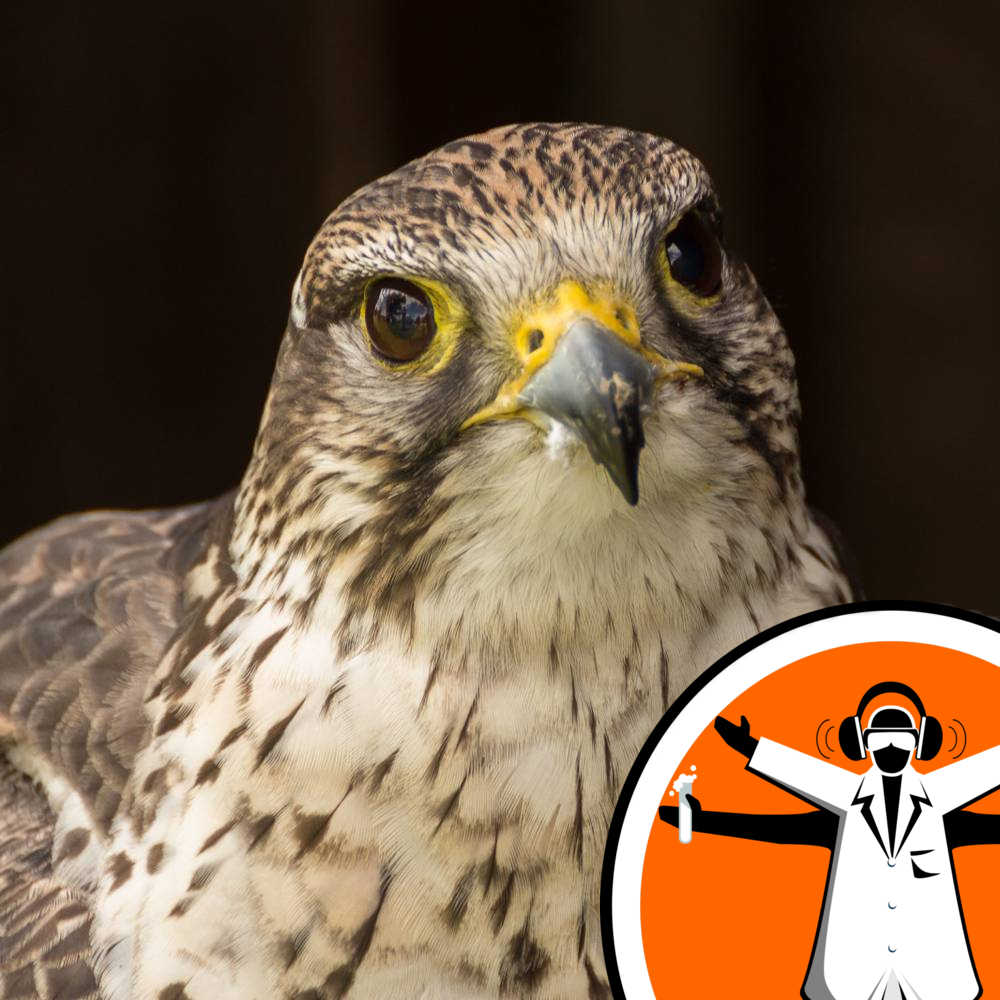
Ep 310How dinosaur arms turned into bird wings
You can forget Jurassic Park because actually dinosaurs are all around us! And I'm not joking because the fact is that when you see a chirping bird, you're actually looking at a modern dinosaur. Evidence has been growing for some time that our feathered friends are descended from small carnivorous dinosaurs called therapods. For example, the arrangement of bones in a bird's fingers, encased in the wing, is very similar to the bones in fossilised therapods. But there are still some biologists who study early development, as a chick grows in an egg, who aren't convinced by the dinosaur story.Now... Like this podcast? Please help us by supporting the Naked Scientists

Ep 308Do baby fish speak?
We've all heard that whales and dolphins have a highly developed way of making sounds to communicate with each. However when it come to ordinary fish you'd have thought they're pretty silent things. But you'd be wrong. Marine biologist Erica Staaterman from the University of Miami believes that most animals in the ocean including crabs, lobsters, shrimp and fish make sounds. In a new study she shows, for the first time, that 30 day old baby gray snapper fish speak to each other in order to stick together in the sea. Hannah Critchlow's been hearing from Erica, and her little snappers, over... Like this podcast? Please help us by supporting the Naked Scientists

Ep 307Best place for cardiac arrest
A cardiac arrest is when a person's heart stops beating and they collapse. It affects 30,000 people every year in the UK.The majority of these occur outside the hospital setting and they're frequently fatal. But how should they be managed - by attempting to resuscitate the victim at the scene, or by rushing them to hospital in an Ambulance?Emergency Medicine specialist Bruce Adams, from the University of Texas Health Sciences Center in San Antonio says bringing the patient in is the best call, but Bristol-based emergency medicine consultant Jonathan Benger disagrees and says that calling an... Like this podcast? Please help us by supporting the Naked Scientists

Ep 306Strategic decision making revealed
Are you a strategic decision maker? Is your brain anterior cingulate cortex switched off or on? Are random decisions being made or are you basing them entirely on past experience?Alla Karpova discusses decision-making... Like this podcast? Please help us by supporting the Naked Scientists
Ep 305Worrying world population
World leaders had been planning for a world population of about 9 billion by 2050. But now a new analysis, based on fresh data and more advanced statistical methods, suggests that this estimate might be wildly inaccurate and that the real figure might be more than 12 billion, which means population policy might need a major rethink. Adrian Raftery at the University of Washington is the author of the new study... Like this podcast? Please help us by supporting the Naked Scientists

Ep 304Ant-sized radios
Wireless connections are everywhere now. Perhaps you're listening to us through your smartphone or laptop, or maybe you have one of those new-fangled smart fridges connected to the internet.Technologists now talk about the internet of things, where objects around us are all connected up using wireless radio technology, and the potential applications are wide-reaching, from labelling banknotes to tiny bio-sensors for monitoring health.But one limiting factor is the size of the radio transmitter - a problem that may have now been solved by engineers in California. They've developed a... Like this podcast? Please help us by supporting the Naked Scientists

Ep 303Modifying mice memories
Scientists have been able to alter the emotional associations of memories mice by using a technique called optogenetics, which involves shining lights inside the brain. Roger Redondo explained to Georgia Mills how they reversed emotions at the brain cell level, and what this could mean for treating emotional trauma in humans. Like this podcast? Please help us by supporting the Naked Scientists

Ep 302Sex and back pain
The karma-sutra for back pain may soon be arriving. Within the UK and abroad, there are striking percentages of men and women that report experiencing back pain, especially in later life, and this may be causing the bedroom to take a backseat for these couples. Now, recent research carried out by Natalie Sidorkewicz from the University of Waterloo, may help bring back the intimacy... Like this podcast? Please help us by supporting the Naked Scientists

Ep 301Mental health support online
Something bothering you? Don't want to visit a doctor to talk about your problems? An online tool called 'myGRiST' due to be released early next year to the public, aims to assess your risks and help to identify areas where you could improve your overall mental health. Like this podcast? Please help us by supporting the Naked Scientists

Ep 300EPSRC's Rising Stars
From 'plastic' solar panels to flexible electronics, and quantum mechanics to regenerative medicine, we found out about the exciting research of the nominated rising star scientists at the British Science Festival... Like this podcast? Please help us by supporting the Naked Scientists

Ep 299Bereavement suppresses the Immune System
Have you ever heard of someone dying of a broken heart? In fact, it is remarkably common for elderly people who were previously healthy to die soon after their spouse. But why? New research from the University of Birmingham has discovered that it is down to reduced functioning of the immune system during times of stress. This leaves older people susceptible to bacterial infections like pneumonia, which can be deadly. At the British Science Festival, Ginny Smith caught up with Dr Anna Philips and asked her why she had decided to study the health of people after they had lost a loved one. Like this podcast? Please help us by supporting the Naked Scientists
Ep 297Unlocking Stonehenge's secrets
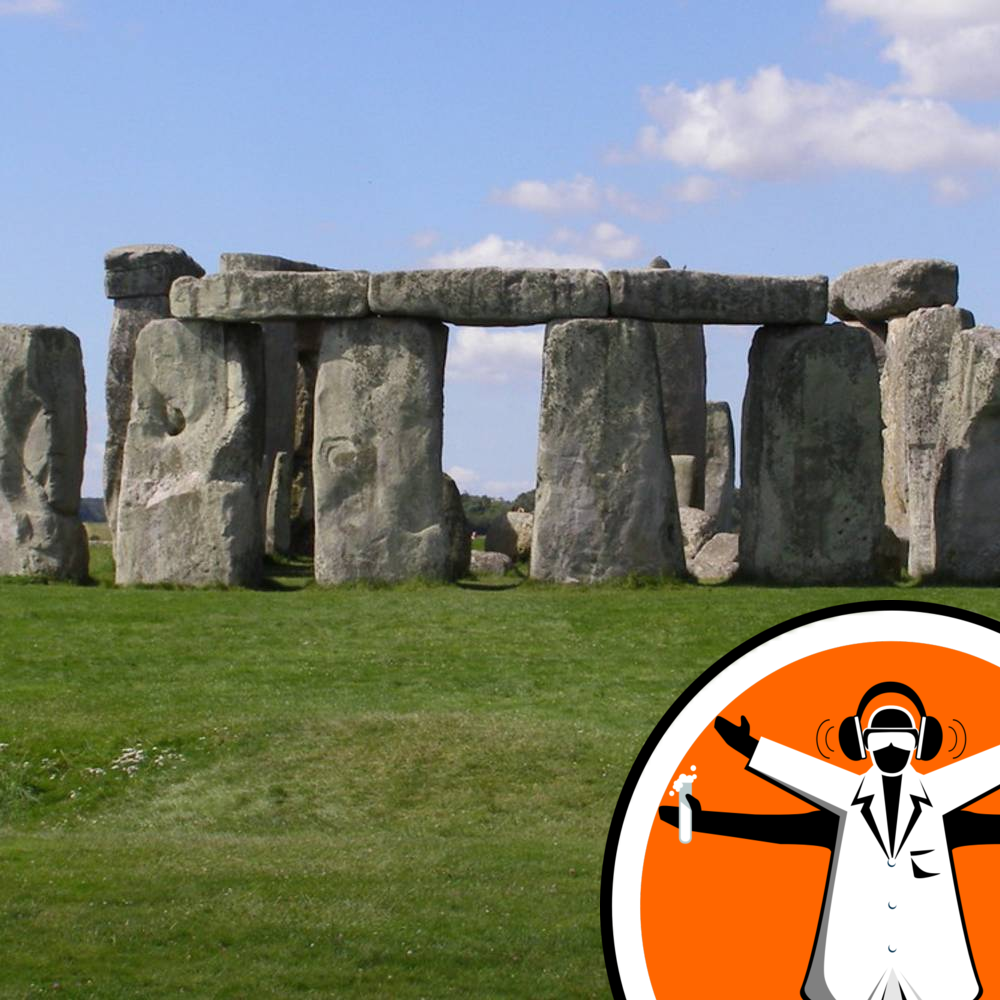
Previously undiscovered monuments surrounding the stone circle have been found, using highly advanced geophysical tools and laser scanners in order to search the landscape and identify what lies beneath Stonehenge... Like this podcast? Please help us by supporting the Naked Scientists

Ep 296Sudden death in athletes
You may have heard reports of seemingly healthy young athletes suddenly dropping down dead in the middle of a game. Professor Paulus Kirchhoff from the University of Birmingham studies the genetic defects that lead to this condition- a rare form of heart disease which exercise actually makes worse.At the British Science Festival, Ginny Smith wanted to find out more. She started by asking him how big a problem this condition really is. Like this podcast? Please help us by supporting the Naked Scientists

Ep 298Parkinson's 'pocket-doctor'
A 'pocket-doctor' smartphone app may now help to diagnose Parkinson's, a degenerative motor disease, that was previously very difficult to assess. With symptoms such as voice tremors and walking abnormalities, how does the phone application work? Like this podcast? Please help us by supporting the Naked Scientists

Ep 294Colour changing cuttlefish
Octopuses and cuttlefish are well known for their astonishing ability to change colour almost instantaneously. Can we copy this system to create a camouflaging material? John Rogers from the University of Illinois reveals all... Like this podcast? Please help us by supporting the Naked Scientists

Ep 295Your Immune system vs Cancer
Cancer is one of the world's biggest killers, and current treatments often have terrible side effects. So scientists have begun looking into ways to help the body's own defenses fight back. When have a bacterial or viral infection, our immune systems go into overdrive to tackle the invader and protect our bodies. If it were possible to harness this line of attack and use it against cancer, this could open up a whole new method of treating the disease.At the British Science Festival, Ginny Smith talked to Louise and Vanessa, both PhD students at Birmingham University, about their research on... Like this podcast? Please help us by supporting the Naked Scientists

Ep 293The problem with passports
Have you ever seen somebody in the street and thought you know them, until you get closer and realise it's a different person entirely. Matching faces to memories or pictures is easier for some people than it is for others. But what happens if you're job is dependent on being able to tell the difference between a 2D face in a photo and a person standing in front of you? Hannah Tooley spoke to Dr Rob Jenkins from the Department of Psychology at York University. He's been studying passport control officers in Australia to see how good these professionals are at it, and the results might surprise... Like this podcast? Please help us by supporting the Naked Scientists

Ep 291Star dust
Stardust returns Like this podcast? Please help us by supporting the Naked Scientists

Ep 292A Wired Society
Memory boosting drugs, the military, the legal system and enhancing athletes mental focus and muscle tone. Where should neuroscience stop? How a revolution in technology is bringing an unprecedented flood of information about the brain and with this, concerns over use. Like this podcast? Please help us by supporting the Naked Scientists

Ep 290The evolution of the British peppered moth
This week in the Planet Earth Podcast: Ilik Saccheri and Arjen Van 't Hof of the University of Liverpool describe how the British Peppered Moth changed from peppered to black during the Industrial Revolution in northern England. Like this podcast? Please help us by supporting the Naked Scientists