
Naked Scientists, In Short Special Editions Podcast
989 episodes — Page 16 of 20

Ep 2392013.09.17 - British Science Festival 2013: Ancient Parasites Treat Allergies
Ancient parasites could be used to cure severe allergy sufferers according to new research from the University of Cambridge. Matt Burnett discovers how Dr Piers Mitchell has unearthed which parasites infected our ancient ancestors. Doctors could use these parasites, which have co-evolved with us, to divert the attention of an overactive immune system away from allergens. This could be the best way to treat patients with severe allergies like asthma and hay fever, and may even have implications for other diseases like inflammatory bowel disease. Like this podcast? Please help us by supporting the Naked Scientists

Ep 238British Science Festival 2013: Victorian Science
The Victorian Science Spectacular came to Newcastle as part of the British Science Festival, and Ginny Smith went along to see what it was all about, and caught up with some of the performers afterwards. Dr Aileen Fyfe and Prof. Iwan Morus showed what new technologies the Victorians would have been astounded at, and discussed why we need to think about the past when doing science. Like this podcast? Please help us by supporting the Naked Scientists

Ep 237British Science Festival 2013: Ugly Animal Preservation Society
This week after public vote, the Blobfish was announced to be the world's ugliest animal. The poll was run by Ugly Animal Preservation Society, a group of comedians and scientists who are part of a comedy show aiming to champion some of nature's more aesthetically challenged creatures. Naked Scientist Priya Crosby spoke to president of the society Simon Watt, along with some other members of the cast, to find out more about the project.Warning: This podcast contains one instance of strong, manure-based language. Like this podcast? Please help us by supporting the Naked Scientists

Ep 235British Science Festival 2013: Sugata Mitra's School in the Cloud
Sugata Mitra's 'Hole in the Wall' experiments in a New Delhi slum showed how easily children can learn using the internet, with no adult supervision or guidance. He terms this Minimally Invasive Education, and has since repeated the experiment in many different countries. This year, he has been awarded the TED prize to develop his idea further, so Ginny Smith tracked him down at the British Science Festival to find out more about how children can learn, without a teacher. Like this podcast? Please help us by supporting the Naked Scientists
Ep 236Diabetes Management - On your phone!
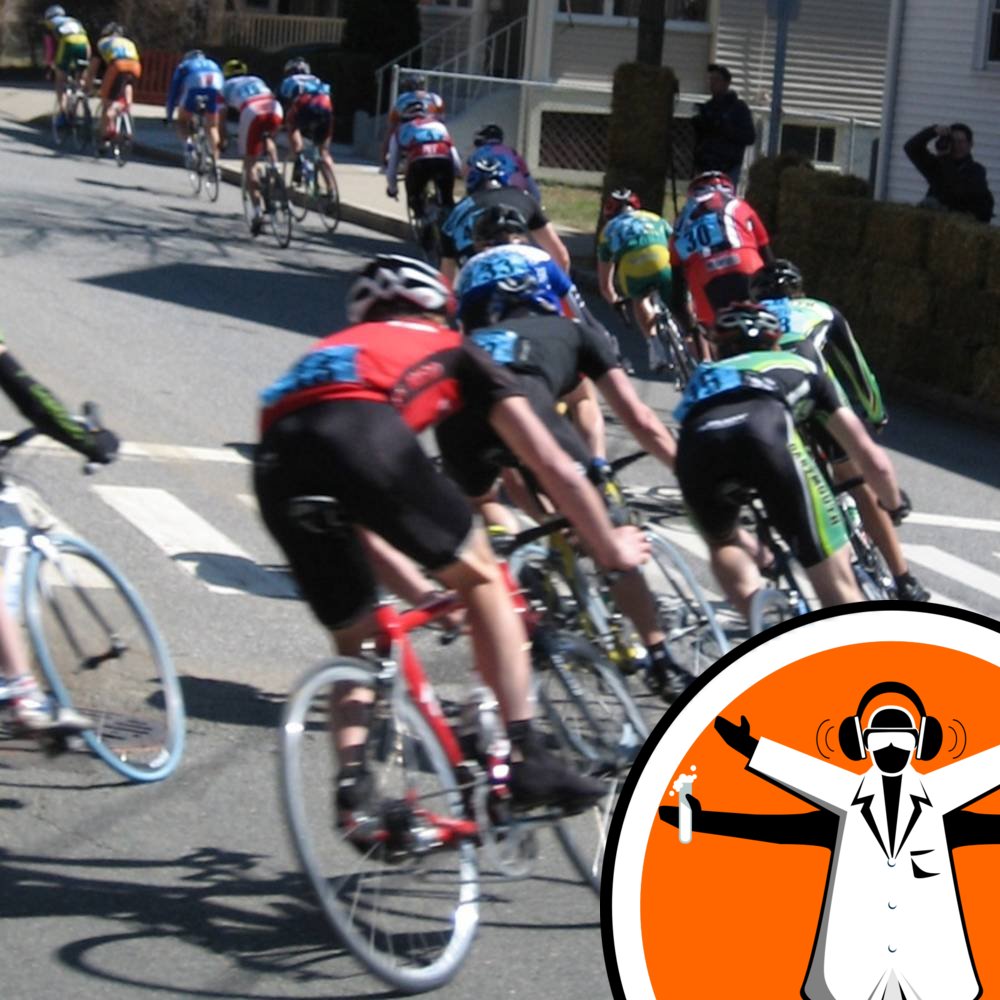
Is real-time blood sugar monitoring on your phone a pipe dream? Not according to Professor Mike Trenell at Newcastle University. Matt Burnett finds out about the diabetic athletes testing a new diabetes monitoring system on a 2100km bicycle tour from Brussels to Barcelona... Like this podcast? Please help us by supporting the Naked Scientists

Ep 234Autism and dancing
Dancing is a complicated skill, and learning a new routine changes the brain. Ginny Smith caught up with Antonia Hamilton and Emily Cross at the British Science Festival to find out more about their research, and how it might be shedding light on the differences in the way children with autism learn. Like this podcast? Please help us by supporting the Naked Scientists

Ep 233British Science Festival 2013: Healthy Life Simulation
The population of the modern world is ageing. However, not everyone's quality of ageing is equal and simple factors, such as where we live, can have a major impact on how healthy we are in to old age. Peter Gore, Professor of Practice for Ageing and Vitality at Newcastle University is part of a group which is using real people in a simulation to investigate how we can improve our quality of life in to old age. Naked Scientist Priya Crosby spoke to Professor Gore at the British Science Festival 2013 to find out more about how this simulation could change the way that we cope with ageing. Like this podcast? Please help us by supporting the Naked Scientists

Ep 232Self-Healing Concrete
Inspired by biological systems that can self-repair, Diane Gardner is working on polymer 'ligaments', micro capsules of regenerative fluid and even embedded bacteria that can help concrete to repair itself when it cracks. The technology has the potential to dramatically increase the lifespan of concrete instillations, reducing their carbon footprint and maintenance costs. Like this podcast? Please help us by supporting the Naked Scientists

Ep 231British Science Festival 2013: Ceri Brenner, Lasers
Rutherford Appleton Central Laser Facility scientist Dr Ceri Brenner enlightens Ginny Smith about the world of lasers at the British Science Festival, 2013. Like this podcast? Please help us by supporting the Naked Scientists

Ep 230British Science Festival 2013: Cosmic Rays and Technology
Physicist Chris Frost explains, at the British Science Festival 2013, how cosmic rays disrupt the everyday technologies we rely on, as he outlines for Naked Scientist Priya Crosby... Like this podcast? Please help us by supporting the Naked Scientists
Ep 229Diamond Lasers - Just a James Bond fantasy?
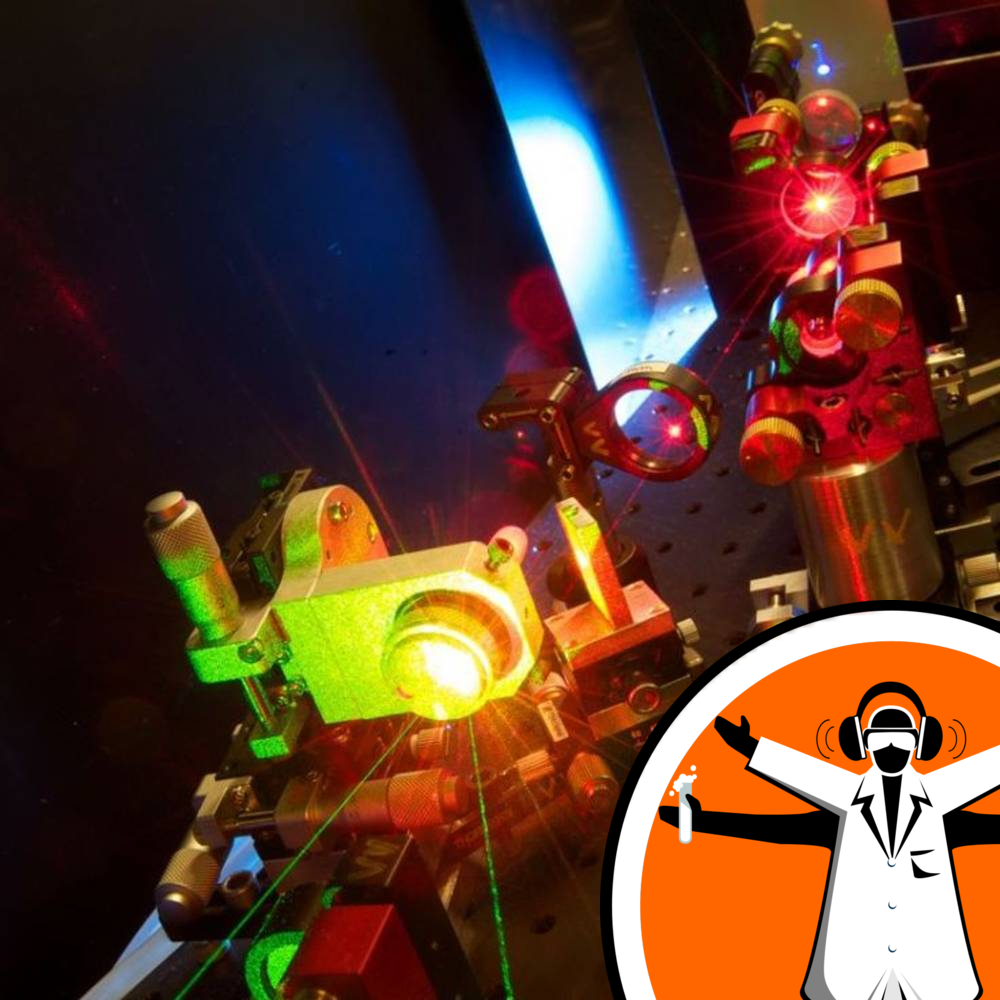
Diamonds are the new best friends of laser scientists.A new world of lasers is now being created through research which is harnessing the exceptional qualities of diamonds. It will open up new possibilities in the way that lasers can be used in areas such as medicine.Jane Reck from the EPSRC has been finding out more.... Like this podcast? Please help us by supporting the Naked Scientists

Ep 228The Science of Spin Bowling
Today marks the first day of the fourth test in the Ashes and while England have already retained the urn, they're hoping that their spin bowlers, including the likes of Monty Panesar can help secure a series win.Dominic Ford wanted to find out the science behind spin bowling so he visited the Australian 'spin doctor', Professor Hugh Hunt to bounce some balls around in his office at Trinity College Cambridge Like this podcast? Please help us by supporting the Naked Scientists

Ep 227The Science of the Working Lunch
We are often encouraged to relax during our lunch break, but research suggests that this can do interesting things to our minds. Like this podcast? Please help us by supporting the Naked Scientists

Ep 226What Makes Plumes on Enceladus - Matt Hedman
Enceladus, the tiny Saturnian satellite, regularly issues jets of salty water from its south pole that reaches kilometres in height above the moon's surface. But what drives this process? Gravitational tidal forces caused by an eccentric orbit, it seems. Cornell scientist Matt Hedman has analysed where in the Enceladus orbit the plumes are most pronounced... Like this podcast? Please help us by supporting the Naked Scientists

Ep 224Exercise away the risk of stroke?
Scientists at the University of South Australia have shown that regular exercise can dramatically reduce your risk of having a stroke in later life. Priya Crosby spoke to first author on the paper, Dr. Michelle McDonnell to find out more. Like this podcast? Please help us by supporting the Naked Scientists

Ep 225Cycle Safety
How can you make sure you are safe when you cycle? It might be more difficult that you think to ensure cars spot you... Like this podcast? Please help us by supporting the Naked Scientists

Ep 223Brain scans to improve autism diagnosis
Last week, a group at the University of California, Davis, released a paper which highlights the potential for the use of MRI brain scans in the diagnosis of autism in children. Priya Crosby spoke to first author of the paper, Mark Shen, to find out more. Like this podcast? Please help us by supporting the Naked Scientists

Ep 222Giant Water Lily
The Cambridge Botanic Gardens play host to a giant water lily, with leaves a small child can stand on, and a flower that undergos an overnight sex change. Ginny Smith went to talk to Alex Summers about this incredible plant. Like this podcast? Please help us by supporting the Naked Scientists

Ep 221National Astronomy Meeting: Thursday
Dark matter has long been needed by cosmologists to explain how structures like galaxies remain so strongly bound together. Catherine Peymans from the University of Edinburgh tells me about the latest models of dark matter, meanwhile Benoit Famaey and Hongsheng Zhao tell me how they believe that cosmological models can be constructed that don't have any dark matter at all. Like this podcast? Please help us by supporting the Naked Scientists

Ep 219The Enigma Machine
Last week marked the 101st birthday of the code-breaker and computer scientist Alan Turing, so Ginny Smith met up with James Grime, from the Enigma Project, to find out more about the German code machine that Turing and his colleagues at Bletchley Park worked so hard to crack... Like this podcast? Please help us by supporting the Naked Scientists

Ep 220National Astronomy Meeting: Wednesday
What will the last remaining lifeforms on the Earth look like as the Sun swells to become a red giant star? And why might future robotic explorers of the Moon find themselves engulfed in dust? Both of these questions were discussed at the National Astronomy Meeting today, meanwhile I also had a chance to catch up with some of the amateur astronomers at the conference. Like this podcast? Please help us by supporting the Naked Scientists

Ep 218National Astronomy Meeting: Tuesday
I find out how the British Geological Survey is investigating the threat that solar storms pose to the world's electricity grids. David Southwood, President of the RAS, tells me that astronomy is about much more than just understanding the Universe: it also has a huge economical impact. And, how is the Dark Energy Survey pinning down the make up of the Universe? Like this podcast? Please help us by supporting the Naked Scientists

Ep 217National Astronomy Meeting: Monday
David Southwood, President of the Royal Astronomical Society, tells me why NAM is so important to him. I hear about plans to double the size of the Liverpool Telescope, the sparkles in the Sun which have only recently come to light, and how gravitational lenses can produce magnified images of distant quasars. Like this podcast? Please help us by supporting the Naked Scientists

Ep 216Technology and Tennis
Technological advances in racquets and balls are changing the way tennis is played, including allowing us to reach incredible 163mph serves. To find out how, Ginny Smith visited a tennis court in Fulbourn to speak to Dr Alison Cook from the sports engineering consultants Cook Associates... Like this podcast? Please help us by supporting the Naked Scientists

Ep 215How do we make the right decisions?
Clinical Neuropsychologist Barbara Sahakian explains why some people find it difficult to make decisions that are beneficial to them, and how drugs could help. Like this podcast? Please help us by supporting the Naked Scientists

Ep 214Catalysts
Catalysts Like this podcast? Please help us by supporting the Naked Scientists

Ep 213Naked in Cheltenham
Ginny Smith talked to scientists performing at Chetenham Science Festival, as well as trying out some hands- on activities. Like this podcast? Please help us by supporting the Naked Scientists

Ep 212What is Random?
We were discussing on the radio today how random numbers are generated, and how could it be proved - to the satisfaction of a mathematician - that the number really is random? Evan Stanbury explains... Like this podcast? Please help us by supporting the Naked Scientists

Ep 211Science Toys, for Boys?
A campaign has been launched to stop science toys being sold by some stores as "toys for boys". But what does science say on the matter? Introduced here by BBC 5 Live's Dotun Adebayo, Ginny Smith has been investigating... Like this podcast? Please help us by supporting the Naked Scientists

Ep 210Touching Up On Art Restoration
Continuing from our podcast Restoring the Masters, Sally Woodcock, a PhD student from the Hamilton Kerr Institute talks about how we restore old oil paintings to their former glory. Like this podcast? Please help us by supporting the Naked Scientists

Ep 209Science In-Situ
This month we explore science 'in action' as we discover how researchers at the synchrotron are experimenting with implants, industrial catalysts and engine materials In-Situ! We discover how manipulating materials as they form can help create longer-lasting body implants and how catalysts are being visualised during their reactions to improve their efficiency. Plus all the latest news from Diamond including new ways to maintain ancient architecture and new materials for stronger buildings in the future... Like this podcast? Please help us by supporting the Naked Scientists

Ep 208BANG! Naked Science Festival
Breasts, bazookas, bosons and bombs: The Naked Scientists take to the stage for the Cambridge Science Festival 2013. An explosive mix of fertile conversation and kitchen science... Like this podcast? Please help us by supporting the Naked Scientists

Ep 207Tidal energy, turtle mating habits
This week in the Planet Earth Podcast: a look at the potential to generate up to 20 per cent of the UK's electricity from tidal energy; and why understanding the nuts and bolts of turtles' sex lives could help protect those most at risk. Like this podcast? Please help us by supporting the Naked Scientists

Ep 206What does DNA sequencing do for me?
Cambridge chemist and biotechnologist Shankar Balasubramanian discusses DNA sequencing and its implications for health and disease. Like this podcast? Please help us by supporting the Naked Scientists

Ep 205Ice-Quakes in Svalbard
We spoke to Emma Smith, a PhD student with the British Antarctic Survey about her work whilst she was based in the icy noth of Svalbard... Like this podcast? Please help us by supporting the Naked Scientists

Ep 204Benedict Cumberbatch
Sherlock star Benedict Cumberbatch is the Cambridge Science Festival's guest director this year, meaning he's been assisting the Cambridge University festival team with putting together the programme for the two-week event, which launches on March 11. He spoke with Naked Scientist Ben Valsler about his interest in science and his role in the festival... Like this podcast? Please help us by supporting the Naked Scientists

Ep 203Our ancient ancestors, deep sea worms
This week in the Planet Earth Podcast: why textbook illustrations of our early ancestors may have to be re-drawn; and why underwater canyons contain a wealth of life, including some rather ugly-looking worms. Like this podcast? Please help us by supporting the Naked Scientists

Ep 202Using Genetics to Save the Ash Tree
This week in the Planet Earth Podcast: decoding the ash tree's entire genetic sequence to produce a strain which is more resilient to ash dieback; the challenges of extracting biofuels from algae; and the latest news on Planet Earth Online. Like this podcast? Please help us by supporting the Naked Scientists

Ep 201Pseudomonas aeruginosa - Martin Welch
Researchers at Cambridge University announced the discovery of a new way to attack the bacterial "superbug" Pseudomonas aeruginosa, which accounts for 6% of all hospital acquired infections and can be very hard to treat, particularly for patients with lung diseases like cystic fibrosis. Ben Valsler went to meet the man behind the breakthrough, Martin Welch... Like this podcast? Please help us by supporting the Naked Scientists

Ep 200Avian pox in UK great tits, top conservation issues
This week in the Planet Earth Podcast: how a virus brought to the UK by insects poses a worrying threat to the country's great tit population; and which new technologies could affect global biodiversity in 2013. Like this podcast? Please help us by supporting the Naked Scientists

Ep 199Climate tipping points, basking sharks, primates
This week in the Planet Earth Podcast: why understanding where plankton congregates can help us protect basking sharks and other marine creatures; how primates planning ahead tells us about our own intelligence; and how to predict dangerous climate tipping points. Like this podcast? Please help us by supporting the Naked Scientists

Ep 198Protecting Nerves from Damage
How can we protect neurons from degeneration? In this podcast from Cambridge Cafe Scientifique, we hear how understanding transport of proteins and other chemicals within individual nerve cells may be key to keeping the cell alive after injury... Like this podcast? Please help us by supporting the Naked Scientists

Ep 197Planet Earth Podcast highlights from 2012
This week in the Planet Earth Podcast: a look at some of the highlights from 12 months of the Planet Earth Podcast, including: a hairy crab; earthquake monitoring in Turkey; air quality around London before the Olympics -- and early disease detection; Europe's oldest cave art; what the first creatures to walk on land looked like; and seabirds. Like this podcast? Please help us by supporting the Naked Scientists

Ep 196The Best of Synchrotron Science in 2012
This month, we look back at Diamond's ten year anniversary celebrations to discover novel ways to store hydrogen gas, analyse the risks of a toxic mudspill and engineer tissues to prevent premature labour. We also get an overview of science at the synchrotron in 2012 and hear the UK science ministers thoughts on the research taking place at Diamond... Like this podcast? Please help us by supporting the Naked Scientists

Ep 195Extra Questions - The Science Behind Broadcasting
How does a radio broadcast work? We must have been on your wavelength this week, as we had more questions that we could fit in Naked Scientists Show! Here are the extra bits... Like this podcast? Please help us by supporting the Naked Scientists

Ep 194Citizen science projects, plants and greenhouse gases
This week in the Planet Earth Podcast: how you can get involved in any one of the wealth of UK citizen science projects that have taken off recently, and why a little-known gas given off by many trees, ferns and mosses, could be contributing to global warming. Like this podcast? Please help us by supporting the Naked Scientists

Ep 193Bat calls, weather balloons, telomeres and ageing
This week in the Planet Earth Podcast: an online tool to identify bats is helping to protect them, and it could make a scientist of us all. Also, an audio diary from a researcher from the National Centre for Atmospheric Science who's on the Isle of Arran in Scotland; and why there's more to ageing than telomeres. Like this podcast? Please help us by supporting the Naked Scientists

Ep 192Solutions to urban flooding, peatland carbon storage
This week in the Planet Earth Podcast: a look at potential solutions to urban flooding, and why scientists are so keen to measure carbon dioxide flow through the UK's Norfolk Fens. Like this podcast? Please help us by supporting the Naked Scientists

Ep 191Stories from the Synchrotron
Fiction and Science collide this month as we discover the stories lurking beneath the surface of the synchrotron. We open up the books to investigate a disease outbreak on the grounds of Diamond and experience the onset of dementia first hand through some of the winning entries from Diamond's Light Reading competition. We also discover how neurodegenerative diseases such as dementia and Alzheimer's are being researched using X-rays, reveal the structure of a protein that could help improve our crops in the future and bring you all the latest news from the light source! Like this podcast? Please help us by supporting the Naked Scientists

Ep 190Unique plants in Bristol, contraceptives and fish
This week in the Planet Earth Podcast: how conservationists are using science to help protect rare plants found only in Bristol's Avon Gorge, and are feminised fish changing wild fish populations? Like this podcast? Please help us by supporting the Naked Scientists