
Naked Scientists, In Short Special Editions Podcast
989 episodes — Page 19 of 20

Ep 89Arctic Expedition Special
In this podcast Richard Hollingham reports from an unusual and somewhat cold location - onboard the British Antarctic Survey's RRS James Clark Ross which was stuck in the ice for two weeks 1000 kilometres from the North Pole. He talks to researchers on the ship about their work, finds out exactly how dangerous polar bears can be and hears what it's like to dive in freezing cold waters. He also learns that the Arctic isn't the desolate, barren place you might at first imagine. No, it's full of life. Not just big stuff like bears, seals and gulls, but algae and microorganisms that literally... Like this podcast? Please help us by supporting the Naked Scientists

Ep 88Behind the Scenes at Great Ormond Street - National Pathology Week 2010
We go behind closed doors in this special podcast from National Pathology Week 2010, visiting the pathology labs at the world famous Great Ormond Street Children's Hospital. We'll discover the role that pathologists play in diagnosis and treatment of childhood diseases, including how metabolic diseases are identified and the role of newborn screening. Plus, we explore the labs themselves to see pathologists in action. Like this podcast? Please help us by supporting the Naked Scientists
Ep 87Palm oil plantations, charcoal, and a flea circus
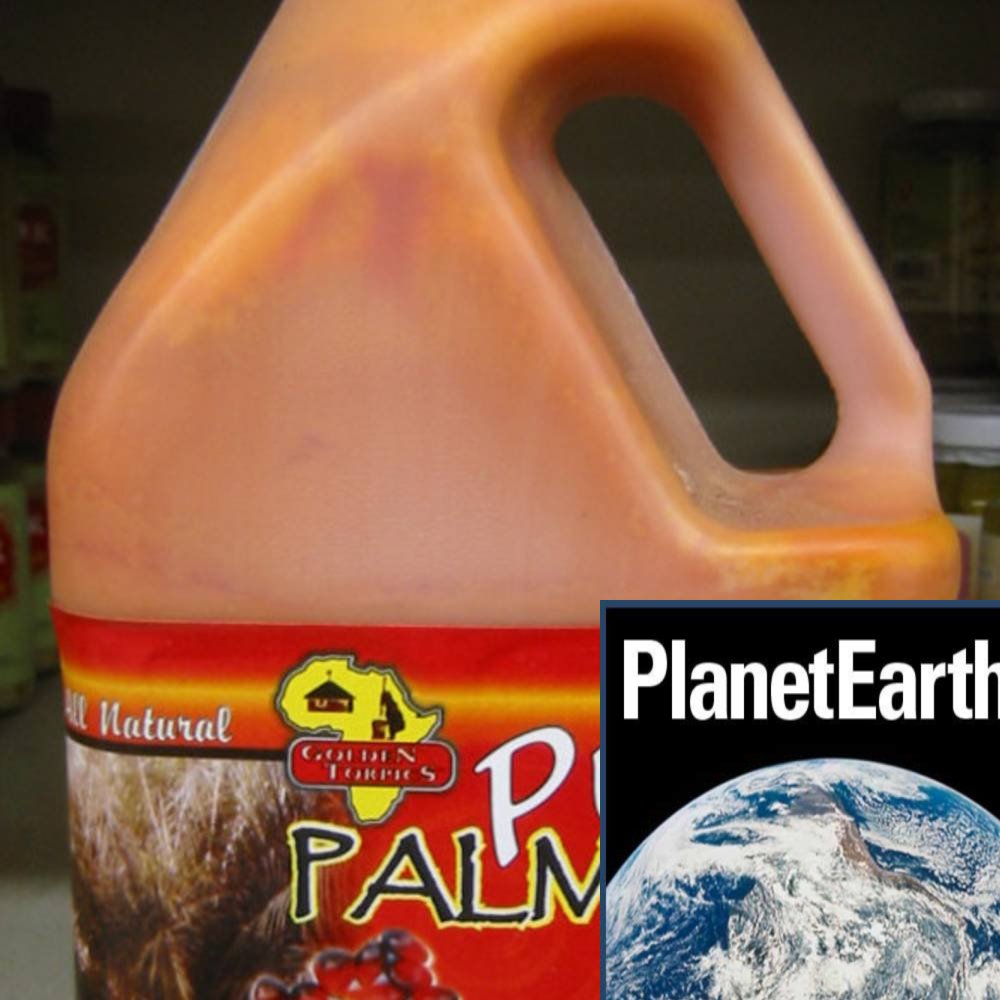
Does your shopping basket contain chocolate, biscuits and shampoo? If it does, you may be unwittingly contributing to the destruction of the some of the world's pristine rainforests. Manufacturers now use palm oil in a huge range of products, because it's so cheap. But virgin rainforest in some of the planet's last wildernesses is being destroyed at a dizzying pace to make way for palm oil plantations to keep up with our voracious appetites for the products the stuff is in. Richard Hollingham meets Tim Cockerill, who's just come back from Borneo, to find out how the plantations affect the... Like this podcast? Please help us by supporting the Naked Scientists

Ep 86Science through Structure!
This month we probe down into the world of structural biology to find out just what this field is and the molecules it can enable us to see. We discover how visualising molecules such as DNA and proteins can help us understand the development of our nervous system, the repair of our DNA and find better treatments for conditions like hypertension and pre-eclampsia, as well as bring you the latest news and developments from Diamond. Like this podcast? Please help us by supporting the Naked Scientists

Ep 85Leeches, earthquakes and weird sea-life
It seems that hardly a week goes by without a major earthquake striking somewhere in the world, which may be why many people have been asking scientists at the British Geological Survey if earthquakes are getting more frequent. Richard Hollingham talks to expert seismologist Brian Baptie from BGS, who uses clever musical software to give us the answer. We also hear from Plymouth Marine Laboratory scientists on a boat off the coast of Cornwall in the UK. They're sampling seawater and sediment from the seafloor to try to understand how marine ecosystems change from one month to the next,... Like this podcast? Please help us by supporting the Naked Scientists

Ep 84Kew Gardens, Antarctica and ancient trees
In this Planet Earth podcast, Sue Nelson reports from the Royal Botanic Gardens, Kew where she finds out that some plants like the Snake's Head Fritillary have enormous amounts of DNA in their genomes. These plants struggle in extreme environments, so how will they cope under climate change? We also hear from the British Antarctic Survey's medical doctor Claire Lehman in one of our unique audio diaries. Claire joins the diving team for a refreshing dive under the Antarctic ice. Later, Sue meets a fossil-tree expert at Cardiff University. Chris Berry describes how he went about identifying... Like this podcast? Please help us by supporting the Naked Scientists

Ep 83Cambridge Cafe Scientifique - DNA and Cancer
In this month's podcast Professor Ron Laskey discusses the links between our DNA and cancer to reveal how changes to our DNA can cause cells to become cancerous, how DNA can be targeted as a method of treatment and also how we can analyse markers in our DNA for earlier diagnosis. Plus we answer audience questions including the effectiveness of vaccines against cancer and the difference between cancerous and pre-cancerous cells. Like this podcast? Please help us by supporting the Naked Scientists

Ep 82Splitting Earth, space weather and robotic dolphins
In this Planet Earth podcast, Sue Nelson hears about the birth of an ocean in the Afar depression in the Horn of Africa. The continental crust is being ripped apart at a phenomenal rate - one metre every year over the last five years. In the not too distant future - well, not too distant in geological terms - we may see a new ocean in that region of Africa. That's if we're still around in ten million years' time. Plus Richard Hollingham goes to Edinburgh to find out about the damage our nearest star wreaks on our planet during its unruly phases. Later Sue hears about 'mechanical dolphins'... Like this podcast? Please help us by supporting the Naked Scientists

Ep 81Bowerbirds, a yellow sub and measuring CO2
This week, Richard Hollingham finds out that bowerbirds are not just brilliant at making elaborate bowers, they're also good at mimicking other birds and pretty much most sounds they hear - including human voices. He also goes to a Scottish forest to meet researchers from the University of Edinburgh who are using a 220-metre high TV tower to measure greenhouse gas concentrations from across Scotland and all the way to Ireland and even as far as Canada. Lastly, during Richard's recent trip to the Arctic onboard the RRS James Clark Ross, he spoke to a scientist who explained how a small yellow... Like this podcast? Please help us by supporting the Naked Scientists

Ep 80Barrel jellyfish and supercooled water
Unless you've never seen the sea, you've probably seen a jellyfish. And even if you haven't seen one, you will almost certainly know what they look like. Despite this, scientists know surprisingly little about them. Which is why British and Irish researchers are in the middle of a project to tag them to find out things like where they go during the winter, how long they live and why they congregate around our coasts during the summer months. Sue Nelson goes to Swansea to find out more. Later, we learn something about water most of us had no idea about. Richard Hollingham goes to Leeds to... Like this podcast? Please help us by supporting the Naked Scientists

Ep 79The risks of following the herd and banded mongooses
Have you ever noticed that when you cross a busy road, as well as clocking the traffic, you subconsciously follow what your neighbours do? Scientists have recently put a figure on this and worked out that we're 2.5 times more likely to cross if our immediate neighbour makes a move to cross. Richard Hollingham goes to Leeds to meet the researcher behind the study to find out why we have such kamikaze tendencies, and how the research helps us understand shoaling, herding and flocking behaviour. Later on, we get up close and personal with banded mongooses in Uganda. Hear what the researchers... Like this podcast? Please help us by supporting the Naked Scientists

Ep 78Cambridge Cafe Scientifique - Dementia and an Ageing Population
This month, Professor Carol Brayne discusses the consequences of our ageing population and looks into the symptoms, diagnosis and prevention of dementia and other diseases related to ageing. We also hear how ageing can be studies using populations and find out audience opinions on the event including any information that surprised them from the talk. Like this podcast? Please help us by supporting the Naked Scientists

Ep 77Butterflies, buoys and the English Channel
In this Planet Earth podcast, Sue Nelson goes to the Eden Project in Cornwall, southwest England and to the South Downs in southeast England to find out what butterfly research is telling us about climate change. As you might expect, there's some bad news to report, but surprisingly there's also hopeful news - at least for the silver spotted skipper. Meanwhile Richard Hollingham goes to Plymouth - also in southwest England - to hear how long-term monitoring buoys in the English Channel have helped reveal, among other things, that the water has gradually been getting warmer. Like this podcast? Please help us by supporting the Naked Scientists

Ep 76HIV Treatment in Rural Africa
Sixty percent of all HIV sufferers in the world live in rural Africa, but practical and economic obstacles can prevent many of these people from accessing the anti-retroviral drugs that they desperately need. A recent clinical trial investigated this problem to try and improve HIV treatment in rural Africa. Julia Graham speaks to Diana Gibb from the MRC's Clinical Trials Unit in London to find out more... Like this podcast? Please help us by supporting the Naked Scientists

Ep 75Orangutans, green buildings and an Antarctic GP
With efforts to improve energy efficiency focussed on green transport to sustainable power generation, growing your own food to reducing waste, it's often easy to forget that the very buildings we live and work in could also be made energy efficient. But how do you retrofit old buildings without ruining their architectural character? One researcher from the UK Energy Research Centre explains where you might start. Scientists at the University of Birmingham tell Sue Nelson how they're trying to understand when and why humans developed the ability to walk on two legs; with the help of some... Like this podcast? Please help us by supporting the Naked Scientists

Ep 74Plastics in the oceans and tracking satellites
Scientists recently found plastics floating in some of the most remote and inaccessible seas in the world - just off the coast of Antarctica. Although it clearly looks ugly in such a pristine environment, scientists are more concerned about the major role plastics play in moving alien species around the world. Richard Hollingham goes to the north Norfolk coast to speak to an expert on ocean plastics from the British Antarctic Survey to find out more. Later, Sue Nelson goes to the Natural Environment Research Council's Space Geodesy Facility at Herstmonceux in Sussex to find out how it uses... Like this podcast? Please help us by supporting the Naked Scientists

Ep 73The Psychology of Shopping
How do supermarkets convince you to part with your money? In this special edition of the Naked Scientists, Smitha Mundasad goes shopping with author on consumer psychology, Philip Graves, to discover the tricks of the trade. We'll find out how special offers, colours, odours and music can all affect your spending behaviour... Like this podcast? Please help us by supporting the Naked Scientists

Ep 72Breaking the GM Taboo
This is a podcast by the Society for General Microbiology, recorded at a session they sponsored, at the 2010 Times Cheltenham Science Festival. Through genetic manipulation, scientists have created microbes that provide us with medicines, foods and vaccines as well as animals that can be used as model organisms for the study of human disease. The genetic manipulation of organisms and their use is one of the most controversial scientific developments of recent times. We hear about the practical applications of GM microorganisms, then the audience is asked to decide - When is GM acceptable? Like this podcast? Please help us by supporting the Naked Scientists

Ep 71Lake Windermere and walking with dinosaurs
British Geological Survey scientists have completed the first full geological survey of Lake Windermere in the English Lake District since the Royal Navy made a survey in the 1930s. Among other things, the survey will help researchers understand how quickly the ice retreated after the last Ice Age, how the lake evolved and which parts the Arctic Charr prefers to live in. Richard Hollingham went to visit scientists on the BGS's research boat the White Ribbon on the lake to talk to the scientists involved. Next up, Richard speaks to a dinosaur expert at London's Natural History Museum who is... Like this podcast? Please help us by supporting the Naked Scientists

Ep 70Earthquakes: Past, Present and Future
The recent devastating earthquakes in Haiti and Chile were reminders of the power of the Earth and what terrible damage can be caused by such tremors. But what do we know about earthquakes? And can we predict when they might occur? A special event was held to discuss these questions at the 2010 British Science Festival in Birmingham, bringing together scientists from across the UK. Julia Graham speaks to quake experts, Professors Roger Musson, Barry Parsons and Ian Main to find out more... Like this podcast? Please help us by supporting the Naked Scientists

Ep 69Protecting our Environment
In this edition we find out how the synchrotron can be used to understand and clean up our environment. We investigate a new form of solar cell, using plastics, which could make solar power more accessible as well as find out the use of microbes to clean up arsenic contaminated groundwater. We also discover an alternative form of rust which could prove useful in the fight against nuclear contamination and reveal a biological side to weathering! All that plus the latest news and events from Diamond including the unveiling of the world's largest diffraction pattern! Like this podcast? Please help us by supporting the Naked Scientists

Ep 68Malaria - The Gorilla's Gift
Where did malaria come from? Analysing over three thousand samples of faeces from gorillas, bonobos and chimpanzees, scientists have found an answer to the origins of a disease that plagues millions of lives each year. But this answer stirs up new questions - why did it jump from the gorilla into us? And will it continue to do so? Smitha Mundasad talks to Professor Paul Sharp to find out more... Like this podcast? Please help us by supporting the Naked Scientists

Ep 67Rockpools and ocean acidification
Everyone loves a rockpool, and Sue Nelson nearly takes a dive into one in this week's podcast while finding out about the riches they contain.She visits the Anglesey coast of north Wales to learn what these mini marine laboratories can tell us about the value of biodiversity.The effects of climate change range from rising temperatures and higher sea levels to extreme weather and mass extinctions. Richard Hollingham reports from the Plymouth Marine Laboratory where scientists are investigating another, hidden process - increasing ocean acidification.And finally we learn how scientists are using... Like this podcast? Please help us by supporting the Naked Scientists

Ep 66Computing with a Quantum Walk
New research into the incredible properties of objects at the quantum scale has brought the aim of quantum computing far closer to reality. Ben Valsler speaks to researchers from Bristol University to find out how "quantum walk" will enable us to understand systems that even the fastest modern supercomputers would find impossible... Like this podcast? Please help us by supporting the Naked Scientists
Ep 65Antarctica, wild geese and ash plumes
You could be forgiven for thinking the freezing seas around Antarctica are pretty barren and lifeless. But, as Richard Hollingham soon finds out, this couldn't be further from the truth.The Census of Marine Life is building up a picture of the richness and diversity of life in the world's oceans and has so far found thousands of species on shelves around the frozen continent. Incredibly, scientists are still finding new species.At this rate, researchers will soon have documented 17,000 species living on coastal shelves in the region. Richard meets British Antarctic Survey researcher Huw... Like this podcast? Please help us by supporting the Naked Scientists

Ep 64Hi-tech physics, toxic soils and mussel shells
In this week's Planet Earth podcast from the impressively-named Diamond Light Source in Oxfordshire, England, hear how two researchers are using hi-tech physics to study different aspects of the environment.The Diamond synchrotron is like a giant, silver doughnut, is more than half a kilometre around and - according to the blurb - you could fit eight St Paul's cathedrals inside.You might imagine a huge machine like this is used only for physics experiments. But it turns out it's used to study everything from the nature of matter to food and new medicines.One researcher explains how his studies... Like this podcast? Please help us by supporting the Naked Scientists

Ep 63Climate science, Vikings and other invasive species
Look around the English countryside and you'll find animals and plants that shouldn't be there - from Muntjac deer to Mitten crabs, Harlequin ladybirds to Tree of Heaven.So-called invasive species are reckoned to be one of the world's greatest threats to native wildlife. And when you factor in a changing climate, the situation gets even more complicated.Richard Hollingham meets an invasive species expert from the Centre for Ecology Hydrology who tells us not only what we can expect, but also what you can do to help.We also hear from a climate expert at the UK Met Office to find out why he... Like this podcast? Please help us by supporting the Naked Scientists

Ep 62Oil palm plantations and coral reefs
Coral reefs are among the most beautiful habitats in the world. As well as being rich in biodiversity, they're vital for the local economies that depend on them for fishing, tourism or protection from storms.While most of us are aware that ocean acidification is bad for coral reefs, scientists are now finding that coral communities are facing other threats from climate change.Richard Hollingham meets three coral reef experts to find out more - not in some tropical paradise but in the basement of a 1960s towerblock at the University of Essex.Later in the programme we hear from two insect... Like this podcast? Please help us by supporting the Naked Scientists

Ep 61A New Look for Corneal Transplants
This week we take a closer look at corneal blindness. With corneal transplants in short supply, the recent development of synthetic corneas offers hope in the fight against this leading cause of vision-loss worldwide. Smitha Mundasad speaks to Dr May Griffith about her team's work - creating corneas in a lab. Like this podcast? Please help us by supporting the Naked Scientists

Ep 60The Royal Society Summer Exhibition
This month we bring you the highlights of Diamonds events at the Royal Society Summer Exhibition including hydrogen cars, stressed-out bacteria and science in extreme conditions. We also explore how understanding our gut bacteria could lead to personalised diets in the future as well as hear what the rest of the exhibition is all about! Like this podcast? Please help us by supporting the Naked Scientists

Ep 59Cambridge Cafe Scientifique - Synthetic Biology
Synthetic biology goes under the microscope in this month's Cafe Scientifique, as Gos Micklem describes how to build "sick" viruses to act as vaccines, and discusses recent advances in artificial life. We'll explore concerns about releasing modified organisms into the wild, and if synthetic biology is likely to be used for evil. Like this podcast? Please help us by supporting the Naked Scientists

Ep 58The Immortal Life of Henrietta Lacks
Henrietta Lacks died in 1951, but her cells have gone on to become one of the most important tools in medicine. Rebecca Skloot explains how the story of these cells inspired her to write her bestselling book The Immortal Life of Henrietta Lacks... Like this podcast? Please help us by supporting the Naked Scientists

Ep 57Cambridge Cafe Scientifique - Gambling and the Brain!
In this month's Cafe Scientifique, Dr Luke Clarke from the University of Cambridge explores the effect gambling has on our brain. He reveals why gambling is so addictive, how 'near-misses' make us gamble more and how gambling stimulates the same pleasure centres in our brains as chocolate and sex! We also answer audience questions including why gambling on the lottery seems less risky, whether there are differences between regular and internet gambling, and whether there are differences in addiction between men and women. Like this podcast? Please help us by supporting the Naked Scientists

Ep 56Diamond Light Source - Entering the Clinic
This month we enter the clinic to discover how clinicians at hospitals across the UK are using Diamond to investigate a variety of medical concerns. We discover why some women may be prone to pre-term labour, and why metal-on-metal hip replacements cause inflammation in some patients and not others. Plus, we've got the the latest news and events from Diamond! Like this podcast? Please help us by supporting the Naked Scientists

Ep 55Cambridge Cafe Scientifique - Do Our Genes Cause Obesity?
In this months Cafe Scientifique Dr Giles Yo from the Institute of Metabolic Research at the University of Cambridge askes the question: Are my genes to blame when my Jeans don't fit?. He explores the behind our metabolism and fat storage and asks if these play a more crucial role than our environment in determining our weight. We also answer audience questions that reveal how our weight may also be affected by what happens when we're in the womb and how twin studies are crucial in understanding the role of our genes. Plus, we give you a heads up on what to expect at next months event! Like this podcast? Please help us by supporting the Naked Scientists

Ep 54Cambridge Cafe Scientifique - Ape Research in Indonesia
This month we investigate the conservation of apes and the threats they face in the tropical peatland forests of Kalimantan in Indonesia. We look into the issues facing the Indonesian peatlands and how conservation efforts can address these problems. Like this podcast? Please help us by supporting the Naked Scientists

Ep 53Cambridge Cafe Scientifique - Jumping to Delusions!
In this podcast from the March Cafe Scientifique in Cambridge, we investigate how our brain takes shortcuts to understand the world around us and how it jumps to delusions! We meet event speaker Dr Paul Fletcher to find out how our brains process the masses of information coming in from the world around us by using shortcuts and how changes in these shortcuts can lead to delusions . We also answer your questions such as what the scale of these delusions are and whether knowing this about our brains means eye witness accounts are less reliable. All that plus a heads up on what to look forward... Like this podcast? Please help us by supporting the Naked Scientists

Ep 52Cambridge Cafe Scientifique - Our Place in the Cosmos!
In this podcast from the February Cafe Scientifique in Cambridge, we look out deep into our universe to investigate our place in the cosmos. We meet event speaker Dr Carolin Crawford to find out how astronomers look out into our universe and what they understand about our stars and galaxies so far. We also answer your questions such as how we much of our universe we can see, what dark matter and dark energy are, and we also investigate the likeliness of other life out in space! All that plus a heads up on what to look forward to at the March event. Like this podcast? Please help us by supporting the Naked Scientists
Ep 51Communicating with Patients in Persistent Vegetative States
Can brain scanners enable us to open a new channel of communication with patients apparently in persistent vegetative states? Brain researcher Adrian Owen, from the Cambridge MRC Cognition and Brain Sciences Unit, explains how an experiment with fMRI revealed that a head injured, vegetative state patient could communicate: by changing his thoughts... Like this podcast? Please help us by supporting the Naked Scientists

Ep 50Cambridge Cafe Scientifique - Pandemics: Where Do New Infections Come From?
In this podcast from the January Cafe Scientifique in Cambridge, we look into the threat of emerging infections to find out where they come from, how they spread and how they become a pandemic. We bring you the main presentation by virologist Dr. Chris Smith as well as your questions on the threat of pandemics such as SARS returning, concerns about HIV and Tuberculosis, and whether swine flu is something to worry about. All that plus a heads up on what to look forward to at the February event! Like this podcast? Please help us by supporting the Naked Scientists

Ep 49Diamond Light Source - The Machine
This month, we step away form the research and bring you the science behind the synchrotron! We investigate how a machine like Diamond is designed to create X-ray beams that are stable down at the micron level, as well as reveal how the high speed electrons are controlled and manipulated to produce intense beams of light. Plus we bring you the latest news and events, including how scientists are using Diamond for earlier diagnosis of lung cancer! Like this podcast? Please help us by supporting the Naked Scientists

Ep 48Heart Transplant - National Pathology Week 2009
In this 2009 Royal College of Pathologists National Pathology Week podcast we explore the process of getting a new heart. We find out why you may need a transplant, who is involved and why this relatively simple operation needs a team of pathologists, coordinators and surgeons. Like this podcast? Please help us by supporting the Naked Scientists

Ep 47Anatomy of a Heart Attack - Pathology Week 2009
In this 2009 Royal College of Pathologists National Pathology Week podcast, we get a behind-the-scenes view of a heart attack. Through a virtual autopsy, and dissection of a pig's heart, we learn more about this incredible organ and how it can go wrong. With the help of pathologists and cardiologists we get to the heart of the genetics, biochemistry and anatomy of cardiac disease. Like this podcast? Please help us by supporting the Naked Scientists

Ep 46Think Heart - Pathology Week 2009
In this 2009 Royal College of Pathologists National Pathology Week podcast we find out why thinking "heart" could save a baby's life. We'll examine three heart conditions - duct-dependent lesions, viral myocarditis and arrhythmias - and find out why these go unidentified in many babies, often with tragic consequences. Parents, nurses and pediatricans join the Royal College of Pathologists to raise awareness and encourage us all to "Think Heart". Like this podcast? Please help us by supporting the Naked Scientists

Ep 45The Art of the Heart - Pathology Week 2009
In this 2009 Royal College of Pathologists National Pathology Week podcast, we look at the art and ethics of modern healthcare. We hear how the structure of the heart has inspired works of art and we take a dip in the murky waters of medical ethics: who has the right to decide if a teenage boy should be given a new heart? Like this podcast? Please help us by supporting the Naked Scientists

Ep 44Cambridge Cafe Scientifique - Nanofoods Archived
This is the archive of the Cambridge Cafe Scientifique Nanofood event. Join us to hear the entire presentation about how nanotechnology gets into your food, as well as your questions on the benefits of Nanofoods, whether Nanofoods have a role in a heathy balanced diet and the problems with classification and testing. Like this podcast? Please help us by supporting the Naked Scientists

Ep 43Cafe Scientifique - Nanofoods
In this special podcast we join the Triple Helix Society for a Cafe Scientifique. We explore how nanotechnology gets into your food, the benefits of Nanofoods and the problems with classification and testing. The Triple Helix Cambridge Cafe Scientifique is sponsored by the Medical Research Council, and this podcast was produced with support from the Learning Revolution. Like this podcast? Please help us by supporting the Naked Scientists

Ep 42Diamond Light Source - Engineering our Industries
This month, we peer into the world of engineering to see how scientists are exploring and improving materials for industry, including how the structure of metals can be modified for greater resilience and how an understanding of corrosion could be crucial for the storage of nuclear waste. Plus, we investigate how to prevent crack formation in aeronautical materials as well as bring you the latest news and events from Diamond. Like this podcast? Please help us by supporting the Naked Scientists

Ep 41Diamond Light Source - Probing our Cultural Heritage
This month, we dig deep into the world of archaeology to learn how scientists at Diamond are investigating our cultural heritage. We find out how scanning samples of the Dead Sea Scrolls can help decipher them, how probing timber from the Mary Rose can improve its conservation and how studying pigments in paintings could protect major pieces of art! Like this podcast? Please help us by supporting the Naked Scientists

Ep 40Conversations from the Darwin Festival - Sandra Herbert
This week historian Sandra Herbert tells how she retraced Darwin's footsteps to the Galapagos in search of rock samples to prove his volcanic theories were right... Like this podcast? Please help us by supporting the Naked Scientists