Naked Scientists, In Short Special Editions Podcast
989 episodes — Page 11 of 20

Ep 489New anti-cancer patch
One in 20 people develop colorectal cancer in their lifetime, making it the second-most common form cancer in Europe. Surgery is an option for treatment, but this can result in incomplete removal of the tumour. Now, researchers from MIT have developed a hydrogen patch with three types of therapy applied directly to the tumour itself. Their anti-cancer patch was tested on lab mice and caused the cancer to go into complete remission. Lucka Bibic attempted to uncover some of the patch's secrets from researcher Dr Natalie Artzi from MIT... Like this podcast? Please help us by supporting the Naked Scientists

Ep 488Chewing robot lives on a paleodiet
Researchers at the University of Helsinki have developed a chewing robot to study the tie between tooth wear and the dietary patterns of animals. Their shiny stainless-steel chewing machine with 3D printed parts can now show how the paleodiet of the animals and their tooth wear rate affected their lifespan as Aleksis Karme explained to Lucka Bibic. Like this podcast? Please help us by supporting the Naked Scientists

Ep 487Power of positive thought
People who feel well tend to live well. They have a better immunity against infections and lower susceptibility to ill-health. Stress and depression, on the other hand, are linked to poorer functioning of the immune system, weaker responses to vaccination and, overall, higher rates of morbidity. But how a healthy mind makes for a healthy body wasn't known. Now, by artificially stimulating the reward circuitry in the brains of mice, scientists in Israel have shown that one of the nerve pathways in the body - called the sympathetic nervous system - can directly manipulate the immune system.... Like this podcast? Please help us by supporting the Naked Scientists

Ep 486Electronic nose senses pesticides and terrorism threats
The most sensitive "electronic nose" ever has been built by scientists in Belgium. The portable "E-nose" uses spongy structures called metal-organic frameworks to pick up minute traces of molecules including harmful nerve gases. Lucka Bibic spoke to inventor Rob Ameloot... Like this podcast? Please help us by supporting the Naked Scientists

Ep 485Royal Society Summer Exhibition
It's summertime again and along with ice cream, sunburn and our other favourite British traditions, it's time for the Royal Society's Summer Science Exhibition, in London. We've been to see what's been going on Like this podcast? Please help us by supporting the Naked Scientists
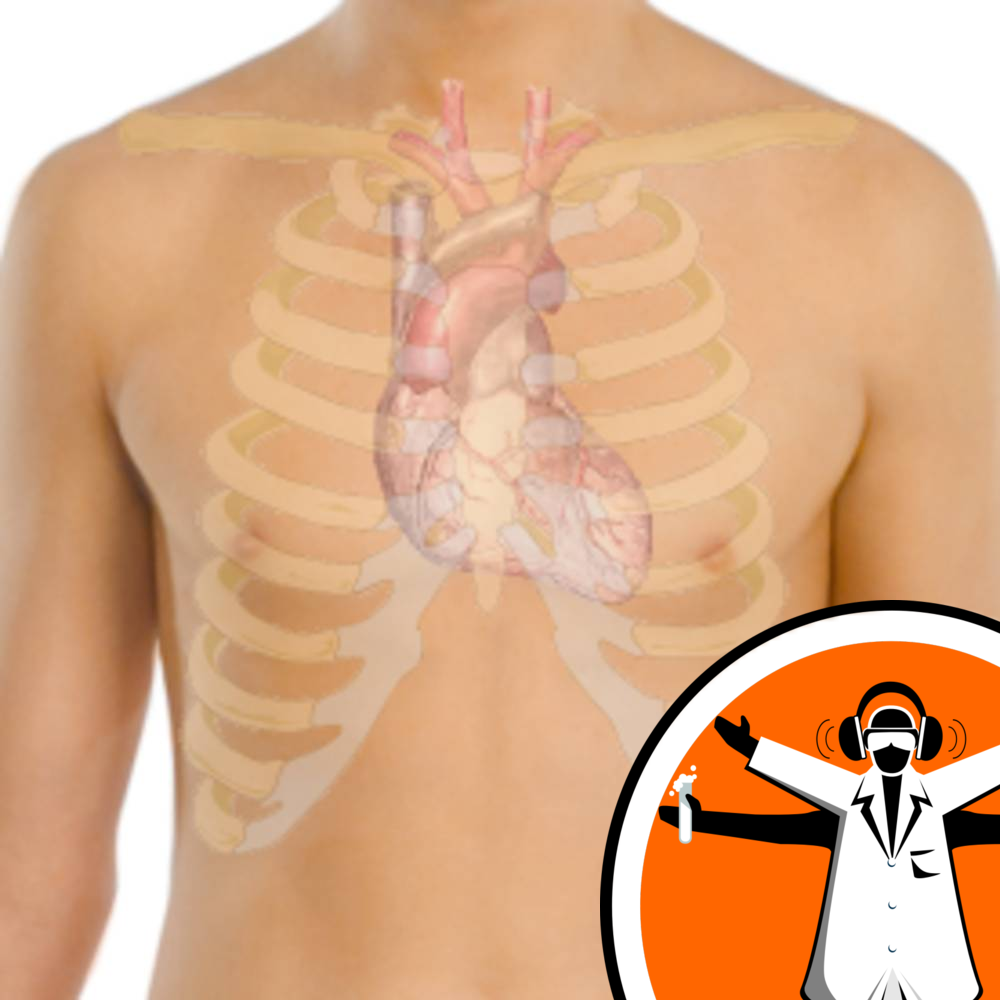
Ep 484Cyborg Cardiac Patch
A system for growing heart cells on a microscopic silicon grid that can eavesdrop on their electrical behaviour is giving scientists a much clearer picture of how the heart works and providing a way to test new drugs much more safely. Long term it could lead to the creation of a cardiac repair patch that could be "pasted in" to replace or control damaged heart tissue. The work's taking place in the lab of Harvard's Charles Lieber and he told Chris Smith about what they've been up to... Like this podcast? Please help us by supporting the Naked Scientists
Ep 483Getting every last drop
Days of squeezing the last drop from your shampoo bottles are over! Thanks to researchers from the US, we now have a material which allows sticky liquids to flow freely AND this has big implications for recycling, as Philip Brown explained to Lucka Bibic... Like this podcast? Please help us by supporting the Naked Scientists

Ep 482Life-saving helium discovery
Helium is the stuff that goes into party balloons and is also an essential ingredient in hospital MRI scanners. Most people have heard of helium but not many realise that we're in danger of running out of it. Luckily, Jon Gluyas from Durham University, has come up with a new way of finding it. Claire Armstrong spoke to him to hear how... Like this podcast? Please help us by supporting the Naked Scientists

Ep 481Juno probe plunges into Jupiter
Today, NASA's Juno spacecraft has plunged into uncharted territory, flying closer to Jupiter than we've ever been before. Graihagh Jackson spoke to co-investigator of the Mission, Professor Stan Cowley from Leceister University... Like this podcast? Please help us by supporting the Naked Scientists
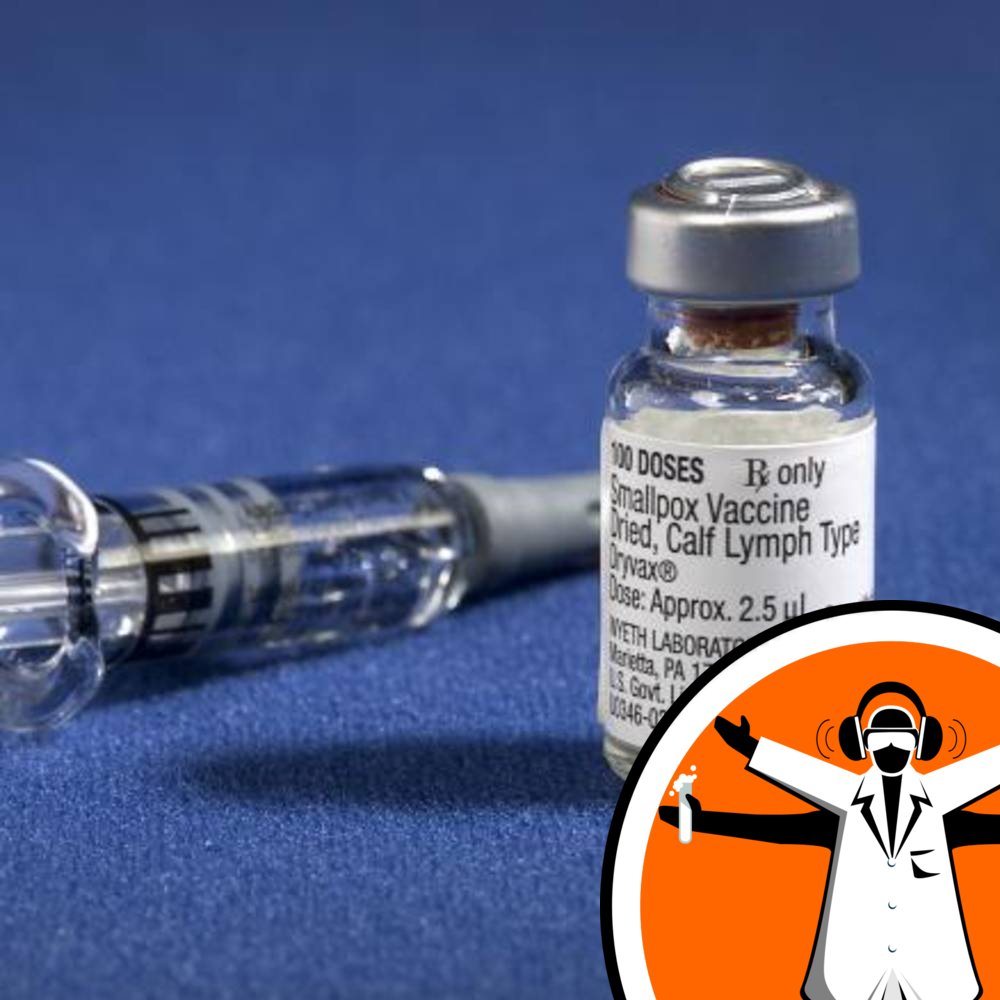
Ep 480Two Zika vaccine candidates discovered
Back in February the World Health Organisation declared the zika virus epidemic in Brazil to be a public health emergency of international concern. At the top of the list was the link between Zika infection and babies being born with microcephaly or an abnormally small head. Now scientists in the US have taken the first steps towards developing a much-needed vaccine, which they've so far tested successfully on mice. Dan Barouch from Harvard University spoke to Chris Smith... Like this podcast? Please help us by supporting the Naked Scientists

Ep 479Silky sounds - making violins from silk
When it comes to making musical instruments, there's as much science in today's violins as there is art. While many manufacturers around the world are still creating wooden violins, others are turning to alternative materials such as carbon fibre. But, as Kat Arney discovered, the natural world may provide even more options for making instruments with exciting new sound properties. Like this podcast? Please help us by supporting the Naked Scientists

Ep 477Solar powered jet makes historic crossing
Solar Impulse is a unique plane, powered not by jet fuel, but solar energy and it is currently on a record-breaking tour around the world. But how does that plane work and what is it like to fly? What happens when the sun begins to fade and the nigh falls over the ocean? Can a solar plane keep flying? Lucka Bibic caught up with co-pilot Andre Borschberg to ask about his green aviation mission. Like this podcast? Please help us by supporting the Naked Scientists

Ep 478Mini-guts for testing cystic fibrosis theraphy
Cells collected from the intestines of patients with the disease cystic fibrosis can be grown in the laboratory dish to produce balls of cells that scientists are calling mini guts. These can be used to test a series of new cystic fibrosis drugs that are now entering the clinic. But because these agents don't work on everyone, finding out who will benefit can mean a laborious trial for the patient. Mini guts on the other hand take just a few weeks to grow and give results in just days or hours. Jeffrey Beekman, from the Wilhelmina Children's Hospital, Utrecht, invented the technique... Like this podcast? Please help us by supporting the Naked Scientists
Ep 476Iron Up Against Heart Failure
Chronic Heart Failure is the inability of your heart to effectively pump blood around your body and affects over half a million people in the UK alone. So what causes it and could treatments lie in something as simple as iron? Doctor Paul Kalra is a cardiologist from Portsmouth Hospital and he gave Chris Smith the lowdown. Like this podcast? Please help us by supporting the Naked Scientists

Ep 475Sudden cardiac death in the young
Sudden cardiac death in the young, that's an apparently healthy person dying unexpectedly from heart-related issues under the age of 35, is rare but devastating. It is also something of a mystery to many scientists. So how can we try to prevent young people from dying unexpectedly like this? Could genetic screening be the answer? Georgia Mills caught up with Michael Ackerman, from the Mayo Clinic in Minnesota, at the British Cardiovascular Society Conference 2016. Like this podcast? Please help us by supporting the Naked Scientists

Ep 474Turning Carbon Dioxide Into Stone
Carbon dioxide is a problematic greenhouse gas contributing to global warming. Power plants are major emitters of carbon dioxide, but unfortunately, current methods of capturing and storing excess carbon dioxide have not been very effective. Only a small amount of carbon dioxide actually gets stored permanently. But researchers at Columbia University have demonstrated that their unique carbon capture and storage process can actually convert carbon dioxide into environmentally friendly limestone in less than two years. Fanny Yuen spoke with Dr. Juerg Matter to hear more about his pilot study. Like this podcast? Please help us by supporting the Naked Scientists

Ep 473The Longest Tunnel Ever Built
On June the 1st, Switzerland announced the opening of the world's longest tunnel. Called the Gotthard tunnel, it runs under the Alps to link Northern and Southern Europe; and at 57.5 km, it's fair to say, you certainly wouldn't be able to see the light at the end of it! Our resident technology expert Peter Cowley talked Connie Orbach through the project. Like this podcast? Please help us by supporting the Naked Scientists

Ep 472Fish Prefer Pastic Over Food
Earlier this year, the US banned microparticle beads from personal care products, but Europe has yet to follow suit. Now, researchers from Uppsala University are increasing the urgency as for the first time, they have been able to show that fish actually prefer to eat microplastic particles rather than their own food of zooplankton, causing disastrous effects to their survival. Fanny Yuen and spoke with Dr. Oona Lnnstedt to better understand the issue. Like this podcast? Please help us by supporting the Naked Scientists

Ep 471Immune System Surprisingly Adaptive
Immune cells are essential to the maintenance and repair in our bodies. However, an over-active immune system can lead to diseases such as arthritis, chronically inflamed wounds and atherosclerosis. Therefore, it is imperative to understand and carefully control our immune system activity. Our innate or non-specific immune system, acts as our body's first line of defence, these cells quickly reach the site, form a barrier, remove foreign material, and activate our more sophisticated adaptive immune system. Until now these non-specific immune cells were believed to have no memory and act in a... Like this podcast? Please help us by supporting the Naked Scientists

Ep 470Universal Cancer Vaccine
A vaccine that can teach the immune system to attack any type of cancer is being developed and tested by scientists in Germany. Cancer affects one person in every three. It's caused by genetic damage to our cells, which leads them to grow in an uncontrolled and invasive way. But because the cancer cells are part of our own body, the immune system normally ignores them because they're regarded as non-hostile. What Ugur Sahin and his colleagues are doing is to identify a series of chemical markers that are unique to a patient's cancer cells and then turn these into a genetic message that is... Like this podcast? Please help us by supporting the Naked Scientists

Ep 469Does salt increase blood pressure?
As a nation, the UK are above the intake guidelines for salt, which, for an adult, is 6g per day. To put that into perspective, there's about half a gram in a small packet of crisps, or one ham and cheese sandwich. But what does salt do to our insides? Viknesh Selvarajah from Addenbrooke's Hospital, in Cambridge, researches the impacts of salt and has a very unique perspective on the effects of high blood pressure, as he explained to Chris Smith. Like this podcast? Please help us by supporting the Naked Scientists

Ep 468Botox Effects are More than Skin Deep
Botox is a popular cosmetic treatment where Botulin toxin-A injections paralyse your facial muscles, which relaxes smile lines and makes your skin appear younger. In comedies, it is often joked about for giving patients frozen expressions. But now, researchers say that having Botox not only makes your face difficult to read, but also impairs your ability to read the emotion of others. This stems from the theory of embodiment. For a person to process an emotion that they see, they are required to mimicking that emotion. When we see our friend smile, our face automatically smiles a little as... Like this podcast? Please help us by supporting the Naked Scientists

Ep 467Boiling Frogs?!
This week we're tackling a myth sent in by listener Tim who says, "For many years I heard management gurus talking about the boiling frog syndrome.If you throw a frog into a pot of hot water it will immediately jump out. But If you put it in cold water and slowly heat it, it will boil to death " He also adds "Please don't harm any frogs disproving it!" Fortunately for Tim - and the frogs - someone has already done this experiment, or at least got as close to it as they feel ethically able to, without actually boiling any frogs alive. Kat Arney gets into hot water finding out... Like this podcast? Please help us by supporting the Naked Scientists

Ep 466500 Years of Robots
Robots are everywhere, from the machines that work in factories to pop culture icons like the Star Wars droids BB8, R2D2 and C3PO. but this is nothing new. Humans have been creating robots for centuries, and a new exhibition at the Science Museum in London will be showcasing our love of these Metal Mickeys, although sadly we'll have to wait until next year for it to open. Kat Arney went along to get a sneak preview of one of the shining metal stars of the show, and also to the exhibition's human curator, Ben Russell. Like this podcast? Please help us by supporting the Naked Scientists

Ep 464The Maths of Gambling
From maths hacks to poker playing bots, could there be a science to help you win big at the casino? Georgia Mills has been practising her poker face with help from Adam Kucharski... Like this podcast? Please help us by supporting the Naked Scientists

Ep 465New link in how life began
The origins of life on earth has been a mystery since, well since life began. Researchers from Germany this week have found a crucial link in explaining how we got from the soup of chemicals on early earth to the very first cell, lending support to the so called RNA world theory. Lead researcher Professor Thomas Carell spoke to Emma Sackville about what RNA theory is and how their research supports it... Like this podcast? Please help us by supporting the Naked Scientists
Ep 463Mouse Model Shows Zika Causes Birth Defects
On February 1, 2016, the World Health Organization declared Zika virus a Public Health Emergency of International Concern with the virus' continued spread through the Americas. Zika, which was previously considered to be fairly harmless, has been linked to birth defects and miscarriages in a dramatic shift that scientists are unable to explain. However, we are now one step closer to understanding this virus as the development of a new mouse model may have solved one piece of the puzzle. Connie Orbach spoke to lead researcher Michael Diamond from Washington University in St Louis. Like this podcast? Please help us by supporting the Naked Scientists

Ep 462Limbs from Gills?
Could limbs have evolved from fish gills? While it might sound fishy, scientists from the University of Cambridge have discovered that the same genetic programme, triggered by a gene called Sonic Hedgehog, is involved in the development of limbs, fins and gills. The idea that the formation of gills and legs might be linked is actually not a new one and was first proposed more than a century ago based on the similarities in appearances of the two structures, but scientists abandoned the notion as fanciful thinking. Connie Orbach went to see researcher Andrew Gillis, who has discovered that the... Like this podcast? Please help us by supporting the Naked Scientists

Ep 461Archaeology Undisturbed?
In Archaeology is it better to keep an object in the ground or dig it up? Connie Orbach spoke to curators of the Fitzwilliam Museum's Death On The Nile exhibition Helen Strudwick and Julie Dawson and physicist Nishad Karim to find out how techniques from physics are allowing us to visualise objects without damaging them... Like this podcast? Please help us by supporting the Naked Scientists

Ep 460Brains: the bigger the better?
Humans are awesomely clever, right? We've colonised the world, manipulated our environment, developed incredible technology and can even make brilliant science radio shows like this one. And it's all thanks to the squishy grey stuff in our skulls - our brains. It's often said that humans have unusually big brains, which explains our exceptional intelligence, but it turns out that may not strictly be true. Kat Arney looks at the popular myth that a bigger brain means a higher level of intelligence... Like this podcast? Please help us by supporting the Naked Scientists

Ep 459Will your doctor be prescribing LSD soon?
The drug LSD, or lysergic acid diethylamide, was first made in the 1930s in Switzerland by chemist Albert Hoffman, who also tried the agent on himself and described his psychedelic experience. LSD was widely used until the 1960s when it was made illegal, so very little research has actually been done using modern neuroscience techniques to look at how LSD affects the brain and how it might be useful therapeutically. Until now, that is. Imperial College's Robin Carhart-Harris has been administering the drug to volunteers, as he explained to Chris Smith... Like this podcast? Please help us by supporting the Naked Scientists

Ep 458Have STIs led to monogamy?
We might have sexually transmitted infections to thank for our modern-day monogamous society, according to a new study from Canada this week. Between ten and fifteen thousand years ago, as agriculture was established and humans swapped a hunter gatherer lifestyle for life in larger group settlements, our ancestors also appear to have embraced monogamy - having a single partner, rather than multiple wives. Mathematician Chris Bauch has designed a computer simulation that suggests that, as populations increase in size, the threat of sexual disease drives the switch to monogamy, and the desire to... Like this podcast? Please help us by supporting the Naked Scientists

Ep 457Invisible allies: the future of satellites
Without satellites operating above us, we would be in considerable trouble; even ATM machines don't work without them! So this week, Graihagh Jackson has been at the Royal Academy of Engineering, where leaders in satellite and space technology have been meeting to discuss what's up there Like this podcast? Please help us by supporting the Naked Scientists

Ep 456New Horizons reveals Pluto's secrets
This week, we've had a first glimpse at the wealth of data sent back by the New Horizons probe, which reached Pluto and its largest moon, Charon, last summer. Open University space scientist David Rothery has been taking a look at the papers charting some of the discoveries, which were unveiled this week in the journal Science, and he went through the findings with Chris Smith... Like this podcast? Please help us by supporting the Naked Scientists

Ep 455New stroke rehabilitation technique
Strokes are a major cause of permanent disability and they affect millions of people every year. The cause is usually a lack of blood flow to one part of the brain, which destroys the affected brain area and robs the victim of the ability to perform whatever tasks that brain area used to process. But an electrical current applied to the head for a short time, even years after a stroke, appears to open up new circuits in the brain, restoring some of the lost abilities, as Oxford University's Heidi Johansen-Berg explained to Chris Smith... Like this podcast? Please help us by supporting the Naked Scientists

Ep 454ExoMars spacecraft launches successsfully
ExoMars 2016 launched successfully last week, but why are we going back to the red planet? This mission aims to seek out methane, which could be a crucial clue to whether there is life on Mars. Like this podcast? Please help us by supporting the Naked Scientists

Ep 453What's killing the bees?
It is that time of year again when we should start to see bees buzzing around gardens but populations of bees have been declining recently as disease and lack of food stores are hitting them hard. With a third of global food supply coming from crop species that are to some extent dependent on bees it's important that we halt this decline. Felicity Bedford went to Cambridge University's King's College to meet Kristen Treen, who looks after the honeybees there, and see how their beehives have been getting on this winter Like this podcast? Please help us by supporting the Naked Scientists

Ep 452Coercion - It's easy to be bad
Back in the 1960s, US researcher Stanley Milgram stunned the world with a study showing that members of the public were prepared to inflict potentially lethal electric shocks on supposedly innocent volunteers, if a lab-coated scientist ordered them to do so. In fact the recipients of the shocks were actually actors, who escaped unharmed. Milgram's experiments raised many ethical questions - not least about whether it was right to do them at all - and Patrick Haggard from UCL is now trying to find out to what extent people feel a sense of responsibility or control when they're ordered to do... Like this podcast? Please help us by supporting the Naked Scientists

Ep 451Game changing cancer cure?
Results that scientists are describing as "unprecedented" in the treatment of cancer have been announced at a conference this week. A team led by Stanley Riddell, a researcher at the Fred Hutchinson Cancer Research Center in the US, have developed a method to reprogramme the immune system to selectively target cancer cells. This means that, unlike traditional chemotherapy, which can't tell healthy and tumour tissue apart - and this is what causes unpleasant side effects - the immune system acts with surgical precision, selectively weeding out rogue cancer cells while leaving healthy tissue... Like this podcast? Please help us by supporting the Naked Scientists

Ep 450Mapping climate change
Many people make the assumption that climate change means that places will become warmer; and indeed some will. But more important in some ways is how the climate in a particular geography might become more variable. Because, if the temperatures, cloud cover and rainfall become less predictable and operate over a greater range than they have historically, this could affect how the ecosystems - the web of plant and animal life - in those areas can operate. And this week scientists took the first steps towards studying whether this is a real risk and highlighting those areas we need to worry... Like this podcast? Please help us by supporting the Naked Scientists

Ep 449Here Comes Science: They Might be Giants
American band They Might be Giants, famous for charting singles 'Birdhouse in your Soul' and 'Istanbul', have also made an album all about science. It's called 'Here Comes Science', and aims to teach children about things like biology and physics, featuring songs like 'My Brother the Ape' and 'I Am a Paleontologist'. The band dropped by Cambridge as part of a tour promoting their new album 'Glean', so Naked Scientist Georgia Mills took the opportunity to speak to founding member John Linnell about songs, science and controversy... Like this podcast? Please help us by supporting the Naked Scientists
Ep 448Gravitational Waves Discovered!!
100 years after Einstein predicted them, scientists have finally discovered gravitational waves. For 25 years, hundreds of scientists across 16 countries have been trying to detect these elusive ripples and yesterday, the LIGO team announced they had finally detected them. Graihagh Jackson went to the announcement and met with the British scientists on the LIGO team... Like this podcast? Please help us by supporting the Naked Scientists

Ep 447Zika declared public health emergency
Last week, the outbreak of Zika virus in Brazil prompted the World Health Organisation to declare a global health emergency. The virus is spreading fast and has been linked to microcephaly, in which children are born with underdeveloped brains. Consultant virologist Tim Wreghitt spoke to Chris Smith about the situation... Like this podcast? Please help us by supporting the Naked Scientists

Ep 446Gene editing human embryos
This week, a British researcher got the green light to genetically modify human embryos - this is the first time that gene editing has been approved in embryos. However, it hasn't been met with open arms by everyone, with some arguing this is the first step to 'designer babies.' Graihagh Jackson spoke to Geneticist Andrew Wood to find out what exactly gene editing involves... Like this podcast? Please help us by supporting the Naked Scientists

Ep 445What beached the sperm whales?
Sperm whales are renowned for being the biggest toothed whales of our seas, migrating thousands of miles every year. But this week, photos of cetacean carcasses were splashed across the media.16 of these majestic creatures have beached across the UK, the Netherlands and Germany Some arrived alive, some were already dead and there's a lot of speculation as to what caused it to happen Graihagh Jackson's been investigating with the help of marine ecologist Bill Amos Like this podcast? Please help us by supporting the Naked Scientists

Ep 444Could conspiracy theories be true?
Science is full of conspiracy theories, the moon landings were faked and climate change is a hoax, but how many of them are likely to be true? Felicity Bedford spoke to Dr. David Robert Grimes from Oxford University who has given conspiracy theorists the benefit of the doubt and built a mathematical model to test whether, if these conspiracies were real, they would still be a secret... Like this podcast? Please help us by supporting the Naked Scientists

Ep 443Behind the scenes at Call the Midwife
Call the Midwife is one of the UK's best loved TV shows, and the new series has just started on the BBC. But as well as its empathetic characters and gripping story-lines, what makes the show special is its attention to detail when it comes to historical and medical accuracy, such as when it tackled the Thalidomide scandal from the late 1950s. Ginny Smith recently had the opportunity to visit the set of Call the Midwife and talk to those who make the show happen, both on and off the screen. She started by asking Executive Producer Dame Pippa Harris about just what it is that makes the show so... Like this podcast? Please help us by supporting the Naked Scientists

Ep 442Free radicals - a miracle cure?
Hibernating animals put their bodies through huge amounts of stress but seem to remain unharmed. Professor Rob Henning from Groningen University explained to Connie Orbach how mimicking their protective mechanisms might be the key to human health. Like this podcast? Please help us by supporting the Naked Scientists

Ep 440New Leukemia Therapy
Leukemia is a cancer of the white blood cells that normally fight infection. About one person in every 200 will develop the disease, a common form of which is called AML, or acute myeloid leukemia. At the moment it tends to have a relatively poor prognosis and over the past 40 years there have been relatively few new treatments for the disease. A bone marrow transplant is often the only chance an individual has. But this week an international team of scientists led by researchers in the UK announced the discovery of a new way to control the disease by blocking the signals that drive the growth... Like this podcast? Please help us by supporting the Naked Scientists

Ep 441National Security Algorithm
The current threat level from terrorism in the UK and many other countries is set to severe, and police and security forces acknowledge that their jobs are being made much harder because today's terrorists have at their disposal a range of communications and social network tools to help them to form alliances, attract new recruits and orchestrate terror campaigns. But, the associations that terrorists make through these channels can also help to identify them, if police are able to screen this sort of data routinely. Most people, though, are justifiably concerned about privacy. Now Michael... Like this podcast? Please help us by supporting the Naked Scientists