Naked Scientists, In Short Special Editions Podcast
989 episodes — Page 9 of 20

Ep 589A new model for motor neurone disease
Motor neurone disease (MND) is a degenerative disease affecting around 5,000 people in the UK. It attacks people's ability to move, speak and breath, and usually is fatal within two years. At the moment there is no cure, but scientists are trying to find out more about what causes MND and how we might one day treat it. This week, a paper out in Nature Neuroscience describes a new model for MND, which has revealed some unexpected clues about how the disease operates, and may even lead to a target for treatments. Chris Smith spoke to one of the authors Jemeen Sreedheren, from Cambridge... Like this podcast? Please help us by supporting the Naked Scientists

Ep 588Ivory, bear bile and tiger skins: Confiscated contraband
When people take wildlife products over a border that is under the control of CITES. Some of it is illegal, and this is when Border Force step in, confiscating the items in question and when possible, returning them to the wild. But what do people bring through? Georgia Mills was shown the Dead Shed, by senior Border Force officer Grant Miller, a horrific stash of animal and plant products that had been confiscated at Heathrow Airport. This content may be upsetting to some people. Like this podcast? Please help us by supporting the Naked Scientists

Ep 587Reprogramming Skin Cells to Treat Multiple Sclerosis
Multiple Sclerosis, or MS, affects hundreds of thousands of people. It's a condition where the body's own immune system attacks a protective layer around nerve fibres called myelin. This prevents messages being conveyed quickly and faithfully through the brain producing symptoms that can include difficulty with vision, movement, speech, balance and sensation. In recent years scientists have begun to explore the use of stem cells to combat the progression of the disease. As author Stefano Pluchino, from Cambridge University, explained to Chris Smith. Like this podcast? Please help us by supporting the Naked Scientists

Ep 586My whiskers! Faster stroke recovery in mice
Scientists in the US have uncovered a surprising potential treatment for strokes: short-term sensory deprivation. Strokes occur when the blood supply to the brain is interrupted; this destroys the affected nerve cells, and robs the victim of the function of the affected brain area. But it is possible to achieve some degree of recovery by encouraging other, adjacent healthy parts of the brain to rewire themselves and take over from the damaged area. Working with mice, Washington University neurologist Jin-Moo Lee has found that this can be promoted by temporarily depriving a patch of brain... Like this podcast? Please help us by supporting the Naked Scientists

Ep 585Is walking with friends better than walking alone?
Was exercising more one of your new year's resolutions? Has it ended up a broken promise at the bottom of your to-do list? Georgia Mills spoke to Catherine Meads from Anglia Ruskin University, who may be able to help. Like this podcast? Please help us by supporting the Naked Scientists
Ep 584New treatment for heavy periods
Up to a third of women experience debilitatingly heavy periods. This can cause significant disruption. It can also lead to depression; time off work; and, in severe cases, even lead to a low blood count or anaemia. Currently, heavy periods are treated hormonally or surgically, but these options have side effects and can affect fertility. So is there a better treatment? Edinburgh University's Jackie Maybin thinks so. Like this podcast? Please help us by supporting the Naked Scientists
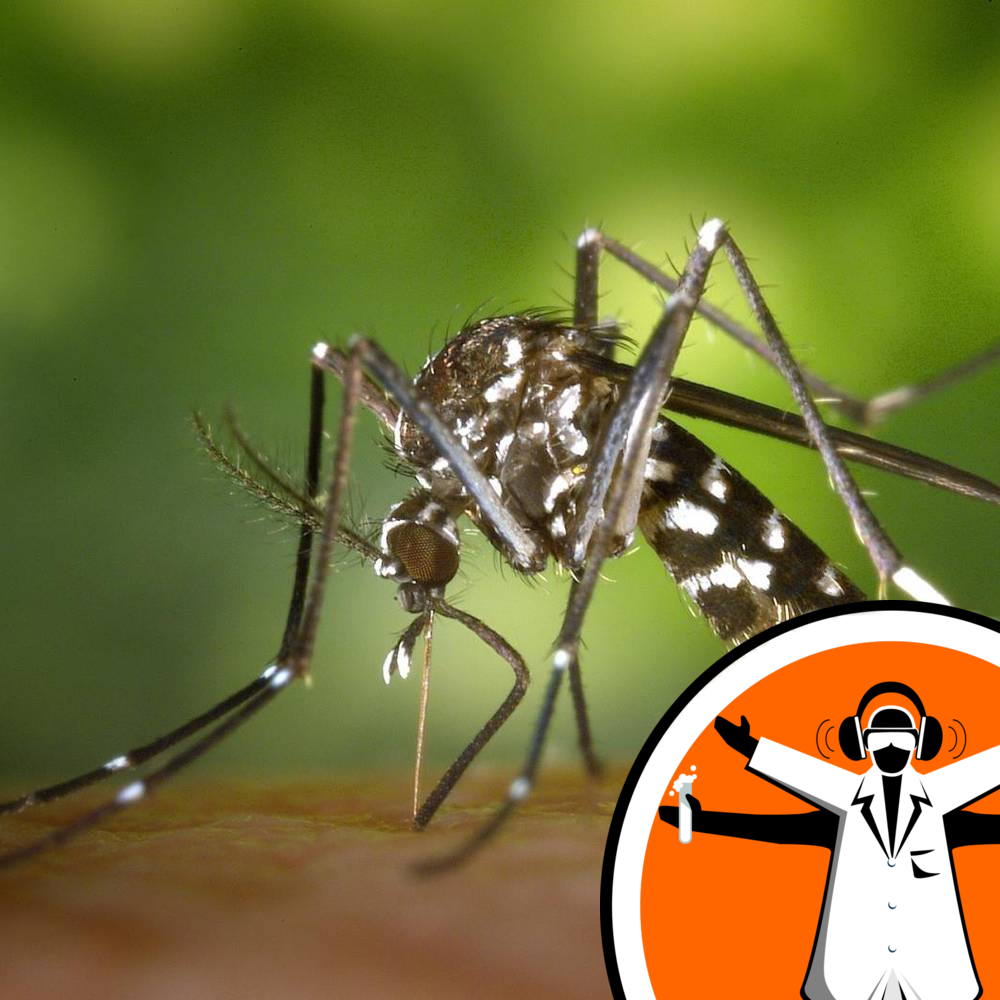
Ep 583Toothpaste Ingredient Fights Malaria
Scientists have shown that a toothpaste ingredient could be used as an anti-malarial drug. Spread by mosquitoes, malaria is caused by Plasmodium parasites, and kills over half a million people every year, 70% of them children. In recent years the parasite has also become resistant to most of the existing anti-malarial compounds. This new discovery, by researchers at the University of Cambridge, was aided by Eve, an artificially-intelligent 'robot scientist'. Chris Smith was joined by Steve Oliver who was part of the investigation. Like this podcast? Please help us by supporting the Naked Scientists

Ep 582Find out about the Flu
It's winter time again in the northern hemisphere and the influenza virus - the 'flu - is making its seasonal rounds. The virus infects millions of people every year, and vulnerable individuals with underlying health complaints including heart disease, kidney problems and diabetes, as well as pregnant women, the very young and the over 65s are at higher risk of developing a severe infection. To find out how flu spreads and causes disease, and how you can protect yourself, Naked Scientists Connie Orbach and Khalil Thirlaway have been investigating this microbial assailant... Like this podcast? Please help us by supporting the Naked Scientists

Ep 581Tinnitus therapy trial success
Around one in ten people have to live with tinnitus, this is a persistent noise ringing in the head when there's nothing external causing it. The severity of tinnitus can range from irritating to completely life-changing, by making it nearly impossible to work or sleep, and there is no cure. But now, scientists have come up with a way to reduce the severity of symptoms, by stimulating parts of the brain responsible for causing the phantom sounds. Georgia Mills spoke to Susan Shore, from the University of Michigan. Like this podcast? Please help us by supporting the Naked Scientists
Ep 580Could lifes building blocks have formed in space?
The question of where life began is a difficult one to answer. While many scientists believe that life began on earth, others believe that life, or at least its building blocks, first formed in space. A recent study from the University of Sherbrooke, in Canada, has shown how complex organic molecules could form on icy comets - from nothing more than simple molecules and radiation. And it's possible that this could explain how complex molecules like amino acids - which are the building blocks of proteins - could have originally formed billions of years ago and led to the beginning of life on... Like this podcast? Please help us by supporting the Naked Scientists

Ep 579Environmental implications of healthier eating
In the run up to Christmas, shops are bursting at the seams with delicious treats, appealing platters and indulgent morsals, which can make sticking to a healthy diet rather unlikely. And food consumption has consequences for our "waist" in more ways than one! According to the Food and Agricultural Organisation of the UN, over a third of all the food made globally each year goes un-used, that's around 1.3 billion tonnes. But could adhering to a healthier diet in the food we do eat make a difference to the environment? Paul Behrens and colleagues from Lieden University in the Netherlands have... Like this podcast? Please help us by supporting the Naked Scientists

Ep 578Falcon-inspired drone technology
New research shows that peregrine falcons hunt their prey using strategies similar to those used by guided missiles. Could this information be useful in downing drones that are flying where they shouldn't? Like this podcast? Please help us by supporting the Naked Scientists

Ep 577The corals that matter most on the Great Barrier Reef
The Great Barrier Reef is a huge system of over 3,800 individual coral reefs - making it the largest coral reef system on earth. Located off the northeastern coast of Australia, it is home to thousands of species. However, in recent years, the Great Barrier Reef has come under threat. Rising sea temperatures have led to a number of problems, including mass coral bleaching, and a huge increase in the number of crown-of-thorns starfish, which eat corals. Now, a new study has shown that some reefs may be more important than others, in terms of the recovery of the Great Barrier Reef. Lewis Thomson... Like this podcast? Please help us by supporting the Naked Scientists

Ep 576The future of HIV research
December 1st is World AIDS Day. HIV AIDS affects 35 million people worldwide, and although the number of new infections is slowly decreasing, last year it still caused one million deaths. The virus, HIV, attacks the body's immune system by infecting white blood cells, also called "lymphocytes". Lewis Thomson has been finding out what the future holds for treatment, and what it's like to be diagnosed with the virus, and met with Professor Andrew Lever from the University of Cambridge, who researches the virus. Like this podcast? Please help us by supporting the Naked Scientists

Ep 575Could reflective particles limit climate change?
This week the UN Climate Change Conference has been happening in Bonn. This meeting is the next step for governments to implement the Paris Climate Change Agreement, which entered into force last November and sets out strategies to try to limit the rise in global temperatures to below 1.5 degrees C. With these targets in minds researchers the world over have been exploring various ways to reverse global warming. One suggestion is to spray about 5 million tonnes of reflective sulphur particles into the high atmosphere to temporarily reduce the intensity of sunlight and cool things down.... Like this podcast? Please help us by supporting the Naked Scientists

Ep 574Type 2 Diabetes Reversed in Rats
Last year, Diabetes UK reported that almost 4 million people in the UK are living with diabetes. Around 90% of these cases are classed as Type 2, which is often linked with obesity. Interestingly, Type 2 diabetes has been reversed in people undergoing weight loss surgery, who have been able to leave hospital after only a few days no longer needing their diabetes medication. Studies have suggested it's not the surgery itself, but the calorie restricted diet that follows which is responsible. Now, a team at Yale University has investigated the mechanisms by which this reversal is made possible.... Like this podcast? Please help us by supporting the Naked Scientists

Ep 573Sleep and fear learning
Traditionally, researchers have recognised the importance of sleep in modulating the fear learning response when the sleep occurs after fear learning. To understand how sleep, prior to a fear learning task, may be important; researchers looked at the sleep of participants in the lab and at home by measuring brain wave activity. They discovered that a particular stage of sleep called rapid eye movement stage sleep may be protective against fear learning when it occurs prior to fear learning, something which may have implications for protecting against the development of post traumatic stress... Like this podcast? Please help us by supporting the Naked Scientists
Ep 572AI learning without human guidance
In 2016, the world champion Lee Sedol was beaten at the ancient boardgame of Go - by a machine. It was part of the AlphaGo programme, which is a series of artificially intelligent systems designed by London-based company DeepMind. AlphaGo Zero, the latest iteration of the programme, can learn to excel at the boardgame of Go without any help from humans.So what applications could AI learning independently have for our day-to-day lives? Katie Haylor spoke to computer scientist Satinder Singh from the University of Michigan, who specialises in an area within artificial intelligence called... Like this podcast? Please help us by supporting the Naked Scientists

Ep 570Good cholesterol protects heart cells against damage
A drug based on a form of cholesterol might be able to reduce the damage done by heart attacks. Working with experimental mice, scientists in Australia have found that so-called good cholesterol, also known as "HDL", if injected into the bloodstream shortly after a heart attack can prevent heart cells from dying. The experiments suggest that the HDL temporarily alters the way heart cells burn glucose, giving them more energy and improving their survival. Chris Smith spoke to Sarah Heywood, who carried out the work at the Baker Heart and Diabetes Institute in Melbourne, Australia Like this podcast? Please help us by supporting the Naked Scientists

Ep 571Voice in the crowd
Imagine it's a Friday night, you're in the pub it's and really noisy. Your friend though is telling a great story, and you really want to hear it. But how do you separate their voice from the din going on around you? This week scientists at Imperial College have sussed out the answer. Like this podcast? Please help us by supporting the Naked Scientists

Ep 569Kidneys in a dish
Scientists in the US have discovered a way to recreate the condition polycystic kidney disease using stem cells in a culture dish. The new culture system means that researchers can now begin to screen thousands of potential drug molecules to find ways to prevent the disease from progressing in humans. Like this podcast? Please help us by supporting the Naked Scientists

Ep 568LiFi one step closer to our homes
We all use Wi-fi nearly every day. It is short for wireless fidelity, using microwaves frequencies to transmit data to and from your phone. But, visible light can be used to for the same purpose - with a technology being developed at Edinburgh University called Li-Fi, which would be faster and more secure. It works by making the lights in a room flash incredibly quickly to send signals. It's too fast for us to see, but does it nonetheless affect us, or the performance of the lights? Georgia Mills spoke with Wasiu Popoola from Edinburgh University to find out... Like this podcast? Please help us by supporting the Naked Scientists

Ep 567Molecule dashes hopes for interstellar signs of life
Astronomers are trying to understand where our solar system came from, how life got started here, and where else in the galaxy life may be lurking. Chemistry is very important in these processes both in terms of providing chemical building blocks from which things can form, but also providing chemical signatures that highlight that something - like life - is happening. We had thought that one compound, called methyl chloride, was a surefire sign of life, but now astronomers in America and Denmark have detected the same chemical around a star without any planets, as well as on a comet in our... Like this podcast? Please help us by supporting the Naked Scientists

Ep 566Neonicotinoids in majority of worlds honey
Three quarters of the world's honey is laced with neonicotinoid insecticides, a new study from scientists in Switzerland has shown this week. The findings are based on an analysis of nearly 200 honey samples collected from around the world with the help of citizen scientists on every continent (except Antarctica!). Neonicotinoids are the most widely used pesticides in the world now and scientists suspect that, by getting into pollen and nectar, they're also having off-target effects on pollinators, like bees. This the first comprehensive global study to look at how widespread these effects... Like this podcast? Please help us by supporting the Naked Scientists

Ep 565Making robot muscle
Natural muscle plays an important role in our human ability to control our movements, so could we give this ability to robots? Katie Haylor spoke to Aslan Miriyev from Colombia University in New York, who's developed a soft, synthetic muscle that can substantially expand and contract alongside being strong. Like this podcast? Please help us by supporting the Naked Scientists

Ep 564Algal protein may boost crop growth
By 2050, it is estimated that we will need around a 50% increase in crop yield to feed our rapidly growing population. However, it turns out that algae - the slimy green layer often found on the surface of ponds in summer - may provide a solution to this problem. Stevie Bain chatted with Luke Mackinder from The University of York about how a better understanding of algae may allow us to engineer fast-growing crops Like this podcast? Please help us by supporting the Naked Scientists

Ep 563How do tissues grow?
The complex branching patterns seen in the growth of tissues in the lungs, kidneys and pancreas have an elegantly simple mathematical solution... Like this podcast? Please help us by supporting the Naked Scientists

Ep 562Baby-like skulls are key to bird success
From elaborate peacocks to seagulls by the shore, birds are found in a wide range of habitats on every corner of globe and a recent study suggests that the key to their world domination may all be in their heads. Stevie Bain chatted with Arkhat Abzhanov to find out more Like this podcast? Please help us by supporting the Naked Scientists

Ep 561Microbes in Saliva
We never really notice oral hygiene, except when it's bad. The latest research shows that we can't really blame genetics for this, but rather the oral hygiene of everyone else in your household. Like this podcast? Please help us by supporting the Naked Scientists

Ep 560Measuring Tectonic Plate Strength
One major goal of scientists has been to measure the strength of tectonic plates. However, laboratory estimates of plate strength vary widely and in general seem to overestimate strength compared to real world observations. Thus, there has been a fundamental lack of understanding about how plate dynamics work, until now. Like this podcast? Please help us by supporting the Naked Scientists

Ep 559New antimicrobials show promise in battle against superbug
C. diff - or Clostridium difficile - is a superbug that can cause major problems in hospitals. It leads to life-threatening diarrhoea and intestinal inflammation in patients who catch it, it spreads easily, and patients who do recover often relapse many times afterwards because the spectrum of so-called "good bacteria" in the bowel also goes off-kilter when you treat the infection. What's needed are highly-targeted antibiotics that can hit exclusively c. diff and not affect the good bacteria that we need to keep us healthy. Luckily, Sheffield University's Joe Kirk is on the case... Like this podcast? Please help us by supporting the Naked Scientists

Ep 558Where do New Drugs come From?
Finding new drugs for our various diseases and ailments is one of the biggest industries in the world. But how does so called big pharma operate - how do they choose what to work on and how does an idea get from the lab to your local chemist? Astra Zeneca, one of the world's leading pharmaceutical companies, have recently moved to Cambridge, so Chris Smith took the opportunity to ask Mene Pangalos, Executive Vice-President of AstraZeneca's Innovative Medicines and Early Development Biotech Unit, about how a company like his invents and markets medicines in the modern era... Like this podcast? Please help us by supporting the Naked Scientists

Ep 557Old maps highlight new understanding of coral reef loss
Known as the 'forests of the ocean', coral reefs represent an entire underwater ecosystem, teeming with life. But this ecosystem is under threat. Researchers from The University of Queensland and Colby College in the USA have used old 18th century nautical charts and compared them to modern satellite data as a novel way to understand coral loss over a period of 240 years. Michael Wheeler spoke with lead researcher Loren McClenachan, assistant professor at Colby College to find out more. Like this podcast? Please help us by supporting the Naked Scientists
Ep 556Uterus age may affect pregnancy success
It's well known that older mothers have more complicated pregnancies. For a long time scientists thought that old eggs were the reason for this and many women have made the decision to freeze their eggs to circumvent this problem. But new research from the Babraham Institute in Cambridge suggests that the age of the uterus is important too. Alexandra Ashcroft spoke to Laura Woods to find out more Like this podcast? Please help us by supporting the Naked Scientists

Ep 555Can bacteria affect the sex life of animals?
Bacteria produce a molecule that stimulates sexual reproduction in the closest living relatives of animals, according to researchers at UC Berkeley and Harvard Medical School. Like this podcast? Please help us by supporting the Naked Scientists
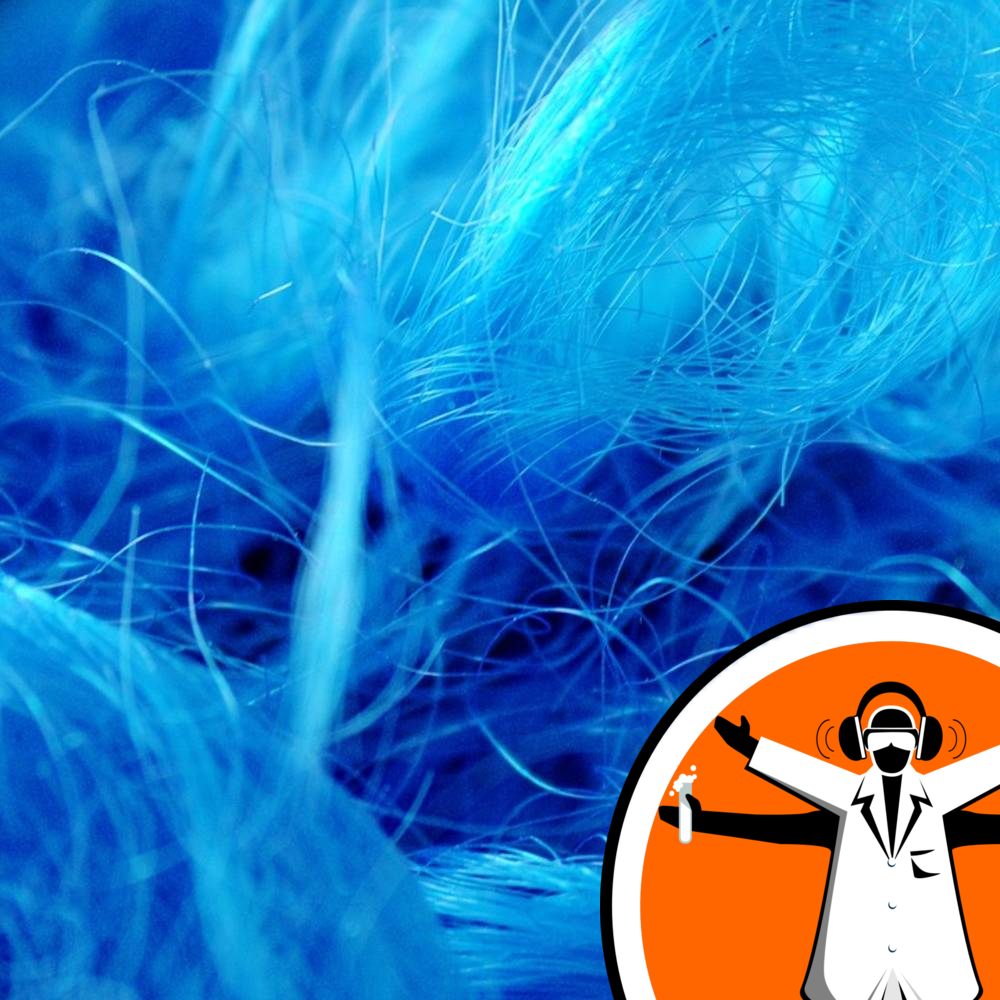
Ep 554Our hairy insides
Our hairy insides protect us from the full force of fluids racing through our bodies and may inspire future robotic design Like this podcast? Please help us by supporting the Naked Scientists

Ep 553Whats behind the rise in osteoarthritis?
Osteoarthritis is a common, painful joint condition that affects about 8 million people in the UK, and many others across the world. It stems from a breakdown of the protective cartilage at the ends of bones causing pain, swelling and movement problems, commonly in the knee. Osteoarthritis cases have been on the rise, but not for the reasons you might think. Katie Haylor spoke to palaeoanthropologist Ian Wallace from Harvard University, who has taken a historical perspective on finding out why... Like this podcast? Please help us by supporting the Naked Scientists

Ep 552Foraging for food
What kinds of food might you be able to forage in a city green space? Katie Haylor went out to explore what wild food Cambridge in the UK has to offer with lifelong forager Antony Bagott.... Like this podcast? Please help us by supporting the Naked Scientists
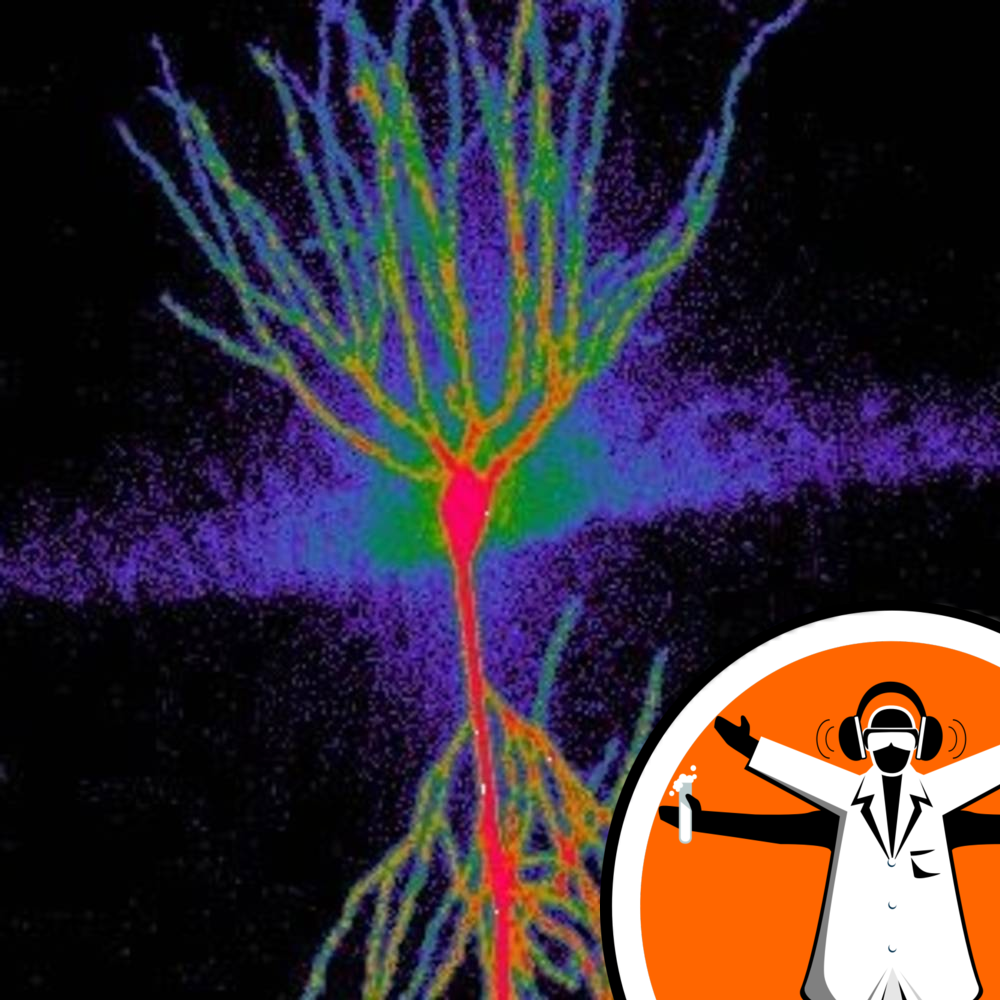
Ep 551The link between cellular garbage disposal and Alzheimers disease
More than half a million people in the UK suffer from Alzheimer's disease. Symptoms of this disease, including memory loss and communication problems, are due to sticky protein build ups within the brain, called amyloid plaques. These plaques cause damage to nerve cells and are a hallmark feature of the disease. Currently, there is no cure for Alzheimer's disease. However, researchers at Yale University School of Medicine have made a striking discovery about the role of cellular garbage disposal units, called lysosomes, in the formation of these plaques. Lead researcher on the study, Shawn... Like this podcast? Please help us by supporting the Naked Scientists

Ep 550Violence weakens short term memory
Short term memory is incredibly important in day to day life, whether you're driving to work, having a conversation, or reading through the Naked Scientists website. However, scientists from Princeton University have found evidence that exposure to violence reduces short term memory, even if the violent incident occured more than a decade ago. Alexandra Ashcroft spoke to Pietro Ortoleva to find out more... Like this podcast? Please help us by supporting the Naked Scientists

Ep 549How Does Sleep Affect Dementia?
Alzheimer's Disease is one - very common - form of senile dementia. It usually affects older people and progressively robs them of their mental faculties. It occurs because a protein called beta amyloid builds up in the brain forming harmful deposits called plaques, which are toxic to nerve cells. What's confusing though is that the brain naturally makes beta amyloid all the time but seems to wash most of it away when we go to sleep. But what aspect of sleep is important for this clean-up process, and what are the implications for people who are chronically poor sleepers? At Washington... Like this podcast? Please help us by supporting the Naked Scientists

Ep 548Searching for super-fast stars
Scientists now think they can explain why the hypervelocity stars - that's stars going at 600 - 1000 km per second are only spotted in one part of the sky, in the constellation of Leo, and it's down to their explosive origins. Douglas Boubert is a second year PhD student in the University of Cambridge, and he and his team used a computer model to try and work out what was going on. Georgia Mills heard what they found. Like this podcast? Please help us by supporting the Naked Scientists

Ep 547Can brain training slow the progression to Alzheimers?
Millions of people worldwide are affected by Alzheimer's Disease; Terry Pratchett was famously a victim of the condition, which progressively robs sufferers of their mental faculties. At the moment, no therapies are available to halt the disease, but it might be possible to keep patients functioning well, for longer, with a bit of brain-training. Cambridge University neuroscientists have invented a memory-boosting app called GameShow. Katie Haylor went to see the game's co-inventor Barbara Sahakian and lead scientist George Savulich... Like this podcast? Please help us by supporting the Naked Scientists

Ep 546What Causes Coastal Erosion?
Our coasts are constantly changing. And whilst human impact can have a significant impact Mother Nature also plays her part, tides and storms can change a beach overnight. Continuing with Marine Month, Chris Smith spoke to Oceanographer Simon Boxall from the University of Southampton about what's driving these changes and can we prevent them? Like this podcast? Please help us by supporting the Naked Scientists
Ep 545Magnetic control of vision
If you're up for a bit of practical experimentation, give this a go. Hold your finger out in front of your face, fix your gaze on the tip and then shake your head from side to side, or nodding up and down. Without you having to think about it, your eyes stay locked on their target by precisely matching the movements of your head. But for some people, maintaining a steady gaze like that is impossible because their eyes rhythmically drift off. Luckily a British team of doctors and eye surgeons have come up with a solution based on an implantable pair of magnets. Chris Smith spoke to Parashkev... Like this podcast? Please help us by supporting the Naked Scientists

Ep 544The Rise of Deadly Heatwaves
The third week of June had everyone searching for the suncream as temperatures reached record breaking heights. But while most of us enjoy fun in the sun, prolonged heatwaves can have significant health risks and can even be life-threatening. Izzie Clarke investigated just what is causing the surge in dangerous heatwaves and how we can stay cool as things start to heat up. Like this podcast? Please help us by supporting the Naked Scientists

Ep 543What Lies Behind an Egg's Shape?
Many of us enjoy a boiled egg or two for breakfast, but why are hen's eggs round at one end and pointy at the other? Katie Haylor caught up with Mary Stoddard of Princeton University, who's trying to find out why eggs look the way they do. Like this podcast? Please help us by supporting the Naked Scientists

Ep 542What is Wannacry?
In May 2017 hundreds of thousands of computers across the world were hit by a massive ransomware attack called Wannacry. The perpetrators encrypted the contents of users' computers and demanded payment to unscramble their data. What made the threat worse was that it had the ability to literally spread virally across the Internet by exploiting connections between computers on networks. But where did it come from, what can we do to mitigate the threat, and who is at risk of attacks like this? Chris Smith, Kate Feller and Andrew Holding put these questions to cybersecurity expert Paul Harris,... Like this podcast? Please help us by supporting the Naked Scientists

Ep 541Ancient protein thwarts virus attack
When viruses attack our crops they can wipe them out, and in some parts of the world, this can be a death sentence. So naturally, scientists are keen to find a way to provide protection against these infections. Viruses usually attack by using parts of the victim's own cell machinery against it, so in theory, if you can change this component or protein, the virus won't recognise it, and its attack will have been neutralised. But, if you fiddle about with the stuff inside a cell too much, the cell won't be able to use it and will die anyway. Now, a group from the University of Granada in Spain... Like this podcast? Please help us by supporting the Naked Scientists

Ep 540Methane to Methanol
Methane is 20 times worse than C02 as a greenhouse gas, so when it's created as a byproduct in oil rigs it's burned. This is better than releasing the methane into the atmosphere but it's not an ideal solution as it creates more C02. Jeroen Van Bokhoven and his team at ETH Zurich have found a new way to convert the methane into something cleaner, and a bit more useful. Tom Crawford found out what it's being turned it into Like this podcast? Please help us by supporting the Naked Scientists