Naked Scientists, In Short Special Editions Podcast
989 episodes — Page 7 of 20

Ep 689Fish: a small world after all
The world is facing a global fish issue - a fissue, if you will. One third of all fish stocks are being overfished, and most of the efforts to prevent this involve exclusive zones in the ocean managed by individual countries. But a study released this week shows how the world's fisheries are all closely connected in a "small-world" network, and how overfishing in one zone can affect all of its neighbours. Izzie Clarke spoke with James Rising from the London School of Economics to find out how. Like this podcast? Please help us by supporting the Naked Scientists

Ep 688Asthma: mapping the human lung
The chest disease asthma is becoming more common. It can lead to life-threatening breathing difficulties when the airways constrict and the lung tissue overproduces mucus; this is usually an allergic reaction that can be worsened by air pollution. But our understanding of what's going on in an asthmatic lung is still quite limited. But now for the first time, scientists at the Sanger Institute near Cambridge have used a new technique to document and examine every cell in lung samples from both healthy and asthmatic patients, to discover what's changing when a person develops asthma. Chris... Like this podcast? Please help us by supporting the Naked Scientists

Ep 686Pitch perception - a special skill?
When it comes to understanding how the brain functions, scientists have done a great deal of work on studying macaque monkeys, our evolutionary relative. We share 93% of our DNA and in a lot of ways, our brains are very similar. Even for high level operations such as learning, memory and decision-making, our brains work in comparable ways.. However, when it comes to sound, scientists have discovered that humans seem to have a unique edge in how we perceive pitch. Ankita Anirban spoke to Bevil Conway, from the National Institute of Health in Maryland, on his recent work comparing how humans and... Like this podcast? Please help us by supporting the Naked Scientists

Ep 687Cracking the secret of Antarctic ice holes
Large holes in Antarctic sea ice remain a mystery to scientists despite their discovery over four decades ago. These vast areas of unfrozen water, often referred to as polynyas which is a russian term for natural ice hole, were first spotted in Antarctica's Weddell Sea during the 1970's. They can grow as large as New Zealand and last anywhere between 3 weeks to 3 years. To better understand the phenomenon, oceanographers from the University of Washington led by Ethan Campbell have analyzed decades of data on polynya development, specifically data from two polynyas that formed in 2016 and 2017.... Like this podcast? Please help us by supporting the Naked Scientists

Ep 685Recyclable crisp packets using nanotechnology
At the end of 2018 Walkers launched their own recycling scheme for crisp packets after more than 300,000 people signed an online petition demanding that they change to a fully recyclable material for their packaging. Crisp packets are made from plastic coated with a thin layer of metal. The metal layer is essential to prolong the shelf life of the food by providing a barrier to oxygen and water, but it makes the packets very difficult to recycle.Aiming to tackle this problem is Dermot O'Hare and his team at the University of Oxford, who have developed a new coating using nano-technology which,... Like this podcast? Please help us by supporting the Naked Scientists

Ep 684Higher fatal flu risk for CRISPR twins
CRISPR stands for clustered regularly interspaced short palindromic repeats. Long name, but easy to picture: the sequence is synonymous to a word processor for a book, the book being DNA, which allows scientists to not only read the book, but to also edit a specific 'passage' of the book. Using CRISPR technology, DNA edits were performed on female twin embryos by Chinese scientist Jiankui He, who has since lost his standing in the scientific community. Xinzhu Wei & Rasmus Nielsen, from the University of California Berkeley, followed up with the birth of the twins in an article published in... Like this podcast? Please help us by supporting the Naked Scientists

Ep 683How to mend a broken heart
Around 1.4 million people alive in the UK today have survived a heart attack, but survivors can suffer from debilitating heart failure, because the heart is damaged during the attack. Ten years ago The Naked Scientists spoke to Sian Harding from Imperial College London about some promising new "heart patches" that could be grown in the lab. Ten years on, production is more reliable and plentiful, and it's hoped that safety trials on humans could begin within the next couple of years. Heather Jameson spoke to Sian to learn more... Like this podcast? Please help us by supporting the Naked Scientists

Ep 682An antibiotic made from metal
Antibiotic resistance occurs when bacteria evolve to sidestep the drugs we use to kill them. With resistance rising, we could be facing an "antibiotic apocalypse", where even trivial infections become untreatable. What's worse, almost no new antibiotics are being developed by the major pharmaceutical companies. Now, though, Kirsty Smitten has uncovered a new option based on the heavy metal ruthenium. It can destroy antibiotic resistant bacteria, including those known as gram negatives, traditionally regarded as much harder to treat... Like this podcast? Please help us by supporting the Naked Scientists

Ep 681Bacteria not slowed by obstacles
Researchers have gained new insights into how bacteria move in complex environments. Bacteria move using a system called "swim-and-tumble": they swim in a straight line for a bit, then tumble in a circle, which gives them a chance to correct their course. They can't see where they're going - they can't see at all - but they can sense and follow gradients of increasing concentration of food, like following a delicious smell into the kitchen. This type of movement is called chemotaxis, and it's been well studied in bacteria moving in a clear area. But in the real world, such as inside the human... Like this podcast? Please help us by supporting the Naked Scientists

Ep 680Sensing air pollution
To better understand how personal exposure to air pollution can impact an individual's health, Katie Haylor met up with Cambridge University chemist Lia Chatzidiakou for a walk around central Cambridge. And to find out how air pollution can be monitored across a whole city, Katie climbed up to the roof of Cambridge University's chemistry department with Cambridge University chemist Lekan Popoola.... Like this podcast? Please help us by supporting the Naked Scientists

Ep 679Hiroshima buildings found in beach sand
Geologists from the University of California, Berkeley, found something unexpected in sand samples from Japan. Rather than natural particles, from rocks or plants, these tiny blobs of glass seem to have been formed in an atomic blast, and they might mean that the destroyed buildings of Hiroshima have been hiding in plain sight ever since. Ruby Osborn spoke to Mario Wannier about his research, which has been published in the journal Anthropocene. Like this podcast? Please help us by supporting the Naked Scientists

Ep 678Reducing harassment online
Harassment in online communities is not a new phenomenon, but it is a growing one, with 40-46% of people reportedly having experienced it. Communities like reddit, one of the world's largest discussion forums, often have moderation teams responsible applying self-imposed rules which govern acceptable behaviour. These rules are not always well presented, or well adhered to. Researchers from Princeton University have collaborated with the moderation team at the reddit science discussion community "r/science", to determine how the clear presentation of the expected standards, or social norms... Like this podcast? Please help us by supporting the Naked Scientists

Ep 677Mystery of the miniature T-Rex
Everyone's heard of T-Rexes, the twenty-foot-tall monsters that roamed the Earth back in the Late Cretaceous Period. But you may not have heard of their miniature cousin. It's a six foot tall dinosaur called Suskityrannus hazelae, and it gives us a clue about when and how T-Rexes got as big as they did. Sterling Nesbitt is the paleontologist who found the second and most complete fossil of this new dinosaur, but it took him twenty years to put this paper together. Phil Sansom asked him how. Like this podcast? Please help us by supporting the Naked Scientists

Ep 676Biodegradable bags might not biodegrade
Our society uses - and then throws away - a vast amount of plastic, which then accumulates in the environment. To combat this, in recent years, new types of plastic bags have become available, labelled as "compostable" or "biodegradable."Both of these terms indicate the bag can break down and so avoid pollution, although biodegradable bags take longer than compostable bags. There's also a third type, oxo-biodegradable, which have an additive that should make them decompose a bit faster than standard biodegradable bags.So when you see a plastic bag labelled "biodegradable," how long do you... Like this podcast? Please help us by supporting the Naked Scientists

Ep 675Caster Semenya and testosterone limits
Caster Semenya, a South African athlete with unusually high testosterone for a woman, has lost her appeal against new regulations from the International Association of Athletics Federations. The regulations set an upper limit on how much testosterone a female athlete is allowed to have compete in middle distance running, and require any woman over this limit to artificially lower her testosterone if she wants to continue competing. Ruby Osborn discussed the story. Like this podcast? Please help us by supporting the Naked Scientists

Ep 674DNA unveils origins of farming in Britain
Before Britain was a nation of shopkeepers we were a nation of farmers; before that, the population were a bunch of hunter gatherers. But farming didn't catch on here until 1000 years after it had in Europe. Why was always a mystery, but now DNA technology is shedding new light on how this could have happened. Ben McAllister has been looking into the story... Like this podcast? Please help us by supporting the Naked Scientists

Ep 673Premature labour: understanding the mechanics
Human babies grow inside their mothers for 40 weeks enclosed in a watery bag that expands as they do. And as the clock ticks during pregnancy, various processes kick in to thin the membrane material that surrounds the baby so that the bag ruptures at the right time to promote labour. But in some cases this happens far too early and can trigger a pre-term birth, and now scientists at Queen Mary University of London have discovered why. And if we know how it works, we might be in a position to discover how to stop it, as Tina Chowdhury explains... Like this podcast? Please help us by supporting the Naked Scientists

Ep 672AI predicting battery performance
Batteries are in almost everything we use. Our phones, computers, energy storage, even in transport. Typically, to see how well a battery performs, scientists have to charge and discharge them over and over until, ultimately, the battery stops working. This can take years of development and testing, plus it's an expensive process. Now researchers from MIT and Stanford University in America have turned to AI to help. Izzie Clarke spoke to William Chueh who explained how AI has stepped in Like this podcast? Please help us by supporting the Naked Scientists

Ep 670Renewable energy beats carbon capture technology
The Intergovernmental Panel on Climate Change (or IPCC) has recently issued a series of so-called "energy transition pathways". These are essentially routes that we as a society need to follow, in order to prevent global warming from exceeding the limit at which society cannot continue to function. All of these pathways rely on a technology known as "carbon capture", which would capture carbon dioxide from fossil fuel energy plants to prevent it from impacting the atmosphere. As a result, there has been a massive investment of money and resources in this technology. But, some new research from... Like this podcast? Please help us by supporting the Naked Scientists

Ep 671EHT sheds light on M87 black hole
The multinational team behind the Event Horizon Telescope (EHT), which spans the Earth by linking dishes in 8 different countries, have revealed the first images of the supermassive black hole - that has a mass 6 billion times that of our Sun - sitting at the centre of galaxy Messier 87, fifty-five million light years from Earth. For the first time we can see what a black hole - or rather the space around a black hole - looks like. Speaking with Chris Smith to discuss how this was done and what it means, and to answer questions from the Naked Scientists audience, is Cambridge University... Like this podcast? Please help us by supporting the Naked Scientists

Ep 669A new look at an old star
Astronomers have used a new camera called the HiPERCAM to analyse a type of small, dim star that has proved elusive to standard cameras. The camera has allowed them to make detailed measurements of this cool subdwarf star 1500 light years away, and it's the first time they've been able to confirm the predicted model of this type of star. Ruby Osborn spoke to Dr Steven Parsons from the University of Sheffield about what makes this star so interesting, and how the HiPERCAM has helped them to study it. Like this podcast? Please help us by supporting the Naked Scientists

Ep 668Exotic particle discovery from LHC
The Large Hadron Collider (LHC) is widely regarded as one of humanity's greatest scientific achievements. The 17 km long accelerator smashes particles together at high speeds, and looks at the products to search for new physics. So far we've learned a tonne about the smallest things in nature, such as quarks - which are tiny particles that make up the atoms that compose people, planets, stars, and everything else we can see. A few years ago, physicists discovered strange new particles known as pentaquarks. We knew they were made up of five quarks bound together, but their properties and... Like this podcast? Please help us by supporting the Naked Scientists

Ep 667Low temperature catalysts reduce emissions
Catalytic converters are in car exhausts and convert toxic carbon monoxide into much less harmful carbon dioxide, as well as removing other pollutants. On a petrol car, they are the metal box you see just before the exhaust. Unfortunately, current catalytic converters don't work effectively at lower temperatures, usually only starting to work well when heated to about 200°C, once the vehicle has been running for a few minutes. This is what's known as the cold start problem and why the US Department of Energy have set a target to remove 90% of harmful emissions from exhausts below 150°C. A... Like this podcast? Please help us by supporting the Naked Scientists

Ep 666Metamaterials solve equations
Ever wondered how to get the best wifi reception in your house, given all those floors and walls which can interrupt the signal? Where to position the router and signal boosters, then where people should use their devices to get the best reception? There are so many combinations, making it labour-intensive to move things around and try all the different positions! But complex scenarios like this can be modelled by mathematical equations. Not the six minus what equals four type of equation, really complex ones. Additionally, metamaterials are materials that have a structure that take their... Like this podcast? Please help us by supporting the Naked Scientists
Ep 665Precision-injecting smart needle
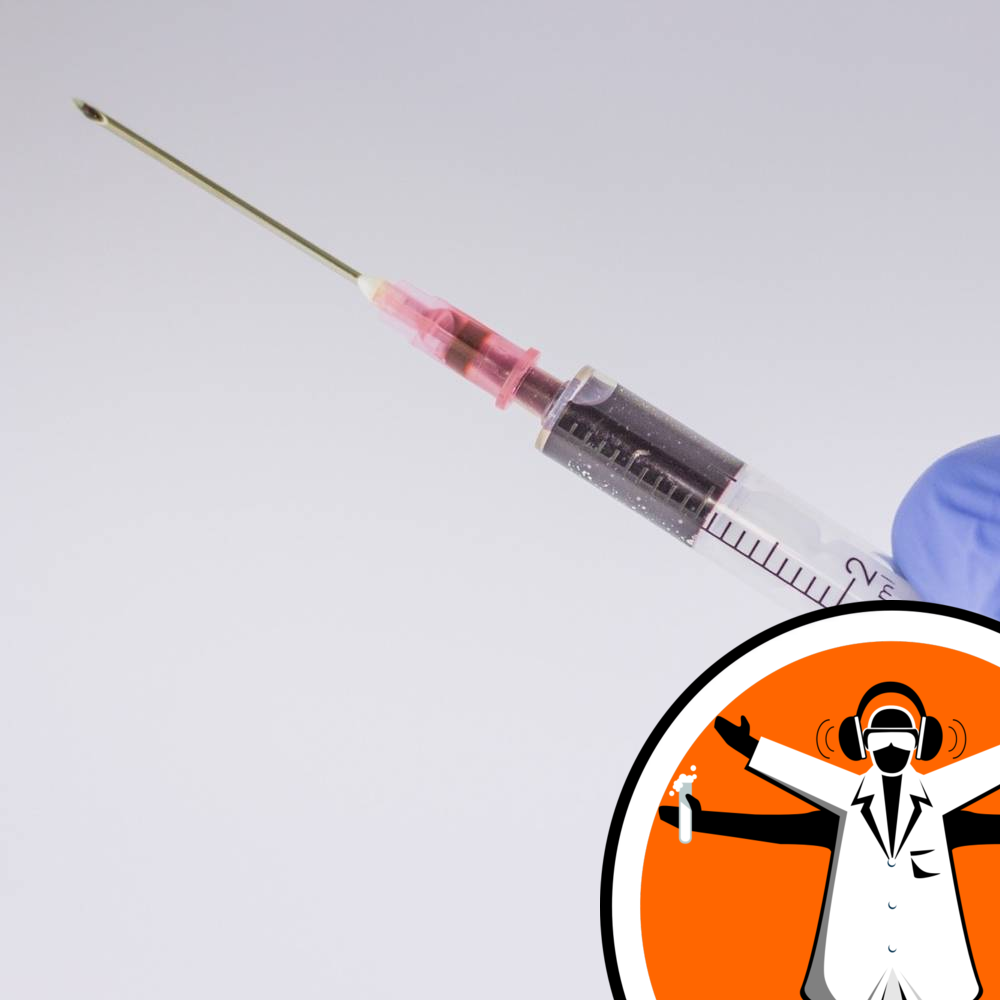
Having an injection is an experience common to us all, and whether you are unfussed by them or they make you feel faint, the actual needle used is the same for everyone and highly standardised. But given different parts of the body are more difficult to inject than others, this is not ideal. Scientists at Harvard Medical School realised this problem and have set about creating a more adaptive solution that could lead to big changes in healthcare. Jack Tavener spoke to Jeff Karp, who co-authored the study, about the challenges his team faced... Like this podcast? Please help us by supporting the Naked Scientists

Ep 664Creating cannabis chemicals in yeast
US scientists have engineered into yeast the genes needed to make the key chemicals in cannabis. To find out why and what's involved, Chris Smith looked at the paper with York University's Ian Graham, who wasn't involved in the project but has expertise in this area. We last spoke with him in 2015 when he uncovered the genes needed to perform a similar feat so yeast could make morphine. Like this podcast? Please help us by supporting the Naked Scientists

Ep 663Climate impact of lab-grown meat
The agriculture sector is responsible for about 25% of global warming according to the Intergovernmental Panel on Climate Change, so rearing livestock for meat is a significant problem. When ruminant animals such as cows and sheep digest food they burp large amounts of methane, a greenhouse gas that causes climate change. And growing the crops they are fed adds even more greenhouse gases to the atmosphere. It is now possible to cultivate edible meat in a lab, rather than rearing livestock. And because of this, the new technique is often promoted as more environmentally friendly than having... Like this podcast? Please help us by supporting the Naked Scientists

Ep 662How bacteria physically resist antibiotics
Antibiotic resistance is a growing problem that kills hundreds of thousands of people each year, from what should be preventable diseases. Up to date, scientists have been trying to figure out the reasons in each individual case, until now A group from McMaster University in Canada has published a paper which shows for the first time the two common physical characteristics of bacterial resistance to antibiotics. Mariana Campos has been talking to Maikel Rheinstadter, who explained what they did and how this could help in the development of new and improved medications. Like this podcast? Please help us by supporting the Naked Scientists

Ep 661Grasses are genetic thieves
Scientists have discovered that some grass species have information in their genes that's not come from their parents, and instead think they're stealing genetic information from neighbouring plants. By genetically enhancing themselves, they gain a competitive edge, which helps them thrive in more challenging environments. The species Alloteropsis semialata, a type of tropical grass found in Africa, Asia and Australia, has changed the way it produces energy, a process known as photosynthesis. Jenny Gracie spoke with Luke Dunning from the University of Sheffield, to find out how these plants... Like this podcast? Please help us by supporting the Naked Scientists

Ep 660Possible new treatment for asthma
About a quarter of a billion people around the world are affected by asthma, when the lungs' airways constrict, making breathing difficult. For decades we've treated the condition with drugs that relax the muscles in the airways and damp down the immune response that makes the airways tighten in the first place. But, recently, researchers have discovered that asthmatic airways also contain bulkier muscles than they should do. This is caused, they think, by the same inflammatory signals that trigger the airways to constrict. And now they've gone on to show that an experimental drug, called... Like this podcast? Please help us by supporting the Naked Scientists

Ep 659Brain centre for laughter
Scientists have found a spot in the brain that, when stimulated, triggers laughter and is followed by a sense of calm and happiness that lasts 30 minutes.This discovery has direct implication for tens of thousands of people who undergo open brain surgery, and could be used in the future to treat anxiety, depression, and pain. Like this podcast? Please help us by supporting the Naked Scientists

Ep 658Ancient javelins
Archaeologists working in the UK and in Germany have come across rare examples of what look like ancient wooden spears that would have been used by our ancestors 400,000 years ago. But scientists were pointedly stuck on whether these weapons were just for poking, or if they could have been thrown, like javelins. To find out, Annemieke Milks built replicas of the original spears and asked six experienced, sharp-eyed javelin throwers to see if they could throw them. She told Adam Murphy how they got on Like this podcast? Please help us by supporting the Naked Scientists

Ep 657Dieting mosquitoes prevent disease
Scientists have given a dieting drug made for humans to mosquitoes in order to curb their appetite. Researchers at the Rockefeller University in New York have worked through hundreds of thousands of molecule-receptor combinations to find the right one able to suppress the mosquito's hunger. As a result, mosquitoes were not interested in seeking a human blood meal and so this method could be used to help stop the spread of deadly diseases. Jenny Gracie spoke with Laura Duvall, lead author of a paper recently published in Cell, to find out why mosquitoes bite us in the first place... Like this podcast? Please help us by supporting the Naked Scientists

Ep 656Hundreds of genes control the body clock
If you are a night owl, getting up in the morning is something that you absolutely dread. On the other hand, morning people jump out of bed ready and chatty. Is this something hardwired? The answer's probably got a lot to do with the genes that influence your body clock. Chris Smith speaks to Samuel Jones from the University of Exeter to find out what the connection is. Like this podcast? Please help us by supporting the Naked Scientists

Ep 655Managing Cardiomyopathy
Hypertrophic Cardiomyopathy is a genetic disease which causes the muscle of the heart to thicken. Left untreated, it can lead to heart failure, and it's quite common. But the therapies we have available at the moment treat only the symptoms and don't alter underlying disease course. Now new research from Harvard University, published in Science Translational Medicine, has identified the molecular clockwork that actually causes the condition, and they're testing a new drug that may help to stop it. Adam Murphy spoke to Chris Toepher to hear how... Like this podcast? Please help us by supporting the Naked Scientists

Ep 654Improving carbon capture
A new way to capture CO2 from factories or the atmosphere has been developed by researchers in the Oak Ridge National Laboratory, located in the United States of America. The new technology uses a different molecule to 'soak up' the CO2 and it is 24% more energy-efficient than the existing technologies. On top of it, the molecules can be reused up to a hundred times, meaning even more savings. This improvement on technology may prove a big step towards large-scale adoption of carbon capture, which could help slow down the effects of climate change. Dr David Fairen-Jimenez from the University... Like this podcast? Please help us by supporting the Naked Scientists

Ep 653Martian rock discovery surprises scientists
There is a mountain located in the middle of a giant crater on Mars, but how it formed is still a bit of a puzzle for scientists. Investigations of the rocks below the surface of the crater have been helping piece together an answer. The Curiosity Rover currently on Mars has an advanced suite of scientific instruments able to carry out experiments on the Martian surface. Kevin Lewis is a planetary scientist from Johns Hopkins University, who along with help from colleagues, has been able to adapt some of the instruments to work in new ways. Jenny Gracie spoke with him to find out the rover's... Like this podcast? Please help us by supporting the Naked Scientists

Ep 652Rocking adults to sleep
Lack of sleep or poor sleep is a problem that affects 1 in 3 people in the UK and America. Insufficient sleep is not only a health issue, contributing to heart disease, diabetes and obesity, but also an economic one. There's the direct costs of treating sleep disorders and their numerous side effects, plus the costs associated with reduced productivity, time off work and injuries resulting from fatigue. With such a big problem at hand, we need to think of a solution outside the box. Mariana Campos spoke with Dr Aurore Perrault, formerly from the University of Geneva, now at the Sleep,... Like this podcast? Please help us by supporting the Naked Scientists

Ep 651Muscles really do have "memory"
Nearly every cell in the body contains a part called the nucleus which houses the genetic information needed to function. Muscle cells are the largest cells in the body, so they often need multiple nuclei to meet high power demands. New research from the University Massachusetts at Amherst, supports the contradiction of a widely believed theory linking large cells and nuclei numbers. Jenny Gracie spoke with Professor Larry Schwartz to find out why the relationship may no longer be true... Like this podcast? Please help us by supporting the Naked Scientists

Ep 650Whats inside your E-cigarette?
It's common knowledge that smoking cigarettes is addictive, and this is because of the nicotine they contain. E-cigarettes are devices that heat up a liquid and produce an aerosol or spray which is then inhaled. If there's nicotine in the e-cigarette liquid then this gives a nicotine hit. In Australia, nicotine is classified as a poison, so it's illegal to sell e-cigarette liquids containing it, they have to instead be "nicotine free". But while studying the potential health impacts of e-cigarettes, scientists have found that, surprisingly, out of 10 "nicotine-free" e-cigarette liquids, or... Like this podcast? Please help us by supporting the Naked Scientists

Ep 649Rare Pigment Fossilised in Teeth
Brushing our teeth keeps them clean and free from debris, but back in medieval times, dental hygiene wasn't part of your daily routine. This means that scientists can look at the teeth of skeletons to reconstruct what food they might have munched on back then and find out more about their lifestyle. But recently a team of international scientists, lead from the Max Planck Institute for the Science of Human History in Jena, Germany, found something a little more peculiar fossilised in the teeth of a 1000 year old skeleton. Jenny Gracie spoke with Christina Warinner to unearth the mysterious... Like this podcast? Please help us by supporting the Naked Scientists

Ep 648Opioid overdose detection via app
Every day hundreds of people die when they accidentally overdose on opiate drugs, like heroin or morphine. These agents depress breathing, causing respiratory failure. But, if an opioid antidote is administered sufficiently quickly, then the situation can be reversed. And a team at the University of Washington have developed a system that turns a mobile phone into a sonar device that can monitor a person's breathing and then sound the alarm if something goes wrong. Chris Smith spoke with Jacob Sunshine, an anaesthesiologist and assistant professor at the University of Washington, to discuss... Like this podcast? Please help us by supporting the Naked Scientists

Ep 647Sleep quality and Alzheimers disease
One terrifying prediction is that, by mid-Century, up to 30% of adults will be affected by a form of dementia, chiefly Alzheimer's Disease. This happens when proteins called beta-amyloid, and tau, build up in the brain and damage nerve cells. But scientists think this begins to happen decades before a person develops Alzheimer's symptoms, meaning we might have an opportunity to intervene and change the course of the condition if we can tell who's affected sufficiently early. Now, researchers at Washington University in St Louis have discovered subtle changes in the patterns of brain waves we... Like this podcast? Please help us by supporting the Naked Scientists
Ep 646Podcasts: Chris Smith talks to Lawrence Jones
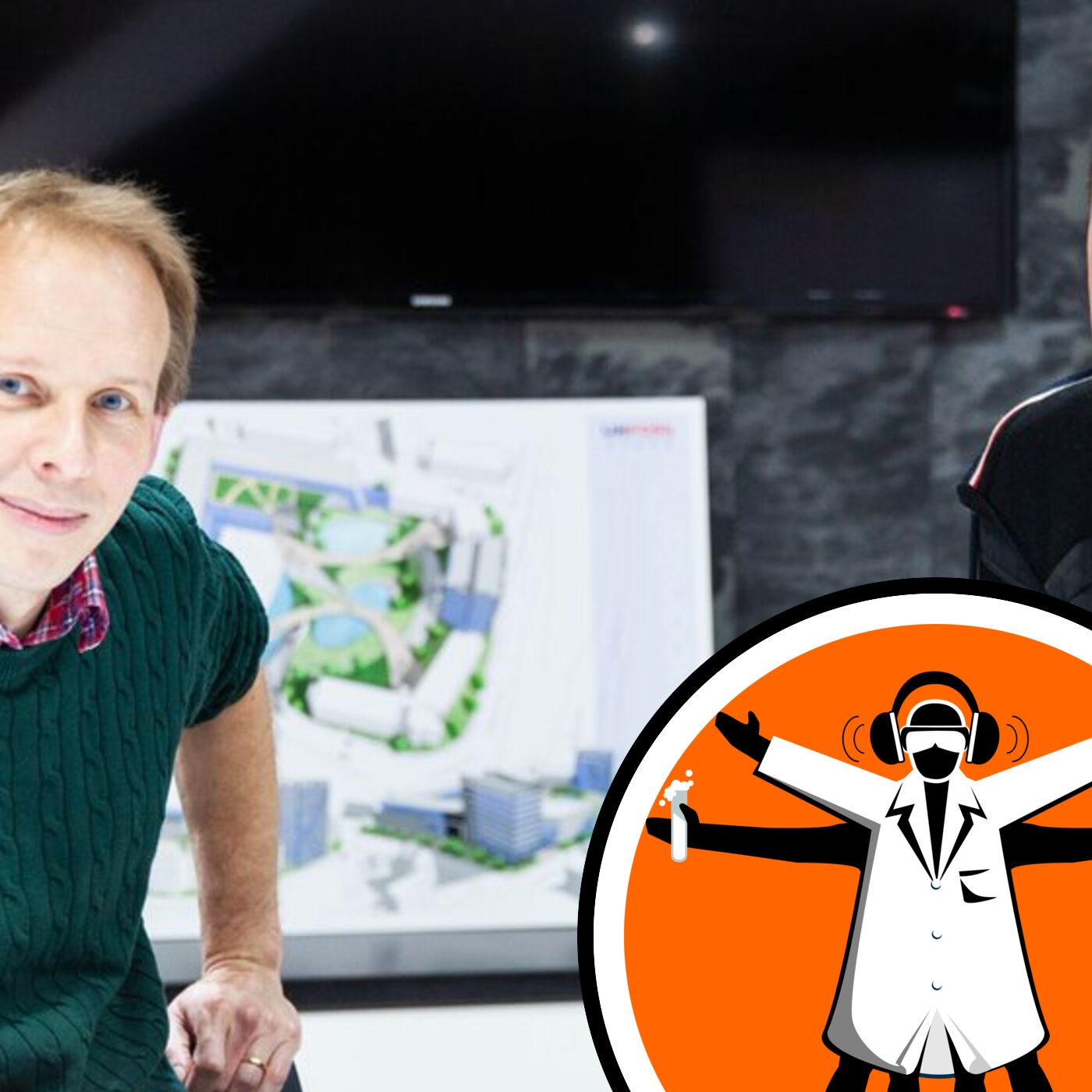
Back in 2001, Dr Chris Smith launched a new show, The Naked Scientists, in the hope of making science accessible. It was one of the first radio programmes to be made into a podcast and is now one of the world's most popular science shows. In the past five years, the programme has been downloaded more than 50 million times. Dr Chris has travelled the world in search of the latest science topics and trends, through which he has won numerous national and international accolades. He joins Lawrence Jones MBE to discuss bringing science to life through podcasts, how the team are engaging more people... Like this podcast? Please help us by supporting the Naked Scientists

Ep 644Bio-inspired robot swarms
Biological systems are able to create complex shapes and patterns, like the stripes of a zebra, the shape of your hand or the dynamic displays of a flock of birds. These shapes develop in an emergent and self-organised way, relying on just local interactions between individuals. In contrast, human designed technology is usually created by an external builder. But now, a team of roboticists and biologists have come together to design robot swarms that can self-organise into complex shapes. Hannah Laeverenz Schologelhofer spoke with Sabine Hauert from the Bristol Robotics Lab. Like this podcast? Please help us by supporting the Naked Scientists

Ep 645Cheers to the liver!
The Ancient Greeks understood that the liver was one of the most incredible organs humans possess when they wrote the cautionary tale of Zeus' punishment of Prometheus, in which poor Prometheus was tied to a rock where an eagle would eat his liver every day, but overnight it would regenerate and grow back, allowing his punishment to continue day after day. Now, in real life, the liver doesn't regenerate quite that quickly, but it is true that it has the ability to grow back and heal itself remarkably well. Georgia Mills spoke to liver scientist Auinash Kalsotra from the University of Illinois,... Like this podcast? Please help us by supporting the Naked Scientists

Ep 643New test for cervical cancer
Cervical cancer is one of the most common cancers affecting young women, and it's caused by a virus called Human Papilloma Virus, or HPV, which is spread through sexual contact. The virus causes the cells of the cervix to keeping growing excessively, which eventually damages their DNA, causing cancer. Testing for this cancer can be challenging: these days it involves using DNA tests to look for traces of the virus in a sample. But the viruses are very common, and only a small proportion of people carrying them will actually get cancer; so there are lots of false positives. Now researchers at... Like this podcast? Please help us by supporting the Naked Scientists

Ep 642Carbon neutral Christmas!
Christmas is a wonderful time of year, but all of the additional transport and consumption adds up, and we are left with plenty of seasonal rubbish and greenhouse gases. So how can you cut down this Christmas? Georgia Mills is here to spoil all of the festive fun... Like this podcast? Please help us by supporting the Naked Scientists

Ep 641Harnessing sunlight to clean water
Clean water is something that we often take for granted, but making it can be a major technological and energy-intensive process. Now, thanks to a system developed by scientists at York University, Toronto, and MIT, there might be a way to do this much more cheaply in future. Hannah Laeverenz Schlogelhofer spoke with York researcher Thomas Cooper, about this new way of using sunlight to clean up water and produce superheated steam. Like this podcast? Please help us by supporting the Naked Scientists

Ep 640'Nano-tweezers' extract the contents of cells
How can seemingly similar cells behave differently? This is a particularly important question when a small change means that a cell does not function properly and several diseases might be the result of these small changes at the single cell level. But a cell is a complex system, and some of the important molecules inside a cell exist in very small quantities that can be difficult to detect. To address this challenge, a new tool has been developed called 'nano-tweezers'. These tiny devices can extract individual molecules from inside cells. Hannah Laeverenz Schlogelhofer spoke with Joshua Edel... Like this podcast? Please help us by supporting the Naked Scientists