Naked Scientists, In Short Special Editions Podcast
989 episodes — Page 12 of 20

Ep 439Why Do Dogs Slurp So Sloppily?
Dogs drink in a very distinctive way, lapping up water and, more often than not, making a huge mess. But, until now, the exact way they did this has been a mystery. Thankfully, scientists at Virginia Tech wouldn't let sleeping dogs lie and they've worked out the physics behind how dogs drink. Georgia Mills caught up with lead researcher Sunny Jung, who explained how they did it. Like this podcast? Please help us by supporting the Naked Scientists

Ep 438Tim Peake Rockets To Space
On Tuesday the UK Space Agency's first official astronaut, Tim Peake embarked on the trip of a lifetime to the International Space Station. The launch was broadcast live on the BBC and watched around the world. Connie Orbach went to join the celebrations at the Science Museum in London... Like this podcast? Please help us by supporting the Naked Scientists

Ep 437COP21 The Results
"195 Nations Set Path to Keep Temperature Rise Well Below 2 Degrees Celsius" were the headlines issuing from Paris in the wake of the Conference of the Parties - or COP21 - meeting. So how will this be achieved, can it be achieved at all, what has the UK signed up to do? Manchester University climate scientist Alice Bows-Larkin was there to hear the verdict... Like this podcast? Please help us by supporting the Naked Scientists

Ep 435Science Breakthrough of the Year 2015
What was the most momentous bit of science that you heard about this year? Every December the journal Science asks its editorial staff this question and they eventually crown one discovery their "Breakthrough of the Year". Like this podcast? Please help us by supporting the Naked Scientists

Ep 436Plants communicate to trade with fungi
A plant protein used to communicate with friendly soil fungi has been identified by Cambridge University scientists. Like this podcast? Please help us by supporting the Naked Scientists

Ep 434ARM: 25 years as Britain's biggest tech company
How an Acorn grew into, amongst other things, an Apple: What began as a business making home microcomputers now turns out the processing brain behind 95% of the world's smartphones. Mike Muller has been at the firm since its inception; he explained to Graihagh Jackson how he and 11 other engineers turned the business into one of the world's largest tech firms... Like this podcast? Please help us by supporting the Naked Scientists

Ep 433Can genetics help you stop smoking?
Researchers have linked a gene with your ability to stop smoking, but not all of the scientific community is in agreement... Like this podcast? Please help us by supporting the Naked Scientists

Ep 432Why loneliness can kill
People with the best social networks, who sing in choirs; play instruments; go to church and take part in team sports, all live longer and tend to be happier, studies have shown. People who feel lonely, or isolated, on the other hand, fare less well and are more prone to ill-health. Now a new study, published this week in the journal PNAS and examining the immune systems of lonely people and monkeys has revealed why this might be. John Capitanio revealed all to Chris Smith... Like this podcast? Please help us by supporting the Naked Scientists

Ep 431Sex addicts hooked by online porn
Compulsive sexual behaviour, more commonly known as sex addiction, is driven by the huge novelty provided by online material, a new study has found. Like this podcast? Please help us by supporting the Naked Scientists

Ep 430Supergenes can determine behaviour
The choices we make are often down to past experience and the circumstances, including picking partners. However, for a bird called the ruff, the way it picks up ladies is determined genetically. Some ruffs are territorial and impress using dramatic neck feathers. Less common are the 'girlfriend stealers' who display on the edge of territories and attempt to lure females away. Finally, female mimics or 'cross dressers' approach mates in disguise. Jon Slate from the University of Sheffield explains to Felicity Bedford how genetics played a part in the evolution of these complex behavioural... Like this podcast? Please help us by supporting the Naked Scientists

Ep 429Puberty Timing and Health
Can you remember when your voice broke? According to conventional wisdom most men can't, but women have very strong memories of their first period. This means that studies of puberty timing have struggled to investigate effects in men. However, new work from the University of Cambridge has shown that men have much more reliable memories than once thought as Dr Felix Day explained to Connie Orbach. Like this podcast? Please help us by supporting the Naked Scientists

Ep 428Sounds to make you emotional
Music can have a huge impact on your emotions. Research published this week in PNAS has shown that if you apply the same sound properties that convey emotion in music and voices to environmental sounds such as a car engine they will also make people feel emotional. Daniel Bowling, a neuroscientist from the University of Vienna spoke to Rosalind Davies about what the researchers had done, and what these sound properties are. Like this podcast? Please help us by supporting the Naked Scientists

Ep 427Cambridge Graphene Technology Day
Back in August we did a show all about the super material graphene. At the molecular level, a sheet of graphene looks a bit like chicken wire and is only a single atomic layer thick, if you were to pile up lots of these single layers you'd get graphite, just like the led in a pencil. For the first time in the UK more than 40 companies from around the world came together to show the latest in graphene related technologies. Connie Orbach went along to see what she could find and started by talking to Gaute Juliussen from the graphine production company Graphitene. Like this podcast? Please help us by supporting the Naked Scientists
Ep 426How Random are DNA Mutations?
Cambridge has a rich history of making discoveries about DNA - the genetic code inside each and every one of us. In the 50s Watson and Crick announced that they had unravelled the structure of DNA - the famous double helix shape. Now, 60 years later, another Cambridge scientist - Bill Amos - has made a further DNA discovery - this time about the way the genetic code changes or mutates to allow evolution to happen, as he explained to Graihagh Jackson. Like this podcast? Please help us by supporting the Naked Scientists

Ep 425Can we prevent breast cancer?
At the beginning of November, Kat went up to Liverpool for the annual NCRI Cancer Conference, bringing together scientists, doctors, nurses, patients and more from the UK and around the world to talk about the latest progress, ideas and issues in cancer research. On the first night, the charity Breast Cancer Now hosted a heated debate discussing whether after spending so much money investigating the causes of breast cancer as well as treating it, it's now time to focus efforts on preventing the disease in the first place. Sarah Hazell, Senior Research Manager at Breast Cancer Now, gave Kat a... Like this podcast? Please help us by supporting the Naked Scientists

Ep 424How Healthy are E-Cigarettes?
E-cigarettes seem to be everywhere nowadays. Invented by a Chinese pharmacist and patented in 2004, they first went on sale in 2010 and are now the most popular way to quit smoking in the UK. But although there's no smoke, there's certainly a fire of controversy around e-cigs, as Kat Arney found out when she spoke to Linda Bauld, professor of health policy at the University of Stirling, who chaired a panel discussion about e-cigarettes at the NCRI Cancer Conference. Like this podcast? Please help us by supporting the Naked Scientists

Ep 423New Vaccine For RSV
Respiratory syncytial virus or RSV is a virus of the respiratory system that infects people of all ages during the winter causing colds, however in infants and young children it can lead to much more severe illnesses like pneumonia. Despite it's huge global impact we still don't have a vaccine for RSV and Dr Ruth Karron from John Hopkins University explains why to Chris Smith. Like this podcast? Please help us by supporting the Naked Scientists
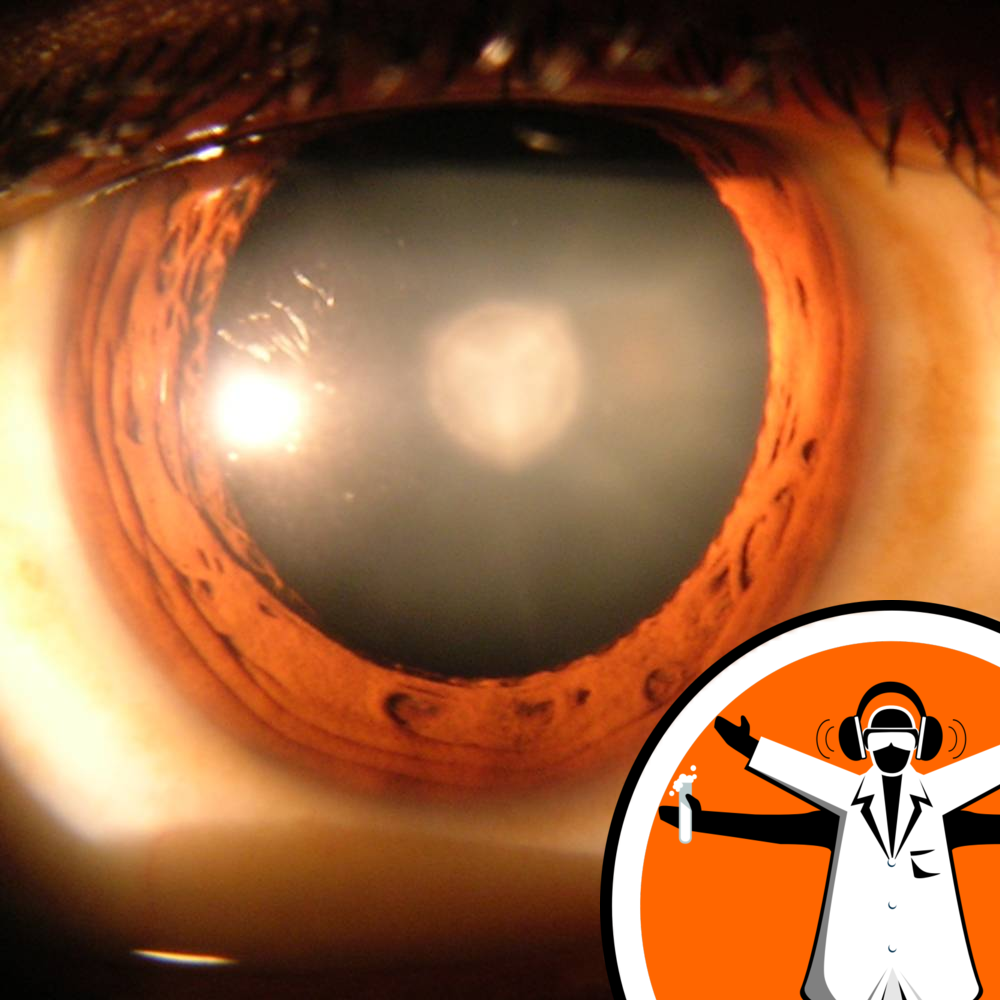
Ep 422Eye drops to treat cataracts
Cataracts are caused when proteins inside the lens of the eye come together. It's a condition that clouds the vision of approximately one hundred and eighty million people worldwide, with surgery to replace the lens with a plastic one currently the only solution. Twenty million sufferers around the world are blind because they cannot access surgical treatments. But help could be on it's way, as a potential non-surgical treatment method has been described in the journal Science this week. It follows another advancement in cataract science published recently in Nature. Roy Quinlan from the... Like this podcast? Please help us by supporting the Naked Scientists

Ep 421The problem with childbirth
Despite the hundreds of thousands of babies born every day, we still know relatively little about childbirth and how hormones play their key roles in it. A stress hormone, known as cortisol, is involved in inducing labour in animals, but doesn't seem to work the same way in people. A paper this week published in Science Signalling has suggested a potential way cortisol does have a part to play in human childbirth. Georgia Mills caught up with Professor Joe Herbert, from Cambridge University, to discuss the study. Like this podcast? Please help us by supporting the Naked Scientists

Ep 420Frost prevented by new material
As Winter approaches in some parts of the world, so does the colder weather and the threat of ice on the roads and on your car windscreen. But help is at hand from Kansas State University's Alexander van Dyke. As he explains to Charis Lestrange, he's created what's known as a "biphilic" material that can stop frost from forming so easily on a surface. It consists of two types of material: one hydrophilic, which attracts water, and the other hydrophobic, or water-repelling. Placed in a certain pattern, these can keep water droplets moving so they don't have time to freeze... Like this podcast? Please help us by supporting the Naked Scientists

Ep 419Is personality linked to birth order?
There have been many exaggerated reports this week that birth order, whether you are a first or last born, affects how intelligent you will be compared to your siblings. However, the researchers at the University of Leipzig found that this difference in intelligence is very small and the more important finding was about birth order and personality. Charis Lestrange spoke with lead author Julia Rohrer to find out more. Like this podcast? Please help us by supporting the Naked Scientists

Ep 418Slippery steel that repels bacteria
Steel is used to manufacture a wide range of products from tiny surgical tools to huge ships. However, it can become corroded or contaminated when liquid comes into contact with it. A new method to coat steel with the compound tungsten oxide has been reported by researchers from Harvard University in Nature Communications this week. It enables liquid to slip off the surface while keeping the steel strong. Dr Ben de Laune, a materials chemist from the University of Birmingham, explains to Rosalind Davies why this is so important. Like this podcast? Please help us by supporting the Naked Scientists

Ep 417£21m for Engineering Grand Challenges
This week the UK science minister, Jo Johnson, was in Cambridge where he announced an initiative to pump 21 million into seven key research programmes intended to tackle some of the leading scientific and engineering challenges facing the world. The funding will come from the UK's Engineering and Physical Sciences Research Council, the EPSRC. Professor Philip Nelson is the EPSRC's chief executive, and he spoke to Kat Arney about how the projects were selected... Like this podcast? Please help us by supporting the Naked Scientists

Ep 415How are our lives are mapped on our brains?
The Human Connectome Project has collected data of hundreds of individuals ranging from brain imaging to genetic and lifestyle information. Now researchers from the University of Oxford have used this information to see how much our lifestyle choices and personality traits are reflected in our brains. Karla Miller explained their findings to Connie Orbach. Like this podcast? Please help us by supporting the Naked Scientists

Ep 416Do people spread disease?
Every day millions of people are moving around the world by air, land and sea, but they may be bringing with them more than just their luggage. For example, during last year's ebola outbreak, there were concerns that air travel would spread the disease from west Africa to other countries, sparking a global pandemic. But were these worries justified? By studying the patterns of 187 diseases in 225 countries, Kris Murray and his team at Imperial College have discovered that it's geography, rather than air travel, that's the most important factor, as he explained to Kat Arney. Like this podcast? Please help us by supporting the Naked Scientists

Ep 414Getting high from marathon running
You know when after a run you feel great? Well previously scientists thought this runners' high was down to endorphins, but this may not be the case. Johannes Fuss from the University of Heidelberg found that mice that ran around all day felt less pain and less anxiety - key features of a runner's high. However, this feel good sensation wasn't down to endorphins, but endocannabinoids - the same chemicals that come from smoking cannabis! Rosalind Davies jogged on over to find out more... Like this podcast? Please help us by supporting the Naked Scientists

Ep 413Extinct animal colours revealed
Fossils have long been used to help us piece together the size and shape of extinct animals, but the colours of these animals has, until now, been something of a mystery. Now researchers from the University of Bristol have detected the chemical signatures of the original melanin pigments in ancient bat fossils. Charis Lestrange spoke with Jakob Vinther to hear how... Like this podcast? Please help us by supporting the Naked Scientists

Ep 412Concussion and the Rugby World Cup
This week, with the Rugby World Cup in full swing, the sports chief medical officer, Martin Raftery has called for changes to be made to the rules in order to cut the number of concussions suffered by players. Concussion occurs when the brain is shaken around inside the skull. This damages nerve cells and blood vessels, and the effects of the damage are worse if a person is already suffering from a prior concussion. Finding ways to spot who is concussed, and when it's safe for them to play on, is a priority. Ginny Smith spoke to two scientists studying concussion. First, Michael Grey, from the... Like this podcast? Please help us by supporting the Naked Scientists

Ep 411Fidgeting could prolong your life
Sitting for long periods of time has long been associated with negative health effects and is thought to slow down your metabolism. However new research suggests that the movements linked with fidgeting could offset these negative effects. Charis Lestrange spoke with Professor Janet Cade about how fidgeting could potentially prolong your life. Like this podcast? Please help us by supporting the Naked Scientists

Ep 410A cooling layer for solar cells
Solar power is growing in popularity around the world, with huge solar farms springing up all over the place. Obviously, solar panels need as much sunlight as possible, but this also means that they heat up, limiting their efficiency at converting sunlight into electricity. This conundrum may now be solved, thanks to a clever coating designed by Aaswath Raman and his colleagues at Stanford University. Like this podcast? Please help us by supporting the Naked Scientists

Ep 409Extremely Large Telescope
Earmarked for 2024, the European- Extremely Large Telescope will be the biggest telescope in the world. The primary mirror is 39 metres across and capable of collecting as much light at once as all the other telescopes that mankind has ever built put together. The University of Oxford have been awarded the contract to build the telescope's new spectrograph, an instrument called HARMONI. Connie Orbach spoke to HARMONI'S principal investigator Niranjan Thatte to find out what it will do. Like this podcast? Please help us by supporting the Naked Scientists

Ep 4083D-printing body parts
Scientists have announced a revolution in 3D printing. Rather than building things up layer by layer, which is the traditional approach, University of Florida scientist Tommy Angelini prints things inside a gel material using a hollow needle. The gel contains tiny particles that mean it moves easily when pushed by the needle but otherwise remains as a solid, supporting whatever has been printed inside it. Right now it reproducibly prints tumours for testing anti-cancer drugs; long term, entire human organs look likely. Like this podcast? Please help us by supporting the Naked Scientists

Ep 407Paralysed man walks again
Scientists in America have helped a paralysed man to take his first steps in over 5 years. They've done it by developing a system that eavesdrops on the patient's brainwaves and can detect when he wants to walk. The computer then activates a stimulator system that can signal the patient's leg muscles to move, enabling him to stand, and then walk unaided. The device, which is the first of its kind, provides a way for patients paralysed by spinal cord injuries to bypass the roadblock preventing the flow of instructions from the brain to motor nerves and muscles and recover their ability to move.... Like this podcast? Please help us by supporting the Naked Scientists

Ep 406A new insight into parasites
You may never have heard of the disease lymphatic filariasis, but it affects 120 million people in 70 countries around the world, causing dramatic swelling of the limbs and other parts of the body, known as elephantiasis.It's caused by tiny parasitic worms, transmitted between people by mosquito bites, which can lie low in the body for many years, hiding from the immune system.But how do they do that? Kat Arney spoke to Michael Kimber from Iowa State University to find out. Like this podcast? Please help us by supporting the Naked Scientists

Ep 405Good beetle parents die younger
Does being a good parent shorten your lifespan? It turns out the answer is yes, at least if you're a burying beetle. Results from researchers at The University of Cambridge published this week show that beetles can sacrifice their own fitness for the good of their offspring. Rosalind Davies went to speak to Professor Rebecca Kilner to find out more. Like this podcast? Please help us by supporting the Naked Scientists
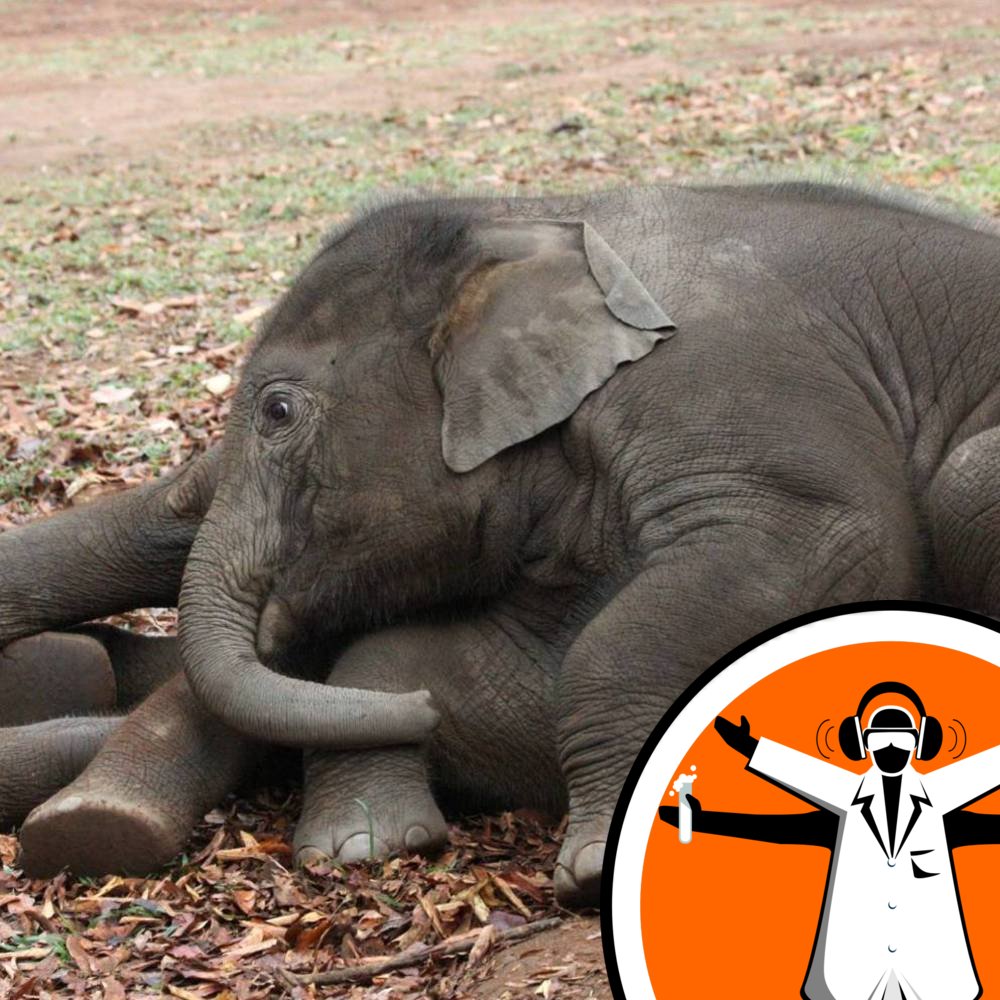
Ep 404Does stress affect elephant fertility?
It has been found that endangered Asian elephants age faster and have fewer offspring if their mothers are stressed when they are born. Researchers at the University of Sheffield measured a hormone associated with stress to determine the time of year that the elephants most feel the pressure. Charis Lestrange spoke with lead author Hannah Mumby to find out more. Like this podcast? Please help us by supporting the Naked Scientists

Ep 403Lovey-dovey finches
People can spend their lives looking for love. We go on awkward dates and let our friends set us up with complete strangers. All in the hope of finding 'the one'.But what's the point of it all? Why do we bother? If all we're supposed to do is continue our species surely we're better off just picking someone half-decent and making do.Now scientists in Germany have found that, for zebra finches at least, there is a point to love... Like this podcast? Please help us by supporting the Naked Scientists

Ep 402Age related diseases associated with 'biological age'
Early intervention is likely to be critical for preventing many age-related diseases; but detecting these diseases at a sufficiently early stage to make a difference is often problematic. Now this may be about to change, because scientists in the UK have identified a molecular signature present in our cells that corresponds to our biological age - in other words, how well "lived in" our bodies are. Joanna Kerr spoke with researcher James Timmons to hear how it works... Like this podcast? Please help us by supporting the Naked Scientists
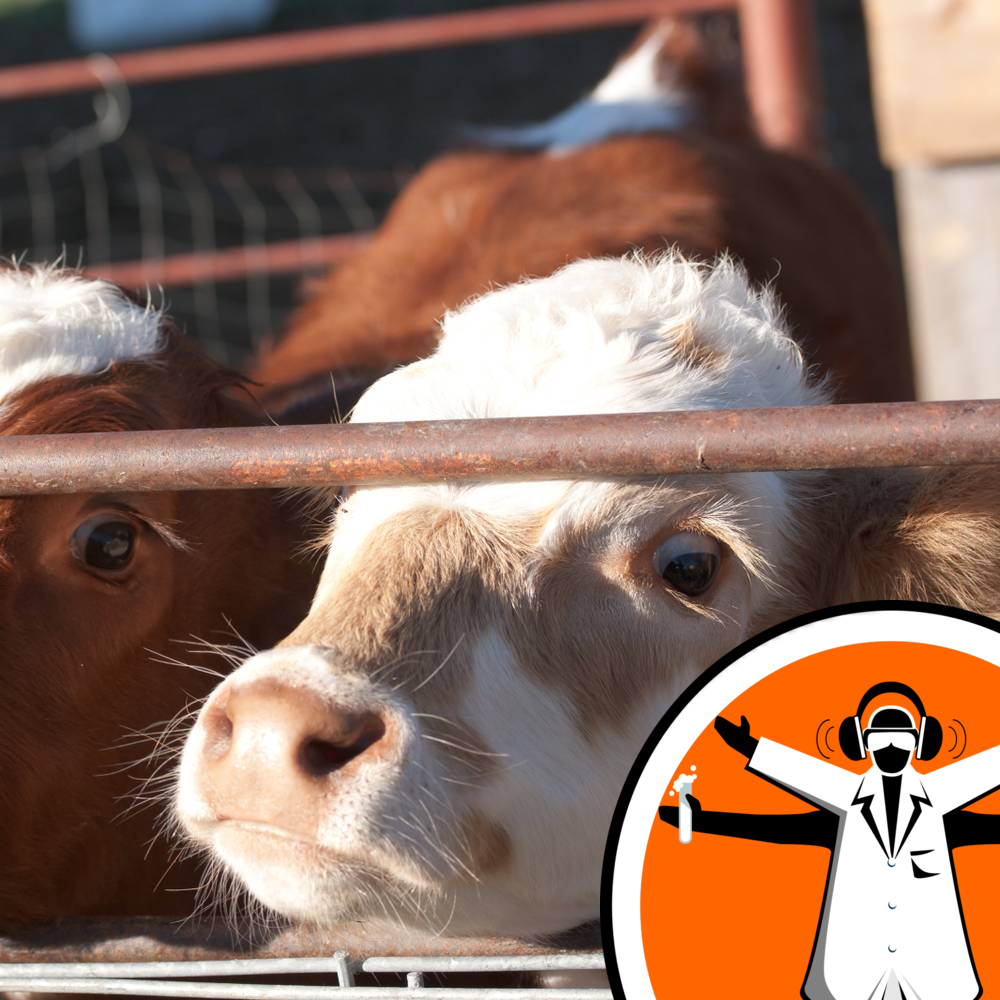
Ep 401Dusty farms protect children from allergies
A well known benefit of growing up on a farm is the reduced chance of developing allergies. Evidence shows that children who are exposed to a dusty farm environment from an early age have fewer allergies than those who don't. Now researchers have discovered that it is a special property of the dust found on dairy farms which protects the lungs from allergies. Sam Mahaffey spoke to Professor Bart Lambrecht from Ghent University to find out more Like this podcast? Please help us by supporting the Naked Scientists

Ep 400Green Highways
This month, Cambridge based company Innovia Technology have taken charge of the "Mission Zero Corridor Project". This project aims to make a 12 mile stretch of highway in West Georgia completely sustainable, with no carbon footprint! This will be the first road of its kind, and hopefully will encourage others to jump on the carbonneutralbandwagon. The project is inspired by Ray C Anderson, the late CEO of a carpet manufacturing company in the USA. He aimed to reduce the carbon footprint of his company to zero a target they are on track to achieve by 2020. Andy Milton from Innovia Technology,... Like this podcast? Please help us by supporting the Naked Scientists

Ep 399Keeping clocks accurate
Getting accurate clocks is really important for all kinds of technologies, especially when monitoring the distant heavens. But even if the clock itself is accurate, how do you know that the right time is being transmitted across to other devices, so for example telescopes? David Gozzard from the University of Western Australia has found a new way to make sure that disturbances in the transmission from a clock are accounted for, meaning that multiple high-precision clocks aren't needed. He was speaking about his work at the Perth Science Festival, and Georgia Mills wasted no time in finding out... Like this podcast? Please help us by supporting the Naked Scientists

Ep 398Hidden memories explained
It's long been known that traumatic memories forged in stressful situations can lie buried in the subconscious, yet they can bubble to the surface unexpectedly, triggering strong reactions, flashbacks and more serious psychological problems such as post-traumatic stress disorder, or PTSD. Researchers have discovered that memories made under such conditions - or under the effects of drugs or alcohol - tend to only be recalled when a person is back in that state again: something known as state-based learning. By putting mice under the influence of a drug called gaboxadol, a team of scientists... Like this podcast? Please help us by supporting the Naked Scientists

Ep 397Dogs evolved with climate change not prey
In the UK we are a nation of dog lovers but how did man's best friend become the speedy, bouncy animal we know today? Well for a long time it has been thought that dogs got faster as their prey did, in a sort of arms race, but new research from Professor Christine Janis and a team at Brown University has shown that actually, long term climate change may have been the key. Connie Orbach finds out more. Like this podcast? Please help us by supporting the Naked Scientists

Ep 396Premature birth affects personality
New research has shown that babies born severely prematurely or underweight are likely to suffer in adulthood with a socially withdrawn personality. Amy Goodfellow met with Professor Dieter Wolke from the University of Warwick to find out more... Like this podcast? Please help us by supporting the Naked Scientists

Ep 395GCSE success: it's in your genes
Scientists at King's College London have discovered that genetics makes an unexpectedly large contribution to children's GCSE grades across a wide range of subjects. Kat Arney met with Professor Robert Plomin to find out more. Like this podcast? Please help us by supporting the Naked Scientists
Ep 394A pill on a string!
About 8000 people in the UK develop a cancer in their oesophagus - the tube that connects the back of the throat to the stomach - every year. The majority of these people have detectable changes in the cells lining the oesophagus for many years before they develop the cancer. These changes are referred to as Barrett's oesophagus. But only a minority of people with Barrett's - which is actually relatively common - will actually go on to develop cancer, which makes screening for the disease an expensive headache. Now Rebecca Fitzgerald, a physician from Cambridge, has developed a sponge - packed... Like this podcast? Please help us by supporting the Naked Scientists

Ep 393Can de-worming really improve school attendance?
A decade ago a landmark study was published showing that treating Kenyan children for worm infections could increase their attendance at school, as well as bringing health benefits. Since then, many development agencies across Africa have taken the idea on board, as it seems like a cheap, effective and simple way to boost attendance. However,researchers at the London School of Hygiene and Tropical Medicine have been taking a closer look at the original data, and found that the benefits of de-worming may have been overstated, as Alex Aiken explained to Kat Arney. Like this podcast? Please help us by supporting the Naked Scientists

Ep 392Music tastes linked with brain type
How does the way you think influence the music you choose to listen to? Scientists at Cambridge University have developed a test that marries up a person's personality traits including how empathic they are, and how systematically they think, with the tunes most likely to resonate with them. Tom Crawford went to see the lead researcher David Greenberg to discover what the test revealed about his own musical tastes... Like this podcast? Please help us by supporting the Naked Scientists

Ep 391Rocket-powered Punting
Punting is one of the most typically 'Cambridge' of activities, with hundreds of tourists being punted lazily along the river Cam at any one point during summer. Now, though, the Cambridge Science Centre has decided to liven things up a little with a rocket-powered punt, running on Chelsea buns from local cafe Fitzbillies. Yes you read that correctly! James Farr spoke to John London, the world's first 'punt-onaut' Like this podcast? Please help us by supporting the Naked Scientists

Ep 390Sugary drinks increase diabetes risk by 20%
Fizzy drinks are often very high in sugar, and doctors suspect that they're likely to be linked to the growing rates of obesity in many countries. Now, by bringing together data from all of the previously published studies in the world, public health doctor Nita Forouhi has uncovered a strong link between sugary drinks and type 2 diabetes. In fact, as she explained to Amy Goodfellow, regularly consuming one sugar-rich drink boosts your diabetes risk by up to 13 per cent... Like this podcast? Please help us by supporting the Naked Scientists