Breaking Walls
510 episodes — Page 5 of 11
BW - EP148: February 1944 With Bob Hope
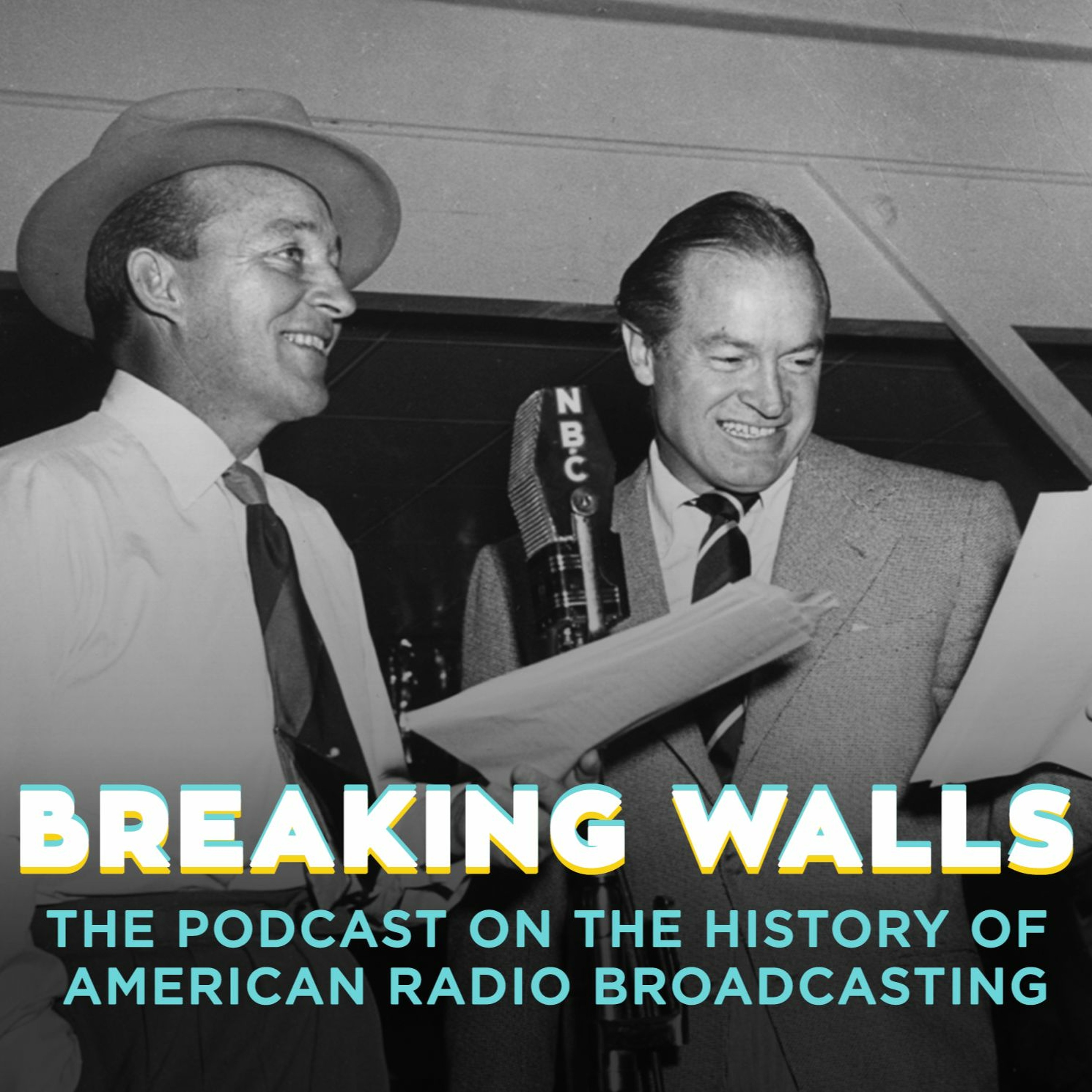
In Breaking Walls episode 148 we spend February of 1944 with America’s top comedian, Bob Hope, as he whisks himself around the country, entertaining troops and broadcasting to the masses. —————————— Highlights: • Leslie Townes Hope’s Rise to Stardom • Broadway and Early Radio Shows • The Big Broadcast of 1938 • The Pepsodent Program • Early February 1944 World War II News • NBC Dominates Tuesday Nights in 1944 • Bob with Guest Ginger Rogers • The 4th War Bond Drive • Command Performance with Bob Hope, Frank Sinatra, and Judy Garland • Mid February World News Roundup • Bob with Guest Bing Crosby • Bob with Guest Carole Landis • News as we Leave February • Bob Gets Sick, Is Honored by The Academy • Looking Ahead to March with The Great GIldersleeve —————————— The WallBreakers: http://thewallbreakers.com Subscribe to Breaking Walls everywhere you get your podcasts. To support the show: http://patreon.com/TheWallBreakers —————————— The reading material used in today’s episode was: • On The Air — By John Dunning • Bob Hope: The Road Well-Traveled — By Lawrence J. Quirk • The Spirit of Bob Hope: One Hundred Years, One Million Laughs — By Richard Grudens • Network Radio Ratings — By Jim Ramsburg • Bob Hope: The Road from Eltham — By Charles Thompson As well as articles from: • Aces of World War II • Broadcasting Magazine • The Military Times • Radio Daily • The Seattle Times —————————— On the interview front: • Bob Hope was with both Dick Cavett in 1972 and Johnny Carson in 1974. • Ken Carpenter, Jim Jordan, Hariet Nelson, Wendell Niles, Hal Peary, and Lurene Tuttle spoke with Chuck Schaden. Hear these chats at Speakingofradio.com • Jim Jordan also spoke to Dick Bertel and Ed Corcoran for WTIC’s The Golden Age of Radio. Hear these interviews at Goldenage-WTIC.org • Red Skelton spoke with Merv Griffin in 1975 • Bing Crosby spoke with Same Time, Same Station —————————— Selected music featured in today’s episode was: • Thanks For the Memory — By Bob Hope and Shirley Ross • Ghost Bus Tours — By George Fenton —————————— A special thank you to Ted Davenport, Jerry Haendiges, and Gordon Skene. For Ted go to RadioMemories.com, for Jerry, visit OTRSite.com, and for Gordon, please go to PastDaily.com. An extra special thanks to Doug Hopkinson who provided the Bob Hope episode with Bing Crosby that aired February 15th, 1944. —————————— Thank you to: Tony Adams Steven Allmon Orson Orsen Chandler Phil Erickson Gerrit Lane Jessica Hanna Perri Harper Thomas M. Joyce Ryan Kramer Earl Millard Gary Mollica Barry Nadler Christian Neuhaus Ray Shaw Filipe A Silva John Williams Jim W. —————————— WallBreakers Links: Patreon - patreon.com/thewallbreakers Social Media - @TheWallBreakers
BW - EP148—012: February 1944 With Bob Hope—Looking Ahead to The Great Gildersleeve
Well, that brings our look at Bob Hope’s career in February of 1944 to a close. We’ll be staying in 1944 the remainder of the year and next month we’ll spend March 1944 with a program considered to be the first spin-off in sitcom history. Next time on Breaking Walls we spotlight Hal Peary and The Great Gildersleeve, which between February and March of 1944 pulled a rating of nineteen points, making it the most-listened to show airing at 6:30PM in radio history. The reading material used in today’s episode was: • On The Air — By John Dunning • Bob Hope: The Road Well-Traveled — By Lawrence J. Quirk • The Spirit of Bob Hope: One Hundred Years, One Million Laughs — By Richard Grudens • Network Radio Ratings — By Jim Ramsburg • Bob Hope: The Road from Eltham — By Charles Thompson As well as articles from: • Aces of World War II • Broadcasting Magazine • The Military Times • Radio Daily • The Seattle Times —————————— On the interview front: • Bob Hope was with both Dick Cavett in 1972 and Johnny Carson in 1974. • Ken Carpenter, Jim Jordan, Hariet Nelson, Wendell Niles, Hal Peary, and Lurene Tuttle spoke with Chuck Schaden. Hear these chats at Speakingofradio.com • Jim Jordan also spoke to Dick Bertel and Ed Corcoran for WTIC’s The Golden Age of Radio. Hear these interviews at Goldenage-WTIC.org • Red Skelton spoke with Merv Griffin in 1975 • Bing Crosby spoke with Same Time, Same Station —————————— Selected music featured in today’s episode was: • Thanks For the Memory — By Bob Hope and Shirley Ross • Ghost Bus Tours — By George Fenton —————————— A special thank you to Ted Davenport, Jerry Haendiges, and Gordon Skene. For Ted go to RadioMemories.com, for Jerry, visit OTRSite.com, and for Gordon, please go to PastDaily.com. An extra special thanks to Doug Hopkinson who provided the Bob Hope episode with Bing Crosby that aired February 15th, 1944. —————————— Thank you to: Tony Adams Steven Allmon Orson Orsen Chandler Phil Erickson Gerrit Lane Jessica Hanna Perri Harper Thomas M. Joyce Ryan Kramer Earl Millard Gary Mollica Barry Nadler Christian Neuhaus Ray Shaw Filipe A Silva John Williams Jim W. —————————— WallBreakers Links: Patreon - patreon.com/thewallbreakers Social Media - @TheWallBreakers
BW - EP148—011: February 1944 With Bob Hope—Hope Gets Sick, Is Honored By Academy Awards
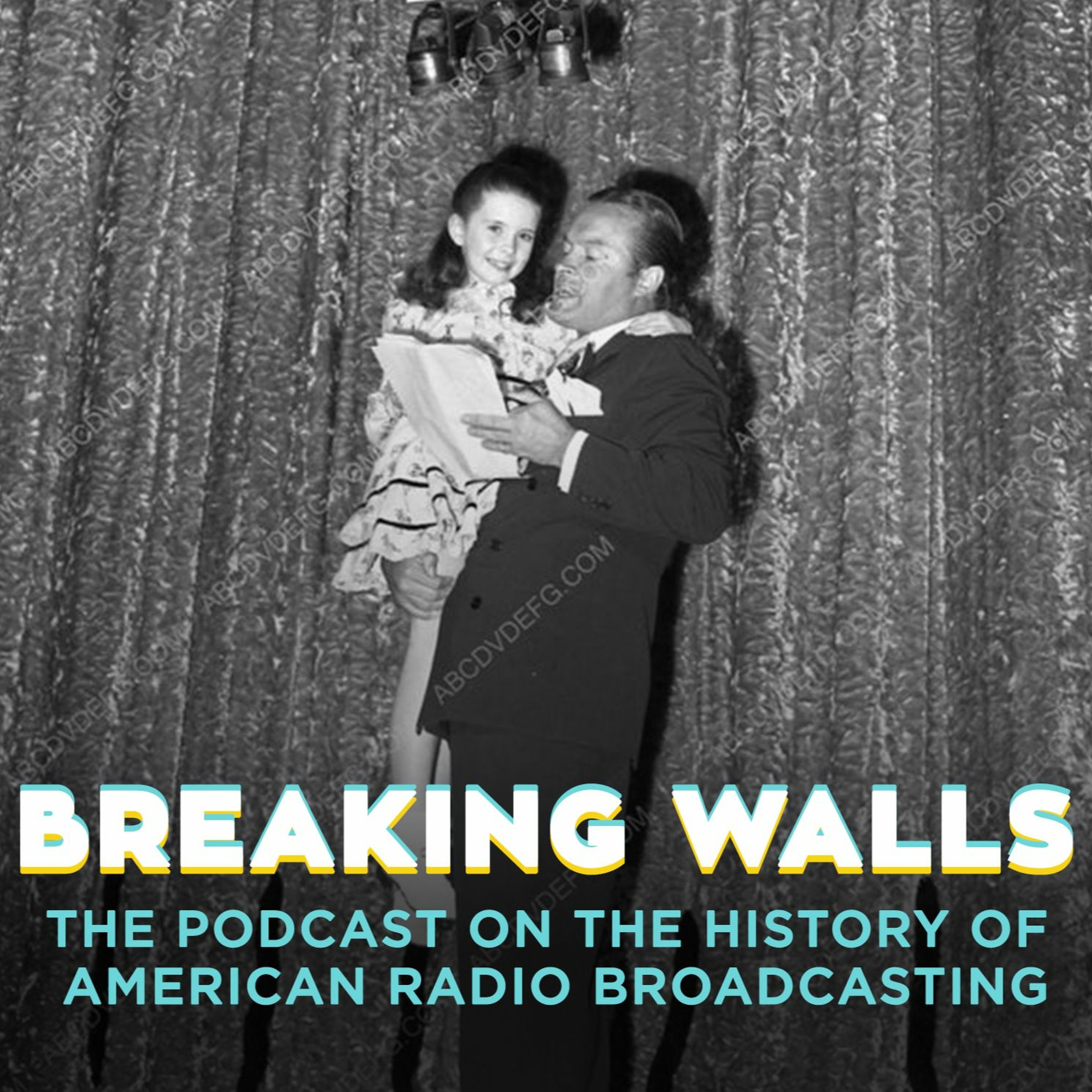
On February 29th, 1944 Bob Hope was supposed to be in Mobile, Alabama for the first leg of a tour. He was unfortunately grounded by a cold. Instead, he broadcast his portion of the show from Hollywood, while the cast broadcast from Mobile. Once able to travel, Hope met his crew in transit, but not before being given a special award for his many services to the Academy at the March 2nd, 1944 Oscars. The Hope show’s itinerary included the Annual White House Correspondents dinner for President Roosevelt on March 4th. On March 7th, the cast would be in Miami; On March 14th in Jacksonville; On March 21st in Macon, Georgia; On March 25th a special from the Cleveland Canteen; and on March 28th, they’d be in Colorado Springs.
BW - EP148—010: February 1944 With Bob Hope—World War II News As We Leave February
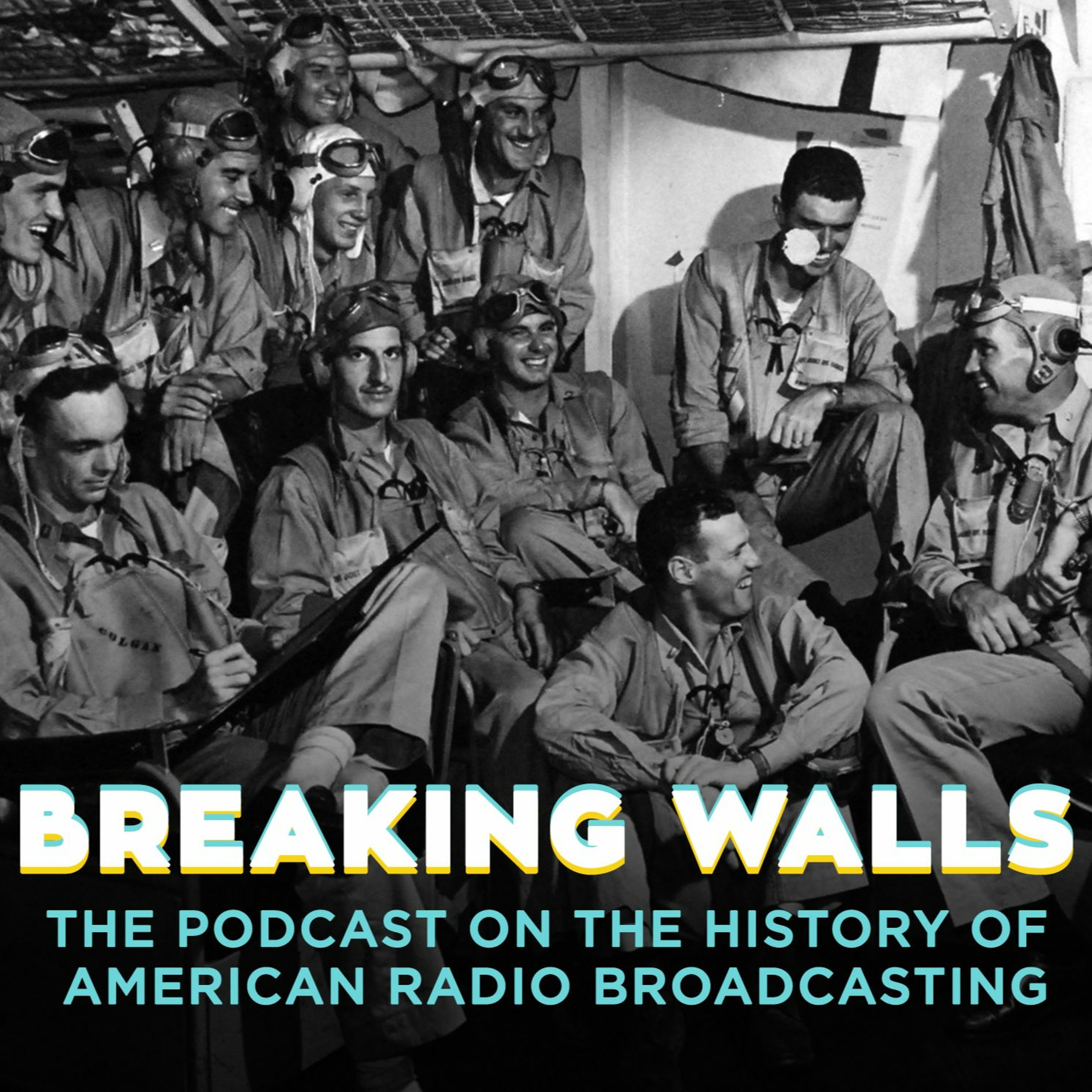
On Friday February 25th, 1944 "Big Week," the allies six-day strategic bombing campaign against the Third Reich ended with a successful bombing of German cities Rostock and Augsburg, as well as several Dutch cities near the German border. Unfortunately, many civilians were killed or left homeless. The Germans also lost more than three-hundred-fifty aircrafts, and most importantly, more than one-hundred pilots. Meanwhile two large Japanese ships were torpedoed, killing five-thousand Japanese soldiers, but also thirty-five hundred Japanese laborers and hundreds of allied POWs. On Saturday the 26th, more than six-hundred Soviet bombers raided Helsinki. That day at 1:45 PM, NBC’s War Telescope signed on at 1:45PM eastern time. With the U.S. congress squabbling, Europe looked on. On Sunday February 27th, The U.S. Office of Strategic Services began Operation Ginny I with the objective of blowing up railway tunnels in Italy to cut German lines of communication. The mission failed when the OSS team landed in the wrong place and couldn’t locate the tunnel. That same day, the Soviets massacred more than seven-hundred villagers in Chechnya they deemed non transportable. On Monday the 28th, the German 14th Army mounted new attacks against the U.S. VI Corps at Anzio, while also massacring roughly one thousand ethnic Poles in the village of Huta Pieniacka. Although the tide of war was slowly turning, there were atrocities and accidents on both sides, and neither the Allies or the Axis was fighting a pristine campaign. Regardless, Europe understood that in a post war world, if victory was achieved, the U.S. needed to be a main part of whatever League of Nations could be built after, while the U.S. didn’t yet fully grasp just how much responsibility the country would have in rebuilding Europe.
BW - EP148—009: February 1944 With Bob Hope—The Bob Hope Show with Guest Carole Landis 2/22/1944
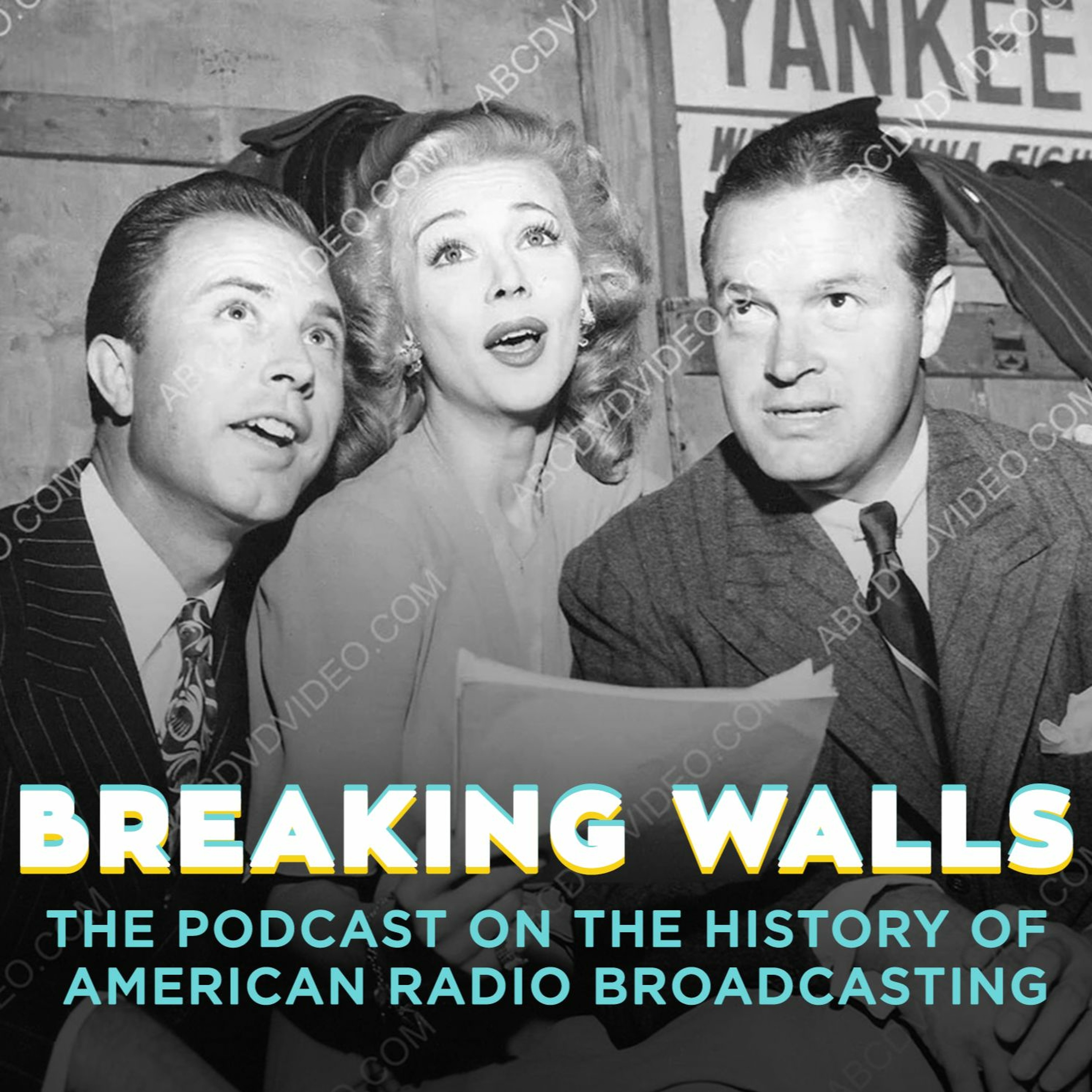
On Tuesday February 22nd, 1944 The Bob Hope Show took to the air with a special broadcast for the Coast Guard. The guest was Carole Landis. Hope’s radio cast from this era is his most famous. Along with Jerry Colona and songstress Frances Langford, the squeaky, man-crazed Vera Vague, voiced by Barbara Jo Allen was tremendous. Blanche Stewart and Elvia Allman played high-society nitwits Brenda and Cobina, modeled after real-life socialites Brenda Frazier and Cobina Wright Jr. Wright filed suit but settled, Hope remembered, when he invited her on the show as a guest. Wendell Niles was often Hope’s announcer for Pepsodent.
BW - EP148—008: February 1944 With Bob Hope—The Bob Hope Show With Guest Bing Crosby 2/15/1944
On February 15th, 1944 Bob Hope broadcast his program from Santa Ana’s Classification Center. His guest of honor was none other than good friend Bing Crosby. In February of 1944 Frances Langford was twenty-eight years old. She grew up in Florida, and originally trained as an opera singer. A tonsillectomy changed her range and she instead shifted her vocal approach to a more contemporary big band, popular music style. As a teenager, cigar manufacturer Eli Witt heard her sing at an American Legion party and hired her to sing on a local radio show he sponsored. In 1931 Langford moved to Hollywood, appearing on Louella Parsons' radio show. She was soon heard by Rudy Vallée, and in 1935 she made her film debut in Every Night at Eight. That year she became a regular performer on Dick Powell's radio show, which Bob Hope joined in 1937. When The Pepsodent Program launched in 1938 she began a long term engagement with Hope. In February of 1944 Hope, Crosby, and Dorothy Lamour were wrapping filming of Road To Utopia, the fourth in their series of Road To films. Written by Melvin Frank and Norman Panama, the film is about two vaudeville performers at the turn of the twentieth century who go to Alaska to make their fortune. Along the way they find a map to a secret gold mine. While shooting wrapped in 1944, the film wasn’t released until February 27th, 1946. Its screenplay was nominated for an Academy Award the next year.
BW - EP148—007: February 1944 With Bob Hope—Mid February World War II News
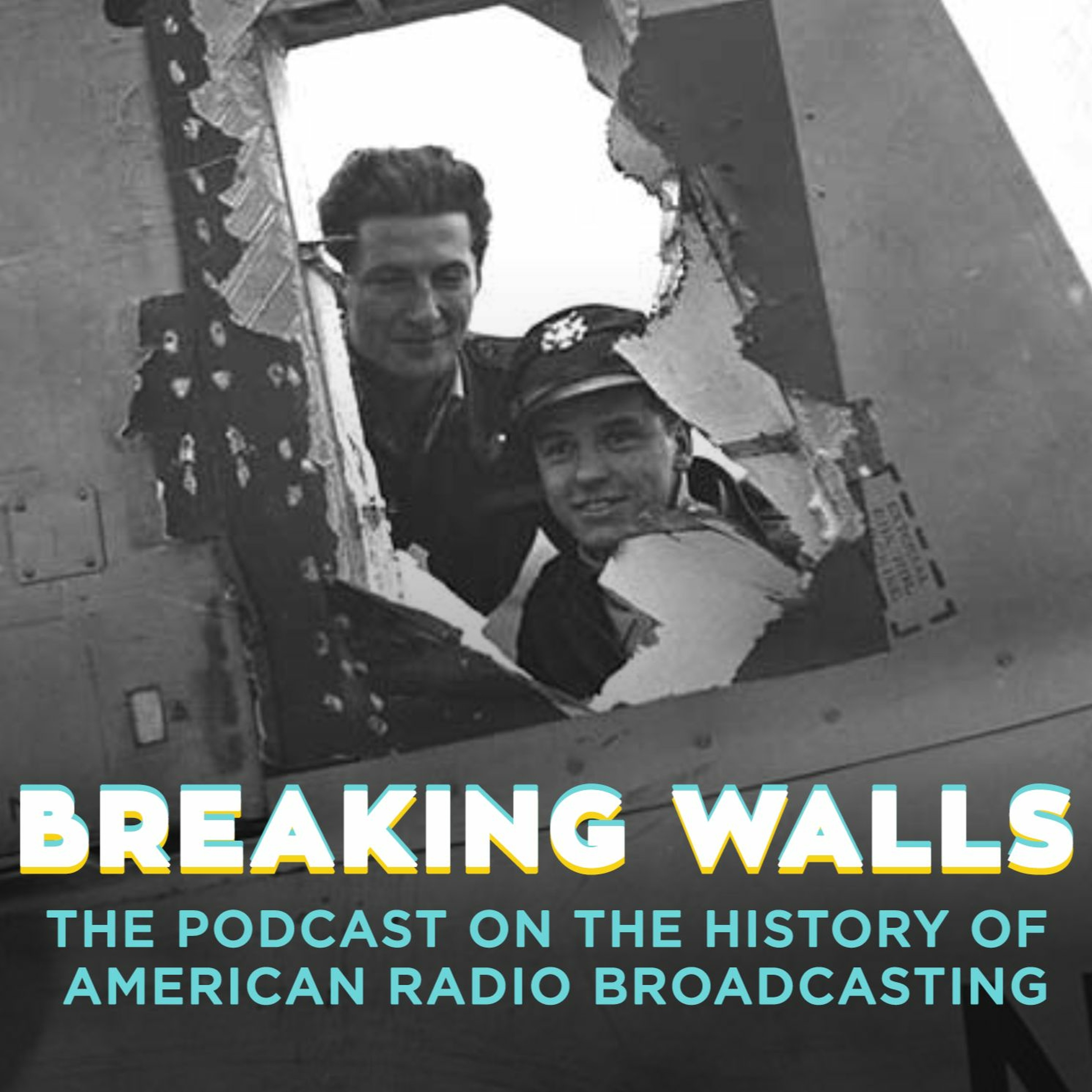
The week of February 13th, 1944 began with the Allies raiding Hong Kong and giving supplies to French resistance fighters. The next day a British submarine sank a German u-boat in a rare Pacific theater battle involving Germans. On Tuesday the 15th, the Soviets began their first offensive in the Battle of Narva while a Japanese cruiser was torpedoed by a U.S. submarine. By the middle of the week the Battle of the Korsun–Cherkassy Pocket ended in a Soviet victory with German forces fleeing for their lives, while American forces launched Operation Hailstone, a massive attack against a Japanese naval and air base in the Caroline Islands. As that was happening the U.S. scored an important victory against Japan in The Battle of Karavia Bay. Simultaneously, eight-hundred allied planes raided Berlin. The Germans would counter two days later by shelling London in the heaviest bombing of the British capital since 1941. This helped lead to NBC’s War Telescope news program on Saturday February 19th, entitled “Britain is a Fortress.” It took to the air at 1:45PM from WEAF in New York. The lieutenant Elmer Peterson interviewed was James Forrest Luma, born on August 27th, 1922 in Helena, Montana. At eighteen he was too young to enter flight training for the U.S., so he signed up for the Royal Canadian Air Force and was sent to England. A month after this broadcast, Lieutenant Luma was involved with only one other pilot in an air raid that saw three German planes shot down and seventeen others retreat in flames. Overall, he shot down five enemy planes in combat and was awarded the Distinguished Flying Cross for his efforts. Later this year, he was transferred to a U.S. Army Air Forces Squadron, serving until July of 1945. James Luma lived to be ninety-six, passing away February 4th, 2019, just shy of seventy-five years to the date of giving this interview to Elmer Peterson. The day after this broadcast, The Allies launched "Big Week", a six-day strategic bombing campaign against the Third Reich, while Erwin Rommel completed a four-day inspection tour of Germany's Atlantic Wall which stretched from Southern France all the way to Northern Norway. He reported to Hitler that the German coastal defenses were up to all requirements, but the Germans knew that the day of a full scale western European invasion by the allied powers was coming.
BW - EP148—006: February 1944 With Bob Hope—Command Performance with Frank Sinatra & Judy Garland
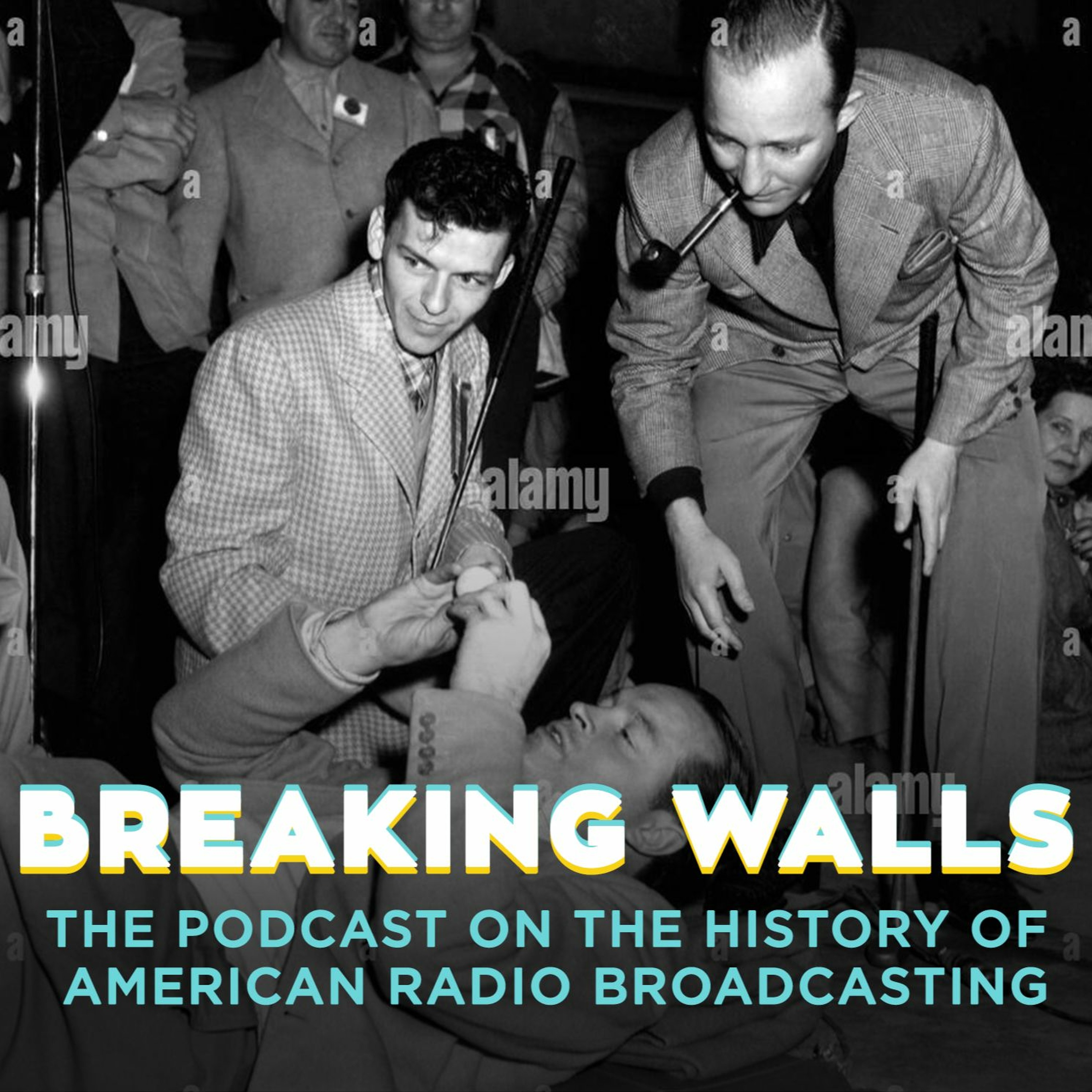
On Saturday February 12th, 1944, Ken Carpenter was announcer for a Command Performance guest-starring Bob Hope, Frank Sinatra, and Judy Garland. Hope had just co-hosted, with Bing Crosby, a pro-amateur golf charity event. Bob Hope did his first remote broadcast from March Field on May 6th, 1941. Initially reluctant to leave the studio, the roar of laughter and applause from that first crowd was so loud, he would recall, that he “got goose pimples” during the broadcast. He was hooked. He spent most of the next seven years on the road, broadcasting from bases, camps, and hospitals. The cast was put on alert, ready to go at the drop of a hat. Frances Langford was given 24-hour notice to “hop a bomber” for Alaska in 1943. They hit one-hundred camps that year, in addition to their weekly radio show. They also went to Europe, doing a show at Messina just after the enemy had fled the town and was still bombarding the area with its artillery. This year, 1944, on a trip to the South Pacific, Hope’s plane had to make a crash landing in Australia. John Steinbeck wrote of Hope, “It is impossible to see how he can do so much, can cover so much ground, can work so hard, and can be so effective.” Newsweek called it “the biggest entertainment giveaway in history.” Many times Hope appeared on Command Performance, broadcast over the Armed Forces Radio Service. Ken Carpenter recalled those shows.
BW - EP148—005: February 1944 With Bob Hope—Red Skelton, Words at War, & the 4th War Bond Drive
After Bob Hope’s program signed off at 10:30PM eastern war time, The Red Skelton Show signed on. It debuted on Tuesday October 7th, 1941. By February of 1944 it was pulling a rating of 29.9. Ozzie and Harriet Nelson were heavily featured. Skelton was so supercharged that he couldn’t do a pre-show warm up. It left his audience exhausted and practically catatonic during the main show. So Skelton reversed the formula and gave his fans an after-show. Among his peers it was considered the hottest comedy act in town. Lurene Tuttle, who later appeared with Ozzie and Harriet on their own show, also starred on The Red Skelton Show. For three seasons Skelton’s popularity soared, but then he got divorced and lost his marriage deferment. The army drafted Skelton in 1944. MGM and radio sponsor Raleigh Cigarettes tried to help with no avail. The Draft Board also turned down his request to join the Special Services branch for entertainers. Skelton’s last radio program was on D-Day, June 6th, 1944. The next day he was formally inducted as a private. Without its star, the program was discontinued until he could come back from the war. Words at War was an anthology of war stories, “told by the men and women who have seen them happen.” It was produced in cooperation with the Council on Books in Wartime, promising “stories of the battlefronts, of behind-the scenes diplomacy, of underground warfare, of the home front, of action on the seas.” Each show was to be “a living record of this war and the things for which we fight.” First taking to the air on June 24th, 1943 from New York, it was praised by Variety as “one of the most outstanding programs in radio”; by the New York Times as the “boldest, hardest-hitting program of 1944”; and by Newsweek as “one of the best contributions to serious commercial radio in many a year.” Despite airing at 11:30PM on Tuesdays, Words at War stimulated conversation and controversy throughout its two-year run. On Tuesday, February 8th 1944 a story on George Washington Carver was broadcast. When Words At War signed off at midnight, NBC broadcast a ninety minute program for the fourth war bond drive. It was part of an extended effort to raise funds. The night prior at midnight, Ben Grauer hosted this show over NBC.
BW - EP148—004: February 1944 With Bob Hope—The Bob Hope Show With Guest Ginger Rogers 2/8/1944
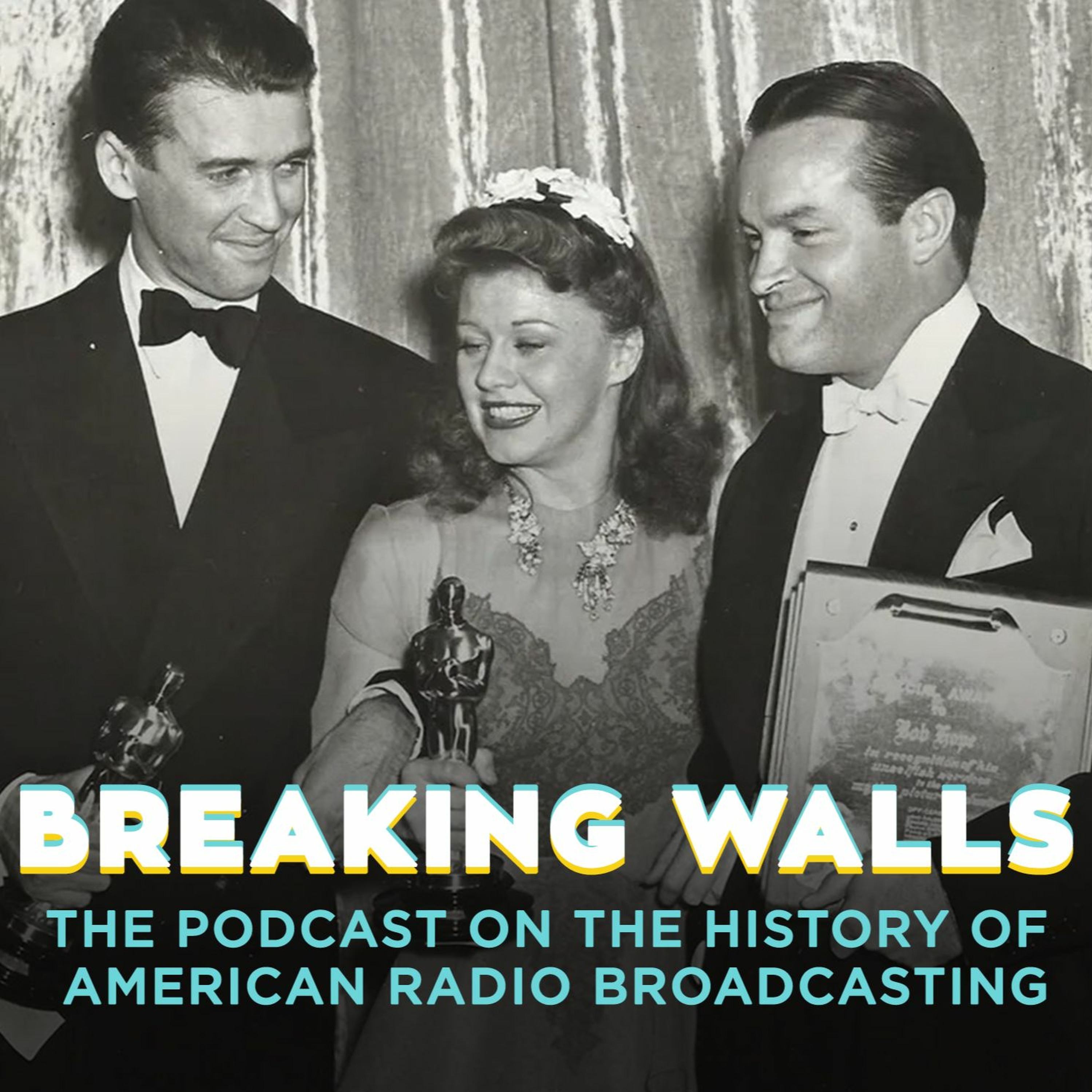
On Tuesday February 8th, 1944 at 10 PM eastern time over WEAF, and at 7PM pacific time over KFI, Bob Hope’s Pepsodent Program signed on live, coast-to-coast from Oceanside, California. The guest was Ginger Rogers, the program features a salute to her new film, Lady In The Dark. It was radio’s top show, pulling a rating that month of 36.2. Nearly twenty-eight million people heard this show, which is even more impressive when you consider how many were overseas fighting World War II. Hope’s top sidekick was Jerry Colonna, perhaps the wildest comic presence on 1940s radio. Colonna had once been a serious trombonist, playing with Goodman, Shaw, and the Dorseys: now he infused Hope’s program with verbal and vocal mayhem. He sported a four-inch walrus mustache and had a comedy style that blew away any attempt at logic. As soon as Colonna began walking to the microphone, the studio audience warned listeners with laughter.” Hope later wrote, there were two sides to Colonna’s persona: “One is the zany, silly moron, and the other is the deep thinking, serious moron.” His songstress was the immensely talented Frances Langford, equally adept at both comedy and drama. But, Hope was the star. As the late John Dunning once said, No one had ever told jokes quite like Bob Hope. His monologues were rapid-fire blasts of comedy, extremely topical and wildly appreciated by his live audience. Radio Life wrote, “Hope tells a gag in three lines. He’ll work for an hour on a one-word change. By the time he goes on the air, he knows his gags by heart.” He employed a team of twelve writers in three, two-man teams. Each were assigned to write the show’s three sections. First came the monologue; then a midshow routine with Colonna or another member of the regular cast; and finally, a sketch for the guest star. It was a true test of endurance. Hope demanded long rehearsals, including a sixty-minute runthrough with a live audience. He’d stand at the microphone, highlighting his script where the big laughs came. When you consider that Hope’s weekly audience was more than each of the first two Super Bowls, it’s easier to understand his point of view. The biggest problem with Hope, said producer Al Capstaff in 1945, was his inevitable tendency to pack the script. It was always thirty-seven minutes long and had to be whittled down joke by joke until only the surefire material remained. The result on the air was a breathless gush, with six laughs a minute guaranteed. But, that was Hope. Even in his 1972 Dick Cavett interview which has been featured throughout this episode of Breaking Walls, an off-the-cuff Hope can’t help but pack one-liner after one-liner in the midst of a genuine, serious, conversation. The Pepsodent Program was enhanced by Hope’s film career. By February of 1944 Hope had starred in seventeen films since the release of The Big Broadcast of 1938, including the first three Road To films with Bing Crosby.
BW - EP148—003: February 1944 With Bob Hope—NBC Dominates Tuesday Ratings
If you’d have tuned your radio to NBC’s New York flagship, WEAF, at 7:30 PM on Tuesday February 8th, 1944 you’d have heard Ronald Coleman host the Autolite Sponsored, Everything For the Boys. The guest star was Greer Garson. NBC owned the ratings on Tuesdays with six of the top seven shows. Opposite of Everything For The Boys, CBS ran a concert, WOR-Mutual ran news, and WJZ of the Blue Network ran The Girl Back Home. “Barkley Square” is a fantasy play about a man who desires so much to go back in time that he somehow achieves it. At 8:00PM, The Ginny Simms Show took to the air. That month, the show’s rating was 14.6. Roughly eleven million people tuned in. Opposite, CBS aired Big Town, WOR aired The Black Castle, while WJZ aired news. At 8:30 NBC aired A Date With Judy, a female-driven situation comedy starring Louise Erickson. Opposite CBS ran The Judy Canova Show, while WJZ aired Duffy’s Tavern and WOR ran the quiz show, Battle of the Boroughs. This was the most competitive time slot as far as ratings went. In February A Date With Judy pulled a 9.6, while The Judy Canova Show pulled a 12.6, and Duffy’s Tavern had a 14.6. Louise Erickson was three weeks shy of her sixteenth birthday. She held the role until 1949. The series was popular enough that, in response, CBS developed Meet Corliss Archer. After The Molle Mystery Theater aired at 9 PM, the three top-rated shows on radio aired in succession, beginning with the just-heard Jim Jordan co-starring in Fibber McGee and Molly. The February 8th episode was called “Homemade Ice Cream” and had a rating of 35.7. More than twenty-seven million people tuned in. After Fibber McGee and Molly signed off, Bob Hope’s Pepsodent Program signed on at 10PM.
BW - EP148—002: February 1944 With Bob Hope—Early February World War II News
As February 1944 got underway the Soviet Leningrad Front was fighting a heavy ground war against the German eighteenth army in Estonia. The battle would last the entire month with the Soviet’s eventually winning. French Resistance unified under the French Forces of the Interior. The Germans won the Battle of Cisterna in Italy against the Allied army, but at that point, four months before the Normandy invasion, the Allies kept pushing into Italy. Meanwhile, the Battle of the Admin Box began in the Burma campaign with Japanese forces attempting to counter-attack an Allied offensive, trying to draw Allied reserves from the Central Front in Assam, where the Japanese were preparing their own major offense. On the morning of Saturday February 5th, 1944 at 7AM eastern war time, the NBC World News Roundup signed on from WEAF in New York. On the date of this broadcast, Allied powers were slowly inching into western Europe with the body count mounting, while Soviet forces captured cities in Ukraine. Overnight on February 6th into the 7th Soviet bombers attacked Helsinki, the heaviest bombing of the Finnish capital since the war began. Meanwhile, a growing border issue between Poland and Russia caused President Roosevelt to step in, Asking Stalin not to allow it to undermine future international co-operation. Roosevelt proposed that the Polish Prime Minister accept the desired territorial changes and then be allowed to alter the makeup of his government without any evidence of foreign pressure. Wartime needs stretched agricultural production. The U.S. not only had to feed its own civilian and military population, but many of the Allies relied on America’s bread basket. In addition, German U-boats sank hundreds of food-laden ships bound for Britain. Canned fruits and vegetables were rationed starting March 1st, 1943. Less canned goods meant less civilian tin use and less strain on the heavily taxed rail and road systems. Even as early as 1941, civilians were encouraged to grow their own produce to supplement their food. These were referred to as Victory Gardens. The Department of Agriculture produced pamphlets to guide urban and suburban gardeners. Magazines and newspapers published helpful articles, and patriotic posters urged participation. In the Pacific northwest state of Oregon, wartime farm labor shortages led to the creation of the U.S. Crop Corps in 1943. It umbrellaed labor services like the Women's Land Army and the Victory Farm Volunteers. The latter was a group that got parental consent to employ youths aged eleven to seventeen. Migrant workers from Mexico also helped, made possible thanks to the joint U.S./Mexican "Bracero Program." By 1944 farmers could request help from POW laborers held at Oregon Army camps. More than thirty-five-hundred prisoners, mostly Germans, worked in Oregon fields.

BW - EP148—001: February 1944 With Bob Hope—Hope's Rise To Top Star
He was born Leslie Townes Hope on May 29th, 1903 in Eltham, England. The fifth of seven sons, his parents were William Henry Hope, a stonemason from Somerset, and Welsh mother Avis, a light opera singer who later worked as a cleaner. The family eventually moved to Bristol for a time before emigrating to the U.S. aboard the SS Philadelphia, passing through Ellis Island on March 30th, 1908, before settling in Cleveland, Ohio. He earned pocket money by singing, dancing, and performing, winning a prize in 1915 for his impersonation of Charlie Chaplin. In December 1920, Hope and his brothers became U.S. citizens when their British parents became naturalized Americans. The next year, he was assisting his brother with the electric company when a horrific accident crushed his face. The reconstruction of which led to his distinctive appearance. In the 1920s Hope formed a dance act called the "Dancemedians" with George Byrne and the Hilton Sisters, conjoined twins who performed a tap-dancing routine on the vaudeville circuit. He acted in a double with Byrne, eventually making his way to New York. The act flopped, pushing Hope to strike out on his own, changing his first name to Bob in 1929. He spent five years on the Vaudeville circuit, failing an RKO screen test in 1930, but he broke out on Broadway, first in Ballyhoo of 1932, and then opposite Tamara Drasin and Fred MacMurray in Roberta, which played two-hundred ninety-four times between November of 1933 and July of 1934. Meanwhile in 1932, he appeared on Major Bowes’ Capitol Family Hour and later on Rudy Vallee’s Fleischmann Yeast Hour on June 3rd, 1933 alongside Jimmy Wallington. In 1933 he married his vaudeville partner Grace Troxell. They divorced the next year and Hope was soon with another performer, Dolores Reade. Though they spent the rest of their lives together, and Hope was notoriously unfaithful, a legal record of their marriage is vague at best. The couple would eventually adopt four children. In 1934 Hope signed a six-short contract with Educational Pictures. Radio soon followed. By then, he’d developed performing chops so strong, he could sing, dance, or act in any number of ways. On Friday January 4th, 1935 over NBC’s Blue Network, he debuted in The Intimate Review. This first series was short-lived: ratings were mediocre, but Hope found his first radio foil, comedienne Patricia Wilder, who, with her thick southern accent, went by Honey Chile. The Intimate Review went off the air in April, but on September 14th, 1935, Hope was back on radio over CBS with The Atlantic Family. While he was on for CBS in 1936, Hope starred on Broadway in Ziegfeld’s Follies with Fanny Brice; and in Cole Porter’s Red, Hot, and Blue, with Ethel Merman and Jimmy Durante. The next May 9th, 1937, Hope was back on radio for NBC’s Blue Network on Sundays at 9PM with The Rippling Rhythm Revue. During this run Paramount beckoned: The Big Broadcast of 1938 was to begin filming, and Hope was offered a part. He moved to Hollywood, continuing his monologues by transcontinental wire. The Rippling Rhythm Revue was canceled in September, but three months later Hope joined The Dick Powell Variety Show on December 29th, 1937. The Big Broadcast of 1938 was released on February 11th, and suddenly, Hope was a huge star. On Tuesday, September 27th, 1938 at 10PM, The Pepsodent Show took to the air. That first season, Hope’s 15.4 rating was good enough for twelfth overall. In 1939 he was up to 23.1 and fifth. In 1941 his rating was 26.6 and fourth, and finally in 1942 his Crossley rating cracked thirty points, while his Hooper cracked forty. Hope soon began a five year run as radio’s top comedian.
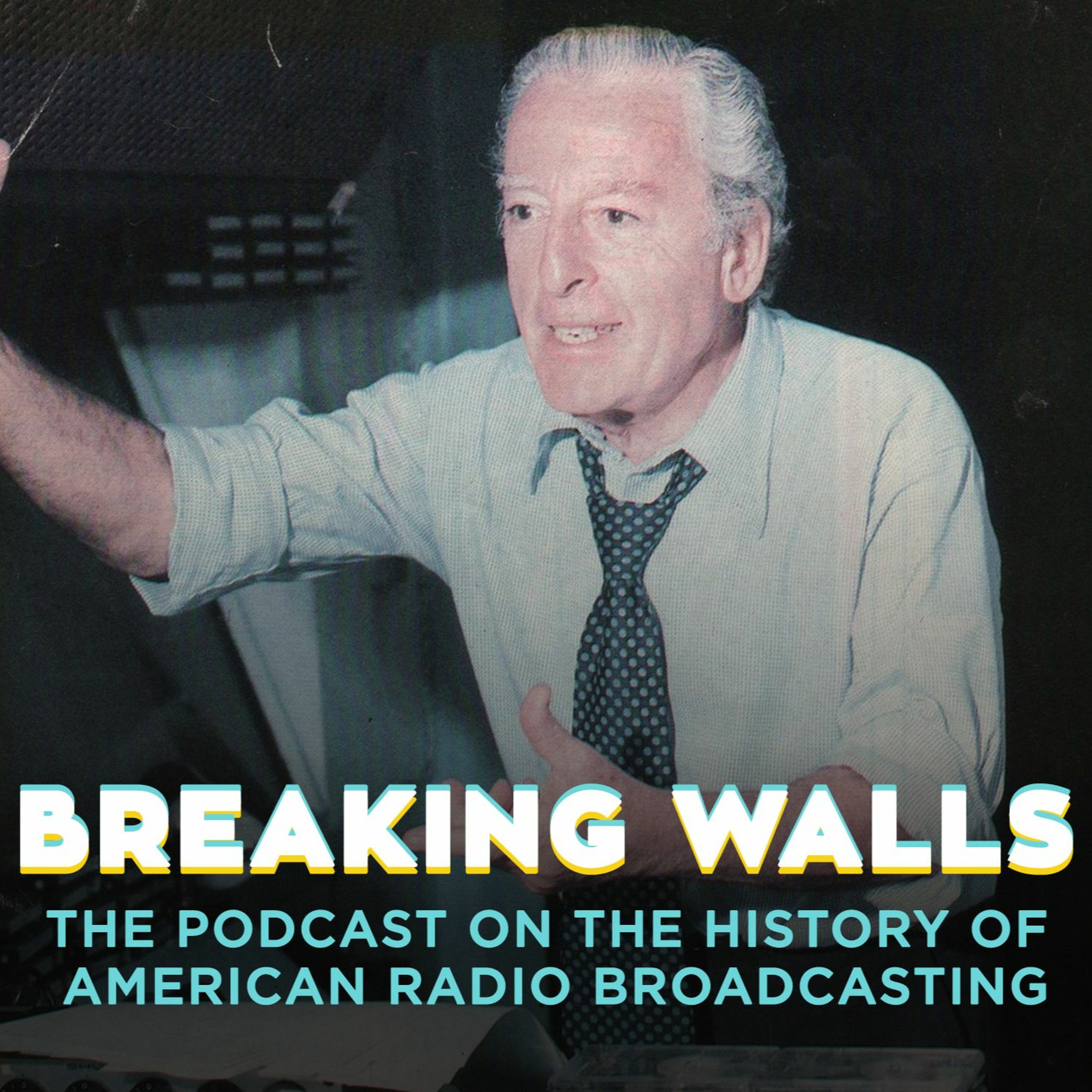
BW - EP147: The Launch Of The CBS Radio Mystery Theater (1974)
In Breaking Walls episode 147 we go into the studio with Himan Brown for the CBS radio drama relaunch in 1974. —————————— Highlights: • First a January 1974 World News Roundup • Himan Brown’s Big Idea to Relaunch Radio Drama on CBS in 1974 • Tuning Into January 8, 1974’s Episode of The CBS Radio Mystery Theater • Mason Adams in I Warn You Three Times • January 13, 1974 World News Roundup — Nixon Still On Hot Seat • Producing The CBS Radio Mystery Theater With The New York Radio Crew • Dead For a Dollar • The CBS Radio Mystery Theater Beyond January 1974 • Looking Ahead to February by Looking Back to Bob Hope —————————— The WallBreakers: http://thewallbreakers.com Subscribe to Breaking Walls everywhere you get your podcasts. To support the show: http://patreon.com/TheWallBreakers —————————— The reading material used in today’s episode was: • On The Air — By John Dunning • The CBS Radio Mystery Theater, An Episode Guide and Handbook to Nine Years of Broadcasting — By Gordon Payton and Martin Grams, Jr. As well as articles from: • The Cleveland Plain Dealer —————————— On the interview front: • Himan Brown, Larry Haines, Mary Jane Higby, Joseph Julian, and E.G. Marshall spoke with Dick Bertel and Ed Corcoran for WTIC’s The Golden Age of Radio. Hear these interviews at Goldenage-WTIC.org • Joan Banks and George Petrie were with SPERDVAC. For more info, go to SPERDVAC.com • Mason Adams spoke with Chuck Schaden. Hear these chats at Speakingofradio.com —————————— Selected music featured in today’s episode was: • January Stars — By George Winston • Amid Flowers, Beside the River, Under a Spring Moon — By Elizabeth Hainen • Perfida — By Jimmy Dorsey And His Orchestra —————————— A special thank you to Ted Davenport, Jerry Haendiges, and Gordon Skene. For Ted go to RadioMemories.com, for Jerry, visit OTRSite.com, and for Gordon, please go to PastDaily.com. —————————— Thank you to: Tony Adams Steven Allmon Orson Orsen Chandler Phil Erickson Jessica Hanna Perri Harper Thomas M. Joyce Ryan Kramer Gerrit Lane Earl Millard Gary Mollica Barry Nadler Christian Neuhaus Ray Shaw Filipe A Silva John Williams Jim W. —————————— WallBreakers Links: Patreon - patreon.com/thewallbreakers Social Media - @TheWallBreakers
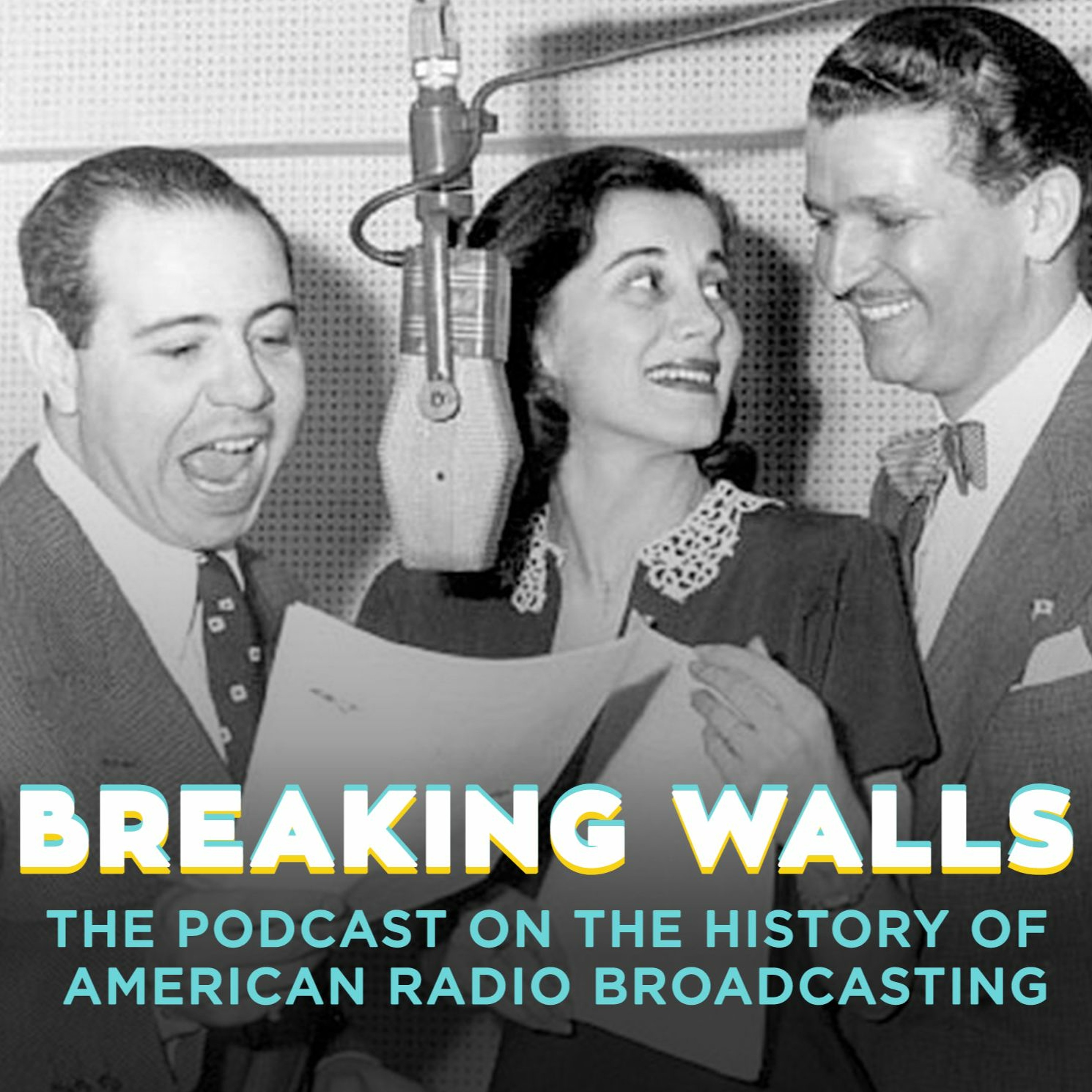
BW - EP147—009: The Launch of the CBS Radio Mystery Theater—No Hiding Place
This is the fifth episode of The CBS Radio Mystery Theater. Entitled "No Hiding Place," it was written by longtime writer of The Shadow, Sidney Slon. It stars Larry Haines, Jackson Beck, Anne Meacham, Sidney Walker and Tom Keena. The Plot: Charles Powel, executive vice president of a large company and engaged to the boss’ daughter, seems to have everything going for him. But Clint Livets, who knows the secret of Charles’ past, shows up with a dirty hand and blackmail on his mind.
BW - EP147—008: The Launch Of The CBS Radio Mystery Theater—Looking Ahead To 1944 With Bob Hope
Well, that brings our look at the launch of The CBS Radio Mystery Theater to a close. We’ve spent the past five months making our way forward in time from 1957, to 1963, to 1973, and finally 1974. But, next month on Breaking Walls we’ll head back to the middle of radio’s golden age and focus on one of the most successful comedians of all-time. Next time on Breaking Walls, it’s February of 1944 and between entertaining troops, smashing box office numbers, and notoriously carousing, the man jokingly referred to by friend Bing Crosby as “ol trowel nose,” Bob Hope, is radio’s top comedian. For the first time in six years of Breaking Walls episodes, we’ll focus on the man who always reminded us to say, thanks for the memories. The reading material used in today’s episode was: • On The Air — By John Dunning • The CBS Radio Mystery Theater, An Episode Guide and Handbook to Nine Years of Broadcasting — By Gordon Payton and Martin Grams, Jr. As well as articles from: • The Cleveland Plain Dealer —————————— On the interview front: • Himan Brown, Larry Haines, Mary Jane Higby, Joseph Julian, and E.G. Marshall spoke with Dick Bertel and Ed Corcoran for WTIC’s The Golden Age of Radio. Hear these interviews at Goldenage-WTIC.org • Joan Banks and George Petrie were with SPERDVAC. For more info, go to SPERDVAC.com • Mason Adams spoke with Chuck Schaden. Hear these chats at Speakingofradio.com —————————— Selected music featured in today’s episode was: • January Stars — By George Winston • Amid Flowers, Beside the River, Under a Spring Moon — By Elizabeth Hainen • Perfida — By Jimmy Dorsey And His Orchestra —————————— A special thank you to Ted Davenport, Jerry Haendiges, and Gordon Skene. For Ted go to RadioMemories.com, for Jerry, visit OTRSite.com, and for Gordon, please go to PastDaily.com. —————————— Thank you to: Tony Adams Steven Allmon Orson Orsen Chandler Phil Erickson Jessica Hanna Perri Harper Thomas M. Joyce Ryan Kramer Earl Millard Gary Mollica Barry Nadler Christian Neuhaus Ray Shaw Filipe A Silva John Williams Jim W. ——————————
BW - EP147—007: The Launch Of The CBS Radio Mystery Theater—The CBSRMT Beyond 1974
Cleveland Plain Dealer, July 28th, 1974 — CBS 'Theater's' Brown Burns about Serling "I'm proud of every minute we're on the air...and I'll stand up for every single show I do." Speaking of The CBS Radio Mystery Theater was Himan Brown, executive producer of the nationwide show that premiered January 6th and has garnered good ratings. His comments were the beginning of a rebuttal to negative remarks made about the show and The Zero Hour on these pages June 16th by Rod Serling, who narrated the latter program, which was dropped by Mutual last Friday. Brown burned. “My stories have complete relevancy to all that's going on now--exorcism, reincarnation--all stories of the moment. We're doing contemporary stories with the best writers and actors in the business. I think radio drama, contrary to what Serling says, is here forever and a day--and never will be off the networks again." Serling has written TV shows, movies, and books, but his only previous radio drama was written while he was a summer replacement at WLW in Cincinnati. "It’s all sour grapes. Serling's relationship to radio has been a total failure," Brown said. “His criticism of his own show is a complete slur of his own integrity, because in the past he lent his narrative name or talents to what he wrote. The implication is that he was much involved with the stories on The Zero Hour and that's a fake.” Brown believes in Mystery Theater with all his heart. “It took me fifteen years to sell it, but it's been a happy fulfillment." The show has gone so well that Brown has a verbal renewal to go into a second year. He wouldn't discuss it, but Brown admitted that he has packaged a two-hour weekly Sunday drama series for CBS Radio that would debut early next year. Getting back to Mystery Theater, Brown admitted that he can't bat one-thousand on the series. "But I'll bat eight-hundred." He produces, directs, edits scripts, casts the shows and signs the checks. “The show has gone far beyond anything I ever hoped for. People are listening seven nights a week. The minute we put on the first repeats, the stations' switchboards lit up.” The first year's contract calls for one-hundred ninety-five new shows and one-hundred seventy repeats. Usually produced in New York, the program will invade Hollywood for talent there for the recording of eight mysteries, beginning August 5th. Born in Manhattan and with degrees from City College of New York and Brooklyn Law School--although he has never practiced law--Brown moved into TV production when radio drama fell by the wayside some fifteen years ago. Now, with The CBS Radio Mystery Theater, he's back home. "It's the greatest homecoming a man could possibly want." — Raymond P. Hart Although Rod Serling was disappointed with Mutual broadcasting’s treatment of The Zero Hour, as covered in the previous episode of Breaking Walls, in 1974 Himan Brown’s Mystery Theater won a Peabody Award for helping to usher in a new era of radio entertainment. It would run for eight more years until finally going off the air on December 31st, 1982. More than fifteen hundred episodes were produced. Most survive in listening quality.
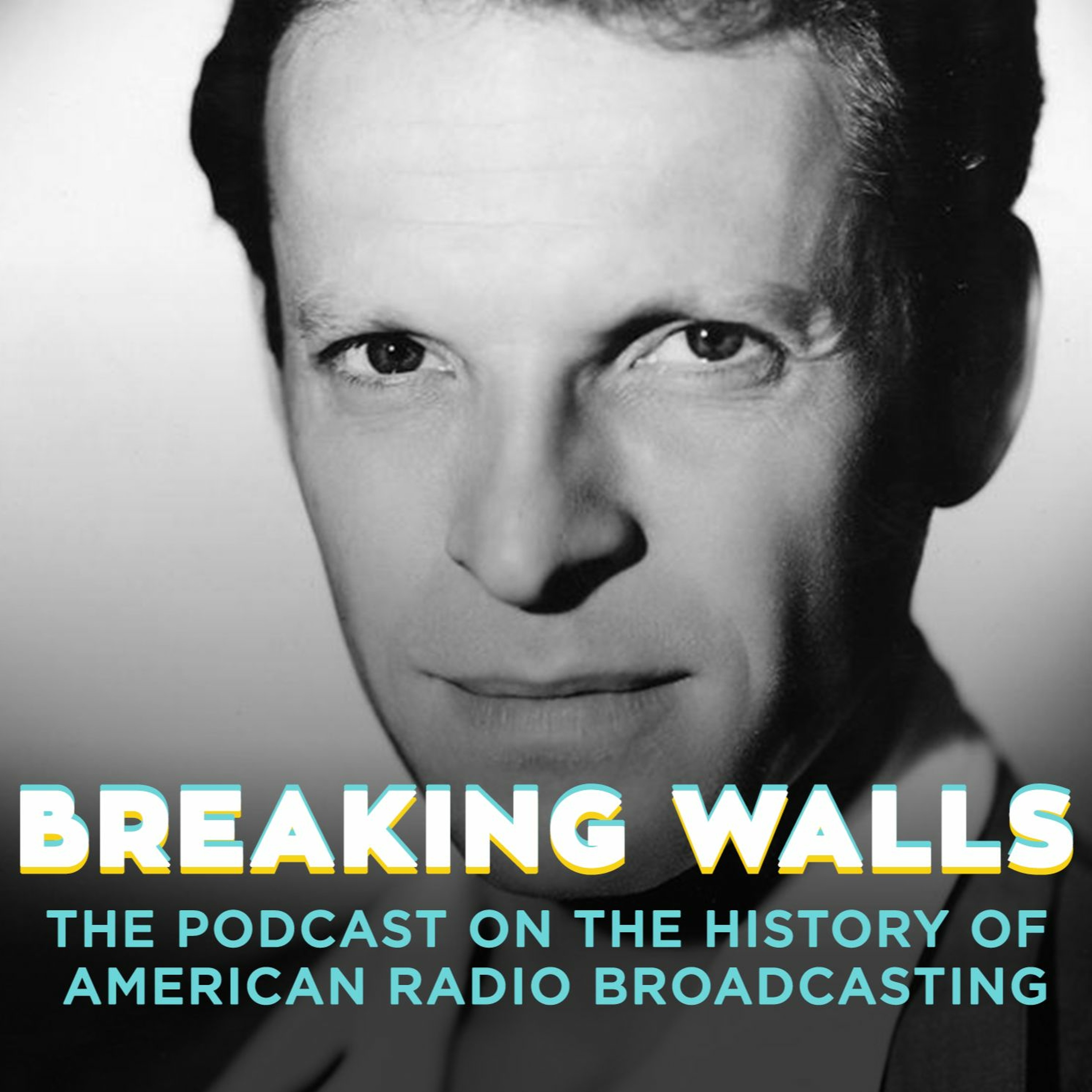
BW - EP147—006: The Launch of the CBS Radio Mystery Theater— 1/8/1974's Episode Dead For A Dollar
On Monday January 21st, 1974 the just-heard Joe Julian co-starred with Paul Hecht, Joan Banks, Mary Jane Higby, Tony Roberts, and George Petrie in Murray Burnett’s story “Dead for a Dollar” on The CBS Radio Mystery Theater. Radio legend Joan Banks played secretary Kay Woodhouse. George Petrie played Jason Grant. He’d been appearing on radio since the early days of the Great Depression. Mary Jane Higby played Denise Grant. She’d come to New York City from Hollywood in 1937.
BW - EP147—005: The Launch Of The CBS Radio Mystery Theater—Stories From The New York Radio Crew
By the time The CBS Radio Mystery Theater debuted, the men and women associated with the show had been involved with each other for nearly forty years. Mary Jane Higby grew up in Los Angeles and remembered Hollywood before it was a radio hub. She was once called Queen of the soaps. Joan Banks, who later married Frank Lovejoy, remembered the New York hangouts. There she spent time with men and women like the oft-heavy Larry Haines. These men and women were usually overbooked. Joan Banks went to the west coast in 1948. It was about then that Television came into the picture. E.G. Marshall was a part of it from the start. Unfortunately, it wasn’t long before radio began to decline, as Joe Julian remembered. But nearly twenty years later, thanks to Himan Brown, CBS was back in the radio drama business in 1974.
BW - EP147—004: The Launch Of The CBS Radio Mystery Theater—Watergate, Gas Crisis, High Inflation
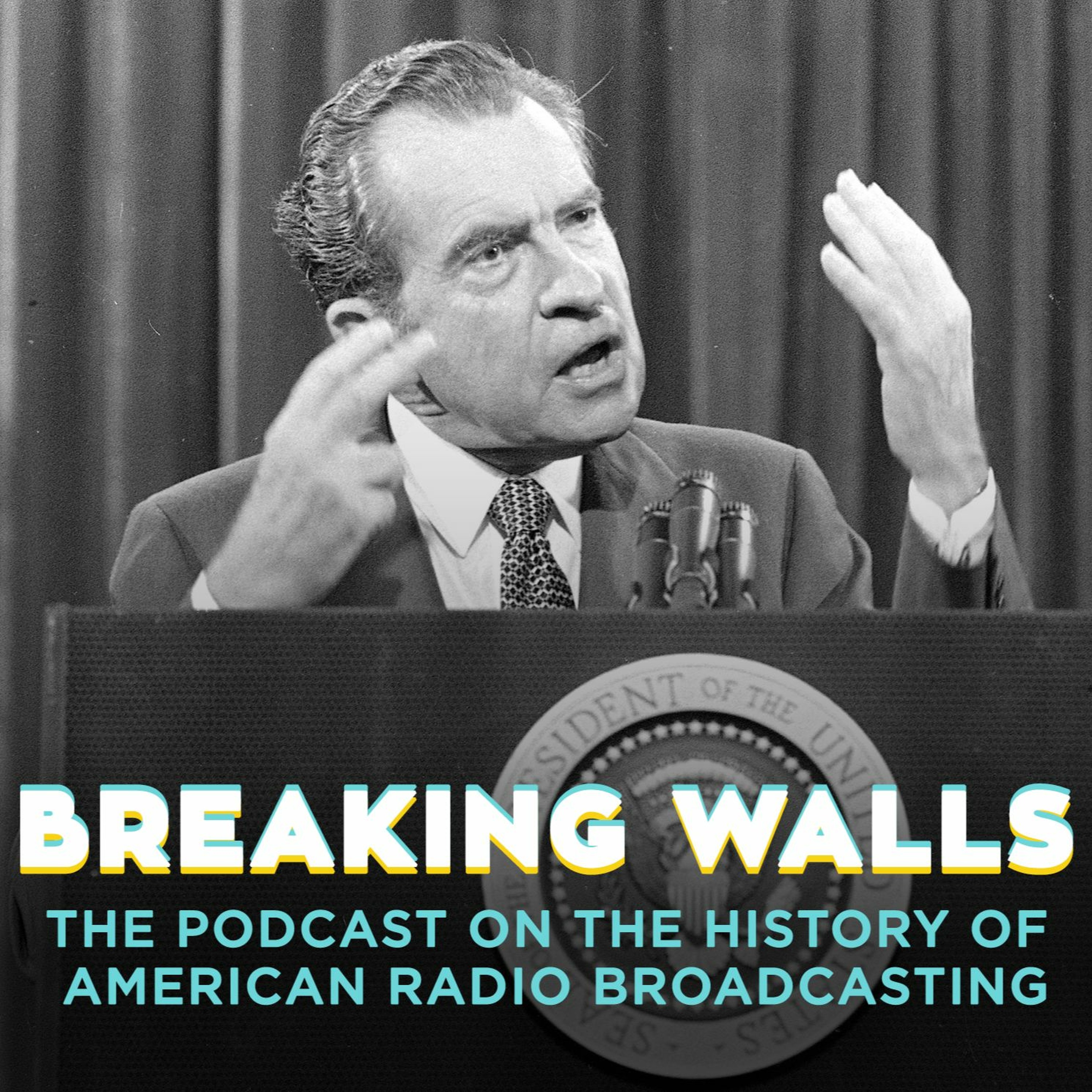
On Thursday, January 10th, 1974 the crew of Skylab 4, which had been orbiting the earth for more than fifty days, was granted a day off. The week prior, during a televised news conference Mission commander Gerald Carr said he missed cold beer and football. That same day the U.S. carried out three simultaneous nuclear explosions as part of Operation Arbor in Nevada. January 13th was Super Bowl VIII Sunday. The defending champion Miami Dolphins faced off against the Minnesota Vikings at Rice Stadium in Houston. More than seventy thousand were in attendance. That evening. Floyd Kalber signed on for NBC’s news with coverage of potential peace between Egypt and Israel, brokered by Secretary of State Henry Kissinger. Looking for a solution to the ongoing Middle East crisis, Kissinger spent ten hours meeting with Israeli officials, hammering out a proposal for a peace settlement with Egypt. He next flew to Cairo to present the document to Anwar Sadat. After meeting Sadat, the plan was to return to Tel-Aviv with Sadat’s version of the proposal for Israel’s acceptance or rejection. This was good for President Nixon, who despite an eighteen day birthday vacation in California, and an insistence that he would leave the past behind and focus on 1974, couldn’t seem to shake Watergate, the energy crisis, and continued high inflation.
BW - EP147—003: The Launch Of The CBS Radio Mystery Theater—I Warn You Three Times
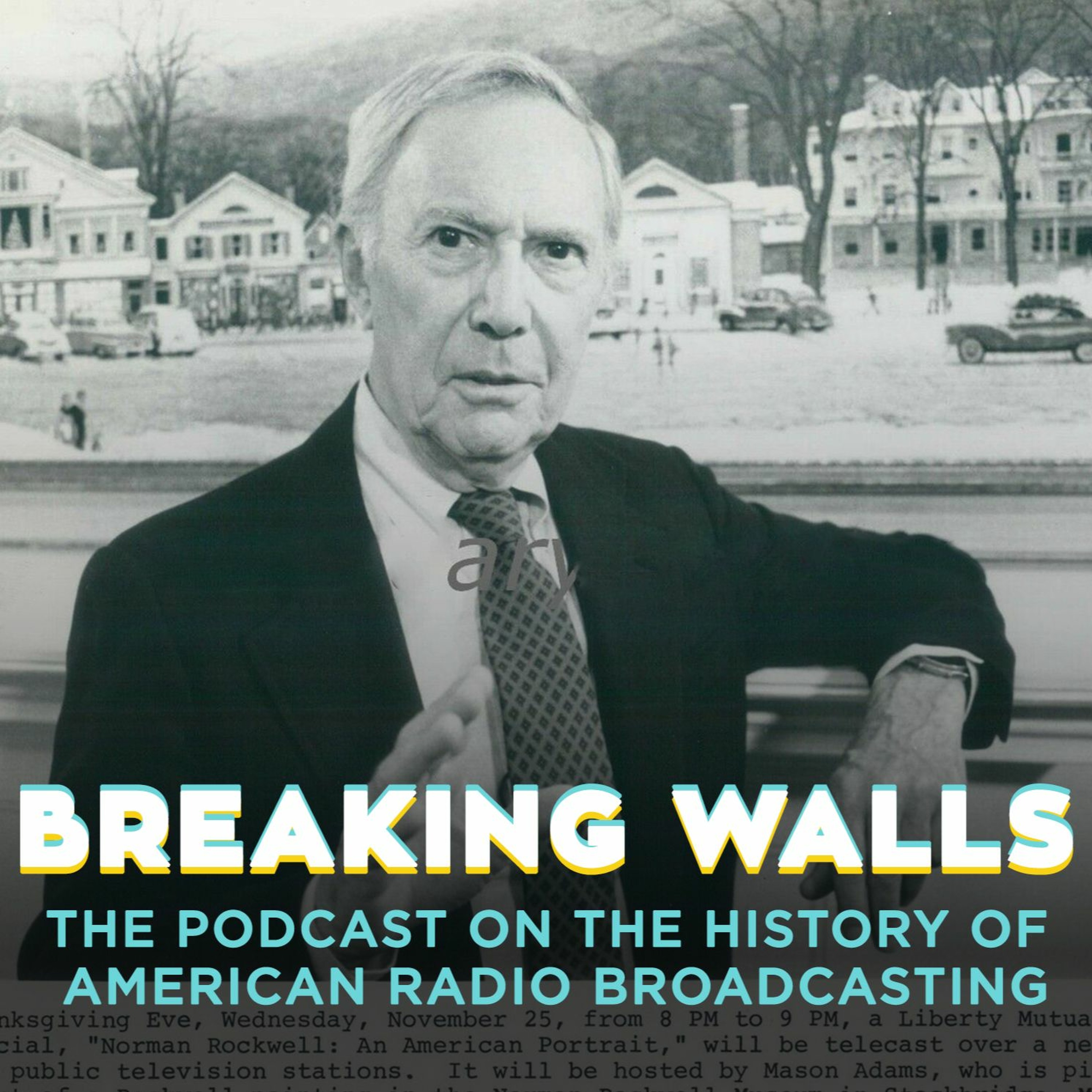
On Saturday, January 12th, 1974, the just heard Mason Adams starred alongside Joan Loring, Tom Keena, Sam Gray, and Alan Manson in the seventh episode of The CBS Radio Mystery Theater. This aircheck comes from WOR and it's a mystery in the truest sense of the word. Joan Lorring, who voiced Hedy, was at the time of this broadcast forty-seven years old. She’d already been nominated for an Academy Award in The Corn Is Green in 1945, and won a Donaldson, the predecessor of the Tony, in 1950 for her portrayal of Marie Buckholder in Come Back, Little Sheba. On radio, her career spanned the gamut. She starred as Judy Foster in the second season of A Date With Judy, played on Suspense in the 1940s, in Theater Five in the 1960s, and finally on The CBS Radio Mystery Theater in the 1970s. Later this year she appeared in Burt Lancaster’s neo noir mystery film The Midnight Man.
BW - EP147—002: The Launch Of The CBS Radio Mystery Theater—Tuning Into January 8th, 1974’s Episode
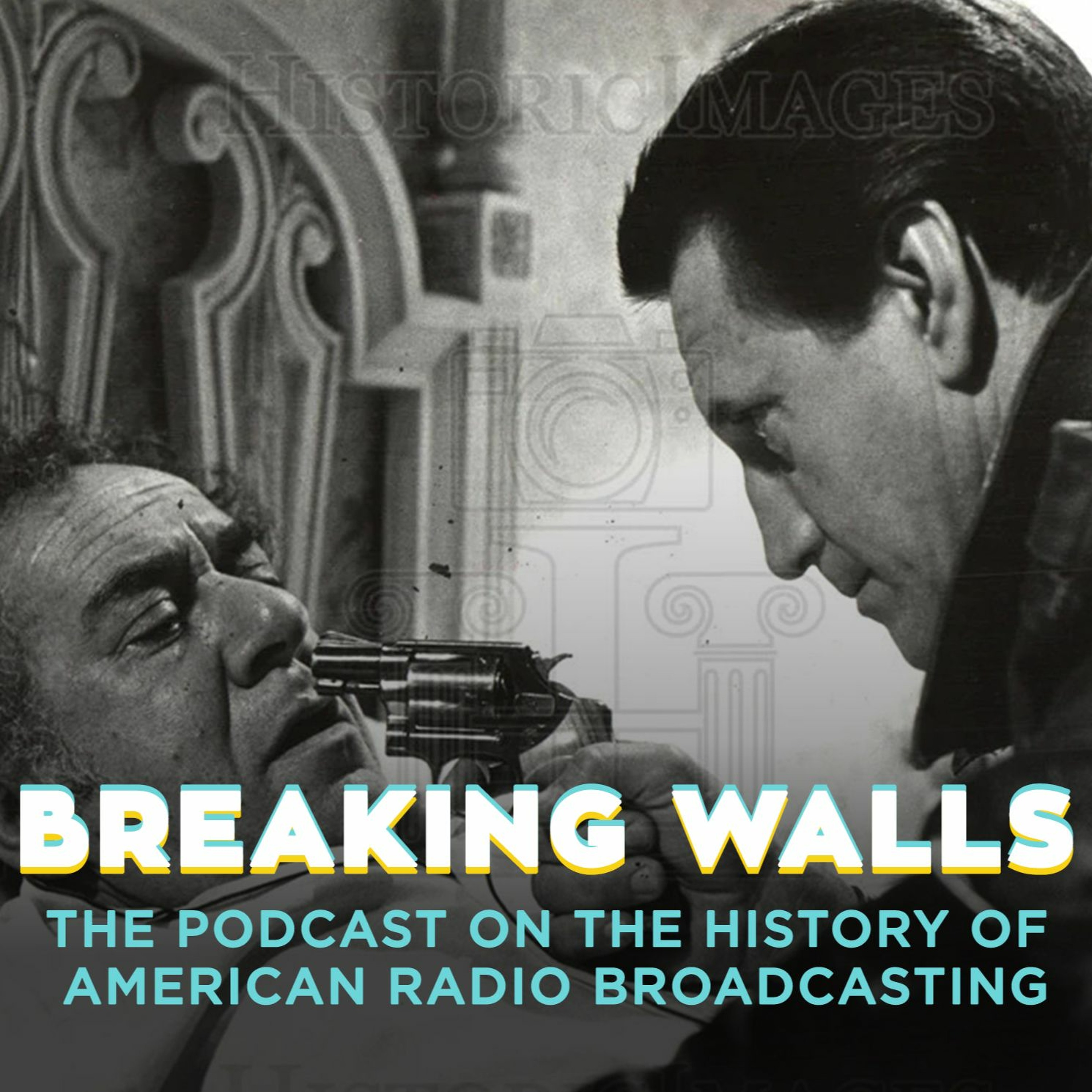
The New York Daily News was unenthusiastic in its review of the first two episodes, however the third episode caught their attention. On the evening of Tuesday, January 8th, 1974 The CBS Radio Mystery Theater took to the air with their third installment, called “The Bullet,” guest-starring the just-heard radio, TV, and stage legend Larry Haines. Larry Haines had been involved with New York radio for decades. The same month he was starring in this episode of The CBS Radio Mystery Theater he spoke with Dick Bertel and Ed Corcordan for WTIC’s The Golden Age of Radio. Also featured in this cast was Evelyn Juster, Martin Newman, Danny Ocko, Leon Janney, and Ralph Bell. It was written by radio writing legend Sam Dann.
BW - EP147—001: The Launch Of The CBS Radio Mystery Theater—CBS Jumps Back Into Radio Drama In 1974
Tuesday, January 8th, 1974. It’s a cold night in Brooklyn, New York. There’s snow in the forecast. We’re driving north on Shore Road, towards the Belt Parkway in a 1973 Ford Maverick. Thanks to the oil crisis, smaller cars like the Maverick are becoming increasingly popular. On January 2nd, President Nixon signed a law lowering the maximum speed limit on U.S. highways to fifty-five miles per hour. It conserved gasoline during the embargo. Highway fatalities dropped twenty three percent over the next year. The limit remained in effect for thirteen years. Unfortunately for Nixon, the Watergate scandal wouldn’t go away. Citing executive privilege, on January 4th, Nixon refused to surrender over five hundred subpoenaed tapes to the Watergate Committee. On this night, Tuesday January 8th, John Chancellor signed on with news and updates from NBC. On this day, New York City instituted measures against gas shortage abuse. The day after this broadcast, Representatives from the twelve member nations of the Organization of Petroleum Exporting Countries finished a meeting in Geneva, Switzerland, voting for a three-month freeze on oil prices. But this isn’t why we’re here. As Mutual Broadcasting was getting back into radio drama with The Zero Hour, longtime director Himan Brown finally convinced CBS to give him a nightly hour of time to produce new eerie radio plays. Tonight, we’ll go back to January 1974 and study how this moment in time came to be. ____________ In January 1974 Himan Brown was sixty-three years old, having been on the air since the age of eighteen. Brown is noted for having created Bulldog Drummond, Grand Central Station, Dick Tracy, and Inner Sanctum Mysteries. He was itching for the chance to create new dramatic radio. CBS executive Sam Digges was fifty-seven, and close friends with Brown, but the CBS network board could perhaps have been a harder sell for a program that was to air every night of the week. CBS hadn’t produced any dramatic shows since September of 1962. Over the eleven years since, numerous technological advancements had been made. In order to produce a show that was to air every night of the week, a dedicated studio would be developed. They used Studio G on the sixth floor of the old CBS Radio Annex on East 52nd street. The writers would be paid three-hundred fifty dollars per script. That’s a little more than two thousand dollars today. As Himan Brown mentioned, in New York City CBS aired news, so Mutual Broadcasting’s flagship WOR picked up the series just one month after Mutual began airing The Zero Hour. Acting talent would work for SAG-AFTRA scale. Actor E.G. Marshall was tabbed to be the host. In 1973 Marshall was known for his prominent role in the 1957 Twelve Angry Men, and on TV’s The Defenders. As a host, he harkened back to the Golden Age of Radio when characters such as The Man In Black, The Whistler, The Mysterious Traveler, and Raymond hosted macabre programs. The CBS Radio Mystery Theater would debut on Sunday January 6th, 1974 with Agnes Moorehead starring in “The Old Ones Are Hard To Kill.” Two-hundred eighteen stations carried the series, including twenty-one which were not CBS affiliates.
Please Subscribe For Free To Breaking Walls On Youtube
https://www.youtube.com/channel/UC2sZTlF006NpivktbnUVn-g Hey everyone, James Scully here. Happy holidays! For those that don't know, once I get to 500 Youtube subscribers I can begin to earn through Youtube's earning program. I'm less than 50 subscribers away and I'm trying to get there by the end of the year. If you like the show, please subscribe and tell a few friends! It's free to subscribe. The link is above. All episodes of Breaking Walls from January 2022 onward have been uploaded to the youtube page. I've also begun to add the archive of 2018-2021 episodes as well. And just so you know, the next episode of Breaking Walls, #147,which will debut next week, will feature the launch of the CBS Radio Mystery Theater in honor of the 50th anniversary of its launch in 1974. Please subscribe on Youtube if you don't. You'll get the same feed there, but I'll be able to being earning through the earning program and I'd appreciate that very much. So, my name is James Scully. Keep getting out there, keep breaking those walls, and I'll catch you on the flip side. Thank you very much.
BW - EP146: December 1973 With Rod Serling And The Zero Hour
In Breaking Walls episode 146 we spotlight the Jay Kholos, Elliott Lewis, and Rod Serling series The Zero Hour in honor of the fiftieth anniversary of its debut on the Mutual Broadcasting System in December of 1973. —————————— Highlights: • Radio Drama Coming Back in 1973 • Jay Kholos Conceives The Zero Hour — Rod Serling Will Host • The Zero Hour Is On the Air • WRVR and Selling Radio Shows In the 1970s • Nixon On The Hot Seat • AFTRA’s Moving Goal Posts — Kholos Must Sell The Zero Hour’s Rights • Selling The Zero Hour to Mutual • Elliott Lewis and Jay Kholos Leave The Zero Hour • Mutual Cancels The Zero Hour and Rod Serling is Disappointed • Life After Radio Drama • Looking Ahead to the CBS Radio Mystery Theater —————————— The WallBreakers: http://thewallbreakers.com Subscribe to Breaking Walls everywhere you get your podcasts. To support the show: http://patreon.com/TheWallBreakers —————————— The reading material used in today’s episode was: • On The Air — By John Dunning • A Pictorial History of Radio’s First 75 Years — By B. Eric Rhoads • The Radio Career of Rod Serling — By Martin Grams Jr’s The archive from Digital Deli’s Zero Hour page. As well as articles from: • The Arizona Republic • The Associated Press * The Cleveland Plain Dealer * Pacific Stars and Stripes • The San Mateo Times • The Van Wert Times Bulletin —————————— On the interview front: • Himan Brown and Howard Duff spoke with Dick Bertel and Ed Corcoran for WTIC’s The Golden Age of Radio. Hear these interviews at Goldenage-WTIC.org • Howard Duff, Elliott Lewis, Les Tremayne, Janet Waldo, and Paula Winslowe spoke with Chuck Schaden. Hear these chats at Speakingofradio.com • Mary Jane Croft, Byron Kane, and Elliott Lewis spoke with SPERDVAC. For more info, go to SPERDVAC.com • Jay M. Kholos was interviewed by Yours Truly, James Scully in January 2018 —————————— Selected music featured in today’s episode was: • Caravan — By Eighty Drums Around The World • What Are You Doing New Year’s Eve — By Nancy Wilson —————————— A special thank you to Ted Davenport, Jerry Haendiges, and Gordon Skene. For Ted go to RadioMemories.com, for Jerry, visit OTRSite.com, and for Gordon, please go to PastDaily.com. —————————— Thank you to: Tony Adams Steven Allmon Orson Orsen Chandler Phil Erickson Jessica Hanna Perri Harper Thomas M. Joyce Ryan Kramer Earl Millard Gary Mollica Barry Nadler Christian Neuhaus Ray Shaw Filipe A Silva John Williams Jim W. —————————— WallBreakers Links: Patreon - patreon.com/thewallbreakers Social Media - @TheWallBreakers
BW - EP146—009: December 1973 With Rod Serling And The Zero Hour—Life After Radio Drama
Although The Zero Hour went off the air in the spring of 1974, the people involved didn’t stop working. Rod Serling always kept a full schedule. His final radio performance was part of Fantasy Park. A fantasy rock concert aired by nearly two-hundred stations in 1974 and 1975. Always a heavy smoker, on May 3rd, 1975, Serling had a heart attack. A second heart attack two weeks later forced doctors to agree that a risky open-heart surgery was necessary. On June 26th, Serling had a third heart attack on the operating table and died two days later at Strong Memorial Hospital in Rochester, New York. He was just fifty. His funeral and burial took place on July 2nd in Seneca, New York. Elliott Lewis would continue in Television, before again working with Mutual on radio dramas at the end of the decade. Jay Kholos continued innovating, eventually forming the theater company, Orchard Street Productions, in 2001. These days he lives in Nashville, where Kholos writes music and scripts for his own productions, while Orchard Street also licenses musicals and plays for local, regional and North American tours.
BW - EP146—008: December 1973 With Rod Serling And The Zero Hour— Serling Is Disappointed With Radio
Once Mutual finished running the last of the Lewis-directed Jay Kholos episodes of The Zero Hour on March 14th, 1974, they went dark for six weeks. They were busy completely changing the format. Now, one star would be featured in five different anthologies during a week. The show returned on April 29th. The first week’s star was Mel Torme. “Bye Bye Narco” was the first new script produced under Mutual’s umbrella. Cleveland Plain Dealer, June 16th, 1974 “Rod Serling, master writer of the mysterious and macabre, is playing a game of suspense with the good earth. On the side, he serves as host of The Zero Hour, a weekday radio mystery series beamed by the Mutual Broadcasting System. “Serling's feelings about the recent upsurge in radio drama prompted a call to his rural home. It soon became apparent that he is disappointed with radio drama and TV. “Serling made it clear that he has nothing to do with the writing or producing of the twenty-five minute dramas. "I've caught the show about three times. One was passable and two I would have flunked off the air. What they're trying to do—and they may succeed—is a show that is contemporary. But it sounds campy.” “Serling said, "The same thing applies to The CBS Radio Mystery Theater. It has to be relevant stuff for 1974. Short of that, why not resurrect old Shadow recordings? So far, I have yet to see either show relate to our time, either in story or technique. if they're selling us nostalgia, they've succeeded. It's thoroughly reminiscent of radio thirty years ago.” “I'm not bad rapping it,” he said. “It's just not what I expected. I realize the economics of the situation. I wouldn’t want to spend my time writing a provocative radio drama and get a check that would buy me a carton of cigarettes. Radio drama currently has the value of an antique." “Won't it change for the better? “I don't know," Serling said. “I have no idea. I'm frequently wrong, anyhow. I thought Nixon would be out of office by now. And I thought Sonny Liston would be heavyweight boxing champion for 20 years.” “Summing up his feelings about radio and television, Serling said, “I feel the same way about radio as I do television as an art form. It doesn't rise to the occasion like it should...although television occasionally has.” “Radio today is more of a display case than an art form.” — Raymond P. Hart The Zero Hour in the new format ran thirteen additional weeks before being canceled after the July 26th, 1974, episode. In total, one-hundred-thirty episodes of The Zero Hour were produced. Most can be heard today.
BW - EP146—007: December 1973 With Rod Serling And The Zero Hour—Mutual Broadcasting Takes Over
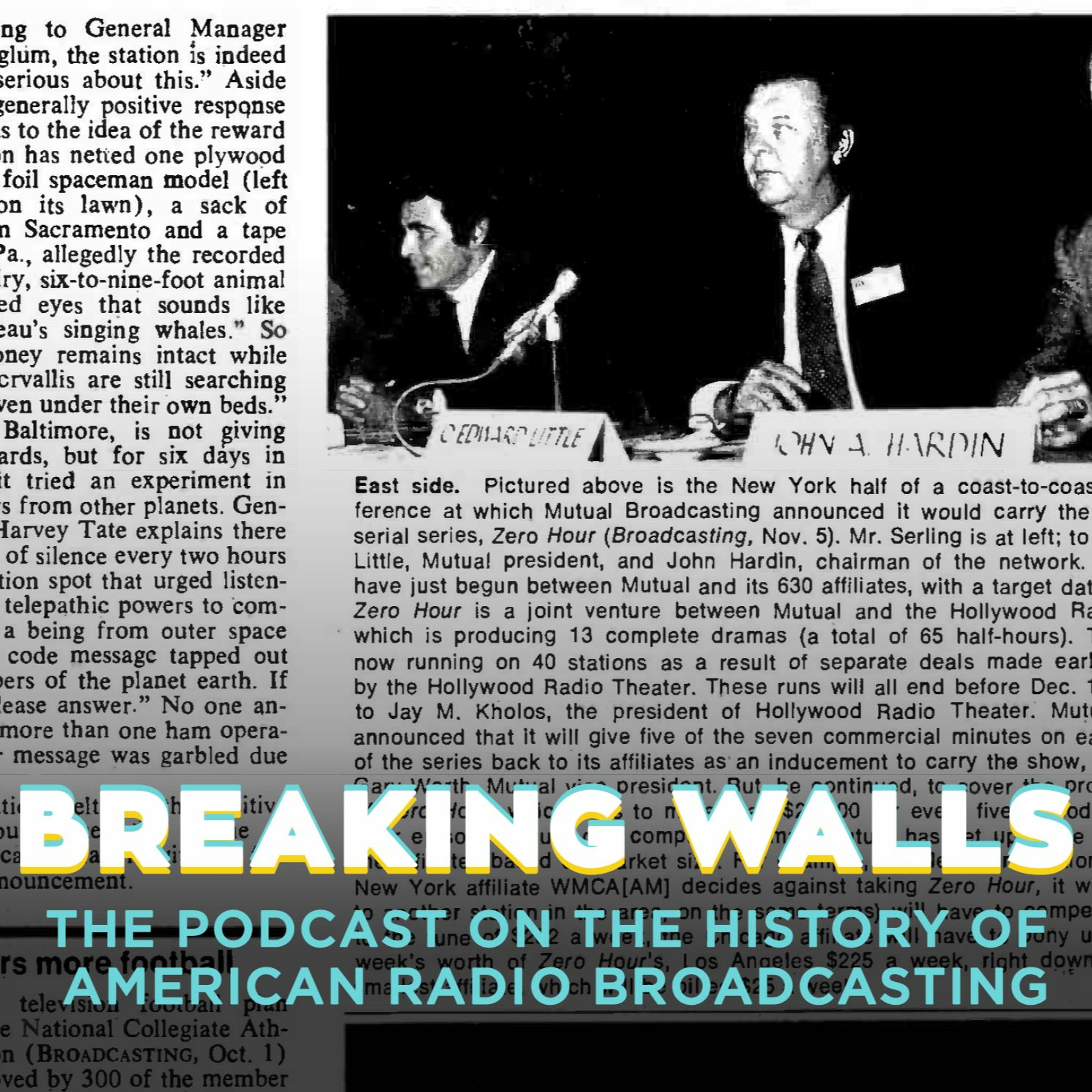
Associated Press, December 21st, 1973, New York City. “The script appears strange at first. Its directions are for the ear, not the eye, and say things like: "DOORBELL ON. FOOTSTEPS. DOOR OPENED. TRAFFIC IN BG." "That traffic noise is 25 years old," laughs Jimmy Dwan, a veteran CBS sound effects man. "You can hear a doorman shouting on it somewhere. That doorman, he's been dead twenty years." Dwan's recorded sound effects are old, but not his script. It's of 1973 vintage, written solely for radio. “Yes, radio. “It's part of a brave new effort by two networks to bring back, in limited form, the golden days of coast-to-coast radio drama that most everyone remembers, but hasn't heard in more than a decade. “The Mutual Broadcasting System fired the first shot Monday with The Zero Hour, a 30-minute five-nights-a-week thriller serial hosted by writer-narrator Rod Serling of Twilight Zone fame. “Mutual, which says it has six-hundred-thirty affiliates, bought the series after lengthy studies proved there existed a sufficient market for radio drama on a network basis. Advertisers liked the idea, too, according to Mutual's president C. Edward Little: "We got a tremendous amount of client interest after we announced it," adding that the show will be fed from Mutual's Washington D.C., headquarters each weeknight at 7PM. "We feel that we'll start off with one-hundred-fifty to two-hundred stations." “The series will be offered on a "first refusal" basis to Mutual affiliates. “They also said that if the show clicks, other radio projects such as new comedy or anthology series, may follow. But they emphasized that such shows are strictly in the talking stages.” — Jay Sharbutt Once Mutual purchased the rights to The Zero Hour, they removed Elliott Lewis as director and Jay Kholos no longer had anything to do with the production. Both had good things to say about each other, but not for Mutual.
This Saturday 12/16/2023 — Great Fire Of 1835 Anniversary Walking Tours
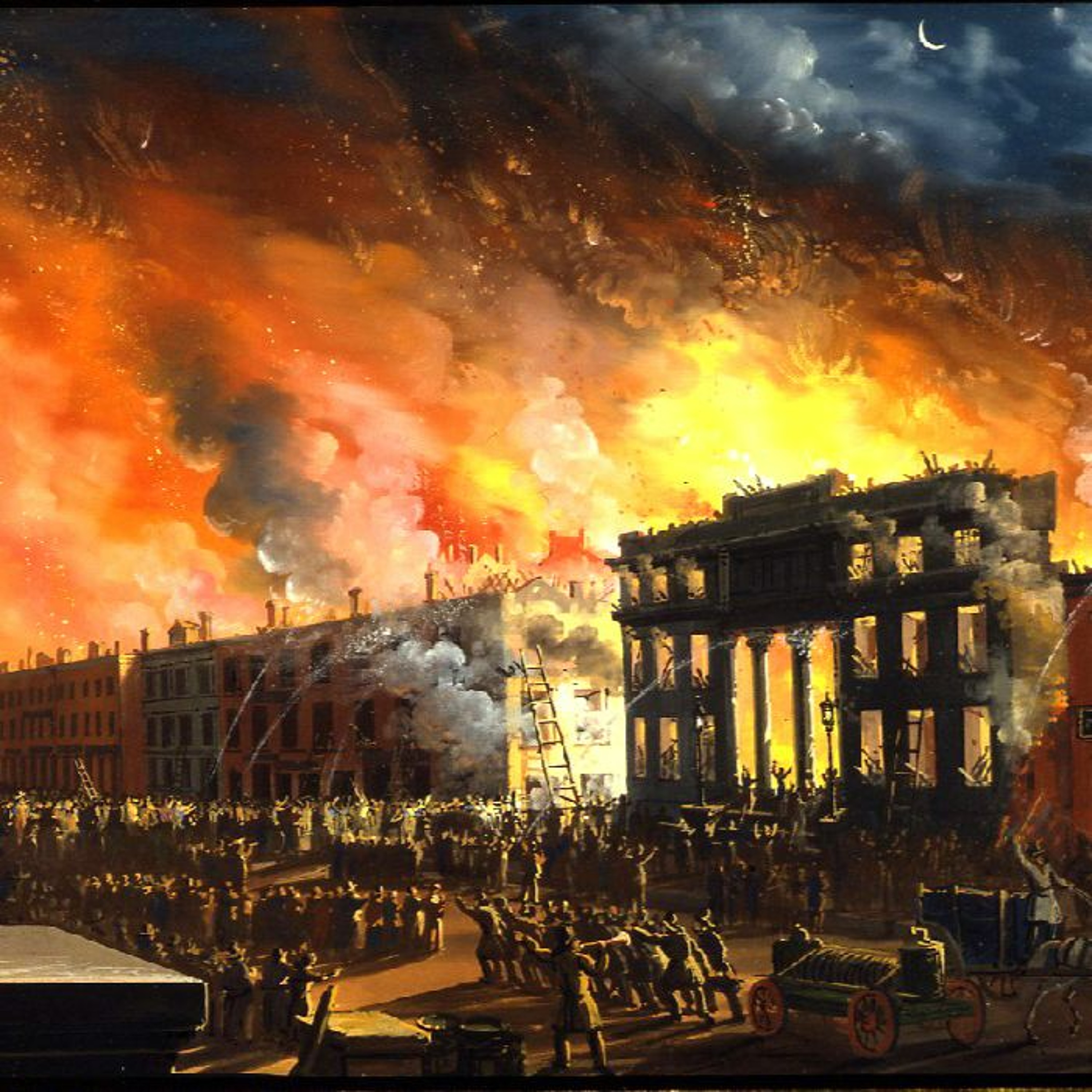
Hey everyone, James Scully here. This Saturday, December 16th, is the 188th anniversary of the Great Fire of 1835. It burned the entire financial district in New York City to the ground. The fire was so big it could be seen from Philadelphia, 90 miles away. I’m doing two walking tours, one at 12PM and one at 4PM on the anniversary in conjunction with the audio fiction soap opera set in 1835 NYC I've developed called Burning Gotham — http://burninggotham.com/. Burning Gotham was a 2022 Tribeca Film Festival audio selection. Join us as we explore lower Manhattan and the notable sights and scandals of 1830s New York, with a close look at 1835 and how a single year forever changed New York City in big ways. Included here are links where you can buy tickets to both — https://linktr.ee/thewallbreakers I hope to see you there!
BW - EP146—006: December 1973 With Rod Serling And The Zero Hour—Selling The Show To Mutual
One of the radio veterans featured in this episode was Byron Kane. Another was Paula Winslowe. By October 1973, it was obvious that Jay Kholos couldn’t afford to keep funding new episodes of The Zero Hour thanks to AFTRA’s changing terms. He looked to make a deal with a network. The Mutual Broadcasting System and C. Edward Little were interested. A deal came together quickly. A press conference announcing the move was set for November 1st. We heard that presser at the beginning of this episode. The Zero Hour would be moving to Mutual on December 17th, 1973. Before new episodes could be broadcast, Mutual would air the thirteen five-part episodes already directed by Elliott Lewis.
BW - EP146—005: December 1973 With Rod Serling And The Zero Hour—AFTRA's Moving Goal Posts
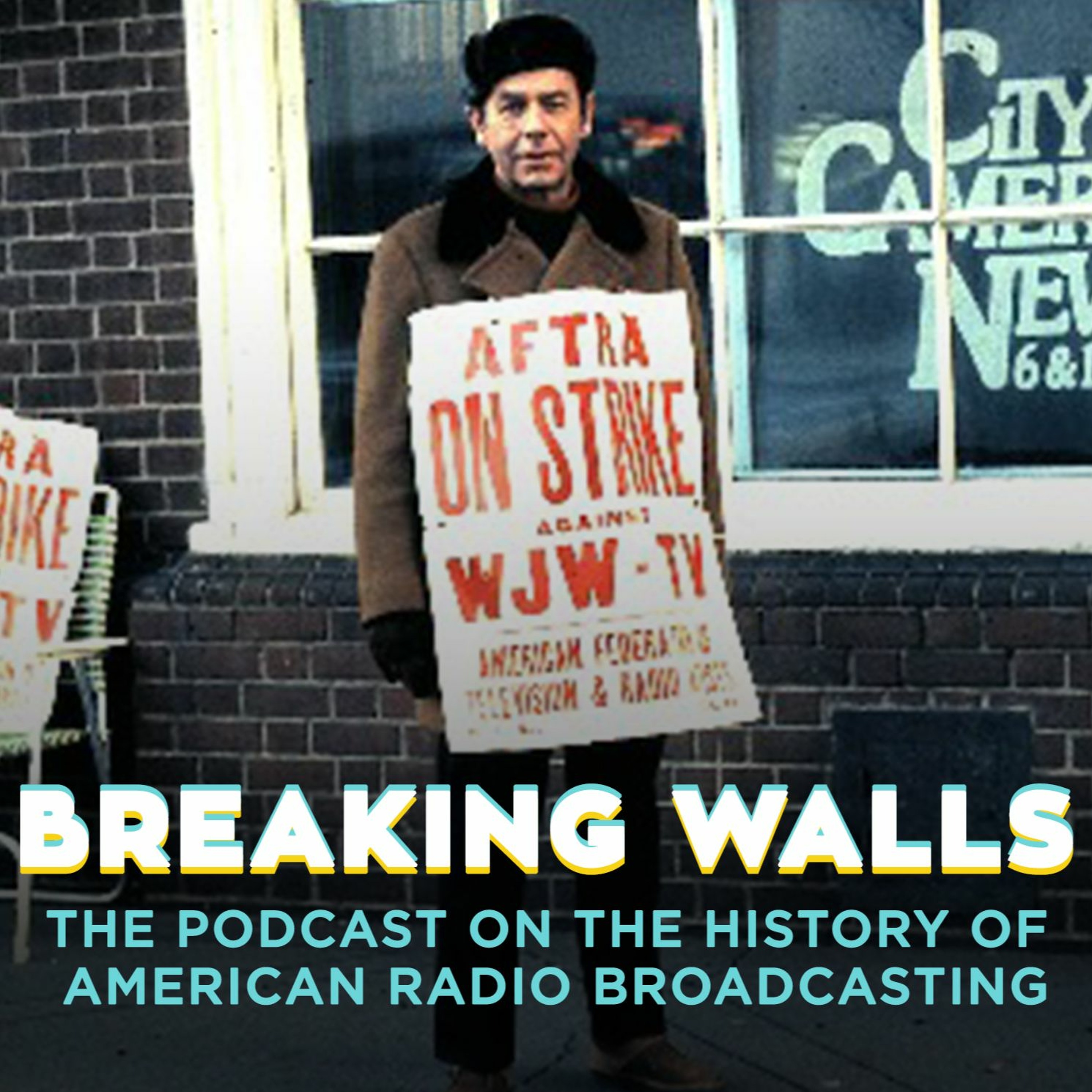
Janet Waldo, famous for her portrayal of Corliss Archer as well as Judy Jetson, Penelope Pitstop, and Emmy Lou on The Adventures of Ozzie and Harriet, was featured in this episode of The Zero Hour. With AFTRA’s moving goal posts meaning that producing more episodes of The Zero Hour would cost significantly more money, in the fall of 1973, Jay Kholos had to look for either a potential production partner or a buyer. In the meantime, The Zero Hour continued to air in syndication over stations like WRVR in New York.
BW - EP146—004: December 1973 With Rod Serling And The Zero Hour—Nixon On The Hot Seat
A year after his re-election, President Nixon was knee-deep in the Watergate scandal. On October 10th, 1973, VP Spiro Agnew resigned, pleading no contest to charges of tax evasion and money laundering, part of a negotiated resolution to a scheme in which he accepted nearly thirty-thousand dollars in bribes while governor of Maryland. According to The New York Times, Nixon “sought advice from senior Congressional leaders about a replacement.” The advice was unanimous in favor of Gerald Ford. Ford agreed to the nomination, telling his wife that the Vice Presidency would be “a nice conclusion” to his career. On October 12th, President Nixon officially named Gerald Ford as Veep. The energy crisis was becoming a major issue. Nixon assured the public saying Americans wouldn’t be running out of gasoline, air travel wouldn’t stop, and heating oil would be plentiful in the winter months. Though the crisis would require some sacrifice on everyone’s part. He outlined a plan which included using less heat, less gasoline, cutting down on highway speeds as well as cutting down on lighting at home and at work. General consensus felt things would get worse before they got better. Meanwhile on November 10th a ceasefire was achieved in the Middle-East. A tenuous agreement was reached between Egypt and Israel that put an end to military conflict. By the middle of November, the Nixon White House sought to put a positive spin on things – launching what was called “The President Fights For His Administration’s Credibility.” Nixon’s dwindling support from Capitol Hill Republicans caused him to make a round of addresses, primarily in Republican stronghold cities, in order to reiterate his case and help approval. The reviews were mixed – some thought it was a valiant attempt to rescue a bad situation, while others were more convinced than ever that Nixon needed to step down.
BW - EP146—003: December 1973 With Rod Serling And The Zero Hour—Selling Radio In The 1970s
Once Jay Kholos sold the show to various radio stations, it was generally up to those stations to sell the show to sponsors. In New York, The Zero Hour was running on WRVR 106.7-FM. WRVR-FM was initially a public radio station owned and operated by The Riverside Church in New York. It began broadcasting on January 1st, 1961. The Riverside Church, located in Morningside Heights, is an interdenominational, interracial, and international church, and has long been a center of activism and social justice. WRVR was the first station to win a Peabody for its entire programming, in part for its documentary coverage of the civil rights movement in Birmingham in 1963. In addition to religious and philosophical discussions with Riverside clergy and theologians, WRVR programming included addresses by political and cultural leaders, like Indira Gandhi, Aldous Huxley, John F. Kennedy, and Margaret Mead. Dr. Martin Luther King Jr. delivered his pivotal “Beyond Vietnam” speech at the Riverside Church over WRVR-FM on April 4th, 1967. The station also featured the heralded weekly program Just Jazz with Ed Beach. In September 1971, WRVR went commercial and shifted to a news format, with the exception of Just Jazz, which continued until 1973. By then, WRVR was experimenting with radio drama in both golden age and new time productions. On September 4th, 1973, part two of The Zero Hour’s “Wife of the Red-Haired Man” took to the air. Radio legend Mary Jane Croft, who was also the wife of Elliott Lewis, was featured in this episode. Years later, she spoke to SPERDVAC about her radio career and late husband. In September of 1973, WRVR was advertising a World Hockey Association exhibition matchup which featured legends Gordie Howe and Bobby Hull. The New York Raiders and later The Golden Blades were intended to be the upstart WHA’s flagship franchise. They were, however, unable to compete with the NHL’s New York Rangers and the expansion New York Islanders. After just two seasons, The Golden Blades moved to San Diego. The WHA folded after eight years in 1979 with four teams: The Edmonton Oilers, Hartford Whalers, Quebec Nordiques, and Winnipeg Jets, joining the NHL.

BW - EP146—002: December 1973 With Rod Serling And The Zero Hour—The Show Debuts
Arizona Republic, June 11th, 1973 “If you loved the old radio shows, you'll like what KOOL-FM has in store for you. The station has bought the brand-new radio drama series, The Zero Hour, which promises to revive the good old days, but in a modern format. “Announcing the new series was E. Morgan Skinner Jr., promoted last week from KOOL-AM account executive to KOOL-FM assistant station manager. Judging from the pilot tape, it should be an interesting show. Each story lasts a week. A half-hour episode is presented nightly, Monday through Friday, with the climax coming on Friday. A new show starts the following Monday. “KOOL has bought twenty-six weeks of the series, all that Hollywood Radio Theater has available so far. The program originally was to be started in mid-June, but the unsettled Writers Guild of America strike apparently has created some delay. “Current plans are to begin in mid-July. Each show will be broadcast at 7:30 p.m. on KOOL-FM and then rebroadcast on KOOL-AM at 10:30 p.m. "But that's during television's prime time," you say? That's the whole point. "Zero Hour is contemporary, but reflective of radio's golden era," said Skinner. “And they're doing the thing in such a way as to leave people free to utilize their minds. “By Beginning in July, it takes the series into the fall to compete against the new shows on TV. A lot of us have become disenchanted with what television has to deliver. "It's going to be interesting to see what a top-quality radio series will do against prime-time TV. The quality of this show is superb. It's crisp and well-done." “Hollywood Radio Theater is the brainchild of Jay M. Kholos, a veteran in the advertising and communications field. Rod Serling hosts the series. The first episode, titled "The Wife of the Red-Haired Man," stars Patty Duke Astin, John Astin and Howard Duff. The yarn is about the pursuit of a dead couple. Duff, of course, does the pursuing.” — Jack Swanson Before this September 3rd, 1973 debut episode of The Zero Hour, over WRVR 106.7FM in New York, Kholos spent the summer of 1973 traveling around, selling the series to stations in Syndication. After that, he was joined by Rod Serling on a promotional tour. Radio legend Les Tremayne played Patty Duke’s husband Albert. In November 1973, Howard Duff was a guest of Dick Bertel and Ed Corcoran’s WTIC Golden Age of Radio program. He spoke positively about his experience with The Zero Hour.

BW - EP146—001: December 1973 With Rod Serling And The Zero Hour—The Big Idea
November 1st, 1973. The Waldorf-Astoria Hotel, New York City. We’re listening in on a press conference hosted by the Mutual Broadcasting System. They’ve purchased the rights to air The Zero Hour from the just-heard Jay M. Kholos. The Zero Hour has thus far been hosted by Rod Serling and directed by Elliott Lewis. It’s Mutual’s first dramatic radio show in nearly twenty years. As Mutual Broadcasting spent much of the 1950s changing ownership groups, while national advertising was slowly abandoning radio for TV, Mutual ended its last two remaining half-hour dramas, Counterspy and Gangbusters, in November of 1957. Sports and news began to take up the majority of the network’s programming. Throughout the 1960s more frequent ownership and management changes continued to create network instability, before C. Edward Little was named president in 1972. During his time as President, Little created the Mutual Black Network, the Mutual Spanish Network, and the Mutual Southwest Network. Under Little's administration, Mutual became the first commercial broadcasting entity to use satellite technology for program delivery. He also hired Larry King to host an all-night phone-in talk show. King was a one-time announcer for Little at WGMA in Florida. He went on to national fame in both radio and TV, winning a coveted Peabody Award along the way. But that’s not why we’re eavesdropping in 1973. We’re here for the return of dramatic programming on network radio in the form of The Zero Hour which had been airing in syndication since the fall. Why is this such a momentous event? How did we get to this point? Tonight, we’ll find out. ____________ The last network big four radio drama, Theater Five, ran on ABC and was launched on August 3rd, 1964. Unfortunately by the mid 1960s network radio had undergone a transformation. Theater Five’s half-hour time slot only allocated twenty-one minutes for story-time. The other nine minutes went to news, station identification, and local advertising. ABC’s affiliates also had the first right of refusal. In some big markets Theater Five ran on other radio stations. Two-hundred-fifty-six total episodes were produced before Theater Five was canceled after the July 30th, 1965 episode. For the next seven years, except for any dramatic vignettes on NBC’s Monitor, NBC, CBS, ABC, and Mutual broadcasting’s network fed programming was relegated to news, sports, talk, and music. Then in early 1973, an entrepreneurial ad man named Jay M. Kholos had a big idea. He grew up in Southern California around the entertainment and media industry. Kholos’ idea? He sensed an oncoming nostalgia wave and wanted to relaunch a high-production, serialized audio drama, but updated for the modern sensibilities of 1973. Kholos needed a hook. He felt by telling one story in five half hours over the course of a contained week, he could keep the listener’s attention and get them to tune back in. Enter Rod Serling, famed creator of The Twilight Zone. Serling had worked in radio, in Springfield, Marion, Columbus, and Cincinnati, Ohio. Kholos was soon in touch with Elliott Lewis. By 1973, he had nearly forty years of experience as a writer, director, actor, and producer. Kholos was able to secure the rights to several stories. Now, he needed acting talent. The goal was to pair name brand film and TV talent with the best Hollywood radio veterans. Howard Duff could have fit into either category. By the 1970s, Duff and Elliott Lewis had been friends for thirty years. They both helped grow the Armed Forces Radio Service during World War II. Duff was chosen, along with Patty Duke and John Astin to lead the first cast in an adaptation of Bill S. Ballanger’s The Wife of the Red-Haired Man. Kholos put the program under the umbrella of The Hollywood Radio Theater. They chose Radio Recorders, the largest independent studio in Los Angeles, for the program. The Zero Hour would debut in late summer.
BW - EP145: November 1963 With Jean Shepherd And JFK
In Breaking Walls episode 145 it’s the fall of 1963 and network radio drama is dead while American life is changing. If you’re listening to this in real time, this month marks the sixtieth anniversary of John F. Kennedy’s assassination. To go beyond its public horror and understand American society three generations ago, we’ll focus on Jean Shepherd. —————————— Highlights: • I, Libertine • Jean Shepherd Gets His Familiar WOR Time Slot • November 1963 Begins • Veteran's Day, Malcolm X, and Lenny Bruce • President Kennedy’s Last Trip to Florida • Shep's Show During JFK Last Week • John F. Kennedy’s Last Day • An Unfortunate Arthur Godfrey Episode • Live News Coverage As The Unthinkable Happens To President Kennedy In Dallas • John Kennedy Has Passed, Lee Harvey Oswald Is Arrested • A Weekend of Mourning With the Boston Symphony Orchestra • President Kennedy's Funeral Coverage • Jean Shepherd Eulogizes John F Kennedy • A Subdued Christmas Eve With Shep • Looking Ahead to Rod Serling and The Zero Hour —————————— The WallBreakers: http://thewallbreakers.com Subscribe to Breaking Walls everywhere you get your podcasts. To support the show: http://patreon.com/TheWallBreakers —————————— The reading material for today’s episode was: • Excelsior You Fathead! The Art and Enigma of Jean Shepherd — By Eugene Bergmann • Boom!: Talking About the Sixties — By Tom Brokaw • Four Days In November: The Assassination of President John F. Kennedy — By Vincent Bugliosi • On The Air — By John Dunning • Oswald's Tale: An American Mystery — By Norman Mailer As well as articles from: • The Bridgeport Post • The Chicago Tribune • The Cincinnati Enquirer • The Hammond Times • The Kansas City Times • The Library of Congress • The Los Angeles Times • The Miami News • The New York Daily News • The New York Times • The Orlando Sentinel And the Assassination Report of the Warren Commission —————————— On the interview front: • Andy Rooney spoke with CBS for their 50th anniversary in 1977 —————————— Selected music featured in today’s episode was: • The John Coltrane Quartet in concert — November 19th, 1962 • Pachelbel's Canon In D — By Michael Silverman • All I’ve Got To Do — By The Beatles • The Boston Symphony in concert — November 23rd, 1963 • Some Children See Him — By George Winston —————————— A special thank you to Ted Davenport, Jerry Haendiges, and Gordon Skene. For Ted go to RadioMemories.com, for Jerry, visit OTRSite.com, and for Gordon, please go to PastDaily.com. —————————— Thank you to: Tony Adams Steven Allmon Orson Orsen Chandler Phil Erickson Jessica Hanna Perri Harper Thomas M. Joyce Ryan Kramer Earl Millard Gary Mollica Barry Nadler Christian Neuhaus Ray Shaw Filipe A Silva John Williams Jim W. —————————— WallBreakers Links: Patreon - patreon.com/thewallbreakers Social Media - @TheWallBreakers
BW - EP145—014: November 1963 With Jean Shepherd And JFK—Looking Ahead To Rod Serling And Zero Hour
Well, that brings our look at November 1963 through the eyes of Jean Shepherd and President Kennedy to a close. Frankly, I wasn’t completely sure what this episode would become until I finished producing it. Speaking of anniversaries, we have one in December that’s a bit more recent and much happier if you like radio drama. Next time on Breaking Walls, in honor of the fiftieth anniversary of The Zero Hour’s debut on the Mutual Broadcasting System, we spotlight the rebirth of radio drama in 1973. It’s the first of a two-part mini series on radio drama in the 1970s. The reading material used in today’s episode was: • Excelsior You Fathead! The Art and Enigma of Jean Shepherd — By Eugene Bergmann • Boom!: Talking About the Sixties — By Tom Brokaw • Four Days In November: The Assassination of President John F. Kennedy — By Vincent Bugliosi • On The Air — By John Dunning • Oswald's Tale: An American Mystery — By Norman Mailer As well as articles from: • The Bridgeport Post • The Chicago Tribune • The Cincinnati Enquirer • The Hammond Times • The Kansas City Times • The Library of Congress • The Los Angeles Times • The Miami News • The New York Daily News • The New York Times • The Orlando Sentinel And the Assassination Report of the Warren Commission On the interview front: • Andy Rooney spoke with CBS for their 50th anniversary in 1977 Selected music featured in today’s episode was: • The John Coltrane Quartet in concert — November 19th, 1962 • Pachelbel's Canon In D — By Michael Silverman • All I’ve Got To Do — By The Beatles • The Boston Symphony in concert — November 23rd, 1963 • Some Children See Him — By George Winston Breaking Walls Episode 146 will spotlight Rod Serling and The Zero Hour in honor of the 50th anniversary of its debut on Mutual Broadcasting. This episode will be available beginning December 1st, 2023 everywhere you get your podcasts, and at TheWallBreakers.com. In the meantime, give Breaking Walls a quick rating on whatever platform you listen, especially itunes. You can also join The Breaking Walls Facebook group at Facebook.com/Groups/TheWallBreakers. And support this show for as little as a buck a month at Patreon.com/TheWallBreakers. So until December 1st, my name is James Scully, this has been Breaking Walls Episode 145, and I’ll catch you on the flip side. Thank you very much.
BW - EP145—013: November 1963 With Jean Shepherd And JFK—A Subdued Christmas Eve With Shep
On the morning of Tuesday November 26th, 1963 all regularly scheduled TV and radio programming resumed in the U.S. President Johnson issued NSAM 273, a modification of the American policy in Vietnam. Included in President Kennedy’s original memo, was Johnson adding the word “win” to the U.S. objective. At the same time, The American satellite Explorer 18 was launched to study the magnetic field around the Moon. Jack Ruby was indicted for the murder of Lee Harvey Oswald. He was found guilty on March 14th, 1964. Although a court demanded a retrial in 1966, Ruby died of lung cancer on January 3rd, 1967. The Federal Reserve Bank began the removal of silver certificates from circulation, starting with the discontinuation of one dollar notes. Big Butte School, in Butte, Montana, became the first of almost one-thousand schools to be renamed in honor of President Kennedy. And on Wednesday November 27th, Lyndon Johnson gave his first speech as President of the United States. It has since become known as “Let Us Continue.” The next day, November 28th, was Thanksgiving. President Johnson issued an Executive Order renaming Cape Canaveral in Florida, to Cape Kennedy. The holiday season, albeit the most subdued one the people of the U.S. had since 1944, had begun. On the November 25th broadcast of The Jean Shepherd Show, Shep wondered how people would still be feeling thirty days after the assassination. Well, Tuesday December 24th was Christmas Eve. On that day the New York International Airport, commonly referred to as "Idlewild", was officially renamed as John F. Kennedy International Airport, popularly referred to as "JFK." That night, Jean Shepherd took to the air telling a story about a Christmas season in the days of yore.
BW - EP145—012: November 1963 with Jean Shepherd and JFK—Jean Shepherd Remembers John F Kennedy
On Friday November 22nd, 1963, New York’s Village Voice co-founder Dan Wolf’s office was swarmed with people. Journalist Jerry Tallmer later remembered being there, talking and grieving, when in burst Jean Shepherd, excited and full of fire. Shep said, “Wouldn’t you know! Wouldn’t you know! It was a Fair Play for Cuba guy who did it!” Lee Harvey Oswald had connections with the Fair Play for Cuba group, an organization protesting the U.S.’ treatment of Communist Cuba under Fidel Castro. Although Shepherd was a noted liberal, the idea that Oswald wasn’t some right-wing fascist, but a nutcase of the left excited Shep, and Shep was mad. Commentator Barry Farber remembered that Shep was incensed that he couldn’t get on the air. He said, “for crying out loud, we finally have something to talk about and they took us off the air.” On Monday, November 25th, 1963 at 11:15PM, Jean Shepherd was finally able to sign on for WOR. What follows is a sober, serious commentary on the state of the United States and what John Kennedy meant to Jean Shepherd. This is the full forty-five minute broadcast.
BW - EP145—011: November 1963 With Jean Shepherd And JFK—President Kennedy's Funeral Coverage
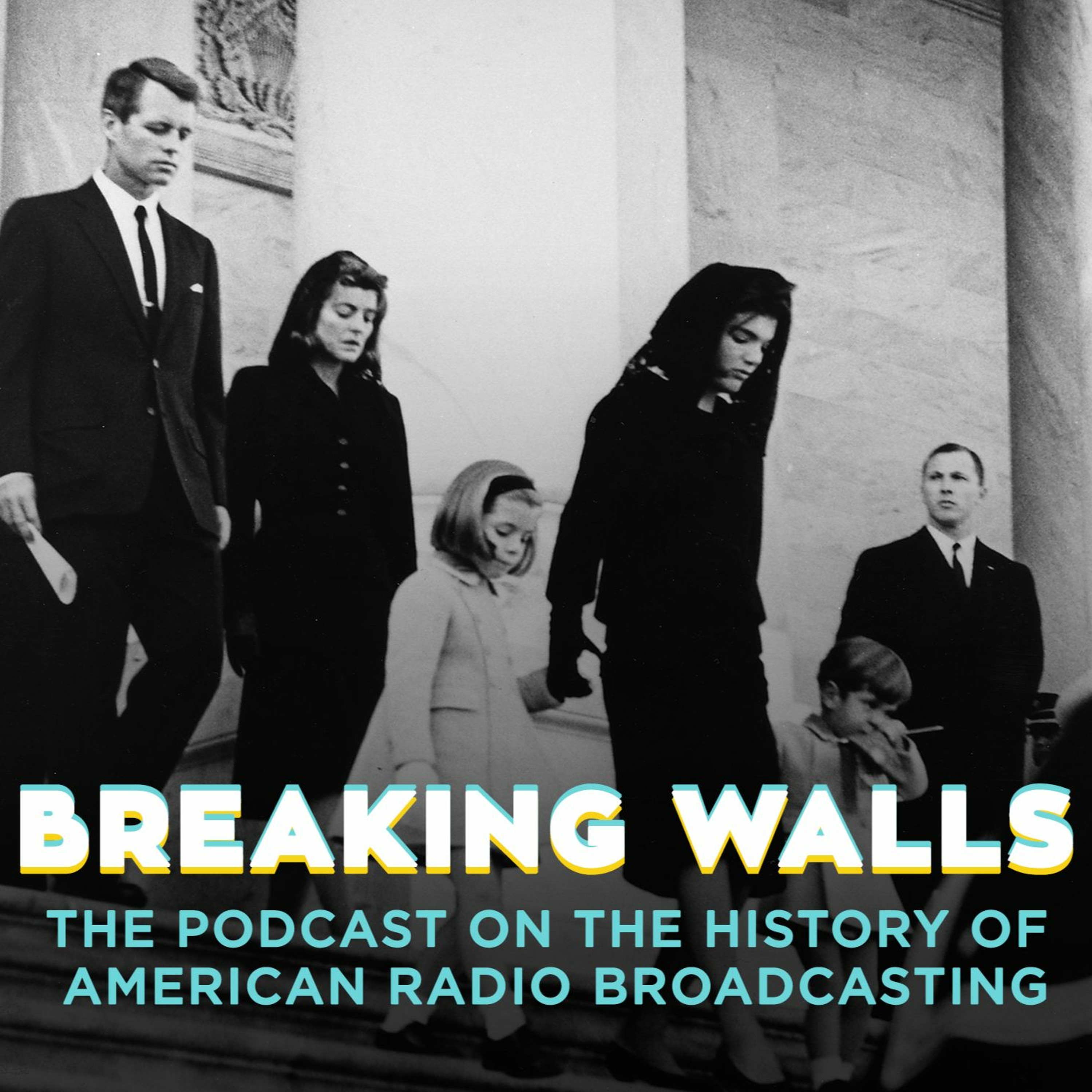
On Monday, November 25th, 1963, John F. Kennedy was laid to rest at Arlington National Cemetery in Virginia. NBC Radio was on hand with press coverage of the event. Millions of viewers watched the funeral on live TV. Present were foreign dignitaries from ninety-two countries, including eight heads of state and ten prime ministers. In addition to President Johnson, former Presidents Harry Truman and Dwight Eisenhower were in attendance, as was Prince Philip, the husband of Queen Elizabeth II; and Anastas Mikoyan, First Deputy Prime Minister of the USSR. The Roman Catholic Archbishop of Boston, Richard Cardinal Cushing, delivered the funeral mass at St. Matthew's Cathedral. For only the third time in history, telephone service in the US was halted for one minute at noon, Eastern time. Las Vegas closed all of its casinos for only the third time in its history. Three hours later, graveside services were held for Lee Harvey Oswald at the Rose Hill Cemetery near Fort Worth, Texas. The only people allowed were Oswald's wife, mother, brother, and two daughters. After a Lutheran minister from Dallas reconsidered appearing for the service, the Reverend Louis Saunders appeared on behalf of the Fort Worth Council of Churches, telling newsmen, "We do not want it said a man can be buried in Fort Worth without a minister." Oswald was buried in a family plot that had been owned for several years by his mother. Six reporters were pallbearers. Abraham Zapruder sold all rights to his famed eight millimeter film of the Kennedy assassination to LIFE Magazine for One-hundred-fifty-thousand dollars, to be paid in twenty-five-thousand dollar yearly installments. Two days later, Zapruder donated the first full payment to the widow of officer J.D. Tippit.
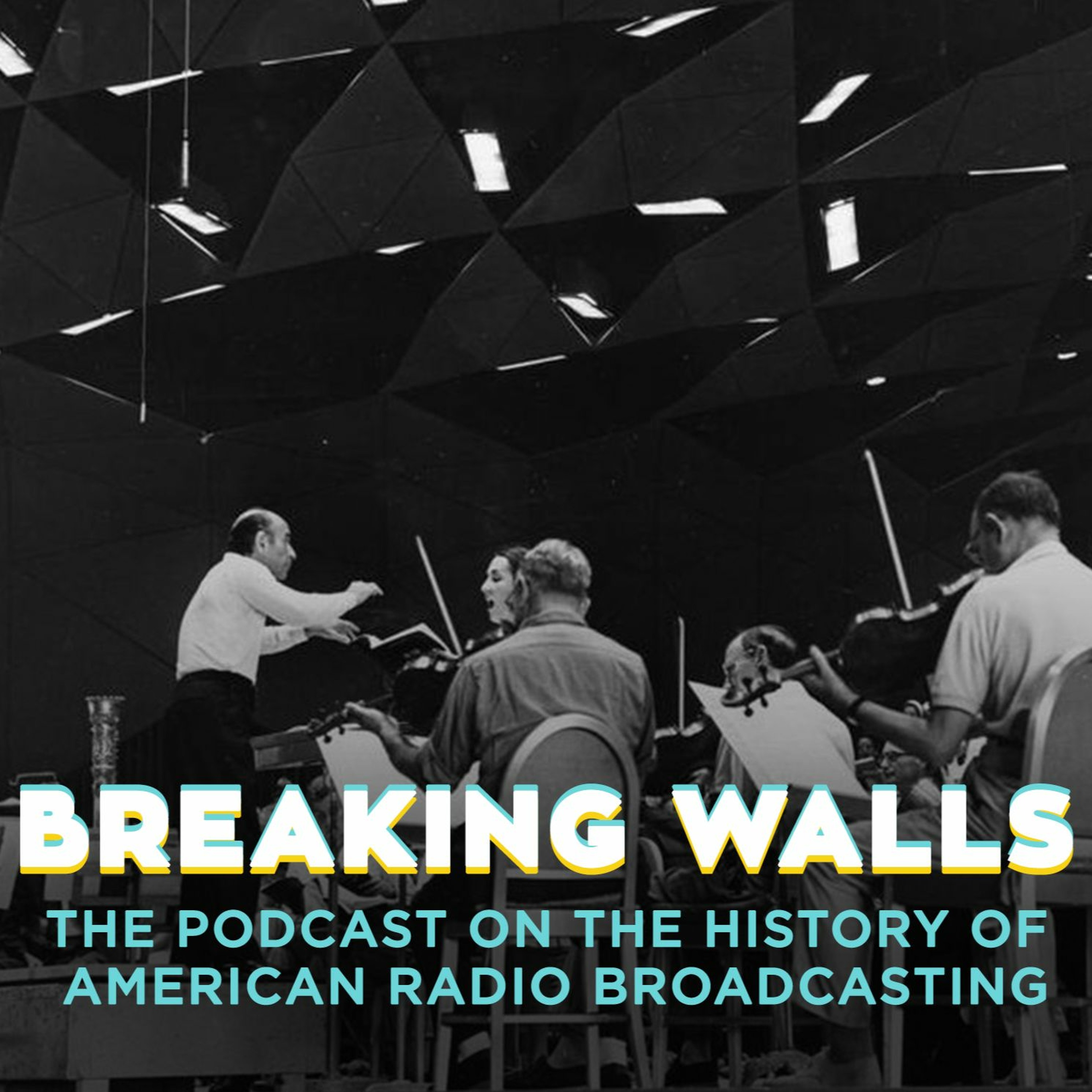
BW - EP145—010: November 1963 With Jean Shepherd And JFK—Mourning With The Boston Symphony Orchestra
On Saturday November 23rd, 1963, with the country in a state of shock and mourning, Music Director Erich Leinsdorf led the Boston Symphony orchestra in the compositions of Gluck, Wagner, and Beethoven. John Kennedy was the grandchild of former famous Boston mayor John “Honey Fitz” Fitzgerald. The concert was given at Symphony Hall in honor of the slain son of Boston. Elsewhere, numerous famous people gave statements on the assassination. The next morning, Sunday November 24th, despite being surrounded by a crowd of police officers at the Dallas Police headquarters, Lee Harvey Oswald was shot and mortally wounded by nightclub owner Jack Ruby on live TV while being transported to the Dallas County jail. Ruby shot Oswald in the abdomen, at point blank range, with a .38 caliber revolver. The shooting took place at 11:21 a.m. local time. Oswald was taken into surgery at Parkland Memorial Hospital. He died at 1:07 p.m., never to face trial. That Sunday, thousands of people around the world went to Sunday mass in memory of the fallen President. Later an LP called That Day With God was produced with excerpts from several of these inspirational expressions. It included Pope Paul VI, The Archbishop of Canterbury and Richard Cardinal Cushing. I’ll let Henry Fonda read the last one.
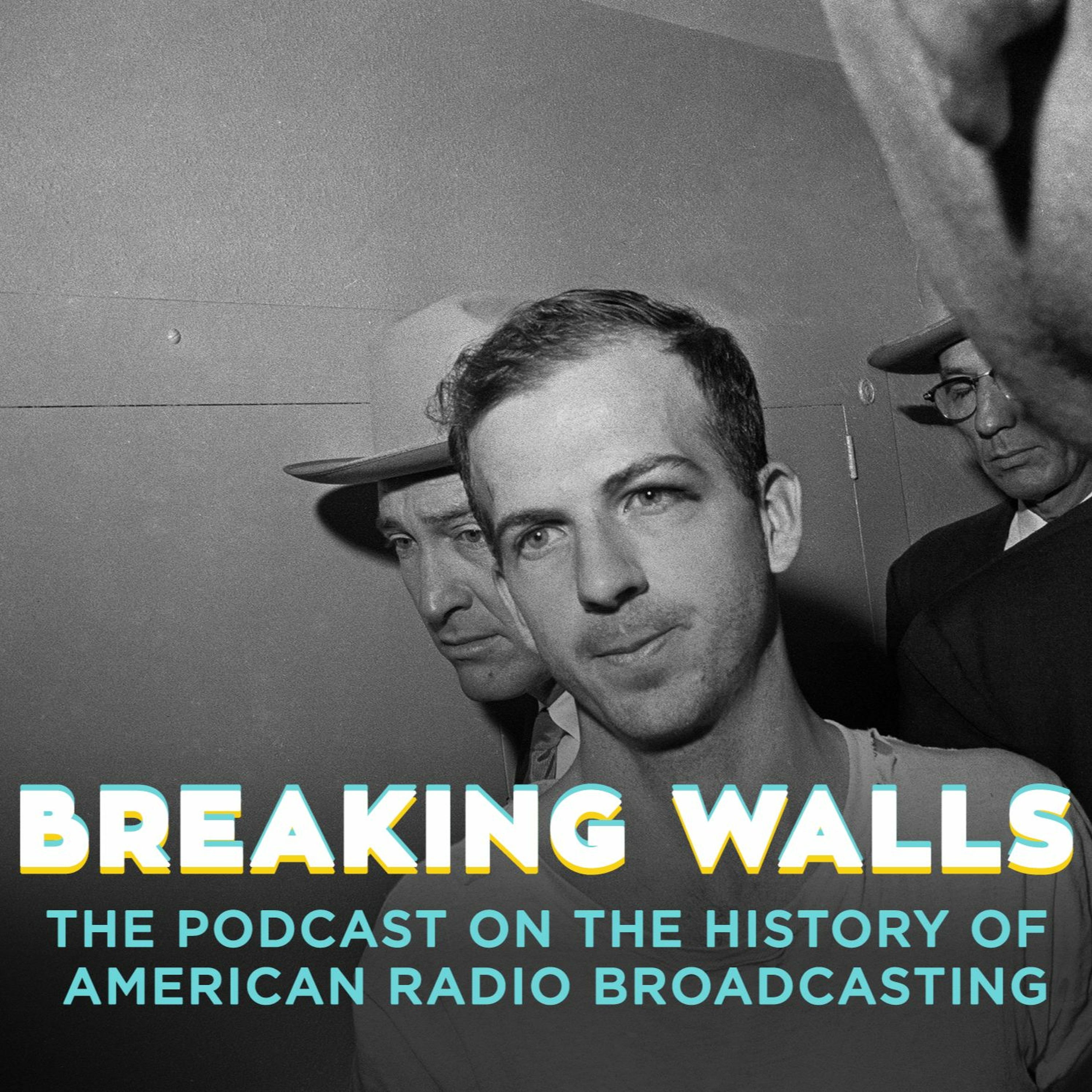
BW - EP145—009: November 1963 With Jean Shepherd And JFK—JFK Has Passed, Oswald Is Arrested
All regularly scheduled network programming from every radio and TV station around the country was immediately suspended. This audio comes from shortly after 2PM eastern time from ABC. Right after the shooting, witness Howard Brennan notified the police that he was sitting across the street from the Texas School Book Depository, watching the President’s motorcade go by. He heard a shot come from above and looked up to see a man with a rifle fire another shot from the southeast corner window on the sixth floor. He said he had seen the same man minutes earlier looking through the window. Brennan gave a description of the shooter, and Dallas police subsequently broadcast descriptions at Dallas time 12:45., 12:48, and 12:55 p.m. At 12:45 fifteen minutes after President Kennedy was shot, Dallas police officer J.D. Tippit received a radio order to drive to the central Oak Cliff area as part of a concentration of police around the center of the city. At 12:54, Tippit radioed that he moved as directed. By then, several messages had been broadcast describing a suspect in Kennedy’s shooting as a five-foot-ten, slender white male. At roughly 1:10, Tippit was driving slowly eastward on East 10th street past the intersection at Patton Avenue when he pulled alongside a man who resembled the police description. Although conspiracy theorists dispute this, officially the man was twenty-four year-old Lee Harvey Oswald. Oswald walked over to Tippit's car and exchanged words with him through an open window. Tippit opened his car door and walked toward the front of the car. Oswald drew a handgun and fired five shots in rapid succession. Tippit was shot in the chest and head, dying almost instantly. His body was transported from the scene of the shooting by ambulance to Methodist Hospital, where he was pronounced dead at 1:25 p.m. Meanwhile, Johnny Brewer, a nearby shoe store manager later testified that he saw Oswald ducking into the entrance alcove of his store. Suspicious, Brewer watched Oswald continue up the street and slip without paying into the nearby Texas Theatre. He alerted the theater's ticket clerk, who telephoned the police at about 1:40 p.m. As police arrived, the house lights were brought up and Brewer pointed out Oswald sitting near the rear of the theater. Police Officer Nick McDonald testified that he was the first to reach Oswald and that Oswald seemed ready to surrender saying, "Well, it is all over now." McDonald said that Oswald pulled out a pistol tucked into the front of his pants, then pointed the pistol at him, and pulled the trigger. McDonald stated that the pistol did not fire because the pistol's hammer came down on the webbing between the thumb and index finger as he grabbed it. McDonald also said that Oswald struck him, but that he struck back and Oswald was disarmed. As he was led from the theater, Oswald shouted he was a victim of police brutality. Soon after his arrest, Oswald encountered reporters, declared, "I didn't shoot anybody. They've taken me in because I lived in the Soviet Union. I'm just a patsy!" This is audio from an arranged press meeting later that day. The voice you’ll hear is that of Lee Harvey Oswald. Oswald was formally arraigned for the murder of Officer Tippit at 7:10 p.m. By early the next morning, he had been arraigned for the assassination of President Kennedy. At 2:38 p.m. Dallas time on Friday the 22nd aboard Air Force One, Lyndon Baines Johnson took the oath of office as the 36th President of the United States. Standing next to him as he took the oath were both his wife and Jacqueline Kennedy.
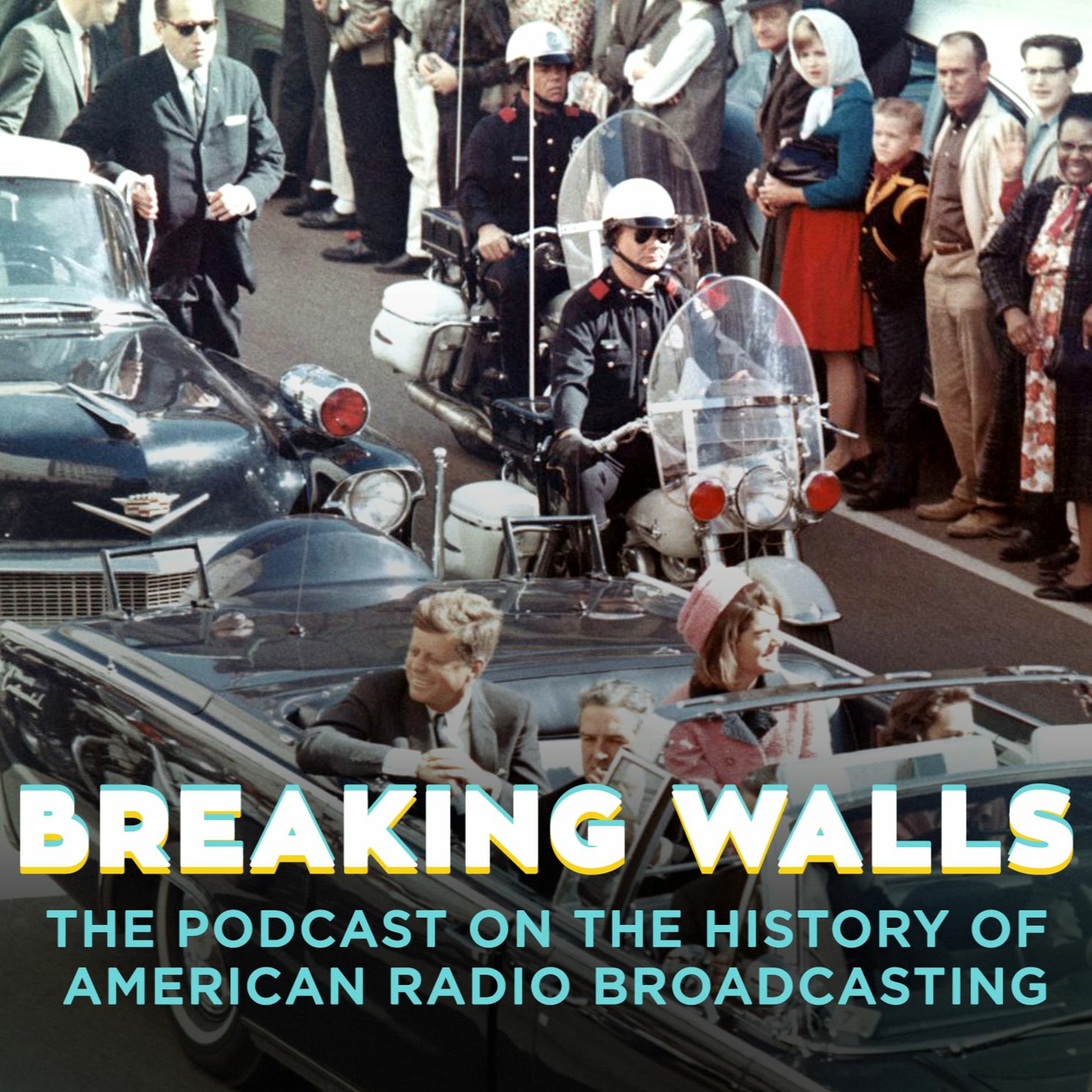
BW - EP145—008: November 1963 with Jean Shepherd and JFK—News Coverage of JFK on Friday, 11/22/1963
On Friday, November 22nd, 1963, President Kennedy awoke at 7:30AM. He ate a light breakfast with Jackie before going out by himself to the square in front of his hotel to address a crowd of a few thousand people. Someone shouted, “where’s Jackie?” He pointed to their eighth floor suite and replied "Mrs Kennedy is organizing herself, It takes her a little longer, but of course she looks better than we do when she does it." The First Couple, together with Vice President Johnson and Texas Governor Connaly then took a short flight to Dallas. At 11:55 the President's motorcade left Love Field in Dallas. Thirty-five minutes later, history changed forever. This is soundcheck audio from the collection of Gordon Skene. On the morning of Friday, November 22nd, 1963 Gordon was twelve years old and home from school, recovering from an operation. Out of boredom he switched on his parent’s tape recorder and tuned to KNX, CBS’ affiliate in Los Angeles. On the air was Arthur Godfrey Time, talking from Miami, Florida with journalist Morris McLemore and commentator Gabriel Heater. Longtime CBS journalist and host Andy Rooney remembered Godfrey’s influence. In the late 1930s, a red-head from New York with a slight southern drawl named Arthur Godfrey was making a name for himself, hosting an all-night CBS show in Washington, DC on WJSV. He spent the overnight air-time playing records and chatting. Audiences were drawn to Godfrey’s informal approach. In April of 1941, CBS picked up the emcee for a national broadcast. The next October 4th, he began announcing for Fred Allen’s Texaco Star Theater. Unfortunately Allen and Godfrey didn’t mix well on-air. Allen dropped him after six weeks. Godfrey continued to appear on CBS special broadcasts. His star catapulted when he was a tearful reporter at Franklin D. Roosevelt’s funeral in April of 1945. CBS gave him a new morning show. Arthur Godfrey Time debuted less than two weeks later on April 30th. Unfortunately Godfrey’s popularity nosedived on October 19th, 1953. After years of working both himself and his supporting cast to the bone, he’d begun to treat them like children. Godfrey had a falling out with singer Julius LaRosa, firing him live on the air. Many felt Godfrey was jealous of his popularity. Once the show signed off for the day, Godfrey fired his bandleader Archie Bleyer. When Ed Sullivan invited LaRosa on his Toast of the Town TV show, Godfrey called Sullivan a dope. The reporters covering the story were “a bunch of jerks.” Rather than back off, Godfrey fired the rest of his cast and continued broadcasting, but the press, the public, and Godfrey never forgot or forgave what happened. His problems continued. He lost his pilot's license after buzzing an airport tower. One by one his shows folded. Then he got lung cancer and later, pronouncing himself cured, devoted much of his time to the fight against the disease. He professed to be writing a book that would tell “the whole story” of his incredible life and claimed to be working out a new deal for a TV show. In the end CBS, and William Paley, who never liked Godfrey, but liked his ratings, refused to put him on TV. Godfrey continued his network radio show until 1972, when he finally quit. In his seventies, he still talked occasionally about coming back, but he died March 16th, 1983, in New York city. While this exact recording isn’t the original that Gordon Skene air checked, he later said about recording that morning, “Why was I doing it? I have no idea, and to this day I couldn’t tell you exactly what made me pick this day and this hour to hit the record button.” Suddenly, it all became very serious. What follows here is a living nightmare, now sixty years old, and not a moment of it is dated by time.
BW - EP145—007: November 1963 With Jean Shepherd And JFK—John Kennedy's Last Day
On the morning of Thursday, November 21st, 1963 President Kennedy had breakfast with his children. He said goodbye to his daughter Caroline when she left for school at 9:15. President Kennedy arrived at his office for the last time at 9:55. The President left the White House for the last time at 10:50AM. He flew to Andrews Air Force Base where he and the First Lady departed for San Antonio Texas. John Jr accompanied them to the airport. Once in Texas, he was at the dedication of the Aerospace Medical Health Center, Brooks Air Force Base. He then went to Houston. There he made brief remarks to the League of United Latin American Citizens at the Rice Hotel. He then addressed a dinner in honor of Representative Albert Thomas. Some of that speech was just heard. The President and First Lady then traveled to Fort Worth where they stayed at the Texas Hotel. He had speeches set for Fort Worth and Dallas the next day. In world news, Robert Stroud, “the birdman of Alcatraz” died while incarcerated in Springfield, Missouri. In Japan’s general election, the Liberal Democratic Party retained a majority in the Shugiin (SHOO GEEN), or House of Representatives. While India began its space program with the launching of a rocket at the far south end of the Indian subcontinent. And by the time the President went to sleep, it was the 22nd in the UK. That day, The Beatles released their second studio album, With The Beatles. Produced by George Martin, it featured eight original compositions and six covers. The famous black and white portrait on the cover, with Ringo underneath John, George, and Paul, was widely copied afterwards.
BW - EP145—006: November 1963 With Jean Shepherd And JFK—Shep's Show During JFK Last Week Alive
On November 19th, 1963, nine days before Thanksgiving, President Kennedy received a turkey from the Poultry and Egg Board. The President always looked forward to New England Thanksgivings. That same day, in the concluding event for the three-day centennial celebration of the Gettysburg Address, former U.S. President Dwight D. Eisenhower addressed the crowd at the rededication for the Gettysburg National Cemetery. He told the audience, "My friends, Lincoln reminded his hearers that they had no power to dedicate this ground. So we, today, have no power to rededicate it. But with the playing of Taps, the soldier's farewell, we can share the grief of every family who has heard that a son or father or sweetheart has fallen. If we can do this, we will begin to do our part to solve the unfinished business of which Lincoln spoke." That evening, Jean Shepherd signed on talking family folk stories and poking fun at WOR. The next day, at the UN General Assembly, the Declaration on the Elimination of All Forms of Racial Discrimination was adopted, while the deathbed wish of author Aldous Huxley was honored by his wife Laura. She injected him with two-hundred micrograms of LSD. Huxley would die two days later.
BW - EP145—005: November 1963 With Jean Shepherd And JFK—JFK's Last Trip To Florida
On Sunday, November 17th, 1963, Frank McGee signed on for NBC’s Monitor with a look at Abraham Lincoln’s Gettysburg address. Lincoln’s famous speech was about to celebrate its one-hundredth anniversary. Meanwhile, President Kennedy was in Florida, unofficially on the 1964 campaign trail. On Saturday November 16th, President Kennedy traveled to Cape Canaveral where he inspected the Saturn Control Center and watched a Polaris missile test launch. The next morning he and Special Assistant Dave Powers went to Sunday Mass at St. Ann’s Church in Palm Beach. On the day of this special broadcast, the President began his day at MacDill Air Force Base. Photos from this trip, which would be the President’s last to Florida, which had voted Republican in the previous two Presidential elections, show Kennedy smiling brightly, as did fellow Americans, especially those who shook his hand or lined the roads alongside the twenty-eight mile path his motorcade took in Tampa Bay. When Kennedy traveled to Miami, he addressed a democrat crowd at the airport. That same day, a fire killed twenty-six people at the Surfside Hotel in Atlantic City, New Jersey. During the offseason the hotel served as a convalescent home for elderly people. Ten bodies were never recovered and only two of the other fifteen could be identified. A former mental patient and convicted arsonist would be arrested for the crime. He confessed he poured gasoline into the hotel's boiler and set it ablaze. However, an Atlantic City grand jury did not find probable cause to return an indictment. That evening, NBC-TV’s Huntley–Brinkley Report featured a four-minute news feature on The Beatles. It was the group’s first appearance on American TV.
This Week 11/08 Webinar: The CBS Talent Raids And How They Drastically Altered The Network Landscape
James Scully here. I wanted to let you know that I’m doing a webinar this Wednesday, November 8th, 2023 at 5:30PM with the New York Adventure Club on the CBS Talent Raids of 1949 and how they drastically changed the broadcasting landscape just as TV was about to boom. Included here in the show notes is a link where you can buy tickets, which are only $10 — https://www.eventbrite.com/e/the-cbs-talent-raids-a-rebalance-of-network-power-in-early-tv-webinar-registration-735611121667?aff=oddtdtcreator. I'll also send anyone who buys tix the PDF presentation deck after the webinar (if they want it).
BW - EP145—004: November 1963 With Jean Shepherd And JFK—Veteran's Day, Malcolm X, And Lenny Bruce
On Saturday November 9th, fans rioted at Roosevelt Field Raceway in Long Island, battling police and setting fires. At least fifteen were hurt and the head of security died of a heart attack during the riot. Sunday November 10th was the evening before Veteran’s Day. On NBC, Frank McGee signed on for Monitor with a salute to the holiday. Andrew Pearson had correspondence from Vietnam, while President Kennedy spent much of the weekend in New York City. On this same day, Black Muslim activist Malcolm X delivered what would become a widely re-quoted speech to the Northern Negro Leadership Conference at the King Solomon Baptist Church in Detroit. His message was one of revolution. He heavily criticized civil rights leaders like Martin Luther King Jr., who he said sold out and added that the March on Washington was "nothing but a circus, with clowns and all... white and black clowns." The next morning President Kennedy and his family flew to the white house. The President and John Jr. went to Arlington National Cemetery to take part in Veterans Day Ceremonies. Meanwhile, The first interplanetary probe in the Soviet Union's Zond program, Kosmos 21, failed to escape Earth orbit after rocket misfire and a failure of proper altitude control. On November 12th, The President met with Portuguese and Uruguayan Ambassadors before hosting an off the record meeting on Cuba that included Robert Kennedy, Dean Rusk and Robert McNamara. He also signed off on National Security Memorandum 271, a then-secret memo to NASA Administrator James E. Webb, telling him "to assume personally the initiative and central responsibility" to develop specific technical proposals "for broader cooperation between the U.S. and the USSR in outer space, including cooperation in lunar landing programs." On Wednesday, November 13th, at 11:15PM, Jean Shepherd signed on from WOR talking about protests, intellectuals, and angry demagogues. Two days after this broadcast, on Friday November 15th, 1963, seven days before President Kennedy's scheduled visit to Dallas, Democratic Party leader Baxton Bryant sent an angry telegram to President Kennedy complaining that Democratic supporters were being shut out of the planned November 22nd luncheon by Dallas Republicans who were in control of the Dallas Citizens Council. The plea was for the President to do something or face a boycott by his most loyal supporters. A motorcade from Dallas Love Field to downtown Dallas was arranged for the Kennedys after another Bryant complaint. That evening, the President flew to Palm Beach, Florida.
BW - EP145—003: November 1963 With Jean Shepherd And JFK—November 1963 Begins
As November 1963 began, President Kennedy had emergency meetings on Vietnam. He also received members of the US Industrial Payroll Savings Committee and had meetings on the goings on in Berlin. Meanwhile, The U.S. Secret Service concluded that the more secure and the larger of two locations for the President’s upcoming fundraising luncheon in Dallas would be the "Women's Building" at Fair Park at the east side of downtown, rather than the Trade Mart on the west side near Dealey Plaza. Despite the recommendation, the state Democratic Party leaders in Texas settled on the Trade Mart. On November 6th, Jean Shepherd signed on from WOR talking about, and poking fun at, the 1964 World’s Fair, slated to open the next April. Part of what made Shepherd so popular was that no one was safe from his scrutinizing eye, even himself, and his biting style was perfect for late night radio. Perhaps Shep was wrong. Cassius Clay beat Sonny Liston twice, changing his name to Muhammad Ali in the process, while the cover of the next day’s New York Daily News, Wednesday November 7th, told the story of a bartender from Connecticut who won nearly eighty thousand dollars, an all-time record twin double at Roosevelt Raceway. That same day, Nelson Rockefeller, the Governor of New York, announced on NBC's Today Show that he would be a candidate for the 1964 Republican Party nomination. U.S. Senator Barry Goldwater of Arizona, the front-runner, made no comment, but was expected to enter the race. President Kennedy was not expected to face opposition in his nomination as the Democratic Party candidate for 1964.
BW - EP145—002: November 1963 With Jean Shepherd And JFK—Shep Gets His Familiar WOR Time Slot
Support For Breaking Walls is provided by our patrons. If you like the documentaries I've been producing, you can become a show supporter for as little as $1 here — https://www.patreon.com/TheWallBreakers By 1960, Shep’s homespun wit could be tweaked depending on what time of the day he took to the air. At that time he was broadcasting on both Saturdays and Sundays during the middle of the day for just under two hours. On Saturday April 9th, 1960, he took to the air discussing a solitary trip to Coney Island. The batting cages Shep spoke of were located on Stillwell avenue near the Coney Island boardwalk, just down the block from Nathans. I spent many a winter afternoon on this street taking batting practice and eating at Nathans with my grandfather in the 1990s. For more information on Coney Island’s place in radio history, tune into Breaking Walls episode 92. Shepherd’s Sunday show was terminated and for five months he was only on Saturday afternoons at 1:15PM. His program was then shifted to weeknights at 11:15PM for forty-five minutes. On February 27th, 1961 Shepherd spoke about shifting back to a late night time slot. This format, at 11:15PM until 1964, and then 10:15 until 1977, became what Shepherd is today most remembered for in terms of radio broadcasting. On Monday, October 21st, 1963 he had this to say about how his peers perceived their era, as well as why some college kids were gravitating towards Barry Goldwater, rather than John Kennedy.