BW - EP146—007: December 1973 With Rod Serling And The Zero Hour—Mutual Broadcasting Takes Over
Associated Press, December 21st, 1973, New York C…
Breaking Walls · James Scully
December 11, 202343m 33s
Audio is streamed directly from the publisher (feeds.soundcloud.com) as published in their RSS feed. Play Podcasts does not host this file. Rights-holders can request removal through the copyright & takedown page.
Show Notes
Associated Press, December 21st, 1973, New York City.
“The script appears strange at first. Its directions are for the ear, not the eye, and say things like: "DOORBELL ON. FOOTSTEPS. DOOR OPENED. TRAFFIC IN BG."
"That traffic noise is 25 years old," laughs Jimmy Dwan, a veteran CBS sound effects man. "You can hear a doorman shouting on it somewhere. That doorman, he's been dead twenty years." Dwan's recorded sound effects are old, but not his script. It's of 1973 vintage, written solely for radio.
“Yes, radio.
“It's part of a brave new effort by two networks to bring back, in limited form, the golden days of coast-to-coast radio drama that most everyone remembers, but hasn't heard in more than a decade.
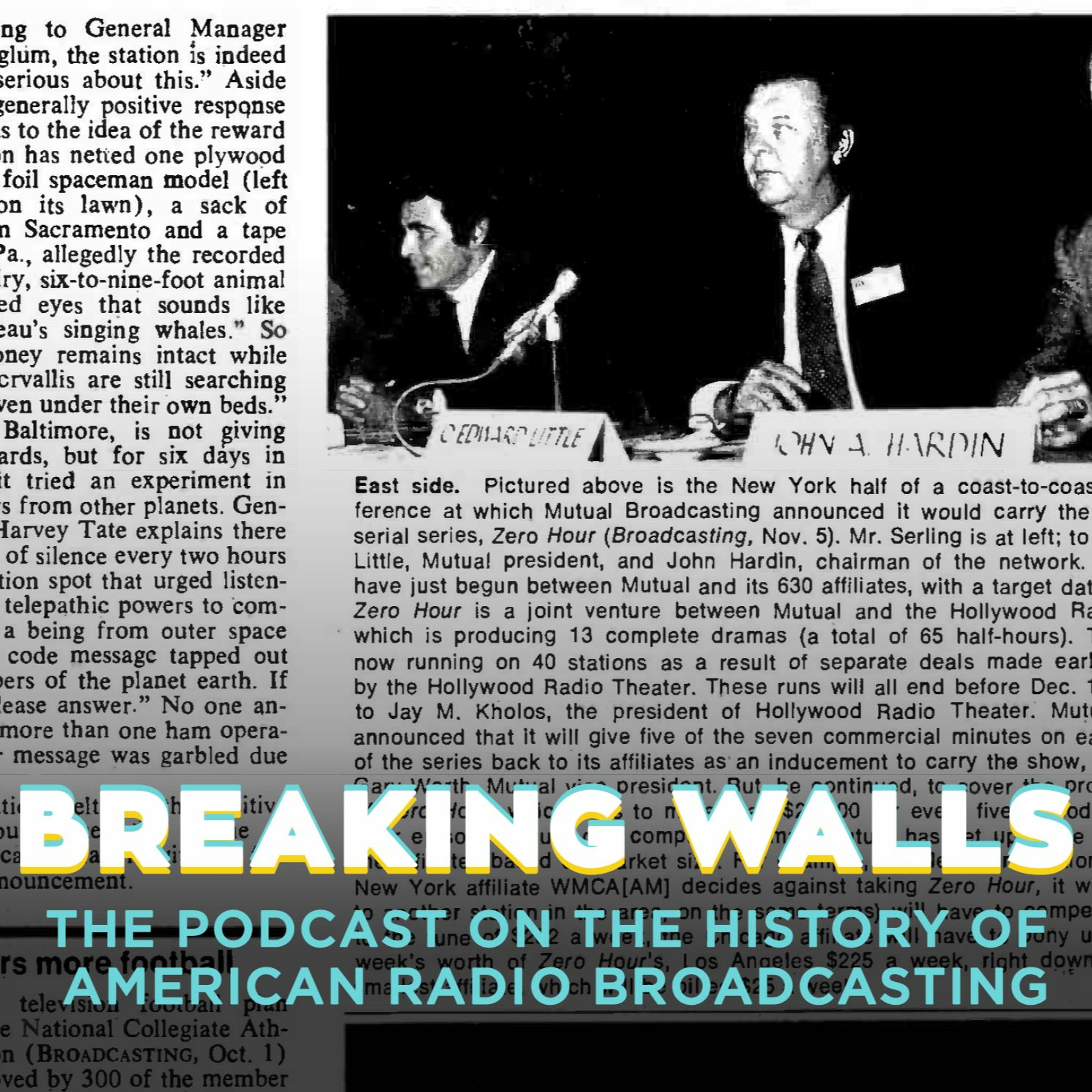
“The Mutual Broadcasting System fired the first shot Monday with The Zero Hour, a 30-minute five-nights-a-week thriller serial hosted by writer-narrator Rod Serling of Twilight Zone fame.
“Mutual, which says it has six-hundred-thirty affiliates, bought the series after lengthy studies proved there existed a sufficient market for radio drama on a network basis. Advertisers liked the idea, too, according to Mutual's president C. Edward Little: "We got a tremendous amount of client interest after we announced it," adding that the show will be fed from Mutual's Washington D.C., headquarters each weeknight at 7PM.
"We feel that we'll start off with one-hundred-fifty to two-hundred stations."
“The series will be offered on a "first refusal" basis to Mutual affiliates.
“They also said that if the show clicks, other radio projects such as new comedy or anthology series, may follow. But they emphasized that such shows are strictly in the talking stages.” — Jay Sharbutt
Once Mutual purchased the rights to The Zero Hour, they removed Elliott Lewis as director and Jay Kholos no longer had anything to do with the production. Both had good things to say about each other, but not for Mutual.