Breaking Walls
510 episodes — Page 7 of 11
BW - EP141—003: Orson Welles In Europe—Othello And The Black Museum
One of the first projects Orson Welles undertook after moving to Europe was a film version of Othello. Despite Macbeth’s criticism, he was still confident he could produce a successful Shakespearean film. However, filming was erratic. Its original Italian producer announced on one of the first days of shooting that he was bankrupt. Instead of abandoning filming altogether, Welles as director began pouring his own money into the project. He took acting jobs to ensure continued production. He also raised money by going on the stage. In the summer of 1950 Welles appeared in Paris in his own play called The Blessed and The Damned, which consisted of a short film, called The Miracle of St. Anne, and two one-act plays. It received positive reviews. In August he traveled to Frankfurt, Hamburg, and Munich, where he starred in An Evening With Orson Welles. Filming of Othello stopped for months at a time to raise money. It took more than two years to complete and was shot in Morocco, Venice, Tuscany and Rome. Before the film’s release, Welles played the Shakespearean drama on stage to audiences in Newcastle and London. A dubbed version of Othello premiered in Rome In November of 1951. Welles' original English-language version premiered at the Cannes Film Festival in May of 1952. It won the Grand Prix and was released in Europe thereafter. When David O’Selznick got word that Harry Alan Towers had distributed The Adventures of Harry Lime to MGM, he refused to air it, so Towers took the series elsewhere. He quickly found out that MGM was now contractually obligated to provide a series with Welles to the Mutual Broadcasting System. So, in 1951 Towers went to Welles with another radio series. He’d already produced a series called The Secrets of Scotland Yard with Clive Brook. The new series would be called The Black Museum. It was based on real-life cases from the files of Scotland Yard. Walking through the museum, Welles would pause at one of the exhibits, describing an artifact that led into a dramatized tale of a brutal murder or a vicious crime. Towers visited Australia in the late 1940s and set up production facilities in Sydney. The Black Museum was produced there by Creswick Jenkinson. Ira Marion was scriptwriter and music for the series was composed and conducted by Sidney Torch. Orson Welles's introductions were recorded on tape in London, then flown to Australia to be added to the locally recorded performances. This was the first series to be produced in Australia in this way. The program was transcribed in 1951. In the U.S. Mutual Broadcasting carried the series, with more than five-hundred stations airing it. In New York it began airing Tuesdays at 8PM on New Year’s Day, 1952. Episode twenty-seven was called “The Notes” or “Kilroy Was Here.” “Kilroy Was Here” is a graffiti scrawl or meme of debated origin that became popular during World War II. It was associated with GIs stationed in Europe, depicting a bald-headed man with prominent nose clutching at and peeking over a wall. Next to him was the phrase. Robert Rietti played leads and Keith Pyott was often in the cast. Beginning In May of 1953, The Black Museum was also broadcast over Radio Luxembourg, a commercial radio station, and was not broadcast by the BBC until 1991. The Black Museum aired for the calendar year of 1952 over Mutual. It was rebroadcast on KABC, Los Angeles, in 1963 and 1964, and on KUAC—FM in Fairbanks, Alaska, in 1967. In 2002, Harry Alan Towers produced The Black Museum for TV, hiring Gregory Mackenzie to be director and showrunner. The anthology series used Welles’ original narration. The adaptation was shot on location in London in a film noir style and the pilot starred Michael York as Scotland Yard Inspector Russell.
BW - EP141—002: Orson Welles In Europe—Harry Alan Towers And Harry Lime
In 1948 author Graham Greene was in Vienna getting a tour of the city, its back alleys, less-reputable nightclubs, and even its sewers. He was also introduced by actress Elizabeth Montagu to Peter Smolka, the central European correspondent for The Times. Greene was working on a novella that would become a screenplay called The Third Man. Greene sold the film rights to producers Alexander Korda and David O’Selznick. In the story a man named Holly Martins comes to Vienna to accept a job with his friend Harry Lime, only to learn that Lime has died. Martins is a writer. He’s told Lime was killed by a car while crossing the street. At Lime's funeral, Martins meets two British Royal Military Police: Sergeant Paine, a fan of Martins' books, and Major Calloway. Martins thinks the death is suspicious, so he stays in Vienna to investigate the matter. Orson Welles was cast as Lime with longtime Mercury Theater friend Joseph Cotton cast as Martins. Principal photography began in Vienna in early November of 1948 and lasted for six weeks. The rest was done around London and completed by March of 1949. Then-unknown composer Anton Karas was hired to create the musical score, performing it on a zither. The film was released in the UK in September of 1949, quickly becoming that year’s most popular. When released in the U.S. audiences loved it. Time wrote that the film was "crammed with cinematic plums that would do Hitchcock proud—ingenious twists and turns of plot, subtle detail, full-bodied bit characters, atmospheric backgrounds that become an intrinsic part of the story, a deft commingling of the sinister with the ludicrous, the casual with the bizarre.” At the 1951 Academy Awards, the film took home the award for Best Black and White Cinematography, while at the British equivalent, it won for Best British Film. In the meantime Welles and Tyrone Power made The Black Rose in 1950, directed by Henry Hathaway. Welles played Mongolian warrior Bayan of the Hundred Eyes. Hathaway, who liked Welles, later said the casting was poor, with Welles purposely outwitting people during shooting. While in England making The Third Man, Orson Welles became acquainted with Harry Alan Towers. Towers was a thirty-year-old radio producer whose company, Towers of London, was heavily into syndicated productions in British, American, Australian, and Canadian markets. His anthology series Secrets of Scotland Yard had proven that there was a lucrative market for high-end entertainment and, in Welles, he saw a personality and a talent that could quickly make his production company a leading one. Towers and Greene had the same literary agent. Finding out that Greene hadn’t sold Harry Lime’s character rights when he sold the screenplay, Towers quickly bought the rights to the character with plans to put a syndicated radio series into production. Welles signed with Towers to produce The Adventures of Harry Lime. They were prequel stories showcasing some of the more good-hearted things Harry Lime was supposed to have done. Only sixteen of the episodes were acquired and broadcast by the BBC. It was the first time that the BBC broadcast episodes of a dramatic series that it did not produce. The full fifty-five episodes were syndicated to radio stations in the U.S. Welles is credited as the author of ten scripts, including the first episode, “Too Many Crooks” which aired on August 3rd, 1951. The fifth episode was called, “Voodoo,” something Orson Welles had a lot of experience with, dating back to his time in South America during World War II.
BW - EP141—001: Orson Welles In Europe—Leaving The US
In 1947, wanting to bring Macbeth to film, Welles teamed with producer Charles K. Feldman to convince Herbert Yates, President of Republic Pictures, to finance. Welles guaranteed to deliver Macbeth on a budget of seven-hundred thousand dollars. When some members of Republic’s board expressed misgivings on the project, Welles agreed to personally pay any amount over the initial ask. He brought in Irish actor Dan O'Herlihy as Macduff, and cast former child star Roddy McDowall as Malcolm. To cast Lady Macbeth, Welles visited longtime friend and radio legend Jeanette Nolan. The two had known each other since the 1930s in New York. Nolan and her husband, fellow actor John McIntire, were excited to work with Orson. Welles made several changes to Shakespeare's original, like adding significance to the witches. They were played by two other Hollywood radio legends: Peggy Webber, and Lurene Tuttle. Welles expressed frustrations with wardrobes and the tight schedule. He had the cast pre-record all their dialogue. Locations were leftover sets from westerns normally made at Republic. The entire production was done in twenty-three days in July of 1947. In September, Welles signed on to star in Gregory Ratoff’s Black Magic. Shooting would take place in Rome. He wouldn’t return until 1948. Republic initially trumpeted the film as an important work, entering it in the 1948 Venice Film Festival. It was abruptly withdrawn after poor comparisons with Lawrence Olivier's version of Hamlet, also being screened. LIFE Magazine gave the film a terrible review in October of 1948, saying that Welles’ days as the “boy wonder” were long over. When he returned from Europe in the Spring, Welles cut twenty minutes from the film at Republic's request and recorded narration to cover some gaps. But when finally released, it too was called a disaster. In July of 1948 Welles signed on to co-star with Tyrone Power in the Italian film, Prince of Foxes. The film would be released in December of 1949. Welles’ last appearance in the 1940s on American radio was in a pre-recorded segment on Mail Call over the Armed Forces Radio Service, on October 13th, 1948. Now thirty-three years old, Orson Welles had enough of Hollywood. He was in deep debt and needed to move to Europe, full-time. His first main stop would be in Vienna, to star with Joseph Cotton in a new film called The Third Man.
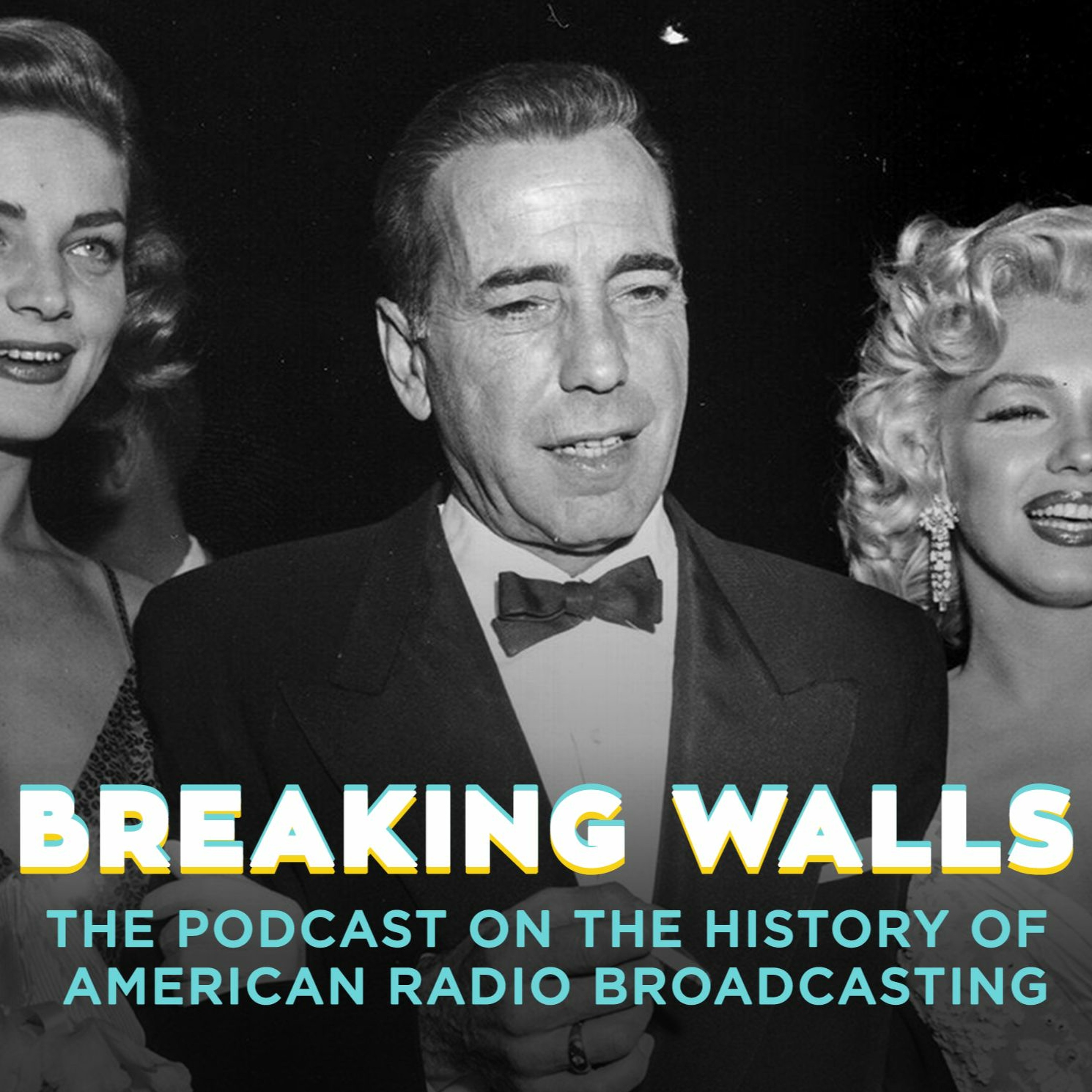
BW - EP140: Humphrey Bogart On The Air (1935 - 1952)
In Breaking Walls episode 140, we examine the under-appreciated radio career of the one and only Humphrey Bogart. —————————— Highlights: • The Broadway Kid • Lux Presents Hollywood • High Sierra and The Maltese Falcon • Bogie with Hope, Benny, and Vallée • Casablanca • Suspense, Lauren Bacall, and Command Performance • Staying at Home for More Radio • HUAC • Fatherhood and Bold Venture • The African Queen and The Academy Award • The Final Years • Looking Ahead to July and Orson Welles —————————— The WallBreakers: http://thewallbreakers.com Subscribe to Breaking Walls everywhere you get your podcasts. To support the show: http://patreon.com/TheWallBreakers —————————— The reading material for today’s episode was: • Lauren Bacall By Myself — By Lauren Bacall • Humphrey Bogart — By Alan G. Barbour • On The Air — By John Dunning • Bogart: A Life in Hollywood — By Jeffrey Meyers • Network Radio Ratings — By Jim Ramsburg • Bogart — By A.M. Sperber & Eric Lax As well as articles from: • The Chicago Sun-Times • The New York Times • Variety —————————— On the interview front: • Humphrey Bogart and Lauren Bacall spoke with Edward R. Murrow in 1954 • Humphrey Bogart and John Huston spoke to George Fisher • Humphrey Bogart also spoke to Ed Sullivan • Morton Fine spoke with Dan Haefele for SPERDVAC in 1988 • Howard Duff and William Spier spoke to Dick Bertel and Ed Corcoran for WTIC’s The Golden Age of Radio. Here these interviews at GoldenAge-WTIC.org • Lurene Tuttle spoke to Chuck Schaden. Here this chat at SpeakingOfRadio.com • Ingrid Bergman spoke to the CBC • William Holden spoke to Dick Cavett —————————— Selected music featured in today’s episode was: • Manhattan Serenade — By Richard Alden • As Time Goes By — By Herman Hupfeld • Danse Macabre — By Camille Saint-Saëns —————————— A special thank you to Ted Davenport, Jerry Haendiges, and Gordon Skene. For Ted go to RadioMemories.com, for Jerry, visit OTRSite.com, and for Gordon, please go to PastDaily.com. —————————— Thank you to: Tony Adams Steven Allmon Orson Orsen Chandler Phil Erickson Jessica Hanna Perri Harper Thomas M. Joyce Ryan Kramer Earl Millard Gary Mollica Barry Nadler Christian Neuhaus Ray Shaw Filipe A Silva John Williams —————————— WallBreakers Links: Patreon - patreon.com/thewallbreakers Social Media - @TheWallBreakers
BW - EP140—012: Humphrey Bogart On The Air—Looking Ahead To Orson Welles
That brings our look at Humphrey Bogart’s life and career to a close. Next time on Breaking Walls? Well… next time we head to Europe to follow someone who got out of dodge, just in time for HUAC.
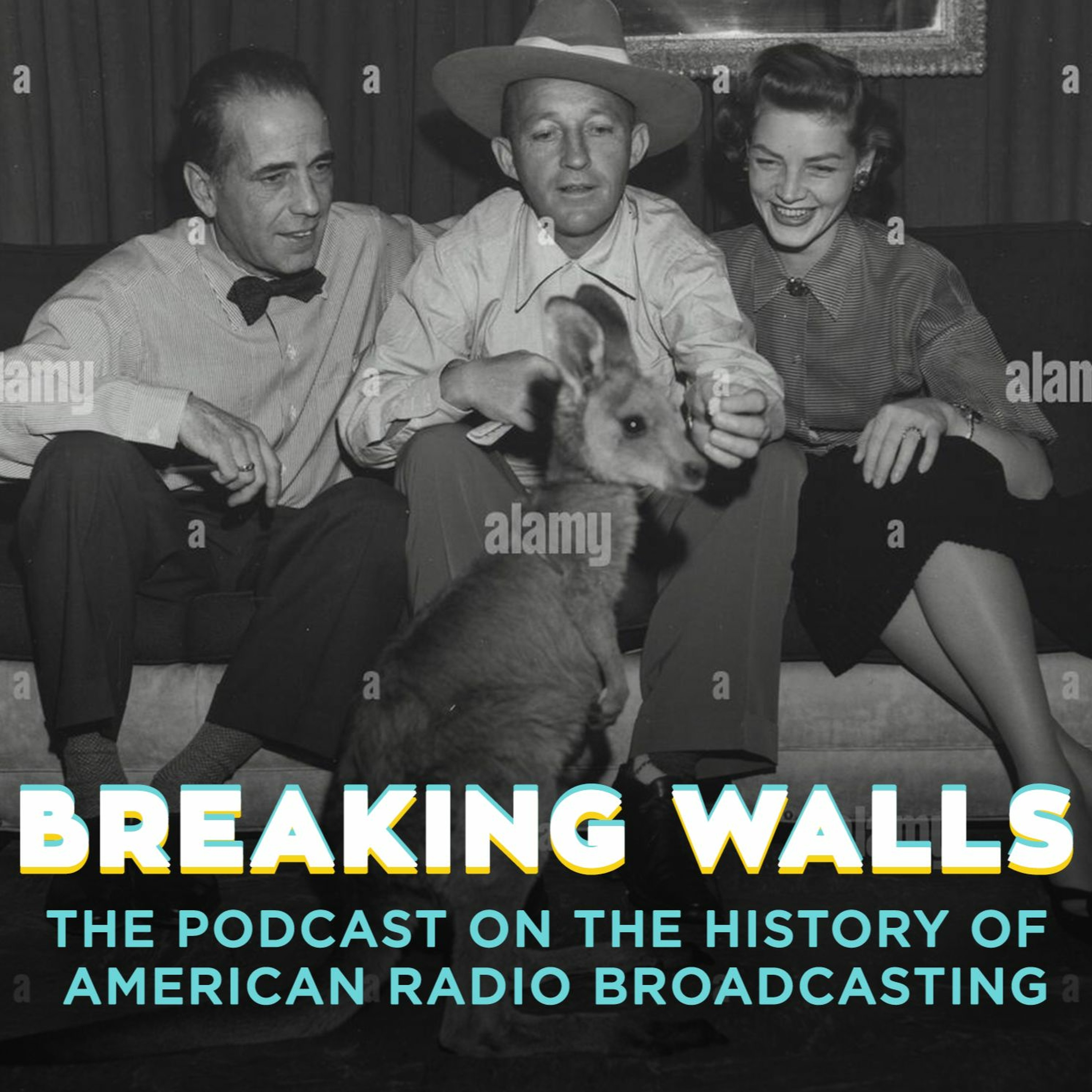
BW - EP140—011: Humphrey Bogart On The Air—The Final Years
On Wednesday March 12th, 1952 at 9:30PM eastern time, Bogie and Bacall guest-starred on Bing Crosby’s CBS Chesterfield Show. Two days later, Bogart’s next film, Deadline – U.S.A premiered in New York City. Bogie plays Ed Hutcheson, a newspaper editor who exposes a gangster's crimes, while also trying to reconcile with his ex-wife. His performance was well-received. Bogart and Bacall’s appearance on The Bing Crosby Show pulled a rating of 9.1. On August 23rd, 1952 Lauren Bacall gave birth to their second child, a daughter, Leslie Howard Bogart, named in honor of actor Leslie Howard who got Bogart his first major film role in The Petrified Forest. The next day Bogart spoke to George Fisher about the experience. Both were soon back working as Bogart made Battle Circus and Bacall made How To Marry a Millionaire. Bogart’s next big role and final Academy Award nomination came in an adaptation of Herman Wouk’s Pulitzer Prize-winning 1951 novel, The Caine Mutiny. Bogart plays Captain Queeg. In 1954 Bogart starred opposite Audrey Hepburn and the just-heard William Holden in Billy Wilder’s Sabrina. Bogart and Holden are brothers — Linus and David Larabee, competing for the love of Sabrina Fairchild. Bogart agreed to it on a handshake with Wilder, although the script wasn’t finished. It was not a happy set. Bogart didn’t get along with Holden nor Hepburn, and didn’t like Wilder’s hands-on approach. There were also numerous last-minute script changes. Bogart later said “I got sick and tired of who gets Sabrina.” But the film proved to be a hit. The New York Times particularly praised Bogart's performance. In the mid-1950s Bogart and Bacall’s social circle began to be jokingly known as the "Holmby Hills Rat Pack." The original members included Frank Sinatra, pack master; Judy Garland, first vice-president; Sid Luft, Judy’s husband, the cage master; agent Swifty Lazar, recording secretary; novelist Nathaniel Benchley pack historian; and Bacall, den mother. Bogart simultaneously made The Barefoot Contessa opposite Rita Hayworth and Sinatra’s ex-wife Ava Gardner. Then in 1955 he made We’re No Angels, The Left Hand of God, and The Desperate Hours. Just before Christmas in 1955, Bogart was honored with a roast at the Friar’s Club. But by then Bogart’s persistent cough and difficulty eating became too serious to ignore. He went for a battery of tests in January of 1956. The results were bleak: He had esophageal cancer. He still managed to make his final film, The Harder They Fall opposite Rod Steiger. Bogart plays a newspaper man turned boxing PR writer, bent on exposing the corruption he sees. Critics gave the film, and his performance, especially considering his condition glowing reviews. This is the last scene Humphrey Bogart ever did in any film. On March 1st, 1956 Humphrey Bogart had surgery to remove his esophagus, two lymph nodes and a rib. It was unsuccessful. Chemotherapy followed. He had another surgery in November. Although he became too weak to walk up and down stairs, he joked despite the pain: "Put me in the dumbwaiter and I'll ride down to the first floor in style. Frank Sinatra, Katharine Hepburn, and Spencer Tracy visited him on January 13th, 1957. In a later interview, Hepburn said: Spence patted him on the shoulder and said, "Goodnight, Bogie." Bogie turned his eyes to Spence very quietly and with a sweet smile covered Spence's hand with his own and said, "Goodbye, Spence." Spence's heart stood still. He understood. Bogart lapsed into a coma and died the following day, January 14th, 1957, twenty days after his fifty-seventh birthday. At the time of his death he weighed only eighty pounds. His funeral was held at All Saints Episcopal Church. It seemed like all of Hollywood came to mourn his passing. Spencer Tracy was to give the eulogy, but he was too moved to do so. John Huston spoke instead.
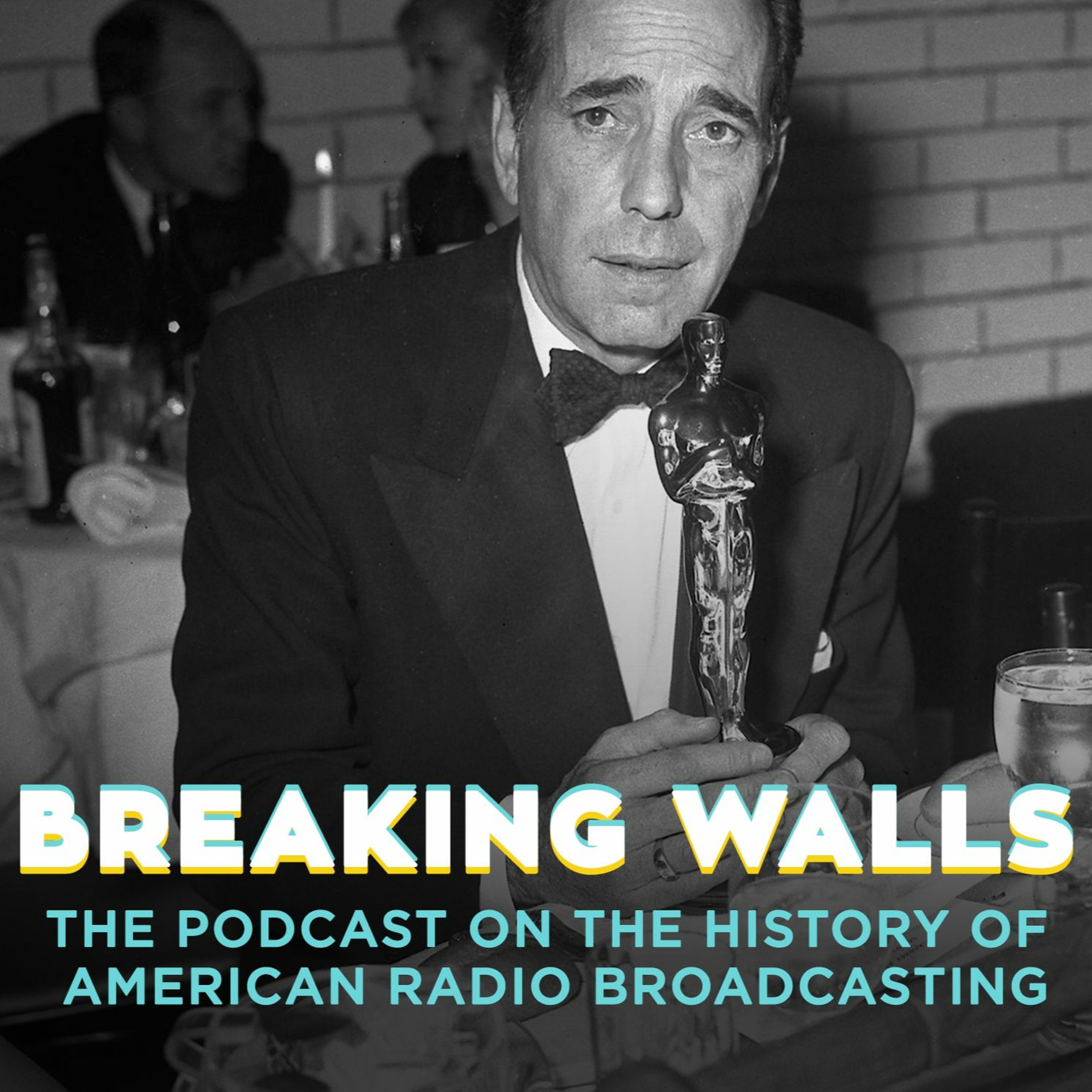
BW - EP140—010: Humphrey Bogart On The Air—The African Queen And The Academy Award
In 1951 Humphrey Bogart once again partnered with John Huston on an adaptation of C. S. Forester’s 1935 novel The African Queen. Bogart plays the rough-and-ready Canadian mechanic Charlie Allnut, whose coarse behavior is barely tolerated by Katharine Hepburn’s Rose Sayer and her brother, Robert Morley’s Reverend Samuel Sayer. The film takes place in German East Africa in August 1914 as Charlie is hired to take the Sayers and their goods to be delivered on his small steamboat, The African Queen. When Charlie warns the Sayers that war has broken out between Germany and Britain, they choose to remain in Kungdu, only to witness German colonial troops burn down the village and press villagers into service. When Samuel protests, he’s struck by a soldier and soon becomes delirious with fever, dying shortly afterward. Charlie helps Rose bury her brother and escape in the African Queen. Much of the film was shot on location in Uganda and the Congo in Africa. This was unusual for the time. The cast and crew endured sickness from the food, water, and hot conditions. Bogart later joked that he and Huston were the only members of the cast and crew who escaped illness, which he credited to having drunk whiskey on location rather than the water. The African Queen premiered on December 26th, 1951 at the Fox Wilshire Theatre in Beverly Hills the day after Christmas and the day after Bogart’s fifty-first birthday. The African Queen debuted just in time to qualify for the 1952 Academy Awards, which turned out to be of utmost significance for Humphrey Bogart. Promising friends that if he won his speech would break the convention of thanking everyone in sight, he was instead modest and subdued. The kid from Manhattan that disappointed his parents and never took an acting lesson in his life was, at that moment, the best lead actor of the year. Bogart himself considered his role in The African Queen his finest performance.
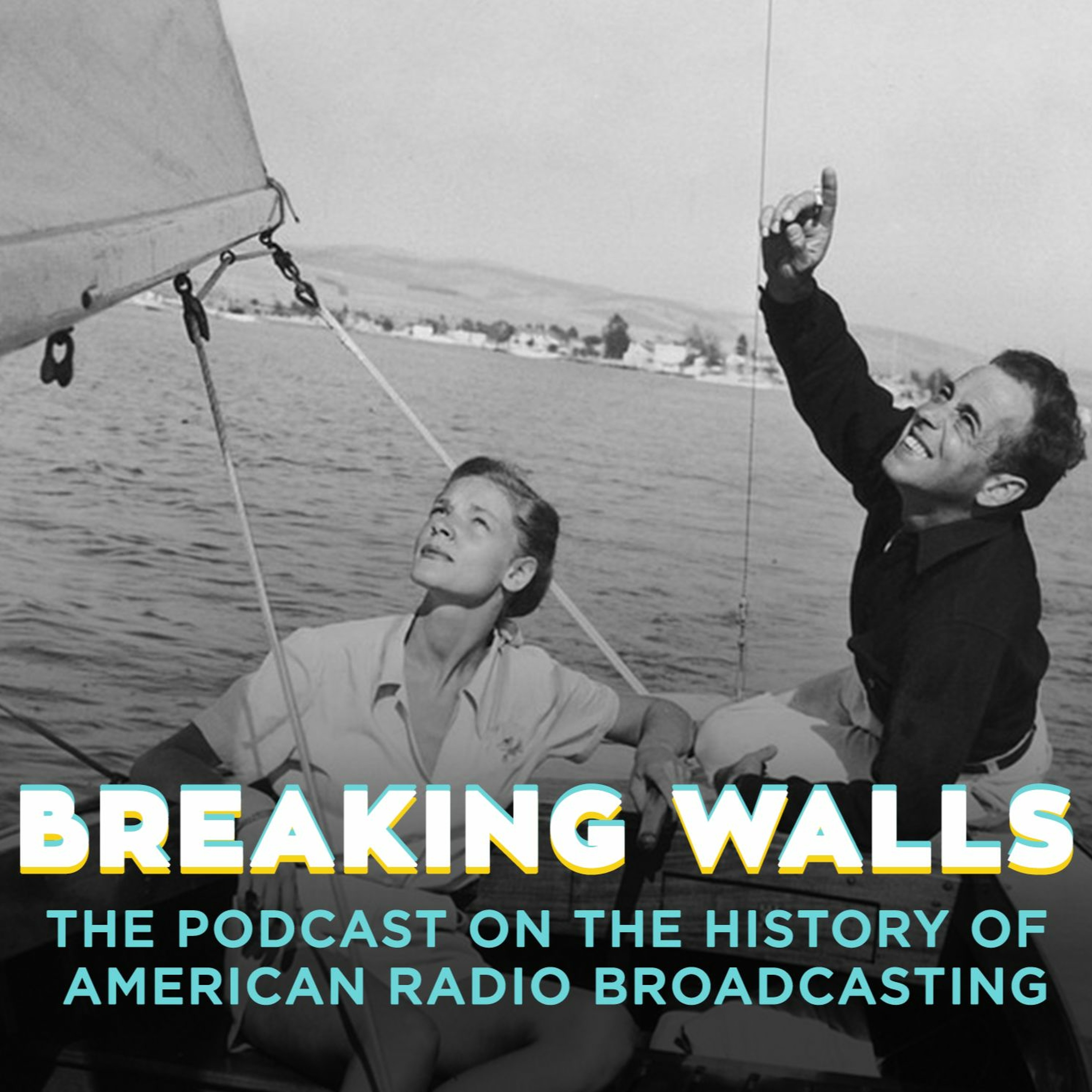
BW - EP140—009: Humphrey Bogart On The Air—Fatherhood And Bold Venture
On January 6th, 1949 Lauren Bacall gave birth to their first child, Stephen Humphrey Bogart, named in honor of his character in To Have and Have Not. Meanwhile Bogart made Knock on Any Door and Tokyo Joe for his Santana Productions company. Both were moderately panned by critics. In 1950 he made Chain Lightning for Warner Brothers and In A Lonely Place for Santana. In A Lonely Place sees Bogart star as Dixon Steele, a troubled, violence-prone screenwriter suspected of murder. Gloria Grahame co-stars as Laurel Gray, his neighbor who soon falls for Dix. The film is considered among Bogart’s best and perhaps a character with personality traits most like the real man. It was among a trio of films released that year, along with Sunset Boulevard and All About Eve, which comment on the dark side of Hollywood. Simultaneously, Bogart and Bacall looked for a vehicle on radio for their talents. Santana Productions partnered with the Frederic W. Ziv Company to develop a series called Bold Venture. It would be written by Morton Fine and David Friedkin, who famously wrote for Broadway is My Beat and Crime Classics. Bogart had long interest in starring in his own series, but had resisted due to the constraints of live radio. By 1950, due to widespread transcription, that was no longer an issue. He could do the show in takes and have music and sound effects added later. Three or four shows a week could be done, leaving Bogart and Bacall free for the rest of the year. Bogart plays Slate Shannon, hotel owner and owner of a boat called the "Bold Venture." Bacall, plays Sailor Duval, and Jester Hairson plays calypso singer King Moses. Shannon, based out of Havana, is always ready to rescue a friend in need or hunt down an enemy. Seventy-eight thirty minute shows were produced. The first show aired on March 26th, 1951. The Ziv Company distributed the series, putting up twelve-thousand dollars per episode. Bogart and Bacall were each paid four-thousand-dollars per show. Four-hundred twenty-three stations bought the series, paying weekly fees to Ziv ranging from fifteen dollars for small stations to seven-hundred-fifty dollars for big ones. Newsweek noted that although the series was set in Havana, it could just have easily been in Casablanca. While the series was first airing, the Bogarts were in Africa. Humphrey was set to star opposite Kathryn Hepburn in The African Queen.
BW - EP140—008: Humphrey Bogart On The Air—HUAC
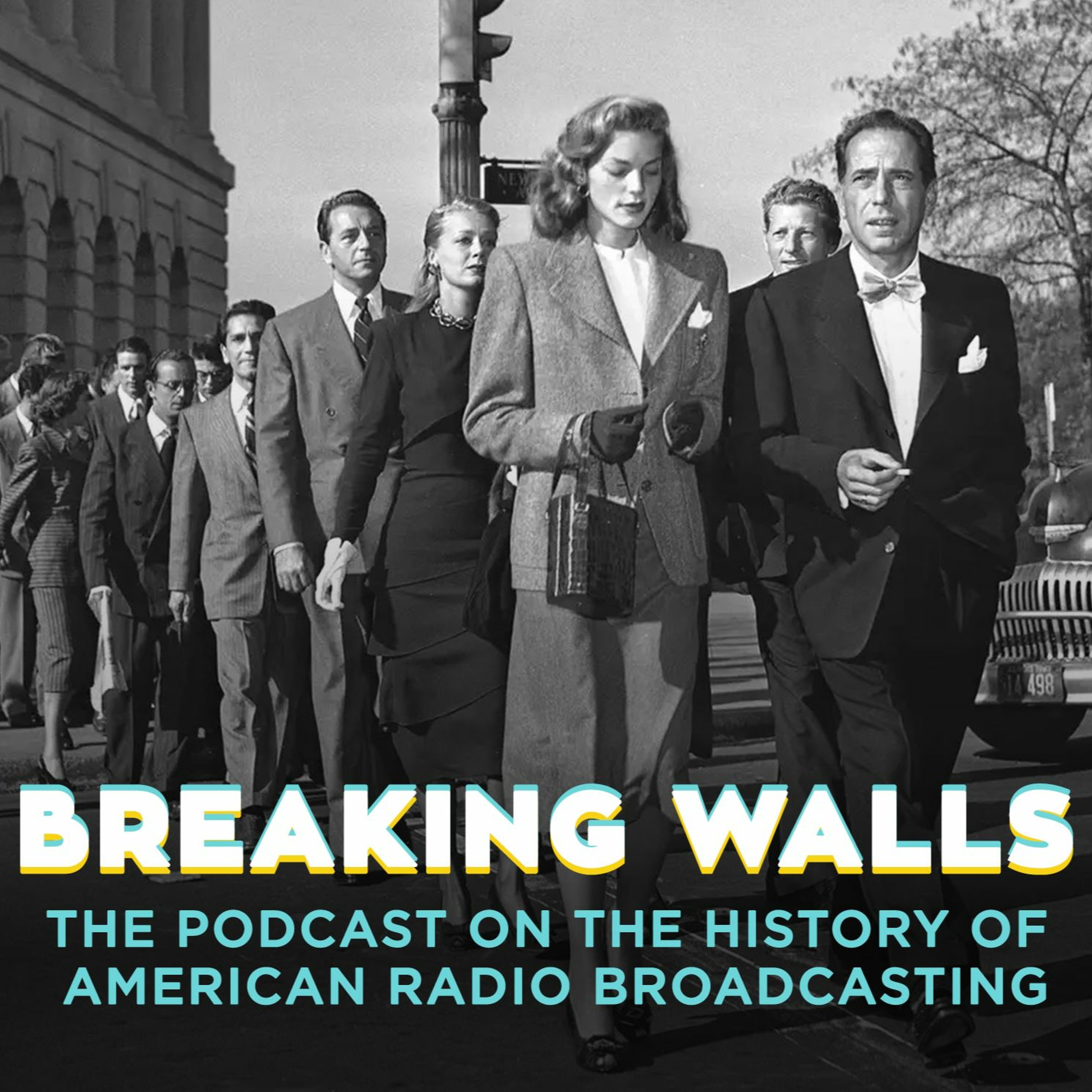
In 1947 Humphrey Bogart signed a new Warner Brothers contract. It gave him limited script refusal and the right to form his own production company. He and Bacall soon made the thriller Dark Passage based on the 1946 novel of the same name by David Goodis. Critics gave the film, and Bogart’s performance mixed reviews, but generally praised Bacall and the cinematography. On the eve of Thanksgiving, as NBC broadcast News of the World with Morgan Beatty, the United States was a country in transition. World War two had created fundamental changes in society. While men of all races and creeds were overseas spilling the same colored blood, women had taken charge of the workforce. When veterans collected enough points for an honorable discharge, they returned home with different ideals, and what we’d now call PTSD. As new cars, roads, and homes brought young families to the suburbs, racial discrimination came to the forefront in the face of the G.I. Bill, where a much higher percentage of white Americans were having their applications accepted. Americans were organizing. In the year after VJ Day, more than five million struck for better wages and benefits. This debilitated key sectors of the economy and stifled production. Consumer goods were slow to appear on shelves and in showrooms, frustrating Americans who desperately wanted to purchase items they’d forsaken during the war. It caused the largest inflation rise in the country’s modern history, and the Taft-Hartley Act, limiting the power of Labor Unions. President Truman was seemingly at odds with Congress over every domestic policy and his approval rating sank to thirty-two percent. The U.S. War Debt topped $240 Billion. Because the nation emerged as one of the world’s leaders, America was expected to have the largest hand in rebuilding Europe. On the eve of Thanksgiving, news outlets reported that in order to stabilize Europe, Americans should be ready to resume sacrifices they made during the war. Not agreeing to do so could result in political enemies taking over the continent. The changing world stoked people’s fears. Anti-communism was abound. On Monday November 24th, The House Committee on Un-American Activities declared a list of ten "unfriendly witnesses" who’d refused to answer questions about alleged communist influence in Hollywood. Bogart, who’d been questioned and cleared the first time the committee came to Hollywood, organized the Committee for the First Amendment. He felt HUAC was abusing its power, harassing writers and actors, and went to Washington to state his case. Bogart was later forced to recant to counter negative publicity. He wrote an article for Photoplay Magazine. Entitled “I’m No Communist,” he said, “the ten men cited for contempt by HUAC weren’t defended by us." Part of the reason for the article was Head of Warner Brothers Jack Warner, who was the first person to volunteer testimony before HUAC in September of 1947. Bogart’s next Warner Brothers film, The Treasure of The Sierra Madre, was to be written and directed by John Huston. Huston and Bogart were liberal democrats, but they knew better than to commit career suicide. The film was critically praised, but ticket sales were lukewarm. It received four Oscar nominations, winning three — Best Supporting Actor for Walter Huston, and Best Director and Best Screenplay for John Huston. It’s been long-held that Bogart should have been nominated as best actor, but his involvement against HUAC led to the snub. The Lux Radio Theatre adapted The Treasure of The Sierra Madre on April 18th, 1949. Later in 1948 Bogart and Bacall made Key Largo with Edward G. Robinson, and Bogart formed Santana Productions. One of its early missions was to develop a radio series for the couple.
BW - EP140—007: Humphrey Bogart On The Air—Spade, Marlowe, And More Jack Benny
Bogart and Bacall moved into a white brick mansion in Holmby Hills, and he bought a fifty-five foot yacht called the Santana from Dick Powell, spending about thirty weekends each year on the water. With World War II over, Bogart wanted to do more radio. On September 17th, 1945 he hosted an audition for a new mystery/thriller program called Humphrey Bogart Presents. Meanwhile Bogart and Bacall were on screen together again in 1946, this time in an adaptation of Raymond Chandler’s Philip Marlowe novel, The Big Sleep. During World War II, comedy, drama, news, and variety dominated the radio dial, but after the war, detective shows gained network popularity as programming shifted to smaller studios. They were considered a good deal for advertisers. Although Bill Spier was entrenched at CBS, he still had ties with his old agency BBD&O, as well as with Lawrence White, Dashiel Hammett’s literary agent. Both ABC and CBS wanted to bring The Adventures of Sam Spade to the air. Initially, everyone wanted Bogart to be the star. Even with Bogart’s drawbacks, it was assumed no other actor could fill Spade’s shoes. Auditions were held in April of 1946. Enter Howard Duff. An audition was recorded on May 1st. In June, Wildroot officially signed on as sponsor. Spade would make its debut in July over ABC’s airwaves. Not to be outdone, on July 2nd, CBS broadcast an episode of Academy Award adapting “The Maltese Falcon.” Humphrey Bogart reprised his role. We heard the opening portion earlier in this episode of Breaking Walls, here’s the close. Meanwhile on October 14th, 1946 Bogart and Bacall reprised their roles from To Have and Have Not for The Lux Radio Theatre. The next January 5th, 1947, Bogart and Lauren Bacall were guests on The Jack Benny Program.
BW - EP140—006: Humphrey Bogart On The Air—Lauren Bacall, Suspense, And Command Performance
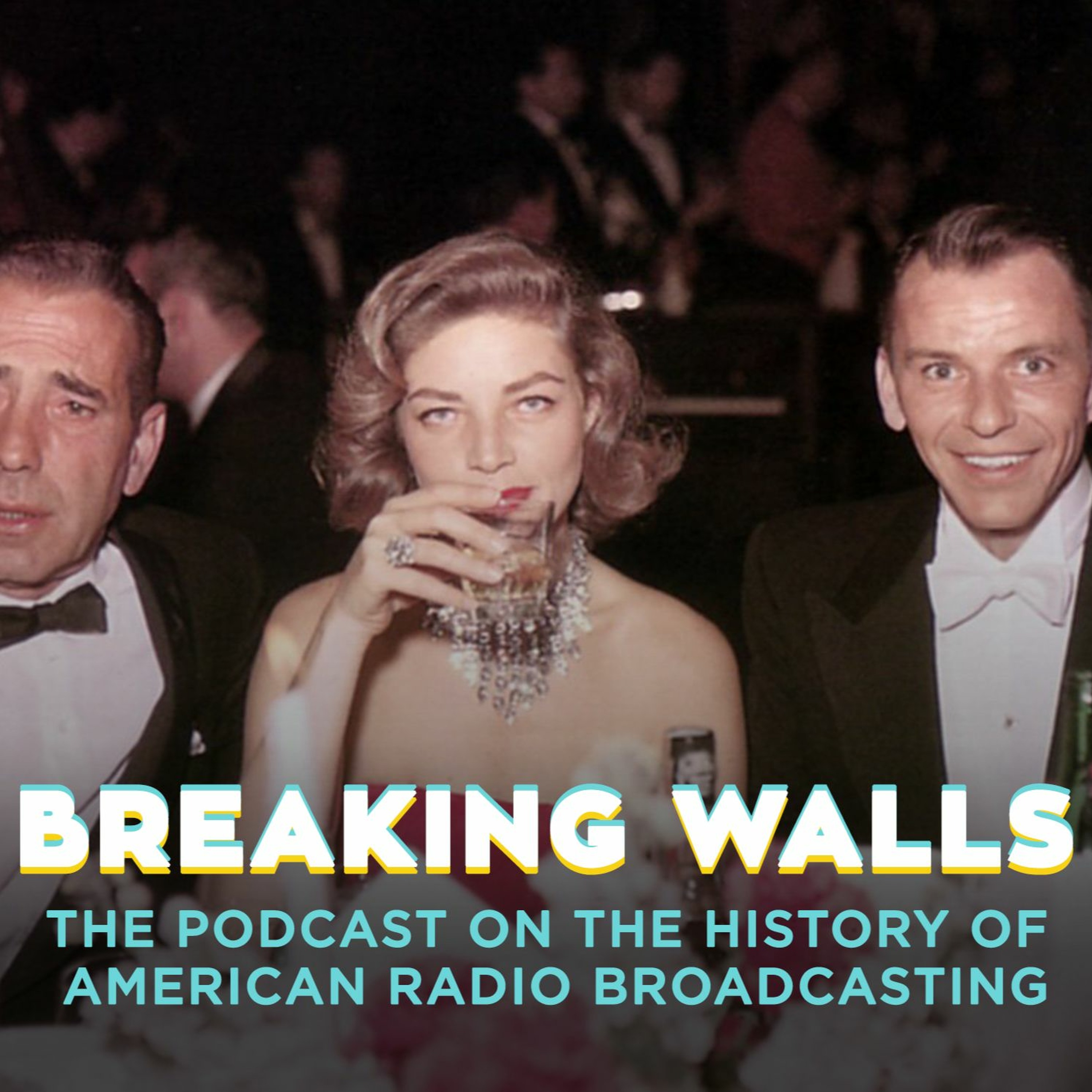
In 1943 and 1944 Bogart went on War effort tours with his third wife Mayo Methot, making trips to Italy and North Africa. He produced shorts for The American Red Cross effort and the Victory Bond drive. The relationship with Mayo was strained. She accused Bogart of having an affair with Ingrid Bergman during the filming of Casablanca. Bergman later remembered that Bogart barely spoke to her off camera, let alone had an affair. Back stateside, Bogart was cast as Steve Morgan for an adaptation of Ernest Hemingway’s To Have and Have Not. In casting "Slim" Browning, Howard Hawks’ wife Nancy Keith saw a Harper’s Bazaar cover that featured an eighteen year-old model and actress named Betty Joan Perske. Hawks immediately signed her to a contract. She’d soon change her name to Lauren Bacall. Mayo Methot had long accused Bogart of affairs with all his co-stars, something he’d actually never done. When Bogie and Bacall met, he was attracted to her outspoken personality, poise, looks, and long, lean figure. Bogart kept Bacall at ease during filming and their chemistry was apparent from the beginning, with their twenty-five year age difference creating a mentor-student acting dynamic. At first Bogart made sure his meetings with her were discreet and brief. They wrote heart-felt letters and made sure to be publicly professional, while Bogart encouraged her to steal scenes, delighting Howard Hawks. But when Hawks realized there was more to their chemistry than friendship, he disapproved of the affair. The film premiered on October 11th, 1944 while Bogart refused to stop seeing Bacall. His marriage to Mayo Methot was finally over. He filed for divorce in February of 1945. The next month, Bogart appeared on the Thursday March 8th 1945 episode of Suspense in Bill Spier’s production of “Love’s Lovely Counterfeit” at 8PM eastern time. This episode had a rating of 13.6, winning its time slot against NBC’s Frank Morgan Show. Playing opposite Bogart was Lurene Tuttle. Bogart and Lauren Bacall married in a small ceremony at the country home of Bogart's close friend, Pulitzer Prize-winning author Louis Bromfield, on May 21st, 1945. On August 30th, the couple appeared with Frank Sinatra on Command Performance.
BW - EP140—005: Humphrey Bogart On The Air—Casablanca
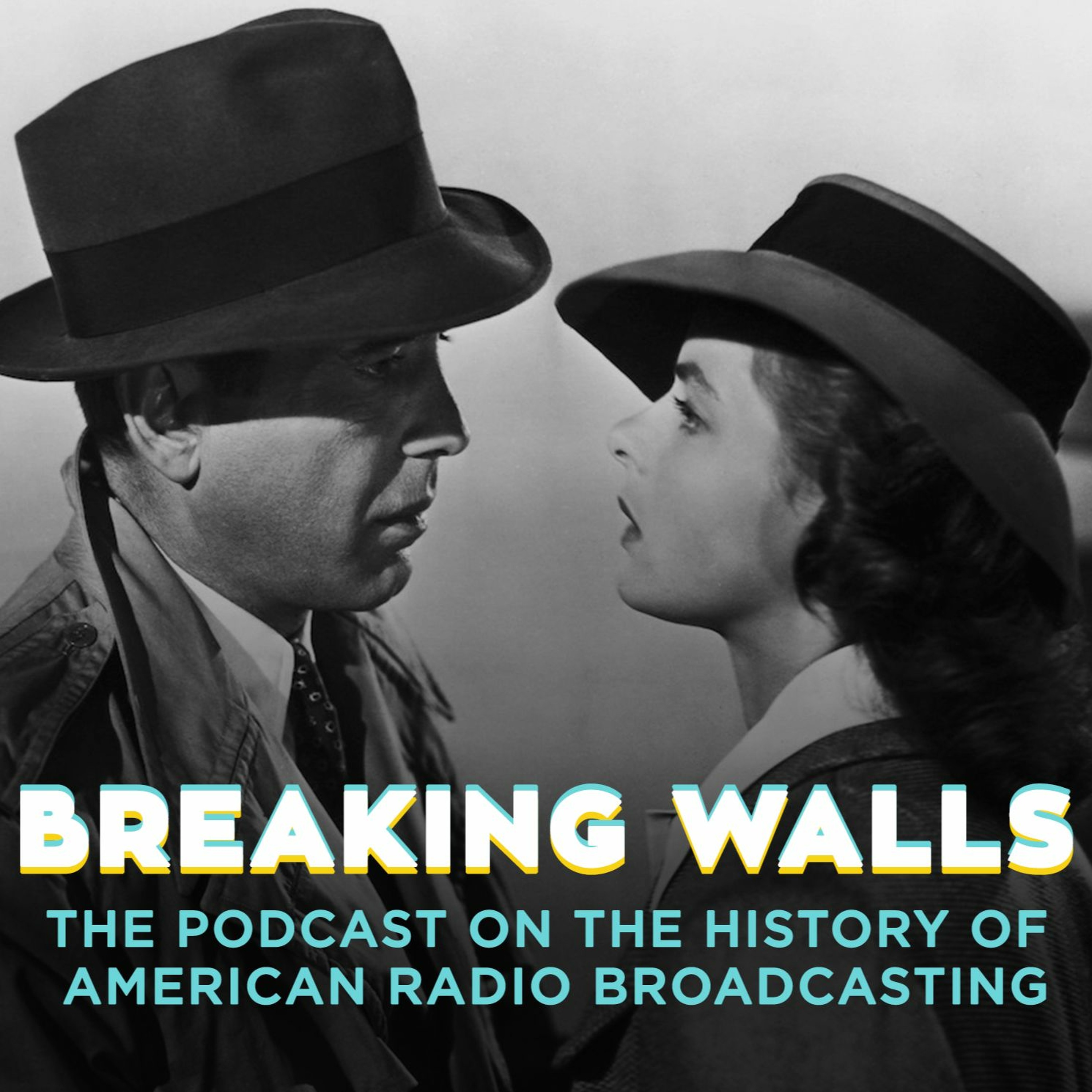
In 1941, Warner Brothers story editor Irene Diamond was in New York when she discovered the script to an un-produced play called Everybody Comes to Rick’s. She convinced Hal Wallis to buy the rights to the script in January of 1942 for twenty-thousand dollars. The project was renamed Casablanca. Humphrey Bogart was cast as Rick Blaine, an expatriate nightclub owner hiding from a suspicious past and negotiating a fine line among Nazis, the French underground, the Vichy prefect, and unresolved feelings for his ex-girlfriend. Ingrid Bergman was cast opposite Bogart with Claude Rains, Sydney Greenstreet, Paul Henreid, Peter Lorre, and Dooley Wilson in supporting roles. Michael Curtiz directed. Principal photography began on May 25th, 1942. The film was shot entirely at Warner Brothers Studios in Burbank, California, with the exception of one sequence at Van Nuys Airport in Los Angeles. As Ingrid Bergman mentioned in an interview with the CBC, no one involved with Casablanca’s production expected it to be good. It was rushed to take advantage of the publicity from the Allied invasion of North Africa and had its world premiere on November 26th, 1942, in New York City. It was nationally released on January 23rd, 1943. But Casablanca quickly became iconic. Many exiled and cause-sympathetic film actors appeared in cameos, including Helmut Dantine, Dan Seymour, Madeleine Lebeau, Frank Puglia, Jack Benny, Marcel Dalio, Leonid Kinskey, Torben Meyer, Ilka Grünig, Ludwig Stössel, and Wolfgang Zilzer. A witness to the filming of the "duel of the anthems" sequence said he saw many of the actors crying because they knew that they were all real-life refugees. The film was nominated for eight Oscars, including Bogart for best actor, and Casablanca won best picture, best direction, and best adapted screenplay at the 1943 Academy awards. On April 26th, 1943, six weeks after the awards, the Screen Guild Theater broadcast an adaptation of the film.
BW - EP140—004: Humphrey Bogart On The Air—Bogie With Hope, Benny, And Vallée
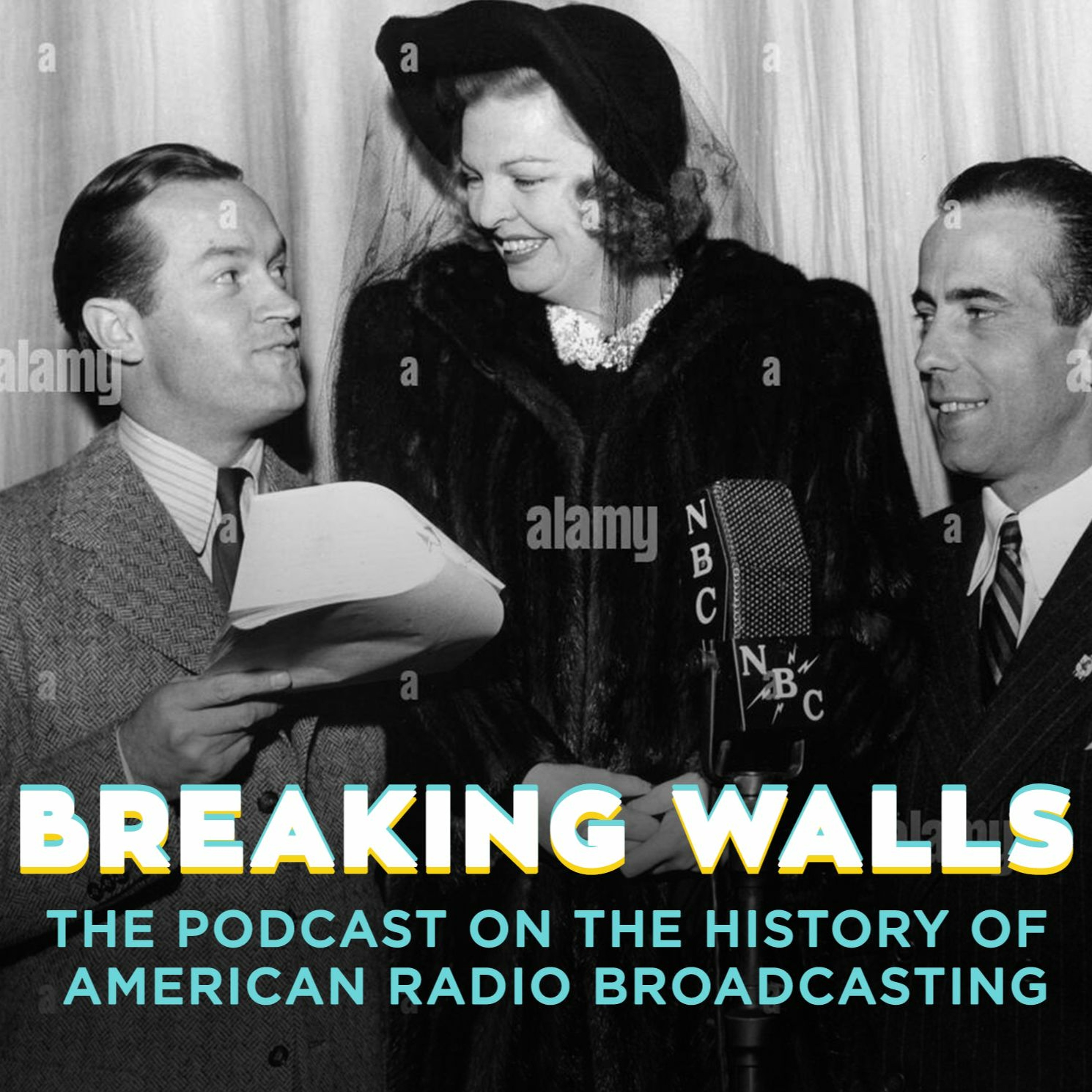
Humphrey Bogart’s film success led to more radio appearances on comedy programs, giving Bogie the chance to show off his comedic timing. On June 3rd, 1941 Bogart appeared on The Bob Hope Show. The program had a rating of 25.3. The next February, Bogart appeared on The Jack Benny Program. Benny and Bogart had tremendous natural chemistry. Years later, Bogart was talking to friend and columnist George Fisher about the top ten characters he’d met through the years. John Barrymore was one Bogart mentioned. That one time Bogart met Barrymore was on the February 19th, 1942 episode of The Rudy Vallée Show. John Barrymore passed away three months later.
BW - EP140—003: Humphrey Bogart On The Air—High Sierra And The Maltese Falcon
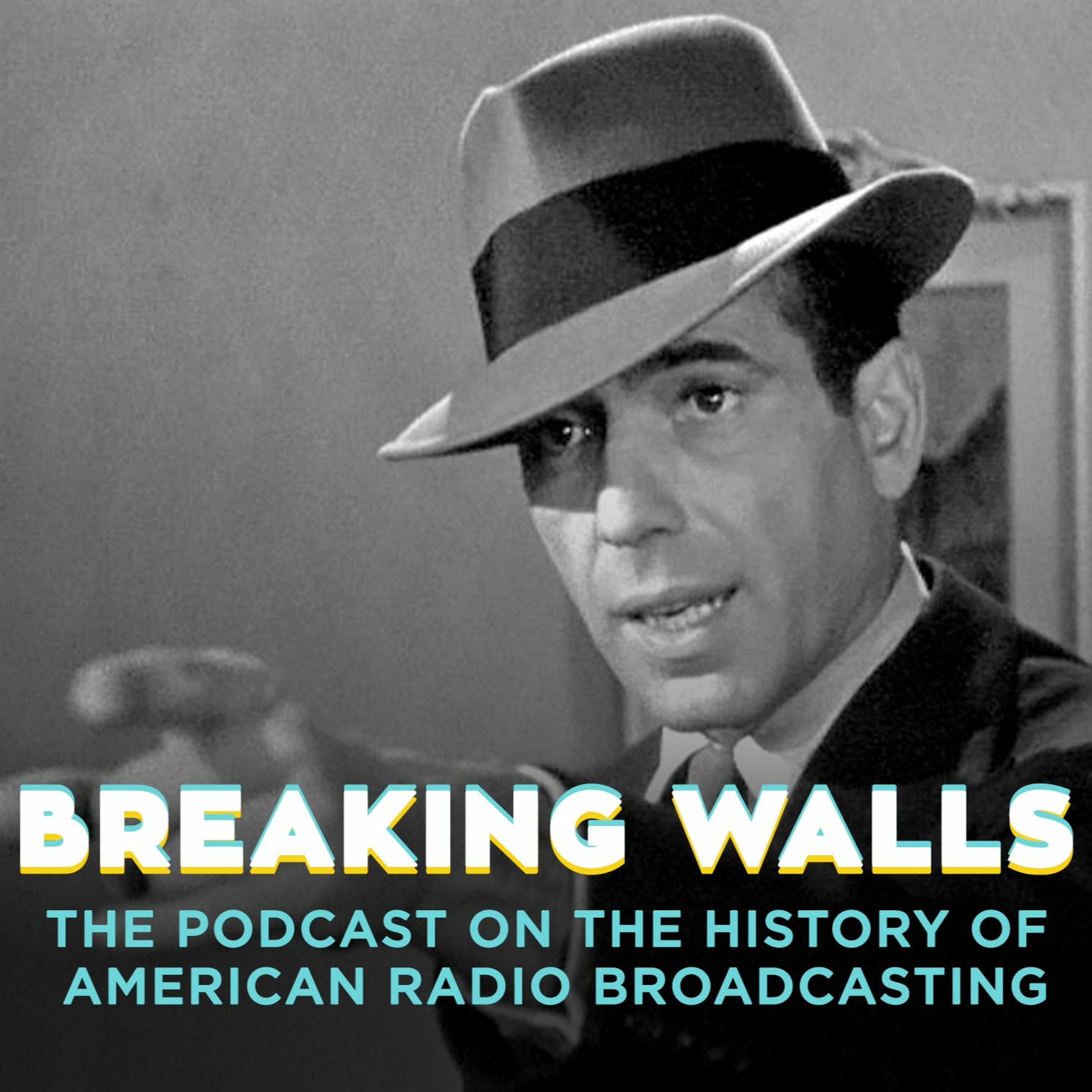
As the 1940s got underway, bringing the U.S. closer to World War II, Humphrey Bogart drifted socially and professionally. That year he made four films: Virginia City, It All Came True, Brother Orchid, and They Drive By Night. On Sunday January 7th, 1940 at 7:30PM eastern time over CBS, he reprised his role of Duke Mantee in a Screen Guild Theater adaptation of The Petrified Forest. The Screen Guild Theater drew several Hollywood stars a week for radio adaptations. First taking to the air on January 8th, 1939 for Gulf Oil, all fees that would normally go to stars instead were given to the Motion Picture Relief Fund. This money was used to build and maintain the Motion Picture Country House: forty bungalow units for housing aging and needy film stars. By the summer of 1942 almost eight-hundred-thousand-dollars had been raised. This episode’s rating was a 13. Roughly nine million listeners tuned in. In late 1940, John Huston was adapting a script for a new film, High Sierra. Produced by Mark Hellinger and directed by Raoul Walsh, Paul Muni, George Raft, James Cagney and Edward G. Robinson all turned down the lead role, much to the delight of Huston. The character gave Bogart the chance to show his range. Finally playing someone with depth, the film was Bogart's career breakthrough, transforming him from supporting player to leading man. He played opposite Ida Lupino. The film's success also led to a breakthrough for Huston, giving him the leverage needed to transition from screenwriter to director, setting Bogart up for Huston’s next project: an adaptation of Dashiell Hammett’s The Maltese Falcon. The Maltese Falcon was Huston’s directorial debut. Although a pre-code version of the film had been made ten years earlier, the 1941 version with Bogart starring as private detective Sam Spade was considered an instant classic film noir. Complementing Bogart were co-stars Sydney Greenstreet, Peter Lorre, Mary Astor, and Elisha Cook Jr. Bogart's sharp timing and facial expressions were praised as vital to the film's quick action and hard-boiled dialogue. It was a commercial hit, and Bogart was unusually happy with the film. He later said, "It’s practically a masterpiece. I don't have many things I'm proud of, but that's one." The film was nominated for three Academy Awards, including best picture and best direction. Bogart reprised his role on the July 3rd, 1946 episode of Academy Award Theater.
BW - EP140—002: Humphrey Bogart On The Air—Lux Presents Hollywood
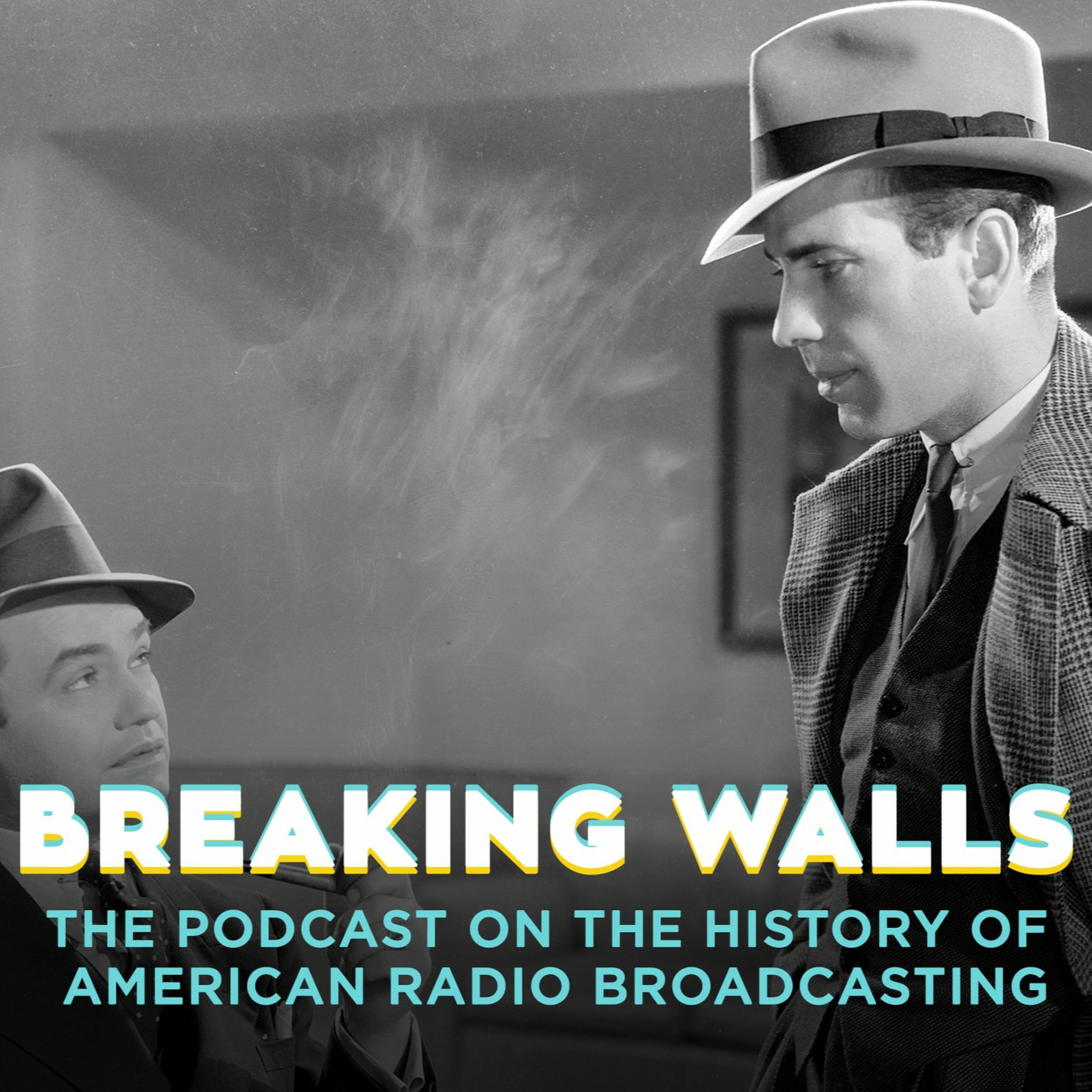
Despite his success in The Petrified Forest, Bogart signed a tepid twenty-six-week contract at five-hundred-fifty dollars per week. He was immediately typecast as a gangster in a series of B movie crime dramas. He played a supporting role in Bullets or Ballots released in 1936. Bogart reprised the role of Bugs Fenner on the Monday April 17th, 1939 episode of The Lux Radio Theatre opposite Edward G. Robinson, Mary Astor, and Otto Kruger. It aired at 10PM eastern time on CBS. Lux was Monday night’s highest-rated and CBS’s highest-rated show of the 1938-39 season. This episode’s rating was 21.1. Roughly fourteen million listeners tuned in. Cecil B. DeMille was introduced at the beginning of every episode as producer, but was actually a well-paid front man. His duties were reading the scripted introductions to each act and commercial-laden interviews with the stars at the end of each show. The real man behind the program was the J. Walter Thompson agency’s Danny Danker. Each show was a five day commitment beginning with a Thursday table read. Rehearsals were Friday, run-throughs with sound effects on Saturday, and Sunday had readings with sound and orchestra. The first dress rehearsal on Monday morning was recorded for director Frank Woodruff’s final critique. A final dress rehearsal was held with an audience at 4:30, and the broadcast aired live at 6:00 PM Pacific Time. But, Warner Brothers had no interest in raising Bogart's profile. Their studios were often unairconditioned. He thought the Warner’s wardrobe department was cheap, and often wore his own suits. His jobs were tightly scheduled and repetitive, but he worked steadily. He played wrestling promoters, gangsters, a scientist, and a few good men dragged into bad situations they didn’t deserve to be in. Bogart and his second wife Mary divorced in 1937. He married actress Mayo Methot on August 21st, 1938. It was an unhappy one filled with outbursts and mutual violence. The press called them "the Battling Bogarts." Dissatisfied with his work, Bogart rarely watched his own films and avoided premieres. He issued fake press releases about his life to satisfy public curiosity. When interviewed in person, he was too candid, later saying “All over Hollywood, they advise me, ‘Oh, you mustn't say that. That will get you in a lot of trouble’, when I remark that some picture or writer or director or producer is no good. “I don't get it. If he isn't any good, why can't I say so? If more people would mention it, pretty soon it might start having some effect. The idea that anyone making a thousand dollars a week is sacred and beyond the realm of criticism never strikes me as particularly sound.” Bogart made twenty-nine films between 1936 and 1940, developing his now-famous film persona—cynical, self-mocking, vulnerable, charming, and above all, a loner with a code of honor. It was his two next roles, however, both with John Huston, that would catapult him into A-list status.
BW - EP140—001: Humphrey Bogart On The Air—The Broadway Kid
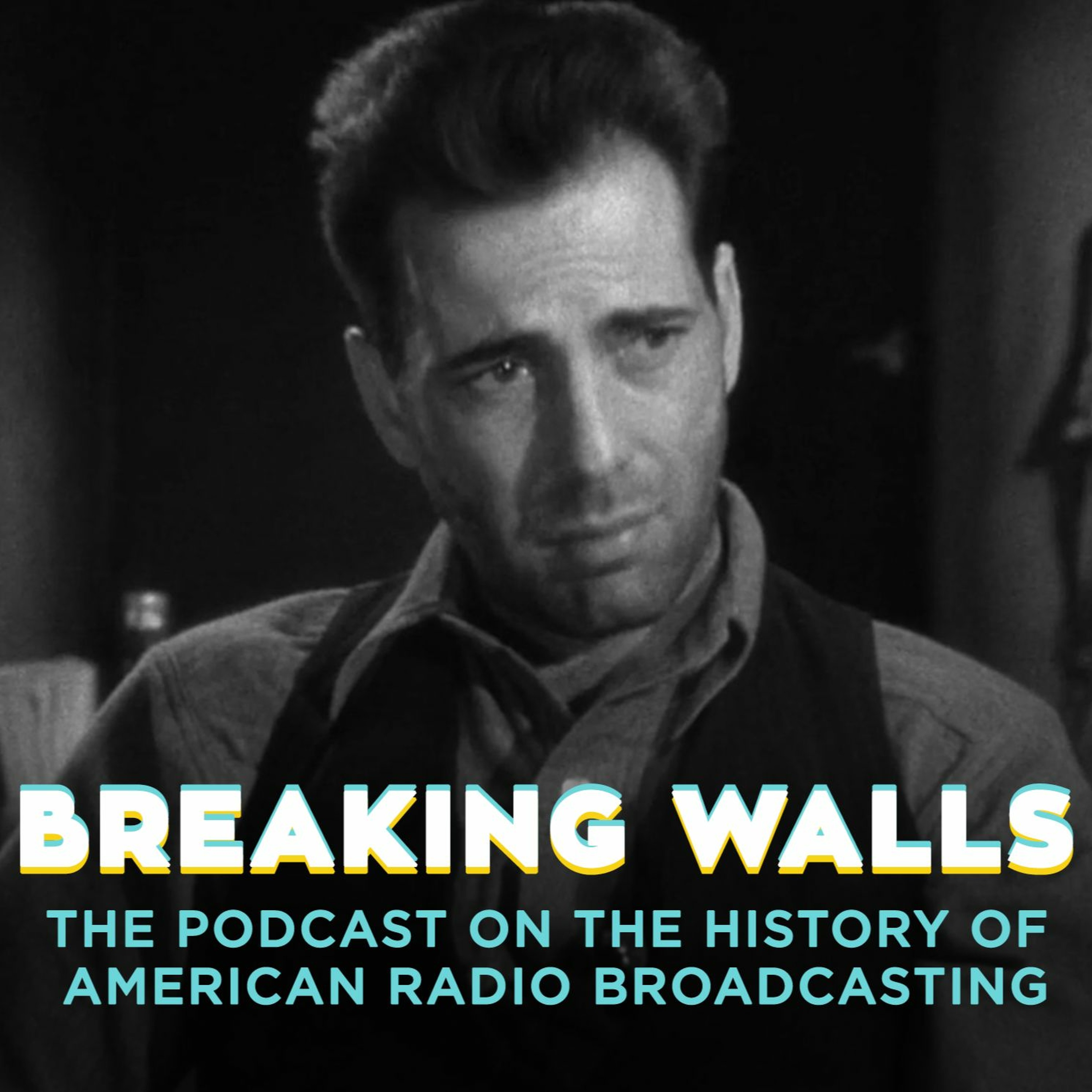
Humphrey Bogart was born to Belmont Bogart and Maud Humphrey on Christmas Day, 1899 in New York City. The eldest child, his father came from a long line of Dutch New Yorkers, while his mother could trace her heritage back to the Mayflower. Belmont was a surgeon, while Maud was a commercial illustrator and suffragette. Young Humphrey was sometimes the subject of her artwork—a detail that got him teased in school. Maud earned over fifty-thousand dollars per year at the peak of her career. They lived in an Upper West Side apartment, and had land on the Canandaigua Lake in upstate New York. Bogart and his two younger sisters watched as their parents — both career-driven — frequently fought and rarely showed affection to them. His mother insisted they call her Maud. Bogart remembered her as straightforward and unsentimental. Bogie inherited his father’s sarcastic and self-deprecating sense of humor, a fondness for the water, and an attraction to strong-willed women. He attended the prestigious Trinity School and later Phillips Academy. He dropped out of Phillips after one semester in 1918, deeply disappointing his parents. Bogart enlisted in the Navy in the Spring of 1918, serving as a Boatswain's mate. He later recalled, "At eighteen, war was great stuff. Paris! Sexy French girls! Hot damn!" He left the service on June 18th, 1919 with a pristine record. Bogart returned home to find his father’s health and wealth doing poorly. Bogart’s liberal ways also put him at odds with his family, so he joined the Coast Guard Reserve and worked as a shipper and bond salesman. Unhappy with his choices, he got a job with William A. Brady’s World Films. He was stage manager for daughter Alice Brady’s production of A Ruined Lady. He made his stage debut a few months later as a butler in Alice’s 1921 production of Drifting. He had one line, and remembered delivering it nervously, but it began a working relationship that saw Bogart appear in several of her productions. Bogart liked the hours actors kept and the attention they received. He was a man who loved the nightlife, enjoying trips to speakeasies. He later joked that he "was born to be indolent and this was the softest of rackets." The man never took an acting lesson, preferring to learn on the job. He appeared in at least eighteen Broadway productions between 1922 and 1935, playing juveniles or romantic supporting roles, more in comedy than anything else. While playing in Drifting at the Playhouse Theatre in 1922, he met actress Helen Menken. They married in May, 1926. They divorced eighteen months later, but remained friends. In April 1928, he married actress Mary Philips. Both women cited that Bogart cared more about his career than marriage. Broadway productions dropped off after the Wall Street Crash of 1929. Many actors were heading for Hollywood. Bogart debuted on film with Helen Hayes in The Dancing Town. He signed a contract with The Fox Film Corporation for seven-hundred-fifty dollars per-week. There he met Spencer Tracey. They became close friends. Tracy made his feature film debut in his only movie with Bogart, John Ford’s early sound film Up The River, from 1930. They played inmates. Bogart next appeared opposite Bette Davis and Sidney Fox in Bad Sister. Shuffling back and forth between Hollywood and New York and out of work for long periods, his father died in 1934. That year, Bogart starred in the Broadway play Invitation to a Murder. During rehearsal producer Arthur Hopkins heard the play from offstage and sent for Bogart, offering him the role of a lifetime. He cast Bogart as escaped murderer Duke Mantee in Robert Sherwood's The Petrified Forest.
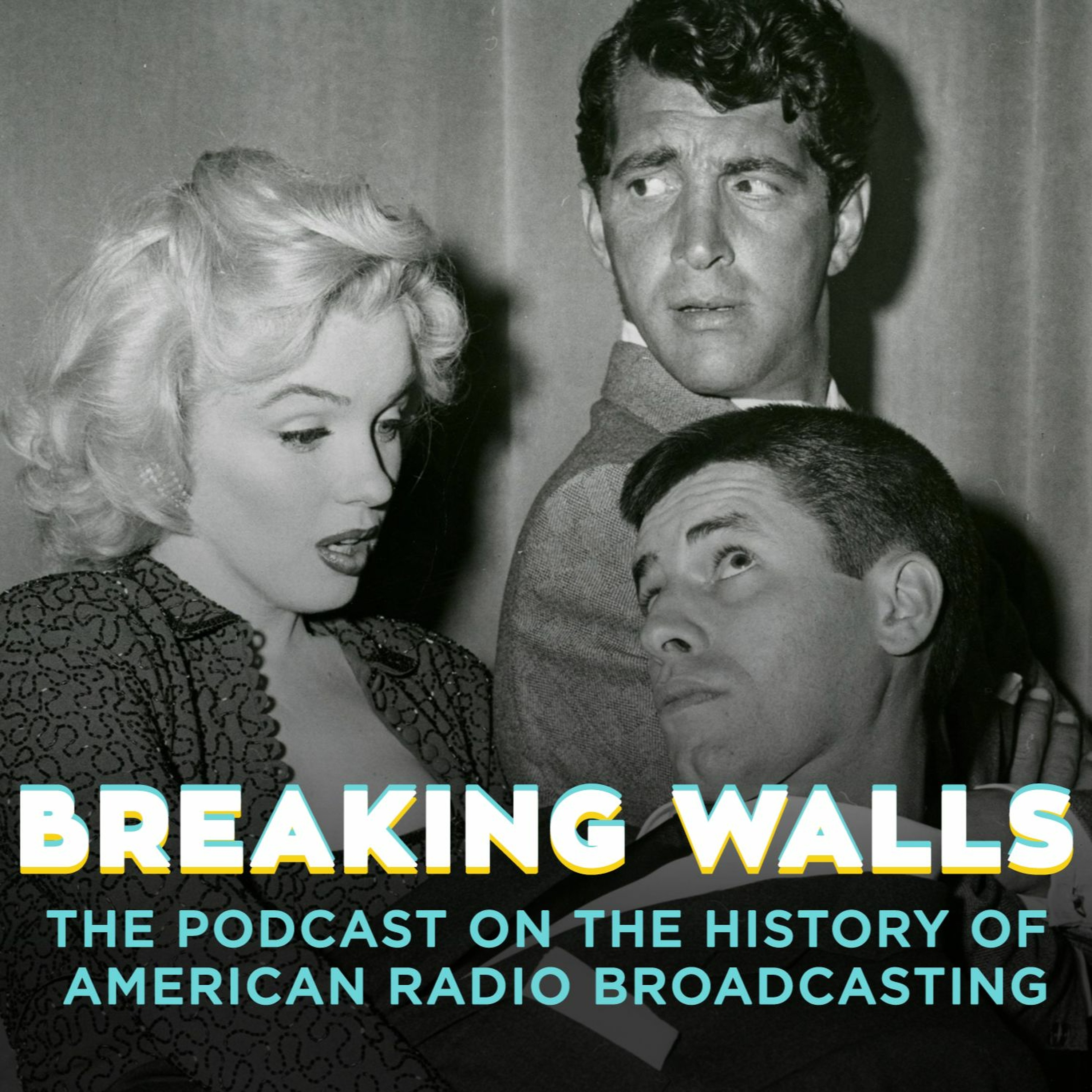
BW - EP139: Martin And Lewis with Marilyn Monroe & Frank Sinatra (1949 - 1953)
In Breaking Walls episode 139 we spotlight The Martin & Lewis show, and pay close attention to Frank Sinatra and Marilyn Monroe. —————————— Highlights: • Capital Gains and Thanksgiving on NBC • The Nightclub Act • Opportunity Flops • The My Friend Irma Movie • Dragnet • The Show Relaunches — Frank Sinatra Guests • Marilyn Monroe Makes a Rare Radio Appearance • Splitting, Then Reuniting • Looking ahead to Bogie —————————— The WallBreakers: http://thewallbreakers.com Subscribe to Breaking Walls everywhere you get your podcasts. To support the show: http://patreon.com/TheWallBreakers —————————— The reading material for today’s episode was: • On The Air — By John Dunning • Dean & Me: A Love Story — By Jerry Lewis • Everybody Loves Somebody Sometime (Especially Himself): The Story of Dean Martin and Jerry Lewis — by Arthur Marx • Network Radio Ratings — By Jim Ramsburg • Marilyn Monroe: The Biography — By Donald Spoto As well as articles from: • Billboard • The Cleveland Plain Dealer • LIFE Magazine • The Los Angeles Times • The New York Times • Variety —————————— On the interview front: • Jack Benny and Virginia Gregg spoke with Chuck Schaden. Hear these interviews at SpeakingofRadio.com. • John Gibson spoke to Dick Bertel and Ed Corcoran for WTIC’s The Golden Age of Radio. Hear these full interviews at GoldenAge-WTIC.org. • Both Frank and Nancy Sinatra Jr. spoke with Larry King. • Marilyn Monroe spoke with Dave Garroway for NBC’s Monitor in 1955. • Both Martin and Lewis spoke with Cedric Adams for WCCO in 1952. • Dean Martin spoke with Edward R. Murrow in 1958 and with Randi Oakes in 1984 • Jerry Lewis spoke with Sam Denoff for The Television Academy in 2000. —————————— Selected music featured in today’s episode was: • Hen Ferchetan — By Avi Avital • Memories Are Made of This — By Dean Martin • Manhattan Serenade — By Richard Alden —————————— A special thank you to Ted Davenport, Jerry Haendiges, and Gordon Skene. For Ted go to RadioMemories.com, for Jerry, visit OTRSite.com, and for Gordon, please go to PastDaily.com. —————————— Thank you to: Tony Adams Steven Allmon Orson Orsen Chandler Phil Erickson Jessica Hanna Perri Harper Thomas M. Joyce Ryan Kramer Earl Millard Gary Mollica Barry Nadler Christian Neuhaus Ray Shaw Filipe A Silva John Williams —————————— WallBreakers Links: Patreon - patreon.com/thewallbreakers Social Media - @TheWallBreakers
BW - EP139—009: Martin And Lewis With Monroe And Sinatra—Looking Ahead To Bogie
Well, that brings our look at The Martin & Lewis Show to a close. Incidentally, we’ll be staying with this energy next month. I mentioned earlier that Dean made films with The Rat Pack. Frank Sinatra was also a member. Some people called Frank the leader. Some others have incorrectly attributed him as the founder of this crew. But, our focus in Breaking Walls episode 140 will spotlight the true creator of The Rat Pack. Next time on Breaking Walls, we focus on Bogie, and Bacall too, when we spotlight the unsung radio career of Humphrey Bogart. —————————— The reading material for today’s episode was: • On The Air — By John Dunning • Dean & Me: A Love Story — By Jerry Lewis • Everybody Loves Somebody Sometime (Especially Himself): The Story of Dean Martin and Jerry Lewis — by Arthur Marx • Network Radio Ratings — By Jim Ramsburg • Marilyn Monroe: The Biography — By Donald Spoto As well as articles from: • Billboard • The Cleveland Plain Dealer • LIFE Magazine • The Los Angeles Times • The New York Times • Variety —————————— On the interview front: • Jack Benny and Virginia Gregg spoke with Chuck Schaden. Hear these interviews at SpeakingofRadio.com. • John Gibson spoke to Dick Bertel and Ed Corcoran for WTIC’s The Golden Age of Radio. Hear these full interviews at GoldenAge-WTIC.org. • Both Frank and Nancy Sinatra Jr. spoke with Larry King. • Marilyn Monroe spoke with Dave Garroway for NBC’s Monitor in 1955. • Both Martin and Lewis spoke with Cedric Adams for WCCO in 1952. • Dean Martin spoke with Edward R. Murrow in 1958 and with Randi Oakes in 1984 • Jerry Lewis spoke with Sam Denoff for The Television Academy in 2000.
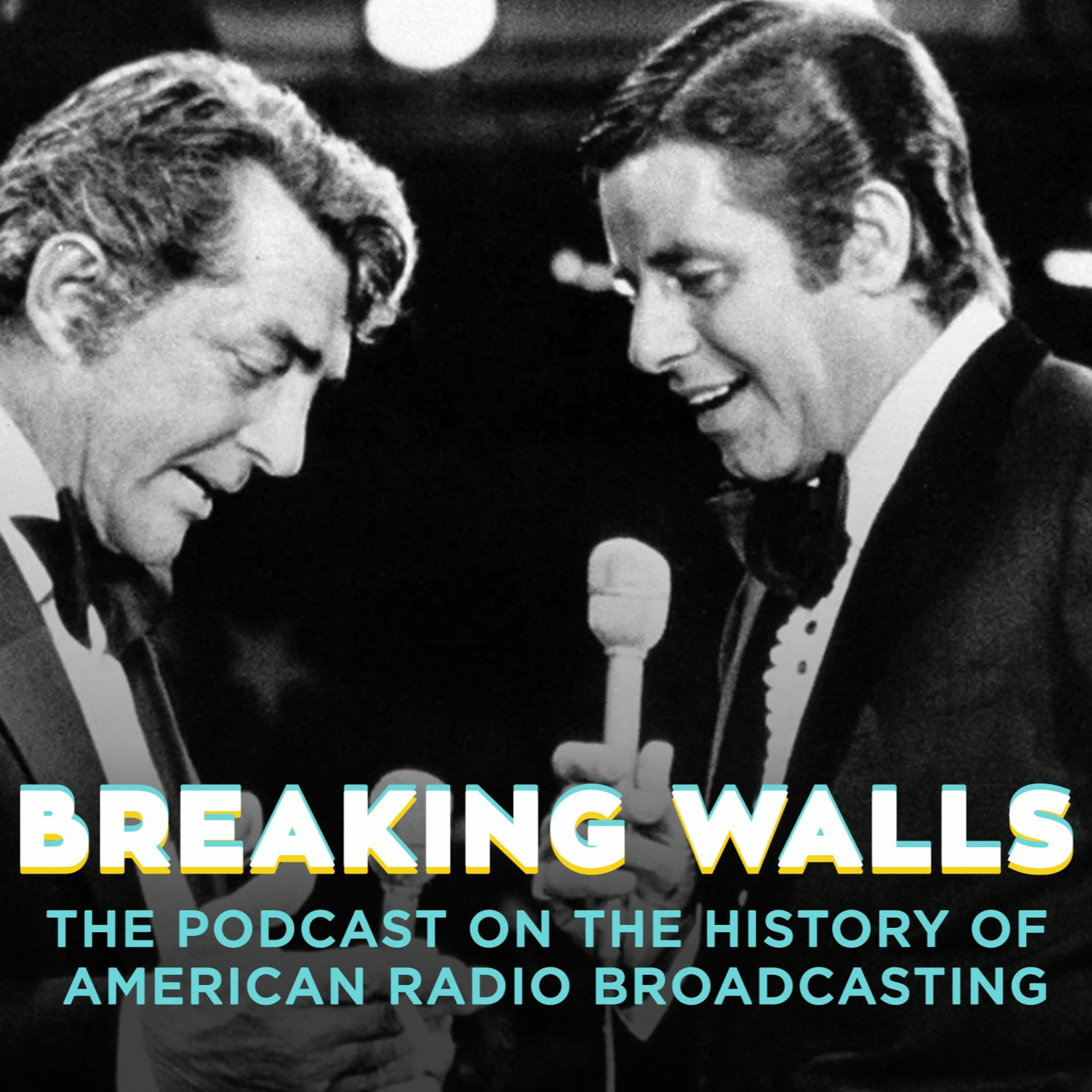
BW - EP139—008: Martin And Lewis With Monroe And Sinatra—Splitting Then Reuniting
By the summer of 1953 network radio was allocating increasing time to local affiliates. Budgets were shifting to TV. The final episode of The Martin & Lewis show aired on July 14th at 9PM eastern time. Gloria Graham was the guest. Opposite on CBS, Yours Truly Johnny Dollar aired starring John Lund. Dean and Jerry made six more films together. Their last was Hollywood Or Bust in 1956. During shooting in 1956, their mutual animosity reached the point where Lewis would only speak to Martin through director Frank Tashlin, and Martin told Lewis he was nothing but a dollar sign. After the film completed principal photography on June 19th, their breakup was widely reported. They fulfilled their contractual obligations with a farewell engagement at the Copacabana Club. Their last appearance was on July 25th, 1956, exactly ten years after their first teaming in Atlantic City. Dean Martin and Jerry Lewis didn’t speak again privately for twenty years. Although both continued to thank each other publicly, like in this Dean Martin interview with Edward R. Murrow from 1958. They crossed paths that year when Lewis was a guest on Eddie Fisher’s TV show. Martin jumped out from behind a curtain with a memorable line. The crowd—and Lewis—couldn’t contain their affection. Free from Lewis, Dean Martin became a huge star, both as a recording artist, as a movie actor on his own and as a member of the Rat Pack. He also hosted his own hugely successful TV variety series, The Dean Martin Show. Lewis remained with Paramount Pictures, appearing in and directing a succession of commercially successful films, at one point becoming Paramount's biggest star. He continued philanthropic work, which led to mutual good friend Frank Sinatra finally reuniting the duo on live TV during Jerry Lewis’ 1976 Labor Day telethon. They embraced, with Lewis in tears, and their friendship renewed. Both claimed they spoke every day from then on.
BW - EP139—007: Martin And Lewis With Monroe And Sinatra—Marilyn Monroe Makes A Radio Appearance
Marilyn Monroe broke through as an actress in 1950 with small, but acclaimed roles in All About Eve and The Asphalt Jungle. She was then a mistress of Johnny Hyde, head of the William Morris Agency. Hyde negotiated a seven year contract with 20th Century Fox and then unexpectedly passed away of a heart attack. In 1951, Monroe had supporting roles in three Fox comedies: As Young as You Feel, Love Nest, and Let's Make It Legal. With her star on the rise, she received several thousand fan letters a week, and was declared "Miss Cheesecake" by the army newspaper Stars and Stripes. In early 1952 as she began a much-publicized romance with ex-Yankee Joe DiMaggio, Monroe revealed she’d posed nude in 1949, thus getting ahead of the scandal and gaining sympathy from the public. She explained she’d been broke and needed the money and was soon featured on the cover of Life magazine as the "Talk of Hollywood." Gossip columnist Hedda Hopper declared her the "cheesecake queen" turned "box office smash." Wanting to improve her acting, she studied hard with Michael Chekhov. Two of Monroe's films — Clash by Night and Don't Bother to Knock — were released soon after to capitalize on public interest. The films showed her range, as Monroe played a fish cannery worker in the former and a disturbed babysitter in the latter. In Howard Hawks's Monkey Business, she played a secretary opposite Cary Grant. In O. Henry's Full House, with Charles Laughton, she appeared in a passing vignette as a nineteenth-century street walker. Monroe added to her sex symbol reputation by wearing a revealing dress when acting as Grand Marshal at the Miss America Pageant parade, and told gossip columnist Earl Wilson that she usually wore no underwear. By the end of the year, gossip columnist Florabel Muir named Monroe the "it girl" of 1952. When Niagara was released in January 1953, women's clubs protested it as immoral. In some scenes, Monroe's body was covered only by a sheet or a towel, considered shocking by contemporary audiences. The film’s most famous scene is a long shot of Monroe from behind walking with hips swaying. Audiences turned out in droves. The next month, Marilyn Monroe was the guest of Dean and Jerry’s February 24th, 1953 episode.
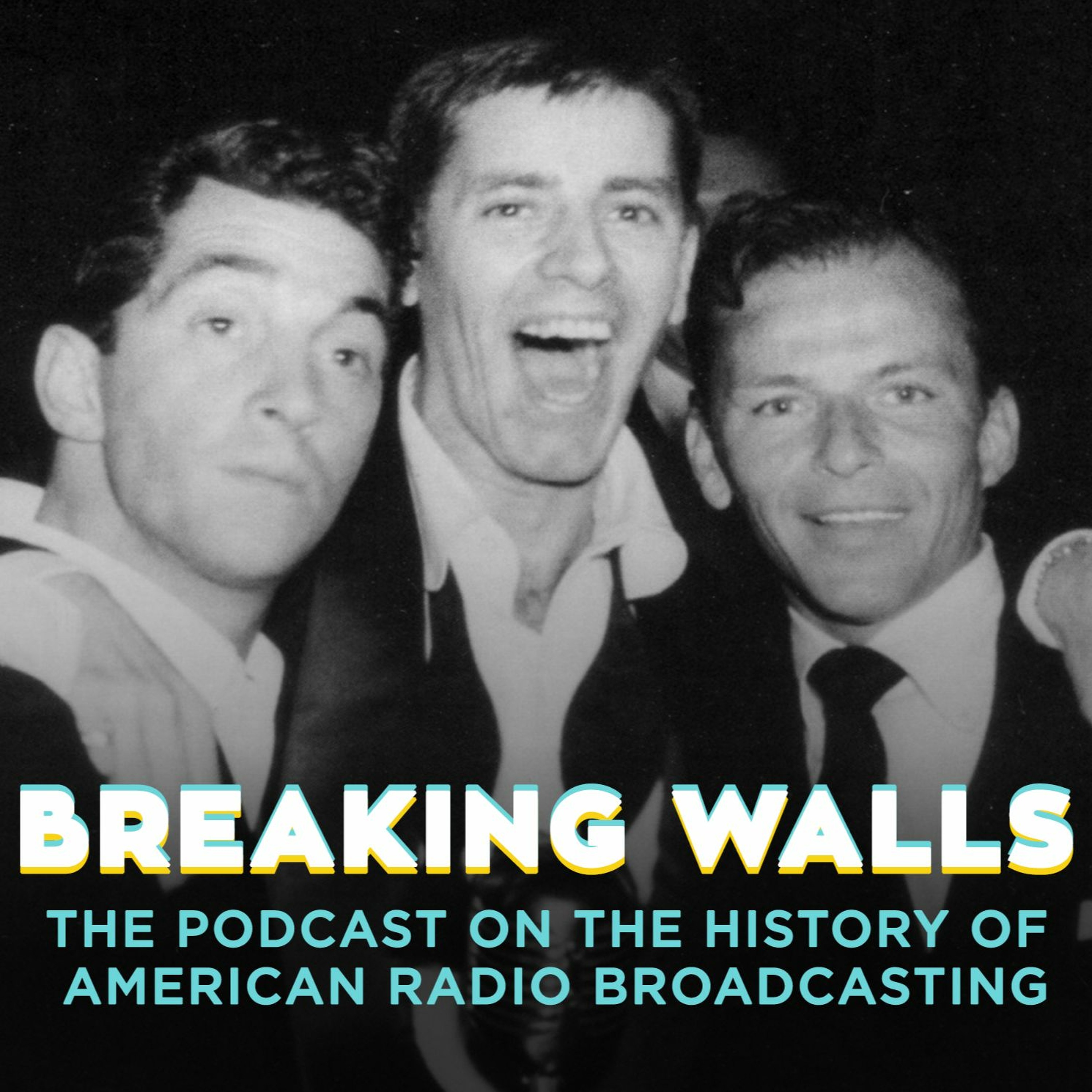
BW - EP139—006: Martin And Lewis With Monroe And Sinatra—Frank Sinatra Guest Stars
On Sunday November 5th, 1950 at 6PM, NBC launched a new ninety-minute star-studded program called The Big Show. Each episode cost over one-hundred-thousand dollars to produce. Hopes were high. Martin and Lewis appeared twice. This is from the December 17th broadcast. They also became regulars on TV’s Colgate Comedy Hour, which had over sixty-million million weekly viewers. By the summer of 1951, Martin and Lewis had scored with blockbuster films in That’s My Boy and The Stooge, and a sell-out touring act. LIFE Magazine reported tour audience members refused to leave. They began doing free shows afterwards on their hotel fire escapes. The streets were jammed with onlookers. Abby Greshler booked appearances on NBC-TV’s Colgate Comedy Hour, but it still bothered the pair that they’d flopped in radio. They wanted another chance. NBC hired Ed Simmons and Norman Lear—Martin & Lewis’ comedy writers—to write the new program. Dick Mack was the director. NBC offered it as part of their new multi-sponsor experiment called Operation Tandem. Chesterfield Cigarettes, Anacin Tablets, and the makers of Chiclets gum signed on. The new show premiered on October 5th, 1951 to great reviews. Dinah Shore was the guest star. In 1951, Frank Sinatra, at a low point in his career, didn’t make a single significant appearance on radio. Rejected by Hollywood, he turned to Las Vegas and made his debut at the Desert Inn in September. Sinatra became one of Las Vegas's pioneer entertainers. Frank’s first wife, Nancy, filed for divorce. It became final on October 29th, 1951. Daughter Nancy Jr. remembered that time. Frank and Ava Gardner were married in a small ceremony less than two weeks later on November 7th. In financial difficulty following his divorce and career decline, Sinatra was forced to borrow $200,000 from Columbia to pay his back taxes. On Friday, January 18th, 1952 The Martin & Lewis Show took to the air with good friend Frank Sinatra as the guest of honor. This particular episode was a forty-five minute special. This episode’s rating was a 6.0. The overall season rating was 5.5. This is Your F.B.I. over ABC won the 8:30 time slot with a 7.2. Opposite on TV, NBC telecast We The People, and CBS’ Man Against Crime starring Ralph Bellamy pulled a rating of 32. For more information on the career of Frank Sinatra, tune into Breaking Walls episode 85. Even with audiences leaving for TV, Readers of TV-Radio Life voted The Martin & Lewis Show their favorite comedy show of 1952, while the two made the films Jumping Jacks and Sailor Beware.
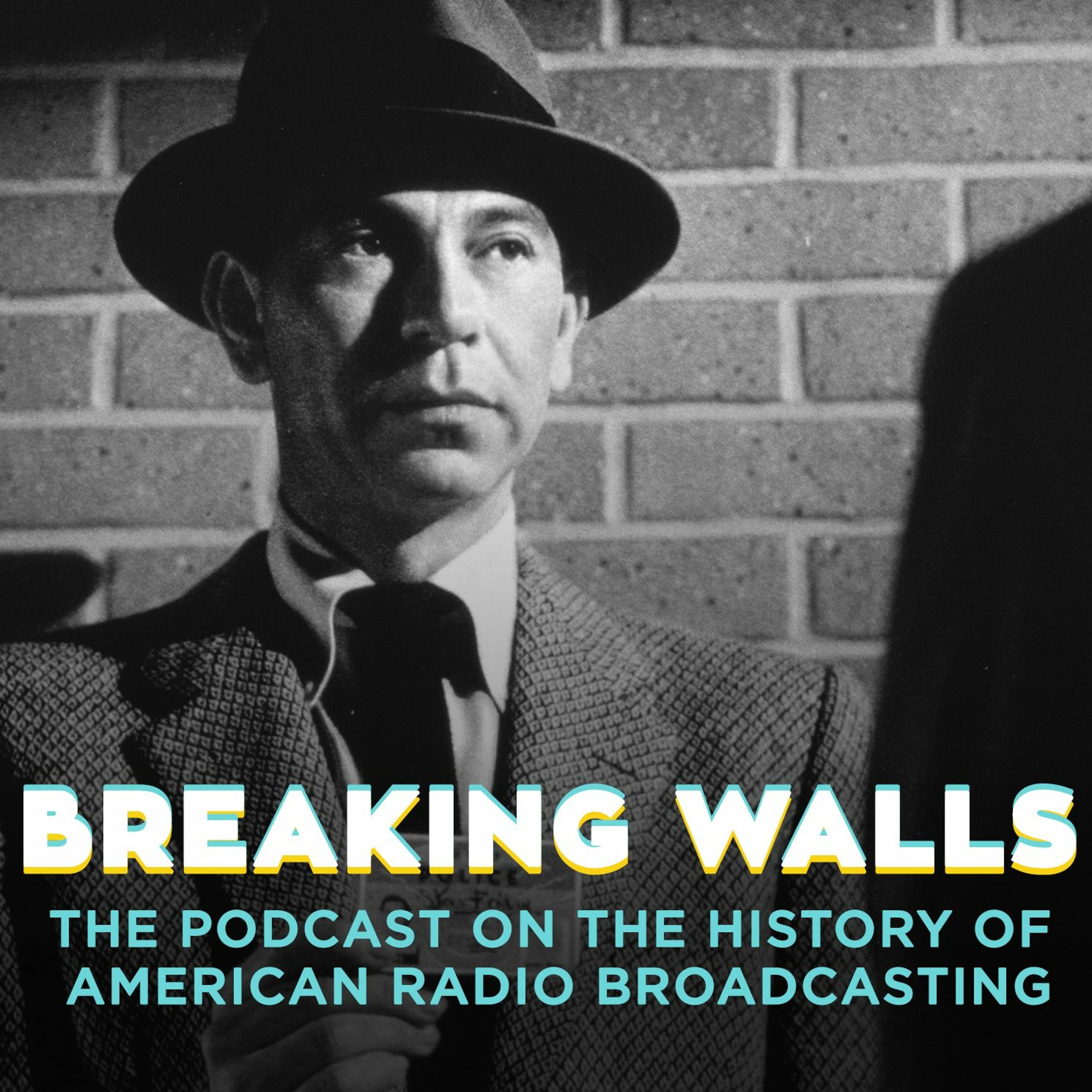
BW - EP139—005: Martin And Lewis With Monroe And Sinatra—Dragnet
The U.S. spent the first ten months of 1949 in a recession. Competition for the advertising dollars was stiffer. There were now over two-thousand-six-hundred AM and FM stations. Television was becoming a serious threat. Over a hundred TV stations were on the air. Only two Network Radio shows had a rating higher than 20. Just two years earlier, there were fifteen. Radio’s average Top 50 ratings dropped 30% to its lowest level since 1937. Suddenly the reality of radio drama’s demise was staring men and women in the face, like the just-heard John Gibson who played Ethelbert on Casey, Crime Photographer. Meanwhile, NBC, ABC, CBS, and the Dumont Network reported a combined TV income of $29.4 Million. But advertisers were learning that TV production costs were much greater than radio’s. The extra money had to come from somewhere and radio budgets were the likely source. Seven of radio’s top nine shows now aired on CBS, but that’s not to say there weren’t NBC radio successes. Jack Webb’s Dragnet premiered coast-to-coast on Friday June 3rd, 1949 at 10PM eastern time over NBC. It featured some of Hollywood radio’s most talented character actors, like the just-heard Virginia Gregg. It wasn’t long before Liggett and Myers tobacco signed on as sponsor. CBS took notice. A month after Dragnet’s premiere, they shifted Broadway is My Beat to Hollywood and put it under Elliott Lewis’ direction. For more information on the launch of Dragnet, tune into Breaking Walls episode 111. For more information on Elliott Lewis, tune into Breaking Walls episode 113.
BW - EP139—004: Martin And Lewis With Monroe And Sinatra—The My Friend Irma Movie
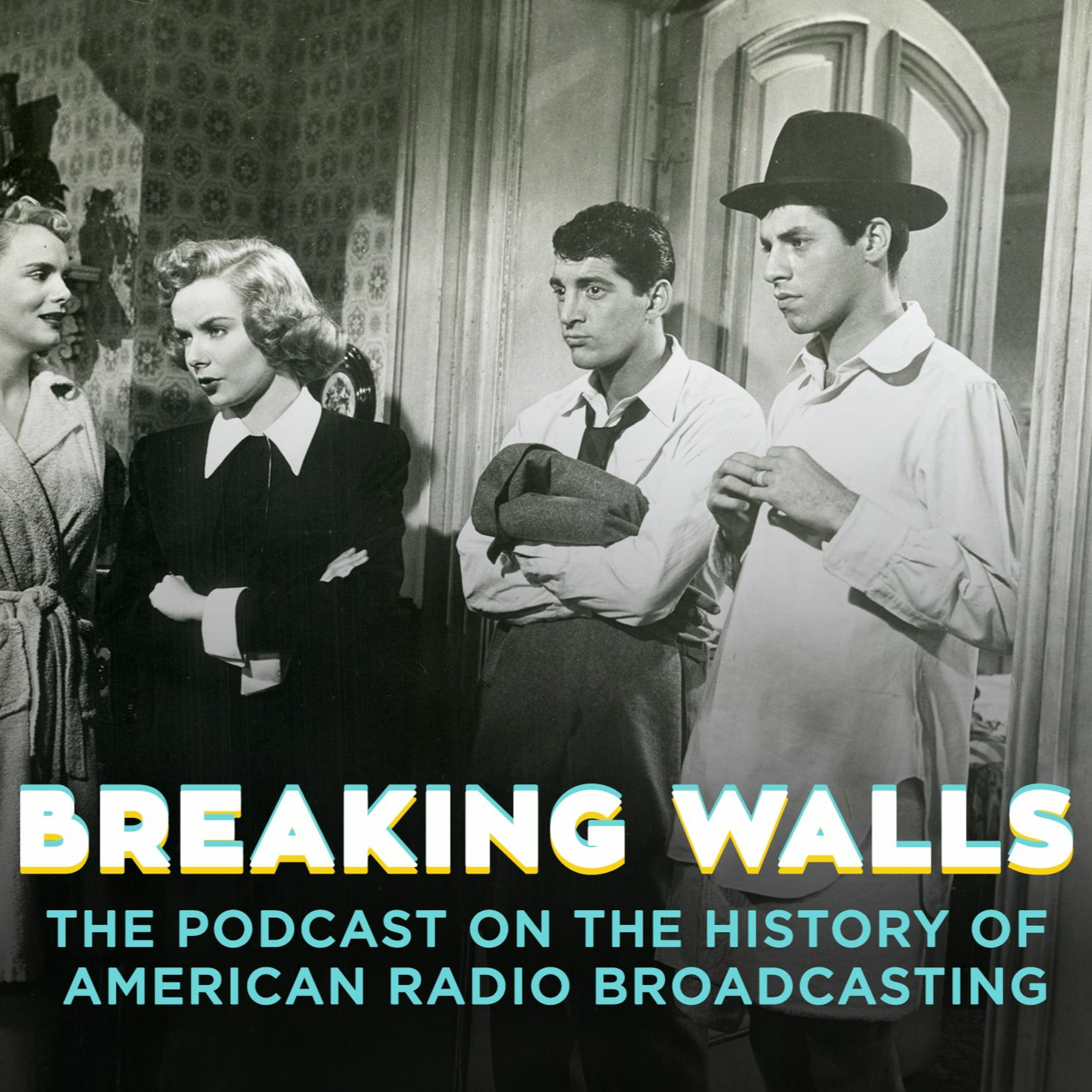
Although their radio show got canceled, Martin and Lewis were concurrently guest-appearing in a My Friend Irma film. Irma was one of CBS’ top shows starring Marie Wilson. The movie debuted on August 16th, 1949. Critics panned everything about the film, except Martin and Lewis, and the duo continued to be a smash at live shows. NBC brought the program back on Friday October 7th 1949. The network had to allow the duo to plug their CBS-inspired film on air. Thirteen additional weeks with no sponsorship ensued. NBC claimed fourteen sponsors wanted the duo as a TV show, but Dean and Jerry wanted to make it on radio first. Radio and TV Life called them blind. They were a hit with all the live crowds, but something was missing over the air. NBC seemingly canceled them for good on January 30th, 1950.
BW - EP139—003: Martin And Lewis With Monroe And Sinatra—Opportunity Flops
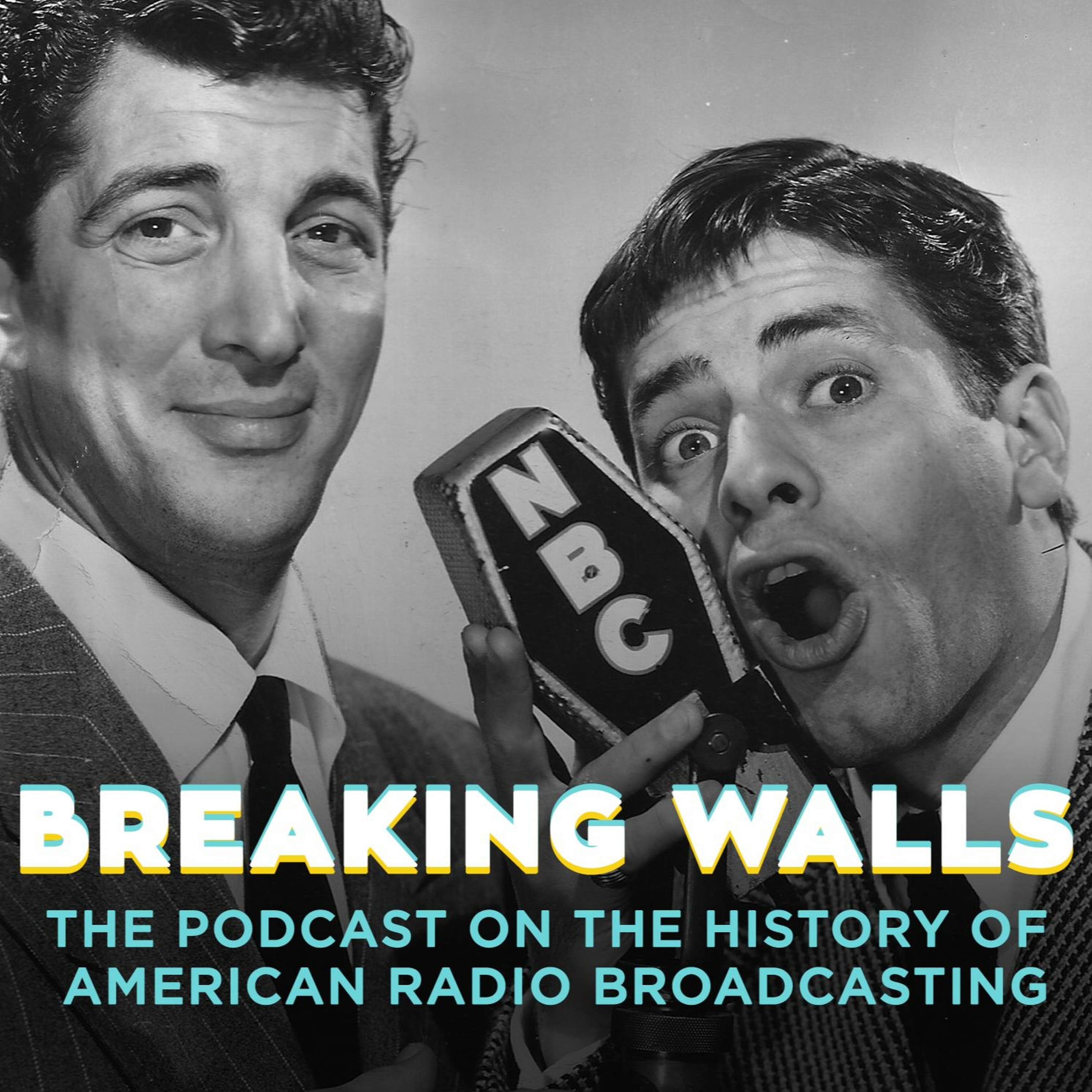
As part of NBC’s programming development, One-point-five Million dollars was allocated towards new shows. The network’s first major signing was Dean Martin and Jerry Lewis. In August of 1948 they made their Hollywood debut at Slapsie Maxie’s. They were soon guest-starring on Milton Berle’s TV show, and other comedians thought their Elgin appearance groundbreaking. On December 22nd the duo recorded an audition with Bob Hope. Hope recorded a new set with Martin & Lewis on March 24th, 1949. Things quickly fell apart as the trio couldn’t help but adlib. NBC picked the series, marketing the team as the next big sensation in radio. Their agent, Abby Greshler, negotiated a great deal with Paramount’s Hal Wallis. They’d receive seventy-five thousand dollars for films and were free to do one outside film a year, which they would co-produce through their own York Productions. The duo also had complete control of their club, radio, and TV appearances, as well as their recording contracts. In the lead up to the premiere of their radio show, Martin and Lewis appeared on the March of Dimes, the Chesterfield Supper Club, the Sealtest Variety Theatre, and The Bob Hope Show. The Martin & Lewis Show finally debuted on April 3rd, 1949. Their first guest was Lucille Ball. It has a similar script to the audition recorded with Bob Hope. But The Martin & Lewis Show was a flop. No sponsor was interested in advertising such a visual team on a sound-only medium. They switched broadcasting locations from Hollywood, to New York, then back to Hollywood. They also brought in new writers and characters. Nothing worked. NBC pulled the plug after the September 6th broadcast.
BW - EP139—002: Martin And Lewis With Monroe And Sinatra—The Nightclub Act
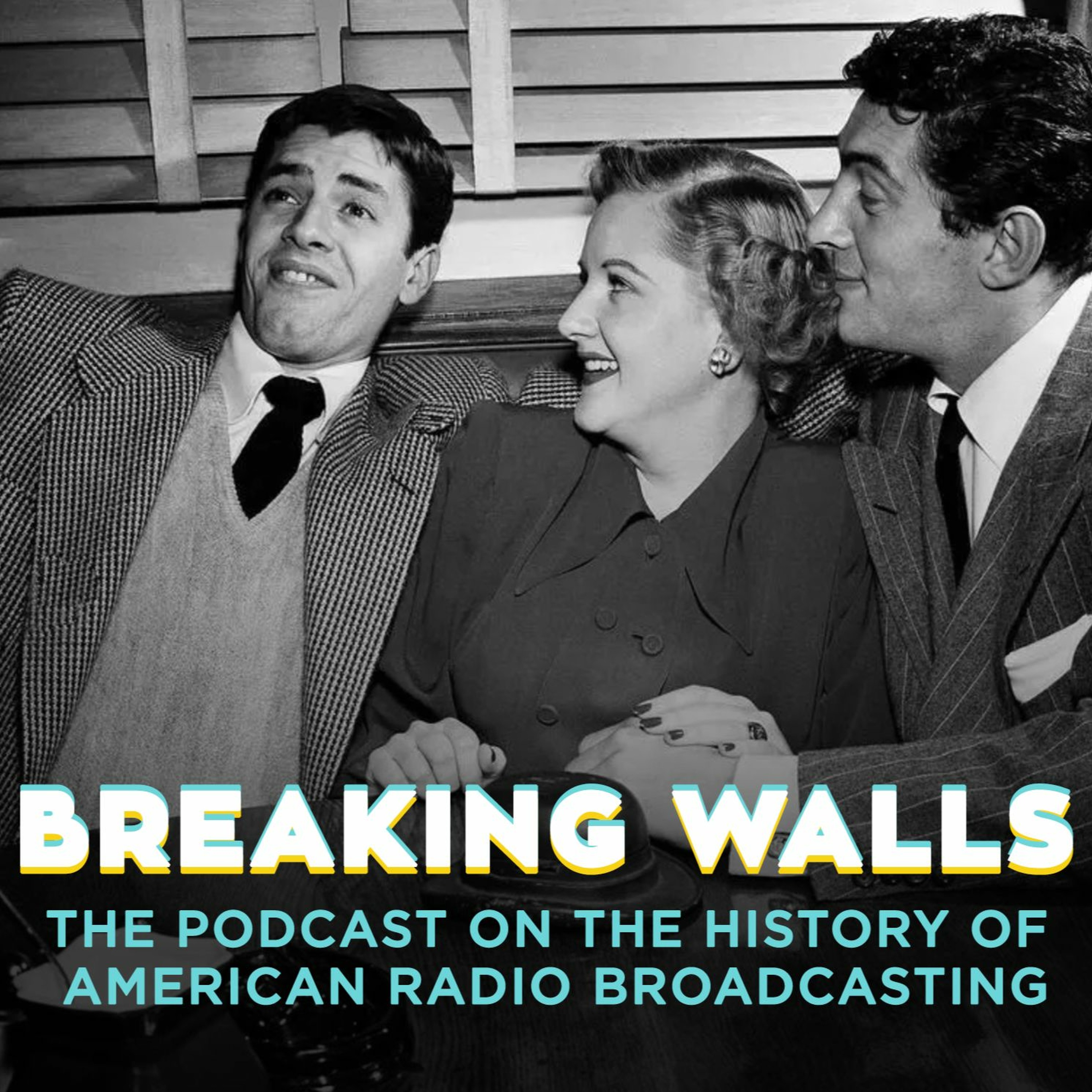
Jerry Lewis was born Jerome Joseph Levitch on March 16th, 1926 in Newark, New Jersey. His father was a Vaudevillian and his mother was a pianist for WOR. By fifteen, Lewis had developed a "Record Act", miming lyrics to songs while a phonograph played offstage. To supplement his income he worked as a soda jerk at the Paramount Theater while he honed his act. In 1943, Lewis met singer Dino Paul Crocetti thanks to Frank Sinatra’s mother Dolly. They became friends. Dino Crocetti was born on June 7th, 1917 in Steubenville, Ohio. He spoke only Italian until age five, got bullied for his broken English in school, and eventually dropped out in the tenth grade. By fifteen Crocetti had bootlegged liquor, worked in a steel mill, served as a croupier at a speakeasy, and was a welterweight boxer. Boxing got him, among other things, a broken nose and a scarred lip. He’d later get the nose fixed. Dino then worked as a roulette stickman in an illegal casino behind a tobacco shop, and started singing with local bands, calling himself "Dino Martini." By late 1940 he had begun singing for Cleveland bandleader Sammy Watkins, who suggested he change his name to Dean Martin. In the fall of 1943 he’d begun performing in New York, but was drafted into the military during World War II. Dean served fourteen months before being discharged due to a hernia. Although they were friends for more than a year, Dean and Jerry didn’t officially team up until debuting at Atlantic City's 500 Club as Martin and Lewis on July 25th, 1946. The highlights of their act included Lewis heckling Martin while he was trying to sing, which ultimately led to them chasing each other around the stage. People loved their improvisational style. And Lewis knew that Martin was his comic equal. Martin and Lewis’ success at the 500 Club led to a series of well-paying engagements along the Eastern Seaboard, culminating with a run at New York's Copacabana Club. Almost overnight, the two were the biggest smash hit in clubs across the country.
BW - EP139—001: Martin And Lewis With Monroe And Sinatra—Capital Gains
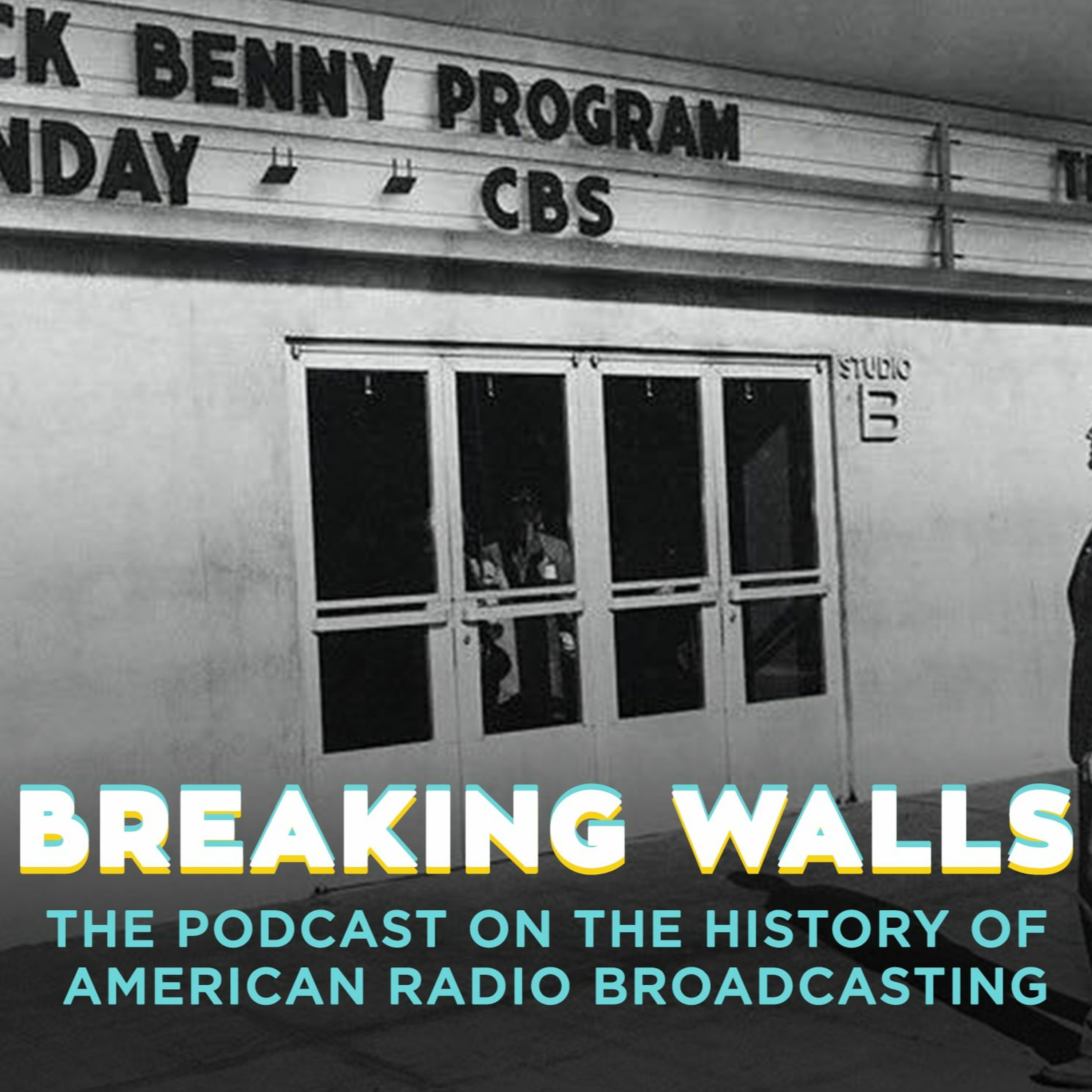
It’s 4PM eastern time on November 25th, 1948. Elgin Watches annual Thanksgiving Day special is on the air from NBC’s KFI in Hollywood. Don Ameche is the emcee. Ken Carpenter is announcing. This November Radio ratings are robust. Eleven shows have ratings higher than twenty points, and Lux Radio Theatre’s 33.2 is the most listened-to show on the air. But a major shift is about to happen just as the TV era launches. In 1948 comedian Jack Benny organized his activities into a corporation. At that time American individuals were taxed seventy-seven percent on all income over seventy thousand dollars. Benny’s hope was to secure a deal with NBC for his company, so that he could be taxed under capital gains laws at 25%. NBC’s parent company was the Radio Corporation of America. Their head, David Saroff, refused. Amos N’ Andy were the first to secure such a deal. They jumped to CBS in October of 1948. Then Lew Wasserman and Taft Shreiber—President and VP of The Music Corporation of America, called head of CBS William Paley to see if he was interested in a similar deal for Jack Benny. In November, David Sarnoff got word and sent NBC president Niles Trammel to California with orders to keep Benny at NBC, but Sarnoff refused to be there. William Paley flew to LA to meet in person, agreeing for CBS to buy Benny’s corporation for $2.26 Million. NBC responded by doubling their offer. However, Lew Wasserman again intervened, obtained the NBC contract, changed every mention of NBC to CBS, and re-offered the deal to Benny, who then signed it. Although Benny was signed, Paley next had to convince Benny’s sponsor American Tobacco to make the move. He did so by guaranteeing that CBS would pay the cigarette giant three thousand dollars per week for every ratings point lost after the migration. Floored that Paley would offer this, all parties agreed immediately. On Thanksgiving in 1948, William Paley had plenty to be thankful for. While Jack Benny was appearing on NBC for this Elgin Special, CBS announced on their evening news that The Jack Benny Program would be jumping to CBS. When asked that evening by the United Press, Benny declined to comment. It touched off a firestorm between the two networks. NBC claimed any such deal was unlawful. David Sarnoff said “leadership built on a foundation of solid service can’t be snatched overnight by a few high-priced comedians. Leadership is no laughing matter.” It was the biggest mistake of Sarnoff’s career. Jack Benny left NBC at the end of the year. Edgar Bergen too. There was suddenly a glaring hole in NBC’s Sunday night lineup. Between Benny and Bergen, NBC would need to replace roughly forty-five million listeners come January. In 1949, Burns and Allen, and Bing Crosby followed to CBS. NBC’s desperation created major opportunities. Among those to benefit were a comedic duo who’d been selling out nightclubs all over the country. Their names were Dean Martin and Jerry Lewis.
BW - EP138: Baseball Memories From Radio History (1921 - 1972)
In Breaking Walls episode 138 in honor of opening day, we’ll share stories, and sounds from Baseball history and the radio. —————————— Highlights: • Dots and Dashes • The Babe • Mel Allen • Dizzy • The War • Jackie • The Death of Babe Ruth • Baseball Radio Drama • The Shot Heard Round The World • Westward Ho! • The TV Era and the Death of Jackie Robinson • Looking Ahead To May with Frank, Dean, Jerry, and Marilyn —————————— The WallBreakers: http://thewallbreakers.com Subscribe to Breaking Walls everywhere you get your podcasts. To support the show: http://patreon.com/TheWallBreakers —————————— The reading material for today’s episode was: • On The Air — By John Dunning • The Voice: Mel Allen’s Untold Story — By Curt Smith • Those Great Old-Time Radio Years — By Aubrey J. Sher As well as countless other references and websites for baseball stats and history. —————————— On the interview front: • Mel Allen and Vincent Price spoke to Dick Bertel and Ed Corcoran for WTIC’s The Golden Age of Radio. Hear these full interviews at GoldenAge-WTIC.org • Vincent Price also spoke to Chuck Schaden. Hear this interview at SpeakingofRadio.com • Red Barber and Ben Gross spoke to Westinghouse for their anniversary special in 1970 • Red Barber spoke for Please Stand By in 1986 • Red Barber and Phil Rizzuto spoke to CBS for their Fiftieth Anniversary Special in 1977 • Marilyn Monroe spoke to Dave Garroway for NBC’s Monitor in 1955. —————————— Selected music featured in today’s episode was: • Take Me Out To the Ball Game — By Dorris Day and Frank Sinatra • Love Echoes in the Pine Hills — By George Winston • Someone To Watch Over Me — By Rosemary Squires & The Ken Thorne Orchestra • Swing Into Spring — By Benny Goodman • I’m a Fool To Want You — By Billie Holiday • Battle Cry of Freedom and Steal Away — By Jacqueline Schwab • The Colorado Trail, Opus 28 Fantaisie for Harp — By Elizabeth Hainen • There Used to Be A Ballpark — By Frank Sinatra • The First Baseball Game — By Nat King Cole • Danse Macabre — By Camille Saint-Saens —————————— A special thank you to Ted Davenport, Jerry Haendiges, and Gordon Skene. For Ted go to RadioMemories.com, for Jerry, visit OTRSite.com, and for Gordon, please go to PastDaily.com. —————————— Thank you to: Tony Adams Steven Allmon Orson Orsen Chandler Phil Erickson Jessica Hanna Perri Harper Briana Isaac Thomas M. Joyce Ryan Kramer Earl Millard Gary Mollica Barry Nadler Christian Neuhaus Aimee Pavy Ray Shaw Filipe A Silva John Williams —————————— WallBreakers Links: Patreon - patreon.com/thewallbreakers Social Media - @TheWallBreakers
BW - EP138—012: Baseball Memories From Radio History—Looking To May W/ Frank, Dean, Jerry, & Marilyn
Well, that brings our episode of baseball stories to a close. But speaking of heroes and heroines. Next time on Breaking Walls, it’s the 1950s and four people are taking the world by storm for different reasons. We’ll cover all four of them under the guise of one show. Who are the four? Dean Martin, Jerry Lewis, Frank Sinatra, and Ms. Marilyn Monroe.
BW - EP138—011: Baseball Memories From Radio History—The TV Era And The Death Of Jackie Robinson
Radio ratings peaked in 1948 and the networks used excess profits to help launch TV. By 1950 NBC, CBS, and ABC were filling their entire primetime TV schedule. After eighteen years as one of radio’s highest-rated weekly shows, the just-heard Fibber McGee and Molly began airing five nights per week for fifteen minutes on October 5th, 1953. As America moved west after World War II, turning farms into suburbs and western towns into cities, the pattern of radio listening was changing. The desire to expand the Major Leagues into new cities gained traction thanks to an upstart league known as The Continental League. In order to block its entry into the marketplace, Major League Baseball finally expanded in 1961. When the Washington Senators moved to Minnesota before the ‘61 season to become the Twins, Washington received a new Senators franchise. Thanks to the success of the Dodgers, The American League added the Los Angeles Angels, upping the junior circuit to ten teams. The following year, the National League added two new teams: The Colt 45s, who, in 1964 changed their name to the Astros, and the New York Metropolitans, colloquially known as the Mets. One by one, old ballparks were being torn down—Ebbets field in 1960, The Polo Grounds in 1964. Both sites are now occupied by housing projects. New stadiums were often multipurpose —able to accommodate both football and baseball. Like with baseball, how America got its entertainment was also changing. By 1960, scripted radio drama was dying out as shows either moved to TV or were canceled. Although baseball would still be broadcast on the radio, fans now tuned into TV for their favorite games. A new generation of sportscasters emerged, like former Yankees shortstop Phil Rizzuto. He called Roger Maris’ record-breaking sixty-first home run at Yankee Stadium on October 1st, 1961. Rizzuto had a respectable playing career—winning the 1950 AL MVP award, but it was his work as a Yankees announcer that got him voted into the MLB Hall Of Fame in 1994. In 1956, while the Dodgers were still in Brooklyn, Jackie Robinson was putting the finishing touches on his remarkable career. That December 13th, the Dodgers traded Robinson to the Giants for Dick Littlefield and thirty-thousand dollars. Jackie Robinson opted to retire. Within a few years he was hosting his own syndicated radio show, Jackie Robinson’s Radio Shots. In 1960, he interviewed perhaps the most famous African-American pitcher in history, Satchel Paige. Jackie Robinson was elected to the Baseball Hall of Fame in 1962. Robinson was also the first African-American television analyst in MLB history, and the first African-American vice president of a major corporation, Chock full o'Nuts. On October 15th, 1972, at the second game of the World Series between the Oakland Athletics and the Cincinnati Reds, at Cincinnati’s Riverfront Stadium, Jackie Robinson was invited to throw out a ceremonial first pitch in honor of his twenty-five years of service to Major League Baseball. Complications from heart disease and diabetes made him almost blind by middle age. He used the opportunity to make one last statement to the baseball establishment. It would be Jackie Robinson’s last public appearance. Jackie Robinson died nine days later at his home. He was fifty-three. His Manhattan funeral service attracted twenty-five hundred mourners. Many of his former teammates were pallbearers. Reverend Jesse Jackson delivered the eulogy. On April 15th, 1997, the fiftieth anniversary of Jackie Robinson’s first game at Ebbets Field in Brooklyn, Major League Baseball unanimously retired Robinson's number forty-two across the league. He is the only man to receive such an honor.
BW - EP138—010: Baseball Memories From Radio History—Westward Ho!
In 1954, it took a historic season to dethrone the Yankees who were five-time defending world champions. Although they won one-hundred three games, the Cleveland Indians won a then-American League record one-hundred eleven. The Indians were led by Center Fielder Larry Doby, the first African-American player in the AL, Third Basemen Al Rosen, and slugger Vic Wertz. Their pitching staff was anchored by Early Wynn, Bob Lemon and Bob Feller. In the National League, the pennant winners were the underdog New York Giants, who won ninety-seven games, once again beating out the Brooklyn Dodgers. The Giants drew 1.15 million fans to the Polo Grounds, second in the National League. Built in a hollow overlooking Coogan’s Bluff near the western shore of the Harlem River in the Washington Heights section of Manhattan, a Polo Grounds ballpark had been on this site since 1890. The quirky park was shaped like a bathtub. It was only two-hundred-eighty feet from home plate down the left field line, and only two-hundred-sixty feet down the right. Center field however was over four-hundred-eighty feet away. But, the surrounding neighborhood was changing and Giants owner Horace Stonham began to wonder if he could draw more fans elsewhere. In the eighth inning of game one, the score was tied at two. Cleveland’s Al Rosen and Larry Doby had both reached base on Giants pitcher Sal Maglie. Vic Wertz came up to bat. Wertz hit a ball to deep center field, where Giants superstar Willy Mays was playing. Mays ran straight backwards and caught the ball over his shoulder with his back to the field. Later nicknamed “the catch,” it changed the entire complexion of the series. The Giants would go on to sweep the Indians to claim the 1954 World Series title. It would be their last World Championship in New York. Baseball’s economic model was changing. As great as the Yankees were, their dominance over the game created a league problem. The G.I. Bill was bringing families to the suburbs in the 1950s — and most of these families were white — radio and TV were embedding deeper into local markets. Major League cities were struggling to support two teams. After the 1952 season, the National League’s Boston Braves, unable to compete with the Red Sox, moved to Milwaukee and won the World Series in five years. The AL St. Louis Browns moved to Baltimore after the 1953 season and became the Orioles, where they won 6 American League pennants in their first thirty years. The next year the Philadelphia Athletics moved to Kansas City, where they would remain until moving again, to Oakland, in 1968. Oakland won three consecutive championships in the 1970s. Although fans of every other team loved to hate the Yankees, the franchise was a lightning rod for celebrities and other heroes. Throughout the years Mel Allen had many interesting guests in the booth, like noted Pirates fan Bing Crosby. The team the Yankees often defeated in the World Series? The Brooklyn Dodgers, who lost to the Yankees in 1941, 1947, 1949, 1952, and 1953. In 1955 the tide finally turned and the Bums from Brooklyn became World Champions. Later, retired Hall of Fame player and then broadcaster Frankie Frisch was inside the Brooklyn Dodgers clubhouse speaking to the victorious team. Two years later, owner Walter O’Malley was in a dispute with New York City Park’s Commissioner Robert Moses. Ebbets Field, open since 1913 was falling apart. The success of the Dodgers, and the population explosion in Brooklyn had made Ebbets Field too small. The 1957 seating capacity was a tiny thirty-two thousand. Yankee Stadium could seat nearly double. O’Malley wanted to build a stadium at the intersection of Flatbush and Atlantic Avenues in Brooklyn. Robert Moses wanted the team moved to Flushing Meadows–Corona Park in Queens.
BW - EP138—009: Baseball Memories From Radio History—The Shot Heard Round The World
1951 seemed like the season it would all finally come together in Brooklyn. The Dodgers were led by Catcher Roy Campanella, First baseman Gil Hodges, Outfielder Duke Snider, and now second-baseman, Jackie Robinson. Through one-hundred sixteen games, Brooklyn had seventy wins. On August 11th the New York Giants trailed the Dodgers in the standings by thirteen games. Then, Giants manager Leo Durocher put coach Herman Franks in the Polo Grounds offices in the Giants’ clubhouse beyond center field. His objective was to steal opposing catchers’ signals. Franks used a telescope to relay signs through an electrical-buzzer system to the Giants’ bullpen. From there, the signs would be flashed to the Giants’ hitters. The Giants won thirty-seven of forty-four games down the stretch. It forced a tie with the Dodgers in the standings. A three game series was announced to decide the winner of the pennant. At Ebbets field in Game 1, Giants pitcher Jim Hearn out-dueled Dodgers starter Ralph Branca, and the Giants won three to one behind solo home runs from Andy Pafko, Bobby Thomson, and Monty Irvin. The second game, played at The Polo Grounds was a rout, but in favor of Brooklyn. Jackie Robinson had three hits, including a home run, and Dodgers starter Clem Labine went nine. October 3rd, 1951: Game three. The tight, tense affair was played before more than thirty-four thousand fans at the Polo Grounds. Brooklyn struck first when Jackie Robinson had an RBI single in the first inning. The Giants tied it in the seventh when Bobby Thomson hit a Sacrifice Fly. But the Dodgers struck right back, scoring three runs in the eighth. Jackie Robinson was once again in the middle of the action. With Dodgers pitcher Don Newcombe dealing, the game seemed all, but over. Then in the bottom of the 9th, The Giants put back-to-back men on. Whitey Lockman doubled to center field to score two runs. It made the score four-to-three. The winning run came up to bat. Ralph Branca came in to relieve Newcombe. Bobby Thompson was the Giants batter. The Giants would face the Yankees in the World Series and the Dodgers would again have to wait until next year.
BW - EP138—008: Baseball Memories From Radio History—Baseball Radio Drama
The man you just heard is acting legend Vincent Price. Price’s only continuous radio role was as star of The Saint where he played Simon Templar. Leslie Charteris created the character as a suave private eye. He was a dapper dresser, equally at home at the wheel of a fast car, in an airplane, or on horseback. The Saint would also break the law if the result justified it. The show had begun on CBS in 1945. After a tour on The Mutual Broadcasting System, The Saint moved to NBC beginning on Sunday June 11th, 1950 at 7:30PM. Games and sports speculation weren’t the only form baseball took on the radio. It showed up in drama radio as well, Like on The Saint’s September 3rd, 1950 episode. Lawrence Dobkin was Louie the Cabbie. And of course, there were no two institutions in America somehow more intertwined in the twentieth century than baseball and comedy legend Jack Benny.
BW - EP138—007: Baseball Memories From Radio History—The Death Of Babe Ruth
In 1946, Babe Ruth, always a heavy smoker, began to experience severe pain over his left eye and difficulty swallowing. Tests were bleak. Ruth had an inoperable malignant tumor at the base of his skull. He was one of the first cancer patients to receive both drugs and radiation treatment simultaneously. He lost eighty pounds and was discharged from the hospital in February of 1947. Baseball commissioner Happy Chandler proclaimed April 27th, 1947 Babe Ruth Day around the major leagues. At Yankee Stadium a number of teammates and others spoke in honor of Ruth, who briefly addressed the crowd of almost sixty-thousand. By then, his voice was barely more than a soft whisper. Around this time, developments in chemotherapy offered some hope. Doctors treated Ruth with a folic acid derivative. He showed dramatic improvement. During the summer of 1947 he was able to travel around the country doing promotional work for the Ford Motor Company on American Legion Baseball. On August 12th he appeared on Red Barber’s radio show. The improvement was temporary. By late 1947 he was unable to help write his autobiography. In and out of the hospital in Manhattan, Ruth traveled to and from Florida that winter. The next June 5th, 1948, a "gaunt and hollowed out" Babe visited Yale University to donate a manuscript of his autobiography to its library. There he met Yale’s baseball captain, future president George H. W. Bush. Eight days later he visited Yankee Stadium for the final time. Ruth used a bat as a cane. Nat Fein’s photo of Ruth taken from behind, standing near home plate won the Pulitzer Prize and is one of the most famous Baseball photos in history, Ruth made one final trip on behalf of American Legion Baseball, then entered Memorial Hospital. George Herman “Babe” Ruth died on August 16th, 1948, at 8:01 p.m. He was just fifty-three. His open casket was placed on display in the rotunda of Yankee Stadium. In two days more than seventy-seven thousand people paid tribute. His Requiem Mass was held at St. Patrick's Cathedral; a crowd estimated at seventy-five thousand waited outside. Babe Ruth is still widely considered the greatest baseball player of all-time.
BW - EP138—006: Baseball Memories From Radio History—Jackie
Tuesday, April 15th, 1947. 12:30PM. It’s damp and overcast. We’re at Ebbets field in the Flatbush section of Brooklyn, New York. The visiting Boston Braves are playing the Brooklyn Dodgers on opening day. We can smell hot dogs, pretzels, popcorn, knishes, and beer. Manager Leo Deroucher has been suspended by MLB’s offices for conduct detrimental to the team. He’ll have to sit out the whole season. Burt Shotton, known to be calm and steady, is managing the Dodgers. They’re expected to contend. Red Barber is up in the press booth calling the action for CBS and Gladys Gooding is on the organ. Here with us are stadium celebs like the Dodgers Sym-phony and Hilda Chester the Cowbell Lady, along with more than twenty-six thousand others. These men, women, and children are wearing Dodgers caps, windbreakers, flannel jackets, letterman’s sweaters, sport coats, and suits. They’re Italian, African-American, Jewish, Irish, Polish, Norwegian. At 12:45 the melting pot stirs as the Dodgers trot out of the clubhouse. There’s Second Baseman Eddie Stanky, Center Fielder Peter Reiser, Catcher Bruce Edwards, and pitcher Joe Hatten. Hatten warms up as one by one the rest of the Dodgers starters come out. Right fielder Dixie Walker. Left Fielder Gene Hermanski. Third Baseman Spider Jorgensen, Shortstop Pee Wee Reese. There’s an audible buzz as the Dodgers first baseman and final starter comes out. This man was born in Cairo, Georgia. The youngest son of a sharecropper, he was a four-sport letterman at UCLA, and an Army second lieutenant in World War II. His name is Jack Roosevelt Robinson and he’s the first African-American to play in the Major Leagues since Moses Fleetwood Walker in 1884. Robinson tosses infield practice until Home Plate umpire Babe Pinell signals for the start of the game. Robinson smooths the dirt in a playing path by first base and sets himself, knees bent, slightly crouched. His glove is on the ground and open. Boston’s Shortstop Dick Culler digs in. Brooklyn’s lefty Joe Hatten winds and delivers the pitch. Culler swings and slaps a ground ball towards third base. He digs out of the batter’s box as Spider Jorgensen charges in and fields the ball on a high hop, throwing slightly off balance towards first base. Robinson, right foot on the bag, stretches as far as he can, catching Jorgensen’s throw and getting Culler out by a step. And just like that, a fifty-year old gentleman’s agreement between changing owners and the commissioner’s office, that had barred any dark skinned men from playing in the league, was dead. It died here in Flatbush at 1PM, on Tuesday April 15th, 1947 as twenty-six thousand people looked on, and wildly cheered. Later, in the bottom of the Seventh inning, after an error while batting allowed him to reach second base, Robinson scored the Dodgers fifth run of the game on a double from Pete Reiser. The Dodgers would win five to three. Although he was the subject of taunts, bean balls, spikes, and scuffles with opposing players and fans all season, Jackie Robinson had the faith of African-Americans and Brooklyn Dodgers fans, as well as the quickly-earned support of his teammates. Robinson would go on to hit .297 with one-hundred-twenty-five runs scored, forty-eight extra-base hits, and lead the league with twenty-nine stolen bases en route to winning the Rookie of the Year as the Brooklyn Dodgers went ninety-four and sixty, winning the National League pennant.
BW - EP138—005: Baseball Memories From Radio History—The War
As recounted by hall of famer Bob Feller, the summer of 1941 proved to be one of the greatest seasons in Baseball history. Ted Williams hit .401 for the Boston Red Sox — the last man ever to do so, while Joe Dimaggio hit in fifty-six consecutive games and won the AL MVP for the New York Yankees. The Yankees met the surprising Brooklyn Dodgers in the world series. The Dodgers drew the most fans in baseball that year, but lost to the Yankees in five games. Two months and one day after the last world series game... Both players and citizens alike joined the war effort. The Dodgers drew 1.2 million fans in 1941. They still led the league, but drew only 661,000 in 1943. Many stars lost three seasons to World War II. A few would never return. Almost 420,000 Americans died during the war. When the war finally ended, jubilation turned to atomic fears. Meanwhile in Brooklyn, the Dodgers drew 1.7 million fans in 1946 and again led The National League in attendance. It set the stage for the most important moment in Baseball history.
BW - EP138—004: Baseball Memories From Radio History—Dizzy
Jerome Hanna "Dizzy" Dean was born on January 16th, 1910 in Lucas, Arkansas, only attending school into the second grade. He made his professional debut in 1930 for the St. Louis Cardinals, sticking with the big club in 1932. The team was soon nicknamed the Gashouse Gang for their on and off field exploits. Two years later Dean was the 1934 World Series team’s ace. His brother Paul was also on the pitching staff. For the next three years Dean won seventy-eight and lost just thirty-two. Paul won forty-three games of his own. The Cardinals biggest rivals in the 1930s were the New York Giants. Even with Dean’s brilliance, his Cardinals won only one world series before arm troubles derailed his career. He then went into broadcasting, calling Baseball for radio, and then TV, from 1941 through 1965. He had his own radio show for NBC in the summer of 1948. During that summer’s all-star break, the Brooklyn Dodgers fired their longtime manager Leo Durocher. Durocher signed with the Giants, who moved their manager Mel Ott to a front office position. All three New York teams missed the playoffs that year. That same summer Gordon McLendon founded a U.S. radio network called the Liberty Broadcasting System. McLendon built the network up to nearly five-hundred affiliates, second in size only to the Mutual Broadcasting System. His success led to restrictions on Major League Baseball broadcasts in minor league franchise areas and blackouts within a seventy-five mile range of major league cities. It was a disaster for the network, which folded on May 16th, 1952.
BW - EP138—003: Baseball Memories From Radio History—Mel Allen
In 1939 the just-heard Mel Allen became the New York Yankees radio announcer. He was born in Birmingham, Alabama on February 14th, 1913. While attending the University of Alabama he became the public address announcer for the Crimson Tide football team. In 1933, when radio station WBRC asked Alabama coach Frank Thomas to recommend a new play-by-play announcer, he suggested Allen. Allen graduated from the University of Alabama School of Law in 1937. Shortly after he took a train to New York City for a week's vacation. While there, he auditioned for a staff announcer's job at CBS. CBS’ top sportscaster, Ted Husing, had heard many Crimson Tide broadcasts. Allen was hired for forty-five dollars per week. Although he was calling Baseball, Allen continued to announce other shows on the Network. He was CBS announcer for the Duffy’s Tavern pilot, which aired on Forecast July 30th, 1940. After Ruth and Gehrig retired, Joe DiMaggio became the next Yankee legend. The Yankees main rival, the Boston Red Sox, were led by fellow future Hall-of-Famer Ted Williams. Norman Corwin riffed on this rivalry during his production of “Between Americans”, for Screen Guild Theatre which aired the night of December 7th, 1941. Both players missed three seasons in the mid 1940s while at war. Ted Williams missed most of two more during the Korean conflict.
BW - EP138—002: Baseball Memories From Radio History—The Babe
In forty-four seasons from 1921 to 1964, The New York Yankees won the World Series twenty times. The dynasty began with Babe Ruth’s sale from the Boston Red Sox after the 1919 season. Ruth learned his craft in an orphanage in Baltimore, making the Red Sox as a teenager in 1914. He quickly established himself as the best left-handed pitcher in the American League, but he could hit a ball further than anyone had seen. Over the next few seasons, the Red Sox slowly converted him into an outfielder. In 1919, he broke the Major League record, hitting twenty-nine home runs. The Red Sox drew 417,000 fans to Fenway Park, but they finished in sixth place. After that season, Red Sox owner Harry Frazee sold Ruth to the Yankees. The Red Sox had won five of the first fifteen world championships. They wouldn’t win another for eighty-six years. The 1919 Yankees were competitive. They finished seven games out of first place and drew 619,000 fans to the Polo Grounds. But the stadium’s main tenant was The New York Giants. The Giants drew 708,000 fans. Neither team won the pennant. The National League was represented by The Cincinnati Reds, while the American League champions were the Chicago White Sox. The White Sox lost the series five games to three under suspicious circumstances, and eight men — including Shoeless Joe Jackson — were barred for life for throwing games. Baseball needed a hero and Babe Ruth, now in the nation’s biggest city, was that man. In 1920, his first year with the Yankees, the team drew 1.2 million fans. The Giants drew 929,000 fans. Giants manager John McGraw wasn’t happy with Ruth’s popularity. McGraw was a savage competitor who’d been involved in baseball since the late nineteenth century. Grantland Rice’s show once dramatized a story about McGraw. Meanwhile in Brooklyn, The Robbins drew 613,000 people to Ebbets Field in Flatbush. New York was the capital of baseball. The Giants and Yankees would meet in three straight World Series, and the Yankees would open up Yankee Stadium in the Bronx in 1923. Throughout the course of his legendary career, Babe Ruth hit .342 with 714 Home Runs, a lifetime on-base percentage of .474, and a lifetime Slugging percentage of .690. Bill Stern interviewed The Babe for his March 22nd, 1946 Colgate Sports Newsreel. Any conversation about Ruth’s Yankees always included teammate Lou Gehrig, who was diagnosed with amyotrophic lateral sclerosis in 1939 and forced to retire. Lou Gehrig’s farewell speech was broadcast on Independence Day, 1939. His disease is now also known by his name. Lou Gehrig passed away on June 2nd, 1941. He was thirty-seven.
BW - EP138—001: Baseball Memories From Radio History—Dots And Dashes
If you’ve tuned into Breaking Walls episodes before, you know I rarely editorialize. I’m just the messenger bringing the news. The origins belong to men and women who gave radio their blood, sweat, and tears through radio’s highest highs and lowest lows. I grew up in a home with my grandparents and great-grandparents listening to The Golden Age of Radio. It was a hobby and nothing more. By the time I was a sophomore in high school, I came to a crux: Do I attempt to live out my childhood dream of being on the pitcher's mound in game seven of some future World Series, or do I focus on getting into one of the top art colleges in the country? I chose the latter. But it wasn’t an easy choice. My high school art thesis centered around a rhetorical question: “What does it mean to me to be an American?” Since age eight Baseball has been one the strongest answers. For those tuning in that aren’t baseball fans, I’m sorry. There’s nothing I can say to make you feel emotion towards the game, but I can also try. Take this clip for instance. It’s Wednesday, October 4th, 1995 and those damned New York Yankees are back in the playoffs for the first time in fourteen years. The Yankees captain is Don Mattingly. A beloved family man from Evansville, Indiana, for six seasons he was arguably baseball’s best player. Though only thirty-four, a bad back made him a shell of his former self. Mattingly played seventeen-hundred-eighty-five regular season games before getting the chance to play in the playoffs. If you’ve watched enough baseball — especially with the Yankees — you know that ghosts are always around the corner. And that’s essentially what tonight’s episode is: A ghost story. Some ghost stories are scary and some are sentimental. Sometimes, they’re a little of both.
BW - EP137: St. Patrick's Day On The Air (1937 - 1967)
In Breaking Walls episode 137 we celebrate the Irish by focusing on St. Patrick’s Day on the air. —————————— Highlights: • Fred Allen — The End and the Beginning • Beat the Band • Burns and Allen at the NYC Parade • Bill Stern’s Sports Newsreel • Dennis Day Returns from the Navy • Fred Allen is King For a Day • Elliott Lewis and Broadway Is My Beat • The Death of Fred Allen • Ending with Jean Shepherd • Looking Ahead to Opening Day —————————— The WallBreakers: http://thewallbreakers.com Subscribe to Breaking Walls everywhere you get your podcasts. To support the show: http://patreon.com/TheWallBreakers —————————— The reading material for today’s episode was: • Treadmill to Oblivion and Much Ado About Me — By Fred Allen • On The Air — By John Dunning • Network Radio Ratings — By Jim Ramsburg • The Museum of Broadcast Communications Encyclopedia of Radio — By Christopher H. Sterling As well as articles from • The New York Daily News • The New York Times —————————— On the interview front: • Fred Allen was interviewed by Tex and Jinx on NBC Radio — November 24th, 1954 • Goodman Ace, Tallulah Bankhead, Jack Benny, Mort Greene, Jim Harkins, George Jessel, Doc Rockwell, Donald Vorhees, Pat Weaver, Roger White, and Herman Wouk spoke for Biography In Sound — May 29th, 1956 • Dennis Day and Phil Harris spoke to Chuck Schaden. Hear these full chats at SpeakingOfRadio.com • Dennis Day and Elliott Lewis spoke to John Dunning for his 71KNUS program from Denver. • Morton Fine was with Dan Haefele • Jack Kruschen with Jim Bohannan in 1987. • Orson Welles on The Tonight Show with Johnny Carson • George Burns spoke to Barbara Walters —————————— Selected music featured in today’s episode was: • The Sails of Galway — By W.B. Snuffy Walden • Overture on Hebrew Themes, Opus 34 — By Andre Moisan • Someone To Watch Over Me — By Blossom Dearie • The Minstrel Boy — By Jacqueline Schwab • Swing into Spring — By Benny Goodman —————————— A special thank you to Ted Davenport, Jerry Haendiges, and Gordon Skene. For Ted go to RadioMemories.com, for Jerry, visit OTRSite.com, and for Gordon, please go to PastDaily.com. —————————— Thank you to: Tony Adams Steven Allmon Orson Orsen Chandler Phil Erickson Jessica Hanna Perri Harper Briana Isaac Thomas M. Joyce Ryan Kramer Earl Millard Gary Mollica Barry Nadler Christian Neuhaus Aimee Pavy Ray Shaw Filipe A Silva John Williams —————————— WallBreakers Links: Patreon - patreon.com/thewallbreakers Social Media - @TheWallBreakers
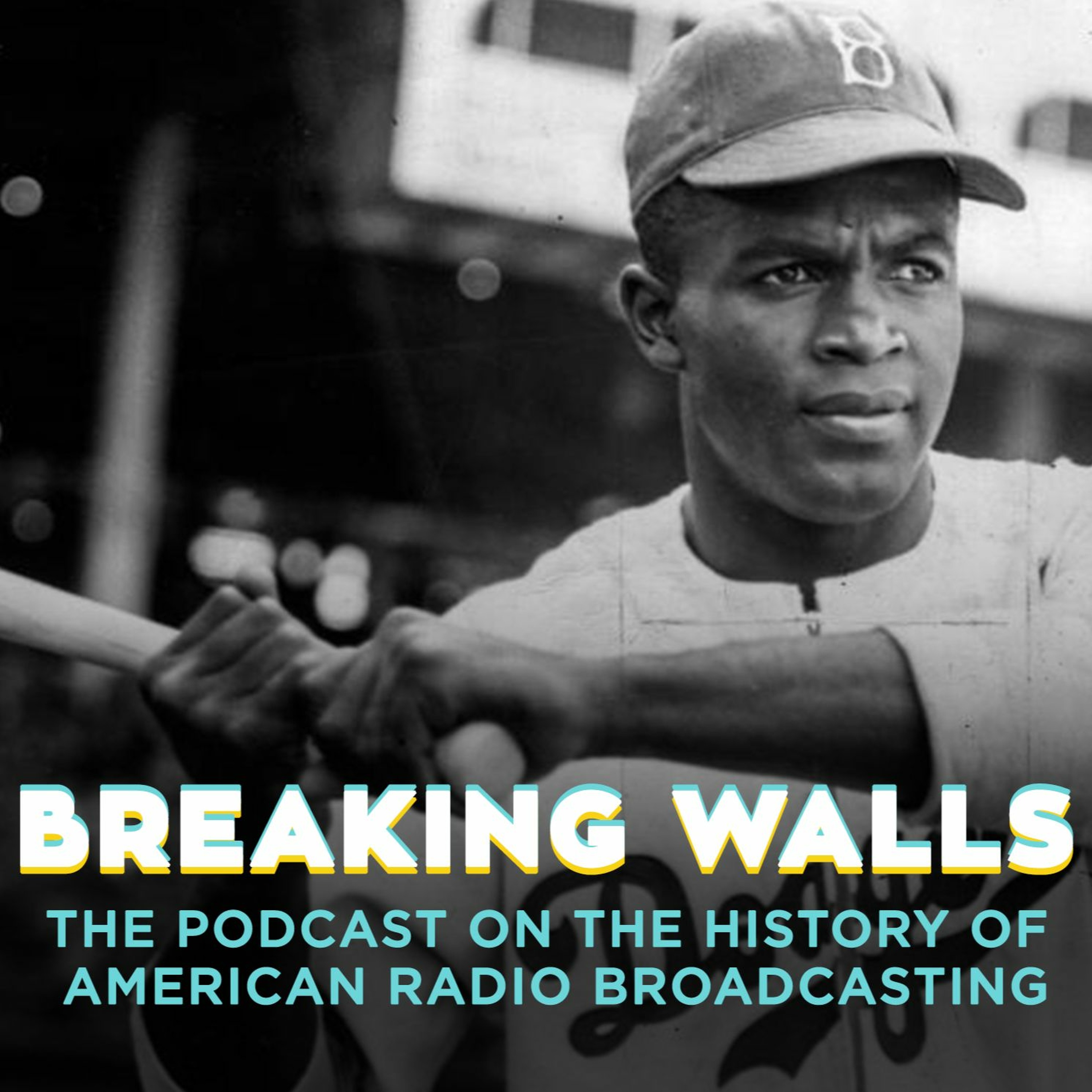
BW - EP137—010: St. Patricks Day On The Air—Looking Ahead To Opening Day
Well, that brings our look at St. Patrick’s Day to the close, but not to worry the green fields of the mind will remain in April. Next time on Breaking Walls, in honor of Major League Baseball’s opening day, we take a trip to the batter’s box and bring our radios with us. We’ll tell and hear baseball stories from some of the most famous broadcasters and players in American history.
BW - EP137—009: St. Patricks Day On The Air—Ending With Jean Shepherd
Although Fred Allen’s death left an unfillable hole in mid-century comedy, it’s not as though there weren’t other humorists battling with networks and sponsors. Just ask Jean Shepherd. Jean Shepherd was born on July 26th, 1921 in Hammond, Indiana. He served in the Army Signal Corps in World War II, and briefly attended Indiana University. Shepherd began his broadcast radio career in early 1945 on WJOB, later working at WTOD in Toledo, Ohio, in 1946. He spent the early 1950s at WSAI and WLW in Cincinnati, and had a late-night broadcast on KYW in Philadelphia. He moved to New York for WOR and debuted on February 26th, 1955. The Jean Shepherd Show broadcast for almost twenty-one years to an audience all along the eastern seaboard, thanks to WOR's fifty-thousand watt clear channel signal. This is audio from his March 17th, 1967 broadcast.
BW - EP137—008: St. Patricks Day On The Air—The Death Of Fred Allen
By January of 1949 Fred Allen was worn out. He’d spent years battling with sponsors and with NBC. In December of 1948 his Sunday at 8:30 rating was a healthy 20 points, but after Edgar Bergen left NBC’s airwaves the network moved Allen’s show up a half hour to 8PM. Meanwhile on ABC, Stop the Music’s popularity was soaring. Allen lost nearly half his audience in a single month. By March Stop The Music’s rating would reach 17.6, while Allen’s fell to 9.4 and Sam Spade’s fell to 11.3 on CBS. Allen was a voracious reader, sometimes scouring ten newspapers a day for topical material. In the end, perhaps he just cared too much. By June with his rating down to an unthinkable 5.8, he’d had enough. The fifty-five year-old called it a seventeen-year radio career after June 26th, 1949. Jack Benny and Henry Morgan were his final guests. Fittingly, the program ran long and Allen’s network feed was cut off. Although Fred Allen’s program came to a close, he was still under contract to NBC. When the network launched The Big Show, Allen became a regular. The ninety-minute program debuted on November 5th, 1950. It was an attempt to revive NBC’s Sunday night ratings. It was hosted by Tallulah Bankhead, written by Goodman Ace with music by Meredith Wilson, announced by Jimmy Wallington, and a rotating star-studded cast. Ace had long been an admirer of Fred's work. Allen appeared on twenty-four of the show's fifty-seven episodes, including the landmark premiere. Each episode cost over one-hundred thousand dollars to produce. Hopes were high. Before the show's launch the entire cast flew out to London for a lavish publicity stunt. Although Allen was as funny as ever, the British press was unimpressed and the show was a flop. Amazingly the show was brought back for a second season, but by the end NBC had lost a million dollars and made no dent into CBS's Sunday night ratings. After the final broadcast on April 20, 1952, Fred Allen was happy to walk away. Allen did eventually break into television, first as the emcee of Judge For Yourself, and finally as a regular panel guest on the CBS quiz show, What's My Line. Between 1954 and 1956 he also worked as a newspaper columnist and as a memoirist, renting a small New York office to work without distractions. There he wrote Treadmill to Oblivion, published in 1954, which reviewed his radio and television years, and Much Ado About Me, published in 1956, which covered the early years of his life. Treadmill was the best-selling book on radio's classic period for many years. When it was published, he appeared on the Tex and Jinx radio show out of WNBC in New York on the Wednesday before Thanksgiving, November 24th, 1954 to talk about his career. The show was broadcast from Peacock Alley at The Waldorf-Astoria Hotel. The weather was dreary, which only added to Fred's usual sense of sarcastic humor. By 1954 Allen already had a heart attack. Always a letter-writer, he reflected upon the lifestyle changes he was forced to adopt in a note to friend Doc Rockwell. Taking a late night stroll up New York's West 57th Street on a blustery, cold Saturday night — St. Patrick's Day, 1956, Allen suffered a heart attack and died on the spot. Fred Allen was 61. Due to the public nature of his death, reporters were quick to arrive at the scene. The next day’s Sunday Daily News cover featured a photo of his body with the headline “Fred Allen Dies in Street.” His death sent the entertainment industry into deep mourning. Jack Benny was profoundly shaken. In truth, as funny as Benny was, he was never exactly the same without his old sparring partner. During the following night's Sunday broadcast of What's My Line? host John Daly preceded the program with a special message to the viewing audience. Steve Allen took Fred's place on the panel. During the final ninety seconds of the program Steve Allen, Arlene Francis and Bennett Cerf gave heartfelt tributes to Fred.
BW - EP137—007: St. Patricks Day On The Air—Elliott Lewis And Broadway Is My Beat
Broadway Is My Beat first took to the air on CBS from New York on February 27th, 1949, starring Anthony Ross and directed by John Dietz. After fifteen weeks, with Dragnet breaking new ground on NBC, CBS moved the show’s production to Hollywood. Elliott Lewis was by then helping to edit scripts for Bill Spier on Suspense. With the urging of men like Spier and Bill Robson, the twenty-eight-year-old Lewis was given the chance to direct the show. He was born in Manhattan on November 28th, 1917. He told Radio Life, “You should hear the city constantly. Even the people in New York are noisy.” Three sound men were often needed to re-create that New York flavor. Lewis’ first regular turn as a director came on July 7th, 1949 when the repackaged Broadway is My Beat debuted as a summer replacement for The FBI In Peace And War. Along with David Friedkin, Morton Fine would become one of Lewis’ go-to writers. Larry Thor would star as Danny Clover. Rounding out the regular cast was Charles Calvert as Tartaglia and Jack Kruschen doubling as both Sgt. Muggavan and Doctor Sinski. Broadway is my Beat featured some of the best hollywood radio talent like Barney Phillips, Virginia Gregg, Tony Barrett, Herb Butterfield, Betty Lou Gerson, Hy Averback, Cathy Lewis, Harry Bartell, Lawrence Dobkin, Mary Jane Croft, and Herb Vigran. Although no sponsorship was forthcoming, CBS brass was impressed with Elliott Lewis’ capabilities. The March 17th, 1950 episode was called “The Charles and Jane Kimball Murder Case.”
BW - EP137—006: St. Patricks Day On The Air—Fred Allen Is King For A Day
In 1944 Fred Allen had to quit the Texaco Star Theatre as a battle with high blood pressure forced him off the air. The next fall, in 1945, he returned to NBC Sundays at 8:30PM with The Fred Allen Show, sponsored by Blue Bonnet Margarine & Tender Leaf Tea. With he and Jack Benny back on the same network, the two rekindled their feud. It came to a climax on the May 26th, 1946 episode of Fred’s show with a sketch entitled, "King for a Day." Benny pretended to be a contestant named Myron Proudfoot on Allen's new quiz show. The skit is mostly ad-libbed, and the ending was a surprise to everyone, including Jack Benny. You’ll notice that announcer Kenny Delmar is unable to say the final Tender Leaf Tea promo before the program’s time ran out. NBC executives were incensed. Allen tried to explain that there was no way to predict how long an audience would laugh. That October, Allen wrote a skit called “The Radio Mikado,” about the hucksters of radio—the “vice presidents and clerks who were confidentially, a bunch of jerks.” He was censored by NBC and told he couldn’t ad-lib any longer. Allen told reporters censors were the “executive fungus that forms on a desk.” Shortly thereafter when on air, the network cut him off in the middle of a joke, but now other disgruntled NBC comedians joined in. Red Skelton mentioned Allen on his show and was immediately cut off, but he kept talking for his studio audience telling them, “you know what NBC means don’t you? Nothing but cuts. Nothing but confusion. Nobody’s certain.” Bob Hope mentioned Allen and got censored. Finally, Dennis Day took the last shot at NBC on his Day in the Life Wednesday night sitcom. “I’m listening to the radio” he said to his girlfriend Mildred. “I don’t hear anything” said Mildred. “I know” said Dennis, “Fred Allen’s on.” NBC announced shortly thereafter that its comedians were free to say whatever they liked. It didn’t matter. Fred Allen had finally won.
BW - EP137—005: St. Patricks Day On The Air—Dennis Day Returns From The Navy
Jack Benny’s most famous Irish Tenor, Dennis Day was born on May 21st, 1916 in New York City and raised in the Throggs Neck section of The Bronx. Day graduated from Cathedral Preparatory Seminary and attended Manhattan College, where he sang in the glee club. Eventually he made his way to radio. Dennis Day made his Benny debut on October 8th, 1939. During World War II, Day enlisted in the Navy. He made his return on the St. Patrick’s Day episode, March 17th, 1946. For the remainder of the season, the Jack Benny cast was reunited in its classic 1940s incarnation. It was the last season before Phil Harris took over the Fitch Bandwagon with his wife Alice Faye. Because the program aired immediately after Jack’s, Phil could generally only take part in the first half of Jack’s show before rushing over to broadcast his own. Beginning that October, Dennis Day too would get his own show on NBC.
BW - EP137—004: St. Patricks Day On The Air—Bill Stern's Sports Newsreel
Bill Stern’s Colgate Newsreel first took to the air on December 5th, 1937 over NBC’s Blue network. Born on July 1st, 1907, Stern began in vaudeville and by 1931, he was the assistant stage manager at the Roxy Theater and later Radio City in New York. In 1934 he got the role of broadcaster for NBC’s Friday Night Fights. He became one of the most famous sportscasters in the country. Four years later he partnered with MGM for their News Of The Day reel. Stern's career flourished despite a 1935 car accident, which injured him severely enough that his left leg had to be amputated just above the knee. By March 17th, 1944, his colgate program was running over NBC on Fridays at 10:30PM eastern. Constance Bennett was the guest on this broadcast. After nearly sixteen years with NBC, Stern switched to ABC for three final seasons. While at ABC Stern was a regular panelist on the game show The Name's the Same.
BW - EP137—003: St. Patricks Day On The Air—Burns And Allen At The NYC Parade
By the spring of 1941, George Burns and Gracie Allen had been married for fifteen years and on radio for nine. Their program had been officially titled The Burns And Allen Show in the fall of 1936, and they’d spent time at both NBC and CBS. Unhappy with their Friday time slot on CBS, they’d moved back to NBC for Hormel Meats on Mondays at 7:30. Jimmy Wallington announced and Artie Shaw’s band provided the orchestra. But their vaudeville-style show was beginning to show its age. In January of 1941 their rating had slipped to 14.8. While they pondered what to do, they took to the air with the March 17th, 1941 episode.
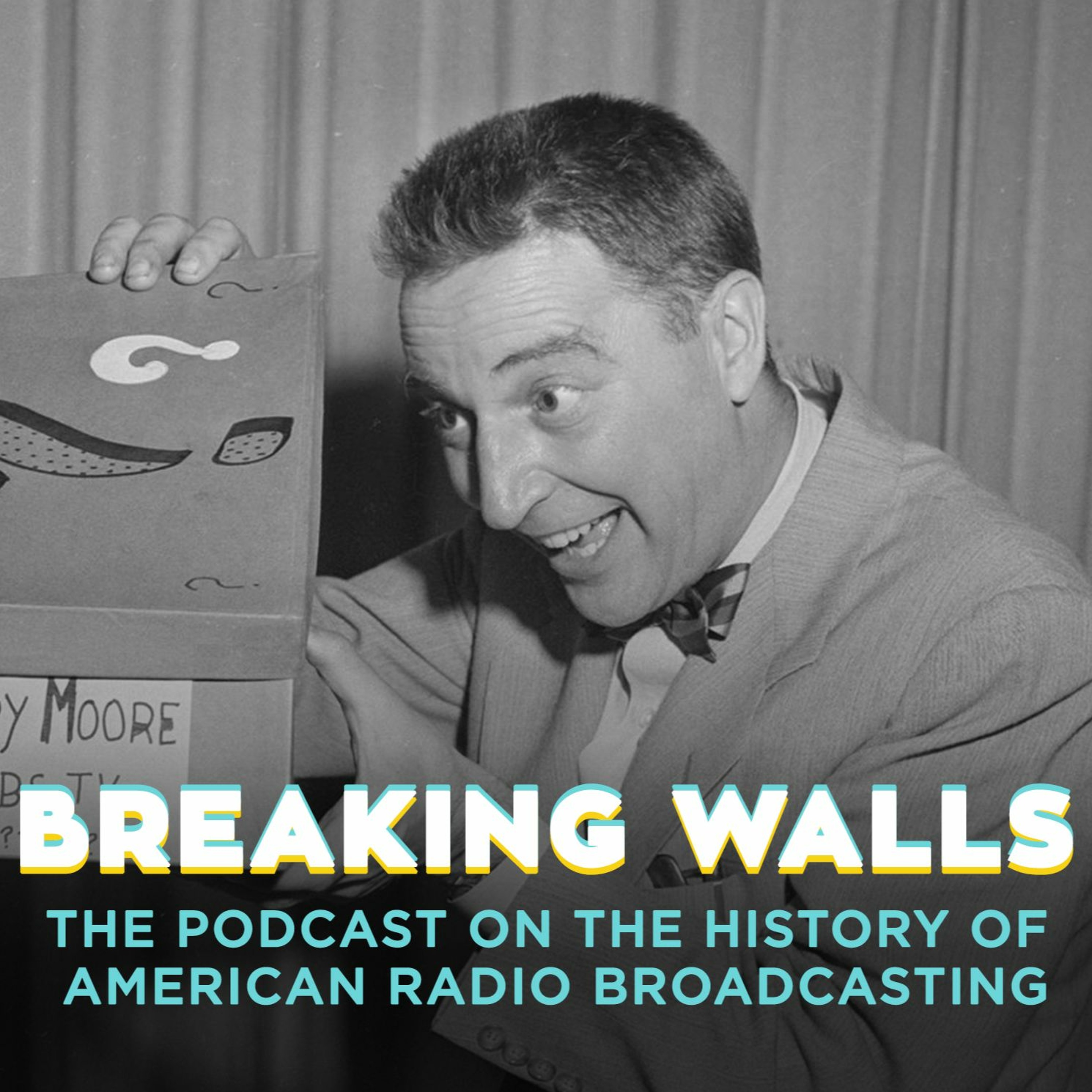
BW - EP137—002: St. Patricks Day On The Air—Beat The Band
Originally broadcast from Chicago, NBC’s Beat The Band began airing January 28th, 1940 at 6:30PM eastern time. It was sponsored by Kix Cereal. Listeners submitted riddles with song title answers. If the band couldn’t figure out the answer, the riddle submitter got thirty dollars and a box of Kix cereal. Garry Moore emceed, and Ted Weems conducted his orchestra. His three singers were Parker Gibbs, Marvel Marylin Maxwell, and the soon-to-breakout Perry Como. The March 17th, 1940 episode was called, “The Wearing of the Green.” The show lost its time slot against CBS’ Gateway To Hollywood. It went off the air on February 23rd, 1941, but was revived from New York in June of 1943. Submitters won twenty-five dollars and a carton of Raleighs and fifty dollars for beating the band. Packs of Raleighs were sent to servicemen in the war effort. The show went off the air for good on September 6th, 1944.
BW - EP137—001: St. Patricks Day On The Air—Fred Allen, The End And The Beginning
In 1922 a twenty-eight-year-old Fred Allen, already a vaudeville veteran, was hired by J.J. Shubert for his broadway production of The Passing Show of 1922. Allen was gaining fame as a monologist. He was in charge of writing his own material. One popular gag was the "Old Joke Cemetery." Allen had a curtain painted as a graveyard, on the tombstones were the punch lines to forty-six old jokes. When Allen moved with the show to Chicago, he met a dancer named Portland Hoffa. There the producers told Allen to drop the cemetery gag. The show was moving to Hollywood. Allen quit. Back in New York he demanded royalties from the Shuberts when the gag turned up in their other acts. They re-hired him, to emcee Artists and Models. In the revue, the chorus women were topless. Allen came on after the women were finished. The Shuberts and Allen soon came to a mutual release. Fred and Portland were married in 1927 and Allen starred in similar revues until Portland joined him on stage. Together they were a hit. Four years later Allen was contemplating radio. By 1932 big names like Ed Sullivan, Ed Wynn, and George Jessel were on radio. Jessel convinced Allen to audition. Allen felt that writing a sketch show centered around characters in different business backgrounds would appeal. The Corn Products Company hired him. Their Linit Beauty Powder would be the featured product. Allen was paid one-thousand dollars per week, but he had to produce the show out of his own pocket. He co-wrote it with Harry Tugent. Producer Roger White remembered that time. The Linit Bath Club Review premiered on Sunday, October 23rd, 1932 over CBS. Right from the beginning Allen had trouble with his sponsors. The season rating was 11.9, thirty-ninth overall. Roughly five million people tuned in and the show bested the Manhattan Merry-Go-Round opposite on NBC. But, the program was canceled after six months. Fred returned to radio on Friday August 4th, 1933 over NBC. His new show was The Salad Bowl Review for Hellmann’s Mayonnaise. It would mark the beginning of a six-year relationship with the National Broadcasting Company. Allen was paid four-thousand dollars per week. Minerva Pious joined the cast. She’d later be known for her ethnic character portrayals. Allen introduced the Etiquette Department and the Question box. People could write in to have questions answered on-air, with instructions to try to slip things by the censors. He started a newsreel. It was the forerunner to the satirical comedy that would become a program staple. The ad agency who held the Helmann’s account liked the program so much that they aired it through autumn, long-passed mayonnaise’s shelf-life in a time when it was a seasonal condiment for salads. However, by December 1st, 1933 the show had to exit the air. Now Sal Hepatica laxatives from Bristol Myers wanted in. Beginning on January 4th, 1934, Fred Allen debuted as emcee for The Sal Hepatica Review. On March 21st, 1934 the broadcast was expanded to an hour. It now included Ipana Toothpaste and was called The Hour of Smiles. Allen was given no additional budget and each show had to be performed twice—once for each coast. Allen hired a couple of script-writers to help. One of them was Herman Wouk, who’d later win a Pulitzer Prize for his 1951 novel, The Caine Mutiny. By then, the program had become a local review with news. On July 11th the show was retitled Town Hall Tonight. The tight budget left no room for big guest stars. Allen had to develop plot lines. Things were running smoothly until Allen was called into the agency offices. They objected to some of his jokes and didn’t like the concept of a running gag—something Allen had begun to develop. Allen later explained that running gags were very important because they stimulated a listener’s memory and interest. The ad agency disagreed. Allen paid them no mind.