Breaking Walls
510 episodes — Page 9 of 11
BW - EP132—003: Mutual Mystery Shows Of The 1940s—Mystery Is My Hobby
Mystery is My Hobby originally came to Don Lee’s west coast airwaves in April of 1945, before going full network over Mutual that October as Murder Is My Hobby. It starred Glenn Langan as Barton Drake, a police inspector and the author of the book Mystery Is My Hobby. Drake combined his professions by collecting material for stories while he solved crimes. The program went off the air in July of 1946, but returned the next summer under the Mystery title. Barton Drake was now a writer who worked with the police. Each episode was presented as cases from his book. The October 29th, 1947 episode was called “Death Speaks with Ten Fingers,” and guest-starred Barney Phillips, Gloria Blondell, Ken Christy, and Jean Vander Pyl, who was later famous as the voice of Wilma Flintsone.
BW - EP132—002: Mutual Mystery Shows Of The 1940s—The Mysterious Traveler
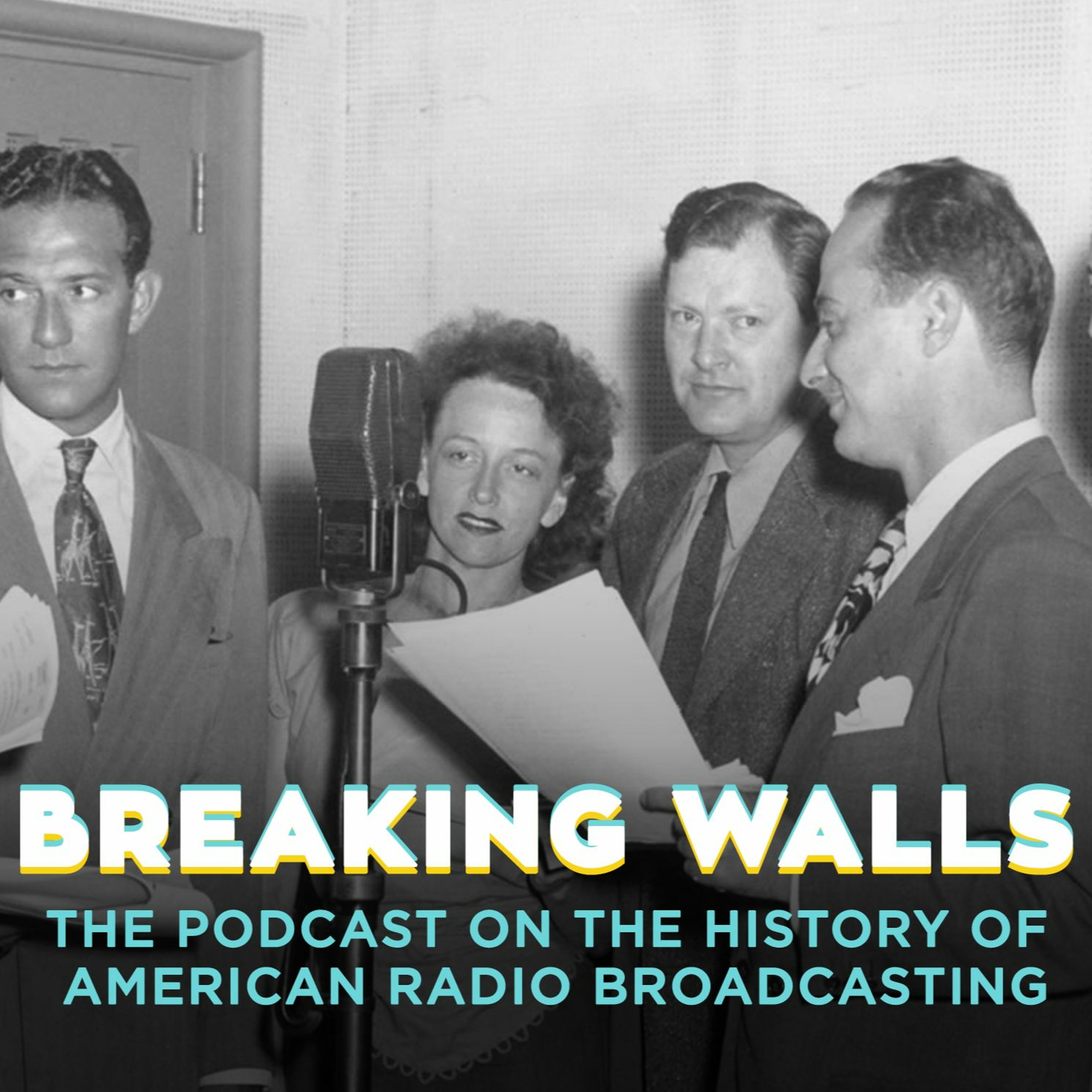
Written and directed by Robert Arthur and David Kogan, The Mysterious Traveler first aired over the Mutual Broadcasting System on December 5th, 1943. Mostly sustained, the show was heard on virtually every night of the week. There were frequent gaps in its runs, but it was always good for a revival. It was cheap to produce; there were no major film stars to pay, and plenty of New York radio actors willing to work for union scale. With that said, it was popular enough to spawn a comic book and magazine. Maurice Tarplin played the title role with a good-natured malevolence. The traveler mostly narrated from an omniscient perch. He came to his listeners in the night, riding a phantom train. The opening signature was the distant wail of a locomotive whistle, fading in gradually until the rumble of the train could be heard. The stories ran from crime drama to wild science fiction. David Kogan later recalled that he broke into radio with Bulldog Drummond, Shadow and Thin Man scripts. He met Robert Arthur in Greenwich Village, suggesting they team up. The pair developed Dark Destiny, which aired on Mutual from August 26th, 1942 through March 11th, 1943. They came up with the Mysterious Traveler concept and prepared three sample scripts. Norman Livingston bought it for WOR. As independent producers, they were paid a flat rate for the whole package. Any money they saved by using the same actor in multiple roles went into their own pockets, so they used the best character actors in New York radio. Kogan also directed the series. This episode, “Death is My Caller” featured Santos Ortega, Agnes Young, Ted Jewett, and Neil O’Malley. Along with The Mysterious Traveler, Kogan and Arthur also wrote a season of Nick Carter, The Strange Dr. Weird, The Sealed Book, and later Murder By Experts. The Mysterious Traveler would air until September of 1952.
BW - EP132—001: Mutual Mystery Shows Of The 1940s—The Seedy Underworld Of Coney Island
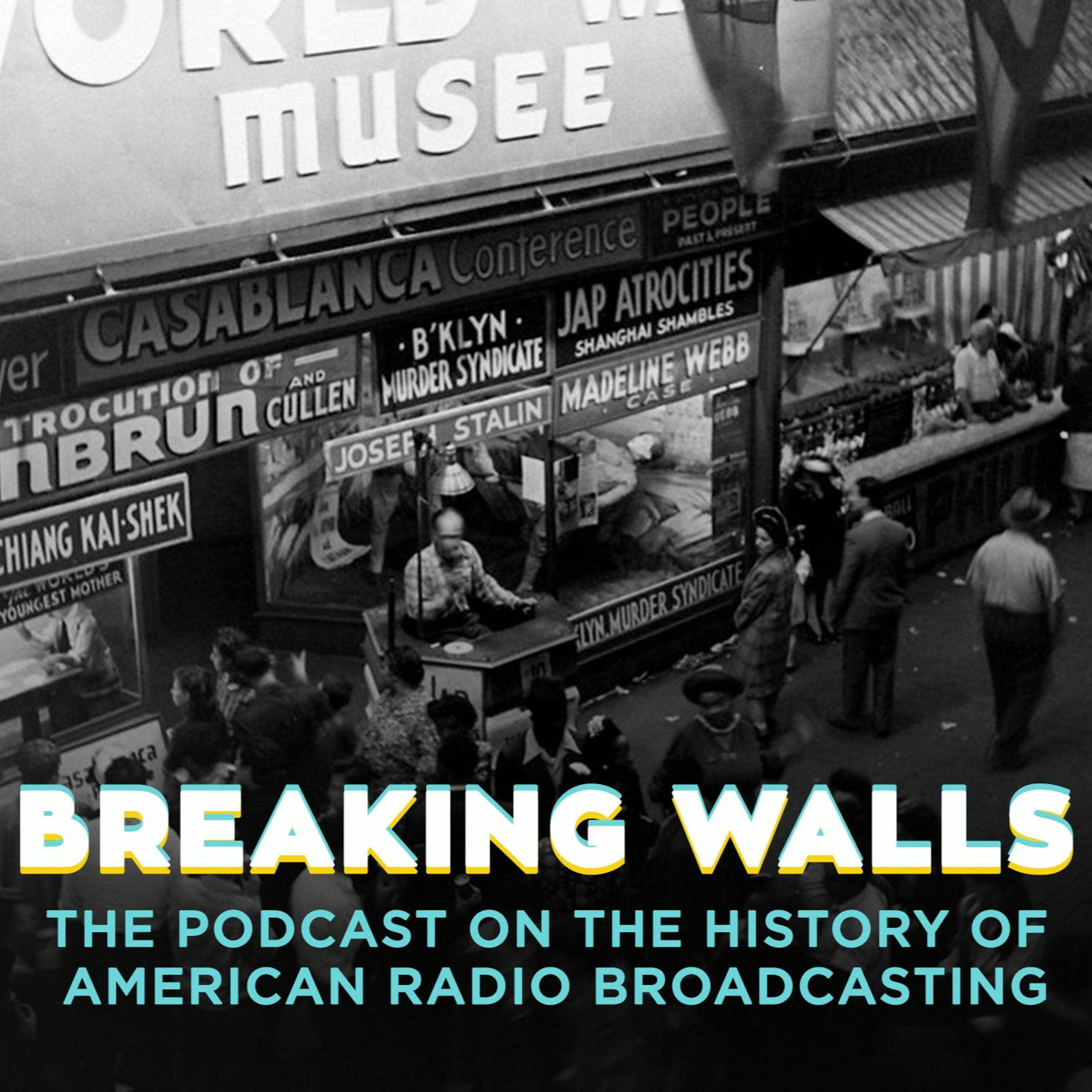
By October of 1947, nearly eleven million babies had been born in the U.S. since the end of World War II. Young parents were staying home with their children. Movie attendance bombed. The 1947-48 season had the largest radio audience in history. Homes with radios jumped 6%, car radios 29%. NBC, CBS, ABC, and Mutual added nearly one-hundred fifty affiliates. Ninety-seven percent of the nation’s AM stations were now linked to one of the big four. Network revenue topped $200 Million. World War two had created fundamental changes in society. While men of all races and creeds were overseas spilling the same colored blood, women mobilized and took charge of the workforce. When veterans were discharged, they returned home with different ideals, and what we’d now call PTSD. As new cars, roads, and homes brought young families to the suburbs, racial descrimination came to the forefront in the face of the G.I. Bill, where a much higher percentage of white Americans were having their applications accepted. On October 29th, the national civil rights committee delivered a report to the White House. The document made thirty-five specific recommendations, including asking the President to create a permanent Federal commission on civil rights. President Truman said that he’d study the report with great care and recommend that all citizens do the same thing. Americans were organizing. In the year after VJ Day, more than five million struck for better wages and benefits. This hurt key sectors of the economy and stifled production. Consumer goods in high-demand were slow to appear on shelves and in showrooms, frustrating Americans who desperately wanted to purchase items forsaken during the war. It caused the largest inflation rise in the country’s modern history, and the Taft-Hartley Act, limiting the power of Labor Unions. President Truman was seemingly at odds with Congress over every domestic policy and his approval rating sank to 32%. Reelection the following year seemed unlikely. The U.S. War Debt topped two-hundred-forty billion dollars. Emerging as one of the world’s leaders, America was expected to have the largest hand in rebuilding Europe. News outlets reported that, to create European stability, Americans should resume sacrifices they made during the war. Not agreeing to do so could result in political enemies taking over the continent. That October, as the major networks were enjoying the largest ratings in radio history, one network, The Mutual Broadcasting System, was still struggling to grab audiences. Airing out of WOR in New York, The Shadow was the network’s most-listened to program. While it pulled a rating of thirteen — strong for a show airing on Sundays at 5PM easten — it was nowhere near radio’s top fifty. Mutual’s top stations — WOR in New York, WGN in Chicago, and Don Lee’s KHJ in Los Angeles — all boasted powerful signals and had equal shares in the network. And, while Mutual reached four-hundred affiliates in 1947 and would add another hundred over the next year, many of these were small stations in rural areas. This limited their advertiser appeal. Mutual was run as a cooperative, rather than a corporation. As families left cities and farms for the suburbs, the network’s shared programming structure left it at a distinct disadvantage against NBC, CBS, and ABC. Those three networks would use their soaring revenue to move into TV. Although some Mutual affiliates developed television programming, the full network was never able to launch into TV. That’s not to say MBS didn’t have quality programming. Just the opposite, and with Halloween around the corner, tonight we’ll delve into Mutual’s horror, mystery, and suspense shows of the late 1940s.
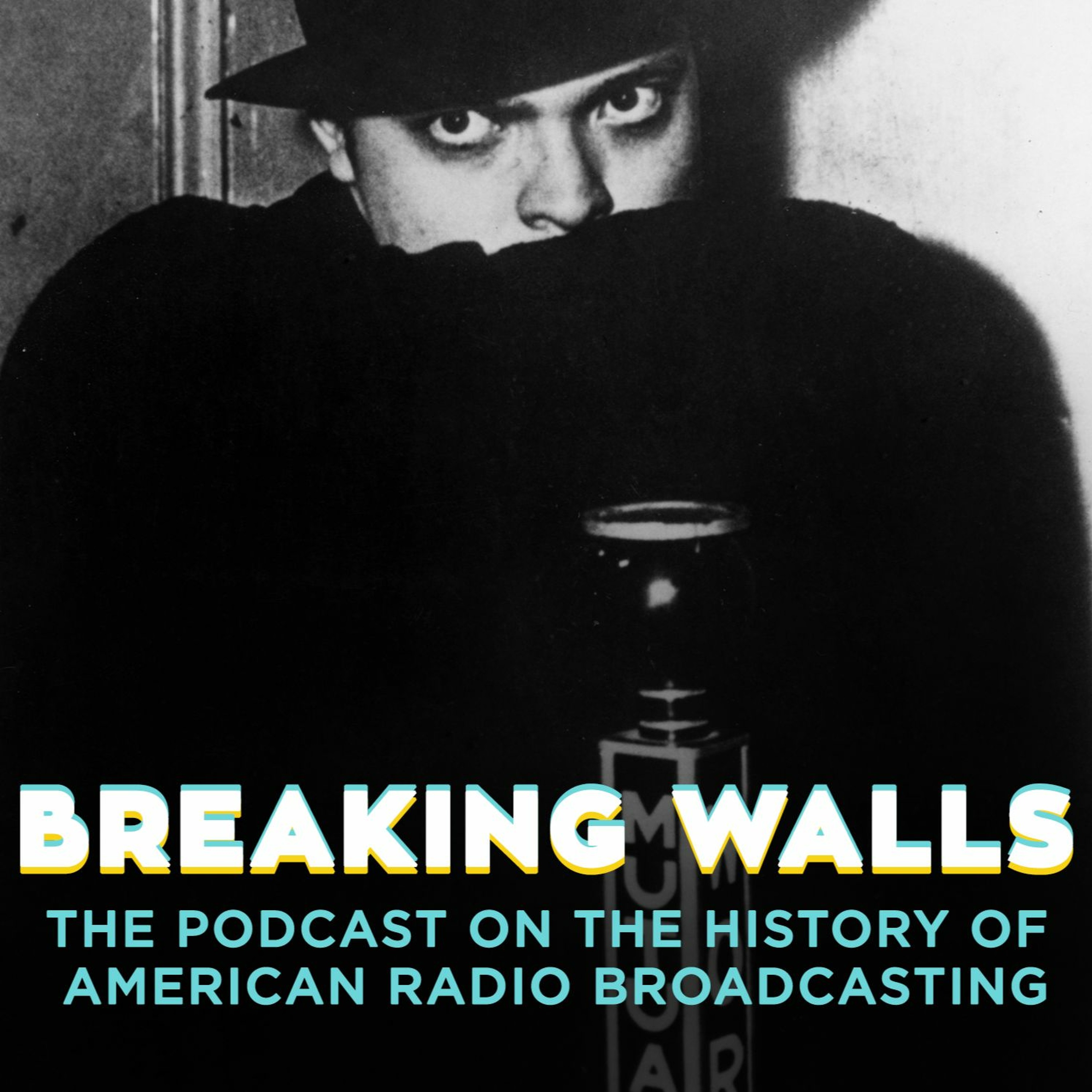
BW - EP131: Orson Welles is The Shadow (1937 - 1938)
In Breaking Walls episode 132 we spotlight Orson Welles’ time as The Shadow in 1937-38. —————————— Highlights: • Orson Welles’ on The March of Time and The Columbia Workshop • The Shadow as Narrator • Les Misérables • WOR and Network Radio In The Fall of 1937 • The Shadow Launches With Orson Welles • Jeanette Nolan and The Temple Bells of Neban • Early Reviews • Agnes Moorehead and The Three Ghosts • The Circle of Death • The Mercury Theater Leaves The Shadow • Orson In The Fall of 1938 • Looking Ahead to Halloween with Mutual Broadcasting —————————— The WallBreakers: http://thewallbreakers.com Subscribe to Breaking Walls everywhere you get your podcasts. To support the show: http://patreon.com/TheWallBreakers —————————— The reading material used in today’s episode was: • This is Orson Welles — by Peter Bogdanovich with Orson Welles • Citizen Welles — by Frank Brady • On the Air — By John Dunning • The Shadow: History and Mystery of the Radio Program — By Martin Grams Jr. • Network Radio Ratings — By Jim Ramsburg • Discovering Orson Welles — by Jonathan Rosenbaum • WOR: The First Sixty Years As well as articles from • Billboard • The New York Times • Variety —————————— On the interview front: • Agnes Moorhead spoke to Chuck Schaden. Hear the full chat at SpeakingOfRadio.com. • Rosa Rio and William N. Robson spoke with Dick Bertel and Ed Corcoran for WTIC’s The Golden Age of Radio. Hear these full chats at Goldenage-WTIC.org • Jeanette Nolan spoke with SPERDVAC. For more info, go to SPERDVAC.com. • Agnes Moorehead and Orson Welles spoke with Dick Cavett. • Orson Welles also spoke with Peter Bogdanovich, Johnny Carson, Merv Griffin, and Dinah Shore. • Jack Poppele spoke with Westinghouse. • And Walter B. Gibson, Rosa Rio, Ken Roberts, and Sidney Sloan spoke for the 1984 documentary, The Story of the Shadow —————————— Selected music featured in today’s episode was: • Teenage Brain Surgeon — By Spike Jones and His Orchestra —————————— A special thank you to Ted Davenport, Jerry Haendiges, and Gordon Skene. For Ted go to RadioMemories.com, for Jerry, visit OTRSite.com, and for Gordon, please go to PastDaily.com. —————————— Thank you to: Tony Adams Steven Allmon Orson Orsen Chandler Phil Erickson Jessica Hanna Perri Harper Briana Isaac Thomas M. Joyce Ryan Kramer Earl Millard Gary Mollica Barry Nadler Christian Neuhaus Aimee Pavy Ray Shaw Filipe A Silva John Williams —————————— WallBreakers Links: Patreon - patreon.com/thewallbreakers Social Media - @TheWallBreakers
BW - EP131—012: Orson Welles Is The Shadow—Looking Ahead To Halloween With Mutual Broadcasting
In the fall of 1938 as Orson Welles was launching The Mercury Theater of The Air, radio character actor Bill Johnstone became The Shadow. Johnstone held the role until March 21st, 1943, when Brett Morison took over. Morison had the title role for most of the rest of the radio run. The Shadow would air until December 26th, 1954. We’re going to stop here. I’ve covered Welles from his birth through Pearl Harbor in episode 79 and from there to the early 1950s in episode 104. While we’re wrapping up our coverage of The Shadow, we’re staying with The Mutual Broadcasting System in October and getting into the Halloween spirit. Next time on Breaking Walls, we’ll spend Halloween with Mutual Broadcasting mystery shows of the 1940s.
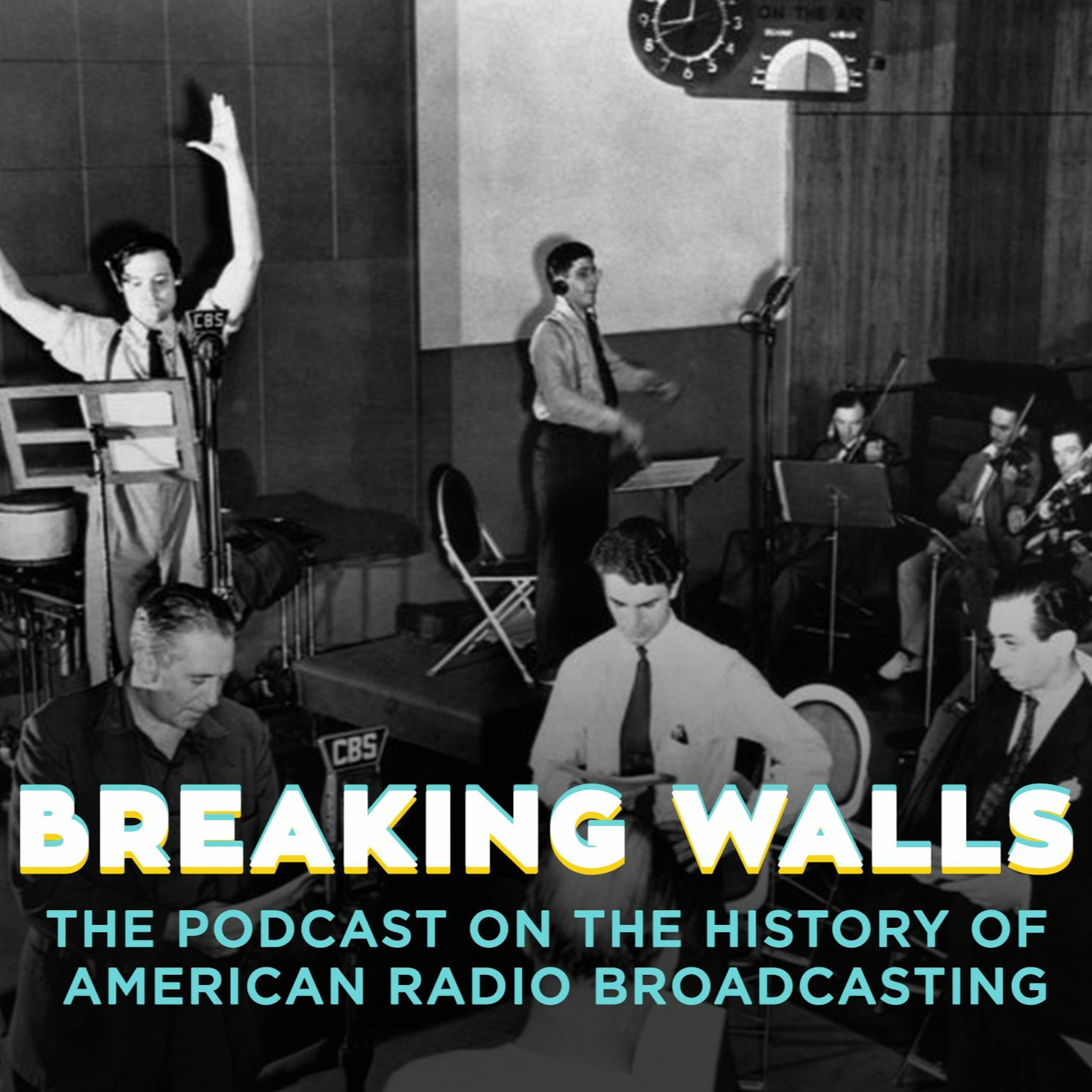
BW - EP131—011: Orson Welles Is The Shadow—Orson In The Fall Of 1938
In late June 1938, Orson Welles was approached by CBS. He was offered a one-hour, network sustained time slot on Mondays at 9PM. William Paley’s concept: A Mercury Theater of the air for a nine-week trial run. Unlike Welles and Houseman’s theater productions which had several weeks of rehearsal, the show would begin in just two, on July 11th. Houseman was nervous. He’d never done radio. Welles would direct, narrate, and star. The Mercury theater troupe would support. Bernard Hermann would be musical director and Davidson Taylor supervisor. Welles called the show First Person Singular. A take on Bram Stoker's Dracula was selected for the first episode. Welles and Houseman had total creative control. The premiere set the tone. Over the next nine weeks, listeners heard adaptations of classics like Treasure Island, A Tale of Two Cities, The 39 Steps, The Man Who Was Thursday, The Affairs of Anatole, and The Count of Monte Cristo, for which, Welles simulated the sound of a dungeon by having the actors play their scene from the floor of the CBS restroom. He placed two dynamic microphones against the bases of the toilet seat in order to achieve realistic subterranean reverberations. After September 5th, 1938, CBS renewed the series under a new name: The Mercury Theater of The Air, moving it to Sundays at 8PM, opposite NBC’s highest-rated show: Edgar Bergen’s Chase and Sanborn Hour. It set the stage for a series of events which would forever alter the course of Orson Welles’ life.
BW - EP131—010: Orson Welles Is The Shadow—The Mercury Theater Leaves The Shadow
The success of The Shadow was shared by Blue Coal. Billboard reported that twelve months after the premiere their sales were up nearly eleven percent. Blue Coal was selling for as much as two dollars per ton more than their competitors. In February of 1938 Orson Welles opined that “radio’s future big-wigs will be college graduates.” By then more than ninety colleges offered courses in radio speech, while radio writing was taught at fifty-seven colleges, and fifty-three colleges were teaching radio acting. Both radio music and radio law were also becoming class offerings. The last episode of The Shadow’s autumn run aired on March 20th, 1938. Although everyone knew who played Lamont, for the first time on air, Orson Welles was given credit for his role. Welles was contracted to produce twenty-six more episodes for a syndicated summer run. They co-starred Margot Stevenson as Margot Lane. Ironically, the character was named for Miss Stevenson who was originally supposed to play the role that fall. Goodrich Tires would sponsor the summer run, with Blue Coal immediately signing on for another season in the fall. Agnes Moorehead would again play Margot, but Welles would be leaving for CBS that summer and taking the Mercury Theater troupe with him. Welles was contracted to produce twenty-six more episodes for a syndicated summer run. They co-starred Margot Stevenson as Margot Lane. Ironically, the character was named for Miss Stevenson who was originally supposed to play the role that fall. Goodrich Tires would sponsor the summer run, with Blue Coal immediately signing on for another season in the fall. Agnes Moorehead would again play Margot, but Welles would be leaving for CBS that summer and taking the Mercury Theater troupe with him.
BW - EP131—009: Orson Welles Is The Shadow—The Circle Of Death
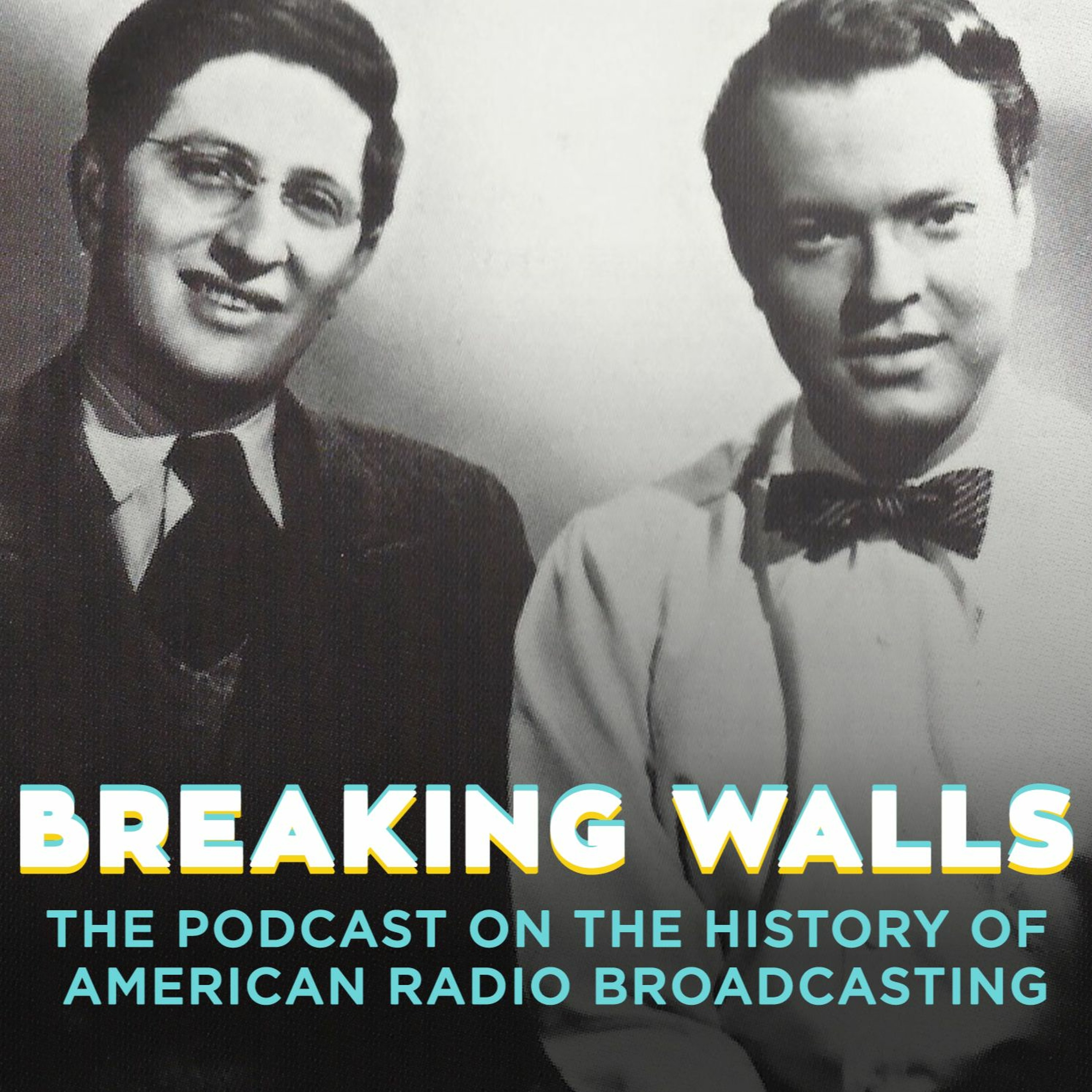
Orson Welles opened in Julius Caesar on November 11th, 1937. He also made time to perform in guest appearances elsewhere on radio with Tallulah Bankhead and Cedric Hardwicke. Thursday, November 25th, 1937 was Thanksgiving Day. The New York Daily News headline spoke of Consolidated Edison finally getting on board with F.D.R.’s new deal program. November 28th’s episode of The Shadow was called “The Circle of Death.” It’s a story about a mad man who plants bombs across the city, creating a reign of terror in his wake.
BW - EP131—008: Orson Welles Is The Shadow—The Three Ghosts
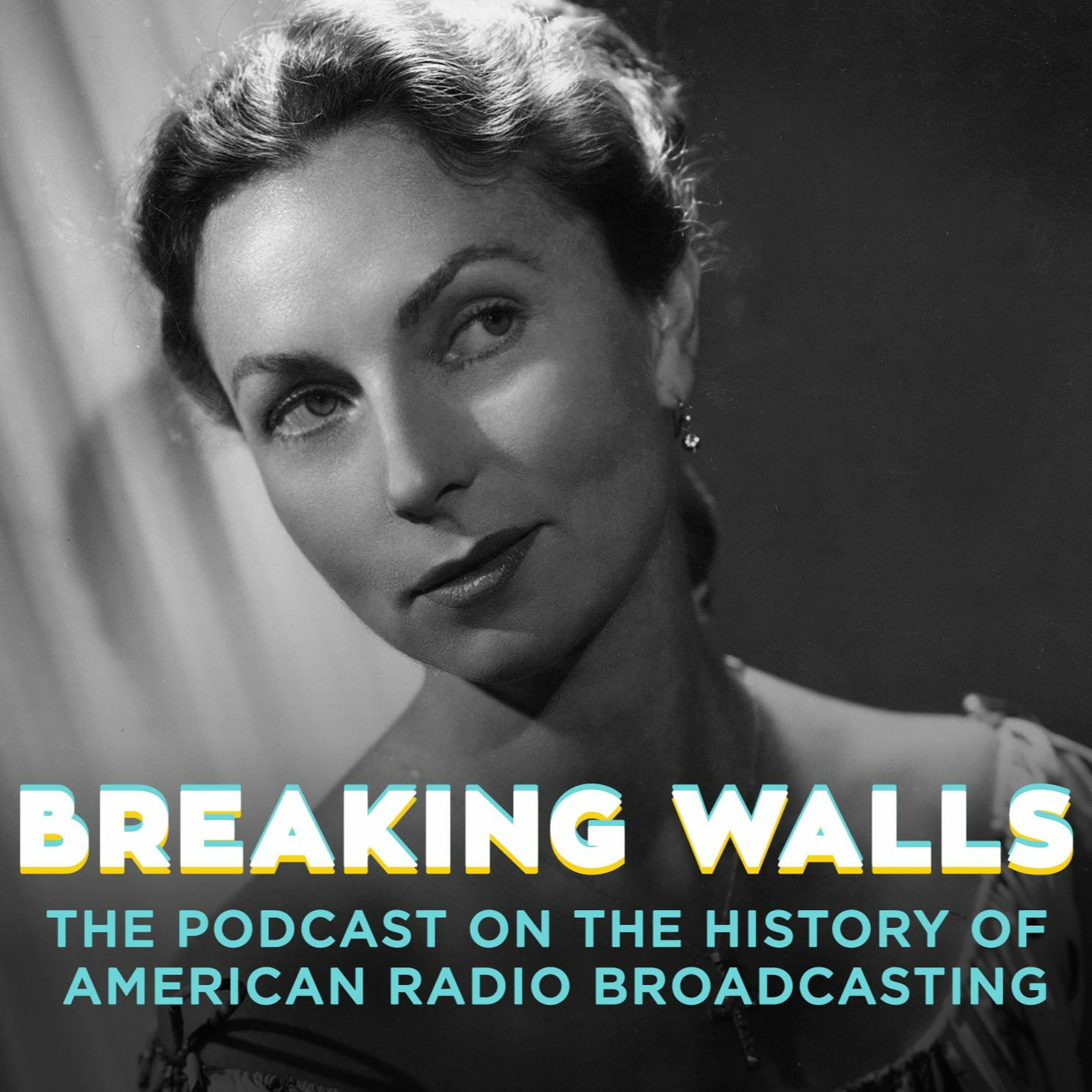
On Halloween 1937, Benito Mussolini removed Italy’s foreign minister to France due to strained relations between the two countries over Italy's participation in the Spanish Civil War. Adolph Hitler gave the Order of the German Eagle to the Japanese emperor’s son, while Chinese forces abandoned its defense of the Sihang Warehouse. Sunday was Halloween and at 5:30PM eastern, The Shadow took to the air over Mutual with a story called “The Three Ghosts.”
BW - EP131—007: Orson Welles Is The Shadow—Early Reviews
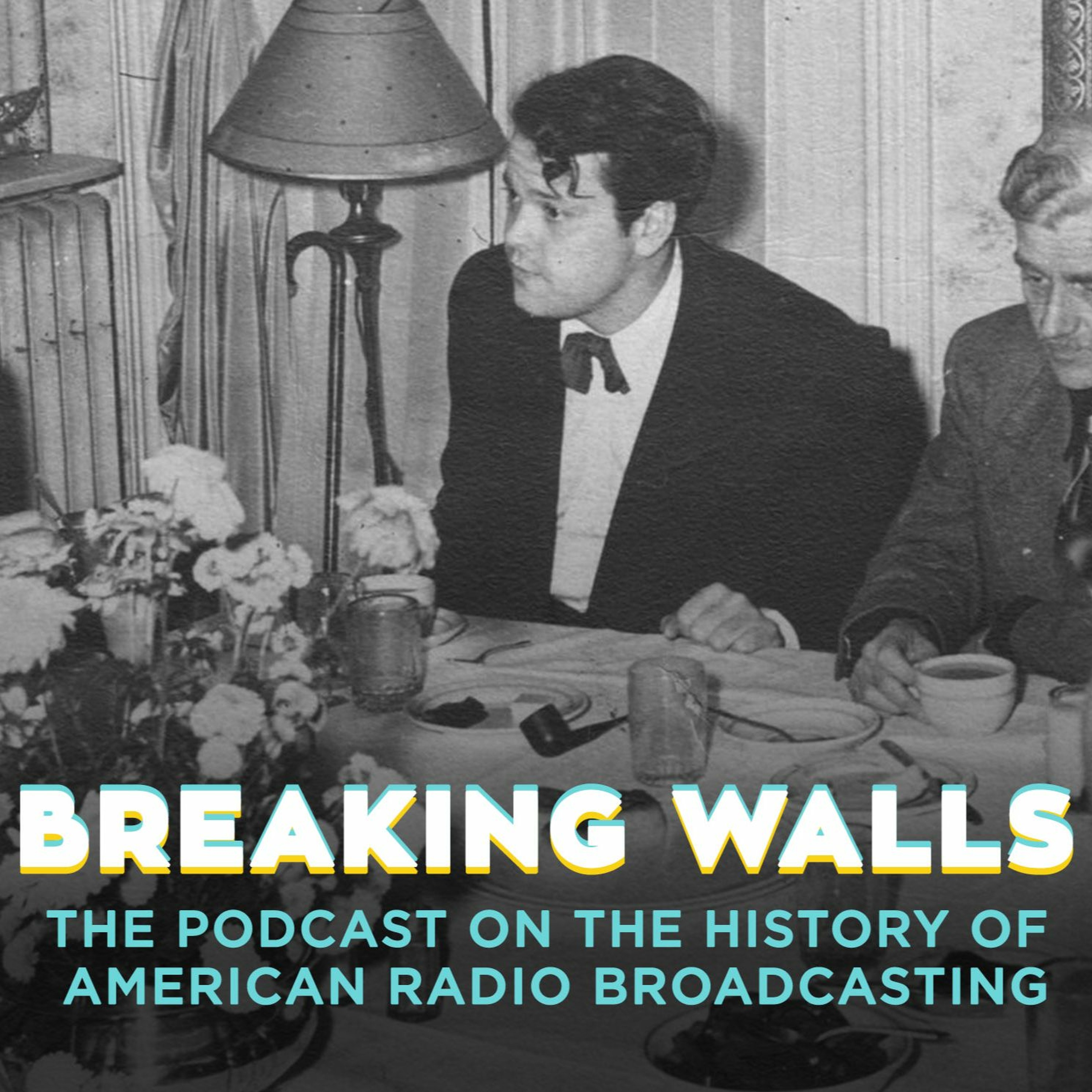
The September 29th, 1937 issue of Variety said “that melodramatic and at times astonishing crime fighter, “The Shadow,” returns to the ether to probably find a rather sizable slice of listeners waiting for him. In this series the sponsor will benefit from having a program aimed right at the vulnerability of the audience it seeks. Orson Welles, a young and good actor still riding a crest of recognition won with the Federal Theatre Project, does the title role. “The Shadow is a bit fantastic, but as with these things, the stunt stands muster with the show’s listeners and appreciably colors the proceedings. Well done, both as to script, acting, and producing.” Both Billboard and Radio Daily also gave the program positive reviews. A blizzard of mail came into WOR. Shadow fan clubs sprang up across the country. Welles would occasionally appear at promotions donning a black cape, hat, and mask. Oddly enough, because Welles was constantly rushing from one part of New York to the other, Frank Readick, who’d previously voiced the Shadow as narrator, was kept on to record the show’s opening signature, giving Welles a few more minutes to get into the studio.
BW - EP131—006: Orson Welles Is The Shadow—The Temple Bells Of Neban
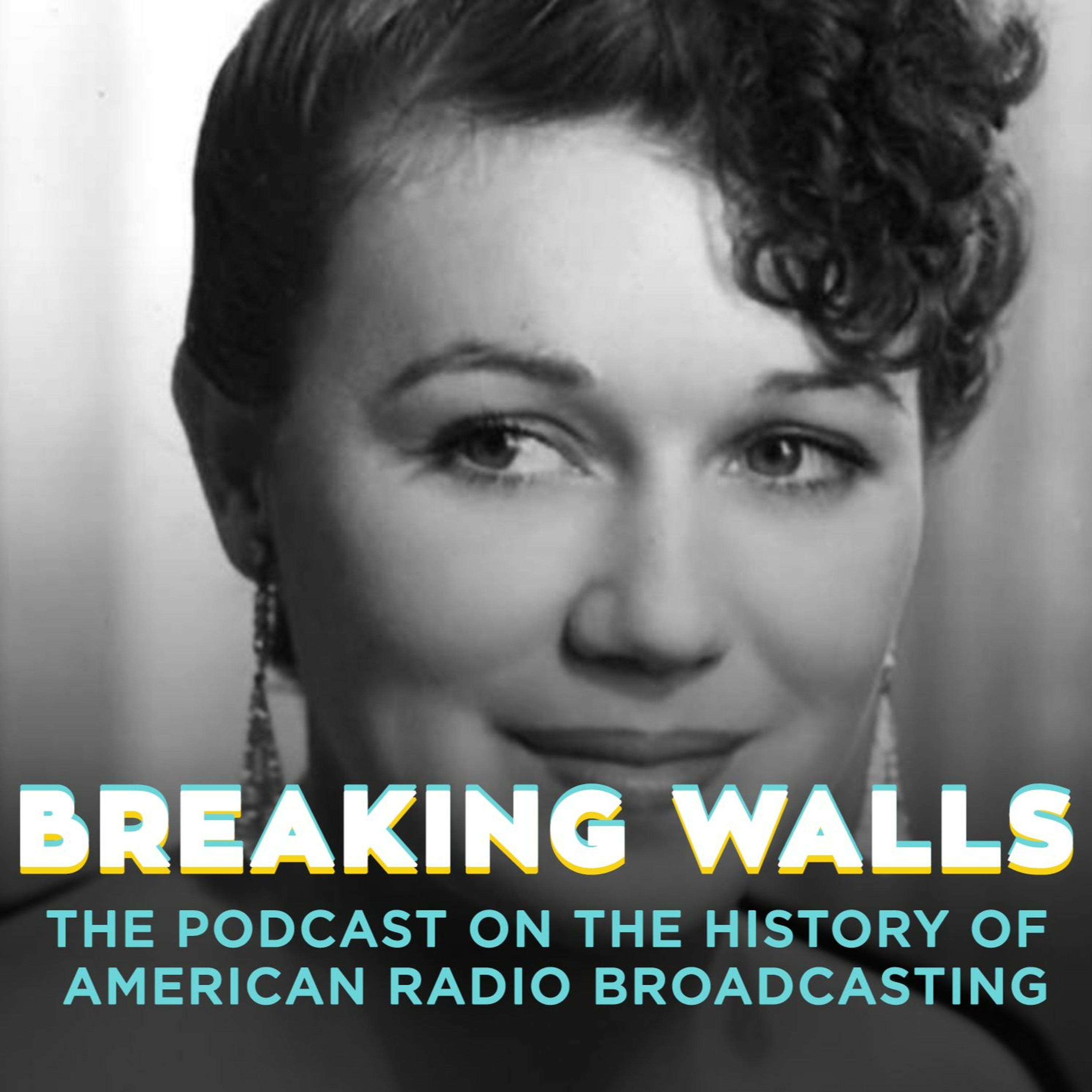
On the October 24th, 1937 episode of The Shadow called “The Temple Bells of Neban,” Lamont meets an Indian woman and drug smuggler named Sadi Bel-Adda. She knows The Shadow’s true identity. She’s the niece of the man who trained Lamont, and capable of using the same powers. This cast featured Ray Collins as Commissioner Weston with Carl Frank as Jerry Gleason and Everett Sloane playing bit parts. Jeanette Nolan, then just twenty-five, played Sadi Bel-Adda. Rosa Rio was the program’s organist.
BW - EP131—005: Orson Welles Is The Shadow—The Shadow Launches With Orson Welles
In the fall of 1937, Orson Welles was busy readying for a Mercury Theater broadway production of Julius Caesar. The agency Ruthrauff and Ryan approached Welles about the possibility of starring in a weekly radio series. His signing was announced in The New York Times on August 29th, 1937. Welles’ contract allowed him to miss rehearsals and readings. He was paid seventy-five dollars per week, or roughly fifteen hundred today, for one-half hour of weekly work. On Sunday September 26th, at 5:30PM the new version of The Shadow debuted. The program's announcer was Ken Roberts. Opposite Welles as Margot Lane was Agnes Moorhead, along with many of the Mercury Theater players. The Shadow was Lamont Cranston, a wealthy man about town. He had the ability to cloak himself with invisibility and to read minds. They were tools of Mesmer, learned through years of study in the orient and India. Walter Gibson’s involvement in the radio series was minimal. Clark Andrews directed the first few broadcasts with Martin Gabel becoming the de facto director thereafter.
BW - EP131—004: Orson Welles Is The Shadow—WOR And Network Radio In The Fall Of 1937
The voice at the top of this clip is that of former WOR chief engineer Jack Poppele. The station went online on February 22nd, 1922. In 1934, WOR became one of the flagship stations of the Mutual Broadcasting System. The next March, Poppele was chiefly responsible for the creation of radio’s first directional antenna just as WOR increased its power to fifty-thousand watts. In December of 1936, Don Lee’s west coast chain of networks joined Mutual, giving it coast-to-coast access. But in the fall of 1937 The Mutual Broadcasting System had no top-fifty rated shows. Seventy-four percent of the U.S. population now had a radio set. Sunday evening’s most-heard shows belonged to Edgar Bergen, who pulled a 32.1, and Jack Benny, who pulled a 29.5. Both ran on NBC Red. Overall NBC’s Red Network had twenty-six of the nation’s top fifty shows, while CBS had nineteen, and NBC’s Blue Network had five. WOR’s Sunday afternoon programming had concerts, sports, and news bulletins. Their schedule was ripe for a new melodrama.
BW - EP131—003: Orson Welles Is The Shadow—Les Misérables
By late spring in 1937, the Federal Theater Project was under intense scrutiny for staging what some felt were too many left-leaning labor plays. In Washington, there were rumors funds would be cut. At the same time, Welles and John Houseman were rehearsing a production of The Cradle Will Rock. The play took place in "Steeltown, USA.” It followed the efforts of Larry Foreman to unionize the town's workers. This was to combat the wicked Mister Mister, who controls Steeltown’s factory, press, church, and social organizations. Less than three weeks before the play was to open on June 23rd, The WPA shut down the project. Welles went to Washington to argue his case. He failed. Next, he threatened to open the play himself. The government’s response was severe. A dozen uniformed guards took over the building. They stood at the front entrance, the box office, and in the alley outside the dressing rooms to ensure no government property was touched. But, John Houseman discovered an out. As U.S. citizens, the actors were free to enter as audience members and rise from their seats to speak their lines, so long as they weren’t on stage. The Cradle Will Rock played in the aisles. The next day everyone was fired, but it was front-page news. That summer NBC featured a series of Shakespeare dramas with John Barrymore, while CBS aired Shakespeare adaptations featuring Humphrey Bogart and Leslie Howard. To battle for listeners, Mutual scheduled a seven-week take on Victor Hugo’s Les Misérables, hiring Orson Welles to write, direct, and star in the production. Les Misérables debted on Friday, July 23rd, 1937 at 10PM, over WOR in New York. The production also marked the radio debut of the Mercury Theatre troupe. Martin Gabel was Javert. Alice Frost, Fantine. Virginia Nicolson, the adult Cosette, and it also featured soon-to-be radio mainstays like Ray Collins, Everett Sloane, Betty Garde, Hiram Sherman, Frank Readick, Richard Widmark, and Welles’ good friend, Agnes Moorehead. From July 23rd through September 3rd, Les Misérables captured public interest. In a press release, Welles referred to the broadcast as a “projection” of what radio could dramatically evolve into. The series had begun solely on the east coast, but audience reaction induced Mutual’s officials to give it full coast-to-coast coverage. It cemented Welles as someone who could write, produce, direct, and act for radio.
BW - EP131—002: Orson Welles Is The Shadow—The Shadow As Narrator
In 1930 publisher Street and Smith decided to try radio with hopes of boosting pulp sales. Each week a drama would be adapted from an upcoming issue of Detective Story Magazine. They added a mysterious host, called The Shadow, and left the link to the magazine somewhat tenuous. The show premiered over CBS on July 31st, 1930. Ken Roberts soon became the announcer. It wasn’t long before people were asking for a Shadow magazine. Walter Gibson became its chief writer. Meanwhile, on the air, the host became Frank Readick. In the fall of 1931 Detective Story Hour became The Blue Coal Radio Review. The Shadow character proved so popular, beginning on Thursday October 1st, 1931 at 9:30PM, he also narrated Street and Smith’s Love Story Hour. In January 1932, the first program using The Shadow as its title debuted on CBS. That fall it shifted to NBC, and then back to CBS in 1934. The success led to copycats. People kept asking for The Shadow to appear in the dramatic portions of the broadcasts. By then Gibson was writing pulp stories which featured the Shadow as the crime fighting hero. The series disappeared from CBS airwaves on March 27th, 1935. It wouldn’t reappear until the fall of 1937.
BW - EP131—001: Orson Welles Is The Shadow—Orson's Early Radio Career
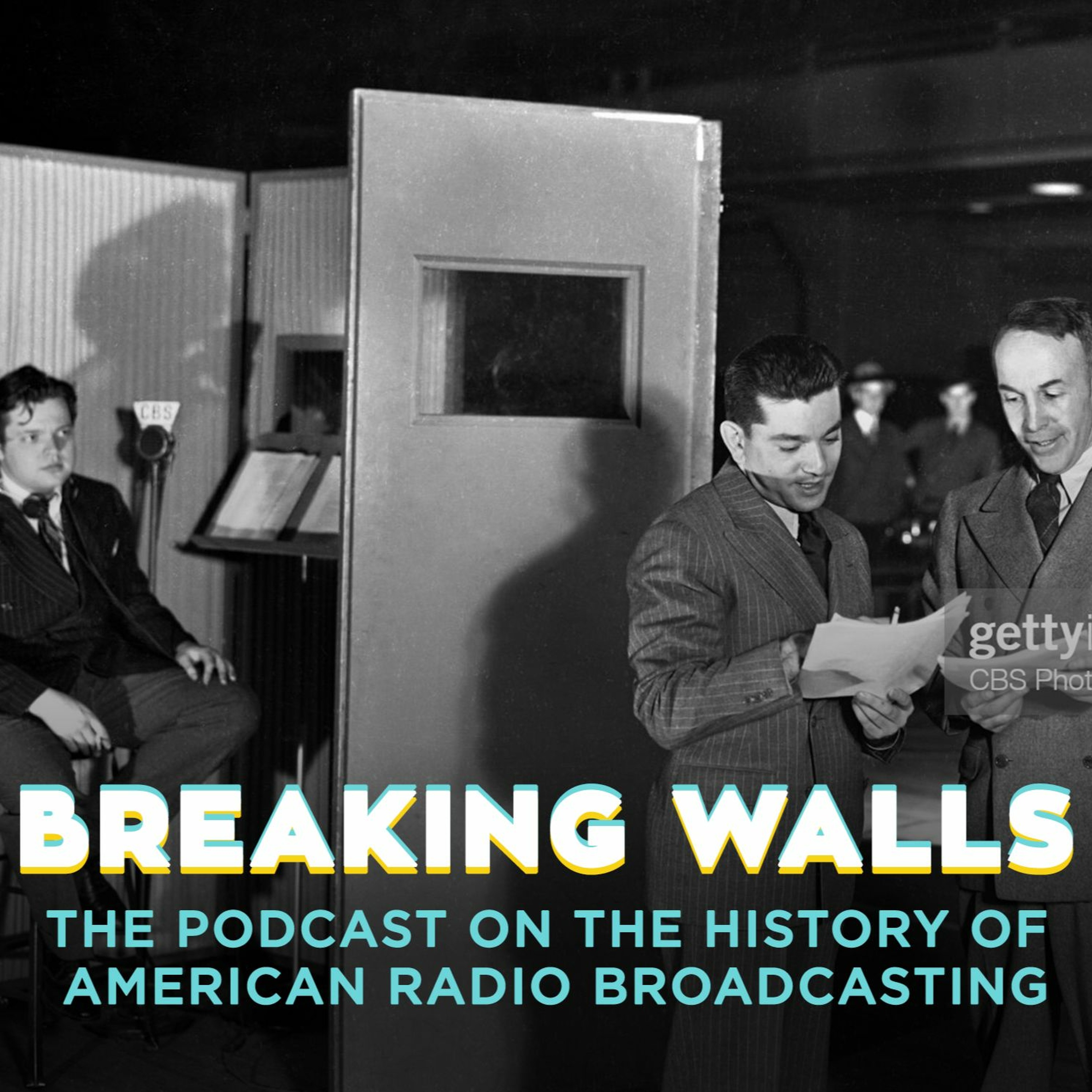
In the spring of 1935, nineteen year-old Orson Welles was living in New York, appearing on stage in Katharine Cornell’s stock company and workin on CBS’ American School of the Air and The March of Time. The next year, Welles was on the debut episode of CBS’s Columbia Workshop. The program’s creator Irving Reiss recognized Orson’s talent, while Welles studied the creative risks The Workshop took. He began to assemble his Mercury Theater troupe just as FDR launched the Federal Theater Project. John Houseman invited Welles to be part of an African-American theater unit in Harlem. Their first co-production was an adaptation of Shakespeare's Macbeth. Welles changed the setting to a mythical island. Voodoo took the place of Scottish witchcraft. The play opened on April 14th, 1936, at the Lafayette Theater in Harlem. It received incredible reviews. By that autumn, Welles was traveling between Chicago and New York, appearing on Mutual Broadcasting’s Wonder Show, and on The Columbia Workshop. On Sunday April 11th, 1937 The Workshop broadcast a verse-play written especially for radio by Archibald MacLeish. It was called The Fall of the City. It was an allegory on the rise of fascism. The broadcast took place at the massive Seventh regiment armory on 67th street and Park avenue in New York. Reiss used over one-hundred fifty extras, and entrusted Welles to be the narrator. To get proper sonic differentiation, they built radio’s first narration booth. The Fall of The City was selected by The New York Times as one of the outstanding broadcasts of 1937. Time magazine noted that it proved to listeners radio was science's gift to poetry and poetic drama. The Fall of the City made Orson Welles a star. Mutual Broadcasting was about to give him the opportunity of a lifetime.
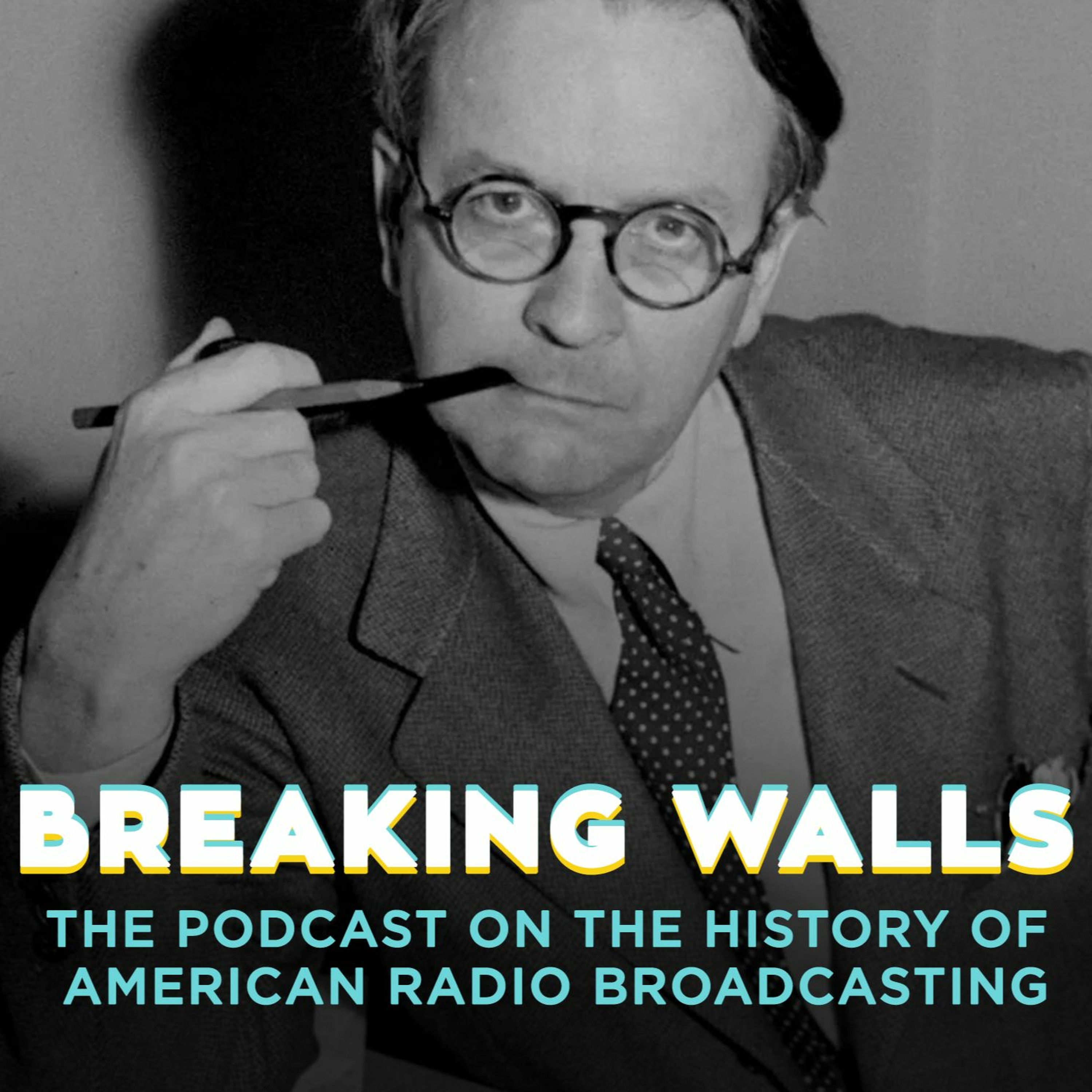
BW - EP130: Philip Marlowe Comes to Radio (1947)
In Breaking Walls episode 130 we head to the summer of 1947 to get to the bottom of NBC’s Philip Marlowe caper. —————————— Highlights: • Who was Raymond Chandler? • Who is Philip Marlowe? • Van Heflin, Movie Star • Radio Ratings in the Spring of 1947 • Marlowe Launches with Red Wind • Initial Reviews • The King in Yellow • The Celebrated Life and Tragic Death of Jeff Chandler • Marlowe Leaves NBC, but CBS Picks It Up • Marlowe After CBS • Looking Ahead to Orson Welles and The Shadow —————————— The WallBreakers: http://thewallbreakers.com Subscribe to Breaking Walls everywhere you get your podcasts. To support the show: http://patreon.com/TheWallBreakers —————————— The reading material used in today’s episode was: • The Simple Art of Murder — By Raymond Chandler • Trouble Is My Business — By Raymond Chandler • The World of Raymond Chandler — By Raymond Chandler • On the Air — By John Dunning • The Life of Raymond Chandler — By Frank MacShane • Network Radio Ratings — By Jim Ramsburg • The Adventures of Philip Marlowe Program Guide — By Tom Nolan As well as articles from: • Billboard Magazine • Broadcasting Magazine • And Sponsor Magazine —————————— On the interview front: • Eve Arden, Wendell Niles, Lurene Tuttle, and Willard Waterman spoke to Chuck Schaden. Hear their full chats at SpeakingOfRadio.com. • Parley Baer, Mary Jane Croft, and Harry Bartell spoke to SPERDVAC. For more info, go to SPERDVAC.com. • Eve Arden also spoke with John Dunning for his 71KNUS program from Denver. • Lurene Tuttle also spoke with Frank Bresee for Same Time, Same Station. • William Conrad spoke with Chris Lambesis • Norman Macdonnell with John Hickman • Bob Hope with Johnny Carson • Raymond Chandler spoke to Ian Flemming —————————— Selected music featured in today’s episode was: • Cool — By Martin Denny • Perfida — By Jimmy Dorsey and his Orchestra • Living Without You — By George Winston • Danse Macabre — By Camille Saint-Saens • Loch Lomond (arranged for Choir) — By Musica Intima —————————— A special thank you to Ted Davenport, Jerry Haendiges, and Gordon Skene. For Ted go to RadioMemories.com, for Jerry, visit OTRSite.com, and for Gordon, please go to PastDaily.com. —————————— Thank you to: Tony Adams Steven Allmon Orson Orsen Chandler Phil Erickson Jessica Hanna Perri Harper Briana Isaac Thomas M. Joyce Ryan Kramer Earl Millard Gary Mollica Barry Nadler Christian Neuhaus Aimee Pavy Ray Shaw Filipe A Silva —————————— WallBreakers Links: Patreon - patreon.com/thewallbreakers Social Media - @TheWallBreakers
BW - EP130—011: Philip Marlowe Comes To Radio—Looking Ahead To Orson Welles And The Shadow
Well, that brings our episode on The Adventures of Philip Marlowe to a close. We’re not leaving the genre though, just going back ten years in time to 1937. Next time on Breaking Walls we spotlight Orson Welles’ one season as star of The Shadow and find out how the legendary radio show came to air.
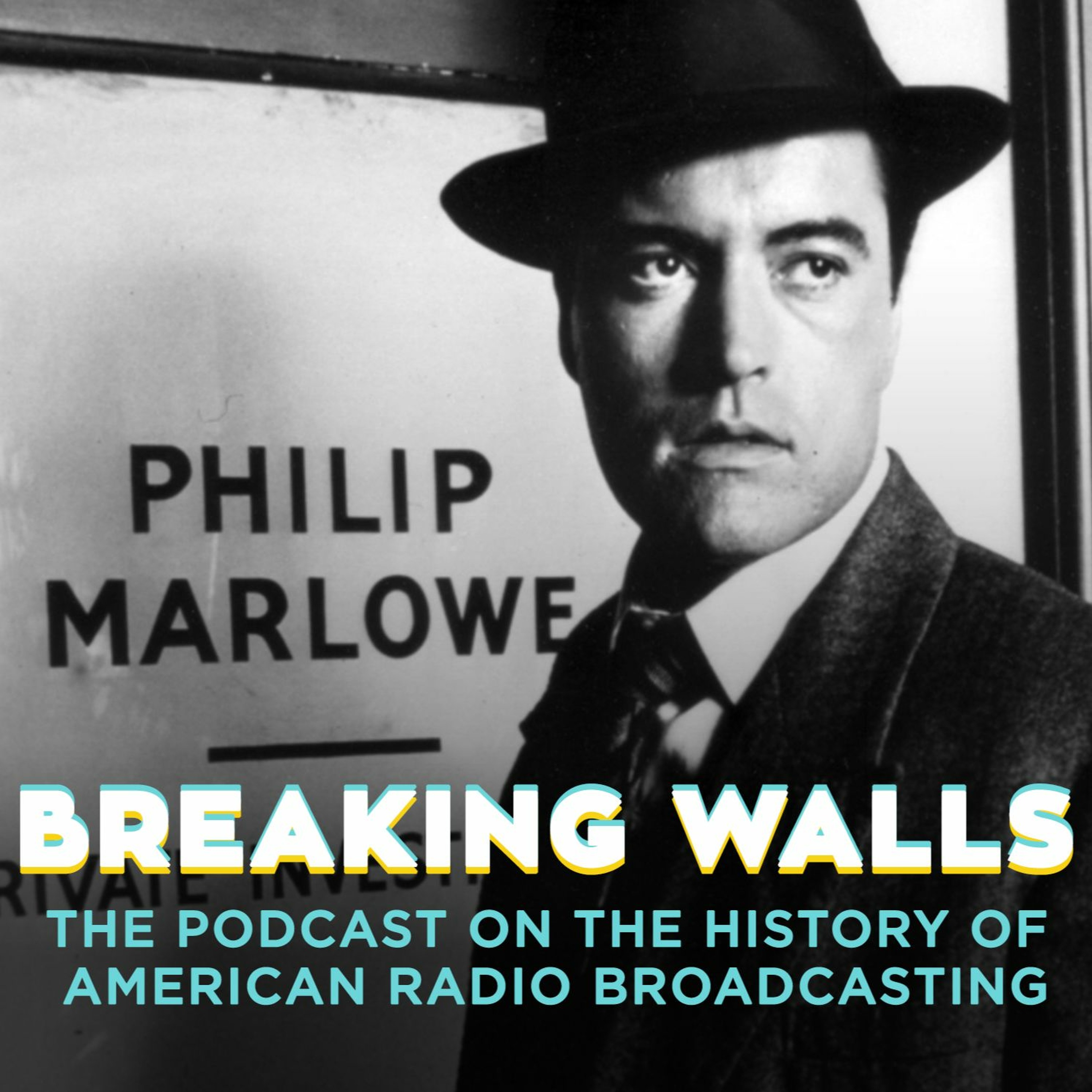
BW - EP130—010: Philip Marlowe Comes To Radio—Marlowe After CBS
Raymond Chandler wrote three more Philip Marlowe novels: The Little Sister in 1949, The Long Goodbye in 1953, and Playback in 1958. He became a dual citizen of the U.S. and Great Britain. His wife, Cissy died in 1954. In 1955, he attempted suicide. Heartbroken and drunk, Chandler neglected to inter her cremated remains. They sat for fifty-seven years in a storage locker at Cypress View Mausoleum. Chandler was in the midst of a new Marlowe novel, Poodle Springs, when he passed away on March 26th, 1959. Robert B. Parker finished the novel thirty years later. Chandler is buried at Mount Hope Cemetery, in San Diego, California. Later that year ABC brought Marlowe to TV for the first time in a series starring Philip Carey. It lasted five months. James Garner starred as Marlowe in a 1969 film, while Elliott Gould played Marlowe in the cult classic Long Goodbye from 1973, and a middle-aged Robert Mitchum starred in the 1975 Farewell, My Lovely and the 1978 Big Sleep. Between September of 1977 and January of 1978 BBC dramatized The Big Sleep, The High Window, The Lady in the Lake, The Little Sister, and The Long Goodbye. Ed Bishop starred as Marlowe. Ten years later, BBC did a version of Farewell, My Lovely. The shows were later heard in Los Angeles over NPR’s affiliate KCRW-FM. BBC was back at it again with new adaptations of Chandler’s novels starring Toby Stephens in 2011. Meanwhile HBO produced two series of Marlowe TV episodes in the mid-1980s starring Powers Boothe, and both Danny Glover and James Caan have played Marlowe in made-for-TV films in the years since. It has recently been announced that Liam Neeson will star in a new Marlowe film in 2023.
BW - EP130—009: Philip Marlowe Comes To Radio—Marlowe Leaves NBC, But CBS Picks It Up
In September, Bob Hope reclaimed his Tuesday night time slot and NBC’s Philip Marlowe radio adventures were over. 1947 was a good year for Van Heflin. Green Dolphin Street hit theaters in November. It co-starred Lana Turner and was that year’s biggest MGM hit. On Thanksgiving he guest-starred on an episode of Radio Reader’s Digest called “Why Keep Your Heart In Cold Storage?” It was well-received, but MGM would no longer allow Heflin to play Marlowe. He continued to appear on radio into the 1950s. A new Hollywood agent, Ray Stark, went to work for Chandler in 1948, and in September, a revived Philip Marlowe series began a two-year run on CBS, this time starring Gerald Mohr. Mohr played King Leopardi in the summer series’ version of “The King in Yellow.” He’d done movie work, but his face was unknown to most radio listeners. Chandler preferred his voice, which he thought packed more punch. Norman Macdonnell was in charge of the production. Chandler made a list of suggestions for the show’s writers: Don’t always let Marlowe have the last word. Don’t make him utter knee-jerk wisecracks. Don’t let him gloat. For the most part, Mohr’s Marlowe always got the last word, added quick-one liners, and gloated. CBS paid Chandler two-hundred fifty dollars per week, roughly 3K today. That amount was raised to four-hundred if the series found a sponsor, which it briefly did, with both Wrigley’s Spearmint Gum and Ford. On CBS Marlowe took up the commercial slack with product-placement. Cars were Nash’s. Gas Stations pumped Mobile. Phil reached for Johnny Walker and Lifesavers candy. As he drove around L.A. he found a handy way to keep track of addresses: Their proximity to an Arthur Murray Dance Studio. Even Chandler got a plug In “The Hairpin Turn.” On April 11th, 1950, William Conrad subbed for Gerald Mohr. Sometime around 1950, head of CBS William Paley said the network should develop a “Philip Marlowe in the Old West” – a no-nonsense, tough-as-nails frontier saga unlike any cowboy show ever heard. The show would be called Gunsmoke and debut in 1952 starring William Conrad. It was directed by Norman Macdonnell and generally considered the best radio Western of all time. The Adventures of Philip Marlowe was canceled in September of 1950, but revived the following July for a summer run. The final CBS Philip Marlowe Adventure was on September 15th, 1951.
BW - EP130—008: Philip Marlowe Comes To Radio—The Celebrated Life And Tragic Death Of Jeff Chandler
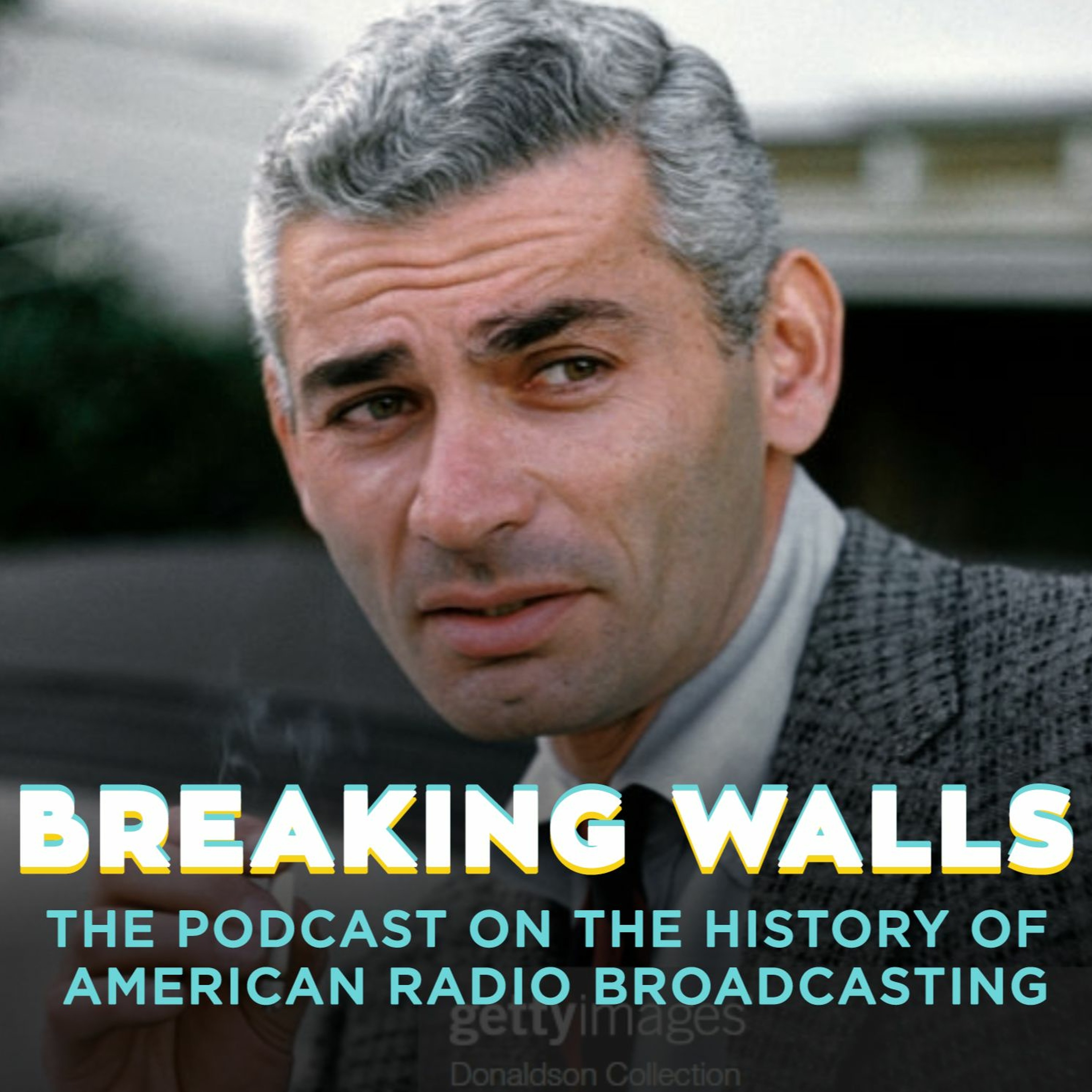
The August 8th episode of Philip Marlowe was called “Robin and The Hood.” Jeff Chandler guest-starred playing a dual role. Born Ira Grossel in Brooklyn, New York on December 15th, 1918, he acted in high school with classmate Susan Hayward. Chandler went to the Feagin School of Dramatic Art and had a stint with a theater troupe. He served in the Pacific, finishing World War II as a Lieutenant. After being discharged in December of 1945, he moved to Los Angeles. By August of 1947 he was all over radio as one of hollywood's reliable character men. That autumn he was cast as the lead in The New Adventures of Michael Shayne, a syndicated program produced by Bill Rousseau and Don W. Sharpe. In July of 1948, Chandler was cast opposite Eve Arden in Our Miss Brooks. But on August 8th, 1947, he was featured on The Adventures of Philip Marlowe. In 1949 Chandler was cast as Israeli leader “Kurta” in the film, Sword in the Desert. He impressed studio executives so much with his work that shortly into filming, Universal signed him to a seven-year contract. The next year, 20th Century Fox borrowed Chandler for the role of Cochise in Broken Arrow. He starred alongside James Stewart. The performance earned him an Academy Award nomination and established him as an A-list star. Radio suddenly was less of a possibility due to time constraints, but if Chandler was leaving radio, it was against his will. In May of 1951 Chandler told the Chicago Tribune that he didn’t find film acting nearly as gratifying as radio. He wanted to eventually branch off into writing and directing. When Our Miss Brooks moved into TV in 1952, he wasn’t allowed to make the transition with the rest of the cast. Chandler would spend the rest of the decade making films. On April 15th, 1961, Jeff Chandler was in the Philippines while working on Merrill’s Marauders. While playing a pickup game of basketball with some soldiers he severely injured his back. He was given injections to deaden the pain so he could finish the film. On May 13th, he entered a Culver City hospital to have surgery for a spinal disc herniation. An artery was damaged during surgery and Chandler hemorrhaged. Four days later, in a seven-and-a-half-hour emergency operation, he was given fifty-five pints of blood. A third operation followed, on May 27th. An infection followed, complicated by pneumonia he caught at the hospital in his weakened state. Jeff Chandler never recovered. He died on June 17th, 1961. He was forty-two. More than fifteen hundred people attended his funeral. Pallbearers included Tony Curtis and Gerald Mohr. For more information on Jeff Chandler, tune into Breaking Walls episode 90, or episode 106.
BW - EP130—007: Philip Marlowe Comes To Radio—The King In Yellow
On July 8th, 1947, NBC broadcast an adaptation of “The King In Yellow,” originally published in Dime Detective Magazine in March of 1938. It’s a seedy saga of a hot trumpet player whose boorish behavior gets him killed. Among those featured in this episode were Gerald Mohr, Gloria Blondell, Bill Johnstone, Willard Waterman, and Howard McNear. By the late 1940s many of Chicago’s radio stars had migrated to Hollywood, working on shows across all four networks. By the end of July, Marlowe’s 8.0 rating was seventh overall, and the show’s production cost just one dollar per the number of urban listeners.
BW - EP130—006: Philip Marlowe Comes To Radio—Initial Reviews
The June 17th, 1947 edition of Billboard Magazine reviewed the first Marlowe episode. It was noted that similar shows were expected to pull a rating of 7.5. The magazine stated that “Milton Geiger's adaptation adhered to Red Wind's language almost to the letter, and captured most of the colorful, almost poetic flavor. “On the debit side was the enormity of the job of breaking down Chandler's complex plotting within the thirty minute limit. The program galloped through the first fifteen minutes as the action unfolded. “The Second half pace slowed down to a crawl, however, as everyone desperately strove to clarify the proceedings. Repeated conjecture and explanation of the cast's intricate relationships unfortunately had confusion rampant by the end.” The reviewer was quick to point out that “Even films, found that ninety minutes was hardly enough to cram in all of Chandler’s ideas. Perhaps the shorter stories will prove more suited for air. Their flair for mood and language certainly is hard to surpass. “The commercials were harsh and repetitive, stressing that Pepsodent is "preferred three to one" by American families. Foote, Cone & Belding seems to be trying its Lucky Strike technique on the dentifrice. It's a three to one bet that the incessant "three to one" chatter becomes as notorious as LS/MFT.” On the lead Billboard stated: “Heflin's emoting in the role of the tough guy with a heart was effective, with excellent character projection. Lurene Tuttle, as the woman in the case, put on her usual good performance. Producer James Fonda struggled valiantly to keep the pacing level, but was handcuffed by the urgency of the story. The script contained an inside joke. The name of Lola’s dead lover was changed to Johnny Dalmas, the name of the original detective in Chandler’s “Red Wind” before the story became Marlowe’s. Chandler thought it was flat. Van Heflin was too recognizable. He didn’t like picturing Heflin’s face emoting Marlowe’s lines. Erle Stanley Gardner told Chandler the show’s plot and narration moved too fast to be understood. There was a bigger argument at stake within the industry: Were summer replacements a worthwhile investment? Sponsor Magazine claimed that it cost advertisers money to take a thirteen-week hiatus. It was money lost in the form of lower summertime ratings. But, You couldn’t just blame it on Summer replacements though. For example, Bob Hope’s 1946-47 rating was 27.6, but his combined rating for June and September 1947 was 14.4. People spent more time outdoors in warm months. It didn’t matter what was on the air. Plus, there was still no way to effectively measure car radio ratings. Given that Hope’s show cost twenty-one thousand weekly dollars to produce, while Marlowe cost just four thousand, Pepsodent was getting a bargain. By the end of summer, Marlowe was the highest-rated summer replacement series on the air.
BW - EP130—005: Philip Marlowe Comes To Radio—Marlowe Launches With Red Wind
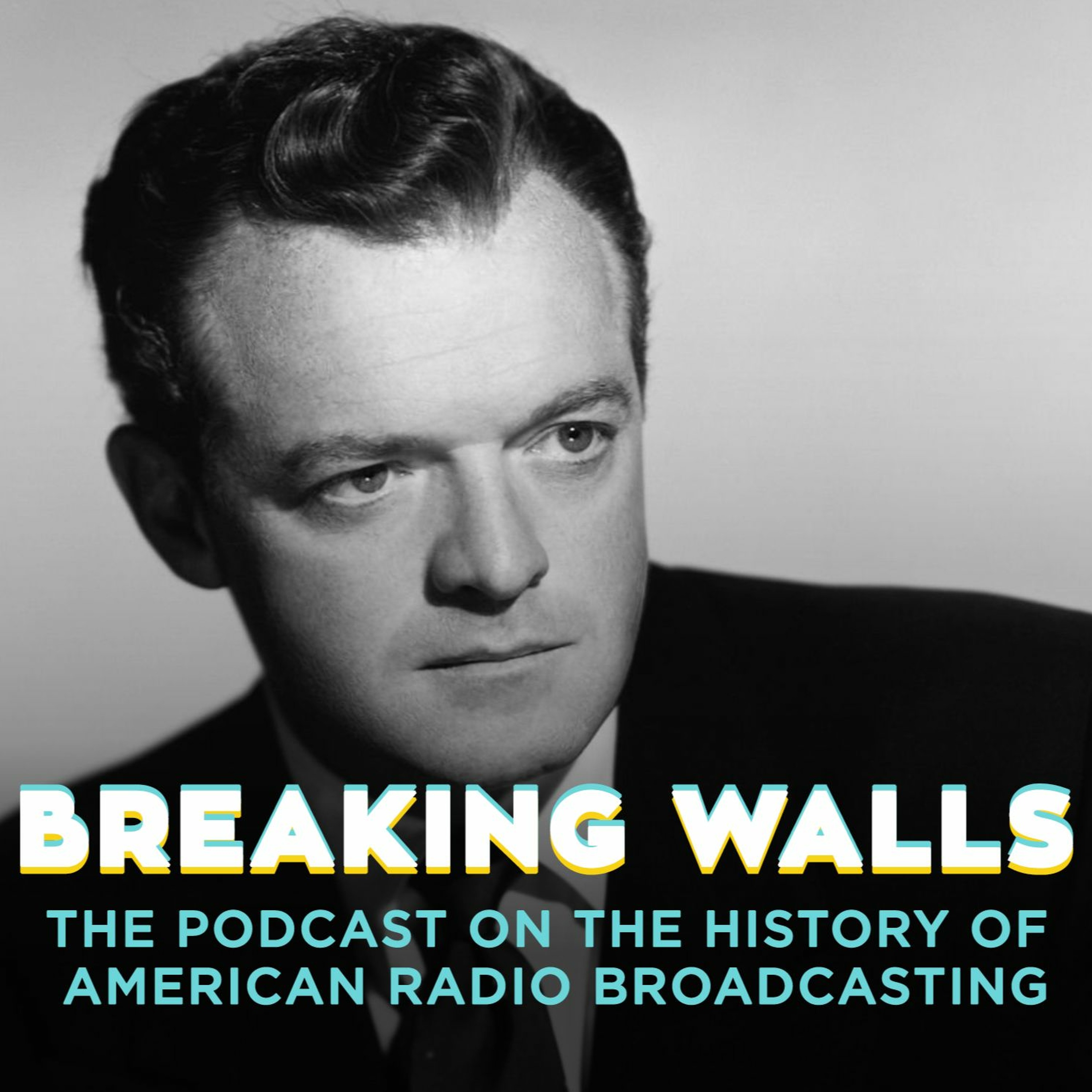
The Adventures of Philip Marlowe debuted on NBC with “Red Wind” on June 17th, 1947. The 1938 short story is set on one of those evenings when the hot, dry Santa Ana wind gusts through Los Angeles, turning the mood sour. The program aired live at 10PM on the east coast, with a second broadcast done at 9PM for the west. The script was adapted by Milton Geiger. Jim Fonda directed. Wendell Niles announced. Harry Bartell played the bartender. Lurene Tuttle was Lola Barsley. The episode also featured Elliot Reid, Bill Johnstone, and William Conrad. By the summer of 1947, Lurene Tuttle was well-known for co-starring on The Adventures of Sam Spade. It was a decidedly different character.
BW - EP130—004: Philip Marlowe Comes To Radio—Radio Ratings In The Spring Of 1947
By the middle of 1947, nearly eleven million babies had been born in the U.S. since the end of World War II. Young parents were staying home with their children. Homes with radios jumped six percent, car radios twenty-nine percent. Over the next year, radio would have its largest audience in history. The four major networks added one-hundred forty-seven affiliates. Network revenue topped two-hundred million dollars. NBC had the top seven shows. The Bob Hope Show closed the 1946-47 season as radio’s highest-rated program. The comedian pulled a rating of 27.6. Network fed programs generally had thirteen, twenty-six, thirty-nine, or fifty-two weeks contracts. Hope’s NBC contract ran for thirty-nine. Pepsodent would sponsor the new Philip Marlowe series in Hope’s time slot. Hope’s show cost twenty-one thousand dollars each week to produce. Marlowe would cost four-thousand. Heflin guest-starred on Hope’s June 3rd program to help promote the series. The Adventures of Philip Marlowe would begin the first week of June. For more information on the state of the world in 1947, tune into Breaking Walls episodes 97, 98, and 99.
BW - EP130—003: Philip Marlowe Comes To Radio—Van Heflin, Movie Star
Van Heflin was born on December 13th, 1908 in Walters, Oklahoma. The son of a dentist, he began his acting career on Broadway in the late 1920s. Between 1928 and 1936 he appeared in. Mr. Moneypenny, The Bride of Torozko, The Night Remembers, Mid-West, and End of Summer. That year Heflin signed with RKO and made his film debut opposite Katherine Hepburn in A Woman Rebels. He spent the next five years playing character parts. He made his radio debut on The Columbia Workshop in 1938. Heflin signed with MGM as the U.S. was getting into World War II. In 1942 his role as Jeff Hartnett in Johnny Eager won him a best-supporting actor academy award. He got top billing in two B-Films, Kid Glove Killer and Grand Central Murder. Both were popular. Encouraged, MGM cast him as Kathryn Grayson's love interest in a musical, Seven Sweethearts. He soon played Judy Garland's love interest in Presenting Lily Mars, before enlisting in the US army airforce as a combat cameraman. He made a radio appearance too, in Arch Oboler’s Parade over Mutual on August 2nd, 1945. This was less than two weeks before the end of the war. After the war, MGM loaned him to Hal Wallis to appear opposite Barbara Stanwyck in The Strange Love of Martha Ivers, and to Warner Bros to co-star with Joan Crawford in Possessed. It was a hit and more radio followed. On January 30th, 1947 Heflin guest-starred on this episode of Suspense. A month later he guest-starred on Family Theater, and in May, he was featured on Lux Radio’s “Vacation From Marriage.” Three weeks later, Heflin would begin playing Philip Marlowe.
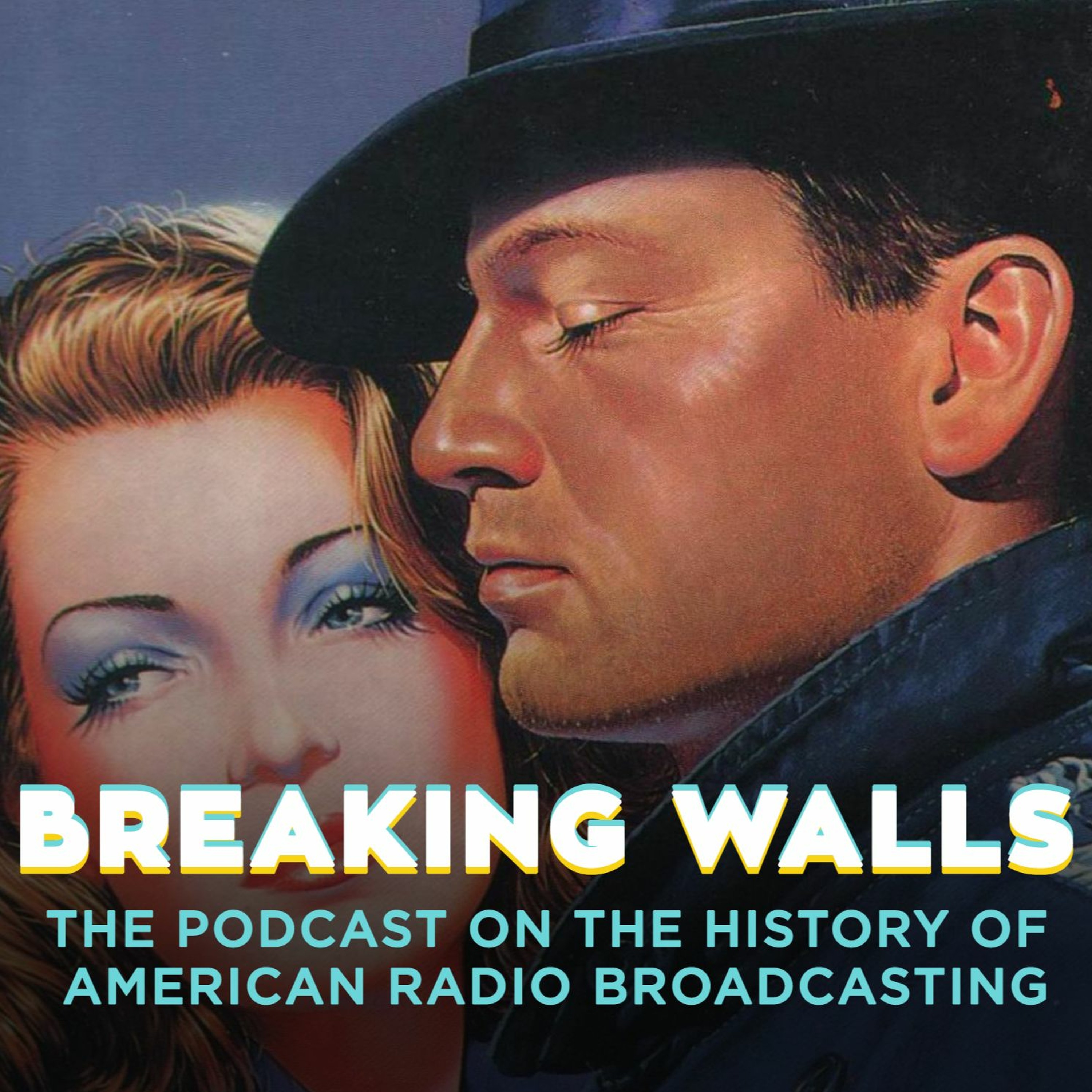
BW - EP130—002: Philip Marlowe Comes To Radio—Who Is Philip Marlowe
Philip Marlowe, born in Santa Rosa, California, is six feet tall and weighs one-hundred ninety pounds. He has dark wavy hair. In Chandler’s first Marlowe novel, The Big Sleep, set in 1936, he’s thirty-three. Marlowe had two years of college and was an investigator for the LA District Attorney. He was fired for insubordination. His office is in the Cahuenga Building on Hollywood Boulevard near Ivar. James Bond author Ian Fleming once asked Raymond Chandler why he set the Marlowe stories in Los Angeles. Through Marlowe’s eyes, L.A. comes to life. He frequents everything from the nightclubs of West Hollywood to the seedy downtown hotels, from the Pasadena mansions to the Santa Monica gambling ships, from the Hollywood glamor factories to the rundown bus depots. He drinks whiskey, usually Four Roses or Old Forester, and sometimes drinks Gin. His preferred coffee is black and his cigarette brand is Camel. At home, he smokes a pipe, especially while playing chess by himself. It was said that Chandler wrote like “a slumming angel invested in the sun-blinded streets of LA with a romantic presence.” The second Marlowe novel, Farewell, My Lovely, was published in 1940. This was followed by The High Window in 1942 and The Lady In The Lake in 1943. The first official Marlowe film was Murder My Sweet with Dick Powell in 1944. Powell played the adaptation of Farewell, My Lovely on the June 11th, 1945 episode of The Lux Radio Theatre. Humphrey Bogart starred in the 1946 adaptation of The Big Sleep heard opposite Lauren Bacall at the beginning of this act. That same year Chandler and his wife bought a home in La Jolla. In early 1947 two new Marlowe films came to theaters. The Lady In The Lake starring Robert Montgomery was released in January. Montgomery reprised his role on the February 9th, 1948 episode of Lux. Then in February, an adaptation of The High Window called The Brasher Doubloon came to theaters starring the unrelated George Montgomery. Marlowe was a hot commodity. On March 22nd, it was announced that NBC would be bringing a summer series to the air. Tuesday nights were NBC’s highest-rated evening, and although summer ratings were always the year’s lowest, NBC executives had high-hopes that Marlowe would be a perfect fit Tuesday nights at 10PM eastern, 9PM pacific. The ad agency Foote, Cone, and Belding made a deal with MGM. They tabbed rising leading man Van Heflin to play Marlowe.
BW - EP130—001: Philip Marlowe Comes To Radio—Who Was Raymond Chandler
La Jolla, California. 1947. We’re at 6005 Camino de la Costa at the home of Raymond Chandler. It’s been three years since the fifty-nine year-old wrote a full length novel. Instead he’s worked on two screen plays. Chandler co-adapted Double Indemnity with Billy Wilder, and penned The Blue Dahlia. Both earned him Academy Award nominations. Looking for more income, his agent has negotiated a deal for Chandler to help bring a thirteen-week summer series to NBC. It’ll sub for Bob Hope on Tuesday nights. The main character? Chandler’s detective Philip Marlowe. To date Marlowe had been the focal point of four novels and four films — including two almost simultaneously released this past winter. This will, however, be the first time that Philip Marlowe comes to radio’s airwaves in a regular show. Tonight, we’ll go back in time and spotlight that summer’s highest-rated replacement series The Adventures of Philip Marlowe, starring Van Heflin. ___________ Raymond Chandler was born on July 23rd, 1888 in Chicago, Illinois. He spent his early years in Nebraska until his father, an alcoholic railway civil engineer, abandoned the family. In 1900 his Irish mother Florence moved with Raymond to England. Chandler went to Dulwich College in London. In 1907 he became a naturalized British subject and took a job as an Admiral, but resigned. He grabbed a reporter position at the Daily Express and later the Westminster Gazette. Unhappy in England, Chandler wanted to be a writer, so he returned to America in 1912. He settled in San Francisco, where he took a correspondence course in bookkeeping. His mother joined him there soon after. They moved to Los Angeles in 1913, where he strung tennis rackets, picked fruit, and found steady employment with the Los Angeles Creamery. But then, The U.S. and Canada finally joined World War I. In 1917 Chandler enlisted in the Canadian Expeditionary Force. He saw combat in the trenches in France and was twice hospitalized with Spanish flu. He was in flight training with the Royal Air Force when the war ended. He returned to Los Angeles and began a love affair with Cissy Pascal, a married woman eighteen years his senior. She amicably divorced her husband in 1920, but Chandler's mother disapproved of the relationship and refused to sanction the marriage. For the next four years Chandler supported both. His mother passed away in 1923. Raymond married Cissy on February 6th, 1924. Having begun in 1922 as a bookkeeper and auditor, by 1931 he was a highly paid VP at the Dabney Oil Syndicate. But he suffered frequent mental health breakdowns. He drank too much, skipped work, was promiscuous with female employees, and he publicly threatened suicide. Chandler was fired in 1932. Detective and suspense shows had been on radio since the medium’s inception. They were often similar to dime store novels. Sherlock Holmes began in 1930. Chandler taught himself to write pulp-style fiction by analyzing a novelette by Erle Stanley Gardner. His first story, "Blackmailers Don't Shoot", was published in Black Mask Magazine in 1933. His lead character was called “Mallory.” It took him five months to finish the story. Erle Stanley Gardner wrote entire stories in three or four days. He later said, “Wandering up and down the Pacific Coast in an automobile, I began to read pulp magazines. This was in the great days of Black Mask. It struck me that some of the writing was pretty forceful and honest, even though it had a crude aspect. I decided that this might be a good way to try to learn to write fiction and get paid a small amount of money at the same time. I spent five months on an eighteen-thousand word novelette and sold it for one-hundred-eighty dollars. After that I never looked back, although I had many uneasy periods looking forward.”
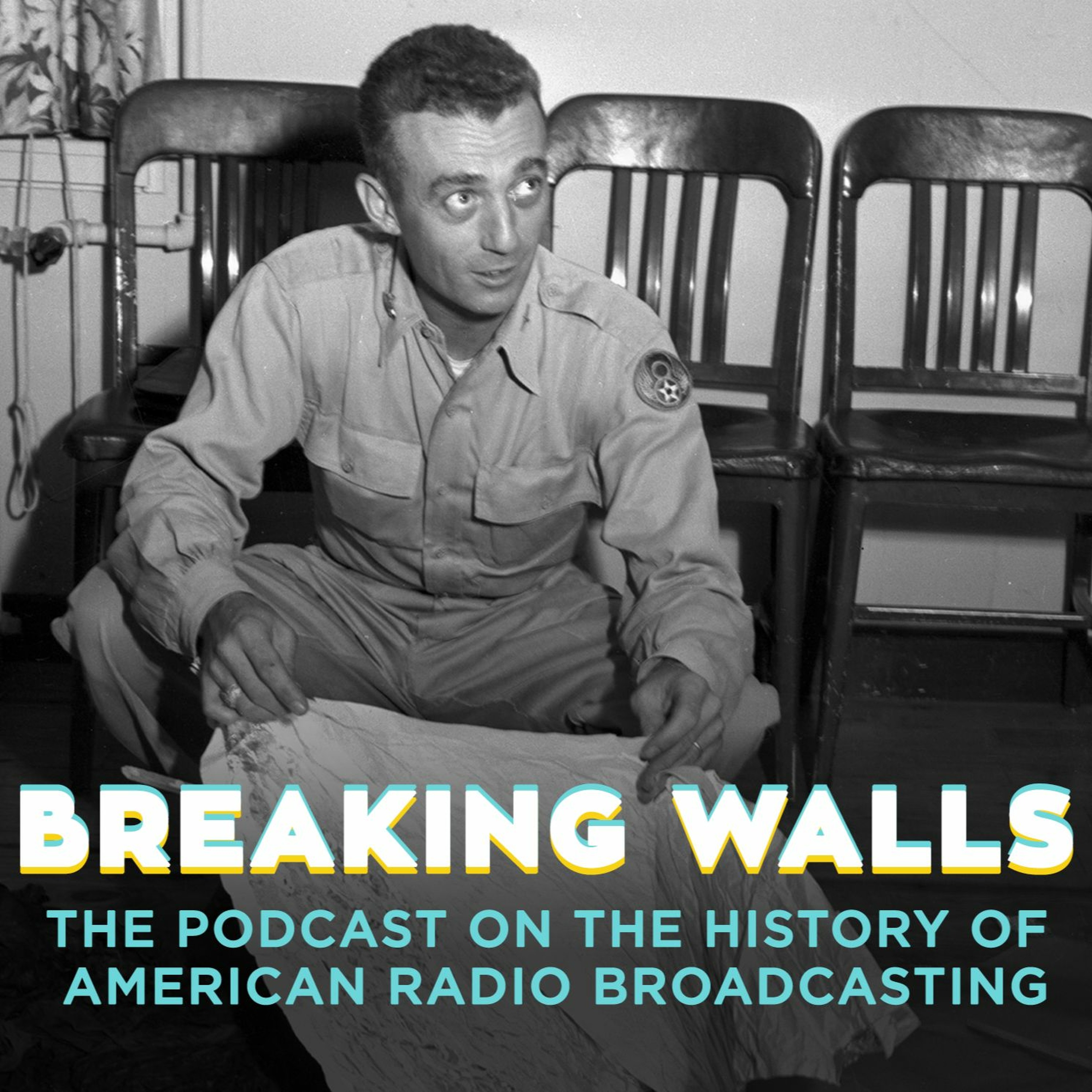
BW - EP129: Radio, Roswell And The Flying Saucer Craze (1947 - 1955)
In Breaking Walls episode 129 we honor the seventy-fifth anniversary of the Roswell incident by focusing on Radio and the mid-century flying saucer craze. —————————— Highlights: • World War II, Kenneth Arnold, Roswell, and “Project Saucer” • The Chicago Roundtable Attempts to Answer What Life on Other Planets Would Look Like • Sightings in The Spring of 1950 — Dimension X Launches • The 1950 Radio Landscape with Red Skelton • Fibber McGee Sees a UFO • Harris And Remley’s UFO Hoax • Edward R. Murrow’s Report on Flying Saucers • Dangerous Assignment’s UFOs in Ecuador • UFO Sightings during the Korean War • You Bet Your Life’s UFO Enthusiast • KNX, Ralph Story, And UFO Mania • Roy Rogers Takes Us Home • Conclusions? Closing Credits and a New Mystery —————————— The WallBreakers: http://thewallbreakers.com Subscribe to Breaking Walls everywhere you get your podcasts. To support the show: http://patreon.com/TheWallBreakers —————————— The reading material used in today’s episode was: • On the Air — By John Dunning • Network Radio Ratings — by Jim Ramsburg As well as articles from: • Broadcasting Magazine • LIFE Magazine • Radio Daily —————————— On the interview front: • Alice Faye, Jim Jordan, Elliott Lewis, and Lurene Tuttle spoke to Chuck Schaden. Hear their full chats at SpeakingOfRadio.com. • John Gibson, Jim Jordan, and Arnold Moss spoke to Dick Bertel and Ed Corcoran for WTIC’s The Golden Age of Radio. Hear these full interviews at Goldenage-WTIC.org. • Jim Jordan also spoke with John Dunning for his 71KNUS program from Denver • Lilian Buyeff and Sam Edwards spoke to SPERDVAC. For more info, go to SPERDVAC.com. • Elliott Reid spoke with Frank Bresee • Red Skelton spoke with Dini Petty —————————— Selected music featured in today’s episode was: • I Put a Spell on You — By Screaming Jay Hawkins • Pyramid of the Sun — By Les Baxter • What A Fool I Was — By Percy Mayfield • Happy Trails To You — By Dale Evans and Roy Rogers • Someone To Watch Over Me — By Blossom Dearie —————————— A special thank you to Ted Davenport, Jerry Haendiges, and Gordon Skene. For Ted go to RadioMemories.com, for Jerry, visit OTRSite.com, and for Gordon, please go to PastDaily.com. —————————— Thank you to: Tony Adams Steven Allmon Orson Orsen Chandler Phil Erickson Jessica Hanna Perri Harper Briana Isaac Thomas M. Joyce Ryan Kramer Earl Millard Gary Mollica Barry Nadler Christian Neuhaus Aimee Pavy Ray Shaw Filipe A Silva —————————— WallBreakers Links: Patreon - patreon.com/thewallbreakers Social Media - @TheWallBreakers
BW - EP129—013: Radio, Roswell And The Flying Saucer Craze—Conclusions And Looking Ahead To August
By 1955 radio’s days as America’s chief entertainment medium were over. However, while radio drama was dying out, UFO sightings were becoming more prevalent. Some were so outlandish they were hard to believe. Others were chillingly real. For example: On September 19th, 1961 Betty and Barney Hill had a widely known abduction experience. The Hills saw a huge flying disc while driving home one night on Route 3 in New Hampshire. They later awoke back in their car with missing time, something common for abductees. Hypnosis later revealed they were abducted and medically examined by small extraterrestrials. What added to the Hills’ credibility was the fact that both were afraid to tell their story. They were an interracial couple, and concerned it would hurt their credibility as they were active in the Civil Rights movement. Their experience was most certainly not for publicity. In recent years, Unidentified Aerial Phenomena has been verified by various world governments, and the public’s fascination with the mystery remains. Well, it’s a good thing that the subject of our next Breaking Walls episode knows how to get to the bottom of a hard-boiled mystery. Next time on Breaking Walls we head back to the Summer of 1947 as for the first time in a major series, Raymond Chandler’s famous detective Philip Marlowe signs on the air.
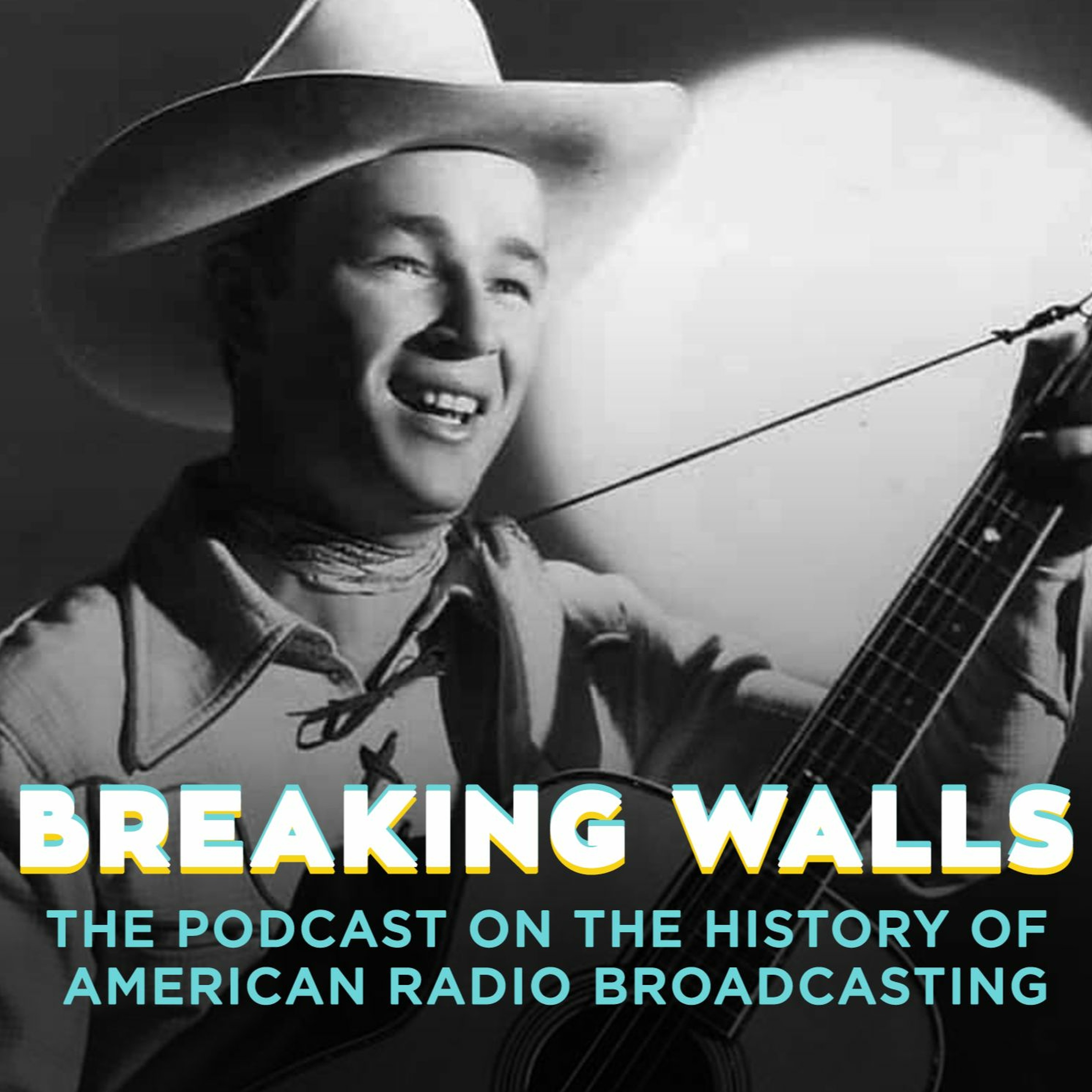
BW - EP129—012: Radio, Roswell And The Flying Saucer Craze—Roy Rogers Takes Us Home
Roy Rogers was born on November 5th, 1911 in Cincinnati, Ohio. He spent much of the early 1930s performing with groups like Uncle Tom Murray’s Hollywood Hillbillies, The Texas Outlaws, and The Rocky Mountaineers. In mid-decade he joined up with Bob Nolan to form the Sons of the Pioneers. By 1935, they were appearing in bit parts for Republic Pictures. Two years later Republic’s top cowboy, Gene Autry, quit in a dispute, and Rogers became a star. He bought a palomino colt, named it Trigger, and taught it tricks that were guaranteed crowd- pleasers. Rogers was soon nip-and-tuck with Autry at the box office. In the mid-1940s he was among the top ten money-makers in the entire industry. He came to radio in 1944 over Mutual. His second wife, Arline, died in 1946. He married his co-star Dale Evans on New Year’s Eve, 1947. Hollywood radio’s best loved working with Roy. His radio show moved to NBC in 1951 where he also ventured into TV. In 1953 new sponsor Dodge, asked the show to be more adult-oriented. Writer-director Ralph Rose came up with a mystery format, with Evans’s song usually figuring in the plot. The January 27th, 1955, episode was called “Faraway Places.” The Roy Rogers Show went off the air on July 21st, 1955. His television series ran until June 9th, 1957.
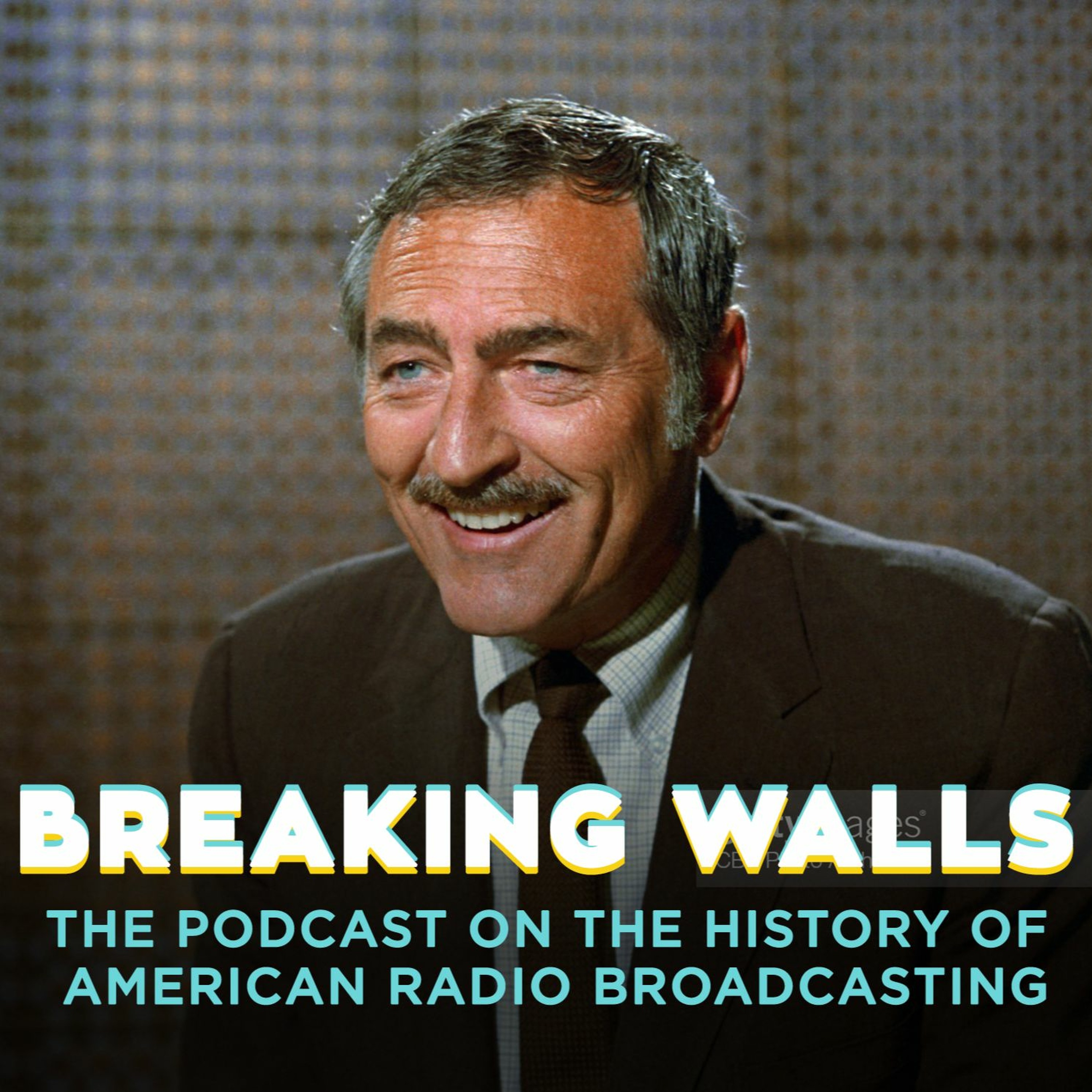
BW - EP129—011: Radio, Roswell And The Flying Saucer Craze—KNX, Ralph Story, And UFO Mania
Ralph Story was born in Kalamazoo, Michigan on August 19th, 1920. He served as a US Army Fighter Pilot during World War II and started a career in broadcasting after the war. His big break came in 1948 when he was hired to host and direct an early morning show on KNX in Los Angeles. Story's casual style and witty observations about life in LA won him national recognition. He went on to do various shows before going to TV in the 1950s. This afternoon show, Ralph Story’s Backyard featured Story, sidekicks and musical accompaniment. On July 16th, 1953 his guest was UFO follower George Adamski. (A Damn Ski) Adamski claimed to have met with friendly Nordic aliens, and to have taken flights with them to the Moon and other planets. Many of Adamski’s assertions were widely disputed. Captain Edward J. Ruppelt, head of Project Blue Book, the U.S. Government’s Air Force group assigned to investigate UFOs, considered Adamski a talented con artist and likened him to P.T. Barnum.
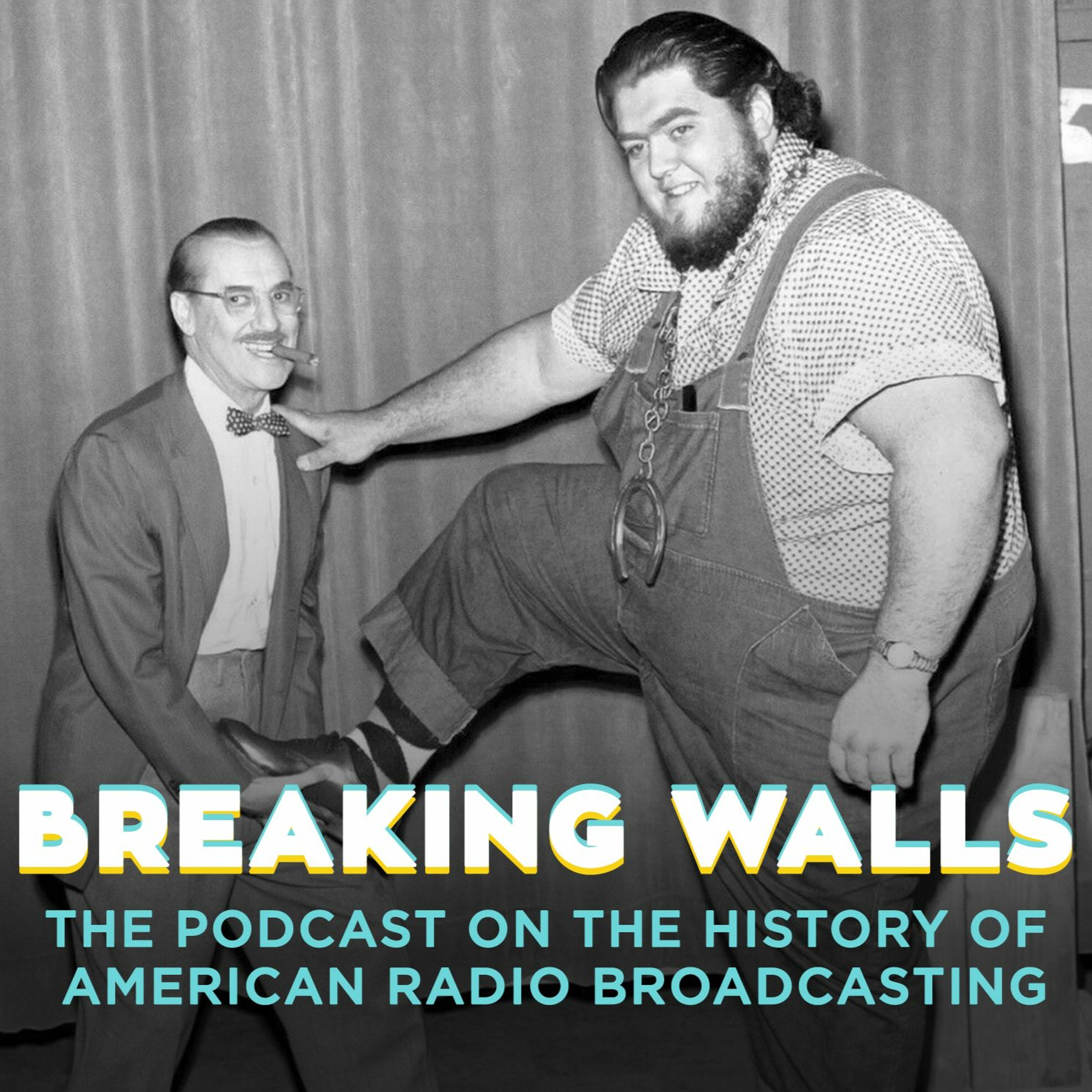
BW - EP129—010: Radio, Roswell And The Flying Saucer Craze—You Bet Your Life's UFO Enthusiast
In October of 1952 You Bet Your Life was in the middle of its sixth season on the air and third over NBC. That month’s rating was 8.8, down significantly from its peak, but still good enough for fifth overall. The October 15th’s secret word was “water,” and the male member of the middle couple had a very unusual hobby.
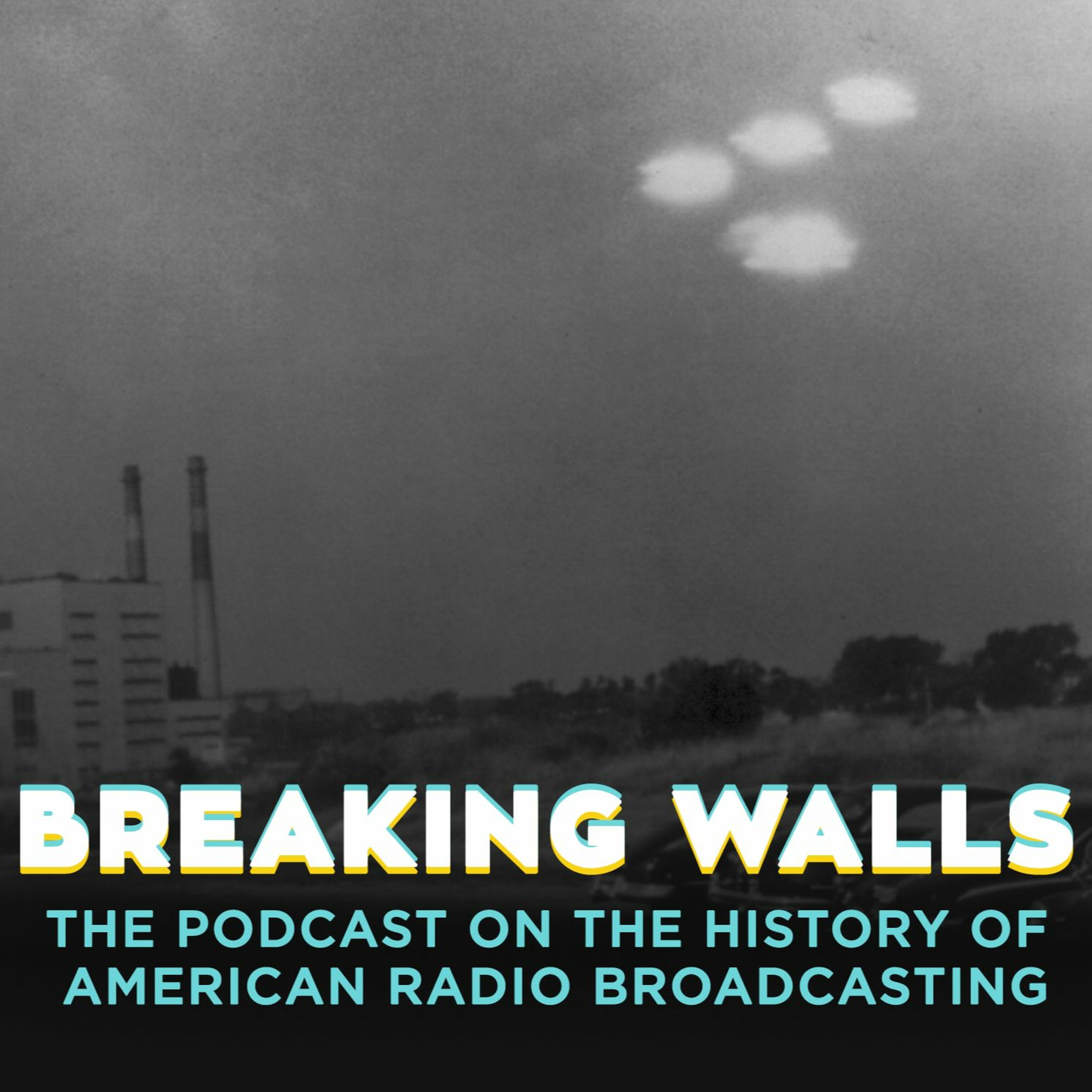
BW - EP129—009: Radio, Roswell And The Flying Saucer Craze—UFO Sightings During The Korean War
Like with Germany, Korea was divided into occupation zones after World War II. The Soviets helped establish communism in the North, while the US supported the South. By June of 1950 fighting along the border had been going on for months. However on the weekend of June 24th, bulletins increased and it became clear a major crisis was underway. After a UN Security Council meeting President Truman‘s motion to send troops was approved. Less than five years after the end of World War II, the U.S. was back at war. That August the manager of a Montana semi-pro baseball team took color film of two UFOs flying over Great Falls. The next year, several V-Shaped formations were spotted flying over Lubbock, Texas. Witnesses included professors and students from Texas Tech University.Then in the summer of 1952 some of the most famous UFO sightings of the 20th Century occurred. In July, a series of sightings happened at three separate airports in Washington, D.C. Simultaneously in Norfolk, Virginia, Pan-American pilots saw eight large, glowing red objects.The sightings made front-page headlines around the nation, and led to the formation of a CIA Panel. Ten days later, two US Air force Colonels saw three unusual aircrafts flying in formation over Carson Sink, Nevada. And perhaps most sensationally, in Flatwoods, West Virginia on September 12th, six local boys and a woman reported seeing a UFO land and a spade-headed creature near the landing site. It was met with considerable skepticism.
BW - EP129—008: Radio, Roswell And The Flying Saucer Craze—Dangerous Assignment's UFO In Ecuador
On Saturday July 9th, 1949, Dangerous Assignment debuted on NBC starring Brian Donlevy as Steve Mitchell. Each week Mitchell was sent to a different location to crack into the bed of discontent and rout the perpetrators. Herb Butterfield and Betty Moran co-starred, with Hollywood regulars, like the just-heard Sam Edwards filling out the supporting roles. The initial Summer run ended on August 20th, but NBC picked the series up in February of 1950. That April Ford Motors signed on for a few broadcasts. April 17th’s episode was called “UFOs in Ecuador.” This episode featured Elliott Reid as Drake. After Ford, Wheaties sponsored the program for their Big Parade in the summer of 1950, but it was short-lived. Dangerous Assignment ran in the States until February 13th, 1953, but never achieved widespread fame. A syndicated version was produced the following year in Australia with Lloyd Burrell as Mitchell.
BW - EP129—007: Radio, Roswell And The Flying Saucer Craze—Murrow's Report On Flying Saucers
On April 7th, 1950, Edward R. Murrow broadcast the CBS Special “Report on Flying Saucers.” By then, Murrow was long-known for his journalistic integrity and tenacity in chasing down answers. A turbo jet that could fly up to six-hundred miles per hour didn’t exactly line up with witness accounts. Speed of travel aside, It wasn’t at all what Dr. Craig Hunter had described earlier. There were clearly conflicting points of view.
BW - EP129—006: Radio, Roswell And The Flying Saucer Craze—Harris And Remley's UFO Hoax
On Sunday April 2nd, 1950 at 7:30PM eastern time, The Phil Harris and Alice Faye Show took to the air over NBC. The Harris/Faye show peaked in December of 1948 with a rating of 26, but by this month it was down 8.5. Harris resisted taking the program into TV, as his wife Alice Faye remembered. Elliott Lewis’ friendship with Phil Harris went all the way back to their days on Jack Benny’s program. On that Sunday, the episode was called “Frankie’s Flying Saucer.”
BW - EP129—005: Radio, Roswell And The Flying Saucer Craze—Fibber Sees A UFO
On Tuesday nights at 9:30PM eastern time in the spring of 1950, Fibber McGee and Molly was NBC’s highest-rated show. They’d stuck with NBC while stars like Jack Benny, Edgar Bergen, George Burns, and Gracie Allen jumped to CBS. Their 17.7 was fourth overall, but their rating fell by almost six points from the year prior. Opposite on TV, NBC aired The Life of Riley, while CBS aired Suspense. The days of NBC’s Tuesday night comedy schedule being appointment radio were over. On March 28th, Fibber McGee saw a UFO.
BW - EP129—004: Radio, Roswell And The Flying Saucer Craze—The Spring Of 1950 With Red Skelton
In the spring of 1950, network radio revenue was falling for the first time since 1933. There were now over twenty-six-hundred AM and FM stations vying for advertising dollars. The US also spent the first ten months of 1949 in a recession while TV was becoming a serious threat to both prime time Network Radio and Hollywood films. Over a hundred TV stations were on the air, and radio’s top fifty program ratings were down thirty-percent in just two years since the record high of 1947-48. Only The Lux Radio Theater and Jack Benny had ratings higher than twenty. Meanwhile, the TV networks reported a combined income of more than twenty-nine-million dollars. The world was changing too. The U.S. was on the brink of war with Korea. During the week of March 26th, Wisconsin junior senator Joseph McCarthy named five U.S. State Department employees as potential Communists. The senator’s actions placed him firmly in the crosshairs of Edward R. Murrow. Two-time Republican Presidential nominee Thomas Dewey was relegated to voice of reason. It would be four years before McCarthyism came to an end while Cold War fears continued to escalate. That Spring, with both science-fiction and UFOs en vogue, multiple shows focused on flying saucers within individual episode plots. On March 26th, 1950 The Red Skelton Show presented “Flying Saucers.” One of the co-stars was famed radio character actress Lurene Tuttle. Skelton was airing over CBS Sunday nights at 8:30PM eastern time. His March rating was 15.6, but his season number was 13.5. It was 14th overall, but down seven points from two years prior. On March 29th, RCA made their first color television demonstration. Their system would eventually be accepted by the FCC and would become the standard for broadcasting.The next fall Skelton took his show into TV where it would air until 1971.
BW - EP129—003: Radio, Roswell And The Flying Saucer Craze—Dimension X Launches
Until March of 1950, most reported UFO observations were seen from a great distance. On March 16th, a physician and pilot — Dr. Craig Hunter of Berkeley Springs, West Virginia — saw one close up. That same month, the Mutual Broadcasting System launched a series called 2000 Plus. Considered the first adult science fiction show in radio history, a month later NBC launched their own. Produced from Radio City in New York, It would be called Dimension X, and debut on Saturday April 8th at 8PM. The man you’re listening to is Arnold Moss. An accomplished New York actor, by 1950 he was all over the radio dial. Moss was also no stranger to playing multiple parts in a single broadcast. On May 6th, 1950 Arnold Moss starred in Dimension X’s “Knock.” For its time. Dimension X was a wonder. Two and sometimes three sound effects men worked each show. Each show was produced in a huge, two-story studio, giving the crew the ability to obtain tremendous echo effects. Blended in were futuristic musical scores, composed by Albert Berman and played on the organ. Host-narrator Norman Rose was the perfect voice, combining an authoritative resonance with a touch of dark irony. Arnold Moss was right at home in these futuristic dramas. He was flanked by Joan Alexander and Luis Van Rooten. The show was produced live for the first thirteen weeks and transcribed thereafter. It ran against Gene Autry on CBS. To help promote it, the NBC press department sent out a Radio Editors' Flying Saucer Mail Service. It was a promotional piece made up of a white saucer-shaped cardboard lettered in red and white and attached to a blue square. It wasn’t long before Wheaties grabbed the series with their Big Parade in the summer of 1950. They began sponsorship on July 7th. But, aside from Friday, Saturday night was radio’s lowest-rated evening. NBC won three of the four time slots between 8:30 and 10PM, but they were all comedies. While Dimension X was well-produced, it was an outlier sandwiched between The Joe Dimaggio Show and Truth of Consequences. Wheaties ended their big parade in August and NBC began to bump Dimension X around its schedule. It was picked up and dropped without announcement, and finally went off the air for good on September 29th, 1951.
BW - EP129—002: Radio, Roswell And The Flying Saucer Craze—The Chicago Roundtable Debate
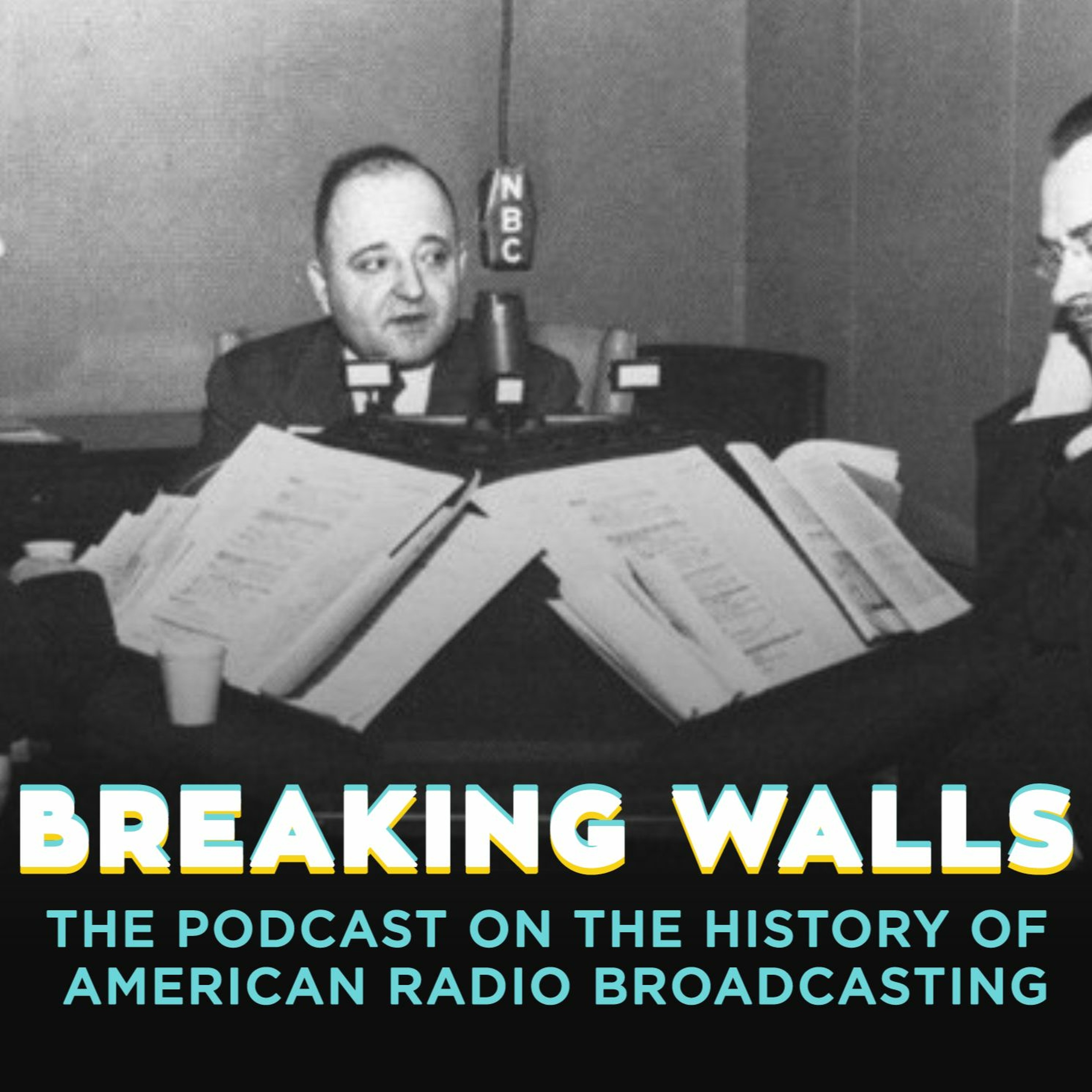
The University of Chicago Roundtable grew out of arguments had by professors at the faculty club. In 1931 they were convinced their forum would make for good radio. WMAQ agreed. The show premiered on February 1st of that year. It began running nationally over NBC on October 15th, 1933. The thirty-minute time slot allowed for little grandstanding. Professors rotated with each broadcast according to their expertise. They sat at a triangular table, which put the speakers face-to-face. It had time-warning lights facing each chair and was built like a sloping pyramid, with a microphone at the top. If people really were seeing UFOs in the sky they had to be coming from other worlds. On December 19th, 1948 The Roundtable attempted to answer the question from a scientific point of view. There were no scripts, but Roundtable was the first show of its kind to issue a weekly magazine. It contained a transcript of the previous program, biographies of the participants, listener feedback, suggested topical reading, and a schedule of coming broadcasts. The University of Chicago Roundtable would air until June 12th, 1955, finally going off the air when NBC launched Monitor.
BW - EP129—001: Radio, Roswell And The Flying Saucer Craze—Kenneth Arnold And The Roswell Crash
Early on the morning of February 25th, 1942 several aerial objects were spotted over Los Angeles. It triggered the firing of thousands of anti-aircraft rounds. This was ten weeks after the bombing of Pearl Harbor and Manilla. Initially, it was thought to be a Japanese attack, but shortly after Secretary of the Navy Frank Knox said it was a false alarm. The hysteria was blamed on a weather balloon. During World War II soldiers reported seeing metallic spheres in the sky. The allies dubbed them “Foo Fighters.” In 1946, numerous UFO sightings were reported in Sweden. Known as “Ghost Rockets,” they put the Swedish Defense Staff on high alert. No confirmation of what they were was ever achieved. All of these paled in comparison to what happened in Washington State in June of 1947. On June 24th a transport with thirty-two marines on board crashed near Mount Rainier, Washington. A private pilot, Kenneth Arnold, was flying from Chehalis (SHA HAY LISS) to Yakima on a business trip. Arnold had six years of experience flying in and around the rugged Mount Rainier terrain. He went off course to look for wreckage. On April 6th, 1950 he spoke with Edward R. Murrow about his experience. As the objects passed Mount Rainier, Arnold turned his plane parallel to their course. He timed their rate of passage. They moved from Mount Rainier to Mount Adams —a distance of about fifty miles—in one minute forty-two seconds. That put their speed at over seventeen-hundred miles per hour. That was three times faster than any manned aircraft in 1947. The next day Arnold told his story to a newspaper in Pendleton, Oregon. The military questioned Arnold on three occasions, doubting his experience. But, other pilots soon told of sightings. On July 4th, The Oregon Journal received a letter from an L. G. Bernier of Richland, Washington who saw three objects flying toward Mount Rainier about one half-hour before Arnold. Bernier suggested they might have been extraterrestrial in origin. Arnold soon agreed. The problem with simply dismissing what Arnold saw lies in the fact that he was a credible witness. Sure, he could have been seeing things, but here was a man both highly trained and highly observational. Two weeks later, the most speculated UFO crash of the twentieth century was reported in Roswell, New Mexico.
BW - EP128: June 1954—The End as We Knew It
In Breaking Walls episode 128 we wrap up our six month look at 1954 by ending in June with network cancellations. —————————— Highlights: • The State of Radio and The Union • The End of Escape with John Dehner • News with Frank Edwards on Mutual • Let’s Pretend with Arnold Stang • Autolite Drops Suspense • Goodbye To Jack Benny (For Now) • What’s At Stake in the Fall 1954 Midterm Elections • CBS Cancels The Lux Radio Theatre • The End of James Stewart’s The Six Shooter • Looking Ahead to July and Roswell —————————— The WallBreakers: http://thewallbreakers.com Subscribe to Breaking Walls everywhere you get your podcasts. To support the show: http://patreon.com/TheWallBreakers —————————— The reading material used in today’s episode was: • On the Air — By John Dunning • Network Radio Ratings — by Jim Ramsburg • The Complete Escape and Suspense Logs — By Keith Scott As well as articles from: • Broadcasting Magazine • LIFE Magazine • Newsweek • Radio Guide —————————— On the interview front: • Parley Baer, Ken Carpenter, Elliott Lewis, and Paula Winslowe spoke to Chuck Schaden. Hear their full chats at SpeakingOfRadio.com. • Herb Ellis, Virginia Gregg, Jack Johnstone, Elliott Lewis, and Herb Vigran spoke to SPERDVAC. For more info, go to SPERDVAC.com. • John Gibson, Elliott Lewis, Vincent Price, and Arnold Stang spoke to Dick Bertel and Ed Corcoran for WTIC’s The Golden Age of Radio. Hear these full interviews at Goldenage-WTIC.org. • John Dehner and Vic Perrin spoke with Neil Ross at KMPC. • Dennis Day spoke with John Dunning for 71KNUS. • Morton Fine was with Dan Haefele. • Orson Welles with Johnny Carson. • Jimmy Stewart with Larry King. • Jack Benny spoke with CBS. —————————— Selected music featured in today’s episode was: • Living Without You and Too Much Between Us — By George Winston • The Last Rose of Summer — By Tom Waits • Seance on a Wet Afternoon — By John Barry —————————— A special thank you to Ted Davenport, Jerry Haendiges, and Gordon Skene. For Ted go to RadioMemories.com, for Jerry, visit OTRSite.com, and for Gordon, please go to PastDaily.com. —————————— Thank you to: Tony Adams Steven Allmon Orson Orsen Chandler Phil Erickson Jessica Hanna Perri Harper Briana Isaac Thomas M. Joyce Ryan Kramer Earl Millard Gary Mollica Barry Nadler Christian Neuhaus Aimee Pavy Ray Shaw Filipe A Silva —————————— WallBreakers Links: Patreon - patreon.com/thewallbreakers Social Media - @TheWallBreakers
BW - EP128—010: June 1954—Looking Ahead To July And Roswell
Well, this brings our six-month look at 1954 to a close. Jack Benny again had radio’s highest-rated show the following season in what would ultimately turn out to be his swan song. Benny’s last new radio episode aired in May of 1955. Joseph McCarthy would finally be censured by the Senate in December. He never recovered from that political storm, and died three years later, ravaged by disease and addiction, at the age of forty-eight. Although in some ways the Red Scare ended in 1954, the cold war was just reaching its height. But fears of nuclear bombers were only half the reason people were looking up. It’s time we focused on the other. Next time on Breaking Walls, in honor of its seventy-fifth anniversary, we examine our places in the universe with the utterance of a single word: Roswell.
BW - EP128—009: June 1954—The End Of James Stewart's Six Shooter
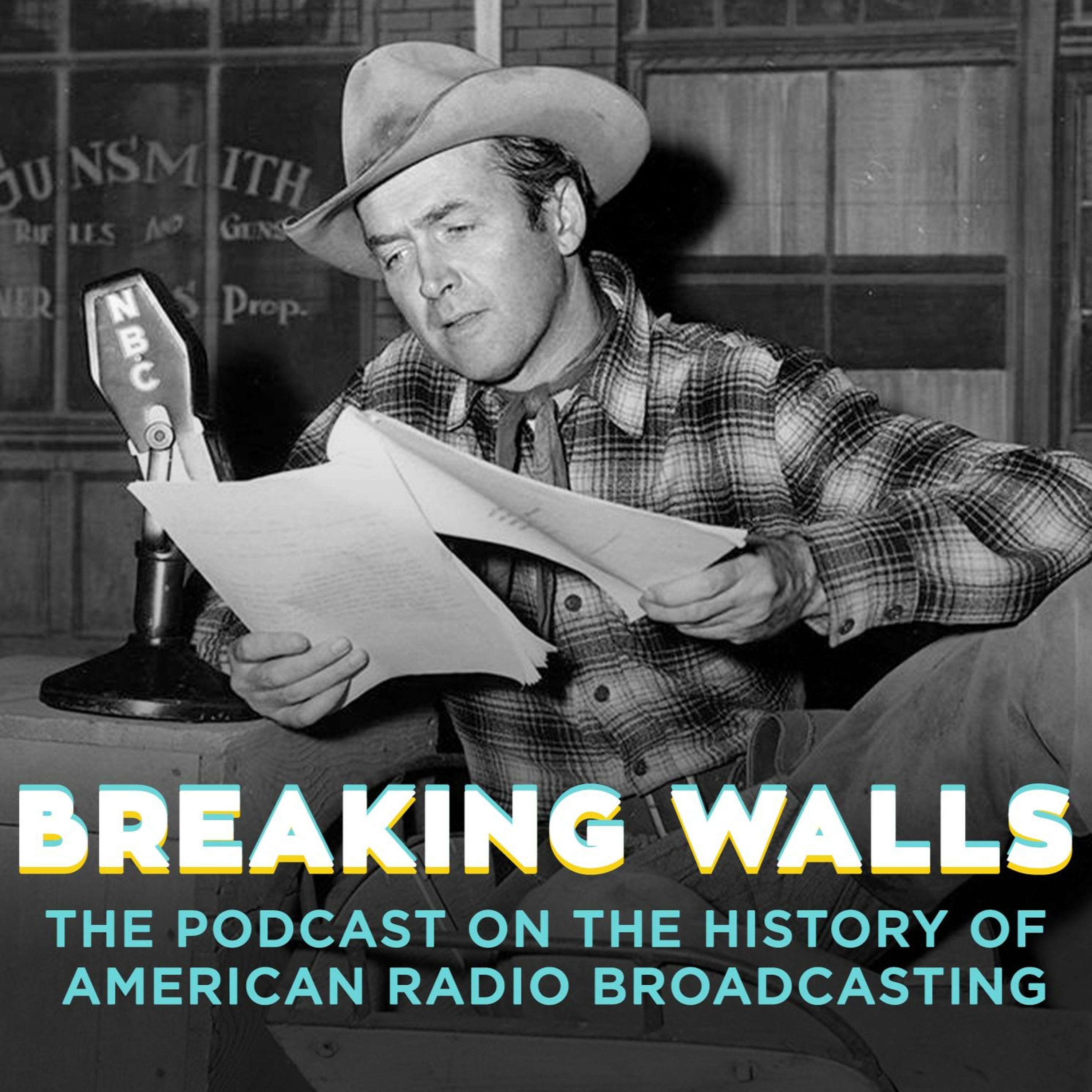
Even with James Stewart leading the cast and Jack Johnstone directing, without a national sponsor cancellation was around the corner for The Six Shooter. Unlike with CBS, it was uncommon for NBC to sustain shows for long. Stewart had turned down sponsorship from Liggett and Myers Tobacco. The Six Shooter would be canceled after the June 24th, 1954 episode. Thirty-nine shows were produced. Parley Baer played parts in many episodes. The next year Baer would work with Johnstone on CBS’ Yours Truly Johnny Dollar. In the finale Ponset falls in love with Myra Barker. He proposes, but at the conclusion they realize married life isn’t possible so long as Ponset still has wrongs to right and people to save. In the end, Britt rides off into the sunset. Fortunately for radio fans, the entirety of The Six-Shooter’s one season survives. For more info, tune into Breaking Walls episode 122.
BW - EP128—008: June 1954—CBS Cancels The Lux Radio Theatre
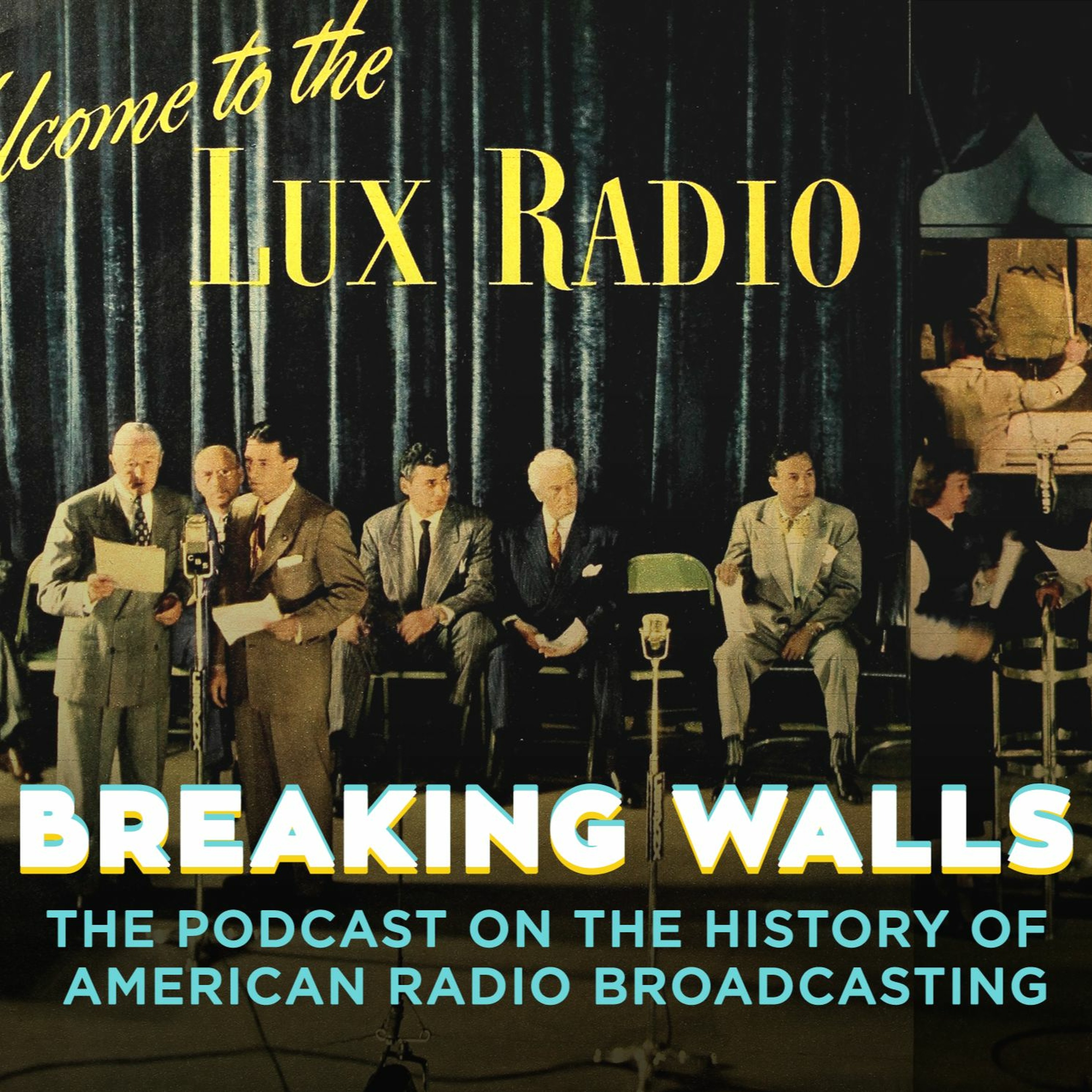
At network radio’s height, no dramatic show was more popular than CBS’ Lux Radio Theatre. Between 1936 and 1954 it never finished lower than eighth in the ratings, and it was radio’s top show between 1947 and 1952. Ken Carpenter announced. Radio’s best supporting talent, like Paula Winslowe, worked opposite Hollywood's biggest stars. Mondays at 9PM eastern was appointment radio, and CBS built the rest of its powerhouse Monday schedule around Lux. It helped shows like My Friend Irma, Inner Sanctum, Screen Guild, and Arthur Godfrey’s Talent Scouts reach new heights. It was also radio’s most-rehearsed show. All the players were expected to be available for an entire week leading up to the live Monday broadcast. John Gibson, best known as Ethelbert on Crime Photographer, remembered the schedule. Vincent Price, one of the only Hollywood stars contractually allowed to do as much radio as he wanted, remembered working the show. A TV version of Lux premiered in 1950. Near the end of the radio run it was estimated that Lux had gone through more than fifty thousand pages of script, five-hundred stars, fifteen-hundred supporting players, twenty-thousand music cues, and twenty-thousand sound effects. In 1954 Lux was still rated fifth overall with a 6.2, but even radio’s most famous dramatic show wasn’t immune to the times. Towards the end of the season it was announced that CBS and Lux would be cutting ties in June. All that was left was to put a bow on one of the most successful shows in radio history. Lux would run one more season, moving to NBC where it was still a top-four show. The Lux Video Theatre also shifted to NBC. It ran until 1957 before changing formats and bringing in Rosemary Clooney as star. In its final season in 1959, the show became The Lux Playhouse before being canceled.
BW - EP128—007: June 1954—What's At Stake In The Fall 1954 Midterm Elections
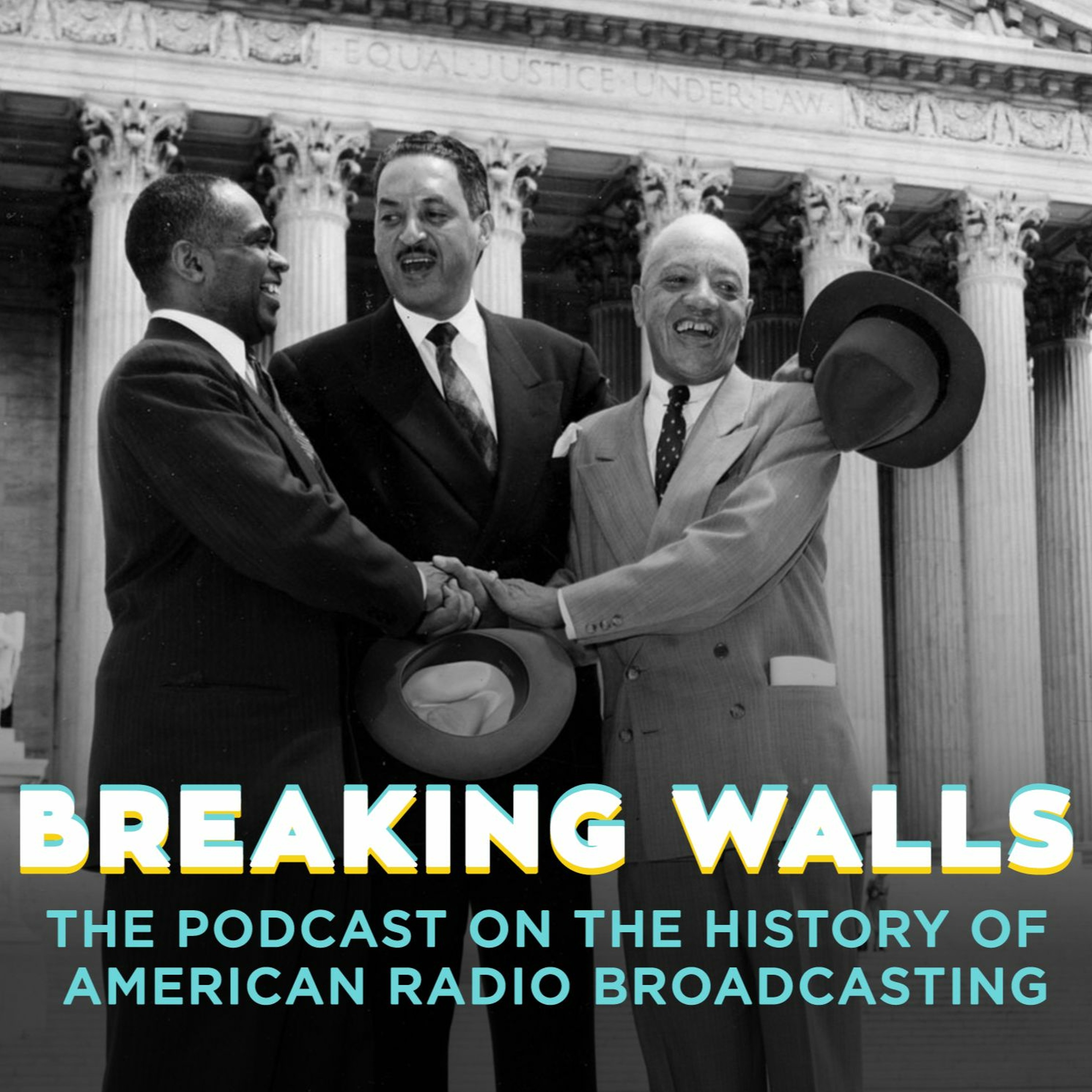
On Sunday June 13th, 1954 at 6PM Eastern, The American Forum of the Air signed on Mutual with a discussion on the 1954 midterm elections. The featured Senators were Republican Homer Ferguson of Michigan and Democrat Mike Monroney of Oklahoma. The two political parties had deep divides within on key issues. While many Republicans were conservative, they didn’t support Joseph McCarthy’s communist raids. Northern democrats were likely to be liberal and in favor of the underway de-segregation. Many southern Dems were known as Dixiecrats and upset at the recent Brown vs. Board of Ed. ruling. The 1954 elections were held on November 2nd. The Republicans would lose both the House and Senate, a direct result of anti-McCarthy backlash. The elections caused a divided government that continued to the end of Eisenhower’s presidency. Republicans wouldn’t retake the Senate until 1980 and the House until 1994.
BW - EP128—006: June 1954—Goodbye To Jack Benny (For Now)
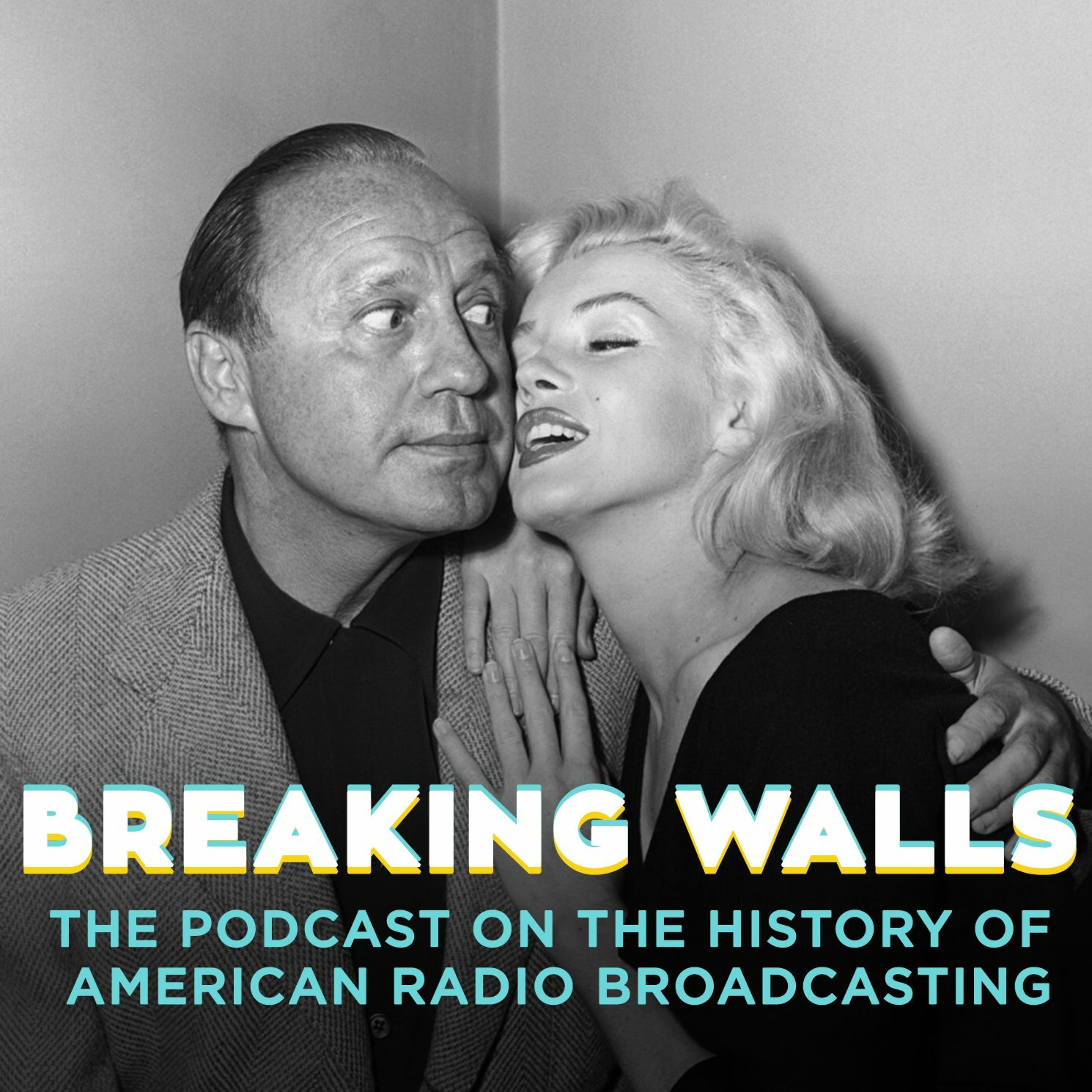
On June 6th, 1954 Jack Benny closed his broadcast for the end of the season. Jack was going to headline in Dallas. The show featured a semi-rare appearance from Mary Livingston. Although radio audiences were rapidly waning and Benny was a TV star as well, he kept his radio program going. Out of home listening was adding an additional forty percent to primetime radio audiences. That means Benny’s 8.2 1954 rating was actually closer to 11.5.
BW - EP128—005: June 1954—Autolite Drops Suspense
By June of 1954, the thirty-six year-old Elliott Lewis was producer/director of four shows and the star of two. His peers affectionately dubbed him “Mr. Radio.” Perhaps most prominently, he’d been producer and director of Suspense since the fall of 1950. Program sponsor Autolite preferred to keep its commercials humorous, feeling that the change of pace shocked the audience to attention. Each 30-minute episode required over five-hundred total hours of work from fifty people. With Lewis at the helm, Suspense was able to stave off some of the decline in ratings other shows succumbed to. This was partly due to his partnership with Morton Fine and David Friedkin. Although the series, now airing on Mondays at 8PM, was still heard by roughly 12.5 million people each week, at season’s end Autolite decided to discontinue their sponsorship after six years. The last Autolite Suspense episode was “A Terribly Strange Bed” on June 7th. Adapted by Morton Fine, it guest-starred Peter Lawford as an English cop in France who wins big at a gambling table, gets drunk, and ends up in a hotel room in a booby-trapped bed. Featured in this episode as The Croupier was Vic Perrin. After the episode climax, announcer Harlow Wilcox signed off for the two-hundred-forty-sixth and final time. Elliott Lewis left the production after July 27th. Suspense would remain a sustained show until finding multiple sponsorship in late 1956. Unfortunately for Lewis, his other shows would soon be canceled. Phil Harris and Alice Faye went off the air on June 18th. Crime Classics on June 30th. Broadway is My Beat on August 1st. And On Stage on September 30th. For more info on Elliott Lewis’ career, tune into Breaking Walls episode 113.
BW - EP128—004: June 1954—Let's Pretend With Arnold Stang
Originally broadcast as The Adventures of Helen and Mary, radio’s preeminent children’s show first took to the air on September 7th, 1929 over CBS. It became Let’s Pretend on March 24th, 1934. Hosted by “Uncle” Bill Adams, it was in many ways the brainchild of Nila Mack, who penned, produced, and directed each show. Ms Mack was born in 1891 in Kansas and became an ingenue on Broadway and in vaudeville. She arrived at CBS in 1928, and in August 1930 assumed control of the show. Mack felt the best way to tell a children’s story was to let the children tell it. Acting talent could play a lead one week and a character part the next. She soon became CBS director of children’s programming. One of Ms. Mack’s staples was her open door policy. Any child could audition. She was responsible for developing two generations of some of the best child-turned-adult acting talent in radio history, like Arnold Stang. Radio Guide wrote that Ms Mack instantly knew if a child had it. If so, he or she would be given a small part and slowly work their way up to lead roles. Perhaps Newsweek said it best in 1943: “Let's Pretend is filled with kings and queens who ride talking horses through enchanted forests. It has maidens who must be rescued from witches, dragons, and dwarfs. Its characters travel in coaches, wear purple robes through emerald halls into jade rooms, and drink from golden goblets.” Cream of Wheat became the sponsor that year. It was a partnership that lasted until 1952. At 2PM on Saturday June 5th, 1954, Let’s Pretend signed on the air over CBS in New York. Unfortunately, Nila Mack passed away from a heart attack on January 20th, 1953, but the show kept on. In its final two years the Nila Mack Award was given to the top players. The show would air until October 23rd, 1954. And thanks to Ms Mack, men and women like Arnold Stang were able to have long careers.