Breaking Walls
510 episodes — Page 10 of 11
BW - EP128—003: June 1954—News With Frank Edwards On Mutual
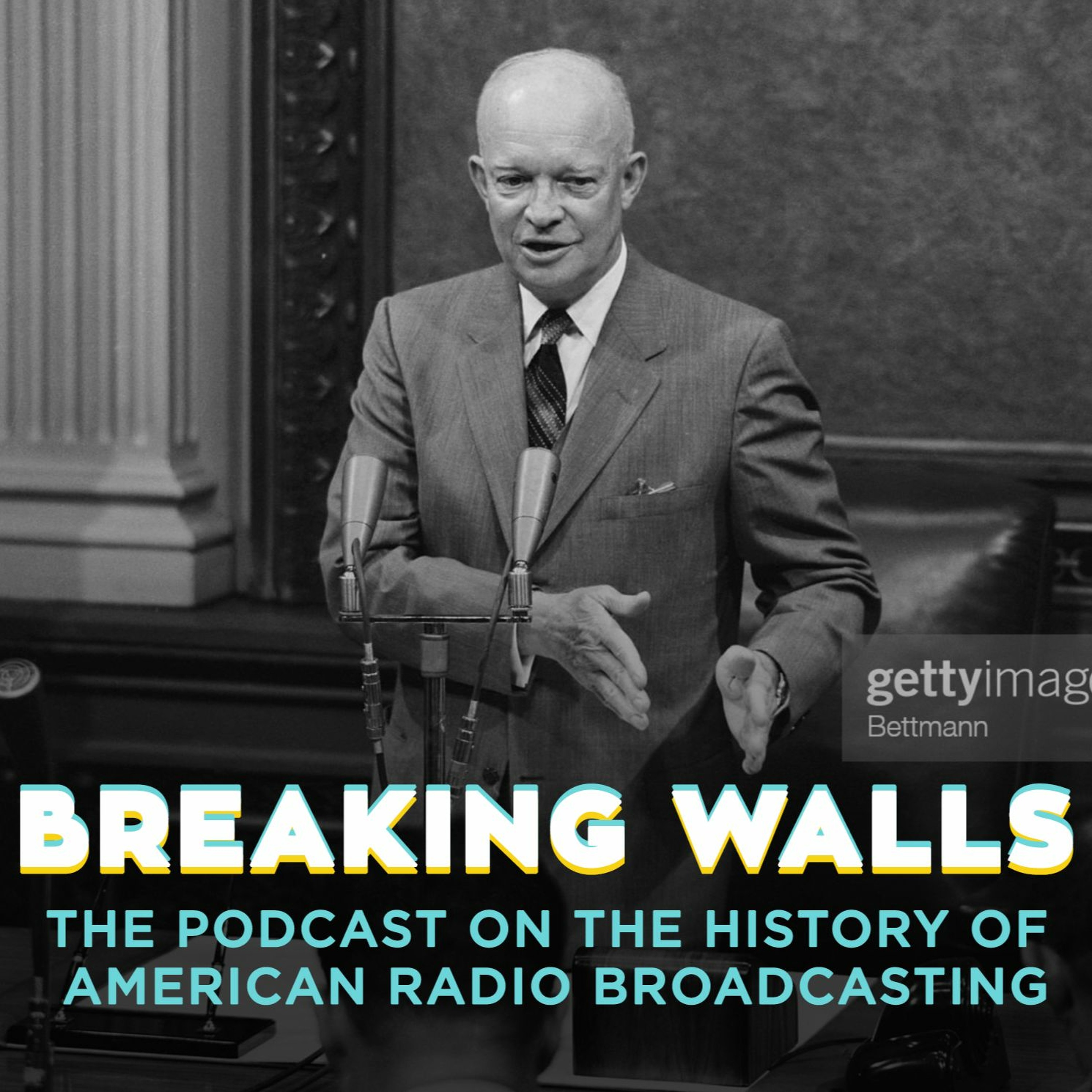
On June 4th, 1954 at 10PM, The Frank Edwards news program signed on from WOR in New York. During this month there were more than one-hundred-twenty major American cities with significant unemployment. The Secretary of Commerce officially announced the country was in a recession. Meanwhile, Vietnam was given technical independence within the French Union. Secretary of State John Foster Dulles (DUH LUSS) felt the U.S would have to send troops to Southeast Asia to prevent Communist expansion. In other news, on June 6th the San Francisco Chief debuted. On June 13th, NASCAR held its first ever event in Linden, New Jersey. It was won by Al Keller. That same day, the last steam locomotive ran on the Maine Central Railroad. And on Flag Day, June 14th, the words “under God” were officially added to the Pledge of Allegiance.
BW - EP128—002: June 1954—The End Of Escape
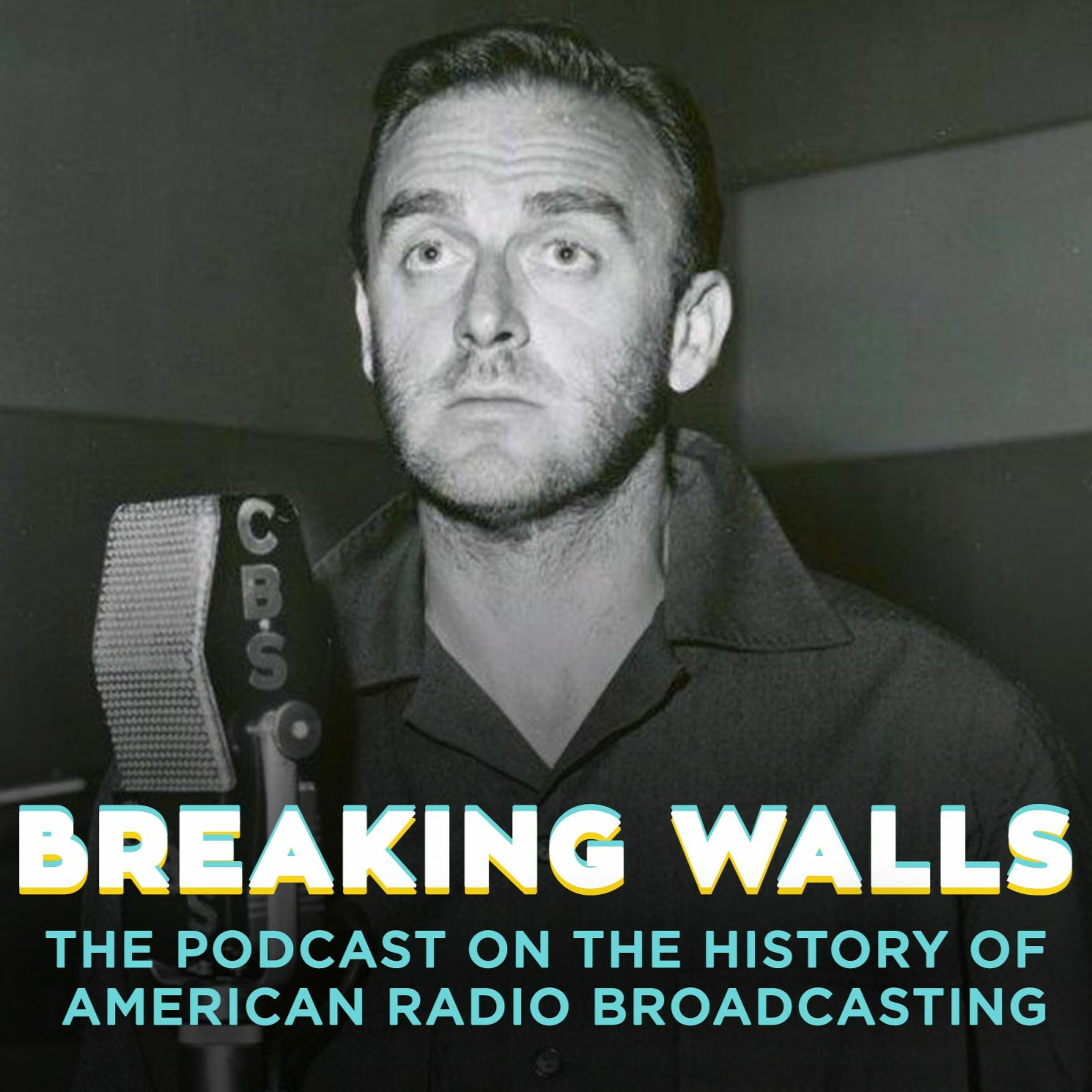
As Escape and shows like it were canceled, there were fewer opportunities for radio’s west-coast actors on network sustained programs. This episode, “An Ordinary Man” was written by Kathleen Hite and starred John Dehner and Virginia Gregg, with Tony Barrett, Edgar Barrier, and Harry Bartell. It aired on June 3rd, 1954. Escape would be canceled on September 25th. Gregg, Bartell, and Dehner would continue to work together on shows like Yours Truly Johnny Dollar, Gunsmoke, Frontier Gentleman, and Have Gun, Will Travel. For more info on John Dehner’s career, tune into Breaking Walls episode 101.
BW - EP128—001: June 1954—The State Of Radio And The Union
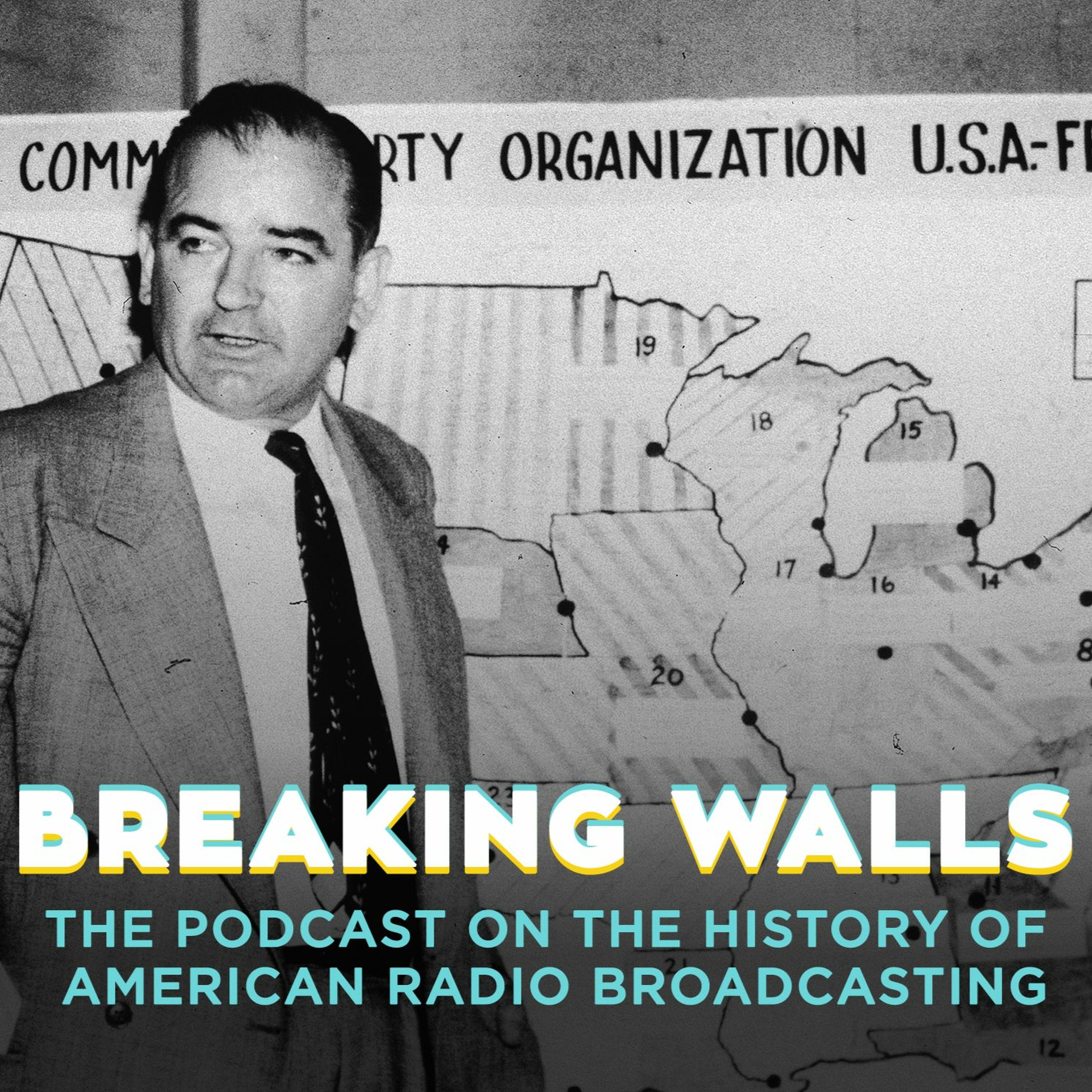
By June 1954 network radio drama was facing huge sponsor disinterest. Shows canceled in the first half of the year included The Quiz Kids, Dr. Christian, Front Page Farrell, Bulldog Drummond, Rocky Fortune, Ozzie and Harriet, and The Six Shooter. ABC, CBS, Mutual, and NBC reduced ad sale charges for the sixth consecutive year. It was an attempt to offset TVs broadening market share. It didn’t work. For the first time in sixteen years revenue fell. The only category to see an increase in sales was local advertising, and even that rose less than one percent. In 1948, radio’s top show was heard by roughly twenty-eight million people. In 1950, by twenty million. In 1952, by fourteen million. And in 1954, by roughly nine million. West-coast radio actors, like Herb Vigran and Herb Ellis were moving into TV, but television was already going through budgetary changes. By the summer of 1954, more than sixty percent of U.S. homes had a TV set. I Love Lucy pulled a rating of nearly sixty. Radio’s top show, People Are Funny had a rating of 8.4. Along with oncoming transistor sets, nearly thirty million cars now had radios, but there was still no system to measure this audience. The next year it was estimated that out-of-home listening added an additional forty percent to at-home audiences. People Are Funny’s actual rating was closer to twelve. But these incidentals didn’t matter to the industry’s character actors. Network production habits were changing. More and more documentaries and news were airing from New York, more and more drama was airing from Los Angeles. Things would be tougher by the end of the decade, but we’re not there yet. Tonight, we’ll head to June of 1954 as network radio reaches a point of no return. ____________ As June got underway, the Army-McCarthy hearings dragged on. This early focus was on the continued testimony from McCarthy attorney Roy Cohn, cross-examined by Ray Jenkins. After lunch Vermont Republican Senator Ralph Flanders compared McCarthy, his own party mate, to Adolph Hitler. He accused him of “axe-happy attempts to divide the country and split the Republican party.” He also compared McCarthy to Dennis The Menace. Flanders speculated that if McCarthy were a double-agent for the Communists, he would have been doing a perfect job. Later on McCarthy accused Flanders of being a senile, racist, religious bigot.
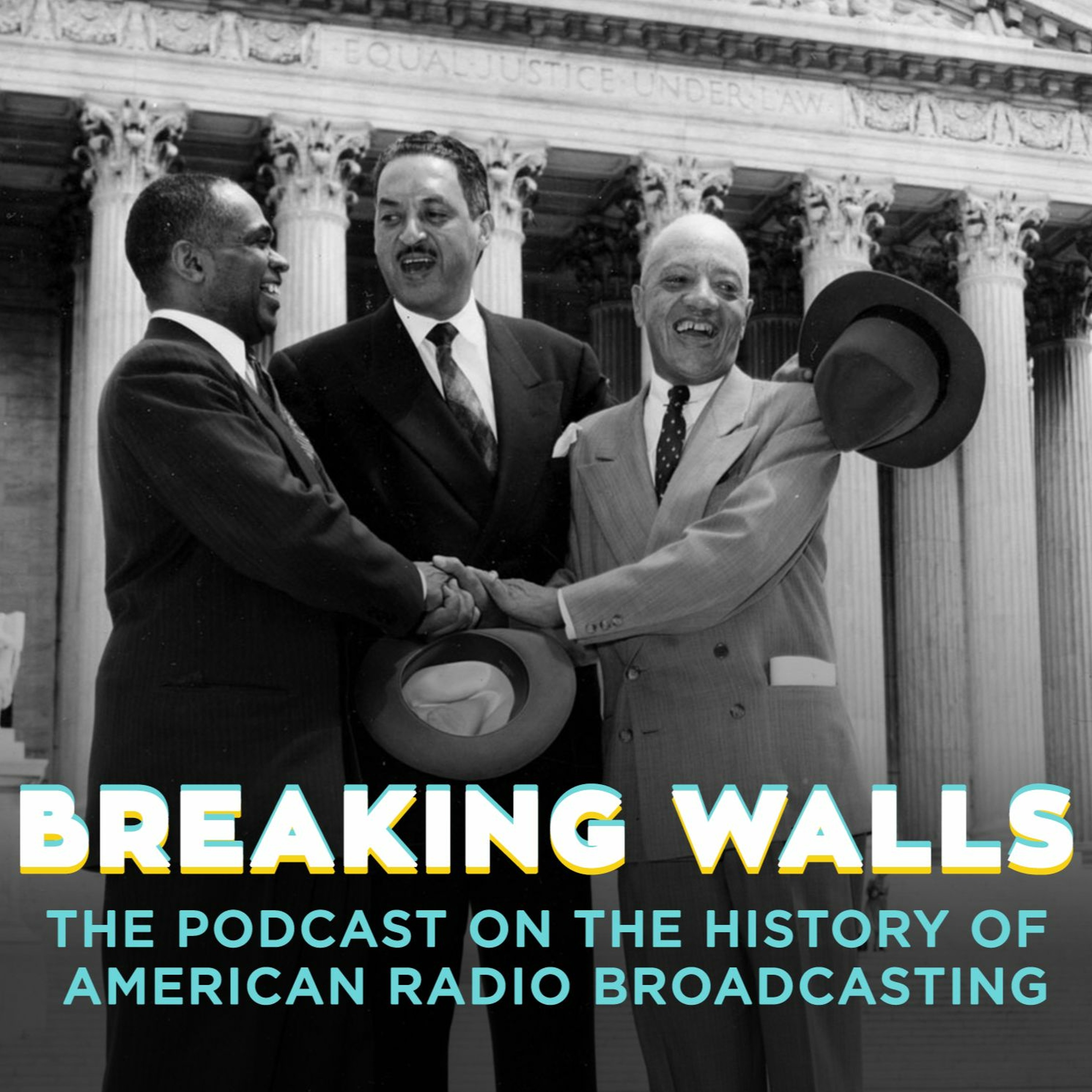
BW - EP127: May 1954—A Portrait of The United States
In Breaking Walls episode 127 we keep on with our look at 1954 by picking up in May during one of the most important months of the decade. —————————— Highlights: • The Big Sound in Nashville • Everett Sloane and The 21st Precinct • Ray Milland and Meet Mr McNutley • An Eisenhower Presser and Other Current Events • I Love a Mystery — Born Again • Wild Bill Hickok • Grace Kelly Guest Stars on Bob Hope’s Show • Brown vs. The Board of Education • Lewis and Clark on NBC’s Inheritance • The Army/McCarthy Hearings Continue with Roy Cohn’s Testimony • Bing Crosby on Anthology’s Memorial Day Show • Looking Ahead to June and The End as We Knew It —————————— The WallBreakers: http://thewallbreakers.com Subscribe to Breaking Walls everywhere you get your podcasts. To support the show: http://patreon.com/TheWallBreakers —————————— The reading material used in today’s episode was: On the Air — By John Dunning Network Radio Ratings — by Jim Ramsburg As well as articles from: Broadcasting Magazine and LIFE Magazine —————————— On the interview front: • Parley Baer, Jim Boles, Mercedes McCambridge, Carlton E. Morse, and Russell Thorson, spoke to Chuck Schaden. Hear their full chats at SpeakingOfRadio.com. • Harry Bartell, Himan Brown, Lawrence Dobkin and Virginia Gregg spoke to SPERDVAC. For more info, go to SPERDVAC.com. • Vincent Price spoke to Dick Bertel and Ed Corcoran for WTIC’s The Golden Age of Radio. Hear this full interview at Goldenage-WTIC.org. • Bob Hope spoke to Johnny Carson • Andy Devine spoke to Betty Rogge —————————— Selected music featured in today’s episode was: • Once I Had a Secret Love — By Dolores Watson • The Battle Cry of Freedom — By Jacqueline Schwab • Bare Necessities — By Matthias Gohl, Jay Ungar, and John Kirk • Morning Prayer — By Matthias Gohl and Ken Littlehawk • Loch Lomond (arranged for Choir) — By Musica Intima —————————— A special thank you to Ted Davenport, Jerry Haendiges, and Gordon Skene. For Ted go to RadioMemories.com, for Jerry, visit OTRSite.com, and for Gordon, please go to PastDaily.com. —————————— Thank you to: Tony Adams Steven Allmon Orson Orsen Chandler Phil Erickson Jessica Hanna Briana Isaac Thomas M. Joyce Ryan Kramer Gary Mollica Barry Nadler Christian Neuhaus Aimee Pavy Ray Shaw
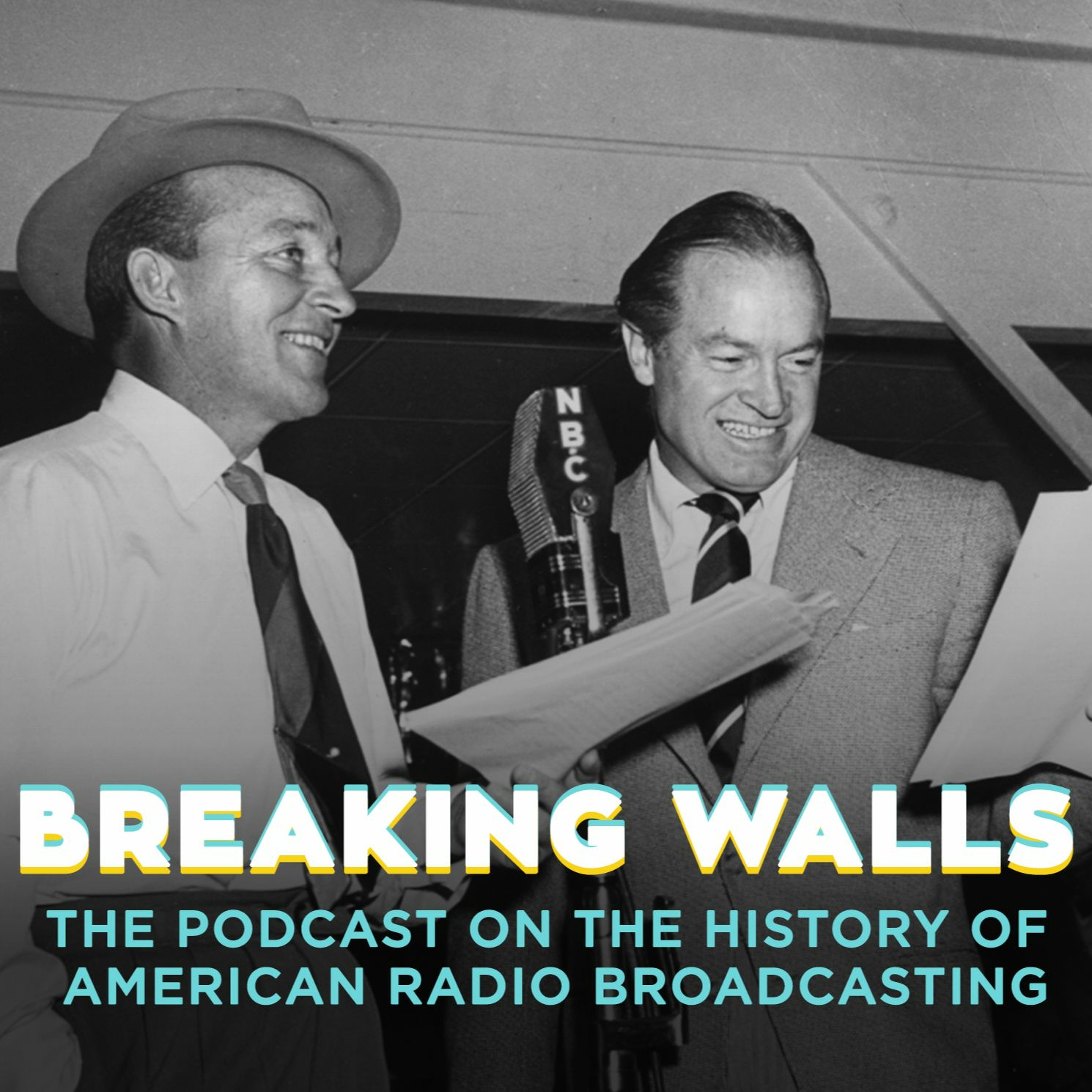
BW - EP127—010: May 1954—Bing Crosby On Anthology's Memorial Day Show
At 3PM on Sunday, May 30th, 1954, Anthology signed on NBC. Directed by John Malcom Brennen, produced by Steve White, and announced by Harry Fleetwood, Anthology offered dramatic readings of famous and lesser-known plays. Memorial Day weekend’s episode featured Agnes Moorehead reading “Barbara Fritchie,” and Frank Lovejoy and Bing Crosby performing “The Man Without a Country.” Anthology would air into June of 1955 when it was canceled in favor of the debuting Monitor. For more information on that, tune into Breaking Walls episode 116.
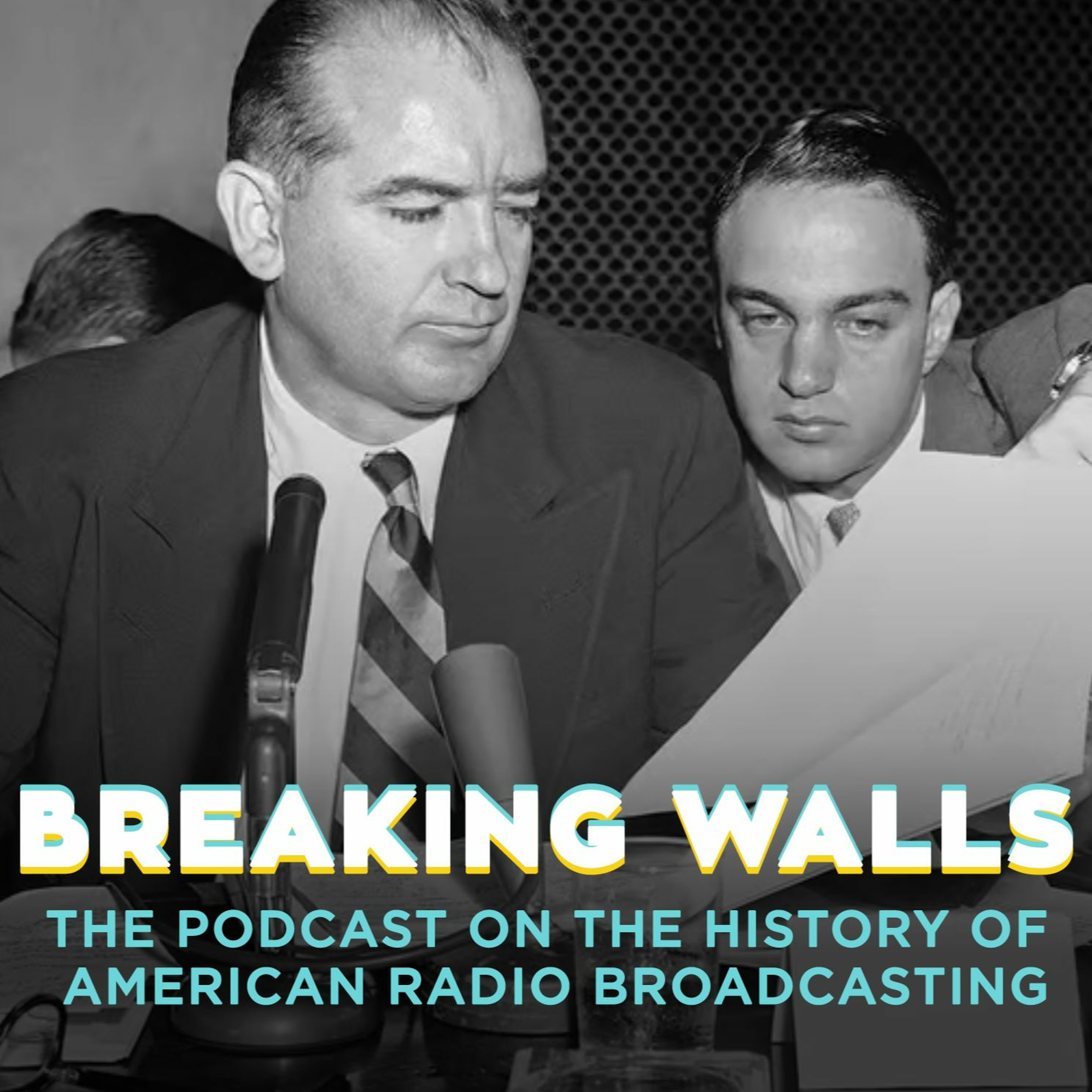
BW - EP127—009: May 1954—The Army-McCarthy Hearings Continue With Roy Cohn's Testimony
On Friday May 28th, 1954 as beaches and public parks opened for Memorial Day weekend, families hopped in their cars, turned on the radio dial, and heard the continuing testimony of McCarthy’s Attorney Roy Cohn during the Army-McCarthy Hearing. CBS radio was there. Cohn played a major role in McCarthy’s crusade. He helped create the Lavender Scare, which claimed overseas Communists blackmailed closeted government employee homosexuals into passing on secrets. Convinced that the employment of homosexuals was now a threat to national security, President Eisenhower signed an executive order on April 29th, 1953, banning homosexuals from working for the federal government. Cohn also saw that colleague G. David Schine receive special treatment when he was drafted in the U.S. Army in 1953. He contacted military officials from the Secretary of the Army down to Schine’s company commander and demanded that Schine be given light duties, extra leave, and exemption from an overseas assignment. It was this behavior that hastened McCarthy’s downfall, as during these hearings both Cohn and McCarthy claimed the Army was holding Schine “hostage” to squelch McCarthy’s Communist investigations. Cohn testified from May 27th through June 2nd.
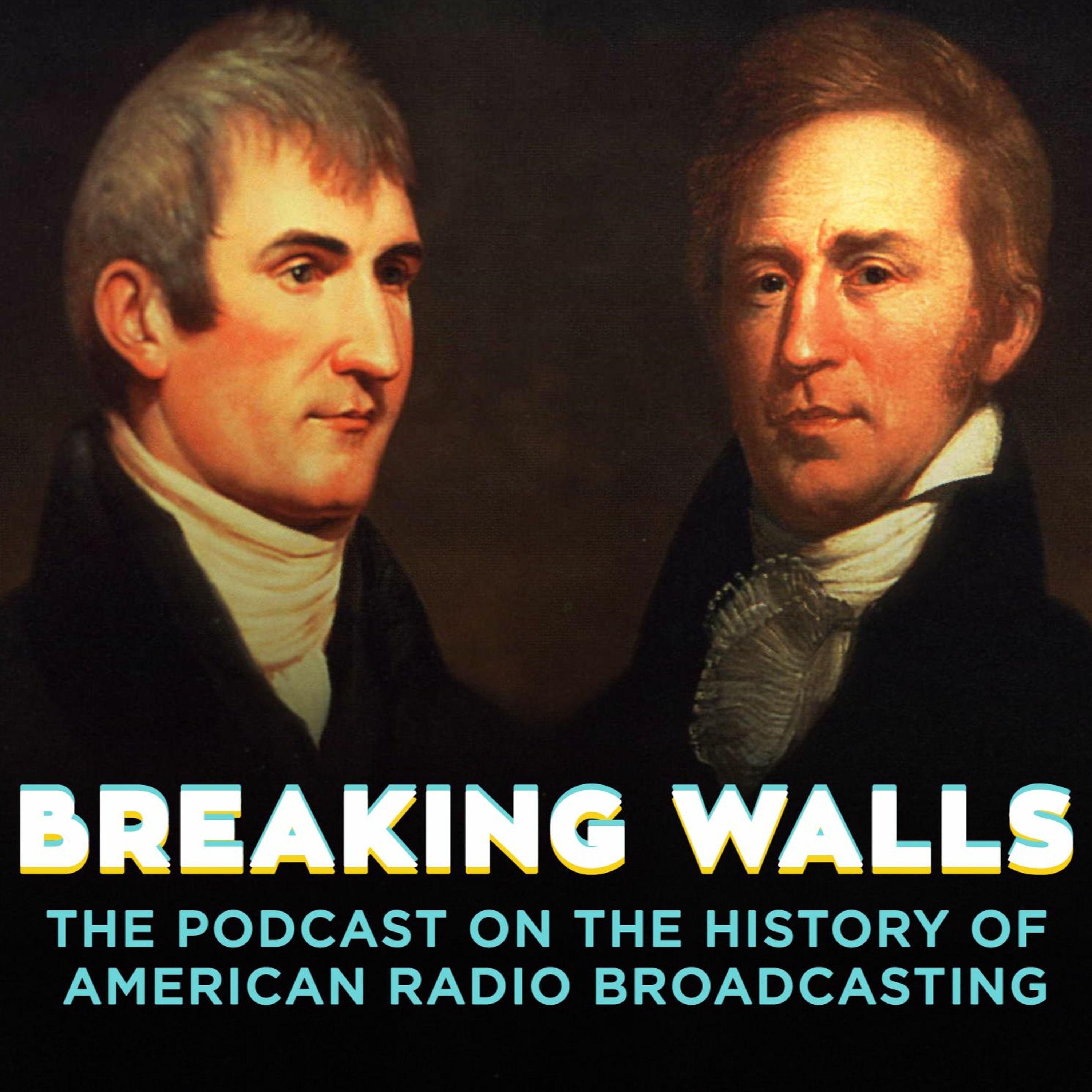
BW - EP127—008: May 1954—Lewis And Clark On NBCs Inheritance
Inheritance was a joint production of NBC and The American Legion at the height of The Red Scare. It first took to the air on April 4th, 1954. The American Legion was at the forefront of The Red Channels pamphlet which outed alleged communist sympathizers. The Legion’s connection to The Red Channels had long been disclosed by the time Inheritance took to the air. It has been speculated that perhaps both NBC and The Legion hoped to distance themselves from McCarthyism as criticism for his tactics was rapidly growing. Fifty-seven episodes were produced featuring the best west-coast radio actors available. The writing staff spanned both coasts and included Ernest Kinoy and George Lefferts. This episode on The Lewis and Clark expedition aired on Memorial Day weekend: Sunday, May 30th, 1954 at 10PM eastern time.
BW - EP127—007: May 1954—Brown Vs. The Board Of Education
On Sunday May 23rd, 1954 at 6PM Eastern, The American Forum of the Air signed on Mutual with a discussion on the Supreme Court Decision of Brown versus The Board of Education. On May 17th, The Court ruled that racial segregation within the U.S. public school system was unconstitutional. It repealed the “separate but equal” doctrine from 1896. By the early 1950s the NAACP was filing lawsuits on behalf of plaintiffs in South Carolina, Virginia and Delaware, with Thurgood Marshall as attorney. In the most famous case, Oliver Brown filed suit against the Board of Education of Topeka, Kansas after his daughter, Linda Brown, was denied access to Topeka’s all-white elementary schools. Brown claimed it violated the fourteenth Amendment. This case and four others eventually went before the U.S. Supreme court in December of 1952. At first, the justices were divided on how to rule. Chief Justice Fred M. Vinson felt the 1896 verdict should stand. But, he died in September of 1953 and President Eisenhower replaced him with California governor Earl Warren. Eisenhower knew this appointment would help overturn the nineteenth century verdict. In the decision, issued on May 17, 1954, Warren wrote that “in the field of public education the doctrine of ‘separate but equal’ has no place,” as segregated schools are “inherently unequal.” Days after that decision, there was considerable debate in the media over whether desegregation was fair. In this episode of The American Forum, the debate is between Democrat Senator Paul Douglas of Illinois and Democrat Senator Price Daniel of Texas. The American Forum of the Air’s roots were planted in Gimbels department store in 1928. Gimbels owned WGBS. Theodore Granik, a young law student who worked for Gimbels, did continuity, wrote dialogue, and reported sports events. He had an idea for a panel discussion on all kinds of legal issues. When the station was sold, WOR gave Granik a similar job. The American Forum of the Air premiered in 1934. By 1943, it had become a staple for those looking to stay abreast of socio-economics and politics. The format was tight. Proponents and opponents were allowed an opening statement; a panel discussion followed, questions were taken from the audience, and closing summations wrapped it all up. It was the only radio show printed verbatim in the Congressional Record and won a Peabody Award in 1949.
BW - EP127—006: May 1954—Grace Kelly Guests On Bob Hope
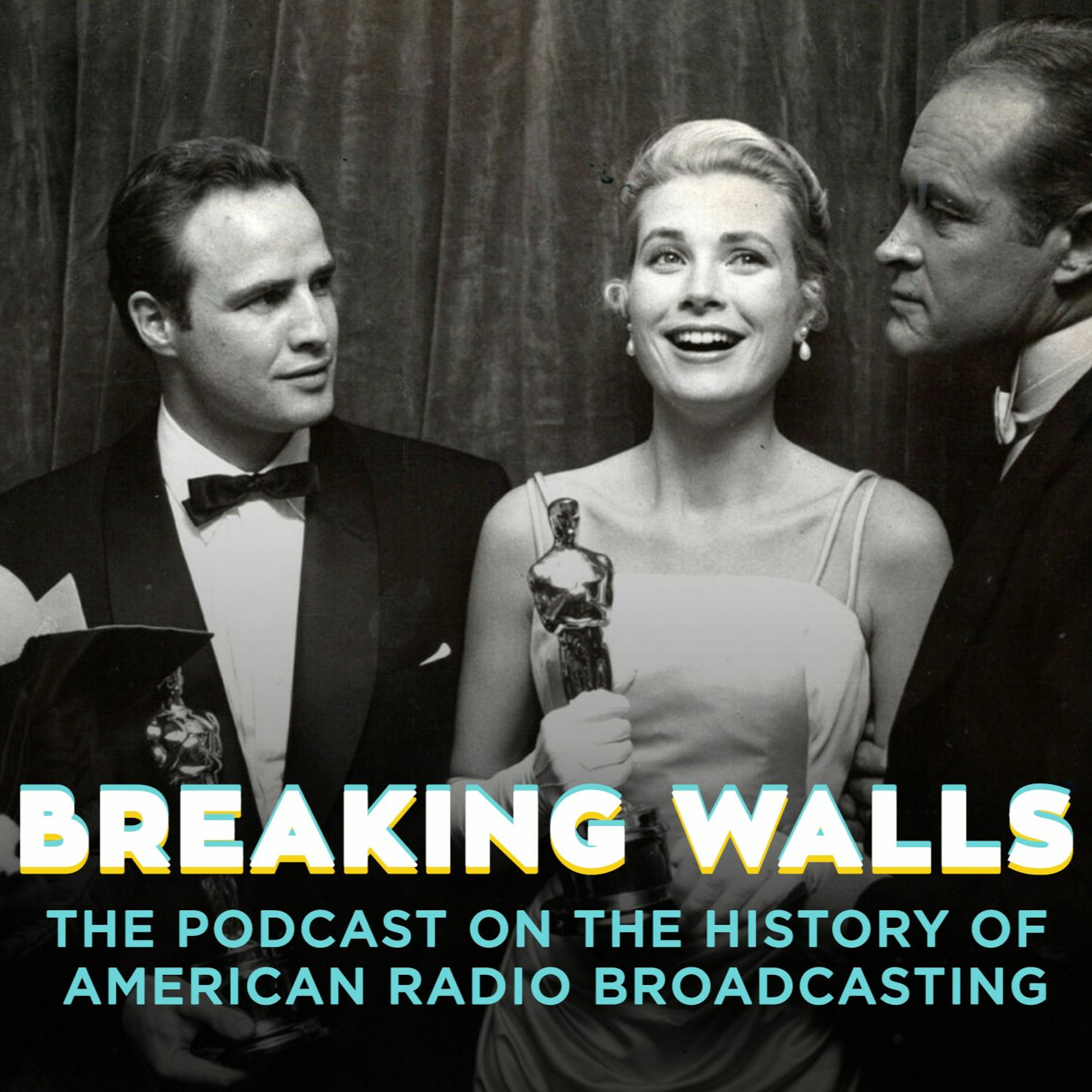
Bob Hope joined NBC’s red network in December of 1937. For the next ten years he starred on The Pepsodent Program, racking up the top-rated show five consecutive seasons between the fall of 1942 and the spring of 1947. Then, as radio’s ratings were hitting an all-time high, Hope opened the fall of 1947 to harsh reviews. Both the critics and public were bored with his formula. Ratings dropped and Hope responded with a shakeup the following year. Gone were Vera Vague and Jerry Colonna: the show became more of a situation comedy. It was the radio itself that had begun to fade. Hope spent two seasons being sponsored by Swan Soap, and then by Chesterfield, Jell-O, and American Dairy. His top show fell to fifth overall, then seventh, then tenth, thirty-third, and finally to forty-seventh in 1953. In 1954 his Friday at 8:30 rating was under 3.3. On May 14th his guest was the twenty-four year-old actress Grace Kelly. She’d won the Academy Award for best actress in Country Girl two months prior. Her fourth starring role, Dial M For Murder was about to premiere. Grace Kelly would appear in seven more films over the next two years. She retired after her marriage to Prince Rainier III of Monaco. Her last film was High Society, opposite Bing Crosby and Frank Sinatra. By 1954 Hope was appearing on TV. He did commentary for NBC’s coverage of the 1952 political conventions, and although he never had a regular TV series, he starred in two-hundred seventy two TV specials between 1950 and 1996. In later years he became the network’s senior statesman and his theme song, “Thanks for the Memory,” became synonymous with his comedy.
BW - EP127—005: May 1954—Wild Bill Hickok
James Butler “Bill” Hickok was born on May 27th, 1837 in LaSalle County, Illinois. An excellent marksman from a young age, in 1855 he became a Kansas Abolitionist Jayhawker. From there he became a constable, joined the Pony Express parent company, was badly wounded by a bear, and committed his first justifiable homicide. This was all before the age of twenty-five. During the Civil War, Hickok became a Union Army teamster, a wagon master, joined the Kansas Brigade, and became a spy for the provost marshall of Missouri. He was also a gambler and drinker, known to carouse for days at a time. On July 21st, 1865, Hickok took part in his first duel, killing a man named Davis Tutt. He shot Tutt through the heart from seventy-five yards away. A subsequent interview with Harper’s New Monthly Magazine labeled him Wild Bill for the first time. Rather than become an outlaw, Hickok became a lawman. He was soon a deputy Marshal at Fort Riley, and scouted for Custer’s Seventh Cavalry. By December of 1867 he was a Marshall in Hays City, and later sheriff of the same town. In April of 1871 he became Marshall in Abilene, Kansas. That October, Hickok justifiably killed a saloon owner named Phil Coe. But, during the fight, Hickok saw a man running towards him. He wheeled and fired, killing what turned out to be his own deputy. The event haunted Hickok the rest of his life. It was the last time he was ever involved in a gunfight. Radio’s version bore little resemblance to the real man. The format was the same used by the producers of Hopalong Cassidy and The Cisco Kid. Bill’s comic sidekick, Jingles B. Jones was voiced by the famed Andy Devine. Guy Madison was Wild Bill. Hollywood regulars supported. It was directed by Paul Pierce. The show first aired over Mutual on May 27th, 1951. On May 14th, 1954 the episode was called “Dangerous Advice.” Wild Bill Hickok aired until New Year’s Eve 1954. Mutual brought it back the following July. It ran until February of 1956. In early 1876 Hickok was diagnosed with glaucoma. Fearing blindness, he joined friends Charlie Utter and Calamity Jane Cannary in Deadwood, Dakota Territory. On August 2nd, 1876 he was playing poker. He’d badly beaten a man named Jack McCall the night before at cards. Although Hickok usually sat facing the door, no such seats were available. That afternoon he was playing five-card poker and holding a pair of Aces and Eights. Jack McCall walked in and shot Hickok in the back of the head from point blank range. Wild Bill died instantly. He was thirty-nine.
BW - EP127—004: May 1954—I Love A Mystery
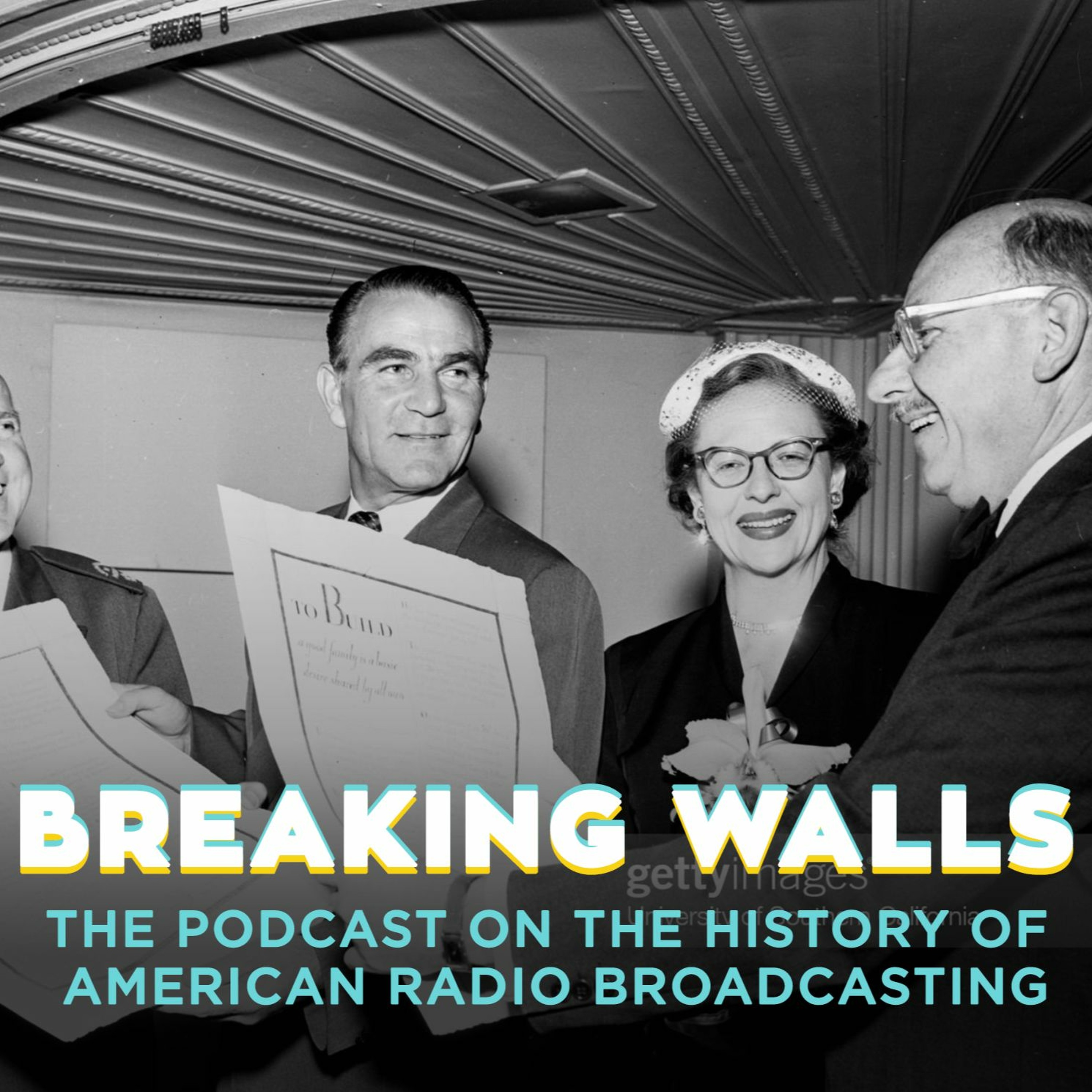
Carlton E. Morse’ I Love A Mystery first took to the air Weekdays at 3:15PM on NBC’s West-Coast network in January of 1939. Michael Raffetto starred as Jack Packard, head of the A-1 Detective Agency, with Barton Yarborough as Texan Doc Long, and Walter Paterson as the British Reggie Yorke. The show told of three world travelers in search of action, thrills, and mystery. From the ghost towns of wind-swept Nevada, to the jungles of vampire-infested Nicaragua, they righted wrongs, rescued women, battled evil, and explored unknown parts of the globe. By that autumn it was airing nationally. The show ran from the west coast for five years, first over NBC’s Red Network, then its Blue, and then CBS. It went off the air at the end of 1944, but was revived in the spring of 1948 on ABC and then from New York for Mutual Broadcasting in October of 1949. It ran for three more years, this time starring Russell Thorson, Jim Boles, and Tony Randall, as Thorson remembered. Jack Packard was a hero with quiet strength. Once a medical student, he shrugged off superstition in favor of logic. Reggie Yorke was educated, strong, and had the British stiff upper lip. Doc Long was a red-headed alley fighter from Texas who defied the laws of chance and loved women. Three characters could be murdered in a single episode. People were killed in ghoulish, imaginative, and sometimes mystifying ways. Throats were ripped out by wolves; there were garrotings, poisonings, and mysterious slashings. Although the serial went off the air in 1952, in May of 1954 a new audition record was produced for CBS in Hollywood. It starred Thorson, Ben Wright, and Parley Baer.
BW - EP127—003: May 1954—An Eisenhower Press Conference And Other Current Events
On Friday, May 14th, 1954 President Eisenhower gave a news conference, immediately opening the floor to reporters for general questions. The day prior The World Chess Championship was won by Mikhail Botvinnik in Moscow. On this day, The Boeing 707 was released. On Monday the 16th, The Kengir uprising broke out at a Soviet Labor camp. Political prisoners forced out guards and administration. It would last over a month. Meanwhile in the U.S., Senator McCarthy’s tirade had resulted in each political party’s questioning of the other’s loyalty, as well as talks of treason within the armed forces. Eisenhower simultaneously had both nothing, and a lot to say on these matters. On Tuesday, May 17th, Brown versus The Board of Education of Topeka would finally be decided.
BW - EP127—002: May 1954—Ray Milland And Meet Mr. McNutley
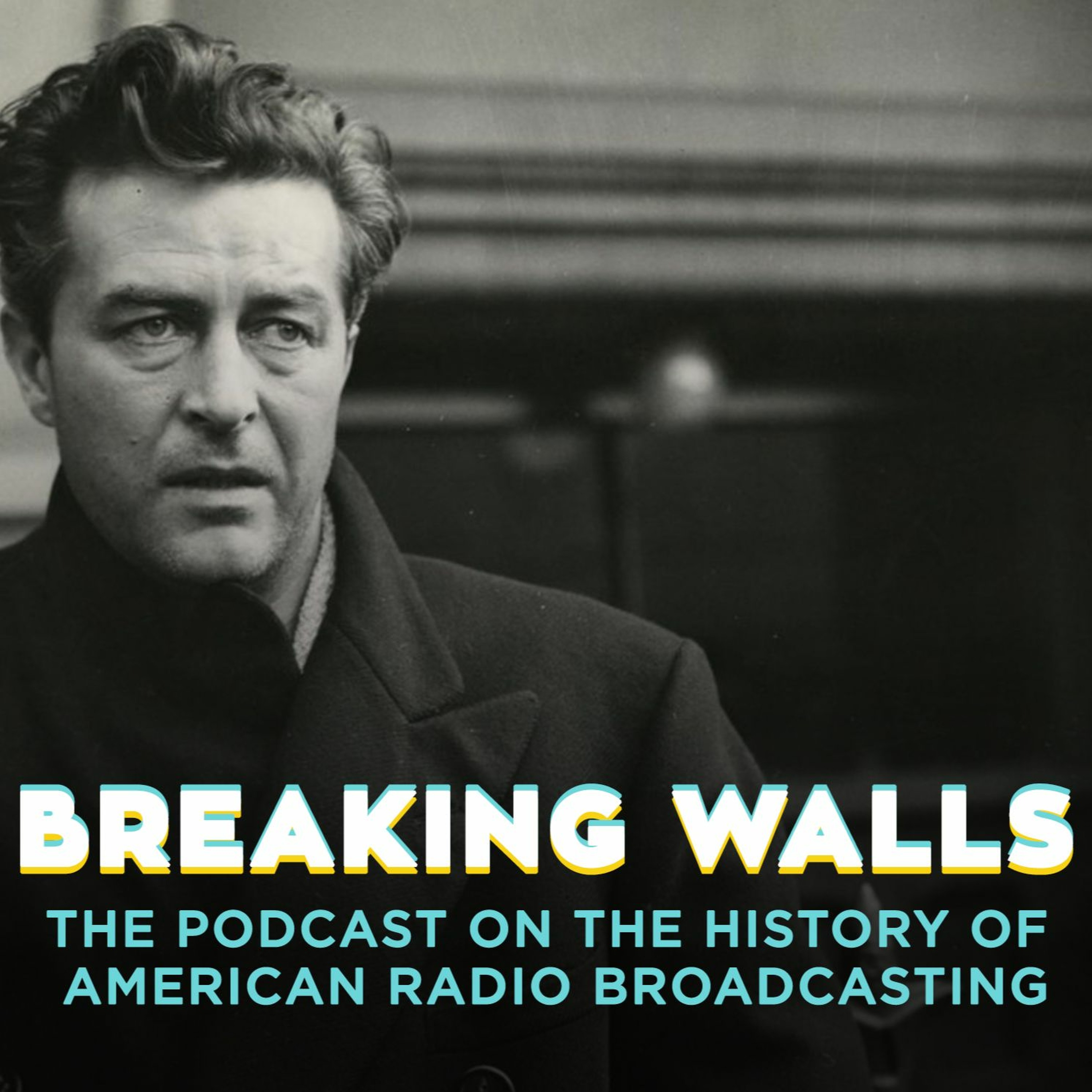
Meet Mr. McNutley first took to CBS’ airwaves on September 17th, 1953. Ray Milland played Ray McNutley, English professor at Lynnhaven College. Phyllis Avery was Peggy, his wife. It aired concurrently on TV with much of the same cast. The show would be short-lived, going off the air after June 10th, 1954. The TV show lasted one more season, changing the character’s name to McNulty in the process.
BW - EP127—001: May 1954—Everett Sloane And The 21st Precinct
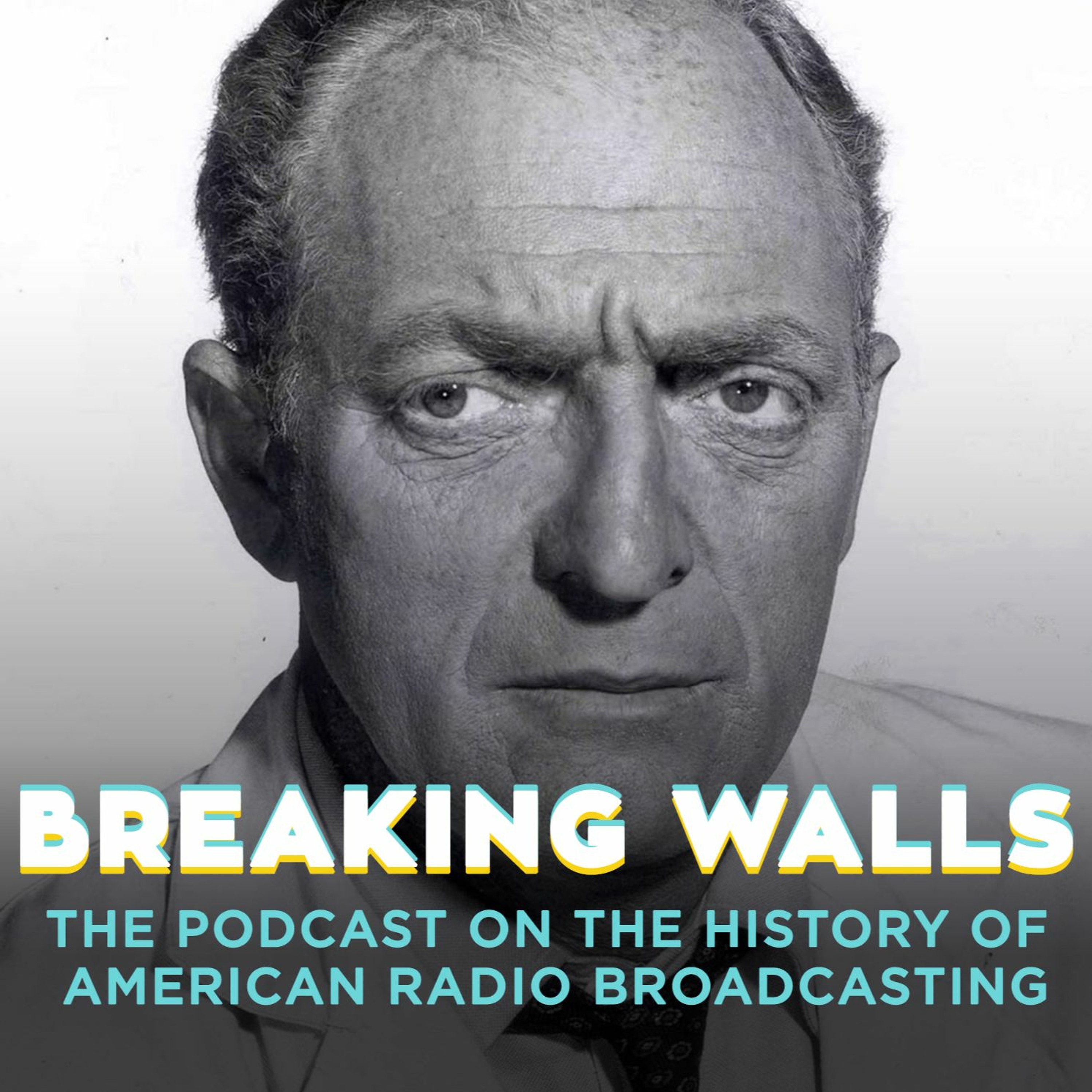
As the US began May of 1954, there was word that a new Soviet bomber had the ability to reach the United States. It was displayed for the public for the first time at the Moscow May Day Parade. On May 7th, the Battle of Dien Bien Phu would end in a French defeat. U.S. Secretary of State John Foster Dulles declared Vietnam non-essential to security in Southeast Asia. The U.S. would not intervene for France. And as several massive U.S. fishing vessels were sinking off the coast of Alaska, the Boeing 707 was being released after two years of development. On May 1st, NBC affiliate WSM signed on with The Big Sound. WSM is a 50,000-watt clear channel station located in Nashville, Tennessee. Founded by the National Life and Accident Insurance Company, the station’s call sign stands for We Shield Millions. WSM first signed on October 5th, 1925. The next month on November 28th, The WSM Barn Dance took to the air for the first time. On December 10th, 1927, the program's host, "Judge" George D. Hay referred to the show for the first time, as The Grand Ole Opry. The Opry began running coast-to-coast on Saturday evenings in 1939. The show moved to the Ryman Auditorium in 1943. As it developed in importance, so did the city of Nashville, which became America's country music capital. By 1954, WSM was considered the outstanding music station in the country. That October 2nd a teenage Elvis Presley would have his only Opry performance. The times, they were a-changin’. Tonight, we’ll dive in for a closer look. ___________ Welcome to Breaking Walls episode 127. My name is James Scully. Tonight we keep on with our look at 1954 by picking up in May during one of the most important months of the decade. ___________ Everett Sloane was born in New York City on October 1st, 1909. At age of seven, he played Puck of Shakespeare's Midsummer Night's Dream, and decided to become an actor. In 1927 he joined a Theater company. He made his New York stage debut in 1928. In the 1930s Sloane was appearing on The March of Time. It was there he met a young Orson Welles. Welles hired Sloane to be part of his Mercury Theatre. He moved from New York City to Los Angeles after Welles signed his contract with RKO. Sloane had a prominent role in Citizen Kane. In the 1940s, he worked on both coasts, guest-starring in radio on Inner Sanctum Mysteries, The Shadow, The Mysterious Traveler, and in films such as The Lady From Shanghai, Journey Into Fear, and Prince of Foxes. By 1953 he was being featured on TV and starring on radio in The 21st Precinct as Captain Frank Kennelly. The 21st Precinct debuted on July 7th, 1953 over WCBS radio in New York. It put the listener into the drama from the opening phone call until the final report. In May of 1954 it was airing Wednesdays at 8:30PM against The Great Gildersleeve on NBC. Starring with Sloane was Ken Lynch as Lieutenant Matt King and Harold Stone as Sergeant Waters. John Ives produced and Stanley Niss directed. Everett Sloane continued to be a busy actor until 1965. On August 6th of that year, recently diagnosed with Glaucoma and fearing blindness, he took his own life. He was survived by his wife Lilian and two children. Everett Sloane is buried at Angelus-Rosedale Cemetery in Los Angeles.
BW - EP126: April 1954—Joseph McCarthy vs. The US Army
In Breaking Walls episode 126 we continue our mini-series in April of 1954. —————————— Highlights: • Eisenhower talks fear • Lum and Abner’s April Fools’ Joke • The Eternal Light • Nightwatch — A New CBS Real Police Show • Barrie Craig, Confidential Investigator • Illegal Immigrant Fears • Gildersleeve’s Dinner Party • Easter Sunday and The End of The Whistler • Jack Benny Holds a Seance • The Army-McCarthy Hearings Begin • Phil Harris and Alice Faye’s Red Cross Blood Drive • Looking Ahead to May —————————— The WallBreakers: http://thewallbreakers.com Subscribe to Breaking Walls everywhere you get your podcasts. To support the show: http://patreon.com/TheWallBreakers —————————— The reading material used in today’s episode was: • On the Air — By John Dunning • Network Radio Ratings — by Jim Ramsburg • The Complete Escape Log — By Keith Scott As well as articles from • Broadcasting Magazine • LIFE Magazine —————————— On the interview front: • Parley Baer, George Balzer, Himan Brown, Phil Harris, Elliott Lewis, and Willard Waterman, spoke to Chuck Schaden. Hear their full chats at SpeakingOfRadio.com. • Himan Brown also spoke to Dick Bertel and Ed Corcoran for WTIC’s The Golden Age of Radio. Hear these full interviews at Goldenage-WTIC.org. • Himan Brown, Bill Froug, and Betty Lou Gerson spoke to SPERDVAC. For more information, go to SPERDVAC.com. • Elliott Lewis also spoke with John Dunning for his 71KNUS program from Denver. —————————— Selected music featured in today’s episode was: • Voodoo Dreams — By Les Baxter • Manhattan — By Blossom Dearie • Walking In The Air — By George Winston —————————— A special thank you to Ted Davenport, Jerry Haendiges, and Gordon Skene. For Ted go to RadioMemories.com, for Jerry, visit OTRSite.com, and for Gordon, please go to PastDaily.com. —————————— Thank you to: Tony Adams Steven Allmon Orson Orsen Chandler Phil Erickson Jessica Hanna Briana Isaac Thomas M. Joyce Ryan Kramer Gary Mollica Barry Nadler Christian Neuhaus Aimee Pavy Ray Shaw —————————— WallBreakers Links: Patreon - patreon.com/thewallbreakers Social Media - @TheWallBreakers
BW - EP126—011: April 1954—Looking Ahead To May
Next time on Breaking Walls, as the weather heats up in May of 1954, Brown vs. The Board of Education delivers a landmark decision. It decreed racial segregation within the U.S. School system to be unconstitutional. Dixiecrats opposed the ruling, while many others felt it was an injustice rectified ninety-years too late. We’ll cover this and every other radio and national happening, as we move towards Memorial Day, 1954.
BW - EP126—010: April 1954—Phil Harris And Alice Faye's Red Cross Blood Drive
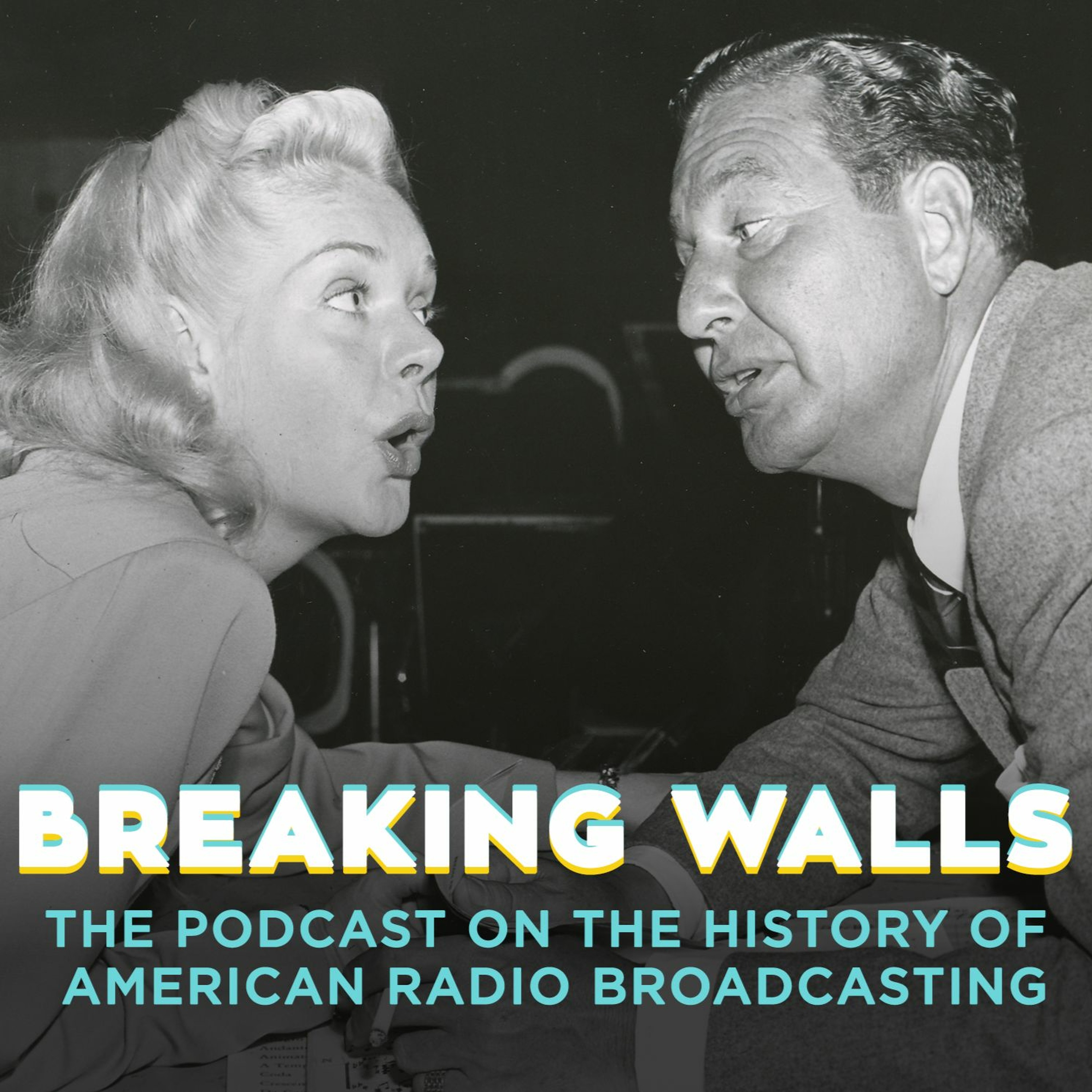
In April 1954, Phil Harris and Alice Faye were in the midst of their last season on the air. The husband-wife duo had been starring together on radio since 1946. Harris spent the better part of the last decade working with Elliott Lewis. They both worked under Jack Benny for years. On April 30th, they presented a special Red Cross Blood Drive program. Opposite on NBC-TV, The Big Story pulled a rating of 29.5, while the season rating for Harris/Faye was under 3.3. With radio on its way out, RCA cancelled the show at the end of the season. The last episode aired on June 18th. By then, Elliott Lewis was getting sick of dealing with agency and network red tape. For more information on The Phil Harris and Alice Faye Show, tune into Breaking Walls Episode 108: Halloween 1948—Dewey Vs. Truman. For more information on Elliott Lewis, tune into Breaking Walls Episode 113: A Week With Elliott Lewis in 1953.
BW - EP126—009: April 1954—The Army-McCarthy Hearings Begin
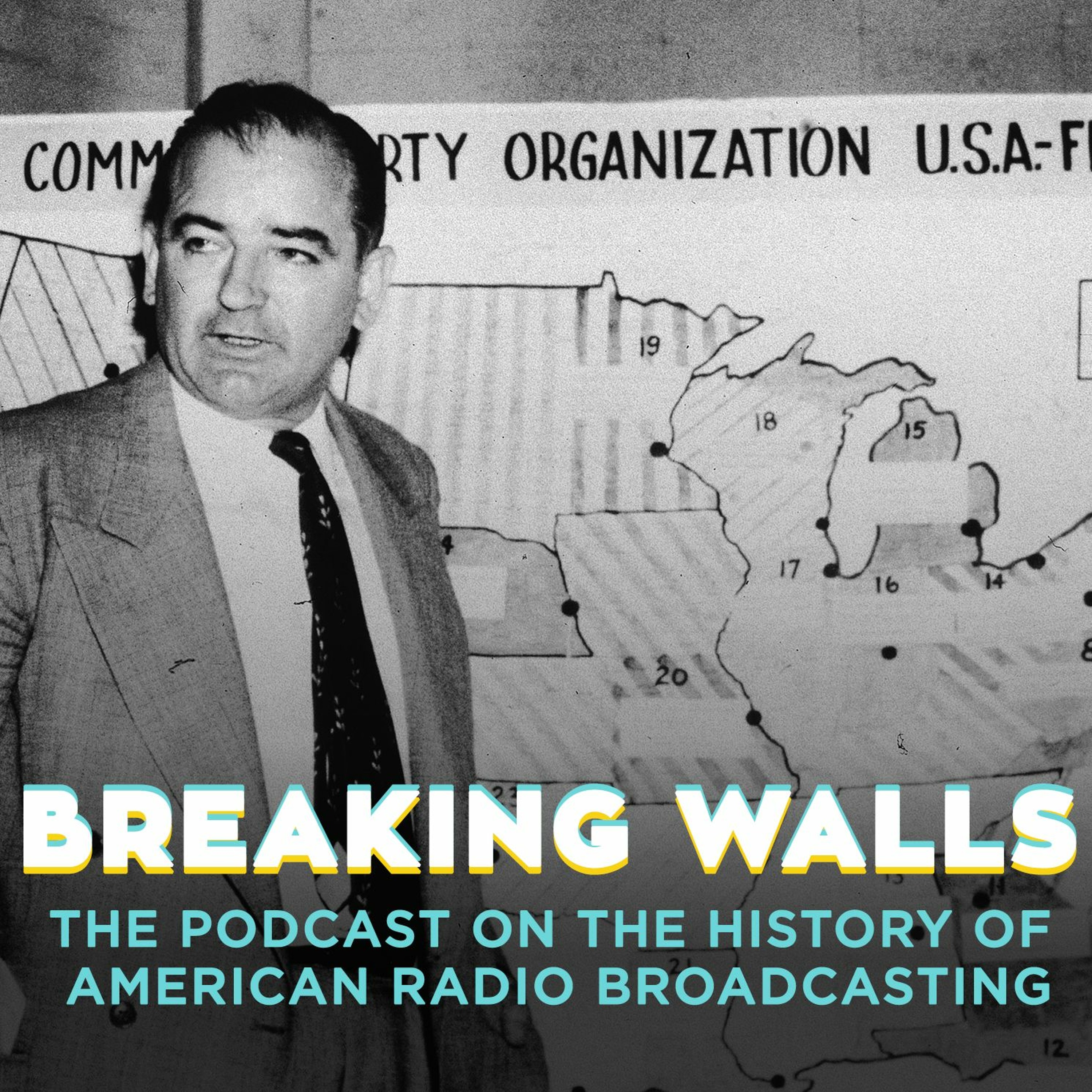
In January 1953, Joseph McCarthy began his second term as U.S. Senator from Wisconsin as the Republican Party regained control of the Senate. McCarthy was made chairman of the Committee on Government Operations. This included a permanent subcommittee that allowed McCarthy to continue Communist investigations within the government. He appointed Roy Cohn as chief counsel and Bobby Kennedy as assistant. McCarthy’s committee investigated the U.S. Army. They believed the Army Signal Corps at Fort Monmouth had been infiltrated. At the time, the investigation was largely fruitless. Then the Army accused McCarthy of seeking special treatment for Private G. David Schine, a chief consultant and close friend of Cohn's. Schine had been drafted the previous year. The Senate decided that these conflicting charges should be investigated. South Dakota Republican Senator Karl Mundt chaired the subcommittee. John G. Adams was the Army's Counsel. Joseph Welch, Special Counsel. The hearings were telecast nationally on both ABC and the DuMont network. Eighty million people saw these hearings that lasted thirty-six days. They began on April 22nd. CBS Radio was there. Early in the hearings, a photo of Private Schine was produced, with Joseph Welch accusing Roy Cohn of doctoring the image to show Schine alone with Army Secretary Robert T. Stevens. Cohn and Schine both insisted the picture was unedited. Welch then produced a wider shot of Stevens and Schine with Colonel Jack Bradley and McCarthy aide Frank Carr. This lie hurt McCarthy’s side. McCarthy was quickly losing steam and allies. His policies were turning up little evidence. His “list of two-hundred known Communists” never materialized and this turn of attention to the Army was a political gamble. It wouldn’t work and later would cost McCarthy his position in the Senate.
BW - EP126—008: April 1954—Jack Benny Holds A Seance
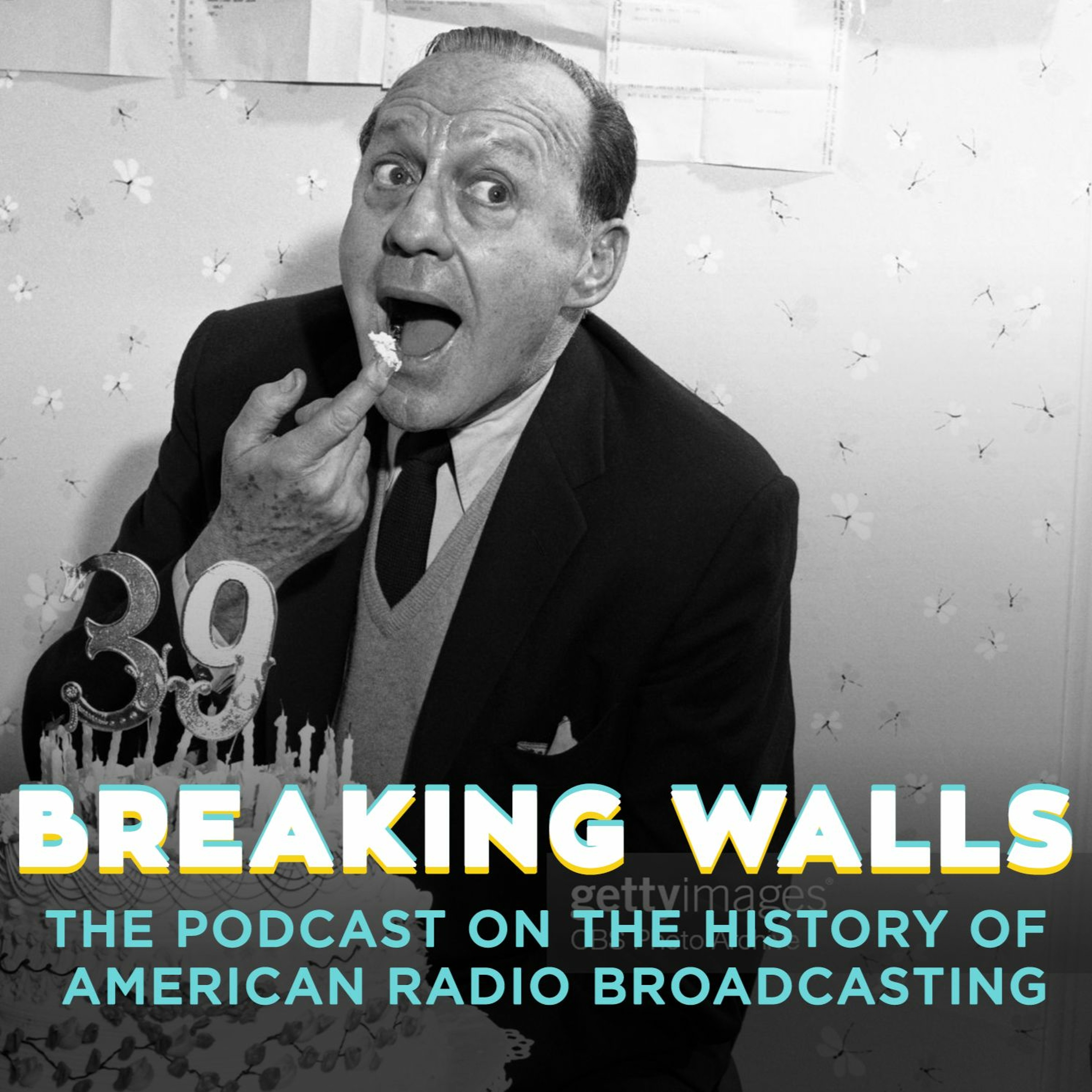
As The Jack Benny Program moved into the spring of 1954, the comedian was still seen as a ratings boon. Through the years, Benny made little tweaks to his team without losing his audience. Bob Crosby replaced Phil Harris as bandleader in the fall of 1952. In 1954, Mary Livingstone, always a victim of stage fright, began to record her lines at home. Joan Benny or Jeanette Eymann played the Mary role for the audience, and the real Mary was dubbed in for the broadcast tape. If a household had both a radio and TV they could tune into Benny’s CBS radio show at 7PM eastern time on Sundays, and then switch over to his TV show, which aired at 7:30. Benny’s 1949 deal with CBS helped make the network the 1950s powerhouse. For more info on Benny’s landmark deal and the CBS talent raids which followed, tune into the Breaking Walls episodes 108, 109, and 110.
BW - EP126—007: April 1954—The End Of The Whistler
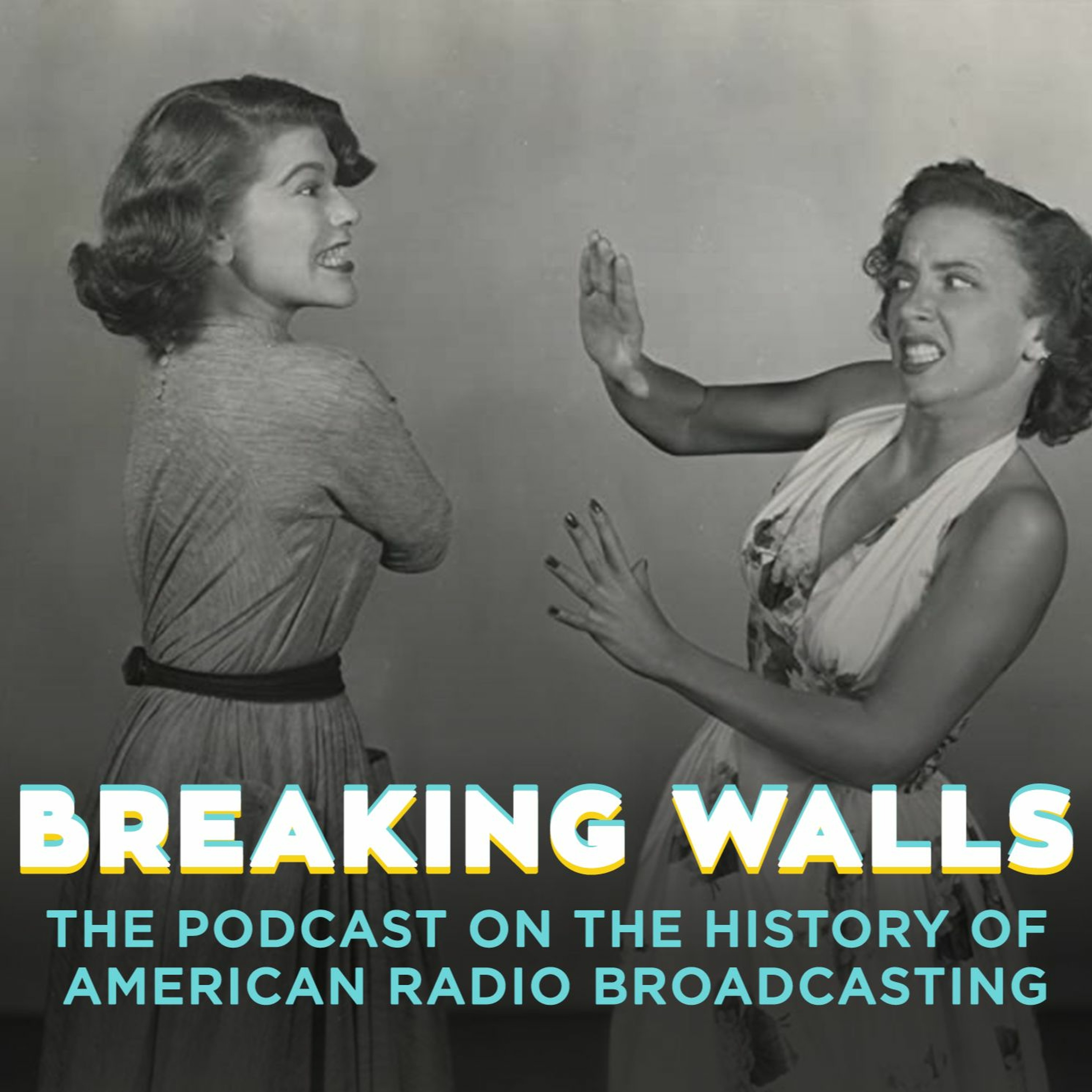
April 18th, 1954 was both the first day of Passover and Easter Sunday. In Los Angeles, the weather was warm and foggy. The front page of The LA Times predicted record crowds at Easter services. The Major League baseball season was underway. It would be three years before Los Angeles imported the Dodgers from Brooklyn. Two days prior, V.P. Richard Nixon told the press he feared the U.S. would be forced to send troops to Vietnam. That evening, at 7:30PM over CBS’ KNX, The Whistler signed on the air, guest-starring Betty Lou Gerson and John Stephenson. The Whistler had been one of west-coast radio’s most-famous regional programs since its launch in 1942. For much of its run it was sponsored by Signal Oil. Voiced by Bill Forman, the Whistler’s narration omnisciently taunted the characters. Stories were often told from the guilty party’s perspective. Their guilt was known, but the outcome was in doubt. The Whistler character was so popular that Columbia Pictures made eight films between 1944 and 1948. Dorothy Roberts whistled the notes. The Whistler would finally go off the air after the September 8th, 1955 episode.
BW - EP126—006: April 1954—Gildersleeve's Dinner Party
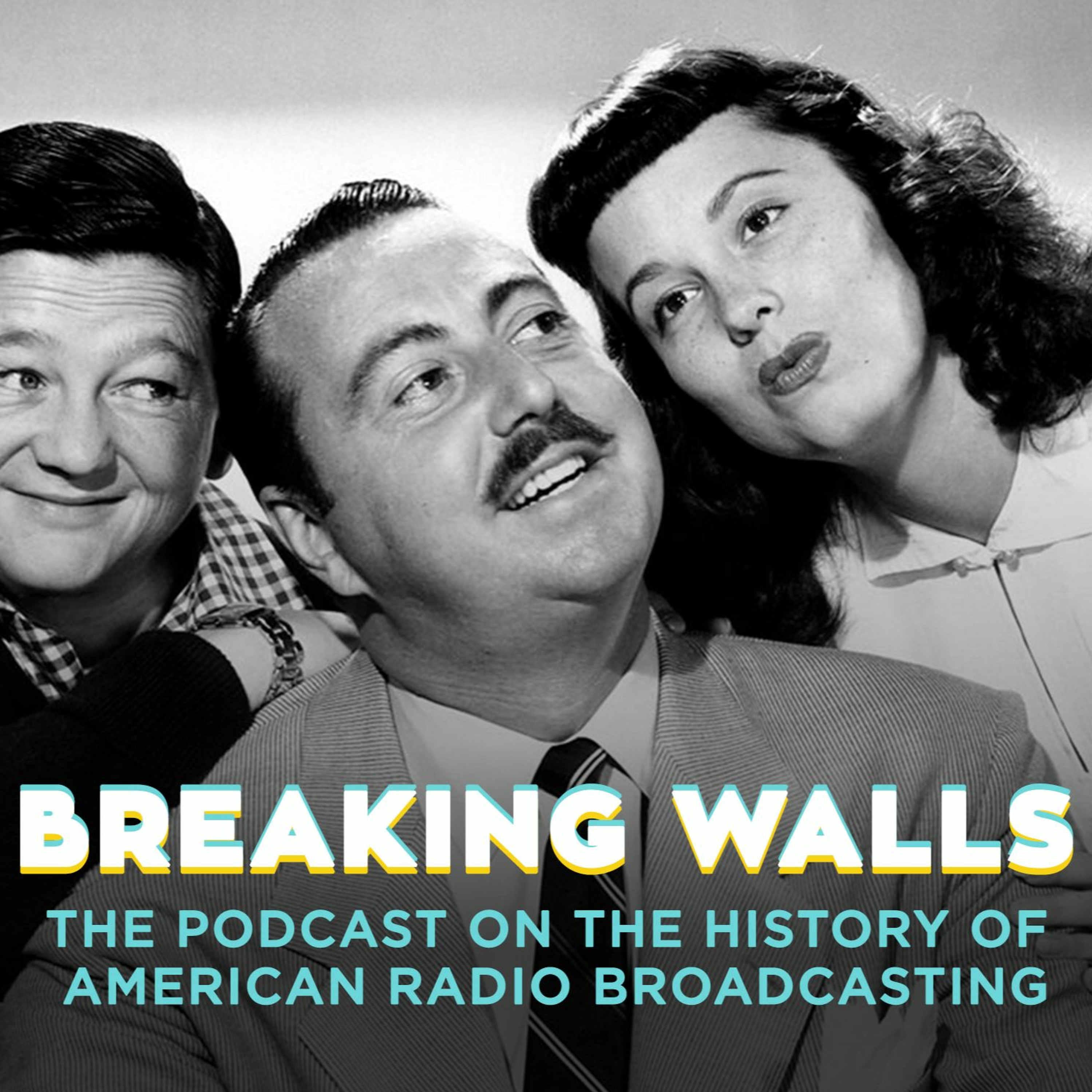
Willard Waterman had been portraying Throckmorton P. Gildersleeve since the fall of 1950 when Harold Peary left the program. In the spring of 1954 The Great Gildersleeve was airing Wednesdays at 8:30PM eastern time over NBC. Kraft had sponsored the program since its debut in 1941. The show’s 5.8 rating was good enough for fourteenth overall, and NBC’s fourth-highest program. It easily beat out CBS’ 21st Precinct, airing opposite at the same time. On April 14th, Gildersleeve hosted a “Dinner Party for Bronco’s Boss.” Parley Baer played Mr. Hammond. In the fall, Gildersleeve shifted formats, becoming a weeknight fifteen-minute serial, before returning to a half-hour in the fall of 1955. The last Great Gildersleeve radio episode would air on March 21st, 1957. For more info on the show’s transition from Peary to Waterman, tune into Breaking Walls episode 120.
BW - EP126—005: April 1954—Illegal Immigrant Fears
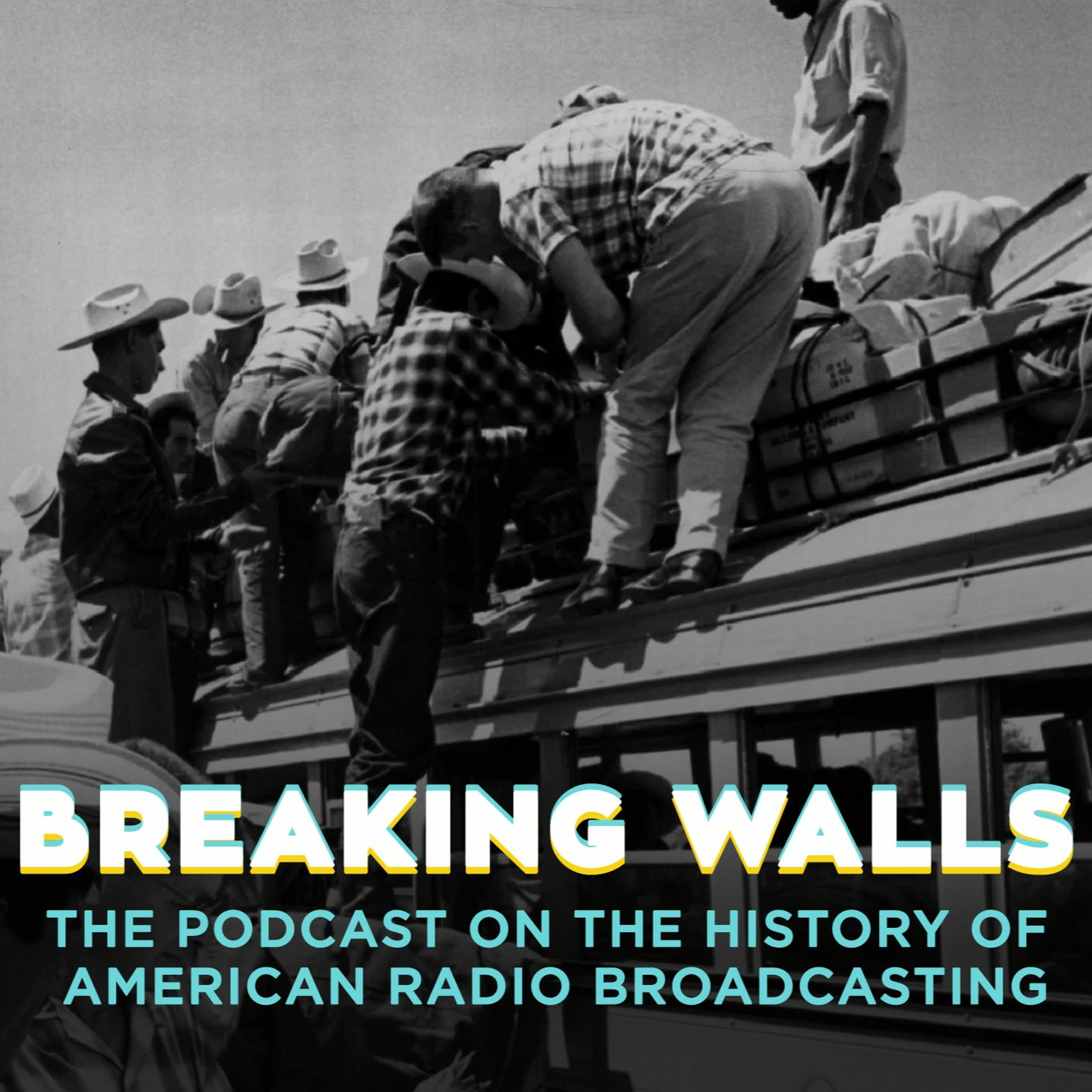
In 1954, CBS Radio’s documentary unit presented a special feature series on a variety of hot-button topics. On April 11th, illegal Immigration from Mexico was their focus. Today, the term Wetback is rightfully one of derision and insult. It might have privately been considered the same in 1954, but in the mainstream it was used to describe anyone who swam into the US from across the Rio Grande River. At the height of Red Scare Mania, the fear was a communist spy could pose as a Mexican migrant. The next day in New York City, Bill Haley and the Comets recorded the ground-breaking single, “Rock Around The Clock.”
BW - EP126—004: April 1954—Barrie Craig, Confidential Investigator
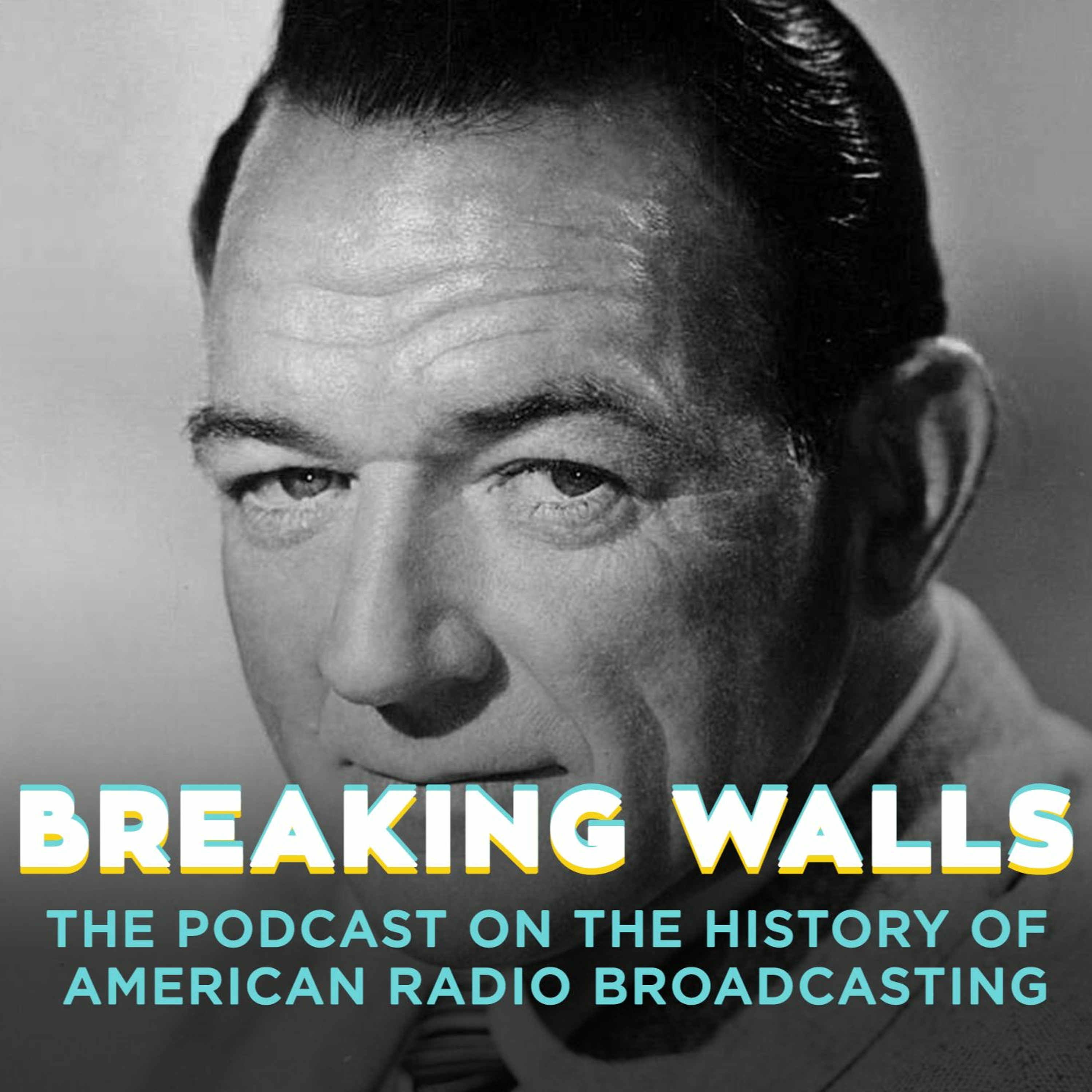
By April 1954, Himan Brown had been involved in radio for more than two decades. He’d directed, produced, or created shows like Inner Sanctum Mysteries, The Adventures of the Thin Man, Grand Central Station, Bulldog Drummond, Dick Tracy, Flash Gordon, and Barrie Craig, Confidential Investigator. William Gargan was born in Brooklyn, New York on July 17th, 1905. His father was a detective, and his mother a teacher. Gargan became a bootleg whiskey salesman, and later a private eye. His brother Edward was an actor. One day while visiting him at rehearsal, Gargan was offered a stage job. He began his career in Aloma of the South Seas. Gargan's first film was Rain. Later, he played in Misleading Lady and starred in three Ellery Queens. In 1940, he was nominated for a Best Supporting Actor Oscar for his role as Joe in They Knew What They Wanted. And in 1945, he starred with Bing Crosby and Ingrid Bergman in The Bells of St. Mary's. He was perhaps most famous for his role as Martin Kane, Private Eye. It was conceived as one of TV’s earliest detective shows, and ran concurrently on radio. Gargan played the lead on both mediums, until the TV show became—as he alleged in his autobiography, “a vehicle for the flesh parade.” He balked when actresses were hired more for cleavage than ability. Gargan’s last performance as Kane occured in June of 1951. That October 3rd, he began playing Barrie Craig in a similar sounding series. Craig worked alone from a Madison Avenue office, and had good relationships with the cops. NBC produced the show in New York until the Summer of 1954. Himan Brown directed. Production of Barrie Craig moved to Hollywood in the summer. It ran until June 30th, 1955. Gargan's acting career came to an end in 1958 when he developed throat cancer. Doctors were forced to remove his larynx. Speaking through an artificial voice box, he became an activist and spokesman for the American Cancer Society. No longer able to act, he formed William Gargan Productions, making film and tv shows in Hollywood.
BW - EP126—003: April 1954—Nightwatch
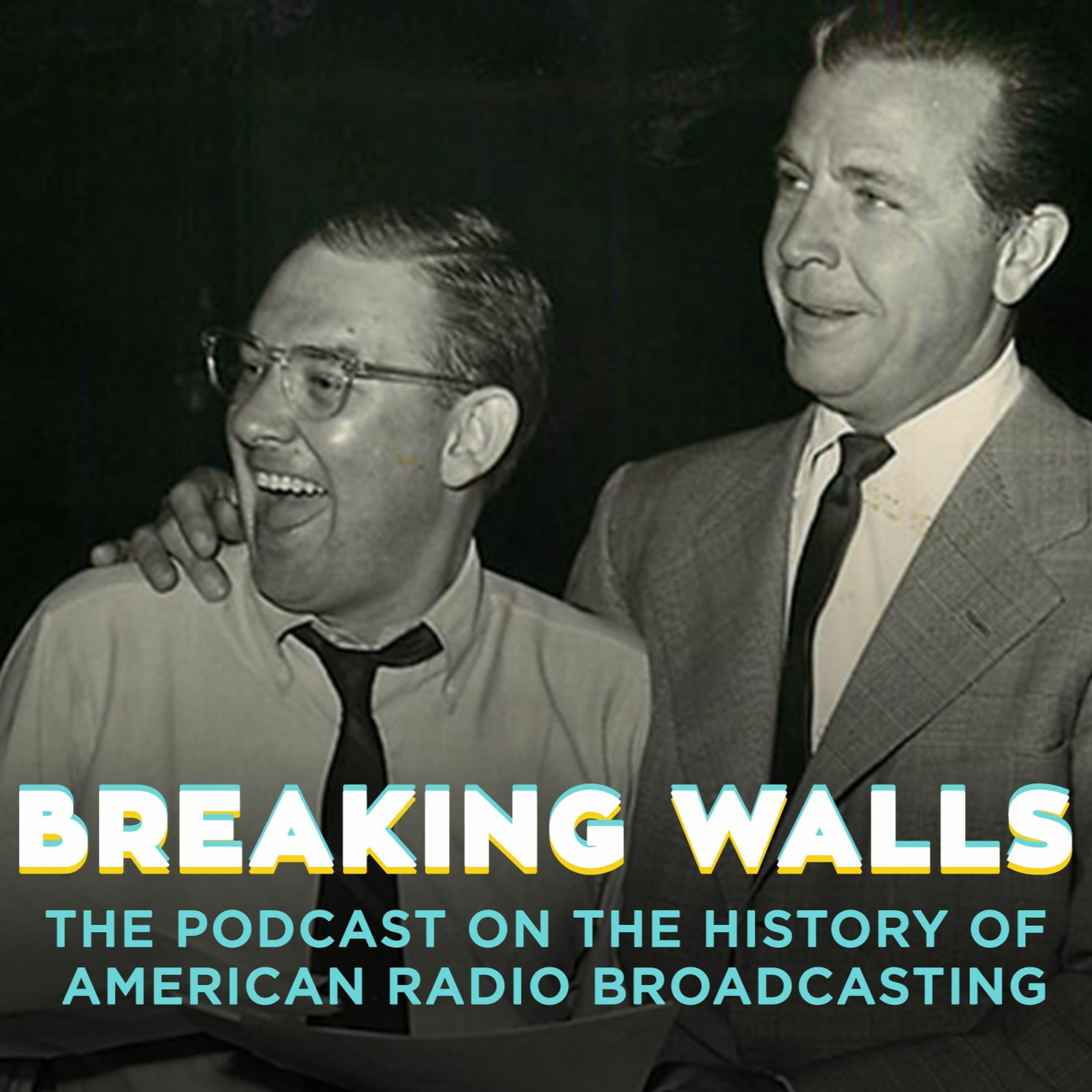
In April 1954 Bill Froug was supervisor for a new CBS series called Night Watch. The show attempted to take Dragnet’s realism to the next level. It placed reporter Donn Reid in Culver City Officer Ron Perkins’ car. Reid rode the 6PM to 2AM shift, wearing a hidden wire to capture the high drama of the job. Before the premiere broadcast, Reid accumulated one-hundred reels of tape. It included criminals caught in the act, a homicide confession, and the statement of a drug addict. The show was produced by Sterling Tracy and announced by Dan Cubberly. Vernon McKenny was the engineer, and Ray Gerhardt the editor, removing all traces of real names and locales. Night Watch premiered on Monday April 5th at 10PM with an episode called “Nude Prowler.” Traveling in an unmarked car, Reed used a reel-to-reel tape recorder, with a microphone hidden in a flashlight. These were authentic, unscripted, and unrehearsed. In one case, Reid was nearly shot; in another, he was stabbed but was saved by a leather jacket. At the end of each show, Police Chief W. N. Hildebrand gave listeners updates on what happened to the people in each incident. Night Watch aired until April 21st, 1955. Donn Reed went on to be one of the first traffic helicopter reporters, and Ron Perkins eventually was elected Mayor of Culver City.
BW - EP126—002: April 1954—The Eternal Light
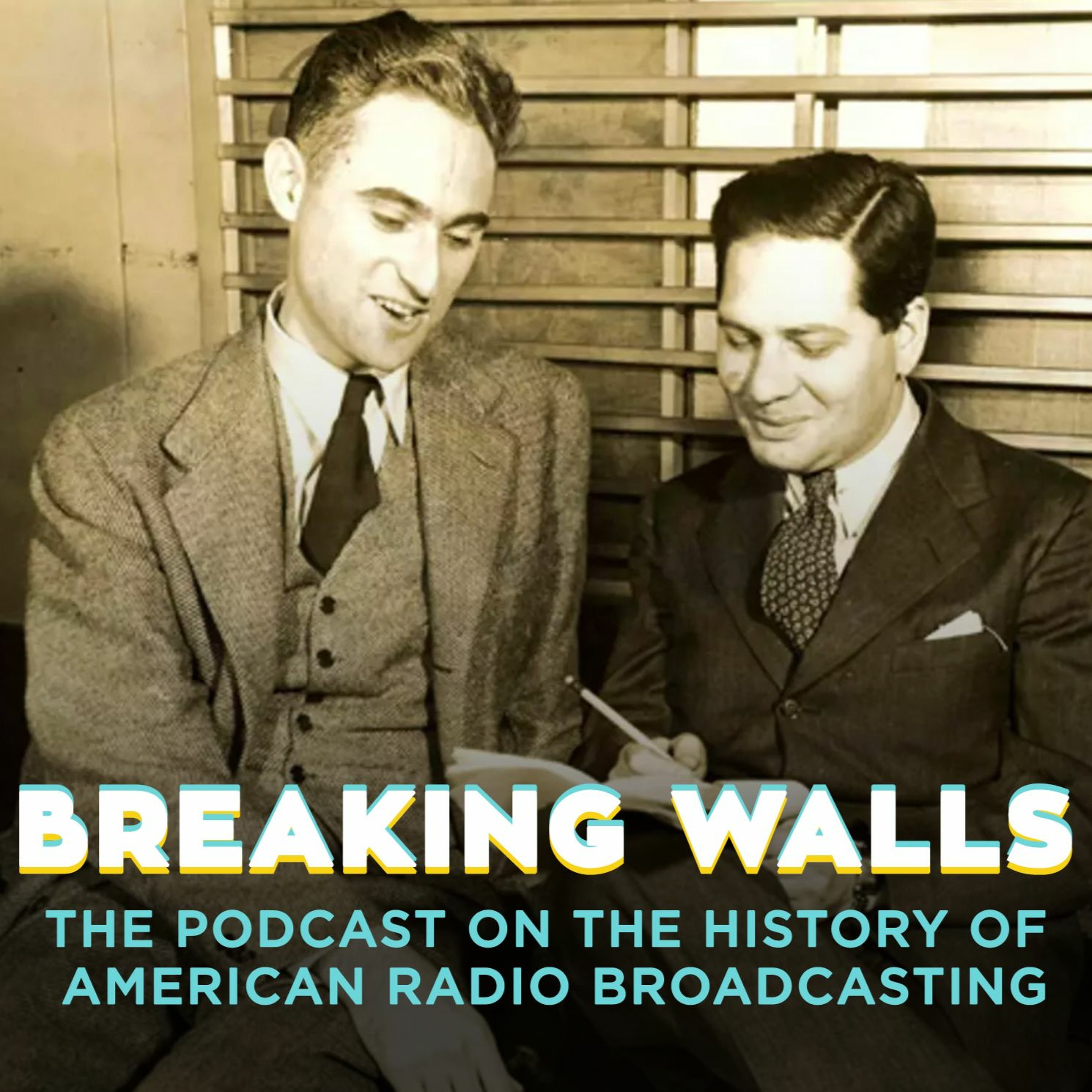
In October 1944, in conjunction with the Jewish Theological Seminary, NBC began one of the longest-running religious programs in radio history. It was called The Eternal Light. Then in its tenth year, The Eternal Light dramatized stories from ancient Judaea, along with contemporary works like The Diary of Anne Frank. It was produced by Milton Krents. Many top New York radio actors appeared. NBC donated the air time and the Seminary paid for the show's production. On April 4th at 12:30PM eastern time over NBC’s WRCA in New York, The Eternal Light took to the air with a story entitled “Children of Liberty.” Although many radio programs were being canceled, The Eternal Light would air on radio and then television until 1989.
BW - EP126—001: April 1954—Eisenhower Talks Fear, Lum And Abner Play Jokes
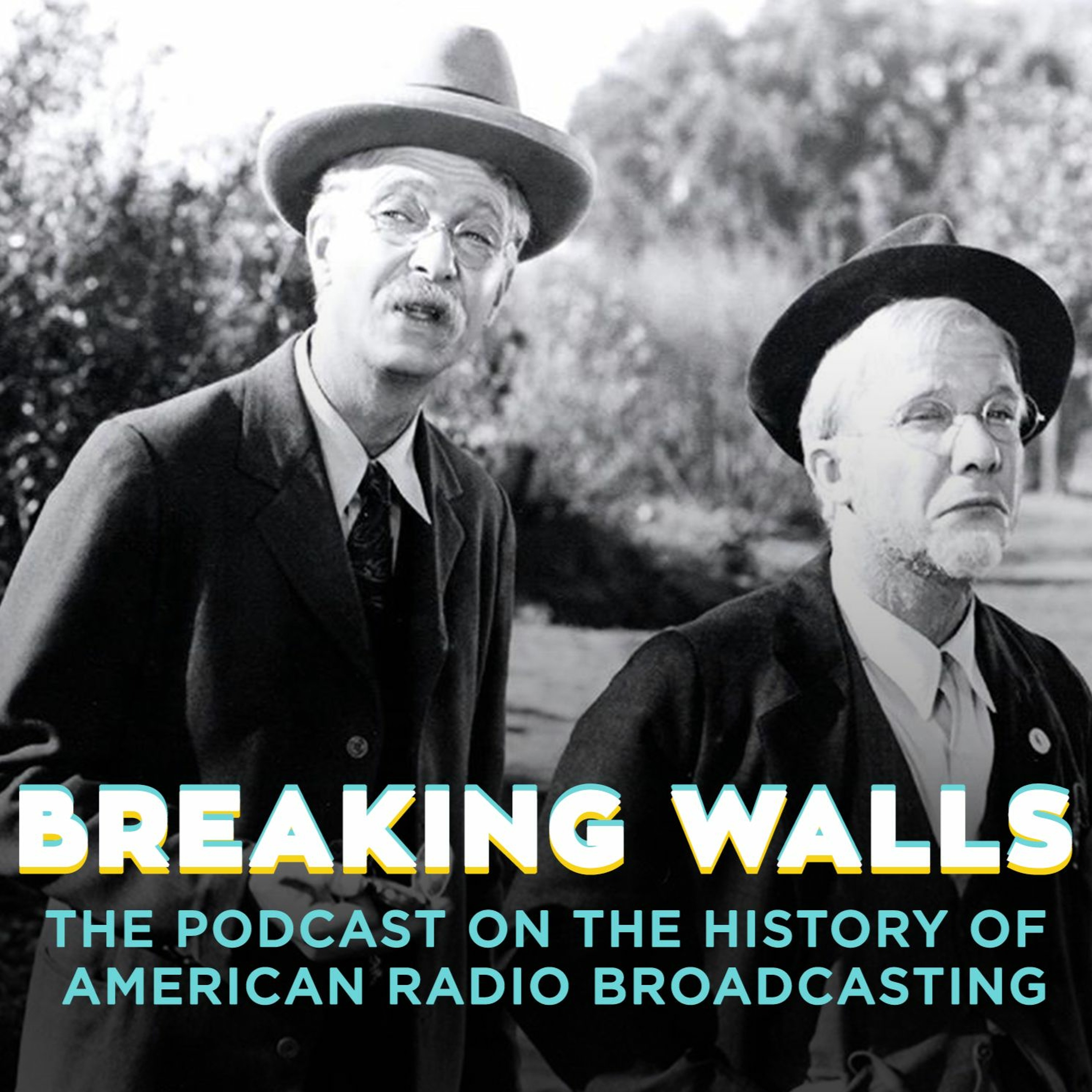
As the United States entered April 1954 with the cold war at its height, Congress and The President authorized the founding of the U.S. Air Force Academy in Colorado. Walt Disney was signing a contract with ABC—TV for a Disneyland series, with plans to build a new theme park in Southern California. Legendary conductor Arturo Toscanini was retiring, as Elvis Presley was recording his debut single, “That’s All Right.” The hydrogen bomb now existed. Brown vs. The Board of Education was being decided. A certain senator from Wisconsin was claiming the armed forces were rife with communist spies. And there was worry about involvement in present-day Vietnam. On April 4th, Dwight Eisenhower gave this speech on fear. Three days later, he unveiled his “Domino Theory,” portending that for every country who fell under Communism’s grip, more were likely to follow. It was no secret that Eisenhower didn’t see eye-to-eye with Senator McCarthy, and the former Supreme Commander of World War II’s Allied Forces understood how internal division could make a country vulnerable. That was the same for the radio industry, where those who could find work in TV were doing so with rapidity. Of the top fifteen TV shows, at least nine had begun on radio in some form. This included Dragnet, Arthur Godfrey, The Life of Riley, Our Miss Brooks, This Is Your Life, and The Jack Benny Show. But, American forefather Alexander Hamilton once said that, “in times of great chaos, people can make their name.” That was never truer than in the spring of 1954. Of course, as Joseph McCarthy would find out, people who create great chaos, can at times, lose theirs. Tonight, we’ll find out more. ________________________ In April 1954 Lum and Abner was airing as a weekday, fifteen minute serial. The show was syndicated out of KABC in Los Angeles. That year, The American Broadcasting Company’s flagship L.A. station had changed its call letters from KECA. Chester Lauck was Lum Edwards. Norris Goff was Abner Peabody. Although the comedy was reaching the end of the line, it was still one of the most beloved, folksy radio shows of all-time. On this day, Lum found out he needed famous ancestors if he wanted to marry Miss Priddle, while Abner set up a prank. Lum and Abner would sign off the air for the final time on May 7th. However the duo would star in one more film: Lum and Abner Abroad, in 1956.
BW - EP125: March 1954—A World In Turmoil
In Breaking Walls episode 125 we continue our mini-series in March of 1954. —————————— Highlights: • Edward R. Murrow Sees It Now • Perry Mason Busts The Syndicate • The 1954 DNC in Florida • Cathy and Elliott Lewis Can’t Fight City Hall • Groucho Marx Bets His Life • Phil Harris and Alice Faye: Happy Couple In Cancellation • The End of the Expense Account For Johnny Dollar? • Escape’s Violent Night • Bing and Frank Swap Oscar Stories and Sing Songs • The 1954 Tony Awards from NBC with Audrey Hepburn • Looking Ahead to April with The Army/McCarthy Hearings —————————— The WallBreakers: http://thewallbreakers.com Subscribe to Breaking Walls everywhere you get your podcasts. To support the show: http://patreon.com/TheWallBreakers —————————— The reading material used in today’s episode was: • On the Air — By John Dunning • Network Radio Ratings — by Jim Ramsburg • The Complete Escape Log — By Keith Scott As well as articles from • Broadcasting Magazine • LIFE Magazine —————————— On the interview front: • Alice Faye and John Guedel spoke to Chuck Schaden. Hear their full chats at SpeakingOfRadio.com. • Mandel Kramer and William N. Robson spoke to Dick Bertel and Ed Corcoran for WTIC’s The Golden Age of Radio. Hear these full interviews at Goldenage-WTIC.org. • Harry Bartell, Mary Jane Croft, Don Diamond, Jack Johnstone and Byron Kane spoke to SPERDVAC. For more info, go to SPERDVAC.com. • Dick Joy, Elliott Lewis, and E. Jack Neuman spoke with John Dunning for his 71KNUS program from Denver. • Norman Macdonnell was with John Hickman for his Gunsmoke documentary. • William Conrad spoke to collector Chris Lambesis in 1969. • And Bing Crosby spoke with Barbara Walters in 1977. —————————— Selected music featured in today’s episode was: • Fever — By Peggy Lee • Sleep Walk — By Henri René • Exotique Bossa Nova — By Martin Denny • The Venice Dreamer Parts 1 & 2 — By George Winston • Danse Macabre — By Camille Saint-Saëns —————————— A special thank you to Ted Davenport, Jerry Haendiges, and Gordon Skene. For Ted go to RadioMemories.com, for Jerry, visit OTRSite.com, and for Gordon, please go to PastDaily.com. —————————— Thank you to: Tony Adams Steven Allmon Orson Orsen Chandler Phil Erickson Jessica Hanna Briana Isaac Thomas M. Joyce Ryan Kramer Gary Mollica Barry Nadler Christian Neuhaus Aimee Pavy Ray Shaw —————————— WallBreakers Links: Patreon - patreon.com/thewallbreakers Social Media - @TheWallBreakers
BW - EP125—010: March 1954—Looking Ahead To April
As March drew to a close, Mutual Broadcasting’s Frank Hemingway took to the air on March 30th with the evening news from KHJ in Los Angeles. ___________ With the hydrogen bomb in development, Russia wanted to join NATO. In Washington, President Eisenhower was making changes to the Taft-Hartley Labor Law. And in present-day Vietnam, a massive battle was taking place at the French military base at Dien Bien Phu. The March 30th news broadcast hinted at things to come. ___________ Next time on Breaking Walls, April ushers in the Army-McCarthy Hearings, Presidential Speeches, Schemers, Slanderers, Nude Prowlers, and even a Benny Seance.
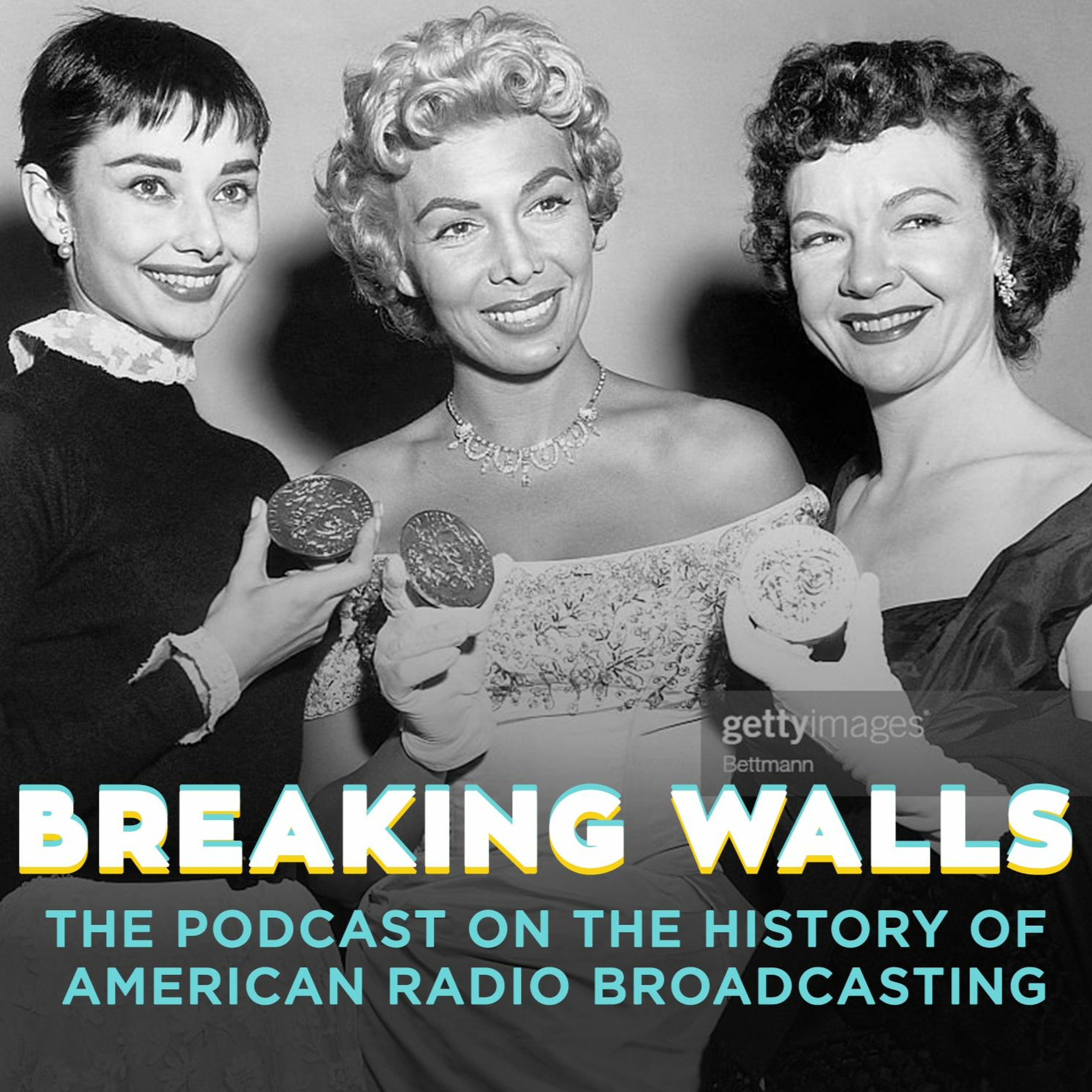
BW - EP125—009: March 1954—The 1954 Tony Awards on NBC with Audrey Hepburn
The eighth-annual Antoinette Perry Awards for Excellence in Broadway Theatre were held at the Plaza Hotel’s Grand Ballroom on March 28th, 1954. Broadcast on radio by NBC, it was emceed by Ben Grauer and Faye Emerson. ____________ The entire post-dinner awards ceremony took thirty minutes. Some of the plays and musicals of note that season were Ondine, Kismet, Can-Can, The Teahouse of The August Moon, and John Murray Anderson's Almanac. ____________ Dolores Grey won a Tony for Carnival in Flanders, even though this Broadway musical ran for only six performances. It’s a still-standing record for the briefest run by a Tony winner. ____________ This was David Wayne's second and final Tony award. He would appear in numerous films and TV, including starring alongside Paul Muni in the 1959 film, The Last Angry Man. ____________ 1954 was a banner year for the twenty-five year old Audrey Hepburn. Three days earlier she won a Best Actress Oscar for her starring role in Roman Holiday. She’d also won a Golden Globe for the same film. In September, Sabrina would premiere, for which she was again Oscar nominated the following year.
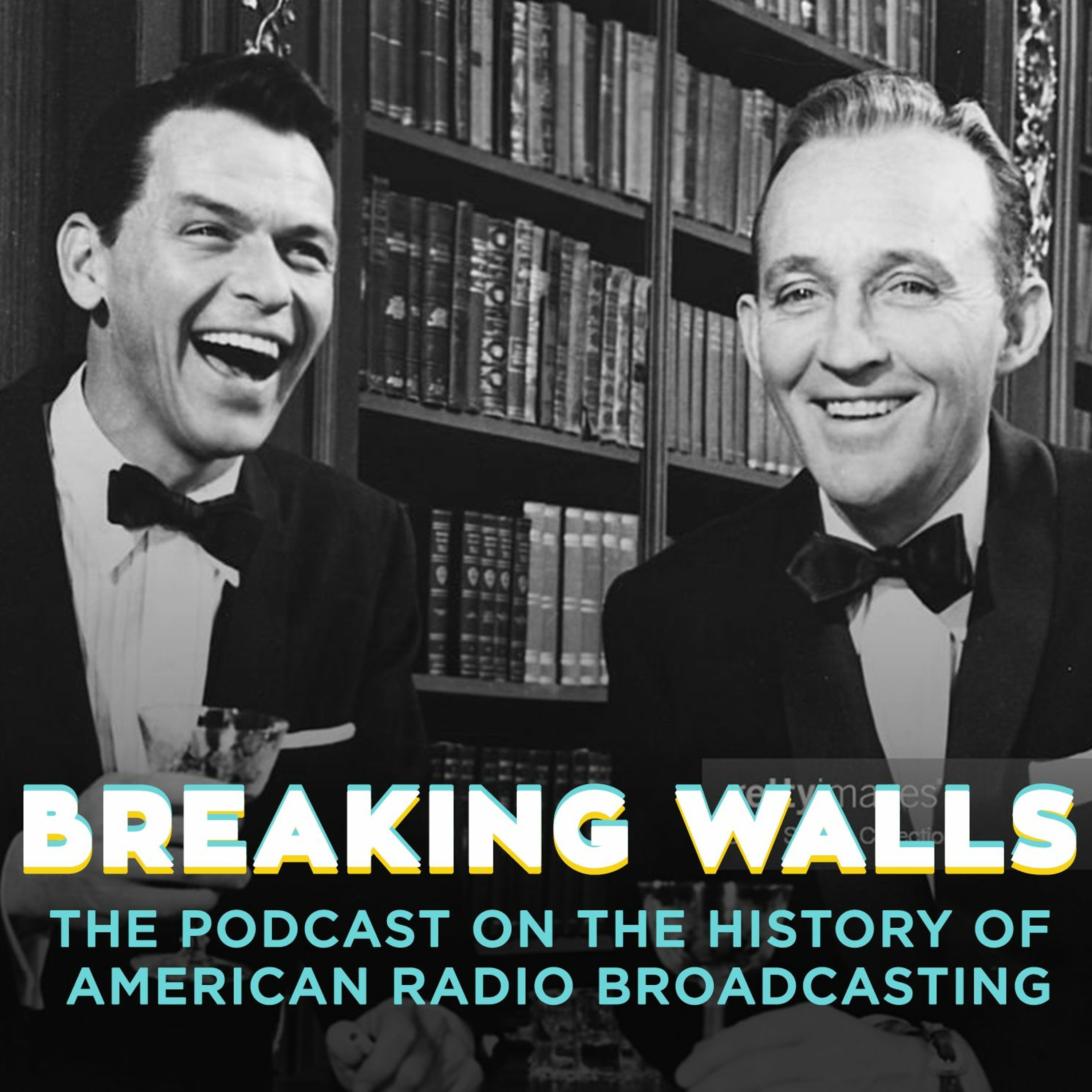
BW - EP125—008: March 1954—Frank And Bing Sing After Frank's Oscar Win
By March of 1954 Bing Crosby’d been in the public eye for more than two decades. He had numerous hit records, and won an Oscar for best actor in Going My Way in 1944. On Radio, Bing helped usher in primetime transcription with Philco in 1946. Crosby had been on CBS radio since 1949 and sponsored by General Electric since 1952. He was reluctant to star in a regular TV show, fearing overexposure. The 1954 Academy Awards were held on March 25th. That same day, RCA announced the first color television set. It was a twelve-inch screen, priced at one-thousand dollars, or roughly ten grand today. On the Sundays bookending those awards, Frank Sinatra was a guest on Bing’s program. Frank would win a Best Supporting Actor Oscar for Maggio in From Here to Eternity. On this latter program from March 28th, Frank talks and jokes about his experience. The two are in rare form, especially with a trio of songs. The series ended on May 30th, 1954. With radio audiences in steep decline, Crosby decided against a weekly radio show with expensive guest stars and a twenty-two piece orchestra. Bing’s son Gary took over the timeslot in June for thirteen weeks. In November 1954, Bing returned to the airwaves with a weeknight fifteen-minute program. He spoke about all manner of different subjects and usually included three songs. Broadcasting Magazine estimated the production cost to be twenty-seven hundred dollars per episode.
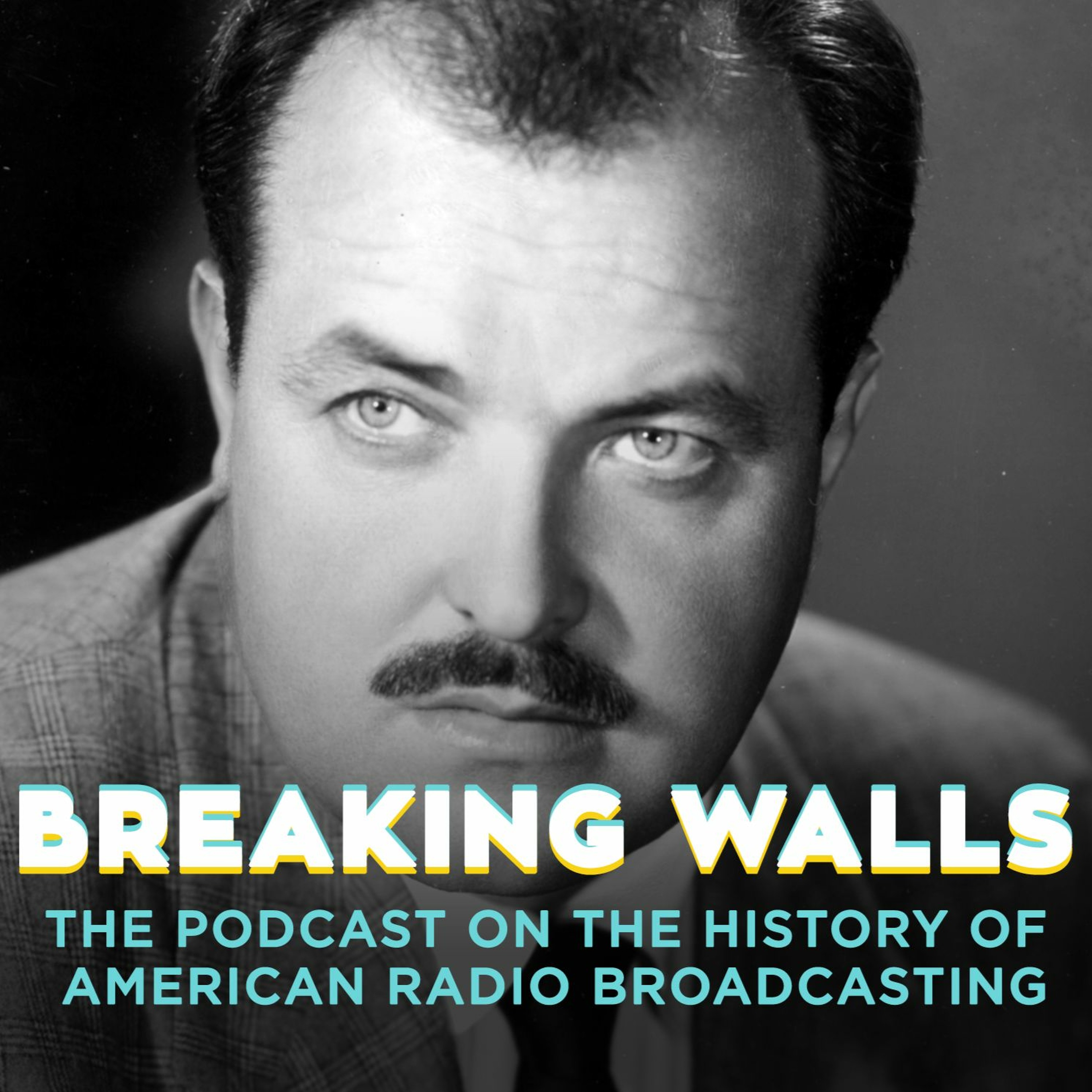
BW - EP125—007: March 1954—Escape's Violent Night
In March of 1954, Escape was still airing on CBS. Although it was frequently dropped and moved around the network schedule, it was popular and cheap enough to consistently come back. During its heyday, Escape was produced and directed by William N. Robson and Harry Bartell was a frequently featured actor. Les Crutchfield often penned scripts for the series. Escape’s original assistant director was Norman Macdonnell. He later became famous for being at the helm of Gunsmoke. The two-hundred eighteenth episode was entitled “Violent Night.” It starred William Conrad, with Joyce McCluskey as Maria, as Don Diamond as Alceran. Ben Wright, Edgar Barrier, Michael Ann Barrett, Dick Beals, and Byron Kane were also featured. As good as Escape was, the writing was on the wall. With no sponsorship forthcoming, the last episode would air on September 25th, 1954.
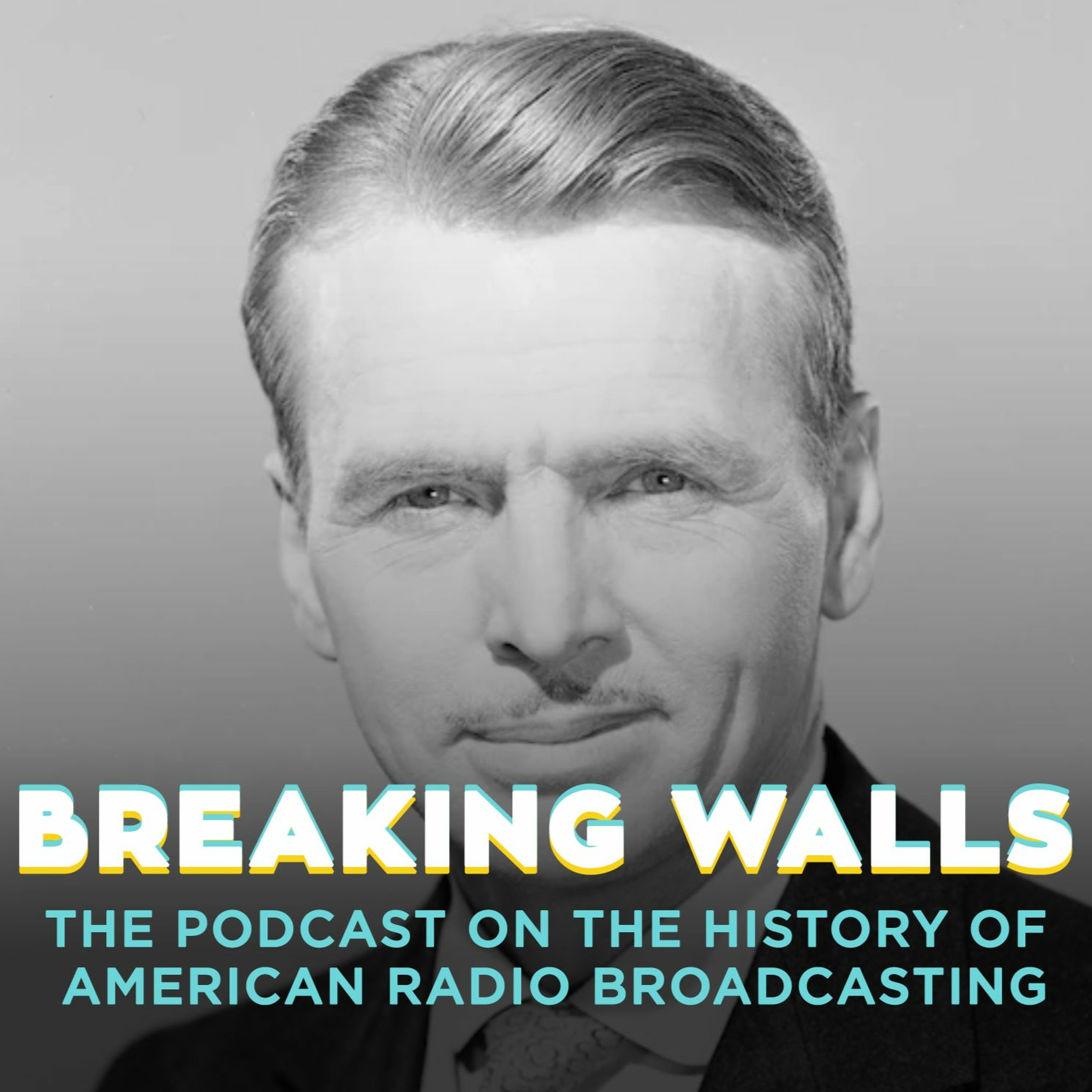
BW - EP125—006: March 1954—John Lund and The End of the Expense Account For Johnny Dollar?
Often written by the just-heard E. Jack Neuman, the fourth actor to voice Johnny Dollar, John Lund, grabbed the role in November of 1952. Lund had starred with Olivia De Havilland in To Each His Own, Marlene Dietrich in A Foreign Affair, and Betty Hutton in The Perils of Pauline. In spite of radio’s falling ratings, in March of 1953, Wrigley’s gum signed on to sponsor the show. On Tuesdays at 9PM, Dollar peaked in May with a 7.3 rating. Among the writers who contributed scripts along with E. Jack Neuman, were Les Crutchfield, Blake Edwards, Gil Doud, Morton Fine, and David Friedkin. On March 8th, 1954 Dollar’s expense account took him to southeast Asia. Wrigley sponsored Dollar until August. Lund’s last episode was “The Upjohn Matter,” on September 19th. It seemed that like many other radio shows, Johnny Dollar’s time on the air was coming to an unremarkable end. However the show would be revived the following year. Bob Bailey would star and Jack Johnstone would direct. For more information on Bob Bailey’s run as Johnny Dollar, tune into Breaking Walls episode 102.
BW - EP125—005: March 1954—Phil Harris and Alice Faye Tell Us It Pays To Be Married
It Pays To Be Married was a daytime game show in which married couples told stories of obstacles they overcame to build a healthier relationship. They were later quizzed for cash and prizes. Hosted by Jay Stewart, it first came to Mutual’s airwaves on September 28th, 1953. On March 8th, 1954 the celebrity guests were Phil Harris and Alice Faye. By 1954 Harris and Faye were national icons. After years on Jack Benny’s and later his own program, Phil Harris’ character was one of the most established in the entertainment business. However, The Harris and Faye show’s rating that season was under 3.3. With radio on its way out, NBC cancelled their program at the end of the season. The last episode aired on June 18th, 1954. It Pays To Be Married would shift to NBC before being cancelled in October of 1955.
BW - EP125—004: March 1954—You Bet Your Life
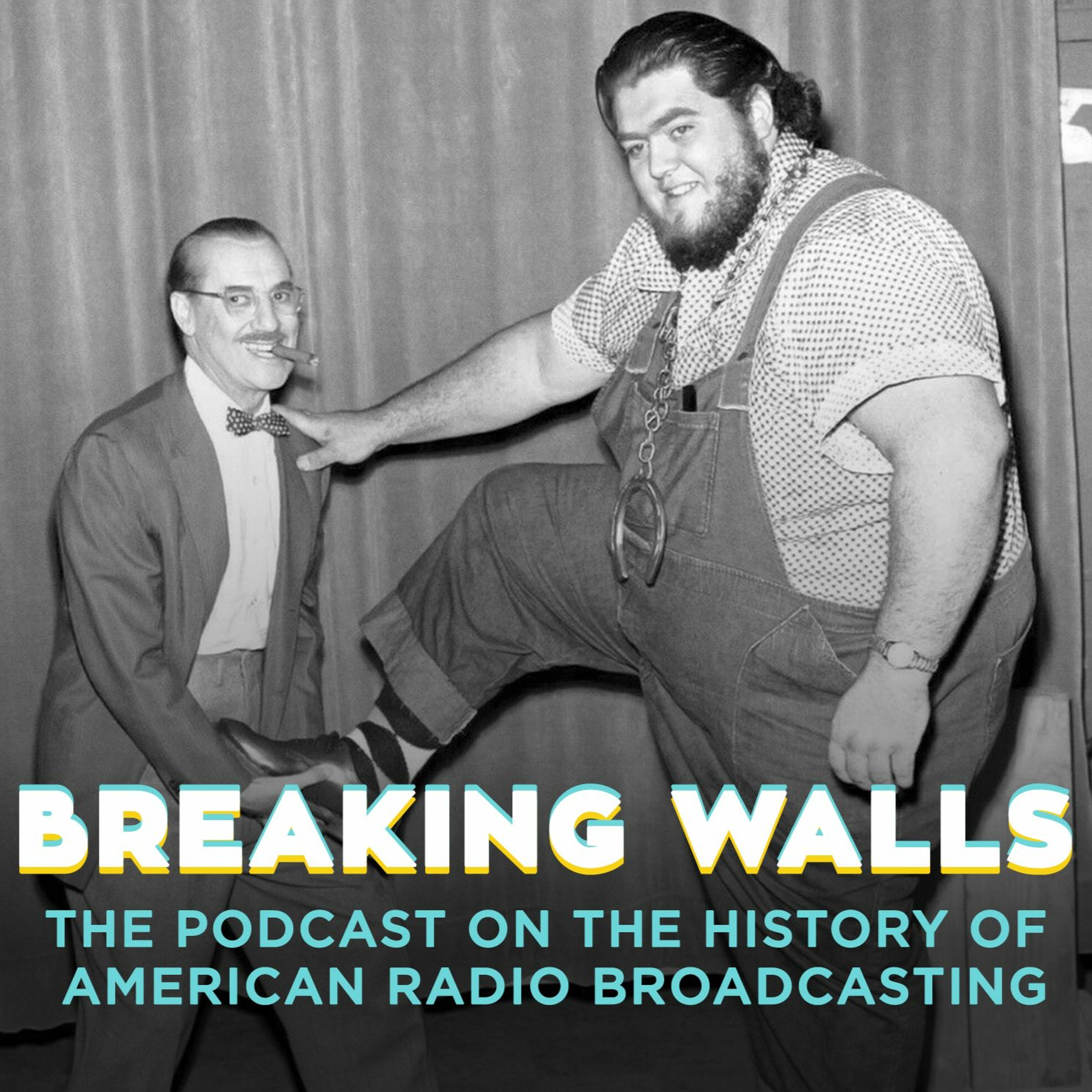
You Bet Your Life, conceived by John Guedel and hosted by comedian Groucho Marx, debuted over ABC’s airwaves on October 27th, 1947. Three couples were brought onstage to be interviewed and quizzed by Groucho. Each couple was given twenty dollars and told to bet as much as they dared risk on four questions from a category of their choosing. The money would double with each successive step. Couples could win three-hundred twenty dollars, go broke on the first question, or finish anywhere in between. The couple with the largest money total got a chance at the jackpot question, worth at least one-thousand dollars. There was also a “secret word” each week, with bonus money to be divided if someone said the word while the show was on the air. Although 1947 was radio’s highest-rated season, the quiz show aired against NBC’s Mr. District Attorney on Wednesdays at 9:30. At season’s end You Bet Your Life only pulled a rating of thirteen. Groucho felt uncomfortable trying to be funny on a live radio show. Guedel’s answer was to record the show, which allowed Groucho to relax. The program could then be edited for time later. The idea worked. The show moved to CBS in 1949. You Bet Your Life became Network Radio’s top-rated quiz show, finishing the season in eleventh place overall. The show eventually signed a sponsorship contract with DeSoto-Plymouth of Chrysler for four million dollars over ten years. It also moved the show to NBC Radio and TV beginning on October 4th, 1950. The program remained a top-ten hit into 1954. That March it was airing on radio Wednesday evenings at 9PM. The March 10th episode’s secret word was “street.” You Bet Your Life aired on NBC radio until September 19th, 1956. The original TV series ran until 1961.
BW - EP125—003: March 1954—Cathy and Elliott Lewis Can’t Fight City Hall in On Stage
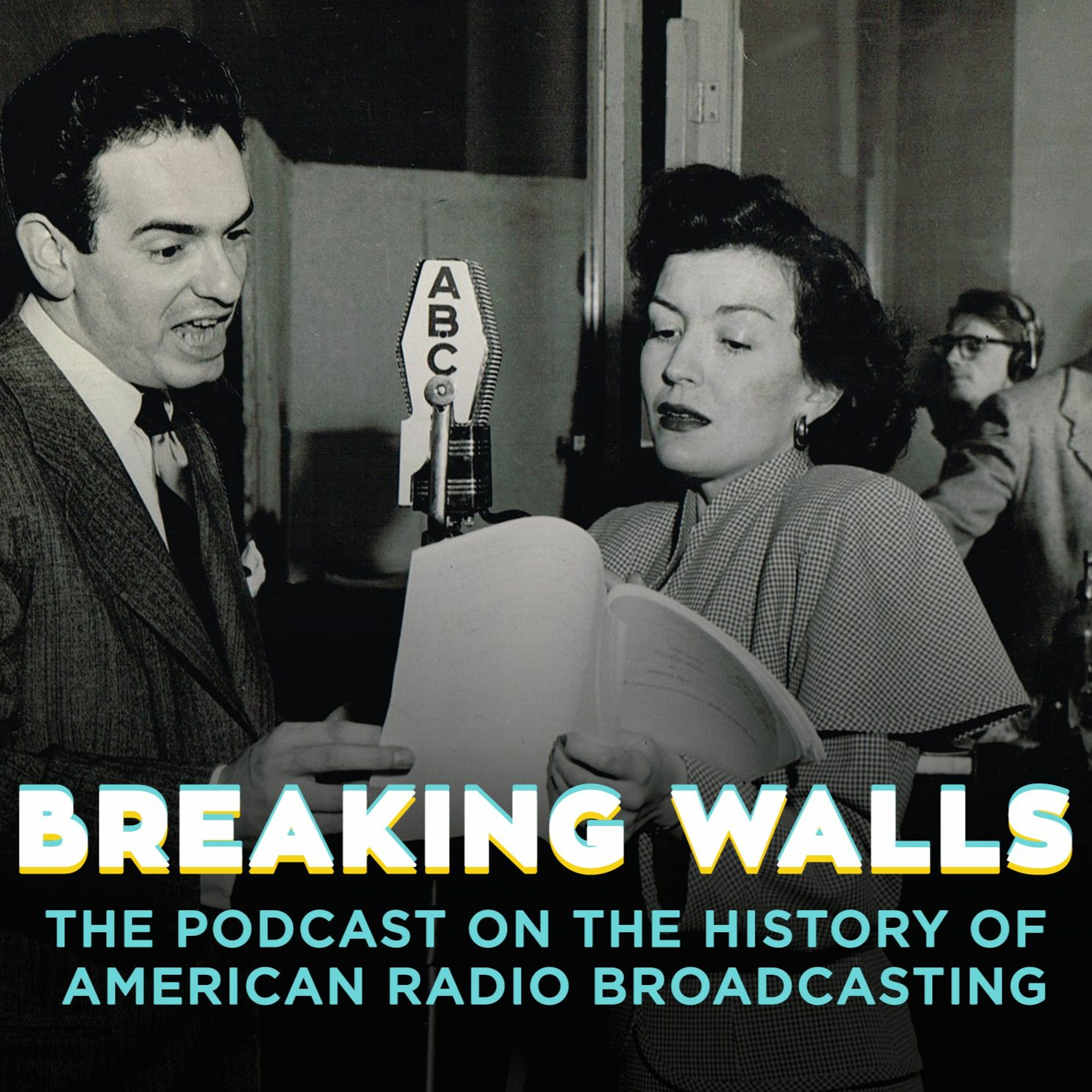
As radio audiences left for TV, Elliott Lewis continued to champion radio as a stronger dramatic medium. On Thursday January 1st, 1953, he and wife Cathy, debuted a new dramatic anthology program over CBS. It was On Stage. On Stage was geared for adults, showcasing an eclectic array of scripts across multiple genres. To get the show off the ground, the Lewis’ tabbed some of the best writers in radio, like E Jack Neuman. Stories would be rooted in powerful male-female situations, with two characters of equal strength being a main goal. They used a mix of classic and original tales, cutting across all dramatic disciplines with mysteries, adventures, melodramas, satires, and comedy. Cathy was the perfect female foil, not just because she was Elliott’s wife, but because she was a superb actress. By then the west-coast’s character actors were like a family. A frequent co-star was Byron Kane. Ray Noble, Fred Steiner, and Lud Gluskin’s music beautifully fit the production. Ross Murray and Berne Surrey’s sound patterns were exceptional. The March 10th, 1954 episode was called “The Crusade of Stanley Finston.” On Stage came at a bittersweet time in Cathy and Elliott lives. Even as CBS referred to them as Mr. and Mrs. radio, their marriage of ten years was in trouble. Cathy and Elliott divorced in 1958. Elliott would soon marry another noted actress Mary Jane Croft. For more information on Elliott Lewis’ career, tune into Breaking Walls episode 113.
BW - EP125—002: March 1954—The 1954 Democratic Convention with Adlai Stevenson
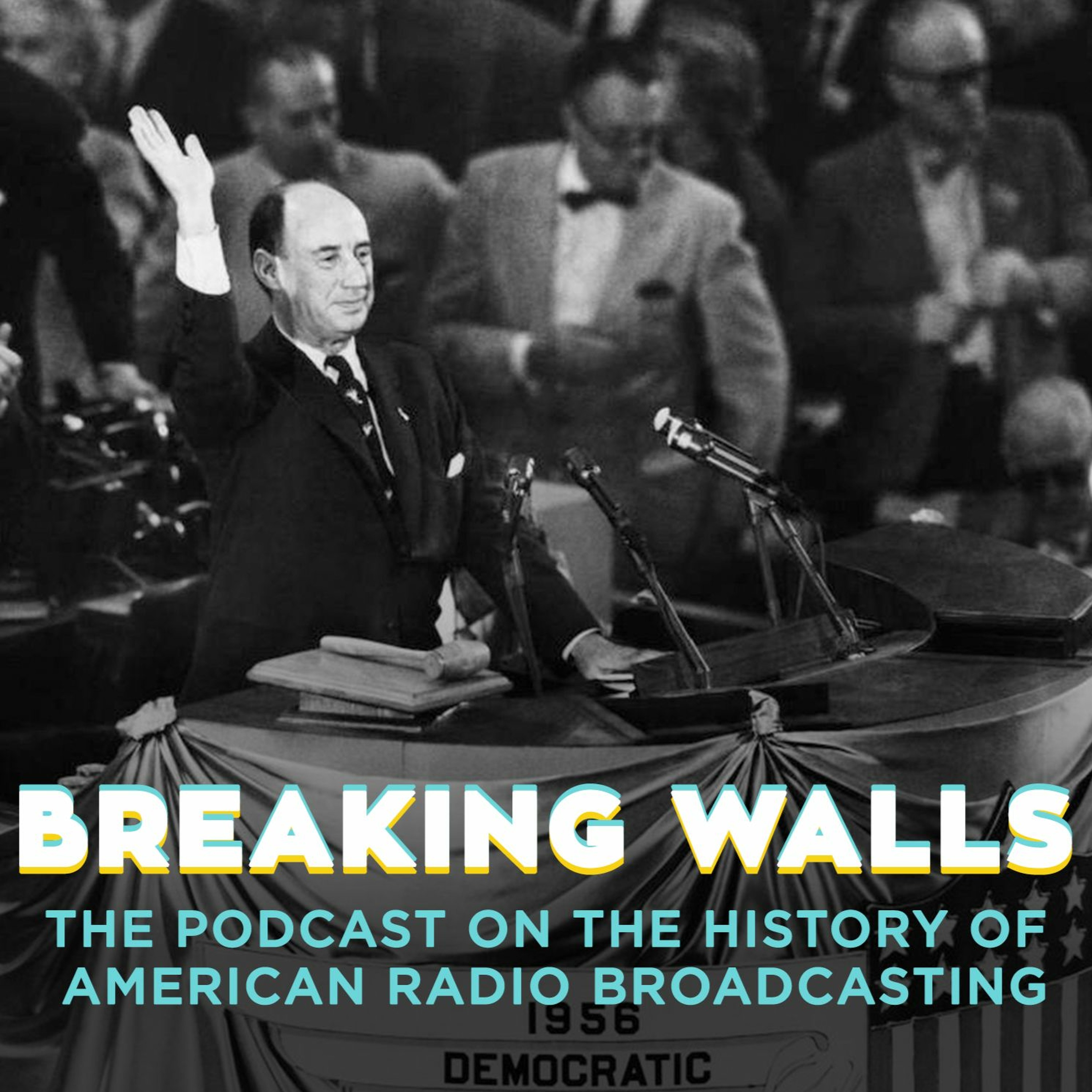
On March 6th, 1954, 1952’s Democrat Presidential nominee, Adlai Stevenson gave a dinner speech at the Florida DNC. In 1952 Stevenson was a heavy underdog against Dwight Eisenhower. He carried only nine states, but did get more than forty-four percent of the popular vote. He was quick to lash out at the McCarthy driven political state of affairs. There were many who feared the Red Scare would destroy the country, and the divisions felt between Americans were so deep, they might never be repaired. Stevenson would again receive the Democrat nomination in 1956. He’d lose, this time carrying only seven states and receiving forty-two percent of the popular vote.
BW - EP125—001: March 1954—Edward R. Murrow Brings The News. Perry Mason Busts The Syndicate
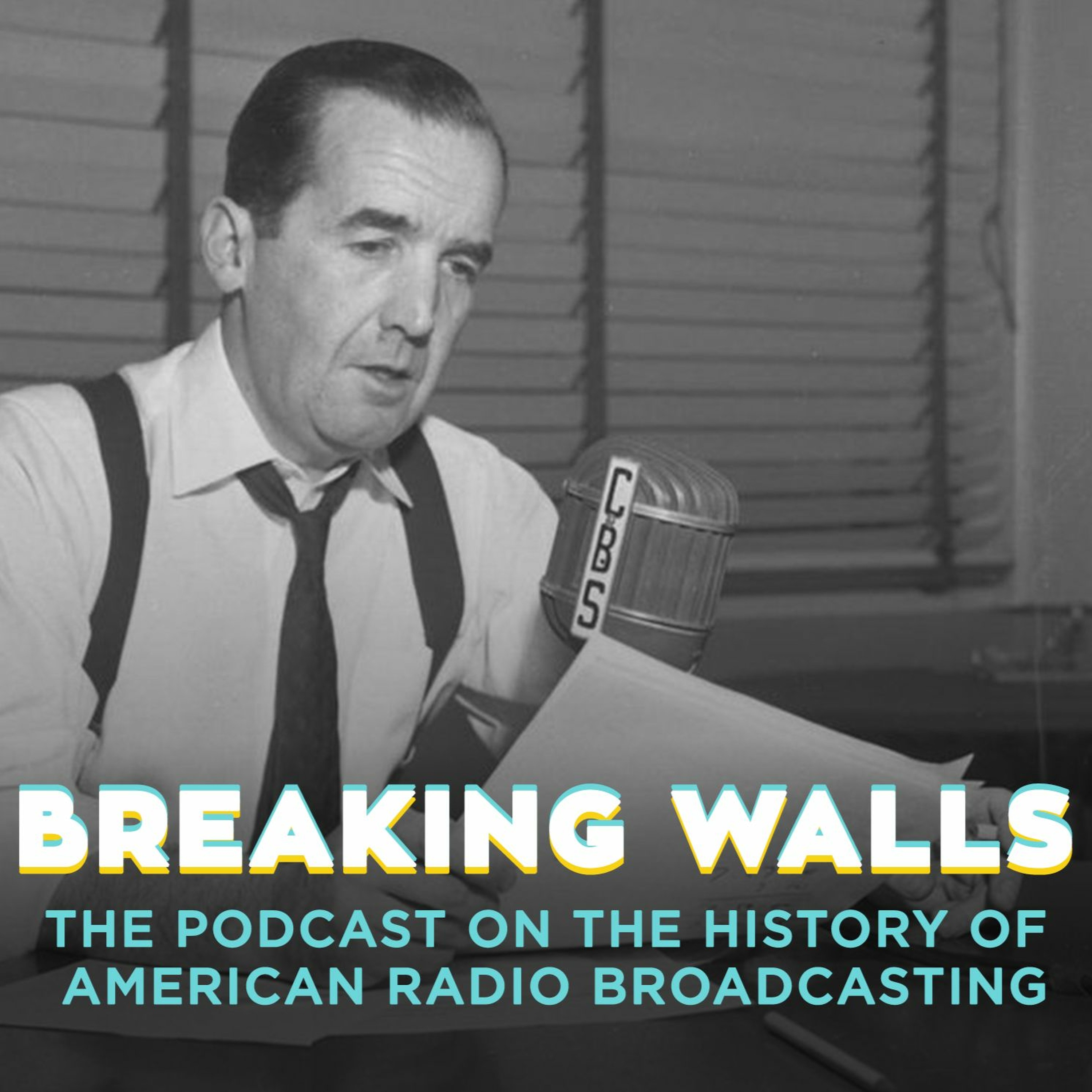
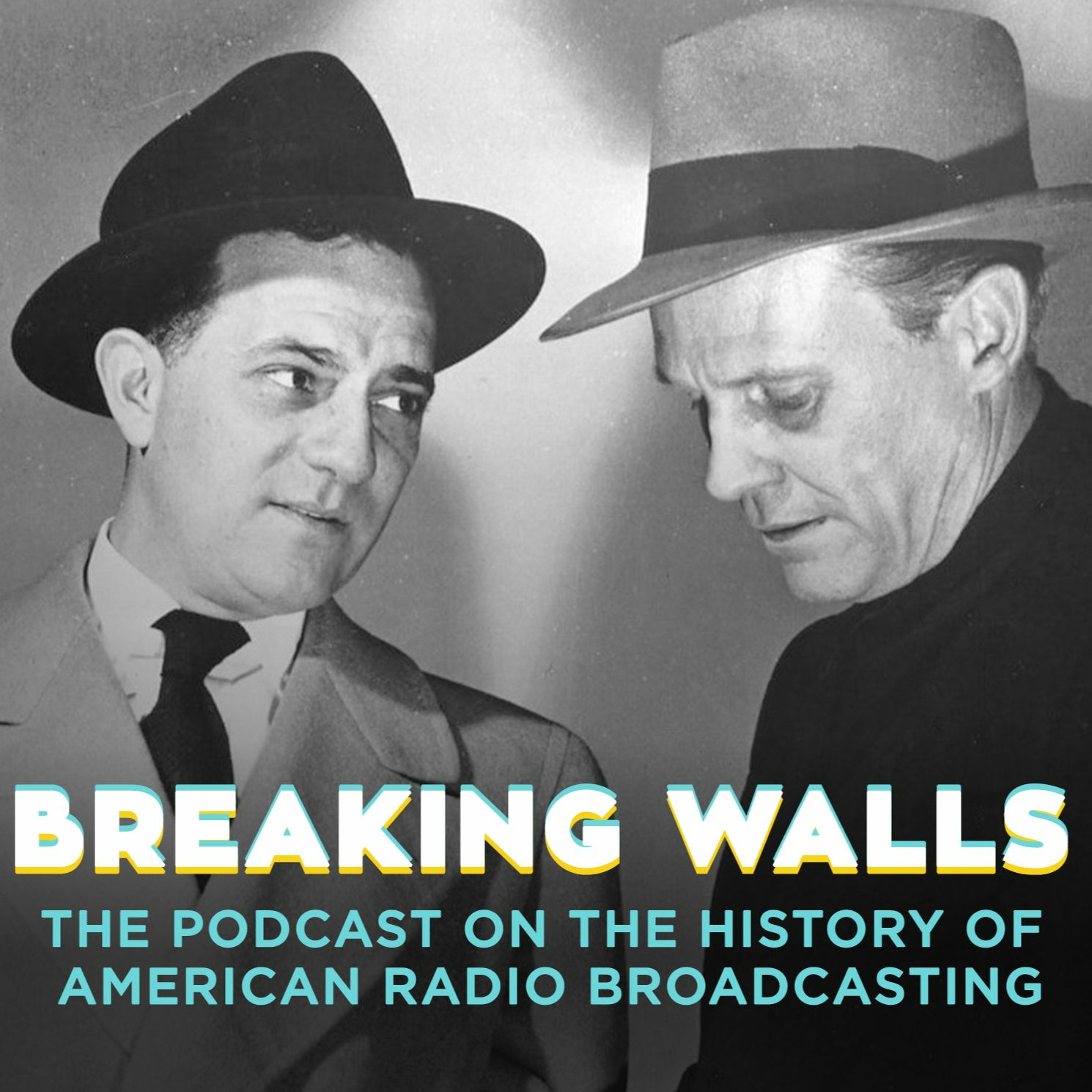
As the United States entered March 1954, U.S. officials announced a successful hydrogen bomb test, while four Puerto Rican nationalists opened fire in the House of Representatives chamber. Five were wounded. On March 9th, Edward R. Murrow’s news team produced a CBS See It Now episode, “A Report on Senator Joseph McCarthy." They used excerpts from McCarthy's own speeches to point out his contradictions. Murrow and head of CBS News Fred W. Friendly paid for the program’s marketing. CBS wouldn’t allow the team to use the company logo. The broadcast provoked thousands of letters, telegrams, and phone calls to CBS headquarters. They ran fifteen-to-one in favor of Murrow’s sentiment. McCarthy went on the program to reject Murrow's criticism. He said, “Ordinarily, I wouldn’t take time out from important work to answer Murrow. However, in this case I feel justified because Murrow is a symbol, a leader, and the cleverest of the jackal pack that’s always found at the throat of anyone who dares to expose individual Communists and traitors.” The rebuttal served only to further decrease McCarthy’s already fading popularity. However, his Army hearings were set to convene on March 16th. They would help emphasize the fact that the United States of America, like the radio industry itself, was during this year, in a state of turmoil. Unlike Howard Hughes though, tonight we will talk about it. ——————————————————————————— Airing weekdays at 2:15PM over WCBS in New York was Perry Mason. The show debuted on October 18th, 1943. Mason was a crime-busting lawyer. It often featured the just-heard Mandel Kramer. On March 1st, Mason, who was voiced by John Larkin, and Della Street, voiced by Claudia Morgan, wondered who was behind an underworld syndicate. While Perry Mason’s directors were men like Carlo DeAngelo and Carl Eastman, women were as likely to be in the mid-day director’s chair as men, and they often exuded confidence that put fear into young radio actors. By 1954 Mason’s cast had greatly expanded. On radio, he was as much a detective as a lawyer. The version Raymond Burr played on TV was markedly different. The radio version of Perry Mason ran until December 30th, 1955. Mandel Kramer could be seen starring in The Edge of Night.
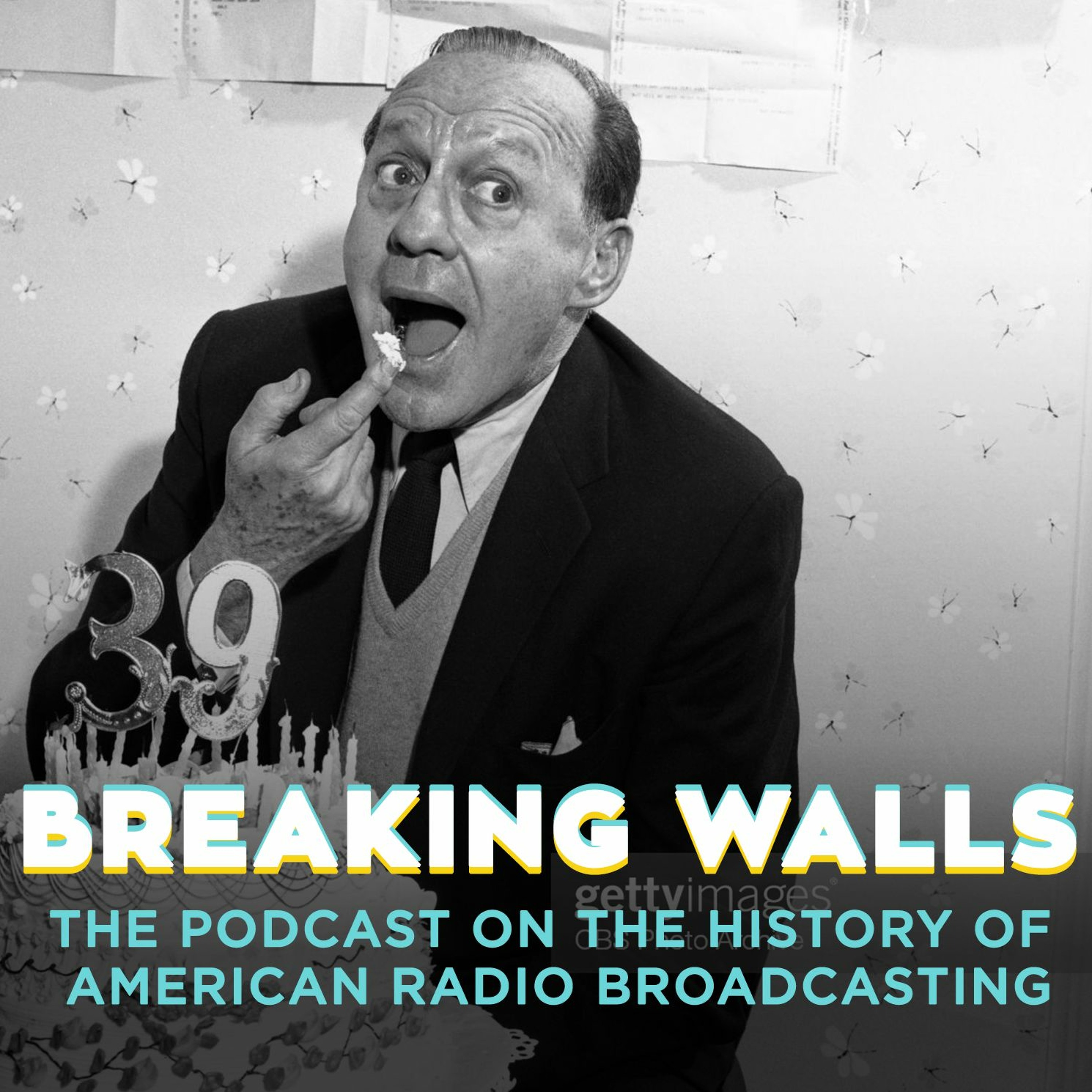
BW - EP124: February 1954—Benny, McCarthy, and McCarthy
In Breaking Walls episode 124 we pick up our 1954 mini series in February. We’ll focus on radio programming and national news from that month. —————————— Highlights: • Radio Billings Are Down. Now What? • Dragnet—Still Going Strong • Lee Deforest and The Hallmark Hall of Fame • Americana • Jack Benny Turns 39? 40? 60? • Guest Star and The McCarthy News • The College Quiz Bowl • Mr and Mrs North • Polio • Stars Over Hollywood • Ending with Bergen and McCarthy • Looking Ahead to March with Edward R. Murrow —————————— The WallBreakers: http://thewallbreakers.com Subscribe to Breaking Walls everywhere you get your podcasts. To support the show: http://patreon.com/TheWallBreakers —————————— The reading material used in today’s episode was: • On the Air — By John Dunning • Network Radio Ratings — by Jim Ramsburg As well as articles from • Broadcasting Magazine • LIFE Magazine —————————— On the interview front: • Jack Benny, Frank Nelson, and Don Wilson spoke to Chuck Schaden. Hear their full chats at SpeakingOfRadio.com. • Jack Benny also spoke for Great Radio Comedians in 1972. • Harry Bartell, Himan Brown, Lilian Buyeff, Bill Froug, Virginia Gregg, Lou Krugman, and Peggy Webber were with SPERDVAC. For more information, go to SPERDVAC.com • Hans Conried and Edgar Bergen spoke with Dick Bertel and Ed Corcoran for WTIC’s The Golden Age of Radio. Hear this full interview at Goldenage-wtic.org. • Dennis Day spoke with John Dunning for his 71KNUS program from Denver. • Lee Deforest spoke at the 1939 World’s Fair in New York. —————————— Selected music featured in today’s episode was: • Sh-Boom — By The Crewcuts • Serious Serenade — By Duke Ellington —————————— A special thank you to Ted Davenport, Jerry Haendiges, and Gordon Skene. For Ted go to RadioMemories.com, for Jerry, visit OTRSite.com, and for Gordon, please go to PastDaily.com. —————————— Thank you to: Tony Adams Steven Allmon Orson Orsen Chandler Phil Erickson Jessica Hanna Briana Isaac Thomas M. Joyce Ryan Kramer Gary Mollica Barry Nadler Christian Neuhaus Aimee Pavy Ray Shaw —————————— WallBreakers Links: Patreon - patreon.com/thewallbreakers Social Media - @TheWallBreakers
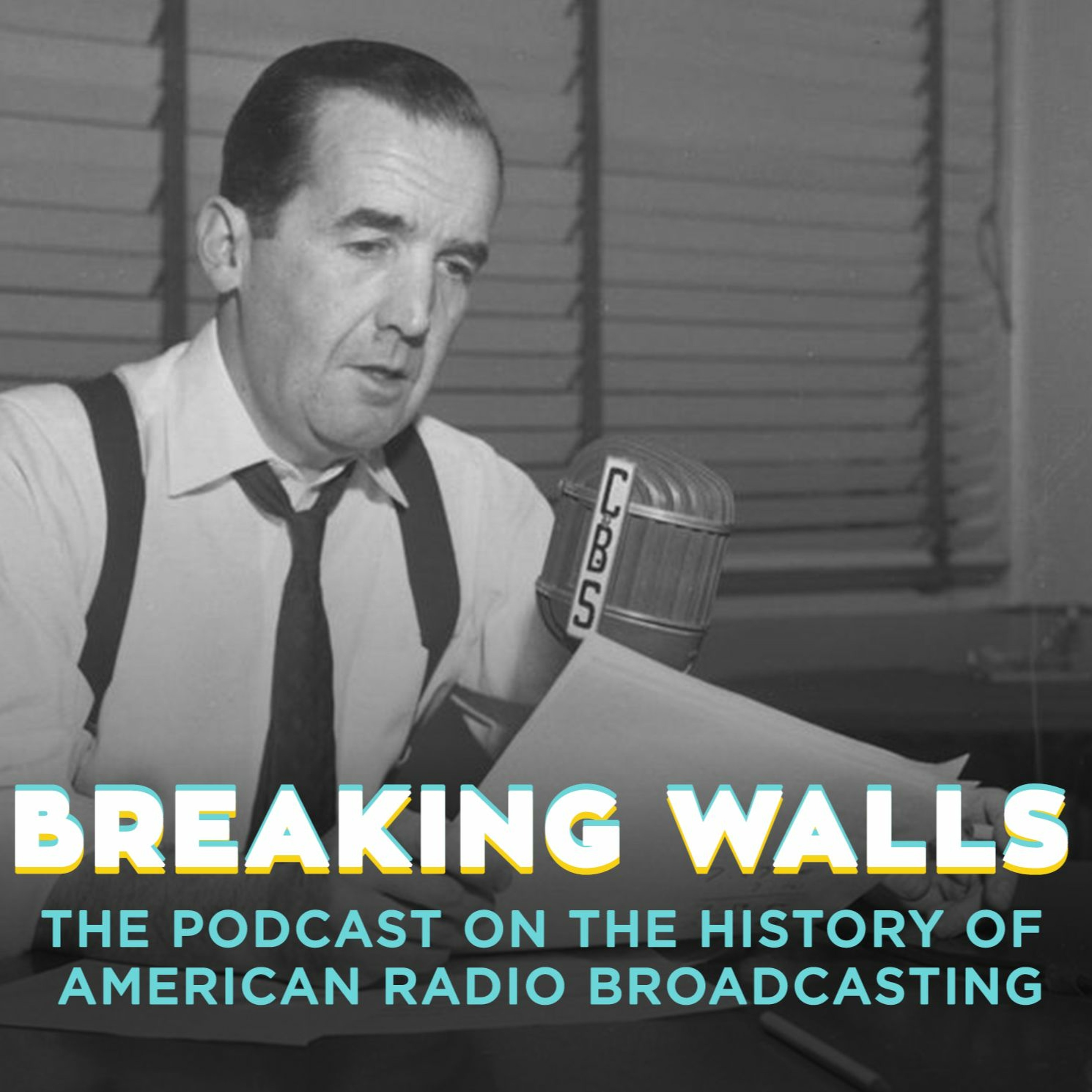
BW - EP124—011: February 1954—Looking Ahead To March
Well, that brings February to a close, but for many of these topics, we’ve only just begun. Next time on Breaking Walls, it’s March of 1954, and Senator Joseph McCarthy’s four-year anti-communist tirade begins to come to a head. —————————— The reading material used in today’s episode was: • On the Air — By John Dunning • Network Radio Ratings — by Jim Ramsburg As well as articles from • Broadcasting Magazine • LIFE Magazine —————————— On the interview front: • Jack Benny, Frank Nelson, and Don Wilson spoke to Chuck Schaden. Hear their full chats at SpeakingOfRadio.com. • Jack Benny also spoke for Great Radio Comedians in 1972. • Harry Bartell, Himan Brown, Lilian Buyeff, Bill Froug, Virginia Gregg, Lou Krugman, and Peggy Webber were with SPERDVAC. For more information, go to SPERDVAC.com • Hans Conried and Edgar Bergen spoke with Dick Bertel and Ed Corcoran for WTIC’s The Golden Age of Radio. Hear this full interview at Goldenage-wtic.org. • Dennis Day spoke with John Dunning for his 71KNUS program from Denver. • Lee Deforest spoke at the 1939 World’s Fair in New York. —————————— Selected music featured in today’s episode was: • Sh-Boom — By The Crewcuts • Serious Serenade — By Duke Ellington —————————— A special thank you to Ted Davenport, Jerry Haendiges, and Gordon Skene. For Ted go to RadioMemories.com, for Jerry, visit OTRSite.com, and for Gordon, please go to PastDaily.com. —————————— Thank you to: Tony Adams Steven Allmon Orson Orsen Chandler Phil Erickson Jessica Hanna Briana Isaac Thomas M. Joyce Ryan Kramer Gary Mollica Barry Nadler Christian Neuhaus Aimee Pavy Ray Shaw ___________ WallBreakers Links: Patreon - patreon.com/thewallbreakers Social Media - @TheWallBreakers
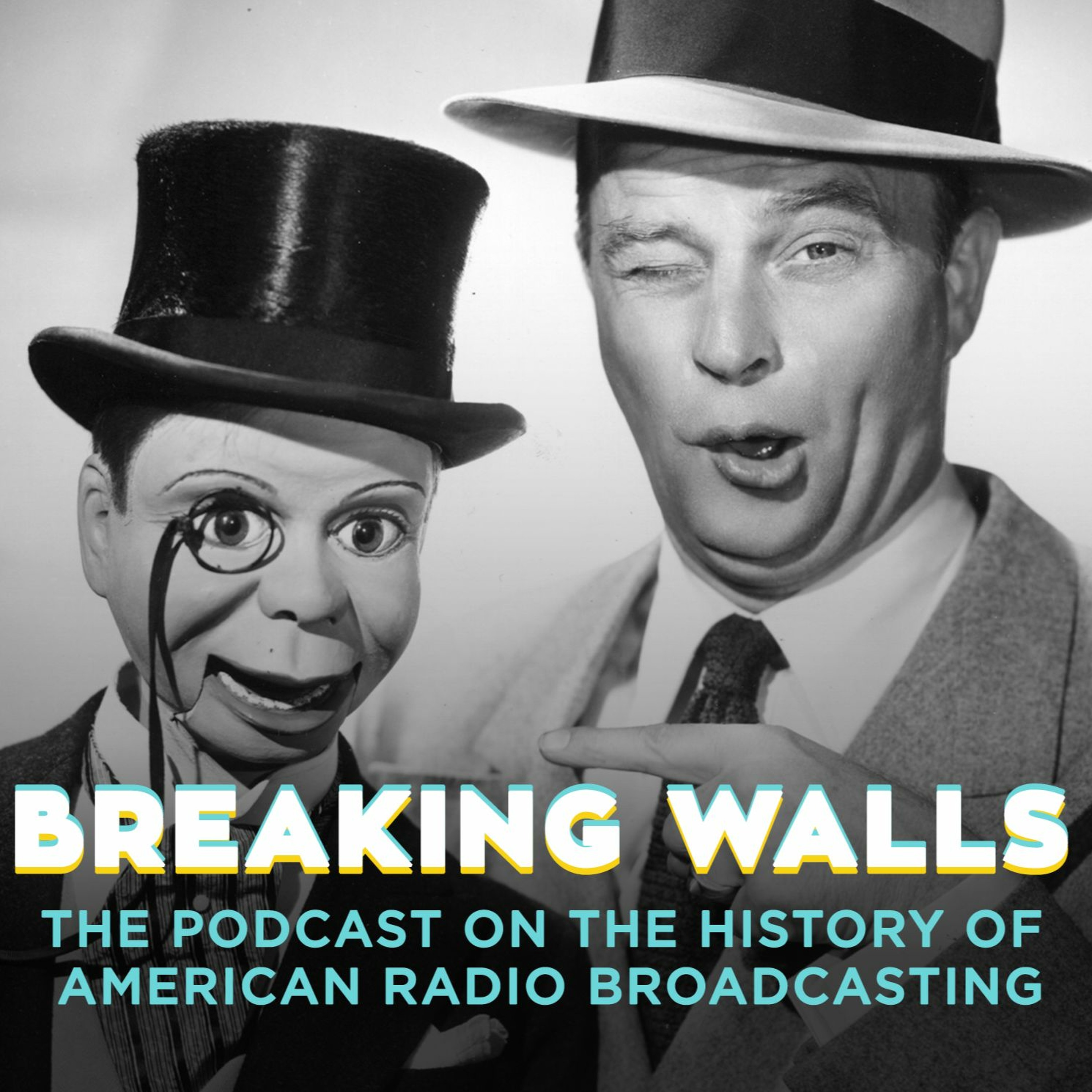
BW - EP124—010: February 1954—Ending With Bergen And McCarthy
Airing on CBS since 1949, Edgar Bergen’s 1954 Sunday at 9:30PM eastern rating was 4.7, twelfth overall. His show was sponsored by Lanolin Plus. On February 28th, the celebrity guests were the husband-wife duo June Allyson and Dick Powell. In the fall, Bergen’s show would go back to sixty minutes. It would air for two more seasons before Bergen wrapped up his radio run on July 1st, 1956. Bergen did little TV. He was a radio man, even though his art was primarily visual. With Charlie and Mortimer, he emceed the 1956 CBS audience show Do You Trust Your Wife?, and he made numerous guest appearances on TV variety shows of the 1950s. He later appeared in films such as The Phynx, Won Ton Ton, the Dog Who Saved Hollywood, and The Muppet Movie.
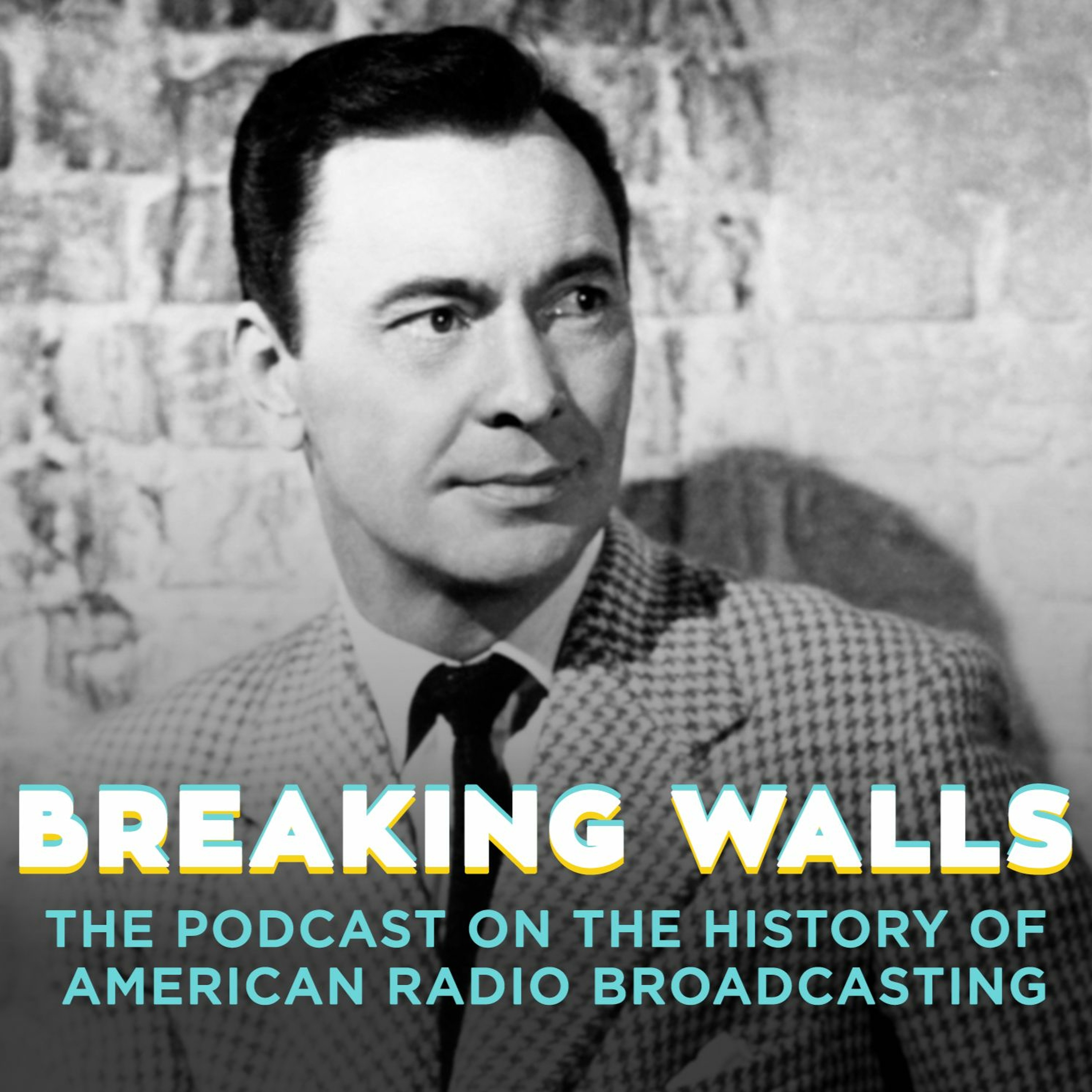
BW - EP124—009: February 1954—Stars Over Hollywood
Stars over Hollywood broke one of radio's strongest prejudices: That Saturday daytime was a programming wasteland. When Paul Pierce, CBS production superintendent on the West Coast, announced plans to launch a star-packed dramatic series on Saturday morning, few observers gave it a chance. Getting movie stars to cooperate at 9:30 AM would be impossible, and no one would listen anyway. The stories were generally light comedies. The set was loose and informal; the dress code casual. Occasionally the stars arrived in bathrobes and pajamas. Ivan Ditmars, musical director, used three instruments: the organ, harp, and violin, and sounded more like a small combo than a one-man show. Stars over Hollywood ran for thirteen years in the same time slot, with only two changes in sponsor. This season had a rating of 5.5, first overall for daytime weekend programs. On February 27th, 1954, Barry Sullivan guest-starred in “The Hundred Dollar Bill.”
BW - EP124—008: February 1954—Polio and Its Vaccine
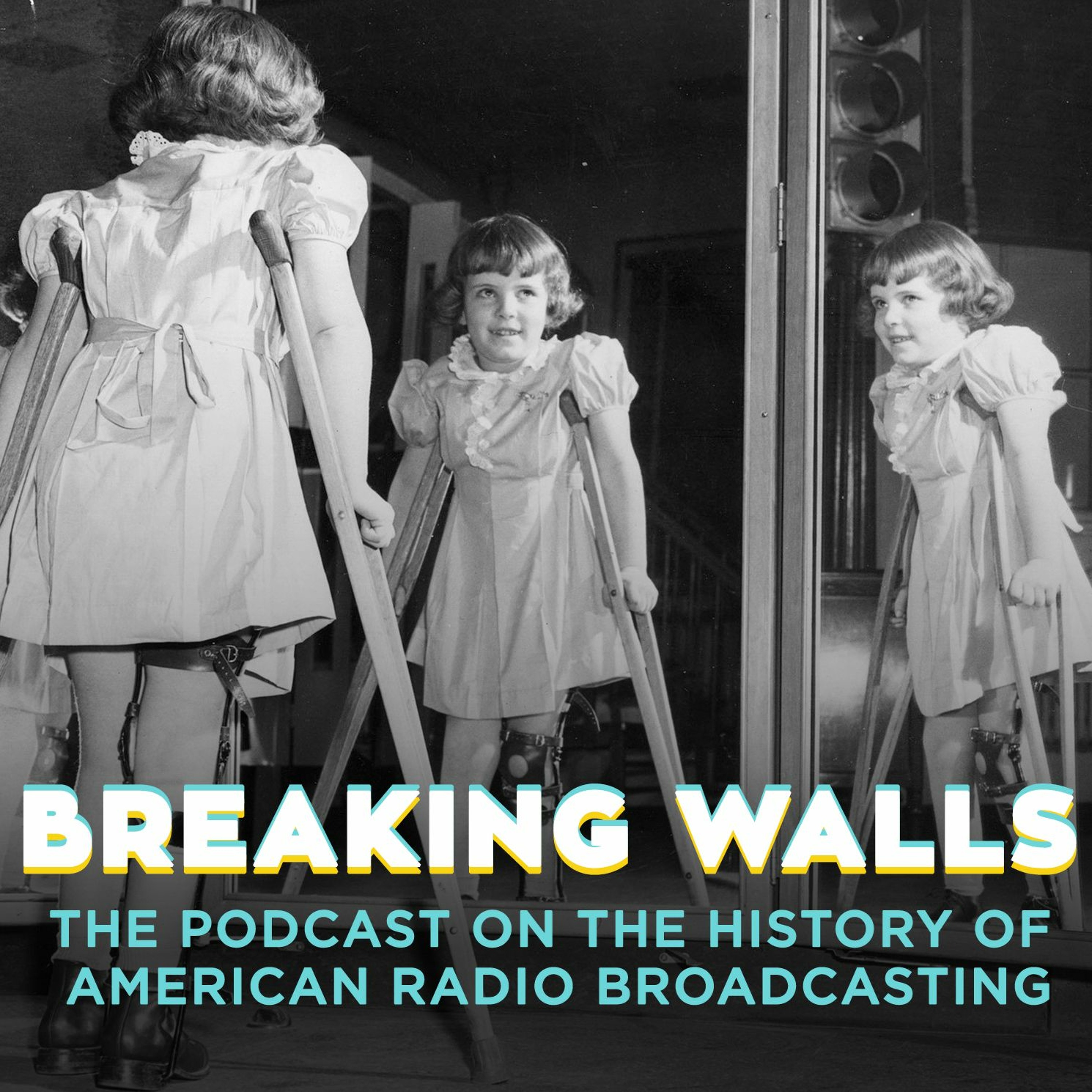
During 1952 and 1953, the U.S. experienced an outbreak of roughly ninety-five thousand polio cases, with a death count of over forty-six hundred. Millions of dollars were invested in finding a vaccine. The first effective polio vaccine was developed in 1952 by Jonas Salk and a team at the University of Pittsburgh. On March 26th, 1953 Salk went on CBS radio to report the first round of successful tests. Beginning on February 23rd, 1954, the vaccine was tested at Arsenal Elementary School and the Watson Home for Children in Pittsburgh, Pennsylvania. Jonas Edward Salk was born October 28, 1914 in New York City, the eldest son to Russian-Jewish immigrants. He earned a medical degree from the NYU School of Medicine in 1939 and became a doctor at Mount Sinai Hospital. In 1942, Salk went to the University of Michigan to develop a Flu vaccine. He soon became assistant professor of epidemiology. Five years later he was appointed director of the Virus Research Laboratory at the University of Pittsburgh School of Medicine. His main mission: develop a polio vaccine. Salk believed his vaccine, composed of “killed” polio virus, could immunize without risk of infecting the patient. Salk gave the vaccine to volunteers who had not had polio. All developed polio antibodies and experienced no reaction to the vaccine. In 1954, national testing began on one million children. But, in April 1955, soon after mass vaccination began in the US, some patients contracted the disease after being vaccinated. These vaccines were manufactured by the Cutter Pharmaceutical Company. In response, the Surgeon General yanked all polio vaccines made by Cutter Laboratories from the market. Soon, the Wyeth polio vaccine was also reported to have paralyzed and killed several children. It was discovered that some vaccines made by Cutter and Wyeth had not been properly inactivated, allowing live poliovirus into more than 100,000 doses. The next month, the National Institutes of Health and Public Health Services established a Technical Committee to review all polio vaccine lots. The problem was quickly remedied. In the two years before the vaccine the average number of polio cases in the U.S. was more than forty-five thousand. By 1962, that number had dropped to nine-hundred ten. Jonas Salk purposely never patented the vaccine or earned any money from his discovery.
BW - EP124—007: February 1954—On a Cruise With Mr and Mrs. North
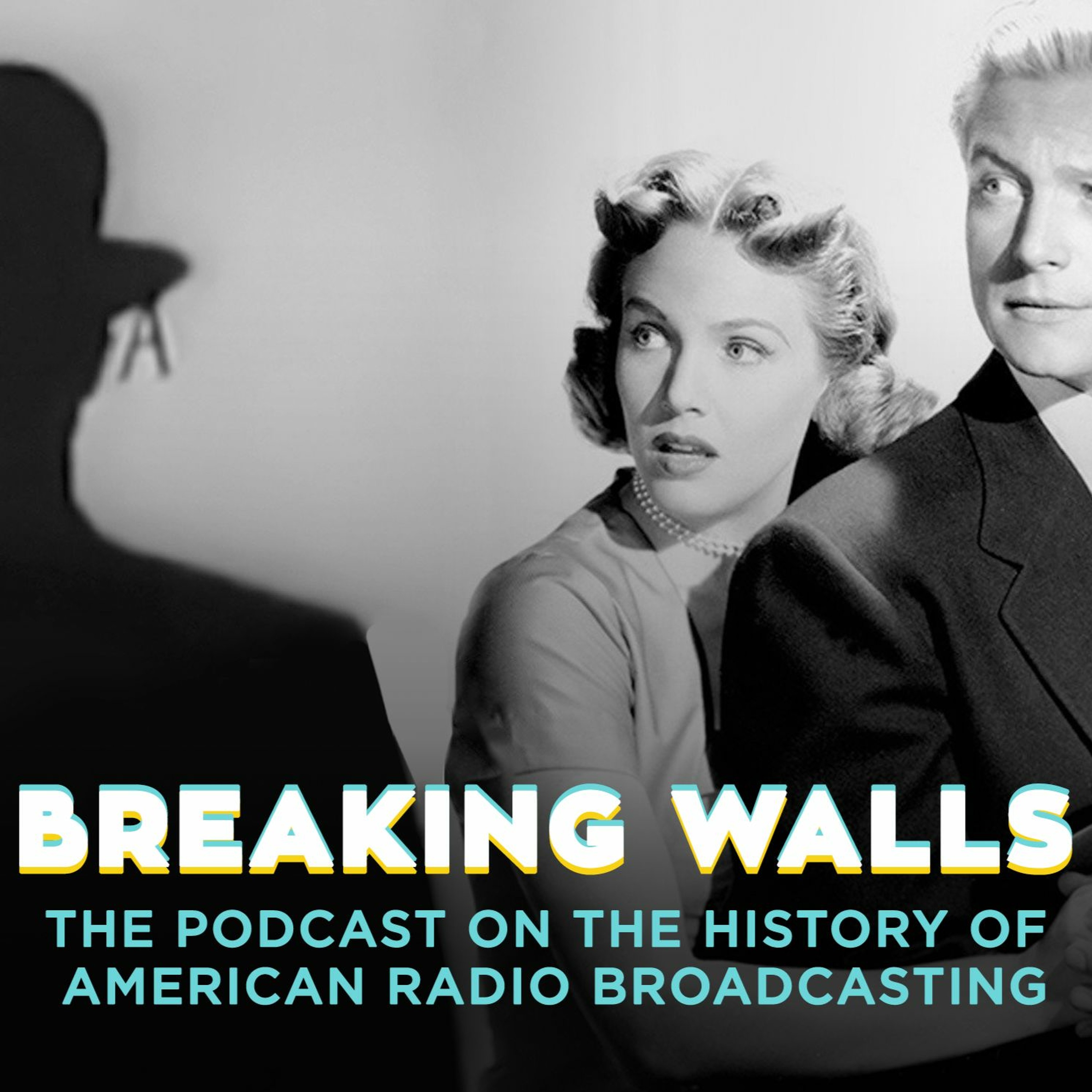
When Mr and Mrs North took to the air on Tuesday February 23rd at 8:30PM for CBS, it had radio’s sixth-highest overall rating. With a 6.1 it topped Dragnet, which aired in direct competition on NBC. Jerry and Pam North were average people who managed to solve murders. Jerry, played by Richard Denning, was a book publisher. Pam, played by Barbara Britton, was a housewife who loved cats, liked to play cupid, and somehow found her way to a killer’s identity. Neither was trained in any science of deduction, they were just intelligent, with a highly communicative marriage. The February 23rd episode was called “Winter Honeymoon.” Mr and Mrs North would air until April 18th, 1955.
BW - EP124—006: February 1954—The College Quiz Bowl
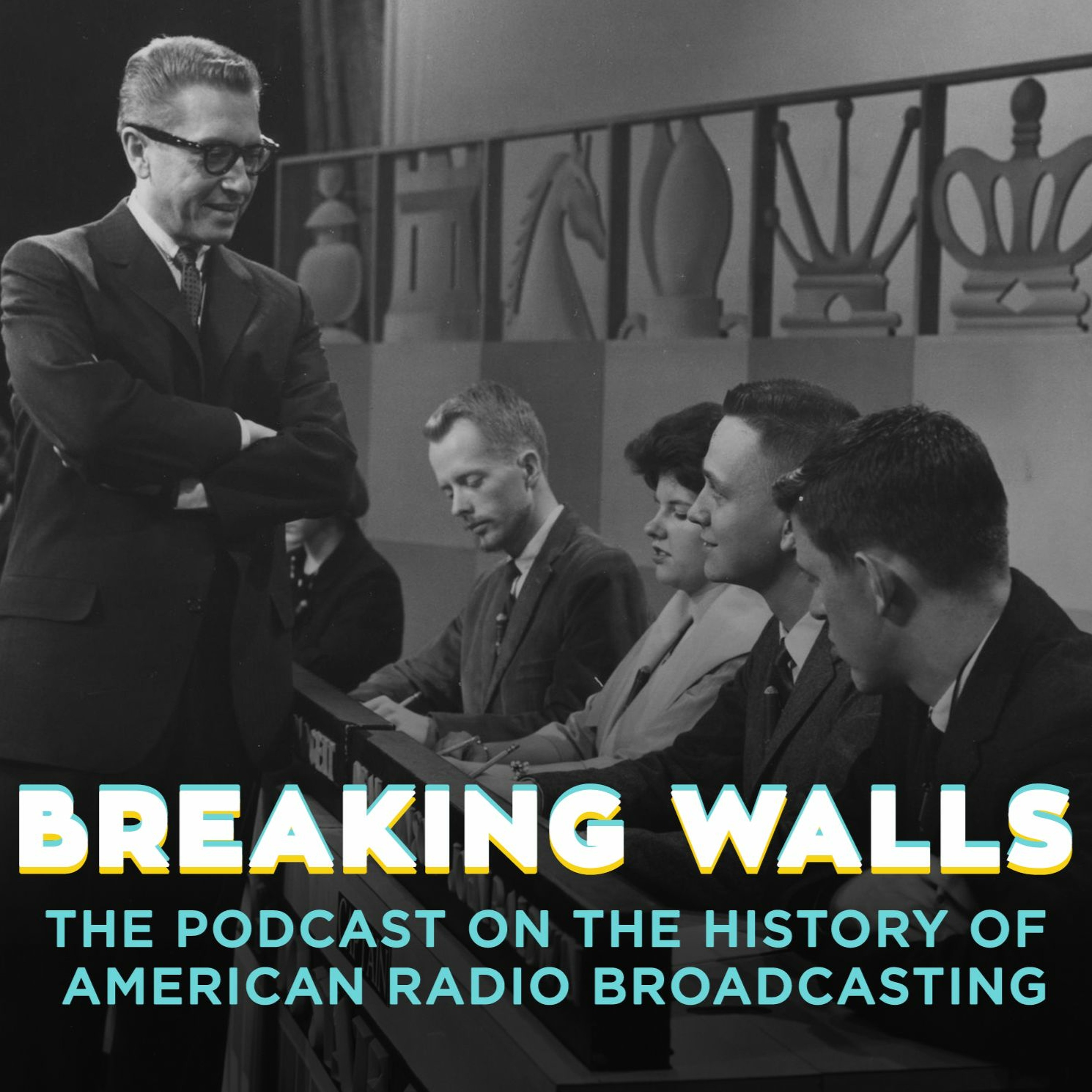
Originating as a USO activity created by Canadian Don Reid for World War II soldiers, The College Quiz Bowl was developed into a radio show by Reid and John Moses. It debuted on NBC in the fall of 1953. Two teams of All-American Varsity students from different universities competed for prizes and recognition. On Sunday, February 21st, 1954 at 6PM eastern time, the ladies of Smith College defended their title against the men of Washington and Lee University. Washington and Lee would win this evening and defend their title for five consecutive weeks until losing to Syracuse on March 28th. The College Quiz Bowl moved to CBS TV in 1955. In 1963 it moved to NBC where it remained on the air until 1970. Various non-televised versions of this competition continued to air into the 21st Century. In November of 2020 NBC announced a revival of the show. It premiered on June 22nd, 2021.
BW - EP124—005: February 1954—Guest Star, Joseph McCarthy, And The Red Scare
In February of 1954, Wisconsin Senator Joseph McCarthy was touring the circuit, giving speeches entitled “Twenty Years of Treason.” He claimed that President Eisenhower didn’t want a whitewash government and the Democratic label was “stitched with the idiocy of Truman, rotted by the deceit of Acheson and corrupted by a Red slime of a White.” Indiana Senator William Jenner claimed democrats deliberately tried to lose the Korean War. The President’s assistant Sherman Adams charged the dems with being political sadists. Democrats cried foul. The Republican Eisenhower asked for conflict resolution. On February 10th, as he authorized three-hundred-eighty-five million dollars over the four-hundred million already budgeted for military aid, the President warned against his country's intervention in Vietnam. When asked if he would change tactics, Senator McCarthy said “The price is too high.” He’d smeared homosexuals as subversives, liberals as anti-American, and moderates as weak-minded saps. McCarthy’s downfall had ultimately already begun. In 1953, his committee started investigating the U.S. Army for supposed Communist infiltration. On February 18th, two generals refused to obey their summons to appear before McCarthy’s committee. They stayed away on order of Robert T. Stevens, Secretary of the Army. Undaunted, McCarthy accused the Army of rampant communism, but this time, when asked to back up his claims, he had very little to reveal. This stunt bolstered President Eisenhower and both Republicans and Democrats who were growing weary of McCarthy’s tirade. The public too was getting sick of him. This turning point was strengthened when the Army revealed that McCarthy had asked favored treatment for a former aide who’d been drafted. In December, the Senate would finally censure McCarthy, an option exercised only three other times in the Senate’s history. He never recovered and died in 1957 at the age of forty-eight from an alcohol-related illness. This will be covered in much more detail during the next episodes of Breaking Walls.
BW - EP124—004: February 1954—Jack Benny Turns 40. Or Does He?
In February of 1954, Jack Benny was in the midst of his sixth year on CBS, and his twenty-second in radio. Although his TV program was in the midst of its fourth season, his radio show was still airing in the familiar Sunday 7PM eastern time slot. It had a radio rating of 8.2, second-highest on the air. To many, he was simply the most famous comedian alive. February 14th, 1954 was Jack Benny’s real-life sixtieth birthday. Of course, here was a man who’d been claiming to be thirty-nine for years. That night, the entire Benny cast celebrated Jack's birthday on air. This is that episode.
BW - EP124—003: February 1954—WMAQs Americana
During the 1953-54 season, NBC Chicago’s WMAQ and the Speech Department at Northwestern University, jointly broadcast a series of radio essays entitled Americana. Each episode explored a facet of American life or history and the characters who made it come alive. Hosted by Professor Martin Maloney, It followed the previous season’s The Meaning of America. The February 13th, 1954 episode was called “A Study in Villainy.”
BW - EP124—002: February 1954—Lee de Forest And The Hallmark Hall of Fame
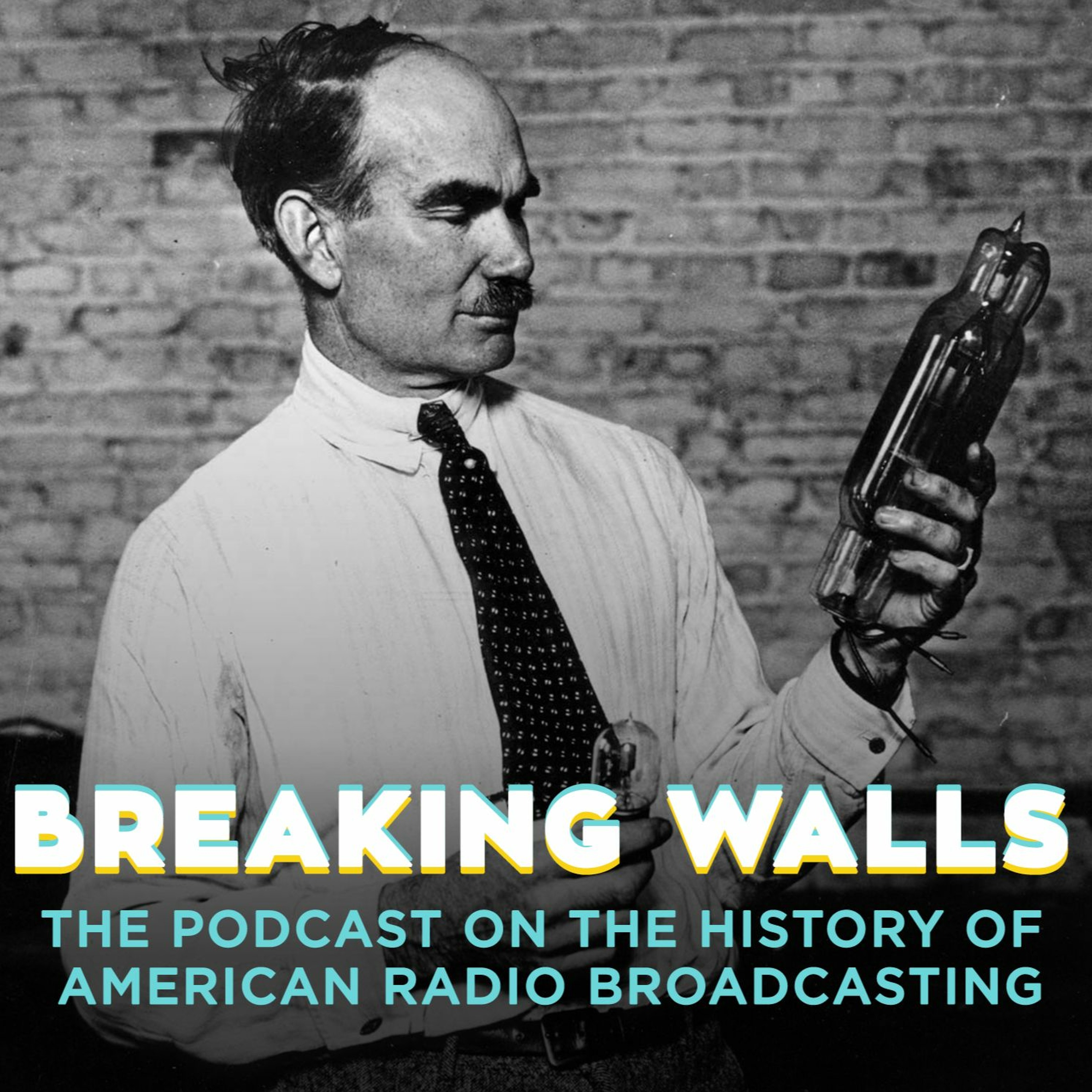
The first voice you'll hear is that of Lee de Forest. The second is of Bill Froug. Producer/Director Bill Froug spent the early 1950s in charge of The Hallmark Hall of Fame. The show began in the 1940s as Radio Reader’s Digest before rebranding as The Hallmark Playhouse until 1953. With radio audiences leaving in droves for TV, the sponsor abruptly changed format. They brought in Lionel Barrymore to host true stories of Americana. The February 7th, 1954 episode was a profile on de Forest, one of radio broadcasting’s pioneers. Unfortunately, by March of 1955 fewer and fewer network shows were sponsored. Hallmark cancelled the show.
BW - EP124—001: February 1954—Dragnet And Radio Revenue
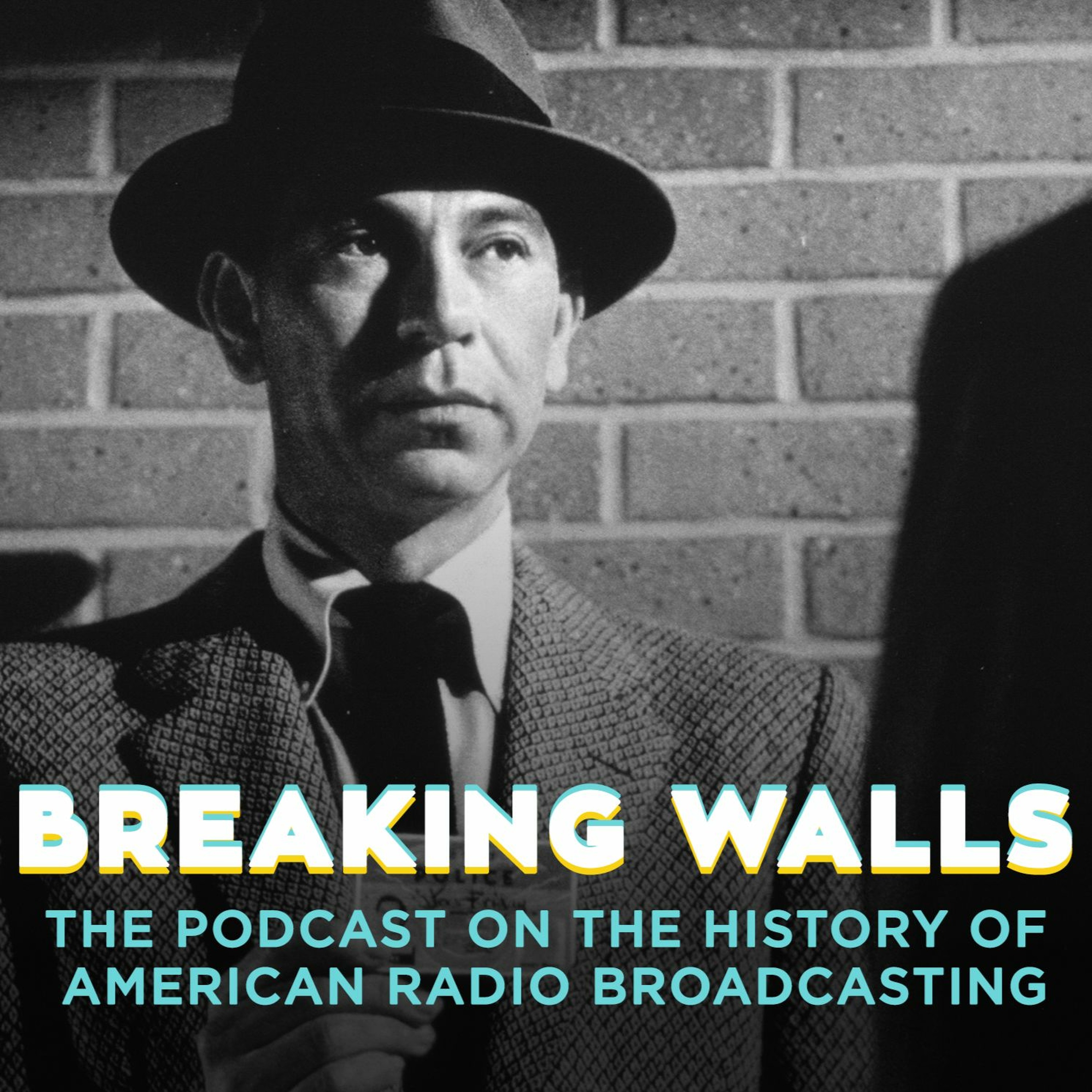
When ABC radio took out a Broadcasting Magazine ad in 1954 touting their year-over-year sales growth, they juxtaposed theirs against the decline of the other three networks’ in the same period. It painted a bleak picture for the industry. In November of 1952, total network monthly advertising billing was fourteen million, four-hundred seventy-seven thousand dollars. The next year, advertising numbers were down to thirteen million, six-hundred sixty four thousand dollars. The loss of revenue was reflected in the loss of ratings. As drastic as the ratings decline was at the decade's beginning, it was the mid-1950s that saw radio ratings die on the vine. During the 1952-53 season five shows still had ratings higher than ten, with Amos ‘N’ Andy leading at 14.2. A year later, People Are Funny led all shows with a rating of 8.7. In 1955, Jack Benny would lead with a 5.7. But for those people working in radio who also found their way to TV, this period was a golden age for the character actor. They were now recognized for their performances on both mediums, and with their increased profile, came an increase in opportunities. It was apparent to everyone that TV had moved in and taken over. What the radio industry would do about it was still uncertain. As February of 1954 got underway, both new shows and old shared the spotlight. ___________ When Dragnet debuted in the ratings in the fall of 1949 under the sponsorship of Liggett and Myers, it did so with an 8.5. That number was sixty-fourth overall. Two years later in the midst of TV’s surge, Dragnet’s radio rating had climbed to 8.7, now fourteenth overall. The TV version debuted in 1951. In 1954 its TV rating was second, only behind I Love Lucy. Part of the reason the radio version was able to stave off a rating’s decline longer than most other shows was creator Jack Webb’s ingenuity. In February of 1954, Dragnet’s radio version was airing Tuesday evenings at 9PM eastern time on NBC. The February 2nd episode was entitled “The Big Filth.” Dragnet would continue to air new broadcasts on radio until the fall of 1955, and in repeats until February of 1957. While many shows lost sponsorship, Chesterfield continued to sponsor Dragnet until the very end, with good reason; In 1955 Dragnet was the second-highest rated radio show on the air.
BW - EP123: January 1954—Radio's Uncertain Future
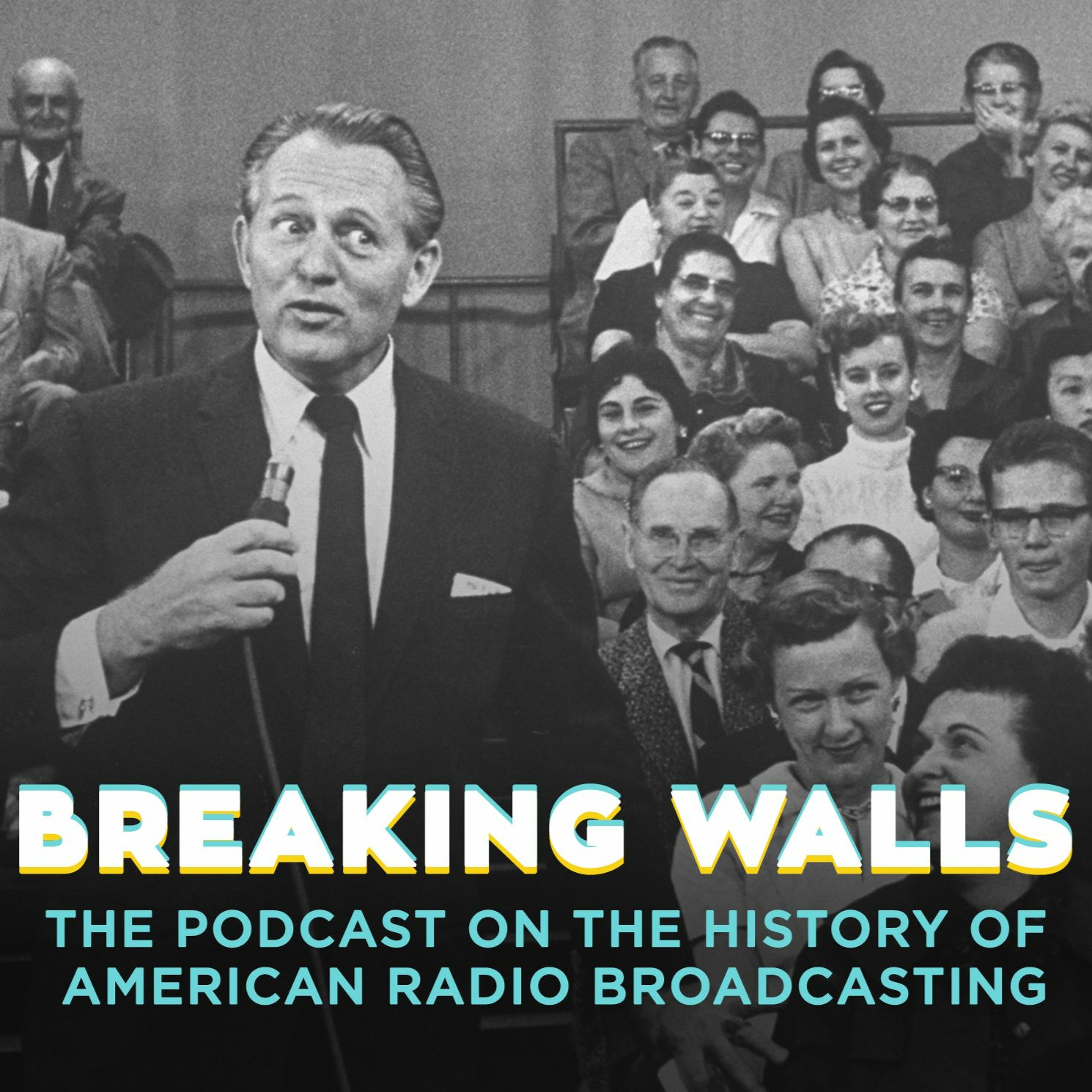
For those who wanted Breaking Walls episode 123 in the traditional format. ___________ In Breaking Walls episode 123 we open 2022 with a six-part mini-series on radio business and programming in 1954. We’ll begin with January, in a radio half-season that was for many, the end of the line. —————————— Highlights: • Ringing in the New Year with Fibber McGee and Molly • Gunsmoke’s Stage Holdup • People Are Funny is Radio’s Top-Rated Show • January 1954 with Ozzie, Harriet, David, and Ricky • Jack Benny’s Face is Familiar on Suspense • Smog and Other Current Events • Beulah • The Death of Edward Howard Armstrong • Looking Ahead to February 1954 —————————— The WallBreakers: http://thewallbreakers.com Subscribe to Breaking Walls everywhere you get your podcasts. To support the show: http://patreon.com/TheWallBreakers —————————— The reading material used in today’s episode was: •The General: David Sarnoff & The Rise of the Communications Industry - by Kenneth Bilby • On the Air — By John Dunning • Network Radio Ratings — by Jim Ramsburg As well as articles from • Broadcasting Magazine • LIFE Magazine • Time Magazine —————————— On the interview front: • John Guedel, Phil Leslie, and Don Wilson spoke to Chuck Schaden. Hear their full chats at SpeakingOfRadio.com. • Norman MacDonnell and George Walsh spoke to John Hickman, the longtime host of WAMU’s Recollections. Today, this program is heard each Sunday evening as The Big Broadcast. For more information, please go to WAMU.org • Art Linkletter spoke to John Gassman. • Ozzie Nelson was with James Day. • Jack Benny spoke for Great Radio Comedians. • Jack Benny and Don Wilson spoke with Jack Carney. —————————— Selected music featured in today’s episode was: • Auld Lang Syne — By The Manhattan Strings • January Stars — By George Winston • The Klezmer’s Wedding — By André Moisan • Love in Bloom — By Bing Crosby • Seance on a Wet Afternoon — By John Barry • Danse Macabre — By Camille Saint-Saëns —————————— A special thank you to Ted Davenport, Jerry Haendiges, and Gordon Skene. For Ted go to RadioMemories.com, for Jerry, visit OTRSite.com, and for Gordon, please go to PastDaily.com. —————————— Thank you to: Tony Adams Steven Allmon Orson Orsen Chandler Phil Erickson Jessica Hanna Briana Isaac Thomas M. Joyce Ryan Kramer Earl Millard Gary Mollica Barry Nadler Christian Neuhaus Aimee Pavy Ray Shaw —————————— WallBreakers Links: Patreon - patreon.com/thewallbreakers Social Media - @TheWallBreakers