Breaking Walls
510 episodes — Page 11 of 11
BW - EP123—009: January 1954—Looking Ahead to February
Next time on Breaking Walls, we move into February and discuss polio, falling ratings points, and radio profit margins. ___________ The reading material used in today’s episode was: • The General: David Sarnoff & The Rise of the Communications Industry - by Kenneth Bilby • On the Air — By John Dunning • Network Radio Ratings — by Jim Ramsburg As well as articles from: • Broadcasting Magazine • LIFE Magazine • Time Magazine ___________ On the interview front: • John Guedel, Phil Leslie, and Don Wilson spoke to Chuck Schaden. Hear their full chats at SpeakingOfRadio.com. • Norman MacDonnell and George Walsh spoke to John Hickman, the longtime host of WAMU’s Recollections. Today, this program is heard each Sunday evening as The Big Broadcast. For more information, please go to WAMU.org • Art Linkletter spoke to John Gassman. • Ozzie Nelson was with James Day. • Jack Benny spoke for Great Radio Comedians. • He and Don Wilson also spoke with Jack Carney. ___________ Selected music featured in today’s episode was: • Auld Lang Syne — By The Manhattan Strings • January Stars — By George Winston • The Klezmer’s Wedding — By André Moisan • Love in Bloom — By Bing Crosby • Seance on a Wet Afternoon — By John Barry • Danse Macabre — By Camille Saint-Saëns ___________ A special thank you to Ted Davenport, Jerry Haendiges, and Gordon Skene. For Ted go to RadioMemories.com, for Jerry, visit OTRSite.com, and for Gordon, please go to PastDaily.com. I’d also like to thank Walden Hughes and John and Larry Gassman of SPERDVAC. Listen to their shows on the Yesterday USA radio network. ___________ Thank you to: Tony Adams Steven Allmon Orson Orsen Chandler Phil Erickson Jessica Hanna Briana Isaac Thomas M. Joyce Ryan Kramer Earl Millard Gary Mollica Barry Nadler Christian Neuhaus Aimee Pavy Ray Shaw ___________ WallBreakers Links: Patreon - patreon.com/thewallbreakers Social Media - @TheWallBreakers
BW - EP123—008: January 1954—The Death of Edward Howard Armstrong
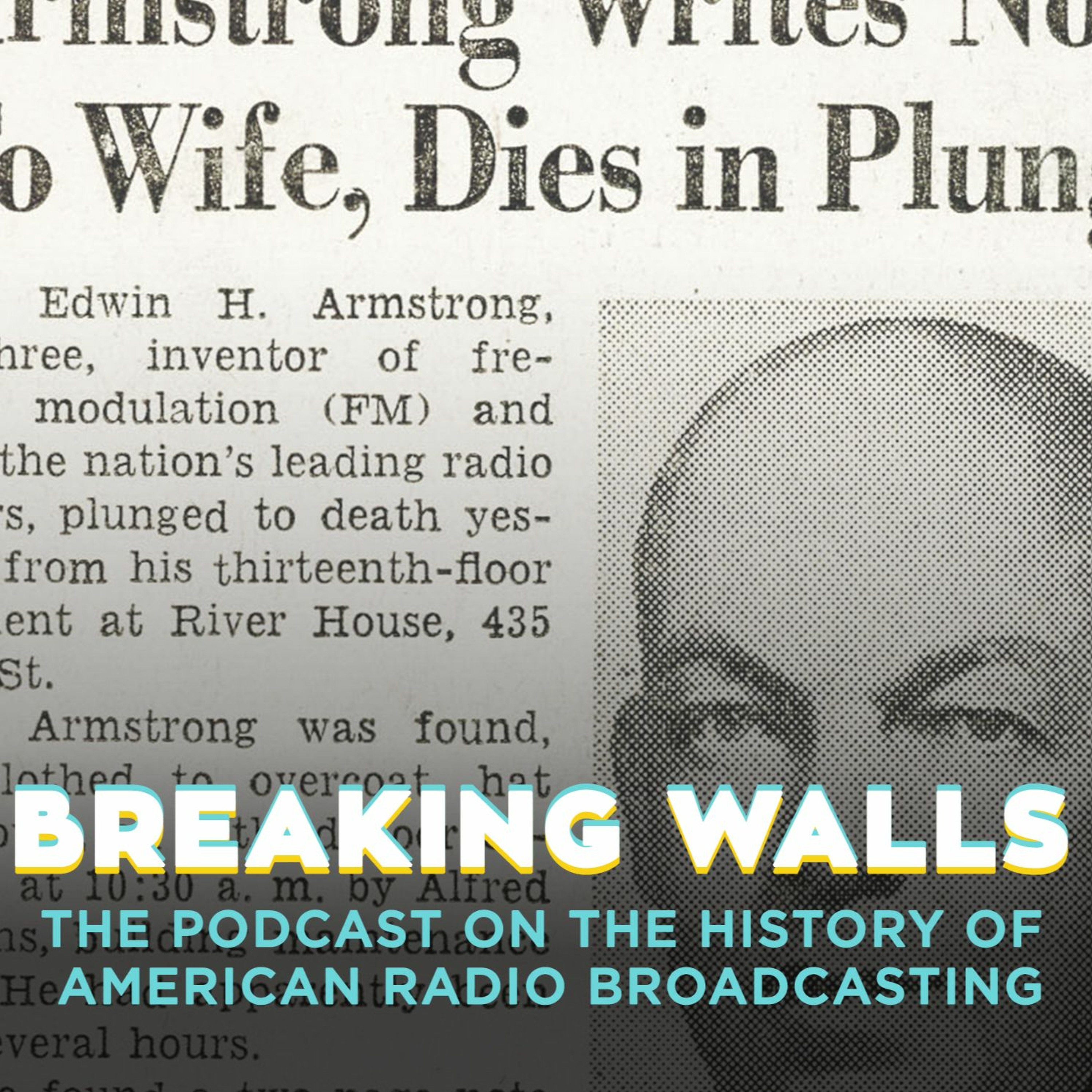
Back in July of 1935, head of RCA David Sarnoff asked friend and inventor Edwin Howard Armstrong to remove his experimental FM equipment from RCA’s Empire State Building Laboratory. RCA wanted to test its TV system. ___________ Armstrong saw FM as a revolutionary new communications service that would make AM obsolete. Sarnoff thought it an important advancement and wanted it to be TVs audio supplement, but he didn’t see FM as a new core technology. Without the backing of Sarnoff, Armstrong decided to pursue FM development on his own. He got a license from the FCC, and built a station in Alpine, New Jersey. In 1938 he began broadcasting classical music and other test frequencies. Armstrong broadcast from station to station over the length of the East Coast, with virtually no signal deterioration. ___________ By the end of 1940, the FCC had received over five-hundred applications for FM licenses. Commercial FM broadcasting was authorized to begin on January 1st, 1941. Armstrong struck patent-licensing deals with all major radio manufacturers except RCA. They agreed to pay Armstrong two percent of all earnings from the sale of FM receivers and related equipment. ___________ When RCA engineers soon countered with their own version of an FM system, Armstrong sued. Sarnoff, wanting to avoid litigation, offered Armstrong one million dollars for a non-exclusionary license to use the FM technology. Armstrong refused. It led to the end of their close friendship. ___________ During World War II, construction restrictions limited the growth of FM. In the interest of national advancement, Armstrong turned over his patents to the government for the duration of the War. ___________ Although the Germans had the superior Panzer tanks, they were AM equipped. U.S. Sherman tanks were equipped with FM. The German's communication systems often jammed. As the War wound down, the FCC investigated spectrum allocation. It was feared that the lowest layers of the earth's atmosphere could cause bad FM interference. Both Armstrong and other scientists felt this was baseless. ___________ Then, both RCA and AT&T spearheaded a campaign to shift the FM band to higher frequencies. It also required radio stations to lease equipment from the companies. ___________ On June 27th, 1945, The FCC shifted the FM band. Today, FM operates between eighty-eight and one-hundred eight megahertz. It made more than fifty FM radio station transmitters and five-hundred thousand receivers obsolete. It nearly terminated FM radio broadcasting for more than a decade. The industry turned to TV and AM expansion. ___________ Meanwhile, unwilling to pay Armstrong the royalties he sought, RCA began developing FM circuits of its own. It also meant RCA owed Armstrong no royalties for the sale of their TV sets, which all used FM. RCA convinced other TV manufacturers to do the same. In 1948, Armstrong filed suit against RCA and NBC, accusing them of patent infringement and deliberately impairing his invention’s value. ___________ Although he was confident the suit would be successful, the protracted legal maneuvering impaired his finances, especially after his primary patents expired in late 1950. Armstrong lacked the capital of the giant corporation. He ran out of money in 1952, and relied on credit to pay his lawyers. ___________ Armstrong now wanted to settle. He asked for three-point-four million dollars over a ten year period. In December of 1953, RCA offered him two-hundred thousand dollars. Armstrong rejected the offer. ___________ In a fit of rage in November of 1953, Armstrong hit his wife Marion. She fled their New York City apartment. Bankrupt and ashamed by his actions, on the evening of January 31st, 1954, Armstrong wrote an apology note to his wife. He then opened a window in their thirteenth floor apartment, and stepped out. He was sixty three. David Sarnoff claimed no responsibility for Armstrong’s actions.
BW - EP123—007: January 1954—The New Beulah Show
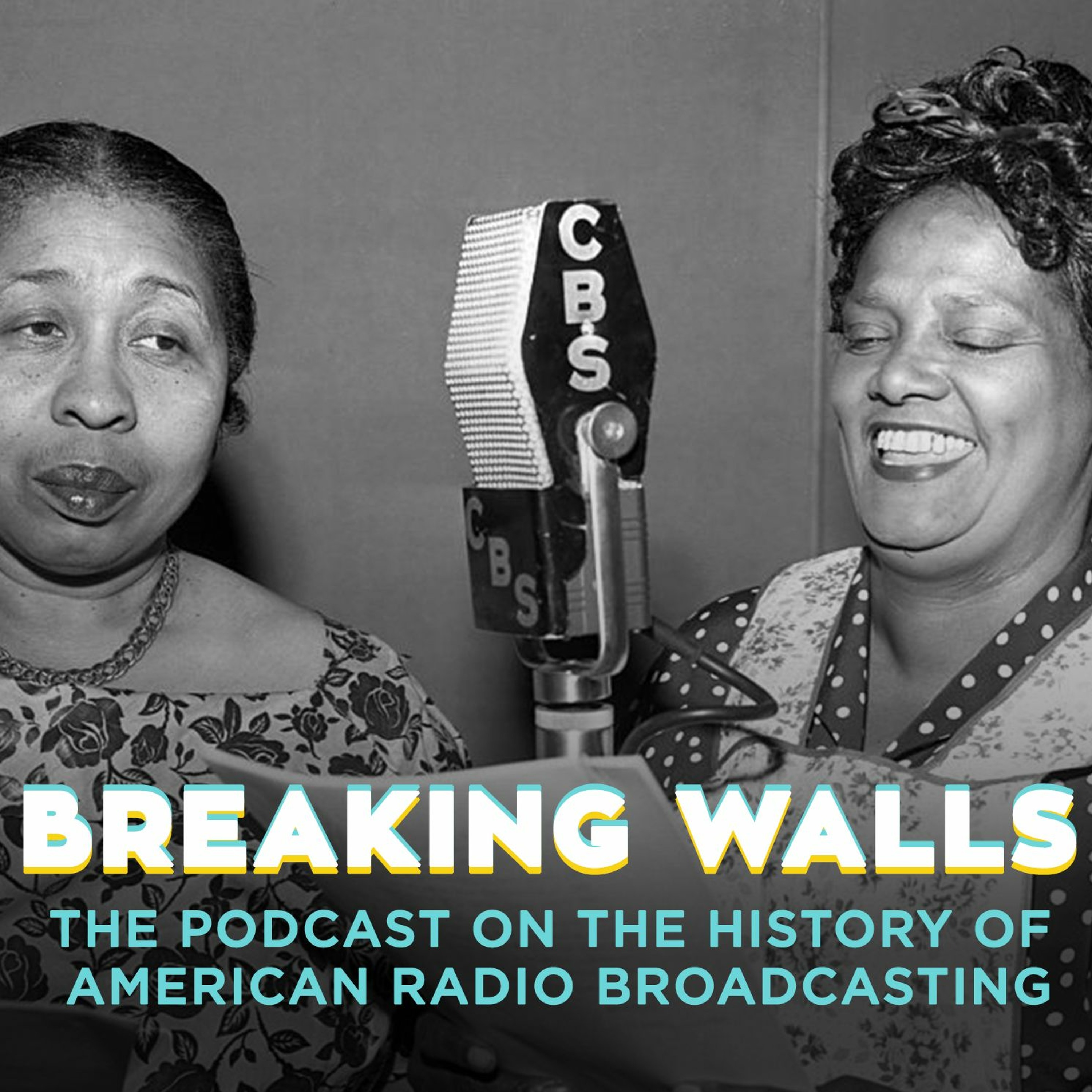
Amanda Randolph was born on September 2nd, 1896 in Louisville, Kentucky. Her father was a methodist minister and her mother a teacher, but she would find her calling in music, vaudeville, and eventually radio. ___________ A star by 1948, she led her own musical TV program for the DuMont network. It made her the first African-American woman with her own daytime TV show. ___________ Her sister Lilian was also a big radio performer, starring in both The Great Gildersleeve, and Amos ‘n’ Andy. ___________ In September of 1953 Randolph took over the title role of Beulah. It had been Hattie McDaniel’s until she got sick in 1951. For a time Amanda and Lilian alternated the lead. This incarnation of the show aired on CBS weeknights at 7:15PM. ___________ Beulah was supposed to be in her mid-30s and man crazy. She worked hard and played harder, and had an affinity for high heels and short skirts. The cast featured Hugh Studebaker, Mary Jane Croft, Henry Blair, Ruby Dandridge, and Bubbles Whitman. ___________ Randolph simultaneously starred in Amos ‘n’ Andy while leading this cast. On January 26th, Beulah broadcast an episode called “Bill’s Streetcar Lunchroom.” ___________ Beulah would air until May 28th, 1954.
BW - EP123—006: January 1954—Smog! (And Other Current Events)
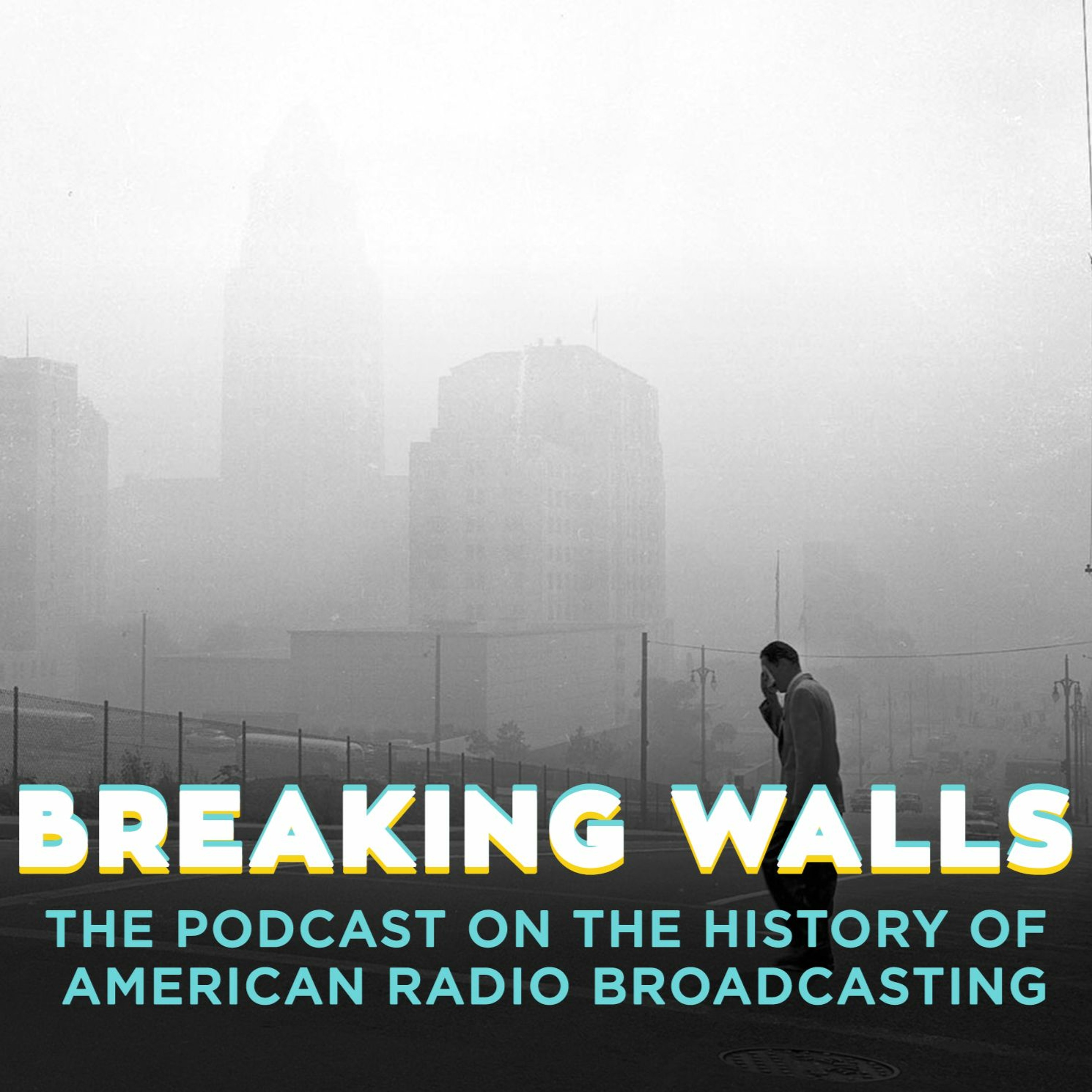
By the mid 1950s, smog was becoming a serious problem in American cities, especially Los Angeles. On January 15th, 1954 KNX broadcast a special called “The Troubled Air.” ___________ Residents of Los Angeles suffered from burning eyes, runny noses, persistent cough and shortness of breath. It came from pollutants caused by automobiles, factories, and garbage incinerators. This documentary aired in an effort to drive awareness, and speed-up City Hall’s solution to the problem. ___________ Five days later, The National Negro Network was formed by Chicago ad executive W. Leonard Evans. Evans was the first African-American radio network owner in the country. ___________ Other partners were Ms. Reggie Schuebel, VP and Treasurer, and John M. Wyatt, Executive VP. The duo owned a New York-based radio and TV consulting company. Among those on the board was Cab Calloway. The network launched with forty-six affiliates. Broadcasting Magazine reported that twelve to fifteen million African-Americans were expected to be reached. ___________ In other news, on January 21st, The first nuclear-powered submarine, the USS Nautilus, was launched. Four days later The Berlin Conference launched with ministers from The U.S., U.K., France, and The Soviet Union. Its purpose was to discuss a settlement to the recent Korean War and the ongoing First Indochina War. ___________ The conference would last until February 18th.
BW - EP123—005: January 1954—Marilyn Marries Joe and Jack Benny’s Face is Familiar on Suspense
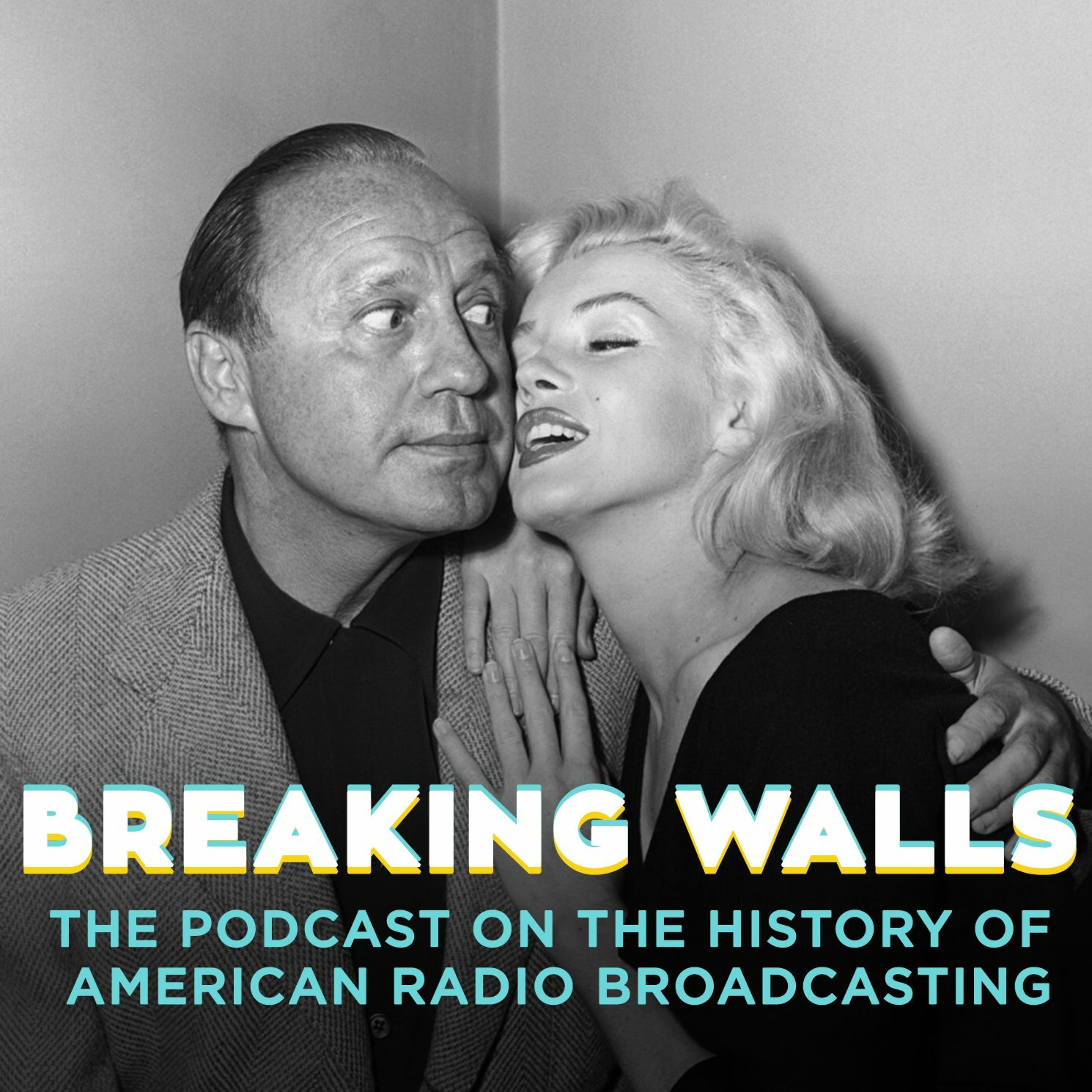
Although Jack Benny spent his TV time on September 13th, 1953 dreaming of being with Marilyn Monroe, on January 15th, 1954 she was officially taken off the market. That day she and retired baseball star Joe DiMaggio were married at San Francisco’s city hall. They would divorce the following year, but remain close friends for the rest of her life. ___________ Airing in his familiar Sundays at 7PM eastern time slot, in 1954 Benny had a radio rating of 8.2, second-highest on the air. For twenty years, Benny’s rating had never fallen out of the top ten, and twelve times he’d had a top-three show. ___________ The January 10th episode celebrated announcer Don Wilson’s twentieth anniversary with the program. In further evidence of the changing broadcast landscape, that season Benny had a TV rating of 33.3. Jack Benny would air one more season of original radio shows. ___________ Eight days later, Benny appeared on Suspense in a story called “The Face is Familiar.” 1954 was Autolite’s final season sponsoring the program. Airing Mondays at 8PM, Suspense pulled a rating of 6. While it was a far cry from the listener heights of just five years earlier, it was tied for seventh overall. ___________ The final autolite Suspense episode aired on June 7th. CBS refused to cancel the series. That fall, Antony Ellis took over as producer/director. The show would continue to air sustained by CBS until the ad department found multiple sponsorship, and the program moved to Sunday afternoons in November of 1956.
BW - EP123—004: January 1954—Ozzie & Harriet's Last Season on ABC
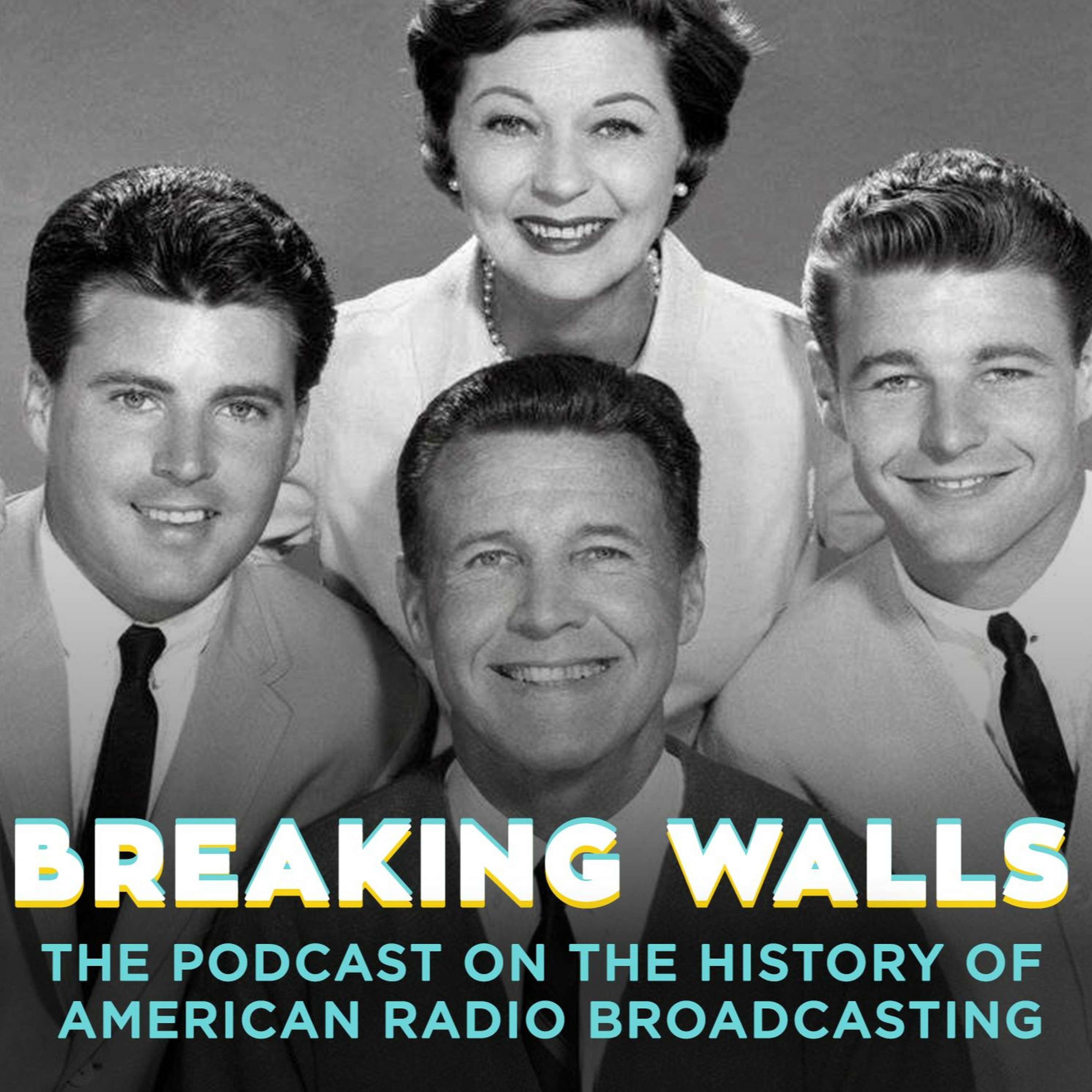
Under the sponsorship of Heinz Foods, The Adventures of Ozzie and Harriet moved to ABC’s potent Friday night schedule on October 14th, 1949. Ozzie Nelson had negotiated a ten year, non-cancellable contract. It guaranteed him complete creative control. ABC also had the option to bring the show to TV after 1951. Ozzie and Harriet were weary of the new medium. Universal Studios gave them the opportunity to make a film, and in 1952 the family starred in Here Come The Nelsons. The film was a hit, and everyone was convinced the Nelsons could all make the transition from radio's airwaves to TV’s small screen. The Adventures of Ozzie and Harriet made its TV debut on Friday, October 3rd, 1952. Although the show never cracked radio’s top-fifty ratings during the 1940s, they did so in each of their final three seasons on ABC. The radio version of Ozzie and Harriet remained on the air until the end of this season. This January 8th, 1954 episode was called “FiFi La Plume.” The TV series would turn Ricky into a teenage heartthrob. It helped springboard his music career in 1957. For more information on The Adventures of Ozzie and Harriet, tune into Breaking Walls episode 107.
BW - EP123—003: January 1954—People Are Funny Is Radio’s Top-Rated Show
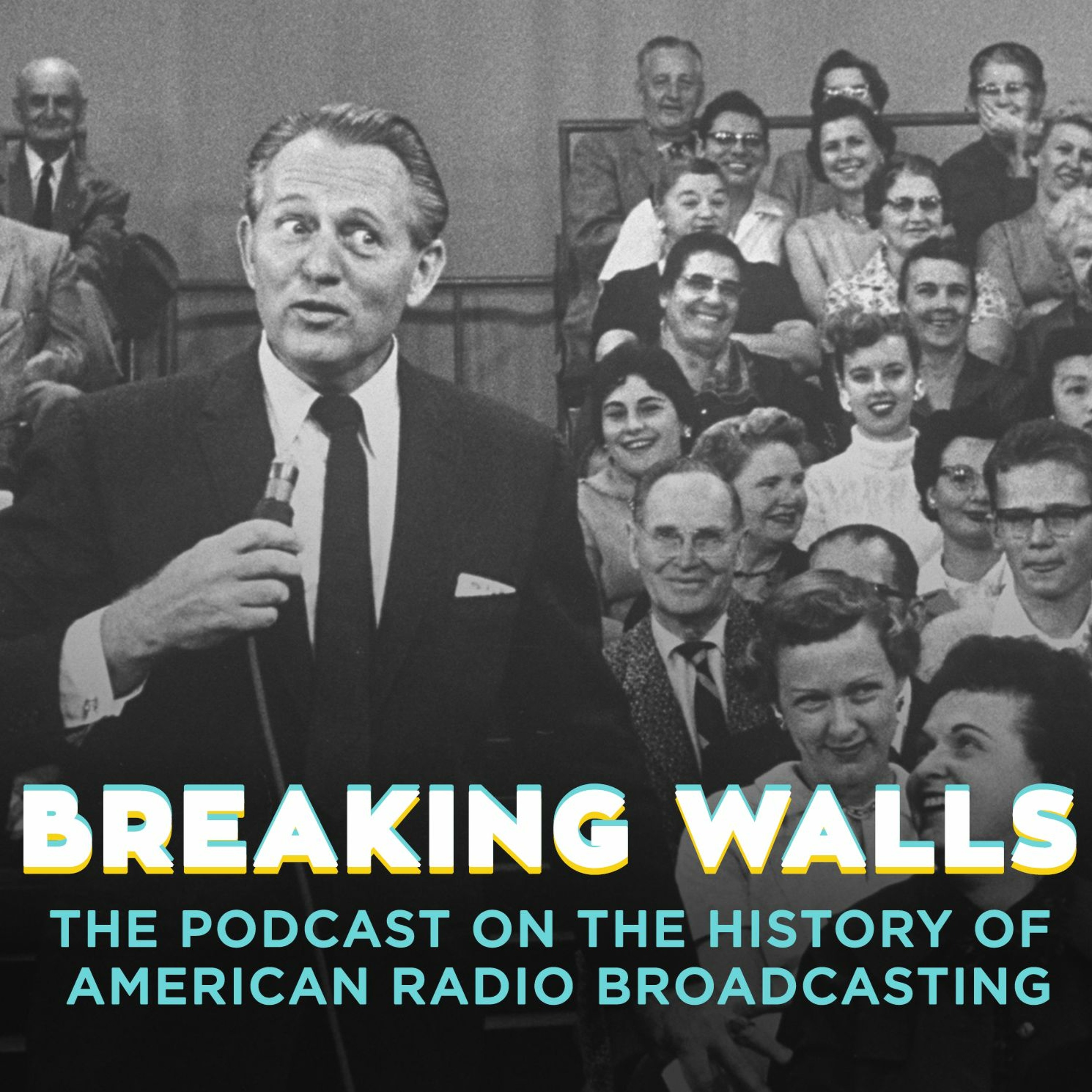
People are Funny debuted on April 10th, 1942 on NBC. It was created by gameshow maven John Guedel. He was a jack of all trades who’d spent time as a WPA ditch digger, a traveling salesman, and a collector of his own rejection slips. By the fall of 1943, Guedel had negotiated a large raise from the initial production offer and made Art Linkletter the sole emcee. People Are Funny became a Friday night staple throughout the 1940s. In addition Guedel would create House Party and You Bet Your Life. By January of 1954, People Are Funny was airing on CBS Tuesday nights at 8PM for Mars Candy. With a rating of 8.4 it was radio’s top-rated show. This is audio from the January 5th, 1954 episode.
BW - EP123—002: January 1954—Gunsmoke Loses One Sponsor And Finds Another
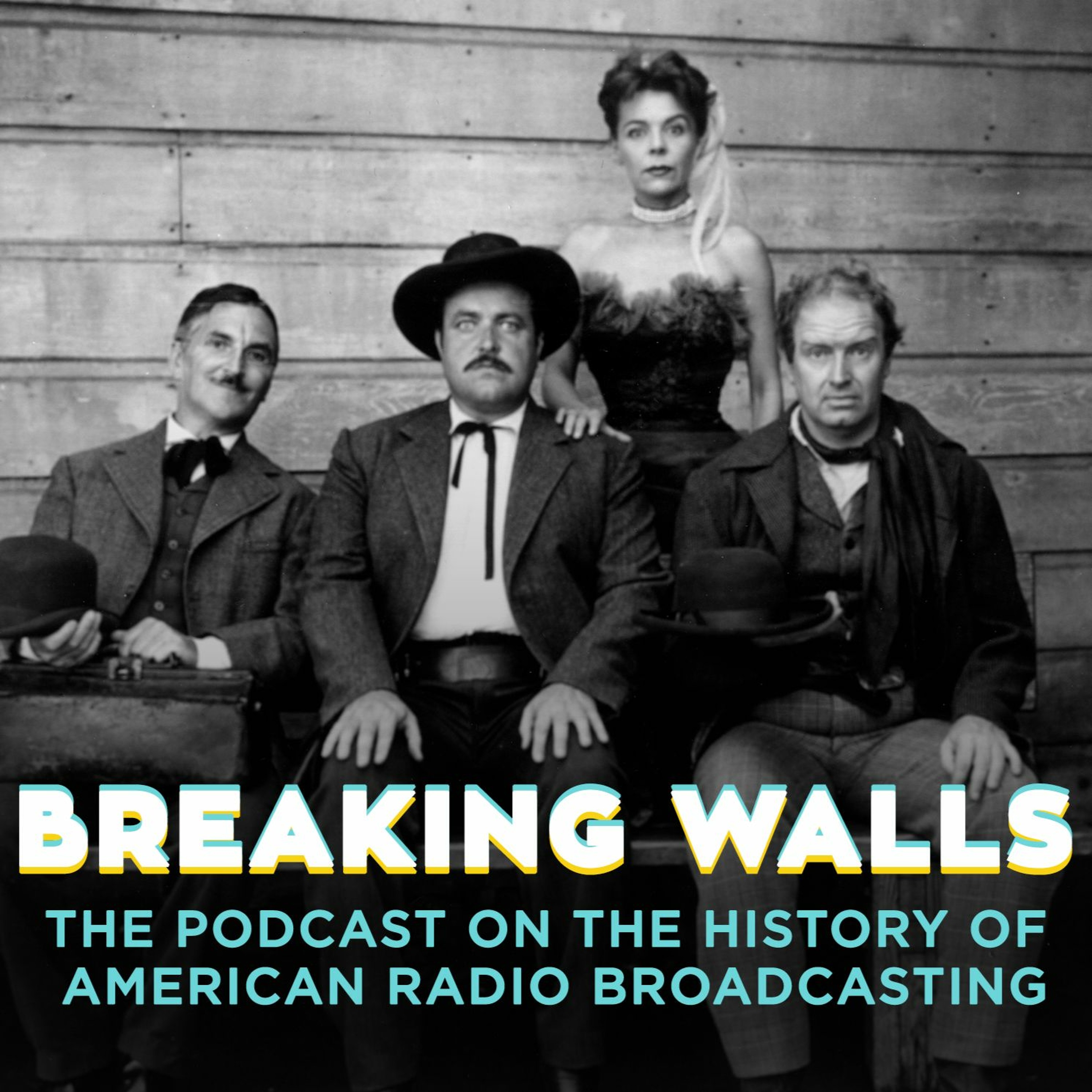
When Gunsmoke was sponsored for a single broadcast on November 21st 1952, by Chrysler Plymouth, the show drew a good rating against ABC’s This is Your FBI, and was heard by roughly 8 million people. After eighteen months on the air, on October 3rd, 1953, the critically acclaimed show got sponsorship from General Foods’ Post Toasties. But the sponsorship ended thirteen weeks later on December 26th. The show continued to air, sustained by CBS, on Saturdays at 8:30PM. The next week, on January 2nd, 1954, Gunsmoke broadcast an episode called “Stage Holdup.” It would take Jimmy Stewart’s aversion to Liggett & Myers Tobacco to land Gunsmoke its big sponsor. They wanted to sponsor The Six Shooter. Stewart declined, fearful of what a tobacco brand might do to his wholesome image. The Six Shooter went off the air in June, while Liggett & Myers sponsored Gunsmoke, beginning with the July 5th, 1954 episode. By 1956, Gunsmoke was the top rated show on radio. It was one of the few able to temporarily hold its audience in the TV era, even with the launch of Gunsmoke’s TV version.
BW - EP123—001: January 1954—New Year 's Day With Fibber McGee and Molly
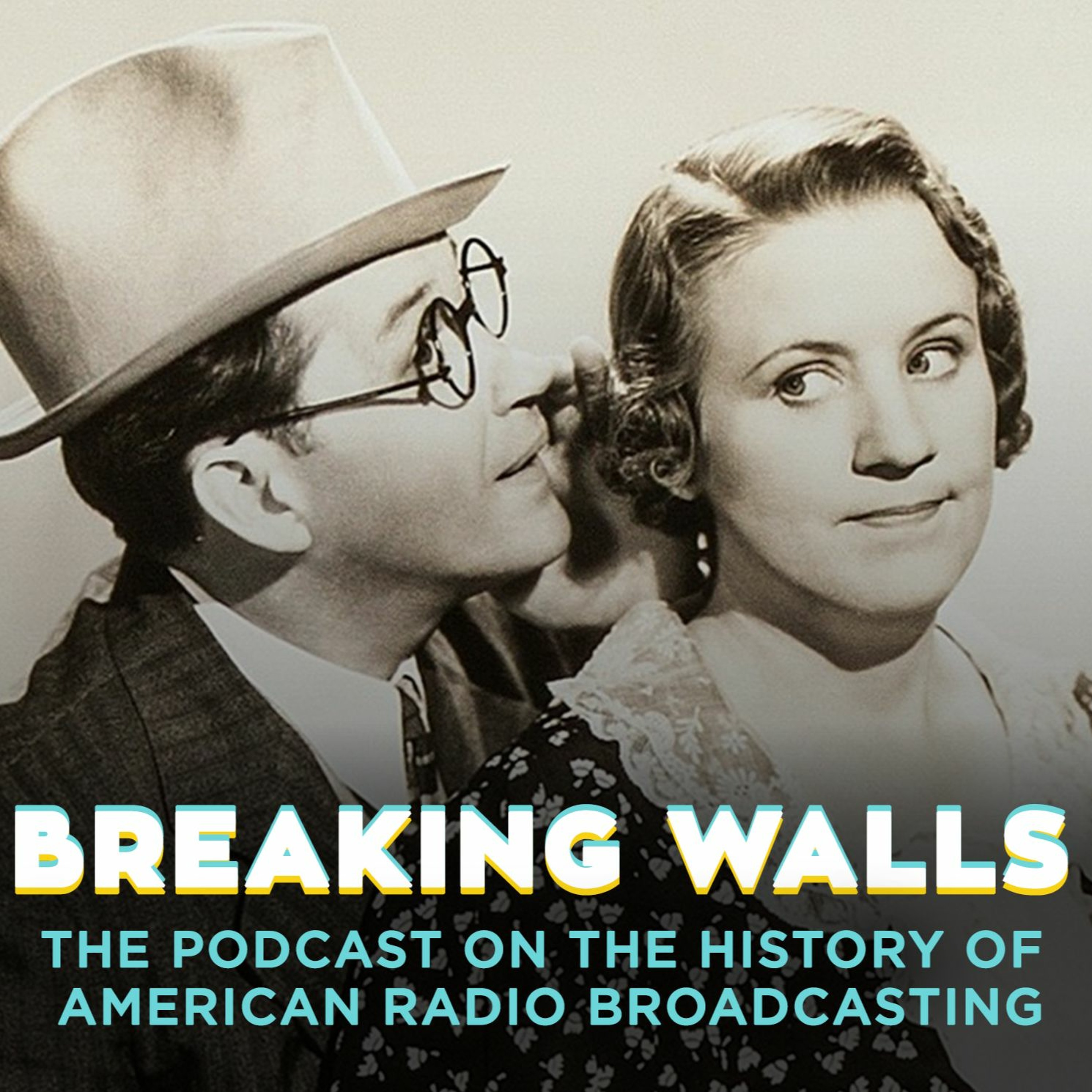
The United States entered 1954 in an uncertain position. Years of racial discrimination were coming to the forefront. In May, Brown vs. the Board of Education would make racial segregation in schools illegal. ___________ The Korean War was over, but the communist Red Scare was reaching its height.Dwight D. Eisenhower was completing his first year as U.S. President. Elizabeth II was now Queen of England. Joseph Stalin was dead. So was Hank Williams, Maude Adams, Jim Thorpe, Herman Mankiewicz, Dooley Wilson, Robert Taft, Edwin Hubble, and Dylan Thomas. ___________ Meanwhile, radio achieved total saturation. Ninety-eight percent of homes had a radio set. There were still nineteen million U.S. houses that could only be reached by radio. However, the four national networks continued a five-year downward trend in radio ad sales. Network radio gross revenue peaked in 1948 at just under two-hundred million dollars. In 1953, it was down to one-hundred sixty million. ___________ Procter & Gamble led the way with over fourteen million dollars spent, and forty companies, including General Foods, Colgate-Palmolive, Liggett & Myers, Campbell’s Soups, S.C. Johnson, and Coca-Cola spent at least one million dollars on radio advertising. ___________ While TV hadn’t fully supplanted radio’s total reach, it had decimated it’s prime-time audience share. On CBS-TV I Love Lucy led all shows with a 58.8 rating. It was seen in over fifteen million homes each Monday evening at 9PM. Opposite on the other medium, The Lux Radio Theater was heard in just under three million. ___________ And it turned out that as McCarthyism reached its zenith, dramatic radio would spend the first six months of 1954 facing wide-spread network cancellations. These were shows that just six years earlier were at the forefront of national consciousness. ___________ Radio’s heyday was over. Tonight, we’ll go back to January of 1954 and search for more answers. ___________ Welcome to Breaking Walls, episode 123. My name is James Scully. Tonight on Breaking Walls, we open 2022 with a six-part mini-series on radio business and programming in 1954. We’ll begin with January, in a radio half-season that was for many, the end of the line. ___________ If this is your first time listening to Breaking Walls, welcome to the show! You can find this series for free on every podcasting platform, and at TheWallBreakers.com. ___________ Tonight we’ll also begin a new programming format on Breaking Walls. Going forward, I’ll be releasing each episode in parts. These parts will be available on Sundays, Tuesdays, and Thursdays. Once all parts of an episode are released, I’ll release the full-length episode for those who want to listen to it in the traditional format. For those listening on Youtube for the first time, please go to TheWallBreakers.com for the full lineup of past episodes in feature length.
When Milton Berle Finally Established Himself on Radio In December Of 1947
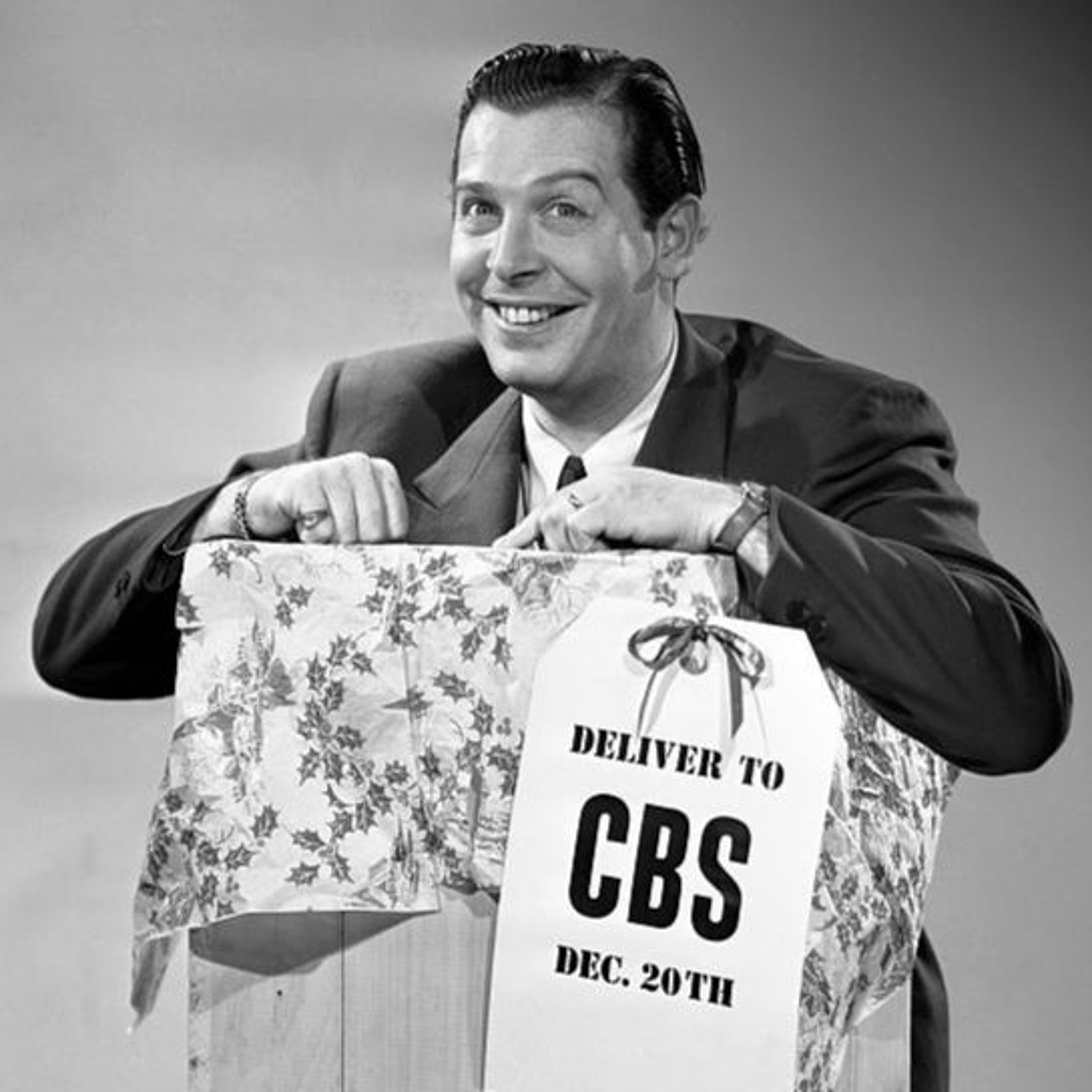
This is a snippet from Breaking Walls Episode 98: Christmas Week 1947 with Radio's Biggest Stars ———————————— For the four major radio networks, 1947 was a year or record business: ABC saw a 7.25% gross billings increase. NBC sold out its entire primetime programming block. CBS had seventeen shows with ratings higher than fifteen. And Mutual Broadcasting had the most affiliates in the country. Total radio revenue was over five-hundred million dollars. There were now more than thirty-six million radio homes, and urban centers accounted for 60% of the US population. It was in this season that Milton Berle finally established himself on radio. The Milton Berle Show was one of a half-dozen titles showcasing Berle in his star-crossed radio career. Until 1946 he was considered radio’s best-known ratings failure. But NBC saw potential in Berle where CBS had failed. In March of 1947 they gave him his own variety show, sponsored by Philip Morris. It featured some of radio’s top comedic talent, like Arnold Stang, Pert Kelton, Arthur Q. Bryan, Jack Albertson, Ed Begley and Frank Gallop. In its second season on NBC Tuesdays at 8:00 p.m, the show’s audience jumped 40% and Berle finally cracked radio’s Top 50. In December his rating was 17.5 against Big Town on CBS.