AI to ROI (fka Metrics that Measure Up)
266 episodes — Page 1 of 6
Six Challenges to Scaling Agentic AI in the Enterprise
Building an AI-First organization with Francis Brero, VP AI and Strategy HG Insights
Where Are the Killer AI-Native Application Companies?
Why every AI conversation should be an ROI conversation - with Ketan Karkhanis, CEO ThoughtSpot
The OpenAI vs Anthropic Battle for the Enterprise
Enterprises Can See Their AI Bill, But They Can't Predict It
Stripe and OpenRouter Combination Wants to be #1 in Routing your AI Workloads
AI Cost Governance to AI Cost Optimization with Sundeep Goel, CEO, Mavvrik
Microsoft is Running an AI Marathon
Can U.S. Frontier AI Labs Survive a Price War with Open-Weight Models?
Web Presence Intelligence with Stephan Bajaio, Co-Founder & CEO, VibeLogic
Will the AI Data Center Backlash Really Make a Difference?
Forward-Deployed Engineers (FDEs) - AI's New ROI Battleground
Chinese Open Weight Models Overtake US Frontier AI: What Every Enterprise Executive Needs to Know
AI is Hot - AI Regulation is a Hot Mess
Building the 100x Org - The CFO as AI Architect with Dan Zhang, CFO & CBO at ClickUp
AI is a Compensation Scale Expense
AI-Native Services: The $100B Disruption of Professional Services
AI Math is not Adding Up - Where is the ROI?
AI Governance, Ethics, and the Stewardship Framework: A Conversation with Evan Schwartz, Chief Innovation Officer at AMCS Group
The AI Coding Wars, Inflection Point and the Cursor-SpaceX Deal | AI to ROI: The Big Story
Big Book of AI Metrics
Measuring the costs, utilization, proficiency and impact of AI - with Russ Fradin, Founder and CEO, Larridin
Leveraging AI to Reduce Churn and Increase NRR - with Dan Harmeson, Co-Founder and Co-CEO at QuadSci
The AI Agent Outcome-Based Pricing Journey - with Kunal Agarwal, CFO Gorgias
AI to ROI: OpenAI - The Most Important AI Company in the World, and the Most Fragile
NVIDIA – The Full-Stack Maestro
The AI-Native Services Playbook - with Jake Saper, General Partner - Emergence Capital
The Role of the CAIO in a Managed Service Provider - with Jim Piazza, CAIO Ensono
On Paper, the SpaceX IPO is Not So Heavenly
AI's Organizational Impact: McKinsey's State of Organizations 2026 Report
Beyond OpenClaw - The Rise of Personal AI Agents
The Power of Eye Tracking for the Enterprise - with Adam Gross, Co-Founder & CEO of HarmonEyes
Pricing Strategy for AI Software and SaaS: When to Change, Who Should Own It, and the CFO's Role with Dan Balcauski
Pricing is one of the most underleveraged strategic levers in B2B SaaS and AI Software. Most companies are getting it wrong. In this episode, Ray Rike sits down with Dan Balcauski, founder of Product Tranquility and a 20-year software industry veteran, to cut through the noise around consumption, usage, outcome, and hybrid pricing models. Dan brings a practitioner's perspective on when to review pricing, who should own it, and how the CFO fits into the equation.Signs Your Pricing Needs a ReviewBest-in-class companies review pricing at least quarterly -- but review does not always mean changeKey warning signals include declining net revenue retention and unexpected shifts in win/loss conversion ratesAI-native companies are iterating on pricing monthly due to rapid competitive dynamicsSales cycle length is a practical constraint: a 12-month enterprise cycle limits how frequently you can test and observe pricing changesThe Role of Customers in Pricing StrategyNever anchor your pricing strategy entirely to your existing customer base -- they carry inherent biasA practical research mix: roughly one-third existing customers, two-thirds prospectsExisting customers know your real value; prospects only know what you show them -- both perspectives matterWhen introducing a second product, maintain structural similarity in pricing tiers even if the pricing metric differsPricing Ownership and GovernanceBelow $5M ARR, the founder/CEO owns pricing; above $20M it shifts to Product or Marketing -- the gap in between is where ownership gets dangerously vagueProduct Marketing is best positioned to own pricing because it sits at the intersection of positioning and value communicationSales owning pricing is a misalignment of incentives -- "like putting Dracula in charge of the blood bank"Best practice is a pricing council with a designated decision-maker, not design by committeeDiscounting and the CFO's RoleDiscounting policy is often the easiest and fastest win -- and one of the first places Dan looks with any clientEnforcement matters as much as policy: without monitoring, no new pricing strategy will ever reach the market as intendedThe CFO plays a dual role -- operational (contracts, billing, deal desk guardrails) and strategic (modeling cash flow and KPI impact when shifting pricing models)Caution: A finance-led focus on consistent margin profiles across products can misread how different market segments actually behaveOutcome-Based Pricing: Hype vs. RealityOutcome-based pricing is "the future and always will be" -- it is not new, and it is genuinely difficult to executeTrue outcome pricing only works when you are directly in the revenue or savings transaction, as Stripe isA more practical frame is output-based pricing -- Intercom's 99 cents per resolved support ticket is a strong example of measuring a clear, attributable unit of valueIf you are involved in how best to monetize and price your B2B AI or SaaS product - this is a very valuable listen!See Privacy Policy at https://art19.com/privacy and California Privacy Notice at https://art19.com/privacy#do-not-sell-my-info.
The Power and Promise of Vertical AI
While the AI headlines obsess over foundation model fundraises and hyperscaler spending, a quieter revolution is generating real, measurable returns. In this episode of AI to ROI: The Big Story, Ray Rike and Peter Buchanan break down why vertical AI companies may be building the most durable and valuable businesses in the history of enterprise software, and why most people aren't paying attention yet.What's covered in this episode:Defining Vertical AI: What separates vertical AI from horizontal tools like Microsoft Copilot or Google Workspace AI, and why the distinction matters for buyers and investors alikeA fundamentally different business model: Why vertical AI companies target labor budgets (10x the size of enterprise software budgets) rather than IT spend, and how outcome- and consumption-based pricing is replacing the traditional per-seat modelThe funding explosion: Vertical AI investment grew from $8B in 2023 to $22B in 2024 to $42B in 2025, with unicorn counts in the sector jumping nearly 6x in just two yearsHarvey (Legal AI): How this $8B+ valuation company grew ARR from $100M to $190M in just four months by orchestrating multiple AI models across legal workflows and embedding deeply into law firm operationsAbridge (Healthcare AI): How a cardiologist-founded company reached a $5.3B valuation by turning physician-patient conversations into structured clinical documentation in real time, with deep Epic EHR integration across 150+ health systemsSierra (Customer Experience AI): How Brett Taylor's enterprise AI platform hit $100M ARR in just 21 months and crossed the $10B decacorn threshold, raising the question of whether the agent era could produce the first trillion-dollar enterprise software companiesMaintainX (Industrial/Manufacturing AI):How this maintenance management platform is tackling $1.4 trillion in annual equipment failure costs across 11,000 customers and 11 million assets — with a 34% reduction in unplanned downtime for customersWhy vertical AI moats are so durable: Proprietary data that compounds with every transaction, embedded institutional knowledge that makes switching costs higher than any legacy ERP migration, and a model architecture that gets stronger as foundational models improveAdvice for enterprise buyers: Why 2026 is the year to evaluate vertical AI vendors, insist on outcome-based pricing, and start with one workflow before expandingInterested in reading the details on the Vertical AI industry and trends? Check out the AI to ROI Newsletter providing even more detail by clicking here.See Privacy Policy at https://art19.com/privacy and California Privacy Notice at https://art19.com/privacy#do-not-sell-my-info.
The Superhuman AI Agent - with Amanda Kahlow, CEO & Founder, 1Mind
In this episode of the AI to ROI Podcast, host Ray Rike sits down with Amanda Kahlow, founder and CEO of 1Mind. Prior to 1Mind, Amanda was the founder and former CEO of 6sense, an early pioneer in intent data.The Vision Behind 1Mind: Amanda founded 6sense to help companies find buyers; she founded 1Mind to close them. 1Mind builds what she calls "go-to-market superhumans", AI agents that take on multiple roles across the full customer lifecycle, from inbound qualification and live demo delivery to deal closing for SMB/commercial accounts, and even post-sale onboarding, upsell, and cross-sell motions.Why the Buyer Journey Has Fundamentally Changed: Amanda argues that traditional intent data and one-way marketing are becoming obsolete. Buyers no longer follow a linear path of Google searches and form fills; they expect real-time, two-way, solution-oriented conversations, much like they get from interacting with large language models today. The old model of blasting outbound emails or routing inbound leads through a sequential SDR → AE → SE handoff chain is increasingly misaligned with how modern buyers want to engage.Top Use Cases: How Customers Deploy 1Mind: The most common starting point is the inbound website use case, customers start by placing a superhuman on the website that can qualify a visitor, deliver a personalized live demo, answer deep technical questions, and in some cases take the deal all the way to close, all on first touch. From there, customers frequently expand to the "ride-along" use case, where the superhuman joins every sales call as an always-available AI sales engineer. Human sellers retain control but can call on the superhuman in real time to answer hard questions, surface the right case study or slide, run an integration demo, or ask the qualifying questions (MEDDIC and similar) that sellers often avoid.Measurable Business Impact: Amanda shares compelling early results from enterprise customers, including a ~40% reduction in sales cycle length (from ~90 days to ~60 days) and a doubling of ACV for deals that passed through the superhuman pipeline versus the traditional pipeline. She attributes the ACV lift to getting buyers to vendor-of-choice status earlier in the cycle, eliminating the need to compete on price. 1Mind also has use cases for existing customer bases — proactively engaging customers about new features to drive upsell and cross-sell, a task that human CS teams increasingly can't keep pace with, given the speed of product development.How Customers Measure ROI: Amanda is direct: the right measurement framework is revenue impact, not top-of-funnel pipeline metrics. She encourages customers to tie superhuman performance to shortened deal cycles, higher ACV, and bottom-of-funnel revenue influence. She acknowledges there is a maturity curve — some customers start by measuring meetings booked — but the companies seeing the most value are those willing to shift away from MQL-based thinking toward board-level outcomes: revenue growth, lower CAC, and expansion revenue.Onboarding & Time to Value: 1Mind has invested heavily in its self-serve platform to reduce deployment time from a four-month process to an average of about four weeks today, with some customers going live in as little as four days. All deployments are full enterprise contracts, as 1Mind does not run pilots.Advice for Leaders on AI ROI Amanda emphasizes that realizing meaningful AI ROI requires a top-down mandate from the CEO. Incremental point solutions can improve efficiency at the margins, but the big needle-movers require new playbooks and organizational willingness to change how work gets done, not just layer AI on top of existing processes.See Privacy Policy at https://art19.com/privacy and California Privacy Notice at https://art19.com/privacy#do-not-sell-my-info.
Deloitte 2026 State of AI Report - The Untapped Edge
On this AI to ROI Big Story episode, our hosts Ray Rike and Peter Buchanan dig into Deloitte's 2026 State of AI Report, a 41-page annual study surveying over 3,300 business leaders on the state of enterprise AI adoption. Deloitte calls it "The Untapped Edge," and Ray and Peter unpack exactly why.They walk through the report's seven key inflection points from scaling pilots into production and reimagining business processes, to agentic AI, sovereign AI, and physical AI, with a focus on what the data actually means for companies trying to drive real ROI in 2026.Key topics covered in this episode include:Pilot to Production: Why 54% of respondents expect a major leap in production deployment in the next 3–6 months, and why 37% of companies are still making little or no change to existing processesProductivity & Revenue: How 66% of organizations report efficiency gains today, but only 20% are seeing actual revenue impact from AI - and what it will take to close that gapBusiness Transformation: Why 84% of companies have yet to redesign jobs around AI, and what that means for long-term competitivenessAgentic AI: What the jump from 26% to 74% expected adoption of agentic AI over two years signals, and the top enterprise use cases including customer support, supply chain, R&D, and cybersecurityGovernance: Why only 21% of companies have a mature governance model for autonomous agents, and what leading companies are doing to build responsible frameworks from the ground upSovereign AI: How 83% of multinational board members view sovereign AI as at least moderately important, and why the US, Europe, and the Middle East are approaching it very differentlyRay and Peter close with a clear-eyed summary of what enterprises need to do now: close the gap between strategy and operational readiness, redesign work with an AI-first mindset, and shift focus from incremental efficiency to genuine strategic reinvention.📰 This episode is based on the February 19th edition of the AI to ROI newsletter. Subscribe at ai2roi.substack.comSee Privacy Policy at https://art19.com/privacy and California Privacy Notice at https://art19.com/privacy#do-not-sell-my-info.
AI to ROI: Big Story - Will the Angst, Agony, and Adversity of AI be Worth It?
Is the trillion-dollar AI bet actually going to pay off? In this episode of AI to ROI, hosts Ray Rike and Peter Buchanan tackle the big question head-on: with hyperscalers pouring over $600 billion into AI infrastructure this year alone, enterprises struggling to move pilots into production, and white-collar job postings already falling 16% year-over-year, the anxiety is real and justified. But so is the optimism.Ray and Peter break down why the same supply constraints slowing AI buildout may actually give companies and workers more time to adapt, why foundation model costs have plummeted 97% since 2023, and how IBM's internally deployed AI has already generated $4.5 billion in productivity savings. From healthcare transcription to AI-native go-to-market tools, the ROI is emerging, but not evenly or quickly enough for most.What We Cover in This Episode:The staggering scale of AI infrastructure spending: The five largest hyperscalers (Amazon, Microsoft, Alphabet, Meta, and Oracle) are on track to spend over $600 billion in CapEx this year, with Oracle committing 57% of its annual revenue and Microsoft 45%, ratios more typical of heavy industrial companies than software firmsWhy the build-out is slower than everyone thinks: Grid upgrade timelines in the US run 8+ years, data center construction is broadly behind schedule, and critical shortages in chips, transformers, skilled labor, and construction materials aren't expected to ease until at least 2028The pilot-to-production gap is real: Only 6% of enterprise AI projects are delivering returns within a year, and most organizations lack the frameworks and experience to move from experimentation to operational deployment at scaleTrust, hallucinations, and governance are still major blockers: Regulated industries like financial services and healthcare face compounding uncertainty, caught between pre-AI regulations still on the books and a patchwork of conflicting state, federal, and international AI policyThe workforce impact is already being felt : Salesforce cut 4,000 customer support roles, Klarna reduced headcount by 40%, white-collar job postings are down 16% year-over-year, and college graduate placement rates have dropped from 83-88% to roughly 23%, hitting data science, software development, and graphic design hardestBut the technology itself is accelerating fast: Foundation model costs have dropped 97% since early 2023, the number of available models has grown from 60 to 650, and enterprises are getting smarter about orchestrating multiple models for different tasksReal ROI stories are emerging: IBM has generated $4.5 billion in productivity savings from internally deployed AI since January 2023, automating nearly 4 million hours of work annually at $3.50 returned for every dollar investedVertical AI is gaining serious traction: Healthcare AI is the fastest-growing vertical, with one transcription tool alone saving 50,000 clinician hours. Legal, cybersecurity, customer support, and IT operations are all seeing meaningful gainsThe competitive pressure is intensifying: 54% of business leaders in a Mercer study believe they won't remain competitive in five years without AI at scale, and 92% of firms plan to increase AI budgets over the next three yearsWhy You Should Listen:If you're a business leader, investor, or professional trying to cut through AI hype and understand what's actually happening on the ground, this episode delivers the balanced, data-driven perspective that's hard to find. Ray and Peter don't just cheerlead or catastrophize; they give you the real picture: where the bottlenecks are, where the returns are genuinely showing up, and why the next two to three years of slower-than-expected adoption might actually be the window your organization needs to get AI right.See Privacy Policy at https://art19.com/privacy and California Privacy Notice at https://art19.com/privacy#do-not-sell-my-info.
AI-Native ERP vs. Legacy ERP: What's the Difference? with Santiago Nestares, Founder & CEO of DualEntry
What does it actually mean for an ERP to be AI-native and why does it matter for your finance team? In this episode of the AI to ROI podcast, host Ray Rike sits down with Santiago Nestares (Santi), Founder and CEO of DualEntry, to unpack the real differences between legacy ERP systems and a ground-up AI-native platform.Santi shares the origin story behind DualEntry, born from a painful nine-month ERP implementation at his previous company that cost a team of 12 and hundreds of thousands of dollars—and explains why simply adding AI features on top of old database architecture misses the point entirely. AI, he argues, isn't a feature you plug in; it's a design philosophy that must be embedded at every layer of the product.Ray and Santi dig into one of the thorniest challenges in enterprise finance: the tension between probabilistic AI models and the zero-error standard that accounting demands. Their answer? Deterministic guardrails—approval workflows, permissioning layers, and audit trails—that let AI work freely in draft mode while keeping humans accountable for every posted transaction.You'll also hear about DualEntry's "Next Day Migration" approach, including how the company uses AI to map and migrate every transaction (not just trial balances) in hours rather than months, giving prospects a live sandbox with their own data before they ever sign a contract.What You'll LearnWhy adding AI to a legacy ERP is like "running an on-prem system with a CD on the cloud", and what truly AI-native architecture looks like insteadThe difference between deterministic and probabilistic systems, and why accounting can't afford to get it right only 99.9% of the time without the right guardrailsHow DualEntry's Next Day Migration works: AI-assisted mapping, atomic transactions, and a live sandbox demo using the prospect's own dataThe real ROI of AI-native ERP from eliminating manual categorization drudgery to enabling multi-dimensional segmentation that surfaces hidden pockets of value and riskHow Dto build audit-ready explainability without being able to explain the AI itself - by tracing every decision back to a human approvalWhy early-career finance professionals are "living the luckiest time" in the professionand how to lean into AI rather than fear itEpisode Topics at a Glance00:00 — Welcome & guest introduction00:51 — Santi's origin story: a nine-month legacy ERP nightmare that sparked DualEntry02:52 — AI-native vs. legacy ERP: what's the real difference?04:48 — Deterministic vs. probabilistic systems explained06:49 — How to identify a truly AI-first platform vs. an AI add-on10:07 — Next Day Migration: using AI to accelerate ERP transitions14:11 — Implementation team design: finance practitioners + forward-deployed engineers17:18 — Measurable ROI: from real-time bank feeds to AI-driven business insights22:52 — AI explainability, audit trails, and the permissioning layer25:06 — Rapid fire: CFO ROI variables, who owns AI ROI, and advice for early-career finance professionalsSee Privacy Policy at https://art19.com/privacy and California Privacy Notice at https://art19.com/privacy#do-not-sell-my-info.
The Rise of the Chief AI Officer (CAIO)
Is your company leaving money on the table by not having a Chief AI Officer? In this episode, Ray Rike and Peter Buchanan dig into groundbreaking research from IBM's Institute of Business Value, spanning 600+ executives across 22 geographies and 21 industries to unpack why dedicated AI leadership is quickly becoming non-negotiable for enterprises competing in today's market.The numbers tell a compelling story: only 26% of companies currently have a CAIO, yet those that do are seeing 10% higher ROI on their AI investments and are 24% more likely to outperform their peers. And that gap? It's widening. With 66% of existing CAIOs predicting most organizations will have someone in this role within 24 months, the window to gain a first-mover advantage is open — but not for long.Ray and Peter go deep on some of the episode's most surprising findings, including:Who's actually getting hired: 73% of CAIOs come from data-focused backgrounds, but the most effective ones are hybrid leaders equally fluent in business strategy and data science. And 57% were promoted from within, because institutional knowledge often matters more than technical expertise.Where they sit in the org chart matters enormously: CAIOs who report directly to the CEO and control the AI budget (61% do) drive far greater results than those positioned as glorified advisors without real authority.The hub-and-spoke model delivers 36% higher ROI: companies that pair a centralized AI function with embedded business unit partners outperform those with fully decentralized AI decision-making, giving them both governance and agility.Three pillars that make or break a CAIO: measurement tied to real business outcomes, cross-functional teamwork across the entire C-suite, and genuine authority to make tough decisions. Strip away any one of these and ROI suffers.What to do if you're not ready to hire one yet : Ray and Peter offer practical alternatives, from AI steering committees to centers of excellence, and explain why accountability can't be an afterthought regardless of your company's size or structure.They also tackle the growing complexity of managing AI at scale, the average large enterprise is now running 11 generative AI models and why the rise of agentic AI makes centralized leadership even more critical before things become, as Ray puts it, "a hot mess."Whether you're a Fortune 500 executive or a mid-market leader trying to figure out your AI strategy, this episode is packed with data-backed insights to help you move from AI experimentation to measurable, scalable ROI.Prefer to read more detail - check out the AI to ROI Newsletter covering this topic at: ai2roi.substack.com/p/the-chief-ai-officer-from-nice-to?r=2ldi4pSee Privacy Policy at https://art19.com/privacy and California Privacy Notice at https://art19.com/privacy#do-not-sell-my-info.
The SaaS to AI-First Transformation - 3 Examples from Notion, Canva and ServiceNow
This episode of the AI to ROI podcast, hosted by Ray Rike and Peter Buchanan, explores how leading SaaS companies are surviving the "SaaSpocalypse" - a massive market cap devaluation triggered by the rise of AI. The hosts break down the transition from traditional SaaS to AI-first models, emphasizing that simple "feature bloating" isn't enough; companies must undergo a fundamental "organ replacement" of their architecture, pricing, and culture.The discussion deep-dives into three success stories:Notion: Transformed from a document suite into an agentic execution platform through strategic acquisitions, moving toward autonomous workflows.Canva: Democratized design by making AI features invisible and intuitive, resulting in a 700% increase in AI tool usage and massive revenue growth.ServiceNow: Leveraged its 20-year history in workflow automation to pivot from seat-based pricing to task-based pricing, using AI agents to orchestrate complex enterprise processes.If you are a SaaS company executive looking for great examples of how they transitioned to be AI-first - this episode is full of great examples, strategies, and tactics.See Privacy Policy at https://art19.com/privacy and California Privacy Notice at https://art19.com/privacy#do-not-sell-my-info.

AI SDR Learnings, Results, and ROI - with Jacco van der Kooij, Winning by Design
In this episode, our host Ray Rike sits down with Jacco van der Kooij, founde and CEO, Winning by Design, to discuss the real-world deployment of "Jack" - an AI SDR that has spent the last 12 months redefining the front line of Go-To-Market (GTM) strategy. Jacco shares the "AHA" moments and hard truths discovered while moving beyond human constraints like slow response times and inconsistent qualification. Discover how treating an AI SDR (agent) as a "system" rather than a "product" initially led to 2,030 conversations, 100% CRM capture, and a $200,000 deal.Episode SummaryWinning by Design set out to prove that if AI can handle the high-risk, high-empathy role of an SDR, it can work anywhere in GTM. Over the course of a year, their AI agent, Jack was built on a foundation of 1mind logic and Clay enrichment. The agent evolved from a simple chatbot into a trained GTM operator.Key Highlights:Breaking Human Constraints: The project addressed critical issues like burnout, limited global coverage, and poor CRM hygiene that even the best human reps struggle to maintain.The "AHA" Moments: Jacco details how the team realized Jack shouldn't just "chat" but perform industrial-scale qualification while supporting buyers in their buying journey.The Power of Iteration: Initial surprises, such as a low 8% email capture rate, were overcome by designing a better "value exchange" rather than just tweaking prompts.Tangible Results: After refinement, email capture jumped to 20%, MQL conversion rose by 36%, and the system successfully captured nearly 9,000 SPICED answers.The Ultimate Do’s and Don’ts: Success requires anchoring the agent in a GTM system and iterating weekly; failures stem from treating AI like an unstructured chatbot or deploying without clear ownership.The Do'sDesign the value exchange first: Ensure the AI provides something useful to the buyer before asking for informationEarn the next step: Focus on providing enough value to merit the next stage of the conversationAnchor the agent in your GTM system: AI should scale a pre-designed, structured system rather than an improvised process.Start narrow, then expand: Focus on one specific motion and one outcome before attempting to scale.Iterate weekly: Small, frequent changes to the system drive the most significant gains in performance.Focus on the buyer's journey: Design the experience to help the buyer buy, rather than just helping the seller sell.The Don'tsTreat AI like a chatbot: Avoid unstructured "chatting," as it kills conversion rates; focus on industrial-scale qualification instead.Chase volume over quality: Remember that activity is not the same as a healthy pipeline.Hide the AI behind humans: Be transparent about using an AI agent to build trust with the buyer.Deploy without ownership: AI implementation is a Go-to-Market responsibility, not just an IT project.Expect AI to fix a bad process: AI will not fix poor GTM design; it will only expose and amplify existing flaws.Point AI at unstructured data: Do not simply point the AI at a massive folder of research; start with specific, high-quality training materials.If you are considering deploying agentic AI into your Sales organization and process, this episode is full of great insights, experiences, and measurements for your AI investment in Sales.See Privacy Policy at https://art19.com/privacy and California Privacy Notice at https://art19.com/privacy#do-not-sell-my-info.
The Great AI War on Jobs
Are we witnessing a productivity revolution or the greatest labor displacement in history?In this detailed episode of AI to ROI, Peter Buchanan and Ray Rike break down the "Great AI Jobs War," a period of massive upheaval where corporate gleefulness meets workforce anxiety. They move past the "AI washing" to find the real metrics that define success in the age of intelligence.Key Discussion Points:The Historical Context: Ray draws parallels between the AI revolution and past disruptions like the Industrial Revolution, the cotton gin, and the assembly line, noting that AI is moving with a magnitude and speed never seen beforeThe "Mother May I" Productivity Gap: While 47% of S&P 500 companies now discuss AI in earnings calls, only 10% are seeing meaningful ROI, leaving a "staggering" 56% of companies getting "little to nothing" out of their implementationsThe Million-Dollar Employee: A deep dive into Klarna’s radical transformation—reducing headcount from 5,000 to 3,000 through attrition while doubling revenue to reach the "magic number" of $1.1 million in revenue per employeeThe War on Early Careers: Why entry-level IT hires have plummeted from 25% to 7% of all hires, and the "structural problem" of junior roles requiring 2–3 years of experience because AI is now doing the "digital grunt work"Blue-Collar as the "Gold-Collar" Future: Why the CEO of NVIDIA suggests young people skip computer programming for mechanical trades, and how salaries for AI-related construction and electrical roles have doubledCustomer Service Autonomy: How Bank of America's "Erica" handled 2 billion interactions with a 98% resolution rate in under 44 seconds, signaling a massive shift in how businesses handle scaleActionable Insights for Leaders:Measure Revenue Per Employee: This is the ultimate metric for AI productivity.Bake AI Aptitude into Hiring: Every new white-collar job description should require "AI curiosity" and applicable tool skills.Strategic Augmentation: The goal isn't just headcount reduction, but using the "free cash flow" from AI efficiencies to build a war chest for growth and sales.To read more details and subscribe to the AI to ROI Newsletter for more data-driven strategies on turning AI hype into bottom-line results.See Privacy Policy at https://art19.com/privacy and California Privacy Notice at https://art19.com/privacy#do-not-sell-my-info.
SaaS to AI-First Transformation
In the second episode of AI to ROI: The Big Story, Ray Rike and Peter Buchanan analyze the critical transformation required for traditional SaaS companies to become AI-first organizations. With the SaaS industry generating $273 billion annually, the hosts warn that incumbents are under "two-front" attack: internal refactoring of legacy systems and external disruption from hyper-efficient AI-native startups.Key Highlights of the Episode:The "SaaS to AI" Pivot: Ray compares the current shift to the on-premise-to-SaaS transition of 20 years ago, noting that today’s change requires a fundamental rewrite of an operating culture rather than just adding "AI veils" like prompt enginesThe Rise of AI-Native Efficiency: Peter highlights companies like Lovable and Cursor, which have achieved hundreds of millions (or billions) in valuation in under a year with minimal staff, challenging the traditional SaaS model of linear employee growthThe Shift in Financial Metrics: The hosts discuss the new economic reality: forgetting 80% gross margins in favor of a 50-65% range to account for high token and inference costs. Success will depend on the "COGS to CAC" model, offsetting higher infrastructure costs with dramatically lower customer acquisition costs via AI automationA Roadmap for Success: To fight back, SaaS incumbents must re-architect around outcomes rather than features. This includes leveraging their "crown jewel data" and status as systems of record to build decision intelligence layers that AI-native startups lackThe HubSpot Success Story: Ray details how HubSpot successfully scrapped its 2023 roadmap within weeks of ChatGPT’s launch, shipping AI-native products in under 90 days and moving toward a "Results-as-a-Service" futureAdvice for Leaders and Employees: Ray suggests that CEOs must re-engineer every department to be AI-first, while employees should commit to learning new AI tools every month to remain employable in an increasingly automated landscape.Listen to the full episode for a deep dive into how to avoid becoming an "orphan" SaaS company in the age of Agentic AI.You can read the newsletter edition covering this topic by clicking here.See Privacy Policy at https://art19.com/privacy and California Privacy Notice at https://art19.com/privacy#do-not-sell-my-info.
Navigating the Shift to AI-Powered Revenue Workflows - A CFOs Perspective with Drew Laxton, CFO Outreach
In this episode of the AI to ROI podcast, host Ray sits down with Drew Laxton, CFO at Outreach, to explore the profound transformation of sales technology and financial metrics in the age of AI. Drew shares the strategic reasoning behind his return to Outreach, driven by a conviction that the company is uniquely positioned to lead the next era of agentic AI and automated revenue workflows.The conversation goes beyond the hype, offering a masterclass in how finance leaders must adapt to a software landscape that is moving from seat-based subscriptions to consumption-driven models. Drew provides an inside look at how Outreach is re-engineering its own financial playbook to account for the high compute costs and non-linear revenue growth associated with AI.Key discussion points include:The "Personal Productivity" vs. "Financial ROI" Debate: Why the initial wave of AI efficiency must eventually translate into higher quotas and lower OpEx to satisfy the board.Maintaining Margins in an AI-Native World: A deep dive into the "triumvirate" of Product, Engineering, and Finance that manages gross margins as compute costs replace traditional SaaS overhead.The Metric Recalibration: Why traditional SaaS snowballs don't work for AI, and how Outreach is using "spend-as-truth" to normalize data for NRR and CAC calculations.Agentic AI in Action: How Outreach's "revenue agents" are replacing manual prospecting with autonomous, data-tuned interactions that learn from previous customer engagement.Some Key Insights and Quotes pulled from the conversation with Drew:On the "Boring" Wins of AI: While many look for revolutionary shifts, Drew emphasizes the value in automating the mundane:"A lot of the AI tools that I’ve seen so far... there's kind of boring outcomes that are very impactful... like our QA process within the coding side has very much streamlined."On the Changing Economics of SaaS: Drew acknowledges that AI-native products fundamentally alter the 80%+ gross margin expectations of the past decade:"We do need to bring gross margin into our understanding of SaaS tools because it's just not the same... You've got to be more efficient on the go-to-market side to make the economics work."On the Rise of Consumption Pricing: The shift to variable pricing means the "snowball" metric of the past is no longer sufficient:"What is your ARR has become a lot more challenging question than it used to be... consumption is not linear on these products. It’s kind of zero, very little, and then a lot."On the Importance of Usage Over Revenue: In a variable world, product utilization becomes the primary indicator of a healthy business:"Product utilization... becomes a core signal to retention. It's not just revenue anymore, it's utilization month by month... spend is truth."Advice for Aspiring CFOs: For those looking to reach the C-suite in the AI era, Drew suggests one primary trait:"Be curious. Just be curious about everything... Ask questions, get time with the CFO or the leaders of the various organizations... wanting to understand their business has only benefited me."See Privacy Policy at https://art19.com/privacy and California Privacy Notice at https://art19.com/privacy#do-not-sell-my-info.
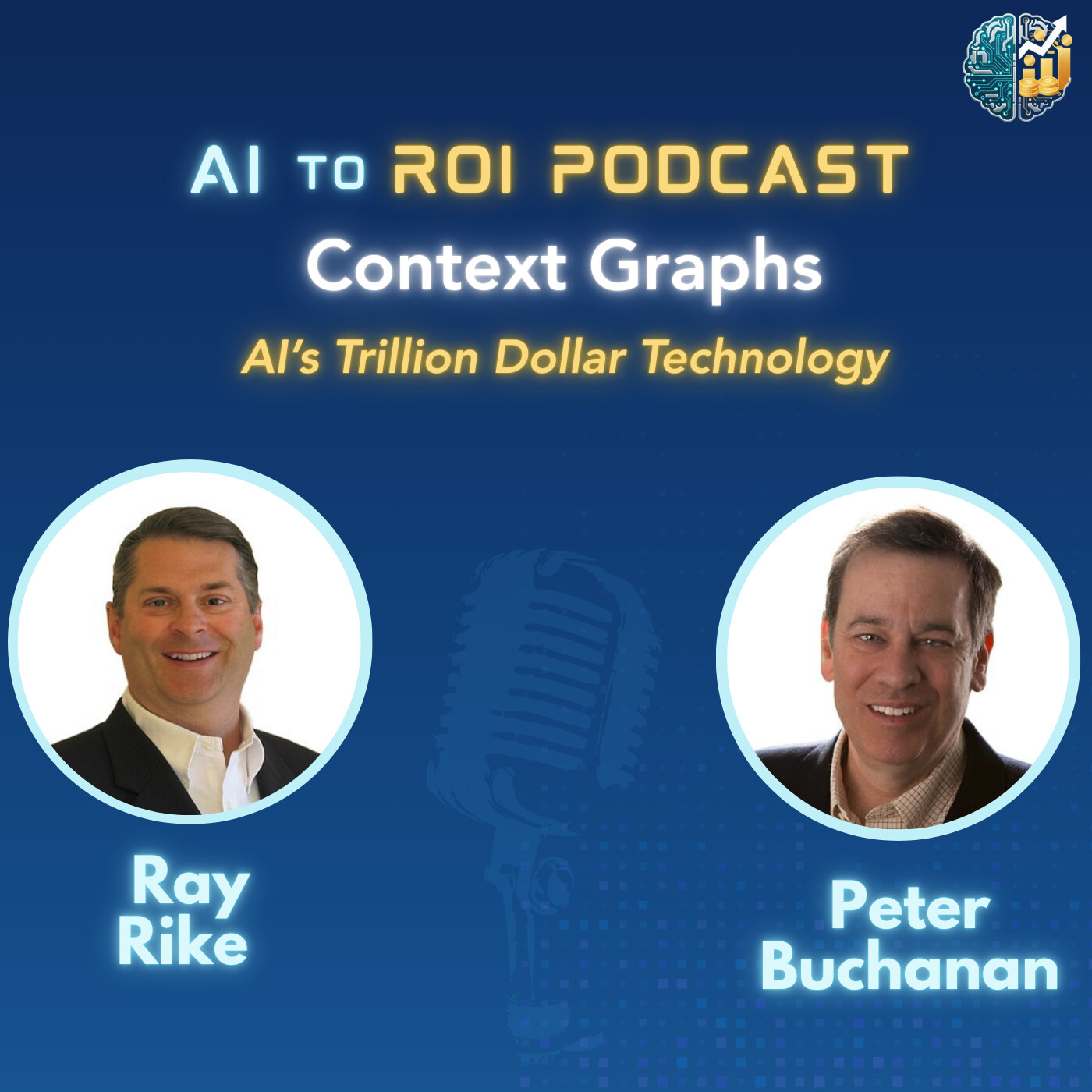
Context Graphs - AI’s Trillion-Dollar Technology
In the first episode of the AI to ROI: Big Story podcast, our co-hosts Peter Buchanan and Ray Rike discuss the emerging importance of Context Graphs in AI Software.Why are context graphs suddenly being called a trillion-dollar opportunity in enterprise AI? In this inaugural episode of The Big Story, hosts Ray Rike (CEO of Benchmarkit) and Peter Buchanan (Managing Partner of New Plan) dive into the "glue technology" that fills the missing gap in the AI stack.While traditional knowledge graphs tell you what happened, context graphs reveal the why! Context Graphs capture the decision traces, policy constraints, and precedents that make AI agents truly auditable and trustworthy. From preventing "data breakage" in regulated workflows to revolutionizing supply chain quality control, discover why context is the key to moving AI from experimental pilots to reliable production.Key TakeawaysThe Why Behind the Action: Context graphs provide the connectivity that agentic AI lacks, recording who made a decision and under what specific constraints.A Trillion-Dollar Value Add: Industry leaders believe context is a massive economic value driver for companies in the era of AI.Beyond Knowledge Graphs: Moving from simple data points to decision lineages that explain the "why" behind an event.Real-World Use Cases: Deep dives into data governance at firms like Vanguard and Prudential, and quality control in the automotive supply chain.The Vendor Landscape: Discussion on current players like Atlan, Neo4j, and Writer, and why tech giants like Microsoft and Salesforce are the "lurkers" to watch.Timestamps00:00 Introduction to the AI to ROI podcast series.02:40 Defining Context Graphs: The missing gap in the AI stack.04:15 The Trillion-Dollar Opportunity: Economic value vs. market size.06:30 Knowledge Graphs vs. Context Graphs: Moving from "what" to "why".09:20 Who should care? Roles from the CEO to the Chief Risk Officer.12:45 Use Case 1: Data Governance and preventing "downstream breakage".15:10 Use Case 2: Unifying the Go-To-Market (GTM) stack.18:30 Use Case 3: Supply chain visibility and automotive quality control.21:40 The Market Map: Current leaders and "Lurker" strategies from Big Tech.25:50 Executive Summary: Things every leader must do right now.Context graphs are a key component to turn Agentic AI software vision into Agentic AI explainability!Read the AI to ROI Newsletter on Substack to dive deeper into this week's Big Story!Subscribe at: ai2roi.substack.comSee Privacy Policy at https://art19.com/privacy and California Privacy Notice at https://art19.com/privacy#do-not-sell-my-info.
Measuring the performance and business impact of AI agents - with Todd Olson, Founder and CEO Pendo
Welcome to the first episode of AI to ROI, the newly re-imagined evolution of the highly successful Metrics That Measure Up podcast. In this launch episode, our host, Ray Rike sets the stage for a new era of conversations focused on turning artificial intelligence from hype into measurable business outcomes.The inaugural guest is Todd Olson, Founder and CEO of Pendo, who joins the show for an interactive, unscripted discussion on how companies should measure the real impact of AI agents inside modern SaaS and cloud organizations. Together, they explore how AI-driven “digital workers” are reshaping productivity, workflows, and operating models across the enterpriseKey topics include how companies can measure the performance and business impact of AI agents, the emerging metrics that define agent adoption and activation, and why connecting usage data to tangible outcomes like time saved, cost reduction, and revenue impact is critical for ROI. Todd also shares his perspective on outcome-based pricing, why it remains rare in AI-native software today, and what must change for it to scale.The conversation wraps with a forward-looking discussion on SaaS and AI convergence, as agents increasingly appear on org charts and product roadmaps, followed by practical advice on developing AI competencies for the next generation of business leaders.If you care about moving beyond AI experimentation toward measurable economic value, AI to ROI is your new go-to podcast.Subscribe, rate, and follow AI to ROI on your favorite podcast platform.See Privacy Policy at https://art19.com/privacy and California Privacy Notice at https://art19.com/privacy#do-not-sell-my-info.
The Strategic Future of FP&A - with Albert Gozzi, Founder and CEO Aleph
The world of FP&A is having its day in the spotlight. New pricing models, a new focus on near real-time business planning, the increased focus on balancing revenue growth and profitability, coupled with the dynamic impact that AI is having on the SaaS market, are all making the role of FP&A a more strategic asset. Albert Gozzi, is the founder and CEO of Aleph, a modern FP&A platform and company that recently raised $29M in their Series B financing from Khosla Ventures.During today's episode, our host, Ray Rike is joined by Albert Gozzi, Founder and CEO Aleph, to discuss the strategic future of FP&A including:The vision behind founding AlephThe evolution of AI in FP&AFP&A’s role in developing corporate strategyGrowth strategies being used in a crowded categoryIf you are a finance leader, FP&A professional or fellow B2B SaaS founder with a product purpose built for the Office of Finance, this conversation with Albert Gozzi is full of unique insights, ideas and opportunity to make your Financial Planning and Analysis organization a strategic asset!See Privacy Policy at https://art19.com/privacy and California Privacy Notice at https://art19.com/privacy#do-not-sell-my-info.
The Use and ROI of AI in Finance - with Sowmya Ranganathan, Former Controller OpenAI and CEO, Lumera
Think about the unparalleled growth that OpenAI has experienced since the public introduction of ChatGPT on November 30, 2022. Now, think about being in finance, or being the controller who had to scale their financial processes, including closing the books to keep up with a company that has scaled from less than $100M in revenue to $10B+ in less than 3 years!?!?That was the situation that Sowmya Ranganathan, Former Controller OpenAI and CEO, Lumera found herself facing in the early part of 2023.During today's conversation with Sowmya, our host Ray Rike discusses several important lessons and use cases of AI at OpenAI in the Finance department including:Why there was no existing playbook for scaling Finance in a company like OpenAIChallenges in one of the fastest growing software companies of all timeUnderstanding compute expenses is critical to understanding the financial performance today and tomorrow at an AI companyWhy excel could not work at the scale of OpenAI (1M+ rows)Using OpenAI to enable finance to write the python code to write the statistical model to analyze financial dataWhy historic analysis is not a good place to start for forecasting in a hypergrowth, compute intensive companyLeveraging AI in the Financial close process - leveraging data warehouse information to build a repeatable processTracking GPU costs in real-time throughout the month - not an excel scale requirementHallucinations are a real concern - but once your AI is encapsulated as standard code - the concerns are minimizedHuman review on any stochastic model is a best practice - such as contract data fields from signed contracts to establish billingA long description would not do the conversation justice - so jump in and be ready to pause the audio to capture the highlights.Sowmya has been in financial leaderships at Square and Rippling in addition to OpenAI, so she has a very unique perspective on not scaling finance to meet the unparalleled growth at OpenAI, and two other hyper growth companies. If you are interested in learning about real-life stories of using AI in Finance at the world's largest AI software company - this episode is a must listen!!!See Privacy Policy at https://art19.com/privacy and California Privacy Notice at https://art19.com/privacy#do-not-sell-my-info.
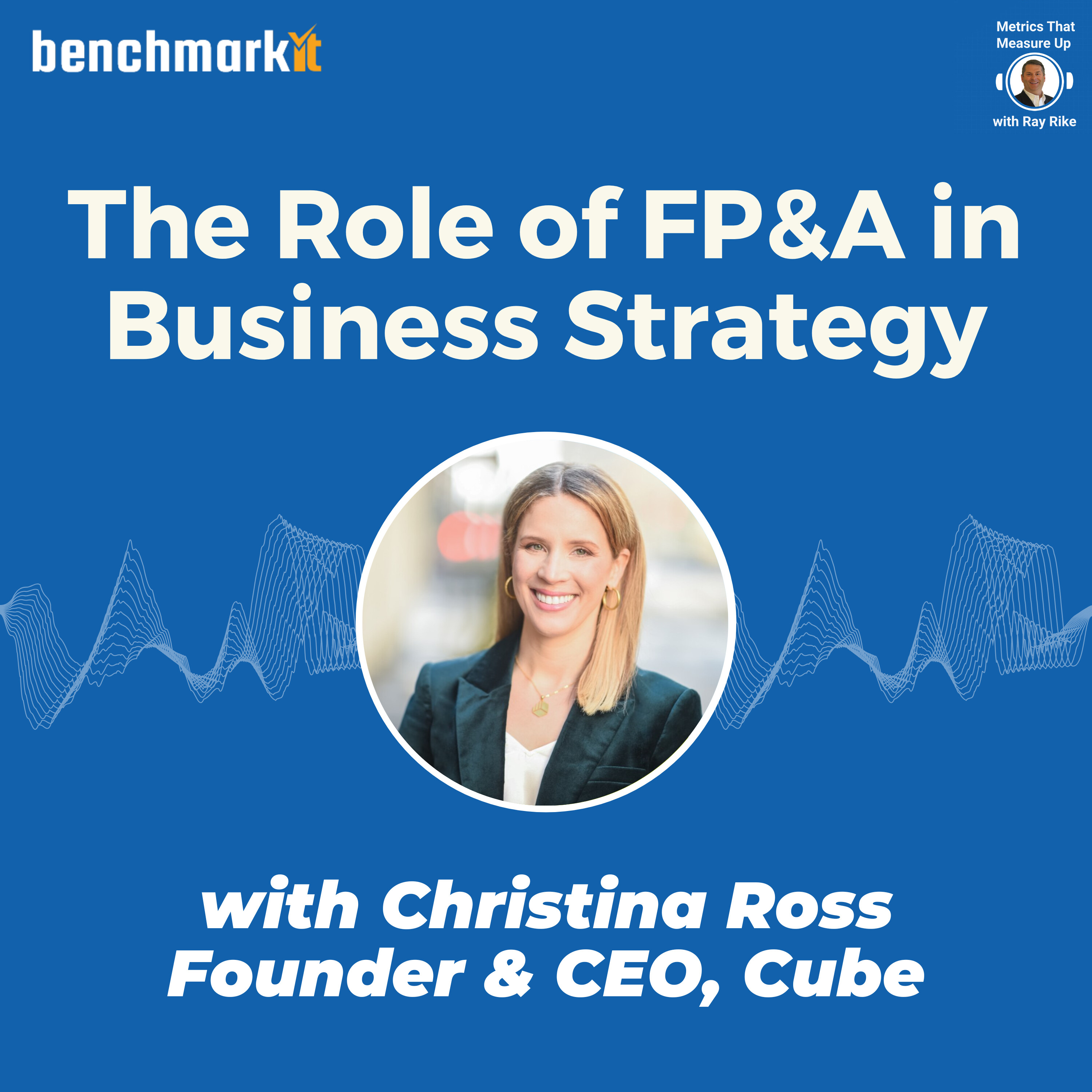
The Role of FP&A in Business Strategy - with Christina Ross, Founder and CEO Cube
Christina Ross is the founder and CEO of Cube. Prior to founding a SaaS platform purpose built for everyone of those companies still using Excel (majority of companies) for business modeling but want to enhance the collaboration of business budgeting, planning and performance across the company, Christina was a corporate audit executive at GE, financial transformation consultant at Deloitte and a multi-time CFO at companies including Rent the Runway, Criteo and Eyeview.During today's episode, Christina and our host, Ray Rike discuss multiple aspects of the Financial Planning and Analysis role, department and the strategic opportunity for FP&A to materially increase the impact on business strategy and performance. Topics we discussed include:How the experiences at larger companies including GE and Deloitte shaped her view on the strategic role of FP&AThe biggest challenges facing CFOs with the FP&A function todayThe role of FP&A in business strategyThe impact of FP&A on business performanceIf you are a CFO, FP&A leader or even the CEO this episode is full of great insights and ideas on how to increase the business impact of your FP&A function!See Privacy Policy at https://art19.com/privacy and California Privacy Notice at https://art19.com/privacy#do-not-sell-my-info.