
Wet Fly Swing Fly Fishing Podcast
1,061 episodes — Page 8 of 22

S9 Ep 667667 | The Fly Fishing Show Experience with Ben Furimsky - Lefty Kreh, Fly Design, Fly Fishing Expo
Show Notes: https://wetflyswing.com/667 Presented By: Smitty's Fly Box, Drifthook Fly Fishing, Stonefly Nets, Yellowstone Teton Territory Sponsors: https://wetflyswing.com/sponsors Have you attended The Fly Fishing Show recently? Did you know that the Fly Fishing Show by the Furimskys is the largest fly fishing show in the world? And what is it about these shows that made them so successful in the past and today? Today you're going to find out what's new with the Fly Fishing Show so you know how to get more out of it if you attend this season. Ben Furimsky, owner of The Fly Fishing Show takes us into a deep dive behind the scenes of the show. You're going to find out why his event planner job is one of the most stressful jobs in the world, next to a police and a firefighter. You're going to find out how a fly designer is similar to a chef. Ben is a fly designer and has been a guide for many years in the past. And we're going to let you know why you should be attending this year and why you should attend the full show and not for an hour. Plus, you're also going to find out about the consumer choice awards that they do at the show. Here we go! Show Notes: https://wetflyswing.com/667
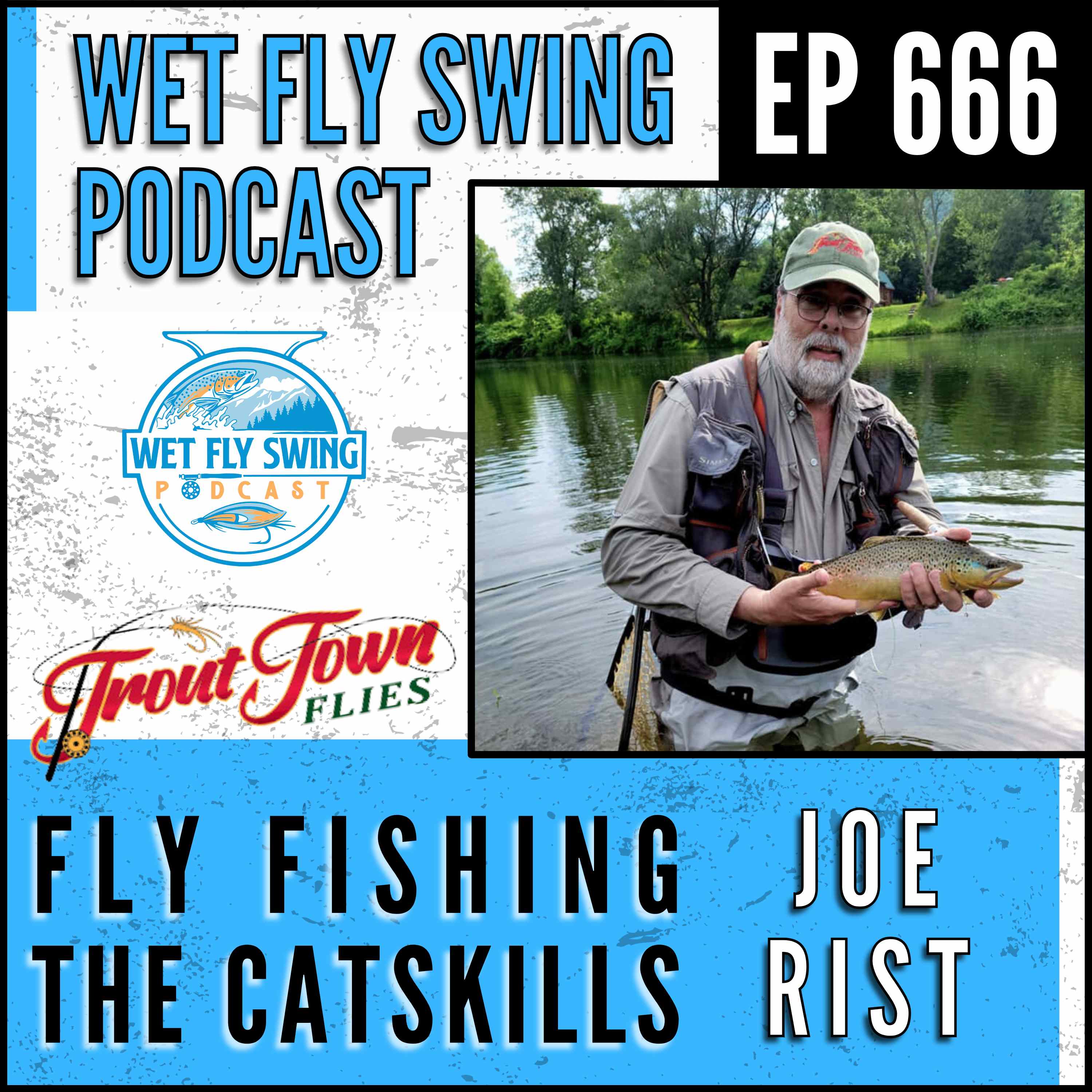
S10 Ep 666666 | Fly Fishing the Catskills with Joe Rist - New York, Brown Trout, Dry Fly Fishing
Show Notes: https://wetflyswing.com/666 Presented By: TroutRoutes, Waters West, Togens Fly Shop, Stonefly Nets Sponsors: https://wetflyswing.com/sponsors In this episode, Joe Rist and I will journey to fly fishing the Catskills, often hailed as the birthplace of American fly fishing. Join us as we uncover the rich history of this iconic region, explore the streams of the Beaver Kill and the Delaware branches, and discover why this area holds such a special place in the hearts of anglers. With Joe's expert insights, you'll learn valuable tips on dry fly fishing and perfecting your casting techniques. Whether you're a seasoned angler or a curious novice, this episode promises to deepen your appreciation for fly fishing in one of the most storied landscapes in the U.S. Episode Chapters with Joe Rist on Fly Fishing the Catskills 1:54 - We explore Joe's journey into fly fishing, sparked by his father's introduction with basic fishing gear. His passion solidified after catching his first brook trout in Maine and starting "Fish Camp" with friends. Joe transitioned to guiding professionally after retiring from the post office at 55. Following the passing of the shop's owner, Joe, with no retail experience but support from his family, successfully opened Trout Town Flies, now in its fifth year. 7:48 - We talk about the history of fly fishing in the Catskill region. Joe highlights its significance as "holy waters," noting contributions from pioneers like Theodore Gordon and George La Branche. The Catskill Fly Fishing Center & Museum, covering 50 acres, showcases important figures and artifacts in fly fishing, including the resurgence of interest among younger people during the Covid pandemic. 11:12 - Joe offers advice on the best fishing times in the Catskills, recommending May for dry fly fishing due to ideal temperatures. He suggests novice-friendly rivers like Beaver Kill and Willow, while recommending the East and West Branches of the Delaware River for experienced anglers. 16:22 - For lodging and camping, Joe explains that while there is ample lodging, prime time (late April to early June) requires early reservations starting in December or January. The area has modest accommodations catering to fishermen, including notable places like Roscoe Motel, Riverside Cafe & Lodge, Red Rose, and Rockland House. For DIY camping, there are several state campgrounds, including Butternut Grove, Roscoe Campsite Park, and Peaceful Valley on the Delaware. 18:50 - Joe reveals that his shop makes 60-70% of its flies in-house. He highlights the significance of tying flies like cripples and emergers, as well as traditional Catskill flies. He also recounts creating the brown floating nymph (BFN) after noticing fish feeding on a specific insect on the West Branch of the Delaware. 25:29 - We get into the other flies he uses in the Catskills. Joe uses the gray fox, cahill, and red quill, effectively on their rivers. He provides a tip for modifying a red quill to mimic a rusty spinner. 28:35 - We focus on fishing the Beaver Kill. Joe notes that the Beaver Kill is more accessible for novice fly fishermen due to its high gradient, which helps correct casting errors. He also mentions that it is stocked with brown trout by the New York State. 32:06 - Our conversation shifts to fishing techniques, where Joe explains the importance of positioning above the fish and allowing the current to deliver the fly naturally. He mentions that in the east, anglers need to feed a lot of line—sometimes 70 to 80 feet—to achieve this, which can be challenging but necessary for successful fishing. 33:24 - Joe elaborates on fishing in the Delaware system, highlighting the commonality of catching large fish, including 21-27 inch fish. He explains the strength and resilience of these fish, particularly due to the cold, fast-moving waters. He also mentions migratory fish like shad and stripers that enter the Delaware system, and the presence of smallmouth bass in areas like the Beaver Kill. He notes that while there are various fish species, anglers predominantly seek large rainbows and browns. 38:05 - We talk about the fishing regulations and conditions in New York. Joe explains that the fishing season runs year-round, with specific rules: from April 1st to October 15th, regular fishing with size and catch limits is allowed; from October 16th to March 31st, it's catch and release only, with no live bait. 39:33 - Joe mentions temperature inversions in the Delaware River's tail waters, which affect fishing conditions. Milder winters have led to earlier fishing and hatches, with some species appearing sooner. He highlights that the tail waters offer consistent fishing opportunities, even in warmer months, and details the fishable waters: 17 miles on the west branch and variable conditions on the east branch. 42:03 - Joe describes their guiding and fishing techniques in the Catskills. 46:16 - For new anglers fishing the west branch of a large river, Joe emphasizes t
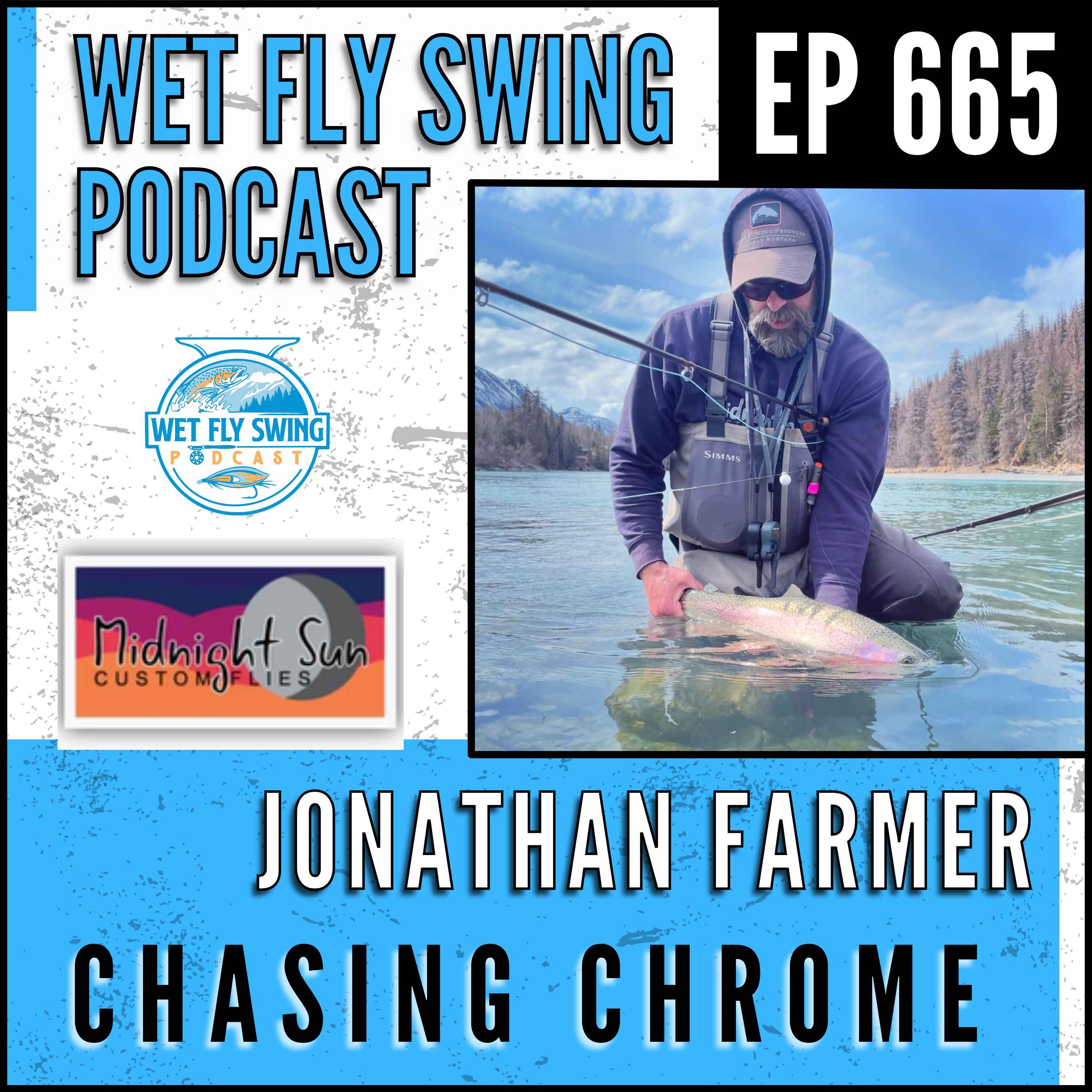
S10 Ep 665665 | Tying Steelhead and Pacific Salmon Flies with Jonathan Farmer – Chasing Chrome, Alaska, Fly Tying
Show Notes: https://wetflyswing.com/665 Presented By: Drifthook Fly Fishing, Angler's Coffee, Togiak River Lodge, Yellowstone Teton Territory Jonathan Farmer, steelhead fly tying guru and author of Chasing Chrome: Tying Steelhead and Pacific Salmon Flies is here to take us into his world of Alaska and steelhead fishing. We'll hear the stories behind flies like the Graboid, Led Zep Prawn, and Mini Me, plus why Jonathan's shifting to more natural patterns and how he picks his colors. Jonathan ties some of the cleanest flies you'll ever see. He's been putting in 40 to 70 hours a week for over 10 years! Find out why so many people are looking him up and how his book is packed with tips to help you understand fly design. Ready to pick up some tricks from a pro? Grab a notepad. You're going to want to jot these down! Show Notes with Jonathan Farmer on Tying Steelhead and Pacific Salmon Flies. 11:17 – Fly fishing started for Jonathan when he was just 17 during a backcountry camp in Colorado. He started with conventional fishing and even joined tournaments in Texas. He worked on sport fishing yachts in South Florida before moving to Alaska, where he got into fly fishing. 12:14 – Jonathan shares that each season in Alaska offers unique opportunities. In spring, he loves stone fly fishing on the Kenai. Summer brings great dry fly action and swinging wet flies. By fall, fish target spawning sockeye. Steelhead and Pacific Salmon Flies Chasing Chrome: Tying Steelhead and Pacific Salmon Flies 21:20 – Jonathan talks about how he always wanted to write a fishing book. A few years ago, he started jotting down thoughts but put them aside. He teamed up with Mike at Mossy's Fly Shop for help with photos. 24:18 – The book features Jonathan's favorite steelhead and Pacific salmon flies, complete with step-by-step instructions. He says the book wouldn't be what it is without Marty Howard's input on its layout and design. Marty also co-wrote the book Steelhead Fly Tying Art and Design with Dec Hogan. Check out our episode with Dec Hogan here! Steelhead and Pacific Salmon Flies The Book's Creation 30:37 – Jonathan said the toughest part of writing his book was the editing process. He followed Marty's advice and printed three copies for friends to review. Visit Jonathan's website or Instagram to grab your copy of his book. You can also get a signed copy, which comes with three flies from the book! 34:07 – The book covers fly-tying techniques and color choices. Jonathan mentioned that while some flies, like the Led Zep Prawn, are super fun to tie, they can be complex. He enjoys having a fly box just to admire the cool designs, even if he doesn't fish with all of them all the time. Watch this video of Jonathan tying the Led Zep Prawn on Youtube: The Challenge of Naming Flies 36:08 – There are 21 unique flies in the book that Jonathan created himself. He said that designing flies is probably easier than naming them. "The Graboid," was named by a friend without even knowing it. Many of his flies have music-themed names, like "Sure Shot," inspired by the Beastie Boys, and "Crown Jewel," from Brother Ali. He even has a tube fly named "Zoomer," which was created during a Zoom course. Finding the Perfect Steelhead Fly Proportions 52:29 – Jonathan has been tying flies for nearly a decade and puts in a serious amount of hours—sometimes 70 a week! 53:26 – We dive into how to balance materials when tying the perfect steelhead fly. It's all about finding the right proportions—not too sparse, but not overly bulky either. If a fly feels too full, he advises creating a channel to slim it down. Jonathan reminds us that even experienced tiers sometimes end up with flies that are a bit bulkier than intended, and it's okay to make adjustments. 55:39 – Bulky flies don't move or breathe well in the water, which affects how they mimic bait. A fly that casts poorly or looks stiff in the water won't attract fish. Jonathan uses a tank in his office to test the movement of his flies. If it doesn't swim or breathe right after a few hours, it's a no-go for him, and he tosses it. The Mini-Me Graboid Jonathan shares the story of the Mini-Me fly. The Mini Me uses pine squirrel instead of rabbit, making it a smaller, more versatile fly. Jonathan uses it for steelhead, coho, and trout, especially in colors like black and red or black and blue. Show Notes: https://wetflyswing.com/665
S9 Ep 664664 | Fly Fishing Veterans with Doug Myers - Fly Tying and Fishing Expo, 30-inch Trout, Oregon Fishing
Show Notes: https://wetflyswing.com/664 Presented By: Jackson Hole Fly Company, Angler's Coffee, TroutRoutes, Yellowstone Teton Territory Sponsors: https://wetflyswing.com/sponsors Doug Myers, head man at Fly Fishing Veterans, is going to share his story of serving in the Air Force today before fighting fires for over 30 years. We're going to hear about some of his home waters in Oregon, Montana and Idaho, and we're going to hear which place he'd choose to settle down in forever if he had to pick just one. Plus, you're going to hear about Diamond Lake and where you can find 30-inch trout, including those illustrious tiger trout. In today's episode, you are going to get an inside view into a relatively new veterans group and the fly tying and fly fishing expo that you're going to want to attend this year. We're going to find out what it takes to build a program to help veterans and how you can get involved to help some folks in your region or your part of the world. And we are going to talk fishing today, a little tiger trout and a little brown trout is going to round out today's episode. Show Notes: https://wetflyswing.com/664
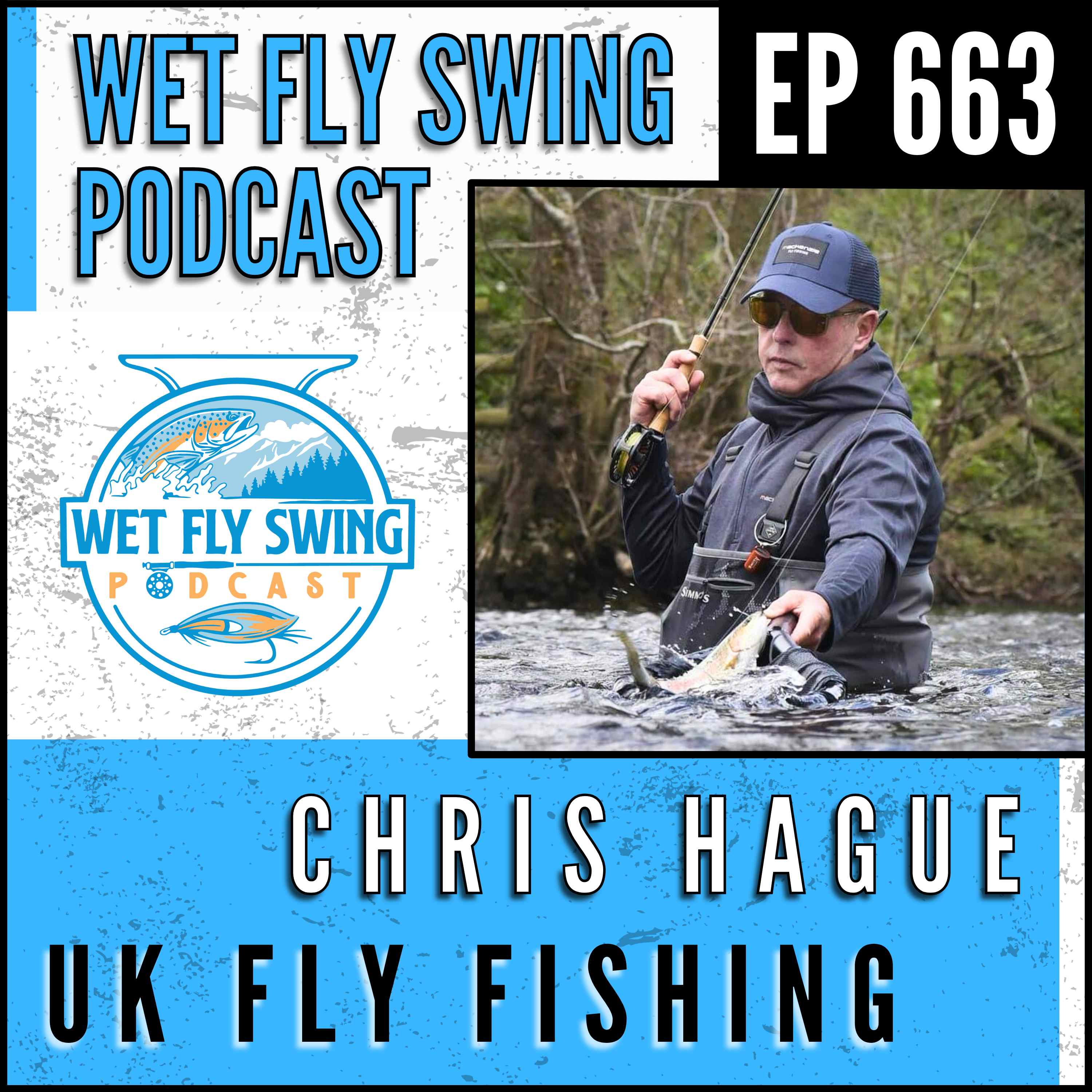
S10 Ep 663663 | UK Fly Fishing with Chris Hague - Iceland, Spey, Atlantic Salmon
Show Notes: https://wetflyswing.com/663 Presented By: Yellowstone Teton Territory, Smitty's Fly Box, FishHound Expeditions, Stonefly Nets Sponsors: https://wetflyswing.com/sponsors Welcome to our latest episode, where we delve into the exciting world of UK fly fishing with none other than Chris Hague, an elite fly casting instructor and guide. In this episode, we explore the intricacies of fly fishing in the UK and Iceland, focusing on the majestic Atlantic salmon and the art of spey fishing. Chris shares his expert insights on the best techniques, the top locations for catching wild rainbows, and the current state of salmon fishing in Scotland. Whether you're a seasoned angler or a curious beginner, this episode is packed with valuable tips and fascinating stories. Episode Chapters with Chris Hague on UK Fly Fishing 4:19 - Chris' interest in fishing began at a young age, influenced by living close to various fishing spots and seeing salmon fishing on family holidays in Wales. His passion for fly fishing led him to focus exclusively on it. About 20 years ago, he began taking exams to become a fly fishing instructor, starting with entry-level certifications and advancing to more complex qualifications, including those from the Fly Fishers International (FFI). 10:14 - Chris describes the current situation of salmon runs in the UK and how it compares to other locations. The UK has experienced a decline in salmon populations with little improvement. He shares his recent experience fishing on the River Tweed in Scotland, where he caught a 13-pound fish but notes the effort required and the scarcity of fish. Chris contrasts this with Iceland's successful ranching policy, where larger fish are placed in holding pens and a select number of fish are used for breeding. 13:48 - Chris offers spey casting lessons, including single-handed and double-handed workshops, and guided fishing trips for species like trout and pike. He notes that traveling for salmon fishing requires a three-hour drive. 14:32 - He describes his typical two-handed setup for salmon fishing, including a 12'7" Mackenzie FX2 rod made of carbon and graphene, paired with a Lamson reel and a shooting head system. He emphasizes the versatility of multi-tip line setups, which allow anglers to adjust their fishing strategy quickly without carrying heavy gear. He prefers traveling light and uses this adaptable setup to efficiently cover different fishing conditions. 19:18 - Chris explains they are currently designing a new line for Mackenzie, and he describes the evolution of fishing lines, noting that Skagit and Scandi lines emerged around the same time. Skagit lines were short and designed for throwing heavy, large flies, while Scandi lines offered better presentation but were still relatively short. Chris mentions the development of hybrid lines that combine the benefits of both Skagit and Scandi lines, being short but offering better presentation. 21:07 - He mentions the Lamson Guru reel which he says complements the black, orange, and white Mackenzie rods. Mackenzie was founded by Scott Mackenzie, a world champion distance caster. The company has gained recognition for its innovative rods, especially those incorporating graphene, a material known for its strength and stability. This has led to the Mackenzie rods winning several awards in the UK. Additionally, Chris mentions that Mackenzie is expanding their product line to include clothing and various types of rods, including those for tight line nymphing, saltwater fishing, and predator fishing, with new products expected in 2025. 23:49 - Chris recounts catching a 30-pound fish in the River Tweed using a 12ft 7wt rod while fishing from a boat. He mentions that the boat is maneuvered manually by gillies, who have impressive arm strength due to their constant rowing. Chris describes the fishing experience, noting the gentle take of the fish and how he adapted his technique by changing the depth and fly used. 26:35 - For those planning a fishing trip to the UK, Chris suggests that while the UK has fantastic rivers, access can be challenging due to many being members-only. He mentions that many anglers travel to places like Iceland and Norway for better fishing experiences. He prefers Iceland because he can reach rivers there faster than in Scotland and finds the fishing quality superior. 30:24 - We dig into the history and evolution of spey casting. He explains that spey casting originated in the 1880s with fishermen who needed a technique to cast in limited space and under various wind conditions. 34:41 - We talk about salmon fishing techniques, particularly in Iceland and the UK. Chris explains that early in the season, larger and more aggressive fish are more likely to chase bigger flies, whereas later in the season, fish become more cautious and prefer smaller flies. He shares insights on how to keep the fly in front of the fish longer by manipulating the line without creating too much slack. 40:37 -

S10 Ep 662Littoral Zone #12 with Phil Rowley | What Trout See and Why it Matters with Jason Randall
Show Notes: https://wetflyswing.com/662 Presented By: Stonefly Nets, TroutRoutes, Smitty's Fly Box In today's Littoral Zone episode, Phil chats with Jason Randall about what trout see and why it matters. Jason has written four books, including his famous trout trilogy, which dives deep into how trout behave in their environment. While Jason's passion lies in rivers and streams, the research and knowledge he's amassed is equally beneficial to stillwater fly fishers. ]His understanding of how trout see is crucial information for all fly fishers, guiding both our pattern selection and presentation techniques, information that helps us consistently make the correct pattern and presentation choice. Show Notes with Jason Randall on What Trout See and Why it Matters. 2:20 - Jason Randall graduated as a veterinarian and did postgraduate work in fish health and medicine. Although he considered a career in fisheries, he ultimately chose private practice. 4:16 - Jason started fly fishing around 40 years ago but got frustrated early on due to a lack of guidance. He took a break, then later tried again this time with the help of great mentors. Jason says his passion really started during a trip to Colorado. A guide introduced him to a caddis hatch that transformed the river into a feeding frenzy of trout. Watching the stream come alive with caddis and rising fish was a game-changer for Jason. 08:21 - Jason says he was lucky to have some amazing mentors like George Kustin who guided him in fly fishing and taught him about wet flies and soft tackles. Lefty Kreh took Jason under his wing. 09:31 - Jason also works with Temple Fork Outfitters on rod design and prototype testing. This year, they introduced a new European Nymphing Rod called the Elevare, which won Best New Rod at ICAST 2024. Books by Jason Randall 13:00 - Jason's trout fishing trilogy started in 2012 with Jay Nichols from Stackpole Books. The trilogy covers: Feeding Time: A Fly Fisher's Guide to What, When and Where Trout Eat Trout Sense: A Fly Fisher's Guide to What Trout See, Hear, and Smell Moving Water: A Fly Fisher's Guide to Currents Jason also wrote Nymph Masters, a collaborative effort featuring tips from top nymph anglers like Gary Borger and Lefty Kreh. Trout Sense 17:00 - Trout begins life as prey, eating small organisms like plankton. As they grow, they become predators, feeding on insects, crustaceans, and even small fish or mammals. They retain the wide-set eyes of prey for spotting threats and the sharp focus of predators for hunting. This makes them tricky to catch. 21:10 - Jason explains how light works differently underwater, which affects how trout see. Refraction, or the bending of light when it moves from air to water, can also trick us into thinking we're casting right over a fish, but we could be a few feet off. 26:08 - Jason dives into how color fades underwater, starting with red, and how different colors are absorbed at various depths. Fluorescent colors like chartreuse stand out the most and create a strong contrast, which trout notice. 29:18 - Unlike humans, a trout's pupils don't adjust to light, and their eyes have a football-like shape that lets them see clearly both in front and to the side. Search Image and How Trout Decide to Eat 42:11 - Trout uses a "search image" to figure out what's food and what's not. They focus on four things: size, shape (profile), movement, and color. If a fish keeps ignoring your fly from far away, it's probably the size or shape that's off. But if they come close, and then turn away, Jason says that it may be a color-based refusal. Show Notes: https://wetflyswing.com/662
S10 Ep 661WFS 661 - 2024 Wet Fly Swing Updates for the Fall
https://wetflyswing.com/q4 In this short episode I give you a super quick episode that updates you on our podcast plans for the next month or so. We will be taking a small brake from 3 episodes a week until Dave gets back from the fall school schedule. Head over to Schooloffishing.co if you want to find out what trips we have going now.

S9 Ep 660In the Bucket #9 | Snowboarding, Hunting, and Steelhead Fishing in Northern BC with Curtis Ciszek, Eric Jackson, and Darcy Bacha
Show Notes: https://wetflyswing.com/660 Today Brian chats with Curtis Ciszek, Eric Jackson, and returning guest, Darcy Bacha. These guys are known in the snowboarding industry. They are also passionate steelhead anglers. They talk about the movie they did in the Skeena called Alignment and touch on some fishing and hunting stories and insights in Northern BC. It's time to get in the bucket... https://inthebucketpodcast.com/
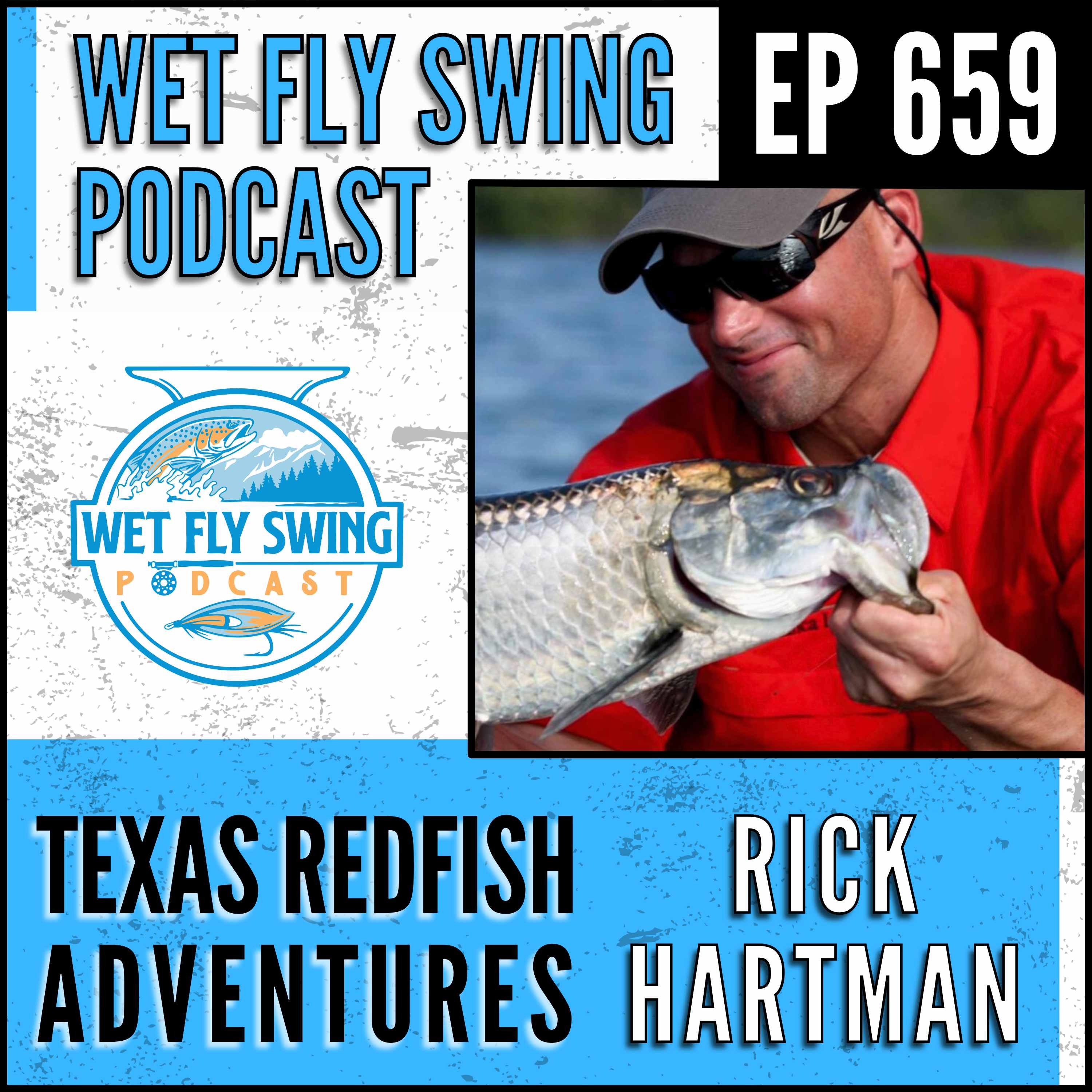
S10 Ep 659659 | Texas Redfish Adventures with Rick Hartman - Lower Laguna Madre, Speckled Trout, Tarpon
Show Notes: https://wetflyswing.com/659 Presented By: TroutRoutes, Waters West, Jackson Hole Fly Company, Togens Fly Shop Sponsors: https://wetflyswing.com/sponsors In this episode, we explore the thrilling world of Texas redfish fishing with expert guide Rick Hartman. Rick shares invaluable tips on casting in windy conditions, identifying nervous waters, and practicing techniques that will improve your chances of catching redfish, trout, tarpon, and other saltwater species. Join us as we uncover the secrets to successful fishing, including how to mark your line for more accurate casts and the surprising truth about whether a redfish will take a bare hook. Rick also provides a step-by-step guide on planning your next fishing trip to South Texas, ensuring you know what to do and what to avoid. Episode Chapters with Rick Hartman on Texas Redfish Adventures 1:38 - Rick recounts his introduction to fly fishing, which began accidentally through older family members during childhood trips to farm ponds and the mountains. He explains that he didn't realize fly fishing could be done in saltwater until he was in junior high. 5:35 - He describes the Lower Laguna Madre area in South Texas. It's a remote area with few access points, mainly through Port Isabel and Port Mansfield, and airports in Harlingen and Brownsville. Rick mentions that while most fishing is within the bay system, there are opportunities to fish in the Gulf of Mexico for various species, though the rough and windy conditions often limit these outings. 9:55 - We talk about the best times to target redfish in his area. Rick mentions that fall, especially September to October, is an excellent time to fish due to consistent weather. Although August can be very hot and humid, it still offers good fishing. Overall, he advises avoiding winter if traveling from afar to ensure a better fishing experience. 14:13 - We ask him about the stingray tailing. Rick explains that they act like vacuum cleaners on the flats, picking up crabs and shrimp from the bottom. Fish like trout and redfish follow behind stingrays to catch the leftovers the stingrays miss. This behavior makes the fish so focused that they don't notice nearby boats. 17:59 - To find a fish, Rick emphasizes that the first and most crucial factor is the water level, which can change daily due to wind. He explains that he assesses various spots based on whether the water levels are suitable for his boat to float. He also considers wind direction and looks for sheltered shorelines where the water might be clearer. Rick contrasts this with trout fishing, noting that unlike trout, which behave predictably, redfish can be much more challenging. The conditions and fish locations can change so rapidly that even after having a fishing spot "wired" for a week or two, a short break can make it feel like starting over. 20:34 - We dig into his involvement in casting competitions. Rick mentions he participated in these competitions for about 12 years, drawn by the excitement and substantial prize money which attracted participants globally. One these events was by the International Sportsmen's Expo (ISE). 24:01 - Rick recounts his success in various casting events, describing the process where top casters get to choose their fishing spots. He shares that his interest in casting began because he found it enjoyable and started working at a fly shop where he taught casting and fly tying classes. He was introduced to casting tournaments by a Sage representative, which led him to participate and eventually excel in these competitions through extensive practice. 29:45 - We ask him for some casting techniques, particularly in challenging conditions like windy environments or saltwater fishing. Rick emphasizes the importance of practicing with targets, suggesting anglers use a single target to practice hitting from various distances and directions. He stresses the significance of making effective second casts if the first cast is off-target, rather than wasting time stripping the line back in and starting over. 35:17 - Rick emphasizes that the casting stroke should not change in the wind; instead, the elevation of the forward cast should be adjusted. He advises aiming the forward cast lower to the water to prevent the wind from pushing the fly back. He warns against using too much force, which can create larger loops and reduce aerodynamics, suggesting a more controlled and precise technique for better results. 43:26 - He describes his process for preparing and helping his guests catch fish on his boat. He usually stops the boat 200-300 yards from the fishing spot to approach quietly. He observes the water to identify patterns and waits for the right time to fish. Rick provides tips for his guests, such as stripping off line and false casting to prepare. Depending on the wind conditions, he maneuvers the boat to give his guests the best possible shot at casting. 45:59 - Rick explains that "nervous water" looks different f

S10 Ep 658658 | Jay Fair Trolling Flies with Denis Peirce – Trout, California, Stillwater
Show Notes: https://wetflyswing.com/658 Presented By: Togiak River Lodge, FishHound Expeditions, Skwala, Yellowstone Teton Territory Denis Peirce, radio show host and trolling flies guru, is here to take us into the history of the great Jay Fair, how all this came to be, and his connection to Jay. Today, you'll learn how to troll flies with your current gear, the secret to manipulating your fly, and even hear the story behind the wiggle fin that started with a WD-40 can! Grab your favorite drink and get ready for a laid-back way to catch some big fish! Show Notes with Denis Peirce on Trolling Flies. 03:50 - Denis grew up fishing in Southern California with his grandfather. Over the years, he built a successful business selling flies to resorts and fly shops. He focused on places where people actually fished, like the Sierras and up the West Coast. 06:31 - Denis talks about Jay Fair's unique trolling system. Jay used a sink tip line to keep his fly just below the surface, trolling near shallow areas where trout would feed. 07:46 - Denis started working with Jay Fair in the late '90s. Jay met Denis at the International Sportsman's Expo and asked him to produce the flies on a larger scale. Jay provided the kits with all the materials, and Denis handled the production and shipping. Getting Started with Trolling Flies 12:58 - Denis talks about how to start trolling with flies, even if you're new to it. He says your current rods, reels, and lines will do. If you have a spool of 2X tippet, you can make a longer leader, and you're set. A sinking or sink tip line works better, but even a standard floater can work. 14:49 - We discuss why trolling flies might get negative reactions and why it's a great technique. He says trolling is great because it's less physically demanding than casting all day. Plus, trolling helps cover a lot of water, which is key when fish are scattered. Check out our Episode with Denny Rickards. Best Conditions for Trolling Flies 17:50 - Early mornings and low light are prime trolling times because fish are likelier to be in shallow areas. Fish will drop deeper as the sun rises and the water gets clearer. Denis stresses that fishing is like solving a puzzle; you must adjust your technique based on daily conditions. 20:55 - Denis recommends letting your boat glide to a stop to let your gear sink, then speeding up again to move the gear through different depths. Changing direction also helps provoke strikes, as fish react to movement. 22:17 - Trolling flies are designed to attract trout, which are visual feeders. They feature long tails and wings to create movement in the water. The action disc can make the fly swim even more attractively. 25:59 - The WiggleFin Action Disc is a small plastic disc that adds movement to your fly and makes it more attractive to fish. Dean Teegarden was inspired by a creative fisherman using sequins and a leech pattern. Dean took that idea and made the disc using a contact lens holder and a tube from a WD-40 can. 29:06 - Jay Fair used a floating fly line and manipulated it by adding a mend—basically flicking the rod to make the fly pulse and change speed. This technique makes the fly move more naturally. Fishing Show with Dennis Peirce 33:13 - Denis shares about his weekly radio show that's been on air since the early '90s. It runs every Friday night from 6 to 7 PM. The radio show started as a way for Denis to connect with his fly fishing customers and learn more about their local fishing spots. 40:42 - When trolling, any streamer fly will work, but deceivers are especially cool if you let them soak for 10 minutes. You can use tube flies and stack them to make long flies. 47:53 - Denis says to focus on structure in the water to find big fish. Finding structure is key, so invest in a basic fish finder to locate it. For trolling, you can use lead core lines or modern shooting heads with sinking rates. Thin braid backing helps you go deeper, and you can add a flasher to your setup for better attraction. Show Notes: https://wetflyswing.com/658
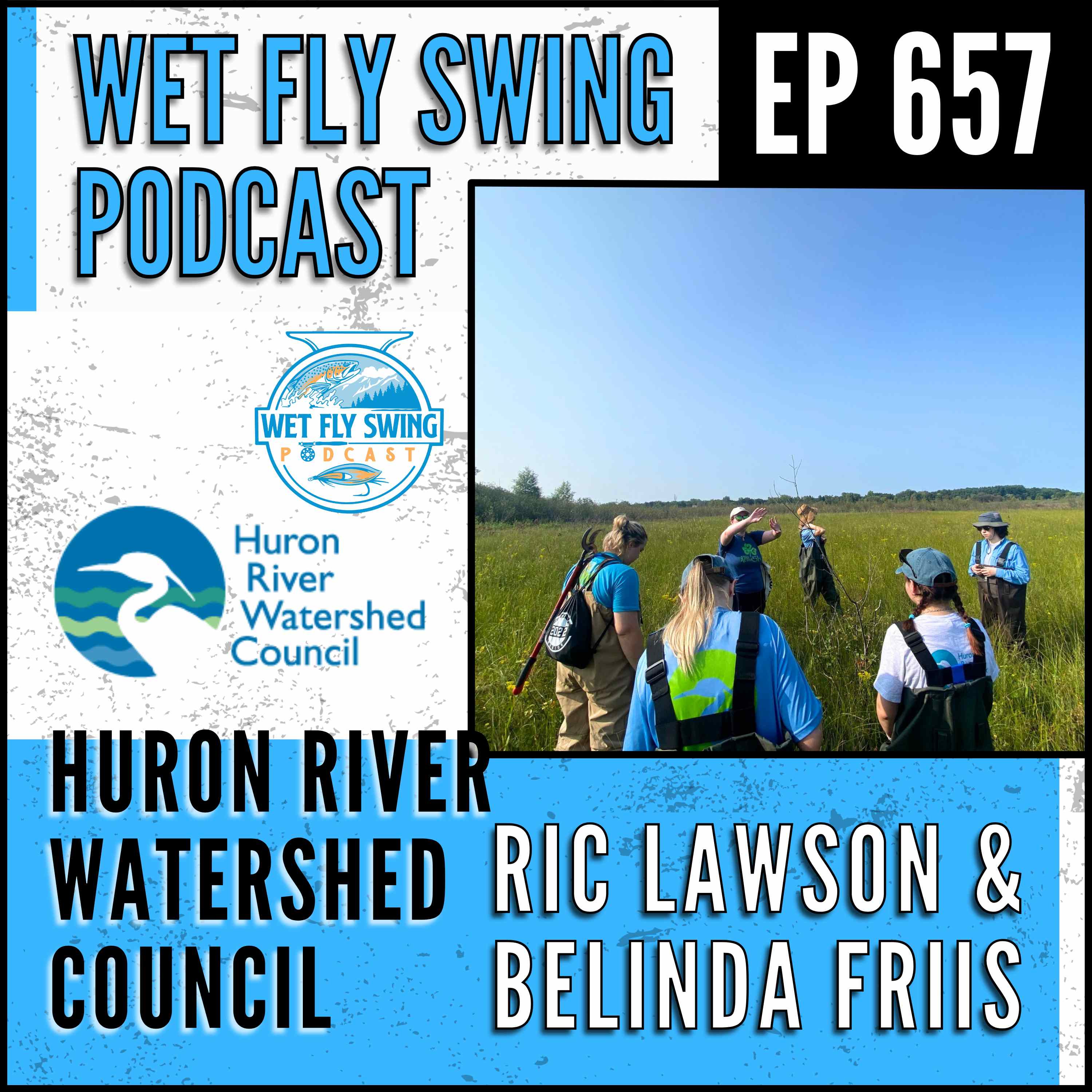
S9 Ep 657657 | Huron River Watershed Council with Belinda Friis and Ric Lawson - River Restoration, Smallmouth Bass, Great Lakes
Show Notes: https://wetflyswing.com/657 Presented By: Jackson Hole Fly Company, Yellowstone Teton Territory, Togens Fly Shop, Angler's Coffee Sponsors: https://wetflyswing.com/sponsors Have you ever thought about that urban stream that's flowing right near your home right now? As water runs off the street and into the creek, what happens next? Who's looking after the creek? And who's protecting those fish species that are inhabiting those areas? Today you're gonna get an inside view of a watershed council that is protecting their basin on a large scale. And we're gonna talk about how this all ties into the smallmouth bass trip and giveaway we're doing right now. So you know a little bit more about how to protect your own streams and how to get involved in this big trip. Belinda Friis and Rick Lawson from the Huron River Watershed Council are here to shed light on the work they're doing to protect one of the biggest and most important rivers in the Michigan area of the Great Lakes. You're gonna find out today what forever chemicals are and what they are doing to help protect these chemicals from getting into our streams. You're gonna find out what the Stonefly search is all about and how this is helping to prepare some of the work they're doing out in their area. And you're also gonna get a little bit of hope, actually a lot of hope into looking at the future. We've talked a lot about this on the podcast. There's definitely some ups and downs in species populations, but today we're gonna be talking about a few in this area and you're gonna get some good direction moving forward. Plus, did I mention it? We're gonna be giving away a trip to Schultz Outfitters, and if you wanna get involved in this trip, you can do it. We'll talk about that at the end. Definitely pumped to get into the Detroit area, putting Detroit on the map, the Huron River. This is gonna be awesome. So let's give back to another great organization. Show Notes: https://wetflyswing.com/657

S10 Ep 656656 | Smallmouth Bass Fishing with Mike Schultz - Schultz Outfitters, Michigan Rivers, Softshell Turtles
Show Notes: https://wetflyswing.com/656 Presented By: Yellowstone Teton Territory, TroutRoutes, Visit Helena, MT, Skwala Sponsors: https://wetflyswing.com/sponsors In today's episode, Mike Schultz from Schultz Outfitters shares his invaluable insights to help make your next smallmouth bass fishing trip a roaring success. From headhunting strategies and the importance of the right angle, to understanding how temperature influences your fishing methods throughout the year, this episode covers it all. Plus, we delve into some unique tips, like how chasing softshell turtles can improve your bass fishing game. So, let's get into it and uncover why smallmouth bass fishing is a favorite among some of the best anglers in the country. Episode Chapters with Mike Schultz on Smallmouth Bass Fishing 3:14 - We discuss the unique aspects of smallmouth bass fishing in Michigan. Mike highlights that the local rivers, being smaller and more intimate, offer a special experience compared to larger watersheds. Mike mentions that their standard fishing trips involve using Clackacraft skiffs, which are perfectly suited for their rivers. The guides have flexibility in scheduling trips, adjusting based on the time of year and water conditions. 6:29 - We get into the fishing conditions and expectations for our upcoming trip in July 2025. Mike mentions that July is typically great for topwater fishing, using poppers and terrestrial baits similar to trout fishing gear. There are also insect hatches, such as mayflies, that can start in early June and last into September, providing various fishing opportunities. 10:14 - We discuss plans for a fishing trip in Michigan, focusing on the unique aspects of fishing in the Great Lakes region. Mike describes their different fishing programs available in mid-July, including opportunities to catch numerous smallmouth bass or targeting larger fish in smaller rivers. He emphasizes that by mid-summer, large fish often remain in fixed areas, allowing for more strategic fishing. 14:08 - According to Mike, the state record in Michigan for smallmouth bass is over nine pounds, but such large fish are typically found in lakes and not in the rivers where they fish. Their focus is more on the length of the fish, with a 20-inch smallmouth being considered mature and noteworthy. He mentions that their crew catches around 25 to 30 smallmouth bass each year that are 20 inches or larger. 16:06 - For a successful smallmouth bass fishing from a drift boat, Mike emphasizes the importance of keeping the fly out front of the boat rather than off to the side. This approach helps keep the angler undetected and ensures a more effective hook set when the fish inhales the fly. He further explains that this method not only improves your chances but also provides a better experience for all on the boat. 21:13 - We talk about the evolution of drift boats in their region. Mike reminisces about the old aluminum drift boats, especially the big 16-foot models. He explains that initially, large aluminum boats were common, but over time, companies like Hyde and Stealth Craft began producing lighter, narrower boats that are more suitable for the local rivers. These boats are easier to maneuver and can be equipped with small motors, which helps them cover long stretches of river without exhausting themselves. 24:45 - Mike attributes the Schultz Outfitters' success to longevity in the field, treating people well, fulfilling promises, and compensating team members fairly. He mentions key figures like Jeff Liskay and Greg Senyo, highlighting their expertise and humility despite not being very active on social media. He also notes the special environment they've created at Schultz Outfitters, which some customers deeply appreciate. 28:25 - Mike runs through the normal year at their shop. They do a lot of fly tying focused events from January to February. He also mentions one of their big annual events which is called Bobbin the Hood. 34:55 - We ask Mike about his preferred water conditions, to which he responds that he enjoys a sudden increase in water flow. Mike shares a recent vacation experience where the river's flow increased from 1000 to 1600 cubic feet per second (CFS), resulting in excellent fishing conditions. He notes that earlier in the week, finesse techniques worked best, but the increase in flow changed the fishing dynamics. 35:54 - Mike elaborates on the concept of finesse fishing, which can range from using small foam flies like damsels and dragonflies to larger poppers, emphasizing patience and precision. 38:42 - He also describes a unique technique that involves sight fishing around softshell turtles, similar to saltwater fishing. These turtles dislodge food while feeding, attracting fish, and the key is not to spook the turtle to capitalize on the opportunity. 47:12 - Mike tells us that bass are always predators and that their diet is influenced by their surroundings. For example, in one area with abundant caddis, eve

S9 Ep 655655 | Phil Rowley's Top 8 Tips for Inducing a Strike - Solo Episode
Show Notes: https://wetflyswing.com/655 Presented By: TroutRoutes, Togens Fly Shop Sponsors: https://wetflyswing.com/sponsors If you listen to today's episode, you will have a much better chance to hook more and larger fish on your next Stillwater trip. That's because I'm going to provide a Phil Rowley summary of his top tips for inducing a strike, and I'll have a little story to share at the end that's going to reinforce this message. In today's short snippet bonus episode, we're going to hear Phil Rowley's 8 tips on inducing a fish take. This podcast today comes from episode 640, where Phil was on his Littoral Zone podcast and he shared these exact tips and more. If you want to hear the full-length episode, check out 640. This is going to be a short snippet episode just so you have a punch just in case you missed that one or you want something a little bit shorter. Show Notes: https://wetflyswing.com/655

S10 Ep 654654 | Hunting Musky with a Fly with Rick Kustich — New York, Great Lakes
Show Notes: https://wetflyswing.com/654 Presented By: Visit Helena, MT, Togiak River Lodge, Yellowstone Teton Territory, Waters West You may have heard of today's guest from the books and content he's written about spey and steelhead fishing. But did you know that he also has an amazing book on another hard-to-master species? Today, we'll walk through the biggest tips from this book so that you might have a better shot at a giant musky this season. Rick Kustich, author of Hunting Musky with a Fly, is here to share his top tips on landing that elusive musky. You'll learn how to tease a strike, where most fish occur, and the three key tips to keep the big one on the line. Ready to profile a predator musky style? Show Notes with Rick Kustich on Hunting Musky with a Fly 01:31 - It's been over a year since we had Rick on the podcast, where we talked about spey fishing and steelhead. Rick had a pretty good year with lots of good steelhead and musky fishing. But he did shake things up with a trip to Patagonia in South America to target sea-run brown trout. Hunting Musky with a Fly 04:35 - Today, we will discuss Rick's book Hunting Musky with a Fly. It's a great resource for anyone interested in musky fishing. You can contact Rick through his website or Instagram for a signed, personalized copy of the book. The book can also be found at various fly shops, bookstores, and, of course, on Amazon. 07:06 - Rick pitched the idea of the book around 2013, but it was turned down because musky fly fishing wasn't popular yet. By 2017, with more people getting into musky fishing, Rick's book Hunting Musky with a Fly was finally released. Why Muskies Are So Hard to Catch 09:06 - Muskies are one of the hardest freshwater fish to catch consistently. They don't need to feed often and have specific feeding windows during the day. 12:19 - Rick explains that understanding Muskies as apex predators is key. They're picky eaters, so anglers need to trigger them into striking. He suggests using the figure-eight technique, even when you don't see a fish following your fly. 18:05 - Rick also mentions that while figure eight is his go-to, you must also read the fish's behavior. For example, a slow, teasing retrieve can be as effective if the fish seems interested but isn't taking the bait immediately. Water clarity plays a big role too. 22:12—New York offers a diverse muskie fishery with different strains, including the Great Lakes strain found in the Niagara River. Muskies are native to this area and have various strains in various locations. While their original range was in the Northeast and Midwest, they've been stocked in many other places, including Nebraska and the western states. Tiger muskies, a hybrid between pike and musky, are also found out west. Keeping Your Head in the Game 25:57 - Stay focused during those long days when you might not catch any fish. It can be tough, especially if you're new and questioning everything. But experience teaches you that each cast brings you closer to a catch. Stay engaged, and keep your energy up. Even when it's slow, every cast counts, and being ready could lead to the catch of a lifetime. How to Find the Best Spots for Muskies 28:45 - Muskies usually stick close to food sources, so look for areas with plenty of bait. In big waters like the Niagara River, focus on edges and structures like weed beds and drop-offs. Look for log jams, overhanging brush, and slower water spots for smaller rivers. Muskies often hang out in these areas to save energy and ambush prey. Casting for Muskies 41:52 - For big, open water, like deep rivers, you must make long casts to keep your fly down longer. Rick uses a two-handed rod, around 9.5 feet long, with a heavy line for distance and depth. Use the bottom hand to pull and the top hand to guide for speed. After retrieving the fly, sweep the rod to get some line out, then use one or two false casts to get it back in the water. A shorter rod and quick casts help reduce wear on your body and improve efficiency. 51:00 - Rick explains that most fish hit within the first few strips of the fly. For casting, Rick uses a heavy, short-headed line, about 22 to 23 feet long, which helps get the fly deep quickly. 55:12 - Rick says using a back-and-forth retrieve with your fly and making it look vulnerable can trigger strikes. He stresses the importance of strip setting to get a good hook set because muskies have tough mouths. Show Notes: https://wetflyswing.com/654
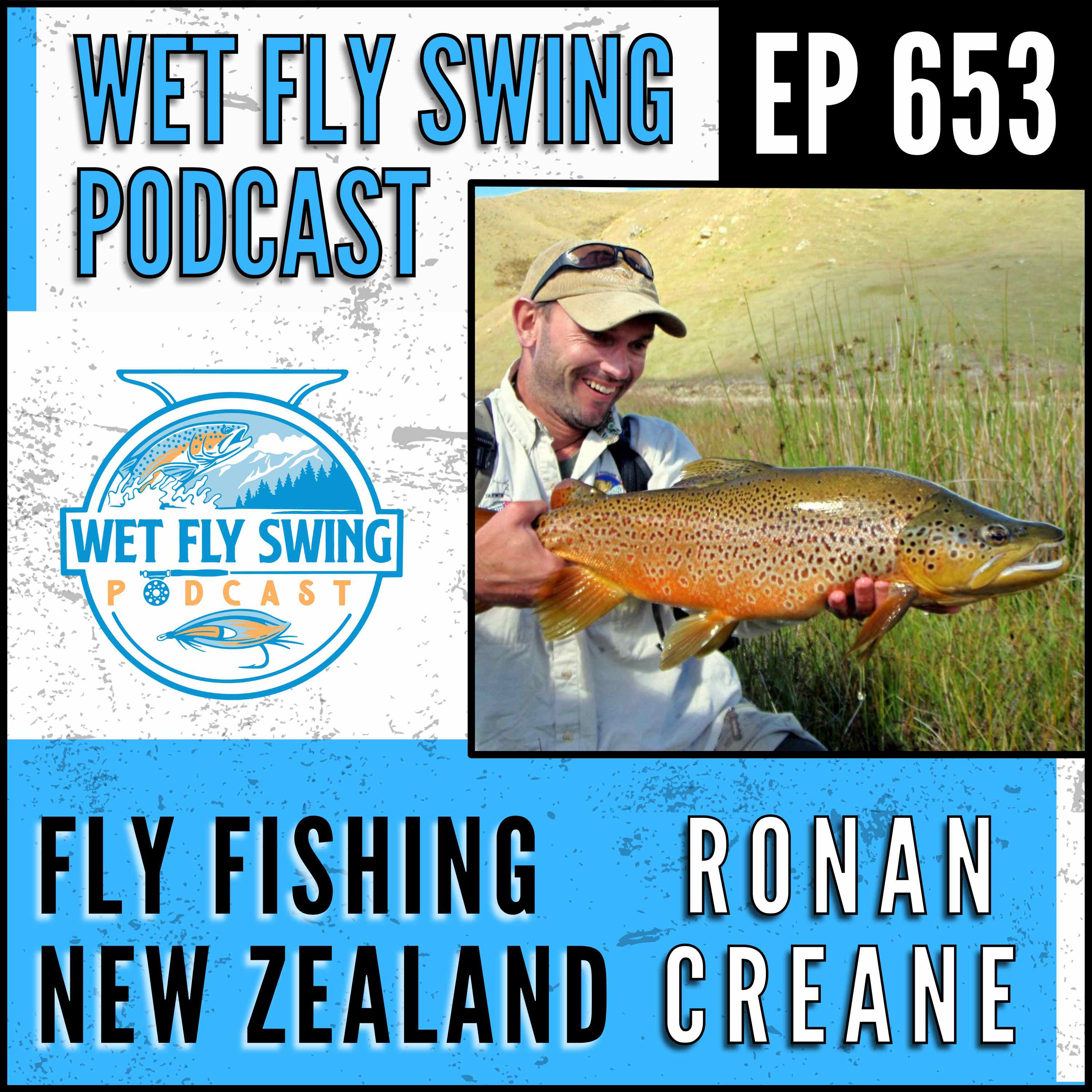
S10 Ep 653653 | Fly Fishing New Zealand with Ronan Creane - Sight Fishing, Brown Trout, Ireland
Show Notes: https://wetflyswing.com/653 Presented By: Waters West, Jackson Hole Fly Company, Angler's Coffee, Visit Helena, MT Sponsors: https://wetflyswing.com/sponsors In this episode, Ronan Creane, a renowned fly fishing guide with deep ties to Ireland, is here to talk all about fly fishing New Zealand. Ronan specializes in sight fishing for brown trout and has been a passionate fly angler for decades, following in the footsteps of his father and grandfather. If you've ever dreamt of casting your line in the pristine waters of New Zealand, this episode is a must-listen. Ronan takes us on an in-depth journey through the best fishing spots, the ideal times to visit, and expert tips on sight fishing for those elusive big browns. You'll also learn why a trip to New Zealand might be more attainable than you think, and how to make the most of your adventure without suffering from jet lag. Episode Chapters with Ronan Creane on Fly Fishing New Zealand 2:04 - Ronan shares his background, explaining he grew up in Ireland and moved to New Zealand at age 24. His earliest fishing memories involve catching tiny trout in a stream near his house using a jam jar and a net. Fly fishing runs in his family, with his father and grandfather being skilled fly fishermen. Although introduced to it gradually, he received his first fly rod at age 12 from his grandfather. 8:21 - He worked as a guide on two iconic salmon and sea trout fisheries in Ireland, starting at age 18. He continued guiding during visits home while exploring fly fishing globally. He highlights the decline of sea trout fishing in Ireland, which began in the late 1980s to early 1990s, coinciding with the rise of salmon farming. 12:28 - We start to dig into fly fishing in New Zealand, specifically in the small town of Alexandra on the South Island. Ronan describes his work as a guide, focusing mainly on brown trout, although rainbow trout are also present in the rivers and lakes he fishes. He emphasizes that his fishing is mostly river-based, but he also enjoys lake fishing due to his background. The average fish he targets weighs around three to four pounds. He aims for larger fish, typically five to six pounds, and mentions that he and his clients have caught around 20 double-figure fish. 15:11 - We talk about some sight fishing techniques, particularly in rivers. Ronan explains that the ideal scenario is finding a fish "on station," meaning it's feeding in one spot, which gives the angler time to plan their approach. He contrasts this with a fish that is cruising, which requires a different, more dynamic strategy. The key to success in New Zealand, according to Ronan, is making the first cast accurately. Multiple attempts can alert the fish, making it harder to catch. 18:30 - Ronan explains his preference for using a dry fly as an indicator since fish can take a dry fly at any time of the year. However, he notes that if a fish is swinging, it's more likely to take a nymph. He also describes the importance of watching the dry fly for any movement indicating a strike, but he also stresses the value of directly observing the fish's mouth if visible to catch subtle takes that the dry fly might not indicate. 20:39 - We talk about the fishing opportunities in New Zealand, particularly in the South Island. Ronan elaborates on various regions such as Mackenzie District (known for lakes and rivers), the West Coast (wild and remote), Southland (with numerous rivers), and Otago (where Ronan is based, offering a variety of fishing experiences). He mentions the availability of brown trout and sea trout, noting that sea trout, which migrate to the ocean and return, can grow significantly larger, sometimes up to 15 pounds. 23:00 - Ronan has been part of Sexyloops since around 2003, not long after its establishment in 1998. Their collaboration began when Ronan met Paul during the filming of an early fishing movie, leading to friendship and numerous fishing trips together, especially to New Zealand. 24:40 - I ask about the allure of New Zealand as a fishing destination. He highlights the country's exceptional freedom for anglers, where a single license allows fishing in various public waters. He emphasized the "queen chain" concept, which grants public access to 22 yards of either bank of a river, provided the access point is public. 28:04 - As a member of the New Zealand Professional Fishing Guides Association (NZPFGA), Ronan mentions that there are about 140 guides spread across both islands of New Zealand, which he believes is sufficient to meet the demand. 29:07 - Our conversation shifts to his blog, which he has been writing for about 15 years as part of Sexyloops. The blog includes approximately 350 entries, focusing on his observations of fishing rather than instructional content. 30:21 - We talk about Ronan's involvement in a TV series called "Pure Fly NZ", produced by Nick Reygaert. Ronan and his friend Jeff Forsee participated in one episode, showcasing unique fly fi

S10 Ep 652652 | Fly Fishing Newfoundland with Ryan & Les Wentzell and Rod Brophy - Lee Wulff, Atlantic Salmon
Show Notes: https://wetflyswing.com/652 Presented By: Togiak River Lodge, FishHound Expeditions, Angler's Coffee, Stonefly Nets What if I told you there's a place where you can fish the same waters as Lee Wulff and have a great chance at catching an Atlantic salmon on the fly? Today, we will dive into the rich history and present-day fly fishing Newfoundland with the head guides from Mountain Waters Resort, Ryan & Les Wentzell and Rod Brophy. You'll discover the secrets of fishing the riffle hitch, why you should stay put in the pools instead of stepping down, and even why 4-lb tippet is the go-to at certain times of the year. Plus, learn how to hook a giant Atlantic salmon like Lee Wulff did. Show Notes with Ryan, Les, and Rod on Fly Fishing Newfoundland. 02:35 - Ryan grew up at the lodge, which his parents, Les and Paulette Wentzell, and two other couples purchased. The 170-acre property was originally owned by Lee Wulff. 05:23 - The lodge is in Daniels Arbor, Newfoundland, a small town with a rich fishing history. After nearly 30 years of operation, Ryan took over the lodge in 2019 and has been upgrading it ever since. The Riffling Hitch 10:05 - Rod uses surface fishing with dry flies, like bombers, all year long. The riffling hitch creates a wake on the water, which makes it easier to spot the fish. This method is better than just using a regular wet fly. Rod mentioned that even big fish, up to 40 pounds, have been caught using this technique, and it's essential for consistent success. 20:17 - Les shares that Lee Wulff flew his float plane from New York to Newfoundland in the 1940s. He explored the rivers and set up fishing operations, including at Portland Creek. When a road was built nearby in 1956, Lee moved on to other projects. 28:11 - Rod shared how you can still fish in the spots where Lee Wulff used to catch fish. Many spots are still popular today. The area also offers amazing trout fishing, especially in nearby lakes. Fly Fishing Newfoundland 30:02 - Ryan explained how people get to their fishing location. Most folks fly into Deer Lake Regional Airport, about two hours from the fishing area. Once they arrive, Ryan's team picks them up, and they can start fishing immediately. Some people drive all the way, but that takes longer with a 10-hour ferry ride from Nova Scotia. 32:52 - Most guests focus on Atlantic salmon, but there's also great brook trout fishing in the area. They can also visit spots like the River of Ponds and see salmon at Hawke's Bay. Plus, if you're interested in cod fishing, that's an option too. 35:04 - Rod says that catching Atlantic salmon is very likely, even for new anglers. He suggests using a 9 ft 9 wt rod and casting at a 45-degree angle across the river. The key is to adjust to the conditions and pay attention to the guide's tips for a successful catch. 40:46 - Rod advises staying in one spot for at least an hour when fishing for Atlantic salmon. He explained that fish often settle in large pools, and you might be fishing over 25 to 30 fish in one spot. Ryan shares a cool story about Henry Green, who fished at their place from 1957 to 2022. Henry was a big part of their history; loved salmon fishing and bird watching. Check out this video of Henry Green. 1:00:13 - Ryan highlights all the cool stuff to do in Newfoundland besides fishing. Gros Morne National Park is close by with boat tours and hiking. Show Notes: https://wetflyswing.com/652
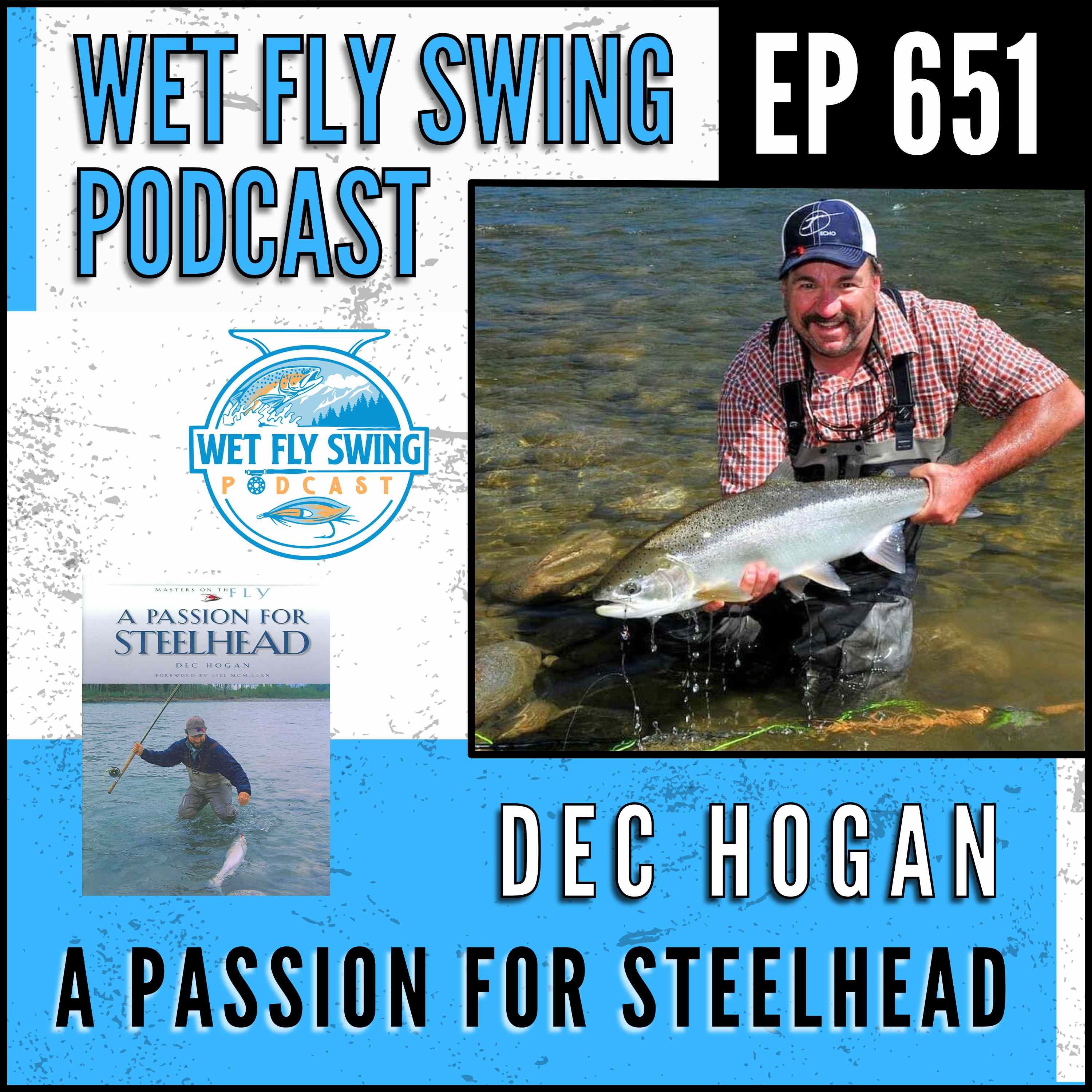
S9 Ep 651651 | A Passion for Steelhead with Dec Hogan - Steelhead Flies, Snap T Cast, Skagit Lines
Show Notes: https://wetflyswing.com/651 Presented By: FishHound Expeditions, Drifthook Fly Fishing, Yellowstone Teton Territory, Skwala Sponsors: https://wetflyswing.com/sponsors Today's guest wrote the book referred to as the bible for steelhead fishing. He was the guy who created and perfected the Snap T cast, and he's one of the most respected anglers in the steelhead game. And today he's gonna break down the history and some of the best tips for steelhead and spey so you have a better shot at hooking these magical steelhead while on the river this season. Deck Hogan, Author of the book A Passion For Steelhead, guide, and expert spey casting instructor is here to take us back into history books of how Northwest Spey began and how steelhead fishing with the spey rod took off. We're gonna talk about how to slow down your fly for more success. Today, you understand where the fish are holding and how to present the fly to these fish. And you're gonna find out what happens if you get a pluck a touch, and you're gonna understand what the fish are actually doing under the water. You're always out there and you sometimes feel a little bit of feedback, but what is that fish actually doing? And how do you get that fish to come back to your fly? It's all on today. Show Notes: https://wetflyswing.com/651

S10 Ep 650650 | Inside Fulling Mill with Nick Yardley - Stillwater Flies, Brook Trout, Great Lakes
Show Notes: https://wetflyswing.com/650 Presented By: Jackson Hole Fly Company, TroutRoutes, Togens Fly Shop, Togiak River Lodge Sponsors: https://wetflyswing.com/sponsors In this episode, we'll chat with Nick Yardley, the president of Fulling Mill. We dive deep into the fascinating story of how Fulling Mill became a leader in the UK and US markets, sharing insights on their top fly patterns and the meticulous process that ensures only the best end up in your fly box. We also explore stillwater fishing, with Nick offering expert tips and his favorite flies for targeting brook trout in the Northeast. Additionally, you'll hear about his passion for the Great Lakes and why this region holds a special place in his heart for salmon and steelhead fishing. Join us as we uncover these topics and more, giving you the knowledge to enhance your fly fishing adventures this season. Don't miss out on this insightful conversation with Nick Yardley from Fulling Mill! Episode Chapters with Nick Yardley on Fulling Mill 1:38 - Nick shares his personal journey into fly fishing, starting from a young age with course fishing in Yorkshire, England. His interest shifted to fly fishing during a family visit to Dorset, where a gamekeeper introduced him to the sport. This experience led him to sell his match fishing gear and buy his first fly rod, albeit an unsuitable one. However, he later received a more appropriate and cherished split cane fly rod from a relative, which solidified his passion for fly fishing. 4:34 - We talk about his move from Britain to the United States in 1986. Nick explains that he didn't find the job market in Britain appealing due to high unemployment and general discontent at the time. Seeking adventure, he pursued a path in the US, leveraging his background in climbing. 8:22 - We explore the history of Fulling Mill. Its origins date back to the 1930s when Denis Whetham, a British schoolboy, took up fly tying after a rugby accident left him paralyzed. Upon returning to his family home in Kenya, he garnered local interest and even received commercial orders, leading him to pursue fly tying passionately. Fulling Mill's flies are now widely available across US fly shops, and in 2023, they introduced a new range of fly tying materials, further solidifying their market presence. 18:00 - Nick mentions that Fulling Mill aims to be a one-stop shop for fly fishing, catering to various needs across different regions, although trout fishing constitutes 80% of their business. He also highlights their innovative approach with Euro nymphing flies, offering different weights for the same fly size and enhancing the consumer experience. Furthermore, Fulling Mill is planning to introduce a new range of flies for warm water and specific regions by 2025, including patterns for strikers in the northeast and shrimp patterns for the Caribbean and Belize. 22:31 - Nick discusses the process of understanding market needs and providing appropriate products for fly fishing. He says that the strong feedback comes from retail stores and their servicing reps, as different territories have unique demands. He mentions Devin Olsen, a well-known figure in fly fishing who is both a signature fly tier and a shop owner, highlighting how his flies have broad national appeal. 24:18 - We dig into brook trout fishing, focusing on effective flies and ideal locations. Nick recommends using size 14, highly floatable dry flies with foam bodies, mentioning specific types like little chernobyls, ants, and beetles. He explains that when fishing for brook trout in the White Mountains of New Hampshire during the hot summer months, small black beetles work well due to the cold streams. 31:09 - Nick describes their operation in Kenya as well-established, employing about 215 people who are provided with healthcare and a retirement program, making it a desirable place to work. Most employees are around 40 years old and have been with the company for 15-20 years, showcasing their experience. 33:07 - Nick shares his experiences fishing in the Gaspe region, noting the high quality of public waters and the strong salmon stocks. He also mentions the ease of planning a fishing trip in Quebec using resources like the website saumongaspe.com. 40:00 - He finds the Great Lakes steelhead fishing to be remarkable, especially on the Salmon River. Nick says that in salmon fishing, traditionally, single-handed rods with streamers were used, but now many anglers are using two-handed rods for swinging. This method is becoming popular on the Salmon River, where it is effective for covering extensive water quickly and efficiently with big rods and classic West Coast salmon flies. 42:14 - For Atlantic salmon in rivers like the Dartmouth, York, and Saint John, Nick typically uses a 12.5ft 7wt rod, which suits most conditions. However, in narrower sections of the York River, he switches to an 11ft switch rod or a 10ft 7wt single-handed rod. For fishing in the Great Lakes, he often u

S10 Ep 649649 | The Five Essentials of Fly Casting with Bill Gammel - Texas, FFI, Casting Instructor
Show Notes: https://wetflyswing.com/649 Presented By: Stonefly Nets, Visit Helena, MT, Waters West, Togiak River Lodge Today's episode is special because we've got Bill Gammell, the creator of the Five Essentials of Fly Casting, a framework many experts swear by. Find out how dropping your right foot can improve your timing, discover the most important variable in fly casting, and get the top drill to boost your casting skills. Let's get you back on track with better line speed and loop control! Show Notes with Bill Gammel on The Five Essentials of Fly Casting. 02:08 - Bill started fly fishing at just six or seven years old, catching Bluegill with his older brother and father. His passion for fly fishing continued until college, and he recalls a time he had to switch to conventional tackle for his master's degree research. 04:40 - Bill still lives in Baytown, the same area where he grew up and where his dad greatly influenced his love for fishing. Though the area isn't ideal for fly fishing because of the murky water from the Trinity River, Bill and his family found ways to catch fish. The Five Essentials of Fly Casting 07:18 - Bill talks about how he and his dad learned fly casting together. His dad was a natural athlete with great hand-eye coordination. They used a home video camera to record expert casters like Lefty Kreh and Mel Krieger. Over time, they noticed common patterns and eventually put together what we now know as the "Five Essentials of Fly Casting." Bill said they didn't invent anything new but identified key principles that all great fly casters share. 11:02 - Bill started teaching fly casting lessons as a teenager, but it wasn't until they were asked to write a booklet for the Federation of Fly Fishers that they fully laid out the essentials. They spent two years carefully analyzing videos and got input from top tournament casters. Their work was published in the late '80s and became the foundation for the FFF's instructor program. Check out the The Five Essentials of Fly Casting. Tips for Increasing Casting Distance 20:03 - One of the most important lessons he learned was to focus on trajectory and to keep your cast more level, not too high. He also emphasizes that line speed and loop control are the foundations of distance casting. Bill said if you master those two, you'll be able to cast a full fly line without much trouble. If you want to improve your casting, Bill recommends checking out Paul Arden's Sexyloops website. It's a solid resource with articles, videos, and step-by-step methods to help you learn to cast better. Listen to the Episode 638 with Paul Arden Here. 25:48 - Bill breaks down the Five Essentials of fly casting and explains how they work together. He said he now teaches them in a new order to make more sense. The most important essential is the straight line path of the rod tip, which helps create a clean cast. 31:00 - The arc changes based on how much the rod bends, which can be affected by the length of the line and the amount of power used. A narrow arc is for short casts, and a wider arc is needed for longer casts. Check out this article by Bill Gammel on Making adjustments on the fly. 35:04 - Timing and power application are important in fly casting. Bill explains that to get the best cast, your timing needs to be spot on—starting your forward cast just as the line straightens out behind you. 37:32 - He also shares his secret to power: a smooth acceleration to a stop. This means starting slow, adding power in the middle, and then stopping quickly. The stop is key because it lets the rod transfer energy to the line. Show Notes: https://wetflyswing.com/649

S9 Ep 648In the Bucket #8 | Guiding, Adventures, and Fishing Success with Steve Morrow and Justin Miller
Show Notes: https://wetflyswing.com/648 https://inthebucketpodcast.com/ In this episode of In the Bucket, join Brian Niska as he sits down with fly fishing legends Steve Morrow and Justin Miller. These two heavyweights dive deep into their decades-long experiences, sharing great stories from the wild rivers of the Pacific Northwest to the far reaches of Kamchatka. They talk about the art of guiding, the thrill of the catch, and the camaraderie among anglers. Whether you're an avid angler or just love a good story, you're in for a treat today. Okay, let's get in the bucket! Show Notes: https://wetflyswing.com/648

S10 Ep 647647 | The Six-Step Method to Perfect Your Cast with Bruce Richards - Scientific Anglers, Fly Lines, Fly Rods
Show Notes: https://wetflyswing.com/647 Presented By: Jackson Hole Fly Company, Togens Fly Shop, TroutRoutes, Skwala Sponsors: https://wetflyswing.com/sponsors In this episode, Bruce Richards, Scientific Anglers' guru and a master of fly casting, shares his six-step method to perfect your fly cast. Whether you struggle with tailing loops, presentation in windy conditions, or fishing with dry flies, his expertise offers simple and effective solutions. We also dive into the fascinating history of Scientific Anglers, one of the premier fly line companies. Bruce explains how fly lines have evolved over time, becoming heavier and more specialized. You'll learn which rod is best for beginners and the key actions to look for in a fly rod. But that's not all—he reveals the number one cause of poor fly casts and provides tips on analyzing your cast for continuous improvement. Tune in for an episode packed with practical advice and expert wisdom from Bruce Richards, a true icon in the fly fishing community. Episode Chapters with Bruce Richards on the Six-Step Method to Perfect Your Cast 2:24 - Bruce reminisces about his upbringing in Midland, Michigan, where he was indirectly introduced to fly fishing through his father's best friend, a sales manager at Scientific Anglers. Although Bruce was eager to join fishing trips as a young boy, he was only allowed to participate when he was older. His early exposure to fly fishing laid the foundation for his future career. 3:24 - His professional journey began in a rather unplanned manner. Despite attempts to secure summer jobs at Scientific Anglers, the seasonal nature of the business meant there were no vacancies. After earning a degree in fisheries, Bruce received an unexpected call from a friend at Scientific Anglers, inviting him to apply for a job. He succeeded in securing a position in 1976, marking the start of a long and varied career within the company. 5:30 - He reflects on the significant changes in the fly fishing industry over the years, particularly focusing on the technological advancements since he started in 1976. 9:33 - We discuss the evolution of fly lines and rods over the years. Bruce confirms that lines have become heavier and explains the history behind this trend. He also explains that as these heavier lines became popular, rod designers began developing stiffer rods to match them. This created a cycle where heavier lines required stiffer rods, which in turn required even heavier lines. 13:29 - We dig into the combination of fly rods and lines, emphasizing the flexibility in pairing them. Bruce points out that the action of a rod can be modified by changing the weight of the line used. He suggests that the most logical approach is to select the line first based on the type of fly, the fishing distance, and the environmental conditions, and then choose a rod that can effectively cast that line. 16:45 - He shares a bit of the history of Scientific Anglers. 19:52 - Bruce recounts an experience with a Canadian casting student, which led him to develop his six-step method for improving fly casting. Initially, Bruce faced challenges instructing the student remotely but found that examining the top leg of the loop in the cast revealed critical insights. The method involves assessing the loop's top leg for straightness, understanding the rod tip's path, analyzing the caster's actions, and making necessary adjustments. 29:48 - Bruce advises those who have never cast before. He emphasizes the importance of understanding the mechanics, like how loops work, which allows for self-analysis. He mentions that after a lesson, beginners usually show significant improvement. However, he notes that this improvement can be fleeting, similar to learning in other activities like golf. The key to sustained improvement lies in practice and remembering specific feedback, such as not bending the wrist too much. 31:31 - I ask Bruce whether a rigid wrist is necessary for casting, and he explains that the wrist plays a crucial role in controlling the rod's casting arc. The combination of shoulder, elbow, and wrist movements is essential for an efficient cast, as using only the elbow can be tiring. He also elaborates on how the flexibility of the rod affects wrist movement. A softer rod requires more wrist action, while a stiffer rod requires less. He also mentions that the weight of the line can change the dynamics; for example, using a heavier line on a stiff rod alters wrist usage. 33:13 - Bruce advises against using heavier rods than necessary unless the casting conditions demand it, such as in saltwater fishing where heavier lines are needed to cast heavy flies despite the fish not requiring such heavy equipment. The wind is another significant factor that complicates casting, making the right choice of rod and line even more critical. 35:16 - We go into step four of his six-step method which is about changing the body movements. Bruce describes a scenario where a wide, sloppy
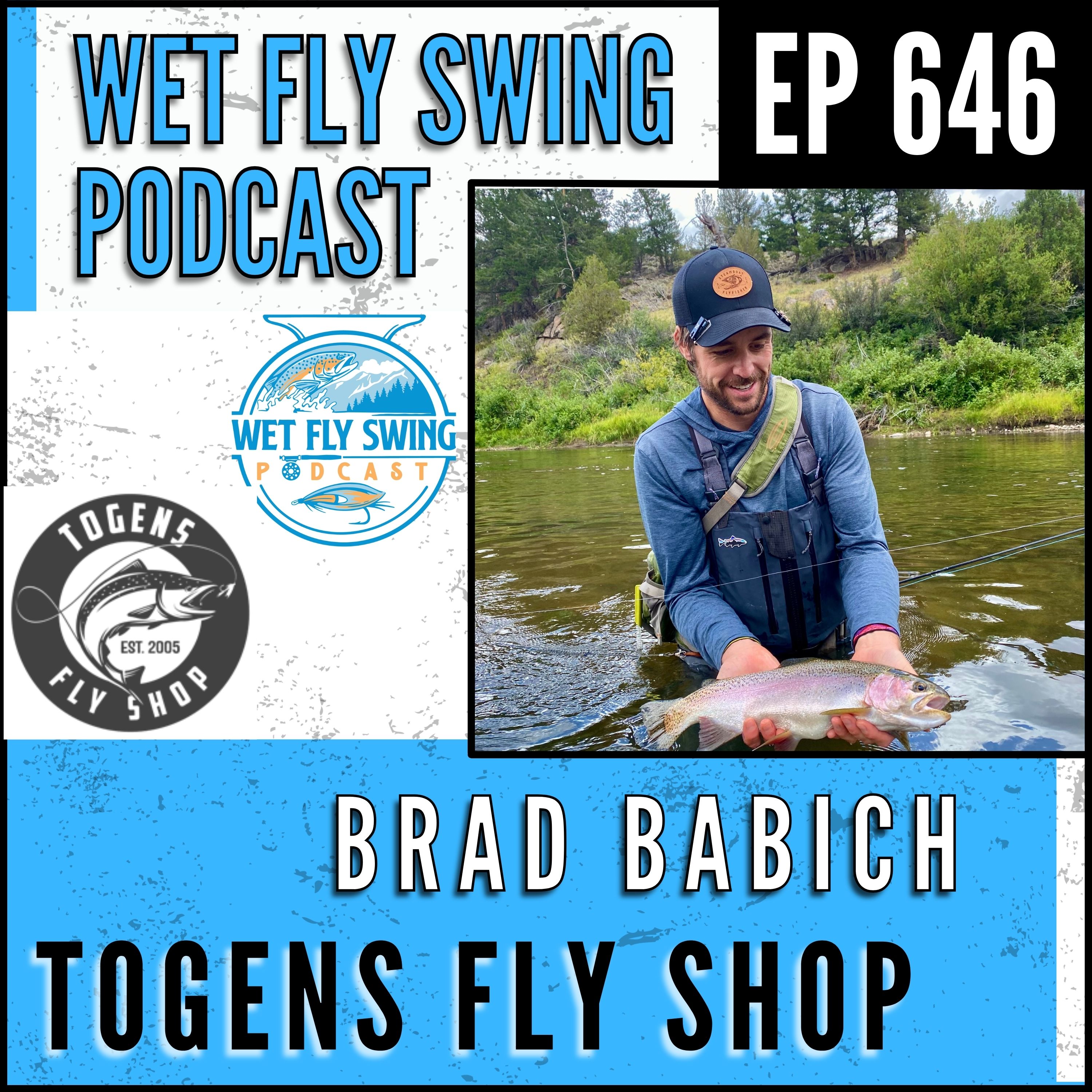
S10 Ep 646646| Togens Fly Shop with Brad Babich - Fly Tying Materials, Tips, Tricks and Tutorials
Show Notes: https://wetflyswing.com/646 Presented By: Togens Fly Shop In this episode, we explore the journey of Brad Babich, who went from flipping auto parts to owning Togens Fly Shop almost overnight. We learn how he made the leap from corporate life to fly fishing and what sets Togens apart for its customers. Brad also takes us through the history of the shop, including his weekend trip from British Columbia to Colorado with thousands of products in tow and how he assist guests of the best fly tying materials even from a distance. Episode Chapters with Brad Babich on Togens Fly Shop 1:26 - 2:04 Brad shares how he got into fly fishing. He started young, fishing with his dad using an antique fly rod. He describes his early experiences in Wisconsin and later, in Colorado, where he developed a deeper passion for fly fishing. 4:46 - 6:57 He then explains how he and his business partner came to own Togens Fly Shop. Initially, Brad was working in sales and marketing, but his partner found Togens for sale. After some quick decisions, they acquired the business and moved it from Canada to Colorado. 7:05 - 9:34Brad discusses what sets Togens apart, focusing on their wide range of fly tying materials and their fly pattern-specific kits. 10:28 - 15:26 He emphasizes the importance of personal customer service. Unlike many e-commerce businesses, Togens maintains a phone line, allowing customers, especially older ones, to place orders directly. 20:00 - 26:57 Brad discusses the variety of fly tying materials at Togens, like precut anesthetic bags and numerous bead options. 28:58 - 29:15 He also talks about expanding their reach by incorporating diverse fly patterns tied by their East Coast representative, Aiden, to cater to different regional fishing needs. 33:45 - 41:32 Brad discusses the logistics of running an online shop, focusing on the challenges of shipping. He mentions how Togens Fly Shop works hard to ensure fast and reliable shipping, even though it can be tough at times. 41:32-45:00 Brad discusses the critical role that customer feedback to lead improvements in their product offerings and customer service. 47:18 - 49:38 He then emphasizes that being open to criticism and willing to make changes has been essential to their success. 50:12 - 55:17 Brad recounts the trips he had that have led to some of the best ideas for new products and services. He values the face-to-face interactions and the chance to hear firsthand what customers love about Togens Fly Shop. Conclusion with Brad Babich on Togens Fly Shop Brad and Dave talked about how Togens Fly Shop stays on top of the ever-changing world of outsourced customer service. As the new owner, Brad explained how he stepped up to tackle the shop's biggest challenge: keeping customers happy and engaged, even from a distance and how he hand picked the best fly tying materials for their satisfaction. Show Notes: https://wetflyswing.com/646

S10 Ep 645645 | From Spey Fishing to Bow Hunting: George Cook's Guide to Spey Rods, Chinook Fishing, and Hunting
Show Notes: https://wetflyswing.com/645 Presented By: Togiak River Lodge, Waters West, Skwala, TroutRoutes Sponsors: https://wetflyswing.com/sponsors In today's episode, we're diving deep into the world of spey fishing and bow hunting with George Cook, the man who brought spey fishing and spey rods to the United States. Renowned for his expertise, George travels the globe, collaborating with some of the biggest brands in the fishing industry. Having graced our podcast three times, he has shared invaluable insights on spey fishing, Chinook fishing, stillwaters, and more. George will update us on the current state of spey fishing, discuss the latest trends in Chinook fishing, and share his optimism about the future of steelhead fishing. But that's not all—his passion extends beyond the water to the fields, where he is also an accomplished hunter. He'll be offering tips and tricks for archery and hunting this season, including how to successfully stock a buck and the three most important factors in casting a spey rod. Episode Chapters with George Cook on Bow Hunting 2:20 - George gives us an update since we had him on the podcast. He had a bow season in North America last fall and killed his all-time biggest meal in the winter. 6:20 - We talk about updates on Sage rods, particularly focusing on the latest models which were released last winter. George explains that the new series includes a variety of models ranging from five to ten weights in spey and seven to eight weights in switch rods, which he refers to as "baby spey." 12:52 - George advises on how to improve your spey game. He suggests that it depends on the person's location, particularly highlighting that there are many skilled instructors on the West Coast. He names notable instructors like Travis Johnson in Oregon, John Hazlett in Medford, and Charles St. Pierre in Tacoma, as well as De Hogan who offers traveling seminars. George emphasizes the importance of getting professional instruction, comparing it to other precision activities like golf and archery. 16:00 - We shift the conversation from spey fishing to hunting. George recounts his extensive experience in both fields. He started fly fishing at age 11 but only began hunting in college at Washington State University, which he describes as a prime location for pheasant hunting. His deer hunting career began slowly, with his first successful hunt occurring in his senior year. 19:28 - George describes a typical summer fishing, using the Deschutes River as an example. He explains that fishing usually starts early in the morning, from dawn until about 10:30 to 11:30 AM, when temperatures are cooler. During this time, anglers can use floating lines or intermediate leaders with traditional flies like the green butt skunk or streetwalker. 26:32 - He shares his transition from rifle hunting for 30 years to bow hunting in 2014. He explains that rifle hunting had become less challenging and more about the pursuit of larger game. Bow hunting, on the other hand, provided a fresh start and presented new challenges, such as needing to get much closer to the prey, which requires significant skill and patience. 32:37 - George highlights the accessibility and convenience of bow hunting, contrasting it with rifle hunting, which often requires more time and logistical planning. He appreciates the simplicity of stepping outside his home and being able to practice archery almost immediately. He also provides an overview of the different types of bows available for those new to the sport, such as traditional longbows, recurves, compound, and self bows. He mentions that most bow hunters in the U.S. use compound bows and endorses Bowtech, a company known for its high-quality bows. 36:50 - We delve into introducing children to hunting, particularly focusing on the appropriate type of bow for young kids. George explains that there are entry-level bows designed for very young children, similar to toy bows with rubber stopper arrows. He then mentions more advanced options from Bowtech, which has a wide range of adjustable pull weights from 30 to 60 pounds, making it suitable as kids grow and gain strength. 43:00 - George recounts successful hunts in various states, including Oregon, Montana, South Dakota, and Mexico. He emphasizes the versatility required for hunting different types of deer, such as whitetails and Coues deer, using methods like tree stands and ground blinds. 44:06 - He highlights the numerous hunting opportunities available throughout the year, with early and late seasons in states like Oregon, Colorado, Nevada, Utah, Oklahoma, Texas, and Alabama. 48:18 - We talk about the intricacies of archery elk hunting. George explains that September is the prime time for hunting elk because it coincides with the rutting season when elk are very vocal and can be located by their calls. This period offers archers a better opportunity to get close and take a quality shot. Although challenging, bow hunting for elk and de

S10 Ep 644644 | The Drake Magazine with Tom Bie - Grand Canyon, Non Native Trout, Synthetic Marijuana
Show Notes: https://wetflyswing.com/644 Presented By: Yellowstone Teton Territory, Skwala, Visit Helena, MT, FishHound Expeditions We've got Tom Bie, the editor of The Drake Magazine, back on the show. Tom's written about everything from the issues facing brown trout in the Grand Canyon to a wild story involving a dad and daughter busted by the FBI for selling synthetic weed. They even sued Tom for a quarter of a million dollars. Strap on the seatbelt, grab your beverage, and get comfortable. Let's get into this one with Tom Bie! Episode Chapters with Tom Bie on the Drake Magazine 02:26 - We get an update on Tom and The Drake Magazine since our last episode with him in October 2020. We also dive into the challenges facing journalism today. 07:52 - Tom praises Monte Burke for his storytelling skills and how he lets people share their stories. He also talks about Monte's latest work on Nick Lyons. 14:24 - Tom also highlights Jon Krakauer, known for his gripping books like Into the Wild. Krakauer's reporting on a Yosemite climber who committed serious crimes is a prime example of his courage and commitment to justice. 19:16 - We chat about the fish removal in the Grand Canyon. The issue revolves around removing brown trout to protect the native humpback chub. Tom highlights how this problem mirrors other areas, like Yellowstone. He explains that while protecting native species is important, it's tough when their removal affects popular sport fish that have been around for decades. There's also a bounty program where guides earn money for killing brown trout, which has led to the killing of over 6,000 fish. 35:49 - We discuss how changes in river flow and dam operations have impacted brown trout in the Grand Canyon. Starting around 2014, increased flow rates and historic high flows allowed more brown trout to migrate. 47:56 - We talk about ways to help with the fishing issues in the Grand Canyon and Yellowstone. Tom suggests people contact the National Park Service to express that killing sport fish might not be the best solution. Inside the Drake Magazine 54:33 - Tom shares that he always includes at least one in-depth reported piece per issue of the Drake Magazine. While essays are popular with readers, he often gets way more essays than actual reporting stories. Tom also explains that good reporting involves more than just writing; it needs interviews and research. He advises aspiring writers to use quotes from real conversations to improve their stories. 1:02:00 - Tom shares a crazy story about a father and daughter from Texas who got into big trouble for selling synthetic weed. Tom even got sued for talking about it on a podcast! The family also bought the Deneki lodges in Alaska, which was part of the money laundering charges. Show Notes: https://wetflyswing.com/644

S10 Ep 643643 | Fly Fishing Argentina with Gustavo Hiebaum of Set Fly Fishing - Golden Dorado, Patagonia, Travel
Show Notes: https://wetflyswing.com/643 Presented By: Visit Helena, MT, Jackson Hole Fly Company, Togiak River Lodge, Angler's Coffee We're fly fishing Argentina today with Gustavo Hiebaum of Set Fly Fishing. He's here to tell us all about fishing for golden dorado in the eighth-largest country in the world. We'll also explore Argentina's fly fishing, the culture, and the amazing outdoors. We're going to cover it all today! Episode Chapters with Gustavo Hiebaum on Fly Fishing Argentina 02:18 - Gustavo got into fly fishing when he was eight during vacations in Northern Patagonia. By the age of eleven, he was tying his own flies, and by fourteen, he already knew that he was going to run his life around fly fishing. Exploring Argentina 05:35 - Argentina is the eighth-largest country in the world and the second-largest in South America after Brazil. 7:48 - Argentina is famous for its trout fishing, with rainbows, browns, and brook trout thriving since their introduction in 1904. But the country is most known for the Golden Dorado. There's also the Perca, a bass family fish. 11:34 - Argentina's population is about 40 million, with 70% living in Buenos Aires and the nearby areas. The rest of the country is less populated and perfect for fishing. While fly fishing isn't as popular in Buenos Aires, you can still catch fish like dorado in local ponds. 13:55 - Gustavo runs lodges in two main regions: the northeast and northern Patagonia. These spots are remote, about 700 to 1000 miles from the city, requiring a flight from Buenos Aires. 23:16 - For first-timers visiting Argentina, Gustavo recommends the Spring Creek Lodge in northern Patagonia, which is easy to get to from Buenos Aires. The Thrill of Golden Dorado Fishing 26:32 - Gustavo describes the golden dorado as an addictive catch because of its fierce and wild nature. This freshwater fish has a crazy mix of speed and power, kind of like a barracuda and shark combined. They have sharp teeth and can eat prey twice their size in seconds. It's a thrilling experience that's similar to saltwater fishing. 29:13 - Gustavo talks about how they run three lodges in different environments, but the Ibera Wetlands is a standout spot for Golden Dorado. The Ibera Wetlands in Argentina is a massive, crystal-clear paradise for fishing and wildlife watching. It's like the Everglades but with clear freshwater. 37:29 - Gustavo talks about the huge Golden Dorado you can find in the upper Paraná River. These fish can grow up to 50 pounds, with some reaching nearly 70 pounds! The Paraná River is massive, similar in size to the Mississippi River, and it eventually flows into Buenos Aires. The river is full of life, with dorado feeding on fish like the savalo. 42:15 - Gustavo talks about the variety of fish you can catch on the Upper Parana, like the paku and piapita. 50:02 - Gustavo explains that their fishing trips are flexible and tailored to their preferences. They recommend starting at the Ysoro wetlands, which is like a nursery for smaller dorados, to get used to the fishing style. Then, you can head to the main Paraná for a shot at the bigger fish. 55:51 - The prime seasons for catching golden dorodo are September to November and mid-February to early May. Some visit in January and February to combine trout fishing in Patagonia with a dorado trip. Set Fly Fishing 59:44 - Gustavo describes the amazing lodges SET Fly Fishing provides for golden dorado fishing. Each lodge offers a unique experience with great food and easy access to fishing. Show Notes: https://wetflyswing.com/643

S10 Ep 642642 | Spring Creek Fishing with Nick Secrist: Tips from Mossy Creek Fly Fishing
Show Notes: https://wetflyswing.com/642 Presented By: Togens Fly Shop, TroutRoutes, Stonefly Nets, Drifthook Fly Fishing Sponsors: https://wetflyswing.com/sponsors Today we'll have an exciting conversation with Nick Secrist on spring creek fishing! Nick shares practical strategies and techniques, including the dry dropper method and tips for identifying when fish are ready to eat. He also recommends some fly selection, rod preferences, and nymphing setups. Additionally, we explore the Mossy Creek Fly Shop, its services, and community initiatives. Nick's passion for fishing promises to make this episode an invaluable resource for anyone looking to enhance their fishing skills. Dive in and join us on this journey through the spring creeks of Virginia! Episode Chapters with Nick Secrist on Spring Creek Fishing 1:36 - Nick shares his background in fishing, noting that he comes from a "fishy" family. He recalls an early photo of his dad fishing with him shortly after he was born and describes his family's fishing adventures, particularly offshore fishing. 4:44 - Nick briefly talks about the current fishing state. They are experiencing a drought similar to the one from the previous year, which is affecting the water levels and temperatures. Despite these challenges, the fishing for smallmouth bass, particularly on the South Fork of the Shenandoah River, is exceptional. 7:14 - Nick explains that Mossy Creek is unique due to its significant spring influence, cold water, and consistent fishing conditions throughout the year. He also mentions similar streams like Beaver Creek and Spring Run, which also have spring influences but may not be as consistently fishable as Mossy Creek. 8:30 - The conversation then shifts to smallmouth bass fishing. Nick outlines the peak smallmouth fishing season, which starts in late April and runs through September, with June, July, and August being the most consistent months for good fishing conditions. 11:25 - We discuss tips for spring creek fishing, specifically focusing on the technical aspects and nuances of fishing in Mossy Creek. Nick emphasizes that fishing in such environments can be challenging due to the unique micro drifts and currents caused by weed beds. He advises anglers to pay close attention to small channels and the drift of their lines, as simply casting into the middle of the creek is often ineffective. 13:36 - Nick talks about the dry dropper technique, especially during the spring and summer months. He explains that even if fish are not actively rising, there's still a good chance they will come up to take the dry fly. The dry dropper lands more naturally on the water and provides an opportunity for fish to strike. This technique is preferred over indicators in certain conditions, offering subtlety and a higher chance of success. 14:47 - He talks about the unique experience of fishing in spring creeks, particularly emphasizing the clear waters that allow anglers to see the fish. He also explains that while there are days with abundant catches, many people go to spring creeks for the challenge and satisfaction of sight fishing and having meaningful encounters with individual fish. 18:38 - Nick discusses how to identify when a fish is ready to eat. He explains that observing the fish's behavior in the water is key. Fish that are stationary at the bottom with closed mouths are likely not feeding, whereas fish that are more active, darting around and opening their mouths, are more likely to be in a feeding pattern. He also shares tips on fishing techniques, particularly for Mossy Creek. He suggests that people often fish with streamers too slowly and nymphs too quickly. When streamer fishing, he advises making a few casts and then moving to find fish that are more willing to eat. Conversely, nymph fishing requires patience and precision due to the complexity of the creek's currents and depths. Persistence and varied techniques are necessary to catch fish with nymphs. 23:06 - He shares the patterns they use in fishing the Mossy Creek. He recommends using flies of different weights, sizes, and colors. 27:46 - Nick highlights the variety of streams available in their area, many of which are full of brook trout, thanks to the Blue Ridge and Allegheny mountain ranges. He also mentions the abundance of options within an hour's drive, including both naturally occurring and stocked streams. 30:09 - We delve into the Mossy Creek Fly Shop owned by twin brothers, Brian and Colby. Nick explains that the shop offers both smallmouth and trout fishing trips. Smallmouth fishing is conducted via floating trips on rafts, covering five to ten miles of river depending on the route. These rafts provide flexibility, especially in areas with big bedrock or without boat ramps. Trout fishing, on the other hand, is done through walk-and-wade trips, suitable for the specific river conditions they encounter. 32:53 - Smallmouth fishing generally offers higher catch rates than trout fishing, even

S9 Ep 641641 | River Access Laws with Beau Beasley - Healing Waters, Virginia Fly Fishing & Wine Festival
Show Notes: https://wetflyswing.com/641 Presented By: Waters West, Yellowstone Teton Territory, Drifthook Fly Fishing Sponsors: https://wetflyswing.com/sponsors Beau Beasley, author of multiple fly fishing books, Director at the Virginia Fly Fishing and Wine Festival, and a super all-around guy, is here to enlighten us about River Access Laws. He's gonna be breaking it down today. You're gonna hear about what you should do if you get challenged by a landowner while fishing near a private property, who to contact if you have other big questions while you're out there, and how this applies directly to your state. Plus, you're gonna hear a bunch of great stories, and all of these stories are gonna help you clearly understand how to navigate these river access laws and what you can do to make sure you are ready to go for your next trip. River access laws vary from state to state. There are some states where you can fish and walk up to the high water mark in some states where you cannot step foot in the water on private property. You also may have heard the word navigability, but do you know what it means and why it's So important? And where do you go for help? If you have questions today, we have one of the most knowledgeable river access all-stars in the country. And today he's gonna break it all down. So the next time you are on the water, you know exactly where to stand and how to navigate private property. Show Notes: https://wetflyswing.com/641

S10 Ep 640Littoral Zone #11 | Inducing a Take: Stillwater Presentation Techniques to Catch More Fish with Phil Rowley
Show Notes: https://wetflyswing.com/640 Presented By: Waters West, Visit Helena, MT, Jackson Hole Fly Company, Yellowstone Teton Territory Phil Rowley is back with the ultimate guide to inducing a take in Stillwater! In today's episode, we're diving deep into the unique challenges and techniques of stillwater fishing. We'll cover rod and hand position, retrieve essentials, and how to use 'the hang' to keep your fly in the strike zone longer. Plus, discover top indicator retrieves, wind drifting techniques, and fan casting methods. Episode Chapters with Phil Rowley on Inducing a Take Phil Rowley and RIO have rolled out a new tippet ring connection line. Check out the Phil Rowley RIO Ambassador Series Fly Lines. Let's dive into today's subject—inducing a take. Here are some key points we'll cover with Phil today: Rod and Hand Position: How to hold your rod for the best results. Retrieve Essentials: Key techniques for retrieving your line. The Hang: A method to keep your fly in the strike zone longer. Indicator Retrieves: Popular methods for fishing with indicators. Wind Drifting and Strike Zone: Techniques to adjust your strategy with or without an indicator. Fan Casting and Loch Style: Methods to cover more water and specific loch style techniques. Check out Phil's episode with Devin Oslen for more on Loch-style technique. 07:00 - Presenting your fly in stillwaters can be tricky since there's little to no current to help you. Most fish feed near the bottom, where it's safe. The key is to move the fly in a way that attracts fish. Rod and Hand Position 08:40 - Getting your rod in the right position when fishing helps eliminate slack and ensures you have direct contact with your fly, so you don't miss any takes. Keep the rod tip low or even in the water for subsurface presentations. When fishing dry flies, hold the rod higher to create some slack and time your strike better. Always be ready to set the hook quickly because fish will spit out the fly fast if they realize it's not food. 11:38 - Use your forefinger to control the line tension when fighting a fish. Phil also recommends putting fish on the reel to avoid tangles and practice for big catches. Use side pressure to tire out the fish quickly, and keep the rod angle low to prevent the fish from jumping. Retrieve Essentials 17:26 - The "drop" is when your fly hits the water and starts sinking. Get your rod and hands in position to gather any slack. Sometimes fish grab the fly as it descends, so be ready! After the drop, start the retrieve using a countdown system to get the fly to the right depth, usually near the bottom. Begin with two quick strips to attract fish and eliminate slack. Your retrieve should mimic the natural movements of insects in the water. 21:00 - Phil Rowley breaks down the retrieve into four key elements: Length of the Pull: Determine how much fly line you gather with each hand motion. Speed: Adjust the pace at which you pull or gather the line. Retrieve Cadence: Vary your rhythm, such as using quick strips or slow pulls, to mimic natural movement. Pause: Pauses can trigger strikes from fish attracted to sudden stillness. Phil's Four Core Stillwater Retrieves 2:43 - Phil Rowley emphasizes key retrieves essential for stillwater fly fishing. Here's a breakdown of these techniques: Hand Twist (Figure Eight or Hand Weave): This retrieve involves twisting the line with your hand, creating erratic movements to mimic various aquatic insects. It's versatile in speed and can imitate baitfish to chironomids. Strip Retrieve: Simply pull the line with your thumb and forefinger to mimic swimming insects like water boatmen or leeches. It can be adjusted in speed but beware of going too fast. Pinch Strip: A variation of the strip retrieve using your fingers fused to control the line, ensuring a slower, more controlled retrieve ideal for cold days or when precision is needed. Roly Poly: A fast-paced retrieve where you tuck the rod under your arm and use both hands in a hand-over-hand motion. This retrieve is great for triggering aggressive reactions from fish. 30:00 - Phil also talks about the versatility of using indicators in stillwater fly fishing to control the depth and retrieve speed effectively. Pay attention to the subtle movements of the indicator that signal a fish taking the fly. Adjusting retrieves based on fish response and environmental conditions can significantly improve success rates. The Hang 36:00 - As you retrieve your fly and it starts to rise, pause to let it "hang" at the surface. This mimics prey trying to escape, triggering fish to strike. You can experiment with the speed and length of the pause to see what works best. How do you know it's a hang? 39:00 - Almost all line manufacturers nowadays have some sort of a hang marker system with their stillwater lines. Phil uses RIO lines that have a focused hang marker on the line set at 20 feet. Phil also shares tips on how to make your own hang markers if your line doesn't have one.

S10 Ep 639639 | Troutroutes App Feature Updates and Partnerships with Erik Johnsen - OnX, Fly Shops, #1 Mapping Software
Show Notes: https://wetflyswing.com/639 Presented By: TroutRoutes Sponsors: https://wetflyswing.com/troutroutes Welcome to another exciting episode where we dive deep into the Troutroutes app innovations and partnerships. Today, we are thrilled to have Erik Johnsen with us, a passionate fly fisherman who has transformed his love for the sport into a groundbreaking role at Troutroutes. As we explore the app's acquisition by OnX and its impressive features—from color-coded trout stream maps to a river miles calculator tool—it's clear that Erik and his team are revolutionizing how anglers navigate and enjoy their fishing experiences. Join us as we delve into Erik's insights, including his favorite fishing spots in Wisconsin and the hidden gems of the Driftless Area. Whether you're a seasoned angler or a curious beginner, this episode promises to inspire and inform, bringing the world of fly fishing to your fingertips. Episode Chapters with Erik Johnsen on Troutroutes App Feature Updates and Partnerships 1:51 - Erik shares his background on fly fishing, explaining that he is from the Upper Midwest and became interested in fly fishing while visiting the Driftless region with his wife. He learned to fly fish on his own about 15 years ago, driven by a desire to connect with his father-in-law, who was an avid fly fisherman. After many attempts, Erik finally succeeded in getting his father-in-law to join him, rekindling his enthusiasm for the sport. 4:54 - He shares his journey to working in Troutroutes. His entry into the fly fishing industry began unexpectedly during a fishing trip with a friend, who suggested he apply for a position at TroutRoutes. After a successful interview with founder Zach Pope, Erik joined the initial team to support the app's development. 8:19 - We delve into the recent acquisition of Troutroutes by OnX, a well-known mapping application used by anglers. Erik explains that this acquisition, which took place in March after years of networking and relationship building, has been a significant milestone for Troutroutes. 10:55 - He discusses the key features of the app. Troutroutes specializes in mapping trout streams across the lower 48 states, offering stream classifications that are color-coded to indicate the quality of trout habitat and ease of access. This feature is particularly useful for beginners in trout fishing or fly angling, helping them identify healthy trout populations and accessible fishing spots. Additionally, the app provides detailed maps that show public and private land boundaries and legal access points, ensuring anglers know where they can fish without trespassing. A standout feature Erik highlights is the river miles calculator tool, which allows users to measure the distance between any two points on a trout stream. This tool is especially beneficial for planning fishing trips, whether for floating, walking, or wading. It provides precise stream miles rather than straight-line distances, making it easier to gauge the actual distance and plan accordingly. 13:53 - Erik mentions that one of the primary challenges is helping users determine what information they need when looking at a map of trout streams. To mitigate this, they outline icons and explain filter and layer settings to make data interpretation easier. Another significant challenge is presenting extensive data in a way that is easy to read, filter, and sort. Erik emphasizes the importance of organizing data meaningfully for different user needs, such as regulations or public access. 16:56 - He says that while maps are accessible online, users can download specific sections for offline use, ensuring the GPS signal remains functional even without cell coverage. This feature enhances navigation and instills confidence, especially in unfamiliar areas. Erik elaborates on the process of downloading maps, which can be done directly on a smartphone. 22:29 - Erik highlights the integration of USGS stream gauges within the app, a feature that provides real-time river conditions, which is crucial for assessing fishing prospects. This feature allows users to gauge stream levels, flows, and heights before even stepping onto the water, offering a significant advantage and a delightful surprise for many users. 25:34 - Our conversation also touches on the importance of fly shops within the app, which Erik notes was a key element from the beginning. These shops are not just places to buy gear but community hubs for conservation activities and educational events. The app manually maps these shops, connecting users with local expertise and resources. 29:51 - Erik reflects on the company's success, particularly emphasizing the importance of community and partnerships. He explains that a pivotal moment occurred about a year and a half ago when they attended their first national fly fishing expos. Initially uncertain of the outcome, they were pleasantly surprised by the positive reception and the eagerness from industry members to

S9 Ep 638638 | SexyLoops with Paul Arden - Fly Fishing for Snakehead, Ironman, Malaysia
Show Notes: https://wetflyswing.com/638 Presented By: Visit Helena, MT, Skwala, Jackson Hole Fly Company, Waters West Sponsors: https://wetflyswing.com/sponsors Have you ever wondered what it would feel like to be on Capitol Hill and make a presentation in front of our nation's leaders have the word pebble Mine passed through your brainwaves a few times, or associated projects. And what if someone told you that the governor of Alaska has not been doing a great job of protecting the fish species up in Alaska? My guest today is going to take us behind the scenes in the battle of protecting our remaining stalks of salmon species so you can enjoy your trip even more next time you're up in Alaska. Adam Cuthriell, owner of Fish Hound Expeditions and a conservation minded fanatic is gonna take us into another big topic that's on right now. He was just on Capitol Hill and we're gonna hear the story of what that felt like to him. Pretty awesome, pretty emotional. And we're just gonna describe what you can do right now to protect the fish species up there and around the country. Show Notes: https://wetflyswing.com/638

S10 Ep 637637 | Minnesota Musky Research with Kamden Glade: What These Predators Really Eat
Show Notes: https://wetflyswing.com/637 Presented By: Skwala, Togiak River Lodge, Togens Fly Shop, Visit Helena, MT Sponsors: https://wetflyswing.com/sponsors Kamden Glade, fisheries specialist from the Minnesota Department of Natural Resources, joins us to discuss his groundbreaking research on the Minnesota musky diet. In some regions, these formidable fish have earned a dubious reputation for preying on prized sport fish like walleye and bass. However, Kamden's research provides a different perspective, revealing that musky in Minnesota seldom consume these highly valued species. Throughout the episode, Kamden shares intriguing insights from his comprehensive study, including the innovative techniques used to examine the stomach contents of these apex predators without causing them harm. Listeners will gain a deeper understanding of what musky feed on, the average sizes of their prey, and how this knowledge can enhance their chances of a successful catch during the fishing season. Episode Chapters with Kamden Glade on Minnesota Musky Research 3:45 - Kamden shares his lifelong passion for fishing, which started at a young age with his family, and later evolved into a professional career in fisheries biology. He explains that his interest in the ecology and biology of fish was sparked during his undergraduate studies, where a professor with a background in fisheries biology inspired him to pursue this path. 5:03 - His work in fisheries biology became more specialized during his graduate studies at Bemidji State University, where he led a research project analyzing the diets of muskies, walleye, northern pike, and largemouth bass in various lakes across Minnesota. This project aimed to address the negative perception of muskies, which are often thought to indiscriminately eat other fish species. 8:50 - Kamden discusses the diet of muskies, focusing on why walleye are not a significant part of their diet. Kamden explains that research, including studies in Minnesota and Wisconsin, shows that muskies primarily consume yellow perch and suckers. Other notable components of their diet include Northern pike, insects, aquatic invertebrates, and bullheads, depending on the region. Despite the presence of healthy walleye populations in the lakes studied, walleye were found in only four out of 650 muskie stomachs analyzed. This scarcity is not due to habitat differences, as both species often occupy the same areas in the lakes. Instead, it appears that walleye have effective defenses against predation. They have large tails for quick escapes, a heightened awareness of their surroundings, and sharp dorsal spines that deter muskies. 12:11 - We delve into the status, native range, and life history of muskies. Kamden explains that muskies are originally native to the Mississippi River and Ohio River basin, the Great Lakes drainage, and parts of Eastern and Central Canada. Despite remaining naturally reproducing in many systems, habitat changes caused by human activities like building dams and docks, and removing aquatic vegetation have led to a decline in natural reproduction. 14:27 - On the musky life history, he details that muskies typically spawn in spring when water temperatures range from the high 40s to low 60s, with peak spawning activity around the mid-50s. Unlike some fish, muskies do not build nests or defend their eggs. Instead, they spawn in shallow vegetation, and the eggs are left to fend for themselves. 16:25 - We talk about the conservation efforts surrounding musky fishing, particularly in Minnesota. Kamden explains that in Minnesota, muskies are generally not eaten, partly due to a statewide minimum size limit of 54 inches, which promotes their status as a trophy fish. This size limit means that by the time muskies reach 54 inches, they are usually quite old and less critical to the population, allowing for occasional harvesting without significant impact. 19:23 - I ask how their project has impacted public perception and regulations on musky fishing. Kamden explains that the project aimed to provide robust data on musky diets and their impact on other fish populations in Minnesota lakes. This data would help address any future disagreements or questions regarding musky management strategies. 22:09 - He describes how they got samples from the muskies' stomachs. What they did was catch them through electro-fishing. They had a generator that created an electrical field in the water. That temporarily stunned the fish enabling them to net and bring them on board. They put them in a live well to let them recover. They worked on these fish and then released them back into the lake. To get the food out from the fish, they used a regular bilge pump, hooked that up to a garden hose nozzle with a little piece of tubing and copper pipe on the end, and then they were able to put that pipe into the fish's mouth through their throat and into their stomach and then fill their stomach with water. That created pressure

S10 Ep 636636 | Kenai River Sportfishing Association with Shannon Martin - Chinook, Alaska, Conservation
Show Notes: https://wetflyswing.com/636 Presented By: FishHound Expeditions Today, we hang out with Shannon Martin, executive director of the Kenai Sport Fishing Association. She's here to take us behind the scenes into what they are doing to protect the best salmon rivers in the country. Plus, we'll get an update on the Chinook status in this area. Have you heard of the suicide run? It's a multi-day fishing adventure where anglers stay up all night, catching their limit for the day and getting their limit again for the next day. There's nothing better than Alaska King Salmon. Let's jump into it with Shannon and KRSA. Show Notes with Shannon Martin on Kenai River Sportfishing Association. 02:34 - Shannon grew up in Alaska, where fishing has always been part of her life. About 15 years ago, her brother retired from the Army and got into fly fishing on the Kenai River. Shannon joined him, fell in love with it, and got hooked. Fly Fishing the Kenai River 03:48 - The Kenai River is over 80 miles long with more than 15 public access points. The river is famous for its huge salmon, including the world record King salmon that weighed 97 pounds. The "Suicide Run" and Dip Net Fishing 06:26 - The "suicide run" is a unique way to fish on the Kenai River. You get off work at 5:00 PM in Anchorage, drive down to the river, catch your limit of salmon by midnight, and then catch the next day's limit after midnight. This July, the sockeye salmon run is expected to bring in about 3.3 million fish, making it a great time to try out a suicide run. Dip net fishing is only for Alaska residents where they can harvest salmon using a five-foot-wide hoop net. Each household gets 25 fish for the head of the household and an additional 10 for each dependent. Kenai River Sportfishing Association 10:25 - Kenai River Sport Fishing Association was founded in 1984 by Bob Penney to protect Chinook salmon. Commercial fishing, especially with gill nets, impacts Chinook as they return to spawn. KRSA aims to balance commercial interests with preserving fish stocks for future generations. Check out our episode with Adam of FishHound Expeditions! He talked about his experience visiting Capitol Hill to spread the word about the issues facing Alaska's fish. 16:42 - Shannon explains how heavy foot traffic on the Kenai River banks harms salmon habitats. To fix this, they've built light-penetrating boardwalks. These walkways let people access the river without damaging the vegetation that holds the banks together. 18:35 - KRSA hosts events like the Kenai River Spring Cleanup, where local students help remove litter from the riverbanks. They organize the Jr Classic in the fall, where they introduce around 100 children to fishing and water safety. 24:19 - Shannon talks about the importance of educating anglers on proper catch and release techniques, especially for the declining Chinook salmon. 31:24 - We talk about KRSA's major project with Alaska State Parks to restore and improve a popular state recreation site on the Kenai. This includes: Installing light-penetrating boardwalks Adding stairwells Providing offsite parking Kenai River Classic 33:58 - The Kenai River Classic functions as not only an educational opportunity for KRSA to get together with local policymakers and philanthropists, but it's also a fundraiser. Highlights of the Kenai River Classic include: A three-day fishing event for about 150 participants The national round table on sport fish policy, in partnership with Yamaha Rightwaters Speakers from the American Sport Fishing Association and local tribal entities discussing important topics like the MMPA and in-river fishery protection. Show Notes: https://wetflyswing.com/636

S9 Ep 635635 | Mossy's Fly Shop with Mike Brown - Chinook, Rainbows, and Sockeye Fishing in Alaska
Show Notes: https://wetflyswing.com/635 Today we're heading back north to Alaska to find out what the road system has to offer. Not only are we going to talk about where you can find 20 and 30-inch rainbows, but we're going to get Mike's take on why Chinook have taken such a downturn and why this is connected to 30 billion hatchery fish being released up there. We're also gonna talk about swinging for rainbows so you're ready this fall when the game turns on. Show Notes: https://wetflyswing.com/635

S10 Ep 634634 | Fly Fishings Impact on Veterans and Volunteers with AJ Gottschalk from Project Healing Waters
Show Notes: https://wetflyswing.com/634 Presented By: Stonefly Nets, TroutRoutes, Togens Fly Shop In this podcast, Dave talks about In this episode, AJ Gottschalk of Project Healing Waters talks about how their organization helps veterans through fly fishing. But did you know it also benefits volunteers just as much? Today, we'll explore how their conservation program makes a difference and the opportunities to get involved. 2:22 - Growing up on Florida's southwest coast, AJ's first memory is getting stuck in the live well of his dad's boat at around age two and a half. He talked about how this memory resurfaced as he watched his own young son, begin to form his first memories. 4:16 - AJ recalls catching mega snook in Florida but truly fell in love with fly fishing during grad school in Buffalo, New York. Fishing the Great Lakes tributaries, he became an expert in drifting an indicator and later, swinging flies. 7:05 - AJ shares how he recently enjoyed using the rod for swinging small flies like the Partridge and Orange. He loves this simple yet demanding fly, especially when getting the partridge wrap just right. 11:15 - AJ continued with sharing his journey to becoming the creative director for Project Healing Waters. He mentioned his first encounter with the organization while working for Allen Fly Fishing, where they donated rods, reels, and hooks for fly tying, which showcased the program's impact. 13:36 - In 2005, Navy Captain Ed Nicholson founded Project Healing Waters at Walter Reed. He saw disabled veterans struggling and introduced them to fly casting. Now, the organization is nearing its 20th anniversary, continuing to support veterans from all service eras. 18:40 - AJ is proud to say that Project Healing Waters features diverse programs nationwide, mostly in Denver, Colorado Springs, and the National Capital region. 20:31 - Check out their website at projecthealingwaters.org. You'll find a locations list to see if there's a program near you. You can connect with a field support specialist, a regional coordinator, or your local program leader to find out when activities like fishing trips, fly tying sessions, or rod building meetings are happening. 29:57 - AJ highlightend an event that happened at Mosser Creek. Supporters of Project Healing Waters have made a lasting impact. One event that stand out most to him is the gathering of 15 veteran anglers and sponsors in Bridgewater, Virginia, bringing together the local community from Harrisonburg. 33:53 - AJ shared how his interest in fishing grew from studying archeology in grad school. 40:31 - AJ begins to explain how for many veterans, their call to serve doesn't end when they leave the military. It's natural for them to continue serving their communities and the natural environment that brings healing. 50:14 - He then brought up that there are many ways to support Project Healing Waters beyond writing a check. One saying goes, "The best ability is availability," emphasizing the value of donating time. Show Notes: https://wetflyswing.com/634

S10 Ep 633633 | Next-Gen Angling Boats with Rich Batcheller of Abstract Watercraft - Driftboats vs Rafts, Carbon Fiber, Boats
Show Notes: https://wetflyswing.com/633 Presented By: TroutRoutes Today, we're diving into the world of next-generation angling boats with Rich Batcheller from Abstract Watercraft. Rich is the brain behind the revolutionary carbon fiber raft. Find out how their design can help eliminate line tangles and redefine rafting, as well as the features that set this boat apart. Stay tuned for an insider's look into the future of watercraft with Rich Batcheller. Show Notes with Rich Batcheller on Abstract Watercraft. 02:28 - Rich's fly fishing journey is greatly influenced by his father. He grew up fishing for sturgeon and salmon on the Willamette River. Today, he enjoys saltwater cutthroat fishing on Bay Bridge Island. A quick shoutout to Brian Niska, the host of our In the Bucket Podcast. He recently chatted with Trevor Covich about steelhead fishing. Give it a listen here! Abstract Model 1 07:54 - Rich describes the Abstract Model 1 as an ultralight, self-bailing carbon fiber insert that drops into a whitewater raft. He explains how this design makes fishing easier and more efficient. Here are some standout features: Ultralight Design: Weighs around 275 pounds, 125–150 pounds lighter than a comparable drift boat. Carbon Fiber Insert (Provides a rigid floor and walk-around environment). No Traditional Rowing Frame Easy to Dismantle 12:51 - Rich shares their journey in developing this new category of boat, their vision, and the challenges faced. 17:48 - We explore the idea of selling their unique carbon fiber insert separately for other boat models. Rich acknowledges this possibility, but he mentions their partnership with SOTAR. He talks about SOTAR's durability and customer service, noting its lightweight and easy customization options, which align with everything Abstract Watercraft is trying to do. Check out our episode with Adam Hudson, where we talk about drift boats versus rafts. 28:20 - One big thing about their raft is the solid platform you can stand on. It lets you move around easily, which is super helpful when you're fishing or guiding people. 33:04 - Rich shared about his early career at Klein Bicycles, where he learned a lot about design and engineering from working alongside Gary Klein. Looking Forward with Abstract Watercraft 54:51 - Keep an eye on Abstract Watercraft's Instagram and website for their upcoming official boat launch. Rich is excited about this new model featuring integrated rod holders, extra storage, and lightweight carbon fiber materials. Show Notes: https://wetflyswing.com/633

S10 Ep 632In The Bucket #7 | April Vokey and Tim Arsenault on Anchored Outdoors and the 2024 Spey-O-Rama Casting Champion
EShow Notes: https://wetflyswing.com/632 We have a very informative show coming your way, as I'm speaking with April Vokey from Anchored Outdoors, as well as Spey-O-Rama, world champion spey caster, Tim Arsenault. I've been friends with these two for many years and it's been exciting to watch them thrive as respected professionals in the fly fishing industry. April has her own educational media company, including one of the best podcast shows in the outdoor space. Tim runs a fly shop in Vancouver. He's highly sought after as a spa casting instructor and as his own line company. Today we're gonna talk high-level spey casting performance and gain some insight into the mindset of a successful steel header. Show Notes: https://wetflyswing.com/632

S10 Ep 631631 | East Coast Fly Fishing with Derek Hutton - Virginia, Bass, Blue Ridge Mountains
Show Notes: https://wetflyswing.com/631 Presented by: Yellowstone Teton Territory, Togiak River Lodge, FishHound Expeditions, Stonefly Nets Sponsors: https://wetflyswing.com/sponsors Today, Derek Hutton from Hutton Fly joins us to talk about East Coast Fly Fishing. If you've ever dreamt of catching that elusive bass, muskie, or trout, then you're in for a real treat. In this episode, we'll explore the hidden gems of the East Coast, where you can cast your line and experience the thrill of the catch. Plus, Derek will give us a fascinating comparison between fishing in the iconic Yellowstone and the picturesque Blue Ridge Mountains. So grab your gear, sit back, and get ready to jot down some insider tips and tricks. Episode Chapters with Derek Hutton on East Coast Fly Fishing 2:27 - Originally from east Tennessee, Derek grew up fishing with his family on a farm, progressing from farm pond fishing to lake fishing for largemouth bass, and eventually to ultralight spin tackle fishing for smallmouth bass. 6:38 - Derek's career journey is a blend of his passion for skiing and fishing, which took him from the mountains to the waters. Initially, he worked as a ski instructor at the Grand Targhee Ski Resort, eventually progressing to manage the youth ski program and later becoming the Ski School Manager during the 2008 recession. In 2017, Derek transitioned to focus on his other passion, fishing, and became a full-time traveling guide, working with Wyoming Fish Fly Fishing Guides and WorldCast Anglers. 12:21 - He talks about how he came to manage the Abaco Lodge in the Bahamas, marking a significant shift from his previous roles in the West. The lodge, however, was devastated by Hurricane Dorian, which marked a challenging period for Derek and his career. 16:33 - Derek recounts the catastrophic damage, noting that the main lodge building was destroyed by the storm surge and high winds, which were unprecedented in strength. 25:02 - Derek talks about the challenges he faced in his career, sharing that he juggled multiple jobs, including instructing, night auditing, and various odd jobs to make ends meet. 27:30 - We delve into the journey and challenges in the professional recreation industry, particularly focusing on fly fishing and skiing. Derek mentions the high attrition rate in the recreation industry and the importance of learning from others who have succeeded. He also mentions several influential figures in the industry. 30:01 - He describes his operation in Lexington, Virginia, in the Shenandoah Valley between the Blue Ridge Mountains and the Allegheny Highlands. This area is notable for its diverse fisheries, including trout in cold-water streams and smallmouth bass and muskie in the warmer waters. 40:36 - Their busiest seasons are spring and fall, aligning with activities at the local universities. During these times, most clients are interested in trout fishing, specifically rainbow trout, which is primarily done through walk-in wade fishing in small streams. Bass fishing, on the other hand, is typically done by floating in rivers. 44:20 - He talks about fishing techniques, specifically for bass, using setups like a big dry fly with a small leech or wooly bugger — a method familiar to many as a dry dropper rig. This technique is effective for catching bass, and he explains the nuances of this approach. We also discuss the "popper bugger" setup. 48:38 - Derek mentions the Jackson River in Bath and Highland Counties, where one can find rainbow trout over 20 inches, although the typical size ranges from 10 to 14 inches. He also talks about Buffalo Creek and the Jackson River being good spots for brown trout, with some exceeding 20 inches. Derek notes that these large catches are not everyday occurrences. 54:35 - We talk about the history of Virginia in commemoration of Memorial Day. 1:00:41 - Derek highlights the prime seasons for different types of fishing, explaining that trout fishing in Virginia is best from September to May due to cooler temperatures, while summer months are ideal for smallmouth bass fishing. 1:06:42 - He provides a detailed account of his recent and upcoming trips, mentioning destinations like Cuba, Argentina, the Seychelles, the Spanish Pyrenees, and Iceland. He underscores the importance of coordinating his travel to not interfere with the peak demand periods in Virginia. Show Notes: https://wetflyswing.com/631

S10 Ep 630630 | The Fly Fishing Therapist with Melissa Ceren – TroutRoutes, Colorado, Mental Health
Show Notes: https://wetflyswing.com/630 Presented By: TroutRoutes Today's episode is one of a kind. We bridge the gap between fly fishing and mental health with Melissa Ceren, the fly fishing therapist. Learn about her distinct approach to mindful fishing, strategies for overcoming imposter syndrome, and practical advice for therapy and angling. Find out in this episode how outdoor activities and mental wellness go hand in hand. Episode Chapters with Melissa Ceren on The Fly Fishing Therapist 02:22 - It was Melissa's husband who first took her fly fishing. But her first experience was terrible due to an unfriendly guide. Her husband took her to an Alpine lake on her birthday, where she caught her first cutthroat trout. She fell in love with the sport and became a guide at Tumbling Trout within a year of starting fly fishing. Melissa's Journey into Counseling 05:12 - Melissa has been in the counseling and mental health field for about eight years now. It all started when she joined the Suicide and Crisis hotline after high school. She later transitioned to leading outdoor outpatient programs for people recovering from substance abuse, focusing on trauma, anxiety, and depression. She pursued a master's degree in clinical mental health counseling at Clemson University and has been practicing as a therapist for three years now. Tips for Mindful Fishing Slow down and appreciate each moment, from catching fish to observing nature. Pay attention to your feelings and think about why you are feeling frustrated or disappointed. 18:17 - Melissa addresses challenges like imposter syndrome and the pressure to perform as a guide, using positive self-talk to build confidence. Challenging negative thoughts can positively influence emotions and behaviors. Finding a Therapist 25:47 - Melissa recommends Psychology Today's website for finding therapists by location, insurance type, and specialty. Here are some of her tips: Call multiple therapists to assess their suitability. It is important to feel comfortable and supported during initial conversations. Don't be discouraged if you don't find the right therapist on your first try. Not every initial match may feel perfect. Melissa also mentions crisis lines like the national suicide line and NAMI. Fishing Tips from the Fly Fishing Therapist 36:54 - Hire a guide if you can afford it. Guides know the best spots. They have the right gear for rent. Watch online videos to improve casting techniques. Spend a lot of time on the water to learn from experience. Adjust depth to increase your chances of catching fish. Learn from mistakes, like losing a fish, and ask for advice on how to improve. TroutRoutes 39:40 - Melissa likes TroutRoutes because it's easy to use and helps find less-fished streams and public access areas. It's especially useful in Colorado, where private property rules are strict. Here are some highlights she mentioned: Easy-to-navigate interface. Find less-fished streams and rivers. Ensures you're on public land. Keeps up-to-date land ownership information. Shows thousands of access points. Show Notes: https://wetflyswing.com/630
S10 Ep 629629 | 5 Tips to Improve Your Fly Casting with Kaylyn Hoggard + Bruce Richards' 6-Step Casting Method
Show Notes: https://wetflyswing.com/629 Presented By: Jackson Hole Fly Company, Visit Helena, MT, Togiak River Lodge, Waters West Have you ever been on the water and struggled with casting in the wind? Maybe things were going great, and then the wind started kicking up. Fish were feeding, but you couldn't make that cast, that perfect cast to hook up with those big fish. And what if I told you there were some easy drills you could do in your yard, just 30 minutes a week to prepare you to have more success on the water? My guest today is a certified casting instructor and coaches people both online and in person. and it is gonna help us level up our accuracy and distance fly casting this year. Kalyn Hoggard is here, a certified casting instructor and record-chasing brown trout master. He's going to give us some tips in his favorite casting drills to have better success on the water this year. You'll find out how to determine your max carry when casting and a drill around that exercise. And we're also gonna find out when to haul for the most speed out and when to actually do it. You're gonna learn about the arc and how to know when to increase your arc or decrease your arc. And we're also gonna get Bruce Richards 6-Step Casting Method. This is gonna be awesome. Plus, did I mention that Kalyn is a brown trout hunter and has landed fish over 40 inches? All right, let's see how to level up our casting game and our big hunting skills. Show Notes: https://wetflyswing.com/629

S10 Ep 628628 | Bay Island Expeditions with Cam Gordon - Honduras Fly Fishing, FishHound Expeditions, Saltwater Fishing
Show Notes: https://wetflyswing.com/628 Presented By: FishHound Expeditions Sponsors: https://wetflyswing.com/sponsors What is it about a trip to Central America that may be the one factor that will make this trip a trip of a lifetime? Is it the chance to catch a tarpon or a permit on a fly? Is it getting a break from the US winners for a warm, tropical location? Or is it the local food and people that make this trip magical? Cam Gordon is back on the podcast today to take us into a recently launched fishing lodge in Honduras. We find out how he built this lodge from the ground up, what makes this operation unique, and how you can do it yourself this year. Cam Gordon, FishHound Expeditions guide and Honduras fly lodge owner, is going to share the unique Hoduras experience. We find out what Cam thinks is the best time for fishing at this location. We're gonna find out what the island of util is like and how this is so much different than a lot of the places you're gonna head out to. We dig into this amazing little island, how it all happens, how to get there, and the fishing. We're gonna find out what it was like building this thing from the ground up to one of the most famous flats, fishing areas in the world. Plus, you're gonna find out how to think like a fly and to get more fish to take your offering this year. Time to travel to another spectacular fishing destination! Show Notes: https://wetflyswing.com/628

S10 Ep 627627 | Hunt Gather Cook with Hank Shaw - Wild Game, Fish, Mushroom and Berries
Show Notes: https://wetflyswing.com/627 Presented by: Skwala, Guide Book, Yellowstone Teton Territory, Waters West Sponsors: https://wetflyswing.com/sponsors Hank Shaw, author of the book "Hunt, Gather, Cook" and a James Beard Award-winning chef, will guide us through his acclaimed books like "Buck, Buck, Moose" and "Hook, Line, and Supper," revealing secrets to achieving the perfect high-heat cooking techniques and ensuring your fish never sticks to the pan again. From identifying wild berries to mastering the art of cooking over an open fire, Hank's expertise will elevate your outdoor cooking game. Plus, we'll get a glimpse into his fascinating journey from political journalism to becoming a full-time hunter, fisherman, and gatherer. Get ready for an insightful and delicious adventure with Hank Shaw! Episode Chapters with Hank Shaw on Hunt Gather Cook 2:40 - Hank talks about his lifelong connection to fishing, stemming from his family background in Gloucester, Massachusetts. He recalls childhood memories of fishing and eating seafood. 5:54 - We delve into Hank's journey to becoming a notable figure in the cooking world. Hank recounts his early career as a restaurant cook while attending college and graduate school. He later transitioned to journalism, covering politics extensively, including two presidential campaigns. Since 2010, Hank has pursued food writing full-time, authoring five cookbooks with a sixth in progress. His blog and publications have allowed him to sustain a successful career in the culinary arts for over 14 years. 8:42 - Hank's first book, "Hunt, Gather, Cook" was based on his blog and published in 2011. He then authored "Duck, Duck, Goose" in 2013, followed by "Buck, Buck, Moose" in 2016, the first book he fully owned. Subsequent titles include "Pheasant, Quail, Cottontail" in 2018 and "Hook, Line, and Supper" in 2021. 12:08 - Hank gives valuable tips on frying fish. He emphasizes that certain types of fish, specifically fatty and soft varieties like trout and salmon, are not ideal for frying. Instead, he recommends whitefish, which are leaner and firmer, for better frying results. One critical advice he offers is to use high heat when frying, as insufficiently hot oil leads to greasy food. Properly heated oil sets the batter and cooks the fish from the inside out, preventing oil from seeping in and making the fish soggy. 15:11 - For cooking trout, Hank suggests using smoke and fire because trout, particularly wild trout, are fatty and soft. He mentions methods such as smoking, smoke roasting, and grilling. He highlights the importance of using a clean, hot, and oiled grate to prevent the fish from sticking, which is a common issue when grilling fish. Hank advises against fiddling with the fish on the grill, noting that once the fish can be moved easily, it's ready to be flipped, and typically, he only flips the fish once. 21:22 - He discusses the nuances of cooking wild game, particularly focusing on venison. He touches upon common mistakes made by novice cooks, such as overcooking tender cuts and undercooking tougher parts. Hank emphasizes that proper cooking techniques are crucial, providing tips like letting the meat rest and using pan sauces to finish undercooked cuts. 25:17 - Hank ranks different types of fuel for grilling. He advocates for wood as the best option due to its flavor and smoke, followed by lump charcoal, briquettes, and propane. He also underscores that wood provides the best results, but requires more effort and skill. 27:51 - He talks about how he cuts wild game. In cutting deer, he would take the backstrap off, clean it up, and cut it into lengths. 29:47 - He explains the step-by-step process of doing the finger test for doneness for cooking meat. 31:40 - We talk about the safety concerns associated with eating raw fish, particularly focusing on sushi. Hank emphasizes that the primary vector for tapeworms in the US is trout sushi and strongly advises against eating raw trout unless it has been properly frozen. He also touches on the risks associated with eating freshwater salmon, which can carry tapeworms once in rivers. Hank recommends freezing the fish for about a week to ensure its safety for raw consumption. He also notes that other species of fish may not require such precautions. 33:54 - Hank explains the difference between pelagic and benthic fish. Pelagic fish, such as tuna, mackerel, and bluefish, live in the middle or top layers of the water, whereas benthic fish, like flounder, live on or near the bottom. 37:18 - Hank discusses his book "Hunt, Gather, Cook," describing it as a primer on various wild activities like fishing, foraging, and hunting. The book aims to inspire and provide foundational knowledge for those looking to delve into these fields, whether they are experienced in one area or new to another. 38:51 - For those in the Midwest or the East, Hank recommends the books by Samuel Thayer which he says are some of the best foraging books. 40:4

S10 Ep 626Traveled #20 | Exploring the East Idaho Fly Tying Expo with Bruce Staples - Yellowstone, Fly Tying, Trout
Show Notes: https://wetflyswing.com/626 Presented By: Yellowstone Teton Territory Bruce Staples, author of multiple books on fishing in the Yellowstone area, is back to take us to the East Idaho Fly Tying Expo. You'll find out what you can expect for the next one in 2025. You'll also get some of the best flies for fishing in Yellowstone Country and a little insight into Sheridan Lake and other lakes around the country. You'll also hear about some of Bruce's favorite books and the people you should follow this season. Episode Chapters with Bruce Staples on the East Idaho Fly Tying Expo Planning a large fishing event is no easy task. I've planned smaller trips and schools that have required considerable effort, and it's hard to imagine what planning a fly fishing tying expo would be like. Bruce Staples did just that and has brought back and created one of the biggest fishing expos of its kind. 2024 East Idaho Fly Tying Expo 03:18 - Bruce says that the 2024 East Idaho Fly Tying Expo was a huge success with a massive crowd and fly tyers from all over, even Florida and Ohio. They had around 40 commercial vendors and kept the same layout from 2023. 05:09 - For 2025, they plan to start prepping in September. They've signed a three-year contract with the Mountain America Center that will end in 2025. Bruce said they will likely renew because the center is a great venue. It is used for many community events, including hockey games by the Spud Kings, concerts, and basketball tournaments. Books by Bruce Staples 08:39 - Bruce first started writing in the 1990s. His first three books were done for Frank Amato Publications: Snake River Country: Flies and Waters (1991) Yellowstone Park (1996) Trout Country Flies: From Greater Yellowstone Area Masters (2002) Later Works: Flies for the Greater Yellowstone Area Fly Fishing the Greater Yellowstone Backcountry Fly Fishing West Yellowstone: A History and Guide 12:30 - Bruce shared how "Fly Fishing West Yellowstone: A History and Guide" came together. He teamed up with Bob Jacklyn, who provided valuable historical insights and photos. Craig Mathews also contributed his expertise. Check out our episode with Bob here and with Craig here! 21:05 - Bruce shared some hidden fishing spots from his "Fly Fishing the Greater Yellowstone Backcountry" book. 28:32 - Bruce discussed fishing at Eagle Ridge Ranch. The owner, Frank VanderSloot, is a prominent figure in Idaho known for founding Melaleuca, a wellness company. 34:15 Sheridan Lake is a moderate-sized lake offering good fishing. Fishing techniques include using midges, snails, leech patterns, and streamers, which are especially effective in the fall. More About The East Idaho Fly Tying Expo 38:20 - There are also workshops and demos by expert flytyers like Steven Fernandez and iconic figures like Mike Lawson. There are tying workshops, commercial vendors, and an annual banquet with a live auction. 48:31 - Bruce talks about the exciting plans for the 2025 event. The website will soon have info on vendors and activities starting in February. Many participants from 2024 will return because it was a success. Show Notes: https://wetflyswing.com/626

S9 Ep 625625 | Protecting Alaska's D1 Lands with Adam Cuthriell - Salmon Conservation, Alaska Tourism, FishHound Expeditions
Show Notes: https://wetflyswing.com/625 Presented By: FishHound Expeditions Have you ever wondered what it would feel like to be on Capitol Hill and make a presentation in front of our nation's leaders have the word pebble Mine passed through your brainwaves a few times, or associated projects. And what if someone told you that the governor of Alaska has not been doing a great job of protecting the fish species up in Alaska? My guest today is going to take us behind the scenes in the battle of protecting our remaining stalks of salmon species so you can enjoy your trip even more next time you're up in Alaska. Adam Cuthriell, owner of Fish Hound Expeditions and a conservation minded fanatic is gonna take us into another big topic that's on right now. He was just on Capitol Hill and we're gonna hear the story of what that felt like to him. Pretty awesome, pretty emotional. And we're just gonna describe what you can do right now to protect the fish species up there and around the country. Show Notes: https://wetflyswing.com/625
S10 Ep 624624 | Finding the Perfect Fishing Sunglasses with Allie Flake and Michael Simboski of Smith Optics – ChromaPop, Sun Valley
Show Notes: https://wetflyswing.com/624 Presented By: FishHound Expeditions, Guide Book, Stonefly Nets, Drifthook Fly Fishing Today, we've got Mike Simboski and Allie Flake from Smith Optics to tell us all about choosing the right glasses for fishing. Hear about the history of Smith Optics, tips for picking the best lenses, and some affordable options. Plus, we'll dive into ChromaPop lenses and discover which glasses are the all-time best sellers. Episode Chapters with Allie Flake and Michael Simboski on Smith Optics 2:46 – Allie has been in the eyewear industry for over 15 years. She worked for various brands like Oliver Peoples, ROKA, and Costa Del Mar. She's been with Smith as their eyewear category manager for four years. 4:44 – Mike always wanted to work in the outdoor industry. During college, he interned for a sales agency in Utah that repped Smith Optics and other brands. He worked with them for about six years. Smith restructured their sales force two years ago, and Mike got the dream job. 9:40 – Smith Optics started with Dr. Bob Smith in 1965 in Sun Valley, Idaho. He wanted better ski goggles to stay on the slopes longer., so he used his dentistry tools to create a thermal lens with breathable vent foam. The idea was inspired by double-paned windows that didn't fog up. Smith started with snow gear and later expanded to eyewear in the late 1970s and early 1980s. 13:15 – For 2025, they will focus on creating new and exciting styles while staying affordable. They're adding more budget-friendly water activity options without compromising quality. Finding the Perfect Glasses 17:32 – Mike explains that you can easily find where to try on Smith Optics glasses by using the dealer locator on their website. 19:00 – Allie explains how to pick the best lenses for your fishing needs. The choice depends on factors like the type of fish, environment, and weather. Smith Optics also offers polycarbonate lenses for those who prefer lighter options or have different budget needs. 21:42 – Mike suggests matching the lens color to your surroundings, like using brown or green for places with lots of browns and greens. He also notes that blue mirror lenses are great for saltwater fishing. ChromaPop Technology 25:41 – ChromaPop filters out specific colors to enhance clarity, depth perception, and true color. Allie mentions that by next year, all their lenses will feature ChromaPop. This technology has been around since 2014, and they're now expanding it to all their products, not just sports gear. Core Line: Sunglasses Made from Recycled Bottles 35:00 – Smith's Core Line is a range of sunglasses made from recycled water bottles. Each pair uses about three or four bottles. The lenses are also eco-friendly and made from bio resin nylon. Tips for Choosing the Right Fishing Sunglasses 40:00 – Mike mentions the importance of choosing the right size of glasses. He also highlights the benefits of using an integrated leash to prevent losing your glasses. Glass lenses are available in various styles for those looking for the best clarity. Mike and Allie both recommend the Lowdown XL 2 as a versatile, everyday option. Show Notes: https://wetflyswing.com/624
S10 Ep 623623 | Turneffe Flats Lodge with Craig Hayes - Permit, Tarpon, Bonefish
Show Notes: https://wetflyswing.com/623 Presented by: Togiak River Lodge, Visit Helena, MT, Stonefly Nets, Yellowstone Teton Territory Sponsors: https://wetflyswing.com/sponsors Craig Hayes, owner of Turneffe Flats Lodge, has spent the last 40 years pioneering conservation efforts and catch-and-release practices, making Belize a top destination for anglers. In this episode, Craig shares the fascinating history of the lodge, innovative programs shaping the fishing industry, and tips for planning a successful tarpon trip. Whether you're a seasoned angler or new to the sport, Craig's insights and stories are not to be missed. Welcome back to Belize for another big one with Craig Hayes from tflats.com! Episode Chapters with Craig Hayes on Turneffe Flats Lodge 1:26 - Craig shares how he got into fly fishing in the 1970s while living in the Black Hills of South Dakota, learning from a young boy who later became a manager an ER doctor, and then manager at Turneffe Flats. 5:09 - He highlights Turneffe Atoll as a prime location due to its less developed nature and diverse fishing opportunities, allowing anglers to catch various species like bonefish, permit, and tarpon. He also mentions that they offer rental programs for those who don't have the necessary equipment. 11:09 -We dig into the conservation efforts of flats fishing in Belize. Craig shares positive findings from recent surveys of fishing guides, which indicate that the fish population, including bonefish, is thriving, with an increase in both the size and number of fish. He attributes much of this success to Belize's 2009 Catch and Release Legislation, which protects species like bonefish, permit, and tarpon. 17:20 - Craig explains that the key to successfully passing this legislation was making a strong economic argument. They hired a fisheries economist who studied flats fishing in Belize. The study revealed that flats fishing had a significant financial impact. This data was presented to government officials, emphasizing the economic benefits of protecting certain fish species. 22:15 - He discusses the current situation in Belize, where there is significant development interest, particularly in tropical coastal areas. He expresses concern about the potential negative impact on flats fishing, an important part of Belize's economy. Instead of addressing each development project individually, Craig advocates for a comprehensive approach to protect all flats in Belize. 24:28 - We reflect on their journey in the fishing and tourism industry, particularly focusing on their experiences since starting a fishing lodge in Belize. Craig and his wife have been involved in the business for 24 years. Craig recounts how he became interested in bonefishing after reading an article in Sports Illustrated, which inspired him and his friends to consider starting a bonefishing lodge in Belize, despite minimal tourism at the time. 29:00 - We talk about sustainable tourism and its implementation within Craig's operation. Craig highlighted that their operation is completely off-grid, relying on an extensive solar system that generates 75% of their energy and a sophisticated water system that primarily uses stored rainwater. 31:04 - Craig expresses that Yvon Chouinard is his hero due to his approach to life, conservation, and business. Inspired by Yvon, Craig and his wife are planning to implement a purpose trust for their business, which will allocate the majority of its future disposable income to conservation efforts. 39:01 - Craig mentions two primary conservation groups: the Turneffe Atoll Trust, which has driven initiatives like catch and release practices, and the Turneffe Atoll Sustainability Association, known for its successful management of the Marine Reserve. 42:50 - Craig discusses the best times to visit Belize. He explains that bonefish and permit fishing are available year-round, depending on tides and weather. However, the prime time for migratory tarpon fishing is from mid-April through August. Bookings for this period are already filling up for 2025. Craig advises bringing a variety of fishing rods to be prepared for different conditions in May. 46:03 - Craig elaborates on their journey, mentioning that they started with very minimal resources—a small Honda generator running only a few hours each night—but over 40 years, they managed to evolve and improve their situation significantly. 47:51 - We delve into the current fishing conditions and how climate change impacts their activities. Craig explains they've been experiencing an unusual heatwave in Belize, which has negatively affected the reef and the fish. Before this heatwave, fishing was excellent, but now they hope for rain and cooler weather to improve the situation. 51:08 - Craig mentions that besides their fishing programs, they offer high-quality eco-tours and a top-notch scuba diving program. These tours are designed to cater to families, with activities such as snorkeling and diving available for

S10 Ep 622622 | Sun Valley Fly Fishing with Terry Ring of Silver Creek Outfitters - Idaho, Fly Shop, Euro Nymphing
Show Notes: https://wetflyswing.com/622 Presented By: Skwala, Drifthook Fly Fishing, Togiak River Lodge, TroutRoutes In this podcast, Dave talks about Ketchum and Sun Valley, Idaho, famous for many "firsts" in fly fishing and skiing. He joins Terry Ring, owner of Silver Creek Outfitters, who shares tips on fly fishing and local history. The episode highlights the first fly shop in Idaho, the first ski lift, and pioneering fly fishing techniques. Join us as we talk to an expert and the man behind these responsible innovations. Episode Chapters with Terry Ring on Sun Valley Fly Fishing 3:02 - Terry shared his earliest memories of fishing. His father, a fly fisherman from Montana, crafted his own rods and flies like people did back then. Terry learned the art of tying flies and fly fishing around the age of seven, using a cane rod and rubber hip boots. 4:06 - He proceeded to address the history of his fly fishing shop. A man named Dick Alfs started the store with just a few fishing supplies like hooks, thread, fur, feathers, and head cement, which kept the store running until 1979. Terry then shared that he was hired as a guide that same year. 7:41 - When asked about the origins of his fly fishing shop, Terry mentioned, "I'm really proud of it." He highlighted more details on how Ketchum in Sun Valley grew to become the prominent place it is today. 10:23 - Terry proudly shares that Sun Valley was where the world's first chairlift was invented. He also highlights how Averell Harriman, a known government figure, significantly contributed to establishing Sun Valley. 13:29 - Matching the right guide with the guest's desires is key. His team includes two world champions and enthusiastic college students. To ensure the best experience, he uses "guide's choice" for reservations. 15:28 - He goes on to share how he met Brett and Will who influenced him into fly fishing. We had Bret on Episode 368. 20:09 - Terry talks about the dramatic changes in fishing gear over the years, from rods to tackle to clothing, which he especially appreciates for the comfort they provide. 18:10 - Terry brought up Andre Puyans who owned a fly shop in Walnut Creek, and was a passionate angler and the first to use a strike indicator. According to Terry, Andre often took groups from California to fly fishing schools, including Melwood's. 23:33 - Terry explains a unique situation up north involving three rivers, all part of the Big Lost system. 24:45 - Terry dived deeper into Silver Creek's history, explaining how it has changed significantly over the years due to development and shifting agricultural practices. The store, Silver Creek Outfitters, is named after this renowned creek, famous for its dry fly fishing. 32:36 - Terry introduced Al Grabber, a fantastic angler and fly casting instructor. Also a musician, Al values fly casting as an art. Originally from Austria, he spends a few months each spring in Slovenia leading groups. 39:47 - Terry shares that the best dry fly fishing usually happens from late June to mid-August, peaking in the American West from July 15th to August 15th. Conditions may vary based on the year, weather, and water flow. 42:39 - According to Terry, there's been a noticeable increase in young people taking up hunting, largely credited to figures like Steve Ella, who promotes a broad approach emphasizing locally sourced, organic food. 45:58 - Union Pacific owned Sun Valley until 1964 when it was sold to Bill Janz. However, financial struggles during a drought year in 1976-77 led to another sale. Earl Holding, the third owner, also owned part of the Jan Railroad and a 479-acre ranch, now the Silver Creek Preserve. 48:45 - Recently, a group of anglers formed Project Big Wood, an organization dedicated to research and conservation. 50:33 - Terry has his share of funny stories about famous people visiting Sun Valley, including Demi Moore, Janet Leigh, and Jamie Lee Curtis. Show Notes: https://wetflyswing.com/622
S10 Ep 621In The Bucket #6 | Alaska, Michigan, Washington and BC - Tips, Tackle, and Bugs To Land large fish with Trevor Covich and Alex Belonga
EWe have an interesting show coming your way with pro guide Trevor Covich and fly designer Alex Belonga. These guys have never met before, but they share a passion for king salmon fishing. Alex is well known for creative salmon and steelhead flies. Trevor's a legendary spey guide splitting his time between Washington's Olympic Peninsula and some of the best waters in Alaska. We're gonna get some great tips on fly selection, efficient spey casting, and how to land more large salmon and steelhead.
S10 Ep 620620 | Fly Fishing Central Florida with Frank Catino - Indian River Lagoon, Wedding Cake Reel, Redfish
Show Notes: https://wetflyswing.com/620 Presented by: Guide Book Sponsors: https://wetflyswing.com/guidebook Today we delve into fly fishing Central Florida with the expert guidance of Frank, a seasoned angler with decades of experience. He'll share invaluable insights into fishing strategies, equipment, and techniques. From targeting redfish and snook with varying rod weights to the intricacies of sight fishing with specialized lines, he got it covered. He also highlights the importance of conservation in preserving the Indian River Lagoon system. Whether you're a beginner or an experienced angler, Frank's wealth of experience and passion for fly fishing will inspire and inform your next fishing adventure. Episode Chapters with Frank Catino on Fly Fishing Central Florida 1:47 - Frank recounts his early days in the mid-1970s when fly fishing was rare in his area. He was mentored by Gary Schroeder, who introduced him to the sport. Frank ran a tackle store where he built custom rods. He collaborated with a machine shop to create a tarpon reel, which he successfully pitched to Orvis, leading to significant orders and cementing his place in the fly fishing industry. 5:38 - We talk about the Catino reel he used to build for Orvis until about 1984, at which point the market saw an influx of imported reels, making it difficult for him to compete due to his lack of machinist skills, unlike his competitors who were professional machinists. 7:53 - He assists Cortland in various capacities, particularly in Florida. He works with sales representatives and collaborates on developing fly lines and braids, leveraging his expertise in saltwater fishing. 8:24 - We delve into the fishing opportunities in central Florida. Frank highlights the diverse fishing options available in the lagoon system, emphasizing the popularity of sight fishing for redfish in Mosquito Lagoon. He lists other common species such as tarpon and snook, noting the variety available to anglers. 14:44 - Frank explains that the optimal fishing times vary depending on the season and temperature. Overall, he concludes that the best time for an all-day fishing experience in central Florida is from October through April due to cooler temperatures and more active fish. 17:18 - Mid-May they start seeing more tarpon, particularly larger ones. He mentions that there are smaller tarpons, weighing five to 20 pounds, present year-round in the backwater marshes where they grow by feeding on mosquito larvae. Hence the Mosquito Lagoon. 19:46 - We discuss the natural beauty and wildlife of the Mosquito Lagoon and the Canaveral National Seashore. Frank explains that the cape extends far into the ocean, and from his house, which is a few miles south, one can see the lagoon and the ocean. The region is popular for bird watching and is groomed for duck hunting. 22:11 - Frank highlights that while December and January are good months to visit their area, people must be cautious about hurricane season, which peaks from mid-August to the end of October, with September being the most active month. 24:32 - We dig into fishing strategies and equipment for targeting different fish species in various conditions. Around January, Frank typically sets rods for redfish and sometimes snook, using a variety of rod weights, primarily 6 to 8wt, because they are lighter and more comfortable for most anglers. He elaborates that in places like Mosquito Lagoon, his primary target would be redfish, but this could change depending on the location within the lagoon system. For example, further south, he might switch to targeting snook with heavier tackle. 27:18 - For targeting Snook, an 8wt rod is appropriate, along with 7 and 9wt rods, depending on the size of the fly being cast. He explains that 7wt rods are ideal for fishing smaller snook along mangrove shorelines, while 8 and 9wt rods are better for casting larger baitfish patterns, especially when targeting large snook. 34:42 - Frank explains the techniques involved in sight fishing for snook, such as using long leaders and clear lines while pulling around clear, shallow mangrove shorelines. He emphasizes the importance of longer casts and minimal boat imprint on the water to avoid spooking the large, wary fish. 37:16 - For snook, Frank suggests baitfish patterns, particularly those resembling mullet, a common baitfish in their area. We also discuss the effectiveness of flies such as Enrico Puglisi's bait fish imitations and Lefty's Deceiver. 39:02 - He talks about his collaboration with Guide Book and shares that he has fished with Ben, targeting redfish in the Banana River, which offers a variety of fish species. 44:57 - Frank explains his approach to casting, emphasizing the importance of allowing the fly to settle for a moment before stripping it, mimicking the behavior of bait fish. He believes that snook, like freshwater bass, are curious and respond to the sound and movement of the fly. 47:60 - He mentions that the tarpon line they re

S10 Ep 619Traveled #19 | Spring Creek Flies with Satoshi Yamamoto - Fly Tying Expo, Classic Salmon Flies, Montana Trout
Show Notes: https://wetflyswing.com/619 Presented By: Yellowstone Teton Territory Sponsors: https://wetflyswing.com/sponsors Think of the last time you saw a fish rise to eat an insect. Were you able to identify what stage of the insect that that fish was feeding on? How about trying to identify the actual bug and what's your best method for capturing an insect? If you want to try to idea it, today's guest is going to give you answers to all these questions, and he's going to dive into fishing Spring creeks. So you are ready for your next big trip on the water. This has Traveled where we take a deep dive into a specific region of the country so you have a better feel for what it takes to put together a great trip. And so you are better prepared for that next journey. Satoshi Yamamoto, fly tying expert in Spring Creek Guide in the Yellowstone country shares his best tips on fishing spring creeks. Today you'll find out which are the best hatches during the year and the best times to fish each of those hatches. How to focus on and fish the PMD hatch and some killer fly time tips if you're fishing smallies or even the larger Atlantic salmon flies. Plus, you're going to hear the story of Satoshi's dream of being a cowboy and how it brought him westward and the story of how he made this a reality. This episode of Traveled is presented by Yellowstone Teton Territory, where you can explore great fishing, hunting, hot springs, winter sports, and so much more. Show Notes: https://wetflyswing.com/619

S10 Ep 618618 | Choosing the Perfect Trout Fly with Spencer Durrant - Untangled Podcast, MidCurrent, Winston Fly Rod
Show Notes: https://wetflyswing.com/618 Presented by: Yellowstone Teton Territory, Togiak River Lodge, FishHound Expeditions, Stonefly Nets Sponsors: https://wetflyswing.com/sponsors Today, we're diving into choosing the perfect trout fly with an expert who knows his stuff. Imagine you're at the river with your perfect fly rod set-up, ready to catch a trout, but unsure which fly to use. Spencer Durrant, a fly fishing content creator and gear enthusiast, is here to help. He will guide us through the top three things to consider when choosing the right fly pattern, even if it's your first time fishing. Plus, he'll share his insights on gear reviews and his must-have flies for any situation. Episode Chapters with Spencer Durrant on Choosing the Perfect Trout Fly 2:40 - Spencer recounts his earliest experience with fly fishing. He shares a nostalgic story about how his father took him on an unexpected fishing trip instead of the grocery store, leading to a memorable day at Family Creek in Utah. 5:23 - He talks about his career journey. Spencer shares that after serving a mission for a church, he was uncertain about his future and decided against attending college. He gravitated towards fishing and spent significant time on the Lower Provo River in Utah. 10:30 - We discuss Spencer's journey into podcasting and his collaboration with Ventures Fly Co. He reveals that he has long been interested in podcasts and had a short-lived one a few years ago. His involvement with Ventures Fly Co. began serendipitously when he met the team while fishing, leading to a partnership. They launched their current podcast in December 2022, focusing on making fly fishing accessible for beginners. 13:40 - We dig into choosing the right fly for fly fishing. Spencer emphasizes simplifying the selection process to make it more accessible, especially for beginners. He and his colleague Alex from Ventures developed an easy-to-follow method called the "Right Fly Formula." The formula is based on three main criteria: size, shape, and color. 19:55 - To learn about fly fishing without getting too deep into the etymology, Spencer suggests visiting a local fly shop for detailed information about local rivers and hatching insects. For those without access to a fly shop or a nearby river, he recommends getting a basic education on identifying common insects like caddis, mayflies, and stoneflies, including their nymphs. 22:36 - He recommends visiting their website for online fly fishing and fly tying masterclasses for beginners. 23:58 - We dive deep into how to prepare for fishing in Yellowstone with dry flies. 31:23 - Spencer emphasizes that making flies look perfect isn't necessary and suggests that uniqueness can help a fly stand out. He shares an anecdote about a friend catching fish with a severely worn-out fly to highlight that presentation might be more important than the fly's appearance. 35:51 - He stresses the need to closely observe the surroundings. He advises turning over rocks in the water to match the local insect life to the flies in your tackle box, ensuring a better match and higher success rate in catching fish. 40:43 - Spencer mentions using a big dry fly and an orange dubbing that he found among his grandfather's fly-tying materials, which perfectly matches the October caddis. He often fishes a caddis emerger pattern, either off the back of an elk hair caddis dry fly or by nymphing it deep under a stonefly nymph to reach the bottom where fish are feeding. 43:40 - Spencer's Untangled Podcast began as a Q&A-based show driven by listener questions. He mentions his recent episodes, including topics like fly rods, waders, and trout behavior, and a notable episode where I gave my top 5 lessons from his 600 episodes. 46:45 - Spencer curates news stories and writes gear columns at MidCurrent, including reviews and guides on selecting the right equipment. He recently wrote about the BOA versus traditional laces for wading boots. He also delves into the challenges of providing unbiased gear reviews. Spencer acknowledges the difficulty of maintaining transparency, especially when he has personal relationships with gear manufacturers. Despite these relationships, Spencer asserts that he does not sugarcoat his reviews. He emphasizes the importance of honest evaluations, especially when products are expensive. 49:48 - We dig into fly rods. Spencer owns 13 Winston fly rods. He prefers a more progressive, medium-fast action fly rod. He also elaborates on his role as a reviewer, emphasizing the importance of providing comprehensive information to anglers. He recounts his meticulous effort in reviewing the Orvis Helios, discussing its impressive claims, and his interactions with Orvis rod designer Shawn Combs to verify them. 53:18 - Spencer recalls an episode he did with Tim Rajeff of Echo wherein he talked about the key factors in rod design—weight, speed, and durability. Spencer acknowledges that while the Orvis Helios is exceptionally impress