
Wet Fly Swing Fly Fishing Podcast
1,061 episodes — Page 7 of 22

S11 Ep 716716 | Protecting Alaska's Salmon: Insights from Tim Bristol of SalmonState
#716 Show Notes: https://wetflyswing.com/716 Presented by: FishHound Expeditions In this episode, we're joined by Tim Bristol, the Executive Director of SalmonState, to discuss the urgent challenges and exciting successes in protecting Alaska's iconic salmon populations. With nearly three decades of experience in conservation, Tim offers valuable insights into the complexities of salmon recovery, from commercial fisheries to the influence of Indigenous communities. We dive into the surprising story behind Alaska's sockeye returns, the role of climate change, and how local efforts are making a difference. If you're passionate about salmon and sustainable conservation, this episode is for you! Tune in to learn what you can do to help ensure a future for these incredible fish. Episode Chapters with Tim Bristol on SalmonState 3:49 - Tim, who has been involved in conservation for 30 years, shares his journey into working with SalmonState, an organization dedicated to preserving Alaska's status as "the salmon state." 6:11 - We discuss the significance of salmon in Alaska as an indicator of ecosystem health. Tim highlights the vastness of the region, spanning from Ketchikan to the North Slope, and the importance of the Tongass National Forest, the largest national forest in the U.S., as a key salmon habitat. 12:37 - Tim discusses the current state of Chinook salmon in Alaska. He contrasts their decline with the resurgence of sockeye salmon, noting that while sockeye populations have flourished, Chinook salmon are facing severe challenges. These include restrictions on fishing in areas like the Kenai River and the Yukon River, where harvests have been completely banned for years. Factors contributing to this decline include food scarcity due to shifting ocean conditions and predation by marine mammals, such as killer whales, which are consuming millions of Chinooks annually. 21:55 - Tim outlines several key projects and initiatives his team is focusing on for the upcoming year. These include engaging with the Trump administration to push Canada to address issues around transboundary rivers, advocating for responsible forest management that prioritizes salmon, and pushing for legislative protections to preserve water quality and safeguard salmon habitats. Additionally, reducing bycatch from industrial trawlers remains a major priority. 27:38 - Tim one emerging issue which is hatchery fish production, with concerns that hatchery fish may compete with wild salmon for resources, particularly food. There's also the question of where these hatchery fish go after being released, as some may stray into wild systems, potentially disrupting those ecosystems. 29:25 - He highlights various ways listeners can get involved, such as following their organization's updates on social media and signing up for the weekly news roundup. Tim emphasizes the importance of supporting sustainable fishing by purchasing wild Alaska sockeye salmon. He also encourages visiting Alaska to support local economies and to be mindful of where to spend money. 31:57 - Tim discusses several ongoing issues related to salmon conservation. One key topic is the West Susitna River, the fourth largest salmon producer in Alaska, which is threatened by a proposed industrial access road. This road would be used to access a gold mine, with public funds supporting the project. The region is known for its massive smelt (hooligan) run, which is important to the local ecosystem. The road construction has sparked controversy, with concerns from sport fishing guides, local residents, and conservation groups like the Wild Salmon Center, who worry about the impact on the area's pristine fishing environment. Tim also explains the role of the Alaska Industrial Development and Export Authority (AIDEA), a state agency that funds large projects, which is involved in financing this road. 36:17 - I mention Tim's work on their website, an article entitled "My Turn". This piece was written in reaction to accusations that their organization is comprised of outsiders aiming to disrupt Alaska's development. Tim explains that half of their 13-member team, including himself, have deep roots in Alaska, with some being Alaska Native. They have backgrounds in commercial and sport fishing, illustrating their connection to the state. 37:22 - Tim mentions that their organization hosts weekly updates and a series called "Salmon Stories," profiling individuals with strong ties to salmon. These profiles include sport fishing guides, commercial fishermen, and Alaska Native elders. Although they've considered starting a podcast, they currently focus on video interviews and transcriptions shared through their "Salmon Stories." 39:59 - Tim highlights the robust conservation community in Alaska, particularly focusing on groups involved with salmon conservation and the intersection with fishing. Key organizations mentioned include the Susitna River Coalition and the Wild Salmon Center, which has a st

S11 Ep 715In the Bucket #14 | Wilderness Steelhead Fishing Adventures with Tim Arsenault and Matt Bentley
#715 Show Notes: https://wetflyswing.com/715 Presented By: Yellowstone Teton Territory, Stonefly Nets, JH Fly Co, Grand Teton Sponsors: https://wetflyswing.com/sponsors Today, we head to British Columbia with Tim Arsenault and Matt Bentley, two hardcore steelhead anglers who know these waters inside and out. We'll dive into spay casting techniques, winter steelhead fishing strategies, and how to maximize your time on the water. You'll hear about casting efficiency, the best fly lines for big rivers, and why jet boats can be the key to reaching untouched fish. Plus, Tim breaks down what it takes to win the Spey-O-Rama Championship, and Matt shares insights from years of guiding on BC's legendary rivers. Let's get into it! Show Notes: https://wetflyswing.com/715

S11 Ep 714714 | Tight Line Nymphing for Steelhead with Jeff Parks - Calmwaters Fly Fishing, The New Fly Fisher
#714 Show Notes: https://wetflyswing.com/714 Presented By: TroutRoutes, Grand Teton Fly Fishing, Four Wheel Campers Jeff Parks, Ontario fly guide and New Fly Fisher host, will break down tight line nymphing for steelhead. We'll discuss his setup and how he guides the fly to fish. Plus, he'll share his four most important tips for tight line nymphing for steelhead. You'll learn how to find fish in holding water and his views on fishing pressure. He actually likes pressure and will explain why his techniques work better with more people. Let's get into it with Jeff Parks from Calmwaters Fly Fishing. Show Notes with Jeff Parks on Tight Line Nymphing for Steelhead. When Jeff was 18, he found an old fly rod at his family's cottage on Puslinch Lake. He had no clue how it worked, but he tossed it off the dock anyway, and a big largemouth bass crushed his fly. And just like that, he was hooked. From there, he taught himself through books and trial and error. Years later, after a frustrating trip with a Colorado guide who wouldn't stop talking about himself, Jeff realized he could do a better job. That experience pushed him to start his own guiding business. Jeff focused his business on the corporate world, pitching fly fishing as a unique alternative to golf outings. Companies loved it because their clients learned something new instead of just another "forgettable" round of golf. https://www.youtube.com/live/vbBUAL4f15Y?si=W0pytH8YKt3msoaR The New Fly Fisher Jeff's journey with The New Fly Fisher started about five years ago. Mark Melynk contacted him about doing a show on Calmwaters Fly Fishing. He teamed up with Bill Spicer to film an episode on Small River Euro Nymphing. After the show, Jeff connected with Colin and did some technical work with the team. He remembers Colin fondly as an amazing person. Check out our episode with Colin. https://www.youtube.com/watch?v=Ttqo0zniczo Tight Line Nymphing Jeff uses a setup tailored for steelhead and fast-moving rivers for tight line nymphing. Here's the breakdown of the gear he uses: Rod - Jeff prefers using a 9-foot, 7-weight rod for tight line nymphing, like the TFO Axiom II-X. While many people go for longer rods, Jeff finds that a shorter rod helps bring fish in faster, especially in faster rivers. With steelhead and big fish, you need some serious pulling power, and the extra muscle in the butt section of his rod makes a big difference. Jeff says it's similar to fishing for smallmouth bass. Sometimes, even an 8-foot rod is easier to work with. Fly Line - The fly line is buried, and Jeff uses 12-pound Maxima Chameleon for about 30 to 34 feet, helping to get the fly line out of the way. Cider Tippet - Jeff uses 4 to 5 feet of cider tippet, with a 0X size, typically in 10-pound test. Tippet - Jeff finishes with about 2.5 feet of tippet, which he uses in 3X, 4X, or even 6-pound tests, depending on the situation. Split Shot - While some Euro nymphers avoid split shots, Jeff uses it to get the fly down quickly to steelhead. He says steelheads are focused on moving upstream and often aren't looking for bugs. Jeff uses a split shot to force-feed the fish to get the fly in their zone. How Do You Catch Steelhead in Fast Water? Jeff enjoys fishing in fast, shallow water, especially after other anglers have disturbed the fish. He explains that when steelheads get spooked out of a pool, they often head upriver into faster water. He teaches his customers to analyze the water and look for places where fish might stop, like a pocket or a small channel. Most of the time, the depth is around 3 feet. Jeff advises staying in one spot for about 15 to 20 minutes. Top Flies for Tight Line Nymphing Jeff shares his go-to nymph flies for steelhead tight-line nymphing. He likes using a few different colors and styles. Here's what works for him: A purple thread-wrapped size 14 caddis curved hook with a purple bead head and maybe a pink collar. A green caddis nymph. Larvae patterns with a purple head. Sometimes, he'll go for a gunmetal head to avoid any shine that could spook the fish. How to Fish Shallow Water Runs Jeff gets pretty close to the fish when fishing in shallow water, like a three-foot run. He'll stand about 5 to 6 feet from a boulder and start working the water above it. Jeff's main tip is to keep your line straight up and down because if the line isn't straight, your fly won't get to the bottom. He tells his students to think of the line like a hot wire cutting through butter. He also leads with the rod tip, pulling the fly slightly faster to keep it in the right spot. Tight Line Nymphing Steelhead vs. Trout Fishing Tight line nymphing for steelhead is a bit different from trout fishing. Jeff uses larger gear and often adds split shots to get the fly down deeper in the water. With brown trout, the water's usually smaller, and they tend to look up for bugs, so you don't need as much weight. The key to success is reading the water and finding boulders, as they are perfect spots f
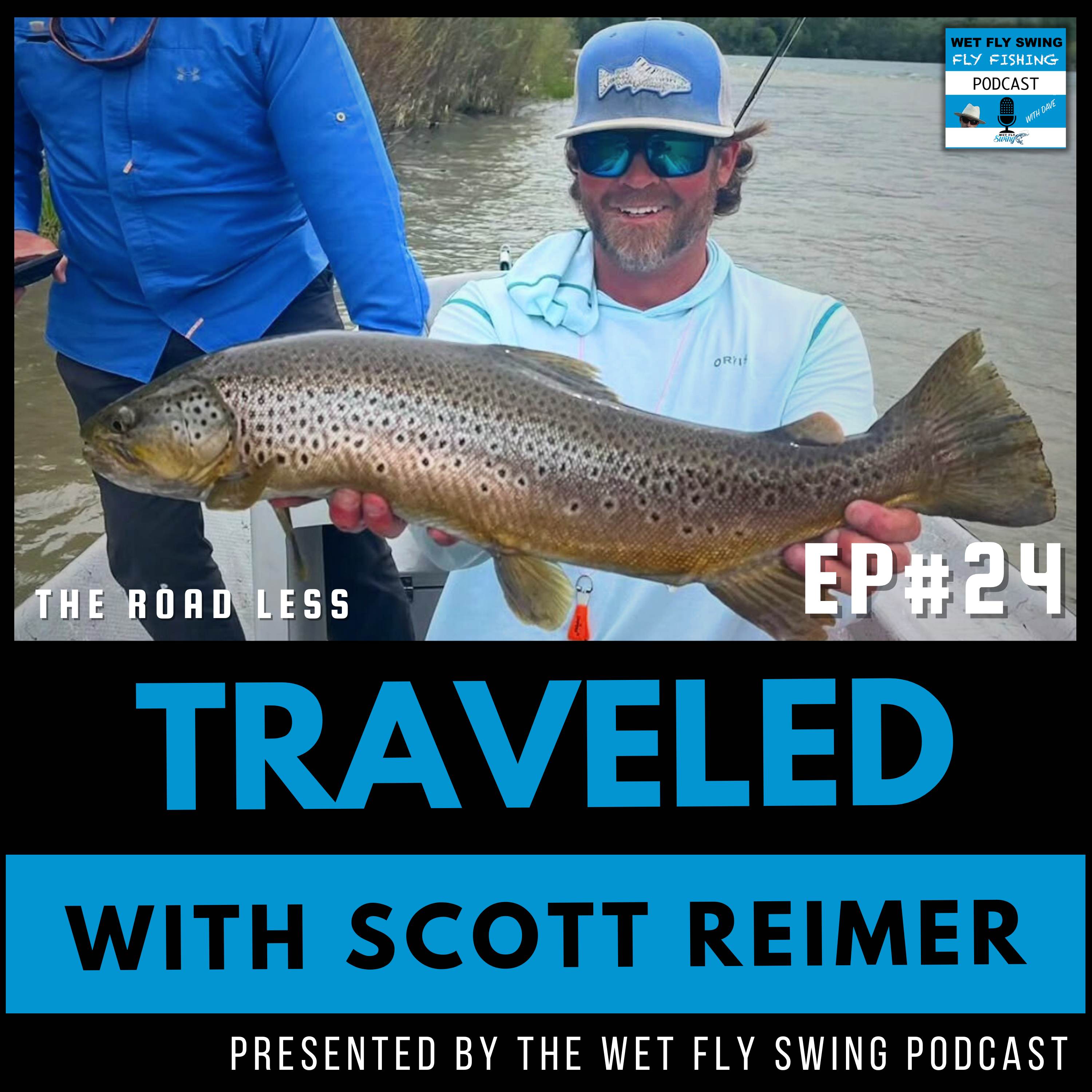
S11 Ep 713Traveled #24 | The Lodge at Palisades Creek with Scott Reimer - Snake River, Mutant Stonefly Hatch
#713 Show Notes: https://wetflyswing.com/713 Presented by: Yellowstone Teton Territory Scott Reimer, head guide at The Lodge at Palisades Creek, shares invaluable insights into the unique mutant Stonefly hatch, one of the most fascinating hatches in the Western fly fishing scene. Throughout the episode, you will be guided through the South Fork of the Snake, learning not only where and when to fish a double dry fly setup but also mastering the art of reading water and setting the hook. Whether you're an avid fly fishing enthusiast or a curious beginner, Scott's tips on drift boat fishing and exploring small creeks will equip you with the tools to enhance your fly fishing adventures. Episode Chapters with Scott Reimer on The Lodge at Palisades Creek 2:07 - Scott recalls his first encounter with fly fishing in the Black Hills of South Dakota, where he received his first fly rod at the age of four or five. Encouraged by his father, who was an avid fly fisherman, Scott honed his skills in the backyard with a makeshift target practice involving a piece of pipe cleaner and a trash can lid. 4:23 - Scott discusses the guiding season, which typically begins in April when he starts assisting at the fly shop and occasionally running trips, depending on the weather and interest from clients. The main focus of their guiding is on the South Fork of the Snake River, as they hold a permit that allows them to operate there exclusively due to Idaho's strict regulations. 6:34 - We discuss the geography of the area, noting the confluence of the South Fork and Henry's Fork, which marks the beginning of the main Snake River. Scott clarifies that American Falls is approximately 60 to 70 river miles from this confluence. 9:19 - Our chat delves into the impact of hatches on fishing success. Scott explains that fish behavior is closely tied to these natural events, influencing when and where they bite. While some hatches are predictable, others have become less prolific, affecting fishing strategies. 10:02 - Scott shares his journey and experiences as a guide at the lodge, where he has been working for 12 years. He recounts his early days on the river, starting with his first drift boat, an older Clackacraft he acquired at the age of 18. Despite its imperfect condition, with visible repairs and missing parts, it served its purpose and floated well. 12:06 - He discusses the various hatches that anglers eagerly anticipate throughout the fishing season. He mentions the early spring betas, noting that while trout don't often feed on them from the surface, streamer fishing can be effective during this period. As the season progresses into mid-June, anglers can expect a short but excellent green Drake hatch, primarily on the lower river. 13:11 - Scott explains his approach to determining fishing techniques, often starting with a dry dropper setup and adjusting based on fish activity. He shares a memorable experience from the previous season, where he successfully used double dry fly setups for several weeks following the salmon fly hatch, with fish heavily focused on caddis patterns. This technique involved using different sizes and patterns of caddis flies for effective fishing. 14:07 - We get into his double dry fly set up. Scott explains the strategy behind using a larger, more visible dry fly alongside a smaller, less visible one to keep track of potential bites while fishing from a boat. This setup helps maintain visibility and improve the chances of a catch. 18:09 - Scott talks about the logistics and characteristics of the sections near Palisades Dam. He explains that the fishing area is divided into four sections, covering approximately 66 river miles down to Menan. The colder waters from the dam influence the timing of hatches, with the upper section starting later than the lower sections. 19:40 - He shares some essential tips for fishing from a drift boat, especially focusing on the South Fork. As a rower, his primary role is to maintain the drift and guide anglers on when to recast. He advises keeping a 45-degree forward casting angle to maximize success, as casting behind the boat is less effective. Scott notes that on the South Fork, long casts are unnecessary because shorter casts near the boat can be just as fruitful. 21:11 - We discuss how the salmon fly hatch typically occurs in July, followed by the appearance of golden stones, which progress from the lower river upwards. Scott reminisces about a particularly good salmon fly hatch, recalling fishing well into August with these flies. As the season progresses, anglers can expect a variety of mayflies such as PMDs, sulfur duns, and mahogany duns, especially on overcast days. Towards the end of August, the unique mutant stonefly emerges which are best fished in the early morning. Scott shares the excitement of early morning fishing programs, where anglers start at dawn to target these skittering insects using patterns like Dornan's Water Walker. 23:16 - Scott shares insight

S11 Ep 712712 | Fly Casting 101 with Marty McVey - Driftless Trout, Fly Fishing Iowa, Fly Casting Challenge
#712 Show Notes: https://wetflyswing.com/712 Presented By: FishHound Expeditions, Jackson Hole Fly Company, Four Wheel Campers, Togiak River Lodge We have a special episode for you where we dig into the art of fly fishing and fly casting straight from the heartland with our guest Marty McVey. We're gonna get into some on his journey from bait fisherman into fly fisherman, and now a respected fly casting instructor. We find out about the hidden gems of Iowa and some of the great opportunities in the Driftless. We talk about how Marty became a casting instructor and elevated his game. We get into some tips and tricks on that too, to help you with your game and your fly casting today. Marty does some casting instruction online as well. And then we're gonna talk about this challenge. We got a little fly-casting challenge I have for you at the end. I'm excited to start getting this one out there. Show Notes: https://wetflyswing.com/712

S11 Ep 711711 | Sight Fishing for Northern Pike with Matt Martin - Smooth River Guiding
#711 Show Notes: https://wetflyswing.com/711 Presented By: Pescador on the Fly, TroutRoutes, On DeMark Lodge, Four Wheel Campers When you think of a predatory fish, what are the first few species that come to mind? For many anglers, Northern Pike is among the most thrilling predators to catch. If fishing for northern pike is on your radar, today's episode is a must-listen. In this episode, we will break down sight fishing for Northern Pike with Matt Martin of Smooth River Guide. Find out his secrets to targeting big Northern Pike by sight. Here's what you'll learn: Muskie vs Pike Best time to target Northern Pike Sight Fishing Northern Pike How to Find Pike in Shallow Bays Best Flies (and color) for Northern Pike Fishing The perfect strip, and when the fish strike Episode Chapters with Matt Martin on Sight Fishing for Northern Pike Matt Martin grew up in Barrie, Ontario, and now lives in Midland, a town on the shores of Georgian Bay. Georgian Bay is known as the 30,000 Islands region. It's the world's largest freshwater archipelago. Matt guides on over 50 lakes and a dozen rivers, targeting 14 different species. Northern Pike is definitely a top species to target, but it can still vary depending on where you are in the province. Here's a breakdown of the species you can fish in the area: Smallmouth and Largemouth Bass Northern Pike – Pike season runs from May to June and then again in September. Walleye Muskie Chinook Salmon Coho Rainbow Trout Steelhead Brown Trout Muskie vs Pike Unlike pike, which are easier to catch, muskies are tough. You might not even see one all day, and the chances of getting a hit are low. Muskies are more challenging to catch because they have a lower population and a bigger home range. For those who want to target muskie, Matt recommends booking more than one day to increase your chances. Best Time to Go Fishing for Northern Pike The best time for northern pike fishing is in the spring. The season opens on May 1st in Ontario, and that's when pike are easiest to catch. Here's why: In the first week of May, pike can be found in less than two feet of water, sunbathing in sandy bottom bays. The main lake water is still cold (around 42-43°F), but the back bays warm up to the 50s. Pike use the warmer water to increase their metabolism. According to Matt, sight fishing for pike is a whole new level of fun. Sight Fishing for Northern Pike Matt uses an 18-foot Lund Deep V fishing boat for sight fishing. He says it's perfect for the larger lakes, especially when the waves get rough. Matt uses advanced gear like a Minn Kota motor and Garmin LiveScope to spot pike before casting. Fishing for Northern Pike in Shallow Bays In the spring, focus on large, warm bays, especially those near river mouths. These areas draw pike because they offer the perfect hiding spots in weeds or along logs, where pike can ambush prey. Pike are ambush predators, so they wait below the surface to attack. When fishing for pike, Matt says to keep your fly around 2 to 4 feet above the fish because pike strike from below. Best Flies for Fishing Northern Pike Matt prefers using bright, easy-to-see flies when fishing for pike, especially in spring. He avoids natural tones and uses colors like white, yellow, or bright pink. The key is using flies that mimic the white belly of baitfish. Pike are drawn to movement, so keep that fly above them and use a strip to get their attention. Stripping Your Fly for Pike The way you strip your fly is crucial for catching pike. Most strikes happen during the pause between strips, not while you're actively moving the fly. For some flies, like the Game Changer, Matt recommends a quick, short strip with a half-second pause to let the fly sink a bit. Other flies like the Yard Sale need a longer strip with a hard kick at the end to make the fly wobble like an injured fish. https://www.youtube.com/watch?v=gEUP5cEOB6M Essential Gear for Catching Big Northern Pike Pike can be super aggressive, so it's key to be prepared with the right gear to protect you and the fish. Here are some things to remember when fishing for Northern Pike: Use a large, deep net to keep the fish in the water while you unhook it. Have multiple sets of tools like jaw spreaders and pliers for safe handling. Protect the fish to make sure they're safely released after catching them. Pike can live up to 20–25 years in the wild. Matt says it's okay to keep smaller ones (around 27 inches), but those big 40-inch fish should go back in the water. If you keep one, make sure it's injured and can't survive being released. Matt's Go-to Tips for Fishing for Northern Pike Start in Shallow Bays Bring Multiple Rods and Lines Use 8-10 weight rods and carry lines with different sinking rates: floating, intermediate, type 3, and type 5. Add a 12-inch section of 20-25 lb bite wire to your leader. Short Leaders Work Best Use Durable Pike Lines Focus on bays with creeks, green weeds, and the right structure. Matt's final advice? Stick with it a
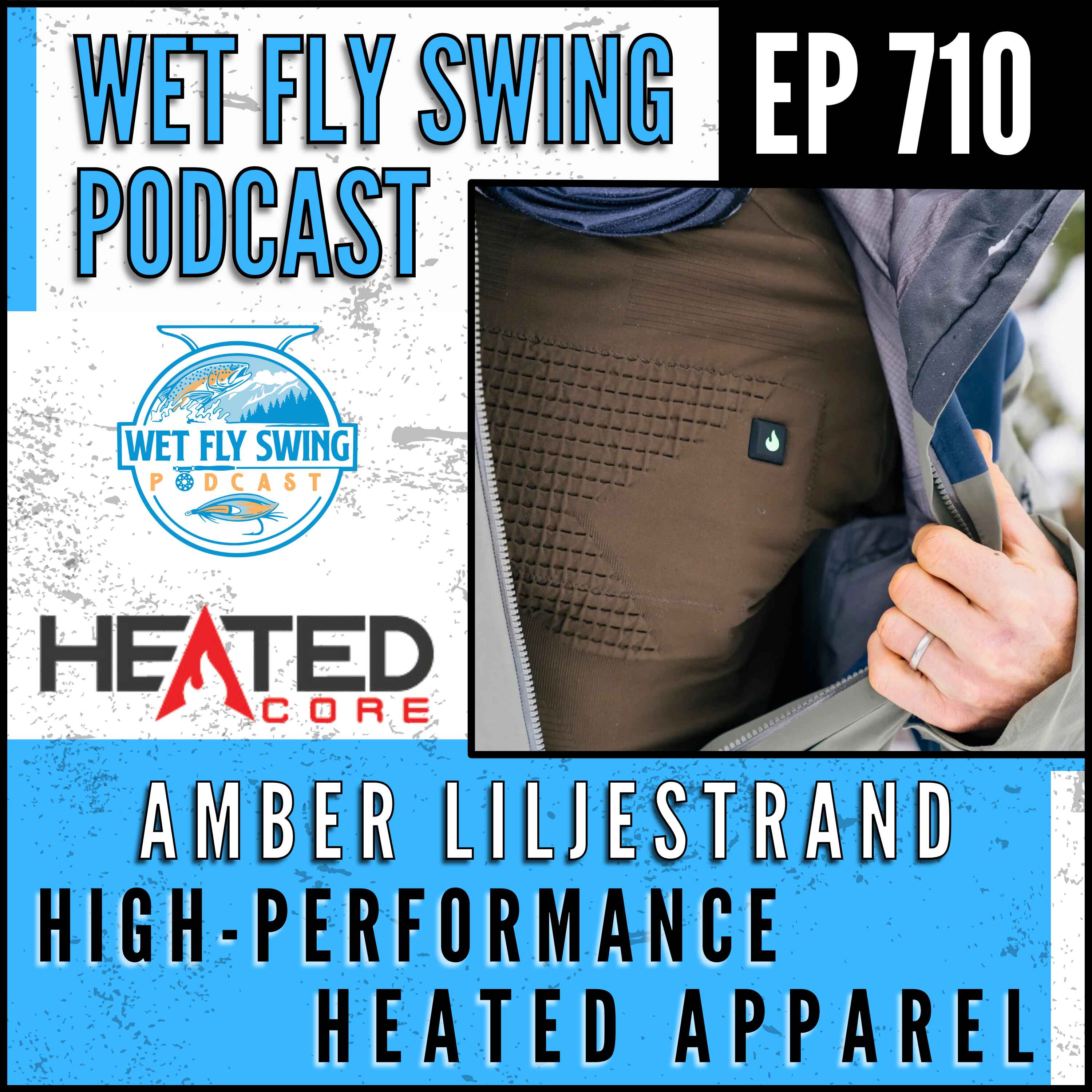
S11 Ep 710710 | High-performance Heated Apparel with Amber Liljestrand - Heated Core, Carbon Fiber, Bow Hunting
#710 Show Notes: https://wetflyswing.com/710 Presented by: Heated Core Sponsors: https://wetflyswing.com/heatedcore In this episode, we delve into innovative solutions for extreme cold weather with Amber Liljestrand from Heated Core. Join us as we explore how Heated Core's cutting-edge carbon fiber technology is transforming heated apparel, making it more efficient and user-friendly than ever before. Amber shares her journey into the world of outdoor gear, discussing how her passion for bow hunting and fishing led her to the brand. Discover how these revolutionary base layers allow you to control your comfort at the touch of a button, turning on the heat just when you need it most. Additionally, Amber provides valuable tips on staying warm during cold weather adventures, even beyond the use of heated gear. Tune in to learn more about Heated Core's journey and find inspiration for your next winter adventure. Episode Chapters with Amber Liljestrand on High-Performance Heated Apparel 2:28 - Amber shares how her passion for outdoor activities started. It began with fishing with her grandparents and expanded to kayaking and paddle boarding. Despite her love for summer, she ventured into deer hunting, a cold-weather activity, which introduced her to the challenge of staying warm while being stationary outdoors. 5:29 - She talks about how she discovered Heated Core. Their products, which provide direct warmth through battery-operated heating, transformed her outdoor experiences. 9:33 - Amber describes some of their heated clothing pieces that include a long sleeve top, a vest, and full pants, resembling thermal or base layers. These garments incorporate undetectable carbon fiber heating elements woven into the fabric, providing even heat distribution without hot spots. 15:14 - We explore the features and future possibilities of the brand. Amber mentions potential development of full footed leggings with heating elements for toes as a future option. She also notes that the heating system is designed for flexibility, allowing users to turn it on when they begin to feel cold and off as they warm up through activity. The heating elements can last up to six hours on low settings. 19:19 - Amber shares her strategy of only activating the heated layer when she starts feeling cold, using it as a backup to extend her time outdoors comfortably. This approach helps prevent common issues hunters face, such as cutting hunts short due to cold or missing shots because of tense, shaking muscles. She also emphasizes the versatility of their products, noting its usefulness not only in hunting but also in various activities like skiing, attending sporting events, or even simple tasks like shoveling snow. 23:16 - Amber shares tips on staying warm in cold weather, emphasizing the importance of layering. She explains that layers of air trapped between clothing help retain warmth, and it's crucial to choose layers with thermal regulating properties to prevent restriction. Amber suggests adding insulative layers like puffy jackets or fleece to trap additional warmth. For outer protection, Amber advises using durable shells that are either waterproof or windproof, depending on the weather conditions. These outer layers, often made with advanced materials, allow moisture to escape while protecting against external elements. 27:25 - Amber discusses the gear from Pnuma Outdoors, highlighting its affordability and technical features. She emphasizes the versatility and fit of Pnuma's clothing, particularly noting how well they fit women despite not being specifically designed for them. She praises the cohesive layering system that caters to different hunting environments and activities. 31:54 - We get into Amber's journey into outdoor activities and hunting. Amber shares that she initially engaged in summer outdoor activities and only began hunting four years ago after moving to the Midwest. 35:39 - Amber shares an experience about taking her son hunting, where they encountered a bobcat that approached their blind so closely it brushed against it. 37:50 - She talks about the differences between bow hunting and rifle hunting, highlighting the advantages of the former. Amber explains that bow hunting in the Midwest offers a longer season, from mid-September to mid-January, compared to the 10-day rifle season. She also shares her personal experiences with bow hunting, noting the flexibility and creativity it allows for practice. 50:07 - Amber highlights the product's benefits for construction workers, police officers, and mail carriers who endure cold conditions as part of their jobs. At a recent trade show, there was notable interest from cyclists and motorcycle riders, who appreciate the product's ability to provide warmth without compromising mobility or protective gear. 54:06 - We ask about her hunting activities in January. Amber explains that while the hunting season ends on January 15th, shed hunting begins immediately after. Shed hunting i

S11 Ep 709709 | Bamboo Fly Rods Simplified with Chris Sparkman – Hex vs. Penta, Fly Fishing Virginia, Salmon Fishing
#709 Show Notes: https://wetflyswing.com/709 Presented By: Fish The Fly, Heated Core, Yellowstone Teton Territory, FishHound Expeditions Sponsors: https://wetflyswing.com/sponsors We've talked a lot about the action of the fly rod and the benefits of a full flexing rod over the last few months and beyond. Bamboo rods are the epitome of a rod you can feel. And today you're gonna find out how to choose your next bamboo fly rod... Chris Sparkman is here today, founder and owner of Sparchimedes Bamboo Fly Rods. He's gonna take us on a journey to choosing your first or maybe your next bamboo fly rod. We're gonna find out why the five-sighted Penta style bamboo rod might be better for you than the Hexa style. We're gonna get some information on the differences there, and we're gonna talk about the perfect length of a bamboo fly rod. We're gonna walk through what it might look like for you and your area, and why you might go with a nine-foot or maybe even a six-foot bamboo rod. We're also gonna get into some great resources if you wanna take this conversation further and some other people you might want to connect with to put together your next bamboo rod. Plus, we're gonna find out whether a bamboo fly rod has what it takes to battle a giant Alaskan salmon. Chris is gonna talk about some trips he's excited about this year. Show Notes: https://wetflyswing.com/709

S11 Ep 708Littoral Zone #14 - How Lakes Work with Brian Chan and Phil Rowley
#708 Show Notes: https://wetflyswing.com/708 Presented By: TroutRoutes, On DeMark Lodge, Stonefly Nets, Grand Teton Fly Fishing If you want to have more success fly fishing lakes, you need a good understanding of how lakes work—knowing how lakes work helps you get to the right spot at the right time, no matter the season. You've probably heard the saying that 90% of the fish live in 10% of the water, and it's true for lakes just like rivers and streams! In this two-part series on how lakes work, Phil Rowley and Brian Chan break down everything you need to know about fishing lakes effectively. About our Guest Brian has spent over 30 years as a fisheries biologist for the provincial government, specializing in managing trout lakes in the interior regions of British Columbia. Over the years, he worked on hundreds of lakes, managing them, stocking them, setting regulations, and carrying out habitat protection and enhancement work. Brian is also an ambassador for several fly fishing and boating companies, including Scientific Anglers, Sage Fly Rods, Islander Reels, Marlin Boats, Semperfli Fly Tying Materials, and Daiichi Hooks. He is a passionate fly fisher and fly designer, and together with Phil, they've put their expertise to good use through their online fly shop. Check out Brian and Phil's Stillwater Fly Fishing Store. Episode Chapters with Brian Chan on How Lakes Work Lakes aren't all the same, and knowing how they work is key to becoming a better stillwater angler. Here's what you'll learn in this episode: Lake Productivity and pH Three Lake Classifications Different Zones in a Lake Lake Productivity and pH pH is a scale that measures how acidic or alkaline a lake is, with 1 being super acidic and 14 being super alkaline. The pH level affects the water chemistry, impacting how well the lake supports aquatic life, from insects to fish. What's the Ideal pH for Trout Lakes? The best pH for trout lakes is between 8 and 9.2. This is the sweet spot for plant growth and lots of invertebrates, which are food for trout. If the pH exceeds 9.2, the water becomes too salty for trout, and it would not be easy for them to survive. For example, lakes like Pyramid Lake have a pH above 9, which is perfect for Lahontan cutthroat trout but challenging for rainbow trout. The pH scale is logarithmic, meaning small changes in pH can make a big difference in fish survival. Brian explains that pH levels in lakes aren't always the same and can change over time due to several factors: Spring snowmelt helps keep lakes balanced by flushing in nutrients, but the lake can get too salty without it. Human activities like logging can change water flow and impact the lake's chemistry. Climate change is also a significant factor, as some areas aren't getting the same snowmelt they used to, causing pH to rise. Marl and Chara Shoal How Lakes Work: Three Lake Classifications Lakes can be divided into three categories: oligotrophic, mesotrophic, and eutrophic. These classifications help us understand which lakes are better for fishing and support healthy fish populations. Knowing the type of lake helps anglers figure out why one lake might be an excellent spot for big trout, and another might not be as productive. Oligotrophic Lakes Oligotrophic lakes are big, deep, and well-oxygenated, with lots of water flowing in and out. The flushing rate in these lakes is high, meaning the water changes quickly, so there isn't much shallow water for plants to grow. Because of this, these lakes have limited food sources for trout. Fish here mostly survive by eating other fish, not just insects. Mesotrophic Lakes Mesotrophic lakes are a step up from oligotrophic lakes in terms of productivity. They're still large but a bit shallower, and they often have small rivers or creeks flowing in and out. The lake has a bit more shoal areas or littoral zones, so some plant life grows in those shallow water areas. Eutrophic Lakes Eutrophic lakes are the gold standard when it comes to trout fishing. They're shallow, nutrient-rich, and full of life. These lakes are often less than 50-60 feet deep and have lots of shallow areas for plants to grow. These lakes' flushing rate is slow, so they stay nutrient-rich for longer. Chironomid fishing is also incredible here due to the muddy bottoms. Different Zones in a Lake Lakes have different zones, and understanding them helps anglers know where to fish at various times of the year. Littoral Zone The littoral zone, or shoal area, is the shallow water at the lake's edge. This is where sunlight can penetrate to the bottom to create photosynthesis. It's usually 7 to 8 meters deep. The littoral zone is where all the vegetation grows and where trout and other fish species feed, particularly in the spring to early summer and again in the fall, right until freeze-up. This is the zone where we spend the bulk of our fishing time—whether it's 5 feet of water or 22, 23 feet of water—this is the prime area. Limnetic Zone The limnetic zone

S11 Ep 707707 | The So Fly Fishing Podcast with Mitch Duesling and Aldo Pescatore-Tardioli - Ontario, Belize, Northern Pike
#707 Show Notes: https://wetflyswing.com/707 Presented by: Pescador on the Fly, FishHound Expeditions, Four Wheel Campers Sponsors: https://wetflyswing.com/sponsors In this episode, we are thrilled to have Mitch and Aldo, the dynamic duo behind the renowned So Fly Fishing podcast, one of Canada's top fly fishing shows. Join us as Mitch and Aldo take us on a journey through Southern Ontario's stunning waters and beyond. They'll share captivating stories from their podcast, offering insights into their favorite trips and the incredible guests they've hosted. Whether you're planning your next big adventure or simply dreaming of the perfect fly fishing escape, Mitch and Aldo are here to provide inspiration and expert advice. Episode Chapters with Mitch Duesling and Aldo Pescatore-Tardioli on the So Fly Fishing Podcast 1:28 - I had the pleasure to guest on their podcast in April last year about starting and sustaining a fly fishing podcast. 3:44 - We started our chat by getting into their creative journey in the podcasting space. Mitch reflects on the origins of their project, which began as an idea in 2015 and launched its first episode in January 2016. Mitch notes the rise of the creator culture, observing that even young family members aspire to be creators now. Aldo recalls joining the podcast as a guest on an episode and later becoming a co-host. The team experienced a shift in their production schedule during the Covid lockdown, initially increasing their output to one episode per week due to having more free time. Eventually, they settled into a rhythm of releasing two episodes per month, which they find to be a balanced and sustainable approach. 6:52 - We talk about fishing in Ontario. Mitch and Aldo discuss how Ontario offers a wide range of fishing opportunities due to its large size and diverse ecosystems, from Southern Ontario to the far north. They note that while they have traveled globally, Ontario remains a prime fishing destination for them. Aldo mentions the multi-species fishing opportunities, including smallmouth bass, pike, and musky, particularly in Ottawa. He also remarks on the less populated areas of the province, which offer remote fishing experiences. 9:51 - Aldo shares that time when a listener's invitation led them to Texas for redfishing, highlighting the exciting and memorable experiences that result from this kind of trips. Both Mitch and Aldo emphasize the importance of being open to opportunities and seizing them when they arise. 13:29 - Mitch discusses the shift from audio-only content to video podcasts on YouTube. He notes that more people are engaging with their content on YouTube, likely due to the visual component that video offers. Despite this shift, creating video content presents challenges, such as ensuring guests have the necessary technology to participate visually. 16:00 - We discuss the excitement of having well-known guests on the show, particularly those outside the fly fishing community. They recount a near-success in booking actor Liam Neeson, who declined their invitation but showed interest initially. They dream of featuring other famous personalities, focusing solely on their fishing experiences rather than their celebrity status. 18:39 - I mention our episodes with Yvon Chouinard and Henry Winkler. 19:13 - The hosts discuss their experiences with receiving negative comments or "hate mail" after podcast episodes. Mitch and Aldo acknowledge that early on, they received criticism for swearing too much, which they have since reduced. 21:19 - Aldo and Mitch reveal how they plan and produce their episodes. They rely on a network of sponsors, fly shops, guides, and local connections to secure guests, aiming to maintain a balance between international content and local stories from Ontario. 24:25 - We ask them about their plans for this year. One of the highlights is a trip to Belize in February, where they'll be exploring Ambergris Caye and San Pedro with a mix of DIY adventures and guided tours. Another major milestone for the team is the upcoming 200th episode of their podcast, which they are thrilled about. 26:28 - They share about an annual event called the Southern Ontario Trout Opener Social in April. It serves as a fundraiser aiming to support local river conservation efforts. The event features a cocktail party setup with around 150 attendees, including tying competitions where participants can win a day with a guide. The event has been running for four years and was designed to attract both fishing enthusiasts and non-fishers. 30:25 - Our conversation discusses potential guests and episodes for this year. Aldo expresses a strong interest in having Andy Mill on the show. He admires Andy's work and has been an avid listener of the Mill House podcast, which captures the allure of saltwater fishing. 35:33 - We dig into Aldo's first time travelling to Belize. Mitch also shares his favorite fishing trip so far which was in a river in Northern Ontario because of

S11 Ep 706706 | South Carolina Redfish with Capt. Johnny Mainero - Striped Bass, Speckled Trout, Flounder
#706 Show Notes: https://wetflyswing.com/706 Presented By: Grand Teton Fly Fishing, Skwala, Yellowstone Teton Territory, Four Wheel Campers Sponsors: https://wetflyswing.com/sponsors If you only had one shot to hook that trophy fish while on the water, could you make it? You had one chance to make that perfect cast, that the fish sees it and hooks up. Today we're heading to South Carolina to find out how you can put it together for Redfish so you can make that shot next time you are on the water. Johnny Mainero from Blackwater Revival Guide Service is gonna take us on a trip to understand redfish, the history, and the experience. You're gonna find out when you should be planning your next trip, what you should be thinking about, and what to avoid. You're gonna find out how to find the fish and position yourself for success and his take on the best rod to use for Redfish. And a little hint here... this is not a super-fast action rod. Plus, you're gonna find out why he's adding sharks to his program potentially in the coming years. Stay tuned! Show Notes: https://wetflyswing.com/706

S11 Ep 705Traveled #23 | Fly Fishing World Championships with Glade Gunther: Inside the Idaho Fly Fishing Event
Show Notes: https://wetflyswing.com/705B In this episode, host Dave talks with Glade Gunther, a member of Team USA and the person in charge of organizing a major event in Fly Fishing, to share what's planned and how people can join in the fun. Dave and Glade will tell you all about the famous rivers in Idaho, how the event works, and even give some helpful fishing tips. Whether you want to watch the competition, volunteer, or just become a better fisher, this episode has everything you need to know! 1:09 - From casting simple spinners as a child to learning the art of fly fishing as a teenager, Glade Gunther's journey reflects the timeless appeal of fishing as both a personal pastime and a shared experience. 5:15 - Glade shares how today Fly Fishing Team USA continues to grow, selecting top anglers every two years based on a points system. Glade explains how recent changes have made it easier for people to participate, and how the team is now made up of the best 15 anglers in the country. 7:28 - After COVID paused competitions, Fly Fishing Team USA revamped its selection process by creating a regional system, dividing the U.S. into four sections. This made it easier for anglers to compete locally without extensive travel. 15:12 -Glade then proceed in sharing how Fly Fishing Team USA's selection process allows anglers to compete in up to three regional events, counting their best two scores to account for luck and variability in conditions. Rankings from regional events are combined with points from interregional competitions to determine the top anglers. 30:52 - Glade emphasizes how the U.S. aims to minimize disruption and avoid conflicts with local anglers. With careful planning and support from state and federal agencies, the event will promote conservation, safe fishing practices, and a fun, competitive environment for participants. 36:33 - Glade describes their success in securing bids for organizing a fly fishing event and the subsequent planning efforts involved. They mention having a cabin in Island Park, Idaho, which lies within the renowned "golden triangle" of fly fishing, spanning Montana, Wyoming, and Idaho. 43:03 - The youth fly fishing team recently achieved remarkable success at the World Championships in the Czech Republic, sweeping the podium with 1st, 2nd, and 3rd place finishes and securing the team gold medal. Show Notes: https://wetflyswing.com/705B

S11 Ep 705705 | Fly Fishing the Land of the Giants with Jeff Lattig of Living Water Guide
#705 Show Notes: https://wetflyswing.com/705 Presented By: Pescador on the Fly, Heated Core, Visit Helena, MT Are you ready to fish one of the best tailwaters out west? Today, we're heading to the Land of the Giants on the Missouri River with Jeff Lattig from Living Water Guide. Jeff shares tips on fishing rivers and reservoirs, even in winter. We're talking about the must-have fly color for winter, how to avoid a sloppy mend, and why the short leash nymphing method might just change the way you fish. Show Notes with Jeff Lattig on Fly Fishing the Land of the Giants. 03:06 - Winter on the Missouri River is slightly different, but it's still a great time to catch some big fish. The day usually starts later, at around 9:30 or 10 AM, just to let the sun warm things up a bit. Jeff talks about fishing deep, slow winter water and using flies like pink scuds and worms. If the wind is calm, you might even get some great midge fishing with dry flies. Jeff says pink flies, like pill poppers and lightning bugs, are popular in winter. Winter Fishing vs Summer Fishing in the Missouri Winter fishing on the Missouri River can be easier than fishing in the summer. Fish are a bit slower and less picky, so it's easier to catch them. But they're also not as hungry, so it's all about finding the right depth and being patient. Jeff said the best part about winter fishing is fewer anglers. Dry Fly Fishing on the Missouri 09:16 - Dry fly fishing on the Missouri can be trickier than on rivers like the Clark Fork or Blackfoot. The flies are smaller, so even a small mistake, like a sloppy mend, can cause your fly to sink. Plus, the weeds in the water add an extra challenge. Jeff said downstream hook sets can be challenging for beginners. You must wait for the fish to take the fly before setting the hook. When to Set the Hook and How to Avoid Sloppy Mends? Jeff says the key is patience. You want to wait until the fish completely takes the fly. Here's what Jeff recommends to avoid sloppy mends: Avoid sloppy mends by using a reach cast to place your fly where you want it. Stack your line out to feed it properly and get that perfect drift. Short leaders (9 to 12 feet) are usually enough—no need for crazy long leaders! Leader Size and Technique for Dry Fly Fishing on the Missouri The leader size for dry fly fishing in Missouri depends on the fly you're using. Here's the breakdown: For smaller flies (like size 18), choose a 4x to 5x leader. For larger flies (like chubby Chernobyls or grasshoppers), use 2x or 3x to prevent twisting and get a good turnover. The technique stays the same even in the winter. Jeff says that if there aren't many fish rising, they fish blind. https://youtu.be/9U1jUdOjsLA?si=TGkZjLa7cE5f2_8Q Hopper Season on the Missouri 13:03 - Hopper season runs from late July through September. During this time, Jeff targets shallow waters (less than 2 feet deep) with grasshoppers. Here's what you should look for: Faster, choppy water with good oxygen levels Current breaks and structure, especially wood (as Jeff says, "wood is good") Fish with a single hopper or a hopper dropper Missouri is known for its epic grasshopper fishing, but other hatches like PMDs, caddis, tricks, and pseudocloeons. What is Short Leash Nymphing? 17:34 - Short leash nymphing is a technique where you target super shallow water, where larger fish tend to feed. The method involves using soft landing indicators placed a few feet above the flies, typically two to three feet. Anglers cast to specific spots like gravel bars or drops where fish feed. The technique requires precision and frequent casting. Check out this article on Short Leash Nymphing on the Missouri River. How Do You Find Fish in Shallow Water? To find fish in shallow water, look for areas where the water gets shallow, like gravel bars, shorelines, or center river flats. These are the spots you want to target when nymphing. Make sure your flies, indicators, and weight are set for that depth. Short leash nymphing makes it easy because you can visually spot those shallow areas and focus your efforts there. Dealing with Weeds When Nymphing Weeds can be a big issue when nymphing, especially in the summer months in Missouri. Sometimes, you might need to switch to unweighted flies to float over weed beds, especially in faster or deeper water. Jeff says that areas near the dam have less vegetation due to cooler water, but warmer temperatures bring more weeds further downriver. https://youtu.be/wxbXwDgqhAU?si=BxebQWXWKz3XArRG Fly Fishing the Land of the Giants The "Land of Giants" is a stretch of river below Hauser Dam, about 3 to 4 miles long and known for its huge fish. You can catch fish around 18 to 22 inches, with some reaching 24 inches or more. This section is regulated with permits. Only 50 guides can operate there for commercial use. Jeff says they use jet boats to fish the area. 26:45 - You don't need a drift boat to fish the Missouri, but it helps. Wade fishing can be great, especially when

S11 Ep 704704 | The Perfect Packable Fly Rod with Jeff Ditsworth - Pescador on the Fly, El Rey, Versa Pack
#704 Show Notes: https://wetflyswing.com/704 Presented by: Pescador on the Fly Sponsors: https://wetflyswing.com/pescador In this episode, we sit down with Jeff Ditsworth, owner of Pescador on the Fly, to talk about the perfect packable fly rod: their six-piece travel rod. Jeff, an expert in fly fishing travel, shares insights into his innovative line of rods, including the El Jefe and El Rey, which are designed to make traveling with your fishing gear easier and more efficient. We delve into the common misconceptions about multi-piece rods and explore the exceptional quality and convenience they offer. Plus, Jeff reveals the inspiration behind the creation of the Trout Hero bag for Trout Unlimited and shares his daily routine that keeps him at the top of his game. Join us as we uncover how this game-changing equipment could transform your fly fishing trips and simplify your travels. Episode Chapters with Jeff Ditsworth on The Perfect Packable Fly Rod 1:55 - Jeff recalls his first introduction to fly fishing. He used to go camping with his father and grandfather, both of whom owned very old fly rods. His first fishing experiences were on lakes and ponds, targeting species like bluegills and bass. 3:44 - He shares his journey of creating the brand Pescador on the Fly. While traveling for work, he found it cumbersome to carry traditional four-section rods and sought a better travel rod. He spent two years in research and development, eventually launching the brand with the El Cinco, a seven-section rod. 9:54 - We dig into their six-section El Rey rod. Jeff mentions that the rod was recently featured in Fly Fisherman magazine's 2025 gear guide, highlighting its recognition in the industry. 12:35 - We ask him for tips on going on a travel for fishing trips. Jeff emphasizes the importance of traveling with more than one rod as a backup. He mentions the unpredictability of trips, such as rods breaking due to accidents, and suggests bringing a lightweight, compact rod like the six-section rod that fits easily into a backpack. Jeff also suggests varying the types of rods based on the fishing environment, such as bringing different weights for different water sizes and fish types. 14:48 - We get into their El Jefe line that includes rods from zero to 10-weight, available in both four and six-piece configurations. He mentions the affordability of their fishing combos making them accessible to newcomers to fly fishing. 18:42 - Jeff criticizes the industry's tendency to overcomplicate fly fishing with too many options, which can intimidate newcomers. He suggests that simplifying the approach to gear is often sufficient for most anglers. 23:22 - Jeff discusses the origins of the names for the brand and its product lines. He explains that "Pescador" means fisherman, a name inspired by his love for fishing in Mexico and speaking Spanish. "El Jefe" means the boss, and "El Ray" means the king. Jeff also addresses the Econ 101 series, which emerged from his desire to offer durable, non-disposable starter fly fishing kits. 25:49 - We touch a bit on this fishing trip to Ascension. On more recent trips, Jeff has been using their El Jefe rods and reels. He mentions that the El Jefe reels are saltwater capable with fully sealed drags, making them versatile for both freshwater and saltwater fishing. 27:11 - Jeff shares some of the new things coming up for Pescador on the Fly. 33:04 - We ask Jeff for his essential gears when going to fishing trips. Besides the six-section rod, he highlights the need for packing flies suited for the location, fly boxes, leaders, tippets, and small accessories like weights and fly line dressing. He also mentions their Versa Pack, a small, efficient bag that caters to minimalist needs. This pack is ideal for carrying essential items such as a couple of fly boxes, ensuring that the angler is not burdened with unnecessary gear. 35:27 - Jeff highlights the importance of considering weather and location when deciding to use waders or opt for wet wading. He also shares his experience of packing efficiently, often including a suit, waders, boots, and fly fishing gear in his carry-on for both meetings and fishing. 40:18 - Jeff shares a heartfelt tribute to his father that was published in Colorado Trout Unlimited magazine. He also highlights their commitment to exceptional customer service, noting they quickly resolve issues like broken fishing rods, often providing replacements within two days, a stark contrast to industry norms. 42:48 - Jeff discusses his commitment to supporting Trout Unlimited, a prominent organization dedicated to protecting waterways and improving fishing access. One of his significant contributions to TU is the creation of the "trout hero bag." This reusable mesh bag is designed for anglers to collect trash every time they're near water bodies, promoting consistent environmental stewardship beyond occasional cleanup events. 46:09 - We ask Jeff about some misconceptions surrounding six

S11 Ep 703In the Bucket #13 | The Conservation Angler with John McMillan and Tom Pero
E#703 Show Notes: https://wetflyswing.com/703 Presented By: FishHound Expeditions, Yellowstone Teton Territory, Drifthook Fly Fishing In today's show, we're gonna be learning more about The Conservation Angler, or TCA as it's often referred to. We'll be speaking with our friend John McMillan, president of TCA and one of his board members noted author and publisher, Tom Pero. These two gentlemen have a long history in fisheries conservation and also happened to be passionate anglers. We're very excited to feature TCA as our conservation partner and our recently announced Wet Fly Swing Skeena Steelhead School promotion. We have a tremendous amount of respect for this organization and the people involved. Let's get into it. Time to get in the bucket… Show Notes: https://wetflyswing.com/703

S11 Ep 702702 | Inside the Skeena Spey School with Brian Niska and Jeff Liskay
#702 Show Notes: https://wetflyswing.com/702 Presented by: Stonefly Nets, Waters West Sponsors: https://wetflyswing.com/sponsors In this episode, Brian Niska and Jeff Liskay talks about our upcoming Skeena Spey School and what makes the Skeena River a prime location for steelhead fishing. Expect to learn the art of spotting fish upstream, techniques to keep your fly in the "bucket" longer, and discover the best rods and lines suitable for both the West Coast and Great Lakes regions. This episode is packed with essential tips for anyone looking to enhance their steelhead fishing experience, including the top four criteria for finding fish on any steelhead water. Whether you're planning a trip to the majestic Skeena River or simply looking to improve your angling skills, this episode promises to equip you with the knowledge and inspiration you need. Episode Chapters with Brian Niska and Jeff Liskay on the Skeena Spey School 2:46 - Jeff expresses excitement about visiting the Skeena Spey Lodge, emphasizing the value of learning from experienced steelhead guides and the camaraderie among participants. Brian, the owner of the lodge, describes its unique appeal, highlighting the opportunity to catch pristine steelhead in shallow waters. 5:39 - Jeff shares that the biggest steelhead he has seen in the Skeena is close to 30 pounds. Brian explains that while the fishing season runs from mid-July to the end of October, late August to early September is particularly favorable because as water temperatures drop, fish begin to settle in the runs, increasing catch rates. 12:00 - We discuss the differences and similarities between fishing in the Great Lakes and the Skeena River, particularly for steelhead. Jeff emphasizes the importance of understanding how to fish the fly properly, noting that techniques learned in the Great Lakes can be valuable when applied to the Skeena. 14:29 - Jeff asks Brian about his approach to guiding anglers on the lower Skeena River. Brian explains that he doesn't typically have anglers fish one after the other in a step-and-cast manner. Instead, he assigns each angler their own section of the river, focusing on specific features such as diagonal bars or clusters of rocks, which can indicate where fish might choose to linger. 21:44 - We discuss the fluctuations in steelhead fish populations on the West Coast and the Great Lakes. Brian notes that natural variability in fish numbers has always existed, but modern technology and communication amplify awareness of these changes. 26:50 - Brian describes the Skeena, highlighting that within 15 minutes in any direction, one can experience solitude, yet the area is easily accessible due to its modern airport and proximity to town amenities. The lodge is conveniently located near the airport, equipped with Wi-Fi, and benefits from fresh supplies due to its closeness to town. 27:57 - Brian outlines the itinerary for those who are planning to fish the Skeena. He also emphasizes the importance of using a 12 to 13-foot rod with a Skagit or Scandi head, rather than larger rods, to fish effectively. He advises guests to maintain a mindset of optimism and confidence, believing that any suspicious movement in the water could be a fish. 30:59 - I share a memorable experience where I caught a bright coho, initially mistaking it for a steelhead. Brian explains that the catch varies year to year, with some years having more steelhead than coho, and vice versa. He notes that coho are aggressive fish that often hit harder than steelhead, describing them as tough fighters resembling Chinook salmon in build. 33:09 - Jeff provides valuable tips for fishing the Skeena River, emphasizing the importance of using one's eyes as the best tool. His first tip is to let the fly dangle in a foot of water for potential success. His second tip involves working through a run and paying attention to the movement of the fly. 34:57 - We talk about strategies for effectively fishing in challenging water conditions, particularly when dealing with obstructions like rocks. Jeff explains his approach by imagining himself as the fly to better understand fish behavior. He notes that fish often lay in front of or beside rocks, contrary to the common belief that they stay behind them. Jeff describes his technique of slowly moving his weight down to allow the fly materials to undulate and then positioning the rod toward the middle of the river to slow down the swing and keep the fly in place longer. 36:29 - Brian, although experienced, admits he hasn't fished every tributary but shares his insights on different sections of the river, emphasizing the importance of adapting fishing techniques based on the environment. He highlights the contrast between moving fish and those that linger in specific areas, particularly in the Bulkley and Morice rivers. 42:00 - We discuss the nuances of steelhead fishing, emphasizing the use of spoons and fly presentations. Brian advises focusing on changing present
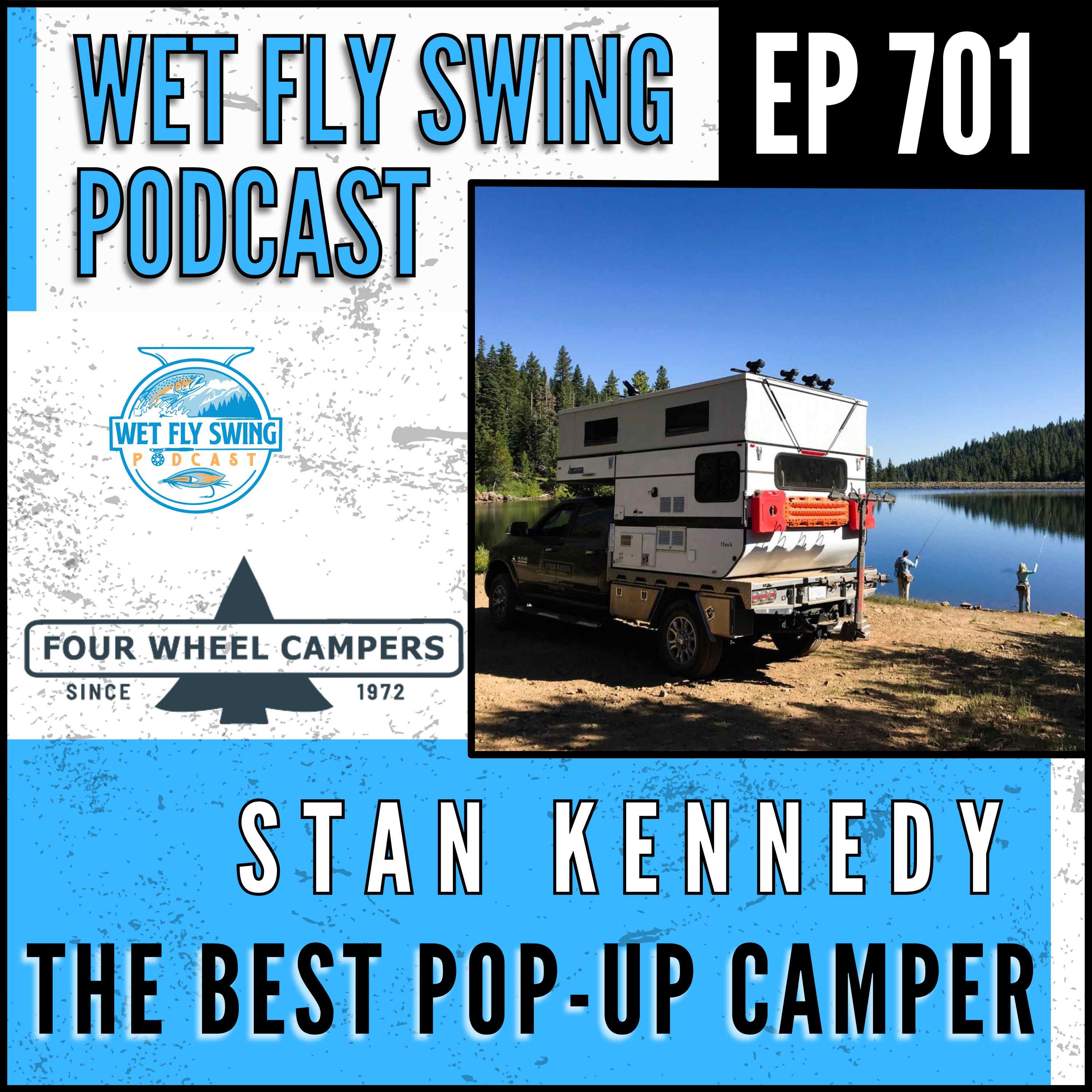
S11 Ep 701701 | The Best Pop-Up Camper for Fly Anglers with Stan Kennedy of Four Wheel Campers
Show Notes: https://wetflyswing.com/701 Presented By: Four Wheel Campers Are you looking for the best pop-up camper for your adventures? Stan Kennedy from Four Wheel Campers takes us through the history of the largest pop-up camper company in the country. Discover how their narrow, low-profile design, aluminum frame, and unmatched durability make these campers stand out. Stan also shares how the Project M camper offers full use of your truck bed while weighing just over 400 pounds. Wondering how these campers handle real-life scenarios—like forgetting to lower the top while driving? We'll hear about that today. Find out why Four Wheel Campers might be the best pop-up camper for your next outdoor adventure! Show Notes with Stan Kennedy on The Best Pop-Up Camper for Fly Anglers. About our Guest 02:25 - Stan Kennedy was born and raised in Northern California. His journey with Four Wheel Campers started in 2002 when he stumbled across the company. He did some research, checked out their website, and was drawn to their unique product. Over the years, he's watched the market evolve. Originally, Four Wheel Campers focused on outdoor enthusiasts like hunters and anglers. In the past five to eight years, especially with the pandemic, a new generation has embraced these campers for outdoor adventures. Four Wheel Campers 04:39 - Four Wheel Campers is the largest manufacturer of pop-up truck campers in the U.S. Their customers are mainly older generations, but lately, younger and middle-aged people are getting interested. These campers are designed to fit any pickup truck. Unlike bulky campers that add extra height and weight, these campers collapse to a lower profile, making them easier to drive with and park. When you're ready to camp, just pop it up, and you get extra space and protection from the elements. Top Features of Four Wheel Campers 10:16 - Four Wheel Campers are built for adventure and convenience. They're easy to drive with and fit perfectly on any pickup truck. Here are a few things that make them stand out: Narrow Design: easy to see out of your side mirrors while driving. Low Profile: reduces wind drag for better fuel efficiency and smoother rides. Aluminum Frame: built to last with a welded frame, preventing issues like dry rot. Lightweight: easy to handle and perfect for off-road adventures. Durability: made to withstand harsh conditions and years of use. Scott says their approach at Four Wheel Campers has always been about practicality, not fancy details. They focus on building campers that are built to last, without all the extra frills. Watch this video on YouTube to see how Four Wheel Campers are made: https://youtu.be/QSUsxwHrVyk?si=FrlzXUQ_ekAJezmI What Happens If You Forget to Lock the Latches on Your Pop-Up Camper? 12:25 - Scott explains that it's usually not a big deal if you forget to lock the latches. The original design of the pop-up camper is incredibly sturdy. Here's what might happen: If you forget all the latches, the roof might pop up at high speed, but the camper is built to handle that. You'll get some attention from other drivers, but it's easy to fix by pulling over, latching it, and continuing your trip. If you only forget a couple of latches, the roof could bend slightly where it's still connected, but it's rare to see any major damage. A simple way to make sure you don't forget to lock your pop-up camper's latches is to create a checklist. Put a checklist on your dashboard to remind you to check everything before you hit the road. Make it a habit to lock the latches right after you pop down the camper. It's a quick and simple step to avoid camper mishaps while traveling. The History of Four Wheel Campers Stan shared the story behind Four Wheel Campers. It all began in the 1970s when Dave Rowe built a camper in his garage for his hunting and fishing trips in Colorado. Friends saw it and asked if he could build one for them, and soon enough, he was making campers for everyone. Over the years, the company grew, but the basic design has stayed true to its original look. Photo via: https://fourwheelcampers.com/ The ORVIS Special Edition Pop-Up Camper? The ORVIS Special Edition pop-up camper is based on the usual slide-in style but designed specifically for fishermen. Stan explains that ORVIS worked closely with their engineers to create a camper that would be perfect for a guide or fly fisherman. Here's what sets it apart: Wet room Fly rod holders Custom interiors Battery solutions Check out this Orvis Special Edition Four Wheel Camper Walkthrough: https://www.youtube.com/watch?v=PxL-OcyBik8&t=9s How Much Does a Pop-Up Camper Cost? Pop-up campers start around $12,500 and can go up to $60,000 or $70,000 for the more expensive models. Stan says that despite the price increase, mainly due to inflation and the pandemic, Four Wheel Campers still offers one of the most affordable price ranges in the truck camper market. What's Inside a Four Wheel Camper? 23:57 - Four Wheel Campers offer
S11 Ep 700Top Fly Fishing Mistakes to Avoid and Most Listened to Podcasts of 2024
Watch the full video here: wetflyswing.com/mistakes We highlight the top 10 fly fishing mistakes to avoid from the top podcast episodes from 2024. We have some of the best fly anglers in the country providing a few of the biggest mistakes to avoid in 2025 and beyond.

S10 Ep 699699 | The New Fly Fisher in Southern Ontario with Rob Heal – Grand River, Brown Trout, Great Lakes Steelhead
Show Notes: https://wetflyswing.com/699 Presented By: On DeMark Lodge, Pescador on the Fly, Yellowstone Teton Territory, Four Wheel Campers Sponsors: https://wetflyswing.com/sponsors What are the five top species that come to your mind right now for fly fishing? Are brown trout, steelhead, smallmouth bass, muskie or largemouth on that list right now? And have you ever wondered about fishing some of the great waters of Canada? Today's guest is a guide in Southern Ontario and is the new Fly Fisher host, and today he's gonna give us a roadmap to success on some of the great rivers of the Great Lakes. Rob Heal, Southern Ontario Guide and The New Fly Fisher host is going to share his experience fishing the Grand River, the Saugeen, a bunch of great rivers that include not only steelhead but great trout fishing. You're gonna hear about these unique rivers and this holdover steelhead species that doesn't out-migrate until a year later. So you got a chance to catch these larger fish. We're gonna find out about these big brown trout in the area as well, and how to target them and some of his other go-to rivers that he fishes. Show Notes: https://wetflyswing.com/699

S10 Ep 698698 | Dry Fly Fishing Tips with Mark Raisler from Headhunters Fly Shop
#698 Show Notes: https://wetflyswing.com/698 Presented By: Drifthook Fly Fishing, Heated Core In this episode, we dive into the art of dry fly fishing with Mark Reisler, owner of Headhunters Fly Shop and a passionate angler with over 25 years of experience. You'll learn expert tips to improve your casting technique, discover Mark's go-to dry flies, and explore strategies to hook more fish on the surface this season. Episode Chapters with Mark Raisler on Dry Fly Fishing Tips 1:11 - Mark discusses the December and Christmas season which highlights the popularity of trout spey fishing on the river. He further explained how the river is described as ideally suited for spey rods, with skagit lines, sink tips, and streamers (such as leeches and flashy patterns) being effective during the winter months. 4:21 - Mark recalls the changes that led him to steelhead fishing and how his father introduced him to it. 9:05 - The guest went into detail about how he came up with the fly shop idea back in the fall of 2008. Mark shared how he started as a shuttle driver, transitioned to running the kitchen, and eventually decided to become a fly fishing guide. He proudly shares how he and his partner just celebrated their 17th year into fly fishing business. 22:40 - Mark talked about how to become a great professional angler. He proudly shared that he has been practicing five times a week with a yarn rod to stay sharp in rowing and fundamentals, consistently following the same routine for 30 years. 33:35 - Mark then shared the variety of insects found in each season. He explained the importance of presenting the hatches and perfecting casting techniques. 34:38 - He further explained how the "Hail Mary" cast has a low success rate. Additionally, he went into detail about how an angler should approach rising fish and elaborated on the best techniques for using a fly and achieving a proper drift. 44:45 - Mark proudly shared how the river easily adapts to each season. He explained that the nature of the river makes it very easy for wading. He also shared that the best technique is to sneak up on fish slowly "like how to catch a deer". 50:39 - He then shared his insights on drifting and how to properly cast to the front side of the bell curve and the centerline. He offered advice on how he assesses the water and determines what needs to be done first before diving further into his technique. Conclusion with Mark Raisler on Dry Fly Fishing Tip In this session, Mark shared his journey and expertise in steelhead fishing, offering a wealth of knowledge for anglers of all levels. He emphasized the importance of consistent practice, maintaining a routine for 30 years to master rowing and fundamentals to dry fly fishing. Show Notes: https://wetflyswing.com/698

S10 Ep 697697 | Fly Fishing Spring Creeks and the Driftless with PJ Smith
Show Notes: https://wetflyswing.com/697 Presented By: Skwala, Heated Core, Angler's Coffee, TroutRoutes Fly fishing spring creeks can be super challenging—the fish are spooky, the water conditions aren't always perfect, and sometimes it's hard to present a fly just right. But today, PJ Smith—Driftless guide and Spring Creek expert—is here to share his secrets. He's here to share how to find fish in winter, nighttime, and all year. You'll learn how to sneak up on spooky trout, the best way to position yourself, and whether to cast upstream or downstream. Plus, you will find out when fishing is not fishing and when not fishing is fishing. Show Notes with PJ Smith on Fly Fishing Spring Creeks and the Driftless. 04:23 - Trout Season in the Driftless wraps up in October to give the fish a break for spawning, and it's a chance for anglers to go deer hunting. January marks the start of a new season, where fishing gets tricky with cold, clear water. PJ says sunny days are your best bet, and being sneaky is key. https://vimeo.com/311013412 Fishing Spring Creeks and the Driftless in Winter Fishing the Driftless in the winter is much different than September. The water is colder and gin clear, which can make fish more sluggish. But if you're patient and sneaky, winter fishing can be great. Here's what to expect: Look for warm, sunny days to get the best fishing. Be stealthy. Small black stoneflies will start hatching; you might even spot them in the snow! You can still catch fish on dry flies. Nymphing with small patterns works well. How to Sneak Up on Spooky Trout 13:12 - PJ shares some tricks for sneaking up on fish in the winter. He likes to keep a low profile by avoiding high banks and staying in the water. Here are some tips: Wear neutral-colored clothing to blend in. Stay quiet and avoid loud movements. If you scare the fish, give them a few minutes to settle before trying again. What's the Best Setup for Driftless Streams? 14:16 - PJ shares his simple setup for fishing Driftless streams. He typically uses a dry-dropper rig with a dry fly like a Hippie Stomper or Stimulator and a nymph below. He keeps his leader system simple with a 7.5-foot leader, using 3X or 4X for easy casting. He ties the dry fly directly to the leader and attaches the dropper to the hook. What Fish Are in the Driftless and How Big Do They Get? The native brook trout is pretty small in the Driftless, with a 15-inch one considered a big catch. Most brook trout are around 9 to 10 inches. Brown trout, however, are much larger and can grow over 20 inches. Anglers used to catch 30-inch browns, but they're harder to find these days. Nighttime Fishing 20:29 - Night fishing can be pretty fun, but it has challenges. The water may be too deep, and some drop-offs can be dangerous, so it's important to know the area well. You'll need a good headlamp with a red or green light, a spare one, and a small flashlight for safety. Always let someone know where you're fishing, especially when heading out at night. How Do You Fish Streamers at Night? 26:06 - PJ says he casts his fly across the pool and lets it swing downstream. The goal is to mimic something like a mouse or frog trying to escape. Sometimes, depending on how the fish react, he'll add a little twitch to the fly to make it more tempting. If bats are out, it's time to rip the fly through the water. Brown trout will even eat bats if they fall in. The key is adjusting your technique based on how the fish bite that night. How Do You Make the Perfect Cast in Tight Spots? Practice is the key when making the perfect cast in tight spots. You don't need long casts—just a solid 20-footer with pinpoint accuracy. Focus on hitting small targets like seams, holding water, or spots near rocks and vegetation. Roll casting is your best friend in the Driftless, even more than a back cast. Learn sidearm and roll cast to handle tricky spots under trees and around obstructions. What Flies Should You Tie for the Driftless? PJ shares his go-to flies for fishing in the Driftless area. These patterns work year-round, especially in winter: Pink Squirrel Rubber Leg Stimulator Hippie Stompers Elk Hair Caddis Blue-Winged Olives Tricos Griffith's Gnat Bead Head Nymphs & Leech Patterns Jiggy Nymph Streamer PJ's top advice for winter fishing is to be patient and have fun. Not every day is about catching fish. Even guides get skunked sometimes! Use those moments to learn. As PJ puts it, "When is fishing not fishing, and when is not fishing, fishing?" Something to think about next time you're out there! Show Notes: https://wetflyswing.com/697

S10 Ep 696696 | Fly Fishing Saskatchewan with Alyx Parks - The New Fly Fisher
Show Notes: https://wetflyswing.com/696 Presented by: Pescador on the Fly, Heated Core, TroutRoutes, Jackson Hole Fly Company Sponsors: https://wetflyswing.com/sponsors Alyx Parks, host at the New Fly Fisher, joins us as we talk all about fly fishing Saskatchewan, Canada. We delve into the region's finest lodges, renowned for offering exceptional fishing opportunities for pike, grayling, and other intriguing species. Alyx brings her wealth of experience from traveling with the New Fly Fisher, revealing invaluable tips for catching grayling, including the art of skittering and the importance of minding your backcast. Whether you're a seasoned angler or a curious beginner, this conversation with Alyx Parks is sure to inspire your next trip to the breathtaking landscapes of Saskatchewan. Don't miss out—tune in and let Alyx guide you through a fly fishing paradise. Episode Chapters with Alyx Parks on Fly Fishing Saskatchewan. 8:38 - Alyx shares the story of how she became a host on The New Fly Fisher. The journey began unexpectedly when her father, Jeff Parks, also a host on the show, invited her to join a filming trip to Scott Lake Lodge in Northern Saskatchewan. That's when she delivered a memorable segment where she coined the phrase "hot little bug," which resonated with viewers. 15:54 - We get into her fishing trip in Saskatchewan, Canada. She recounts experiences at the Cree River Lodge and Scott Lake Lodge, highlighting their incredible guides and the excellent pike fishing opportunities. 23:02 - Alyx shares her first experience fishing for Arctic grayling at Cree, accompanied by Jenna McKeown, Colin McKeown's daughter and a seasoned fisher. Alyx was amazed by the grayling's power and agility, and she described it as a uniquely thrilling experience. 32:28 - Alyx tells us about Scott Lake Lodge. She describes it as a "bucket list" destination, noting that many visitors save for years to experience it. The lodge offers a range of fishing opportunities, with pike and lake trout being the main species, but also includes grayling and walleye. She also shares personal fishing experiences, including catching large pike with her father. 39:28 - She shares her experience filming a segment about pike fishing, emphasizing the importance of keeping the fly in the water and maintaining movement to attract pike. She recounted a memorable moment where a 47-inch pike nearly hit her co-host Jenna, capturing the excitement and unpredictability of fishing. 52:57 - Alyx shares her memorable experience fishing on the Bow River with Nick Schlachter of Wapiti Sports & Outfitters. She also recounts an encounter with grizzly bears in the area, including a notable bear known as "the boss," emphasizing the wildlife presence in the region. 56:32 - She mentions an episode where her father traveled to Northern Manitoba to explore the famed Gods River for big brook trout. 58:07 - Alyx gives valuable tips for going on a fishing trip to Northern Canada. She recommends bringing stuff such as fleece, puffer jacket, wading jacket, and wet bag. 1:01:09 - We get into podcasts. Alyx prefers podcasts over music, finding them less distracting and more engaging. She likes true crime podcasts and recommends one with the title "Tooth & Claw: True Stories of Animal Attacks," which is hosted by a bear biologist and his friends. 1:03:24 - We get into hockey and golf. Alyx shares her renewed interest in golf, noting the similarities between golf and fly fishing. Her father, a former exceptional golfer turned fly fishing guide, often uses golf analogies when teaching clients. He helps clients improve their casting skills by comparing them to lowering a golf handicap, making the learning process relatable and enjoyable. 1:08:22 - Alyx discusses a significant injury that kept her from fishing for two years and shares insights for people dealing with similar struggles. She emphasizes the importance of visualization in fishing, suggesting that imagining each step of the process—from positioning oneself to presenting the fly—can improve one's fishing skills. Show Notes: https://wetflyswing.com/696

S10 Ep 695Fly Fishing Sheridan Lake and Eagle Ridge Ranch with Steve Hyde (Traveled #22)
Show Notes: https://wetflyswing.com/695 Presented By: Yellowstone Teton Territory Today on Traveled, Steve Hyde of the Hyde Drift Boats family and Eagle Ridge Ranch manager shares his best tips for fly fishing Sheridan Lake and exploring nearby Spring Creek. Find out how to make the most of summer and winter activities in these areas. Plus, hear about how Steve and his dad founded Hyde Drift Boats in their garage and the innovations that set their boats apart. Show Notes with Steve Hyde on Fly Fishing Sheridan Lake 02:23 - We start off talking about how things are going at Eagle Ridge Ranch during this "in-between" season. Steve says they do a lot of ice fishing and managing cabins for rent year-round. We also talk about big game hunting opportunities at Eagle Ridge Ranch. 5:17 - Sheridan Lake is located in a remote area between Kilgore and Island Park, surrounded by private and public lands. The lake benefits from powerful springs, which help maintain the temperature and support aquatic life. Steve says grizzly encounters are common in the area, which adds a bit of excitement. 07:47 - The owner of Eagle Ridge Ranch is Frank VanderSloot, the founder of Melaleuca. There are 12 cabins on the ranch that can sleep anywhere from 2 to 20 people. Fishing at the Eagle Ridge Ranch 9:42 - There are seven miles of Spring Creek and the lake to fish. You can find rainbow trout, Snake River cutthroat trout, and brook trout in the lake. Native chubfish are also in the system, though they're not highly regarded. 10:40 - Steve says they only allow up to 12 people daily to ensure a positive visitor experience. Groups of up to 20 can sometimes be accommodated, but they try not to mix groups to keep the area peaceful. Watch this YouTube video about Eagle Ridge Ranch : https://youtu.be/Z05KwQqWb5U?si=L6LKG2AZ3X9Pjbos Hyde Drift Boats 14:15 - We dive into how Steve and his dad started making driftboats in their garage back in the early '80s. What began as a hobby turned into Hyde Drift Boats. Steve talks about how the boat design evolved over the years. 19:36 - Steve is the director of Wildlife Management for all of Frank's properties in Idaho, Montana, Wyoming, and Utah. He also works closely with local fish and game agencies to maintain the land and support wildlife in the area. Other Activities at Eagle Ridge Ranch 24:36 - The Eagle Ridge Ranch is great for year-round outdoor activities. People can enjoy fishing, hunting, ATV riding in summer, and snowmobiling in winter. There's also a lava bed system called Craters of the Moon just south of the ranch. Fly Fishing at Sheridan Lake: What You Need to Know 28:45 - Sheridan Lake is a fly-fishing-only, catch-and-release spot. The peak season runs from May to October, but you can still find spots throughout the year. Steve says the lake has all kinds of hatches throughout the year. 3:15 - Steve talks about the lakes and rivers around Eagle Ridge Ranch. The main lakes are Island Park Reservoir and Henry's Lake, but there are also many rivers in the area. Eagle Ridge Ranch offers a premium fishing experience at Sheridan Lake. Watch this video to learn more: https://youtu.be/wAsF86xnK2E?si=YkzFY7k5G3ahWwJp 45:43 - Here are some things to consider before your trip: Pack for all weather conditions: A sudden rainstorm can drop temperatures quickly, so you better be prepared. Safety first: Let someone know where you're going or have someone with you. Gear up right: Bring a 5 to 7-weight rod. Use the biggest tippet you can (4X), but switch to 5X if the fish get picky. Show Notes: https://wetflyswing.com/695

S9 Ep 694In The Bucket #12 | Simon Gawesworth and Adrienne Comeau on Winter Steelhead and Fly Fishing the Dean River
Show Notes: https://wetflyswing.com/694 Presented By: Jackson Hole Fly Company Sponsors: https://wetflyswing.com/sponsors In today's episode of In the Bucket Podcast, we're joined by spey casting legends Simon Gawesworth and Dean River guide Adrienne Comeau. They'll share stories, tips, and techniques for hooking these chrome torpedoes and mastering your cast along the way. It's fish, flies, and a whole lot of fun – stick around! It's time to get in the bucket... Show Notes: https://wetflyswing.com/694

S10 Ep 693693 | Fishing for King Salmon in Alaska with Chris Childs - Togiak River, Chinook, Steelhead
Show Notes: https://wetflyswing.com/693 Presented by: Togiak River Lodge Sponsors: https://wetflyswing.com/togiak Chris Childs shares his insights on fishing for king salmon at the Togiak River. Discover the thrill of targeting Chinook, steelhead, and Atlantic salmon. Chris offers tips on swinging flies and adapting techniques to changing tides. Learn about Alaska's top king salmon rivers and gain valuable advice for your fishing adventures. Whether you're a seasoned angler or a beginner, this episode is packed with inspiration and insider knowledge from the Alaskan wilderness. Tune in now! Episode Chapters with Chris Childs on Fishing for King Salmon in Alaska 2:13 - Chris shares that he began using a two-handed rod about 15 years ago and has been guiding in Alaska for seven years. He initially got involved through a job opportunity in Southwest Alaska, attracted by the variety of fish species that could be targeted with a two-handed rod. Currently, Chris guides in Alaska from mid-June to the end of July and spends the rest of the year working on the Deschutes and John Day River back home. 5:38 - Unlike the crowded Deschutes River, the John Day has limited access, although more spots are becoming available for bank anglers. Chris describes the logistics involved in fishing the river, including four or five-day overnight trips, which limit pressure due to the commitment required. For more information on fishing the John Day, Chris suggests contacting the Deschutes Angler or local ODFW biologist for advice on timing and access points. 9:25 - We dive into fishing for Chinook salmon on the Togiak River, focusing on a program that uses two-handed spey rods. Chris provides details on the timing, structure, and operations of the fishing program. 11:52 - We discuss fishing strategies for the Togiak and Kanektok rivers, highlighting the importance of timing with tides to catch fish, particularly king salmon, in southwest Alaska. Chris explains that fishing success is closely tied to the tides, as they determine when fish move through the bay. Anglers aim to be in the right spot as fish enter, often targeting areas where fish can rest before continuing upstream. These spots, resembling steelhead fishing locations, include soft inside waters and back channels where slower water meets the main river. 14:18 - Chris talks about the logistics and fishing schedule for a fishing trip in Togiak. Travelers typically arrive in Anchorage the night before their trip begins to prepare and adjust for any jet lag, especially international clients. The first full day of fishing starts early, spanning four days. On changeover days, departing anglers leave as new ones arrive, with a seamless transition facilitated by powerboats and planes. Chris explains how tides influence fishing strategies, dictating where fishing starts based on water flow, with adjustments made throughout the day as tides change. 18:10 - We ask Chris about the gear setup. He explains that they provide a gear rundown for clients ahead of time, allowing them to prepare or purchase necessary equipment. The clientele includes both seasoned travelers familiar with various types of fishing and newcomers to two-handed rod techniques. For Chinook fishing, Chris recommends a 14' 9wt rod for better castability, especially in larger pools. The standard setup includes a floating Skagit head with a 10 or 12-foot sink tip, and anglers are encouraged to bring two setups if possible. Chris also mentions using Airflo lines, particularly the F.I.S.T (Floating. Intermediate. Sink Three) and Skagit Scout. 21:08 - We discuss the differences between fishing for steelhead and chinook using a two-handed rod. Chris notes that while there are similarities in technique, the primary differences lie in the type of water and casting angles. For chinook, he recommends casting at a broader angle to present the fly broadside and maintain tension, which is crucial for kings as they tend to strike early in the swing. 24:08 - Chris explains that when king salmon grab the fly, the angler should feel a strong, unmistakable pull due to the tight line presentation. He emphasizes the importance of letting the fish dictate the next move after the grab, which typically involves holding on tight and allowing the fish to lead the initial part of the fight. Unlike steelhead, which may give a subtle bite, king salmon are more aggressive and will often grab the fly multiple times. 28:01 - Chris talks about the differences in fishing habitats between the Togiak and Kanektok rivers. He says that while the Togiak does have large sweeping gravel bars similar to the Kanektok, it also features cut banks and deeper troughs where anglers fish differently. Unlike the gradual drop-offs of the Kanektok, the Togiak offers varied water types, including pools ideal for casting from cut banks, reminiscent of Atlantic salmon fishing. 31:33 - Chris highlights that there are only a handful of notable rivers in Alaska for Chino

S9 Ep 692692 | Swinging Flies for Trout and Steelhead with Marty Howard – Deschutes River, Classic Wet Flies, Steelhead Fly Tying
#692 Show Notes: https://wetflyswing.com/692 Presented By: Skwala, TroutRoutes, Waters West, Heated Core What is the first thing you think of when I say the word Spey? Is it the cast, the flies, the rod, or is it something else? How about the Mickey Finn or the Starling and Purple? There are so many diverse ways to fish a fly, but today we're gonna blend some of the old with the new, some steelhead with the trout and some fly tying so you are better equipped to fish the fly and understand how to swing flies for all species. Marty Howard, co-author of Steelhead Fly Tying with Dec Hogan and an angler who's fished more steelhead rivers than most of us can imagine shares his swung fly journey. We're gonna dig into his new fly-tying book for trout that's coming out right around the corner, and we're gonna hear why he doesn't care if gear fishermen or sleds are going up and down the river before he swings his fly on that run. We get some tips on staying warm this winter. Marty also shares stories of fishing alongside Tiger Woods, other pro golfers, and his good friend Mark O'Meara. Another passionate steelhead angler and fly tyer in the podcast! Show Notes: https://wetflyswing.com/692

S10 Ep 691Littoral Zone #13 | The Effects of Environmental Cycles on Fish Behavior with Jason Randal and Phil Rowley
Show Notes: https://wetflyswing.com/691 Presented by: Jackson Hole Fly Company, Yellowstone Teton Territory, Pescador on the Fly Sponsors: https://wetflyswing.com/sponsors In this episode, Phil is joined by Jason Randall, a renowned author and fly fishing expert, to explore the fascinating effects of environmental cycles on fish behavior. Have you ever wondered how changing weather conditions or the lunar cycle impact trout behavior and feeding patterns? This episode promises to unravel these mysteries, offering vital insights that could transform your on-the-water success. With Jason's extensive research and Phil's practical experience, listeners will gain a deeper understanding of how to adapt their fishing strategies in response to environmental changes. Whether you're a seasoned angler or new to the sport, this discussion is packed with valuable information and tips. Dive in to learn how to adjust your fly presentations and enhance your fishing experience, no matter what nature throws your way. Episode Chapters with Jason Randall and Phil Rowley on Fish Behavior 10:30 - Phil and Jason discuss the impact of weather changes, specifically barometric pressure, on trout behavior in Stillwater environments. Phil notes how changes in pressure, temperature, and light seem to influence trout, comparing it to the effect of shaking a snow globe. Jason argues that trout are not significantly affected by barometric pressure changes as humans are. 17:29 - Phil and Jason discuss the behavior of lake trout and other fish when brought up from deep waters. They explain how fish like trout have an air sac used for buoyancy control, similar to a scuba vest, allowing them to maintain neutral buoyancy. This differs from pressure-sensitive eardrums in humans. Some fish, like rockfish, suffer from barotrauma when rapidly brought to the surface, leading to their air sac protruding from their mouth. Phil mentions technology that helps fish equalize pressure when released back into the water. 25:38 - Jason discusses how weather changes, particularly impending weather fronts, can be perceived through various natural cues beyond just barometric pressure. He describes how high-level clouds like cirrus clouds can indicate approaching weather changes, and changes in wind direction often mark the passage of a front. He notes that while temperature changes occur with cold fronts, the solar energy has a more significant impact on water temperatures. 28:59 - Jason highlights the role of electrical activity, such as static electricity, observed during severe weather, and theorizes about the effects of ionization on mood and behavior. He explains that negative ions generally improve mood, while positive ions, often from pollutants, can lead to depression. He further speculates on the interaction between ionization and bioelectric fields in organisms, suggesting that fish might use these cues as an early warning system for weather changes. J 33:53 - Phil and Jason explore the idea that certain fishing techniques, such as wrapping wire around hooks, might create bioelectric fields that affect fish behavior. Jason references research indicating that dissimilar metals on lures, like lead or tungsten, can generate a bioelectric field that potentially repels fish. 37:02 - They discuss strategies for fishing when trout behavior changes due to weather conditions. Phil explains that during such times, trout often retreat to deeper areas and become less active, making it more challenging to catch them. He suggests slowing down tactics, using indicators, and triggering bites rather than relying solely on feeding responses. Jason agrees and adds that trout, like humans after a big meal, may enter a state of inactivity where they are not active in fast-moving waters. Instead, they seek safe, low-threat areas to rest. To catch trout in this condition, anglers may need to present lures enticingly to coax a response, similar to how someone might grab an easy snack when resting. 43:49 - Jason discusses the concept of homeostasis, which refers to the natural balance that organisms and ecosystems strive to maintain. He further explains that homeostasis is essential from the cellular level to complex organisms and habitats. They also touch upon how environmental stressors, like weather changes and lunar phases, can disrupt this balance, prompting organisms to react in ways that restore homeostasis. 49:44 - Phil delves into the effects of lunar phases on fish behavior and feeding patterns. Phil outlines the various lunar phases. He explains how the moon's gravitational force, which is 2.2 times greater than the sun's at the Earth's surface, influences tides and consequently affects fish and their food sources. This gravitational pull leads to tidal activities that are crucial for both saltwater anglers and the ecosystems they navigate. 55:52 - Jason explains the difference between spring tides, associated with the new and full moons, and neap tides, associated

S10 Ep 690690 | Catching Big Smallmouth Bass with James Hughes - Schultz Outfitters, Fly Design, Fleein' Cray
Show Notes: https://wetflyswing.com/690 Presented By: Jackson Hole Fly Company, Stonefly Nets, Yellowstone Teton Territory, On DeMark Lodge Today, we're covering everything about catching big smallmouth bass with James Hughes, head guide at Schultz Outfitters. James breaks down when to use smaller streamers versus the big five to eight-inch ones. We'll also learn the best times for swim flies, how to strip your fly for more success, and the two common mistakes most anglers make when chasing smallmouth bass. Plus, stick around until the end for details on getting a spot for our Smallmouth bass trip with Schultz Outfitters in July. Show Notes with James Hughes on Catching Big Smallmouth Bass 2:05 - James started fly fishing when he was 11 or 12, watching fishing videos with his dad. Nobody in his family fly fished, so he taught himself to tie flies with a beginner kit. Back then, there was no YouTube, so he had to rely on books. Fast forward to when he was in college, he stumbled upon Mike Schultz's fly shop. Check out our episode with Mike Schultz here. 5:05 - We talk about Mike and the success of Schultz Outfitters. July Smallmouth Bass Trip 08:52 - We chat about what to expect for the smallmouth bass trip in July. James says that by then, the fish will be out of their spawning phase and into their predictable summer habits. This means more consistent feeding throughout the day and easier fishing. You can also throw larger streamers if the water conditions are right. 10:56 - James talks about how they adjust to different water conditions. They cover six rivers for their trips, which are all great for fishing. 16:57 - I asked James how he prepares for the first day on the water with his clients. He usually checks in and sets up meeting details the night before. When choosing which river to fish, James says he considers client's expectations more than their skill level. He usually starts with a middle-of-the-road river where they can catch various fish, then adjusts the next days based on how the first day goes. Finding Big Smallmouth Bass in Early Spring 21:21 - James talks about the importance of water temperature and timing in catching big smallmouth bass. He checks the water temperature first thing in the morning and looks for warming trends to determine when the fish are most active. James says big fish like slow-moving water with a dark bottom. He also adds the importance of the sun when picking a spot to fish. 31:00 - James says a good leech or sculpin pattern with some weight is a must in March. These flies are simple, easy to snack on for fish and they work great when fished at the right depth. 34:00 - We talked about the best setups for streamer fishing. Here are some key tips: Stripping alone will not do the job. James says to strip set and sweep your rod in the opposite direction of the fish. Big fish often feel like logs at first. Watch for subtle rod pulses to confirm it's a fish. Use lead-eyed flies matched to the river's depth and flow for better control. Intermediate lines are the go-to for most situations. James uses the SA Titan Full Intermediate from March to May and October to March. In summer, he switches to clear tip intermediates or floating lines for smaller streamers. For leaders, he uses a 3-section leader at around 12 lb and 4.5 to 5 feet if the water's super clear. The Fleein' Cray 49:52 - We also talk about the process of creating the Fleein' Cray. James says it took 2.5 years to perfect the pattern. The idea is to create a fly that mimics how crayfish naturally dart away in straight lines. Check out this video of the Fleein' Cray: https://youtu.be/sjJJ834caRQ?si=fLJy6dm3tSHqNoJ8 Bobbin' The Hood 1:00:06 - James talks about Bobbin' The Hood, a cool event where fly tyers and fishing guides come together for a day of tying, learning, and hanging out. It's a great time to learn new techniques, ask questions, and meet fellow enthusiasts. 1:04:34 - James talks about how people often misunderstand smallmouth bass behavior. One big mistake is thinking bass are always eager to attack anything, but they're actually picky about how fast or slow you fish. Show Notes: https://wetflyswing.com/690

S10 Ep 689689 | Fly Fishing Southwest Washington with Jackson Golik - Cowlitz River, Coho Salmon, Steelhead
Show Notes: https://wetflyswing.com/689 Presented by: On DeMark Lodge, TroutRoutes, Jackson Hole Fly Company, Togiak River Lodge Sponsors: https://wetflyswing.com/sponsors In this episode, we journey to fly fishing southwest Washington with expert guide Jackson Golik. Known for its impressive steelhead and salmon populations, this region offers anglers a unique experience that rivals the more renowned rivers along the West Coast. Jackson takes us on an exploration of the famous steelhead rivers such as the Kalama, Cowlitz, and Lewis. Discover the charm of these waters and learn how to optimize your fishing trips by timing them precisely and avoiding the bustling crowds. Jackson also shares his insider tips for surface and subsurface steelhead techniques, alongside strategies for hooking coho salmon—often thought of as exclusive to Alaska. Tune in to gain a deeper understanding of the southwest Washington fly fishing scene and get ready to plan your next adventure in this often-overlooked fishing paradise. Episode Chapters with Jackson Golik on Fly Fishing Southwest Washington 4:46 - Jackson shares how he got into fly fishing. He was born into the fly fishing world, as his father guided on the Bow River in Calgary. He became familiar with the industry early on and worked as a shop assistant at the Greased Line, a renowned fly shop in Vancouver, Washington. The Greased Line, which operated for about 42 years, is noted as one of the oldest fly shops in the Pacific Northwest, having started in the late 1970s. 7:01 - He tells about that time when he was introduced to Simon Gawesworth, a significant figure in the fly fishing world. This connection led to an opportunity for Jackson to work as Simon's assistant for about six months at RIO, where he handled fly line box modifications and managed their social media. 12:10 - We discuss fishing in Southwest Washington, focusing on popular rivers like the Cowlitz, Lewis, and Kalama. Jackson highlights the prolific hatchery fishery in the Kalama, but notes that rivers with more wild genetics offer opportunities for larger fish. We also touch on salmon fishing, particularly for silvers, coho, and spring chinook. 15:25 - Jackson describes coho fishing as similar to bass fishing, using heavy sink tips and flies, with the fishing done from a boat near structures like wood. The season for coho starts in early September and typically lasts through October into early November, although it's dependent on rainfall. For chinook, the peak season is around Labor Day weekend, with the best fish being bright and high-quality. Jackson notes some rivers have late runs of Chinook, like the Lewis and Sandy rivers, which receive a small run of bright fish around late November to early December. 21:16 - We explore the state of steelhead fishing in Southwest Washington compared to the Olympic Peninsula. Jackson notes that while the OP rivers have experienced closures, the Southwest Washington rivers have remained consistently open, though they receive less publicity. 26:40 - We ask him about winter steelhead fishing in November and December. Jackson recommends focusing on rivers with consistent hatchery plants for better chances, specifically mentioning the Washougal River, known for its strong Skamania stock fish and challenging whitewater conditions. 30:11 - In fishing the Washougal River during winter, Jackson mentions using heavy sink tips and typical winter flies such as leeches, with T-14 being a common choice for getting closer to the fish. Jackson notes that while the Washougal River also has good runs of summer fish, the approach varies, with summer steelhead sometimes eating dry flies. 31:50 - We briefly talk about the impact of the 1980 Mount St. Helens eruption on the Toutle River system. Jackson shares that he wrote a paper in college about the logging that happens in the Toutle system, highlighting the management strategy of continually raising the dam to contain sediment. 34:08 - We talk about the Cowlitz River, known for its heavy planting of hatchery steelhead, which makes it a prime location for fishing, especially if you're looking to take home fish to eat. 36:23 - Jackson owns a 1979 fiberglass Avro boat and a smaller Aire puma boat, which is about 11.5 feet long. He appreciates the fiberglass boat for its quietness and durability, noting that it can be easily repaired and modified with fiberglass and epoxy. 38:21 - We dig into steelhead fishing on the Kalama River during peak season, from mid-February to late April. He shares strategies for dealing with crowded conditions, such as knowing familiar faces and sections of the river preferred by frequent fishermen. Timing is crucial; sometimes it's better to fish later in the day when conditions improve. 43:30 - Jackson mentions that the Kalama, Cowlitz, and Lewis rivers are accessible, with numerous put-ins and take-outs available, making them great fisheries. He highlights the Kalama River, which stretches about 60 to 70 m

S10 Ep 688688 | Grand Teton Fly Fishing with Scott Smith - Jack Dennis, Snake River, Trout
Show Notes: https://wetflyswing.com/688 Presented By: Grand Teton Fly Fishing Scott Smith, owner of Grand Teton Fly Fishing, takes us on a journey through the Yellowstone area. We'll uncover tips for fishing the area's rivers, learn about pre-hatches, and hear Scott's biggest tip for landing those tricky fish sipping bugs off the surface. Plus, Scott will also share stories about his mentor, Jack Dennis. This is going to be a good one! Show Notes with Scott Smith on Grand Teton Fly Fishing. 02:03 - Scott grew up fishing creeks in North Georgia. Fly fishing for him came later when he picked up a rod at 12 at a garage sale and taught himself through magazines and VHS tapes. He eventually met Jack Dennis, who became his mentor. Check out our episode with Jack Dennis. Starting Grand Teton Fly Fishing 05:52 - Scott moved to Jackson Hole in the late '90s. Over the years, he built a career, mentored new guides, and created a loyal client base. In 2011, he and Mark Fuller took over Jack Dennis' business and started Grand Teton Fly Fishing. 11:55 - Scott tells us about the waters they guide in western Wyoming. They cover Yellowstone National Park's lakes to Grand Teton National Park's Snake River headwaters. Scott says they customize trips based on how long guests stay and what they want to do. Fishing in Jackson Hole 15:41 - We hear about what fishing looks like throughout the year in Jackson Hole. Scott says they do a lot of drift boat fishing to cover large rivers like the Snake, but there's still plenty of wade fishing when the conditions are right. March to October is the best fishing season, with good hatches and fewer crowds. Early March is great for dry fly fishing, especially with midges and blue-winged olives. The peak fishing season starts in mid-June and continues in July through September. Fishing in September and October 23:20 - We talk about the fishing conditions in September and October. As the water cools down, the fishing gets better, with some great hatches like the Hecuba fly. Scott says this is also when the Jackson Hole One Fly event usually happens. 28:09 - Scott says that the Snake River is both forgiving for new anglers and challenging for experts. The Snake River is home to the Snake River Fine-Spotted Cutthroat, a subspecies of the Yellowstone cutthroat. 34:52 - Scott says that when he's guiding, he always looks for spots where fish are likely to be. The key is looking for subtle sips, usually signs of bigger fish feeding. 40:10 - If you're not seeing much action on the surface, Scott suggests switching to attractor patterns or terrestrials like beetles and ants. You can also add a dropper fly, but it might limit how close you can fish to the bank. Scott's Top 8 Fly Patterns 1. Small chubby (black, purple, tan) 2. Small black foam flies 3. Golden Stone Water Walker 4. Parachute Adams 5. Parachute Hare's Ears 6. Mercer's Missing Link 7. Callibaetis Flies 8. Small streamers Show Notes: https://wetflyswing.com/688
S9 Ep 687687 | DIY Options for Belize with Chris Watters and Mary Alice Hoppe from Iguana House
Show Notes: https://wetflyswing.com/687 Presented By: Jackson Hole Fly Company Has a Belize saltwater trip been on your bucket list, but felt a bit out of reach? Did you know it's easier than you think to DIY Belize and pair it with a few guided days to maximize your experience? Today, we're diving into everything you need to know for chasing Bonefish, Tarpon, and Permit on the fly. Chris Waters and Mary Alice Hoppe from the Iguana House are here to give us a behind-the-scenes look at their incredible beachside operation. We discover how reef fishing in Belize compares to other saltwater areas, what to consider when targeting Bones or Permit, and the best techniques for casting against the wind. Fishing, however, is just the beginning of this Belizean adventure. Let's dig into everything this special destination has to offer! Show Notes: https://wetflyswing.com/687

S10 Ep 686686 | Fly Fishing in Chile with Mark Melnyk - Big Trout, Colin McKeown, The New Fly Fisher
Show Notes: https://wetflyswing.com/686 Presented by: Yellowstone Teton Territory, Togens Fly Shop, On DeMark Lodge, Heated Core Sponsors: https://wetflyswing.com/sponsors Mark Melnyk, executive producer at The New Fly Fisher, takes us fly fishing in Chile which is renowned for its large trout and breathtaking landscapes. Mark shares invaluable insights and tips on how to plan an unforgettable fishing trip to this beautiful South American destination. We also pay tribute to Colin McKeown, the beloved former host of The New Fly Fisher, whose legacy continues to inspire anglers worldwide. Discover the allure of Chilean waters, learn about the fascinating cherry salmon that might just rival steelhead, and explore the legendary magic waters for giants. Whether you're an avid fly fisher or a curious traveler, this episode promises to enrich your understanding and passion for the sport. Tune in and let Mark Melnyk guide you through the secrets of catching big trout in Chile's pristine rivers. Episode Chapters with Mark Melnyk on Fly Fishing in Chile 3:29 - Our chat started with the legacy of Colin McKeown, the founder of The New Fly Fisher television series. Colin, who recently passed away, had been struggling with health issues for several years. Mark shares his journey with him, starting 25 years ago when Colin pitched the idea for the educational fly fishing show. After layoffs in Canadian sports, Colin invited Mark to host episodes, demonstrating his generous and loyal nature. 12:21 - Mark discusses collaborating with travel partners. He explains his approach of identifying which lodges need marketing assistance, especially as younger generations take over lodge operations. Mark offers to help these lodges market their businesses by hosting episodes at their locations. The lodges are only required to provide time and resources, with no financial cost involved. This model allows the lodges to benefit from increased exposure while the show explores their regions for several days. 17:15 - We ask about his trip to Chile, specifically to a town called Balmaceda in Patagonia. Mark, along with Tom Rosenbauer, will target brown and rainbow trout in various water bodies. Mark highlights the unique fishing experience in Chile due to its low fishing pressure compared to other places, as well as the cultural and scenic aspects, such as the friendly locals and gauchos on horseback. 20:53 - Mark highlights the three outfits of Magic Waters Patagonia, namely: Magic Waters Patagonia Lodge, Magic Waters River of Dreams, and Patagonia Baker River Lodge. 24:26 - He walks us through traveling to Magic Waters Patagonia. Starting from Toronto, he takes a red-eye flight to San Diego, followed by a short layover, and then a connecting flight to Balmaceda. Upon arrival, the Magic Waters team picks them up, and it's about an hour's drive to the main lodge. Alternatively, reaching the Baker River Lodge takes about four hours through the mountains, offering views of General Carrera, Chile's largest lake, known for its exceptional fishing of big browns, rainbows, and cherry salmon. 26:57 - Mark describes the first day on the water, explaining they fish with large terrestrial flies like chubby chernobyls and damsel flies, which attract brown trout that leap dramatically to catch them. He also mentions the unique challenge of fishing in a very narrow but deep spring creek, where fish strike quickly, and the windy conditions of Patagonia. 29:02 - Mark will be hosting a trip to Chile on March 1st to 8th. He mentions that he still has spots available for this trip and plans to bring a cameraman to document the experience, showcasing what a hosted trip entails. This documentation aims to offer insight to those considering such trips, whether it's at Magic Waters or other destinations like Cuba or Belize. 30:45 - Mark gives some valuable tips in fly fishing in Chile. He emphasizes the importance of listening to guides who are familiar with the fish behavior on local rivers. He advises anglers to "fish big," using large flies and robust presentations, as the environment is competitive and predatory. He also suggests bringing extra rods due to the remote location, while noting that the guides provide ample flies and exceptional support, including meals and entertainment like traditional Chilean music. 34:29 - For more content and information on Magic Waters Patagonia, Mark recommends their YouTube channel @newflyfisher, featuring episodes from Magic Waters Patagonia Lodge, Baker River Lodge, and River of Dreams. 36:51 - Mark shares some tips on traveling for fishing trips. He emphasizes the importance of being prepared for unexpected travel issues, such as mechanical problems or weather delays, and advises travelers to stay calm and adaptable. He recommends keeping essential fishing gear like rods and reels in carry-on luggage to avoid issues if checked luggage is lost. Mark also suggests planning extra days around a trip to explore the local cul

S9 Ep 685In the Bucket #11 | Steelhead Science: Insights from Fisheries Biologists with Bob Hooton, Brian Morrison, and John McMillan
Show Notes: https://wetflyswing.com/685 Presented By: Waters West Fly Shop In this episode of In the Bucket Podcast, we sit down with three passionate fisheries biologists—Bob Hooton, John McMillan, and Brian Morrison—to talk all things steelhead. From the wild rivers of British Columbia to the Great Lakes and Washington's rugged streams, these guys share fascinating stories, hard-won insights, and the challenges of balancing fishing with conservation. We dig into the evolution of catch-and-release fishing, the impact of angling pressure, and what it takes to protect steelhead for future generations. Whether you're a steelhead guy or just curious about these incredible fish, this is a conversation you don't want to miss! It's time to get in the bucket... Show Notes: https://wetflyswing.com/685

S10 Ep 684684 | Surf Fishing California with Tyler Vanosdell - Mission Bay Fly Fishing, Corbina, Halibut
Show Notes: https://wetflyswing.com/684 Presented By: Grand Teton Fly Fishing, Heated Core, Waters West, Angler's Coffee Today, we're surf fishing California, home to some of the toughest surf fishing spots in the country. Southern California also boasts one of the largest manmade bays and some of the best weather and fish species around. Tyler Vanosdell from Mission Bay Fly Fishing takes us from his roots on a cotton farm to becoming a San Diego fly fishing guide. Tyler shares the top three things you need to do before hitting the surf, the best apps to use, and essential tips for casting a full sink line. Plus, you'll learn why the strip set is critical and how walking your line can make all the difference. Show Notes with Tyler Vanosdell on Surf Fishing California. 02:10 - Growing up on a fifth-generation cotton farm in western Arizona, Tyler started fly fishing on the muddy Gila River, catching largemouth bass, catfish, and even carp before it became popular. 03:42 - Tyler spent time in Montana, Utah, Colorado, and even traveled to Mexico and Costa Rica before landing in San Diego. It was a chance offer from a friend needing a roommate that brought him to San Diego, and he's been there for almost 18 years now. Surf Fishing California: Where to Begin? 05:24 - The first thing Tyler teaches new surf anglers is understanding the conditions. The waves are constant in San Diego, so knowing how to read the waves, tides, and wind is key. Tyler also emphasizes showing beginners the right structure and how to use apps and gear. Must-Have Apps for Surf Fishing 06:43 - Tyler recommends starting with free apps for tides and wind. For waves, he suggests paying for Surfline, which costs about $10 a month. The cool part? Surfline offers live video feeds of different beaches, letting you scout out fishing spots before heading out. Surf Fishing Species 07:51 - Tyler talks about the top fish species to target in Southern California. Corbina - The most popular by far is corbina (or "beans"), which come into shallow waters in the summer to feed on sand crabs. Halibut - Tyler also loves fishing for halibut, especially the big ones. There are two types of halibut: Pacific halibut California halibut Croakers (like Yellowfin and Spotfin) Corvina - a toothy fish similar to white sea bass. Ideal Fishing Conditions and Timing Tyler explains that fishing in San Diego is possible year-round, but winter is his favorite time. It gets crowded in summer, so Tyler tries to fish early to avoid the crowds. When it comes to conditions, he looks for low-energy waves, around zero to two feet. For tides, he prefers lower ones, especially around zero to two feet, which helps him find good structures for casting. He also likes light winds, ideally 3 to 5 knots, for a smooth experience. Tyler encourages anyone interested in surf fishing to give it a try. The conditions might be tough some days, but other times, it feels like everything just falls into place. He believes if he can do it, anyone can. Gear and Casting Tips for Surf Fishing 18:57 - Tyler talks about the gear he uses for surf fishing. He usually takes one rod, sometimes two, with a backup just in case. He recommends a full sinking line of around 250 grains to handle the strong surf and currents. He explains how casting with a heavy sinking line takes a bit of practice but it's all about letting the rod do the work. Tyler also suggests using a wider casting stroke and double hauling for distance. Start close, work your way out, and you might even catch fish right in front of you. 24:18 - Tyler says low tide is the best time to spot fish-holding structures like rocks, holes, or steep beaches. These areas give fish a place to feed or wait for prey. Tyler also recommends checking out river mouths, which are great spots because they bring in brackish water full of baitfish that predators love. 29:15 - Tyler sticks to a few key flies like the Clouser and Surfin' Merkin, which are great for catching fish in Southern California. He uses size four hooks with medium dumbbell eyes, and colors like red and white, chartreuse, or olive. Tyler also likes red flies because they're popular in the area. Chasing Corbina and Other Fish 38:56 - Tyler talks about how fishing for corbina can be a mix of blind casting and sight fishing. Sometimes the fish are right at the water's edge, and you can literally see their backs and tails. To catch them, you often have to wade out into the water depending on where the structure is. Mission Bay Fly Fishing 44:11 - Mission Bay is the heart of fly fishing in San Diego. It's the largest manmade aquatic park in the U.S., offering 34 miles of fishable shoreline. You can walk around, cast, and explore different areas, making it super accessible. One of the coolest things about fishing there is the spotted bay bass. It's a unique species to the area, and you can catch them year-round. Tyler likes fishing at lower tides with an intermediate sinking line for better results.
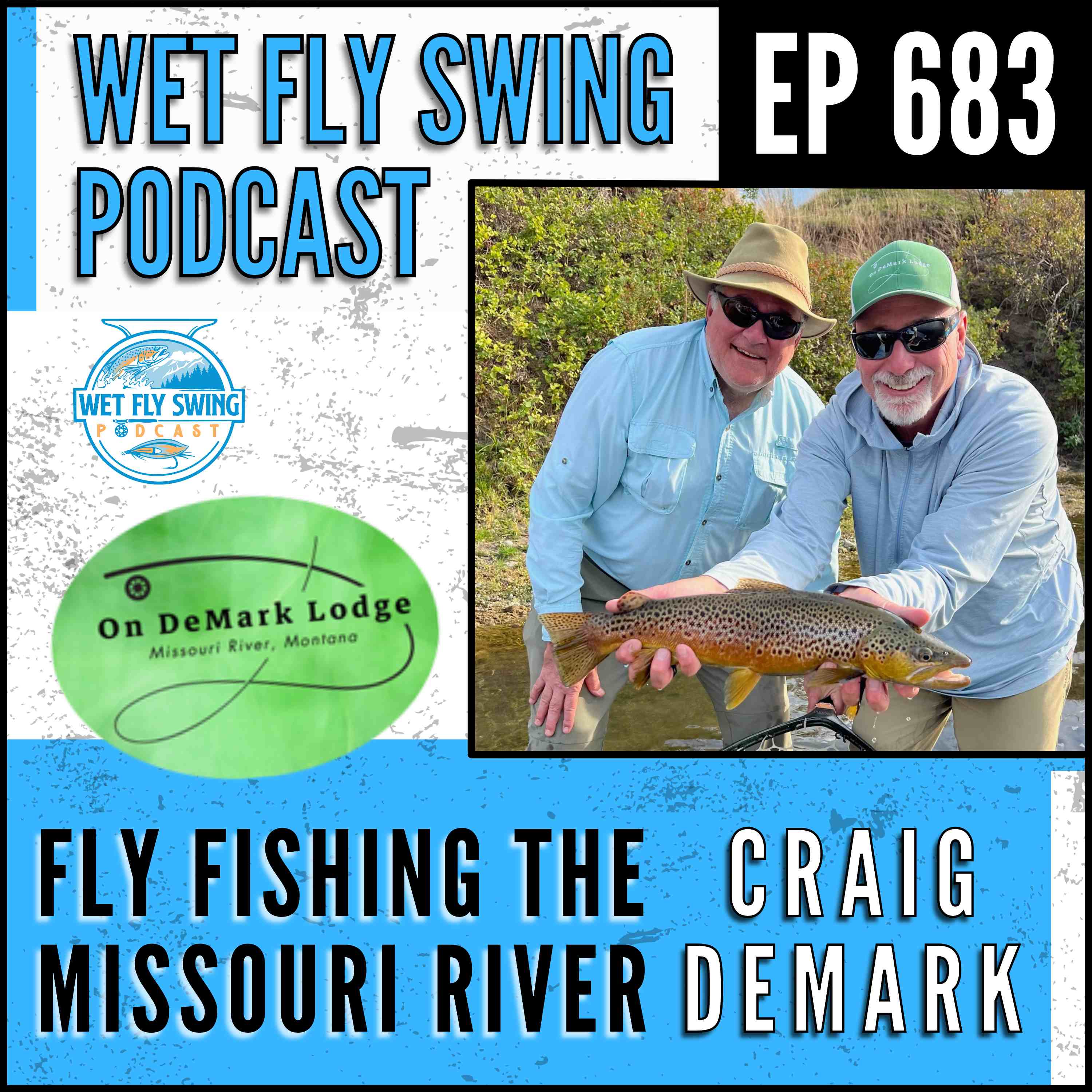
S10 Ep 683683 | Fly Fishing the Missouri River with Craig DeMark - Big Trout, On DeMark Lodge
Show Notes: https://wetflyswing.com/683 Presented By: On DeMark Lodge Sponsors: https://wetflyswing.com/demark In this episode, we're joined by Craig DeMark of On DeMark Lodge to guide us through the intricacies of fly fishing the Missouri River. You'll discover expert tips on navigating downstream fishing, strategies for handling pressured waters, and the crucial elements of achieving the perfect drift. Whether you're a seasoned angler or new to the sport, Craig's insights will equip you with the knowledge to enhance your fishing experience on the Missouri River. Plus, you'll get his top casting tip and learn what to do when you hook that elusive trophy trout. Join us as we unravel the secrets of the Big Mo with Craig DeMark—your gateway to mastering the art of fly fishing in Montana's majestic waters. Episode Chapters with Craig DeMark on Fly Fishing the Missouri River 3:02 - Craig shares his journey into fly fishing and the establishment of On DeMark Lodge. He taught himself to fish, starting with lakes and gradually moving to streams. Originally from the auto repair industry, he eventually transitioned to fly fishing. 7:43 - We talk about the Missouri River. Craig explains that the river originates from the confluence of the Gallatin, Jefferson, and Madison rivers at Three Forks, located south of their area. He also notes that they fish on the stretch below the Holter Dam down to the town of Cascade, a 40-mile stretch known for its diversity and clear waters due to the reservoirs storing cold water. 10:56 - Craig discusses their lodge, a small, family-run lodge located between Great Falls and Helena, Montana, providing convenient access to the Missouri River. They offer a personalized experience with Craig as a guide and his wife and son assisting in operations. The lodge provides easy access to fishing spots, with launch points within a 10 to 30-minute drive. 13:57 - Their fishing trips span from April to October. Craig explains that although the season has ended, the favorable weather could have allowed fishing into November. April begins with variable weather, offering both sunny and cold, rainy days, but it features excellent fishing with minimal crowds. The fishing season wraps up with blue wing olives and October caddis. Craig highlights the abundance of dry fly fishing opportunities throughout the season, expressing gratitude for the rich fishing environment they enjoy. 17:16 - Craig discusses fly fishing techniques on the Missouri River, emphasizing the excitement of tricos fishing, where timing and the right drift are crucial as fish rise to eat small flies like size 18s or 20s. He notes that while the river is known for technical fishing with small dry flies, there are also opportunities to use larger flies like hoppers in sizes 6 and 8 for a few months. Craig prefers using a single dry fly for a better drift but acknowledges that a dry dropper setup can be effective. 19:14 - We get into the use of dry flies during a PMD (Pale Morning Dun) hatch. Craig explains that during such hatches, fish move to shallow gravel bars, sometimes in waters as shallow as a foot deep. Anglers often anchor on these bars, either wading or fishing from the boat. He notes that it's common to find a spot rich with fish and spend several hours there without needing to move much. 21:03 - We talk about fishing for caddis flies, which are prevalent during the June to July summer period and continue into the fall with species like the tan caddis and big October caddis. Craig mentions they had a successful caddis season and describes different methods for fishing them, such as using corn fed caddis and X-caddis flies. 22:46 - Craig advises that newcomers to the area should look for rising fish during hatch seasons, emphasizing that smaller rises often indicate larger fish. He also stresses that achieving a good drift is more crucial than the choice of fly pattern. To achieve a dead drift, he recommends positioning above the fish and utilizing a reach cast technique. 25:18 - We ask his fishing setup, focusing on using 5wt rods for dry flies, with a preference for rods with softer tips. Craig explains they use 9 to 12-foot leaders ending in a five or even four-weight tippet to prevent fish from breaking off. He emphasizes the importance of balancing pressure when reeling in fish, advising anglers to let the fish run to avoid breaking the line. Craig mentions the advantage of being in a drift boat, which allows them to chase the fish downstream if necessary, ensuring a better chance of successfully landing it. 28:09 - We dig into the best times and conditions for dry fly fishing. Craig highlights that the timing depends on what anglers want to experience. Trico hatches are challenging due to the number of rising fish, but the PMD hatch is considered easier, as early-season fish are less picky. For those who prefer not to use nymphs, August offers a great opportunity to fish single dry flies without worrying about weeds. 31:09
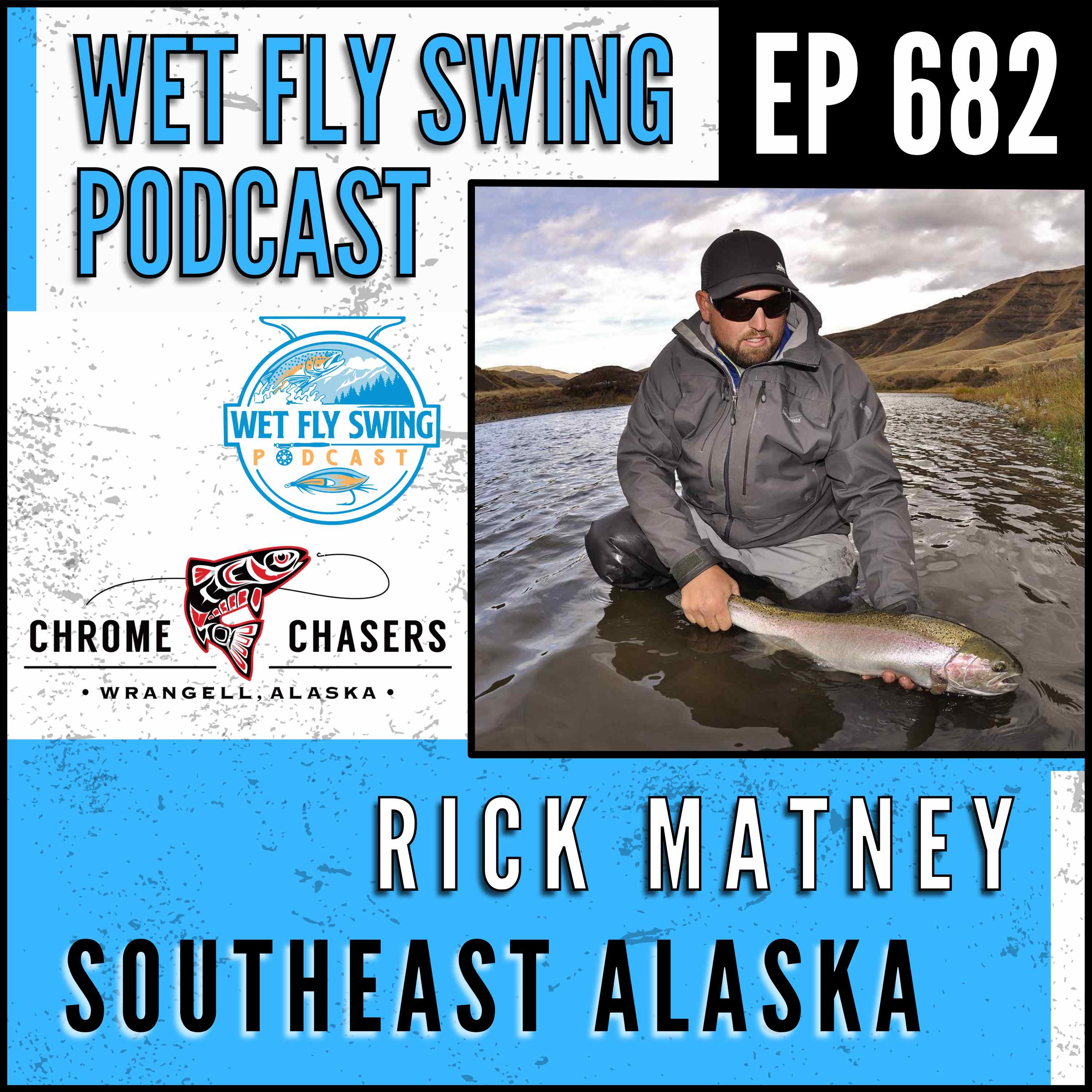
S9 Ep 682682 | Steelhead Fishing in Southeast Alaska with Rick Matney - Montana Trout, Rajeff Sports, Airflo Fly Line
#682 Show Notes: https://wetflyswing.com/682 Presented By: Jackson Hole Fly Company, Stonefly Nets, Togens Fly Shop, TroutRoutes Sponsors: https://wetflyswing.com/sponsors Would you like to fish for steelhead that are so fresh from the salt that they are blue in coloration and not even quite chrome yet How about traveling to a place where it's highly unlikely that you'll see another angler in a full week efficient? Today we're heading into southeast Alaska to find out how to spot and stock big steelhead on pristine Alaskan rivers... Rick Matney, Southeast Alaska steelhead guide, Montana guide, chef, and Alaska immersion program host is gonna share some insight on catching steelhead and some other big species in Alaska. Today we get his best tips on avoiding the crowds, his take on line development, and his experience with Tim Rajeff back in the day. He's going to teach us how to immerse yourself in Alaska and how to not die in an DIY fishing trip. Ocean fishing, salmon, trout, bear observing, cooking... it's all in one trip. Rick's gonna break it all down. So if you're ready to jump in and step into Southeast Alaska and find out how to survive, listen to this episode... Show Notes: https://wetflyswing.com/682

S10 Ep 681681 | Christmas Island Fly Fishing with Rick Lee - Hawaii, Bonefish, Captain Cook
Show Notes: https://wetflyswing.com/681 Presented By: On DeMark Lodge, Jackson Hole Fly Company, Heated Core, Angler's Coffee Rick Lee, Hawaiian fly fishing master and saltwater expert, is back on the podcast, and today, we're diving into the waters of Christmas Island and Hawaii. Rick's got the scoop on where to find the biggest bonefish, and he's sharing some tips on how to DIY your fly fishing trips across Hawaii. We also dive into the crazy world of triggerfish. Ever wonder why they're called that? Plus, he's got some wild stories about Captain Cook's adventures (and how he met his end in Hawaii). Show Notes with Rick Lee on Christmas Island Fly Fishing. 02:33 - We catch up with Rick Lee since our last chat in Episode 116. Rick is still guiding out of O'ahu while raising his kids. We also discuss the challenges and progress of conserving Hawaii's coastal ecosystems. He said he's helping educate visitors about protecting the bonefish and other species. 07:26 - We catch up with Rick about his time in Hawaii during the COVID-19 pandemic. He was in Christmas Island when things started to get serious and had a narrow escape, catching the last flight home before the island closed for nearly three years. He said tourism in Hawaii took a huge hit, but the silver lining was there was no traffic, no crowds, and empty surf spots. Fishing in Hawaii: What You Need to Know 09:52 - Rick shares some helpful tips for those planning a trip to Hawaii. He said that while Hawaii isn't a top destination for fly fishing, it's a great activity to add to your vacation, especially if you're looking for a few hours of fishing before the family wakes up. Oahu has some of the world's biggest bonefish, but with so many people and tourists, the fishing pressure is high. But Rick still recommends bringing your gear out for an adventure. Aside from bonefish, Rick says you can also fish for triggerfish and some varieties of goatfish. 12:37 - Rick shares that Oahu has flats around the whole island, but winter can bring dangerous surf on the north and west shores, while the south shore gets more giant waves in the summer. For those looking for specific spots, Rick recommends contacting his team for personalized advice based on where you're staying. Gear Rick suggests using a 7 or 8-weight rod, a floating fly line, and a tapered leader. For flies, crazy Charlie patterns in tan, brown, or orange work well, as do mantis shrimp patterns. 17:28 - Rick talks about catching some really big bonefish in Hawaii, with some reaching over 30 inches! The average fish on their charters weighs around 5 pounds, but you can catch ones that are 7-10 pounds pretty often. 22:53 - Rick explains that Hawaii's warm water temps stay consistent all year, from the mid-seventies to low eighties. This means you can fish for bonefish pretty much any day of the year. However, late summer and fall can bring rainy weather and strong winds, making fishing tougher. But if you're up for a challenge, the fishing is still great year-round. Casting in the Wind 23:54 - Rick says the key is to slow down and keep your stroke smooth and powerful. He also recommends casting sidearms to help the fly cut through the wind more efficiently. When it comes to rods, it's all about personal preference, but fast or medium-fast action rods work best for wind and saltwater fishing. As for fly lines, shorter, quicker shooting lines are great for windy days, while longer lines help with delicate casts when the conditions are better. 27:25 - Rick says there used to be a fly shop called Nervous Waters in Hawaii, but it closed down when the owner retired. If you're heading to Hawaii, you must bring everything you need. Fishing at Christmas Island 36:40 - Rick shares about Christmas Island, a remote spot south of Hawaii, where you can fish in a beautiful 145-square-mile lagoon. It's known for its incredible fishing variety, from bonefish and triggerfish to big tuna and sailfish. Triggerfish can grow up to 20 pounds and live in coral forts with special defenses. Rick talks about how tricky it is to catch them, but with the proper techniques, it's one of the world's best places for trigger fishing. Rick explains that a Christmas Island day isn't just about targeting one fish species. You could start with milkfish, which travel in huge schools, and then switch to offshore fishing for tuna or sailfish. After that, it's back to the lagoon to target bonefish and triggerfish. And when you think it's over, giant trevally might pop up. Show Notes: https://wetflyswing.com/681
S10 Ep 680680 | 9 Guide Proven Dry Flies to Catch Trout [Fly Fishing 101 Series]
Show Notes: https://wetflyswing.com/drifthook9 In this Beginner 101 Fly Fishing Solo episode I share the Top 9 dry flies you need if you are just getting started. You can read the full blog post from Drifthook.com at the link above. Send me an email: [email protected] if you have any comments or feedback!

S10 Ep 679679 | iFishiBelong with Heather Hodson presented by TroutRoutes - Diversity, Inclusion, Ubuntu Fly Anglers
Show Notes: https://wetflyswing.com/679 This episode is presented by TroutRoutes, not only the best mapping app to find the best water but also a company supporting important groups who are pushing for diversity on species and anglers! Sponsors: https://wetflyswing.com/troutroutes Heather Hodson, an avid spey fishing enthusiast and the founder of United Women on the Fly, shares her exciting initiatives with iFishiBelong.org. We delve into the significance of diversity among anglers, just as vital as the variety of native fish in our cherished streams. We also learn insights from a survey highlighting the role of women in fly fishing. Join us as we discuss the need for swift changes in the industry and explore upcoming events designed to engage and empower the community. Get ready for an inspiring conversation with someone as passionate and busy as me. Episode Chapters with Heather Hodson on iFishiBelong 3:14 - Heather discusses the success and mission of United Women on the Fly, an initiative she has been involved with for eight years that aims to empower and connect women in the fishing community. She notes that while progress has been made, the push for broader industry change has been slow, which led to the creation of her new project, iFishiBelong. This initiative seeks to unite not just women but all people to foster collective change within the fishing industry and beyond, highlighting the need for inclusivity and collaboration to drive progress. 5:45 - We dig into how they started iFishiBelong which aims to create an inclusive environment within the fishing community by advocating for diversity and unity. Heather also explains that while gender discussions are often easier to address, deeper conversations around ethnicity and sexual orientation can be more challenging. The organization aims to bridge these gaps by starting with gender parity and expanding to other areas of diversity. 9:44 - We ask Heather about the evolution of inclusivity in fly fishing, particularly focusing on women's experiences in fly shops. She notes that there has been some progress in making fly shops more welcoming to women, but she emphasizes that change is slower than desired. A survey by United Women on the Fly revealed that while women feel more comfortable in these shops now compared to a decade ago, there's still significant room for improvement. Heather highlights practical steps fly shops can take to fix this. 17:03 - Heather shares that in the current year, their organization successfully hosted four major events focused on inclusivity, both in terms of participant diversity and geographic accessibility. The events took place in New York, Montana, North Carolina, and Oregon. These efforts were supported by TroutRoutes, which sponsored scholarships to help attendees cover costs and hire guides. 20:50 - She talks about the success of their event called Trout Fest held in Oregon and confirms plans to hold it again next year. This is a significant event for the local community, providing support and extensive educational opportunities, particularly in fly fishing techniques and entomology. 24:34 - Heather discusses an initiative called "All Kids Fish" founded by Becca Sue Klein in Atlanta, Georgia. This program focuses on engaging young people, particularly girls initially, in the world of fishing and environmental conservation. A key aspect of the program is its diverse mentorship, ensuring that children see role models who reflect their own identities, whether they are queer, transgender, or come from various racial backgrounds. 31:19 - We get into spey fishing. 37:49 - Heather highlights the advantage of using the TroutRoutes app for camping and fishing. It helps her find campsites and navigate the complexities of public versus private land, particularly in regions with restrictive access laws like Colorado. She also mentions features such as gauge stations, which provide detailed water data, and the ability to mark private waypoints, safeguarding secret fishing spots. 41:28 - She discusses one of their programs called Ubuntu Fly Anglers, co-founded by Bob Bartlett and Carl Crawford. This initiative focuses on advocating and supporting black and brown anglers to foster inclusivity outdoors. They recently held an event in Spokane called "We Are Here," which was impactful and highlighted the importance of representation for black and brown anglers. 46:43 - Heather shares her admiration for Rick Hafele, whom she first met at an event in Spokane about 10 to 12 years ago. A self-proclaimed "bug nerd," she took extensive notes during his presentation on entomology. She finds the study of insects, particularly their changing prevalence due to factors like water temperature and sediment pollution, fascinating. 48:00 - Heather also discusses the Spokane River's rich history as a prolific fishery, despite being impacted by dam constructions like the Grand Coulee Dam. Show Notes: https://wetflyswing.com/679
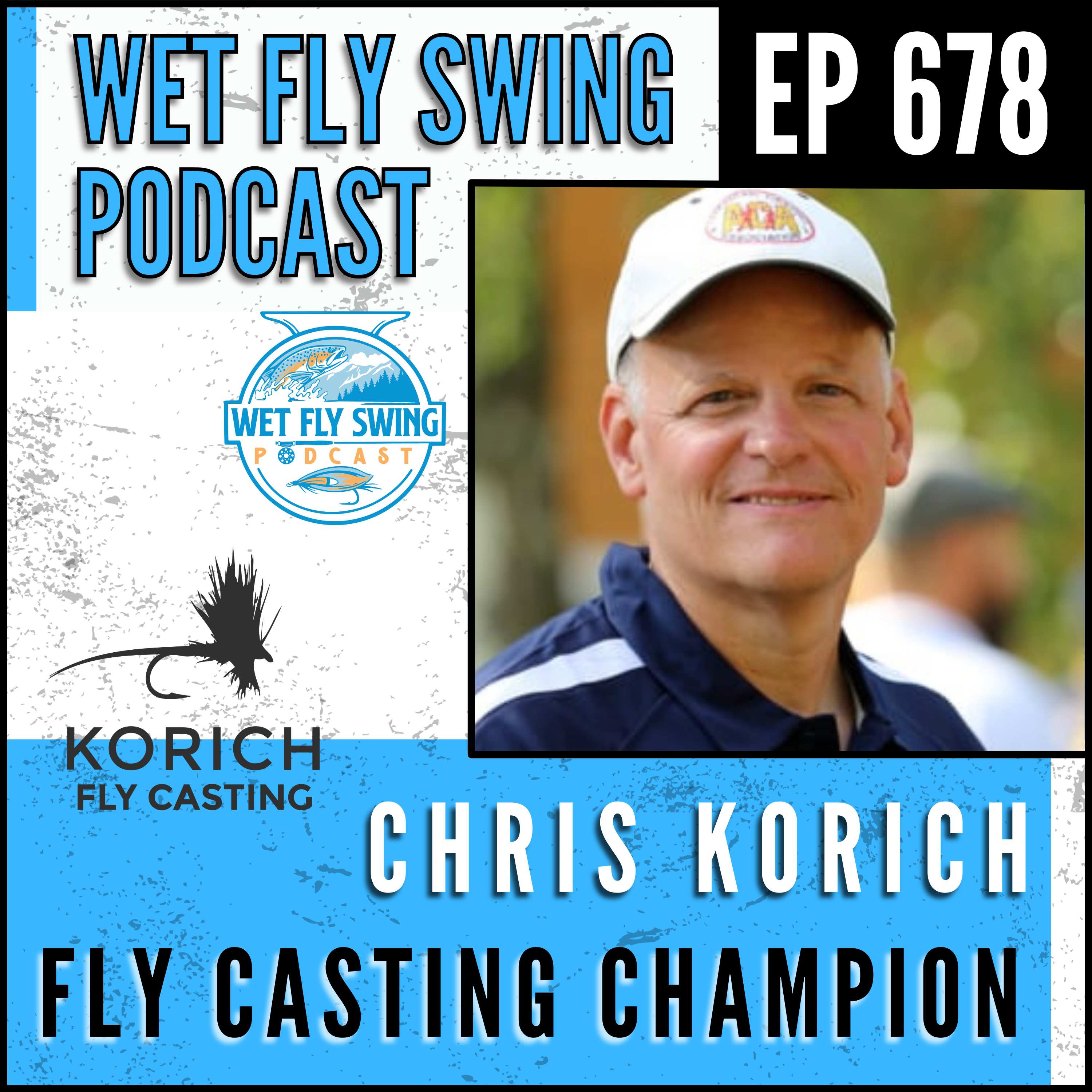
S10 Ep 678678 | How to Become a Fly Casting Champion with Chris Korich - Golden Gate Casting Club, Maxine McCormick
Show Notes: https://wetflyswing.com/678 Presented By: Grand Teton Fly Fishing, Smitty's Fly Box, Jackson Hole Fly Company Curious how an 11-year-old girl managed to beat everyone and become the world fly casting champion? Chris Korich, legendary casting coach to top champions like Maxine McCormick, is here to reveal the secrets behind her success. You'll hear Maxine's full story, from winning her first titles at just 9, 10, and 11 years old to outcasting the best in the world. Chris also shares the number one thing every caster should know, along with tips on rod selection, essential gear, and the history of fly rods. Find out why some top pros still swear by 1970s graphite rods to dominate competitions today. Episode Chapters with Chris Korich on How to Become a Fly Casting Champion 02:34 - Chris tells us about his childhood near the Golden Gate Angling and Casting Club in San Francisco. He spent his youth at the Oakland Casting Club, which opened its casting pools in 1958, just blocks from his home. By age eight, he had his first job helping people catch fish. 06:21 - Chris shares how he and his brother stumbled onto their first fishing rod—a discarded, rusty push-button reel they found by chance. They fixed it up and started casting at the trout ponds. The experienced anglers noticed and stepped in to teach them how to cast properly. One of them was Tony Perry, who became Chris's first coach. Coaching Maxine McCormick 09:51 - Chris shares how he became Maxine McCormick's coach. It all began when he got a call from Donna O'Sullivan, who saw Maxine at the Golden Gate Club. Maxine was only 9 when she started, and within a couple of lessons, she was already scoring casts like a pro. 15:56 - In 2013, Maxine started training with her dad, Glenn, just a few months after meeting Chris. They jumped into tournament casting, and five months later, Maxine competed in the National Casting Championship. She outscored every woman in a national competition. By 11, Maxine was making headlines, beating everyone except Chris and Steve. At 12, she became the youngest world champion in the sport. 30:06 - Chris explains that starting with a full-flex rod, like the ones from the old days, helps you feel the line better. He also talks about the benefits of shorter rods, especially for beginners or those fishing in windy conditions. 40:49 - We chat about the best fly rods for beginners, especially for kids. Chris discusses how shorter, softer rods, like fiberglass or combination graphite-glass ones, work great for new casters. He shares a cool story where 22 women tried different rods, and everyone picked a short fiberglass rod as their favorite. It helps them feel the line better and roll cast more easily. 54:10 - Chris shares a fun exercise with a butter knife to help listeners understand the importance of "feel" when fly casting. 1:00:59 - Chris explains that while many anglers still use long rods, the trend is starting to shift. He compares it to skiing, where shorter skis became popular to help beginners learn, and then they went back to longer skis—only to eventually return to shorter ones again. Chris believes that shorter rods make fly fishing easier, especially for beginners, and encourages anglers to try them out. 1:10:51 - Chris says there's no doubt that Steve Ray Jeff is the greatest fly caster in history. 1:13:11 - Chris shares the impressive story of Maxine, who broke records at the world fly casting championships in Norway. Despite limited training, she scored 80 points in accuracy and won multiple gold medals. Maxine is also focused on finishing her biology degree while still finding time to fly fish and work at a fly shop. Show Notes: https://wetflyswing.com/678

S10 Ep 677Traveled #21 | Fly Fish Food Jimmy's with Madison Losee presented by Yellowstone Teton Territory
Show Notes: https://wetflyswing.com/677 Presented By: Yellowstone Teton Territory Sponsors: https://wetflyswing.com/teton Today, we explore Fly Fish Food Jimmy's, a top fly shop in the West, now under new management. Join us as we speak with Madison Losee, the new shop manager. She'll share tips for your next fly fishing trip, including ways to avoid crowds on the famous Henry's Fork and her preferred techniques over the dry dropper method in summer. Madison will also share stories, including a surprise visit from a celebrity. Whether you're heading to Idaho or looking to up your fishing game, this episode is filled with insights you won't want to miss! Episode Chapters with Madison Losee on Fly Fish Food Jimmy's 2:17 - Madison explains that after a changeover, the fly shop significantly increased its inventory, especially in fly selection, now offering four times as many flies as before. This expansion was aimed at accommodating the needs of both local fly tying enthusiasts and visitors preparing for fishing trips. The shop is positioned as a central hub for anglers heading to famous fishing destinations such as the Henry's Fork and the South Fork of the Snake River, benefiting from its strategic location near major highways. 4:01 - She discusses her background and experience leading up to her first managerial role at Fly Fish Food Jimmy's. She explains that while this is her first position as a manager, she has a strong retail background from high school and has grown up working for her family's drift boat company, giving her a long-standing connection to the fly fishing industry. 6:47 - Madison talks about the experience of running a fly shop in Idaho Falls, which attracts both locals and tourists. Common questions from visitors include where to fish and what equipment to use. She also highlights the shop's proximity to prime fishing locations like Henry's Fork and South Fork, which are about 30 to 45 minutes away from town. 10:45 - She describes the team at the fly shop. Madison has been with the shop since June of the previous year. She enjoys interacting with regular customers, learning from experienced fly fishers, and staying updated on new products and gear, which she finds both fun and educational. 21:41 - We talk about Jimmy Gabettas, who was the owner of Jimmy's All Seasons Angler before it was bought by Fly Fish Food. Madison shares that Jimmy is enjoying his retirement by taking bucket list trips, including a recent one to Mongolia, and continues to engage in fishing and hunting. Despite retiring, he still visits the shop regularly to stock up on tying materials and shares his fishing experiences with the staff. 15:04 - Madison mentions spending considerable time fishing in Wyoming and expresses particular enjoyment in fishing the Snake River through Jackson, indicating it's a favorite spot. 17:02 - We talk about fishing in the Snake River area in western Wyoming, specifically through Grand Teton National Park and Jackson Hole. Madison explains that while having a boat allows for covering more water, it is not essential for fishing there, though caution is advised due to areas with strong whitewater currents. 19:13 - We get into the best times to fish the South Fork of the Snake River. She mentions that although fishing is possible year-round, her favorite times are May and June during runoff, and especially July during the salmon fly hatch. She explains that this hatch is influenced by water temperatures and can be followed through different sections of the river, typically lasting a couple of weeks from the end of June to early July. 20:24 - Madison shares her preference for using large dry flies rather than a dry dropper setup, highlighting her technique of casting close to overhanging trees and "twitching" the fly to attract fish. She emphasizes the importance of precision in casting, even at the risk of losing flies to tree branches, and describes the satisfaction of making a perfect cast. She also explains her method of twitching the fly by wiggling the rod tip to create movement, which she finds effective in attracting cutthroat trout on the South Fork. 25:37 - She mentions the products available at the shop. Madison also recommends some gear to bring when you a plan a fishing trip to their area. When it comes to casting instruction, she mentions that due to the shop's downtown location, they don't offer in-person coaching. 28:01 - I briefly share about my recent interview with Chris Korich, the coach of renowned fly caster Maxine McCormick. Chris shared insights on how Maxine began casting at the age of nine and quickly won championships, attributing part of her success to the type of rod used. Our episode with Chris will be released in November. 30:46 - Madison describes the experience of visiting their fly shop, highlighting their extensive fly-tying materials section. The shop maintains its original structure, with enhancements for more inventory. 35:48 - She highlights her top flie
S9 Ep 676676 | The Missouri River with Shalon Hastings - Helena Montana, Last Chance Fly Gals, Women in Fly Fishing
Show Notes: https://wetflyswing.com/676 Presented By: Visit Helena, MT On a recent drive across the country, I swung into Helena, Montana. We stopped for a beer, some gear for the trip, and hung out at a local park. And I'll be back this year to fish the mighty Missouri, one of the great rivers out West. In this episode, you're going to hear about a person who sold her business to go all in on fly fishing and where she's focusing her efforts this year. If you're new to fly fishing, then this episode is going to give you some tools and resources to let you know where to start the right way. Shalon Hastings, fly fishing instructor guide, an all-around badass fly angler is gonna take us into the Big Mo. You're gonna hear about some of the first things she does with a new student and some things you can take away on this if you're just getting started. And she's gonna talk about why entomology is something you should be learning about. Plus, she's gonna clear the air about women fly fishing in bikinis, all this stuff. We're gonna talk about it and she might have a little different take than you were thinking. We're heading back to the Big Missouri, the Big Mo this year. Let's find out how to do it the right way. Show Notes: https://wetflyswing.com/676

S10 Ep 675675 | Celebrating the Life and Wisdom of John Gierach - (Ep 47 Re-released)
Show Notes: https://wetflyswing.com/675 Presented By: Togens Fly Shop, FishHound Expeditions Today, we're honoring one of the greatest voices in fly fishing, John Gierach, who passed away in October. I first recorded this episode with John in 2018, right after starting the podcast. John was already a huge inspiration to many with his stories and deep love for mountain streams and fly fishing. In this episode, we'll hear about John's early life and how he started writing, why he loves fly fishing, especially the mountain streams of Colorado, and some of his biggest mentors who influenced him over the years. Some we've had on this podcast since this episode. I was so excited when we first had John on, and he said yes to doing an episode because it was early on in this podcast, and he was one of the biggest, maybe the biggest, I knew out there. There are so many great stories in this one. John also came back for a second episode, and it was a dream that I never told anybody about to have John on for a podcast series so we could dig into all or many of his books. We never quite got there, of course, but we do have his voice today that should inspire all of us in his words of writing and books for years to come. Show Notes: https://wetflyswing.com/675

S10 Ep 674674 | Alaska Grand Slam with George Krumm - Fish Alaska Magazine, Togiak River Lodge, Chinook Salmon
Show Notes: https://wetflyswing.com/674 Presented By: Togiak River Lodge Sponsors: https://wetflyswing.com/togiak George Krumm, editor of Fish Alaska Magazine and all-around fishy dude, is going to share his experience on Alaska grand slam catching all five salmon species in the same day on a recent trip to the Togiak River. You're going to find out which technique he used to make it happen; where some of the other great trips are around Alaska and things you should be thinking about; and what he thinks is the best thing to help turn around the Chinook decline for the Pacific rim. Plus you're gonna found out how you can plan your Alaska trip easily with a resource at Fish Alaska Magazine. Episode Chapters with George Krumm on Alaska Grand Slam 3:06 - George began his journey into fly fishing when he was about seven years old. His dad gave him a small vice and showed him how to tie flies. The very first fly he tied was a gray hackle peacock. George became truly passionate about fly fishing when he started catching fish with the flies he had tied himself. 5:08 - He shares a bit about how he began his career at Fish Alaska. Melissa Norris and his brother, Marcus, founded both Fish Alaska and Hunt Alaska magazines. For Fish Alaska, George primarily writes about fly fishing. Additionally, they have a "Fly of the Month" column, which is sponsored by Mossy's Fly Shop. 8:12 - George first connected with the Larsen brothers, who own the Togiak River Lodge, during his visit in 2022. His goal was to explore Chinook fishing and write a story about it. Unfortunately, the trip wasn't very successful due to poor water and weather conditions. Despite this, George believes that the Togiak River is a standout location for Chinook fly fishing, as it still boasts strong runs of fish in various sizes. 11:48 - George visited the lodge in mid-August this year, aiming to catch coho salmon on a fly. He successfully caught all five species of Pacific salmon—Chinook, coho, sockeye, chum, and pink salmon—in a single day on a fly rod. His cousin Tom achieved this feat twice in one week. 13:39 - He describes their success, noting that on an average day, he and Tom caught over 75 salmon of various species. Although their main goal was silvers, they caught multiple types of salmon, with the King salmon being the most challenging to catch at that time of year. Interestingly, they managed to achieve a "grand slam" of catching various salmon species by accident. 15:40 - We discuss sockeye salmon, which are less talked about in freshwater fishing. George mentions significant runs in areas like Naknek and Kenai. Sockeye are valued for their red meat and while they usually feed on plankton in the ocean, they can become territorial and bite more when in large groups. For Chum salmon George mentions that they are strong fighters, often leading to broken rods, though they might not look impressive. Pink salmon are smaller and change color quickly, causing them to be underrated, but fresh pinks are tasty, similar to trout. 20:31 - George enjoys the methodical aspect of spey casting, especially for winter steelhead, where catching even one fish is rewarding. He contrasts this with the excitement of fishing in the Togiak River, where large fish are caught more frequently. 26:47 - George highlights the Togiak River Lodge's multiple packages for anglers. He also notes an important change in their policy: during the first few weeks of the fishing season, the lodge will limit the number of anglers from 24 to 14. This adjustment is aimed at providing a better experience for those specifically interested in fishing for King salmon. 27:34 - We dig into the evolving perspectives on fishing practices in Alaska, emphasizing a shift away from the traditional "whack them and stack them" mentality towards more sustainable approaches. George highlights the importance of targeting abundant fish species such as sockeye, pink, and coho salmon, while questioning the necessity of taking large quantities of fish home. Our conversation highlights the need for anglers to adapt to changing times and prioritize sustainable practices. While Alaska has been perceived as having unlimited fish supplies, current trends suggest a need for caution and conservation. 33:36 -We discuss the current state of fly fishing and the associated challenges in different regions, including Alaska and the Skeena system. Fishing restrictions, such as closures on Chinook fishing, are not only happening in Alaska but in other areas as well. 38:50 - George recounts spending extensive time fishing on the Kenai River and now frequently visits the Naknek River for its excellent rainbow trout fishing opportunities. He also highlights the overlooked potential of stillwater fishing around Anchorage and the Kenai Peninsula. He notes that many lakes in Alaska are stocked with fish and, unlike in the lower 48 states, they are not heavily fished. This means that these lakes often contain multiple age classes
S10 Ep 673673 - Clean the Dream with Scott Robertson - South Platte River, Landon Mayer, Colarado
#673 Show Notes: https://wetflyswing.com/673 Presented By: Waters West, Yellowstone Teton Territory, Drifthook Fly Fishing Have you heard about Clean the Dream? It's one of Landon Mayer's favorite events, and today, Scott Robertson is here to tell us all about it. Scott shares the history of this inspiring cleanup at the Dream Stream, how it's evolved, and why it matters to anglers everywhere. Find out how saving your tippets can make a difference. Episode Chapters with Scott Robertson on Clean the Dream We're giving away a huge trip to hit the water with Landon Mayer and learn sight-fishing for massive trout! Enter now for your chance to win. 02:16 - Scott met Landon Mayer 12 years ago through their mutual friend, Brandon Kramer, who co-founded Clean the Dream with Landon. 05:22 - The Dream Stream is a five-mile stretch of the South Platte River between Eleven Mile and Spinney Mountain Reservoirs. This area crosses three different state lands: Spinney Mountain State Park, Charlie Meyers State Wildlife Area, and Eleven Mile State Park. Clean the Dream 08:04 - Clean the Dream started about ten years ago with only 20 people, but it's grown significantly since then. Now, more sponsors give out prizes, which makes the event more exciting. Clean the Dream event usually happens the third weekend in August. Tips for Organizing a Successful Cleanup Event 11:17 - If you want to host a cleanup event like Clean the Dream, there are a few key things to remember. Get the word out. Use Social Media - Promote your event on all platforms and get others with a following to share it. Find Sponsors - Reach out to brands for donations or prizes. Local Businesses -If you can't get big brands, local stores can help, too! Flyers - Don't underestimate the power of good old-fashioned flyers. Talk to your local jurisdiction. 19:52 - You don't need to sign up to join the event. Head to the bridge lot around 8 a.m. on the third weekend in August. Scott says they prepare coffee, juice, and pastries to start the day. Once you're set, you'll get a bucket, trash grabber, bags, and gloves. The cleanup lasts about four hours, so you can pitch in for as long as possible. Afterward, a lunch with pulled pork, hot dogs, and chips wraps up the day. 21:45 - This year's cleanup had over 200 people—ten times more than when it started. Scott says they're planning something bigger for the 10th anniversary next year. 23:41 - Scott's love for fishing started when he was 15 with his dad in Hawaii. He explained that while fly fishing wasn't common on the Big Island, he enjoyed saltwater fishing. Moving to Colorado sparked his interest in fly fishing, especially after working in the Bahamas, where he learned about bone fishing. IMG_6021 Check out @clean_the_dream on Instagram for more updates. Don't miss your chance to join Landon Mayero for your shot at sight-fishing for massive trout! Visit https://wetflyswing.com/giveaway Show Notes: https://wetflyswing.com/673

S9 Ep 672672 | Sight Fishing Tips for Trout with Landon Mayer - South Platte River, Streamer Tactics, Staying Fit
Show Notes: https://wetflyswing.com/672 Presented By: Waters West, Yellowstone Teton Territory, FishHound Expeditions, Heated Core Sponsors: https://wetflyswing.com/sponsors If you had the choice between sight fishing for big trout or nipping down deep, which one would you choose? And what about streamers versus Dries? Do you have an opinion there? And which of all these techniques do you need more help with right now? Today's guest is an expert in all of these disciplines, And. today we're going to help you build a foundation to better understand when and where to site fish effectively for big trout. Landon Mayer, South Platte guide, master show speaker, and our trout school professor will be walking us through the trip we're heading out to this year. You're gonna find out how to prepare for a trip if you're focused on site fishing for big trout, what reactions from fish really mean and how to decide when to fish deep or go shallow and what you should do when you can't see the fish. We're gonna talk about it all today, plus you're gonna get Landon's best health tip on eating and staying fit. Show Notes: https://wetflyswing.com/672
S9 Ep 671671 | Choosing the Best Fly Line with Josh Jenkins - Scientific Anglers, Fly Fishing Gear, Permit Fishing
Show Notes: https://wetflyswing.com/671 Presented By: Stonefly Nets, Drifthook Fly Fishing, Yellowstone Teton Territory Sponsors: https://wetflyswing.com/sponsors Have you ever been confused about how to choose the best fly line for your next fly rod? Did you know that line companies typically overweight lines out of the box to help us out? And are you interested in learning about the process of getting the perfect line for the exact situation you will be fishing this year? Today, we take a trip back into Scientific Anglers, so you have a clear path of selecting the best and perfect line for your next big trip this season. Josh Jenkins, R&D manager at Scientific Anglers will shed light on what's new this season and some of their best-selling fly lines. You're going to get some background on the core and the coating and understand how this will help you understand which lines to choose. You're going to discover how to match the leader with your fly line and why the leader is essentially just a mini fly line. We're going to get into that today and we're also going to find out how and why you should be choosing the fly line first and matching your rod to the fly line. Better put, we're going to show you why fly leader line rod and reel is the order you should follow. Josh clarifies it all today. Show Notes: https://wetflyswing.com/671
S10 Ep 670670 | Public Waters and Lands Conservation with Josh Mills - Wild Steelhead Coalition, Backcountry Hunters & Anglers, Clearwater River
Show Notes: https://wetflyswing.com/670 Presented By: Togens Fly Shop, FishHound Expeditions, TroutRoutes, Angler's Coffee Sponsors: https://wetflyswing.com/sponsors Josh Mills, a seasoned expert from the Backcountry Hunters & Anglers team, as well as a board member of the Wild Steelhead Coalition and an accomplished steelhead fly tier, is set to guide us through the Clearwater River and public waters and lands. Today, you'll learn how to adjust your reel technique for enhanced stealth. We'll also provide an update on the status of the Lower Snake River dams and their current developments. Additionally, you'll discover what a public lands yard sale entails. Moreover, we'll analyze a significant western stream to improve your success on the water this year. Together, we'll delve deep into the topics of steelhead fishing and conservation. Let's begin our journey. Episode Chapters with Josh Mills on Public Waters and Lands 3:19 - We talk about our top destinations for steelhead fishing. Josh feels fortunate to fish in local rivers like the Clearwater and Salmon, but he reminisces about a memorable trip to the Skeena region in 2012 and plans to return in 2025. He also dreams of fishing in Northern California, inspired by historical figures in the steelhead community. 12:15 - Josh discusses his fishing strategy, focusing on the Clearwater River. He fishes the Clearwater from August through September, as fish from different basins, including the Snake and Grand Ronde Rivers, seek the cold water as a thermal refuge. He notes the Clearwater can be a challenging but rewarding river to fish. Once the thermal block breaks, fish often return to the Snake River, and Josh shifts his focus to the Grand Ronde system. 16:11 - We ask Josh for advice on fly patterns for steelhead fishing on the Deschutes River in October. He responds by emphasizing the unpredictable nature of steelhead fishing, suggesting that success often depends on the angler's confidence and intuition rather than specific fly patterns. He explains that steelhead are curious and might bite at almost anything due to aggression, predatory instincts, or curiosity. 23:31 - We dig into his involvement with Backcountry Hunters & Anglers (BHA) and the Wild Steelhead Coalition. He initially got involved by running fundraisers and joining the board of the latter, which led him deeper into conservation efforts. He started volunteering with BHA in 2015, an organization dedicated to protecting public lands and waters in North America. Josh felt compelled to protect these lands, recognizing their importance for recreation and conservation. 28:57 - We get into the complexities of public land and water access laws in the United States, particularly focusing on differences between states. Josh elaborates on the varied stream access laws across states, highlighting how states like Washington, Idaho, and Montana have more permissive laws, while Colorado and Utah face significant challenges. 42:37 - We discuss Josh's experiences and growth in fly fishing. Josh emphasizes the continuous nature of learning and improving in fishing. He talks about the technical skills involved, such as casting and line management, and how observing skilled anglers like Brian Chou and others has inspired him. Josh admires their proficiency in handling challenging conditions and accurately predicting fish locations. Josh acknowledges that despite trying to replicate the techniques of skilled anglers, there are subtle differences in execution that impact results. He emphasizes the importance of learning from others and adapting various techniques, such as transitioning between different fly lines. 45:58 - We compare fishing the Clearwater River versus in the Deschutes. Josh highlights the former's larger size, which offers more room for casting and allows for different fishing techniques. He notes that unlike the Deschutes, where sun orientation impacts fishing strategies, the Clearwater allows for dry line fishing throughout winter. He also mentions the genetic traits of Clearwater fish that make them more likely to rise through the water. Additionally, he compares the river sizes and flow variability, explaining how the Clearwater's dam-controlled nature affects fishing conditions. Despite the challenges, Josh appreciates the unique fishing opportunities both rivers offer, with each having its own "secrets" and characteristics. 49:07 - Josh gives some valuable tips on fishing for steelhead in Clearwater. He suggests visiting the Red Shed Fly Shop for advice and emphasizes the importance of focusing on manageable sections of large rivers. He explains that understanding where fish rest and conserving energy is crucial. For rods, Josh notes that it varies with the season. He enjoys using a 15-foot rod with a 60-foot line but adapts his technique based on conditions. 54:39 - We discuss the dynamics of fly fishing, particularly focusing on the experience of fishing with highly skilled casters. Josh a
S9 Ep 669In the Bucket #10 | Dry Fly Fishing for Steelhead in Northern BC with Dax Messett, Ken Morrish, and David Hughes
S10 Ep 668668 | Celebrating the Life of Colin Mckeown - Ep 84 Re-released
Show Notes: https://wetflyswing.com/668 Presented By: Togens Fly Shop If you've ever watched a fly fishing YouTube video, there's a good chance you've come across one produced by today's guest, Colin McKeown. Colin sadly passed away last month, and today I want to re-release an interview I did with him in 2019. Colin was behind one of the largest fly fishing YouTube channels and inspired many in the industry. Show Notes with Celebrating the Life of Colin Mckeown. I want to take this moment to celebrate his life and encourage anyone impacted by his work to reach out to his family, The New Fly Fisher team, or even to me if you'd like to share how Colin inspired you or influenced your fishing journey. In this episode, we dive into Colin's background, and how he started The New Fly Fisher, and we'll talk about Atlantic Salmon, Newfoundland, and his full story. This is from 2019, and as I mentioned, Colin passed away in September of 2024. This is a rerelease of Episode 084. If you'd like to listen to the original episode, you can find it here. Show Notes: https://wetflyswing.com/668