
Volts
444 episodes — Page 7 of 9

Getting electric school buses in the hands of school districts
How can electric school buses be made accessible and cost-effective? In this episode, Highland Electric Fleets CEO Duncan McIntyre makes the case for why school districts should overcome the challenges to bus electrification, and the ways his company’s subscription model helps them do so.(PDF transcript)(Active transcript)Text transcript:David RobertsOne of my very favorite things in the world to talk about — second perhaps only to electric postal vehicles — is electric school buses. It's difficult to think of a more righteous cause than reducing air and noise pollution in direct proximity to the country's most sensitive lungs and ears.Currently, however, electric school buses still cost two to three times what their diesel competitors cost, which can be daunting for school districts with tight budgets. Electric buses pay themselves off over time through dramatically lower fuel and maintenance costs, but the upfront costs of the transition are steep enough to scare away many administrators.My guest today runs a company called Highland Electric Fleets that is attempting to overcome that challenge by offering a new business model. Rather than purchase and maintain the buses themselves, school districts pay Highland a subscription fee, locked in for a 15-year contract, which covers the buses, a depot, charging infrastructure, scheduling, training, and ongoing maintenance and replacement of buses when required.In addition to a saving most school districts money immediately, the subscription contract derisks the transition to electric buses. That is about the best thing I can think of that someone could be doing these days, so I was eager to talk to Highland CEO Duncan McIntyre about the advantages of electric buses, the challenges school districts face, and the problems solved by the subscription model.Alright, with no further ado, Duncan McIntyre, welcome to Volts. Thank you for coming.Duncan McIntyreDavid, thanks for having me.David RobertsThis is awesome. Volts listeners are so interested in electric school buses, so I just have a gazillion questions, so let's jump right into it. Tell us, what are the advantages or benefits of an electric school bus over the current line of school buses, which as I understand it, are mostly diesel?Duncan McIntyreThat's right, they're mostly diesel. A little over 80% today. But your question is about the advantages of electric. I think the list is long, but I would highlight a few of the big ones. There's a clear benefit in emissions profile just in the health of everyone who's operating or riding a bus. There's no tailpipe at all, and as a result, they're very clean. Another big advantage is they just operate much cheaper. The fuel is a lot less expensive, there are very few moving parts compared to a diesel bus, and as a result, there's no oil changes, there's no exhaust filters. There's lots of things that just aren't on electric buses, and so operating is much less expensive.David RobertsAnd I don't want to get caught up in the whole thing too early, but I'm trying to sort of conceive of the sort of magnitude of the pollution reductions here. Like, have there been measurements or studies about the difference when an electric school bus replaces a diesel bus? Or are we too early to know for sure about that kind of stuff?Duncan McIntyreI think there have been plenty of studies about the health impacts of a diesel bus. And the comparison is simply the health impacts of not having a diesel bus since the electric format has literally no tailpipe and no emissions profile at all. But the health studies have been done by groups like American Lung Association, groups like that, and there's quite a few data points that look at reduction in NOx and particulate matter, specifically on things like pediatric asthma. I would say that's one of the main studies that has taken place, but also tying the emissions associated with the diesel tailpipe to just other general health key indicators.David RobertsYeah, one thing I would toss out too, because people always forget about this, but is noise pollution, which is the research on noise pollution is wild. I don't think people appreciate the effect that has. And all these kids are effectively sitting right next to a jet engine, more or less. It's extremely loud. But the first question that comes up for everybody is they cost more. So what is the current cost differential between an electric school bus and a diesel school bus?Duncan McIntyreThe electric school bus ranges from $275,000 to $375,000, really, depending on the state you're in. And your question is about the differential. It's about $200,000 of differential on average. So it's a $200,000 premium to buy an electric.David RobertsThat's not small. That's two or three x the cost.Duncan McIntyreThat's exactly right. It's not small.David RobertsLet's also talk about some of the other barriers other than cost for a school district looking... if I'm in a school district, I have this wild id
What's the deal with electrolyzers?
In this episode, Raffi Garabedian, CEO of startup Electric Hydrogen, discusses all things electrolyzer, the current hydrogen market, and the future risks and opportunities for green hydrogen. (PDF transcript)(Active transcript)Text transcript:David RobertsVolts subscribers are likely well aware of the fact that a fully decarbonized energy system is going to require an enormous amount of hydrogen to fill in the gaps left by wind and solar. What's more, they are probably aware that hydrogen comes in a dazzling variety of colors, from blue to gray to brown, depending on the carbon intensity of the production.In the end, though, only one such color matters: green. That is to say, a fully decarbonized energy system is going to require lots and lots of hydrogen made with renewable energy, with no carbon emissions. The way to do that is to run water and electrical current through an electrolyzer, which splits the hydrogen off from the oxygen.Currently, about 95 percent of the world's hydrogen is made using fossil fuels. Green hydrogen — hydrogen made with renewable energy and electrolyzers — comprises only a sliver of the remaining 5 percent. Yet it’s going to have to scale up to 100 percent in the next several decades, even as demand for hydrogen rises.This is all a familiar story, at least to energy nerds. But if you're anything like me, the more you think about it, the more you realize that, despite the key role they play in that story, you don't actually know very much about electrolyzers themselves. What are they, exactly? What do they look like? How can they be improved? What policy is supporting them?To talk through these questions, I contacted Raffi Garabedian, the CEO of Electric Hydrogen, a startup that has set out to rapidly drive down the cost of green hydrogen. Garabedian, who was previously chief technology officer at First Solar, believes that the market for green hydrogen today is roughly where the solar market was in 2008, with all the attendant risks and opportunities.Garabedian (quite patiently) walked me through the basics of electrolyzers, the current state of the market and the technology, the kind of cost improvements he believes are possible within the next five years, the increasingly supportive policy environment, and the future of green hydrogen.With no further ado, Raffi Garabedian, welcome to Volts. Thank you so much for coming.Raffi GarabedianIt's great to be here, David.David RobertsI'm excited to talk today about electrolyzers because I think I am, and I think probably most of my listeners are already convinced that hydrogen is going to play an important role in a decarbonized electricity system. I think we can just assume that. And I already think, and I think my listeners probably already know this too, that in a true decarbonized system, it's going to have to be so called "green hydrogen," hydrogen made without greenhouse gases. I know there are 50 other colors made from different other things with varying levels of greenhouse gas production. But, I think—and obviously you think, since you've predicated your business on it—that we got to make green hydrogen work.And green hydrogen is hydrogen made with renewable electricity and electrolyzers. So, we know all that. But I find that when I think about the technologies involved, I have a pretty good understanding of all the pieces of that puzzle, except for electrolyzers. They're just kind of this thing that plugs into a certain spot in the diagram. But I find that when I actually focus in on it and think about it, I turn out to know very little about electrolyzers. So I'm very excited to have you on the pod today because I suspect I'm not the only one who has that sort of gap in my knowledge. So maybe we can just start with: what is an electrolyzer?Raffi GarabedianYeah, let's start there. Let's first start by just exploring and defining the problem that we're trying to solve, right? So we're trying to make hydrogen, which is both a feedstock and a fuel, and we're trying to make it using renewable energy. So how does that work? Well, it all starts with the water molecule. So everybody knows water is... what's the chemical formula for water? It's H2O. So think of that as oxidized hydrogen. Hydrogen, the word, actually is derived from hydro: water, gen: produces. So when you burn hydrogen yeah, interesting, right? When you burn hydrogen, you get water as a result.So burning is oxidation. So what an electrolyzer does is the opposite of that. It's the reverse of oxidation, which is called reduction. But it does so electrochemically. Now, what does that mean? Electrochemistry is a whole field of science and technology that involves the interaction between chemical reactions and electricity. And generally the kinds of electrochemical systems that are used in industry involve things like membranes and electrodes. But the function of these devices is to drive some sort of a chemical reaction that requires energy towards a desired end state.
On the abuse (and proper use) of climate models
British researcher Erica Thompson’s recently published book is a thorough critique of the world of mathematical modeling. In this episode, she discusses the limitations of models, the role of human judgment, and how climate modeling could be improved.(PDF transcript)(Active transcript)Text transcript:David RobertsEveryone who's followed climate change for any length of time is familiar with the central role that complex mathematical models play in climate science and politics. Models give us predictions about how much the Earth's atmosphere will warm and how much it will cost to prevent or adapt to that warming.British researcher Erica Thompson has been thinking about the uses and misuse of mathematical modeling for years, and she has just come out with an absorbing and thought-provoking new book on the subject called Escape from Model Land: How Mathematical Models Can Lead Us Astray and What We Can Do About It.More than anything, it is an extended plea for epistemological humility — a proper appreciation of the intrinsic limitations of modeling, the deep uncertainties that can never be eliminated, and the ineradicable role of human judgment in interpreting model results and applying them to the real world.As Volts listeners know, my favorite kind of book takes a set of my vague intuitions and theories and lays them out in a cogent, well-researched argument. One does love having one's priors confirmed! I wrote critiques of climate modeling at Vox and even way back at Grist — it's been a persistent interest of mine — but Thompson's book lays out a full, rich account of what models can and can't help us do, and how we can put them to better use.I was thrilled to talk with her about some of her critiques of models and how they apply to climate modeling, among many other things. This is a long one! But a good one, I think. Settle in.Alright, then, with no further ado, Erica Thompson, welcome to Volts. Thank you so much for coming.Erica ThompsonHi. Great to be here.David RobertsI loved your book, and I'm so glad you wrote it. I just want to start there.Erica ThompsonThat's great. Thank you. Good to hear.David RobertsWay, way back in the Mesozoic era, when I was a young writer at a tiny little publication called Grist—this would have been like 2005, I think—one of the first things I wrote that really kind of blew up and became popular was, bizarrely, a long piece about discount rates and their role in climate models. And the whole point of that post was, this is clearly a dispute over values. This is an ethical dispute that is happening under cover of science. And if we're going to have these ethical judgments so influential in our world, we should drag them out into the light and have those disputes in public with some democratic input.And for whatever reason, people love that post. I still hear about that post to this day. So, all of which is just to say, I have a long-standing interest in this and models and how we use them, and I think there's more public interest in this than you might think. So, that's all preface. I'm not here to do a soliloquy about how much I loved your book. Let's start with just briefly about your background. Were you in another field and kept running across models and then started thinking about how they work? Or were you always intending to study models directly? How did you end up here?Erica ThompsonYeah, okay. So, I mean, my background is maths and physics. And after studying that at university, I went to do a PhD, and that was in climate change physics. So climate science about North Atlantic storms. And the first thing I did—as you do—was a literature review about what would happen to North Atlantic storms given climate change, more CO2 in the atmosphere. And so you look at models for that. And so, I started looking at the models, and I looked at them, and this was sort of 10-15 years ago now—and certainly there's more consensus now—but at that time, it was really the case that you could find models doing almost anything with North American storms.You could find one saying... the storm tracks would move north, they'd move south, they'd get stronger, they'd get weaker, they'd be more intense storms, less intense storms. And they didn't even agree within their own aerobars. And that was what really stuck out to me, was that, actually, because these distributions weren't even overlapping, it wasn't telling me very much at all about North Atlantic storms, but it was telling me a great deal about models and the way that we use models. And so I got really interested in how we make inferences from models. How do we construct ranges and uncertainty ranges from model output? What should we do with it? What does it even mean? And then I've kind of gone from there into looking at models in a series of other contexts. And the book sort of brings together those thoughts into what I hope is a more cohesive argument about the use of models.David RobertsYeah, it's a real rabbit hole. It goes dee
Fine, we're doing gas stoves
In this episode, climate communications expert Sage Welch gives scientific and social context to the politicized brouhaha around gas stoves.(PDF transcript)(Active transcript)Text transcript:David RobertsEarlier this month, gas stoves exploded into the news. Overnight, everyone had an opinion and Republican Congresspeople were threatening violence if jackbooted government thugs arrived to confiscate their stoves.A great deal of this gas stove discourse has been lamentably stupid, and some of it has been educational, but on all sides, there's just been a lot of it, so I thought it was worth doing a podcast trying to tease out the facts.To help with that I contacted the Sage Welch of Sunstone Strategies, a climate communications firm that's been supporting electrification policies since 2018. Welch has spent years tracking the science (which has been accumulating for decades), public opinion, and regulatory action on gas stoves. Together, we dig into how this controversy arose, the science informing it, how the politics are shaping up, and what it portends for the future of decarbonization.Alright, here we go. Without any further ado, Sage Welch, welcome to Volts. Thank you so much for coming.Sage WelchThank you for having me.David RobertsSo we're going to do this, we're going to get into stoves. Those of us who have been following decarbonisation and electrification have known about this for a while and probably have been cooking with induction for a while, but Lordy, did it bust into the popular consciousness in the past week or two and just cause a frenzy of nonsense. So, we're going to try to walk through the whole thing here, the background, the science, what's ahead. We're going to try to get it all, God help us. Alright, so, Sage, first of all, why now? What happened? Why is everybody talking about gas stoves now?Sage WelchYeah. So the roots of the past couple weeks debate is the result of three different things that happened in December. So, in December, the Public Interest Research Group held a webinar. The webinar was to launch a report that they had done with the Sierra Club based on a ten state survey of what information, if any, gas stove shoppers were receiving at point of sale from the nation's three largest retailers of stoves about the health risks and how folks can protect themselves, et cetera. And the answer to that was like, not very much information at all.David RobertsYeah, I'm guessing none is approximately none.Sage WelchNone and a lot of disinformation. Don't worry about ventilation. And many folks just hadn't heard of it. And to be fair, the retailers haven't been able to train their sales associates and staff. This just hasn't been on the radar. But they thought it was important to take a look and just see does anyone even get any inkling of this information when they're shopping? And so Richard Trumka, Jr., who is a consumer product safety commissioner, joined that webinar and he used that time to announce that the CPSC would be opening an RFI, a request for information on gas stove pollution in 2023.And he used pretty strong language. He said we need to be talking about regulating gas stoves, whether that's drastically improving emissions or banning gas stoves entirely. And this is pretty surprising, even to health and consumer advocates who've been urging CPSC to investigate this in recent years, but also going back 40 years.David RobertsSounds like it was pretty surprising to his own agency and to his bosses. Sounds like it was pretty surprising to everyone.Sage WelchThe world was not ready for Trumka Jr. to make this statement.David RobertsDo you know why? I mean, is he just the kind of guy who gets excited and gets out over his skis? Do you hear any hint of deliberate twelve-dimensional chess here? Or is this just Trumka getting too excited?Sage WelchI mean, it was a PERG webinar, so I'm not sure that, like, there was a lot of chess playing going on.David RobertsThat's a lot of dimensions of chess if you're starting there.Sage WelchThe sense I get about his position on this, and again at the CPSC level and we'll get to this, this issue is like, not new. But the sense I get is that he just takes his role and the role of the commission quite seriously as far as duty to protect consumers. And this question about whether gas stoves are safe or can be made safe has been hanging around for a while. But when he says banning gas stoves, I think maybe what he is getting at is like, he made these follow up remarks to Bloomberg a month later on products that can't be made safe can be banned. And I think, again, what he's getting at is just like, there is a duty at the commission to ensure safety of products. And as we'll jump into, there is what EPA and many others deem a safe level of NO2 pollution. And jury's still out on whether gas stoves are safe in that regard.David RobertsOr can be made safe in that regard.Sage WelchAnd can be made safe, exactly.David RobertsOkay, so Trumka says

Me, talking about fusion and clean energy revolutions
In this episode, as a guest on Canadian daily news podcast The Big Story, I discuss a momentous fusion breakthrough, just how close we actually are to a future of unlimited clean energy (hint: not very), and where we should be focusing instead.(PDF transcript)(Active transcript)Text transcript:David RobertsA few weeks ago, I was a guest on the Canadian daily news podcast The Big Story, chatting with host Jordan Heath-Rawlings about the big fusion news from December, the public’s hunger for energy breakthroughs, and the energy revolution that’s going on before our very eyes while we get lost in sci-fi fantasies. It was fun! The team was kind enough to allow me to share it as an episode of Volts, so please enjoy, and go ahead and subscribe to The Big Story wherever you get your podcasts.Frequency Podcast NetworkYou're listening to a Frequency podcast network production in association with City News.Jordan Heath-RawlingsIf you've listened to this show for any length of time, you will know that we think scientific breakthroughs are cool, especially when they show us a path to a theoretically unlimited source of clean energy. When you look at the trouble we're in, it's easy to understand why anyone could get caught up in that height.Media soundbiteThe power that powers the sun, an abundant source of clean energy to help the planet kick its carbon addiction.This is one of the most impressive scientific feats of the 21st century.It's a star in a box. Putting it in a box on Earth and tapping that energy that goes forever. It's what Iron Man has in his chest.Jordan Heath-RawlingsNow, here is where I get to be a buzzkill. When a scientific breakthrough hits the mainstream media, it's important to look immediately to the people who have covered the sector before that breakthrough. They are the ones who can separate hype from hope. And while, as I said, the fusion breakthrough in December was legitimately cool, ask some of the people who have been covering clean energy and the climate crisis and they'll tell you a story of other technologies.The ones that we have right now, the ones that actually are changing the game we are currently playing and those people wonder why can't we focus on these things right now instead of waiting for a miracle? I'm Jordan Heath-Rawlings. This is "The Big Story". David Roberts runs a newsletter and a podcast called Volts, which discusses clean energy and politics. You can find it at volts.wtf. That is an interesting suffix for your website.David RobertsYes. I didn't even know it existed until I was trying to register a domain, and then I made a rather impulsive purchase.Jordan Heath-RawlingsWell, at least it's memorable. Now, before we get into what's going to happen in clean energy this year, which I'm really intrigued by, can you maybe quickly take us back to December? And I'm sure many people listening will remember a big headline and discussion about fusion. What was that news?David RobertsSure. The National Ignition Facility at the Lawrence Livermore National Laboratory has been experimenting with fusion for years and years now, and they just achieved a goal that they have been pursuing for a long time, which is they got more energy out of a fusion reaction than was put into it. And this is a big milestone in fusion research.Jordan Heath-RawlingsWhy is that milestone, theoretically at least, so important?David RobertsWell, you have to untangle a few things. In the big picture, the hope is that eventually you can master fusion to the point that it can create clean energy because the fuels required to run fusion are cheap and abundant, it's carbon free. Theoretically, fusion power plants would have a very small footprint. So, from the energy perspective it's sort of this tantalizing utopian energy source. In the actual fusion world, the Lawrence Livermore Lab is not even in the business of researching fusion for energy production. They're actually more geared toward weapons research. There are other fusion companies pursuing energy production, but they use actually a fundamentally different technology, a fundamentally different form of fusion which has not reached this threshold, this breakthrough.But there's lots of companies pursuing fusion and depending on how seriously you take their hype, maybe they'll be producing actual power plants that produce actual energy in a decade. Some of them are saying earlier than that, but they're also trying to raise money so one doesn't know how seriously to take them. But one thing to keep in mind is the Lawrence Livermore Facility costs about a billion dollars to create this small amount of energy it created. And the alternative forms of fusion claim that they will be able to create power plants for merely hundreds of millions of dollars. So, all of this is speculative and distant, let's say.Jordan Heath-RawlingsWell yeah, I mean we used theoretically a lot there, there's a lot of caveats I noticed that you kind of threw into your description of
On writing an ambitious and terrifyingly realistic novel about climate change
In this episode, author Stephen Markley discusses his new novel, The Deluge, which describes a future affected by climate change that hits uncomfortably close to home.(PDF transcript)(Active transcript)Text transcript:David RobertsIn 2018, author Stephen Markley won near-universal critical praise with his debut novel Ohio, a tight set piece that takes place over the course of a single night, as four high school classmates reunite at a diner in their northeastern Ohio hometown. “Four characters, one night” is pretty much the opposite of Markley’s sprawling new novel The Deluge, which tracks dozens of characters over the course of decades, from the 2010s out past 2040, everyone from climate activists to scientists to political operatives, as they suffer the effects of climate change (there are some quasi-biblical disasters) and struggle to marshal the political will to address it.The novel crucially involves climate policy, reactionary backlashes, and direct activism, among other topics of great interest to the Volts audience. On Thursday January 12th at Seattle’s Third Place Books, I was lucky enough to talk to Markley about the genesis of the novel, some of its major themes, and the difficulties he faced in writing it.The crew at Third Place was kind enough to record the event (thanks Spencer!), so I'm happy to bring it to you as an episode of Volts. Please enjoy, and while you're at it, do the smart thing and buy copies of The Deluge for all the readers in your life.Third Place Books StaffPlease join me in welcoming Stephen Markley and David Roberts to Third Place Books. David RobertsWhere to begin? I'm just going to jump right in asking Stephen questions because I have nothing interesting to say. So, I've been writing nonfiction my whole life and have thought periodically about writing fiction—like every nonfiction author does—and even took a while one summer or one time when I had some time off to sort of sit and stare at the screen for a while and think about doing it. I had kind of a plot for a near future quasi-scifi thing, and there are tons and tons of reasons why I very quickly concluded that I was not suited to writing fiction.But one of them was the one I still think about, which is just: "What does the near future look like?" And the more I thought about that, the more I thought, "Boy, I have no idea at all what the near future looks like." I mean, I guess you could say that at any time in history, but it seems like particularly now, there's just so much crazy s**t going on. It's really like, how is it all going to interact and play out? And I found myself completely daunted and shut down by that problem.So here you are. You have decided to start a novel basically two years in the past, and then literally just detail what happens—not in some fictional world or some far off world—what happens in this world among these people in this country over the next two, four, six, ten years in detail. And that just strikes me as just, like, fictionally speaking, the highest conceivable level of difficulty that you could set yourself. Why do that? In the book that we talked a little bit beforehand, you were thinking about even before Ohio, it just seems like the hardest thing you could do. Why not write a couple of easy books to start with?Stephen MarkleyYeah, it all breezed by. It all went super easy and nothing surprised me. Yeah, it just came pouring out with no...nothing got in the way, historically or politically, that made... Yeah, no, it was an incredibly high degree of difficulty for the reasons you said. And all the problems of writing a 1,000-page novel, combined with the problems of it has to feel absolutely realistic at the moment of its publication. It has to feel as if it's our world sliding into this next world, right. At dinner, we were talking, I started the book in 2010, at roughly the same time as "Ohio," had to set it aside when "Ohio" was published, and then came back to it in 2017. So in that time, I don't know if you guys heard, a game show host actually got elected president. And so, the terrifying presidential character I was returning to was suddenly really unrealistic in his bombasticness. Because, like the real thing was much...David RobertsThere's a relatively muted fascist president in your book, looking at it from our present vantage point.Stephen MarkleyI mean, look, it was a mind-blowing project for me because I had to keep paying attention to every little detail of what was happening in climate, technology, politics, our society. And unfortunately, I had found the right veins, clearly, just in terms of how our politics were developing. And that just felt like it accelerated so quickly. And then with climate policy, I think that was another, sort of, murky issue. You've talked about on your podcast before, where there was this dead period after Waxman-Markey failed in the Obama administration, where it felt like everybody was throwing up their hands. And I think that was a to
An energy provider attempts to achieve 24/7 clean energy
In December 2021, Peninsula Clean Energy (PCE), a Bay Area community choice aggregator (CCA), issued a white paper on the need for 24/7 clean energy, its rationale for pursuing 24/7 by 2025, and the steps it intended to take to get there. Earlier this month, it issued a follow-up white paper reporting on the tool it built to map out 24/7 and the lessons learned.I am fascinated by the practical challenges of getting to 24/7, so I’m excited to talk to Jan Pepper, CEO of Peninsula and lead author on the latest white paper, about why PCE is setting out to achieve 24/7, the main barriers, and the ways it may get easier in the future. This is a public episode. If you'd like to discuss this with other subscribers or get access to bonus episodes, visit www.volts.wtf/subscribe

Which technologies get cheaper over time, and why?
In 2021, a group of Scholars at Oxford University published a paper that made big waves in the energy world. It argued that key clean energy technologies — wind, solar, batteries, and electrolyzers — are on learning curves which guarantee that, if they are deployed at the scale required to reach zero carbon, they will get extremely cheap.This is, as they say, big if true. In September, I had one of the lead authors, Doyne Farmer, on Volts to discuss the paper in-depth. He made a convincing case for the paper’s thesis, but when I asked him why these technologies were on learning curves and others weren't, he could only speculate.That's the question that's been on my mind ever since. Why are some clean-energy technologies getting rapidly cheaper while others aren't? What is it about particular technologies that make them amenable to learning curves?I cast that question to the academic gods, and lo, they returned with a paper, and that paper is what we’re here to discuss today. It’s called “Accelerating Low-Carbon Innovation,” by Abhishek Malhotra of the School of Public Policy at the Indian Institute of Technology in New Delhi, India, and Tobias Schmidt of the Swiss Federal Institute of Technology in Zurich, Switzerland.It sets out to chart technologies against two basic axes: design complexity and need for customization. That creates a schema that can help illuminate why some technologies developed quicker than others.I don't want to say much more than that, since I have my Malhotra and Schmidt here with me to help explain. This is a public episode. If you'd like to discuss this with other subscribers or get access to bonus episodes, visit www.volts.wtf/subscribe
Cute pictures of my pets! (And also a fundraiser)
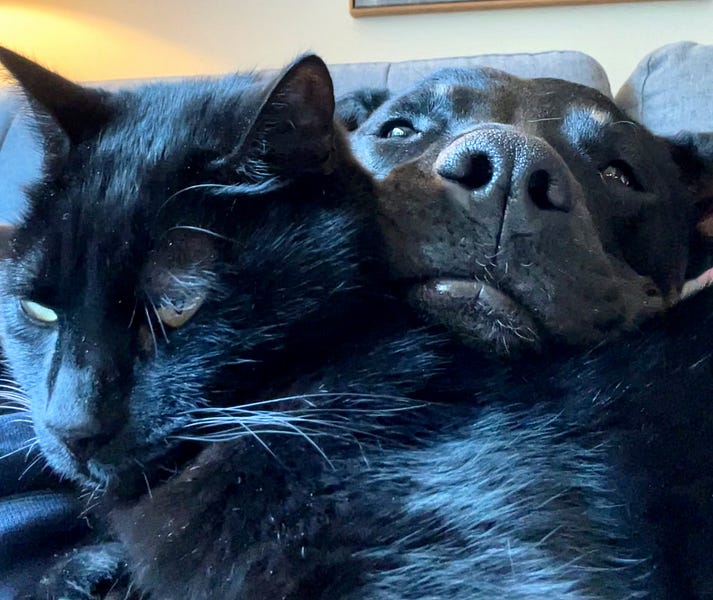
Volts was born on December 7, 2020. It recently turned two years old and I forgot to wish it a happy birthday. I also forgot to send out my once-a-year fundraising note.However! Better late than never.If you have learned from or been entertained by my podcasts over the last year, if they have helped you become more useful, and if you are in a financial position to do so, I hope you will consider signing up as a paid Volts subscriber. It is a relatively modest sum — you pay less for a year than you'd pay for a nice pair of pants — but it means the difference between me continuing this work and me getting a real job. This is a public episode. If you'd like to discuss this with other subscribers or get access to bonus episodes, visit www.volts.wtf/subscribe
Reflecting on the work of the soon-to-retire House climate committee
In this episode, Florida Rep. Kathy Castor, chair of the House Select Committee on the Climate Crisis, describes the committee’s ambitious goals and notable achievements over the past three years.(PDF transcript)(Active transcript)Text transcript:David RobertsIn 2019, in the wake of Democrats’ congressional victories, House Speaker Nancy Pelosi announced that she would be re-forming the Select Committee on the Climate Crisis, which had been disbanded by Republicans in the previous session. She appointed Florida Representative Kathy Castor as chair.At the time, the decision caused considerable controversy in the climate community. Climate activists were pushing for a more ambitious committee, with the power to write a full Green New Deal legislative package. Instead, the committee was to be an advisory body only, meant to do research and develop policy suggestions.History is littered with congressional committees that busily produce reports and whitepapers that no one reads. But the climate committee proved much more potent than that. Castor set about gathering testimony from hundreds of witnesses — scientists, policy wonks, and average citizens alike — and putting her expert staff to work translating their testimony into policy recommendations. But the recommendations did not simply decorate reports. The Democrats on the committee, and the Democrats educated by the committee's work, took those recommendations back to their own committees, where they found their way into a wide variety of bills. The bipartisan infrastructure bill, the CHIPS Act, and the Inflation Reduction Act contained numerous policies that originated in the climate committee.Altogether, hundreds of the recommendations made by the committee found their way into law — a crazy-high success rate for a committee with no real power. As the committee prepares to sunset — of course Republicans are disbanding it again — it has put out a final report, summarizing all its achievements and pointing to the work that remains to be done.I called Rep. Castor to get her thoughts on the committee's work, the achievements she is most proud of, and what progress she thinks can be made in the next two years.Alright, then. With no further ado, Representative Kathy Castor. Welcome to Volts. Thank you so much for coming.Rep. Kathy CastorOh, I'm delighted to be here, David. Thank you.David RobertsSo just to start off, I'm assuming that the coming Republican majority is going to shut down the committee. Has this been explicitly stated yet, or is this just ... are we all assuming? Is that a valid assumption?Rep. Kathy CastorYeah, the ranking member, Garret Graves of Louisiana, did kind of spill the beans. The problem is, on the Republican side, the Speaker-to-be, Kevin McCarthy, does not quite have the votes yet. So that leaves everything in limbo getting organized for the new year. But, they've made it plain that the climate crisis is not a priority for them, and therefore the Select Committee on the Climate Crisis will not exist in the next Congress.David RobertsSo then it's been wrapped up. It's been a whirlwind three years, I guess, since you were placed in charge of this committee. Have you had a chance to kind of pause and step back and think about it all, or are you still kind of in a sprint til' the end of the term?Rep. Kathy CastorIt has been a sprint right til' the end, especially since the large appropriations package and the defense bill were not completed due to really foot-dragging of the US Senate. We have so much more left to do. I mean, we are thrilled that this was the most important Congress when it comes to clean energy and climate action and building more resilient, safer communities across the country. I mean, this was the Congress, the one that people inside and outside have been pressing for decades, frankly. But there's still so much more left to do. We're living in a climate emergency, and the world's top scientists tell us it is just urgent that we reduce climate pollution across the board. And now we have the tool. We passed a number of the tools, but implementation will be key, and that's what we're looking ahead towards.David RobertsI wanted to ask you, looking back on it, if you can cast your mind back to 2019, when you became chair and you had a majority in the House, but very narrow-split Senate, looking back, were you surprised by the productivity of this Congress? How did it perform, relative to your expectations from back in 2019?Rep. Kathy CastorGosh, it was yes, I think the the fact that we were able to accomplish so much when the United States Senate was divided 50-50 truly exceeded our expectations, but we really didn't have a choice. Policy could not wait any longer, while so many private actors, private sector, clean energy entrepreneurs, some utilities, some states and local communities are going gangbusters. The federal government and the Congress had not responded. So the stars finally aligned when we kind of knitted tog
The right-wing groups behind renewable energy misinformation
Independent journalist Michael Thomas did a deep dive into the methods and misinformation used by right-wing groups to rally community opposition to renewable energy projects. In this episode, he discusses what he found and how climate advocates can fight back.(PDF transcript)(Active transcript)Text transcript:David RobertsIt's easy to find stories in the media these days about communities blocking solar, wind, and other clean energy projects. This has prompted an enormous amount of discourse about NIMBYs and the challenges of permitting projects. What's often left out of the discourse — and almost always left out of those stories — is how such community groups receive organizational help and money from billionaire-funded right-wingers. Across the country and the internet, there are hundreds of conservative think tanks, groups, and individuals working to stir up community opposition to renewable energy with misinformation and lies. With virtually no public scrutiny, they have secured state-level policies restricting renewable energy siting in dozens of states.Independent journalist Michael Thomas set about to learn more about these right-wing groups. He joined anti-renewable-energy Facebook groups, combed through the tax filings of various right-wing think tanks, and tried to trace funding sources. He published the results in his own newsletter, Distilled. I'm excited to talk to him about what he found: the groups involved, the tactics they use, the policies they've helped pass, and the best way to fight back.All right then, with no further ado, Michael Thomas. Welcome to Volts. Thank you so much for coming.Michael ThomasThanks for having me. I've been a longtime reader and I'm a fan of the Volts podcast. So really happy to be here.David RobertsSo for some reason you decided to jump in and immerse yourself in the world of anti-renewable-energy people and organizations and communications online. Before we jump into the specifics, what led you to this? Did you get sort of pulled in bit by bit or did you decide to do a project on this at some point?Michael ThomasYeah, it was honestly not that intentional. I was reading a lot of stories over the summer about NIMBY opposition to local solar and wind projects and was following a lot of the discourse and debate over the permitting reform bill. And one story caught my attention that was about a group of residents on the east coast that were trying to block an offshore wind farm and a substation that was going to be put on land to bring the power to land. And it appeared to be just a normal resident group, kind of the classic NIMBY arguments that they were worried about property values or didn't like the site of the wind farm.And then I read this subtle, just one line mention of a think tank that I had heard of, the Caesar Rodney Institute, and this is a part of a much larger group of think tanks that have been funded for years by fossil fuel companies and far-right billionaires. So I started looking into it and discovered that they were very involved in the effort and giving some of these resident groups money to fund lawsuits and support. And so I started to report on that story, and it kind of got me deep into the world of climate misinformation and clean energy misinformation, and I just really became curious about what was going on and if there was a bigger story here, and ended up working on a series of stories over the last month and a half. And I learned a lot in the process.David RobertsYeah, this is a theme I'll return to later, but it really in some sense should not come as a surprise to anyone that this network of anti-renewable energy, "citizen groups" across the country is being funded and coordinated by right-wing operators. Like, of course it is — you know, the Tea Party was — like, we've just learned that over and over again. But it just seems like the pro-renewable energy forces, the pro-climate forces, just kind of sleep on that and just kind of don't pay attention to it, just kind of let it run in the background.So it's a little insane that it's not a bigger point of discussion among green types. So I'm glad you did this and I'm glad we're talking about it. So one of the things you did, God bless you, is wade into Facebook and join a bunch of anti-wind and solar groups — Good Lord — so tell us what messages about renewable energy are they emphasizing in these groups? Like, what are the consistent themes?Michael ThomasYeah, so I clearly know how to have a good time by joining all of these groups and sifting through the posts. So as context, I was doing this reporting on local opposition and learning about some of these think tanks. And I learned in that research that a lot of these resident groups are organizing on Facebook groups and pages. And that makes sense if you look at the demographics of these groups, they tend to be a lot of boomers and a lot of people who are very active on Facebook. And so I joined a few of them at first.And then in th
Induction stoves with batteries built in, and why they matter
In this episode, scientist Sam Calisch, whose company just introduced an induction stove with a built-in lithium-ion battery, and Wyatt Merrill of DOE, who helped secure funding for the project, talk about the exciting opportunities that stoves with embedded batteries might offer for chefs, consumers, grid operators, and more.(PDF transcript)(Active Transcript)Text transcript:David RobertsIn the last few months, two separate fledgling companies — Impulse and Channing Street Copper — have announced the upcoming release of a new product: an induction stove with a lithium-ion battery built in. This might not seem like a big deal, but it is actually a peek into a whole new world of possibilities.Embedding batteries into appliances opens up all kinds of intriguing opportunities. A stove with a battery can deliver more power at the point of cooking. It can continue working when the power grid goes out. And it can serve as distributed storage to assist in grid stability.To explore the new world of battery-enabled appliances, I contacted two experts. The first, Sam Calisch, helped start Rewiring America, a nonprofit focused on national electrification. He also worked at Otherlab with previous Volts guest Saul Griffith, from which he helped launch Channing Street Copper Company, where he is chief scientist. Channing’s first product is a stove with a battery (for now, there’s a wait list, and they’re only selling in the Bay Area).My second guest is Wyatt Merrill, who works at the Department of Energy's Building Technologies Office, where he manages programs related to building electrification. He was instrumental in helping Otherlab secure more than $2 million in funding from DOE to help launch the Channing stove project. I am excited to talk to Sam and Wyatt about the merits of embedding batteries in stoves, the things battery-enabled stoves allow consumers to do, and the future grid benefits battery-enabled appliances could yield. With no further ado, Sam Calisch and Wyatt Merrilll. Welcome to Volts. Thank you guys so much for coming.Sam CalischGreat to be here.Wyatt MerrillThanks for having us. A long time. First time.David RobertsAwesome. Sam, I want to start with you putting aside the stove for a moment. Take us back to your work. You've been doing work with Otherlab. You've been doing work with Rewiring America. You're big into the whole Electrification of America thing. You're very immersed in that whole business. Tell us how all that work led to this idea and this proposal.Sam CalischGreat question. So, as you say, I've been spending the last few years really going deep on electrification, both from a technology perspective, which is the majority of my background, but also from a policy perspective, and worked really hard on a lot of the stuff that went into the Inflation reduction act. And so about two years ago, my friend Saul Griffith and I, we were working on this book called "Electrify Together" with our friend Laura Fraser, and we're doing a bunch of data analysis for it, looking at trends in cost of the technologies related to electrification. And the thesis of that book is that we kind of have all the technology we need today and we just need to deploy it.And David, you've done a really good job getting this idea out there. I think you said electrification is the main course. Right. Which I really enjoy. And so it's mostly true that we have what we need today. We just need to deploy it. But there's certainly technology developments that we can do that will make it faster, better, cheaper.David RobertsRight.Sam CalischAnd one of the trends that we were really disturbed about was all these costs were coming down. Like, if you read Bloomberg New Energy Finance, you see battery prices approaching $100 a kilowatt hour, all of this. But if you actually looked at what it cost to install those, to put them on your house or something, those prices weren't coming down. And it was mirroring a very familiar story from residential solar, where now the hardware cost of residential solar is really cheap. It's something like $0.26 a watt for the actual hardware, but it's closer to $3 a watt to put it on your house.And we were seeing the same thing happen with batteries and to do what we needed to do. Those trends couldn't continue. And so we started thinking about ways to get around that. And this idea emerged what we now call energy storage equipped appliances or ESE, or if you're feeling cheeky, maybe easy appliances where you can put a battery into an appliance in a factory instead of putting a battery on your house. And by doing that, you can do it really cheaply and really safely when you put it on your house in a sort of a bespoke way.You need to have a site plan. You need to get a permit. You need to have someone come out and do custom electrical work. You have to get it inspected. All these things just add tons and tons of cost. So we said, well, what if instead of doing that, we allow batteries to be install
The state of the lithium-ion battery recycling market
To get a grasp on the current state of play in the lithium-ion battery recycling market, I contacted Yayoi Sekine, an analyst who works as head of energy storage at Bloomberg NEF. We talked about current demand for battery recycling, the companies meeting that demand, the technologies used to recycle batteries today, and the coming growth in the industry. This is a public episode. If you'd like to discuss this with other subscribers or get access to bonus episodes, visit www.volts.wtf/subscribe

Working on the cheapest possible lithium-ion battery
As production of lithium-ion batteries (LIBs) scales up, costs will fall to the levels of the materials involved. The cheapest material that still works well to hold energy in LIBs is sulfur. Today I talk with someone working on lithium-sulfur batteries about their remaining engineering challenges & enormous market potential. This is a public episode. If you'd like to discuss this with other subscribers or get access to bonus episodes, visit www.volts.wtf/subscribe
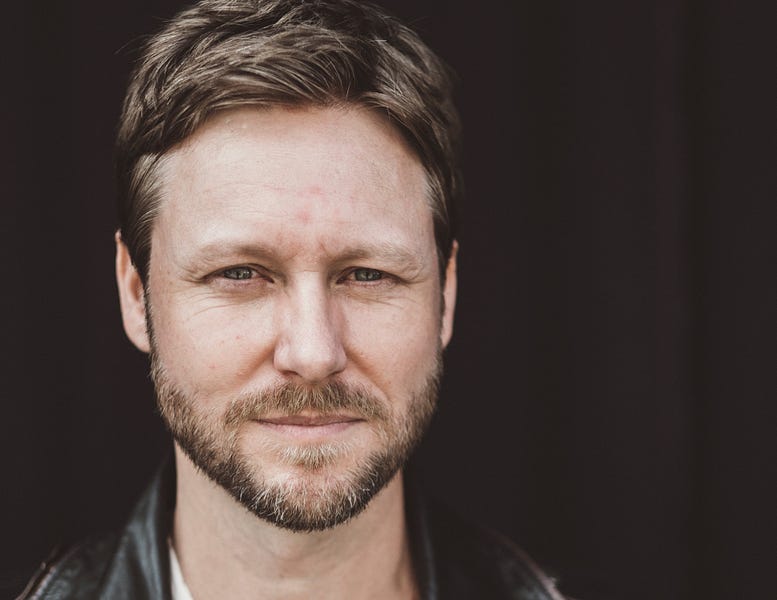
Life as a traveling musician in the 21st century
A little something different today on Volts: an interview with my favorite singer-songwriter, Cory Branan. His first album came out 20 years ago and his music has been interwoven into my life ever since. Now he's got a new album out, When I Go I Ghost. We talked about life on the road, songwriting, and what comes next. This is a public episode. If you'd like to discuss this with other subscribers or get access to bonus episodes, visit www.volts.wtf/subscribe
Me, interviewed by Brits
The UK podcast Sustainababble has been around for eight years, but it is shutting down this year. Happily, it had me on as a guest before it turned out the lights -- we discussed the recent US midterms, the right way to think about climate change, & how to keep one's s**t together. Hosts Dave and Oliver were kind enough to allow me to send it out as an episode of Volts, so please enjoy. This is a public episode. If you'd like to discuss this with other subscribers or get access to bonus episodes, visit www.volts.wtf/subscribe
Lessons from a life in progressive PR
David Fenton has just released a new book — The Activist's Media Handbook: Lessons from Fifty Years as a Progressive Agitator — that is a combination biography, photo journal, and accounting of lessons learned in the PR business. He tells the stories of his numerous campaigns over the years (alongside pages and pages of vivid images) and tries to boil down what works to capture media attention and advance progressive causes, and what doesn't. I chat with him about it. This is a public episode. If you'd like to discuss this with other subscribers or get access to bonus episodes, visit www.volts.wtf/subscribe

Germany's current energy situation & its past energy choices
The Ukraine war has seen Germany's supply of methane gas from Russia cut off. Energy prices have spiked as it scrambles to make up the deficit. Some people have taken this to mean that Germany was wrong to move away from fossil fuels as quickly as it has. Others have said it shows that Germany needs to double down on its transition to renewables. To get a better sense of Germany's current situation and what it says about the choices it has made on energy, I contacted Professor Claudia Kemfert, one of Germany's top energy analysts. This is a public episode. If you'd like to discuss this with other subscribers or get access to bonus episodes, visit www.volts.wtf/subscribe

Coal plants are still getting financed, despite pledges otherwise
Despite well-meaning pledges to the contrary from a wide array of countries, banks, and other institutions, new coal plants are still getting financed, putting global climate targets further out of reach. I talk with Ted Nace of Global Energy Monitor and Paddy McCully of Reclaim Finance about the channels through which coal funding is passing -- and how to close them. This is a public episode. If you'd like to discuss this with other subscribers or get access to bonus episodes, visit www.volts.wtf/subscribe
What to think about deep-sea mining for clean-energy minerals
The transition to clean energy is going to radically increase demand for a key set of minerals, many of which are mined today in social & environmentally destructive ways. In recent years, attention has turned to the floor of the Pacific Ocean, where those minerals are found in abundance. I talk with journalist Daniel Ackerman about the opportunities & dangers of deep-sea mining. This is a public episode. If you'd like to discuss this with other subscribers or get access to bonus episodes, visit www.volts.wtf/subscribe
Why social change is so excruciatingly difficult
When we look across the broad sweep of human history, what needs explaining is not times of rebellion and upheaval, but the much more common periods of unjust rule facing little resistance. Why do people so often internalize the ideologies upholding systems under which they suffer? Why do they fail to fight back? Psychologist John Jost has an answer. I talked it over with him. This is a public episode. If you'd like to discuss this with other subscribers or get access to bonus episodes, visit www.volts.wtf/subscribe

Making sure electric vehicles help rather than hurt electricity grids
The massive coming surge of electric vehicles (EVs) could destabilize the grid -- or, if properly managed, become a crucial tool to maintain grid stability as more renewable energy comes online. The key is getting EVs to communicate with the grid, and vice versa. Amanda Myers Wisser and Smriti Mishra of WeaveGrid are working on that. We chat about how it's going. This is a public episode. If you'd like to discuss this with other subscribers or get access to bonus episodes, visit www.volts.wtf/subscribe
Making it easier to build distributed energy in the places where it's most needed
Emerging economies represent huge potential demand for distributed energy (solar power and microgrids) but to date the markets have been too fragmented to attract large-scale investment. A company called Odyssey has set out to create a platform that can standardize and de-risk these markets so big money can move in. I talk with the CEO. This is a public episode. If you'd like to discuss this with other subscribers or get access to bonus episodes, visit www.volts.wtf/subscribe

Me, talking about my story and my takes on perennial climate debates
I was recently a guest on My Climate Journey, a podcast that features various climate types discussing how they got where they are and how they currently think about the climate crisis. Host Jason Jacobs and I had a fun conversation about my road into journalism and how my views on various perennial climate debates — optimism versus pessimism, green growth versus degrowth, technocracy versus spiritual change — have changed over the years. This is a public episode. If you'd like to discuss this with other subscribers or get access to bonus episodes, visit www.volts.wtf/subscribe
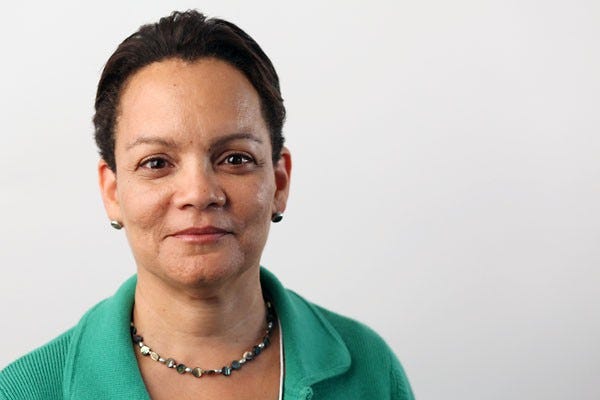
Puerto Rico's electricity crisis
In this episode, lawyer and activist Ruth Santiago discusses Puerto Rico's latest electricity crisis, as the island struggles to restore power in the wake of Hurricane Fiona. In the wake of Hurricane Maria five years ago, the grid was privatized, but the promised rebuilding still hasn't occurred. Santiago covers what's gone wrong and what can be done. This is a public episode. If you'd like to discuss this with other subscribers or get access to bonus episodes, visit www.volts.wtf/subscribe
The extraordinary potential value of enhanced geothermal power
Geothermal power has conventionally been viewed as a baseload, always-on resource, like nuclear. But new research suggests it could play a much more dynamic & valuable role on the grid than that -- and expand much faster & farther than previously estimated. I chat with one the co-authors. This is a public episode. If you'd like to discuss this with other subscribers or get access to bonus episodes, visit www.volts.wtf/subscribe
Learning curves will lead to extremely cheap clean energy
A newly published research paper out of Oxford suggests that a rapid energy transition will not "cost" anything -- it will save nearly a trillion dollars relative to the no-transition case. And the faster we move, the more money we save. I talk with complex-systems scientist and co-author Doyne Farmer about his optimistic projections. This is a public episode. If you'd like to discuss this with other subscribers or get access to bonus episodes, visit www.volts.wtf/subscribe
Volts podcast: David Hsu on the grassroots policy that lets communities control own energy supply
In this episode, MIT Professor David Hsu discusses a paper he wrote that charts the history, evolution, and current fortunes of community choice aggregation, a tool whereby a community can take ownership over its own energy procurement. It is the rare example of energy democracy breaking out in America's monopoly-dominated system — a good news story in an era of bad vibes. This is a public episode. If you'd like to discuss this with other subscribers or get access to bonus episodes, visit www.volts.wtf/subscribe

Volts podcast: Jack Lienke & Kirti Datla on the ridiculous (but extremely important) EPA case before the Supreme Court
In this episode, two Clean Air Act experts — Jack Lienke, regulatory policy director at the Institute for Policy Integrity, and Kirti Datla, director of strategic legal advocacy at Earthjustice — discuss the recent Supreme Court decision in the case of West Virginia v. EPA, which would dramatically curtail EPA's powers based on legal justifications that are, charitably, underbaked. This is a public episode. If you'd like to discuss this with other subscribers or get access to bonus episodes, visit www.volts.wtf/subscribe

Volts podcast: Erin Mayfield on the massive consequences of Build Back Better
In this episode, Dartmouth professor Erin Mayfield discusses some new modeling on the Build Back Better Act, showing how and where it would reduce emissions in the US economy, how it would affect inflation, and how many jobs it would produce. This is a public episode. If you'd like to discuss this with other subscribers or get access to bonus episodes, visit www.volts.wtf/subscribe
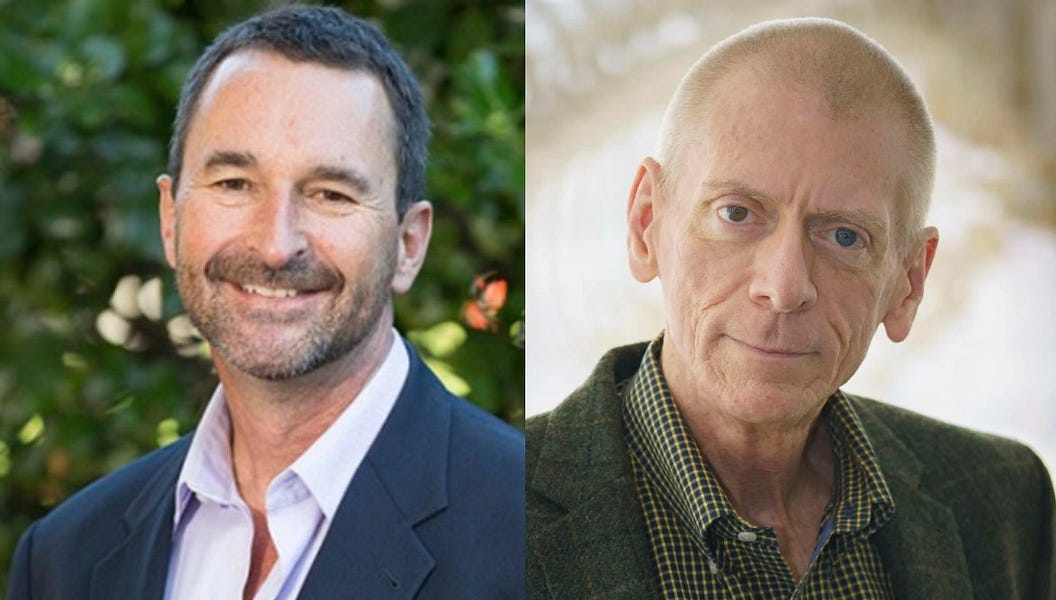
Focusing on the climate actions that can make a real difference
Two veteran climate experts -- analyst Hal Harvey & journalist Justin Gillis -- have released a new book that seeks to home in on the climate policies that offer the most impact for the least effort. I talk with them about learning curves, performance standards, industrial policy, & more. This is a public episode. If you'd like to discuss this with other subscribers or get access to bonus episodes, visit www.volts.wtf/subscribe

The long, sordid (ongoing) tale of California's biggest utility
In this episode, Wall Street Journal reporter Katherine Blunt discusses her new book, California Burning: The Fall of Pacific Gas & Electric — and What It Means for America's Power Grid, in which she details PG&E’s decades of setbacks and missteps.(PDF transcript)(Active transcript)Text transcript:David RobertsReporter Katherine Blunt was still new to The Wall Street Journal when 2018’s devastating Camp Fire broke out in California and she was swept into the biggest story of her career. Alongside colleagues Russell Gold and Rebecca Smith, she wrote a series of pieces on the ongoing travails of Pacific Gas & Electric, or PG&E, the utility whose power lines had started at the Camp Fire.The Journal's coverage was a finalist for the 2020 Pulitzer Prize, and Blunt has now expanded it into a new book: California Burning: The Fall of Pacific Gas & Electric — and What It Means for America's Power Grid. It is a rollicking tour through PG&E’s decades-long series of disasters and their roots in the early 20th century.I am a longtime critic of utilities, but even I was stunned to see all of PG&E’s incompetence and malfeasance gathered together in one place, alongside its well-meaning but serially failed attempts to put things right. It’s a story of failure and redemption, except the redemption keeps being interrupted by more failure. I couldn't put the book down, so I am eager to talk to Blunt about how the utility’s travails began, why is has struggled so mightily to take control of its fate, and what might come next for the electricity sector’s favorite punching bag.So, without further ado, Katherine Blunt. Welcome to Volts. Thanks so much for coming.Katherine BluntThank you so much for having me.David RobertsThis book, Katherine, is a bit of a mindblower. I mean, I probably, because of my job, followed this stuff as it was happening, closer than the average Joe or Jane, but it is still stunning to see it all put in one place. As far as I can tell, for the entirety of the 21st century, PG&E has been in one of three states: either a) causing some disaster that kills a bunch of people, b) dealing with the blowback and lawsuits that come as a result of the disaster that killed a bunch of people, or c) implementing an ultimately failed and useless attempt to mitigate the disasters that killed a bunch of people and prevent future disasters.There has not been a period of just normal operation of PG&E for decades now. It's all its perpetual crisis. How how much of that did you appreciate going into this story? How much of that? I mean, it's just such a dumpster fire. I can't believe I wasn't more aware of it. And I can't believe, like, the public's not more aware of it. How aware were you going in?Katherine BluntYeah, it's totally true. These last 20 years have been just exceptionally bad for the company. I had some idea of this going into it because of my coverage at the "Journal" that, as you say, I had collaborated on with two close colleagues. And one of the final stories that we did together was a really big picture narrative that tried to take readers through the last 20 years and what that's meant for PG&E. But as I got more into the details, I, too, was really surprised at some things and how bad it was.David RobertsWell, let's go back into the recesses of history. One of the most sort of telling tales from the beginning is that the original merger of PG&E with Great Western, another utility. This is the merger that ended up sort of saddling PG&E with all these power lines, that it never really understood. And that, to me, is kind of like the original sin, like the seed of everything that came after us. To tell us a little bit about the story of those two utilities and how they ended up as one.Katherine BluntThere's a couple of ways to think about this. It is a really fascinating part of PG&E's history. So, as I'm sure at least some listeners know, PG&E is a very old company, more than 100 years old at this point. It's got roots dating back to the Gold Rush. It only ever had, in the early days, one real competitor, and that was Great Western Power. Both PG&E and Great Western were competing to build systems to serve San Francisco to support the population growth there. And around this time, you're beginning to see the solidification of the conventional wisdom that utilities should be these monopoly companies. Because, of course, this industry is very capital intensive. And the idea was you shouldn't have a bunch of companies building duplicative infrastructure. And you're beginning to see the regulator emerge to oversee all of this.David RobertsThere's some wild quotes from that period where people are like, "nothing scares customers more than an outbreak of competition among you." It's just such a weird perspective based on our current way we talk about markets.Katherine BluntYeah, absolutely. There was a lot of kind of colorful stuff that I managed to dig up, like a lawyer for PG&E and a lawyer for Great Western,
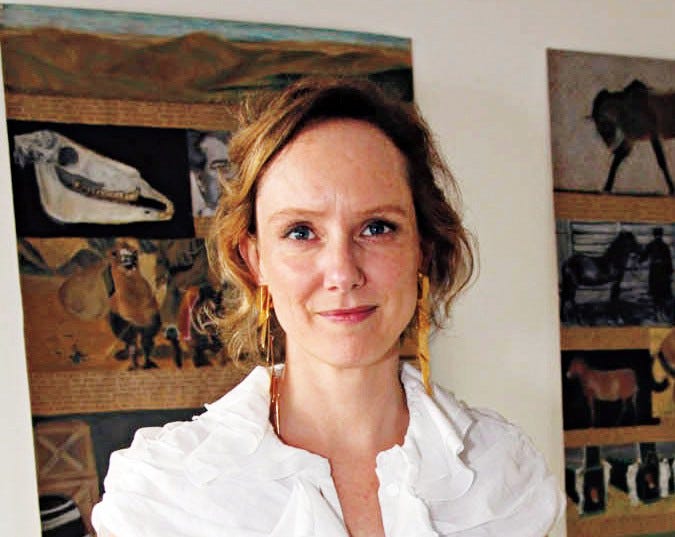
What's up with Manchin's plan to reform energy permitting?
As part of his price for agreeing to pass the Democrats’ Inflation Reduction Act, Senator Joe Manchin extracted a promise from Senate Majority Leader Chuck Schumer to pass a "sidecar deal” addressing the issue of permitting reform. Earthjustice president Abigail Dillen thinks it's a bad deal. I called her to talk through her reservations about the deal, her larger take on permitting reform, and her thoughts on how to build the renewable energy needed to address climate change. This is a public episode. If you'd like to discuss this with other subscribers or get access to bonus episodes, visit www.volts.wtf/subscribe
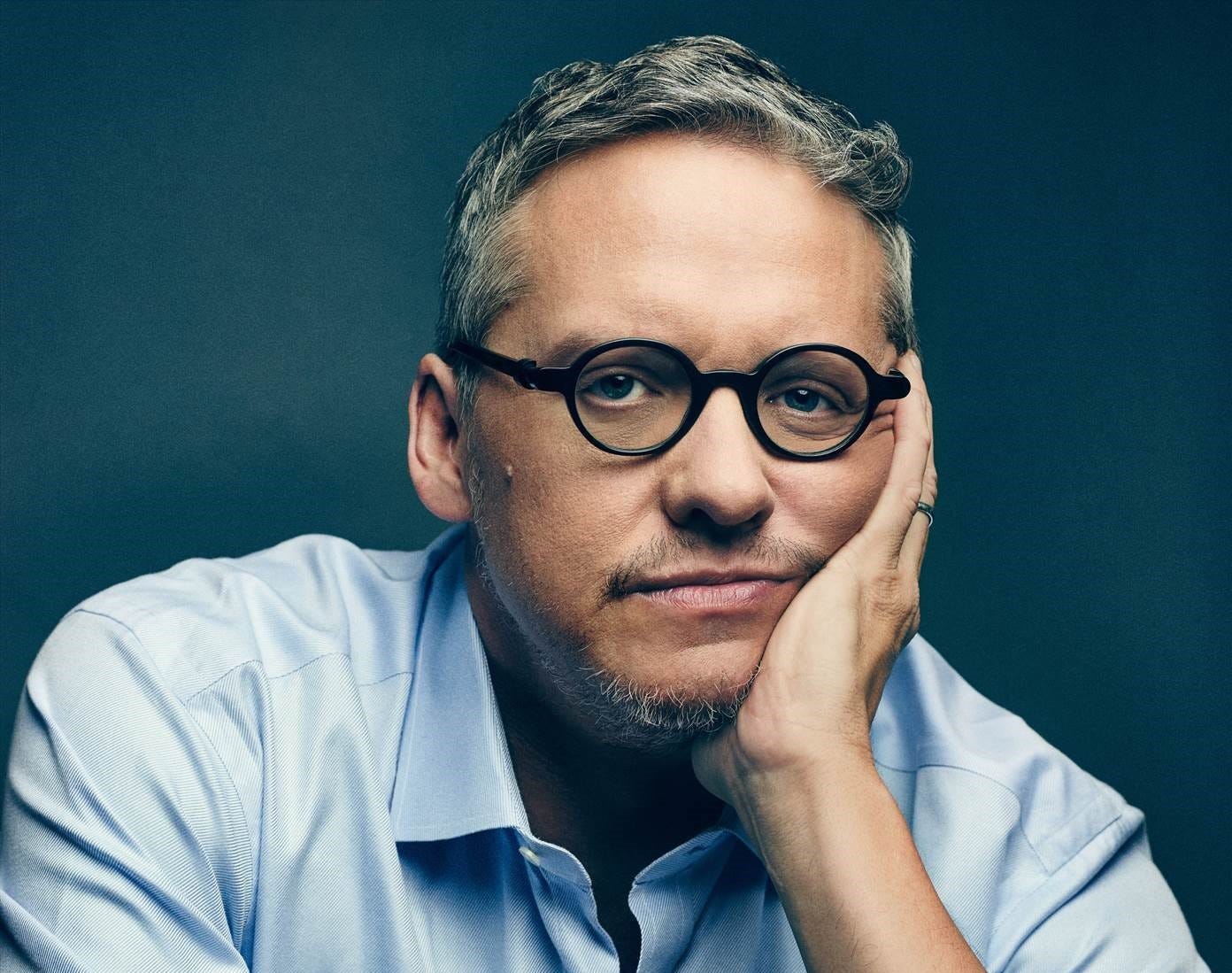
Talking through the Inflation Reduction Act with Don't Look Up director Adam McKay
In this episode, director Adam McKay returns to hash over some of his reservations about the Inflation Reduction Act and the larger political situation in the US. I try to persuade him to be happy about the IRA. This is a public episode. If you'd like to discuss this with other subscribers or get access to bonus episodes, visit www.volts.wtf/subscribe

Diving further into the Inflation Reduction Act: Part Two
In this episode, energy modeler and expert Jesse Jenkins is back yet again, completing our two-part discussion of the details of the Inflation Reduction Act. This time around, we get into the tax credits, the green bank, the methane fee, and much more. This is a public episode. If you'd like to discuss this with other subscribers or get access to bonus episodes, visit www.volts.wtf/subscribe
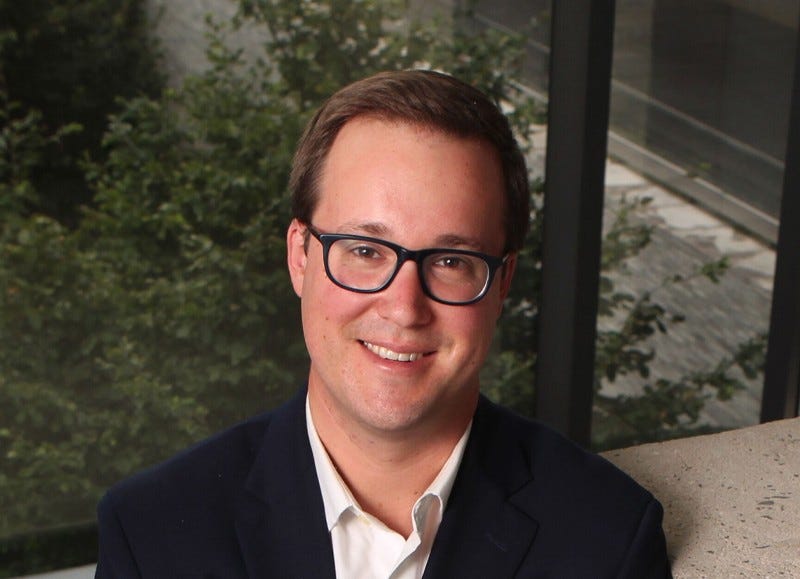
Diving further into the Inflation Reduction Act: Part One
In this episode, professor and energy expert Jesse Jenkins returns to the pod to dig further into the details of the Inflation Reduction Act. We discuss what the models can and can't tell us, the ugly fossil-fuel leases embedded in the bill, and what to think about the carbon capture provisions. This is a public episode. If you'd like to discuss this with other subscribers or get access to bonus episodes, visit www.volts.wtf/subscribe
Some thoughts on the Inflation Reduction Act
In this episode, it’s just me by my lonesome, sharing some thoughts about the history and context of the Inflation Reduction Act, the most significant climate legislation ever passed by the US Congress. This is a public episode. If you'd like to discuss this with other subscribers or get access to bonus episodes, visit www.volts.wtf/subscribe
Volts podcast: how to get urban improvements done quickly
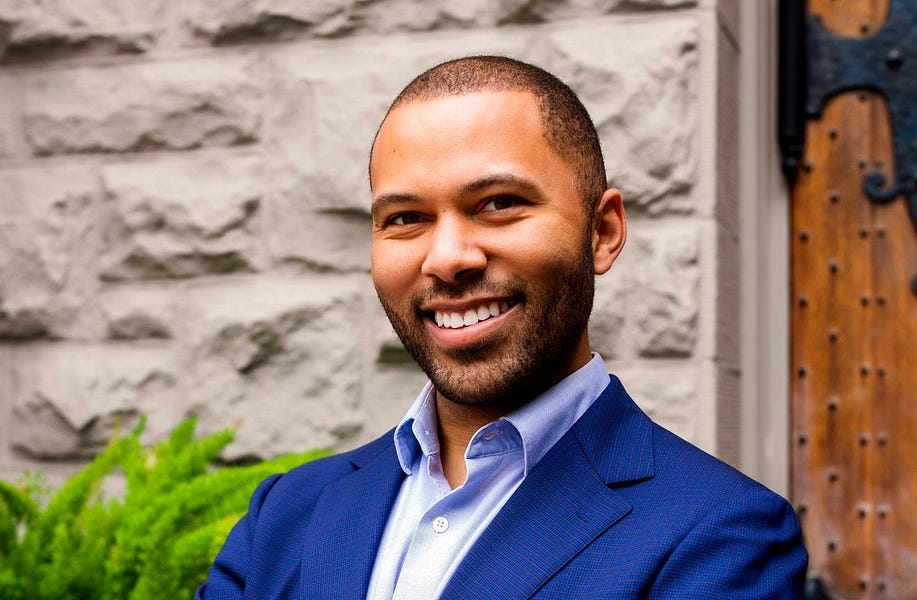
In this episode, transportation planner Warren Logan shares his expertise on how cities can make fast, cheap, impactful improvements to safety and walkability.(PDF transcript)(Active transcript)Text transcript:David RobertsWhen it comes to reducing transportation emissions, two main ideas compete for mindshare in the climate space. First is switching out internal combustion engine vehicles for electric vehicles. Second is improving the built environment to make walking, biking, and public transit easier, to reduce the amount of miles traveled in cars and trucks altogether.The conventional wisdom is that the former is faster. There are a few key policy levers that can be pulled to get massive numbers of EVs on the roads, whereas urban improvements proceed one at a time, each facing its own bespoke set of challenges.But there are people out there at the city level working to increase the speed of those improvements. One of them is Warren Logan, currently a partner at Lighthouse Public Affairs, but before that, policy director of mobility in the Oakland, California, mayor's office, a senior transportation planner for San Francisco, and an intern in the transportation office at Berkeley, California.In his time working on transportation projects, Logan has given a lot of thought to, and done a lot of work on, improving city processes to make safety and walkability improvements faster and less capital-intensive. He wants cities to free themselves up to make fast, cheap changes that can have big impacts without an enormous investment of time and money.As listeners will have noticed, I have been somewhat obsessed lately with urban design and transportation issues. I hope you will indulge me in another conversation about the nature of resistance to urban improvements, the kinds of changes that can be made quickly to dramatically improve safety, and the larger need to avoid over-reliance on EVs.Warren Logan, thank you for coming to Volts and sharing your time.Warren LoganThank you so much for having me, David.David RobertsLet's start with a little Warren background, a little Warren history here. Tell us sort of what your position was and what you're more to the point, sort of what your engagement was in transportation and transportation projects. Tell us about your last few years.Warren LoganSure. So before my time at Lighthouse Public Affairs, as a partner in Public Affairs, I was Mayor Libby Schaaf's Policy Director of Transportation and Government Affairs of the City of Oakland, which is two jobs that they pushed together. And I think it's important to share here just quickly that before my time in the mayor's office, I was also a transportation planner in the city and county of San Francisco. And before that was an urban designer as a consultant in the East Bay, in the Bay area here. And before that was a transportation planner again for the city of Berkeley.So my point here is I've done a lot of different cool transportation work across the Bay.David RobertsYeah, you must know so many NIMBYs. It's like a NIMBY survey you've done with your career.Warren LoganYeah.David RobertsBerkeley to Oakland.Warren LoganYou got it. And this might come out later in our podcast, but most of the subjects I've worked on have been like, "what's the most contentious issue at the time? Changing parking pricing. Let's talk about bike lanes. Let's talk about ... let's keep the city from falling apart during COVID," easy subjects really.David RobertsTell us then at the sort of high level of abstraction, which is just let's address this argument. If I'm Joe Schmo on the street, I know transportation needs to be decarbonized. And I look around and I was like, "oh, there's the decarbonized transportation right there. It's called an electric vehicle. Let's just stop making the gas vehicles, start making the electric vehicles. Problem done. Let's move on to the next problem." I think that is a fairly widespread disposition toward this issue. So just tell us why you think that at the broadest level, why that kind of thinking is insufficient.Warren LoganSure. So to all the Joe Schmos out there, the truth of the matter is that just switching to electric cars is not going to solve all of our climate issues. And I'm sure we'll go into all the different reasons why. But for me, and probably for anyone who's ever been near cars at all, it's not just about the climate that we have to think about. It's like traffic safety as well. And I can only stress this enough, that if you get hit by a car, it doesn't matter if it was an electric vehicle or not. In fact, it might be worse because they're heavier, which is in no way to say we shouldn't be considering electric vehicles.David RobertsAnd you might not hear it coming right?Warren LoganAnd you might not hear it coming, right. So, David, your point is so good, though, that there is certainly room for absolutely decarbonizing our vehicles. I will admit I own an electric vehicle, and I own an electric bi
Volts podcast: when transmission planning actually goes well
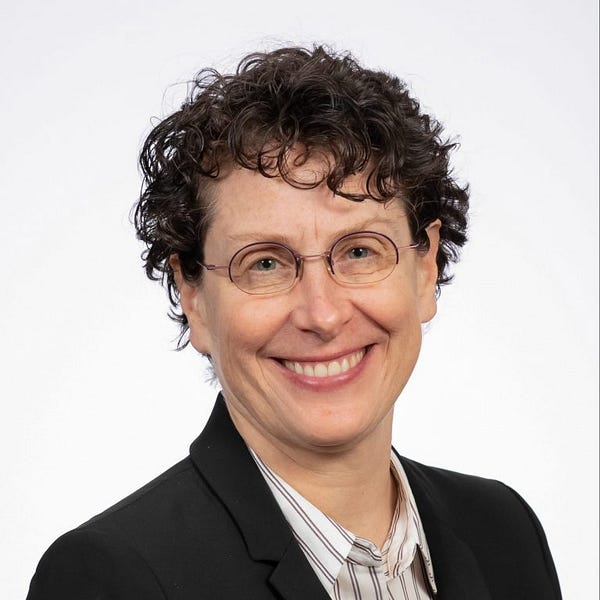
A long-range transmission plan just announced by the Midcontinent Independent System Operator, or MISO, lays out a roadmap for $10 billion worth of investment in some 2,000 miles of new transmission lines, potentially unlocking more than 50 gigawatts of renewable energy. In this episode, attorney Lauren Azar celebrates this win and traces the years of work and advocacy that went into it.(PDF transcript)(Active transcript)Text transcript:David RobertsVolts subscribers are well aware that the US, like most places, badly needs more long-distance power lines. Such lines unlock the potential of regions where renewable energy is abundant but people are scarce. They lower system costs for all customers on the grid. They make the grid more reliable and resilient.However, it is incredibly difficult to build these lines. The process is a bureaucratic tangle, with ubiquitous controversies over how to allocate costs and benefits, and the pace of building is woefully short of what will be needed to help the US hit its carbon emissions targets.But a ray of sunshine pierced that generally gloomy situation last week, when the market monitor of the midwest wholesale electricity market — the Midcontinent Independent System Operator, or MISO — announced the results of its Long-Range Transmission Planning Initiative. It laid out a roadmap that would involve $10 billion worth of investment in some 2,000 miles of new transmission lines, which MISO anticipates could unlock more than 50 gigawatts of pent-up renewable energy.To someone like me, so accustomed to stories of failure around transmission, it came as a bit of a bolt from the blue. But it is, in fact, the result of years of long, steady work by advocates, stakeholders, and experts — including my guest today.Lauren Azar is a longtime attorney and consultant working in the electricity industry. During her time as a lawyer, she has also worked as a senior advisor to the US secretary of energy on electricity grid issues, a commissioner on the Wisconsin Public Service Commission, and president of the Organization of MISO States, which was deeply involved in the last round of transmission planning in MISO. There's nobody in a better position to explain what has just happened in MISO and what it means for the larger field of transmission planning, so I'm extremely excited to welcome her on to the pod today.Lauren Azar, thank you for coming to Volts.Lauren AzarThank you, David. Looking forward to this discussion.David RobertsIt's rare I get to discuss positive transmission news, so this is exciting. As I said, I think listeners know the basics about why transmission is good, why we need more of it, and why it's so difficult to build. So let's take a few steps back and just talk about MISO, where this happened. So maybe just start by — MISO is what they call a Regional Transmission Operator, an RTO, which means it has an area that includes a bunch of utilities within it, and it runs the wholesale electricity market in that region and plans transmission in that region. So tell us a little bit about where MISO is and what and who it includes.Lauren AzarSure. So MISO stands for the Midcontinent Independent System Operator, and they operate the transmission grid from Manitoba, Canada, all the way down south to Louisiana and Mississippi. In addition to operating the transmission grid, they also run an energy market which decides what generators are going to run to deliver electricity to customers. And under federal law as an RTO, they are also obligated to ensure that the grid itself is able to deliver sufficient electricity to customers. And so that is where the transmission planning comes in.MISO actually does transmission planning all of the time, every year, but it's smaller scale. It's these long-range transmission planning processes that don't happen very often. And the result of some LRTP planning happened and was approved last week.David RobertsRight. And so this is a process. MISO includes a bunch of states, a bunch of utilities. They're varied in terms of not only their resource mix but in terms of their goals. and aspirations, and political character. So it's quite a milage they're dealing with there. So let's talk a little bit about the process. So what is MISO setting out to do with this process, and who gets to be involved in the process?Lauren AzarMISO with regards to long-range planning, and that's planning for 20 years out. MISO uses what is called the "Strategic Foresight Process", which essentially what MISO does is it creates a series of hypothetical worlds for 20 years out, and then figures out what kind of transmission grid would be needed for those hypothetical worlds and what you are looking for. And those hypothetical worlds are called scenarios, or MISO calls them futures. And usually, in this process you try to get plausible bookended futures, so one that's more tepid and then one that's aggressive, and you try to then design solutions that would work in both

Volts podcast: what to make of the Democrats' last-minute climate bill
In this episode, two Volts favorites — Princeton professor Jesse Jenkins and UC Santa Barbara professor Leah Stokes — join me discuss the Inflation Reduction Act, the somewhat miraculous last-minute agreement between Senators Joe Manchin and Chuck Schumer. It represents the tattered remains of Build Back Better, but many if not most of the climate and clean energy provisions remain intact. We discuss what's in the bill and reasons to be excited about it. This is a public episode. If you'd like to discuss this with other subscribers or get access to bonus episodes, visit www.volts.wtf/subscribe
Volts podcast: a music festival that treads lightly on the earth
In this episode, Zale Schoenborn shares about emphasizing sustainability at Pickathon, the Northwest music festival he founded.(PDF transcript)(Active transcript)Text transcript:David RobertsListeners, today at Volts we've got something a little different, a little off our beaten path. It’s an episode about one of my favorite music festivals. It might not seem obvious to you why you should care about a small music festival in the far northwest of the country, but I think if you are patient and listen for a little bit, you'll get a sense of why I’m spending time on it (beyond self-indulgence).By the time 2011 rolled around, I was more or less done with music festivals. I love live music and have been to many great concerts, but most festival experiences were so hectic, stressful, crowded, dirty, and exploitative that it just no longer seemed worth the effort. (That has only gotten more true in intervening years.) So I was a little skeptical when a friend told me about the Pickathon festival, held every year about 20 miles outside of Portland, Oregon.For one thing … “Pickathon”? Sounds like one of those twangy festivals with crunchy hippies playing mandolins and banjos. That is not my bag. But he assured me that the lineup is diverse, from all genres, focused on acts that are about to break bigger. He talked me into going. And listener, it blew my mind. For one thing, the land itself is gorgeous — it is held at Pendarvis Farm, a sprawling area of pastureland and wooded hills that is used only once a year for gatherings, only for Pickathon. Every attendee camps (the festival lasts three days), but not in some crowded parking lot. Rather, there is a whole network of trails running through the woods, with established camping spots that have been used and reused since 1999 when the festival started. Then there’s the crowd. It wasn't jam-packed. You could always get food or drink with very little line. You could always see the band, no matter which band you wanted to see. There were tons and tons of families and children and almost no backward-baseball-cap bros. It felt oddly wholesome.But perhaps the strongest impression I took away that first weekend was how weirdly, anomalously clean the festival was. One staple of festival life is giant, overflowing trash cans, with food wrappings and disposable cups strewn everywhere. At Pickathon there was none of that. There was virtually no visible trash. Water was free, available at spigots across the grounds.It all struck me as so intensely human, so humane, that I fell in love and attended almost every year thereafter. (Here’s a 2013 story I did for Grist and a 2017 story I did for Vox, in which I interviewed 20 artists in three days.)Pickathon is back this year after a two-year hiatus, so I couldn’t pass up the opportunity to talk with festival founder Zale Schoenborn about how the festival has evolved since 1999, what's next on the sustainability front, and what's new at the festival this year. Even if you don't happen to live in the Pacific Northwest and can't attend, I think you'll enjoy hearing from someone who has put so much thought into into bringing humans together to commune and celebrate in a socially and environmentally sustainable way.Alright. Zale Schoenborn of Pickathon, thank you for coming to Volts.Zale SchoenbornThanks for having me.David RobertsI'm sure this must be an insanely busy week for you, so thanks for taking the time.Zale SchoenbornNo problem. It is definitely exciting.David RobertsYeah. So there's a ton to talk about with your music festival, but first, I guess I'd like to just go back and hear a story that I'm sure you have told hundreds of times by now. But Pickathon is remarkably long-running, in the context of the music festival world. It started in 1999, which is just wild. So stretch your mind back, if you can, that far, and tell our listeners the story of just why did you start a music festival? And initially, when you started it, what was kind of the vision? And to what extent is that vision changed or sort of held steady in the, doing math, 24 years? 3? 23 years since?Zale Schoenborn24? I don't know. It's all ... you got to count one extra year in there, I think. Great question. Well, going all the way back, something that lasts 24 years, if anyone has the honor of kind of a hobby that grows out of control, that can turn into something, that's the only way you get to what Pickathon is. It's years of making horrible mistakes, and fixing them, and surviving them. So, like, all of the above. But if you rewind all the way back to 1999, it really was pretty humble beginnings. We just thought of, why don't we have kind of a better music party with our friends? And we always had this idea of "genre-based music festivals are really annoying." Like, how come we have to be so isolated in a Bluegrass festival or a Rock festival?David RobertsYes, thank you for saying that. I don't know why that's not a more widespread opinion. "We're having an
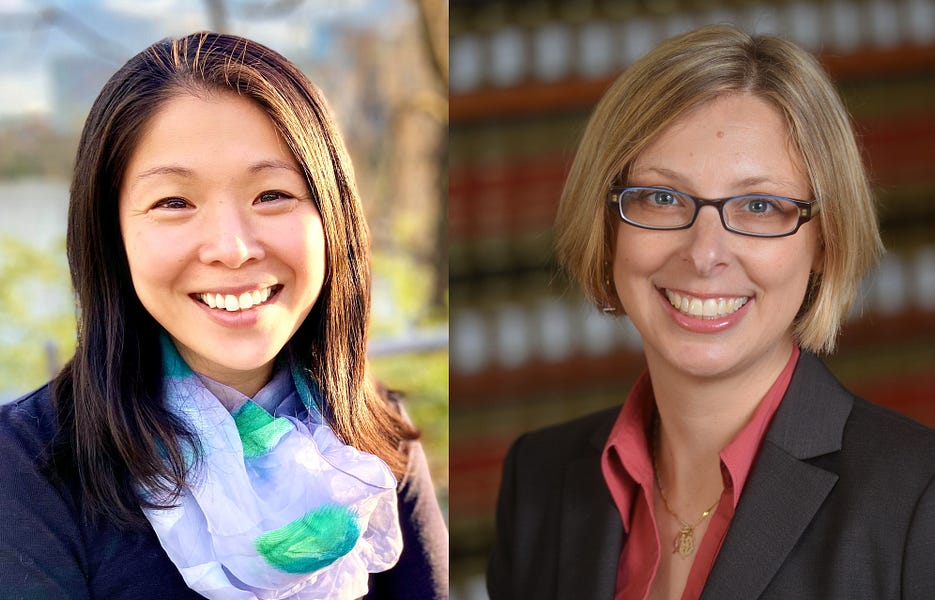
Volts podcast: how Biden can address climate change through executive action
In this episode, Jean Su and Maya Golden-Krasner, attorneys at the Center of Biological Diversity, discuss which executive actions President Biden could take to aggressively address climate change, and what might happen if he did so.(PDF transcript)(Active transcript)Text transcript:David RobertsIt now seems fairly clear that no climate legislation is going to pass this Congress before the midterm elections. After the midterms, Democrats are highly unlikely to retain control of both houses, so there likely will not be any federal climate legislation in the US for many years to come. This is, obviously, to the country's immense shame.That means Biden finds himself in the same situation that Obama ended up in: if he wants anything at all to get done on climate change during his term, he's going to have to do it himself, through executive action. He has already begun announcing some executive orders.However, there is a case to be made that the president has the power to do much, much more. Two senior attorneys at the Center for Biological Diversity — Jean Su, director of CBD’s energy justice program, and Maya Golden-Krasner, deputy director of its Climate Law Institute — have been aggressively making that case for the past three years, laying out a broad suite of actions available to a president and accompanying them with arguments rooting those powers in statutory authority.They've just released a new report called “The Climate President’s Emergency Powers,” which digs into what it would mean for Biden to declare a state of emergency over climate change and what sort of statutory powers that would grant him. In this moment of utter legislative failure, I wanted to talk to Su and Golden-Krasner about the kind of things Biden is capable of doing, which actions he ought to prioritize, how he should think about the hostile Supreme Court, and the political optics of governing so aggressively and unilaterally.Alright. Jean Su and Maya Golden-Krasner of the Center for Biological Diversity. Thanks for coming to Volts.Maya Golden-KrasnerThanks for having us.David RobertsSo there's a lot to discuss, a lot to discuss here. So I just want to start maybe with this sort of background assumption. Let's just assume, for the sake of our conversation, that Build Back Better does not miraculously rise from the ashes and pass in the next, whatever, however much time we have to pass it a week or two. Let's just assume that it's dead dead. That legislation is dead dead. And that, as all odds are pointing to that, all the prognostications now say that Democrats are almost certainly going to lose at least one House of Congress in the midterms, which will mean legislation is dead for the rest of Biden's term.That leaves us with what Biden can do on his own. This has all happened before, and it will all happen again, as they say on Battlestar Galactica. This was exactly the situation Obama found himself in, as we all remember. So it's a little depressing to be back here, but let's make the best of it. So the other thing I wanted to say, just by way of preparation is I think it's fair to say that you all, that the CBD, has what I would characterize as a sort of maximalist interpretation of Biden's executive powers. Extremely sweeping.Your 2019 report on the executive powers available to the President. I mean, if you read through that whole thing, I mean, jeez, Biden could just sort of revolutionize all of government, and all of industry, and justice, and there's almost nothing he couldn't do under some legal authority or another. So I might be, throughout this, playing a little bit of devil's advocate, trying to push back a little bit on some of that. So just to let you know. So with all that said, let's start with what seems to be most in the news these days, which is whether or not Biden is going to declare a Climate Emergency.There's a lot of talk about this, a lot of hand waving, a lot of sort of ... I don't think it's very well understood what exactly means for him to do that and what it would enable him to do. So let's just start there. Maybe we'll start with you, Jean, maybe you can just tell us what does it mean for Biden to declare a Climate Emergency, what is the legal authority under which he would do that, and then we can get into sort of what it would enable him to do that he couldn't otherwise do.Jean SuSo I think you've painted a really bleak picture of where we are right now.David RobertsLook around, Jean.Jean SuAnd it's very real, and this is exactly where we hope we wouldn't be. But it didn't also take a crystal ball to let us know that we would be here, as well. And so I think on that note, one of the things that we have at the Center have always focused on is the executive branch, and that is an equal branch of the three branches. And we've always have looked at what are the available tools for the president, not to the exclusion of anything else.We absolutely need legislation. I pray that your prediction is not tru
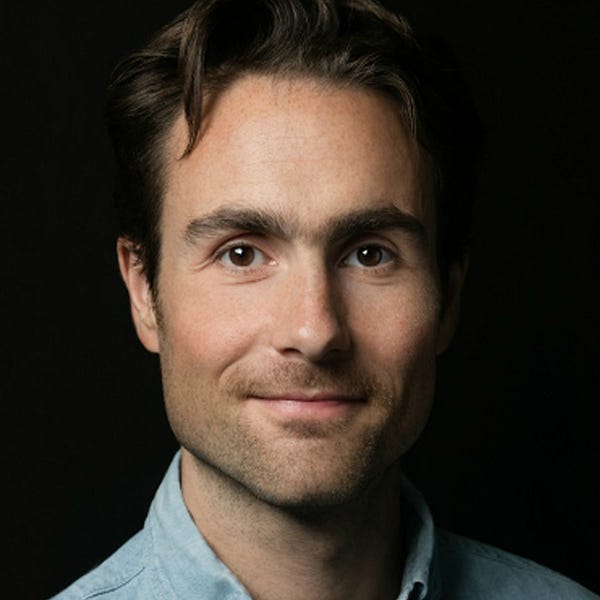
Volts podcast: David Wallace-Wells on the ravages of air pollution
In this episode, journalist David Wallace-Wells raises the alarm about how incredibly unsafe our air is, the impact it’s having on human welfare, and why it doesn’t get as much attention as it should.(PDF transcript)(Active transcript)Text transcript:David RobertsBack in 2020, I wrote an article about some eye-popping new research on air pollution which found that the damage it is doing to human health is roughly twice as bad as previously thought, and moreover, that the economic benefits of pollution reduction vastly outweigh the costs of transitioning to clean energy.It seemed to me then that the findings should have gotten more attention in the press, and I wasn't the only person who thought so. Journalist David Wallace-Wells, who made a splash a few years ago with his terrifying book on climate change, The Uninhabitable Earth, also dove in to new air pollution research and produced a magisterial overview for the London Review of Books last year. Recently he revisited the subject for his New York Times newsletter, asking why social mobilization against climate change, which promises millions of deaths in decades, is so much greater than mobilization against air pollution, which kills 10 million a year today.It's a challenging question, and I'm not certain I have a great answer, so I wanted to talk to David about it — what the new research says about the mind-boggling scope and scale of air pollution’s damage to human welfare, how we ought to think about it relative to climate change, and what scares him most about the process of normalization that allows us to live with 10 million deaths a year.David Wallace-Wells, welcome to Volts. Thanks so much for coming on.David Wallace-WellsOh, my pleasure. It's great to talk. Really good to be here.David RobertsSo you made a big splash, several years ago, with your article on climate change and the subsequent book, but in the last year or so, year two, you have been writing more and more about just good old-fashioned air pollution. And it seems like you're kind of getting sucked in, like it keeps pulling you in. So tell me kind of the story of how you first interacted with the story and why you keep coming back to it.David Wallace-WellsWell, on some level, it's the same answer I give when people ask me how I got worried about climate change, which is just to say I was seeing scientific research that was really quite alarming. And the more that I looked at it, the bigger the story seemed and the more it seemed to demand of me as someone who wrote on anything close to these issues. The slightly more personal version of it is, like, I wrote my book, I spent a lot of time talking about it, talking about climate change, and I found myself again and again in describing the scale of the impact, citing a small handful of data points or projections that I found really useful to communicate what I saw as to scary it all was.And one of those was this data point that at two degrees of warming, we should expect 153 million additional deaths from air pollution produced from the burning of fossil fuels. And I would always caveat that and say, "no, that's not exactly climate change, but it's caused by the same things that cause climate change." And the more I said it and the more that I thought about it, I was like, "wait, hang on a second. If the most dramatic data point that I can come up with to explain how scary the world that we're going to be living in is ... is not actually about temperature rise, maybe I should spend some time thinking about what that means and how it might change my own perspective on warming and what that's likely to be like."And so I wrote a piece. It actually was a very slow burn piece, and it was actually, even though it totally contradicts what I just said, was a story that was proposed to me by the LRB. I wrote a piece for the London Review of Books that was published last fall, but which they had actually invited me to write before the pandemic began. And over the course of those couple of years, I was just collecting more and more material. And as I sort of had done with climate, it just felt like the more I looked, the more I saw, the darker the picture got.Now, there are some really important distinctions, and it's not an easy parallel. We could talk about some of the contrasts, but in general the sort of emotional experience of it, for me, was the same, which is just to say I had my eyes opened out of some amount of horror or fear, and the deeper that I looked into the subject, the bleaker it seemed to get.David RobertsRight, well, I want to talk about some of those parallels in a minute, but first let's just dwell on the research for a minute because I feel like there's sort of a popular conception of air pollution in the US, insofar as people think about it anymore. It's like the river used to burn. Then we got the Clean Air Act and the Clean Water Act and more or less tackled that problem and now it's just a problem for overseas. I think th

Volts podcast: Lori Lodes on climate activism and the path forward
In this episode, Lori Lodes of Climate Power discusses how climate activists can maintain momentum when federal action feels entirely out of reach.(PDF transcript)(Active transcript)Text transcript:David RobertsIt is a dark time for climate activists. The immense hope they felt at the introduction of the original Build Back Better bill has curdled. It is still possible that some kind of deal might emerge from the Senate in this final month, but if it does it will be a pale shadow of what it once was.Meanwhile, the Republican-dominated Supreme Court has just taken away one of the EPA's principal tools for addressing greenhouse gases. And that is, of course, only one tiny sliver of the damage that the court has done and is continuing to do. A Supreme Court that is hostile to climate action seems fated to be a fact of life for at least a generation.It is not clear what climate activists could have done differently to avert these grim outcomes. And it is not at all clear how they should proceed from here. They have no way of encouraging West Virginia Democrat Joe Manchin to be a decent human being and once the reconciliation bill is done, the midterms will be upon us, and all signs point toward disastrous Democratic losses that will take legislation off the table entirely.What should climate activists be doing right now? How should they be maintaining hope and momentum?To discuss these difficult questions, I contacted Lori Lodes, the head of the nonprofit advocacy organization Climate Power, which was created by John Podesta and others in the run-up to the 2020 election to ensure that climate had a place on the Democratic agenda. Lodes is a veteran of several difficult Democratic fights going back to Obamacare and is a self-proclaimed lover of political combat, so I was eager to hear from her on what climate activists should be doing, how they should feel about whatever emerges from the Build Back Better negotiations, and how they should move forward in a world where federal action has become all but impossible.Without further ado, Lori Lodes of Climate Power. Welcome to Volts. Thanks for coming.Lori LodesThank you for having me.David RobertsWe are meeting here, I guess, what you'd say, under inclement circumstances of a variety of kinds. Among them, I'm on the downside of a piece of COVID which is why I'm coughing and sound hoarse. So bear with me. I want to talk about what's going on and what's coming next. Lori, but just to start with, you were chosen by John Podesta to run this new climate organization in the run up to the 2020 elections.Lori LodesThat's right.David RobertsTalk a little bit about what your experience prior to that. And I know you played a big role in fighting for Obamacare and then fighting to protect Obamacare afterwards. And we're on the Hillary campaign, the ill-fated 2016 Hillary campaign. So maybe just talk a little bit about your pre-climate work and the sort of things you picked up from it about Democrats, and their problems, and how they can win.Lori LodesBig question, I mean ...David RobertsThat's a lot.Lori LodesI got my start in politics. Like a lot of people, I just cared deeply and was a complete idealist. I read the newspaper every day with my family. But the big thing for me was saying, "I like big fights," and I have a complete belief or ideology that we can do better, that we can form a more perfect union, but it takes a lot of hard work. And so I've been on one side of the battle or the other, fighting to expand health care, to get as many people health insurance as humanly possible with certain limitations, with certain political limitations that we have from trying to pass minimum wage laws, from trying to prevent Justice Kavanaugh from getting on the bench.And now I've started Climate Power with Podesta to really do everything that we can to win the politics of climate. And that's really at the heart of so much of these big political battles. The policy is smart policy, right? If this was just about the policy, we would have passed climate laws to take care of climate change a decade, two decades, three decades ago.David RobertsIf this were a battle of white papers, we would have won an overwhelming victory long ago.Lori LodesYes, right. And as progressives who care about policy and who think a lot, our side has a lot of those white papers, a lot of them, what we haven't been able to do is change the political calculation. It's getting a lot better, right. If you look back to 2016, when Hillary Clinton ran for president, she really wasn't talking about climate change very much, right? Bernie Sanders really wasn't talking about climate change very much. It came up in very specific instances, but they weren't running on it. And that's really why we started Climate Power in 2020, was how do we make sure that whoever the presidential nominee was going up against Trump was going to fight on climate?Because the politics of climate we believe, and I still believe this, have ch
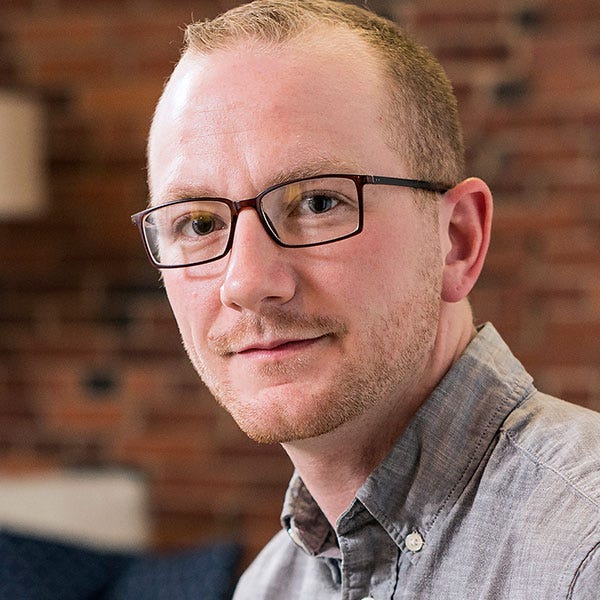
Volts podcast: Jay Duffy on the Supreme Court's EPA decision
In this episode, lawyer Jay Duffy, who represented environmental groups in West Virginia v. Environmental Protection Agency, explains the ins and outs and potential implications of the Supreme Court’s final ruling in the case.(PDF transcript)(Active transcript)Text transcript:David RobertsOn June 30th, the Supreme Court handed down a ruling in the case of West Virginia v. Environmental Protection Agency. There was a great deal of dread in the climate community in advance of the ruling, and a great deal of hyperbolic coverage in its wake. But what did it actually say?Volts listeners will already be familiar with the case thanks to a pod I did on it a few months ago with Jack Lienke and Kirti Datla, and they will recall that it was somewhat bizarre for the court to take this case at all, since it regards a set of regulations that never were and never will be put into effect. Rather, the court seemed eager to pass judgment on the legal justification that it anticipates EPA might use when regulating greenhouse gases under Biden. It was, in other words, an advisory opinion, which the Supreme Court is not supposed to do.Nonetheless, it took the case and now it has ruled. The headline is that the majority opinion is not as bad as many anticipated, especially in the wake of the unhinged Dobbs decision that overturned Roe v. Wade. This was a Chief Justice Roberts special, carefully parsed and hedged.To get clear on what the ruling does and doesn't actually say, I contacted one of the lawyers on the case, Jay Duffy of the Clean Air Task Force. Duffy was responsible for several of the key briefs and arguments in the case, so I thought he would have a good read, not only on what the Roberts decision says, but what it portends for subsequent cases.So, without further ado, Jay Duffy, welcome to Volts. Thanks for coming.Jay DuffyThanks so much, David. It's a pleasure to be here. Thank you for asking me to come on.David RobertsLet's start just really briefly, tell us about your involvement in the case.Jay DuffySure. So I represent a number of environmental and public health groups. American Lung Association, American Public Health Association, Appalachian Mountain Club, Cleaner Council, Clean Wisconsin, Conservative ... "Conservative no", Conservation Law Foundation, and Minnesota Center for Environmental Advocacy. We challenged the ACE rule in the CPP repeal when it came out in the DC Circuit. I argued a portion of that oral argument on a nine hour zoom call. Yeah, I hope this pod won't be as painful as that was. We won below, and then that was, of course, appealed by State Attorney General and coal interest, and I continued to represent the same clients before the Supreme Court.David RobertsSo at a headline level, everybody saw the Dobbs ruling, which was a Sam Alito special, i.e. completely unbound, and unrestrained, and deranged, and I think were subsequently filled with fear about this ruling. But this is a Roberts decision, not an Alito decision. And it seems to bear the sort of typical characteristics of a Roberts decision, in that it is sort of a little bit of this, a little bit of that, kind of trying to cut it down the middle, not quite dramatic, slightly more technical, slightly more narrow. So am I right in thinking that in the spectrum of outcomes that climate people anticipated or imagined, this is toward the better side?Right. This is one of the better outcomes we could have envisioned. Is that roughly right?Jay DuffyThat's roughly right. I think there are two kind of lanes in this decision. There is what is the path forward for regulating greenhouse gases from power plants? And I think there is still a lane there. And we were concerned that we would have a roadblock on the major questions, doctrine expansion, that piece is more troubling and I think we could probably get into that. But I do think, even though the Roberts opinion kind of throws shade on multiple pathways forward, at the end, he says, "this is just a narrow opinion. All we're saying is that the Clean Power Plan and the system underlying the Clean Power Plan is outside of EPA's authority."David RobertsRight? So they didn't nuke Mass vs. EPA. They didn't take away EPA's ability to address CO2. They didn't try to mess with the endangerment finding whereby EPA found that CO2 is a danger. There's a lot of bigger things they could have done that they didn't do. And we'll get into later sort of where we think they're going from here. Let's talk about then what Roberts did say. And when I first was reading about this, I thought that Roberts was focusing on the sort of inside the fence-line versus outside the fence-line question, which for listeners who don't have the background on this, the question is, if you're regulating coal plants, do you have to confine your regulations to the coal plant itself?Or in some sense, can you regulate the fleet, or can you do what the Clean Power Plan did, which is regulate the entire electricity fleet, not just coal
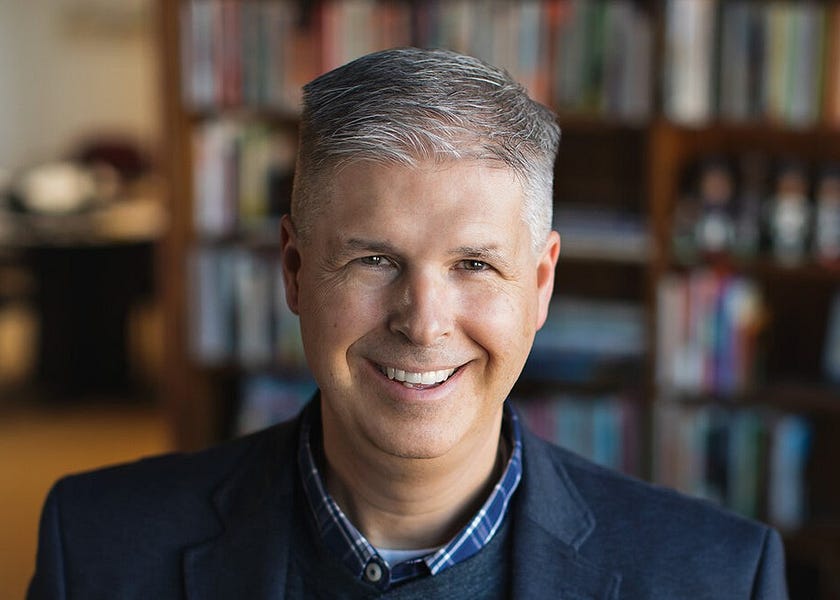
Volts podcast: Charles Marohn on unsustainable suburbs
In this episode, Charles Marohn of Strong Towns discusses why urban planning too often creates money-sucking suburbs, what it might look like to build healthy communities, and why there are so many barriers to doing so.(PDF transcript)(Active transcript)Text transcript:David RobertsCharles Marohn — “Chuck” to his friends — grew up in a small town in Minnesota and later became an urban planner and traffic engineer in the state. After a few years, he began noticing that the projects he was building were hurting the towns he was putting them in — subtracting more tax value than they added, forcing everyone into cars, breaking apart communities and saddling them with unsustainable long-term liabilities.He began recording his observations on a blog called Strong Towns. It quickly caught on, and over the years, Strong Towns has grown into a full-fledged nonprofit with an educational curriculum, an awards program, and a rich network of local chapters working to improve the towns where they are located.Marohn has since written several books, most recently 2021’s Confessions of a Recovering Engineer and 2019’s Strong Towns. Intellectually, he sits somewhat orthogonally to most of the contemporary urbanist community. He’s an avowed conservative and opposes many of the state and federal solutions to the housing crisis favored by today’s YIMBYs. But there is arguably no one alive in America who has done more to get people thinking about what makes for a healthy community and how the US can begin to repair its abysmal late-20th-century land-use choices. I was excited to talk to Marohn about why suburbs are money-losers, the right way to think about NIMBYs and local control, and why the city planning profession is so resistant to reform.Okey-doke, without any further ado, Chuck Marohn of Strong Towns. Welcome to Volts. Thanks for coming.Charles MarohnHey, thanks for having me.David RobertsThis is really cool. I've been sort of a follower of Strong Towns for many, many years. It's great to finally get you on here. I wish we could be talking under more pleasant circumstances.Charles MarohnOh yeah. You got to always have some joy and optimism to things.David RobertsI'm trying. Before we get into any of that stuff, I am sure this is something you've talked about a million times, but I still don't know that it's sunk into the general public. So let's just summarize real quick right off the bat, the core of the Strong Town's critique of suburbs, the sort of Ponzi scheme critique. Because I think still to this day, it probably comes as a surprise to most average Americans, just the idea that suburbs don't pay for themselves, but I just don't think most people know it. So let's just review that real quick.Charles MarohnIt's astounding though because we've come a long way, because now I see when people bring up what is kind of like an ignorant statement of like, "I pay my taxes, this stuff is paying ..." people are like, "Whoa, hang on, let me show you something." So when I was a young engineer and planner, I have a civil engineering degree, I have a planning degree, I was building all this stuff to make cities really successful. I was putting in roads and streets and pipes and building Walmart parking lots and Arby's drive throughs and ...David RobertsEvery architect's dream as a child.Charles MarohnOh, yeah, no, this was great stuff. And I believed in my heart that I was making the city that I live in, the city that I grew up in, wealthier and more prosperous. But over and over and over again, I would be exposed to these insane projects. These projects that if you're an engineer, you kind of work in a silo of design. If you're a planner, you kind of work in a silo of regulation. But when you do both, you wind up with this left brain, right brain conflict that makes you ask like weird questions. And that's what I was doing.I was asking questions like, "Okay, this is going to cost us a million dollars. How long will it take us to recoup that with the tax base that we get?" And I would run these numbers and it would be insane things like 120 years. It's like, okay, either I'm calculating this wrong, or something's really messed up. And I started just doing this over and over and over again with all these different developments that I had worked on. And in 2008, I started to publish this stuff. I started to write a blog and I share this stuff.And quite frankly, I was open to the idea that maybe I was crazy, right? There's got to be something I'm not seeing because there's a lot of smart people doing this work. I can't be the only one asking this question. But turns out, I was the only one really asking this question. Or there were others, but they were disparate voices, either from the past or silent. And we started to build at Strong Towns. Myself and some of my colleagues and friends started to build this body of insight, this body of evidence that at a certain point just became undeniable.And the undeniable nature of it is that
Another note to readers
Readers, I am keenly aware that you subscribed to this newsletter to get articles and podcasts about clean energy, not to hear about my life and travails. And I’ve already sent you one life-and-travails message this year. So I debated with myself a long time about whether to send this one, especially given all the other horrible stuff happening in the world.But, in the end, there is an unavoidable intimacy to this format and that is one of the things I like about it. I don’t have any bosses or advertisers or funders to report to — there’s just me, trying to create good content, and (some of) you, paying for it. Given that life events are currently affecting my ability to work, I feel I owe you some explanation.Attentive readers may recall that I’m supposed to be in Italy right now, vacationing with my family to celebrate my oldest son’s high school graduation and impending departure to college. As fate would have it, that vacation has been canceled. Why? Well, part of it is that, as followers of my tweets may already know, my entire family has Covid at the moment. But the other part, which I haven’t yet shared, is that I also have cancer. Specifically, I have a relatively rare cancer called urothelial carcinoma — a 4.5-cm mass in my right kidney cavity. It was identified via a CT scan about a month ago. A few weeks ago, I had a procedure: a right ureteroscopy with biopsy and ureteral stent insertion. They also fired some lasers at the mass, which I found oddly gratifying. The good news is that, somewhat to everyone’s surprise, the biopsy indicates that the cancer is low-grade. The bad news is that the mass is so big that it’s got to come out regardless; my surgical options are no different than if it were high-grade. Because it has gotten so big, trying to laser it to pieces could take two, three, or even more full surgeries, followed by a lifetime of vigilance, since this type of cancer tends to recur in surrounding tissue via the “field effect.” Recurrence in my kidney or ureter would be bad; recurrence in my bladder (which I only have one of) would be worse.The other option is just to have my right kidney taken out entirely, which is what I’m scheduled to do next month — what the official documentation refers to as a “nephroureterectomy, robot-assisted,” which I also find oddly gratifying. I like having robots and lasers on my side.Having a kidney out is not a small thing — it’s a serious surgery — but there are very good chances of full recovery. People lose or donate kidneys all the time and go on to live long, healthy lives. My colleague at Vox, Dylan Matthews, donated one of his kidneys out of pure altruism and wrote a detailed account, which has been a great comfort to me. To be clear: I’m in no pain. The cancer itself is causing me no symptoms outside of hematuria (bloody urine), which admittedly is no fun, but it was the only way this thing got caught. A tumor in your kidney lining (as opposed to the cavity, where mine is) can grow for a long time and cause no symptoms at all. It’s a good thing my tumor made a ruckus.Suffice it to say, in the vast hellscape of possible cancers, I could have done a lot worse. I am, in the grand scheme of things, quite lucky.That said, losing the vacation is a real bummer. For one thing, it was all set up: the plane tickets were bought; the lodgings were booked; the train tickets were reserved; the cars were rented; the tours and outings were all lined up. It was going to be magic. But what really hurts my heart is not getting to send my son off with some indelible memories of his final summer with us. I wanted that time with him so badly. As a sad, sweet gesture, Mrs. Volts made us reservations at an Italian restaurant in Seattle for last Monday night — the night we were supposed to leave for Italy — but then, over the weekend, the older boy tested positive for Covid. He isolated immediately, but the next day I tested positive and the day after that, Mrs. Volts and the younger boy. To summarize: rather than nibbling gelato and sipping espresso at a street-side cafe in Florence, we are at the end of a week spent slumping around our house, coughing and snorting and unable to do much but watch TV. (The Old Man is really good.)One additional downer: remember a while back I told you about my aching wrists and elbows? Yeah, that’s worse than ever. I can type for short bursts, but holding my hands steady in any position for more than about 30 seconds brings sharp pain. This means I can’t really sustain concentrated work on longer writing. I can basically … tweet. And given that tweeting is already what I do when I’m anxious, I’ve been tweeting a lot lately. It’s not great.I tried some voice control and transcription programs, but I found them weirdly enervating. It is exhausting to talk all the time! But I’m going to have another go at them, since this doesn’t seem to be going away and I still can’t think of a practical way to take six months away from a keyboard to let t
Volts podcast: Kimberly Nicholas on the best ways to get cars out of cities
In this episode, Kimberly Nicholas discusses her published research on the most effective policies to reduce car use in cities.(PDF transcript)(Active transcript)Text transcript:David RobertsIn the US, the movement to get cars out of cities is … what’s the nice word? … nascent. But in Europe, where many cities were built before cars and big-box sprawl never completely dominated, there is growing agreement that cars need to be reigned in. It’s partly about fighting climate change, but beyond that it’s about quality of life — living without air and noise pollution, using your legs to get around, and enjoying public spaces.More and more European cities are discovering what Copenhagen found when it studied the problem in earnest: every mile traveled on a bike adds value to a city, whereas every mile traveled in a car subtracts value. The pushback against cars in the Europe has been going on for decades now, but there has been little effort to catalogue and rank the various policies and initiatives involved. What works and what doesn’t? What should other cities prioritize?Into that breach came a recent research paper in Case Studies on Transport Policy that dove into the academic literature (surveying 800 papers) to rank the top car-reducing strategies. It was co-authored by Paula Kuss (based on her master’s research) and Kimberly Nicholas of Sweden’s Lund University Centre for Sustainability Studies. Nicholas later wrote a summary of the research for The Conversation that received an enormous amount of attention. As it happens, driving cars out of cities is one of my enduring obsessions, so I eagerly accepted Nicholas’ offer to review the research, discuss the themes evident in the top-performing policies, and ponder whether such policies could ever take hold in the US. Our conversation was enlightening and heartening, despite making me want to move to Europe.With no further ado, Kim Nicholas. Welcome to Volts. Thanks for coming.Kimberly NicholasThank you so much. Long-time listener, first-time guest.David RobertsI want to talk about your study, but before we jump in, there's just a couple of kind of background things I want to establish. One point, which you emphasize a couple of times, which I don't feel like is super well understood. I feel like a lot of times, in my experience, when we talk about declining cars, or trying to get rid of cars, or blocking cars, or anything that inhibits cars, it strikes people, I think, intuitively as a punishment to the poor. And the point you make, at the top of your post about your paper, is that this is not in fact, the case.In fact, the sort of transportation sector is weighted as it is toward the wealthier. So say just a little bit about that by way of background.Kimberly NicholasYeah, I think that's so important that people understand that it is overwhelmingly the rich who drive the most, and it's very important to design climate and transport policies that simultaneously tackle the very serious and increasing problem of inequality. But that's fully possible to do. Some of the people who benefit the most from active and public transport are lower-income folks. So our study focused on Europe because Europe actually has a policy to ...David RobertsStudy.Kimberly NicholasExactly. The European Union has promised to deliver 100 climate-neutral cities by 2030. And those cities have just been chosen. And in order for that to actually happen, cities have to reduce the number of cars.And when we look in Europe, the data show that it's the rich who drive the most, the richest 10%, about 21% of their emissions comes from driving. And they take up so much more space in cities, which is something we often don't think about. But in Berlin, for example, it's three and a half times more public space that goes to car drivers than non-car drivers. So the car really is a tool to increase inequality.David RobertsAnd that's just parking mostly, right? That public space?Kimberly NicholasLargely parking. Also roads and other car infrastructure. In Sweden, it's about 100 m², roughly 1000 square feet. That's the size of many apartments in cities, here. So you think, "Okay, what value could we get for that land? That could be public parks, that could be more housing where we need it in cities." And it's just a really inefficient use of space.David RobertsAnd you make the point that EU is doing fairly well on some climate metrics, but its transportation sector is actually kind of a little bit of its Achilles' heel. It's not on a good trajectory.Kimberly NicholasNo. And I think that this is really something that it's important for the world to take a look at because to get down to zero emissions and actually stop climate change, the first thing is to produce a lot of clean energy. And I think listeners to your podcast are well aware of that, and you talk about that a lot. But then you have to electrify everything to run on that clean energy. And transport is the next sort of phase. And you see in
Volts podcast: Dan Pfeiffer on the Democratic Party's megaphone problem
In this episode, political communications expert Dan Pfeiffer speaks to the wide influence of right-wing media, why Democrats keep losing messaging battles, and what they need to do about it.(PDF transcript)(Active transcript)Text transcript:David RobertsYou probably know Dan Pfeiffer best as one of the hosts of the wildly successful Pod Save America podcast, part of the growing Crooked Media empire of which he is a co-founder. Or perhaps you know him as the author of the Message Box newsletter, where he dispenses communications advice to left-leaning subscribers. But before he was a new media mogul, Pfeiffer was in the thick of politics as a top aide on Obama’s campaign and then in Obama’s White House, where he ran communications and strategy.Pfeiffer has seen the media war between the parties play out, and he has seen Democrats lose messaging battles again and again. He has first-hand experience of the growing power of the right-wing media machine to spread disinformation, set the agenda for the rest of the media, and deflect accountability.Now he has written a book on the subject: Battling the Big Lie is an extended examination of the growing imbalance between the conservative movement’s massive media megaphone … and the left’s lack of one. Listeners know that I have been obsessed with this imbalance for as long as I’ve been following politics, so I was super geeked to talk with Pfeiffer about how right-wing media grew, how it successfully intimidated both mainstream media and social media companies, and how Democrats can begin building a comparable megaphone of their own, before it’s too late.Dan Pfeiffer. Welcome to Volts. Thanks for coming.Dan PfeifferThanks for having me.David RobertsCongratulations on writing a book under extreme time pressure. An extremely stressful time to be alive. I hope the psychological damage has been minimal.Dan PfeifferI think we'll only know how much damage there was many years from now, so the full cost of this endeavor will not be known.David RobertsWell, I want to talk about the current situation, but just briefly at the beginning, let's look a little bit at history. So I wonder what you think are sort of the kind of the landmarks on the road to the current situation. So for instance, tell us a little bit about when the press, the mainstream press as the enemy, became a popular thing on the right. That's sort of the first and then the second is like, what are the sort of markers of the growth of their own media apparatus? How did we get here?Dan PfeifferSure, there had been a bubbling sentiment of conservative anti-press sentiment dating back to the New Deal and FDR and Democrats sort of dominating the conversation. But it became a political strategy, primarily in Barry Goldwater's 1964 campaign. He hammered the press, he hammered Eastern elites. He handed out pins to the press on the press planes, calling them members of the Eastern establishment. The press as enemy became an explanation to the right, themselves and their voters why they kept losing elections. It wasn't that their policies were bad. It wasn't that they were unpopular. It wasn't that their rhetoric wasn't good.It was that the press hated them. Nixon took that into hyperdrive because of his own set of insecurities and grievances. And even before Watergate, like in the course of the Nixon administration, there was real thoughts on how you go about destroying the press. Richard Nixon had his enemies list, which included members of the press. He also explored with Roger Ailes and some of his other aides very specific forerunners, the Fox News. In terms of state sponsored propaganda, there was an effort where they explored creating local news pieces created by the White House that would then be under a sort of undercover that would be sent to local news stations.There was an effort to fund a pro-Vietnam War documentary to push back against the Pentagon Papers and other efforts out there. And then when the press, in the common "tell all the President's men" telling of what happened, took down Nixon, that became sort of the cause celeb in the right. "The press is out to get us. The press is out to get us." Reagan took that in the 80s. Getting rid of the Fairness Doctrine as a part of it was part of his campaign.David RobertsOne question about that, about the Fairness Doctrine thing, I'm curious what sort of the public versus private justifications for that were, like, did Reagan and his people consciously do that in order to bolster right wing voices or was there some sincere ideological motivation back there somewhere?Dan PfeifferI think there was probably some sincere ideological motivation, but the primary driving factor, as I understand the history, was the fact that the Fairness Doctrine was putting downward pressure on efforts to have an emerging right wing radio ecosystem. And that in order to have that, every time they kept trying to move towards local stations, kept trying to move towards sort of the
Volts podcast: Johannes Ackva on effective climate altruism
In this episode, Johannes Ackva of Founders Pledge discusses his thinking on the most effective forms of climate philanthropy.(PDF transcript)(Active transcript)Text transcript:David RobertsSay you’re a private individual (or a company, or a foundation) who cares about climate change and has some money to spend on it. What’s the best way to spend that money? How can you ensure the largest possible impact?Similar questions about maximizing philanthropic impact have led to an entire field of study and practice known as “effective altruism,” which seeks to apply logical and empirical rigor to do-gooderism. But it is only very recently that effective altruists have turned their attention to climate change. One of the leading EA voices on climate is Johannes Ackva. He’s a researcher at Founders Pledge, an organization through which business owners and entrepreneurs donate a portion of their earnings to charity. For years, Ackva has been thinking through the puzzle of how best to channel climate philanthropy, given the structure of the problem and the politics around it. If you’re interested in what groups Founders Pledge has chosen for its donations, you can find a list on the website, but I was more interested in the thinking that led Ackva to those recommendations. Given the enormous spatial and temporal scales involved in climate change, the many social and political complexities, the extensive and irreducible uncertainties, how can a well-meaning donor have any confidence in their choices? I found our conversation quite enlightening — a new lens through which to view this familiar problem — it and I think you will too.Johannes Ackva, welcome to Volts. Thanks for coming.Johannes Ackva:Yeah, thank you, David. Thanks for having me. It's an honor and pleasure to be here.David Roberts:Let's start a few steps back since I'm not entirely sure that the Volts audience will be familiar with the effective altruism movement, even though it gained quite a bit of press attention recently. So to start with, just tell us briefly, what is effective altruism and what is it trying to do?Johannes Ackva: So effective altruism is really a social and intellectual movement that tries to answer the question, “how can we do the most good possible?” And, not only answer that question in a theoretical way, but in a very practical way, actually trying to do as much good as possible. There are two components to it. The first one that I would stress is, of course: altruism, which is about trying to be really serious about helping other people and other beings. So, effective altruists usually take a global take, including all humans, also all future humans, also all animals. So, having a really expansive form of altruism. And many effective altruists donate a large part of their income to the global poor or change their careers. So this is the altruism piece of it. And then there's this effectiveness piece, which is like thinking really hard and long, and trying to use as much evidence as possible to think about “how can we have the most impact?”, the most positive impact. And one thing about impact here that I think is crucial, because I think it will come up throughout our conversation, is that a lot of what I'm saying on climate is motivated by this notion of counterfactual impact. Given what everyone else is doing, what is the thing that is additional, should be done next? So, not only trying to have impact, but trying to have impact that otherwise would not happen in the world. And I think that's really key to how we think about climate.David Roberts:And this is the concept of additionality, doing something that would not otherwise be done?Johannes Ackva: Yeah, doing something that would not otherwise be done. Yes, that's the concept of additionality.David Roberts:I won't claim any deep familiarity with the ins and outs of the movement, but my impression over the last few years is that some of the most prominent spokespeople for effective altruism are relatively down on climate change as a target for philanthropic giving. I think the idea is that they're trying to think about all humans today and all humans that will ever be. They're thinking about what might cause the extinction of the human race, and they say climate is unlikely to cause extinction, whereas, you know, a terrible pandemic or an asteroid or an AI that becomes sentient and does a terminator on us are much greater threats of extinction. So why, within the context of effective altruism, do you think that climate change is a worthy target for people's giving and attention?Johannes Ackva: First, I would say you're broadly right there. And it’s funny, because I was a climate person before I was an effective altruist, before I encountered effective altruism. So, it was the first instance of having to justify myself. Why am I working on climate? Growing up in Germany this was something I never had to justify. So I think that's broadly right, most effective altruists do not fo